

Poems in this theme
Soul
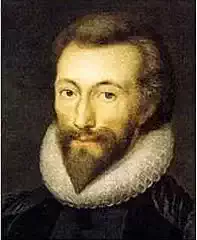
John Donne
Holy Sonnet XII: Why Are We By All Creatures Waited On?
Holy Sonnet XII: Why Are We By All Creatures Waited On?
Why are we by all creatures waited on?
Why do the prodigal elements supply
Life and food to me, being more pure than I,
Simple, and further from corruption?
Why brook'st thou, ignorant horse, subjection?
Why dost thou, bull, and bore so seelily,
Dissemble weakness, and by one man's stroke die,
Whose whole kind you might swallow and feed upon?
Weaker I am, woe is me, and worse than you,
You have not sinned, nor need be timorous.
But wonder at a greater wonder, for to us
Created nature doth these things subdue,
But their Creator, whom sin nor nature tied,
For us, His creatures, and His foes, hath died.
Why are we by all creatures waited on?
Why do the prodigal elements supply
Life and food to me, being more pure than I,
Simple, and further from corruption?
Why brook'st thou, ignorant horse, subjection?
Why dost thou, bull, and bore so seelily,
Dissemble weakness, and by one man's stroke die,
Whose whole kind you might swallow and feed upon?
Weaker I am, woe is me, and worse than you,
You have not sinned, nor need be timorous.
But wonder at a greater wonder, for to us
Created nature doth these things subdue,
But their Creator, whom sin nor nature tied,
For us, His creatures, and His foes, hath died.
261
John Donne
Holy Sonnet XI: Spit In My Face You Jewes
Holy Sonnet XI: Spit In My Face You Jewes
Spit in my face you Jewes, and pierce my side,
Buffet, and scoffe, scourge, and crucifie mee,
For I have sinn'd, and sinn'd, and onely hee,
Who could do no iniquitie, hath dyed:
But by my death can not be satisfied
My sinnes, which passe the Jewes impiety:
They kill'd once an inglorious man, but I
Crucifie him daily, being now glorified.
Oh let mee then, his strange love still admire:
Kings pardon, but he bore our punishment.
And Jacob came cloth'd in vile harsh attire
But to supplant, and with gainfull intent:
God cloth'd himselfe in vile mans flesh, that so
Hee might be weake enough to suffer woe.
Spit in my face you Jewes, and pierce my side,
Buffet, and scoffe, scourge, and crucifie mee,
For I have sinn'd, and sinn'd, and onely hee,
Who could do no iniquitie, hath dyed:
But by my death can not be satisfied
My sinnes, which passe the Jewes impiety:
They kill'd once an inglorious man, but I
Crucifie him daily, being now glorified.
Oh let mee then, his strange love still admire:
Kings pardon, but he bore our punishment.
And Jacob came cloth'd in vile harsh attire
But to supplant, and with gainfull intent:
God cloth'd himselfe in vile mans flesh, that so
Hee might be weake enough to suffer woe.
296
John Donne
Holy Sonnet XI: Spit In My Face You Jews, And Pierce My Side
Holy Sonnet XI: Spit In My Face You Jews, And Pierce My Side
Spit in my face you Jews, and pierce my side,
Buffet, and scoff, scourge, and crucify me,
For I have sinned, and sinned, and only he
Who could do no iniquity hath died:
But by my death can not be satisfied
My sins, which pass the Jews' impiety:
They killed once an inglorious man, but I
Crucify him daily, being now glorified.
Oh let me, then, his strange love still admire:
Kings pardon, but he bore our punishment.
And Jacob came clothed in vile harsh attire
But to supplant, and with gainful intent:
God clothed himself in vile man's flesh, that so
He might be weak enough to suffer woe.
Spit in my face you Jews, and pierce my side,
Buffet, and scoff, scourge, and crucify me,
For I have sinned, and sinned, and only he
Who could do no iniquity hath died:
But by my death can not be satisfied
My sins, which pass the Jews' impiety:
They killed once an inglorious man, but I
Crucify him daily, being now glorified.
Oh let me, then, his strange love still admire:
Kings pardon, but he bore our punishment.
And Jacob came clothed in vile harsh attire
But to supplant, and with gainful intent:
God clothed himself in vile man's flesh, that so
He might be weak enough to suffer woe.
300
John Donne
Holy Sonnet VIII: If Faithfull Soules
Holy Sonnet VIII: If Faithfull Soules
If faithfull soules be alike glorifi'd
As Angels, then my fathers soul doth see,
And adds this even to full felecitie,
That valiantly I hels wide mouth o'stride:
But if our mindes to these soules be descry'd
By circumstances, and by signes that be
Apparent in us, not immediately,
How shall my mindes white truth by them be try'd?
They see idolatrous lovers weepe and mourne,
And vile blasphemous Conjurers to call
On Jesus name, and Pharisaicall
Dissemblers feigne devotion. Then turne
O pensive soule, to God, for he knows best
Thy true griefe, for he put it in my breast.
If faithfull soules be alike glorifi'd
As Angels, then my fathers soul doth see,
And adds this even to full felecitie,
That valiantly I hels wide mouth o'stride:
But if our mindes to these soules be descry'd
By circumstances, and by signes that be
Apparent in us, not immediately,
How shall my mindes white truth by them be try'd?
They see idolatrous lovers weepe and mourne,
And vile blasphemous Conjurers to call
On Jesus name, and Pharisaicall
Dissemblers feigne devotion. Then turne
O pensive soule, to God, for he knows best
Thy true griefe, for he put it in my breast.
266
John Donne
Holy Sonnet X: Death Be Not Proud
Holy Sonnet X: Death Be Not Proud
Death, be not proud, though some have callèd thee
Mighty and dreadful, for thou art not so;
For those whom thou think'st thou dost overthrow
Die not, poor death, nor yet canst thou kill me.
From rest and sleep, which yet thy pictures be,
Much pleasure, then from thee much more, must low
And soonest our best men with thee do go,
Rest of their bones and soul's delivery.
Thou art slave to fate, chance, kings and desperate men
And dost with poison, war and sickness dwell,
And poppy or charms can make us sleep as well
And better than thy stroke; why swell'st thou then ?
One short sleep past, we wake eternally,
And death shall be no more; death, thou shalt die.
Death, be not proud, though some have callèd thee
Mighty and dreadful, for thou art not so;
For those whom thou think'st thou dost overthrow
Die not, poor death, nor yet canst thou kill me.
From rest and sleep, which yet thy pictures be,
Much pleasure, then from thee much more, must low
And soonest our best men with thee do go,
Rest of their bones and soul's delivery.
Thou art slave to fate, chance, kings and desperate men
And dost with poison, war and sickness dwell,
And poppy or charms can make us sleep as well
And better than thy stroke; why swell'st thou then ?
One short sleep past, we wake eternally,
And death shall be no more; death, thou shalt die.
326
John Donne
Holy Sonnet VII: At The Round Earth's Imagined Corners Blow
Holy Sonnet VII: At The Round Earth's Imagined Corners Blow
At the round earth's imagined corners blow
Your trumpets, angels, and arise, arise
From death, you numberless infinities
Of souls, and to your scattered bodies go,
All whom the flood did, and fire shall, overthrow,
All whom war, dearth, age, agues, tyrannies,
Despair, law, chance, hath slain, and you whose eyes
Shall behold God, and never taste death's woe.
But let them sleep, Lord, and me mourn a space,
For, if above all these my sins abound,
'Tis late to ask abundance of Thy grace,
When we are there. Here on this lowly ground
Teach me how to repent; for that's as good
As if Thou'dst sealed my pardon, with Thy blood.
At the round earth's imagined corners blow
Your trumpets, angels, and arise, arise
From death, you numberless infinities
Of souls, and to your scattered bodies go,
All whom the flood did, and fire shall, overthrow,
All whom war, dearth, age, agues, tyrannies,
Despair, law, chance, hath slain, and you whose eyes
Shall behold God, and never taste death's woe.
But let them sleep, Lord, and me mourn a space,
For, if above all these my sins abound,
'Tis late to ask abundance of Thy grace,
When we are there. Here on this lowly ground
Teach me how to repent; for that's as good
As if Thou'dst sealed my pardon, with Thy blood.
296
John Donne
Holy Sonnet VI: This Is My Playes Last Scene
Holy Sonnet VI: This Is My Playes Last Scene
This is my playes last scene, here heavens appoint
My pilgrimages last mile; and my race
Idly, yet quickly runne, hath this last pace,
My spans last inch, my minutes latest point,
And gluttonous death, will instantly unjoynt
My body, and soule, and I shall sleepe a space,
But my'ever-waking part shall see that face,
Whose feare already shakes my every joynt;
Then, as my soule, to'heaven her first seate, takes flight,
And earth-borne body, in the earth shall dwell,
So, fall my sinnes, that all may have their right,
To where they're bred, and would presse me, to hell.
Impute me righteous, thus purg'd of evill,
For thus I leave the world, the flesh, the devill.
This is my playes last scene, here heavens appoint
My pilgrimages last mile; and my race
Idly, yet quickly runne, hath this last pace,
My spans last inch, my minutes latest point,
And gluttonous death, will instantly unjoynt
My body, and soule, and I shall sleepe a space,
But my'ever-waking part shall see that face,
Whose feare already shakes my every joynt;
Then, as my soule, to'heaven her first seate, takes flight,
And earth-borne body, in the earth shall dwell,
So, fall my sinnes, that all may have their right,
To where they're bred, and would presse me, to hell.
Impute me righteous, thus purg'd of evill,
For thus I leave the world, the flesh, the devill.
325
John Donne
Holy Sonnet V: I Am a Little World
Holy Sonnet V: I Am a Little World
I am a little world made cunningly
Of Elements, and an Angelike spright,
But black sinne hath betraid to endlesse night
My worlds both parts, and (oh) both parts must die.
You which beyond that heaven which was most high
Have found new sphears, and of new lands can write,
Powre new seas in mine eyes, that so I might
Drowne my world with my weeping earnestly,
Or wash it if it must be drown'd no more;
But oh it must be burnt! alas the fire
Of lust and envie have burnt it heretofore,
And made it fouler; Let their flames retire,
And burne me o Lord, with a fiery zeale
Of thee and thy house, which doth in eating heale.
I am a little world made cunningly
Of Elements, and an Angelike spright,
But black sinne hath betraid to endlesse night
My worlds both parts, and (oh) both parts must die.
You which beyond that heaven which was most high
Have found new sphears, and of new lands can write,
Powre new seas in mine eyes, that so I might
Drowne my world with my weeping earnestly,
Or wash it if it must be drown'd no more;
But oh it must be burnt! alas the fire
Of lust and envie have burnt it heretofore,
And made it fouler; Let their flames retire,
And burne me o Lord, with a fiery zeale
Of thee and thy house, which doth in eating heale.
354
John Donne
Holy Sonnet IV: Oh my black soul!
Holy Sonnet IV: Oh my black soul!
Oh my black soul! now art thou summoned
By sickness, death's herald, and champion;
Thou art like a pilgrim, which abroad hath done
Treason, and durst not turn to whence he is fled;
Or like a thief, which till death's doom be read,
Wisheth himself delivered from prison,
But damned and haled to execution,
Wisheth that still he might be imprisoned.
Yet grace, if thou repent, thou canst not lack;
But who shall give thee that grace to begin?
Oh make thy self with holy mourning black,
And red with blushing, as thou art with sin;
Or wash thee in Christ's blood, which hath this might
That being red, it dyes red souls to white.
Oh my black soul! now art thou summoned
By sickness, death's herald, and champion;
Thou art like a pilgrim, which abroad hath done
Treason, and durst not turn to whence he is fled;
Or like a thief, which till death's doom be read,
Wisheth himself delivered from prison,
But damned and haled to execution,
Wisheth that still he might be imprisoned.
Yet grace, if thou repent, thou canst not lack;
But who shall give thee that grace to begin?
Oh make thy self with holy mourning black,
And red with blushing, as thou art with sin;
Or wash thee in Christ's blood, which hath this might
That being red, it dyes red souls to white.
295
John Donne
Holy Sonnet I: Thou Hast Made Me
Holy Sonnet I: Thou Hast Made Me
Thou hast made me, and shall thy work decay?
Repair me now, for now mine end doth haste;
I run to death, and death meets me as fast,
And all my pleasures are like yesterday.
I dare not move my dim eyes any way,
Despair behind, and death before doth cast
Such terror, and my feeble flesh doth waste
By sin in it, which it towards hell doth weigh.
Only thou art above, and when towards thee
By thy leave I can look, I rise again;
But our old subtle foe so tempteth me
That not one hour myself I can sustain.
Thy grace may wing me to prevent his art,
And thou like adamant draw mine iron heart.
Thou hast made me, and shall thy work decay?
Repair me now, for now mine end doth haste;
I run to death, and death meets me as fast,
And all my pleasures are like yesterday.
I dare not move my dim eyes any way,
Despair behind, and death before doth cast
Such terror, and my feeble flesh doth waste
By sin in it, which it towards hell doth weigh.
Only thou art above, and when towards thee
By thy leave I can look, I rise again;
But our old subtle foe so tempteth me
That not one hour myself I can sustain.
Thy grace may wing me to prevent his art,
And thou like adamant draw mine iron heart.
339
John Donne
Holy Sonnet II: As Due By Many Titles I Resign
Holy Sonnet II: As Due By Many Titles I Resign
As due by many titles I resign
My self to Thee, O God; first I was made
By Thee, and for Thee, and when I was decayed
Thy blood bought that, the which before was Thine;
I am Thy son, made with Thy Self to shine,
Thy servant, whose pains Thou hast still repaid,
Thy sheep, thine image, and, till I betrayed
My self, a temple of Thy Spirit divine;
Why doth the devil then usurp on me?
Why doth he steal, nay ravish that's thy right?
Except thou rise and for thine own work fight,
Oh I shall soon despair, when I do see
That thou lov'st mankind well, yet wilt not choose me,
And Satan hates me, yet is loth to lose me.
As due by many titles I resign
My self to Thee, O God; first I was made
By Thee, and for Thee, and when I was decayed
Thy blood bought that, the which before was Thine;
I am Thy son, made with Thy Self to shine,
Thy servant, whose pains Thou hast still repaid,
Thy sheep, thine image, and, till I betrayed
My self, a temple of Thy Spirit divine;
Why doth the devil then usurp on me?
Why doth he steal, nay ravish that's thy right?
Except thou rise and for thine own work fight,
Oh I shall soon despair, when I do see
That thou lov'st mankind well, yet wilt not choose me,
And Satan hates me, yet is loth to lose me.
324
John Donne
Good Friday, 1613. Riding Westward
Good Friday, 1613. Riding Westward
Let mans Soule be a Spheare, and then, in this,
The intelligence that moves, devotion is
And as the other Spheares, by being growne
Subject to forraigne motions, lose their owne
And being by others hurried every day,
Scarce in a yeare their natural! forme obey:
Pleasure or businesse, so, our Soules admit
For their first mover, and are whirld by it.
Hence is's, that I am carryed towards the West
This day, when my Soules forme bends toward the East.
There I should see a Sunne, by rising set,
And by that setting endlesse day beget;
But that Christ on this Crosse, did rise and fall,
Sinne had eternally benighted all.
Yet dare ['almost be glad, I do not see
That spectacle of too much weight for meet
Who sees Gods face, that is selfe life, must dye;
What a death were it then to see God dye?
It made his owne Lieutenant Nature shrinke,
It made his footstoole crack, and the Sunne winke.
Could I behold those hands which span the Poles,
And tune all spheares at once, peirc'd with those holes?
Could I behold that endlesse height which is
Zenith to us, and to'our Antipodes,
Humbled below us? or that blood which is
The seat of all our Soules, if not of his,
Make curt of dust, or that flesh which was worne
By God, for his apparel!, rag'd, and tome?
If on these things I durst not looke, durst I
Upon his miserable mother cast mine eye,
Who was Gods partner here, and furnish'd thus
Halfe of that Sacrifice, which ransom'd us?
Though these things, as I ride, be from mine eye,
They'are present yet unto my memory,
For that looks towards them; and thou look'st towards mee,
O Saviour, as thou hang'st upon the tree;
I turne my backe to thee, but to receive
Corrections, till thy mercies bid thee leave.
O thinke mee worth shine anger, punish mee,
Burne off my rusts, and my deformity,
Restore shine Image, so much, by thy grace,
That thou may'st know mee, and I'll turne my face.
Let mans Soule be a Spheare, and then, in this,
The intelligence that moves, devotion is
And as the other Spheares, by being growne
Subject to forraigne motions, lose their owne
And being by others hurried every day,
Scarce in a yeare their natural! forme obey:
Pleasure or businesse, so, our Soules admit
For their first mover, and are whirld by it.
Hence is's, that I am carryed towards the West
This day, when my Soules forme bends toward the East.
There I should see a Sunne, by rising set,
And by that setting endlesse day beget;
But that Christ on this Crosse, did rise and fall,
Sinne had eternally benighted all.
Yet dare ['almost be glad, I do not see
That spectacle of too much weight for meet
Who sees Gods face, that is selfe life, must dye;
What a death were it then to see God dye?
It made his owne Lieutenant Nature shrinke,
It made his footstoole crack, and the Sunne winke.
Could I behold those hands which span the Poles,
And tune all spheares at once, peirc'd with those holes?
Could I behold that endlesse height which is
Zenith to us, and to'our Antipodes,
Humbled below us? or that blood which is
The seat of all our Soules, if not of his,
Make curt of dust, or that flesh which was worne
By God, for his apparel!, rag'd, and tome?
If on these things I durst not looke, durst I
Upon his miserable mother cast mine eye,
Who was Gods partner here, and furnish'd thus
Halfe of that Sacrifice, which ransom'd us?
Though these things, as I ride, be from mine eye,
They'are present yet unto my memory,
For that looks towards them; and thou look'st towards mee,
O Saviour, as thou hang'st upon the tree;
I turne my backe to thee, but to receive
Corrections, till thy mercies bid thee leave.
O thinke mee worth shine anger, punish mee,
Burne off my rusts, and my deformity,
Restore shine Image, so much, by thy grace,
That thou may'st know mee, and I'll turne my face.
285
John Donne
From ‘The Cross’
From ‘The Cross’
Who can blot out the Cross, which th’instrument
Of God, dew’d on me in the Sacrament?
Who can deny me power, and liberty
To stretch mine arms, and mine own Cross to be?
Swim, and at every stroke, thou art thy Cross;
The Mast and yard make one, where seas do toss;
Look down, thou spiest out Crosses in small things;
Look up, thou seest birds rais’d on crossed wings;
All the Globes frame, and spheres, is nothing else
But the Meridians crossing Parallels.
Material Crosses then, good physic bee,
But yet spiritual have chief dignity.
These for extracted chemic medicine serve,
And cure much better, and as well preserve;
Then are you your own physic, or need none,
When Still’d, or purg’d by tribulation.
For when that Cross ungrudg’d, unto you sticks,
Then are you to your self, a Crucifix.
As perchance, Carvers do not faces make,
But that away, which hid them there, do take;
Let Crosses, so, take what hid Christ in thee,
And be his image, or not his, but he.
Who can blot out the Cross, which th’instrument
Of God, dew’d on me in the Sacrament?
Who can deny me power, and liberty
To stretch mine arms, and mine own Cross to be?
Swim, and at every stroke, thou art thy Cross;
The Mast and yard make one, where seas do toss;
Look down, thou spiest out Crosses in small things;
Look up, thou seest birds rais’d on crossed wings;
All the Globes frame, and spheres, is nothing else
But the Meridians crossing Parallels.
Material Crosses then, good physic bee,
But yet spiritual have chief dignity.
These for extracted chemic medicine serve,
And cure much better, and as well preserve;
Then are you your own physic, or need none,
When Still’d, or purg’d by tribulation.
For when that Cross ungrudg’d, unto you sticks,
Then are you to your self, a Crucifix.
As perchance, Carvers do not faces make,
But that away, which hid them there, do take;
Let Crosses, so, take what hid Christ in thee,
And be his image, or not his, but he.
289
John Donne
Elegy:The End of Funeral Elegies
Elegy:The End of Funeral Elegies
MADAM—
That I might make your cabinet my tomb,
And for my fame, which I love next my soul,
Next to my soul provide the happiest room,
Admit to that place this last funeral scroll.
Others by wills give legacies, but I
Dying, of you do beg a legacy.
My fortune and my will this custom break,
When we are senseless grown to make stones speak,
Though no stone tell thee what I was, yet thou
In my grave's inside seest what thou art now,
Yet thou 'rt not yet so good ; till death us lay
To ripe and mellow there, we're stubborn clay.
Parents make us earth, and souls dignify
Us to be glass ; here to grow gold we lie.
Whilst in our souls sin bred and pamper'd is,
Our souls become worm-eaten carcases.
MADAM—
That I might make your cabinet my tomb,
And for my fame, which I love next my soul,
Next to my soul provide the happiest room,
Admit to that place this last funeral scroll.
Others by wills give legacies, but I
Dying, of you do beg a legacy.
My fortune and my will this custom break,
When we are senseless grown to make stones speak,
Though no stone tell thee what I was, yet thou
In my grave's inside seest what thou art now,
Yet thou 'rt not yet so good ; till death us lay
To ripe and mellow there, we're stubborn clay.
Parents make us earth, and souls dignify
Us to be glass ; here to grow gold we lie.
Whilst in our souls sin bred and pamper'd is,
Our souls become worm-eaten carcases.
284
John Donne
Elegy IX: The Autumnal
Elegy IX: The Autumnal
No spring nor summer beauty hath such grace
As I have seen in one autumnal face.
Young beauties force our love, and that's a rape,
This doth but counsel, yet you cannot scape.
If 'twere a shame to love, here 'twere no shame;
Affection here takes reverence's name.
Were her first years the golden age? That's true,
But now she's gold oft tried and ever new.
That was her torrid and inflaming time,
This is her tolerable tropic clime.
Fair eyes, who asks more heat than comes from hence,
He in a fever wishes pestilence.
Call not these wrinkles, graves; if graves they were,
They were Love's graves, for else he is no where.
Yet lies not Love dead here, but here doth sit
Vow'd to this trench, like an anachorit;
And here till hers, which must be his death, come,
He doth not dig a grave, but build a tomb.
Here dwells he; though he sojourn ev'rywhere
In progress, yet his standing house is here:
Here where still evening is, not noon nor night,
Where no voluptuousness, yet all delight.
In all her words, unto all hearers fit,
You may at revels, you at council, sit.
This is Love's timber, youth his underwood;
There he, as wine in June, enrages blood,
Which then comes seasonabliest when our taste
And appetite to other things is past.
Xerxes' strange Lydian love, the platan tree,
Was lov'd for age, none being so large as she,
Or else because, being young, nature did bless
Her youth with age's glory, barrenness.
If we love things long sought, age is a thing
Which we are fifty years in compassing;
If transitory things, which soon decay,
Age must be loveliest at the latest day.
But name not winter faces, whose skin's slack,
Lank as an unthrift's purse, but a soul's sack;
Whose eyes seek light within, for all here's shade;
Whose mouths are holes, rather worn out than made;
Whose every tooth to a several place is gone,
To vex their souls at resurrection:
Name not these living death's-heads unto me,
For these, not ancient, but antique be.
I hate extremes, yet I had rather stay
With tombs than cradles, to wear out a day.
Since such love's natural lation is, may still
My love descend, and journey down the hill,
Not panting after growing beauties. So,
I shall ebb on with them who homeward go.
No spring nor summer beauty hath such grace
As I have seen in one autumnal face.
Young beauties force our love, and that's a rape,
This doth but counsel, yet you cannot scape.
If 'twere a shame to love, here 'twere no shame;
Affection here takes reverence's name.
Were her first years the golden age? That's true,
But now she's gold oft tried and ever new.
That was her torrid and inflaming time,
This is her tolerable tropic clime.
Fair eyes, who asks more heat than comes from hence,
He in a fever wishes pestilence.
Call not these wrinkles, graves; if graves they were,
They were Love's graves, for else he is no where.
Yet lies not Love dead here, but here doth sit
Vow'd to this trench, like an anachorit;
And here till hers, which must be his death, come,
He doth not dig a grave, but build a tomb.
Here dwells he; though he sojourn ev'rywhere
In progress, yet his standing house is here:
Here where still evening is, not noon nor night,
Where no voluptuousness, yet all delight.
In all her words, unto all hearers fit,
You may at revels, you at council, sit.
This is Love's timber, youth his underwood;
There he, as wine in June, enrages blood,
Which then comes seasonabliest when our taste
And appetite to other things is past.
Xerxes' strange Lydian love, the platan tree,
Was lov'd for age, none being so large as she,
Or else because, being young, nature did bless
Her youth with age's glory, barrenness.
If we love things long sought, age is a thing
Which we are fifty years in compassing;
If transitory things, which soon decay,
Age must be loveliest at the latest day.
But name not winter faces, whose skin's slack,
Lank as an unthrift's purse, but a soul's sack;
Whose eyes seek light within, for all here's shade;
Whose mouths are holes, rather worn out than made;
Whose every tooth to a several place is gone,
To vex their souls at resurrection:
Name not these living death's-heads unto me,
For these, not ancient, but antique be.
I hate extremes, yet I had rather stay
With tombs than cradles, to wear out a day.
Since such love's natural lation is, may still
My love descend, and journey down the hill,
Not panting after growing beauties. So,
I shall ebb on with them who homeward go.
277
John Donne
Elegy VI
Elegy VI
Oh, let me not serve so, as those men serve
Whom honour's smokes at once fatten and starve;
Poorly enrich't with great men's words or looks;
Nor so write my name in thy loving books
As those idolatrous flatterers, which still
Their Prince's styles, with many realms fulfil
Whence they no tribute have, and where no sway.
Such services I offer as shall pay
Themselves, I hate dead names: Oh then let me
Favourite in Ordinary, or no favourite be.
When my soul was in her own body sheathed,
Nor yet by oaths betrothed, nor kisses breathed
Into my Purgatory, faithless thee,
Thy heart seemed wax, and steel thy constancy:
So, careless flowers strowed on the waters face
The curled whirlpools suck, smack, and embrace,
Yet drown them; so, the taper's beamy eye
Amorously twinkling beckons the giddy fly,
Yet burns his wings; and such the devil is,
Scarce visiting them who are entirely his.
When I behold a stream which, from the spring,
Doth with doubtful melodious murmuring,
Or in a speechless slumber, calmly ride
Her wedded channels' bosom, and then chide
And bend her brows, and swell if any bough
Do but stoop down, or kiss her upmost brow:
Yet, if her often gnawing kisses win
The traiterous bank to gape, and let her in,
She rusheth violently, and doth divorce
Her from her native, and her long-kept course,
And roars, and braves it, and in gallant scorn,
In flattering eddies promising retorn,
She flouts the channel, who thenceforth is dry;
Then say I, That is she, and this am I.
Yet let not thy deep bitterness beget
Careless despair in me, for that will whet
My mind to scorn; and Oh, love dulled with pain
Was ne'er so wise, nor well armed as disdain.
Then with new eyes I shall survey thee, and spy
Death in thy cheeks, and darkness in thine eye.
Though hope bred faith and love: thus taught, I shall,
As nations do from Rome, from thy love fall.
My hate shall outgrow thine, and utterly
I will renounce thy dalliance: and when I
Am the recusant, in that resolute state,
What hurts it me to be excommunicate?
Oh, let me not serve so, as those men serve
Whom honour's smokes at once fatten and starve;
Poorly enrich't with great men's words or looks;
Nor so write my name in thy loving books
As those idolatrous flatterers, which still
Their Prince's styles, with many realms fulfil
Whence they no tribute have, and where no sway.
Such services I offer as shall pay
Themselves, I hate dead names: Oh then let me
Favourite in Ordinary, or no favourite be.
When my soul was in her own body sheathed,
Nor yet by oaths betrothed, nor kisses breathed
Into my Purgatory, faithless thee,
Thy heart seemed wax, and steel thy constancy:
So, careless flowers strowed on the waters face
The curled whirlpools suck, smack, and embrace,
Yet drown them; so, the taper's beamy eye
Amorously twinkling beckons the giddy fly,
Yet burns his wings; and such the devil is,
Scarce visiting them who are entirely his.
When I behold a stream which, from the spring,
Doth with doubtful melodious murmuring,
Or in a speechless slumber, calmly ride
Her wedded channels' bosom, and then chide
And bend her brows, and swell if any bough
Do but stoop down, or kiss her upmost brow:
Yet, if her often gnawing kisses win
The traiterous bank to gape, and let her in,
She rusheth violently, and doth divorce
Her from her native, and her long-kept course,
And roars, and braves it, and in gallant scorn,
In flattering eddies promising retorn,
She flouts the channel, who thenceforth is dry;
Then say I, That is she, and this am I.
Yet let not thy deep bitterness beget
Careless despair in me, for that will whet
My mind to scorn; and Oh, love dulled with pain
Was ne'er so wise, nor well armed as disdain.
Then with new eyes I shall survey thee, and spy
Death in thy cheeks, and darkness in thine eye.
Though hope bred faith and love: thus taught, I shall,
As nations do from Rome, from thy love fall.
My hate shall outgrow thine, and utterly
I will renounce thy dalliance: and when I
Am the recusant, in that resolute state,
What hurts it me to be excommunicate?
299
John Donne
Crucifying
Crucifying
By miracles exceeding power of man,
He faith in some, envy in some begat,
For, what weak spirits admire, ambitious hate :
In both affections many to Him ran.
But O ! the worst are most, they will and can,
Alas ! and do, unto th' Immaculate,
Whose creature Fate is, now prescribe a fate,
Measuring self-life's infinity to span,
Nay to an inch. Lo ! where condemned He
Bears His own cross, with pain, yet by and by
When it bears him, He must bear more and die.
Now Thou art lifted up, draw me to Thee,
And at Thy death giving such liberal dole,
Moist with one drop of Thy blood my dry soul.
By miracles exceeding power of man,
He faith in some, envy in some begat,
For, what weak spirits admire, ambitious hate :
In both affections many to Him ran.
But O ! the worst are most, they will and can,
Alas ! and do, unto th' Immaculate,
Whose creature Fate is, now prescribe a fate,
Measuring self-life's infinity to span,
Nay to an inch. Lo ! where condemned He
Bears His own cross, with pain, yet by and by
When it bears him, He must bear more and die.
Now Thou art lifted up, draw me to Thee,
And at Thy death giving such liberal dole,
Moist with one drop of Thy blood my dry soul.
434
John Donne
Ascension
Ascension
Salute the last and everlasting day,
Joy at th' uprising of this Sun, and Son,
Ye whose true tears, or tribulation
Have purely wash'd, or burnt your drossy clay.
Behold, the Highest, parting hence away,
Lightens the dark clouds, which He treads upon ;
Nor doth He by ascending show alone,
But first He, and He first enters the way.
O strong Ram, which hast batter'd heaven for me !
Mild Lamb, which with Thy Blood hast mark'd the path !
Bright Torch, which shinest, that I the way may see !
O, with Thy own Blood quench Thy own just wrath ;
And if Thy Holy Spirit my Muse did raise,
Deign at my hands this crown of prayer and praise.
Salute the last and everlasting day,
Joy at th' uprising of this Sun, and Son,
Ye whose true tears, or tribulation
Have purely wash'd, or burnt your drossy clay.
Behold, the Highest, parting hence away,
Lightens the dark clouds, which He treads upon ;
Nor doth He by ascending show alone,
But first He, and He first enters the way.
O strong Ram, which hast batter'd heaven for me !
Mild Lamb, which with Thy Blood hast mark'd the path !
Bright Torch, which shinest, that I the way may see !
O, with Thy own Blood quench Thy own just wrath ;
And if Thy Holy Spirit my Muse did raise,
Deign at my hands this crown of prayer and praise.
355
John Donne
Annunciation
Annunciation
Salvation to all that will is nigh;
That All, which always is all everywhere,
Which cannot sin, and yet all sins must bear,
Which cannot die, yet cannot choose but die,
Lo, faithful virgin, yields Himself to lie
In prison, in thy womb; and though He there
Can take no sin, nor thou give, yet He will wear,
Taken from thence, flesh, which death's force may try.
Ere by the spheres time was created, thou
Wast in His mind, who is thy Son and Brother;
Whom thou conceivst, conceived; yea thou art now
Thy Maker's maker, and thy Father's mother;
Thou hast light in dark, and shutst in little room,
Immensity cloistered in thy dear womb.
Salvation to all that will is nigh;
That All, which always is all everywhere,
Which cannot sin, and yet all sins must bear,
Which cannot die, yet cannot choose but die,
Lo, faithful virgin, yields Himself to lie
In prison, in thy womb; and though He there
Can take no sin, nor thou give, yet He will wear,
Taken from thence, flesh, which death's force may try.
Ere by the spheres time was created, thou
Wast in His mind, who is thy Son and Brother;
Whom thou conceivst, conceived; yea thou art now
Thy Maker's maker, and thy Father's mother;
Thou hast light in dark, and shutst in little room,
Immensity cloistered in thy dear womb.
370
John Donne
An Anatomy Of The World...
An Anatomy Of The World...
When that rich soul which to her heaven is gone,
Whom all do celebrate, who know they have one
(For who is sure he hath a soul, unless
It see, and judge, and follow worthiness,
And by deeds praise it? He who doth not this,
May lodge an inmate soul, but 'tis not his)
When that queen ended here her progress time,
And, as t'her standing house, to heaven did climb,
Where loath to make the saints attend her long,
She's now a part both of the choir, and song;
This world, in that great earthquake languished;
For in a common bath of tears it bled,
Which drew the strongest vital spirits out;
But succour'd then with a perplexed doubt,
Whether the world did lose, or gain in this,
(Because since now no other way there is,
But goodness, to see her, whom all would see,
All must endeavour to be good as she)
This great consumption to a fever turn'd,
And so the world had fits; it joy'd, it mourn'd;
And, as men think, that agues physic are,
And th' ague being spent, give over care,
So thou, sick world, mistak'st thy self to be
Well, when alas, thou'rt in a lethargy.
Her death did wound and tame thee then, and then
Thou might'st have better spar'd the sun, or man.
That wound was deep, but 'tis more misery
That thou hast lost thy sense and memory.
'Twas heavy then to hear thy voice of moan,
But this is worse, that thou art speechless grown.
Thou hast forgot thy name thou hadst; thou wast
Nothing but she, and her thou hast o'erpast.
For, as a child kept from the font until
A prince, expected long, come to fulfill
The ceremonies, thou unnam'd had'st laid,
Had not her coming, thee her palace made;
Her name defin'd thee, gave thee form, and frame,
And thou forget'st to celebrate thy name.
Some months she hath been dead (but being dead,
Measures of times are all determined)
But long she'ath been away, long, long, yet none
Offers to tell us who it is that's gone.
But as in states doubtful of future heirs,
When sickness without remedy impairs
The present prince, they're loath it should be said,
'The prince doth languish,' or 'The prince is dead;'
So mankind feeling now a general thaw,
A strong example gone, equal to law,
The cement which did faithfully compact
And glue all virtues, now resolv'd, and slack'd,
Thought it some blasphemy to say sh'was dead,
Or that our weakness was discovered
In that confession; therefore spoke no more
Than tongues, the soul being gone, the loss deplore.
But though it be too late to succour thee,
Sick world, yea dead, yea putrified, since she
Thy' intrinsic balm, and thy preservative,
Can never be renew'd, thou never live,
I (since no man can make thee live) will try,
What we may gain by thy anatomy.
Her death hath taught us dearly that thou art
Corrupt and mortal in thy purest part.
Let no man say, the world itself being dead,
'Tis labour lost to have discovered
The world's infirmities, since there is none
Alive to study this dissection;
For there's a kind of world remaining still,
Though she which did inanimate and fill
The world, be gone, yet in this last long night,
Her ghost doth walk; that is a glimmering light,
A faint weak love of virtue, and of good,
Reflects from her on them which understood
Her worth; and though she have shut in all day,
The twilight of her memory doth stay,
Which, from the carcass of the old world free,
Creates a new world, and new creatures be
Produc'd. The matter and the stuff of this,
Her virtue, and the form our practice is.
And though to be thus elemented, arm
These creatures from home-born intrinsic harm,
(For all assum'd unto this dignity
So many weedless paradises be,
Which of themselves produce no venomous sin,
Except some foreign serpent bring it in)
Yet, because outward storms the strongest break,
And strength itself by confidence grows weak,
This new world may be safer, being told
The dangers and diseases of the old;
For with due temper men do then forgo,
Or covet things, when they their true worth know.
There is no health; physicians say that we
At best enjoy but a neutrality.
And can there be worse sickness than to know
That we are never well, nor can be so?
We are born ruinous: poor mothers cry
That children come not right, nor orderly;
Except they headlong come and fall upon
An ominous precipitation.
How witty's ruin! how importunate
Upon mankind! It labour'd to frustrate
Even God's purpose; and made woman, sent
For man's relief, cause of his languishment.
They were to good ends, and they are so still,
But accessory, and principal in ill,
For that first marriage was our funeral;
One woman at one blow, then kill'd us all,
And singly, one by one, they kill us now.
We do delightfully our selves allow
To that consumption; and profusely blind,
We kill our selves to propagate our kind.
And yet we do not that; we are not men;
There is not now that mankind, which was then,
When as the sun and man did seem to strive,
(Joint tenants of the world) who should survive;
When stag, and raven, and the long-liv'd tree,
Compar'd with man, died in minority;
When, if a slow-pac'd star had stol'n away
From the observer's marking, he might stay
Two or three hundred years to see't again,
And then make up his observation plain;
When, as the age was long, the size was great
(Man's growth confess'd, and recompens'd the meat),
So spacious and large, that every soul
Did a fair kingdom, and large realm control;
And when the very stature, thus erect,
Did that soul a good way towards heaven direct.
Where is this mankind now? Who lives to age,
Fit to be made Methusalem his page?
Alas, we scarce live long enough to try
Whether a true-made clock run right, or lie.
Old grandsires talk of yesterday with sorrow,
And for our children we reserve tomorrow.
So short is life, that every peasant strives,
In a torn house, or field, to have three lives.
And as in lasting, so in length is man
Contracted to an inch, who was a span;
For had a man at first in forests stray'd,
Or shipwrack'd in the sea, one would have laid
A wager, that an elephant, or whale,
That met him, would not hastily assail
A thing so equall to him; now alas,
The fairies, and the pigmies well may pass
As credible; mankind decays so soon,
We'are scarce our fathers' shadows cast at noon,
Only death adds t'our length: nor are we grown
In stature to be men, till we are none.
But this were light, did our less volume hold
All the old text; or had we chang'd to gold
Their silver; or dispos'd into less glass
Spirits of virtue, which then scatter'd was.
But 'tis not so; w'are not retir'd, but damp'd;
And as our bodies, so our minds are cramp'd;
'Tis shrinking, not close weaving, that hath thus
In mind and body both bedwarfed us.
We seem ambitious, God's whole work t'undo;
Of nothing he made us, and we strive too,
To bring our selves to nothing back; and we
Do what we can, to do't so soon as he.
With new diseases on our selves we war,
And with new physic, a worse engine far.
Thus man, this world's vice-emperor, in whom
All faculties, all graces are at home
(And if in other creatures they appear,
They're but man's ministers and legates there
To work on their rebellions, and reduce
Them to civility, and to man's use);
This man, whom God did woo, and loath t'attend
Till man came up, did down to man descend,
This man, so great, that all that is, is his,
O what a trifle, and poor thing he is!
If man were anything, he's nothing now;
Help, or at least some time to waste, allow
T'his other wants, yet when he did depart
With her whom we lament, he lost his heart.
She, of whom th'ancients seem'd to prophesy,
When they call'd virtues by the name of she;
She in whom virtue was so much refin'd,
That for alloy unto so pure a mind
She took the weaker sex; she that could drive
The poisonous tincture, and the stain of Eve,
Out of her thoughts, and deeds, and purify
All, by a true religious alchemy,
She, she is dead; she's dead: when thou knowest this,
Thou knowest how poor a trifling thing man is,
And learn'st thus much by our anatomy,
The heart being perish'd, no part can be free,
And that except thou feed (not banquet) on
The supernatural food, religion,
Thy better growth grows withered, and scant;
Be more than man, or thou'rt less than an ant.
Then, as mankind, so is the world's whole frame
Quite out of joint, almost created lame,
For, before God had made up all the rest,
Corruption ent'red, and deprav'd the best;
It seiz'd the angels, and then first of all
The world did in her cradle take a fall,
And turn'd her brains, and took a general maim,
Wronging each joint of th'universal frame.
The noblest part, man, felt it first; and then
Both beasts and plants, curs'd in the curse of man.
So did the world from the first hour decay,
That evening was beginning of the day,
And now the springs and summers which we see,
Like sons of women after fifty be.
And new philosophy calls all in doubt,
The element of fire is quite put out,
The sun is lost, and th'earth, and no man's wit
Can well direct him where to look for it.
And freely men confess that this world's spent,
When in the planets and the firmament
They seek so many new; they see that this
Is crumbled out again to his atomies.
'Tis all in pieces, all coherence gone,
All just supply, and all relation;
Prince, subject, father, son, are things forgot,
For every man alone thinks he hath got
To be a phoenix, and that then can be
None of that kind, of which he is, but he.
This is the world's condition now, and now
She that should all parts to reunion bow,
She that had all magnetic force alone,
To draw, and fasten sund'red parts in one;
She whom wise nature had invented then
When she observ'd that every sort of men
Did in their voyage in this world's sea stray,
And needed a new compass for their way;
She that was best and first original
Of all fair copies, and the general
Steward to fate; she whose rich eyes and breast
Gilt the West Indies, and perfum'd the East;
Whose having breath'd in this world, did bestow
Spice on those Isles, and bade them still smell so,
And that rich India which doth gold inter,
Is but as single money, coin'd from her;
She to whom this world must it self refer,
As suburbs or the microcosm of her,
She, she is dead; she's dead: when thou know'st this,
Thou know'st how lame a cripple this world is
....
When that rich soul which to her heaven is gone,
Whom all do celebrate, who know they have one
(For who is sure he hath a soul, unless
It see, and judge, and follow worthiness,
And by deeds praise it? He who doth not this,
May lodge an inmate soul, but 'tis not his)
When that queen ended here her progress time,
And, as t'her standing house, to heaven did climb,
Where loath to make the saints attend her long,
She's now a part both of the choir, and song;
This world, in that great earthquake languished;
For in a common bath of tears it bled,
Which drew the strongest vital spirits out;
But succour'd then with a perplexed doubt,
Whether the world did lose, or gain in this,
(Because since now no other way there is,
But goodness, to see her, whom all would see,
All must endeavour to be good as she)
This great consumption to a fever turn'd,
And so the world had fits; it joy'd, it mourn'd;
And, as men think, that agues physic are,
And th' ague being spent, give over care,
So thou, sick world, mistak'st thy self to be
Well, when alas, thou'rt in a lethargy.
Her death did wound and tame thee then, and then
Thou might'st have better spar'd the sun, or man.
That wound was deep, but 'tis more misery
That thou hast lost thy sense and memory.
'Twas heavy then to hear thy voice of moan,
But this is worse, that thou art speechless grown.
Thou hast forgot thy name thou hadst; thou wast
Nothing but she, and her thou hast o'erpast.
For, as a child kept from the font until
A prince, expected long, come to fulfill
The ceremonies, thou unnam'd had'st laid,
Had not her coming, thee her palace made;
Her name defin'd thee, gave thee form, and frame,
And thou forget'st to celebrate thy name.
Some months she hath been dead (but being dead,
Measures of times are all determined)
But long she'ath been away, long, long, yet none
Offers to tell us who it is that's gone.
But as in states doubtful of future heirs,
When sickness without remedy impairs
The present prince, they're loath it should be said,
'The prince doth languish,' or 'The prince is dead;'
So mankind feeling now a general thaw,
A strong example gone, equal to law,
The cement which did faithfully compact
And glue all virtues, now resolv'd, and slack'd,
Thought it some blasphemy to say sh'was dead,
Or that our weakness was discovered
In that confession; therefore spoke no more
Than tongues, the soul being gone, the loss deplore.
But though it be too late to succour thee,
Sick world, yea dead, yea putrified, since she
Thy' intrinsic balm, and thy preservative,
Can never be renew'd, thou never live,
I (since no man can make thee live) will try,
What we may gain by thy anatomy.
Her death hath taught us dearly that thou art
Corrupt and mortal in thy purest part.
Let no man say, the world itself being dead,
'Tis labour lost to have discovered
The world's infirmities, since there is none
Alive to study this dissection;
For there's a kind of world remaining still,
Though she which did inanimate and fill
The world, be gone, yet in this last long night,
Her ghost doth walk; that is a glimmering light,
A faint weak love of virtue, and of good,
Reflects from her on them which understood
Her worth; and though she have shut in all day,
The twilight of her memory doth stay,
Which, from the carcass of the old world free,
Creates a new world, and new creatures be
Produc'd. The matter and the stuff of this,
Her virtue, and the form our practice is.
And though to be thus elemented, arm
These creatures from home-born intrinsic harm,
(For all assum'd unto this dignity
So many weedless paradises be,
Which of themselves produce no venomous sin,
Except some foreign serpent bring it in)
Yet, because outward storms the strongest break,
And strength itself by confidence grows weak,
This new world may be safer, being told
The dangers and diseases of the old;
For with due temper men do then forgo,
Or covet things, when they their true worth know.
There is no health; physicians say that we
At best enjoy but a neutrality.
And can there be worse sickness than to know
That we are never well, nor can be so?
We are born ruinous: poor mothers cry
That children come not right, nor orderly;
Except they headlong come and fall upon
An ominous precipitation.
How witty's ruin! how importunate
Upon mankind! It labour'd to frustrate
Even God's purpose; and made woman, sent
For man's relief, cause of his languishment.
They were to good ends, and they are so still,
But accessory, and principal in ill,
For that first marriage was our funeral;
One woman at one blow, then kill'd us all,
And singly, one by one, they kill us now.
We do delightfully our selves allow
To that consumption; and profusely blind,
We kill our selves to propagate our kind.
And yet we do not that; we are not men;
There is not now that mankind, which was then,
When as the sun and man did seem to strive,
(Joint tenants of the world) who should survive;
When stag, and raven, and the long-liv'd tree,
Compar'd with man, died in minority;
When, if a slow-pac'd star had stol'n away
From the observer's marking, he might stay
Two or three hundred years to see't again,
And then make up his observation plain;
When, as the age was long, the size was great
(Man's growth confess'd, and recompens'd the meat),
So spacious and large, that every soul
Did a fair kingdom, and large realm control;
And when the very stature, thus erect,
Did that soul a good way towards heaven direct.
Where is this mankind now? Who lives to age,
Fit to be made Methusalem his page?
Alas, we scarce live long enough to try
Whether a true-made clock run right, or lie.
Old grandsires talk of yesterday with sorrow,
And for our children we reserve tomorrow.
So short is life, that every peasant strives,
In a torn house, or field, to have three lives.
And as in lasting, so in length is man
Contracted to an inch, who was a span;
For had a man at first in forests stray'd,
Or shipwrack'd in the sea, one would have laid
A wager, that an elephant, or whale,
That met him, would not hastily assail
A thing so equall to him; now alas,
The fairies, and the pigmies well may pass
As credible; mankind decays so soon,
We'are scarce our fathers' shadows cast at noon,
Only death adds t'our length: nor are we grown
In stature to be men, till we are none.
But this were light, did our less volume hold
All the old text; or had we chang'd to gold
Their silver; or dispos'd into less glass
Spirits of virtue, which then scatter'd was.
But 'tis not so; w'are not retir'd, but damp'd;
And as our bodies, so our minds are cramp'd;
'Tis shrinking, not close weaving, that hath thus
In mind and body both bedwarfed us.
We seem ambitious, God's whole work t'undo;
Of nothing he made us, and we strive too,
To bring our selves to nothing back; and we
Do what we can, to do't so soon as he.
With new diseases on our selves we war,
And with new physic, a worse engine far.
Thus man, this world's vice-emperor, in whom
All faculties, all graces are at home
(And if in other creatures they appear,
They're but man's ministers and legates there
To work on their rebellions, and reduce
Them to civility, and to man's use);
This man, whom God did woo, and loath t'attend
Till man came up, did down to man descend,
This man, so great, that all that is, is his,
O what a trifle, and poor thing he is!
If man were anything, he's nothing now;
Help, or at least some time to waste, allow
T'his other wants, yet when he did depart
With her whom we lament, he lost his heart.
She, of whom th'ancients seem'd to prophesy,
When they call'd virtues by the name of she;
She in whom virtue was so much refin'd,
That for alloy unto so pure a mind
She took the weaker sex; she that could drive
The poisonous tincture, and the stain of Eve,
Out of her thoughts, and deeds, and purify
All, by a true religious alchemy,
She, she is dead; she's dead: when thou knowest this,
Thou knowest how poor a trifling thing man is,
And learn'st thus much by our anatomy,
The heart being perish'd, no part can be free,
And that except thou feed (not banquet) on
The supernatural food, religion,
Thy better growth grows withered, and scant;
Be more than man, or thou'rt less than an ant.
Then, as mankind, so is the world's whole frame
Quite out of joint, almost created lame,
For, before God had made up all the rest,
Corruption ent'red, and deprav'd the best;
It seiz'd the angels, and then first of all
The world did in her cradle take a fall,
And turn'd her brains, and took a general maim,
Wronging each joint of th'universal frame.
The noblest part, man, felt it first; and then
Both beasts and plants, curs'd in the curse of man.
So did the world from the first hour decay,
That evening was beginning of the day,
And now the springs and summers which we see,
Like sons of women after fifty be.
And new philosophy calls all in doubt,
The element of fire is quite put out,
The sun is lost, and th'earth, and no man's wit
Can well direct him where to look for it.
And freely men confess that this world's spent,
When in the planets and the firmament
They seek so many new; they see that this
Is crumbled out again to his atomies.
'Tis all in pieces, all coherence gone,
All just supply, and all relation;
Prince, subject, father, son, are things forgot,
For every man alone thinks he hath got
To be a phoenix, and that then can be
None of that kind, of which he is, but he.
This is the world's condition now, and now
She that should all parts to reunion bow,
She that had all magnetic force alone,
To draw, and fasten sund'red parts in one;
She whom wise nature had invented then
When she observ'd that every sort of men
Did in their voyage in this world's sea stray,
And needed a new compass for their way;
She that was best and first original
Of all fair copies, and the general
Steward to fate; she whose rich eyes and breast
Gilt the West Indies, and perfum'd the East;
Whose having breath'd in this world, did bestow
Spice on those Isles, and bade them still smell so,
And that rich India which doth gold inter,
Is but as single money, coin'd from her;
She to whom this world must it self refer,
As suburbs or the microcosm of her,
She, she is dead; she's dead: when thou know'st this,
Thou know'st how lame a cripple this world is
....
354
John Donne
A Litany
A Litany
I.
THE FATHER.
FATHER of Heaven, and Him, by whom
It, and us for it, and all else for us,
Thou madest, and govern'st ever, come
And re-create me, now grown ruinous:
My heart is by dejection, clay,
And by self-murder, red.
From this red earth, O Father, purge away
All vicious tinctures, that new-fashioned
I may rise up from death, before I'm dead.
II.
THE SON.
O Son of God, who, seeing two things,
Sin and Death, crept in, which were never made,
By bearing one, tried'st with what stings
The other could Thine heritage invade ;
O be Thou nail'd unto my heart,
And crucified again ;
Part not from it, though it from Thee would part,
But let it be by applying so Thy pain,
Drown'd in Thy blood, and in Thy passion slain.
III.
THE HOLY GHOST.
O Holy Ghost, whose temple I
Am, but of mud walls , and condensèd dust,
And being sacrilegiously
Half wasted with youth's fires of pride and lust,
Must with new storms be weather-beat,
Double in my heart Thy flame,
Which let devout sad tears intend, and let—
Though this glass lanthorn, flesh, do suffer maim—
Fire, sacrifice, priest, altar be the same.
IV.
THE TRINITY.
O blessed glorious Trinity,
Bones to philosophy, but milk to faith,
Which, as wise serpents, diversely
Most slipperiness, yet most entanglings hath,
As you distinguish'd, undistinct,
By power, love, knowledge be,
Give me a such self different instinct,
Of these let all me elemented be,
Of power, to love, to know you unnumbered three.
V.
THE VIRGIN MARY.
For that fair blessed mother-maid,
Whose flesh redeem'd us, that she-cherubin,
Which unlock'd paradise, and made
One claim for innocence, and disseizèd sin,
Whose womb was a strange heaven, for there
God clothed Himself, and grew,
Our zealous thanks we pour. As her deeds were
Our helps, so are her prayers ; nor can she sue
In vain, who hath such titles unto you.
VI.
THE ANGELS.
And since this life our nonage is,
And we in wardship to Thine angels be,
Native in heaven's fair palaces
Where we shall be but denizen'd by Thee ;
As th' earth conceiving by the sun,
Yields fair diversity,
Yet never knows what course that light doth run ;
So let me study that mine actions be
Worthy their sight, though blind in how they see.
VII.
THE PATRIARCHS.
And let Thy patriarchs' desire,
—Those great grandfathers of Thy Church, which saw
More in the cloud than we in fire,
Whom nature clear'd more, than us grace and law,
And now in heaven still pray, that we
May use our new helps right—
Be satisfied, and fructify in me ;
Let not my mind be blinder by more light,
Nor faith by reason added lose her sight.
VIII.
THE PROPHETS.
Thy eagle-sighted prophets too,
—Which were Thy Church's organs, and did sound
That harmony which made of two
One law, and did unite, but not confound ;
Those heavenly poets which did see
Thy will, and it express
In rhythmic feet—in common pray for me,
That I by them excuse not my excess
In seeking secrets, or poeticness.
IX.
THE APOSTLES.
And thy illustrious zodiac
Of twelve apostles, which engirt this All,
—From whom whosoever do not take
Their light, to dark deep pits throw down and fall ;—
As through their prayers Thou'st let me know
That their books are divine,
May they pray still, and be heard, that I go
Th' old broad way in applying ; O decline
Me, when my comment would make Thy word mine.
X.
THE MARTYRS.
And since Thou so desirously
Didst long to die, that long before Thou couldst,
And long since Thou no more couldst die,
Thou in thy scatter'd mystic body wouldst
In Abel die, and ever since
In Thine ; let their blood come
To beg for us a discreet patience
Of death, or of worse life ; for O, to some
Not to be martyrs, is a martyrdom.
XI.
THE CONFESSORS.
Therefore with Thee triumpheth there
A virgin squadron of white confessors,
Whose bloods betroth'd not married were,
Tender'd, not taken by those ravishers.
They know, and pray that we may know,
In every Christian
Hourly tempestuous persecutions grow ;
Temptations martyr us alive ; a man
Is to himself a Diocletian.
XII.
THE VIRGINS.
The cold white snowy nunnery,
Which, as Thy Mother, their high abbess, sent
Their bodies back again to Thee,
As Thou hadst lent them, clean and innocent ;
Though they have not obtain'd of Thee,
That or Thy Church or I
Should keep, as they, our first integrity,
Divorce Thou sin in us, or bid it die,
And call chaste widowhead virginity.
XIII.
THE DOCTORS.
The sacred academy above
Of Doctors, whose pains have unclasp'd, and taught
Both books of life to us—for love
To know Thy scriptures tells us, we are wrote
In Thy other book—pray for us there,
That what they have misdone
Or missaid, we to that may not adhere.
Their zeal may be our sin. Lord, let us run
Mean ways, and call them stars, but not the sun.
XIV.
And whilst this universal quire,
That Church in triumph, this in warfare here,
Warm'd with one all-partaking fire
Of love, that none be lost, which cost Thee dear,
Prays ceaselessly, and Thou hearken too
—Since to be gracious
Our task is treble, to pray, bear, and do—
Hear this prayer, Lord ; O Lord, deliver us
From trusting in those prayers, though pour'd out
thus.
XV.
From being anxious, or secure,
Dead clods of sadness, or light squibs of mirth,
From thinking that great courts immure
All, or no happiness, or that this earth
Is only for our prison framed,
Or that Thou'rt covetous
To them whom Thou lovest, or that they are maim'd
From reaching this world's sweet who seek Thee
thus,
With all their might, good Lord, deliver us.
XVI.
From needing danger, to be good,
From owing Thee yesterday's tears to-day,
From trusting so much to Thy blood
That in that hope we wound our soul away,
From bribing Thee with alms, to excuse
Some sin more burdenous,
From light affecting, in religion, news,
From thinking us all soul, neglecting thus
Our mutual duties, Lord, deliver us.
XVII.
From tempting Satan to tempt us,
By our connivance, or slack company,
From measuring ill by vicious
Neglecting to choke sin's spawn, vanity,
From indiscreet humility,
Which might be scandalous
And cast reproach on Christianity,
From being spies, or to spies pervious,
From thirst or scorn of fame, deliver us.
XVIII.
Deliver us through Thy descent
Into the Virgin, whose womb was a place
Of middle kind ; and Thou being sent
To ungracious us, stay'dst at her full of grace ;
And through Thy poor birth, where first Thou
Glorified'st poverty ;
And yet soon after riches didst allow,
By accepting kings' gifts in th' Epiphany ;
Deliver us, and make us to both ways free.
XIX.
And through that bitter agony,
Which is still th' agony of pious wits,
Disputing what distorted Thee,
And interrupted evenness with fits ;
And through Thy free confession,
Though thereby they were then
Made blind, so that Thou mightst from them have gone ;
Good Lord, deliver us, and teach us when
We may not, and we may, blind unjust men.
XX.
Through Thy submitting all, to blows
Thy face, Thy robes to spoil, Thy fame to scorn,
All ways, which rage, or justice knows,
And by which Thou couldst show that Thou wast born ;
And through Thy gallant humbleness
Which Thou in death didst show,
Dying before Thy soul they could express ;
Deliver us from death, by dying so
To this world, ere this world do bid us go.
XXI.
When senses, which Thy soldiers are,
We arm against Thee, and they fight for sin ;
When want, sent but to tame, doth war,
And work despair a breach to enter in ;
When plenty, God's image, and seal,
Makes us idolatrous,
And love it, not him, whom it should reveal ;
When we are moved to seem religious
Only to vent wit ; Lord, deliver us.
XXII.
In churches, when th' infirmity
Of him which speaks, diminishes the word ;
When magistrates do misapply
To us, as we judge, lay or ghostly sword ;
When plague, which is Thine angel, reigns,
Or wars, Thy champions, sway ;
When heresy, Thy second deluge, gains ;
In th' hour of death, th' eve of last Judgment day ;
Deliver us from the sinister way.
XXIII.
Hear us, O hear us, Lord; to Thee
A sinner is more music, when he prays,
Than spheres' or angels' praises be,
In panegyric alleluias ;
Hear us, for till Thou hear us, Lord,
We know not what to say ;
Thine ear to our sighs, tears, thoughts, gives voice and word ;
O Thou, who Satan heard'st in Job's sick day,
Hear Thyself now, for Thou in us dost pray.
XXIV.
That we may change to evenness
This intermitting aguish piety ;
That snatching cramps of wickedness
And apoplexies of fast sin may die ;
That music of Thy promises,
Not threats in thunder may
Awaken us to our just offices ;
What in Thy book Thou dost, or creatures say,
That we may hear, Lord, hear us when we pray.
XXV.
That our ears' sickness we may cure,
And rectify those labyrinths aright,
That we by heark'ning not procure
Our praise, nor others' dispraise so invite ;
That we get not a slipp'riness
And senselessly decline,
From hearing bold wits jest at kings' excess,
To admit the like of majesty divine ;
That we may lock our ears, Lord, open Thine.
XXVI.
That living law, the magistrate,
Which to give us, and make us physic, doth
Our vices often aggravate ;
That preachers taxing sin, before her growth ;
That Satan, and envenom'd men—
Which will, if we starve, dine—
When they do most accuse us, may see then
Us to amendment hear them, Thee decline ;
That we may open our ears, Lord, lock Thine.
XXVII.
That learning, Thine ambassador,
From Thine allegiance we never tempt ;
That beauty, paradise's flower
For physic made, from poison be exempt ;
That wit—born apt high good to do—
By dwelling lazily
On nature's nothing be not nothing too ;
That our affections kill us not, nor die ;
Hear us, weak echoes, O, Thou Ear and Eye.
XXVIII.
Son of God, hear us, and since Thou
By taking our blood, owest it us again,
Gain to Thyself, or us allow ;
And let not both us and Thyself be slain ;
O Lamb of God, which took'st our sin,
Which could not stick to Thee,
O let it not return to us again ;
But patient and physician being free,
As sin is nothing, let it nowhere be.
I.
THE FATHER.
FATHER of Heaven, and Him, by whom
It, and us for it, and all else for us,
Thou madest, and govern'st ever, come
And re-create me, now grown ruinous:
My heart is by dejection, clay,
And by self-murder, red.
From this red earth, O Father, purge away
All vicious tinctures, that new-fashioned
I may rise up from death, before I'm dead.
II.
THE SON.
O Son of God, who, seeing two things,
Sin and Death, crept in, which were never made,
By bearing one, tried'st with what stings
The other could Thine heritage invade ;
O be Thou nail'd unto my heart,
And crucified again ;
Part not from it, though it from Thee would part,
But let it be by applying so Thy pain,
Drown'd in Thy blood, and in Thy passion slain.
III.
THE HOLY GHOST.
O Holy Ghost, whose temple I
Am, but of mud walls , and condensèd dust,
And being sacrilegiously
Half wasted with youth's fires of pride and lust,
Must with new storms be weather-beat,
Double in my heart Thy flame,
Which let devout sad tears intend, and let—
Though this glass lanthorn, flesh, do suffer maim—
Fire, sacrifice, priest, altar be the same.
IV.
THE TRINITY.
O blessed glorious Trinity,
Bones to philosophy, but milk to faith,
Which, as wise serpents, diversely
Most slipperiness, yet most entanglings hath,
As you distinguish'd, undistinct,
By power, love, knowledge be,
Give me a such self different instinct,
Of these let all me elemented be,
Of power, to love, to know you unnumbered three.
V.
THE VIRGIN MARY.
For that fair blessed mother-maid,
Whose flesh redeem'd us, that she-cherubin,
Which unlock'd paradise, and made
One claim for innocence, and disseizèd sin,
Whose womb was a strange heaven, for there
God clothed Himself, and grew,
Our zealous thanks we pour. As her deeds were
Our helps, so are her prayers ; nor can she sue
In vain, who hath such titles unto you.
VI.
THE ANGELS.
And since this life our nonage is,
And we in wardship to Thine angels be,
Native in heaven's fair palaces
Where we shall be but denizen'd by Thee ;
As th' earth conceiving by the sun,
Yields fair diversity,
Yet never knows what course that light doth run ;
So let me study that mine actions be
Worthy their sight, though blind in how they see.
VII.
THE PATRIARCHS.
And let Thy patriarchs' desire,
—Those great grandfathers of Thy Church, which saw
More in the cloud than we in fire,
Whom nature clear'd more, than us grace and law,
And now in heaven still pray, that we
May use our new helps right—
Be satisfied, and fructify in me ;
Let not my mind be blinder by more light,
Nor faith by reason added lose her sight.
VIII.
THE PROPHETS.
Thy eagle-sighted prophets too,
—Which were Thy Church's organs, and did sound
That harmony which made of two
One law, and did unite, but not confound ;
Those heavenly poets which did see
Thy will, and it express
In rhythmic feet—in common pray for me,
That I by them excuse not my excess
In seeking secrets, or poeticness.
IX.
THE APOSTLES.
And thy illustrious zodiac
Of twelve apostles, which engirt this All,
—From whom whosoever do not take
Their light, to dark deep pits throw down and fall ;—
As through their prayers Thou'st let me know
That their books are divine,
May they pray still, and be heard, that I go
Th' old broad way in applying ; O decline
Me, when my comment would make Thy word mine.
X.
THE MARTYRS.
And since Thou so desirously
Didst long to die, that long before Thou couldst,
And long since Thou no more couldst die,
Thou in thy scatter'd mystic body wouldst
In Abel die, and ever since
In Thine ; let their blood come
To beg for us a discreet patience
Of death, or of worse life ; for O, to some
Not to be martyrs, is a martyrdom.
XI.
THE CONFESSORS.
Therefore with Thee triumpheth there
A virgin squadron of white confessors,
Whose bloods betroth'd not married were,
Tender'd, not taken by those ravishers.
They know, and pray that we may know,
In every Christian
Hourly tempestuous persecutions grow ;
Temptations martyr us alive ; a man
Is to himself a Diocletian.
XII.
THE VIRGINS.
The cold white snowy nunnery,
Which, as Thy Mother, their high abbess, sent
Their bodies back again to Thee,
As Thou hadst lent them, clean and innocent ;
Though they have not obtain'd of Thee,
That or Thy Church or I
Should keep, as they, our first integrity,
Divorce Thou sin in us, or bid it die,
And call chaste widowhead virginity.
XIII.
THE DOCTORS.
The sacred academy above
Of Doctors, whose pains have unclasp'd, and taught
Both books of life to us—for love
To know Thy scriptures tells us, we are wrote
In Thy other book—pray for us there,
That what they have misdone
Or missaid, we to that may not adhere.
Their zeal may be our sin. Lord, let us run
Mean ways, and call them stars, but not the sun.
XIV.
And whilst this universal quire,
That Church in triumph, this in warfare here,
Warm'd with one all-partaking fire
Of love, that none be lost, which cost Thee dear,
Prays ceaselessly, and Thou hearken too
—Since to be gracious
Our task is treble, to pray, bear, and do—
Hear this prayer, Lord ; O Lord, deliver us
From trusting in those prayers, though pour'd out
thus.
XV.
From being anxious, or secure,
Dead clods of sadness, or light squibs of mirth,
From thinking that great courts immure
All, or no happiness, or that this earth
Is only for our prison framed,
Or that Thou'rt covetous
To them whom Thou lovest, or that they are maim'd
From reaching this world's sweet who seek Thee
thus,
With all their might, good Lord, deliver us.
XVI.
From needing danger, to be good,
From owing Thee yesterday's tears to-day,
From trusting so much to Thy blood
That in that hope we wound our soul away,
From bribing Thee with alms, to excuse
Some sin more burdenous,
From light affecting, in religion, news,
From thinking us all soul, neglecting thus
Our mutual duties, Lord, deliver us.
XVII.
From tempting Satan to tempt us,
By our connivance, or slack company,
From measuring ill by vicious
Neglecting to choke sin's spawn, vanity,
From indiscreet humility,
Which might be scandalous
And cast reproach on Christianity,
From being spies, or to spies pervious,
From thirst or scorn of fame, deliver us.
XVIII.
Deliver us through Thy descent
Into the Virgin, whose womb was a place
Of middle kind ; and Thou being sent
To ungracious us, stay'dst at her full of grace ;
And through Thy poor birth, where first Thou
Glorified'st poverty ;
And yet soon after riches didst allow,
By accepting kings' gifts in th' Epiphany ;
Deliver us, and make us to both ways free.
XIX.
And through that bitter agony,
Which is still th' agony of pious wits,
Disputing what distorted Thee,
And interrupted evenness with fits ;
And through Thy free confession,
Though thereby they were then
Made blind, so that Thou mightst from them have gone ;
Good Lord, deliver us, and teach us when
We may not, and we may, blind unjust men.
XX.
Through Thy submitting all, to blows
Thy face, Thy robes to spoil, Thy fame to scorn,
All ways, which rage, or justice knows,
And by which Thou couldst show that Thou wast born ;
And through Thy gallant humbleness
Which Thou in death didst show,
Dying before Thy soul they could express ;
Deliver us from death, by dying so
To this world, ere this world do bid us go.
XXI.
When senses, which Thy soldiers are,
We arm against Thee, and they fight for sin ;
When want, sent but to tame, doth war,
And work despair a breach to enter in ;
When plenty, God's image, and seal,
Makes us idolatrous,
And love it, not him, whom it should reveal ;
When we are moved to seem religious
Only to vent wit ; Lord, deliver us.
XXII.
In churches, when th' infirmity
Of him which speaks, diminishes the word ;
When magistrates do misapply
To us, as we judge, lay or ghostly sword ;
When plague, which is Thine angel, reigns,
Or wars, Thy champions, sway ;
When heresy, Thy second deluge, gains ;
In th' hour of death, th' eve of last Judgment day ;
Deliver us from the sinister way.
XXIII.
Hear us, O hear us, Lord; to Thee
A sinner is more music, when he prays,
Than spheres' or angels' praises be,
In panegyric alleluias ;
Hear us, for till Thou hear us, Lord,
We know not what to say ;
Thine ear to our sighs, tears, thoughts, gives voice and word ;
O Thou, who Satan heard'st in Job's sick day,
Hear Thyself now, for Thou in us dost pray.
XXIV.
That we may change to evenness
This intermitting aguish piety ;
That snatching cramps of wickedness
And apoplexies of fast sin may die ;
That music of Thy promises,
Not threats in thunder may
Awaken us to our just offices ;
What in Thy book Thou dost, or creatures say,
That we may hear, Lord, hear us when we pray.
XXV.
That our ears' sickness we may cure,
And rectify those labyrinths aright,
That we by heark'ning not procure
Our praise, nor others' dispraise so invite ;
That we get not a slipp'riness
And senselessly decline,
From hearing bold wits jest at kings' excess,
To admit the like of majesty divine ;
That we may lock our ears, Lord, open Thine.
XXVI.
That living law, the magistrate,
Which to give us, and make us physic, doth
Our vices often aggravate ;
That preachers taxing sin, before her growth ;
That Satan, and envenom'd men—
Which will, if we starve, dine—
When they do most accuse us, may see then
Us to amendment hear them, Thee decline ;
That we may open our ears, Lord, lock Thine.
XXVII.
That learning, Thine ambassador,
From Thine allegiance we never tempt ;
That beauty, paradise's flower
For physic made, from poison be exempt ;
That wit—born apt high good to do—
By dwelling lazily
On nature's nothing be not nothing too ;
That our affections kill us not, nor die ;
Hear us, weak echoes, O, Thou Ear and Eye.
XXVIII.
Son of God, hear us, and since Thou
By taking our blood, owest it us again,
Gain to Thyself, or us allow ;
And let not both us and Thyself be slain ;
O Lamb of God, which took'st our sin,
Which could not stick to Thee,
O let it not return to us again ;
But patient and physician being free,
As sin is nothing, let it nowhere be.
409
John Donne
A Hymn To Christ At The Author's Last Going Into Germany
A Hymn To Christ At The Author's Last Going Into Germany
In what torn ship soever I embark,
That ship shall be my emblem of thy Ark;
What sea soever swallow me, that flood
Shall be to me an emblem of thy blood;
Though thou with clouds of anger do disguise
Thy face, yet through that mask I know those eyes,
Which, though they turn away sometimes,
They never will despise.
I sacrifice this Island unto thee,
And all whom I loved there, and who loved me;
When I have put our seas 'twixt them and me,
Put thou thy sea betwixt my sins and thee.
As the tree's sap doth seek the root below
In winter, in my winter now I go,
Where none but thee, th' Eternal root
Of true Love, I may know.
Nor thou nor thy religion dost control
The amorousness of an harmonious Soul,
But thou wouldst have that love thyself: as thou
Art jealous, Lord, so I am jealous now,
Thou lov'st not, till from loving more, Thou free
My soul: who ever gives, takes liberty:
O, if thou car'st not whom I love
Alas, thou lov'st not me.
Seal then this bill of my Divorce to All,
On whom those fainter beams of love did fall;
Marry those loves, which in youth scattered be
On Fame, Wit, Hopes (false mistresses) to thee.
Churches are best for Prayer, that have least light:
To see God only, I go out of sight:
And to 'scape stormy days, I choose
An Everlasting night.
In what torn ship soever I embark,
That ship shall be my emblem of thy Ark;
What sea soever swallow me, that flood
Shall be to me an emblem of thy blood;
Though thou with clouds of anger do disguise
Thy face, yet through that mask I know those eyes,
Which, though they turn away sometimes,
They never will despise.
I sacrifice this Island unto thee,
And all whom I loved there, and who loved me;
When I have put our seas 'twixt them and me,
Put thou thy sea betwixt my sins and thee.
As the tree's sap doth seek the root below
In winter, in my winter now I go,
Where none but thee, th' Eternal root
Of true Love, I may know.
Nor thou nor thy religion dost control
The amorousness of an harmonious Soul,
But thou wouldst have that love thyself: as thou
Art jealous, Lord, so I am jealous now,
Thou lov'st not, till from loving more, Thou free
My soul: who ever gives, takes liberty:
O, if thou car'st not whom I love
Alas, thou lov'st not me.
Seal then this bill of my Divorce to All,
On whom those fainter beams of love did fall;
Marry those loves, which in youth scattered be
On Fame, Wit, Hopes (false mistresses) to thee.
Churches are best for Prayer, that have least light:
To see God only, I go out of sight:
And to 'scape stormy days, I choose
An Everlasting night.
302
John Clare
The Shepherd's Tree
The Shepherd's Tree
Huge elm, with rifted trunk all notched and scarred,
Like to a warrior's destiny! I love
To stretch me often on thy shadowed sward,
And hear the laugh of summer leaves above;
Or on thy buttressed roots to sit, and lean
In careless attitude, and there reflect
On times and deeds and darings that have been -
Old castaways, now swallowed in neglect, -
While thou art towering in thy strength of heart,
Stirring the soul to vain imaginings
In which life's sordid being hath no part.
The wind of that eternal ditty sings,
Humming of future things, that burn the mind
To leave some fragment of itself behind.
Huge elm, with rifted trunk all notched and scarred,
Like to a warrior's destiny! I love
To stretch me often on thy shadowed sward,
And hear the laugh of summer leaves above;
Or on thy buttressed roots to sit, and lean
In careless attitude, and there reflect
On times and deeds and darings that have been -
Old castaways, now swallowed in neglect, -
While thou art towering in thy strength of heart,
Stirring the soul to vain imaginings
In which life's sordid being hath no part.
The wind of that eternal ditty sings,
Humming of future things, that burn the mind
To leave some fragment of itself behind.
370
John Clare
The Peasant Poet
The Peasant Poet
He loved the brook's soft sound,
The swallow swimming by.
He loved the daisy-covered ground,
The cloud-bedappled sky.
To him the dismal storm appeared
The very voice of God;
And when the evening rack was reared
Stood Moses with his rod.
And everything his eyes surveyed,
The insects in the brake,
Were creatures God Almighty made,
He loved them for His sake--
A silent man in life's affairs,
A thinker from a boy,
A peasant in his daily cares,
A poet in his joy.
He loved the brook's soft sound,
The swallow swimming by.
He loved the daisy-covered ground,
The cloud-bedappled sky.
To him the dismal storm appeared
The very voice of God;
And when the evening rack was reared
Stood Moses with his rod.
And everything his eyes surveyed,
The insects in the brake,
Were creatures God Almighty made,
He loved them for His sake--
A silent man in life's affairs,
A thinker from a boy,
A peasant in his daily cares,
A poet in his joy.
442