

Poems in this theme
Soul
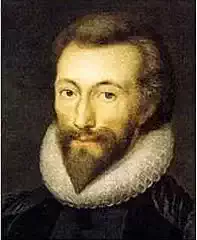
John Donne
The Ecstasy
The Ecstasy
Where, like a pillow on a bed
A pregnant bank swell'd up to rest
The violet's reclining head,
Sat we two, one another's best.
Our hands were firmly cemented
With a fast balm, which thence did spring;
Our eye-beams twisted, and did thread
Our eyes upon one double string;
So to'intergraft our hands, as yet
Was all the means to make us one,
And pictures in our eyes to get
Was all our propagation.
As 'twixt two equal armies fate
Suspends uncertain victory,
Our souls (which to advance their state
Were gone out) hung 'twixt her and me.
And whilst our souls negotiate there,
We like sepulchral statues lay;
All day, the same our postures were,
And we said nothing, all the day.
If any, so by love refin'd
That he soul's language understood,
And by good love were grown all mind,
Within convenient distance stood,
He (though he knew not which soul spake,
Because both meant, both spake the same)
Might thence a new concoction take
And part far purer than he came.
This ecstasy doth unperplex,
We said, and tell us what we love;
We see by this it was not sex,
We see we saw not what did move;
But as all several souls contain
Mixture of things, they know not what,
Love these mix'd souls doth mix again
And makes both one, each this and that.
A single violet transplant,
The strength, the colour, and the size,
(All which before was poor and scant)
Redoubles still, and multiplies.
When love with one another so
Interinanimates two souls,
That abler soul, which thence doth flow,
Defects of loneliness controls.
We then, who are this new soul, know
Of what we are compos'd and made,
For th' atomies of which we grow
Are souls. whom no change can invade.
But oh alas, so long, so far,
Our bodies why do we forbear?
They'are ours, though they'are not we; we are
The intelligences, they the spheres.
We owe them thanks, because they thus
Did us, to us, at first convey,
Yielded their senses' force to us,
Nor are dross to us, but allay.
On man heaven's influence works not so,
But that it first imprints the air;
So soul into the soul may flow,
Though it to body first repair.
As our blood labors to beget
Spirits, as like souls as it can,
Because such fingers need to knit
That subtle knot which makes us man,
So must pure lovers' souls descend
T' affections, and to faculties,
Which sense may reach and apprehend,
Else a great prince in prison lies.
To'our bodies turn we then, that so
Weak men on love reveal'd may look;
Love's mysteries in souls do grow,
But yet the body is his book.
And if some lover, such as we,
Have heard this dialogue of one,
Let him still mark us, he shall see
Small change, when we'are to bodies gone.
Where, like a pillow on a bed
A pregnant bank swell'd up to rest
The violet's reclining head,
Sat we two, one another's best.
Our hands were firmly cemented
With a fast balm, which thence did spring;
Our eye-beams twisted, and did thread
Our eyes upon one double string;
So to'intergraft our hands, as yet
Was all the means to make us one,
And pictures in our eyes to get
Was all our propagation.
As 'twixt two equal armies fate
Suspends uncertain victory,
Our souls (which to advance their state
Were gone out) hung 'twixt her and me.
And whilst our souls negotiate there,
We like sepulchral statues lay;
All day, the same our postures were,
And we said nothing, all the day.
If any, so by love refin'd
That he soul's language understood,
And by good love were grown all mind,
Within convenient distance stood,
He (though he knew not which soul spake,
Because both meant, both spake the same)
Might thence a new concoction take
And part far purer than he came.
This ecstasy doth unperplex,
We said, and tell us what we love;
We see by this it was not sex,
We see we saw not what did move;
But as all several souls contain
Mixture of things, they know not what,
Love these mix'd souls doth mix again
And makes both one, each this and that.
A single violet transplant,
The strength, the colour, and the size,
(All which before was poor and scant)
Redoubles still, and multiplies.
When love with one another so
Interinanimates two souls,
That abler soul, which thence doth flow,
Defects of loneliness controls.
We then, who are this new soul, know
Of what we are compos'd and made,
For th' atomies of which we grow
Are souls. whom no change can invade.
But oh alas, so long, so far,
Our bodies why do we forbear?
They'are ours, though they'are not we; we are
The intelligences, they the spheres.
We owe them thanks, because they thus
Did us, to us, at first convey,
Yielded their senses' force to us,
Nor are dross to us, but allay.
On man heaven's influence works not so,
But that it first imprints the air;
So soul into the soul may flow,
Though it to body first repair.
As our blood labors to beget
Spirits, as like souls as it can,
Because such fingers need to knit
That subtle knot which makes us man,
So must pure lovers' souls descend
T' affections, and to faculties,
Which sense may reach and apprehend,
Else a great prince in prison lies.
To'our bodies turn we then, that so
Weak men on love reveal'd may look;
Love's mysteries in souls do grow,
But yet the body is his book.
And if some lover, such as we,
Have heard this dialogue of one,
Let him still mark us, he shall see
Small change, when we'are to bodies gone.
371
John Donne
The Dissolution
The Dissolution
She's dead; and all which die
To their first elements resolve;
And we were mutual elements to us,
And made of one another.
My body then doth hers involve,
And those things whereof I consist hereby
In me abundant grow, and burdenous,
And nourish not, but smother.
My fire of passion, sighs of air,
Water of tears, and earthly sad despair,
Which my materials be,
But near worn out by love's security,
She, to my loss, doth by her death repair,
And I might live long wretched so
But that my fire doth with my fuel grow.
Now as those Active Kings
Whose foreign conquest treasure brings,
Receive more, and spend more, and soonest break:
This (which I am amazed that I can speak)
This death hath with my store
My use increased.
And so my soul more earnestly released
Will outstrip hers; as bullets flown before
A latter bullet may o'ertake, the powder being more.
She's dead; and all which die
To their first elements resolve;
And we were mutual elements to us,
And made of one another.
My body then doth hers involve,
And those things whereof I consist hereby
In me abundant grow, and burdenous,
And nourish not, but smother.
My fire of passion, sighs of air,
Water of tears, and earthly sad despair,
Which my materials be,
But near worn out by love's security,
She, to my loss, doth by her death repair,
And I might live long wretched so
But that my fire doth with my fuel grow.
Now as those Active Kings
Whose foreign conquest treasure brings,
Receive more, and spend more, and soonest break:
This (which I am amazed that I can speak)
This death hath with my store
My use increased.
And so my soul more earnestly released
Will outstrip hers; as bullets flown before
A latter bullet may o'ertake, the powder being more.
339
John Donne
The Canonization
The Canonization
For God's sake hold your tongue, and let me love,
Or chide my palsy, or my gout,
My five grey hairs, or ruin'd fortune flout,
With wealth your state, your mind with arts improve,
Take you a course, get you a place,
Observe his Honour, or his Grace,
Or the King's real, or his stamped face
Contemplate, what you will, approve,
So you will let me love.
Alas, alas, who's injur'd by my love?
What merchant's ships have my sighs drown'd?
Who says my tears have overflow'd his ground?
When did my colds a forward spring remove?
When did the heats which my veins fill
Add one more to the plaguy bill?
Soldiers find wars, and lawyers find out still
Litigious men, which quarrels move,
Though she and I do love.
Call us what you will, we are made such by love;
Call her one, me another fly,
We are tapers too, and at our own cost die,
And we in us find th' eagle and the dove.
The phoenix riddle hath more wit
By us; we two being one, are it.
So, to one neutral thing both sexes fit,
We die and rise the same, and prove
Mysterious by this love.
We can die by it, if not live by love,
And if unfit for tombs and hearse
Our legend be, it will be fit for verse;
And if no piece of chronicle we prove,
We'll build in sonnets pretty rooms;
As well a well-wrought urn becomes
The greatest ashes, as half-acre tombs,
And by these hymns all shall approve
Us canoniz'd for love;
And thus invoke us: "You, whom reverend love
Made one another's hermitage;
You, to whom love was peace, that now is rage;
Who did the whole world's soul contract, and drove
Into the glasses of your eyes
(So made such mirrors, and such spies,
That they did all to you epitomize)
Countries, towns, courts: beg from above
A pattern of your love!"
For God's sake hold your tongue, and let me love,
Or chide my palsy, or my gout,
My five grey hairs, or ruin'd fortune flout,
With wealth your state, your mind with arts improve,
Take you a course, get you a place,
Observe his Honour, or his Grace,
Or the King's real, or his stamped face
Contemplate, what you will, approve,
So you will let me love.
Alas, alas, who's injur'd by my love?
What merchant's ships have my sighs drown'd?
Who says my tears have overflow'd his ground?
When did my colds a forward spring remove?
When did the heats which my veins fill
Add one more to the plaguy bill?
Soldiers find wars, and lawyers find out still
Litigious men, which quarrels move,
Though she and I do love.
Call us what you will, we are made such by love;
Call her one, me another fly,
We are tapers too, and at our own cost die,
And we in us find th' eagle and the dove.
The phoenix riddle hath more wit
By us; we two being one, are it.
So, to one neutral thing both sexes fit,
We die and rise the same, and prove
Mysterious by this love.
We can die by it, if not live by love,
And if unfit for tombs and hearse
Our legend be, it will be fit for verse;
And if no piece of chronicle we prove,
We'll build in sonnets pretty rooms;
As well a well-wrought urn becomes
The greatest ashes, as half-acre tombs,
And by these hymns all shall approve
Us canoniz'd for love;
And thus invoke us: "You, whom reverend love
Made one another's hermitage;
You, to whom love was peace, that now is rage;
Who did the whole world's soul contract, and drove
Into the glasses of your eyes
(So made such mirrors, and such spies,
That they did all to you epitomize)
Countries, towns, courts: beg from above
A pattern of your love!"
354
John Donne
The Bait
The Bait
Come live with me, and be my love,
And we will some new pleasures prove
Of golden sands, and crystal brooks,
With silken lines, and silver hooks.
There will the river whispering run
Warm'd by thy eyes, more than the sun;
And there the 'enamour'd fish will stay,
Begging themselves they may betray.
When thou wilt swim in that live bath,
Each fish, which every channel hath,
Will amorously to thee swim,
Gladder to catch thee, than thou him.
If thou, to be so seen, be'st loth,
By sun or moon, thou dark'nest both,
And if myself have leave to see,
I need not their light having thee.
Let others freeze with angling reeds,
And cut their legs with shells and weeds,
Or treacherously poor fish beset,
With strangling snare, or windowy net.
Let coarse bold hands from slimy nest
The bedded fish in banks out-wrest;
Or curious traitors, sleeve-silk flies,
Bewitch poor fishes' wand'ring eyes.
For thee, thou need'st no such deceit,
For thou thyself art thine own bait:
That fish, that is not catch'd thereby,
Alas, is wiser far than I.
Come live with me, and be my love,
And we will some new pleasures prove
Of golden sands, and crystal brooks,
With silken lines, and silver hooks.
There will the river whispering run
Warm'd by thy eyes, more than the sun;
And there the 'enamour'd fish will stay,
Begging themselves they may betray.
When thou wilt swim in that live bath,
Each fish, which every channel hath,
Will amorously to thee swim,
Gladder to catch thee, than thou him.
If thou, to be so seen, be'st loth,
By sun or moon, thou dark'nest both,
And if myself have leave to see,
I need not their light having thee.
Let others freeze with angling reeds,
And cut their legs with shells and weeds,
Or treacherously poor fish beset,
With strangling snare, or windowy net.
Let coarse bold hands from slimy nest
The bedded fish in banks out-wrest;
Or curious traitors, sleeve-silk flies,
Bewitch poor fishes' wand'ring eyes.
For thee, thou need'st no such deceit,
For thou thyself art thine own bait:
That fish, that is not catch'd thereby,
Alas, is wiser far than I.
372
John Donne
The Broken Heart
The Broken Heart
He is stark mad, who ever says,
That he hath been in love an hour,
Yet not that love so soon decays,
But that it can ten in less space devour;
Who will believe me, if I swear
That I have had the plague a year ?
Who would not laugh at me, if I should say,
I saw a flask of powder burn a day ?
Ah, what trifle is a heart,
If once into Love’s hands it come!
All other griefs allow a part
To other griefs, and ask themselves but some,
They come to us, but us Love draws,
He swallows us, and never chaws:
By him, as by chain-shot, whole ranks do die,
He is the tyrant pike, our hearts the fry.
If`twere not so, what did become
Of my heart, when I first saw thee ?
I brought a heart into the room,
But from the room, I carried non with me;
If it had gone to thee, I know
Mine would have taught thy heart to show
More pity unto me: but Love, alas,
At one first blow did shiver it as glass.
Yet nothing can to nothing fall,
Nor any place be empty quite,
Therefore I think my breast hath all
Those pieces still, though they be not unite;
And now as broken glasses show
A hundred lesser faces, so
My rags of heart can like, wish, and adore,
But after one such love, can love no more.
He is stark mad, who ever says,
That he hath been in love an hour,
Yet not that love so soon decays,
But that it can ten in less space devour;
Who will believe me, if I swear
That I have had the plague a year ?
Who would not laugh at me, if I should say,
I saw a flask of powder burn a day ?
Ah, what trifle is a heart,
If once into Love’s hands it come!
All other griefs allow a part
To other griefs, and ask themselves but some,
They come to us, but us Love draws,
He swallows us, and never chaws:
By him, as by chain-shot, whole ranks do die,
He is the tyrant pike, our hearts the fry.
If`twere not so, what did become
Of my heart, when I first saw thee ?
I brought a heart into the room,
But from the room, I carried non with me;
If it had gone to thee, I know
Mine would have taught thy heart to show
More pity unto me: but Love, alas,
At one first blow did shiver it as glass.
Yet nothing can to nothing fall,
Nor any place be empty quite,
Therefore I think my breast hath all
Those pieces still, though they be not unite;
And now as broken glasses show
A hundred lesser faces, so
My rags of heart can like, wish, and adore,
But after one such love, can love no more.
316
John Donne
The Annunciation And Passion
The Annunciation And Passion
TAMELY, frail body, abstain to-day ; to-day
My soul eats twice, Christ hither and away.
She sees Him man, so like God made in this,
That of them both a circle emblem is,
Whose first and last concur ; this doubtful day
Of feast or fast, Christ came, and went away ;
She sees Him nothing, twice at once, who's all ;
She sees a cedar plant itself, and fall ;
Her Maker put to making, and the head
Of life at once not yet alive, yet dead ;
She sees at once the Virgin Mother stay
Reclused at home, public at Golgotha ;
Sad and rejoiced she's seen at once, and seen
At almost fifty, and at scarce fifteen ;
At once a son is promised her, and gone ;
Gabriell gives Christ to her, He her to John ;
Not fully a mother, she's in orbity ;
At once receiver and the legacy.
All this, and all between, this day hath shown,
Th' abridgement of Christ's story, which makes one—
As in plain maps, the furthest west is east—
Of th' angels Ave, and Consummatum est.
How well the Church, God's Court of Faculties,
Deals, in sometimes, and seldom joining these.
As by the self-fix'd Pole we never do
Direct our course, but the next star thereto,
Which shows where th'other is, and which we say
—Because it strays not far—doth never stray,
So God by His Church, nearest to him, we know,
And stand firm, if we by her motion go.
His Spirit, as His fiery pillar, doth
Lead, and His Church, as cloud ; to one end both.
This Church by letting those days join, hath shown
Death and conception in mankind is one ;
Or 'twas in Him the same humility,
That He would be a man, and leave to be ;
Or as creation He hath made, as God,
With the last judgment but one period,
His imitating spouse would join in one
Manhood's extremes ; He shall come, He is gone ;
Or as though one blood drop, which thence did fall,
Accepted, would have served, He yet shed all,
So though the least of His pains, deeds, or words,
Would busy a life, she all this day affords.
This treasure then, in gross, my soul, uplay,
And in my life retail it every day.
TAMELY, frail body, abstain to-day ; to-day
My soul eats twice, Christ hither and away.
She sees Him man, so like God made in this,
That of them both a circle emblem is,
Whose first and last concur ; this doubtful day
Of feast or fast, Christ came, and went away ;
She sees Him nothing, twice at once, who's all ;
She sees a cedar plant itself, and fall ;
Her Maker put to making, and the head
Of life at once not yet alive, yet dead ;
She sees at once the Virgin Mother stay
Reclused at home, public at Golgotha ;
Sad and rejoiced she's seen at once, and seen
At almost fifty, and at scarce fifteen ;
At once a son is promised her, and gone ;
Gabriell gives Christ to her, He her to John ;
Not fully a mother, she's in orbity ;
At once receiver and the legacy.
All this, and all between, this day hath shown,
Th' abridgement of Christ's story, which makes one—
As in plain maps, the furthest west is east—
Of th' angels Ave, and Consummatum est.
How well the Church, God's Court of Faculties,
Deals, in sometimes, and seldom joining these.
As by the self-fix'd Pole we never do
Direct our course, but the next star thereto,
Which shows where th'other is, and which we say
—Because it strays not far—doth never stray,
So God by His Church, nearest to him, we know,
And stand firm, if we by her motion go.
His Spirit, as His fiery pillar, doth
Lead, and His Church, as cloud ; to one end both.
This Church by letting those days join, hath shown
Death and conception in mankind is one ;
Or 'twas in Him the same humility,
That He would be a man, and leave to be ;
Or as creation He hath made, as God,
With the last judgment but one period,
His imitating spouse would join in one
Manhood's extremes ; He shall come, He is gone ;
Or as though one blood drop, which thence did fall,
Accepted, would have served, He yet shed all,
So though the least of His pains, deeds, or words,
Would busy a life, she all this day affords.
This treasure then, in gross, my soul, uplay,
And in my life retail it every day.
332
John Donne
That Time and Absence proves Rather helps than hurts to loves
That Time and Absence proves Rather helps than hurts to loves
ABSENCE, hear thou my protestation
Against thy strength,
Distance and length:
Do what thou canst for alteration,
For hearts of truest mettle
Absence doth join and Time doth settle.
Who loves a mistress of such quality,
His mind hath found
Affection's ground
Beyond time, place, and all mortality.
To hearts that cannot vary
Absence is present, Time doth tarry.
My senses want their outward motion
Which now within
Reason doth win,
Redoubled by her secret notion:
Like rich men that take pleasure
In hiding more than handling treasure.
By Absence this good means I gain,
That I can catch her
Where none can watch her,
In some close corner of my brain:
There I embrace and kiss her,
And so enjoy her and none miss her.
ABSENCE, hear thou my protestation
Against thy strength,
Distance and length:
Do what thou canst for alteration,
For hearts of truest mettle
Absence doth join and Time doth settle.
Who loves a mistress of such quality,
His mind hath found
Affection's ground
Beyond time, place, and all mortality.
To hearts that cannot vary
Absence is present, Time doth tarry.
My senses want their outward motion
Which now within
Reason doth win,
Redoubled by her secret notion:
Like rich men that take pleasure
In hiding more than handling treasure.
By Absence this good means I gain,
That I can catch her
Where none can watch her,
In some close corner of my brain:
There I embrace and kiss her,
And so enjoy her and none miss her.
330
John Donne
Song: Go and catch a falling star
Song: Go and catch a falling star
Go and catch a falling star,
Get with child a mandrake root,
Tell me where all past years are,
Or who cleft the devil's foot,
Teach me to hear mermaids singing,
Or to keep off envy's stinging,
And find
What wind
Serves to advance an honest mind.
If thou be'st born to strange sights,
Things invisible to see,
Ride ten thousand days and nights,
Till age snow white hairs on thee,
Thou, when thou return'st, wilt tell me,
All strange wonders that befell thee,
And swear,
No where
Lives a woman true, and fair.
If thou find'st one, let me know,
Such a pilgrimage were sweet;
Yet do not, I would not go,
Though at next door we might meet;
Though she were true, when you met her,
And last, till you write your letter,
Yet she
Will be
False, ere I come, to two, or three.
Go and catch a falling star,
Get with child a mandrake root,
Tell me where all past years are,
Or who cleft the devil's foot,
Teach me to hear mermaids singing,
Or to keep off envy's stinging,
And find
What wind
Serves to advance an honest mind.
If thou be'st born to strange sights,
Things invisible to see,
Ride ten thousand days and nights,
Till age snow white hairs on thee,
Thou, when thou return'st, wilt tell me,
All strange wonders that befell thee,
And swear,
No where
Lives a woman true, and fair.
If thou find'st one, let me know,
Such a pilgrimage were sweet;
Yet do not, I would not go,
Though at next door we might meet;
Though she were true, when you met her,
And last, till you write your letter,
Yet she
Will be
False, ere I come, to two, or three.
301
John Donne
Sweetest Love, I do not go
Sweetest Love, I do not go
Sweetest love, I do not go,
For weariness of thee,
Nor in hope the world can show
A fitter love for me;
But since that I
Must die at last, 'tis best
To use myself in jest
Thus by feign'd deaths to die.
Yesternight the sun went hence,
And yet is here today;
He hath no desire nor sense,
Nor half so short a way:
Then fear not me,
But believe that I shall make
Speedier journeys, since I take
More wings and spurs than he.
O how feeble is man's power,
That if good fortune fall,
Cannot add another hour,
Nor a lost hour recall!
But come bad chance,
And we join to'it our strength,
And we teach it art and length,
Itself o'er us to'advance.
When thou sigh'st, thou sigh'st not wind,
But sigh'st my soul away;
When thou weep'st, unkindly kind,
My life's blood doth decay.
It cannot be
That thou lov'st me, as thou say'st,
If in thine my life thou waste,
That art the best of me.
Let not thy divining heart
Forethink me any ill;
Destiny may take thy part,
And may thy fears fulfil;
But think that we
Are but turn'd aside to sleep;
They who one another keep
Alive, ne'er parted be.
Sweetest love, I do not go,
For weariness of thee,
Nor in hope the world can show
A fitter love for me;
But since that I
Must die at last, 'tis best
To use myself in jest
Thus by feign'd deaths to die.
Yesternight the sun went hence,
And yet is here today;
He hath no desire nor sense,
Nor half so short a way:
Then fear not me,
But believe that I shall make
Speedier journeys, since I take
More wings and spurs than he.
O how feeble is man's power,
That if good fortune fall,
Cannot add another hour,
Nor a lost hour recall!
But come bad chance,
And we join to'it our strength,
And we teach it art and length,
Itself o'er us to'advance.
When thou sigh'st, thou sigh'st not wind,
But sigh'st my soul away;
When thou weep'st, unkindly kind,
My life's blood doth decay.
It cannot be
That thou lov'st me, as thou say'st,
If in thine my life thou waste,
That art the best of me.
Let not thy divining heart
Forethink me any ill;
Destiny may take thy part,
And may thy fears fulfil;
But think that we
Are but turn'd aside to sleep;
They who one another keep
Alive, ne'er parted be.
346
John Donne
Self-Love
Self-Love
He that cannot choose but love,
And strives against it still,
Never shall my fancy move,
For he loves 'gainst his will;
Nor he which is all his own,
And can at pleasure choose,
When I am caught he can be gone,
And when he list refuse.
Nor he that loves none but fair,
For such by all are sought;
Nor he that can for foul ones care,
For his judgement then is nought;
Nor he that hath wit, for he
Will make me his jest or slave;
Nor a fool, for when others...,
He can neither....;
Nor he that still his Mistress pays,
For she is thralled therefore;
Nor he that pays not, for he says
Within She's worth no more.
Is there then no kind of men
Whom I may freely prove?
I will vent that humour then
In mine own self-love.
He that cannot choose but love,
And strives against it still,
Never shall my fancy move,
For he loves 'gainst his will;
Nor he which is all his own,
And can at pleasure choose,
When I am caught he can be gone,
And when he list refuse.
Nor he that loves none but fair,
For such by all are sought;
Nor he that can for foul ones care,
For his judgement then is nought;
Nor he that hath wit, for he
Will make me his jest or slave;
Nor a fool, for when others...,
He can neither....;
Nor he that still his Mistress pays,
For she is thralled therefore;
Nor he that pays not, for he says
Within She's worth no more.
Is there then no kind of men
Whom I may freely prove?
I will vent that humour then
In mine own self-love.
349
John Donne
Resurrection, imperfect
Resurrection, imperfect
Sleep sleep old Sun, thou canst not have repast
As yet, the wound thou took’st on friday last;
Sleep then, and rest; The world may bearer thy stay,
A better Sun rose before thee to day,
Who, not content to’englighten all that dwell
On the earths face, as thou, enlightned hell,
And made the darker fires languish in that vale,
As, at thy presence here, our fires grow pale.
Whose body having walk’d on earth, and now
Hasting to Heaven, would, that he might allow
Himself unto all stations, and fill all,
For these three days become a mineral;
He was all gold when he lay down, but rose
All tincture, and doth not alone dispose
Leaden and iron wills to good, but is
Of power to make even sinful flesh like his.
Had one of those, whose credulous piety
Thought, that a Soul one might discern and see
Go from a body,’at this sepulcher been,
And, issuing from the sheet, this body seen,
He would have justly thought this body a soul,
If not of any man, yet of the whole.
Desunt cætera
Sleep sleep old Sun, thou canst not have repast
As yet, the wound thou took’st on friday last;
Sleep then, and rest; The world may bearer thy stay,
A better Sun rose before thee to day,
Who, not content to’englighten all that dwell
On the earths face, as thou, enlightned hell,
And made the darker fires languish in that vale,
As, at thy presence here, our fires grow pale.
Whose body having walk’d on earth, and now
Hasting to Heaven, would, that he might allow
Himself unto all stations, and fill all,
For these three days become a mineral;
He was all gold when he lay down, but rose
All tincture, and doth not alone dispose
Leaden and iron wills to good, but is
Of power to make even sinful flesh like his.
Had one of those, whose credulous piety
Thought, that a Soul one might discern and see
Go from a body,’at this sepulcher been,
And, issuing from the sheet, this body seen,
He would have justly thought this body a soul,
If not of any man, yet of the whole.
Desunt cætera
347
John Donne
Oh my blacke Soule! now thou art summoned
Oh my blacke Soule! now thou art summoned
Oh my black Soule! Now thou art summoned
By sicknesse, deaths herald, and champion;
Thou art like a pilgrim, which abroad hath done
Treason, and durst not turne to whence hee is fled,
Or like a thiefe, which till deaths doome be read,
Wisheth himselfe deliverd from prison;
But damn'd and hal'd to execution,
Wisheth that sill he might be imprisioned;
Yet grace, if thou repent, thou canst not lacke;
But who shall give thee that grace to beginne?
Oh make thy selfe with holy mourning blacke;
And red with blushing, as thou art with sinne;
Or wash thee in Christ's blood, which hath this might
That being red, it dyes red soules to white.
Oh my black Soule! Now thou art summoned
By sicknesse, deaths herald, and champion;
Thou art like a pilgrim, which abroad hath done
Treason, and durst not turne to whence hee is fled,
Or like a thiefe, which till deaths doome be read,
Wisheth himselfe deliverd from prison;
But damn'd and hal'd to execution,
Wisheth that sill he might be imprisioned;
Yet grace, if thou repent, thou canst not lacke;
But who shall give thee that grace to beginne?
Oh make thy selfe with holy mourning blacke;
And red with blushing, as thou art with sinne;
Or wash thee in Christ's blood, which hath this might
That being red, it dyes red soules to white.
313
John Donne
On The Progress Of The Soul...
On The Progress Of The Soul...
Forget this rotten world, and unto thee
Let thine own times as an old story be.
Be not concern'd; study not why, nor when;
Do not so much as not believe a man.
For though to err, be worst, to try truths forth
Is far more business than this world is worth.
I'he world is but a carcass; thou art fed
By it, but as a worm, that carcass bred;
And why shouldst thou, poor worm, consider more,
When this world will grow better than before,
Than those thy fellow-worms do think upon
That carcass's last resurrection?
Forget this world, and scarce think of it so,
As of old clothes, cast off a year ago.
To be thus stupid is alacrity;
Men thus lethargic have best memory.
Look upward; that's towards her, whose happy state
We now lament not, but congratulate.
She, to whom all this world was but a stage,
Where all sat heark'ning how her youthful age
Should be employ'd, because in all she did
Some figure of the golden times was hid.
Who could not lack, what'er this world could give,
Because she was the form, that made it live;
Nor could complain that this world was unfit
To be stay'd in, then when she was in it;
She, that first tried indifferent desires
By virtue, and virtue by religious fires;
She, to whose person paradise adher'd,
As courts to princes; she, whose eyes enspher'd
Star-light enough t' have made the South control,
(Had she been there) the star-full Northern Pole;
She, she is gone; she is gone; when thou knowest this,
What fragmentary rubbish this world is
Thou knowest, and that it is not worth a thought;
He honours it too much that thinks it nought.
Think then, my soul, that death is but a groom,
Which brings a taper to the outward room,
Whence thou spiest first a little glimmering light,
And after brings it nearer to thy sight;
For such approaches doth heaven make in death.
Think thyself labouring now with broken breath,
And think those broken and soft notes to be
Division, and thy happiest harmony.
Think thee laid on thy death-bed, loose and slack,
And think that but unbinding of a pack,
To take one precious thing, thy soul, from thence.
Think thyself parch'd with fever's violence;
Anger thine ague more, by calling it
Thy physic; chide the slackness of the fit.
Think that thou hear'st thy knell, and think no more,
But that, as bells call'd thee to church before,
So this to the Triumphant Church calls thee.
Think Satan's sergeants round about thee be,
And think that but for legacies they thrust;
Give one thy pride, to'another give thy lust;
Give them those sins which they gave thee before,
And trust th' immaculate blood to wash thy score.
Think thy friends weeping round, and think that they
Weep but because they go not yet thy way.
Think that they close thine eyes, and think in this,
That they confess much in the world amiss,
Who dare not trust a dead man's eye with that
Which they from God and angels cover not.
Think that they shroud thee up, and think from thence
They reinvest thee in white innocence.
Think that thy body rots, and (if so low,
Thy soul exalted so, thy thoughts can go)
Think thee a prince, who of themselves create
Worms, which insensibly devour their state.
Think that they bury thee, and think that rite
Lays thee to sleep but a Saint Lucy's night.
....
Forget this rotten world, and unto thee
Let thine own times as an old story be.
Be not concern'd; study not why, nor when;
Do not so much as not believe a man.
For though to err, be worst, to try truths forth
Is far more business than this world is worth.
I'he world is but a carcass; thou art fed
By it, but as a worm, that carcass bred;
And why shouldst thou, poor worm, consider more,
When this world will grow better than before,
Than those thy fellow-worms do think upon
That carcass's last resurrection?
Forget this world, and scarce think of it so,
As of old clothes, cast off a year ago.
To be thus stupid is alacrity;
Men thus lethargic have best memory.
Look upward; that's towards her, whose happy state
We now lament not, but congratulate.
She, to whom all this world was but a stage,
Where all sat heark'ning how her youthful age
Should be employ'd, because in all she did
Some figure of the golden times was hid.
Who could not lack, what'er this world could give,
Because she was the form, that made it live;
Nor could complain that this world was unfit
To be stay'd in, then when she was in it;
She, that first tried indifferent desires
By virtue, and virtue by religious fires;
She, to whose person paradise adher'd,
As courts to princes; she, whose eyes enspher'd
Star-light enough t' have made the South control,
(Had she been there) the star-full Northern Pole;
She, she is gone; she is gone; when thou knowest this,
What fragmentary rubbish this world is
Thou knowest, and that it is not worth a thought;
He honours it too much that thinks it nought.
Think then, my soul, that death is but a groom,
Which brings a taper to the outward room,
Whence thou spiest first a little glimmering light,
And after brings it nearer to thy sight;
For such approaches doth heaven make in death.
Think thyself labouring now with broken breath,
And think those broken and soft notes to be
Division, and thy happiest harmony.
Think thee laid on thy death-bed, loose and slack,
And think that but unbinding of a pack,
To take one precious thing, thy soul, from thence.
Think thyself parch'd with fever's violence;
Anger thine ague more, by calling it
Thy physic; chide the slackness of the fit.
Think that thou hear'st thy knell, and think no more,
But that, as bells call'd thee to church before,
So this to the Triumphant Church calls thee.
Think Satan's sergeants round about thee be,
And think that but for legacies they thrust;
Give one thy pride, to'another give thy lust;
Give them those sins which they gave thee before,
And trust th' immaculate blood to wash thy score.
Think thy friends weeping round, and think that they
Weep but because they go not yet thy way.
Think that they close thine eyes, and think in this,
That they confess much in the world amiss,
Who dare not trust a dead man's eye with that
Which they from God and angels cover not.
Think that they shroud thee up, and think from thence
They reinvest thee in white innocence.
Think that thy body rots, and (if so low,
Thy soul exalted so, thy thoughts can go)
Think thee a prince, who of themselves create
Worms, which insensibly devour their state.
Think that they bury thee, and think that rite
Lays thee to sleep but a Saint Lucy's night.
....
327
John Donne
No Man Is An Island
No Man Is An Island
No man is an island,
Entire of itself.
Each is a piece of the continent,
A part of the main.
If a clod be washed away by the sea,
Europe is the less.
As well as if a promontory were.
As well as if a manor of thine own
Or of thine friend's were.
Each man's death diminishes me,
For I am involved in mankind.
Therefore, send not to know
For whom the bell tolls,
It tolls for thee.
No man is an island,
Entire of itself.
Each is a piece of the continent,
A part of the main.
If a clod be washed away by the sea,
Europe is the less.
As well as if a promontory were.
As well as if a manor of thine own
Or of thine friend's were.
Each man's death diminishes me,
For I am involved in mankind.
Therefore, send not to know
For whom the bell tolls,
It tolls for thee.
423
John Donne
La Corona
La Corona
Deign at my hands this crown of prayer and praise,
Weaved in my lone devout melancholy,
Thou which of good hast, yea, art treasury,
All changing unchanged Ancient of days.
But do not with a vile crown of frail bays
Reward my Muse's white sincerity ;
But what Thy thorny crown gain'd, that give me,
A crown of glory, which doth flower always.
The ends crown our works, but Thou crown'st our ends,
For at our ends begins our endless rest.
The first last end, now zealously possess'd,
With a strong sober thirst my soul attends.
'Tis time that heart and voice be lifted high ;
Salvation to all that will is nigh.
Deign at my hands this crown of prayer and praise,
Weaved in my lone devout melancholy,
Thou which of good hast, yea, art treasury,
All changing unchanged Ancient of days.
But do not with a vile crown of frail bays
Reward my Muse's white sincerity ;
But what Thy thorny crown gain'd, that give me,
A crown of glory, which doth flower always.
The ends crown our works, but Thou crown'st our ends,
For at our ends begins our endless rest.
The first last end, now zealously possess'd,
With a strong sober thirst my soul attends.
'Tis time that heart and voice be lifted high ;
Salvation to all that will is nigh.
447
John Donne
Holy Sonnet XVIII: Show me, dear Christ, thy Spouse, so bright and clear
Holy Sonnet XVIII: Show me, dear Christ, thy Spouse, so bright and clear
Show me, dear Christ, thy Spouse, so bright and clear.
What! is it She, which on the other shore
Goes richly painted? or which, robbed and tore,
Laments and mourns in Germany and here?
Sleeps she a thousand, then peeps up one year?
Is she self-truth and errs? now new, now outwore?
Doth she, and did she, and shall she evermore
On one, on seven, or on no hill appear?
Dwells she with us, or like adventuring knights
First travail we to seek and then make love?
Betray, kind husband, thy spouse to our sights,
And let mine amorous soul court thy mild dove,
Who is most true and pleasing to thee then
When she's embraced and open to most men.
Show me, dear Christ, thy Spouse, so bright and clear.
What! is it She, which on the other shore
Goes richly painted? or which, robbed and tore,
Laments and mourns in Germany and here?
Sleeps she a thousand, then peeps up one year?
Is she self-truth and errs? now new, now outwore?
Doth she, and did she, and shall she evermore
On one, on seven, or on no hill appear?
Dwells she with us, or like adventuring knights
First travail we to seek and then make love?
Betray, kind husband, thy spouse to our sights,
And let mine amorous soul court thy mild dove,
Who is most true and pleasing to thee then
When she's embraced and open to most men.
279
John Donne
Hym To God, My God In My Sickness
Hym To God, My God In My Sickness
Since I am coming to that holy room,
Where, with thy choir of saints for evermore,
I shall be made thy music; as I come
I tune the instrument here at the door,
And what I must do then, think here before.
Whilst my physicians by their love are grown
Cosmographers, and I their map, who lie
Flat on this bed, that by them may be shown
That this is my south-west discovery,
[lang l]Per fretum febris[lang e], by these straits to die,
pmdv3 n='33-11'> I joy, that in these straits I see my west;
For, though their currents yield return to none,
What shall my west hurt me? As west and east
In all flat maps (and I am one) are one,
So death doth touch the resurrection.
Is the Pacific Sea my home? Or are
The eastern riches? Is Jerusalem?
Anyan, and Magellan, and Gibraltar,
All straits, and none but straits, are ways to them,
Whether where Japhet dwelt, or Cham, or Shem.
We think that Paradise and Calvary,
Christ's cross, and Adam's tree, stood in one place;
Look, Lord, and find both Adams met in me;
As the first Adam's sweat surrounds my face,
May the last Adam's blood my soul embrace.
So, in his purple wrapp'd, receive me, Lord;
By these his thorns, give me his other crown;
And as to others' souls I preach'd thy word,
Be this my text, my sermon to mine own:
'Therefore that he may raise, the Lord throws down.'
Since I am coming to that holy room,
Where, with thy choir of saints for evermore,
I shall be made thy music; as I come
I tune the instrument here at the door,
And what I must do then, think here before.
Whilst my physicians by their love are grown
Cosmographers, and I their map, who lie
Flat on this bed, that by them may be shown
That this is my south-west discovery,
[lang l]Per fretum febris[lang e], by these straits to die,
pmdv3 n='33-11'> I joy, that in these straits I see my west;
For, though their currents yield return to none,
What shall my west hurt me? As west and east
In all flat maps (and I am one) are one,
So death doth touch the resurrection.
Is the Pacific Sea my home? Or are
The eastern riches? Is Jerusalem?
Anyan, and Magellan, and Gibraltar,
All straits, and none but straits, are ways to them,
Whether where Japhet dwelt, or Cham, or Shem.
We think that Paradise and Calvary,
Christ's cross, and Adam's tree, stood in one place;
Look, Lord, and find both Adams met in me;
As the first Adam's sweat surrounds my face,
May the last Adam's blood my soul embrace.
So, in his purple wrapp'd, receive me, Lord;
By these his thorns, give me his other crown;
And as to others' souls I preach'd thy word,
Be this my text, my sermon to mine own:
'Therefore that he may raise, the Lord throws down.'
282
John Donne
Holy Sonnet XVI: Father
Holy Sonnet XVI: Father
Father, part of his double interest
Unto thy kingdome, thy Sonne gives to mee,
His joynture in the knottie Trinitie
Hee keepes, and gives to me his deaths conquest.
This Lambe, whose death, with life the world hath blest,
Was from the worlds beginning slaine, and he
Hath made two Wills, which with the Legacie
Of his and thy kingdome, doe thy Sonnes invest.
Yet such are thy laws, that men argue yet
Whether a man those statutes can fulfill;
None doth; but all-healing grace and spirit
Revive againe what law and letter kill.
Thy lawes abridgement, and thy last command
Is all but love; Oh let this last Will stand!
Father, part of his double interest
Unto thy kingdome, thy Sonne gives to mee,
His joynture in the knottie Trinitie
Hee keepes, and gives to me his deaths conquest.
This Lambe, whose death, with life the world hath blest,
Was from the worlds beginning slaine, and he
Hath made two Wills, which with the Legacie
Of his and thy kingdome, doe thy Sonnes invest.
Yet such are thy laws, that men argue yet
Whether a man those statutes can fulfill;
None doth; but all-healing grace and spirit
Revive againe what law and letter kill.
Thy lawes abridgement, and thy last command
Is all but love; Oh let this last Will stand!
299
John Donne
Holy Sonnet XVII: Since She Whom I Loved
Holy Sonnet XVII: Since She Whom I Loved
Since she whom I loved hath paid her last debt
To Nature, and to hers, and my good is dead,
And her soul early into heaven ravished,
Wholly on heavenly things my mind is set.
here the admiring her my mind did whet
To seek thee, God; so streams do show the head;
But though I have found thee, and thou my thirst hast fed,
a holy thristy dropsy melts me yet.
But why should I beg more love, whenas thou
Dost woo my soul, for hers offering all thine:
And dost not only fear lest I allow
My love to saints and angels, things divine,
but in they tender jealousy dost doubt
lest the world, flesh, yea, devil put thee out.
Since she whom I loved hath paid her last debt
To Nature, and to hers, and my good is dead,
And her soul early into heaven ravished,
Wholly on heavenly things my mind is set.
here the admiring her my mind did whet
To seek thee, God; so streams do show the head;
But though I have found thee, and thou my thirst hast fed,
a holy thristy dropsy melts me yet.
But why should I beg more love, whenas thou
Dost woo my soul, for hers offering all thine:
And dost not only fear lest I allow
My love to saints and angels, things divine,
but in they tender jealousy dost doubt
lest the world, flesh, yea, devil put thee out.
403
John Donne
Holy Sonnet XIX: Oh, To Vex Me, Contraries Meet In One
Holy Sonnet XIX: Oh, To Vex Me, Contraries Meet In One
Oh, to vex me, contraries meet in one:
Inconstancy unnaturally hath begot
A constant habit; that when I would not
I change in vows, and in devotion.
As humorous is my contrition
As my profane love, and as soon forgot:
As riddlingly distempered, cold and hot,
As praying, as mute; as infinite, as none.
I durst not view heaven yesterday; and today
In prayers and flattering speeches I court God:
Tomorrow I quake with true fear of his rod.
So my devout fits come and go away
Like a fantastic ague; save that here
Those are my best days, when I shake with feare.
Oh, to vex me, contraries meet in one:
Inconstancy unnaturally hath begot
A constant habit; that when I would not
I change in vows, and in devotion.
As humorous is my contrition
As my profane love, and as soon forgot:
As riddlingly distempered, cold and hot,
As praying, as mute; as infinite, as none.
I durst not view heaven yesterday; and today
In prayers and flattering speeches I court God:
Tomorrow I quake with true fear of his rod.
So my devout fits come and go away
Like a fantastic ague; save that here
Those are my best days, when I shake with feare.
307
John Donne
Holy Sonnet XV: Wilt Thou Love God
Holy Sonnet XV: Wilt Thou Love God
Wilt thou love God, as he thee? then digest,
My Soule, this wholsome meditation,
How God the Spirit, by Angels waited on
In heaven, doth make his Temple in thy brest.
The Father having begot a Sonne most blest,
And still begetting, (for he ne'r begonne)
Hath deign'd to chuse thee by adoption,
Coheire to his glory, and Sabbaths endlesse rest;
And as a robb'd man, which by search doth finde
His stolne stuffe sold, must lose or buy it againe;
The Sonne of glory came downe, and was slaine,
Us whom he had made, and Satan stolne, to unbinde.
'Twas much, that man was made like God before,
But, that God should be made like man, much more.
Wilt thou love God, as he thee? then digest,
My Soule, this wholsome meditation,
How God the Spirit, by Angels waited on
In heaven, doth make his Temple in thy brest.
The Father having begot a Sonne most blest,
And still begetting, (for he ne'r begonne)
Hath deign'd to chuse thee by adoption,
Coheire to his glory, and Sabbaths endlesse rest;
And as a robb'd man, which by search doth finde
His stolne stuffe sold, must lose or buy it againe;
The Sonne of glory came downe, and was slaine,
Us whom he had made, and Satan stolne, to unbinde.
'Twas much, that man was made like God before,
But, that God should be made like man, much more.
279
John Donne
Holy Sonnet XIX: Oh, to Vex Me
Holy Sonnet XIX: Oh, to Vex Me
Oh, to vex me, contraryes meet in one:
Inconstancy unnaturally hath begott
A constant habit; that when I would not
I change in vowes, and in devotione.
As humorous is my contritione
As my prophane Love, and as soone forgott:
As ridlingly distemper'd, cold and hott,
As praying, as mute; as infinite, as none.
I durst not view heaven yesterday; and to day
In prayers, and flattering speaches I court God:
To morrow I quake with true feare of his rod.
So my devout fitts come and go away
Like a fantistique Ague: save that here
Those are my best dayes, when I shake with feare.
Oh, to vex me, contraryes meet in one:
Inconstancy unnaturally hath begott
A constant habit; that when I would not
I change in vowes, and in devotione.
As humorous is my contritione
As my prophane Love, and as soone forgott:
As ridlingly distemper'd, cold and hott,
As praying, as mute; as infinite, as none.
I durst not view heaven yesterday; and to day
In prayers, and flattering speaches I court God:
To morrow I quake with true feare of his rod.
So my devout fitts come and go away
Like a fantistique Ague: save that here
Those are my best dayes, when I shake with feare.
366
John Donne
Holy Sonnet XIV: Batter my heart
Holy Sonnet XIV: Batter my heart
Batter my heart, three-personed God; for You
As yet but knock, breathe, shine, and seek to mend;
That I may rise and stand, o'erthrow me,'and bend
Your force to break, blow, burn, and make me new.
I, like an usurped town, to'another due,
Labor to'admit You, but O, to no end;
Reason, Your viceroy'in me, me should defend,
But is captived, and proves weak or untrue.
Yet dearly'I love You,'and would be loved fain,
But am betrothed unto Your enemy.
Divorce me,'untie or break that knot again;
Take me to You, imprison me, for I
Except You'enthrall me, never shall be free,
Nor ever chaste, except You ravish me.
Batter my heart, three-personed God; for You
As yet but knock, breathe, shine, and seek to mend;
That I may rise and stand, o'erthrow me,'and bend
Your force to break, blow, burn, and make me new.
I, like an usurped town, to'another due,
Labor to'admit You, but O, to no end;
Reason, Your viceroy'in me, me should defend,
But is captived, and proves weak or untrue.
Yet dearly'I love You,'and would be loved fain,
But am betrothed unto Your enemy.
Divorce me,'untie or break that knot again;
Take me to You, imprison me, for I
Except You'enthrall me, never shall be free,
Nor ever chaste, except You ravish me.
250
John Donne
Holy Sonnet XIII: What If This Present Were The World's Last Night?
Holy Sonnet XIII: What If This Present Were The World's Last Night?
What if this present were the world's last night?
Mark in my heart, O soul, where thou dost dwell,
The picture of Christ crucified, and tell
Whether that countenance can thee affright,
Tears in his eyes quench the amazing light,
Blood fills his frowns, which from his pierced head fell.
And can that tongue adjudge thee unto hell,
Which prayed forgiveness for his foes' fierce spite?
No, no; but as in my idolatry
I said to all my profane mistresses,
Beauty, of pity, foulness only is
A sign of rigour: so I say to thee,
To wicked spirits are horrid shapes assigned,
This beauteous form assures a piteous mind.
What if this present were the world's last night?
Mark in my heart, O soul, where thou dost dwell,
The picture of Christ crucified, and tell
Whether that countenance can thee affright,
Tears in his eyes quench the amazing light,
Blood fills his frowns, which from his pierced head fell.
And can that tongue adjudge thee unto hell,
Which prayed forgiveness for his foes' fierce spite?
No, no; but as in my idolatry
I said to all my profane mistresses,
Beauty, of pity, foulness only is
A sign of rigour: so I say to thee,
To wicked spirits are horrid shapes assigned,
This beauteous form assures a piteous mind.
256