

Poems in this theme
Soul
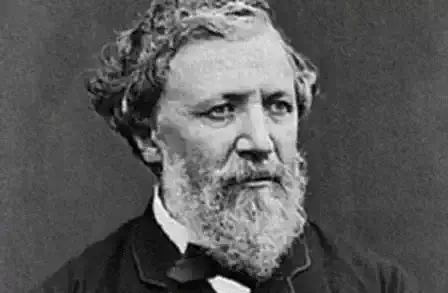
Robert Browning
Song
Song
I.
Nay but you, who do not love her,
Is she not pure gold, my mistress?
Holds earth aught---speak truth---above her?
Aught like this tress, see, and this tress,
And this last fairest tress of all,
So fair, see, ere I let it fall?
II.
Because, you spend your lives in praising;
To praise, you search the wide world over:
Then why not witness, calmly gazing,
If earth holds aught---speak truth---above her?
Above this tress, and this, I touch
But cannot praise, I love so much!
I.
Nay but you, who do not love her,
Is she not pure gold, my mistress?
Holds earth aught---speak truth---above her?
Aught like this tress, see, and this tress,
And this last fairest tress of all,
So fair, see, ere I let it fall?
II.
Because, you spend your lives in praising;
To praise, you search the wide world over:
Then why not witness, calmly gazing,
If earth holds aught---speak truth---above her?
Above this tress, and this, I touch
But cannot praise, I love so much!
334
Robert Browning
Saul
Saul
I.
Said Abner, ``At last thou art come! Ere I tell, ere thou speak,
``Kiss my cheek, wish me well!'' Then I wished it, and did kiss his cheek.
And he, ``Since the King, O my friend, for thy countenance sent,
``Neither drunken nor eaten have we; nor until from his tent
``Thou return with the joyful assurance the King liveth yet,
``Shall our lip with the honey be bright, with the water be wet.
``For out of the black mid-tent's silence, a space of three days,
``Not a sound hath escaped to thy servants, of prayer nor of praise,
``To betoken that Saul and the Spirit have ended their strife,
``And that, faint in his triumph, the monarch sinks back upon life.
II.
``Yet now my heart leaps, O beloved! God's child with his dew
``On thy gracious gold hair, and those lilies still living and blue
``Just broken to twine round thy harp-strings, as if no wild beat
``Were now raging to torture the desert!''
III.
Then I, as was meet,
Knelt down to the God of my fathers, and rose on my feet,
And ran o'er the sand burnt to powder. The tent was unlooped;
I pulled up the spear that obstructed, and under I stooped
Hands and knees on the slippery grass-patch, all withered and gone,
That extends to the second enclosure, I groped my way on
Till I felt where the foldskirts fly open. Then once more I prayed,
And opened the foldskirts and entered, and was not afraid
But spoke, ``Here is David, thy servant!'' And no voice replied.
At the first I saw nought but the blackness but soon I descried
A something more black than the blackness---the vast, the upright
Main prop which sustains the pavilion: and slow into sight
Grew a figure against it, gigantic and blackest of all.
Then a sunbeam, that burst thro' the tent-roof, showed Saul.
IV.
He stood as erect as that tent-prop, both arms stretched out wide
On the great cross-support in the centre, that goes to each side;
He relaxed not a muscle, but hung there as, caught in his pangs
And waiting his change, the king-serpent all heavily hangs,
Far away from his kind, in the pine, till deliverance come
With the spring-time,---so agonized Saul, drear and stark, blind and dumb.
V.
Then I tuned my harp,---took off the lilies we twine round its chords
Lest they snap 'neath the stress of the noon-tide---those sunbeams like swords!
And I first played the tune all our sheep know, as, one after one,
So docile they come to the pen-door till folding be done.
They are white and untorn by the bushes, for lo, they have fed
Where the long grasses stifle the water within the stream's bed;
And now one after one seeks its lodging, as star follows star
Into eve and the blue far above us,---so blue and so far!
VI.
---Then the tune, for which quails on the cornland will each leave his mate
To fly after the player; then, what makes the crickets elate
Till for boldness they fight one another: and then, what has weight
To set the quick jerboa<*> amusing outside his sand house---
There are none such as he for a wonder, half bird and half mouse!
God made all the creatures and gave them our love and our fear,
To give sign, we and they are his children, one family here.
VII.
Then I played the help-tune of our reapers, their wine-song, when hand
Grasps at hand, eye lights eye in good friendship, and great hearts expand
And grow one in the sense of this world's life.---And then, the last song
When the dead man is praised on his journey---``Bear, bear him along
``With his few faults shut up like dead flowerets! Are balm-seeds not here
``To console us? The land has none left such as he on the bier.
``Oh, would we might keep thee, my brother!''---And then, the glad chaunt
Of the marriage,---first go the young maidens, next, she whom we vaunt
As the beauty, the pride of our dwelling.---And then, the great march
Wherein man runs to man to assist him and buttress an arch
Nought can break; who shall harm them, our friends?---Then, the chorus intoned
As the Levites go up to the altar in glory enthroned.
But I stopped here: for here in the darkness Saul groaned.
VIII.
And I paused, held my breath in such silence, and listened apart;
And the tent shook, for mighty Saul shuddered: and sparkles 'gan dart
From the jewels that woke in his turban, at once with a start,
All its lordly male-sapphires, and rubies courageous at heart.
So the head: but the body still moved not, still hung there erect.
And I bent once again to my playing, pursued it unchecked,
As I sang,---
IX.
``Oh, our manhood's prime vigour! No spirit feels waste,
``Not a muscle is stopped in its playing nor sinew unbraced.
``Oh, the wild joys of living! the leaping from rock up to rock,
``The strong rending of boughs from the fir-tree, the cool silver shock
``Of the plunge in a pool's living water, the hunt of the bear,
``And the sultriness showing the lion is couched in his lair.
``And the meal, the rich dates yellowed over with gold dust divine,
``And the locust-flesh steeped in the pitcher, the full draught of wine,
``And the sleep in the dried river-channel where bulrushes tell
``That the water was wont to go warbling so softly and well.
``How good is man's life, the mere living! how fit to employ
``All the heart and the soul and the senses for ever in joy!
``Hast thou loved the white locks of thy father, whose sword thou didst guard
``When he trusted thee forth with the armies, for glorious reward?
``Didst thou see the thin hands of thy mother, held up as men sung
``The low song of the nearly-departed, and bear her faint tongue
``Joining in while it could to the witness, `Let one more attest,
`` `I have lived, seen God's hand thro'a lifetime, and all was for best'?
``Then they sung thro' their tears in strong triumph, not much, but the rest.
``And thy brothers, the help and the contest, the working whence grew
``Such result as, from seething grape-bundles, the spirit strained true:
``And the friends of thy boyhood---that boyhood of wonder and hope,
``Present promise and wealth of the future beyond the eye's scope,---
``Till lo, thou art grown to a monarch; a people is thine;
``And all gifts, which the world offers singly, on one head combine!
``On one head, all the beauty and strength, love and rage (like the throe
``That, a-work in the rock, helps its labour and lets the gold go)
``High ambition and deeds which surpass it, fame crowning them,---all
``Brought to blaze on the head of one creature---King Saul!''
X.
And lo, with that leap of my spirit,---heart, hand, harp and voice,
Each lifting Saul's name out of sorrow, each bidding rejoice
Saul's fame in the light it was made for---as when, dare I say,
The Lord's army, in rapture of service, strains through its array,
And up soareth the cherubim-chariot---``Saul!'' cried I, and stopped,
And waited the thing that should follow. Then Saul, who hung propped
By the tent's cross-support in the centre, was struck by his name.
Have ye seen when Spring's arrowy summons goes right to the aim,
And some mountain, the last to withstand her, that held (he alone,
While the vale laughed in freedom and flowers) on a broad bust of stone
A year's snow bound about for a breastplate,---leaves grasp of the sheet?
Fold on fold all at once it crowds thunderously down to his feet,
And there fronts you, stark, black, but alive yet, your mountain of old,
With his rents, the successive bequeathings of ages untold---
Yea, each harm got in fighting your battles, each furrow and scar
Of his head thrust 'twixt you and the tempest---all hail, there they are!
---Now again to be softened with verdure, again hold the nest
Of the dove, tempt the goat and its young to the green on his crest
For their food in the ardours of summer. One long shudder thrilled
All the tent till the very air tingled, then sank and was stilled
At the King's self left standing before me, released and aware.
What was gone, what remained? All to traverse, 'twixt hope and despair;
Death was past, life not come: so he waited. Awhile his right hand
Held the brow, helped the eyes left too vacant forthwith to remand
To their place what new objects should enter: 'twas Saul as before.
I looked up and dared gaze at those eyes, nor was hurt any more
Than by slow pallid sunsets in autumn, ye watch from the shore,
At their sad level gaze o'er the ocean---a sun's slow decline
Over hills which, resolved in stern silence, o'erlap and entwine
Base with base to knit strength more intensely: so, arm folded arm
O'er the chest whose slow heavings subsided.
XI.
What spell or what charm,
(For, awhile there was trouble within me) what next should I urge
To sustain him where song had restored him?---Song filled to the verge
His cup with the wine of this life, pressing all that it yields
Of mere fruitage, the strength and the beauty: beyond, on what fields,
Glean a vintage more potent and perfect to brighten the eye
And bring blood to the lip, and commend them the cup they put by?
He saith, ``It is good;'' still he drinks not: he lets me praise life,
Gives assent, yet would die for his own part.
XII.
Then fancies grew rife
Which had come long ago on the pasture, when round me the sheep
Fed in silence---above, the one eagle wheeled slow as in sleep;
And I lay in my hollow and mused on the world that might lie
'Neath his ken, though I saw but the strip 'twixt the hill and the sky:
And I laughed---``Since my days are ordained to be passed with my flocks,
``Let me people at least, with my fancies, the plains and the rocks,
``Dream the life I am never to mix with, and image the show
``Of mankind as they live in those fashions I hardly shall know!
``Schemes of life, its best rules and right uses, the courage that gains,
``And the prudence that keeps what men strive for.'' And now these old trains
Of vague thought came again; I grew surer; so, once more the string
Of my harp made response to my spirit, as thus---
XIII.
``Yea, my King,''
I began---``thou dost well in rejecting mere comforts that spring
``From the mere mortal life held in common by man and by brute:
``In our flesh grows the branch of this life, in our soul it bears fruit.
``Thou hast marked the slow rise of the tree,---how its stem trembled first
``Till it passed the kid's lip, the stag's antler then safely outburst
``The fan-branches all round; and thou mindest when these too, in turn
``Broke a-bloom and the palm-tree seemed perfect: yet more was to learn,
``E'en the good that comes in with the palm-fruit. Our dates shall we slight,
``When their juice brings a cure for all sorrow? or care for the plight
``Of the palm's self whose slow growth produced them? Not so! stem and branch
``Shall decay, nor be known in their place, while the palm-wine shall staunch
``Every wound of man's spirit in winter. I pour thee such wine.
``Leave the flesh to the fate it was fit for! the spirit be thine!
``By the spirit, when age shall o'ercome thee, thou still shalt enjoy
``More indeed, than at first when inconscious, the life of a boy.
``Crush that life, and behold its wine running! Each deed thou hast done
``Dies, revives, goes to work in the world; until e'en as the sun
``Looking down on the earth, though clouds spoil him, though tempests efface,
``Can find nothing his own deed produced not, must everywhere trace
``The results of his past summer-prime'---so, each ray of thy will,
``Every flash of thy passion and prowess, long over, shall thrill
``Thy whole people, the countless, with ardour, till they too give forth
``A like cheer to their sons, who in turn, fill the South and the North
``With the radiance thy deed was the germ of. Carouse in the past!
``But the license of age has its limit; thou diest at last:
``As the lion when age dims his eyeball, the rose at her height
``So with man---so his power and his beauty for ever take flight.
``No! Again a long draught of my soul-wine! Look forth o'er the years!
``Thou hast done now with eyes for the actual; begin with the seer's!
``Is Saul dead? In the depth of the vale make his tomb---bid arise
``A grey mountain of marble heaped four-square, till, built to the skies,
``Let it mark where the great First King slumbers: whose fame would ye know?
``Up above see the rock's naked face, where the record shall go
``In great characters cut by the scribe,---Such was Saul, so he did;
``With the sages directing the work, by the populace chid,---
``For not half, they'll affirm, is comprised there! Which fault to amend,
``In the grove with his kind grows the cedar, whereon they shall spend
``(See, in tablets 'tis level before them) their praise, and record
``With the gold of the graver, Saul's story,---the statesman's great word
``Side by side with the poet's sweet comment. The river's a-wave
``With smooth paper-reeds grazing each other when prophet-winds rave:
``So the pen gives unborn generations their due and their part
``In thy being! Then, first of the mighty, thank God that thou art!''
XIV.
And behold while I sang ... but O Thou who didst grant me that day,
And before it not seldom hast granted thy help to essay,
Carry on and complete an adventure,---my shield and my sword
In that act where my soul was thy servant, thy word was my word,---
Still be with me, who then at the summit of human endeavour
And scaling the highest, man's thought could, gazed hopeless as ever
On the new stretch of heaven above me---till, mighty to save,
Just one lift of thy hand cleared that distance---God's throne from man's grave!
Let me tell out my tale to its ending---my voice to my heart
Which can scarce dare believe in what marvels last night I took part,
As this morning I gather the fragments, alone with my sheep,
And still fear lest the terrible glory evanish like sleep!
For I wake in the grey dewy covert, while Hebron<*> upheaves
The dawn struggling with night on his shoulder, and Kidron<*> retrieves
Slow the damage of yesterday's sunshine.
XV.
I say then,---my song
While I sang thus, assuring the monarch, and ever more strong
Made a proffer of good to console him---he slowly resumed
His old motions and habitudes kingly. The right-hand replumed
His black locks to their wonted composure, adjusted the swathes
Of his turban, and see---the huge sweat that his countenance bathes,
He wipes off with the robe; and he girds now his loins as of yore,
And feels slow for the armlets of price, with the clasp set before.
He is Saul, ye remember in glory,---ere error had bent
The broad brow from the daily communion; and still, though much spent
Be the life and the bearing that front you, the same, God did choose,
To receive what a man may waste, desecrate, never quite lose.
So sank he along by the tent-prop till, stayed by the pile
Of his armour and war-cloak and garments, he leaned there awhile,
And sat out my singing,---one arm round the tent-prop, to raise
His bent head, and the other hung slack---till I touched on the praise
I foresaw from all men in all time, to the man patient there;
And thus ended, the harp falling forward. Then first I was 'ware
That he sat, as I say, with my head just above his vast knees
Which were thrust out on each side around me, like oak-roots which please
To encircle a lamb when it slumbers. I looked up to know
If the best I could do had brought solace: he spoke not, but slow
Lifted up the hand slack at his side, till he laid it with care
Soft and grave, but in mild settled will, on my brow: thro' my hair
The large fingers were pushed, and he bent back my bead, with kind power---
All my face back, intent to peruse it, as men do a flower.
Thus held he me there with his great eyes that scrutinized mine---
And oh, all my heart how it loved him! but where was the sign?
I yearned---``Could I help thee, my father, inventing a bliss,
``I would add, to that life of the past, both the future and this;
``I would give thee new life altogether, as good, ages hence,
``As this moment,---had love but the warrant, love's heart to dispense!''
XVI.
Then the truth came upon me. No harp more---no song more! outbroke---
XVII.
``I have gone the whole round of creation: I saw and I spoke:
``I, a work of God's hand for that purpose, received in my brain
``And pronounced on the rest of his hand-work---returned him again
``His creation's approval or censure: I spoke as I saw:
``I report, as a man may of God's work---all's love, yet all's law.
``Now I lay down the judgeship he lent me. Each faculty tasked
``To perceive him, has gained an abyss, where a dewdrop was asked.
``Have I knowledge? confounded it shrivels at Wisdom laid bare.
``Have I forethought? how purblind, how blank, to the Infinite Care!
``Do I task any faculty highest, to image success?
``I but open my eyes,---and perfection, no more and no less,
``In the kind I imagined, full-fronts me, and God is seen God
``In the star, in the stone, in the flesh, in the soul and the clod.
``And thus looking within and around me, I ever renew
``(With that stoop of the soul which in bending upraises it too)
``The submission of man's nothing-perfect to God's all-complete,
``As by each new obeisance in spirit, I climb to his feet.
``Yet with all this abounding experience, this deity known,
``I shall dare to discover some province, some gift of my own.
``There's a faculty pleasant to exercise, hard to hoodwink,
``I am fain to keep still in abeyance, (I laugh as I think)
``Lest, insisting to claim and parade in it, wot ye, I worst
``E'en the Giver in one gift.---Behold, I could love if I durst!
``But I sink the pretension as fearing a man may o'ertake
``God's own speed in the one way of love: I abstain for love's sake.
``---What, my soul? see thus far and no farther? when doors great and small,
``Nine-and-ninety flew ope at our touch, should the hundredth appal?
``In the least things have faith, yet distrust in the greatest of all?
``Do I find love so full in my nature, God's ultimate gift,
``That I doubt his own love can compete with it? Here, the parts shift?
``Here, the creature surpass the Creator,---the end, what Began?
``Would I fain in my impotent yearning do all for this man,
``And dare doubt he alone shall not help him, who yet alone can?
``Would it ever have entered my mind, the bare will, much less power,
``To bestow on this Saul what I sang of, the marvellous dower
``Of the life he was gifted and filled with? to make such a soul,
``Such a body, and then such an earth for insphering the whole?
``And doth it not enter my mind (as my warm tears attest)
``These good things being given, to go on, and give one more, the best?
``Ay, to save and redeem and restore him, maintain at the height
``This perfection,---succeed with life's day-spring, death's minute of night?
``Interpose at the difficult minute, snatch Saul the mistake,
``Saul the failure, the ruin he seems now,---and bid him awake
``From the dream, the probation, the prelude, to find himself set
``Clear and safe in new light and new life,---a new harmony yet
``To be run, and continued, and ended---who knows?---or endure!
``The man taught enough, by life's dream, of the rest to make sure;
``By the pain-throb, triumphantly winning intensified bliss,
``And the next world's reward and repose, by the struggles in this.
XVIII.
``I believe it! 'Tis thou, God, that givest, 'tis I who receive:
``In the first is the last, in thy will is my power to believe.
``All's one gift: thou canst grant it moreover, as prompt to my prayer
``As I breathe out this breath, as I open these arms to the air.
``From thy will, stream the worlds, life and nature, thy dread Sabaoth:
``_I_ will?---the mere atoms despise me! Why am I not loth
``To look that, even that in the face too? Why is it I dare
``Think but lightly of such impuissance? What stops my despair?
``This;---'tis not what man Does which exalts him, but what man Would do!
``See the King---I would help him but cannot, the wishes fall through.
``Could I wrestle to raise him from sorrow, grow poor to enrich,
``To fill up his life, starve my own out, I would---knowing which,
``I know that my service is perfect. Oh, speak through me now!
``Would I suffer for him that I love? So wouldst thou---so wilt thou!
``So shall crown thee the topmost, ineffablest, uttermost crown---
``And thy love fill infinitude wholly, nor leave up nor down
``One spot for the creature to stand in! It is by no breath,
``Turn of eye, wave of hand, that salvation joins issue with death!
``As thy Love is discovered almighty, almighty be proved
``Thy power, that exists with and for it, of being Beloved!
``He who did most, shall bear most; the strongest shall stand the most weak.
``'Tis the weakness in strength, that I cry for! my flesh, that I seek
``In the Godhead! I seek and I find it. O Saul, it shall be
``A Face like my face that receives thee; a Man like to me,
``Thou shalt love and be loved by, for ever: a Hand like this hand
``Shall throw open the gates of new life to thee! See the Christ stand!''
XIX.
I know not too well how I found my way home in the night.
There were witnesses, cohorts about me, to left and to right,
Angels, powers, the unuttered, unseen, the alive, the aware:
I repressed, I got through them as hardly, as strugglingly there,
As a runner beset by the populace famished for news---
Life or death. The whole earth was awakened, hell loosed with her crews;
And the stars of night beat with emotion, and tingled and shot
Out in fire the strong pain of pent knowledge: but I fainted not,
For the Hand still impelled me at once and supported, suppressed
All the tumult, and quenched it with quiet, and holy behest,
Till the rapture was shut in itself, and the earth sank to rest.
Anon at the dawn, all that trouble had withered from earth---
Not so much, but I saw it die out in the day's tender birth;
In the gathered intensity brought to the grey of the hills;
In the shuddering forests' held breath; in the sudden wind-thrills;
In the startled wild beasts that bore off, each with eye sidling still
Though averted with wonder and dread; in the birds stiff and chill
That rose heavily, as I approached them, made stupid with awe:
E'en the serpent that slid away silent,---he felt the new law.
The same stared in the white humid faces upturned by the flowers;
The same worked in the heart of the cedar and moved the vine-bowers:
And the little brooks witnessing murmured, persistent and low,
With their obstinate, all but hushed voices---``E'en so, it is so!''
* The jumping hare.
* One of the three cities of Refuge.
* A brook in Jerusalem.
I.
Said Abner, ``At last thou art come! Ere I tell, ere thou speak,
``Kiss my cheek, wish me well!'' Then I wished it, and did kiss his cheek.
And he, ``Since the King, O my friend, for thy countenance sent,
``Neither drunken nor eaten have we; nor until from his tent
``Thou return with the joyful assurance the King liveth yet,
``Shall our lip with the honey be bright, with the water be wet.
``For out of the black mid-tent's silence, a space of three days,
``Not a sound hath escaped to thy servants, of prayer nor of praise,
``To betoken that Saul and the Spirit have ended their strife,
``And that, faint in his triumph, the monarch sinks back upon life.
II.
``Yet now my heart leaps, O beloved! God's child with his dew
``On thy gracious gold hair, and those lilies still living and blue
``Just broken to twine round thy harp-strings, as if no wild beat
``Were now raging to torture the desert!''
III.
Then I, as was meet,
Knelt down to the God of my fathers, and rose on my feet,
And ran o'er the sand burnt to powder. The tent was unlooped;
I pulled up the spear that obstructed, and under I stooped
Hands and knees on the slippery grass-patch, all withered and gone,
That extends to the second enclosure, I groped my way on
Till I felt where the foldskirts fly open. Then once more I prayed,
And opened the foldskirts and entered, and was not afraid
But spoke, ``Here is David, thy servant!'' And no voice replied.
At the first I saw nought but the blackness but soon I descried
A something more black than the blackness---the vast, the upright
Main prop which sustains the pavilion: and slow into sight
Grew a figure against it, gigantic and blackest of all.
Then a sunbeam, that burst thro' the tent-roof, showed Saul.
IV.
He stood as erect as that tent-prop, both arms stretched out wide
On the great cross-support in the centre, that goes to each side;
He relaxed not a muscle, but hung there as, caught in his pangs
And waiting his change, the king-serpent all heavily hangs,
Far away from his kind, in the pine, till deliverance come
With the spring-time,---so agonized Saul, drear and stark, blind and dumb.
V.
Then I tuned my harp,---took off the lilies we twine round its chords
Lest they snap 'neath the stress of the noon-tide---those sunbeams like swords!
And I first played the tune all our sheep know, as, one after one,
So docile they come to the pen-door till folding be done.
They are white and untorn by the bushes, for lo, they have fed
Where the long grasses stifle the water within the stream's bed;
And now one after one seeks its lodging, as star follows star
Into eve and the blue far above us,---so blue and so far!
VI.
---Then the tune, for which quails on the cornland will each leave his mate
To fly after the player; then, what makes the crickets elate
Till for boldness they fight one another: and then, what has weight
To set the quick jerboa<*> amusing outside his sand house---
There are none such as he for a wonder, half bird and half mouse!
God made all the creatures and gave them our love and our fear,
To give sign, we and they are his children, one family here.
VII.
Then I played the help-tune of our reapers, their wine-song, when hand
Grasps at hand, eye lights eye in good friendship, and great hearts expand
And grow one in the sense of this world's life.---And then, the last song
When the dead man is praised on his journey---``Bear, bear him along
``With his few faults shut up like dead flowerets! Are balm-seeds not here
``To console us? The land has none left such as he on the bier.
``Oh, would we might keep thee, my brother!''---And then, the glad chaunt
Of the marriage,---first go the young maidens, next, she whom we vaunt
As the beauty, the pride of our dwelling.---And then, the great march
Wherein man runs to man to assist him and buttress an arch
Nought can break; who shall harm them, our friends?---Then, the chorus intoned
As the Levites go up to the altar in glory enthroned.
But I stopped here: for here in the darkness Saul groaned.
VIII.
And I paused, held my breath in such silence, and listened apart;
And the tent shook, for mighty Saul shuddered: and sparkles 'gan dart
From the jewels that woke in his turban, at once with a start,
All its lordly male-sapphires, and rubies courageous at heart.
So the head: but the body still moved not, still hung there erect.
And I bent once again to my playing, pursued it unchecked,
As I sang,---
IX.
``Oh, our manhood's prime vigour! No spirit feels waste,
``Not a muscle is stopped in its playing nor sinew unbraced.
``Oh, the wild joys of living! the leaping from rock up to rock,
``The strong rending of boughs from the fir-tree, the cool silver shock
``Of the plunge in a pool's living water, the hunt of the bear,
``And the sultriness showing the lion is couched in his lair.
``And the meal, the rich dates yellowed over with gold dust divine,
``And the locust-flesh steeped in the pitcher, the full draught of wine,
``And the sleep in the dried river-channel where bulrushes tell
``That the water was wont to go warbling so softly and well.
``How good is man's life, the mere living! how fit to employ
``All the heart and the soul and the senses for ever in joy!
``Hast thou loved the white locks of thy father, whose sword thou didst guard
``When he trusted thee forth with the armies, for glorious reward?
``Didst thou see the thin hands of thy mother, held up as men sung
``The low song of the nearly-departed, and bear her faint tongue
``Joining in while it could to the witness, `Let one more attest,
`` `I have lived, seen God's hand thro'a lifetime, and all was for best'?
``Then they sung thro' their tears in strong triumph, not much, but the rest.
``And thy brothers, the help and the contest, the working whence grew
``Such result as, from seething grape-bundles, the spirit strained true:
``And the friends of thy boyhood---that boyhood of wonder and hope,
``Present promise and wealth of the future beyond the eye's scope,---
``Till lo, thou art grown to a monarch; a people is thine;
``And all gifts, which the world offers singly, on one head combine!
``On one head, all the beauty and strength, love and rage (like the throe
``That, a-work in the rock, helps its labour and lets the gold go)
``High ambition and deeds which surpass it, fame crowning them,---all
``Brought to blaze on the head of one creature---King Saul!''
X.
And lo, with that leap of my spirit,---heart, hand, harp and voice,
Each lifting Saul's name out of sorrow, each bidding rejoice
Saul's fame in the light it was made for---as when, dare I say,
The Lord's army, in rapture of service, strains through its array,
And up soareth the cherubim-chariot---``Saul!'' cried I, and stopped,
And waited the thing that should follow. Then Saul, who hung propped
By the tent's cross-support in the centre, was struck by his name.
Have ye seen when Spring's arrowy summons goes right to the aim,
And some mountain, the last to withstand her, that held (he alone,
While the vale laughed in freedom and flowers) on a broad bust of stone
A year's snow bound about for a breastplate,---leaves grasp of the sheet?
Fold on fold all at once it crowds thunderously down to his feet,
And there fronts you, stark, black, but alive yet, your mountain of old,
With his rents, the successive bequeathings of ages untold---
Yea, each harm got in fighting your battles, each furrow and scar
Of his head thrust 'twixt you and the tempest---all hail, there they are!
---Now again to be softened with verdure, again hold the nest
Of the dove, tempt the goat and its young to the green on his crest
For their food in the ardours of summer. One long shudder thrilled
All the tent till the very air tingled, then sank and was stilled
At the King's self left standing before me, released and aware.
What was gone, what remained? All to traverse, 'twixt hope and despair;
Death was past, life not come: so he waited. Awhile his right hand
Held the brow, helped the eyes left too vacant forthwith to remand
To their place what new objects should enter: 'twas Saul as before.
I looked up and dared gaze at those eyes, nor was hurt any more
Than by slow pallid sunsets in autumn, ye watch from the shore,
At their sad level gaze o'er the ocean---a sun's slow decline
Over hills which, resolved in stern silence, o'erlap and entwine
Base with base to knit strength more intensely: so, arm folded arm
O'er the chest whose slow heavings subsided.
XI.
What spell or what charm,
(For, awhile there was trouble within me) what next should I urge
To sustain him where song had restored him?---Song filled to the verge
His cup with the wine of this life, pressing all that it yields
Of mere fruitage, the strength and the beauty: beyond, on what fields,
Glean a vintage more potent and perfect to brighten the eye
And bring blood to the lip, and commend them the cup they put by?
He saith, ``It is good;'' still he drinks not: he lets me praise life,
Gives assent, yet would die for his own part.
XII.
Then fancies grew rife
Which had come long ago on the pasture, when round me the sheep
Fed in silence---above, the one eagle wheeled slow as in sleep;
And I lay in my hollow and mused on the world that might lie
'Neath his ken, though I saw but the strip 'twixt the hill and the sky:
And I laughed---``Since my days are ordained to be passed with my flocks,
``Let me people at least, with my fancies, the plains and the rocks,
``Dream the life I am never to mix with, and image the show
``Of mankind as they live in those fashions I hardly shall know!
``Schemes of life, its best rules and right uses, the courage that gains,
``And the prudence that keeps what men strive for.'' And now these old trains
Of vague thought came again; I grew surer; so, once more the string
Of my harp made response to my spirit, as thus---
XIII.
``Yea, my King,''
I began---``thou dost well in rejecting mere comforts that spring
``From the mere mortal life held in common by man and by brute:
``In our flesh grows the branch of this life, in our soul it bears fruit.
``Thou hast marked the slow rise of the tree,---how its stem trembled first
``Till it passed the kid's lip, the stag's antler then safely outburst
``The fan-branches all round; and thou mindest when these too, in turn
``Broke a-bloom and the palm-tree seemed perfect: yet more was to learn,
``E'en the good that comes in with the palm-fruit. Our dates shall we slight,
``When their juice brings a cure for all sorrow? or care for the plight
``Of the palm's self whose slow growth produced them? Not so! stem and branch
``Shall decay, nor be known in their place, while the palm-wine shall staunch
``Every wound of man's spirit in winter. I pour thee such wine.
``Leave the flesh to the fate it was fit for! the spirit be thine!
``By the spirit, when age shall o'ercome thee, thou still shalt enjoy
``More indeed, than at first when inconscious, the life of a boy.
``Crush that life, and behold its wine running! Each deed thou hast done
``Dies, revives, goes to work in the world; until e'en as the sun
``Looking down on the earth, though clouds spoil him, though tempests efface,
``Can find nothing his own deed produced not, must everywhere trace
``The results of his past summer-prime'---so, each ray of thy will,
``Every flash of thy passion and prowess, long over, shall thrill
``Thy whole people, the countless, with ardour, till they too give forth
``A like cheer to their sons, who in turn, fill the South and the North
``With the radiance thy deed was the germ of. Carouse in the past!
``But the license of age has its limit; thou diest at last:
``As the lion when age dims his eyeball, the rose at her height
``So with man---so his power and his beauty for ever take flight.
``No! Again a long draught of my soul-wine! Look forth o'er the years!
``Thou hast done now with eyes for the actual; begin with the seer's!
``Is Saul dead? In the depth of the vale make his tomb---bid arise
``A grey mountain of marble heaped four-square, till, built to the skies,
``Let it mark where the great First King slumbers: whose fame would ye know?
``Up above see the rock's naked face, where the record shall go
``In great characters cut by the scribe,---Such was Saul, so he did;
``With the sages directing the work, by the populace chid,---
``For not half, they'll affirm, is comprised there! Which fault to amend,
``In the grove with his kind grows the cedar, whereon they shall spend
``(See, in tablets 'tis level before them) their praise, and record
``With the gold of the graver, Saul's story,---the statesman's great word
``Side by side with the poet's sweet comment. The river's a-wave
``With smooth paper-reeds grazing each other when prophet-winds rave:
``So the pen gives unborn generations their due and their part
``In thy being! Then, first of the mighty, thank God that thou art!''
XIV.
And behold while I sang ... but O Thou who didst grant me that day,
And before it not seldom hast granted thy help to essay,
Carry on and complete an adventure,---my shield and my sword
In that act where my soul was thy servant, thy word was my word,---
Still be with me, who then at the summit of human endeavour
And scaling the highest, man's thought could, gazed hopeless as ever
On the new stretch of heaven above me---till, mighty to save,
Just one lift of thy hand cleared that distance---God's throne from man's grave!
Let me tell out my tale to its ending---my voice to my heart
Which can scarce dare believe in what marvels last night I took part,
As this morning I gather the fragments, alone with my sheep,
And still fear lest the terrible glory evanish like sleep!
For I wake in the grey dewy covert, while Hebron<*> upheaves
The dawn struggling with night on his shoulder, and Kidron<*> retrieves
Slow the damage of yesterday's sunshine.
XV.
I say then,---my song
While I sang thus, assuring the monarch, and ever more strong
Made a proffer of good to console him---he slowly resumed
His old motions and habitudes kingly. The right-hand replumed
His black locks to their wonted composure, adjusted the swathes
Of his turban, and see---the huge sweat that his countenance bathes,
He wipes off with the robe; and he girds now his loins as of yore,
And feels slow for the armlets of price, with the clasp set before.
He is Saul, ye remember in glory,---ere error had bent
The broad brow from the daily communion; and still, though much spent
Be the life and the bearing that front you, the same, God did choose,
To receive what a man may waste, desecrate, never quite lose.
So sank he along by the tent-prop till, stayed by the pile
Of his armour and war-cloak and garments, he leaned there awhile,
And sat out my singing,---one arm round the tent-prop, to raise
His bent head, and the other hung slack---till I touched on the praise
I foresaw from all men in all time, to the man patient there;
And thus ended, the harp falling forward. Then first I was 'ware
That he sat, as I say, with my head just above his vast knees
Which were thrust out on each side around me, like oak-roots which please
To encircle a lamb when it slumbers. I looked up to know
If the best I could do had brought solace: he spoke not, but slow
Lifted up the hand slack at his side, till he laid it with care
Soft and grave, but in mild settled will, on my brow: thro' my hair
The large fingers were pushed, and he bent back my bead, with kind power---
All my face back, intent to peruse it, as men do a flower.
Thus held he me there with his great eyes that scrutinized mine---
And oh, all my heart how it loved him! but where was the sign?
I yearned---``Could I help thee, my father, inventing a bliss,
``I would add, to that life of the past, both the future and this;
``I would give thee new life altogether, as good, ages hence,
``As this moment,---had love but the warrant, love's heart to dispense!''
XVI.
Then the truth came upon me. No harp more---no song more! outbroke---
XVII.
``I have gone the whole round of creation: I saw and I spoke:
``I, a work of God's hand for that purpose, received in my brain
``And pronounced on the rest of his hand-work---returned him again
``His creation's approval or censure: I spoke as I saw:
``I report, as a man may of God's work---all's love, yet all's law.
``Now I lay down the judgeship he lent me. Each faculty tasked
``To perceive him, has gained an abyss, where a dewdrop was asked.
``Have I knowledge? confounded it shrivels at Wisdom laid bare.
``Have I forethought? how purblind, how blank, to the Infinite Care!
``Do I task any faculty highest, to image success?
``I but open my eyes,---and perfection, no more and no less,
``In the kind I imagined, full-fronts me, and God is seen God
``In the star, in the stone, in the flesh, in the soul and the clod.
``And thus looking within and around me, I ever renew
``(With that stoop of the soul which in bending upraises it too)
``The submission of man's nothing-perfect to God's all-complete,
``As by each new obeisance in spirit, I climb to his feet.
``Yet with all this abounding experience, this deity known,
``I shall dare to discover some province, some gift of my own.
``There's a faculty pleasant to exercise, hard to hoodwink,
``I am fain to keep still in abeyance, (I laugh as I think)
``Lest, insisting to claim and parade in it, wot ye, I worst
``E'en the Giver in one gift.---Behold, I could love if I durst!
``But I sink the pretension as fearing a man may o'ertake
``God's own speed in the one way of love: I abstain for love's sake.
``---What, my soul? see thus far and no farther? when doors great and small,
``Nine-and-ninety flew ope at our touch, should the hundredth appal?
``In the least things have faith, yet distrust in the greatest of all?
``Do I find love so full in my nature, God's ultimate gift,
``That I doubt his own love can compete with it? Here, the parts shift?
``Here, the creature surpass the Creator,---the end, what Began?
``Would I fain in my impotent yearning do all for this man,
``And dare doubt he alone shall not help him, who yet alone can?
``Would it ever have entered my mind, the bare will, much less power,
``To bestow on this Saul what I sang of, the marvellous dower
``Of the life he was gifted and filled with? to make such a soul,
``Such a body, and then such an earth for insphering the whole?
``And doth it not enter my mind (as my warm tears attest)
``These good things being given, to go on, and give one more, the best?
``Ay, to save and redeem and restore him, maintain at the height
``This perfection,---succeed with life's day-spring, death's minute of night?
``Interpose at the difficult minute, snatch Saul the mistake,
``Saul the failure, the ruin he seems now,---and bid him awake
``From the dream, the probation, the prelude, to find himself set
``Clear and safe in new light and new life,---a new harmony yet
``To be run, and continued, and ended---who knows?---or endure!
``The man taught enough, by life's dream, of the rest to make sure;
``By the pain-throb, triumphantly winning intensified bliss,
``And the next world's reward and repose, by the struggles in this.
XVIII.
``I believe it! 'Tis thou, God, that givest, 'tis I who receive:
``In the first is the last, in thy will is my power to believe.
``All's one gift: thou canst grant it moreover, as prompt to my prayer
``As I breathe out this breath, as I open these arms to the air.
``From thy will, stream the worlds, life and nature, thy dread Sabaoth:
``_I_ will?---the mere atoms despise me! Why am I not loth
``To look that, even that in the face too? Why is it I dare
``Think but lightly of such impuissance? What stops my despair?
``This;---'tis not what man Does which exalts him, but what man Would do!
``See the King---I would help him but cannot, the wishes fall through.
``Could I wrestle to raise him from sorrow, grow poor to enrich,
``To fill up his life, starve my own out, I would---knowing which,
``I know that my service is perfect. Oh, speak through me now!
``Would I suffer for him that I love? So wouldst thou---so wilt thou!
``So shall crown thee the topmost, ineffablest, uttermost crown---
``And thy love fill infinitude wholly, nor leave up nor down
``One spot for the creature to stand in! It is by no breath,
``Turn of eye, wave of hand, that salvation joins issue with death!
``As thy Love is discovered almighty, almighty be proved
``Thy power, that exists with and for it, of being Beloved!
``He who did most, shall bear most; the strongest shall stand the most weak.
``'Tis the weakness in strength, that I cry for! my flesh, that I seek
``In the Godhead! I seek and I find it. O Saul, it shall be
``A Face like my face that receives thee; a Man like to me,
``Thou shalt love and be loved by, for ever: a Hand like this hand
``Shall throw open the gates of new life to thee! See the Christ stand!''
XIX.
I know not too well how I found my way home in the night.
There were witnesses, cohorts about me, to left and to right,
Angels, powers, the unuttered, unseen, the alive, the aware:
I repressed, I got through them as hardly, as strugglingly there,
As a runner beset by the populace famished for news---
Life or death. The whole earth was awakened, hell loosed with her crews;
And the stars of night beat with emotion, and tingled and shot
Out in fire the strong pain of pent knowledge: but I fainted not,
For the Hand still impelled me at once and supported, suppressed
All the tumult, and quenched it with quiet, and holy behest,
Till the rapture was shut in itself, and the earth sank to rest.
Anon at the dawn, all that trouble had withered from earth---
Not so much, but I saw it die out in the day's tender birth;
In the gathered intensity brought to the grey of the hills;
In the shuddering forests' held breath; in the sudden wind-thrills;
In the startled wild beasts that bore off, each with eye sidling still
Though averted with wonder and dread; in the birds stiff and chill
That rose heavily, as I approached them, made stupid with awe:
E'en the serpent that slid away silent,---he felt the new law.
The same stared in the white humid faces upturned by the flowers;
The same worked in the heart of the cedar and moved the vine-bowers:
And the little brooks witnessing murmured, persistent and low,
With their obstinate, all but hushed voices---``E'en so, it is so!''
* The jumping hare.
* One of the three cities of Refuge.
* A brook in Jerusalem.
456
Robert Browning
Prospice
Prospice
Fear death?---to feel the fog in my throat,
The mist in my face,
When the snows begin, and the blasts denote
I am nearing the place,
The power of the night, the press of the storm,
The post of the foe;
Where he stands, the Arch Fear in a visible form;
Yet the strong man must go:
For the journey is done and the summit attained,
And the barriers fall,
Though a battle's to fight ere the guerdon be gained,
The reward of it all.
I was ever a fighter, so---one fight more,
The best and the last!
I would hate that Death bandaged my eyes, and forbore,
And made me creep past.
No! let me taste the whole of it, fare like my peers,
The heroes of old,
Bear the brunt, in a minute pay glad life's arrears
Of pain, darkness and cold.
For sudden the worst turns the best to the brave.
The black minute's at end,
And the elements' rage, the fiend voices that rave,
Shall dwindle, shall blend,
Shall change, shall become first a peace out of pain.
Then a light, then thy breat,
O thou soul of my soul! I shall clasp thee again,
And with God be the rest!
Fear death?---to feel the fog in my throat,
The mist in my face,
When the snows begin, and the blasts denote
I am nearing the place,
The power of the night, the press of the storm,
The post of the foe;
Where he stands, the Arch Fear in a visible form;
Yet the strong man must go:
For the journey is done and the summit attained,
And the barriers fall,
Though a battle's to fight ere the guerdon be gained,
The reward of it all.
I was ever a fighter, so---one fight more,
The best and the last!
I would hate that Death bandaged my eyes, and forbore,
And made me creep past.
No! let me taste the whole of it, fare like my peers,
The heroes of old,
Bear the brunt, in a minute pay glad life's arrears
Of pain, darkness and cold.
For sudden the worst turns the best to the brave.
The black minute's at end,
And the elements' rage, the fiend voices that rave,
Shall dwindle, shall blend,
Shall change, shall become first a peace out of pain.
Then a light, then thy breat,
O thou soul of my soul! I shall clasp thee again,
And with God be the rest!
576
Robert Browning
Rabbi Ben Ezra
Rabbi Ben Ezra
Grow old along with me!
The best is yet to be,
The last of life, for which the first was made:
Our times are in His hand
Who saith 'A whole I planned,
Youth shows but half; trust God: see all, nor be afraid!'
Not that, amassing flowers,
Youth sighed 'Which rose make ours,
Which lily leave and then as best recall?'
Not that, admiring stars,
It yearned 'Nor Jove, nor Mars;
Mine be some figured flame which blends, transcends them all!'
Not for such hopes and fears
Annulling youth's brief years,
Do I remonstrate: folly wide the mark!
Rather I prize the doubt
Low kinds exist without,
Finished and finite clods, untroubled by a spark.
Poor vaunt of life indeed,
Were man but formed to feed
On joy, to solely seek and find and feast:
Such feasting ended, then
As sure an end to men;
Irks care the crop-full bird? Frets doubt the maw-crammed beast?
Rejoice we are allied
To That which doth provide
And not partake, effect and not receive!
A spark disturbs our clod;
Nearer we hold of God
Who gives, than of His tribes that take, I must believe.
Then, welcome each rebuff
That turns earth's smoothness rough,
Each sting that bids nor sit nor stand but go!
Be our joys three-parts pain!
Strive, and hold cheap the strain;
Learn, nor account the pang; dare, never grudge the throe!
For thence,--a paradox
Which comforts while it mocks,--
Shall life succeed in that it seems to fail:
What I aspired to be,
And was not, comforts me:
A brute I might have been, but would not sink i' the scale.
What is he but a brute
Whose flesh has soul to suit,
Whose spirit works lest arms and legs want play?
To man, propose this test--
Thy body at its best,
How far can that project thy soul on its lone way?
Yet gifts should prove their use:
I own the Past profuse
Of power each side, perfection every turn:
Eyes, ears took in their dole,
Brain treasured up the whole;
Should not the heart beat once 'How good to live and learn?'
Not once beat 'Praise be Thine!
I see the whole design,
I, who saw power, see now love perfect too:
Perfect I call Thy plan:
Thanks that I was a man!
Maker, remake, complete,--I trust what Thou shalt do!'
For pleasant is this flesh;
Our soul, in its rose-mesh
Pulled ever to the earth, still yearns for rest;
Would we some prize might hold
To match those manifold
Possessions of the brute,--gain most, as we did best!
Let us not always say,
'Spite of this flesh to-day
I strove, made head, gained ground upon the whole!'
As the bird wings and sings,
Let us cry 'All good things
Are ours, nor soul helps flesh more, now, than flesh helps soul!'
Therefore I summon age
To grant youth's heritage,
Life's struggle having so far reached its term:
Thence shall I pass, approved
A man, for aye removed
From the developed brute; a god though in the germ.
And I shall thereupon
Take rest, ere I be gone
Once more on my adventure brave and new:
Fearless and unperplexed,
When I wage battle next,
What weapons to select, what armour to indue.
Youth ended, I shall try
My gain or loss thereby;
Leave the fire ashes, what survives is gold:
And I shall weigh the same,
Give life its praise or blame:
Young, all lay in dispute; I shall know, being old.
For note, when evening shuts,
A certain moment cuts
The deed off, calls the glory from the grey:
A whisper from the west
Shoots--'Add this to the rest,
Take it and try its worth: here dies another day.'
So, still within this life,
Though lifted o'er its strife,
Let me discern, compare, pronounce at last,
This rage was right i' the main,
That acquiescence vain:
The Future I may face now I have proved the Past.'
For more is not reserved
To man, with soul just nerved
To act to-morrow what he learns to-day:
Here, work enough to watch
The Master work, and catch
Hints of the proper craft, tricks of the tool's true play.
As it was better, youth
Should strive, through acts uncouth,
Toward making, than repose on aught found made:
So, better, age, exempt
From strife, should know, than tempt
Further. Thou waitedst age: wait death nor be afraid!
Enough now, if the Right
And Good and Infinite
Be named here, as thou callest thy hand thine own
With knowledge absolute,
Subject to no dispute
From fools that crowded youth, nor let thee feel alone.
Be there, for once and all,
Severed great minds from small,
Announced to each his station in the Past!
Was I, the world arraigned,
Were they, my soul disdained,
Right? Let age speak the truth and give us peace at last!
Now, who shall arbitrate?
Ten men love what I hate,
Shun what I follow, slight what I receive;
Ten, who in ears and eyes
Match me: we all surmise,
They this thing, and I that: whom shall my soul believe?
Not on the vulgar mass
Called 'work,' must sentence pass,
Things done, that took the eye and had the price;
O'er which, from level stand,
The low world laid its hand,
Found straightway to its mind, could value in a trice:
But all, the world's coarse thumb
And finger failed to plumb,
So passed in making up the main account;
All instincts immature,
All purposes unsure,
That weighed not as his work, yet swelled the man's amount:
Thoughts hardly to be packed
Into a narrow act,
Fancies that broke through language and escaped;
All I could never be,
All, men ignored in me,
This, I was worth to God, whose wheel the pitcher shaped.
Ay, note that Potter's wheel,
That metaphor! and feel
Why time spins fast, why passive lies our clay,--
Thou, to whom fools propound,
When the wine makes its round,
'Since life fleets, all is change; the Past gone, seize to-day!'
Fool! All that is, at all,
Lasts ever, past recall;
Earth changes, but thy soul and God stand sure:
What entered into thee,
That was, is, and shall be:
Time's wheel runs back or stops: Potter and clay endure.
He fixed thee mid this dance
Of plastic circumstance,
This Present, thou, forsooth, wouldst fain arrest:
Machinery just meant
To give thy soul its bent,
Try thee and turn thee forth, sufficiently impressed.
What though the earlier grooves,
Which ran the laughing loves
Around thy base, no longer pause and press?
What though, about thy rim,
Skull-things in order grim
Grow out, in graver mood, obey the sterner stress?
Look not thou down but up!
To uses of a cup,
The festal board, lamp's flash and trumpet's peal,
The new wine's foaming flow,
The Master's lips a-glow!
Thou, heaven's consummate cup, what need'st thou with earth's wheel?
But I need, now as then,
Thee, God, who mouldest men;
And since, not even while the whirl was worst,
Did I,--to the wheel of life
With shapes and colours rife,
Bound dizzily,--mistake my end, to slake Thy thirst:
So, take and use Thy work:
Amend what flaws may lurk,
What strain o' the stuff, what warpings past the aim!
My times be in Thy hand!
Perfect the cup as planned!
Let age approve of youth, and death complete the same!
Grow old along with me!
The best is yet to be,
The last of life, for which the first was made:
Our times are in His hand
Who saith 'A whole I planned,
Youth shows but half; trust God: see all, nor be afraid!'
Not that, amassing flowers,
Youth sighed 'Which rose make ours,
Which lily leave and then as best recall?'
Not that, admiring stars,
It yearned 'Nor Jove, nor Mars;
Mine be some figured flame which blends, transcends them all!'
Not for such hopes and fears
Annulling youth's brief years,
Do I remonstrate: folly wide the mark!
Rather I prize the doubt
Low kinds exist without,
Finished and finite clods, untroubled by a spark.
Poor vaunt of life indeed,
Were man but formed to feed
On joy, to solely seek and find and feast:
Such feasting ended, then
As sure an end to men;
Irks care the crop-full bird? Frets doubt the maw-crammed beast?
Rejoice we are allied
To That which doth provide
And not partake, effect and not receive!
A spark disturbs our clod;
Nearer we hold of God
Who gives, than of His tribes that take, I must believe.
Then, welcome each rebuff
That turns earth's smoothness rough,
Each sting that bids nor sit nor stand but go!
Be our joys three-parts pain!
Strive, and hold cheap the strain;
Learn, nor account the pang; dare, never grudge the throe!
For thence,--a paradox
Which comforts while it mocks,--
Shall life succeed in that it seems to fail:
What I aspired to be,
And was not, comforts me:
A brute I might have been, but would not sink i' the scale.
What is he but a brute
Whose flesh has soul to suit,
Whose spirit works lest arms and legs want play?
To man, propose this test--
Thy body at its best,
How far can that project thy soul on its lone way?
Yet gifts should prove their use:
I own the Past profuse
Of power each side, perfection every turn:
Eyes, ears took in their dole,
Brain treasured up the whole;
Should not the heart beat once 'How good to live and learn?'
Not once beat 'Praise be Thine!
I see the whole design,
I, who saw power, see now love perfect too:
Perfect I call Thy plan:
Thanks that I was a man!
Maker, remake, complete,--I trust what Thou shalt do!'
For pleasant is this flesh;
Our soul, in its rose-mesh
Pulled ever to the earth, still yearns for rest;
Would we some prize might hold
To match those manifold
Possessions of the brute,--gain most, as we did best!
Let us not always say,
'Spite of this flesh to-day
I strove, made head, gained ground upon the whole!'
As the bird wings and sings,
Let us cry 'All good things
Are ours, nor soul helps flesh more, now, than flesh helps soul!'
Therefore I summon age
To grant youth's heritage,
Life's struggle having so far reached its term:
Thence shall I pass, approved
A man, for aye removed
From the developed brute; a god though in the germ.
And I shall thereupon
Take rest, ere I be gone
Once more on my adventure brave and new:
Fearless and unperplexed,
When I wage battle next,
What weapons to select, what armour to indue.
Youth ended, I shall try
My gain or loss thereby;
Leave the fire ashes, what survives is gold:
And I shall weigh the same,
Give life its praise or blame:
Young, all lay in dispute; I shall know, being old.
For note, when evening shuts,
A certain moment cuts
The deed off, calls the glory from the grey:
A whisper from the west
Shoots--'Add this to the rest,
Take it and try its worth: here dies another day.'
So, still within this life,
Though lifted o'er its strife,
Let me discern, compare, pronounce at last,
This rage was right i' the main,
That acquiescence vain:
The Future I may face now I have proved the Past.'
For more is not reserved
To man, with soul just nerved
To act to-morrow what he learns to-day:
Here, work enough to watch
The Master work, and catch
Hints of the proper craft, tricks of the tool's true play.
As it was better, youth
Should strive, through acts uncouth,
Toward making, than repose on aught found made:
So, better, age, exempt
From strife, should know, than tempt
Further. Thou waitedst age: wait death nor be afraid!
Enough now, if the Right
And Good and Infinite
Be named here, as thou callest thy hand thine own
With knowledge absolute,
Subject to no dispute
From fools that crowded youth, nor let thee feel alone.
Be there, for once and all,
Severed great minds from small,
Announced to each his station in the Past!
Was I, the world arraigned,
Were they, my soul disdained,
Right? Let age speak the truth and give us peace at last!
Now, who shall arbitrate?
Ten men love what I hate,
Shun what I follow, slight what I receive;
Ten, who in ears and eyes
Match me: we all surmise,
They this thing, and I that: whom shall my soul believe?
Not on the vulgar mass
Called 'work,' must sentence pass,
Things done, that took the eye and had the price;
O'er which, from level stand,
The low world laid its hand,
Found straightway to its mind, could value in a trice:
But all, the world's coarse thumb
And finger failed to plumb,
So passed in making up the main account;
All instincts immature,
All purposes unsure,
That weighed not as his work, yet swelled the man's amount:
Thoughts hardly to be packed
Into a narrow act,
Fancies that broke through language and escaped;
All I could never be,
All, men ignored in me,
This, I was worth to God, whose wheel the pitcher shaped.
Ay, note that Potter's wheel,
That metaphor! and feel
Why time spins fast, why passive lies our clay,--
Thou, to whom fools propound,
When the wine makes its round,
'Since life fleets, all is change; the Past gone, seize to-day!'
Fool! All that is, at all,
Lasts ever, past recall;
Earth changes, but thy soul and God stand sure:
What entered into thee,
That was, is, and shall be:
Time's wheel runs back or stops: Potter and clay endure.
He fixed thee mid this dance
Of plastic circumstance,
This Present, thou, forsooth, wouldst fain arrest:
Machinery just meant
To give thy soul its bent,
Try thee and turn thee forth, sufficiently impressed.
What though the earlier grooves,
Which ran the laughing loves
Around thy base, no longer pause and press?
What though, about thy rim,
Skull-things in order grim
Grow out, in graver mood, obey the sterner stress?
Look not thou down but up!
To uses of a cup,
The festal board, lamp's flash and trumpet's peal,
The new wine's foaming flow,
The Master's lips a-glow!
Thou, heaven's consummate cup, what need'st thou with earth's wheel?
But I need, now as then,
Thee, God, who mouldest men;
And since, not even while the whirl was worst,
Did I,--to the wheel of life
With shapes and colours rife,
Bound dizzily,--mistake my end, to slake Thy thirst:
So, take and use Thy work:
Amend what flaws may lurk,
What strain o' the stuff, what warpings past the aim!
My times be in Thy hand!
Perfect the cup as planned!
Let age approve of youth, and death complete the same!
321
Robert Browning
Popularity
Popularity
I.
Stand still, true poet that you are!
I know you; let me try and draw you.
Some night you'll fail us: when afar
You rise, remember one man saw you,
Knew you, and named a star!
II.
My star, God's glow-worm! Why extend
That loving hand of his which leads you
Yet locks you safe from end to end
Of this dark world, unless he needs you,
just saves your light to spend?
III.
His clenched hand shall unclose at last,
I know, and let out all the beauty:
My poet holds the future fast,
Accepts the coming ages' duty,
Their present for this past.
IV.
That day, the earth's feast-master's brow
Shall clear, to God the chalice raising;
``Others give best at first, but thou
``Forever set'st our table praising,
``Keep'st the good wine till now!''
V.
Meantime, I'll draw you as you stand,
With few or none to watch and wonder:
I'll say---a fisher, on the sand
By Tyre the old, with ocean-plunder,
A netful, brought to land.
VI.
Who has not heard how Tyrian shells
Enclosed the blue, that dye of dyes
Whereof one drop worked miracles,
And coloured like Astarte's<*> eyes
Raw silk the merchant sells?
VII.
And each bystander of them all
Could criticize, and quote tradition
How depths of blue sublimed some pall
---To get which, pricked a king's ambition
Worth sceptre, crown and ball.
VIII.
Yet there's the dye, in that rough mesh,
The sea has only just o'erwhispered!
Live whelks, each lip's beard dripping fresh,
As if they still the water's lisp heard
Through foam the rock-weeds thresh.
IX.
Enough to furnish Solomon
Such hangings for his cedar-house,
That, when gold-robed he took the throne
In that abyss of blue, the Spouse
Might swear his presence shone
X.
Most like the centre-spike of gold
Which burns deep in the blue-bell's womb,
What time, with ardours manifold,
The bee goes singing to her groom,
Drunken and overbold.
XI.
Mere conchs! not fit for warp or woof!
Till cunning come to pound and squeeze
And clarify,---refine to proof
The liquor filtered by degrees,
While the world stands aloof.
XII.
And there's the extract, flasked and fine,
And priced and saleable at last!
And Hobbs, Nobbs, Stokes and Nokes combine
To paint the future from the past,
Put blue into their line.
XIII.
Hobbs hints blue,---Straight he turtle eats:
Nobbs prints blue,---claret crowns his cup:
Nokes outdares Stokes in azure feats,---
Both gorge. Who fished the murex<*> up?
What porridge had John Keats?
* The Syrian Venus.
* Molluscs from which the famous Tyrian
* purple dye was obtained.
I.
Stand still, true poet that you are!
I know you; let me try and draw you.
Some night you'll fail us: when afar
You rise, remember one man saw you,
Knew you, and named a star!
II.
My star, God's glow-worm! Why extend
That loving hand of his which leads you
Yet locks you safe from end to end
Of this dark world, unless he needs you,
just saves your light to spend?
III.
His clenched hand shall unclose at last,
I know, and let out all the beauty:
My poet holds the future fast,
Accepts the coming ages' duty,
Their present for this past.
IV.
That day, the earth's feast-master's brow
Shall clear, to God the chalice raising;
``Others give best at first, but thou
``Forever set'st our table praising,
``Keep'st the good wine till now!''
V.
Meantime, I'll draw you as you stand,
With few or none to watch and wonder:
I'll say---a fisher, on the sand
By Tyre the old, with ocean-plunder,
A netful, brought to land.
VI.
Who has not heard how Tyrian shells
Enclosed the blue, that dye of dyes
Whereof one drop worked miracles,
And coloured like Astarte's<*> eyes
Raw silk the merchant sells?
VII.
And each bystander of them all
Could criticize, and quote tradition
How depths of blue sublimed some pall
---To get which, pricked a king's ambition
Worth sceptre, crown and ball.
VIII.
Yet there's the dye, in that rough mesh,
The sea has only just o'erwhispered!
Live whelks, each lip's beard dripping fresh,
As if they still the water's lisp heard
Through foam the rock-weeds thresh.
IX.
Enough to furnish Solomon
Such hangings for his cedar-house,
That, when gold-robed he took the throne
In that abyss of blue, the Spouse
Might swear his presence shone
X.
Most like the centre-spike of gold
Which burns deep in the blue-bell's womb,
What time, with ardours manifold,
The bee goes singing to her groom,
Drunken and overbold.
XI.
Mere conchs! not fit for warp or woof!
Till cunning come to pound and squeeze
And clarify,---refine to proof
The liquor filtered by degrees,
While the world stands aloof.
XII.
And there's the extract, flasked and fine,
And priced and saleable at last!
And Hobbs, Nobbs, Stokes and Nokes combine
To paint the future from the past,
Put blue into their line.
XIII.
Hobbs hints blue,---Straight he turtle eats:
Nobbs prints blue,---claret crowns his cup:
Nokes outdares Stokes in azure feats,---
Both gorge. Who fished the murex<*> up?
What porridge had John Keats?
* The Syrian Venus.
* Molluscs from which the famous Tyrian
* purple dye was obtained.
345
Robert Browning
Overhead the Tree-Tops Meet
Overhead the Tree-Tops Meet
Overhead the tree-tops meet,
Flowers and grass spring 'neath one's feet;
There was nought above me, and nought below,
My childhood had not learned to know:
For what are the voices of birds
—Ay, and of beasts,—but words—our words,
Only so much more sweet?
The knowledge of that with my life begun!
But I had so near made out the sun,
And counted your stars, the Seven and One,
Like the fingers of my hand:
Nay, I could all but understand
Wherefore through heaven the white moon ranges,
And just when out of her soft fifty changes
No unfamiliar face might overlook me—
Suddenly God took me!
Overhead the tree-tops meet,
Flowers and grass spring 'neath one's feet;
There was nought above me, and nought below,
My childhood had not learned to know:
For what are the voices of birds
—Ay, and of beasts,—but words—our words,
Only so much more sweet?
The knowledge of that with my life begun!
But I had so near made out the sun,
And counted your stars, the Seven and One,
Like the fingers of my hand:
Nay, I could all but understand
Wherefore through heaven the white moon ranges,
And just when out of her soft fifty changes
No unfamiliar face might overlook me—
Suddenly God took me!
270
Robert Browning
Parting At Morning
Parting At Morning
Round the cape of a sudden came the sea,
And the sun looked over the mountain's rim:
And straight was a path of gold for him,
And the need of a world of men for me.
Round the cape of a sudden came the sea,
And the sun looked over the mountain's rim:
And straight was a path of gold for him,
And the need of a world of men for me.
305
Robert Browning
Now!
Now!
Out of your whole life give but a moment!
All of your life that has gone before,
All to come after it, -- so you ignore,
So you make perfect the present, condense,
In a rapture of rage, for perfection's endowment,
Thought and feeling and soul and sense,
Merged in a moment which gives me at last
You around me for once, you beneath me, above me --
Me, sure that, despite of time future, time past,
This tick of life-time's one moment you love me!
How long such suspension may linger? Ah, Sweet,
The moment eternal -- just that and no more --
When ecstasy's utmost we clutch at the core,
While cheeks burn, arms open, eyes shut, and lips meet!
Out of your whole life give but a moment!
All of your life that has gone before,
All to come after it, -- so you ignore,
So you make perfect the present, condense,
In a rapture of rage, for perfection's endowment,
Thought and feeling and soul and sense,
Merged in a moment which gives me at last
You around me for once, you beneath me, above me --
Me, sure that, despite of time future, time past,
This tick of life-time's one moment you love me!
How long such suspension may linger? Ah, Sweet,
The moment eternal -- just that and no more --
When ecstasy's utmost we clutch at the core,
While cheeks burn, arms open, eyes shut, and lips meet!
366
Robert Browning
Mesmerism
Mesmerism
I.
All I believed is true!
I am able yet
All I want, to get
By a method as strange as new:
Dare I trust the same to you?
II.
If at night, when doors are shut,
And the wood-worm picks,
And the death-watch ticks,
And the bar has a flag of smut,
And a cat's in the water-butt---
III.
And the socket floats and flares,
And the house-beams groan,
And a foot unknown
Is surmised on the garret-stairs,
And the locks slip unawares---
IV.
And the spider, to serve his ends,
By a sudden thread,
Arms and legs outspread,
On the table's midst descends,
Comes to find, God knows what friends!---
V.
If since eve drew in, I say,
I have sat and brought
(So to speak) my thought
To bear on the woman away,
Till I felt my hair turn grey---
VI.
Till I seemed to have and hold,
In the vacancy
'Twixt the wall and me,
From the hair-plait's chestnut gold
To the foot in its muslin fold---
VII.
Have and hold, then and there,
Her, from head to foot,
Breathing and mute,
Passive and yet aware,
In the grasp of my steady stare---
VIII.
Hold and have, there and then,
All her body and soul
That completes my whole,
All that women add to men,
In the clutch of my steady ken---
IX.
Having and holding, till
I imprint her fast
On the void at last
As the sun does whom he will
By the calotypist's skill---
X.
Then,---if my heart's strength serve,
And through all and each
Of the veils I reach
To her soul and never swerve,
Knitting an iron nerve---
XI.
Command her soul to advance
And inform the shape
Which has made escape
And before my countenance
Answers me glance for glance---
XII.
I, still with a gesture fit
Of my hands that best
Do my soul's behest,
Pointing the power from it,
While myself do steadfast sit---
XIII.
Steadfast and still the same
On my object bent,
While the hands give vent
To my ardour and my aim
And break into very flame---
XIV.
Then I reach, I must believe,
Not her soul in vain,
For to me again
It reaches, and past retrieve
Is wound in the toils I weave;
XV.
And must follow as I require,
As befits a thrall,
Bringing flesh and all,
Essence and earth-attire,
To the source of the tractile fire:
XVI.
Till the house called hers, not mine,
With a growing weight
Seems to suffocate
If she break not its leaden line
And escape from its close confine.
XVII.
Out of doors into the night!
On to the maze
Of the wild wood-ways,
Not turning to left nor right
From the pathway, blind with sight---
XVIII.
Making thro' rain and wind
O'er the broken shrubs,
'Twixt the stems and stubs,
With a still, composed, strong mind,
Nor a care for the world behind---
XIX.
Swifter and still more swift,
As the crowding peace
Doth to joy increase
In the wide blind eyes uplift
Thro' the darkness and the drift!
XX.
While I---to the shape, I too
Feel my soul dilate
Nor a whit abate,
And relax not a gesture due,
As I see my belief come true.
XXI.
For, there! have I drawn or no
Life to that lip?
Do my fingers dip
In a flame which again they throw
On the cheek that breaks a-glow?
XXII.
Ha! was the hair so first?
What, unfilleted,
Made alive, and spread
Through the void with a rich outburst,
Chestnut gold-interspersed?
XXTII.
Like the doors of a casket-shrine,
See, on either side,
Her two arms divide
Till the heart betwixt makes sign,
Take me, for I am thine!
XXIV.
``Now---now''---the door is heard!
Hark, the stairs! and near---
Nearer---and here---
``Now!'' and at call the third
She enters without a word.
XXV.
On doth she march and on
To the fancied shape;
It is, past escape,
Herself, now: the dream is done
And the shadow and she are one.
XXVI.
First I will pray. Do Thou
That ownest the soul,
Yet wilt grant control
To another, nor disallow
For a time, restrain me now!
XXVII.
I admonish me while I may,
Not to squander guilt,
Since require Thou wilt
At my hand its price one day
What the price is, who can say?
I.
All I believed is true!
I am able yet
All I want, to get
By a method as strange as new:
Dare I trust the same to you?
II.
If at night, when doors are shut,
And the wood-worm picks,
And the death-watch ticks,
And the bar has a flag of smut,
And a cat's in the water-butt---
III.
And the socket floats and flares,
And the house-beams groan,
And a foot unknown
Is surmised on the garret-stairs,
And the locks slip unawares---
IV.
And the spider, to serve his ends,
By a sudden thread,
Arms and legs outspread,
On the table's midst descends,
Comes to find, God knows what friends!---
V.
If since eve drew in, I say,
I have sat and brought
(So to speak) my thought
To bear on the woman away,
Till I felt my hair turn grey---
VI.
Till I seemed to have and hold,
In the vacancy
'Twixt the wall and me,
From the hair-plait's chestnut gold
To the foot in its muslin fold---
VII.
Have and hold, then and there,
Her, from head to foot,
Breathing and mute,
Passive and yet aware,
In the grasp of my steady stare---
VIII.
Hold and have, there and then,
All her body and soul
That completes my whole,
All that women add to men,
In the clutch of my steady ken---
IX.
Having and holding, till
I imprint her fast
On the void at last
As the sun does whom he will
By the calotypist's skill---
X.
Then,---if my heart's strength serve,
And through all and each
Of the veils I reach
To her soul and never swerve,
Knitting an iron nerve---
XI.
Command her soul to advance
And inform the shape
Which has made escape
And before my countenance
Answers me glance for glance---
XII.
I, still with a gesture fit
Of my hands that best
Do my soul's behest,
Pointing the power from it,
While myself do steadfast sit---
XIII.
Steadfast and still the same
On my object bent,
While the hands give vent
To my ardour and my aim
And break into very flame---
XIV.
Then I reach, I must believe,
Not her soul in vain,
For to me again
It reaches, and past retrieve
Is wound in the toils I weave;
XV.
And must follow as I require,
As befits a thrall,
Bringing flesh and all,
Essence and earth-attire,
To the source of the tractile fire:
XVI.
Till the house called hers, not mine,
With a growing weight
Seems to suffocate
If she break not its leaden line
And escape from its close confine.
XVII.
Out of doors into the night!
On to the maze
Of the wild wood-ways,
Not turning to left nor right
From the pathway, blind with sight---
XVIII.
Making thro' rain and wind
O'er the broken shrubs,
'Twixt the stems and stubs,
With a still, composed, strong mind,
Nor a care for the world behind---
XIX.
Swifter and still more swift,
As the crowding peace
Doth to joy increase
In the wide blind eyes uplift
Thro' the darkness and the drift!
XX.
While I---to the shape, I too
Feel my soul dilate
Nor a whit abate,
And relax not a gesture due,
As I see my belief come true.
XXI.
For, there! have I drawn or no
Life to that lip?
Do my fingers dip
In a flame which again they throw
On the cheek that breaks a-glow?
XXII.
Ha! was the hair so first?
What, unfilleted,
Made alive, and spread
Through the void with a rich outburst,
Chestnut gold-interspersed?
XXTII.
Like the doors of a casket-shrine,
See, on either side,
Her two arms divide
Till the heart betwixt makes sign,
Take me, for I am thine!
XXIV.
``Now---now''---the door is heard!
Hark, the stairs! and near---
Nearer---and here---
``Now!'' and at call the third
She enters without a word.
XXV.
On doth she march and on
To the fancied shape;
It is, past escape,
Herself, now: the dream is done
And the shadow and she are one.
XXVI.
First I will pray. Do Thou
That ownest the soul,
Yet wilt grant control
To another, nor disallow
For a time, restrain me now!
XXVII.
I admonish me while I may,
Not to squander guilt,
Since require Thou wilt
At my hand its price one day
What the price is, who can say?
335
Robert Browning
Man I Am and Man Would Be, Love
Man I Am and Man Would Be, Love
Man I am and man would be, Love--merest man and nothing more.
Bid me seem no other! Eagles boast of pinions--let them soar!
I may put forth angel's plumage, once unmanned, but not before.
Now on earth to stand suffices,--nay, if kneeling serves, to kneel:
Here you front me, here I find the all of heaven that earth can feel:
Sense looks straight,--not over,under,--perfect sees beyond appeal.
Good you are and wise, full circle: what to me were more outside?
Wiser wisdom, better goodness? Ah, such want the angel's wide
Sense to take and hold and keep them! Mine at least has never tried.
Man I am and man would be, Love--merest man and nothing more.
Bid me seem no other! Eagles boast of pinions--let them soar!
I may put forth angel's plumage, once unmanned, but not before.
Now on earth to stand suffices,--nay, if kneeling serves, to kneel:
Here you front me, here I find the all of heaven that earth can feel:
Sense looks straight,--not over,under,--perfect sees beyond appeal.
Good you are and wise, full circle: what to me were more outside?
Wiser wisdom, better goodness? Ah, such want the angel's wide
Sense to take and hold and keep them! Mine at least has never tried.
272
Robert Browning
Laboratory, The
Laboratory, The
ANCIEN RGIME.
I.
Now that I, tying thy glass mask tightly,
May gaze thro' these faint smokes curling whitely,
As thou pliest thy trade in this devil's-smithy---
Which is the poison to poison her, prithee?
II.
He is with her, and they know that I know
Where they are, what they do: they believe my tears flow
While they laugh, laugh at me, at me fled to the drear
Empty church, to pray God in, for them!---I am here.
III.
Grind away, moisten and mash up thy paste,
Pound at thy powder,---I am not in haste!
Better sit thus, and observe thy strange things,
Than go where men wait me and dance at the King's.
IV.
That in the mortar---you call it a gum?
Ah, the brave tree whence such gold oozings come!
And yonder soft phial, the exquisite blue,
Sure to taste sweetly,---is that poison too?
V.
Had I but all of them, thee and thy treasures,
What a wild crowd of invisible pleasures!
To carry pure death in an earring, a casket,
A signet, a fan-mount, a filigree basket!
VI.
Soon, at the King's, a mere lozenge to give,
And Pauline should have just thirty minutes to live!
But to light a pastile, and Elise, with her head
And her breast and her arms and her hands, should drop dead!
VII.
Quick---is it finished? The colour's too grim!
Why not soft like the phial's, enticing and dim?
Let it brighten her drink, let her turn it and stir,
And try it and taste, ere she fix and prefer!
VIII.
What a drop! She's not little, no minion like me!
That's why she ensnared him: this never will free
The soul from those masculine eyes,---Say, ``no!''
To that pulse's magnificent come-and-go.
IX.
For only last night, as they whispered, I brought
My own eyes to bear on her so, that I thought
Could I keep them one half minute fixed, she would fall
Shrivelled; she fell not; yet this does it all!
X.
Not that I bid you spare her the pain;
Let death be felt and the proof remain:
Brand, burn up, bite into its grace---
He is sure to remember her dying face!
XI.
Is it done? Take my mask off! Nay, be not morose;
It kills her, and this prevents seeing it close;
The delicate droplet, my whole fortune's fee!
If it hurts her, beside, can it ever hurt me?
XII.
Now, take all my jewels, gorge gold to your fill,
You may kiss me, old man, on my mouth if you will!
But brush this dust off me, lest horror it brings
Ere I know it---next moment I dance at the King's!
ANCIEN R
I.
Now that I, tying thy glass mask tightly,
May gaze thro' these faint smokes curling whitely,
As thou pliest thy trade in this devil's-smithy---
Which is the poison to poison her, prithee?
II.
He is with her, and they know that I know
Where they are, what they do: they believe my tears flow
While they laugh, laugh at me, at me fled to the drear
Empty church, to pray God in, for them!---I am here.
III.
Grind away, moisten and mash up thy paste,
Pound at thy powder,---I am not in haste!
Better sit thus, and observe thy strange things,
Than go where men wait me and dance at the King's.
IV.
That in the mortar---you call it a gum?
Ah, the brave tree whence such gold oozings come!
And yonder soft phial, the exquisite blue,
Sure to taste sweetly,---is that poison too?
V.
Had I but all of them, thee and thy treasures,
What a wild crowd of invisible pleasures!
To carry pure death in an earring, a casket,
A signet, a fan-mount, a filigree basket!
VI.
Soon, at the King's, a mere lozenge to give,
And Pauline should have just thirty minutes to live!
But to light a pastile, and Elise, with her head
And her breast and her arms and her hands, should drop dead!
VII.
Quick---is it finished? The colour's too grim!
Why not soft like the phial's, enticing and dim?
Let it brighten her drink, let her turn it and stir,
And try it and taste, ere she fix and prefer!
VIII.
What a drop! She's not little, no minion like me!
That's why she ensnared him: this never will free
The soul from those masculine eyes,---Say, ``no!''
To that pulse's magnificent come-and-go.
IX.
For only last night, as they whispered, I brought
My own eyes to bear on her so, that I thought
Could I keep them one half minute fixed, she would fall
Shrivelled; she fell not; yet this does it all!
X.
Not that I bid you spare her the pain;
Let death be felt and the proof remain:
Brand, burn up, bite into its grace---
He is sure to remember her dying face!
XI.
Is it done? Take my mask off! Nay, be not morose;
It kills her, and this prevents seeing it close;
The delicate droplet, my whole fortune's fee!
If it hurts her, beside, can it ever hurt me?
XII.
Now, take all my jewels, gorge gold to your fill,
You may kiss me, old man, on my mouth if you will!
But brush this dust off me, lest horror it brings
Ere I know it---next moment I dance at the King's!
336
Robert Browning
In A Gondola
In A Gondola
He sings_.
I send my heart up to thee, all my heart
In this my singing.
For the stars help me, and the sea bears part;
The very night is clinging
Closer to Venice' streets to leave one space
Above me, whence thy face
May light my joyous heart to thee its dwelling-place.
_She speaks_.
Say after me, and try to say
My very words, as if each word
Came from you of your own accord,
In your own voice, in your own way:
``This woman's heart and soul and brain
``Are mine as much as this gold chain
``She bids me wear; which'' (say again)
``I choose to make by cherishing
``A precious thing, or choose to fling
``Over the boat-side, ring by ring.''
And yet once more say ... no word more!
Since words are only words. Give o'er!
Unless you call me, all the same,
Familiarly by my pet name,
Which if the Three should hear you call,
And me reply to, would proclaim
At once our secret to them all.
Ask of me, too, command me, blame---
Do, break down the partition-wall
'Twixt us, the daylight world beholds
Curtained in dusk and splendid folds!
What's left but---all of me to take?
I am the Three's: prevent them, slake
Your thirst! 'Tis said, the Arab sage,
In practising with gems, can loose
Their subtle spirit in his cruce
And leave but ashes: so, sweet mage,
Leave them my ashes when thy use
Sucks out my soul, thy heritage!
_He sings_.
I.
Past we glide, and past, and past!
What's that poor Agnese doing
Where they make the shutters fast?
Grey Zanobi's just a-wooing
To his couch the purchased bride:
Past we glide!
II.
Past we glide, and past, and past!
Why's the Pucci Palace flaring
Like a beacon to the blast?
Guests by hundreds, not one caring
If the dear host's neck were wried:
Past we glide!
_She sings_.
I.
The moth's kiss, first!
Kiss me as if you made believe
You were not sure, this eve,
How my face, your flower, had pursed
Its petals up; so, here and there
You brush it, till I grow aware
Who wants me, and wide ope I burst.
II.
The bee's kiss, now!
Kiss me as if you entered gay
My heart at some noonday,
A bud that dares not disallow
The claim, so all is rendered up,
And passively its shattered cup
Over your head to sleep I bow.
_He sings_.
I.
What are we two?
I am a Jew,
And carry thee, farther than friends can pursue,
To a feast of our tribe;
Where they need thee to bribe
The devil that blasts them unless he imbibe
Thy ... Scatter the vision for ever! And now,
As of old, I am I, thou art thou!
II.
Say again, what we are?
The sprite of a star,
I lure thee above where the destinies bar
My plumes their full play
Till a ruddier ray
Than my pale one announce there is withering away
Some ... Scatter the vision for ever! And now,
As of old, I am I, thou art thou!
_He muses_.
Oh, which were best, to roam or rest?
The land's lap or the water's breast?
To sleep on yellow millet-sheaves,
Or swim in lucid shallows just
Eluding water-lily leaves,
An inch from Death's black fingers, thrust
To lock you, whom release he must;
Which life were best on Summer eves?
_He speaks, musing_.
Lie back; could thought of mine improve you?
From this shoulder let there spring
A wing; from this, another wing;
Wings, not legs and feet, shall move you!
Snow-white must they spring, to blend
With your flesh, but I intend
They shall deepen to the end,
Broader, into burning gold,
Till both wings crescent-wise enfold
Your perfect self, from 'neath your feet
To o'er your head, where, lo, they meet
As if a million sword-blades hurled
Defiance from you to the world!
Rescue me thou, the only real!
And scare away this mad ideal
That came, nor motions to depart!
Thanks! Now, stay ever as thou art!
_Still he muses_.
I.
What if the Three should catch at last
Thy serenader? While there's cast
Paul's cloak about my head, and fast
Gian pinions me, himself has past
His stylet thro' my back; I reel;
And ... is it thou I feel?
II.
They trail me, these three godless knaves,
Past every church that saints and saves,
Nor stop till, where the cold sea raves
By Lido's wet accursed graves,
They scoop mine, roll me to its brink,
And ... on thy breast I sink
_She replies, musing_.
Dip your arm o'er the boat-side, elbow-deep,
As I do: thus: were death so unlike sleep,
Caught this way? Death's to fear from flame or steel,
Or poison doubtless; but from water---feel!
Go find the bottom! Would you stay me? There!
Now pluck a great blade of that ribbon-grass
To plait in where the foolish jewel was,
I flung away: since you have praised my hair,
'Tis proper to be choice in what I wear.
_He speaks_.
Row home? must we row home? Too surely
Know I where its front's demurely
Over the Giudecca piled;
Window just with window mating,
Door on door exactly waiting,
All's the set face of a child:
But behind it, where's a trace
Of the staidness and reserve,
And formal lines without a curve,
In the same child's playing-face?
No two windows look one way
O'er the small sea-water thread
Below them. Ah, the autumn day
I, passing, saw you overhead!
First, out a cloud of curtain blew,
Then a sweet cry, and last came you---
To catch your lory that must needs
Escape just then, of all times then,
To peck a tall plant's fleecy seeds,
And make me happiest of men.
I scarce could breathe to see you reach
So far back o'er the balcony
To catch him ere he climbed too high
Above you in the Smyrna peach
That quick the round smooth cord of gold,
This coiled hair on your head, unrolled,
Fell down you like a gorgeous snake
The Roman girls were wont, of old,
When Rome there was, for coolness' sake
To let lie curling o'er their bosoms.
Dear lory,* may his beak retain
Ever its delicate rose stain
As if the wounded lotus-blossoms
Had marked their thief to know again!
Stay longer yet, for others' sake
Than mine! What should your chamber do?
---With all its rarities that ache
In silence while day lasts, but wake
At night-time and their life renew,
Suspended just to pleasure you
Who brought against their will together
These objects, and, while day lasts, weave
Around them such a magic tether
That dumb they look: your harp, believe,
With all the sensitive tight strings
Which dare not speak, now to itself
Breathes slumberously, as if some elf
Went in and out the chords, his wings
Make murmur wheresoe'er they graze,
As an angel may, between the maze
Of midnight palace-pillars, on
And on, to sow God's plagues, have gone
Through guilty glorious Babylon.
And while such murmurs flow, the nymph
Bends o'er the harp-top from her shell
As the dry limpet for the lymph
Come with a tune be knows so well.
And how your statues' hearts must swell!
And how your pictures must descend
To see each other, friend with friend!
Oh, could you take them by surprise,
You'd find Schidone's eager Duke
Doing the quaintest courtesies
To that prim saint by Haste-thee-Luke!
And, deeper into her rock den,
Bold Castelfranco's Magdalen
You'd find retreated from the ken
Of that robed counsel-keeping Ser---
As if the Tizian thinks of her,
And is not, rather, gravely bent
On seeing for himself what toys
Are these, his progeny invent,
What litter now the board employs
Whereon he signed a document
That got him murdered! Each enjoys
Its night so well, you cannot break
The sport up, so, indeed must make
More stay with me, for others' sake.
_She speaks_.
I.
To-morrow, if a harp-string, say,
Is used to tie the jasmine back
That overfloods my room with sweets,
Contrive your Zorzi somehow meets
My Zanze! If the ribbon's black,
The Three are watching: keep away!
II.
Your gondola---let Zorzi wreathe
A mesh of water-weeds about
its prow, as if he unaware
Had struck some quay or bridge-foot stair!
That I may throw a paper out
As you and he go underneath.
There's Zanze's vigilant taper; safe are we.
Only one minute more to-night with me?
Resume your past self of a month ago!
Be you the bashful gallant, I will be
The lady with the colder breast than snow.
Now bow you, as becomes, nor touch my hand
More than I touch yours when I step to land,
And say, ``All thanks, Siora!''---
Heart to heart
And lips to lips! Yet once more, ere we part,
Clasp me and make me thine, as mine thou art!
[_He is surprised, and stabbed_.
It was ordained to be so, sweet!---and best
Comes now, beneath thine eyes, upon thy breast.
Still kiss me! Care not for the cowards! Care
Only to put aside thy beauteous hair
My blood will hurt! The Three, I do not scorn
To death, because they never lived: but I
Have lived indeed, and so---(yet one more kiss)---can die!
He sings_.
I send my heart up to thee, all my heart
In this my singing.
For the stars help me, and the sea bears part;
The very night is clinging
Closer to Venice' streets to leave one space
Above me, whence thy face
May light my joyous heart to thee its dwelling-place.
_She speaks_.
Say after me, and try to say
My very words, as if each word
Came from you of your own accord,
In your own voice, in your own way:
``This woman's heart and soul and brain
``Are mine as much as this gold chain
``She bids me wear; which'' (say again)
``I choose to make by cherishing
``A precious thing, or choose to fling
``Over the boat-side, ring by ring.''
And yet once more say ... no word more!
Since words are only words. Give o'er!
Unless you call me, all the same,
Familiarly by my pet name,
Which if the Three should hear you call,
And me reply to, would proclaim
At once our secret to them all.
Ask of me, too, command me, blame---
Do, break down the partition-wall
'Twixt us, the daylight world beholds
Curtained in dusk and splendid folds!
What's left but---all of me to take?
I am the Three's: prevent them, slake
Your thirst! 'Tis said, the Arab sage,
In practising with gems, can loose
Their subtle spirit in his cruce
And leave but ashes: so, sweet mage,
Leave them my ashes when thy use
Sucks out my soul, thy heritage!
_He sings_.
I.
Past we glide, and past, and past!
What's that poor Agnese doing
Where they make the shutters fast?
Grey Zanobi's just a-wooing
To his couch the purchased bride:
Past we glide!
II.
Past we glide, and past, and past!
Why's the Pucci Palace flaring
Like a beacon to the blast?
Guests by hundreds, not one caring
If the dear host's neck were wried:
Past we glide!
_She sings_.
I.
The moth's kiss, first!
Kiss me as if you made believe
You were not sure, this eve,
How my face, your flower, had pursed
Its petals up; so, here and there
You brush it, till I grow aware
Who wants me, and wide ope I burst.
II.
The bee's kiss, now!
Kiss me as if you entered gay
My heart at some noonday,
A bud that dares not disallow
The claim, so all is rendered up,
And passively its shattered cup
Over your head to sleep I bow.
_He sings_.
I.
What are we two?
I am a Jew,
And carry thee, farther than friends can pursue,
To a feast of our tribe;
Where they need thee to bribe
The devil that blasts them unless he imbibe
Thy ... Scatter the vision for ever! And now,
As of old, I am I, thou art thou!
II.
Say again, what we are?
The sprite of a star,
I lure thee above where the destinies bar
My plumes their full play
Till a ruddier ray
Than my pale one announce there is withering away
Some ... Scatter the vision for ever! And now,
As of old, I am I, thou art thou!
_He muses_.
Oh, which were best, to roam or rest?
The land's lap or the water's breast?
To sleep on yellow millet-sheaves,
Or swim in lucid shallows just
Eluding water-lily leaves,
An inch from Death's black fingers, thrust
To lock you, whom release he must;
Which life were best on Summer eves?
_He speaks, musing_.
Lie back; could thought of mine improve you?
From this shoulder let there spring
A wing; from this, another wing;
Wings, not legs and feet, shall move you!
Snow-white must they spring, to blend
With your flesh, but I intend
They shall deepen to the end,
Broader, into burning gold,
Till both wings crescent-wise enfold
Your perfect self, from 'neath your feet
To o'er your head, where, lo, they meet
As if a million sword-blades hurled
Defiance from you to the world!
Rescue me thou, the only real!
And scare away this mad ideal
That came, nor motions to depart!
Thanks! Now, stay ever as thou art!
_Still he muses_.
I.
What if the Three should catch at last
Thy serenader? While there's cast
Paul's cloak about my head, and fast
Gian pinions me, himself has past
His stylet thro' my back; I reel;
And ... is it thou I feel?
II.
They trail me, these three godless knaves,
Past every church that saints and saves,
Nor stop till, where the cold sea raves
By Lido's wet accursed graves,
They scoop mine, roll me to its brink,
And ... on thy breast I sink
_She replies, musing_.
Dip your arm o'er the boat-side, elbow-deep,
As I do: thus: were death so unlike sleep,
Caught this way? Death's to fear from flame or steel,
Or poison doubtless; but from water---feel!
Go find the bottom! Would you stay me? There!
Now pluck a great blade of that ribbon-grass
To plait in where the foolish jewel was,
I flung away: since you have praised my hair,
'Tis proper to be choice in what I wear.
_He speaks_.
Row home? must we row home? Too surely
Know I where its front's demurely
Over the Giudecca piled;
Window just with window mating,
Door on door exactly waiting,
All's the set face of a child:
But behind it, where's a trace
Of the staidness and reserve,
And formal lines without a curve,
In the same child's playing-face?
No two windows look one way
O'er the small sea-water thread
Below them. Ah, the autumn day
I, passing, saw you overhead!
First, out a cloud of curtain blew,
Then a sweet cry, and last came you---
To catch your lory that must needs
Escape just then, of all times then,
To peck a tall plant's fleecy seeds,
And make me happiest of men.
I scarce could breathe to see you reach
So far back o'er the balcony
To catch him ere he climbed too high
Above you in the Smyrna peach
That quick the round smooth cord of gold,
This coiled hair on your head, unrolled,
Fell down you like a gorgeous snake
The Roman girls were wont, of old,
When Rome there was, for coolness' sake
To let lie curling o'er their bosoms.
Dear lory,* may his beak retain
Ever its delicate rose stain
As if the wounded lotus-blossoms
Had marked their thief to know again!
Stay longer yet, for others' sake
Than mine! What should your chamber do?
---With all its rarities that ache
In silence while day lasts, but wake
At night-time and their life renew,
Suspended just to pleasure you
Who brought against their will together
These objects, and, while day lasts, weave
Around them such a magic tether
That dumb they look: your harp, believe,
With all the sensitive tight strings
Which dare not speak, now to itself
Breathes slumberously, as if some elf
Went in and out the chords, his wings
Make murmur wheresoe'er they graze,
As an angel may, between the maze
Of midnight palace-pillars, on
And on, to sow God's plagues, have gone
Through guilty glorious Babylon.
And while such murmurs flow, the nymph
Bends o'er the harp-top from her shell
As the dry limpet for the lymph
Come with a tune be knows so well.
And how your statues' hearts must swell!
And how your pictures must descend
To see each other, friend with friend!
Oh, could you take them by surprise,
You'd find Schidone's eager Duke
Doing the quaintest courtesies
To that prim saint by Haste-thee-Luke!
And, deeper into her rock den,
Bold Castelfranco's Magdalen
You'd find retreated from the ken
Of that robed counsel-keeping Ser---
As if the Tizian thinks of her,
And is not, rather, gravely bent
On seeing for himself what toys
Are these, his progeny invent,
What litter now the board employs
Whereon he signed a document
That got him murdered! Each enjoys
Its night so well, you cannot break
The sport up, so, indeed must make
More stay with me, for others' sake.
_She speaks_.
I.
To-morrow, if a harp-string, say,
Is used to tie the jasmine back
That overfloods my room with sweets,
Contrive your Zorzi somehow meets
My Zanze! If the ribbon's black,
The Three are watching: keep away!
II.
Your gondola---let Zorzi wreathe
A mesh of water-weeds about
its prow, as if he unaware
Had struck some quay or bridge-foot stair!
That I may throw a paper out
As you and he go underneath.
There's Zanze's vigilant taper; safe are we.
Only one minute more to-night with me?
Resume your past self of a month ago!
Be you the bashful gallant, I will be
The lady with the colder breast than snow.
Now bow you, as becomes, nor touch my hand
More than I touch yours when I step to land,
And say, ``All thanks, Siora!''---
Heart to heart
And lips to lips! Yet once more, ere we part,
Clasp me and make me thine, as mine thou art!
[_He is surprised, and stabbed_.
It was ordained to be so, sweet!---and best
Comes now, beneath thine eyes, upon thy breast.
Still kiss me! Care not for the cowards! Care
Only to put aside thy beauteous hair
My blood will hurt! The Three, I do not scorn
To death, because they never lived: but I
Have lived indeed, and so---(yet one more kiss)---can die!
404
Robert Browning
From 'Pauline'
From 'Pauline'
O God, where does this tend—these struggling aims?
What would I have? What is this ‘sleep’, which seems
To bound all? can there be a ‘waking’ point
Of crowning life? The soul would never rule—
It would be first in all things—it would have
Its utmost pleasure filled,—but that complete
Commanding for commanding sickens it.
The last point I can trace is, rest beneath
Some better essence than itself—in weakness;
This is ‘myself’—not what I think should be
And what is that I hunger for but God?
My God, my God! let me for once look on thee
As tho’ nought else existed: we alone.
And as creation crumbles, my soul’s spark
Expands till I can say, ‘Even from myself
I need thee, and I feel thee, and I love thee;
I do not plead my rapture in thy works
For love of thee—or that I feel as one
Who cannot die—but there is that in me
Which turns to thee, which loves, or which should love.’
Why have I girt myself with this hell-dress?
Why have I laboured to put out my life?
Is it not in my nature to adore,
And e’en for all my reason do I not
Feel him, and thank him, and pray to him—now?
Can I forgo the trust that he loves me?
Do I not feel a love which only ONE…
O thou pale form, so dimly seen, deep-eyed,
I have denied thee calmly—do I not
Pant when I read of thy consummate deeds,
And burn to see thy calm pure truths out-flash
The brightest gleams of earth’s philosophy?
Do I not shake to hear aught question thee?
If I am erring save me, madden me,
Take from me powers and pleasures—let me die.
Ages, so I see thee: I am knit round
As with a charm, by sin and lust and pride,
Yet tho’ my wandering dreams have seen all shapes
Of strange delight, oft have I stood by thee—
Have I been keeping lonely watch with thee
In the damp night by weeping Olivet,
Or leaning on thy bosom, proudly less—
Or dying with thee on the lonely cross—
Or witnessing thy bursting from the tomb!
O God, where does this tend—these struggling aims?
What would I have? What is this ‘sleep’, which seems
To bound all? can there be a ‘waking’ point
Of crowning life? The soul would never rule—
It would be first in all things—it would have
Its utmost pleasure filled,—but that complete
Commanding for commanding sickens it.
The last point I can trace is, rest beneath
Some better essence than itself—in weakness;
This is ‘myself’—not what I think should be
And what is that I hunger for but God?
My God, my God! let me for once look on thee
As tho’ nought else existed: we alone.
And as creation crumbles, my soul’s spark
Expands till I can say, ‘Even from myself
I need thee, and I feel thee, and I love thee;
I do not plead my rapture in thy works
For love of thee—or that I feel as one
Who cannot die—but there is that in me
Which turns to thee, which loves, or which should love.’
Why have I girt myself with this hell-dress?
Why have I laboured to put out my life?
Is it not in my nature to adore,
And e’en for all my reason do I not
Feel him, and thank him, and pray to him—now?
Can I forgo the trust that he loves me?
Do I not feel a love which only ONE…
O thou pale form, so dimly seen, deep-eyed,
I have denied thee calmly—do I not
Pant when I read of thy consummate deeds,
And burn to see thy calm pure truths out-flash
The brightest gleams of earth’s philosophy?
Do I not shake to hear aught question thee?
If I am erring save me, madden me,
Take from me powers and pleasures—let me die.
Ages, so I see thee: I am knit round
As with a charm, by sin and lust and pride,
Yet tho’ my wandering dreams have seen all shapes
Of strange delight, oft have I stood by thee—
Have I been keeping lonely watch with thee
In the damp night by weeping Olivet,
Or leaning on thy bosom, proudly less—
Or dying with thee on the lonely cross—
Or witnessing thy bursting from the tomb!
321
Robert Browning
Evelyn Hope
Evelyn Hope
I.
Beautiful Evelyn Hope is dead!
Sit and watch by her side an hour.
That is her book-shelf, this her bed;
She plucked that piece of geranium-flower,
Beginning to die too, in the glass;
Little has yet been changed, I think:
The shutters are shut, no light may pass
Save two long rays thro' the hinge's chink.
II.
Sixteen years old, when she died!
Perhaps she had scarcely heard my name;
It was not her time to love; beside,
Her life had many a hope and aim,
Duties enough and little cares,
And now was quiet, now astir,
Till God's hand beckoned unawares,---
And the sweet white brow is all of her.
III.
Is it too late then, Evelyn Hope?
What, your soul was pure and true,
The good stars met in your horoscope,
Made you of spirit, fire and dew---
And, just because I was thrice as old
And our paths in the world diverged so wide,
Each was nought to each, must I be told?
We were fellow mortals, nought beside?
IV.
No, indeed! for God above
Is great to grant, as mighty to make,
And creates the love to reward the love:
I claim you still, for my own love's sake!
Delayed it may be for more lives yet,
Through worlds I shall traverse, not a few:
Much is to learn, much to forget
Ere the time be come for taking you.
V.
But the time will come,---at last it will,
When, Evelyn Hope, what meant (I shall say)
In the lower earth, in the years long still,
That body and soul so pure and gay?
Why your hair was amber, I shall divine,
And your mouth of your own geranium's red---
And what you would do with me, in fine,
In the new life come in the old one's stead.
VI.
I have lived (I shall say) so much since then,
Given up myself so many times,
Gained me the gains of various men,
Ransacked the ages, spoiled the climes;
Yet one thing, one, in my soul's full scope,
Either I missed or itself missed me:
And I want and find you, Evelyn Hope!
What is the issue? let us see!
VII.
I loved you, Evelyn, all the while.
My heart seemed full as it could hold?
There was place and to spare for the frank young smile,
And the red young mouth, and the hair's young gold.
So, hush,---I will give you this leaf to keep:
See, I shut it inside the sweet cold hand!
There, that is our secret: go to sleep!
You will wake, and remember, and understand.
I.
Beautiful Evelyn Hope is dead!
Sit and watch by her side an hour.
That is her book-shelf, this her bed;
She plucked that piece of geranium-flower,
Beginning to die too, in the glass;
Little has yet been changed, I think:
The shutters are shut, no light may pass
Save two long rays thro' the hinge's chink.
II.
Sixteen years old, when she died!
Perhaps she had scarcely heard my name;
It was not her time to love; beside,
Her life had many a hope and aim,
Duties enough and little cares,
And now was quiet, now astir,
Till God's hand beckoned unawares,---
And the sweet white brow is all of her.
III.
Is it too late then, Evelyn Hope?
What, your soul was pure and true,
The good stars met in your horoscope,
Made you of spirit, fire and dew---
And, just because I was thrice as old
And our paths in the world diverged so wide,
Each was nought to each, must I be told?
We were fellow mortals, nought beside?
IV.
No, indeed! for God above
Is great to grant, as mighty to make,
And creates the love to reward the love:
I claim you still, for my own love's sake!
Delayed it may be for more lives yet,
Through worlds I shall traverse, not a few:
Much is to learn, much to forget
Ere the time be come for taking you.
V.
But the time will come,---at last it will,
When, Evelyn Hope, what meant (I shall say)
In the lower earth, in the years long still,
That body and soul so pure and gay?
Why your hair was amber, I shall divine,
And your mouth of your own geranium's red---
And what you would do with me, in fine,
In the new life come in the old one's stead.
VI.
I have lived (I shall say) so much since then,
Given up myself so many times,
Gained me the gains of various men,
Ransacked the ages, spoiled the climes;
Yet one thing, one, in my soul's full scope,
Either I missed or itself missed me:
And I want and find you, Evelyn Hope!
What is the issue? let us see!
VII.
I loved you, Evelyn, all the while.
My heart seemed full as it could hold?
There was place and to spare for the frank young smile,
And the red young mouth, and the hair's young gold.
So, hush,---I will give you this leaf to keep:
See, I shut it inside the sweet cold hand!
There, that is our secret: go to sleep!
You will wake, and remember, and understand.
721
Robert Browning
Confessional, The
Confessional, The
[SPAIN.]
I.
It is a lie---their Priests, their Pope,
Their Saints, their ... all they fear or hope
Are lies, and lies---there! through my door
And ceiling, there! and walls and floor,
There, lies, they lie---shall still be hurled
Till spite of them I reach the world!
II.
You think Priests just and holy men!
Before they put me in this den
I was a human creature too,
With flesh and blood like one of you,
A girl that laughed in beauty's pride
Like lilies in your world outside.
III.
I had a lover---shame avaunt!
This poor wrenched body, grim and gaunt,
Was kissed all over till it burned,
By lips the truest, love e'er turned
His heart's own tint: one night they kissed
My soul out in a burning mist.
IV.
So, next day when the accustomed train
Of things grew round my sense again,
``That is a sin,'' I said: and slow
With downcast eyes to church I go,
And pass to the confession-chair,
And tell the old mild father there.
V.
But when I falter Beltran's name,
``Ha?'' quoth the father; ``much I blame
``The sin; yet wherefore idly grieve?
``Despair not---strenuously retrieve!
``Nay, I will turn this love of thine
``To lawful love, almost divine;
VI.
``For he is young, and led astray,
``This Beltran, and he schemes, men say,
``To change the laws of church and state
``So, thine shall be an angel's fate,
``Who, ere the thunder breaks, should roll
``Its cloud away and save his soul.
VII.
``For, when he lies upon thy breast,
``Thou mayst demand and be possessed
``Of all his plans, and next day steal
``To me, and all those plans reveal,
``That I and every priest, to purge
``His soul, may fast and use the scourge.''
VIII.
That father's beard was long and white,
With love and truth his brow seemed bright;
I went back, all on fire with joy,
And, that same evening, bade the boy
Tell me, as lovers should, heart-free,
Something to prove his love of me.
IX.
He told me what he would not tell
For hope of heaven or fear of hell;
And I lay listening in such pride!
And, soon as he had left my side,
Tripped to the church by morning-light
To save his soul in his despite.
X.
I told the father all his schemes,
Who were his comrades, what their dreams;
``And now make haste,'' I said, ``to pray
``The one spot from his soul away;
``To-night he comes, but not the same
``Will look!'' At night he never came.
XI.
Nor next night: on the after-morn,
I went forth with a strength new-born.
The church was empty; something drew
My steps into the street; I knew
It led me to the market-place:
Where, lo, on high, the father's face!
XII.
That horrible black scaffold dressed,
That stapled block ... God sink the rest!
That head strapped back, that blinding vest,
Those knotted hands and naked breast,
Till near one busy hangman pressed,
And, on the neck these arms caressed ...
XIII.
No part in aught they hope or fear!
No heaven with them, no hell!---and here,
No earth, not so much space as pens
My body in their worst of dens
But shall bear God and man my cry,
Lies---lies, again---and still, they lie!
[SPAIN.]
I.
It is a lie---their Priests, their Pope,
Their Saints, their ... all they fear or hope
Are lies, and lies---there! through my door
And ceiling, there! and walls and floor,
There, lies, they lie---shall still be hurled
Till spite of them I reach the world!
II.
You think Priests just and holy men!
Before they put me in this den
I was a human creature too,
With flesh and blood like one of you,
A girl that laughed in beauty's pride
Like lilies in your world outside.
III.
I had a lover---shame avaunt!
This poor wrenched body, grim and gaunt,
Was kissed all over till it burned,
By lips the truest, love e'er turned
His heart's own tint: one night they kissed
My soul out in a burning mist.
IV.
So, next day when the accustomed train
Of things grew round my sense again,
``That is a sin,'' I said: and slow
With downcast eyes to church I go,
And pass to the confession-chair,
And tell the old mild father there.
V.
But when I falter Beltran's name,
``Ha?'' quoth the father; ``much I blame
``The sin; yet wherefore idly grieve?
``Despair not---strenuously retrieve!
``Nay, I will turn this love of thine
``To lawful love, almost divine;
VI.
``For he is young, and led astray,
``This Beltran, and he schemes, men say,
``To change the laws of church and state
``So, thine shall be an angel's fate,
``Who, ere the thunder breaks, should roll
``Its cloud away and save his soul.
VII.
``For, when he lies upon thy breast,
``Thou mayst demand and be possessed
``Of all his plans, and next day steal
``To me, and all those plans reveal,
``That I and every priest, to purge
``His soul, may fast and use the scourge.''
VIII.
That father's beard was long and white,
With love and truth his brow seemed bright;
I went back, all on fire with joy,
And, that same evening, bade the boy
Tell me, as lovers should, heart-free,
Something to prove his love of me.
IX.
He told me what he would not tell
For hope of heaven or fear of hell;
And I lay listening in such pride!
And, soon as he had left my side,
Tripped to the church by morning-light
To save his soul in his despite.
X.
I told the father all his schemes,
Who were his comrades, what their dreams;
``And now make haste,'' I said, ``to pray
``The one spot from his soul away;
``To-night he comes, but not the same
``Will look!'' At night he never came.
XI.
Nor next night: on the after-morn,
I went forth with a strength new-born.
The church was empty; something drew
My steps into the street; I knew
It led me to the market-place:
Where, lo, on high, the father's face!
XII.
That horrible black scaffold dressed,
That stapled block ... God sink the rest!
That head strapped back, that blinding vest,
Those knotted hands and naked breast,
Till near one busy hangman pressed,
And, on the neck these arms caressed ...
XIII.
No part in aught they hope or fear!
No heaven with them, no hell!---and here,
No earth, not so much space as pens
My body in their worst of dens
But shall bear God and man my cry,
Lies---lies, again---and still, they lie!
496
Robert Browning
By The Fire-Side
By The Fire-Side
I.
How well I know what I mean to do
When the long dark autumn-evenings come:
And where, my soul, is thy pleasant hue?
With the music of all thy voices, dumb
In life's November too!
II.
I shall be found by the fire, suppose,
O'er a great wise book as beseemeth age,
While the shutters flap as the cross-wind blows
And I turn the page, and I turn the page,
Not verse now, only prose!
III.
Till the young ones whisper, finger on lip,
``There he is at it, deep in Greek:
``Now then, or never, out we slip
``To cut from the hazels by the creek
``A mainmast for our ship!''
IV.
I shall be at it indeed, my friends:
Greek puts already on either side
Such a branch-work forth as soon extends
To a vista opening far and wide,
And I pass out where it ends.
V.
The outside-frame, like your hazel-trees:
But the inside-archway widens fast,
And a rarer sort succeeds to these,
And we slope to Italy at last
And youth, by green degrees.
VI.
I follow wherever I am led,
Knowing so well the leader's hand:
Oh woman-country, wooed not wed,
Loved all the more by earth's male-lands,
Laid to their hearts instead!
VII.
Look at the ruined chapel again
Half-way up in the Alpine gorge!
Is that a tower, I point you plain,
Or is it a mill, or an iron-forge
Breaks solitude in vain?
VIII.
A turn, and we stand in the heart of things:
The woods are round us, heaped and dim;
From slab to slab how it slips and springs,
The thread of water single and slim,
Through the ravage some torrent brings!
IX.
Does it feed the little lake below?
That speck of white just on its marge
Is Pella; see, in the evening-glow,
How sharp the silver spear-heads charge
When Alp meets heaven in snow!
X.
On our other side is the straight-up rock;
And a path is kept 'twixt the gorge and it
By boulder-stones where lichens mock
The marks on a moth, and small ferns fit
Their teeth to the polished block.
XI.
Oh the sense of the yellow mountain-flowers,
And thorny balls, each three in one,
The chestnuts throw on our path in showers!
For the drop of the woodland fruit's begun,
These early November hours,
XII.
That crimson the creeper's leaf across
Like a splash of blood, intense, abrupt,
O'er a shield else gold from rim to boss,
And lay it for show on the fairy-cupped
Elf-needled mat of moss,
XIII.
By the rose-flesh mushrooms, undivulged
Last evening---nay, in to-day's first dew
Yon sudden coral nipple bulged,
Where a freaked fawn-coloured flaky crew
Of toadstools peep indulged.
XIV.
And yonder, at foot of the fronting ridge
That takes the turn to a range beyond,
Is the chapel reached by the one-arched bridge
Where the water is stopped in a stagnant pond
Danced over by the midge.
XV.
The chapel and bridge are of stone alike,
Blackish-grey and mostly wet;
Cut hemp-stalks steep in the narrow dyke.
See here again, how the lichens fret
And the roots of the ivy strike!
XVI.
Poor little place, where its one priest comes
On a festa-day, if he comes at all,
To the dozen folk from their scattered homes,
Gathered within that precinct small
By the dozen ways one roams---
XVII.
To drop from the charcoal-burners' huts,
Or climb from the hemp-dressers' low shed,
Leave the grange where the woodman stores his nuts,
Or the wattled cote where the fowlers spread
Their gear on the rock's bare juts.
XVIII.
It has some pretension too, this front,
With its bit of fresco half-moon-wise
Set over the porch, Art's early wont:
'Tis John in the Desert, I surmise,
But has borne the weather's brunt---
XIX.
Not from the fault of the builder, though,
For a pent-house properly projects
Where three carved beams make a certain show,
Dating---good thought of our architect's---
'Five, six, nine, he lets you know.
XX.
And all day long a bird sings there,
And a stray sheep drinks at the pond at times;
The place is silent and aware;
It has had its scenes, its joys and crimes,
But that is its own affair.
XXI.
My perfect wife, my Leonor,
Oh heart, my own, oh eyes, mine too,
Whom else could I dare look backward for,
With whom beside should I dare pursue
The path grey heads abhor?
XXII.
For it leads to a crag's sheer edge with them;
Youth, flowery all the way, there stops---
Not they; age threatens and they contemn,
Till they reach the gulf wherein youth drops,
One inch from life's safe hem!
XXIII.
With me, youth led ... I will speak now,
No longer watch you as you sit
Reading by fire-light, that great brow
And the spirit-small hand propping it,
Mutely, my heart knows how---
XXIV.
When, if I think but deep enough,
You are wont to answer, prompt as rhyme;
And you, too, find without rebuff
Response your soul seeks many a time
Piercing its fine flesh-stuff.
XXV.
My own, confirm me! If I tread
This path back, is it not in pride
To think how little I dreamed it led
To an age so blest that, by its side,
Youth seems the waste instead?
XXVI.
My own, see where the years conduct!
At first, 'twas something our two souls
Should mix as mists do; each is sucked
In each now: on, the new stream rolls,
Whatever rocks obstruct.
XXVII.
Think, when our one soul understands
The great Word which makes all things new,
When earth breaks up and heaven expands,
How will the change strike me and you
ln the house not made with hands?
XXVIII.
Oh I must feel your brain prompt mine,
Your heart anticipate my heart,
You must be just before, in fine,
See and make me see, for your part,
New depths of the divine!
XXIX.
But who could have expected this
When we two drew together first
Just for the obvious human bliss,
To satisfy life's daily thirst
With a thing men seldom miss?
XXX.
Come back with me to the first of all,
Let us lean and love it over again,
Let us now forget and now recall,
Break the rosary in a pearly rain,
And gather what we let fall!
XXXI.
What did I say?---that a small bird sings
All day long, save when a brown pair
Of hawks from the wood float with wide wings
Strained to a bell: 'gainst noon-day glare
You count the streaks and rings.
XXXII.
But at afternoon or almost eve
'Tis better; then the silence grows
To that degree, you half believe
It must get rid of what it knows,
Its bosom does so heave.
XXXIII.
Hither we walked then, side by side,
Arm in arm and cheek to cheek,
And still I questioned or replied,
While my heart, convulsed to really speak,
Lay choking in its pride.
XXXIV.
Silent the crumbling bridge we cross,
And pity and praise the chapel sweet,
And care about the fresco's loss,
And wish for our souls a like retreat,
And wonder at the moss.
XXXV.
Stoop and kneel on the settle under,
Look through the window's grated square:
Nothing to see! For fear of plunder,
The cross is down and the altar bare,
As if thieves don't fear thunder.
XXXVI.
We stoop and look in through the grate,
See the little porch and rustic door,
Read duly the dead builder's date;
Then cross the bridge that we crossed before,
Take the path again---but wait!
XXXVII.
Oh moment, one and infinite!
The water slips o'er stock and stone;
The West is tender, hardly bright:
How grey at once is the evening grown---
One star, its chrysolite!
XXXVIII.
We two stood there with never a third,
But each by each, as each knew well:
The sights we saw and the sounds we heard,
The lights and the shades made up a spell
Till the trouble grew and stirred.
XXXIX.
Oh, the little more, and how much it is!
And the little less, and what worlds away!
How a sound shall quicken content to bliss,
Or a breath suspend the blood's best play,
And life be a proof of this!
XL.
Had she willed it, still had stood the screen
So slight, so sure, 'twixt my love and her:
I could fix her face with a guard between,
And find her soul as when friends confer,
Friends---lovers that might have been.
XLI.
For my heart had a touch of the woodland-time,
Wanting to sleep now over its best.
Shake the whole tree in the summer-prime,
But bring to the Iast leaf no such test!
``Hold the last fast!'' runs the rhyme.
XLII.
For a chance to make your little much,
To gain a lover and lose a friend,
Venture the tree and a myriad such,
When nothing you mar but the year can mend:
But a last leaf---fear to touch!
XLIII.
Yet should it unfasten itself and fall
Eddying down till it find your face
At some slight wind---best chance of all!
Be your heart henceforth its dwelling-place
You trembled to forestall!
XLIV.
Worth how well, those dark grey eyes,
That hair so dark and dear, how worth
That a man should strive and agonize,
And taste a veriest hell on earth
For the hope of such a prize!
XIIV.
You might have turned and tried a man,
Set him a space to weary and wear,
And prove which suited more your plan,
His best of hope or his worst despair,
Yet end as he began.
XLVI.
But you spared me this, like the heart you are,
And filled my empty heart at a word.
If two lives join, there is oft a scar,
They are one and one, with a shadowy third;
One near one is too far.
XLVII.
A moment after, and hands unseen
Were hanging the night around us fast
But we knew that a bar was broken between
Life and life: we were mixed at last
In spite of the mortal screen.
XLVIII.
The forests had done it; there they stood;
We caught for a moment the powers at play:
They had mingled us so, for once and good,
Their work was done---we might go or stay,
They relapsed to their ancient mood.
XLIX.
How the world is made for each of us!
How all we perceive and know in it
Tends to some moment's product thus,
When a soul declares itself---to wit,
By its fruit, the thing it does
L.
Be hate that fruit or love that fruit,
It forwards the general deed of man,
And each of the Many helps to recruit
The life of the race by a general plan;
Each living his own, to boot.
LI.
I am named and known by that moment's feat;
There took my station and degree;
So grew my own small life complete,
As nature obtained her best of me---
One born to love you, sweet!
LII.
And to watch you sink by the fire-side now
Back again, as you mutely sit
Musing by fire-light, that great brow
And the spirit-small hand propping it,
Yonder, my heart knows how!
LIII.
So, earth has gained by one man the more,
And the gain of earth must be heaven's gain too;
And the whole is well worth thinking o'er
When autumn comes: which I mean to do
One day, as I said before.
I.
How well I know what I mean to do
When the long dark autumn-evenings come:
And where, my soul, is thy pleasant hue?
With the music of all thy voices, dumb
In life's November too!
II.
I shall be found by the fire, suppose,
O'er a great wise book as beseemeth age,
While the shutters flap as the cross-wind blows
And I turn the page, and I turn the page,
Not verse now, only prose!
III.
Till the young ones whisper, finger on lip,
``There he is at it, deep in Greek:
``Now then, or never, out we slip
``To cut from the hazels by the creek
``A mainmast for our ship!''
IV.
I shall be at it indeed, my friends:
Greek puts already on either side
Such a branch-work forth as soon extends
To a vista opening far and wide,
And I pass out where it ends.
V.
The outside-frame, like your hazel-trees:
But the inside-archway widens fast,
And a rarer sort succeeds to these,
And we slope to Italy at last
And youth, by green degrees.
VI.
I follow wherever I am led,
Knowing so well the leader's hand:
Oh woman-country, wooed not wed,
Loved all the more by earth's male-lands,
Laid to their hearts instead!
VII.
Look at the ruined chapel again
Half-way up in the Alpine gorge!
Is that a tower, I point you plain,
Or is it a mill, or an iron-forge
Breaks solitude in vain?
VIII.
A turn, and we stand in the heart of things:
The woods are round us, heaped and dim;
From slab to slab how it slips and springs,
The thread of water single and slim,
Through the ravage some torrent brings!
IX.
Does it feed the little lake below?
That speck of white just on its marge
Is Pella; see, in the evening-glow,
How sharp the silver spear-heads charge
When Alp meets heaven in snow!
X.
On our other side is the straight-up rock;
And a path is kept 'twixt the gorge and it
By boulder-stones where lichens mock
The marks on a moth, and small ferns fit
Their teeth to the polished block.
XI.
Oh the sense of the yellow mountain-flowers,
And thorny balls, each three in one,
The chestnuts throw on our path in showers!
For the drop of the woodland fruit's begun,
These early November hours,
XII.
That crimson the creeper's leaf across
Like a splash of blood, intense, abrupt,
O'er a shield else gold from rim to boss,
And lay it for show on the fairy-cupped
Elf-needled mat of moss,
XIII.
By the rose-flesh mushrooms, undivulged
Last evening---nay, in to-day's first dew
Yon sudden coral nipple bulged,
Where a freaked fawn-coloured flaky crew
Of toadstools peep indulged.
XIV.
And yonder, at foot of the fronting ridge
That takes the turn to a range beyond,
Is the chapel reached by the one-arched bridge
Where the water is stopped in a stagnant pond
Danced over by the midge.
XV.
The chapel and bridge are of stone alike,
Blackish-grey and mostly wet;
Cut hemp-stalks steep in the narrow dyke.
See here again, how the lichens fret
And the roots of the ivy strike!
XVI.
Poor little place, where its one priest comes
On a festa-day, if he comes at all,
To the dozen folk from their scattered homes,
Gathered within that precinct small
By the dozen ways one roams---
XVII.
To drop from the charcoal-burners' huts,
Or climb from the hemp-dressers' low shed,
Leave the grange where the woodman stores his nuts,
Or the wattled cote where the fowlers spread
Their gear on the rock's bare juts.
XVIII.
It has some pretension too, this front,
With its bit of fresco half-moon-wise
Set over the porch, Art's early wont:
'Tis John in the Desert, I surmise,
But has borne the weather's brunt---
XIX.
Not from the fault of the builder, though,
For a pent-house properly projects
Where three carved beams make a certain show,
Dating---good thought of our architect's---
'Five, six, nine, he lets you know.
XX.
And all day long a bird sings there,
And a stray sheep drinks at the pond at times;
The place is silent and aware;
It has had its scenes, its joys and crimes,
But that is its own affair.
XXI.
My perfect wife, my Leonor,
Oh heart, my own, oh eyes, mine too,
Whom else could I dare look backward for,
With whom beside should I dare pursue
The path grey heads abhor?
XXII.
For it leads to a crag's sheer edge with them;
Youth, flowery all the way, there stops---
Not they; age threatens and they contemn,
Till they reach the gulf wherein youth drops,
One inch from life's safe hem!
XXIII.
With me, youth led ... I will speak now,
No longer watch you as you sit
Reading by fire-light, that great brow
And the spirit-small hand propping it,
Mutely, my heart knows how---
XXIV.
When, if I think but deep enough,
You are wont to answer, prompt as rhyme;
And you, too, find without rebuff
Response your soul seeks many a time
Piercing its fine flesh-stuff.
XXV.
My own, confirm me! If I tread
This path back, is it not in pride
To think how little I dreamed it led
To an age so blest that, by its side,
Youth seems the waste instead?
XXVI.
My own, see where the years conduct!
At first, 'twas something our two souls
Should mix as mists do; each is sucked
In each now: on, the new stream rolls,
Whatever rocks obstruct.
XXVII.
Think, when our one soul understands
The great Word which makes all things new,
When earth breaks up and heaven expands,
How will the change strike me and you
ln the house not made with hands?
XXVIII.
Oh I must feel your brain prompt mine,
Your heart anticipate my heart,
You must be just before, in fine,
See and make me see, for your part,
New depths of the divine!
XXIX.
But who could have expected this
When we two drew together first
Just for the obvious human bliss,
To satisfy life's daily thirst
With a thing men seldom miss?
XXX.
Come back with me to the first of all,
Let us lean and love it over again,
Let us now forget and now recall,
Break the rosary in a pearly rain,
And gather what we let fall!
XXXI.
What did I say?---that a small bird sings
All day long, save when a brown pair
Of hawks from the wood float with wide wings
Strained to a bell: 'gainst noon-day glare
You count the streaks and rings.
XXXII.
But at afternoon or almost eve
'Tis better; then the silence grows
To that degree, you half believe
It must get rid of what it knows,
Its bosom does so heave.
XXXIII.
Hither we walked then, side by side,
Arm in arm and cheek to cheek,
And still I questioned or replied,
While my heart, convulsed to really speak,
Lay choking in its pride.
XXXIV.
Silent the crumbling bridge we cross,
And pity and praise the chapel sweet,
And care about the fresco's loss,
And wish for our souls a like retreat,
And wonder at the moss.
XXXV.
Stoop and kneel on the settle under,
Look through the window's grated square:
Nothing to see! For fear of plunder,
The cross is down and the altar bare,
As if thieves don't fear thunder.
XXXVI.
We stoop and look in through the grate,
See the little porch and rustic door,
Read duly the dead builder's date;
Then cross the bridge that we crossed before,
Take the path again---but wait!
XXXVII.
Oh moment, one and infinite!
The water slips o'er stock and stone;
The West is tender, hardly bright:
How grey at once is the evening grown---
One star, its chrysolite!
XXXVIII.
We two stood there with never a third,
But each by each, as each knew well:
The sights we saw and the sounds we heard,
The lights and the shades made up a spell
Till the trouble grew and stirred.
XXXIX.
Oh, the little more, and how much it is!
And the little less, and what worlds away!
How a sound shall quicken content to bliss,
Or a breath suspend the blood's best play,
And life be a proof of this!
XL.
Had she willed it, still had stood the screen
So slight, so sure, 'twixt my love and her:
I could fix her face with a guard between,
And find her soul as when friends confer,
Friends---lovers that might have been.
XLI.
For my heart had a touch of the woodland-time,
Wanting to sleep now over its best.
Shake the whole tree in the summer-prime,
But bring to the Iast leaf no such test!
``Hold the last fast!'' runs the rhyme.
XLII.
For a chance to make your little much,
To gain a lover and lose a friend,
Venture the tree and a myriad such,
When nothing you mar but the year can mend:
But a last leaf---fear to touch!
XLIII.
Yet should it unfasten itself and fall
Eddying down till it find your face
At some slight wind---best chance of all!
Be your heart henceforth its dwelling-place
You trembled to forestall!
XLIV.
Worth how well, those dark grey eyes,
That hair so dark and dear, how worth
That a man should strive and agonize,
And taste a veriest hell on earth
For the hope of such a prize!
XIIV.
You might have turned and tried a man,
Set him a space to weary and wear,
And prove which suited more your plan,
His best of hope or his worst despair,
Yet end as he began.
XLVI.
But you spared me this, like the heart you are,
And filled my empty heart at a word.
If two lives join, there is oft a scar,
They are one and one, with a shadowy third;
One near one is too far.
XLVII.
A moment after, and hands unseen
Were hanging the night around us fast
But we knew that a bar was broken between
Life and life: we were mixed at last
In spite of the mortal screen.
XLVIII.
The forests had done it; there they stood;
We caught for a moment the powers at play:
They had mingled us so, for once and good,
Their work was done---we might go or stay,
They relapsed to their ancient mood.
XLIX.
How the world is made for each of us!
How all we perceive and know in it
Tends to some moment's product thus,
When a soul declares itself---to wit,
By its fruit, the thing it does
L.
Be hate that fruit or love that fruit,
It forwards the general deed of man,
And each of the Many helps to recruit
The life of the race by a general plan;
Each living his own, to boot.
LI.
I am named and known by that moment's feat;
There took my station and degree;
So grew my own small life complete,
As nature obtained her best of me---
One born to love you, sweet!
LII.
And to watch you sink by the fire-side now
Back again, as you mutely sit
Musing by fire-light, that great brow
And the spirit-small hand propping it,
Yonder, my heart knows how!
LIII.
So, earth has gained by one man the more,
And the gain of earth must be heaven's gain too;
And the whole is well worth thinking o'er
When autumn comes: which I mean to do
One day, as I said before.
485
Robert Browning
Bishop Blougram's Apology
Bishop Blougram's Apology
NO more wine? then we'll push back chairs and talk.
A final glass for me, though: cool, i' faith!
We ought to have our Abbey back, you see.
It's different, preaching in basilicas,
And doing duty in some masterpiece
Like this of brother Pugin's, bless his heart!
I doubt if they're half baked, those chalk rosettes,
Ciphers and stucco-twiddlings everywhere;
It's just like breathing in a lime-kiln: eh?
These hot long ceremonies of our church
Cost us a little--oh, they pay the price,
You take me--amply pay it! Now, we'll talk.
So, you despise me, Mr. Gigadibs.
No deprecation,--nay, I beg you, sir!
Beside 't is our engagement: don't you know,
I promised, if you'd watch a dinner out,
We'd see truth dawn together?--truth that peeps
Over the glasses' edge when dinner's done,
And body gets its sop and holds its noise
And leaves soul free a little. Now's the time:
'T is break of day! You do despise me then.
And if I say, "despise me,"--never fear!
I know you do not in a certain sense--
Not in my arm-chair, for example: here,
I well imagine you respect my place
( Status, entourage , worldly circumstance)
Quite to its value--very much indeed:
--Are up to the protesting eyes of you
In pride at being seated here for once--
You'll turn it to such capital account!
When somebody, through years and years to come,
Hints of the bishop,--names me--that's enough:
"Blougram? I knew him"--(into it you slide)
"Dined with him once, a Corpus Christi Day,
"All alone, we two; he's a clever man:
"And after dinner,--why, the wine you know,--
"Oh, there was wine, and good!--what with the wine . .
"'Faith, we began upon all sorts of talk!
"He's no bad fellow, Blougram; he had seen
"Something of mine he relished, some review:
"He's quite above their humbug in his heart,
"Half-said as much, indeed--the thing's his trade.
"I warrant, Blougram's sceptical at times:
"How otherwise? I liked him, I confess!"
Che che , my dear sir, as we say at Rome,
Don't you protest now! It's fair give and take;
You have had your turn and spoken your home-truths:
The hand's mine now, and here you follow suit.
Thus much conceded, still the first fact stays--
You do despise me; your ideal of life
Is not the bishop's: you would not be I.
You would like better to be Goethe, now,
Or Buonaparte, or, bless me, lower still,
Count D'Orsay,--so you did what you preferred,
Spoke as you thought, and, as you cannot help,
Believed or disbelieved, no matter what,
So long as on that point, whate'er it was,
You loosed your mind, were whole and sole yourself.
--That, my ideal never can include,
Upon that element of truth and worth
Never be based! for say they make me Pope--
(They can't--suppose it for our argument!)
Why, there I'm at my tether's end, I've reached
My height, and not a height which pleases you:
An unbelieving Pope won't do, you say.
It's like those eerie stories nurses tell,
Of how some actor on a stage played Death,
With pasteboard crown, sham orb and tinselled dart,
And called himself the monarch of the world;
Then, going in the tire-room afterward,
Because the play was done, to shift himself,
Got touched upon the sleeve familiarly,
The moment he had shut the closet door,
By Death himself. Thus God might touch a Pope
At unawares, ask what his baubles mean,
And whose part he presumed to play just now?
Best be yourself, imperial, plain and true!
So, drawing comfortable breath again,
You weigh and find, whatever more or less
I boast of my ideal realized,
Is nothing in the balance when opposed
To your ideal, your grand simple life,
Of which you will not realize one jot.
I am much, you are nothing; you would be all,
I would be merely much: you beat me there.
No, friend, you do not beat me: hearken why!
The common problem, yours, mine, every one's,
Is--not to fancy what were fair in life
Provided it could be,--but, finding first
What may be, then find how to make it fair
Up to our means: a very different thing!
No abstract intellectual plan of life
Quite irrespective of life's plainest laws,
But one, a man, who is man and nothing more,
May lead within a world which (by your leave)
Is Rome or London, not Fool's-paradise.
Embellish Rome, idealize away,
Make paradise of London if you can,
You're welcome, nay, you're wise.
A simile!
We mortals cross the ocean of this world
Each in his average cabin of a life;
The best's not big, the worst yields elbow-room.
Now for our six months' voyage--how prepare?
You come on shipboard with a landsman's list
Of things he calls convenient: so they are!
An India screen is pretty furniture,
A piano-forte is a fine resource,
All Balzac's novels occupy one shelf,
The new edition fifty volumes long;
And little Greek books, with the funny type
They get up well at Leipsic, fill the next:
Go on! slabbed marble, what a bath it makes!
And Parma's pride, the Jerome, let us add!
'T were pleasant could Correggio's fleeting glow
Hang full in face of one where'er one roams,
Since he more than the others brings with him
Italy's self,--the marvellous Modenese!--
Yet was not on your list before, perhaps.
--Alas, friend, here's the agent . . . is't the name?
The captain, or whoever's master here--
You see him screw his face up; what's his cry
Ere you set foot on shipboard? "Six feet square!"
If you won't understand what six feet mean,
Compute and purchase stores accordingly--
And if, in pique because he overhauls
Your Jerome, piano, bath, you come on board
Bare--why, you cut a figure at the first
While sympathetic landsmen see you off;
Not afterward, when long ere half seas over,
You peep up from your utterly naked boards
Into some snug and well-appointed berth,
Like mine for instance (try the cooler jug--
Put back the other, but don't jog the ice!)
And mortified you mutter "Well and good;
"He sits enjoying his sea-furniture;
"'T is stout and proper, and there's store of it:
"Though I've the better notion, all agree,
"Of fitting rooms up. Hang the carpenter,
"Neat ship-shape fixings and contrivances--
"I would have brought my Jerome, frame and all!"
And meantime you bring nothing: never mind--
You've proved your artist-nature: what you don't
You might bring, so despise me, as I say.
Now come, let's backward to the starting-place.
See my way: we're two college friends, suppose.
Prepare together for our voyage, then;
Each note and check the other in his work,--
Here's mine, a bishop's outfit; criticize!
What's wrong? why won't you be a bishop too?
Why first, you don't believe, you don't and can't,
(Not statedly, that is, and fixedly
And absolutely and exclusively)
In any revelation called divine.
No dogmas nail your faith; and what remains
But say so, like the honest man you are?
First, therefore, overhaul theology!
Nay, I too, not a fool, you please to think,
Must find believing every whit as hard:
And if I do not frankly say as much,
The ugly consequence is clear enough.
Now wait, my friend: well, I do not believe--
If you'll accept no faith that is not fixed,
Absolute and exclusive, as you say.
You're wrong--I mean to prove it in due time.
Meanwhile, I know where difficulties lie
I could not, cannot solve, nor ever shall,
So give up hope accordingly to solve--
(To you, and over the wine). Our dogmas then
With both of us, though in unlike degree,
Missing full credence--overboard with them!
I mean to meet you on your own premise:
Good, there go mine in company with yours!
And now what are we? unbelievers both,
Calm and complete, determinately fixed
To-day, to-morrow and for ever, pray?
You'll guarantee me that? Not so, I think!
In no wise! all we've gained is, that belief,
As unbelief before, shakes us by fits,
Confounds us like its predecessor. Where's
The gain? how can we guard our unbelief,
Make it bear fruit to us?--the problem here.
Just when we are safest, there's a sunset-touch,
A fancy from a flower-bell, some one's death,
A chorus-ending from Euripides,--
And that's enough for fifty hopes and fears
As old and new at once as nature's self,
To rap and knock and enter in our soul,
Take hands and dance there, a fantastic ring,
Round the ancient idol, on his base again,--
The grand Perhaps! We look on helplessly.
There the old misgivings, crooked questions are--
This good God,--what he could do, if he would,
Would, if he could--then must have done long since:
If so, when, where and how? some way must be,--
Once feel about, and soon or late you hit
Some sense, in which it might be, after all.
Why not, "The Way, the Truth, the Life?"
--That way
Over the mountain, which who stands upon
Is apt to doubt if it be meant for a road;
While, if he views it from the waste itself,
Up goes the line there, plain from base to brow,
Not vague, mistakeable! what's a break or two
Seen from the unbroken desert either side?
And then (to bring in fresh philosophy)
What if the breaks themselves should prove at last
The most consummate of contrivances
To train a man's eye, teach him what is faith?
And so we stumble at truth's very test!
All we have gained then by our unbelief
Is a life of doubt diversified by faith,
For one of faith diversified by doubt:
We called the chess-board white,--we call it black.
"Well," you rejoin, "the end's no worse, at least;
"We've reason for both colours on the board:
"Why not confess then, where I drop the faith
"And you the doubt, that I'm as right as you?"
Because, friend, in the next place, this being so,
And both things even,--faith and unbelief
Left to a man's choice,--we'll proceed a step,
Returning to our image, which I like.
A man's choice, yes--but a cabin-passenger's--
The man made for the special life o' the world--
Do you forget him? I remember though!
Consult our ship's conditions and you find
One and but one choice suitable to all;
The choice, that you unluckily prefer,
Turning things topsy-turvy--they or it
Going to the ground. Belief or unbelief
Bears upon life, determines its whole course,
Begins at its beginning. See the world
Such as it is,--you made it not, nor I;
I mean to take it as it is,--and you,
Not so you'll take it,--though you get nought else.
I know the special kind of life I like,
What suits the most my idiosyncrasy,
Brings out the best of me and bears me fruit
In power, peace, pleasantness and length of days.
I find that positive belief does this
For me, and unbelief, no whit of this.
--For you, it does, however?--that, we'll try!
'T is clear, I cannot lead my life, at least,
Induce the world to let me peaceably,
Without declaring at the outset, "Friends,
"I absolutely and peremptorily
"Believe!"--I say, faith is my waking life:
One sleeps, indeed, and dreams at intervals,
We know, but waking's the main point with us
And my provision's for life's waking part.
Accordingly, I use heart, head and hand
All day, I build, scheme, study, and make friends;
And when night overtakes me, down I lie,
Sleep, dream a little, and get done with it,
The sooner the better, to begin afresh.
What's midnight doubt before the dayspring's faith?
You, the philosopher, that disbelieve,
That recognize the night, give dreams their weight--
To be consistent you should keep your bed,
Abstain from healthy acts that prove you man,
For fear you drowse perhaps at unawares!
And certainly at night you'll sleep and dream,
Live through the day and bustle as you please.
And so you live to sleep as I to wake,
To unbelieve as I to still believe?
Well, and the common sense o' the world calls you
Bed-ridden,--and its good things come to me.
Its estimation, which is half the fight,
That's the first-cabin comfort I secure:
The next . . . but you perceive with half an eye!
Come, come, it's best believing, if we may;
You can't but own that!
Next, concede again,
If once we choose belief, on all accounts
We can't be too decisive in our faith,
Conclusive and exclusive in its terms,
To suit the world which gives us the good things.
In every man's career are certain points
Whereon he dares not be indifferent;
The world detects him clearly, if he dare,
As baffled at the game, and losing life.
He may care little or he may care much
For riches, honour, pleasure, work, repose,
Since various theories of life and life's
Success are extant which might easily
Comport with either estimate of these;
And whoso chooses wealth or poverty,
Labour or quiet, is not judged a fool
Because his fellow would choose otherwise:
We let him choose upon his own account
So long as he's consistent with his choice.
But certain points, left wholly to himself,
When once a man has arbitrated on,
We say he must succeed there or go hang.
Thus, he should wed the woman he loves most
Or needs most, whatsoe'er the love or need--
For he can't wed twice. Then, he must avouch,
Or follow, at the least, sufficiently,
The form of faith his conscience holds the best,
Whate'er the process of conviction was:
For nothing can compensate his mistake
On such a point, the man himself being judge:
He cannot wed twice, nor twice lose his soul.
Well now, there's one great form of Christian faith
I happened to be born in--which to teach
Was given me as I grew up, on all hands,
As best and readiest means of living by;
The same on examination being proved
The most pronounced moreover, fixed, precise
And absolute form of faith in the whole world--
Accordingly, most potent of all forms
For working on the world. Observe, my friend!
Such as you know me, I am free to say,
In these hard latter days which hamper one,
Myself--by no immoderate exercise
Of intellect and learning, but the tact
To let external forces work for me,
--Bid the street's stones be bread and they are bread;
Bid Peter's creed, or rather, Hildebrand's,
Exalt me o'er my fellows in the world
And make my life an ease and joy and pride;
It does so,--which for me's a great point gained,
Who have a soul and body that exact
A comfortable care in many ways.
There's power in me and will to dominate
Which I must exercise, they hurt me else:
In many ways I need mankind's respect,
Obedience, and the love that's born of fear:
While at the same time, there's a taste I have,
A toy of soul, a titillating thing,
Refuses to digest these dainties crude.
The naked life is gross till clothed upon:
I must take what men offer, with a grace
As though I would not, could I help it, take!
An uniform I wear though over-rich--
Something imposed on me, no choice of mine;
No fancy-dress worn for pure fancy's sake
And despicable therefore! now folk kneel
And kiss my hand--of course the Church's hand.
Thus I am made, thus life is best for me,
And thus that it should be I have procured;
And thus it could not be another way,
I venture to imagine.
You'll reply,
So far my choice, no doubt, is a success;
But were I made of better elements,
With nobler instincts, purer tastes, like you,
I hardly would account the thing success
Though it did all for me I say.
But, friend,
We speak of what is; not of what might be,
And how't were better if't were otherwise.
I am the man you see here plain enough:
Grant I'm a beast, why, beasts must lead beasts' lives!
Suppose I own at once to tail and claws;
The tailless man exceeds me: but being tailed
I'll lash out lion fashion, and leave apes
To dock their stump and dress their haunches up.
My business is not to remake myself,
But make the absolute best of what God made.
Or--our first simile--though you prove me doomed
To a viler berth still, to the steerage-hole,
The sheep-pen or the pig-stye, I should strive
To make what use of each were possible;
And as this cabin gets upholstery,
That hutch should rustle with sufficient straw.
But, friend, I don't acknowledge quite so fast
I fail of all your manhood's lofty tastes
Enumerated so complacently,
On the mere ground that you forsooth can find
In this particular life I choose to lead
No fit provision for them. Can you not?
Say you, my fault is I address myself
To grosser estimators than should judge?
And that's no way of holding up the soul,
Which, nobler, needs men's praise perhaps, yet knows
One wise man's verdict outweighs all the fools'--
Would like the two, but, forced to choose, takes that.
I pine among my million imbeciles
(You think) aware some dozen men of sense
Eye me and know me, whether I believe
In the last winking Virgin, as I vow,
And am a fool, or disbelieve in her
And am a knave,--approve in neither case,
Withhold their voices though I look their way:
Like Verdi when, at his worst opera's end
(The thing they gave at Florence,--what's its name?)
While the mad houseful's plaudits near out-bang
His orchestra of salt-box, tongs and bones,
He looks through all the roaring and the wreaths
Where sits Rossini patient in his stall.
Nay, friend, I meet you with an answer here--
That even your prime men who appraise their kind
Are men still, catch a wheel within a wheel,
See more in a truth than the truth's simple self,
Confuse themselves. You see lads walk the street
Sixty the minute; what's to note in that?
You see one lad o'erstride a chimney-stack;
Him you must watch--he's sure to fall, yet stands!
Our interest's on the dangerous edge of things.
The honest thief, the tender murderer,
The superstitious atheist, demirep
That loves and saves her soul in new French books--
We watch while these in equilibrium keep
The giddy line midway: one step aside,
They're classed and done with. I, then, keep the line
Before your sages,--just the men to shrink
From the gross weights, coarse scales and labels broad
You offer their refinement. Fool or knave?
Why needs a bishop be a fool or knave
When there's a thousand diamond weights between?
So, I enlist them. Your picked twelve, you'll find,
Profess themselves indignant, scandalized
At thus being held unable to explain
How a superior man who disbelieves
May not believe as well: that's Schelling's way!
It's through my coming in the tail of time,
Nicking the minute with a happy tact.
Had I been born three hundred years ago
They'd say, "What's strange? Blougram of course believes;"
And, seventy years since, "disbelieves of course."
But now, "He may believe; and yet, and yet
"How can he?" All eyes turn with interest.
Whereas, step off the line on either side--
You, for example, clever to a fault,
The rough and ready man who write apace,
Read somewhat seldomer, think perhaps even less--
You disbelieve! Who wonders and who cares?
Lord So-and-so--his coat bedropped with wax,
All Peter's chains about his waist, his back
Brave with the needlework of Noodledom--
Believes! Again, who wonders and who cares?
But I, the man of sense and learning too,
The able to think yet act, the this, the that,
I, to believe at this late time of day!
Enough; you see, I need not fear contempt.
--Except it's yours! Admire me as these may,
You don't. But whom at least do you admire?
Present your own perfection, your ideal,
Your pattern man for a minute--oh, make haste
Is it Napoleon you would have us grow?
Concede the means; allow his head and hand,
(A large concession, clever as you are)
Good! In our common primal element
Of unbelief (we can't believe, you know--
We're still at that admission, recollect!)
Where do you find--apart from, towering o'er
The secondary temporary aims
Which satisfy the gross taste you despise--
Where do you find his star?--his crazy trust
God knows through what or in what? it's alive
And shines and leads him, and that's all we want.
Have we aught in our sober night shall point
Such ends as his were, and direct the means
Of working out our purpose straight as his,
Nor bring a moment's trouble on success
With after-care to justify the same?
--Be a Napoleon, and yet disbelieve--
Why, the man's mad, friend, take his light away!
What's the vague good o' the world, for which you dare
With comfort to yourself blow millions up?
We neither of us see it! we do see
The blown-up millions--spatter of their brains
And writhing of their bowels and so forth,
In that bewildering entanglement
Of horrible eventualities
Past calculation to the end of time!
Can I mistake for some clear word of God
(Which were my ample warrant for it all)
His puff of hazy instinct, idle talk,
"The State, that's I," quack-nonsense about crowns,
And (when one beats the man to his last hold)
A vague idea of setting things to rights,
Policing people efficaciously,
More to their profit, most of all to his own;
The whole to end that dismallest of ends
By an Austrian marriage, cant to us the Church,
And resurrection of the old régime ?
Would I, who hope to live a dozen years,
Fight Austerlitz for reasons such and such?
No: for, concede me but the merest chance
Doubt may be wrong--there's judgment, life to come!
With just that chance, I dare not. Doubt proves right?
This present life is all?--you offer me
Its dozen noisy years, without a chance
That wedding an archduchess, wearing lace,
And getting called by divers new-coined names,
Will drive off ugly thoughts and let me dine,
Sleep, read and chat in quiet as I like!
Therefore I will not.
Take another case;
Fit up the cabin yet another way.
What say you to the poets? shall we write
Hamlet, Othello--make the world our own,
Without a risk to run of either sort?
I can't--to put the strongest reason first.
"But try," you urge, "the trying shall suffice;
"The aim, if reached or not, makes great the life:
"Try to be Shakespeare, leave the rest to fate!"
Spare my self-knowledge--there's no fooling me!
If I prefer remaining my poor self,
I say so not in self-dispraise but praise.
If I'm a Shakespeare, let the well alone;
Why should I try to be what now I am?
If I'm no Shakespeare, as too probable,--
His power and consciousness and self-delight
And all we want in common, shall I find--
Trying for ever? while on points of taste
Wherewith, to speak it humbly, he and I
Are dowered alike--I'll ask you, I or he,
Which in our two lives realizes most?
Much, he imagined--somewhat, I possess.
He had the imagination; stick to that!
Let him say, "In the face of my soul's works
"Your world is worthless and I touch it not
"Lest I should wrong them"--I'll withdraw my plea.
But does he say so? look upon his life!
Himself, who only can, gives judgment there.
He leaves his towers and gorgeous palaces
To build the trimmest house in Stratford town;
Saves money, spends it, owns the worth of things,
Giulio Romano's pictures, Dowland's lute;
Enjoys a show, respects the puppets, too,
And none more, had he seen its entry once,
Than "Pandulph, of fair Milan cardinal."
Why then should I who play that personage,
The very Pandulph Shakespeare's fancy made,
Be told that had the poet chanced to start
From where I stand now (some degree like mine
Being just the goal he ran his race to reach)
He would have run the whole race back, forsooth,
And left being Pandulph, to begin write plays?
Ah, the earth's best can be but the earth's best!
Did Shakespeare live, he could but sit at home
And get himself in dreams the Vatican,
Greek busts, Venetian paintings, Roman walls,
And English books, none equal to his own,
Which I read, bound in gold (he never did).
--Terni's fall, Naples' bay and Gothard's top--
Eh, friend? I could not fancy one of these;
But, as I pour this claret, there they are:
I've gained them--crossed St. Gothard last July
With ten mules to the carriage and a bed
Slung inside; is my hap the worse for that?
We want the same things, Shakespeare and myself,
And what I want, I have: he, gifted more,
Could fancy he too had them when he liked,
But not so thoroughly that, if fate allowed,
He would not have them also in my sense.
We play one game; I send the ball aloft
No less adroitly that of fifty strokes
Scarce five go o'er the wall so wide and high
Which sends them back to me: I wish and get
He struck balls higher and with better skill,
But at a poor fence level with his head,
And hit--his Stratford house, a coat of arms,
Successful dealings in his grain and wool,--
While I receive heaven's incense in my nose
And style myself the cousin of Queen Bess.
Ask him, if this life's all, who wins the game?
Believe--and our whole argument breaks up.
Enthusiasm's the best thing, I repeat;
Only, we can't command it; fire and life
Are all, dead matter's nothing, we agree:
And be it a mad dream or God's very breath,
The fact's the same,--belief's fire, once in us,
Makes of all else mere stuff to show itself:
We penetrate our life with such a glow
As fire lends wood and iron--this turns steel,
That burns to ash--all's one, fire proves its power
For good or ill, since men call flare success.
But paint a fire, it will not therefore burn.
Light one in me, I'll find it food enough!
Why, to be Luther--that's a life to lead,
Incomparably better than my own.
He comes, reclaims God's earth for God, he says,
Sets up God's rule again by simple means,
Re-opens a shut book, and all is done.
He flared out in the flaring of mankind;
Such Luther's luck was: how shall such be mine?
If he succeeded, nothing's left to do:
And if he did not altogether--well,
Strauss is the next advance. All Strauss should be
I might be also. But to what result?
He looks upon no future: Luther did.
What can I gain on the denying side?
Ice makes no conflagration. State the facts,
Read the text right, emancipate the world--
The emancipated world enjoys itself
With scarce a thank-you: Blougram told it first
It could not owe a farthing,--not to him
More than Saint Paul! 't would press its pay, you think?
Then add there's still that plaguy hundredth chance
Strauss may be wrong. And so a risk is run--
For what gain? not for Luther's, who secured
A real heaven in his heart throughout his life,
Supposing death a little altered things.
"Ay, but since really you lack faith," you cry,
"You run the same risk really on all sides,
"In cool indifference as bold unbelief.
"As well be Strauss as swing 'twixt Paul and him.
"It's not worth having, such imperfect faith,
"No more available to do faith's work
"Than unbelief like mine. Whole faith, or none!"
Softly, my friend! I must dispute that point
Once own the use of faith, I'll find you faith.
We're back on Christian ground. You call for faith:
I show you doubt, to prove that faith exists.
The more of doubt, the stronger faith, I say,
If faith o'ercomes doubt. How I know it does?
By life and man's free will, God gave for that!
To mould life as we choose it, shows our choice:
That's our one act, the previous work's his own.
You criticize the soul? it reared this tree--
This broad life and whatever fruit it bears!
What matter though I doubt at every pore,
Head-doubts, heart-doubts, doubts at my fingers' ends,
Doubts in the trivial work of every day,
Doubts at the very bases of my soul
In the grand moments when she probes herself--
If finally I have a life to show,
The thing I did, brought out in evidence
Against the thing done to me underground
By hell and all its brood, for aught I know?
I say, whence sprang this? shows it faith or doubt?
All's doubt in me; where's break of faith in this?
It is the idea, the feeling and the love,
God means mankind should strive for and show forth
Whatever be the process to that end,--
And not historic knowledge, logic sound,
And metaphysical acumen, sure!
"What think ye of Christ," friend? when all's done and said,
Like you this Christianity or not?
It may be false, but will you wish it true?
Has it your vote to be so if it can?
Trust you an instinct silenced long ago
That will break silence and enjoin you love
What mortified philosophy is hoarse,
And all in vain, with bidding you despise?
If you desire faith--then you've faith enough:
What else seeks God--nay, what else seek ourselves?
You form a notion of me, we'll suppose,
On hearsay; it's a favourable one:
"But still" (you add), "there was no such good man,
"Because of contradiction in the facts.
"One proves, for instance, he was born in Rome,
"This Blougram; yet throughout the tales of him
"I see he figures as an Englishman."
Well, the two things are reconcileable.
But would I rather you discovered that,
Subjoining--"Still, what matter though they be?
"Blougram concerns me nought, born here or there."
Pure faith indeed--you know not what you ask!
Naked belief in God the Omnipotent,
Omniscient, Omnipresent, sears too much
The sense of conscious creatures to be borne.
It were the seeing him, no flesh shall dare
Some think, Creation's meant to show him forth:
I say it's meant to hide him all it can,
And that's what all the blessed evil's for.
Its use in Time is to environ us,
Our breath, our drop of dew, with shield enough
Against that sight till we can bear its stress.
Under a vertical sun, the exposed brain
And lidless eye and disemprisoned heart
Less certainly would wither up at once
Than mind, confronted with the truth of him.
But time and earth case-harden us to live;
The feeblest sense is trusted most; the child
Feels God a moment, ichors o'er the place,
Plays on and grows to be a man like us.
With me, faith means perpetual unbelief
Kept quiet like the snake 'neath Michael's foot
Who stands calm just because he feels it writhe.
Or, if that's too ambitious,--here's my box--
I need the excitation of a pinch
Threatening the torpor of the inside-nose
Nigh on the imminent sneeze that never comes.
"Leave it in peace" advise the simple folk:
Make it aware of peace by itching-fits,
Say I--let doubt occasion still more faith!
You'll say, once all believed, man, woman, child,
In that dear middle-age these noodles praise.
How you'd exult if I could put you back
Six hundred years, blot out cosmogony,
Geology, ethnology, what not
(Greek endings, each the little passing-bell
That signifies some faith's about to die),
And set you square with Genesis again,--
When such a traveller told you his last news,
He saw the ark a-top of Ararat
But did not climb there since 't was getting dusk
And robber-bands infest the mountain's foot!
How should you feel, I ask, in such an age,
How act? As other people felt and did;
With soul more blank than this decanter's knob,
Believe--and yet lie, kill, rob, fornicate
Full in belief's face, like the beast you'd be!
No, when the fight begins within himself,
A man's worth something. God stoops o'er his head,
Satan looks up between his feet--both tug--
He's left, himself, i' the middle: the soul wakes
And grows. Prolong that battle through his life!
Never leave growing till the life to come!
Here, we've got callous to the Virgin's winks
That used to puzzle people wholesomely:
Men have outgrown the shame of being fools.
What are the laws of nature, not to bend
If the Church bid them?--brother Newman asks.
Up with the Immaculate Conception, then--
On to the rack with faith!--is my advice.
Will not that hurry us upon our knees,
Knocking our breasts, "It can't be--yet it shall!
"Who am I, the worm, to argue with my Pope?
"Low things confound the high things!" and so forth.
That's better than acquitting God with grace
As some folk do. He's tried--no case is proved,
Philosophy is lenient--he may go!
You'll say, the old system's not so obsolete
But men believe still: ay, but who and where?
King Bomba's lazzaroni foster yet
The sacred flame, so Antonelli writes;
But even of these, what ragamuffin-saint
Believes God watches him continually,
As he believes in fire that it will burn,
Or rain that it will drench him? Break fire's law,
Sin against rain, although the penalty
Be just a singe or soaking? "No," he smiles;
"Those laws are laws that can enforce themselves."
The sum of all is--yes, my doubt is great,
My faith's still greater, then my faith's enough.
I have read much, thought much, experienced much,
Yet would die rather than avow my fear
The Naples' liquefaction may be false,
When set to happen by the palace-clock
According to the clouds or dinner-time.
I hear you recommend, I might at least
Eliminate, decrassify my faith
Since I adopt it; keeping what I must
And leaving what I can--such points as this.
I won't--that is, I can't throw one away.
Supposing there's no truth in what I hold
About the need of trial to man's faith,
Still, when you bid me purify the same,
To such a process I discern no end.
Clearing off one excrescence to see two,
There's ever a next in size, now grown as big,
That meets the knife: I cut and cut again!
First cut the Liquefaction, what comes last
But Fichte's clever cut at God himself?
Experimentalize on sacred things!
I trust nor hand nor eye nor heart nor brain
To stop betimes: they all get drunk alike.
The first step, I am master not to take.
You'd find the cutting-process to your taste
As much as leaving growths of lies unpruned,
Nor see more danger in it,--you retort.
Your taste's worth mine; but my taste proves more wise
When we consider that the steadfast hold
On the extreme end of the chain of faith
Gives all the advantage, makes the difference
With the rough purblind mass we seek to rule:
We are their lords, or they are free of us,
Just as we tighten or relax our hold.
So, others matters equal, we'll revert
To the first problem--which, if solved my way
And thrown into the balance, turns the scale--
How we may lead a comfortable life,
How suit our luggage to the cabin's size.
Of course you are remarking all this time
How narrowly and grossly I view life,
Respect the creature-comforts, care to rule
The masses, and regard complacently
"The cabin," in our old phrase. Well, I do.
I act for, talk for, live for this world now,
As this world prizes action, life and talk:
No prejudice to what next world may prove,
Whose new laws and requirements, my best pledge
To observe then, is that I observe these now,
Shall do hereafter what I do meanwhile.
Let us concede (gratuitously though)
Next life relieves the soul of body, yields
Pure spiritual enjoyment: well, my friend,
Why lose this life i' the meantime, since its use
May be to make the next life more intense?
Do you know, I have often had a dream
(Work it up in your next month's article)
Of man's poor spirit in its progress, still
Losing true life for ever and a day
Through ever trying to be and ever being--
In the evolution of successive spheres--
Before its actual sphere and place of life,
Halfway into the next, which having reached,
It shoots with corresponding foolery
Halfway into the next still, on and off!
As when a traveller, bound from North to South,
Scouts fur in Russia: what's its use in France?
In France spurns flannel: where's its need in Spain?
In Spain drops cloth, too cumbrous for Algiers!
Linen goes next, and last the skin itself,
A superfluity at Timbuctoo.
When, through his journey, was the fool at ease?
I'm at ease now, friend; worldly in this world,
I take and like its way of life; I think
My brothers, who administer the means,
Live better for my comfort--that's good too;
And God, if he pronounce upon such life,
Approves my service, which is better still.
If he keep silence,--why, for you or me
Or that brute beast pulled-up in to-day's "Times,"
What odds is't, save to ourselves, what life we lead?
You meet me at this issue: you declare,--
All special-pleading done with--truth is truth,
And justifies itself by undreamed ways.
You don't fear but it's better, if we doubt,
To say so, act up to our truth perceived
However feebly. Do then,--act away!
'T is there I'm on the watch for you. How one acts
Is, both of us agree, our chief concern:
And how you'll act is what I fain would see
If, like the candid person you appear,
You dare to make the most of your life's scheme
As I of mine, live up to its full law
Since there's no higher law that counterchecks.
Put natural religion to the test
You've just demolished the revealed with--quick,
Down to the root of all that checks your will,
All prohibition to lie, kill and thieve,
Or even to be an atheistic priest!
Suppose a pricking to incontinence--
Philosophers deduce you chastity
Or shame, from just the fact that at the first
Whoso embraced a woman in the field,
Threw club down and forewent his brains beside,
So, stood a ready victim in the reach
Of any brother savage, club in hand;
Hence saw the use of going out of sight
In wood or cave to prosecute his loves:
I read this in a French book t' other day.
Does law so analysed coerce you much?
Oh, men spin clouds of fuzz where matters end,
But you who reach where the first thread begins,
You'll soon cut that!--which means you can, but won't,
Through certain instincts, blind, unreasoned-out,
You dare not set aside, you can't tell why,
But there they are, and so you let them rule.
Then, friend, you seem as much a slave as I,
A liar, conscious coward and hypocrite,
Without the good the slave expects to get,
In case he has a master after all!
You own your instincts? why, what else do I,
Who want, am made for, and must have a God
Ere I can be aught, do aught?--no mere name
Want, but the true thing with what proves its truth,
To wit, a relation from that thing to me,
Touching from head to foot--which touch I feel,
And with it take the rest, this life of ours!
I live my life here; yours you dare not live.
--Not as I state it, who (you please subjoin)
Disfigure such a life and call it names,
While, to your mind, remains another way
For simple men: knowledge and power have rights,
But ignorance and weakness have rights too.
There needs no crucial effort to find truth
If here or there or anywhere about:
We ought to turn each side, try hard and see,
And if we can't, be glad we've earned at least
The right, by one laborious proof the more,
To graze in peace earth's pleasant pasturage.
Men are not angels, neither are they brutes:
Something we may see, all we cannot see.
What need of lying? I say, I see all,
And swear to each detail the most minute
In what I think a Pan's face--you, mere cloud:
I swear I hear him speak and see him wink,
For fear, if once I drop the emphasis,
Mankind may doubt there's any cloud at all.
You take the simple life--ready to see,
Willing to see (for no cloud's worth a face)--
And leaving quiet what no strength can move,
And which, who bids you move? who has the right?
I bid you; but you are God's sheep, not mine:
" Pastor est tui Dominus ." You find
In this the pleasant pasture of our life
Much you may eat without the least offence,
Much you don't eat because your maw objects,
Much you would eat but that your fellow-flock
Open great eyes at you and even butt,
And thereupon you like your mates so well
You cannot please yourself, offending them;
Though when they seem exorbitantly sheep,
You weigh your pleasure with their butts and bleats
And strike the balance. Sometimes certain fears
Restrain you, real checks since you find them so;
Sometimes you please yourself and nothing checks:
And thus you graze through life with not one lie,
And like it best.
But do you, in truth's name?
If so, you beat--which means you are not I--
Who needs must make earth mine and feed my fill
Not simply unbutted at, unbickered with,
But motioned to the velvet of the sward
By those obsequious wethers' very selves.
Look at me, sir; my age is double yours:
At yours, I knew beforehand, so enjoyed,
What now I should be--as, permit the word,
I pretty well imagine your whole range
And stretch of tether twenty years to come.
We both have minds and bodies much alike:
In truth's name, don't you want my bishopric,
My daily bread, my influence and my state?
You're young. I'm old; you must be old one day;
Will you find then, as I do hour by hour,
Women their lovers kneel to, who cut curls
From your fat lap-dog's ear to grace a brooch--
Dukes, who petition just to kiss your ring--
With much beside you know or may conceive?
Suppose we die to-night: well, here am I,
Such were my gains, life bore this fruit to me,
While writing all the same my articles
On music, poetry, the fictile vase
Found at Albano, chess, Anacreon's Greek.
But you--the highest honour in your life,
The thing you'll crown yourself with, all your days,
Is--dining here and drinking this last glass
I pour you out in sign of amity
Before we part for ever. Of your power
And social influence, worldly worth in short,
Judge what's my estimation by the fact,
I do not condescend to enjoin, beseech,
Hint secrecy on one of all these words!
You're shrewd and know that should you publish one
The world would brand the lie--my enemies first,
Who'd sneer--"the bishop's an arch-hypocrite
"And knave perhaps, but not so frank a fool."
Whereas I should not dare for both my ears
Breathe one such syllable, smile one such smile,
Before the chaplain who reflects myself--
My shade's so much more potent than your flesh.
What's your reward, self-abnegating friend?
Stood you confessed of those exceptional
And privileged great natures that dwarf mine--
A zealot with a mad ideal in reach,
A poet just about to print his ode,
A statesman with a scheme to stop this war,
An artist whose religion is his art--
I should have nothing to object: such men
Carry the fire, all things grow warm to them,
Their drugget's worth my purple, they beat me.
But you,--you're just as little those as I--
You, Gigadibs, who, thirty years of age,
Write statedly for Blackwood's Magazine,
Believe you see two points in Hamlet's soul
Unseized by the Germans yet--which view you'll print--
Meantime the best you have to show being still
That lively lightsome article we took
Almost for the true Dickens,--what's its name?
"The Slum and Cellar, or Whitechapel life
"Limned after dark!" it made me laugh, I know,
And pleased a month, and brought you in ten pounds.
--Success I recognize and compliment,
And therefore give you, if you choose, three words
(The card and pencil-scratch is quite enough)
Which whether here, in Dublin or New York,
Will get you, prompt as at my eyebrow's wink,
Such terms as never you aspired to get
In all our own reviews and some not ours.
Go write your lively sketches! be the first
"Blougram, or The Eccentric Confidence"--
Or better simply say, "The Outward-bound."
Why, men as soon would throw it in my teeth
As copy and quote the infamy chalked broad
About me on the church-door opposite.
You will not wait for that experience though,
I fancy, howsoever you decide,
To discontinue--not detesting, not
Defaming, but at least--despising me!
Over his wine so smiled and talked his hour
Sylvester Blougram, styled in partibus
Episcopus, nec non --(the deuce knows what
It's changed to by our novel hierarchy)
With Gigadibs the literary man,
Who played with spoons, explored his plate's design,
And ranged the olive-stones about its edge,
While the great bishop rolled him out a mind
Long crumpled, till creased consciousness lay smooth.
For Blougram, he believed, say, half he spoke.
The other portion, as he shaped it thus
For argumentatory purposes,
He felt his foe was foolish to dispute.
Some arbitrary accidental thoughts
That crossed his mind, amusing because new,
He chose to represent as fixtures there,
Invariable convictions (such they seemed
Beside his interlocutor's loose cards
Flung daily down, and not the same way twice)
While certain hell deep instincts, man's weak tongue
Is never bold to utter in their truth
Because styled hell-deep ('t is an old mistake
To place hell at the bottom of the earth)
He ignored these,--not having in readiness
Their nomenclature and philosophy:
He said true things, but called them by wrong names.
"On the whole," he thought, "I justify myself
"On every point where cavillers like this
"Oppugn my life: he tries one kind of fence,
"I close, he's worsted, that's enough for him.
"He's on the ground: if ground should break away
"I take my stand on, there's a firmer yet
"Beneath it, both of us may sink and reach.
"His ground was over mine and broke the first:
"So, let him sit with me this many a year!"
He did not sit five minutes. Just a week
Sufficed his sudden healthy vehemence.
Something had struck him in the "Outward-bound"
Another way than Blougram's purpose was:
And having bought, not cabin-furniture
But settler's-implements (enough for three)
And started for Australia--there, I hope,
By this time he has tested his first plough,
And studied his last chapter of St. John.
NO more wine? then we'll push back chairs and talk.
A final glass for me, though: cool, i' faith!
We ought to have our Abbey back, you see.
It's different, preaching in basilicas,
And doing duty in some masterpiece
Like this of brother Pugin's, bless his heart!
I doubt if they're half baked, those chalk rosettes,
Ciphers and stucco-twiddlings everywhere;
It's just like breathing in a lime-kiln: eh?
These hot long ceremonies of our church
Cost us a little--oh, they pay the price,
You take me--amply pay it! Now, we'll talk.
So, you despise me, Mr. Gigadibs.
No deprecation,--nay, I beg you, sir!
Beside 't is our engagement: don't you know,
I promised, if you'd watch a dinner out,
We'd see truth dawn together?--truth that peeps
Over the glasses' edge when dinner's done,
And body gets its sop and holds its noise
And leaves soul free a little. Now's the time:
'T is break of day! You do despise me then.
And if I say, "despise me,"--never fear!
I know you do not in a certain sense--
Not in my arm-chair, for example: here,
I well imagine you respect my place
( Status, entourage , worldly circumstance)
Quite to its value--very much indeed:
--Are up to the protesting eyes of you
In pride at being seated here for once--
You'll turn it to such capital account!
When somebody, through years and years to come,
Hints of the bishop,--names me--that's enough:
"Blougram? I knew him"--(into it you slide)
"Dined with him once, a Corpus Christi Day,
"All alone, we two; he's a clever man:
"And after dinner,--why, the wine you know,--
"Oh, there was wine, and good!--what with the wine . .
"'Faith, we began upon all sorts of talk!
"He's no bad fellow, Blougram; he had seen
"Something of mine he relished, some review:
"He's quite above their humbug in his heart,
"Half-said as much, indeed--the thing's his trade.
"I warrant, Blougram's sceptical at times:
"How otherwise? I liked him, I confess!"
Che che , my dear sir, as we say at Rome,
Don't you protest now! It's fair give and take;
You have had your turn and spoken your home-truths:
The hand's mine now, and here you follow suit.
Thus much conceded, still the first fact stays--
You do despise me; your ideal of life
Is not the bishop's: you would not be I.
You would like better to be Goethe, now,
Or Buonaparte, or, bless me, lower still,
Count D'Orsay,--so you did what you preferred,
Spoke as you thought, and, as you cannot help,
Believed or disbelieved, no matter what,
So long as on that point, whate'er it was,
You loosed your mind, were whole and sole yourself.
--That, my ideal never can include,
Upon that element of truth and worth
Never be based! for say they make me Pope--
(They can't--suppose it for our argument!)
Why, there I'm at my tether's end, I've reached
My height, and not a height which pleases you:
An unbelieving Pope won't do, you say.
It's like those eerie stories nurses tell,
Of how some actor on a stage played Death,
With pasteboard crown, sham orb and tinselled dart,
And called himself the monarch of the world;
Then, going in the tire-room afterward,
Because the play was done, to shift himself,
Got touched upon the sleeve familiarly,
The moment he had shut the closet door,
By Death himself. Thus God might touch a Pope
At unawares, ask what his baubles mean,
And whose part he presumed to play just now?
Best be yourself, imperial, plain and true!
So, drawing comfortable breath again,
You weigh and find, whatever more or less
I boast of my ideal realized,
Is nothing in the balance when opposed
To your ideal, your grand simple life,
Of which you will not realize one jot.
I am much, you are nothing; you would be all,
I would be merely much: you beat me there.
No, friend, you do not beat me: hearken why!
The common problem, yours, mine, every one's,
Is--not to fancy what were fair in life
Provided it could be,--but, finding first
What may be, then find how to make it fair
Up to our means: a very different thing!
No abstract intellectual plan of life
Quite irrespective of life's plainest laws,
But one, a man, who is man and nothing more,
May lead within a world which (by your leave)
Is Rome or London, not Fool's-paradise.
Embellish Rome, idealize away,
Make paradise of London if you can,
You're welcome, nay, you're wise.
A simile!
We mortals cross the ocean of this world
Each in his average cabin of a life;
The best's not big, the worst yields elbow-room.
Now for our six months' voyage--how prepare?
You come on shipboard with a landsman's list
Of things he calls convenient: so they are!
An India screen is pretty furniture,
A piano-forte is a fine resource,
All Balzac's novels occupy one shelf,
The new edition fifty volumes long;
And little Greek books, with the funny type
They get up well at Leipsic, fill the next:
Go on! slabbed marble, what a bath it makes!
And Parma's pride, the Jerome, let us add!
'T were pleasant could Correggio's fleeting glow
Hang full in face of one where'er one roams,
Since he more than the others brings with him
Italy's self,--the marvellous Modenese!--
Yet was not on your list before, perhaps.
--Alas, friend, here's the agent . . . is't the name?
The captain, or whoever's master here--
You see him screw his face up; what's his cry
Ere you set foot on shipboard? "Six feet square!"
If you won't understand what six feet mean,
Compute and purchase stores accordingly--
And if, in pique because he overhauls
Your Jerome, piano, bath, you come on board
Bare--why, you cut a figure at the first
While sympathetic landsmen see you off;
Not afterward, when long ere half seas over,
You peep up from your utterly naked boards
Into some snug and well-appointed berth,
Like mine for instance (try the cooler jug--
Put back the other, but don't jog the ice!)
And mortified you mutter "Well and good;
"He sits enjoying his sea-furniture;
"'T is stout and proper, and there's store of it:
"Though I've the better notion, all agree,
"Of fitting rooms up. Hang the carpenter,
"Neat ship-shape fixings and contrivances--
"I would have brought my Jerome, frame and all!"
And meantime you bring nothing: never mind--
You've proved your artist-nature: what you don't
You might bring, so despise me, as I say.
Now come, let's backward to the starting-place.
See my way: we're two college friends, suppose.
Prepare together for our voyage, then;
Each note and check the other in his work,--
Here's mine, a bishop's outfit; criticize!
What's wrong? why won't you be a bishop too?
Why first, you don't believe, you don't and can't,
(Not statedly, that is, and fixedly
And absolutely and exclusively)
In any revelation called divine.
No dogmas nail your faith; and what remains
But say so, like the honest man you are?
First, therefore, overhaul theology!
Nay, I too, not a fool, you please to think,
Must find believing every whit as hard:
And if I do not frankly say as much,
The ugly consequence is clear enough.
Now wait, my friend: well, I do not believe--
If you'll accept no faith that is not fixed,
Absolute and exclusive, as you say.
You're wrong--I mean to prove it in due time.
Meanwhile, I know where difficulties lie
I could not, cannot solve, nor ever shall,
So give up hope accordingly to solve--
(To you, and over the wine). Our dogmas then
With both of us, though in unlike degree,
Missing full credence--overboard with them!
I mean to meet you on your own premise:
Good, there go mine in company with yours!
And now what are we? unbelievers both,
Calm and complete, determinately fixed
To-day, to-morrow and for ever, pray?
You'll guarantee me that? Not so, I think!
In no wise! all we've gained is, that belief,
As unbelief before, shakes us by fits,
Confounds us like its predecessor. Where's
The gain? how can we guard our unbelief,
Make it bear fruit to us?--the problem here.
Just when we are safest, there's a sunset-touch,
A fancy from a flower-bell, some one's death,
A chorus-ending from Euripides,--
And that's enough for fifty hopes and fears
As old and new at once as nature's self,
To rap and knock and enter in our soul,
Take hands and dance there, a fantastic ring,
Round the ancient idol, on his base again,--
The grand Perhaps! We look on helplessly.
There the old misgivings, crooked questions are--
This good God,--what he could do, if he would,
Would, if he could--then must have done long since:
If so, when, where and how? some way must be,--
Once feel about, and soon or late you hit
Some sense, in which it might be, after all.
Why not, "The Way, the Truth, the Life?"
--That way
Over the mountain, which who stands upon
Is apt to doubt if it be meant for a road;
While, if he views it from the waste itself,
Up goes the line there, plain from base to brow,
Not vague, mistakeable! what's a break or two
Seen from the unbroken desert either side?
And then (to bring in fresh philosophy)
What if the breaks themselves should prove at last
The most consummate of contrivances
To train a man's eye, teach him what is faith?
And so we stumble at truth's very test!
All we have gained then by our unbelief
Is a life of doubt diversified by faith,
For one of faith diversified by doubt:
We called the chess-board white,--we call it black.
"Well," you rejoin, "the end's no worse, at least;
"We've reason for both colours on the board:
"Why not confess then, where I drop the faith
"And you the doubt, that I'm as right as you?"
Because, friend, in the next place, this being so,
And both things even,--faith and unbelief
Left to a man's choice,--we'll proceed a step,
Returning to our image, which I like.
A man's choice, yes--but a cabin-passenger's--
The man made for the special life o' the world--
Do you forget him? I remember though!
Consult our ship's conditions and you find
One and but one choice suitable to all;
The choice, that you unluckily prefer,
Turning things topsy-turvy--they or it
Going to the ground. Belief or unbelief
Bears upon life, determines its whole course,
Begins at its beginning. See the world
Such as it is,--you made it not, nor I;
I mean to take it as it is,--and you,
Not so you'll take it,--though you get nought else.
I know the special kind of life I like,
What suits the most my idiosyncrasy,
Brings out the best of me and bears me fruit
In power, peace, pleasantness and length of days.
I find that positive belief does this
For me, and unbelief, no whit of this.
--For you, it does, however?--that, we'll try!
'T is clear, I cannot lead my life, at least,
Induce the world to let me peaceably,
Without declaring at the outset, "Friends,
"I absolutely and peremptorily
"Believe!"--I say, faith is my waking life:
One sleeps, indeed, and dreams at intervals,
We know, but waking's the main point with us
And my provision's for life's waking part.
Accordingly, I use heart, head and hand
All day, I build, scheme, study, and make friends;
And when night overtakes me, down I lie,
Sleep, dream a little, and get done with it,
The sooner the better, to begin afresh.
What's midnight doubt before the dayspring's faith?
You, the philosopher, that disbelieve,
That recognize the night, give dreams their weight--
To be consistent you should keep your bed,
Abstain from healthy acts that prove you man,
For fear you drowse perhaps at unawares!
And certainly at night you'll sleep and dream,
Live through the day and bustle as you please.
And so you live to sleep as I to wake,
To unbelieve as I to still believe?
Well, and the common sense o' the world calls you
Bed-ridden,--and its good things come to me.
Its estimation, which is half the fight,
That's the first-cabin comfort I secure:
The next . . . but you perceive with half an eye!
Come, come, it's best believing, if we may;
You can't but own that!
Next, concede again,
If once we choose belief, on all accounts
We can't be too decisive in our faith,
Conclusive and exclusive in its terms,
To suit the world which gives us the good things.
In every man's career are certain points
Whereon he dares not be indifferent;
The world detects him clearly, if he dare,
As baffled at the game, and losing life.
He may care little or he may care much
For riches, honour, pleasure, work, repose,
Since various theories of life and life's
Success are extant which might easily
Comport with either estimate of these;
And whoso chooses wealth or poverty,
Labour or quiet, is not judged a fool
Because his fellow would choose otherwise:
We let him choose upon his own account
So long as he's consistent with his choice.
But certain points, left wholly to himself,
When once a man has arbitrated on,
We say he must succeed there or go hang.
Thus, he should wed the woman he loves most
Or needs most, whatsoe'er the love or need--
For he can't wed twice. Then, he must avouch,
Or follow, at the least, sufficiently,
The form of faith his conscience holds the best,
Whate'er the process of conviction was:
For nothing can compensate his mistake
On such a point, the man himself being judge:
He cannot wed twice, nor twice lose his soul.
Well now, there's one great form of Christian faith
I happened to be born in--which to teach
Was given me as I grew up, on all hands,
As best and readiest means of living by;
The same on examination being proved
The most pronounced moreover, fixed, precise
And absolute form of faith in the whole world--
Accordingly, most potent of all forms
For working on the world. Observe, my friend!
Such as you know me, I am free to say,
In these hard latter days which hamper one,
Myself--by no immoderate exercise
Of intellect and learning, but the tact
To let external forces work for me,
--Bid the street's stones be bread and they are bread;
Bid Peter's creed, or rather, Hildebrand's,
Exalt me o'er my fellows in the world
And make my life an ease and joy and pride;
It does so,--which for me's a great point gained,
Who have a soul and body that exact
A comfortable care in many ways.
There's power in me and will to dominate
Which I must exercise, they hurt me else:
In many ways I need mankind's respect,
Obedience, and the love that's born of fear:
While at the same time, there's a taste I have,
A toy of soul, a titillating thing,
Refuses to digest these dainties crude.
The naked life is gross till clothed upon:
I must take what men offer, with a grace
As though I would not, could I help it, take!
An uniform I wear though over-rich--
Something imposed on me, no choice of mine;
No fancy-dress worn for pure fancy's sake
And despicable therefore! now folk kneel
And kiss my hand--of course the Church's hand.
Thus I am made, thus life is best for me,
And thus that it should be I have procured;
And thus it could not be another way,
I venture to imagine.
You'll reply,
So far my choice, no doubt, is a success;
But were I made of better elements,
With nobler instincts, purer tastes, like you,
I hardly would account the thing success
Though it did all for me I say.
But, friend,
We speak of what is; not of what might be,
And how't were better if't were otherwise.
I am the man you see here plain enough:
Grant I'm a beast, why, beasts must lead beasts' lives!
Suppose I own at once to tail and claws;
The tailless man exceeds me: but being tailed
I'll lash out lion fashion, and leave apes
To dock their stump and dress their haunches up.
My business is not to remake myself,
But make the absolute best of what God made.
Or--our first simile--though you prove me doomed
To a viler berth still, to the steerage-hole,
The sheep-pen or the pig-stye, I should strive
To make what use of each were possible;
And as this cabin gets upholstery,
That hutch should rustle with sufficient straw.
But, friend, I don't acknowledge quite so fast
I fail of all your manhood's lofty tastes
Enumerated so complacently,
On the mere ground that you forsooth can find
In this particular life I choose to lead
No fit provision for them. Can you not?
Say you, my fault is I address myself
To grosser estimators than should judge?
And that's no way of holding up the soul,
Which, nobler, needs men's praise perhaps, yet knows
One wise man's verdict outweighs all the fools'--
Would like the two, but, forced to choose, takes that.
I pine among my million imbeciles
(You think) aware some dozen men of sense
Eye me and know me, whether I believe
In the last winking Virgin, as I vow,
And am a fool, or disbelieve in her
And am a knave,--approve in neither case,
Withhold their voices though I look their way:
Like Verdi when, at his worst opera's end
(The thing they gave at Florence,--what's its name?)
While the mad houseful's plaudits near out-bang
His orchestra of salt-box, tongs and bones,
He looks through all the roaring and the wreaths
Where sits Rossini patient in his stall.
Nay, friend, I meet you with an answer here--
That even your prime men who appraise their kind
Are men still, catch a wheel within a wheel,
See more in a truth than the truth's simple self,
Confuse themselves. You see lads walk the street
Sixty the minute; what's to note in that?
You see one lad o'erstride a chimney-stack;
Him you must watch--he's sure to fall, yet stands!
Our interest's on the dangerous edge of things.
The honest thief, the tender murderer,
The superstitious atheist, demirep
That loves and saves her soul in new French books--
We watch while these in equilibrium keep
The giddy line midway: one step aside,
They're classed and done with. I, then, keep the line
Before your sages,--just the men to shrink
From the gross weights, coarse scales and labels broad
You offer their refinement. Fool or knave?
Why needs a bishop be a fool or knave
When there's a thousand diamond weights between?
So, I enlist them. Your picked twelve, you'll find,
Profess themselves indignant, scandalized
At thus being held unable to explain
How a superior man who disbelieves
May not believe as well: that's Schelling's way!
It's through my coming in the tail of time,
Nicking the minute with a happy tact.
Had I been born three hundred years ago
They'd say, "What's strange? Blougram of course believes;"
And, seventy years since, "disbelieves of course."
But now, "He may believe; and yet, and yet
"How can he?" All eyes turn with interest.
Whereas, step off the line on either side--
You, for example, clever to a fault,
The rough and ready man who write apace,
Read somewhat seldomer, think perhaps even less--
You disbelieve! Who wonders and who cares?
Lord So-and-so--his coat bedropped with wax,
All Peter's chains about his waist, his back
Brave with the needlework of Noodledom--
Believes! Again, who wonders and who cares?
But I, the man of sense and learning too,
The able to think yet act, the this, the that,
I, to believe at this late time of day!
Enough; you see, I need not fear contempt.
--Except it's yours! Admire me as these may,
You don't. But whom at least do you admire?
Present your own perfection, your ideal,
Your pattern man for a minute--oh, make haste
Is it Napoleon you would have us grow?
Concede the means; allow his head and hand,
(A large concession, clever as you are)
Good! In our common primal element
Of unbelief (we can't believe, you know--
We're still at that admission, recollect!)
Where do you find--apart from, towering o'er
The secondary temporary aims
Which satisfy the gross taste you despise--
Where do you find his star?--his crazy trust
God knows through what or in what? it's alive
And shines and leads him, and that's all we want.
Have we aught in our sober night shall point
Such ends as his were, and direct the means
Of working out our purpose straight as his,
Nor bring a moment's trouble on success
With after-care to justify the same?
--Be a Napoleon, and yet disbelieve--
Why, the man's mad, friend, take his light away!
What's the vague good o' the world, for which you dare
With comfort to yourself blow millions up?
We neither of us see it! we do see
The blown-up millions--spatter of their brains
And writhing of their bowels and so forth,
In that bewildering entanglement
Of horrible eventualities
Past calculation to the end of time!
Can I mistake for some clear word of God
(Which were my ample warrant for it all)
His puff of hazy instinct, idle talk,
"The State, that's I," quack-nonsense about crowns,
And (when one beats the man to his last hold)
A vague idea of setting things to rights,
Policing people efficaciously,
More to their profit, most of all to his own;
The whole to end that dismallest of ends
By an Austrian marriage, cant to us the Church,
And resurrection of the old régime ?
Would I, who hope to live a dozen years,
Fight Austerlitz for reasons such and such?
No: for, concede me but the merest chance
Doubt may be wrong--there's judgment, life to come!
With just that chance, I dare not. Doubt proves right?
This present life is all?--you offer me
Its dozen noisy years, without a chance
That wedding an archduchess, wearing lace,
And getting called by divers new-coined names,
Will drive off ugly thoughts and let me dine,
Sleep, read and chat in quiet as I like!
Therefore I will not.
Take another case;
Fit up the cabin yet another way.
What say you to the poets? shall we write
Hamlet, Othello--make the world our own,
Without a risk to run of either sort?
I can't--to put the strongest reason first.
"But try," you urge, "the trying shall suffice;
"The aim, if reached or not, makes great the life:
"Try to be Shakespeare, leave the rest to fate!"
Spare my self-knowledge--there's no fooling me!
If I prefer remaining my poor self,
I say so not in self-dispraise but praise.
If I'm a Shakespeare, let the well alone;
Why should I try to be what now I am?
If I'm no Shakespeare, as too probable,--
His power and consciousness and self-delight
And all we want in common, shall I find--
Trying for ever? while on points of taste
Wherewith, to speak it humbly, he and I
Are dowered alike--I'll ask you, I or he,
Which in our two lives realizes most?
Much, he imagined--somewhat, I possess.
He had the imagination; stick to that!
Let him say, "In the face of my soul's works
"Your world is worthless and I touch it not
"Lest I should wrong them"--I'll withdraw my plea.
But does he say so? look upon his life!
Himself, who only can, gives judgment there.
He leaves his towers and gorgeous palaces
To build the trimmest house in Stratford town;
Saves money, spends it, owns the worth of things,
Giulio Romano's pictures, Dowland's lute;
Enjoys a show, respects the puppets, too,
And none more, had he seen its entry once,
Than "Pandulph, of fair Milan cardinal."
Why then should I who play that personage,
The very Pandulph Shakespeare's fancy made,
Be told that had the poet chanced to start
From where I stand now (some degree like mine
Being just the goal he ran his race to reach)
He would have run the whole race back, forsooth,
And left being Pandulph, to begin write plays?
Ah, the earth's best can be but the earth's best!
Did Shakespeare live, he could but sit at home
And get himself in dreams the Vatican,
Greek busts, Venetian paintings, Roman walls,
And English books, none equal to his own,
Which I read, bound in gold (he never did).
--Terni's fall, Naples' bay and Gothard's top--
Eh, friend? I could not fancy one of these;
But, as I pour this claret, there they are:
I've gained them--crossed St. Gothard last July
With ten mules to the carriage and a bed
Slung inside; is my hap the worse for that?
We want the same things, Shakespeare and myself,
And what I want, I have: he, gifted more,
Could fancy he too had them when he liked,
But not so thoroughly that, if fate allowed,
He would not have them also in my sense.
We play one game; I send the ball aloft
No less adroitly that of fifty strokes
Scarce five go o'er the wall so wide and high
Which sends them back to me: I wish and get
He struck balls higher and with better skill,
But at a poor fence level with his head,
And hit--his Stratford house, a coat of arms,
Successful dealings in his grain and wool,--
While I receive heaven's incense in my nose
And style myself the cousin of Queen Bess.
Ask him, if this life's all, who wins the game?
Believe--and our whole argument breaks up.
Enthusiasm's the best thing, I repeat;
Only, we can't command it; fire and life
Are all, dead matter's nothing, we agree:
And be it a mad dream or God's very breath,
The fact's the same,--belief's fire, once in us,
Makes of all else mere stuff to show itself:
We penetrate our life with such a glow
As fire lends wood and iron--this turns steel,
That burns to ash--all's one, fire proves its power
For good or ill, since men call flare success.
But paint a fire, it will not therefore burn.
Light one in me, I'll find it food enough!
Why, to be Luther--that's a life to lead,
Incomparably better than my own.
He comes, reclaims God's earth for God, he says,
Sets up God's rule again by simple means,
Re-opens a shut book, and all is done.
He flared out in the flaring of mankind;
Such Luther's luck was: how shall such be mine?
If he succeeded, nothing's left to do:
And if he did not altogether--well,
Strauss is the next advance. All Strauss should be
I might be also. But to what result?
He looks upon no future: Luther did.
What can I gain on the denying side?
Ice makes no conflagration. State the facts,
Read the text right, emancipate the world--
The emancipated world enjoys itself
With scarce a thank-you: Blougram told it first
It could not owe a farthing,--not to him
More than Saint Paul! 't would press its pay, you think?
Then add there's still that plaguy hundredth chance
Strauss may be wrong. And so a risk is run--
For what gain? not for Luther's, who secured
A real heaven in his heart throughout his life,
Supposing death a little altered things.
"Ay, but since really you lack faith," you cry,
"You run the same risk really on all sides,
"In cool indifference as bold unbelief.
"As well be Strauss as swing 'twixt Paul and him.
"It's not worth having, such imperfect faith,
"No more available to do faith's work
"Than unbelief like mine. Whole faith, or none!"
Softly, my friend! I must dispute that point
Once own the use of faith, I'll find you faith.
We're back on Christian ground. You call for faith:
I show you doubt, to prove that faith exists.
The more of doubt, the stronger faith, I say,
If faith o'ercomes doubt. How I know it does?
By life and man's free will, God gave for that!
To mould life as we choose it, shows our choice:
That's our one act, the previous work's his own.
You criticize the soul? it reared this tree--
This broad life and whatever fruit it bears!
What matter though I doubt at every pore,
Head-doubts, heart-doubts, doubts at my fingers' ends,
Doubts in the trivial work of every day,
Doubts at the very bases of my soul
In the grand moments when she probes herself--
If finally I have a life to show,
The thing I did, brought out in evidence
Against the thing done to me underground
By hell and all its brood, for aught I know?
I say, whence sprang this? shows it faith or doubt?
All's doubt in me; where's break of faith in this?
It is the idea, the feeling and the love,
God means mankind should strive for and show forth
Whatever be the process to that end,--
And not historic knowledge, logic sound,
And metaphysical acumen, sure!
"What think ye of Christ," friend? when all's done and said,
Like you this Christianity or not?
It may be false, but will you wish it true?
Has it your vote to be so if it can?
Trust you an instinct silenced long ago
That will break silence and enjoin you love
What mortified philosophy is hoarse,
And all in vain, with bidding you despise?
If you desire faith--then you've faith enough:
What else seeks God--nay, what else seek ourselves?
You form a notion of me, we'll suppose,
On hearsay; it's a favourable one:
"But still" (you add), "there was no such good man,
"Because of contradiction in the facts.
"One proves, for instance, he was born in Rome,
"This Blougram; yet throughout the tales of him
"I see he figures as an Englishman."
Well, the two things are reconcileable.
But would I rather you discovered that,
Subjoining--"Still, what matter though they be?
"Blougram concerns me nought, born here or there."
Pure faith indeed--you know not what you ask!
Naked belief in God the Omnipotent,
Omniscient, Omnipresent, sears too much
The sense of conscious creatures to be borne.
It were the seeing him, no flesh shall dare
Some think, Creation's meant to show him forth:
I say it's meant to hide him all it can,
And that's what all the blessed evil's for.
Its use in Time is to environ us,
Our breath, our drop of dew, with shield enough
Against that sight till we can bear its stress.
Under a vertical sun, the exposed brain
And lidless eye and disemprisoned heart
Less certainly would wither up at once
Than mind, confronted with the truth of him.
But time and earth case-harden us to live;
The feeblest sense is trusted most; the child
Feels God a moment, ichors o'er the place,
Plays on and grows to be a man like us.
With me, faith means perpetual unbelief
Kept quiet like the snake 'neath Michael's foot
Who stands calm just because he feels it writhe.
Or, if that's too ambitious,--here's my box--
I need the excitation of a pinch
Threatening the torpor of the inside-nose
Nigh on the imminent sneeze that never comes.
"Leave it in peace" advise the simple folk:
Make it aware of peace by itching-fits,
Say I--let doubt occasion still more faith!
You'll say, once all believed, man, woman, child,
In that dear middle-age these noodles praise.
How you'd exult if I could put you back
Six hundred years, blot out cosmogony,
Geology, ethnology, what not
(Greek endings, each the little passing-bell
That signifies some faith's about to die),
And set you square with Genesis again,--
When such a traveller told you his last news,
He saw the ark a-top of Ararat
But did not climb there since 't was getting dusk
And robber-bands infest the mountain's foot!
How should you feel, I ask, in such an age,
How act? As other people felt and did;
With soul more blank than this decanter's knob,
Believe--and yet lie, kill, rob, fornicate
Full in belief's face, like the beast you'd be!
No, when the fight begins within himself,
A man's worth something. God stoops o'er his head,
Satan looks up between his feet--both tug--
He's left, himself, i' the middle: the soul wakes
And grows. Prolong that battle through his life!
Never leave growing till the life to come!
Here, we've got callous to the Virgin's winks
That used to puzzle people wholesomely:
Men have outgrown the shame of being fools.
What are the laws of nature, not to bend
If the Church bid them?--brother Newman asks.
Up with the Immaculate Conception, then--
On to the rack with faith!--is my advice.
Will not that hurry us upon our knees,
Knocking our breasts, "It can't be--yet it shall!
"Who am I, the worm, to argue with my Pope?
"Low things confound the high things!" and so forth.
That's better than acquitting God with grace
As some folk do. He's tried--no case is proved,
Philosophy is lenient--he may go!
You'll say, the old system's not so obsolete
But men believe still: ay, but who and where?
King Bomba's lazzaroni foster yet
The sacred flame, so Antonelli writes;
But even of these, what ragamuffin-saint
Believes God watches him continually,
As he believes in fire that it will burn,
Or rain that it will drench him? Break fire's law,
Sin against rain, although the penalty
Be just a singe or soaking? "No," he smiles;
"Those laws are laws that can enforce themselves."
The sum of all is--yes, my doubt is great,
My faith's still greater, then my faith's enough.
I have read much, thought much, experienced much,
Yet would die rather than avow my fear
The Naples' liquefaction may be false,
When set to happen by the palace-clock
According to the clouds or dinner-time.
I hear you recommend, I might at least
Eliminate, decrassify my faith
Since I adopt it; keeping what I must
And leaving what I can--such points as this.
I won't--that is, I can't throw one away.
Supposing there's no truth in what I hold
About the need of trial to man's faith,
Still, when you bid me purify the same,
To such a process I discern no end.
Clearing off one excrescence to see two,
There's ever a next in size, now grown as big,
That meets the knife: I cut and cut again!
First cut the Liquefaction, what comes last
But Fichte's clever cut at God himself?
Experimentalize on sacred things!
I trust nor hand nor eye nor heart nor brain
To stop betimes: they all get drunk alike.
The first step, I am master not to take.
You'd find the cutting-process to your taste
As much as leaving growths of lies unpruned,
Nor see more danger in it,--you retort.
Your taste's worth mine; but my taste proves more wise
When we consider that the steadfast hold
On the extreme end of the chain of faith
Gives all the advantage, makes the difference
With the rough purblind mass we seek to rule:
We are their lords, or they are free of us,
Just as we tighten or relax our hold.
So, others matters equal, we'll revert
To the first problem--which, if solved my way
And thrown into the balance, turns the scale--
How we may lead a comfortable life,
How suit our luggage to the cabin's size.
Of course you are remarking all this time
How narrowly and grossly I view life,
Respect the creature-comforts, care to rule
The masses, and regard complacently
"The cabin," in our old phrase. Well, I do.
I act for, talk for, live for this world now,
As this world prizes action, life and talk:
No prejudice to what next world may prove,
Whose new laws and requirements, my best pledge
To observe then, is that I observe these now,
Shall do hereafter what I do meanwhile.
Let us concede (gratuitously though)
Next life relieves the soul of body, yields
Pure spiritual enjoyment: well, my friend,
Why lose this life i' the meantime, since its use
May be to make the next life more intense?
Do you know, I have often had a dream
(Work it up in your next month's article)
Of man's poor spirit in its progress, still
Losing true life for ever and a day
Through ever trying to be and ever being--
In the evolution of successive spheres--
Before its actual sphere and place of life,
Halfway into the next, which having reached,
It shoots with corresponding foolery
Halfway into the next still, on and off!
As when a traveller, bound from North to South,
Scouts fur in Russia: what's its use in France?
In France spurns flannel: where's its need in Spain?
In Spain drops cloth, too cumbrous for Algiers!
Linen goes next, and last the skin itself,
A superfluity at Timbuctoo.
When, through his journey, was the fool at ease?
I'm at ease now, friend; worldly in this world,
I take and like its way of life; I think
My brothers, who administer the means,
Live better for my comfort--that's good too;
And God, if he pronounce upon such life,
Approves my service, which is better still.
If he keep silence,--why, for you or me
Or that brute beast pulled-up in to-day's "Times,"
What odds is't, save to ourselves, what life we lead?
You meet me at this issue: you declare,--
All special-pleading done with--truth is truth,
And justifies itself by undreamed ways.
You don't fear but it's better, if we doubt,
To say so, act up to our truth perceived
However feebly. Do then,--act away!
'T is there I'm on the watch for you. How one acts
Is, both of us agree, our chief concern:
And how you'll act is what I fain would see
If, like the candid person you appear,
You dare to make the most of your life's scheme
As I of mine, live up to its full law
Since there's no higher law that counterchecks.
Put natural religion to the test
You've just demolished the revealed with--quick,
Down to the root of all that checks your will,
All prohibition to lie, kill and thieve,
Or even to be an atheistic priest!
Suppose a pricking to incontinence--
Philosophers deduce you chastity
Or shame, from just the fact that at the first
Whoso embraced a woman in the field,
Threw club down and forewent his brains beside,
So, stood a ready victim in the reach
Of any brother savage, club in hand;
Hence saw the use of going out of sight
In wood or cave to prosecute his loves:
I read this in a French book t' other day.
Does law so analysed coerce you much?
Oh, men spin clouds of fuzz where matters end,
But you who reach where the first thread begins,
You'll soon cut that!--which means you can, but won't,
Through certain instincts, blind, unreasoned-out,
You dare not set aside, you can't tell why,
But there they are, and so you let them rule.
Then, friend, you seem as much a slave as I,
A liar, conscious coward and hypocrite,
Without the good the slave expects to get,
In case he has a master after all!
You own your instincts? why, what else do I,
Who want, am made for, and must have a God
Ere I can be aught, do aught?--no mere name
Want, but the true thing with what proves its truth,
To wit, a relation from that thing to me,
Touching from head to foot--which touch I feel,
And with it take the rest, this life of ours!
I live my life here; yours you dare not live.
--Not as I state it, who (you please subjoin)
Disfigure such a life and call it names,
While, to your mind, remains another way
For simple men: knowledge and power have rights,
But ignorance and weakness have rights too.
There needs no crucial effort to find truth
If here or there or anywhere about:
We ought to turn each side, try hard and see,
And if we can't, be glad we've earned at least
The right, by one laborious proof the more,
To graze in peace earth's pleasant pasturage.
Men are not angels, neither are they brutes:
Something we may see, all we cannot see.
What need of lying? I say, I see all,
And swear to each detail the most minute
In what I think a Pan's face--you, mere cloud:
I swear I hear him speak and see him wink,
For fear, if once I drop the emphasis,
Mankind may doubt there's any cloud at all.
You take the simple life--ready to see,
Willing to see (for no cloud's worth a face)--
And leaving quiet what no strength can move,
And which, who bids you move? who has the right?
I bid you; but you are God's sheep, not mine:
" Pastor est tui Dominus ." You find
In this the pleasant pasture of our life
Much you may eat without the least offence,
Much you don't eat because your maw objects,
Much you would eat but that your fellow-flock
Open great eyes at you and even butt,
And thereupon you like your mates so well
You cannot please yourself, offending them;
Though when they seem exorbitantly sheep,
You weigh your pleasure with their butts and bleats
And strike the balance. Sometimes certain fears
Restrain you, real checks since you find them so;
Sometimes you please yourself and nothing checks:
And thus you graze through life with not one lie,
And like it best.
But do you, in truth's name?
If so, you beat--which means you are not I--
Who needs must make earth mine and feed my fill
Not simply unbutted at, unbickered with,
But motioned to the velvet of the sward
By those obsequious wethers' very selves.
Look at me, sir; my age is double yours:
At yours, I knew beforehand, so enjoyed,
What now I should be--as, permit the word,
I pretty well imagine your whole range
And stretch of tether twenty years to come.
We both have minds and bodies much alike:
In truth's name, don't you want my bishopric,
My daily bread, my influence and my state?
You're young. I'm old; you must be old one day;
Will you find then, as I do hour by hour,
Women their lovers kneel to, who cut curls
From your fat lap-dog's ear to grace a brooch--
Dukes, who petition just to kiss your ring--
With much beside you know or may conceive?
Suppose we die to-night: well, here am I,
Such were my gains, life bore this fruit to me,
While writing all the same my articles
On music, poetry, the fictile vase
Found at Albano, chess, Anacreon's Greek.
But you--the highest honour in your life,
The thing you'll crown yourself with, all your days,
Is--dining here and drinking this last glass
I pour you out in sign of amity
Before we part for ever. Of your power
And social influence, worldly worth in short,
Judge what's my estimation by the fact,
I do not condescend to enjoin, beseech,
Hint secrecy on one of all these words!
You're shrewd and know that should you publish one
The world would brand the lie--my enemies first,
Who'd sneer--"the bishop's an arch-hypocrite
"And knave perhaps, but not so frank a fool."
Whereas I should not dare for both my ears
Breathe one such syllable, smile one such smile,
Before the chaplain who reflects myself--
My shade's so much more potent than your flesh.
What's your reward, self-abnegating friend?
Stood you confessed of those exceptional
And privileged great natures that dwarf mine--
A zealot with a mad ideal in reach,
A poet just about to print his ode,
A statesman with a scheme to stop this war,
An artist whose religion is his art--
I should have nothing to object: such men
Carry the fire, all things grow warm to them,
Their drugget's worth my purple, they beat me.
But you,--you're just as little those as I--
You, Gigadibs, who, thirty years of age,
Write statedly for Blackwood's Magazine,
Believe you see two points in Hamlet's soul
Unseized by the Germans yet--which view you'll print--
Meantime the best you have to show being still
That lively lightsome article we took
Almost for the true Dickens,--what's its name?
"The Slum and Cellar, or Whitechapel life
"Limned after dark!" it made me laugh, I know,
And pleased a month, and brought you in ten pounds.
--Success I recognize and compliment,
And therefore give you, if you choose, three words
(The card and pencil-scratch is quite enough)
Which whether here, in Dublin or New York,
Will get you, prompt as at my eyebrow's wink,
Such terms as never you aspired to get
In all our own reviews and some not ours.
Go write your lively sketches! be the first
"Blougram, or The Eccentric Confidence"--
Or better simply say, "The Outward-bound."
Why, men as soon would throw it in my teeth
As copy and quote the infamy chalked broad
About me on the church-door opposite.
You will not wait for that experience though,
I fancy, howsoever you decide,
To discontinue--not detesting, not
Defaming, but at least--despising me!
Over his wine so smiled and talked his hour
Sylvester Blougram, styled in partibus
Episcopus, nec non --(the deuce knows what
It's changed to by our novel hierarchy)
With Gigadibs the literary man,
Who played with spoons, explored his plate's design,
And ranged the olive-stones about its edge,
While the great bishop rolled him out a mind
Long crumpled, till creased consciousness lay smooth.
For Blougram, he believed, say, half he spoke.
The other portion, as he shaped it thus
For argumentatory purposes,
He felt his foe was foolish to dispute.
Some arbitrary accidental thoughts
That crossed his mind, amusing because new,
He chose to represent as fixtures there,
Invariable convictions (such they seemed
Beside his interlocutor's loose cards
Flung daily down, and not the same way twice)
While certain hell deep instincts, man's weak tongue
Is never bold to utter in their truth
Because styled hell-deep ('t is an old mistake
To place hell at the bottom of the earth)
He ignored these,--not having in readiness
Their nomenclature and philosophy:
He said true things, but called them by wrong names.
"On the whole," he thought, "I justify myself
"On every point where cavillers like this
"Oppugn my life: he tries one kind of fence,
"I close, he's worsted, that's enough for him.
"He's on the ground: if ground should break away
"I take my stand on, there's a firmer yet
"Beneath it, both of us may sink and reach.
"His ground was over mine and broke the first:
"So, let him sit with me this many a year!"
He did not sit five minutes. Just a week
Sufficed his sudden healthy vehemence.
Something had struck him in the "Outward-bound"
Another way than Blougram's purpose was:
And having bought, not cabin-furniture
But settler's-implements (enough for three)
And started for Australia--there, I hope,
By this time he has tested his first plough,
And studied his last chapter of St. John.
356
Robert Browning
Any Wife To Any Husband
Any Wife To Any Husband
My love, this is the bitterest, that thou---
Who art all truth, and who dost love me now
As thine eyes say, as thy voice breaks to say---
Shouldst love so truly, and couldst love me still
A whole long life through, had but love its will,
Would death that leads me from thee brook delay.
II.
I have but to be by thee, and thy hand
Will never let mine go, nor heart withstand
The beating of my heart to reach its place.
When shall I look for thee and feel thee gone?
When cry for the old comfort and find none?
Never, I know! Thy soul is in thy face.
III.
Oh, I should fade---'tis willed so! Might I save,
Gladly I would, whatever beauty gave
Joy to thy sense, for that was precious too.
It is not to be granted. But the soul
Whence the love comes, all ravage leaves that whole;
Vainly the flesh fades; soul makes all things new.
IV.
It would not be because my eye grew dim
Thou couldst not find the love there, thanks to Him
Who never is dishonoured in the spark
He gave us from his fire of fires, and bade
Remember whence it sprang, nor be afraid
While that burns on, though all the rest grow dark.
V.
So, how thou wouldst be perfect, white and clean
Outside as inside, soul and soul's demesne
Alike, this body given to show it by!
Oh, three-parts through the worst of life's abyss,
What plaudits from the next world after this,
Couldst thou repeat a stroke and gain the sky!
VI.
And is it not the bitterer to think
That, disengage our hands and thou wilt sink
Although thy love was love in very deed?
I know that nature! Pass a festive day,
Thou dost not throw its relic-flower away
Nor bid its music's loitering echo speed.
VII.
Thou let'st the stranger's glove lie where it fell;
If old things remain old things all is well,
For thou art grateful as becomes man best
And hadst thou only heard me play one tune,
Or viewed me from a window, not so soon
With thee would such things fade as with the rest.
VIII.
I seem to see! We meet and part; 'tis brief;
The book I opened keeps a folded leaf,
The very chair I sat on, breaks the rank
That is a portrait of me on the wall---
Three lines, my face comes at so slight a call:
And for all this, one little hour to thank!
IX.
But now, because the hour through years was fixed,
Because our inmost beings met and mixed,
Because thou once hast loved me---wilt thou dare
Say to thy soul and Who may list beside,
``Therefore she is immortally my bride;
``Chance cannot change my love, nor time impair.
X.
``So, what if in the dusk of life that's left,
``I, a tired traveller of my sun bereft,
Look from my path when, mimicking the same,
``The fire-fly glimpses past me, come and gone?
``---Where was it till the sunset? where anon
``It will be at the sunrise! What's to blame?''
XI.
Is it so helpful to thee? Canst thou take
The mimic up, nor, for the true thing's sake,
Put gently by such efforts at a beam?
Is the remainder of the way so long,
Thou need'st the little solace, thou the strong
Watch out thy watch, let weak ones doze and dream!
XII.
---Ah, but the fresher faces! ``Is it true,''
Thou'lt ask, ``some eyes are beautiful and new?
``Some hair,---how can one choose but grasp such wealth?
``And if a man would press his lips to lips
``Fresh as the wilding hedge-rose-cup there slips
``The dew-drop out of, must it be by stealth?
XIII.
``It cannot change the love still kept for Her,
``More than if such a picture I prefer
``Passing a day with, to a room's bare side:
The painted form takes nothing she possessed,
Yet, while the Titian's Venus lies at rest,
A man looks. Once more, what is there to chide?''
XIV.
So must I see, from where I sit and watch,
My own self sell myself, my hand attach
Its warrant to the very thefts from me---
Thy singleness of soul that made me proud,
Thy purity of heart I loved aloud,
Thy man's-truth I was bold to bid God see!
XV.
Love so, then, if thou wilt! Give all thou canst
Away to the new faces---disentranced,
(Say it and think it) obdurate no more:
Re-issue looks and words from the old mint,
Pass them afresh, no matter whose the print
Image and superscription once they bore
XVI.
Re-coin thyself and give it them to spend,---
It all comes to the same thing at the end,
Since mine thou wast, mine art and mine shalt be,
Faithful or faithless, scaling up the sum
Or lavish of my treasure, thou must come
Back to the heart's place here I keep for thee!
XVII.
Only, why should it be with stain at all?
Why must I, 'twixt the leaves of coronal,
Put any kiss of pardon on thy brow?
Why need the other women know so much,
And talk together, ``Such the look and such
``The smile he used to love with, then as now!''
XVIII.
Might I die last and show thee! Should I find
Such hardship in the few years left behind,
If free to take and light my lamp, and go
Into thy tomb, and shut the door and sit,
Seeing thy face on those four sides of it
The better that they are so blank, I know!
XIX.
Why, time was what I wanted, to turn o'er
Within my mind each look, get more and more
By heart each word, too much to learn at first;
And join thee all the fitter for the pause
'Neath the low doorway's lintel. That were cause
For lingering, though thou calledst, if I durst!
XX.
And yet thou art the nobler of us two
What dare I dream of, that thou canst not do,
Outstripping my ten small steps with one stride?
I'll say then, here's a trial and a task---
Is it to bear?---if easy, I'll not ask:
Though love fail, I can trust on in thy pride.
XXI.
Pride?---when those eyes forestall the life behind
The death I have to go through!---when I find,
Now that I want thy help most, all of thee!
What did I fear? Thy love shall hold me fast
Until the little minute's sleep is past
And I wake saved.---And yet it will not be!
My love, this is the bitterest, that thou---
Who art all truth, and who dost love me now
As thine eyes say, as thy voice breaks to say---
Shouldst love so truly, and couldst love me still
A whole long life through, had but love its will,
Would death that leads me from thee brook delay.
II.
I have but to be by thee, and thy hand
Will never let mine go, nor heart withstand
The beating of my heart to reach its place.
When shall I look for thee and feel thee gone?
When cry for the old comfort and find none?
Never, I know! Thy soul is in thy face.
III.
Oh, I should fade---'tis willed so! Might I save,
Gladly I would, whatever beauty gave
Joy to thy sense, for that was precious too.
It is not to be granted. But the soul
Whence the love comes, all ravage leaves that whole;
Vainly the flesh fades; soul makes all things new.
IV.
It would not be because my eye grew dim
Thou couldst not find the love there, thanks to Him
Who never is dishonoured in the spark
He gave us from his fire of fires, and bade
Remember whence it sprang, nor be afraid
While that burns on, though all the rest grow dark.
V.
So, how thou wouldst be perfect, white and clean
Outside as inside, soul and soul's demesne
Alike, this body given to show it by!
Oh, three-parts through the worst of life's abyss,
What plaudits from the next world after this,
Couldst thou repeat a stroke and gain the sky!
VI.
And is it not the bitterer to think
That, disengage our hands and thou wilt sink
Although thy love was love in very deed?
I know that nature! Pass a festive day,
Thou dost not throw its relic-flower away
Nor bid its music's loitering echo speed.
VII.
Thou let'st the stranger's glove lie where it fell;
If old things remain old things all is well,
For thou art grateful as becomes man best
And hadst thou only heard me play one tune,
Or viewed me from a window, not so soon
With thee would such things fade as with the rest.
VIII.
I seem to see! We meet and part; 'tis brief;
The book I opened keeps a folded leaf,
The very chair I sat on, breaks the rank
That is a portrait of me on the wall---
Three lines, my face comes at so slight a call:
And for all this, one little hour to thank!
IX.
But now, because the hour through years was fixed,
Because our inmost beings met and mixed,
Because thou once hast loved me---wilt thou dare
Say to thy soul and Who may list beside,
``Therefore she is immortally my bride;
``Chance cannot change my love, nor time impair.
X.
``So, what if in the dusk of life that's left,
``I, a tired traveller of my sun bereft,
Look from my path when, mimicking the same,
``The fire-fly glimpses past me, come and gone?
``---Where was it till the sunset? where anon
``It will be at the sunrise! What's to blame?''
XI.
Is it so helpful to thee? Canst thou take
The mimic up, nor, for the true thing's sake,
Put gently by such efforts at a beam?
Is the remainder of the way so long,
Thou need'st the little solace, thou the strong
Watch out thy watch, let weak ones doze and dream!
XII.
---Ah, but the fresher faces! ``Is it true,''
Thou'lt ask, ``some eyes are beautiful and new?
``Some hair,---how can one choose but grasp such wealth?
``And if a man would press his lips to lips
``Fresh as the wilding hedge-rose-cup there slips
``The dew-drop out of, must it be by stealth?
XIII.
``It cannot change the love still kept for Her,
``More than if such a picture I prefer
``Passing a day with, to a room's bare side:
The painted form takes nothing she possessed,
Yet, while the Titian's Venus lies at rest,
A man looks. Once more, what is there to chide?''
XIV.
So must I see, from where I sit and watch,
My own self sell myself, my hand attach
Its warrant to the very thefts from me---
Thy singleness of soul that made me proud,
Thy purity of heart I loved aloud,
Thy man's-truth I was bold to bid God see!
XV.
Love so, then, if thou wilt! Give all thou canst
Away to the new faces---disentranced,
(Say it and think it) obdurate no more:
Re-issue looks and words from the old mint,
Pass them afresh, no matter whose the print
Image and superscription once they bore
XVI.
Re-coin thyself and give it them to spend,---
It all comes to the same thing at the end,
Since mine thou wast, mine art and mine shalt be,
Faithful or faithless, scaling up the sum
Or lavish of my treasure, thou must come
Back to the heart's place here I keep for thee!
XVII.
Only, why should it be with stain at all?
Why must I, 'twixt the leaves of coronal,
Put any kiss of pardon on thy brow?
Why need the other women know so much,
And talk together, ``Such the look and such
``The smile he used to love with, then as now!''
XVIII.
Might I die last and show thee! Should I find
Such hardship in the few years left behind,
If free to take and light my lamp, and go
Into thy tomb, and shut the door and sit,
Seeing thy face on those four sides of it
The better that they are so blank, I know!
XIX.
Why, time was what I wanted, to turn o'er
Within my mind each look, get more and more
By heart each word, too much to learn at first;
And join thee all the fitter for the pause
'Neath the low doorway's lintel. That were cause
For lingering, though thou calledst, if I durst!
XX.
And yet thou art the nobler of us two
What dare I dream of, that thou canst not do,
Outstripping my ten small steps with one stride?
I'll say then, here's a trial and a task---
Is it to bear?---if easy, I'll not ask:
Though love fail, I can trust on in thy pride.
XXI.
Pride?---when those eyes forestall the life behind
The death I have to go through!---when I find,
Now that I want thy help most, all of thee!
What did I fear? Thy love shall hold me fast
Until the little minute's sleep is past
And I wake saved.---And yet it will not be!
387
Robert Browning
Abt Vogler
Abt Vogler
Would that the structure brave, the manifold music I build,
Bidding my organ obey, calling its keys to their work,
Claiming each slave of the sound, at a touch, as when Solomon willed
Armies of angels that soar, legions of demons that lurk,
Man, brute, reptile, fly,--alien of end and of aim,
Adverse, each from the other heaven-high, hell-deep removed,--
Should rush into sight at once as he named the ineffable Name,
And pile him a palace straight, to pleasure the princess he loved!
Would it might tarry like his, the beautiful building of mine,
This which my keys in a crowd pressed and importuned to raise!
Ah, one and all, how they helped, would dispart now and now combine,
Zealous to hasten the work, heighten their master his praise!
And one would bury his brow with a blind plunge down to hell,
Burrow awhile and build, broad on the roots of things,
Then up again swim into sight, having based me my palace well,
Founded it, fearless of flame, flat on the nether springs.
And another would mount and march, like the excellent minion he was,
Ay, another and yet another, one crowd but with many a crest,
Raising my rampired walls of gold as transparent as glass,
Eager to do and die, yield each his place to the rest:
For higher still and higher (as a runner tips with fire,
When a great illumination surprises a festal night--
Outlining round and round Rome's dome from space to spire)
Up, the pinnacled glory reached, and the pride of my soul was in sight.
In sight? Not half! for it seemed, it was certain, to match man's birth,
Nature in turn conceived, obeying an impulse as I;
And the emulous heaven yearned down, made effort to reach the earth,
As the earth had done her best, in my passion, to scale the sky:
Novel splendours burst forth, grew familiar and dwelt with mine,
Not a point nor peak but found and fixed its wandering star;
Meteor-moons, balls of blaze: and they did not pale nor pine,
For earth had attained to heaven, there was no more near nor far.
Nay more; for there wanted not who walked in the glare and glow,
Presences plain in the place; or, fresh from the Protoplast,
Furnished for ages to come, when a kindlier wind should blow,
Lured now to begin and live, in a house to their liking at last;
Or else the wonderful Dead who have passed through the body and gone,
But were back once more to breathe in an old world worth their new:
What never had been, was now; what was, as it shall be anon;
And what is,--shall I say, matched both? for I was made perfect too.
All through my keys that gave their sounds to a wish of my soul,
All through my soul that praised as its wish flowed visibly forth,
All through music and me! For think, had I painted the whole,
Why, there it had stood, to see, nor the process so wonder-worth:
Had I written the same, made verse--still, effect proceeds from cause,
Ye know why the forms are fair, ye hear how the tale is told;
It is all triumphant art, but art in obedience to laws,
Painter and poet are proud in the artist-list enrolled:--
But here is the finger of God, a flash of the will that can,
Existent behind all laws, that made them and, lo, they are!
And I know not if, save in this, such gift be allowed to man,
That out of three sounds he frame, not a fourth sound, but a star.
Consider it well: each tone of our scale in itself is nought;
It is everywhere in the world--loud, soft, and all is said:
Give it to me to use! I mix it with two in my thought:
And, there! Ye have heard and seen: consider and bow the head!
Well, it is gone at last, the palace of music I reared;
Gone! and the good tears start, the praises that come too slow;
For one is assured at first, one scarce can say that he feared,
That he even gave it a thought, the gone thing was to go.
Never to be again! But many more of the kind
As good, nay, better, perchance: is this your comfort to me?
To me, who must be saved because I cling with my mind
To the same, same self, same love, same God: ay, what was, shall be.
Therefore to whom turn I but to thee, the ineffable Name?
Builder and maker, thou, of houses not made with hands!
What, have fear of change from thee who art ever the same?
Doubt that thy power can fill the heart that thy power expands?
There shall never be one lost good! What was, shall live as before;
The evil is null, is nought, is silence implying sound;
What was good shall be good, with, for evil, so much good more;
On the earth the broken arcs; in the heaven, a perfect round.
All we have willed or hoped or dreamed of good shall exist;
Not its semblance, but itself; no beauty, nor good, nor power
Whose voice has gone forth, but each survives for the melodist
When eternity affirms the conception of an hour.
The high that proved too high, the heroic for earth too hard,
The passion that left the ground to lose itself in the sky,
Are music sent up to God by the lover and the bard;
Enough that he heard it once: we shall hear it by and by.
And what is our failure here but a triumph's evidence
For the fulness of the days? Have we withered or agonized?
Why else was the pause prolonged but that singing might issue thence?
Why rushed the discords in, but that harmony should be prized?
Sorrow is hard to bear, and doubt is slow to clear,
Each sufferer says his say, his scheme of the weal and woe:
But God has a few of us whom he whispers in the ear;
The rest may reason and welcome; 'tis we musicians know.
Well, it is earth with me; silence resumes her reign:
I will be patient and proud, and soberly acquiesce.
Give me the keys. I feel for the common chord again,
Sliding by semitones till I sink to the minor,--yes,
And I blunt it into a ninth, and I stand on alien ground,
Surveying awhile the heights I rolled from into the deep;
Which, hark, I have dared and done, for my resting-place is found,
The C Major of this life: so, now I will try to sleep.
Would that the structure brave, the manifold music I build,
Bidding my organ obey, calling its keys to their work,
Claiming each slave of the sound, at a touch, as when Solomon willed
Armies of angels that soar, legions of demons that lurk,
Man, brute, reptile, fly,--alien of end and of aim,
Adverse, each from the other heaven-high, hell-deep removed,--
Should rush into sight at once as he named the ineffable Name,
And pile him a palace straight, to pleasure the princess he loved!
Would it might tarry like his, the beautiful building of mine,
This which my keys in a crowd pressed and importuned to raise!
Ah, one and all, how they helped, would dispart now and now combine,
Zealous to hasten the work, heighten their master his praise!
And one would bury his brow with a blind plunge down to hell,
Burrow awhile and build, broad on the roots of things,
Then up again swim into sight, having based me my palace well,
Founded it, fearless of flame, flat on the nether springs.
And another would mount and march, like the excellent minion he was,
Ay, another and yet another, one crowd but with many a crest,
Raising my rampired walls of gold as transparent as glass,
Eager to do and die, yield each his place to the rest:
For higher still and higher (as a runner tips with fire,
When a great illumination surprises a festal night--
Outlining round and round Rome's dome from space to spire)
Up, the pinnacled glory reached, and the pride of my soul was in sight.
In sight? Not half! for it seemed, it was certain, to match man's birth,
Nature in turn conceived, obeying an impulse as I;
And the emulous heaven yearned down, made effort to reach the earth,
As the earth had done her best, in my passion, to scale the sky:
Novel splendours burst forth, grew familiar and dwelt with mine,
Not a point nor peak but found and fixed its wandering star;
Meteor-moons, balls of blaze: and they did not pale nor pine,
For earth had attained to heaven, there was no more near nor far.
Nay more; for there wanted not who walked in the glare and glow,
Presences plain in the place; or, fresh from the Protoplast,
Furnished for ages to come, when a kindlier wind should blow,
Lured now to begin and live, in a house to their liking at last;
Or else the wonderful Dead who have passed through the body and gone,
But were back once more to breathe in an old world worth their new:
What never had been, was now; what was, as it shall be anon;
And what is,--shall I say, matched both? for I was made perfect too.
All through my keys that gave their sounds to a wish of my soul,
All through my soul that praised as its wish flowed visibly forth,
All through music and me! For think, had I painted the whole,
Why, there it had stood, to see, nor the process so wonder-worth:
Had I written the same, made verse--still, effect proceeds from cause,
Ye know why the forms are fair, ye hear how the tale is told;
It is all triumphant art, but art in obedience to laws,
Painter and poet are proud in the artist-list enrolled:--
But here is the finger of God, a flash of the will that can,
Existent behind all laws, that made them and, lo, they are!
And I know not if, save in this, such gift be allowed to man,
That out of three sounds he frame, not a fourth sound, but a star.
Consider it well: each tone of our scale in itself is nought;
It is everywhere in the world--loud, soft, and all is said:
Give it to me to use! I mix it with two in my thought:
And, there! Ye have heard and seen: consider and bow the head!
Well, it is gone at last, the palace of music I reared;
Gone! and the good tears start, the praises that come too slow;
For one is assured at first, one scarce can say that he feared,
That he even gave it a thought, the gone thing was to go.
Never to be again! But many more of the kind
As good, nay, better, perchance: is this your comfort to me?
To me, who must be saved because I cling with my mind
To the same, same self, same love, same God: ay, what was, shall be.
Therefore to whom turn I but to thee, the ineffable Name?
Builder and maker, thou, of houses not made with hands!
What, have fear of change from thee who art ever the same?
Doubt that thy power can fill the heart that thy power expands?
There shall never be one lost good! What was, shall live as before;
The evil is null, is nought, is silence implying sound;
What was good shall be good, with, for evil, so much good more;
On the earth the broken arcs; in the heaven, a perfect round.
All we have willed or hoped or dreamed of good shall exist;
Not its semblance, but itself; no beauty, nor good, nor power
Whose voice has gone forth, but each survives for the melodist
When eternity affirms the conception of an hour.
The high that proved too high, the heroic for earth too hard,
The passion that left the ground to lose itself in the sky,
Are music sent up to God by the lover and the bard;
Enough that he heard it once: we shall hear it by and by.
And what is our failure here but a triumph's evidence
For the fulness of the days? Have we withered or agonized?
Why else was the pause prolonged but that singing might issue thence?
Why rushed the discords in, but that harmony should be prized?
Sorrow is hard to bear, and doubt is slow to clear,
Each sufferer says his say, his scheme of the weal and woe:
But God has a few of us whom he whispers in the ear;
The rest may reason and welcome; 'tis we musicians know.
Well, it is earth with me; silence resumes her reign:
I will be patient and proud, and soberly acquiesce.
Give me the keys. I feel for the common chord again,
Sliding by semitones till I sink to the minor,--yes,
And I blunt it into a ninth, and I stand on alien ground,
Surveying awhile the heights I rolled from into the deep;
Which, hark, I have dared and done, for my resting-place is found,
The C Major of this life: so, now I will try to sleep.
706
Robert Browning
A Toccata Of Galuppi's
A Toccata Of Galuppi's
I.
Oh Galuppi, Baldassaro, this is very sad to find!
I can hardly misconceive you; it would prove me deaf and blind;
But although I take your meaning, 'tis with such a heavy mind!
II.
Here you come with all your music, and here's all the good it brings.
What, they lived once thus at Venice where the merchants were the kings,
Where Saint Mark's is, where the Doges used to wed the sea with rings?
III.
Ay, because the sea's the street there; and 'tis arched by ... what you call
... Shylock's bridge with houses on it, where they kept the carnival:
I was never out of England---it's as if I saw it all.
IV.
Did young people take their pleasure when the sea was warm in May?
Balls and masks begun at midnight, burning ever to mid-day,
When they made up fresh adventures for the morrow, do you say?
V.
Was a lady such a lady, cheeks so round and lips so red,---
On her neck the small face buoyant, like a bell-flower on its bed,
O'er the breast's superb abundance where a man might base his head?
VI.
Well, and it was graceful of them---they'd break talk off and afford
---She, to bite her mask's black velvet---he, to finger on his sword,
While you sat and played Toccatas, stately at the clavichord?
VII.
What? Those lesser thirds so plaintive, sixths diminished, sigh on sigh,
Told them something? Those suspensions, those solutions---``Must we die?''
Those commiserating sevenths---``Life might last! we can but try!''
VIII.
``Were you happy?''---``Yes.''---``And are you still as happy?''---``Yes. And you?''
---``Then, more kisses!''---``Did _I_ stop them, when a million seemed so few?''
Hark, the dominant's persistence till it must be answered to!
IX.
So, an octave struck the answer. Oh, they praised you, I dare say!
``Brave Galuppi! that was music! good alike at grave and gay!
``I can always leave off talking when I hear a master play!''
X.
Then they left you for their pleasure: till in due time, one by one,
Some with lives that came to nothing, some with deeds as well undone,
Death stepped tacitly and took them where they never see the sun.
XI.
But when I sit down to reason, think to take my stand nor swerve,
While I triumph o'er a secret wrung from nature's close reserve,
In you come with your cold music till I creep thro' every nerve.
XII.
Yes, you, like a ghostly cricket, creaking where a house was burned:
``Dust and ashes, dead and done with, Venice spent what Venice earned.
``The soul, doubtless, is immortal---where a soul can be discerned.
XIII.
``Yours for instance: you know physics, something of geology,
``Mathematics are your pastime; souls shall rise in their degree;
``Butterflies may dread extinction,---you'll not die, it cannot be!
XIV.
``As for Venice and her people, merely born to bloom and drop,
``Here on earth they bore their fruitage, mirth and folly were the crop:
``What of soul was left, I wonder, when the kissing had to stop?
XV.
``Dust and ashes!'' So you creak it, and I want the heart to scold.
Dear dead women, with such hair, too---what's become of all the gold
Used to hang and brush their bosoms? I feel chilly and grown old.
* . An overture---a touch piece.
I.
Oh Galuppi, Baldassaro, this is very sad to find!
I can hardly misconceive you; it would prove me deaf and blind;
But although I take your meaning, 'tis with such a heavy mind!
II.
Here you come with all your music, and here's all the good it brings.
What, they lived once thus at Venice where the merchants were the kings,
Where Saint Mark's is, where the Doges used to wed the sea with rings?
III.
Ay, because the sea's the street there; and 'tis arched by ... what you call
... Shylock's bridge with houses on it, where they kept the carnival:
I was never out of England---it's as if I saw it all.
IV.
Did young people take their pleasure when the sea was warm in May?
Balls and masks begun at midnight, burning ever to mid-day,
When they made up fresh adventures for the morrow, do you say?
V.
Was a lady such a lady, cheeks so round and lips so red,---
On her neck the small face buoyant, like a bell-flower on its bed,
O'er the breast's superb abundance where a man might base his head?
VI.
Well, and it was graceful of them---they'd break talk off and afford
---She, to bite her mask's black velvet---he, to finger on his sword,
While you sat and played Toccatas, stately at the clavichord?
VII.
What? Those lesser thirds so plaintive, sixths diminished, sigh on sigh,
Told them something? Those suspensions, those solutions---``Must we die?''
Those commiserating sevenths---``Life might last! we can but try!''
VIII.
``Were you happy?''---``Yes.''---``And are you still as happy?''---``Yes. And you?''
---``Then, more kisses!''---``Did _I_ stop them, when a million seemed so few?''
Hark, the dominant's persistence till it must be answered to!
IX.
So, an octave struck the answer. Oh, they praised you, I dare say!
``Brave Galuppi! that was music! good alike at grave and gay!
``I can always leave off talking when I hear a master play!''
X.
Then they left you for their pleasure: till in due time, one by one,
Some with lives that came to nothing, some with deeds as well undone,
Death stepped tacitly and took them where they never see the sun.
XI.
But when I sit down to reason, think to take my stand nor swerve,
While I triumph o'er a secret wrung from nature's close reserve,
In you come with your cold music till I creep thro' every nerve.
XII.
Yes, you, like a ghostly cricket, creaking where a house was burned:
``Dust and ashes, dead and done with, Venice spent what Venice earned.
``The soul, doubtless, is immortal---where a soul can be discerned.
XIII.
``Yours for instance: you know physics, something of geology,
``Mathematics are your pastime; souls shall rise in their degree;
``Butterflies may dread extinction,---you'll not die, it cannot be!
XIV.
``As for Venice and her people, merely born to bloom and drop,
``Here on earth they bore their fruitage, mirth and folly were the crop:
``What of soul was left, I wonder, when the kissing had to stop?
XV.
``Dust and ashes!'' So you creak it, and I want the heart to scold.
Dear dead women, with such hair, too---what's become of all the gold
Used to hang and brush their bosoms? I feel chilly and grown old.
* . An overture---a touch piece.
336
Robert Browning
A Grammarian's Funeral
A Grammarian's Funeral
SHORTLY AFTER THE REVIVAL OF
LEARNING IN EUROPE.
Let us begin and carry up this corpse,
Singing together.
Leave we the common crofts, the vulgar thorpes
Each in its tether
Sleeping safe on the bosom of the plain,
Cared-for till cock-crow:
Look out if yonder be not day again
Rimming the rock-row!
That's the appropriate country; there, man's thought,
Rarer, intenser,
Self-gathered for an outbreak, as it ought,
Chafes in the censer.
Leave we the unlettered plain its herd and crop;
Seek we sepulture
On a tall mountain, citied to the top,
Crowded with culture!
All the peaks soar, but one the rest excels;
Clouds overcome it;
No! yonder sparkle is the citadel's
Circling its summit.
Thither our path lies; wind we up the heights:
Wait ye the warning?
Our low life was the level's and the night's;
He's for the morning.
Step to a tune, square chests, erect each head,
'Ware the beholders!
This is our master, famous calm and dead,
Borne on our shoulders.
Sleep, crop and herd! sleep, darkling thorpe and croft,
Safe from the weather!
He, whom we convoy to his grave aloft,
Singing together,
He was a man born with thy face and throat,
Lyric Apollo!
Long he lived nameless: how should spring take note
Winter would follow?
Till lo, the little touch, and youth was gone!
Cramped and diminished,
Moaned he, ``New measures, other feet anon!
``My dance is finished?''
No, that's the world's way: (keep the mountain-side,
Make for the city!)
He knew the signal, and stepped on with pride
Over men's pity;
Left play for work, and grappled with the world
Bent on escaping:
``What's in the scroll,'' quoth he, ``thou keepest furled?
``Show me their shaping,
``Theirs who most studied man, the bard and sage,---
``Give!''---So, he gowned him,
Straight got by heart that hook to its last page:
Learned, we found him.
Yea, but we found him bald too, eyes like lead,
Accents uncertain:
``Time to taste life,'' another would have said,
``Up with the curtain!''
This man said rather, ``Actual life comes next?
``Patience a moment!
``Grant I have mastered learning's crabbed text,
``Still there's the comment.
``Let me know all! Prate not of most or least,
``Painful or easy!
``Even to the crumbs I'd fain eat up the feast,
``Ay, nor feel queasy.''
Oh, such a life as he resolved to live,
When he had learned it,
When he had gathered all books had to give!
Sooner, he spurned it.
Image the whole, then execute the parts---
Fancy the fabric
Quite, ere you build, ere steel strike fire from quartz,
Ere mortar dab brick!
(Here's the town-gate reached: there's the market-place
Gaping before us.)
Yea, this in him was the peculiar grace
(Hearten our chorus!)
That before living he'd learn how to live---
No end to learning:
Earn the means first---God surely will contrive
Use for our earning.
Others mistrust and say, ``But time escapes:
``Live now or never!''
He said, ``What's time? Leave Now for dogs and apes!
``Man has Forever.''
Back to his book then: deeper drooped his head
_Calculus_ racked him:
Leaden before, his eyes grew dross of lead:
_Tussis_ attacked him.
``Now, master, take a little rest!''---not he!
(Caution redoubled,
Step two abreast, the way winds narrowly!)
Not a whit troubled
Back to his studies, fresher than at first,
Fierce as a dragon
He (soul-hydroptic with a sacred thirst)
Sucked at the flagon.
Oh, if we draw a circle premature,
Heedless of far gain,
Greedy for quick returns of profit, sure
Bad is our bargain!
Was it not great? did not he throw on God,
(He loves the burthen)---
God's task to make the heavenly period
Perfect the earthen?
Did not he magnify the mind, show clear
Just what it all meant?
He would not discount life, as fools do here,
Paid by instalment.
He ventured neck or nothing---heaven's success
Found, or earth's failure:
``Wilt thou trust death or not?'' He answered ``Yes:
``Hence with life's pale lure!''
That low man seeks a little thing to do,
Sees it and does it:
This high man, with a great thing to pursue,
Dies ere he knows it.
That low man goes on adding nine to one,
His hundred's soon hit:
This high man, aiming at a million,
Misses an unit.
That, has the world here---should he need the next,
Let the world mind him!
This, throws himself on God, and unperplexed
Seeking shall find him.
So, with the throttling hands of death at strife,
Ground he at grammar;
Still, thro' the rattle, parts of speech were rife:
While he could stammer
He settled _Hoti's_ business---let it be!---
Properly based _Oun_---
Gave us the doctrine of the enclitic _De_,
Dead from the waist down.
Well, here's the platform, here's the proper place:
Hail to your purlieus,
All ye highfliers of the feathered race,
Swallows and curlews!
Here's the top-peak; the multitude below
Live, for they can, there:
This man decided not to Live but Know---
Bury this man there?
Here---here's his place, where meteors shoot, clouds form,
Lightnings are loosened,
Stars come and go! Let joy break with the storm,
Peace let the dew send!
Lofty designs must close in like effects
Loftily lying,
Leave him---still loftier than the world suspects,
Living and dying.
SHORTLY AFTER THE REVIVAL OF
LEARNING IN EUROPE.
Let us begin and carry up this corpse,
Singing together.
Leave we the common crofts, the vulgar thorpes
Each in its tether
Sleeping safe on the bosom of the plain,
Cared-for till cock-crow:
Look out if yonder be not day again
Rimming the rock-row!
That's the appropriate country; there, man's thought,
Rarer, intenser,
Self-gathered for an outbreak, as it ought,
Chafes in the censer.
Leave we the unlettered plain its herd and crop;
Seek we sepulture
On a tall mountain, citied to the top,
Crowded with culture!
All the peaks soar, but one the rest excels;
Clouds overcome it;
No! yonder sparkle is the citadel's
Circling its summit.
Thither our path lies; wind we up the heights:
Wait ye the warning?
Our low life was the level's and the night's;
He's for the morning.
Step to a tune, square chests, erect each head,
'Ware the beholders!
This is our master, famous calm and dead,
Borne on our shoulders.
Sleep, crop and herd! sleep, darkling thorpe and croft,
Safe from the weather!
He, whom we convoy to his grave aloft,
Singing together,
He was a man born with thy face and throat,
Lyric Apollo!
Long he lived nameless: how should spring take note
Winter would follow?
Till lo, the little touch, and youth was gone!
Cramped and diminished,
Moaned he, ``New measures, other feet anon!
``My dance is finished?''
No, that's the world's way: (keep the mountain-side,
Make for the city!)
He knew the signal, and stepped on with pride
Over men's pity;
Left play for work, and grappled with the world
Bent on escaping:
``What's in the scroll,'' quoth he, ``thou keepest furled?
``Show me their shaping,
``Theirs who most studied man, the bard and sage,---
``Give!''---So, he gowned him,
Straight got by heart that hook to its last page:
Learned, we found him.
Yea, but we found him bald too, eyes like lead,
Accents uncertain:
``Time to taste life,'' another would have said,
``Up with the curtain!''
This man said rather, ``Actual life comes next?
``Patience a moment!
``Grant I have mastered learning's crabbed text,
``Still there's the comment.
``Let me know all! Prate not of most or least,
``Painful or easy!
``Even to the crumbs I'd fain eat up the feast,
``Ay, nor feel queasy.''
Oh, such a life as he resolved to live,
When he had learned it,
When he had gathered all books had to give!
Sooner, he spurned it.
Image the whole, then execute the parts---
Fancy the fabric
Quite, ere you build, ere steel strike fire from quartz,
Ere mortar dab brick!
(Here's the town-gate reached: there's the market-place
Gaping before us.)
Yea, this in him was the peculiar grace
(Hearten our chorus!)
That before living he'd learn how to live---
No end to learning:
Earn the means first---God surely will contrive
Use for our earning.
Others mistrust and say, ``But time escapes:
``Live now or never!''
He said, ``What's time? Leave Now for dogs and apes!
``Man has Forever.''
Back to his book then: deeper drooped his head
_Calculus_ racked him:
Leaden before, his eyes grew dross of lead:
_Tussis_ attacked him.
``Now, master, take a little rest!''---not he!
(Caution redoubled,
Step two abreast, the way winds narrowly!)
Not a whit troubled
Back to his studies, fresher than at first,
Fierce as a dragon
He (soul-hydroptic with a sacred thirst)
Sucked at the flagon.
Oh, if we draw a circle premature,
Heedless of far gain,
Greedy for quick returns of profit, sure
Bad is our bargain!
Was it not great? did not he throw on God,
(He loves the burthen)---
God's task to make the heavenly period
Perfect the earthen?
Did not he magnify the mind, show clear
Just what it all meant?
He would not discount life, as fools do here,
Paid by instalment.
He ventured neck or nothing---heaven's success
Found, or earth's failure:
``Wilt thou trust death or not?'' He answered ``Yes:
``Hence with life's pale lure!''
That low man seeks a little thing to do,
Sees it and does it:
This high man, with a great thing to pursue,
Dies ere he knows it.
That low man goes on adding nine to one,
His hundred's soon hit:
This high man, aiming at a million,
Misses an unit.
That, has the world here---should he need the next,
Let the world mind him!
This, throws himself on God, and unperplexed
Seeking shall find him.
So, with the throttling hands of death at strife,
Ground he at grammar;
Still, thro' the rattle, parts of speech were rife:
While he could stammer
He settled _Hoti's_ business---let it be!---
Properly based _Oun_---
Gave us the doctrine of the enclitic _De_,
Dead from the waist down.
Well, here's the platform, here's the proper place:
Hail to your purlieus,
All ye highfliers of the feathered race,
Swallows and curlews!
Here's the top-peak; the multitude below
Live, for they can, there:
This man decided not to Live but Know---
Bury this man there?
Here---here's his place, where meteors shoot, clouds form,
Lightnings are loosened,
Stars come and go! Let joy break with the storm,
Peace let the dew send!
Lofty designs must close in like effects
Loftily lying,
Leave him---still loftier than the world suspects,
Living and dying.
599
Robert Browning
A Light Woman
A Light Woman
I.
So far as our story approaches the end,
Which do you pity the most of us three?---
My friend, or the mistress of my friend
With her wanton eyes, or me?
II.
My friend was already too good to lose,
And seemed in the way of improvement yet,
When she crossed his path with her hunting-noose
And over him drew her net.
III.
When I saw him tangled in her toils,
A shame, said I, if she adds just him
To her nine-and-ninety other spoils,
The hundredth for a whim!
IV.
And before my friend be wholly hers,
How easy to prove to him, I said,
An eagle's the game her pride prefers,
Though she snaps at a wren instead!
V.
So, I gave her eyes my own eyes to take,
My hand sought hers as in earnest need,
And round she turned for my noble sake,
And gave me herself indeed.
VI.
The eagle am I, with my fame in the world,
The wren is he, with his maiden face.
---You look away and your lip is curled?
Patience, a moment's space!
VII.
For see, my friend goes shaling and white;
He eyes me as the basilisk:
I have turned, it appears, his day to night,
Eclipsing his sun's disk.
VIII.
And I did it, he thinks, as a very thief:
``Though I love her---that, he comprehends---
``One should master one's passions, (love, in chief)
``And be loyal to one's friends!''
IX.
And she,---she lies in my hand as tame
As a pear late basking over a wall;
Just a touch to try and off it came;
'Tis mine,---can I let it fall?
X.
With no mind to eat it, that's the worst!
Were it thrown in the road, would the case assist?
'Twas quenching a dozen blue-flies' thirst
When I gave its stalk a twist.
XI.
And I,---what I seem to my friend, you see:
What I soon shall seem to his love, you guess:
What I seem to myself, do you ask of me?
No hero, I confess.
XII.
'Tis an awkward thing to play with souls,
And matter enough to save one's own:
Yet think of my friend, and the burning coals
He played with for bits of stone!
XIII.
One likes to show the truth for the truth;
That the woman was light is very true:
But suppose she says,---Never mind that youth!
What wrong have I done to you?
XIV.
Well, any how, here the story stays,
So far at least as I understand;
And, Robert Browning, you writer of plays,
Here's a subject made to your hand!
I.
So far as our story approaches the end,
Which do you pity the most of us three?---
My friend, or the mistress of my friend
With her wanton eyes, or me?
II.
My friend was already too good to lose,
And seemed in the way of improvement yet,
When she crossed his path with her hunting-noose
And over him drew her net.
III.
When I saw him tangled in her toils,
A shame, said I, if she adds just him
To her nine-and-ninety other spoils,
The hundredth for a whim!
IV.
And before my friend be wholly hers,
How easy to prove to him, I said,
An eagle's the game her pride prefers,
Though she snaps at a wren instead!
V.
So, I gave her eyes my own eyes to take,
My hand sought hers as in earnest need,
And round she turned for my noble sake,
And gave me herself indeed.
VI.
The eagle am I, with my fame in the world,
The wren is he, with his maiden face.
---You look away and your lip is curled?
Patience, a moment's space!
VII.
For see, my friend goes shaling and white;
He eyes me as the basilisk:
I have turned, it appears, his day to night,
Eclipsing his sun's disk.
VIII.
And I did it, he thinks, as a very thief:
``Though I love her---that, he comprehends---
``One should master one's passions, (love, in chief)
``And be loyal to one's friends!''
IX.
And she,---she lies in my hand as tame
As a pear late basking over a wall;
Just a touch to try and off it came;
'Tis mine,---can I let it fall?
X.
With no mind to eat it, that's the worst!
Were it thrown in the road, would the case assist?
'Twas quenching a dozen blue-flies' thirst
When I gave its stalk a twist.
XI.
And I,---what I seem to my friend, you see:
What I soon shall seem to his love, you guess:
What I seem to myself, do you ask of me?
No hero, I confess.
XII.
'Tis an awkward thing to play with souls,
And matter enough to save one's own:
Yet think of my friend, and the burning coals
He played with for bits of stone!
XIII.
One likes to show the truth for the truth;
That the woman was light is very true:
But suppose she says,---Never mind that youth!
What wrong have I done to you?
XIV.
Well, any how, here the story stays,
So far at least as I understand;
And, Robert Browning, you writer of plays,
Here's a subject made to your hand!
473
Ralph Waldo Emerson
Uriel.
Uriel.
IT fell in the ancient periods
Which the brooding soul surveys,
Or ever the wild Time coin'd itself
Into calendar months and days.
This was the lapse of Uriel,
Which in Paradise befell.
Once, among the Pleiads walking,
Sayd overheard the young gods talking;
And the treason, too long pent,
To his ears was evident.
The young deities discuss'd
Laws of form, and metre just,
Orb, quintessence, and sunbeams,
What subsisteth, and what seems.
One, with low tones that decide,
And doubt and reverend use defied,
With a look that solved the sphere,
And stirr'd the devils everywhere,
Gave his sentiment divine
Against the being of a line.
'Line in nature is not found;
Unit and universe are round;
In vain produced, all rays return;
Evil will bless, and ice will burn.'
As Uriel spoke with piercing eye,
A shudder ran around the sky;
The stern old war-gods shook their heads;
The seraphs frown'd from myrtle-beds;
Seem'd to the holy festival
The rash word boded ill to all;
The balance-beam of Fate was bent;
The bounds of good and ill were rent;
Strong Hades could not keep his own,
But all slid to confusion.
A sad self-knowledge withering fell
On the beauty of Uriel;
In heaven once eminent, the god
Withdrew that hour into his cloud;
Whether doom'd to long gyration
In the sea of generation,
Or by knowledge grown too bright
To hit the nerve of feebler sight.
Straightway a forgetting wind
Stole over the celestial kind,
And their lips the secret kept,
If in ashes the fire-seed slept.
But, now and then, truth-speaking things
Shamed the angels' veiling wings;
And, shrilling from the solar course,
Or from fruit of chemic force,
Procession of a soul in matter,
Or the speeding change of water,
Or out of the good of evil born,
Came Uriel's voice of cherub scorn,
And a blush tinged the upper sky,
And the gods shook, they knew not why
IT fell in the ancient periods
Which the brooding soul surveys,
Or ever the wild Time coin'd itself
Into calendar months and days.
This was the lapse of Uriel,
Which in Paradise befell.
Once, among the Pleiads walking,
Sayd overheard the young gods talking;
And the treason, too long pent,
To his ears was evident.
The young deities discuss'd
Laws of form, and metre just,
Orb, quintessence, and sunbeams,
What subsisteth, and what seems.
One, with low tones that decide,
And doubt and reverend use defied,
With a look that solved the sphere,
And stirr'd the devils everywhere,
Gave his sentiment divine
Against the being of a line.
'Line in nature is not found;
Unit and universe are round;
In vain produced, all rays return;
Evil will bless, and ice will burn.'
As Uriel spoke with piercing eye,
A shudder ran around the sky;
The stern old war-gods shook their heads;
The seraphs frown'd from myrtle-beds;
Seem'd to the holy festival
The rash word boded ill to all;
The balance-beam of Fate was bent;
The bounds of good and ill were rent;
Strong Hades could not keep his own,
But all slid to confusion.
A sad self-knowledge withering fell
On the beauty of Uriel;
In heaven once eminent, the god
Withdrew that hour into his cloud;
Whether doom'd to long gyration
In the sea of generation,
Or by knowledge grown too bright
To hit the nerve of feebler sight.
Straightway a forgetting wind
Stole over the celestial kind,
And their lips the secret kept,
If in ashes the fire-seed slept.
But, now and then, truth-speaking things
Shamed the angels' veiling wings;
And, shrilling from the solar course,
Or from fruit of chemic force,
Procession of a soul in matter,
Or the speeding change of water,
Or out of the good of evil born,
Came Uriel's voice of cherub scorn,
And a blush tinged the upper sky,
And the gods shook, they knew not why
617
Ralph Waldo Emerson
Threnody
Threnody
The south-wind brings
Life, sunshine, and desire,
And on every mount and meadow
Breathes aromatic fire,
But over the dead he has no power,
The lost, the lost he cannot restore,
And, looking over the hills, I mourn
The darling who shall not return.
I see my empty house,
I see my trees repair their boughs,
And he, —the wondrous child,
Whose silver warble wild
Outvalued every pulsing sound
Within the air's cerulean round,
The hyacinthine boy, for whom
Morn well might break, and April bloom,
The gracious boy, who did adorn
The world whereinto he was born,
And by his countenance repay
The favor of the loving Day,
Has disappeared from the Day's eye;
Far and wide she cannot find him,
My hopes pursue, they cannot bind him.
Returned this day the south-wind searches
And finds young pines and budding birches,
But finds not the budding man;
Nature who lost him, cannot remake him;
Fate let him fall, Fate can't retake him;
Nature, Fate, men, him seek in vain.
And whither now, my truant wise and sweet,
Oh, whither tend thy feet?
I had the right, few days ago,
Thy steps to watch, thy place to know;
How have I forfeited the right?
Hast thou forgot me in a new delight?
I hearken for thy household cheer,
O eloquent child!
Whose voice, an equal messenger,
Conveyed thy meaning mild.
What though the pains and joys
Whereof it spoke were toys
Fitting his age and ken;—
Yet fairest dames and bearded men,
Who heard the sweet request
So gentle, wise, and grave,
Bended with joy to his behest,
And let the world's affairs go by,
Awhile to share his cordial game,
Or mend his wicker wagon frame,
Still plotting how their hungry ear
That winsome voice again might hear,
For his lips could well pronounce
Words that were persuasions.
Gentlest guardians marked serene
His early hope, his liberal mien,
Took counsel from his guiding eyes
To make this wisdom earthly wise.
Ah! vainly do these eyes recall
The school-march, each day's festival,
When every morn my bosom glowed
To watch the convoy on the road;—
The babe in willow wagon closed,
With rolling eyes and face composed,
With children forward and behind,
Like Cupids studiously inclined,
And he, the Chieftain, paced beside,
The centre of the troop allied,
With sunny face of sweet repose,
To guard the babe from fancied foes,
The little Captain innocent
Took the eye with him as he went,
Each village senior paused to scan
And speak the lovely caravan.
From the window I look out
To mark thy beautiful parade
Stately marching in cap and coat
To some tune by fairies played;
A music heard by thee alone
To works as noble led thee on.
Now love and pride, alas, in vain,
Up and down their glances strain.
The painted sled stands where it stood,
The kennel by the corded wood,
The gathered sticks to stanch the wall
Of the snow-tower, when snow should fall,
The ominous hole he dug in the sand,
And childhood's castles built or planned.
His daily haunts I well discern,
The poultry yard, the shed, the barn,
And every inch of garden ground
Paced by the blessed feet around,
From the road-side to the brook;
Whereinto he loved to look.
Step the meek birds where erst they ranged,
The wintry garden lies unchanged,
The brook into the stream runs on,
But the deep-eyed Boy is gone.
On that shaded day,
Dark with more clouds than tempests are,
When thou didst yield thy innocent breath
In bird-like heavings unto death,
Night came, and Nature had not thee,—
I said, we are mates in misery.
The morrow dawned with needless glow,
Each snow-bird chirped, each fowl must crow,
Each tramper started,— but the feet
Of the most beautiful and sweet
Of human youth had left the hill
And garden,—they were bound and still,
There's not a sparrow or a wren,
There's not a blade of autumn grain,
Which the four seasons do not tend,
And tides of life and increase lend,
And every chick of every bird,
And weed and rock-moss is preferred.
O ostriches' forgetfulness!
O loss of larger in the less!
Was there no star that could be sent,
No watcher in the firmament,
No angel from the countless host,
That loiters round the crystal coast,
Could stoop to heal that only child,
Nature's sweet marvel undefiled,
And keep the blossom of the earth,
Which all her harvests were not worth?
Not mine, I never called thee mine,
But nature's heir,— if I repine,
And, seeing rashly torn and moved,
Not what I made, but what I loved.
Grow early old with grief that then
Must to the wastes of nature go,—
'Tis because a general hope
Was quenched, and all must doubt and grope
For flattering planets seemed to say,
This child should ills of ages stay,—
By wondrous tongue and guided pen
Bring the flown muses back to men. —
Perchance, not he, but nature ailed,
The world, and not the infant failed,
It was not ripe yet, to sustain
A genius of so fine a strain,
Who gazed upon the sun and moon
As if he came unto his own,
And pregnant with his grander thought,
Brought the old order into doubt.
Awhile his beauty their beauty tried,
They could not feed him, and he died,
And wandered backward as in scorn
To wait an Æon to be born.
Ill day which made this beauty waste;
Plight broken, this high face defaced!
Some went and came about the dead,
And some in books of solace read,
Some to their friends the tidings say,
Some went to write, some went to pray,
One tarried here, there hurried one,
But their heart abode with none.
Covetous death bereaved us all
To aggrandize one funeral.
The eager Fate which carried thee
Took the largest part of me.
For this losing is true dying,
This is lordly man's down-lying,
This is slow but sure reclining,
Star by star his world resigning.
O child of Paradise!
Boy who made dear his father's home
In whose deep eyes
Men read the welfare of the times to come;
I am too much bereft;
The world dishonored thou hast left;
O truths and natures costly lie;
O trusted, broken prophecy!
O richest fortune sourly crossed;
Born for the future, to the future lost!
The deep Heart answered, Weepest thou?
Worthier cause for passion wild,
If I had not taken the child.
And deemest thou as those who pore
With aged eyes short way before?
Think'st Beauty vanished from the coast
Of matter, and thy darling lost?
Taught he not thee, — the man of eld,
Whose eyes within his eyes beheld
Heaven's numerous hierarchy span
The mystic gulf from God to man?
To be alone wilt thou begin,
When worlds of lovers hem thee in?
To-morrow, when the masks shall fall
That dizen nature's carnival,
The pure shall see, by their own will,
Which overflowing love shall fill,—
'Tis not within the force of Fate
The fate-conjoined to separate.
But thou, my votary, weepest thou?
I gave thee sight, where is it now?
I taught thy heart beyond the reach
Of ritual, Bible, or of speech;
Wrote in thy mind's transparent table
As far as the incommunicable;
Taught thee each private sign to raise
Lit by the supersolar blaze.
Past utterance and past belief,
And past the blasphemy of grief,
The mysteries of nature's heart,—
And though no muse can these impart,
Throb thine with nature's throbbing breast,
And all is clear from east to west.
I came to thee as to a friend,
Dearest, to thee I did not send
Tutors, but a joyful eye,
Innocence that matched the sky,
Lovely locks a form of wonder,
Laughter rich as woodland thunder;
That thou might'st entertain apart
The richest flowering of all art;
And, as the great all-loving Day
Through smallest chambers takes its way,
That thou might'st break thy daily bread
With Prophet, Saviour, and head;
That thou might'st cherish for thine own
The riches of sweet Mary's Son,
Boy-Rabbi, Israel's Paragon:
And thoughtest thou such guest
Would in thy hall take up his rest?
Would rushing life forget its laws,
Fate's glowing revolution pause?
High omens ask diviner guess,
Not to be conned to tediousness.
And know, my higher gifts unbind
The zone that girds the incarnate mind,
When the scanty shores are full
With Thought's perilous whirling pool,
When frail Nature can no more,—
Then the spirit strikes the hour,
My servant Death with solving rite
Pours finite into infinite.
Wilt thou freeze love's tidal flow,
Whose streams through nature circling go?
Nail the star struggling to its track
On the half-climbed Zodiack?
Light is light which radiates,
Blood is blood which circulates,
Life is life which generates,
And many-seeming life is one,—
Wilt thou transfix and make it none,
Its onward stream too starkly pent
In figure, bone, and lineament?
Wilt thou uncalled interrogate
Talker! the unreplying fate?
Nor see the Genius of the whole
Ascendant in the private soul,
Beckon it when to go and come,
Self-announced its hour of doom.
Fair the soul's recess and shrine,
Magic-built, to last a season,
Masterpiece of love benign!
Fairer than expansive reason
Whose omen 'tis, and sign.
Wilt thou not ope this heart to know
What rainbows teach and sunsets show,
Verdict which accumulates
From lengthened scroll of human fates,
Voice of earth to earth returned,
Prayers of heart that inly burned;
Saying, what is excellent,
As God lives, is permanent
Hearts are dust, hearts' loves remain,
Heart's love will meet thee again.
Revere the Maker; fetch thine eye
Up to His style, and manners of the sky.
Not of adamant and gold
Built He heaven stark and cold,
No, but a nest of bending reeds,
Flowering grass and scented weeds,
Or like a traveller's fleeting tent,
Or bow above the tempest pent,
Built of tears and sacred flames,
And virtue reaching to its aims;
Built of furtherance and pursuing,
Not of spent deeds, but of doing.
Silent rushes the swift Lord
Through ruined systems still restored,
Broad-sowing, bleak and void to bless,
Plants with worlds the wilderness,
Waters with tears of ancient sorrow
Apples of Eden ripe to-morrow;
House and tenant go to ground,
Lost in God, in Godhead found.
The south-wind brings
Life, sunshine, and desire,
And on every mount and meadow
Breathes aromatic fire,
But over the dead he has no power,
The lost, the lost he cannot restore,
And, looking over the hills, I mourn
The darling who shall not return.
I see my empty house,
I see my trees repair their boughs,
And he, —the wondrous child,
Whose silver warble wild
Outvalued every pulsing sound
Within the air's cerulean round,
The hyacinthine boy, for whom
Morn well might break, and April bloom,
The gracious boy, who did adorn
The world whereinto he was born,
And by his countenance repay
The favor of the loving Day,
Has disappeared from the Day's eye;
Far and wide she cannot find him,
My hopes pursue, they cannot bind him.
Returned this day the south-wind searches
And finds young pines and budding birches,
But finds not the budding man;
Nature who lost him, cannot remake him;
Fate let him fall, Fate can't retake him;
Nature, Fate, men, him seek in vain.
And whither now, my truant wise and sweet,
Oh, whither tend thy feet?
I had the right, few days ago,
Thy steps to watch, thy place to know;
How have I forfeited the right?
Hast thou forgot me in a new delight?
I hearken for thy household cheer,
O eloquent child!
Whose voice, an equal messenger,
Conveyed thy meaning mild.
What though the pains and joys
Whereof it spoke were toys
Fitting his age and ken;—
Yet fairest dames and bearded men,
Who heard the sweet request
So gentle, wise, and grave,
Bended with joy to his behest,
And let the world's affairs go by,
Awhile to share his cordial game,
Or mend his wicker wagon frame,
Still plotting how their hungry ear
That winsome voice again might hear,
For his lips could well pronounce
Words that were persuasions.
Gentlest guardians marked serene
His early hope, his liberal mien,
Took counsel from his guiding eyes
To make this wisdom earthly wise.
Ah! vainly do these eyes recall
The school-march, each day's festival,
When every morn my bosom glowed
To watch the convoy on the road;—
The babe in willow wagon closed,
With rolling eyes and face composed,
With children forward and behind,
Like Cupids studiously inclined,
And he, the Chieftain, paced beside,
The centre of the troop allied,
With sunny face of sweet repose,
To guard the babe from fancied foes,
The little Captain innocent
Took the eye with him as he went,
Each village senior paused to scan
And speak the lovely caravan.
From the window I look out
To mark thy beautiful parade
Stately marching in cap and coat
To some tune by fairies played;
A music heard by thee alone
To works as noble led thee on.
Now love and pride, alas, in vain,
Up and down their glances strain.
The painted sled stands where it stood,
The kennel by the corded wood,
The gathered sticks to stanch the wall
Of the snow-tower, when snow should fall,
The ominous hole he dug in the sand,
And childhood's castles built or planned.
His daily haunts I well discern,
The poultry yard, the shed, the barn,
And every inch of garden ground
Paced by the blessed feet around,
From the road-side to the brook;
Whereinto he loved to look.
Step the meek birds where erst they ranged,
The wintry garden lies unchanged,
The brook into the stream runs on,
But the deep-eyed Boy is gone.
On that shaded day,
Dark with more clouds than tempests are,
When thou didst yield thy innocent breath
In bird-like heavings unto death,
Night came, and Nature had not thee,—
I said, we are mates in misery.
The morrow dawned with needless glow,
Each snow-bird chirped, each fowl must crow,
Each tramper started,— but the feet
Of the most beautiful and sweet
Of human youth had left the hill
And garden,—they were bound and still,
There's not a sparrow or a wren,
There's not a blade of autumn grain,
Which the four seasons do not tend,
And tides of life and increase lend,
And every chick of every bird,
And weed and rock-moss is preferred.
O ostriches' forgetfulness!
O loss of larger in the less!
Was there no star that could be sent,
No watcher in the firmament,
No angel from the countless host,
That loiters round the crystal coast,
Could stoop to heal that only child,
Nature's sweet marvel undefiled,
And keep the blossom of the earth,
Which all her harvests were not worth?
Not mine, I never called thee mine,
But nature's heir,— if I repine,
And, seeing rashly torn and moved,
Not what I made, but what I loved.
Grow early old with grief that then
Must to the wastes of nature go,—
'Tis because a general hope
Was quenched, and all must doubt and grope
For flattering planets seemed to say,
This child should ills of ages stay,—
By wondrous tongue and guided pen
Bring the flown muses back to men. —
Perchance, not he, but nature ailed,
The world, and not the infant failed,
It was not ripe yet, to sustain
A genius of so fine a strain,
Who gazed upon the sun and moon
As if he came unto his own,
And pregnant with his grander thought,
Brought the old order into doubt.
Awhile his beauty their beauty tried,
They could not feed him, and he died,
And wandered backward as in scorn
To wait an Æon to be born.
Ill day which made this beauty waste;
Plight broken, this high face defaced!
Some went and came about the dead,
And some in books of solace read,
Some to their friends the tidings say,
Some went to write, some went to pray,
One tarried here, there hurried one,
But their heart abode with none.
Covetous death bereaved us all
To aggrandize one funeral.
The eager Fate which carried thee
Took the largest part of me.
For this losing is true dying,
This is lordly man's down-lying,
This is slow but sure reclining,
Star by star his world resigning.
O child of Paradise!
Boy who made dear his father's home
In whose deep eyes
Men read the welfare of the times to come;
I am too much bereft;
The world dishonored thou hast left;
O truths and natures costly lie;
O trusted, broken prophecy!
O richest fortune sourly crossed;
Born for the future, to the future lost!
The deep Heart answered, Weepest thou?
Worthier cause for passion wild,
If I had not taken the child.
And deemest thou as those who pore
With aged eyes short way before?
Think'st Beauty vanished from the coast
Of matter, and thy darling lost?
Taught he not thee, — the man of eld,
Whose eyes within his eyes beheld
Heaven's numerous hierarchy span
The mystic gulf from God to man?
To be alone wilt thou begin,
When worlds of lovers hem thee in?
To-morrow, when the masks shall fall
That dizen nature's carnival,
The pure shall see, by their own will,
Which overflowing love shall fill,—
'Tis not within the force of Fate
The fate-conjoined to separate.
But thou, my votary, weepest thou?
I gave thee sight, where is it now?
I taught thy heart beyond the reach
Of ritual, Bible, or of speech;
Wrote in thy mind's transparent table
As far as the incommunicable;
Taught thee each private sign to raise
Lit by the supersolar blaze.
Past utterance and past belief,
And past the blasphemy of grief,
The mysteries of nature's heart,—
And though no muse can these impart,
Throb thine with nature's throbbing breast,
And all is clear from east to west.
I came to thee as to a friend,
Dearest, to thee I did not send
Tutors, but a joyful eye,
Innocence that matched the sky,
Lovely locks a form of wonder,
Laughter rich as woodland thunder;
That thou might'st entertain apart
The richest flowering of all art;
And, as the great all-loving Day
Through smallest chambers takes its way,
That thou might'st break thy daily bread
With Prophet, Saviour, and head;
That thou might'st cherish for thine own
The riches of sweet Mary's Son,
Boy-Rabbi, Israel's Paragon:
And thoughtest thou such guest
Would in thy hall take up his rest?
Would rushing life forget its laws,
Fate's glowing revolution pause?
High omens ask diviner guess,
Not to be conned to tediousness.
And know, my higher gifts unbind
The zone that girds the incarnate mind,
When the scanty shores are full
With Thought's perilous whirling pool,
When frail Nature can no more,—
Then the spirit strikes the hour,
My servant Death with solving rite
Pours finite into infinite.
Wilt thou freeze love's tidal flow,
Whose streams through nature circling go?
Nail the star struggling to its track
On the half-climbed Zodiack?
Light is light which radiates,
Blood is blood which circulates,
Life is life which generates,
And many-seeming life is one,—
Wilt thou transfix and make it none,
Its onward stream too starkly pent
In figure, bone, and lineament?
Wilt thou uncalled interrogate
Talker! the unreplying fate?
Nor see the Genius of the whole
Ascendant in the private soul,
Beckon it when to go and come,
Self-announced its hour of doom.
Fair the soul's recess and shrine,
Magic-built, to last a season,
Masterpiece of love benign!
Fairer than expansive reason
Whose omen 'tis, and sign.
Wilt thou not ope this heart to know
What rainbows teach and sunsets show,
Verdict which accumulates
From lengthened scroll of human fates,
Voice of earth to earth returned,
Prayers of heart that inly burned;
Saying, what is excellent,
As God lives, is permanent
Hearts are dust, hearts' loves remain,
Heart's love will meet thee again.
Revere the Maker; fetch thine eye
Up to His style, and manners of the sky.
Not of adamant and gold
Built He heaven stark and cold,
No, but a nest of bending reeds,
Flowering grass and scented weeds,
Or like a traveller's fleeting tent,
Or bow above the tempest pent,
Built of tears and sacred flames,
And virtue reaching to its aims;
Built of furtherance and pursuing,
Not of spent deeds, but of doing.
Silent rushes the swift Lord
Through ruined systems still restored,
Broad-sowing, bleak and void to bless,
Plants with worlds the wilderness,
Waters with tears of ancient sorrow
Apples of Eden ripe to-morrow;
House and tenant go to ground,
Lost in God, in Godhead found.
360