

Poems
Soul
Poems in this topic
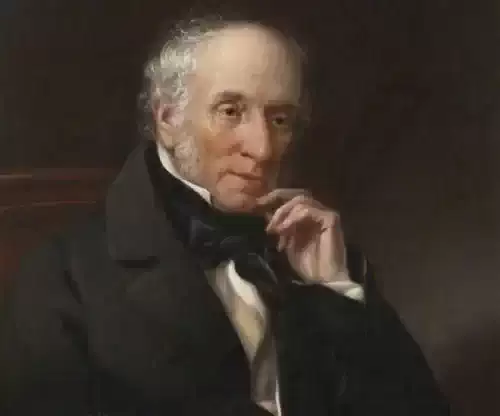
William Wordsworth
To A Sexton
To A Sexton
Let thy wheel-barrow alone--
Wherefore, Sexton, piling still
In thy bone-house bone on bone?
'Tis already like a hill
In a field of battle made,
Where three thousand skulls are laid;
These died in peace each with the other,--
Father, sister, friend, and brother.
Mark the spot to which I point!
From this platform, eight feet square,
Take not even a finger-joint:
Andrew's whole fire-side is there.
Here, alone, before thine eyes,
Simon's sickly daughter lies,
From weakness now, and pain defended,
Whom he twenty winters tended.
Look but at the gardener's pride--
How he glories, when he sees
Roses, lilies, side by side,
Violets in families!
By the heart of Man, his tears,
By his hopes and by his fears,
Thou, too heedless, art the Warden
Of a far superior garden.
Thus then, each to other dear,
Let them all in quiet lie,
Andrew there, and Susan here,
Neighbours in mortality.
And, should I live through sun and rain
Seven widowed years without my Jane,
O Sexton, do not then remove her,
Let one grave hold the Loved and Lover!
Let thy wheel-barrow alone--
Wherefore, Sexton, piling still
In thy bone-house bone on bone?
'Tis already like a hill
In a field of battle made,
Where three thousand skulls are laid;
These died in peace each with the other,--
Father, sister, friend, and brother.
Mark the spot to which I point!
From this platform, eight feet square,
Take not even a finger-joint:
Andrew's whole fire-side is there.
Here, alone, before thine eyes,
Simon's sickly daughter lies,
From weakness now, and pain defended,
Whom he twenty winters tended.
Look but at the gardener's pride--
How he glories, when he sees
Roses, lilies, side by side,
Violets in families!
By the heart of Man, his tears,
By his hopes and by his fears,
Thou, too heedless, art the Warden
Of a far superior garden.
Thus then, each to other dear,
Let them all in quiet lie,
Andrew there, and Susan here,
Neighbours in mortality.
And, should I live through sun and rain
Seven widowed years without my Jane,
O Sexton, do not then remove her,
Let one grave hold the Loved and Lover!
233
William Wordsworth
To A Butterfly ()
To A Butterfly ()
I'VE watched you now a full half-hour,
Self-poised upon that yellow flower;
And, little Butterfly! indeed
I know not if you sleep or feed.
How motionless!---not frozen seas
More motionless! and then
What joy awaits you, when the breeze
Hath found you out among the trees,
And calls you forth again !
This plot of orchard-ground is ours;
My trees they are, my Sister's flowers;
Here rest your wing when they are weary;
Here lodge as in a sanctuary!
Come often to us, fear no wrong;
Sit near us on the bough!
We'll talk of sunshine and of song,
And summer days, when we were young;
Sweet childish days, that were as long
As twenty days are now.
I'VE watched you now a full half-hour,
Self-poised upon that yellow flower;
And, little Butterfly! indeed
I know not if you sleep or feed.
How motionless!---not frozen seas
More motionless! and then
What joy awaits you, when the breeze
Hath found you out among the trees,
And calls you forth again !
This plot of orchard-ground is ours;
My trees they are, my Sister's flowers;
Here rest your wing when they are weary;
Here lodge as in a sanctuary!
Come often to us, fear no wrong;
Sit near us on the bough!
We'll talk of sunshine and of song,
And summer days, when we were young;
Sweet childish days, that were as long
As twenty days are now.
359
William Wordsworth
'Tis Said, That Some Have Died For Love
'Tis Said, That Some Have Died For Love
'Tis said, that some have died for love:
And here and there a churchyard grave is found
In the cold north's unhallowed ground,
Because the wretched man himself had slain,
His love was such a grievous pain.
And there is one whom I five years have known;
He dwells alone
Upon Helvellyn's side:
He loved--the pretty Barbara died;
And thus he makes his moan:
Three years had Barbara in her grave been laid
When thus his moan he made:
"Oh, move, thou Cottage, from behind that oak!
Or let the aged tree uprooted lie,
That in some other way yon smoke
May mount into the sky!
The clouds pass on; they from the heavens depart.
I look--the sky is empty space;
I know not what I trace;
But when I cease to look, my hand is on my heart.
"Oh! what a weight is in these shades! Ye leaves,
That murmur once so dear, when will it cease?
Your sound my heart of rest bereaves,
It robs my heart of peace.
Thou Thrush, that singest loud--and loud and free,
Into yon row of willows flit,
Upon that alder sit;
Or sing another song, or choose another tree.
"Roll back, sweet Rill! back to thy mountain-bounds,
And there for ever be thy waters chained!
For thou dost haunt the air with sounds
That cannot be sustained;
If still beneath that pine-tree's ragged bough
Headlong yon waterfall must come,
Oh let it then be dumb!
Be anything, sweet Rill, but that which thou art now.
"Thou Eglantine, so bright with sunny showers,
Proud as a rainbow spanning half the vale,
Thou one fair shrub, oh! shed thy flowers,
And stir not in the gale.
For thus to see thee nodding in the air,
To see thy arch thus stretch and bend,
Thus rise and thus descend,--
Disturbs me till the sight is more than I can dear."
The Man who makes this feverish complaint
Is one of giant stature, who could dance
Equipped from head to foot in iron mail.
Ah gentle Love! if ever thought was thine
To store up kindred hours for me, thy face
Turn from me, gentle Love! nor let me walk
Within the sound of Emma's voice, nor know
Such happiness as I have known to-day.
'Tis said, that some have died for love:
And here and there a churchyard grave is found
In the cold north's unhallowed ground,
Because the wretched man himself had slain,
His love was such a grievous pain.
And there is one whom I five years have known;
He dwells alone
Upon Helvellyn's side:
He loved--the pretty Barbara died;
And thus he makes his moan:
Three years had Barbara in her grave been laid
When thus his moan he made:
"Oh, move, thou Cottage, from behind that oak!
Or let the aged tree uprooted lie,
That in some other way yon smoke
May mount into the sky!
The clouds pass on; they from the heavens depart.
I look--the sky is empty space;
I know not what I trace;
But when I cease to look, my hand is on my heart.
"Oh! what a weight is in these shades! Ye leaves,
That murmur once so dear, when will it cease?
Your sound my heart of rest bereaves,
It robs my heart of peace.
Thou Thrush, that singest loud--and loud and free,
Into yon row of willows flit,
Upon that alder sit;
Or sing another song, or choose another tree.
"Roll back, sweet Rill! back to thy mountain-bounds,
And there for ever be thy waters chained!
For thou dost haunt the air with sounds
That cannot be sustained;
If still beneath that pine-tree's ragged bough
Headlong yon waterfall must come,
Oh let it then be dumb!
Be anything, sweet Rill, but that which thou art now.
"Thou Eglantine, so bright with sunny showers,
Proud as a rainbow spanning half the vale,
Thou one fair shrub, oh! shed thy flowers,
And stir not in the gale.
For thus to see thee nodding in the air,
To see thy arch thus stretch and bend,
Thus rise and thus descend,--
Disturbs me till the sight is more than I can dear."
The Man who makes this feverish complaint
Is one of giant stature, who could dance
Equipped from head to foot in iron mail.
Ah gentle Love! if ever thought was thine
To store up kindred hours for me, thy face
Turn from me, gentle Love! nor let me walk
Within the sound of Emma's voice, nor know
Such happiness as I have known to-day.
372
William Wordsworth
Three Years She Grew
Three Years She Grew
THREE years she grew in sun and shower,
Then Nature said, 'A lovelier flower
On earth was never sown;
This Child I to myself will take;
She shall be mine, and I will make
A Lady of my own.
'Myself will to my darling be
Both law and impulse: and with me
The Girl, in rock and plain
In earth and heaven, in glade and bower,
Shall feel an overseeing power
To kindle or restrain.
'She shall be sportive as the fawn
That wild with glee across the lawn
Or up the mountain springs;
And her's shall be the breathing balm,
And her's the silence and the calm
Of mute insensate things.
'The floating clouds their state shall lend
To her; for her the willow bend;
Nor shall she fail to see
Even in the motions of the Storm
Grace that shall mold the Maiden's form
By silent sympathy.
'The stars of midnight shall be dear
To her; and she shall lean her ear
In many a secret place
Where rivulets dance their wayward round,
And beauty born of murmuring sound
Shall pass into her face.
'And vital feelings of delight
Shall rear her form to stately height,
Her virgin bosom swell;
Such thoughts to Lucy I will give
While she and I together live
Here in this happy dell.'
Thus Nature spake---The work was done---
How soon my Lucy's race was run!
She died, and left to me
This heath, this calm, and quiet scene;
The memory of what has been,
And never more will be.
THREE years she grew in sun and shower,
Then Nature said, 'A lovelier flower
On earth was never sown;
This Child I to myself will take;
She shall be mine, and I will make
A Lady of my own.
'Myself will to my darling be
Both law and impulse: and with me
The Girl, in rock and plain
In earth and heaven, in glade and bower,
Shall feel an overseeing power
To kindle or restrain.
'She shall be sportive as the fawn
That wild with glee across the lawn
Or up the mountain springs;
And her's shall be the breathing balm,
And her's the silence and the calm
Of mute insensate things.
'The floating clouds their state shall lend
To her; for her the willow bend;
Nor shall she fail to see
Even in the motions of the Storm
Grace that shall mold the Maiden's form
By silent sympathy.
'The stars of midnight shall be dear
To her; and she shall lean her ear
In many a secret place
Where rivulets dance their wayward round,
And beauty born of murmuring sound
Shall pass into her face.
'And vital feelings of delight
Shall rear her form to stately height,
Her virgin bosom swell;
Such thoughts to Lucy I will give
While she and I together live
Here in this happy dell.'
Thus Nature spake---The work was done---
How soon my Lucy's race was run!
She died, and left to me
This heath, this calm, and quiet scene;
The memory of what has been,
And never more will be.
533
William Wordsworth
The Russian Fugitive
The Russian Fugitive
I
ENOUGH of rose-bud lips, and eyes
Like harebells bathed in dew,
Of cheek that with carnation vies,
And veins of violet hue;
Earth wants not beauty that may scorn
A likening to frail flowers;
Yea, to the stars, if they were born
For seasons and for hours.
Through Moscow's gates, with gold unbarred,
Stepped One at dead of night,
Whom such high beauty could not guard
From meditated blight;
By stealth she passed, and fled as fast
As doth the hunted fawn,
Nor stopped, till in the dappling east
Appeared unwelcome dawn.
Seven days she lurked in brake and field,
Seven nights her course renewed,
Sustained by what her scrip might yield,
Or berries of the wood;
At length, in darkness travelling on,
When lowly doors were shut,
The haven of her hope she won,
Her foster-mother's hut.
'To put your love to dangerous proof
I come,' said she, 'from far;
For I have left my Father's roof,
In terror of the czar.'
No answer did the Matron give,
No second look she cast,
But hung upon the fugitive,
Embracing and embraced.
She led the Lady to a seat
Beside the glimmering fire,
Bathed duteously her wayworn feet,
Prevented each desire:---
The cricket chirped, the house-dog dozed,
And on that simple bed,
Where she in childhood had reposed,
Now rests her weary head.
When she, whose couch had been the sod,
Whose curtain, pine or thorn,
Had breathed a sigh of thanks to God,
Who comforts the forlorn;
While over her the Matron bent
Sleep sealed her eyes, and stole
Feeling from limbs with travel spent,
And trouble from the soul.
Refreshed, the Wanderer rose at morn,
And soon again was dight
In those unworthy vestments worn
Through long and perilous flight;
And 'O beloved Nurse,' she said,
'My thanks with silent tears
Have unto Heaven and You been paid:
Now listen to my fears !
'Have you forgot'---and here she smiled---
'The babbling flatteries
You lavished on me when a child
Disporting round your knees?
I was your lambkin, and your bird,
Your star, your gem, your flower;
Light words, that were more lightly heard
In many a cloudless hour!
'The blossom you so fondly praised
Is come to bitter fruit;
A mighty One upon me gazed;
I spurned his lawless suit,
And must be hidden from his wrath:
You, Foster-father dear,
Will guide me in my forward path;
I may not tarry here!
'I cannot bring to utter woe
Your proved fidelity.'---
'Dear Child, sweet Mistress, say not so!
For you we both would die.'
'Nay, nay, I come with semblance feigned
And cheek embrowned by art;
Yet, being inwardly unstained,
With courage will depart.'
'But whither would you, could you, flee?
A poor Man's counsel take;
The Holy Virgin gives to me
A thought for your dear sake;
Rest, shielded by our Lady's grace,
And soon shall you be led
Forth to a safe abiding-place,
Where never foot doth tread.'
II
THE dwelling of this faithful pair
In a straggling village stood,
For One who breathed unquiet air
A dangerous neighbourhood;
But wide around lay forest ground
With thickets rough and blind;
And pine-trees made a heavy shade
Impervious to the wind.
And there, sequestered from the eight,
Was spread a treacherous swamp,
On which the noonday sun shed light
As from a lonely lamp;
And midway in the unsafe morass,
A single Island rose
Of firm dry ground, with healthful grass
Adorned, and shady boughs.
The Woodman knew, for such the craft
This Russian vassal plied,
That never fowler's gun, nor shaft
Of archer, there was tried;
A sanctuary seemed the spot
From all intrusion free;
And there he planned an artful Cot
For perfect secrecy.
With earnest pains unchecked by dread
Of Power's far-stretching hand,
The bold good Man his labor sped
At nature's pure command;
Heart-soothed, and busy as a wren,
While, in a hollow nook,
She moulds her sight-eluding den
Above a murmuring brook.
His task accomplished to his mind,
The twain ere break of day
Creep forth, and through the forest wind
Their solitary way;
Few words they speak, nor dare to slack
Their pace from mile to mile,
Till they have crossed the quaking marsh,
And reached the lonely Isle.
The sun above the pine-trees showed
A bright and cheerful face;
And Ina looked for her abode,
The promised hiding-place;
She sought in vain, the Woodman smiled;
No threshold could be seen,
Nor roof, nor window;Ñall seemed wild
As it had ever been.
Advancing, you might guess an hour,
The front with such nice care
Is masked, 'if house it be or bower,'
But in they entered are;
As shaggy as were wall and roof
With branches intertwined,
So smooth was all within, air-proof,
And delicately lined:
And hearth was there, and maple dish,
And cups in seemly rows,
And couch---all ready to a wish
For nurture or repose;
And Heaven doth to her virtue grant
That here she may abide
In solitude, with every want
By cautious love supplied.
No queen, before a shouting crowd,
Led on in bridal state,
E'er struggled with a heart so proud,
Entering her palace gate:
Rejoiced to bid the world farewell,
No saintly anchoress
E'er took possession of her cell
With deeper thankfulness.
'Father of all, upon thy care
And mercy am I thrown;
Be thou my safeguard!'---such her prayer
When she was left alone,
Kneeling amid the wilderness
When joy had passed away,
And smiles, fond efforts of distress
To hide what they betray!
The prayer is heard, the Saints have seen,
Diffused through form and face,
Resolves devotedly serene;
That monumental grace
Of Faith, which doth all passions tame
That Reason should control;
And shows in the untrembling frame
A statue of the soul.
III
'TIS sung in ancient minstrelsy
That Phoebus wont to wear
The leaves of any pleasant tree
Around his golden hair;
Till Daphne, desperate with pursuit
Of his imperious love,
At her own prayer transformed, took root,
A laurel in the grove.
Then did the Penitent adorn
His brow with laurel green;
And 'mid his bright locks never shorn
No meaner leaf was seen;
And poets sage, through every age,
About their temples wound
The bay; and conquerors thanked the Gods,
With laurel chaplets crowned,
Into the mists of fabling Time
So far runs back the praise
Of Beauty, that disdains to climb
Along forbidden ways;
That scorns temptation; power defies
Where mutual love is not;
And to the tomb for rescue flies
When life would be a blot.
To this fair Votaress, a fate
More mild doth Heaven ordain
Upon her Island desolate;
And word, not breathed in vain,
Might tell what intercourse she found,
Her silence to endear;
What birds she tamed, what flowers the ground
Sent forth her peace to cheer.
To one mute Presence, above all,
Her soothed affections clung,
A picture on the cabin wall
By Russian usage hung---
The Mother-maid, whose countenance bright
With love abridged the day;
And, communed with by taper light,
Chased spectral fears away.
And oft as either Guardian came,
The joy in that retreat
Might any common friendship shame,
So high their heart would beat;
And to the lone Recluse, whate'er
They brought, each visiting
Was like the crowding of the year
With a new burst of spring.
But, when she of her Parents thought,
The pang was hard to bear;
And, if with all things not enwrought,
That trouble still is near.
Before her flight she had not dared
Their constancy to prove,
Too much the heroic Daughter feared
The weakness of their love.
Dark is the past to them, and dark
The future still must be,
Till pitying Saints conduct her bark
Into a safer sea---
Or gentle Nature close her eyes,
And set her Spirit free
From the altar of this sacrifice,
In vestal purity.
Yet, when above the forest-glooms
The white swans southward passed,
High as the pitch of their swift plume
Her fancy rode the blast;
And bore her toward the fields of France
Her Father's native land,
To mingle in the rustic dance,
The happiest of the band!
Of those beloved fields she oft
Had heard her Father tell
In phrase that now with echoes soft
Haunted her lonely cell;
She saw the hereditary bowers,
She heard the ancestral stream;
The Kremlin and its haughty towers
Forgotten like a dream !
IV
THE ever-changing Moon had traced
Twelve times her monthly round,
When through the unfrequented Waste
Was heard a startling sound;
A shout thrice sent from one who chased
At speed a wounded deer,
Bounding through branches interlaced,
And where the wood was clear.
The fainting creature took the marsh,
And toward the Island fled,
While plovers screamed with tumult harsh
Above his antlered head;
This, Ina saw; and, pale with fear,
Shrunk to her citadel;
The desperate deer rushed on, and near
The tangled covert fell.
Across the marsh, the game in view,
The Hunter followed fast,
Nor paused, till o'er the stag he blew
A death-proclaiming blast;
Then, resting on her upright mind,
Came forth the Maid---'In me
Behold,' she said, ' a stricken Hind
Pursued by destiny!
'From your deportment, Sir! I deem
That you have worn a sword,
And will not hold in light esteem
A suffering woman's word;
There is my covert, there perchance
I might have lain concealed,
My fortunes hid, my countenance
Not even to you revealed.
'Tears might be shed, and I might pray,
Crouching and terrified,
That what has been unveiled to day,
You would in mystery hide;
But I will not defile with dust
The knee that bend to adore
The God in heaven;---attend, be just;
This ask I, and no more!
'I speak not of the winter's cold,
For summer's heat exchanged,
While I have lodged in this rough hold,
From social life estranged;
Nor yet of trouble and alarms:
High Heaven is my defence;
And every season has soft arms
For injured Innocence.
'From Moscow to the Wilderness
It was my choice to come,
Lest virtue should be harborless,
And honor want a home;
And happy were I, if the Czar
Retain his lawless will,
To end life here like this poor deer,
Or a lamb on a green hill.'
'Are you the Maid,' the Stranger cried,
'From Gallic parents sprung,
Whose vanishing was rumored wide,
Sad theme for every tongue;
Who foiled an Emperor's eager quest?
You, Lady, forced to wear
These rude habiliments, and rest
Your head in this dark lair!'
But wonder, pity, soon were quelled;
And in her face and mien
The soul's pure brightness she beheld
Without a veil between:
He loved, he hoped,---a holy flame
Kindled 'mid rapturous tears;
The passion of a moment came
As on the wings of years.
'Such bounty is no gift of chance,'
Exclaimed he; 'righteous Heaven,
Preparing your deliverance,
To me the charge hath given.
The Czar full oft in words, and deeds
Is stormy and self-willed;
But, when the Lady Catherine pleads,
His violence is stilled.
'Leave open to my wish the course,
And I to her will go;
From that humane and heavenly source,
Good, only good, can flow.''
Faint sanction given, the Cavalier
Was eager to depart,
Though question followed question, dear
To the Maiden's filial heart.
Light was his step,---his hopes, more light,
Kept pace with his desires;
And the fifth morning gave him sight
Of Moscow's glittering spires.
He sued:---heart-smitten by the wrong,
To the lorn Fugitive
The Emperor sent a pledge as strong
As sovereign power could give.
O more than mighty change! If e'er
Amazement rose to pain,
And joy's excess produced a fear
Of something void and vain;
'Twas when the Parents, who had mourned
So long the lost as dead,
Beheld their only Child returned,
The household floor to tread.
Soon gratitude gave way to love
Within the Maiden's breast:
Delivered and Deliverer move
In bridal garments drest;
Meek Catherine had her own reward;
The Czar bestowed a dower;
And universal Moscow shared
The triumph of that hour.
Flowers strewed the ground; the nuptial feast
Was held with costly state;
And there, 'mid many a noble guest,
The foster-parent sate;
Encouraged by the imperial eye,
They shrank not into shade;
Great as their bliss, the honor high
To them and nature paid!
I
ENOUGH of rose-bud lips, and eyes
Like harebells bathed in dew,
Of cheek that with carnation vies,
And veins of violet hue;
Earth wants not beauty that may scorn
A likening to frail flowers;
Yea, to the stars, if they were born
For seasons and for hours.
Through Moscow's gates, with gold unbarred,
Stepped One at dead of night,
Whom such high beauty could not guard
From meditated blight;
By stealth she passed, and fled as fast
As doth the hunted fawn,
Nor stopped, till in the dappling east
Appeared unwelcome dawn.
Seven days she lurked in brake and field,
Seven nights her course renewed,
Sustained by what her scrip might yield,
Or berries of the wood;
At length, in darkness travelling on,
When lowly doors were shut,
The haven of her hope she won,
Her foster-mother's hut.
'To put your love to dangerous proof
I come,' said she, 'from far;
For I have left my Father's roof,
In terror of the czar.'
No answer did the Matron give,
No second look she cast,
But hung upon the fugitive,
Embracing and embraced.
She led the Lady to a seat
Beside the glimmering fire,
Bathed duteously her wayworn feet,
Prevented each desire:---
The cricket chirped, the house-dog dozed,
And on that simple bed,
Where she in childhood had reposed,
Now rests her weary head.
When she, whose couch had been the sod,
Whose curtain, pine or thorn,
Had breathed a sigh of thanks to God,
Who comforts the forlorn;
While over her the Matron bent
Sleep sealed her eyes, and stole
Feeling from limbs with travel spent,
And trouble from the soul.
Refreshed, the Wanderer rose at morn,
And soon again was dight
In those unworthy vestments worn
Through long and perilous flight;
And 'O beloved Nurse,' she said,
'My thanks with silent tears
Have unto Heaven and You been paid:
Now listen to my fears !
'Have you forgot'---and here she smiled---
'The babbling flatteries
You lavished on me when a child
Disporting round your knees?
I was your lambkin, and your bird,
Your star, your gem, your flower;
Light words, that were more lightly heard
In many a cloudless hour!
'The blossom you so fondly praised
Is come to bitter fruit;
A mighty One upon me gazed;
I spurned his lawless suit,
And must be hidden from his wrath:
You, Foster-father dear,
Will guide me in my forward path;
I may not tarry here!
'I cannot bring to utter woe
Your proved fidelity.'---
'Dear Child, sweet Mistress, say not so!
For you we both would die.'
'Nay, nay, I come with semblance feigned
And cheek embrowned by art;
Yet, being inwardly unstained,
With courage will depart.'
'But whither would you, could you, flee?
A poor Man's counsel take;
The Holy Virgin gives to me
A thought for your dear sake;
Rest, shielded by our Lady's grace,
And soon shall you be led
Forth to a safe abiding-place,
Where never foot doth tread.'
II
THE dwelling of this faithful pair
In a straggling village stood,
For One who breathed unquiet air
A dangerous neighbourhood;
But wide around lay forest ground
With thickets rough and blind;
And pine-trees made a heavy shade
Impervious to the wind.
And there, sequestered from the eight,
Was spread a treacherous swamp,
On which the noonday sun shed light
As from a lonely lamp;
And midway in the unsafe morass,
A single Island rose
Of firm dry ground, with healthful grass
Adorned, and shady boughs.
The Woodman knew, for such the craft
This Russian vassal plied,
That never fowler's gun, nor shaft
Of archer, there was tried;
A sanctuary seemed the spot
From all intrusion free;
And there he planned an artful Cot
For perfect secrecy.
With earnest pains unchecked by dread
Of Power's far-stretching hand,
The bold good Man his labor sped
At nature's pure command;
Heart-soothed, and busy as a wren,
While, in a hollow nook,
She moulds her sight-eluding den
Above a murmuring brook.
His task accomplished to his mind,
The twain ere break of day
Creep forth, and through the forest wind
Their solitary way;
Few words they speak, nor dare to slack
Their pace from mile to mile,
Till they have crossed the quaking marsh,
And reached the lonely Isle.
The sun above the pine-trees showed
A bright and cheerful face;
And Ina looked for her abode,
The promised hiding-place;
She sought in vain, the Woodman smiled;
No threshold could be seen,
Nor roof, nor window;Ñall seemed wild
As it had ever been.
Advancing, you might guess an hour,
The front with such nice care
Is masked, 'if house it be or bower,'
But in they entered are;
As shaggy as were wall and roof
With branches intertwined,
So smooth was all within, air-proof,
And delicately lined:
And hearth was there, and maple dish,
And cups in seemly rows,
And couch---all ready to a wish
For nurture or repose;
And Heaven doth to her virtue grant
That here she may abide
In solitude, with every want
By cautious love supplied.
No queen, before a shouting crowd,
Led on in bridal state,
E'er struggled with a heart so proud,
Entering her palace gate:
Rejoiced to bid the world farewell,
No saintly anchoress
E'er took possession of her cell
With deeper thankfulness.
'Father of all, upon thy care
And mercy am I thrown;
Be thou my safeguard!'---such her prayer
When she was left alone,
Kneeling amid the wilderness
When joy had passed away,
And smiles, fond efforts of distress
To hide what they betray!
The prayer is heard, the Saints have seen,
Diffused through form and face,
Resolves devotedly serene;
That monumental grace
Of Faith, which doth all passions tame
That Reason should control;
And shows in the untrembling frame
A statue of the soul.
III
'TIS sung in ancient minstrelsy
That Phoebus wont to wear
The leaves of any pleasant tree
Around his golden hair;
Till Daphne, desperate with pursuit
Of his imperious love,
At her own prayer transformed, took root,
A laurel in the grove.
Then did the Penitent adorn
His brow with laurel green;
And 'mid his bright locks never shorn
No meaner leaf was seen;
And poets sage, through every age,
About their temples wound
The bay; and conquerors thanked the Gods,
With laurel chaplets crowned,
Into the mists of fabling Time
So far runs back the praise
Of Beauty, that disdains to climb
Along forbidden ways;
That scorns temptation; power defies
Where mutual love is not;
And to the tomb for rescue flies
When life would be a blot.
To this fair Votaress, a fate
More mild doth Heaven ordain
Upon her Island desolate;
And word, not breathed in vain,
Might tell what intercourse she found,
Her silence to endear;
What birds she tamed, what flowers the ground
Sent forth her peace to cheer.
To one mute Presence, above all,
Her soothed affections clung,
A picture on the cabin wall
By Russian usage hung---
The Mother-maid, whose countenance bright
With love abridged the day;
And, communed with by taper light,
Chased spectral fears away.
And oft as either Guardian came,
The joy in that retreat
Might any common friendship shame,
So high their heart would beat;
And to the lone Recluse, whate'er
They brought, each visiting
Was like the crowding of the year
With a new burst of spring.
But, when she of her Parents thought,
The pang was hard to bear;
And, if with all things not enwrought,
That trouble still is near.
Before her flight she had not dared
Their constancy to prove,
Too much the heroic Daughter feared
The weakness of their love.
Dark is the past to them, and dark
The future still must be,
Till pitying Saints conduct her bark
Into a safer sea---
Or gentle Nature close her eyes,
And set her Spirit free
From the altar of this sacrifice,
In vestal purity.
Yet, when above the forest-glooms
The white swans southward passed,
High as the pitch of their swift plume
Her fancy rode the blast;
And bore her toward the fields of France
Her Father's native land,
To mingle in the rustic dance,
The happiest of the band!
Of those beloved fields she oft
Had heard her Father tell
In phrase that now with echoes soft
Haunted her lonely cell;
She saw the hereditary bowers,
She heard the ancestral stream;
The Kremlin and its haughty towers
Forgotten like a dream !
IV
THE ever-changing Moon had traced
Twelve times her monthly round,
When through the unfrequented Waste
Was heard a startling sound;
A shout thrice sent from one who chased
At speed a wounded deer,
Bounding through branches interlaced,
And where the wood was clear.
The fainting creature took the marsh,
And toward the Island fled,
While plovers screamed with tumult harsh
Above his antlered head;
This, Ina saw; and, pale with fear,
Shrunk to her citadel;
The desperate deer rushed on, and near
The tangled covert fell.
Across the marsh, the game in view,
The Hunter followed fast,
Nor paused, till o'er the stag he blew
A death-proclaiming blast;
Then, resting on her upright mind,
Came forth the Maid---'In me
Behold,' she said, ' a stricken Hind
Pursued by destiny!
'From your deportment, Sir! I deem
That you have worn a sword,
And will not hold in light esteem
A suffering woman's word;
There is my covert, there perchance
I might have lain concealed,
My fortunes hid, my countenance
Not even to you revealed.
'Tears might be shed, and I might pray,
Crouching and terrified,
That what has been unveiled to day,
You would in mystery hide;
But I will not defile with dust
The knee that bend to adore
The God in heaven;---attend, be just;
This ask I, and no more!
'I speak not of the winter's cold,
For summer's heat exchanged,
While I have lodged in this rough hold,
From social life estranged;
Nor yet of trouble and alarms:
High Heaven is my defence;
And every season has soft arms
For injured Innocence.
'From Moscow to the Wilderness
It was my choice to come,
Lest virtue should be harborless,
And honor want a home;
And happy were I, if the Czar
Retain his lawless will,
To end life here like this poor deer,
Or a lamb on a green hill.'
'Are you the Maid,' the Stranger cried,
'From Gallic parents sprung,
Whose vanishing was rumored wide,
Sad theme for every tongue;
Who foiled an Emperor's eager quest?
You, Lady, forced to wear
These rude habiliments, and rest
Your head in this dark lair!'
But wonder, pity, soon were quelled;
And in her face and mien
The soul's pure brightness she beheld
Without a veil between:
He loved, he hoped,---a holy flame
Kindled 'mid rapturous tears;
The passion of a moment came
As on the wings of years.
'Such bounty is no gift of chance,'
Exclaimed he; 'righteous Heaven,
Preparing your deliverance,
To me the charge hath given.
The Czar full oft in words, and deeds
Is stormy and self-willed;
But, when the Lady Catherine pleads,
His violence is stilled.
'Leave open to my wish the course,
And I to her will go;
From that humane and heavenly source,
Good, only good, can flow.''
Faint sanction given, the Cavalier
Was eager to depart,
Though question followed question, dear
To the Maiden's filial heart.
Light was his step,---his hopes, more light,
Kept pace with his desires;
And the fifth morning gave him sight
Of Moscow's glittering spires.
He sued:---heart-smitten by the wrong,
To the lorn Fugitive
The Emperor sent a pledge as strong
As sovereign power could give.
O more than mighty change! If e'er
Amazement rose to pain,
And joy's excess produced a fear
Of something void and vain;
'Twas when the Parents, who had mourned
So long the lost as dead,
Beheld their only Child returned,
The household floor to tread.
Soon gratitude gave way to love
Within the Maiden's breast:
Delivered and Deliverer move
In bridal garments drest;
Meek Catherine had her own reward;
The Czar bestowed a dower;
And universal Moscow shared
The triumph of that hour.
Flowers strewed the ground; the nuptial feast
Was held with costly state;
And there, 'mid many a noble guest,
The foster-parent sate;
Encouraged by the imperial eye,
They shrank not into shade;
Great as their bliss, the honor high
To them and nature paid!
274
William Wordsworth
The Reaper
The Reaper
Behold her, single in the field,
Yon solitary Highland Lass!
Reaping and singing by herself;
Stop here, or gently pass!
Alone she cuts and binds the grain,
And sings a melancholy strain;
O listen! for the vale profound
Is overflowing with the sound.
No nightingale did ever chaunt
More welcome notes to weary bands
Of travellers in some shady haunt,
Among Arabian sands:
A voice so thrilling ne'er was heard
In spring-time from the cuckoo-bird
Breaking the silence of the seas
Among the farthest Hebrides.
Will no one tell me what she sings?
Perhaps the plaintive numbers flow
For old, unhappy, far-off things,
And battles long ago:
Or is it some more humble lay,
Familiar matter of today?
Some natural sorrow, loss, or pain,
That has been, and may be again!
Whate'er the theme, the maiden sang
As if her song could have no ending;
I saw her singing at her work,
And o'er the sickle bending;
I listened, motionless and still;
And as I mounted up the hill
The music in my heart I bore,
Long after it was heard no more.
Behold her, single in the field,
Yon solitary Highland Lass!
Reaping and singing by herself;
Stop here, or gently pass!
Alone she cuts and binds the grain,
And sings a melancholy strain;
O listen! for the vale profound
Is overflowing with the sound.
No nightingale did ever chaunt
More welcome notes to weary bands
Of travellers in some shady haunt,
Among Arabian sands:
A voice so thrilling ne'er was heard
In spring-time from the cuckoo-bird
Breaking the silence of the seas
Among the farthest Hebrides.
Will no one tell me what she sings?
Perhaps the plaintive numbers flow
For old, unhappy, far-off things,
And battles long ago:
Or is it some more humble lay,
Familiar matter of today?
Some natural sorrow, loss, or pain,
That has been, and may be again!
Whate'er the theme, the maiden sang
As if her song could have no ending;
I saw her singing at her work,
And o'er the sickle bending;
I listened, motionless and still;
And as I mounted up the hill
The music in my heart I bore,
Long after it was heard no more.
229
William Wordsworth
The Primrose of the Rock
The Primrose of the Rock
A Rock there is whose homely front
The passing traveller slights;
Yet there the glow-worms hang their lamps,
Like stars, at various heights;
And one coy Primrose to that Rock
The vernal breeze invites.
What hideous warfare hath been waged,
What kingdoms overthrown,
Since first I spied that Primrose-tuft
And marked it for my own;
A lasting link in Nature's chain
From highest heaven let down!
The flowers, still faithful to the stems,
Their fellowship renew;
The stems are faithful to the root,
That worketh out of view;
And to the rock the root adheres
In every fibre true.
Close clings to earth the living rock,
Though threatening still to fall:
The earth is constant to her sphere;
And God upholds them all:
So blooms this lonely Plant, nor dreads
Her annual funeral.
Here closed the meditative strain;
But air breathed soft that day,
The hoary mountain-heights were cheered,
The sunny vale looked gay;
And to the Primrose of the Rock
I gave this after-lay.
I sang-Let myriads of bright flowers,
Like Thee, in field and grove
Revive unenvied;-mightier far,
Than tremblings that reprove
Our vernal tendencies to hope,
Is God's redeeming love;
That love which changed-for wan disease,
For sorrow that had bent
O'er hopeless dust, for withered age-
Their moral element,
And turned the thistles of a curse
To types beneficent.
Sin-blighted though we are, we too,
The reasoning Sons of Men,
From one oblivious winter called
Shall rise, and breathe again;
And in eternal summer lose
Our threescore years and ten.
To humbleness of heart descends
This prescience from on high,
The faith that elevates the just,
Before and when they die;
And makes each soul a separate heaven
A court for Deity.
A Rock there is whose homely front
The passing traveller slights;
Yet there the glow-worms hang their lamps,
Like stars, at various heights;
And one coy Primrose to that Rock
The vernal breeze invites.
What hideous warfare hath been waged,
What kingdoms overthrown,
Since first I spied that Primrose-tuft
And marked it for my own;
A lasting link in Nature's chain
From highest heaven let down!
The flowers, still faithful to the stems,
Their fellowship renew;
The stems are faithful to the root,
That worketh out of view;
And to the rock the root adheres
In every fibre true.
Close clings to earth the living rock,
Though threatening still to fall:
The earth is constant to her sphere;
And God upholds them all:
So blooms this lonely Plant, nor dreads
Her annual funeral.
Here closed the meditative strain;
But air breathed soft that day,
The hoary mountain-heights were cheered,
The sunny vale looked gay;
And to the Primrose of the Rock
I gave this after-lay.
I sang-Let myriads of bright flowers,
Like Thee, in field and grove
Revive unenvied;-mightier far,
Than tremblings that reprove
Our vernal tendencies to hope,
Is God's redeeming love;
That love which changed-for wan disease,
For sorrow that had bent
O'er hopeless dust, for withered age-
Their moral element,
And turned the thistles of a curse
To types beneficent.
Sin-blighted though we are, we too,
The reasoning Sons of Men,
From one oblivious winter called
Shall rise, and breathe again;
And in eternal summer lose
Our threescore years and ten.
To humbleness of heart descends
This prescience from on high,
The faith that elevates the just,
Before and when they die;
And makes each soul a separate heaven
A court for Deity.
232
William Wordsworth
The Prelude, Book : School-time (Continued)
The Prelude, Book : School-time (Continued)
. Thus far, O Friend! have we, though leaving much
Unvisited, endeavour'd to retrace
My life through its first years, and measured back
The way I travell'd when I first began
To love the woods and fields; the passion yet
Was in its birth, sustain'd, as might befal,
By nourishment that came unsought, for still,
From week to week, from month to month, we liv'd
A round of tumult: duly were our games
Prolong'd in summer till the day-light fail'd;
No chair remain'd before the doors, the bench
And threshold steps were empty; fast asleep
The Labourer, and the old Man who had sate,
A later lingerer, yet the revelry
Continued, and the loud uproar: at last,
When all the ground was dark, and the huge clouds
Were edged with twinkling stars, to bed we went,
With weary joints, and with a beating mind.
Ah! is there one who ever has been young,
Nor needs a monitory voice to tame
The pride of virtue, and of intellect?
And is there one, the wisest and the best
Of all mankind, who does not sometimes wish
For things which cannot be, who would not give,
If so he might, to duty and to truth
The eagerness of infantine desire?
A tranquillizing spirit presses now
On my corporeal frame: so wide appears
The vacancy between me and those days,
Which yet have such self-presence in my mind
That, sometimes, when I think of them, I seem
Two consciousnesses, conscious of myself
And of some other Being. A grey Stone
Of native rock, left midway in the Square
Of our small market Village, was the home
And centre of these joys, and when, return'd
After long absence, thither I repair'd,
I found that it was split, and gone to build
A smart Assembly-room that perk'd and flar'd
With wash and rough-cast elbowing the ground
Which had been ours. But let the fiddle scream,
And be ye happy! yet, my Friends! I know
That more than one of you will think with me
Of those soft starry nights, and that old Dame
From whom the stone was nam'd who there had sate
And watch'd her Table with its huckster's wares
Assiduous, thro' the length of sixty years.
We ran a boisterous race; the year span round
With giddy motion. But the time approach'd
That brought with it a regular desire
For calmer pleasures, when the beauteous forms
Of Nature were collaterally attach'd
To every scheme of holiday delight,
And every boyish sport, less grateful else,
And languidly pursued. When summer came
It was the pastime of our afternoons
To beat along the plain of Windermere
With rival oars, and the selected bourne
Was now an Island musical with birds
That sang for ever; now a Sister Isle
Beneath the oaks' umbrageous covert, sown
With lillies of the valley, like a field;
And now a third small Island where remain'd
An old stone Table, and a moulder'd Cave,
A Hermit's history. In such a race,
So ended, disappointment could be none,
Uneasiness, or pain, or jealousy:
We rested in the shade, all pleas'd alike,
Conquer'd and Conqueror. Thus the pride of strength,
And the vain-glory of superior skill
Were interfus'd with objects which subdu'd
And temper'd them, and gradually produc'd
A quiet independence of the heart.
And to my Friend, who knows me, I may add,
Unapprehensive of reproof, that hence
Ensu'd a diffidence and modesty,
And I was taught to feel, perhaps too much,
The self-sufficing power of solitude.
No delicate viands sapp'd our bodily strength;
More than we wish'd we knew the blessing then
Of vigorous hunger, for our daily meals
Were frugal, Sabine fare! and then, exclude
A little weekly stipend, and we lived
Through three divisions of the quarter'd year
In pennyless poverty. But now, to School
Return'd, from the half-yearly holidays,
We came with purses more profusely fill'd,
Allowance which abundantly suffic'd
To gratify the palate with repasts
More costly than the Dame of whom I spake,
That ancient Woman, and her board supplied.
Hence inroads into distant Vales, and long
Excursions far away among the hills,
Hence rustic dinners on the cool green ground,
Or in the woods, or near a river side,
Or by some shady fountain, while soft airs
Among the leaves were stirring, and the sun
Unfelt, shone sweetly round us in our joy.
Nor is my aim neglected, if I tell
How twice in the long length of those half-years
We from our funds, perhaps, with bolder hand
Drew largely, anxious for one day, at least,
To feel the motion of the galloping Steed;
And with the good old Inn-keeper, in truth,
On such occasion sometimes we employ'd
Sly subterfuge; for the intended bound
Of the day's journey was too distant far
For any cautious man, a Structure famed
Beyond its neighbourhood, the antique Walls
Of that large Abbey which within the vale
Of Nightshade, to St. Mary's honour built,
Stands yet, a mouldering Pile, with fractured Arch,
Belfry, and Images, and living Trees,
A holy Scene! along the smooth green turf
Our Horses grazed: to more than inland peace
Left by the sea wind passing overhead
(Though wind of roughest temper) trees and towers
May in that Valley oftentimes be seen,
Both silent and both motionless alike;
Such is the shelter that is there, and such
The safeguard for repose and quietness.
Our steeds remounted, and the summons given,
With whip and spur we by the Chauntry flew
In uncouth race, and left the cross-legg'd Knight,
And the stone-Abbot, and that single Wren
Which one day sang so sweetly in the Nave
Of the old Church, that, though from recent showers
The earth was comfortless, and, touch'd by faint
Internal breezes, sobbings of the place,
And respirations, from the roofless walls
The shuddering ivy dripp'd large drops, yet still,
So sweetly 'mid the gloom the invisible Bird
Sang to itself, that there I could have made
My dwelling-place, and liv'd for ever there
To hear such music. Through the Walls we flew
And down the valley, and a circuit made
In wantonness of heart, through rough and smooth
We scamper'd homeward. Oh! ye Rocks and Streams,
And that still Spirit of the evening air!
Even in this joyous time I sometimes felt
Your presence, when with slacken'd step we breath'd
Along the sides of the steep hills, or when,
Lighted by gleams of moonlight from the sea,
We beat with thundering hoofs the level sand.
Upon the Eastern Shore of Windermere,
Above the crescent of a pleasant Bay,
There stood an Inn, no homely-featured Shed,
Brother of the surrounding Cottages,
But 'twas a splendid place, the door beset
With Chaises, Grooms, and Liveries, and within
Decanters, Glasses, and the blood-red Wine.
In ancient times, or ere the Hall was built
On the large Island, had this Dwelling been
More worthy of a Poet's love, a Hut,
Proud of its one bright fire, and sycamore shade.
But though the rhymes were gone which once inscribed
The threshold, and large golden characters
On the blue-frosted Signboard had usurp'd
The place of the old Lion, in contempt
And mockery of the rustic painter's hand,
Yet to this hour the spot to me is dear
With all its foolish pomp. The garden lay
Upon a slope surmounted by the plain
Of a small Bowling-green; beneath us stood
A grove; with gleams of water through the trees
And over the tree-tops; nor did we want
Refreshment, strawberries and mellow cream.
And there, through half an afternoon, we play'd
On the smooth platform, and the shouts we sent
Made all the mountains ring. But ere the fall
Of night, when in our pinnace we return'd
Over the dusky Lake, and to the beach
Of some small Island steer'd our course with one,
The Minstrel of our troop, and left him there,
And row'd off gently, while he blew his flute
Alone upon the rock; Oh! then the calm
And dead still water lay upon my mind
Even with a weight of pleasure, and the sky
Never before so beautiful, sank down
Into my heart, and held me like a dream.
Thus daily were my sympathies enlarged,
And thus the common range of visible things
Grew dear to me: already I began
To love the sun, a Boy I lov'd the sun,
Not as I since have lov'd him, as a pledge
And surety of our earthly life, a light
Which while we view we feel we are alive;
But, for this cause, that I had seen him lay
His beauty on the morning hills, had seen
The western mountain touch his setting orb,
In many a thoughtless hour, when, from excess
Of happiness, my blood appear'd to flow
With its own pleasure, and I breath'd with joy.
And from like feelings, humble though intense,
To patriotic and domestic love
Analogous, the moon to me was dear;
For I would dream away my purposes,
Standing to look upon her while she hung
Midway between the hills, as if she knew
No other region; but belong'd to thee,
Yea, appertain'd by a peculiar right
To thee and thy grey huts, my darling Vale!
Those incidental charms which first attach'd
My heart to rural objects, day by day
Grew weaker, and I hasten on to tell
How Nature, intervenient till this time,
And secondary, now at length was sought
For her own sake. But who shall parcel out
His intellect, by geometric rules,
Split, like a province, into round and square?
Who knows the individual hour in which
His habits were first sown, even as a seed,
Who that shall point, as with a wand, and say,
'This portion of the river of my mind
Came from yon fountain?' Thou, my Friend! art one
More deeply read in thy own thoughts; to thee
Science appears but, what in truth she is,
Not as our glory and our absolute boast,
But as a succedaneum, and a prop
To our infirmity. Thou art no slave
Of that false secondary power, by which,
In weakness, we create distinctions, then
Deem that our puny boundaries are things
Which we perceive, and not which we have made.
To thee, unblinded by these outward shows,
The unity of all has been reveal'd
And thou wilt doubt with me, less aptly skill'd
Than many are to class the cabinet
Of their sensations, and, in voluble phrase,
Run through the history and birth of each,
As of a single independent thing.
Hard task to analyse a soul, in which,
Not only general habits and desires,
But each most obvious and particular thought,
Not in a mystical and idle sense,
But in the words of reason deeply weigh'd,
Hath no beginning. Bless'd the infant Babe,
(For with my best conjectures I would trace
The progress of our Being) blest the Babe,
Nurs'd in his Mother's arms, the Babe who sleeps
Upon his Mother's breast, who, when his soul
Claims manifest kindred with an earthly soul,
Doth gather passion from his Mother's eye!
Such feelings pass into his torpid life
Like an awakening breeze, and hence his mind
Even [in the first trial of its powers]
Is prompt and watchful, eager to combine
In one appearance, all the elements
And parts of the same object, else detach'd
And loth to coalesce. Thus, day by day,
Subjected to the discipline of love,
His organs and recipient faculties
Are quicken'd, are more vigorous, his mind spreads,
Tenacious of the forms which it receives.
In one beloved presence, nay and more,
In that most apprehensive habitude
And those sensations which have been deriv'd
From this beloved Presence, there exists
A virtue which irradiates and exalts
All objects through all intercourse of sense.
No outcast he, bewilder'd and depress'd;
Along his infant veins are interfus'd
The gravitation and the filial bond
Of nature, that connect him with the world.
Emphatically such a Being lives,
An inmate of this active universe;
From nature largely he receives; nor so
Is satisfied, but largely gives again,
For feeling has to him imparted strength,
And powerful in all sentiments of grief,
Of exultation, fear, and joy, his mind,
Even as an agent of the one great mind,
Creates, creator and receiver both,
Working but in alliance with the works
Which it beholds.--Such, verily, is the first
Poetic spirit of our human life;
By uniform control of after years
In most abated or suppress'd, in some,
Through every change of growth or of decay,
Pre-eminent till death. From early days,
Beginning not long after that first time
In which, a Babe, by intercourse of touch,
I held mute dialogues with my Mother's heart
I have endeavour'd to display the means
Whereby this infant sensibility,
Great birthright of our Being, was in me
Augmented and sustain'd. Yet is a path
More difficult before me, and I fear
That in its broken windings we shall need
The chamois' sinews, and the eagle's wing:
For now a trouble came into my mind
From unknown causes. I was left alone,
Seeking the visible world, nor knowing why.
The props of my affections were remov'd,
And yet the building stood, as if sustain'd
By its own spirit! All that I beheld
Was dear to me, and from this cause it came,
That now to Nature's finer influxes
My mind lay open, to that more exact
And intimate communion which our hearts
Maintain with the minuter properties
Of objects which already are belov'd,
And of those only. Many are the joys
Of youth; but oh! what happiness to live
When every hour brings palpable access
Of knowledge, when all knowledge is delight,
And sorrow is not there. The seasons came,
And every season to my notice brought
A store of transitory qualities
Which, but for this most watchful power of love
Had been neglected, left a register
Of permanent relations, else unknown,
Hence life, and change, and beauty, solitude
More active, even, than 'best society',
Society made sweet as solitude
By silent inobtrusive sympathies,
And gentle agitations of the mind
From manifold distinctions, difference
Perceived in things, where to the common eye,
No difference is; and hence, from the same source
Sublimer joy; for I would walk alone,
In storm and tempest, or in starlight nights
Beneath the quiet Heavens; and, at that time,
Have felt whate'er there is of power in sound
To breathe an elevated mood, by form
Or image unprofaned; and I would stand,
Beneath some rock, listening to sounds that are
The ghostly language of the ancient earth,
Or make their dim abode in distant winds.
Thence did I drink the visionary power.
I deem not profitless those fleeting moods
Of shadowy exultation: not for this,
That they are kindred to our purer mind
And intellectual life; but that the soul,
Remembering how she felt, but what she felt
Remembering not, retains an obscure sense
Of possible sublimity, to which,
With growing faculties she doth aspire,
With faculties still growing, feeling still
That whatsoever point they gain, they still
Have something to pursue. And not alone,
In grandeur and in tumult, but no less
In tranquil scenes, that universal power
And fitness in the latent qualities
And essences of things, by which the mind
Is mov'd by feelings of delight, to me
Came strengthen'd with a superadded soul,
A virtue not its own. My morning walks
Were early; oft, before the hours of School
I travell'd round our little Lake, five miles
Of pleasant wandering, happy time! more dear
For this, that one was by my side, a Friend
Then passionately lov'd; with heart how full
Will he peruse these lines, this page, perhaps
A blank to other men! for many years
Have since flow'd in between us; and our minds,
Both silent to each other, at this time
We live as if those hours had never been.
Nor seldom did I lift our cottage latch
Far earlier, and before the vernal thrush
Was audible, among the hills I sate
Alone, upon some jutting eminence
At the first hour of morning, when the Vale
Lay quiet in an utter solitude.
How shall I trace the history, where seek
The origin of what I then have felt?
Oft in these moments such a holy calm
Did overspread my soul, that I forgot
That I had bodily eyes, and what I saw
Appear'd like something in myself, a dream,
A prospect in my mind. 'Twere long to tell
What spring and autumn, what the winter snows,
And what the summer shade, what day and night,
The evening and the morning, what my dreams
And what my waking thoughts supplied, to nurse
That spirit of religious love in which
I walked with Nature. But let this, at least
Be not forgotten, that I still retain'd
My first creative sensibility,
That by the regular action of the world
My soul was unsubdu'd. A plastic power
Abode with me, a forming hand, at times
Rebellious, acting in a devious mood,
A local spirit of its own, at war
With general tendency, but for the most
Subservient strictly to the external things
With which it commun'd. An auxiliar light
Came from my mind which on the setting sun
Bestow'd new splendor, the melodious birds,
The gentle breezes, fountains that ran on,
Murmuring so sweetly in themselves, obey'd
A like dominion; and the midnight storm
Grew darker in the presence of my eye.
Hence by obeisance, my devotion hence,
And hence my transport. Nor should this, perchance,
Pass unrecorded, that I still have lov'd
The exercise and produce of a toil
Than analytic industry to me
More pleasing, and whose character I deem
Is more poetic as resembling more
Creative agency. I mean to speak
Of that interminable building rear'd
By observation of affinities
In objects where no brotherhood exists
To common minds. My seventeenth year was come
And, whether from this habit, rooted now
So deeply in my mind, or from excess
Of the great social principle of life,
Coercing all things into sympathy,
To unorganic natures I transferr'd
My own enjoyments, or, the power of truth
Coming in revelation, I convers'd
With things that really are, I, at this time
Saw blessings spread around me like a sea.
Thus did my days pass on, and now at length
From Nature and her overflowing soul
I had receiv'd so much that all my thoughts
Were steep'd in feeling; I was only then
Contented when with bliss ineffable
I felt the sentiment of Being spread
O'er all that moves, and all that seemeth still,
O'er all, that, lost beyond the reach of thought
And human knowledge, to the human eye
Invisible, yet liveth to the heart,
O'er all that leaps, and runs, and shouts, and sings,
Or beats the gladsome air, o'er all that glides
Beneath the wave, yea, in the wave itself
And mighty depth of waters. Wonder not
If such my transports were; for in all things
I saw one life, and felt that it was joy.
One song they sang, and it was audible,
Most audible then when the fleshly ear,
O'ercome by grosser prelude of that strain,
Forgot its functions, and slept undisturb'd.
If this be error, and another faith
Find easier access to the pious mind,
Yet were I grossly destitute of all
Those human sentiments which make this earth
So dear, if I should fail, with grateful voice
To speak of you, Ye Mountains and Ye Lakes,
And sounding Cataracts! Ye Mists and Winds
That dwell among the hills where I was born.
If, in my youth, I have been pure in heart,
If, mingling with the world, I am content
With my own modest pleasures, and have liv'd,
With God and Nature communing, remov'd
From little enmities and low desires,
The gift is yours; if in these times of fear,
This melancholy waste of hopes o'erthrown,
If, 'mid indifference and apathy
And wicked exultation, when good men,
On every side fall off we know not how,
To selfishness, disguis'd in gentle names
Of peace, and quiet, and domestic love,
Yet mingled, not unwillingly, with sneers
On visionary minds; if in this time
Of dereliction and dismay, I yet
Despair not of our nature; but retain
A more than Roman confidence, a faith
That fails not, in all sorrow my support,
The blessing of my life, the gift is yours,
Ye mountains! thine, O Nature! Thou hast fed
My lofty speculations; and in thee,
For this uneasy heart of ours I find
A never-failing principle of joy,
And purest passion. Thou, my Friend! wert rear'd
In the great City, 'mid far other scenes;
But we, by different roads at length have gain'd
The self-same bourne. And for this cause to Thee
I speak, unapprehensive of contempt,
The insinuated scoff of coward tongues,
And all that silent language which so oft
In conversation betwixt man and man
Blots from the human countenance all trace
Of beauty and of love. For Thou hast sought
The truth in solitude, and Thou art one,
The most intense of Nature's worshippers
In many things my Brother, chiefly here
In this my deep devotion. Fare Thee well!
Health, and the quiet of a healthful mind
Attend thee! seeking oft the haunts of men,
And yet more often living with Thyself,
And for Thyself, so haply shall thy days
Be many, and a blessing to mankind.
. Thus far, O Friend! have we, though leaving much
Unvisited, endeavour'd to retrace
My life through its first years, and measured back
The way I travell'd when I first began
To love the woods and fields; the passion yet
Was in its birth, sustain'd, as might befal,
By nourishment that came unsought, for still,
From week to week, from month to month, we liv'd
A round of tumult: duly were our games
Prolong'd in summer till the day-light fail'd;
No chair remain'd before the doors, the bench
And threshold steps were empty; fast asleep
The Labourer, and the old Man who had sate,
A later lingerer, yet the revelry
Continued, and the loud uproar: at last,
When all the ground was dark, and the huge clouds
Were edged with twinkling stars, to bed we went,
With weary joints, and with a beating mind.
Ah! is there one who ever has been young,
Nor needs a monitory voice to tame
The pride of virtue, and of intellect?
And is there one, the wisest and the best
Of all mankind, who does not sometimes wish
For things which cannot be, who would not give,
If so he might, to duty and to truth
The eagerness of infantine desire?
A tranquillizing spirit presses now
On my corporeal frame: so wide appears
The vacancy between me and those days,
Which yet have such self-presence in my mind
That, sometimes, when I think of them, I seem
Two consciousnesses, conscious of myself
And of some other Being. A grey Stone
Of native rock, left midway in the Square
Of our small market Village, was the home
And centre of these joys, and when, return'd
After long absence, thither I repair'd,
I found that it was split, and gone to build
A smart Assembly-room that perk'd and flar'd
With wash and rough-cast elbowing the ground
Which had been ours. But let the fiddle scream,
And be ye happy! yet, my Friends! I know
That more than one of you will think with me
Of those soft starry nights, and that old Dame
From whom the stone was nam'd who there had sate
And watch'd her Table with its huckster's wares
Assiduous, thro' the length of sixty years.
We ran a boisterous race; the year span round
With giddy motion. But the time approach'd
That brought with it a regular desire
For calmer pleasures, when the beauteous forms
Of Nature were collaterally attach'd
To every scheme of holiday delight,
And every boyish sport, less grateful else,
And languidly pursued. When summer came
It was the pastime of our afternoons
To beat along the plain of Windermere
With rival oars, and the selected bourne
Was now an Island musical with birds
That sang for ever; now a Sister Isle
Beneath the oaks' umbrageous covert, sown
With lillies of the valley, like a field;
And now a third small Island where remain'd
An old stone Table, and a moulder'd Cave,
A Hermit's history. In such a race,
So ended, disappointment could be none,
Uneasiness, or pain, or jealousy:
We rested in the shade, all pleas'd alike,
Conquer'd and Conqueror. Thus the pride of strength,
And the vain-glory of superior skill
Were interfus'd with objects which subdu'd
And temper'd them, and gradually produc'd
A quiet independence of the heart.
And to my Friend, who knows me, I may add,
Unapprehensive of reproof, that hence
Ensu'd a diffidence and modesty,
And I was taught to feel, perhaps too much,
The self-sufficing power of solitude.
No delicate viands sapp'd our bodily strength;
More than we wish'd we knew the blessing then
Of vigorous hunger, for our daily meals
Were frugal, Sabine fare! and then, exclude
A little weekly stipend, and we lived
Through three divisions of the quarter'd year
In pennyless poverty. But now, to School
Return'd, from the half-yearly holidays,
We came with purses more profusely fill'd,
Allowance which abundantly suffic'd
To gratify the palate with repasts
More costly than the Dame of whom I spake,
That ancient Woman, and her board supplied.
Hence inroads into distant Vales, and long
Excursions far away among the hills,
Hence rustic dinners on the cool green ground,
Or in the woods, or near a river side,
Or by some shady fountain, while soft airs
Among the leaves were stirring, and the sun
Unfelt, shone sweetly round us in our joy.
Nor is my aim neglected, if I tell
How twice in the long length of those half-years
We from our funds, perhaps, with bolder hand
Drew largely, anxious for one day, at least,
To feel the motion of the galloping Steed;
And with the good old Inn-keeper, in truth,
On such occasion sometimes we employ'd
Sly subterfuge; for the intended bound
Of the day's journey was too distant far
For any cautious man, a Structure famed
Beyond its neighbourhood, the antique Walls
Of that large Abbey which within the vale
Of Nightshade, to St. Mary's honour built,
Stands yet, a mouldering Pile, with fractured Arch,
Belfry, and Images, and living Trees,
A holy Scene! along the smooth green turf
Our Horses grazed: to more than inland peace
Left by the sea wind passing overhead
(Though wind of roughest temper) trees and towers
May in that Valley oftentimes be seen,
Both silent and both motionless alike;
Such is the shelter that is there, and such
The safeguard for repose and quietness.
Our steeds remounted, and the summons given,
With whip and spur we by the Chauntry flew
In uncouth race, and left the cross-legg'd Knight,
And the stone-Abbot, and that single Wren
Which one day sang so sweetly in the Nave
Of the old Church, that, though from recent showers
The earth was comfortless, and, touch'd by faint
Internal breezes, sobbings of the place,
And respirations, from the roofless walls
The shuddering ivy dripp'd large drops, yet still,
So sweetly 'mid the gloom the invisible Bird
Sang to itself, that there I could have made
My dwelling-place, and liv'd for ever there
To hear such music. Through the Walls we flew
And down the valley, and a circuit made
In wantonness of heart, through rough and smooth
We scamper'd homeward. Oh! ye Rocks and Streams,
And that still Spirit of the evening air!
Even in this joyous time I sometimes felt
Your presence, when with slacken'd step we breath'd
Along the sides of the steep hills, or when,
Lighted by gleams of moonlight from the sea,
We beat with thundering hoofs the level sand.
Upon the Eastern Shore of Windermere,
Above the crescent of a pleasant Bay,
There stood an Inn, no homely-featured Shed,
Brother of the surrounding Cottages,
But 'twas a splendid place, the door beset
With Chaises, Grooms, and Liveries, and within
Decanters, Glasses, and the blood-red Wine.
In ancient times, or ere the Hall was built
On the large Island, had this Dwelling been
More worthy of a Poet's love, a Hut,
Proud of its one bright fire, and sycamore shade.
But though the rhymes were gone which once inscribed
The threshold, and large golden characters
On the blue-frosted Signboard had usurp'd
The place of the old Lion, in contempt
And mockery of the rustic painter's hand,
Yet to this hour the spot to me is dear
With all its foolish pomp. The garden lay
Upon a slope surmounted by the plain
Of a small Bowling-green; beneath us stood
A grove; with gleams of water through the trees
And over the tree-tops; nor did we want
Refreshment, strawberries and mellow cream.
And there, through half an afternoon, we play'd
On the smooth platform, and the shouts we sent
Made all the mountains ring. But ere the fall
Of night, when in our pinnace we return'd
Over the dusky Lake, and to the beach
Of some small Island steer'd our course with one,
The Minstrel of our troop, and left him there,
And row'd off gently, while he blew his flute
Alone upon the rock; Oh! then the calm
And dead still water lay upon my mind
Even with a weight of pleasure, and the sky
Never before so beautiful, sank down
Into my heart, and held me like a dream.
Thus daily were my sympathies enlarged,
And thus the common range of visible things
Grew dear to me: already I began
To love the sun, a Boy I lov'd the sun,
Not as I since have lov'd him, as a pledge
And surety of our earthly life, a light
Which while we view we feel we are alive;
But, for this cause, that I had seen him lay
His beauty on the morning hills, had seen
The western mountain touch his setting orb,
In many a thoughtless hour, when, from excess
Of happiness, my blood appear'd to flow
With its own pleasure, and I breath'd with joy.
And from like feelings, humble though intense,
To patriotic and domestic love
Analogous, the moon to me was dear;
For I would dream away my purposes,
Standing to look upon her while she hung
Midway between the hills, as if she knew
No other region; but belong'd to thee,
Yea, appertain'd by a peculiar right
To thee and thy grey huts, my darling Vale!
Those incidental charms which first attach'd
My heart to rural objects, day by day
Grew weaker, and I hasten on to tell
How Nature, intervenient till this time,
And secondary, now at length was sought
For her own sake. But who shall parcel out
His intellect, by geometric rules,
Split, like a province, into round and square?
Who knows the individual hour in which
His habits were first sown, even as a seed,
Who that shall point, as with a wand, and say,
'This portion of the river of my mind
Came from yon fountain?' Thou, my Friend! art one
More deeply read in thy own thoughts; to thee
Science appears but, what in truth she is,
Not as our glory and our absolute boast,
But as a succedaneum, and a prop
To our infirmity. Thou art no slave
Of that false secondary power, by which,
In weakness, we create distinctions, then
Deem that our puny boundaries are things
Which we perceive, and not which we have made.
To thee, unblinded by these outward shows,
The unity of all has been reveal'd
And thou wilt doubt with me, less aptly skill'd
Than many are to class the cabinet
Of their sensations, and, in voluble phrase,
Run through the history and birth of each,
As of a single independent thing.
Hard task to analyse a soul, in which,
Not only general habits and desires,
But each most obvious and particular thought,
Not in a mystical and idle sense,
But in the words of reason deeply weigh'd,
Hath no beginning. Bless'd the infant Babe,
(For with my best conjectures I would trace
The progress of our Being) blest the Babe,
Nurs'd in his Mother's arms, the Babe who sleeps
Upon his Mother's breast, who, when his soul
Claims manifest kindred with an earthly soul,
Doth gather passion from his Mother's eye!
Such feelings pass into his torpid life
Like an awakening breeze, and hence his mind
Even [in the first trial of its powers]
Is prompt and watchful, eager to combine
In one appearance, all the elements
And parts of the same object, else detach'd
And loth to coalesce. Thus, day by day,
Subjected to the discipline of love,
His organs and recipient faculties
Are quicken'd, are more vigorous, his mind spreads,
Tenacious of the forms which it receives.
In one beloved presence, nay and more,
In that most apprehensive habitude
And those sensations which have been deriv'd
From this beloved Presence, there exists
A virtue which irradiates and exalts
All objects through all intercourse of sense.
No outcast he, bewilder'd and depress'd;
Along his infant veins are interfus'd
The gravitation and the filial bond
Of nature, that connect him with the world.
Emphatically such a Being lives,
An inmate of this active universe;
From nature largely he receives; nor so
Is satisfied, but largely gives again,
For feeling has to him imparted strength,
And powerful in all sentiments of grief,
Of exultation, fear, and joy, his mind,
Even as an agent of the one great mind,
Creates, creator and receiver both,
Working but in alliance with the works
Which it beholds.--Such, verily, is the first
Poetic spirit of our human life;
By uniform control of after years
In most abated or suppress'd, in some,
Through every change of growth or of decay,
Pre-eminent till death. From early days,
Beginning not long after that first time
In which, a Babe, by intercourse of touch,
I held mute dialogues with my Mother's heart
I have endeavour'd to display the means
Whereby this infant sensibility,
Great birthright of our Being, was in me
Augmented and sustain'd. Yet is a path
More difficult before me, and I fear
That in its broken windings we shall need
The chamois' sinews, and the eagle's wing:
For now a trouble came into my mind
From unknown causes. I was left alone,
Seeking the visible world, nor knowing why.
The props of my affections were remov'd,
And yet the building stood, as if sustain'd
By its own spirit! All that I beheld
Was dear to me, and from this cause it came,
That now to Nature's finer influxes
My mind lay open, to that more exact
And intimate communion which our hearts
Maintain with the minuter properties
Of objects which already are belov'd,
And of those only. Many are the joys
Of youth; but oh! what happiness to live
When every hour brings palpable access
Of knowledge, when all knowledge is delight,
And sorrow is not there. The seasons came,
And every season to my notice brought
A store of transitory qualities
Which, but for this most watchful power of love
Had been neglected, left a register
Of permanent relations, else unknown,
Hence life, and change, and beauty, solitude
More active, even, than 'best society',
Society made sweet as solitude
By silent inobtrusive sympathies,
And gentle agitations of the mind
From manifold distinctions, difference
Perceived in things, where to the common eye,
No difference is; and hence, from the same source
Sublimer joy; for I would walk alone,
In storm and tempest, or in starlight nights
Beneath the quiet Heavens; and, at that time,
Have felt whate'er there is of power in sound
To breathe an elevated mood, by form
Or image unprofaned; and I would stand,
Beneath some rock, listening to sounds that are
The ghostly language of the ancient earth,
Or make their dim abode in distant winds.
Thence did I drink the visionary power.
I deem not profitless those fleeting moods
Of shadowy exultation: not for this,
That they are kindred to our purer mind
And intellectual life; but that the soul,
Remembering how she felt, but what she felt
Remembering not, retains an obscure sense
Of possible sublimity, to which,
With growing faculties she doth aspire,
With faculties still growing, feeling still
That whatsoever point they gain, they still
Have something to pursue. And not alone,
In grandeur and in tumult, but no less
In tranquil scenes, that universal power
And fitness in the latent qualities
And essences of things, by which the mind
Is mov'd by feelings of delight, to me
Came strengthen'd with a superadded soul,
A virtue not its own. My morning walks
Were early; oft, before the hours of School
I travell'd round our little Lake, five miles
Of pleasant wandering, happy time! more dear
For this, that one was by my side, a Friend
Then passionately lov'd; with heart how full
Will he peruse these lines, this page, perhaps
A blank to other men! for many years
Have since flow'd in between us; and our minds,
Both silent to each other, at this time
We live as if those hours had never been.
Nor seldom did I lift our cottage latch
Far earlier, and before the vernal thrush
Was audible, among the hills I sate
Alone, upon some jutting eminence
At the first hour of morning, when the Vale
Lay quiet in an utter solitude.
How shall I trace the history, where seek
The origin of what I then have felt?
Oft in these moments such a holy calm
Did overspread my soul, that I forgot
That I had bodily eyes, and what I saw
Appear'd like something in myself, a dream,
A prospect in my mind. 'Twere long to tell
What spring and autumn, what the winter snows,
And what the summer shade, what day and night,
The evening and the morning, what my dreams
And what my waking thoughts supplied, to nurse
That spirit of religious love in which
I walked with Nature. But let this, at least
Be not forgotten, that I still retain'd
My first creative sensibility,
That by the regular action of the world
My soul was unsubdu'd. A plastic power
Abode with me, a forming hand, at times
Rebellious, acting in a devious mood,
A local spirit of its own, at war
With general tendency, but for the most
Subservient strictly to the external things
With which it commun'd. An auxiliar light
Came from my mind which on the setting sun
Bestow'd new splendor, the melodious birds,
The gentle breezes, fountains that ran on,
Murmuring so sweetly in themselves, obey'd
A like dominion; and the midnight storm
Grew darker in the presence of my eye.
Hence by obeisance, my devotion hence,
And hence my transport. Nor should this, perchance,
Pass unrecorded, that I still have lov'd
The exercise and produce of a toil
Than analytic industry to me
More pleasing, and whose character I deem
Is more poetic as resembling more
Creative agency. I mean to speak
Of that interminable building rear'd
By observation of affinities
In objects where no brotherhood exists
To common minds. My seventeenth year was come
And, whether from this habit, rooted now
So deeply in my mind, or from excess
Of the great social principle of life,
Coercing all things into sympathy,
To unorganic natures I transferr'd
My own enjoyments, or, the power of truth
Coming in revelation, I convers'd
With things that really are, I, at this time
Saw blessings spread around me like a sea.
Thus did my days pass on, and now at length
From Nature and her overflowing soul
I had receiv'd so much that all my thoughts
Were steep'd in feeling; I was only then
Contented when with bliss ineffable
I felt the sentiment of Being spread
O'er all that moves, and all that seemeth still,
O'er all, that, lost beyond the reach of thought
And human knowledge, to the human eye
Invisible, yet liveth to the heart,
O'er all that leaps, and runs, and shouts, and sings,
Or beats the gladsome air, o'er all that glides
Beneath the wave, yea, in the wave itself
And mighty depth of waters. Wonder not
If such my transports were; for in all things
I saw one life, and felt that it was joy.
One song they sang, and it was audible,
Most audible then when the fleshly ear,
O'ercome by grosser prelude of that strain,
Forgot its functions, and slept undisturb'd.
If this be error, and another faith
Find easier access to the pious mind,
Yet were I grossly destitute of all
Those human sentiments which make this earth
So dear, if I should fail, with grateful voice
To speak of you, Ye Mountains and Ye Lakes,
And sounding Cataracts! Ye Mists and Winds
That dwell among the hills where I was born.
If, in my youth, I have been pure in heart,
If, mingling with the world, I am content
With my own modest pleasures, and have liv'd,
With God and Nature communing, remov'd
From little enmities and low desires,
The gift is yours; if in these times of fear,
This melancholy waste of hopes o'erthrown,
If, 'mid indifference and apathy
And wicked exultation, when good men,
On every side fall off we know not how,
To selfishness, disguis'd in gentle names
Of peace, and quiet, and domestic love,
Yet mingled, not unwillingly, with sneers
On visionary minds; if in this time
Of dereliction and dismay, I yet
Despair not of our nature; but retain
A more than Roman confidence, a faith
That fails not, in all sorrow my support,
The blessing of my life, the gift is yours,
Ye mountains! thine, O Nature! Thou hast fed
My lofty speculations; and in thee,
For this uneasy heart of ours I find
A never-failing principle of joy,
And purest passion. Thou, my Friend! wert rear'd
In the great City, 'mid far other scenes;
But we, by different roads at length have gain'd
The self-same bourne. And for this cause to Thee
I speak, unapprehensive of contempt,
The insinuated scoff of coward tongues,
And all that silent language which so oft
In conversation betwixt man and man
Blots from the human countenance all trace
Of beauty and of love. For Thou hast sought
The truth in solitude, and Thou art one,
The most intense of Nature's worshippers
In many things my Brother, chiefly here
In this my deep devotion. Fare Thee well!
Health, and the quiet of a healthful mind
Attend thee! seeking oft the haunts of men,
And yet more often living with Thyself,
And for Thyself, so haply shall thy days
Be many, and a blessing to mankind.
184
William Wordsworth
The Mother's Return
The Mother's Return
A MONTH, sweet Little-ones, is past
Since your dear Mother went away,---
And she tomorrow will return;
Tomorrow is the happy day.
O blessed tidings! thought of joy!
The eldest heard with steady glee;
Silent he stood; then laughed amain,---
And shouted, ' Mother, come to me!'
Louder and louder did he shout,
With witless hope to bring her near;
'Nay, patience! patience, little boy!
Your tender mother cannot hear.'
I told of hills, and far-off town,
And long, long vale to travel through;---
He listens, puzzled, sore perplexed,
But he submits; what can he do ?
No strife disturbs his sister's breast;
She wars not with the mystery
Of time and distance, night and day;
The bonds of our humanity.
Her joy is like an instinct, joy
Of kitten, bird, or summer fly;
She dances, runs without an aim,
She chatters in her ecstasy.
Her brother now takes up the note,
And echoes back his sister's glee;
They hug the infant in my arms,
As if to force his sympathy.
Then, settling into fond discourse,
We rested in the garden bower;
While sweetly shone the evening sun
In his departing hour.
We told o'er all that we had done,---
Our rambles by the swift brook's side
Far as the willow-skirted pool,
Where two fair swans together glide.
We talked of change, of winter gone,
Of green leaves on the hawthorn spray,
Of birds that build their nests and sing
And all 'since Mother went away!'
To her these tales they will repeat,
To her our new-born tribes will show,
The goslings green, the ass's colt,
The lambs that in the meadow go.
---But, see, the evening star comes forth!
To bed the children must depart;
A moment's heaviness they feel,
A sadness at the heart;
'Tis gone---and in a merry fit
They run up stairs in gamesome race;
I, too, infected by their mood,
I could have joined the wanton chase.
Five minutes past---and, O the change!
Asleep upon their beds they lie;
Their buy limbs in perfect rest,
And closed the sparkling eye.
A MONTH, sweet Little-ones, is past
Since your dear Mother went away,---
And she tomorrow will return;
Tomorrow is the happy day.
O blessed tidings! thought of joy!
The eldest heard with steady glee;
Silent he stood; then laughed amain,---
And shouted, ' Mother, come to me!'
Louder and louder did he shout,
With witless hope to bring her near;
'Nay, patience! patience, little boy!
Your tender mother cannot hear.'
I told of hills, and far-off town,
And long, long vale to travel through;---
He listens, puzzled, sore perplexed,
But he submits; what can he do ?
No strife disturbs his sister's breast;
She wars not with the mystery
Of time and distance, night and day;
The bonds of our humanity.
Her joy is like an instinct, joy
Of kitten, bird, or summer fly;
She dances, runs without an aim,
She chatters in her ecstasy.
Her brother now takes up the note,
And echoes back his sister's glee;
They hug the infant in my arms,
As if to force his sympathy.
Then, settling into fond discourse,
We rested in the garden bower;
While sweetly shone the evening sun
In his departing hour.
We told o'er all that we had done,---
Our rambles by the swift brook's side
Far as the willow-skirted pool,
Where two fair swans together glide.
We talked of change, of winter gone,
Of green leaves on the hawthorn spray,
Of birds that build their nests and sing
And all 'since Mother went away!'
To her these tales they will repeat,
To her our new-born tribes will show,
The goslings green, the ass's colt,
The lambs that in the meadow go.
---But, see, the evening star comes forth!
To bed the children must depart;
A moment's heaviness they feel,
A sadness at the heart;
'Tis gone---and in a merry fit
They run up stairs in gamesome race;
I, too, infected by their mood,
I could have joined the wanton chase.
Five minutes past---and, O the change!
Asleep upon their beds they lie;
Their buy limbs in perfect rest,
And closed the sparkling eye.
268
William Wordsworth
The Kitten And Falling Leaves
The Kitten And Falling Leaves
THAT way look, my Infant, lo!
What a pretty baby-show!
See the kitten on the wall,
Sporting with the leaves that fall,
Withered leaves---one---two---and three---
From the lofty elder-tree!
Through the calm and frosty air
Of this morning bright and fair,
Eddying round and round they sink
Softly, slowly: one might think,
From the motions that are made,
Every little leaf conveyed
Sylph or Faery hither tending,---
To this lower world descending,
Each invisible and mute,
In his wavering parachute.
---But the Kitten, how she starts,
Crouches, stretches, paws, and darts!
First at one, and then its fellow
Just as light and just as yellow;
There are many now---now one---
Now they stop and there are none
What intenseness of desire
In her upward eye of fire!
With a tiger-leap half way
Now she meets the coming prey,
Lets it go as fast, and then
Has it in her power again:
Now she works with three or four,
Like an Indian conjurer;
Quick as he in feats of art,
Far beyond in joy of heart.
Were her antics played in the eye
Of a thousand standers-by,
Clapping hands with shout and stare,
What would little Tabby care
For the plaudits of the crowd?
Over happy to be proud,
Over wealthy in the treasure
Of her own exceeding pleasure!
'Tis a pretty baby-treat;
Nor, I deem, for me unmeet;
Here, for neither Babe nor me,
Other play-mate can I see.
Of the countless living things,
That with stir of feet and wings
(In the sun or under shade,
Upon bough or grassy blade)
And with busy revellings,
Chirp and song, and murmurings,
Made this orchard's narrow space,
And this vale so blithe a place;
Multitudes are swept away
Never more to breathe the day:
Some are sleeping; some in bands
Travelled into distant lands;
Others slunk to moor and wood,
Far from human neighborhood;
And, among the Kinds that keep
With us closer fellowship,
With us openly abide,
All have laid their mirth aside.
Where is he that giddy Sprite,
Blue-cap, with his colors bright,
Who was blest as bird could be,
Feeding in the apple-tree;
Made such wanton spoil and rout,
Turning blossoms inside out;
Hung---head pointing towards the ground---
Fluttered, perched, into a round
Bound himself, and then unbound;
Lithest, gaudiest Harlequin!
Prettiest Tumbler ever seen!
Light of heart and light of limb;
What is now become of Him?
Lambs, that through the mountains went
Frisking, bleating merriment,
When the year was in its prime,
They are sobered by this time.
If you look to vale or hill,
If you listen, all is still,
Save a little neighboring rill,
That from out the rocky ground
Strikes a solitary sound.
Vainly glitter hill and plain,
And the air is calm in vain;
Vainly Morning spreads the lure
Of a sky serene and pure;
Creature none can she decoy
Into open sign of joy:
Is it that they have a fear
Of the dreary season near?
Or that other pleasures be
Sweeter even than gaiety ?
Yet, whate'er enjoyments dwell
In the impenetrable cell
Of the silent heart which Nature
Furnishes to every creature;
Whatsoe'er we feel and know
Too sedate for outward show,
Such a light of gladness breaks,
Pretty Kitten! from thy freaks,---
Spreads with such a living grace
O'er my little Dora's face;
Yes, the sight so stirs and charms
Thee, Baby, laughing in my arms,
That almost I could repine
That your transports are not mine,
That I do not wholly fare
Even as ye do, thoughtless pair!
And I will have my careless season
Spite of melancholy reason,
Will walk through life in such a way
That, when time brings on decay,
Now and then I may possess
Hours of perfect gladsomeness.
---Pleased by any random toy;
By a kitten's busy joy,
Or an infant's laughing eye
Sharing in the ecstasy;
I would fare like that or this,
Find my wisdom in my bliss;
Keep the sprightly soul awake,
And have faculties to take,
Even from things by sorrow wrought,
Matter for a jocund thought,
Spite of care, and spite of grief,
To gambol with Life's falling Leaf.
THAT way look, my Infant, lo!
What a pretty baby-show!
See the kitten on the wall,
Sporting with the leaves that fall,
Withered leaves---one---two---and three---
From the lofty elder-tree!
Through the calm and frosty air
Of this morning bright and fair,
Eddying round and round they sink
Softly, slowly: one might think,
From the motions that are made,
Every little leaf conveyed
Sylph or Faery hither tending,---
To this lower world descending,
Each invisible and mute,
In his wavering parachute.
---But the Kitten, how she starts,
Crouches, stretches, paws, and darts!
First at one, and then its fellow
Just as light and just as yellow;
There are many now---now one---
Now they stop and there are none
What intenseness of desire
In her upward eye of fire!
With a tiger-leap half way
Now she meets the coming prey,
Lets it go as fast, and then
Has it in her power again:
Now she works with three or four,
Like an Indian conjurer;
Quick as he in feats of art,
Far beyond in joy of heart.
Were her antics played in the eye
Of a thousand standers-by,
Clapping hands with shout and stare,
What would little Tabby care
For the plaudits of the crowd?
Over happy to be proud,
Over wealthy in the treasure
Of her own exceeding pleasure!
'Tis a pretty baby-treat;
Nor, I deem, for me unmeet;
Here, for neither Babe nor me,
Other play-mate can I see.
Of the countless living things,
That with stir of feet and wings
(In the sun or under shade,
Upon bough or grassy blade)
And with busy revellings,
Chirp and song, and murmurings,
Made this orchard's narrow space,
And this vale so blithe a place;
Multitudes are swept away
Never more to breathe the day:
Some are sleeping; some in bands
Travelled into distant lands;
Others slunk to moor and wood,
Far from human neighborhood;
And, among the Kinds that keep
With us closer fellowship,
With us openly abide,
All have laid their mirth aside.
Where is he that giddy Sprite,
Blue-cap, with his colors bright,
Who was blest as bird could be,
Feeding in the apple-tree;
Made such wanton spoil and rout,
Turning blossoms inside out;
Hung---head pointing towards the ground---
Fluttered, perched, into a round
Bound himself, and then unbound;
Lithest, gaudiest Harlequin!
Prettiest Tumbler ever seen!
Light of heart and light of limb;
What is now become of Him?
Lambs, that through the mountains went
Frisking, bleating merriment,
When the year was in its prime,
They are sobered by this time.
If you look to vale or hill,
If you listen, all is still,
Save a little neighboring rill,
That from out the rocky ground
Strikes a solitary sound.
Vainly glitter hill and plain,
And the air is calm in vain;
Vainly Morning spreads the lure
Of a sky serene and pure;
Creature none can she decoy
Into open sign of joy:
Is it that they have a fear
Of the dreary season near?
Or that other pleasures be
Sweeter even than gaiety ?
Yet, whate'er enjoyments dwell
In the impenetrable cell
Of the silent heart which Nature
Furnishes to every creature;
Whatsoe'er we feel and know
Too sedate for outward show,
Such a light of gladness breaks,
Pretty Kitten! from thy freaks,---
Spreads with such a living grace
O'er my little Dora's face;
Yes, the sight so stirs and charms
Thee, Baby, laughing in my arms,
That almost I could repine
That your transports are not mine,
That I do not wholly fare
Even as ye do, thoughtless pair!
And I will have my careless season
Spite of melancholy reason,
Will walk through life in such a way
That, when time brings on decay,
Now and then I may possess
Hours of perfect gladsomeness.
---Pleased by any random toy;
By a kitten's busy joy,
Or an infant's laughing eye
Sharing in the ecstasy;
I would fare like that or this,
Find my wisdom in my bliss;
Keep the sprightly soul awake,
And have faculties to take,
Even from things by sorrow wrought,
Matter for a jocund thought,
Spite of care, and spite of grief,
To gambol with Life's falling Leaf.
330
William Wordsworth
The Fountain
The Fountain
A Conversation
We talked with open heart, and tongue
Affectionate and true,
A pair of friends, though I was young,
And Matthew seventy-two.
We lay beneath a spreading oak,
Beside a mossy seat;
And from the turf a fountain broke
And gurgled at our feet.
`Now, Matthew!' said I, `let us match
This water's pleasant tune
With some old border-song, or catch
That suits a summer's noon;
`Or of the church-clock and the chimes
Sing here beneath the shade
That half-mad thing of witty rhymes
Which you last April made!'
In silence Matthew lay, and eyed
The spring beneath the tree;
And thus the dear old man replied,
The grey-haired man of glee:
`No check, no stay, this streamlet fears,
How merrily it goes!
'Twill murmur on a thousand years
And flow as now it flows.
`And here, on this delightful day,
I cannot choose but think
How oft, a vigorous man, I lay
Beside this fountain's brink.
`My eyes are dim with childish tears,
My heart is idly stirred,
For the same sound is in my ears
Which in those days I heard.
`Thus fares it still in our decay:
And yet the wiser mind
Mourns less for what Age takes away,
Than what it leaves behind.
`The blackbird amid leafy trees,
The lark above the hill,
Let loose their carols when they please,
Are quiet when they will.
`With Nature never do they wage
A foolish strife; they see
A happy youth, and their old age
Is beautiful and free:
`But we are pressed by heavy laws;
And often, glad no more,
We wear a face of joy, because
We have been glad of yore.
`If there be one who need bemoan
His kindred laid in earth,
The household hearts that were his own, -
It is the man of mirth.
`My days, my friend, are almost gone,
My life has been approved,
And many love me; but by none
Am I enough beloved.'
`Now both himself and me he wrongs,
The man who thus complains!
I live and sing my idle songs
Upon these happy plains:
`And, Matthew, for thy children dead
I'll be a son to thee!'
At this he grasped my hand and said
`Alas! that cannot be.'
We rose up from the fountain-side;
And down the smooth descent
Of the green sheep-track did we glide;
And through the wood we went;
And ere we came to Leonard's Rock
He sang those witty rhymes
About the crazy old church-clock,
And the bewildered chimes.
A Conversation
We talked with open heart, and tongue
Affectionate and true,
A pair of friends, though I was young,
And Matthew seventy-two.
We lay beneath a spreading oak,
Beside a mossy seat;
And from the turf a fountain broke
And gurgled at our feet.
`Now, Matthew!' said I, `let us match
This water's pleasant tune
With some old border-song, or catch
That suits a summer's noon;
`Or of the church-clock and the chimes
Sing here beneath the shade
That half-mad thing of witty rhymes
Which you last April made!'
In silence Matthew lay, and eyed
The spring beneath the tree;
And thus the dear old man replied,
The grey-haired man of glee:
`No check, no stay, this streamlet fears,
How merrily it goes!
'Twill murmur on a thousand years
And flow as now it flows.
`And here, on this delightful day,
I cannot choose but think
How oft, a vigorous man, I lay
Beside this fountain's brink.
`My eyes are dim with childish tears,
My heart is idly stirred,
For the same sound is in my ears
Which in those days I heard.
`Thus fares it still in our decay:
And yet the wiser mind
Mourns less for what Age takes away,
Than what it leaves behind.
`The blackbird amid leafy trees,
The lark above the hill,
Let loose their carols when they please,
Are quiet when they will.
`With Nature never do they wage
A foolish strife; they see
A happy youth, and their old age
Is beautiful and free:
`But we are pressed by heavy laws;
And often, glad no more,
We wear a face of joy, because
We have been glad of yore.
`If there be one who need bemoan
His kindred laid in earth,
The household hearts that were his own, -
It is the man of mirth.
`My days, my friend, are almost gone,
My life has been approved,
And many love me; but by none
Am I enough beloved.'
`Now both himself and me he wrongs,
The man who thus complains!
I live and sing my idle songs
Upon these happy plains:
`And, Matthew, for thy children dead
I'll be a son to thee!'
At this he grasped my hand and said
`Alas! that cannot be.'
We rose up from the fountain-side;
And down the smooth descent
Of the green sheep-track did we glide;
And through the wood we went;
And ere we came to Leonard's Rock
He sang those witty rhymes
About the crazy old church-clock,
And the bewildered chimes.
224
William Wordsworth
The Green Linnet
The Green Linnet
BENEATH these fruit-tree boughs that shed
Their snow-white blossoms on my head,
With brightest sunshine round me spread
Of spring's unclouded weather,
In this sequestered nook how sweet
To sit upon my orchard-seat!
And birds and flowers once more to greet,
My last year's friends together.
One have I marked, the happiest guest
In all this covert of the blest:
Hail to Thee, far above the rest
In joy of voice and pinion!
Thou, Linnet! in thy green array,
Presiding Spirit here today,
Dost lead the revels of the May;
And this is thy dominion.
While bird, and butterflies, and flowers,
Make all one band of paramours,
Thou, ranging up and down the bowers,
Art sole in thy employment:
A Life, a Presence like the Air,
Scattering thy gladness without care,
Too blest with any one to pair;
Thyself thy own enjoyment.
Amid yon tuft of hazel trees,
That twinkle to the gusty breeze,
Behold him perched in ecstasies,
Yet seeming still to hover;
There! where the flutter of his wings
Upon his back and body flings
Shadows and sunny glimmerings,
That cover him all over.
My dazzled sight he oft deceives,
A Brother of the dancing leaves;
Then flits, and from the cottage eaves
Pours forth his song in gushes;
As if by that exulting strain
He mocked and treated with disdain
The voiceless Form he chose to feign,
While fluttering in the bushes.
BENEATH these fruit-tree boughs that shed
Their snow-white blossoms on my head,
With brightest sunshine round me spread
Of spring's unclouded weather,
In this sequestered nook how sweet
To sit upon my orchard-seat!
And birds and flowers once more to greet,
My last year's friends together.
One have I marked, the happiest guest
In all this covert of the blest:
Hail to Thee, far above the rest
In joy of voice and pinion!
Thou, Linnet! in thy green array,
Presiding Spirit here today,
Dost lead the revels of the May;
And this is thy dominion.
While bird, and butterflies, and flowers,
Make all one band of paramours,
Thou, ranging up and down the bowers,
Art sole in thy employment:
A Life, a Presence like the Air,
Scattering thy gladness without care,
Too blest with any one to pair;
Thyself thy own enjoyment.
Amid yon tuft of hazel trees,
That twinkle to the gusty breeze,
Behold him perched in ecstasies,
Yet seeming still to hover;
There! where the flutter of his wings
Upon his back and body flings
Shadows and sunny glimmerings,
That cover him all over.
My dazzled sight he oft deceives,
A Brother of the dancing leaves;
Then flits, and from the cottage eaves
Pours forth his song in gushes;
As if by that exulting strain
He mocked and treated with disdain
The voiceless Form he chose to feign,
While fluttering in the bushes.
168
William Wordsworth
Surprised by Joy
Surprised by Joy
Surprised By Joy
Surprised by joy — impatient as the Wind
I turned to share the transport--Oh! with whom
But Thee, deep buried in the silent tomb,
That spot which no vicissitude can find?
Love, faithful love, recalled thee to my mind--
But how could I forget thee? Through what power,
Even for the least division of an hour,
Have I been so beguiled as to be blind
To my most grievous loss?--That thought's return
Was the worst pang that sorrow ever bore,
Save one, one only, when I stood forlorn,
Knowing my heart's best treasure was no more;
That neither present time, nor years unborn
Could to my sight that heavenly face restore.
Surprised By Joy
Surprised by joy — impatient as the Wind
I turned to share the transport--Oh! with whom
But Thee, deep buried in the silent tomb,
That spot which no vicissitude can find?
Love, faithful love, recalled thee to my mind--
But how could I forget thee? Through what power,
Even for the least division of an hour,
Have I been so beguiled as to be blind
To my most grievous loss?--That thought's return
Was the worst pang that sorrow ever bore,
Save one, one only, when I stood forlorn,
Knowing my heart's best treasure was no more;
That neither present time, nor years unborn
Could to my sight that heavenly face restore.
188
William Wordsworth
The Complaint Of a Forsaken Indian Woman
The Complaint Of a Forsaken Indian Woman
Before I see another day,
Oh let my body die away!
In sleep I heard the northern gleams;
The stars, they were among my dreams;
In rustling conflict through the skies,
I heard, I saw the flashes drive,
And yet they are upon my eyes,
And yet I am alive;
Before I see another day,
Oh let my body die away!
My fire is dead: it knew no pain;
Yet is it dead, and I remain:
All stiff with ice the ashes lie;
And they are dead, and I will die.
When I was well, I wished to live,
For clothes, for warmth, for food, and fire;
But they to me no joy can give,
No pleasure now, and no desire.
Then here contented will I lie
Alone, I cannot fear to die.
Alas! ye might have dragged me on
Another day, a single one!
Too soon I yielded to despair;
Why did ye listen to my prayer
When ye were gone my limb were stronger;
And oh, how grievously I rue,
That, afterward, a little longer,
My friends, I did not follow you!
For strong and without pain I lay,
Dear friends, when ye were gone away.
My Child! they gave thee to another,
A woman who was not thy mother.
When from my arms my Babe they took,
On me how strangely did he look !
Through his whole body something ran,
A most strange working did I see;
---As if he strove to be a man,
That he might pull the sledge for me:
And then he stretched his arm, how wild!
Oh mercy! like a helpless child.
My little joy! my little pride!
In two day more I must have died.
Then do not weep and grieve for me;
I feel I must have died with thee.
O wind, that o'er my head art flying
The way my friends their course did bend,
I should not feel the pain of dying,
Could I with thee a message end;
Too soon, my friend, ye went away;
For I had many thing to say.
I'll follow you across the snow;
Ye travel heavily and slow;
In spite of all my weary pain
I'll look upon your tent again.
---My fire is dead, and snowy white
The water which beside it stood:
The wolf has come to me to-night,
And he has stolen away my food.
Forever left alone am I;
Then wherefore should I fear to die ?
Young as I am, my course is run,
I shall not see another sun;
I cannot lift my limb to know
If they have any life or no.
My poor forsaken child, if I
For once could have thee close to me,
With happy heart I then would die,
And my last thought would happy be;
But thou, dear Babe, art far away,
Nor shall I see another day.
Before I see another day,
Oh let my body die away!
In sleep I heard the northern gleams;
The stars, they were among my dreams;
In rustling conflict through the skies,
I heard, I saw the flashes drive,
And yet they are upon my eyes,
And yet I am alive;
Before I see another day,
Oh let my body die away!
My fire is dead: it knew no pain;
Yet is it dead, and I remain:
All stiff with ice the ashes lie;
And they are dead, and I will die.
When I was well, I wished to live,
For clothes, for warmth, for food, and fire;
But they to me no joy can give,
No pleasure now, and no desire.
Then here contented will I lie
Alone, I cannot fear to die.
Alas! ye might have dragged me on
Another day, a single one!
Too soon I yielded to despair;
Why did ye listen to my prayer
When ye were gone my limb were stronger;
And oh, how grievously I rue,
That, afterward, a little longer,
My friends, I did not follow you!
For strong and without pain I lay,
Dear friends, when ye were gone away.
My Child! they gave thee to another,
A woman who was not thy mother.
When from my arms my Babe they took,
On me how strangely did he look !
Through his whole body something ran,
A most strange working did I see;
---As if he strove to be a man,
That he might pull the sledge for me:
And then he stretched his arm, how wild!
Oh mercy! like a helpless child.
My little joy! my little pride!
In two day more I must have died.
Then do not weep and grieve for me;
I feel I must have died with thee.
O wind, that o'er my head art flying
The way my friends their course did bend,
I should not feel the pain of dying,
Could I with thee a message end;
Too soon, my friend, ye went away;
For I had many thing to say.
I'll follow you across the snow;
Ye travel heavily and slow;
In spite of all my weary pain
I'll look upon your tent again.
---My fire is dead, and snowy white
The water which beside it stood:
The wolf has come to me to-night,
And he has stolen away my food.
Forever left alone am I;
Then wherefore should I fear to die ?
Young as I am, my course is run,
I shall not see another sun;
I cannot lift my limb to know
If they have any life or no.
My poor forsaken child, if I
For once could have thee close to me,
With happy heart I then would die,
And my last thought would happy be;
But thou, dear Babe, art far away,
Nor shall I see another day.
223
William Wordsworth
Stanzas
Stanzas
WITHIN our happy castle there dwelt One
Whom without blame I may not overlook;
For never sun on living creature shone
Who more devout enjoyment with us took:
Here on his hours he hung as on a book,
On his own time here would he float away,
As doth a fly upon a summer brook;
But go tomorrow, or belike today,
Seek for him,---he is fled; and whither none can say.
Thus often would he leave our peaceful home,
And find elsewhere his business or delight;
Out of our Valley's limit did he roam:
Full many a time, upon a stormy night,
His voice came to us from the neighbouring height:
Oft could we see him driving full in view
At mid-day when the sun was shining bright;
What ill was on him, what he had to do,
A mighty wonder bred among our quiet crew.
Ah! piteous sight it was to see this Man
When he came back to us, a withered flower,---
Or like a sinful creature, pale and wan.
Down would he sit; and without strength or power
Look at the common grass from hour to hour:
And oftentimes, how long I fear to say,
Where apple-trees in blossom made a bower,
Retired in that sunshiny shade he lay;
And, like a naked Indian, slept himself away.
Great wonder to our gentle tribe it was
Whenever from our Valley he withdrew;
For happier soul no living creature has
Than he had, beiug here the long day through.
Some thought he was a lover, and did woo:
Some thought far worse of him, and judged him wrong;
But verse was what he had been wedded to;
And his own mind did like a tempest strong
Come to him thus, and drove the weary Wight along.
With him there often walked in friendly guise,
Or lay upon the moss by brook or tree,
A noticeable Man with large grey eyes,
And a pale face that seemed undoubtedly
As if a blooming face it ought to be;
Heavy his low-hung lip did oft appear,
Deprest by weight of musing Phantasy;
Profound his forehead was, though not severe;
Yet some did think that he had little business here:
Sweet heaven forfend! his was a lawful right;
Noisy he was, and gamesome as a boy;
His limbs would toss about him with delight
Like branches when strong winds the trees annoy.
Nor lacked his calmer hours device or toy
To banish listlessness and irksome care;
He would have taught you how you might employ
Yourself; and many did to him repair,---
And certes not in vain; he had inventions rare.
Expedients, too, of simplest sort he tried:
Long blades of grass, plucked round him as he lay,
Made, to his ear attentively applied,
A pipe on which the wind would deftly play;
Glasses he had, that little things display,
The beetle panoplied in gems and gold,
A mailed angel on a battle-day;
The mysteries that cups of flowers enfold,
And all the gorgeous sights which fairies do behold.
He would entice that other Man to hear
His music, and to view his imagery:
And, sooth, these two were each to the other dear:
No livelier love in such a place could be:
There did they dwellÑfrom earthly labour free,
As happy spirits as were ever seen;
If but a bird, to keep them company,
Or butterfly sate down, they were, I ween,
As pleased as if the same had been a Maiden-queen.
WITHIN our happy castle there dwelt One
Whom without blame I may not overlook;
For never sun on living creature shone
Who more devout enjoyment with us took:
Here on his hours he hung as on a book,
On his own time here would he float away,
As doth a fly upon a summer brook;
But go tomorrow, or belike today,
Seek for him,---he is fled; and whither none can say.
Thus often would he leave our peaceful home,
And find elsewhere his business or delight;
Out of our Valley's limit did he roam:
Full many a time, upon a stormy night,
His voice came to us from the neighbouring height:
Oft could we see him driving full in view
At mid-day when the sun was shining bright;
What ill was on him, what he had to do,
A mighty wonder bred among our quiet crew.
Ah! piteous sight it was to see this Man
When he came back to us, a withered flower,---
Or like a sinful creature, pale and wan.
Down would he sit; and without strength or power
Look at the common grass from hour to hour:
And oftentimes, how long I fear to say,
Where apple-trees in blossom made a bower,
Retired in that sunshiny shade he lay;
And, like a naked Indian, slept himself away.
Great wonder to our gentle tribe it was
Whenever from our Valley he withdrew;
For happier soul no living creature has
Than he had, beiug here the long day through.
Some thought he was a lover, and did woo:
Some thought far worse of him, and judged him wrong;
But verse was what he had been wedded to;
And his own mind did like a tempest strong
Come to him thus, and drove the weary Wight along.
With him there often walked in friendly guise,
Or lay upon the moss by brook or tree,
A noticeable Man with large grey eyes,
And a pale face that seemed undoubtedly
As if a blooming face it ought to be;
Heavy his low-hung lip did oft appear,
Deprest by weight of musing Phantasy;
Profound his forehead was, though not severe;
Yet some did think that he had little business here:
Sweet heaven forfend! his was a lawful right;
Noisy he was, and gamesome as a boy;
His limbs would toss about him with delight
Like branches when strong winds the trees annoy.
Nor lacked his calmer hours device or toy
To banish listlessness and irksome care;
He would have taught you how you might employ
Yourself; and many did to him repair,---
And certes not in vain; he had inventions rare.
Expedients, too, of simplest sort he tried:
Long blades of grass, plucked round him as he lay,
Made, to his ear attentively applied,
A pipe on which the wind would deftly play;
Glasses he had, that little things display,
The beetle panoplied in gems and gold,
A mailed angel on a battle-day;
The mysteries that cups of flowers enfold,
And all the gorgeous sights which fairies do behold.
He would entice that other Man to hear
His music, and to view his imagery:
And, sooth, these two were each to the other dear:
No livelier love in such a place could be:
There did they dwellÑfrom earthly labour free,
As happy spirits as were ever seen;
If but a bird, to keep them company,
Or butterfly sate down, they were, I ween,
As pleased as if the same had been a Maiden-queen.
420
William Wordsworth
Strange Fits Of Passion
Strange Fits Of Passion
STRANGE fits of passion have I known:
And I will dare to tell,
But in the lover's ear alone,
What once to me befell.
When she I loved looked every day
Fresh as a rose in June,
I to her cottage bent my way,
Beneath an evening-moon.
Upon the moon I fixed my eye,
All over the wide lea;
With quickening pace my horse drew nigh
Those paths so dear to me.
And now we reached the orchard-plot;
And, as we climbed the hill,
The sinking moon to Lucy's cot
Came near, and nearer still.
In one of those sweet dreams I slept,
Kind Nature's gentlest boon!
And all the while my eye I kept
On the descending moon.
My horse moved on; hoof after hoof
He raised, and never stopped:
When down behind the cottage roof,
At once, the bright moon dropped.
What fond and wayward thoughts will slide
Into a Lover's head!
'O mercy!' to myself I cried,
'If Lucy hould be dead!'
STRANGE fits of passion have I known:
And I will dare to tell,
But in the lover's ear alone,
What once to me befell.
When she I loved looked every day
Fresh as a rose in June,
I to her cottage bent my way,
Beneath an evening-moon.
Upon the moon I fixed my eye,
All over the wide lea;
With quickening pace my horse drew nigh
Those paths so dear to me.
And now we reached the orchard-plot;
And, as we climbed the hill,
The sinking moon to Lucy's cot
Came near, and nearer still.
In one of those sweet dreams I slept,
Kind Nature's gentlest boon!
And all the while my eye I kept
On the descending moon.
My horse moved on; hoof after hoof
He raised, and never stopped:
When down behind the cottage roof,
At once, the bright moon dropped.
What fond and wayward thoughts will slide
Into a Lover's head!
'O mercy!' to myself I cried,
'If Lucy hould be dead!'
313
William Wordsworth
Sparrow's Nest, The
Sparrow's Nest, The
Behold, within the leafy shade,
Those bright blue eggs together laid!
On me the chance-discovered sight
Gleamed like a vision of delight.
I started---seeming to espy
The home and sheltered bed,
The Sparrow's dwelling, which, hard by
My Father' house, in wet or dry
My sister Emmeline and I
Together visited.
She looked at it and seemed to fear it;
Dreading, tho' wishing, to be near it:
Such heart was in her, being then
A little Prattler among men.
The Blessing of my later year
Was with me when a boy:
She gave me eyes, she gave me ears;
And humble care, and delicate fears;
A heart, the fountain of sweet tears;
And love, and thought, and joy.
Behold, within the leafy shade,
Those bright blue eggs together laid!
On me the chance-discovered sight
Gleamed like a vision of delight.
I started---seeming to espy
The home and sheltered bed,
The Sparrow's dwelling, which, hard by
My Father' house, in wet or dry
My sister Emmeline and I
Together visited.
She looked at it and seemed to fear it;
Dreading, tho' wishing, to be near it:
Such heart was in her, being then
A little Prattler among men.
The Blessing of my later year
Was with me when a boy:
She gave me eyes, she gave me ears;
And humble care, and delicate fears;
A heart, the fountain of sweet tears;
And love, and thought, and joy.
218
William Wordsworth
Simplon Pass, The
Simplon Pass, The
------Brook and road
Were fellow-travellers in this gloomy Pass,
And with them did we journey several hours
At a slow step. The immeasurable height
Of woods decaying, never to be decayed,
The stationary blasts of waterfalls,
And in the narrow rent, at every turn,
Winds thwarting winds bewildered and forlorn,
The torrents shooting from the clear blue sky,
The rocks that muttered close upon our ears,
Black drizzling crags that spake by the wayside
As if a voice were in them, the sick sight
And giddy prospect of the raving stream,
The unfettered clouds and region of the heavens,
Tumult and peace, the darkness and the light--
Were all like workings of one mind, the features
Of the same face, blossoms upon one tree,
Characters of the great Apocalypse,
The types and symbols of Eternity,
Of first, and last, and midst, and without end.
------Brook and road
Were fellow-travellers in this gloomy Pass,
And with them did we journey several hours
At a slow step. The immeasurable height
Of woods decaying, never to be decayed,
The stationary blasts of waterfalls,
And in the narrow rent, at every turn,
Winds thwarting winds bewildered and forlorn,
The torrents shooting from the clear blue sky,
The rocks that muttered close upon our ears,
Black drizzling crags that spake by the wayside
As if a voice were in them, the sick sight
And giddy prospect of the raving stream,
The unfettered clouds and region of the heavens,
Tumult and peace, the darkness and the light--
Were all like workings of one mind, the features
Of the same face, blossoms upon one tree,
Characters of the great Apocalypse,
The types and symbols of Eternity,
Of first, and last, and midst, and without end.
235
William Wordsworth
She Dwelt Among Untrodden Ways
She Dwelt Among Untrodden Ways
SHE dwelt among the untrodden ways
Beside the springs of Dove,
Maid whom there were none to praise
And very few to love:
A violet by a mosy tone
Half hidden from the eye!
---Fair as a star, when only one
Is shining in the sky.
She lived unknown, and few could know
When Lucy ceased to be;
But she is in her grave, and, oh,
The difference to me!
SHE dwelt among the untrodden ways
Beside the springs of Dove,
Maid whom there were none to praise
And very few to love:
A violet by a mosy tone
Half hidden from the eye!
---Fair as a star, when only one
Is shining in the sky.
She lived unknown, and few could know
When Lucy ceased to be;
But she is in her grave, and, oh,
The difference to me!
195
William Wordsworth
Ruth
Ruth
When Ruth was left half desolate,
Her Father took another Mate;
And Ruth, not seven years old,
A slighted child, at her own will
Went wandering over dale and hill,
In thoughtless freedom, bold.
And she had made a pipe of straw,
And music from that pipe could draw
Like sounds of winds and floods;
Had built a bower upon the green,
As if she from her birth had been
An infant of the woods.
Beneath her father's roof, alone
She seemed to live; her thoughts her own;
Herself her own delight;
Pleased with herself, nor sad, nor gay;
And, passing thus the live-long day,
She grew to woman's height.
There came a Youth from Georgia's shore--
A military casque he wore,
With splendid feathers drest;
He brought them from the Cherokees;
The feathers nodded in the breeze,
And made a gallant crest.
From Indian blood you deem him sprung:
But no! he spake the English tongue,
And bore a soldier's name;
And, when America was free
From battle and from jeopardy,
He 'cross the ocean came.
With hues of genius on his cheek
In finest tones the Youth could speak:
--While he was yet a boy,
The moon, the glory of the sun,
And streams that murmur as they run,
Had been his dearest joy.
He was a lovely Youth! I guess
The panther in the wilderness
Was not so fair as he;
And, when he chose to sport and play,
No dolphin ever was so gay
Upon the tropic sea.
Among the Indians he had fought,
And with him many tales he brought
Of pleasure and of fear;
Such tales as told to any maid
By such a Youth, in the green shade,
Were perilous to hear.
He told of girls--a happy rout!
Who quit their fold with dance and shout,
Their pleasant Indian town,
To gather strawberries all day long;
Returning with a choral song
When daylight is gone down.
He spake of plants that hourly change
Their blossoms, through a boundless range
Of intermingling hues;
With budding, fading, faded flowers
They stand the wonder of the bowers
From morn to evening dews.
He told of the magnolia, spread
High as a cloud, high over head!
The cypress and her spire;
--Of flowers that with one scarlet gleam
Cover a hundred leagues, and seem
To set the hills on fire.
The Youth of green savannahs spake,
And many an endless, endless lake,
With all its fairy crowds
Of islands, that together lie
As quietly as spots of sky
Among the evening clouds.
"How pleasant," then he said, "it were
A fisher or a hunter there,
In sunshine or in shade
To wander with an easy mind;
And build a household fire, and find
A home in every glade!
"What days and what bright years! Ah me!
Our life were life indeed, with thee
So passed in quiet bliss,
And all the while," said he, "to know
That we were in a world of woe,
On such an earth as this!"
And then he sometimes interwove
Fond thoughts about a father's love
"For there," said he, "are spun
Around the heart such tender ties,
That our own children to our eyes
Are dearer than the sun.
"Sweet Ruth! and could you go with me
My helpmate in the woods to be,
Our shed at night to rear;
Or run, my own adopted bride,
A sylvan huntress at my side,
And drive the flying deer!
"Beloved Ruth!"--No more he said,
The wakeful Ruth at midnight shed
A solitary tear:
She thought again--and did agree
With him to sail across the sea,
And drive the flying deer.
"And now, as fitting is and right,
We in the church our faith will plight,
A husband and a wife."
Even so they did; and I may say
That to sweet Ruth that happy day
Was more than human life.
Through dream and vision did she sink,
Delighted all the while to think
That on those lonesome floods,
And green savannahs, she should share
His board with lawful joy, and bear
His name in the wild woods.
But, as you have before been told,
This Stripling, sportive, gay, and bold,
And, with his dancing crest,
So beautiful, through savage lands
Had roamed about, with vagrant bands
Of Indians in the West.
The wind, the tempest roaring high,
The tumult of a tropic sky,
Might well be dangerous food
For him, a Youth to whom was given
So much of earth--so much of heaven,
And such impetuous blood.
Whatever in those climes he found
Irregular in sight or sound
Did to his mind impart
A kindred impulse, seemed allied
To his own powers, and justified
The workings of his heart.
Nor less, to feed voluptuous thought,
The beauteous forms of nature wrought,
Fair trees and gorgeous flowers;
The breezes their own languor lent;
The stars had feelings, which they sent
Into those favoured bowers.
Yet, in his worst pursuits, I ween
That sometimes there did intervene
Pure hopes of high intent:
For passions linked to forms so fair
And stately, needs must have their share
Of noble sentiment.
But ill he lived, much evil saw,
With men to whom no better law
Nor better life was known;
Deliberately, and undeceived,
Those wild men's vices he received,
And gave them back his own.
His genius and his moral frame
Were thus impaired, and he became
The slave of low desires:
A Man who without self-control
Would seek what the degraded soul
Unworthily admires.
And yet he with no feigned delight
Had wooed the Maiden, day and night
Had loved her, night and morn:
What could he less than love a Maid
Whose heart with so much nature played?
So kind and so forlorn!
Sometimes, most earnestly, he said,
"O Ruth! I have been worse than dead;
False thoughts, thoughts bold and vain,
Encompassed me on every side
When I, in confidence and pride,
Had crossed the Atlantic main.
"Before me shone a glorious world--
Fresh as a banner bright, unfurled
To music suddenly:
I looked upon those hills and plains,
And seemed as if let loose from chains,
To live at liberty.
"No more of this; for now, by thee
Dear Ruth! more happily set free
With nobler zeal I burn;
My soul from darkness is released,
Like the whole sky when to the east
The morning doth return."
Full soon that better mind was gone;
No hope, no wish remained, not one,--
They stirred him now no more;
New objects did new pleasure give,
And once again he wished to live
As lawless as before.
Meanwhile, as thus with him it fared,
They for the voyage were prepared,
And went to the sea-shore,
But, when they thither came the Youth
Deserted his poor Bride, and Ruth
Could never find him more.
God help thee, Ruth!--Such pains she had,
That she in half a year was mad,
And in a prison housed;
And there, with many a doleful song
Made of wild words, her cup of wrong
She fearfully caroused.
Yet sometimes milder hours she knew,
Nor wanted sun, nor rain, nor dew,
Nor pastimes of the May;
--They all were with her in her cell;
And a clear brook with cheerful knell
Did o'er the pebbles play.
When Ruth three seasons thus had lain,
There came a respite to her pain;
She from her prison fled;
But of the Vagrant none took thought;
And where it liked her best she sought
Her shelter and her bread.
Among the fields she breathed again:
The master-current of her brain
Ran permanent and free;
And, coming to the Banks of Tone,
There did she rest; and dwell alone
Under the greenwood tree.
The engines of her pain, the tools
That shaped her sorrow, rocks and pools,
And airs that gently stir
The vernal leaves--she loved them still;
Nor ever taxed them with the ill
Which had been done to her.
A Barn her 'winter' bed supplies;
But, till the warmth of summer skies
And summer days is gone,
(And all do in this tale agree)
She sleeps beneath the greenwood tree,
And other home hath none.
An innocent life, yet far astray!
And Ruth will, long before her day,
Be broken down and old:
Sore aches she needs must have! but less
Of mind, than body's wretchedness,
From damp, and rain, and cold.
If she is prest by want of food,
She from her dwelling in the wood
Repairs to a road-side;
And there she begs at one steep place
Where up and down with easy pace
The horsemen-travellers ride.
That oaten pipe of hers is mute,
Or thrown away; but with a flute
Her loneliness she cheers:
This flute, made of a hemlock stalk,
At evening in his homeward walk
The Quantock woodman hears.
I, too, have passed her on the hills
Setting her little water-mills
By spouts and fountains wild--
Such small machinery as she turned
Ere she had wept, ere she had mourned,
A young and happy Child!
Farewell! and when thy days are told,
Ill-fated Ruth, in hallowed mould
Thy corpse shall buried be,
For thee a funeral bell shall ring,
And all the congregation sing
A Christian psalm for thee.
When Ruth was left half desolate,
Her Father took another Mate;
And Ruth, not seven years old,
A slighted child, at her own will
Went wandering over dale and hill,
In thoughtless freedom, bold.
And she had made a pipe of straw,
And music from that pipe could draw
Like sounds of winds and floods;
Had built a bower upon the green,
As if she from her birth had been
An infant of the woods.
Beneath her father's roof, alone
She seemed to live; her thoughts her own;
Herself her own delight;
Pleased with herself, nor sad, nor gay;
And, passing thus the live-long day,
She grew to woman's height.
There came a Youth from Georgia's shore--
A military casque he wore,
With splendid feathers drest;
He brought them from the Cherokees;
The feathers nodded in the breeze,
And made a gallant crest.
From Indian blood you deem him sprung:
But no! he spake the English tongue,
And bore a soldier's name;
And, when America was free
From battle and from jeopardy,
He 'cross the ocean came.
With hues of genius on his cheek
In finest tones the Youth could speak:
--While he was yet a boy,
The moon, the glory of the sun,
And streams that murmur as they run,
Had been his dearest joy.
He was a lovely Youth! I guess
The panther in the wilderness
Was not so fair as he;
And, when he chose to sport and play,
No dolphin ever was so gay
Upon the tropic sea.
Among the Indians he had fought,
And with him many tales he brought
Of pleasure and of fear;
Such tales as told to any maid
By such a Youth, in the green shade,
Were perilous to hear.
He told of girls--a happy rout!
Who quit their fold with dance and shout,
Their pleasant Indian town,
To gather strawberries all day long;
Returning with a choral song
When daylight is gone down.
He spake of plants that hourly change
Their blossoms, through a boundless range
Of intermingling hues;
With budding, fading, faded flowers
They stand the wonder of the bowers
From morn to evening dews.
He told of the magnolia, spread
High as a cloud, high over head!
The cypress and her spire;
--Of flowers that with one scarlet gleam
Cover a hundred leagues, and seem
To set the hills on fire.
The Youth of green savannahs spake,
And many an endless, endless lake,
With all its fairy crowds
Of islands, that together lie
As quietly as spots of sky
Among the evening clouds.
"How pleasant," then he said, "it were
A fisher or a hunter there,
In sunshine or in shade
To wander with an easy mind;
And build a household fire, and find
A home in every glade!
"What days and what bright years! Ah me!
Our life were life indeed, with thee
So passed in quiet bliss,
And all the while," said he, "to know
That we were in a world of woe,
On such an earth as this!"
And then he sometimes interwove
Fond thoughts about a father's love
"For there," said he, "are spun
Around the heart such tender ties,
That our own children to our eyes
Are dearer than the sun.
"Sweet Ruth! and could you go with me
My helpmate in the woods to be,
Our shed at night to rear;
Or run, my own adopted bride,
A sylvan huntress at my side,
And drive the flying deer!
"Beloved Ruth!"--No more he said,
The wakeful Ruth at midnight shed
A solitary tear:
She thought again--and did agree
With him to sail across the sea,
And drive the flying deer.
"And now, as fitting is and right,
We in the church our faith will plight,
A husband and a wife."
Even so they did; and I may say
That to sweet Ruth that happy day
Was more than human life.
Through dream and vision did she sink,
Delighted all the while to think
That on those lonesome floods,
And green savannahs, she should share
His board with lawful joy, and bear
His name in the wild woods.
But, as you have before been told,
This Stripling, sportive, gay, and bold,
And, with his dancing crest,
So beautiful, through savage lands
Had roamed about, with vagrant bands
Of Indians in the West.
The wind, the tempest roaring high,
The tumult of a tropic sky,
Might well be dangerous food
For him, a Youth to whom was given
So much of earth--so much of heaven,
And such impetuous blood.
Whatever in those climes he found
Irregular in sight or sound
Did to his mind impart
A kindred impulse, seemed allied
To his own powers, and justified
The workings of his heart.
Nor less, to feed voluptuous thought,
The beauteous forms of nature wrought,
Fair trees and gorgeous flowers;
The breezes their own languor lent;
The stars had feelings, which they sent
Into those favoured bowers.
Yet, in his worst pursuits, I ween
That sometimes there did intervene
Pure hopes of high intent:
For passions linked to forms so fair
And stately, needs must have their share
Of noble sentiment.
But ill he lived, much evil saw,
With men to whom no better law
Nor better life was known;
Deliberately, and undeceived,
Those wild men's vices he received,
And gave them back his own.
His genius and his moral frame
Were thus impaired, and he became
The slave of low desires:
A Man who without self-control
Would seek what the degraded soul
Unworthily admires.
And yet he with no feigned delight
Had wooed the Maiden, day and night
Had loved her, night and morn:
What could he less than love a Maid
Whose heart with so much nature played?
So kind and so forlorn!
Sometimes, most earnestly, he said,
"O Ruth! I have been worse than dead;
False thoughts, thoughts bold and vain,
Encompassed me on every side
When I, in confidence and pride,
Had crossed the Atlantic main.
"Before me shone a glorious world--
Fresh as a banner bright, unfurled
To music suddenly:
I looked upon those hills and plains,
And seemed as if let loose from chains,
To live at liberty.
"No more of this; for now, by thee
Dear Ruth! more happily set free
With nobler zeal I burn;
My soul from darkness is released,
Like the whole sky when to the east
The morning doth return."
Full soon that better mind was gone;
No hope, no wish remained, not one,--
They stirred him now no more;
New objects did new pleasure give,
And once again he wished to live
As lawless as before.
Meanwhile, as thus with him it fared,
They for the voyage were prepared,
And went to the sea-shore,
But, when they thither came the Youth
Deserted his poor Bride, and Ruth
Could never find him more.
God help thee, Ruth!--Such pains she had,
That she in half a year was mad,
And in a prison housed;
And there, with many a doleful song
Made of wild words, her cup of wrong
She fearfully caroused.
Yet sometimes milder hours she knew,
Nor wanted sun, nor rain, nor dew,
Nor pastimes of the May;
--They all were with her in her cell;
And a clear brook with cheerful knell
Did o'er the pebbles play.
When Ruth three seasons thus had lain,
There came a respite to her pain;
She from her prison fled;
But of the Vagrant none took thought;
And where it liked her best she sought
Her shelter and her bread.
Among the fields she breathed again:
The master-current of her brain
Ran permanent and free;
And, coming to the Banks of Tone,
There did she rest; and dwell alone
Under the greenwood tree.
The engines of her pain, the tools
That shaped her sorrow, rocks and pools,
And airs that gently stir
The vernal leaves--she loved them still;
Nor ever taxed them with the ill
Which had been done to her.
A Barn her 'winter' bed supplies;
But, till the warmth of summer skies
And summer days is gone,
(And all do in this tale agree)
She sleeps beneath the greenwood tree,
And other home hath none.
An innocent life, yet far astray!
And Ruth will, long before her day,
Be broken down and old:
Sore aches she needs must have! but less
Of mind, than body's wretchedness,
From damp, and rain, and cold.
If she is prest by want of food,
She from her dwelling in the wood
Repairs to a road-side;
And there she begs at one steep place
Where up and down with easy pace
The horsemen-travellers ride.
That oaten pipe of hers is mute,
Or thrown away; but with a flute
Her loneliness she cheers:
This flute, made of a hemlock stalk,
At evening in his homeward walk
The Quantock woodman hears.
I, too, have passed her on the hills
Setting her little water-mills
By spouts and fountains wild--
Such small machinery as she turned
Ere she had wept, ere she had mourned,
A young and happy Child!
Farewell! and when thy days are told,
Ill-fated Ruth, in hallowed mould
Thy corpse shall buried be,
For thee a funeral bell shall ring,
And all the congregation sing
A Christian psalm for thee.
204
William Wordsworth
Scorn Not the Sonnet
Scorn Not the Sonnet
Scorn not the Sonnet; Critic, you have frowned,
Mindless of its just honours; with this key
Shakspeare unlocked his heart; the melody
Of this small lute gave ease to Petrarch's wound;
A thousand times this pipe did Tasso sound;
With it Camoens soothed an exile's grief;
The Sonnet glittered a gay myrtle leaf
Amid the cypress with which Dante crowned
His visionary brow: a glow-worm lamp,
It cheered mild Spenser, called from Faery-land
To struggle through dark ways; and when a damp
Fell round the path of Milton, in his hand
The Thing became a trumpet; whence he blew
Soul-animating strains--alas, too few!
Scorn not the Sonnet; Critic, you have frowned,
Mindless of its just honours; with this key
Shakspeare unlocked his heart; the melody
Of this small lute gave ease to Petrarch's wound;
A thousand times this pipe did Tasso sound;
With it Camoens soothed an exile's grief;
The Sonnet glittered a gay myrtle leaf
Amid the cypress with which Dante crowned
His visionary brow: a glow-worm lamp,
It cheered mild Spenser, called from Faery-land
To struggle through dark ways; and when a damp
Fell round the path of Milton, in his hand
The Thing became a trumpet; whence he blew
Soul-animating strains--alas, too few!
571
William Wordsworth
Resolution and Independence
Resolution and Independence
I
There was a roaring in the wind all night;
The rain came heavily and fell in floods;
But now the sun is rising calm and bright;
The birds are singing in the distant woods;
Over his own sweet voice the Stock-dove broods;
The Jay makes answer as the Magpie chatters;
And all the air is filled with pleasant noise of waters.
II
All things that love the sun are out of doors;
The sky rejoices in the morning's birth;
The grass is bright with rain-drops;--on the moors
The hare is running races in her mirth;
And with her feet she from the plashy earth
Raises a mist, that, glittering in the sun,
Runs with her all the way, wherever she doth run.
III
I was a Traveller then upon the moor,
I saw the hare that raced about with joy;
I heard the woods and distant waters roar;
Or heard them not, as happy as a boy:
The pleasant season did my heart employ:
My old remembrances went from me wholly;
And all the ways of men, so vain and melancholy.
IV
But, as it sometimes chanceth, from the might
Of joy in minds that can no further go,
As high as we have mounted in delight
In our dejection do we sink as low;
To me that morning did it happen so;
And fears and fancies thick upon me came;
Dim sadness--and blind thoughts, I knew not, nor could name.
V
I heard the sky-lark warbling in the sky;
And I bethought me of the playful hare:
Even such a happy Child of earth am I;
Even as these blissful creatures do I fare;
Far from the world I walk, and from all care;
But there may come another day to me--
Solitude, pain of heart, distress, and poverty.
VI
My whole life I have lived in pleasant thought,
As if life's business were a summer mood;
As if all needful things would come unsought
To genial faith, still rich in genial good;
But how can He expect that others should
Build for him, sow for him, and at his call
Love him, who for himself will take no heed at all?
VII
I thought of Chatterton, the marvellous Boy,
The sleepless Soul that perished in his pride;
Of Him who walked in glory and in joy
Following his plough, along the mountain-side:
By our own spirits are we deified:
We Poets in our youth begin in gladness;
But thereof come in the end despondency and madness.
VIII
Now, whether it were by peculiar grace,
A leading from above, a something given,
Yet it befell, that, in this lonely place,
When I with these untoward thoughts had striven,
Beside a pool bare to the eye of heaven
I saw a Man before me unawares:
The oldest man he seemed that ever wore grey hairs.
IX
As a huge stone is sometimes seen to lie
Couched on the bald top of an eminence;
Wonder to all who do the same espy,
By what means it could thither come, and whence;
So that it seems a thing endued with sense:
Like a sea-beast crawled forth, that on a shelf
Of rock or sand reposeth, there to sun itself;
X
Such seemed this Man, not all alive nor dead,
Nor all asleep--in his extreme old age:
His body was bent double, feet and head
Coming together in life's pilgrimage;
As if some dire constraint of pain, or rage
Of sickness felt by him in times long past,
A more than human weight upon his frame had cast.
XI
Himself he propped, limbs, body, and pale face,
Upon a long grey staff of shaven wood:
And, still as I drew near with gentle pace,
Upon the margin of that moorish flood
Motionless as a cloud the old Man stood,
That heareth not the loud winds when they call
And moveth all together, if it move at all.
XII
At length, himself unsettling, he the pond
Stirred with his staff, and fixedly did look
Upon the muddy water, which he conned,
As if he had been reading in a book:
And now a stranger's privilege I took;
And, drawing to his side, to him did say,
"This morning gives us promise of a glorious day."
XIII
A gentle answer did the old Man make,
In courteous speech which forth he slowly drew:
And him with further words I thus bespake,
"What occupation do you there pursue?
This is a lonesome place for one like you."
Ere he replied, a flash of mild surprise
Broke from the sable orbs of his yet-vivid eyes,
XIV
His words came feebly, from a feeble chest,
But each in solemn order followed each,
With something of a lofty utterance drest--
Choice word and measured phrase, above the reach
Of ordinary men; a stately speech;
Such as grave Livers do in Scotland use,
Religious men, who give to God and man their dues.
XV
He told, that to these waters he had come
To gather leeches, being old and poor:
Employment hazardous and wearisome!
And he had many hardships to endure:
From pond to pond he roamed, from moor to moor;
Housing, with God's good help, by choice or chance,
And in this way he gained an honest maintenance.
XVI
The old Man still stood talking by my side;
But now his voice to me was like a stream
Scarce heard; nor word from word could I divide;
And the whole body of the Man did seem
Like one whom I had met with in a dream;
Or like a man from some far region sent,
To give me human strength, by apt admonishment.
XVII
My former thoughts returned: the fear that kills;
And hope that is unwilling to be fed;
Cold, pain, and labour, and all fleshly ills;
And mighty Poets in their misery dead.
--Perplexed, and longing to be comforted,
My question eagerly did I renew,
"How is it that you live, and what is it you do?"
XVIII
He with a smile did then his words repeat;
And said, that, gathering leeches, far and wide
He travelled; stirring thus about his feet
The waters of the pools where they abide.
"Once I could meet with them on every side;
But they have dwindled long by slow decay;
Yet still I persevere, and find them where I may."
XIX
While he was talking thus, the lonely place,
The old Man's shape, and speech--all troubled me:
In my mind's eye I seemed to see him pace
About the weary moors continually,
Wandering about alone and silently.
While I these thoughts within myself pursued,
He, having made a pause, the same discourse renewed.
XX
And soon with this he other matter blended,
Cheerfully uttered, with demeanour kind,
But stately in the main; and when he ended,
I could have laughed myself to scorn to find
In that decrepit Man so firm a mind.
"God," said I, "be my help and stay secure;
I'll think of the Leech-gatherer on the lonely moor!"
I
There was a roaring in the wind all night;
The rain came heavily and fell in floods;
But now the sun is rising calm and bright;
The birds are singing in the distant woods;
Over his own sweet voice the Stock-dove broods;
The Jay makes answer as the Magpie chatters;
And all the air is filled with pleasant noise of waters.
II
All things that love the sun are out of doors;
The sky rejoices in the morning's birth;
The grass is bright with rain-drops;--on the moors
The hare is running races in her mirth;
And with her feet she from the plashy earth
Raises a mist, that, glittering in the sun,
Runs with her all the way, wherever she doth run.
III
I was a Traveller then upon the moor,
I saw the hare that raced about with joy;
I heard the woods and distant waters roar;
Or heard them not, as happy as a boy:
The pleasant season did my heart employ:
My old remembrances went from me wholly;
And all the ways of men, so vain and melancholy.
IV
But, as it sometimes chanceth, from the might
Of joy in minds that can no further go,
As high as we have mounted in delight
In our dejection do we sink as low;
To me that morning did it happen so;
And fears and fancies thick upon me came;
Dim sadness--and blind thoughts, I knew not, nor could name.
V
I heard the sky-lark warbling in the sky;
And I bethought me of the playful hare:
Even such a happy Child of earth am I;
Even as these blissful creatures do I fare;
Far from the world I walk, and from all care;
But there may come another day to me--
Solitude, pain of heart, distress, and poverty.
VI
My whole life I have lived in pleasant thought,
As if life's business were a summer mood;
As if all needful things would come unsought
To genial faith, still rich in genial good;
But how can He expect that others should
Build for him, sow for him, and at his call
Love him, who for himself will take no heed at all?
VII
I thought of Chatterton, the marvellous Boy,
The sleepless Soul that perished in his pride;
Of Him who walked in glory and in joy
Following his plough, along the mountain-side:
By our own spirits are we deified:
We Poets in our youth begin in gladness;
But thereof come in the end despondency and madness.
VIII
Now, whether it were by peculiar grace,
A leading from above, a something given,
Yet it befell, that, in this lonely place,
When I with these untoward thoughts had striven,
Beside a pool bare to the eye of heaven
I saw a Man before me unawares:
The oldest man he seemed that ever wore grey hairs.
IX
As a huge stone is sometimes seen to lie
Couched on the bald top of an eminence;
Wonder to all who do the same espy,
By what means it could thither come, and whence;
So that it seems a thing endued with sense:
Like a sea-beast crawled forth, that on a shelf
Of rock or sand reposeth, there to sun itself;
X
Such seemed this Man, not all alive nor dead,
Nor all asleep--in his extreme old age:
His body was bent double, feet and head
Coming together in life's pilgrimage;
As if some dire constraint of pain, or rage
Of sickness felt by him in times long past,
A more than human weight upon his frame had cast.
XI
Himself he propped, limbs, body, and pale face,
Upon a long grey staff of shaven wood:
And, still as I drew near with gentle pace,
Upon the margin of that moorish flood
Motionless as a cloud the old Man stood,
That heareth not the loud winds when they call
And moveth all together, if it move at all.
XII
At length, himself unsettling, he the pond
Stirred with his staff, and fixedly did look
Upon the muddy water, which he conned,
As if he had been reading in a book:
And now a stranger's privilege I took;
And, drawing to his side, to him did say,
"This morning gives us promise of a glorious day."
XIII
A gentle answer did the old Man make,
In courteous speech which forth he slowly drew:
And him with further words I thus bespake,
"What occupation do you there pursue?
This is a lonesome place for one like you."
Ere he replied, a flash of mild surprise
Broke from the sable orbs of his yet-vivid eyes,
XIV
His words came feebly, from a feeble chest,
But each in solemn order followed each,
With something of a lofty utterance drest--
Choice word and measured phrase, above the reach
Of ordinary men; a stately speech;
Such as grave Livers do in Scotland use,
Religious men, who give to God and man their dues.
XV
He told, that to these waters he had come
To gather leeches, being old and poor:
Employment hazardous and wearisome!
And he had many hardships to endure:
From pond to pond he roamed, from moor to moor;
Housing, with God's good help, by choice or chance,
And in this way he gained an honest maintenance.
XVI
The old Man still stood talking by my side;
But now his voice to me was like a stream
Scarce heard; nor word from word could I divide;
And the whole body of the Man did seem
Like one whom I had met with in a dream;
Or like a man from some far region sent,
To give me human strength, by apt admonishment.
XVII
My former thoughts returned: the fear that kills;
And hope that is unwilling to be fed;
Cold, pain, and labour, and all fleshly ills;
And mighty Poets in their misery dead.
--Perplexed, and longing to be comforted,
My question eagerly did I renew,
"How is it that you live, and what is it you do?"
XVIII
He with a smile did then his words repeat;
And said, that, gathering leeches, far and wide
He travelled; stirring thus about his feet
The waters of the pools where they abide.
"Once I could meet with them on every side;
But they have dwindled long by slow decay;
Yet still I persevere, and find them where I may."
XIX
While he was talking thus, the lonely place,
The old Man's shape, and speech--all troubled me:
In my mind's eye I seemed to see him pace
About the weary moors continually,
Wandering about alone and silently.
While I these thoughts within myself pursued,
He, having made a pause, the same discourse renewed.
XX
And soon with this he other matter blended,
Cheerfully uttered, with demeanour kind,
But stately in the main; and when he ended,
I could have laughed myself to scorn to find
In that decrepit Man so firm a mind.
"God," said I, "be my help and stay secure;
I'll think of the Leech-gatherer on the lonely moor!"
247
William Wordsworth
Rainbow, The
Rainbow, The
My heart leaps up when I behold
A Rainbow in the sky:
So was it when my life began;
So is it now I am a man;
So be it when I shall grow old,
Or let me die!
The Child is father of the man;
And I wish my days to be
Bound each to each by natural piety.
My heart leaps up when I behold
A Rainbow in the sky:
So was it when my life began;
So is it now I am a man;
So be it when I shall grow old,
Or let me die!
The Child is father of the man;
And I wish my days to be
Bound each to each by natural piety.
214
William Wordsworth
Peter Bell, A Tale
Peter Bell, A Tale
PROLOGUE
There's something in a flying horse,
There's something in a huge balloon;
But through the clouds I'll never float
Until I have a little Boat,
Shaped like the crescent-moon.
And now I 'have' a little Boat,
In shape a very crescent-moon
Fast through the clouds my boat can sail;
But if perchance your faith should fail,
Look up--and you shall see me soon!
The woods, my Friends, are round you roaring,
Rocking and roaring like a sea;
The noise of danger's in your ears,
And ye have all a thousand fears
Both for my little Boat and me!
Meanwhile untroubled I admire
The pointed horns of my canoe;
And, did not pity touch my breast,
To see how ye are all distrest,
Till my ribs ached, I'd laugh at you!
Away we go, my Boat and I--
Frail man ne'er sate in such another;
Whether among the winds we strive,
Or deep into the clouds we dive,
Each is contented with the other.
Away we go--and what care we
For treasons, tumults, and for wars?
We are as calm in our delight
As is the crescent-moon so bright
Among the scattered stars.
Up goes my Boat among the stars
Through many a breathless field of light,
Through many a long blue field of ether,
Leaving ten thousand stars beneath her:
Up goes my little Boat so bright!
The Crab, the Scorpion, and the Bull--
We pry among them all; have shot
High o'er the red-haired race of Mars,
Covered from top to toe with scars;
Such company I like it not!
The towns in Saturn are decayed,
And melancholy Spectres throng them;--
The Pleiads, that appear to kiss
Each other in the vast abyss,
With joy I sail among them.
Swift Mercury resounds with mirth,
Great Jove is full of stately bowers;
But these, and all that they contain,
What are they to that tiny grain,
That little Earth of ours?
Then back to Earth, the dear green Earth:--
Whole ages if I here should roam,
The world for my remarks and me
Would not a whit the better be;
I've left my heart at home.
See! there she is, the matchless Earth!
There spreads the famed Pacific Ocean!
Old Andes thrusts yon craggy spear
Through the grey clouds; the Alps are here,
Like waters in commotion!
Yon tawny slip is Libya's sands;
That silver thread the river Dnieper!
And look, where clothed in brightest green
Is a sweet Isle, of isles the Queen;
Ye fairies, from all evil keep her!
And see the town where I was born!
Around those happy fields we span
In boyish gambols;--I was lost
Where I have been, but on this coast
I feel I am a man.
Never did fifty things at once
Appear so lovely, never, never;--
How tunefully the forests ring!
To hear the earth's soft murmuring
Thus could I hang for ever!
"Shame on you!" cried my little Boat,
"Was ever such a homesick Loon,
Within a living Boat to sit,
And make no better use of it;
A Boat twin-sister of the crescent-moon!
"Ne'er in the breast of full-grown Poet
Fluttered so faint a heart before;--
Was it the music of the spheres
That overpowered your mortal ears?
--Such din shall trouble them no more.
"These nether precincts do not lack
Charms of their own;--then come with me;
I want a comrade, and for you
There's nothing that I would not do;
Nought is there that you shall not see.
"Haste! and above Siberian snows
We'll sport amid the boreal morning;
Will mingle with her lustres gliding
Among the stars, the stars now hiding,
And now the stars adorning.
"I know the secrets of a land
Where human foot did never stray;
Fair is that land as evening skies,
And cool, though in the depth it lies
Of burning Africa.
"Or we'll into the realm of Faery,
Among the lovely shades of things;
The shadowy forms of mountains bare,
And streams, and bowers, and ladies fair,
The shades of palaces and kings!
"Or, if you thirst with hardy zeal
Less quiet regions to explore,
Prompt voyage shall to you reveal
How earth and heaven are taught to feel
The might of magic lore!"
"My little vagrant Form of light,
My gay and beautiful Canoe,
Well have you played your friendly part;
As kindly take what from my heart
Experience forces--then adieu!
"Temptation lurks among your words;
But, while these pleasures you're pursuing
Without impediment or let,
No wonder if you quite forget
What on the earth is doing.
"There was a time when all mankind
Did listen with a faith sincere
To tuneful tongues in mystery versed;
'Then' Poets fearlessly rehearsed
The wonders of a wild career.
"Go--(but the world's a sleepy world,
And 'tis, I fear, an age too late)
Take with you some ambitious Youth!
For, restless Wanderer! I, in truth,
Am all unfit to be your mate.
"Long have I loved what I behold,
The night that calms, the day that cheers;
The common growth of mother-earth
Suffices me--her tears, her mirth,
Her humblest mirth and tears.
"The dragon's wing, the magic ring,
I shall not covet for my dower,
If I along that lowly way
With sympathetic heart may stray,
And with a soul of power.
"These given, what more need I desire
To stir, to soothe, or elevate?
What nobler marvels than the mind
May in life's daily prospect find,
May find or there create?
"A potent wand doth Sorrow wield;
What spell so strong as guilty Fear!
Repentance is a tender Sprite;
If aught on earth have heavenly might,
'Tis lodged within her silent tear.
"But grant my wishes,--let us now
Descend from this ethereal height;
Then take thy way, adventurous Skiff,
More daring far than Hippogriff,
And be thy own delight!
"To the stone-table in my garden,
Loved haunt of many a summer hour,
The Squire is come: his daughter Bess
Beside him in the cool recess
Sits blooming like a flower.
"With these are many more convened;
They know not I have been so far;--
I see them there, in number nine,
Beneath the spreading Weymouth-pine!
I see them--there they are!
"There sits the Vicar and his Dame;
And there my good friend, Stephen Otter;
And, ere the light of evening fail,
To them I must relate the Tale
Of Peter Bell the Potter."
Off flew the Boat--away she flees,
Spurning her freight with indignation!
And I, as well as I was able,
On two poor legs, toward my stone-table
Limped on with sore vexation.
"O, here he is!" cried little Bess--
She saw me at the garden-door;
"We've waited anxiously and long,"
They cried, and all around me throng,
Full nine of them or more!
"Reproach me not--your fears be still--
Be thankful we again have met;--
Resume, my Friends! within the shade
Your seats, and quickly shall be paid
The well-remembered debt."
I spake with faltering voice, like one
Not wholly rescued from the pale
Of a wild dream, or worse illusion;
But, straight, to cover my confusion,
Began the promised Tale.
PART FIRST
ALL by the moonlight river side
Groaned the poor Beast--alas! in vain;
The staff was raised to loftier height,
And the blows fell with heavier weight
As Peter struck--and struck again.
"Hold!" cried the Squire, "against the rules
Of common sense you're surely sinning;
This leap is for us all too bold;
Who Peter was, let that be told,
And start from the beginning."
----"A Potter, Sir, he was by trade,"
Said I, becoming quite collected;
"And wheresoever he appeared,
Full twenty times was Peter feared
For once that Peter was respected.
"He, two-and-thirty years or more,
Had been a wild and woodland rover;
Had heard the Atlantic surges roar
On farthest Cornwall's rocky shore,
And trod the cliffs of Dover.
"And he had seen Caernarvon's towers,
And well he knew the spire of Sarum;
And he had been where Lincoln bell
Flings o'er the fen that ponderous knell--
A far-renowned alarum!
"At Doncaster, at York, and Leeds,
And merry Carlisle had be been;
And all along the Lowlands fair,
All through the bonny shire of Ayr
And far as Aberdeen.
"And he had been at Inverness;
And Peter, by the mountain-rills,
Had danced his round with Highland lasses;
And he had lain beside his asses
On lofty Cheviot Hills:
"And he had trudged through Yorkshire dales,
Among the rocks and winding 'scars',
Where deep and low the hamlets lie
Beneath their little patch of sky
And little lot of stars:
"And all along the indented coast,
Bespattered with the salt-sea foam;
Where'er a knot of houses lay
On headland, or in hollow bay;--
Sure never man like him did roam!
"As well might Peter, in the Fleet,
Have been fast bound, a begging debtor;--
He travelled here, he travelled there,--
But not the value of a hair
Was heart or head the better.
"He roved among the vales and streams,
In the green wood and hollow dell;
They were his dwellings night and day,--
But nature ne'er could find the way
Into the heart of Peter Bell.
"In vain, through every changeful year,
Did Nature lead him as before;
A primrose by a river's brim
A yellow primrose was to him,
And it was nothing more.
"Small change it made on Peter's heart
To see his gentle panniered train
With more than vernal pleasure feeding,
Where'er the tender grass was leading
Its earliest green along the lane.
"In vain, through water, earth, and air,
The soul of happy sound was spread,
When Peter on some April morn,
Beneath the broom or budding thorn,
Made the warm earth his lazy bed.
"At noon, when, by the forest's edge
He lay beneath the branches high,
The soft blue shy did never melt
Into his heart; he never felt
The witchery of the soft blue sky!
"On a fair prospect some have looked
And felt, as I have heard them say,
As if the moving time had been
A thing as steadfast as the scene
On which they gazed themselves away.
"Within the breast of Peter Bell
These silent raptures found no place;
He was a Carl as wild and rude
As ever hue-and-cry pursued,
As ever ran a felon's race.
"Of all that lead a lawless life,
Of all that love their lawless lives,
In city or in village small,
He was the wildest far of all;--
He had a dozen wedded wives.
"Nay, start not!--wedded wives--and twelve!
But how one wife could e'er come near him,
In simple truth I cannot tell;
For, be it said of Peter Bell
To see him was to fear him.
"Though Nature could not touch his heart
By lovely forms, and silent weather,
And tender sounds, yet you might see
At once, that Peter Bell and she
Had often been together.
"A savage wildness round him hung
As of a dweller out of doors;
In his whole figure and his mien
A savage character was seen
Of mountains and of dreary moors.
"To all the unshaped half-human thoughts
Which solitary Nature feeds
'Mid summer storms or winter's ice,
Had Peter joined whatever vice
The cruel city breeds.
"His face was keen as is the wind
That cuts along the hawthorn-fence;--
Of courage you saw little there,
But, in its stead, a medley air
Of cunning and of impudence.
"He had a dark and sidelong walk,
And long and slouching was his gait;
Beneath his looks so bare and bold,
You might perceive, his spirit cold
Was playing with some inward bait.
"His forehead wrinkled was and furred;
A work, one half of which was done
By thinking of his 'whens' and 'hows;'
And half, by knitting of his brows
Beneath the glaring sun.
"There was a hardness in his cheek,
There was a hardness in his eye,
As if the man had fixed his face,
In many a solitary place,
Against the wind and open sky!"
ONE NIGHT, (and now my little Bess!
We've reached at last the promised Tale:)
One beautiful November night,
When the full moon was shining bright
Upon the rapid river Swale,
Along the river's winding banks
Peter was travelling all alone;--
Whether to buy or sell, or led
By pleasure running in his head,
To me was never known.
He trudged along through copse and brake,
He trudged along o'er hill and dale;
Nor for the moon cared he a tittle,
And for the stars he cared as little,
And for the murmuring river Swale.
But, chancing to espy a path
That promised to cut short the way
As many a wiser man hath done,
He left a trusty guide for one
That might his steps betray.
To a thick wood he soon is brought
Where cheerily his course he weaves,
And whistling loud may yet be heard,
Though often buried, like a bird
Darkling, among the boughs and leaves.
But quickly Peter's mood is changed,
And on he drives with cheeks that burn
In downright fury and in wrath;--
There's little sign the treacherous path
Will to the road return!
The path grows dim, and dimmer still;
Now up, now down, the Rover wends,
With all the sail that he can carry,
Till brought to a deserted quarry--
And there the pathway ends.
He paused--for shadows of strange shape,
Massy and black, before him lay;
But through the dark, and through the cold,
And through the yawning fissures old,
Did Peter boldly press his way
Right through the quarry;--and behold
A scene of soft and lovely hue!
Where blue and grey, and tender green,
Together make as sweet a scene
As ever human eye did view.
Beneath the clear blue sky he saw
A little field of meadow ground;
But field or meadow name it not;
Call it of earth a small green plot,
With rocks encompassed round,
The Swale flowed under the grey rocks,
But he flowed quiet and unseen;--
You need a strong and stormy gale
To bring the noises of the Swale
To that green spot, so calm and green!
And is there no one dwelling here,
No hermit with his beads and glass?
And does no little cottage look
Upon this soft and fertile nook?
Does no one live near this green grass?
Across the deep and quiet spot
Is Peter driving through the grass--
And now has reached the skirting trees;
When, turning round his head, he sees
A solitary Ass.
"A Prize!" cries Peter--but he first
Must spy about him far and near:
There's not a single house in sight,
No woodman's hut, no cottage light--
Peter, you need not fear!
There's nothing to be seen but woods,
And rocks that spread a hoary gleam,
And this one Beast, that from the bed
Of the green meadow hangs his head
Over the silent stream.
His head is with a halter bound;
The halter seizing, Peter leapt
Upon the Creature's back, and plied
With ready heels his shaggy side;
But still the Ass his station kept.
Then Peter gave a sudden jerk,
A jerk that from a dungeon-floor
Would have pulled up an iron ring;
But still the heavy-headed Thing
Stood just as he had stood before!
Quoth Peter, leaping from his seat,
"There is some plot against me laid;"
Once more the little meadow-ground
And all the hoary cliffs around
He cautiously surveyed,
All, all is silent--rocks and woods,
All still and silent--far and near!
Only the Ass, with motion dull,
Upon the pivot of his skull
Turns round his long left ear.
Thought Peter, What can mean all this?
Some ugly witchcraft must be here!
--Once more the Ass, with motion dull,
Upon the pivot of his skull
Turned round his long left ear.
Suspicion ripened into dread;
Yet with deliberate action slow,
His staff high-raising, in the pride
Of skill, upon the sounding hide,
He dealt a sturdy blow.
The poor Ass staggered with the shock;
And then, as if to take his ease,
In quiet uncomplaining mood,
Upon the spot where he had stood,
Dropped gently down upon his knees:
As gently on his side he fell;
And by the river's brink did lie;
And, while he lay like one that mourned,
The patient Beast on Peter turned
His shining hazel eye.
'Twas but one mild, reproachful look,
A look more tender than severe;
And straight in sorrow, not in dread,
He turned the eye-ball in his head
Towards the smooth river deep and clear.
Upon the Beast the sapling rings;
His lank sides heaved, his limbs they stirred;
He gave a groan, and then another,
Of that which went before the brother,
And then he gave a third.
All by the moonlight river side
He gave three miserable groans;
And not till now hath Peter seen
How gaunt the Creature is,--how lean
And sharp his staring bones!
With legs stretched out and stiff he lay:--
No word of kind commiseration
Fell at the sight from Peter's tongue;
With hard contempt his heart was wrung,
With hatred and vexation.
The meagre beast lay still as death;
And Peter's lips with fury quiver;
Quoth he, "You little mulish dog,
I'll fling your carcase like a log
Head-foremost down the river!"
An impious oath confirmed the threat--
Whereat from the earth on which he lay
To all the echoes, south and north,
And east and west, the Ass sent forth
A long and clamorous bray!
This outcry, on the heart of Peter,
Seems like a note of joy to strike,--
Joy at the heart of Peter knocks;
But in the echo of the rocks
Was something Peter did not like.
Whether to cheer his coward breast,
Or that he could not break the chain,
In this serene and solemn hour,
Twined round him by demoniac power,
To the blind work he turned again.
Among the rocks and winding crags;
Among the mountains far away;
Once more the ass did lengthen out
More ruefully a deep-drawn shout,
The hard dry see-saw of his horrible bray!
What is there now in Peter's heart!
Or whence the might of this strange sound?
The moon uneasy looked and dimmer,
The broad blue heavens appeared to glimmer,
And the rocks staggered all around--
From Peter's hand the sapling dropped!
Threat has he none to execute;
"If any one should come and see
That I am here, they'll think," quoth he,
"I'm helping this poor dying brute."
He scans the Ass from limb to limb,
And ventures now to uplift his eyes;
More steady looks the moon, and clear
More like themselves the rocks appear
And touch more quiet skies.
His scorn returns--his hate revives;
He stoops the Ass's neck to seize
With malice--that again takes flight;
For in the pool a startling sight
Meets him, among the inverted trees.
Is it the moon's distorted face?
The ghost-like image of a cloud?
Is it a gallows there portrayed?
Is Peter of himself afraid?
Is it a coffin,--or a shroud?
A grisly idol hewn in stone?
Or imp from witch's lap let fall?
Perhaps a ring of shining fairies?
Such as pursue their feared vagaries
In sylvan bower, or haunted hall?
Is it a fiend that to a stake
Of fire his desperate self is tethering?
Or stubborn spirit doomed to yell
In solitary ward or cell,
Ten thousand miles from all his brethren?
Never did pulse so quickly throb,
And never heart so loudly panted;
He looks, he cannot choose but look;
Like some one reading in a book--
A book that is enchanted.
Ah, well-a-day for Peter Bell!
He will be turned to iron soon,
Meet Statue for the court of Fear!
His hat is up--and every hair
Bristles, and whitens in the moon!
He looks, he ponders, looks again;
He sees a motion--hears a groan;
His eyes will burst--his heart will break--
He gives a loud and frightful shriek,
And back he falls, as if his life were flown!
PART SECOND
WE left our Hero in a trance,
Beneath the alders, near the river;
The Ass is by the river-side,
And, where the feeble breezes glide,
Upon the stream the moonbeams quiver.
A happy respite! but at length
He feels the glimmering of the moon;
Wakes with glazed eve. and feebly signing--
To sink, perhaps, where he is lying,
Into a second swoon!
He lifts his head, he sees his staff;
He touches--'tis to him a treasure!
Faint recollection seems to tell
That he is yet where mortals dwell--
A thought received with languid pleasure!
His head upon his elbow propped,
Becoming less and less perplexed,
Sky-ward he looks--to rock and wood--
And then--upon the glassy flood
His wandering eye is fixed.
Thought he, that is the face of one
In his last sleep securely bound!
So toward the stream his head he bent,
And downward thrust his staff, intent
The river's depth to sound.
'Now'--like a tempest-shattered bark,
That overwhelmed and prostrate lies,
And in a moment to the verge
Is lifted of a foaming surge--
Full suddenly the Ass doth rise!
His staring bones all shake with joy,
And close by Peter's side he stands:
While Peter o'er the river bends,
The little Ass his neck extends,
And fondly licks his hands.
Such life is in the Ass's eyes,
Such life is in his limbs and ears;
That Peter Bell, if he had been
The veriest coward ever seen,
Must now have thrown aside his fears.
The Ass looks on--and to his work
Is Peter quietly resigned;
He touches here--he touches there--
And now among the dead man's hair
His sapling Peter has entwined.
He pulls--and looks--and pulls again;
And he whom the poor Ass had lost,
The man who had been four days dead,
Head-foremost from the river's bed
Uprises like a ghost!
And Peter draws him to dry land;
And through the brain of Peter pass
Some poignant twitches, fast and faster,
"No doubt," quoth he, "he is the Master
Of this poor miserable Ass!"
The meagre Shadow that looks on--
What would he now? what is he doing?
His sudden fit of joy is flown,--
He on his knees hath laid him down,
As if he were his grief renewing;
But no--that Peter on his back
Must mount, he shows well as he can:
Thought Peter then, come weal or woe,
I'll do what he would have me do,
In pity to this poor drowned man.
With that resolve he boldly mounts
Upon the pleased and thankful Ass;
And then, without a moment's stay,
That earnest Creature turned away
Leaving the body on the grass.
Intent upon his faithful watch,
The Beast four days and nights had past;
A sweeter meadow ne'er was seen,
And there the Ass four days had been,
Nor ever once did break his fast:
Yet firm his step, and stout his heart;
The mead is crossed--the quarry's mouth
Is reached; but there the trusty guide
Into a thicket turns aside,
And deftly ambles towards the south.
When hark a burst of doleful sound!
And Peter honestly might say,
The like came never to his ears,
Though he has been, full thirty years,
A rover--night and day!
'Tis not a plover of the moors,
'Tis not a bittern of the fen;
Nor can it be a barking fox,
Nor night-bird chambered in the rocks,
Nor wild-cat in a woody glen!
The Ass is startled--and stops short
Right in the middle of the thicket;
And Peter, wont to whistle loud
Whether alone or in a crowd,
Is silent as a silent cricket.
What ails you now, my little Bess?
Well may you tremble and look grave!
This cry--that rings along the wood,
This cry--that floats adown the flood,
Comes from the entrance of a cave:
I see a blooming Wood-boy there,
And if I had the power to say
How sorrowful the wanderer is,
Your heart would be as sad as his
Till you had kissed his tears away!
Grasping a hawthorn branch in hand,
All bright with berries ripe and red,
Into the cavern's mouth he peeps;
Thence back into the moonlight creeps;
Whom seeks he--whom?--the silent dead:
His father!--Him doth he require--
Him hath he sought with fruitless pains,
Among the rocks, behind the trees;
Now creeping on his hands and knees,
Now running o'er the open plains.
And hither is he come at last,
When he through such a day has gone,
By this dark cave to be distrest
Like a poor bird--her plundered nest
Hovering around with dolorous moan!
Of that intense and piercing cry
The listening Ass conjectures well;
Wild as it is, he there can read
Some intermingled notes that plead
With touches irresistible.
But Peter--when he saw the Ass
Not only stop but turn, and change
The cherished tenor of his pace
That lamentable cry to chase--
It wrought in him conviction strange;
A faith that, for the dead man's sake
And this poor slave who loved him well,
Vengeance upon his head will fall,
Some visitation worse than all
Which ever till this night befell.
Meanwhile the Ass to reach his home,
Is striving stoutly as he may;
But, while he climbs the woody hill,
The cry grows weak--and weaker still;
And now at last it dies away.
So with his freight the Creature turns
Into a gloomy grove of beech,
Along the shade with footsteps true
Descending slowly, till the two
The open moonlight reach.
And there, along the narrow dell,
A fair smooth pathway you discern,
A length of green and open road--
As if it from a fountain flowed--
Winding away between the fern.
The rocks that tower on either side
Build up a wild fantastic scene;
Temples like those among the Hindoos,
And mosques, and spires, and abbey windows,
And castles all with ivy green!
And, while the Ass pursues his way,
Along this solitary dell,
As pensively his steps advance,
The mosques and spires change countenance
And look at Peter Bell!
That unintelligible cry
Hath left him high in preparation,--
Convinced that he, or soon or late,
This very night will meet his fate--
And so he sits in expectation!
The strenuous Animal hath clomb
With the green path; and now he wends
Where, shining like the smoothest sea,
In undisturbed immensity
A level plain extends.
But whence this faintly-rustling sound
By which the journeying pair are chased?
--A withered leaf is close behind,
Light plaything for the sportive wind
Upon that solitary waste.
When Peter spied the moving thing,
It only doubled his distress;
"Where there is not a bush or tree,
The very leaves they follow me--
So huge hath been my wickedness!"
To a close lane they now are come,
Where, as before, the enduring Ass
Moves on without a moment's stop,
Nor once turns round his head to crop
A bramble-leaf or blade of grass.
Between the hedges as they go,
The white dust sleeps upon the lane;
And Peter, ever and anon
Back-looking, sees, upon a stone,
Or in the dust, a crimson stain.
A stain--as of a drop of blood
By moonlight made more faint and wan;
Ha! why these sinkings of despair?
He knows not how the blood comes there--
And Peter is a wicked man.
At length he spies a bleeding wound,
Where he had struck the Ass's head;
He sees the blood, knows what it is,--
A glimpse of sudden joy was his,
But then it quickly fled;
Of him whom sudden death had seized
He thought,--of thee, O faithful Ass!
And once again those ghastly pains,
Shoot to and fro through heart and reins,
And through his brain like lightning pass.
PART THIRD
I'VE heard of one, a gentle Soul,
Though given to sadness and to gloom,
And for the fact will vouch,--one night
It chanced that by a taper's light
This man was reading in his room;
Bending, as you or I might bend
At night o'er any pious book,
When sudden blackness overspread
The snow-white page on which he read,
And made the good man round him look.
The chamber walls were dark all round,--
And to his book he turned again;
--The light had left the lonely taper,
And formed itself upon the paper
Into large letters--bright and plain!
The godly book was in his hand--
And, on the page, more black than coal,
Appeared, set forth in strange array,
A 'word'--which to his dying day
Perplexed the good man's gentle soul.
The ghostly word, thus plainly seen,
Did never from his lips depart;
But he hath said, poor gentle wight!
It brought full many a sin to light
Out of the bottom of his heart.
Dread Spirits! to confound the meek
Why wander from your course so far,
Disordering colour, form, and stature!
--Let good men feel the soul of nature,
And see things as they are.
Yet, potent Spirits! well I know,
How ye, that play with soul and sense,
Are not unused to trouble friends
Of goodness, for most gracious ends--
And this I speak in reverence!
But might I give advice to you,
Whom in my fear I love so well;
From men of pensive virtue go,
Dread Beings! and your empire show
On hearts like that of Peter Bell.
Your presence often have I felt
In darkness and the stormy night;
And, with like force, if need there be,
Ye can put forth your agency
When earth is calm, and heaven is bright.
Then, coming from the wayward world,
That powerful world in which ye dwell,
Come, Spirits of the Mind! and try
To-night, beneath the moonlight sky,
What may be done with Peter Bell!
--O, would that some more skilful voice
My further labour might prevent!
Kind Listeners, that around me sit,
I feel that I am all unfit
For such high argument.
I've played, I've danced, with my narration;
I loitered long ere I began:
Ye waited then on my good pleasure;
Pour out indulgence still, in measure
As liberal as ye can!
Our Travellers, ye remember well,
Are thridding a sequestered lane;
And Peter many tricks is trying,
And many anodynes applying,
To ease his conscience of its pain.
By this his heart is lighter far;
And, finding that he can account
So snugly for that crimson stain,
His evil spirit up again
Does like an empty bucket mount.
And Peter is a deep logician
Who hath no lack of wit mercurial;
"Blood drops--leaves rustle--yet," quoth he,
"This poor man never, but for me,
Could have had Christian burial.
"And, say the best you can, 'tis plain,
That here has been some wicked dealing;
No doubt the devil in me wrought;
I'm not the man who could have thought
An Ass like this was worth the stealing!"
So from his pocket Peter takes
His shining horn tobacco-box;
And, in a light and careless way,
As men who with their purpose play,
Upon the lid he knocks.
Let them whose voice can stop the clouds,
Whose cunning eye can see the wind,
Tell to a curious world the cause
Why, making here a sudden pause,
The Ass turned round his head, and 'grinned'.
Appalling process! I have marked
The like on heath, in lonely wood;
And, verily, have seldom met
A spectacle more hideous--yet
It suited Peter's present mood.
And, grinning in his turn, his teeth
He in jocose defiance showed--
When, to upset his spiteful mirth,
A murmur, pent within the earth,
In the dead earth beneath the road
Rolled audibly! it swept along,
A muffled noise--a rumbling sound!--
'Twas by a troop of miners made,
Plying with gunpowder their trade,
Some twenty fathoms under ground.
Small cause of dire effect! for, surely,
If ever mortal, King or Cotter,
Believed that earth was charged to quake
And yawn for his unworthy sake,
'Twas Peter Bell the Potter.
But, as an oak in breathless air
Will stand though to the centre hewn;
Or as the weakest things, if frost
Have stiffened them, maintain their post;
So he, beneath the gazing moon!--
The Beast bestriding thus, he reached
A spot where, in a sheltering cove,
A little chapel stands alone,
With greenest ivy overgrown,
And tufted with an ivy grove;
Dying insensibly away
From human thoughts and purposes,
It seemed--wall, window, roof and tower--
To bow to some transforming power,
And blend with the surrounding trees.
As ruinous a place it was,
Thought Peter, in the shire of Fife
That served my turn, when following still
From land to land a reckless will
I married my sixth wife!
The unheeding Ass moves slowly on,
And now is passing by an inn
Brim-full of a carousing crew,
That make, with curses not a few,
An uproar and a drunken din.
I cannot well express the thoughts
Which Peter in those noises found;--
A stifling power compressed his frame,
While-as a swimming darkness came
Over that dull and dreary sound.
For well did Peter know the sound;
The language of those drunken joys
To him, a jovial soul, I ween,
But a few hours ago, had been
A gladsome and a welcome noise.
'Now', turned adrift into the past,
He finds no solace in his course;
Like planet-stricken men of yore,
He trembles, smitten to the core
By strong compunction and remorse.
But, more than all, his heart is stung
To think of one, almost a child;
A sweet and playful Highland girl,
As light and beauteous as a squirrel,
As beauteous and as wild!
Her dwelling was a lonely house,
A cottage in a heathy dell;
And she put on her gown of green,
And left her mother at sixteen,
And followed Peter Bell.
But many good and pious thoughts
Had she; and, in the kirk to pray,
Two long Scotch miles, through rain or snow
To kirk she had been used to go,
Twice every Sabbath-day.
And, when she followed Peter Bell,
It was to lead an honest life;
For he, with tongue not used to falter,
Had pledged his troth before the altar
To love her as his wedded wife.
A mother's hope is hers;--but soon
She drooped and pined like one forlorn;
From Scripture she a name did borrow;
Benoni, or the child of sorrow,
She called her babe unborn.
For she had learned how Peter lived,
And took it in most grievous part;
She to the very bone was worn,
And, ere that little child was born,
Died of a broken heart.
And now the Spirits of the Mind
Are busy with poor Peter Bell;
Upon the rights of visual sense
Usurping, with a prevalence
More terrible than magic spell.
Close by a brake of flowering furze
(Above it shivering aspens play)
He sees an unsubstantial creature,
His very self in form and feature,
Not four yards from the broad highway:
And stretched beneath the furze he sees
The Highland girl--it is no other;
And hears her crying as she cried,
The very moment that she died,
"My mother! oh my mother!"
The sweat pours down from Peter's face,
So grievous is his heart's contrition;
With agony his eye-balls ache
While he beholds by the furze-brake
This miserable vision!
Calm is the well-deserving brute,
'His' peace hath no offence betrayed;
But now, while down that slope he wends,
A voice to Peter's ear ascends,
Resounding from the woody glade:
The voice, though clamorous as a horn
Re-echoed by a naked rock,
Comes from that tabernacle--List!
Within, a fervent Methodist
Is preaching to no heedless flock!
"Repent! repent!" he cries aloud,
"While yet ye may find mercy;--strive
To love the Lord with all your might;
Turn to him, seek him day and night,
And save your souls alive!
"Repent! repent! though ye have gone,
Through paths of wickedness and woe,
After the Babylonian harlot;
And, though your sins be red as scarlet,
They shall be white as snow!"
Even as he passed the door, these words
Did plainly come to Peter's ears;
And they such joyful tidings were,
The joy was more than he could bear!--
He melted into tears.
Sweet tears of hope and tenderness!
And fast they fell, a plenteous shower!
His nerves, his sinews seemed to melt;
Through all his iron frame was felt
A gentle, a relaxing, power!
Each fibre of his frame was weak;
Weak all the animal within;
But, in its helplessness, grew mild
And gentle as an infant child,
An infant that has known no sin.
'Tis said, meek Beast! that, through Heaven's grace,
He not unmoved did notice now
The cross upon thy shoulder scored,
For lasting impress, by the Lord
To whom all human-kind shall bow;
Memorial of his touch--that day
When Jesus humbly deigned to ride,
Entering the proud Jerusalem,
By an immeasurable stream
Of shouting people deified!
Meanwhile the persevering Ass,
Turned towards a gate that hung in view
Across a shady lane; his chest
Against the yielding gate he pressed
And quietly passed through.
And up the stony lane he goes;
No ghost more softly ever trod;
Among the stones and pebbles, he
Sets down his hoofs inaudibly,
As if with felt his hoofs were shod.
Along the lane the trusty Ass
Went twice two hundred yards or more,
And no one could have guessed his aim,--
Till to a lonely house he came,
And stopped beside the door.
Thought Peter, 'tis the poor man's home!
He listens--not a sound is heard
Save from the trickling household rill;
But, stepping o'er the cottage-sill,
Forthwith a little Girl appeared.
She to the Meeting-house was bound
In hopes some tidings there to gather:
No glimpse it is, no doubtful gleam;
She saw--and uttered with a scream,
"My father! here's my father!"
The very word was plainly heard,
Heard plainly by the wretched Mother--
Her joy was like a deep affright:
And forth she rushed into the light,
And saw it was another!
And, instantly, upon the earth,
Beneath the full moon shining bright,
Close to the Ass's feet she fell;
At the same moment Peter Bell
Dismounts in most unhappy plight.
As he beheld the Woman lie
Breathless and motionless, the mind
Of Peter sadly was confused;
But, though to such demands unused,
And helpless almost as the blind,
He raised her up; and, while he held
Her body propped against his knee,
The Woman waked--and when she spied
The poor Ass standing by her side,
She moaned most bitterly.
"Oh! God be praised--my heart's at ease--
For he is dead--I know it well!"
--At this she wept a bitter flood;
And, in the best way that he could,
His tale did Peter tell.
He trembles--he is pale as death;
His voice is weak with perturbation;
He turns aside his head, he pauses;
Poor Peter, from a thousand causes,
Is crippled sore in his narration.
At length she learned how he espied
The Ass in that small meadow-ground;
And that her Husband now lay dead,
Beside that luckless river's bed
In which he had been drowned.
A piercing look the Widow cast
Upon the Beast that near her stands;
She sees 'tis he, that 'tis the same;
She calls the poor Ass by his name,
And wrings, and wrings her hands.
"O wretched loss--untimely stroke!
If he had died upon his bed!
He knew not one forewarning pain;
He never will come home again--
Is dead, for ever dead!"
Beside the woman Peter stands;
His heart is opening more and more;
A holy sense pervades his mind;
He feels what he for human kind
Had never felt before.
At length, by Peter's arm sustained,
The Woman rises from the ground--
"Oh, mercy! something must be done,
My little Rachel, you must run,--
Some willing neighbour must be found.
"Make haste--my little Rachel--do,
The first you meet with--bid him come,
Ask him to lend his horse to-night,
And this good Man, whom Heaven requite,
Will help to bring the body home."
Away goes Rachel weeping loud;--
An Infant, waked by her distress,
Makes in the house a piteous cry;
And Peter hears the Mother sigh,
"Seven are they, and all fatherless!"
And now is Peter taught to feel
That man's heart is a holy thing;
And Nature, through a world of death,
Breathes into him a second breath,
More searching than the breath of spring.
Upon a stone the Woman sits
In agony of silent grief--
From his own thoughts did Peter start;
He longs to press her to his heart,
From love that cannot find relief.
But roused, as if through every limb
Had past a sudden shock of dread,
The Mother o'er the threshold flies,
And up the cottage stairs she hies,
And on the pillow lays her burning head.
And Peter turns his steps aside
Into a shade of darksome trees,
Where he sits down, he knows not how,
With his hands pressed against his brow,
His elbows on his tremulous knees.
There, self-involved, does Peter sit
Until no sign of life he makes,
As if his mind were sinking deep
Through years that have been long asleep
The trance is passed away--he wakes;
He lifts his head--and sees the Ass
Yet standing in the clear moonshine;
"When shall I be as good as thou?
Oh! would, poor beast, that I had now
A heart but half as good as thine!"
But 'He'--who deviously hath sought
His Father through the lonesome woods,
Hath sought, proclaiming to the ear
Of night his grief and sorrowful fear--
He comes, escaped from fields and floods;--
With weary pace is drawing nigh;
He sees the Ass--and nothing living
Had ever such a fit of joy
As hath this little orphan Boy,
For he has no misgiving!
Forth to the gentle Ass he springs,
And up about his neck he climbs;
In loving words he talks to him,
He kisses, kisses face and limb,--
He kisses him a thousand times!
This Peter sees, while in the shade
He stood beside the cottage-door;
And Peter Bell, the ruffian wild,
Sobs loud, he sobs even like a child,
"O God! I can endure no more!"
--Here ends my Tale: for in a trice
Arrived a neighbour with his horse;
Peter went forth with him straightway;
And, with due care, ere break of day,
Together they brought back the Corse.
And many years did this poor Ass,
Whom once it was my luck to see
Cropping the shrubs of Leming-Lane,
Help by his labour to maintain
The Widow and her family.
And Peter Bell, who, till that night,
Had been the wildest of his clan,
Forsook his crimes, renounced his folly,
And, after ten months' melancholy,
Became a good and honest man.
PROLOGUE
There's something in a flying horse,
There's something in a huge balloon;
But through the clouds I'll never float
Until I have a little Boat,
Shaped like the crescent-moon.
And now I 'have' a little Boat,
In shape a very crescent-moon
Fast through the clouds my boat can sail;
But if perchance your faith should fail,
Look up--and you shall see me soon!
The woods, my Friends, are round you roaring,
Rocking and roaring like a sea;
The noise of danger's in your ears,
And ye have all a thousand fears
Both for my little Boat and me!
Meanwhile untroubled I admire
The pointed horns of my canoe;
And, did not pity touch my breast,
To see how ye are all distrest,
Till my ribs ached, I'd laugh at you!
Away we go, my Boat and I--
Frail man ne'er sate in such another;
Whether among the winds we strive,
Or deep into the clouds we dive,
Each is contented with the other.
Away we go--and what care we
For treasons, tumults, and for wars?
We are as calm in our delight
As is the crescent-moon so bright
Among the scattered stars.
Up goes my Boat among the stars
Through many a breathless field of light,
Through many a long blue field of ether,
Leaving ten thousand stars beneath her:
Up goes my little Boat so bright!
The Crab, the Scorpion, and the Bull--
We pry among them all; have shot
High o'er the red-haired race of Mars,
Covered from top to toe with scars;
Such company I like it not!
The towns in Saturn are decayed,
And melancholy Spectres throng them;--
The Pleiads, that appear to kiss
Each other in the vast abyss,
With joy I sail among them.
Swift Mercury resounds with mirth,
Great Jove is full of stately bowers;
But these, and all that they contain,
What are they to that tiny grain,
That little Earth of ours?
Then back to Earth, the dear green Earth:--
Whole ages if I here should roam,
The world for my remarks and me
Would not a whit the better be;
I've left my heart at home.
See! there she is, the matchless Earth!
There spreads the famed Pacific Ocean!
Old Andes thrusts yon craggy spear
Through the grey clouds; the Alps are here,
Like waters in commotion!
Yon tawny slip is Libya's sands;
That silver thread the river Dnieper!
And look, where clothed in brightest green
Is a sweet Isle, of isles the Queen;
Ye fairies, from all evil keep her!
And see the town where I was born!
Around those happy fields we span
In boyish gambols;--I was lost
Where I have been, but on this coast
I feel I am a man.
Never did fifty things at once
Appear so lovely, never, never;--
How tunefully the forests ring!
To hear the earth's soft murmuring
Thus could I hang for ever!
"Shame on you!" cried my little Boat,
"Was ever such a homesick Loon,
Within a living Boat to sit,
And make no better use of it;
A Boat twin-sister of the crescent-moon!
"Ne'er in the breast of full-grown Poet
Fluttered so faint a heart before;--
Was it the music of the spheres
That overpowered your mortal ears?
--Such din shall trouble them no more.
"These nether precincts do not lack
Charms of their own;--then come with me;
I want a comrade, and for you
There's nothing that I would not do;
Nought is there that you shall not see.
"Haste! and above Siberian snows
We'll sport amid the boreal morning;
Will mingle with her lustres gliding
Among the stars, the stars now hiding,
And now the stars adorning.
"I know the secrets of a land
Where human foot did never stray;
Fair is that land as evening skies,
And cool, though in the depth it lies
Of burning Africa.
"Or we'll into the realm of Faery,
Among the lovely shades of things;
The shadowy forms of mountains bare,
And streams, and bowers, and ladies fair,
The shades of palaces and kings!
"Or, if you thirst with hardy zeal
Less quiet regions to explore,
Prompt voyage shall to you reveal
How earth and heaven are taught to feel
The might of magic lore!"
"My little vagrant Form of light,
My gay and beautiful Canoe,
Well have you played your friendly part;
As kindly take what from my heart
Experience forces--then adieu!
"Temptation lurks among your words;
But, while these pleasures you're pursuing
Without impediment or let,
No wonder if you quite forget
What on the earth is doing.
"There was a time when all mankind
Did listen with a faith sincere
To tuneful tongues in mystery versed;
'Then' Poets fearlessly rehearsed
The wonders of a wild career.
"Go--(but the world's a sleepy world,
And 'tis, I fear, an age too late)
Take with you some ambitious Youth!
For, restless Wanderer! I, in truth,
Am all unfit to be your mate.
"Long have I loved what I behold,
The night that calms, the day that cheers;
The common growth of mother-earth
Suffices me--her tears, her mirth,
Her humblest mirth and tears.
"The dragon's wing, the magic ring,
I shall not covet for my dower,
If I along that lowly way
With sympathetic heart may stray,
And with a soul of power.
"These given, what more need I desire
To stir, to soothe, or elevate?
What nobler marvels than the mind
May in life's daily prospect find,
May find or there create?
"A potent wand doth Sorrow wield;
What spell so strong as guilty Fear!
Repentance is a tender Sprite;
If aught on earth have heavenly might,
'Tis lodged within her silent tear.
"But grant my wishes,--let us now
Descend from this ethereal height;
Then take thy way, adventurous Skiff,
More daring far than Hippogriff,
And be thy own delight!
"To the stone-table in my garden,
Loved haunt of many a summer hour,
The Squire is come: his daughter Bess
Beside him in the cool recess
Sits blooming like a flower.
"With these are many more convened;
They know not I have been so far;--
I see them there, in number nine,
Beneath the spreading Weymouth-pine!
I see them--there they are!
"There sits the Vicar and his Dame;
And there my good friend, Stephen Otter;
And, ere the light of evening fail,
To them I must relate the Tale
Of Peter Bell the Potter."
Off flew the Boat--away she flees,
Spurning her freight with indignation!
And I, as well as I was able,
On two poor legs, toward my stone-table
Limped on with sore vexation.
"O, here he is!" cried little Bess--
She saw me at the garden-door;
"We've waited anxiously and long,"
They cried, and all around me throng,
Full nine of them or more!
"Reproach me not--your fears be still--
Be thankful we again have met;--
Resume, my Friends! within the shade
Your seats, and quickly shall be paid
The well-remembered debt."
I spake with faltering voice, like one
Not wholly rescued from the pale
Of a wild dream, or worse illusion;
But, straight, to cover my confusion,
Began the promised Tale.
PART FIRST
ALL by the moonlight river side
Groaned the poor Beast--alas! in vain;
The staff was raised to loftier height,
And the blows fell with heavier weight
As Peter struck--and struck again.
"Hold!" cried the Squire, "against the rules
Of common sense you're surely sinning;
This leap is for us all too bold;
Who Peter was, let that be told,
And start from the beginning."
----"A Potter, Sir, he was by trade,"
Said I, becoming quite collected;
"And wheresoever he appeared,
Full twenty times was Peter feared
For once that Peter was respected.
"He, two-and-thirty years or more,
Had been a wild and woodland rover;
Had heard the Atlantic surges roar
On farthest Cornwall's rocky shore,
And trod the cliffs of Dover.
"And he had seen Caernarvon's towers,
And well he knew the spire of Sarum;
And he had been where Lincoln bell
Flings o'er the fen that ponderous knell--
A far-renowned alarum!
"At Doncaster, at York, and Leeds,
And merry Carlisle had be been;
And all along the Lowlands fair,
All through the bonny shire of Ayr
And far as Aberdeen.
"And he had been at Inverness;
And Peter, by the mountain-rills,
Had danced his round with Highland lasses;
And he had lain beside his asses
On lofty Cheviot Hills:
"And he had trudged through Yorkshire dales,
Among the rocks and winding 'scars',
Where deep and low the hamlets lie
Beneath their little patch of sky
And little lot of stars:
"And all along the indented coast,
Bespattered with the salt-sea foam;
Where'er a knot of houses lay
On headland, or in hollow bay;--
Sure never man like him did roam!
"As well might Peter, in the Fleet,
Have been fast bound, a begging debtor;--
He travelled here, he travelled there,--
But not the value of a hair
Was heart or head the better.
"He roved among the vales and streams,
In the green wood and hollow dell;
They were his dwellings night and day,--
But nature ne'er could find the way
Into the heart of Peter Bell.
"In vain, through every changeful year,
Did Nature lead him as before;
A primrose by a river's brim
A yellow primrose was to him,
And it was nothing more.
"Small change it made on Peter's heart
To see his gentle panniered train
With more than vernal pleasure feeding,
Where'er the tender grass was leading
Its earliest green along the lane.
"In vain, through water, earth, and air,
The soul of happy sound was spread,
When Peter on some April morn,
Beneath the broom or budding thorn,
Made the warm earth his lazy bed.
"At noon, when, by the forest's edge
He lay beneath the branches high,
The soft blue shy did never melt
Into his heart; he never felt
The witchery of the soft blue sky!
"On a fair prospect some have looked
And felt, as I have heard them say,
As if the moving time had been
A thing as steadfast as the scene
On which they gazed themselves away.
"Within the breast of Peter Bell
These silent raptures found no place;
He was a Carl as wild and rude
As ever hue-and-cry pursued,
As ever ran a felon's race.
"Of all that lead a lawless life,
Of all that love their lawless lives,
In city or in village small,
He was the wildest far of all;--
He had a dozen wedded wives.
"Nay, start not!--wedded wives--and twelve!
But how one wife could e'er come near him,
In simple truth I cannot tell;
For, be it said of Peter Bell
To see him was to fear him.
"Though Nature could not touch his heart
By lovely forms, and silent weather,
And tender sounds, yet you might see
At once, that Peter Bell and she
Had often been together.
"A savage wildness round him hung
As of a dweller out of doors;
In his whole figure and his mien
A savage character was seen
Of mountains and of dreary moors.
"To all the unshaped half-human thoughts
Which solitary Nature feeds
'Mid summer storms or winter's ice,
Had Peter joined whatever vice
The cruel city breeds.
"His face was keen as is the wind
That cuts along the hawthorn-fence;--
Of courage you saw little there,
But, in its stead, a medley air
Of cunning and of impudence.
"He had a dark and sidelong walk,
And long and slouching was his gait;
Beneath his looks so bare and bold,
You might perceive, his spirit cold
Was playing with some inward bait.
"His forehead wrinkled was and furred;
A work, one half of which was done
By thinking of his 'whens' and 'hows;'
And half, by knitting of his brows
Beneath the glaring sun.
"There was a hardness in his cheek,
There was a hardness in his eye,
As if the man had fixed his face,
In many a solitary place,
Against the wind and open sky!"
ONE NIGHT, (and now my little Bess!
We've reached at last the promised Tale:)
One beautiful November night,
When the full moon was shining bright
Upon the rapid river Swale,
Along the river's winding banks
Peter was travelling all alone;--
Whether to buy or sell, or led
By pleasure running in his head,
To me was never known.
He trudged along through copse and brake,
He trudged along o'er hill and dale;
Nor for the moon cared he a tittle,
And for the stars he cared as little,
And for the murmuring river Swale.
But, chancing to espy a path
That promised to cut short the way
As many a wiser man hath done,
He left a trusty guide for one
That might his steps betray.
To a thick wood he soon is brought
Where cheerily his course he weaves,
And whistling loud may yet be heard,
Though often buried, like a bird
Darkling, among the boughs and leaves.
But quickly Peter's mood is changed,
And on he drives with cheeks that burn
In downright fury and in wrath;--
There's little sign the treacherous path
Will to the road return!
The path grows dim, and dimmer still;
Now up, now down, the Rover wends,
With all the sail that he can carry,
Till brought to a deserted quarry--
And there the pathway ends.
He paused--for shadows of strange shape,
Massy and black, before him lay;
But through the dark, and through the cold,
And through the yawning fissures old,
Did Peter boldly press his way
Right through the quarry;--and behold
A scene of soft and lovely hue!
Where blue and grey, and tender green,
Together make as sweet a scene
As ever human eye did view.
Beneath the clear blue sky he saw
A little field of meadow ground;
But field or meadow name it not;
Call it of earth a small green plot,
With rocks encompassed round,
The Swale flowed under the grey rocks,
But he flowed quiet and unseen;--
You need a strong and stormy gale
To bring the noises of the Swale
To that green spot, so calm and green!
And is there no one dwelling here,
No hermit with his beads and glass?
And does no little cottage look
Upon this soft and fertile nook?
Does no one live near this green grass?
Across the deep and quiet spot
Is Peter driving through the grass--
And now has reached the skirting trees;
When, turning round his head, he sees
A solitary Ass.
"A Prize!" cries Peter--but he first
Must spy about him far and near:
There's not a single house in sight,
No woodman's hut, no cottage light--
Peter, you need not fear!
There's nothing to be seen but woods,
And rocks that spread a hoary gleam,
And this one Beast, that from the bed
Of the green meadow hangs his head
Over the silent stream.
His head is with a halter bound;
The halter seizing, Peter leapt
Upon the Creature's back, and plied
With ready heels his shaggy side;
But still the Ass his station kept.
Then Peter gave a sudden jerk,
A jerk that from a dungeon-floor
Would have pulled up an iron ring;
But still the heavy-headed Thing
Stood just as he had stood before!
Quoth Peter, leaping from his seat,
"There is some plot against me laid;"
Once more the little meadow-ground
And all the hoary cliffs around
He cautiously surveyed,
All, all is silent--rocks and woods,
All still and silent--far and near!
Only the Ass, with motion dull,
Upon the pivot of his skull
Turns round his long left ear.
Thought Peter, What can mean all this?
Some ugly witchcraft must be here!
--Once more the Ass, with motion dull,
Upon the pivot of his skull
Turned round his long left ear.
Suspicion ripened into dread;
Yet with deliberate action slow,
His staff high-raising, in the pride
Of skill, upon the sounding hide,
He dealt a sturdy blow.
The poor Ass staggered with the shock;
And then, as if to take his ease,
In quiet uncomplaining mood,
Upon the spot where he had stood,
Dropped gently down upon his knees:
As gently on his side he fell;
And by the river's brink did lie;
And, while he lay like one that mourned,
The patient Beast on Peter turned
His shining hazel eye.
'Twas but one mild, reproachful look,
A look more tender than severe;
And straight in sorrow, not in dread,
He turned the eye-ball in his head
Towards the smooth river deep and clear.
Upon the Beast the sapling rings;
His lank sides heaved, his limbs they stirred;
He gave a groan, and then another,
Of that which went before the brother,
And then he gave a third.
All by the moonlight river side
He gave three miserable groans;
And not till now hath Peter seen
How gaunt the Creature is,--how lean
And sharp his staring bones!
With legs stretched out and stiff he lay:--
No word of kind commiseration
Fell at the sight from Peter's tongue;
With hard contempt his heart was wrung,
With hatred and vexation.
The meagre beast lay still as death;
And Peter's lips with fury quiver;
Quoth he, "You little mulish dog,
I'll fling your carcase like a log
Head-foremost down the river!"
An impious oath confirmed the threat--
Whereat from the earth on which he lay
To all the echoes, south and north,
And east and west, the Ass sent forth
A long and clamorous bray!
This outcry, on the heart of Peter,
Seems like a note of joy to strike,--
Joy at the heart of Peter knocks;
But in the echo of the rocks
Was something Peter did not like.
Whether to cheer his coward breast,
Or that he could not break the chain,
In this serene and solemn hour,
Twined round him by demoniac power,
To the blind work he turned again.
Among the rocks and winding crags;
Among the mountains far away;
Once more the ass did lengthen out
More ruefully a deep-drawn shout,
The hard dry see-saw of his horrible bray!
What is there now in Peter's heart!
Or whence the might of this strange sound?
The moon uneasy looked and dimmer,
The broad blue heavens appeared to glimmer,
And the rocks staggered all around--
From Peter's hand the sapling dropped!
Threat has he none to execute;
"If any one should come and see
That I am here, they'll think," quoth he,
"I'm helping this poor dying brute."
He scans the Ass from limb to limb,
And ventures now to uplift his eyes;
More steady looks the moon, and clear
More like themselves the rocks appear
And touch more quiet skies.
His scorn returns--his hate revives;
He stoops the Ass's neck to seize
With malice--that again takes flight;
For in the pool a startling sight
Meets him, among the inverted trees.
Is it the moon's distorted face?
The ghost-like image of a cloud?
Is it a gallows there portrayed?
Is Peter of himself afraid?
Is it a coffin,--or a shroud?
A grisly idol hewn in stone?
Or imp from witch's lap let fall?
Perhaps a ring of shining fairies?
Such as pursue their feared vagaries
In sylvan bower, or haunted hall?
Is it a fiend that to a stake
Of fire his desperate self is tethering?
Or stubborn spirit doomed to yell
In solitary ward or cell,
Ten thousand miles from all his brethren?
Never did pulse so quickly throb,
And never heart so loudly panted;
He looks, he cannot choose but look;
Like some one reading in a book--
A book that is enchanted.
Ah, well-a-day for Peter Bell!
He will be turned to iron soon,
Meet Statue for the court of Fear!
His hat is up--and every hair
Bristles, and whitens in the moon!
He looks, he ponders, looks again;
He sees a motion--hears a groan;
His eyes will burst--his heart will break--
He gives a loud and frightful shriek,
And back he falls, as if his life were flown!
PART SECOND
WE left our Hero in a trance,
Beneath the alders, near the river;
The Ass is by the river-side,
And, where the feeble breezes glide,
Upon the stream the moonbeams quiver.
A happy respite! but at length
He feels the glimmering of the moon;
Wakes with glazed eve. and feebly signing--
To sink, perhaps, where he is lying,
Into a second swoon!
He lifts his head, he sees his staff;
He touches--'tis to him a treasure!
Faint recollection seems to tell
That he is yet where mortals dwell--
A thought received with languid pleasure!
His head upon his elbow propped,
Becoming less and less perplexed,
Sky-ward he looks--to rock and wood--
And then--upon the glassy flood
His wandering eye is fixed.
Thought he, that is the face of one
In his last sleep securely bound!
So toward the stream his head he bent,
And downward thrust his staff, intent
The river's depth to sound.
'Now'--like a tempest-shattered bark,
That overwhelmed and prostrate lies,
And in a moment to the verge
Is lifted of a foaming surge--
Full suddenly the Ass doth rise!
His staring bones all shake with joy,
And close by Peter's side he stands:
While Peter o'er the river bends,
The little Ass his neck extends,
And fondly licks his hands.
Such life is in the Ass's eyes,
Such life is in his limbs and ears;
That Peter Bell, if he had been
The veriest coward ever seen,
Must now have thrown aside his fears.
The Ass looks on--and to his work
Is Peter quietly resigned;
He touches here--he touches there--
And now among the dead man's hair
His sapling Peter has entwined.
He pulls--and looks--and pulls again;
And he whom the poor Ass had lost,
The man who had been four days dead,
Head-foremost from the river's bed
Uprises like a ghost!
And Peter draws him to dry land;
And through the brain of Peter pass
Some poignant twitches, fast and faster,
"No doubt," quoth he, "he is the Master
Of this poor miserable Ass!"
The meagre Shadow that looks on--
What would he now? what is he doing?
His sudden fit of joy is flown,--
He on his knees hath laid him down,
As if he were his grief renewing;
But no--that Peter on his back
Must mount, he shows well as he can:
Thought Peter then, come weal or woe,
I'll do what he would have me do,
In pity to this poor drowned man.
With that resolve he boldly mounts
Upon the pleased and thankful Ass;
And then, without a moment's stay,
That earnest Creature turned away
Leaving the body on the grass.
Intent upon his faithful watch,
The Beast four days and nights had past;
A sweeter meadow ne'er was seen,
And there the Ass four days had been,
Nor ever once did break his fast:
Yet firm his step, and stout his heart;
The mead is crossed--the quarry's mouth
Is reached; but there the trusty guide
Into a thicket turns aside,
And deftly ambles towards the south.
When hark a burst of doleful sound!
And Peter honestly might say,
The like came never to his ears,
Though he has been, full thirty years,
A rover--night and day!
'Tis not a plover of the moors,
'Tis not a bittern of the fen;
Nor can it be a barking fox,
Nor night-bird chambered in the rocks,
Nor wild-cat in a woody glen!
The Ass is startled--and stops short
Right in the middle of the thicket;
And Peter, wont to whistle loud
Whether alone or in a crowd,
Is silent as a silent cricket.
What ails you now, my little Bess?
Well may you tremble and look grave!
This cry--that rings along the wood,
This cry--that floats adown the flood,
Comes from the entrance of a cave:
I see a blooming Wood-boy there,
And if I had the power to say
How sorrowful the wanderer is,
Your heart would be as sad as his
Till you had kissed his tears away!
Grasping a hawthorn branch in hand,
All bright with berries ripe and red,
Into the cavern's mouth he peeps;
Thence back into the moonlight creeps;
Whom seeks he--whom?--the silent dead:
His father!--Him doth he require--
Him hath he sought with fruitless pains,
Among the rocks, behind the trees;
Now creeping on his hands and knees,
Now running o'er the open plains.
And hither is he come at last,
When he through such a day has gone,
By this dark cave to be distrest
Like a poor bird--her plundered nest
Hovering around with dolorous moan!
Of that intense and piercing cry
The listening Ass conjectures well;
Wild as it is, he there can read
Some intermingled notes that plead
With touches irresistible.
But Peter--when he saw the Ass
Not only stop but turn, and change
The cherished tenor of his pace
That lamentable cry to chase--
It wrought in him conviction strange;
A faith that, for the dead man's sake
And this poor slave who loved him well,
Vengeance upon his head will fall,
Some visitation worse than all
Which ever till this night befell.
Meanwhile the Ass to reach his home,
Is striving stoutly as he may;
But, while he climbs the woody hill,
The cry grows weak--and weaker still;
And now at last it dies away.
So with his freight the Creature turns
Into a gloomy grove of beech,
Along the shade with footsteps true
Descending slowly, till the two
The open moonlight reach.
And there, along the narrow dell,
A fair smooth pathway you discern,
A length of green and open road--
As if it from a fountain flowed--
Winding away between the fern.
The rocks that tower on either side
Build up a wild fantastic scene;
Temples like those among the Hindoos,
And mosques, and spires, and abbey windows,
And castles all with ivy green!
And, while the Ass pursues his way,
Along this solitary dell,
As pensively his steps advance,
The mosques and spires change countenance
And look at Peter Bell!
That unintelligible cry
Hath left him high in preparation,--
Convinced that he, or soon or late,
This very night will meet his fate--
And so he sits in expectation!
The strenuous Animal hath clomb
With the green path; and now he wends
Where, shining like the smoothest sea,
In undisturbed immensity
A level plain extends.
But whence this faintly-rustling sound
By which the journeying pair are chased?
--A withered leaf is close behind,
Light plaything for the sportive wind
Upon that solitary waste.
When Peter spied the moving thing,
It only doubled his distress;
"Where there is not a bush or tree,
The very leaves they follow me--
So huge hath been my wickedness!"
To a close lane they now are come,
Where, as before, the enduring Ass
Moves on without a moment's stop,
Nor once turns round his head to crop
A bramble-leaf or blade of grass.
Between the hedges as they go,
The white dust sleeps upon the lane;
And Peter, ever and anon
Back-looking, sees, upon a stone,
Or in the dust, a crimson stain.
A stain--as of a drop of blood
By moonlight made more faint and wan;
Ha! why these sinkings of despair?
He knows not how the blood comes there--
And Peter is a wicked man.
At length he spies a bleeding wound,
Where he had struck the Ass's head;
He sees the blood, knows what it is,--
A glimpse of sudden joy was his,
But then it quickly fled;
Of him whom sudden death had seized
He thought,--of thee, O faithful Ass!
And once again those ghastly pains,
Shoot to and fro through heart and reins,
And through his brain like lightning pass.
PART THIRD
I'VE heard of one, a gentle Soul,
Though given to sadness and to gloom,
And for the fact will vouch,--one night
It chanced that by a taper's light
This man was reading in his room;
Bending, as you or I might bend
At night o'er any pious book,
When sudden blackness overspread
The snow-white page on which he read,
And made the good man round him look.
The chamber walls were dark all round,--
And to his book he turned again;
--The light had left the lonely taper,
And formed itself upon the paper
Into large letters--bright and plain!
The godly book was in his hand--
And, on the page, more black than coal,
Appeared, set forth in strange array,
A 'word'--which to his dying day
Perplexed the good man's gentle soul.
The ghostly word, thus plainly seen,
Did never from his lips depart;
But he hath said, poor gentle wight!
It brought full many a sin to light
Out of the bottom of his heart.
Dread Spirits! to confound the meek
Why wander from your course so far,
Disordering colour, form, and stature!
--Let good men feel the soul of nature,
And see things as they are.
Yet, potent Spirits! well I know,
How ye, that play with soul and sense,
Are not unused to trouble friends
Of goodness, for most gracious ends--
And this I speak in reverence!
But might I give advice to you,
Whom in my fear I love so well;
From men of pensive virtue go,
Dread Beings! and your empire show
On hearts like that of Peter Bell.
Your presence often have I felt
In darkness and the stormy night;
And, with like force, if need there be,
Ye can put forth your agency
When earth is calm, and heaven is bright.
Then, coming from the wayward world,
That powerful world in which ye dwell,
Come, Spirits of the Mind! and try
To-night, beneath the moonlight sky,
What may be done with Peter Bell!
--O, would that some more skilful voice
My further labour might prevent!
Kind Listeners, that around me sit,
I feel that I am all unfit
For such high argument.
I've played, I've danced, with my narration;
I loitered long ere I began:
Ye waited then on my good pleasure;
Pour out indulgence still, in measure
As liberal as ye can!
Our Travellers, ye remember well,
Are thridding a sequestered lane;
And Peter many tricks is trying,
And many anodynes applying,
To ease his conscience of its pain.
By this his heart is lighter far;
And, finding that he can account
So snugly for that crimson stain,
His evil spirit up again
Does like an empty bucket mount.
And Peter is a deep logician
Who hath no lack of wit mercurial;
"Blood drops--leaves rustle--yet," quoth he,
"This poor man never, but for me,
Could have had Christian burial.
"And, say the best you can, 'tis plain,
That here has been some wicked dealing;
No doubt the devil in me wrought;
I'm not the man who could have thought
An Ass like this was worth the stealing!"
So from his pocket Peter takes
His shining horn tobacco-box;
And, in a light and careless way,
As men who with their purpose play,
Upon the lid he knocks.
Let them whose voice can stop the clouds,
Whose cunning eye can see the wind,
Tell to a curious world the cause
Why, making here a sudden pause,
The Ass turned round his head, and 'grinned'.
Appalling process! I have marked
The like on heath, in lonely wood;
And, verily, have seldom met
A spectacle more hideous--yet
It suited Peter's present mood.
And, grinning in his turn, his teeth
He in jocose defiance showed--
When, to upset his spiteful mirth,
A murmur, pent within the earth,
In the dead earth beneath the road
Rolled audibly! it swept along,
A muffled noise--a rumbling sound!--
'Twas by a troop of miners made,
Plying with gunpowder their trade,
Some twenty fathoms under ground.
Small cause of dire effect! for, surely,
If ever mortal, King or Cotter,
Believed that earth was charged to quake
And yawn for his unworthy sake,
'Twas Peter Bell the Potter.
But, as an oak in breathless air
Will stand though to the centre hewn;
Or as the weakest things, if frost
Have stiffened them, maintain their post;
So he, beneath the gazing moon!--
The Beast bestriding thus, he reached
A spot where, in a sheltering cove,
A little chapel stands alone,
With greenest ivy overgrown,
And tufted with an ivy grove;
Dying insensibly away
From human thoughts and purposes,
It seemed--wall, window, roof and tower--
To bow to some transforming power,
And blend with the surrounding trees.
As ruinous a place it was,
Thought Peter, in the shire of Fife
That served my turn, when following still
From land to land a reckless will
I married my sixth wife!
The unheeding Ass moves slowly on,
And now is passing by an inn
Brim-full of a carousing crew,
That make, with curses not a few,
An uproar and a drunken din.
I cannot well express the thoughts
Which Peter in those noises found;--
A stifling power compressed his frame,
While-as a swimming darkness came
Over that dull and dreary sound.
For well did Peter know the sound;
The language of those drunken joys
To him, a jovial soul, I ween,
But a few hours ago, had been
A gladsome and a welcome noise.
'Now', turned adrift into the past,
He finds no solace in his course;
Like planet-stricken men of yore,
He trembles, smitten to the core
By strong compunction and remorse.
But, more than all, his heart is stung
To think of one, almost a child;
A sweet and playful Highland girl,
As light and beauteous as a squirrel,
As beauteous and as wild!
Her dwelling was a lonely house,
A cottage in a heathy dell;
And she put on her gown of green,
And left her mother at sixteen,
And followed Peter Bell.
But many good and pious thoughts
Had she; and, in the kirk to pray,
Two long Scotch miles, through rain or snow
To kirk she had been used to go,
Twice every Sabbath-day.
And, when she followed Peter Bell,
It was to lead an honest life;
For he, with tongue not used to falter,
Had pledged his troth before the altar
To love her as his wedded wife.
A mother's hope is hers;--but soon
She drooped and pined like one forlorn;
From Scripture she a name did borrow;
Benoni, or the child of sorrow,
She called her babe unborn.
For she had learned how Peter lived,
And took it in most grievous part;
She to the very bone was worn,
And, ere that little child was born,
Died of a broken heart.
And now the Spirits of the Mind
Are busy with poor Peter Bell;
Upon the rights of visual sense
Usurping, with a prevalence
More terrible than magic spell.
Close by a brake of flowering furze
(Above it shivering aspens play)
He sees an unsubstantial creature,
His very self in form and feature,
Not four yards from the broad highway:
And stretched beneath the furze he sees
The Highland girl--it is no other;
And hears her crying as she cried,
The very moment that she died,
"My mother! oh my mother!"
The sweat pours down from Peter's face,
So grievous is his heart's contrition;
With agony his eye-balls ache
While he beholds by the furze-brake
This miserable vision!
Calm is the well-deserving brute,
'His' peace hath no offence betrayed;
But now, while down that slope he wends,
A voice to Peter's ear ascends,
Resounding from the woody glade:
The voice, though clamorous as a horn
Re-echoed by a naked rock,
Comes from that tabernacle--List!
Within, a fervent Methodist
Is preaching to no heedless flock!
"Repent! repent!" he cries aloud,
"While yet ye may find mercy;--strive
To love the Lord with all your might;
Turn to him, seek him day and night,
And save your souls alive!
"Repent! repent! though ye have gone,
Through paths of wickedness and woe,
After the Babylonian harlot;
And, though your sins be red as scarlet,
They shall be white as snow!"
Even as he passed the door, these words
Did plainly come to Peter's ears;
And they such joyful tidings were,
The joy was more than he could bear!--
He melted into tears.
Sweet tears of hope and tenderness!
And fast they fell, a plenteous shower!
His nerves, his sinews seemed to melt;
Through all his iron frame was felt
A gentle, a relaxing, power!
Each fibre of his frame was weak;
Weak all the animal within;
But, in its helplessness, grew mild
And gentle as an infant child,
An infant that has known no sin.
'Tis said, meek Beast! that, through Heaven's grace,
He not unmoved did notice now
The cross upon thy shoulder scored,
For lasting impress, by the Lord
To whom all human-kind shall bow;
Memorial of his touch--that day
When Jesus humbly deigned to ride,
Entering the proud Jerusalem,
By an immeasurable stream
Of shouting people deified!
Meanwhile the persevering Ass,
Turned towards a gate that hung in view
Across a shady lane; his chest
Against the yielding gate he pressed
And quietly passed through.
And up the stony lane he goes;
No ghost more softly ever trod;
Among the stones and pebbles, he
Sets down his hoofs inaudibly,
As if with felt his hoofs were shod.
Along the lane the trusty Ass
Went twice two hundred yards or more,
And no one could have guessed his aim,--
Till to a lonely house he came,
And stopped beside the door.
Thought Peter, 'tis the poor man's home!
He listens--not a sound is heard
Save from the trickling household rill;
But, stepping o'er the cottage-sill,
Forthwith a little Girl appeared.
She to the Meeting-house was bound
In hopes some tidings there to gather:
No glimpse it is, no doubtful gleam;
She saw--and uttered with a scream,
"My father! here's my father!"
The very word was plainly heard,
Heard plainly by the wretched Mother--
Her joy was like a deep affright:
And forth she rushed into the light,
And saw it was another!
And, instantly, upon the earth,
Beneath the full moon shining bright,
Close to the Ass's feet she fell;
At the same moment Peter Bell
Dismounts in most unhappy plight.
As he beheld the Woman lie
Breathless and motionless, the mind
Of Peter sadly was confused;
But, though to such demands unused,
And helpless almost as the blind,
He raised her up; and, while he held
Her body propped against his knee,
The Woman waked--and when she spied
The poor Ass standing by her side,
She moaned most bitterly.
"Oh! God be praised--my heart's at ease--
For he is dead--I know it well!"
--At this she wept a bitter flood;
And, in the best way that he could,
His tale did Peter tell.
He trembles--he is pale as death;
His voice is weak with perturbation;
He turns aside his head, he pauses;
Poor Peter, from a thousand causes,
Is crippled sore in his narration.
At length she learned how he espied
The Ass in that small meadow-ground;
And that her Husband now lay dead,
Beside that luckless river's bed
In which he had been drowned.
A piercing look the Widow cast
Upon the Beast that near her stands;
She sees 'tis he, that 'tis the same;
She calls the poor Ass by his name,
And wrings, and wrings her hands.
"O wretched loss--untimely stroke!
If he had died upon his bed!
He knew not one forewarning pain;
He never will come home again--
Is dead, for ever dead!"
Beside the woman Peter stands;
His heart is opening more and more;
A holy sense pervades his mind;
He feels what he for human kind
Had never felt before.
At length, by Peter's arm sustained,
The Woman rises from the ground--
"Oh, mercy! something must be done,
My little Rachel, you must run,--
Some willing neighbour must be found.
"Make haste--my little Rachel--do,
The first you meet with--bid him come,
Ask him to lend his horse to-night,
And this good Man, whom Heaven requite,
Will help to bring the body home."
Away goes Rachel weeping loud;--
An Infant, waked by her distress,
Makes in the house a piteous cry;
And Peter hears the Mother sigh,
"Seven are they, and all fatherless!"
And now is Peter taught to feel
That man's heart is a holy thing;
And Nature, through a world of death,
Breathes into him a second breath,
More searching than the breath of spring.
Upon a stone the Woman sits
In agony of silent grief--
From his own thoughts did Peter start;
He longs to press her to his heart,
From love that cannot find relief.
But roused, as if through every limb
Had past a sudden shock of dread,
The Mother o'er the threshold flies,
And up the cottage stairs she hies,
And on the pillow lays her burning head.
And Peter turns his steps aside
Into a shade of darksome trees,
Where he sits down, he knows not how,
With his hands pressed against his brow,
His elbows on his tremulous knees.
There, self-involved, does Peter sit
Until no sign of life he makes,
As if his mind were sinking deep
Through years that have been long asleep
The trance is passed away--he wakes;
He lifts his head--and sees the Ass
Yet standing in the clear moonshine;
"When shall I be as good as thou?
Oh! would, poor beast, that I had now
A heart but half as good as thine!"
But 'He'--who deviously hath sought
His Father through the lonesome woods,
Hath sought, proclaiming to the ear
Of night his grief and sorrowful fear--
He comes, escaped from fields and floods;--
With weary pace is drawing nigh;
He sees the Ass--and nothing living
Had ever such a fit of joy
As hath this little orphan Boy,
For he has no misgiving!
Forth to the gentle Ass he springs,
And up about his neck he climbs;
In loving words he talks to him,
He kisses, kisses face and limb,--
He kisses him a thousand times!
This Peter sees, while in the shade
He stood beside the cottage-door;
And Peter Bell, the ruffian wild,
Sobs loud, he sobs even like a child,
"O God! I can endure no more!"
--Here ends my Tale: for in a trice
Arrived a neighbour with his horse;
Peter went forth with him straightway;
And, with due care, ere break of day,
Together they brought back the Corse.
And many years did this poor Ass,
Whom once it was my luck to see
Cropping the shrubs of Leming-Lane,
Help by his labour to maintain
The Widow and her family.
And Peter Bell, who, till that night,
Had been the wildest of his clan,
Forsook his crimes, renounced his folly,
And, after ten months' melancholy,
Became a good and honest man.
234