

Poems in this theme
Soul
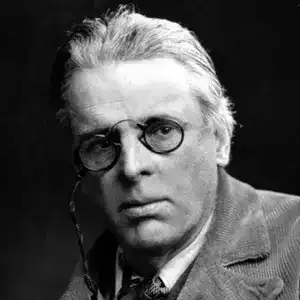
William Butler Yeats
The Double Vision Of Michael Robartes
The Double Vision Of Michael Robartes
I
ON the grey rock of Cashel the mind's eye
Has called up the cold spirits that are born
When the old moon is vanished from the sky
And the new still hides her horn.
Under blank eyes and fingers never still
The particular is pounded till it is man.
When had I my own will?
O not since life began.
Constrained, arraigned, baffled, bent and unbent
By these wire-jointed jaws and limbs of wood,
Themselves obedient,
Knowing not evil and good;
Obedient to some hidden magical breath.
They do not even feel, so abstract are they.
So dead beyond our death,
Triumph that we obey.
On the grey rock of Cashel I suddenly saw
A Sphinx with woman breast and lion paw.
A Buddha, hand at rest,
Hand lifted up that blest;
And right between these two a girl at play
That, it may be, had danced her life away,
For now being dead it seemed
That she of dancing dreamed.
Although I saw it all in the mind's eye
There can be nothing solider till I die;
I saw by the moon's light
Now at its fifteenth night.
One lashed her tail; her eyes lit by the moon
Gazed upon all things known, all things unknown,
In triumph of intellect
With motionless head erect.
That other's moonlit eyeballs never moved,
Being fixed on all things loved, all things unloved.
Yet little peace he had,
For those that love are sad.
Little did they care who danced between,
And little she by whom her dance was seen
So she had outdanced thought.
Body perfection brought,
For what but eye and ear silence the mind
With the minute particulars of mankind?
Mind moved yet seemed to stop
As 'twere a spinning-top.
In contemplation had those three so wrought
Upon a moment, and so stretched it out
That they, time overthrown,
Were dead yet flesh and bone.
I knew that I had seen, had seen at last
That girl my unremembering nights hold fast
Or else my dreams that fly
If I should rub an eye,
And yet in flying fling into my meat
A crazy juice that makes the pulses beat
As though I had been undone
By Homer's Paragon
Who never gave the burning town a thought;
To such a pitch of folly I am brought,
Being caught between the pull
Of the dark moon and the full,
The commonness of thought and images
That have the frenzy of our western seas.
Thereon I made my moan,
And after kissed a stone,
And after that arranged it in a song
Seeing that I, ignorant for So long,
Had been rewarded thus
In Cormac's ruined house.
MICHAEL ROBARTES AND THE DANCER
He. Opinion is not worth a rush;
In this altar-piece the knight,
Who grips his long spear so to push
That dragon through the fading light,
Loved the lady; and it's plain
The half-dead dragon was her thought,
That every morning rose again
And dug its claws and shrieked and fought.
Could the impossible come to pass
She would have time to turn her eyes,
Her lover thought, upon the glass
And on the instant would grow wise.
She. You mean they argued.
He. Put it so;
But bear in mind your lover's wage
Is what your looking-glass can show,
And that he will turn green with rage
At all that is not pictured there.
She. May I not put myself to college?
He. Go pluck Athene by the hair;
For what mere book can grant a knowledge
With an impassioned gravity
Appropriate to that beating breast,
That vigorous thigh, that dreaming eye?
And may the Devil take the rest.
She. And must no beautiful woman be
Learned like a man?
He. Paul Veronese
And all his sacred company
Imagined bodies all their days
By the lagoon you love so much,
For proud, soft, ceremonious proof
That all must come to sight and touch;
While Michael Angelo's Sistine roof,
His 'Morning' and his 'Night' disclose
How sinew that has been pulled tight,
Or it may be loosened in repose,
Can rule by supernatural right
Yet be but sinew.
She. I have heard said
There is great danger in the body.
He. Did God in portioning wine and bread
Give man His thought or His mere body?
She. My wretched dragon is perplexed.
Hec. I have principles to prove me right.
It follows from this Latin text
That blest souls are not composite,
And that all beautiful women may
Live in uncomposite blessedness,
And lead us to the like -- if they
Will banish every thought, unless
The lineaments that please their view
When the long looking-glass is full,
Even from the foot-sole think it too.
She. They say such different things at school.
I
ON the grey rock of Cashel the mind's eye
Has called up the cold spirits that are born
When the old moon is vanished from the sky
And the new still hides her horn.
Under blank eyes and fingers never still
The particular is pounded till it is man.
When had I my own will?
O not since life began.
Constrained, arraigned, baffled, bent and unbent
By these wire-jointed jaws and limbs of wood,
Themselves obedient,
Knowing not evil and good;
Obedient to some hidden magical breath.
They do not even feel, so abstract are they.
So dead beyond our death,
Triumph that we obey.
On the grey rock of Cashel I suddenly saw
A Sphinx with woman breast and lion paw.
A Buddha, hand at rest,
Hand lifted up that blest;
And right between these two a girl at play
That, it may be, had danced her life away,
For now being dead it seemed
That she of dancing dreamed.
Although I saw it all in the mind's eye
There can be nothing solider till I die;
I saw by the moon's light
Now at its fifteenth night.
One lashed her tail; her eyes lit by the moon
Gazed upon all things known, all things unknown,
In triumph of intellect
With motionless head erect.
That other's moonlit eyeballs never moved,
Being fixed on all things loved, all things unloved.
Yet little peace he had,
For those that love are sad.
Little did they care who danced between,
And little she by whom her dance was seen
So she had outdanced thought.
Body perfection brought,
For what but eye and ear silence the mind
With the minute particulars of mankind?
Mind moved yet seemed to stop
As 'twere a spinning-top.
In contemplation had those three so wrought
Upon a moment, and so stretched it out
That they, time overthrown,
Were dead yet flesh and bone.
I knew that I had seen, had seen at last
That girl my unremembering nights hold fast
Or else my dreams that fly
If I should rub an eye,
And yet in flying fling into my meat
A crazy juice that makes the pulses beat
As though I had been undone
By Homer's Paragon
Who never gave the burning town a thought;
To such a pitch of folly I am brought,
Being caught between the pull
Of the dark moon and the full,
The commonness of thought and images
That have the frenzy of our western seas.
Thereon I made my moan,
And after kissed a stone,
And after that arranged it in a song
Seeing that I, ignorant for So long,
Had been rewarded thus
In Cormac's ruined house.
MICHAEL ROBARTES AND THE DANCER
He. Opinion is not worth a rush;
In this altar-piece the knight,
Who grips his long spear so to push
That dragon through the fading light,
Loved the lady; and it's plain
The half-dead dragon was her thought,
That every morning rose again
And dug its claws and shrieked and fought.
Could the impossible come to pass
She would have time to turn her eyes,
Her lover thought, upon the glass
And on the instant would grow wise.
She. You mean they argued.
He. Put it so;
But bear in mind your lover's wage
Is what your looking-glass can show,
And that he will turn green with rage
At all that is not pictured there.
She. May I not put myself to college?
He. Go pluck Athene by the hair;
For what mere book can grant a knowledge
With an impassioned gravity
Appropriate to that beating breast,
That vigorous thigh, that dreaming eye?
And may the Devil take the rest.
She. And must no beautiful woman be
Learned like a man?
He. Paul Veronese
And all his sacred company
Imagined bodies all their days
By the lagoon you love so much,
For proud, soft, ceremonious proof
That all must come to sight and touch;
While Michael Angelo's Sistine roof,
His 'Morning' and his 'Night' disclose
How sinew that has been pulled tight,
Or it may be loosened in repose,
Can rule by supernatural right
Yet be but sinew.
She. I have heard said
There is great danger in the body.
He. Did God in portioning wine and bread
Give man His thought or His mere body?
She. My wretched dragon is perplexed.
Hec. I have principles to prove me right.
It follows from this Latin text
That blest souls are not composite,
And that all beautiful women may
Live in uncomposite blessedness,
And lead us to the like -- if they
Will banish every thought, unless
The lineaments that please their view
When the long looking-glass is full,
Even from the foot-sole think it too.
She. They say such different things at school.
382
William Butler Yeats
The Cloak, The Boat And The Shoes
The Cloak, The Boat And The Shoes
'What do you make so fair and bright?'
'I make the cloak of Sorrow:
O lovely to see in all men's sight
Shall be the cloak of Sorrow,
In all men's sight.'
'What do you build with sails for flight?'
'I build a boat for Sorrow:
O swift on the seas all day and night
Saileth the rover Sorrow,
All day and night.'
What do you weave with wool so white?'
'I weave the shoes of Sorrow:
Soundless shall be the footfall light
In all men's ears of Sorrow,
Sudden and light.'
'What do you make so fair and bright?'
'I make the cloak of Sorrow:
O lovely to see in all men's sight
Shall be the cloak of Sorrow,
In all men's sight.'
'What do you build with sails for flight?'
'I build a boat for Sorrow:
O swift on the seas all day and night
Saileth the rover Sorrow,
All day and night.'
What do you weave with wool so white?'
'I weave the shoes of Sorrow:
Soundless shall be the footfall light
In all men's ears of Sorrow,
Sudden and light.'
354
William Butler Yeats
The Cold Heaven
The Cold Heaven
SUDDENLY I saw the cold and rook-delighting heaven
That seemed as though ice burned and was but the more ice,
And thereupon imagination and heart were driven
So wild that every casual thought of that and this
Vanished, and left but memories, that should be out of season
With the hot blood of youth, of love crossed long ago;
And I took all thc blame out of all sense and reason,
Until I cried and trembled and rocked to and fro,
Riddled with light. Ah! when the ghost begins to quicken,
Confusion of the death-bed over, is it sent
Out naked on the roads, as the books say, and stricken
By the injustice of the skies for punishment?
SUDDENLY I saw the cold and rook-delighting heaven
That seemed as though ice burned and was but the more ice,
And thereupon imagination and heart were driven
So wild that every casual thought of that and this
Vanished, and left but memories, that should be out of season
With the hot blood of youth, of love crossed long ago;
And I took all thc blame out of all sense and reason,
Until I cried and trembled and rocked to and fro,
Riddled with light. Ah! when the ghost begins to quicken,
Confusion of the death-bed over, is it sent
Out naked on the roads, as the books say, and stricken
By the injustice of the skies for punishment?
290
William Butler Yeats
The Chambermaid's First Song
The Chambermaid's First Song
HOW came this ranger
Now sunk in rest,
Stranger with strangcr.
On my cold breast?
What's left to Sigh for?
Strange night has come;
God's love has hidden him
Out of all harm,
Pleasure has made him
Weak as a worm.
HOW came this ranger
Now sunk in rest,
Stranger with strangcr.
On my cold breast?
What's left to Sigh for?
Strange night has come;
God's love has hidden him
Out of all harm,
Pleasure has made him
Weak as a worm.
270
William Butler Yeats
The Cap And Bells
The Cap And Bells
THE jester walked in the garden:
The garden had fallen still;
He bade his soul rise upward
And stand on her window-sill.
It rose in a straight blue garment,
When owls began to call:
It had grown wise-tongued by thinking
Of a quiet and light footfall;
But the young queen would not listen;
She rose in her pale night-gown;
She drew in the heavy casement
And pushed the latches down.
He bade his heart go to her,
When the owls called out no more;
In a red and quivering garment
It sang to her through the door.
It had grown sweet-tongued by dreaming
Of a flutter of flower-like hair;
But she took up her fan from the table
And waved it off on the air.
'I have cap and bells,' he pondered,
'I will send them to her and die';
And when the morning whitened
He left them where she went by.
She laid them upon her bosom,
Under a cloud of her hair,
And her red lips sang them a love-song
Till stars grew out of the air.
She opened her door and her window,
And the heart and the soul came through,
To her right hand came the red one,
To her left hand came the blue.
They set up a noise like crickets,
A chattering wise and sweet,
And her hair was a folded flower
And the quiet of love in her feet.
THE jester walked in the garden:
The garden had fallen still;
He bade his soul rise upward
And stand on her window-sill.
It rose in a straight blue garment,
When owls began to call:
It had grown wise-tongued by thinking
Of a quiet and light footfall;
But the young queen would not listen;
She rose in her pale night-gown;
She drew in the heavy casement
And pushed the latches down.
He bade his heart go to her,
When the owls called out no more;
In a red and quivering garment
It sang to her through the door.
It had grown sweet-tongued by dreaming
Of a flutter of flower-like hair;
But she took up her fan from the table
And waved it off on the air.
'I have cap and bells,' he pondered,
'I will send them to her and die';
And when the morning whitened
He left them where she went by.
She laid them upon her bosom,
Under a cloud of her hair,
And her red lips sang them a love-song
Till stars grew out of the air.
She opened her door and her window,
And the heart and the soul came through,
To her right hand came the red one,
To her left hand came the blue.
They set up a noise like crickets,
A chattering wise and sweet,
And her hair was a folded flower
And the quiet of love in her feet.
358
William Butler Yeats
The Ballad Of The Foxhunter
The Ballad Of The Foxhunter
'Lay me in a cushioned chair;
Carry me, ye four,
With cushions here and cushions there,
To see the world once more.
'To stable and to kennel go;
Bring what is there to bring;
Lead my Lollard to and fro,
Or gently in a ring.
'Put the chair upon the grass:
Bring Rody and his hounds,
That I may contented pass
From these earthly bounds.'
His eyelids droop, his head falls low,
His old eyes cloud with dreams;
The sun upon all things that grow
Falls in sleepy streams.
Brown Lollard treads upon the lawn,
And to the armchair goes,
And now the old man's dreams are gone,
He smooths the long brown nose.
And now moves many a pleasant tongue
Upon his wasted hands,
For leading aged hounds and young
The huntsman near him stands.
'Huntsmam Rody, blow the horn,
Make the hills reply.'
The huntsman loosens on the morn
A gay wandering cry.
Fire is in the old man's eyes,
His fingers move and sway,
And when the wandering music dies
They hear him feebly say,
'Huntsman Rody, blow the horn,
Make the hills reply.'
'I cannot blow upon my horn,
I can but weep and sigh.'
Servants round his cushioned place
Are with new sorrow wrung;
Hounds are gazing on his face,
Aged hounds and young.
One blind hound only lies apart
On the sun-smitten grass;
He holds deep commune with his heart:
The moments pass and pass:
The blind hound with a mournful din
Lifts slow his wintry head;
The servants bear the body in;
The hounds wail for the dead.
'Lay me in a cushioned chair;
Carry me, ye four,
With cushions here and cushions there,
To see the world once more.
'To stable and to kennel go;
Bring what is there to bring;
Lead my Lollard to and fro,
Or gently in a ring.
'Put the chair upon the grass:
Bring Rody and his hounds,
That I may contented pass
From these earthly bounds.'
His eyelids droop, his head falls low,
His old eyes cloud with dreams;
The sun upon all things that grow
Falls in sleepy streams.
Brown Lollard treads upon the lawn,
And to the armchair goes,
And now the old man's dreams are gone,
He smooths the long brown nose.
And now moves many a pleasant tongue
Upon his wasted hands,
For leading aged hounds and young
The huntsman near him stands.
'Huntsmam Rody, blow the horn,
Make the hills reply.'
The huntsman loosens on the morn
A gay wandering cry.
Fire is in the old man's eyes,
His fingers move and sway,
And when the wandering music dies
They hear him feebly say,
'Huntsman Rody, blow the horn,
Make the hills reply.'
'I cannot blow upon my horn,
I can but weep and sigh.'
Servants round his cushioned place
Are with new sorrow wrung;
Hounds are gazing on his face,
Aged hounds and young.
One blind hound only lies apart
On the sun-smitten grass;
He holds deep commune with his heart:
The moments pass and pass:
The blind hound with a mournful din
Lifts slow his wintry head;
The servants bear the body in;
The hounds wail for the dead.
435
William Butler Yeats
The Apparitions
The Apparitions
BECAUSE there is safety in derision
I talked about an apparition,
I took no trouble to convince,
Or seem plausible to a man of sense.
Distrustful of thar popular eye
Whether it be bold or sly.
Fifteen apparitions have I seen;
The worst a coat upon a coat-hanger.
I have found nothing half so good
As my long-planned half solitude,
Where I can sit up half the night
With some friend that has the wit
Not to allow his looks to tell
When I am unintelligible.
Fifteen apparitions have I seen;
The worst a coat upon a coat-hanger.
When a man grows old his joy
Grows more deep day after day,
His empty heart is full at length,
But he has need of all that strength
Because of the increasing Night
That opens her mystery and fright.
Fifteen apparitions have I seen;
The worst a coat upon a coat-hanger.
BECAUSE there is safety in derision
I talked about an apparition,
I took no trouble to convince,
Or seem plausible to a man of sense.
Distrustful of thar popular eye
Whether it be bold or sly.
Fifteen apparitions have I seen;
The worst a coat upon a coat-hanger.
I have found nothing half so good
As my long-planned half solitude,
Where I can sit up half the night
With some friend that has the wit
Not to allow his looks to tell
When I am unintelligible.
Fifteen apparitions have I seen;
The worst a coat upon a coat-hanger.
When a man grows old his joy
Grows more deep day after day,
His empty heart is full at length,
But he has need of all that strength
Because of the increasing Night
That opens her mystery and fright.
Fifteen apparitions have I seen;
The worst a coat upon a coat-hanger.
360
William Butler Yeats
Spilt Milk
Spilt Milk
WE that have done and thought,
That have thought and done,
Must ramble, and thin out
Like milk spilt on a stone.
WE that have done and thought,
That have thought and done,
Must ramble, and thin out
Like milk spilt on a stone.
379
William Butler Yeats
Solomon And The Witch
Solomon And The Witch
AND thus declared that Arab lady:
'Last night, where under the wild moon
On grassy mattress I had laid me,
Within my arms great Solomon,
I suddenly cried out in a strange tongue
Not his, not mine.'
Who understood
Whatever has been said, sighed, sung,
Howled, miau-d, barked, brayed, belled, yelled, cried, crowed,
Thereon replied: 'A cockerel
Crew from a blossoming apple bough
Three hundred years before the Fall,
And never crew again till now,
And would not now but that he thought,
Chance being at one with Choice at last,
All that the brigand apple brought
And this foul world were dead at last.
He that crowed out eternity
Thought to have crowed it in again.
For though love has a spider's eye
To find out some appropriate pain --
Aye, though all passion's in the glance --
For every nerve, and tests a lover
With cruelties of Choice and Chance;
And when at last that murder's over
Maybe the bride-bed brings despair,
For each an imagined image brings
And finds a real image there;
Yet the world ends when these two things,
Though several, are a single light,
When oil and wick are burned in one;
Therefore a blessed moon last night
Gave Sheba to her Solomon.'
'Yet the world stays.'
'If that be so,
Your cockerel found us in the wrong
Although he thought it. worth a crow.
Maybe an image is too strong
Or maybe is not strong enough.'
'The night has fallen; not a sound
In the forbidden sacred grove
Unless a petal hit the ground,
Nor any human sight within it
But the crushed grass where we have lain!
And the moon is wilder every minute.
O! Solomon! let us try again.'
AND thus declared that Arab lady:
'Last night, where under the wild moon
On grassy mattress I had laid me,
Within my arms great Solomon,
I suddenly cried out in a strange tongue
Not his, not mine.'
Who understood
Whatever has been said, sighed, sung,
Howled, miau-d, barked, brayed, belled, yelled, cried, crowed,
Thereon replied: 'A cockerel
Crew from a blossoming apple bough
Three hundred years before the Fall,
And never crew again till now,
And would not now but that he thought,
Chance being at one with Choice at last,
All that the brigand apple brought
And this foul world were dead at last.
He that crowed out eternity
Thought to have crowed it in again.
For though love has a spider's eye
To find out some appropriate pain --
Aye, though all passion's in the glance --
For every nerve, and tests a lover
With cruelties of Choice and Chance;
And when at last that murder's over
Maybe the bride-bed brings despair,
For each an imagined image brings
And finds a real image there;
Yet the world ends when these two things,
Though several, are a single light,
When oil and wick are burned in one;
Therefore a blessed moon last night
Gave Sheba to her Solomon.'
'Yet the world stays.'
'If that be so,
Your cockerel found us in the wrong
Although he thought it. worth a crow.
Maybe an image is too strong
Or maybe is not strong enough.'
'The night has fallen; not a sound
In the forbidden sacred grove
Unless a petal hit the ground,
Nor any human sight within it
But the crushed grass where we have lain!
And the moon is wilder every minute.
O! Solomon! let us try again.'
376
William Butler Yeats
Sailing To Byzantium
Sailing To Byzantium
I
That is no country for old men. The young
In one another's arms, birds in the trees
---Those dying generations---at their song,
The salmon-falls, the mackerel-crowded seas,
Fish, flesh, or fowl commend all summer long
Whatever is begotten, born, and dies.
Caught in that sensual music all neglect
Monuments of unaging intellect.
II
An aged man is but a paltry thing,
A tattered coat upon a stick, unless
Soul clap its hands and sing, and louder sing
For every tatter in its mortal dress,
Nor is there singing school but studying
Monuments of its own magnificence;
And therefore I have sailed the seas and come
To the holy city of Byzantium.
III
O sages standing in God's holy fire
As in the gold mosaic of a wall,
Come from the holy fire, perne in a gyre,
And be the singing-masters of my soul.
Consume my heart away; sick with desire
And fastened to a dying animal
It knows not what it is; and gather me
Into the artifice of eternity.
IV
Once out of nature I shall never take
My bodily form from any natural thing,
But such a form as Grecian goldsmiths make
Of hammered gold and gold enamelling
To keep a drowsy Emperor awake;
Or set upon a golden bough to sing
To lords and ladies of Byzantium
Of what is past, or passing, or to come.
I
That is no country for old men. The young
In one another's arms, birds in the trees
---Those dying generations---at their song,
The salmon-falls, the mackerel-crowded seas,
Fish, flesh, or fowl commend all summer long
Whatever is begotten, born, and dies.
Caught in that sensual music all neglect
Monuments of unaging intellect.
II
An aged man is but a paltry thing,
A tattered coat upon a stick, unless
Soul clap its hands and sing, and louder sing
For every tatter in its mortal dress,
Nor is there singing school but studying
Monuments of its own magnificence;
And therefore I have sailed the seas and come
To the holy city of Byzantium.
III
O sages standing in God's holy fire
As in the gold mosaic of a wall,
Come from the holy fire, perne in a gyre,
And be the singing-masters of my soul.
Consume my heart away; sick with desire
And fastened to a dying animal
It knows not what it is; and gather me
Into the artifice of eternity.
IV
Once out of nature I shall never take
My bodily form from any natural thing,
But such a form as Grecian goldsmiths make
Of hammered gold and gold enamelling
To keep a drowsy Emperor awake;
Or set upon a golden bough to sing
To lords and ladies of Byzantium
Of what is past, or passing, or to come.
553
William Butler Yeats
Reconciliation
Reconciliation
SOME may have blamed you that you took away
The verses that could move them on the day
When, the ears being deafened, the sight of the eyes blind
With lightning, you went from me, and I could find
Nothing to make a song about but kings,
Helmets, and swords, and half-forgotten things
That were like memories of you -- but now
We'll out, for the world lives as long ago;
And while we're in our laughing, weeping fit,
Hurl helmets, crowns, and swords into the pit.
But, dear, cling close to me; since you were gone,
My barren thoughts have chilled me to the bone.
SOME may have blamed you that you took away
The verses that could move them on the day
When, the ears being deafened, the sight of the eyes blind
With lightning, you went from me, and I could find
Nothing to make a song about but kings,
Helmets, and swords, and half-forgotten things
That were like memories of you -- but now
We'll out, for the world lives as long ago;
And while we're in our laughing, weeping fit,
Hurl helmets, crowns, and swords into the pit.
But, dear, cling close to me; since you were gone,
My barren thoughts have chilled me to the bone.
412
William Butler Yeats
Peace
Peace
AH, that Time could touch a form
That could show what Homer's age
Bred to be a hero's wage.
'Were not all her life but storm
Would not painters paint a form
Of such noble lines,' I said,
'Such a delicate high head,
All that sternness amid charm,
All that sweetness amid strength?'
Ah, but peace that comes at length,
Came when Time had touched her form.
AH, that Time could touch a form
That could show what Homer's age
Bred to be a hero's wage.
'Were not all her life but storm
Would not painters paint a form
Of such noble lines,' I said,
'Such a delicate high head,
All that sternness amid charm,
All that sweetness amid strength?'
Ah, but peace that comes at length,
Came when Time had touched her form.
283
William Butler Yeats
Presences
Presences
THIS night has been so strange that it seemed
As if the hair stood up on my head.
From going-down of the sun I have dreamed
That women laughing, or timid or wild,
In rustle of lace or silken stuff,
Climbed up my creaking stair. They had read
All I had rhymed of that monstrous thing
Returned and yet unrequited love.
They stood in the door and stood between
My great wood lectern and the fire
Till I could hear their hearts beating:
One is a harlot, and one a child
That never looked upon man with desire.
And one, it may be, a queen.
THIS night has been so strange that it seemed
As if the hair stood up on my head.
From going-down of the sun I have dreamed
That women laughing, or timid or wild,
In rustle of lace or silken stuff,
Climbed up my creaking stair. They had read
All I had rhymed of that monstrous thing
Returned and yet unrequited love.
They stood in the door and stood between
My great wood lectern and the fire
Till I could hear their hearts beating:
One is a harlot, and one a child
That never looked upon man with desire.
And one, it may be, a queen.
356
William Butler Yeats
Parting
Parting
He. Dear, I must be gone
While night Shuts the eyes
Of the household spies;
That song announces dawn.
She. No, night's bird and love's
Bids all true lovers rest,
While his loud song reproves
The murderous stealth of day.
He. Daylight already flies
From mountain crest to crest
She. That light is from the moon.
He. That bird...
She. Let him sing on,
I offer to love's play
My dark declivities.
He. Dear, I must be gone
While night Shuts the eyes
Of the household spies;
That song announces dawn.
She. No, night's bird and love's
Bids all true lovers rest,
While his loud song reproves
The murderous stealth of day.
He. Daylight already flies
From mountain crest to crest
She. That light is from the moon.
He. That bird...
She. Let him sing on,
I offer to love's play
My dark declivities.
310
William Butler Yeats
On Woman
On Woman
MAY God be praised for woman
That gives up all her mind,
A man may find in no man
A friendship of her kind
That covers all he has brought
As with her flesh and bone,
Nor quarrels with a thought
Because it is not her own.
Though pedantry denies,
It's plain the Bible means
That Solomon grew wise
While talking with his queens.
Yet never could, although
They say he counted grass,
Count all the praises due
When Sheba was his lass,
When she the iron wrought, or
When from the smithy fire
It shuddered in the water:
Harshness of their desire
That made them stretch and yawn,
pleasure that comes with sleep,
Shudder that made them one.
What else He give or keep
God grant me -- no, not here,
For I am not so bold
To hope a thing so dear
Now I am growing old,
But when, if the tale's true,
The Pestle of the moon
That pounds up all anew
Brings me to birth again --
To find what once I had
And know what once I have known,
Until I am driven mad,
Sleep driven from my bed.
By tenderness and care.
pity, an aching head,
Gnashing of teeth, despair;
And all because of some one
perverse creature of chance,
And live like Solomon
That Sheba led a dance.
MAY God be praised for woman
That gives up all her mind,
A man may find in no man
A friendship of her kind
That covers all he has brought
As with her flesh and bone,
Nor quarrels with a thought
Because it is not her own.
Though pedantry denies,
It's plain the Bible means
That Solomon grew wise
While talking with his queens.
Yet never could, although
They say he counted grass,
Count all the praises due
When Sheba was his lass,
When she the iron wrought, or
When from the smithy fire
It shuddered in the water:
Harshness of their desire
That made them stretch and yawn,
pleasure that comes with sleep,
Shudder that made them one.
What else He give or keep
God grant me -- no, not here,
For I am not so bold
To hope a thing so dear
Now I am growing old,
But when, if the tale's true,
The Pestle of the moon
That pounds up all anew
Brings me to birth again --
To find what once I had
And know what once I have known,
Until I am driven mad,
Sleep driven from my bed.
By tenderness and care.
pity, an aching head,
Gnashing of teeth, despair;
And all because of some one
perverse creature of chance,
And live like Solomon
That Sheba led a dance.
398
William Butler Yeats
Old Tom Again
Old Tom Again
Things out of perfection sail,
And all their swelling canvas wear,
Nor shall the self-begotten fail
Though fantastic men suppose
Building-yard and stormy shore,
Winding-sheet and swaddling - clothes.
Things out of perfection sail,
And all their swelling canvas wear,
Nor shall the self-begotten fail
Though fantastic men suppose
Building-yard and stormy shore,
Winding-sheet and swaddling - clothes.
272
William Butler Yeats
On A Political Prisoner
On A Political Prisoner
SHE that but little patience knew,
From childhood on, had now so much
A grey gull lost its fear and flew
Down to her cell and there alit,
And there endured her fingers' touch
And from her fingers ate its bit.
Did she in touching that lone wing
Recall the years before her mind
Became a bitter, an abstract thing,
Her thought some popular enmity:
Blind and leader of the blind
Drinking the foul ditch where they lie?
When long ago I saw her ride
Under Ben Bulben to the meet,
The beauty of her country-side
With all youth's lonely wildness stirred,
She seemed to have grown clean and sweet
Like any rock-bred, sea-borne bird:
Sea-borne, or balanced on the air
When first it sprang out of the nest
Upon some lofty rock to stare
Upon the cloudy canopy,
While under its storm-beaten breast
Cried out the hollows of the sea.
SHE that but little patience knew,
From childhood on, had now so much
A grey gull lost its fear and flew
Down to her cell and there alit,
And there endured her fingers' touch
And from her fingers ate its bit.
Did she in touching that lone wing
Recall the years before her mind
Became a bitter, an abstract thing,
Her thought some popular enmity:
Blind and leader of the blind
Drinking the foul ditch where they lie?
When long ago I saw her ride
Under Ben Bulben to the meet,
The beauty of her country-side
With all youth's lonely wildness stirred,
She seemed to have grown clean and sweet
Like any rock-bred, sea-borne bird:
Sea-borne, or balanced on the air
When first it sprang out of the nest
Upon some lofty rock to stare
Upon the cloudy canopy,
While under its storm-beaten breast
Cried out the hollows of the sea.
379
William Butler Yeats
News For The Delphic Oracle
News For The Delphic Oracle
THERE all the golden codgers lay,
There the silver dew,
And the great water sighed for love,
And the wind sighed too.
Man-picker Niamh leant and sighed
By Oisin on the grass;
There sighed amid his choir of love
Tall pythagoras.
plotinus came and looked about,
The salt-flakes on his breast,
And having stretched and yawned awhile
Lay sighing like the rest.
Straddling each a dolphin's back
And steadied by a fin,
Those Innocents re-live their death,
Their wounds open again.
The ecstatic waters laugh because
Their cries are sweet and strange,
Through their ancestral patterns dance,
And the brute dolphins plunge
Until, in some cliff-sheltered bay
Where wades the choir of love
Proffering its sacred laurel crowns,
They pitch their burdens off.
THERE all the golden codgers lay,
There the silver dew,
And the great water sighed for love,
And the wind sighed too.
Man-picker Niamh leant and sighed
By Oisin on the grass;
There sighed amid his choir of love
Tall pythagoras.
plotinus came and looked about,
The salt-flakes on his breast,
And having stretched and yawned awhile
Lay sighing like the rest.
Straddling each a dolphin's back
And steadied by a fin,
Those Innocents re-live their death,
Their wounds open again.
The ecstatic waters laugh because
Their cries are sweet and strange,
Through their ancestral patterns dance,
And the brute dolphins plunge
Until, in some cliff-sheltered bay
Where wades the choir of love
Proffering its sacred laurel crowns,
They pitch their burdens off.
413
William Butler Yeats
Narrative And Dramatic The Wanderings Of Oisin
Narrative And Dramatic The Wanderings Of Oisin
BOOK I
S. Patrick. You who are bent, and bald, and blind,
With a heavy heart and a wandering mind,
Have known three centuries, poets sing,
Of dalliance with a demon thing.
Oisin. Sad to remember, sick with years,
The swift innumerable spears,
The horsemen with their floating hair,
And bowls of barley, honey, and wine,
Those merry couples dancing in tune,
And the white body that lay by mine;
But the tale, though words be lighter than air.
Must live to be old like the wandering moon.
Caoilte, and Conan, and Finn were there,
When we followed a deer with our baying hounds.
With Bran, Sceolan, and Lomair,
And passing the Firbolgs' burial-motmds,
Came to the cairn-heaped grassy hill
Where passionate Maeve is stony-still;
And found On the dove-grey edge of the sea
A pearl-pale, high-born lady, who rode
On a horse with bridle of findrinny;
And like a sunset were her lips,
A stormy sunset on doomed ships;
A citron colour gloomed in her hair,
But down to her feet white vesture flowed,
And with the glimmering crimson glowed
Of many a figured embroidery;
And it was bound with a pearl-pale shell
That wavered like the summer streams,
As her soft bosom rose and fell.
S. Patrick. You are still wrecked among heathen dreams.
Oisin. 'Why do you wind no horn?' she said
'And every hero droop his head?
The hornless deer is not more sad
That many a peaceful moment had,
More sleek than any granary mouse,
In his own leafy forest house
Among the waving fields of fern:
The hunting of heroes should be glad.'
'O pleasant woman,' answered Finn,
'We think on Oscar's pencilled urn,
And on the heroes lying slain
On Gabhra's raven-covered plain;
But where are your noble kith and kin,
And from what country do you ride?'
'My father and my mother are
Aengus and Edain, my own name
Niamh, and my country far
Beyond the tumbling of this tide.'
'What dream came with you that you came
Through bitter tide on foam-wet feet?
Did your companion wander away
From where the birds of Aengus wing?'
Thereon did she look haughty and sweet:
'I have not yet, war-weary king,
Been spoken of with any man;
Yet now I choose, for these four feet
Ran through the foam and ran to this
That I might have your son to kiss.'
'Were there no better than my son
That you through all that foam should run?'
'I loved no man, though kings besought,
Until the Danaan poets brought
Rhyme that rhymed upon Oisin's name,
And now I am dizzy with the thought
Of all that wisdom and the fame
Of battles broken by his hands,
Of stories builded by his words
That are like coloured Asian birds
At evening in their rainless lands.'
O Patrick, by your brazen bell,
There was no limb of mine but fell
Into a desperate gulph of love!
'You only will I wed,' I cried,
'And I will make a thousand songs,
And set your name all names above,
And captives bound with leathern thongs
Shall kneel and praise you, one by one,
At evening in my western dun.'
'O Oisin, mount by me and ride
To shores by the wash of the tremulous tide,
Where men have heaped no burial-mounds,
And the days pass by like a wayward tune,
Where broken faith has never been known
And the blushes of first love never have flown;
And there I will give you a hundred hounds;
No mightier creatures bay at the moon;
And a hundred robes of murmuring silk,
And a hundred calves and a hundred sheep
Whose long wool whiter than sea-froth flows,
And a hundred spears and a hundred bows,
And oil and wine and honey and milk,
And always never-anxious sleep;
While a hundred youths, mighty of limb,
But knowing nor tumult nor hate nor strife,
And a hundred ladies, merry as birds,
Who when they dance to a fitful measure
Have a speed like the speed of the salmon herds,
Shall follow your horn and obey your whim,
And you shall know the Danaan leisure;
And Niamh be with you for a wife.'
Then she sighed gently, 'It grows late.
Music and love and sleep await,
Where I would be when the white moon climbs,
The red sun falls and the world grows dim.'
And then I mounted and she bound me
With her triumphing arms around me,
And whispering to herself enwound me;
He shook himself and neighed three times:
Caoilte, Conan, and Finn came near,
And wept, and raised their lamenting hands,
And bid me stay, with many a tear;
But we rode out from the human lands.
In what far kingdom do you go'
Ah Fenians, with the shield and bow?
Or are you phantoms white as snow,
Whose lips had life's most prosperous glow?
O you, with whom in sloping vallcys,
Or down the dewy forest alleys,
I chased at morn the flying deer,
With whom I hurled the hurrying spear,
And heard the foemen's bucklers rattle,
And broke the heaving ranks of battle!
And Bran, Sceolan, and Lomair,
Where are you with your long rough hair?
You go not where the red deer feeds,
Nor tear the foemen from their steeds.
S. Patrick. Boast not, nor mourn with drooping head
Companions long accurst and dead,
And hounds for centuries dust and air.
Oisin. We galloped over the glossy sea:
I know not if days passed or hours,
And Niamh sang continually
Danaan songs, and their dewy showers
Of pensive laughter, unhuman sound,
Lulled weariness, and softly round
My human sorrow her white arms wound.
We galloped; now a hornless deer
Passed by us, chased by a phantom hound
All pearly white, save one red ear;
And now a lady rode like the wind
With an apple of gold in her tossing hand;
And a beautiful young man followed behind
With quenchless gaze and fluttering hair.
'Were these two born in the Danaan land,
Or have they breathed the mortal air?'
'Vex them no longer,' Niamh said,
And sighing bowed her gentle head,
And sighing laid the pearly tip
Of one long finger on my lip.
But now the moon like a white rose shone
In the pale west, and the sun'S rim sank,
And clouds atrayed their rank on rank
About his fading crimson ball:
The floor of Almhuin's hosting hall
Was not more level than the sea,
As, full of loving fantasy,
And with low murmurs, we rode on,
Where many a trumpet-twisted shell
That in immortal silence sleeps
Dreaming of her own melting hues,
Her golds, her ambers, and her blues,
Pierced with soft light the shallowing deeps.
But now a wandering land breeze came
And a far sound of feathery quires;
It seemed to blow from the dying flame,
They seemed to sing in the smouldering fires.
The horse towards the music raced,
Neighing along the lifeless waste;
Like sooty fingers, many a tree
Rose ever out of the warm sea;
And they were trembling ceaselessly,
As though they all were beating time,
Upon the centre of the sun,
To that low laughing woodland rhyme.
And, now our wandering hours were done,
We cantered to the shore, and knew
The reason of the trembling trees:
Round every branch the song-birds flew,
Or clung thereon like swarming bees;
While round the shore a million stood
Like drops of frozen rainbow light,
And pondered in a soft vain mood
Upon their shadows in the tide,
And told the purple deeps their pride,
And murmured snatches of delight;
And on the shores were many boats
With bending sterns and bending bows,
And carven figures on their prows
Of bitterns, and fish-eating stoats,
And swans with their exultant throats:
And where the wood and waters meet
We tied the horse in a leafy clump,
And Niamh blew three merry notes
Out of a little silver trump;
And then an answering whispering flew
Over the bare and woody land,
A whisper of impetuous feet,
And ever nearer, nearer grew;
And from the woods rushed out a band
Of men and ladies, hand in hand,
And singing, singing all together;
Their brows were white as fragrant milk,
Their cloaks made out of yellow silk,
And trimmed with many a crimson feather;
And when they saw the cloak I wore
Was dim with mire of a mortal shore,
They fingered it and gazed on me
And laughed like murmurs of the sea;
But Niamh with a swift distress
Bid them away and hold their peace;
And when they heard her voice they ran
And knelt there, every girl and man,
And kissed, as they would never cease,
Her pearl-pale hand and the hem of her dress.
She bade them bring us to the hall
Where Aengus dreams, from sun to sun,
A Druid dream of the end of days
When the stars are to wane and the world be done.
They led us by long and shadowy ways
Where drops of dew in myriads fall,
And tangled creepers every hour
Blossom in some new crimson flower,
And once a sudden laughter sprang
From all their lips, and once they sang
Together, while the dark woods rang,
And made in all their distant parts,
With boom of bees in honey-marts,
A rumour of delighted hearts.
And once a lady by my side
Gave me a harp, and bid me sing,
And touch the laughing silver string;
But when I sang of human joy
A sorrow wrapped each merry face,
And, patrick! by your beard, they wept,
Until one came, a tearful boy;
'A sadder creature never stept
Than this strange human bard,' he cried;
And caught the silver harp away,
And, weeping over the white strings, hurled
It down in a leaf-hid, hollow place
That kept dim waters from the sky;
And each one said, with a long, long sigh,
'O saddest harp in all the world,
Sleep there till the moon and the stars die!'
And now, still sad, we came to where
A beautiful young man dreamed within
A house of wattles, clay, and skin;
One hand upheld his beardless chin,
And one a sceptre flashing out
Wild flames of red and gold and blue,
Like to a merry wandering rout
Of dancers leaping in the air;
And men and ladies knelt them there
And showed their eyes with teardrops dim,
And with low murmurs prayed to him,
And kissed the sceptre with red lips,
And touched it with their finger-tips.
He held that flashing sceptre up.
'Joy drowns the twilight in the dew,
And fills with stars night's purple cup,
And wakes the sluggard seeds of corn,
And stirs the young kid's budding horn,
And makes the infant ferns unwrap,
And for the peewit paints his cap,
And rolls along the unwieldy sun,
And makes the little planets run:
And if joy were not on the earth,
There were an end of change and birth,
And Earth and Heaven and Hell would die,
And in some gloomy barrow lie
Folded like a frozen fly;
Then mock at Death and Time with glances
And wavering arms and wandering dances.
'Men's hearts of old were drops of flame
That from the saffron morning came,
Or drops of silver joy that fell
Out of the moon's pale twisted shell;
But now hearts cry that hearts are slaves,
And toss and turn in narrow caves;
But here there is nor law nor rule,
Nor have hands held a weary tool;
And here there is nor Change nor Death,
But only kind and merry breath,
For joy is God and God is joy.'
With one long glance for girl and boy
And the pale blossom of the moon,
He fell into a Druid swoon.
And in a wild and sudden dance
We mocked at Time and Fate and Chance
And swept out of the wattled hall
And came to where the dewdrops fall
Among the foamdrops of the sea,
And there we hushed the revelry;
And, gathering on our brows a frown,
Bent all our swaying bodies down,
And to the waves that glimmer by
That sloping green De Danaan sod
Sang, 'God is joy and joy is God,
And things that have grown sad are wicked,
And things that fear the dawn of the morrow
Or the grey wandering osprey Sorrow.'
We danced to where in the winding thicket
The damask roses, bloom on bloom,
Like crimson meteors hang in the gloom.
And bending over them softly said,
Bending over them in the dance,
With a swift and friendly glance
From dewy eyes: 'Upon the dead
Fall the leaves of other roses,
On the dead dim earth encloses:
But never, never on our graves,
Heaped beside the glimmering waves,
Shall fall the leaves of damask roses.
For neither Death nor Change comes near us,
And all listless hours fear us,
And we fear no dawning morrow,
Nor the grey wandering osprey Sorrow.'
The dance wound through the windless woods;
The ever-summered solitudes;
Until the tossing arms grew still
Upon the woody central hill;
And, gathered in a panting band,
We flung on high each waving hand,
And sang unto the starry broods.
In our raised eyes there flashed a glow
Of milky brightness to and fro
As thus our song arose: 'You stars,
Across your wandering ruby cars
Shake the loose reins: you slaves of God.
He rules you with an iron rod,
He holds you with an iron bond,
Each one woven to the other,
Each one woven to his brother
Like bubbles in a frozen pond;
But we in a lonely land abide
Unchainable as the dim tide,
With hearts that know nor law nor rule,
And hands that hold no wearisome tool,
Folded in love that fears no morrow,
Nor the grey wandering osprey Sorrow.'
O Patrick! for a hundred years
I chased upon that woody shore
The deer, the badger, and the boar.
O patrick! for a hundred years
At evening on the glimmering sands,
Beside the piled-up hunting spears,
These now outworn and withered hands
Wrestled among the island bands.
O patrick! for a hundred years
We went a-fishing in long boats
With bending sterns and bending bows,
And carven figures on their prows
Of bitterns and fish-eating stoats.
O patrick! for a hundred years
The gentle Niamh was my wife;
But now two things devour my life;
The things that most of all I hate:
Fasting and prayers.
S. Patrick. Tell On.
Oisin. Yes, yes,
For these were ancient Oisin's fate
Loosed long ago from Heaven's gate,
For his last days to lie in wait.
When one day by the tide I stood,
I found in that forgetfulness
Of dreamy foam a staff of wood
From some dead warrior's broken lance:
I tutned it in my hands; the stains
Of war were on it, and I wept,
Remembering how the Fenians stept
Along the blood-bedabbled plains,
Equal to good or grievous chance:
Thereon young Niamh softly came
And caught my hands, but spake no word
Save only many times my name,
In murmurs, like a frighted bird.
We passed by woods, and lawns of clover,
And found the horse and bridled him,
For we knew well the old was over.
I heard one say, 'His eyes grow dim
With all the ancient sorrow of men';
And wrapped in dreams rode out again
With hoofs of the pale findrinny
Over the glimmering purple sea.
Under the golden evening light,
The Immortals moved among thc fountains
By rivers and the woods' old night;
Some danced like shadows on the mountains
Some wandered ever hand in hand;
Or sat in dreams on the pale strand,
Each forehead like an obscure star
Bent down above each hooked knee,
And sang, and with a dreamy gaze
Watched where the sun in a saffron blaze
Was slumbering half in the sea-ways;
And, as they sang, the painted birds
Kept time with their bright wings and feet;
Like drops of honey came their words,
But fainter than a young lamb's bleat.
'An old man stirs the fire to a blaze,
In the house of a child, of a friend, of a brother.
He has over-lingered his welcome; the days,
Grown desolate, whisper and sigh to each other;
He hears the storm in the chimney above,
And bends to the fire and shakes with the cold,
While his heart still dreams of battle and love,
And the cry of the hounds on the hills of old.
But We are apart in the grassy places,
Where care cannot trouble the least of our days,
Or the softness of youth be gone from our faces,
Or love's first tenderness die in our gaze.
The hare grows old as she plays in the sun
And gazes around her with eyes of brightness;
Before the swift things that she dreamed of were done
She limps along in an aged whiteness;
A storm of birds in the Asian trees
Like tulips in the air a-winging,
And the gentle waves of the summer seas,
That raise their heads and wander singing,
Must murmur at last, ''Unjust, unjust';
And ''My speed is a weariness,' falters the mouse,
And the kingfisher turns to a ball of dust,
And the roof falls in of his tunnelled house.
But the love-dew dims our eyes till the day
When God shall come from the Sea with a sigh
And bid the stars drop down from the sky,
And the moon like a pale rose wither away.'
BOOK II
NOW, man of croziers, shadows called our names
And then away, away, like whirling flames;
And now fled by, mist-covered, without sound,
The youth and lady and the deer and hound;
'Gaze no more on the phantoms,' Niamh said,
And kissed my eyes, and, swaying her bright head
And her bright body, sang of faery and man
Before God was or my old line began;
Wars shadowy, vast, exultant; faeries of old
Who wedded men with rings of Druid gold;
And how those lovers never turn their eyes
Upon the life that fades and flickers and dies,
Yet love and kiss on dim shores far away
Rolled round with music of the sighing spray:
Yet sang no more as when, like a brown bee
That has drunk full, she crossed the misty sea
With me in her white arms a hundred years
Before this day; for now the fall of tears
Troubled her song.
I do not know if days
Or hours passed by, yet hold the morning rays
Shone many times among the glimmering flowers
Woven into her hair, before dark towers
Rose in the darkness, and the white surf gleamed
About them; and the horse of Faery screamed
And shivered, knowing the Isle of Many Fears,
Nor ceased until white Niamh stroked his ears
And named him by sweet names.
A foaming tide
Whitened afar with surge, fan-formed and wide,
Burst from a great door matred by many a blow
From mace and sword and pole-axe, long ago
When gods and giants warred. We rode between
The seaweed-covered pillars; and the green
And surging phosphorus alone gave light
On our dark pathway, till a countless flight
Of moonlit steps glimmered; and left and right
Dark statues glimmered over the pale tide
Upon dark thrones. Between the lids of one
The imaged meteors had flashed and run
And had disported in the stilly jet,
And the fixed stars had dawned and shone and set,
Since God made Time and Death and Sleep: the other
Stretched his long arm to where, a misty smother,
The stream churned, churned, and churned -- his lips apart,
As though he told his never-slumbering heart
Of every foamdrop on its misty way.
Tying the horse to his vast foot that lay
Half in the unvesselled sea, we climbed the stair
And climbed so long, I thought the last steps were
Hung from the morning star; when these mild words
Fanned the delighted air like wings of birds:
'My brothers spring out of their beds at morn,
A-murmur like young partridge: with loud horn
They chase the noontide deer;
And when the dew-drowned stars hang in the air
Look to long fishing-lines, or point and pare
An ashen hunting spear.
O sigh, O fluttering sigh, be kind to me;
Flutter along the froth lips of the sea,
And shores the froth lips wet:
And stay a little while, and bid them weep:
Ah, touch their blue-veined eyelids if they sleep,
And shake their coverlet.
When you have told how I weep endlessly,
Flutter along the froth lips of the sea
And home to me again,
And in the shadow of my hair lie hid,
And tell me that you found a man unbid,
The saddest of all men.'
A lady with soft eyes like funeral tapers,
And face that seemed wrought out of moonlit vapours,
And a sad mouth, that fear made tremulous
As any ruddy moth, looked down on us;
And she with a wave-rusted chain was tied
To two old eagles, full of ancient pride,
That with dim eyeballs stood on either side.
Few feathers were on their dishevelled wings,
For their dim minds were with the ancient things.
'I bring deliverance,' pearl-pale Niamh said.
'Neither the living, nor the unlabouring dead,
Nor the high gods who never lived, may fight
My enemy and hope; demons for fright
Jabber and scream about him in the night;
For he is strong and crafty as the seas
That sprang under the Seven Hazel Trees,
And I must needs endure and hate and weep,
Until the gods and demons drop asleep,
Hearing Acdh touch thc mournful strings of gold.'
'Is he So dreadful?'
'Be not over-bold,
But fly while still you may.'
And thereon I:
'This demon shall be battered till he die,
And his loose bulk be thrown in the loud tide.'
'Flee from him,' pearl-pale Niamh weeping cried,
'For all men flee the demons'; but moved not
My angry king-remembering soul one jot.
There was no mightier soul of Heber's line;
Now it is old and mouse-like. For a sign
I burst the chain: still earless, neNeless, blind,
Wrapped in the things of the unhuman mind,
In some dim memory or ancient mood,
Still earless, netveless, blind, the eagles stood.
And then we climbed the stair to a high door;
A hundred horsemen on the basalt floor
Beneath had paced content: we held our way
And stood within: clothed in a misty ray
I saw a foam-white seagull drift and float
Under the roof, and with a straining throat
Shouted, and hailed him: he hung there a star,
For no man's cry shall ever mount so far;
Not even your God could have thrown down that hall;
Stabling His unloosed lightnings in their stall,
He had sat down and sighed with cumbered heart,
As though His hour were come.
We sought the patt
That was most distant from the door; green slime
Made the way slippery, and time on time
Showed prints of sea-born scales. while down through it
The captive's journeys to and fro were writ
Like a small river, and where feet touched came
A momentary gleam of phosphorus flame.
Under the deepest shadows of the hall
That woman found a ring hung on the wall,
And in the ring a torch, and with its flare
Making a world about her in the air,
Passed under the dim doorway, out of sight,
And came again, holding a second light
Burning between her fingers, and in mine
Laid it and sighed: I held a sword whose shine
No centuries could dim, and a word ran
Thereon in Ogham letters, 'Manannan';
That sea-god's name, who in a deep content
Sprang dripping, and, with captive demons sent
Out of the sevenfold seas, built the dark hall
Rooted in foam and clouds, and cried to all
The mightier masters of a mightier race;
And at his cry there came no milk-pale face
Under a crown of thorns and dark with blood,
But only exultant faces.
Niamh stood
With bowed head, trembling when the white blade shone,
But she whose hours of tenderness were gone
Had neither hope nor fear. I bade them hide
Under the shadowS till the tumults died
Of the loud-crashing and earth-shaking fight,
Lest they should look upon some dreadful sight;
And thrust the torch between the slimy flags.
A dome made out of endless carven jags,
Where shadowy face flowed into shadowy face,
Looked down on me; and in the self-same place
I waited hour by hour, and the high dome,
Windowless, pillarless, multitudinous home
Of faces, waited; and the leisured gaze
Was loaded with the memory of days
Buried and mighty. When through the great door
The dawn came in, and glimmered on the floor
With a pale light, I journeyed round the hall
And found a door deep sunken in the wall,
The least of doors; beyond on a dim plain
A little mnnel made a bubbling strain,
And on the runnel's stony and bare edge
A dusky demon dry as a withered sedge
Swayed, crooning to himself an unknown tongue:
In a sad revelry he sang and swung
Bacchant and mournful, passing to and fro
His hand along the runnel's side, as though
The flowers still grew there: far on the sea's waste
Shaking and waving, vapour vapour chased,
While high frail cloudlets, fed with a green light,
Like drifts of leaves, immovable and bright,
Hung in the passionate dawn. He slowly turned:
A demon's leisure: eyes, first white, now burned
Like wings of kingfishers; and he arose
Barking. We trampled up and down with blows
Of sword and brazen battle-axe, while day
Gave to high noon and noon to night gave way;
And when he knew the sword of Manannan
Amid the shades of night, he changed and ran
Through many shapes; I lunged at the smooth throat
Of a great eel; it changed, and I but smote
A fir-tree roaring in its leafless top;
And thereupon I drew the livid chop
Of a drowned dripping body to my breast;
Horror from horror grew; but when the west
Had surged up in a plumy fire, I drave
Through heart and spine; and cast him in the wave
Lest Niamh shudder.
Full of hope and dread
Those two came carrying wine and meat and bread,
And healed my wounds with unguents out of flowers
That feed white moths by some De Danaan shrine;
Then in that hall, lit by the dim sea-shine,
We lay on skins of otters, and drank wine,
Brewed by the sea-gods, from huge cups that lay
Upon the lips of sea-gods in their day;
And then on heaped-up skins of otters slept.
And when the sun once more in saffron stept,
Rolling his flagrant wheel out of the deep,
We sang the loves and angers without sleep,
And all the exultant labours of the strong.
But now the lying clerics murder song
With barren words and flatteries of the weak.
In what land do the powerless turn the beak
Of ravening Sorrow, or the hand of Wrath?
For all your croziers, they have left the path
And wander in the storms and clinging snows,
Hopeless for ever: ancient Oisin knows,
For he is weak and poor and blind, and lies
On the anvil of the world.
S. Patrick. Be still: the skies
Are choked with thunder, lightning, and fierce wind,
For God has heard, and speaks His angry mind;
Go cast your body on the stones and pray,
For He has wrought midnight and dawn and day.
Oisin. Saint, do you weep? I hear amid the thunder
The Fenian horses; atmour torn asunder;
Laughter and cries. The armies clash and shock,
And now the daylight-darkening ravens flock.
Cease, cease, O mournful, laughing Fenian horn!
We feasted for three days. On the fourth morn
I found, dropping sea-foam on the wide stair,
And hung with slime, and whispering in his hair,
That demon dull and unsubduable;
And once more to a day-long battle fell,
And at the sundown threw him in the surge,
To lie until the fourth morn saw emerge
His new-healed shape; and for a hundred years
So watred, so feasted, with nor dreams nor fears,
Nor languor nor fatigue: an endless feast,
An endless war.
The hundred years had ceased;
I stood upon the stair: the surges bore
A beech-bough to me, and my heart grew sore,
Remembering how I had stood by white-haired Finn
Under a beech at Almhuin and heard the thin
Outcry of bats.
And then young Niamh came
Holding that horse, and sadly called my name;
I mounted, and we passed over the lone
And drifting greyness, while this monotone,
Surly and distant, mixed inseparably
Into the clangour of the wind and sea.
'I hear my soul drop
And Mananna's dark tower, stone after stone.
Gather sea-slime and fall the seaward way,
And the moon goad the waters night and day,
That all be overthrown.
'But till the moon has taken all, I wage
War on the mightiest men under the skies,
And they have fallen or fled, age after age.
Light is man's love, and lighter is man's rage;
His purpose drifts and dies.'
And then lost Niamh murmured, 'Love, we go
To the Island of Forgetfulness, for lo!
The Islands of Dancing and of Victories
Are empty of all power.'
'And which of these
Is the Island of Content?'
'None know,' she said;
And on my bosom laid her weeping head.
BOOK III
FLED foam underneath us, and round us, a wandering and milky smoke,
High as the Saddle-girth, covering away from our glances the tide;
And those that fled, and that followed, from the foam-pale distance broke;
The immortal desire of Immortals we saw in their faces, and sighed.
I mused on the chase with the Fenians, and Bran, Sceolan, Lomair,
And never a song sang Niamh, and over my finger-tips
Came now the sliding of tears and sweeping of mist-cold hair,
And now the warmth of sighs, and after the quiver of lips.
Were we days long or hours long in riding, when, rolled in a grisly peace,
An isle lay level before us, with dripping hazel and oak?
And we stood on a sea's edge we saw not; for whiter than new-washed fleece
Fled foam underneath us, and round us, a wandering and milky smoke.
And we rode on the plains of the sea's edge; the sea's edge barren and grey,
Grey sand on the green of the grasses and over the dripping trees,
Dripping and doubling landward, as though they would hasten away,
Like an army of old men longing for rest from the moan of the seas.
But the trees grew taller and closer, immense in their wrinkling bark;
Dropping; a murmurous dropping; old silence and that one sound;
For no live creatures lived there, no weasels moved in the dark:
Long sighs arose in our spirits, beneath us bubbled the ground.
And the ears of the horse went sinking away in the hollow night,
For, as drift from a sailor slow drowning the gleams of the world and the sun,
Ceased on our hands and our faces, on hazel and oak leaf, the light,
And the stars were blotted above us, and the whole of the world was one.
Till the horse gave a whinny; for, cumbrous with stems of the hazel and oak,
A valley flowed down from his hoofs, and there in the long grass lay,
Under the starlight and shadow, a monstrous slumbering folk,
Their naked and gleaming bodies poured out and heaped in the way.
And by them were arrow and war-axe, arrow and shield and blade;
And dew-blanched horns, in whose hollow a child of three years old
Could sleep on a couch of rushes, and all inwrought and inlaid,
And more comely than man can make them with bronze and silver and gold.
And each of the huge white creatures was huger than fourscore men;
The tops of their ears were feathered, their hands were the claws of birds,
And, shaking the plumes of the grasses and the leaves of the mural glen,
The breathing came from those bodies, long warless, grown whiter than curds.
The wood was so Spacious above them, that He who has stars for His flocks
Could fondle the leaves with His fingers, nor go from His dew-cumbered skies;
So long were they sleeping, the owls had builded their nests in their locks,
Filling the fibrous dimness with long generations of eyes.
And over the limbs and the valley the slow owls wandered and came,
Now in a place of star-fire, and now in a shadow-place wide;
And the chief of the huge white creatures, his knees in the soft star-flame,
Lay loose in a place of shadow: we drew the reins by his side.
Golden the nails of his bird-clawS, flung loosely along the dim ground;
In one was a branch soft-shining with bells more many than sighs
In midst of an old man's bosom; owls ruffling and pacing around
Sidled their bodies against him, filling the shade with their eyes.
And my gaze was thronged with the sleepers; no, not since the world began,
In realms where the handsome were many, nor in glamours by demons flung,
Have faces alive with such beauty been known to the salt eye of man,
Yet weary with passions that faded when the sevenfold seas were young.
And I gazed on the bell-branch, sleep's forebear, far sung by the Sennachies.
I saw how those slumbererS, grown weary, there camping in grasses deep,
Of wars with the wide world and pacing the shores of the wandering seas,
Laid hands on the bell-branch and swayed it, and fed of unhuman sleep.
Snatching the horn of Niamh, I blew a long lingering note.
Came sound from those monstrous sleepers, a sound like the stirring of flies.
He, shaking the fold of his lips, and heaving the pillar of his throat,
Watched me with mournful wonder out of the wells of his eyes.
I cried, 'Come out of the shadow, king of the nails of gold!
And tell of your goodly household and the goodly works of your hands,
That we may muse in the starlight and talk of the battles of old;
Your questioner, Oisin, is worthy, he comes from the Fenian lands.'
Half open his eyes were, and held me, dull with the smoke of their dreams;
His lips moved slowly in answer, no answer out of them came;
Then he swayed in his fingers the bell-branch, slowdropping a sound in faint streams
Softer than snow-flakes in April and piercing the marrow like flame.
Wrapt in the wave of that music, with weariness more than of earth,
The moil of my centuries filled me; and gone like a sea-covered stone
Were the memories of the whole of my sorrow and the memories of the whole of my
mirth,
And a softness came from the starlight and filled me full to the bone.
In the roots of the grasses, the sorrels, I laid my body as low;
And the pearl-pale Niamh lay by me, her brow on the midst of my breast;
And the horse was gone in the distance, and years after years 'gan flow;
Square leaves of the ivy moved over us, binding us down to our rest.
And, man of the many white croziers, a century there I forgot
How the fetlocks drip blocd in the battle, when the fallen on fallen lie rolled;
How the falconer follows the falcon in the weeds of the heron's plot,
And the name of the demon whose hammer made
Conchubar's sword-blade of old.
And, man of the many white croziers, a century there I forgot
That the spear-shaft is made out of ashwood, the shield out of osier and hide;
How the hammers spring on the anvil, on the spearhead's burning spot;
How the slow, blue-eyed oxen of Finn low sadly at evening tide.
But in dreams, mild man of the croziers, driving the dust with their throngs,
Moved round me, of seamen or landsmen, all who are winter tales;
Came by me the kings of the Red Branch, with roaring of laughter and songs,
Or moved as they moved once, love-making or piercing the tempest with sails.
Came Blanid, Mac Nessa, tall Fergus who feastward of old time slunk,
Cook Barach, the traitor; and warward, the spittle on his beard never dry,
Dark Balor, as old as a forest, car-borne, his mighty head sunk
Helpless, men lifting the lids of his weary and deathmaking eye.
And by me, in soft red raiment, the Fenians moved in loud streams,
And Grania, walking and smiling, sewed with her needle of bone.
So lived I and lived not, so wrought I and wrought not, with creatures of dreams,
In a long iron sleep, as a fish in the water goes dumb as a stone.
At times our slumber was lightened. When the sun was on silver or gold;
When brushed with the wings of the owls, in the dimness they love going by;
When a glow-worm was green on a grass-leaf, lured from his lair in the mould;
Half wakening, we lifted our eyelids, and gazed on the grass with a sigh.
So watched I when, man of the croziers, at the heel of a century fell,
Weak, in the midst of the meadow, from his miles in the midst of the air,
A starling like them that forgathered 'neath a moon waking white as a shell
When the Fenians made foray at morning with Bran, Sceolan, Lomair.
I awoke: the strange horse without summons out of the distance ran,
Thrusting his nose to my shoulder; he knew in his bosom deep
That once more moved in my bosom the ancient sadness of man,
And that I would leave the Immortals, their dimness, their dews dropping sleep.
O, had you seen beautiful Niamh grow white as the waters are white,
Lord of the croziers, you even had lifted your hands and wept:
But, the bird in my fingers, I mounted, remembering alone that delight
Of twilight and slumber were gone, and that hoofs impatiently stept.
I died, 'O Niamh! O white one! if only a twelve-houred day,
I must gaze on the beard of Finn, and move where the old men and young
In the Fenians' dwellings of wattle lean on the chessboards and play,
Ah, sweet to me now were even bald Conan's slanderous tongue!
'Like me were some galley forsaken far off in Meridian isle,
Remembering its long-oared companions, sails turning to threadbare rags;
No more to crawl on the seas with long oars mile after mile,
But to be amid shooting of flies and flowering of rushes and flags.'
Their motionless eyeballs of spirits grown mild with mysterious thought,
Watched her those seamless faces from the valley's glimmering girth;
As she murmured, 'O wandering Oisin, the strength of the bell-branch is naught,
For there moves alive in your fingers the fluttering sadness of earth.
'Then go through the lands in the saddle and see what the mortals do,
And softly come to your Niamh over the tops of the tide;
But weep for your Niamh, O Oisin, weep; for if only your shoe
Brush lightly as haymouse earth's pebbles, you will come no more to my side.
'O flaming lion of the world, O when will you turn to your rest?'
I saw from a distant saddle; from the earth she made her moan:
'I would die like a small withered leaf in the autumn, for breast unto breast
We shall mingle no more, nor our gazes empty their sweetness lone
'In the isles of the farthest seas where only the spirits come.
Were the winds less soft than the breath of a pigeon who sleeps on her nest,
Nor lost in the star-fires and odours the sound of the sea's vague drum?
O flaming lion of the world, O when will you turn to your rest?'
The wailing grew distant; I rode by the woods of the wrinkling bark,
Where ever is murmurous dropping, old silence and that one sound;
For no live creatures live there, no weasels move in the dark:
In a reverie forgetful of all things, over the bubbling' ground.
And I rode by the plains of the sea's edge, where all is barren and grey,
Grey sand on the green of the grasses and over the dripping trees,
Dripping and doubling landward, as though they would hasten away',
Like an army of old men longing for rest from the moan of the seas.
And the winds made the sands on the sea's edge turning and turning go,
As my mind made the names of the Fenians. Far from the hazel and oak,
I rode away on the surges, where, high aS the saddlebow,
Fled foam underneath me, and round me, a wandering and milky smoke.
Long fled the foam-flakes around me, the winds fled out of the vast,
Snatching the bird in secret; nor knew I, embosomed apart,
When they froze the cloth on my body like armour riveted fast,
For Remembrance, lifting her leanness, keened in the gates of my heart.
Till, fattening the winds of the morning, an odour of new-mown hay
Came, and my forehead fell low, and my tears like berries fell down;
Later a sound came, half lost in the sound of a shore far away,
From the great grass-barnacle calling, and later the shore-weeds brown.
If I were as I once was, the strong hoofs crushing the sand and the shells,
Coming out of the sea as the dawn comes, a chaunt of love on my lips,
Not coughing, my head on my knees, and praying, and wroth with the bells,
I would leave no saint's head on his body from Rachlin to Bera of ships.
Making way from the kindling surges, I rode on a bridle-path
Much wondering to see upon all hands, of wattles and woodwork made,
Your bell-mounted churches, and guardless the sacred cairn and the mth,
And a small and a feeble populace stooping with mattock and spade,
Or weeding or ploughing with faces a-shining with much-toil wet;
While in this place and that place, with bodies un, glorious, their chieftains stood,
Awaiting in patience the straw-death, croziered one, caught in your net:
Went the laughter of scorn from my mouth like the roaring of wind in a wood.
And before I went by them so huge and so speedy with eyes so bright,
Came after the hard gaze of youth, or an old man lifted his head:
And I rode and I rode, and I cried out, 'The Fenians hunt wolves in the night,
So sleep thee by daytime.' A voice cried, 'The Fenians a long time are dead.'
A whitebeard stood hushed on the pathway, the flesh of his face as dried grass,
And in folds round his eyes and his mouth, he sad as a child without milk-
And the dreams of the islands were gone, and I knew how men sorrow and pass,
And their hound, and their horse, and their love, and their eyes that glimmer like silk.
And wrapping my face in my hair, I murmured, 'In old age they ceased';
And my tears were larger than berries, and I murmured, 'Where white clouds lie spread
On Crevroe or broad Knockfefin, with many of old they feast
On the floors of the gods.' He cried, 'No, the gods a long time are dead.'
And lonely and longing for Niamh, I shivered and turned me about,
The heart in me longing to leap like a grasshopper into her heart;
I turned and rode to the westward, and followed the sea's old shout
Till I saw where Maeve lies sleeping till starlight and midnight part.
And there at the foot of the mountain, two carried a sack full of sand,
They bore it with staggering and sweating, but fell with their burden at length.
Leaning down from the gem-studded saddle, I flung it five yards with my hand,
With a sob for men waxing so weakly, a sob for the Fenians' old strength.
The rest you have heard of, O croziered man; how, when divided the girth,
I fell on the path, and the horse went away like a summer fly;
And my years three hundred fell on me, and I rose, and walked on the earth,
A creeping old man, full of sleep, with the spittle on his beard never dry'.
How the men of the sand-sack showed me a church with its belfry in air;
Sorry place, where for swing of the war-axe in my dim eyes the crozier gleams;
What place have Caoilte and Conan, and Bran, Sceolan, Lomair?
Speak, you too are old with your memories, an old man surrounded with dreams.
S. Patrick. Where the flesh of the footsole clingeth on the burning stones is their
place;
Where he demons whip them with wires on the burning stones of wide Hell,
Watching the blessed ones move far off, and the smile on God's face,
Between them a gateway of brass, and the howl of the angels who fell.
Oisin. Put the staff in my hands; for I go to the Fenians,
O cleric, to chaunt
The war-songs that roused them of old; they will rise, making clouds with their Breath,
Innumerable, singing, exultant; the clay underneath them shall pant,
And demons be broken in pieces, and trampled beneath them in death.
And demons afraid in their darkness; deep horror of eyes and of wings,
Afraid, their ears on the earth laid, shall listen and rise up and weep;
Hearing the shaking of shields and the quiver of stretched bowstrings,
Hearing Hell loud with a murmur, as shouting and mocking we sweep.
We will tear out the flaming stones, and batter the gateway of brass
And enter, and none sayeth 'No' when there enters the strongly armed guest;
Make clean as a broom cleans, and march on as oxen move over young grass;
Then feast, making converse of wars, and of old wounds, and turn to our rest.
S. Patrick. On the flaming stones, without refuge, the limbs of the Fenians are tost;
None war on the masters of Hell, who could break up the world in their rage;
But kneel and wear out the flags and pray for your soul that is lost
Through the demon love of its youth and its godless and passionate age.
Oisin. Ah me! to be Shaken with coughing and broken with old age and pain,
Without laughter, a show unto children, alone with remembrance and fear;
All emptied of purple hours as a beggar's cloak in the rain,
As a hay-cock out on the flood, or a wolf sucked under a weir.
It were sad to gaze on the blessed and no man I loved of old there;
I throw down the chain of small stones! when life in my body has ceased,
I will go to Caoilte, and Conan, and Bran, Sceolan, Lomair,
And dwell in the house of the Fenians, be they in flames or at feast.
BOOK I
S. Patrick. You who are bent, and bald, and blind,
With a heavy heart and a wandering mind,
Have known three centuries, poets sing,
Of dalliance with a demon thing.
Oisin. Sad to remember, sick with years,
The swift innumerable spears,
The horsemen with their floating hair,
And bowls of barley, honey, and wine,
Those merry couples dancing in tune,
And the white body that lay by mine;
But the tale, though words be lighter than air.
Must live to be old like the wandering moon.
Caoilte, and Conan, and Finn were there,
When we followed a deer with our baying hounds.
With Bran, Sceolan, and Lomair,
And passing the Firbolgs' burial-motmds,
Came to the cairn-heaped grassy hill
Where passionate Maeve is stony-still;
And found On the dove-grey edge of the sea
A pearl-pale, high-born lady, who rode
On a horse with bridle of findrinny;
And like a sunset were her lips,
A stormy sunset on doomed ships;
A citron colour gloomed in her hair,
But down to her feet white vesture flowed,
And with the glimmering crimson glowed
Of many a figured embroidery;
And it was bound with a pearl-pale shell
That wavered like the summer streams,
As her soft bosom rose and fell.
S. Patrick. You are still wrecked among heathen dreams.
Oisin. 'Why do you wind no horn?' she said
'And every hero droop his head?
The hornless deer is not more sad
That many a peaceful moment had,
More sleek than any granary mouse,
In his own leafy forest house
Among the waving fields of fern:
The hunting of heroes should be glad.'
'O pleasant woman,' answered Finn,
'We think on Oscar's pencilled urn,
And on the heroes lying slain
On Gabhra's raven-covered plain;
But where are your noble kith and kin,
And from what country do you ride?'
'My father and my mother are
Aengus and Edain, my own name
Niamh, and my country far
Beyond the tumbling of this tide.'
'What dream came with you that you came
Through bitter tide on foam-wet feet?
Did your companion wander away
From where the birds of Aengus wing?'
Thereon did she look haughty and sweet:
'I have not yet, war-weary king,
Been spoken of with any man;
Yet now I choose, for these four feet
Ran through the foam and ran to this
That I might have your son to kiss.'
'Were there no better than my son
That you through all that foam should run?'
'I loved no man, though kings besought,
Until the Danaan poets brought
Rhyme that rhymed upon Oisin's name,
And now I am dizzy with the thought
Of all that wisdom and the fame
Of battles broken by his hands,
Of stories builded by his words
That are like coloured Asian birds
At evening in their rainless lands.'
O Patrick, by your brazen bell,
There was no limb of mine but fell
Into a desperate gulph of love!
'You only will I wed,' I cried,
'And I will make a thousand songs,
And set your name all names above,
And captives bound with leathern thongs
Shall kneel and praise you, one by one,
At evening in my western dun.'
'O Oisin, mount by me and ride
To shores by the wash of the tremulous tide,
Where men have heaped no burial-mounds,
And the days pass by like a wayward tune,
Where broken faith has never been known
And the blushes of first love never have flown;
And there I will give you a hundred hounds;
No mightier creatures bay at the moon;
And a hundred robes of murmuring silk,
And a hundred calves and a hundred sheep
Whose long wool whiter than sea-froth flows,
And a hundred spears and a hundred bows,
And oil and wine and honey and milk,
And always never-anxious sleep;
While a hundred youths, mighty of limb,
But knowing nor tumult nor hate nor strife,
And a hundred ladies, merry as birds,
Who when they dance to a fitful measure
Have a speed like the speed of the salmon herds,
Shall follow your horn and obey your whim,
And you shall know the Danaan leisure;
And Niamh be with you for a wife.'
Then she sighed gently, 'It grows late.
Music and love and sleep await,
Where I would be when the white moon climbs,
The red sun falls and the world grows dim.'
And then I mounted and she bound me
With her triumphing arms around me,
And whispering to herself enwound me;
He shook himself and neighed three times:
Caoilte, Conan, and Finn came near,
And wept, and raised their lamenting hands,
And bid me stay, with many a tear;
But we rode out from the human lands.
In what far kingdom do you go'
Ah Fenians, with the shield and bow?
Or are you phantoms white as snow,
Whose lips had life's most prosperous glow?
O you, with whom in sloping vallcys,
Or down the dewy forest alleys,
I chased at morn the flying deer,
With whom I hurled the hurrying spear,
And heard the foemen's bucklers rattle,
And broke the heaving ranks of battle!
And Bran, Sceolan, and Lomair,
Where are you with your long rough hair?
You go not where the red deer feeds,
Nor tear the foemen from their steeds.
S. Patrick. Boast not, nor mourn with drooping head
Companions long accurst and dead,
And hounds for centuries dust and air.
Oisin. We galloped over the glossy sea:
I know not if days passed or hours,
And Niamh sang continually
Danaan songs, and their dewy showers
Of pensive laughter, unhuman sound,
Lulled weariness, and softly round
My human sorrow her white arms wound.
We galloped; now a hornless deer
Passed by us, chased by a phantom hound
All pearly white, save one red ear;
And now a lady rode like the wind
With an apple of gold in her tossing hand;
And a beautiful young man followed behind
With quenchless gaze and fluttering hair.
'Were these two born in the Danaan land,
Or have they breathed the mortal air?'
'Vex them no longer,' Niamh said,
And sighing bowed her gentle head,
And sighing laid the pearly tip
Of one long finger on my lip.
But now the moon like a white rose shone
In the pale west, and the sun'S rim sank,
And clouds atrayed their rank on rank
About his fading crimson ball:
The floor of Almhuin's hosting hall
Was not more level than the sea,
As, full of loving fantasy,
And with low murmurs, we rode on,
Where many a trumpet-twisted shell
That in immortal silence sleeps
Dreaming of her own melting hues,
Her golds, her ambers, and her blues,
Pierced with soft light the shallowing deeps.
But now a wandering land breeze came
And a far sound of feathery quires;
It seemed to blow from the dying flame,
They seemed to sing in the smouldering fires.
The horse towards the music raced,
Neighing along the lifeless waste;
Like sooty fingers, many a tree
Rose ever out of the warm sea;
And they were trembling ceaselessly,
As though they all were beating time,
Upon the centre of the sun,
To that low laughing woodland rhyme.
And, now our wandering hours were done,
We cantered to the shore, and knew
The reason of the trembling trees:
Round every branch the song-birds flew,
Or clung thereon like swarming bees;
While round the shore a million stood
Like drops of frozen rainbow light,
And pondered in a soft vain mood
Upon their shadows in the tide,
And told the purple deeps their pride,
And murmured snatches of delight;
And on the shores were many boats
With bending sterns and bending bows,
And carven figures on their prows
Of bitterns, and fish-eating stoats,
And swans with their exultant throats:
And where the wood and waters meet
We tied the horse in a leafy clump,
And Niamh blew three merry notes
Out of a little silver trump;
And then an answering whispering flew
Over the bare and woody land,
A whisper of impetuous feet,
And ever nearer, nearer grew;
And from the woods rushed out a band
Of men and ladies, hand in hand,
And singing, singing all together;
Their brows were white as fragrant milk,
Their cloaks made out of yellow silk,
And trimmed with many a crimson feather;
And when they saw the cloak I wore
Was dim with mire of a mortal shore,
They fingered it and gazed on me
And laughed like murmurs of the sea;
But Niamh with a swift distress
Bid them away and hold their peace;
And when they heard her voice they ran
And knelt there, every girl and man,
And kissed, as they would never cease,
Her pearl-pale hand and the hem of her dress.
She bade them bring us to the hall
Where Aengus dreams, from sun to sun,
A Druid dream of the end of days
When the stars are to wane and the world be done.
They led us by long and shadowy ways
Where drops of dew in myriads fall,
And tangled creepers every hour
Blossom in some new crimson flower,
And once a sudden laughter sprang
From all their lips, and once they sang
Together, while the dark woods rang,
And made in all their distant parts,
With boom of bees in honey-marts,
A rumour of delighted hearts.
And once a lady by my side
Gave me a harp, and bid me sing,
And touch the laughing silver string;
But when I sang of human joy
A sorrow wrapped each merry face,
And, patrick! by your beard, they wept,
Until one came, a tearful boy;
'A sadder creature never stept
Than this strange human bard,' he cried;
And caught the silver harp away,
And, weeping over the white strings, hurled
It down in a leaf-hid, hollow place
That kept dim waters from the sky;
And each one said, with a long, long sigh,
'O saddest harp in all the world,
Sleep there till the moon and the stars die!'
And now, still sad, we came to where
A beautiful young man dreamed within
A house of wattles, clay, and skin;
One hand upheld his beardless chin,
And one a sceptre flashing out
Wild flames of red and gold and blue,
Like to a merry wandering rout
Of dancers leaping in the air;
And men and ladies knelt them there
And showed their eyes with teardrops dim,
And with low murmurs prayed to him,
And kissed the sceptre with red lips,
And touched it with their finger-tips.
He held that flashing sceptre up.
'Joy drowns the twilight in the dew,
And fills with stars night's purple cup,
And wakes the sluggard seeds of corn,
And stirs the young kid's budding horn,
And makes the infant ferns unwrap,
And for the peewit paints his cap,
And rolls along the unwieldy sun,
And makes the little planets run:
And if joy were not on the earth,
There were an end of change and birth,
And Earth and Heaven and Hell would die,
And in some gloomy barrow lie
Folded like a frozen fly;
Then mock at Death and Time with glances
And wavering arms and wandering dances.
'Men's hearts of old were drops of flame
That from the saffron morning came,
Or drops of silver joy that fell
Out of the moon's pale twisted shell;
But now hearts cry that hearts are slaves,
And toss and turn in narrow caves;
But here there is nor law nor rule,
Nor have hands held a weary tool;
And here there is nor Change nor Death,
But only kind and merry breath,
For joy is God and God is joy.'
With one long glance for girl and boy
And the pale blossom of the moon,
He fell into a Druid swoon.
And in a wild and sudden dance
We mocked at Time and Fate and Chance
And swept out of the wattled hall
And came to where the dewdrops fall
Among the foamdrops of the sea,
And there we hushed the revelry;
And, gathering on our brows a frown,
Bent all our swaying bodies down,
And to the waves that glimmer by
That sloping green De Danaan sod
Sang, 'God is joy and joy is God,
And things that have grown sad are wicked,
And things that fear the dawn of the morrow
Or the grey wandering osprey Sorrow.'
We danced to where in the winding thicket
The damask roses, bloom on bloom,
Like crimson meteors hang in the gloom.
And bending over them softly said,
Bending over them in the dance,
With a swift and friendly glance
From dewy eyes: 'Upon the dead
Fall the leaves of other roses,
On the dead dim earth encloses:
But never, never on our graves,
Heaped beside the glimmering waves,
Shall fall the leaves of damask roses.
For neither Death nor Change comes near us,
And all listless hours fear us,
And we fear no dawning morrow,
Nor the grey wandering osprey Sorrow.'
The dance wound through the windless woods;
The ever-summered solitudes;
Until the tossing arms grew still
Upon the woody central hill;
And, gathered in a panting band,
We flung on high each waving hand,
And sang unto the starry broods.
In our raised eyes there flashed a glow
Of milky brightness to and fro
As thus our song arose: 'You stars,
Across your wandering ruby cars
Shake the loose reins: you slaves of God.
He rules you with an iron rod,
He holds you with an iron bond,
Each one woven to the other,
Each one woven to his brother
Like bubbles in a frozen pond;
But we in a lonely land abide
Unchainable as the dim tide,
With hearts that know nor law nor rule,
And hands that hold no wearisome tool,
Folded in love that fears no morrow,
Nor the grey wandering osprey Sorrow.'
O Patrick! for a hundred years
I chased upon that woody shore
The deer, the badger, and the boar.
O patrick! for a hundred years
At evening on the glimmering sands,
Beside the piled-up hunting spears,
These now outworn and withered hands
Wrestled among the island bands.
O patrick! for a hundred years
We went a-fishing in long boats
With bending sterns and bending bows,
And carven figures on their prows
Of bitterns and fish-eating stoats.
O patrick! for a hundred years
The gentle Niamh was my wife;
But now two things devour my life;
The things that most of all I hate:
Fasting and prayers.
S. Patrick. Tell On.
Oisin. Yes, yes,
For these were ancient Oisin's fate
Loosed long ago from Heaven's gate,
For his last days to lie in wait.
When one day by the tide I stood,
I found in that forgetfulness
Of dreamy foam a staff of wood
From some dead warrior's broken lance:
I tutned it in my hands; the stains
Of war were on it, and I wept,
Remembering how the Fenians stept
Along the blood-bedabbled plains,
Equal to good or grievous chance:
Thereon young Niamh softly came
And caught my hands, but spake no word
Save only many times my name,
In murmurs, like a frighted bird.
We passed by woods, and lawns of clover,
And found the horse and bridled him,
For we knew well the old was over.
I heard one say, 'His eyes grow dim
With all the ancient sorrow of men';
And wrapped in dreams rode out again
With hoofs of the pale findrinny
Over the glimmering purple sea.
Under the golden evening light,
The Immortals moved among thc fountains
By rivers and the woods' old night;
Some danced like shadows on the mountains
Some wandered ever hand in hand;
Or sat in dreams on the pale strand,
Each forehead like an obscure star
Bent down above each hooked knee,
And sang, and with a dreamy gaze
Watched where the sun in a saffron blaze
Was slumbering half in the sea-ways;
And, as they sang, the painted birds
Kept time with their bright wings and feet;
Like drops of honey came their words,
But fainter than a young lamb's bleat.
'An old man stirs the fire to a blaze,
In the house of a child, of a friend, of a brother.
He has over-lingered his welcome; the days,
Grown desolate, whisper and sigh to each other;
He hears the storm in the chimney above,
And bends to the fire and shakes with the cold,
While his heart still dreams of battle and love,
And the cry of the hounds on the hills of old.
But We are apart in the grassy places,
Where care cannot trouble the least of our days,
Or the softness of youth be gone from our faces,
Or love's first tenderness die in our gaze.
The hare grows old as she plays in the sun
And gazes around her with eyes of brightness;
Before the swift things that she dreamed of were done
She limps along in an aged whiteness;
A storm of birds in the Asian trees
Like tulips in the air a-winging,
And the gentle waves of the summer seas,
That raise their heads and wander singing,
Must murmur at last, ''Unjust, unjust';
And ''My speed is a weariness,' falters the mouse,
And the kingfisher turns to a ball of dust,
And the roof falls in of his tunnelled house.
But the love-dew dims our eyes till the day
When God shall come from the Sea with a sigh
And bid the stars drop down from the sky,
And the moon like a pale rose wither away.'
BOOK II
NOW, man of croziers, shadows called our names
And then away, away, like whirling flames;
And now fled by, mist-covered, without sound,
The youth and lady and the deer and hound;
'Gaze no more on the phantoms,' Niamh said,
And kissed my eyes, and, swaying her bright head
And her bright body, sang of faery and man
Before God was or my old line began;
Wars shadowy, vast, exultant; faeries of old
Who wedded men with rings of Druid gold;
And how those lovers never turn their eyes
Upon the life that fades and flickers and dies,
Yet love and kiss on dim shores far away
Rolled round with music of the sighing spray:
Yet sang no more as when, like a brown bee
That has drunk full, she crossed the misty sea
With me in her white arms a hundred years
Before this day; for now the fall of tears
Troubled her song.
I do not know if days
Or hours passed by, yet hold the morning rays
Shone many times among the glimmering flowers
Woven into her hair, before dark towers
Rose in the darkness, and the white surf gleamed
About them; and the horse of Faery screamed
And shivered, knowing the Isle of Many Fears,
Nor ceased until white Niamh stroked his ears
And named him by sweet names.
A foaming tide
Whitened afar with surge, fan-formed and wide,
Burst from a great door matred by many a blow
From mace and sword and pole-axe, long ago
When gods and giants warred. We rode between
The seaweed-covered pillars; and the green
And surging phosphorus alone gave light
On our dark pathway, till a countless flight
Of moonlit steps glimmered; and left and right
Dark statues glimmered over the pale tide
Upon dark thrones. Between the lids of one
The imaged meteors had flashed and run
And had disported in the stilly jet,
And the fixed stars had dawned and shone and set,
Since God made Time and Death and Sleep: the other
Stretched his long arm to where, a misty smother,
The stream churned, churned, and churned -- his lips apart,
As though he told his never-slumbering heart
Of every foamdrop on its misty way.
Tying the horse to his vast foot that lay
Half in the unvesselled sea, we climbed the stair
And climbed so long, I thought the last steps were
Hung from the morning star; when these mild words
Fanned the delighted air like wings of birds:
'My brothers spring out of their beds at morn,
A-murmur like young partridge: with loud horn
They chase the noontide deer;
And when the dew-drowned stars hang in the air
Look to long fishing-lines, or point and pare
An ashen hunting spear.
O sigh, O fluttering sigh, be kind to me;
Flutter along the froth lips of the sea,
And shores the froth lips wet:
And stay a little while, and bid them weep:
Ah, touch their blue-veined eyelids if they sleep,
And shake their coverlet.
When you have told how I weep endlessly,
Flutter along the froth lips of the sea
And home to me again,
And in the shadow of my hair lie hid,
And tell me that you found a man unbid,
The saddest of all men.'
A lady with soft eyes like funeral tapers,
And face that seemed wrought out of moonlit vapours,
And a sad mouth, that fear made tremulous
As any ruddy moth, looked down on us;
And she with a wave-rusted chain was tied
To two old eagles, full of ancient pride,
That with dim eyeballs stood on either side.
Few feathers were on their dishevelled wings,
For their dim minds were with the ancient things.
'I bring deliverance,' pearl-pale Niamh said.
'Neither the living, nor the unlabouring dead,
Nor the high gods who never lived, may fight
My enemy and hope; demons for fright
Jabber and scream about him in the night;
For he is strong and crafty as the seas
That sprang under the Seven Hazel Trees,
And I must needs endure and hate and weep,
Until the gods and demons drop asleep,
Hearing Acdh touch thc mournful strings of gold.'
'Is he So dreadful?'
'Be not over-bold,
But fly while still you may.'
And thereon I:
'This demon shall be battered till he die,
And his loose bulk be thrown in the loud tide.'
'Flee from him,' pearl-pale Niamh weeping cried,
'For all men flee the demons'; but moved not
My angry king-remembering soul one jot.
There was no mightier soul of Heber's line;
Now it is old and mouse-like. For a sign
I burst the chain: still earless, neNeless, blind,
Wrapped in the things of the unhuman mind,
In some dim memory or ancient mood,
Still earless, netveless, blind, the eagles stood.
And then we climbed the stair to a high door;
A hundred horsemen on the basalt floor
Beneath had paced content: we held our way
And stood within: clothed in a misty ray
I saw a foam-white seagull drift and float
Under the roof, and with a straining throat
Shouted, and hailed him: he hung there a star,
For no man's cry shall ever mount so far;
Not even your God could have thrown down that hall;
Stabling His unloosed lightnings in their stall,
He had sat down and sighed with cumbered heart,
As though His hour were come.
We sought the patt
That was most distant from the door; green slime
Made the way slippery, and time on time
Showed prints of sea-born scales. while down through it
The captive's journeys to and fro were writ
Like a small river, and where feet touched came
A momentary gleam of phosphorus flame.
Under the deepest shadows of the hall
That woman found a ring hung on the wall,
And in the ring a torch, and with its flare
Making a world about her in the air,
Passed under the dim doorway, out of sight,
And came again, holding a second light
Burning between her fingers, and in mine
Laid it and sighed: I held a sword whose shine
No centuries could dim, and a word ran
Thereon in Ogham letters, 'Manannan';
That sea-god's name, who in a deep content
Sprang dripping, and, with captive demons sent
Out of the sevenfold seas, built the dark hall
Rooted in foam and clouds, and cried to all
The mightier masters of a mightier race;
And at his cry there came no milk-pale face
Under a crown of thorns and dark with blood,
But only exultant faces.
Niamh stood
With bowed head, trembling when the white blade shone,
But she whose hours of tenderness were gone
Had neither hope nor fear. I bade them hide
Under the shadowS till the tumults died
Of the loud-crashing and earth-shaking fight,
Lest they should look upon some dreadful sight;
And thrust the torch between the slimy flags.
A dome made out of endless carven jags,
Where shadowy face flowed into shadowy face,
Looked down on me; and in the self-same place
I waited hour by hour, and the high dome,
Windowless, pillarless, multitudinous home
Of faces, waited; and the leisured gaze
Was loaded with the memory of days
Buried and mighty. When through the great door
The dawn came in, and glimmered on the floor
With a pale light, I journeyed round the hall
And found a door deep sunken in the wall,
The least of doors; beyond on a dim plain
A little mnnel made a bubbling strain,
And on the runnel's stony and bare edge
A dusky demon dry as a withered sedge
Swayed, crooning to himself an unknown tongue:
In a sad revelry he sang and swung
Bacchant and mournful, passing to and fro
His hand along the runnel's side, as though
The flowers still grew there: far on the sea's waste
Shaking and waving, vapour vapour chased,
While high frail cloudlets, fed with a green light,
Like drifts of leaves, immovable and bright,
Hung in the passionate dawn. He slowly turned:
A demon's leisure: eyes, first white, now burned
Like wings of kingfishers; and he arose
Barking. We trampled up and down with blows
Of sword and brazen battle-axe, while day
Gave to high noon and noon to night gave way;
And when he knew the sword of Manannan
Amid the shades of night, he changed and ran
Through many shapes; I lunged at the smooth throat
Of a great eel; it changed, and I but smote
A fir-tree roaring in its leafless top;
And thereupon I drew the livid chop
Of a drowned dripping body to my breast;
Horror from horror grew; but when the west
Had surged up in a plumy fire, I drave
Through heart and spine; and cast him in the wave
Lest Niamh shudder.
Full of hope and dread
Those two came carrying wine and meat and bread,
And healed my wounds with unguents out of flowers
That feed white moths by some De Danaan shrine;
Then in that hall, lit by the dim sea-shine,
We lay on skins of otters, and drank wine,
Brewed by the sea-gods, from huge cups that lay
Upon the lips of sea-gods in their day;
And then on heaped-up skins of otters slept.
And when the sun once more in saffron stept,
Rolling his flagrant wheel out of the deep,
We sang the loves and angers without sleep,
And all the exultant labours of the strong.
But now the lying clerics murder song
With barren words and flatteries of the weak.
In what land do the powerless turn the beak
Of ravening Sorrow, or the hand of Wrath?
For all your croziers, they have left the path
And wander in the storms and clinging snows,
Hopeless for ever: ancient Oisin knows,
For he is weak and poor and blind, and lies
On the anvil of the world.
S. Patrick. Be still: the skies
Are choked with thunder, lightning, and fierce wind,
For God has heard, and speaks His angry mind;
Go cast your body on the stones and pray,
For He has wrought midnight and dawn and day.
Oisin. Saint, do you weep? I hear amid the thunder
The Fenian horses; atmour torn asunder;
Laughter and cries. The armies clash and shock,
And now the daylight-darkening ravens flock.
Cease, cease, O mournful, laughing Fenian horn!
We feasted for three days. On the fourth morn
I found, dropping sea-foam on the wide stair,
And hung with slime, and whispering in his hair,
That demon dull and unsubduable;
And once more to a day-long battle fell,
And at the sundown threw him in the surge,
To lie until the fourth morn saw emerge
His new-healed shape; and for a hundred years
So watred, so feasted, with nor dreams nor fears,
Nor languor nor fatigue: an endless feast,
An endless war.
The hundred years had ceased;
I stood upon the stair: the surges bore
A beech-bough to me, and my heart grew sore,
Remembering how I had stood by white-haired Finn
Under a beech at Almhuin and heard the thin
Outcry of bats.
And then young Niamh came
Holding that horse, and sadly called my name;
I mounted, and we passed over the lone
And drifting greyness, while this monotone,
Surly and distant, mixed inseparably
Into the clangour of the wind and sea.
'I hear my soul drop
And Mananna's dark tower, stone after stone.
Gather sea-slime and fall the seaward way,
And the moon goad the waters night and day,
That all be overthrown.
'But till the moon has taken all, I wage
War on the mightiest men under the skies,
And they have fallen or fled, age after age.
Light is man's love, and lighter is man's rage;
His purpose drifts and dies.'
And then lost Niamh murmured, 'Love, we go
To the Island of Forgetfulness, for lo!
The Islands of Dancing and of Victories
Are empty of all power.'
'And which of these
Is the Island of Content?'
'None know,' she said;
And on my bosom laid her weeping head.
BOOK III
FLED foam underneath us, and round us, a wandering and milky smoke,
High as the Saddle-girth, covering away from our glances the tide;
And those that fled, and that followed, from the foam-pale distance broke;
The immortal desire of Immortals we saw in their faces, and sighed.
I mused on the chase with the Fenians, and Bran, Sceolan, Lomair,
And never a song sang Niamh, and over my finger-tips
Came now the sliding of tears and sweeping of mist-cold hair,
And now the warmth of sighs, and after the quiver of lips.
Were we days long or hours long in riding, when, rolled in a grisly peace,
An isle lay level before us, with dripping hazel and oak?
And we stood on a sea's edge we saw not; for whiter than new-washed fleece
Fled foam underneath us, and round us, a wandering and milky smoke.
And we rode on the plains of the sea's edge; the sea's edge barren and grey,
Grey sand on the green of the grasses and over the dripping trees,
Dripping and doubling landward, as though they would hasten away,
Like an army of old men longing for rest from the moan of the seas.
But the trees grew taller and closer, immense in their wrinkling bark;
Dropping; a murmurous dropping; old silence and that one sound;
For no live creatures lived there, no weasels moved in the dark:
Long sighs arose in our spirits, beneath us bubbled the ground.
And the ears of the horse went sinking away in the hollow night,
For, as drift from a sailor slow drowning the gleams of the world and the sun,
Ceased on our hands and our faces, on hazel and oak leaf, the light,
And the stars were blotted above us, and the whole of the world was one.
Till the horse gave a whinny; for, cumbrous with stems of the hazel and oak,
A valley flowed down from his hoofs, and there in the long grass lay,
Under the starlight and shadow, a monstrous slumbering folk,
Their naked and gleaming bodies poured out and heaped in the way.
And by them were arrow and war-axe, arrow and shield and blade;
And dew-blanched horns, in whose hollow a child of three years old
Could sleep on a couch of rushes, and all inwrought and inlaid,
And more comely than man can make them with bronze and silver and gold.
And each of the huge white creatures was huger than fourscore men;
The tops of their ears were feathered, their hands were the claws of birds,
And, shaking the plumes of the grasses and the leaves of the mural glen,
The breathing came from those bodies, long warless, grown whiter than curds.
The wood was so Spacious above them, that He who has stars for His flocks
Could fondle the leaves with His fingers, nor go from His dew-cumbered skies;
So long were they sleeping, the owls had builded their nests in their locks,
Filling the fibrous dimness with long generations of eyes.
And over the limbs and the valley the slow owls wandered and came,
Now in a place of star-fire, and now in a shadow-place wide;
And the chief of the huge white creatures, his knees in the soft star-flame,
Lay loose in a place of shadow: we drew the reins by his side.
Golden the nails of his bird-clawS, flung loosely along the dim ground;
In one was a branch soft-shining with bells more many than sighs
In midst of an old man's bosom; owls ruffling and pacing around
Sidled their bodies against him, filling the shade with their eyes.
And my gaze was thronged with the sleepers; no, not since the world began,
In realms where the handsome were many, nor in glamours by demons flung,
Have faces alive with such beauty been known to the salt eye of man,
Yet weary with passions that faded when the sevenfold seas were young.
And I gazed on the bell-branch, sleep's forebear, far sung by the Sennachies.
I saw how those slumbererS, grown weary, there camping in grasses deep,
Of wars with the wide world and pacing the shores of the wandering seas,
Laid hands on the bell-branch and swayed it, and fed of unhuman sleep.
Snatching the horn of Niamh, I blew a long lingering note.
Came sound from those monstrous sleepers, a sound like the stirring of flies.
He, shaking the fold of his lips, and heaving the pillar of his throat,
Watched me with mournful wonder out of the wells of his eyes.
I cried, 'Come out of the shadow, king of the nails of gold!
And tell of your goodly household and the goodly works of your hands,
That we may muse in the starlight and talk of the battles of old;
Your questioner, Oisin, is worthy, he comes from the Fenian lands.'
Half open his eyes were, and held me, dull with the smoke of their dreams;
His lips moved slowly in answer, no answer out of them came;
Then he swayed in his fingers the bell-branch, slowdropping a sound in faint streams
Softer than snow-flakes in April and piercing the marrow like flame.
Wrapt in the wave of that music, with weariness more than of earth,
The moil of my centuries filled me; and gone like a sea-covered stone
Were the memories of the whole of my sorrow and the memories of the whole of my
mirth,
And a softness came from the starlight and filled me full to the bone.
In the roots of the grasses, the sorrels, I laid my body as low;
And the pearl-pale Niamh lay by me, her brow on the midst of my breast;
And the horse was gone in the distance, and years after years 'gan flow;
Square leaves of the ivy moved over us, binding us down to our rest.
And, man of the many white croziers, a century there I forgot
How the fetlocks drip blocd in the battle, when the fallen on fallen lie rolled;
How the falconer follows the falcon in the weeds of the heron's plot,
And the name of the demon whose hammer made
Conchubar's sword-blade of old.
And, man of the many white croziers, a century there I forgot
That the spear-shaft is made out of ashwood, the shield out of osier and hide;
How the hammers spring on the anvil, on the spearhead's burning spot;
How the slow, blue-eyed oxen of Finn low sadly at evening tide.
But in dreams, mild man of the croziers, driving the dust with their throngs,
Moved round me, of seamen or landsmen, all who are winter tales;
Came by me the kings of the Red Branch, with roaring of laughter and songs,
Or moved as they moved once, love-making or piercing the tempest with sails.
Came Blanid, Mac Nessa, tall Fergus who feastward of old time slunk,
Cook Barach, the traitor; and warward, the spittle on his beard never dry,
Dark Balor, as old as a forest, car-borne, his mighty head sunk
Helpless, men lifting the lids of his weary and deathmaking eye.
And by me, in soft red raiment, the Fenians moved in loud streams,
And Grania, walking and smiling, sewed with her needle of bone.
So lived I and lived not, so wrought I and wrought not, with creatures of dreams,
In a long iron sleep, as a fish in the water goes dumb as a stone.
At times our slumber was lightened. When the sun was on silver or gold;
When brushed with the wings of the owls, in the dimness they love going by;
When a glow-worm was green on a grass-leaf, lured from his lair in the mould;
Half wakening, we lifted our eyelids, and gazed on the grass with a sigh.
So watched I when, man of the croziers, at the heel of a century fell,
Weak, in the midst of the meadow, from his miles in the midst of the air,
A starling like them that forgathered 'neath a moon waking white as a shell
When the Fenians made foray at morning with Bran, Sceolan, Lomair.
I awoke: the strange horse without summons out of the distance ran,
Thrusting his nose to my shoulder; he knew in his bosom deep
That once more moved in my bosom the ancient sadness of man,
And that I would leave the Immortals, their dimness, their dews dropping sleep.
O, had you seen beautiful Niamh grow white as the waters are white,
Lord of the croziers, you even had lifted your hands and wept:
But, the bird in my fingers, I mounted, remembering alone that delight
Of twilight and slumber were gone, and that hoofs impatiently stept.
I died, 'O Niamh! O white one! if only a twelve-houred day,
I must gaze on the beard of Finn, and move where the old men and young
In the Fenians' dwellings of wattle lean on the chessboards and play,
Ah, sweet to me now were even bald Conan's slanderous tongue!
'Like me were some galley forsaken far off in Meridian isle,
Remembering its long-oared companions, sails turning to threadbare rags;
No more to crawl on the seas with long oars mile after mile,
But to be amid shooting of flies and flowering of rushes and flags.'
Their motionless eyeballs of spirits grown mild with mysterious thought,
Watched her those seamless faces from the valley's glimmering girth;
As she murmured, 'O wandering Oisin, the strength of the bell-branch is naught,
For there moves alive in your fingers the fluttering sadness of earth.
'Then go through the lands in the saddle and see what the mortals do,
And softly come to your Niamh over the tops of the tide;
But weep for your Niamh, O Oisin, weep; for if only your shoe
Brush lightly as haymouse earth's pebbles, you will come no more to my side.
'O flaming lion of the world, O when will you turn to your rest?'
I saw from a distant saddle; from the earth she made her moan:
'I would die like a small withered leaf in the autumn, for breast unto breast
We shall mingle no more, nor our gazes empty their sweetness lone
'In the isles of the farthest seas where only the spirits come.
Were the winds less soft than the breath of a pigeon who sleeps on her nest,
Nor lost in the star-fires and odours the sound of the sea's vague drum?
O flaming lion of the world, O when will you turn to your rest?'
The wailing grew distant; I rode by the woods of the wrinkling bark,
Where ever is murmurous dropping, old silence and that one sound;
For no live creatures live there, no weasels move in the dark:
In a reverie forgetful of all things, over the bubbling' ground.
And I rode by the plains of the sea's edge, where all is barren and grey,
Grey sand on the green of the grasses and over the dripping trees,
Dripping and doubling landward, as though they would hasten away',
Like an army of old men longing for rest from the moan of the seas.
And the winds made the sands on the sea's edge turning and turning go,
As my mind made the names of the Fenians. Far from the hazel and oak,
I rode away on the surges, where, high aS the saddlebow,
Fled foam underneath me, and round me, a wandering and milky smoke.
Long fled the foam-flakes around me, the winds fled out of the vast,
Snatching the bird in secret; nor knew I, embosomed apart,
When they froze the cloth on my body like armour riveted fast,
For Remembrance, lifting her leanness, keened in the gates of my heart.
Till, fattening the winds of the morning, an odour of new-mown hay
Came, and my forehead fell low, and my tears like berries fell down;
Later a sound came, half lost in the sound of a shore far away,
From the great grass-barnacle calling, and later the shore-weeds brown.
If I were as I once was, the strong hoofs crushing the sand and the shells,
Coming out of the sea as the dawn comes, a chaunt of love on my lips,
Not coughing, my head on my knees, and praying, and wroth with the bells,
I would leave no saint's head on his body from Rachlin to Bera of ships.
Making way from the kindling surges, I rode on a bridle-path
Much wondering to see upon all hands, of wattles and woodwork made,
Your bell-mounted churches, and guardless the sacred cairn and the mth,
And a small and a feeble populace stooping with mattock and spade,
Or weeding or ploughing with faces a-shining with much-toil wet;
While in this place and that place, with bodies un, glorious, their chieftains stood,
Awaiting in patience the straw-death, croziered one, caught in your net:
Went the laughter of scorn from my mouth like the roaring of wind in a wood.
And before I went by them so huge and so speedy with eyes so bright,
Came after the hard gaze of youth, or an old man lifted his head:
And I rode and I rode, and I cried out, 'The Fenians hunt wolves in the night,
So sleep thee by daytime.' A voice cried, 'The Fenians a long time are dead.'
A whitebeard stood hushed on the pathway, the flesh of his face as dried grass,
And in folds round his eyes and his mouth, he sad as a child without milk-
And the dreams of the islands were gone, and I knew how men sorrow and pass,
And their hound, and their horse, and their love, and their eyes that glimmer like silk.
And wrapping my face in my hair, I murmured, 'In old age they ceased';
And my tears were larger than berries, and I murmured, 'Where white clouds lie spread
On Crevroe or broad Knockfefin, with many of old they feast
On the floors of the gods.' He cried, 'No, the gods a long time are dead.'
And lonely and longing for Niamh, I shivered and turned me about,
The heart in me longing to leap like a grasshopper into her heart;
I turned and rode to the westward, and followed the sea's old shout
Till I saw where Maeve lies sleeping till starlight and midnight part.
And there at the foot of the mountain, two carried a sack full of sand,
They bore it with staggering and sweating, but fell with their burden at length.
Leaning down from the gem-studded saddle, I flung it five yards with my hand,
With a sob for men waxing so weakly, a sob for the Fenians' old strength.
The rest you have heard of, O croziered man; how, when divided the girth,
I fell on the path, and the horse went away like a summer fly;
And my years three hundred fell on me, and I rose, and walked on the earth,
A creeping old man, full of sleep, with the spittle on his beard never dry'.
How the men of the sand-sack showed me a church with its belfry in air;
Sorry place, where for swing of the war-axe in my dim eyes the crozier gleams;
What place have Caoilte and Conan, and Bran, Sceolan, Lomair?
Speak, you too are old with your memories, an old man surrounded with dreams.
S. Patrick. Where the flesh of the footsole clingeth on the burning stones is their
place;
Where he demons whip them with wires on the burning stones of wide Hell,
Watching the blessed ones move far off, and the smile on God's face,
Between them a gateway of brass, and the howl of the angels who fell.
Oisin. Put the staff in my hands; for I go to the Fenians,
O cleric, to chaunt
The war-songs that roused them of old; they will rise, making clouds with their Breath,
Innumerable, singing, exultant; the clay underneath them shall pant,
And demons be broken in pieces, and trampled beneath them in death.
And demons afraid in their darkness; deep horror of eyes and of wings,
Afraid, their ears on the earth laid, shall listen and rise up and weep;
Hearing the shaking of shields and the quiver of stretched bowstrings,
Hearing Hell loud with a murmur, as shouting and mocking we sweep.
We will tear out the flaming stones, and batter the gateway of brass
And enter, and none sayeth 'No' when there enters the strongly armed guest;
Make clean as a broom cleans, and march on as oxen move over young grass;
Then feast, making converse of wars, and of old wounds, and turn to our rest.
S. Patrick. On the flaming stones, without refuge, the limbs of the Fenians are tost;
None war on the masters of Hell, who could break up the world in their rage;
But kneel and wear out the flags and pray for your soul that is lost
Through the demon love of its youth and its godless and passionate age.
Oisin. Ah me! to be Shaken with coughing and broken with old age and pain,
Without laughter, a show unto children, alone with remembrance and fear;
All emptied of purple hours as a beggar's cloak in the rain,
As a hay-cock out on the flood, or a wolf sucked under a weir.
It were sad to gaze on the blessed and no man I loved of old there;
I throw down the chain of small stones! when life in my body has ceased,
I will go to Caoilte, and Conan, and Bran, Sceolan, Lomair,
And dwell in the house of the Fenians, be they in flames or at feast.
352
William Butler Yeats
Michael Robartes and the Dancer
Michael Robartes and the Dancer
He. Opinion is not worth a rush;
In this altar-piece the knight,
Who grips his long spear so to push
That dragon through the fading light,
Loved the lady; and it's plain
The half-dead dragon was her thought,
That every morning rose again
And dug its claws and shrieked and fought.
Could the impossible come to pass
She would have time to turn her eyes,
Her lover thought, upon the glass
And on the instant would grow wise.
She. You mean they argued.
He. Put it so;
But bear in mind your lover's wage
Is what your looking-glass can show,
And that he will turn green with rage
At all that is not pictured there.
She. May I not put myself to college?
He. Go pluck Athena by the hair;
For what mere book can grant a knowledge
With an impassioned gravity
Appropriate to that beating breast,
That vigorous thigh, that dreaming eye?
And may the devil take the rest.
She. And must no beautiful woman be
Learned like a man?
He. Paul Veronese
And all his sacred company
Imagined bodies all their days
By the lagoon you love so much,
For proud, soft, ceremonious proof
That all must come to sight and touch;
While Michael Angelo's Sistine roof
His 'Morning' and his 'Night' disclose
How sinew that has been pulled tight,
Or it may be loosened in repose,
Can rule by supernatural right
Yet be but sinew.
She. I have heard said
There is great danger in the body.
He. Did God in portioning wine and bread
Give man His thought or His mere body?
She. My wretched dragon is perplexed.
He. I have principles to prove me right.
It follows from this Latin text
That blest souls are not composite,
And that all beautiful women may
Live in uncomposite blessedness,
And lead us to the like -- if they
Will banish every thought, unless
The lineaments that please their view
When the long looking-glass is full,
Even from the foot-sole think it too.
She. They say such different things at school.
He. Opinion is not worth a rush;
In this altar-piece the knight,
Who grips his long spear so to push
That dragon through the fading light,
Loved the lady; and it's plain
The half-dead dragon was her thought,
That every morning rose again
And dug its claws and shrieked and fought.
Could the impossible come to pass
She would have time to turn her eyes,
Her lover thought, upon the glass
And on the instant would grow wise.
She. You mean they argued.
He. Put it so;
But bear in mind your lover's wage
Is what your looking-glass can show,
And that he will turn green with rage
At all that is not pictured there.
She. May I not put myself to college?
He. Go pluck Athena by the hair;
For what mere book can grant a knowledge
With an impassioned gravity
Appropriate to that beating breast,
That vigorous thigh, that dreaming eye?
And may the devil take the rest.
She. And must no beautiful woman be
Learned like a man?
He. Paul Veronese
And all his sacred company
Imagined bodies all their days
By the lagoon you love so much,
For proud, soft, ceremonious proof
That all must come to sight and touch;
While Michael Angelo's Sistine roof
His 'Morning' and his 'Night' disclose
How sinew that has been pulled tight,
Or it may be loosened in repose,
Can rule by supernatural right
Yet be but sinew.
She. I have heard said
There is great danger in the body.
He. Did God in portioning wine and bread
Give man His thought or His mere body?
She. My wretched dragon is perplexed.
He. I have principles to prove me right.
It follows from this Latin text
That blest souls are not composite,
And that all beautiful women may
Live in uncomposite blessedness,
And lead us to the like -- if they
Will banish every thought, unless
The lineaments that please their view
When the long looking-glass is full,
Even from the foot-sole think it too.
She. They say such different things at school.
365
William Butler Yeats
Meditations In Time Of Civil War
Meditations In Time Of Civil War
I
Ancestral Houses
SURELY among a rich man s flowering lawns,
Amid the rustle of his planted hills,
Life overflows without ambitious pains;
And rains down life until the basin spills,
And mounts more dizzy high the more it rains
As though to choose whatever shape it wills
And never stoop to a mechanical
Or servile shape, at others' beck and call.
Mere dreams, mere dreams! Yet Homer had not Sung
Had he not found it certain beyond dreams
That out of life's own self-delight had sprung
The abounding glittering jet; though now it seems
As if some marvellous empty sea-shell flung
Out of the obscure dark of the rich streams,
And not a fountain, were the symbol which
Shadows the inherited glory of the rich.
Some violent bitter man, some powerful man
Called architect and artist in, that they,
Bitter and violent men, might rear in stone
The sweetness that all longed for night and day,
The gentleness none there had ever known;
But when the master's buried mice can play.
And maybe the great-grandson of that house,
For all its bronze and marble, 's but a mouse.
O what if gardens where the peacock strays
With delicate feet upon old terraces,
Or else all Juno from an urn displays
Before the indifferent garden deities;
O what if levelled lawns and gravelled ways
Where slippered Contemplation finds his ease
And Childhood a delight for every sense,
But take our greatness with our violence?
What if the glory of escutcheoned doors,
And buildings that a haughtier age designed,
The pacing to and fro on polished floors
Amid great chambers and long galleries, lined
With famous portraits of our ancestors;
What if those things the greatest of mankind
Consider most to magnify, or to bless,
But take our greatness with our bitterness?
II
My House
An ancient bridge, and a more ancient tower,
A farmhouse that is sheltered by its wall,
An acre of stony ground,
Where the symbolic rose can break in flower,
Old ragged elms, old thorns innumerable,
The sound of the rain or sound
Of every wind that blows;
The stilted water-hen
Crossing Stream again
Scared by the splashing of a dozen cows;
A winding stair, a chamber arched with stone,
A grey stone fireplace with an open hearth,
A candle and written page.
Il Penseroso's Platonist toiled on
In some like chamber, shadowing forth
How the daemonic rage
Imagined everything.
Benighted travellers
From markets and from fairs
Have seen his midnight candle glimmering.
Two men have founded here. A man-at-arms
Gathered a score of horse and spent his days
In this tumultuous spot,
Where through long wars and sudden night alarms
His dwinding score and he seemed castaways
Forgetting and forgot;
And I, that after me
My bodily heirs may find,
To exalt a lonely mind,
Befitting emblems of adversity.
III
My Table
Two heavy trestles, and a board
Where Sato's gift, a changeless sword,
By pen and paper lies,
That it may moralise
My days out of their aimlessness.
A bit of an embroidered dress
Covers its wooden sheath.
Chaucer had not drawn breath
When it was forged. In Sato's house,
Curved like new moon, moon-luminous
It lay five hundred years.
Yet if no change appears
No moon; only an aching heart
Conceives a changeless work of art.
Our learned men have urged
That when and where 'twas forged
A marvellous accomplishment,
In painting or in pottery, went
From father unto son
And through the centuries ran
And seemed unchanging like the sword.
Soul's beauty being most adored,
Men and their business took
Me soul's unchanging look;
For the most rich inheritor,
Knowing that none could pass Heaven's door,
That loved inferior art,
Had such an aching heart
That he, although a country's talk
For silken clothes and stately walk.
Had waking wits; it seemed
Juno's peacock screamed.
IV
My Descendants
Having inherited a vigorous mind
From my old fathers, I must nourish dreams
And leave a woman and a man behind
As vigorous of mind, and yet it seems
Life scarce can cast a fragrance on the wind,
Scarce spread a glory to the morning beams,
But the torn petals strew the garden plot;
And there's but common greenness after that.
And what if my descendants lose the flower
Through natural declension of the soul,
Through too much business with the passing hour,
Through too much play, or marriage with a fool?
May this laborious stair and this stark tower
Become a roofless min that the owl
May build in the cracked masonry and cry
Her desolation to the desolate sky.
The primum Mobile that fashioned us
Has made the very owls in circles move;
And I, that count myself most prosperous,
Seeing that love and friendship are enough,
For an old neighbour's friendship chose the house
And decked and altered it for a girl's love,
And know whatever flourish and decline
These stones remain their monument and mine.
V
The Road at My Door
An affable Irregular,
A heavily-built Falstaffian man,
Comes cracking jokes of civil war
As though to die by gunshot were
The finest play under the sun.
A brown Lieutenant and his men,
Half dressed in national uniform,
Stand at my door, and I complain
Of the foul weather, hail and rain,
A pear-tree broken by the storm.
I count those feathered balls of soot
The moor-hen guides upon the stream.
To silence the envy in my thought;
And turn towards my chamber, caught
In the cold snows of a dream.
VI
The Stare's Nest by My Window
The bees build in the crevices
Of loosening masonry, and there
The mother birds bring grubs and flies.
My wall is loosening; honey-bees,
Come build in the empty house of the state.
We are closed in, and the key is turned
On our uncertainty; somewhere
A man is killed, or a house burned,
Yet no cleat fact to be discerned:
Come build in he empty house of the stare.
A barricade of stone or of wood;
Some fourteen days of civil war;
Last night they trundled down the road
That dead young soldier in his blood:
Come build in the empty house of the stare.
We had fed the heart on fantasies,
The heart's grown brutal from the fare;
More Substance in our enmities
Than in our love; O honey-bees,
Come build in the empty house of the stare.
VII
I see Phantoms of Hatred and of the Heart's
Fullness and of the Coming Emptiness
I climb to the tower-top and lean upon broken stone,
A mist that is like blown snow is sweeping over all,
Valley, river, and elms, under the light of a moon
That seems unlike itself, that seems unchangeable,
A glittering sword out of the east. A puff of wind
And those white glimmering fragments of the mist sweep by.
Frenzies bewilder, reveries perturb the mind;
Monstrous familiar images swim to the mind's eye.
'Vengeance upon the murderers,' the cry goes up,
'Vengeance for Jacques Molay.' In cloud-pale rags, or in lace,
The rage-driven, rage-tormented, and rage-hungry troop,
Trooper belabouring trooper, biting at arm or at face,
Plunges towards nothing, arms and fingers spreading wide
For the embrace of nothing; and I, my wits astray
Because of all that senseless tumult, all but cried
For vengeance on the murderers of Jacques Molay.
Their legs long, delicate and slender, aquamarine their eyes,
Magical unicorns bear ladies on their backs.
The ladies close their musing eyes. No prophecies,
Remembered out of Babylonian almanacs,
Have closed the ladies' eyes, their minds are but a pool
Where even longing drowns under its own excess;
Nothing but stillness can remain when hearts are full
Of their own sweetness, bodies of their loveliness.
The cloud-pale unicorns, the eyes of aquamarine,
The quivering half-closed eyelids, the rags of cloud or of lace,
Or eyes that rage has brightened, arms it has made lean,
Give place to an indifferent multitude, give place
To brazen hawks. Nor self-delighting reverie,
Nor hate of what's to come, nor pity for what's gone,
Nothing but grip of claw, and the eye's complacency,
The innumerable clanging wings that have put out the moon.
I turn away and shut the door, and on the stair
Wonder how many times I could have proved my worth
In something that all others understand or share;
But O! ambitious heart, had such a proof drawn forth
A company of friends, a conscience set at ease,
It had but made us pine the more. The abstract joy,
The half-read wisdom of daemonic images,
Suffice the ageing man as once the growing boy.
I
Ancestral Houses
SURELY among a rich man s flowering lawns,
Amid the rustle of his planted hills,
Life overflows without ambitious pains;
And rains down life until the basin spills,
And mounts more dizzy high the more it rains
As though to choose whatever shape it wills
And never stoop to a mechanical
Or servile shape, at others' beck and call.
Mere dreams, mere dreams! Yet Homer had not Sung
Had he not found it certain beyond dreams
That out of life's own self-delight had sprung
The abounding glittering jet; though now it seems
As if some marvellous empty sea-shell flung
Out of the obscure dark of the rich streams,
And not a fountain, were the symbol which
Shadows the inherited glory of the rich.
Some violent bitter man, some powerful man
Called architect and artist in, that they,
Bitter and violent men, might rear in stone
The sweetness that all longed for night and day,
The gentleness none there had ever known;
But when the master's buried mice can play.
And maybe the great-grandson of that house,
For all its bronze and marble, 's but a mouse.
O what if gardens where the peacock strays
With delicate feet upon old terraces,
Or else all Juno from an urn displays
Before the indifferent garden deities;
O what if levelled lawns and gravelled ways
Where slippered Contemplation finds his ease
And Childhood a delight for every sense,
But take our greatness with our violence?
What if the glory of escutcheoned doors,
And buildings that a haughtier age designed,
The pacing to and fro on polished floors
Amid great chambers and long galleries, lined
With famous portraits of our ancestors;
What if those things the greatest of mankind
Consider most to magnify, or to bless,
But take our greatness with our bitterness?
II
My House
An ancient bridge, and a more ancient tower,
A farmhouse that is sheltered by its wall,
An acre of stony ground,
Where the symbolic rose can break in flower,
Old ragged elms, old thorns innumerable,
The sound of the rain or sound
Of every wind that blows;
The stilted water-hen
Crossing Stream again
Scared by the splashing of a dozen cows;
A winding stair, a chamber arched with stone,
A grey stone fireplace with an open hearth,
A candle and written page.
Il Penseroso's Platonist toiled on
In some like chamber, shadowing forth
How the daemonic rage
Imagined everything.
Benighted travellers
From markets and from fairs
Have seen his midnight candle glimmering.
Two men have founded here. A man-at-arms
Gathered a score of horse and spent his days
In this tumultuous spot,
Where through long wars and sudden night alarms
His dwinding score and he seemed castaways
Forgetting and forgot;
And I, that after me
My bodily heirs may find,
To exalt a lonely mind,
Befitting emblems of adversity.
III
My Table
Two heavy trestles, and a board
Where Sato's gift, a changeless sword,
By pen and paper lies,
That it may moralise
My days out of their aimlessness.
A bit of an embroidered dress
Covers its wooden sheath.
Chaucer had not drawn breath
When it was forged. In Sato's house,
Curved like new moon, moon-luminous
It lay five hundred years.
Yet if no change appears
No moon; only an aching heart
Conceives a changeless work of art.
Our learned men have urged
That when and where 'twas forged
A marvellous accomplishment,
In painting or in pottery, went
From father unto son
And through the centuries ran
And seemed unchanging like the sword.
Soul's beauty being most adored,
Men and their business took
Me soul's unchanging look;
For the most rich inheritor,
Knowing that none could pass Heaven's door,
That loved inferior art,
Had such an aching heart
That he, although a country's talk
For silken clothes and stately walk.
Had waking wits; it seemed
Juno's peacock screamed.
IV
My Descendants
Having inherited a vigorous mind
From my old fathers, I must nourish dreams
And leave a woman and a man behind
As vigorous of mind, and yet it seems
Life scarce can cast a fragrance on the wind,
Scarce spread a glory to the morning beams,
But the torn petals strew the garden plot;
And there's but common greenness after that.
And what if my descendants lose the flower
Through natural declension of the soul,
Through too much business with the passing hour,
Through too much play, or marriage with a fool?
May this laborious stair and this stark tower
Become a roofless min that the owl
May build in the cracked masonry and cry
Her desolation to the desolate sky.
The primum Mobile that fashioned us
Has made the very owls in circles move;
And I, that count myself most prosperous,
Seeing that love and friendship are enough,
For an old neighbour's friendship chose the house
And decked and altered it for a girl's love,
And know whatever flourish and decline
These stones remain their monument and mine.
V
The Road at My Door
An affable Irregular,
A heavily-built Falstaffian man,
Comes cracking jokes of civil war
As though to die by gunshot were
The finest play under the sun.
A brown Lieutenant and his men,
Half dressed in national uniform,
Stand at my door, and I complain
Of the foul weather, hail and rain,
A pear-tree broken by the storm.
I count those feathered balls of soot
The moor-hen guides upon the stream.
To silence the envy in my thought;
And turn towards my chamber, caught
In the cold snows of a dream.
VI
The Stare's Nest by My Window
The bees build in the crevices
Of loosening masonry, and there
The mother birds bring grubs and flies.
My wall is loosening; honey-bees,
Come build in the empty house of the state.
We are closed in, and the key is turned
On our uncertainty; somewhere
A man is killed, or a house burned,
Yet no cleat fact to be discerned:
Come build in he empty house of the stare.
A barricade of stone or of wood;
Some fourteen days of civil war;
Last night they trundled down the road
That dead young soldier in his blood:
Come build in the empty house of the stare.
We had fed the heart on fantasies,
The heart's grown brutal from the fare;
More Substance in our enmities
Than in our love; O honey-bees,
Come build in the empty house of the stare.
VII
I see Phantoms of Hatred and of the Heart's
Fullness and of the Coming Emptiness
I climb to the tower-top and lean upon broken stone,
A mist that is like blown snow is sweeping over all,
Valley, river, and elms, under the light of a moon
That seems unlike itself, that seems unchangeable,
A glittering sword out of the east. A puff of wind
And those white glimmering fragments of the mist sweep by.
Frenzies bewilder, reveries perturb the mind;
Monstrous familiar images swim to the mind's eye.
'Vengeance upon the murderers,' the cry goes up,
'Vengeance for Jacques Molay.' In cloud-pale rags, or in lace,
The rage-driven, rage-tormented, and rage-hungry troop,
Trooper belabouring trooper, biting at arm or at face,
Plunges towards nothing, arms and fingers spreading wide
For the embrace of nothing; and I, my wits astray
Because of all that senseless tumult, all but cried
For vengeance on the murderers of Jacques Molay.
Their legs long, delicate and slender, aquamarine their eyes,
Magical unicorns bear ladies on their backs.
The ladies close their musing eyes. No prophecies,
Remembered out of Babylonian almanacs,
Have closed the ladies' eyes, their minds are but a pool
Where even longing drowns under its own excess;
Nothing but stillness can remain when hearts are full
Of their own sweetness, bodies of their loveliness.
The cloud-pale unicorns, the eyes of aquamarine,
The quivering half-closed eyelids, the rags of cloud or of lace,
Or eyes that rage has brightened, arms it has made lean,
Give place to an indifferent multitude, give place
To brazen hawks. Nor self-delighting reverie,
Nor hate of what's to come, nor pity for what's gone,
Nothing but grip of claw, and the eye's complacency,
The innumerable clanging wings that have put out the moon.
I turn away and shut the door, and on the stair
Wonder how many times I could have proved my worth
In something that all others understand or share;
But O! ambitious heart, had such a proof drawn forth
A company of friends, a conscience set at ease,
It had but made us pine the more. The abstract joy,
The half-read wisdom of daemonic images,
Suffice the ageing man as once the growing boy.
397
William Butler Yeats
Man And The Echo
Man And The Echo
Man. In a cleft that's christened Alt
Under broken stone I halt
At the bottom of a pit
That broad noon has never lit,
And shout a secret to the stone.
All that I have said and done,
Now that I am old and ill,
Turns into a question till
I lie awake night after night
And never get the answers right.
Did that play of mine send out
Certain men the English shot?
Did words of mine put too great strain
On that woman's reeling brain?
Could my spoken words have checked
That whereby a house lay wrecked?
And all seems evil until I
Sleepless would lie down and die.
Echo. Lie down and die.
Man. That were to shirk
The spiritual intellect's great work,
And shirk it in vain. There is no release
In a bodkin or disease,
Nor can there be work so great
As that which cleans man's dirty slate.
While man can still his body keep
Wine or love drug him to sleep,
Waking he thanks the Lord that he
Has body and its stupidity,
But body gone he sleeps no more,
And till his intellect grows sure
That all's arranged in one clear view,
pursues the thoughts that I pursue,
Then stands in judgment on his soul,
And, all work done, dismisses all
Out of intellect and sight
And sinks at last into the night.
Echo. Into the night.
Man. O Rocky Voice,
Shall we in that great night rejoice?
What do we know but that we face
One another in this place?
But hush, for I have lost the theme,
Its joy or night-seem but a dream;
Up there some hawk or owl has struck,
Dropping out of sky or rock,
A stricken rabbit is crying out,
And its cry distracts my thought.
Man. In a cleft that's christened Alt
Under broken stone I halt
At the bottom of a pit
That broad noon has never lit,
And shout a secret to the stone.
All that I have said and done,
Now that I am old and ill,
Turns into a question till
I lie awake night after night
And never get the answers right.
Did that play of mine send out
Certain men the English shot?
Did words of mine put too great strain
On that woman's reeling brain?
Could my spoken words have checked
That whereby a house lay wrecked?
And all seems evil until I
Sleepless would lie down and die.
Echo. Lie down and die.
Man. That were to shirk
The spiritual intellect's great work,
And shirk it in vain. There is no release
In a bodkin or disease,
Nor can there be work so great
As that which cleans man's dirty slate.
While man can still his body keep
Wine or love drug him to sleep,
Waking he thanks the Lord that he
Has body and its stupidity,
But body gone he sleeps no more,
And till his intellect grows sure
That all's arranged in one clear view,
pursues the thoughts that I pursue,
Then stands in judgment on his soul,
And, all work done, dismisses all
Out of intellect and sight
And sinks at last into the night.
Echo. Into the night.
Man. O Rocky Voice,
Shall we in that great night rejoice?
What do we know but that we face
One another in this place?
But hush, for I have lost the theme,
Its joy or night-seem but a dream;
Up there some hawk or owl has struck,
Dropping out of sky or rock,
A stricken rabbit is crying out,
And its cry distracts my thought.
381
William Butler Yeats
Love's Loneliness
Love's Loneliness
Old fathers, great-grandfathers,
Rise as kindred should.
If ever lover's loneliness
Came where you stood,
Pray that Heaven protect us
That protect your blood.
The mountain throws a shadow,
Thin is the moon's horn;
What did we remember
Under the ragged thorn?
Dread has followed longing,
And our hearts are torn.
Old fathers, great-grandfathers,
Rise as kindred should.
If ever lover's loneliness
Came where you stood,
Pray that Heaven protect us
That protect your blood.
The mountain throws a shadow,
Thin is the moon's horn;
What did we remember
Under the ragged thorn?
Dread has followed longing,
And our hearts are torn.
277
William Butler Yeats
Mad As The Mist And Snow
Mad As The Mist And Snow
Bolt and bar the shutter,
For the foul winds blow:
Our minds are at their best this night,
And I seem to know
That everything outside us is
Mad as the mist and snow.
Horace there by Homer stands,
Plato stands below,
And here is Tully's open page.
How many years ago
Were you and I unlettered lads
Mad as the mist and snow?
You ask what makes me sigh, old friend,
What makes me shudder so?
I shudder and I sigh to think
That even Cicero
And many-minded Homer were
Mad as the mist and snow.
Bolt and bar the shutter,
For the foul winds blow:
Our minds are at their best this night,
And I seem to know
That everything outside us is
Mad as the mist and snow.
Horace there by Homer stands,
Plato stands below,
And here is Tully's open page.
How many years ago
Were you and I unlettered lads
Mad as the mist and snow?
You ask what makes me sigh, old friend,
What makes me shudder so?
I shudder and I sigh to think
That even Cicero
And many-minded Homer were
Mad as the mist and snow.
394