

Poems in this theme
Soul
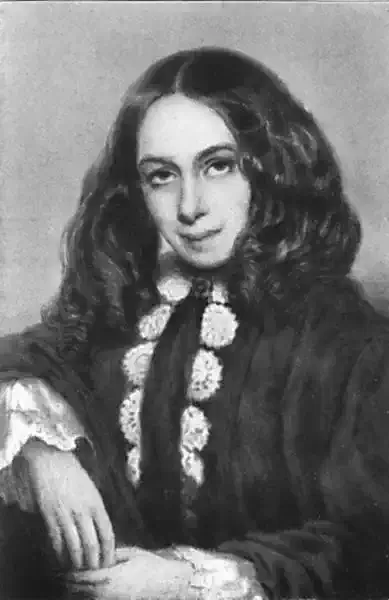
Elizabeth Barrett Browning
VI
VI
Go from me. Yet I feel that I shall stand
Henceforward in thy shadow. Nevermore
Alone upon the threshold of my door
Of individual life, I shall command
The uses of my soul, nor lift my hand
Serenely in the sunshine as before,
Without the sense of that which I forbore--
Thy touch upon the palm. The widest land
Doom takes to part us, leaves thy heart in mine
With pulses that beat double. What I do
And what I dream include thee, as the wine
Must taste of its own grapes. And when I sue
God for myself, He hears that name of thine,
And sees within my eyes the tears of two.
Go from me. Yet I feel that I shall stand
Henceforward in thy shadow. Nevermore
Alone upon the threshold of my door
Of individual life, I shall command
The uses of my soul, nor lift my hand
Serenely in the sunshine as before,
Without the sense of that which I forbore--
Thy touch upon the palm. The widest land
Doom takes to part us, leaves thy heart in mine
With pulses that beat double. What I do
And what I dream include thee, as the wine
Must taste of its own grapes. And when I sue
God for myself, He hears that name of thine,
And sees within my eyes the tears of two.
439
Elizabeth Barrett Browning
To George Sand: A Recognition
To George Sand: A Recognition
TRUE genius, but true woman ! dost deny
The woman's nature with a manly scorn
And break away the gauds and armlets worn
By weaker women in captivity?
Ah, vain denial ! that revolted cry
Is sobbed in by a woman's voice forlorn, _
Thy woman's hair, my sister, all unshorn
Floats back dishevelled strength in agony
Disproving thy man's name: and while before
The world thou burnest in a poet-fire,
We see thy woman-heart beat evermore
Through the large flame. Beat purer, heart, and higher,
Till God unsex thee on the heavenly shore
Where unincarnate spirits purely aspire !
TRUE genius, but true woman ! dost deny
The woman's nature with a manly scorn
And break away the gauds and armlets worn
By weaker women in captivity?
Ah, vain denial ! that revolted cry
Is sobbed in by a woman's voice forlorn, _
Thy woman's hair, my sister, all unshorn
Floats back dishevelled strength in agony
Disproving thy man's name: and while before
The world thou burnest in a poet-fire,
We see thy woman-heart beat evermore
Through the large flame. Beat purer, heart, and higher,
Till God unsex thee on the heavenly shore
Where unincarnate spirits purely aspire !
490
Elizabeth Barrett Browning
The Runaway Slave at Pilgrim's Point
The Runaway Slave at Pilgrim's Point
I.
I stand on the mark beside the shore
Of the first white pilgrim's bended knee,
Where exile turned to ancestor,
And God was thanked for liberty.
I have run through the night, my skin is as dark,
I bend my knee down on this mark . . .
I look on the sky and the sea.
II.
O pilgrim-souls, I speak to you!
I see you come out proud and slow
From the land of the spirits pale as dew. . .
And round me and round me ye go!
O pilgrims, I have gasped and run
All night long from the whips of one
Who in your names works sin and woe.
III.
And thus I thought that I would come
And kneel here where I knelt before,
And feel your souls around me hum
In undertone to the ocean's roar;
And lift my black face, my black hand,
Here, in your names, to curse this land
Ye blessed in freedom's evermore.
IV.
I am black, I am black;
And yet God made me, they say.
But if He did so, smiling back
He must have cast His work away
Under the feet of His white creatures,
With a look of scorn,--that the dusky features
Might be trodden again to clay.
V.
And yet He has made dark things
To be glad and merry as light.
There's a little dark bird sits and sings;
There's a dark stream ripples out of sight;
And the dark frogs chant in the safe morass,
And the sweetest stars are made to pass
O'er the face of the darkest night.
VI.
But we who are dark, we are dark!
Ah, God, we have no stars!
About our souls in care and cark
Our blackness shuts like prison bars:
The poor souls crouch so far behind,
That never a comfort can they find
By reaching through the prison-bars.
VII.
Indeed, we live beneath the sky, . . .
That great smooth Hand of God, stretched out
On all His children fatherly,
To bless them from the fear and doubt,
Which would be, if, from this low place,
All opened straight up to His face
Into the grand eternity.
VIII.
And still God's sunshine and His frost,
They make us hot, they make us cold,
As if we were not black and lost:
And the beasts and birds, in wood and fold,
Do fear and take us for very men!
Could the weep-poor-will or the cat of the glen
Look into my eyes and be bold?
IX.
I am black, I am black!--
But, once, I laughed in girlish glee;
For one of my colour stood in the track
Where the drivers drove, and looked at me--
And tender and full was the look he gave:
Could a slave look so at another slave?--
I look at the sky and the sea.
X.
And from that hour our spirits grew
As free as if unsold, unbought:
Oh, strong enough, since we were two
To conquer the world, we thought!
The drivers drove us day by day;
We did not mind, we went one way,
And no better a liberty sought.
XI.
In the sunny ground between the canes,
He said 'I love you' as he passed:
When the shingle-roof rang sharp with the rains,
I heard how he vowed it fast:
While others shook, he smiled in the hut
As he carved me a bowl of the cocoa-nut,
Through the roar of the hurricanes.
XII.
I sang his name instead of a song;
Over and over I sang his name--
Upward and downward I drew it along
My various notes; the same, the same!
I sang it low, that the slave-girls near
Might never guess from aught they could hear,
It was only a name.
XIII.
I look on the sky and the sea--
We were two to love, and two to pray,--
Yes, two, O God, who cried to Thee,
Though nothing didst Thou say.
Coldly Thou sat'st behind the sun!
And now I cry who am but one,
How wilt Thou speak to-day?--
XIV.
We were black, we were black!
We had no claim to love and bliss:
What marvel, if each turned to lack?
They wrung my cold hands out of his,--
They dragged him . . . where ? . . . I crawled to touch
His blood's mark in the dust! . . . not much,
Ye pilgrim-souls, . . . though plain as this!
XV.
Wrong, followed by a deeper wrong!
Mere grief's too good for such as I.
So the white men brought the shame ere long
To strangle the sob of my agony.
They would not leave me for my dull
Wet eyes!--it was too merciful
To let me weep pure tears and die.
XVI.
I am black, I am black!--
I wore a child upon my breast
An amulet that hung too slack,
And, in my unrest, could not rest:
Thus we went moaning, child and mother,
One to another, one to another,
Until all ended for the best:
XVII.
For hark ! I will tell you low . . . Iow . . .
I am black, you see,--
And the babe who lay on my bosom so,
Was far too white . . . too white for me;
As white as the ladies who scorned to pray
Beside me at church but yesterday;
Though my tears had washed a place for my knee.
XVIII.
My own, own child! I could not bear
To look in his face, it was so white.
I covered him up with a kerchief there;
I covered his face in close and tight:
And he moaned and struggled, as well might be,
For the white child wanted his liberty--
Ha, ha! he wanted his master right.
XIX.
He moaned and beat with his head and feet,
His little feet that never grew--
He struck them out, as it was meet,
Against my heart to break it through.
I might have sung and made him mild--
But I dared not sing to the white-faced child
The only song I knew.
XX.
I pulled the kerchief very close:
He could not see the sun, I swear,
More, then, alive, than now he does
From between the roots of the mango . . . where
. . . I know where. Close! a child and mother
Do wrong to look at one another,
When one is black and one is fair.
XXI.
Why, in that single glance I had
Of my child's face, . . . I tell you all,
I saw a look that made me mad . . .
The master's look, that used to fall
On my soul like his lash . . . or worse!
And so, to save it from my curse,
I twisted it round in my shawl.
XXII.
And he moaned and trembled from foot to head,
He shivered from head to foot;
Till, after a time, he lay instead
Too suddenly still and mute.
I felt, beside, a stiffening cold, . . .
I dared to lift up just a fold . . .
As in lifting a leaf of the mango-fruit.
XXIII.
But my fruit . . . ha, ha!--there, had been
(I laugh to think on't at this hour! . . .)
Your fine white angels, who have seen
Nearest the secret of God's power, . . .
And plucked my fruit to make them wine,
And sucked the soul of that child of mine,
As the humming-bird sucks the soul of the flower.
XXIV.
Ha, ha, for the trick of the angels white!
They freed the white child's spirit so.
I said not a word, but, day and night,
I carried the body to and fro;
And it lay on my heart like a stone . . . as chill.
--The sun may shine out as much as he will:
I am cold, though it happened a month ago.
XXV.
From the white man's house, and the black man's hut,
I carried the little body on,
The forest's arms did round us shut,
And silence through the trees did run:
They asked no question as I went,--
They stood too high for astonishment,--
They could see God sit on His throne.
XXVI.
My little body, kerchiefed fast,
I bore it on through the forest . . . on:
And when I felt it was tired at last,
I scooped a hole beneath the moon.
Through the forest-tops the angels far,
With a white sharp finger from every star,
Did point and mock at what was done.
XXVII.
Yet when it was all done aright, . . .
Earth, 'twixt me and my baby, strewed,
All, changed to black earth, . . . nothing white, . . .
A dark child in the dark,--ensued
Some comfort, and my heart grew young:
I sate down smiling there and sung
The song I learnt in my maidenhood.
XXVIII.
And thus we two were reconciled,
The white child and black mother, thus:
For, as I sang it, soft and wild
The same song, more melodious,
Rose from the grave whereon I sate!
It was the dead child singing that,
To join the souls of both of us.
XXIX.
I look on the sea and the sky!
Where the pilgrims' ships first anchored lay,
The free sun rideth gloriously;
But the pilgrim-ghosts have slid away
Through the earliest streaks of the morn.
My face is black, but it glares with a scorn
Which they dare not meet by day.
XXX.
Ah!--in their 'stead, their hunter sons!
Ah, ah! they are on me--they hunt in a ring--
Keep off! I brave you all at once--
I throw off your eyes like snakes that sting!
You have killed the black eagle at nest, I think:
Did you never stand still in your triumph, and shrink
From the stroke of her wounded wing?
XXXI.
(Man, drop that stone you dared to lift!--)
I wish you, who stand there five a-breast,
Each, for his own wife's joy and gift,
A little corpse as safely at rest
As mine in the mangos!--Yes, but she
May keep live babies on her knee,
And sing the song she liketh best.
XXXll.
I am not mad: I am black.
I see you staring in my face--
I know you, staring, shrinking back--
Ye are born of the Washington-race:
And this land is the free America:
And this mark on my wrist . . . (I prove what I say)
Ropes tied me up here to the flogging-place.
XXXIII.
You think I shrieked then? Not a sound!
I hung, as a gourd hangs in the sun.
I only cursed them all around,
As softly as I might have done
My very own child!--From these sands
Up to the mountains, lift your hands,
O slaves, and end what I begun!
XXXIV.
Whips, curses; these must answer those!
For in this UNION, you have set
Two kinds of men in adverse rows,
Each loathing each: and all forget
The seven wounds in Christ's body fair;
While HE sees gaping everywhere
Our countless wounds that pay no debt.
XXXV.
Our wounds are different. Your white men
Are, after all, not gods indeed,
Nor able to make Christs again
Do good with bleeding. We who bleed . . .
(Stand off!) we help not in our loss!
We are too heavy for our cross,
And fall and crush you and your seed.
XXXVI.
I fall, I swoon! I look at the sky:
The clouds are breaking on my brain;
I am floated along, as if I should die
Of liberty's exquisite pain--
In the name of the white child, waiting for me
In the death-dark where we may kiss and agree,
White men, I leave you all curse-free
In my broken heart's disdain!
I.
I stand on the mark beside the shore
Of the first white pilgrim's bended knee,
Where exile turned to ancestor,
And God was thanked for liberty.
I have run through the night, my skin is as dark,
I bend my knee down on this mark . . .
I look on the sky and the sea.
II.
O pilgrim-souls, I speak to you!
I see you come out proud and slow
From the land of the spirits pale as dew. . .
And round me and round me ye go!
O pilgrims, I have gasped and run
All night long from the whips of one
Who in your names works sin and woe.
III.
And thus I thought that I would come
And kneel here where I knelt before,
And feel your souls around me hum
In undertone to the ocean's roar;
And lift my black face, my black hand,
Here, in your names, to curse this land
Ye blessed in freedom's evermore.
IV.
I am black, I am black;
And yet God made me, they say.
But if He did so, smiling back
He must have cast His work away
Under the feet of His white creatures,
With a look of scorn,--that the dusky features
Might be trodden again to clay.
V.
And yet He has made dark things
To be glad and merry as light.
There's a little dark bird sits and sings;
There's a dark stream ripples out of sight;
And the dark frogs chant in the safe morass,
And the sweetest stars are made to pass
O'er the face of the darkest night.
VI.
But we who are dark, we are dark!
Ah, God, we have no stars!
About our souls in care and cark
Our blackness shuts like prison bars:
The poor souls crouch so far behind,
That never a comfort can they find
By reaching through the prison-bars.
VII.
Indeed, we live beneath the sky, . . .
That great smooth Hand of God, stretched out
On all His children fatherly,
To bless them from the fear and doubt,
Which would be, if, from this low place,
All opened straight up to His face
Into the grand eternity.
VIII.
And still God's sunshine and His frost,
They make us hot, they make us cold,
As if we were not black and lost:
And the beasts and birds, in wood and fold,
Do fear and take us for very men!
Could the weep-poor-will or the cat of the glen
Look into my eyes and be bold?
IX.
I am black, I am black!--
But, once, I laughed in girlish glee;
For one of my colour stood in the track
Where the drivers drove, and looked at me--
And tender and full was the look he gave:
Could a slave look so at another slave?--
I look at the sky and the sea.
X.
And from that hour our spirits grew
As free as if unsold, unbought:
Oh, strong enough, since we were two
To conquer the world, we thought!
The drivers drove us day by day;
We did not mind, we went one way,
And no better a liberty sought.
XI.
In the sunny ground between the canes,
He said 'I love you' as he passed:
When the shingle-roof rang sharp with the rains,
I heard how he vowed it fast:
While others shook, he smiled in the hut
As he carved me a bowl of the cocoa-nut,
Through the roar of the hurricanes.
XII.
I sang his name instead of a song;
Over and over I sang his name--
Upward and downward I drew it along
My various notes; the same, the same!
I sang it low, that the slave-girls near
Might never guess from aught they could hear,
It was only a name.
XIII.
I look on the sky and the sea--
We were two to love, and two to pray,--
Yes, two, O God, who cried to Thee,
Though nothing didst Thou say.
Coldly Thou sat'st behind the sun!
And now I cry who am but one,
How wilt Thou speak to-day?--
XIV.
We were black, we were black!
We had no claim to love and bliss:
What marvel, if each turned to lack?
They wrung my cold hands out of his,--
They dragged him . . . where ? . . . I crawled to touch
His blood's mark in the dust! . . . not much,
Ye pilgrim-souls, . . . though plain as this!
XV.
Wrong, followed by a deeper wrong!
Mere grief's too good for such as I.
So the white men brought the shame ere long
To strangle the sob of my agony.
They would not leave me for my dull
Wet eyes!--it was too merciful
To let me weep pure tears and die.
XVI.
I am black, I am black!--
I wore a child upon my breast
An amulet that hung too slack,
And, in my unrest, could not rest:
Thus we went moaning, child and mother,
One to another, one to another,
Until all ended for the best:
XVII.
For hark ! I will tell you low . . . Iow . . .
I am black, you see,--
And the babe who lay on my bosom so,
Was far too white . . . too white for me;
As white as the ladies who scorned to pray
Beside me at church but yesterday;
Though my tears had washed a place for my knee.
XVIII.
My own, own child! I could not bear
To look in his face, it was so white.
I covered him up with a kerchief there;
I covered his face in close and tight:
And he moaned and struggled, as well might be,
For the white child wanted his liberty--
Ha, ha! he wanted his master right.
XIX.
He moaned and beat with his head and feet,
His little feet that never grew--
He struck them out, as it was meet,
Against my heart to break it through.
I might have sung and made him mild--
But I dared not sing to the white-faced child
The only song I knew.
XX.
I pulled the kerchief very close:
He could not see the sun, I swear,
More, then, alive, than now he does
From between the roots of the mango . . . where
. . . I know where. Close! a child and mother
Do wrong to look at one another,
When one is black and one is fair.
XXI.
Why, in that single glance I had
Of my child's face, . . . I tell you all,
I saw a look that made me mad . . .
The master's look, that used to fall
On my soul like his lash . . . or worse!
And so, to save it from my curse,
I twisted it round in my shawl.
XXII.
And he moaned and trembled from foot to head,
He shivered from head to foot;
Till, after a time, he lay instead
Too suddenly still and mute.
I felt, beside, a stiffening cold, . . .
I dared to lift up just a fold . . .
As in lifting a leaf of the mango-fruit.
XXIII.
But my fruit . . . ha, ha!--there, had been
(I laugh to think on't at this hour! . . .)
Your fine white angels, who have seen
Nearest the secret of God's power, . . .
And plucked my fruit to make them wine,
And sucked the soul of that child of mine,
As the humming-bird sucks the soul of the flower.
XXIV.
Ha, ha, for the trick of the angels white!
They freed the white child's spirit so.
I said not a word, but, day and night,
I carried the body to and fro;
And it lay on my heart like a stone . . . as chill.
--The sun may shine out as much as he will:
I am cold, though it happened a month ago.
XXV.
From the white man's house, and the black man's hut,
I carried the little body on,
The forest's arms did round us shut,
And silence through the trees did run:
They asked no question as I went,--
They stood too high for astonishment,--
They could see God sit on His throne.
XXVI.
My little body, kerchiefed fast,
I bore it on through the forest . . . on:
And when I felt it was tired at last,
I scooped a hole beneath the moon.
Through the forest-tops the angels far,
With a white sharp finger from every star,
Did point and mock at what was done.
XXVII.
Yet when it was all done aright, . . .
Earth, 'twixt me and my baby, strewed,
All, changed to black earth, . . . nothing white, . . .
A dark child in the dark,--ensued
Some comfort, and my heart grew young:
I sate down smiling there and sung
The song I learnt in my maidenhood.
XXVIII.
And thus we two were reconciled,
The white child and black mother, thus:
For, as I sang it, soft and wild
The same song, more melodious,
Rose from the grave whereon I sate!
It was the dead child singing that,
To join the souls of both of us.
XXIX.
I look on the sea and the sky!
Where the pilgrims' ships first anchored lay,
The free sun rideth gloriously;
But the pilgrim-ghosts have slid away
Through the earliest streaks of the morn.
My face is black, but it glares with a scorn
Which they dare not meet by day.
XXX.
Ah!--in their 'stead, their hunter sons!
Ah, ah! they are on me--they hunt in a ring--
Keep off! I brave you all at once--
I throw off your eyes like snakes that sting!
You have killed the black eagle at nest, I think:
Did you never stand still in your triumph, and shrink
From the stroke of her wounded wing?
XXXI.
(Man, drop that stone you dared to lift!--)
I wish you, who stand there five a-breast,
Each, for his own wife's joy and gift,
A little corpse as safely at rest
As mine in the mangos!--Yes, but she
May keep live babies on her knee,
And sing the song she liketh best.
XXXll.
I am not mad: I am black.
I see you staring in my face--
I know you, staring, shrinking back--
Ye are born of the Washington-race:
And this land is the free America:
And this mark on my wrist . . . (I prove what I say)
Ropes tied me up here to the flogging-place.
XXXIII.
You think I shrieked then? Not a sound!
I hung, as a gourd hangs in the sun.
I only cursed them all around,
As softly as I might have done
My very own child!--From these sands
Up to the mountains, lift your hands,
O slaves, and end what I begun!
XXXIV.
Whips, curses; these must answer those!
For in this UNION, you have set
Two kinds of men in adverse rows,
Each loathing each: and all forget
The seven wounds in Christ's body fair;
While HE sees gaping everywhere
Our countless wounds that pay no debt.
XXXV.
Our wounds are different. Your white men
Are, after all, not gods indeed,
Nor able to make Christs again
Do good with bleeding. We who bleed . . .
(Stand off!) we help not in our loss!
We are too heavy for our cross,
And fall and crush you and your seed.
XXXVI.
I fall, I swoon! I look at the sky:
The clouds are breaking on my brain;
I am floated along, as if I should die
Of liberty's exquisite pain--
In the name of the white child, waiting for me
In the death-dark where we may kiss and agree,
White men, I leave you all curse-free
In my broken heart's disdain!
658
Elizabeth Barrett Browning
The Soul's Expression
The Soul's Expression
WITH stammering lips and insufficient sound
I strive and struggle to deliver right
That music of my nature, day and night
With dream and thought and feeling interwound
And inly answering all the senses round
With octaves of a mystic depth and height
Which step out grandly to the infinite
From the dark edges of the sensual ground.
This song of soul I struggle to outbear
Through portals of the sense, sublime and whole,
And utter all myself into the air:
But if I did it,--as the thunder-roll
Breaks its own cloud, my flesh would perish there,
Before that dread apocalypse of soul.
WITH stammering lips and insufficient sound
I strive and struggle to deliver right
That music of my nature, day and night
With dream and thought and feeling interwound
And inly answering all the senses round
With octaves of a mystic depth and height
Which step out grandly to the infinite
From the dark edges of the sensual ground.
This song of soul I struggle to outbear
Through portals of the sense, sublime and whole,
And utter all myself into the air:
But if I did it,--as the thunder-roll
Breaks its own cloud, my flesh would perish there,
Before that dread apocalypse of soul.
343
Elizabeth Barrett Browning
The Look
The Look
The Saviour looked on Peter. Ay, no word,
No gesture of reproach; the Heavens serene
Though heavy with armed justice, did not lean
Their thunders that way: the forsaken Lord
Looked only, on the traitor. None record
What that look was, none guess; for those who have seen
Wronged lovers loving through a death-pang keen,
Or pale-cheeked martyrs smiling to a sword,
Have missed Jehovah at the judgment-call.
And Peter, from the height of blasphemy-'
I never knew this man '--did quail and fall
As knowing straight THAT GOD; and turned free
And went out speechless from the face of all
And filled the silenc, weeping bitterly.
The Saviour looked on Peter. Ay, no word,
No gesture of reproach; the Heavens serene
Though heavy with armed justice, did not lean
Their thunders that way: the forsaken Lord
Looked only, on the traitor. None record
What that look was, none guess; for those who have seen
Wronged lovers loving through a death-pang keen,
Or pale-cheeked martyrs smiling to a sword,
Have missed Jehovah at the judgment-call.
And Peter, from the height of blasphemy-'
I never knew this man '--did quail and fall
As knowing straight THAT GOD; and turned free
And went out speechless from the face of all
And filled the silenc, weeping bitterly.
435
Elizabeth Barrett Browning
Tears
Tears
THANK God, bless God, all ye who suffer not
More grief than ye can weep for. That is well--
That is light grieving ! lighter, none befell
Since Adam forfeited the primal lot.
Tears ! what are tears ? The babe weeps in its cot,
The mother singing, at her marriage-bell
The bride weeps, and before the oracle
Of high-faned hills the poet has forgot
Such moisture on his cheeks. Thank God for grace,
Ye who weep only ! If, as some have done,
Ye grope tear-blinded in a desert place
And touch but tombs,--look up I those tears will run
Soon in long rivers down the lifted face,
And leave the vision clear for stars and sun
THANK God, bless God, all ye who suffer not
More grief than ye can weep for. That is well--
That is light grieving ! lighter, none befell
Since Adam forfeited the primal lot.
Tears ! what are tears ? The babe weeps in its cot,
The mother singing, at her marriage-bell
The bride weeps, and before the oracle
Of high-faned hills the poet has forgot
Such moisture on his cheeks. Thank God for grace,
Ye who weep only ! If, as some have done,
Ye grope tear-blinded in a desert place
And touch but tombs,--look up I those tears will run
Soon in long rivers down the lifted face,
And leave the vision clear for stars and sun
458
Elizabeth Barrett Browning
Sonnets from the Portuguese iv
Sonnets from the Portuguese iv
IF thou must love me, let it be for naught
Except for love's sake only. Do not say,
'I love her for her smile--her look--her way
Of speaking gently,--for a trick of thought
That falls in well with mine, and certes brought
A sense of pleasant ease on such a day'-For
these things in themselves, Beloved, may
Be changed, or change for thee--and love, so wrought,
May be unwrought so. Neither love me for
Thine own dear pity's wiping my cheeks dry:
A creature might forget to weep, who bore
Thy comfort long, and lose thy love thereby!
But love me for love's sake, that evermore
Thou mayst love on, through love's eternity.
IF thou must love me, let it be for naught
Except for love's sake only. Do not say,
'I love her for her smile--her look--her way
Of speaking gently,--for a trick of thought
That falls in well with mine, and certes brought
A sense of pleasant ease on such a day'-For
these things in themselves, Beloved, may
Be changed, or change for thee--and love, so wrought,
May be unwrought so. Neither love me for
Thine own dear pity's wiping my cheeks dry:
A creature might forget to weep, who bore
Thy comfort long, and lose thy love thereby!
But love me for love's sake, that evermore
Thou mayst love on, through love's eternity.
538
Elizabeth Barrett Browning
Sonnet XXXVIII: First Time He Kissed Me
Sonnet XXXVIII: First Time He Kissed Me
First time he kissed me, he but only kissed
The finger of this hand wherewith I write;
And ever since, it grew more clean and white,
Slow to world-greetings, quick with its "Oh, list,"
When the angels speak. A ring of amethyst
I could not wear here, plainer to my sight,
Than that first kiss. The second passed in height
The first, and sought the forehead, and half missed,
Half falling on the hair. O beyond meed!
That was the chrism of love, which love's own crown,
With sanctifying sweetness, did precede.
The third upon my lips was folded down
In perfect, purple state; since when, indeed,
I have been proud and said, "My love, my own."
First time he kissed me, he but only kissed
The finger of this hand wherewith I write;
And ever since, it grew more clean and white,
Slow to world-greetings, quick with its "Oh, list,"
When the angels speak. A ring of amethyst
I could not wear here, plainer to my sight,
Than that first kiss. The second passed in height
The first, and sought the forehead, and half missed,
Half falling on the hair. O beyond meed!
That was the chrism of love, which love's own crown,
With sanctifying sweetness, did precede.
The third upon my lips was folded down
In perfect, purple state; since when, indeed,
I have been proud and said, "My love, my own."
611
Elizabeth Barrett Browning
Sonnets from the Portuguese ii
Sonnets from the Portuguese ii
UNLIKE are we, unlike, O princely Heart!
Unlike our uses and our destinies.
Our ministering two angels look surprise
On one another, as they strike athwart
Their wings in passing. Thou, bethink thee, art
A guest for queens to social pageantries,
With gages from a hundred brighter eyes
Than tears even can make mine, to play thy part
Of chief musician. What hast thou to do
With looking from the lattice-lights at me--
A poor, tired, wandering singer, singing through
The dark, and leaning up a cypress tree?
The chrism is on thine head--on mine the dew-And
Death must dig the level where these agree.
UNLIKE are we, unlike, O princely Heart!
Unlike our uses and our destinies.
Our ministering two angels look surprise
On one another, as they strike athwart
Their wings in passing. Thou, bethink thee, art
A guest for queens to social pageantries,
With gages from a hundred brighter eyes
Than tears even can make mine, to play thy part
Of chief musician. What hast thou to do
With looking from the lattice-lights at me--
A poor, tired, wandering singer, singing through
The dark, and leaning up a cypress tree?
The chrism is on thine head--on mine the dew-And
Death must dig the level where these agree.
459
Elizabeth Barrett Browning
Sonnet XXXVI: When We Met First
Sonnet XXXVI: When We Met First
When we met first and loved, I did not build
Upon the event with marble. Could it mean
To last, a love set pendulous between
Sorrow and sorrow? Nay, I rather thrilled,
Distrusting every light that seemed to gild
The onward path, and feared to overlean
A finger even. And, though I have grown serene
And strong since then, I think that God has willed
A still renewable fear ... O love, O troth ...
Lest these enclasped hands should never hold,
This mutual kiss drop down between us both
As an unowned thing, once the lips being cold.
And Love, be false! if he, to keep one oath,
Must lose one joy, by his life's star foretold.
When we met first and loved, I did not build
Upon the event with marble. Could it mean
To last, a love set pendulous between
Sorrow and sorrow? Nay, I rather thrilled,
Distrusting every light that seemed to gild
The onward path, and feared to overlean
A finger even. And, though I have grown serene
And strong since then, I think that God has willed
A still renewable fear ... O love, O troth ...
Lest these enclasped hands should never hold,
This mutual kiss drop down between us both
As an unowned thing, once the lips being cold.
And Love, be false! if he, to keep one oath,
Must lose one joy, by his life's star foretold.
409
Elizabeth Barrett Browning
Sonnet XXXVII: Pardon, Oh, Pardon
Sonnet XXXVII: Pardon, Oh, Pardon
Pardon, oh, pardon, that my soul should make,
Of all that strong divineness which I know
For thine and thee, an image only so
Formed of the sand, and fit to shift and break.
It is that distant years which did not take
Thy sovranty, recoiling with a blow,
Have forced my swimming brain to undergo
Their doubt and dread, and blindly to forsake
Thy purity of likeness and distort
Thy worthiest love to a worthless counterfeit:
As if a shipwrecked Pagan, safe in port,
His guardian sea-god to commemorate,
Should set a sculptured porpoise, gills a-snort
And vibrant tail, within the temple gate.
Pardon, oh, pardon, that my soul should make,
Of all that strong divineness which I know
For thine and thee, an image only so
Formed of the sand, and fit to shift and break.
It is that distant years which did not take
Thy sovranty, recoiling with a blow,
Have forced my swimming brain to undergo
Their doubt and dread, and blindly to forsake
Thy purity of likeness and distort
Thy worthiest love to a worthless counterfeit:
As if a shipwrecked Pagan, safe in port,
His guardian sea-god to commemorate,
Should set a sculptured porpoise, gills a-snort
And vibrant tail, within the temple gate.
420
Elizabeth Barrett Browning
Sonnet XXXIX: Because Thou Hast the Power
Sonnet XXXIX: Because Thou Hast the Power
Because thou hast the power and own'st the grace
To look through and behind this mask of me
(Against which years have beat thus blanchingly
With their rains), and behold my soul's true face,
The dim and weary witness of life's race,
Because thou hast the faith and love to see,
Through that same soul's distracting lethargy,
The patient angel waiting for a place
In the new Heavens,--because nor sin nor woe,
Nor God's infliction, nor death's neighbourhood,
Nor all which others viewing, turn to go,
Nor all of which makes me tired of all, self-viewed,--
Nothing repels thee,...Dearest, teach me so
To pour out gratitude, as thou dost, good!
Because thou hast the power and own'st the grace
To look through and behind this mask of me
(Against which years have beat thus blanchingly
With their rains), and behold my soul's true face,
The dim and weary witness of life's race,
Because thou hast the faith and love to see,
Through that same soul's distracting lethargy,
The patient angel waiting for a place
In the new Heavens,--because nor sin nor woe,
Nor God's infliction, nor death's neighbourhood,
Nor all which others viewing, turn to go,
Nor all of which makes me tired of all, self-viewed,--
Nothing repels thee,...Dearest, teach me so
To pour out gratitude, as thou dost, good!
404
Elizabeth Barrett Browning
Sonnet XXXV: If I Leave All for Thee
Sonnet XXXV: If I Leave All for Thee
If I leave all for thee, wilt thou exchange
And be all to me? Shall I never miss
Home-talk and blessings and the common kiss
That comes to each in turn, nor count it strange,
When I look up, to drop on a new range
Of walls and floors, another home than this?
Nay, wilt thou fill that place by me which is
Filled by dead eyes too tender to know change?
That's hardest. If to conquer love, has tried,
To conquer grief, tries more, as all things prove;
For grief indeed is love and grief beside.
Alas, I have grieved so I am hard to love.
Yet love me--wilt thou? Open thine heart wide,
And fold within the wet wings of thy dove.
If I leave all for thee, wilt thou exchange
And be all to me? Shall I never miss
Home-talk and blessings and the common kiss
That comes to each in turn, nor count it strange,
When I look up, to drop on a new range
Of walls and floors, another home than this?
Nay, wilt thou fill that place by me which is
Filled by dead eyes too tender to know change?
That's hardest. If to conquer love, has tried,
To conquer grief, tries more, as all things prove;
For grief indeed is love and grief beside.
Alas, I have grieved so I am hard to love.
Yet love me--wilt thou? Open thine heart wide,
And fold within the wet wings of thy dove.
419
Elizabeth Barrett Browning
Sonnet XXXIII: Yes, Call Me by My Pet-Name!
Sonnet XXXIII: Yes, Call Me by My Pet-Name!
Yes, call me by my pet-name! let me hear
The name I used to run at, when a child,
From innocent play, and leave the cowslips piled,
To glance up in some face that proved me dear
With the look of its eyes. I miss the clear
Fond voices which, being drawn and reconciled
Into the music of Heaven's undefiled,
Call me no longer. Silence on the bier,
While I call God--call God!--So let thy mouth
Be heir to those who are now exanimate.
Gather the north flowers to complete the south,
And catch the early love up in the late.
Yes, call me by that name,--and I, in truth,
With the same heart, will answer and not wait.
Yes, call me by my pet-name! let me hear
The name I used to run at, when a child,
From innocent play, and leave the cowslips piled,
To glance up in some face that proved me dear
With the look of its eyes. I miss the clear
Fond voices which, being drawn and reconciled
Into the music of Heaven's undefiled,
Call me no longer. Silence on the bier,
While I call God--call God!--So let thy mouth
Be heir to those who are now exanimate.
Gather the north flowers to complete the south,
And catch the early love up in the late.
Yes, call me by that name,--and I, in truth,
With the same heart, will answer and not wait.
394
Elizabeth Barrett Browning
Sonnet XXXIV: With the Same Heart
Sonnet XXXIV: With the Same Heart
With the same heart, I said, I'll answer thee
As those, when thou shalt call me by my name--
Lo, the vain promise! is the same, the same,
Perplexed and ruffled by life's strategy?
When called before, I told how hastily
I dropped my flowers or brake off from a game,
To run and answer with the smile that came
At play last moment, and went on with me
Through my obedience. When I answer now,
I drop a grave thought, break from solitude;
Yet still my heart goes to thee--ponder how--
Not as to a single good, but all my good!
Lay thy hand on it, best one, and allow
That no child's foot could run as fast as this blood.
With the same heart, I said, I'll answer thee
As those, when thou shalt call me by my name--
Lo, the vain promise! is the same, the same,
Perplexed and ruffled by life's strategy?
When called before, I told how hastily
I dropped my flowers or brake off from a game,
To run and answer with the smile that came
At play last moment, and went on with me
Through my obedience. When I answer now,
I drop a grave thought, break from solitude;
Yet still my heart goes to thee--ponder how--
Not as to a single good, but all my good!
Lay thy hand on it, best one, and allow
That no child's foot could run as fast as this blood.
404
Elizabeth Barrett Browning
Sonnet XXXII: The First Time
Sonnet XXXII: The First Time
The first time that the sun rose on thine oath
To love me, I looked forward to the moon
To slacken all those bonds which seemed too soon
And quickly tied to make a lasting troth.
Quick-loving hearts, I thought, may quickly loathe;
And, looking on myself, I seemed not one
For such man's love!--more like an out-of-tune
Worn viol, a good singer would be wroth
To spoil his song with, and which, snatched in haste,
Is laid down at the first ill-sounding note.
I did not wrong myself so, but I placed
A wrong on thee. For perfect strains may float
'Neath master-hands, from instruments defaced,--
And great souls, at one stroke, may do and doat.
The first time that the sun rose on thine oath
To love me, I looked forward to the moon
To slacken all those bonds which seemed too soon
And quickly tied to make a lasting troth.
Quick-loving hearts, I thought, may quickly loathe;
And, looking on myself, I seemed not one
For such man's love!--more like an out-of-tune
Worn viol, a good singer would be wroth
To spoil his song with, and which, snatched in haste,
Is laid down at the first ill-sounding note.
I did not wrong myself so, but I placed
A wrong on thee. For perfect strains may float
'Neath master-hands, from instruments defaced,--
And great souls, at one stroke, may do and doat.
300
Elizabeth Barrett Browning
Sonnet XXXI: Thou Comest!
Sonnet XXXI: Thou Comest!
Thou comest! all is said without a word.
I sit beneath thy looks, as children do
In the noon-sun, with souls that tremble through
Their happy eyelids from an unaverred
Yet prodigal inward joy. Behold, I erred
In that last doubt! and yet I cannot rue
The sin most, but the occasion--that we two
Should for a moment stand unministered
By a mutual presence. Ah, keep near and close,
Thou dovelike help! and, when my fears would rise,
With thy broad heart serenely interpose:
Brood down with thy divine sufficiencies
These thoughts which tremble when bereft of those,
Like callow birds left desert to the skies.
Thou comest! all is said without a word.
I sit beneath thy looks, as children do
In the noon-sun, with souls that tremble through
Their happy eyelids from an unaverred
Yet prodigal inward joy. Behold, I erred
In that last doubt! and yet I cannot rue
The sin most, but the occasion--that we two
Should for a moment stand unministered
By a mutual presence. Ah, keep near and close,
Thou dovelike help! and, when my fears would rise,
With thy broad heart serenely interpose:
Brood down with thy divine sufficiencies
These thoughts which tremble when bereft of those,
Like callow birds left desert to the skies.
397
Elizabeth Barrett Browning
Sonnet XXVIII: My Letters
Sonnet XXVIII: My Letters
My letters-- all dead paper, mute and white!
And yet they seem alive and quivering
Against my tremulous hands which loose the string
And let them drop down on my knee to-night,
This said,--he wished to have me in his sight
Once, as a friend: this fixed a day in spring
To come and touch my hand...a simple thing,
Yet I wept for it!--this...the paper's light...
Said, Dear, I love thee; and I sank and quailed
As if God's future thundered on my past.
This said, I am thine--and so its ink has paled
With lying at my heart that beat too fast.
And this...O Love, thy words have ill availed
If, what this said, I dared repeat at last!
My letters-- all dead paper, mute and white!
And yet they seem alive and quivering
Against my tremulous hands which loose the string
And let them drop down on my knee to-night,
This said,--he wished to have me in his sight
Once, as a friend: this fixed a day in spring
To come and touch my hand...a simple thing,
Yet I wept for it!--this...the paper's light...
Said, Dear, I love thee; and I sank and quailed
As if God's future thundered on my past.
This said, I am thine--and so its ink has paled
With lying at my heart that beat too fast.
And this...O Love, thy words have ill availed
If, what this said, I dared repeat at last!
402
Elizabeth Barrett Browning
Sonnet XXX: I See Thine Image
Sonnet XXX: I See Thine Image
I see thine image through my tears to-night,
And yet to-day I saw thee smiling. How
Refer the cause?--Beloved, is it thou
Or I, who makes me sad? The acolyte
Amid the chanted joy and thankful rite
May so fall flat, with pale insensate brow,
On the altar-stair. I hear thy voice and vow,
Perplexed, uncertain, since thou art out of sight,
As he, in his swooning ears, the choir's amen.
Beloved, dost thou love? or did I see all
The glory as I dreamed, and fainted when
Too vehement light dilated my ideal,
For my soul's eyes? Will that light come again,
As now these tears come--falling hot and real?
I see thine image through my tears to-night,
And yet to-day I saw thee smiling. How
Refer the cause?--Beloved, is it thou
Or I, who makes me sad? The acolyte
Amid the chanted joy and thankful rite
May so fall flat, with pale insensate brow,
On the altar-stair. I hear thy voice and vow,
Perplexed, uncertain, since thou art out of sight,
As he, in his swooning ears, the choir's amen.
Beloved, dost thou love? or did I see all
The glory as I dreamed, and fainted when
Too vehement light dilated my ideal,
For my soul's eyes? Will that light come again,
As now these tears come--falling hot and real?
649
Elizabeth Barrett Browning
Sonnet XXVII: My Dear Belovèd
Sonnet XXVII: My Dear Belovèd
My dear Belovèd, who hast lifted me
From this drear flat of earth where I was thrown,
And, in betwixt the languid ringlets, blown
A life-breath, till the forehead hopefully
Shines out again, as all the angels see,
Before thy saving kiss! My own, my own,
Who camest to me when the world was gone,
And I who looked for only God, found thee!
I find thee; I am safe, and strong, and glad.
As one who stands in dewless asphodel
Looks backward on the tedious time he had
In the upper life,--so I, with bosom-swell,
Make witness, here, between the good and bad,
That Love, as strong as Death, retrieves as well.
My dear Belovèd, who hast lifted me
From this drear flat of earth where I was thrown,
And, in betwixt the languid ringlets, blown
A life-breath, till the forehead hopefully
Shines out again, as all the angels see,
Before thy saving kiss! My own, my own,
Who camest to me when the world was gone,
And I who looked for only God, found thee!
I find thee; I am safe, and strong, and glad.
As one who stands in dewless asphodel
Looks backward on the tedious time he had
In the upper life,--so I, with bosom-swell,
Make witness, here, between the good and bad,
That Love, as strong as Death, retrieves as well.
415
Elizabeth Barrett Browning
Sonnet XXVI: I Lived With Visions
Sonnet XXVI: I Lived With Visions
I lived with visions for my company
Instead of men and women, years ago,
And found them gentle mates, nor thought to know
A sweeter music than they played to me.
But soon their trailing purple was not free
Of this world's dust, their lutes did silent grow,
And I myself grew faint and blind below
Their vanishing eyes. Then thou didst come--to be,
Belovèd, what they seemed. Their shining fronts,
Their songs, their splendors (better, yet the same,
As river water hallowed into fonts),
Met in thee, and from out thee overcame
My soul with satisfaction of all wants:
Because God's gifts put man's best dreams to shame.
I lived with visions for my company
Instead of men and women, years ago,
And found them gentle mates, nor thought to know
A sweeter music than they played to me.
But soon their trailing purple was not free
Of this world's dust, their lutes did silent grow,
And I myself grew faint and blind below
Their vanishing eyes. Then thou didst come--to be,
Belovèd, what they seemed. Their shining fronts,
Their songs, their splendors (better, yet the same,
As river water hallowed into fonts),
Met in thee, and from out thee overcame
My soul with satisfaction of all wants:
Because God's gifts put man's best dreams to shame.
373
Elizabeth Barrett Browning
Sonnet XXV: A Heavy Heart, Belovèd
Sonnet XXV: A Heavy Heart, Belovèd
A heavy heart, Belovèd, have I borne
From year to year until I saw thy face,
And sorrow after sorrow took the place
Of all those natural joys as lightly worn
As the stringed pearls, each lifted in its turn
By a beating heart at dance-time. Hopes apace
Were changed to long despairs, till God's own grace
Could scarcely lift above the world forlorn
My heavy heart. Than thou didst bid me bring
And let it drop adown thy calmly great
Deep being! Fast it sinketh, as a thing
Which its own nature doth precipitate,
While thine doth close above it, mediating
Betwixt the stars and the unaccomplished fate.
A heavy heart, Belovèd, have I borne
From year to year until I saw thy face,
And sorrow after sorrow took the place
Of all those natural joys as lightly worn
As the stringed pearls, each lifted in its turn
By a beating heart at dance-time. Hopes apace
Were changed to long despairs, till God's own grace
Could scarcely lift above the world forlorn
My heavy heart. Than thou didst bid me bring
And let it drop adown thy calmly great
Deep being! Fast it sinketh, as a thing
Which its own nature doth precipitate,
While thine doth close above it, mediating
Betwixt the stars and the unaccomplished fate.
402
Elizabeth Barrett Browning
Sonnet XXIX: I Think of Thee
Sonnet XXIX: I Think of Thee
I think of thee!--my thoughts do twine and bud
About thee,as wild vines, about a tree,
Put out broad leaves, and soon there's nought to see
Except the straggling green which hides the wood.
Yet, O my palm-tree, be it understood
I will not have my thoughts instead of thee
Who art dearer, better! Rather, instantly
Renew thy presence; as a strong tree should,
Rustle thy boughs and set thy trunk all bare,
And let these bands of greenery which insphere thee
Drop heavily down,--burst, shattered, everywhere!
Because, in this deep joy to see and hear thee
And breathe within thy shadow a new air,
I do not think of thee--I am too near thee.
I think of thee!--my thoughts do twine and bud
About thee,as wild vines, about a tree,
Put out broad leaves, and soon there's nought to see
Except the straggling green which hides the wood.
Yet, O my palm-tree, be it understood
I will not have my thoughts instead of thee
Who art dearer, better! Rather, instantly
Renew thy presence; as a strong tree should,
Rustle thy boughs and set thy trunk all bare,
And let these bands of greenery which insphere thee
Drop heavily down,--burst, shattered, everywhere!
Because, in this deep joy to see and hear thee
And breathe within thy shadow a new air,
I do not think of thee--I am too near thee.
371
Elizabeth Barrett Browning
Sonnet XXIII: Is It Indeed So?
Sonnet XXIII: Is It Indeed So?
Is it indeed so? If I lay here dead,
Wouldst thou miss any life in losing mine?
And would the sun for thee more coldly shine
Because of grave-damps falling round my head?
I marvelled, my Belovèd, when I read
Thy thought so in the letter. I am thine-But...
so much to thee? Can I pour your wine
While my hands tremble? Then my soul, instead
Of dreams of death, resumes life's lower range.
Then, love me, Love! Look on me--breathe on me!
As brighter ladies do not count it strange,
For love, to give up acres and degree,
I yield the grave for thy sake, and exchange
My near sweet view of Heaven, for earth with thee!
Is it indeed so? If I lay here dead,
Wouldst thou miss any life in losing mine?
And would the sun for thee more coldly shine
Because of grave-damps falling round my head?
I marvelled, my Belovèd, when I read
Thy thought so in the letter. I am thine-But...
so much to thee? Can I pour your wine
While my hands tremble? Then my soul, instead
Of dreams of death, resumes life's lower range.
Then, love me, Love! Look on me--breathe on me!
As brighter ladies do not count it strange,
For love, to give up acres and degree,
I yield the grave for thy sake, and exchange
My near sweet view of Heaven, for earth with thee!
393