

Poems in this theme
Soul

Elizabeth Bishop
Large Bad Picture
Large Bad Picture
Remembering the Strait of Belle Isle or
some northerly harbor of Labrador,
before he became a schoolteacher
a great-uncle painted a big picture.
Receding for miles on either side
into a flushed, still sky
are overhanging pale blue cliffs
hundreds of feet high,
their bases fretted by little arches,
the entrances to caves
running in along the level of a bay
masked by perfect waves.
On the middle of that quiet floor
sits a fleet of small black ships,
square-rigged, sails furled, motionless,
their spars like burnt match-sticks.
And high above them, over the tall cliffs'
semi-translucent ranks,
are scribbled hundreds of fine black birds
hanging in n's in banks.
One can hear their crying, crying,
the only sound there is
except for occasional sizhine
as a large aquatic animal breathes.
In the pink light
the small red sun goes rolling, rolling,
round and round and round at the same height
in perpetual sunset, comprehensive, consoling,
while the ships consider it.
Apparently they have reached their destination.
It would be hard to say what brought them there,
commerce or contemplation.
Remembering the Strait of Belle Isle or
some northerly harbor of Labrador,
before he became a schoolteacher
a great-uncle painted a big picture.
Receding for miles on either side
into a flushed, still sky
are overhanging pale blue cliffs
hundreds of feet high,
their bases fretted by little arches,
the entrances to caves
running in along the level of a bay
masked by perfect waves.
On the middle of that quiet floor
sits a fleet of small black ships,
square-rigged, sails furled, motionless,
their spars like burnt match-sticks.
And high above them, over the tall cliffs'
semi-translucent ranks,
are scribbled hundreds of fine black birds
hanging in n's in banks.
One can hear their crying, crying,
the only sound there is
except for occasional sizhine
as a large aquatic animal breathes.
In the pink light
the small red sun goes rolling, rolling,
round and round and round at the same height
in perpetual sunset, comprehensive, consoling,
while the ships consider it.
Apparently they have reached their destination.
It would be hard to say what brought them there,
commerce or contemplation.
644
Elizabeth Bishop
Insomnia
Insomnia
The moon in the bureau mirror
looks out a million miles
(and perhaps with pride, at herself,
but she never, never smiles)
far and away beyond sleep, or
perhaps she's a daytime sleeper.
By the Universe deserted,
she'd tell it to go to hell,
and she'd find a body of water,
or a mirror, on which to dwell.
So wrap up care in a cobweb
and drop it down the well
into that world inverted
where left is always right,
where the shadows are really the body,
where we stay awake all night,
where the heavens are shallow as the sea
is now deep, and you love me.
The moon in the bureau mirror
looks out a million miles
(and perhaps with pride, at herself,
but she never, never smiles)
far and away beyond sleep, or
perhaps she's a daytime sleeper.
By the Universe deserted,
she'd tell it to go to hell,
and she'd find a body of water,
or a mirror, on which to dwell.
So wrap up care in a cobweb
and drop it down the well
into that world inverted
where left is always right,
where the shadows are really the body,
where we stay awake all night,
where the heavens are shallow as the sea
is now deep, and you love me.
519
Elizabeth Bishop
Giant Snail
Giant Snail
The rain has stopped. The waterfall will roar like that all
night. I have come out to take a walk and feed. My body--foot,
that is--is wet and cold and covered with sharp gravel. It is
white, the size of a dinner plate. I have set myself a goal, a
certain rock, but it may well be dawn before I get there.
Although I move ghostlike and my floating edges barely graze
the ground, I am heavy, heavy, heavy. My white muscles are
already tired. I give the impression of mysterious ease, but it is
only with the greatest effort of my will that I can rise above the
smallest stones and sticks. And I must not let myself be distracted
by those rough spears of grass. Don't touch them. Draw
back. Withdrawal is always best.
The rain has stopped. The waterfall makes such a noise! (And
what if I fall over it?) The mountains of black rock give off such
clouds of steam! Shiny streamers are hanging down their sides.
When this occurs, we have a saying that the Snail Gods have
come down in haste. I could never descend such steep escarpments,
much less dream of climbing them.
That toad was too big, too, like me. His eyes beseeched my
love. Our proportions horrify our neighbors.
Rest a minute; relax. Flattened to the ground, my body is like
a pallid, decomposing leaf. What's that tapping on my shell?
Nothing. Let's go on.
My sides move in rhythmic waves, just off the ground, from
front to back, the wake of a ship, wax-white water, or a slowly
melting floe. I am cold, cold, cold as ice. My blind, white bull's
head was a Cretan scare-head; degenerate, my four horns that
can't attack. The sides of my mouth are now my hands. They
press the earth and suck it hard. Ah, but I know my shell is
beautiful, and high, and glazed, and shining. I know it well,
although I have not seen it. Its curled white lip is of the finest
enamel. Inside, it is as smooth as silk, and I, I fill it to perfection.
My wide wake shines, now it is growing dark. I leave a lovely
opalescent ribbon: I know this.
But O! I am too big. I feel it. Pity me.
If and when I reach the rock, I shall go into a certain crack
there for the night. The waterfall below will vibrate through
my shell and body all night long. In that steady pulsing I can
rest. All night I shall be like a sleeping ear.
The rain has stopped. The waterfall will roar like that all
night. I have come out to take a walk and feed. My body--foot,
that is--is wet and cold and covered with sharp gravel. It is
white, the size of a dinner plate. I have set myself a goal, a
certain rock, but it may well be dawn before I get there.
Although I move ghostlike and my floating edges barely graze
the ground, I am heavy, heavy, heavy. My white muscles are
already tired. I give the impression of mysterious ease, but it is
only with the greatest effort of my will that I can rise above the
smallest stones and sticks. And I must not let myself be distracted
by those rough spears of grass. Don't touch them. Draw
back. Withdrawal is always best.
The rain has stopped. The waterfall makes such a noise! (And
what if I fall over it?) The mountains of black rock give off such
clouds of steam! Shiny streamers are hanging down their sides.
When this occurs, we have a saying that the Snail Gods have
come down in haste. I could never descend such steep escarpments,
much less dream of climbing them.
That toad was too big, too, like me. His eyes beseeched my
love. Our proportions horrify our neighbors.
Rest a minute; relax. Flattened to the ground, my body is like
a pallid, decomposing leaf. What's that tapping on my shell?
Nothing. Let's go on.
My sides move in rhythmic waves, just off the ground, from
front to back, the wake of a ship, wax-white water, or a slowly
melting floe. I am cold, cold, cold as ice. My blind, white bull's
head was a Cretan scare-head; degenerate, my four horns that
can't attack. The sides of my mouth are now my hands. They
press the earth and suck it hard. Ah, but I know my shell is
beautiful, and high, and glazed, and shining. I know it well,
although I have not seen it. Its curled white lip is of the finest
enamel. Inside, it is as smooth as silk, and I, I fill it to perfection.
My wide wake shines, now it is growing dark. I leave a lovely
opalescent ribbon: I know this.
But O! I am too big. I feel it. Pity me.
If and when I reach the rock, I shall go into a certain crack
there for the night. The waterfall below will vibrate through
my shell and body all night long. In that steady pulsing I can
rest. All night I shall be like a sleeping ear.
602
Elizabeth Bishop
I Am in Need of Music
I Am in Need of Music
I am in need of music that would flow
Over my fretful, feeling fingertips,
Over my bitter-tainted, trembling lips,
With melody, deep, clear, and liquid-slow.
Oh, for the healing swaying, old and low,
Of some song sung to rest the tired dead,
A song to fall like water on my head,
And over quivering limbs, dream flushed to glow!
There is a magic made by melody:
A spell of rest, and quiet breath, and cool
Heart, that sinks through fading colors deep
To the subaqueous stillness of the sea,
And floats forever in a moon-green pool,
Held in the arms of rhythm and of sleep.
I am in need of music that would flow
Over my fretful, feeling fingertips,
Over my bitter-tainted, trembling lips,
With melody, deep, clear, and liquid-slow.
Oh, for the healing swaying, old and low,
Of some song sung to rest the tired dead,
A song to fall like water on my head,
And over quivering limbs, dream flushed to glow!
There is a magic made by melody:
A spell of rest, and quiet breath, and cool
Heart, that sinks through fading colors deep
To the subaqueous stillness of the sea,
And floats forever in a moon-green pool,
Held in the arms of rhythm and of sleep.
547
Elizabeth Bishop
Five Flights Up
Five Flights Up
Still dark.
The unknown bird sits on his usual branch.
The little dog next door barks in his sleep
inquiringly, just once.
Perhaps in his sleep, too, the bird inquires
once or twice, quavering.
Questions---if that is what they are--answered
directly, simply,
by day itself.
Enormous morning, ponderous, meticulous;
gray light streaking each bare branch,
each single twig, along one side,
making another tree, of glassy veins...
The bird still sits there. Now he seems to yawn.
The little black dog runs in his yard.
His owner's voice arises, stern,
"You ought to be ashamed!"
What has he done?
He bounces cheerfully up and down;
he rushes in circles in the fallen leaves.
Obviously, he has no sense of shame.
He and the bird know everything is answered,
all taken care of,
no need to ask again.
---Yesterday brought to today so lightly!
(A yesterday I find almost impossible to lift.)
Still dark.
The unknown bird sits on his usual branch.
The little dog next door barks in his sleep
inquiringly, just once.
Perhaps in his sleep, too, the bird inquires
once or twice, quavering.
Questions---if that is what they are--answered
directly, simply,
by day itself.
Enormous morning, ponderous, meticulous;
gray light streaking each bare branch,
each single twig, along one side,
making another tree, of glassy veins...
The bird still sits there. Now he seems to yawn.
The little black dog runs in his yard.
His owner's voice arises, stern,
"You ought to be ashamed!"
What has he done?
He bounces cheerfully up and down;
he rushes in circles in the fallen leaves.
Obviously, he has no sense of shame.
He and the bird know everything is answered,
all taken care of,
no need to ask again.
---Yesterday brought to today so lightly!
(A yesterday I find almost impossible to lift.)
562
Elizabeth Bishop
Conversation
Conversation
The tumult in the heart
keeps asking questions.
And then it stops and undertakes to answer
in the same tone of voice.
No one could tell the difference.
Uninnocent, these conversations start,
and then engage the senses,
only half-meaning to.
And then there is no choice,
and then there is no sense;
until a name
and all its connotation are the same.
The tumult in the heart
keeps asking questions.
And then it stops and undertakes to answer
in the same tone of voice.
No one could tell the difference.
Uninnocent, these conversations start,
and then engage the senses,
only half-meaning to.
And then there is no choice,
and then there is no sense;
until a name
and all its connotation are the same.
526
Elizabeth Bishop
Chemin De Fer
Chemin De Fer
Alone on the railroad track
I walked with pounding heart.
The ties were too close together
or maybe too far apart.
The scenery was impoverished:
scrub-pine and oak; beyond
its mingled gray-green foliage
I saw the little pond
where the dirty old hermit lives,
lie like an old tear
holding onto its injuries
lucidly year after year.
The hermit shot off his shot-gun
and the tree by his cabin shook.
Over the pond went a ripple
The pet hen went chook-chook.
"Love should be put into action!"
screamed the old hermit.
Across the pond an echo
tried and tried to confirm it.
Alone on the railroad track
I walked with pounding heart.
The ties were too close together
or maybe too far apart.
The scenery was impoverished:
scrub-pine and oak; beyond
its mingled gray-green foliage
I saw the little pond
where the dirty old hermit lives,
lie like an old tear
holding onto its injuries
lucidly year after year.
The hermit shot off his shot-gun
and the tree by his cabin shook.
Over the pond went a ripple
The pet hen went chook-chook.
"Love should be put into action!"
screamed the old hermit.
Across the pond an echo
tried and tried to confirm it.
575
Elizabeth Bishop
Cape Breton
Cape Breton
Out on the high "bird islands," Ciboux and Hertford,
the razorbill auks and the silly-looking puffins all stand
with their backs to the mainland
in solemn, uneven lines along the cliff's brown grass-frayed edge,
while the few sheep pastured there go "Baaa, baaa."
(Sometimes, frightened by aeroplanes, they stampede
and fall over into the sea or onto the rocks.)
The silken water is weaving and weaving,
disappearing under the mist equally in all directions,
lifted and penetrated now and then
by one shag's dripping serpent-neck,
and somewhere the mist incorporates the pulse,
rapid but unurgent, of a motor boat.
The same mist hangs in thin layers
among the valleys and gorges of the mainland
like rotting snow-ice sucked away
almost to spirit; the ghosts of glaciers drift
among those folds and folds of fir: spruce and hackmatack-dull,
dead, deep pea-cock colors,
each riser distinguished from the next
by an irregular nervous saw-tooth edge,
alike, but certain as a stereoscopic view.
The wild road clambers along the brink of the coast.
On it stand occasional small yellow bulldozers,
but without their drivers, because today is Sunday.
The little white churches have been dropped into the matted hills
like lost quartz arrowheads.
The road appears to have been abandoned.
Whatever the landscape had of meaning appears to have been abandoned,
unless the road is holding it back, in the interior,
where we cannot see,
where deep lakes are reputed to be,
and disused trails and mountains of rock
and miles of burnt forests, standing in gray scratches
like the admirable scriptures made on stones by stones-and
these regions now have little to say for themselves
except in thousands of light song-sparrow songs floating upward
freely, dispassionately, through the mist, and meshing
in brown-wet, fine torn fish-nets.
A small bus comes along, in up-and-down rushes,
packed with people, even to its step.
(On weekdays with groceries, spare automobile parts, and pump parts,
but today only two preachers extra, one carrying his frock coat on a
hanger.)
It passes the closed roadside stand, the closed schoolhouse,
where today no flag is flying
from the rough-adzed pole topped with a white china doorknob.
It stops, and a man carrying a bay gets off,
climbs over a stile, and goes down through a small steep meadow,
which establishes its poverty in a snowfall of daisies,
to his invisible house beside the water.
The birds keep on singing, a calf bawls, the bus starts.
The thin mist follows
the white mutations of its dream;
an ancient chill is rippling the dark brooks.
Out on the high "bird islands," Ciboux and Hertford,
the razorbill auks and the silly-looking puffins all stand
with their backs to the mainland
in solemn, uneven lines along the cliff's brown grass-frayed edge,
while the few sheep pastured there go "Baaa, baaa."
(Sometimes, frightened by aeroplanes, they stampede
and fall over into the sea or onto the rocks.)
The silken water is weaving and weaving,
disappearing under the mist equally in all directions,
lifted and penetrated now and then
by one shag's dripping serpent-neck,
and somewhere the mist incorporates the pulse,
rapid but unurgent, of a motor boat.
The same mist hangs in thin layers
among the valleys and gorges of the mainland
like rotting snow-ice sucked away
almost to spirit; the ghosts of glaciers drift
among those folds and folds of fir: spruce and hackmatack-dull,
dead, deep pea-cock colors,
each riser distinguished from the next
by an irregular nervous saw-tooth edge,
alike, but certain as a stereoscopic view.
The wild road clambers along the brink of the coast.
On it stand occasional small yellow bulldozers,
but without their drivers, because today is Sunday.
The little white churches have been dropped into the matted hills
like lost quartz arrowheads.
The road appears to have been abandoned.
Whatever the landscape had of meaning appears to have been abandoned,
unless the road is holding it back, in the interior,
where we cannot see,
where deep lakes are reputed to be,
and disused trails and mountains of rock
and miles of burnt forests, standing in gray scratches
like the admirable scriptures made on stones by stones-and
these regions now have little to say for themselves
except in thousands of light song-sparrow songs floating upward
freely, dispassionately, through the mist, and meshing
in brown-wet, fine torn fish-nets.
A small bus comes along, in up-and-down rushes,
packed with people, even to its step.
(On weekdays with groceries, spare automobile parts, and pump parts,
but today only two preachers extra, one carrying his frock coat on a
hanger.)
It passes the closed roadside stand, the closed schoolhouse,
where today no flag is flying
from the rough-adzed pole topped with a white china doorknob.
It stops, and a man carrying a bay gets off,
climbs over a stile, and goes down through a small steep meadow,
which establishes its poverty in a snowfall of daisies,
to his invisible house beside the water.
The birds keep on singing, a calf bawls, the bus starts.
The thin mist follows
the white mutations of its dream;
an ancient chill is rippling the dark brooks.
779
Elizabeth Bishop
Anaphora
Anaphora
Each day with so much ceremony
begins, with birds, with bells,
with whistles from a factory;
such white-gold skies our eyes
first open on, such brilliant walls
that for a moment we wonder
"Where is the music coming from, the energy?
The day was meant for what ineffable creature
we must have missed?" Oh promptly he
appears and takes his earthly nature
instantly, instantly falls
victim of long intrigue,
assuming memory and mortal
mortal fatigue.
More slowly falling into sight
and showering into stippled faces,
darkening, condensing all his light;
in spite of all the dreaming
squandered upon him with that look,
suffers our uses and abuses,
sinks through the drift of bodies,
sinks through the drift of vlasses
to evening to the beggar in the park
who, weary, without lamp or book
prepares stupendous studies:
the fiery event
of every day in endless
endless assent.
Each day with so much ceremony
begins, with birds, with bells,
with whistles from a factory;
such white-gold skies our eyes
first open on, such brilliant walls
that for a moment we wonder
"Where is the music coming from, the energy?
The day was meant for what ineffable creature
we must have missed?" Oh promptly he
appears and takes his earthly nature
instantly, instantly falls
victim of long intrigue,
assuming memory and mortal
mortal fatigue.
More slowly falling into sight
and showering into stippled faces,
darkening, condensing all his light;
in spite of all the dreaming
squandered upon him with that look,
suffers our uses and abuses,
sinks through the drift of bodies,
sinks through the drift of vlasses
to evening to the beggar in the park
who, weary, without lamp or book
prepares stupendous studies:
the fiery event
of every day in endless
endless assent.
618
Elizabeth Bishop
A Prodigal
A Prodigal
The brown enormous odor he lived by
was too close, with its breathing and thick hair,
for him to judge. The floor was rotten; the sty
was plastered halfway up with glass-smooth dung.
Light-lashed, self-righteous, above moving snouts,
the pigs' eyes followed him, a cheerful stare-even
to the sow that always ate her young-till,
sickening, he leaned to scratch her head.
But sometimes mornings after drinking bouts
(he hid the pints behind the two-by-fours),
the sunrise glazed the barnyard mud with red
the burning puddles seemed to reassure.
And then he thought he almost might endure
his exile yet another year or more.
But evenings the first star came to warn.
The farmer whom he worked for came at dark
to shut the cows and horses in the barn
beneath their overhanging clouds of hay,
with pitchforks, faint forked lightnings, catching light,
safe and companionable as in the Ark.
The pigs stuck out their little feet and snored.
The lantern--like the sun, going away-laid
on the mud a pacing aureole.
Carrying a bucket along a slimy board,
he felt the bats' uncertain staggering flight,
his shuddering insights, beyond his control,
touching him. But it took him a long time
finally to make up his mind to go home.
The brown enormous odor he lived by
was too close, with its breathing and thick hair,
for him to judge. The floor was rotten; the sty
was plastered halfway up with glass-smooth dung.
Light-lashed, self-righteous, above moving snouts,
the pigs' eyes followed him, a cheerful stare-even
to the sow that always ate her young-till,
sickening, he leaned to scratch her head.
But sometimes mornings after drinking bouts
(he hid the pints behind the two-by-fours),
the sunrise glazed the barnyard mud with red
the burning puddles seemed to reassure.
And then he thought he almost might endure
his exile yet another year or more.
But evenings the first star came to warn.
The farmer whom he worked for came at dark
to shut the cows and horses in the barn
beneath their overhanging clouds of hay,
with pitchforks, faint forked lightnings, catching light,
safe and companionable as in the Ark.
The pigs stuck out their little feet and snored.
The lantern--like the sun, going away-laid
on the mud a pacing aureole.
Carrying a bucket along a slimy board,
he felt the bats' uncertain staggering flight,
his shuddering insights, beyond his control,
touching him. But it took him a long time
finally to make up his mind to go home.
743
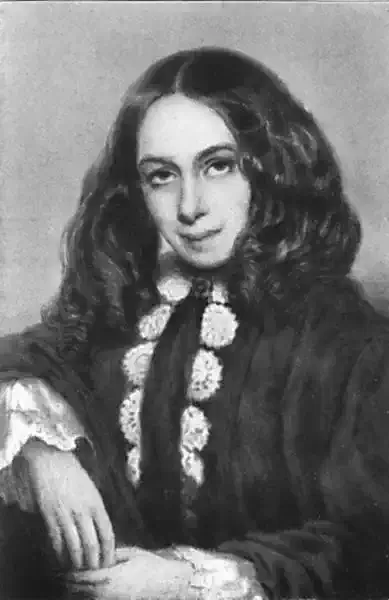
Elizabeth Barrett Browning
XXXVII
XXXVII
Pardon, oh, pardon, that my soul should make,
Of all that strong divineness which I know
For thine and thee, an image only so
Formed of the sand, and fit to shift and break.
It is that distant years which did not take
Thy sovranty, recoiling with a blow,
Have forced my swimming brain to undergo
Their doubt and dread, and blindly to forsake
Thy purity of likeness and distort
Thy worthiest love to a worthless counterfeit:
As if a shipwrecked Pagan, safe in port,
His guardian sea-god to commemorate,
Should set a sculptured porpoise, gills a-snort
And vibrant tail, within the temple-gate.
Pardon, oh, pardon, that my soul should make,
Of all that strong divineness which I know
For thine and thee, an image only so
Formed of the sand, and fit to shift and break.
It is that distant years which did not take
Thy sovranty, recoiling with a blow,
Have forced my swimming brain to undergo
Their doubt and dread, and blindly to forsake
Thy purity of likeness and distort
Thy worthiest love to a worthless counterfeit:
As if a shipwrecked Pagan, safe in port,
His guardian sea-god to commemorate,
Should set a sculptured porpoise, gills a-snort
And vibrant tail, within the temple-gate.
522
Elizabeth Barrett Browning
XXXIV
XXXIV
With the same heart, I said, I'll answer thee
As those, when thou shalt call me by my name--
Lo, the vain promise ! is the same, the same,
Perplexed and ruffled by life's strategy ?
When called before, I told how hastily
I dropped my flowers or brake off from a game,
To run and answer with the smile that came
At play last moment, and went on with me
Through my obedience. When I answer now,
I drop a grave thought, break from solitude;
Yet still my heart goes to thee--ponder how--
Not as to a single good, but all my good !
Lay thy hand on it, best one, and allow
That no child's foot could run fast as this blood.
With the same heart, I said, I'll answer thee
As those, when thou shalt call me by my name--
Lo, the vain promise ! is the same, the same,
Perplexed and ruffled by life's strategy ?
When called before, I told how hastily
I dropped my flowers or brake off from a game,
To run and answer with the smile that came
At play last moment, and went on with me
Through my obedience. When I answer now,
I drop a grave thought, break from solitude;
Yet still my heart goes to thee--ponder how--
Not as to a single good, but all my good !
Lay thy hand on it, best one, and allow
That no child's foot could run fast as this blood.
484
Elizabeth Barrett Browning
XXXV
XXXV
If I leave all for thee, wilt thou exchange
And be all to me ? Shall I never miss
Home-talk and blessing and the common kiss
That comes to each in turn, nor count it strange,
When I look up, to drop on a new range
Of walls and floors, another home than this ?
Nay, wilt thou fill that place by me which is
Filled by dead eyes too tender to know change ?
That 's hardest. If to conquer love, has tried,
To conquer grief, tries more, as all things prove;
For grief indeed is love and grief beside.
Alas, I have grieved sol am hard to love.
Yet love me--wilt thou ? Open thine heart wide,
And fold within the wet wings of thy dove.
If I leave all for thee, wilt thou exchange
And be all to me ? Shall I never miss
Home-talk and blessing and the common kiss
That comes to each in turn, nor count it strange,
When I look up, to drop on a new range
Of walls and floors, another home than this ?
Nay, wilt thou fill that place by me which is
Filled by dead eyes too tender to know change ?
That 's hardest. If to conquer love, has tried,
To conquer grief, tries more, as all things prove;
For grief indeed is love and grief beside.
Alas, I have grieved sol am hard to love.
Yet love me--wilt thou ? Open thine heart wide,
And fold within the wet wings of thy dove.
381
Elizabeth Barrett Browning
XXXII
XXXII
The first time that the sun rose on thine oath
To love me, I looked forward to the moon
To slacken all those bonds which seemed too soon
And quickly tied to make a lasting troth.
Quick-loving hearts, I thought, may quickly loathe;
And, looking on myself, I seemed not one
For such man's love !--more like an out-of-tune
Worn viol, a good singer would be wroth
To spoil his song with, and which, snatched in haste,
Is laid down at the first ill-sounding note.
I did not wrong myself so, but I placed
A wrong on thee. For perfect strains may float
'Neath master-hands, from instruments defaced,--
And great souls, at one stroke, may do and doat.
The first time that the sun rose on thine oath
To love me, I looked forward to the moon
To slacken all those bonds which seemed too soon
And quickly tied to make a lasting troth.
Quick-loving hearts, I thought, may quickly loathe;
And, looking on myself, I seemed not one
For such man's love !--more like an out-of-tune
Worn viol, a good singer would be wroth
To spoil his song with, and which, snatched in haste,
Is laid down at the first ill-sounding note.
I did not wrong myself so, but I placed
A wrong on thee. For perfect strains may float
'Neath master-hands, from instruments defaced,--
And great souls, at one stroke, may do and doat.
461
Elizabeth Barrett Browning
XXX
XXX
I see thine image through my tears to-night,
And yet to-day I saw thee smiling. How
Refer the cause ?--Beloved, is it thou
Or I, who makes me sad ? The acolyte
Amid the chanted joy and thankful rite
May so fall flat, with pale insensate brow,
On the altar-stair. I hear thy voice and vow,
Perplexed, uncertain, since thou art out of sight,
As he, in his swooning ears, the choir's Amen.
Beloved, dost thou love ? or did I see all
The glory as I dreamed, and fainted when
Too vehement light dilated my ideal,
For my soul's eyes ? Will that light come again,
As now these tears come--falling hot and real ?
I see thine image through my tears to-night,
And yet to-day I saw thee smiling. How
Refer the cause ?--Beloved, is it thou
Or I, who makes me sad ? The acolyte
Amid the chanted joy and thankful rite
May so fall flat, with pale insensate brow,
On the altar-stair. I hear thy voice and vow,
Perplexed, uncertain, since thou art out of sight,
As he, in his swooning ears, the choir's Amen.
Beloved, dost thou love ? or did I see all
The glory as I dreamed, and fainted when
Too vehement light dilated my ideal,
For my soul's eyes ? Will that light come again,
As now these tears come--falling hot and real ?
586
Elizabeth Barrett Browning
XXVII
XXVII
My own Beloved, who hast lifted me
From this drear flat of earth where I was thrown,
And, in betwixt the languid ringlets, blown
A life-breath, till the forehead hopefully
Shines out again, as all the angels see,
Before thy saving kiss ! My own, my own,
Who camest to me when the world was gone,
And I who looked for only God, found thee !
I find thee; I am safe, and strong, and glad.
As one who stands in dewless asphodel
Looks backward on the tedious time he had
In the upper life,--so I, with bosom-swell,
Make witness, here, between the good and bad,
That Love, as strong as Death, retrieves as well.
My own Beloved, who hast lifted me
From this drear flat of earth where I was thrown,
And, in betwixt the languid ringlets, blown
A life-breath, till the forehead hopefully
Shines out again, as all the angels see,
Before thy saving kiss ! My own, my own,
Who camest to me when the world was gone,
And I who looked for only God, found thee !
I find thee; I am safe, and strong, and glad.
As one who stands in dewless asphodel
Looks backward on the tedious time he had
In the upper life,--so I, with bosom-swell,
Make witness, here, between the good and bad,
That Love, as strong as Death, retrieves as well.
432
Elizabeth Barrett Browning
XXV
XXV
A heavy heart, Beloved, have I borne
From year to year until I saw thy face,
And sorrow after sorrow took the place
Of all those natural joys as lightly worn
As the stringed pearls, each lifted in its turn
By a beating heart at dance-time. Hopes apace
Were changed to long despairs, till God's own grace
Could scarcely lift above the world forlorn
My heavy heart. Then thou didst bid me bring
And let it drop adown thy calmly great
Deep being ! Fast it sinketh, as a thing
Which its own nature doth precipitate,
While thine doth close above it, mediating
Betwixt the stars and the unaccomplished fate.
A heavy heart, Beloved, have I borne
From year to year until I saw thy face,
And sorrow after sorrow took the place
Of all those natural joys as lightly worn
As the stringed pearls, each lifted in its turn
By a beating heart at dance-time. Hopes apace
Were changed to long despairs, till God's own grace
Could scarcely lift above the world forlorn
My heavy heart. Then thou didst bid me bring
And let it drop adown thy calmly great
Deep being ! Fast it sinketh, as a thing
Which its own nature doth precipitate,
While thine doth close above it, mediating
Betwixt the stars and the unaccomplished fate.
487
Elizabeth Barrett Browning
XVII
XVII
My poet, thou canst touch on all the notes
God set between his After and Before,
And strike up and strike off the general roar
Of the rushing worlds a melody that floats
In a serene air purely. Antidotes
Of medicated music, answering for
Mankind's forlornest uses, thou canst pour
From thence into their ears. God's will devotes
Thine to such ends, and mine to wait on thine.
How, Dearest, wilt thou have me for most use ?
A hope, to sing by gladly ? or a fine
Sad memory, with thy songs to interfuse ?
A shade, in which to sing--of palm or pine ?
A grave, on which to rest from singing ? Choose.
My poet, thou canst touch on all the notes
God set between his After and Before,
And strike up and strike off the general roar
Of the rushing worlds a melody that floats
In a serene air purely. Antidotes
Of medicated music, answering for
Mankind's forlornest uses, thou canst pour
From thence into their ears. God's will devotes
Thine to such ends, and mine to wait on thine.
How, Dearest, wilt thou have me for most use ?
A hope, to sing by gladly ? or a fine
Sad memory, with thy songs to interfuse ?
A shade, in which to sing--of palm or pine ?
A grave, on which to rest from singing ? Choose.
453
Elizabeth Barrett Browning
XX
XX
And wilt thou have me fashion into speech
The love I bear thee, finding words enough,
And hold the torch out, while the winds are rough,
Between our faces, to cast light on each ?--
I drop it at thy feet. I cannot teach
My hand to hold my spirit so far off
From myself--me--that I should bring thee proof
In words, of love hid in me out of reach.
Nay, let the silence of my womanhood
Commend my woman-love to thy belief,--
Seeing that I stand unwon, however wooed,
And rend the garment of my life, in brief,
By a most dauntless, voiceless fortitude,
Lest one touch of this heart convey its grief
And wilt thou have me fashion into speech
The love I bear thee, finding words enough,
And hold the torch out, while the winds are rough,
Between our faces, to cast light on each ?--
I drop it at thy feet. I cannot teach
My hand to hold my spirit so far off
From myself--me--that I should bring thee proof
In words, of love hid in me out of reach.
Nay, let the silence of my womanhood
Commend my woman-love to thy belief,--
Seeing that I stand unwon, however wooed,
And rend the garment of my life, in brief,
By a most dauntless, voiceless fortitude,
Lest one touch of this heart convey its grief
458
Elizabeth Barrett Browning
XV
XV
Accuse me not, beseech thee, that I wear
Too calm and sad a face in front of thine;
For we two look two ways, and cannot shine
With the same sunlight on our brow and hair.
On me thou lookest with no doubting care,
As on a bee shut in a crystalline;
Since sorrow hath shut me safe in love's divine,
And to spread wing and fly in the outer air
Were most impossible failure, if I strove
To fail so. But I look on thee--on thee--
Beholding, besides love, the end of love,
Hearing oblivion beyond memory;
As one who sits and gazes from above,
Over the rivers to the bitter sea.
Accuse me not, beseech thee, that I wear
Too calm and sad a face in front of thine;
For we two look two ways, and cannot shine
With the same sunlight on our brow and hair.
On me thou lookest with no doubting care,
As on a bee shut in a crystalline;
Since sorrow hath shut me safe in love's divine,
And to spread wing and fly in the outer air
Were most impossible failure, if I strove
To fail so. But I look on thee--on thee--
Beholding, besides love, the end of love,
Hearing oblivion beyond memory;
As one who sits and gazes from above,
Over the rivers to the bitter sea.
421
Elizabeth Barrett Browning
XLIII
XLIII
How do I love thee ? Let me count the ways.
I love thee to the depth and breadth and height
My soul can reach, when feeling out of sight
For the ends of Being and ideal Grace.
I love thee to the level of everyday's
Most quiet need, by sun and candle-light.
I love thee freely, as men strive for Right;
I love thee purely, as they turn from Praise.
I love thee with the passion put to use
In my old griefs, and with my childhood's faith.
I love thee with a love I seemed to lose
With my lost saints,--I love thee with the breath,
Smiles, tears, of all my life !--and, if God choose,
I shall but love thee better after death.
How do I love thee ? Let me count the ways.
I love thee to the depth and breadth and height
My soul can reach, when feeling out of sight
For the ends of Being and ideal Grace.
I love thee to the level of everyday's
Most quiet need, by sun and candle-light.
I love thee freely, as men strive for Right;
I love thee purely, as they turn from Praise.
I love thee with the passion put to use
In my old griefs, and with my childhood's faith.
I love thee with a love I seemed to lose
With my lost saints,--I love thee with the breath,
Smiles, tears, of all my life !--and, if God choose,
I shall but love thee better after death.
408
Elizabeth Barrett Browning
XLI
XLI
I thank all who have loved me in their hearts,
With thanks and love from mine. Deep thanks to all
Who paused a little near the prison-wall
To hear my music in its louder parts
Ere they went onward, each one to the mart's
Or temple's occupation, beyond call.
But thou, who, in my voice's sink and fall
When the sob took it, thy divinest Art's
Own instrument didst drop down at thy foot
To hearken what I said between my tears, . . .
Instruct me how to thank thee ! Oh, to shoot
My soul's full meaning into future years,
That they should lend it utterance, and salute
Love that endures, from Life that disappears !
I thank all who have loved me in their hearts,
With thanks and love from mine. Deep thanks to all
Who paused a little near the prison-wall
To hear my music in its louder parts
Ere they went onward, each one to the mart's
Or temple's occupation, beyond call.
But thou, who, in my voice's sink and fall
When the sob took it, thy divinest Art's
Own instrument didst drop down at thy foot
To hearken what I said between my tears, . . .
Instruct me how to thank thee ! Oh, to shoot
My soul's full meaning into future years,
That they should lend it utterance, and salute
Love that endures, from Life that disappears !
478
Elizabeth Barrett Browning
XIX
XIX
The soul's Rialto hath its merchandise;
I barter curl for curl upon that mart,
And from my poet's forehead to my heart
Receive this lock which outweighs argosies,--
As purply black, as erst to Pindar's eyes
The dim purpureal tresses gloomed athwart
The nine white Muse-brows. For this counterpart, . . .
The bay-crown's shade, Beloved, I surmise,
Still lingers on thy curl, it is so black !
Thus, with a fillet of smooth-kissing breath,
I tie the shadows safe from gliding back,
And lay the gift where nothing hindereth;
Here on my heart, as on thy brow, to lack
No natural heat till mine grows cold in death.
The soul's Rialto hath its merchandise;
I barter curl for curl upon that mart,
And from my poet's forehead to my heart
Receive this lock which outweighs argosies,--
As purply black, as erst to Pindar's eyes
The dim purpureal tresses gloomed athwart
The nine white Muse-brows. For this counterpart, . . .
The bay-crown's shade, Beloved, I surmise,
Still lingers on thy curl, it is so black !
Thus, with a fillet of smooth-kissing breath,
I tie the shadows safe from gliding back,
And lay the gift where nothing hindereth;
Here on my heart, as on thy brow, to lack
No natural heat till mine grows cold in death.
401
Elizabeth Barrett Browning
Work And Contemplation
Work And Contemplation
The woman singeth at her spinning-wheel
A pleasant chant, ballad or barcarole;
She thinketh of her song, upon the whole,
Far more than of her flax; and yet the reel
Is full, and artfully her fingers feel
With quick adjustment, provident control,
The lines--too subtly twisted to unroll--
Out to a perfect thread. I hence appeal
To the dear Christian Church--that we may do
Our Father's business in these temples mirk,
Thus swift and steadfast, thus intent and strong;
While thus, apart from toil, our souls pursue
Some high calm spheric tune, and prove our work
The better for the sweetness of our song.
The woman singeth at her spinning-wheel
A pleasant chant, ballad or barcarole;
She thinketh of her song, upon the whole,
Far more than of her flax; and yet the reel
Is full, and artfully her fingers feel
With quick adjustment, provident control,
The lines--too subtly twisted to unroll--
Out to a perfect thread. I hence appeal
To the dear Christian Church--that we may do
Our Father's business in these temples mirk,
Thus swift and steadfast, thus intent and strong;
While thus, apart from toil, our souls pursue
Some high calm spheric tune, and prove our work
The better for the sweetness of our song.
426