

Poems
Old Age and Ageing
Poems in this topic
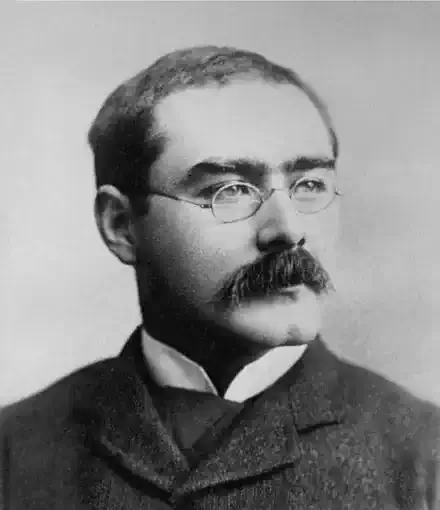
Rudyard Kipling
Shillin' A Day
Shillin' A Day
My name is O'Kelly, I've heard the Revelly
From Birr to Bareilly, from Leeds to Lahore,
Hong-Kong and Peshawur,
Lucknow and Etawah,
And fifty-five more all endin' in "pore".
Black Death and his quickness, the depth and the thickness,
Of sorrow and sickness I've known on my way,
But I'm old and I'm nervis,
I'm cast from the Service,
And all I deserve is a shillin' a day.
(~Chorus~) Shillin' a day,
Bloomin' good pay --
Lucky to touch it, a shillin' a day!
Oh, it drives me half crazy to think of the days I
Went slap for the Ghazi, my sword at my side,
When we rode Hell-for-leather
Both squadrons together,
That didn't care whether we lived or we died.
But it's no use despairin', my wife must go charin'
An' me commissairin' the pay-bills to better,
So if me you be'old
In the wet and the cold,
By the Grand Metropold, won't you give me a letter?
(~Full chorus~) Give 'im a letter --
'Can't do no better,
Late Troop-Sergeant-Major an' -- runs with a letter!
Think what 'e's been,
Think what 'e's seen,
Think of his pension an' ----
GAWD SAVE THE QUEEN.
My name is O'Kelly, I've heard the Revelly
From Birr to Bareilly, from Leeds to Lahore,
Hong-Kong and Peshawur,
Lucknow and Etawah,
And fifty-five more all endin' in "pore".
Black Death and his quickness, the depth and the thickness,
Of sorrow and sickness I've known on my way,
But I'm old and I'm nervis,
I'm cast from the Service,
And all I deserve is a shillin' a day.
(~Chorus~) Shillin' a day,
Bloomin' good pay --
Lucky to touch it, a shillin' a day!
Oh, it drives me half crazy to think of the days I
Went slap for the Ghazi, my sword at my side,
When we rode Hell-for-leather
Both squadrons together,
That didn't care whether we lived or we died.
But it's no use despairin', my wife must go charin'
An' me commissairin' the pay-bills to better,
So if me you be'old
In the wet and the cold,
By the Grand Metropold, won't you give me a letter?
(~Full chorus~) Give 'im a letter --
'Can't do no better,
Late Troop-Sergeant-Major an' -- runs with a letter!
Think what 'e's been,
Think what 'e's seen,
Think of his pension an' ----
GAWD SAVE THE QUEEN.
467
Rudyard Kipling
Old Fighting-Men
Old Fighting-Men
All the world over, nursing their scars,
Sit the old fighting-men broke in the wars--
Sit the old fighting-men, surly and grim
Mocking the lilt of the conquerors' hymn.
Dust of the battle o'erwhelmed them and hid.
Fame never found them for aught that they did.
Wounded and spent to the lazar they drew,
Lining the road where the Legions roll through.
Sons of the Laurel who press to your meed,
(Worthy God's pity most--you who succeed!)
Ere you go triumphing, crowned, to the stars,
Pity poor fighting-men, broke in the wars!
All the world over, nursing their scars,
Sit the old fighting-men broke in the wars--
Sit the old fighting-men, surly and grim
Mocking the lilt of the conquerors' hymn.
Dust of the battle o'erwhelmed them and hid.
Fame never found them for aught that they did.
Wounded and spent to the lazar they drew,
Lining the road where the Legions roll through.
Sons of the Laurel who press to your meed,
(Worthy God's pity most--you who succeed!)
Ere you go triumphing, crowned, to the stars,
Pity poor fighting-men, broke in the wars!
393

Robert W. Service
Washerwife
Washerwife
The aged Queen who passed away
Had sixty servants, so they say;
Twice sixty hands her shoes to tie:
Two soapy ones have I.
The old Queen had of beds a score;
A cot have I and ask no more.
For when the last is said and done
One can but die in one.
The old Queen rightly thought that she
Was better than the likes o' me;
And yet I'm glad despite her grace
I am not in her place.
The old Queen's gone and I am here,
To eat my tripe and drink my beer,
Athinkin' as I wash my clothes:
We must have monarchs, I suppose . . .
Well, well,--'Taint no skin off my nose!
The aged Queen who passed away
Had sixty servants, so they say;
Twice sixty hands her shoes to tie:
Two soapy ones have I.
The old Queen had of beds a score;
A cot have I and ask no more.
For when the last is said and done
One can but die in one.
The old Queen rightly thought that she
Was better than the likes o' me;
And yet I'm glad despite her grace
I am not in her place.
The old Queen's gone and I am here,
To eat my tripe and drink my beer,
Athinkin' as I wash my clothes:
We must have monarchs, I suppose . . .
Well, well,--'Taint no skin off my nose!
250
Robert W. Service
The Petit Vieux
The Petit Vieux
"Sow your wild oats in your youth," so we're always told;
But I say with deeper sooth: "Sow them when you're old."
I'll be wise till I'm about seventy or so:
Then, by Gad! I'll blossom out as an ancient beau.
I'll assume a dashing air, laugh with loud Ha! ha! . . .
How my grandchildren will stare at their grandpapa!
Their perfection aureoled I will scandalize:
Won't I be a hoary old sinner in their eyes!
Watch me, how I'll learn to chaff barmaids in a bar;
Scotches daily, gayly quaff, puff a fierce cigar.
I will haunt the Tango teas, at the stage-door stand;
Wait for Dolly Dimpleknees, bouquet in my hand.
Then at seventy I'll take flutters at roulette;
While at eighty hope I'll make good at poker yet;
And in fashionable togs to the races go,
Gayest of the gay old dogs, ninety years or so.
"Sow your wild oats while you're young," that's what you are told;
Don't believe the foolish tongue -- sow 'em when you're old.
Till you're threescore years and ten, take my humble tip,
Sow your nice tame oats and then . . . Hi, boys! Let 'er rip.
"Sow your wild oats in your youth," so we're always told;
But I say with deeper sooth: "Sow them when you're old."
I'll be wise till I'm about seventy or so:
Then, by Gad! I'll blossom out as an ancient beau.
I'll assume a dashing air, laugh with loud Ha! ha! . . .
How my grandchildren will stare at their grandpapa!
Their perfection aureoled I will scandalize:
Won't I be a hoary old sinner in their eyes!
Watch me, how I'll learn to chaff barmaids in a bar;
Scotches daily, gayly quaff, puff a fierce cigar.
I will haunt the Tango teas, at the stage-door stand;
Wait for Dolly Dimpleknees, bouquet in my hand.
Then at seventy I'll take flutters at roulette;
While at eighty hope I'll make good at poker yet;
And in fashionable togs to the races go,
Gayest of the gay old dogs, ninety years or so.
"Sow your wild oats while you're young," that's what you are told;
Don't believe the foolish tongue -- sow 'em when you're old.
Till you're threescore years and ten, take my humble tip,
Sow your nice tame oats and then . . . Hi, boys! Let 'er rip.
210
Robert W. Service
The Host
The Host
I never could imagine God:
I don't suppose I ever will.
Beside His altar fire I nod
With senile drowsiness but still
In old of age as sight grows dim
I have a sense of Him.
For when I count my sum of days
I find so many sweet and good,
My mind is full of peace and praise,
My heart aglow with gratitude.
For my long living in the sun
I want to thank someone.
Someone who has been kind to me;
Some power within, if not on high,
Who shaped my gentle destiny,
And led me pleasant pastures by:
Who taught me, whether gay or grave,
To love the life He gave.
A Host of charity and cheer,
Within a Tavern warm and bright;
Who smiles and bids me have no fear
As forth I fare into the night:
From whom I beg no Heav'n, but bless
For earthly happiness.
I never could imagine God:
I don't suppose I ever will.
Beside His altar fire I nod
With senile drowsiness but still
In old of age as sight grows dim
I have a sense of Him.
For when I count my sum of days
I find so many sweet and good,
My mind is full of peace and praise,
My heart aglow with gratitude.
For my long living in the sun
I want to thank someone.
Someone who has been kind to me;
Some power within, if not on high,
Who shaped my gentle destiny,
And led me pleasant pastures by:
Who taught me, whether gay or grave,
To love the life He gave.
A Host of charity and cheer,
Within a Tavern warm and bright;
Who smiles and bids me have no fear
As forth I fare into the night:
From whom I beg no Heav'n, but bless
For earthly happiness.
235
Robert W. Service
The Centenarians
The Centenarians
I asked of ancient gaffers three
The way of their ripe living,
And this is what they told to me
Without Misgiving.
The First: 'The why I've lived so long,
To my fond recollection
Is that for women, wine and song
I've had a predilection.
Full many a bawdy stave I've sung
With wenches of my choosing,
But of the joys that kept me young
The best was boozing.'
The Second: 'I'm a sage revered
Because I was a fool
And with the bourgeon of my beard
I kept my ardour cool.
On health I have conserved my hold
By never dissipating:
And that is why a hundred old
I'm celebrating.'
The Third: 'The explanation I
Have been so long a-olding,
Is that to wash I never try,
Despite conjugal scolding.
I hate the sight of soap and so
I seldom change my shirt:
Believe me, Brother, there is no
Preservative like dirt.'
So there you have the reasons three
Why age may you rejoice:
Booze, squalour and temerity,-Well,
you may take your choice.
Yet let me say, although it may
Your egoism hurt,
Of all the three it seems to me
The best is DIRT.
I asked of ancient gaffers three
The way of their ripe living,
And this is what they told to me
Without Misgiving.
The First: 'The why I've lived so long,
To my fond recollection
Is that for women, wine and song
I've had a predilection.
Full many a bawdy stave I've sung
With wenches of my choosing,
But of the joys that kept me young
The best was boozing.'
The Second: 'I'm a sage revered
Because I was a fool
And with the bourgeon of my beard
I kept my ardour cool.
On health I have conserved my hold
By never dissipating:
And that is why a hundred old
I'm celebrating.'
The Third: 'The explanation I
Have been so long a-olding,
Is that to wash I never try,
Despite conjugal scolding.
I hate the sight of soap and so
I seldom change my shirt:
Believe me, Brother, there is no
Preservative like dirt.'
So there you have the reasons three
Why age may you rejoice:
Booze, squalour and temerity,-Well,
you may take your choice.
Yet let me say, although it may
Your egoism hurt,
Of all the three it seems to me
The best is DIRT.
255
Robert W. Service
Ripeness
Ripeness
With peace and rest
And wisdom sage,
Ripeness is best
Of every age.
With hands that fold
In pensive prayer,
For grave-yard mold
Prepare.
From fighting free
With fear forgot,
Let ripeness be,
Before the rot.
With heart of cheer
At eighty odd,
How man grows near
To God!
With passion spent
And life nigh run
Let us repent
The ill we've done.
And as we bless
With happy heart
Life's mellowness
--Depart.
With peace and rest
And wisdom sage,
Ripeness is best
Of every age.
With hands that fold
In pensive prayer,
For grave-yard mold
Prepare.
From fighting free
With fear forgot,
Let ripeness be,
Before the rot.
With heart of cheer
At eighty odd,
How man grows near
To God!
With passion spent
And life nigh run
Let us repent
The ill we've done.
And as we bless
With happy heart
Life's mellowness
--Depart.
188
Robert W. Service
Retired
Retired
I used to sing, when I was young,
The joy of idleness;
But now I'm grey I hold my tongue,
For frankly I confess
If I had not some job to do
I would be bored to death;
So I must toil until I'm through
With this asthmatic breath.
Where others slothfully would brood
beg for little chores,
To peel potatoes, chop the wood,
And even scrub the floors.
When slightly useful I can be,
I'm happy as a bboy;
Dish-washing is a boon to me,
And brushing boots a joy.
The young folks tell me: "Grandpa, please,
Don't be so manual;
You certainly have earned your ease -
Why don't you rest a spell?"
Say I: I'll have a heap of rest
On my sepulchral shelf;
So now please let me do my best
To justify myself."
For one must strive or one will die,
And work's our dearest friend;
God meant it so, and that is why
I'll toil unto the end.
I thank the Lord I'm full of beans,
So let me heft a hoe,
And I will don my garden jeans
And help the beans to grow.
I used to sing, when I was young,
The joy of idleness;
But now I'm grey I hold my tongue,
For frankly I confess
If I had not some job to do
I would be bored to death;
So I must toil until I'm through
With this asthmatic breath.
Where others slothfully would brood
beg for little chores,
To peel potatoes, chop the wood,
And even scrub the floors.
When slightly useful I can be,
I'm happy as a bboy;
Dish-washing is a boon to me,
And brushing boots a joy.
The young folks tell me: "Grandpa, please,
Don't be so manual;
You certainly have earned your ease -
Why don't you rest a spell?"
Say I: I'll have a heap of rest
On my sepulchral shelf;
So now please let me do my best
To justify myself."
For one must strive or one will die,
And work's our dearest friend;
God meant it so, and that is why
I'll toil unto the end.
I thank the Lord I'm full of beans,
So let me heft a hoe,
And I will don my garden jeans
And help the beans to grow.
251
Robert W. Service
Old Trouper
Old Trouper
I was Mojeska's leading man
And famous parts I used to play,
But now I do the best I can
To earn my bread from day to day;
Here in this Burg of Breaking Hears,
Where one wins as a thousand fail,
I play a score of scurvy parts
Till Time writes Finis to my tale.
My wife is dead, my daughter wed,
With heaps of trouble of their own;
And though I hold aloft my head
I'm humble, scared and all alone . . .
To-night I burn each photograph,
Each record of my former fame,
And oh, how bitterly I laugh
And feed them to the hungry flame!
Behold how handsome I was then -
What glowing eye, what noble mien;
I towered above my fellow men,
And proudly strode the painted scene.
Ah, Vanity! What fools are we,
With empty ends and foolish aims . . .
There now, I fling with savage glee
My David Garrick to the flames.
"Is this a dagger that I see":
Oh, how I used to love that speech;
We were old-fashioned - "hams" maybe,
Yet we Young Arrogance could teach.
"Out, out brief candle!" There are gone
My Lear, my Hamlet and MacBeth;
And now by ashes cold and wan
I wait my cue, my prompter Death.
This life of ours is just a play;
Its end is fashioned from the start;
Fate writes each word we have to say,
And puppet-like we strut our part.
Once I wore laurels on my brow,
But now I wait, a sorry clown,
To make my furtive, farewell bow . . .
Haste Time! Oh, ring the Curtain down.
I was Mojeska's leading man
And famous parts I used to play,
But now I do the best I can
To earn my bread from day to day;
Here in this Burg of Breaking Hears,
Where one wins as a thousand fail,
I play a score of scurvy parts
Till Time writes Finis to my tale.
My wife is dead, my daughter wed,
With heaps of trouble of their own;
And though I hold aloft my head
I'm humble, scared and all alone . . .
To-night I burn each photograph,
Each record of my former fame,
And oh, how bitterly I laugh
And feed them to the hungry flame!
Behold how handsome I was then -
What glowing eye, what noble mien;
I towered above my fellow men,
And proudly strode the painted scene.
Ah, Vanity! What fools are we,
With empty ends and foolish aims . . .
There now, I fling with savage glee
My David Garrick to the flames.
"Is this a dagger that I see":
Oh, how I used to love that speech;
We were old-fashioned - "hams" maybe,
Yet we Young Arrogance could teach.
"Out, out brief candle!" There are gone
My Lear, my Hamlet and MacBeth;
And now by ashes cold and wan
I wait my cue, my prompter Death.
This life of ours is just a play;
Its end is fashioned from the start;
Fate writes each word we have to say,
And puppet-like we strut our part.
Once I wore laurels on my brow,
But now I wait, a sorry clown,
To make my furtive, farewell bow . . .
Haste Time! Oh, ring the Curtain down.
265
Robert W. Service
Old Sweethearts
Old Sweethearts
Oh Maggie, do you mind the day
We went to school together,
And as we stoppit by the way
I rolled you in the heather?
My! but you were the bonny lass
And we were awfu' late for class.
Your locks are now as white as snow,
And you are ripe and wrinkled,
A grandmother ten times or so,
Yet how your blue eyes twinkled
At me above your spectacles,
Recalling naughty neck-tickles!
It must be fifty years today
I left you for the Yukon;
You haven't changed - your just as gay
And just as sweet to look on.
But can you see in this old fool
The lad who made you late for school?
Oh Maggie, ask me in to tea
And we can talk things over,
And contemplate the nuptial state,
For I am still your lover:
And though the bell be slow to chime
We'll no be grudgin' o' the time
Oh Maggie, do you mind the day
We went to school together,
And as we stoppit by the way
I rolled you in the heather?
My! but you were the bonny lass
And we were awfu' late for class.
Your locks are now as white as snow,
And you are ripe and wrinkled,
A grandmother ten times or so,
Yet how your blue eyes twinkled
At me above your spectacles,
Recalling naughty neck-tickles!
It must be fifty years today
I left you for the Yukon;
You haven't changed - your just as gay
And just as sweet to look on.
But can you see in this old fool
The lad who made you late for school?
Oh Maggie, ask me in to tea
And we can talk things over,
And contemplate the nuptial state,
For I am still your lover:
And though the bell be slow to chime
We'll no be grudgin' o' the time
185
Robert W. Service
My Rocking-Chair
My Rocking-Chair
When I am old and worse for wear
I want to buy a rocking-chair,
And set it on a porch where shine
The stars of morning-glory vine;
With just beyond, a gleam of grass,
A shady street where people pass;
And some who come with time to spare,
To yarn beside my rocking-chair.
Then I will light my corn-cob pipe
And dose and dream and rarely gripe.
My morning paper on my knee
I won't allow to worry me.
For if I know the latest news
Is bad,--to read it I'll refuse,
Since I have always tried to see
The side of life that clicks with glee.
And looking back with days nigh done,
I feel I've had a heap of fun.
Of course I guess that more or less
It's you yourself make happiness
And if your needs are small and few,
Like me you may be happy too:
And end up with a hope, a prayer,
A chuckle in a rocking-chair.
When I am old and worse for wear
I want to buy a rocking-chair,
And set it on a porch where shine
The stars of morning-glory vine;
With just beyond, a gleam of grass,
A shady street where people pass;
And some who come with time to spare,
To yarn beside my rocking-chair.
Then I will light my corn-cob pipe
And dose and dream and rarely gripe.
My morning paper on my knee
I won't allow to worry me.
For if I know the latest news
Is bad,--to read it I'll refuse,
Since I have always tried to see
The side of life that clicks with glee.
And looking back with days nigh done,
I feel I've had a heap of fun.
Of course I guess that more or less
It's you yourself make happiness
And if your needs are small and few,
Like me you may be happy too:
And end up with a hope, a prayer,
A chuckle in a rocking-chair.
237
Robert W. Service
Growing Old
Growing Old
Somehow the skies don't seem so blue
As they used to be;
Blossoms have a fainter hue,
Grass less green I see.
There's no twinkle in a star,
Dawns don't seem so gold . . .
Yet, of course, I know they are:
Guess I'm growing old.
Somehow sunshine seems less bright,
Birds less gladly sing;
Moons don't thrill me with delight,
There's no kick in Spring.
Hills are steeper now and I'm
Sensitive to cold;
Lines are not so keen to rhyme . . .
Gosh! I'm growing old.
Yet in spite of failing things
I've no cause to grieve;
Age with all its ailing brings
Blessings, I believe:
Kindo' gentles up the mind
As the hope we hold
That with loving we will find
Friendliness in human kind,
Grace in growing old.
Somehow the skies don't seem so blue
As they used to be;
Blossoms have a fainter hue,
Grass less green I see.
There's no twinkle in a star,
Dawns don't seem so gold . . .
Yet, of course, I know they are:
Guess I'm growing old.
Somehow sunshine seems less bright,
Birds less gladly sing;
Moons don't thrill me with delight,
There's no kick in Spring.
Hills are steeper now and I'm
Sensitive to cold;
Lines are not so keen to rhyme . . .
Gosh! I'm growing old.
Yet in spite of failing things
I've no cause to grieve;
Age with all its ailing brings
Blessings, I believe:
Kindo' gentles up the mind
As the hope we hold
That with loving we will find
Friendliness in human kind,
Grace in growing old.
236
Robert W. Service
Clemenceau
Clemenceau
His frown brought terror to his foes,
But now in twilight of his days
The pure perfection of a rose
Can kindle rapture in his gaze.
Where once he swung the sword of wrath
And peoples trembled at his word,
With hoe he trims a pansied path
And listens to a bird.
His large of life was lived with noise,
With war and strife and crash of kings:
But now he hungers for the joys
Of peace, and hush of homely things.
His old dog nuzzles by his knee,
And seems to say: 'Oh Master dear,
Please do not ever part from me!
We are so happy here.'
His ancient maid, as sky draws dim,
Calls to him that the soup grows cold.
She tyrannises over him
Who once held armies in his hold.
With slippers, old skull-cap and shawl
He dreams and dozes by the fire,
Sighing: 'Behold the end of all,
Sweet rest my sole desire.
'My task is done, my pen is still;
My Book is there for all to see,--
The final triumph of my will,
Ineffably, my victory.
A Tiger once, but now a lamb,
With frailing hand my gate I close.
How hushed my heart! My life how calm!
--Its crown a Rose.'
His frown brought terror to his foes,
But now in twilight of his days
The pure perfection of a rose
Can kindle rapture in his gaze.
Where once he swung the sword of wrath
And peoples trembled at his word,
With hoe he trims a pansied path
And listens to a bird.
His large of life was lived with noise,
With war and strife and crash of kings:
But now he hungers for the joys
Of peace, and hush of homely things.
His old dog nuzzles by his knee,
And seems to say: 'Oh Master dear,
Please do not ever part from me!
We are so happy here.'
His ancient maid, as sky draws dim,
Calls to him that the soup grows cold.
She tyrannises over him
Who once held armies in his hold.
With slippers, old skull-cap and shawl
He dreams and dozes by the fire,
Sighing: 'Behold the end of all,
Sweet rest my sole desire.
'My task is done, my pen is still;
My Book is there for all to see,--
The final triumph of my will,
Ineffably, my victory.
A Tiger once, but now a lamb,
With frailing hand my gate I close.
How hushed my heart! My life how calm!
--Its crown a Rose.'
250
Robert W. Service
Awake To Smile
Awake To Smile
When I blink sunshine in my eyes
And hail the amber morn,
Before the rosy dew-drop dries
With sparkle on the thorn;
When boughs with robin rapture ring,
And bees hum in the may,--
Then call me young, with heart of Spring,
Though I be grey.
But when no more I know the joy
And urgence of that hour,
As like a happy-hearted boy
I leap to land aflower;
When gusto I no longer feel,
To rouse with glad hooray,--
Then call me old and let me steal
From men away.
Let me awaken with a smile
And go to garden glee,
For there is such a little while
Of living left to me;
But when star-wist I frail away,
Lord, let the hope beguile
That to Ecstatic Light I may
Awake to smile.
When I blink sunshine in my eyes
And hail the amber morn,
Before the rosy dew-drop dries
With sparkle on the thorn;
When boughs with robin rapture ring,
And bees hum in the may,--
Then call me young, with heart of Spring,
Though I be grey.
But when no more I know the joy
And urgence of that hour,
As like a happy-hearted boy
I leap to land aflower;
When gusto I no longer feel,
To rouse with glad hooray,--
Then call me old and let me steal
From men away.
Let me awaken with a smile
And go to garden glee,
For there is such a little while
Of living left to me;
But when star-wist I frail away,
Lord, let the hope beguile
That to Ecstatic Light I may
Awake to smile.
233
Robert W. Service
At Eighty Years
At Eighty Years
As nothingness draws near
How I can see
Inexorably clear
My vanity.
My sum of worthiness
Always so small,
Dwindles from less to less
To none at all.
As grisly destiny
Claims me at last,
How grievous seem to me
Sins of my past!
How keen a conscience edge
Can come to be!
How pitiless the dredge
Of memory!
Ye proud ones of the earth
Who count your gains,
What cherish you of worth
For all your pains?
E'er death shall slam the door,
Will you, like me,
Face fate and count the score-
FUTILITY.
As nothingness draws near
How I can see
Inexorably clear
My vanity.
My sum of worthiness
Always so small,
Dwindles from less to less
To none at all.
As grisly destiny
Claims me at last,
How grievous seem to me
Sins of my past!
How keen a conscience edge
Can come to be!
How pitiless the dredge
Of memory!
Ye proud ones of the earth
Who count your gains,
What cherish you of worth
For all your pains?
E'er death shall slam the door,
Will you, like me,
Face fate and count the score-
FUTILITY.
220
Robert W. Service
A Song Of Sixty-Five
A Song Of Sixty-Five
Brave Thackeray has trolled of days when he was twenty-one,
And bounded up five flights of stairs, a gallant garreteer;
And yet again in mellow vein when youth was gaily run,
Has dipped his nose in Gascon wine, and told of Forty Year.
But if I worthy were to sing a richer, rarer time,
I'd tune my pipes before the fire and merrily I'd strive
To praise that age when prose again has given way to rhyme,
The Indian Summer days of life when I'll be Sixty-five;
For then my work will all be done, my voyaging be past,
And I'll have earned the right to rest where folding hills are green;
So in some glassy anchorage I'll make my cable fast, --
Oh, let the seas show all their teeth, I'll sit and smile serene.
The storm may bellow round the roof, I'll bide beside the fire,
And many a scene of sail and trail within the flame I'll see;
For I'll have worn away the spur of passion and desire. . . .
Oh yes, when I am Sixty-five, what peace will come to me.
I'll take my breakfast in my bed, I'll rise at half-past ten,
When all the world is nicely groomed and full of golden song;
I'll smoke a bit and joke a bit, and read the news, and then
I'll potter round my peach-trees till I hear the luncheon gong.
And after that I think I'll doze an hour, well, maybe two,
And then I'll show some kindred soul how well my roses thrive;
I'll do the things I never yet have found the time to do. . . .
Oh, won't I be the busy man when I am Sixty-five.
I'll revel in my library; I'll read De Morgan's books;
I'll grow so garrulous I fear you'll write me down a bore;
I'll watch the ways of ants and bees in quiet sunny nooks,
I'll understand Creation as I never did before.
When gossips round the tea-cups talk I'll listen to it all;
On smiling days some kindly friend will take me for a drive:
I'll own a shaggy collie dog that dashes to my call:
I'll celebrate my second youth when I am Sixty-five.
Ah, though I've twenty years to go, I see myself quite plain,
A wrinkling, twinkling, rosy-cheeked, benevolent old chap;
I think I'll wear a tartan shawl and lean upon a cane.
I hope that I'll have silver hair beneath a velvet cap.
I see my little grandchildren a-romping round my knee;
So gay the scene, I almost wish 'twould hasten to arrive.
Let others sing of Youth and Spring, still will it seem to me
The golden time's the olden time, some time round Sixty-five.
Brave Thackeray has trolled of days when he was twenty-one,
And bounded up five flights of stairs, a gallant garreteer;
And yet again in mellow vein when youth was gaily run,
Has dipped his nose in Gascon wine, and told of Forty Year.
But if I worthy were to sing a richer, rarer time,
I'd tune my pipes before the fire and merrily I'd strive
To praise that age when prose again has given way to rhyme,
The Indian Summer days of life when I'll be Sixty-five;
For then my work will all be done, my voyaging be past,
And I'll have earned the right to rest where folding hills are green;
So in some glassy anchorage I'll make my cable fast, --
Oh, let the seas show all their teeth, I'll sit and smile serene.
The storm may bellow round the roof, I'll bide beside the fire,
And many a scene of sail and trail within the flame I'll see;
For I'll have worn away the spur of passion and desire. . . .
Oh yes, when I am Sixty-five, what peace will come to me.
I'll take my breakfast in my bed, I'll rise at half-past ten,
When all the world is nicely groomed and full of golden song;
I'll smoke a bit and joke a bit, and read the news, and then
I'll potter round my peach-trees till I hear the luncheon gong.
And after that I think I'll doze an hour, well, maybe two,
And then I'll show some kindred soul how well my roses thrive;
I'll do the things I never yet have found the time to do. . . .
Oh, won't I be the busy man when I am Sixty-five.
I'll revel in my library; I'll read De Morgan's books;
I'll grow so garrulous I fear you'll write me down a bore;
I'll watch the ways of ants and bees in quiet sunny nooks,
I'll understand Creation as I never did before.
When gossips round the tea-cups talk I'll listen to it all;
On smiling days some kindly friend will take me for a drive:
I'll own a shaggy collie dog that dashes to my call:
I'll celebrate my second youth when I am Sixty-five.
Ah, though I've twenty years to go, I see myself quite plain,
A wrinkling, twinkling, rosy-cheeked, benevolent old chap;
I think I'll wear a tartan shawl and lean upon a cane.
I hope that I'll have silver hair beneath a velvet cap.
I see my little grandchildren a-romping round my knee;
So gay the scene, I almost wish 'twould hasten to arrive.
Let others sing of Youth and Spring, still will it seem to me
The golden time's the olden time, some time round Sixty-five.
234

Robert Frost
They Were Welcome To Their Belief
They Were Welcome To Their Belief
Grief may have thought it was grief.
Care may have thought it was care.
They were welcome to their belief,
The overimportant pair.
No, it took all the snows that clung
To the low roof over his bed,
Beginning when he was young,
To induce the one snow on his head.
But whenever the roof camme white
The head in the dark below
Was a shade less the color of night,
A shade more the color of snow.
Grief may have thought it was grief.
Care may have thought it was care.
But neither one was the thief
Of his raven color of hair.
Grief may have thought it was grief.
Care may have thought it was care.
They were welcome to their belief,
The overimportant pair.
No, it took all the snows that clung
To the low roof over his bed,
Beginning when he was young,
To induce the one snow on his head.
But whenever the roof camme white
The head in the dark below
Was a shade less the color of night,
A shade more the color of snow.
Grief may have thought it was grief.
Care may have thought it was care.
But neither one was the thief
Of his raven color of hair.
451
Robert Frost
The Span Of Life
The Span Of Life
The old dog barks backwards without getting up.
I can remember when he was a pup.
Anonymous submission.
The old dog barks backwards without getting up.
I can remember when he was a pup.
Anonymous submission.
362
Robert Frost
A Cliff Dwelling
A Cliff Dwelling
There sandy seems the golden sky
And golden seems the sandy plain.
No habitation meets the eye
Unless in the horizon rim,
Some halfway up the limestone wall,
That spot of black is not a stain
Or shadow, but a cavern hole,
Where someone used to climb and crawl
To rest from his besetting fears.
I see the callus on his soul
The disappearing last of him
And of his race starvation slim,
Oh years ago - ten thousand years.
There sandy seems the golden sky
And golden seems the sandy plain.
No habitation meets the eye
Unless in the horizon rim,
Some halfway up the limestone wall,
That spot of black is not a stain
Or shadow, but a cavern hole,
Where someone used to climb and crawl
To rest from his besetting fears.
I see the callus on his soul
The disappearing last of him
And of his race starvation slim,
Oh years ago - ten thousand years.
395
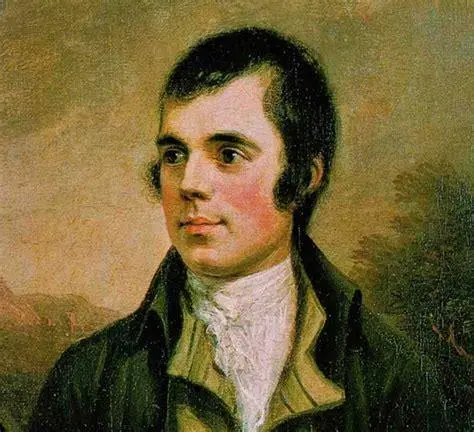
Robert Burns
John Anderson My Jo
John Anderson My Jo
John Anderson my jo, John,
When we were first acquent,
Your locks were like the raven,
Your bonny brow was brent;
But now your brow is bled, John,
Your locks are like the straw,
But blessings on your frosty pow,
John Anderson my jo!
John Anderson my jo, John,
We clamb the hill thegither
And monie a cantie day, John,
We've had wi' ane anither;
Now we maun totter down, John,
And hand in hand we'll go,
And sleep thegither at the foot,
John Anderson my jo!
John Anderson my jo, John,
When we were first acquent,
Your locks were like the raven,
Your bonny brow was brent;
But now your brow is bled, John,
Your locks are like the straw,
But blessings on your frosty pow,
John Anderson my jo!
John Anderson my jo, John,
We clamb the hill thegither
And monie a cantie day, John,
We've had wi' ane anither;
Now we maun totter down, John,
And hand in hand we'll go,
And sleep thegither at the foot,
John Anderson my jo!
253
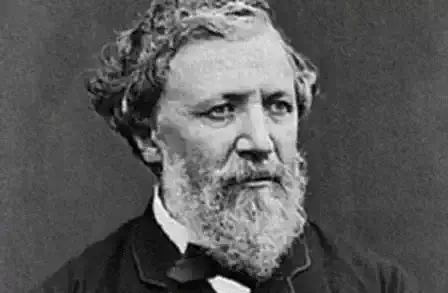
Robert Browning
Rabbi Ben Ezra
Rabbi Ben Ezra
Grow old along with me!
The best is yet to be,
The last of life, for which the first was made:
Our times are in His hand
Who saith 'A whole I planned,
Youth shows but half; trust God: see all, nor be afraid!'
Not that, amassing flowers,
Youth sighed 'Which rose make ours,
Which lily leave and then as best recall?'
Not that, admiring stars,
It yearned 'Nor Jove, nor Mars;
Mine be some figured flame which blends, transcends them all!'
Not for such hopes and fears
Annulling youth's brief years,
Do I remonstrate: folly wide the mark!
Rather I prize the doubt
Low kinds exist without,
Finished and finite clods, untroubled by a spark.
Poor vaunt of life indeed,
Were man but formed to feed
On joy, to solely seek and find and feast:
Such feasting ended, then
As sure an end to men;
Irks care the crop-full bird? Frets doubt the maw-crammed beast?
Rejoice we are allied
To That which doth provide
And not partake, effect and not receive!
A spark disturbs our clod;
Nearer we hold of God
Who gives, than of His tribes that take, I must believe.
Then, welcome each rebuff
That turns earth's smoothness rough,
Each sting that bids nor sit nor stand but go!
Be our joys three-parts pain!
Strive, and hold cheap the strain;
Learn, nor account the pang; dare, never grudge the throe!
For thence,--a paradox
Which comforts while it mocks,--
Shall life succeed in that it seems to fail:
What I aspired to be,
And was not, comforts me:
A brute I might have been, but would not sink i' the scale.
What is he but a brute
Whose flesh has soul to suit,
Whose spirit works lest arms and legs want play?
To man, propose this test--
Thy body at its best,
How far can that project thy soul on its lone way?
Yet gifts should prove their use:
I own the Past profuse
Of power each side, perfection every turn:
Eyes, ears took in their dole,
Brain treasured up the whole;
Should not the heart beat once 'How good to live and learn?'
Not once beat 'Praise be Thine!
I see the whole design,
I, who saw power, see now love perfect too:
Perfect I call Thy plan:
Thanks that I was a man!
Maker, remake, complete,--I trust what Thou shalt do!'
For pleasant is this flesh;
Our soul, in its rose-mesh
Pulled ever to the earth, still yearns for rest;
Would we some prize might hold
To match those manifold
Possessions of the brute,--gain most, as we did best!
Let us not always say,
'Spite of this flesh to-day
I strove, made head, gained ground upon the whole!'
As the bird wings and sings,
Let us cry 'All good things
Are ours, nor soul helps flesh more, now, than flesh helps soul!'
Therefore I summon age
To grant youth's heritage,
Life's struggle having so far reached its term:
Thence shall I pass, approved
A man, for aye removed
From the developed brute; a god though in the germ.
And I shall thereupon
Take rest, ere I be gone
Once more on my adventure brave and new:
Fearless and unperplexed,
When I wage battle next,
What weapons to select, what armour to indue.
Youth ended, I shall try
My gain or loss thereby;
Leave the fire ashes, what survives is gold:
And I shall weigh the same,
Give life its praise or blame:
Young, all lay in dispute; I shall know, being old.
For note, when evening shuts,
A certain moment cuts
The deed off, calls the glory from the grey:
A whisper from the west
Shoots--'Add this to the rest,
Take it and try its worth: here dies another day.'
So, still within this life,
Though lifted o'er its strife,
Let me discern, compare, pronounce at last,
This rage was right i' the main,
That acquiescence vain:
The Future I may face now I have proved the Past.'
For more is not reserved
To man, with soul just nerved
To act to-morrow what he learns to-day:
Here, work enough to watch
The Master work, and catch
Hints of the proper craft, tricks of the tool's true play.
As it was better, youth
Should strive, through acts uncouth,
Toward making, than repose on aught found made:
So, better, age, exempt
From strife, should know, than tempt
Further. Thou waitedst age: wait death nor be afraid!
Enough now, if the Right
And Good and Infinite
Be named here, as thou callest thy hand thine own
With knowledge absolute,
Subject to no dispute
From fools that crowded youth, nor let thee feel alone.
Be there, for once and all,
Severed great minds from small,
Announced to each his station in the Past!
Was I, the world arraigned,
Were they, my soul disdained,
Right? Let age speak the truth and give us peace at last!
Now, who shall arbitrate?
Ten men love what I hate,
Shun what I follow, slight what I receive;
Ten, who in ears and eyes
Match me: we all surmise,
They this thing, and I that: whom shall my soul believe?
Not on the vulgar mass
Called 'work,' must sentence pass,
Things done, that took the eye and had the price;
O'er which, from level stand,
The low world laid its hand,
Found straightway to its mind, could value in a trice:
But all, the world's coarse thumb
And finger failed to plumb,
So passed in making up the main account;
All instincts immature,
All purposes unsure,
That weighed not as his work, yet swelled the man's amount:
Thoughts hardly to be packed
Into a narrow act,
Fancies that broke through language and escaped;
All I could never be,
All, men ignored in me,
This, I was worth to God, whose wheel the pitcher shaped.
Ay, note that Potter's wheel,
That metaphor! and feel
Why time spins fast, why passive lies our clay,--
Thou, to whom fools propound,
When the wine makes its round,
'Since life fleets, all is change; the Past gone, seize to-day!'
Fool! All that is, at all,
Lasts ever, past recall;
Earth changes, but thy soul and God stand sure:
What entered into thee,
That was, is, and shall be:
Time's wheel runs back or stops: Potter and clay endure.
He fixed thee mid this dance
Of plastic circumstance,
This Present, thou, forsooth, wouldst fain arrest:
Machinery just meant
To give thy soul its bent,
Try thee and turn thee forth, sufficiently impressed.
What though the earlier grooves,
Which ran the laughing loves
Around thy base, no longer pause and press?
What though, about thy rim,
Skull-things in order grim
Grow out, in graver mood, obey the sterner stress?
Look not thou down but up!
To uses of a cup,
The festal board, lamp's flash and trumpet's peal,
The new wine's foaming flow,
The Master's lips a-glow!
Thou, heaven's consummate cup, what need'st thou with earth's wheel?
But I need, now as then,
Thee, God, who mouldest men;
And since, not even while the whirl was worst,
Did I,--to the wheel of life
With shapes and colours rife,
Bound dizzily,--mistake my end, to slake Thy thirst:
So, take and use Thy work:
Amend what flaws may lurk,
What strain o' the stuff, what warpings past the aim!
My times be in Thy hand!
Perfect the cup as planned!
Let age approve of youth, and death complete the same!
Grow old along with me!
The best is yet to be,
The last of life, for which the first was made:
Our times are in His hand
Who saith 'A whole I planned,
Youth shows but half; trust God: see all, nor be afraid!'
Not that, amassing flowers,
Youth sighed 'Which rose make ours,
Which lily leave and then as best recall?'
Not that, admiring stars,
It yearned 'Nor Jove, nor Mars;
Mine be some figured flame which blends, transcends them all!'
Not for such hopes and fears
Annulling youth's brief years,
Do I remonstrate: folly wide the mark!
Rather I prize the doubt
Low kinds exist without,
Finished and finite clods, untroubled by a spark.
Poor vaunt of life indeed,
Were man but formed to feed
On joy, to solely seek and find and feast:
Such feasting ended, then
As sure an end to men;
Irks care the crop-full bird? Frets doubt the maw-crammed beast?
Rejoice we are allied
To That which doth provide
And not partake, effect and not receive!
A spark disturbs our clod;
Nearer we hold of God
Who gives, than of His tribes that take, I must believe.
Then, welcome each rebuff
That turns earth's smoothness rough,
Each sting that bids nor sit nor stand but go!
Be our joys three-parts pain!
Strive, and hold cheap the strain;
Learn, nor account the pang; dare, never grudge the throe!
For thence,--a paradox
Which comforts while it mocks,--
Shall life succeed in that it seems to fail:
What I aspired to be,
And was not, comforts me:
A brute I might have been, but would not sink i' the scale.
What is he but a brute
Whose flesh has soul to suit,
Whose spirit works lest arms and legs want play?
To man, propose this test--
Thy body at its best,
How far can that project thy soul on its lone way?
Yet gifts should prove their use:
I own the Past profuse
Of power each side, perfection every turn:
Eyes, ears took in their dole,
Brain treasured up the whole;
Should not the heart beat once 'How good to live and learn?'
Not once beat 'Praise be Thine!
I see the whole design,
I, who saw power, see now love perfect too:
Perfect I call Thy plan:
Thanks that I was a man!
Maker, remake, complete,--I trust what Thou shalt do!'
For pleasant is this flesh;
Our soul, in its rose-mesh
Pulled ever to the earth, still yearns for rest;
Would we some prize might hold
To match those manifold
Possessions of the brute,--gain most, as we did best!
Let us not always say,
'Spite of this flesh to-day
I strove, made head, gained ground upon the whole!'
As the bird wings and sings,
Let us cry 'All good things
Are ours, nor soul helps flesh more, now, than flesh helps soul!'
Therefore I summon age
To grant youth's heritage,
Life's struggle having so far reached its term:
Thence shall I pass, approved
A man, for aye removed
From the developed brute; a god though in the germ.
And I shall thereupon
Take rest, ere I be gone
Once more on my adventure brave and new:
Fearless and unperplexed,
When I wage battle next,
What weapons to select, what armour to indue.
Youth ended, I shall try
My gain or loss thereby;
Leave the fire ashes, what survives is gold:
And I shall weigh the same,
Give life its praise or blame:
Young, all lay in dispute; I shall know, being old.
For note, when evening shuts,
A certain moment cuts
The deed off, calls the glory from the grey:
A whisper from the west
Shoots--'Add this to the rest,
Take it and try its worth: here dies another day.'
So, still within this life,
Though lifted o'er its strife,
Let me discern, compare, pronounce at last,
This rage was right i' the main,
That acquiescence vain:
The Future I may face now I have proved the Past.'
For more is not reserved
To man, with soul just nerved
To act to-morrow what he learns to-day:
Here, work enough to watch
The Master work, and catch
Hints of the proper craft, tricks of the tool's true play.
As it was better, youth
Should strive, through acts uncouth,
Toward making, than repose on aught found made:
So, better, age, exempt
From strife, should know, than tempt
Further. Thou waitedst age: wait death nor be afraid!
Enough now, if the Right
And Good and Infinite
Be named here, as thou callest thy hand thine own
With knowledge absolute,
Subject to no dispute
From fools that crowded youth, nor let thee feel alone.
Be there, for once and all,
Severed great minds from small,
Announced to each his station in the Past!
Was I, the world arraigned,
Were they, my soul disdained,
Right? Let age speak the truth and give us peace at last!
Now, who shall arbitrate?
Ten men love what I hate,
Shun what I follow, slight what I receive;
Ten, who in ears and eyes
Match me: we all surmise,
They this thing, and I that: whom shall my soul believe?
Not on the vulgar mass
Called 'work,' must sentence pass,
Things done, that took the eye and had the price;
O'er which, from level stand,
The low world laid its hand,
Found straightway to its mind, could value in a trice:
But all, the world's coarse thumb
And finger failed to plumb,
So passed in making up the main account;
All instincts immature,
All purposes unsure,
That weighed not as his work, yet swelled the man's amount:
Thoughts hardly to be packed
Into a narrow act,
Fancies that broke through language and escaped;
All I could never be,
All, men ignored in me,
This, I was worth to God, whose wheel the pitcher shaped.
Ay, note that Potter's wheel,
That metaphor! and feel
Why time spins fast, why passive lies our clay,--
Thou, to whom fools propound,
When the wine makes its round,
'Since life fleets, all is change; the Past gone, seize to-day!'
Fool! All that is, at all,
Lasts ever, past recall;
Earth changes, but thy soul and God stand sure:
What entered into thee,
That was, is, and shall be:
Time's wheel runs back or stops: Potter and clay endure.
He fixed thee mid this dance
Of plastic circumstance,
This Present, thou, forsooth, wouldst fain arrest:
Machinery just meant
To give thy soul its bent,
Try thee and turn thee forth, sufficiently impressed.
What though the earlier grooves,
Which ran the laughing loves
Around thy base, no longer pause and press?
What though, about thy rim,
Skull-things in order grim
Grow out, in graver mood, obey the sterner stress?
Look not thou down but up!
To uses of a cup,
The festal board, lamp's flash and trumpet's peal,
The new wine's foaming flow,
The Master's lips a-glow!
Thou, heaven's consummate cup, what need'st thou with earth's wheel?
But I need, now as then,
Thee, God, who mouldest men;
And since, not even while the whirl was worst,
Did I,--to the wheel of life
With shapes and colours rife,
Bound dizzily,--mistake my end, to slake Thy thirst:
So, take and use Thy work:
Amend what flaws may lurk,
What strain o' the stuff, what warpings past the aim!
My times be in Thy hand!
Perfect the cup as planned!
Let age approve of youth, and death complete the same!
317

Ogden Nash
The Sunset Years of Samuel Shy
The Sunset Years of Samuel Shy
Master I may be,
But not of my fate.
Now come the kisses, too many too late.
Tell me, O Parcae,
For fain would I know,
Where were these kisses three decades ago?
Girls there were plenty,
Mint julep girls, beer girls,
Gay younger married and headstrong career girls,
The girls of my friends
And the wives of my friends,
Some smugly settled and some at loose ends,
Sad girls, serene girls,
Girls breathless and turbulent,
Debs cosmopolitan, matrons suburbulent,
All of them amiable,
All of them cordial,
Innocent rousers of instincts primordial,
But even though health and wealth
Hadn't yet missed me,
None of them,
Not even Jenny,
Once kissed me.
These very same girls
Who with me have grown older
Now freely relax with a head on my shoulder,
And now come the kisses,
A flood in full spate,
The meaningless kisses, too many too late.
They kiss me hello,
They kiss me goodbye,
Should I offer a light, there's a kiss for reply.
They kiss me at weddings,
They kiss me at wakes,
The drop of a hat is less than it takes.
They kiss me at cocktails,
They kiss me at bridge,
It's all automatic, like slapping a midge.
The sound of their kisses
Is loud in my ears
Like the locusts that swarm every seventeen years.
I'm arthritic, dyspeptic,
Potentially ulcery,
And weary of kisses by custom compulsory.
Should my dear ones commit me
As senile demential,
It's from kisses perfunctory, inconsequential.
Answer, O Parcae,
For fain would I know,
Where were these kisses three decades ago?
Master I may be,
But not of my fate.
Now come the kisses, too many too late.
Tell me, O Parcae,
For fain would I know,
Where were these kisses three decades ago?
Girls there were plenty,
Mint julep girls, beer girls,
Gay younger married and headstrong career girls,
The girls of my friends
And the wives of my friends,
Some smugly settled and some at loose ends,
Sad girls, serene girls,
Girls breathless and turbulent,
Debs cosmopolitan, matrons suburbulent,
All of them amiable,
All of them cordial,
Innocent rousers of instincts primordial,
But even though health and wealth
Hadn't yet missed me,
None of them,
Not even Jenny,
Once kissed me.
These very same girls
Who with me have grown older
Now freely relax with a head on my shoulder,
And now come the kisses,
A flood in full spate,
The meaningless kisses, too many too late.
They kiss me hello,
They kiss me goodbye,
Should I offer a light, there's a kiss for reply.
They kiss me at weddings,
They kiss me at wakes,
The drop of a hat is less than it takes.
They kiss me at cocktails,
They kiss me at bridge,
It's all automatic, like slapping a midge.
The sound of their kisses
Is loud in my ears
Like the locusts that swarm every seventeen years.
I'm arthritic, dyspeptic,
Potentially ulcery,
And weary of kisses by custom compulsory.
Should my dear ones commit me
As senile demential,
It's from kisses perfunctory, inconsequential.
Answer, O Parcae,
For fain would I know,
Where were these kisses three decades ago?
249
Ogden Nash
Peekabo, I Almost See You
Peekabo, I Almost See You
Middle-aged life is merry, and I love to
lead it,
But there comes a day when your eyes
are all right but your arm isn't long
enough
to hold the telephone book where you can read it,
And your friends get jocular, so you go
to the oculist,
And of all your friends he is the joculist,
So over his facetiousness let us skim,
Only noting that he has been waiting for you ever since
you said Good evening to his grandfather clock under
the impression that it was him,
And you look at his chart and it says SHRDLU QWERTYOP,
and you say Well, why SHRDNTLU QWERTYOP? and he
says one set of glasses won't do.
You need two.
One for reading Erle Stanley Gardner's Perry Mason and
Keats's "Endymion" with,
And the other for walking around without saying Hello
to strange wymion with.
So you spend your time taking off your seeing glasses to put
on your reading glasses, and then remembering that your
reading glasses are upstairs or in the car,
And then you can't find your seeing glasses again because
without them on you can't see where they are.
Enough of such mishaps, they would try the patience of an
ox,
I prefer to forget both pairs of glasses and pass my declining
years saluting strange women and grandfather clocks.
Middle-aged life is merry, and I love to
lead it,
But there comes a day when your eyes
are all right but your arm isn't long
enough
to hold the telephone book where you can read it,
And your friends get jocular, so you go
to the oculist,
And of all your friends he is the joculist,
So over his facetiousness let us skim,
Only noting that he has been waiting for you ever since
you said Good evening to his grandfather clock under
the impression that it was him,
And you look at his chart and it says SHRDLU QWERTYOP,
and you say Well, why SHRDNTLU QWERTYOP? and he
says one set of glasses won't do.
You need two.
One for reading Erle Stanley Gardner's Perry Mason and
Keats's "Endymion" with,
And the other for walking around without saying Hello
to strange wymion with.
So you spend your time taking off your seeing glasses to put
on your reading glasses, and then remembering that your
reading glasses are upstairs or in the car,
And then you can't find your seeing glasses again because
without them on you can't see where they are.
Enough of such mishaps, they would try the patience of an
ox,
I prefer to forget both pairs of glasses and pass my declining
years saluting strange women and grandfather clocks.
245
Ogden Nash
Crossing The Border
Crossing The Border
Senescence begins
And middle age ends
The day your descendents
Outnumber your friends.
Senescence begins
And middle age ends
The day your descendents
Outnumber your friends.
228