

Poems in this theme
Betrayal and Disappointment

Charlotte Brontë
Pilate's Wife's Dream
Pilate's Wife's Dream
I've quenched my lamp, I struck it in that start
Which every limb convulsed, I heard it fallThe
crash blent with my sleep, I saw depart
Its light, even as I woke, on yonder wall;
Over against my bed, there shone a gleam
Strange, faint, and mingling also with my dream.
It sunk, and I am wrapt in utter gloom;
How far is night advanced, and when will day
Retinge the dusk and livid air with bloom,
And fill this void with warm, creative ray ?
Would I could sleep again till, clear and red,
Morning shall on the mountaintops
be spread!
I'd call my women, but to break their sleep,
Because my own is broken, were unjust;
They've wrought all day, and wellearned
slumbers steep
Their labours in forgetfulness, I trust;
Let me my feverish watch with patience bear,
Thankful that none with me its sufferings share.
Yet, Oh, for light ! one ray would tranquilise
My nerves, my pulses, more than effort can;
I'll draw my curtain and consult the skies:
These trembling stars at dead of night look wan,
Wild, restless, strange, yet cannot be more drear
Than this my couch, shared by a nameless fear.
All blackone
great cloud, drawn from east to west,
Conceals the heavens, but there are lights below;
Torches burn in Jerusalem, and cast
On yonder stony mount a lurid glow.
I see men stationed there, and gleaming spears;
A sound, too, from afar, invades my ears.
Dull, measured, strokes of axe and hammer ring
From street to street, not loud, but through the night
Distinctly heardand
some strange spectral thing
Is now uprearedand,
fixed against the light
Of the pale lamps; defined upon that sky,
It stands up like a column, straight and high.
I see it allI
know the dusky signA
cross on Calvary, which Jews uprear
While Romans watch; and when the dawn shall shine
Pilate, to judge the victim will appear,
Pass sentenceyield
him up to crucify;
And on that cross the spotless Christ must die.
Dreams, then, are truefor
thus my vision ran;
Surely some oracle has been with me,
The gods have chosen me to reveal their plan,
To warn an unjust judge of destiny:
I, slumbering, heard and saw; awake I know,
Christ's coming death, and Pilate's life of woe.
I do not weep for Pilatewho
could prove
Regret for him whose cold and crushing sway
No prayer can soften, no appeal can move;
Who tramples hearts as others trample clay,
Yet with a faltering, an uncertain tread,
That might stir up reprisal in the dead.
Forced to sit by his side and see his deeds;
Forced to behold that visage, hour by hour,
In whose gaunt lines, the abhorrent gazer reads
A triple lust of gold, and blood, and power;
A soul whom motives, fierce, yet abject, urge
Rome's servile slave, and Judah's tyrant scourge.
How can I love, or mourn, or pity him ?
I, who so long my fettered hands have wrung;
I, who for grief have wept my eyesight
dim;
Because, while life for me was bright and young,
He robbed my youthhe
quenched my life's fair rayHe
crushed my mind, and did my freedom slay.
And at this houralthough
I be his wifeHe
has no more of tenderness from me
Than any other wretch of guilty life;
Less, for I know his household privacyI
see him as he iswithout
a screen;
And, by the gods, my soul abhors his mien !
Has he not sought my presence, dyed in bloodInnocent,
righteous blood, shed shamelessly ?
And have I not his red salute withstood ?
Aye,when,
as erst, he plunged all Galilee
In dark bereavementin
affliction sore,
Mingling their very offerings with their gore.
Then came hein
his eyes a serpentsmile,
Upon his lips some false, endearing word,
And, through the streets of Salem, clanged the while,
His slaughtering, hacking, sacrilegious swordAnd
I, to see a man cause men such woe,
Trembled with ireI
did not fear to show.
And now, the envious Jewish priests have brought
Jesuswhom
they in mockery call their king
To have, by this grim power, their vengeance wrought;
By this mean reptile, innocence to sting.
Oh ! could I but the purposed doom avert,
And shield the blameless head from cruel hurt!
Accessible is Pilate's heart to fear,
Omens will shake his soul, like autumn leaf;
Could he this night's appalling vision hear,
This just man's bonds were loosed, his life were safe,
Unless that bitter priesthood should prevail,
And make even terror to their malice quail.
Yet if I tell the dreambut
let me pause.
What dream ? Erewhile the characters were clear,
Graved on my brainat
once some unknown cause
Has dimmed and rased the thoughts, which now appear,
Like a vague remnant of some bypast
scene;Not
what will be, but what, long since, has been.
I suffered many things, I heard foretold
A dreadful doom for Pilate,lingering
woes,
In far, barbarian climes, where mountains cold
Built up a solitude of trackless snows,
There, he and grisly wolves prowled side by side,
There he lived famishedthere
methought he died;
But not of hunger, nor by malady;
I saw the snow around him, stained with gore;
I said I had no tears for such as he,
And, lo ! my cheek is wetmine
eyes run o'er;
I weep for mortal suffering, mortal guilt,
I weep the impious deedthe
blood selfspilt.
More I recall not, yet the vision spread
Into a world remote, an age to comeAnd
still the illumined name of Jesus shed
A light, a clearness, through the enfolding gloomAnd
still I saw that sign, which now I see,
That cross on yonder brow of Calvary.
What is this Hebrew Christ ? To me unknown,
His lineagedoctrinemissionyet
how clear,
Is Godlike
goodness, in his actions shewn !
How straight and stainless is his life's career !
The ray of Deity that rests on him,
In my eyes makes Olympian glory dim.
The world advances, Greek, or Roman rite
Suffices not the inquiring mind to stay;
The searching soul demands a purer light
To guide it on its upward, onward way;
Ashamed of sculptured godsReligion
turns
To where the unseen Jehovah's altar burns.
Our faith is rottenall
our rites defiled,
Our temples sullied, and methinks, this man,
With his new ordinance, so wise and mild,
Is come, even as he says, the chaff to fan
And sever from the wheat; but will his faith
Survive the terrors of tomorrow's
death ?
* * * * *
I feel a firmer trusta
higher hope
Rise in my soulit
dawns with dawning day;
Lo ! on the Temple's roofon
Moriah's slope
Appears at length that clear, and crimson ray,
Which I so wished for when shut in by night;
Oh, opening skies, I hail, I bless your light !
Part, clouds and shadows ! glorious Sun appear !
Part, mental gloom ! Come insight from on high !
Dusk dawn in heaven still strives with daylight clear,
The longing soul, doth still uncertain sigh.
Oh ! to behold the truththat
sun divine,
How doth my bosom pant, my spirit pine !
This day, time travails with a mighty birth,
This day, Truth stoops from heaven and visits earth,
Ere night descends, I shall more surely know
What guide to follow, in what path to go;
I wait in hopeI
wait in solemn fear,
The oracle of Godthe
soletrue
Godto
hear.
I've quenched my lamp, I struck it in that start
Which every limb convulsed, I heard it fallThe
crash blent with my sleep, I saw depart
Its light, even as I woke, on yonder wall;
Over against my bed, there shone a gleam
Strange, faint, and mingling also with my dream.
It sunk, and I am wrapt in utter gloom;
How far is night advanced, and when will day
Retinge the dusk and livid air with bloom,
And fill this void with warm, creative ray ?
Would I could sleep again till, clear and red,
Morning shall on the mountaintops
be spread!
I'd call my women, but to break their sleep,
Because my own is broken, were unjust;
They've wrought all day, and wellearned
slumbers steep
Their labours in forgetfulness, I trust;
Let me my feverish watch with patience bear,
Thankful that none with me its sufferings share.
Yet, Oh, for light ! one ray would tranquilise
My nerves, my pulses, more than effort can;
I'll draw my curtain and consult the skies:
These trembling stars at dead of night look wan,
Wild, restless, strange, yet cannot be more drear
Than this my couch, shared by a nameless fear.
All blackone
great cloud, drawn from east to west,
Conceals the heavens, but there are lights below;
Torches burn in Jerusalem, and cast
On yonder stony mount a lurid glow.
I see men stationed there, and gleaming spears;
A sound, too, from afar, invades my ears.
Dull, measured, strokes of axe and hammer ring
From street to street, not loud, but through the night
Distinctly heardand
some strange spectral thing
Is now uprearedand,
fixed against the light
Of the pale lamps; defined upon that sky,
It stands up like a column, straight and high.
I see it allI
know the dusky signA
cross on Calvary, which Jews uprear
While Romans watch; and when the dawn shall shine
Pilate, to judge the victim will appear,
Pass sentenceyield
him up to crucify;
And on that cross the spotless Christ must die.
Dreams, then, are truefor
thus my vision ran;
Surely some oracle has been with me,
The gods have chosen me to reveal their plan,
To warn an unjust judge of destiny:
I, slumbering, heard and saw; awake I know,
Christ's coming death, and Pilate's life of woe.
I do not weep for Pilatewho
could prove
Regret for him whose cold and crushing sway
No prayer can soften, no appeal can move;
Who tramples hearts as others trample clay,
Yet with a faltering, an uncertain tread,
That might stir up reprisal in the dead.
Forced to sit by his side and see his deeds;
Forced to behold that visage, hour by hour,
In whose gaunt lines, the abhorrent gazer reads
A triple lust of gold, and blood, and power;
A soul whom motives, fierce, yet abject, urge
Rome's servile slave, and Judah's tyrant scourge.
How can I love, or mourn, or pity him ?
I, who so long my fettered hands have wrung;
I, who for grief have wept my eyesight
dim;
Because, while life for me was bright and young,
He robbed my youthhe
quenched my life's fair rayHe
crushed my mind, and did my freedom slay.
And at this houralthough
I be his wifeHe
has no more of tenderness from me
Than any other wretch of guilty life;
Less, for I know his household privacyI
see him as he iswithout
a screen;
And, by the gods, my soul abhors his mien !
Has he not sought my presence, dyed in bloodInnocent,
righteous blood, shed shamelessly ?
And have I not his red salute withstood ?
Aye,when,
as erst, he plunged all Galilee
In dark bereavementin
affliction sore,
Mingling their very offerings with their gore.
Then came hein
his eyes a serpentsmile,
Upon his lips some false, endearing word,
And, through the streets of Salem, clanged the while,
His slaughtering, hacking, sacrilegious swordAnd
I, to see a man cause men such woe,
Trembled with ireI
did not fear to show.
And now, the envious Jewish priests have brought
Jesuswhom
they in mockery call their king
To have, by this grim power, their vengeance wrought;
By this mean reptile, innocence to sting.
Oh ! could I but the purposed doom avert,
And shield the blameless head from cruel hurt!
Accessible is Pilate's heart to fear,
Omens will shake his soul, like autumn leaf;
Could he this night's appalling vision hear,
This just man's bonds were loosed, his life were safe,
Unless that bitter priesthood should prevail,
And make even terror to their malice quail.
Yet if I tell the dreambut
let me pause.
What dream ? Erewhile the characters were clear,
Graved on my brainat
once some unknown cause
Has dimmed and rased the thoughts, which now appear,
Like a vague remnant of some bypast
scene;Not
what will be, but what, long since, has been.
I suffered many things, I heard foretold
A dreadful doom for Pilate,lingering
woes,
In far, barbarian climes, where mountains cold
Built up a solitude of trackless snows,
There, he and grisly wolves prowled side by side,
There he lived famishedthere
methought he died;
But not of hunger, nor by malady;
I saw the snow around him, stained with gore;
I said I had no tears for such as he,
And, lo ! my cheek is wetmine
eyes run o'er;
I weep for mortal suffering, mortal guilt,
I weep the impious deedthe
blood selfspilt.
More I recall not, yet the vision spread
Into a world remote, an age to comeAnd
still the illumined name of Jesus shed
A light, a clearness, through the enfolding gloomAnd
still I saw that sign, which now I see,
That cross on yonder brow of Calvary.
What is this Hebrew Christ ? To me unknown,
His lineagedoctrinemissionyet
how clear,
Is Godlike
goodness, in his actions shewn !
How straight and stainless is his life's career !
The ray of Deity that rests on him,
In my eyes makes Olympian glory dim.
The world advances, Greek, or Roman rite
Suffices not the inquiring mind to stay;
The searching soul demands a purer light
To guide it on its upward, onward way;
Ashamed of sculptured godsReligion
turns
To where the unseen Jehovah's altar burns.
Our faith is rottenall
our rites defiled,
Our temples sullied, and methinks, this man,
With his new ordinance, so wise and mild,
Is come, even as he says, the chaff to fan
And sever from the wheat; but will his faith
Survive the terrors of tomorrow's
death ?
* * * * *
I feel a firmer trusta
higher hope
Rise in my soulit
dawns with dawning day;
Lo ! on the Temple's roofon
Moriah's slope
Appears at length that clear, and crimson ray,
Which I so wished for when shut in by night;
Oh, opening skies, I hail, I bless your light !
Part, clouds and shadows ! glorious Sun appear !
Part, mental gloom ! Come insight from on high !
Dusk dawn in heaven still strives with daylight clear,
The longing soul, doth still uncertain sigh.
Oh ! to behold the truththat
sun divine,
How doth my bosom pant, my spirit pine !
This day, time travails with a mighty birth,
This day, Truth stoops from heaven and visits earth,
Ere night descends, I shall more surely know
What guide to follow, in what path to go;
I wait in hopeI
wait in solemn fear,
The oracle of Godthe
soletrue
Godto
hear.
227
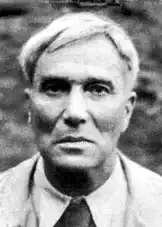
Boris Pasternak
Imitators
Imitators
A boat came in; the cliff was baked;
The noisy boat-chain fell and clanked on
The sand-an iron rattle-snake,
A rattling rust among the plankton.
And two got out; and from the cliff
I felt like calling down, 'Forgive me,
But would you kindly throw yourselves
Apart or else into the river?
Your miming is without a fault-
Of course the seeker finds the fancied-
But stop this playing with the boat!
Your model on the cliff resents it.'
A boat came in; the cliff was baked;
The noisy boat-chain fell and clanked on
The sand-an iron rattle-snake,
A rattling rust among the plankton.
And two got out; and from the cliff
I felt like calling down, 'Forgive me,
But would you kindly throw yourselves
Apart or else into the river?
Your miming is without a fault-
Of course the seeker finds the fancied-
But stop this playing with the boat!
Your model on the cliff resents it.'
527
Boris Pasternak
Change
Change
I used to glorify the poor,
Not simply lofty views expressing:
Their lives alone, I felt, were true,
Devoid of pomp and window-dressing.
No stranger to the manor house,
Its finery and lordly tenor,
I was a friend of down-and-outs,
And shunned the idly sponging manner.
For choosing friendship in the ranks
Of working people, though no rebel,
I had the honour to be stamped
As also one among the rabble.
The state of basements, unadorned,
Of attics with no frills or curtains
Was tangible without pretence
And full of substance, weighty, certain.
And I went bad when rot defaced
Our time, and life became infested,
When grief was censured as disgrace
And all played optimists and yes-men.
My faith in those who seemed my friends
Was broken and our ties were sundered.
I, too, lost Man, the Human, since
He had been lost by all and sundry.
I used to glorify the poor,
Not simply lofty views expressing:
Their lives alone, I felt, were true,
Devoid of pomp and window-dressing.
No stranger to the manor house,
Its finery and lordly tenor,
I was a friend of down-and-outs,
And shunned the idly sponging manner.
For choosing friendship in the ranks
Of working people, though no rebel,
I had the honour to be stamped
As also one among the rabble.
The state of basements, unadorned,
Of attics with no frills or curtains
Was tangible without pretence
And full of substance, weighty, certain.
And I went bad when rot defaced
Our time, and life became infested,
When grief was censured as disgrace
And all played optimists and yes-men.
My faith in those who seemed my friends
Was broken and our ties were sundered.
I, too, lost Man, the Human, since
He had been lost by all and sundry.
600
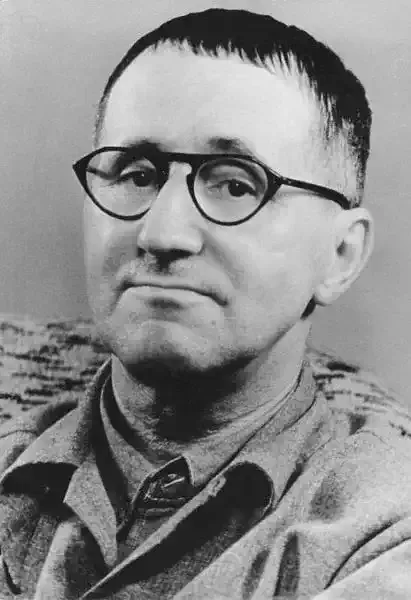
Bertolt Brecht
Questions
Questions
Write me what you're wearing! Is it warm?
Write me how you lie! Do you lie there softly?
Write me how you look! Is it still the same?
Write me what you're missing! Is it my arm?
Write me how you are! Have you been spared?
Write me what they're doing! Do you have enough courage?
Write me what you're doing! Is it good?
Write me, who are you thinking of? Is it me?
Freely, I've given you only my questions.
And I hear the answers, how they fall.
When you're tired, I can't carry it for you.
If you're hungry, I have nothing for you to eat.
And so now I leave the world
No longer there, as if I've forgotten you.
Write me what you're wearing! Is it warm?
Write me how you lie! Do you lie there softly?
Write me how you look! Is it still the same?
Write me what you're missing! Is it my arm?
Write me how you are! Have you been spared?
Write me what they're doing! Do you have enough courage?
Write me what you're doing! Is it good?
Write me, who are you thinking of? Is it me?
Freely, I've given you only my questions.
And I hear the answers, how they fall.
When you're tired, I can't carry it for you.
If you're hungry, I have nothing for you to eat.
And so now I leave the world
No longer there, as if I've forgotten you.
554
Bertolt Brecht
Radio Poem
Radio Poem
You little box, held to me escaping
So that your valves should not break
Carried from house to house to ship from sail to train,
So that my enemies might go on talking to me,
Near my bed, to my pain
The last thing at night, the first thing in the morning,
Of their victories and of my cares,
Promise me not to go silent all of a sudden.
You little box, held to me escaping
So that your valves should not break
Carried from house to house to ship from sail to train,
So that my enemies might go on talking to me,
Near my bed, to my pain
The last thing at night, the first thing in the morning,
Of their victories and of my cares,
Promise me not to go silent all of a sudden.
618
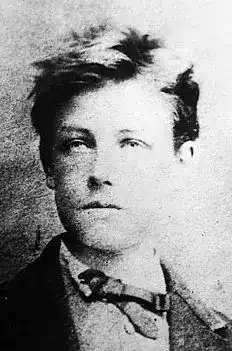
Arthur Rimbaud
Stolen Heart
Stolen Heart
My sad heart slobbers at the poop
my heart covered with tobacco-spit
They spew streams of soup at it
My sad heart drools at the poop
Under the jeerings of the soldiers
who break out laughing
my sad heart drools at the poop
mt heart covered with tobacco-spit.
Ithypallic and soldierish
Their jeerings have depraved it
In the rudder you see frescoes
Ithypallic and soldierish
O, abracadabratic waves
Take my heart, let it be washed!
Ithypallic and soldierish
their jeerings have depraved it.
When they have used up their quid
How will I act, O stolen heart?
There will be Bacchic hiccups
When they have used up their quid
I will have stomach retchings
If my heart is degraded;
When they have used up their quid
How will I act, O stolen heart?
translated by Wallace Fowlie
My sad heart slobbers at the poop
my heart covered with tobacco-spit
They spew streams of soup at it
My sad heart drools at the poop
Under the jeerings of the soldiers
who break out laughing
my sad heart drools at the poop
mt heart covered with tobacco-spit.
Ithypallic and soldierish
Their jeerings have depraved it
In the rudder you see frescoes
Ithypallic and soldierish
O, abracadabratic waves
Take my heart, let it be washed!
Ithypallic and soldierish
their jeerings have depraved it.
When they have used up their quid
How will I act, O stolen heart?
There will be Bacchic hiccups
When they have used up their quid
I will have stomach retchings
If my heart is degraded;
When they have used up their quid
How will I act, O stolen heart?
translated by Wallace Fowlie
682
Arthur Rimbaud
Shame
Shame
So long as the blade has not
Cut off that brain,
That white, green and fatty parcel,
Whose steam is never fresh,
Ah ! He, should cut off his
Nose, his lips, his ears,
His belly ! And abandon
But no, truly, I believe that so long as
The blade to his head,
And the stone to his side,
And the flame to his guts
Have not done execution, the tiresome
Child, the so stupid animal,
Must never for an instant cease
To cheat and betray
And like a Rocky Mountain cat ;
To make all places stink !
But still when he dies,
O my God !
May there rise up some prayer !
So long as the blade has not
Cut off that brain,
That white, green and fatty parcel,
Whose steam is never fresh,
Ah ! He, should cut off his
Nose, his lips, his ears,
His belly ! And abandon
But no, truly, I believe that so long as
The blade to his head,
And the stone to his side,
And the flame to his guts
Have not done execution, the tiresome
Child, the so stupid animal,
Must never for an instant cease
To cheat and betray
And like a Rocky Mountain cat ;
To make all places stink !
But still when he dies,
O my God !
May there rise up some prayer !
637

Anonymous
The Queen's Marie
The Queen's Marie
MARIE HAMILTON 's to the kirk gane,
Wi' ribbons in her hair;
The King thought mair o' Marie Hamilton
Than ony that were there.
Marie Hamilton 's to the kirk gane
Wi' ribbons on her breast;
The King thought mair o' Marie Hamilton
Than he listen'd to the priest.
Marie Hamilton 's to the kirk gane,
Wi' gloves upon her hands;
The King thought mair o' Marie Hamilton
Than the Queen and a' her lands.
She hadna been about the King's court
A month, but barely one,
Till she was beloved by a' the King's court
And the King the only man.
She hadna been about the King's court
A month, but barely three,
Till frae the King's court Marie Hamilton,
Marie Hamilton durstna be.
The King is to the Abbey gane,
To pu' the Abbey tree,
To scale the babe frae Marie's heart;
But the thing it wadna be.
O she has row'd it in her apron,
And set it on the sea--
'Gae sink ye or swim ye, bonny babe,
Ye'se get nae mair o' me.'
Word is to the kitchen gane,
And word is to the ha',
And word is to the noble room
Amang the ladies a',
That Marie Hamilton 's brought to bed,
And the bonny babe 's miss'd and awa'.
Scarcely had she lain down again,
And scarcely fa'en asleep,
When up and started our gude Queen
Just at her bed-feet;
Saying--'Marie Hamilton, where 's your babe?
For I am sure I heard it greet.'
'O no, O no, my noble Queen!
Think no sic thing to be;
'Twas but a stitch into my side,
And sair it troubles me!'
'Get up, get up, Marie Hamilton:
Get up and follow me;
For I am going to Edinburgh town,
A rich wedding for to see.'
O slowly, slowly rase she up,
And slowly put she on;
And slowly rade she out the way
Wi' mony a weary groan.
The Queen was clad in scarlet,
Her merry maids all in green;
And every town that they cam to,
They took Marie for the Queen.
'Ride hooly, hooly, gentlemen,
Ride hooly now wi' me!
For never, I am sure, a wearier burd
Rade in your companie.'--
But little wist Marie Hamilton,
When she rade on the brown,
That she was gaen to Edinburgh town,
And a' to be put down.
'Why weep ye so, ye burgess wives,
Why look ye so on me?
O I am going to Edinburgh town,
A rich wedding to see.'
When she gaed up the tolbooth stairs,
The corks frae her heels did flee;
And lang or e'er she cam down again,
She was condemn'd to die.
When she cam to the Netherbow port,
She laugh'd loud laughters three;
But when she came to the gallows foot
The tears blinded her e'e.
'Yestreen the Queen had four Maries,
The night she'll hae but three;
There was Marie Seaton, and Marie Beaton,
And Marie Carmichael, and me.
'O often have I dress'd my Queen
And put gowd upon her hair;
But now I've gotten for my reward
The gallows to be my share.
'Often have I dress'd my Queen
And often made her bed;
But now I've gotten for my reward
The gallows tree to tread.
'I charge ye all, ye mariners,
When ye sail owre the faem,
Let neither my father nor mother get wit
But that I'm coming hame.
'I charge ye all, ye mariners,
That sail upon the sea,
That neither my father nor mother get wit
The dog's death I'm to die.
'For if my father and mother got wit,
And my bold brethren three,
O mickle wad be the gude red blude
This day wad be spilt for me!
'O little did my mother ken,
The day she cradled me,
The lands I was to travel in
Or the death I was to die!
MARIE HAMILTON 's to the kirk gane,
Wi' ribbons in her hair;
The King thought mair o' Marie Hamilton
Than ony that were there.
Marie Hamilton 's to the kirk gane
Wi' ribbons on her breast;
The King thought mair o' Marie Hamilton
Than he listen'd to the priest.
Marie Hamilton 's to the kirk gane,
Wi' gloves upon her hands;
The King thought mair o' Marie Hamilton
Than the Queen and a' her lands.
She hadna been about the King's court
A month, but barely one,
Till she was beloved by a' the King's court
And the King the only man.
She hadna been about the King's court
A month, but barely three,
Till frae the King's court Marie Hamilton,
Marie Hamilton durstna be.
The King is to the Abbey gane,
To pu' the Abbey tree,
To scale the babe frae Marie's heart;
But the thing it wadna be.
O she has row'd it in her apron,
And set it on the sea--
'Gae sink ye or swim ye, bonny babe,
Ye'se get nae mair o' me.'
Word is to the kitchen gane,
And word is to the ha',
And word is to the noble room
Amang the ladies a',
That Marie Hamilton 's brought to bed,
And the bonny babe 's miss'd and awa'.
Scarcely had she lain down again,
And scarcely fa'en asleep,
When up and started our gude Queen
Just at her bed-feet;
Saying--'Marie Hamilton, where 's your babe?
For I am sure I heard it greet.'
'O no, O no, my noble Queen!
Think no sic thing to be;
'Twas but a stitch into my side,
And sair it troubles me!'
'Get up, get up, Marie Hamilton:
Get up and follow me;
For I am going to Edinburgh town,
A rich wedding for to see.'
O slowly, slowly rase she up,
And slowly put she on;
And slowly rade she out the way
Wi' mony a weary groan.
The Queen was clad in scarlet,
Her merry maids all in green;
And every town that they cam to,
They took Marie for the Queen.
'Ride hooly, hooly, gentlemen,
Ride hooly now wi' me!
For never, I am sure, a wearier burd
Rade in your companie.'--
But little wist Marie Hamilton,
When she rade on the brown,
That she was gaen to Edinburgh town,
And a' to be put down.
'Why weep ye so, ye burgess wives,
Why look ye so on me?
O I am going to Edinburgh town,
A rich wedding to see.'
When she gaed up the tolbooth stairs,
The corks frae her heels did flee;
And lang or e'er she cam down again,
She was condemn'd to die.
When she cam to the Netherbow port,
She laugh'd loud laughters three;
But when she came to the gallows foot
The tears blinded her e'e.
'Yestreen the Queen had four Maries,
The night she'll hae but three;
There was Marie Seaton, and Marie Beaton,
And Marie Carmichael, and me.
'O often have I dress'd my Queen
And put gowd upon her hair;
But now I've gotten for my reward
The gallows to be my share.
'Often have I dress'd my Queen
And often made her bed;
But now I've gotten for my reward
The gallows tree to tread.
'I charge ye all, ye mariners,
When ye sail owre the faem,
Let neither my father nor mother get wit
But that I'm coming hame.
'I charge ye all, ye mariners,
That sail upon the sea,
That neither my father nor mother get wit
The dog's death I'm to die.
'For if my father and mother got wit,
And my bold brethren three,
O mickle wad be the gude red blude
This day wad be spilt for me!
'O little did my mother ken,
The day she cradled me,
The lands I was to travel in
Or the death I was to die!
227
Anonymous
The Lass of Lochroyan
The Lass of Lochroyan
'O WHA will shoe my bonny foot?
And wha will glove my hand?
And wha will bind my middle jimp
Wi' a lang, lang linen band?
'O wha will kame my yellow hair,
With a haw bayberry kame?
And wha will be my babe's father
Till Gregory come hame?'
'They father, he will shoe thy foot,
Thy brother will glove thy hand,
Thy mither will bind thy middle jimp
Wi' a lang, lang linen band.
'Thy sister will kame thy yellow hair,
Wi' a haw bayberry kame;
The Almighty will be thy babe's father
Till Gregory come hame.'
'And wha will build a bonny ship,
And set it on the sea?
For I will go to seek my love,
My ain love Gregory.'
Up then spak her father dear,
A wafu' man was he;
'And I will build a bonny ship,
And set her on the sea.
'And I will build a bonny ship,
And set her on the sea,
And ye sal gae and seek your love,
Your ain love Gregory.'
Then he 's gart build a bonny ship,
And set it on the sea,
Wi' four-and-twenty mariners,
To bear her company.
O he 's gart build a bonny ship,
To sail on the salt sea;
The mast was o' the beaten gold,
The sails o' cramoisie.
The sides were o' the gude stout aik,
The deck o' mountain pine,
The anchor o' the silver shene,
The ropes o' silken twine.
She hadna sail'd but twenty leagues,
But twenty leagues and three,
When she met wi' a rank reiver,
And a' his companie.
'Now are ye Queen of Heaven hie,
Come to pardon a' our sin?
Or are ye Mary Magdalane,
Was born at Bethlam?'
'I'm no the Queen of Heaven hie,
Come to pardon ye your sin,
Nor am I Mary Magdalane,
Was born in Bethlam.
'But I'm the lass of Lochroyan,
That 's sailing on the sea
To see if I can find my love,
My ain love Gregory.'
'O see na ye yon bonny bower?
It 's a' covered owre wi' tin;
When thou hast sail'd it round about,
Lord Gregory is within.'
And when she saw the stately tower,
Shining both clear and bright,
Whilk stood aboon the jawing wave,
Built on a rock of height,
Says, 'Row the boat, my mariners,
And bring me to the land,
For yonder I see my love's castle,
Close by the salt sea strand.'
She sail'd it round, and sail'd it round,
And loud and loud cried she,
'Now break, now break your fairy charms,
And set my true-love free.'
She 's ta'en her young son in her arms,
And to the door she 's gane,
And long she knock'd, and sair she ca'd.
But answer got she nane.
'O open, open, Gregory!
O open! if ye be within;
For here 's the lass of Lochroyan,
Come far fra kith and kin.
'O open the door, Lord Gregory!
O open and let me in!
The wind blows loud and cauld, Gregory,
The rain drops fra my chin.
'The shoe is frozen to my foot,
The glove unto my hand,
The wet drops fra my yellow hair,
Na langer dow I stand.'
O up then spak his ill mither,
--An ill death may she die!
'Ye're no the lass of Lochroyan,
She 's far out-owre the sea.
'Awa', awa', ye ill woman,
Ye're no come here for gude;
Ye're but some witch or wil' warlock,
Or mermaid o' the flood.'
'I am neither witch nor wil' warlock,
Nor mermaid o' the sea,
But I am Annie of Lochroyan,
O open the door to me!'
'Gin ye be Annie of Lochroyan,
As I trow thou binna she,
Now tell me of some love-tokens
That pass'd 'tween thee and me.'
'O dinna ye mind, love Gregory,
As we sat at the wine,
We changed the rings frae our fingers?
And I can shew thee thine.
'O yours was gude, and gude enough,
But ay the best was mine,
For yours was o' the gude red gowd,
But mine o' the diamond fine.
'Yours was o' the gude red gowd,
Mine o' the diamond fine;
Mine was o' the purest troth,
But thine was false within.'
'If ye be the lass of Lochroyan,
As I kenna thou be,
Tell me some mair o' the love-tokens
Pass'd between thee and me.'
'And dinna ye mind, love Gregory!
As we sat on the hill,
Thou twin'd me o' my maidenheid,
Right sair against my will?
'Now open the door, love Gregory!
Open the door! I pray;
For thy young son is in my arms,
And will be dead ere day.'
'Ye lie, ye lie, ye ill woman,
So loud I hear ye lie;
For Annie of the Lochroyan
Is far out-owre the sea.'
Fair Annie turn'd her round about:
'Weel, sine that it be sae,
May ne'er woman that has borne a son
Hae a heart sae fu' o' wae!
'Tak down, tak down that mast o' gowd,
Set up a mast of tree;
It disna become a forsaken lady
To sail sae royallie.'
When the cock has crawn, and the day did dawn,
And the sun began to peep,
Up than raise Lord Gregory,
And sair, sair did he weep.
'O I hae dream'd a dream, mither,
I wish it may bring good!
That the bonny lass of Lochroyan
At my bower window stood.
'O I hae dream'd a dream, mither,
The thought o't gars me greet!
That fair Annie of Lochroyan
Lay dead at my bed-feet.'
'Gin it be for Annie of Lochroyan
That ye mak a' this mane,
She stood last night at your bower-door,
But I hae sent her hame.'
'O wae betide ye, ill woman,
An ill death may ye die!
That wadna open the door yoursell
Nor yet wad waken me.'
O he 's gane down to yon shore-side,
As fast as he could dree,
And there he saw fair Annie's bark
A rowing owre the sea.
'O Annie, Annie,' loud he cried,
'O Annie, O Annie, bide!'
But ay the mair he cried 'Annie,'
The braider grew the tide.
'O Annie, Annie, dear Annie,
Dear Annie, speak to me!'
But ay the louder he gan call,
The louder roar'd the sea.
The wind blew loud, the waves rose hie
And dash'd the boat on shore;
Fair Annie's corpse was in the faem,
The babe rose never more.
Lord Gregory tore his gowden locks
And made a wafu' moan;
Fair Annie's corpse lay at his feet,
His bonny son was gone.
'O cherry, cherry was her cheek,
And gowden was her hair,
And coral, coral was her lips,
Nane might with her compare.'
Then first he kiss'd her pale, pale cheek,
And syne he kiss'd her chin,
And syne he kiss'd her wane, wane lips,
There was na breath within.
'O wae betide my ill mither,
An ill death may she die!
She turn'd my true-love frae my door,
Who cam so far to me.
'O wae betide my ill mither,
An ill death may she die!
She has no been the deid o' ane,
But she 's been the deid of three.'
Then he 's ta'en out a little dart,
Hung low down by his gore,
He thrust it through and through his heart,
And words spak never more.
'O WHA will shoe my bonny foot?
And wha will glove my hand?
And wha will bind my middle jimp
Wi' a lang, lang linen band?
'O wha will kame my yellow hair,
With a haw bayberry kame?
And wha will be my babe's father
Till Gregory come hame?'
'They father, he will shoe thy foot,
Thy brother will glove thy hand,
Thy mither will bind thy middle jimp
Wi' a lang, lang linen band.
'Thy sister will kame thy yellow hair,
Wi' a haw bayberry kame;
The Almighty will be thy babe's father
Till Gregory come hame.'
'And wha will build a bonny ship,
And set it on the sea?
For I will go to seek my love,
My ain love Gregory.'
Up then spak her father dear,
A wafu' man was he;
'And I will build a bonny ship,
And set her on the sea.
'And I will build a bonny ship,
And set her on the sea,
And ye sal gae and seek your love,
Your ain love Gregory.'
Then he 's gart build a bonny ship,
And set it on the sea,
Wi' four-and-twenty mariners,
To bear her company.
O he 's gart build a bonny ship,
To sail on the salt sea;
The mast was o' the beaten gold,
The sails o' cramoisie.
The sides were o' the gude stout aik,
The deck o' mountain pine,
The anchor o' the silver shene,
The ropes o' silken twine.
She hadna sail'd but twenty leagues,
But twenty leagues and three,
When she met wi' a rank reiver,
And a' his companie.
'Now are ye Queen of Heaven hie,
Come to pardon a' our sin?
Or are ye Mary Magdalane,
Was born at Bethlam?'
'I'm no the Queen of Heaven hie,
Come to pardon ye your sin,
Nor am I Mary Magdalane,
Was born in Bethlam.
'But I'm the lass of Lochroyan,
That 's sailing on the sea
To see if I can find my love,
My ain love Gregory.'
'O see na ye yon bonny bower?
It 's a' covered owre wi' tin;
When thou hast sail'd it round about,
Lord Gregory is within.'
And when she saw the stately tower,
Shining both clear and bright,
Whilk stood aboon the jawing wave,
Built on a rock of height,
Says, 'Row the boat, my mariners,
And bring me to the land,
For yonder I see my love's castle,
Close by the salt sea strand.'
She sail'd it round, and sail'd it round,
And loud and loud cried she,
'Now break, now break your fairy charms,
And set my true-love free.'
She 's ta'en her young son in her arms,
And to the door she 's gane,
And long she knock'd, and sair she ca'd.
But answer got she nane.
'O open, open, Gregory!
O open! if ye be within;
For here 's the lass of Lochroyan,
Come far fra kith and kin.
'O open the door, Lord Gregory!
O open and let me in!
The wind blows loud and cauld, Gregory,
The rain drops fra my chin.
'The shoe is frozen to my foot,
The glove unto my hand,
The wet drops fra my yellow hair,
Na langer dow I stand.'
O up then spak his ill mither,
--An ill death may she die!
'Ye're no the lass of Lochroyan,
She 's far out-owre the sea.
'Awa', awa', ye ill woman,
Ye're no come here for gude;
Ye're but some witch or wil' warlock,
Or mermaid o' the flood.'
'I am neither witch nor wil' warlock,
Nor mermaid o' the sea,
But I am Annie of Lochroyan,
O open the door to me!'
'Gin ye be Annie of Lochroyan,
As I trow thou binna she,
Now tell me of some love-tokens
That pass'd 'tween thee and me.'
'O dinna ye mind, love Gregory,
As we sat at the wine,
We changed the rings frae our fingers?
And I can shew thee thine.
'O yours was gude, and gude enough,
But ay the best was mine,
For yours was o' the gude red gowd,
But mine o' the diamond fine.
'Yours was o' the gude red gowd,
Mine o' the diamond fine;
Mine was o' the purest troth,
But thine was false within.'
'If ye be the lass of Lochroyan,
As I kenna thou be,
Tell me some mair o' the love-tokens
Pass'd between thee and me.'
'And dinna ye mind, love Gregory!
As we sat on the hill,
Thou twin'd me o' my maidenheid,
Right sair against my will?
'Now open the door, love Gregory!
Open the door! I pray;
For thy young son is in my arms,
And will be dead ere day.'
'Ye lie, ye lie, ye ill woman,
So loud I hear ye lie;
For Annie of the Lochroyan
Is far out-owre the sea.'
Fair Annie turn'd her round about:
'Weel, sine that it be sae,
May ne'er woman that has borne a son
Hae a heart sae fu' o' wae!
'Tak down, tak down that mast o' gowd,
Set up a mast of tree;
It disna become a forsaken lady
To sail sae royallie.'
When the cock has crawn, and the day did dawn,
And the sun began to peep,
Up than raise Lord Gregory,
And sair, sair did he weep.
'O I hae dream'd a dream, mither,
I wish it may bring good!
That the bonny lass of Lochroyan
At my bower window stood.
'O I hae dream'd a dream, mither,
The thought o't gars me greet!
That fair Annie of Lochroyan
Lay dead at my bed-feet.'
'Gin it be for Annie of Lochroyan
That ye mak a' this mane,
She stood last night at your bower-door,
But I hae sent her hame.'
'O wae betide ye, ill woman,
An ill death may ye die!
That wadna open the door yoursell
Nor yet wad waken me.'
O he 's gane down to yon shore-side,
As fast as he could dree,
And there he saw fair Annie's bark
A rowing owre the sea.
'O Annie, Annie,' loud he cried,
'O Annie, O Annie, bide!'
But ay the mair he cried 'Annie,'
The braider grew the tide.
'O Annie, Annie, dear Annie,
Dear Annie, speak to me!'
But ay the louder he gan call,
The louder roar'd the sea.
The wind blew loud, the waves rose hie
And dash'd the boat on shore;
Fair Annie's corpse was in the faem,
The babe rose never more.
Lord Gregory tore his gowden locks
And made a wafu' moan;
Fair Annie's corpse lay at his feet,
His bonny son was gone.
'O cherry, cherry was her cheek,
And gowden was her hair,
And coral, coral was her lips,
Nane might with her compare.'
Then first he kiss'd her pale, pale cheek,
And syne he kiss'd her chin,
And syne he kiss'd her wane, wane lips,
There was na breath within.
'O wae betide my ill mither,
An ill death may she die!
She turn'd my true-love frae my door,
Who cam so far to me.
'O wae betide my ill mither,
An ill death may she die!
She has no been the deid o' ane,
But she 's been the deid of three.'
Then he 's ta'en out a little dart,
Hung low down by his gore,
He thrust it through and through his heart,
And words spak never more.
235
Anonymous
The Bonny Earl of Murray
The Bonny Earl of Murray
YE Highlands and ye Lawlands,
O where hae ye been?
They hae slain the Earl of Murray,
And hae laid him on the green.
Now wae be to thee, Huntley!
And whairfore did ye sae!
I bade you bring him wi' you,
But forbade you him to slay.
He was a braw gallant,
And he rid at the ring;
Ana the bonny Earl of Murray,
O he might hae been a king!
He was a braw gallant,
And he play'd at the ba';
And the bonny Earl of Murray
Was the flower amang them a'!
He was a braw gallant,
And he play'd at the gluve;
And the bonny Earl of Murray,
O he was the Queen's luve!
O lang will his Lady
Look owre the Castle Downe,
Ere she see the Earl of Murray
Come sounding through the town!
YE Highlands and ye Lawlands,
O where hae ye been?
They hae slain the Earl of Murray,
And hae laid him on the green.
Now wae be to thee, Huntley!
And whairfore did ye sae!
I bade you bring him wi' you,
But forbade you him to slay.
He was a braw gallant,
And he rid at the ring;
Ana the bonny Earl of Murray,
O he might hae been a king!
He was a braw gallant,
And he play'd at the ba';
And the bonny Earl of Murray
Was the flower amang them a'!
He was a braw gallant,
And he play'd at the gluve;
And the bonny Earl of Murray,
O he was the Queen's luve!
O lang will his Lady
Look owre the Castle Downe,
Ere she see the Earl of Murray
Come sounding through the town!
246
Anonymous
Edward, Edward
Edward, Edward
'WHY does your brand sae drop wi' blude,
Edward, Edward?
Why does your brand sae drop wi' blude,
And why sae sad gang ye, O?'
'O I hae kill'd my hawk sae gude,
Mither, mither;
O I hae kill'd my hawk sae gude,
And I had nae mair but he, O.'
'Your hawk's blude was never sae red,
Edward, Edward;
Your hawk's blude was never sae red,
My dear son, I tell thee, O.'
'O I hae kill'd my red-roan steed,
Mither, mither;
O I hae kill'd my red-roan steed,
That erst was sae fair and free, O.'
'Your steed was auld, and ye hae got mair,
Edward, Edward;
Your steed was auld, and ye hae got mair;
Some other dule ye dree, O.'
'O I hae kill'd my father dear,
Mither, mither;
O I hae kill'd my father dear,
Alas, and wae is me, O!'
'And whatten penance will ye dree for that,
Edward, Edward?
Whatten penance will ye dree for that?
My dear son, now tell me, O.'
'I'll set my feet in yonder boat,
Mither, mither;
I'll set my feet in yonder boat,
And I'll fare over the sea, O.'
'And what will ye do wi' your tow'rs and your ha',
Edward, Edward?
And what will ye do wi' your tow'rs and your ha',
That were sae fair to see, O?'
'I'll let them stand till they doun fa',
Mither, mither;
I'll let them stand till they doun fa',
For here never mair maun I be, O.'
'And what will ye leave to your bairns and your wife,
Edward, Edward?
And what will ye leave to your bairns and your wife,
When ye gang owre the sea, O?'
'The warld's room: let them beg through life,
Mither, mither;
The warld's room: let them beg through life;
For them never mair will I see, O.'
'And what will ye leave to your ain mither dear,
Edward, Edward?
And what will ye leave to your ain mither dear,
My dear son, now tell me, O?'
'The curse of hell frae me sall ye bear,
Mither, mither;
The curse of hell frae me sall ye bear:
Sic counsels ye gave to me, O!'
'WHY does your brand sae drop wi' blude,
Edward, Edward?
Why does your brand sae drop wi' blude,
And why sae sad gang ye, O?'
'O I hae kill'd my hawk sae gude,
Mither, mither;
O I hae kill'd my hawk sae gude,
And I had nae mair but he, O.'
'Your hawk's blude was never sae red,
Edward, Edward;
Your hawk's blude was never sae red,
My dear son, I tell thee, O.'
'O I hae kill'd my red-roan steed,
Mither, mither;
O I hae kill'd my red-roan steed,
That erst was sae fair and free, O.'
'Your steed was auld, and ye hae got mair,
Edward, Edward;
Your steed was auld, and ye hae got mair;
Some other dule ye dree, O.'
'O I hae kill'd my father dear,
Mither, mither;
O I hae kill'd my father dear,
Alas, and wae is me, O!'
'And whatten penance will ye dree for that,
Edward, Edward?
Whatten penance will ye dree for that?
My dear son, now tell me, O.'
'I'll set my feet in yonder boat,
Mither, mither;
I'll set my feet in yonder boat,
And I'll fare over the sea, O.'
'And what will ye do wi' your tow'rs and your ha',
Edward, Edward?
And what will ye do wi' your tow'rs and your ha',
That were sae fair to see, O?'
'I'll let them stand till they doun fa',
Mither, mither;
I'll let them stand till they doun fa',
For here never mair maun I be, O.'
'And what will ye leave to your bairns and your wife,
Edward, Edward?
And what will ye leave to your bairns and your wife,
When ye gang owre the sea, O?'
'The warld's room: let them beg through life,
Mither, mither;
The warld's room: let them beg through life;
For them never mair will I see, O.'
'And what will ye leave to your ain mither dear,
Edward, Edward?
And what will ye leave to your ain mither dear,
My dear son, now tell me, O?'
'The curse of hell frae me sall ye bear,
Mither, mither;
The curse of hell frae me sall ye bear:
Sic counsels ye gave to me, O!'
289
Anonymous
My bag and me they sundered us,
My bag and me they sundered us,
’Twas stuffed from string to sauleen,
My bag of bags they sundered us!
Yourself and I, mo stóreen,
At every hour of night and day,
Through road and lane and bohreen
Without complaint we made our way,
Till one sore day a carman
In pity took us from the road,
And faced us towards Dungarvan
Where mortal sin hath firm abode.
An allalu mo wauleen,
Without a hole or rent in it,
’Twas stuffed from string to sauleen,
My half-year’s rent was pent in it!
My curses attend Dungarvan,
Her boats, her borough, and her fish,
May every woe that mars man
Come dancing down upon her dish!
For all the rogues behind you,
From Slaney’s bank to Shannon’s tide,
Are but poor scholars, mind you,
To the rogues you’d meet in Abbeyside!
An allalu mo wauleen,
My little bag I treasured it,
’Twas stuffed from string to sauleen,
A thousand times I measured it!
’Twas stuffed from string to sauleen,
My bag of bags they sundered us!
Yourself and I, mo stóreen,
At every hour of night and day,
Through road and lane and bohreen
Without complaint we made our way,
Till one sore day a carman
In pity took us from the road,
And faced us towards Dungarvan
Where mortal sin hath firm abode.
An allalu mo wauleen,
Without a hole or rent in it,
’Twas stuffed from string to sauleen,
My half-year’s rent was pent in it!
My curses attend Dungarvan,
Her boats, her borough, and her fish,
May every woe that mars man
Come dancing down upon her dish!
For all the rogues behind you,
From Slaney’s bank to Shannon’s tide,
Are but poor scholars, mind you,
To the rogues you’d meet in Abbeyside!
An allalu mo wauleen,
My little bag I treasured it,
’Twas stuffed from string to sauleen,
A thousand times I measured it!
191
Anonymous
The Braes o'Yarrow
The Braes o'Yarrow
Late at e'en, drinking the wine,
And ere they paid the lawing,
They set a combat them between,
To fight it in the dawing.
'What though ye be my sister's lord
We'll cross our swords to-morrow.'
'What though my wife your sister be,
I'll meet ye then on Yarrow.'
'O stay at hame, my ain gude lord!
O stay, my ain dear marrow!
My cruel brither will you betray
On the dowie banks of Yarrow.'
'O fare ye weel, my lady dear!
And put aside your sorrow;
For if I gae, I'll sune return
Frae the bonny banks o' Yarrow.'
She kiss'd his cheek, she kaimed his hair,
As oft she'd done before, O;
She belted him with his gude brand,
And he's awa' to Yarrow.
When he gaed up the Tennies bank,
As he gaed mony a morrow,
Nine armed men lay in a den
On the dowie braes o' Yarrow.
'O come ye here to hunt or hawk
The bonny Forest thorough?
Or come ye here to wield your brand
Upon the banks o' Yarrow?'
'I come not here to hunt or hawk
As oft I've dune before, O,
But I come here to wield my brand
Upon the banks o' Yarrow.
'If ye attack me nine to ane,
That God may send ye sorrow!--
Yet will I fight while stand I may,
On the bonny banks o' Yarrow.'
Two has he hurt, and three has slain,
On the bloody braes o' Yarrow;
But the stubborn knight crept in behind,
And pierced his body thorough.
'Gae hame, gae hame, you brither John,
And tell your sister sorrow,--
To come and lift her leafu' lord
On the dowie banks o' Yarrow.'
Her brither John gaed ower the hill,
As oft he'd dune before, O;
There he met his sister dear,
Cam' rinnin' fast to Yarrow.
'I dreamt a dream last night,' she says,
'I wish it binna sorrow;
I dreamt I pu'd the heather green
Wi' my true love on Yarrow.'
'I'll read your dream, sister,' he says,
'I'll read it into sorrow;
Ye're bidden go take up your love,
He's sleeping sound on Yarrow.'
She's torn the ribbons frae her head
That were baith braid and narrow;
She's kilted up her lang claithing,
And she's awa' to Yarrow.
She's ta'en him in her arms twa,
And gi'en him kisses thorough;
She sought to bind his many wounds,
But he lay dead on Yarrow.
'O haud your tongue,' her father says,
'And let be a' your sorrow;
I'll wed you to a better lord
Than him you lost on Yarrow.'
'O haud your tongue, father,' she says,
'Far warse ye make my sorrow;
A better lord could never be
Than him that lies on Yarrow.'
She kiss'd his lips, she kaimed his hair,
As aft she'd dune before, O;
And there with grief her heart did break
Upon the banks o' Yarrow.
Late at e'en, drinking the wine,
And ere they paid the lawing,
They set a combat them between,
To fight it in the dawing.
'What though ye be my sister's lord
We'll cross our swords to-morrow.'
'What though my wife your sister be,
I'll meet ye then on Yarrow.'
'O stay at hame, my ain gude lord!
O stay, my ain dear marrow!
My cruel brither will you betray
On the dowie banks of Yarrow.'
'O fare ye weel, my lady dear!
And put aside your sorrow;
For if I gae, I'll sune return
Frae the bonny banks o' Yarrow.'
She kiss'd his cheek, she kaimed his hair,
As oft she'd done before, O;
She belted him with his gude brand,
And he's awa' to Yarrow.
When he gaed up the Tennies bank,
As he gaed mony a morrow,
Nine armed men lay in a den
On the dowie braes o' Yarrow.
'O come ye here to hunt or hawk
The bonny Forest thorough?
Or come ye here to wield your brand
Upon the banks o' Yarrow?'
'I come not here to hunt or hawk
As oft I've dune before, O,
But I come here to wield my brand
Upon the banks o' Yarrow.
'If ye attack me nine to ane,
That God may send ye sorrow!--
Yet will I fight while stand I may,
On the bonny banks o' Yarrow.'
Two has he hurt, and three has slain,
On the bloody braes o' Yarrow;
But the stubborn knight crept in behind,
And pierced his body thorough.
'Gae hame, gae hame, you brither John,
And tell your sister sorrow,--
To come and lift her leafu' lord
On the dowie banks o' Yarrow.'
Her brither John gaed ower the hill,
As oft he'd dune before, O;
There he met his sister dear,
Cam' rinnin' fast to Yarrow.
'I dreamt a dream last night,' she says,
'I wish it binna sorrow;
I dreamt I pu'd the heather green
Wi' my true love on Yarrow.'
'I'll read your dream, sister,' he says,
'I'll read it into sorrow;
Ye're bidden go take up your love,
He's sleeping sound on Yarrow.'
She's torn the ribbons frae her head
That were baith braid and narrow;
She's kilted up her lang claithing,
And she's awa' to Yarrow.
She's ta'en him in her arms twa,
And gi'en him kisses thorough;
She sought to bind his many wounds,
But he lay dead on Yarrow.
'O haud your tongue,' her father says,
'And let be a' your sorrow;
I'll wed you to a better lord
Than him you lost on Yarrow.'
'O haud your tongue, father,' she says,
'Far warse ye make my sorrow;
A better lord could never be
Than him that lies on Yarrow.'
She kiss'd his lips, she kaimed his hair,
As aft she'd dune before, O;
And there with grief her heart did break
Upon the banks o' Yarrow.
322
Anonymous
Frankie and Johnnie
Frankie and Johnnie
Frankie and Johnnie were lovers,
O, my Gawd, how they could love,
They swore to be true to each other,
As true as the stars above;
He was her man, but he done her wrong.
Frankie was a good woman,
As everybody knows,
Gave her man a hundred dollars,
To get him a suit of clothes;
He was her man, but he done her wrong.
Frankie and Johnnie went walking,
Johnnie in his bran' new suit,
"Oh, my Gawd," said Frankie,
"But don't my Johnnie look cute?"
He was her man, but he done her wrong.
Frankie went down to Memphis,
Went on the morning train,
Paid a hundred dollars,
Got Johnnie a watch and chain;
He was her man, but he done her wrong.
Frankie lived in a crib-house,
Crib-house with only two doors,
Gave her money to Johnnie,
He spent it on those parlour whores;
He was her man, but he done her wrong.
Frankie went down to the corner,
Went for a bucket of beer,
She said, "Oh, Mr. Bar-tender,
Has my loving Johnnie been here?
He is my man, and he's done me wrong."
"I won't make you no trouble,
I won't tell you no lie,
But I saw Johnnie an hour ago
With a girl named Nellie Bly;
He is your man, and he's doing you wrong."
Frankie went to the hock-shop,
Bought her a big forty-four,
Aimed that gun at the ceiling,
Shot a big hole in the floor;
"Now where's my man that's doing me wrong?"
Frankie went down to the hook-shop,
Looked in at a window so high,
There she saw her Johnnie,
Loving up Nellie Bly,
He was her man, but he done her wrong.
Frankie went up to the front door,
She rang the front-door bell,
Said, "Stand back, all you chippies,
Or I'll blow you all to hell;
I want my man, who's done me wrong."
Frankie went into the hook-shop,
She didn't go there for fun,
'Cause underneath her kimona
She toted that forty-four gun;
He was her man, but he done her wrong.
Frankie looked in at the keyhole,
And there before her eye,
She saw her Johnnie on the sofa,
A loving up Nellie Bly;
He was her man, but he done her wrong.
Frankie threw back her kimona,
Took out the little forty-four,
Roota-toot-toot, three times she shoot,
Right through that hardwood door;
He was her man, but he done her wrong.
Johnnie grabbed off his Stetson,
Said, "Oh, Gawd, Frankie, don't shoot!"
But she pressed hard on the trigger,
And the gun went roota-toot-toot;
He was her man, but he done her wrong.
"Roll me over easy,
Oh, roll me over slow,
Roll me over on my right side,
'Cause my left side hurts me so."
He was her man, but he done her wrong.
"Bring out your rubber-tyred buggy,
Bring out your rubber-tyred hack,
I'll take my man to the graveyard,
But I won't bring him back;
He was my man, but he done me wrong."
They brought out the rubber-tyred hearses,
They brought out the rubber-tyred hack,
Thirteen men went to the graveyard,
But only twelve came back;
He was her man, but he done her wrong.
"Bring 'round a hundred policemen,
Bring 'em around to-day,
And lock me in that jail-house,
Then throw the key away;
I shot my man, 'cause he done me wrong.
"I've saved up a little money,
I'll save up a little more,
I'll send it all to his widow,
And say it's from the girl next door;
He was my man, but he done me wrong."
Frankie went to the madame,
She fell down on her knees,
"Forgive me, Mrs. Halcome,
Forgive me, if you please;
I've killed my man, 'cause he done me wrong."
"Forgive you, Frankie darling?
Forgive you I never can.
Forgive you, Frankie darling,
For shooting your only man?
For he was your man, though he done you wrong."
Frankie went to the coffin,
Looked down at his face,
Said, "Oh, Lord, have mercy on me,
I'd like to take his place;
He was my man, but he done me wrong."
A rubber-tyred buggy,
A rubber-tyred hack,
Took poor Frankie to the jail-house
But it didn't bring her back;
He was her man, but he done her wrong.
Frankie sat in her prison,
Had no electric fan,
Told her little sister,
Never marry no sporting man;
"I had a man, but he done me wrong."
The Sheriff took Frankie to the gallows,
Hung her until she died,
They hung her for killing Johnnie,
And the undertaker waited outside;
She killed her man, 'cause he done her wrong.
Frankie and Johnnie were lovers,
O, my Gawd, how they could love,
They swore to be true to each other,
As true as the stars above;
He was her man, but he done her wrong.
Frankie was a good woman,
As everybody knows,
Gave her man a hundred dollars,
To get him a suit of clothes;
He was her man, but he done her wrong.
Frankie and Johnnie went walking,
Johnnie in his bran' new suit,
"Oh, my Gawd," said Frankie,
"But don't my Johnnie look cute?"
He was her man, but he done her wrong.
Frankie went down to Memphis,
Went on the morning train,
Paid a hundred dollars,
Got Johnnie a watch and chain;
He was her man, but he done her wrong.
Frankie lived in a crib-house,
Crib-house with only two doors,
Gave her money to Johnnie,
He spent it on those parlour whores;
He was her man, but he done her wrong.
Frankie went down to the corner,
Went for a bucket of beer,
She said, "Oh, Mr. Bar-tender,
Has my loving Johnnie been here?
He is my man, and he's done me wrong."
"I won't make you no trouble,
I won't tell you no lie,
But I saw Johnnie an hour ago
With a girl named Nellie Bly;
He is your man, and he's doing you wrong."
Frankie went to the hock-shop,
Bought her a big forty-four,
Aimed that gun at the ceiling,
Shot a big hole in the floor;
"Now where's my man that's doing me wrong?"
Frankie went down to the hook-shop,
Looked in at a window so high,
There she saw her Johnnie,
Loving up Nellie Bly,
He was her man, but he done her wrong.
Frankie went up to the front door,
She rang the front-door bell,
Said, "Stand back, all you chippies,
Or I'll blow you all to hell;
I want my man, who's done me wrong."
Frankie went into the hook-shop,
She didn't go there for fun,
'Cause underneath her kimona
She toted that forty-four gun;
He was her man, but he done her wrong.
Frankie looked in at the keyhole,
And there before her eye,
She saw her Johnnie on the sofa,
A loving up Nellie Bly;
He was her man, but he done her wrong.
Frankie threw back her kimona,
Took out the little forty-four,
Roota-toot-toot, three times she shoot,
Right through that hardwood door;
He was her man, but he done her wrong.
Johnnie grabbed off his Stetson,
Said, "Oh, Gawd, Frankie, don't shoot!"
But she pressed hard on the trigger,
And the gun went roota-toot-toot;
He was her man, but he done her wrong.
"Roll me over easy,
Oh, roll me over slow,
Roll me over on my right side,
'Cause my left side hurts me so."
He was her man, but he done her wrong.
"Bring out your rubber-tyred buggy,
Bring out your rubber-tyred hack,
I'll take my man to the graveyard,
But I won't bring him back;
He was my man, but he done me wrong."
They brought out the rubber-tyred hearses,
They brought out the rubber-tyred hack,
Thirteen men went to the graveyard,
But only twelve came back;
He was her man, but he done her wrong.
"Bring 'round a hundred policemen,
Bring 'em around to-day,
And lock me in that jail-house,
Then throw the key away;
I shot my man, 'cause he done me wrong.
"I've saved up a little money,
I'll save up a little more,
I'll send it all to his widow,
And say it's from the girl next door;
He was my man, but he done me wrong."
Frankie went to the madame,
She fell down on her knees,
"Forgive me, Mrs. Halcome,
Forgive me, if you please;
I've killed my man, 'cause he done me wrong."
"Forgive you, Frankie darling?
Forgive you I never can.
Forgive you, Frankie darling,
For shooting your only man?
For he was your man, though he done you wrong."
Frankie went to the coffin,
Looked down at his face,
Said, "Oh, Lord, have mercy on me,
I'd like to take his place;
He was my man, but he done me wrong."
A rubber-tyred buggy,
A rubber-tyred hack,
Took poor Frankie to the jail-house
But it didn't bring her back;
He was her man, but he done her wrong.
Frankie sat in her prison,
Had no electric fan,
Told her little sister,
Never marry no sporting man;
"I had a man, but he done me wrong."
The Sheriff took Frankie to the gallows,
Hung her until she died,
They hung her for killing Johnnie,
And the undertaker waited outside;
She killed her man, 'cause he done her wrong.
277
Anonymous
England
England
Oh, England!
Sick in head and sick in heart,
Sick in whole and every part:
And yet sicker thou art still
For thinking that thou art not ill.
Oh, England!
Sick in head and sick in heart,
Sick in whole and every part:
And yet sicker thou art still
For thinking that thou art not ill.
342

Anne Brontë
Verses To A Child
Verses To A Child
1
O raise those eyes to me again
And smile again so joyously,
And fear not, love; it was not pain
Nor grief that drew these tears from me;
Beloved child, thou canst not tell
The thoughts that in my bosom dwell
Whene'er I look on thee!
2
Thou knowest not that a glance of thine
Can bring back long departed years
And that thy blue eyes' magic shine
Can overflow my own with tears,
And that each feature soft and fair
And every curl of golden hair,
Some sweet remembrance bears.
3
Just then thou didst recall to me
A distant long forgotten scene,
One smile, and one sweet word from thee
Dispelled the years that rolled between;
I was a little child again,
And every after joy and pain
Seemed never to have been.
4
Tall forest trees waved over me,
To hide me from the heat of day,
And by my side a child like thee
Among the summer flowerets lay.
He was thy sire, thou merry child.
Like thee he spoke, like thee he smiled,
Like thee he used to play.
5
O those were calm and happy days,
We loved each other fondly then;
But human love too soon decays,
And ours can never bloom again.
I never thought to see the day
When Florian's friendship would decay
Like those of colder men.
6
Now, Flora, thou hast but begun
To sail on life's deceitful sea,
O do not err as I have done,
For I have trusted foolishly;
The faith of every friend I loved
I never doubted till I proved
Their heart's inconstancy.
7
'Tis mournful to look back upon
Those long departed joys and cares,
But I will weep since thou alone
Art witness to my streaming tears.
This lingering love will not depart,
I cannot banish from my heart
The friend of childish years.
8
But though thy father loves me not,
Yet I shall still be loved by thee,
And though I am by him forgot,
Say wilt thou not remember me!
I will not cause thy heart to ache;
For thy regretted father's sake
I'll love and cherish thee.
Alexandrina Zenobia
1
O raise those eyes to me again
And smile again so joyously,
And fear not, love; it was not pain
Nor grief that drew these tears from me;
Beloved child, thou canst not tell
The thoughts that in my bosom dwell
Whene'er I look on thee!
2
Thou knowest not that a glance of thine
Can bring back long departed years
And that thy blue eyes' magic shine
Can overflow my own with tears,
And that each feature soft and fair
And every curl of golden hair,
Some sweet remembrance bears.
3
Just then thou didst recall to me
A distant long forgotten scene,
One smile, and one sweet word from thee
Dispelled the years that rolled between;
I was a little child again,
And every after joy and pain
Seemed never to have been.
4
Tall forest trees waved over me,
To hide me from the heat of day,
And by my side a child like thee
Among the summer flowerets lay.
He was thy sire, thou merry child.
Like thee he spoke, like thee he smiled,
Like thee he used to play.
5
O those were calm and happy days,
We loved each other fondly then;
But human love too soon decays,
And ours can never bloom again.
I never thought to see the day
When Florian's friendship would decay
Like those of colder men.
6
Now, Flora, thou hast but begun
To sail on life's deceitful sea,
O do not err as I have done,
For I have trusted foolishly;
The faith of every friend I loved
I never doubted till I proved
Their heart's inconstancy.
7
'Tis mournful to look back upon
Those long departed joys and cares,
But I will weep since thou alone
Art witness to my streaming tears.
This lingering love will not depart,
I cannot banish from my heart
The friend of childish years.
8
But though thy father loves me not,
Yet I shall still be loved by thee,
And though I am by him forgot,
Say wilt thou not remember me!
I will not cause thy heart to ache;
For thy regretted father's sake
I'll love and cherish thee.
Alexandrina Zenobia
88
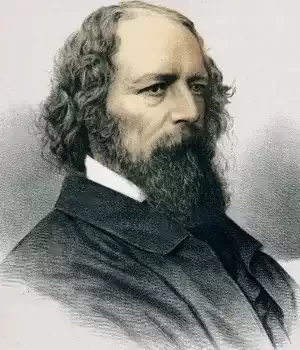
Alfred Lord Tennyson
The Ringlet
The Ringlet
'Your ringlets, your ringlets,
That look so golden-gay,
If you will give me one, but one,
To kiss it night and day,
The never chilling touch of Time
Will turn it silver-gray;
And then shall I know it is all true gold
To flame and sparkle and stream as of old.
Till all the comets in heaven are cold,
And all her stars decay.'
'Then take it, love, and put it by;
This cannot change, nor yet can I.'
'My ringlet, my ringlet,
That art so golden-gay,
Now never chilling touch of Time
Can turn thee silver-gray;
And a lad may wink, and a girl may hint,
And a fool may say his say;
For my doubts and fears were all amiss,
And I swear henceforth by this and this,
That a doubt will only come for a kiss,
And a fear to be kiss'd away.'
'Then kiss it, love, and put it by:
If this can change, why so can I.'
O Ringlet, O Ringlet,
I kiss'd you night and day,
And Ringlet, O Ringlet,
You still are golden-gay,
But Ringlet, O Ringlet,
You should be silver-gray:
For what is this which now I'm told,
I that took you for true gold,
She that gave you 's bought and sold,
Sold, sold.
O Ringlet, O Ringlet,
She blush'd a rosy red,
When Ringlet, O Ringlet
She clipt you from her head,
And Ringlet, O Ringlet,
She gave you me, and said,
'Come, kiss it, love and put it by:
If this can change, why so can I.'
O fie, you golden nothing, fie,
You golden lie.
O Ringlet, O Ringlet,
I count you much to blame,
For Ringlet, O Ringlet,
You put me much to shame,
So Ringlet, O Ringlet,
I doom you to the flame.
For what is this which now I learn,
Has given all my faith a turn?
Burn, you glossy heretic, burn,
Burn, burn.
'Your ringlets, your ringlets,
That look so golden-gay,
If you will give me one, but one,
To kiss it night and day,
The never chilling touch of Time
Will turn it silver-gray;
And then shall I know it is all true gold
To flame and sparkle and stream as of old.
Till all the comets in heaven are cold,
And all her stars decay.'
'Then take it, love, and put it by;
This cannot change, nor yet can I.'
'My ringlet, my ringlet,
That art so golden-gay,
Now never chilling touch of Time
Can turn thee silver-gray;
And a lad may wink, and a girl may hint,
And a fool may say his say;
For my doubts and fears were all amiss,
And I swear henceforth by this and this,
That a doubt will only come for a kiss,
And a fear to be kiss'd away.'
'Then kiss it, love, and put it by:
If this can change, why so can I.'
O Ringlet, O Ringlet,
I kiss'd you night and day,
And Ringlet, O Ringlet,
You still are golden-gay,
But Ringlet, O Ringlet,
You should be silver-gray:
For what is this which now I'm told,
I that took you for true gold,
She that gave you 's bought and sold,
Sold, sold.
O Ringlet, O Ringlet,
She blush'd a rosy red,
When Ringlet, O Ringlet
She clipt you from her head,
And Ringlet, O Ringlet,
She gave you me, and said,
'Come, kiss it, love and put it by:
If this can change, why so can I.'
O fie, you golden nothing, fie,
You golden lie.
O Ringlet, O Ringlet,
I count you much to blame,
For Ringlet, O Ringlet,
You put me much to shame,
So Ringlet, O Ringlet,
I doom you to the flame.
For what is this which now I learn,
Has given all my faith a turn?
Burn, you glossy heretic, burn,
Burn, burn.
481
Alfred Lord Tennyson
The Princess (part 1)
The Princess (part 1)
A prince I was, blue-eyed, and fair in face,
Of temper amorous, as the first of May,
With lengths of yellow ringlet, like a girl,
For on my cradle shone the Northern star.
There lived an ancient legend in our house.
Some sorcerer, whom a far-off grandsire burnt
Because he cast no shadow, had foretold,
Dying, that none of all our blood should know
The shadow from the substance, and that one
Should come to fight with shadows and to fall.
For so, my mother said, the story ran.
And, truly, waking dreams were, more or less,
An old and strange affection of the house.
Myself too had weird seizures, Heaven knows what:
On a sudden in the midst of men and day,
And while I walked and talked as heretofore,
I seemed to move among a world of ghosts,
And feel myself the shadow of a dream.
Our great court-Galen poised his gilt-head cane,
And pawed his beard, and muttered 'catalepsy'.
My mother pitying made a thousand prayers;
My mother was as mild as any saint,
Half-canonized by all that looked on her,
So gracious was her tact and tenderness:
But my good father thought a king a king;
He cared not for the affection of the house;
He held his sceptre like a pedant's wand
To lash offence, and with long arms and hands
Reached out, and picked offenders from the mass
For judgment.
Now it chanced that I had been,
While life was yet in bud and blade, bethrothed
To one, a neighbouring Princess: she to me
Was proxy-wedded with a bootless calf
At eight years old; and still from time to time
Came murmurs of her beauty from the South,
And of her brethren, youths of puissance;
And still I wore her picture by my heart,
And one dark tress; and all around them both
Sweet thoughts would swarm as bees about their queen.
But when the days drew nigh that I should wed,
My father sent ambassadors with furs
And jewels, gifts, to fetch her: these brought back
A present, a great labour of the loom;
And therewithal an answer vague as wind:
Besides, they saw the king; he took the gifts;
He said there was a compact; that was true:
But then she had a will; was he to blame?
And maiden fancies; loved to live alone
Among her women; certain, would not wed.
That morning in the presence room I stood
With Cyril and with Florian, my two friends:
The first, a gentleman of broken means
(His father's fault) but given to starts and bursts
Of revel; and the last, my other heart,
And almost my half-self, for still we moved
Together, twinned as horse's ear and eye.
Now, while they spake, I saw my father's face
Grow long and troubled like a rising moon,
Inflamed with wrath: he started on his feet,
Tore the king's letter, snowed it down, and rent
The wonder of the loom through warp and woof
From skirt to skirt; and at the last he sware
That he would send a hundred thousand men,
And bring her in a whirlwind: then he chewed
The thrice-turned cud of wrath, and cooked his spleen,
Communing with his captains of the war.
At last I spoke. 'My father, let me go.
It cannot be but some gross error lies
In this report, this answer of a king,
Whom all men rate as kind and hospitable:
Or, maybe, I myself, my bride once seen,
Whate'er my grief to find her less than fame,
May rue the bargain made.' And Florian said:
'I have a sister at the foreign court,
Who moves about the Princess; she, you know,
Who wedded with a nobleman from thence:
He, dying lately, left her, as I hear,
The lady of three castles in that land:
Through her this matter might be sifted clean.'
And Cyril whispered: 'Take me with you too.'
Then laughing 'what, if these weird seizures come
Upon you in those lands, and no one near
To point you out the shadow from the truth!
Take me: I'll serve you better in a strait;
I grate on rusty hinges here:' but 'No!'
Roared the rough king, 'you shall not; we ourself
Will crush her pretty maiden fancies dead
In iron gauntlets: break the council up.'
But when the council broke, I rose and past
Through the wild woods that hung about the town;
Found a still place, and plucked her likeness out;
Laid it on flowers, and watched it lying bathed
In the green gleam of dewy-tasselled trees:
What were those fancies? wherefore break her troth?
Proud looked the lips: but while I meditated
A wind arose and rushed upon the South,
And shook the songs, the whispers, and the shrieks
Of the wild woods together; and a Voice
Went with it, 'Follow, follow, thou shalt win.'
Then, ere the silver sickle of that month
Became her golden shield, I stole from court
With Cyril and with Florian, unperceived,
Cat-footed through the town and half in dread
To hear my father's clamour at our backs
With Ho! from some bay-window shake the night;
But all was quiet: from the bastioned walls
Like threaded spiders, one by one, we dropt,
And flying reached the frontier: then we crost
To a livelier land; and so by tilth and grange,
And vines, and blowing bosks of wilderness,
We gained the mother city thick with towers,
And in the imperial palace found the king.
His name was Gama; cracked and small his voice,
But bland the smile that like a wrinkling wind
On glassy water drove his cheek in lines;
A little dry old man, without a star,
Not like a king: three days he feasted us,
And on the fourth I spake of why we came,
And my bethrothed. 'You do us, Prince,' he said,
Airing a snowy hand and signet gem,
'All honour. We remember love ourselves
In our sweet youth: there did a compact pass
Long summers back, a kind of ceremony--
I think the year in which our olives failed.
I would you had her, Prince, with all my heart,
With my full heart: but there were widows here,
Two widows, Lady Psyche, Lady Blanche;
They fed her theories, in and out of place
Maintaining that with equal husbandry
The woman were an equal to the man.
They harped on this; with this our banquets rang;
Our dances broke and buzzed in knots of talk;
Nothing but this; my very ears were hot
To hear them: knowledge, so my daughter held,
Was all in all: they had but been, she thought,
As children; they must lose the child, assume
The woman: then, Sir, awful odes she wrote,
Too awful, sure, for what they treated of,
But all she is and does is awful; odes
About this losing of the child; and rhymes
And dismal lyrics, prophesying change
Beyond all reason: these the women sang;
And they that know such things--I sought but peace;
No critic I--would call them masterpieces:
They mastered ~me~. At last she begged a boon,
A certain summer-palace which I have
Hard by your father's frontier: I said no,
Yet being an easy man, gave it: and there,
All wild to found an University
For maidens, on the spur she fled; and more
We know not,--only this: they see no men,
Not even her brother Arac, nor the twins
Her brethren, though they love her, look upon her
As on a kind of paragon; and I
(Pardon me saying it) were much loth to breed
Dispute betwixt myself and mine: but since
(And I confess with right) you think me bound
In some sort, I can give you letters to her;
And yet, to speak the truth, I rate your chance
Almost at naked nothing.'
Thus the king;
And I, though nettled that he seemed to slur
With garrulous ease and oily courtesies
Our formal compact, yet, not less (all frets
But chafing me on fire to find my bride)
Went forth again with both my friends. We rode
Many a long league back to the North. At last
From hills, that looked across a land of hope,
We dropt with evening on a rustic town
Set in a gleaming river's crescent-curve,
Close at the boundary of the liberties;
There, entered an old hostel, called mine host
To council, plied him with his richest wines,
And showed the late-writ letters of the king.
He with a long low sibilation, stared
As blank as death in marble; then exclaimed
Averring it was clear against all rules
For any man to go: but as his brain
Began to mellow, 'If the king,' he said,
'Had given us letters, was he bound to speak?
The king would bear him out;' and at the last--
The summer of the vine in all his veins-'
No doubt that we might make it worth his while.
She once had past that way; he heard her speak;
She scared him; life! he never saw the like;
She looked as grand as doomsday and as grave:
And he, he reverenced his liege-lady there;
He always made a point to post with mares;
His daughter and his housemaid were the boys:
The land, he understood, for miles about
Was tilled by women; all the swine were sows,
And all the dogs'-
But while he jested thus,
A thought flashed through me which I clothed in act,
Remembering how we three presented Maid
Or Nymph, or Goddess, at high tide of feast,
In masque or pageant at my father's court.
We sent mine host to purchase female gear;
He brought it, and himself, a sight to shake
The midriff of despair with laughter, holp
To lace us up, till, each, in maiden plumes
We rustled: him we gave a costly bribe
To guerdon silence, mounted our good steeds,
And boldly ventured on the liberties.
We followed up the river as we rode,
And rode till midnight when the college lights
Began to glitter firefly-like in copse
And linden alley: then we past an arch,
Whereon a woman-statue rose with wings
From four winged horses dark against the stars;
And some inscription ran along the front,
But deep in shadow: further on we gained
A little street half garden and half house;
But scarce could hear each other speak for noise
Of clocks and chimes, like silver hammers falling
On silver anvils, and the splash and stir
Of fountains spouted up and showering down
In meshes of the jasmine and the rose:
And all about us pealed the nightingale,
Rapt in her song, and careless of the snare.
There stood a bust of Pallas for a sign,
By two sphere lamps blazoned like Heaven and Earth
With constellation and with continent,
Above an entry: riding in, we called;
A plump-armed Ostleress and a stable wench
Came running at the call, and helped us down.
Then stept a buxom hostess forth, and sailed,
Full-blown, before us into rooms which gave
Upon a pillared porch, the bases lost
In laurel: her we asked of that and this,
And who were tutors. 'Lady Blanche' she said,
'And Lady Psyche.' 'Which was prettiest,
Best-natured?' 'Lady Psyche.' 'Hers are we,'
One voice, we cried; and I sat down and wrote,
In such a hand as when a field of corn
Bows all its ears before the roaring East;
'Three ladies of the Northern empire pray
Your Highness would enroll them with your own,
As Lady Psyche's pupils.'
This I sealed:
The seal was Cupid bent above a scroll,
And o'er his head Uranian Venus hung,
And raised the blinding bandage from his eyes:
I gave the letter to be sent with dawn;
And then to bed, where half in doze I seemed
To float about a glimmering night, and watch
A full sea glazed with muffled moonlight, swell
On some dark shore just seen that it was rich.
As through the land at eve we went,
And plucked the ripened ears,
We fell out, my wife and I,
O we fell out I know not why,
And kissed again with tears.
And blessings on the falling out
That all the more endears,
When we fall out with those we love
And kiss again with tears!
For when we came where lies the child
We lost in other years,
There above the little grave,
O there above the little grave,
We kissed again with tears.
A prince I was, blue-eyed, and fair in face,
Of temper amorous, as the first of May,
With lengths of yellow ringlet, like a girl,
For on my cradle shone the Northern star.
There lived an ancient legend in our house.
Some sorcerer, whom a far-off grandsire burnt
Because he cast no shadow, had foretold,
Dying, that none of all our blood should know
The shadow from the substance, and that one
Should come to fight with shadows and to fall.
For so, my mother said, the story ran.
And, truly, waking dreams were, more or less,
An old and strange affection of the house.
Myself too had weird seizures, Heaven knows what:
On a sudden in the midst of men and day,
And while I walked and talked as heretofore,
I seemed to move among a world of ghosts,
And feel myself the shadow of a dream.
Our great court-Galen poised his gilt-head cane,
And pawed his beard, and muttered 'catalepsy'.
My mother pitying made a thousand prayers;
My mother was as mild as any saint,
Half-canonized by all that looked on her,
So gracious was her tact and tenderness:
But my good father thought a king a king;
He cared not for the affection of the house;
He held his sceptre like a pedant's wand
To lash offence, and with long arms and hands
Reached out, and picked offenders from the mass
For judgment.
Now it chanced that I had been,
While life was yet in bud and blade, bethrothed
To one, a neighbouring Princess: she to me
Was proxy-wedded with a bootless calf
At eight years old; and still from time to time
Came murmurs of her beauty from the South,
And of her brethren, youths of puissance;
And still I wore her picture by my heart,
And one dark tress; and all around them both
Sweet thoughts would swarm as bees about their queen.
But when the days drew nigh that I should wed,
My father sent ambassadors with furs
And jewels, gifts, to fetch her: these brought back
A present, a great labour of the loom;
And therewithal an answer vague as wind:
Besides, they saw the king; he took the gifts;
He said there was a compact; that was true:
But then she had a will; was he to blame?
And maiden fancies; loved to live alone
Among her women; certain, would not wed.
That morning in the presence room I stood
With Cyril and with Florian, my two friends:
The first, a gentleman of broken means
(His father's fault) but given to starts and bursts
Of revel; and the last, my other heart,
And almost my half-self, for still we moved
Together, twinned as horse's ear and eye.
Now, while they spake, I saw my father's face
Grow long and troubled like a rising moon,
Inflamed with wrath: he started on his feet,
Tore the king's letter, snowed it down, and rent
The wonder of the loom through warp and woof
From skirt to skirt; and at the last he sware
That he would send a hundred thousand men,
And bring her in a whirlwind: then he chewed
The thrice-turned cud of wrath, and cooked his spleen,
Communing with his captains of the war.
At last I spoke. 'My father, let me go.
It cannot be but some gross error lies
In this report, this answer of a king,
Whom all men rate as kind and hospitable:
Or, maybe, I myself, my bride once seen,
Whate'er my grief to find her less than fame,
May rue the bargain made.' And Florian said:
'I have a sister at the foreign court,
Who moves about the Princess; she, you know,
Who wedded with a nobleman from thence:
He, dying lately, left her, as I hear,
The lady of three castles in that land:
Through her this matter might be sifted clean.'
And Cyril whispered: 'Take me with you too.'
Then laughing 'what, if these weird seizures come
Upon you in those lands, and no one near
To point you out the shadow from the truth!
Take me: I'll serve you better in a strait;
I grate on rusty hinges here:' but 'No!'
Roared the rough king, 'you shall not; we ourself
Will crush her pretty maiden fancies dead
In iron gauntlets: break the council up.'
But when the council broke, I rose and past
Through the wild woods that hung about the town;
Found a still place, and plucked her likeness out;
Laid it on flowers, and watched it lying bathed
In the green gleam of dewy-tasselled trees:
What were those fancies? wherefore break her troth?
Proud looked the lips: but while I meditated
A wind arose and rushed upon the South,
And shook the songs, the whispers, and the shrieks
Of the wild woods together; and a Voice
Went with it, 'Follow, follow, thou shalt win.'
Then, ere the silver sickle of that month
Became her golden shield, I stole from court
With Cyril and with Florian, unperceived,
Cat-footed through the town and half in dread
To hear my father's clamour at our backs
With Ho! from some bay-window shake the night;
But all was quiet: from the bastioned walls
Like threaded spiders, one by one, we dropt,
And flying reached the frontier: then we crost
To a livelier land; and so by tilth and grange,
And vines, and blowing bosks of wilderness,
We gained the mother city thick with towers,
And in the imperial palace found the king.
His name was Gama; cracked and small his voice,
But bland the smile that like a wrinkling wind
On glassy water drove his cheek in lines;
A little dry old man, without a star,
Not like a king: three days he feasted us,
And on the fourth I spake of why we came,
And my bethrothed. 'You do us, Prince,' he said,
Airing a snowy hand and signet gem,
'All honour. We remember love ourselves
In our sweet youth: there did a compact pass
Long summers back, a kind of ceremony--
I think the year in which our olives failed.
I would you had her, Prince, with all my heart,
With my full heart: but there were widows here,
Two widows, Lady Psyche, Lady Blanche;
They fed her theories, in and out of place
Maintaining that with equal husbandry
The woman were an equal to the man.
They harped on this; with this our banquets rang;
Our dances broke and buzzed in knots of talk;
Nothing but this; my very ears were hot
To hear them: knowledge, so my daughter held,
Was all in all: they had but been, she thought,
As children; they must lose the child, assume
The woman: then, Sir, awful odes she wrote,
Too awful, sure, for what they treated of,
But all she is and does is awful; odes
About this losing of the child; and rhymes
And dismal lyrics, prophesying change
Beyond all reason: these the women sang;
And they that know such things--I sought but peace;
No critic I--would call them masterpieces:
They mastered ~me~. At last she begged a boon,
A certain summer-palace which I have
Hard by your father's frontier: I said no,
Yet being an easy man, gave it: and there,
All wild to found an University
For maidens, on the spur she fled; and more
We know not,--only this: they see no men,
Not even her brother Arac, nor the twins
Her brethren, though they love her, look upon her
As on a kind of paragon; and I
(Pardon me saying it) were much loth to breed
Dispute betwixt myself and mine: but since
(And I confess with right) you think me bound
In some sort, I can give you letters to her;
And yet, to speak the truth, I rate your chance
Almost at naked nothing.'
Thus the king;
And I, though nettled that he seemed to slur
With garrulous ease and oily courtesies
Our formal compact, yet, not less (all frets
But chafing me on fire to find my bride)
Went forth again with both my friends. We rode
Many a long league back to the North. At last
From hills, that looked across a land of hope,
We dropt with evening on a rustic town
Set in a gleaming river's crescent-curve,
Close at the boundary of the liberties;
There, entered an old hostel, called mine host
To council, plied him with his richest wines,
And showed the late-writ letters of the king.
He with a long low sibilation, stared
As blank as death in marble; then exclaimed
Averring it was clear against all rules
For any man to go: but as his brain
Began to mellow, 'If the king,' he said,
'Had given us letters, was he bound to speak?
The king would bear him out;' and at the last--
The summer of the vine in all his veins-'
No doubt that we might make it worth his while.
She once had past that way; he heard her speak;
She scared him; life! he never saw the like;
She looked as grand as doomsday and as grave:
And he, he reverenced his liege-lady there;
He always made a point to post with mares;
His daughter and his housemaid were the boys:
The land, he understood, for miles about
Was tilled by women; all the swine were sows,
And all the dogs'-
But while he jested thus,
A thought flashed through me which I clothed in act,
Remembering how we three presented Maid
Or Nymph, or Goddess, at high tide of feast,
In masque or pageant at my father's court.
We sent mine host to purchase female gear;
He brought it, and himself, a sight to shake
The midriff of despair with laughter, holp
To lace us up, till, each, in maiden plumes
We rustled: him we gave a costly bribe
To guerdon silence, mounted our good steeds,
And boldly ventured on the liberties.
We followed up the river as we rode,
And rode till midnight when the college lights
Began to glitter firefly-like in copse
And linden alley: then we past an arch,
Whereon a woman-statue rose with wings
From four winged horses dark against the stars;
And some inscription ran along the front,
But deep in shadow: further on we gained
A little street half garden and half house;
But scarce could hear each other speak for noise
Of clocks and chimes, like silver hammers falling
On silver anvils, and the splash and stir
Of fountains spouted up and showering down
In meshes of the jasmine and the rose:
And all about us pealed the nightingale,
Rapt in her song, and careless of the snare.
There stood a bust of Pallas for a sign,
By two sphere lamps blazoned like Heaven and Earth
With constellation and with continent,
Above an entry: riding in, we called;
A plump-armed Ostleress and a stable wench
Came running at the call, and helped us down.
Then stept a buxom hostess forth, and sailed,
Full-blown, before us into rooms which gave
Upon a pillared porch, the bases lost
In laurel: her we asked of that and this,
And who were tutors. 'Lady Blanche' she said,
'And Lady Psyche.' 'Which was prettiest,
Best-natured?' 'Lady Psyche.' 'Hers are we,'
One voice, we cried; and I sat down and wrote,
In such a hand as when a field of corn
Bows all its ears before the roaring East;
'Three ladies of the Northern empire pray
Your Highness would enroll them with your own,
As Lady Psyche's pupils.'
This I sealed:
The seal was Cupid bent above a scroll,
And o'er his head Uranian Venus hung,
And raised the blinding bandage from his eyes:
I gave the letter to be sent with dawn;
And then to bed, where half in doze I seemed
To float about a glimmering night, and watch
A full sea glazed with muffled moonlight, swell
On some dark shore just seen that it was rich.
As through the land at eve we went,
And plucked the ripened ears,
We fell out, my wife and I,
O we fell out I know not why,
And kissed again with tears.
And blessings on the falling out
That all the more endears,
When we fall out with those we love
And kiss again with tears!
For when we came where lies the child
We lost in other years,
There above the little grave,
O there above the little grave,
We kissed again with tears.
557
Alfred Lord Tennyson
The Princess (part 3)
The Princess (part 3)
Morn in the wake of the morning star
Came furrowing all the orient into gold.
We rose, and each by other drest with care
Descended to the court that lay three parts
In shadow, but the Muses' heads were touched
Above the darkness from their native East.
There while we stood beside the fount, and watched
Or seemed to watch the dancing bubble, approached
Melissa, tinged with wan from lack of sleep,
Or grief, and glowing round her dewy eyes
The circled Iris of a night of tears;
'And fly,' she cried, 'O fly, while yet you may!
My mother knows:' and when I asked her 'how,'
'My fault' she wept 'my fault! and yet not mine;
Yet mine in part. O hear me, pardon me.
My mother, 'tis her wont from night to night
To rail at Lady Psyche and her side.
She says the Princess should have been the Head,
Herself and Lady Psyche the two arms;
And so it was agreed when first they came;
But Lady Psyche was the right hand now,
And the left, or not, or seldom used;
Hers more than half the students, all the love.
And so last night she fell to canvass you:
~Her~ countrywomen! she did not envy her.
"Who ever saw such wild barbarians?
Girls?--more like men!" and at these words the snake,
My secret, seemed to stir within my breast;
And oh, Sirs, could I help it, but my cheek
Began to burn and burn, and her lynx eye
To fix and make me hotter, till she laughed:
"O marvellously modest maiden, you!
Men! girls, like men! why, if they had been men
You need not set your thoughts in rubric thus
For wholesale comment." Pardon, I am shamed
That I must needs repeat for my excuse
What looks so little graceful: "men" (for still
My mother went revolving on the word)
"And so they are,--very like men indeed--
And with that woman closeted for hours!"
Then came these dreadful words out one by one,
"Why--these--~are~--men:" I shuddered: "and you know it."
"O ask me nothing," I said: "And she knows too,
And she conceals it." So my mother clutched
The truth at once, but with no word from me;
And now thus early risen she goes to inform
The Princess: Lady Psyche will be crushed;
But you may yet be saved, and therefore fly;
But heal me with your pardon ere you go.'
'What pardon, sweet Melissa, for a blush?'
Said Cyril: 'Pale one, blush again: than wear
Those lilies, better blush our lives away.
Yet let us breathe for one hour more in Heaven'
He added, 'lest some classic Angel speak
In scorn of us, "They mounted, Ganymedes,
To tumble, Vulcans, on the second morn."
But I will melt this marble into wax
To yield us farther furlough:' and he went.
Melissa shook her doubtful curls, and thought
He scarce would prosper. 'Tell us,' Florian asked,
'How grew this feud betwixt the right and left.'
'O long ago,' she said, 'betwixt these two
Division smoulders hidden; 'tis my mother,
Too jealous, often fretful as the wind
Pent in a crevice: much I bear with her:
I never knew my father, but she says
(God help her) she was wedded to a fool;
And still she railed against the state of things.
She had the care of Lady Ida's youth,
And from the Queen's decease she brought her up.
But when your sister came she won the heart
Of Ida: they were still together, grew
(For so they said themselves) inosculated;
Consonant chords that shiver to one note;
One mind in all things: yet my mother still
Affirms your Psyche thieved her theories,
And angled with them for her pupil's love:
She calls her plagiarist; I know not what:
But I must go: I dare not tarry,' and light,
As flies the shadow of a bird, she fled.
Then murmured Florian gazing after her,
'An open-hearted maiden, true and pure.
If I could love, why this were she: how pretty
Her blushing was, and how she blushed again,
As if to close with Cyril's random wish:
Not like your Princess crammed with erring pride,
Nor like poor Psyche whom she drags in tow.'
'The crane,' I said, 'may chatter of the crane,
The dove may murmur of the dove, but I
An eagle clang an eagle to the sphere.
My princess, O my princess! true she errs,
But in her own grand way: being herself
Three times more noble than three score of men,
She sees herself in every woman else,
And so she wears her error like a crown
To blind the truth and me: for her, and her,
Hebes are they to hand ambrosia, mix
The nectar; but--ah she--whene'er she moves
The Samian Herè rises and she speaks
A Memnon smitten with the morning Sun.'
So saying from the court we paced, and gained
The terrace ranged along the Northern front,
And leaning there on those balusters, high
Above the empurpled champaign, drank the gale
That blown about the foliage underneath,
And sated with the innumerable rose,
Beat balm upon our eyelids. Hither came
Cyril, and yawning 'O hard task,' he cried;
'No fighting shadows here! I forced a way
Through opposition crabbed and gnarled.
Better to clear prime forests, heave and thump
A league of street in summer solstice down,
Than hammer at this reverend gentlewoman.
I knocked and, bidden, entered; found her there
At point to move, and settled in her eyes
The green malignant light of coming storm.
Sir, I was courteous, every phrase well-oiled,
As man's could be; yet maiden-meek I prayed
Concealment: she demanded who we were,
And why we came? I fabled nothing fair,
But, your example pilot, told her all.
Up went the hushed amaze of hand and eye.
But when I dwelt upon your old affiance,
She answered sharply that I talked astray.
I urged the fierce inscription on the gate,
And our three lives. True--we had limed ourselves
With open eyes, and we must take the chance.
But such extremes, I told her, well might harm
The woman's cause. "Not more than now," she said,
"So puddled as it is with favouritism."
I tried the mother's heart. Shame might befall
Melissa, knowing, saying not she knew:
Her answer was "Leave me to deal with that."
I spoke of war to come and many deaths,
And she replied, her duty was to speak,
And duty duty, clear of consequences.
I grew discouraged, Sir; but since I knew
No rock so hard but that a little wave
May beat admission in a thousand years,
I recommenced; "Decide not ere you pause.
I find you here but in the second place,
Some say the third--the authentic foundress you.
I offer boldly: we will seat you highest:
Wink at our advent: help my prince to gain
His rightful bride, and here I promise you
Some palace in our land, where you shall reign
The head and heart of all our fair she-world,
And your great name flow on with broadening time
For ever." Well, she balanced this a little,
And told me she would answer us today,
meantime be mute: thus much, nor more I gained.'
He ceasing, came a message from the Head.
'That afternoon the Princess rode to take
The dip of certain strata to the North.
Would we go with her? we should find the land
Worth seeing; and the river made a fall
Out yonder:' then she pointed on to where
A double hill ran up his furrowy forks
Beyond the thick-leaved platans of the vale.
Agreed to, this, the day fled on through all
Its range of duties to the appointed hour.
Then summoned to the porch we went. She stood
Among her maidens, higher by the head,
Her back against a pillar, her foot on one
Of those tame leopards. Kittenlike he rolled
And pawed about her sandal. I drew near;
I gazed. On a sudden my strange seizure came
Upon me, the weird vision of our house:
The Princess Ida seemed a hollow show,
Her gay-furred cats a painted fantasy,
Her college and her maidens, empty masks,
And I myself the shadow of a dream,
For all things were and were not. Yet I felt
My heart beat thick with passion and with awe;
Then from my breast the involuntary sigh
Brake, as she smote me with the light of eyes
That lent my knee desire to kneel, and shook
My pulses, till to horse we got, and so
Went forth in long retinue following up
The river as it narrowed to the hills.
I rode beside her and to me she said:
'O friend, we trust that you esteemed us not
Too harsh to your companion yestermorn;
Unwillingly we spake.' 'No--not to her,'
I answered, 'but to one of whom we spake
Your Highness might have seemed the thing you say.'
'Again?' she cried, 'are you ambassadresses
From him to me? we give you, being strange,
A license: speak, and let the topic die.'
I stammered that I knew him--could have wished-'
Our king expects--was there no precontract?
There is no truer-hearted--ah, you seem
All he prefigured, and he could not see
The bird of passage flying south but longed
To follow: surely, if your Highness keep
Your purport, you will shock him even to death,
Or baser courses, children of despair.'
'Poor boy,' she said, 'can he not read--no books?
Quoit, tennis, ball--no games? nor deals in that
Which men delight in, martial exercise?
To nurse a blind ideal like a girl,
Methinks he seems no better than a girl;
As girls were once, as we ourself have been:
We had our dreams; perhaps he mixt with them:
We touch on our dead self, nor shun to do it,
Being other--since we learnt our meaning here,
To lift the woman's fallen divinity
Upon an even pedestal with man.'
She paused, and added with a haughtier smile
'And as to precontracts, we move, my friend,
At no man's beck, but know ourself and thee,
O Vashti, noble Vashti! Summoned out
She kept her state, and left the drunken king
To brawl at Shushan underneath the palms.'
'Alas your Highness breathes full East,' I said,
'On that which leans to you. I know the Prince,
I prize his truth: and then how vast a work
To assail this gray preëminence of man!
You grant me license; might I use it? think;
Ere half be done perchance your life may fail;
Then comes the feebler heiress of your plan,
And takes and ruins all; and thus your pains
May only make that footprint upon sand
Which old-recurring waves of prejudice
Resmooth to nothing: might I dread that you,
With only Fame for spouse and your great deeds
For issue, yet may live in vain, and miss,
Meanwhile, what every woman counts her due,
Love, children, happiness?'
And she exclaimed,
'Peace, you young savage of the Northern wild!
What! though your Prince's love were like a God's,
Have we not made ourself the sacrifice?
You are bold indeed: we are not talked to thus:
Yet will we say for children, would they grew
Like field-flowers everywhere! we like them well:
But children die; and let me tell you, girl,
Howe'er you babble, great deeds cannot die;
They with the sun and moon renew their light
For ever, blessing those that look on them.
Children--that men may pluck them from our hearts,
Kill us with pity, break us with ourselves-O--
children--there is nothing upon earth
More miserable than she that has a son
And sees him err: nor would we work for fame;
Though she perhaps might reap the applause of Great,
Who earns the one POU STO whence after-hands
May move the world, though she herself effect
But little: wherefore up and act, nor shrink
For fear our solid aim be dissipated
By frail successors. Would, indeed, we had been,
In lieu of many mortal flies, a race
Of giants living, each, a thousand years,
That we might see our own work out, and watch
The sandy footprint harden into stone.'
I answered nothing, doubtful in myself
If that strange Poet-princess with her grand
Imaginations might at all be won.
And she broke out interpreting my thoughts:
'No doubt we seem a kind of monster to you;
We are used to that: for women, up till this
Cramped under worse than South-sea-isle taboo,
Dwarfs of the gynæceum, fail so far
In high desire, they know not, cannot guess
How much their welfare is a passion to us.
If we could give them surer, quicker proof--
Oh if our end were less achievable
By slow approaches, than by single act
Of immolation, any phase of death,
We were as prompt to spring against the pikes,
Or down the fiery gulf as talk of it,
To compass our dear sisters' liberties.'
She bowed as if to veil a noble tear;
And up we came to where the river sloped
To plunge in cataract, shattering on black blocks
A breadth of thunder. O'er it shook the woods,
And danced the colour, and, below, stuck out
The bones of some vast bulk that lived and roared
Before man was. She gazed awhile and said,
'As these rude bones to us, are we to her
That will be.' 'Dare we dream of that,' I asked,
'Which wrought us, as the workman and his work,
That practice betters?' 'How,' she cried, 'you love
The metaphysics! read and earn our prize,
A golden brooch: beneath an emerald plane
Sits Diotima, teaching him that died
Of hemlock; our device; wrought to the life;
She rapt upon her subject, he on her:
For there are schools for all.' 'And yet' I said
'Methinks I have not found among them all
One anatomic.' 'Nay, we thought of that,'
She answered, 'but it pleased us not: in truth
We shudder but to dream our maids should ape
Those monstrous males that carve the living hound,
And cram him with the fragments of the grave,
Or in the dark dissolving human heart,
And holy secrets of this microcosm,
Dabbling a shameless hand with shameful jest,
Encarnalize their spirits: yet we know
Knowledge is knowledge, and this matter hangs:
Howbeit ourself, foreseeing casualty,
Nor willing men should come among us, learnt,
For many weary moons before we came,
This craft of healing. Were you sick, ourself
Would tend upon you. To your question now,
Which touches on the workman and his work.
Let there be light and there was light: 'tis so:
For was, and is, and will be, are but is;
And all creation is one act at once,
The birth of light: but we that are not all,
As parts, can see but parts, now this, now that,
And live, perforce, from thought to thought, and make
One act a phantom of succession: thus
Our weakness somehow shapes the shadow, Time;
But in the shadow will we work, and mould
The woman to the fuller day.'
She spake
With kindled eyes; we rode a league beyond,
And, o'er a bridge of pinewood crossing, came
On flowery levels underneath the crag,
Full of all beauty. 'O how sweet' I said
(For I was half-oblivious of my mask)
'To linger here with one that loved us.' 'Yea,'
She answered, 'or with fair philosophies
That lift the fancy; for indeed these fields
Are lovely, lovelier not the Elysian lawns,
Where paced the Demigods of old, and saw
The soft white vapour streak the crownèd towers
Built to the Sun:' then, turning to her maids,
'Pitch our pavilion here upon the sward;
Lay out the viands.' At the word, they raised
A tent of satin, elaborately wrought
With fair Corinna's triumph; here she stood,
Engirt with many a florid maiden-cheek,
The woman-conqueror; woman-conquered there
The bearded Victor of ten-thousand hymns,
And all the men mourned at his side: but we
Set forth to climb; then, climbing, Cyril kept
With Psyche, with Melissa Florian, I
With mine affianced. Many a little hand
Glanced like a touch of sunshine on the rocks,
Many a light foot shone like a jewel set
In the dark crag: and then we turned, we wound
About the cliffs, the copses, out and in,
Hammering and clinking, chattering stony names
Of shales and hornblende, rag and trap and tuff,
Amygdaloid and trachyte, till the Sun
Grew broader toward his death and fell, and all
The rosy heights came out above the lawns.
The splendour falls on castle walls
And snowy summits old in story:
The long light shakes across the lakes,
And the wild cataract leaps in glory.
Blow, bugle, blow, set the wild echoes flying,
Blow, bugle; answer, echoes, dying, dying, dying.
O hark, O hear! how thin and clear,
And thinner, clearer, farther going!
O sweet and far from cliff and scar
The horns of Elfland faintly blowing!
Blow, let us hear the purple glens replying:
Blow, bugle; answer, echoes, dying, dying, dying.
O love, they die in yon rich sky,
They faint on hill or field or river:
Our echoes roll from soul to soul,
And grow for ever and for ever.
Blow, bugle, blow, set the wild echoes flying,
And answer, echoes, answer, dying, dying, dying.
Morn in the wake of the morning star
Came furrowing all the orient into gold.
We rose, and each by other drest with care
Descended to the court that lay three parts
In shadow, but the Muses' heads were touched
Above the darkness from their native East.
There while we stood beside the fount, and watched
Or seemed to watch the dancing bubble, approached
Melissa, tinged with wan from lack of sleep,
Or grief, and glowing round her dewy eyes
The circled Iris of a night of tears;
'And fly,' she cried, 'O fly, while yet you may!
My mother knows:' and when I asked her 'how,'
'My fault' she wept 'my fault! and yet not mine;
Yet mine in part. O hear me, pardon me.
My mother, 'tis her wont from night to night
To rail at Lady Psyche and her side.
She says the Princess should have been the Head,
Herself and Lady Psyche the two arms;
And so it was agreed when first they came;
But Lady Psyche was the right hand now,
And the left, or not, or seldom used;
Hers more than half the students, all the love.
And so last night she fell to canvass you:
~Her~ countrywomen! she did not envy her.
"Who ever saw such wild barbarians?
Girls?--more like men!" and at these words the snake,
My secret, seemed to stir within my breast;
And oh, Sirs, could I help it, but my cheek
Began to burn and burn, and her lynx eye
To fix and make me hotter, till she laughed:
"O marvellously modest maiden, you!
Men! girls, like men! why, if they had been men
You need not set your thoughts in rubric thus
For wholesale comment." Pardon, I am shamed
That I must needs repeat for my excuse
What looks so little graceful: "men" (for still
My mother went revolving on the word)
"And so they are,--very like men indeed--
And with that woman closeted for hours!"
Then came these dreadful words out one by one,
"Why--these--~are~--men:" I shuddered: "and you know it."
"O ask me nothing," I said: "And she knows too,
And she conceals it." So my mother clutched
The truth at once, but with no word from me;
And now thus early risen she goes to inform
The Princess: Lady Psyche will be crushed;
But you may yet be saved, and therefore fly;
But heal me with your pardon ere you go.'
'What pardon, sweet Melissa, for a blush?'
Said Cyril: 'Pale one, blush again: than wear
Those lilies, better blush our lives away.
Yet let us breathe for one hour more in Heaven'
He added, 'lest some classic Angel speak
In scorn of us, "They mounted, Ganymedes,
To tumble, Vulcans, on the second morn."
But I will melt this marble into wax
To yield us farther furlough:' and he went.
Melissa shook her doubtful curls, and thought
He scarce would prosper. 'Tell us,' Florian asked,
'How grew this feud betwixt the right and left.'
'O long ago,' she said, 'betwixt these two
Division smoulders hidden; 'tis my mother,
Too jealous, often fretful as the wind
Pent in a crevice: much I bear with her:
I never knew my father, but she says
(God help her) she was wedded to a fool;
And still she railed against the state of things.
She had the care of Lady Ida's youth,
And from the Queen's decease she brought her up.
But when your sister came she won the heart
Of Ida: they were still together, grew
(For so they said themselves) inosculated;
Consonant chords that shiver to one note;
One mind in all things: yet my mother still
Affirms your Psyche thieved her theories,
And angled with them for her pupil's love:
She calls her plagiarist; I know not what:
But I must go: I dare not tarry,' and light,
As flies the shadow of a bird, she fled.
Then murmured Florian gazing after her,
'An open-hearted maiden, true and pure.
If I could love, why this were she: how pretty
Her blushing was, and how she blushed again,
As if to close with Cyril's random wish:
Not like your Princess crammed with erring pride,
Nor like poor Psyche whom she drags in tow.'
'The crane,' I said, 'may chatter of the crane,
The dove may murmur of the dove, but I
An eagle clang an eagle to the sphere.
My princess, O my princess! true she errs,
But in her own grand way: being herself
Three times more noble than three score of men,
She sees herself in every woman else,
And so she wears her error like a crown
To blind the truth and me: for her, and her,
Hebes are they to hand ambrosia, mix
The nectar; but--ah she--whene'er she moves
The Samian Herè rises and she speaks
A Memnon smitten with the morning Sun.'
So saying from the court we paced, and gained
The terrace ranged along the Northern front,
And leaning there on those balusters, high
Above the empurpled champaign, drank the gale
That blown about the foliage underneath,
And sated with the innumerable rose,
Beat balm upon our eyelids. Hither came
Cyril, and yawning 'O hard task,' he cried;
'No fighting shadows here! I forced a way
Through opposition crabbed and gnarled.
Better to clear prime forests, heave and thump
A league of street in summer solstice down,
Than hammer at this reverend gentlewoman.
I knocked and, bidden, entered; found her there
At point to move, and settled in her eyes
The green malignant light of coming storm.
Sir, I was courteous, every phrase well-oiled,
As man's could be; yet maiden-meek I prayed
Concealment: she demanded who we were,
And why we came? I fabled nothing fair,
But, your example pilot, told her all.
Up went the hushed amaze of hand and eye.
But when I dwelt upon your old affiance,
She answered sharply that I talked astray.
I urged the fierce inscription on the gate,
And our three lives. True--we had limed ourselves
With open eyes, and we must take the chance.
But such extremes, I told her, well might harm
The woman's cause. "Not more than now," she said,
"So puddled as it is with favouritism."
I tried the mother's heart. Shame might befall
Melissa, knowing, saying not she knew:
Her answer was "Leave me to deal with that."
I spoke of war to come and many deaths,
And she replied, her duty was to speak,
And duty duty, clear of consequences.
I grew discouraged, Sir; but since I knew
No rock so hard but that a little wave
May beat admission in a thousand years,
I recommenced; "Decide not ere you pause.
I find you here but in the second place,
Some say the third--the authentic foundress you.
I offer boldly: we will seat you highest:
Wink at our advent: help my prince to gain
His rightful bride, and here I promise you
Some palace in our land, where you shall reign
The head and heart of all our fair she-world,
And your great name flow on with broadening time
For ever." Well, she balanced this a little,
And told me she would answer us today,
meantime be mute: thus much, nor more I gained.'
He ceasing, came a message from the Head.
'That afternoon the Princess rode to take
The dip of certain strata to the North.
Would we go with her? we should find the land
Worth seeing; and the river made a fall
Out yonder:' then she pointed on to where
A double hill ran up his furrowy forks
Beyond the thick-leaved platans of the vale.
Agreed to, this, the day fled on through all
Its range of duties to the appointed hour.
Then summoned to the porch we went. She stood
Among her maidens, higher by the head,
Her back against a pillar, her foot on one
Of those tame leopards. Kittenlike he rolled
And pawed about her sandal. I drew near;
I gazed. On a sudden my strange seizure came
Upon me, the weird vision of our house:
The Princess Ida seemed a hollow show,
Her gay-furred cats a painted fantasy,
Her college and her maidens, empty masks,
And I myself the shadow of a dream,
For all things were and were not. Yet I felt
My heart beat thick with passion and with awe;
Then from my breast the involuntary sigh
Brake, as she smote me with the light of eyes
That lent my knee desire to kneel, and shook
My pulses, till to horse we got, and so
Went forth in long retinue following up
The river as it narrowed to the hills.
I rode beside her and to me she said:
'O friend, we trust that you esteemed us not
Too harsh to your companion yestermorn;
Unwillingly we spake.' 'No--not to her,'
I answered, 'but to one of whom we spake
Your Highness might have seemed the thing you say.'
'Again?' she cried, 'are you ambassadresses
From him to me? we give you, being strange,
A license: speak, and let the topic die.'
I stammered that I knew him--could have wished-'
Our king expects--was there no precontract?
There is no truer-hearted--ah, you seem
All he prefigured, and he could not see
The bird of passage flying south but longed
To follow: surely, if your Highness keep
Your purport, you will shock him even to death,
Or baser courses, children of despair.'
'Poor boy,' she said, 'can he not read--no books?
Quoit, tennis, ball--no games? nor deals in that
Which men delight in, martial exercise?
To nurse a blind ideal like a girl,
Methinks he seems no better than a girl;
As girls were once, as we ourself have been:
We had our dreams; perhaps he mixt with them:
We touch on our dead self, nor shun to do it,
Being other--since we learnt our meaning here,
To lift the woman's fallen divinity
Upon an even pedestal with man.'
She paused, and added with a haughtier smile
'And as to precontracts, we move, my friend,
At no man's beck, but know ourself and thee,
O Vashti, noble Vashti! Summoned out
She kept her state, and left the drunken king
To brawl at Shushan underneath the palms.'
'Alas your Highness breathes full East,' I said,
'On that which leans to you. I know the Prince,
I prize his truth: and then how vast a work
To assail this gray preëminence of man!
You grant me license; might I use it? think;
Ere half be done perchance your life may fail;
Then comes the feebler heiress of your plan,
And takes and ruins all; and thus your pains
May only make that footprint upon sand
Which old-recurring waves of prejudice
Resmooth to nothing: might I dread that you,
With only Fame for spouse and your great deeds
For issue, yet may live in vain, and miss,
Meanwhile, what every woman counts her due,
Love, children, happiness?'
And she exclaimed,
'Peace, you young savage of the Northern wild!
What! though your Prince's love were like a God's,
Have we not made ourself the sacrifice?
You are bold indeed: we are not talked to thus:
Yet will we say for children, would they grew
Like field-flowers everywhere! we like them well:
But children die; and let me tell you, girl,
Howe'er you babble, great deeds cannot die;
They with the sun and moon renew their light
For ever, blessing those that look on them.
Children--that men may pluck them from our hearts,
Kill us with pity, break us with ourselves-O--
children--there is nothing upon earth
More miserable than she that has a son
And sees him err: nor would we work for fame;
Though she perhaps might reap the applause of Great,
Who earns the one POU STO whence after-hands
May move the world, though she herself effect
But little: wherefore up and act, nor shrink
For fear our solid aim be dissipated
By frail successors. Would, indeed, we had been,
In lieu of many mortal flies, a race
Of giants living, each, a thousand years,
That we might see our own work out, and watch
The sandy footprint harden into stone.'
I answered nothing, doubtful in myself
If that strange Poet-princess with her grand
Imaginations might at all be won.
And she broke out interpreting my thoughts:
'No doubt we seem a kind of monster to you;
We are used to that: for women, up till this
Cramped under worse than South-sea-isle taboo,
Dwarfs of the gynæceum, fail so far
In high desire, they know not, cannot guess
How much their welfare is a passion to us.
If we could give them surer, quicker proof--
Oh if our end were less achievable
By slow approaches, than by single act
Of immolation, any phase of death,
We were as prompt to spring against the pikes,
Or down the fiery gulf as talk of it,
To compass our dear sisters' liberties.'
She bowed as if to veil a noble tear;
And up we came to where the river sloped
To plunge in cataract, shattering on black blocks
A breadth of thunder. O'er it shook the woods,
And danced the colour, and, below, stuck out
The bones of some vast bulk that lived and roared
Before man was. She gazed awhile and said,
'As these rude bones to us, are we to her
That will be.' 'Dare we dream of that,' I asked,
'Which wrought us, as the workman and his work,
That practice betters?' 'How,' she cried, 'you love
The metaphysics! read and earn our prize,
A golden brooch: beneath an emerald plane
Sits Diotima, teaching him that died
Of hemlock; our device; wrought to the life;
She rapt upon her subject, he on her:
For there are schools for all.' 'And yet' I said
'Methinks I have not found among them all
One anatomic.' 'Nay, we thought of that,'
She answered, 'but it pleased us not: in truth
We shudder but to dream our maids should ape
Those monstrous males that carve the living hound,
And cram him with the fragments of the grave,
Or in the dark dissolving human heart,
And holy secrets of this microcosm,
Dabbling a shameless hand with shameful jest,
Encarnalize their spirits: yet we know
Knowledge is knowledge, and this matter hangs:
Howbeit ourself, foreseeing casualty,
Nor willing men should come among us, learnt,
For many weary moons before we came,
This craft of healing. Were you sick, ourself
Would tend upon you. To your question now,
Which touches on the workman and his work.
Let there be light and there was light: 'tis so:
For was, and is, and will be, are but is;
And all creation is one act at once,
The birth of light: but we that are not all,
As parts, can see but parts, now this, now that,
And live, perforce, from thought to thought, and make
One act a phantom of succession: thus
Our weakness somehow shapes the shadow, Time;
But in the shadow will we work, and mould
The woman to the fuller day.'
She spake
With kindled eyes; we rode a league beyond,
And, o'er a bridge of pinewood crossing, came
On flowery levels underneath the crag,
Full of all beauty. 'O how sweet' I said
(For I was half-oblivious of my mask)
'To linger here with one that loved us.' 'Yea,'
She answered, 'or with fair philosophies
That lift the fancy; for indeed these fields
Are lovely, lovelier not the Elysian lawns,
Where paced the Demigods of old, and saw
The soft white vapour streak the crownèd towers
Built to the Sun:' then, turning to her maids,
'Pitch our pavilion here upon the sward;
Lay out the viands.' At the word, they raised
A tent of satin, elaborately wrought
With fair Corinna's triumph; here she stood,
Engirt with many a florid maiden-cheek,
The woman-conqueror; woman-conquered there
The bearded Victor of ten-thousand hymns,
And all the men mourned at his side: but we
Set forth to climb; then, climbing, Cyril kept
With Psyche, with Melissa Florian, I
With mine affianced. Many a little hand
Glanced like a touch of sunshine on the rocks,
Many a light foot shone like a jewel set
In the dark crag: and then we turned, we wound
About the cliffs, the copses, out and in,
Hammering and clinking, chattering stony names
Of shales and hornblende, rag and trap and tuff,
Amygdaloid and trachyte, till the Sun
Grew broader toward his death and fell, and all
The rosy heights came out above the lawns.
The splendour falls on castle walls
And snowy summits old in story:
The long light shakes across the lakes,
And the wild cataract leaps in glory.
Blow, bugle, blow, set the wild echoes flying,
Blow, bugle; answer, echoes, dying, dying, dying.
O hark, O hear! how thin and clear,
And thinner, clearer, farther going!
O sweet and far from cliff and scar
The horns of Elfland faintly blowing!
Blow, let us hear the purple glens replying:
Blow, bugle; answer, echoes, dying, dying, dying.
O love, they die in yon rich sky,
They faint on hill or field or river:
Our echoes roll from soul to soul,
And grow for ever and for ever.
Blow, bugle, blow, set the wild echoes flying,
And answer, echoes, answer, dying, dying, dying.
440
Alfred Lord Tennyson
The Letters
The Letters
Still on the tower stood the vane,
A black yew gloomed the stagnant air,
I peered athwart the chancel pane
And saw the altar cold and bare.
A clog of lead was round my feet,
A band of pain across my brow;
"Cold altar, Heaven and earth shall meet
Before you hear my marriage vow."
I turned and hummed a bitter song
That mocked the wholesome human heart,
And then we met in wrath and wrong,
We met, but only met to part.
Full cold my greeting was and dry;
She faintly smiled, she hardly moved;
I saw with half-unconscious eye
She wore the colours I approved.
She took the little ivory chest,
With half a sigh she turned the key,
Then raised her head with lips comprest,
And gave my letters back to me.
And gave the trinkets and the rings,
My gifts, when gifts of mine could please;
As looks a father on the things
Of his dead son, I looked on these.
She told me all her friends had said;
I raged against the public liar;
She talked as if her love were dead,
But in my words were seeds of fire.
"No more of love; your sex is known:
I never will be twice deceived.
Henceforth I trust the man alone,
The woman cannot be believed.
Through slander, meanest spawn of Hell -
And woman's slander is the worst,
And you, whom once I loved so well,
Through you, my life will be accurst."
I spoke with heart, and heat and force,
I shook her breast with vague alarms -
Like torrents from a mountain's source
We rushed into each other's arms.
We parted: sweetly gleamed the stars,
And sweet the vapour-braided blue,
Low breezes fanned the belfry bars,
As homeward by the church I drew.
The very graves appeared to smile,
So fresh they rose in shadowed swells;
"Dark porch," I said, "and silent aisle,
There comes a sound of marriage bells."
Still on the tower stood the vane,
A black yew gloomed the stagnant air,
I peered athwart the chancel pane
And saw the altar cold and bare.
A clog of lead was round my feet,
A band of pain across my brow;
"Cold altar, Heaven and earth shall meet
Before you hear my marriage vow."
I turned and hummed a bitter song
That mocked the wholesome human heart,
And then we met in wrath and wrong,
We met, but only met to part.
Full cold my greeting was and dry;
She faintly smiled, she hardly moved;
I saw with half-unconscious eye
She wore the colours I approved.
She took the little ivory chest,
With half a sigh she turned the key,
Then raised her head with lips comprest,
And gave my letters back to me.
And gave the trinkets and the rings,
My gifts, when gifts of mine could please;
As looks a father on the things
Of his dead son, I looked on these.
She told me all her friends had said;
I raged against the public liar;
She talked as if her love were dead,
But in my words were seeds of fire.
"No more of love; your sex is known:
I never will be twice deceived.
Henceforth I trust the man alone,
The woman cannot be believed.
Through slander, meanest spawn of Hell -
And woman's slander is the worst,
And you, whom once I loved so well,
Through you, my life will be accurst."
I spoke with heart, and heat and force,
I shook her breast with vague alarms -
Like torrents from a mountain's source
We rushed into each other's arms.
We parted: sweetly gleamed the stars,
And sweet the vapour-braided blue,
Low breezes fanned the belfry bars,
As homeward by the church I drew.
The very graves appeared to smile,
So fresh they rose in shadowed swells;
"Dark porch," I said, "and silent aisle,
There comes a sound of marriage bells."
429
Alfred Lord Tennyson
Merlin And Vivien
Merlin And Vivien
A storm was coming, but the winds were still,
And in the wild woods of Broceliande,
Before an oak, so hollow, huge and old
It looked a tower of ivied masonwork,
At Merlin's feet the wily Vivien lay.
For he that always bare in bitter grudge
The slights of Arthur and his Table, Mark
The Cornish King, had heard a wandering voice,
A minstrel of Caerlon by strong storm
Blown into shelter at Tintagil, say
That out of naked knightlike purity
Sir Lancelot worshipt no unmarried girl
But the great Queen herself, fought in her name,
Sware by her--vows like theirs, that high in heaven
Love most, but neither marry, nor are given
In marriage, angels of our Lord's report.
He ceased, and then--for Vivien sweetly said
(She sat beside the banquet nearest Mark),
'And is the fair example followed, Sir,
In Arthur's household?'--answered innocently:
'Ay, by some few--ay, truly--youths that hold
It more beseems the perfect virgin knight
To worship woman as true wife beyond
All hopes of gaining, than as maiden girl.
They place their pride in Lancelot and the Queen.
So passionate for an utter purity
Beyond the limit of their bond, are these,
For Arthur bound them not to singleness.
Brave hearts and clean! and yet--God guide them--young.'
Then Mark was half in heart to hurl his cup
Straight at the speaker, but forbore: he rose
To leave the hall, and, Vivien following him,
Turned to her: 'Here are snakes within the grass;
And you methinks, O Vivien, save ye fear
The monkish manhood, and the mask of pure
Worn by this court, can stir them till they sting.'
And Vivien answered, smiling scornfully,
'Why fear? because that fostered at THY court
I savour of thy--virtues? fear them? no.
As Love, if Love is perfect, casts out fear,
So Hate, if Hate is perfect, casts out fear.
My father died in battle against the King,
My mother on his corpse in open field;
She bore me there, for born from death was I
Among the dead and sown upon the wind--
And then on thee! and shown the truth betimes,
That old true filth, and bottom of the well
Where Truth is hidden. Gracious lessons thine
And maxims of the mud! "This Arthur pure!
Great Nature through the flesh herself hath made
Gives him the lie! There is no being pure,
My cherub; saith not Holy Writ the same?"--
If I were Arthur, I would have thy blood.
Thy blessing, stainless King! I bring thee back,
When I have ferreted out their burrowings,
The hearts of all this Order in mine hand-Ay--
so that fate and craft and folly close,
Perchance, one curl of Arthur's golden beard.
To me this narrow grizzled fork of thine
Is cleaner-fashioned--Well, I loved thee first,
That warps the wit.'
Loud laughed the graceless Mark,
But Vivien, into Camelot stealing, lodged
Low in the city, and on a festal day
When Guinevere was crossing the great hall
Cast herself down, knelt to the Queen, and wailed.
'Why kneel ye there? What evil hath ye wrought?
Rise!' and the damsel bidden rise arose
And stood with folded hands and downward eyes
Of glancing corner, and all meekly said,
'None wrought, but suffered much, an orphan maid!
My father died in battle for thy King,
My mother on his corpse--in open field,
The sad sea-sounding wastes of Lyonnesse--
Poor wretch--no friend!--and now by Mark the King
For that small charm of feature mine, pursued--
If any such be mine--I fly to thee.
Save, save me thou--Woman of women--thine
The wreath of beauty, thine the crown of power,
Be thine the balm of pity, O Heaven's own white
Earth-angel, stainless bride of stainless King--
Help, for he follows! take me to thyself!
O yield me shelter for mine innocency
Among thy maidens!
Here her slow sweet eyes
Fear-tremulous, but humbly hopeful, rose
Fixt on her hearer's, while the Queen who stood
All glittering like May sunshine on May leaves
In green and gold, and plumed with green replied,
'Peace, child! of overpraise and overblame
We choose the last. Our noble Arthur, him
Ye scarce can overpraise, will hear and know.
Nay--we believe all evil of thy Mark--
Well, we shall test thee farther; but this hour
We ride a-hawking with Sir Lancelot.
He hath given us a fair falcon which he trained;
We go to prove it. Bide ye here the while.'
She past; and Vivien murmured after 'Go!
I bide the while.' Then through the portal-arch
Peering askance, and muttering broken-wise,
As one that labours with an evil dream,
Beheld the Queen and Lancelot get to horse.
'Is that the Lancelot? goodly--ay, but gaunt:
Courteous--amends for gauntness--takes her hand--
That glance of theirs, but for the street, had been
A clinging kiss--how hand lingers in hand!
Let go at last!--they ride away--to hawk
For waterfowl. Royaller game is mine.
For such a supersensual sensual bond
As that gray cricket chirpt of at our hearth--
Touch flax with flame--a glance will serve--the liars!
Ah little rat that borest in the dyke
Thy hole by night to let the boundless deep
Down upon far-off cities while they dance--
Or dream--of thee they dreamed not--nor of me
These--ay, but each of either: ride, and dream
The mortal dream that never yet was mine--
Ride, ride and dream until ye wake--to me!
Then, narrow court and lubber King, farewell!
For Lancelot will be gracious to the rat,
And our wise Queen, if knowing that I know,
Will hate, loathe, fear--but honour me the more.'
Yet while they rode together down the plain,
Their talk was all of training, terms of art,
Diet and seeling, jesses, leash and lure.
'She is too noble' he said 'to check at pies,
Nor will she rake: there is no baseness in her.'
Here when the Queen demanded as by chance
'Know ye the stranger woman?' 'Let her be,'
Said Lancelot and unhooded casting off
The goodly falcon free; she towered; her bells,
Tone under tone, shrilled; and they lifted up
Their eager faces, wondering at the strength,
Boldness and royal knighthood of the bird
Who pounced her quarry and slew it. Many a time
As once--of old--among the flowers--they rode.
But Vivien half-forgotten of the Queen
Among her damsels broidering sat, heard, watched
And whispered: through the peaceful court she crept
And whispered: then as Arthur in the highest
Leavened the world, so Vivien in the lowest,
Arriving at a time of golden rest,
And sowing one ill hint from ear to ear,
While all the heathen lay at Arthur's feet,
And no quest came, but all was joust and play,
Leavened his hall. They heard and let her be.
Thereafter as an enemy that has left
Death in the living waters, and withdrawn,
The wily Vivien stole from Arthur's court.
She hated all the knights, and heard in thought
Their lavish comment when her name was named.
For once, when Arthur walking all alone,
Vext at a rumour issued from herself
Of some corruption crept among his knights,
Had met her, Vivien, being greeted fair,
Would fain have wrought upon his cloudy mood
With reverent eyes mock-loyal, shaken voice,
And fluttered adoration, and at last
With dark sweet hints of some who prized him more
Than who should prize him most; at which the King
Had gazed upon her blankly and gone by:
But one had watched, and had not held his peace:
It made the laughter of an afternoon
That Vivien should attempt the blameless King.
And after that, she set herself to gain
Him, the most famous man of all those times,
Merlin, who knew the range of all their arts,
Had built the King his havens, ships, and halls,
Was also Bard, and knew the starry heavens;
The people called him Wizard; whom at first
She played about with slight and sprightly talk,
And vivid smiles, and faintly-venomed points
Of slander, glancing here and grazing there;
And yielding to his kindlier moods, the Seer
Would watch her at her petulance, and play,
Even when they seemed unloveable, and laugh
As those that watch a kitten; thus he grew
Tolerant of what he half disdained, and she,
Perceiving that she was but half disdained,
Began to break her sports with graver fits,
Turn red or pale, would often when they met
Sigh fully, or all-silent gaze upon him
With such a fixt devotion, that the old man,
Though doubtful, felt the flattery, and at times
Would flatter his own wish in age for love,
And half believe her true: for thus at times
He wavered; but that other clung to him,
Fixt in her will, and so the seasons went.
Then fell on Merlin a great melancholy;
He walked with dreams and darkness, and he found
A doom that ever poised itself to fall,
An ever-moaning battle in the mist,
World-war of dying flesh against the life,
Death in all life and lying in all love,
The meanest having power upon the highest,
And the high purpose broken by the worm.
So leaving Arthur's court he gained the beach;
There found a little boat, and stept into it;
And Vivien followed, but he marked her not.
She took the helm and he the sail; the boat
Drave with a sudden wind across the deeps,
And touching Breton sands, they disembarked.
And then she followed Merlin all the way,
Even to the wild woods of Broceliande.
For Merlin once had told her of a charm,
The which if any wrought on anyone
With woven paces and with waving arms,
The man so wrought on ever seemed to lie
Closed in the four walls of a hollow tower,
From which was no escape for evermore;
And none could find that man for evermore,
Nor could he see but him who wrought the charm
Coming and going, and he lay as dead
And lost to life and use and name and fame.
And Vivien ever sought to work the charm
Upon the great Enchanter of the Time,
As fancying that her glory would be great
According to his greatness whom she quenched.
There lay she all her length and kissed his feet,
As if in deepest reverence and in love.
A twist of gold was round her hair; a robe
Of samite without price, that more exprest
Than hid her, clung about her lissome limbs,
In colour like the satin-shining palm
On sallows in the windy gleams of March:
And while she kissed them, crying, 'Trample me,
Dear feet, that I have followed through the world,
And I will pay you worship; tread me down
And I will kiss you for it;' he was mute:
So dark a forethought rolled about his brain,
As on a dull day in an Ocean cave
The blind wave feeling round his long sea-hall
In silence: wherefore, when she lifted up
A face of sad appeal, and spake and said,
'O Merlin, do ye love me?' and again,
'O Merlin, do ye love me?' and once more,
'Great Master, do ye love me?' he was mute.
And lissome Vivien, holding by his heel,
Writhed toward him, slided up his knee and sat,
Behind his ankle twined her hollow feet
Together, curved an arm about his neck,
Clung like a snake; and letting her left hand
Droop from his mighty shoulder, as a leaf,
Made with her right a comb of pearl to part
The lists of such a board as youth gone out
Had left in ashes: then he spoke and said,
Not looking at her, 'Who are wise in love
Love most, say least,' and Vivien answered quick,
'I saw the little elf-god eyeless once
In Arthur's arras hall at Camelot:
But neither eyes nor tongue--O stupid child!
Yet you are wise who say it; let me think
Silence is wisdom: I am silent then,
And ask no kiss;' then adding all at once,
'And lo, I clothe myself with wisdom,' drew
The vast and shaggy mantle of his beard
Across her neck and bosom to her knee,
And called herself a gilded summer fly
Caught in a great old tyrant spider's web,
Who meant to eat her up in that wild wood
Without one word. So Vivien called herself,
But rather seemed a lovely baleful star
Veiled in gray vapour; till he sadly smiled:
'To what request for what strange boon,' he said,
'Are these your pretty tricks and fooleries,
O Vivien, the preamble? yet my thanks,
For these have broken up my melancholy.'
And Vivien answered smiling saucily,
'What, O my Master, have ye found your voice?
I bid the stranger welcome. Thanks at last!
But yesterday you never opened lip,
Except indeed to drink: no cup had we:
In mine own lady palms I culled the spring
That gathered trickling dropwise from the cleft,
And made a pretty cup of both my hands
And offered you it kneeling: then you drank
And knew no more, nor gave me one poor word;
O no more thanks than might a goat have given
With no more sign of reverence than a beard.
And when we halted at that other well,
And I was faint to swooning, and you lay
Foot-gilt with all the blossom-dust of those
Deep meadows we had traversed, did you know
That Vivien bathed your feet before her own?
And yet no thanks: and all through this wild wood
And all this morning when I fondled you:
Boon, ay, there was a boon, one not so strange--
How had I wronged you? surely ye are wise,
But such a silence is more wise than kind.'
And Merlin locked his hand in hers and said:
'O did ye never lie upon the shore,
And watch the curled white of the coming wave
Glassed in the slippery sand before it breaks?
Even such a wave, but not so pleasurable,
Dark in the glass of some presageful mood,
Had I for three days seen, ready to fall.
And then I rose and fled from Arthur's court
To break the mood. You followed me unasked;
And when I looked, and saw you following me still,
My mind involved yourself the nearest thing
In that mind-mist: for shall I tell you truth?
You seemed that wave about to break upon me
And sweep me from my hold upon the world,
My use and name and fame. Your pardon, child.
Your pretty sports have brightened all again.
And ask your boon, for boon I owe you thrice,
Once for wrong done you by confusion, next
For thanks it seems till now neglected, last
For these your dainty gambols: wherefore ask;
And take this boon so strange and not so strange.'
And Vivien answered smiling mournfully:
'O not so strange as my long asking it,
Not yet so strange as you yourself are strange,
Nor half so strange as that dark mood of yours.
I ever feared ye were not wholly mine;
And see, yourself have owned ye did me wrong.
The people call you prophet: let it be:
But not of those that can expound themselves.
Take Vivien for expounder; she will call
That three-days-long presageful gloom of yours
No presage, but the same mistrustful mood
That makes you seem less noble than yourself,
Whenever I have asked this very boon,
Now asked again: for see you not, dear love,
That such a mood as that, which lately gloomed
Your fancy when ye saw me following you,
Must make me fear still more you are not mine,
Must make me yearn still more to prove you mine,
And make me wish still more to learn this charm
Of woven paces and of waving hands,
As proof of trust. O Merlin, teach it me.
The charm so taught will charm us both to rest.
For, grant me some slight power upon your fate,
I, feeling that you felt me worthy trust,
Should rest and let you rest, knowing you mine.
And therefore be as great as ye are named,
Not muffled round with selfish reticence.
How hard you look and how denyingly!
O, if you think this wickedness in me,
That I should prove it on you unawares,
That makes me passing wrathful; then our bond
Had best be loosed for ever: but think or not,
By Heaven that hears I tell you the clean truth,
As clean as blood of babes, as white as milk:
O Merlin, may this earth, if ever I,
If these unwitty wandering wits of mine,
Even in the jumbled rubbish of a dream,
Have tript on such conjectural treachery--
May this hard earth cleave to the Nadir hell
Down, down, and close again, and nip me flat,
If I be such a traitress. Yield my boon,
Till which I scarce can yield you all I am;
And grant my re-reiterated wish,
The great proof of your love: because I think,
However wise, ye hardly know me yet.'
And Merlin loosed his hand from hers and said,
'I never was less wise, however wise,
Too curious Vivien, though you talk of trust,
Than when I told you first of such a charm.
Yea, if ye talk of trust I tell you this,
Too much I trusted when I told you that,
And stirred this vice in you which ruined man
Through woman the first hour; for howsoe'er
In children a great curiousness be well,
Who have to learn themselves and all the world,
In you, that are no child, for still I find
Your face is practised when I spell the lines,
I call it,--well, I will not call it vice:
But since you name yourself the summer fly,
I well could wish a cobweb for the gnat,
That settles, beaten back, and beaten back
Settles, till one could yield for weariness:
But since I will not yield to give you power
Upon my life and use and name and fame,
Why will ye never ask some other boon?
Yea, by God's rood, I trusted you too much.'
And Vivien, like the tenderest-hearted maid
That ever bided tryst at village stile,
Made answer, either eyelid wet with tears:
'Nay, Master, be not wrathful with your maid;
Caress her: let her feel herself forgiven
Who feels no heart to ask another boon.
I think ye hardly know the tender rhyme
Of "trust me not at all or all in all."
I heard the great Sir Lancelot sing it once,
And it shall answer for me. Listen to it.
"In Love, if Love be Love, if Love be ours,
Faith and unfaith can ne'er be equal powers:
Unfaith in aught is want of faith in all.
"It is the little rift within the lute,
That by and by will make the music mute,
And ever widening slowly silence all.
"The little rift within the lover's lute
Or little pitted speck in garnered fruit,
That rotting inward slowly moulders all.
"It is not worth the keeping: let it go:
But shall it? answer, darling, answer, no.
And trust me not at all or all in all."
O Master, do ye love my tender rhyme?'
And Merlin looked and half believed her true,
So tender was her voice, so fair her face,
So sweetly gleamed her eyes behind her tears
Like sunlight on the plain behind a shower:
And yet he answered half indignantly:
'Far other was the song that once I heard
By this huge oak, sung nearly where we sit:
For here we met, some ten or twelve of us,
To chase a creature that was current then
In these wild woods, the hart with golden horns.
It was the time when first the question rose
About the founding of a Table Round,
That was to be, for love of God and men
And noble deeds, the flower of all the world.
And each incited each to noble deeds.
And while we waited, one, the youngest of us,
We could not keep him silent, out he flashed,
And into such a song, such fire for fame,
Such trumpet-glowings in it, coming down
To such a stern and iron-clashing close,
That when he stopt we longed to hurl together,
And should have done it; but the beauteous beast
Scared by the noise upstarted at our feet,
And like a silver shadow slipt away
Through the dim land; and all day long we rode
Through the dim land against a rushing wind,
That glorious roundel echoing in our ears,
And chased the flashes of his golden horns
Till they vanished by the fairy well
That laughs at iron--as our warriors did--
Where children cast their pins and nails, and cry,
"Laugh, little well!" but touch it with a sword,
It buzzes fiercely round the point; and there
We lost him: such a noble song was that.
But, Vivien, when you sang me that sweet rhyme,
I felt as though you knew this cursd charm,
Were proving it on me, and that I lay
And felt them slowly ebbing, name and fame.'
And Vivien answered smiling mournfully:
'O mine have ebbed away for evermore,
And all through following you to this wild wood,
Because I saw you sad, to comfort you.
Lo now, what hearts have men! they never mount
As high as woman in her selfless mood.
And touching fame, howe'er ye scorn my song,
Take one verse more--the lady speaks it--this:
'"My name, once mine, now thine, is closelier mine,
For fame, could fame be mine, that fame were thine,
And shame, could shame be thine, that shame were mine.
So trust me not at all or all in all."
'Says she not well? and there is more--this rhyme
Is like the fair pearl-necklace of the Queen,
That burst in dancing, and the pearls were spilt;
Some lost, some stolen, some as relics kept.
But nevermore the same two sister pearls
Ran down the silken thread to kiss each other
On her white neck--so is it with this rhyme:
It lives dispersedly in many hands,
And every minstrel sings it differently;
Yet is there one true line, the pearl of pearls:
"Man dreams of Fame while woman wakes to love."
Yea! Love, though Love were of the grossest, carves
A portion from the solid present, eats
And uses, careless of the rest; but Fame,
The Fame that follows death is nothing to us;
And what is Fame in life but half-disfame,
And counterchanged with darkness? ye yourself
Know well that Envy calls you Devil's son,
And since ye seem the Master of all Art,
They fain would make you Master of all vice.'
And Merlin locked his hand in hers and said,
'I once was looking for a magic weed,
And found a fair young squire who sat alone,
Had carved himself a knightly shield of wood,
And then was painting on it fancied arms,
Azure, an Eagle rising or, the Sun
In dexter chief; the scroll "I follow fame."
And speaking not, but leaning over him
I took his brush and blotted out the bird,
And made a Gardener putting in a graff,
With this for motto, "Rather use than fame."
You should have seen him blush; but afterwards
He made a stalwart knight. O Vivien,
For you, methinks you think you love me well;
For me, I love you somewhat; rest: and Love
Should have some rest and pleasure in himself,
Not ever be too curious for a boon,
Too prurient for a proof against the grain
Of him ye say ye love: but Fame with men,
Being but ampler means to serve mankind,
Should have small rest or pleasure in herself,
But work as vassal to the larger love,
That dwarfs the petty love of one to one.
Use gave me Fame at first, and Fame again
Increasing gave me use. Lo, there my boon!
What other? for men sought to prove me vile,
Because I fain had given them greater wits:
And then did Envy call me Devil's son:
The sick weak beast seeking to help herself
By striking at her better, missed, and brought
Her own claw back, and wounded her own heart.
Sweet were the days when I was all unknown,
But when my name was lifted up, the storm
Brake on the mountain and I cared not for it.
Right well know I that Fame is half-disfame,
Yet needs must work my work. That other fame,
To one at least, who hath not children, vague,
The cackle of the unborn about the grave,
I cared not for it: a single misty star,
Which is the second in a line of stars
That seem a sword beneath a belt of three,
I never gazed upon it but I dreamt
Of some vast charm concluded in that star
To make fame nothing. Wherefore, if I fear,
Giving you power upon me through this charm,
That you might play me falsely, having power,
However well ye think ye love me now
(As sons of kings loving in pupilage
Have turned to tyrants when they came to power)
I rather dread the loss of use than fame;
If you--and not so much from wickedness,
As some wild turn of anger, or a mood
Of overstrained affection, it may be,
To keep me all to your own self,--or else
A sudden spurt of woman's jealousy,--
Should try this charm on whom ye say ye love.'
And Vivien answered smiling as in wrath:
'Have I not sworn? I am not trusted. Good!
Well, hide it, hide it; I shall find it out;
And being found take heed of Vivien.
A woman and not trusted, doubtless I
Might feel some sudden turn of anger born
Of your misfaith; and your fine epithet
Is accurate too, for this full love of mine
Without the full heart back may merit well
Your term of overstrained. So used as I,
My daily wonder is, I love at all.
And as to woman's jealousy, O why not?
O to what end, except a jealous one,
And one to make me jealous if I love,
Was this fair charm invented by yourself?
I well believe that all about this world
Ye cage a buxom captive here and there,
Closed in the four walls of a hollow tower
From which is no escape for evermore.'
Then the great Master merrily answered her:
'Full many a love in loving youth was mine;
I needed then no charm to keep them mine
But youth and love; and that full heart of yours
Whereof ye prattle, may now assure you mine;
So live uncharmed. For those who wrought it first,
The wrist is parted from the hand that waved,
The feet unmortised from their ankle-bones
Who paced it, ages back: but will ye hear
The legend as in guerdon for your rhyme?
'There lived a king in the most Eastern East,
Less old than I, yet older, for my blood
Hath earnest in it of far springs to be.
A tawny pirate anchored in his port,
Whose bark had plundered twenty nameless isles;
And passing one, at the high peep of dawn,
He saw two cities in a thousand boats
All fighting for a woman on the sea.
And pushing his black craft among them all,
He lightly scattered theirs and brought her off,
With loss of half his people arrow-slain;
A maid so smooth, so white, so wonderful,
They said a light came from her when she moved:
And since the pirate would not yield her up,
The King impaled him for his piracy;
Then made her Queen: but those isle-nurtured eyes
Waged such unwilling though successful war
On all the youth, they sickened; councils thinned,
And armies waned, for magnet-like she drew
The rustiest iron of old fighters' hearts;
And beasts themselves would worship; camels knelt
Unbidden, and the brutes of mountain back
That carry kings in castles, bowed black knees
Of homage, ringing with their serpent hands,
To make her smile, her golden ankle-bells.
What wonder, being jealous, that he sent
His horns of proclamation out through all
The hundred under-kingdoms that he swayed
To find a wizard who might teach the King
Some charm, which being wrought upon the Queen
Might keep her all his own: to such a one
He promised more than ever king has given,
A league of mountain full of golden mines,
A province with a hundred miles of coast,
A palace and a princess, all for him:
But on all those who tried and failed, the King
Pronounced a dismal sentence, meaning by it
To keep the list low and pretenders back,
Or like a king, not to be trifled with--
Their heads should moulder on the city gates.
And many tried and failed, because the charm
Of nature in her overbore their own:
And many a wizard brow bleached on the walls:
And many weeks a troop of carrion crows
Hung like a cloud above the gateway towers.'
And Vivien breaking in upon him, said:
'I sit and gather honey; yet, methinks,
Thy tongue has tript a little: ask thyself.
The lady never made UNWILLING war
With those fine eyes: she had her pleasure in it,
And made her good man jealous with good cause.
And lived there neither dame nor damsel then
Wroth at a lover's loss? were all as tame,
I mean, as noble, as the Queen was fair?
Not one to flirt a venom at her eyes,
Or pinch a murderous dust into her drink,
Or make her paler with a poisoned rose?
Well, those were not our days: but did they find
A wizard? Tell me, was he like to thee?
She ceased, and made her lithe arm round his neck
Tighten, and then drew back, and let her eyes
Speak for her, glowing on him, like a bride's
On her new lord, her own, the first of men.
He answered laughing, 'Nay, not like to me.
At last they found--his foragers for charms--
A little glassy-headed hairless man,
Who lived alone in a great wild on grass;
Read but one book, and ever reading grew
So grated down and filed away with thought,
So lean his eyes were monstrous; while the skin
Clung but to crate and basket, ribs and spine.
And since he kept his mind on one sole aim,
Nor ever touched fierce wine, nor tasted flesh,
Nor owned a sensual wish, to him the wall
That sunders ghosts and shadow-casting men
Became a crystal, and he saw them through it,
And heard their voices talk behind the wall,
And learnt their elemental secrets, powers
And forces; often o'er the sun's bright eye
Drew the vast eyelid of an inky cloud,
And lashed it at the base with slanting storm;
Or in the noon of mist and driving rain,
When the lake whitened and the pinewood roared,
And the cairned mountain was a shadow, sunned
The world to peace again: here was the man.
And so by force they dragged him to the King.
And then he taught the King to charm the Queen
In such-wise, that no man could see her more,
Nor saw she save the King, who wrought the charm,
Coming and going, and she lay as dead,
And lost all use of life: but when the King
Made proffer of the league of golden mines,
The province with a hundred miles of coast,
The palace and the princess, that old man
Went back to his old wild, and lived on grass,
And vanished, and his book came down to me.'
And Vivien answered smiling saucily:
'Ye have the book: the charm is written in it:
Good: take my counsel: let me know it at once:
For keep it like a puzzle chest in chest,
With each chest locked and padlocked thirty-fold,
And whelm all this beneath as vast a mound
As after furious battle turfs the slain
On some wild down above the windy deep,
I yet should strike upon a sudden means
To dig, pick, open, find and read the charm:
Then, if I tried it, who should blame me then?'
And smiling as a master smiles at one
That is not of his school, nor any school
But that where blind and naked Ignorance
Delivers brawling judgments, unashamed,
On all things all day long, he answered her:
'Thou read the book, my pretty Vivien!
O ay, it is but twenty pages long,
But every page having an ample marge,
And every marge enclosing in the midst
A square of text that looks a little blot,
The text no larger than the limbs of fleas;
And every square of text an awful charm,
Writ in a language that has long gone by.
So long, that mountains have arisen since
With cities on their flanks--thou read the book!
And ever margin scribbled, crost, and crammed
With comment, densest condensation, hard
To mind and eye; but the long sleepless nights
Of my long life have made it easy to me.
And none can read the text, not even I;
And none can read the comment but myself;
And in the comment did I find the charm.
O, the results are simple; a mere child
Might use it to the harm of anyone,
And never could undo it: ask no more:
For though you should not prove it upon me,
But keep that oath ye sware, ye might, perchance,
Assay it on some one of the Table Round,
And all because ye dream they babble of you.'
And Vivien, frowning in true anger, said:
'What dare the full-fed liars say of me?
THEY ride abroad redressing human wrongs!
They sit with knife in meat and wine in horn!
THEY bound to holy vows of chastity!
Were I not woman, I could tell a tale.
But you are man, you well can understand
The shame that cannot be explained for shame.
Not one of all the drove should touch me: swine!'
Then answered Merlin careless of her words:
'You breathe but accusation vast and vague,
Spleen-born, I think, and proofless. If ye know,
Set up the charge ye know, to stand or fall!'
And Vivien answered frowning wrathfully:
'O ay, what say ye to Sir Valence, him
Whose kinsman left him watcher o'er his wife
And two fair babes, and went to distant lands;
Was one year gone, and on returning found
Not two but three? there lay the reckling, one
But one hour old! What said the happy sire?'
A seven-months' babe had been a truer gift.
Those twelve sweet moons confused his fatherhood.'
Then answered Merlin, 'Nay, I know the tale.
Sir Valence wedded with an outland dame:
Some cause had kept him sundered from his wife:
One child they had: it lived with her: she died:
His kinsman travelling on his own affair
Was charged by Valence to bring home the child.
He brought, not found it therefore: take the truth.'
'O ay,' said Vivien, 'overtrue a tale.
What say ye then to sweet Sir Sagramore,
That ardent man? "to pluck the flower in season,"
So says the song, "I trow it is no treason."
O Master, shall we call him overquick
To crop his own sweet rose before the hour?'
And Merlin answered, 'Overquick art thou
To catch a loathly plume fallen from the wing
Of that foul bird of rapine whose whole prey
Is man's good name: he never wronged his bride.
I know the tale. An angry gust of wind
Puffed out his torch among the myriad-roomed
And many-corridored complexities
Of Arthur's palace: then he found a door,
And darkling felt the sculptured ornament
That wreathen round it made it seem his own;
And wearied out made for the couch and slept,
A stainless man beside a stainless maid;
And either slept, nor knew of other there;
Till the high dawn piercing the royal rose
In Arthur's casement glimmered chastely down,
Blushing upon them blushing, and at once
He rose without a word and parted from her:
But when the thing was blazed about the court,
The brute world howling forced them into bonds,
And as it chanced they are happy, being pure.'
'O ay,' said Vivien, 'that were likely too.
What say ye then to fair Sir Percivale
And of the horrid foulness that he wrought,
The saintly youth, the spotless lamb of Christ,
Or some black wether of St Satan's fold.
What, in the precincts of the chapel-yard,
Among the knightly brasses of the graves,
And by the cold Hic Jacets of the dead!'
And Merlin answered careless of her charge,
'A sober man is Percivale and pure;
But once in life was flustered with new wine,
Then paced for coolness in the chapel-yard;
Where one of Satan's shepherdesses caught
And meant to stamp him with her master's mark;
And that he sinned is not believable;
For, look upon his face!--but if he sinned,
The sin that practice burns into the blood,
And not the one dark hour which brings remorse,
Will brand us, after, of whose fold we be:
Or else were he, the holy king, whose hymns
Are chanted in the minster, worse than all.
But is your spleen frothed out, or have ye more?'
And Vivien answered frowning yet in wrath:
'O ay; what say ye to Sir Lancelot, friend
Traitor or true? that commerce with the Queen,
I ask you, is it clamoured by the child,
Or whispered in the corner? do ye know it?'
To which he answered sadly, 'Yea, I know it.
Sir Lancelot went ambassador, at first,
To fetch her, and she watched him from her walls.
A rumour runs, she took him for the King,
So fixt her fancy on him: let them be.
But have ye no one word of loyal praise
For Arthur, blameless King and stainless man?'
She answered with a low and chuckling laugh:
'Man! is he man at all, who knows and winks?
Sees what his fair bride is and does, and winks?
By which the good King means to blind himself,
And blinds himself and all the Table Round
To all the foulness that they work. Myself
Could call him (were it not for womanhood)
The pretty, popular cause such manhood earns,
Could call him the main cause of all their crime;
Yea, were he not crowned King, coward, and fool.'
Then Merlin to his own heart, loathing, said:
'O true and tender! O my liege and King!
O selfless man and stainless gentleman,
Who wouldst against thine own eye-witness fain
Have all men true and leal, all women pure;
How, in the mouths of base interpreters,
From over-fineness not intelligible
To things with every sense as false and foul
As the poached filth that floods the middle street,
Is thy white blamelessness accounted blame!'
But Vivien, deeming Merlin overborne
By instance, recommenced, and let her tongue
Rage like a fire among the noblest names,
Polluting, and imputing her whole self,
Defaming and defacing, till she left
Not even Lancelot brave, nor Galahad clean.
Her words had issue other than she willed.
He dragged his eyebrow bushes down, and made
A snowy penthouse for his hollow eyes,
And muttered in himself, 'Tell HER the charm!
So, if she had it, would she rail on me
To snare the next, and if she have it not
So will she rail. What did the wanton say?
"Not mount as high;" we scarce can sink as low:
For men at most differ as Heaven and earth,
But women, worst and best, as Heaven and Hell.
I know the Table Round, my friends of old;
All brave, and many generous, and some chaste.
She cloaks the scar of some repulse with lies;
I well believe she tempted them and failed,
Being so bitter: for fine plots may fail,
Though harlots paint their talk as well as face
With colours of the heart that are not theirs.
I will not let her know: nine tithes of times
Face-flatterer and backbiter are the same.
And they, sweet soul, that most impute a crime
Are pronest to it, and impute themselves,
Wanting the mental range; or low desire
Not to feel lowest makes them level all;
Yea, they would pare the mountain to the plain,
To leave an equal baseness; and in this
Are harlots like the crowd, that if they find
Some stain or blemish in a name of note,
Not grieving that their greatest are so small,
Inflate themselves with some insane delight,
And judge all nature from her feet of clay,
Without the will to lift their eyes, and see
Her godlike head crowned with spiritual fire,
And touching other worlds. I am weary of her.'
He spoke in words part heard, in whispers part,
Half-suffocated in the hoary fell
And many-wintered fleece of throat and chin.
But Vivien, gathering somewhat of his mood,
And hearing 'harlot' muttered twice or thrice,
Leapt from her session on his lap, and stood
Stiff as a viper frozen; loathsome sight,
How from the rosy lips of life and love,
Flashed the bare-grinning skeleton of death!
White was her cheek; sharp breaths of anger puffed
Her fairy nostril out; her hand half-clenched
Went faltering sideways downward to her belt,
And feeling; had she found a dagger there
(For in a wink the false love turns to hate)
She would have stabbed him; but she found it not:
His eye was calm, and suddenly she took
To bitter weeping like a beaten child,
A long, long weeping, not consolable.
Then her false voice made way, broken with sobs:
'O crueller than was ever told in tale,
Or sung in song! O vainly lavished love!
O cruel, there was nothing wild or strange,
Or seeming shameful--for what shame in love,
So love be true, and not as yours is--nothing
Poor Vivien had not done to win his trust
Who called her what he called her--all her crime,
All--all--the wish to prove him wholly hers.'
She mused a little, and then clapt her hands
Together with a wailing shriek, and said:
'Stabbed through the heart's affections to the heart!
Seethed like the kid in its own mother's milk!
Killed with a word worse than a life of blows!
I thought that he was gentle, being great:
O God, that I had loved a smaller man!
I should have found in him a greater heart.
O, I, that flattering my true passion, saw
The knights, the court, the King, dark in your light,
Who loved to make men darker than they are,
Because of that high pleasure which I had
To seat you sole upon my pedestal
Of worship--I am answered, and henceforth
The course of life that seemed so flowery to me
With you for guide and master, only you,
Becomes the sea-cliff pathway broken short,
And ending in a ruin--nothing left,
But into some low cave to crawl, and there,
If the wolf spare me, weep my life away,
Killed with inutterable unkindliness.'
She paused, she turned away, she hung her head,
The snake of gold slid from her hair, the braid
Slipt and uncoiled itself, she wept afresh,
And the dark wood grew darker toward the storm
In silence, while his anger slowly died
Within him, till he let his wisdom go
For ease of heart, and half believed her true:
Called her to shelter in the hollow oak,
'Come from the storm,' and having no reply,
Gazed at the heaving shoulder, and the face
Hand-hidden, as for utmost grief or shame;
Then thrice essayed, by tenderest-touching terms,
To sleek her ruffled peace of mind, in vain.
At last she let herself be conquered by him,
And as the cageling newly flown returns,
The seeming-injured simple-hearted thing
Came to her old perch back, and settled there.
There while she sat, half-falling from his knees,
Half-nestled at his heart, and since he saw
The slow tear creep from her closed eyelid yet,
About her, more in kindness than in love,
The gentle wizard cast a shielding arm.
But she dislinked herself at once and rose,
Her arms upon her breast across, and stood,
A virtuous gentlewoman deeply wronged,
Upright and flushed before him: then she said:
'There must now be no passages of love
Betwixt us twain henceforward evermore;
Since, if I be what I am grossly called,
What should be granted which your own gross heart
Would reckon worth the taking? I will go.
In truth, but one thing now--better have died
Thrice than have asked it once--could make me stay--
That proof of trust--so often asked in vain!
How justly, after that vile term of yours,
I find with grief! I might believe you then,
Who knows? once more. Lo! what was once to me
Mere matter of the fancy, now hath grown
The vast necessity of heart and life.
Farewell; think gently of me, for I fear
My fate or folly, passing gayer youth
For one so old, must be to love thee still.
But ere I leave thee let me swear once more
That if I schemed against thy peace in this,
May yon just heaven, that darkens o'er me, send
One flash, that, missing all things else, may make
My scheming brain a cinder, if I lie.'
Scarce had she ceased, when out of heaven a bolt
(For now the storm was close above them) struck,
Furrowing a giant oak, and javelining
With darted spikes and splinters of the wood
The dark earth round. He raised his eyes and saw
The tree that shone white-listed through the gloom.
But Vivien, fearing heaven had heard her oath,
And dazzled by the livid-flickering fork,
And deafened with the stammering cracks and claps
That followed, flying back and crying out,
'O Merlin, though you do not love me, save,
Yet save me!' clung to him and hugged him close;
And called him dear protector in her fright,
Nor yet forgot her practice in her fright,
But wrought upon his mood and hugged him close.
The pale blood of the wizard at her touch
Took gayer colours, like an opal warmed.
She blamed herself for telling hearsay tales:
She shook from fear, and for her fault she wept
Of petulancy; she called him lord and liege,
Her seer, her bard, her silver star of eve,
Her God, her Merlin, the one passionate love
Of her whole life; and ever overhead
Bellowed the tempest, and the rotten branch
Snapt in the rushing of the river-rain
Above them; and in change of glare and gloom
Her eyes and neck glittering went and came;
Till now the storm, its burst of passion spent,
Moaning and calling out of other lands,
Had left the ravaged woodland yet once more
To peace; and what should not have been had been,
For Merlin, overtalked and overworn,
Had yielded, told her all the charm, and slept.
Then, in one moment, she put forth the charm
Of woven paces and of waving hands,
And in the hollow oak he lay as dead,
And lost to life and use and name and fame.
Then crying 'I have made his glory mine,'
And shrieking out 'O fool!' the harlot leapt
Adown the forest, and the thicket closed
Behind her, and the forest echoed 'fool.'
A storm was coming, but the winds were still,
And in the wild woods of Broceliande,
Before an oak, so hollow, huge and old
It looked a tower of ivied masonwork,
At Merlin's feet the wily Vivien lay.
For he that always bare in bitter grudge
The slights of Arthur and his Table, Mark
The Cornish King, had heard a wandering voice,
A minstrel of Caerlon by strong storm
Blown into shelter at Tintagil, say
That out of naked knightlike purity
Sir Lancelot worshipt no unmarried girl
But the great Queen herself, fought in her name,
Sware by her--vows like theirs, that high in heaven
Love most, but neither marry, nor are given
In marriage, angels of our Lord's report.
He ceased, and then--for Vivien sweetly said
(She sat beside the banquet nearest Mark),
'And is the fair example followed, Sir,
In Arthur's household?'--answered innocently:
'Ay, by some few--ay, truly--youths that hold
It more beseems the perfect virgin knight
To worship woman as true wife beyond
All hopes of gaining, than as maiden girl.
They place their pride in Lancelot and the Queen.
So passionate for an utter purity
Beyond the limit of their bond, are these,
For Arthur bound them not to singleness.
Brave hearts and clean! and yet--God guide them--young.'
Then Mark was half in heart to hurl his cup
Straight at the speaker, but forbore: he rose
To leave the hall, and, Vivien following him,
Turned to her: 'Here are snakes within the grass;
And you methinks, O Vivien, save ye fear
The monkish manhood, and the mask of pure
Worn by this court, can stir them till they sting.'
And Vivien answered, smiling scornfully,
'Why fear? because that fostered at THY court
I savour of thy--virtues? fear them? no.
As Love, if Love is perfect, casts out fear,
So Hate, if Hate is perfect, casts out fear.
My father died in battle against the King,
My mother on his corpse in open field;
She bore me there, for born from death was I
Among the dead and sown upon the wind--
And then on thee! and shown the truth betimes,
That old true filth, and bottom of the well
Where Truth is hidden. Gracious lessons thine
And maxims of the mud! "This Arthur pure!
Great Nature through the flesh herself hath made
Gives him the lie! There is no being pure,
My cherub; saith not Holy Writ the same?"--
If I were Arthur, I would have thy blood.
Thy blessing, stainless King! I bring thee back,
When I have ferreted out their burrowings,
The hearts of all this Order in mine hand-Ay--
so that fate and craft and folly close,
Perchance, one curl of Arthur's golden beard.
To me this narrow grizzled fork of thine
Is cleaner-fashioned--Well, I loved thee first,
That warps the wit.'
Loud laughed the graceless Mark,
But Vivien, into Camelot stealing, lodged
Low in the city, and on a festal day
When Guinevere was crossing the great hall
Cast herself down, knelt to the Queen, and wailed.
'Why kneel ye there? What evil hath ye wrought?
Rise!' and the damsel bidden rise arose
And stood with folded hands and downward eyes
Of glancing corner, and all meekly said,
'None wrought, but suffered much, an orphan maid!
My father died in battle for thy King,
My mother on his corpse--in open field,
The sad sea-sounding wastes of Lyonnesse--
Poor wretch--no friend!--and now by Mark the King
For that small charm of feature mine, pursued--
If any such be mine--I fly to thee.
Save, save me thou--Woman of women--thine
The wreath of beauty, thine the crown of power,
Be thine the balm of pity, O Heaven's own white
Earth-angel, stainless bride of stainless King--
Help, for he follows! take me to thyself!
O yield me shelter for mine innocency
Among thy maidens!
Here her slow sweet eyes
Fear-tremulous, but humbly hopeful, rose
Fixt on her hearer's, while the Queen who stood
All glittering like May sunshine on May leaves
In green and gold, and plumed with green replied,
'Peace, child! of overpraise and overblame
We choose the last. Our noble Arthur, him
Ye scarce can overpraise, will hear and know.
Nay--we believe all evil of thy Mark--
Well, we shall test thee farther; but this hour
We ride a-hawking with Sir Lancelot.
He hath given us a fair falcon which he trained;
We go to prove it. Bide ye here the while.'
She past; and Vivien murmured after 'Go!
I bide the while.' Then through the portal-arch
Peering askance, and muttering broken-wise,
As one that labours with an evil dream,
Beheld the Queen and Lancelot get to horse.
'Is that the Lancelot? goodly--ay, but gaunt:
Courteous--amends for gauntness--takes her hand--
That glance of theirs, but for the street, had been
A clinging kiss--how hand lingers in hand!
Let go at last!--they ride away--to hawk
For waterfowl. Royaller game is mine.
For such a supersensual sensual bond
As that gray cricket chirpt of at our hearth--
Touch flax with flame--a glance will serve--the liars!
Ah little rat that borest in the dyke
Thy hole by night to let the boundless deep
Down upon far-off cities while they dance--
Or dream--of thee they dreamed not--nor of me
These--ay, but each of either: ride, and dream
The mortal dream that never yet was mine--
Ride, ride and dream until ye wake--to me!
Then, narrow court and lubber King, farewell!
For Lancelot will be gracious to the rat,
And our wise Queen, if knowing that I know,
Will hate, loathe, fear--but honour me the more.'
Yet while they rode together down the plain,
Their talk was all of training, terms of art,
Diet and seeling, jesses, leash and lure.
'She is too noble' he said 'to check at pies,
Nor will she rake: there is no baseness in her.'
Here when the Queen demanded as by chance
'Know ye the stranger woman?' 'Let her be,'
Said Lancelot and unhooded casting off
The goodly falcon free; she towered; her bells,
Tone under tone, shrilled; and they lifted up
Their eager faces, wondering at the strength,
Boldness and royal knighthood of the bird
Who pounced her quarry and slew it. Many a time
As once--of old--among the flowers--they rode.
But Vivien half-forgotten of the Queen
Among her damsels broidering sat, heard, watched
And whispered: through the peaceful court she crept
And whispered: then as Arthur in the highest
Leavened the world, so Vivien in the lowest,
Arriving at a time of golden rest,
And sowing one ill hint from ear to ear,
While all the heathen lay at Arthur's feet,
And no quest came, but all was joust and play,
Leavened his hall. They heard and let her be.
Thereafter as an enemy that has left
Death in the living waters, and withdrawn,
The wily Vivien stole from Arthur's court.
She hated all the knights, and heard in thought
Their lavish comment when her name was named.
For once, when Arthur walking all alone,
Vext at a rumour issued from herself
Of some corruption crept among his knights,
Had met her, Vivien, being greeted fair,
Would fain have wrought upon his cloudy mood
With reverent eyes mock-loyal, shaken voice,
And fluttered adoration, and at last
With dark sweet hints of some who prized him more
Than who should prize him most; at which the King
Had gazed upon her blankly and gone by:
But one had watched, and had not held his peace:
It made the laughter of an afternoon
That Vivien should attempt the blameless King.
And after that, she set herself to gain
Him, the most famous man of all those times,
Merlin, who knew the range of all their arts,
Had built the King his havens, ships, and halls,
Was also Bard, and knew the starry heavens;
The people called him Wizard; whom at first
She played about with slight and sprightly talk,
And vivid smiles, and faintly-venomed points
Of slander, glancing here and grazing there;
And yielding to his kindlier moods, the Seer
Would watch her at her petulance, and play,
Even when they seemed unloveable, and laugh
As those that watch a kitten; thus he grew
Tolerant of what he half disdained, and she,
Perceiving that she was but half disdained,
Began to break her sports with graver fits,
Turn red or pale, would often when they met
Sigh fully, or all-silent gaze upon him
With such a fixt devotion, that the old man,
Though doubtful, felt the flattery, and at times
Would flatter his own wish in age for love,
And half believe her true: for thus at times
He wavered; but that other clung to him,
Fixt in her will, and so the seasons went.
Then fell on Merlin a great melancholy;
He walked with dreams and darkness, and he found
A doom that ever poised itself to fall,
An ever-moaning battle in the mist,
World-war of dying flesh against the life,
Death in all life and lying in all love,
The meanest having power upon the highest,
And the high purpose broken by the worm.
So leaving Arthur's court he gained the beach;
There found a little boat, and stept into it;
And Vivien followed, but he marked her not.
She took the helm and he the sail; the boat
Drave with a sudden wind across the deeps,
And touching Breton sands, they disembarked.
And then she followed Merlin all the way,
Even to the wild woods of Broceliande.
For Merlin once had told her of a charm,
The which if any wrought on anyone
With woven paces and with waving arms,
The man so wrought on ever seemed to lie
Closed in the four walls of a hollow tower,
From which was no escape for evermore;
And none could find that man for evermore,
Nor could he see but him who wrought the charm
Coming and going, and he lay as dead
And lost to life and use and name and fame.
And Vivien ever sought to work the charm
Upon the great Enchanter of the Time,
As fancying that her glory would be great
According to his greatness whom she quenched.
There lay she all her length and kissed his feet,
As if in deepest reverence and in love.
A twist of gold was round her hair; a robe
Of samite without price, that more exprest
Than hid her, clung about her lissome limbs,
In colour like the satin-shining palm
On sallows in the windy gleams of March:
And while she kissed them, crying, 'Trample me,
Dear feet, that I have followed through the world,
And I will pay you worship; tread me down
And I will kiss you for it;' he was mute:
So dark a forethought rolled about his brain,
As on a dull day in an Ocean cave
The blind wave feeling round his long sea-hall
In silence: wherefore, when she lifted up
A face of sad appeal, and spake and said,
'O Merlin, do ye love me?' and again,
'O Merlin, do ye love me?' and once more,
'Great Master, do ye love me?' he was mute.
And lissome Vivien, holding by his heel,
Writhed toward him, slided up his knee and sat,
Behind his ankle twined her hollow feet
Together, curved an arm about his neck,
Clung like a snake; and letting her left hand
Droop from his mighty shoulder, as a leaf,
Made with her right a comb of pearl to part
The lists of such a board as youth gone out
Had left in ashes: then he spoke and said,
Not looking at her, 'Who are wise in love
Love most, say least,' and Vivien answered quick,
'I saw the little elf-god eyeless once
In Arthur's arras hall at Camelot:
But neither eyes nor tongue--O stupid child!
Yet you are wise who say it; let me think
Silence is wisdom: I am silent then,
And ask no kiss;' then adding all at once,
'And lo, I clothe myself with wisdom,' drew
The vast and shaggy mantle of his beard
Across her neck and bosom to her knee,
And called herself a gilded summer fly
Caught in a great old tyrant spider's web,
Who meant to eat her up in that wild wood
Without one word. So Vivien called herself,
But rather seemed a lovely baleful star
Veiled in gray vapour; till he sadly smiled:
'To what request for what strange boon,' he said,
'Are these your pretty tricks and fooleries,
O Vivien, the preamble? yet my thanks,
For these have broken up my melancholy.'
And Vivien answered smiling saucily,
'What, O my Master, have ye found your voice?
I bid the stranger welcome. Thanks at last!
But yesterday you never opened lip,
Except indeed to drink: no cup had we:
In mine own lady palms I culled the spring
That gathered trickling dropwise from the cleft,
And made a pretty cup of both my hands
And offered you it kneeling: then you drank
And knew no more, nor gave me one poor word;
O no more thanks than might a goat have given
With no more sign of reverence than a beard.
And when we halted at that other well,
And I was faint to swooning, and you lay
Foot-gilt with all the blossom-dust of those
Deep meadows we had traversed, did you know
That Vivien bathed your feet before her own?
And yet no thanks: and all through this wild wood
And all this morning when I fondled you:
Boon, ay, there was a boon, one not so strange--
How had I wronged you? surely ye are wise,
But such a silence is more wise than kind.'
And Merlin locked his hand in hers and said:
'O did ye never lie upon the shore,
And watch the curled white of the coming wave
Glassed in the slippery sand before it breaks?
Even such a wave, but not so pleasurable,
Dark in the glass of some presageful mood,
Had I for three days seen, ready to fall.
And then I rose and fled from Arthur's court
To break the mood. You followed me unasked;
And when I looked, and saw you following me still,
My mind involved yourself the nearest thing
In that mind-mist: for shall I tell you truth?
You seemed that wave about to break upon me
And sweep me from my hold upon the world,
My use and name and fame. Your pardon, child.
Your pretty sports have brightened all again.
And ask your boon, for boon I owe you thrice,
Once for wrong done you by confusion, next
For thanks it seems till now neglected, last
For these your dainty gambols: wherefore ask;
And take this boon so strange and not so strange.'
And Vivien answered smiling mournfully:
'O not so strange as my long asking it,
Not yet so strange as you yourself are strange,
Nor half so strange as that dark mood of yours.
I ever feared ye were not wholly mine;
And see, yourself have owned ye did me wrong.
The people call you prophet: let it be:
But not of those that can expound themselves.
Take Vivien for expounder; she will call
That three-days-long presageful gloom of yours
No presage, but the same mistrustful mood
That makes you seem less noble than yourself,
Whenever I have asked this very boon,
Now asked again: for see you not, dear love,
That such a mood as that, which lately gloomed
Your fancy when ye saw me following you,
Must make me fear still more you are not mine,
Must make me yearn still more to prove you mine,
And make me wish still more to learn this charm
Of woven paces and of waving hands,
As proof of trust. O Merlin, teach it me.
The charm so taught will charm us both to rest.
For, grant me some slight power upon your fate,
I, feeling that you felt me worthy trust,
Should rest and let you rest, knowing you mine.
And therefore be as great as ye are named,
Not muffled round with selfish reticence.
How hard you look and how denyingly!
O, if you think this wickedness in me,
That I should prove it on you unawares,
That makes me passing wrathful; then our bond
Had best be loosed for ever: but think or not,
By Heaven that hears I tell you the clean truth,
As clean as blood of babes, as white as milk:
O Merlin, may this earth, if ever I,
If these unwitty wandering wits of mine,
Even in the jumbled rubbish of a dream,
Have tript on such conjectural treachery--
May this hard earth cleave to the Nadir hell
Down, down, and close again, and nip me flat,
If I be such a traitress. Yield my boon,
Till which I scarce can yield you all I am;
And grant my re-reiterated wish,
The great proof of your love: because I think,
However wise, ye hardly know me yet.'
And Merlin loosed his hand from hers and said,
'I never was less wise, however wise,
Too curious Vivien, though you talk of trust,
Than when I told you first of such a charm.
Yea, if ye talk of trust I tell you this,
Too much I trusted when I told you that,
And stirred this vice in you which ruined man
Through woman the first hour; for howsoe'er
In children a great curiousness be well,
Who have to learn themselves and all the world,
In you, that are no child, for still I find
Your face is practised when I spell the lines,
I call it,--well, I will not call it vice:
But since you name yourself the summer fly,
I well could wish a cobweb for the gnat,
That settles, beaten back, and beaten back
Settles, till one could yield for weariness:
But since I will not yield to give you power
Upon my life and use and name and fame,
Why will ye never ask some other boon?
Yea, by God's rood, I trusted you too much.'
And Vivien, like the tenderest-hearted maid
That ever bided tryst at village stile,
Made answer, either eyelid wet with tears:
'Nay, Master, be not wrathful with your maid;
Caress her: let her feel herself forgiven
Who feels no heart to ask another boon.
I think ye hardly know the tender rhyme
Of "trust me not at all or all in all."
I heard the great Sir Lancelot sing it once,
And it shall answer for me. Listen to it.
"In Love, if Love be Love, if Love be ours,
Faith and unfaith can ne'er be equal powers:
Unfaith in aught is want of faith in all.
"It is the little rift within the lute,
That by and by will make the music mute,
And ever widening slowly silence all.
"The little rift within the lover's lute
Or little pitted speck in garnered fruit,
That rotting inward slowly moulders all.
"It is not worth the keeping: let it go:
But shall it? answer, darling, answer, no.
And trust me not at all or all in all."
O Master, do ye love my tender rhyme?'
And Merlin looked and half believed her true,
So tender was her voice, so fair her face,
So sweetly gleamed her eyes behind her tears
Like sunlight on the plain behind a shower:
And yet he answered half indignantly:
'Far other was the song that once I heard
By this huge oak, sung nearly where we sit:
For here we met, some ten or twelve of us,
To chase a creature that was current then
In these wild woods, the hart with golden horns.
It was the time when first the question rose
About the founding of a Table Round,
That was to be, for love of God and men
And noble deeds, the flower of all the world.
And each incited each to noble deeds.
And while we waited, one, the youngest of us,
We could not keep him silent, out he flashed,
And into such a song, such fire for fame,
Such trumpet-glowings in it, coming down
To such a stern and iron-clashing close,
That when he stopt we longed to hurl together,
And should have done it; but the beauteous beast
Scared by the noise upstarted at our feet,
And like a silver shadow slipt away
Through the dim land; and all day long we rode
Through the dim land against a rushing wind,
That glorious roundel echoing in our ears,
And chased the flashes of his golden horns
Till they vanished by the fairy well
That laughs at iron--as our warriors did--
Where children cast their pins and nails, and cry,
"Laugh, little well!" but touch it with a sword,
It buzzes fiercely round the point; and there
We lost him: such a noble song was that.
But, Vivien, when you sang me that sweet rhyme,
I felt as though you knew this cursd charm,
Were proving it on me, and that I lay
And felt them slowly ebbing, name and fame.'
And Vivien answered smiling mournfully:
'O mine have ebbed away for evermore,
And all through following you to this wild wood,
Because I saw you sad, to comfort you.
Lo now, what hearts have men! they never mount
As high as woman in her selfless mood.
And touching fame, howe'er ye scorn my song,
Take one verse more--the lady speaks it--this:
'"My name, once mine, now thine, is closelier mine,
For fame, could fame be mine, that fame were thine,
And shame, could shame be thine, that shame were mine.
So trust me not at all or all in all."
'Says she not well? and there is more--this rhyme
Is like the fair pearl-necklace of the Queen,
That burst in dancing, and the pearls were spilt;
Some lost, some stolen, some as relics kept.
But nevermore the same two sister pearls
Ran down the silken thread to kiss each other
On her white neck--so is it with this rhyme:
It lives dispersedly in many hands,
And every minstrel sings it differently;
Yet is there one true line, the pearl of pearls:
"Man dreams of Fame while woman wakes to love."
Yea! Love, though Love were of the grossest, carves
A portion from the solid present, eats
And uses, careless of the rest; but Fame,
The Fame that follows death is nothing to us;
And what is Fame in life but half-disfame,
And counterchanged with darkness? ye yourself
Know well that Envy calls you Devil's son,
And since ye seem the Master of all Art,
They fain would make you Master of all vice.'
And Merlin locked his hand in hers and said,
'I once was looking for a magic weed,
And found a fair young squire who sat alone,
Had carved himself a knightly shield of wood,
And then was painting on it fancied arms,
Azure, an Eagle rising or, the Sun
In dexter chief; the scroll "I follow fame."
And speaking not, but leaning over him
I took his brush and blotted out the bird,
And made a Gardener putting in a graff,
With this for motto, "Rather use than fame."
You should have seen him blush; but afterwards
He made a stalwart knight. O Vivien,
For you, methinks you think you love me well;
For me, I love you somewhat; rest: and Love
Should have some rest and pleasure in himself,
Not ever be too curious for a boon,
Too prurient for a proof against the grain
Of him ye say ye love: but Fame with men,
Being but ampler means to serve mankind,
Should have small rest or pleasure in herself,
But work as vassal to the larger love,
That dwarfs the petty love of one to one.
Use gave me Fame at first, and Fame again
Increasing gave me use. Lo, there my boon!
What other? for men sought to prove me vile,
Because I fain had given them greater wits:
And then did Envy call me Devil's son:
The sick weak beast seeking to help herself
By striking at her better, missed, and brought
Her own claw back, and wounded her own heart.
Sweet were the days when I was all unknown,
But when my name was lifted up, the storm
Brake on the mountain and I cared not for it.
Right well know I that Fame is half-disfame,
Yet needs must work my work. That other fame,
To one at least, who hath not children, vague,
The cackle of the unborn about the grave,
I cared not for it: a single misty star,
Which is the second in a line of stars
That seem a sword beneath a belt of three,
I never gazed upon it but I dreamt
Of some vast charm concluded in that star
To make fame nothing. Wherefore, if I fear,
Giving you power upon me through this charm,
That you might play me falsely, having power,
However well ye think ye love me now
(As sons of kings loving in pupilage
Have turned to tyrants when they came to power)
I rather dread the loss of use than fame;
If you--and not so much from wickedness,
As some wild turn of anger, or a mood
Of overstrained affection, it may be,
To keep me all to your own self,--or else
A sudden spurt of woman's jealousy,--
Should try this charm on whom ye say ye love.'
And Vivien answered smiling as in wrath:
'Have I not sworn? I am not trusted. Good!
Well, hide it, hide it; I shall find it out;
And being found take heed of Vivien.
A woman and not trusted, doubtless I
Might feel some sudden turn of anger born
Of your misfaith; and your fine epithet
Is accurate too, for this full love of mine
Without the full heart back may merit well
Your term of overstrained. So used as I,
My daily wonder is, I love at all.
And as to woman's jealousy, O why not?
O to what end, except a jealous one,
And one to make me jealous if I love,
Was this fair charm invented by yourself?
I well believe that all about this world
Ye cage a buxom captive here and there,
Closed in the four walls of a hollow tower
From which is no escape for evermore.'
Then the great Master merrily answered her:
'Full many a love in loving youth was mine;
I needed then no charm to keep them mine
But youth and love; and that full heart of yours
Whereof ye prattle, may now assure you mine;
So live uncharmed. For those who wrought it first,
The wrist is parted from the hand that waved,
The feet unmortised from their ankle-bones
Who paced it, ages back: but will ye hear
The legend as in guerdon for your rhyme?
'There lived a king in the most Eastern East,
Less old than I, yet older, for my blood
Hath earnest in it of far springs to be.
A tawny pirate anchored in his port,
Whose bark had plundered twenty nameless isles;
And passing one, at the high peep of dawn,
He saw two cities in a thousand boats
All fighting for a woman on the sea.
And pushing his black craft among them all,
He lightly scattered theirs and brought her off,
With loss of half his people arrow-slain;
A maid so smooth, so white, so wonderful,
They said a light came from her when she moved:
And since the pirate would not yield her up,
The King impaled him for his piracy;
Then made her Queen: but those isle-nurtured eyes
Waged such unwilling though successful war
On all the youth, they sickened; councils thinned,
And armies waned, for magnet-like she drew
The rustiest iron of old fighters' hearts;
And beasts themselves would worship; camels knelt
Unbidden, and the brutes of mountain back
That carry kings in castles, bowed black knees
Of homage, ringing with their serpent hands,
To make her smile, her golden ankle-bells.
What wonder, being jealous, that he sent
His horns of proclamation out through all
The hundred under-kingdoms that he swayed
To find a wizard who might teach the King
Some charm, which being wrought upon the Queen
Might keep her all his own: to such a one
He promised more than ever king has given,
A league of mountain full of golden mines,
A province with a hundred miles of coast,
A palace and a princess, all for him:
But on all those who tried and failed, the King
Pronounced a dismal sentence, meaning by it
To keep the list low and pretenders back,
Or like a king, not to be trifled with--
Their heads should moulder on the city gates.
And many tried and failed, because the charm
Of nature in her overbore their own:
And many a wizard brow bleached on the walls:
And many weeks a troop of carrion crows
Hung like a cloud above the gateway towers.'
And Vivien breaking in upon him, said:
'I sit and gather honey; yet, methinks,
Thy tongue has tript a little: ask thyself.
The lady never made UNWILLING war
With those fine eyes: she had her pleasure in it,
And made her good man jealous with good cause.
And lived there neither dame nor damsel then
Wroth at a lover's loss? were all as tame,
I mean, as noble, as the Queen was fair?
Not one to flirt a venom at her eyes,
Or pinch a murderous dust into her drink,
Or make her paler with a poisoned rose?
Well, those were not our days: but did they find
A wizard? Tell me, was he like to thee?
She ceased, and made her lithe arm round his neck
Tighten, and then drew back, and let her eyes
Speak for her, glowing on him, like a bride's
On her new lord, her own, the first of men.
He answered laughing, 'Nay, not like to me.
At last they found--his foragers for charms--
A little glassy-headed hairless man,
Who lived alone in a great wild on grass;
Read but one book, and ever reading grew
So grated down and filed away with thought,
So lean his eyes were monstrous; while the skin
Clung but to crate and basket, ribs and spine.
And since he kept his mind on one sole aim,
Nor ever touched fierce wine, nor tasted flesh,
Nor owned a sensual wish, to him the wall
That sunders ghosts and shadow-casting men
Became a crystal, and he saw them through it,
And heard their voices talk behind the wall,
And learnt their elemental secrets, powers
And forces; often o'er the sun's bright eye
Drew the vast eyelid of an inky cloud,
And lashed it at the base with slanting storm;
Or in the noon of mist and driving rain,
When the lake whitened and the pinewood roared,
And the cairned mountain was a shadow, sunned
The world to peace again: here was the man.
And so by force they dragged him to the King.
And then he taught the King to charm the Queen
In such-wise, that no man could see her more,
Nor saw she save the King, who wrought the charm,
Coming and going, and she lay as dead,
And lost all use of life: but when the King
Made proffer of the league of golden mines,
The province with a hundred miles of coast,
The palace and the princess, that old man
Went back to his old wild, and lived on grass,
And vanished, and his book came down to me.'
And Vivien answered smiling saucily:
'Ye have the book: the charm is written in it:
Good: take my counsel: let me know it at once:
For keep it like a puzzle chest in chest,
With each chest locked and padlocked thirty-fold,
And whelm all this beneath as vast a mound
As after furious battle turfs the slain
On some wild down above the windy deep,
I yet should strike upon a sudden means
To dig, pick, open, find and read the charm:
Then, if I tried it, who should blame me then?'
And smiling as a master smiles at one
That is not of his school, nor any school
But that where blind and naked Ignorance
Delivers brawling judgments, unashamed,
On all things all day long, he answered her:
'Thou read the book, my pretty Vivien!
O ay, it is but twenty pages long,
But every page having an ample marge,
And every marge enclosing in the midst
A square of text that looks a little blot,
The text no larger than the limbs of fleas;
And every square of text an awful charm,
Writ in a language that has long gone by.
So long, that mountains have arisen since
With cities on their flanks--thou read the book!
And ever margin scribbled, crost, and crammed
With comment, densest condensation, hard
To mind and eye; but the long sleepless nights
Of my long life have made it easy to me.
And none can read the text, not even I;
And none can read the comment but myself;
And in the comment did I find the charm.
O, the results are simple; a mere child
Might use it to the harm of anyone,
And never could undo it: ask no more:
For though you should not prove it upon me,
But keep that oath ye sware, ye might, perchance,
Assay it on some one of the Table Round,
And all because ye dream they babble of you.'
And Vivien, frowning in true anger, said:
'What dare the full-fed liars say of me?
THEY ride abroad redressing human wrongs!
They sit with knife in meat and wine in horn!
THEY bound to holy vows of chastity!
Were I not woman, I could tell a tale.
But you are man, you well can understand
The shame that cannot be explained for shame.
Not one of all the drove should touch me: swine!'
Then answered Merlin careless of her words:
'You breathe but accusation vast and vague,
Spleen-born, I think, and proofless. If ye know,
Set up the charge ye know, to stand or fall!'
And Vivien answered frowning wrathfully:
'O ay, what say ye to Sir Valence, him
Whose kinsman left him watcher o'er his wife
And two fair babes, and went to distant lands;
Was one year gone, and on returning found
Not two but three? there lay the reckling, one
But one hour old! What said the happy sire?'
A seven-months' babe had been a truer gift.
Those twelve sweet moons confused his fatherhood.'
Then answered Merlin, 'Nay, I know the tale.
Sir Valence wedded with an outland dame:
Some cause had kept him sundered from his wife:
One child they had: it lived with her: she died:
His kinsman travelling on his own affair
Was charged by Valence to bring home the child.
He brought, not found it therefore: take the truth.'
'O ay,' said Vivien, 'overtrue a tale.
What say ye then to sweet Sir Sagramore,
That ardent man? "to pluck the flower in season,"
So says the song, "I trow it is no treason."
O Master, shall we call him overquick
To crop his own sweet rose before the hour?'
And Merlin answered, 'Overquick art thou
To catch a loathly plume fallen from the wing
Of that foul bird of rapine whose whole prey
Is man's good name: he never wronged his bride.
I know the tale. An angry gust of wind
Puffed out his torch among the myriad-roomed
And many-corridored complexities
Of Arthur's palace: then he found a door,
And darkling felt the sculptured ornament
That wreathen round it made it seem his own;
And wearied out made for the couch and slept,
A stainless man beside a stainless maid;
And either slept, nor knew of other there;
Till the high dawn piercing the royal rose
In Arthur's casement glimmered chastely down,
Blushing upon them blushing, and at once
He rose without a word and parted from her:
But when the thing was blazed about the court,
The brute world howling forced them into bonds,
And as it chanced they are happy, being pure.'
'O ay,' said Vivien, 'that were likely too.
What say ye then to fair Sir Percivale
And of the horrid foulness that he wrought,
The saintly youth, the spotless lamb of Christ,
Or some black wether of St Satan's fold.
What, in the precincts of the chapel-yard,
Among the knightly brasses of the graves,
And by the cold Hic Jacets of the dead!'
And Merlin answered careless of her charge,
'A sober man is Percivale and pure;
But once in life was flustered with new wine,
Then paced for coolness in the chapel-yard;
Where one of Satan's shepherdesses caught
And meant to stamp him with her master's mark;
And that he sinned is not believable;
For, look upon his face!--but if he sinned,
The sin that practice burns into the blood,
And not the one dark hour which brings remorse,
Will brand us, after, of whose fold we be:
Or else were he, the holy king, whose hymns
Are chanted in the minster, worse than all.
But is your spleen frothed out, or have ye more?'
And Vivien answered frowning yet in wrath:
'O ay; what say ye to Sir Lancelot, friend
Traitor or true? that commerce with the Queen,
I ask you, is it clamoured by the child,
Or whispered in the corner? do ye know it?'
To which he answered sadly, 'Yea, I know it.
Sir Lancelot went ambassador, at first,
To fetch her, and she watched him from her walls.
A rumour runs, she took him for the King,
So fixt her fancy on him: let them be.
But have ye no one word of loyal praise
For Arthur, blameless King and stainless man?'
She answered with a low and chuckling laugh:
'Man! is he man at all, who knows and winks?
Sees what his fair bride is and does, and winks?
By which the good King means to blind himself,
And blinds himself and all the Table Round
To all the foulness that they work. Myself
Could call him (were it not for womanhood)
The pretty, popular cause such manhood earns,
Could call him the main cause of all their crime;
Yea, were he not crowned King, coward, and fool.'
Then Merlin to his own heart, loathing, said:
'O true and tender! O my liege and King!
O selfless man and stainless gentleman,
Who wouldst against thine own eye-witness fain
Have all men true and leal, all women pure;
How, in the mouths of base interpreters,
From over-fineness not intelligible
To things with every sense as false and foul
As the poached filth that floods the middle street,
Is thy white blamelessness accounted blame!'
But Vivien, deeming Merlin overborne
By instance, recommenced, and let her tongue
Rage like a fire among the noblest names,
Polluting, and imputing her whole self,
Defaming and defacing, till she left
Not even Lancelot brave, nor Galahad clean.
Her words had issue other than she willed.
He dragged his eyebrow bushes down, and made
A snowy penthouse for his hollow eyes,
And muttered in himself, 'Tell HER the charm!
So, if she had it, would she rail on me
To snare the next, and if she have it not
So will she rail. What did the wanton say?
"Not mount as high;" we scarce can sink as low:
For men at most differ as Heaven and earth,
But women, worst and best, as Heaven and Hell.
I know the Table Round, my friends of old;
All brave, and many generous, and some chaste.
She cloaks the scar of some repulse with lies;
I well believe she tempted them and failed,
Being so bitter: for fine plots may fail,
Though harlots paint their talk as well as face
With colours of the heart that are not theirs.
I will not let her know: nine tithes of times
Face-flatterer and backbiter are the same.
And they, sweet soul, that most impute a crime
Are pronest to it, and impute themselves,
Wanting the mental range; or low desire
Not to feel lowest makes them level all;
Yea, they would pare the mountain to the plain,
To leave an equal baseness; and in this
Are harlots like the crowd, that if they find
Some stain or blemish in a name of note,
Not grieving that their greatest are so small,
Inflate themselves with some insane delight,
And judge all nature from her feet of clay,
Without the will to lift their eyes, and see
Her godlike head crowned with spiritual fire,
And touching other worlds. I am weary of her.'
He spoke in words part heard, in whispers part,
Half-suffocated in the hoary fell
And many-wintered fleece of throat and chin.
But Vivien, gathering somewhat of his mood,
And hearing 'harlot' muttered twice or thrice,
Leapt from her session on his lap, and stood
Stiff as a viper frozen; loathsome sight,
How from the rosy lips of life and love,
Flashed the bare-grinning skeleton of death!
White was her cheek; sharp breaths of anger puffed
Her fairy nostril out; her hand half-clenched
Went faltering sideways downward to her belt,
And feeling; had she found a dagger there
(For in a wink the false love turns to hate)
She would have stabbed him; but she found it not:
His eye was calm, and suddenly she took
To bitter weeping like a beaten child,
A long, long weeping, not consolable.
Then her false voice made way, broken with sobs:
'O crueller than was ever told in tale,
Or sung in song! O vainly lavished love!
O cruel, there was nothing wild or strange,
Or seeming shameful--for what shame in love,
So love be true, and not as yours is--nothing
Poor Vivien had not done to win his trust
Who called her what he called her--all her crime,
All--all--the wish to prove him wholly hers.'
She mused a little, and then clapt her hands
Together with a wailing shriek, and said:
'Stabbed through the heart's affections to the heart!
Seethed like the kid in its own mother's milk!
Killed with a word worse than a life of blows!
I thought that he was gentle, being great:
O God, that I had loved a smaller man!
I should have found in him a greater heart.
O, I, that flattering my true passion, saw
The knights, the court, the King, dark in your light,
Who loved to make men darker than they are,
Because of that high pleasure which I had
To seat you sole upon my pedestal
Of worship--I am answered, and henceforth
The course of life that seemed so flowery to me
With you for guide and master, only you,
Becomes the sea-cliff pathway broken short,
And ending in a ruin--nothing left,
But into some low cave to crawl, and there,
If the wolf spare me, weep my life away,
Killed with inutterable unkindliness.'
She paused, she turned away, she hung her head,
The snake of gold slid from her hair, the braid
Slipt and uncoiled itself, she wept afresh,
And the dark wood grew darker toward the storm
In silence, while his anger slowly died
Within him, till he let his wisdom go
For ease of heart, and half believed her true:
Called her to shelter in the hollow oak,
'Come from the storm,' and having no reply,
Gazed at the heaving shoulder, and the face
Hand-hidden, as for utmost grief or shame;
Then thrice essayed, by tenderest-touching terms,
To sleek her ruffled peace of mind, in vain.
At last she let herself be conquered by him,
And as the cageling newly flown returns,
The seeming-injured simple-hearted thing
Came to her old perch back, and settled there.
There while she sat, half-falling from his knees,
Half-nestled at his heart, and since he saw
The slow tear creep from her closed eyelid yet,
About her, more in kindness than in love,
The gentle wizard cast a shielding arm.
But she dislinked herself at once and rose,
Her arms upon her breast across, and stood,
A virtuous gentlewoman deeply wronged,
Upright and flushed before him: then she said:
'There must now be no passages of love
Betwixt us twain henceforward evermore;
Since, if I be what I am grossly called,
What should be granted which your own gross heart
Would reckon worth the taking? I will go.
In truth, but one thing now--better have died
Thrice than have asked it once--could make me stay--
That proof of trust--so often asked in vain!
How justly, after that vile term of yours,
I find with grief! I might believe you then,
Who knows? once more. Lo! what was once to me
Mere matter of the fancy, now hath grown
The vast necessity of heart and life.
Farewell; think gently of me, for I fear
My fate or folly, passing gayer youth
For one so old, must be to love thee still.
But ere I leave thee let me swear once more
That if I schemed against thy peace in this,
May yon just heaven, that darkens o'er me, send
One flash, that, missing all things else, may make
My scheming brain a cinder, if I lie.'
Scarce had she ceased, when out of heaven a bolt
(For now the storm was close above them) struck,
Furrowing a giant oak, and javelining
With darted spikes and splinters of the wood
The dark earth round. He raised his eyes and saw
The tree that shone white-listed through the gloom.
But Vivien, fearing heaven had heard her oath,
And dazzled by the livid-flickering fork,
And deafened with the stammering cracks and claps
That followed, flying back and crying out,
'O Merlin, though you do not love me, save,
Yet save me!' clung to him and hugged him close;
And called him dear protector in her fright,
Nor yet forgot her practice in her fright,
But wrought upon his mood and hugged him close.
The pale blood of the wizard at her touch
Took gayer colours, like an opal warmed.
She blamed herself for telling hearsay tales:
She shook from fear, and for her fault she wept
Of petulancy; she called him lord and liege,
Her seer, her bard, her silver star of eve,
Her God, her Merlin, the one passionate love
Of her whole life; and ever overhead
Bellowed the tempest, and the rotten branch
Snapt in the rushing of the river-rain
Above them; and in change of glare and gloom
Her eyes and neck glittering went and came;
Till now the storm, its burst of passion spent,
Moaning and calling out of other lands,
Had left the ravaged woodland yet once more
To peace; and what should not have been had been,
For Merlin, overtalked and overworn,
Had yielded, told her all the charm, and slept.
Then, in one moment, she put forth the charm
Of woven paces and of waving hands,
And in the hollow oak he lay as dead,
And lost to life and use and name and fame.
Then crying 'I have made his glory mine,'
And shrieking out 'O fool!' the harlot leapt
Adown the forest, and the thicket closed
Behind her, and the forest echoed 'fool.'
495
Alfred Lord Tennyson
Guinevere
Guinevere
Queen Guinevere had fled the court, and sat
There in the holy house at Almesbury
Weeping, none with her save a little maid,
A novice: one low light betwixt them burned
Blurred by the creeping mist, for all abroad,
Beneath a moon unseen albeit at full,
The white mist, like a face-cloth to the face,
Clung to the dead earth, and the land was still.
For hither had she fled, her cause of flight
Sir Modred; he that like a subtle beast
Lay couchant with his eyes upon the throne,
Ready to spring, waiting a chance: for this
He chilled the popular praises of the King
With silent smiles of slow disparagement;
And tampered with the Lords of the White Horse,
Heathen, the brood by Hengist left; and sought
To make disruption in the Table Round
Of Arthur, and to splinter it into feuds
Serving his traitorous end; and all his aims
Were sharpened by strong hate for Lancelot.
For thus it chanced one morn when all the court,
Green-suited, but with plumes that mocked the may,
Had been, their wont, a-maying and returned,
That Modred still in green, all ear and eye,
Climbed to the high top of the garden-wall
To spy some secret scandal if he might,
And saw the Queen who sat betwixt her best
Enid, and lissome Vivien, of her court
The wiliest and the worst; and more than this
He saw not, for Sir Lancelot passing by
Spied where he couched, and as the gardener's hand
Picks from the colewort a green caterpillar,
So from the high wall and the flowering grove
Of grasses Lancelot plucked him by the heel,
And cast him as a worm upon the way;
But when he knew the Prince though marred with dust,
He, reverencing king's blood in a bad man,
Made such excuses as he might, and these
Full knightly without scorn; for in those days
No knight of Arthur's noblest dealt in scorn;
But, if a man were halt or hunched, in him
By those whom God had made full-limbed and tall,
Scorn was allowed as part of his defect,
And he was answered softly by the King
And all his Table. So Sir Lancelot holp
To raise the Prince, who rising twice or thrice
Full sharply smote his knees, and smiled, and went:
But, ever after, the small violence done
Rankled in him and ruffled all his heart,
As the sharp wind that ruffles all day long
A little bitter pool about a stone
On the bare coast.
But when Sir Lancelot told
This matter to the Queen, at first she laughed
Lightly, to think of Modred's dusty fall,
Then shuddered, as the village wife who cries
`I shudder, some one steps across my grave;'
Then laughed again, but faintlier, for indeed
She half-foresaw that he, the subtle beast,
Would track her guilt until he found, and hers
Would be for evermore a name of scorn.
Henceforward rarely could she front in hall,
Or elsewhere, Modred's narrow foxy face,
Heart-hiding smile, and gray persistent eye:
Henceforward too, the Powers that tend the soul,
To help it from the death that cannot die,
And save it even in extremes, began
To vex and plague her. Many a time for hours,
Beside the placid breathings of the King,
In the dead night, grim faces came and went
Before her, or a vague spiritual fear--
Like to some doubtful noise of creaking doors,
Heard by the watcher in a haunted house,
That keeps the rust of murder on the walls--
Held her awake: or if she slept, she dreamed
An awful dream; for then she seemed to stand
On some vast plain before a setting sun,
And from the sun there swiftly made at her
A ghastly something, and its shadow flew
Before it, till it touched her, and she turned--
When lo! her own, that broadening from her feet,
And blackening, swallowed all the land, and in it
Far cities burnt, and with a cry she woke.
And all this trouble did not pass but grew;
Till even the clear face of the guileless King,
And trustful courtesies of household life,
Became her bane; and at the last she said,
`O Lancelot, get thee hence to thine own land,
For if thou tarry we shall meet again,
And if we meet again, some evil chance
Will make the smouldering scandal break and blaze
Before the people, and our lord the King.'
And Lancelot ever promised, but remained,
And still they met and met. Again she said,
`O Lancelot, if thou love me get thee hence.'
And then they were agreed upon a night
(When the good King should not be there) to meet
And part for ever. Vivien, lurking, heard.
She told Sir Modred. Passion-pale they met
And greeted. Hands in hands, and eye to eye,
Low on the border of her couch they sat
Stammering and staring. It was their last hour,
A madness of farewells. And Modred brought
His creatures to the basement of the tower
For testimony; and crying with full voice
`Traitor, come out, ye are trapt at last,' aroused
Lancelot, who rushing outward lionlike
Leapt on him, and hurled him headlong, and he fell
Stunned, and his creatures took and bare him off,
And all was still: then she, `The end is come,
And I am shamed for ever;' and he said,
`Mine be the shame; mine was the sin: but rise,
And fly to my strong castle overseas:
There will I hide thee, till my life shall end,
There hold thee with my life against the world.'
She answered, `Lancelot, wilt thou hold me so?
Nay, friend, for we have taken our farewells.
Would God that thou couldst hide me from myself!
Mine is the shame, for I was wife, and thou
Unwedded: yet rise now, and let us fly,
For I will draw me into sanctuary,
And bide my doom.' So Lancelot got her horse,
Set her thereon, and mounted on his own,
And then they rode to the divided way,
There kissed, and parted weeping: for he past,
Love-loyal to the least wish of the Queen,
Back to his land; but she to Almesbury
Fled all night long by glimmering waste and weald,
And heard the Spirits of the waste and weald
Moan as she fled, or thought she heard them moan:
And in herself she moaned `Too late, too late!'
Till in the cold wind that foreruns the morn,
A blot in heaven, the Raven, flying high,
Croaked, and she thought, `He spies a field of death;
For now the Heathen of the Northern Sea,
Lured by the crimes and frailties of the court,
Begin to slay the folk, and spoil the land.'
And when she came to Almesbury she spake
There to the nuns, and said, `Mine enemies
Pursue me, but, O peaceful Sisterhood,
Receive, and yield me sanctuary, nor ask
Her name to whom ye yield it, till her time
To tell you:' and her beauty, grace and power,
Wrought as a charm upon them, and they spared
To ask it.
So the stately Queen abode
For many a week, unknown, among the nuns;
Nor with them mixed, nor told her name, nor sought,
Wrapt in her grief, for housel or for shrift,
But communed only with the little maid,
Who pleased her with a babbling heedlessness
Which often lured her from herself; but now,
This night, a rumour wildly blown about
Came, that Sir Modred had usurped the realm,
And leagued him with the heathen, while the King
Was waging war on Lancelot: then she thought,
`With what a hate the people and the King
Must hate me,' and bowed down upon her hands
Silent, until the little maid, who brooked
No silence, brake it, uttering, `Late! so late!
What hour, I wonder, now?' and when she drew
No answer, by and by began to hum
An air the nuns had taught her; `Late, so late!'
Which when she heard, the Queen looked up, and said,
`O maiden, if indeed ye list to sing,
Sing, and unbind my heart that I may weep.'
Whereat full willingly sang the little maid.
`Late, late, so late! and dark the night and chill!
Late, late, so late! but we can enter still.
Too late, too late! ye cannot enter now.
`No light had we: for that we do repent;
And learning this, the bridegroom will relent.
Too late, too late! ye cannot enter now.
`No light: so late! and dark and chill the night!
O let us in, that we may find the light!
Too late, too late: ye cannot enter now.
`Have we not heard the bridegroom is so sweet?
O let us in, though late, to kiss his feet!
No, no, too late! ye cannot enter now.'
So sang the novice, while full passionately,
Her head upon her hands, remembering
Her thought when first she came, wept the sad Queen.
Then said the little novice prattling to her,
`O pray you, noble lady, weep no more;
But let my words, the words of one so small,
Who knowing nothing knows but to obey,
And if I do not there is penance given--
Comfort your sorrows; for they do not flow
From evil done; right sure am I of that,
Who see your tender grace and stateliness.
But weigh your sorrows with our lord the King's,
And weighing find them less; for gone is he
To wage grim war against Sir Lancelot there,
Round that strong castle where he holds the Queen;
And Modred whom he left in charge of all,
The traitor--Ah sweet lady, the King's grief
For his own self, and his own Queen, and realm,
Must needs be thrice as great as any of ours.
For me, I thank the saints, I am not great.
For if there ever come a grief to me
I cry my cry in silence, and have done.
None knows it, and my tears have brought me good:
But even were the griefs of little ones
As great as those of great ones, yet this grief
Is added to the griefs the great must bear,
That howsoever much they may desire
Silence, they cannot weep behind a cloud:
As even here they talk at Almesbury
About the good King and his wicked Queen,
And were I such a King with such a Queen,
Well might I wish to veil her wickedness,
But were I such a King, it could not be.'
Then to her own sad heart muttered the Queen,
`Will the child kill me with her innocent talk?'
But openly she answered, `Must not I,
If this false traitor have displaced his lord,
Grieve with the common grief of all the realm?'
`Yea,' said the maid, `this is all woman's grief,
That SHE is woman, whose disloyal life
Hath wrought confusion in the Table Round
Which good King Arthur founded, years ago,
With signs and miracles and wonders, there
At Camelot, ere the coming of the Queen.'
Then thought the Queen within herself again,
`Will the child kill me with her foolish prate?'
But openly she spake and said to her,
`O little maid, shut in by nunnery walls,
What canst thou know of Kings and Tables Round,
Or what of signs and wonders, but the signs
And simple miracles of thy nunnery?'
To whom the little novice garrulously,
`Yea, but I know: the land was full of signs
And wonders ere the coming of the Queen.
So said my father, and himself was knight
Of the great Table--at the founding of it;
And rode thereto from Lyonnesse, and he said
That as he rode, an hour or maybe twain
After the sunset, down the coast, he heard
Strange music, and he paused, and turning--there,
All down the lonely coast of Lyonnesse,
Each with a beacon-star upon his head,
And with a wild sea-light about his feet,
He saw them--headland after headland flame
Far on into the rich heart of the west:
And in the light the white mermaiden swam,
And strong man-breasted things stood from the sea,
And sent a deep sea-voice through all the land,
To which the little elves of chasm and cleft
Made answer, sounding like a distant horn.
So said my father--yea, and furthermore,
Next morning, while he past the dim-lit woods,
Himself beheld three spirits mad with joy
Come dashing down on a tall wayside flower,
That shook beneath them, as the thistle shakes
When three gray linnets wrangle for the seed:
And still at evenings on before his horse
The flickering fairy-circle wheeled and broke
Flying, and linked again, and wheeled and broke
Flying, for all the land was full of life.
And when at last he came to Camelot,
A wreath of airy dancers hand-in-hand
Swung round the lighted lantern of the hall;
And in the hall itself was such a feast
As never man had dreamed; for every knight
Had whatsoever meat he longed for served
By hands unseen; and even as he said
Down in the cellars merry bloated things
Shouldered the spigot, straddling on the butts
While the wine ran: so glad were spirits and men
Before the coming of the sinful Queen.'
Then spake the Queen and somewhat bitterly,
`Were they so glad? ill prophets were they all,
Spirits and men: could none of them foresee,
Not even thy wise father with his signs
And wonders, what has fallen upon the realm?'
To whom the novice garrulously again,
`Yea, one, a bard; of whom my father said,
Full many a noble war-song had he sung,
Even in the presence of an enemy's fleet,
Between the steep cliff and the coming wave;
And many a mystic lay of life and death
Had chanted on the smoky mountain-tops,
When round him bent the spirits of the hills
With all their dewy hair blown back like flame:
So said my father--and that night the bard
Sang Arthur's glorious wars, and sang the King
As wellnigh more than man, and railed at those
Who called him the false son of Gorlos:
For there was no man knew from whence he came;
But after tempest, when the long wave broke
All down the thundering shores of Bude and Bos,
There came a day as still as heaven, and then
They found a naked child upon the sands
Of dark Tintagil by the Cornish sea;
And that was Arthur; and they fostered him
Till he by miracle was approven King:
And that his grave should be a mystery
From all men, like his birth; and could he find
A woman in her womanhood as great
As he was in his manhood, then, he sang,
The twain together well might change the world.
But even in the middle of his song
He faltered, and his hand fell from the harp,
And pale he turned, and reeled, and would have fallen,
But that they stayed him up; nor would he tell
His vision; but what doubt that he foresaw
This evil work of Lancelot and the Queen?'
Then thought the Queen, `Lo! they have set her on,
Our simple-seeming Abbess and her nuns,
To play upon me,' and bowed her head nor spake.
Whereat the novice crying, with clasped hands,
Shame on her own garrulity garrulously,
Said the good nuns would check her gadding tongue
Full often, `and, sweet lady, if I seem
To vex an ear too sad to listen to me,
Unmannerly, with prattling and the tales
Which my good father told me, check me too
Nor let me shame my father's memory, one
Of noblest manners, though himself would say
Sir Lancelot had the noblest; and he died,
Killed in a tilt, come next, five summers back,
And left me; but of others who remain,
And of the two first-famed for courtesy--
And pray you check me if I ask amiss-
But pray you, which had noblest, while you moved
Among them, Lancelot or our lord the King?'
Then the pale Queen looked up and answered her,
`Sir Lancelot, as became a noble knight,
Was gracious to all ladies, and the same
In open battle or the tilting-field
Forbore his own advantage, and the King
In open battle or the tilting-field
Forbore his own advantage, and these two
Were the most nobly-mannered men of all;
For manners are not idle, but the fruit
Of loyal nature, and of noble mind.'
`Yea,' said the maid, `be manners such fair fruit?'
Then Lancelot's needs must be a thousand-fold
Less noble, being, as all rumour runs,
The most disloyal friend in all the world.'
To which a mournful answer made the Queen:
`O closed about by narrowing nunnery-walls,
What knowest thou of the world, and all its lights
And shadows, all the wealth and all the woe?
If ever Lancelot, that most noble knight,
Were for one hour less noble than himself,
Pray for him that he scape the doom of fire,
And weep for her that drew him to his doom.'
`Yea,' said the little novice, `I pray for both;
But I should all as soon believe that his,
Sir Lancelot's, were as noble as the King's,
As I could think, sweet lady, yours would be
Such as they are, were you the sinful Queen.'
So she, like many another babbler, hurt
Whom she would soothe, and harmed where she would heal;
For here a sudden flush of wrathful heat
Fired all the pale face of the Queen, who cried,
`Such as thou art be never maiden more
For ever! thou their tool, set on to plague
And play upon, and harry me, petty spy
And traitress.' When that storm of anger brake
From Guinevere, aghast the maiden rose,
White as her veil, and stood before the Queen
As tremulously as foam upon the beach
Stands in a wind, ready to break and fly,
And when the Queen had added `Get thee hence,'
Fled frighted. Then that other left alone
Sighed, and began to gather heart again,
Saying in herself, `The simple, fearful child
Meant nothing, but my own too-fearful guilt,
Simpler than any child, betrays itself.
But help me, heaven, for surely I repent.
For what is true repentance but in thought--
Not even in inmost thought to think again
The sins that made the past so pleasant to us:
And I have sworn never to see him more,
To see him more.'
And even in saying this,
Her memory from old habit of the mind
Went slipping back upon the golden days
In which she saw him first, when Lancelot came,
Reputed the best knight and goodliest man,
Ambassador, to lead her to his lord
Arthur, and led her forth, and far ahead
Of his and her retinue moving, they,
Rapt in sweet talk or lively, all on love
And sport and tilts and pleasure, (for the time
Was maytime, and as yet no sin was dreamed,)
Rode under groves that looked a paradise
Of blossom, over sheets of hyacinth
That seemed the heavens upbreaking through the earth,
And on from hill to hill, and every day
Beheld at noon in some delicious dale
The silk pavilions of King Arthur raised
For brief repast or afternoon repose
By couriers gone before; and on again,
Till yet once more ere set of sun they saw
The Dragon of the great Pendragonship,
That crowned the state pavilion of the King,
Blaze by the rushing brook or silent well.
But when the Queen immersed in such a trance,
And moving through the past unconsciously,
Came to that point where first she saw the King
Ride toward her from the city, sighed to find
Her journey done, glanced at him, thought him cold,
High, self-contained, and passionless, not like him,
`Not like my Lancelot'--while she brooded thus
And grew half-guilty in her thoughts again,
There rode an armd warrior to the doors.
A murmuring whisper through the nunnery ran,
Then on a sudden a cry, `The King.' She sat
Stiff-stricken, listening; but when armd feet
Through the long gallery from the outer doors
Rang coming, prone from off her seat she fell,
And grovelled with her face against the floor:
There with her milkwhite arms and shadowy hair
She made her face a darkness from the King:
And in the darkness heard his armd feet
Pause by her; then came silence, then a voice,
Monotonous and hollow like a Ghost's
Denouncing judgment, but though changed, the King's:
`Liest thou here so low, the child of one
I honoured, happy, dead before thy shame?
Well is it that no child is born of thee.
The children born of thee are sword and fire,
Red ruin, and the breaking up of laws,
The craft of kindred and the Godless hosts
Of heathen swarming o'er the Northern Sea;
Whom I, while yet Sir Lancelot, my right arm,
The mightiest of my knights, abode with me,
Have everywhere about this land of Christ
In twelve great battles ruining overthrown.
And knowest thou now from whence I come--from him
From waging bitter war with him: and he,
That did not shun to smite me in worse way,
Had yet that grace of courtesy in him left,
He spared to lift his hand against the King
Who made him knight: but many a knight was slain;
And many more, and all his kith and kin
Clave to him, and abode in his own land.
And many more when Modred raised revolt,
Forgetful of their troth and fealty, clave
To Modred, and a remnant stays with me.
And of this remnant will I leave a part,
True men who love me still, for whom I live,
To guard thee in the wild hour coming on,
Lest but a hair of this low head be harmed.
Fear not: thou shalt be guarded till my death.
Howbeit I know, if ancient prophecies
Have erred not, that I march to meet my doom.
Thou hast not made my life so sweet to me,
That I the King should greatly care to live;
For thou hast spoilt the purpose of my life.
Bear with me for the last time while I show,
Even for thy sake, the sin which thou hast sinned.
For when the Roman left us, and their law
Relaxed its hold upon us, and the ways
Were filled with rapine, here and there a deed
Of prowess done redressed a random wrong.
But I was first of all the kings who drew
The knighthood-errant of this realm and all
The realms together under me, their Head,
In that fair Order of my Table Round,
A glorious company, the flower of men,
To serve as model for the mighty world,
And be the fair beginning of a time.
I made them lay their hands in mine and swear
To reverence the King, as if he were
Their conscience, and their conscience as their King,
To break the heathen and uphold the Christ,
To ride abroad redressing human wrongs,
To speak no slander, no, nor listen to it,
To honour his own word as if his God's,
To lead sweet lives in purest chastity,
To love one maiden only, cleave to her,
And worship her by years of noble deeds,
Until they won her; for indeed I knew
Of no more subtle master under heaven
Than is the maiden passion for a maid,
Not only to keep down the base in man,
But teach high thought, and amiable words
And courtliness, and the desire of fame,
And love of truth, and all that makes a man.
And all this throve before I wedded thee,
Believing, "lo mine helpmate, one to feel
My purpose and rejoicing in my joy."
Then came thy shameful sin with Lancelot;
Then came the sin of Tristram and Isolt;
Then others, following these my mightiest knights,
And drawing foul ensample from fair names,
Sinned also, till the loathsome opposite
Of all my heart had destined did obtain,
And all through thee! so that this life of mine
I guard as God's high gift from scathe and wrong,
Not greatly care to lose; but rather think
How sad it were for Arthur, should he live,
To sit once more within his lonely hall,
And miss the wonted number of my knights,
And miss to hear high talk of noble deeds
As in the golden days before thy sin.
For which of us, who might be left, could speak
Of the pure heart, nor seem to glance at thee?
And in thy bowers of Camelot or of Usk
Thy shadow still would glide from room to room,
And I should evermore be vext with thee
In hanging robe or vacant ornament,
Or ghostly footfall echoing on the stair.
For think not, though thou wouldst not love thy lord,
Thy lord hast wholly lost his love for thee.
I am not made of so slight elements.
Yet must I leave thee, woman, to thy shame.
I hold that man the worst of public foes
Who either for his own or children's sake,
To save his blood from scandal, lets the wife
Whom he knows false, abide and rule the house:
For being through his cowardice allowed
Her station, taken everywhere for pure,
She like a new disease, unknown to men,
Creeps, no precaution used, among the crowd,
Makes wicked lightnings of her eyes, and saps
The fealty of our friends, and stirs the pulse
With devil's leaps, and poisons half the young.
Worst of the worst were that man he that reigns!
Better the King's waste hearth and aching heart
Than thou reseated in thy place of light,
The mockery of my people, and their bane.'
He paused, and in the pause she crept an inch
Nearer, and laid her hands about his feet.
Far off a solitary trumpet blew.
Then waiting by the doors the warhorse neighed
At a friend's voice, and he spake again:
`Yet think not that I come to urge thy crimes,
I did not come to curse thee, Guinevere,
I, whose vast pity almost makes me die
To see thee, laying there thy golden head,
My pride in happier summers, at my feet.
The wrath which forced my thoughts on that fierce law,
The doom of treason and the flaming death,
(When first I learnt thee hidden here) is past.
The pang--which while I weighed thy heart with one
Too wholly true to dream untruth in thee,
Made my tears burn--is also past--in part.
And all is past, the sin is sinned, and I,
Lo! I forgive thee, as Eternal God
Forgives: do thou for thine own soul the rest.
But how to take last leave of all I loved?
O golden hair, with which I used to play
Not knowing! O imperial-moulded form,
And beauty such as never woman wore,
Until it became a kingdom's curse with thee--
I cannot touch thy lips, they are not mine,
But Lancelot's: nay, they never were the King's.
I cannot take thy hand: that too is flesh,
And in the flesh thou hast sinned; and mine own flesh,
Here looking down on thine polluted, cries
"I loathe thee:" yet not less, O Guinevere,
For I was ever virgin save for thee,
My love through flesh hath wrought into my life
So far, that my doom is, I love thee still.
Let no man dream but that I love thee still.
Perchance, and so thou purify thy soul,
And so thou lean on our fair father Christ,
Hereafter in that world where all are pure
We two may meet before high God, and thou
Wilt spring to me, and claim me thine, and know
I am thine husband--not a smaller soul,
Nor Lancelot, nor another. Leave me that,
I charge thee, my last hope. Now must I hence.
Through the thick night I hear the trumpet blow:
They summon me their King to lead mine hosts
Far down to that great battle in the west,
Where I must strike against the man they call
My sister's son--no kin of mine, who leagues
With Lords of the White Horse, heathen, and knights,
Traitors--and strike him dead, and meet myself
Death, or I know not what mysterious doom.
And thou remaining here wilt learn the event;
But hither shall I never come again,
Never lie by thy side; see thee no more--
Farewell!'
And while she grovelled at his feet,
She felt the King's breath wander o'er her neck,
And in the darkness o'er her fallen head,
Perceived the waving of his hands that blest.
Then, listening till those armd steps were gone,
Rose the pale Queen, and in her anguish found
The casement: `peradventure,' so she thought,
`If I might see his face, and not be seen.'
And lo, he sat on horseback at the door!
And near him the sad nuns with each a light
Stood, and he gave them charge about the Queen,
To guard and foster her for evermore.
And while he spake to these his helm was lowered,
To which for crest the golden dragon clung
Of Britain; so she did not see the face,
Which then was as an angel's, but she saw,
Wet with the mists and smitten by the lights,
The Dragon of the great Pendragonship
Blaze, making all the night a steam of fire.
And even then he turned; and more and more
The moony vapour rolling round the King,
Who seemed the phantom of a Giant in it,
Enwound him fold by fold, and made him gray
And grayer, till himself became as mist
Before her, moving ghostlike to his doom.
Then she stretched out her arms and cried aloud
`Oh Arthur!' there her voice brake suddenly,
Then--as a stream that spouting from a cliff
Fails in mid air, but gathering at the base
Re-makes itself, and flashes down the vale--
Went on in passionate utterance:
`Gone--my lord!
Gone through my sin to slay and to be slain!
And he forgave me, and I could not speak.
Farewell? I should have answered his farewell.
His mercy choked me. Gone, my lord the King,
My own true lord! how dare I call him mine?
The shadow of another cleaves to me,
And makes me one pollution: he, the King,
Called me polluted: shall I kill myself?
What help in that? I cannot kill my sin,
If soul be soul; nor can I kill my shame;
No, nor by living can I live it down.
The days will grow to weeks, the weeks to months
The months will add themselves and make the years,
The years will roll into the centuries,
And mine will ever be a name of scorn.
I must not dwell on that defeat of fame.
Let the world be; that is but of the world.
What else? what hope? I think there was a hope,
Except he mocked me when he spake of hope;
His hope he called it; but he never mocks,
For mockery is the fume of little hearts.
And blessd be the King, who hath forgiven
My wickedness to him, and left me hope
That in mine own heart I can live down sin
And be his mate hereafter in the heavens
Before high God. Ah great and gentle lord,
Who wast, as is the conscience of a saint
Among his warring senses, to thy knights--
To whom my false voluptuous pride, that took
Full easily all impressions from below,
Would not look up, or half-despised the height
To which I would not or I could not climb--
I thought I could not breathe in that fine air
That pure severity of perfect light--
I yearned for warmth and colour which I found
In Lancelot--now I see thee what thou art,
Thou art the highest and most human too,
Not Lancelot, nor another. Is there none
Will tell the King I love him though so late?
Now--ere he goes to the great Battle? none:
Myself must tell him in that purer life,
But now it were too daring. Ah my God,
What might I not have made of thy fair world,
Had I but loved thy highest creature here?
It was my duty to have loved the highest:
It surely was my profit had I known:
It would have been my pleasure had I seen.
We needs must love the highest when we see it,
Not Lancelot, nor another.'
Here her hand
Grasped, made her vail her eyes: she looked and saw
The novice, weeping, suppliant, and said to her,
`Yea, little maid, for am I not forgiven?'
Then glancing up beheld the holy nuns
All round her, weeping; and her heart was loosed
Within her, and she wept with these and said,
`Ye know me then, that wicked one, who broke
The vast design and purpose of the King.
O shut me round with narrowing nunnery-walls,
Meek maidens, from the voices crying "shame."
I must not scorn myself: he loves me still.
Let no one dream but that he loves me still.
So let me, if you do not shudder at me,
Nor shun to call me sister, dwell with you;
Wear black and white, and be a nun like you,
Fast with your fasts, not feasting with your feasts;
Grieve with your griefs, not grieving at your joys,
But not rejoicing; mingle with your rites;
Pray and be prayed for; lie before your shrines;
Do each low office of your holy house;
Walk your dim cloister, and distribute dole
To poor sick people, richer in His eyes
Who ransomed us, and haler too than I;
And treat their loathsome hurts and heal mine own;
And so wear out in almsdeed and in prayer
The sombre close of that voluptuous day,
Which wrought the ruin of my lord the King.'
She said: they took her to themselves; and she
Still hoping, fearing `is it yet too late?'
Dwelt with them, till in time their Abbess died.
Then she, for her good deeds and her pure life,
And for the power of ministration in her,
And likewise for the high rank she had borne,
Was chosen Abbess, there, an Abbess, lived
For three brief years, and there, an Abbess, past
To where beyond these voices there is peace.
Queen Guinevere had fled the court, and sat
There in the holy house at Almesbury
Weeping, none with her save a little maid,
A novice: one low light betwixt them burned
Blurred by the creeping mist, for all abroad,
Beneath a moon unseen albeit at full,
The white mist, like a face-cloth to the face,
Clung to the dead earth, and the land was still.
For hither had she fled, her cause of flight
Sir Modred; he that like a subtle beast
Lay couchant with his eyes upon the throne,
Ready to spring, waiting a chance: for this
He chilled the popular praises of the King
With silent smiles of slow disparagement;
And tampered with the Lords of the White Horse,
Heathen, the brood by Hengist left; and sought
To make disruption in the Table Round
Of Arthur, and to splinter it into feuds
Serving his traitorous end; and all his aims
Were sharpened by strong hate for Lancelot.
For thus it chanced one morn when all the court,
Green-suited, but with plumes that mocked the may,
Had been, their wont, a-maying and returned,
That Modred still in green, all ear and eye,
Climbed to the high top of the garden-wall
To spy some secret scandal if he might,
And saw the Queen who sat betwixt her best
Enid, and lissome Vivien, of her court
The wiliest and the worst; and more than this
He saw not, for Sir Lancelot passing by
Spied where he couched, and as the gardener's hand
Picks from the colewort a green caterpillar,
So from the high wall and the flowering grove
Of grasses Lancelot plucked him by the heel,
And cast him as a worm upon the way;
But when he knew the Prince though marred with dust,
He, reverencing king's blood in a bad man,
Made such excuses as he might, and these
Full knightly without scorn; for in those days
No knight of Arthur's noblest dealt in scorn;
But, if a man were halt or hunched, in him
By those whom God had made full-limbed and tall,
Scorn was allowed as part of his defect,
And he was answered softly by the King
And all his Table. So Sir Lancelot holp
To raise the Prince, who rising twice or thrice
Full sharply smote his knees, and smiled, and went:
But, ever after, the small violence done
Rankled in him and ruffled all his heart,
As the sharp wind that ruffles all day long
A little bitter pool about a stone
On the bare coast.
But when Sir Lancelot told
This matter to the Queen, at first she laughed
Lightly, to think of Modred's dusty fall,
Then shuddered, as the village wife who cries
`I shudder, some one steps across my grave;'
Then laughed again, but faintlier, for indeed
She half-foresaw that he, the subtle beast,
Would track her guilt until he found, and hers
Would be for evermore a name of scorn.
Henceforward rarely could she front in hall,
Or elsewhere, Modred's narrow foxy face,
Heart-hiding smile, and gray persistent eye:
Henceforward too, the Powers that tend the soul,
To help it from the death that cannot die,
And save it even in extremes, began
To vex and plague her. Many a time for hours,
Beside the placid breathings of the King,
In the dead night, grim faces came and went
Before her, or a vague spiritual fear--
Like to some doubtful noise of creaking doors,
Heard by the watcher in a haunted house,
That keeps the rust of murder on the walls--
Held her awake: or if she slept, she dreamed
An awful dream; for then she seemed to stand
On some vast plain before a setting sun,
And from the sun there swiftly made at her
A ghastly something, and its shadow flew
Before it, till it touched her, and she turned--
When lo! her own, that broadening from her feet,
And blackening, swallowed all the land, and in it
Far cities burnt, and with a cry she woke.
And all this trouble did not pass but grew;
Till even the clear face of the guileless King,
And trustful courtesies of household life,
Became her bane; and at the last she said,
`O Lancelot, get thee hence to thine own land,
For if thou tarry we shall meet again,
And if we meet again, some evil chance
Will make the smouldering scandal break and blaze
Before the people, and our lord the King.'
And Lancelot ever promised, but remained,
And still they met and met. Again she said,
`O Lancelot, if thou love me get thee hence.'
And then they were agreed upon a night
(When the good King should not be there) to meet
And part for ever. Vivien, lurking, heard.
She told Sir Modred. Passion-pale they met
And greeted. Hands in hands, and eye to eye,
Low on the border of her couch they sat
Stammering and staring. It was their last hour,
A madness of farewells. And Modred brought
His creatures to the basement of the tower
For testimony; and crying with full voice
`Traitor, come out, ye are trapt at last,' aroused
Lancelot, who rushing outward lionlike
Leapt on him, and hurled him headlong, and he fell
Stunned, and his creatures took and bare him off,
And all was still: then she, `The end is come,
And I am shamed for ever;' and he said,
`Mine be the shame; mine was the sin: but rise,
And fly to my strong castle overseas:
There will I hide thee, till my life shall end,
There hold thee with my life against the world.'
She answered, `Lancelot, wilt thou hold me so?
Nay, friend, for we have taken our farewells.
Would God that thou couldst hide me from myself!
Mine is the shame, for I was wife, and thou
Unwedded: yet rise now, and let us fly,
For I will draw me into sanctuary,
And bide my doom.' So Lancelot got her horse,
Set her thereon, and mounted on his own,
And then they rode to the divided way,
There kissed, and parted weeping: for he past,
Love-loyal to the least wish of the Queen,
Back to his land; but she to Almesbury
Fled all night long by glimmering waste and weald,
And heard the Spirits of the waste and weald
Moan as she fled, or thought she heard them moan:
And in herself she moaned `Too late, too late!'
Till in the cold wind that foreruns the morn,
A blot in heaven, the Raven, flying high,
Croaked, and she thought, `He spies a field of death;
For now the Heathen of the Northern Sea,
Lured by the crimes and frailties of the court,
Begin to slay the folk, and spoil the land.'
And when she came to Almesbury she spake
There to the nuns, and said, `Mine enemies
Pursue me, but, O peaceful Sisterhood,
Receive, and yield me sanctuary, nor ask
Her name to whom ye yield it, till her time
To tell you:' and her beauty, grace and power,
Wrought as a charm upon them, and they spared
To ask it.
So the stately Queen abode
For many a week, unknown, among the nuns;
Nor with them mixed, nor told her name, nor sought,
Wrapt in her grief, for housel or for shrift,
But communed only with the little maid,
Who pleased her with a babbling heedlessness
Which often lured her from herself; but now,
This night, a rumour wildly blown about
Came, that Sir Modred had usurped the realm,
And leagued him with the heathen, while the King
Was waging war on Lancelot: then she thought,
`With what a hate the people and the King
Must hate me,' and bowed down upon her hands
Silent, until the little maid, who brooked
No silence, brake it, uttering, `Late! so late!
What hour, I wonder, now?' and when she drew
No answer, by and by began to hum
An air the nuns had taught her; `Late, so late!'
Which when she heard, the Queen looked up, and said,
`O maiden, if indeed ye list to sing,
Sing, and unbind my heart that I may weep.'
Whereat full willingly sang the little maid.
`Late, late, so late! and dark the night and chill!
Late, late, so late! but we can enter still.
Too late, too late! ye cannot enter now.
`No light had we: for that we do repent;
And learning this, the bridegroom will relent.
Too late, too late! ye cannot enter now.
`No light: so late! and dark and chill the night!
O let us in, that we may find the light!
Too late, too late: ye cannot enter now.
`Have we not heard the bridegroom is so sweet?
O let us in, though late, to kiss his feet!
No, no, too late! ye cannot enter now.'
So sang the novice, while full passionately,
Her head upon her hands, remembering
Her thought when first she came, wept the sad Queen.
Then said the little novice prattling to her,
`O pray you, noble lady, weep no more;
But let my words, the words of one so small,
Who knowing nothing knows but to obey,
And if I do not there is penance given--
Comfort your sorrows; for they do not flow
From evil done; right sure am I of that,
Who see your tender grace and stateliness.
But weigh your sorrows with our lord the King's,
And weighing find them less; for gone is he
To wage grim war against Sir Lancelot there,
Round that strong castle where he holds the Queen;
And Modred whom he left in charge of all,
The traitor--Ah sweet lady, the King's grief
For his own self, and his own Queen, and realm,
Must needs be thrice as great as any of ours.
For me, I thank the saints, I am not great.
For if there ever come a grief to me
I cry my cry in silence, and have done.
None knows it, and my tears have brought me good:
But even were the griefs of little ones
As great as those of great ones, yet this grief
Is added to the griefs the great must bear,
That howsoever much they may desire
Silence, they cannot weep behind a cloud:
As even here they talk at Almesbury
About the good King and his wicked Queen,
And were I such a King with such a Queen,
Well might I wish to veil her wickedness,
But were I such a King, it could not be.'
Then to her own sad heart muttered the Queen,
`Will the child kill me with her innocent talk?'
But openly she answered, `Must not I,
If this false traitor have displaced his lord,
Grieve with the common grief of all the realm?'
`Yea,' said the maid, `this is all woman's grief,
That SHE is woman, whose disloyal life
Hath wrought confusion in the Table Round
Which good King Arthur founded, years ago,
With signs and miracles and wonders, there
At Camelot, ere the coming of the Queen.'
Then thought the Queen within herself again,
`Will the child kill me with her foolish prate?'
But openly she spake and said to her,
`O little maid, shut in by nunnery walls,
What canst thou know of Kings and Tables Round,
Or what of signs and wonders, but the signs
And simple miracles of thy nunnery?'
To whom the little novice garrulously,
`Yea, but I know: the land was full of signs
And wonders ere the coming of the Queen.
So said my father, and himself was knight
Of the great Table--at the founding of it;
And rode thereto from Lyonnesse, and he said
That as he rode, an hour or maybe twain
After the sunset, down the coast, he heard
Strange music, and he paused, and turning--there,
All down the lonely coast of Lyonnesse,
Each with a beacon-star upon his head,
And with a wild sea-light about his feet,
He saw them--headland after headland flame
Far on into the rich heart of the west:
And in the light the white mermaiden swam,
And strong man-breasted things stood from the sea,
And sent a deep sea-voice through all the land,
To which the little elves of chasm and cleft
Made answer, sounding like a distant horn.
So said my father--yea, and furthermore,
Next morning, while he past the dim-lit woods,
Himself beheld three spirits mad with joy
Come dashing down on a tall wayside flower,
That shook beneath them, as the thistle shakes
When three gray linnets wrangle for the seed:
And still at evenings on before his horse
The flickering fairy-circle wheeled and broke
Flying, and linked again, and wheeled and broke
Flying, for all the land was full of life.
And when at last he came to Camelot,
A wreath of airy dancers hand-in-hand
Swung round the lighted lantern of the hall;
And in the hall itself was such a feast
As never man had dreamed; for every knight
Had whatsoever meat he longed for served
By hands unseen; and even as he said
Down in the cellars merry bloated things
Shouldered the spigot, straddling on the butts
While the wine ran: so glad were spirits and men
Before the coming of the sinful Queen.'
Then spake the Queen and somewhat bitterly,
`Were they so glad? ill prophets were they all,
Spirits and men: could none of them foresee,
Not even thy wise father with his signs
And wonders, what has fallen upon the realm?'
To whom the novice garrulously again,
`Yea, one, a bard; of whom my father said,
Full many a noble war-song had he sung,
Even in the presence of an enemy's fleet,
Between the steep cliff and the coming wave;
And many a mystic lay of life and death
Had chanted on the smoky mountain-tops,
When round him bent the spirits of the hills
With all their dewy hair blown back like flame:
So said my father--and that night the bard
Sang Arthur's glorious wars, and sang the King
As wellnigh more than man, and railed at those
Who called him the false son of Gorlos:
For there was no man knew from whence he came;
But after tempest, when the long wave broke
All down the thundering shores of Bude and Bos,
There came a day as still as heaven, and then
They found a naked child upon the sands
Of dark Tintagil by the Cornish sea;
And that was Arthur; and they fostered him
Till he by miracle was approven King:
And that his grave should be a mystery
From all men, like his birth; and could he find
A woman in her womanhood as great
As he was in his manhood, then, he sang,
The twain together well might change the world.
But even in the middle of his song
He faltered, and his hand fell from the harp,
And pale he turned, and reeled, and would have fallen,
But that they stayed him up; nor would he tell
His vision; but what doubt that he foresaw
This evil work of Lancelot and the Queen?'
Then thought the Queen, `Lo! they have set her on,
Our simple-seeming Abbess and her nuns,
To play upon me,' and bowed her head nor spake.
Whereat the novice crying, with clasped hands,
Shame on her own garrulity garrulously,
Said the good nuns would check her gadding tongue
Full often, `and, sweet lady, if I seem
To vex an ear too sad to listen to me,
Unmannerly, with prattling and the tales
Which my good father told me, check me too
Nor let me shame my father's memory, one
Of noblest manners, though himself would say
Sir Lancelot had the noblest; and he died,
Killed in a tilt, come next, five summers back,
And left me; but of others who remain,
And of the two first-famed for courtesy--
And pray you check me if I ask amiss-
But pray you, which had noblest, while you moved
Among them, Lancelot or our lord the King?'
Then the pale Queen looked up and answered her,
`Sir Lancelot, as became a noble knight,
Was gracious to all ladies, and the same
In open battle or the tilting-field
Forbore his own advantage, and the King
In open battle or the tilting-field
Forbore his own advantage, and these two
Were the most nobly-mannered men of all;
For manners are not idle, but the fruit
Of loyal nature, and of noble mind.'
`Yea,' said the maid, `be manners such fair fruit?'
Then Lancelot's needs must be a thousand-fold
Less noble, being, as all rumour runs,
The most disloyal friend in all the world.'
To which a mournful answer made the Queen:
`O closed about by narrowing nunnery-walls,
What knowest thou of the world, and all its lights
And shadows, all the wealth and all the woe?
If ever Lancelot, that most noble knight,
Were for one hour less noble than himself,
Pray for him that he scape the doom of fire,
And weep for her that drew him to his doom.'
`Yea,' said the little novice, `I pray for both;
But I should all as soon believe that his,
Sir Lancelot's, were as noble as the King's,
As I could think, sweet lady, yours would be
Such as they are, were you the sinful Queen.'
So she, like many another babbler, hurt
Whom she would soothe, and harmed where she would heal;
For here a sudden flush of wrathful heat
Fired all the pale face of the Queen, who cried,
`Such as thou art be never maiden more
For ever! thou their tool, set on to plague
And play upon, and harry me, petty spy
And traitress.' When that storm of anger brake
From Guinevere, aghast the maiden rose,
White as her veil, and stood before the Queen
As tremulously as foam upon the beach
Stands in a wind, ready to break and fly,
And when the Queen had added `Get thee hence,'
Fled frighted. Then that other left alone
Sighed, and began to gather heart again,
Saying in herself, `The simple, fearful child
Meant nothing, but my own too-fearful guilt,
Simpler than any child, betrays itself.
But help me, heaven, for surely I repent.
For what is true repentance but in thought--
Not even in inmost thought to think again
The sins that made the past so pleasant to us:
And I have sworn never to see him more,
To see him more.'
And even in saying this,
Her memory from old habit of the mind
Went slipping back upon the golden days
In which she saw him first, when Lancelot came,
Reputed the best knight and goodliest man,
Ambassador, to lead her to his lord
Arthur, and led her forth, and far ahead
Of his and her retinue moving, they,
Rapt in sweet talk or lively, all on love
And sport and tilts and pleasure, (for the time
Was maytime, and as yet no sin was dreamed,)
Rode under groves that looked a paradise
Of blossom, over sheets of hyacinth
That seemed the heavens upbreaking through the earth,
And on from hill to hill, and every day
Beheld at noon in some delicious dale
The silk pavilions of King Arthur raised
For brief repast or afternoon repose
By couriers gone before; and on again,
Till yet once more ere set of sun they saw
The Dragon of the great Pendragonship,
That crowned the state pavilion of the King,
Blaze by the rushing brook or silent well.
But when the Queen immersed in such a trance,
And moving through the past unconsciously,
Came to that point where first she saw the King
Ride toward her from the city, sighed to find
Her journey done, glanced at him, thought him cold,
High, self-contained, and passionless, not like him,
`Not like my Lancelot'--while she brooded thus
And grew half-guilty in her thoughts again,
There rode an armd warrior to the doors.
A murmuring whisper through the nunnery ran,
Then on a sudden a cry, `The King.' She sat
Stiff-stricken, listening; but when armd feet
Through the long gallery from the outer doors
Rang coming, prone from off her seat she fell,
And grovelled with her face against the floor:
There with her milkwhite arms and shadowy hair
She made her face a darkness from the King:
And in the darkness heard his armd feet
Pause by her; then came silence, then a voice,
Monotonous and hollow like a Ghost's
Denouncing judgment, but though changed, the King's:
`Liest thou here so low, the child of one
I honoured, happy, dead before thy shame?
Well is it that no child is born of thee.
The children born of thee are sword and fire,
Red ruin, and the breaking up of laws,
The craft of kindred and the Godless hosts
Of heathen swarming o'er the Northern Sea;
Whom I, while yet Sir Lancelot, my right arm,
The mightiest of my knights, abode with me,
Have everywhere about this land of Christ
In twelve great battles ruining overthrown.
And knowest thou now from whence I come--from him
From waging bitter war with him: and he,
That did not shun to smite me in worse way,
Had yet that grace of courtesy in him left,
He spared to lift his hand against the King
Who made him knight: but many a knight was slain;
And many more, and all his kith and kin
Clave to him, and abode in his own land.
And many more when Modred raised revolt,
Forgetful of their troth and fealty, clave
To Modred, and a remnant stays with me.
And of this remnant will I leave a part,
True men who love me still, for whom I live,
To guard thee in the wild hour coming on,
Lest but a hair of this low head be harmed.
Fear not: thou shalt be guarded till my death.
Howbeit I know, if ancient prophecies
Have erred not, that I march to meet my doom.
Thou hast not made my life so sweet to me,
That I the King should greatly care to live;
For thou hast spoilt the purpose of my life.
Bear with me for the last time while I show,
Even for thy sake, the sin which thou hast sinned.
For when the Roman left us, and their law
Relaxed its hold upon us, and the ways
Were filled with rapine, here and there a deed
Of prowess done redressed a random wrong.
But I was first of all the kings who drew
The knighthood-errant of this realm and all
The realms together under me, their Head,
In that fair Order of my Table Round,
A glorious company, the flower of men,
To serve as model for the mighty world,
And be the fair beginning of a time.
I made them lay their hands in mine and swear
To reverence the King, as if he were
Their conscience, and their conscience as their King,
To break the heathen and uphold the Christ,
To ride abroad redressing human wrongs,
To speak no slander, no, nor listen to it,
To honour his own word as if his God's,
To lead sweet lives in purest chastity,
To love one maiden only, cleave to her,
And worship her by years of noble deeds,
Until they won her; for indeed I knew
Of no more subtle master under heaven
Than is the maiden passion for a maid,
Not only to keep down the base in man,
But teach high thought, and amiable words
And courtliness, and the desire of fame,
And love of truth, and all that makes a man.
And all this throve before I wedded thee,
Believing, "lo mine helpmate, one to feel
My purpose and rejoicing in my joy."
Then came thy shameful sin with Lancelot;
Then came the sin of Tristram and Isolt;
Then others, following these my mightiest knights,
And drawing foul ensample from fair names,
Sinned also, till the loathsome opposite
Of all my heart had destined did obtain,
And all through thee! so that this life of mine
I guard as God's high gift from scathe and wrong,
Not greatly care to lose; but rather think
How sad it were for Arthur, should he live,
To sit once more within his lonely hall,
And miss the wonted number of my knights,
And miss to hear high talk of noble deeds
As in the golden days before thy sin.
For which of us, who might be left, could speak
Of the pure heart, nor seem to glance at thee?
And in thy bowers of Camelot or of Usk
Thy shadow still would glide from room to room,
And I should evermore be vext with thee
In hanging robe or vacant ornament,
Or ghostly footfall echoing on the stair.
For think not, though thou wouldst not love thy lord,
Thy lord hast wholly lost his love for thee.
I am not made of so slight elements.
Yet must I leave thee, woman, to thy shame.
I hold that man the worst of public foes
Who either for his own or children's sake,
To save his blood from scandal, lets the wife
Whom he knows false, abide and rule the house:
For being through his cowardice allowed
Her station, taken everywhere for pure,
She like a new disease, unknown to men,
Creeps, no precaution used, among the crowd,
Makes wicked lightnings of her eyes, and saps
The fealty of our friends, and stirs the pulse
With devil's leaps, and poisons half the young.
Worst of the worst were that man he that reigns!
Better the King's waste hearth and aching heart
Than thou reseated in thy place of light,
The mockery of my people, and their bane.'
He paused, and in the pause she crept an inch
Nearer, and laid her hands about his feet.
Far off a solitary trumpet blew.
Then waiting by the doors the warhorse neighed
At a friend's voice, and he spake again:
`Yet think not that I come to urge thy crimes,
I did not come to curse thee, Guinevere,
I, whose vast pity almost makes me die
To see thee, laying there thy golden head,
My pride in happier summers, at my feet.
The wrath which forced my thoughts on that fierce law,
The doom of treason and the flaming death,
(When first I learnt thee hidden here) is past.
The pang--which while I weighed thy heart with one
Too wholly true to dream untruth in thee,
Made my tears burn--is also past--in part.
And all is past, the sin is sinned, and I,
Lo! I forgive thee, as Eternal God
Forgives: do thou for thine own soul the rest.
But how to take last leave of all I loved?
O golden hair, with which I used to play
Not knowing! O imperial-moulded form,
And beauty such as never woman wore,
Until it became a kingdom's curse with thee--
I cannot touch thy lips, they are not mine,
But Lancelot's: nay, they never were the King's.
I cannot take thy hand: that too is flesh,
And in the flesh thou hast sinned; and mine own flesh,
Here looking down on thine polluted, cries
"I loathe thee:" yet not less, O Guinevere,
For I was ever virgin save for thee,
My love through flesh hath wrought into my life
So far, that my doom is, I love thee still.
Let no man dream but that I love thee still.
Perchance, and so thou purify thy soul,
And so thou lean on our fair father Christ,
Hereafter in that world where all are pure
We two may meet before high God, and thou
Wilt spring to me, and claim me thine, and know
I am thine husband--not a smaller soul,
Nor Lancelot, nor another. Leave me that,
I charge thee, my last hope. Now must I hence.
Through the thick night I hear the trumpet blow:
They summon me their King to lead mine hosts
Far down to that great battle in the west,
Where I must strike against the man they call
My sister's son--no kin of mine, who leagues
With Lords of the White Horse, heathen, and knights,
Traitors--and strike him dead, and meet myself
Death, or I know not what mysterious doom.
And thou remaining here wilt learn the event;
But hither shall I never come again,
Never lie by thy side; see thee no more--
Farewell!'
And while she grovelled at his feet,
She felt the King's breath wander o'er her neck,
And in the darkness o'er her fallen head,
Perceived the waving of his hands that blest.
Then, listening till those armd steps were gone,
Rose the pale Queen, and in her anguish found
The casement: `peradventure,' so she thought,
`If I might see his face, and not be seen.'
And lo, he sat on horseback at the door!
And near him the sad nuns with each a light
Stood, and he gave them charge about the Queen,
To guard and foster her for evermore.
And while he spake to these his helm was lowered,
To which for crest the golden dragon clung
Of Britain; so she did not see the face,
Which then was as an angel's, but she saw,
Wet with the mists and smitten by the lights,
The Dragon of the great Pendragonship
Blaze, making all the night a steam of fire.
And even then he turned; and more and more
The moony vapour rolling round the King,
Who seemed the phantom of a Giant in it,
Enwound him fold by fold, and made him gray
And grayer, till himself became as mist
Before her, moving ghostlike to his doom.
Then she stretched out her arms and cried aloud
`Oh Arthur!' there her voice brake suddenly,
Then--as a stream that spouting from a cliff
Fails in mid air, but gathering at the base
Re-makes itself, and flashes down the vale--
Went on in passionate utterance:
`Gone--my lord!
Gone through my sin to slay and to be slain!
And he forgave me, and I could not speak.
Farewell? I should have answered his farewell.
His mercy choked me. Gone, my lord the King,
My own true lord! how dare I call him mine?
The shadow of another cleaves to me,
And makes me one pollution: he, the King,
Called me polluted: shall I kill myself?
What help in that? I cannot kill my sin,
If soul be soul; nor can I kill my shame;
No, nor by living can I live it down.
The days will grow to weeks, the weeks to months
The months will add themselves and make the years,
The years will roll into the centuries,
And mine will ever be a name of scorn.
I must not dwell on that defeat of fame.
Let the world be; that is but of the world.
What else? what hope? I think there was a hope,
Except he mocked me when he spake of hope;
His hope he called it; but he never mocks,
For mockery is the fume of little hearts.
And blessd be the King, who hath forgiven
My wickedness to him, and left me hope
That in mine own heart I can live down sin
And be his mate hereafter in the heavens
Before high God. Ah great and gentle lord,
Who wast, as is the conscience of a saint
Among his warring senses, to thy knights--
To whom my false voluptuous pride, that took
Full easily all impressions from below,
Would not look up, or half-despised the height
To which I would not or I could not climb--
I thought I could not breathe in that fine air
That pure severity of perfect light--
I yearned for warmth and colour which I found
In Lancelot--now I see thee what thou art,
Thou art the highest and most human too,
Not Lancelot, nor another. Is there none
Will tell the King I love him though so late?
Now--ere he goes to the great Battle? none:
Myself must tell him in that purer life,
But now it were too daring. Ah my God,
What might I not have made of thy fair world,
Had I but loved thy highest creature here?
It was my duty to have loved the highest:
It surely was my profit had I known:
It would have been my pleasure had I seen.
We needs must love the highest when we see it,
Not Lancelot, nor another.'
Here her hand
Grasped, made her vail her eyes: she looked and saw
The novice, weeping, suppliant, and said to her,
`Yea, little maid, for am I not forgiven?'
Then glancing up beheld the holy nuns
All round her, weeping; and her heart was loosed
Within her, and she wept with these and said,
`Ye know me then, that wicked one, who broke
The vast design and purpose of the King.
O shut me round with narrowing nunnery-walls,
Meek maidens, from the voices crying "shame."
I must not scorn myself: he loves me still.
Let no one dream but that he loves me still.
So let me, if you do not shudder at me,
Nor shun to call me sister, dwell with you;
Wear black and white, and be a nun like you,
Fast with your fasts, not feasting with your feasts;
Grieve with your griefs, not grieving at your joys,
But not rejoicing; mingle with your rites;
Pray and be prayed for; lie before your shrines;
Do each low office of your holy house;
Walk your dim cloister, and distribute dole
To poor sick people, richer in His eyes
Who ransomed us, and haler too than I;
And treat their loathsome hurts and heal mine own;
And so wear out in almsdeed and in prayer
The sombre close of that voluptuous day,
Which wrought the ruin of my lord the King.'
She said: they took her to themselves; and she
Still hoping, fearing `is it yet too late?'
Dwelt with them, till in time their Abbess died.
Then she, for her good deeds and her pure life,
And for the power of ministration in her,
And likewise for the high rank she had borne,
Was chosen Abbess, there, an Abbess, lived
For three brief years, and there, an Abbess, past
To where beyond these voices there is peace.
511
Alfred Lord Tennyson
Geraint And Enid
Geraint And Enid
O purblind race of miserable men,
How many among us at this very hour
Do forge a life-long trouble for ourselves,
By taking true for false, or false for true;
Here, through the feeble twilight of this world
Groping, how many, until we pass and reach
That other, where we see as we are seen!
So fared it with Geraint, who issuing forth
That morning, when they both had got to horse,
Perhaps because he loved her passionately,
And felt that tempest brooding round his heart,
Which, if he spoke at all, would break perforce
Upon a head so dear in thunder, said:
'Not at my side. I charge thee ride before,
Ever a good way on before; and this
I charge thee, on thy duty as a wife,
Whatever happens, not to speak to me,
No, not a word!' and Enid was aghast;
And forth they rode, but scarce three paces on,
When crying out, 'Effeminate as I am,
I will not fight my way with gilded arms,
All shall be iron;' he loosed a mighty purse,
Hung at his belt, and hurled it toward the squire.
So the last sight that Enid had of home
Was all the marble threshold flashing, strown
With gold and scattered coinage, and the squire
Chafing his shoulder: then he cried again,
'To the wilds!' and Enid leading down the tracks
Through which he bad her lead him on, they past
The marches, and by bandit-haunted holds,
Gray swamps and pools, waste places of the hern,
And wildernesses, perilous paths, they rode:
Round was their pace at first, but slackened soon:
A stranger meeting them had surely thought
They rode so slowly and they looked so pale,
That each had suffered some exceeding wrong.
For he was ever saying to himself,
'O I that wasted time to tend upon her,
To compass her with sweet observances,
To dress her beautifully and keep her true'--
And there he broke the sentence in his heart
Abruptly, as a man upon his tongue
May break it, when his passion masters him.
And she was ever praying the sweet heavens
To save her dear lord whole from any wound.
And ever in her mind she cast about
For that unnoticed failing in herself,
Which made him look so cloudy and so cold;
Till the great plover's human whistle amazed
Her heart, and glancing round the waste she feared
In ever wavering brake an ambuscade.
Then thought again, 'If there be such in me,
I might amend it by the grace of Heaven,
If he would only speak and tell me of it.'
But when the fourth part of the day was gone,
Then Enid was aware of three tall knights
On horseback, wholly armed, behind a rock
In shadow, waiting for them, caitiffs all;
And heard one crying to his fellow, 'Look,
Here comes a laggard hanging down his head,
Who seems no bolder than a beaten hound;
Come, we will slay him and will have his horse
And armour, and his damsel shall be ours.'
Then Enid pondered in her heart, and said:
'I will go back a little to my lord,
And I will tell him all their caitiff talk;
For, be he wroth even to slaying me,
Far liefer by his dear hand had I die,
Than that my lord should suffer loss or shame.'
Then she went back some paces of return,
Met his full frown timidly firm, and said;
'My lord, I saw three bandits by the rock
Waiting to fall on you, and heard them boast
That they would slay you, and possess your horse
And armour, and your damsel should be theirs.'
He made a wrathful answer: 'Did I wish
Your warning or your silence? one command
I laid upon you, not to speak to me,
And thus ye keep it! Well then, look--for now,
Whether ye wish me victory or defeat,
Long for my life, or hunger for my death,
Yourself shall see my vigour is not lost.'
Then Enid waited pale and sorrowful,
And down upon him bare the bandit three.
And at the midmost charging, Prince Geraint
Drave the long spear a cubit through his breast
And out beyond; and then against his brace
Of comrades, each of whom had broken on him
A lance that splintered like an icicle,
Swung from his brand a windy buffet out
Once, twice, to right, to left, and stunned the twain
Or slew them, and dismounting like a man
That skins the wild beast after slaying him,
Stript from the three dead wolves of woman born
The three gay suits of armour which they wore,
And let the bodies lie, but bound the suits
Of armour on their horses, each on each,
And tied the bridle-reins of all the three
Together, and said to her, 'Drive them on
Before you;' and she drove them through the waste.
He followed nearer; ruth began to work
Against his anger in him, while he watched
The being he loved best in all the world,
With difficulty in mild obedience
Driving them on: he fain had spoken to her,
And loosed in words of sudden fire the wrath
And smouldered wrong that burnt him all within;
But evermore it seemed an easier thing
At once without remorse to strike her dead,
Than to cry 'Halt,' and to her own bright face
Accuse her of the least immodesty:
And thus tongue-tied, it made him wroth the more
That she COULD speak whom his own ear had heard
Call herself false: and suffering thus he made
Minutes an age: but in scarce longer time
Than at Caerleon the full-tided Usk,
Before he turn to fall seaward again,
Pauses, did Enid, keeping watch, behold
In the first shallow shade of a deep wood,
Before a gloom of stubborn-shafted oaks,
Three other horsemen waiting, wholly armed,
Whereof one seemed far larger than her lord,
And shook her pulses, crying, 'Look, a prize!
Three horses and three goodly suits of arms,
And all in charge of whom? a girl: set on.'
'Nay,' said the second, 'yonder comes a knight.'
The third, 'A craven; how he hangs his head.'
The giant answered merrily, 'Yea, but one?
Wait here, and when he passes fall upon him.'
And Enid pondered in her heart and said,
'I will abide the coming of my lord,
And I will tell him all their villainy.
My lord is weary with the fight before,
And they will fall upon him unawares.
I needs must disobey him for his good;
How should I dare obey him to his harm?
Needs must I speak, and though he kill me for it,
I save a life dearer to me than mine.'
And she abode his coming, and said to him
With timid firmness, 'Have I leave to speak?'
He said, 'Ye take it, speaking,' and she spoke.
'There lurk three villains yonder in the wood,
And each of them is wholly armed, and one
Is larger-limbed than you are, and they say
That they will fall upon you while ye pass.'
To which he flung a wrathful answer back:
'And if there were an hundred in the wood,
And every man were larger-limbed than I,
And all at once should sally out upon me,
I swear it would not ruffle me so much
As you that not obey me. Stand aside,
And if I fall, cleave to the better man.'
And Enid stood aside to wait the event,
Not dare to watch the combat, only breathe
Short fits of prayer, at every stroke a breath.
And he, she dreaded most, bare down upon him.
Aimed at the helm, his lance erred; but Geraint's,
A little in the late encounter strained,
Struck through the bulky bandit's corselet home,
And then brake short, and down his enemy rolled,
And there lay still; as he that tells the tale
Saw once a great piece of a promontory,
That had a sapling growing on it, slide
From the long shore-cliff's windy walls to the beach,
And there lie still, and yet the sapling grew:
So lay the man transfixt. His craven pair
Of comrades making slowlier at the Prince,
When now they saw their bulwark fallen, stood;
On whom the victor, to confound them more,
Spurred with his terrible war-cry; for as one,
That listens near a torrent mountain-brook,
All through the crash of the near cataract hears
The drumming thunder of the huger fall
At distance, were the soldiers wont to hear
His voice in battle, and be kindled by it,
And foemen scared, like that false pair who turned
Flying, but, overtaken, died the death
Themselves had wrought on many an innocent.
Thereon Geraint, dismounting, picked the lance
That pleased him best, and drew from those dead wolves
Their three gay suits of armour, each from each,
And bound them on their horses, each on each,
And tied the bridle-reins of all the three
Together, and said to her, 'Drive them on
Before you,' and she drove them through the wood.
He followed nearer still: the pain she had
To keep them in the wild ways of the wood,
Two sets of three laden with jingling arms,
Together, served a little to disedge
The sharpness of that pain about her heart:
And they themselves, like creatures gently born
But into bad hands fallen, and now so long
By bandits groomed, pricked their light ears, and felt
Her low firm voice and tender government.
So through the green gloom of the wood they past,
And issuing under open heavens beheld
A little town with towers, upon a rock,
And close beneath, a meadow gemlike chased
In the brown wild, and mowers mowing in it:
And down a rocky pathway from the place
There came a fair-haired youth, that in his hand
Bare victual for the mowers: and Geraint
Had ruth again on Enid looking pale:
Then, moving downward to the meadow ground,
He, when the fair-haired youth came by him, said,
'Friend, let her eat; the damsel is so faint.'
'Yea, willingly,' replied the youth; 'and thou,
My lord, eat also, though the fare is coarse,
And only meet for mowers;' then set down
His basket, and dismounting on the sward
They let the horses graze, and ate themselves.
And Enid took a little delicately,
Less having stomach for it than desire
To close with her lord's pleasure; but Geraint
Ate all the mowers' victual unawares,
And when he found all empty, was amazed;
And 'Boy,' said he, 'I have eaten all, but take
A horse and arms for guerdon; choose the best.'
He, reddening in extremity of delight,
'My lord, you overpay me fifty-fold.'
'Ye will be all the wealthier,' cried the Prince.
'I take it as free gift, then,' said the boy,
'Not guerdon; for myself can easily,
While your good damsel rests, return, and fetch
Fresh victual for these mowers of our Earl;
For these are his, and all the field is his,
And I myself am his; and I will tell him
How great a man thou art: he loves to know
When men of mark are in his territory:
And he will have thee to his palace here,
And serve thee costlier than with mowers' fare.'
Then said Geraint, 'I wish no better fare:
I never ate with angrier appetite
Than when I left your mowers dinnerless.
And into no Earl's palace will I go.
I know, God knows, too much of palaces!
And if he want me, let him come to me.
But hire us some fair chamber for the night,
And stalling for the horses, and return
With victual for these men, and let us know.'
'Yea, my kind lord,' said the glad youth, and went,
Held his head high, and thought himself a knight,
And up the rocky pathway disappeared,
Leading the horse, and they were left alone.
But when the Prince had brought his errant eyes
Home from the rock, sideways he let them glance
At Enid, where she droopt: his own false doom,
That shadow of mistrust should never cross
Betwixt them, came upon him, and he sighed;
Then with another humorous ruth remarked
The lusty mowers labouring dinnerless,
And watched the sun blaze on the turning scythe,
And after nodded sleepily in the heat.
But she, remembering her old ruined hall,
And all the windy clamour of the daws
About her hollow turret, plucked the grass
There growing longest by the meadow's edge,
And into many a listless annulet,
Now over, now beneath her marriage ring,
Wove and unwove it, till the boy returned
And told them of a chamber, and they went;
Where, after saying to her, 'If ye will,
Call for the woman of the house,' to which
She answered, 'Thanks, my lord;' the two remained
Apart by all the chamber's width, and mute
As two creatures voiceless through the fault of birth,
Or two wild men supporters of a shield,
Painted, who stare at open space, nor glance
The one at other, parted by the shield.
On a sudden, many a voice along the street,
And heel against the pavement echoing, burst
Their drowse; and either started while the door,
Pushed from without, drave backward to the wall,
And midmost of a rout of roisterers,
Femininely fair and dissolutely pale,
Her suitor in old years before Geraint,
Entered, the wild lord of the place, Limours.
He moving up with pliant courtliness,
Greeted Geraint full face, but stealthily,
In the mid-warmth of welcome and graspt hand,
Found Enid with the corner of his eye,
And knew her sitting sad and solitary.
Then cried Geraint for wine and goodly cheer
To feed the sudden guest, and sumptuously
According to his fashion, bad the host
Call in what men soever were his friends,
And feast with these in honour of their Earl;
'And care not for the cost; the cost is mine.'
And wine and food were brought, and Earl Limours
Drank till he jested with all ease, and told
Free tales, and took the word and played upon it,
And made it of two colours; for his talk,
When wine and free companions kindled him,
Was wont to glance and sparkle like a gem
Of fifty facets; thus he moved the Prince
To laughter and his comrades to applause.
Then, when the Prince was merry, asked Limours,
'Your leave, my lord, to cross the room, and speak
To your good damsel there who sits apart,
And seems so lonely?' 'My free leave,' he said;
'Get her to speak: she doth not speak to me.'
Then rose Limours, and looking at his feet,
Like him who tries the bridge he fears may fail,
Crost and came near, lifted adoring eyes,
Bowed at her side and uttered whisperingly:
'Enid, the pilot star of my lone life,
Enid, my early and my only love,
Enid, the loss of whom hath turned me wild--
What chance is this? how is it I see you here?
Ye are in my power at last, are in my power.
Yet fear me not: I call mine own self wild,
But keep a touch of sweet civility
Here in the heart of waste and wilderness.
I thought, but that your father came between,
In former days you saw me favourably.
And if it were so do not keep it back:
Make me a little happier: let me know it:
Owe you me nothing for a life half-lost?
Yea, yea, the whole dear debt of all you are.
And, Enid, you and he, I see with joy,
Ye sit apart, you do not speak to him,
You come with no attendance, page or maid,
To serve you--doth he love you as of old?
For, call it lovers' quarrels, yet I know
Though men may bicker with the things they love,
They would not make them laughable in all eyes,
Not while they loved them; and your wretched dress,
A wretched insult on you, dumbly speaks
Your story, that this man loves you no more.
Your beauty is no beauty to him now:
A common chance--right well I know it--palled--
For I know men: nor will ye win him back,
For the man's love once gone never returns.
But here is one who loves you as of old;
With more exceeding passion than of old:
Good, speak the word: my followers ring him round:
He sits unarmed; I hold a finger up;
They understand: nay; I do not mean blood:
Nor need ye look so scared at what I say:
My malice is no deeper than a moat,
No stronger than a wall: there is the keep;
He shall not cross us more; speak but the word:
Or speak it not; but then by Him that made me
The one true lover whom you ever owned,
I will make use of all the power I have.
O pardon me! the madness of that hour,
When first I parted from thee, moves me yet.'
At this the tender sound of his own voice
And sweet self-pity, or the fancy of it,
Made his eye moist; but Enid feared his eyes,
Moist as they were, wine-heated from the feast;
And answered with such craft as women use,
Guilty or guiltless, to stave off a chance
That breaks upon them perilously, and said:
'Earl, if you love me as in former years,
And do not practise on me, come with morn,
And snatch me from him as by violence;
Leave me tonight: I am weary to the death.'
Low at leave-taking, with his brandished plume
Brushing his instep, bowed the all-amorous Earl,
And the stout Prince bad him a loud good-night.
He moving homeward babbled to his men,
How Enid never loved a man but him,
Nor cared a broken egg-shell for her lord.
But Enid left alone with Prince Geraint,
Debating his command of silence given,
And that she now perforce must violate it,
Held commune with herself, and while she held
He fell asleep, and Enid had no heart
To wake him, but hung o'er him, wholly pleased
To find him yet unwounded after fight,
And hear him breathing low and equally.
Anon she rose, and stepping lightly, heaped
The pieces of his armour in one place,
All to be there against a sudden need;
Then dozed awhile herself, but overtoiled
By that day's grief and travel, evermore
Seemed catching at a rootless thorn, and then
Went slipping down horrible precipices,
And strongly striking out her limbs awoke;
Then thought she heard the wild Earl at the door,
With all his rout of random followers,
Sound on a dreadful trumpet, summoning her;
Which was the red cock shouting to the light,
As the gray dawn stole o'er the dewy world,
And glimmered on his armour in the room.
And once again she rose to look at it,
But touched it unawares: jangling, the casque
Fell, and he started up and stared at her.
Then breaking his command of silence given,
She told him all that Earl Limours had said,
Except the passage that he loved her not;
Nor left untold the craft herself had used;
But ended with apology so sweet,
Low-spoken, and of so few words, and seemed
So justified by that necessity,
That though he thought 'was it for him she wept
In Devon?' he but gave a wrathful groan,
Saying, 'Your sweet faces make good fellows fools
And traitors. Call the host and bid him bring
Charger and palfrey.' So she glided out
Among the heavy breathings of the house,
And like a household Spirit at the walls
Beat, till she woke the sleepers, and returned:
Then tending her rough lord, though all unasked,
In silence, did him service as a squire;
Till issuing armed he found the host and cried,
'Thy reckoning, friend?' and ere he learnt it, 'Take
Five horses and their armours;' and the host
Suddenly honest, answered in amaze,
'My lord, I scarce have spent the worth of one!'
'Ye will be all the wealthier,' said the Prince,
And then to Enid, 'Forward! and today
I charge you, Enid, more especially,
What thing soever ye may hear, or see,
Or fancy (though I count it of small use
To charge you) that ye speak not but obey.'
And Enid answered, 'Yea, my lord, I know
Your wish, and would obey; but riding first,
I hear the violent threats you do not hear,
I see the danger which you cannot see:
Then not to give you warning, that seems hard;
Almost beyond me: yet I would obey.'
'Yea so,' said he, 'do it: be not too wise;
Seeing that ye are wedded to a man,
Not all mismated with a yawning clown,
But one with arms to guard his head and yours,
With eyes to find you out however far,
And ears to hear you even in his dreams.'
With that he turned and looked as keenly at her
As careful robins eye the delver's toil;
And that within her, which a wanton fool,
Or hasty judger would have called her guilt,
Made her cheek burn and either eyelid fall.
And Geraint looked and was not satisfied.
Then forward by a way which, beaten broad,
Led from the territory of false Limours
To the waste earldom of another earl,
Doorm, whom his shaking vassals called the Bull,
Went Enid with her sullen follower on.
Once she looked back, and when she saw him ride
More near by many a rood than yestermorn,
It wellnigh made her cheerful; till Geraint
Waving an angry hand as who should say
'Ye watch me,' saddened all her heart again.
But while the sun yet beat a dewy blade,
The sound of many a heavily-galloping hoof
Smote on her ear, and turning round she saw
Dust, and the points of lances bicker in it.
Then not to disobey her lord's behest,
And yet to give him warning, for he rode
As if he heard not, moving back she held
Her finger up, and pointed to the dust.
At which the warrior in his obstinacy,
Because she kept the letter of his word,
Was in a manner pleased, and turning, stood.
And in the moment after, wild Limours,
Borne on a black horse, like a thunder-cloud
Whose skirts are loosened by the breaking storm,
Half ridden off with by the thing he rode,
And all in passion uttering a dry shriek,
Dashed down on Geraint, who closed with him, and bore
Down by the length of lance and arm beyond
The crupper, and so left him stunned or dead,
And overthrew the next that followed him,
And blindly rushed on all the rout behind.
But at the flash and motion of the man
They vanished panic-stricken, like a shoal
Of darting fish, that on a summer morn
Adown the crystal dykes at Camelot
Come slipping o'er their shadows on the sand,
But if a man who stands upon the brink
But lift a shining hand against the sun,
There is not left the twinkle of a fin
Betwixt the cressy islets white in flower;
So, scared but at the motion of the man,
Fled all the boon companions of the Earl,
And left him lying in the public way;
So vanish friendships only made in wine.
Then like a stormy sunlight smiled Geraint,
Who saw the chargers of the two that fell
Start from their fallen lords, and wildly fly,
Mixt with the flyers. 'Horse and man,' he said,
'All of one mind and all right-honest friends!
Not a hoof left: and I methinks till now
Was honest--paid with horses and with arms;
I cannot steal or plunder, no nor beg:
And so what say ye, shall we strip him there
Your lover? has your palfrey heart enough
To bear his armour? shall we fast, or dine?
No?--then do thou, being right honest, pray
That we may meet the horsemen of Earl Doorm,
I too would still be honest.' Thus he said:
And sadly gazing on her bridle-reins,
And answering not one word, she led the way.
But as a man to whom a dreadful loss
Falls in a far land and he knows it not,
But coming back he learns it, and the loss
So pains him that he sickens nigh to death;
So fared it with Geraint, who being pricked
In combat with the follower of Limours,
Bled underneath his armour secretly,
And so rode on, nor told his gentle wife
What ailed him, hardly knowing it himself,
Till his eye darkened and his helmet wagged;
And at a sudden swerving of the road,
Though happily down on a bank of grass,
The Prince, without a word, from his horse fell.
And Enid heard the clashing of his fall,
Suddenly came, and at his side all pale
Dismounting, loosed the fastenings of his arms,
Nor let her true hand falter, nor blue eye
Moisten, till she had lighted on his wound,
And tearing off her veil of faded silk
Had bared her forehead to the blistering sun,
And swathed the hurt that drained her dear lord's life.
Then after all was done that hand could do,
She rested, and her desolation came
Upon her, and she wept beside the way.
And many past, but none regarded her,
For in that realm of lawless turbulence,
A woman weeping for her murdered mate
Was cared as much for as a summer shower:
One took him for a victim of Earl Doorm,
Nor dared to waste a perilous pity on him:
Another hurrying past, a man-at-arms,
Rode on a mission to the bandit Earl;
Half whistling and half singing a coarse song,
He drove the dust against her veilless eyes:
Another, flying from the wrath of Doorm
Before an ever-fancied arrow, made
The long way smoke beneath him in his fear;
At which her palfrey whinnying lifted heel,
And scoured into the coppices and was lost,
While the great charger stood, grieved like a man.
But at the point of noon the huge Earl Doorm,
Broad-faced with under-fringe of russet beard,
Bound on a foray, rolling eyes of prey,
Came riding with a hundred lances up;
But ere he came, like one that hails a ship,
Cried out with a big voice, 'What, is he dead?'
'No, no, not dead!' she answered in all haste.
'Would some of your people take him up,
And bear him hence out of this cruel sun?
Most sure am I, quite sure, he is not dead.'
Then said Earl Doorm: 'Well, if he be not dead,
Why wail ye for him thus? ye seem a child.
And be he dead, I count you for a fool;
Your wailing will not quicken him: dead or not,
Ye mar a comely face with idiot tears.
Yet, since the face IS comely--some of you,
Here, take him up, and bear him to our hall:
An if he live, we will have him of our band;
And if he die, why earth has earth enough
To hide him. See ye take the charger too,
A noble one.'
He spake, and past away,
But left two brawny spearmen, who advanced,
Each growling like a dog, when his good bone
Seems to be plucked at by the village boys
Who love to vex him eating, and he fears
To lose his bone, and lays his foot upon it,
Gnawing and growling: so the ruffians growled,
Fearing to lose, and all for a dead man,
Their chance of booty from the morning's raid,
Yet raised and laid him on a litter-bier,
Such as they brought upon their forays out
For those that might be wounded; laid him on it
All in the hollow of his shield, and took
And bore him to the naked hall of Doorm,
(His gentle charger following him unled)
And cast him and the bier in which he lay
Down on an oaken settle in the hall,
And then departed, hot in haste to join
Their luckier mates, but growling as before,
And cursing their lost time, and the dead man,
And their own Earl, and their own souls, and her.
They might as well have blest her: she was deaf
To blessing or to cursing save from one.
So for long hours sat Enid by her lord,
There in the naked hall, propping his head,
And chafing his pale hands, and calling to him.
Till at the last he wakened from his swoon,
And found his own dear bride propping his head,
And chafing his faint hands, and calling to him;
And felt the warm tears falling on his face;
And said to his own heart, 'She weeps for me:'
And yet lay still, and feigned himself as dead,
That he might prove her to the uttermost,
And say to his own heart, 'She weeps for me.'
But in the falling afternoon returned
The huge Earl Doorm with plunder to the hall.
His lusty spearmen followed him with noise:
Each hurling down a heap of things that rang
Against his pavement, cast his lance aside,
And doffed his helm: and then there fluttered in,
Half-bold, half-frighted, with dilated eyes,
A tribe of women, dressed in many hues,
And mingled with the spearmen: and Earl Doorm
Struck with a knife's haft hard against the board,
And called for flesh and wine to feed his spears.
And men brought in whole hogs and quarter beeves,
And all the hall was dim with steam of flesh:
And none spake word, but all sat down at once,
And ate with tumult in the naked hall,
Feeding like horses when you hear them feed;
Till Enid shrank far back into herself,
To shun the wild ways of the lawless tribe.
But when Earl Doorm had eaten all he would,
He rolled his eyes about the hall, and found
A damsel drooping in a corner of it.
Then he remembered her, and how she wept;
And out of her there came a power upon him;
And rising on the sudden he said, 'Eat!
I never yet beheld a thing so pale.
God's curse, it makes me mad to see you weep.
Eat! Look yourself. Good luck had your good man,
For were I dead who is it would weep for me?
Sweet lady, never since I first drew breath
Have I beheld a lily like yourself.
And so there lived some colour in your cheek,
There is not one among my gentlewomen
Were fit to wear your slipper for a glove.
But listen to me, and by me be ruled,
And I will do the thing I have not done,
For ye shall share my earldom with me, girl,
And we will live like two birds in one nest,
And I will fetch you forage from all fields,
For I compel all creatures to my will.'
He spoke: the brawny spearman let his cheek
Bulge with the unswallowed piece, and turning stared;
While some, whose souls the old serpent long had drawn
Down, as the worm draws in the withered leaf
And makes it earth, hissed each at other's ear
What shall not be recorded--women they,
Women, or what had been those gracious things,
But now desired the humbling of their best,
Yea, would have helped him to it: and all at once
They hated her, who took no thought of them,
But answered in low voice, her meek head yet
Drooping, 'I pray you of your courtesy,
He being as he is, to let me be.'
She spake so low he hardly heard her speak,
But like a mighty patron, satisfied
With what himself had done so graciously,
Assumed that she had thanked him, adding, 'Yea,
Eat and be glad, for I account you mine.'
She answered meekly, 'How should I be glad
Henceforth in all the world at anything,
Until my lord arise and look upon me?'
Here the huge Earl cried out upon her talk,
As all but empty heart and weariness
And sickly nothing; suddenly seized on her,
And bare her by main violence to the board,
And thrust the dish before her, crying, 'Eat.'
'No, no,' said Enid, vext, 'I will not eat
Till yonder man upon the bier arise,
And eat with me.' 'Drink, then,' he answered. 'Here!'
(And filled a horn with wine and held it to her,)
'Lo! I, myself, when flushed with fight, or hot,
God's curse, with anger--often I myself,
Before I well have drunken, scarce can eat:
Drink therefore and the wine will change thy will.'
'Not so,' she cried, 'by Heaven, I will not drink
Till my dear lord arise and bid me do it,
And drink with me; and if he rise no more,
I will not look at wine until I die.'
At this he turned all red and paced his hall,
Now gnawed his under, now his upper lip,
And coming up close to her, said at last:
'Girl, for I see ye scorn my courtesies,
Take warning: yonder man is surely dead;
And I compel all creatures to my will.
Not eat nor drink? And wherefore wail for one,
Who put your beauty to this flout and scorn
By dressing it in rags? Amazed am I,
Beholding how ye butt against my wish,
That I forbear you thus: cross me no more.
At least put off to please me this poor gown,
This silken rag, this beggar-woman's weed:
I love that beauty should go beautifully:
For see ye not my gentlewomen here,
How gay, how suited to the house of one
Who loves that beauty should go beautifully?
Rise therefore; robe yourself in this: obey.'
He spoke, and one among his gentlewomen
Displayed a splendid silk of foreign loom,
Where like a shoaling sea the lovely blue
Played into green, and thicker down the front
With jewels than the sward with drops of dew,
When all night long a cloud clings to the hill,
And with the dawn ascending lets the day
Strike where it clung: so thickly shone the gems.
But Enid answered, harder to be moved
Than hardest tyrants in their day of power,
With life-long injuries burning unavenged,
And now their hour has come; and Enid said:
'In this poor gown my dear lord found me first,
And loved me serving in my father's hall:
In this poor gown I rode with him to court,
And there the Queen arrayed me like the sun:
In this poor gown he bad me clothe myself,
When now we rode upon this fatal quest
Of honour, where no honour can be gained:
And this poor gown I will not cast aside
Until himself arise a living man,
And bid me cast it. I have griefs enough:
Pray you be gentle, pray you let me be:
I never loved, can never love but him:
Yea, God, I pray you of your gentleness,
He being as he is, to let me be.'
Then strode the brute Earl up and down his hall,
And took his russet beard between his teeth;
Last, coming up quite close, and in his mood
Crying, 'I count it of no more avail,
Dame, to be gentle than ungentle with you;
Take my salute,' unknightly with flat hand,
However lightly, smote her on the cheek.
Then Enid, in her utter helplessness,
And since she thought, 'He had not dared to do it,
Except he surely knew my lord was dead,'
Sent forth a sudden sharp and bitter cry,
As of a wild thing taken in the trap,
Which sees the trapper coming through the wood.
This heard Geraint, and grasping at his sword,
(It lay beside him in the hollow shield),
Made but a single bound, and with a sweep of it
Shore through the swarthy neck, and like a ball
The russet-bearded head rolled on the floor.
So died Earl Doorm by him he counted dead.
And all the men and women in the hall
Rose when they saw the dead man rise, and fled
Yelling as from a spectre, and the two
Were left alone together, and he said:
'Enid, I have used you worse than that dead man;
Done you more wrong: we both have undergone
That trouble which has left me thrice your own:
Henceforward I will rather die than doubt.
And here I lay this penance on myself,
Not, though mine own ears heard you yestermorn--
You thought me sleeping, but I heard you say,
I heard you say, that you were no true wife:
I swear I will not ask your meaning in it:
I do believe yourself against yourself,
And will henceforward rather die than doubt.'
And Enid could not say one tender word,
She felt so blunt and stupid at the heart:
She only prayed him, 'Fly, they will return
And slay you; fly, your charger is without,
My palfrey lost.' 'Then, Enid, shall you ride
Behind me.' 'Yea,' said Enid, 'let us go.'
And moving out they found the stately horse,
Who now no more a vassal to the thief,
But free to stretch his limbs in lawful fight,
Neighed with all gladness as they came, and stooped
With a low whinny toward the pair: and she
Kissed the white star upon his noble front,
Glad also; then Geraint upon the horse
Mounted, and reached a hand, and on his foot
She set her own and climbed; he turned his face
And kissed her climbing, and she cast her arms
About him, and at once they rode away.
And never yet, since high in Paradise
O'er the four rivers the first roses blew,
Came purer pleasure unto mortal kind
Than lived through her, who in that perilous hour
Put hand to hand beneath her husband's heart,
And felt him hers again: she did not weep,
But o'er her meek eyes came a happy mist
Like that which kept the heart of Eden green
Before the useful trouble of the rain:
Yet not so misty were her meek blue eyes
As not to see before them on the path,
Right in the gateway of the bandit hold,
A knight of Arthur's court, who laid his lance
In rest, and made as if to fall upon him.
Then, fearing for his hurt and loss of blood,
She, with her mind all full of what had chanced,
Shrieked to the stranger 'Slay not a dead man!'
'The voice of Enid,' said the knight; but she,
Beholding it was Edyrn son of Nudd,
Was moved so much the more, and shrieked again,
'O cousin, slay not him who gave you life.'
And Edyrn moving frankly forward spake:
'My lord Geraint, I greet you with all love;
I took you for a bandit knight of Doorm;
And fear not, Enid, I should fall upon him,
Who love you, Prince, with something of the love
Wherewith we love the Heaven that chastens us.
For once, when I was up so high in pride
That I was halfway down the slope to Hell,
By overthrowing me you threw me higher.
Now, made a knight of Arthur's Table Round,
And since I knew this Earl, when I myself
Was half a bandit in my lawless hour,
I come the mouthpiece of our King to Doorm
(The King is close behind me) bidding him
Disband himself, and scatter all his powers,
Submit, and hear the judgment of the King.'
'He hears the judgment of the King of kings,'
Cried the wan Prince; 'and lo, the powers of Doorm
Are scattered,' and he pointed to the field,
Where, huddled here and there on mound and knoll,
Were men and women staring and aghast,
While some yet fled; and then he plainlier told
How the huge Earl lay slain within his hall.
But when the knight besought him, 'Follow me,
Prince, to the camp, and in the King's own ear
Speak what has chanced; ye surely have endured
Strange chances here alone;' that other flushed,
And hung his head, and halted in reply,
Fearing the mild face of the blameless King,
And after madness acted question asked:
Till Edyrn crying, 'If ye will not go
To Arthur, then will Arthur come to you,'
'Enough,' he said, 'I follow,' and they went.
But Enid in their going had two fears,
One from the bandit scattered in the field,
And one from Edyrn. Every now and then,
When Edyrn reined his charger at her side,
She shrank a little. In a hollow land,
From which old fires have broken, men may fear
Fresh fire and ruin. He, perceiving, said:
'Fair and dear cousin, you that most had cause
To fear me, fear no longer, I am changed.
Yourself were first the blameless cause to make
My nature's prideful sparkle in the blood
Break into furious flame; being repulsed
By Yniol and yourself, I schemed and wrought
Until I overturned him; then set up
(With one main purpose ever at my heart)
My haughty jousts, and took a paramour;
Did her mock-honour as the fairest fair,
And, toppling over all antagonism,
So waxed in pride, that I believed myself
Unconquerable, for I was wellnigh mad:
And, but for my main purpose in these jousts,
I should have slain your father, seized yourself.
I lived in hope that sometime you would come
To these my lists with him whom best you loved;
And there, poor cousin, with your meek blue eyes
The truest eyes that ever answered Heaven,
Behold me overturn and trample on him.
Then, had you cried, or knelt, or prayed to me,
I should not less have killed him. And so you came,--
But once you came,--and with your own true eyes
Beheld the man you loved (I speak as one
Speaks of a service done him) overthrow
My proud self, and my purpose three years old,
And set his foot upon me, and give me life.
There was I broken down; there was I saved:
Though thence I rode all-shamed, hating the life
He gave me, meaning to be rid of it.
And all the penance the Queen laid upon me
Was but to rest awhile within her court;
Where first as sullen as a beast new-caged,
And waiting to be treated like a wolf,
Because I knew my deeds were known, I found,
Instead of scornful pity or pure scorn,
Such fine reserve and noble reticence,
Manners so kind, yet stately, such a grace
Of tenderest courtesy, that I began
To glance behind me at my former life,
And find that it had been the wolf's indeed:
And oft I talked with Dubric, the high saint,
Who, with mild heat of holy oratory,
Subdued me somewhat to that gentleness,
Which, when it weds with manhood, makes a man.
And you were often there about the Queen,
But saw me not, or marked not if you saw;
Nor did I care or dare to speak with you,
But kept myself aloof till I was changed;
And fear not, cousin; I am changed indeed.'
He spoke, and Enid easily believed,
Like simple noble natures, credulous
Of what they long for, good in friend or foe,
There most in those who most have done them ill.
And when they reached the camp the King himself
Advanced to greet them, and beholding her
Though pale, yet happy, asked her not a word,
But went apart with Edyrn, whom he held
In converse for a little, and returned,
And, gravely smiling, lifted her from horse,
And kissed her with all pureness, brother-like,
And showed an empty tent allotted her,
And glancing for a minute, till he saw her
Pass into it, turned to the Prince, and said:
'Prince, when of late ye prayed me for my leave
To move to your own land, and there defend
Your marches, I was pricked with some reproof,
As one that let foul wrong stagnate and be,
By having looked too much through alien eyes,
And wrought too long with delegated hands,
Not used mine own: but now behold me come
To cleanse this common sewer of all my realm,
With Edyrn and with others: have ye looked
At Edyrn? have ye seen how nobly changed?
This work of his is great and wonderful.
His very face with change of heart is changed.
The world will not believe a man repents:
And this wise world of ours is mainly right.
Full seldom doth a man repent, or use
Both grace and will to pick the vicious quitch
Of blood and custom wholly out of him,
And make all clean, and plant himself afresh.
Edyrn has done it, weeding all his heart
As I will weed this land before I go.
I, therefore, made him of our Table Round,
Not rashly, but have proved him everyway
One of our noblest, our most valorous,
Sanest and most obedient: and indeed
This work of Edyrn wrought upon himself
After a life of violence, seems to me
A thousand-fold more great and wonderful
Than if some knight of mine, risking his life,
My subject with my subjects under him,
Should make an onslaught single on a realm
Of robbers, though he slew them one by one,
And were himself nigh wounded to the death.'
So spake the King; low bowed the Prince, and felt
His work was neither great nor wonderful,
And past to Enid's tent; and thither came
The King's own leech to look into his hurt;
And Enid tended on him there; and there
Her constant motion round him, and the breath
Of her sweet tendance hovering over him,
Filled all the genial courses of his blood
With deeper and with ever deeper love,
As the south-west that blowing Bala lake
Fills all the sacred Dee. So past the days.
But while Geraint lay healing of his hurt,
The blameless King went forth and cast his eyes
On each of all whom Uther left in charge
Long since, to guard the justice of the King:
He looked and found them wanting; and as now
Men weed the white horse on the Berkshire hills
To keep him bright and clean as heretofore,
He rooted out the slothful officer
Or guilty, which for bribe had winked at wrong,
And in their chairs set up a stronger race
With hearts and hands, and sent a thousand men
To till the wastes, and moving everywhere
Cleared the dark places and let in the law,
And broke the bandit holds and cleansed the land.
Then, when Geraint was whole again, they past
With Arthur to Caerleon upon Usk.
There the great Queen once more embraced her friend,
And clothed her in apparel like the day.
And though Geraint could never take again
That comfort from their converse which he took
Before the Queen's fair name was breathed upon,
He rested well content that all was well.
Thence after tarrying for a space they rode,
And fifty knights rode with them to the shores
Of Severn, and they past to their own land.
And there he kept the justice of the King
So vigorously yet mildly, that all hearts
Applauded, and the spiteful whisper died:
And being ever foremost in the chase,
And victor at the tilt and tournament,
They called him the great Prince and man of men.
But Enid, whom her ladies loved to call
Enid the Fair, a grateful people named
Enid the Good; and in their halls arose
The cry of children, Enids and Geraints
Of times to be; nor did he doubt her more,
But rested in her falty, till he crowned
A happy life with a fair death, and fell
Against the heathen of the Northern Sea
In battle, fighting for the blameless King.
O purblind race of miserable men,
How many among us at this very hour
Do forge a life-long trouble for ourselves,
By taking true for false, or false for true;
Here, through the feeble twilight of this world
Groping, how many, until we pass and reach
That other, where we see as we are seen!
So fared it with Geraint, who issuing forth
That morning, when they both had got to horse,
Perhaps because he loved her passionately,
And felt that tempest brooding round his heart,
Which, if he spoke at all, would break perforce
Upon a head so dear in thunder, said:
'Not at my side. I charge thee ride before,
Ever a good way on before; and this
I charge thee, on thy duty as a wife,
Whatever happens, not to speak to me,
No, not a word!' and Enid was aghast;
And forth they rode, but scarce three paces on,
When crying out, 'Effeminate as I am,
I will not fight my way with gilded arms,
All shall be iron;' he loosed a mighty purse,
Hung at his belt, and hurled it toward the squire.
So the last sight that Enid had of home
Was all the marble threshold flashing, strown
With gold and scattered coinage, and the squire
Chafing his shoulder: then he cried again,
'To the wilds!' and Enid leading down the tracks
Through which he bad her lead him on, they past
The marches, and by bandit-haunted holds,
Gray swamps and pools, waste places of the hern,
And wildernesses, perilous paths, they rode:
Round was their pace at first, but slackened soon:
A stranger meeting them had surely thought
They rode so slowly and they looked so pale,
That each had suffered some exceeding wrong.
For he was ever saying to himself,
'O I that wasted time to tend upon her,
To compass her with sweet observances,
To dress her beautifully and keep her true'--
And there he broke the sentence in his heart
Abruptly, as a man upon his tongue
May break it, when his passion masters him.
And she was ever praying the sweet heavens
To save her dear lord whole from any wound.
And ever in her mind she cast about
For that unnoticed failing in herself,
Which made him look so cloudy and so cold;
Till the great plover's human whistle amazed
Her heart, and glancing round the waste she feared
In ever wavering brake an ambuscade.
Then thought again, 'If there be such in me,
I might amend it by the grace of Heaven,
If he would only speak and tell me of it.'
But when the fourth part of the day was gone,
Then Enid was aware of three tall knights
On horseback, wholly armed, behind a rock
In shadow, waiting for them, caitiffs all;
And heard one crying to his fellow, 'Look,
Here comes a laggard hanging down his head,
Who seems no bolder than a beaten hound;
Come, we will slay him and will have his horse
And armour, and his damsel shall be ours.'
Then Enid pondered in her heart, and said:
'I will go back a little to my lord,
And I will tell him all their caitiff talk;
For, be he wroth even to slaying me,
Far liefer by his dear hand had I die,
Than that my lord should suffer loss or shame.'
Then she went back some paces of return,
Met his full frown timidly firm, and said;
'My lord, I saw three bandits by the rock
Waiting to fall on you, and heard them boast
That they would slay you, and possess your horse
And armour, and your damsel should be theirs.'
He made a wrathful answer: 'Did I wish
Your warning or your silence? one command
I laid upon you, not to speak to me,
And thus ye keep it! Well then, look--for now,
Whether ye wish me victory or defeat,
Long for my life, or hunger for my death,
Yourself shall see my vigour is not lost.'
Then Enid waited pale and sorrowful,
And down upon him bare the bandit three.
And at the midmost charging, Prince Geraint
Drave the long spear a cubit through his breast
And out beyond; and then against his brace
Of comrades, each of whom had broken on him
A lance that splintered like an icicle,
Swung from his brand a windy buffet out
Once, twice, to right, to left, and stunned the twain
Or slew them, and dismounting like a man
That skins the wild beast after slaying him,
Stript from the three dead wolves of woman born
The three gay suits of armour which they wore,
And let the bodies lie, but bound the suits
Of armour on their horses, each on each,
And tied the bridle-reins of all the three
Together, and said to her, 'Drive them on
Before you;' and she drove them through the waste.
He followed nearer; ruth began to work
Against his anger in him, while he watched
The being he loved best in all the world,
With difficulty in mild obedience
Driving them on: he fain had spoken to her,
And loosed in words of sudden fire the wrath
And smouldered wrong that burnt him all within;
But evermore it seemed an easier thing
At once without remorse to strike her dead,
Than to cry 'Halt,' and to her own bright face
Accuse her of the least immodesty:
And thus tongue-tied, it made him wroth the more
That she COULD speak whom his own ear had heard
Call herself false: and suffering thus he made
Minutes an age: but in scarce longer time
Than at Caerleon the full-tided Usk,
Before he turn to fall seaward again,
Pauses, did Enid, keeping watch, behold
In the first shallow shade of a deep wood,
Before a gloom of stubborn-shafted oaks,
Three other horsemen waiting, wholly armed,
Whereof one seemed far larger than her lord,
And shook her pulses, crying, 'Look, a prize!
Three horses and three goodly suits of arms,
And all in charge of whom? a girl: set on.'
'Nay,' said the second, 'yonder comes a knight.'
The third, 'A craven; how he hangs his head.'
The giant answered merrily, 'Yea, but one?
Wait here, and when he passes fall upon him.'
And Enid pondered in her heart and said,
'I will abide the coming of my lord,
And I will tell him all their villainy.
My lord is weary with the fight before,
And they will fall upon him unawares.
I needs must disobey him for his good;
How should I dare obey him to his harm?
Needs must I speak, and though he kill me for it,
I save a life dearer to me than mine.'
And she abode his coming, and said to him
With timid firmness, 'Have I leave to speak?'
He said, 'Ye take it, speaking,' and she spoke.
'There lurk three villains yonder in the wood,
And each of them is wholly armed, and one
Is larger-limbed than you are, and they say
That they will fall upon you while ye pass.'
To which he flung a wrathful answer back:
'And if there were an hundred in the wood,
And every man were larger-limbed than I,
And all at once should sally out upon me,
I swear it would not ruffle me so much
As you that not obey me. Stand aside,
And if I fall, cleave to the better man.'
And Enid stood aside to wait the event,
Not dare to watch the combat, only breathe
Short fits of prayer, at every stroke a breath.
And he, she dreaded most, bare down upon him.
Aimed at the helm, his lance erred; but Geraint's,
A little in the late encounter strained,
Struck through the bulky bandit's corselet home,
And then brake short, and down his enemy rolled,
And there lay still; as he that tells the tale
Saw once a great piece of a promontory,
That had a sapling growing on it, slide
From the long shore-cliff's windy walls to the beach,
And there lie still, and yet the sapling grew:
So lay the man transfixt. His craven pair
Of comrades making slowlier at the Prince,
When now they saw their bulwark fallen, stood;
On whom the victor, to confound them more,
Spurred with his terrible war-cry; for as one,
That listens near a torrent mountain-brook,
All through the crash of the near cataract hears
The drumming thunder of the huger fall
At distance, were the soldiers wont to hear
His voice in battle, and be kindled by it,
And foemen scared, like that false pair who turned
Flying, but, overtaken, died the death
Themselves had wrought on many an innocent.
Thereon Geraint, dismounting, picked the lance
That pleased him best, and drew from those dead wolves
Their three gay suits of armour, each from each,
And bound them on their horses, each on each,
And tied the bridle-reins of all the three
Together, and said to her, 'Drive them on
Before you,' and she drove them through the wood.
He followed nearer still: the pain she had
To keep them in the wild ways of the wood,
Two sets of three laden with jingling arms,
Together, served a little to disedge
The sharpness of that pain about her heart:
And they themselves, like creatures gently born
But into bad hands fallen, and now so long
By bandits groomed, pricked their light ears, and felt
Her low firm voice and tender government.
So through the green gloom of the wood they past,
And issuing under open heavens beheld
A little town with towers, upon a rock,
And close beneath, a meadow gemlike chased
In the brown wild, and mowers mowing in it:
And down a rocky pathway from the place
There came a fair-haired youth, that in his hand
Bare victual for the mowers: and Geraint
Had ruth again on Enid looking pale:
Then, moving downward to the meadow ground,
He, when the fair-haired youth came by him, said,
'Friend, let her eat; the damsel is so faint.'
'Yea, willingly,' replied the youth; 'and thou,
My lord, eat also, though the fare is coarse,
And only meet for mowers;' then set down
His basket, and dismounting on the sward
They let the horses graze, and ate themselves.
And Enid took a little delicately,
Less having stomach for it than desire
To close with her lord's pleasure; but Geraint
Ate all the mowers' victual unawares,
And when he found all empty, was amazed;
And 'Boy,' said he, 'I have eaten all, but take
A horse and arms for guerdon; choose the best.'
He, reddening in extremity of delight,
'My lord, you overpay me fifty-fold.'
'Ye will be all the wealthier,' cried the Prince.
'I take it as free gift, then,' said the boy,
'Not guerdon; for myself can easily,
While your good damsel rests, return, and fetch
Fresh victual for these mowers of our Earl;
For these are his, and all the field is his,
And I myself am his; and I will tell him
How great a man thou art: he loves to know
When men of mark are in his territory:
And he will have thee to his palace here,
And serve thee costlier than with mowers' fare.'
Then said Geraint, 'I wish no better fare:
I never ate with angrier appetite
Than when I left your mowers dinnerless.
And into no Earl's palace will I go.
I know, God knows, too much of palaces!
And if he want me, let him come to me.
But hire us some fair chamber for the night,
And stalling for the horses, and return
With victual for these men, and let us know.'
'Yea, my kind lord,' said the glad youth, and went,
Held his head high, and thought himself a knight,
And up the rocky pathway disappeared,
Leading the horse, and they were left alone.
But when the Prince had brought his errant eyes
Home from the rock, sideways he let them glance
At Enid, where she droopt: his own false doom,
That shadow of mistrust should never cross
Betwixt them, came upon him, and he sighed;
Then with another humorous ruth remarked
The lusty mowers labouring dinnerless,
And watched the sun blaze on the turning scythe,
And after nodded sleepily in the heat.
But she, remembering her old ruined hall,
And all the windy clamour of the daws
About her hollow turret, plucked the grass
There growing longest by the meadow's edge,
And into many a listless annulet,
Now over, now beneath her marriage ring,
Wove and unwove it, till the boy returned
And told them of a chamber, and they went;
Where, after saying to her, 'If ye will,
Call for the woman of the house,' to which
She answered, 'Thanks, my lord;' the two remained
Apart by all the chamber's width, and mute
As two creatures voiceless through the fault of birth,
Or two wild men supporters of a shield,
Painted, who stare at open space, nor glance
The one at other, parted by the shield.
On a sudden, many a voice along the street,
And heel against the pavement echoing, burst
Their drowse; and either started while the door,
Pushed from without, drave backward to the wall,
And midmost of a rout of roisterers,
Femininely fair and dissolutely pale,
Her suitor in old years before Geraint,
Entered, the wild lord of the place, Limours.
He moving up with pliant courtliness,
Greeted Geraint full face, but stealthily,
In the mid-warmth of welcome and graspt hand,
Found Enid with the corner of his eye,
And knew her sitting sad and solitary.
Then cried Geraint for wine and goodly cheer
To feed the sudden guest, and sumptuously
According to his fashion, bad the host
Call in what men soever were his friends,
And feast with these in honour of their Earl;
'And care not for the cost; the cost is mine.'
And wine and food were brought, and Earl Limours
Drank till he jested with all ease, and told
Free tales, and took the word and played upon it,
And made it of two colours; for his talk,
When wine and free companions kindled him,
Was wont to glance and sparkle like a gem
Of fifty facets; thus he moved the Prince
To laughter and his comrades to applause.
Then, when the Prince was merry, asked Limours,
'Your leave, my lord, to cross the room, and speak
To your good damsel there who sits apart,
And seems so lonely?' 'My free leave,' he said;
'Get her to speak: she doth not speak to me.'
Then rose Limours, and looking at his feet,
Like him who tries the bridge he fears may fail,
Crost and came near, lifted adoring eyes,
Bowed at her side and uttered whisperingly:
'Enid, the pilot star of my lone life,
Enid, my early and my only love,
Enid, the loss of whom hath turned me wild--
What chance is this? how is it I see you here?
Ye are in my power at last, are in my power.
Yet fear me not: I call mine own self wild,
But keep a touch of sweet civility
Here in the heart of waste and wilderness.
I thought, but that your father came between,
In former days you saw me favourably.
And if it were so do not keep it back:
Make me a little happier: let me know it:
Owe you me nothing for a life half-lost?
Yea, yea, the whole dear debt of all you are.
And, Enid, you and he, I see with joy,
Ye sit apart, you do not speak to him,
You come with no attendance, page or maid,
To serve you--doth he love you as of old?
For, call it lovers' quarrels, yet I know
Though men may bicker with the things they love,
They would not make them laughable in all eyes,
Not while they loved them; and your wretched dress,
A wretched insult on you, dumbly speaks
Your story, that this man loves you no more.
Your beauty is no beauty to him now:
A common chance--right well I know it--palled--
For I know men: nor will ye win him back,
For the man's love once gone never returns.
But here is one who loves you as of old;
With more exceeding passion than of old:
Good, speak the word: my followers ring him round:
He sits unarmed; I hold a finger up;
They understand: nay; I do not mean blood:
Nor need ye look so scared at what I say:
My malice is no deeper than a moat,
No stronger than a wall: there is the keep;
He shall not cross us more; speak but the word:
Or speak it not; but then by Him that made me
The one true lover whom you ever owned,
I will make use of all the power I have.
O pardon me! the madness of that hour,
When first I parted from thee, moves me yet.'
At this the tender sound of his own voice
And sweet self-pity, or the fancy of it,
Made his eye moist; but Enid feared his eyes,
Moist as they were, wine-heated from the feast;
And answered with such craft as women use,
Guilty or guiltless, to stave off a chance
That breaks upon them perilously, and said:
'Earl, if you love me as in former years,
And do not practise on me, come with morn,
And snatch me from him as by violence;
Leave me tonight: I am weary to the death.'
Low at leave-taking, with his brandished plume
Brushing his instep, bowed the all-amorous Earl,
And the stout Prince bad him a loud good-night.
He moving homeward babbled to his men,
How Enid never loved a man but him,
Nor cared a broken egg-shell for her lord.
But Enid left alone with Prince Geraint,
Debating his command of silence given,
And that she now perforce must violate it,
Held commune with herself, and while she held
He fell asleep, and Enid had no heart
To wake him, but hung o'er him, wholly pleased
To find him yet unwounded after fight,
And hear him breathing low and equally.
Anon she rose, and stepping lightly, heaped
The pieces of his armour in one place,
All to be there against a sudden need;
Then dozed awhile herself, but overtoiled
By that day's grief and travel, evermore
Seemed catching at a rootless thorn, and then
Went slipping down horrible precipices,
And strongly striking out her limbs awoke;
Then thought she heard the wild Earl at the door,
With all his rout of random followers,
Sound on a dreadful trumpet, summoning her;
Which was the red cock shouting to the light,
As the gray dawn stole o'er the dewy world,
And glimmered on his armour in the room.
And once again she rose to look at it,
But touched it unawares: jangling, the casque
Fell, and he started up and stared at her.
Then breaking his command of silence given,
She told him all that Earl Limours had said,
Except the passage that he loved her not;
Nor left untold the craft herself had used;
But ended with apology so sweet,
Low-spoken, and of so few words, and seemed
So justified by that necessity,
That though he thought 'was it for him she wept
In Devon?' he but gave a wrathful groan,
Saying, 'Your sweet faces make good fellows fools
And traitors. Call the host and bid him bring
Charger and palfrey.' So she glided out
Among the heavy breathings of the house,
And like a household Spirit at the walls
Beat, till she woke the sleepers, and returned:
Then tending her rough lord, though all unasked,
In silence, did him service as a squire;
Till issuing armed he found the host and cried,
'Thy reckoning, friend?' and ere he learnt it, 'Take
Five horses and their armours;' and the host
Suddenly honest, answered in amaze,
'My lord, I scarce have spent the worth of one!'
'Ye will be all the wealthier,' said the Prince,
And then to Enid, 'Forward! and today
I charge you, Enid, more especially,
What thing soever ye may hear, or see,
Or fancy (though I count it of small use
To charge you) that ye speak not but obey.'
And Enid answered, 'Yea, my lord, I know
Your wish, and would obey; but riding first,
I hear the violent threats you do not hear,
I see the danger which you cannot see:
Then not to give you warning, that seems hard;
Almost beyond me: yet I would obey.'
'Yea so,' said he, 'do it: be not too wise;
Seeing that ye are wedded to a man,
Not all mismated with a yawning clown,
But one with arms to guard his head and yours,
With eyes to find you out however far,
And ears to hear you even in his dreams.'
With that he turned and looked as keenly at her
As careful robins eye the delver's toil;
And that within her, which a wanton fool,
Or hasty judger would have called her guilt,
Made her cheek burn and either eyelid fall.
And Geraint looked and was not satisfied.
Then forward by a way which, beaten broad,
Led from the territory of false Limours
To the waste earldom of another earl,
Doorm, whom his shaking vassals called the Bull,
Went Enid with her sullen follower on.
Once she looked back, and when she saw him ride
More near by many a rood than yestermorn,
It wellnigh made her cheerful; till Geraint
Waving an angry hand as who should say
'Ye watch me,' saddened all her heart again.
But while the sun yet beat a dewy blade,
The sound of many a heavily-galloping hoof
Smote on her ear, and turning round she saw
Dust, and the points of lances bicker in it.
Then not to disobey her lord's behest,
And yet to give him warning, for he rode
As if he heard not, moving back she held
Her finger up, and pointed to the dust.
At which the warrior in his obstinacy,
Because she kept the letter of his word,
Was in a manner pleased, and turning, stood.
And in the moment after, wild Limours,
Borne on a black horse, like a thunder-cloud
Whose skirts are loosened by the breaking storm,
Half ridden off with by the thing he rode,
And all in passion uttering a dry shriek,
Dashed down on Geraint, who closed with him, and bore
Down by the length of lance and arm beyond
The crupper, and so left him stunned or dead,
And overthrew the next that followed him,
And blindly rushed on all the rout behind.
But at the flash and motion of the man
They vanished panic-stricken, like a shoal
Of darting fish, that on a summer morn
Adown the crystal dykes at Camelot
Come slipping o'er their shadows on the sand,
But if a man who stands upon the brink
But lift a shining hand against the sun,
There is not left the twinkle of a fin
Betwixt the cressy islets white in flower;
So, scared but at the motion of the man,
Fled all the boon companions of the Earl,
And left him lying in the public way;
So vanish friendships only made in wine.
Then like a stormy sunlight smiled Geraint,
Who saw the chargers of the two that fell
Start from their fallen lords, and wildly fly,
Mixt with the flyers. 'Horse and man,' he said,
'All of one mind and all right-honest friends!
Not a hoof left: and I methinks till now
Was honest--paid with horses and with arms;
I cannot steal or plunder, no nor beg:
And so what say ye, shall we strip him there
Your lover? has your palfrey heart enough
To bear his armour? shall we fast, or dine?
No?--then do thou, being right honest, pray
That we may meet the horsemen of Earl Doorm,
I too would still be honest.' Thus he said:
And sadly gazing on her bridle-reins,
And answering not one word, she led the way.
But as a man to whom a dreadful loss
Falls in a far land and he knows it not,
But coming back he learns it, and the loss
So pains him that he sickens nigh to death;
So fared it with Geraint, who being pricked
In combat with the follower of Limours,
Bled underneath his armour secretly,
And so rode on, nor told his gentle wife
What ailed him, hardly knowing it himself,
Till his eye darkened and his helmet wagged;
And at a sudden swerving of the road,
Though happily down on a bank of grass,
The Prince, without a word, from his horse fell.
And Enid heard the clashing of his fall,
Suddenly came, and at his side all pale
Dismounting, loosed the fastenings of his arms,
Nor let her true hand falter, nor blue eye
Moisten, till she had lighted on his wound,
And tearing off her veil of faded silk
Had bared her forehead to the blistering sun,
And swathed the hurt that drained her dear lord's life.
Then after all was done that hand could do,
She rested, and her desolation came
Upon her, and she wept beside the way.
And many past, but none regarded her,
For in that realm of lawless turbulence,
A woman weeping for her murdered mate
Was cared as much for as a summer shower:
One took him for a victim of Earl Doorm,
Nor dared to waste a perilous pity on him:
Another hurrying past, a man-at-arms,
Rode on a mission to the bandit Earl;
Half whistling and half singing a coarse song,
He drove the dust against her veilless eyes:
Another, flying from the wrath of Doorm
Before an ever-fancied arrow, made
The long way smoke beneath him in his fear;
At which her palfrey whinnying lifted heel,
And scoured into the coppices and was lost,
While the great charger stood, grieved like a man.
But at the point of noon the huge Earl Doorm,
Broad-faced with under-fringe of russet beard,
Bound on a foray, rolling eyes of prey,
Came riding with a hundred lances up;
But ere he came, like one that hails a ship,
Cried out with a big voice, 'What, is he dead?'
'No, no, not dead!' she answered in all haste.
'Would some of your people take him up,
And bear him hence out of this cruel sun?
Most sure am I, quite sure, he is not dead.'
Then said Earl Doorm: 'Well, if he be not dead,
Why wail ye for him thus? ye seem a child.
And be he dead, I count you for a fool;
Your wailing will not quicken him: dead or not,
Ye mar a comely face with idiot tears.
Yet, since the face IS comely--some of you,
Here, take him up, and bear him to our hall:
An if he live, we will have him of our band;
And if he die, why earth has earth enough
To hide him. See ye take the charger too,
A noble one.'
He spake, and past away,
But left two brawny spearmen, who advanced,
Each growling like a dog, when his good bone
Seems to be plucked at by the village boys
Who love to vex him eating, and he fears
To lose his bone, and lays his foot upon it,
Gnawing and growling: so the ruffians growled,
Fearing to lose, and all for a dead man,
Their chance of booty from the morning's raid,
Yet raised and laid him on a litter-bier,
Such as they brought upon their forays out
For those that might be wounded; laid him on it
All in the hollow of his shield, and took
And bore him to the naked hall of Doorm,
(His gentle charger following him unled)
And cast him and the bier in which he lay
Down on an oaken settle in the hall,
And then departed, hot in haste to join
Their luckier mates, but growling as before,
And cursing their lost time, and the dead man,
And their own Earl, and their own souls, and her.
They might as well have blest her: she was deaf
To blessing or to cursing save from one.
So for long hours sat Enid by her lord,
There in the naked hall, propping his head,
And chafing his pale hands, and calling to him.
Till at the last he wakened from his swoon,
And found his own dear bride propping his head,
And chafing his faint hands, and calling to him;
And felt the warm tears falling on his face;
And said to his own heart, 'She weeps for me:'
And yet lay still, and feigned himself as dead,
That he might prove her to the uttermost,
And say to his own heart, 'She weeps for me.'
But in the falling afternoon returned
The huge Earl Doorm with plunder to the hall.
His lusty spearmen followed him with noise:
Each hurling down a heap of things that rang
Against his pavement, cast his lance aside,
And doffed his helm: and then there fluttered in,
Half-bold, half-frighted, with dilated eyes,
A tribe of women, dressed in many hues,
And mingled with the spearmen: and Earl Doorm
Struck with a knife's haft hard against the board,
And called for flesh and wine to feed his spears.
And men brought in whole hogs and quarter beeves,
And all the hall was dim with steam of flesh:
And none spake word, but all sat down at once,
And ate with tumult in the naked hall,
Feeding like horses when you hear them feed;
Till Enid shrank far back into herself,
To shun the wild ways of the lawless tribe.
But when Earl Doorm had eaten all he would,
He rolled his eyes about the hall, and found
A damsel drooping in a corner of it.
Then he remembered her, and how she wept;
And out of her there came a power upon him;
And rising on the sudden he said, 'Eat!
I never yet beheld a thing so pale.
God's curse, it makes me mad to see you weep.
Eat! Look yourself. Good luck had your good man,
For were I dead who is it would weep for me?
Sweet lady, never since I first drew breath
Have I beheld a lily like yourself.
And so there lived some colour in your cheek,
There is not one among my gentlewomen
Were fit to wear your slipper for a glove.
But listen to me, and by me be ruled,
And I will do the thing I have not done,
For ye shall share my earldom with me, girl,
And we will live like two birds in one nest,
And I will fetch you forage from all fields,
For I compel all creatures to my will.'
He spoke: the brawny spearman let his cheek
Bulge with the unswallowed piece, and turning stared;
While some, whose souls the old serpent long had drawn
Down, as the worm draws in the withered leaf
And makes it earth, hissed each at other's ear
What shall not be recorded--women they,
Women, or what had been those gracious things,
But now desired the humbling of their best,
Yea, would have helped him to it: and all at once
They hated her, who took no thought of them,
But answered in low voice, her meek head yet
Drooping, 'I pray you of your courtesy,
He being as he is, to let me be.'
She spake so low he hardly heard her speak,
But like a mighty patron, satisfied
With what himself had done so graciously,
Assumed that she had thanked him, adding, 'Yea,
Eat and be glad, for I account you mine.'
She answered meekly, 'How should I be glad
Henceforth in all the world at anything,
Until my lord arise and look upon me?'
Here the huge Earl cried out upon her talk,
As all but empty heart and weariness
And sickly nothing; suddenly seized on her,
And bare her by main violence to the board,
And thrust the dish before her, crying, 'Eat.'
'No, no,' said Enid, vext, 'I will not eat
Till yonder man upon the bier arise,
And eat with me.' 'Drink, then,' he answered. 'Here!'
(And filled a horn with wine and held it to her,)
'Lo! I, myself, when flushed with fight, or hot,
God's curse, with anger--often I myself,
Before I well have drunken, scarce can eat:
Drink therefore and the wine will change thy will.'
'Not so,' she cried, 'by Heaven, I will not drink
Till my dear lord arise and bid me do it,
And drink with me; and if he rise no more,
I will not look at wine until I die.'
At this he turned all red and paced his hall,
Now gnawed his under, now his upper lip,
And coming up close to her, said at last:
'Girl, for I see ye scorn my courtesies,
Take warning: yonder man is surely dead;
And I compel all creatures to my will.
Not eat nor drink? And wherefore wail for one,
Who put your beauty to this flout and scorn
By dressing it in rags? Amazed am I,
Beholding how ye butt against my wish,
That I forbear you thus: cross me no more.
At least put off to please me this poor gown,
This silken rag, this beggar-woman's weed:
I love that beauty should go beautifully:
For see ye not my gentlewomen here,
How gay, how suited to the house of one
Who loves that beauty should go beautifully?
Rise therefore; robe yourself in this: obey.'
He spoke, and one among his gentlewomen
Displayed a splendid silk of foreign loom,
Where like a shoaling sea the lovely blue
Played into green, and thicker down the front
With jewels than the sward with drops of dew,
When all night long a cloud clings to the hill,
And with the dawn ascending lets the day
Strike where it clung: so thickly shone the gems.
But Enid answered, harder to be moved
Than hardest tyrants in their day of power,
With life-long injuries burning unavenged,
And now their hour has come; and Enid said:
'In this poor gown my dear lord found me first,
And loved me serving in my father's hall:
In this poor gown I rode with him to court,
And there the Queen arrayed me like the sun:
In this poor gown he bad me clothe myself,
When now we rode upon this fatal quest
Of honour, where no honour can be gained:
And this poor gown I will not cast aside
Until himself arise a living man,
And bid me cast it. I have griefs enough:
Pray you be gentle, pray you let me be:
I never loved, can never love but him:
Yea, God, I pray you of your gentleness,
He being as he is, to let me be.'
Then strode the brute Earl up and down his hall,
And took his russet beard between his teeth;
Last, coming up quite close, and in his mood
Crying, 'I count it of no more avail,
Dame, to be gentle than ungentle with you;
Take my salute,' unknightly with flat hand,
However lightly, smote her on the cheek.
Then Enid, in her utter helplessness,
And since she thought, 'He had not dared to do it,
Except he surely knew my lord was dead,'
Sent forth a sudden sharp and bitter cry,
As of a wild thing taken in the trap,
Which sees the trapper coming through the wood.
This heard Geraint, and grasping at his sword,
(It lay beside him in the hollow shield),
Made but a single bound, and with a sweep of it
Shore through the swarthy neck, and like a ball
The russet-bearded head rolled on the floor.
So died Earl Doorm by him he counted dead.
And all the men and women in the hall
Rose when they saw the dead man rise, and fled
Yelling as from a spectre, and the two
Were left alone together, and he said:
'Enid, I have used you worse than that dead man;
Done you more wrong: we both have undergone
That trouble which has left me thrice your own:
Henceforward I will rather die than doubt.
And here I lay this penance on myself,
Not, though mine own ears heard you yestermorn--
You thought me sleeping, but I heard you say,
I heard you say, that you were no true wife:
I swear I will not ask your meaning in it:
I do believe yourself against yourself,
And will henceforward rather die than doubt.'
And Enid could not say one tender word,
She felt so blunt and stupid at the heart:
She only prayed him, 'Fly, they will return
And slay you; fly, your charger is without,
My palfrey lost.' 'Then, Enid, shall you ride
Behind me.' 'Yea,' said Enid, 'let us go.'
And moving out they found the stately horse,
Who now no more a vassal to the thief,
But free to stretch his limbs in lawful fight,
Neighed with all gladness as they came, and stooped
With a low whinny toward the pair: and she
Kissed the white star upon his noble front,
Glad also; then Geraint upon the horse
Mounted, and reached a hand, and on his foot
She set her own and climbed; he turned his face
And kissed her climbing, and she cast her arms
About him, and at once they rode away.
And never yet, since high in Paradise
O'er the four rivers the first roses blew,
Came purer pleasure unto mortal kind
Than lived through her, who in that perilous hour
Put hand to hand beneath her husband's heart,
And felt him hers again: she did not weep,
But o'er her meek eyes came a happy mist
Like that which kept the heart of Eden green
Before the useful trouble of the rain:
Yet not so misty were her meek blue eyes
As not to see before them on the path,
Right in the gateway of the bandit hold,
A knight of Arthur's court, who laid his lance
In rest, and made as if to fall upon him.
Then, fearing for his hurt and loss of blood,
She, with her mind all full of what had chanced,
Shrieked to the stranger 'Slay not a dead man!'
'The voice of Enid,' said the knight; but she,
Beholding it was Edyrn son of Nudd,
Was moved so much the more, and shrieked again,
'O cousin, slay not him who gave you life.'
And Edyrn moving frankly forward spake:
'My lord Geraint, I greet you with all love;
I took you for a bandit knight of Doorm;
And fear not, Enid, I should fall upon him,
Who love you, Prince, with something of the love
Wherewith we love the Heaven that chastens us.
For once, when I was up so high in pride
That I was halfway down the slope to Hell,
By overthrowing me you threw me higher.
Now, made a knight of Arthur's Table Round,
And since I knew this Earl, when I myself
Was half a bandit in my lawless hour,
I come the mouthpiece of our King to Doorm
(The King is close behind me) bidding him
Disband himself, and scatter all his powers,
Submit, and hear the judgment of the King.'
'He hears the judgment of the King of kings,'
Cried the wan Prince; 'and lo, the powers of Doorm
Are scattered,' and he pointed to the field,
Where, huddled here and there on mound and knoll,
Were men and women staring and aghast,
While some yet fled; and then he plainlier told
How the huge Earl lay slain within his hall.
But when the knight besought him, 'Follow me,
Prince, to the camp, and in the King's own ear
Speak what has chanced; ye surely have endured
Strange chances here alone;' that other flushed,
And hung his head, and halted in reply,
Fearing the mild face of the blameless King,
And after madness acted question asked:
Till Edyrn crying, 'If ye will not go
To Arthur, then will Arthur come to you,'
'Enough,' he said, 'I follow,' and they went.
But Enid in their going had two fears,
One from the bandit scattered in the field,
And one from Edyrn. Every now and then,
When Edyrn reined his charger at her side,
She shrank a little. In a hollow land,
From which old fires have broken, men may fear
Fresh fire and ruin. He, perceiving, said:
'Fair and dear cousin, you that most had cause
To fear me, fear no longer, I am changed.
Yourself were first the blameless cause to make
My nature's prideful sparkle in the blood
Break into furious flame; being repulsed
By Yniol and yourself, I schemed and wrought
Until I overturned him; then set up
(With one main purpose ever at my heart)
My haughty jousts, and took a paramour;
Did her mock-honour as the fairest fair,
And, toppling over all antagonism,
So waxed in pride, that I believed myself
Unconquerable, for I was wellnigh mad:
And, but for my main purpose in these jousts,
I should have slain your father, seized yourself.
I lived in hope that sometime you would come
To these my lists with him whom best you loved;
And there, poor cousin, with your meek blue eyes
The truest eyes that ever answered Heaven,
Behold me overturn and trample on him.
Then, had you cried, or knelt, or prayed to me,
I should not less have killed him. And so you came,--
But once you came,--and with your own true eyes
Beheld the man you loved (I speak as one
Speaks of a service done him) overthrow
My proud self, and my purpose three years old,
And set his foot upon me, and give me life.
There was I broken down; there was I saved:
Though thence I rode all-shamed, hating the life
He gave me, meaning to be rid of it.
And all the penance the Queen laid upon me
Was but to rest awhile within her court;
Where first as sullen as a beast new-caged,
And waiting to be treated like a wolf,
Because I knew my deeds were known, I found,
Instead of scornful pity or pure scorn,
Such fine reserve and noble reticence,
Manners so kind, yet stately, such a grace
Of tenderest courtesy, that I began
To glance behind me at my former life,
And find that it had been the wolf's indeed:
And oft I talked with Dubric, the high saint,
Who, with mild heat of holy oratory,
Subdued me somewhat to that gentleness,
Which, when it weds with manhood, makes a man.
And you were often there about the Queen,
But saw me not, or marked not if you saw;
Nor did I care or dare to speak with you,
But kept myself aloof till I was changed;
And fear not, cousin; I am changed indeed.'
He spoke, and Enid easily believed,
Like simple noble natures, credulous
Of what they long for, good in friend or foe,
There most in those who most have done them ill.
And when they reached the camp the King himself
Advanced to greet them, and beholding her
Though pale, yet happy, asked her not a word,
But went apart with Edyrn, whom he held
In converse for a little, and returned,
And, gravely smiling, lifted her from horse,
And kissed her with all pureness, brother-like,
And showed an empty tent allotted her,
And glancing for a minute, till he saw her
Pass into it, turned to the Prince, and said:
'Prince, when of late ye prayed me for my leave
To move to your own land, and there defend
Your marches, I was pricked with some reproof,
As one that let foul wrong stagnate and be,
By having looked too much through alien eyes,
And wrought too long with delegated hands,
Not used mine own: but now behold me come
To cleanse this common sewer of all my realm,
With Edyrn and with others: have ye looked
At Edyrn? have ye seen how nobly changed?
This work of his is great and wonderful.
His very face with change of heart is changed.
The world will not believe a man repents:
And this wise world of ours is mainly right.
Full seldom doth a man repent, or use
Both grace and will to pick the vicious quitch
Of blood and custom wholly out of him,
And make all clean, and plant himself afresh.
Edyrn has done it, weeding all his heart
As I will weed this land before I go.
I, therefore, made him of our Table Round,
Not rashly, but have proved him everyway
One of our noblest, our most valorous,
Sanest and most obedient: and indeed
This work of Edyrn wrought upon himself
After a life of violence, seems to me
A thousand-fold more great and wonderful
Than if some knight of mine, risking his life,
My subject with my subjects under him,
Should make an onslaught single on a realm
Of robbers, though he slew them one by one,
And were himself nigh wounded to the death.'
So spake the King; low bowed the Prince, and felt
His work was neither great nor wonderful,
And past to Enid's tent; and thither came
The King's own leech to look into his hurt;
And Enid tended on him there; and there
Her constant motion round him, and the breath
Of her sweet tendance hovering over him,
Filled all the genial courses of his blood
With deeper and with ever deeper love,
As the south-west that blowing Bala lake
Fills all the sacred Dee. So past the days.
But while Geraint lay healing of his hurt,
The blameless King went forth and cast his eyes
On each of all whom Uther left in charge
Long since, to guard the justice of the King:
He looked and found them wanting; and as now
Men weed the white horse on the Berkshire hills
To keep him bright and clean as heretofore,
He rooted out the slothful officer
Or guilty, which for bribe had winked at wrong,
And in their chairs set up a stronger race
With hearts and hands, and sent a thousand men
To till the wastes, and moving everywhere
Cleared the dark places and let in the law,
And broke the bandit holds and cleansed the land.
Then, when Geraint was whole again, they past
With Arthur to Caerleon upon Usk.
There the great Queen once more embraced her friend,
And clothed her in apparel like the day.
And though Geraint could never take again
That comfort from their converse which he took
Before the Queen's fair name was breathed upon,
He rested well content that all was well.
Thence after tarrying for a space they rode,
And fifty knights rode with them to the shores
Of Severn, and they past to their own land.
And there he kept the justice of the King
So vigorously yet mildly, that all hearts
Applauded, and the spiteful whisper died:
And being ever foremost in the chase,
And victor at the tilt and tournament,
They called him the great Prince and man of men.
But Enid, whom her ladies loved to call
Enid the Fair, a grateful people named
Enid the Good; and in their halls arose
The cry of children, Enids and Geraints
Of times to be; nor did he doubt her more,
But rested in her falty, till he crowned
A happy life with a fair death, and fell
Against the heathen of the Northern Sea
In battle, fighting for the blameless King.
494
Previous
Page 9