

Poems in this theme
Betrayal and Disappointment

Ella Wheeler Wilcox
In The Cup
In The Cup
There is grief in the cup!
I saw a proud mother set wine on the board;
The eyes of her son sparkled bright as she poured
The ruddy stream into the glass in his hand.
The cup was of silver; the lady was grand
In her satins and laces; her proud heart was glad
In the love of her fair, noble son; but, oh! sad,
Oh! so sad ere a year had passed by,
And the soft light had gone from her beautiful eye.
For the boy that she loved, with a love strong as death,
In the chill hours of morn with a drunkard's foul breath
And a drunkard's fierce oath, reeled and staggered his way
To his home, a dark blot on the face of the day.
There is shame in the cup!
The tempter said, 'Drink,' and a fair maiden quaffed
Till her cheeks glowed the hue of the dangerous draught.
The voice of the tempter spoke low in her ear
Words that once would have started the quick, angry tear,
But wine blunts the conscience, and wine dulls the brain,
She listened and smiled, and he whispered again.
He lifted the goblet: 'Once more,' he said, 'drink,'
And the soul of the maiden was lost in the brink.
There is death in the cup!
A man in God's image, strong, noble, and grand,
With talents that crowned him a prince of the land,
Sipped the ruddy red wine!-sipped it lightly at first,
Until from its chains broke the demon of thirst.
And thirst became master, and man became slave,
And he ended his life in the drunkard's poor grave.
Wealth, fame, talents, beauty, and life swallowed up,
Grief, shame, death, destruction, are all in the cup.
There is grief in the cup!
I saw a proud mother set wine on the board;
The eyes of her son sparkled bright as she poured
The ruddy stream into the glass in his hand.
The cup was of silver; the lady was grand
In her satins and laces; her proud heart was glad
In the love of her fair, noble son; but, oh! sad,
Oh! so sad ere a year had passed by,
And the soft light had gone from her beautiful eye.
For the boy that she loved, with a love strong as death,
In the chill hours of morn with a drunkard's foul breath
And a drunkard's fierce oath, reeled and staggered his way
To his home, a dark blot on the face of the day.
There is shame in the cup!
The tempter said, 'Drink,' and a fair maiden quaffed
Till her cheeks glowed the hue of the dangerous draught.
The voice of the tempter spoke low in her ear
Words that once would have started the quick, angry tear,
But wine blunts the conscience, and wine dulls the brain,
She listened and smiled, and he whispered again.
He lifted the goblet: 'Once more,' he said, 'drink,'
And the soul of the maiden was lost in the brink.
There is death in the cup!
A man in God's image, strong, noble, and grand,
With talents that crowned him a prince of the land,
Sipped the ruddy red wine!-sipped it lightly at first,
Until from its chains broke the demon of thirst.
And thirst became master, and man became slave,
And he ended his life in the drunkard's poor grave.
Wealth, fame, talents, beauty, and life swallowed up,
Grief, shame, death, destruction, are all in the cup.
349
Ella Wheeler Wilcox
Her Last Letter
Her Last Letter
Sitting alone by the window,
Watching the moonlit street,
Bending my head to listen
To the well-known sound of your feet,
I have been wondering, darling,
How I can bear the pain,
When I watch, with sighs and tear-wet eyes;
And wait for your coming in vain.
For I know that a day approaches
When your heart will tire of me;
When by door and gate I may watch and wait
For a form I shall not see.
When the love that is now my heaven,
The kisses that make my life,
You will bestow on another,
And that other will be-your wife.
You will grow weary of sinning
(Though you do not call it so),
You will long for a love that is purer
Than the love that we two know.
God knows I have loved you dearly,
With a passion strong as true;
But you will grow tired and leave me,
Though I gave up all for you.
I was as pure as the morning
When I first looked on your face;
I knew I never could reach you
In your high, exalted place.
But I looked and loved and worshiped
As a flower might worship a star,
And your eyes shone down upon me,
And you seemed so far-so far.
And then? Well, then, you loved me,
Loved me with all your heart;
But we could not stand at the altar,
We were so far apart.
If a star should wed with a flower
The star must drop from the sky,
Or the flower in trying to reach it
Would droop on its stalk and die.
But you said that you loved me, darling,
And swore by the heavens above
That the Lord and all of His angels
Would sanction and bless our love.
And I? I was weak, not wicked.
My love was as pure as true,
And sin itself seemed a virtue
If only shared by you.
We have been happy together,
Though under the cloud of sin,
But I know that the day approaches
When my chastening must begin.
You have been faithful and tender,
But you will not always be,
And I think I had better leave you
While your thoughts are kind of me.
I know my beauty is fading-
Sin furrows the fairest brow-
And I know that your heart will weary
Of the face you smile on now.
You will take a bride to your bosom
After you turn from me;
You will sit with your wife in the moonlight,
And hold her babe on your knee.
Oh, God! I never could bear it;
It would madden my brain, I know;
And so while you love me dearly
I think I had better go.
It is sweeter to feel, my darling-
To know as I fall asleep-
That some one will mourn me and miss me,
That some one is left to weep,
Than to die as I should in the future,
To drop in the street some day,
Unknown, unwept and forgotten
After you cast me away.
Perhaps the blood of the Saviour
Can wash my garments clean;
Perchance I may drink of the waters
That flow through pastures green.
Perchance we may meet in heaven,
And walk in the streets above,
With nothing to grieve us or part us
Since our sinning was all through love.
God says, 'Love one another,'
And down to the depths of hell
Will he send the soul of a women
Because she loved-and fell?
And so in the moonlight he found her,
Or found her beautiful clay,
Lifeless and pallid as marble,
For the spirit had flown away.
The farewell words she had written
She held to her cold, white breast,
And the buried blade of a dagger
Told how she had gone to rest.
Sitting alone by the window,
Watching the moonlit street,
Bending my head to listen
To the well-known sound of your feet,
I have been wondering, darling,
How I can bear the pain,
When I watch, with sighs and tear-wet eyes;
And wait for your coming in vain.
For I know that a day approaches
When your heart will tire of me;
When by door and gate I may watch and wait
For a form I shall not see.
When the love that is now my heaven,
The kisses that make my life,
You will bestow on another,
And that other will be-your wife.
You will grow weary of sinning
(Though you do not call it so),
You will long for a love that is purer
Than the love that we two know.
God knows I have loved you dearly,
With a passion strong as true;
But you will grow tired and leave me,
Though I gave up all for you.
I was as pure as the morning
When I first looked on your face;
I knew I never could reach you
In your high, exalted place.
But I looked and loved and worshiped
As a flower might worship a star,
And your eyes shone down upon me,
And you seemed so far-so far.
And then? Well, then, you loved me,
Loved me with all your heart;
But we could not stand at the altar,
We were so far apart.
If a star should wed with a flower
The star must drop from the sky,
Or the flower in trying to reach it
Would droop on its stalk and die.
But you said that you loved me, darling,
And swore by the heavens above
That the Lord and all of His angels
Would sanction and bless our love.
And I? I was weak, not wicked.
My love was as pure as true,
And sin itself seemed a virtue
If only shared by you.
We have been happy together,
Though under the cloud of sin,
But I know that the day approaches
When my chastening must begin.
You have been faithful and tender,
But you will not always be,
And I think I had better leave you
While your thoughts are kind of me.
I know my beauty is fading-
Sin furrows the fairest brow-
And I know that your heart will weary
Of the face you smile on now.
You will take a bride to your bosom
After you turn from me;
You will sit with your wife in the moonlight,
And hold her babe on your knee.
Oh, God! I never could bear it;
It would madden my brain, I know;
And so while you love me dearly
I think I had better go.
It is sweeter to feel, my darling-
To know as I fall asleep-
That some one will mourn me and miss me,
That some one is left to weep,
Than to die as I should in the future,
To drop in the street some day,
Unknown, unwept and forgotten
After you cast me away.
Perhaps the blood of the Saviour
Can wash my garments clean;
Perchance I may drink of the waters
That flow through pastures green.
Perchance we may meet in heaven,
And walk in the streets above,
With nothing to grieve us or part us
Since our sinning was all through love.
God says, 'Love one another,'
And down to the depths of hell
Will he send the soul of a women
Because she loved-and fell?
And so in the moonlight he found her,
Or found her beautiful clay,
Lifeless and pallid as marble,
For the spirit had flown away.
The farewell words she had written
She held to her cold, white breast,
And the buried blade of a dagger
Told how she had gone to rest.
384
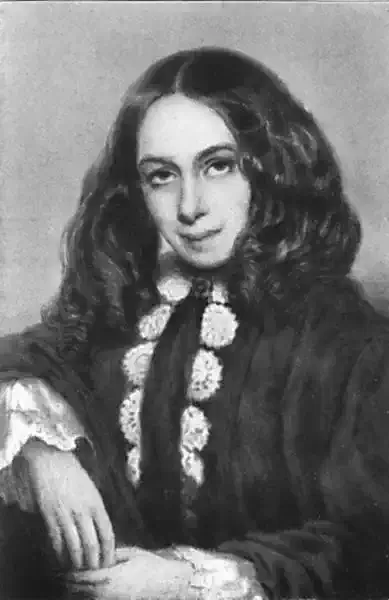
Elizabeth Barrett Browning
The Look
The Look
The Saviour looked on Peter. Ay, no word,
No gesture of reproach; the Heavens serene
Though heavy with armed justice, did not lean
Their thunders that way: the forsaken Lord
Looked only, on the traitor. None record
What that look was, none guess; for those who have seen
Wronged lovers loving through a death-pang keen,
Or pale-cheeked martyrs smiling to a sword,
Have missed Jehovah at the judgment-call.
And Peter, from the height of blasphemy-'
I never knew this man '--did quail and fall
As knowing straight THAT GOD; and turned free
And went out speechless from the face of all
And filled the silenc, weeping bitterly.
The Saviour looked on Peter. Ay, no word,
No gesture of reproach; the Heavens serene
Though heavy with armed justice, did not lean
Their thunders that way: the forsaken Lord
Looked only, on the traitor. None record
What that look was, none guess; for those who have seen
Wronged lovers loving through a death-pang keen,
Or pale-cheeked martyrs smiling to a sword,
Have missed Jehovah at the judgment-call.
And Peter, from the height of blasphemy-'
I never knew this man '--did quail and fall
As knowing straight THAT GOD; and turned free
And went out speechless from the face of all
And filled the silenc, weeping bitterly.
429
Elizabeth Barrett Browning
Sonnet XXXVI: When We Met First
Sonnet XXXVI: When We Met First
When we met first and loved, I did not build
Upon the event with marble. Could it mean
To last, a love set pendulous between
Sorrow and sorrow? Nay, I rather thrilled,
Distrusting every light that seemed to gild
The onward path, and feared to overlean
A finger even. And, though I have grown serene
And strong since then, I think that God has willed
A still renewable fear ... O love, O troth ...
Lest these enclasped hands should never hold,
This mutual kiss drop down between us both
As an unowned thing, once the lips being cold.
And Love, be false! if he, to keep one oath,
Must lose one joy, by his life's star foretold.
When we met first and loved, I did not build
Upon the event with marble. Could it mean
To last, a love set pendulous between
Sorrow and sorrow? Nay, I rather thrilled,
Distrusting every light that seemed to gild
The onward path, and feared to overlean
A finger even. And, though I have grown serene
And strong since then, I think that God has willed
A still renewable fear ... O love, O troth ...
Lest these enclasped hands should never hold,
This mutual kiss drop down between us both
As an unowned thing, once the lips being cold.
And Love, be false! if he, to keep one oath,
Must lose one joy, by his life's star foretold.
404
Elizabeth Barrett Browning
Sonnet XXXII: The First Time
Sonnet XXXII: The First Time
The first time that the sun rose on thine oath
To love me, I looked forward to the moon
To slacken all those bonds which seemed too soon
And quickly tied to make a lasting troth.
Quick-loving hearts, I thought, may quickly loathe;
And, looking on myself, I seemed not one
For such man's love!--more like an out-of-tune
Worn viol, a good singer would be wroth
To spoil his song with, and which, snatched in haste,
Is laid down at the first ill-sounding note.
I did not wrong myself so, but I placed
A wrong on thee. For perfect strains may float
'Neath master-hands, from instruments defaced,--
And great souls, at one stroke, may do and doat.
The first time that the sun rose on thine oath
To love me, I looked forward to the moon
To slacken all those bonds which seemed too soon
And quickly tied to make a lasting troth.
Quick-loving hearts, I thought, may quickly loathe;
And, looking on myself, I seemed not one
For such man's love!--more like an out-of-tune
Worn viol, a good singer would be wroth
To spoil his song with, and which, snatched in haste,
Is laid down at the first ill-sounding note.
I did not wrong myself so, but I placed
A wrong on thee. For perfect strains may float
'Neath master-hands, from instruments defaced,--
And great souls, at one stroke, may do and doat.
298
Elizabeth Barrett Browning
A Woman's Shortcomings
A Woman's Shortcomings
She has laughed as softly as if she sighed,
She has counted six, and over,
Of a purse well filled, and a heart well tried -
Oh, each a worthy lover!
They "give her time"; for her soul must slip
Where the world has set the grooving;
She will lie to none with her fair red lip:
But love seeks truer loving.
She trembles her fan in a sweetness dumb,
As her thoughts were beyond recalling;
With a glance for one, and a glance for some,
From her eyelids rising and falling;
Speaks common words with a blushful air,
Hears bold words, unreproving;
But her silence says - what she never will swear -
And love seeks better loving.
Go, lady! lean to the night-guitar,
And drop a smile to the bringer;
Then smile as sweetly, when he is far,
At the voice of an in-door singer.
Bask tenderly beneath tender eyes;
Glance lightly, on their removing;
And join new vows to old perjuries -
But dare not call it loving!
Unless you can think, when the song is done,
No other is soft in the rhythm;
Unless you can feel, when left by One,
That all men else go with him;
Unless you can know, when unpraised by his breath,
That your beauty itself wants proving;
Unless you can swear "For life, for death!" -
Oh, fear to call it loving!
Unless you can muse in a crowd all day
On the absent face that fixed you;
Unless you can love, as the angels may,
With the breadth of heaven betwixt you;
Unless you can dream that his faith is fast,
Through behoving and unbehoving;
Unless you can die when the dream is past -
Oh, never call it loving!
She has laughed as softly as if she sighed,
She has counted six, and over,
Of a purse well filled, and a heart well tried -
Oh, each a worthy lover!
They "give her time"; for her soul must slip
Where the world has set the grooving;
She will lie to none with her fair red lip:
But love seeks truer loving.
She trembles her fan in a sweetness dumb,
As her thoughts were beyond recalling;
With a glance for one, and a glance for some,
From her eyelids rising and falling;
Speaks common words with a blushful air,
Hears bold words, unreproving;
But her silence says - what she never will swear -
And love seeks better loving.
Go, lady! lean to the night-guitar,
And drop a smile to the bringer;
Then smile as sweetly, when he is far,
At the voice of an in-door singer.
Bask tenderly beneath tender eyes;
Glance lightly, on their removing;
And join new vows to old perjuries -
But dare not call it loving!
Unless you can think, when the song is done,
No other is soft in the rhythm;
Unless you can feel, when left by One,
That all men else go with him;
Unless you can know, when unpraised by his breath,
That your beauty itself wants proving;
Unless you can swear "For life, for death!" -
Oh, fear to call it loving!
Unless you can muse in a crowd all day
On the absent face that fixed you;
Unless you can love, as the angels may,
With the breadth of heaven betwixt you;
Unless you can dream that his faith is fast,
Through behoving and unbehoving;
Unless you can die when the dream is past -
Oh, never call it loving!
509
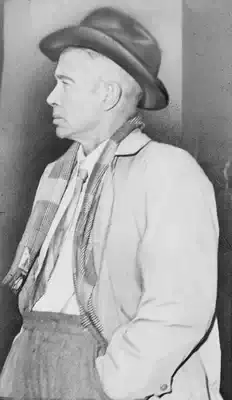
E. E. Cummings
it may not always be so
it may not always be so
it may not always be so; and i say
that if your lips, which i have loved, should touch
another's, and your dear strong fingers clutch
his heart, as mine in time not far away;
if on another's face your sweet hair lay
in such a silence as i know, or such
great writhing words as, uttering overmuch,
stand helplessly before the spirit at bay;
if this should be, i say if this should be -you
of my heart, send me a little word;
that i may go unto him, and take his hands,
saying, Accept all happiness from me.
Then shall i turn my face, and hear one bird
sing terribly afar in the lost lands.
it may not always be so; and i say
that if your lips, which i have loved, should touch
another's, and your dear strong fingers clutch
his heart, as mine in time not far away;
if on another's face your sweet hair lay
in such a silence as i know, or such
great writhing words as, uttering overmuch,
stand helplessly before the spirit at bay;
if this should be, i say if this should be -you
of my heart, send me a little word;
that i may go unto him, and take his hands,
saying, Accept all happiness from me.
Then shall i turn my face, and hear one bird
sing terribly afar in the lost lands.
629
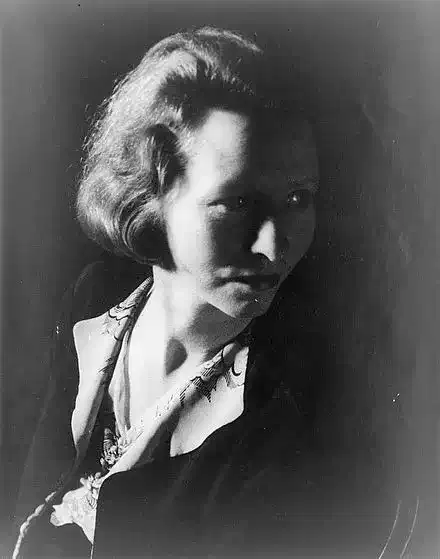
Edna St. Vincent Millay
The True Encounter
The True Encounter
"Wolf!" cried my cunning heart
At every sheep it spied,
And roused the countryside.
"Wolf! Wolf!"—and up would start
Good neighbours, bringing spade
And pitchfork to my aid.
At length my cry was known:
Therein lay my release.
I met the wolf alone
And was devoured in peace.
"Wolf!" cried my cunning heart
At every sheep it spied,
And roused the countryside.
"Wolf! Wolf!"—and up would start
Good neighbours, bringing spade
And pitchfork to my aid.
At length my cry was known:
Therein lay my release.
I met the wolf alone
And was devoured in peace.
470
Edna St. Vincent Millay
The Singing-Woman From The Wood's Edge
The Singing-Woman From The Wood's Edge
What should I be but a prophet and a liar,
Whose mother was a leprechaun, whose father was a friar?
Teethed on a crucifix and cradled under water,
What should I be but the fiend's god-daughter?
And who should be my playmates but the adder and the frog,
That was got beneath a furze-bush and born in a bog?
And what should be my singing, that was christened at an altar,
But Aves and Credos and Psalms out of the Psalter?
You will see such webs on the wet grass, maybe,
As a pixie-mother weaves for her baby,
You will find such flame at the wave's weedy ebb
As flashes in the meshes of a mer-mother's web,
But there comes to birth no common spawn
From the love a a priest for a leprechaun,
And you never have seen and you never will see
Such things as the things that swaddled me!
After all's said and after all's done,
What should I be but a harlot and a nun?
In through the bushes, on any foggy day,
My Da would come a-swishing of the drops away,
With a prayer for my death and a groan for my birth,
A-mumbling of his beads for all that he was worth.
And there'd sit my Ma, with her knees beneath her chin,
A-looking in his face and a-drinking of it in,
And a-marking in the moss some funny little saying
That would mean just the opposite of all that he was praying!
He taught me the holy-talk of Vesper and of Matin,
He heard me my Greek and he heard me my Latin,
He blessed me and crossed me to keep my soul from evil,
And we watched him out of sight, and we conjured up the devil!
Oh, the things I haven't seen and the things I haven't known,
What with hedges and ditches till after I was grown,
And yanked both way by my mother and my father,
With a "Which would you better?" and a " Which would you
rather?"
With him for a sire and her for a dam,
What should I be but just what I am?
What should I be but a prophet and a liar,
Whose mother was a leprechaun, whose father was a friar?
Teethed on a crucifix and cradled under water,
What should I be but the fiend's god-daughter?
And who should be my playmates but the adder and the frog,
That was got beneath a furze-bush and born in a bog?
And what should be my singing, that was christened at an altar,
But Aves and Credos and Psalms out of the Psalter?
You will see such webs on the wet grass, maybe,
As a pixie-mother weaves for her baby,
You will find such flame at the wave's weedy ebb
As flashes in the meshes of a mer-mother's web,
But there comes to birth no common spawn
From the love a a priest for a leprechaun,
And you never have seen and you never will see
Such things as the things that swaddled me!
After all's said and after all's done,
What should I be but a harlot and a nun?
In through the bushes, on any foggy day,
My Da would come a-swishing of the drops away,
With a prayer for my death and a groan for my birth,
A-mumbling of his beads for all that he was worth.
And there'd sit my Ma, with her knees beneath her chin,
A-looking in his face and a-drinking of it in,
And a-marking in the moss some funny little saying
That would mean just the opposite of all that he was praying!
He taught me the holy-talk of Vesper and of Matin,
He heard me my Greek and he heard me my Latin,
He blessed me and crossed me to keep my soul from evil,
And we watched him out of sight, and we conjured up the devil!
Oh, the things I haven't seen and the things I haven't known,
What with hedges and ditches till after I was grown,
And yanked both way by my mother and my father,
With a "Which would you better?" and a " Which would you
rather?"
With him for a sire and her for a dam,
What should I be but just what I am?
349
Edna St. Vincent Millay
The Plaid Dress
The Plaid Dress
Strong sun, that bleach
The curtains of my room, can you not render
Colourless this dress I wear?—
This violent plaid
Of purple angers and red shames; the yellow stripe
Of thin but valid treacheries; the flashy green of kind deeds done
Through indolence high judgments given here in haste;
The recurring checker of the serious breach of taste?
No more uncoloured than unmade,
I fear, can be this garment that I may not doff;
Confession does not strip it off,
To send me homeward eased and bare;
All through the formal, unoffending evening, under the clean
Bright hair,
Lining the subtle gown. . .it is not seen,
But it is there.
Strong sun, that bleach
The curtains of my room, can you not render
Colourless this dress I wear?—
This violent plaid
Of purple angers and red shames; the yellow stripe
Of thin but valid treacheries; the flashy green of kind deeds done
Through indolence high judgments given here in haste;
The recurring checker of the serious breach of taste?
No more uncoloured than unmade,
I fear, can be this garment that I may not doff;
Confession does not strip it off,
To send me homeward eased and bare;
All through the formal, unoffending evening, under the clean
Bright hair,
Lining the subtle gown. . .it is not seen,
But it is there.
352
Edna St. Vincent Millay
Bluebeard
Bluebeard
This door you might not open, and you did;
So enter now, and see for what slight thing
You are betrayed... Here is no treasure hid,
No cauldron, no clear crystal mirroring
The sought-for truth, no heads of women slain
For greed like yours, no writhings of distress,
But only what you see... Look yet again—
An empty room, cobwebbed and comfortless.
Yet this alone out of my life I kept
Unto myself, lest any know me quite;
And you did so profane me when you crept
Unto the threshold of this room to-night
That I must never more behold your face.
This now is yours. I seek another place.
This door you might not open, and you did;
So enter now, and see for what slight thing
You are betrayed... Here is no treasure hid,
No cauldron, no clear crystal mirroring
The sought-for truth, no heads of women slain
For greed like yours, no writhings of distress,
But only what you see... Look yet again—
An empty room, cobwebbed and comfortless.
Yet this alone out of my life I kept
Unto myself, lest any know me quite;
And you did so profane me when you crept
Unto the threshold of this room to-night
That I must never more behold your face.
This now is yours. I seek another place.
329
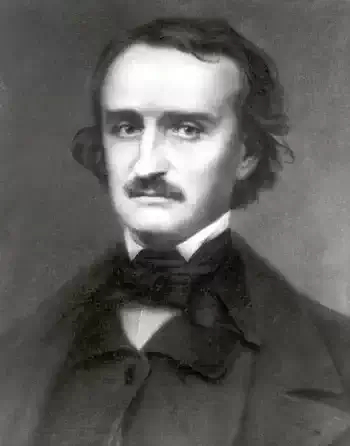
Edgar Allan Poe
Song
Song
I saw thee on thy bridal dayWhen
a burning blush came o'er thee,
Though happiness around thee lay,
The world all love before thee:
And in thine eye a kindling light
(Whatever it might be)
Was all on Earth my aching sight
Of Loveliness could see.
That blush, perhaps, was maiden shameAs
such it well may passThough
its glow hath raised a fiercer flame
In the breast of him, alas!
Who saw thee on that bridal day,
When that deep blush would come o'er thee,
Though happiness around thee lay;
The world all love before thee.
I saw thee on thy bridal dayWhen
a burning blush came o'er thee,
Though happiness around thee lay,
The world all love before thee:
And in thine eye a kindling light
(Whatever it might be)
Was all on Earth my aching sight
Of Loveliness could see.
That blush, perhaps, was maiden shameAs
such it well may passThough
its glow hath raised a fiercer flame
In the breast of him, alas!
Who saw thee on that bridal day,
When that deep blush would come o'er thee,
Though happiness around thee lay;
The world all love before thee.
249

Dylan Thomas
To Others Than You
To Others Than You
Friend by enemy I call you out.
You with a bad coin in your socket,
You my friend there with a winning air
Who palmed the lie on me when you looked
Brassily at my shyest secret,
Enticed with twinkling bits of the eye
Till the sweet tooth of my love bit dry,
Rasped at last, and I stumbled and sucked,
Whom now I conjure to stand as thief
In the memory worked by mirrors,
With unforgettably smiling act,
Quickness of hand in the velvet glove
And my whole heart under your hammer,
Were once such a creature, so gay and frank
A desireless familiar
I never thought to utter or think
While you displaced a truth in the air,
That though I loved them for their faults
As much as for their good,
My friends were enemies on stilts
With their heads in a cunning cloud.
Friend by enemy I call you out.
You with a bad coin in your socket,
You my friend there with a winning air
Who palmed the lie on me when you looked
Brassily at my shyest secret,
Enticed with twinkling bits of the eye
Till the sweet tooth of my love bit dry,
Rasped at last, and I stumbled and sucked,
Whom now I conjure to stand as thief
In the memory worked by mirrors,
With unforgettably smiling act,
Quickness of hand in the velvet glove
And my whole heart under your hammer,
Were once such a creature, so gay and frank
A desireless familiar
I never thought to utter or think
While you displaced a truth in the air,
That though I loved them for their faults
As much as for their good,
My friends were enemies on stilts
With their heads in a cunning cloud.
453
Dylan Thomas
Into Her Lying Down Head
Into Her Lying Down Head
I
Into her lying down head
His enemies entered bed,
Under the encumbered eyelid,
Through the rippled drum of the hair-buried ear;
And Noah's rekindled now unkind dove
Flew man-bearing there.
Last night in a raping wave
Whales unreined from the green grave
In fountains of origin gave up their love,
Along her innocence glided
Jaun aflame and savagely young King Lear,
Queen Catherine howling bare
And Samson drowned in his hair,
The colossal intimacies of silent
Once seen strangers or shades on a stair;
There the dark blade and wanton sighing her down
To a haycock couch and the scythes of his arms
Rode and whistled a hundred times
Before the crowing morning climbed;
Man was the burning England she was sleep-walking, and the enamouring island
Made her limbs blind by luminous charms,
Sleep to a newborn sleep in a swaddling loin-leaf stroked and sang
And his runaway beloved childlike laid in the acorned sand.
II
There where a numberless tongue
Wound their room with a male moan,
His faith around her flew undone
And darkness hung the walls with baskets of snakes,
A furnace-nostrilled column-membered
Super-or-near man
Resembling to her dulled sense
The thief of adolescence,
Early imaginary half remembered
Oceanic lover alone
Jealousy cannot forget for all her sakes,
Made his bad bed in her good
Night, and enjoyed as he would.
Crying, white gowned, from the middle moonlit stages
Out to the tiered and hearing tide,
Close and far she announced the theft of the heart
In the taken body at many ages,
Trespasser and broken bride
Celebrating at her side
All blood-signed assailing and vanished marriages in which he had no lovely part
Nor could share, for his pride, to the least
Mutter and foul wingbeat of the solemnizing nightpriest
Her holy unholy hours with the always anonymous beast.
III
Two sand grains together in bed,
Head to heaven-circling head,
Singly lie with the whole wide shore,
The covering sea their nightfall with no names;
And out of every domed and soil-based shell
One voice in chains declaims
The female, deadly, and male
Libidinous betrayal,
Golden dissolving under the water veil.
A she bird sleeping brittle by
Her lover's wings that fold to-morrow's flight,
Within the nested treefork
Sings to the treading hawk
Carrion, paradise, chirrup my bright yolk.
A blade of grass longs with the meadow,
A stone lies lost and locked in the lark-high hill.
Open as to the air to the naked shadow
O she lies alone and still,
Innocent between two wars,
With the incestuous secret brother in the seconds to perpetuate the stars,
A man torn up mourns in the sole night.
And the second comers, the severers, the enemies from the deep
Forgotten dark, rest their pulse and bury their dead in her faithless sleep.
I
Into her lying down head
His enemies entered bed,
Under the encumbered eyelid,
Through the rippled drum of the hair-buried ear;
And Noah's rekindled now unkind dove
Flew man-bearing there.
Last night in a raping wave
Whales unreined from the green grave
In fountains of origin gave up their love,
Along her innocence glided
Jaun aflame and savagely young King Lear,
Queen Catherine howling bare
And Samson drowned in his hair,
The colossal intimacies of silent
Once seen strangers or shades on a stair;
There the dark blade and wanton sighing her down
To a haycock couch and the scythes of his arms
Rode and whistled a hundred times
Before the crowing morning climbed;
Man was the burning England she was sleep-walking, and the enamouring island
Made her limbs blind by luminous charms,
Sleep to a newborn sleep in a swaddling loin-leaf stroked and sang
And his runaway beloved childlike laid in the acorned sand.
II
There where a numberless tongue
Wound their room with a male moan,
His faith around her flew undone
And darkness hung the walls with baskets of snakes,
A furnace-nostrilled column-membered
Super-or-near man
Resembling to her dulled sense
The thief of adolescence,
Early imaginary half remembered
Oceanic lover alone
Jealousy cannot forget for all her sakes,
Made his bad bed in her good
Night, and enjoyed as he would.
Crying, white gowned, from the middle moonlit stages
Out to the tiered and hearing tide,
Close and far she announced the theft of the heart
In the taken body at many ages,
Trespasser and broken bride
Celebrating at her side
All blood-signed assailing and vanished marriages in which he had no lovely part
Nor could share, for his pride, to the least
Mutter and foul wingbeat of the solemnizing nightpriest
Her holy unholy hours with the always anonymous beast.
III
Two sand grains together in bed,
Head to heaven-circling head,
Singly lie with the whole wide shore,
The covering sea their nightfall with no names;
And out of every domed and soil-based shell
One voice in chains declaims
The female, deadly, and male
Libidinous betrayal,
Golden dissolving under the water veil.
A she bird sleeping brittle by
Her lover's wings that fold to-morrow's flight,
Within the nested treefork
Sings to the treading hawk
Carrion, paradise, chirrup my bright yolk.
A blade of grass longs with the meadow,
A stone lies lost and locked in the lark-high hill.
Open as to the air to the naked shadow
O she lies alone and still,
Innocent between two wars,
With the incestuous secret brother in the seconds to perpetuate the stars,
A man torn up mourns in the sole night.
And the second comers, the severers, the enemies from the deep
Forgotten dark, rest their pulse and bury their dead in her faithless sleep.
272
Dylan Thomas
A Saint About To Fall
A Saint About To Fall
A saint about to fall,
The stained flats of heaven hit and razed
To the kissed kite hems of his shawl,
On the last street wave praised
The unwinding, song by rock,
Of the woven wall
Of his father's house in the sands,
The vanishing of the musical ship-work and the chucked bells,
The wound-down cough of the blood-counting clock
Behind a face of hands,
On the angelic etna of the last whirring featherlands,
Wind-heeled foot in the hole of a fireball,
Hymned his shrivelling flock,
On the last rick's tip by spilled wine-wells
Sang heaven hungry and the quick
Cut Christbread spitting vinegar and all
The mazes of his praise and envious tongue were worked in flames and shells.
Glory cracked like a flea.
The sun-leaved holy candlewoods
Drivelled down to one singeing tree
With a stub of black buds,
The sweet, fish-gilled boats bringing blood
Lurched through a scuttled sea
With a hold of leeches and straws,
Heaven fell with his fall and one crocked bell beat the left air.
O wake in me in my house in the mud
Of the crotch of the squawking shores,
Flicked from the carbolic city puzzle in a bed of sores
The scudding base of the familiar sky,
The lofty roots of the clouds.
From an odd room in a split house stare,
Milk in your mouth, at the sour floods
That bury the sweet street slowly, see
The skull of the earth is barbed with a war of burning brains and hair.
Strike in the time-bomb town,
Raise the live rafters of the eardrum,
Throw your fear a parcel of stone
Through the dark asylum,
Lapped among herods wail
As their blade marches in
That the eyes are already murdered,
The stocked heart is forced, and agony has another mouth to feed.
O wake to see, after a noble fall,
The old mud hatch again, the horrid
Woe drip from the dishrag hands and the pressed sponge of the forehead,
The breath draw back like a bolt through white oil
And a stranger enter like iron.
Cry joy that hits witchlike midwife second
Bullies into rough seas you so gentle
And makes with a flick of the thumb and sun
A thundering bullring of your silent and girl-circled island.
A saint about to fall,
The stained flats of heaven hit and razed
To the kissed kite hems of his shawl,
On the last street wave praised
The unwinding, song by rock,
Of the woven wall
Of his father's house in the sands,
The vanishing of the musical ship-work and the chucked bells,
The wound-down cough of the blood-counting clock
Behind a face of hands,
On the angelic etna of the last whirring featherlands,
Wind-heeled foot in the hole of a fireball,
Hymned his shrivelling flock,
On the last rick's tip by spilled wine-wells
Sang heaven hungry and the quick
Cut Christbread spitting vinegar and all
The mazes of his praise and envious tongue were worked in flames and shells.
Glory cracked like a flea.
The sun-leaved holy candlewoods
Drivelled down to one singeing tree
With a stub of black buds,
The sweet, fish-gilled boats bringing blood
Lurched through a scuttled sea
With a hold of leeches and straws,
Heaven fell with his fall and one crocked bell beat the left air.
O wake in me in my house in the mud
Of the crotch of the squawking shores,
Flicked from the carbolic city puzzle in a bed of sores
The scudding base of the familiar sky,
The lofty roots of the clouds.
From an odd room in a split house stare,
Milk in your mouth, at the sour floods
That bury the sweet street slowly, see
The skull of the earth is barbed with a war of burning brains and hair.
Strike in the time-bomb town,
Raise the live rafters of the eardrum,
Throw your fear a parcel of stone
Through the dark asylum,
Lapped among herods wail
As their blade marches in
That the eyes are already murdered,
The stocked heart is forced, and agony has another mouth to feed.
O wake to see, after a noble fall,
The old mud hatch again, the horrid
Woe drip from the dishrag hands and the pressed sponge of the forehead,
The breath draw back like a bolt through white oil
And a stranger enter like iron.
Cry joy that hits witchlike midwife second
Bullies into rough seas you so gentle
And makes with a flick of the thumb and sun
A thundering bullring of your silent and girl-circled island.
275
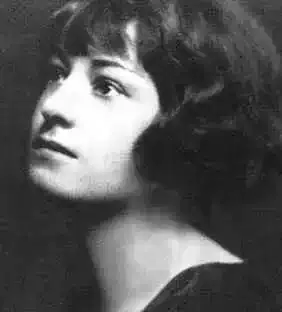
Dorothy Parker
Unfortunate Coincidence
Unfortunate Coincidence
By the time you swear you're his,
Shivering and sighing,
And he vows his passion is
Infinite, undying -
Lady, make a note of this:
One of you is lying.
By the time you swear you're his,
Shivering and sighing,
And he vows his passion is
Infinite, undying -
Lady, make a note of this:
One of you is lying.
405
Dorothy Parker
The False Friends
The False Friends
They laid their hands upon my head,
They stroked my cheek and brow;
And time could heal a hurt, they said,
And time could dim a vow.
And they were pitiful and mild
Who whispered to me then,
"The heart that breaks in April, child,
Will mend in May again."
Oh, many a mended heart they knew.
So old they were, and wise.
And little did they have to do
To come to me with lies!
Who flings me silly talk of May
Shall meet a bitter soul;
For June was nearly spent away
Before my heart was whole.
They laid their hands upon my head,
They stroked my cheek and brow;
And time could heal a hurt, they said,
And time could dim a vow.
And they were pitiful and mild
Who whispered to me then,
"The heart that breaks in April, child,
Will mend in May again."
Oh, many a mended heart they knew.
So old they were, and wise.
And little did they have to do
To come to me with lies!
Who flings me silly talk of May
Shall meet a bitter soul;
For June was nearly spent away
Before my heart was whole.
418
Dorothy Parker
Social Note
Social Note
Lady, lady, should you meet
One whose ways are all discreet,
One who murmurs that his wife
Is the lodestar of his life,
One who keeps assuring you
That he never was untrue,
Never loved another one . . .
Lady, lady, better run!
Lady, lady, should you meet
One whose ways are all discreet,
One who murmurs that his wife
Is the lodestar of his life,
One who keeps assuring you
That he never was untrue,
Never loved another one . . .
Lady, lady, better run!
302
Dorothy Parker
Second Love
Second Love
"So surely is she mine," you say, and turn
Your quick and steady mind to harder things-
To bills and bonds and talk of what men earn-
And whistle up the stair, of evenings.
And do you see a dream behind my eyes,
Or ask a simple question twice of me"
Thus women are," you say; for men are wise
And tolerant, in their security.
How shall I count the midnights I have known
When calm you turn to me, nor feel me start,
To find my easy lips upon your own
And know my breast beneath your rhythmic heart.
Your god defer the day I tell you this:
My lad, my lad, it is not you I kiss!
"So surely is she mine," you say, and turn
Your quick and steady mind to harder things-
To bills and bonds and talk of what men earn-
And whistle up the stair, of evenings.
And do you see a dream behind my eyes,
Or ask a simple question twice of me"
Thus women are," you say; for men are wise
And tolerant, in their security.
How shall I count the midnights I have known
When calm you turn to me, nor feel me start,
To find my easy lips upon your own
And know my breast beneath your rhythmic heart.
Your god defer the day I tell you this:
My lad, my lad, it is not you I kiss!
325
Dorothy Parker
A Certain Lady
A Certain Lady
Oh, I can smile for you, and tilt my head,
And drink your rushing words with eager lips,
And paint my mouth for you a fragrant red,
And trace your brows with tutored finger-tips.
When you rehearse your list of loves to me,
Oh, I can laugh and marvel, rapturous-eyed.
And you laugh back, nor can you ever see
The thousand little deaths my heart has died.
And you believe, so well I know my part,
That I am gay as morning, light as snow,
And all the straining things within my heart
You'll never know.
Oh, I can laugh and listen, when we meet,
And you bring tales of fresh adventurings, --
Of ladies delicately indiscreet,
Of lingering hands, and gently whispered things.
And you are pleased with me, and strive anew
To sing me sagas of your late delights.
Thus do you want me -- marveling, gay, and true,
Nor do you see my staring eyes of nights.
And when, in search of novelty, you stray,
Oh, I can kiss you blithely as you go ....
And what goes on, my love, while you're away,
You'll never know.
Oh, I can smile for you, and tilt my head,
And drink your rushing words with eager lips,
And paint my mouth for you a fragrant red,
And trace your brows with tutored finger-tips.
When you rehearse your list of loves to me,
Oh, I can laugh and marvel, rapturous-eyed.
And you laugh back, nor can you ever see
The thousand little deaths my heart has died.
And you believe, so well I know my part,
That I am gay as morning, light as snow,
And all the straining things within my heart
You'll never know.
Oh, I can laugh and listen, when we meet,
And you bring tales of fresh adventurings, --
Of ladies delicately indiscreet,
Of lingering hands, and gently whispered things.
And you are pleased with me, and strive anew
To sing me sagas of your late delights.
Thus do you want me -- marveling, gay, and true,
Nor do you see my staring eyes of nights.
And when, in search of novelty, you stray,
Oh, I can kiss you blithely as you go ....
And what goes on, my love, while you're away,
You'll never know.
439

Derek Walcott
Blues
Blues
Those five or six young guys
lunched on the stoop
that oven-hot summer night
whistled me over. Nice
and friendly. So, I stop.
MacDougal or Christopher
Street in chains of light.
A summer festival. Or some
saint's. I wasn't too far from
home, but not too bright
for a nigger, and not too dark.
I figured we were all
one, wop, nigger, jew,
besides, this wasn't Central Park.
I'm coming on too strong? You figure
right! They beat this yellow nigger
black and blue.
Yeah. During all this, scared
on case one used a knife,
I hung my olive-green, just-bought
sports coat on a fire plug.
I did nothing. They fought
each other, really. Life
gives them a few kcks,
that's all. The spades, the spicks.
My face smashed in, my bloddy mug
pouring, my olive-branch jacket saved
from cuts and tears,
I crawled four flights upstairs.
Sprawled in the gutter, I
remember a few watchers waved
loudly, and one kid's mother shouting
like 'Jackie' or 'Terry,'
'now that's enough!'
It's nothing really.
They don't get enough love.
You know they wouldn't kill
you. Just playing rough,
like young Americans will.
Still it taught me somthing
about love. If it's so tough,
forget it.
Those five or six young guys
lunched on the stoop
that oven-hot summer night
whistled me over. Nice
and friendly. So, I stop.
MacDougal or Christopher
Street in chains of light.
A summer festival. Or some
saint's. I wasn't too far from
home, but not too bright
for a nigger, and not too dark.
I figured we were all
one, wop, nigger, jew,
besides, this wasn't Central Park.
I'm coming on too strong? You figure
right! They beat this yellow nigger
black and blue.
Yeah. During all this, scared
on case one used a knife,
I hung my olive-green, just-bought
sports coat on a fire plug.
I did nothing. They fought
each other, really. Life
gives them a few kcks,
that's all. The spades, the spicks.
My face smashed in, my bloddy mug
pouring, my olive-branch jacket saved
from cuts and tears,
I crawled four flights upstairs.
Sprawled in the gutter, I
remember a few watchers waved
loudly, and one kid's mother shouting
like 'Jackie' or 'Terry,'
'now that's enough!'
It's nothing really.
They don't get enough love.
You know they wouldn't kill
you. Just playing rough,
like young Americans will.
Still it taught me somthing
about love. If it's so tough,
forget it.
1,096
Derek Walcott
A City's Death By Fire
A City's Death By Fire
After that hot gospeller has levelled all but the churched sky,
I wrote the tale by tallow of a city's death by fire;
Under a candle's eye, that smoked in tears, I
Wanted to tell, in more than wax, of faiths that were snapped like wire.
All day I walked abroad among the rubbled tales,
Shocked at each wall that stood on the street like a liar;
Loud was the bird-rocked sky, and all the clouds were bales
Torn open by looting, and white, in spite of the fire.
By the smoking sea, where Christ walked, I asked, why
Should a man wax tears, when his wooden world fails?
In town, leaves were paper, but the hills were a flock of faiths;
To a boy who walked all day, each leaf was a green breath
Rebuilding a love I thought was dead as nails,
Blessing the death and the baptism by fire.
After that hot gospeller has levelled all but the churched sky,
I wrote the tale by tallow of a city's death by fire;
Under a candle's eye, that smoked in tears, I
Wanted to tell, in more than wax, of faiths that were snapped like wire.
All day I walked abroad among the rubbled tales,
Shocked at each wall that stood on the street like a liar;
Loud was the bird-rocked sky, and all the clouds were bales
Torn open by looting, and white, in spite of the fire.
By the smoking sea, where Christ walked, I asked, why
Should a man wax tears, when his wooden world fails?
In town, leaves were paper, but the hills were a flock of faiths;
To a boy who walked all day, each leaf was a green breath
Rebuilding a love I thought was dead as nails,
Blessing the death and the baptism by fire.
1,417

Christina Rossetti
Despised And Rejected
Despised And Rejected
My sun has set, I dwell
In darkness as a dead man out of sight;
And none remains, not one, that I should tell
To him mine evil plight
This bitter night.
I will make fast my door
That hollow friends may trouble me no more.
'Friend, open to Me.'—Who is this that calls?
Nay, I am deaf as are my walls:
Cease crying, for I will not hear
Thy cry of hope or fear.
Others were dear,
Others forsook me: what art thou indeed
That I should heed
Thy lamentable need?
Hungry should feed,
Or stranger lodge thee here?
'Friend, My Feet bleed.
Open thy door to Me and comfort Me.'
I will not open, trouble me no more.
Go on thy way footsore,
I will not rise and open unto thee.
'Then is it nothing to thee? Open, see
Who stands to plead with thee.
Open, lest I should pass thee by, and thou
One day entreat My Face
And howl for grace,
And I be deaf as thou art now.
Open to Me.'
Then I cried out upon him: Cease,
Leave me in peace:
Fear not that I should crave
Aught thou mayst have.
Leave me in peace, yea trouble me no more,
Lest I arise and chase thee from my door.
What, shall I not be let
Alone, that thou dost vex me yet?
But all night long that voice spake urgently:
'Open to Me.'
Still harping in mine ears:
'Rise, let Me in.'
Pleading with tears:
'Open to Me that I may come to thee.'
While the dew dropped, while the dark hours were cold:
'My Feet bleed, see My Face,
See My Hands bleed that bring thee grace,
My Heart doth bleed for thee,
Open to Me.'
So till the break of day:
Then died away
That voice, in silence as of sorrow;
Then footsteps echoing like a sigh
Passed me by,
Lingering footsteps slow to pass.
On the morrow
I saw upon the grass
Each footprint marked in blood, and on my door
The mark of blood for evermore.
My sun has set, I dwell
In darkness as a dead man out of sight;
And none remains, not one, that I should tell
To him mine evil plight
This bitter night.
I will make fast my door
That hollow friends may trouble me no more.
'Friend, open to Me.'—Who is this that calls?
Nay, I am deaf as are my walls:
Cease crying, for I will not hear
Thy cry of hope or fear.
Others were dear,
Others forsook me: what art thou indeed
That I should heed
Thy lamentable need?
Hungry should feed,
Or stranger lodge thee here?
'Friend, My Feet bleed.
Open thy door to Me and comfort Me.'
I will not open, trouble me no more.
Go on thy way footsore,
I will not rise and open unto thee.
'Then is it nothing to thee? Open, see
Who stands to plead with thee.
Open, lest I should pass thee by, and thou
One day entreat My Face
And howl for grace,
And I be deaf as thou art now.
Open to Me.'
Then I cried out upon him: Cease,
Leave me in peace:
Fear not that I should crave
Aught thou mayst have.
Leave me in peace, yea trouble me no more,
Lest I arise and chase thee from my door.
What, shall I not be let
Alone, that thou dost vex me yet?
But all night long that voice spake urgently:
'Open to Me.'
Still harping in mine ears:
'Rise, let Me in.'
Pleading with tears:
'Open to Me that I may come to thee.'
While the dew dropped, while the dark hours were cold:
'My Feet bleed, see My Face,
See My Hands bleed that bring thee grace,
My Heart doth bleed for thee,
Open to Me.'
So till the break of day:
Then died away
That voice, in silence as of sorrow;
Then footsteps echoing like a sigh
Passed me by,
Lingering footsteps slow to pass.
On the morrow
I saw upon the grass
Each footprint marked in blood, and on my door
The mark of blood for evermore.
217
Christina Rossetti
Cousin Kate
Cousin Kate
I was a cottage maiden
Hardened by sun and air
Contented with my cottage mates,
Not mindful I was fair.
Why did a great lord find me out,
And praise my flaxen hair?
Why did a great lord find me out,
To fill my heart with care?
He lured me to his palace home Woe's
me for joy thereof-
To lead a shameless shameful life,
His plaything and his love.
He wore me like a silken knot,
He changed me like a glove;
So now I moan, an unclean thing,
Who might have been a dove.
O Lady kate, my cousin Kate,
You grew more fair than I:
He saw you at your father's gate,
Chose you, and cast me by.
He watched your steps along the lane,
Your work among the rye;
He lifted you from mean estate
To sit with him on high.
Because you were so good and pure
He bound you with his ring:
The neighbors call you good and pure,
Call me an outcast thing.
Even so I sit and howl in dust,
You sit in gold and sing:
Now which of us has tenderer heart?
You had the stronger wing.
O cousin Kate, my love was true,
Your love was writ in sand:
If he had fooled not me but you,
If you stood where I stand,
He'd not have won me with his love
Nor bought me with his land;
I would have spit into his face
And not have taken his hand.
Yet I've a gift you have not got,
And seem not like to get:
For all your clothes and wedding-ring
I've little doubt you fret.
My fair-haired son, my shame, my pride,
Cling closer, closer yet:
Your father would give his lands for one
To wear his coronet.
I was a cottage maiden
Hardened by sun and air
Contented with my cottage mates,
Not mindful I was fair.
Why did a great lord find me out,
And praise my flaxen hair?
Why did a great lord find me out,
To fill my heart with care?
He lured me to his palace home Woe's
me for joy thereof-
To lead a shameless shameful life,
His plaything and his love.
He wore me like a silken knot,
He changed me like a glove;
So now I moan, an unclean thing,
Who might have been a dove.
O Lady kate, my cousin Kate,
You grew more fair than I:
He saw you at your father's gate,
Chose you, and cast me by.
He watched your steps along the lane,
Your work among the rye;
He lifted you from mean estate
To sit with him on high.
Because you were so good and pure
He bound you with his ring:
The neighbors call you good and pure,
Call me an outcast thing.
Even so I sit and howl in dust,
You sit in gold and sing:
Now which of us has tenderer heart?
You had the stronger wing.
O cousin Kate, my love was true,
Your love was writ in sand:
If he had fooled not me but you,
If you stood where I stand,
He'd not have won me with his love
Nor bought me with his land;
I would have spit into his face
And not have taken his hand.
Yet I've a gift you have not got,
And seem not like to get:
For all your clothes and wedding-ring
I've little doubt you fret.
My fair-haired son, my shame, my pride,
Cling closer, closer yet:
Your father would give his lands for one
To wear his coronet.
226