

Poems
Betrayal and Disappointment
Poems in this topic

Spike Milligan
Feelings
Feelings
There must be a wound!
No one can be this hurt
and not bleed.
How could she injure me so?
No marks
No bruise
Worse!
People say 'My, you're looking well'
.....God help me!
She's mummified me -
ALIVE!
There must be a wound!
No one can be this hurt
and not bleed.
How could she injure me so?
No marks
No bruise
Worse!
People say 'My, you're looking well'
.....God help me!
She's mummified me -
ALIVE!
276

Siegfried Sassoon
Hero
Hero
'Jack fell as he'd have wished,' the Mother said,
And folded up the letter that she'd read.
'The Colonel writes so nicely.' Something broke
In the tired voice that quavered to a choke.
She half looked up. 'We mothers are so proud
Of our dead soldiers.' Then her face was bowed.
Quietly the Brother Officer went out.
He'd told the poor old dear some gallant lies
That she would nourish all her days, no doubt.
For while he coughed and mumbled, her weak eyes
Had shone with gentle triumph, brimmed with joy,
Because he'd been so brave, her glorious boy.
He thought how 'Jack', cold-footed, useless swine,
Had panicked down the trench that night the mine
Went up at Wicked Corner; how he'd tried
To get sent home, and how, at last, he died,
Blown to small bits. And no one seemed to care
Except that lonely woman with white hair.
'Jack fell as he'd have wished,' the Mother said,
And folded up the letter that she'd read.
'The Colonel writes so nicely.' Something broke
In the tired voice that quavered to a choke.
She half looked up. 'We mothers are so proud
Of our dead soldiers.' Then her face was bowed.
Quietly the Brother Officer went out.
He'd told the poor old dear some gallant lies
That she would nourish all her days, no doubt.
For while he coughed and mumbled, her weak eyes
Had shone with gentle triumph, brimmed with joy,
Because he'd been so brave, her glorious boy.
He thought how 'Jack', cold-footed, useless swine,
Had panicked down the trench that night the mine
Went up at Wicked Corner; how he'd tried
To get sent home, and how, at last, he died,
Blown to small bits. And no one seemed to care
Except that lonely woman with white hair.
126
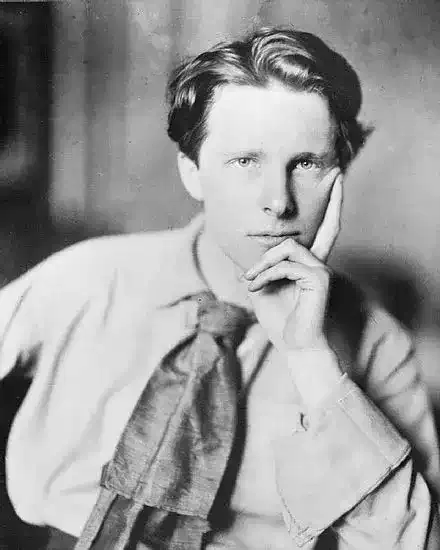
Rupert Brooke
Desertion
Desertion
So light we were, so right we were, so fair faith shone,
And the way was laid so certainly, that, when I'd gone,
What dumb thing looked up at you? Was it something heard,
Or a sudden cry, that meekly and without a word
You broke the faith, and strangely, weakly, slipped apart.
You gave in -- you, the proud of heart, unbowed of heart!
Was this, friend, the end of all that we could do?
And have you found the best for you, the rest for you?
Did you learn so suddenly (and I not by!)
Some whispered story, that stole the glory from the sky,
And ended all the splendid dream, and made you go
So dully from the fight we know, the light we know?
O faithless! the faith remains, and I must pass
Gay down the way, and on alone. Under the grass
You wait; the breeze moves in the trees, and stirs, and calls,
And covers you with white petals, with light petals.
There it shall crumble, frail and fair, under the sun,
O little heart, your brittle heart; till day be done,
And the shadows gather, falling light, and, white with dew,
Whisper, and weep; and creep to you. Good sleep to you!
So light we were, so right we were, so fair faith shone,
And the way was laid so certainly, that, when I'd gone,
What dumb thing looked up at you? Was it something heard,
Or a sudden cry, that meekly and without a word
You broke the faith, and strangely, weakly, slipped apart.
You gave in -- you, the proud of heart, unbowed of heart!
Was this, friend, the end of all that we could do?
And have you found the best for you, the rest for you?
Did you learn so suddenly (and I not by!)
Some whispered story, that stole the glory from the sky,
And ended all the splendid dream, and made you go
So dully from the fight we know, the light we know?
O faithless! the faith remains, and I must pass
Gay down the way, and on alone. Under the grass
You wait; the breeze moves in the trees, and stirs, and calls,
And covers you with white petals, with light petals.
There it shall crumble, frail and fair, under the sun,
O little heart, your brittle heart; till day be done,
And the shadows gather, falling light, and, white with dew,
Whisper, and weep; and creep to you. Good sleep to you!
190
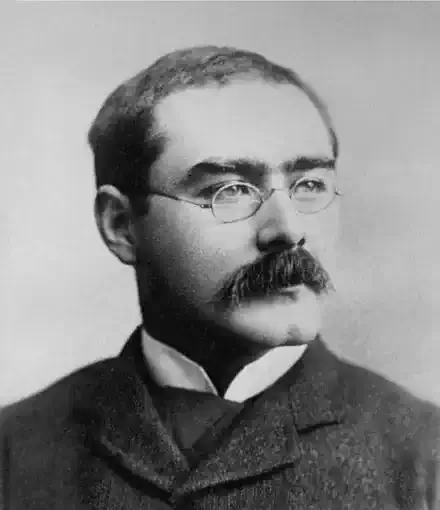
Rudyard Kipling
Wilful Missing
Wilful Missing
(Deserters)
There is a world outside the one you know,
To which for curiousness 'Ell can't compare--
It is the place where "wilful-missings" go,
As we can testify, for we are there.
You may 'ave read a bullet laid us low,
That we was gathered in "with reverent care"
And buried proper. But it was not so,
As we can testify --for we are there!
They can't be certain--faces alter so
After the old aasvogel 'ad 'is share.
The uniform's the mark by which they go--
And--ain't it odd?--the one we best can spare.
We might 'ave seen our chance to cut the show--
Name, number, record, an 'begin elsewhere--
Leaven'' some not too late-lamented foe
One funeral-private-British-for 'is share.
We may 'ave took it yonder in the Low
Bush-veldt that sends men stragglin' 'unaware
Among the Kaffirs, till their columns go,
An 'they are left past call or count or care.
We might 'ave been your lovers long ago,
'Usbands or children--comfort or despair.
Our death (an' burial) settles all we owe,
An' why we done it is our own affair.
Marry again, and we will not say no,
Nor come to barstardise the kids you bear.
Wait on in 'ope--you've all your life below
Before you'll ever 'ear us on the stair.
There is no need to give our reasons, though
Gawd knows we all 'ad reasons which were fair;
But other people might not judge 'em so--
And now it doesn't matter what they were.
What man can weigh or size another's woe:
There are some things too bitter 'ard to bear.
Suffice it we 'ave finished--Domino!
As we can testify, for we are there,
In the side-world where "wilful-missings " go.
(Deserters)
There is a world outside the one you know,
To which for curiousness 'Ell can't compare--
It is the place where "wilful-missings" go,
As we can testify, for we are there.
You may 'ave read a bullet laid us low,
That we was gathered in "with reverent care"
And buried proper. But it was not so,
As we can testify --for we are there!
They can't be certain--faces alter so
After the old aasvogel 'ad 'is share.
The uniform's the mark by which they go--
And--ain't it odd?--the one we best can spare.
We might 'ave seen our chance to cut the show--
Name, number, record, an 'begin elsewhere--
Leaven'' some not too late-lamented foe
One funeral-private-British-for 'is share.
We may 'ave took it yonder in the Low
Bush-veldt that sends men stragglin' 'unaware
Among the Kaffirs, till their columns go,
An 'they are left past call or count or care.
We might 'ave been your lovers long ago,
'Usbands or children--comfort or despair.
Our death (an' burial) settles all we owe,
An' why we done it is our own affair.
Marry again, and we will not say no,
Nor come to barstardise the kids you bear.
Wait on in 'ope--you've all your life below
Before you'll ever 'ear us on the stair.
There is no need to give our reasons, though
Gawd knows we all 'ad reasons which were fair;
But other people might not judge 'em so--
And now it doesn't matter what they were.
What man can weigh or size another's woe:
There are some things too bitter 'ard to bear.
Suffice it we 'ave finished--Domino!
As we can testify, for we are there,
In the side-world where "wilful-missings " go.
423
Rudyard Kipling
The Vampire
The Vampire
A fool there was and he made his prayer
(Even as you and I!)
To a rag and a bone and a hank of hair
(We called her the woman who did not care),
But the fool he called her his lady fair
(Even as you and I!)
Oh the years we waste and the tears we waste
And the work of our head and hand,
Belong to the woman who did not know
(And now we know that she never could know)
And did not understand.
A fool there was and his goods he spent
(Even as you and I!)
Honor and faith and a sure intent
But a fool must follow his natural bent
(And it wasn't the least what the lady meant),
(Even as you and I!)
Oh the toil we lost and the spoil we lost
And the excellent things we planned,
Belong to the woman who didn't know why
(And now we know she never knew why)
And did not understand.
The fool we stripped to his foolish hide
(Even as you and I!)
Which she might have seen when she threw him aside --
(But it isn't on record the lady tried)
So some of him lived but the most of him died --
(Even as you and I!)
And it isn't the shame and it isn't the blame
That stings like a white hot brand.
It's coming to know that she never knew why
(Seeing at last she could never know why)
And never could understand.
A fool there was and he made his prayer
(Even as you and I!)
To a rag and a bone and a hank of hair
(We called her the woman who did not care),
But the fool he called her his lady fair
(Even as you and I!)
Oh the years we waste and the tears we waste
And the work of our head and hand,
Belong to the woman who did not know
(And now we know that she never could know)
And did not understand.
A fool there was and his goods he spent
(Even as you and I!)
Honor and faith and a sure intent
But a fool must follow his natural bent
(And it wasn't the least what the lady meant),
(Even as you and I!)
Oh the toil we lost and the spoil we lost
And the excellent things we planned,
Belong to the woman who didn't know why
(And now we know she never knew why)
And did not understand.
The fool we stripped to his foolish hide
(Even as you and I!)
Which she might have seen when she threw him aside --
(But it isn't on record the lady tried)
So some of him lived but the most of him died --
(Even as you and I!)
And it isn't the shame and it isn't the blame
That stings like a white hot brand.
It's coming to know that she never knew why
(Seeing at last she could never know why)
And never could understand.
466
Rudyard Kipling
The Story of Uriah
The Story of Uriah
Jack Barrett went to Quetta
Because they told him to.
He left his wife at Simla
On three-fourths his monthly screw.
Jack Barrett died at Quetta
Ere the next month's pay he drew.
Jack Barrett went to Quetta.
He didn't understand
The reason of his transfer
From the pleasant mountain-land.
The season was September,
And it killed him out of hand.
Jack Barrett went to Quetta
And there gave up the ghost,
Attempting two men's duty
In that very healthy post;
And Mrs. Barrett mourned for him
Five lively months at most.
Jack Barrett's bones at Quetta
Enjoy profound repose;
But I shouldn't be astonished
If now his spirit knows
The reason of his transfer
From the Himalayan snows.
And, when the Last Great Bugle Call
Adown the Hurnai throbs,
And the last grim joke is entered
In the big black Book of Jobs.
And Quetta graveyards give again
Their victims to the air,
I shouldn't like to be the man
Who sent Jack Barrett there.
Jack Barrett went to Quetta
Because they told him to.
He left his wife at Simla
On three-fourths his monthly screw.
Jack Barrett died at Quetta
Ere the next month's pay he drew.
Jack Barrett went to Quetta.
He didn't understand
The reason of his transfer
From the pleasant mountain-land.
The season was September,
And it killed him out of hand.
Jack Barrett went to Quetta
And there gave up the ghost,
Attempting two men's duty
In that very healthy post;
And Mrs. Barrett mourned for him
Five lively months at most.
Jack Barrett's bones at Quetta
Enjoy profound repose;
But I shouldn't be astonished
If now his spirit knows
The reason of his transfer
From the Himalayan snows.
And, when the Last Great Bugle Call
Adown the Hurnai throbs,
And the last grim joke is entered
In the big black Book of Jobs.
And Quetta graveyards give again
Their victims to the air,
I shouldn't like to be the man
Who sent Jack Barrett there.
477
Rudyard Kipling
The Queen's Men
The Queen's Men
Valour and Innocence
Have latterly gone hence
To certain death by certain shame attended.
Envy--ah! even to tears! --
The fortune of their years
Which, though so few, yet so divinely ended.
Scarce had they lifted up
Life's full and fiery cup,
Than they had set it down untouched before them.
Before their day arose
They beckoned it to close--
Close in confusion and destruction o'er them.
They did not stay to ask
What prize should crown their task--
Well sure that prize was such as no man strives for;
But passed into eclipse,
Her kiss upon their lips--
Even Belphoebe's, whom they gave their lives for!
Valour and Innocence
Have latterly gone hence
To certain death by certain shame attended.
Envy--ah! even to tears! --
The fortune of their years
Which, though so few, yet so divinely ended.
Scarce had they lifted up
Life's full and fiery cup,
Than they had set it down untouched before them.
Before their day arose
They beckoned it to close--
Close in confusion and destruction o'er them.
They did not stay to ask
What prize should crown their task--
Well sure that prize was such as no man strives for;
But passed into eclipse,
Her kiss upon their lips--
Even Belphoebe's, whom they gave their lives for!
487
Rudyard Kipling
The Outlaws
The Outlaws
Through learned and laborious years
They set themselves to find
Fresh terrors and undreamed-of fears
To heap upon mankind.
ALl that they drew from Heaven above
Or digged from earth beneath,
They laid into their treasure-trove
And arsenals of death:
While, for well-weighed advantage sake,
Ruler and ruled alike
Built up the faith they meant to break
When the fit hour should strike.
They traded with the careless earth,
And good return it gave:
They plotted by their neighbour's hearth
The means to make him slave.
When all was ready to their hand
They loosed their hidden sword,
And utterly laid waste a land
Their oath was pledged to guard.
Coldly they went about to raise
To life and make more dread
Abominations of old days,
That men believed were dead.
They paid the price to reach their goal
Across a world in flame;
But their own hate slew their own soul
Before that victory came.
Through learned and laborious years
They set themselves to find
Fresh terrors and undreamed-of fears
To heap upon mankind.
ALl that they drew from Heaven above
Or digged from earth beneath,
They laid into their treasure-trove
And arsenals of death:
While, for well-weighed advantage sake,
Ruler and ruled alike
Built up the faith they meant to break
When the fit hour should strike.
They traded with the careless earth,
And good return it gave:
They plotted by their neighbour's hearth
The means to make him slave.
When all was ready to their hand
They loosed their hidden sword,
And utterly laid waste a land
Their oath was pledged to guard.
Coldly they went about to raise
To life and make more dread
Abominations of old days,
That men believed were dead.
They paid the price to reach their goal
Across a world in flame;
But their own hate slew their own soul
Before that victory came.
413
Rudyard Kipling
The Mare's Nest
The Mare's Nest
Jane Austen Beecher Stowe de Rouse
Was good beyond all earthly need;
But, on the other hand, her spouse
Was very, very bad indeed.
He smoked cigars, called churches slow,
And raced -- but this she did not know.
For Belial Machiavelli kept
The little fact a secret, and,
Though o'er his minor sins she wept,
Jane Austen did not understand
That Lilly -- thirteen-two and bay
Absorbed one-half her husband's pay.
She was so good, she made hime worse;
(Some women are like this, I think;)
He taught her parrot how to curse,
Her Assam monkey how to drink.
He vexed her righteous soul until
She went up, and he went down hill.
Then came the crisis, strange to say,
Which turned a good wife to a better.
A telegraphic peon, one day,
Brought her -- now, had it been a letter
For Belial Machiavelli, I
Know Jane would just have let it lie.
But 'twas a telegram instead,
Marked "urgent," and her duty plain
To open it. Jane Austen read:
"Your Lilly's got a cough again.
Can't understand why she is kept
At your expense." Jane Austen wept.
It was a misdirected wire.
Her husband was at Shaitanpore.
She spread her anger, hot as fire,
Through six thin foreign sheets or more.
Sent off that letter, wrote another
To her solicitor -- and mother.
Then Belial Machiavelli saw
Her error and, I trust, his own,
Wired to the minion of the Law,
And traveled wifeward -- not alone.
For Lilly -- thirteen-two and bay --
Came in a horse-box all the way.
There was a scene -- a weep or two --
With many kisses. Austen Jane
Rode Lilly all the season through,
And never opened wires again.
She races now with Belial. This
Is very sad, but so it is.
Jane Austen Beecher Stowe de Rouse
Was good beyond all earthly need;
But, on the other hand, her spouse
Was very, very bad indeed.
He smoked cigars, called churches slow,
And raced -- but this she did not know.
For Belial Machiavelli kept
The little fact a secret, and,
Though o'er his minor sins she wept,
Jane Austen did not understand
That Lilly -- thirteen-two and bay
Absorbed one-half her husband's pay.
She was so good, she made hime worse;
(Some women are like this, I think;)
He taught her parrot how to curse,
Her Assam monkey how to drink.
He vexed her righteous soul until
She went up, and he went down hill.
Then came the crisis, strange to say,
Which turned a good wife to a better.
A telegraphic peon, one day,
Brought her -- now, had it been a letter
For Belial Machiavelli, I
Know Jane would just have let it lie.
But 'twas a telegram instead,
Marked "urgent," and her duty plain
To open it. Jane Austen read:
"Your Lilly's got a cough again.
Can't understand why she is kept
At your expense." Jane Austen wept.
It was a misdirected wire.
Her husband was at Shaitanpore.
She spread her anger, hot as fire,
Through six thin foreign sheets or more.
Sent off that letter, wrote another
To her solicitor -- and mother.
Then Belial Machiavelli saw
Her error and, I trust, his own,
Wired to the minion of the Law,
And traveled wifeward -- not alone.
For Lilly -- thirteen-two and bay --
Came in a horse-box all the way.
There was a scene -- a weep or two --
With many kisses. Austen Jane
Rode Lilly all the season through,
And never opened wires again.
She races now with Belial. This
Is very sad, but so it is.
461
Rudyard Kipling
The Light That Failed
The Light That Failed
So we settled it all when the storm was done
As comfy as comfy could be;
And I was to wait in the barn, my dears,
Because I was only three.
And Teddy would run to the rainbow's foot
Because he was five and a man--
And that's how it all began, my dears,
And that's how it all began!
Then we brought the lances down--then the trumpets blew--
When we went to Kandahar, ridin' two an' two.
Ridin'--ridin'--ridin' two an' two!
Ta-ra-ra-ra-ra-ra-a!
All the way to Kandahar,
Ridin' two an' two.
The wolf-cub at even lay hid in the corn,
When the smoke of the cooking hung grey.
He knew where the doe made a couch for her fawn,
And he looked to his strength for his prey.
But the moon swept the smoke-wreaths away;
And he turned from his meal in the villager's close,
And he bayed to the moon as she rose.
"I have a thousand men," said he,
"To wait upon my will;
And towers nine upon the Tyne,
And three upon the Till."
"And what care I for your men? " said she,
"Or towers from Tyne to Till?
Sith you must go with me," said she,
"To wait upon my will.
And you may lead a thousand men
Nor ever draw the rein,
But before you lead the Fairy Queen
'Twill burst your heart in twain."
He has slipped his foot from the stirrup-bar,
The bridle from his hand,
And he is bound by hand and foot
To the Queen of Fairy Land.
"If I have taken the common clay
And wrought it cunningly
In the shape of a God that was digged a clod,
The greater honour to me."
"If thou hast taken the common clay,
And thy hands be not free
From the taint of the soil, thou hast made thy spoil
The greater shame to thee."
The lark will make her hymn to God,
The partridge call her brood,
While I forget the heath I trod,
The fields wherein I stood.
'Tis dule to know not night from morn,
But greater dule to know
I can but hear the hunter's horn
That once I used to blow.
There were three friends that buried the fourth,
The mould in his mouth and the dust in his eyes,
And they .went south and east and north--
The strong man fights but the sick man dies.
There were three friends that spoke of the dead--
The strong man fights but the sick man dies--
"And would he were here with us now," they said,
"The Sun in our face and the wind in our eyes."
Yet at the last ere our spearmen had found him,
Yet at the last, ere a sword-thrust could save,
Yet at the last, with his masters around him,
He spoke of the Faith as a master to slave.
Yet at the last though the Kafirs had maimed him,
Broken by bondage and wrecked by the reiver,
Yet at the last, tho' the darkness had claimed him,
He colled on Allah and died a Believer!
So we settled it all when the storm was done
As comfy as comfy could be;
And I was to wait in the barn, my dears,
Because I was only three.
And Teddy would run to the rainbow's foot
Because he was five and a man--
And that's how it all began, my dears,
And that's how it all began!
Then we brought the lances down--then the trumpets blew--
When we went to Kandahar, ridin' two an' two.
Ridin'--ridin'--ridin' two an' two!
Ta-ra-ra-ra-ra-ra-a!
All the way to Kandahar,
Ridin' two an' two.
The wolf-cub at even lay hid in the corn,
When the smoke of the cooking hung grey.
He knew where the doe made a couch for her fawn,
And he looked to his strength for his prey.
But the moon swept the smoke-wreaths away;
And he turned from his meal in the villager's close,
And he bayed to the moon as she rose.
"I have a thousand men," said he,
"To wait upon my will;
And towers nine upon the Tyne,
And three upon the Till."
"And what care I for your men? " said she,
"Or towers from Tyne to Till?
Sith you must go with me," said she,
"To wait upon my will.
And you may lead a thousand men
Nor ever draw the rein,
But before you lead the Fairy Queen
'Twill burst your heart in twain."
He has slipped his foot from the stirrup-bar,
The bridle from his hand,
And he is bound by hand and foot
To the Queen of Fairy Land.
"If I have taken the common clay
And wrought it cunningly
In the shape of a God that was digged a clod,
The greater honour to me."
"If thou hast taken the common clay,
And thy hands be not free
From the taint of the soil, thou hast made thy spoil
The greater shame to thee."
The lark will make her hymn to God,
The partridge call her brood,
While I forget the heath I trod,
The fields wherein I stood.
'Tis dule to know not night from morn,
But greater dule to know
I can but hear the hunter's horn
That once I used to blow.
There were three friends that buried the fourth,
The mould in his mouth and the dust in his eyes,
And they .went south and east and north--
The strong man fights but the sick man dies.
There were three friends that spoke of the dead--
The strong man fights but the sick man dies--
"And would he were here with us now," they said,
"The Sun in our face and the wind in our eyes."
Yet at the last ere our spearmen had found him,
Yet at the last, ere a sword-thrust could save,
Yet at the last, with his masters around him,
He spoke of the Faith as a master to slave.
Yet at the last though the Kafirs had maimed him,
Broken by bondage and wrecked by the reiver,
Yet at the last, tho' the darkness had claimed him,
He colled on Allah and died a Believer!
410
Rudyard Kipling
The Disciple
The Disciple
He that hath a Gospel
To loose upon Mankind,
Though he serve it utterly--
Body, soul and mind--
Though he go to Calvary
Daily for its gain--
It is His Disciple
Shall make his labour vain.
He that hath a Gospel
For all earth to own--
Though he etch it on the steel,
Or carve it on the stone--
Not to be misdoubted
Through the after-days--
It is His Disciple
Shall read it many ways.
It is His Disciple
(Ere Those Bones are dust )
Who shall change the Charter,
Who shall split the Trust--
Amplify distinctions,
Rationalize the Claim;
Preaching that the Master
Would have done the same.
It is His Disciple
Who shall tell us how
Much the Master would have scrapped
Had he lived till now--
What he would have modified
Of what he said before.
It is His Disciple
Shall do this and more....
He that hath a Gospel
Whereby Heaven is won
( Carpenter, or cameleer,
Or Maya's dreaming son ),
Many swords shall pierce Him,
Mingling blood with gall;
But His Own Disciple
Shall wound Him worst of all!
He that hath a Gospel
To loose upon Mankind,
Though he serve it utterly--
Body, soul and mind--
Though he go to Calvary
Daily for its gain--
It is His Disciple
Shall make his labour vain.
He that hath a Gospel
For all earth to own--
Though he etch it on the steel,
Or carve it on the stone--
Not to be misdoubted
Through the after-days--
It is His Disciple
Shall read it many ways.
It is His Disciple
(Ere Those Bones are dust )
Who shall change the Charter,
Who shall split the Trust--
Amplify distinctions,
Rationalize the Claim;
Preaching that the Master
Would have done the same.
It is His Disciple
Who shall tell us how
Much the Master would have scrapped
Had he lived till now--
What he would have modified
Of what he said before.
It is His Disciple
Shall do this and more....
He that hath a Gospel
Whereby Heaven is won
( Carpenter, or cameleer,
Or Maya's dreaming son ),
Many swords shall pierce Him,
Mingling blood with gall;
But His Own Disciple
Shall wound Him worst of all!
479
Rudyard Kipling
The Ballad of Fisher's Boarding-House
The Ballad of Fisher's Boarding-House
That night, when through the mooring-chains
The wide-eyed corpse rolled free,
To blunder down by Garden Reach
And rot at Kedgeree,
The tale the Hughli told the shoal
The lean shoal told to me.
'T was Fultah Fisher's boarding-house,
Where sailor-men reside,
And there were men of all the ports
From Mississip to Clyde,
And regally they spat and smoked,
And fearsomely they lied.
They lied about the purple Sea
That gave them scanty bread,
They lied about the Earth beneath,
The Heavens overhead,
For they had looked too often on
Black rum when that was red.
They told their tales of wreck and wrong,
Of shame and lust and fraud,
They backed their toughest statements with
The Brimstone of the Lord,
And crackling oaths went to and fro
Across the fist-banged board.
And there was Hans the blue-eyed Dane,
Bull-throated, bare of arm,
Who carried on his hairy chest
The maid Ultruda's charm --
The little silver crucifix
That keeps a man from harm.
And there was Jake Withouth-the-Ears,
And Pamba the Malay,
And Carboy Gin the Guinea cook,
And Luz from Vigo Bay,
And Honest Jack who sold them slops
And harvested their pay.
And there was Salem Hardieker,
A lean Bostonian he --
Russ, German, English, Halfbreed, Finn,
Yank, Dane, and Portuguee,
At Fultah Fisher's boarding-house
The rested from the sea.
Now Anne of Austria shared their drinks,
Collinga knew her fame,
From Tarnau in Galicia
To Juan Bazaar she came,
To eat the bread of infamy
And take the wage of shame.
She held a dozen men to heel --
Rich spoil of war was hers,
In hose and gown and ring and chain,
From twenty mariners,
And, by Port Law, that week, men called
her Salem Hardieker's.
But seamen learnt -- what landsmen know --
That neither gifts nor gain
Can hold a winking Light o' Love
Or Fancy's flight restrain,
When Anne of Austria rolled her eyes
On Hans the blue-eyed Dane.
Since Life is strife, and strife means knife,
From Howrah to the Bay,
And he may die before the dawn
Who liquored out the day,
In Fultah Fisher's boarding-house
We woo while yet we may.
But cold was Hans the blue-eyed Dane,
Bull-throated, bare of arm,
And laughter shook the chest beneath
The maid Ultruda's charm --
The little silver crucifix
That keeps a man from harm.
"You speak to Salem Hardieker;
"You was his girl, I know.
"I ship mineselfs to-morrow, see,
"Und round the Skaw we go,
"South, down the Cattegat, by Hjelm,
"To Besser in Saro."
When love rejected turns to hate,
All ill betide the man.
"You speak to Salem Hardieker" --
She spoke as woman can.
A scream -- a sob -- "He called me -- names!"
And then the fray began.
An oath from Salem Hardieker,
A shriek upon the stairs,
A dance of shadows on the wall,
A knife-thrust unawares --
And Hans came down, as cattle drop,
Across the broken chairs.
. . . . . .
In Anne of Austria's trembling hands
The weary head fell low: --
"I ship mineselfs to-morrow, straight
"For Besser in Saro;
"Und there Ultruda comes to me
"At Easter, und I go
"South, down the Cattegat -- What's here?
"There -- are -- no -- lights -- to guide!"
The mutter ceased, the spirit passed,
And Anne of Austria cried
In Fultah Fisher's boarding-house
When Hans the mighty died.
Thus slew they Hans the blue-eyed Dane,
Bull-throated, bare of arm,
But Anne of Austria looted first
The maid Ultruda's charm --
The little silver crucifix
That keeps a man from harm.
That night, when through the mooring-chains
The wide-eyed corpse rolled free,
To blunder down by Garden Reach
And rot at Kedgeree,
The tale the Hughli told the shoal
The lean shoal told to me.
'T was Fultah Fisher's boarding-house,
Where sailor-men reside,
And there were men of all the ports
From Mississip to Clyde,
And regally they spat and smoked,
And fearsomely they lied.
They lied about the purple Sea
That gave them scanty bread,
They lied about the Earth beneath,
The Heavens overhead,
For they had looked too often on
Black rum when that was red.
They told their tales of wreck and wrong,
Of shame and lust and fraud,
They backed their toughest statements with
The Brimstone of the Lord,
And crackling oaths went to and fro
Across the fist-banged board.
And there was Hans the blue-eyed Dane,
Bull-throated, bare of arm,
Who carried on his hairy chest
The maid Ultruda's charm --
The little silver crucifix
That keeps a man from harm.
And there was Jake Withouth-the-Ears,
And Pamba the Malay,
And Carboy Gin the Guinea cook,
And Luz from Vigo Bay,
And Honest Jack who sold them slops
And harvested their pay.
And there was Salem Hardieker,
A lean Bostonian he --
Russ, German, English, Halfbreed, Finn,
Yank, Dane, and Portuguee,
At Fultah Fisher's boarding-house
The rested from the sea.
Now Anne of Austria shared their drinks,
Collinga knew her fame,
From Tarnau in Galicia
To Juan Bazaar she came,
To eat the bread of infamy
And take the wage of shame.
She held a dozen men to heel --
Rich spoil of war was hers,
In hose and gown and ring and chain,
From twenty mariners,
And, by Port Law, that week, men called
her Salem Hardieker's.
But seamen learnt -- what landsmen know --
That neither gifts nor gain
Can hold a winking Light o' Love
Or Fancy's flight restrain,
When Anne of Austria rolled her eyes
On Hans the blue-eyed Dane.
Since Life is strife, and strife means knife,
From Howrah to the Bay,
And he may die before the dawn
Who liquored out the day,
In Fultah Fisher's boarding-house
We woo while yet we may.
But cold was Hans the blue-eyed Dane,
Bull-throated, bare of arm,
And laughter shook the chest beneath
The maid Ultruda's charm --
The little silver crucifix
That keeps a man from harm.
"You speak to Salem Hardieker;
"You was his girl, I know.
"I ship mineselfs to-morrow, see,
"Und round the Skaw we go,
"South, down the Cattegat, by Hjelm,
"To Besser in Saro."
When love rejected turns to hate,
All ill betide the man.
"You speak to Salem Hardieker" --
She spoke as woman can.
A scream -- a sob -- "He called me -- names!"
And then the fray began.
An oath from Salem Hardieker,
A shriek upon the stairs,
A dance of shadows on the wall,
A knife-thrust unawares --
And Hans came down, as cattle drop,
Across the broken chairs.
. . . . . .
In Anne of Austria's trembling hands
The weary head fell low: --
"I ship mineselfs to-morrow, straight
"For Besser in Saro;
"Und there Ultruda comes to me
"At Easter, und I go
"South, down the Cattegat -- What's here?
"There -- are -- no -- lights -- to guide!"
The mutter ceased, the spirit passed,
And Anne of Austria cried
In Fultah Fisher's boarding-house
When Hans the mighty died.
Thus slew they Hans the blue-eyed Dane,
Bull-throated, bare of arm,
But Anne of Austria looted first
The maid Ultruda's charm --
The little silver crucifix
That keeps a man from harm.
331
Rudyard Kipling
Tarrant Moss
Tarrant Moss
I closed and drew for my love's sake
That now is false to me,
And I slew the Reiver of Tarrant Moss
And set Dumeny free.
They have gone down, they have gone down,
They are standing all arow -
Twenty knights in the peat-water,
That never struck a blow!
Their armour shall not dull nor rust,
Their flesh shall not decay,
For Tarrant Moss holds them in trust,
Until the Judgment Day.
Their soul went from them in their youth,
Ah God, that mine had gone,
Whenas I leaned on my love's truth
And not on my sword alone!
Whenas I leaned on lad's belief
And not on my naked blade -
And I slew a thief, and an honest thief,
For the sake of a worthless maid.
They have laid the Reiver low in his place,
They have set me up on high,
But the twenty knights in the peat-water
Are luckier than I!
And ever they give me gold and praise
And ever I mourn my loss -
For I struck the blow for my false love's sake
And not for the Men of the Moss!
I closed and drew for my love's sake
That now is false to me,
And I slew the Reiver of Tarrant Moss
And set Dumeny free.
They have gone down, they have gone down,
They are standing all arow -
Twenty knights in the peat-water,
That never struck a blow!
Their armour shall not dull nor rust,
Their flesh shall not decay,
For Tarrant Moss holds them in trust,
Until the Judgment Day.
Their soul went from them in their youth,
Ah God, that mine had gone,
Whenas I leaned on my love's truth
And not on my sword alone!
Whenas I leaned on lad's belief
And not on my naked blade -
And I slew a thief, and an honest thief,
For the sake of a worthless maid.
They have laid the Reiver low in his place,
They have set me up on high,
But the twenty knights in the peat-water
Are luckier than I!
And ever they give me gold and praise
And ever I mourn my loss -
For I struck the blow for my false love's sake
And not for the Men of the Moss!
472
Rudyard Kipling
Rimmon
Rimmon
-- After Boer War
Duly with knees that feign to quake--
Bent head and shaded brow,--
Yet once again, for my father's sake,
In Rimmon's House I bow.
The curtains part, the trumpet blares,
And the eunuchs howl aloud;
And the gilt, swag-bellied idol glares
Insolent over the crowd.
"This is Rimmon, Lord of the Earth--
"Fear Him and bow the knee!"
And I watch my comrades hide their mirth
That rode to the wars with me.
For we remember the sun and the sand
And the rocks whereon we trod,
Ere we came to a scorched and a scornful land
That did not know our God;
As we remember the sacrifice,
Dead men an hundred laid--
Slain while they served His mysteries,
And that He would not aid--
Not though we gashed ourselves and wept,
For the high-priest bade us wait;
Saying He went on a journey or slept,
Or was drunk or had taken a mate.
(Praise ye Rimmon, King of Kings,
Who ruleth Earth and Sky!
And again I bow as the censer swings
And the God Enthroned goes by.)
Ay, we remember His sacred ark
And the virtuous men that knelt
To the dark and the hush behind the dark
Wherein we dreamed He dwelt;
Until we entered to hale Him out
And found no more than an old
Uncleanly image girded about
The loins with scarlet and gold.
Him we o'erset with the butts of our spears--
Him and his vast designs--
To be scorn of our muleteers
And the jest of our halted line.
By the picket-pins that the dogs defile,
In the dung and the dust He lay,
Till the priests ran and chattered awhile
And we wiped Him and took Him away.
Hushing the matter before it was known,
They returned to our fathers afar,
And hastily set Him afresh on His throne
Because he had won us the war.
Wherefore with knees that feign to quake--
Bent head and shaded brow--
To this dog, for my father's sake,
In the Rimmon's House I bow!
-- After Boer War
Duly with knees that feign to quake--
Bent head and shaded brow,--
Yet once again, for my father's sake,
In Rimmon's House I bow.
The curtains part, the trumpet blares,
And the eunuchs howl aloud;
And the gilt, swag-bellied idol glares
Insolent over the crowd.
"This is Rimmon, Lord of the Earth--
"Fear Him and bow the knee!"
And I watch my comrades hide their mirth
That rode to the wars with me.
For we remember the sun and the sand
And the rocks whereon we trod,
Ere we came to a scorched and a scornful land
That did not know our God;
As we remember the sacrifice,
Dead men an hundred laid--
Slain while they served His mysteries,
And that He would not aid--
Not though we gashed ourselves and wept,
For the high-priest bade us wait;
Saying He went on a journey or slept,
Or was drunk or had taken a mate.
(Praise ye Rimmon, King of Kings,
Who ruleth Earth and Sky!
And again I bow as the censer swings
And the God Enthroned goes by.)
Ay, we remember His sacred ark
And the virtuous men that knelt
To the dark and the hush behind the dark
Wherein we dreamed He dwelt;
Until we entered to hale Him out
And found no more than an old
Uncleanly image girded about
The loins with scarlet and gold.
Him we o'erset with the butts of our spears--
Him and his vast designs--
To be scorn of our muleteers
And the jest of our halted line.
By the picket-pins that the dogs defile,
In the dung and the dust He lay,
Till the priests ran and chattered awhile
And we wiped Him and took Him away.
Hushing the matter before it was known,
They returned to our fathers afar,
And hastily set Him afresh on His throne
Because he had won us the war.
Wherefore with knees that feign to quake--
Bent head and shaded brow--
To this dog, for my father's sake,
In the Rimmon's House I bow!
467
Rudyard Kipling
Pink Dominoes
Pink Dominoes
"They are fools who kiss and tell" --
Wisely has the poet sung.
Man may hold all sorts of posts
If he'll only hold his tongue.
Jenny and Me were engaged, you see,
On the eve of the Fancy Ball;
So a kiss or two was nothing to you
Or any one else at all.
Menny would go in a domino --
Pretty and pink but warm;
While I attended, clad in a splendid
Austrian uniform.
Now we had arranged, through notes exchanged
Early that afternoon,
At Number Four to waltz no more,
But to sit in the dusk and spoon.
I wish you to see that Jenny and Me
Had barely exchanged our troth;
So a kiss or two was strictly due
By, from, and between us both.
When Three was over, an eager lover,
I fled to the gloom outside;
And a Domino came out also
Whom I took for my future bride.
That is to say, in a casual way,
I slipped my arm around her;
With a kiss or two (which is nothing to you),
And ready to kiss I found her.
She turned her head and the name she said
Was certainly not my own;
But ere I could speak, with a smothered shriek
She fled and left me alone.
Then Jenny came, and I saw with shame
She'd doffed her domino;
And I had embraced an alien waist --
But I did not tell her so.
Next morn I knew that there were two
Dominoes pink, and one
Had cloaked the spouse of Sir Julian Vouse,
Our big Political gun.
Sir J. was old, and her hair was gold,
And her eye was a blue cerulean;
And the name she said when she turned her head
Was not in the least like "Julian."
"They are fools who kiss and tell" --
Wisely has the poet sung.
Man may hold all sorts of posts
If he'll only hold his tongue.
Jenny and Me were engaged, you see,
On the eve of the Fancy Ball;
So a kiss or two was nothing to you
Or any one else at all.
Menny would go in a domino --
Pretty and pink but warm;
While I attended, clad in a splendid
Austrian uniform.
Now we had arranged, through notes exchanged
Early that afternoon,
At Number Four to waltz no more,
But to sit in the dusk and spoon.
I wish you to see that Jenny and Me
Had barely exchanged our troth;
So a kiss or two was strictly due
By, from, and between us both.
When Three was over, an eager lover,
I fled to the gloom outside;
And a Domino came out also
Whom I took for my future bride.
That is to say, in a casual way,
I slipped my arm around her;
With a kiss or two (which is nothing to you),
And ready to kiss I found her.
She turned her head and the name she said
Was certainly not my own;
But ere I could speak, with a smothered shriek
She fled and left me alone.
Then Jenny came, and I saw with shame
She'd doffed her domino;
And I had embraced an alien waist --
But I did not tell her so.
Next morn I knew that there were two
Dominoes pink, and one
Had cloaked the spouse of Sir Julian Vouse,
Our big Political gun.
Sir J. was old, and her hair was gold,
And her eye was a blue cerulean;
And the name she said when she turned her head
Was not in the least like "Julian."
480
Rudyard Kipling
Mary, Pity Women!
Mary, Pity Women!
You call yourself a man,
For all you used to swear,
An' leave me, as you can,
My certain shame to bear?
I 'ear! You do not care --
You done the worst you know.
I 'ate you, grinnin' there. . . .
Ah, Gawd, I love you so!
Nice while it lasted, an' now it is over --
Tear out your 'eart an' good-bye to your lover!
What's the use o' grievin', when the mother that bore you
(Mary, pity women!) knew it all before you?
It aren't no false alarm,
The finish to your fun;
You -- you 'ave brung the 'arm,
An' I'm the ruined one;
An' now you'll off an' run
With some new fool in tow.
Your 'eart? You 'aven't none. . . .
Ah, Gawd, I love you so!
When a man is tired there is naught will bind 'im;
All 'e solemn promised 'e will shove be'ind 'im.
What's the good o' prayin' for The Wrath to strike 'im
(Mary, pity women!), when the rest are like 'im?
What 'ope for me or -- it?
What's left for us to do?
I've walked with men a bit,
But this -- but this is you.
So 'elp me Christ, it's true!
Where can I 'ide or go?
You coward through and through! . . .
Ah, Gawd, I love you so!
All the more you give 'em the less are they for givin' --
Love lies dead, an' you cannot kiss 'im livin'.
Down the road 'e led you there is no returnin'
(Mary, pity women!), but you're late in learnin'!
You'd like to treat me fair?
You can't, because we're pore?
We'd starve? What do I care!
We might, but ~this~ is shore!
I want the name -- no more --
The name, an' lines to show,
An' not to be an 'ore. . . .
Ah, Gawd, I love you so!
What's the good o' pleadin', when the mother that bore you
(Mary, pity women!) knew it all before you?
Sleep on 'is promises an' wake to your sorrow
(Mary, pity women!), for we sail to-morrow!
You call yourself a man,
For all you used to swear,
An' leave me, as you can,
My certain shame to bear?
I 'ear! You do not care --
You done the worst you know.
I 'ate you, grinnin' there. . . .
Ah, Gawd, I love you so!
Nice while it lasted, an' now it is over --
Tear out your 'eart an' good-bye to your lover!
What's the use o' grievin', when the mother that bore you
(Mary, pity women!) knew it all before you?
It aren't no false alarm,
The finish to your fun;
You -- you 'ave brung the 'arm,
An' I'm the ruined one;
An' now you'll off an' run
With some new fool in tow.
Your 'eart? You 'aven't none. . . .
Ah, Gawd, I love you so!
When a man is tired there is naught will bind 'im;
All 'e solemn promised 'e will shove be'ind 'im.
What's the good o' prayin' for The Wrath to strike 'im
(Mary, pity women!), when the rest are like 'im?
What 'ope for me or -- it?
What's left for us to do?
I've walked with men a bit,
But this -- but this is you.
So 'elp me Christ, it's true!
Where can I 'ide or go?
You coward through and through! . . .
Ah, Gawd, I love you so!
All the more you give 'em the less are they for givin' --
Love lies dead, an' you cannot kiss 'im livin'.
Down the road 'e led you there is no returnin'
(Mary, pity women!), but you're late in learnin'!
You'd like to treat me fair?
You can't, because we're pore?
We'd starve? What do I care!
We might, but ~this~ is shore!
I want the name -- no more --
The name, an' lines to show,
An' not to be an 'ore. . . .
Ah, Gawd, I love you so!
What's the good o' pleadin', when the mother that bore you
(Mary, pity women!) knew it all before you?
Sleep on 'is promises an' wake to your sorrow
(Mary, pity women!), for we sail to-morrow!
448
Rudyard Kipling
Late Came the God
Late Came the God
Late came the God, having sent his forerunners who were
not regarded--
Late, but in wrath;
Saying: "The wrong shall be paid, the contempt be rewarded
On all that she hath."
He poisoned the blade and struck home, the full bosom receiving
The wound and the venom in one, past cure or relieving.
He made treaty with Time to stand still that the grief might
be fresh--
Daily renewed and nightly pursued through her soul to her
flesh--
Mornings of memory, noontides of agony, midnights unslaked
for her,
Till the stones of the streets of her Hells and her Paradise ached
for her.
So she lived while her body corrupted upon her.
And she called on the Night for a sign, and a Sign was allowed,
And she builded an Altar and served by the light of her Vision--
Alone, without hope of regard or reward, but uncowed,
Resolute, selfless, divine.
These things she did in Love's honour...
What is a God beside Woman? Dust and derision!
Late came the God, having sent his forerunners who were
not regarded--
Late, but in wrath;
Saying: "The wrong shall be paid, the contempt be rewarded
On all that she hath."
He poisoned the blade and struck home, the full bosom receiving
The wound and the venom in one, past cure or relieving.
He made treaty with Time to stand still that the grief might
be fresh--
Daily renewed and nightly pursued through her soul to her
flesh--
Mornings of memory, noontides of agony, midnights unslaked
for her,
Till the stones of the streets of her Hells and her Paradise ached
for her.
So she lived while her body corrupted upon her.
And she called on the Night for a sign, and a Sign was allowed,
And she builded an Altar and served by the light of her Vision--
Alone, without hope of regard or reward, but uncowed,
Resolute, selfless, divine.
These things she did in Love's honour...
What is a God beside Woman? Dust and derision!
465
Rudyard Kipling
Hadramauti
Hadramauti
Who knows the heart of the Christian? How does he reason?
What are his measures and balances? Which is his season
For laughter, forbearance or bloodshed, and what devils move him
When he arises to smite us? I do not love him.
He invites the derision of strangers—he enters all places.
Booted, bareheaded he enters. With shouts and embraces
He asks of us news of the household whom we reckon nameless.
Certainly Allah created him forty-fold shameless!
So it is not in the Desert. One came to me weeping—
The Avenger of Blood on his track—I took him in keeping.
Demanding not whom he had slain, I refreshed him, I fed him
As he were even a brother. But Eblis had bred him.
He was the son of an ape, ill at ease in his clothing.
He talked with his head, hands and feet. I endured him with loathing.
Whatever his spirit conceived his countenance showed it
As a frog shows in a mud-puddle. Yet I abode it!
I fingered my beard and was dumb, in silence confronting him.
His soul was too shallow for silence, e'en with Death hunting him.
I said: "'Tis his weariness speaks," but, when he had rested,
He chirped in my face like some sparrow, and, presently, jested!
Wherefore slew I that stranger? He brought me dishonour.
I saddled my mare, Bijli, I set him upon her.
I gave him rice and goat's flesh. He bared me to laughter.
When he was gone from my tent, swift I followed after,
Taking my sword in my hand. The hot wine had filled him.
Under the stars he mocked me—therefore I killed him!
Who knows the heart of the Christian? How does he reason?
What are his measures and balances? Which is his season
For laughter, forbearance or bloodshed, and what devils move him
When he arises to smite us? I do not love him.
He invites the derision of strangers—he enters all places.
Booted, bareheaded he enters. With shouts and embraces
He asks of us news of the household whom we reckon nameless.
Certainly Allah created him forty-fold shameless!
So it is not in the Desert. One came to me weeping—
The Avenger of Blood on his track—I took him in keeping.
Demanding not whom he had slain, I refreshed him, I fed him
As he were even a brother. But Eblis had bred him.
He was the son of an ape, ill at ease in his clothing.
He talked with his head, hands and feet. I endured him with loathing.
Whatever his spirit conceived his countenance showed it
As a frog shows in a mud-puddle. Yet I abode it!
I fingered my beard and was dumb, in silence confronting him.
His soul was too shallow for silence, e'en with Death hunting him.
I said: "'Tis his weariness speaks," but, when he had rested,
He chirped in my face like some sparrow, and, presently, jested!
Wherefore slew I that stranger? He brought me dishonour.
I saddled my mare, Bijli, I set him upon her.
I gave him rice and goat's flesh. He bared me to laughter.
When he was gone from my tent, swift I followed after,
Taking my sword in my hand. The hot wine had filled him.
Under the stars he mocked me—therefore I killed him!
438
Rudyard Kipling
Gehazi
Gehazi
Whence comest thou, Gehazi,
So reverend to behold,
In scarlet and in ermines
And chain of England's gold?"
"From following after Naaman
To tell him all is well,
Whereby my zeal hath made me
A Judge in Israel."
Well done; well done, Gehazi!
Stretch forth thy ready hand,
Thou barely 'scaped from judgment,
Take oath to judge the land
Unswayed by gift of money
Or privy bribe, more base,
Of knowledge which is profit
In any market-place.
Search out and probe, Gehazi,
As thou of all carist try,
The truthful, well-weighed answer
That tells the blacker lie --
The loud, uneasy virtue
The anger feigned at will,
To overbear a witness
And make the Court keep still.
Take order now, Gehazi,
That no man talk aside
In secret with his judges
The while his case is tried.
Lest he should show them -- reason
To keep a matter hid,
And subtly lead the questions
Away from what he did.
Thou mirror of uprightness,
What ails thee at thy vows?
What means the risen whiteness
Of the skin between thy brows?
The boils that shine and burrow,
The sores that slough and bleed --
The leprosy of Naaman
On thee and all thy seed?
Stand up, stand up, Gehazi,
Draw close thy robe and go,
Gehazi, Judge in Israel,
A leper white as snow!
Whence comest thou, Gehazi,
So reverend to behold,
In scarlet and in ermines
And chain of England's gold?"
"From following after Naaman
To tell him all is well,
Whereby my zeal hath made me
A Judge in Israel."
Well done; well done, Gehazi!
Stretch forth thy ready hand,
Thou barely 'scaped from judgment,
Take oath to judge the land
Unswayed by gift of money
Or privy bribe, more base,
Of knowledge which is profit
In any market-place.
Search out and probe, Gehazi,
As thou of all carist try,
The truthful, well-weighed answer
That tells the blacker lie --
The loud, uneasy virtue
The anger feigned at will,
To overbear a witness
And make the Court keep still.
Take order now, Gehazi,
That no man talk aside
In secret with his judges
The while his case is tried.
Lest he should show them -- reason
To keep a matter hid,
And subtly lead the questions
Away from what he did.
Thou mirror of uprightness,
What ails thee at thy vows?
What means the risen whiteness
Of the skin between thy brows?
The boils that shine and burrow,
The sores that slough and bleed --
The leprosy of Naaman
On thee and all thy seed?
Stand up, stand up, Gehazi,
Draw close thy robe and go,
Gehazi, Judge in Israel,
A leper white as snow!
456
Rudyard Kipling
Delilah
Delilah
We have another viceroy now, -- those days are dead and done
Of Delilah Aberyswith and depraved Ulysses Gunne.
Delilah Aberyswith was a lady -- not too young --
With a perfect taste in dresses and a badly-bitted tongue,
With a thirst for information, and a greater thirst for praise,
And a little house in Simla in the Prehistoric Days.
By reason of her marriage to a gentleman in power,
Delilah was acquainted with the gossip of the hour;
And many little secrets, of the half-official kind,
Were whispered to Delilah, and she bore them all in mind.
She patronized extensively a man, Ulysses Gunne,
Whose mode of earning money was a low and shameful one.
He wrote for certain papers, which, as everybody knows,
Is worse than serving in a shop or scaring off the crows.
He praised her "queenly beauty" first; and, later on, he hinted
At the "vastness of her intellect" with compliment unstinted.
He went with her a-riding, and his love for her was such
That he lent her all his horses and -- she galled them very much.
One day, THEY brewed a secret of a fine financial sort;
It related to Appointments, to a Man and a Report.
'Twas almost wortth the keeping, -- only seven people knew it --
And Gunne rose up to seek the truth and patiently ensue it.
It was a Viceroy's Secret, but -- perhaps the wine was red --
Perhaps an Aged Concillor had lost his aged head --
Perhaps Delilah's eyes were bright -- Delilah's whispers sweet --
The Aged Member told her what 'twere treason to repeat.
Ulysses went a-riding, and they talked of love and flowers;
Ulysses went a-calling, and he called for several hours;
Ulysses went a-waltzing, and Delilah helped him dance --
Ulysses let the waltzes go, and waited for his chance.
The summer sun was setting, and the summer air was still,
The couple went a-walking in the shade of Summer Hill.
The wasteful sunset faded out in turkis-green and gold,
Ulysses pleaded softly, and . . . that bad Delilah told!
Next morn, a startled Empire learnt the all-important news;
Next week, the Aged Councillor was shaking in his shoes.
Next month, I met Delilah and she did not show the least
Hesitation in affirming that Ulysses was a "beast."
* * * * *
We have another Viceroy now, those days are dead and done --
Off, Delilah Aberyswith and most mean Ulysses Gunne!
We have another viceroy now, -- those days are dead and done
Of Delilah Aberyswith and depraved Ulysses Gunne.
Delilah Aberyswith was a lady -- not too young --
With a perfect taste in dresses and a badly-bitted tongue,
With a thirst for information, and a greater thirst for praise,
And a little house in Simla in the Prehistoric Days.
By reason of her marriage to a gentleman in power,
Delilah was acquainted with the gossip of the hour;
And many little secrets, of the half-official kind,
Were whispered to Delilah, and she bore them all in mind.
She patronized extensively a man, Ulysses Gunne,
Whose mode of earning money was a low and shameful one.
He wrote for certain papers, which, as everybody knows,
Is worse than serving in a shop or scaring off the crows.
He praised her "queenly beauty" first; and, later on, he hinted
At the "vastness of her intellect" with compliment unstinted.
He went with her a-riding, and his love for her was such
That he lent her all his horses and -- she galled them very much.
One day, THEY brewed a secret of a fine financial sort;
It related to Appointments, to a Man and a Report.
'Twas almost wortth the keeping, -- only seven people knew it --
And Gunne rose up to seek the truth and patiently ensue it.
It was a Viceroy's Secret, but -- perhaps the wine was red --
Perhaps an Aged Concillor had lost his aged head --
Perhaps Delilah's eyes were bright -- Delilah's whispers sweet --
The Aged Member told her what 'twere treason to repeat.
Ulysses went a-riding, and they talked of love and flowers;
Ulysses went a-calling, and he called for several hours;
Ulysses went a-waltzing, and Delilah helped him dance --
Ulysses let the waltzes go, and waited for his chance.
The summer sun was setting, and the summer air was still,
The couple went a-walking in the shade of Summer Hill.
The wasteful sunset faded out in turkis-green and gold,
Ulysses pleaded softly, and . . . that bad Delilah told!
Next morn, a startled Empire learnt the all-important news;
Next week, the Aged Councillor was shaking in his shoes.
Next month, I met Delilah and she did not show the least
Hesitation in affirming that Ulysses was a "beast."
* * * * *
We have another Viceroy now, those days are dead and done --
Off, Delilah Aberyswith and most mean Ulysses Gunne!
464
Rudyard Kipling
Cleared
Cleared
(In Memory of a Commission)
Help for a patriot distressed, a spotless spirit hurt,
Help for an honourable clan sore trampled in the dirt!
From Queenstown Bay to Donegal, O listen to my song,
The honourable gentlemen have suffered grievous wrong.
Their noble names were mentioned -- O the burning black disgrace! --
By a brutal Saxon paper in an Irish shooting-case;
They sat upon it for a year, then steeled their heart to brave it,
And "coruscating innocence" the learned Judges gave it.
Bear witness, Heaven, of that grim crime beneath the surgeon's knife,
The honourable gentlemen deplored the loss of life!
Bear witness of those chanting choirs that burk and shirk and snigger,
No man laid hand upon the knife or finger to the trigger!
Cleared in the face of all mankind beneath the winking skies,
Like ph]oenixes from Ph]oenix Park (and what lay there) they rise!
Go shout it to the emerald seas -- give word to Erin now,
Her honourable gentlemen are cleared -- and this is how: --
They only paid the Moonlighter his cattle-hocking price,
They only helped the murderer with counsel's best advice,
But -- sure it keeps their honour white -- the learned Court believes
They never gave a piece of plate to murderers and thieves.
They never told the ramping crowd to card a woman's hide,
They never marked a man for death -- what fault of theirs he died? --
They only said "intimidate", and talked and went away --
By God, the boys that did the work were braver men than they!
Their sin it was that fed the fire -- small blame to them that heard --
The "bhoys" get drunk on rhetoric, and madden at a word --
They knew whom they were talking at, if they were Irish too,
The gentlemen that lied in Court, they knew, and well they knew.
They only took the Judas-gold from Fenians out of jail,
They only fawned for dollars on the blood-dyed Clanna-Gael.
If black is black or white is white, in black and white it's down,
They're only traitors to the Queen and rebels to the Crown.
"Cleared", honourable gentlemen! Be thankful it's no more: --
The widow's curse is on your house, the dead are at your door.
On you the shame of open shame, on you from North to South
The hand of every honest man flat-heeled across your mouth.
"Less black than we were painted"? -- Faith, no word of black was said;
The lightest touch was human blood, and that, you know, runs red.
It's sticking to your fist to-day for all your sneer and scoff,
And by the Judge's well-weighed word you cannot wipe it off.
Hold up those hands of innocence -- go, scare your sheep together,
The blundering, tripping tups that bleat behind the old bell-wether;
And if they snuff the taint and break to find another pen,
Tell them it's tar that glistens so, and daub them yours again!
"The charge is old"? -- As old as Cain -- as fresh as yesterday;
Old as the Ten Commandments -- have ye talked those laws away?
If words are words, or death is death, or powder sends the ball,
You spoke the words that sped the shot -- the curse be on you all.
"Our friends believe"? -- Of course they do -- as sheltered women may;
But have they seen the shrieking soul ripped from the quivering clay?
They! -- If their own front door is shut,
they'll swear the whole world's warm;
What do they know of dread of death or hanging fear of harm?
The secret half a county keeps, the whisper in the lane,
The shriek that tells the shot went home behind the broken pane,
The dry blood crisping in the sun that scares the honest bees,
And shows the "bhoys" have heard your talk -- what do they know of these?
But you -- you know -- ay, ten times more; the secrets of the dead,
Black terror on the country-side by word and whisper bred,
The mangled stallion's scream at night, the tail-cropped heifer's low.
Who set the whisper going first? You know, and well you know!
My soul! I'd sooner lie in jail for murder plain and straight,
Pure crime I'd done with my own hand for money, lust, or hate,
Than take a seat in Parliament by fellow-felons cheered,
While one of those "not provens" proved me cleared as you are cleared.
Cleared -- you that "lost" the League accounts -- go, guard our honour still,
Go, help to make our country's laws that broke God's law at will --
One hand stuck out behind the back, to signal "strike again";
The other on your dress-shirt-front to show your heart is clane.
If black is black or white is white, in black and white it's down,
You're only traitors to the Queen and rebels to the Crown.
If print is print or words are words, the learned Court perpends: --
We are not ruled by murderers, but only -- by their friends.
(In Memory of a Commission)
Help for a patriot distressed, a spotless spirit hurt,
Help for an honourable clan sore trampled in the dirt!
From Queenstown Bay to Donegal, O listen to my song,
The honourable gentlemen have suffered grievous wrong.
Their noble names were mentioned -- O the burning black disgrace! --
By a brutal Saxon paper in an Irish shooting-case;
They sat upon it for a year, then steeled their heart to brave it,
And "coruscating innocence" the learned Judges gave it.
Bear witness, Heaven, of that grim crime beneath the surgeon's knife,
The honourable gentlemen deplored the loss of life!
Bear witness of those chanting choirs that burk and shirk and snigger,
No man laid hand upon the knife or finger to the trigger!
Cleared in the face of all mankind beneath the winking skies,
Like ph]oenixes from Ph]oenix Park (and what lay there) they rise!
Go shout it to the emerald seas -- give word to Erin now,
Her honourable gentlemen are cleared -- and this is how: --
They only paid the Moonlighter his cattle-hocking price,
They only helped the murderer with counsel's best advice,
But -- sure it keeps their honour white -- the learned Court believes
They never gave a piece of plate to murderers and thieves.
They never told the ramping crowd to card a woman's hide,
They never marked a man for death -- what fault of theirs he died? --
They only said "intimidate", and talked and went away --
By God, the boys that did the work were braver men than they!
Their sin it was that fed the fire -- small blame to them that heard --
The "bhoys" get drunk on rhetoric, and madden at a word --
They knew whom they were talking at, if they were Irish too,
The gentlemen that lied in Court, they knew, and well they knew.
They only took the Judas-gold from Fenians out of jail,
They only fawned for dollars on the blood-dyed Clanna-Gael.
If black is black or white is white, in black and white it's down,
They're only traitors to the Queen and rebels to the Crown.
"Cleared", honourable gentlemen! Be thankful it's no more: --
The widow's curse is on your house, the dead are at your door.
On you the shame of open shame, on you from North to South
The hand of every honest man flat-heeled across your mouth.
"Less black than we were painted"? -- Faith, no word of black was said;
The lightest touch was human blood, and that, you know, runs red.
It's sticking to your fist to-day for all your sneer and scoff,
And by the Judge's well-weighed word you cannot wipe it off.
Hold up those hands of innocence -- go, scare your sheep together,
The blundering, tripping tups that bleat behind the old bell-wether;
And if they snuff the taint and break to find another pen,
Tell them it's tar that glistens so, and daub them yours again!
"The charge is old"? -- As old as Cain -- as fresh as yesterday;
Old as the Ten Commandments -- have ye talked those laws away?
If words are words, or death is death, or powder sends the ball,
You spoke the words that sped the shot -- the curse be on you all.
"Our friends believe"? -- Of course they do -- as sheltered women may;
But have they seen the shrieking soul ripped from the quivering clay?
They! -- If their own front door is shut,
they'll swear the whole world's warm;
What do they know of dread of death or hanging fear of harm?
The secret half a county keeps, the whisper in the lane,
The shriek that tells the shot went home behind the broken pane,
The dry blood crisping in the sun that scares the honest bees,
And shows the "bhoys" have heard your talk -- what do they know of these?
But you -- you know -- ay, ten times more; the secrets of the dead,
Black terror on the country-side by word and whisper bred,
The mangled stallion's scream at night, the tail-cropped heifer's low.
Who set the whisper going first? You know, and well you know!
My soul! I'd sooner lie in jail for murder plain and straight,
Pure crime I'd done with my own hand for money, lust, or hate,
Than take a seat in Parliament by fellow-felons cheered,
While one of those "not provens" proved me cleared as you are cleared.
Cleared -- you that "lost" the League accounts -- go, guard our honour still,
Go, help to make our country's laws that broke God's law at will --
One hand stuck out behind the back, to signal "strike again";
The other on your dress-shirt-front to show your heart is clane.
If black is black or white is white, in black and white it's down,
You're only traitors to the Queen and rebels to the Crown.
If print is print or words are words, the learned Court perpends: --
We are not ruled by murderers, but only -- by their friends.
467
Rudyard Kipling
Cleared
"Cleared"
(In Memory of a Commission)
Help for a patriot distressed, a spotless spirit hurt,
Help for an honourable clan sore trampled in the dirt!
From Queenstown Bay to Donegal, O listen to my song,
The honourable gentlemen have suffered grievous wrong.
Their noble names were mentioned -- O the burning black disgrace! --
By a brutal Saxon paper in an Irish shooting-case;
They sat upon it for a year, then steeled their heart to brave it,
And "coruscating innocence" the learned Judges gave it.
Bear witness, Heaven, of that grim crime beneath the surgeon's knife,
The honourable gentlemen deplored the loss of life!
Bear witness of those chanting choirs that burk and shirk and snigger,
No man laid hand upon the knife or finger to the trigger!
Cleared in the face of all mankind beneath the winking skies,
Like ph]oenixes from Ph]oenix Park (and what lay there) they rise!
Go shout it to the emerald seas -- give word to Erin now,
Her honourable gentlemen are cleared -- and this is how: --
They only paid the Moonlighter his cattle-hocking price,
They only helped the murderer with counsel's best advice,
But -- sure it keeps their honour white -- the learned Court believes
They never gave a piece of plate to murderers and thieves.
They never told the ramping crowd to card a woman's hide,
They never marked a man for death -- what fault of theirs he died? --
They only said "intimidate", and talked and went away --
By God, the boys that did the work were braver men than they!
Their sin it was that fed the fire -- small blame to them that heard --
The "bhoys" get drunk on rhetoric, and madden at a word --
They knew whom they were talking at, if they were Irish too,
The gentlemen that lied in Court, they knew, and well they knew.
They only took the Judas-gold from Fenians out of jail,
They only fawned for dollars on the blood-dyed Clanna-Gael.
If black is black or white is white, in black and white it's down,
They're only traitors to the Queen and rebels to the Crown.
"Cleared", honourable gentlemen! Be thankful it's no more: --
The widow's curse is on your house, the dead are at your door.
On you the shame of open shame, on you from North to South
The hand of every honest man flat-heeled across your mouth.
"Less black than we were painted"? -- Faith, no word of black was said;
The lightest touch was human blood, and that, you know, runs red.
It's sticking to your fist to-day for all your sneer and scoff,
And by the Judge's well-weighed word you cannot wipe it off.
Hold up those hands of innocence -- go, scare your sheep together,
The blundering, tripping tups that bleat behind the old bell-wether;
And if they snuff the taint and break to find another pen,
Tell them it's tar that glistens so, and daub them yours again!
"The charge is old"? -- As old as Cain -- as fresh as yesterday;
Old as the Ten Commandments -- have ye talked those laws away?
If words are words, or death is death, or powder sends the ball,
You spoke the words that sped the shot -- the curse be on you all.
"Our friends believe"? -- Of course they do -- as sheltered women may;
But have they seen the shrieking soul ripped from the quivering clay?
They! -- If their own front door is shut,
they'll swear the whole world's warm;
What do they know of dread of death or hanging fear of harm?
The secret half a county keeps, the whisper in the lane,
The shriek that tells the shot went home behind the broken pane,
The dry blood crisping in the sun that scares the honest bees,
And shows the "bhoys" have heard your talk -- what do they know of these?
But you -- you know -- ay, ten times more; the secrets of the dead,
Black terror on the country-side by word and whisper bred,
The mangled stallion's scream at night, the tail-cropped heifer's low.
Who set the whisper going first? You know, and well you know!
My soul! I'd sooner lie in jail for murder plain and straight,
Pure crime I'd done with my own hand for money, lust, or hate,
Than take a seat in Parliament by fellow-felons cheered,
While one of those "not provens" proved me cleared as you are cleared.
Cleared -- you that "lost" the League accounts -- go, guard our honour still,
Go, help to make our country's laws that broke God's law at will --
One hand stuck out behind the back, to signal "strike again";
The other on your dress-shirt-front to show your heart is clane.
If black is black or white is white, in black and white it's down,
You're only traitors to the Queen and rebels to the Crown.
If print is print or words are words, the learned Court perpends: --
We are not ruled by murderers, but only -- by their friends.
(In Memory of a Commission)
Help for a patriot distressed, a spotless spirit hurt,
Help for an honourable clan sore trampled in the dirt!
From Queenstown Bay to Donegal, O listen to my song,
The honourable gentlemen have suffered grievous wrong.
Their noble names were mentioned -- O the burning black disgrace! --
By a brutal Saxon paper in an Irish shooting-case;
They sat upon it for a year, then steeled their heart to brave it,
And "coruscating innocence" the learned Judges gave it.
Bear witness, Heaven, of that grim crime beneath the surgeon's knife,
The honourable gentlemen deplored the loss of life!
Bear witness of those chanting choirs that burk and shirk and snigger,
No man laid hand upon the knife or finger to the trigger!
Cleared in the face of all mankind beneath the winking skies,
Like ph]oenixes from Ph]oenix Park (and what lay there) they rise!
Go shout it to the emerald seas -- give word to Erin now,
Her honourable gentlemen are cleared -- and this is how: --
They only paid the Moonlighter his cattle-hocking price,
They only helped the murderer with counsel's best advice,
But -- sure it keeps their honour white -- the learned Court believes
They never gave a piece of plate to murderers and thieves.
They never told the ramping crowd to card a woman's hide,
They never marked a man for death -- what fault of theirs he died? --
They only said "intimidate", and talked and went away --
By God, the boys that did the work were braver men than they!
Their sin it was that fed the fire -- small blame to them that heard --
The "bhoys" get drunk on rhetoric, and madden at a word --
They knew whom they were talking at, if they were Irish too,
The gentlemen that lied in Court, they knew, and well they knew.
They only took the Judas-gold from Fenians out of jail,
They only fawned for dollars on the blood-dyed Clanna-Gael.
If black is black or white is white, in black and white it's down,
They're only traitors to the Queen and rebels to the Crown.
"Cleared", honourable gentlemen! Be thankful it's no more: --
The widow's curse is on your house, the dead are at your door.
On you the shame of open shame, on you from North to South
The hand of every honest man flat-heeled across your mouth.
"Less black than we were painted"? -- Faith, no word of black was said;
The lightest touch was human blood, and that, you know, runs red.
It's sticking to your fist to-day for all your sneer and scoff,
And by the Judge's well-weighed word you cannot wipe it off.
Hold up those hands of innocence -- go, scare your sheep together,
The blundering, tripping tups that bleat behind the old bell-wether;
And if they snuff the taint and break to find another pen,
Tell them it's tar that glistens so, and daub them yours again!
"The charge is old"? -- As old as Cain -- as fresh as yesterday;
Old as the Ten Commandments -- have ye talked those laws away?
If words are words, or death is death, or powder sends the ball,
You spoke the words that sped the shot -- the curse be on you all.
"Our friends believe"? -- Of course they do -- as sheltered women may;
But have they seen the shrieking soul ripped from the quivering clay?
They! -- If their own front door is shut,
they'll swear the whole world's warm;
What do they know of dread of death or hanging fear of harm?
The secret half a county keeps, the whisper in the lane,
The shriek that tells the shot went home behind the broken pane,
The dry blood crisping in the sun that scares the honest bees,
And shows the "bhoys" have heard your talk -- what do they know of these?
But you -- you know -- ay, ten times more; the secrets of the dead,
Black terror on the country-side by word and whisper bred,
The mangled stallion's scream at night, the tail-cropped heifer's low.
Who set the whisper going first? You know, and well you know!
My soul! I'd sooner lie in jail for murder plain and straight,
Pure crime I'd done with my own hand for money, lust, or hate,
Than take a seat in Parliament by fellow-felons cheered,
While one of those "not provens" proved me cleared as you are cleared.
Cleared -- you that "lost" the League accounts -- go, guard our honour still,
Go, help to make our country's laws that broke God's law at will --
One hand stuck out behind the back, to signal "strike again";
The other on your dress-shirt-front to show your heart is clane.
If black is black or white is white, in black and white it's down,
You're only traitors to the Queen and rebels to the Crown.
If print is print or words are words, the learned Court perpends: --
We are not ruled by murderers, but only -- by their friends.
468

Robert W. Service
White Christmas
White Christmas
My folks think I'm a serving maid
Each time I visit home;
They do not dream I ply a trade
As old as Greece or Rome;
For if they found I'd fouled their name
And was not white as snow,
I'm sure that they would die of shame . . .
Please, God, they'll never know.
I clean the paint from off my face,
In sober black I dress;
Of coquetry I leave no trace
To give them vague distress;
And though it causes me a pang
To play such sorry tricks,
About my neck I meekly hang
A silver crufix.
And so with humble step I go
Just like a child again,
To greet their Christmas candle-glow,
A soul without a stain;
So well I play my contrite part
I make myself believe
There's not a stain within my heart
On Holy Christmas Eve.
With double natures we are vext,
And what we feel, we are;
A saint one day, a sinner next,
A red light or a star;
A prostitute or proselyte,
And in each part sincere:
So I become a vestal white
One week in every year.
For this I say without demur
From out life's lurid lore,
Each righteous women has in her
A tincture of the whore;
While every harpy of the night,
As I have learned too well;
Holds in her heart a heaven-light
To ransom her from hell.
So I'll go home and sweep and dust;
I'll make the kitchen fire,
And be a model of daughters just
The best they could desire;
I'll fondle them and cook their food,
And Mother dear will say:
"Thank God! my darling is as good
As when she went away."
But after New Year's Day I'll fill
My bag and though they grieve,
I'll bid them both good-bye until
Another Christmas Eve;
And then . . . a knock upon the door:
I'll find them waiting there,
And angel-like I'll come once more
In answer to their prayer.
Then Lo! one night when candle-light
Gleams mystic on the snow,
And music swells of Christmas bells,
I'll come, no more to go:
The old folks need my love and care,
Their gold shall gild my dross,
And evermore my breast shall bear
My little silver cross.
My folks think I'm a serving maid
Each time I visit home;
They do not dream I ply a trade
As old as Greece or Rome;
For if they found I'd fouled their name
And was not white as snow,
I'm sure that they would die of shame . . .
Please, God, they'll never know.
I clean the paint from off my face,
In sober black I dress;
Of coquetry I leave no trace
To give them vague distress;
And though it causes me a pang
To play such sorry tricks,
About my neck I meekly hang
A silver crufix.
And so with humble step I go
Just like a child again,
To greet their Christmas candle-glow,
A soul without a stain;
So well I play my contrite part
I make myself believe
There's not a stain within my heart
On Holy Christmas Eve.
With double natures we are vext,
And what we feel, we are;
A saint one day, a sinner next,
A red light or a star;
A prostitute or proselyte,
And in each part sincere:
So I become a vestal white
One week in every year.
For this I say without demur
From out life's lurid lore,
Each righteous women has in her
A tincture of the whore;
While every harpy of the night,
As I have learned too well;
Holds in her heart a heaven-light
To ransom her from hell.
So I'll go home and sweep and dust;
I'll make the kitchen fire,
And be a model of daughters just
The best they could desire;
I'll fondle them and cook their food,
And Mother dear will say:
"Thank God! my darling is as good
As when she went away."
But after New Year's Day I'll fill
My bag and though they grieve,
I'll bid them both good-bye until
Another Christmas Eve;
And then . . . a knock upon the door:
I'll find them waiting there,
And angel-like I'll come once more
In answer to their prayer.
Then Lo! one night when candle-light
Gleams mystic on the snow,
And music swells of Christmas bells,
I'll come, no more to go:
The old folks need my love and care,
Their gold shall gild my dross,
And evermore my breast shall bear
My little silver cross.
247
Robert W. Service
Vanity
Vanity
My tangoing seemed to delight her;
With me it was love at first sight.
I mentioned That I was a writer:
She asked me: "What is it you write?"
"Oh, only best-sellers," I told her.
Their titles? . . . She shook her blonde head;
The atmosphere seemed to grow colder:
Not one of my books had she read.
Oh, she was a beauty ensnaring,
And I was an author of note;
But little I saw she'd be caring
If never a novel I wrote.
Alas for the caprice of Cupid!
Alack for the phantom of Fame!
I thought her just homely and stupid:
She didn't know even my name.
I saw her a score of years after;
She gushed as I took off my hat;
But inwardly loud was my laughter,
For she was enormously fat.
Thank heaven I'd not made that error;
I saw Love drive off in a hearse;
But I too retreated in terror . . .
She started to quote me my verse.
My tangoing seemed to delight her;
With me it was love at first sight.
I mentioned That I was a writer:
She asked me: "What is it you write?"
"Oh, only best-sellers," I told her.
Their titles? . . . She shook her blonde head;
The atmosphere seemed to grow colder:
Not one of my books had she read.
Oh, she was a beauty ensnaring,
And I was an author of note;
But little I saw she'd be caring
If never a novel I wrote.
Alas for the caprice of Cupid!
Alack for the phantom of Fame!
I thought her just homely and stupid:
She didn't know even my name.
I saw her a score of years after;
She gushed as I took off my hat;
But inwardly loud was my laughter,
For she was enormously fat.
Thank heaven I'd not made that error;
I saw Love drive off in a hearse;
But I too retreated in terror . . .
She started to quote me my verse.
200