

Poems in this theme
Work and Profession

Henry Lawson
Peter Anderson And Co.
Peter Anderson And Co.
He had offices in Sydney, not so many years ago,
And his shingle bore the legend `Peter Anderson and Co.',
But his real name was Careless, as the fellows understood --
And his relatives decided that he wasn't any good.
'Twas their gentle tongues that blasted any `character' he had --
He was fond of beer and leisure -- and the Co. was just as bad.
It was limited in number to a unit, was the Co. -'
Twas a bosom chum of Peter and his Christian name was Joe.
'Tis a class of men belonging to these soul-forsaken years:
Third-rate canvassers, collectors, journalists and auctioneers.
They are never very shabby, they are never very spruce --
Going cheerfully and carelessly and smoothly to the deuce.
Some are wanderers by profession, `turning up' and gone as soon,
Travelling second-class, or steerage (when it's cheap they go saloon);
Free from `ists' and `isms', troubled little by belief or doubt --
Lazy, purposeless, and useless -- knocking round and hanging out.
They will take what they can get, and they will give what they can give,
God alone knows how they manage -- God alone knows how they live!
They are nearly always hard-up, but are cheerful all the while --
Men whose energy and trousers wear out sooner than their smile!
They, no doubt, like us, are haunted by the boresome `if' or `might',
But their ghosts are ghosts of daylight -- they are men who live at night!
Peter met you with the comic smile of one who knows you well,
And is mighty glad to see you, and has got a joke to tell;
He could laugh when all was gloomy, he could grin when all was blue,
Sing a comic song and act it, and appreciate it, too.
Only cynical in cases where his own self was the jest,
And the humour of his good yarns made atonement for the rest.
Seldom serious -- doing business just as 'twere a friendly game --
Cards or billiards -- nothing graver. And the Co. was much the same.
They tried everything and nothing 'twixt the shovel and the press,
And were more or less successful in their ventures -- mostly less.
Once they ran a country paper till the plant was seized for debt,
And the local sinners chuckle over dingy copies yet.
They'd been through it all and knew it in the land of Bills and Jims --
Using Peter's own expression, they had been in `various swims'.
Now and then they'd take an office, as they called it, -- make a dash
Into business life as `agents' -- something not requiring cash.
(You can always furnish cheaply, when your cash or credit fails,
With a packing-case, a hammer, and a pound of two-inch nails --
And, maybe, a drop of varnish and sienna, too, for tints,
And a scrap or two of oilcloth, and a yard or two of chintz).
They would pull themselves together, pay a week's rent in advance,
But it never lasted longer than a month by any chance.
The office was their haven, for they lived there when hard-up --
A `daily' for a table cloth -- a jam tin for a cup;
And if the landlord's bailiff happened round in times like these
And seized the office-fittings -- well, there wasn't much to seize --
They would leave him in possession. But at other times they shot
The moon, and took an office where the landlord knew them not.
And when morning brought the bailiff there'd be nothing to be seen
Save a piece of bevelled cedar where the tenant's plate had been;
There would be no sign of Peter -- there would be no sign of Joe
Till another portal boasted `Peter Anderson and Co.'
And when times were locomotive, billiard-rooms and private bars --
Spicy parties at the cafe -- long cab-drives beneath the stars;
Private picnics down the Harbour -- shady campings-out, you know --
No one would have dreamed 'twas Peter -
no one would have thought 'twas Joe!
Free-and-easies in their `diggings', when the funds began to fail,
Bosom chums, cigars, tobacco, and a case of English ale --
Gloriously drunk and happy, till they heard the roosters crow --
And the landlady and neighbours made complaints about the Co.
But that life! it might be likened to a reckless drinking-song,
For it can't go on for ever, and it never lasted long.
. . . . .
Debt-collecting ruined Peter -- people talked him round too oft,
For his heart was soft as butter (and the Co.'s was just as soft);
He would cheer the haggard missus, and he'd tell her not to fret,
And he'd ask the worried debtor round with him to have a wet;
He would ask him round the corner, and it seemed to him and her,
After each of Peter's visits, things were brighter than they were.
But, of course, it wasn't business -- only Peter's careless way;
And perhaps it pays in heaven, but on earth it doesn't pay.
They got harder up than ever, and, to make it worse, the Co.
Went more often round the corner than was good for him to go.
`I might live,' he said to Peter, `but I haven't got the nerve --
I am going, Peter, going -- going, going -- no reserve.
Eat and drink and love they tell us, for to-morrow we may die,
Buy experience -- and we bought it -- we're experienced, you and I.'
Then, with a weary movement of his hand across his brow:
`The death of such philosophy's the death I'm dying now.
Pull yourself together, Peter; 'tis the dying wish of Joe
That the business world shall honour Peter Anderson and Co.
`When you feel your life is sinking in a dull and useless course,
And begin to find in drinking keener pleasure and remorse --
When you feel the love of leisure on your careless heart take holt,
Break away from friends and pleasure, though it give your heart a jolt.
Shun the poison breath of cities -- billiard-rooms and private bars,
Go where you can breathe God's air and see the grandeur of the stars!
Find again and follow up the old ambitions that you had --
See if you can raise a drink, old man, I'm feelin' mighty bad --
Hot and sweetened, nip o' butter -- squeeze o' lemon, Pete,' he sighed.
And, while Peter went to fetch it, Joseph went to sleep -- and died
With a smile -- anticipation, maybe, of the peace to come,
Or a joke to try on Peter -- or, perhaps, it was the rum.
. . . . .
Peter staggered, gripped the table, swerved as some old drunkard swerves --
At a gulp he drank the toddy, just to brace his shattered nerves.
It was awful, if you like. But then he hadn't time to think --
All is nothing! Nothing matters! Fill your glasses -- dead man's drink.
. . . . .
Yet, to show his heart was not of human decency bereft,
Peter paid the undertaker. He got drunk on what was left;
Then he shed some tears, half-maudlin, on the grave where lay the Co.,
And he drifted to a township where the city failures go.
Where, though haunted by the man he was, the wreck he yet might be,
Or the man he might have been, or by each spectre of the three,
And the dying words of Joseph, ringing through his own despair,
Peter `pulled himself together' and he started business there.
But his life was very lonely, and his heart was very sad,
And no help to reformation was the company he had --
Men who might have been, who had been, but who were not in the swim -'
Twas a town of wrecks and failures -- they appreciated him.
They would ask him who the Co. was -- that queer company he kept --
And he'd always answer vaguely -- he would say his partner slept;
That he had a `sleeping partner' -- jesting while his spirit broke --
And they grinned above their glasses, for they took it as a joke.
He would shout while he had money, he would joke while he had breath --
No one seemed to care or notice how he drank himself to death;
Till at last there came a morning when his smile was seen no more --
He was gone from out the office, and his shingle from the door,
And a boundary-rider jogging out across the neighb'ring run
Was attracted by a something that was blazing in the sun;
And he found that it was Peter, lying peacefully at rest,
With a bottle close beside him and the shingle on his breast.
Well, they analysed the liquor, and it would appear that he
Qualified his drink with something good for setting spirits free.
Though 'twas plainly self-destruction -- `'twas his own affair,' they said;
And the jury viewed him sadly, and they found -- that he was dead.
He had offices in Sydney, not so many years ago,
And his shingle bore the legend `Peter Anderson and Co.',
But his real name was Careless, as the fellows understood --
And his relatives decided that he wasn't any good.
'Twas their gentle tongues that blasted any `character' he had --
He was fond of beer and leisure -- and the Co. was just as bad.
It was limited in number to a unit, was the Co. -'
Twas a bosom chum of Peter and his Christian name was Joe.
'Tis a class of men belonging to these soul-forsaken years:
Third-rate canvassers, collectors, journalists and auctioneers.
They are never very shabby, they are never very spruce --
Going cheerfully and carelessly and smoothly to the deuce.
Some are wanderers by profession, `turning up' and gone as soon,
Travelling second-class, or steerage (when it's cheap they go saloon);
Free from `ists' and `isms', troubled little by belief or doubt --
Lazy, purposeless, and useless -- knocking round and hanging out.
They will take what they can get, and they will give what they can give,
God alone knows how they manage -- God alone knows how they live!
They are nearly always hard-up, but are cheerful all the while --
Men whose energy and trousers wear out sooner than their smile!
They, no doubt, like us, are haunted by the boresome `if' or `might',
But their ghosts are ghosts of daylight -- they are men who live at night!
Peter met you with the comic smile of one who knows you well,
And is mighty glad to see you, and has got a joke to tell;
He could laugh when all was gloomy, he could grin when all was blue,
Sing a comic song and act it, and appreciate it, too.
Only cynical in cases where his own self was the jest,
And the humour of his good yarns made atonement for the rest.
Seldom serious -- doing business just as 'twere a friendly game --
Cards or billiards -- nothing graver. And the Co. was much the same.
They tried everything and nothing 'twixt the shovel and the press,
And were more or less successful in their ventures -- mostly less.
Once they ran a country paper till the plant was seized for debt,
And the local sinners chuckle over dingy copies yet.
They'd been through it all and knew it in the land of Bills and Jims --
Using Peter's own expression, they had been in `various swims'.
Now and then they'd take an office, as they called it, -- make a dash
Into business life as `agents' -- something not requiring cash.
(You can always furnish cheaply, when your cash or credit fails,
With a packing-case, a hammer, and a pound of two-inch nails --
And, maybe, a drop of varnish and sienna, too, for tints,
And a scrap or two of oilcloth, and a yard or two of chintz).
They would pull themselves together, pay a week's rent in advance,
But it never lasted longer than a month by any chance.
The office was their haven, for they lived there when hard-up --
A `daily' for a table cloth -- a jam tin for a cup;
And if the landlord's bailiff happened round in times like these
And seized the office-fittings -- well, there wasn't much to seize --
They would leave him in possession. But at other times they shot
The moon, and took an office where the landlord knew them not.
And when morning brought the bailiff there'd be nothing to be seen
Save a piece of bevelled cedar where the tenant's plate had been;
There would be no sign of Peter -- there would be no sign of Joe
Till another portal boasted `Peter Anderson and Co.'
And when times were locomotive, billiard-rooms and private bars --
Spicy parties at the cafe -- long cab-drives beneath the stars;
Private picnics down the Harbour -- shady campings-out, you know --
No one would have dreamed 'twas Peter -
no one would have thought 'twas Joe!
Free-and-easies in their `diggings', when the funds began to fail,
Bosom chums, cigars, tobacco, and a case of English ale --
Gloriously drunk and happy, till they heard the roosters crow --
And the landlady and neighbours made complaints about the Co.
But that life! it might be likened to a reckless drinking-song,
For it can't go on for ever, and it never lasted long.
. . . . .
Debt-collecting ruined Peter -- people talked him round too oft,
For his heart was soft as butter (and the Co.'s was just as soft);
He would cheer the haggard missus, and he'd tell her not to fret,
And he'd ask the worried debtor round with him to have a wet;
He would ask him round the corner, and it seemed to him and her,
After each of Peter's visits, things were brighter than they were.
But, of course, it wasn't business -- only Peter's careless way;
And perhaps it pays in heaven, but on earth it doesn't pay.
They got harder up than ever, and, to make it worse, the Co.
Went more often round the corner than was good for him to go.
`I might live,' he said to Peter, `but I haven't got the nerve --
I am going, Peter, going -- going, going -- no reserve.
Eat and drink and love they tell us, for to-morrow we may die,
Buy experience -- and we bought it -- we're experienced, you and I.'
Then, with a weary movement of his hand across his brow:
`The death of such philosophy's the death I'm dying now.
Pull yourself together, Peter; 'tis the dying wish of Joe
That the business world shall honour Peter Anderson and Co.
`When you feel your life is sinking in a dull and useless course,
And begin to find in drinking keener pleasure and remorse --
When you feel the love of leisure on your careless heart take holt,
Break away from friends and pleasure, though it give your heart a jolt.
Shun the poison breath of cities -- billiard-rooms and private bars,
Go where you can breathe God's air and see the grandeur of the stars!
Find again and follow up the old ambitions that you had --
See if you can raise a drink, old man, I'm feelin' mighty bad --
Hot and sweetened, nip o' butter -- squeeze o' lemon, Pete,' he sighed.
And, while Peter went to fetch it, Joseph went to sleep -- and died
With a smile -- anticipation, maybe, of the peace to come,
Or a joke to try on Peter -- or, perhaps, it was the rum.
. . . . .
Peter staggered, gripped the table, swerved as some old drunkard swerves --
At a gulp he drank the toddy, just to brace his shattered nerves.
It was awful, if you like. But then he hadn't time to think --
All is nothing! Nothing matters! Fill your glasses -- dead man's drink.
. . . . .
Yet, to show his heart was not of human decency bereft,
Peter paid the undertaker. He got drunk on what was left;
Then he shed some tears, half-maudlin, on the grave where lay the Co.,
And he drifted to a township where the city failures go.
Where, though haunted by the man he was, the wreck he yet might be,
Or the man he might have been, or by each spectre of the three,
And the dying words of Joseph, ringing through his own despair,
Peter `pulled himself together' and he started business there.
But his life was very lonely, and his heart was very sad,
And no help to reformation was the company he had --
Men who might have been, who had been, but who were not in the swim -'
Twas a town of wrecks and failures -- they appreciated him.
They would ask him who the Co. was -- that queer company he kept --
And he'd always answer vaguely -- he would say his partner slept;
That he had a `sleeping partner' -- jesting while his spirit broke --
And they grinned above their glasses, for they took it as a joke.
He would shout while he had money, he would joke while he had breath --
No one seemed to care or notice how he drank himself to death;
Till at last there came a morning when his smile was seen no more --
He was gone from out the office, and his shingle from the door,
And a boundary-rider jogging out across the neighb'ring run
Was attracted by a something that was blazing in the sun;
And he found that it was Peter, lying peacefully at rest,
With a bottle close beside him and the shingle on his breast.
Well, they analysed the liquor, and it would appear that he
Qualified his drink with something good for setting spirits free.
Though 'twas plainly self-destruction -- `'twas his own affair,' they said;
And the jury viewed him sadly, and they found -- that he was dead.
233
Henry Lawson
Outback
Outback
The old year went, and the new returned, in the withering weeks of drought,
The cheque was spent that the shearer earned,
and the sheds were all cut out;
The publican's words were short and few,
and the publican's looks were black --
And the time had come, as the shearer knew, to carry his swag Out Back.
For time means tucker, and tramp you must,
where the scrubs and plains are wide,
With seldom a track that a man can trust, or a mountain peak to guide;
All day long in the dust and heat -- when summer is on the track -With
stinted stomachs and blistered feet,
they carry their swags Out Back.
He tramped away from the shanty there, when the days were long and hot,
With never a soul to know or care if he died on the track or not.
The poor of the city have friends in woe, no matter how much they lack,
But only God and the swagmen know how a poor man fares Out Back.
He begged his way on the parched Paroo and the Warrego tracks once more,
And lived like a dog, as the swagmen do, till the Western stations shore;
But men were many, and sheds were full, for work in the town was slack --
The traveller never got hands in wool,
though he tramped for a year Out Back.
In stifling noons when his back was wrung
by its load, and the air seemed dead,
And the water warmed in the bag that hung to his aching arm like lead,
Or in times of flood, when plains were seas,
and the scrubs were cold and black,
He ploughed in mud to his trembling knees, and paid for his sins Out Back.
He blamed himself in the year `Too Late' -
in the heaviest hours of life -'
Twas little he dreamed that a shearing-mate had care of his home and wife;
There are times when wrongs from your kindred come,
and treacherous tongues attack --
When a man is better away from home, and dead to the world, Out Back.
And dirty and careless and old he wore, as his lamp of hope grew dim;
He tramped for years till the swag he bore seemed part of himself to him.
As a bullock drags in the sandy ruts, he followed the dreary track,
With never a thought but to reach the huts when the sun went down Out Back.
It chanced one day, when the north wind blew
in his face like a furnace-breath,
He left the track for a tank he knew -- 'twas a short-cut to his death;
For the bed of the tank was hard and dry, and crossed with many a crack,
And, oh! it's a terrible thing to die of thirst in the scrub Out Back.
A drover came, but the fringe of law was eastward many a mile;
He never reported the thing he saw, for it was not worth his while.
The tanks are full and the grass is high in the mulga off the track,
Where the bleaching bones of a white man lie
by his mouldering swag Out Back.
For time means tucker, and tramp they must,
where the plains and scrubs are wide,
With seldom a track that a man can trust, or a mountain peak to guide;
All day long in the flies and heat the men of the outside track
With stinted stomachs and blistered feet
must carry their swags Out Back.
The old year went, and the new returned, in the withering weeks of drought,
The cheque was spent that the shearer earned,
and the sheds were all cut out;
The publican's words were short and few,
and the publican's looks were black --
And the time had come, as the shearer knew, to carry his swag Out Back.
For time means tucker, and tramp you must,
where the scrubs and plains are wide,
With seldom a track that a man can trust, or a mountain peak to guide;
All day long in the dust and heat -- when summer is on the track -With
stinted stomachs and blistered feet,
they carry their swags Out Back.
He tramped away from the shanty there, when the days were long and hot,
With never a soul to know or care if he died on the track or not.
The poor of the city have friends in woe, no matter how much they lack,
But only God and the swagmen know how a poor man fares Out Back.
He begged his way on the parched Paroo and the Warrego tracks once more,
And lived like a dog, as the swagmen do, till the Western stations shore;
But men were many, and sheds were full, for work in the town was slack --
The traveller never got hands in wool,
though he tramped for a year Out Back.
In stifling noons when his back was wrung
by its load, and the air seemed dead,
And the water warmed in the bag that hung to his aching arm like lead,
Or in times of flood, when plains were seas,
and the scrubs were cold and black,
He ploughed in mud to his trembling knees, and paid for his sins Out Back.
He blamed himself in the year `Too Late' -
in the heaviest hours of life -'
Twas little he dreamed that a shearing-mate had care of his home and wife;
There are times when wrongs from your kindred come,
and treacherous tongues attack --
When a man is better away from home, and dead to the world, Out Back.
And dirty and careless and old he wore, as his lamp of hope grew dim;
He tramped for years till the swag he bore seemed part of himself to him.
As a bullock drags in the sandy ruts, he followed the dreary track,
With never a thought but to reach the huts when the sun went down Out Back.
It chanced one day, when the north wind blew
in his face like a furnace-breath,
He left the track for a tank he knew -- 'twas a short-cut to his death;
For the bed of the tank was hard and dry, and crossed with many a crack,
And, oh! it's a terrible thing to die of thirst in the scrub Out Back.
A drover came, but the fringe of law was eastward many a mile;
He never reported the thing he saw, for it was not worth his while.
The tanks are full and the grass is high in the mulga off the track,
Where the bleaching bones of a white man lie
by his mouldering swag Out Back.
For time means tucker, and tramp they must,
where the plains and scrubs are wide,
With seldom a track that a man can trust, or a mountain peak to guide;
All day long in the flies and heat the men of the outside track
With stinted stomachs and blistered feet
must carry their swags Out Back.
279
Henry Lawson
On the March
On the March
So the time seems come at last,
And the drums go rolling past,
And above them in the sunlight Labour's banners float and flow;
They are marching with the sun,
But I look in vain for one
Of the men who fought for freedom more than fifteen years ago.
They were men who did the work
Out at Blackall, Hay, and Bourke –
They were men who fought the battle that the world shall never know;
And they vanished one by one
When their bitter task was done –
Men who worked and wrote for freedom more than fifteen years ago.
Some are scattered, some are dead,
By the shanty and the shed,
In the lignum and the mulga, by the river running low;
And I often wish in vain
I could call them back again –
Mates of mine who fought for freedom more than fifteen years ago.
From the country of their birth
Some have sailed and proved their worth;
Some have died on distant deserts, some have perished in the snow.
Some are gloomy, bitter men,
And I meet them now and then –
Men who'd give their lives for Labour more than fifteen years ago.
Oh, the drums come back to me,
And they beat for victory,
But my heart is scarcely quickened, and I never feel the glow;
For I've learnt the world since then,
And the hopelessness of men,
And the fire it burnt too fiercely more than fifteen years ago.
Lucky you who still are young,
When the rebel war-hymn's sung,
And the sons of slaves are marching with their faces all aglow,
When the revolution comes
And the blood is on the drums –
Oh! I wish the storm had found me more than fifteen years ago!
Bear the olden banner still!
Let the nations fight who will!
'Tis the flag of generations – the flag that all the peoples know;
And they'll bear it, brave and red,
Over ancient rebel dead,
In the future to the finish as a thousand years ago!
So the time seems come at last,
And the drums go rolling past,
And above them in the sunlight Labour's banners float and flow;
They are marching with the sun,
But I look in vain for one
Of the men who fought for freedom more than fifteen years ago.
They were men who did the work
Out at Blackall, Hay, and Bourke –
They were men who fought the battle that the world shall never know;
And they vanished one by one
When their bitter task was done –
Men who worked and wrote for freedom more than fifteen years ago.
Some are scattered, some are dead,
By the shanty and the shed,
In the lignum and the mulga, by the river running low;
And I often wish in vain
I could call them back again –
Mates of mine who fought for freedom more than fifteen years ago.
From the country of their birth
Some have sailed and proved their worth;
Some have died on distant deserts, some have perished in the snow.
Some are gloomy, bitter men,
And I meet them now and then –
Men who'd give their lives for Labour more than fifteen years ago.
Oh, the drums come back to me,
And they beat for victory,
But my heart is scarcely quickened, and I never feel the glow;
For I've learnt the world since then,
And the hopelessness of men,
And the fire it burnt too fiercely more than fifteen years ago.
Lucky you who still are young,
When the rebel war-hymn's sung,
And the sons of slaves are marching with their faces all aglow,
When the revolution comes
And the blood is on the drums –
Oh! I wish the storm had found me more than fifteen years ago!
Bear the olden banner still!
Let the nations fight who will!
'Tis the flag of generations – the flag that all the peoples know;
And they'll bear it, brave and red,
Over ancient rebel dead,
In the future to the finish as a thousand years ago!
258
Henry Lawson
Middleton's Rouseabout
Middleton's Rouseabout
Tall and freckled and sandy,
Face of a country lout;
This was the picture of Andy,
Middleton's Rouseabout.
Type of a coming nation,
In the land of cattle and sheep,
Worked on Middleton's station,
`Pound a week and his keep.'
On Middleton's wide dominions
Plied the stockwhip and shears;
Hadn't any opinions,
Hadn't any `idears'.
Swiftly the years went over,
Liquor and drought prevailed;
Middleton went as a drover,
After his station had failed.
Type of a careless nation,
Men who are soon played out,
Middleton was: -- and his station
Was bought by the Rouseabout.
Flourishing beard and sandy,
Tall and robust and stout;
This is the picture of Andy,
Middleton's Rouseabout.
Now on his own dominions
Works with his overseers;
Hasn't any opinions,
Hasn't any `idears'.
Tall and freckled and sandy,
Face of a country lout;
This was the picture of Andy,
Middleton's Rouseabout.
Type of a coming nation,
In the land of cattle and sheep,
Worked on Middleton's station,
`Pound a week and his keep.'
On Middleton's wide dominions
Plied the stockwhip and shears;
Hadn't any opinions,
Hadn't any `idears'.
Swiftly the years went over,
Liquor and drought prevailed;
Middleton went as a drover,
After his station had failed.
Type of a careless nation,
Men who are soon played out,
Middleton was: -- and his station
Was bought by the Rouseabout.
Flourishing beard and sandy,
Tall and robust and stout;
This is the picture of Andy,
Middleton's Rouseabout.
Now on his own dominions
Works with his overseers;
Hasn't any opinions,
Hasn't any `idears'.
285
Henry Lawson
Knocked Up
Knocked Up
I'm lyin' on the barren ground that's baked and cracked with drought,
And dunno if my legs or back or heart is most wore out;
I've got no spirits left to rise and smooth me achin' brow -I'm
too knocked up to light a fire and bile the billy now.
Oh it's trampin', trampin', tra-a-mpin', in flies an' dust an' heat,
Or it's trampin' trampin' tra-a-a-mpin'
through mud and slush 'n sleet;
It's tramp an' tramp for tucker -- one everlastin' strife,
An' wearin' out yer boots an' heart in the wastin' of yer life.
They whine o' lost an' wasted lives in idleness and crime -I've
wasted mine for twenty years, and grafted all the time
And never drunk the stuff I earned, nor gambled when I shore --
But somehow when yer on the track yer life seems wasted more.
A long dry stretch of thirty miles I've tramped this broilin' day,
All for the off-chance of a job a hundred miles away;
There's twenty hungry beggars wild for any job this year,
An' fifty might be at the shed while I am lyin' here.
The sinews in my legs seem drawn, red-hot -- 'n that's the truth;
I seem to weigh a ton, and ache like one tremendous tooth;
I'm stung between my shoulder-blades -- my blessed back seems broke;
I'm too knocked out to eat a bite -- I'm too knocked up to smoke.
The blessed rain is comin' too -- there's oceans in the sky,
An' I suppose I must get up and rig the blessed fly;
The heat is bad, the water's bad, the flies a crimson curse,
The grub is bad, mosquitoes damned -- but rheumatism's worse.
I wonder why poor blokes like me will stick so fast ter breath,
Though Shakespeare says it is the fear of somethin' after death;
But though Eternity be cursed with God's almighty curse --
What ever that same somethin' is I swear it can't be worse.
For it's trampin', trampin', tra-a-mpin' thro' hell across the plain,
And it's trampin' trampin' tra-a-mpin' thro' slush 'n mud 'n rain -A
livin' worse than any dog -- without a home 'n wife,
A-wearin' out yer heart 'n soul in the wastin' of yer life.
I'm lyin' on the barren ground that's baked and cracked with drought,
And dunno if my legs or back or heart is most wore out;
I've got no spirits left to rise and smooth me achin' brow -I'm
too knocked up to light a fire and bile the billy now.
Oh it's trampin', trampin', tra-a-mpin', in flies an' dust an' heat,
Or it's trampin' trampin' tra-a-a-mpin'
through mud and slush 'n sleet;
It's tramp an' tramp for tucker -- one everlastin' strife,
An' wearin' out yer boots an' heart in the wastin' of yer life.
They whine o' lost an' wasted lives in idleness and crime -I've
wasted mine for twenty years, and grafted all the time
And never drunk the stuff I earned, nor gambled when I shore --
But somehow when yer on the track yer life seems wasted more.
A long dry stretch of thirty miles I've tramped this broilin' day,
All for the off-chance of a job a hundred miles away;
There's twenty hungry beggars wild for any job this year,
An' fifty might be at the shed while I am lyin' here.
The sinews in my legs seem drawn, red-hot -- 'n that's the truth;
I seem to weigh a ton, and ache like one tremendous tooth;
I'm stung between my shoulder-blades -- my blessed back seems broke;
I'm too knocked out to eat a bite -- I'm too knocked up to smoke.
The blessed rain is comin' too -- there's oceans in the sky,
An' I suppose I must get up and rig the blessed fly;
The heat is bad, the water's bad, the flies a crimson curse,
The grub is bad, mosquitoes damned -- but rheumatism's worse.
I wonder why poor blokes like me will stick so fast ter breath,
Though Shakespeare says it is the fear of somethin' after death;
But though Eternity be cursed with God's almighty curse --
What ever that same somethin' is I swear it can't be worse.
For it's trampin', trampin', tra-a-mpin' thro' hell across the plain,
And it's trampin' trampin' tra-a-mpin' thro' slush 'n mud 'n rain -A
livin' worse than any dog -- without a home 'n wife,
A-wearin' out yer heart 'n soul in the wastin' of yer life.
240
Henry Lawson
Here's Luck
Here's Luck
Old Time is tramping close to-day—you hear his bluchers fall,
A mighty change is on the way, an’ God protect us all;
Some dust’ll fly from beery coats—at least it’s been declared.
I’m glad that wimin has the votes—but just a trifle scared.
I’m just a trifle scared—For why? The wimin mean to rule;
It makes me feel like days gone by when I was caned at school.
The days of men is nearly dead—of double moons and stars—
They’ll soon put out our pipes, ’tis said, an’ close the public bars.
No more we’ll take a glass of ale when pushed with care an’ strife,
An’chuckle home with that old tale we used to tell the wife.
We’ll laugh an’joke an’ sing no more with jolly beery chums,
An’ shout ‘Here’s luck!’ while waitin’ for the luck that never comes.
Did we prohibit swillin’ tea clean out of common-sense
Or legislate on gossipin’ across a backyard fence?
Did we prohibit bustles—or the hoops when they was here?
The wimin never think of this—they want to stop our beer.
The track o’ life is dry enough, an’ crossed with many a rut,
But, oh! we’ll find it long an’ rough when all the pubs is shut,
When all the pubs is shut, an’ gone the doors we used to seek,
An’ we go toilin’, thirstin’ on through Sundays all the week.
For since the days when pubs was ‘inns’—in years gone past’n’ far—
Poor sinful souls have drowned their sins an’ sorrers at the bar;
An’ though at times it led to crimes, an’ debt, and such complaints—
I scarce dare think about the time when all mankind is saints.
’Twould make the bones of Bacchus leap an’ break his coffin lid;
And Burns’s ghost would wail an’ weep as Bobby never did.
But let the preachers preach in style, an’ rave and rant—’n’ buck,
I rather guess they’ll hear awhile the old war-cry: ‘Here’s Luck!’
The world might wobble round the sun, an’ all the banks go bung,
But pipes’ll smoke an’ liquor run while Auld Lang Syne is sung.
While men are driven through the mill, an’ flinty times is struck,
They’ll find a private entrance still! Here’s Luck, old man—Here’s Luck!
Old Time is tramping close to-day—you hear his bluchers fall,
A mighty change is on the way, an’ God protect us all;
Some dust’ll fly from beery coats—at least it’s been declared.
I’m glad that wimin has the votes—but just a trifle scared.
I’m just a trifle scared—For why? The wimin mean to rule;
It makes me feel like days gone by when I was caned at school.
The days of men is nearly dead—of double moons and stars—
They’ll soon put out our pipes, ’tis said, an’ close the public bars.
No more we’ll take a glass of ale when pushed with care an’ strife,
An’chuckle home with that old tale we used to tell the wife.
We’ll laugh an’joke an’ sing no more with jolly beery chums,
An’ shout ‘Here’s luck!’ while waitin’ for the luck that never comes.
Did we prohibit swillin’ tea clean out of common-sense
Or legislate on gossipin’ across a backyard fence?
Did we prohibit bustles—or the hoops when they was here?
The wimin never think of this—they want to stop our beer.
The track o’ life is dry enough, an’ crossed with many a rut,
But, oh! we’ll find it long an’ rough when all the pubs is shut,
When all the pubs is shut, an’ gone the doors we used to seek,
An’ we go toilin’, thirstin’ on through Sundays all the week.
For since the days when pubs was ‘inns’—in years gone past’n’ far—
Poor sinful souls have drowned their sins an’ sorrers at the bar;
An’ though at times it led to crimes, an’ debt, and such complaints—
I scarce dare think about the time when all mankind is saints.
’Twould make the bones of Bacchus leap an’ break his coffin lid;
And Burns’s ghost would wail an’ weep as Bobby never did.
But let the preachers preach in style, an’ rave and rant—’n’ buck,
I rather guess they’ll hear awhile the old war-cry: ‘Here’s Luck!’
The world might wobble round the sun, an’ all the banks go bung,
But pipes’ll smoke an’ liquor run while Auld Lang Syne is sung.
While men are driven through the mill, an’ flinty times is struck,
They’ll find a private entrance still! Here’s Luck, old man—Here’s Luck!
269
Henry Lawson
How the Land was Won
How the Land was Won
The future was dark and the past was dead
As they gazed on the sea once more –
But a nation was born when the immigrants said
"Good-bye!" as they stepped ashore!
In their loneliness they were parted thus
Because of the work to do,
A wild wide land to be won for us
By hearts and hands so few.
The darkest land 'neath a blue sky's dome,
And the widest waste on earth;
The strangest scenes and the least like home
In the lands of our fathers' birth;
The loneliest land in the wide world then,
And away on the furthest seas,
A land most barren of life for men –
And they won it by twos and threes!
With God, or a dog, to watch, they slept
By the camp-fires' ghastly glow,
Where the scrubs were dark as the blacks that crept
With "nulla" and spear held low;
Death was hidden amongst the trees,
And bare on the glaring sand
They fought and perished by twos and threes –
And that's how they won the land!
It was two that failed by the dry creek bed,
While one reeled on alone –
The dust of Australia's greatest dead
With the dust of the desert blown!
Gaunt cheek-bones cracking the parchment skin
That scorched in the blazing sun,
Black lips that broke in a ghastly grin –
And that's how the land was won!
Starvation and toil on the tracks they went,
And death by the lonely way;
The childbirth under the tilt or tent,
The childbirth under the dray!
The childbirth out in the desolate hut
With a half-wild gin for nurse –
That's how the first were born to bear
The brunt of the first man's curse!
They toiled and they fought through the shame of it –
Through wilderness, flood, and drought;
They worked, in the struggles of early days,
Their sons' salvation out.
The white girl-wife in the hut alone,
The men on the boundless run,
The miseries suffered, unvoiced, unknown –
And that's how the land was won.
No armchair rest for the old folk then –
But, ruined by blight and drought,
They blazed the tracks to the camps again
In the big scrubs further out.
The worn haft, wet with a father's sweat,
Gripped hard by the eldest son,
The boy's back formed to the hump of toil –
And that's how the land was won!
And beyond Up Country, beyond Out Back,
And the rainless belt, they ride,
The currency lad and the ne'er-do-well
And the black sheep, side by side;
In wheeling horizons of endless haze
That disk through the Great North-west,
They ride for ever by twos and by threes –
And that's how they win the rest.
The future was dark and the past was dead
As they gazed on the sea once more –
But a nation was born when the immigrants said
"Good-bye!" as they stepped ashore!
In their loneliness they were parted thus
Because of the work to do,
A wild wide land to be won for us
By hearts and hands so few.
The darkest land 'neath a blue sky's dome,
And the widest waste on earth;
The strangest scenes and the least like home
In the lands of our fathers' birth;
The loneliest land in the wide world then,
And away on the furthest seas,
A land most barren of life for men –
And they won it by twos and threes!
With God, or a dog, to watch, they slept
By the camp-fires' ghastly glow,
Where the scrubs were dark as the blacks that crept
With "nulla" and spear held low;
Death was hidden amongst the trees,
And bare on the glaring sand
They fought and perished by twos and threes –
And that's how they won the land!
It was two that failed by the dry creek bed,
While one reeled on alone –
The dust of Australia's greatest dead
With the dust of the desert blown!
Gaunt cheek-bones cracking the parchment skin
That scorched in the blazing sun,
Black lips that broke in a ghastly grin –
And that's how the land was won!
Starvation and toil on the tracks they went,
And death by the lonely way;
The childbirth under the tilt or tent,
The childbirth under the dray!
The childbirth out in the desolate hut
With a half-wild gin for nurse –
That's how the first were born to bear
The brunt of the first man's curse!
They toiled and they fought through the shame of it –
Through wilderness, flood, and drought;
They worked, in the struggles of early days,
Their sons' salvation out.
The white girl-wife in the hut alone,
The men on the boundless run,
The miseries suffered, unvoiced, unknown –
And that's how the land was won.
No armchair rest for the old folk then –
But, ruined by blight and drought,
They blazed the tracks to the camps again
In the big scrubs further out.
The worn haft, wet with a father's sweat,
Gripped hard by the eldest son,
The boy's back formed to the hump of toil –
And that's how the land was won!
And beyond Up Country, beyond Out Back,
And the rainless belt, they ride,
The currency lad and the ne'er-do-well
And the black sheep, side by side;
In wheeling horizons of endless haze
That disk through the Great North-west,
They ride for ever by twos and by threes –
And that's how they win the rest.
202
Henry Lawson
For Australia
For Australia
Now, with the wars of the world begun, they'll listen to you and me,
Now while the frightened nations run to the arms of democracy,
Now, when our blathering fools are scared, and the years have proved us right –
All unprovided and unprepared, the Outpost of the White!
"Get the people – no matter how," that is the way they rave,
Could a million paupers aid us now, or a tinpot squadron save?
The "loyal" drivel, the blatant boast are as shames that used to be –
Our fight shall be a fight for the coast, with the future for the sea!
We must turn our face to the only track that will take us through the worst –
Cable to charter that we lack, guns and cartridges first,
New machines that will make machines till our factories are complete –
Block the shoddy and Brummagem, pay them with wool and wheat.
Build to-morrow the foundry shed ['tis a task we dare not shirk],
Lay the runs and the engine-bed, and get the gear to work.
Have no fear when we raise the steam in the hurried factory –
We are not lacking in the brains that teem with originality.
Have no fear for the way is clear – we'll shackle the hands of greed –
Every lad is an engineer in his country's hour of need;
Many are brilliant, swift to learn, quick at invention too,
Born inventors whose young hearts burn to show what the South can do!
To show what the South can do, done well, and more than the North can do.
They'll make us the cartridge and make the shell, and the gun to carry true,
Give us the gear and the South is strong - and the docks shall yield us more;
The national arm like the national song comes with the first great war.
Books of science from every land, volumes on gunnery,
Practical teachers we have at hand, masters of chemistry.
Clear young heads that will sift and think in spite of authorities,
And brains that shall leap from invention's brink at the clash of factories.
Still be noble in peace or war, raise the national spirit high;
And this be our watchword for evermore: "For Australia – till we die!"
Now, with the wars of the world begun, they'll listen to you and me,
Now while the frightened nations run to the arms of democracy,
Now, when our blathering fools are scared, and the years have proved us right –
All unprovided and unprepared, the Outpost of the White!
"Get the people – no matter how," that is the way they rave,
Could a million paupers aid us now, or a tinpot squadron save?
The "loyal" drivel, the blatant boast are as shames that used to be –
Our fight shall be a fight for the coast, with the future for the sea!
We must turn our face to the only track that will take us through the worst –
Cable to charter that we lack, guns and cartridges first,
New machines that will make machines till our factories are complete –
Block the shoddy and Brummagem, pay them with wool and wheat.
Build to-morrow the foundry shed ['tis a task we dare not shirk],
Lay the runs and the engine-bed, and get the gear to work.
Have no fear when we raise the steam in the hurried factory –
We are not lacking in the brains that teem with originality.
Have no fear for the way is clear – we'll shackle the hands of greed –
Every lad is an engineer in his country's hour of need;
Many are brilliant, swift to learn, quick at invention too,
Born inventors whose young hearts burn to show what the South can do!
To show what the South can do, done well, and more than the North can do.
They'll make us the cartridge and make the shell, and the gun to carry true,
Give us the gear and the South is strong - and the docks shall yield us more;
The national arm like the national song comes with the first great war.
Books of science from every land, volumes on gunnery,
Practical teachers we have at hand, masters of chemistry.
Clear young heads that will sift and think in spite of authorities,
And brains that shall leap from invention's brink at the clash of factories.
Still be noble in peace or war, raise the national spirit high;
And this be our watchword for evermore: "For Australia – till we die!"
245
Henry Lawson
Eureka
Eureka
Roll up, Eureka's heroes, on that grand Old Rush afar,
For Lalor's gone to join you in the big camp where you are;
Roll up and give him welcome such as only diggers can,
For well he battled for the rights of miner and of Man.
In that bright golden country that lies beyond our sight,
The record of his honest life shall be his Miner's Right;
But many a bearded mouth shall twitch, and many a tear be shed,
And many a grey old digger sigh to hear that Lalor's dead.
Yet wipe your eyes, old fossickers, o'er worked-out fields that roam,
You need not weep at parting from a digger going home.
Now from the strange wild seasons past, the days of golden strife,
Now from the Roaring Fifties comes a scene from Lalor's life:
All gleaming white amid the shafts o'er gully, hill and flat
Again I see the tents that form the camp at Ballarat.
I hear the shovels and the picks, and all the air is rife
With the rattle of the cradles and the sounds of digger-life;
The clatter of the windlass-boles, as spinning round they go,
And then the signal to his mate, the digger's cry, "Below!"
From many a busy pointing-forge the sound of labour swells,
The tinkling of the anvils is as clear as silver bells.
I hear the broken English from the mouth of many a one
From every state and nation that is known beneath the sun;
The homely tongue of Scotland and the brogue of Ireland blend
With the dialects of England, right from Berwick to Lands End;
And to the busy concourse here the States have sent a part,
The land of gulches that has been immortalised by Harte;
The land where long from mining-camps the blue smoke upward curled;
The land that gave the "Partner" true and "Mliss" unto the world;
The men from all the nations in the New World and the Old,
All side by side, like brethren here, are delving after gold.
But suddenly the warning cries are heard on every side
As closing in around the field, a ring of troopers ride,
Unlicensed diggers are the game--their class and want are sins,
And so with all its shameful scenes, the digger hunt begins.
The men are seized who are too poor the heavy tax to pay,
Chained man to man as convicts were, and dragged in gangs away.
Though in the eyes of many a man the menace scarce was hid,
The diggers' blood was slow to boil, but scalded when it did.
But now another match is lit that soon must fire the charge
"Roll up! Roll up!" the poignant cry awakes the evening air,
And angry faces surge like waves around the speakers there.
"What are our sins that we should be an outlawed class?" they say,
"Shall we stand by while mates are seized and dragged like lags away?
Shall insult be on insult heaped? Shall we let these things go?"
And with a roar of voices comes the diggers' answer--"No!"
The day has vanished from the scene, but not the air of night
Can cool the blood that, ebbing back, leaves brows in anger white.
Lo, from the roof of Bentley's Inn the flames are leaping high;
They write "Revenge!" in letters red across the smoke-dimmed sky.
"To arms! To arms!" the cry is out; "To arms and play your part;
For every pike upon a pole will find a tyrant's heart!"
Now Lalor comes to take the lead, the spirit does not lag,
And down the rough, wild diggers kneel beneath the Diggers' Flag;
Then, rising to their feet, they swear, while rugged hearts beat high,
To stand beside their leader and to conquer or to die!
Around Eureka's stockade now the shades of night close fast,
Three hundred sleep beside their arms, and thirty sleep their last.
About the streets of Melbourne town the sound of bells is borne
That call the citizens to prayer that fateful Sabbath morn;
But there upon Eureka's hill, a hundred miles away,
The diggers' forms lie white and still above the blood-stained clay.
The bells that toll the diggers' death might also ring a knell
For those few gallant soldiers, dead, who did their duty well.
The sight of murdered heroes is to hero-hearts a goad,
A thousand men are up in arms upon the Creswick road,
And wildest rumours in the air are flying up and down,
'Tis said the men of Ballarat will march on Melbourne town.
But not in vain those diggers died. Their comrades may rejoice,
For o'er the voice of tyranny is heard the people's voice;
It says: "Reform your rotten law, the diggers' wrongs make right,
Or else with them, our brothers now, we'll gather to the fight."
'Twas of such stuff the men were made who saw our nation born,
And such as Lalor were the men who led the vanguard on;
And like such men may we be found, with leaders such as they,
In the roll-up of Australians on our darkest, grandest day!
Roll up, Eureka's heroes, on that grand Old Rush afar,
For Lalor's gone to join you in the big camp where you are;
Roll up and give him welcome such as only diggers can,
For well he battled for the rights of miner and of Man.
In that bright golden country that lies beyond our sight,
The record of his honest life shall be his Miner's Right;
But many a bearded mouth shall twitch, and many a tear be shed,
And many a grey old digger sigh to hear that Lalor's dead.
Yet wipe your eyes, old fossickers, o'er worked-out fields that roam,
You need not weep at parting from a digger going home.
Now from the strange wild seasons past, the days of golden strife,
Now from the Roaring Fifties comes a scene from Lalor's life:
All gleaming white amid the shafts o'er gully, hill and flat
Again I see the tents that form the camp at Ballarat.
I hear the shovels and the picks, and all the air is rife
With the rattle of the cradles and the sounds of digger-life;
The clatter of the windlass-boles, as spinning round they go,
And then the signal to his mate, the digger's cry, "Below!"
From many a busy pointing-forge the sound of labour swells,
The tinkling of the anvils is as clear as silver bells.
I hear the broken English from the mouth of many a one
From every state and nation that is known beneath the sun;
The homely tongue of Scotland and the brogue of Ireland blend
With the dialects of England, right from Berwick to Lands End;
And to the busy concourse here the States have sent a part,
The land of gulches that has been immortalised by Harte;
The land where long from mining-camps the blue smoke upward curled;
The land that gave the "Partner" true and "Mliss" unto the world;
The men from all the nations in the New World and the Old,
All side by side, like brethren here, are delving after gold.
But suddenly the warning cries are heard on every side
As closing in around the field, a ring of troopers ride,
Unlicensed diggers are the game--their class and want are sins,
And so with all its shameful scenes, the digger hunt begins.
The men are seized who are too poor the heavy tax to pay,
Chained man to man as convicts were, and dragged in gangs away.
Though in the eyes of many a man the menace scarce was hid,
The diggers' blood was slow to boil, but scalded when it did.
But now another match is lit that soon must fire the charge
"Roll up! Roll up!" the poignant cry awakes the evening air,
And angry faces surge like waves around the speakers there.
"What are our sins that we should be an outlawed class?" they say,
"Shall we stand by while mates are seized and dragged like lags away?
Shall insult be on insult heaped? Shall we let these things go?"
And with a roar of voices comes the diggers' answer--"No!"
The day has vanished from the scene, but not the air of night
Can cool the blood that, ebbing back, leaves brows in anger white.
Lo, from the roof of Bentley's Inn the flames are leaping high;
They write "Revenge!" in letters red across the smoke-dimmed sky.
"To arms! To arms!" the cry is out; "To arms and play your part;
For every pike upon a pole will find a tyrant's heart!"
Now Lalor comes to take the lead, the spirit does not lag,
And down the rough, wild diggers kneel beneath the Diggers' Flag;
Then, rising to their feet, they swear, while rugged hearts beat high,
To stand beside their leader and to conquer or to die!
Around Eureka's stockade now the shades of night close fast,
Three hundred sleep beside their arms, and thirty sleep their last.
About the streets of Melbourne town the sound of bells is borne
That call the citizens to prayer that fateful Sabbath morn;
But there upon Eureka's hill, a hundred miles away,
The diggers' forms lie white and still above the blood-stained clay.
The bells that toll the diggers' death might also ring a knell
For those few gallant soldiers, dead, who did their duty well.
The sight of murdered heroes is to hero-hearts a goad,
A thousand men are up in arms upon the Creswick road,
And wildest rumours in the air are flying up and down,
'Tis said the men of Ballarat will march on Melbourne town.
But not in vain those diggers died. Their comrades may rejoice,
For o'er the voice of tyranny is heard the people's voice;
It says: "Reform your rotten law, the diggers' wrongs make right,
Or else with them, our brothers now, we'll gather to the fight."
'Twas of such stuff the men were made who saw our nation born,
And such as Lalor were the men who led the vanguard on;
And like such men may we be found, with leaders such as they,
In the roll-up of Australians on our darkest, grandest day!
224
Henry Lawson
Broken Axletree
Broken Axletree
On the Track of Grand Endeavour, on the long track out to Bourke,
Past the Turn-Back, and past Howlong, and the pub at Sudden Jerk,
Past old Bullock-Yoke and Bog Flat, and the “Pinch” at Stick-to-me,
Lies the camp that we have christened—christened “Broken Axletree.”
We were young and strong and fearless, we had not seen Mount Despair,
And the West was to be conquered, and we meant to do our share;
We were far away from cities, and were fairly off the spree
When we camped at Cart Wheel River with a broken axletree.
Oh, the pub at Devil’s Crossing! and the woman that he sent!
And the hell for which we bartered horse and trap and “traps” and tent!
And the black “Since Then”—the chances that we never more may see—
Ah! the two lives that were ruined for a broken axletree!
“Fate” is but a Cart Wheel River, placed to test us by the Lord,
And the Star of Live Forever shines beyond At Blacksmith’s Ford!
Shun all fatalists and “isms”—heed no talk of “destiny”!
Ride a race for life to Blacksmith’s with your broken axletree.
On the Track of Grand Endeavour, on the long track out to Bourke,
Past the Turn-Back, and past Howlong, and the pub at Sudden Jerk,
Past old Bullock-Yoke and Bog Flat, and the “Pinch” at Stick-to-me,
Lies the camp that we have christened—christened “Broken Axletree.”
We were young and strong and fearless, we had not seen Mount Despair,
And the West was to be conquered, and we meant to do our share;
We were far away from cities, and were fairly off the spree
When we camped at Cart Wheel River with a broken axletree.
Oh, the pub at Devil’s Crossing! and the woman that he sent!
And the hell for which we bartered horse and trap and “traps” and tent!
And the black “Since Then”—the chances that we never more may see—
Ah! the two lives that were ruined for a broken axletree!
“Fate” is but a Cart Wheel River, placed to test us by the Lord,
And the Star of Live Forever shines beyond At Blacksmith’s Ford!
Shun all fatalists and “isms”—heed no talk of “destiny”!
Ride a race for life to Blacksmith’s with your broken axletree.
261
Henry Lawson
An Australian Advertisement
An Australian Advertisement
WE WANT the man who will lead the van,
The man who will pioneer.
We have no use for the gentleman,
Or the cheating Cheap-Jack here;
We have no room for the men who shirk
The sweat of the brow. Condemn
The men who are frightened to look for work
And funk when it looks for them.
We’ll honour the man who can’t afford
To wait for a job that suits,
But sticks a swag on his shoulders broad
And his feet in blucher boots,
And tramps away o’er the ridges far
And over the burning sand
To look for work where the stations are
In the lonely Western land.
He’ll brave the drouth and he’ll brave the rain,
And fight his sorrows down,
And help to garden the inland plain
And build the inland town;
And he’ll be found in the coming years
With a heart as firm and stout,
An honoured man with the pioneers
Who lead the people out.
WE WANT the man who will lead the van,
The man who will pioneer.
We have no use for the gentleman,
Or the cheating Cheap-Jack here;
We have no room for the men who shirk
The sweat of the brow. Condemn
The men who are frightened to look for work
And funk when it looks for them.
We’ll honour the man who can’t afford
To wait for a job that suits,
But sticks a swag on his shoulders broad
And his feet in blucher boots,
And tramps away o’er the ridges far
And over the burning sand
To look for work where the stations are
In the lonely Western land.
He’ll brave the drouth and he’ll brave the rain,
And fight his sorrows down,
And help to garden the inland plain
And build the inland town;
And he’ll be found in the coming years
With a heart as firm and stout,
An honoured man with the pioneers
Who lead the people out.
280
Henry Lawson
A Study in the 'Nood'
A Study in the 'Nood'
He was bare—we don’t want to be rude—
(His condition was owing to drink)
They say his condition was nood,
Which amounts to the same thing, we think
(We mean his condition, we think,
’Twas a naked condition, or nood,
Which amounts to the same thing, we think)
Uncovered he lay on the grass
That shrivelled and shrunk; and he stayed
Three hot summer days, while the glass
Was one hundred and ten in the shade.
(We nearly remarked that he laid,
But that was bad grammar we thought—
It does sound bucolic, we think
It smacks of the barnyard—
Of farming—of pullets in short.)
Unheeded he lay on the dirt;
Beside him a part of his dress,
A tattered and threadbare old shirt
Was raised as a flag of distress.
(On a stick, like a flag of distress—
Reversed—we mean that the tail-end was up
half-mast—on a stick—an evident flag of distress.)
Perhaps in his dreams he persood
Bright visions of heav’nly bliss;
And artists who study the nood
Never saw such a study as this.
The ‘luggage’ went by and the guard
Looked out and his eyes fell on Grice—
We fancy he looked at him hard,
We think that he looked at him twice.
They say (if the telegram’s true)
When he woke up he wondered (good Lord!)
‘Why the engine-man didn’t heave to—
‘Why the train didn’t take him aboard.’
And now, by the case of poor Grice,
We think that a daily express
Should travel with sunshades and ice,
And a lookout for flags of distress.
He was bare—we don’t want to be rude—
(His condition was owing to drink)
They say his condition was nood,
Which amounts to the same thing, we think
(We mean his condition, we think,
’Twas a naked condition, or nood,
Which amounts to the same thing, we think)
Uncovered he lay on the grass
That shrivelled and shrunk; and he stayed
Three hot summer days, while the glass
Was one hundred and ten in the shade.
(We nearly remarked that he laid,
But that was bad grammar we thought—
It does sound bucolic, we think
It smacks of the barnyard—
Of farming—of pullets in short.)
Unheeded he lay on the dirt;
Beside him a part of his dress,
A tattered and threadbare old shirt
Was raised as a flag of distress.
(On a stick, like a flag of distress—
Reversed—we mean that the tail-end was up
half-mast—on a stick—an evident flag of distress.)
Perhaps in his dreams he persood
Bright visions of heav’nly bliss;
And artists who study the nood
Never saw such a study as this.
The ‘luggage’ went by and the guard
Looked out and his eyes fell on Grice—
We fancy he looked at him hard,
We think that he looked at him twice.
They say (if the telegram’s true)
When he woke up he wondered (good Lord!)
‘Why the engine-man didn’t heave to—
‘Why the train didn’t take him aboard.’
And now, by the case of poor Grice,
We think that a daily express
Should travel with sunshades and ice,
And a lookout for flags of distress.
275
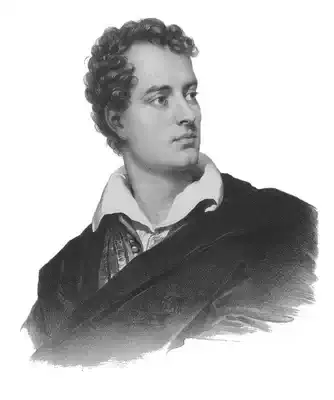
Lord Byron
The Corsair
The Corsair
'O'er the glad waters of the dark blue sea,
Our thoughts as boundless, and our soul's as free
Far as the breeze can bear, the billows foam,
Survey our empire, and behold our home!
These are our realms, no limits to their swayOur
flag the sceptre all who meet obey.
Ours the wild life in tumult still to range
From toil to rest, and joy in every change.
Oh, who can tell? not thou, luxurious slave!
Whose soul would sicken o'er the heaving wave;
Not thou, vain lord of wantonness and ease!
whom slumber soothes not pleasure
cannot please Oh,
who can tell, save he whose heart hath tried,
And danced in triumph o'er the waters wide,
The exulting sense the
pulse's maddening play,
That thrills the wanderer of that trackless way?
That for itself can woo the approaching fight,
And turn what some deem danger to delight;
That seeks what cravens shun with more than zeal,
And where the feebler faint can only feel Feel
to
the rising bosom's inmost core,
Its hope awaken and Its spirit soar?
No dread of death if with us die our foes Save
that it seems even duller than repose:
Come when it will we
snatch the life of life When
lost what
recks it but disease or strife?
Let him who crawls enamour'd of decay,
Cling to his couch, and sicken years away:
Heave his thick breath, and shake his palsied head;
Ours the
fresh turf; and not the feverish bed.
While gasp by gasp he falters forth his soul,
Ours with one pang one
bound escapes
control.
His corse may boast its urn and narrow cave,
And they who loath'd his life may gild his grave:
Ours are the tears, though few, sincerely shed,
When Ocean shrouds and sepulchres our dead.
For us, even banquets fond regret supply
In the red cup that crowns our memory;
And the brief epitaph in danger's day,
When those who win at length divide the prey,
And cry, Remembrance saddening o'er each brow,
How had the brave who fell exulted now!'
II.
Such were the notes that from the Pirate's isle
Around the kindling watchfire
rang the while:
Such were the sounds that thrill'd the rocks along,
And unto ears as rugged seem'd a song!
In scatter'd groups upon the golden sand,
They gamecarouseconverseor
whet the brand:
Select the armsto
each his blade assign,
And careless eye the blood that dims its shine.
Repair the boat, replace the helm or oar,
While others straggling muse along the shore:
For the wild bird the busy springes set,
Or spread beneath the sun the dripping net:
Gaze where some distant sail a speck supplies
With all the 'thirsting eve of Enterprise:
Tell o'er the tales of many a night of toil,
And marvel where they next shall seize a spoil:
No matter wheretheir
chief's allotment this;
Theirs, to believe no prey nor plan amiss.
But who that CHIEF? his name on every shore
Is famed and fear'd they
ask and know no more.
With these he mingles not but to command;
Few are his words, but keen his eye and hand.
Ne'er seasons he with mirth their jovial mess
But they forgive his silence for success.
Ne'er for his lip the purpling cup they fill,
That goblet passes him untasted still And
for his fare the
rudest of his crew
Would that, in turn, have pass'd untasted too;
Earth's coarsest bread, the garden's homeliest roots,
And scarce the summer luxury of fruits,
His short repast in humbleness supply
With all a hermit's board would scarce deny.
But while he shuns the grosser joys of sense,
His mind seems nourish'd by that abstinence.
'Steer to that shore! ' they
sail. 'Do this!' '
tis done:
'Now form and follow me!' the
spoil is won.
Thus prompt his accents and his actions still,
And all obey and few inquire his will;
So To such, brief answer and contemptuous eye
Convey reproof, nor further deign reply.
III.
'A sail! sail!
' a
promised prize to Hope!
Her nation flag
how
speaks the telescope?
No prize, alas! but yet a welcome sail:
The bloodred
signal glitters in the gale.
Yes she
is ours a
home returning
bark Blow
fair thou breeze! she
anchors ere the dark.
Already doubled is the cape our
bay
Receives that prow which proudly spurns the spray.
How gloriously her gallant course she goes!
Her white wings flying never
from her foesShe
walks the waters like a thing of life,
And seems to dare the elements to strife.
Who would not brave the battlefire,
the wreck,
To move the monarch of her peopled deck?
IV.
Hoarse o'er her side the rustling cable rings;
The sails are furl'd; and anchoring round she swings;
And gathering loiterers on the land discern
Her boat descending from the latticed stem.
'Tis mann'dthe
oars keep concert to the strand,
Till grates her keel upon the shallow sand.
Hail to the welcome shout! the
friendly speech!
When hand grasps hand uniting on the beach;
The smile, the question, and the quick reply,
And the heart's promise of festivity!
V.
The tidings spread, and gathering grows the crowd;
The hum of voices, and the laughter loud,
And woman's gentler anxious tone is heard Friends',
husbands', lovers' names in each dear word:
'Oh! are they safe? we ask not of success But
shall we see them? will their accents bless?
From where the battle roars, the billows chafe
They doubtless boldly did but
who are safe?
Here let them haste to gladden and surprise,
And kiss the doubt from these delighted eyes!'
VI.
'Where is our chief? for him we bear report And
doubt that joy which
hails our coming short;
Yet thus sincere, 'tis cheering, though so brief;
But, Juan! instant guide us to our chief:
Our greeting paid, we'll feast on our return,
And all shall hear what each may wish to learn.'
Ascending slowly by the rockhewn
way,
To where his watchtower
beetles o'er the bay,
By bushy brake, and wild flowers blossoming,
And freshness breathing from each silver spring,
Whose scatter'd streams from granite basins burst,
Leap into life, and sparkling woo your thirst;
From crag to cliff they mount Near
yonder cave,
What lonely straggler looks along the wave?
In pensive posture leaning on the brand,
Not oft a restingstaff
to that red hand?
'Tis he 'tis Conrad here,
as wont, alone;
On Juan!
on
and
make our purpose known.
The bark he views and
tell him we would greet
His ear with tidings he must quickly meet:
We dare not yet approachthou
know'st his mood
When strange or uninvited steps intrude.'
VII.
Him Juan sought, and told of their intent;He
spake not, but a sign express'd assent.
These Juan calls they
come to
their salute
He bends him slightly, but his lips are mute.
'These letters, Chief, are from the Greek the
spy,
Who still proclaims our spoil or peril nigh:
Whate'er his tidings, we can well report,
Much that' '
Peace, peace! ' he
cuts their prating short.
Wondering they turn, abash'd, while each to each
Conjecture whispers in his muttering speech:
They watch his glance with many a stealing look
To gather how that eye the tidings took;
But, this as if he guess'd, with head aside,
Perchance from some emotion, doubt, or pride,
He read the scroll '
My tablets, Juan' hark Where
is Gonsalvo?'
'In the anchor'd bark'
'There let him stay to
him this order bear Back
to your duty for
my course prepare:
Myself this enterprise tonight
will share.'
'Tonight,
Lord Conrad!'
'Ay! at set of sun:
The breeze will freshen when the day is done.
My corslet, cloak one
hour and we are gone.
Sling on thy bugle see
that free from rust
My carbinelock
springs worthy of my trust.
Be the edge sharpen'd of my boardingbrand,
And give its guard more room to fit my hand.
This let the armourer with speed dispose
Last time, it more fatigued my arm than foes:
Mark that the signalgun
be duly fired,
To tell us when the hour of stay's expired.'
VIII.
They make obeisance, and retire in haste,
Too soon to seek again the watery waste:
Yet they repine not so
that Conrad guides;
And who dare question aught that he decides?
That man of loneliness and mystery
Scarce seen to smile, and seldom heard to sigh;
Whose name appals the fiercest of his crew,
And tints each swarthy cheek with sallower hue;
Still sways their souls with that commanding art
That dazzles, leads, yet chills the vulgar heart.
What is that spell, that thus his lawless train
Confess and envy, yet oppose in vain?
What should it be, that thus their faith can bind?
The power of Thought the
magic of the Mind!
Link'd with success, assumed and kept with skill,
That moulds another's weakness to its will;
Wields with their hands, but, still to these unknown,
Makes even their mightiest deeds appear his own
Such hath it been shall be beneath
the sun
The many still must labour for the one!
'Tis Nature's doom but
let the wretch who toils
Accuse not, hate not him who wears the spoils.
Oh! if he knew the weight of splendid chains,
How light the balance of his humbler pains!
IX.
Unlike the heroes of each ancient race,
Demons in act, but Gods at least in face,
In Conrad's form seems little to admire,
Though his dark eyebrow shades a glance of fire:
Robust but not Herculean to
the sight
No giant frame sets forth his common height;
Yet, in the whole, who paused to look again,
Saw more than marks the crowd of vulgar men;
They gaze and marvel how and
still confess
That thus it is, but why they cannot guess.
Sunbumt
his cheek, his forehead high and pale
The sable curls in wild profusion veil;
And oft perforce his rising lip reveals
The haughtier thought it curbs, but scarce conceals
Though smooth his voice, and calm his general mien'
Still seems there something he would not have seen
His features' deepening lines and varying hue
At times attracted, yet perplex'd the view,
As if within that murkiness of mind
Work'd feelings fearful, and yet undefined
Such might it be that
none could truly tell Too
close inquiry his stern glance would quell.
There breathe but few whose aspect might defy
The full encounter of his searching eye;
He had the skill, when Cunning's gaze would seek
To probe his heart and watch his changing cheek
At once the observer's purpose to espy,
And on himself roll back his scrutiny,
Lest he to Conrad rather should betray
Some secret thought, than drag that chief's to day.
There was a laughing Devil in his sneer,
That raised emotions both of rage and fear;
And where his frown of hatred darkly fell,
Hope withering fled, and Mercy sigh'd farewell!
X.
Slight are the outward signs of evil thought,
Withinwithin'
twas there the spirit wrought!
Love shows all changesHate,
Ambition, Guile,
Betray no further than the bitter smile;
The lip's least curl, the lightest paleness thrown
Along the govern'd aspect, speak alone
Of deeper passions; and to judge their mien,
He, who would see, must be himself unseen.
Thenwith
the hurried tread, the upward eye,
The clenched hand, the pause of agony,
That listens, starting, lest the step too near
Approach intrusive on that mood of fear;
Thenwith
each feature working from the heart,
With feelings, loosed to strengthennot
depart,
That rise, convulse, contendthat
freeze, or glow
Flush in the' cheek, or damp upon the brow;
Then, Stranger! if thou canst, and tremblest not
Behold his soulthe
rest that soothes his lot!
Mark how that lone and blighted bosom sears
The scathing thought of execrated years!
Beholdbut
who hath seen, or e'er shall see,
Man as himselfthe
secret spirit free?
XI.
Yet was not Conrad thus by Nature sent
To lead the guiltyguilt's
worse instrumentHis
soul was changed, before his deeds had driven
Him forth to war with man and forfeit heaven
Warp'd by the world in Disappointment's school,
In words too wise, in conduct there a fool;
Too firm to yield, and far too proud to stoop,
Doom'd by his very virtues for a dupe,
He cursed those virtues as the cause of ill,
And not the traitors who betray'd him still;
Nor deem'd that gifts bestow'd on better men
Had left him joy, and means to give again
Fear'd, shunn'd, belied, ere youth had lost her force,
He hated man too much to feel remorse,
And thought the voice of wrath a sacred call,
To pay the injuries of some on all.
He knew himself a villainbut
he deem'd
The rest no better than the thing he seem'd
And scorn'd'the best as hypocrites who hid
Those deeds the bolder spirit plainly did.
He knew himself detested, but he knew
The hearts that loath'd him, crouch'd and dreaded too.
Lone, wild, and strange, he stood alike exempt
From all affection and from all contempt;
His name could sadden, and his acts surprise;
But they that fear'd him dared not to despise;
Man spurns the worm, but pauses ere he wake
The slumbering venom of the folded snake:
The first may turn, but not avenge the blow;
The last expires, but leaves no living foe;
Fast to the doom'd offender's form it clings,
And he may crushnot
conquerstill
it stings!
XII.
None are all evilquickening
round his heart
One softer feeling would not yet depart
Oft could he sneer at others as beguiled
By passions worthy of a fool or child;
Yet 'gainst that passion vainly still he strove,
And even in him it asks the name of Love!
Yes, it was loveunchangeableunchanged,
Felt but for one from whom he never ranged;
Though fairest captives daily met his eye,
He shunn'd, nor sought, but coldly pass'd them by;
Though many a beauty droop'd in prison'd bower,
None ever sooth'd his most unguarded hour.
Yesit
was Loveif
thoughts of tenderness
Tried in temptation, strengthen'd by distress
Unmoved by absence, firm in every clime,
And yetoh
more than all! untired by time;
Which nor defeated hope, nor baffled wile,
Could render sullen were she near to smile,
Nor rage could fire, nor sickness fret to vent
On her one murmur of his discontent;
Which still would meet with joy, with calmness part,
Lest that his look of grief should reach her heart;
Which nought removed, nor menaced to removeIf
there be love in mortalsthis
was love!
He was a villainay,
reproaches shower
On himbut
not the passion, nor its power,
Which only proved, all other virtues gone,
Not guilt itself could quench this loveliest one!
XIII.
He paused a momenttill
his hastening men
Pass'd the first winding downward to the glen.
'Strange tidings!many
a peril have I pass'd
Nor know I why this next appears the last!
Yet so my heart forebodes, but must not fear
Nor shall my followers find me falter here.
'Tis rash to meet, but surer death to wait
Till here they hunt us to undoubted fate;
And, if my plan but hold, and Fortune smile,
We'll furnish mourners for our funeral pile.
Ay, let them slumberpeaceful
be their dreams!
Morn ne'er awoke them with such brilliant beams
As kindle high toflight
(but blow, thou breeze!)
To warm these slow avengers of the sea
Now to MedoraOh!
my sinking heart,
Long may her own be lighter than thou art!
Yet was I bravemean
boast where all are brave!
Ev'n insects sting for aught they seek to save.
This common courage which with brutes we share
That owes its' deadliest efforts to despair,
Small merit claimsbut
'twas my nobler hope
To teach my few with numbers still to cope;
Long have I led themnot
to vainly bleed:
No medium nowwe
perish or succeed;
So let it beit
irks not me to die;
But thus to urge them whence they cannot fly.
My lot hath long had little of my care,
But chafes my pride thus baffled in the snare:
Is this my skill? my craft? to set at last
Hope, power, and life upon a single cast?
Oh' Fate!accuse
thy folly, not thy fate!
She may redeem thee still, not yet too late.'
XIV.
Thus with himself communion held he, till
He reach'd the summit of his towercrown'd hill:
There at the portal pausedor
wild and soft
He heard those accents never heard too oft
Through the high lattice far yet sweet they rung,
And these the notes his bird of beauty sung:
1.
'Deep in my soul that tender secret dwells,
Lonely and lost to light for evermore,
Save when to thine my heart responsive swells,
Then trembles into silence as before
2.
'There, in its centre' a sepulchral lamp
Burns the slow flame, eternal, but unseen;
Which not the darkness of despair can damp,
Though vain its ray as it had never been.
3.
'Remember meOh!
pass not thou my grave
Without one thought whose relics there recline
The only pang my bosom dare not brave
Must be to find forgetfulness in thine.
4.
'My fondest, faintest, latest accents hearGrief
for the dead not virtue can reprove;
Then give me all I ever ask'da
tear,
The firstlastsole
reward of so much love!'
He pass'd the portal, cross'd the corridor,
And reach'd the chamber as the strain gave o'er:
'My own Medora! sure thy song is sad'
'In Conrad's absence wouldst thou have it glad?
Without thine ear to listen to my lay,
Still must my song my thoughts, my soul betray:
Still must each action to my bosom suit,
My heart unhush'd, although my lips were mute!
Oh! many a night on this lone couch reclined,
My dreaming fear with storms hath wing'd the wind,
And deem'd the breath that faintly fann'd thy sail
The murmuring prelude of the ruder gale;
Though soft, it seem'd the low prophetic dirge,
That mourn'd thee floating on the savage surge;
Still would I rise to rouse the beacon fire,
Lest spies less true should let the blaze expire;
And many a restless hour outwatch'd each star,
And morning cameand
still thou wert afar.
Oh! how the chill blast on my bosom blew,
And day broke dreary on my troubled view,
And still I gazed and gazedand
not a prow
Was granted to my tears, my truth, my vow!
At length 'twas noonI
hail'd and blest the mast
That met my sightit
near'dAlas!
it pass'd!
Another cameOh
God! 'twas thine at last!
Would that those days were over! wilt thou ne'er,
My Conrad! learn the joys of peace to share?
Sure thou hast more than wealth, and many a home
As bright as this invites us not to roam:
Thou know'st it is not peril that I fear,
I only tremble when thou art not here;
Then not for mine, but that far dearer life,
Which flies from love and languishes for strifeHow
strange that heart, to me so tender still,
Should war with nature and its better will!'
'Yea, strange indeedthat
heart hath long been changed;
Wormlike
'twas trampled, adderlike
avenged,
Without one hope on earth beyond thy love,
And scarce a glimpse of mercy from above.
Yet the same feeling which thou dost condemn,
My very love to thee is hate to them,
So closely mingling here, that disentwined,
I cease to love thee when I love mankind:
Yet dread not this the
proof of all the past
Assures the future that my love will last;
But oh,
Medora! nerve thy gentler heart;
This hour againbut
not for longwe
part.'
'This hour we partmy
heart foreboded this:
Thus ever fade my fairy dreams of bliss.
This hourit
cannot bethis
hour away!
Yon bark hath hardly anchor'd in the bay:
Her consort still is absent, and her crew
Have need of rest before they toil anew:
My love! thou mock'st my weakness; and wouldst steel
My breast before the time when it must feel;
But trifle now no more with my distress,
Such mirth hath less of play than bitterness.
Be silent, Conrad! dearest!
come and share
The feast these hands delighted to prepare;
Light toil! to cull and dress thy frugal fare!
See, I have pluck'd the fruit that promised best,
And where not sure, perplex'd, but pleased, I guess'd
At such as seem'd the fairest; thrice the hill
My steps have wound to try the coolest rill;
Yes! thy sherbet tonight will sweetly flow,
See how it sparkles in its vase of snow!
The grapes' gay juice thy bosom never cheers;
Thou more than Moslem when the cup appears:
Think not I mean to chidefor
I rejoice
What others deem a penance is thy choice.
But come, the board is spread; our silver lamp
Is trimm'd, and heeds not the sirocco's damp:
Then shall my handmaids while the time along,
And join with me the dance, or wake the song;
Or my guitar, which still thou lov'st to hear'
Shall soothe or lullor,
should it vex thine ear
We'll turn the' tale, by Ariosto told,
Of fair Olympia loved and left of old.
Why, thou wert worse than he who broke his vow
To that lost damsel, shouldst thou leave me now;
Or even that traitor chiefI've
seen thee smile,
When the dear sky show'd Ariadne's Isle,
Which I have pointed from these cliffs the while:
And thus half sportive, half in fear, I said,
Lest time should rake that doubt to more than dread,
Thus Conrad, too, win quit me for the main;
And he deceived mefor
he came again!'
'Again, againand
oft againmy
love!
If there be life below, and hope above,
He will returnbut
now, the moments bring
The time of parting with redoubled wing:
The why, the where what
boots it now to tell?
Since all must end in that wild word farewell!
Yet would I faindid
time allow discloseFear
notthese
are no formidable foes
And here shall watch a more than wonted guard,
For sudden siege and long defence prepared:
Nor be thou lonely, though thy lord 's away,
Our matrons and thy handmaids with thee stay;
And this thy comfortthat,
when next we meet,
Security shall make repose more sweet.
List!'
tis the bugle! 'Juan
shrilly blew'
One kissone
moreanotherOh!
Adieu!'
She roseshe
sprungshe
clung to his embrace,
Till his heart heaved beneath her hidden face:
He dared not raise to his that deepblue
eye,
Which downcast droop'd in tearless agony.
Her long fair hair lay floating o'er his arms,
In all the wildness of dishevell'd charms;
Scarce beat that bosom where his image dwelt
So fullthat
feeling seem'd almost Unfelt!
Harkpeals
the thunder of the signalgun
It told 'twas sunset, and he cursed that sun.
Againagainthat
form he madly press'd,
Which mutely clasp'd, imploringly caress'd!
And tottering to the couch his bride he bore,
One moment gazed, as if to gaze no more;
Felt that for him earth held but her alone,
Kiss'd her cold foreheadturn'dis
Conrad gone?
XV.
'And is he gone?' on sudden solitude
How oft that fearful question will intrude
'Twas but an instant past, and here he stood!
And now 'without
the portal's porch she rush'd,
And then at length her tears in freedom gush'd;
Big, bright, and fast, unknown to her they fell;
But still her lips refused to send'
Farewell!'
For in that wordthat
fatal wordhowe'er
We promise, hope, believe, there breathes despair.
O'er every feature of that still, pale face,
Had sorrow fix'd what time can ne'er erase:
The tender blue of that large loving eye
Grew frozen with its gaze on vacancy,
TillOh?
how far!it
caught a glimpse of him,
And then it flow'd, and phrensied seem'd to swim
Through those' long, dark, and glistening lashes dew'd
With drops of sadness oft to be renew'd.
'He's gone! 'against
her heart that hand is driven,
Convulsed and quickthen
gently raised to heaven:
She look'd and saw the heaving of the main;
The white sail set she dared not look again;
But turn'd with sickening soul within the gate
'It is no dream and
I am desolate!'
XVI.
From crag to crag descending, swiftly sped
Stern Conrad down, nor once he turn'd his head;
But shrunk whene'er the windings of his way
Forced on his eye what he would not survey,
His lone but lovely dwelling on the steep,
That hail'd him first when homeward from the deep
And shethe
dim and melancholy star,
Whose ray of beauty reach'd him from afar
On her he must not gaze, he must not think,
There he might restbut
on Destruction's brink:
Yet once almost he stopp'd, and nearly gave
His fate to chance, his projects to the wave:
But noit
must not bea
worthy chief
May melt, but not betray to woman's grief.
He sees his bark, he notes how fair the wind,
And sternly gathers all his might of mind:
Again he hurries onand
as he hears
The dang of tumult vibrate on his ears,
The busy sounds, the bustle of the shore,
The shout, the signal, and the dashing oar;
As marks his eye the seaboy on the mast,
The anchors rise, the sails unfurling fast,
The waving kerchiefs of the crowd that urge
That mute adieu to those who stem the surge;
And more than all, his bloodred
flag aloft,
He marvell'd how his heart could seem so soft.
Fire in his glance, and wildness in his breast
He feels of all his former self possest;
He bounds he
fliesuntil
his footsteps reach
The verge where ends the cliff, begins the beach,
There checks his speed; but pauses less to breathe
The breezy freshness of the deep beneath,
Than there his wonted statelier step renew;
Nor rush, disturb'd by haste, to vulgar view:
For well had Conrad learn'd to curb the crowd,
By arts that veil and oft preserve the proud;
His was the lofty port, the distant mien,
That seems to shun the sightand
awes if seen:
The solemn aspect, and the highborn
eye,
That checks low mirth, but lacks not courtesy;
All these he wielded to command assent:
But where he wish'd to win, so well unbent
That kindness cancell'd fear in those who heard,
And others' gifts show'd mean beside his word,
When echo'd to the heart as from his own
His deep yet tender melody of tone:
But such was foreign to his wonted mood,
He cared not what he soften'd, but subdued:
The evil passions of his youth had made
Him value less who lovedthan
what obey'd.
XVII.
Around him mustering ranged his ready guard,
Before him Juan stands '
Are all prepared?'
They are nay
more embark'd:
the boats
Waits but my Chief'
My sword, and my capote.'
Soon firmly girded on, and lightly slung,
His belt and cloak were o'er his shoulders flung:
'Call Pedro here!' He comes and
Conrad bends,
With all the courtesy he deign'd his friends;
'Receive these tablets, and peruse with care,
Words of high trust and truth are graven there;
Double the guard, and when Anselmo's bark
Arrives, let him alike these orders mark:
In three days (serve the breeze) the sun shall shine
On our return till
then all peace be thine!'
This said, his brother Pirate's hand he wrung,
Then to his boat with haughty gesture sprung.
Flash'd the dipt oars, and sparkling with the stroke,
Around the waves' phosphoric brightness broke;
They gain the vessel on
the deck he stands, Shrieks
the shrill whistle, ply the busy hands He
marks how well the ship her helm obeys,
How gallant all her crew, and deigns to praise.
His eyes of pride to young Gonsalvo turn Why
doth he start, and inly seem to mourn?
Alas! those eyes beheld his rocky tower
And live a moment o'er the parting hour;
She his
Medora did
she mark the prow?
Ah! never loved he half so much as now!
But much must yet be done ere dawn of day Again
he mans himself and turns away;
Down to the cabin with Gonsalvo bends,
And there unfolds his plan, his means, and ends;
Before them burns the lamp, and spreads the chart,
And all that speaks and aids the naval art;
They to the midnight watch protract debate;
To anxious eyes what hour is ever late?
Meantime, the steady breeze serenely blew,
And fast and falconlike
the vessel flew;
Pass'd the high headlands of each clustering isle,
To gain their port long
long
ere morning smile:
And soon the nightglass
through the narrow bay
Discovers where the Pacha's galleys lay.
Count they each sail, and mark how there supine
The lights in vain o'er heedless Moslem shine.
Secure, unnoted, Conrad's prow pass'd by,
And anchor'd where his ambush meant to lie;
Screen'd from espial by the jutting cape,
That rears on high its rude fantastic shape.
Then rose his band to duty not
from sleep Equipp'd
for deeds alike on land or deep;
While lean'd their leader o'er the fretting flood,
And calmly talk'dand
yet he talk'd of blood!
CANTO THE SECOND
'Conoscestci dubiosi desiri?'~Dante
I.
IN Coron's bay floats many a galley light,
Through Coron's lattices the lamps are bright
For Seyd, the Pacha, makes a feast tonight:
A feast for promised triumph yet to come,
When he shall drag the fetter'd Rovers home;
This hath he sworn by Allah and his sword,
And faithful to his firman and his word,
His summon'd prows collect along the coast,
And great the gathering crews, and loud the boast;
Already shared the captives and the prize,
Though far the distant foe they thus despise
'Tis but to sail no
doubt tomorrow's
Sun
Will see the Pirates bound, their haven won!
Meantime the watch may slumber, if they will,
Nor only wake to war, but dreaming kill.
Though all, who can, disperse on shore and seek
To flesh their glowing valour on the Greek;
How well such deed becomes the turban'd brave To
bare the sabre's edge before a slave!
Infest his dwelling but
forbear to slay,
Their arms are strong, yet merciful today,
And do not deign to smite because they may!
Unless some gay caprice suggests the blow,
To keep in practice for the coming foe.
Revel and rout the evening hours beguile,
And they who wish to wear a head must smile
For Moslem mouths produce their choicest cheer,
And hoard their curses, till the coast is clear.
II.
High in his hall reclines the turban'd Seyd;
Aroundthe
bearded chiefs he came to lead.
Removed the banquet, and the last pilaff Forbidden
draughts, 'tis said, he dared to quaff,
Though to the rest the sober berry's juice
The slaves bear round for rigid Moslems' use;
The long chibouque's dissolving cloud supply,
While dance the Almas to wild minstrelsy.
The rising morn will view the chiefs embark;
But waves are somewhat treacherous in the dark:
And revellers may more securely sleep
On silken couch than o'er the rugged deep:
Feast there who can nor
combat till they must,
And less to conquest than to Korans trust:
And yet the numbers crowded in his host
Might warrant more than even the Pacha's boast.
III.
With cautious reverence from the outer gate
Slow stalks the slave, whose office there to wait,
Bows his bent head, his hand salutes the floor,
Ere yet his tongue the trusted tidings bore:
'A captive Dervise, from the Pirate's nest
Escaped, is here himself
would tell the rest.'
He took the sign from Seyd's assenting eye,
And led the holy man in silence nigh.
His arms were folded on his darkgreen
vest,
His step was feeble, and his look deprest;
Yet worn he seem'd of hardship more than years,
And pale his cheek with penance, not from fears.
Vow'd to his God his
sable locks he wore,
And these his lofty cap rose proudly o'er:
Around his form his loose long robe was thrown
And wrapt 'a breast bestow'd on heaven alone;
Submissive, yet with selfpossession
mann'd,
He calmly, met the curious eyes that scann d;
And question of his coming fain would seek,
Before the Pacha's will allow'd to speak.
IV.
Whence com'st thou, Dervise?'
'From the outlaw's den,
A fugitive '
'Thy capture where and when?'
From Scalanova's port to Scio's isle,
The Saick was bound; but Allah did not smile
Upon our course the
Moslem merchant's gains
The Rovers won; our limbs have worn their chains.
I had no death to fear, nor wealth to boast
Beyond the wandering freedom which I lost;
At length a fisher's humble boat by night
Afforded hope, and offer'd chance of flight;
I seized the hour, and find my safety here With
thee most
mighty Pacha! who can fear?'
'How speed the outlaws? stand they well prepared,
Their plunder'd wealth, and robber's rock, to guard?
Dream they of this our preparation, doom'd
To view with fire their scorpion nest consumed?'
'Pacha! the fetter'd captive's mourning eye,
That weeps for flight, but ill can play the spy;
I only heard the reckless waters roar
Those waves that would not bear me from the shore;
I only mark'd the glorious sun and sky,
Too bright, too blue, or my captivity;
And felt that all which Freedom's bosom cheers
Must break my chain before it dried my tears.
This may'st thou judge, at least, from my escape,
They little deem of aught in peril's shape;
Else vainly had I pray'd or sought the chance
That leads me here if
eyed with vigilance
The careless guard that did not see me fly
May watch as idly when thy power is nigh.
Pacha! my limbs are faint and
nature craves
Food for my hunger, rest from tossing waves:
Permit my absence peace
be with thee! Peace
With all around! now
grant repose release.'
'Stay, Dervise! I have more to question stay,
I do command thee sit
dost
hear? obey!
More I must ask, and food the slaves shall bring
Thou shalt not pine where all are banqueting:
The supper done prepare
thee to reply,
Clearly and full I
love not mystery.'
'Twere vain to guess what shook the pious man,
Who look'd not lovingly on that Divan;
Nor show'd high relish for the banquet prest,
And less respect for every fellow guest.
'Twas but a moment's peevish hectic pass'd
Along his cheek, and tranquillised as fast:
He sate him down in silence, and his look
Resumed the calmness which before forsook:
This feast was usher'd in, but sumptuous fare
He shunn'd as if some poison mingled there.
For one so long condemn'd to toil and fast,
Methinks he strangely spares the rich repast.
'What ails thee, Dervise? eat dost
thou suppose
This feast a Christian's? or my friends thy foes?
Why dost thou shun the salt? that sacred pledge,
Which once partaken, blunts the sabre's edge,
Makes ev'n contending tribes in peace unite,
And hated hosts seem brethren to the sight!'
'Salt seasons daintiesand
my food is still
The humblest root, my drink the simplest rill;
And my stern vow and order's laws oppose
To break or mingle bread with friends or foes;
It may seem strange if
there be aught to dread,
That peril rests upon my single head;
But for thy sway nay
more thy
Sultan's throne,
I taste nor bread nor banquet save
alone;
Infringed our order's rule, the Prophet's rage
To Mecca's dome might bar my pilgrimage.'
'Well as
thou wilt ascetic
as thou art One
question answer; then in peace depart.
How many ? Ha!
it cannot sure be day?
What star what
sun is bursting on the bay?
It shines a lake of fire ! away
away!
Ho! treachery! my guards! my scimitar!
The galleys feed the flames and
I afar!
Accursed Dervise! these
thy tidings thou
Some villain spyseize
cleave him slay
him now!'
Up rose the Dervise with that burst of light,
Nor less his change of form appall'd the sight:
Up rose that Dervise not
in saintly garb,
But like a warrior bounding on his barb,
Dash'd his high cap, and tore his robe away Shone
his mail'd breast, and flash'd his sabre's ray!
His dose but glittering casque, and sable plume,
More glittering eye, and black brow's sabler gloom,
Glared on the Moslems' eyes some Afrit sprite,
Whose demon deathblow
left no hope for fight.
The wild confusion, and the swarthy glow
Of flames on high, and torches from below;
The shriek of terror, and the mingling yell For
swords began to dash' and shouts to swell
Flung o'er that spot of earth the air of hell!
Distracted, to and fro, the flying slaves
Behold but bloody shore and fiery waves;
Nought heeded they the Pacha's angry cry,
They seize that Dervise!seize
on Zatanai!
He saw their terrorcheck'd
the first dispair
That urged him but to stand and perish there,
Since far too early and too well obey'd,
The flame was kindled ere the signal made;
He saw their terror from
his baldric drew
His
buglebrief
the blastbut
shrilly blew;
'Tis answered'
Well ye speed, my gallant crew!
Why did I doubt their quickness of career?
And deem design had left me single here?'
Sweeps his long armthat
sabre's whirling sway
Sheds fast atonement for its first delay;
Completes his fury what their fear begun,
And makes the many basely quail to one.
The cloven turbans o'er the chamber spread,
And scarce an arm dare rise to guard its head:
Even Seyd, convulsed, o'erwhelm'd, with rage surprise,
Retreats before him, though he still defies.
No craven he and
yet he dreads the blow,
So much Confusion magnifies his foe!
His blazing galleys still distract his sight,
He tore his beard, and foaming fled the fight;
For now the pirates pass'd the Haram gate,
And burst within and
it were death to wait
Where wild Amazement shrieking kneeling
throws
The sword aside in
vain the blood o'erflows!
The Corsairs pouring, haste to where within
Invited Conrad's bugle, and the din
Of groaning victims, and wild cries for life,
Proclaim'd how well he did the work of strife.
They shout to find him grim and lonely there,
A glutted tiger mangling in his lair!
But short their greeting, shorter his reply
'Tis well but Seyd escapes, and he must dieMuch
hath been done, but more remains to do Their
galleys blaze why
not their city too?'
V.
Quick at the word they seized him each a torch'
And fire the dome from minaret to porch.
A stern delight was fix'd in Conrad's eye,
But sudden sunk for
on his ear the cry
Of women struck, and like a deadly knell
Knock'd at that heart unmoved by battle's yell.
'Oh! burst the Haram wrong
not on your lives
One female form remember we
have wives.
On them such outrage Vengeance will repay;
Man is our foe, and such 'tis ours to slay:
But still we spared must
spare the weaker prey.
Oh! I forgot but
Heaven will not forgive
If at my word the helpless cease to live;
Follow who will I
go we
yet have time
Our souls to lighten of at least a crime.'
He climbs the crackling stair, he bursts the door,
Nor feels his feet glow scorching with the floor;
His breath choked gasping with the volumed smoke,
But still from room to room his way he broke.
They search they
find they
save: with lusty arms
Each bears a prize of unregarded charms;
Calm their loud fears; sustain their sinking frames
With all the care defenceless beauty claims
So well could Conrad tame their fiercest mood,
And check the very hands with gore imbrued.
But who is she? whom Conrad's arms convey
From reeking pile and combat's wreck away Who
but the love of him he dooms to bleed?
The Haram queen but
still the slave of Seyd!
VI.
Brief time had Conrad now to greet Gulnare,
Few words to reassure
the trembling fair
For in that pause compassion snatch'd from war,
The foe before retiring, fast and far,
With wonder saw their footsteps unpursued,
First slowlier fled then
rallied then
withstood.
This Seyd perceives, then first perceives how few?
Compared with his, the Corsair's roving crew,
And blushes o'er his error, as he eyes
The ruin wrought by panic and surprise.
Alla il Alla! Vengeance swells the cry Shame
mounts to rage that must atone or die!
And flame for flame and blood for blood must tell,
The tide of triumph ebbs that flow'd too well When
wrath returns to renovated strife,
And those who fought for conquest strike for life
Conrad beheld the danger he
beheld
His followers faint by freshening foes repell'd:
'One effort one
to
break the circling host!'
They form unite
charge
waver
all
is lost!
Within a narrower ring compress'd, beset,
Hopeless, not heartless, strive and struggle yet Ah!
now they fight in firmest file no more,
Hemm'd in, cut off, cleft down, and trampled o'er,
But each strikes singly, silently, and home,
And sinks outwearied rather than o'ercome,
His last faint quittance rendering with his breath,
Till the blade glimmers in the grasp of death!
VII.
But first, ere came the rallying host to blows,
And rank to rank, and hand to hand oppose,
Gulnare and all her Haram handmaids freed,
Safe in the dome of one who held their creed,
By Conrad's mandate safely were bestow'd
And dried those tears for life and fame that flow'd:
And when that darkeyed
lady, young Gulnare
Recall'd those thoughts late wandering in despair
Much did she marvel o'er the courtesy
That smooth'd his accents, soften'd in his eye:
'Twas strangethat
robber thus with gore bedew'd
Seem'd gentler then than Seyd in fondest mood.
The Pacha woo'd as if he deem'd the slave
Must seem delighted with the heart he gave
The Corsair vow'd protection, soothed affright
As if his homage were a woman's right.
'The wish is wrongnay,
worse for female vain:
Yet much I long to view that chief again;
If but to thank for, what my fear forget,
The life my loving lord remember'd not!'
VIII.
And him she saw, where thickest carnage spread,
But gather'd breathing from the happier dead;
Far from his band, and battling with a host
That deem right dearly won the field he lost,
Fell'd bleeding
baffled
of the death he sought,
And snatch'd to expiate all the ills he wrought;
Preserved to linger and to live in vain,
While Vengeance ponder'd o'er new plans of pain,
And stanch'd the blood she saves to shed again But
drop for drop, for Seyd's unglutted eye
Would doom him ever dying ne'er
to die!
Can this be he? triumphant late she saw
When his red hand's wild gesture waved a law!
'Tis he indeed disarm'd
but undeprest,
His sole regret the life he still possest;
His wounds too slight, though taken with that will,
Which would have kiss'd the hand that then could kill.
Oh were there none, of all the many given,
To send his soul he
scarcely ask'd to heaven?
Must he alone of all retain his breath,
Who more than all had striven and struck for death?
He deeply felt what
mortal hearts must feel,
When thus reversed on faithless fortune's wheel,
For crimes committed, and the victor's threat
Of lingering tortures to repay the debt He
deeply, darkly felt; but evil pride
That led to perpetrate, now serves to hide.
Still in his stern and selfcollected
mien
A conqueror's more than captive's air is seen
Though faint with wasting toil and stiffening wound,
But few that saw so
calmly gazed around:
Though the far shouting of the distant crowd,
Their tremors o'er, rose insolently loud,
The better warriors who beheld him near,
Insulted not the foe who taught them fear;
And the grim guards that to his durance led,
In silence eyed him with a secret dread
IX.
The Leech was sentbut
not in mercy there,
To note how much the life yet left could bear;
He found enough to load with heaviest chain,
And promise feeling for the wrench of pain;
Tomorrow
yea
tomorrow's
evening gun
Will sinking see impalement's pangs begun'
And rising with the wonted blush of morn
Behold how well or ill those pangs are borne.
Of torments this the longest and the worst,
Which adds all other agony to thirst,
That day by day death still forbears to slake,
While famish'd vultures flit around the stake.
'Oh! Water water!
' smiling Hate denies
The victim's prayer, for if he drinks he dies.
This was his doom; the
Leech, the guard were gone,
And left proud Conrad fetter'd and alone.
X.
'Twere vain to paint to what his feelings grew It
even were doubtful if their victim knew.
There is a war, a chaos of the mind,
When all its elements convulsed, combined,
Lie dark and jarring with perturbed force,
And gnashing with impenitent Remorse That
juggling fiend, who never spake before
But cries 'I warn'd thee!' when the deed is o'er.
Vain voice! the spirit burning but unbent
May writhe, rebel the
weak alone repent!
Even in that lonely hour when most it feels,
And, to itself; all, all that self reveals,No
single passion, and no ruling thought
That leaves the rest, as once, unseen, unsought,
But the wild prospect when the soul reviews,
All rushing through their thousand avenues Ambition's
dreams expiring, love's regret,
Endanger'd glory, life itself beset;
The joy untasted, the contempt or hate
'Gainst those who fain would triumph in our fate
The hopeless' past, the hasting future driven
Too quickly on to guess of hell or heaven;
Deeds, thoughts, and words, perhaps remember'd not
So keenly till that hour, but ne'er forgot;
Things light or lovely in their acted time,
But now to stern reflection each a crime;
The withering sense of evil unreveal'd,
Not cankering less because the more con ceal'd All,
in a word, from which all eyes must start,
That opening sepulchre the
naked heart
Bares with its buried woes, till Pride awake,
To snatch the mirror from the souland
break.
Ay, Pride can veil, and Courage brave it all All
all
before
beyond
the
deadliest fall.
Each hath some fear, and he who least betrays,
The only hypocrite deserving praise:
Not the loud recreant wretch who boasts and flies;
But he who looks on deathand
silent dies.
So steel'd by pondering o'er his far career,
He halfway
meets him should he menace near!
XI.
In the high chamber of his highest tower
Sate Conrad, fetter'd in the Pacha's power.
His palace perish'd in the flame this
fort
Contain'd at once his captive and his court.
Not much could Conrad of his sentence blame,
His foe, if vanquish'd, had but shared the same:Alone
he satein
solitude had scann'd
His guilty bosom, but that breast he mann'd:
One thought alone he could not dared
not meet '
Oh, how these tidings will Medora greet?'
Then only
then his
clanking hands he raised,
And strain'd with rage the chain on which he gazed
But soon he found, or feign'd, or dream'd relief,
And smiled in selfderision
of his grief,
'And now come torture when it will or
may,
More need of rest to nerve me for the day!'
This said, with languor to his mat he crept,
And, whatsoe'er his visions, quickly slept
'Twas hardly midnight when that fray begun,
For Conrad's plans matured, at once were done:
And Havoc loathes so much the waste of time,
She scarce had left an uncommitted crime.
One hour beheld him since the tide he stemm'd Disguised,
discover'd, conquering, ta'en, condemn'd A
chief on land, an outlaw on the deep
Destroying, saving, prison'd, and asleep!
XII.
He slept in calmest seeming, for his breath
Was hush'd so deep Ah!
happy if in death!
He slept Who
o'er his placid slumber bends?
His foes are gone, and here he hath no friends;
Is it some seraph sent to grant him grace?
No, 'tis an earthly form with heavenly face!
Its white arm raised a lamp yet
gently hid,
Lest the ray flash abruptly on the lid
Of that closed eye, which opens but to pain,
And once unclosed but
once may close again
That form, with eye so dark, and cheek so fair,
And auburn waves of gemm'd and braided hair;
With shape of fairy lightness naked
foot,
That shines like snow, and falls on earth as mute Through
guards and dunnest night how came it there?
Ah! rather ask what will not woman dare?
Whom youth and pity lead like thee, Gulnare!
She could not sleep and
while the Pacha's rest
In muttering dreams yet saw his pirateguest
She left his side his
signetring
she bore
Which oft in sport adorn'd her hand before And
with it, scarcely question'd, won her way
Through drowsy guards that must that sign obey.
Worn out with toil, and tired with changing blows
Their eyes had' envied Conrad his repose;
And chill and nodding at the turret door,
They stretch their listless limbs, and watch no more;
Just raised their heads to hail the signetring,
Nor ask or what or who the sign may bring.
XIII.
She gazed in wonder, 'Can he calmly sleep,
While other eyes his fall or ravage weep?
And mine in restlessness are wandering here What
sudden spell hath made this man so dear?
True'
tis to him my life, and more, I owe,
And me and mine he spared from worse than woe:
'Tis late to think but
soft, his slumber breaks How
heavily he sighs! he
starts awakes!'
He raised his head, and dazzled with the light,
His eye seem'd dubious if it saw aright:
He moved his hand the
grating of his chain
Too harshly told him that he lived again.
'What is that form? if not a shape of air,
Methinks, my jailor's face shows wondrous fair!'
'Pirate! thou know'st me notbut
I am one,
Grateful for deeds thou hast too rarely done;
Look on me and
remember her, thy hand
Snatch'd from the flames, and thy more fearful band.
I come through darkness and I scarce know why Yet
not to hurt I
would not see thee die'
'If so, kind lady! thine the only eye
That would not here in that gay hope delight:
Theirs is the chance and
let them use their right.
But still I thank their courtesy or thine,
That would confess me at so fair a shrine!'
Strange though it seem yet
with extremest grief
Is link'd a mirth it
doth not bring relief That
playfulness of Sorrow ne'er beguiles,
And smiles in bitterness but
still it smiles;
And sometimes with the wisest and the best,
Till even the scaffold echoes with their jest!
Yet not the joy to which it seems akin It
may deceive all hearts, save that within.
Whate'er it was that flash'd on Conrad, now
A laughing wildness half unbent his brow
And these his accents had a sound of mirth,
As if the last he could enjoy on earth;
Yet 'gainst his nature for
through that short life,
Few thoughts had he to spare from gloom and strife.
XIV.
'Corsair! thy doom is named but
I have power
To soothe the Pacha in his weaker hour.
Thee would I spare nay
more would
save thee now,
But this time
hope
nor
even thy strength allow;
But all I can, I will: at least, delay
The sentence that remits thee scarce a day.
More now were ruin even
thyself were loth
The vain attempt should bring but doom to both.'
'Yes! loth indeed:my
soul is nerved to all,
Or fall'n too low to fear a further fall:
Tempt not thyself with peril me
with hope
Of flight from foes with whom I could not cope:
Unfit to vanquish, shall I meanly fly,
The one of all my band that would not die?
Yet there is one to whom my memory clings,
Till to these eyes her own wild softness springs.
My sole resources in the path I trod
Were these my
bark, my sword, my love, my God!
The last I left in youth! he
leaves me now And
Man but works his will to lay me low.
I have no thought to mock his throne with prayer
Wrung from the coward crouching of despair;
It is enough I
breathe, and I can bear.
My sword is shaken from the worthless hand
That might have better kept so true a brand;
My bark is sunk or captive but
my love For
her in sooth my voice would mount above:
Oh! she is all that still to earth can bind And
this will break a heart so more than kind,
And blight a form till
thine appear'd, Gulnare!
Mine eye ne'er ask'd if others were as fair.'
'Thou lov'st another then? but
what to me
Is this '
tis nothing nothing
e'er can be:
But yet thou
lov'st and
Oh!
I envy those
Whose hearts on hearts as faithful can repose,
Who never feel the voidthe
wandering thought
That sighs o'er vision~such as mine hath wrought.'
'Lady methought thy love was his, for whom
This arm redeem'd thee from a fiery tomb.
'My love stern Seyd's! Oh No
No
not
my love Yet
much this heart, that strives no more, once strove
To meet his passion but it would not be.
I felt I
feel love
dwells with with
the free.
I am a slave, a favour'd slave at best,
To share his splendour, and seem very blest!
Oft must my soul the question undergo,
Of '
Dost thou love?' and burn to answer, 'No!'
Oh! hard it is that fondness to sustain,
And struggle not to feel averse in vain;
But harder still the heart's recoil to bear,
And hide from one perhaps
another there.
He takes the hand I give not, nor withhold Its
pulse nor check'd, nor quicken'dcalmly
cold:
And when resign'd, it drops a lifeless weight
From one I never loved enough to hate.
No warmth these lips return by his imprest,
And chill'd remembrance shudders o'er the rest.
Yes had
lever proved that passion's zeal,
The change to hatred were at least to feel:
But still he goes unmourn'd, returns unsought,
And oft when present absent
from my thought.
Or when reflection comes and
come it must I
fear that henceforth 'twill but bring disgust;
I am his slave but,
in despite of pride,
'Twere worse than bondage to become his bride.
Oh! that this dotage of his breast would cease:
Or seek another and give mine release,
But yesterday I
could have said, to peace!
Yes, if unwonted fondness now I feign,
Remember captive! 'tis to break thy chain;
Repay the life that to thy hand I owe
To give thee back to all endear'd below,
Who share such love as I can never know.
Farewell, morn breaks, and I must now away:
'Twill cost me dear but
dread no death today!'
XV.
She press'd his fetter'd fingers to her heart,
And bow'd her head, and turn'd her to de part,
And noiseless as a lovely dream is gone.
And was she here? and is he now alone?
What gem hath dropp'd and sparkles o'er his chain?
The tear most sacred, shed for others' pain,
That starts at once bright
pure
from
Pity's mine
Already polish'd by the hand divine!
Oh! too convincing deangerously
dear In
woman's eye the unanswerable tear
That weapon of her weakness she can wield,
To save, subdue at once her spear and shield:
Avoid it Virtue
ebbs and Wisdom errs,
Too fondly gazing on that grief of hers!
What lost a world, and bade a hero fly?
The timid tear in Cleopatra's eye.
Yet be the soft triumvir's fault forgiven;
By this how
many lose not earth but
heaven!
Consign their souls to man's eternal foe,
And seal their own to spare some wanton's woe!
XVI.
'Tis morn, and o'er his alter'd features play
The beams without
the hope of yesterday.
What shall he be ere night? perchance a thing
O'er which the raven flaps her funeral wing
By his closed eye unheeded and unfelt;
While sets that sun, and dews of evening melt,
Chin wet, and misty round each stiffen'd limb,
Refreshing earth reviving
all but him!
CANTO THE THIRD
'Come vedi ancor
non m'abbandona'~Dante
I.
Slow sinks, more lovely ere his race be run,
Along Morea's hills the setting sun;
Not, as in Northern climes, obscurely bright,
But one unclouded blaze of living light!
O'er the hush'd deep the yellow beam he throws,
Gilds the green wave, that trembles as it glows.
On old Ægina's rock and Idra's isle,
The god of gladness sheds his parting smile;
O'er his own regions lingering, loves to shine,
Though there his altars are no more divine.
Descending fast the mountain shadows kiss
Thy glorious gulf; unconquer'd Salamis!
Their azure arches through the long expanse
More deeply purpled meet his mellowing glance,
And tenderest tints, along their summits driven,
Mark his gay course, and own the hues of heaven;
Tm, darkly shaded from the land and deep,
Behind his Delphian cliff he sinks to sleep.
On such an eve, his palest beam he cast,
When Athens!
here thy Wisest look'd his last.
How watch'd thy better sons his farewell ray,
That closed their murder'd sage's latest day!
Not yet not
yet Sol
pauses on the hill
The precious hour of parting lingers still;
But sad his light to agonising eyes,
And dark the mountain's once delightful dyes:
Gloom o'er the lovely land he seem'd to pour,
The land, where Phoebus never frown'd before;
But ere he sank below Cithæron's head,
The cup of woe was quaff'd the
spirit fled
The soul of him who scorn'd to fear or fly Who
lived and died, as none can live or die!
But lo! from high Hymettus to the plain,
The queen of night asserts her silent reign.
No murky vapour, herald of the storm,
Hides her fair face, nor girds her glowing form:
With cornice glimmering as the moonbeams
play,
There the white column greets her grateful ray,
And, bright around with quivering beams beset,
Her emblem sparkles o'er the minaret:
The groves of olive scatter'd dark and wide
Where meek Cephisus pours his scanty tide,
The cypress saddening by the sacred mosque,
The gleaming turret of the gay kiosk,
And, dun and sombre 'mid the holy calm,
Near Theseus' fane yon solitary palm,
All tinged with varied hues arrest the eye And
dull were his that pass'd them heedless by.
Again the Ægean, heard no more afar,
Lulls his chafed breast from elemental war;
Again his waves in milder tints unfold
Their long array of sapphire and of gold,
Mix'd with the shades of many a distant isle,
That frown where
gentler ocean seems to smile.
II.
Not now my themewhy
turn my thoughts to thee?
Oh! who can look along thy native sea.
Nor dwell upon thy name, whate'er the tale
So much its magic must o'er all prevail?
Who that beheld that Sun upon thee set,
Fair Athens! could thine evening face for get?
Not he whose
heart nor time nor distance frees,
Spellbound
within the clustering Cyclades!
Nor seems this homage foreign to its strain,
His Corsair's isle was once thine own domain Would
that with freedom it were thine again!
III.
The Sun hath sunk and,
darker than the night,
Sinks with its beam upon the beacon height
Medora's heart the
third day's come and gone With
it he comes not sends
not faithless
one!
The wind was fair though light; and storms were none. 70
Last eve Anselmo's bark return'd, and yet
His only tidings that they had not met!
Though wild, as now, far different were the tale
Had Conrad waited for that single sail.
The nightbreeze
freshens she
that day had pass'd
In watching all that Hope proclaim'd a mast;
Sadly she sate on high Impatience
bore
At last her footsteps to the midnight shore,
And there she wander'd, heedless of the spray
That dash'd her garments oft, and warn'd away:
She saw not, felt not this nor
dared depart,
Nor deem'd it cold her
chill was at her heart;
Till grew such certainty from that suspense
His very sight had shock'd from life or sense!
It came at last a
sad and shatter'd boat,
Whose inmates first beheld whom first they sought;
Some bleeding all
most wretched these
the few Scarce
knew they how escaped this
all they knew.
In silence, darkling, each appear'd to wait
His fellow's mournful guess at Conrad's fate:
Something they would have said; but seem'd to fear
To trust their accents to Medora's ear.
She saw at once, yet sunk not trembled
not Beneath
that grief, that loneliness of lot;
Within that meek fair form were feelings high,
That deem'd not, till they found, their energy
While yet was Hope they soften'd, flutter'd wept All
lost that
softness died not but
it slept;
And o'er its slumber rose that Strength which said,
'With nothing left to love, there's nought to dread.'
'Tis more than nature's; like the burning 'night
Delirium gathers from the fever's height.
'Silent you stand nor
would I hear you tell
What speak
not breathe
not for
I know it well Yet
would I ask almost
my lip denies
The quick
your answer tell
me where he lies.'
'Lady! we know not scarce
with life we fled
But here is one denies that he is dead:
He saw him bound: and bleeding but
alive.'
She heard no further '
twas in vain to strive So
throbb'd each vein each
thought till
then withstood;
Her own dark soul these
words at once subdued:
She totters falls
and
senseless had the wave
Perchance but snatched her from another grave,
But that with hands though rude, yet weeping eyes,
They yield such aid as Pity's haste supplies:
Dash o'er her deathlike cheek the ocean dew,
Raise, fan, sustaintill
life returns anew;
Awake her handmaids, with the matrons leave
That fainting form o'er which they gaze and grieve;
Then seek Anselmo's cavern, to report
The tale too tedious when
the triumph short.
IV.
In that wild council words wax'd warm and strange
With thoughts of ransom, rescue, and revenge;
All, save repose or flight: still lingering there
Breathed Conrad's spirit, and forbade despair
Whate'er his fate the
breasts he form'd and led
Will save him living, or appease him dead
Woe to his foes! there yet survive a few
Whose deeds are daring, as their hearts are true.
V.
Within the Haram's Secret chamber sate
Stern Seyd, still pondering o'er his Captive's fate;
His thoughts on love and hate alternate dwell,
Now with Gulnare, and now in Conrad's cell;
Here at his feet the lovely slave reclined
Surveys his brow would
soothe his gloom of mind;
While many an anxious glance her large dark eye
Sends in its idle search for sympathy,
His only bends in seeming o'er his beads,
But inly views his victim as he bleeds.
'Pacha! the day is time; and on thy crest
Sits Triumph Conrad
taken fall'n
the rest!
His doom is fix'd he
dies; and well his fate
Was earn'd yet
much too worthless for thy hate:
Methinks, a short release, for ransom told
With all his treasure, not unwisely sold;
Report speaks largely of his piratehoard
Would
that of this my Pacha were the lord!
While baffled, weaken'd by this fatal fray Watch'd
follow'd
he
were then an easier prey;
But once cut off the
remnant of his band
Embark their wealth, and seek a safer strand.'
'Gulnare! if
for each drop of blood a gem
Were offer'd rich as Stamboul's diadem;
If for each hair of his a massy mine
Of virgin ore should supplicating shine;
If all our Arab tales divulge or dream
Of wealth were here that
gold should not redeem!
It had not now redeem'd a single hour,
But that I know him fetter'd, in my power;
And, thirsting for revenge, I ponder still
On pangs that longest rack, and latest kill.'
'Nay, Seyd! I seek not to restrain thy rage,
Too justly moved for mercy to assuage;
My thoughts were only to secure for thee
His riches thus
released, he were not free:
Disabled, shorn of half his might and band,
His capture could but wait thy first command.'
His capture could! shall I then resign
One day to him the
wretch already mine?
Release my foe!at
whose remonstrance? thine!
Fair suitor! to
thy virtuous gratitude,
That thus repays this Giaour's relenting mood,
Which thee and thine alone of all could spare,
No doubt regardless
if the prize were fair,
My thanks and praise alike are due now
hear!
I have a counsel for thy gentler ear:
I do mistrust thee, woman! and each word
Of thine stamps truth on all Suspicion heard.
Borne in his arms through fire from yon Serai Say,
wert thou lingering there with him to fly?
Thou need'st not answer thy
confession speaks
Already reddening on thy guilty cheeks;
Then, lovely dame, bethink thee! and beware:
'Tis not his: life alone may claim such care!
Another word and nay
I
need no more.
Accursed was the moment when he bore
Thee from the flames, which better far but
no I
then had mourn'd thee with a lover's woe Now
'tis thy lord that warns deceitful
thing!
Know'st thou that I can clip thy wanton wing?
In words alone I am not wont to chafe:
Look to thyself nor
deem thy falsehood safe!'
He rose and
slowly, sternly thence withdrew,
Rage in his eye and threats in his adieu:
Ah! little reck'd that chief of womanhood Which
frowns ne'er quell'd, nor menaces subdued
And little deem'd he what thy heart, Gulnare!
When soft could feel, and when incensed could dare.
His doubts appear'd to wrong nor
yet she knew
How deep the root from whence compassion grew She
was a slave from
such may captives claim
A fellowfeeling,
differing but in name;
Still half unconscious heedless
of his wrath,
Again she ventured on the dangerous path,
Again his rage repell'd until
arose
That strife of thought, the source of woman's woes!
VI.
Meanwhile, long, anxious, weary, still the same
Roll'd day and night: his soul could terror tame This
fearful interval of doubt and dread,
When every hour might doom him worse than dead,
When every step that echo'd by the gate,
Might entering lead where axe and stake await;
When every voice that grated on his ear
Might be the last that he could ever hear;
Could terror tame that
spirit stern and high
Had proved unwilling as unfit to die;
'Twas worn perhaps
decay'd yet
silent bore
That conflict, deadlier far than all before:
The heat of fight, the hurry of the gale,
Leave scarce one thought inert enough to quail;
But bound and fix'd in fetter'd solitude,
To pine, the prey of every changing mood;
To gaze on thine own heart; and meditate
Irrevocable faults, and coming fate Too
late the last to shun the
first to mend To
count the hours that struggle to thine end,
With not a friend to animate, and tell
To other ears that death became thee well;
Around thee foes to forge the ready lie,
And blot life's latest scene with calumny;
Before thee tortures, which the soul can dare,
Yet doubts how well the shrinking flesh may bear
But deeply feels' a single cry would shame To
valour's praise thy last and dearest claim;
The life thou leav'st below, denied above
By kind monopolists of heavenly love;
And more than doubtful paradise thy
heaven
Of earthly hope thy
loved one from thee riven.
Such were the thoughts that outlaw must sustain,
And govern pangs surpassing mortal pain:
And those sustain'd he boots
it well or ill?
Since not to sink beneath, is something still!
VII.
The first day pass'd he
saw not her Gulnare
The
second, thirdand
still she came not there;
But what her words avouch'd, her charms had done,
Or else he had not seen another sun.
The fourth day roll'd along, and with the night
Came storm and darkness in their mingling might.
Oh! how he listen'd to the rushing deep,
That ne'er till now so broke upon his sleep;
And his wild spirit wilder wishes sent,
Roused by the roar of his own element!
Oft had he ridden on that winged wave,
And loved its roughness for the speed it gave;
And now its dashing echo'd on his ear,
Along known voice alas!
too vainly near!
Loud sung the wind above; and, doubly
Shook o'er his turret cell the thundercloud;
And flash'd the lightning by the latticed bar,
To him more genial thanthe midnight star:
Close to the glimmering grate he dragg'd his chain
And hoped that peril might not prove in vain.
He raised his iron hand to Heaven, and pray'd
One pitying flash to mar the form it made:
His steel and impious prayer attract alike The
storm roll'd onward, and disdain'd to strike;
Its peal wax'd fainter eased
he
felt alone,
As if some faithless friend had spurn'd his groan!
VIII.
The midnight pass'd, and to the massy door
A light step came it
paused it
moved once more;
Slow turns the grating bolt and sullen key:
'Tis as his heart foreboded that
fair she!
Whate'er her sins, to him a guardian saint,
And beauteous still as hermit's hope can paint;
Yet changed since last within that cell she came,
More pale her cheek, more tremulous her frame:
On him she cast her dark and hurried eye,
Which spoke before her accents '
Thou must die!
Yes, thou must die there
is but one resource
The last the
worst if
torture were not worse.'
'Lady! I look to none; my lips proclaim
What last proclaim'd they Conrad
still the same:
Why shouldst thou seek an outlaw's life to spare,
And change the sentence I deserve to bear?
Well have I earn'd nor
here alone the
meed
of Seyd's revenge, by many a lawless deed.'
'Why should I seek? Because Oh!
didst thou not
Redeem my life from worse than slavery's lot?
Why should I seek? hath
misery made thee blind
To the fond workings of a woman's mind?
And must I say? albeit
my heart rebel
With all that woman feels, but should not tell Because,
despite thy crimes, that heart is moved:
It fear'd thee, thank'd thee, pitied, madden'd, loved.
Reply not, tell not now thy tale again,
Thou lov'st another, and I love in vain:
Though fond as mine her bosom, form more fair,
I rush through peril which she would not dare.
If that thy heart to hers were truly dear,
Were I thine own thou wert not lonely here:
An outlaw's spouse and leave her lord to roam!
What hath such gentle dame to do with home?
But speak not now o'er
thine and o'er my head
Hangs the keen sabre by a single thread;
If thou hast courage still, and wouldst be free,
Receive this poniard rise
and follow me!'
Ay in
my chains! my steps will gently tread,
With these adornments, o'er each slumbering head!
Thou hast forgot is
this a garb for flight?
Or is that instrument more fit for fight?'
'Misdoubting Corsair! I have gain'd the guard,
Ripe for revolt, and greedy for reward.
A single word of mine removes that chain:
Without some aid how here could I remain?
Well, since we met, hath sped my busy time,
If in aught evil, for thy sake the crime:
The crime '
tis none to punish those of Seyd.
That hated tyrant, Conrad he
must bleed!
I see thee shudder, but my soul is changed Wrong'd,
spurn'd, reviled, and it shall be avenged Accused
of what till now my heart ' disdain'd Too
faithful, though to bitter bondage chain'd.
Yes, smile! but
he had little cause to sneer,
I was not treacherous then, nor thou too dear:
But he has said it and
the jealous well Those
tyrants, teasing, tempting to rebel Deserve
the fate their fretting lips foretell.
I never loved he
bought me somewhat
high Since
with me came a heart he could not buy.
I was a slave unmurmuring; he hath said,
But for his rescue I with thee had fled.
'Twas false thou know'st but
let such augurs rue,
Their words are omens insult renders true.
Nor was thy respite granted to my prayer;
This fleeting grace was only to prepare
New torments for thy life, and my despair.
Mine too he threatens; but his dotage still
Would fain reserve me for his lordly will:
When wearier of these fleeting charms and me,
There yawns the sack, and yonder rolls the sea!
What, am I then a toy for dotard's play,
To wear but till the gilding frets away?
I saw thee loved
thee owe
thee all would
save,
If but to show how grateful is a slave.
But had he not thus menaced fame and life (
And well he keeps his oaths pronounced in strife) I
still had saved thee, but the Pacha spared.
Now I am all thine own, for all prepared:
Thou lov'st me not, nor know'st or
but the worst.
Alas! this love that
hatred are
the first Oh!
couldst thou prove my truth, thou wouldst not start,
Nor fear the fire that lights an Eastern heart;
'Tis now the beacon of thy safety now
It points within the port a Mainote prow:
But in one chamber, where our path must lead,
There sleeps he
must not wake the
oppressor Seyd!'
'Gulnar~GulnareI
never felt till now
My abject fortune, wither'd fame so low:
Seyd is mine enemy; had swept my band
From earth with ruthless but with open hand,
And therefore came I, in my bark of war,
To smite the smiter with the scimitar;
Such is my weapon not
the secret knife;
Who spares a woman's seeks not slumber's life.
Thine saved I gladly, Lady not
for this;
Let me not deem that mercy shown amiss.
Now fare thee well more
peace be with thy breast!
Night wears apace, my last of earthly rest!'
'Rest! rest! by sunrise must thy sinews shake,
And thy limbs writhe around the ready stake.
I heard the order saw
I
will not see If
thou wilt perish, I will fall with thee.
My life, my love, my hatred all
below
Are on this cast Corsair!
'tis but a blow!
Without it flight were idle how
evade
His sure pursuit? my
wrongs too unrepaid,
My youth disgraced, the long, long wasted years,
One blow shall cancel with our future fears;
But since the dagger suits thee less than brand,
I'll try the firmness of a female hand.
The guards, are gain'd one
moment all were o'er Corsair!
we meet in safety or no more;
If errs my feeble hand, the morning cloud
Will hover o'er thy scaffold, and my shroud
IX.
She turn'd, and vanish'd ere he could reply,
But his glance follow'd far with eager eye;
And gathering, as he could, the links that bound
His form, to curl their length, and curb their sound,
Since bar and bolt no more his steps preclude,
He, fast as fetter'd limbs allow, pursued.
'Twas dark and winding, and he knew not where
That passage led; nor lamp nor guard was there:
He sees a dusky glimmeringshall
he seek
Or shun that ray so indistinct and weak?
Chance guides his steps a
freshness seems to bear
Full on his brow, as if from morning air;
He reach'd an open gallery on
his eye
Gleam'd the last star of night, the clearing sky:
Yet scarcely heeded these another
light
From a lone chamber struck upon his sight.
Towards it he moved; a scarcely closing door
Reveal'd the ray within, but nothing more.
With hasty step a figure outward pass'd,
Then paused, and turn'd and
paused '
tis she at last!
No poniard in that hand, nor sign of ill '
Thanks to that softening heart she
could not kill!'
Again he look'd, the wildness of her eye
Starts from the day abrupt and fearfully.
She stopp'd threw
back her dark farfloating
hair,
That nearly veil'd her face and bosom fair,
As if she late had bent her leaning head
Above some object of her doubt or dread.
They meet upon
her brow unknown,
forgot Her
hurrying hand had left '
twas but a spot
Its hue was all he saw, and scarce withstood Oh!
slight but certain pledge of crime '
tis blood!
X.
He had seen battle he
had brooded lone
O'er promised pangs to sentenced guilt foreshown;
He had been tempted, chasten'd, and the chain
Yet on his arms might ever there remain:
But ne'er from strife, captivity, remorse From
all his feelings in their inmost force So
thrill'd, so shudder'd every creeping vein
As now they froze before that purple stain.
That spot of blood, that light but guilty streak,
Had banish'd all the beauty from her cheek!
Blood he had view'd, could view unmoved but
then
It flow'd in combat, or was shed by men!
XI.
'Tis donehe
nearly waked but
it is done.
Corsair! he perish'd thou
art dearly won.
All words would now be vain away
away!
Our bark is tossing '
tis already day.
The few gain'd over, now are wholly mine
And these thy yet surviving band shall join:
Anon my voice shall vindicate my hand,
When once our sail forsakes this hated strand.'
XII.
She clapp'd her hands, and through the gallery pour,
Equipp'd for flight, her vassa1s Greek
and Moor;
Silent but quick they stoop, his chains un bind;
Once more his limbs are free as mountain wind!
But on his heavy heart such sadness sate,
As if they there transfer'd that iron weight.
No words are utter'd at
her sign, a door
Reveals the secret passage to the shore:
The city lies behind they
speed, they reach
The glad waves dancing on the yellow beach;
And Conrad following, at her beck , obey'd,
Nor cared he now if rescued or betray'd;
Resistance were as useless as if Seyd
Yet lived to view the doom his ire decreed.
XIII.
Embark'd, the sail unfurl'd, the light breeze blew www.
PoemHunter.com The
World's Poetry Archive
How much had Conrad's memory to review!
Sunk be in contemplation, till the cape
Where last he anchor'd rear'd its giant shape.
Ah! since that fatal night, though brief the time,
Had swept an age of terror, grief, and crime.
As its far shadow frown'd above the mast,
He veil'd his face, and sorrow'd as he pass'd;
He thought of all Gonsalvo
and his band,
His fleeting triumph and his failing hand;
He thought on her afar, his lonely bride:
He turn'd and saw Gulnare,
the homicide!
XIV.
Sbe watch'd his features till she could not bear
Their freezing aspect and averted air;
And that strange fierceness, foreign to her eye,
Fell quench'd in tears, too late to shed or dry.
She knelt beside him and his hand she press'd,
'Thou may'st forgive, though Allah's self detest;
But for that deed of darkness what wert thou?
Reproach me but
not yet Oh!
spare me now!
I am not what I seem this
fearful night
My brain bewilder'd do
not madden quite
If I had never loved though less my guilt,
Thou hadst not lived to hate
me if
thou wilt.'
XV.
She wrongs his thoughts, they more himself upbraid
Than her, though undesign'd' the wretch be made;
But speechless all, deep, dark, and unexprest,
They bleed within that silent cell his
breast
Still onward, fair the breeze, nor rough the surge,
The blue waves sport around the stern they urge;
Far on the horizon's verge appears a speck
A spot a
mast a
sail an
armed deck!
Their little bark her men of watch descry,
And ampler canvas woos the wind from high;
She bears her down majestically near,
Speed on her prow, and terror in her tier;
A flash is seen the
ball beyond their bow
Booms harmless, hissing to the deep below.
Uprose keen Conrad from his silent trance,
A long, long absent gladness in his glance;
'Tis minemy
bloodred
flag! Again again
I
am not all deserted on the main!'
They own the signal, answer to the ball,
Hoist out the boat at once, and slacken sail.
'Tis Conrad! Conrad!' shouting from the deck,
Command nor duty could their transport check!
With light alacrity and gaze of pride,
They view him mount once more his vessel's side;
A smile relaxing in each rugged face,
Their arms can scarce for bear a rough embrace.
He, half forgetting danger and defeat,
Returns their greeting as a chief may greet,
Wrings with a cordial grasp Anselmo's hand,
And feels he yet can conquer and command!
XVI.
These greetings o'er, the feelings that o'erflow,
Yet grieve to win him back without a blow;
They sail'd prepared for vengeance had
they known
A woman's hand secured that deed her own,
She were their queen less
scrupulous are they
Than haughty Conrad how they win their way.
With many an asking smile, and wondering stare,
They whisper round, and gaze upon Gulnare;
And her at
once above beneath
her sex
Whom blood appall'd not, their regards perplex.
To Conrad turns her faint imploring eye,
She drops her veil, and stands in silence by;
Her arms are meekly folded on that breast,
Which Conrad
safe to
fate resign'd the rest.
Though worse than frenzy could that bosom fill,
Extreme in love or hate, in good or ill,
The worst of crimes had left her woman still!
XVII.
This Conrad mark'd, and felt ah!
could he less? Hate
of that deed, but grief for her distress;
What she has done no tears can wash away,
And Heaven must punish on its angry day:
But it
was done: he knew, whate'er her guilt,
For him that poniard smote, that blood was spilt;
And he was free! and she for him had given
Her all on earth, and more than all in heaven!
And now he turn'd him to that darkeyed
slave
Whose brow was bow'd beneath the glance he gave,
Who now seem'd changed and humbled, faint and meek,
But varying oft the colour of her cheek
To deeper shades of paleness all
its red
That fearful spot which stain'd it from the dead!
He took that hand it
trembled now
too late So
soft in love, so wildly nerved in hate;
He clasp'd that hand it
trembled and
his own
Had lost its firmness, and his voice its tone. 540
'Gulnare! ' but
she replied not '
dear Gulnare!'
She raised her eye her
only answer there At
once she sought and sunk in his embrace:
If he had driven her from that restingplace,
His had been more or less than mortal heart,
But good
or ill it
bade her not depart.
Perchance, but for the bodings of his breast,
His latest virtue then had join'd the rest.
Yet even Medora might forgive the kiss
That ask'd from form so fair no more than this,
The first, the last that Frailty stole from Faith To
lips where Love had lavish'd all his breath
To lips whose
broken sighs such fragrance fling,
As he had fann'd them freshly with his wing!
XVIII.
They gain by twilight's hour their lonely isle
To them the very rocks appear to smile;
The haven hums with many a cheering sound,
The beacons him their wonted stations round,
The boats are darting o'er the curly bay,
And sportive dolphins bend them through the spray;
Even the hoarse seabird's
shrill, discordant shriek
Greets like the welcome of his tuneless beak!
Beneath each lamp that through its lattice gleams,
Their fancy paints the friends that trim the beams
Oh! what can sanctify the joys of home,
Like Hope's gay glance from Ocean's troubled foam?
XIX.
The lights are high on beacon and from bower,
And 'midst them Conrad seeks Medora's tower:
He looks in vain '
tis strange and
all remark,
Amid so many, hers alone is dark
'Tis strange of yore its welcome never fall'd,
Nor now, perchance, extinguish'd, only veil'd.
With the first boat descends he for the shore, 573
And looks impatient on the lingering oar.
Oh! for a wing beyond the falcon's flight,
To bear him like an arrow to that height!
With the first pause the resting rowers gave,
He waits not, looks not leaps
into the wave,
Strives through the surge, bestrides the beach, and high
Ascends the path familiar to his eye.
He reach'd his turret door he
paused no
sound
Broke from within; and all was night around
He knock'd, and loudly footstep
nor reply
Announced that any heard or deem'd him nigh;
He knock'd, but faintly for
his trembling hand
Refused to aid his heavy heart's demand.
The portal opens tis
a wellknown
face,
But not the form he panted to embrace.
Its lips are silent twice
his own essay'd,
And fail'd to frame the question they delay'd;
It quits his grasp expiring in the fall.
He would not wait for that reviving ray As
soon could he have linger'd there for day;
But, glimmering through the dusky corridor,
Another chequers o'er the shadow'd floor.
His steps the chamber gain his
eyes behold
All that his heart believed not yet
fortold!
XX.
He turn'd not spoke
not sunk
not fix'd
his look,
And set the anxious frame that lately shook:
He gazed how
long we gaze despite of pain,
And know, but dare not own, we gaze in vain!
In life it self she was so still and fair,
That death with gender aspect wither'd there;
And the cold flowers her colder hand contain'd,
In that last grasp as tenderly were strain'd
As if she scarcely felt, but feign'd asleep,
And made it almost mockery yet to weep:
The long dark lashes fringed her lids of snow
And veil'd thought
shrinks from all that lurk'd below Oh!
o'er the eye Death most exerts his might,
And hurls the spirit from her throne of light;
Sinks those blue orbs in that long last eclipse,
But spares, as yet, the charm around her lips Yet,
yet they seem as they forbore to smile,
And wish'd repose, but
only for awhile;
But the white shroud, and each extended tress?
Long, fairbut
spread in utter lifelessness,
Which, late the sport of every summer wind,
Escaped the baffled wreath that strove to bind;
These and
the pale pure cheek, became the bier But
she is nothing wherefore
is he here?
XXI.
He ask'd no questionall
were answer'd now
By the first glance on that still, marble brow.
It was enough she
died what
reck'd it how?
The love of youth, the hope of better years,
The source of softest wishes, tenderest fears,
The only living thing he could not hate,
Was reft at once and
he deserved his fate,
But did not feel it less;the
good explore,
For peace, those realms where guilt can never soar:
The proud, the wayward who
have fix'd below
Their joy, and find this earth enough for woe,
Lose in that one their all perchance
a mite But
who in patience parts with all delight?
Full many a stoic eye and aspect stern
Mask hearts where grief hath little left to learn;
And many a withering thought lies hid, not lost
In smiles tha't least befit who wear them most.
XXII.
By those, that deepest feel, Is ill exprest
The indistinctness of the suffering breast;
Where thousand thoughts begin to end in one,
Which seeks from all the refuge found in none;
No words suffice the secret soul to show,
For Truth denies all eloquence to Woe.
On Conrad's stricken soul exhaustion prest,
And stupor almost lull'd it into rest;
So feeble now his
mother's softness crept
To those wild eyes, which like an infant's wept:
It was the very weakness of his brain,
Which thus confess'd without relieving pain.
None saw his trickling tears perchance
if seen,
That useless flood of grief had never been:
Nor long they flow'd he
dried them to
In helpless hopeless
brokenness
of heart:
The sun goes forth, but Conrad's day is dim;
And the night cometh ne'er
to pass from him.
There is no darkness like the cloud of mind,
On Grief's vain eye the
blindest of the blind!
Which may not dare
not see but turns aside
To blackest shade nor
will endure a guide!
XXIII.
His heart was form'd for softness warp'd
to wrong;
Betray'd too early, and beguiled too long;
Each feeling pure as
falls the dropping dew
Within the grot like
that had harden'd too;
Less clear perchance, its earthly trials pass'd,
But sunk, and chill'd, and petrified at last.
Yet tempests wear, and lightning cleaves the rock;
If such his heart, so shatter'd it the shock.
There grew one flower beneath its rugged brow,
Though dark the shade it
shelter'd saved
till now.
The thunder came that
bolt hath blasted both,
The Granite's firmness, and the Lily' growth:
The gentle plant hath left no leaf to tell
Its tale, but shrunk and wither'd where it fell
And of its cold protector, blacken round
But shiver'd fragments on the barren ground!
XXIV.
'Tis morn to
venture on his lonely hour
Few dare; though now Anselmo sought his tower.
He was not there, nor seen along the shore;
Ere night, alarm'd, their isle is traversed o'er:
Another morn another
bids them seek,
And shout his name till echo waxeth weak;
Mount: grotto, cavern, valley search'd in vain,
They find on shore a seaboat's
broken chain:
Their hope revivesthey
follow o'er the main.
'Tis idle all moons
roll on moons away,
And Conrad comes not, came not since that day:
Nor trace, nor tidings of his doom declare
Where lives his grief, or perish'd his despair!
Long mourn'd his band whom none could mourn beside;
And fair the monument they gave his bride:
For him they raise not the recording stone His
death yet dubious, deeds too widely known;
He left a Corsair's name to other times,
Link'd with one virtue, and a thousand crimes.
'O'er the glad waters of the dark blue sea,
Our thoughts as boundless, and our soul's as free
Far as the breeze can bear, the billows foam,
Survey our empire, and behold our home!
These are our realms, no limits to their swayOur
flag the sceptre all who meet obey.
Ours the wild life in tumult still to range
From toil to rest, and joy in every change.
Oh, who can tell? not thou, luxurious slave!
Whose soul would sicken o'er the heaving wave;
Not thou, vain lord of wantonness and ease!
whom slumber soothes not pleasure
cannot please Oh,
who can tell, save he whose heart hath tried,
And danced in triumph o'er the waters wide,
The exulting sense the
pulse's maddening play,
That thrills the wanderer of that trackless way?
That for itself can woo the approaching fight,
And turn what some deem danger to delight;
That seeks what cravens shun with more than zeal,
And where the feebler faint can only feel Feel
to
the rising bosom's inmost core,
Its hope awaken and Its spirit soar?
No dread of death if with us die our foes Save
that it seems even duller than repose:
Come when it will we
snatch the life of life When
lost what
recks it but disease or strife?
Let him who crawls enamour'd of decay,
Cling to his couch, and sicken years away:
Heave his thick breath, and shake his palsied head;
Ours the
fresh turf; and not the feverish bed.
While gasp by gasp he falters forth his soul,
Ours with one pang one
bound escapes
control.
His corse may boast its urn and narrow cave,
And they who loath'd his life may gild his grave:
Ours are the tears, though few, sincerely shed,
When Ocean shrouds and sepulchres our dead.
For us, even banquets fond regret supply
In the red cup that crowns our memory;
And the brief epitaph in danger's day,
When those who win at length divide the prey,
And cry, Remembrance saddening o'er each brow,
How had the brave who fell exulted now!'
II.
Such were the notes that from the Pirate's isle
Around the kindling watchfire
rang the while:
Such were the sounds that thrill'd the rocks along,
And unto ears as rugged seem'd a song!
In scatter'd groups upon the golden sand,
They gamecarouseconverseor
whet the brand:
Select the armsto
each his blade assign,
And careless eye the blood that dims its shine.
Repair the boat, replace the helm or oar,
While others straggling muse along the shore:
For the wild bird the busy springes set,
Or spread beneath the sun the dripping net:
Gaze where some distant sail a speck supplies
With all the 'thirsting eve of Enterprise:
Tell o'er the tales of many a night of toil,
And marvel where they next shall seize a spoil:
No matter wheretheir
chief's allotment this;
Theirs, to believe no prey nor plan amiss.
But who that CHIEF? his name on every shore
Is famed and fear'd they
ask and know no more.
With these he mingles not but to command;
Few are his words, but keen his eye and hand.
Ne'er seasons he with mirth their jovial mess
But they forgive his silence for success.
Ne'er for his lip the purpling cup they fill,
That goblet passes him untasted still And
for his fare the
rudest of his crew
Would that, in turn, have pass'd untasted too;
Earth's coarsest bread, the garden's homeliest roots,
And scarce the summer luxury of fruits,
His short repast in humbleness supply
With all a hermit's board would scarce deny.
But while he shuns the grosser joys of sense,
His mind seems nourish'd by that abstinence.
'Steer to that shore! ' they
sail. 'Do this!' '
tis done:
'Now form and follow me!' the
spoil is won.
Thus prompt his accents and his actions still,
And all obey and few inquire his will;
So To such, brief answer and contemptuous eye
Convey reproof, nor further deign reply.
III.
'A sail! sail!
' a
promised prize to Hope!
Her nation flag
how
speaks the telescope?
No prize, alas! but yet a welcome sail:
The bloodred
signal glitters in the gale.
Yes she
is ours a
home returning
bark Blow
fair thou breeze! she
anchors ere the dark.
Already doubled is the cape our
bay
Receives that prow which proudly spurns the spray.
How gloriously her gallant course she goes!
Her white wings flying never
from her foesShe
walks the waters like a thing of life,
And seems to dare the elements to strife.
Who would not brave the battlefire,
the wreck,
To move the monarch of her peopled deck?
IV.
Hoarse o'er her side the rustling cable rings;
The sails are furl'd; and anchoring round she swings;
And gathering loiterers on the land discern
Her boat descending from the latticed stem.
'Tis mann'dthe
oars keep concert to the strand,
Till grates her keel upon the shallow sand.
Hail to the welcome shout! the
friendly speech!
When hand grasps hand uniting on the beach;
The smile, the question, and the quick reply,
And the heart's promise of festivity!
V.
The tidings spread, and gathering grows the crowd;
The hum of voices, and the laughter loud,
And woman's gentler anxious tone is heard Friends',
husbands', lovers' names in each dear word:
'Oh! are they safe? we ask not of success But
shall we see them? will their accents bless?
From where the battle roars, the billows chafe
They doubtless boldly did but
who are safe?
Here let them haste to gladden and surprise,
And kiss the doubt from these delighted eyes!'
VI.
'Where is our chief? for him we bear report And
doubt that joy which
hails our coming short;
Yet thus sincere, 'tis cheering, though so brief;
But, Juan! instant guide us to our chief:
Our greeting paid, we'll feast on our return,
And all shall hear what each may wish to learn.'
Ascending slowly by the rockhewn
way,
To where his watchtower
beetles o'er the bay,
By bushy brake, and wild flowers blossoming,
And freshness breathing from each silver spring,
Whose scatter'd streams from granite basins burst,
Leap into life, and sparkling woo your thirst;
From crag to cliff they mount Near
yonder cave,
What lonely straggler looks along the wave?
In pensive posture leaning on the brand,
Not oft a restingstaff
to that red hand?
'Tis he 'tis Conrad here,
as wont, alone;
On Juan!
on
and
make our purpose known.
The bark he views and
tell him we would greet
His ear with tidings he must quickly meet:
We dare not yet approachthou
know'st his mood
When strange or uninvited steps intrude.'
VII.
Him Juan sought, and told of their intent;He
spake not, but a sign express'd assent.
These Juan calls they
come to
their salute
He bends him slightly, but his lips are mute.
'These letters, Chief, are from the Greek the
spy,
Who still proclaims our spoil or peril nigh:
Whate'er his tidings, we can well report,
Much that' '
Peace, peace! ' he
cuts their prating short.
Wondering they turn, abash'd, while each to each
Conjecture whispers in his muttering speech:
They watch his glance with many a stealing look
To gather how that eye the tidings took;
But, this as if he guess'd, with head aside,
Perchance from some emotion, doubt, or pride,
He read the scroll '
My tablets, Juan' hark Where
is Gonsalvo?'
'In the anchor'd bark'
'There let him stay to
him this order bear Back
to your duty for
my course prepare:
Myself this enterprise tonight
will share.'
'Tonight,
Lord Conrad!'
'Ay! at set of sun:
The breeze will freshen when the day is done.
My corslet, cloak one
hour and we are gone.
Sling on thy bugle see
that free from rust
My carbinelock
springs worthy of my trust.
Be the edge sharpen'd of my boardingbrand,
And give its guard more room to fit my hand.
This let the armourer with speed dispose
Last time, it more fatigued my arm than foes:
Mark that the signalgun
be duly fired,
To tell us when the hour of stay's expired.'
VIII.
They make obeisance, and retire in haste,
Too soon to seek again the watery waste:
Yet they repine not so
that Conrad guides;
And who dare question aught that he decides?
That man of loneliness and mystery
Scarce seen to smile, and seldom heard to sigh;
Whose name appals the fiercest of his crew,
And tints each swarthy cheek with sallower hue;
Still sways their souls with that commanding art
That dazzles, leads, yet chills the vulgar heart.
What is that spell, that thus his lawless train
Confess and envy, yet oppose in vain?
What should it be, that thus their faith can bind?
The power of Thought the
magic of the Mind!
Link'd with success, assumed and kept with skill,
That moulds another's weakness to its will;
Wields with their hands, but, still to these unknown,
Makes even their mightiest deeds appear his own
Such hath it been shall be beneath
the sun
The many still must labour for the one!
'Tis Nature's doom but
let the wretch who toils
Accuse not, hate not him who wears the spoils.
Oh! if he knew the weight of splendid chains,
How light the balance of his humbler pains!
IX.
Unlike the heroes of each ancient race,
Demons in act, but Gods at least in face,
In Conrad's form seems little to admire,
Though his dark eyebrow shades a glance of fire:
Robust but not Herculean to
the sight
No giant frame sets forth his common height;
Yet, in the whole, who paused to look again,
Saw more than marks the crowd of vulgar men;
They gaze and marvel how and
still confess
That thus it is, but why they cannot guess.
Sunbumt
his cheek, his forehead high and pale
The sable curls in wild profusion veil;
And oft perforce his rising lip reveals
The haughtier thought it curbs, but scarce conceals
Though smooth his voice, and calm his general mien'
Still seems there something he would not have seen
His features' deepening lines and varying hue
At times attracted, yet perplex'd the view,
As if within that murkiness of mind
Work'd feelings fearful, and yet undefined
Such might it be that
none could truly tell Too
close inquiry his stern glance would quell.
There breathe but few whose aspect might defy
The full encounter of his searching eye;
He had the skill, when Cunning's gaze would seek
To probe his heart and watch his changing cheek
At once the observer's purpose to espy,
And on himself roll back his scrutiny,
Lest he to Conrad rather should betray
Some secret thought, than drag that chief's to day.
There was a laughing Devil in his sneer,
That raised emotions both of rage and fear;
And where his frown of hatred darkly fell,
Hope withering fled, and Mercy sigh'd farewell!
X.
Slight are the outward signs of evil thought,
Withinwithin'
twas there the spirit wrought!
Love shows all changesHate,
Ambition, Guile,
Betray no further than the bitter smile;
The lip's least curl, the lightest paleness thrown
Along the govern'd aspect, speak alone
Of deeper passions; and to judge their mien,
He, who would see, must be himself unseen.
Thenwith
the hurried tread, the upward eye,
The clenched hand, the pause of agony,
That listens, starting, lest the step too near
Approach intrusive on that mood of fear;
Thenwith
each feature working from the heart,
With feelings, loosed to strengthennot
depart,
That rise, convulse, contendthat
freeze, or glow
Flush in the' cheek, or damp upon the brow;
Then, Stranger! if thou canst, and tremblest not
Behold his soulthe
rest that soothes his lot!
Mark how that lone and blighted bosom sears
The scathing thought of execrated years!
Beholdbut
who hath seen, or e'er shall see,
Man as himselfthe
secret spirit free?
XI.
Yet was not Conrad thus by Nature sent
To lead the guiltyguilt's
worse instrumentHis
soul was changed, before his deeds had driven
Him forth to war with man and forfeit heaven
Warp'd by the world in Disappointment's school,
In words too wise, in conduct there a fool;
Too firm to yield, and far too proud to stoop,
Doom'd by his very virtues for a dupe,
He cursed those virtues as the cause of ill,
And not the traitors who betray'd him still;
Nor deem'd that gifts bestow'd on better men
Had left him joy, and means to give again
Fear'd, shunn'd, belied, ere youth had lost her force,
He hated man too much to feel remorse,
And thought the voice of wrath a sacred call,
To pay the injuries of some on all.
He knew himself a villainbut
he deem'd
The rest no better than the thing he seem'd
And scorn'd'the best as hypocrites who hid
Those deeds the bolder spirit plainly did.
He knew himself detested, but he knew
The hearts that loath'd him, crouch'd and dreaded too.
Lone, wild, and strange, he stood alike exempt
From all affection and from all contempt;
His name could sadden, and his acts surprise;
But they that fear'd him dared not to despise;
Man spurns the worm, but pauses ere he wake
The slumbering venom of the folded snake:
The first may turn, but not avenge the blow;
The last expires, but leaves no living foe;
Fast to the doom'd offender's form it clings,
And he may crushnot
conquerstill
it stings!
XII.
None are all evilquickening
round his heart
One softer feeling would not yet depart
Oft could he sneer at others as beguiled
By passions worthy of a fool or child;
Yet 'gainst that passion vainly still he strove,
And even in him it asks the name of Love!
Yes, it was loveunchangeableunchanged,
Felt but for one from whom he never ranged;
Though fairest captives daily met his eye,
He shunn'd, nor sought, but coldly pass'd them by;
Though many a beauty droop'd in prison'd bower,
None ever sooth'd his most unguarded hour.
Yesit
was Loveif
thoughts of tenderness
Tried in temptation, strengthen'd by distress
Unmoved by absence, firm in every clime,
And yetoh
more than all! untired by time;
Which nor defeated hope, nor baffled wile,
Could render sullen were she near to smile,
Nor rage could fire, nor sickness fret to vent
On her one murmur of his discontent;
Which still would meet with joy, with calmness part,
Lest that his look of grief should reach her heart;
Which nought removed, nor menaced to removeIf
there be love in mortalsthis
was love!
He was a villainay,
reproaches shower
On himbut
not the passion, nor its power,
Which only proved, all other virtues gone,
Not guilt itself could quench this loveliest one!
XIII.
He paused a momenttill
his hastening men
Pass'd the first winding downward to the glen.
'Strange tidings!many
a peril have I pass'd
Nor know I why this next appears the last!
Yet so my heart forebodes, but must not fear
Nor shall my followers find me falter here.
'Tis rash to meet, but surer death to wait
Till here they hunt us to undoubted fate;
And, if my plan but hold, and Fortune smile,
We'll furnish mourners for our funeral pile.
Ay, let them slumberpeaceful
be their dreams!
Morn ne'er awoke them with such brilliant beams
As kindle high toflight
(but blow, thou breeze!)
To warm these slow avengers of the sea
Now to MedoraOh!
my sinking heart,
Long may her own be lighter than thou art!
Yet was I bravemean
boast where all are brave!
Ev'n insects sting for aught they seek to save.
This common courage which with brutes we share
That owes its' deadliest efforts to despair,
Small merit claimsbut
'twas my nobler hope
To teach my few with numbers still to cope;
Long have I led themnot
to vainly bleed:
No medium nowwe
perish or succeed;
So let it beit
irks not me to die;
But thus to urge them whence they cannot fly.
My lot hath long had little of my care,
But chafes my pride thus baffled in the snare:
Is this my skill? my craft? to set at last
Hope, power, and life upon a single cast?
Oh' Fate!accuse
thy folly, not thy fate!
She may redeem thee still, not yet too late.'
XIV.
Thus with himself communion held he, till
He reach'd the summit of his towercrown'd hill:
There at the portal pausedor
wild and soft
He heard those accents never heard too oft
Through the high lattice far yet sweet they rung,
And these the notes his bird of beauty sung:
1.
'Deep in my soul that tender secret dwells,
Lonely and lost to light for evermore,
Save when to thine my heart responsive swells,
Then trembles into silence as before
2.
'There, in its centre' a sepulchral lamp
Burns the slow flame, eternal, but unseen;
Which not the darkness of despair can damp,
Though vain its ray as it had never been.
3.
'Remember meOh!
pass not thou my grave
Without one thought whose relics there recline
The only pang my bosom dare not brave
Must be to find forgetfulness in thine.
4.
'My fondest, faintest, latest accents hearGrief
for the dead not virtue can reprove;
Then give me all I ever ask'da
tear,
The firstlastsole
reward of so much love!'
He pass'd the portal, cross'd the corridor,
And reach'd the chamber as the strain gave o'er:
'My own Medora! sure thy song is sad'
'In Conrad's absence wouldst thou have it glad?
Without thine ear to listen to my lay,
Still must my song my thoughts, my soul betray:
Still must each action to my bosom suit,
My heart unhush'd, although my lips were mute!
Oh! many a night on this lone couch reclined,
My dreaming fear with storms hath wing'd the wind,
And deem'd the breath that faintly fann'd thy sail
The murmuring prelude of the ruder gale;
Though soft, it seem'd the low prophetic dirge,
That mourn'd thee floating on the savage surge;
Still would I rise to rouse the beacon fire,
Lest spies less true should let the blaze expire;
And many a restless hour outwatch'd each star,
And morning cameand
still thou wert afar.
Oh! how the chill blast on my bosom blew,
And day broke dreary on my troubled view,
And still I gazed and gazedand
not a prow
Was granted to my tears, my truth, my vow!
At length 'twas noonI
hail'd and blest the mast
That met my sightit
near'dAlas!
it pass'd!
Another cameOh
God! 'twas thine at last!
Would that those days were over! wilt thou ne'er,
My Conrad! learn the joys of peace to share?
Sure thou hast more than wealth, and many a home
As bright as this invites us not to roam:
Thou know'st it is not peril that I fear,
I only tremble when thou art not here;
Then not for mine, but that far dearer life,
Which flies from love and languishes for strifeHow
strange that heart, to me so tender still,
Should war with nature and its better will!'
'Yea, strange indeedthat
heart hath long been changed;
Wormlike
'twas trampled, adderlike
avenged,
Without one hope on earth beyond thy love,
And scarce a glimpse of mercy from above.
Yet the same feeling which thou dost condemn,
My very love to thee is hate to them,
So closely mingling here, that disentwined,
I cease to love thee when I love mankind:
Yet dread not this the
proof of all the past
Assures the future that my love will last;
But oh,
Medora! nerve thy gentler heart;
This hour againbut
not for longwe
part.'
'This hour we partmy
heart foreboded this:
Thus ever fade my fairy dreams of bliss.
This hourit
cannot bethis
hour away!
Yon bark hath hardly anchor'd in the bay:
Her consort still is absent, and her crew
Have need of rest before they toil anew:
My love! thou mock'st my weakness; and wouldst steel
My breast before the time when it must feel;
But trifle now no more with my distress,
Such mirth hath less of play than bitterness.
Be silent, Conrad! dearest!
come and share
The feast these hands delighted to prepare;
Light toil! to cull and dress thy frugal fare!
See, I have pluck'd the fruit that promised best,
And where not sure, perplex'd, but pleased, I guess'd
At such as seem'd the fairest; thrice the hill
My steps have wound to try the coolest rill;
Yes! thy sherbet tonight will sweetly flow,
See how it sparkles in its vase of snow!
The grapes' gay juice thy bosom never cheers;
Thou more than Moslem when the cup appears:
Think not I mean to chidefor
I rejoice
What others deem a penance is thy choice.
But come, the board is spread; our silver lamp
Is trimm'd, and heeds not the sirocco's damp:
Then shall my handmaids while the time along,
And join with me the dance, or wake the song;
Or my guitar, which still thou lov'st to hear'
Shall soothe or lullor,
should it vex thine ear
We'll turn the' tale, by Ariosto told,
Of fair Olympia loved and left of old.
Why, thou wert worse than he who broke his vow
To that lost damsel, shouldst thou leave me now;
Or even that traitor chiefI've
seen thee smile,
When the dear sky show'd Ariadne's Isle,
Which I have pointed from these cliffs the while:
And thus half sportive, half in fear, I said,
Lest time should rake that doubt to more than dread,
Thus Conrad, too, win quit me for the main;
And he deceived mefor
he came again!'
'Again, againand
oft againmy
love!
If there be life below, and hope above,
He will returnbut
now, the moments bring
The time of parting with redoubled wing:
The why, the where what
boots it now to tell?
Since all must end in that wild word farewell!
Yet would I faindid
time allow discloseFear
notthese
are no formidable foes
And here shall watch a more than wonted guard,
For sudden siege and long defence prepared:
Nor be thou lonely, though thy lord 's away,
Our matrons and thy handmaids with thee stay;
And this thy comfortthat,
when next we meet,
Security shall make repose more sweet.
List!'
tis the bugle! 'Juan
shrilly blew'
One kissone
moreanotherOh!
Adieu!'
She roseshe
sprungshe
clung to his embrace,
Till his heart heaved beneath her hidden face:
He dared not raise to his that deepblue
eye,
Which downcast droop'd in tearless agony.
Her long fair hair lay floating o'er his arms,
In all the wildness of dishevell'd charms;
Scarce beat that bosom where his image dwelt
So fullthat
feeling seem'd almost Unfelt!
Harkpeals
the thunder of the signalgun
It told 'twas sunset, and he cursed that sun.
Againagainthat
form he madly press'd,
Which mutely clasp'd, imploringly caress'd!
And tottering to the couch his bride he bore,
One moment gazed, as if to gaze no more;
Felt that for him earth held but her alone,
Kiss'd her cold foreheadturn'dis
Conrad gone?
XV.
'And is he gone?' on sudden solitude
How oft that fearful question will intrude
'Twas but an instant past, and here he stood!
And now 'without
the portal's porch she rush'd,
And then at length her tears in freedom gush'd;
Big, bright, and fast, unknown to her they fell;
But still her lips refused to send'
Farewell!'
For in that wordthat
fatal wordhowe'er
We promise, hope, believe, there breathes despair.
O'er every feature of that still, pale face,
Had sorrow fix'd what time can ne'er erase:
The tender blue of that large loving eye
Grew frozen with its gaze on vacancy,
TillOh?
how far!it
caught a glimpse of him,
And then it flow'd, and phrensied seem'd to swim
Through those' long, dark, and glistening lashes dew'd
With drops of sadness oft to be renew'd.
'He's gone! 'against
her heart that hand is driven,
Convulsed and quickthen
gently raised to heaven:
She look'd and saw the heaving of the main;
The white sail set she dared not look again;
But turn'd with sickening soul within the gate
'It is no dream and
I am desolate!'
XVI.
From crag to crag descending, swiftly sped
Stern Conrad down, nor once he turn'd his head;
But shrunk whene'er the windings of his way
Forced on his eye what he would not survey,
His lone but lovely dwelling on the steep,
That hail'd him first when homeward from the deep
And shethe
dim and melancholy star,
Whose ray of beauty reach'd him from afar
On her he must not gaze, he must not think,
There he might restbut
on Destruction's brink:
Yet once almost he stopp'd, and nearly gave
His fate to chance, his projects to the wave:
But noit
must not bea
worthy chief
May melt, but not betray to woman's grief.
He sees his bark, he notes how fair the wind,
And sternly gathers all his might of mind:
Again he hurries onand
as he hears
The dang of tumult vibrate on his ears,
The busy sounds, the bustle of the shore,
The shout, the signal, and the dashing oar;
As marks his eye the seaboy on the mast,
The anchors rise, the sails unfurling fast,
The waving kerchiefs of the crowd that urge
That mute adieu to those who stem the surge;
And more than all, his bloodred
flag aloft,
He marvell'd how his heart could seem so soft.
Fire in his glance, and wildness in his breast
He feels of all his former self possest;
He bounds he
fliesuntil
his footsteps reach
The verge where ends the cliff, begins the beach,
There checks his speed; but pauses less to breathe
The breezy freshness of the deep beneath,
Than there his wonted statelier step renew;
Nor rush, disturb'd by haste, to vulgar view:
For well had Conrad learn'd to curb the crowd,
By arts that veil and oft preserve the proud;
His was the lofty port, the distant mien,
That seems to shun the sightand
awes if seen:
The solemn aspect, and the highborn
eye,
That checks low mirth, but lacks not courtesy;
All these he wielded to command assent:
But where he wish'd to win, so well unbent
That kindness cancell'd fear in those who heard,
And others' gifts show'd mean beside his word,
When echo'd to the heart as from his own
His deep yet tender melody of tone:
But such was foreign to his wonted mood,
He cared not what he soften'd, but subdued:
The evil passions of his youth had made
Him value less who lovedthan
what obey'd.
XVII.
Around him mustering ranged his ready guard,
Before him Juan stands '
Are all prepared?'
They are nay
more embark'd:
the boats
Waits but my Chief'
My sword, and my capote.'
Soon firmly girded on, and lightly slung,
His belt and cloak were o'er his shoulders flung:
'Call Pedro here!' He comes and
Conrad bends,
With all the courtesy he deign'd his friends;
'Receive these tablets, and peruse with care,
Words of high trust and truth are graven there;
Double the guard, and when Anselmo's bark
Arrives, let him alike these orders mark:
In three days (serve the breeze) the sun shall shine
On our return till
then all peace be thine!'
This said, his brother Pirate's hand he wrung,
Then to his boat with haughty gesture sprung.
Flash'd the dipt oars, and sparkling with the stroke,
Around the waves' phosphoric brightness broke;
They gain the vessel on
the deck he stands, Shrieks
the shrill whistle, ply the busy hands He
marks how well the ship her helm obeys,
How gallant all her crew, and deigns to praise.
His eyes of pride to young Gonsalvo turn Why
doth he start, and inly seem to mourn?
Alas! those eyes beheld his rocky tower
And live a moment o'er the parting hour;
She his
Medora did
she mark the prow?
Ah! never loved he half so much as now!
But much must yet be done ere dawn of day Again
he mans himself and turns away;
Down to the cabin with Gonsalvo bends,
And there unfolds his plan, his means, and ends;
Before them burns the lamp, and spreads the chart,
And all that speaks and aids the naval art;
They to the midnight watch protract debate;
To anxious eyes what hour is ever late?
Meantime, the steady breeze serenely blew,
And fast and falconlike
the vessel flew;
Pass'd the high headlands of each clustering isle,
To gain their port long
long
ere morning smile:
And soon the nightglass
through the narrow bay
Discovers where the Pacha's galleys lay.
Count they each sail, and mark how there supine
The lights in vain o'er heedless Moslem shine.
Secure, unnoted, Conrad's prow pass'd by,
And anchor'd where his ambush meant to lie;
Screen'd from espial by the jutting cape,
That rears on high its rude fantastic shape.
Then rose his band to duty not
from sleep Equipp'd
for deeds alike on land or deep;
While lean'd their leader o'er the fretting flood,
And calmly talk'dand
yet he talk'd of blood!
CANTO THE SECOND
'Conoscestci dubiosi desiri?'~Dante
I.
IN Coron's bay floats many a galley light,
Through Coron's lattices the lamps are bright
For Seyd, the Pacha, makes a feast tonight:
A feast for promised triumph yet to come,
When he shall drag the fetter'd Rovers home;
This hath he sworn by Allah and his sword,
And faithful to his firman and his word,
His summon'd prows collect along the coast,
And great the gathering crews, and loud the boast;
Already shared the captives and the prize,
Though far the distant foe they thus despise
'Tis but to sail no
doubt tomorrow's
Sun
Will see the Pirates bound, their haven won!
Meantime the watch may slumber, if they will,
Nor only wake to war, but dreaming kill.
Though all, who can, disperse on shore and seek
To flesh their glowing valour on the Greek;
How well such deed becomes the turban'd brave To
bare the sabre's edge before a slave!
Infest his dwelling but
forbear to slay,
Their arms are strong, yet merciful today,
And do not deign to smite because they may!
Unless some gay caprice suggests the blow,
To keep in practice for the coming foe.
Revel and rout the evening hours beguile,
And they who wish to wear a head must smile
For Moslem mouths produce their choicest cheer,
And hoard their curses, till the coast is clear.
II.
High in his hall reclines the turban'd Seyd;
Aroundthe
bearded chiefs he came to lead.
Removed the banquet, and the last pilaff Forbidden
draughts, 'tis said, he dared to quaff,
Though to the rest the sober berry's juice
The slaves bear round for rigid Moslems' use;
The long chibouque's dissolving cloud supply,
While dance the Almas to wild minstrelsy.
The rising morn will view the chiefs embark;
But waves are somewhat treacherous in the dark:
And revellers may more securely sleep
On silken couch than o'er the rugged deep:
Feast there who can nor
combat till they must,
And less to conquest than to Korans trust:
And yet the numbers crowded in his host
Might warrant more than even the Pacha's boast.
III.
With cautious reverence from the outer gate
Slow stalks the slave, whose office there to wait,
Bows his bent head, his hand salutes the floor,
Ere yet his tongue the trusted tidings bore:
'A captive Dervise, from the Pirate's nest
Escaped, is here himself
would tell the rest.'
He took the sign from Seyd's assenting eye,
And led the holy man in silence nigh.
His arms were folded on his darkgreen
vest,
His step was feeble, and his look deprest;
Yet worn he seem'd of hardship more than years,
And pale his cheek with penance, not from fears.
Vow'd to his God his
sable locks he wore,
And these his lofty cap rose proudly o'er:
Around his form his loose long robe was thrown
And wrapt 'a breast bestow'd on heaven alone;
Submissive, yet with selfpossession
mann'd,
He calmly, met the curious eyes that scann d;
And question of his coming fain would seek,
Before the Pacha's will allow'd to speak.
IV.
Whence com'st thou, Dervise?'
'From the outlaw's den,
A fugitive '
'Thy capture where and when?'
From Scalanova's port to Scio's isle,
The Saick was bound; but Allah did not smile
Upon our course the
Moslem merchant's gains
The Rovers won; our limbs have worn their chains.
I had no death to fear, nor wealth to boast
Beyond the wandering freedom which I lost;
At length a fisher's humble boat by night
Afforded hope, and offer'd chance of flight;
I seized the hour, and find my safety here With
thee most
mighty Pacha! who can fear?'
'How speed the outlaws? stand they well prepared,
Their plunder'd wealth, and robber's rock, to guard?
Dream they of this our preparation, doom'd
To view with fire their scorpion nest consumed?'
'Pacha! the fetter'd captive's mourning eye,
That weeps for flight, but ill can play the spy;
I only heard the reckless waters roar
Those waves that would not bear me from the shore;
I only mark'd the glorious sun and sky,
Too bright, too blue, or my captivity;
And felt that all which Freedom's bosom cheers
Must break my chain before it dried my tears.
This may'st thou judge, at least, from my escape,
They little deem of aught in peril's shape;
Else vainly had I pray'd or sought the chance
That leads me here if
eyed with vigilance
The careless guard that did not see me fly
May watch as idly when thy power is nigh.
Pacha! my limbs are faint and
nature craves
Food for my hunger, rest from tossing waves:
Permit my absence peace
be with thee! Peace
With all around! now
grant repose release.'
'Stay, Dervise! I have more to question stay,
I do command thee sit
dost
hear? obey!
More I must ask, and food the slaves shall bring
Thou shalt not pine where all are banqueting:
The supper done prepare
thee to reply,
Clearly and full I
love not mystery.'
'Twere vain to guess what shook the pious man,
Who look'd not lovingly on that Divan;
Nor show'd high relish for the banquet prest,
And less respect for every fellow guest.
'Twas but a moment's peevish hectic pass'd
Along his cheek, and tranquillised as fast:
He sate him down in silence, and his look
Resumed the calmness which before forsook:
This feast was usher'd in, but sumptuous fare
He shunn'd as if some poison mingled there.
For one so long condemn'd to toil and fast,
Methinks he strangely spares the rich repast.
'What ails thee, Dervise? eat dost
thou suppose
This feast a Christian's? or my friends thy foes?
Why dost thou shun the salt? that sacred pledge,
Which once partaken, blunts the sabre's edge,
Makes ev'n contending tribes in peace unite,
And hated hosts seem brethren to the sight!'
'Salt seasons daintiesand
my food is still
The humblest root, my drink the simplest rill;
And my stern vow and order's laws oppose
To break or mingle bread with friends or foes;
It may seem strange if
there be aught to dread,
That peril rests upon my single head;
But for thy sway nay
more thy
Sultan's throne,
I taste nor bread nor banquet save
alone;
Infringed our order's rule, the Prophet's rage
To Mecca's dome might bar my pilgrimage.'
'Well as
thou wilt ascetic
as thou art One
question answer; then in peace depart.
How many ? Ha!
it cannot sure be day?
What star what
sun is bursting on the bay?
It shines a lake of fire ! away
away!
Ho! treachery! my guards! my scimitar!
The galleys feed the flames and
I afar!
Accursed Dervise! these
thy tidings thou
Some villain spyseize
cleave him slay
him now!'
Up rose the Dervise with that burst of light,
Nor less his change of form appall'd the sight:
Up rose that Dervise not
in saintly garb,
But like a warrior bounding on his barb,
Dash'd his high cap, and tore his robe away Shone
his mail'd breast, and flash'd his sabre's ray!
His dose but glittering casque, and sable plume,
More glittering eye, and black brow's sabler gloom,
Glared on the Moslems' eyes some Afrit sprite,
Whose demon deathblow
left no hope for fight.
The wild confusion, and the swarthy glow
Of flames on high, and torches from below;
The shriek of terror, and the mingling yell For
swords began to dash' and shouts to swell
Flung o'er that spot of earth the air of hell!
Distracted, to and fro, the flying slaves
Behold but bloody shore and fiery waves;
Nought heeded they the Pacha's angry cry,
They seize that Dervise!seize
on Zatanai!
He saw their terrorcheck'd
the first dispair
That urged him but to stand and perish there,
Since far too early and too well obey'd,
The flame was kindled ere the signal made;
He saw their terror from
his baldric drew
His
buglebrief
the blastbut
shrilly blew;
'Tis answered'
Well ye speed, my gallant crew!
Why did I doubt their quickness of career?
And deem design had left me single here?'
Sweeps his long armthat
sabre's whirling sway
Sheds fast atonement for its first delay;
Completes his fury what their fear begun,
And makes the many basely quail to one.
The cloven turbans o'er the chamber spread,
And scarce an arm dare rise to guard its head:
Even Seyd, convulsed, o'erwhelm'd, with rage surprise,
Retreats before him, though he still defies.
No craven he and
yet he dreads the blow,
So much Confusion magnifies his foe!
His blazing galleys still distract his sight,
He tore his beard, and foaming fled the fight;
For now the pirates pass'd the Haram gate,
And burst within and
it were death to wait
Where wild Amazement shrieking kneeling
throws
The sword aside in
vain the blood o'erflows!
The Corsairs pouring, haste to where within
Invited Conrad's bugle, and the din
Of groaning victims, and wild cries for life,
Proclaim'd how well he did the work of strife.
They shout to find him grim and lonely there,
A glutted tiger mangling in his lair!
But short their greeting, shorter his reply
'Tis well but Seyd escapes, and he must dieMuch
hath been done, but more remains to do Their
galleys blaze why
not their city too?'
V.
Quick at the word they seized him each a torch'
And fire the dome from minaret to porch.
A stern delight was fix'd in Conrad's eye,
But sudden sunk for
on his ear the cry
Of women struck, and like a deadly knell
Knock'd at that heart unmoved by battle's yell.
'Oh! burst the Haram wrong
not on your lives
One female form remember we
have wives.
On them such outrage Vengeance will repay;
Man is our foe, and such 'tis ours to slay:
But still we spared must
spare the weaker prey.
Oh! I forgot but
Heaven will not forgive
If at my word the helpless cease to live;
Follow who will I
go we
yet have time
Our souls to lighten of at least a crime.'
He climbs the crackling stair, he bursts the door,
Nor feels his feet glow scorching with the floor;
His breath choked gasping with the volumed smoke,
But still from room to room his way he broke.
They search they
find they
save: with lusty arms
Each bears a prize of unregarded charms;
Calm their loud fears; sustain their sinking frames
With all the care defenceless beauty claims
So well could Conrad tame their fiercest mood,
And check the very hands with gore imbrued.
But who is she? whom Conrad's arms convey
From reeking pile and combat's wreck away Who
but the love of him he dooms to bleed?
The Haram queen but
still the slave of Seyd!
VI.
Brief time had Conrad now to greet Gulnare,
Few words to reassure
the trembling fair
For in that pause compassion snatch'd from war,
The foe before retiring, fast and far,
With wonder saw their footsteps unpursued,
First slowlier fled then
rallied then
withstood.
This Seyd perceives, then first perceives how few?
Compared with his, the Corsair's roving crew,
And blushes o'er his error, as he eyes
The ruin wrought by panic and surprise.
Alla il Alla! Vengeance swells the cry Shame
mounts to rage that must atone or die!
And flame for flame and blood for blood must tell,
The tide of triumph ebbs that flow'd too well When
wrath returns to renovated strife,
And those who fought for conquest strike for life
Conrad beheld the danger he
beheld
His followers faint by freshening foes repell'd:
'One effort one
to
break the circling host!'
They form unite
charge
waver
all
is lost!
Within a narrower ring compress'd, beset,
Hopeless, not heartless, strive and struggle yet Ah!
now they fight in firmest file no more,
Hemm'd in, cut off, cleft down, and trampled o'er,
But each strikes singly, silently, and home,
And sinks outwearied rather than o'ercome,
His last faint quittance rendering with his breath,
Till the blade glimmers in the grasp of death!
VII.
But first, ere came the rallying host to blows,
And rank to rank, and hand to hand oppose,
Gulnare and all her Haram handmaids freed,
Safe in the dome of one who held their creed,
By Conrad's mandate safely were bestow'd
And dried those tears for life and fame that flow'd:
And when that darkeyed
lady, young Gulnare
Recall'd those thoughts late wandering in despair
Much did she marvel o'er the courtesy
That smooth'd his accents, soften'd in his eye:
'Twas strangethat
robber thus with gore bedew'd
Seem'd gentler then than Seyd in fondest mood.
The Pacha woo'd as if he deem'd the slave
Must seem delighted with the heart he gave
The Corsair vow'd protection, soothed affright
As if his homage were a woman's right.
'The wish is wrongnay,
worse for female vain:
Yet much I long to view that chief again;
If but to thank for, what my fear forget,
The life my loving lord remember'd not!'
VIII.
And him she saw, where thickest carnage spread,
But gather'd breathing from the happier dead;
Far from his band, and battling with a host
That deem right dearly won the field he lost,
Fell'd bleeding
baffled
of the death he sought,
And snatch'd to expiate all the ills he wrought;
Preserved to linger and to live in vain,
While Vengeance ponder'd o'er new plans of pain,
And stanch'd the blood she saves to shed again But
drop for drop, for Seyd's unglutted eye
Would doom him ever dying ne'er
to die!
Can this be he? triumphant late she saw
When his red hand's wild gesture waved a law!
'Tis he indeed disarm'd
but undeprest,
His sole regret the life he still possest;
His wounds too slight, though taken with that will,
Which would have kiss'd the hand that then could kill.
Oh were there none, of all the many given,
To send his soul he
scarcely ask'd to heaven?
Must he alone of all retain his breath,
Who more than all had striven and struck for death?
He deeply felt what
mortal hearts must feel,
When thus reversed on faithless fortune's wheel,
For crimes committed, and the victor's threat
Of lingering tortures to repay the debt He
deeply, darkly felt; but evil pride
That led to perpetrate, now serves to hide.
Still in his stern and selfcollected
mien
A conqueror's more than captive's air is seen
Though faint with wasting toil and stiffening wound,
But few that saw so
calmly gazed around:
Though the far shouting of the distant crowd,
Their tremors o'er, rose insolently loud,
The better warriors who beheld him near,
Insulted not the foe who taught them fear;
And the grim guards that to his durance led,
In silence eyed him with a secret dread
IX.
The Leech was sentbut
not in mercy there,
To note how much the life yet left could bear;
He found enough to load with heaviest chain,
And promise feeling for the wrench of pain;
Tomorrow
yea
tomorrow's
evening gun
Will sinking see impalement's pangs begun'
And rising with the wonted blush of morn
Behold how well or ill those pangs are borne.
Of torments this the longest and the worst,
Which adds all other agony to thirst,
That day by day death still forbears to slake,
While famish'd vultures flit around the stake.
'Oh! Water water!
' smiling Hate denies
The victim's prayer, for if he drinks he dies.
This was his doom; the
Leech, the guard were gone,
And left proud Conrad fetter'd and alone.
X.
'Twere vain to paint to what his feelings grew It
even were doubtful if their victim knew.
There is a war, a chaos of the mind,
When all its elements convulsed, combined,
Lie dark and jarring with perturbed force,
And gnashing with impenitent Remorse That
juggling fiend, who never spake before
But cries 'I warn'd thee!' when the deed is o'er.
Vain voice! the spirit burning but unbent
May writhe, rebel the
weak alone repent!
Even in that lonely hour when most it feels,
And, to itself; all, all that self reveals,No
single passion, and no ruling thought
That leaves the rest, as once, unseen, unsought,
But the wild prospect when the soul reviews,
All rushing through their thousand avenues Ambition's
dreams expiring, love's regret,
Endanger'd glory, life itself beset;
The joy untasted, the contempt or hate
'Gainst those who fain would triumph in our fate
The hopeless' past, the hasting future driven
Too quickly on to guess of hell or heaven;
Deeds, thoughts, and words, perhaps remember'd not
So keenly till that hour, but ne'er forgot;
Things light or lovely in their acted time,
But now to stern reflection each a crime;
The withering sense of evil unreveal'd,
Not cankering less because the more con ceal'd All,
in a word, from which all eyes must start,
That opening sepulchre the
naked heart
Bares with its buried woes, till Pride awake,
To snatch the mirror from the souland
break.
Ay, Pride can veil, and Courage brave it all All
all
before
beyond
the
deadliest fall.
Each hath some fear, and he who least betrays,
The only hypocrite deserving praise:
Not the loud recreant wretch who boasts and flies;
But he who looks on deathand
silent dies.
So steel'd by pondering o'er his far career,
He halfway
meets him should he menace near!
XI.
In the high chamber of his highest tower
Sate Conrad, fetter'd in the Pacha's power.
His palace perish'd in the flame this
fort
Contain'd at once his captive and his court.
Not much could Conrad of his sentence blame,
His foe, if vanquish'd, had but shared the same:Alone
he satein
solitude had scann'd
His guilty bosom, but that breast he mann'd:
One thought alone he could not dared
not meet '
Oh, how these tidings will Medora greet?'
Then only
then his
clanking hands he raised,
And strain'd with rage the chain on which he gazed
But soon he found, or feign'd, or dream'd relief,
And smiled in selfderision
of his grief,
'And now come torture when it will or
may,
More need of rest to nerve me for the day!'
This said, with languor to his mat he crept,
And, whatsoe'er his visions, quickly slept
'Twas hardly midnight when that fray begun,
For Conrad's plans matured, at once were done:
And Havoc loathes so much the waste of time,
She scarce had left an uncommitted crime.
One hour beheld him since the tide he stemm'd Disguised,
discover'd, conquering, ta'en, condemn'd A
chief on land, an outlaw on the deep
Destroying, saving, prison'd, and asleep!
XII.
He slept in calmest seeming, for his breath
Was hush'd so deep Ah!
happy if in death!
He slept Who
o'er his placid slumber bends?
His foes are gone, and here he hath no friends;
Is it some seraph sent to grant him grace?
No, 'tis an earthly form with heavenly face!
Its white arm raised a lamp yet
gently hid,
Lest the ray flash abruptly on the lid
Of that closed eye, which opens but to pain,
And once unclosed but
once may close again
That form, with eye so dark, and cheek so fair,
And auburn waves of gemm'd and braided hair;
With shape of fairy lightness naked
foot,
That shines like snow, and falls on earth as mute Through
guards and dunnest night how came it there?
Ah! rather ask what will not woman dare?
Whom youth and pity lead like thee, Gulnare!
She could not sleep and
while the Pacha's rest
In muttering dreams yet saw his pirateguest
She left his side his
signetring
she bore
Which oft in sport adorn'd her hand before And
with it, scarcely question'd, won her way
Through drowsy guards that must that sign obey.
Worn out with toil, and tired with changing blows
Their eyes had' envied Conrad his repose;
And chill and nodding at the turret door,
They stretch their listless limbs, and watch no more;
Just raised their heads to hail the signetring,
Nor ask or what or who the sign may bring.
XIII.
She gazed in wonder, 'Can he calmly sleep,
While other eyes his fall or ravage weep?
And mine in restlessness are wandering here What
sudden spell hath made this man so dear?
True'
tis to him my life, and more, I owe,
And me and mine he spared from worse than woe:
'Tis late to think but
soft, his slumber breaks How
heavily he sighs! he
starts awakes!'
He raised his head, and dazzled with the light,
His eye seem'd dubious if it saw aright:
He moved his hand the
grating of his chain
Too harshly told him that he lived again.
'What is that form? if not a shape of air,
Methinks, my jailor's face shows wondrous fair!'
'Pirate! thou know'st me notbut
I am one,
Grateful for deeds thou hast too rarely done;
Look on me and
remember her, thy hand
Snatch'd from the flames, and thy more fearful band.
I come through darkness and I scarce know why Yet
not to hurt I
would not see thee die'
'If so, kind lady! thine the only eye
That would not here in that gay hope delight:
Theirs is the chance and
let them use their right.
But still I thank their courtesy or thine,
That would confess me at so fair a shrine!'
Strange though it seem yet
with extremest grief
Is link'd a mirth it
doth not bring relief That
playfulness of Sorrow ne'er beguiles,
And smiles in bitterness but
still it smiles;
And sometimes with the wisest and the best,
Till even the scaffold echoes with their jest!
Yet not the joy to which it seems akin It
may deceive all hearts, save that within.
Whate'er it was that flash'd on Conrad, now
A laughing wildness half unbent his brow
And these his accents had a sound of mirth,
As if the last he could enjoy on earth;
Yet 'gainst his nature for
through that short life,
Few thoughts had he to spare from gloom and strife.
XIV.
'Corsair! thy doom is named but
I have power
To soothe the Pacha in his weaker hour.
Thee would I spare nay
more would
save thee now,
But this time
hope
nor
even thy strength allow;
But all I can, I will: at least, delay
The sentence that remits thee scarce a day.
More now were ruin even
thyself were loth
The vain attempt should bring but doom to both.'
'Yes! loth indeed:my
soul is nerved to all,
Or fall'n too low to fear a further fall:
Tempt not thyself with peril me
with hope
Of flight from foes with whom I could not cope:
Unfit to vanquish, shall I meanly fly,
The one of all my band that would not die?
Yet there is one to whom my memory clings,
Till to these eyes her own wild softness springs.
My sole resources in the path I trod
Were these my
bark, my sword, my love, my God!
The last I left in youth! he
leaves me now And
Man but works his will to lay me low.
I have no thought to mock his throne with prayer
Wrung from the coward crouching of despair;
It is enough I
breathe, and I can bear.
My sword is shaken from the worthless hand
That might have better kept so true a brand;
My bark is sunk or captive but
my love For
her in sooth my voice would mount above:
Oh! she is all that still to earth can bind And
this will break a heart so more than kind,
And blight a form till
thine appear'd, Gulnare!
Mine eye ne'er ask'd if others were as fair.'
'Thou lov'st another then? but
what to me
Is this '
tis nothing nothing
e'er can be:
But yet thou
lov'st and
Oh!
I envy those
Whose hearts on hearts as faithful can repose,
Who never feel the voidthe
wandering thought
That sighs o'er vision~such as mine hath wrought.'
'Lady methought thy love was his, for whom
This arm redeem'd thee from a fiery tomb.
'My love stern Seyd's! Oh No
No
not
my love Yet
much this heart, that strives no more, once strove
To meet his passion but it would not be.
I felt I
feel love
dwells with with
the free.
I am a slave, a favour'd slave at best,
To share his splendour, and seem very blest!
Oft must my soul the question undergo,
Of '
Dost thou love?' and burn to answer, 'No!'
Oh! hard it is that fondness to sustain,
And struggle not to feel averse in vain;
But harder still the heart's recoil to bear,
And hide from one perhaps
another there.
He takes the hand I give not, nor withhold Its
pulse nor check'd, nor quicken'dcalmly
cold:
And when resign'd, it drops a lifeless weight
From one I never loved enough to hate.
No warmth these lips return by his imprest,
And chill'd remembrance shudders o'er the rest.
Yes had
lever proved that passion's zeal,
The change to hatred were at least to feel:
But still he goes unmourn'd, returns unsought,
And oft when present absent
from my thought.
Or when reflection comes and
come it must I
fear that henceforth 'twill but bring disgust;
I am his slave but,
in despite of pride,
'Twere worse than bondage to become his bride.
Oh! that this dotage of his breast would cease:
Or seek another and give mine release,
But yesterday I
could have said, to peace!
Yes, if unwonted fondness now I feign,
Remember captive! 'tis to break thy chain;
Repay the life that to thy hand I owe
To give thee back to all endear'd below,
Who share such love as I can never know.
Farewell, morn breaks, and I must now away:
'Twill cost me dear but
dread no death today!'
XV.
She press'd his fetter'd fingers to her heart,
And bow'd her head, and turn'd her to de part,
And noiseless as a lovely dream is gone.
And was she here? and is he now alone?
What gem hath dropp'd and sparkles o'er his chain?
The tear most sacred, shed for others' pain,
That starts at once bright
pure
from
Pity's mine
Already polish'd by the hand divine!
Oh! too convincing deangerously
dear In
woman's eye the unanswerable tear
That weapon of her weakness she can wield,
To save, subdue at once her spear and shield:
Avoid it Virtue
ebbs and Wisdom errs,
Too fondly gazing on that grief of hers!
What lost a world, and bade a hero fly?
The timid tear in Cleopatra's eye.
Yet be the soft triumvir's fault forgiven;
By this how
many lose not earth but
heaven!
Consign their souls to man's eternal foe,
And seal their own to spare some wanton's woe!
XVI.
'Tis morn, and o'er his alter'd features play
The beams without
the hope of yesterday.
What shall he be ere night? perchance a thing
O'er which the raven flaps her funeral wing
By his closed eye unheeded and unfelt;
While sets that sun, and dews of evening melt,
Chin wet, and misty round each stiffen'd limb,
Refreshing earth reviving
all but him!
CANTO THE THIRD
'Come vedi ancor
non m'abbandona'~Dante
I.
Slow sinks, more lovely ere his race be run,
Along Morea's hills the setting sun;
Not, as in Northern climes, obscurely bright,
But one unclouded blaze of living light!
O'er the hush'd deep the yellow beam he throws,
Gilds the green wave, that trembles as it glows.
On old Ægina's rock and Idra's isle,
The god of gladness sheds his parting smile;
O'er his own regions lingering, loves to shine,
Though there his altars are no more divine.
Descending fast the mountain shadows kiss
Thy glorious gulf; unconquer'd Salamis!
Their azure arches through the long expanse
More deeply purpled meet his mellowing glance,
And tenderest tints, along their summits driven,
Mark his gay course, and own the hues of heaven;
Tm, darkly shaded from the land and deep,
Behind his Delphian cliff he sinks to sleep.
On such an eve, his palest beam he cast,
When Athens!
here thy Wisest look'd his last.
How watch'd thy better sons his farewell ray,
That closed their murder'd sage's latest day!
Not yet not
yet Sol
pauses on the hill
The precious hour of parting lingers still;
But sad his light to agonising eyes,
And dark the mountain's once delightful dyes:
Gloom o'er the lovely land he seem'd to pour,
The land, where Phoebus never frown'd before;
But ere he sank below Cithæron's head,
The cup of woe was quaff'd the
spirit fled
The soul of him who scorn'd to fear or fly Who
lived and died, as none can live or die!
But lo! from high Hymettus to the plain,
The queen of night asserts her silent reign.
No murky vapour, herald of the storm,
Hides her fair face, nor girds her glowing form:
With cornice glimmering as the moonbeams
play,
There the white column greets her grateful ray,
And, bright around with quivering beams beset,
Her emblem sparkles o'er the minaret:
The groves of olive scatter'd dark and wide
Where meek Cephisus pours his scanty tide,
The cypress saddening by the sacred mosque,
The gleaming turret of the gay kiosk,
And, dun and sombre 'mid the holy calm,
Near Theseus' fane yon solitary palm,
All tinged with varied hues arrest the eye And
dull were his that pass'd them heedless by.
Again the Ægean, heard no more afar,
Lulls his chafed breast from elemental war;
Again his waves in milder tints unfold
Their long array of sapphire and of gold,
Mix'd with the shades of many a distant isle,
That frown where
gentler ocean seems to smile.
II.
Not now my themewhy
turn my thoughts to thee?
Oh! who can look along thy native sea.
Nor dwell upon thy name, whate'er the tale
So much its magic must o'er all prevail?
Who that beheld that Sun upon thee set,
Fair Athens! could thine evening face for get?
Not he whose
heart nor time nor distance frees,
Spellbound
within the clustering Cyclades!
Nor seems this homage foreign to its strain,
His Corsair's isle was once thine own domain Would
that with freedom it were thine again!
III.
The Sun hath sunk and,
darker than the night,
Sinks with its beam upon the beacon height
Medora's heart the
third day's come and gone With
it he comes not sends
not faithless
one!
The wind was fair though light; and storms were none. 70
Last eve Anselmo's bark return'd, and yet
His only tidings that they had not met!
Though wild, as now, far different were the tale
Had Conrad waited for that single sail.
The nightbreeze
freshens she
that day had pass'd
In watching all that Hope proclaim'd a mast;
Sadly she sate on high Impatience
bore
At last her footsteps to the midnight shore,
And there she wander'd, heedless of the spray
That dash'd her garments oft, and warn'd away:
She saw not, felt not this nor
dared depart,
Nor deem'd it cold her
chill was at her heart;
Till grew such certainty from that suspense
His very sight had shock'd from life or sense!
It came at last a
sad and shatter'd boat,
Whose inmates first beheld whom first they sought;
Some bleeding all
most wretched these
the few Scarce
knew they how escaped this
all they knew.
In silence, darkling, each appear'd to wait
His fellow's mournful guess at Conrad's fate:
Something they would have said; but seem'd to fear
To trust their accents to Medora's ear.
She saw at once, yet sunk not trembled
not Beneath
that grief, that loneliness of lot;
Within that meek fair form were feelings high,
That deem'd not, till they found, their energy
While yet was Hope they soften'd, flutter'd wept All
lost that
softness died not but
it slept;
And o'er its slumber rose that Strength which said,
'With nothing left to love, there's nought to dread.'
'Tis more than nature's; like the burning 'night
Delirium gathers from the fever's height.
'Silent you stand nor
would I hear you tell
What speak
not breathe
not for
I know it well Yet
would I ask almost
my lip denies
The quick
your answer tell
me where he lies.'
'Lady! we know not scarce
with life we fled
But here is one denies that he is dead:
He saw him bound: and bleeding but
alive.'
She heard no further '
twas in vain to strive So
throbb'd each vein each
thought till
then withstood;
Her own dark soul these
words at once subdued:
She totters falls
and
senseless had the wave
Perchance but snatched her from another grave,
But that with hands though rude, yet weeping eyes,
They yield such aid as Pity's haste supplies:
Dash o'er her deathlike cheek the ocean dew,
Raise, fan, sustaintill
life returns anew;
Awake her handmaids, with the matrons leave
That fainting form o'er which they gaze and grieve;
Then seek Anselmo's cavern, to report
The tale too tedious when
the triumph short.
IV.
In that wild council words wax'd warm and strange
With thoughts of ransom, rescue, and revenge;
All, save repose or flight: still lingering there
Breathed Conrad's spirit, and forbade despair
Whate'er his fate the
breasts he form'd and led
Will save him living, or appease him dead
Woe to his foes! there yet survive a few
Whose deeds are daring, as their hearts are true.
V.
Within the Haram's Secret chamber sate
Stern Seyd, still pondering o'er his Captive's fate;
His thoughts on love and hate alternate dwell,
Now with Gulnare, and now in Conrad's cell;
Here at his feet the lovely slave reclined
Surveys his brow would
soothe his gloom of mind;
While many an anxious glance her large dark eye
Sends in its idle search for sympathy,
His only bends in seeming o'er his beads,
But inly views his victim as he bleeds.
'Pacha! the day is time; and on thy crest
Sits Triumph Conrad
taken fall'n
the rest!
His doom is fix'd he
dies; and well his fate
Was earn'd yet
much too worthless for thy hate:
Methinks, a short release, for ransom told
With all his treasure, not unwisely sold;
Report speaks largely of his piratehoard
Would
that of this my Pacha were the lord!
While baffled, weaken'd by this fatal fray Watch'd
follow'd
he
were then an easier prey;
But once cut off the
remnant of his band
Embark their wealth, and seek a safer strand.'
'Gulnare! if
for each drop of blood a gem
Were offer'd rich as Stamboul's diadem;
If for each hair of his a massy mine
Of virgin ore should supplicating shine;
If all our Arab tales divulge or dream
Of wealth were here that
gold should not redeem!
It had not now redeem'd a single hour,
But that I know him fetter'd, in my power;
And, thirsting for revenge, I ponder still
On pangs that longest rack, and latest kill.'
'Nay, Seyd! I seek not to restrain thy rage,
Too justly moved for mercy to assuage;
My thoughts were only to secure for thee
His riches thus
released, he were not free:
Disabled, shorn of half his might and band,
His capture could but wait thy first command.'
His capture could! shall I then resign
One day to him the
wretch already mine?
Release my foe!at
whose remonstrance? thine!
Fair suitor! to
thy virtuous gratitude,
That thus repays this Giaour's relenting mood,
Which thee and thine alone of all could spare,
No doubt regardless
if the prize were fair,
My thanks and praise alike are due now
hear!
I have a counsel for thy gentler ear:
I do mistrust thee, woman! and each word
Of thine stamps truth on all Suspicion heard.
Borne in his arms through fire from yon Serai Say,
wert thou lingering there with him to fly?
Thou need'st not answer thy
confession speaks
Already reddening on thy guilty cheeks;
Then, lovely dame, bethink thee! and beware:
'Tis not his: life alone may claim such care!
Another word and nay
I
need no more.
Accursed was the moment when he bore
Thee from the flames, which better far but
no I
then had mourn'd thee with a lover's woe Now
'tis thy lord that warns deceitful
thing!
Know'st thou that I can clip thy wanton wing?
In words alone I am not wont to chafe:
Look to thyself nor
deem thy falsehood safe!'
He rose and
slowly, sternly thence withdrew,
Rage in his eye and threats in his adieu:
Ah! little reck'd that chief of womanhood Which
frowns ne'er quell'd, nor menaces subdued
And little deem'd he what thy heart, Gulnare!
When soft could feel, and when incensed could dare.
His doubts appear'd to wrong nor
yet she knew
How deep the root from whence compassion grew She
was a slave from
such may captives claim
A fellowfeeling,
differing but in name;
Still half unconscious heedless
of his wrath,
Again she ventured on the dangerous path,
Again his rage repell'd until
arose
That strife of thought, the source of woman's woes!
VI.
Meanwhile, long, anxious, weary, still the same
Roll'd day and night: his soul could terror tame This
fearful interval of doubt and dread,
When every hour might doom him worse than dead,
When every step that echo'd by the gate,
Might entering lead where axe and stake await;
When every voice that grated on his ear
Might be the last that he could ever hear;
Could terror tame that
spirit stern and high
Had proved unwilling as unfit to die;
'Twas worn perhaps
decay'd yet
silent bore
That conflict, deadlier far than all before:
The heat of fight, the hurry of the gale,
Leave scarce one thought inert enough to quail;
But bound and fix'd in fetter'd solitude,
To pine, the prey of every changing mood;
To gaze on thine own heart; and meditate
Irrevocable faults, and coming fate Too
late the last to shun the
first to mend To
count the hours that struggle to thine end,
With not a friend to animate, and tell
To other ears that death became thee well;
Around thee foes to forge the ready lie,
And blot life's latest scene with calumny;
Before thee tortures, which the soul can dare,
Yet doubts how well the shrinking flesh may bear
But deeply feels' a single cry would shame To
valour's praise thy last and dearest claim;
The life thou leav'st below, denied above
By kind monopolists of heavenly love;
And more than doubtful paradise thy
heaven
Of earthly hope thy
loved one from thee riven.
Such were the thoughts that outlaw must sustain,
And govern pangs surpassing mortal pain:
And those sustain'd he boots
it well or ill?
Since not to sink beneath, is something still!
VII.
The first day pass'd he
saw not her Gulnare
The
second, thirdand
still she came not there;
But what her words avouch'd, her charms had done,
Or else he had not seen another sun.
The fourth day roll'd along, and with the night
Came storm and darkness in their mingling might.
Oh! how he listen'd to the rushing deep,
That ne'er till now so broke upon his sleep;
And his wild spirit wilder wishes sent,
Roused by the roar of his own element!
Oft had he ridden on that winged wave,
And loved its roughness for the speed it gave;
And now its dashing echo'd on his ear,
Along known voice alas!
too vainly near!
Loud sung the wind above; and, doubly
Shook o'er his turret cell the thundercloud;
And flash'd the lightning by the latticed bar,
To him more genial thanthe midnight star:
Close to the glimmering grate he dragg'd his chain
And hoped that peril might not prove in vain.
He raised his iron hand to Heaven, and pray'd
One pitying flash to mar the form it made:
His steel and impious prayer attract alike The
storm roll'd onward, and disdain'd to strike;
Its peal wax'd fainter eased
he
felt alone,
As if some faithless friend had spurn'd his groan!
VIII.
The midnight pass'd, and to the massy door
A light step came it
paused it
moved once more;
Slow turns the grating bolt and sullen key:
'Tis as his heart foreboded that
fair she!
Whate'er her sins, to him a guardian saint,
And beauteous still as hermit's hope can paint;
Yet changed since last within that cell she came,
More pale her cheek, more tremulous her frame:
On him she cast her dark and hurried eye,
Which spoke before her accents '
Thou must die!
Yes, thou must die there
is but one resource
The last the
worst if
torture were not worse.'
'Lady! I look to none; my lips proclaim
What last proclaim'd they Conrad
still the same:
Why shouldst thou seek an outlaw's life to spare,
And change the sentence I deserve to bear?
Well have I earn'd nor
here alone the
meed
of Seyd's revenge, by many a lawless deed.'
'Why should I seek? Because Oh!
didst thou not
Redeem my life from worse than slavery's lot?
Why should I seek? hath
misery made thee blind
To the fond workings of a woman's mind?
And must I say? albeit
my heart rebel
With all that woman feels, but should not tell Because,
despite thy crimes, that heart is moved:
It fear'd thee, thank'd thee, pitied, madden'd, loved.
Reply not, tell not now thy tale again,
Thou lov'st another, and I love in vain:
Though fond as mine her bosom, form more fair,
I rush through peril which she would not dare.
If that thy heart to hers were truly dear,
Were I thine own thou wert not lonely here:
An outlaw's spouse and leave her lord to roam!
What hath such gentle dame to do with home?
But speak not now o'er
thine and o'er my head
Hangs the keen sabre by a single thread;
If thou hast courage still, and wouldst be free,
Receive this poniard rise
and follow me!'
Ay in
my chains! my steps will gently tread,
With these adornments, o'er each slumbering head!
Thou hast forgot is
this a garb for flight?
Or is that instrument more fit for fight?'
'Misdoubting Corsair! I have gain'd the guard,
Ripe for revolt, and greedy for reward.
A single word of mine removes that chain:
Without some aid how here could I remain?
Well, since we met, hath sped my busy time,
If in aught evil, for thy sake the crime:
The crime '
tis none to punish those of Seyd.
That hated tyrant, Conrad he
must bleed!
I see thee shudder, but my soul is changed Wrong'd,
spurn'd, reviled, and it shall be avenged Accused
of what till now my heart ' disdain'd Too
faithful, though to bitter bondage chain'd.
Yes, smile! but
he had little cause to sneer,
I was not treacherous then, nor thou too dear:
But he has said it and
the jealous well Those
tyrants, teasing, tempting to rebel Deserve
the fate their fretting lips foretell.
I never loved he
bought me somewhat
high Since
with me came a heart he could not buy.
I was a slave unmurmuring; he hath said,
But for his rescue I with thee had fled.
'Twas false thou know'st but
let such augurs rue,
Their words are omens insult renders true.
Nor was thy respite granted to my prayer;
This fleeting grace was only to prepare
New torments for thy life, and my despair.
Mine too he threatens; but his dotage still
Would fain reserve me for his lordly will:
When wearier of these fleeting charms and me,
There yawns the sack, and yonder rolls the sea!
What, am I then a toy for dotard's play,
To wear but till the gilding frets away?
I saw thee loved
thee owe
thee all would
save,
If but to show how grateful is a slave.
But had he not thus menaced fame and life (
And well he keeps his oaths pronounced in strife) I
still had saved thee, but the Pacha spared.
Now I am all thine own, for all prepared:
Thou lov'st me not, nor know'st or
but the worst.
Alas! this love that
hatred are
the first Oh!
couldst thou prove my truth, thou wouldst not start,
Nor fear the fire that lights an Eastern heart;
'Tis now the beacon of thy safety now
It points within the port a Mainote prow:
But in one chamber, where our path must lead,
There sleeps he
must not wake the
oppressor Seyd!'
'Gulnar~GulnareI
never felt till now
My abject fortune, wither'd fame so low:
Seyd is mine enemy; had swept my band
From earth with ruthless but with open hand,
And therefore came I, in my bark of war,
To smite the smiter with the scimitar;
Such is my weapon not
the secret knife;
Who spares a woman's seeks not slumber's life.
Thine saved I gladly, Lady not
for this;
Let me not deem that mercy shown amiss.
Now fare thee well more
peace be with thy breast!
Night wears apace, my last of earthly rest!'
'Rest! rest! by sunrise must thy sinews shake,
And thy limbs writhe around the ready stake.
I heard the order saw
I
will not see If
thou wilt perish, I will fall with thee.
My life, my love, my hatred all
below
Are on this cast Corsair!
'tis but a blow!
Without it flight were idle how
evade
His sure pursuit? my
wrongs too unrepaid,
My youth disgraced, the long, long wasted years,
One blow shall cancel with our future fears;
But since the dagger suits thee less than brand,
I'll try the firmness of a female hand.
The guards, are gain'd one
moment all were o'er Corsair!
we meet in safety or no more;
If errs my feeble hand, the morning cloud
Will hover o'er thy scaffold, and my shroud
IX.
She turn'd, and vanish'd ere he could reply,
But his glance follow'd far with eager eye;
And gathering, as he could, the links that bound
His form, to curl their length, and curb their sound,
Since bar and bolt no more his steps preclude,
He, fast as fetter'd limbs allow, pursued.
'Twas dark and winding, and he knew not where
That passage led; nor lamp nor guard was there:
He sees a dusky glimmeringshall
he seek
Or shun that ray so indistinct and weak?
Chance guides his steps a
freshness seems to bear
Full on his brow, as if from morning air;
He reach'd an open gallery on
his eye
Gleam'd the last star of night, the clearing sky:
Yet scarcely heeded these another
light
From a lone chamber struck upon his sight.
Towards it he moved; a scarcely closing door
Reveal'd the ray within, but nothing more.
With hasty step a figure outward pass'd,
Then paused, and turn'd and
paused '
tis she at last!
No poniard in that hand, nor sign of ill '
Thanks to that softening heart she
could not kill!'
Again he look'd, the wildness of her eye
Starts from the day abrupt and fearfully.
She stopp'd threw
back her dark farfloating
hair,
That nearly veil'd her face and bosom fair,
As if she late had bent her leaning head
Above some object of her doubt or dread.
They meet upon
her brow unknown,
forgot Her
hurrying hand had left '
twas but a spot
Its hue was all he saw, and scarce withstood Oh!
slight but certain pledge of crime '
tis blood!
X.
He had seen battle he
had brooded lone
O'er promised pangs to sentenced guilt foreshown;
He had been tempted, chasten'd, and the chain
Yet on his arms might ever there remain:
But ne'er from strife, captivity, remorse From
all his feelings in their inmost force So
thrill'd, so shudder'd every creeping vein
As now they froze before that purple stain.
That spot of blood, that light but guilty streak,
Had banish'd all the beauty from her cheek!
Blood he had view'd, could view unmoved but
then
It flow'd in combat, or was shed by men!
XI.
'Tis donehe
nearly waked but
it is done.
Corsair! he perish'd thou
art dearly won.
All words would now be vain away
away!
Our bark is tossing '
tis already day.
The few gain'd over, now are wholly mine
And these thy yet surviving band shall join:
Anon my voice shall vindicate my hand,
When once our sail forsakes this hated strand.'
XII.
She clapp'd her hands, and through the gallery pour,
Equipp'd for flight, her vassa1s Greek
and Moor;
Silent but quick they stoop, his chains un bind;
Once more his limbs are free as mountain wind!
But on his heavy heart such sadness sate,
As if they there transfer'd that iron weight.
No words are utter'd at
her sign, a door
Reveals the secret passage to the shore:
The city lies behind they
speed, they reach
The glad waves dancing on the yellow beach;
And Conrad following, at her beck , obey'd,
Nor cared he now if rescued or betray'd;
Resistance were as useless as if Seyd
Yet lived to view the doom his ire decreed.
XIII.
Embark'd, the sail unfurl'd, the light breeze blew www.
PoemHunter.com The
World's Poetry Archive
How much had Conrad's memory to review!
Sunk be in contemplation, till the cape
Where last he anchor'd rear'd its giant shape.
Ah! since that fatal night, though brief the time,
Had swept an age of terror, grief, and crime.
As its far shadow frown'd above the mast,
He veil'd his face, and sorrow'd as he pass'd;
He thought of all Gonsalvo
and his band,
His fleeting triumph and his failing hand;
He thought on her afar, his lonely bride:
He turn'd and saw Gulnare,
the homicide!
XIV.
Sbe watch'd his features till she could not bear
Their freezing aspect and averted air;
And that strange fierceness, foreign to her eye,
Fell quench'd in tears, too late to shed or dry.
She knelt beside him and his hand she press'd,
'Thou may'st forgive, though Allah's self detest;
But for that deed of darkness what wert thou?
Reproach me but
not yet Oh!
spare me now!
I am not what I seem this
fearful night
My brain bewilder'd do
not madden quite
If I had never loved though less my guilt,
Thou hadst not lived to hate
me if
thou wilt.'
XV.
She wrongs his thoughts, they more himself upbraid
Than her, though undesign'd' the wretch be made;
But speechless all, deep, dark, and unexprest,
They bleed within that silent cell his
breast
Still onward, fair the breeze, nor rough the surge,
The blue waves sport around the stern they urge;
Far on the horizon's verge appears a speck
A spot a
mast a
sail an
armed deck!
Their little bark her men of watch descry,
And ampler canvas woos the wind from high;
She bears her down majestically near,
Speed on her prow, and terror in her tier;
A flash is seen the
ball beyond their bow
Booms harmless, hissing to the deep below.
Uprose keen Conrad from his silent trance,
A long, long absent gladness in his glance;
'Tis minemy
bloodred
flag! Again again
I
am not all deserted on the main!'
They own the signal, answer to the ball,
Hoist out the boat at once, and slacken sail.
'Tis Conrad! Conrad!' shouting from the deck,
Command nor duty could their transport check!
With light alacrity and gaze of pride,
They view him mount once more his vessel's side;
A smile relaxing in each rugged face,
Their arms can scarce for bear a rough embrace.
He, half forgetting danger and defeat,
Returns their greeting as a chief may greet,
Wrings with a cordial grasp Anselmo's hand,
And feels he yet can conquer and command!
XVI.
These greetings o'er, the feelings that o'erflow,
Yet grieve to win him back without a blow;
They sail'd prepared for vengeance had
they known
A woman's hand secured that deed her own,
She were their queen less
scrupulous are they
Than haughty Conrad how they win their way.
With many an asking smile, and wondering stare,
They whisper round, and gaze upon Gulnare;
And her at
once above beneath
her sex
Whom blood appall'd not, their regards perplex.
To Conrad turns her faint imploring eye,
She drops her veil, and stands in silence by;
Her arms are meekly folded on that breast,
Which Conrad
safe to
fate resign'd the rest.
Though worse than frenzy could that bosom fill,
Extreme in love or hate, in good or ill,
The worst of crimes had left her woman still!
XVII.
This Conrad mark'd, and felt ah!
could he less? Hate
of that deed, but grief for her distress;
What she has done no tears can wash away,
And Heaven must punish on its angry day:
But it
was done: he knew, whate'er her guilt,
For him that poniard smote, that blood was spilt;
And he was free! and she for him had given
Her all on earth, and more than all in heaven!
And now he turn'd him to that darkeyed
slave
Whose brow was bow'd beneath the glance he gave,
Who now seem'd changed and humbled, faint and meek,
But varying oft the colour of her cheek
To deeper shades of paleness all
its red
That fearful spot which stain'd it from the dead!
He took that hand it
trembled now
too late So
soft in love, so wildly nerved in hate;
He clasp'd that hand it
trembled and
his own
Had lost its firmness, and his voice its tone. 540
'Gulnare! ' but
she replied not '
dear Gulnare!'
She raised her eye her
only answer there At
once she sought and sunk in his embrace:
If he had driven her from that restingplace,
His had been more or less than mortal heart,
But good
or ill it
bade her not depart.
Perchance, but for the bodings of his breast,
His latest virtue then had join'd the rest.
Yet even Medora might forgive the kiss
That ask'd from form so fair no more than this,
The first, the last that Frailty stole from Faith To
lips where Love had lavish'd all his breath
To lips whose
broken sighs such fragrance fling,
As he had fann'd them freshly with his wing!
XVIII.
They gain by twilight's hour their lonely isle
To them the very rocks appear to smile;
The haven hums with many a cheering sound,
The beacons him their wonted stations round,
The boats are darting o'er the curly bay,
And sportive dolphins bend them through the spray;
Even the hoarse seabird's
shrill, discordant shriek
Greets like the welcome of his tuneless beak!
Beneath each lamp that through its lattice gleams,
Their fancy paints the friends that trim the beams
Oh! what can sanctify the joys of home,
Like Hope's gay glance from Ocean's troubled foam?
XIX.
The lights are high on beacon and from bower,
And 'midst them Conrad seeks Medora's tower:
He looks in vain '
tis strange and
all remark,
Amid so many, hers alone is dark
'Tis strange of yore its welcome never fall'd,
Nor now, perchance, extinguish'd, only veil'd.
With the first boat descends he for the shore, 573
And looks impatient on the lingering oar.
Oh! for a wing beyond the falcon's flight,
To bear him like an arrow to that height!
With the first pause the resting rowers gave,
He waits not, looks not leaps
into the wave,
Strives through the surge, bestrides the beach, and high
Ascends the path familiar to his eye.
He reach'd his turret door he
paused no
sound
Broke from within; and all was night around
He knock'd, and loudly footstep
nor reply
Announced that any heard or deem'd him nigh;
He knock'd, but faintly for
his trembling hand
Refused to aid his heavy heart's demand.
The portal opens tis
a wellknown
face,
But not the form he panted to embrace.
Its lips are silent twice
his own essay'd,
And fail'd to frame the question they delay'd;
It quits his grasp expiring in the fall.
He would not wait for that reviving ray As
soon could he have linger'd there for day;
But, glimmering through the dusky corridor,
Another chequers o'er the shadow'd floor.
His steps the chamber gain his
eyes behold
All that his heart believed not yet
fortold!
XX.
He turn'd not spoke
not sunk
not fix'd
his look,
And set the anxious frame that lately shook:
He gazed how
long we gaze despite of pain,
And know, but dare not own, we gaze in vain!
In life it self she was so still and fair,
That death with gender aspect wither'd there;
And the cold flowers her colder hand contain'd,
In that last grasp as tenderly were strain'd
As if she scarcely felt, but feign'd asleep,
And made it almost mockery yet to weep:
The long dark lashes fringed her lids of snow
And veil'd thought
shrinks from all that lurk'd below Oh!
o'er the eye Death most exerts his might,
And hurls the spirit from her throne of light;
Sinks those blue orbs in that long last eclipse,
But spares, as yet, the charm around her lips Yet,
yet they seem as they forbore to smile,
And wish'd repose, but
only for awhile;
But the white shroud, and each extended tress?
Long, fairbut
spread in utter lifelessness,
Which, late the sport of every summer wind,
Escaped the baffled wreath that strove to bind;
These and
the pale pure cheek, became the bier But
she is nothing wherefore
is he here?
XXI.
He ask'd no questionall
were answer'd now
By the first glance on that still, marble brow.
It was enough she
died what
reck'd it how?
The love of youth, the hope of better years,
The source of softest wishes, tenderest fears,
The only living thing he could not hate,
Was reft at once and
he deserved his fate,
But did not feel it less;the
good explore,
For peace, those realms where guilt can never soar:
The proud, the wayward who
have fix'd below
Their joy, and find this earth enough for woe,
Lose in that one their all perchance
a mite But
who in patience parts with all delight?
Full many a stoic eye and aspect stern
Mask hearts where grief hath little left to learn;
And many a withering thought lies hid, not lost
In smiles tha't least befit who wear them most.
XXII.
By those, that deepest feel, Is ill exprest
The indistinctness of the suffering breast;
Where thousand thoughts begin to end in one,
Which seeks from all the refuge found in none;
No words suffice the secret soul to show,
For Truth denies all eloquence to Woe.
On Conrad's stricken soul exhaustion prest,
And stupor almost lull'd it into rest;
So feeble now his
mother's softness crept
To those wild eyes, which like an infant's wept:
It was the very weakness of his brain,
Which thus confess'd without relieving pain.
None saw his trickling tears perchance
if seen,
That useless flood of grief had never been:
Nor long they flow'd he
dried them to
In helpless hopeless
brokenness
of heart:
The sun goes forth, but Conrad's day is dim;
And the night cometh ne'er
to pass from him.
There is no darkness like the cloud of mind,
On Grief's vain eye the
blindest of the blind!
Which may not dare
not see but turns aside
To blackest shade nor
will endure a guide!
XXIII.
His heart was form'd for softness warp'd
to wrong;
Betray'd too early, and beguiled too long;
Each feeling pure as
falls the dropping dew
Within the grot like
that had harden'd too;
Less clear perchance, its earthly trials pass'd,
But sunk, and chill'd, and petrified at last.
Yet tempests wear, and lightning cleaves the rock;
If such his heart, so shatter'd it the shock.
There grew one flower beneath its rugged brow,
Though dark the shade it
shelter'd saved
till now.
The thunder came that
bolt hath blasted both,
The Granite's firmness, and the Lily' growth:
The gentle plant hath left no leaf to tell
Its tale, but shrunk and wither'd where it fell
And of its cold protector, blacken round
But shiver'd fragments on the barren ground!
XXIV.
'Tis morn to
venture on his lonely hour
Few dare; though now Anselmo sought his tower.
He was not there, nor seen along the shore;
Ere night, alarm'd, their isle is traversed o'er:
Another morn another
bids them seek,
And shout his name till echo waxeth weak;
Mount: grotto, cavern, valley search'd in vain,
They find on shore a seaboat's
broken chain:
Their hope revivesthey
follow o'er the main.
'Tis idle all moons
roll on moons away,
And Conrad comes not, came not since that day:
Nor trace, nor tidings of his doom declare
Where lives his grief, or perish'd his despair!
Long mourn'd his band whom none could mourn beside;
And fair the monument they gave his bride:
For him they raise not the recording stone His
death yet dubious, deeds too widely known;
He left a Corsair's name to other times,
Link'd with one virtue, and a thousand crimes.
679
Lord Byron
Epitaph On John Adams, Of Southwell - A Carrier, Who Died Of Drunkenness
Epitaph On John Adams, Of Southwell - A Carrier, Who Died Of Drunkenness
JOHN ADAMS lies here, of the parish of Southwell,
A Carrier who carried his can to his mouth well:
He carried so much, and he carried so fast,
He could carry no more‑so was carried at last;
For, the liquor he drank, being too much for one,
He could not carry off,so
he's now carrion.
JOHN ADAMS lies here, of the parish of Southwell,
A Carrier who carried his can to his mouth well:
He carried so much, and he carried so fast,
He could carry no more‑so was carried at last;
For, the liquor he drank, being too much for one,
He could not carry off,so
he's now carrion.
481
Lord Byron
Epistle From Mr. Murray To Dr. Polidori
Epistle From Mr. Murray To Dr. Polidori
Dear Doctor, I have read your play,
Which is a good one in its way,Purges
the eyes and moves the bowels,
And drenches handkerchiefs like towels
With tears, that, in a flux of grief,
Afford hysterical relief
To shatter'd nerves and quicken'd pulses,
Which your catastrophe convulses.
I like your moral and machinery;
Your plot, too, has such scope for scenery:
Your dialogue is apt and smart:
The play's concoction full of art;
Your hero raves, your heroine cries,
All stab, and everybody dies.
In short, your tragedy would be
The very thing to hear and see:
And for a piece of publication,
If I decline on this occasion,
It is not that I am not sensible
To merits in themselves ostensible,
But and
I grieve to speak itplays
Are drugs mere
drugs, sirnowadays.
I had a heavy loss by 'Manual'Too
lucky if it prove not annual,And
Sotheby, with his 'Orestes,'
(Which, by the by, the author's best is),
Has lain so very long on hand,
That I despair of all demand.
I've advertised, but see my books,
Or only watch my shopman's looks;Still
Ivan, Ina, and such lumber,
My backshop
glut, my shelves encumber.
There's Byron too, who once did better,
Has sent me, folded in a letter,
A sort ofit's
no more a drama
Than Darnley, Ivan, or Kehama:
So alter'd since last year his pen is,
I think he's lost his wits at Venice.
In short, sir, what with one and t'other,
I dare not venture on another.
I write in haste; excuse each blunder;
The coaches through the street so thunder!
My room's so fullwe've
Gifford here
Reading MS., with Hookham Frere
Pronouncing on the nouns and particles
Of some of our forthcoming Articles.
The QuarterlyAh,
sir, if you
Had but the genius to review!A
smart critique upon St. Helena,
Or if you only would but tell in a
Short compass whatbut
to resume:
As I was saying, sir, the roomThe
room's so full of wits and bards,
Crabbes, Campbells, Crokers, Freres, and Wards,
And others, neither bards nor wits:
My humble tenement admits
All persons in the dress of gent,
From Mr. Hammond to Dog Dent.
A party dines with me today,
All clever men, who make their way;
Crabbe, Malcolm, Hamilton, and Chantrey
Are all partakers of my pantry.
They're at this moment in discussion
On poor De Staël's late dissolution.
Her book, they say, was in advancePray
Heaven, she tell the truth of France!
Thus run our time and tongues away;
But, to return, sir, to your play:
Sorry, sir, but I cannot deal,
Unless 'twere acted by O'Neill;
My hands so full, my head so busy,
I'm almost dead, and always dizzy;
And so, with endless truth and hurry,
Dear Doctor, I am yours
JOHN MURRAY.
Dear Doctor, I have read your play,
Which is a good one in its way,Purges
the eyes and moves the bowels,
And drenches handkerchiefs like towels
With tears, that, in a flux of grief,
Afford hysterical relief
To shatter'd nerves and quicken'd pulses,
Which your catastrophe convulses.
I like your moral and machinery;
Your plot, too, has such scope for scenery:
Your dialogue is apt and smart:
The play's concoction full of art;
Your hero raves, your heroine cries,
All stab, and everybody dies.
In short, your tragedy would be
The very thing to hear and see:
And for a piece of publication,
If I decline on this occasion,
It is not that I am not sensible
To merits in themselves ostensible,
But and
I grieve to speak itplays
Are drugs mere
drugs, sirnowadays.
I had a heavy loss by 'Manual'Too
lucky if it prove not annual,And
Sotheby, with his 'Orestes,'
(Which, by the by, the author's best is),
Has lain so very long on hand,
That I despair of all demand.
I've advertised, but see my books,
Or only watch my shopman's looks;Still
Ivan, Ina, and such lumber,
My backshop
glut, my shelves encumber.
There's Byron too, who once did better,
Has sent me, folded in a letter,
A sort ofit's
no more a drama
Than Darnley, Ivan, or Kehama:
So alter'd since last year his pen is,
I think he's lost his wits at Venice.
In short, sir, what with one and t'other,
I dare not venture on another.
I write in haste; excuse each blunder;
The coaches through the street so thunder!
My room's so fullwe've
Gifford here
Reading MS., with Hookham Frere
Pronouncing on the nouns and particles
Of some of our forthcoming Articles.
The QuarterlyAh,
sir, if you
Had but the genius to review!A
smart critique upon St. Helena,
Or if you only would but tell in a
Short compass whatbut
to resume:
As I was saying, sir, the roomThe
room's so full of wits and bards,
Crabbes, Campbells, Crokers, Freres, and Wards,
And others, neither bards nor wits:
My humble tenement admits
All persons in the dress of gent,
From Mr. Hammond to Dog Dent.
A party dines with me today,
All clever men, who make their way;
Crabbe, Malcolm, Hamilton, and Chantrey
Are all partakers of my pantry.
They're at this moment in discussion
On poor De Staël's late dissolution.
Her book, they say, was in advancePray
Heaven, she tell the truth of France!
Thus run our time and tongues away;
But, to return, sir, to your play:
Sorry, sir, but I cannot deal,
Unless 'twere acted by O'Neill;
My hands so full, my head so busy,
I'm almost dead, and always dizzy;
And so, with endless truth and hurry,
Dear Doctor, I am yours
JOHN MURRAY.
387
Lord Byron
Churchill's Grave: A Fact Literally Rendered
Churchill's Grave: A Fact Literally Rendered
I stood beside the grave of him who blazed
The comet of a season, and I saw
The humblest of all sepulchres, and gazed
With not the less of sorrow and of awe
On that neglected turf and quiet stone,
With name no clearer than the names unknown,
Which lay unread around it; and I ask'd
The Gardener of that ground, why it might be
That for this plant strangers his memory task'd,
Through the thick deaths of half a century?
And thus he answered '
Well, I do not know
Why frequent travellers turn to pilgrims so;
He died before my day of Sextonship,
And I had not the digging of this grave.'
And is this all? I thought and
do we rip
The veil of Immortality, and crave
I know not what of honour and of light
Through unborn ages, to endure this blight,
So soon, and so successless? As I said,
The Architect of all on which we tread,
For Earth is but a tombstone, did essay,
To extricate remembrance from the clay,
Whose minglings might confuse a Newton's thought,
Were it not that all life must end in one,
Of which we are but dreamers;as
he caught,
As 'twere the twilight of a former Sun,
Thus spoke he,'
I believe the man of whom
You wot, who lies in this selected tomb,
Was a most famous writer in his day,
And therefore travellers step from out their way
To pay him honour,and
myself whate'er
Your honour pleases:' then
most pleased I shook
From out my pocket's avaricious nook
Some certain coins of silver, which as 'twere
Perforce I gave this man, though I could spare
So much but inconveniently:Ye
smile,
I see ye, ye profane ones! all the while,
Because my homely phrase the truth would tell.
You are the fools, not I for
I did dwell
With a deep thought, and with a soften'd eye,
On that Old Sexton's natural homily,
In which there was Obscurity and Fame The
Glory and the Nothing of a Name.
Diodati, 1816.
I stood beside the grave of him who blazed
The comet of a season, and I saw
The humblest of all sepulchres, and gazed
With not the less of sorrow and of awe
On that neglected turf and quiet stone,
With name no clearer than the names unknown,
Which lay unread around it; and I ask'd
The Gardener of that ground, why it might be
That for this plant strangers his memory task'd,
Through the thick deaths of half a century?
And thus he answered '
Well, I do not know
Why frequent travellers turn to pilgrims so;
He died before my day of Sextonship,
And I had not the digging of this grave.'
And is this all? I thought and
do we rip
The veil of Immortality, and crave
I know not what of honour and of light
Through unborn ages, to endure this blight,
So soon, and so successless? As I said,
The Architect of all on which we tread,
For Earth is but a tombstone, did essay,
To extricate remembrance from the clay,
Whose minglings might confuse a Newton's thought,
Were it not that all life must end in one,
Of which we are but dreamers;as
he caught,
As 'twere the twilight of a former Sun,
Thus spoke he,'
I believe the man of whom
You wot, who lies in this selected tomb,
Was a most famous writer in his day,
And therefore travellers step from out their way
To pay him honour,and
myself whate'er
Your honour pleases:' then
most pleased I shook
From out my pocket's avaricious nook
Some certain coins of silver, which as 'twere
Perforce I gave this man, though I could spare
So much but inconveniently:Ye
smile,
I see ye, ye profane ones! all the while,
Because my homely phrase the truth would tell.
You are the fools, not I for
I did dwell
With a deep thought, and with a soften'd eye,
On that Old Sexton's natural homily,
In which there was Obscurity and Fame The
Glory and the Nothing of a Name.
Diodati, 1816.
492
Federico García Lorca
The Faithless Wife
The Faithless Wife
So I took her to the river
believing she was a maiden,
but she already had a husband.
It was on St. James night
and almost as if I was obliged to.
The lanterns went out
and the crickets lighted up.
In the farthest street corners
I touched her sleeping breasts
and they opened to me suddenly
like spikes of hyacinth.
The starch of her petticoat
sounded in my ears
like a piece of silk
rent by ten knives.
Without silver light on their foliage
the trees had grown larger
and a horizon of dogs
barked very far from the river.
Past the blackberries,
the reeds and the hawthorne
underneath her cluster of hair
I made a hollow in the earth
I took off my tie,
she too off her dress.
I, my belt with the revolver,
She, her four bodices.
Nor nard nor mother-o’-pearl
have skin so fine,
nor does glass with silver
shine with such brilliance.
Her thighs slipped away from me
like startled fish,
half full of fire,
half full of cold.
That night I ran
on the best of roads
mounted on a nacre mare
without bridle stirrups.
As a man, I won’t repeat
the things she said to me.
The light of understanding
has made me more discreet.
Smeared with sand and kisses
I took her away from the river.
The swords of the lilies
battled with the air.
I behaved like what I am,
like a proper gypsy.
I gave her a large sewing basket,
of straw-colored satin,
but I did not fall in love
for although she had a husband
she told me she was a maiden
when I took her to the river.
So I took her to the river
believing she was a maiden,
but she already had a husband.
It was on St. James night
and almost as if I was obliged to.
The lanterns went out
and the crickets lighted up.
In the farthest street corners
I touched her sleeping breasts
and they opened to me suddenly
like spikes of hyacinth.
The starch of her petticoat
sounded in my ears
like a piece of silk
rent by ten knives.
Without silver light on their foliage
the trees had grown larger
and a horizon of dogs
barked very far from the river.
Past the blackberries,
the reeds and the hawthorne
underneath her cluster of hair
I made a hollow in the earth
I took off my tie,
she too off her dress.
I, my belt with the revolver,
She, her four bodices.
Nor nard nor mother-o’-pearl
have skin so fine,
nor does glass with silver
shine with such brilliance.
Her thighs slipped away from me
like startled fish,
half full of fire,
half full of cold.
That night I ran
on the best of roads
mounted on a nacre mare
without bridle stirrups.
As a man, I won’t repeat
the things she said to me.
The light of understanding
has made me more discreet.
Smeared with sand and kisses
I took her away from the river.
The swords of the lilies
battled with the air.
I behaved like what I am,
like a proper gypsy.
I gave her a large sewing basket,
of straw-colored satin,
but I did not fall in love
for although she had a husband
she told me she was a maiden
when I took her to the river.
926

Ezra Pound
Ole Kate
Ole Kate
When I was only a youngster,
Sing: toodle doodlede ootl
Ole Kate would git her 'arf a pint
And wouldn't' giv' a damn hoot.
'Them stairs! them stairs, them gordam stairs
Will be the death of me/
I never heerd her say nothin'
About the priv'lege of liberty.
She'd come a sweatin' up with the coals
An a-sloshin' round with 'er mop,
Startin' in about 6 a.m.
And didn't seem never to stop.
She died on the job they tells me,
Fell plump into her pail.
Never got properly tanked as I saw,
And never got took to jail,
Just went on a sloshin'
And totin' up scuttles of coal,
And kissin9 her cat fer diversion,
Cod rest her sloshin’ soul.
‘Gimme a kissy-cuddle'
She'd say to her tibby-cat,
But she never made no mention
Of this here proletariat.
When I was only a youngster,
Sing: toodle doodlede ootl
Ole Kate would git her 'arf a pint
And wouldn't' giv' a damn hoot.
'Them stairs! them stairs, them gordam stairs
Will be the death of me/
I never heerd her say nothin'
About the priv'lege of liberty.
She'd come a sweatin' up with the coals
An a-sloshin' round with 'er mop,
Startin' in about 6 a.m.
And didn't seem never to stop.
She died on the job they tells me,
Fell plump into her pail.
Never got properly tanked as I saw,
And never got took to jail,
Just went on a sloshin'
And totin' up scuttles of coal,
And kissin9 her cat fer diversion,
Cod rest her sloshin’ soul.
‘Gimme a kissy-cuddle'
She'd say to her tibby-cat,
But she never made no mention
Of this here proletariat.
429
Ezra Pound
Mr. Nixon
Mr. Nixon
In the cream gilded cabin of his steam yacht
Mr. Nixon advised me kindly, to advance with fewer
Dangers of delay. 'Consider
Carefully the reviewer.
'I was as poor as you are;
'When I began I got, of course,
'Advance on royalties, fifty at first,' said Mr. Nixon,
'Follow me, and take a column,
'Even if you have to work free.
'Butter reviewers. From fifty to three hundred
'I rose in eighteen months;
'The hardest nut I had to crack
'Was Dr. Dundas.
'I never mentioned a man but with the view
'Of selling my own works.
'The tip's a good one, as for literature
'It gives no man a sinecure.
'And no one knows, at sight, a masterpiece.
'And give up verse, my boy,
'There's nothing in it.'
Likewise a friend of Bloughram's once advised me:
Don't kick against the pricks,
Accept opinion. The 'Nineties' tried your game
And died, there's nothing in it.
X
Beneath the sagging roof
The stylist has taken shelter,
Unpaid, uncelebrated,
At last from the world's welter
Nature receives him;
With a placid and uneducated mistress
He exercises his talents
And the soil meets his distress.
The haven from sophistications and contentions
Leaks through its thatch;
He offers succulent cooking;
The door has a creaking latch.
XI
Conservatrix of Milésien'
Habits of mind and feeling,
Possibly. But in Ealing
With the most bank-clerkly of Englishmen ?
No, 'Milésian' is an exaggeration.
No instinct has survived in her
Older than those her grandmother
Told her would fit her station.
XII
‘Daphne with her thighs in bark
Stretches toward me her leafy hands,'
Subjectively. In the stuffed-satin drawing-room
I await The Lady Valentine's commands,
Knowing my coat has never been
Of precisely the fashion
To stimulate, in her,
A durable passion;
Doubtful, somewhat, of the value
Of well-gowned approbation
Of literary effort,
But never of The Lady Valentine's vocation:
Poetry, her border of ideas,
The edge, uncertain, but a means of blending
With other strata
Where the lower and higher have ending;
A hook to catch the Lady Jane's attention,
A modulation toward the theatre,
Also, in the case of revolution,
A possible friend and comforter.
Conduct, on the other hand, the soul
‘Which the highest cultures have nourished'
To Fleet St. where
Dr. Johnson flourished;
Beside this thoroughfare
The sale of half-hose has
Long since superseded the cultivation
Of Pierian roses.
In the cream gilded cabin of his steam yacht
Mr. Nixon advised me kindly, to advance with fewer
Dangers of delay. 'Consider
Carefully the reviewer.
'I was as poor as you are;
'When I began I got, of course,
'Advance on royalties, fifty at first,' said Mr. Nixon,
'Follow me, and take a column,
'Even if you have to work free.
'Butter reviewers. From fifty to three hundred
'I rose in eighteen months;
'The hardest nut I had to crack
'Was Dr. Dundas.
'I never mentioned a man but with the view
'Of selling my own works.
'The tip's a good one, as for literature
'It gives no man a sinecure.
'And no one knows, at sight, a masterpiece.
'And give up verse, my boy,
'There's nothing in it.'
Likewise a friend of Bloughram's once advised me:
Don't kick against the pricks,
Accept opinion. The 'Nineties' tried your game
And died, there's nothing in it.
X
Beneath the sagging roof
The stylist has taken shelter,
Unpaid, uncelebrated,
At last from the world's welter
Nature receives him;
With a placid and uneducated mistress
He exercises his talents
And the soil meets his distress.
The haven from sophistications and contentions
Leaks through its thatch;
He offers succulent cooking;
The door has a creaking latch.
XI
Conservatrix of Milésien'
Habits of mind and feeling,
Possibly. But in Ealing
With the most bank-clerkly of Englishmen ?
No, 'Milésian' is an exaggeration.
No instinct has survived in her
Older than those her grandmother
Told her would fit her station.
XII
‘Daphne with her thighs in bark
Stretches toward me her leafy hands,'
Subjectively. In the stuffed-satin drawing-room
I await The Lady Valentine's commands,
Knowing my coat has never been
Of precisely the fashion
To stimulate, in her,
A durable passion;
Doubtful, somewhat, of the value
Of well-gowned approbation
Of literary effort,
But never of The Lady Valentine's vocation:
Poetry, her border of ideas,
The edge, uncertain, but a means of blending
With other strata
Where the lower and higher have ending;
A hook to catch the Lady Jane's attention,
A modulation toward the theatre,
Also, in the case of revolution,
A possible friend and comforter.
Conduct, on the other hand, the soul
‘Which the highest cultures have nourished'
To Fleet St. where
Dr. Johnson flourished;
Beside this thoroughfare
The sale of half-hose has
Long since superseded the cultivation
Of Pierian roses.
508
Ezra Pound
Ezra on the Strike
Ezra on the Strike
Wal, Thanksgivin' do be comin' round.
With the price of turkeys on the bound,
And coal, by gum! Thet were just found,
Is surely gettin' cheaper.
The winds will soon begin to howl,
And winter, in its yearly growl,
Across the medders begin to prowl,
And Jack Frost gettin' deeper.
By shucks! It seems to me,
That you I orter be
Thankful, that our Ted could see
A way to operate it.
I sez to Mandy, sure, sez I,
I'll bet thet air patch o' rye
Thet he'll squash 'em by-and-by,
And he did, by cricket!
No use talkin', he's the man -
One of the best thet ever ran,
Fer didn't I turn Republican
One o' the fust?
I 'lowed as how he'd beat the rest,
But old Si Perkins, he hemmed and guessed,
And sed as how it wuzn't best
To meddle with the trust.
Wal, Thanksgivin' do be comin' round.
With the price of turkeys on the bound,
And coal, by gum! Thet were just found,
Is surely gettin' cheaper.
The winds will soon begin to howl,
And winter, in its yearly growl,
Across the medders begin to prowl,
And Jack Frost gettin' deeper.
By shucks! It seems to me,
That you I orter be
Thankful, that our Ted could see
A way to operate it.
I sez to Mandy, sure, sez I,
I'll bet thet air patch o' rye
Thet he'll squash 'em by-and-by,
And he did, by cricket!
No use talkin', he's the man -
One of the best thet ever ran,
Fer didn't I turn Republican
One o' the fust?
I 'lowed as how he'd beat the rest,
But old Si Perkins, he hemmed and guessed,
And sed as how it wuzn't best
To meddle with the trust.
447
Ezra Pound
Alf’s Seventh Bit
Alf’s Seventh Bit
Did I 'ear it 'arf in a doze:
The Co-ops was a goin' somewhere,
Did I 'ear it while pickin' 'ops;
How they better start takin' care,
That the papers were gettin' together
And the larger stores were likewise
Considering something that would, as you
Might say, be a surprise
To the Co-ops, a echo or somethin'?
They tell me that branded goods
Don't get a discount like Mr. Selfridge
Of 25 per cent, on their ads., and the woods
Is where the Co-ops are goin' to,
And that Oxford Street site
Is not suited to co-operation
A sort of'Arab's dream in the night.
''We have plenty, so let it be.'
The example of these consumers in co-operation
Might cause thought and be therefore
A peril to Selfridge and the nation.
Did I 'ear it 'arf in a doze:
The Co-ops was a goin' somewhere,
Did I 'ear it while pickin' 'ops;
How they better start takin' care,
That the papers were gettin' together
And the larger stores were likewise
Considering something that would, as you
Might say, be a surprise
To the Co-ops, a echo or somethin'?
They tell me that branded goods
Don't get a discount like Mr. Selfridge
Of 25 per cent, on their ads., and the woods
Is where the Co-ops are goin' to,
And that Oxford Street site
Is not suited to co-operation
A sort of'Arab's dream in the night.
''We have plenty, so let it be.'
The example of these consumers in co-operation
Might cause thought and be therefore
A peril to Selfridge and the nation.
459
Ezra Pound
Alf’s Fifth Bit
Alf’s Fifth Bit
The pomps of butchery, financial power,
Told 'em to die in war, and then to save,
Then cut their saving to the half or lower;
When will this system lie down in its grave?
The pomps of Fleet St., festering year on year,
Hid truth and lied, and lied and hid the facts.
The pimps of Whitehall ever more in fear,
Hid health statistics, dodged the Labour Acts.
All drew their pay, and as the pay grew less,
The money rotten and more rotten yet,
Hid more statistics, more feared to confess
C.3, C.4, 'twere better to forget
How many weak of mind, how much tuberculosis
Filled the back alleys and the back to back houses.
'The medical report this week discloses . . .'
'Time for that question!' Front Bench interposes.
Time for that question? and the time is NOW.
Who ate the profits, and who locked 'em in
The unsafe safe, wherein all rots, and no man can say how
What was the nation's, now by Norman's kin
Is one day blown up large, the next, ducked in?
The pomps of butchery, financial power,
Told 'em to die in war, and then to save,
Then cut their saving to the half or lower;
When will this system lie down in its grave?
The pomps of Fleet St., festering year on year,
Hid truth and lied, and lied and hid the facts.
The pimps of Whitehall ever more in fear,
Hid health statistics, dodged the Labour Acts.
All drew their pay, and as the pay grew less,
The money rotten and more rotten yet,
Hid more statistics, more feared to confess
C.3, C.4, 'twere better to forget
How many weak of mind, how much tuberculosis
Filled the back alleys and the back to back houses.
'The medical report this week discloses . . .'
'Time for that question!' Front Bench interposes.
Time for that question? and the time is NOW.
Who ate the profits, and who locked 'em in
The unsafe safe, wherein all rots, and no man can say how
What was the nation's, now by Norman's kin
Is one day blown up large, the next, ducked in?
422

Emily Dickinson
Soil of Flint, if steady tilled
Soil of Flint, if steady tilled
681
Soil of Flint, if steady tilled-
Will refund by Hand-
Seed of Palm, by Libyan Sun
Fructified in Sand-
681
Soil of Flint, if steady tilled-
Will refund by Hand-
Seed of Palm, by Libyan Sun
Fructified in Sand-
312
Emily Dickinson
I made slow Riches but my Gain
I made slow Riches but my Gain
843
I made slow Riches but my Gain
Was steady as the Sun
And every Night, it numbered more
Than the preceding One
All Days, I did not earn the same
But my perceiveless Gain
Inferred the less by Growing than
The Sum that it had grown.
843
I made slow Riches but my Gain
Was steady as the Sun
And every Night, it numbered more
Than the preceding One
All Days, I did not earn the same
But my perceiveless Gain
Inferred the less by Growing than
The Sum that it had grown.
193