

Poems in this theme
Dreams and Imagination
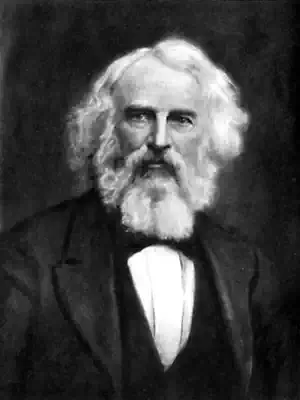
Henry Wadsworth Longfellow
Haunted Houses. (Birds Of Passage. Flight The First)
Haunted Houses. (Birds Of Passage. Flight The First)
All houses wherein men have lived and died
Are haunted houses. Through the open doors
The harmless phantoms on their errands glide,
With feet that make no sound upon the floors.
We meet them at the doorway, on the stair,
Along the passages they come and go,
Impalpable impressions on the air,
A sense of something moving to and fro.
There are more guests at table, than the hosts
Invited; the illuminated hall
Is thronged with quiet, inoffensive ghosts,
As silent as the pictures on the wall.
The stranger at my fireside cannot see
The forms I see, nor hear the sounds I hear;
He but perceives what is; while unto me
All that has been is visible and clear.
We have no title-deeds to house or lands;
Owners and occupants of earlier dates
From graves forgotten stretch their dusty hands,
And hold in mortmain still their old estates.
The spirit-world around this world of sense
Floats like an atmosphere, and everywhere
Wafts through these earthly mists and vapors dense
A vital breath of more ethereal air.
Our little lives are kept in equipoise
By opposite attractions and desires;
The struggle of the instinct that enjoys,
And the more noble instinct that aspires.
These perturbations, this perpetual jar
Of earthly wants and aspirations high,
Come from the influence of an unseen star,
An undiscovered planet in our sky.
And as the moon from some dark gate of cloud
Throws o'er the sea a floating bridge of light,
Across whose trembling planks our fancies crowd
Into the realm of mystery and night,--
So from the world of spirits there descends
A bridge of light, connecting it with this,
O'er whose unsteady floor, that sways and bends,
Wander our thoughts above the dark abyss.
All houses wherein men have lived and died
Are haunted houses. Through the open doors
The harmless phantoms on their errands glide,
With feet that make no sound upon the floors.
We meet them at the doorway, on the stair,
Along the passages they come and go,
Impalpable impressions on the air,
A sense of something moving to and fro.
There are more guests at table, than the hosts
Invited; the illuminated hall
Is thronged with quiet, inoffensive ghosts,
As silent as the pictures on the wall.
The stranger at my fireside cannot see
The forms I see, nor hear the sounds I hear;
He but perceives what is; while unto me
All that has been is visible and clear.
We have no title-deeds to house or lands;
Owners and occupants of earlier dates
From graves forgotten stretch their dusty hands,
And hold in mortmain still their old estates.
The spirit-world around this world of sense
Floats like an atmosphere, and everywhere
Wafts through these earthly mists and vapors dense
A vital breath of more ethereal air.
Our little lives are kept in equipoise
By opposite attractions and desires;
The struggle of the instinct that enjoys,
And the more noble instinct that aspires.
These perturbations, this perpetual jar
Of earthly wants and aspirations high,
Come from the influence of an unseen star,
An undiscovered planet in our sky.
And as the moon from some dark gate of cloud
Throws o'er the sea a floating bridge of light,
Across whose trembling planks our fancies crowd
Into the realm of mystery and night,--
So from the world of spirits there descends
A bridge of light, connecting it with this,
O'er whose unsteady floor, that sways and bends,
Wander our thoughts above the dark abyss.
609
Henry Wadsworth Longfellow
Flower-De-Luce: The Bridge Of Cloud
Flower-De-Luce: The Bridge Of Cloud
Burn, O evening hearth, and waken
Pleasant visions, as of old!
Though the house by winds be shaken,
Safe I keep this room of gold!
Ah, no longer wizard Fancy
Builds her castles in the air,
Luring me by necromancy
Up the never-ending stair!
But, instead, she builds me bridges
Over many a dark ravine,
Where beneath the gusty ridges
Cataracts dash and roar unseen.
And I cross them, little heeding
Blast of wind or torrent's roar,
As I follow the receding
Footsteps that have gone before.
Naught avails the imploring gesture,
Naught avails the cry of pain!
When I touch the flying vesture,
'Tis the gray robe of the rain.
Baffled I return, and, leaning
O'er the parapets of cloud,
Watch the mist that intervening
Wraps the valley in its shroud.
And the sounds of life ascending
Faintly, vaguely, meet the ear,
Murmur of bells and voices blending
With the rush of waters near.
Well I know what there lies hidden,
Every tower and town and farm,
And again the land forbidden
Reassumes its vanished charm.
Well I know the secret places,
And the nests in hedge and tree;
At what doors are friendly faces,
In what hearts are thoughts of me.
Through the mist and darkness sinking,
Blown by wind and beaten by shower,
Down I fling the thought I'm thinking,
Down I toss this Alpine flower.
Burn, O evening hearth, and waken
Pleasant visions, as of old!
Though the house by winds be shaken,
Safe I keep this room of gold!
Ah, no longer wizard Fancy
Builds her castles in the air,
Luring me by necromancy
Up the never-ending stair!
But, instead, she builds me bridges
Over many a dark ravine,
Where beneath the gusty ridges
Cataracts dash and roar unseen.
And I cross them, little heeding
Blast of wind or torrent's roar,
As I follow the receding
Footsteps that have gone before.
Naught avails the imploring gesture,
Naught avails the cry of pain!
When I touch the flying vesture,
'Tis the gray robe of the rain.
Baffled I return, and, leaning
O'er the parapets of cloud,
Watch the mist that intervening
Wraps the valley in its shroud.
And the sounds of life ascending
Faintly, vaguely, meet the ear,
Murmur of bells and voices blending
With the rush of waters near.
Well I know what there lies hidden,
Every tower and town and farm,
And again the land forbidden
Reassumes its vanished charm.
Well I know the secret places,
And the nests in hedge and tree;
At what doors are friendly faces,
In what hearts are thoughts of me.
Through the mist and darkness sinking,
Blown by wind and beaten by shower,
Down I fling the thought I'm thinking,
Down I toss this Alpine flower.
268
Henry Wadsworth Longfellow
Flower-De-Luce: Palingenesis
Flower-De-Luce: Palingenesis
I lay upon the headland-height, and listened
To the incessant sobbing of the sea
In caverns under me,
And watched the waves, that tossed and fled and glistened,
Until the rolling meadows of amethyst
Melted away in mist.
Then suddenly, as one from sleep, I started;
For round about me all the sunny capes
Seemed peopled with the shapes
Of those whom I had known in days departed,
Apparelled in the loveliness which gleams
On faces seen in dreams.
A moment only, and the light and glory
Faded away, and the disconsolate shore
Stood lonely as before;
And the wild-roses of the promontory
Around me shuddered in the wind, and shed
Their petals of pale red.
There was an old belief that in the embers
Of all things their primordial form exists,
And cunning alchemists
Could re-create the rose with all its members
From its own ashes, but without the bloom,
Without the lost perfume.
Ah me! what wonder-working, occult science
Can from the ashes in our hearts once more
The rose of youth restore?
What craft of alchemy can bid defiance
To time and change, and for a single hour
Renew this phantom-flower?
'O, give me back,' I cried, 'the vanished splendors,
The breath of morn, and the exultant strife,
When the swift stream of life
Bounds o'er its rocky channel, and surrenders
The pond, with all its lilies, for the leap
Into the unknown deep!'
And the sea answered, with a lamentation,
Like some old prophet wailing, and it said,
'Alas! thy youth is dead!
It breathes no more, its heart has no pulsation;
In the dark places with the dead of old
It lies forever cold!'
Then said I, 'From its consecrated cerements
I will not drag this sacred dust again,
Only to give me pain;
But, still remembering all the lost endearments,
Go on my way, like one who looks before,
And turns to weep no more.'
Into what land of harvests, what plantations
Bright with autumnal foliage and the glow
Of sunsets burning low;
Beneath what midnight skies, whose constellations
Light up the spacious avenues between
This world and the unseen!
Amid what friendly greetings and caresses,
What households, though not alien, yet not mine,
What bowers of rest divine;
To what temptations in lone wildernesses,
What famine of the heart, what pain and loss,
The bearing of what cross!
I do not know; nor will I vainly question
Those pages of the mystic book which hold
The story still untold,
But without rash conjecture or suggestion
Turn its last leaves in reverence and good heed,
Until 'The End' I read.
I lay upon the headland-height, and listened
To the incessant sobbing of the sea
In caverns under me,
And watched the waves, that tossed and fled and glistened,
Until the rolling meadows of amethyst
Melted away in mist.
Then suddenly, as one from sleep, I started;
For round about me all the sunny capes
Seemed peopled with the shapes
Of those whom I had known in days departed,
Apparelled in the loveliness which gleams
On faces seen in dreams.
A moment only, and the light and glory
Faded away, and the disconsolate shore
Stood lonely as before;
And the wild-roses of the promontory
Around me shuddered in the wind, and shed
Their petals of pale red.
There was an old belief that in the embers
Of all things their primordial form exists,
And cunning alchemists
Could re-create the rose with all its members
From its own ashes, but without the bloom,
Without the lost perfume.
Ah me! what wonder-working, occult science
Can from the ashes in our hearts once more
The rose of youth restore?
What craft of alchemy can bid defiance
To time and change, and for a single hour
Renew this phantom-flower?
'O, give me back,' I cried, 'the vanished splendors,
The breath of morn, and the exultant strife,
When the swift stream of life
Bounds o'er its rocky channel, and surrenders
The pond, with all its lilies, for the leap
Into the unknown deep!'
And the sea answered, with a lamentation,
Like some old prophet wailing, and it said,
'Alas! thy youth is dead!
It breathes no more, its heart has no pulsation;
In the dark places with the dead of old
It lies forever cold!'
Then said I, 'From its consecrated cerements
I will not drag this sacred dust again,
Only to give me pain;
But, still remembering all the lost endearments,
Go on my way, like one who looks before,
And turns to weep no more.'
Into what land of harvests, what plantations
Bright with autumnal foliage and the glow
Of sunsets burning low;
Beneath what midnight skies, whose constellations
Light up the spacious avenues between
This world and the unseen!
Amid what friendly greetings and caresses,
What households, though not alien, yet not mine,
What bowers of rest divine;
To what temptations in lone wildernesses,
What famine of the heart, what pain and loss,
The bearing of what cross!
I do not know; nor will I vainly question
Those pages of the mystic book which hold
The story still untold,
But without rash conjecture or suggestion
Turn its last leaves in reverence and good heed,
Until 'The End' I read.
292
Henry Van Dyke
Undine
Undine
'T was far away and long ago,
When I was but a dreaming boy,
This fairy tale of love and woe
Entranced my heart with tearful joy;
And while with white Undine I wept,
Your spirit, -- ah, how strange it seems, --
Was cradled in some star, and slept,
Unconscious of her coming dreams.
'T was far away and long ago,
When I was but a dreaming boy,
This fairy tale of love and woe
Entranced my heart with tearful joy;
And while with white Undine I wept,
Your spirit, -- ah, how strange it seems, --
Was cradled in some star, and slept,
Unconscious of her coming dreams.
333
Henry Van Dyke
The White Bees
The White Bees
I
LEGEND
Long ago Apollo called to Aristæus,
youngest of the shepherds,
Saying, "I will make you keeper of my bees."
Golden were the hives, and golden was the honey;
golden, too, the music,
Where the honey-makers hummed among the trees.
Happy Aristæus loitered in the garden, wandered
in the orchard,
Careless and contented, indolent and free;
Lightly took his labour, lightly took his pleasure,
till the fated moment
When across his pathway came Eurydice.
Then her eyes enkindled burning love within him;
drove him wild with longing,
For the perfect sweetness of her flower-like face;
Eagerly he followed, while she fled before him,
over mead and mountain,
On through field and forest, in a breathless race.
But the nymph, in flying, trod upon a serpent;
like a dream she vanished;
Pluto's chariot bore her down among the dead;
Lonely Aristæus, sadly home returning, found his
garden empty,
All the hives deserted, all the music fled.
Mournfully bewailing, -- "ah, my honey-makers,
where have you departed?" --
Far and wide he sought them, over sea and shore;
Foolish is the tale that says he ever found them,
brought them home in triumph,
Joys that once escape us fly for evermore.
Yet I dream that somewhere, clad in downy
whiteness, dwell the honey-makers,
In aerial gardens that no mortal sees:
And at times returning, lo, they flutter round us,
gathering mystic harvest,
So I weave the legend of the long-lost bees.
II
THE SWARMING OF THE BEES
I
WHO can tell the hiding of the white bees' nest?
Who can trace the guiding of their swift home flight?
Far would be his riding on a life-long quest:
Surely ere it ended would his beard grow white.
Never in the coming of the rose-red Spring,
Never in the passing of the wine-red Fall,
May you hear the humming of the white bee's wing
Murmur o'er the meadow, ere the night bells call.
Wait till winter hardens in the cold grey sky,
Wait till leaves are fallen and the brooks all freeze,
Then above the gardens where the dead flowers lie,
Swarm the merry millions of the wild white bees.
II
Out of the high-built airy hive,
Deep in the clouds that veil the sun,
Look how the first of the swarm arrive;
Timidly venturing, one by one,
Down through the tranquil air,
Wavering here and there,
Large, and lazy in flight, --
Caught by a lift of the breeze,
Tangled among the naked trees, --
Dropping then, without a sound,
Feather-white, feather-light,
To their rest on the ground.
III
Thus the swarming is begun.
Count the leaders, every one
Perfect as a perfect star
Till the slow descent is done.
Look beyond them, see how far
Down the vistas dim and grey,
Multitudes are on the way.
Now a sudden brightness
Dawns within the sombre day,
Over fields of whiteness;
And the sky is swiftly alive
With the flutter and the flight
Of the shimmering bees, that pour
From the hidden door of the hive
Till you can count no more.
IV
Now on the branches of hemlock and pine
Thickly they settle and cluster and swing,
Bending them low; and the trellised vine
And the dark elm-boughs are traced with a line
Of beauty wherever the white bees cling.
Now they are hiding the wrecks of the flowers,
Softly, softly, covering all,
Over the grave of the summer hours
Spreading a silver pall.
Now they are building the broad roof ledge,
Into a cornice smooth and fair,
Moulding the terrace, from edge to edge,
Into the sweep of a marble stair.
Wonderful workers, swift and dumb,
Numberless myriads, still they come,
Thronging ever faster, faster, faster!
Where is their queen? Who is their master?
The gardens are faded, the fields are frore,
How will they fare in a world so bleak?
Where is the hidden honey they seek?
What is the sweetness they toil to store
In the desolate day, where no blossoms gleam?
Forgetfulness and a dream!
V
But now the fretful wind awakes;
I hear him girding at the trees;
He strikes the bending boughs, and shakes
The quiet clusters of the bees
To powdery drift;
He tosses them away,
He drives them like spray;
He makes them veer and shift
Around his blustering path.
In clouds blindly whirling,
In rings madly swirling,
Full of crazy wrath,
So furious and fast they fly
They blur the earth and blot the sky
In wild, white mirk.
They fill the air with frozen wings
And tiny, angry, icy stings;
They blind the eyes, and choke the breath,
They dance a maddening dance of death
Around their work,
Sweeping the cover from the hill,
Heaping the hollows deeper still,
Effacing every line and mark,
And swarming, storming in the dark
Through the long night;
Until, at dawn, the wind lies down,
Weary of fight.
The last torn cloud, with trailing gown,
Passes the open gates of light;
And the white bees are lost in flight.
VI
Look how the landscape glitters wide and still,
Bright with a pure surprise!
The day begins with joy, and all past ill,
Buried in white oblivion, lies
Beneath the snowdrifts under crystal skies.
New hope, new love, new life, new cheer,
Flow in the sunrise beam,--
The gladness of Apollo when he sees,
Upon the bosom of the wintry year,
The honey-harvest of his wild white bees,
Forgetfulness and a dream!
III
LEGEND
LISTEN, my beloved, while the silver morning,
like a tranquil vision,
Fills the world around us and our hearts with peace;
Quiet is the close of Aristæus' legend, happy is
the ending --
Listen while I tell you how he found release.
Many months he wandered far away in sadness,
desolately thinking
Only of the vanished joys he could not find;
Till the great Apollo, pitying his shepherd, loosed
him from the burden
Of a dark, reluctant, backward-looking mind.
Then he saw around him all the changeful beauty
of the changing seasons,
In the world-wide regions where his journey lay;
Birds that sang to cheer him, flowers that bloomed
beside him, stars that shone to guide him, -Traveller's
joy was plenty all along the way!
Everywhere he journeyed strangers made him
welcome, listened while he taught them
Secret lore of field and forest he had learned:
How to train the vines and make the olives fruitful;
how to guard the sheepfolds;
How to stay the fever when the dog-star burned.
Friendliness and blessing followed in his footsteps;
richer were the harvests,
Happier the dwellings, wheresoe'er he came;
Little children loved him, and he left behind him,
in the hour of parting,
Memories of kindness and a god-like name.
So he travelled onward, desolate no longer,
patient in his seeking,
Reaping all the wayside comfort of his quest;
Till at last in Thracia, high upon Mount Hæmus,
far from human dwelling,
Weary Aristæus laid him down to rest.
Then the honey-makers, clad in downy whiteness,
fluttered soft around him,
Wrapt him in a dreamful slumber pure and deep.
This is life, beloved: first a sheltered garden,
then a troubled journey,
Joy and pain of seeking, -- and at last we sleep!
I
LEGEND
Long ago Apollo called to Aristæus,
youngest of the shepherds,
Saying, "I will make you keeper of my bees."
Golden were the hives, and golden was the honey;
golden, too, the music,
Where the honey-makers hummed among the trees.
Happy Aristæus loitered in the garden, wandered
in the orchard,
Careless and contented, indolent and free;
Lightly took his labour, lightly took his pleasure,
till the fated moment
When across his pathway came Eurydice.
Then her eyes enkindled burning love within him;
drove him wild with longing,
For the perfect sweetness of her flower-like face;
Eagerly he followed, while she fled before him,
over mead and mountain,
On through field and forest, in a breathless race.
But the nymph, in flying, trod upon a serpent;
like a dream she vanished;
Pluto's chariot bore her down among the dead;
Lonely Aristæus, sadly home returning, found his
garden empty,
All the hives deserted, all the music fled.
Mournfully bewailing, -- "ah, my honey-makers,
where have you departed?" --
Far and wide he sought them, over sea and shore;
Foolish is the tale that says he ever found them,
brought them home in triumph,
Joys that once escape us fly for evermore.
Yet I dream that somewhere, clad in downy
whiteness, dwell the honey-makers,
In aerial gardens that no mortal sees:
And at times returning, lo, they flutter round us,
gathering mystic harvest,
So I weave the legend of the long-lost bees.
II
THE SWARMING OF THE BEES
I
WHO can tell the hiding of the white bees' nest?
Who can trace the guiding of their swift home flight?
Far would be his riding on a life-long quest:
Surely ere it ended would his beard grow white.
Never in the coming of the rose-red Spring,
Never in the passing of the wine-red Fall,
May you hear the humming of the white bee's wing
Murmur o'er the meadow, ere the night bells call.
Wait till winter hardens in the cold grey sky,
Wait till leaves are fallen and the brooks all freeze,
Then above the gardens where the dead flowers lie,
Swarm the merry millions of the wild white bees.
II
Out of the high-built airy hive,
Deep in the clouds that veil the sun,
Look how the first of the swarm arrive;
Timidly venturing, one by one,
Down through the tranquil air,
Wavering here and there,
Large, and lazy in flight, --
Caught by a lift of the breeze,
Tangled among the naked trees, --
Dropping then, without a sound,
Feather-white, feather-light,
To their rest on the ground.
III
Thus the swarming is begun.
Count the leaders, every one
Perfect as a perfect star
Till the slow descent is done.
Look beyond them, see how far
Down the vistas dim and grey,
Multitudes are on the way.
Now a sudden brightness
Dawns within the sombre day,
Over fields of whiteness;
And the sky is swiftly alive
With the flutter and the flight
Of the shimmering bees, that pour
From the hidden door of the hive
Till you can count no more.
IV
Now on the branches of hemlock and pine
Thickly they settle and cluster and swing,
Bending them low; and the trellised vine
And the dark elm-boughs are traced with a line
Of beauty wherever the white bees cling.
Now they are hiding the wrecks of the flowers,
Softly, softly, covering all,
Over the grave of the summer hours
Spreading a silver pall.
Now they are building the broad roof ledge,
Into a cornice smooth and fair,
Moulding the terrace, from edge to edge,
Into the sweep of a marble stair.
Wonderful workers, swift and dumb,
Numberless myriads, still they come,
Thronging ever faster, faster, faster!
Where is their queen? Who is their master?
The gardens are faded, the fields are frore,
How will they fare in a world so bleak?
Where is the hidden honey they seek?
What is the sweetness they toil to store
In the desolate day, where no blossoms gleam?
Forgetfulness and a dream!
V
But now the fretful wind awakes;
I hear him girding at the trees;
He strikes the bending boughs, and shakes
The quiet clusters of the bees
To powdery drift;
He tosses them away,
He drives them like spray;
He makes them veer and shift
Around his blustering path.
In clouds blindly whirling,
In rings madly swirling,
Full of crazy wrath,
So furious and fast they fly
They blur the earth and blot the sky
In wild, white mirk.
They fill the air with frozen wings
And tiny, angry, icy stings;
They blind the eyes, and choke the breath,
They dance a maddening dance of death
Around their work,
Sweeping the cover from the hill,
Heaping the hollows deeper still,
Effacing every line and mark,
And swarming, storming in the dark
Through the long night;
Until, at dawn, the wind lies down,
Weary of fight.
The last torn cloud, with trailing gown,
Passes the open gates of light;
And the white bees are lost in flight.
VI
Look how the landscape glitters wide and still,
Bright with a pure surprise!
The day begins with joy, and all past ill,
Buried in white oblivion, lies
Beneath the snowdrifts under crystal skies.
New hope, new love, new life, new cheer,
Flow in the sunrise beam,--
The gladness of Apollo when he sees,
Upon the bosom of the wintry year,
The honey-harvest of his wild white bees,
Forgetfulness and a dream!
III
LEGEND
LISTEN, my beloved, while the silver morning,
like a tranquil vision,
Fills the world around us and our hearts with peace;
Quiet is the close of Aristæus' legend, happy is
the ending --
Listen while I tell you how he found release.
Many months he wandered far away in sadness,
desolately thinking
Only of the vanished joys he could not find;
Till the great Apollo, pitying his shepherd, loosed
him from the burden
Of a dark, reluctant, backward-looking mind.
Then he saw around him all the changeful beauty
of the changing seasons,
In the world-wide regions where his journey lay;
Birds that sang to cheer him, flowers that bloomed
beside him, stars that shone to guide him, -Traveller's
joy was plenty all along the way!
Everywhere he journeyed strangers made him
welcome, listened while he taught them
Secret lore of field and forest he had learned:
How to train the vines and make the olives fruitful;
how to guard the sheepfolds;
How to stay the fever when the dog-star burned.
Friendliness and blessing followed in his footsteps;
richer were the harvests,
Happier the dwellings, wheresoe'er he came;
Little children loved him, and he left behind him,
in the hour of parting,
Memories of kindness and a god-like name.
So he travelled onward, desolate no longer,
patient in his seeking,
Reaping all the wayside comfort of his quest;
Till at last in Thracia, high upon Mount Hæmus,
far from human dwelling,
Weary Aristæus laid him down to rest.
Then the honey-makers, clad in downy whiteness,
fluttered soft around him,
Wrapt him in a dreamful slumber pure and deep.
This is life, beloved: first a sheltered garden,
then a troubled journey,
Joy and pain of seeking, -- and at last we sleep!
321
Henry Van Dyke
The Black Birds
The Black Birds
I
Once, only once, I saw it clear, --
That Eden every human heart has dreamed
A hundred times, but always far away!
Ah, well do I remember how it seemed,
Through the still atmosphere
Of that enchanted day,
To lie wide open to my weary feet:
A little land of love and joy and rest,
With meadows of soft green,
Rosy with cyclamen, and sweet
With delicate breath of violets unseen, --
And, tranquil 'mid the bloom
As if it waited for a coming guest,
A little house of peace and joy and love
Was nested like a snow-white dove
From the rough mountain where I stood,
Homesick for happiness,
Only a narrow valley and a darkling wood
To cross, and then the long distress
Of solitude would be forever past, --
I should be home at last.
But not too soon! oh, let me linger here
And feed my eyes, hungry with sorrow,
On all this loveliness, so near,
And mine to-morrow!
Then, from the wood, across the silvery blue,
A dark bird flew,
Silent, with sable wings.
Close in his wake another came, --
Fragments of midnight floating through
The sunset flame, --
Another and another, weaving rings
Of blackness on the primrose sky, --
Another, and another, look, a score,
A hundred, yes, a thousand rising heavily
From that accursed, dumb, and ancient wood, --
They boiled into the lucid air
Like smoke from some deep caldron of despair!
And more, and more, and ever more,
The numberless, ill-omened brood,
Flapping their ragged plumes,
Possessed the landscape and the evening light
With menaces and glooms.
Oh, dark, dark, dark they hovered o'er the place
Where once I saw the little house so white
Amid the flowers, covering every trace
Of beauty from my troubled sight, --
And suddenly it was night!
II
At break of day I crossed the wooded vale;
And while the morning made
A trembling light among the tree-tops pale,
I saw the sable birds on every limb,
Clinging together closely in the shade,
And croaking placidly their surly hymn.
But, oh, the little land of peace and love
That those night-loving wings had poised above, --
Where was it gone?
Lost, lost forevermore!
Only a cottage, dull and gray,
In the cold light of dawn,
With iron bars across the door:
Only a garden where the withering heads
Of flowers, presaging decay,
Hung over barren beds:
Only a desolate field that lay
Untilled beneath the desolate day, --
Where Eden seemed to bloom I found but these!
So, wondering, I passed along my way,
With anger in my heart, too deep for words,
Against that grove of evil-sheltering trees,
And the black magic of the croaking birds.
I
Once, only once, I saw it clear, --
That Eden every human heart has dreamed
A hundred times, but always far away!
Ah, well do I remember how it seemed,
Through the still atmosphere
Of that enchanted day,
To lie wide open to my weary feet:
A little land of love and joy and rest,
With meadows of soft green,
Rosy with cyclamen, and sweet
With delicate breath of violets unseen, --
And, tranquil 'mid the bloom
As if it waited for a coming guest,
A little house of peace and joy and love
Was nested like a snow-white dove
From the rough mountain where I stood,
Homesick for happiness,
Only a narrow valley and a darkling wood
To cross, and then the long distress
Of solitude would be forever past, --
I should be home at last.
But not too soon! oh, let me linger here
And feed my eyes, hungry with sorrow,
On all this loveliness, so near,
And mine to-morrow!
Then, from the wood, across the silvery blue,
A dark bird flew,
Silent, with sable wings.
Close in his wake another came, --
Fragments of midnight floating through
The sunset flame, --
Another and another, weaving rings
Of blackness on the primrose sky, --
Another, and another, look, a score,
A hundred, yes, a thousand rising heavily
From that accursed, dumb, and ancient wood, --
They boiled into the lucid air
Like smoke from some deep caldron of despair!
And more, and more, and ever more,
The numberless, ill-omened brood,
Flapping their ragged plumes,
Possessed the landscape and the evening light
With menaces and glooms.
Oh, dark, dark, dark they hovered o'er the place
Where once I saw the little house so white
Amid the flowers, covering every trace
Of beauty from my troubled sight, --
And suddenly it was night!
II
At break of day I crossed the wooded vale;
And while the morning made
A trembling light among the tree-tops pale,
I saw the sable birds on every limb,
Clinging together closely in the shade,
And croaking placidly their surly hymn.
But, oh, the little land of peace and love
That those night-loving wings had poised above, --
Where was it gone?
Lost, lost forevermore!
Only a cottage, dull and gray,
In the cold light of dawn,
With iron bars across the door:
Only a garden where the withering heads
Of flowers, presaging decay,
Hung over barren beds:
Only a desolate field that lay
Untilled beneath the desolate day, --
Where Eden seemed to bloom I found but these!
So, wondering, I passed along my way,
With anger in my heart, too deep for words,
Against that grove of evil-sheltering trees,
And the black magic of the croaking birds.
323

Henry Lawson
The Water Lily
The Water Lily
A lonely young wife
In her dreaming discerns
A lily-decked pool
With a border of ferns,
And a beautiful child,
With butterfly wings,
Trips down to the edge of the water and sings:
‘Come, mamma! come!
‘Quick! follow me—
‘Step out on the leaves of the water-lily!’
And the lonely young wife,
Her heart beating wild,
Cries, ‘Wait till I come,
‘Till I reach you, my child!’
But the beautiful child
With butterfly wings
Steps out on the leaves of the lily and sings:
‘Come, mamma! come!
‘Quick! follow me!
‘And step on the leaves of the water-lily!
And the wife in her dreaming
Steps out on the stream,
But the lily leaves sink
And she wakes from her dream.
Ah, the waking is sad,
For the tears that it brings,
And she knows ’tis her dead baby’s spirit that sings:
‘Come, mamma! come!
‘Quick! follow me!
‘Step out on the leaves of the water-lily!’
A lonely young wife
In her dreaming discerns
A lily-decked pool
With a border of ferns,
And a beautiful child,
With butterfly wings,
Trips down to the edge of the water and sings:
‘Come, mamma! come!
‘Quick! follow me—
‘Step out on the leaves of the water-lily!’
And the lonely young wife,
Her heart beating wild,
Cries, ‘Wait till I come,
‘Till I reach you, my child!’
But the beautiful child
With butterfly wings
Steps out on the leaves of the lily and sings:
‘Come, mamma! come!
‘Quick! follow me!
‘And step on the leaves of the water-lily!
And the wife in her dreaming
Steps out on the stream,
But the lily leaves sink
And she wakes from her dream.
Ah, the waking is sad,
For the tears that it brings,
And she knows ’tis her dead baby’s spirit that sings:
‘Come, mamma! come!
‘Quick! follow me!
‘Step out on the leaves of the water-lily!’
264
Henry Lawson
The Wander-Light
The Wander-Light
And they heard the tent-poles clatter,
And the fly in twain was torn –
'Tis the soiled rag of a tatter
Of the tent where I was born.
And what matters it, I wonder?
Brick or stone or calico? –
Or a bush you were born under,
When it happened long ago?
And my beds were camp beds and tramp beds and damp beds,
And my beds were dry beds on drought-stricken ground,
Hard beds and soft beds, and wide beds and narrow –
For my beds were strange beds the wide world round.
And the old hag seemed to ponder
('Twas my mother told me so),
And she said that I would wander
Where but few would think to go.
"He will fly the haunts of tailors,
He will cross the ocean wide,
For his fathers, they were sailors
All on his good father's side."
Behind me, before me, Oh! my roads are stormy
The thunder of skies and the sea's sullen sound,
The coaster or liner, the English or foreign,
The state-room or steerage the wide world round.
And the old hag she seemed troubled
As she bent above the bed,
"He will dream things and he'll see things
To come true when he is dead.
He will see things all too plainly,
And his fellows will deride,
For his mothers they were gipsies
All on his good mother's side."
And my dreams are strange dreams, are day dreams, are grey dreams,
And my dreams are wild dreams, and old dreams and new;
They haunt me and daunt me with fears of the morrow –
My brothers they doubt me – but my dreams come true.
And so I was born of fathers
From where ice-bound harbours are
Men whose strong limbs never rested
And whose blue eyes saw afar.
Till, for gold, one left the ocean,
Seeking over plain and hill;
And so I was born of mothers
Whose deep minds were never still.
I rest not, 'tis best not, the world is a wide one
And, caged for an hour, I pace to and fro;
I see things and dree things and plan while I'm sleeping,
I wander for ever and dream as I go.
I have stood by Table Mountain
On the Lion at Capetown,
And I watched the sunset fading
From the roads that I marked down,
And I looked out with my brothers
From the heights behind Bombay,
Gazing north and west and eastward,
Over roads I'll tread some day.
For my ways are strange ways and new ways and old ways,
And deep ways and steep ways and high ways and low;
I'm at home and at ease on a track that I know not,
And restless and lost on a road that I know.
And they heard the tent-poles clatter,
And the fly in twain was torn –
'Tis the soiled rag of a tatter
Of the tent where I was born.
And what matters it, I wonder?
Brick or stone or calico? –
Or a bush you were born under,
When it happened long ago?
And my beds were camp beds and tramp beds and damp beds,
And my beds were dry beds on drought-stricken ground,
Hard beds and soft beds, and wide beds and narrow –
For my beds were strange beds the wide world round.
And the old hag seemed to ponder
('Twas my mother told me so),
And she said that I would wander
Where but few would think to go.
"He will fly the haunts of tailors,
He will cross the ocean wide,
For his fathers, they were sailors
All on his good father's side."
Behind me, before me, Oh! my roads are stormy
The thunder of skies and the sea's sullen sound,
The coaster or liner, the English or foreign,
The state-room or steerage the wide world round.
And the old hag she seemed troubled
As she bent above the bed,
"He will dream things and he'll see things
To come true when he is dead.
He will see things all too plainly,
And his fellows will deride,
For his mothers they were gipsies
All on his good mother's side."
And my dreams are strange dreams, are day dreams, are grey dreams,
And my dreams are wild dreams, and old dreams and new;
They haunt me and daunt me with fears of the morrow –
My brothers they doubt me – but my dreams come true.
And so I was born of fathers
From where ice-bound harbours are
Men whose strong limbs never rested
And whose blue eyes saw afar.
Till, for gold, one left the ocean,
Seeking over plain and hill;
And so I was born of mothers
Whose deep minds were never still.
I rest not, 'tis best not, the world is a wide one
And, caged for an hour, I pace to and fro;
I see things and dree things and plan while I'm sleeping,
I wander for ever and dream as I go.
I have stood by Table Mountain
On the Lion at Capetown,
And I watched the sunset fading
From the roads that I marked down,
And I looked out with my brothers
From the heights behind Bombay,
Gazing north and west and eastward,
Over roads I'll tread some day.
For my ways are strange ways and new ways and old ways,
And deep ways and steep ways and high ways and low;
I'm at home and at ease on a track that I know not,
And restless and lost on a road that I know.
275
Henry Lawson
The Boss's Boots
The Boss's Boots
The Shearers squint along the pens, they squint along the ‘shoots;’
The shearers squint along the board to catch the Boss’s boots;
They have no time to straighten up, they have no time to stare,
But when the Boss is looking on, they like to be aware.
The ‘rouser’ has no soul to save. Condemn the rouseabout!
And sling ’em in, and rip ’em through, and get the bell-sheep out ;
And skim it by the tips at times, or take it with the roots—
But ‘pink’ ’em nice and pretty when you see the Boss’s boots.
The shearing super sprained his foot, as bosses sometimes do—
And wore, until the shed cut out, one ‘side-spring’ and one shoe;
And though he changed his pants at times—some worn-out and some neat—
No ‘tiger’ there could possibly mistake the Boss’s feet.
The Boss affected larger boots than many Western men,
And Jim the Ringer swore the shoe was half as big again;
And tigers might have heard the boss ere any harm was done—
For when he passed it was a sort of dot and carry one.
But now there comes a picker-up who sprained his ankle, too,
And limping round the shed he found the Boss’s cast-off shoe.
He went to work, all legs and arms, as green-hand rousers will,
And never dreamed of Boss’s boots—much less of Bogan Bill.
Ye sons of sin that tramp and shear in hot and dusty scrubs,
Just keep away from ‘headin’ ’em,’ and keep away from pubs,
And keep away from handicaps—for so your sugar scoots—
And you may own a station yet and wear the Boss’s boots.
And Bogan by his mate was heard to mutter through his hair:
‘The Boss has got a rat to-day: he’s buckin’ everywhere—
‘He’s trainin’ for a bike, I think, the way he comes an’ scoots,
‘He’s like a bloomin’ cat on mud the way he shifts his boots.’
Now Bogan Bill was shearing rough and chanced to cut a teat ;
He stuck his leg in front at once, and slewed the ewe a bit;
He hurried up to get her through, when, close beside his shoot,
He saw a large and ancient shoe, in mateship with a boot.
He thought that he’d be fined all right—he couldn’t turn the ‘yoe;’
The more he wished the boss away, the more he wouldn’t go;
And Bogan swore amenfully—beneath his breath he swore—
And he was never known to ‘pink’ so prettily before.
And Bogan through his bristling scalp in his mind’s eye could trace,
The cold, sarcastic smile that lurked about the Boss’s face;
He cursed him with a silent curse in language known to few,
He cursed him from his boot right up, and then down to his shoe.
But while he shore so mighty clean, and while he screened the teat,
He fancied there was something wrong about the Boss’s feet:
The boot grew unfamiliar, and the odd shoe seemed awry,
And slowly up the trouser went the tail of Bogan’s eye,
Then swiftly to the features from a plaited green-hide belt—
You’d have to ring a shed or two to feel as Bogan felt—
For ’twas his green-hand picker-up (who wore a vacant look),
And Bogan saw the Boss outside consulting with his cook.
And Bogan Bill was hurt and mad to see that rouseabout
And Bogan laid his ‘Wolseley’ down and knocked that rouser out;
He knocked him right across the board, he tumbled through the shoot—
‘I’ll learn the fool,’ said Bogan Bill, ‘to flash the Boss’s boot!’
The rouser squints along the pens, he squints along the shoots,
And gives his men the office when they miss the Boss’s boots.
They have no time to straighten up, they’re too well-bred to stare,
But when the Boss is looking on they like to be aware.
The rouser has no soul to lose—it’s blarst the rouseabout!
And rip ’em through and yell for ‘tar’ and get the bell-sheep out,
And take it with the scum at times or take it with the roots,—
But ‘pink’ ’em nice and pretty when you see the Boss’s boots.
The Shearers squint along the pens, they squint along the ‘shoots;’
The shearers squint along the board to catch the Boss’s boots;
They have no time to straighten up, they have no time to stare,
But when the Boss is looking on, they like to be aware.
The ‘rouser’ has no soul to save. Condemn the rouseabout!
And sling ’em in, and rip ’em through, and get the bell-sheep out ;
And skim it by the tips at times, or take it with the roots—
But ‘pink’ ’em nice and pretty when you see the Boss’s boots.
The shearing super sprained his foot, as bosses sometimes do—
And wore, until the shed cut out, one ‘side-spring’ and one shoe;
And though he changed his pants at times—some worn-out and some neat—
No ‘tiger’ there could possibly mistake the Boss’s feet.
The Boss affected larger boots than many Western men,
And Jim the Ringer swore the shoe was half as big again;
And tigers might have heard the boss ere any harm was done—
For when he passed it was a sort of dot and carry one.
But now there comes a picker-up who sprained his ankle, too,
And limping round the shed he found the Boss’s cast-off shoe.
He went to work, all legs and arms, as green-hand rousers will,
And never dreamed of Boss’s boots—much less of Bogan Bill.
Ye sons of sin that tramp and shear in hot and dusty scrubs,
Just keep away from ‘headin’ ’em,’ and keep away from pubs,
And keep away from handicaps—for so your sugar scoots—
And you may own a station yet and wear the Boss’s boots.
And Bogan by his mate was heard to mutter through his hair:
‘The Boss has got a rat to-day: he’s buckin’ everywhere—
‘He’s trainin’ for a bike, I think, the way he comes an’ scoots,
‘He’s like a bloomin’ cat on mud the way he shifts his boots.’
Now Bogan Bill was shearing rough and chanced to cut a teat ;
He stuck his leg in front at once, and slewed the ewe a bit;
He hurried up to get her through, when, close beside his shoot,
He saw a large and ancient shoe, in mateship with a boot.
He thought that he’d be fined all right—he couldn’t turn the ‘yoe;’
The more he wished the boss away, the more he wouldn’t go;
And Bogan swore amenfully—beneath his breath he swore—
And he was never known to ‘pink’ so prettily before.
And Bogan through his bristling scalp in his mind’s eye could trace,
The cold, sarcastic smile that lurked about the Boss’s face;
He cursed him with a silent curse in language known to few,
He cursed him from his boot right up, and then down to his shoe.
But while he shore so mighty clean, and while he screened the teat,
He fancied there was something wrong about the Boss’s feet:
The boot grew unfamiliar, and the odd shoe seemed awry,
And slowly up the trouser went the tail of Bogan’s eye,
Then swiftly to the features from a plaited green-hide belt—
You’d have to ring a shed or two to feel as Bogan felt—
For ’twas his green-hand picker-up (who wore a vacant look),
And Bogan saw the Boss outside consulting with his cook.
And Bogan Bill was hurt and mad to see that rouseabout
And Bogan laid his ‘Wolseley’ down and knocked that rouser out;
He knocked him right across the board, he tumbled through the shoot—
‘I’ll learn the fool,’ said Bogan Bill, ‘to flash the Boss’s boot!’
The rouser squints along the pens, he squints along the shoots,
And gives his men the office when they miss the Boss’s boots.
They have no time to straighten up, they’re too well-bred to stare,
But when the Boss is looking on they like to be aware.
The rouser has no soul to lose—it’s blarst the rouseabout!
And rip ’em through and yell for ‘tar’ and get the bell-sheep out,
And take it with the scum at times or take it with the roots,—
But ‘pink’ ’em nice and pretty when you see the Boss’s boots.
250
Henry Lawson
Shearers Dream
Shearers Dream
O I dreamt I shore in a shearing shed and it was a dream of joy
For every one of the rouseabouts was a girl dressed up as a boy
Dressed up like a page in a pantomime the prettiest ever seen
They had flaxen hair they had coal black hair and every shade between
There was short plump girls there was tall slim girls and the handsomest ever seen
They was four foot five they was six foot high and every shade between
The shed was cooled by electric fans that was over every shoot
The pens was of polished mahogany and everything else to suit
The huts had springs to the mattresses and the tucker was simply grand
And every night by the billabong we danced to a German band
Our pay was the wool on the jumbucks' backs so we shore till all was blue
The sheep was washed afore they was shore and the rams were scented too
And we all of us cried when the shed cut out in spite of the long hot days
For every hour them girls waltzed in with whisky and beer on trays
There was three of them girls to every chap and as jealous as they could be
There was three of them girls to every chap and six of them picked on me
We was drafting them out for the homeward track and sharing them round like steam
When I woke with my head in the blazing sun to find it a shearer's dream
O I dreamt I shore in a shearing shed and it was a dream of joy
For every one of the rouseabouts was a girl dressed up as a boy
Dressed up like a page in a pantomime the prettiest ever seen
They had flaxen hair they had coal black hair and every shade between
There was short plump girls there was tall slim girls and the handsomest ever seen
They was four foot five they was six foot high and every shade between
The shed was cooled by electric fans that was over every shoot
The pens was of polished mahogany and everything else to suit
The huts had springs to the mattresses and the tucker was simply grand
And every night by the billabong we danced to a German band
Our pay was the wool on the jumbucks' backs so we shore till all was blue
The sheep was washed afore they was shore and the rams were scented too
And we all of us cried when the shed cut out in spite of the long hot days
For every hour them girls waltzed in with whisky and beer on trays
There was three of them girls to every chap and as jealous as they could be
There was three of them girls to every chap and six of them picked on me
We was drafting them out for the homeward track and sharing them round like steam
When I woke with my head in the blazing sun to find it a shearer's dream
226
Henry Lawson
A Bush Girl
A Bush Girl
She's milking in the rain and dark,
As did her mother in the past.
The wretched shed of poles and bark,
Rent by the wind, is leaking fast.
She sees the “home-roof” black and low,
Where, balefully, the hut-fire gleams—
And, like her mother, long ago,
She has her dreams; she has her dreams.
The daybreak haunts the dreary scene,
The brooding ridge, the blue-grey bush,
The “yard” where all her years have been,
Is ankle-deep in dung and slush;
She shivers as the hour drags on,
Her threadbare dress of sackcloth seems—
But, like her mother, years agone,
She has her dreams; she has her dreams.
The sullen “breakfast” where they cut
The blackened “junk.” The lowering face,
As though a crime were in the hut,
As though a curse was on the place;
The muttered question and reply,
The tread that shakes the rotting beams,
The nagging mother, thin and dry—
God help the girl! She has her dreams.
Then for “th’ separator” start,
Most wretched hour in all her life,
With “horse” and harness, dress and cart,
No Chinaman would give his “wife”;
Her heart is sick for light and love,
Her face is often fair and sweet,
And her intelligence above
The minds of all she’s like to meet.
She reads, by slush-lamp light, may be,
When she has dragged her dreary round,
And dreams of cities by the sea
(Where butter’s up, so much the pound),
Of different men from those she knows,
Of shining tides and broad, bright streams;
Of theatres and city shows,
And her release! She has her dreams.
Could I gain her a little rest,
A little light, if but for one,
I think that it would be the best
Of any good I may have done.
But, after all, the paths we go
Are not so glorious as they seem,
And—if t’will help her heart to know—
I’ve had my dream. ’Twas but a dream.
She's milking in the rain and dark,
As did her mother in the past.
The wretched shed of poles and bark,
Rent by the wind, is leaking fast.
She sees the “home-roof” black and low,
Where, balefully, the hut-fire gleams—
And, like her mother, long ago,
She has her dreams; she has her dreams.
The daybreak haunts the dreary scene,
The brooding ridge, the blue-grey bush,
The “yard” where all her years have been,
Is ankle-deep in dung and slush;
She shivers as the hour drags on,
Her threadbare dress of sackcloth seems—
But, like her mother, years agone,
She has her dreams; she has her dreams.
The sullen “breakfast” where they cut
The blackened “junk.” The lowering face,
As though a crime were in the hut,
As though a curse was on the place;
The muttered question and reply,
The tread that shakes the rotting beams,
The nagging mother, thin and dry—
God help the girl! She has her dreams.
Then for “th’ separator” start,
Most wretched hour in all her life,
With “horse” and harness, dress and cart,
No Chinaman would give his “wife”;
Her heart is sick for light and love,
Her face is often fair and sweet,
And her intelligence above
The minds of all she’s like to meet.
She reads, by slush-lamp light, may be,
When she has dragged her dreary round,
And dreams of cities by the sea
(Where butter’s up, so much the pound),
Of different men from those she knows,
Of shining tides and broad, bright streams;
Of theatres and city shows,
And her release! She has her dreams.
Could I gain her a little rest,
A little light, if but for one,
I think that it would be the best
Of any good I may have done.
But, after all, the paths we go
Are not so glorious as they seem,
And—if t’will help her heart to know—
I’ve had my dream. ’Twas but a dream.
257
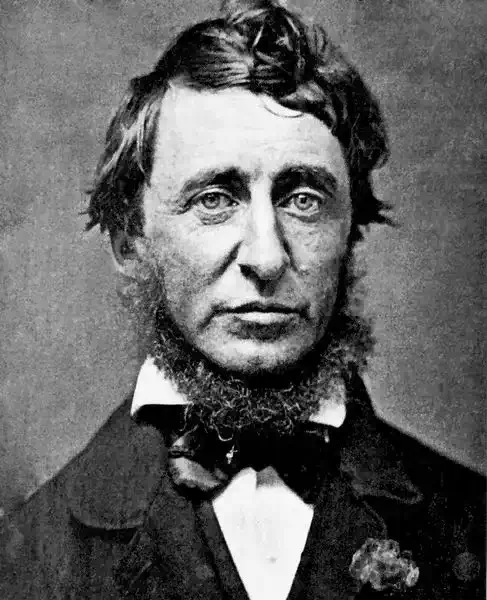
Henry David Thoreau
Light-Winged Smoke
Light-Winged Smoke
LIGHT-WINGED Smoke, Icarian bird,
Melting thy pinions in thy upward flight,
Lark without song, and the messenger of dawn,
Circling above the hamlets as thy nest;
Or else, departing dream, and shadowy form
Of midnight vision, gathering up thy skirts;
By night star-veiling, and by day
Darkening the light and blotting out the sun;
Go thou my incense upward from this hearth,
And ask the gods to pardon this clear flame.
LIGHT-WINGED Smoke, Icarian bird,
Melting thy pinions in thy upward flight,
Lark without song, and the messenger of dawn,
Circling above the hamlets as thy nest;
Or else, departing dream, and shadowy form
Of midnight vision, gathering up thy skirts;
By night star-veiling, and by day
Darkening the light and blotting out the sun;
Go thou my incense upward from this hearth,
And ask the gods to pardon this clear flame.
264

Gwendolyn Brooks
Kitchenette Building
Kitchenette Building
We are things of dry hours and the involuntary plan,
Grayed in, and gray. "Dream" mate, a giddy sound, not strong
Like "rent", "feeding a wife", "satisfying a man".
But could a dream sent up through onion fumes
Its white and violet, fight with fried potatoes
And yesterday's garbage ripening in the hall,
Flutter, or sing an aria down these rooms,
Even if we were willing to let it in,
Had time to warm it, keep it very clean,
Anticipate a message, let it begin?
We wonder. But not well! not for a minute!
Since Number Five is out of the bathroom now,
We think of lukewarm water, hope to get in it.
We are things of dry hours and the involuntary plan,
Grayed in, and gray. "Dream" mate, a giddy sound, not strong
Like "rent", "feeding a wife", "satisfying a man".
But could a dream sent up through onion fumes
Its white and violet, fight with fried potatoes
And yesterday's garbage ripening in the hall,
Flutter, or sing an aria down these rooms,
Even if we were willing to let it in,
Had time to warm it, keep it very clean,
Anticipate a message, let it begin?
We wonder. But not well! not for a minute!
Since Number Five is out of the bathroom now,
We think of lukewarm water, hope to get in it.
289
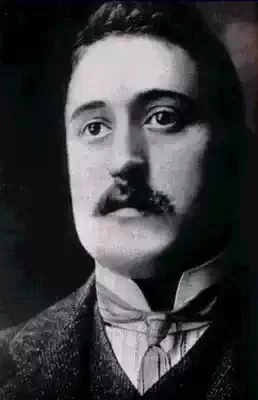
Guillaume Apollinaire
Palace
Palace
In deepest dream towards Rosemonde's palace
My barefoot brain inclined for the evening
Like a naked king the walls are waking
Beaten flesh and fresh-cut roses
You can see my thoughts immersed in roses
Smiling at the concert of the toads
They are in the mood for cypress bedposts
The sun is a broken mirror of the rose
What badly wounded bowman opened
Stigmata of palms on the windowpane
At the white lamb's love-feast I have tasted
Resins that bitter the Cyprian wine
On the jagged lap of the lascivious king
In the May-time of her age and finest frock
Mysterious Madame Rosemonde rolls
Her little round eyes like a Hun
Lady of my thoughts your pearly asshole
Is unrivalled by anything Oriental
For whom are you waiting
Deepest dreams en route to the Orient
Are my loveliest neighbors
Knock knock Come into the forecourt night is coming
In shadow the night-light is toasted tinsel
Hang your heads by the hair on the hat-rack
The evening sky is aglimmer with pins
We entered the dining room our noses
Caught a whiff of grease and mucus
Of twenty soup bowls three were urine
The king ate two poached eggs in bouillon
And then the scullions brought in the meat dishes
A standing roast of thoughts deceased in my brain
My lovely still-born dreams in slices still bloody
And gamy little meatballs of memory
Dead for millennia now these thoughts
Had a flavorless taste of frozen mammoth
Bones or visionaries danced out of ossuaries
The dance of death in the folds of my brain
And all those meats pronounced revelations
But Holy Christ!
A famished belly has no hearing
The guests continued their best mastications
Ah Holy Christ! cried out the rib-eyes
The huge pâtes the marrow and hot-pots
Tongues of fire o where is the pentecost
Of my thoughts for all places nations and times
In deepest dream towards Rosemonde's palace
My barefoot brain inclined for the evening
Like a naked king the walls are waking
Beaten flesh and fresh-cut roses
You can see my thoughts immersed in roses
Smiling at the concert of the toads
They are in the mood for cypress bedposts
The sun is a broken mirror of the rose
What badly wounded bowman opened
Stigmata of palms on the windowpane
At the white lamb's love-feast I have tasted
Resins that bitter the Cyprian wine
On the jagged lap of the lascivious king
In the May-time of her age and finest frock
Mysterious Madame Rosemonde rolls
Her little round eyes like a Hun
Lady of my thoughts your pearly asshole
Is unrivalled by anything Oriental
For whom are you waiting
Deepest dreams en route to the Orient
Are my loveliest neighbors
Knock knock Come into the forecourt night is coming
In shadow the night-light is toasted tinsel
Hang your heads by the hair on the hat-rack
The evening sky is aglimmer with pins
We entered the dining room our noses
Caught a whiff of grease and mucus
Of twenty soup bowls three were urine
The king ate two poached eggs in bouillon
And then the scullions brought in the meat dishes
A standing roast of thoughts deceased in my brain
My lovely still-born dreams in slices still bloody
And gamy little meatballs of memory
Dead for millennia now these thoughts
Had a flavorless taste of frozen mammoth
Bones or visionaries danced out of ossuaries
The dance of death in the folds of my brain
And all those meats pronounced revelations
But Holy Christ!
A famished belly has no hearing
The guests continued their best mastications
Ah Holy Christ! cried out the rib-eyes
The huge pâtes the marrow and hot-pots
Tongues of fire o where is the pentecost
Of my thoughts for all places nations and times
1,088
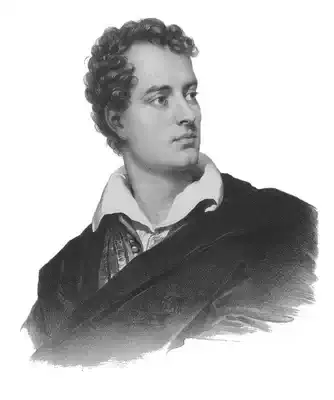
Lord Byron
The Dream
The Dream
I
Our life is twofold; Sleep hath its own world,
A boundary between the things misnamed
Death and existence: Sleep hath its own world,
And a wide realm of wild reality,
And dreams in their development have breath,
And tears, and tortures, and the touch of joy;
They leave a weight upon our waking thoughts,
They take a weight from off waking toils,
They do divide our being; they become
A portion of ourselves as of our time,
And look like heralds of eternity;
They pass like spirits of the past they
speak
Like sibyls of the future; they have power The
tyranny of pleasure and of pain;
They make us what we were not what
they will,
And shake us with the vision that's gone by,
The dread of vanished shadows Are
they so?
Is not the past all shadow? What
are they?
Creations of the mind? The
mind can make
Substances, and people planets of its own
With beings brighter than have been, and give
A breath to forms which can outlive all flesh.
I would recall a vision which I dreamed
Perchance in sleep for
in itself a thought,
A slumbering thought, is capable of years,
And curdles a long life into one hour.
II
I saw two beings in the hues of youth
Standing upon a hill, a gentle hill,
Green and of mild declivity, the last
As 'twere the cape of a long ridge of such,
Save that there was no sea to lave its base,
But a most living landscape, and the wave
Of woods and cornfields,
and the abodes of men
Scattered at intervals, and wreathing smoke
Arising from such rustic roofs: the hill
Was crowned with a peculiar diadem
Of trees, in circular array, so fixed,
Not by the sport of nature, but of man:
These two, a maiden and a youth, were there
Gazing the
one on all that was beneath
Fair as herself but
the boy gazed on her;
And both were young, and one was beautiful:
And both were young yet
not alike in youth.
As the sweet moon on the horizon's verge,
The maid was on the eve of womanhood;
The boy had fewer summers, but his heart
Had far outgrown his years, and to his eye
There was but one beloved face on earth,
And that was shining on him; he had looked
Upon it till it could not pass away;
He had no breath, no being, but in hers:
She was his voice; he did not speak to her,
But trembled on her words; she was his sight,
For his eye followed hers, and saw with hers,
Which coloured all his objects; he
had ceased
To live within himself: she was his life,
The ocean to the river of his thoughts,
Which terminated all; upon a tone,
A touch of hers, his blood would ebb and flow,
And his cheek change tempestuously his
heart
Unknowing of its cause of agony.
But she in these fond feelings had no share:
Her sighs were not for him; to her he was
Even as a brother but
no more; 'twas much,
For brotherless she was, save in the name
Her infant friendship had bestowed on him;
Herself the solitary scion left
Of a timehonoured
race. It
was a name
Which pleased him, and yet pleased him not and
why?
Time taught him a deep answer when
she loved
Another; even now she loved another,
And on the summit of that hill she stood
Looking afar if yet her lover's steed
Kept pace with her expectancy, and flew.
III
A change came o'er the spirit of my dream.
There was an ancient mansion, and before
Its walls there was a steed caparisoned:
Within an antique Oratory stood
The Boy of whom I spake; he
was alone,
And pale, and pacing to and fro: anon
He sate him down, and seized a pen, and traced
Words which I could not guess of; then he leaned
His bowed head on his hands and shook, as 'twere
With a convulsion then
rose again,
And with his teeth and quivering hands did tear
What he had written, but he shed no tears.
And he did calm himself, and fix his brow
Into a kind of quiet: as he paused,
The Lady of his love reentered
there;
She was serene and smiling then, and yet
She knew she was by him beloved; she knew For
quickly comes such knowledge that
his heart
Was darkened with her shadow, and she saw
That he was wretched, but she saw not all.
He rose, and with a cold and gentle grasp
He took her hand; a moment o'er his face
A tablet of unutterable thoughts
Was traced, and then it faded, as it came;
He dropped the hand he held, and with slow steps
Retired, but not as bidding her adieu,
For they did part with mutual smiles; he passed
From out the massy gate of that old Hall,
And mounting on his steed he went his way;
And ne'er repassed that hoary threshold more.
IV
A change came o'er the spirit of my dream.
The Boy was sprung to manhood: in the wilds
Of fiery climes he made himself a home,
And his Soul drank their sunbeams; he was girt
With strange and dusky aspects; he was not
Himself like what he had been; on the sea
And on the shore he was a wanderer;
There was a mass of many images
Crowded like waves upon me, but he was
A part of all; and in the last he lay
Reposing from the noontide sultriness,
Couched among fallen columns, in the shade
Of ruined walls that had survived the names
Of those who reared them; by his sleeping side
Stood camels grazing, and some goodly steeds
Were fastened near a fountain; and a man,
Glad in a flowing garb, did watch the while,
While many of his tribe slumbered around:
And they were canopied by the blue sky,
So cloudless, clear, and purely beautiful,
That God alone was to be seen in heaven.
V
A change came o'er the spirit of my dream.
The Lady of his love was wed with One
Who did not love her better: in her home,
A thousand leagues from his, her
native home,
She dwelt, begirt with growing Infancy,
Daughters and sons of Beauty, but
behold!
Upon her face there was a tint of grief,
The settled shadow of an inward strife,
And an unquiet drooping of the eye,
As if its lid were charged with unshed tears.
What could her grief be? she
had all she loved,
And he who had so loved her was not there
To trouble with bad hopes, or evil wish,
Or illrepressed
affliction, her pure thoughts.
What could her grief be? she
had loved him not,
Nor given him cause to deem himself beloved,
Nor could he be a part of that which preyed
Upon her mind a
spectre of the past.
VI
A change came o'er the spirit of my dream.
The Wanderer was returned. I
saw him stand
Before an altar with
a gentle bride;
Her face was fair, but was not that which made
The Starlight of his Boyhood; as
he stood
Even at the altar, o'er his brow there came
The selfsame aspect and the quivering shock
That in the antique Oratory shook
His bosom in its solitude; and then As
in that hour a
moment o'er his face
The tablet of unutterable thoughts
Was traced and
then it faded as it came,
And he stood calm and quiet, and he spoke
The fitting vows, but heard not his own words,
And all things reeled around him; he could see
Not that which was, nor that which should have been But
the old mansion, and the accustomed hall,
And the remembered chambers, and the place,
The day, the hour, the sunshine, and the shade,
All things pertaining to that place and hour,
And her who was his destiny, came back
And thrust themselves between him and the light;
What business had they there at such a time?
VII
A change came o'er the spirit of my dream.
The Lady of his love; Oh!
she was changed,
As by the sickness of the soul; her mind
Had wandered from its dwelling, and her eyes,
They had not their own lustre, but the look
Which is not of the earth; she was become
The queen of a fantastic realm; her thoughts
Were combinations of disjointed things;
And forms impalpable and unperceived
Of others' sight familiar were to hers.
And this the world calls frenzy; but the wise
Have a far deeper madness, and the glance
Of melancholy is a fearful gift;
What is it but the telescope of truth?
Which strips the distance of its fantasies,
And brings life near in utter nakedness,
Making the cold reality too real!
VIII
A change came o'er the spirit of my dream.
The Wanderer was alone as heretofore,
The beings which surrounded him were gone,
Or were at war with him; he was a mark
For blight and desolation, compassed round
With Hatred and Contention; Pain was mixed
In all which was served up to him, until,
Like to the Pontic monarch of old days,
He fed on poisons, and they had no power,
But were a kind of nutriment; he lived
Through that which had been death to many men,
And made him friends of mountains; with the stars
And the quick Spirit of the Universe
He held his dialogues: and they did teach
To him the magic of their mysteries;
To him the book of Night was opened wide,
And voices from the deep abyss revealed
A marvel and a secret. Be
it so.
IX
My dream is past; it had no further change.
It was of a strange order, that the doom
Of these two creatures should be thus traced out
Almost like a reality the
one
To end in madness both
in misery.
I
Our life is twofold; Sleep hath its own world,
A boundary between the things misnamed
Death and existence: Sleep hath its own world,
And a wide realm of wild reality,
And dreams in their development have breath,
And tears, and tortures, and the touch of joy;
They leave a weight upon our waking thoughts,
They take a weight from off waking toils,
They do divide our being; they become
A portion of ourselves as of our time,
And look like heralds of eternity;
They pass like spirits of the past they
speak
Like sibyls of the future; they have power The
tyranny of pleasure and of pain;
They make us what we were not what
they will,
And shake us with the vision that's gone by,
The dread of vanished shadows Are
they so?
Is not the past all shadow? What
are they?
Creations of the mind? The
mind can make
Substances, and people planets of its own
With beings brighter than have been, and give
A breath to forms which can outlive all flesh.
I would recall a vision which I dreamed
Perchance in sleep for
in itself a thought,
A slumbering thought, is capable of years,
And curdles a long life into one hour.
II
I saw two beings in the hues of youth
Standing upon a hill, a gentle hill,
Green and of mild declivity, the last
As 'twere the cape of a long ridge of such,
Save that there was no sea to lave its base,
But a most living landscape, and the wave
Of woods and cornfields,
and the abodes of men
Scattered at intervals, and wreathing smoke
Arising from such rustic roofs: the hill
Was crowned with a peculiar diadem
Of trees, in circular array, so fixed,
Not by the sport of nature, but of man:
These two, a maiden and a youth, were there
Gazing the
one on all that was beneath
Fair as herself but
the boy gazed on her;
And both were young, and one was beautiful:
And both were young yet
not alike in youth.
As the sweet moon on the horizon's verge,
The maid was on the eve of womanhood;
The boy had fewer summers, but his heart
Had far outgrown his years, and to his eye
There was but one beloved face on earth,
And that was shining on him; he had looked
Upon it till it could not pass away;
He had no breath, no being, but in hers:
She was his voice; he did not speak to her,
But trembled on her words; she was his sight,
For his eye followed hers, and saw with hers,
Which coloured all his objects; he
had ceased
To live within himself: she was his life,
The ocean to the river of his thoughts,
Which terminated all; upon a tone,
A touch of hers, his blood would ebb and flow,
And his cheek change tempestuously his
heart
Unknowing of its cause of agony.
But she in these fond feelings had no share:
Her sighs were not for him; to her he was
Even as a brother but
no more; 'twas much,
For brotherless she was, save in the name
Her infant friendship had bestowed on him;
Herself the solitary scion left
Of a timehonoured
race. It
was a name
Which pleased him, and yet pleased him not and
why?
Time taught him a deep answer when
she loved
Another; even now she loved another,
And on the summit of that hill she stood
Looking afar if yet her lover's steed
Kept pace with her expectancy, and flew.
III
A change came o'er the spirit of my dream.
There was an ancient mansion, and before
Its walls there was a steed caparisoned:
Within an antique Oratory stood
The Boy of whom I spake; he
was alone,
And pale, and pacing to and fro: anon
He sate him down, and seized a pen, and traced
Words which I could not guess of; then he leaned
His bowed head on his hands and shook, as 'twere
With a convulsion then
rose again,
And with his teeth and quivering hands did tear
What he had written, but he shed no tears.
And he did calm himself, and fix his brow
Into a kind of quiet: as he paused,
The Lady of his love reentered
there;
She was serene and smiling then, and yet
She knew she was by him beloved; she knew For
quickly comes such knowledge that
his heart
Was darkened with her shadow, and she saw
That he was wretched, but she saw not all.
He rose, and with a cold and gentle grasp
He took her hand; a moment o'er his face
A tablet of unutterable thoughts
Was traced, and then it faded, as it came;
He dropped the hand he held, and with slow steps
Retired, but not as bidding her adieu,
For they did part with mutual smiles; he passed
From out the massy gate of that old Hall,
And mounting on his steed he went his way;
And ne'er repassed that hoary threshold more.
IV
A change came o'er the spirit of my dream.
The Boy was sprung to manhood: in the wilds
Of fiery climes he made himself a home,
And his Soul drank their sunbeams; he was girt
With strange and dusky aspects; he was not
Himself like what he had been; on the sea
And on the shore he was a wanderer;
There was a mass of many images
Crowded like waves upon me, but he was
A part of all; and in the last he lay
Reposing from the noontide sultriness,
Couched among fallen columns, in the shade
Of ruined walls that had survived the names
Of those who reared them; by his sleeping side
Stood camels grazing, and some goodly steeds
Were fastened near a fountain; and a man,
Glad in a flowing garb, did watch the while,
While many of his tribe slumbered around:
And they were canopied by the blue sky,
So cloudless, clear, and purely beautiful,
That God alone was to be seen in heaven.
V
A change came o'er the spirit of my dream.
The Lady of his love was wed with One
Who did not love her better: in her home,
A thousand leagues from his, her
native home,
She dwelt, begirt with growing Infancy,
Daughters and sons of Beauty, but
behold!
Upon her face there was a tint of grief,
The settled shadow of an inward strife,
And an unquiet drooping of the eye,
As if its lid were charged with unshed tears.
What could her grief be? she
had all she loved,
And he who had so loved her was not there
To trouble with bad hopes, or evil wish,
Or illrepressed
affliction, her pure thoughts.
What could her grief be? she
had loved him not,
Nor given him cause to deem himself beloved,
Nor could he be a part of that which preyed
Upon her mind a
spectre of the past.
VI
A change came o'er the spirit of my dream.
The Wanderer was returned. I
saw him stand
Before an altar with
a gentle bride;
Her face was fair, but was not that which made
The Starlight of his Boyhood; as
he stood
Even at the altar, o'er his brow there came
The selfsame aspect and the quivering shock
That in the antique Oratory shook
His bosom in its solitude; and then As
in that hour a
moment o'er his face
The tablet of unutterable thoughts
Was traced and
then it faded as it came,
And he stood calm and quiet, and he spoke
The fitting vows, but heard not his own words,
And all things reeled around him; he could see
Not that which was, nor that which should have been But
the old mansion, and the accustomed hall,
And the remembered chambers, and the place,
The day, the hour, the sunshine, and the shade,
All things pertaining to that place and hour,
And her who was his destiny, came back
And thrust themselves between him and the light;
What business had they there at such a time?
VII
A change came o'er the spirit of my dream.
The Lady of his love; Oh!
she was changed,
As by the sickness of the soul; her mind
Had wandered from its dwelling, and her eyes,
They had not their own lustre, but the look
Which is not of the earth; she was become
The queen of a fantastic realm; her thoughts
Were combinations of disjointed things;
And forms impalpable and unperceived
Of others' sight familiar were to hers.
And this the world calls frenzy; but the wise
Have a far deeper madness, and the glance
Of melancholy is a fearful gift;
What is it but the telescope of truth?
Which strips the distance of its fantasies,
And brings life near in utter nakedness,
Making the cold reality too real!
VIII
A change came o'er the spirit of my dream.
The Wanderer was alone as heretofore,
The beings which surrounded him were gone,
Or were at war with him; he was a mark
For blight and desolation, compassed round
With Hatred and Contention; Pain was mixed
In all which was served up to him, until,
Like to the Pontic monarch of old days,
He fed on poisons, and they had no power,
But were a kind of nutriment; he lived
Through that which had been death to many men,
And made him friends of mountains; with the stars
And the quick Spirit of the Universe
He held his dialogues: and they did teach
To him the magic of their mysteries;
To him the book of Night was opened wide,
And voices from the deep abyss revealed
A marvel and a secret. Be
it so.
IX
My dream is past; it had no further change.
It was of a strange order, that the doom
Of these two creatures should be thus traced out
Almost like a reality the
one
To end in madness both
in misery.
688
Lord Byron
Don Juan: Canto The Tenth
Don Juan: Canto The Tenth
When Newton saw an apple fall, he found
In that slight startle from his contemplation'
Tis said (for I 'll not answer above ground
For any sage's creed or calculation)A
mode of proving that the earth turn'd round
In a most natural whirl, called 'gravitation;'
And this is the sole mortal who could grapple,
Since Adam, with a fall or with an apple.
Man fell with apples, and with apples rose,
If this be true; for we must deem the mode
In which Sir Isaac Newton could disclose
Through the then unpaved stars the turnpike road,
A thing to counterbalance human woes:
For ever since immortal man hath glow'd
With all kinds of mechanics, and full soon
Steamengines
will conduct him to the moon.
And wherefore this exordium?Why,
just now,
In taking up this paltry sheet of paper,
My bosom underwent a glorious glow,
And my internal spirit cut a caper:
And though so much inferior, as I know,
To those who, by the dint of glass and vapour,
Discover stars and sail in the wind's eye,
I wish to do as much by poesy.
In the wind's eye I have sail'd, and sail; but for
The stars, I own my telescope is dim:
But at least I have shunn'd the common shore,
And leaving land far out of sight, would skim
The ocean of eternity: the roar
Of breakers has not daunted my slight, trim,
But still seaworthy
skiff; and she may float
Where ships have founder'd, as doth many a boat.
We left our hero, Juan, in the bloom
Of favouritism, but not yet in the blush;
And far be it from my Muses to presume
(For I have more than one Muse at a push)
To follow him beyond the drawingroom:
It is enough that Fortune found him flush
Of youth, and vigour, beauty, and those things
Which for an instant clip enjoyment's wings.
But soon they grow again and leave their nest.
'Oh!' saith the Psalmist, 'that I had a dove's
Pinions to flee away, and be at rest!'
And who that recollects young years and loves,Though
hoary now, and with a withering breast,
And palsied fancy, which no longer roves
Beyond its dimm'd eye's sphere,but
would much rather
Sigh like his son, than cough like his grandfather?
But sighs subside, and tears (even widows') shrink,
Like Arno in the summer, to a shallow,
So narrow as to shame their wintry brink,
Which threatens inundations deep and yellow!
Such difference doth a few months make. You 'd think
Grief a rich field which never would lie fallow;
No more it doth, its ploughs but change their boys,
Who furrow some new soil to sow for joys.
But coughs will come when sighs departand
now
And then before sighs cease; for oft the one
Will bring the other, ere the lakelike
brow
Is ruffled by a wrinkle, or the sun
Of life reach'd ten o'clock: and while a glow,
Hectic and brief as summer's day nigh done,
O'erspreads the cheek which seems too pure for clay,
Thousands blaze, love, hope, die,how
happy they!
But Juan was not meant to die so soon.
We left him in the focus of such glory
As may be won by favour of the moon
Or ladies' fanciesrather
transitory
Perhaps; but who would scorn the month of June,
Because December, with his breath so hoary,
Must come? Much rather should he court the ray,
To hoard up warmth against a wintry day.
Besides, he had some qualities which fix
Middleaged
ladies even more than young:
The former know what's what; while newfledged
chicks
Know little more of love than what is sung
In rhymes, or dreamt (for fancy will play tricks)
In visions of those skies from whence Love sprung.
Some reckon women by their suns or years,
I rather think the moon should date the dears.
And why? because she's changeable and chaste.
I know no other reason, whatsoe'er
Suspicious people, who find fault in haste,
May choose to tax me with; which is not fair,
Nor flattering to 'their temper or their taste,'
As my friend Jeffrey writes with such an air:
However, I forgive him, and I trust
He will forgive himself;if
not, I must.
Old enemies who have become new friends
Should so continue'
tis a point of honour;
And I know nothing which could make amends
For a return to hatred: I would shun her
Like garlic, howsoever she extends
Her hundred arms and legs, and fain outrun her.
Old flames, new wives, become our bitterest foesConverted
foes should scorn to join with those.
This were the worst desertion:renegadoes,
Even shuffling Southey, that incarnate lie,
Would scarcely join again the 'reformadoes,'
Whom he forsook to fill the laureate's sty:
And honest men from Iceland to Barbadoes,
Whether in Caledon or Italy,
Should not veer round with every breath, nor seize
To pain, the moment when you cease to please.
The lawyer and the critic but behold
The baser sides of literature and life,
And nought remains unseen, but much untold,
By those who scour those double vales of strife.
While common men grow ignorantly old,
The lawyer's brief is like the surgeon's knife,
Dissecting the whole inside of a question,
And with it all the process of digestion.
A legal broom's a moral chimneysweeper,
And that's the reason he himself's so dirty;
The endless soot bestows a tint far deeper
Than can be hid by altering his shirt; he
Retains the sable stains of the dark creeper,
At least some twentynine
do out of thirty,
In all their habits;not
so you, I own;
As Caesar wore his robe you wear your gown.
And all our little feuds, at least all mine,
Dear Jefferson, once my most redoubted foe
(As far as rhyme and criticism combine
To make such puppets of us things below),
Are over: Here's a health to 'Auld Lang Syne!'
I do not know you, and may never know
Your facebut
you have acted on the whole
Most nobly, and I own it from my soul.
And when I use the phrase of 'Auld Lang Syne!'
'Tis not address'd to youthe
more 's the pity
For me, for I would rather take my wine
With you, than aught (save Scott) in your proud city.
But somehow,it
may seem a schoolboy's whine,
And yet I seek not to be grand nor witty,
But I am half a Scot by birth, and bred
A whole one, and my heart flies to my head,
As 'Auld Lang Syne' brings Scotland, one and all,
Scotch plaids, Scotch snoods, the blue hills, and clear streams,
The Dee, the Don, Balgounie's brig's black wall,
All my boy feelings, all my gentler dreams
Of what I then dreamt, clothed in their own pall,
Like Banquo's offspring;floating
past me seems
My childhood in this childishness of mine:
I care not'
tis a glimpse of 'Auld Lang Syne.'
And though, as you remember, in a fit
Of wrath and rhyme, when juvenile and curly,
I rail'd at Scots to show my wrath and wit,
Which must be own'd was sensitive and surly,
Yet 't is in vain such sallies to permit,
They cannot quench young feelings fresh and early:
I 'scotch'd not kill'd' the Scotchman in my blood,
And love the land of 'mountain and of flood.'
Don Juan, who was real, or ideal,For
both are much the same, since what men think
Exists when the once thinkers are less real
Than what they thought, for mind can never sink,
And 'gainst the body makes a strong appeal;
And yet 'tis very puzzling on the brink
Of what is call'd eternity, to stare,
And know no more of what is here, than there;
Don Juan grew a very polish'd RussianHow
we won't mention, why we need not say:
Few youthful minds can stand the strong concussion
Of any slight temptation in their way;
But his just now were spread as is a cushion
Smooth'd for a monarch's seat of honour; gay
Damsels, and dances, revels, ready money,
Made ice seem paradise, and winter sunny.
The favour of the empress was agreeable;
And though the duty wax'd a little hard,
Young people at his time of life should be able
To come off handsomely in that regard.
He was now growing up like a green tree, able
For love, war, or ambition, which reward
Their luckier votaries, till old age's tedium
Make some prefer the circulating medium.
About this time, as might have been anticipated,
Seduced by youth and dangerous examples,
Don Juan grew, I fear, a little dissipated;
Which is a sad thing, and not only tramples
On our fresh feelings, butas
being participated
With all kinds of incorrigible samples
Of frail humanitymust
make us selfish,
And shut our souls up in us like a shellfish.
This we pass over. We will also pass
The usual progress of intrigues between
Unequal matches, such as are, alas!
A young lieutenant's with a not old queen,
But one who is not so youthful as she was
In all the royalty of sweet seventeen.
Sovereigns may sway materials, but not matter,
And Death, the sovereign's sovereign, though the great
Gracchus of all mortality, who levels
With his Agrarian laws the high estate
Of him who feasts, and fights, and roars, and revels,
To one small grassgrown
patch (which must await
Corruption for its crop) with the poor devils
Who never had a foot of land till now,Death's
a reformer, all men must allow.
He lived (not Death, but Juan) in a hurry
Of waste, and haste, and glare, and gloss, and glitter,
In this gay clime of bearskins
black and furryWhich
(though I hate to say a thing that 's bitter)
Peep out sometimes, when things are in a flurry,
Through all the 'purple and fine linen,' fitter
For Babylon's than Russia's royal harlotAnd
neutralize her outward show of scarlet.
And this same state we won't describe: we would
Perhaps from hearsay, or from recollection;
But getting nigh grim Dante's 'obscure wood,'
That horrid equinox, that hateful section
Of human years, that halfway
house, that rude
Hut, whence wise travellers drive with circumspection
Life's sad posthorses
o'er the dreary frontier
Of age, and looking back to youth, give one tear;
I won't describe,that
is, if I can help
Description; and I won't reflect,that
is,
If I can stave off thought, whichas
a whelp
Clings to its teatsticks
to me through the abyss
Of this odd labyrinth; or as the kelp
Holds by the rock; or as a lover's kiss
Drains its first draught of lips:but,
as I said,
I won't philosophise, and will be read.
Juan, instead of courting courts, was courted,A
thing which happens rarely: this he owed
Much to his youth, and much to his reported
Valour; much also to the blood he show'd,
Like a racehorse;
much to each dress he sported,
Which set the beauty off in which he glow'd,
As purple clouds befringe the sun; but most
He owed to an old woman and his post.
He wrote to Spain:and
all his near relations,
Perceiving fie was in a handsome way
Of getting on himself, and finding stations
For cousins also, answer'd the same day.
Several prepared themselves for emigrations;
And eating ices, were o'erheard to say,
That with the addition of a slight pelisse,
Madrid's and Moscow's climes were of a piece.
His mother, Donna Inez, finding, too,
That in the lieu of drawing on his banker,
Where his assets were waxing rather few,
He had brought his spending to a handsome anchor,Replied,
'that she was glad to see him through
Those pleasures after which wild youth will hanker;
As the sole sign of man's being in his senses
Is, learning to reduce his past expenses.
'She also recommended him to God,
And no less to God's Son, as well as Mother,
Warn'd him against Greek worship, which looks odd
In Catholic eyes; but told him, too, to smother
Outward dislike, which don't look well abroad;
Inform'd him that he had a little brother
Born in a second wedlock; and above
All, praised the empress's maternal love.
'She could not too much give her approbation
Unto an empress, who preferr'd young men
Whose age, and what was better still, whose nation
And climate, stopp'd all scandal (now and then):At
home it might have given her some vexation;
But where thermometers sunk down to ten,
Or five, or one, or zero, she could never
Believe that virtue thaw'd before the river.'
Oh for a fortyparson
power to chant
Thy praise, Hypocrisy! Oh for a hymn
Loud as the virtues thou dost loudly vaunt,
Not practise! Oh for trumps of cherubim!
Or the eartrumpet
of my good old aunt,
Who, though her spectacles at last grew dim,
Drew quiet consolation through its hint,
When she no more could read the pious print.
She was no hypocrite at least, poor soul,
But went to heaven in as sincere a way
As any body on the elected roll,
Which portions out upon the judgment day
Heaven's freeholds, in a sort of doomsday scroll,
Such as the conqueror William did repay
His knights with, lotting others' properties
Into some sixty thousand new knights' fees.
I can't complain, whose ancestors are there,
Erneis, Radulphuseightandforty
manors
(If that my memory doth not greatly err)
Were their reward for following Billy's banners:
And though I can't help thinking 'twas scarce fair
To strip the Saxons of their hydes, like tanners;
Yet as they founded churches with the produce,
You'll deem, no doubt, they put it to a good use.
The gentle Juan flourish'd, though at times
He felt like other plants called sensitive,
Which shrink from touch, as monarchs do from rhymes,
Save such as Southey can afford to give.
Perhaps he long'd in bitter frosts for climes
In which the Neva's ice would cease to live
Before Mayday:
perhaps, despite his duty,
In royalty's vast arms he sigh d for beauty:
Perhapsbut,
sans perhaps, we need not seek
For causes young or old: the cankerworm
Will feed upon the fairest, freshest cheek,
As well as further drain the wither'd form:
Care, like a housekeeper, brings every week
His bills in, and however we may storm,
They must be paid: though six days smoothly run,
The seventh will bring blue devils or a dun.
I don't know how it was, but he grew sick:
The empress was alarm'd, and her physician
(The same who physick'd Peter) found the tick
Of his fierce pulse betoken a condition
Which augur'd of the dead, however quick
Itself, and show'd a feverish disposition;
At which the whole court was extremely troubled,
The sovereign shock'd, and all his medicines doubled.
Low were the whispers, manifold the rumours:
Some said he had been poison'd by Potemkin;
Others talk'd learnedly of certain tumours,
Exhaustion, or disorders of the same kin;
Some said 'twas a concoction of the humours,
Which with the blood too readily will claim kin;
Others again were ready to maintain,
''Twas only the fatigue of last campaign.'
But here is one prescription out of many:
'Sodae sulphat. 3vj. 3fs. Mannae optim.
Aq. fervent. f. 3ifs. 3ij. tinct. Sennae
Haustus' (And here the surgeon came and cupp'd him)
'Rx Pulv Com gr. iij. Ipecacuanhae'
(With more beside if Juan had not stopp'd 'em).
'Bolus Potassae Sulphuret. sumendus,
Et haustus ter in die capiendus.'
This is the way physicians mend or end us,
Secundum artem: but although we sneer
In healthwhen
ill, we call them to attend us,
Without the least propensity to jeer:
While that 'hiatus maxime deflendus'
To be fill'd up by spade or mattock's near,
Instead of gliding graciously down Lethe,
We tease mild Baillie, or soft Abernethy.
Juan demurr'd at this first notice to
Quit; and though death had threaten'd an ejection,
His youth and constitution bore him through,
And sent the doctors in a new direction.
But still his state was delicate: the hue
Of health but flicker'd with a faint reflection
Along his wasted cheek, and seem'd to gravel
The facultywho
said that he must travel.
The climate was too cold, they said, for him,
Meridianborn,
to bloom in. This opinion
Made the chaste Catherine look a little grim,
Who did not like at first to lose her minion:
But when she saw his dazzling eye wax dim,
And drooping like an eagle's with clipt pinion,
She then resolved to send him on a mission,
But in a style becoming his condition.
There was just then a kind of a discussion,
A sort of treaty or negotiation
Between the British cabinet and Russian,
Maintain'd with all the due prevarication
With which great states such things are apt to push on;
Something about the Baltic's navigation,
Hides, trainoil,
tallow, and the rights of Thetis,
Which Britons deem their 'uti possidetis.'
So Catherine, who had a handsome way
Of fitting out her favourites, conferr'd
This secret charge on Juan, to display
At once her royal splendour, and reward
His services. He kiss'd hands the next day,
Received instructions how to play his card,
Was laden with all kinds of gifts and honours,
Which show'd what great discernment was the donor's.
But she was lucky, and luck 's all. Your queens
Are generally prosperous in reigning;
Which puzzles us to know what Fortune means.
But to continue: though her years were waning
Her climacteric teased her like her teens;
And though her dignity brook'd no complaining,
So much did Juan's setting off distress her,
She could not find at first a fit successor.
But time, the comforter, will come at last;
And fourandtwenty
hours, and twice that number
Of candidates requesting to be placed,
Made Catherine taste next night a quiet slumber:Not
that she meant to fix again in haste,
Nor did she find the quantity encumber,
But always choosing with deliberation,
Kept the place open for their emulation.
While this high post of honour's in abeyance,
For one or two days, reader, we request
You'll mount with our young hero the conveyance
Which wafted him from Petersburgh: the best
Barouche, which had the glory to display once
The fair czarina's autocratic crest,
When, a new lphigene, she went to Tauris,
Was given to her favourite, and now bore his.
A bulldog,
and a bullfinch, and an ermine,
All private favourites of Don Juan;for
(Let deeper sages the true cause determine)
He had a kind of inclination, or
Weakness, for what most people deem mere vermin,
Live animals: an old maid of threescore
For cats and birds more penchant ne'er display'd,
Although he was not old, nor even a maid;
The animals aforesaid occupied
Their station: there were valets, secretaries,
In other vehicles; but at his side
Sat little Leila, who survived the parries
He made 'gainst Cossacque sabres, in the wide
Slaughter of Ismail. Though my wild Muse varies
Her note, she don't forget the infant girl
Whom he preserved, a pure and living pearl
Poor little thing! She was as fair as docile,
And with that gentle, serious character,
As rare in living beings as a fossile
Man, 'midst thy mouldy mammoths, 'grand Cuvier!'
Ill fitted was her ignorance to jostle
With this o'erwhelming world, where all must err:
But she was yet but ten years old, and therefore
Was tranquil, though she knew not why or wherefore.
Don Juan loved her, and she loved him, as
Nor brother, father, sister, daughter love.
I cannot tell exactly what it was;
He was not yet quite old enough to prove
Parental feelings, and the other class,
Call'd brotherly affection, could not move
His bosom,for
he never had a sister:
Ah! if he had, how much he would have miss'd her!
And still less was it sensual; for besides
That he was not an ancient debauchee
(Who like sour fruit, to stir their veins' salt tides,
As acids rouse a dormant alkali),
Although ('twill happen as our planet guides)
His youth was not the chastest that might be,
There was the purest Platonism at bottom
Of all his feelingsonly
he forgot 'em.
Just now there was no peril of temptation;
He loved the infant orphan he had saved,
As patriots (now and then) may love a nation;
His pride, too, felt that she was not enslaved
Owing to him;as
also her salvation
Through his means and the church's might be paved.
But one thing's odd, which here must be inserted,
The little Turk refused to be converted.
'Twas strange enough she should retain the impression
Through such a scene of change, and dread, and slaughter;
But though three bishops told her the transgression,
She show'd a great dislike to holy water:
She also had no passion for confession;
Perhaps she had nothing to confess:no
matter,
Whate'er the cause, the church made little of itShe
still held out that Mahomet was a prophet.
In fact, the only Christian she could bear
Was Juan; whom she seem'd to have selected
In place of what her home and friends once were.
He naturally loved what he protected:
And thus they form'd a rather curious pair,
A guardian green in years, a ward connected
In neither clime, time, blood, with her defender;
And yet this want of ties made theirs more tender.
They journey'd on through Poland and through Warsaw,
Famous for mines of salt and yokes of iron:
Through Courland also, which that famous farce saw
Which gave her dukes the graceless name of 'Biron.'
'Tis the same landscape which the modern Mars saw,
Who march'd to Moscow, led by Fame, the siren!
To lose by one month's frost some twenty years
Of conquest, and his guard of grenadiers.
Let this not seem an anticlimax:
'
Oh!
My guard! my old guard exclaim'd!' exclaim'd that god of day.
Think of the Thunderer's falling down below
Carotidarterycutting
Castlereagh!
Alas, that glory should be chill'd by snow!
But should we wish to warm us on our way
Through Poland, there is Kosciusko's name
Might scatter fire through ice, like Hecla's flame.
From Poland they came on through Prussia Proper,
And Konigsberg the capital, whose vaunt,
Besides some veins of iron, lead, or copper,
Has lately been the great Professor Kant.
Juan, who cared not a tobaccostopper
About philosophy, pursued his jaunt
To Germany, whose somewhat tardy millions
Have princes who spur more than their postilions.
And thence through Berlin, Dresden, and the like,
Until he reach'd the castellated Rhine:Ye
glorious Gothic scenes! how much ye strike
All phantasies, not even excepting mine;
A grey wall, a green ruin, rusty pike,
Make my soul pass the equinoctial line
Between the present and past worlds, and hover
Upon their airy confine, halfseasover.
But Juan posted on through Manheim, Bonn,
Which Drachenfels frowns over like a spectre
Of the good feudal times forever gone,
On which I have not time just now to lecture.
From thence he was drawn onwards to Cologne,
A city which presents to the inspector
Eleven thousand maidenheads of bone,
The greatest number flesh hath ever known.
From thence to Holland's Hague and Helvoetsluys,
That waterland
of Dutchmen and of ditches,
Where juniper expresses its best juice,
The poor man's sparkling substitute for riches.
Senates and sages have condemn'd its useBut
to deny the mob a cordial, which is
Too often all the clothing, meat, or fuel,
Good government has left them, seems but cruel.
Here he embark'd, and with a flowing sail
Went bounding for the island of the free,
Towards which the impatient wind blew half a gale;
High dash'd the spray, the bows dipp'd in the sea,
And seasick
passengers turn'd somewhat pale;
But Juan, season'd, as he well might be,
By former voyages, stood to watch the skiffs
Which pass'd, or catch the first glimpse of the cliffs.
At length they rose, like a white wall along
The blue sea's border; and I Don Juan feltWhat
even young strangers feel a little strong
At the first sight of Albion's chalky beltA
kind of pride that he should be among
Those haughty shopkeepers, who sternly dealt
Their goods and edicts out from pole to pole,
And made the very billows pay them toll.
I've no great cause to love that spot of earth,
Which holds what might have been the noblest nation;
But though I owe it little but my birth,
I feel a mix'd regret and veneration
For its decaying fame and former worth.
Seven years (the usual term of transportation)
Of absence lay one's old resentments level,
When a man's country 's going to the devil.
Alas! could she but fully, truly, know
How her great name is now throughout abhorr'd:
How eager all the earth is for the blow
Which shall lay bare her bosom to the sword;
How all the nations deem her their worst foe,
That worse than worst of foes, the once adored
False friend, who held out freedom to mankind,
And now would chain them, to the very mind:
Would she be proud, or boast herself the free,
Who is but first of slaves? The nations are
In prison,but
the gaoler, what is he?
No less a victim to the bolt and bar.
Is the poor privilege to turn the key
Upon the captive, freedom? He's as far
From the enjoyment of the earth and air
Who watches o'er the chain, as they who wear.
Don Juan now saw Albion's earliest beauties,
Thy cliffs, dear Dover! harbour, and hotel;
Thy customhouse,
with all its delicate duties;
Thy waiters running mucks at every bell;
Thy packets, all whose passengers are booties
To those who upon land or water dwell;
And last, not least, to strangers uninstructed,
Thy long, long bills, whence nothing is deducted.
Juan, though careless, young, and magnifique,
And rich in rubles, diamonds, cash, and credit,
Who did not limit much his bills per week,
Yet stared at this a little, though he paid it
(His Maggior Duomo, a smart, subtle Greek,
Before him summ'd the awful scroll and read it);
But doubtless as the air, though seldom sunny,
Is free, the respiration's worth the money.
On with the horses! Off to Canterbury!
Tramp, tramp o'er pebble, and splash, splash through puddle;
Hurrah! how swiftly speeds the post so merry!
Not like slow Germany, wherein they muddle
Along the road, as if they went to bury
Their fare; and also pause besides, to fuddle
With 'schnapps'sad
dogs! whom 'Hundsfot,' or 'Verflucter,'
Affect no more than lightning a conductor.
Now there is nothing gives a man such spirits,
Leavening his blood as cayenne doth a curry,
As going at full speedno
matter where its
Direction be, so 'tis but in a hurry,
And merely for the sake of its own merits;
For the less cause there is for all this flurry,
The greater is the pleasure in arriving
At the great end of travelwhich
is driving.
They saw at Canterbury the cathedral;
Black Edward's helm, and Becket's bloody stone,
Were pointed out as usual by the bedral,
In the same quaint, uninterested tone:There's
glory again for you, gentle reader! All
Ends in a rusty casque and dubious bone,
Halfsolved
into these sodas or magnesias;
Which form that bitter draught, the human species.
The effect on Juan was of course sublime:
He breathed a thousand Cressys, as he saw
That casque, which never stoop'd except to Time.
Even the bold Churchman's tomb excited awe,
Who died in the then great attempt to climb
O'er kings, who now at least must talk of law
Before they butcher. Little Leila gazed,
And ask'd why such a structure had been raised:
And being told it was 'God's house,' she said
He was well lodged, but only wonder'd how
He suffer'd Infidels in his homestead,
The cruel Nazarenes, who had laid low
His holy temples in the lands which bred
The True Believers:and
her infant brow
Was bent with grief that Mahomet should resign
A mosque so noble, flung like pearls to swine.
Oh! oh! through meadows managed like a garden,
A paradise of hops and high production;
For after years of travel by a bard in
Countries of greater heat, but lesser suction,
A green field is a sight which makes him pardon
The absence of that more sublime construction,
Which mixes up vines, olives, precipices,
Glaciers, volcanos, oranges, and ices.
And when I think upon a pot of beerBut
I won't weep!and
so drive on, postilions!
As the smart boys spurr'd fast in their career,
Juan admired these highways of free millions;
A country in all senses the most dear
To foreigner or native, save some silly ones,
Who 'kick against the pricks' just at this juncture,
And for their pains get only a fresh puncture.
What a delightful thing's a turnpike road!
So smooth, so level, such a mode of shaving
The earth, as scarce the eagle in the broad
Air can accomplish, with his wide wings waving.
Had such been cut in Phaeton's time, the god
Had told his son to satisfy his craving
With the York mail;but
onward as we roll,
'Surgit amari aliquid'the
toll
Alas, how deeply painful is all payment!
Take lives, take wives, take aught except men's purses:
As Machiavel shows those in purple raiment,
Such is the shortest way to general curses.
They hate a murderer much less than a claimant
On that sweet ore which every body nurses;Kill
a man's family, and he may brook it,
But keep your hands out of his breeches' pocket.
So said the Florentine: ye monarchs, hearken
To your instructor. Juan now was borne,
Just as the day began to wane and darken,
O'er the high hill, which looks with pride or scorn
Toward the great city.Ye
who have a spark in
Your veins of Cockney spirit, smile or mourn
According as you take things well or ill;Bold
Britons, we are now on Shooter's Hill!
The sun went down, the smoke rose up, as from
A halfunquench'd
volcano, o'er a space
Which well beseem'd the 'Devil's drawingroom,'
As some have qualified that wondrous place:
But Juan felt, though not approaching home,
As one who, though he were not of the race,
Revered the soil, of those true sons the mother,
Who butcher'd half the earth, and bullied t'other.
A mighty mass of brick, and smoke, and shipping,
Dirty and dusky, but as wide as eye
Could reach, with here and there a sail just skipping
In sight, then lost amidst the forestry
Of masts; a wilderness of steeples peeping
On tiptoe through their seacoal
canopy;
A huge, dun cupola, like a foolscap crown
On a fool's headand
there is London Town!
But Juan saw not this: each wreath of smoke
Appear'd to him but as the magic vapour
Of some alchymic furnace, from whence broke
The wealth of worlds (a wealth of tax and paper):
The gloomy clouds, which o'er it as a yoke
Are bow'd, and put the sun out like a taper,
Were nothing but the natural atmosphere,
Extremely wholesome, though but rarely clear.
He pausedand
so will I; as doth a crew
Before they give their broadside. By and by,
My gentle countrymen, we will renew
Our old acquaintance; and at least I 'll try
To tell you truths you will not take as true,
Because they are so;a
male Mrs. Fry,
With a soft besom will I sweep your halls,
And brush a web or two from off the walls.
Oh Mrs. Fry! Why go to Newgate? Why
Preach to poor rogues? And wherefore not begin
With Carlton, or with other houses? Try
Your head at harden'd and imperial sin.
To mend the people 's an absurdity,
A jargon, a mere philanthropic din,
Unless you make their betters better:Fy!
I thought you had more religion, Mrs. Fry.
Teach them the decencies of good threescore;
Cure them of tours, hussar and highland dresses;
Tell them that youth once gone returns no more,
That hired huzzas redeem no land's distresses;
Tell them Sir William Curtis is a bore,
Too dull even for the dullest of excesses,
The witless Falstaff of a hoary Hal,
A fool whose bells have ceased to ring at all.
Tell them, though it may be perhaps too late,
On life's worn confine, jaded, bloated, sated,
To set up vain pretence of being great,
'T is not so to be good; and be it stated,
The worthiest kings have ever loved least state;
And tell themBut
you won't, and I have prated
Just now enough; but by and by I'll prattle
Like Roland's horn in Roncesvalles' battle.
When Newton saw an apple fall, he found
In that slight startle from his contemplation'
Tis said (for I 'll not answer above ground
For any sage's creed or calculation)A
mode of proving that the earth turn'd round
In a most natural whirl, called 'gravitation;'
And this is the sole mortal who could grapple,
Since Adam, with a fall or with an apple.
Man fell with apples, and with apples rose,
If this be true; for we must deem the mode
In which Sir Isaac Newton could disclose
Through the then unpaved stars the turnpike road,
A thing to counterbalance human woes:
For ever since immortal man hath glow'd
With all kinds of mechanics, and full soon
Steamengines
will conduct him to the moon.
And wherefore this exordium?Why,
just now,
In taking up this paltry sheet of paper,
My bosom underwent a glorious glow,
And my internal spirit cut a caper:
And though so much inferior, as I know,
To those who, by the dint of glass and vapour,
Discover stars and sail in the wind's eye,
I wish to do as much by poesy.
In the wind's eye I have sail'd, and sail; but for
The stars, I own my telescope is dim:
But at least I have shunn'd the common shore,
And leaving land far out of sight, would skim
The ocean of eternity: the roar
Of breakers has not daunted my slight, trim,
But still seaworthy
skiff; and she may float
Where ships have founder'd, as doth many a boat.
We left our hero, Juan, in the bloom
Of favouritism, but not yet in the blush;
And far be it from my Muses to presume
(For I have more than one Muse at a push)
To follow him beyond the drawingroom:
It is enough that Fortune found him flush
Of youth, and vigour, beauty, and those things
Which for an instant clip enjoyment's wings.
But soon they grow again and leave their nest.
'Oh!' saith the Psalmist, 'that I had a dove's
Pinions to flee away, and be at rest!'
And who that recollects young years and loves,Though
hoary now, and with a withering breast,
And palsied fancy, which no longer roves
Beyond its dimm'd eye's sphere,but
would much rather
Sigh like his son, than cough like his grandfather?
But sighs subside, and tears (even widows') shrink,
Like Arno in the summer, to a shallow,
So narrow as to shame their wintry brink,
Which threatens inundations deep and yellow!
Such difference doth a few months make. You 'd think
Grief a rich field which never would lie fallow;
No more it doth, its ploughs but change their boys,
Who furrow some new soil to sow for joys.
But coughs will come when sighs departand
now
And then before sighs cease; for oft the one
Will bring the other, ere the lakelike
brow
Is ruffled by a wrinkle, or the sun
Of life reach'd ten o'clock: and while a glow,
Hectic and brief as summer's day nigh done,
O'erspreads the cheek which seems too pure for clay,
Thousands blaze, love, hope, die,how
happy they!
But Juan was not meant to die so soon.
We left him in the focus of such glory
As may be won by favour of the moon
Or ladies' fanciesrather
transitory
Perhaps; but who would scorn the month of June,
Because December, with his breath so hoary,
Must come? Much rather should he court the ray,
To hoard up warmth against a wintry day.
Besides, he had some qualities which fix
Middleaged
ladies even more than young:
The former know what's what; while newfledged
chicks
Know little more of love than what is sung
In rhymes, or dreamt (for fancy will play tricks)
In visions of those skies from whence Love sprung.
Some reckon women by their suns or years,
I rather think the moon should date the dears.
And why? because she's changeable and chaste.
I know no other reason, whatsoe'er
Suspicious people, who find fault in haste,
May choose to tax me with; which is not fair,
Nor flattering to 'their temper or their taste,'
As my friend Jeffrey writes with such an air:
However, I forgive him, and I trust
He will forgive himself;if
not, I must.
Old enemies who have become new friends
Should so continue'
tis a point of honour;
And I know nothing which could make amends
For a return to hatred: I would shun her
Like garlic, howsoever she extends
Her hundred arms and legs, and fain outrun her.
Old flames, new wives, become our bitterest foesConverted
foes should scorn to join with those.
This were the worst desertion:renegadoes,
Even shuffling Southey, that incarnate lie,
Would scarcely join again the 'reformadoes,'
Whom he forsook to fill the laureate's sty:
And honest men from Iceland to Barbadoes,
Whether in Caledon or Italy,
Should not veer round with every breath, nor seize
To pain, the moment when you cease to please.
The lawyer and the critic but behold
The baser sides of literature and life,
And nought remains unseen, but much untold,
By those who scour those double vales of strife.
While common men grow ignorantly old,
The lawyer's brief is like the surgeon's knife,
Dissecting the whole inside of a question,
And with it all the process of digestion.
A legal broom's a moral chimneysweeper,
And that's the reason he himself's so dirty;
The endless soot bestows a tint far deeper
Than can be hid by altering his shirt; he
Retains the sable stains of the dark creeper,
At least some twentynine
do out of thirty,
In all their habits;not
so you, I own;
As Caesar wore his robe you wear your gown.
And all our little feuds, at least all mine,
Dear Jefferson, once my most redoubted foe
(As far as rhyme and criticism combine
To make such puppets of us things below),
Are over: Here's a health to 'Auld Lang Syne!'
I do not know you, and may never know
Your facebut
you have acted on the whole
Most nobly, and I own it from my soul.
And when I use the phrase of 'Auld Lang Syne!'
'Tis not address'd to youthe
more 's the pity
For me, for I would rather take my wine
With you, than aught (save Scott) in your proud city.
But somehow,it
may seem a schoolboy's whine,
And yet I seek not to be grand nor witty,
But I am half a Scot by birth, and bred
A whole one, and my heart flies to my head,
As 'Auld Lang Syne' brings Scotland, one and all,
Scotch plaids, Scotch snoods, the blue hills, and clear streams,
The Dee, the Don, Balgounie's brig's black wall,
All my boy feelings, all my gentler dreams
Of what I then dreamt, clothed in their own pall,
Like Banquo's offspring;floating
past me seems
My childhood in this childishness of mine:
I care not'
tis a glimpse of 'Auld Lang Syne.'
And though, as you remember, in a fit
Of wrath and rhyme, when juvenile and curly,
I rail'd at Scots to show my wrath and wit,
Which must be own'd was sensitive and surly,
Yet 't is in vain such sallies to permit,
They cannot quench young feelings fresh and early:
I 'scotch'd not kill'd' the Scotchman in my blood,
And love the land of 'mountain and of flood.'
Don Juan, who was real, or ideal,For
both are much the same, since what men think
Exists when the once thinkers are less real
Than what they thought, for mind can never sink,
And 'gainst the body makes a strong appeal;
And yet 'tis very puzzling on the brink
Of what is call'd eternity, to stare,
And know no more of what is here, than there;
Don Juan grew a very polish'd RussianHow
we won't mention, why we need not say:
Few youthful minds can stand the strong concussion
Of any slight temptation in their way;
But his just now were spread as is a cushion
Smooth'd for a monarch's seat of honour; gay
Damsels, and dances, revels, ready money,
Made ice seem paradise, and winter sunny.
The favour of the empress was agreeable;
And though the duty wax'd a little hard,
Young people at his time of life should be able
To come off handsomely in that regard.
He was now growing up like a green tree, able
For love, war, or ambition, which reward
Their luckier votaries, till old age's tedium
Make some prefer the circulating medium.
About this time, as might have been anticipated,
Seduced by youth and dangerous examples,
Don Juan grew, I fear, a little dissipated;
Which is a sad thing, and not only tramples
On our fresh feelings, butas
being participated
With all kinds of incorrigible samples
Of frail humanitymust
make us selfish,
And shut our souls up in us like a shellfish.
This we pass over. We will also pass
The usual progress of intrigues between
Unequal matches, such as are, alas!
A young lieutenant's with a not old queen,
But one who is not so youthful as she was
In all the royalty of sweet seventeen.
Sovereigns may sway materials, but not matter,
And Death, the sovereign's sovereign, though the great
Gracchus of all mortality, who levels
With his Agrarian laws the high estate
Of him who feasts, and fights, and roars, and revels,
To one small grassgrown
patch (which must await
Corruption for its crop) with the poor devils
Who never had a foot of land till now,Death's
a reformer, all men must allow.
He lived (not Death, but Juan) in a hurry
Of waste, and haste, and glare, and gloss, and glitter,
In this gay clime of bearskins
black and furryWhich
(though I hate to say a thing that 's bitter)
Peep out sometimes, when things are in a flurry,
Through all the 'purple and fine linen,' fitter
For Babylon's than Russia's royal harlotAnd
neutralize her outward show of scarlet.
And this same state we won't describe: we would
Perhaps from hearsay, or from recollection;
But getting nigh grim Dante's 'obscure wood,'
That horrid equinox, that hateful section
Of human years, that halfway
house, that rude
Hut, whence wise travellers drive with circumspection
Life's sad posthorses
o'er the dreary frontier
Of age, and looking back to youth, give one tear;
I won't describe,that
is, if I can help
Description; and I won't reflect,that
is,
If I can stave off thought, whichas
a whelp
Clings to its teatsticks
to me through the abyss
Of this odd labyrinth; or as the kelp
Holds by the rock; or as a lover's kiss
Drains its first draught of lips:but,
as I said,
I won't philosophise, and will be read.
Juan, instead of courting courts, was courted,A
thing which happens rarely: this he owed
Much to his youth, and much to his reported
Valour; much also to the blood he show'd,
Like a racehorse;
much to each dress he sported,
Which set the beauty off in which he glow'd,
As purple clouds befringe the sun; but most
He owed to an old woman and his post.
He wrote to Spain:and
all his near relations,
Perceiving fie was in a handsome way
Of getting on himself, and finding stations
For cousins also, answer'd the same day.
Several prepared themselves for emigrations;
And eating ices, were o'erheard to say,
That with the addition of a slight pelisse,
Madrid's and Moscow's climes were of a piece.
His mother, Donna Inez, finding, too,
That in the lieu of drawing on his banker,
Where his assets were waxing rather few,
He had brought his spending to a handsome anchor,Replied,
'that she was glad to see him through
Those pleasures after which wild youth will hanker;
As the sole sign of man's being in his senses
Is, learning to reduce his past expenses.
'She also recommended him to God,
And no less to God's Son, as well as Mother,
Warn'd him against Greek worship, which looks odd
In Catholic eyes; but told him, too, to smother
Outward dislike, which don't look well abroad;
Inform'd him that he had a little brother
Born in a second wedlock; and above
All, praised the empress's maternal love.
'She could not too much give her approbation
Unto an empress, who preferr'd young men
Whose age, and what was better still, whose nation
And climate, stopp'd all scandal (now and then):At
home it might have given her some vexation;
But where thermometers sunk down to ten,
Or five, or one, or zero, she could never
Believe that virtue thaw'd before the river.'
Oh for a fortyparson
power to chant
Thy praise, Hypocrisy! Oh for a hymn
Loud as the virtues thou dost loudly vaunt,
Not practise! Oh for trumps of cherubim!
Or the eartrumpet
of my good old aunt,
Who, though her spectacles at last grew dim,
Drew quiet consolation through its hint,
When she no more could read the pious print.
She was no hypocrite at least, poor soul,
But went to heaven in as sincere a way
As any body on the elected roll,
Which portions out upon the judgment day
Heaven's freeholds, in a sort of doomsday scroll,
Such as the conqueror William did repay
His knights with, lotting others' properties
Into some sixty thousand new knights' fees.
I can't complain, whose ancestors are there,
Erneis, Radulphuseightandforty
manors
(If that my memory doth not greatly err)
Were their reward for following Billy's banners:
And though I can't help thinking 'twas scarce fair
To strip the Saxons of their hydes, like tanners;
Yet as they founded churches with the produce,
You'll deem, no doubt, they put it to a good use.
The gentle Juan flourish'd, though at times
He felt like other plants called sensitive,
Which shrink from touch, as monarchs do from rhymes,
Save such as Southey can afford to give.
Perhaps he long'd in bitter frosts for climes
In which the Neva's ice would cease to live
Before Mayday:
perhaps, despite his duty,
In royalty's vast arms he sigh d for beauty:
Perhapsbut,
sans perhaps, we need not seek
For causes young or old: the cankerworm
Will feed upon the fairest, freshest cheek,
As well as further drain the wither'd form:
Care, like a housekeeper, brings every week
His bills in, and however we may storm,
They must be paid: though six days smoothly run,
The seventh will bring blue devils or a dun.
I don't know how it was, but he grew sick:
The empress was alarm'd, and her physician
(The same who physick'd Peter) found the tick
Of his fierce pulse betoken a condition
Which augur'd of the dead, however quick
Itself, and show'd a feverish disposition;
At which the whole court was extremely troubled,
The sovereign shock'd, and all his medicines doubled.
Low were the whispers, manifold the rumours:
Some said he had been poison'd by Potemkin;
Others talk'd learnedly of certain tumours,
Exhaustion, or disorders of the same kin;
Some said 'twas a concoction of the humours,
Which with the blood too readily will claim kin;
Others again were ready to maintain,
''Twas only the fatigue of last campaign.'
But here is one prescription out of many:
'Sodae sulphat. 3vj. 3fs. Mannae optim.
Aq. fervent. f. 3ifs. 3ij. tinct. Sennae
Haustus' (And here the surgeon came and cupp'd him)
'Rx Pulv Com gr. iij. Ipecacuanhae'
(With more beside if Juan had not stopp'd 'em).
'Bolus Potassae Sulphuret. sumendus,
Et haustus ter in die capiendus.'
This is the way physicians mend or end us,
Secundum artem: but although we sneer
In healthwhen
ill, we call them to attend us,
Without the least propensity to jeer:
While that 'hiatus maxime deflendus'
To be fill'd up by spade or mattock's near,
Instead of gliding graciously down Lethe,
We tease mild Baillie, or soft Abernethy.
Juan demurr'd at this first notice to
Quit; and though death had threaten'd an ejection,
His youth and constitution bore him through,
And sent the doctors in a new direction.
But still his state was delicate: the hue
Of health but flicker'd with a faint reflection
Along his wasted cheek, and seem'd to gravel
The facultywho
said that he must travel.
The climate was too cold, they said, for him,
Meridianborn,
to bloom in. This opinion
Made the chaste Catherine look a little grim,
Who did not like at first to lose her minion:
But when she saw his dazzling eye wax dim,
And drooping like an eagle's with clipt pinion,
She then resolved to send him on a mission,
But in a style becoming his condition.
There was just then a kind of a discussion,
A sort of treaty or negotiation
Between the British cabinet and Russian,
Maintain'd with all the due prevarication
With which great states such things are apt to push on;
Something about the Baltic's navigation,
Hides, trainoil,
tallow, and the rights of Thetis,
Which Britons deem their 'uti possidetis.'
So Catherine, who had a handsome way
Of fitting out her favourites, conferr'd
This secret charge on Juan, to display
At once her royal splendour, and reward
His services. He kiss'd hands the next day,
Received instructions how to play his card,
Was laden with all kinds of gifts and honours,
Which show'd what great discernment was the donor's.
But she was lucky, and luck 's all. Your queens
Are generally prosperous in reigning;
Which puzzles us to know what Fortune means.
But to continue: though her years were waning
Her climacteric teased her like her teens;
And though her dignity brook'd no complaining,
So much did Juan's setting off distress her,
She could not find at first a fit successor.
But time, the comforter, will come at last;
And fourandtwenty
hours, and twice that number
Of candidates requesting to be placed,
Made Catherine taste next night a quiet slumber:Not
that she meant to fix again in haste,
Nor did she find the quantity encumber,
But always choosing with deliberation,
Kept the place open for their emulation.
While this high post of honour's in abeyance,
For one or two days, reader, we request
You'll mount with our young hero the conveyance
Which wafted him from Petersburgh: the best
Barouche, which had the glory to display once
The fair czarina's autocratic crest,
When, a new lphigene, she went to Tauris,
Was given to her favourite, and now bore his.
A bulldog,
and a bullfinch, and an ermine,
All private favourites of Don Juan;for
(Let deeper sages the true cause determine)
He had a kind of inclination, or
Weakness, for what most people deem mere vermin,
Live animals: an old maid of threescore
For cats and birds more penchant ne'er display'd,
Although he was not old, nor even a maid;
The animals aforesaid occupied
Their station: there were valets, secretaries,
In other vehicles; but at his side
Sat little Leila, who survived the parries
He made 'gainst Cossacque sabres, in the wide
Slaughter of Ismail. Though my wild Muse varies
Her note, she don't forget the infant girl
Whom he preserved, a pure and living pearl
Poor little thing! She was as fair as docile,
And with that gentle, serious character,
As rare in living beings as a fossile
Man, 'midst thy mouldy mammoths, 'grand Cuvier!'
Ill fitted was her ignorance to jostle
With this o'erwhelming world, where all must err:
But she was yet but ten years old, and therefore
Was tranquil, though she knew not why or wherefore.
Don Juan loved her, and she loved him, as
Nor brother, father, sister, daughter love.
I cannot tell exactly what it was;
He was not yet quite old enough to prove
Parental feelings, and the other class,
Call'd brotherly affection, could not move
His bosom,for
he never had a sister:
Ah! if he had, how much he would have miss'd her!
And still less was it sensual; for besides
That he was not an ancient debauchee
(Who like sour fruit, to stir their veins' salt tides,
As acids rouse a dormant alkali),
Although ('twill happen as our planet guides)
His youth was not the chastest that might be,
There was the purest Platonism at bottom
Of all his feelingsonly
he forgot 'em.
Just now there was no peril of temptation;
He loved the infant orphan he had saved,
As patriots (now and then) may love a nation;
His pride, too, felt that she was not enslaved
Owing to him;as
also her salvation
Through his means and the church's might be paved.
But one thing's odd, which here must be inserted,
The little Turk refused to be converted.
'Twas strange enough she should retain the impression
Through such a scene of change, and dread, and slaughter;
But though three bishops told her the transgression,
She show'd a great dislike to holy water:
She also had no passion for confession;
Perhaps she had nothing to confess:no
matter,
Whate'er the cause, the church made little of itShe
still held out that Mahomet was a prophet.
In fact, the only Christian she could bear
Was Juan; whom she seem'd to have selected
In place of what her home and friends once were.
He naturally loved what he protected:
And thus they form'd a rather curious pair,
A guardian green in years, a ward connected
In neither clime, time, blood, with her defender;
And yet this want of ties made theirs more tender.
They journey'd on through Poland and through Warsaw,
Famous for mines of salt and yokes of iron:
Through Courland also, which that famous farce saw
Which gave her dukes the graceless name of 'Biron.'
'Tis the same landscape which the modern Mars saw,
Who march'd to Moscow, led by Fame, the siren!
To lose by one month's frost some twenty years
Of conquest, and his guard of grenadiers.
Let this not seem an anticlimax:
'
Oh!
My guard! my old guard exclaim'd!' exclaim'd that god of day.
Think of the Thunderer's falling down below
Carotidarterycutting
Castlereagh!
Alas, that glory should be chill'd by snow!
But should we wish to warm us on our way
Through Poland, there is Kosciusko's name
Might scatter fire through ice, like Hecla's flame.
From Poland they came on through Prussia Proper,
And Konigsberg the capital, whose vaunt,
Besides some veins of iron, lead, or copper,
Has lately been the great Professor Kant.
Juan, who cared not a tobaccostopper
About philosophy, pursued his jaunt
To Germany, whose somewhat tardy millions
Have princes who spur more than their postilions.
And thence through Berlin, Dresden, and the like,
Until he reach'd the castellated Rhine:Ye
glorious Gothic scenes! how much ye strike
All phantasies, not even excepting mine;
A grey wall, a green ruin, rusty pike,
Make my soul pass the equinoctial line
Between the present and past worlds, and hover
Upon their airy confine, halfseasover.
But Juan posted on through Manheim, Bonn,
Which Drachenfels frowns over like a spectre
Of the good feudal times forever gone,
On which I have not time just now to lecture.
From thence he was drawn onwards to Cologne,
A city which presents to the inspector
Eleven thousand maidenheads of bone,
The greatest number flesh hath ever known.
From thence to Holland's Hague and Helvoetsluys,
That waterland
of Dutchmen and of ditches,
Where juniper expresses its best juice,
The poor man's sparkling substitute for riches.
Senates and sages have condemn'd its useBut
to deny the mob a cordial, which is
Too often all the clothing, meat, or fuel,
Good government has left them, seems but cruel.
Here he embark'd, and with a flowing sail
Went bounding for the island of the free,
Towards which the impatient wind blew half a gale;
High dash'd the spray, the bows dipp'd in the sea,
And seasick
passengers turn'd somewhat pale;
But Juan, season'd, as he well might be,
By former voyages, stood to watch the skiffs
Which pass'd, or catch the first glimpse of the cliffs.
At length they rose, like a white wall along
The blue sea's border; and I Don Juan feltWhat
even young strangers feel a little strong
At the first sight of Albion's chalky beltA
kind of pride that he should be among
Those haughty shopkeepers, who sternly dealt
Their goods and edicts out from pole to pole,
And made the very billows pay them toll.
I've no great cause to love that spot of earth,
Which holds what might have been the noblest nation;
But though I owe it little but my birth,
I feel a mix'd regret and veneration
For its decaying fame and former worth.
Seven years (the usual term of transportation)
Of absence lay one's old resentments level,
When a man's country 's going to the devil.
Alas! could she but fully, truly, know
How her great name is now throughout abhorr'd:
How eager all the earth is for the blow
Which shall lay bare her bosom to the sword;
How all the nations deem her their worst foe,
That worse than worst of foes, the once adored
False friend, who held out freedom to mankind,
And now would chain them, to the very mind:
Would she be proud, or boast herself the free,
Who is but first of slaves? The nations are
In prison,but
the gaoler, what is he?
No less a victim to the bolt and bar.
Is the poor privilege to turn the key
Upon the captive, freedom? He's as far
From the enjoyment of the earth and air
Who watches o'er the chain, as they who wear.
Don Juan now saw Albion's earliest beauties,
Thy cliffs, dear Dover! harbour, and hotel;
Thy customhouse,
with all its delicate duties;
Thy waiters running mucks at every bell;
Thy packets, all whose passengers are booties
To those who upon land or water dwell;
And last, not least, to strangers uninstructed,
Thy long, long bills, whence nothing is deducted.
Juan, though careless, young, and magnifique,
And rich in rubles, diamonds, cash, and credit,
Who did not limit much his bills per week,
Yet stared at this a little, though he paid it
(His Maggior Duomo, a smart, subtle Greek,
Before him summ'd the awful scroll and read it);
But doubtless as the air, though seldom sunny,
Is free, the respiration's worth the money.
On with the horses! Off to Canterbury!
Tramp, tramp o'er pebble, and splash, splash through puddle;
Hurrah! how swiftly speeds the post so merry!
Not like slow Germany, wherein they muddle
Along the road, as if they went to bury
Their fare; and also pause besides, to fuddle
With 'schnapps'sad
dogs! whom 'Hundsfot,' or 'Verflucter,'
Affect no more than lightning a conductor.
Now there is nothing gives a man such spirits,
Leavening his blood as cayenne doth a curry,
As going at full speedno
matter where its
Direction be, so 'tis but in a hurry,
And merely for the sake of its own merits;
For the less cause there is for all this flurry,
The greater is the pleasure in arriving
At the great end of travelwhich
is driving.
They saw at Canterbury the cathedral;
Black Edward's helm, and Becket's bloody stone,
Were pointed out as usual by the bedral,
In the same quaint, uninterested tone:There's
glory again for you, gentle reader! All
Ends in a rusty casque and dubious bone,
Halfsolved
into these sodas or magnesias;
Which form that bitter draught, the human species.
The effect on Juan was of course sublime:
He breathed a thousand Cressys, as he saw
That casque, which never stoop'd except to Time.
Even the bold Churchman's tomb excited awe,
Who died in the then great attempt to climb
O'er kings, who now at least must talk of law
Before they butcher. Little Leila gazed,
And ask'd why such a structure had been raised:
And being told it was 'God's house,' she said
He was well lodged, but only wonder'd how
He suffer'd Infidels in his homestead,
The cruel Nazarenes, who had laid low
His holy temples in the lands which bred
The True Believers:and
her infant brow
Was bent with grief that Mahomet should resign
A mosque so noble, flung like pearls to swine.
Oh! oh! through meadows managed like a garden,
A paradise of hops and high production;
For after years of travel by a bard in
Countries of greater heat, but lesser suction,
A green field is a sight which makes him pardon
The absence of that more sublime construction,
Which mixes up vines, olives, precipices,
Glaciers, volcanos, oranges, and ices.
And when I think upon a pot of beerBut
I won't weep!and
so drive on, postilions!
As the smart boys spurr'd fast in their career,
Juan admired these highways of free millions;
A country in all senses the most dear
To foreigner or native, save some silly ones,
Who 'kick against the pricks' just at this juncture,
And for their pains get only a fresh puncture.
What a delightful thing's a turnpike road!
So smooth, so level, such a mode of shaving
The earth, as scarce the eagle in the broad
Air can accomplish, with his wide wings waving.
Had such been cut in Phaeton's time, the god
Had told his son to satisfy his craving
With the York mail;but
onward as we roll,
'Surgit amari aliquid'the
toll
Alas, how deeply painful is all payment!
Take lives, take wives, take aught except men's purses:
As Machiavel shows those in purple raiment,
Such is the shortest way to general curses.
They hate a murderer much less than a claimant
On that sweet ore which every body nurses;Kill
a man's family, and he may brook it,
But keep your hands out of his breeches' pocket.
So said the Florentine: ye monarchs, hearken
To your instructor. Juan now was borne,
Just as the day began to wane and darken,
O'er the high hill, which looks with pride or scorn
Toward the great city.Ye
who have a spark in
Your veins of Cockney spirit, smile or mourn
According as you take things well or ill;Bold
Britons, we are now on Shooter's Hill!
The sun went down, the smoke rose up, as from
A halfunquench'd
volcano, o'er a space
Which well beseem'd the 'Devil's drawingroom,'
As some have qualified that wondrous place:
But Juan felt, though not approaching home,
As one who, though he were not of the race,
Revered the soil, of those true sons the mother,
Who butcher'd half the earth, and bullied t'other.
A mighty mass of brick, and smoke, and shipping,
Dirty and dusky, but as wide as eye
Could reach, with here and there a sail just skipping
In sight, then lost amidst the forestry
Of masts; a wilderness of steeples peeping
On tiptoe through their seacoal
canopy;
A huge, dun cupola, like a foolscap crown
On a fool's headand
there is London Town!
But Juan saw not this: each wreath of smoke
Appear'd to him but as the magic vapour
Of some alchymic furnace, from whence broke
The wealth of worlds (a wealth of tax and paper):
The gloomy clouds, which o'er it as a yoke
Are bow'd, and put the sun out like a taper,
Were nothing but the natural atmosphere,
Extremely wholesome, though but rarely clear.
He pausedand
so will I; as doth a crew
Before they give their broadside. By and by,
My gentle countrymen, we will renew
Our old acquaintance; and at least I 'll try
To tell you truths you will not take as true,
Because they are so;a
male Mrs. Fry,
With a soft besom will I sweep your halls,
And brush a web or two from off the walls.
Oh Mrs. Fry! Why go to Newgate? Why
Preach to poor rogues? And wherefore not begin
With Carlton, or with other houses? Try
Your head at harden'd and imperial sin.
To mend the people 's an absurdity,
A jargon, a mere philanthropic din,
Unless you make their betters better:Fy!
I thought you had more religion, Mrs. Fry.
Teach them the decencies of good threescore;
Cure them of tours, hussar and highland dresses;
Tell them that youth once gone returns no more,
That hired huzzas redeem no land's distresses;
Tell them Sir William Curtis is a bore,
Too dull even for the dullest of excesses,
The witless Falstaff of a hoary Hal,
A fool whose bells have ceased to ring at all.
Tell them, though it may be perhaps too late,
On life's worn confine, jaded, bloated, sated,
To set up vain pretence of being great,
'T is not so to be good; and be it stated,
The worthiest kings have ever loved least state;
And tell themBut
you won't, and I have prated
Just now enough; but by and by I'll prattle
Like Roland's horn in Roncesvalles' battle.
458
Federico García Lorca
Las Seis Cuerdas
Las Seis Cuerdas
La guitarra,
hace llorar a los sueños.
El sollozo de las almas
perdidas,
se escapa por su boca
redonda.
Y como la tarántula
teje una gran estrella
para cazar suspiros,
que flotan en su negro
aljibe de madera.
La guitarra,
hace llorar a los sueños.
El sollozo de las almas
perdidas,
se escapa por su boca
redonda.
Y como la tarántula
teje una gran estrella
para cazar suspiros,
que flotan en su negro
aljibe de madera.
655
Federico García Lorca
Adivinanza De La Guitarra
Adivinanza De La Guitarra
En la redonda
encrucijada,
seis doncellas
bailan.
Tres de carne
y tres de plata.
Los sueños de ayer las buscan
pero las tiene abrazadas
un Polifemo de oro.
¡La guitarra!
En la redonda
encrucijada,
seis doncellas
bailan.
Tres de carne
y tres de plata.
Los sueños de ayer las buscan
pero las tiene abrazadas
un Polifemo de oro.
¡La guitarra!
700
Federico García Lorca
Adam
Adam
A tree of blood soaks the morning
where the newborn woman groans.
Her voice leaves glass in the wound
and on the panes, a diagram of bone.
The coming light establishes and wins
white limits of a fable that forgets
the tumult of veins in flight
toward the dim cool of the apple.
Adam dreams in the fever of the clay
of a child who comes galloping
through the double pulse of his cheek.
But a dark other Adam is dreaming
a neuter moon of seedless stone
where the child of light will burn.
A tree of blood soaks the morning
where the newborn woman groans.
Her voice leaves glass in the wound
and on the panes, a diagram of bone.
The coming light establishes and wins
white limits of a fable that forgets
the tumult of veins in flight
toward the dim cool of the apple.
Adam dreams in the fever of the clay
of a child who comes galloping
through the double pulse of his cheek.
But a dark other Adam is dreaming
a neuter moon of seedless stone
where the child of light will burn.
631

Ezra Pound
Homage To Sextus Propertius - X
Homage To Sextus Propertius - X
.Light, light of my eyes, at an exceeding late hour I was wandering,
And intoxicated,
and no servant was leading me,
And a minute crowd of small boys came from opposite,
I do not know what boys,
And I am afraid of numerical estimate,
And some of them shook little torches,
and others held onto arrows,
And the rest laid their chains upon me,
and they were naked, the lot of them,
And one of the lot was given to lust.
'That incensed female has consigned him to our pleasure.'
So spoke. And the noose was over my neck.
And another said 'Get him plumb in the middle!
'Shove along there, shove along!'
And another broke in upon this:
'He thinks that we are not gods,'
'And she has been waiting for the scoundrel,
and in a new Sidonian night cap,
And with more than Arabian odours,
God knows where he has been.
She could scarcely keep her eyes open
enter that much for his bail.
Get along now!'
We were coming near to the house,
and they gave another yank to my cloak,
And it was morning, and I wanted to see if she was alone and resting,
And Cynthia was alone in her bed.
I was stupefied.
I had never seen her looking so beautiful,
No, not when she was tunick'd in purple.
Such aspect was presented to me, me recently emerged from my visions,
You will observe that pure form has its value.
‘You are a very early inspector of mistresses.
‘Do you think I have adopted your habits?'
There were upon the bed no signs of a voluptuous encounter,
No signs of a second incumbent.
She continued:
'No incubus has crushed his body against me,
‘Though spirits are celebrated for adultery.
‘And I am going to the temple of Vesta . . .'
and so on.
Since that day I have had no pleasant nights.
.Light, light of my eyes, at an exceeding late hour I was wandering,
And intoxicated,
and no servant was leading me,
And a minute crowd of small boys came from opposite,
I do not know what boys,
And I am afraid of numerical estimate,
And some of them shook little torches,
and others held onto arrows,
And the rest laid their chains upon me,
and they were naked, the lot of them,
And one of the lot was given to lust.
'That incensed female has consigned him to our pleasure.'
So spoke. And the noose was over my neck.
And another said 'Get him plumb in the middle!
'Shove along there, shove along!'
And another broke in upon this:
'He thinks that we are not gods,'
'And she has been waiting for the scoundrel,
and in a new Sidonian night cap,
And with more than Arabian odours,
God knows where he has been.
She could scarcely keep her eyes open
enter that much for his bail.
Get along now!'
We were coming near to the house,
and they gave another yank to my cloak,
And it was morning, and I wanted to see if she was alone and resting,
And Cynthia was alone in her bed.
I was stupefied.
I had never seen her looking so beautiful,
No, not when she was tunick'd in purple.
Such aspect was presented to me, me recently emerged from my visions,
You will observe that pure form has its value.
‘You are a very early inspector of mistresses.
‘Do you think I have adopted your habits?'
There were upon the bed no signs of a voluptuous encounter,
No signs of a second incumbent.
She continued:
'No incubus has crushed his body against me,
‘Though spirits are celebrated for adultery.
‘And I am going to the temple of Vesta . . .'
and so on.
Since that day I have had no pleasant nights.
402
Ezra Pound
Apparuit
Apparuit
Golden rose the house, in the portal I saw
thee, a marvel, carven in subtle stuff, a
portent. Life died down in the lamp and flickered,
caught at the wonder.
Crimson, frosty with dew, the roses bend where
thou afar, moving in the glamorous sun,
drinkst in life of earth, of the air, the tissue
golden about thee.
Green the ways, the breath of the fields is thine there,
open lies the land, yet the steely going
darkly hast thou dared and the dreaded aether
parted before thee.
Swift at courage thou in the shell of gold, casting
a-loose the cloak of the body, earnest
straight, then shone thine oriel and the stunned light
faded about thee.
Half the graven shoulder, the throat aflash with
strands of light inwoven about it, loveliest
of all things, frail alabaster, ah me!
swift in departing.
Clothed in goldish weft, delicately perfect,
gone as wind ! The cloth of the magical hands!
Thou a slight thing, thou in access of cunning
dar'dst to assume this?
Golden rose the house, in the portal I saw
thee, a marvel, carven in subtle stuff, a
portent. Life died down in the lamp and flickered,
caught at the wonder.
Crimson, frosty with dew, the roses bend where
thou afar, moving in the glamorous sun,
drinkst in life of earth, of the air, the tissue
golden about thee.
Green the ways, the breath of the fields is thine there,
open lies the land, yet the steely going
darkly hast thou dared and the dreaded aether
parted before thee.
Swift at courage thou in the shell of gold, casting
a-loose the cloak of the body, earnest
straight, then shone thine oriel and the stunned light
faded about thee.
Half the graven shoulder, the throat aflash with
strands of light inwoven about it, loveliest
of all things, frail alabaster, ah me!
swift in departing.
Clothed in goldish weft, delicately perfect,
gone as wind ! The cloth of the magical hands!
Thou a slight thing, thou in access of cunning
dar'dst to assume this?
540

Emily Jane Brontë
To Imagination
To Imagination
When weary with the long day's care,
And earthly change from pain to pain,
And lost and ready to despair,
Thy kind voice calls me back again:
Oh, my true friend! I am not lone,
While thou canst speak with such a tone!
So hopeless is the world without;
The world within I doubly prize;
Thy world, where guile, and hate, and doubt,
And cold suspicion never rise;
Where thou, and I, and Liberty,
Have undisputed sovereignty.
What matters it, that, all around,
Danger, and guilt, and darkness lie,
If but within our bosom's bound
We hold a bright, untroubled sky,
Warm with ten thousand mingled rays
Of suns that know no winter days?
Reason, indeed, may oft complain
For Nature's sad reality,
And tell the suffering heart, how vain
Its cherished dreams must always be;
And Truth may rudely trample down
The flowers of Fancy, newly-blown:
But, thou art ever there, to bring
The hovering vision back, and breathe
New glories o'er the blighted spring,
And call a lovelier Life from Death,
And whisper, with a voice divine,
Of real worlds, as bright as thine.
I trust not to thy phantom bliss,
Yet, still, in evening's quiet hour,
With never-failing thankfulness,
I welcome thee, Benignant Power;
Sure solacer of human cares,
And sweeter hope, when hope despairs!
When weary with the long day's care,
And earthly change from pain to pain,
And lost and ready to despair,
Thy kind voice calls me back again:
Oh, my true friend! I am not lone,
While thou canst speak with such a tone!
So hopeless is the world without;
The world within I doubly prize;
Thy world, where guile, and hate, and doubt,
And cold suspicion never rise;
Where thou, and I, and Liberty,
Have undisputed sovereignty.
What matters it, that, all around,
Danger, and guilt, and darkness lie,
If but within our bosom's bound
We hold a bright, untroubled sky,
Warm with ten thousand mingled rays
Of suns that know no winter days?
Reason, indeed, may oft complain
For Nature's sad reality,
And tell the suffering heart, how vain
Its cherished dreams must always be;
And Truth may rudely trample down
The flowers of Fancy, newly-blown:
But, thou art ever there, to bring
The hovering vision back, and breathe
New glories o'er the blighted spring,
And call a lovelier Life from Death,
And whisper, with a voice divine,
Of real worlds, as bright as thine.
I trust not to thy phantom bliss,
Yet, still, in evening's quiet hour,
With never-failing thankfulness,
I welcome thee, Benignant Power;
Sure solacer of human cares,
And sweeter hope, when hope despairs!
244
Emily Jane Brontë
Speak, God Of Visions
Speak, God Of Visions
O, thy bright eyes must answer now,
When Reason, with a scornful brow,
Is mocking at my overthrow!
O, thy sweet tongue must plead for me,
And tell why I have chosen thee!
Stern Reason is to judgment come,
Arrayed in all her forms of gloom:
Wilt thou, my advocate, be dumb?
No, radiant angel, speak and say
Why I did cast the world away;
Why I have presevered to shun
The common paths that others run,
And on a strange road journeyed on,
Heedless alike of wealth and power,
Of Glory's wreath and Pleasure's flower.
These once, indeed, seemed Beings Divine;
And they, perchance, heard vows of mine,
And saw my offerings on their shrine;
But careless gifts are seldom prized,
And mine were worthily despised.
So, with a ready heart I swore
To seek their altar-stone no more;
And gave my spirit to adore
Thee, ever-present, phantom thing—
My slave, my comrade, and my king.
A slave, because I rule thee still,
Incline thee to my changeful will,
And make thy influence good or ill;
A comrade, for by day and night
Thou art my intimate delight,—
My darling pain that wounds and sears,
And wrings a blessing out of tears
Be deadening me to earthly cares;
And yet, a king, though Prudence well
Have taught thy subject to rebel.
And I am wrong to worship where
Faith cannot doubt, nor Hope despair,
Since my own soul can grant my prayer?
Speak, God of Visions, plead for me,
And tell why I have chosen thee!
O, thy bright eyes must answer now,
When Reason, with a scornful brow,
Is mocking at my overthrow!
O, thy sweet tongue must plead for me,
And tell why I have chosen thee!
Stern Reason is to judgment come,
Arrayed in all her forms of gloom:
Wilt thou, my advocate, be dumb?
No, radiant angel, speak and say
Why I did cast the world away;
Why I have presevered to shun
The common paths that others run,
And on a strange road journeyed on,
Heedless alike of wealth and power,
Of Glory's wreath and Pleasure's flower.
These once, indeed, seemed Beings Divine;
And they, perchance, heard vows of mine,
And saw my offerings on their shrine;
But careless gifts are seldom prized,
And mine were worthily despised.
So, with a ready heart I swore
To seek their altar-stone no more;
And gave my spirit to adore
Thee, ever-present, phantom thing—
My slave, my comrade, and my king.
A slave, because I rule thee still,
Incline thee to my changeful will,
And make thy influence good or ill;
A comrade, for by day and night
Thou art my intimate delight,—
My darling pain that wounds and sears,
And wrings a blessing out of tears
Be deadening me to earthly cares;
And yet, a king, though Prudence well
Have taught thy subject to rebel.
And I am wrong to worship where
Faith cannot doubt, nor Hope despair,
Since my own soul can grant my prayer?
Speak, God of Visions, plead for me,
And tell why I have chosen thee!
193
Emily Jane Brontë
How Clear She Shines
How Clear She Shines
How clear she shines! How quietly
I lie beneath her guardian light;
While heaven and earth are whispering me,
" Tomorrow, wake, but, dream to-night."
Yes, Fancy, come, my Fairy love!
These throbbing temples softly kiss;
And bend my lonely couch above
And bring me rest, and bring me bliss.
The world is going; dark world, adieu!
Grim world, conceal thee till the day;
The heart, thou canst not all subdue,
Must still resist, if thou delay!
Thy love I will not, will not share;
Thy hatred only wakes a smile;
Thy griefs may wound - thy wrongs may tear,
But, oh, thy lies shall ne'er beguile!
While gazing on the stars that glow
Above me, in that stormless sea,
I long to hope that all the woe
Creation knows, is held in thee!
And, this shall be my dream to-night;
I'll think the heaven of glorious spheres
Is rolling on its course of light
In endless bliss, through endless years;
I'll think, there's not one world above,
Far as these straining eyes can see,
Where Wisdom ever laughed at Love,
Or Virtue crouched to Infamy;
Where, writhing 'neath the strokes of Fate,
The mangled wretch was forced to smile;
To match his patience 'gainst her hate,
His heart rebellious all the while.
Where Pleasure still will lead to wrong,
And helpless Reason warn in vain;
And Truth is weak, and Treachery strong;
And Joy the surest path to Pain;
And Peace, the lethargy of Grief;
And Hope, a phantom of the soul;
And Life, a labour, void and brief;
And Death, the despot of the whole!
How clear she shines! How quietly
I lie beneath her guardian light;
While heaven and earth are whispering me,
" Tomorrow, wake, but, dream to-night."
Yes, Fancy, come, my Fairy love!
These throbbing temples softly kiss;
And bend my lonely couch above
And bring me rest, and bring me bliss.
The world is going; dark world, adieu!
Grim world, conceal thee till the day;
The heart, thou canst not all subdue,
Must still resist, if thou delay!
Thy love I will not, will not share;
Thy hatred only wakes a smile;
Thy griefs may wound - thy wrongs may tear,
But, oh, thy lies shall ne'er beguile!
While gazing on the stars that glow
Above me, in that stormless sea,
I long to hope that all the woe
Creation knows, is held in thee!
And, this shall be my dream to-night;
I'll think the heaven of glorious spheres
Is rolling on its course of light
In endless bliss, through endless years;
I'll think, there's not one world above,
Far as these straining eyes can see,
Where Wisdom ever laughed at Love,
Or Virtue crouched to Infamy;
Where, writhing 'neath the strokes of Fate,
The mangled wretch was forced to smile;
To match his patience 'gainst her hate,
His heart rebellious all the while.
Where Pleasure still will lead to wrong,
And helpless Reason warn in vain;
And Truth is weak, and Treachery strong;
And Joy the surest path to Pain;
And Peace, the lethargy of Grief;
And Hope, a phantom of the soul;
And Life, a labour, void and brief;
And Death, the despot of the whole!
207