

Poems in this theme
Solitude

Carl Sandburg
Chicago Poet
Chicago Poet
I saluted a nobody.
I saw him in a looking-glass.
He smiled--so did I.
He crumpled the skin on his forehead, frowning--so did I.
Everything I did he did.
I said, "Hello, I know you."
And I was a liar to say so.
Ah, this. looking-glass man!
Liar, fool, dreamer, play-actor,
Soldier, dusty drinker of dust--
Ah! he will go with me
Down the dark stairway
When nobody else is looking,
When everybody else is gone.
He locks his elbow in mine,
I lose all--but not him.
I saluted a nobody.
I saw him in a looking-glass.
He smiled--so did I.
He crumpled the skin on his forehead, frowning--so did I.
Everything I did he did.
I said, "Hello, I know you."
And I was a liar to say so.
Ah, this. looking-glass man!
Liar, fool, dreamer, play-actor,
Soldier, dusty drinker of dust--
Ah! he will go with me
Down the dark stairway
When nobody else is looking,
When everybody else is gone.
He locks his elbow in mine,
I lose all--but not him.
647
Carl Sandburg
Aprons of Silence
Aprons of Silence
Many things I might have said today.
And I kept my mouth shut.
So many times I was asked
To come and say the same things
Everybody was saying, no end
To the yes-yes, yes-yes,
me-too, me-too.
The aprons of silence covered me.
A wire and hatch held my tongue.
I spit nails into an abyss and listened.
I shut off the gable of Jones, Johnson, Smith,
All whose names take pages in the city directory.
I fixed up a padded cell and lugged it around.
I locked myself in and nobody knew it.
Only the keeper and the kept in the hoosegow
Knew it--on the streets, in the post office,
On the cars, into the railroad station
Where the caller was calling, "All a-board,
All a-board for . . . Blaa-blaa . . . Blaa-blaa,
Blaa-blaa . . . and all points northwest . . .all a-board."
Here I took along my own hoosegow
And did business with my own thoughts.
Do you see? It must be the aprons of silence.
Many things I might have said today.
And I kept my mouth shut.
So many times I was asked
To come and say the same things
Everybody was saying, no end
To the yes-yes, yes-yes,
me-too, me-too.
The aprons of silence covered me.
A wire and hatch held my tongue.
I spit nails into an abyss and listened.
I shut off the gable of Jones, Johnson, Smith,
All whose names take pages in the city directory.
I fixed up a padded cell and lugged it around.
I locked myself in and nobody knew it.
Only the keeper and the kept in the hoosegow
Knew it--on the streets, in the post office,
On the cars, into the railroad station
Where the caller was calling, "All a-board,
All a-board for . . . Blaa-blaa . . . Blaa-blaa,
Blaa-blaa . . . and all points northwest . . .all a-board."
Here I took along my own hoosegow
And did business with my own thoughts.
Do you see? It must be the aprons of silence.
414

Anne Brontë
The Consolation
The Consolation
Though bleak these woods and damp the ground
With fallen leaves so thickly strewn,
And cold the wind that wanders round
With wild and melancholy moan,
There is a friendly roof I know
Might shield me from the wintry blast;
There is a fire whose ruddy glow
Will cheer me for my wanderings past.
And so, though still where'er I roam
Cold stranger glances meet my eye,
Though when my spirit sinks in woe
Unheeded swells the unbidden sigh,
Though solitude endured too long
Bids youthful joys too soon decay,
Makes mirth a stranger to my tongue
And overclouds my noon of day,
When kindly thoughts that would have way
Flow back discouraged to my breast
I know there is, though far away
A home where heart and soul may rest.
Warm hands are there that clasped in mine
The warmer heart will not belie,
While mirth and truth and friendship shine
In smiling lip and earnest eye.
The ice that gathers round my heart
May there be thawed; and sweetly then
The joys of youth that now depart
Will come to cheer my soul again.
Though far I roam, this thought shall be
My hope, my comfort everywhere;
While such a home remains to me
My heart shall never know despair.
Hespera Caverndel
Though bleak these woods and damp the ground
With fallen leaves so thickly strewn,
And cold the wind that wanders round
With wild and melancholy moan,
There is a friendly roof I know
Might shield me from the wintry blast;
There is a fire whose ruddy glow
Will cheer me for my wanderings past.
And so, though still where'er I roam
Cold stranger glances meet my eye,
Though when my spirit sinks in woe
Unheeded swells the unbidden sigh,
Though solitude endured too long
Bids youthful joys too soon decay,
Makes mirth a stranger to my tongue
And overclouds my noon of day,
When kindly thoughts that would have way
Flow back discouraged to my breast
I know there is, though far away
A home where heart and soul may rest.
Warm hands are there that clasped in mine
The warmer heart will not belie,
While mirth and truth and friendship shine
In smiling lip and earnest eye.
The ice that gathers round my heart
May there be thawed; and sweetly then
The joys of youth that now depart
Will come to cheer my soul again.
Though far I roam, this thought shall be
My hope, my comfort everywhere;
While such a home remains to me
My heart shall never know despair.
Hespera Caverndel
80
Anne Brontë
The Captive Dove
The Captive Dove
Poor restless dove, I pity thee;
And when I hear thy plaintive moan,
I mourn for thy captivity,
And in thy woes forget mine own.
To see thee stand prepared to fly,
And flap those useless wings of thine,
And gaze into the distant sky,
Would melt a harder heart than mine.
In vain in
vain! Thou canst not rise:
Thy prison roof confines thee there;
Its slender wires delude thine eyes,
And quench thy longings with despair.
Oh, thou wert made to wander free
In sunny mead and shady grove,
And, far beyond the rolling sea,
In distant climes, at will to rove!
Yet, hadst thou but one gentle mate
Thy little drooping heart to cheer,
And share with thee thy captive state,
Thou couldst be happy even there.
Yes, even there, if, listening by,
One faithful dear companion stood,
While gazing on her full bright eye,
Thou mightst forget thy native wood.
But thou, poor solitary dove,
Must make, unheard, thy joyless moan;
The heart, that Nature formed to love,
Must pine, neglected, and alone.
Poor restless dove, I pity thee;
And when I hear thy plaintive moan,
I mourn for thy captivity,
And in thy woes forget mine own.
To see thee stand prepared to fly,
And flap those useless wings of thine,
And gaze into the distant sky,
Would melt a harder heart than mine.
In vain in
vain! Thou canst not rise:
Thy prison roof confines thee there;
Its slender wires delude thine eyes,
And quench thy longings with despair.
Oh, thou wert made to wander free
In sunny mead and shady grove,
And, far beyond the rolling sea,
In distant climes, at will to rove!
Yet, hadst thou but one gentle mate
Thy little drooping heart to cheer,
And share with thee thy captive state,
Thou couldst be happy even there.
Yes, even there, if, listening by,
One faithful dear companion stood,
While gazing on her full bright eye,
Thou mightst forget thy native wood.
But thou, poor solitary dove,
Must make, unheard, thy joyless moan;
The heart, that Nature formed to love,
Must pine, neglected, and alone.
137
Anne Brontë
A Voice From The Dungeon
A Voice From The Dungeon
I'm buried now; I've done with life;
I've done with hate, revenge and strife;
I've done with joy, and hope and love
And all the bustling world above.
Long have I dwelt forgotten here
In pining woe and dull despair;
This place of solitude and gloom
Must be my dungeon and my tomb.
No hope, no pleasure can I find:
I am grown weary of my mind;
Often in balmy sleep I try
To gain a rest from misery,
And in one hour of calm repose
To find a respite from my woes,
But dreamless sleep is not for me
And I am still in misery.
I dream of liberty, 'tis true,
But then I dream of sorrow too,
Of blood and guilt and horrid woes,
Of tortured friends and happy foes;
I dream about the world, but then
I dream of fiends instead of men;
Each smiling hope so quickly fades
And such a lurid gloom pervades
That world that
when I wake and see
Those dreary phantoms fade and flee,
Even in my dungeon I can smile,
And taste of joy a little while.
And yet it is not always so;
I dreamt a little while ago
That all was as it used to be:
A fresh free wind passed over me;
It was a pleasant summer's day,
The sun shone forth with cheering ray,
Methought a little lovely child
Looked up into my face and smiled.
My heart was full, I wept for joy,
It was my own, my darling boy;
I clasped him to my breast and he
Kissed me and laughed in childish glee.
Just them I heard in whisper sweet
A well known voice my name repeat.
His father stood before my eyes;
I gazed at him in mute surprise,
I thought he smiled and spoke to me,
But still in silent ecstasy
I gazed at him; I could not speak;
I uttered one long piercing shriek.
Alas! Alas! That cursed scream
Aroused me from my heavenly dream;
I looked around in wild despair,
I called them, but they were not there;
The father and the child are gone,
And I must live and die alone.
Marina Sabia
I'm buried now; I've done with life;
I've done with hate, revenge and strife;
I've done with joy, and hope and love
And all the bustling world above.
Long have I dwelt forgotten here
In pining woe and dull despair;
This place of solitude and gloom
Must be my dungeon and my tomb.
No hope, no pleasure can I find:
I am grown weary of my mind;
Often in balmy sleep I try
To gain a rest from misery,
And in one hour of calm repose
To find a respite from my woes,
But dreamless sleep is not for me
And I am still in misery.
I dream of liberty, 'tis true,
But then I dream of sorrow too,
Of blood and guilt and horrid woes,
Of tortured friends and happy foes;
I dream about the world, but then
I dream of fiends instead of men;
Each smiling hope so quickly fades
And such a lurid gloom pervades
That world that
when I wake and see
Those dreary phantoms fade and flee,
Even in my dungeon I can smile,
And taste of joy a little while.
And yet it is not always so;
I dreamt a little while ago
That all was as it used to be:
A fresh free wind passed over me;
It was a pleasant summer's day,
The sun shone forth with cheering ray,
Methought a little lovely child
Looked up into my face and smiled.
My heart was full, I wept for joy,
It was my own, my darling boy;
I clasped him to my breast and he
Kissed me and laughed in childish glee.
Just them I heard in whisper sweet
A well known voice my name repeat.
His father stood before my eyes;
I gazed at him in mute surprise,
I thought he smiled and spoke to me,
But still in silent ecstasy
I gazed at him; I could not speak;
I uttered one long piercing shriek.
Alas! Alas! That cursed scream
Aroused me from my heavenly dream;
I looked around in wild despair,
I called them, but they were not there;
The father and the child are gone,
And I must live and die alone.
Marina Sabia
79
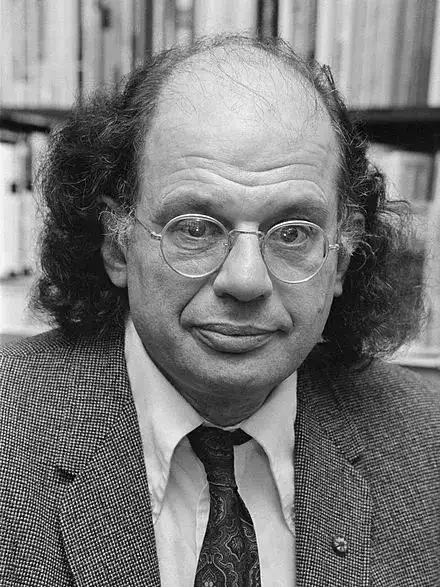
Allen Ginsberg
A Desolaltion
A Desolaltion
Now mind is clear
as a cloudless sky.
Time then to make a
home in wilderness.
What have I done but
wander with my eyes
in the trees? So I
will build: wife,
family, and seek
for neighbors.
Or I
perish of lonesomeness
or want of food or
lightning or the bear
(must tame the hart
and wear the bear).
And maybe make an image
of my wandering, a little
image—shrine by the
roadside to signify
to traveler that I live
here in the wilderness
awake and at home.
Now mind is clear
as a cloudless sky.
Time then to make a
home in wilderness.
What have I done but
wander with my eyes
in the trees? So I
will build: wife,
family, and seek
for neighbors.
Or I
perish of lonesomeness
or want of food or
lightning or the bear
(must tame the hart
and wear the bear).
And maybe make an image
of my wandering, a little
image—shrine by the
roadside to signify
to traveler that I live
here in the wilderness
awake and at home.
551
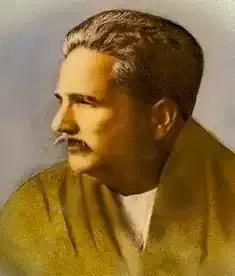
Muhammad Iqbal
A Longing
A Longing
O Lord! I have become weary of human assemblages!
When the heart is sad no pleasure in assemblages can be
I seek escape from tumult, my heart desires
The silence which speech may ardently love!
I vehemently desire silence, I strongly long that
A small hut in the mountain's side may there be
Freed from worry I may live in retirement
Freed from the cares of the world I may be
Birds chirping may give the pleasure of the lyre
In the spring's noise may the orchestra's melody be
The flower bud bursting may give God's message to me
Showing the whole world 1 to me this small wine-cup may be
My arm may be my pillow, and the green grass my bed be
Putting the congregation to shame my solitude's quality be
The nightingale be so familiar with my face that
Her little heart harboring no fear from me may be
Avenues of green trees standing on both sides be
The spring's clear water providing a beautiful picture be
The view of the mountain range may be so beautiful
To see it the waves of water again and again rising be
The verdure may be asleep in the lap of the earth
Water running through the bushes may glistening be
Again and again the flowered boughs touching the water be
As if some beauty looking at itself in mirror be
When the sun apply myrtle to the evening's bride
The tunic of every flower may pinkish golden be
When night's travellers falter behind with fatigue
Their only hope my broken earthenware lamp may be
May the lightning lead them to my hut
When clouds hovering over the whole sky be.
The early dawn's cuckoo, that morning's mu'adhdhin2
May my confidante he be, and may his confidante I be
May I not be obligated to the temple or to the mosque
May the hut's hole alone herald of morning's arrival be
When the dew may come to perform the flowers' ablution
May wailing my supplication, weeping my ablution be
In this silence may my heart's wailing rise so high
That for stars' caravan the clarion's call my wailing be
May every compassionate heart weeping with me be
Perhaps it may awaken those who may unconscious be
O Lord! I have become weary of human assemblages!
When the heart is sad no pleasure in assemblages can be
I seek escape from tumult, my heart desires
The silence which speech may ardently love!
I vehemently desire silence, I strongly long that
A small hut in the mountain's side may there be
Freed from worry I may live in retirement
Freed from the cares of the world I may be
Birds chirping may give the pleasure of the lyre
In the spring's noise may the orchestra's melody be
The flower bud bursting may give God's message to me
Showing the whole world 1 to me this small wine-cup may be
My arm may be my pillow, and the green grass my bed be
Putting the congregation to shame my solitude's quality be
The nightingale be so familiar with my face that
Her little heart harboring no fear from me may be
Avenues of green trees standing on both sides be
The spring's clear water providing a beautiful picture be
The view of the mountain range may be so beautiful
To see it the waves of water again and again rising be
The verdure may be asleep in the lap of the earth
Water running through the bushes may glistening be
Again and again the flowered boughs touching the water be
As if some beauty looking at itself in mirror be
When the sun apply myrtle to the evening's bride
The tunic of every flower may pinkish golden be
When night's travellers falter behind with fatigue
Their only hope my broken earthenware lamp may be
May the lightning lead them to my hut
When clouds hovering over the whole sky be.
The early dawn's cuckoo, that morning's mu'adhdhin2
May my confidante he be, and may his confidante I be
May I not be obligated to the temple or to the mosque
May the hut's hole alone herald of morning's arrival be
When the dew may come to perform the flowers' ablution
May wailing my supplication, weeping my ablution be
In this silence may my heart's wailing rise so high
That for stars' caravan the clarion's call my wailing be
May every compassionate heart weeping with me be
Perhaps it may awaken those who may unconscious be
496
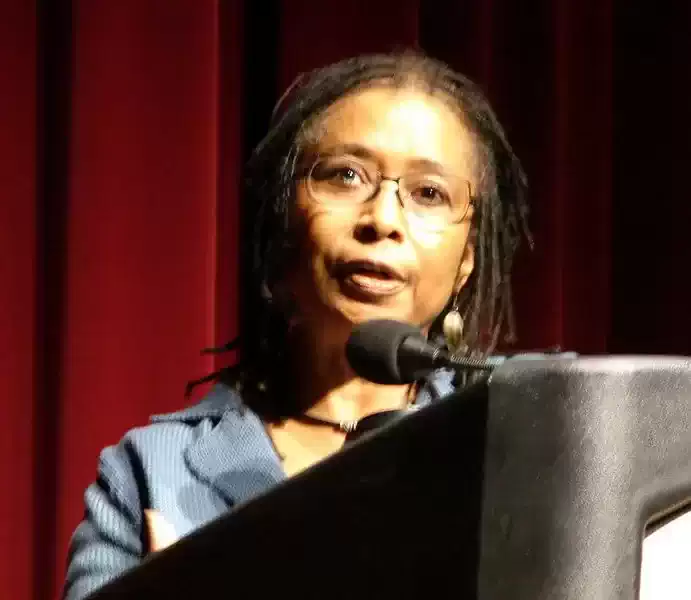
Alice Walker
Be Nobody's Darling
Be Nobody's Darling
Be nobody's darling;
Be an outcast.
Take the contradictions
Of your life
And wrap around
You like a shawl,
To parry stones
To keep you warm.
Watch the people succumb
To madness
With ample cheer;
Let them look askance at you
And you askance reply.
Be an outcast;
Be pleased to walk alone
(Uncool)
Or line the crowded
River beds
With other impetuous
Fools.
Make a merry gathering
On the bank
Where thousands perished
For brave hurt words
They said.
But be nobody's darling;
Be an outcast.
Qualified to live
Among your dead.
Be nobody's darling;
Be an outcast.
Take the contradictions
Of your life
And wrap around
You like a shawl,
To parry stones
To keep you warm.
Watch the people succumb
To madness
With ample cheer;
Let them look askance at you
And you askance reply.
Be an outcast;
Be pleased to walk alone
(Uncool)
Or line the crowded
River beds
With other impetuous
Fools.
Make a merry gathering
On the bank
Where thousands perished
For brave hurt words
They said.
But be nobody's darling;
Be an outcast.
Qualified to live
Among your dead.
266
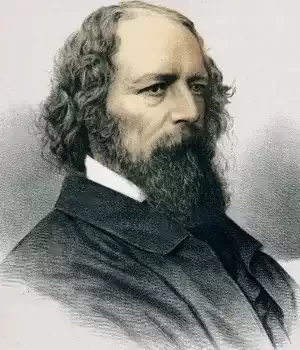
Alfred Lord Tennyson
The Palace of Art
The Palace of Art
I built my soul a lordly pleasure-house,
Wherein at ease for aye to dwell.
I said, "O Soul, make merry and carouse,
Dear soul, for all is well."
A huge crag-platform, smooth as burnish'd brass
I chose. The ranged ramparts bright
From level meadow-bases of deep grass
Suddenly scaled the light.
Thereon I built it firm. Of ledge or shelf
The rock rose clear, or winding stair.
My soul would live alone unto herself
In her high palace there.
And "while the world runs round and round," I said,
"Reign thou apart, a quiet king,
Still as, while Saturn whirls, his steadfast shade
Sleeps on his luminous ring."
To which my soul made answer readily:
"Trust me, in bliss I shall abide
In this great mansion, that is built for me,
So royal-rich and wide."* * * * *
Four courts I made, East, West and South and North,
In each a squared lawn, wherefrom
The golden gorge of dragons spouted forth
A flood of fountain-foam.
And round the cool green courts there ran a row
Of cloisters, branch'd like mighty woods,
Echoing all night to that sonorous flow
Of spouted fountain-floods.
And round the roofs a gilded gallery
That lent broad verge to distant lands,
Far as the wild swan wings, to where the sky
Dipt down to sea and sands.
From those four jets four currents in one swell
Across the mountain stream'd below
In misty folds, that floating as they fell
Lit up a torrent-bow.
And high on every peak a statue seem'd
To hang on tiptoe, tossing up
A cloud of incense of all odour steam'd
From out a golden cup.
So that she thought, "And who shall gaze upon
My palace with unblinded eyes,
While this great bow will waver in the sun,
And that sweet incense rise?"
For that sweet incense rose and never fail'd,
And, while day sank or mounted higher,
The light aërial gallery, golden-rail'd,
Burnt like a fringe of fire.
Likewise the deep-set windows, stain'd and traced,
Would seem slow-flaming crimson fires
From shadow'd grots of arches interlaced,
And tipt with frost-like spires.* * * * *
Full of long-sounding corridors it was,
That over-vaulted grateful gloom,
Thro' which the livelong day my soul did pass,
Well-pleased, from room to room.
Full of great rooms and small the palace stood,
All various, each a perfect whole
From living Nature, fit for every mood
And change of my still soul.
For some were hung with arras green and blue,
Showing a gaudy summer-morn,
Where with puff'd cheek the belted hunter blew
His wreathed bugle-horn.
One seem'd all dark and red--a tract of sand,
And some one pacing there alone,
Who paced for ever in a glimmering land,
Lit with a low large moon.
One show'd an iron coast and angry waves.
You seem'd to hear them climb and fall
And roar rock-thwarted under bellowing caves,
Beneath the windy wall.
And one, a full-fed river winding slow
By herds upon an endless plain,
The ragged rims of thunder brooding low,
With shadow-streaks of rain.
And one, the reapers at their sultry toil.
In front they bound the sheaves. Behind
Were realms of upland, prodigal in oil,
And hoary to the wind.
And one a foreground black with stones and slags,
Beyond, a line of heights, and higher
All barr'd with long white cloud the scornful crags,
And highest, snow and fire.
And one, an English home--gray twilight pour'd
On dewy pastures, dewy trees,
Softer than sleep--all things in order stored,
A haunt of ancient Peace.
Nor these alone, but every landscape fair,
As fit for every mood of mind,
Or gay, or grave, or sweet, or stern, was there,
Not less than truth design'd.* * * * *
Or the maid-mother by a crucifix,
In tracts of pasture sunny-warm,
Beneath branch-work of costly sardonyx
Sat smiling, babe in arm.
Or in a clear-wall'd city on the sea,
Near gilded organ-pipes, her hair
Wound with white roses, slept St. Cecily;
An angel look'd at her.
Or thronging all one porch of Paradise
A group of Houris bow'd to see
The dying Islamite, with hands and eyes
That said, We wait for thee.
Or mythic Uther's deeply-wounded son
In some fair space of sloping greens
Lay, dozing in the vale of Avalon,
And watch'd by weeping queens.
Or hollowing one hand against his ear,
To list a foot-fall, ere he saw
The wood-nymph, stay'd the Ausonian king to hear
Of wisdom and of law.
Or over hills with peaky tops engrail'd,
And many a tract of palm and rice,
The throne of Indian Cama slowly sail'd
A summer fann'd with spice.
Or sweet Europa's mantle blew unclasp'd,
From off her shoulder backward borne:
From one hand droop'd a crocus: one hand grasp'd
The mild bull's golden horn.
Or else flush'd Ganymede, his rosy thigh
Half-buried in the Eagle's down,
Sole as a flying star shot thro' the sky
Above the pillar'd town.
Nor these alone; but every legend fair
Which the supreme Caucasian mind
Carved out of Nature for itself, was there,
Not less than life, design'd.* * * * *
Then in the towers I placed great bells that swung,
Moved of themselves, with silver sound;
And with choice paintings of wise men I hung
The royal dais round.
For there was Milton like a seraph strong,
Beside him Shakespeare bland and mild;
And there the world-worn Dante grasp'd his song,
And somewhat grimly smiled.
And there the Ionian father of the rest;
A million wrinkles carved his skin;
A hundred winters snow'd upon his breast,
From cheek and throat and chin.
Above, the fair hall-ceiling stately-set
Many an arch high up did lift,
And angels rising and descending met
With interchange of gift.
Below was all mosaic choicely plann'd
With cycles of the human tale
Of this wide world, the times of every land
So wrought, they will not fail.
The people here, a beast of burden slow,
Toil'd onward, prick'd with goads and stings;
Here play'd, a tiger, rolling to and fro
The heads and crowns of kings;
Here rose, an athlete, strong to break or bind
All force in bonds that might endure,
And here once more like some sick man declined,
And trusted any cure.
But over these she trod: and those great bells
Began to chime. She took her throne:
She sat betwixt the shining Oriels,
To sing her songs alone.
And thro' the topmost Oriels' coloured flame
Two godlike faces gazed below;
Plato the wise, and large brow'd Verulam,
The first of those who know.
And all those names, that in their motion were
Full-welling fountain-heads of change,
Betwixt the slender shafts were blazon'd fair
In diverse raiment strange:
Thro' which the lights, rose, amber, emerald, blue,
Flush'd in her temples and her eyes,
And from her lips, as morn from Memnon, drew
Rivers of melodies.
No nightingale delighteth to prolong
Her low preamble all alone,
More than my soul to hear her echo'd song
Throb thro' the ribbed stone;
Singing and murmuring in her feastful mirth,
Joying to feel herself alive,
Lord over Nature, Lord of the visible earth,
Lord of the senses five;
Communing with herself: "All these are mine,
And let the world have peace or wars,
'T is one to me." She--when young night divine
Crown'd dying day with stars,
Making sweet close of his delicious toils-Lit
light in wreaths and anadems,
And pure quintessences of precious oils
In hollow'd moons of gems,
To mimic heaven; and clapt her hands and cried,
"I marvel if my still delight
In this great house so royal-rich, and wide,
Be flatter'd to the height.
"O all things fair to sate my various eyes!
O shapes and hues that please me well!
O silent faces of the Great and Wise,
My Gods, with whom I dwell!
"O God-like isolation which art mine,
I can but count thee perfect gain,
What time I watch the darkening droves of swine
That range on yonder plain.
"In filthy sloughs they roll a prurient skin,
They graze and wallow, breed and sleep;
And oft some brainless devil enters in,
And drives them to the deep."
Then of the moral instinct would she prate
And of the rising from the dead,
As hers by right of full accomplish'd Fate;
And at the last she said:
"I take possession of man's mind and deed.
I care not what the sects may brawl.
I sit as God holding no form of creed,
But contemplating all."* * * * *
Full oft the riddle of the painful earth
Flash'd thro' her as she sat alone,
Yet not the less held she her solemn mirth,
And intellectual throne.
And so she throve and prosper'd; so three years
She prosper'd: on the fourth she fell,
Like Herod, when the shout was in his ears,
Struck thro' with pangs of hell.
Lest she should fail and perish utterly,
God, before whom ever lie bare
The abysmal deeps of Personality,
Plagued her with sore despair.
When she would think, where'er she turn'd her sight
The airy hand confusion wrought,
Wrote, "Mene, mene," and divided quite
The kingdom of her thought.
Deep dread and loathing of her solitude
Fell on her, from which mood was born
Scorn of herself; again, from out that mood
Laughter at her self-scorn.
"What! is not this my place of strength," she said,
"My spacious mansion built for me,
Whereof the strong foundation-stones were laid
Since my first memory?"
But in dark corners of her palace stood
Uncertain shapes; and unawares
On white-eyed phantasms weeping tears of blood,
And horrible nightmares,
And hollow shades enclosing hearts of flame,
And, with dim fretted foreheads all,
On corpses three-months-old at noon she came,
That stood against the wall.
A spot of dull stagnation, without light
Or power of movement, seem'd my soul,
'Mid onward-sloping motions infinite
Making for one sure goal.
A still salt pool, lock'd in with bars of sand,
Left on the shore, that hears all night
The plunging seas draw backward from the land
Their moon-led waters white.
A star that with the choral starry dance
Join'd not, but stood, and standing saw
The hollow orb of moving Circumstance
Roll'd round by one fix'd law.
Back on herself her serpent pride had curl'd.
"No voice," she shriek'd in that lone hall,
"No voice breaks thro' the stillness of this world:
One deep, deep silence all!"
She, mouldering with the dull earth's mouldering sod,
Inwrapt tenfold in slothful shame,
Lay there exiled from eternal God,
Lost to her place and name;
And death and life she hated equally,
And nothing saw, for her despair,
But dreadful time, dreadful eternity,
No comfort anywhere;
Remaining utterly confused with fears,
And ever worse with growing time,
And ever unrelieved by dismal tears,
And all alone in crime:
Shut up as in a crumbling tomb, girt round
With blackness as a solid wall,
Far off she seem'd to hear the dully sound
Of human footsteps fall.
As in strange lands a traveller walking slow,
In doubt and great perplexity,
A little before moon-rise hears the low
Moan of an unknown sea;
And knows not if it be thunder, or a sound
Of rocks thrown down, or one deep cry
Of great wild beasts; then thinketh, "I have found
A new land, but I die."
She howl'd aloud, "I am on fire within.
There comes no murmur of reply.
What is it that will take away my sin,
And save me lest I die?"
So when four years were wholly finished,
She threw her royal robes away.
"Make me a cottage in the vale," she said,
"Where I may mourn and pray.
"Yet pull not down my palace towers, that are
So lightly, beautifully built:
Perchance I may return with others there
When I have purged my guilt."
I built my soul a lordly pleasure-house,
Wherein at ease for aye to dwell.
I said, "O Soul, make merry and carouse,
Dear soul, for all is well."
A huge crag-platform, smooth as burnish'd brass
I chose. The ranged ramparts bright
From level meadow-bases of deep grass
Suddenly scaled the light.
Thereon I built it firm. Of ledge or shelf
The rock rose clear, or winding stair.
My soul would live alone unto herself
In her high palace there.
And "while the world runs round and round," I said,
"Reign thou apart, a quiet king,
Still as, while Saturn whirls, his steadfast shade
Sleeps on his luminous ring."
To which my soul made answer readily:
"Trust me, in bliss I shall abide
In this great mansion, that is built for me,
So royal-rich and wide."* * * * *
Four courts I made, East, West and South and North,
In each a squared lawn, wherefrom
The golden gorge of dragons spouted forth
A flood of fountain-foam.
And round the cool green courts there ran a row
Of cloisters, branch'd like mighty woods,
Echoing all night to that sonorous flow
Of spouted fountain-floods.
And round the roofs a gilded gallery
That lent broad verge to distant lands,
Far as the wild swan wings, to where the sky
Dipt down to sea and sands.
From those four jets four currents in one swell
Across the mountain stream'd below
In misty folds, that floating as they fell
Lit up a torrent-bow.
And high on every peak a statue seem'd
To hang on tiptoe, tossing up
A cloud of incense of all odour steam'd
From out a golden cup.
So that she thought, "And who shall gaze upon
My palace with unblinded eyes,
While this great bow will waver in the sun,
And that sweet incense rise?"
For that sweet incense rose and never fail'd,
And, while day sank or mounted higher,
The light aërial gallery, golden-rail'd,
Burnt like a fringe of fire.
Likewise the deep-set windows, stain'd and traced,
Would seem slow-flaming crimson fires
From shadow'd grots of arches interlaced,
And tipt with frost-like spires.* * * * *
Full of long-sounding corridors it was,
That over-vaulted grateful gloom,
Thro' which the livelong day my soul did pass,
Well-pleased, from room to room.
Full of great rooms and small the palace stood,
All various, each a perfect whole
From living Nature, fit for every mood
And change of my still soul.
For some were hung with arras green and blue,
Showing a gaudy summer-morn,
Where with puff'd cheek the belted hunter blew
His wreathed bugle-horn.
One seem'd all dark and red--a tract of sand,
And some one pacing there alone,
Who paced for ever in a glimmering land,
Lit with a low large moon.
One show'd an iron coast and angry waves.
You seem'd to hear them climb and fall
And roar rock-thwarted under bellowing caves,
Beneath the windy wall.
And one, a full-fed river winding slow
By herds upon an endless plain,
The ragged rims of thunder brooding low,
With shadow-streaks of rain.
And one, the reapers at their sultry toil.
In front they bound the sheaves. Behind
Were realms of upland, prodigal in oil,
And hoary to the wind.
And one a foreground black with stones and slags,
Beyond, a line of heights, and higher
All barr'd with long white cloud the scornful crags,
And highest, snow and fire.
And one, an English home--gray twilight pour'd
On dewy pastures, dewy trees,
Softer than sleep--all things in order stored,
A haunt of ancient Peace.
Nor these alone, but every landscape fair,
As fit for every mood of mind,
Or gay, or grave, or sweet, or stern, was there,
Not less than truth design'd.* * * * *
Or the maid-mother by a crucifix,
In tracts of pasture sunny-warm,
Beneath branch-work of costly sardonyx
Sat smiling, babe in arm.
Or in a clear-wall'd city on the sea,
Near gilded organ-pipes, her hair
Wound with white roses, slept St. Cecily;
An angel look'd at her.
Or thronging all one porch of Paradise
A group of Houris bow'd to see
The dying Islamite, with hands and eyes
That said, We wait for thee.
Or mythic Uther's deeply-wounded son
In some fair space of sloping greens
Lay, dozing in the vale of Avalon,
And watch'd by weeping queens.
Or hollowing one hand against his ear,
To list a foot-fall, ere he saw
The wood-nymph, stay'd the Ausonian king to hear
Of wisdom and of law.
Or over hills with peaky tops engrail'd,
And many a tract of palm and rice,
The throne of Indian Cama slowly sail'd
A summer fann'd with spice.
Or sweet Europa's mantle blew unclasp'd,
From off her shoulder backward borne:
From one hand droop'd a crocus: one hand grasp'd
The mild bull's golden horn.
Or else flush'd Ganymede, his rosy thigh
Half-buried in the Eagle's down,
Sole as a flying star shot thro' the sky
Above the pillar'd town.
Nor these alone; but every legend fair
Which the supreme Caucasian mind
Carved out of Nature for itself, was there,
Not less than life, design'd.* * * * *
Then in the towers I placed great bells that swung,
Moved of themselves, with silver sound;
And with choice paintings of wise men I hung
The royal dais round.
For there was Milton like a seraph strong,
Beside him Shakespeare bland and mild;
And there the world-worn Dante grasp'd his song,
And somewhat grimly smiled.
And there the Ionian father of the rest;
A million wrinkles carved his skin;
A hundred winters snow'd upon his breast,
From cheek and throat and chin.
Above, the fair hall-ceiling stately-set
Many an arch high up did lift,
And angels rising and descending met
With interchange of gift.
Below was all mosaic choicely plann'd
With cycles of the human tale
Of this wide world, the times of every land
So wrought, they will not fail.
The people here, a beast of burden slow,
Toil'd onward, prick'd with goads and stings;
Here play'd, a tiger, rolling to and fro
The heads and crowns of kings;
Here rose, an athlete, strong to break or bind
All force in bonds that might endure,
And here once more like some sick man declined,
And trusted any cure.
But over these she trod: and those great bells
Began to chime. She took her throne:
She sat betwixt the shining Oriels,
To sing her songs alone.
And thro' the topmost Oriels' coloured flame
Two godlike faces gazed below;
Plato the wise, and large brow'd Verulam,
The first of those who know.
And all those names, that in their motion were
Full-welling fountain-heads of change,
Betwixt the slender shafts were blazon'd fair
In diverse raiment strange:
Thro' which the lights, rose, amber, emerald, blue,
Flush'd in her temples and her eyes,
And from her lips, as morn from Memnon, drew
Rivers of melodies.
No nightingale delighteth to prolong
Her low preamble all alone,
More than my soul to hear her echo'd song
Throb thro' the ribbed stone;
Singing and murmuring in her feastful mirth,
Joying to feel herself alive,
Lord over Nature, Lord of the visible earth,
Lord of the senses five;
Communing with herself: "All these are mine,
And let the world have peace or wars,
'T is one to me." She--when young night divine
Crown'd dying day with stars,
Making sweet close of his delicious toils-Lit
light in wreaths and anadems,
And pure quintessences of precious oils
In hollow'd moons of gems,
To mimic heaven; and clapt her hands and cried,
"I marvel if my still delight
In this great house so royal-rich, and wide,
Be flatter'd to the height.
"O all things fair to sate my various eyes!
O shapes and hues that please me well!
O silent faces of the Great and Wise,
My Gods, with whom I dwell!
"O God-like isolation which art mine,
I can but count thee perfect gain,
What time I watch the darkening droves of swine
That range on yonder plain.
"In filthy sloughs they roll a prurient skin,
They graze and wallow, breed and sleep;
And oft some brainless devil enters in,
And drives them to the deep."
Then of the moral instinct would she prate
And of the rising from the dead,
As hers by right of full accomplish'd Fate;
And at the last she said:
"I take possession of man's mind and deed.
I care not what the sects may brawl.
I sit as God holding no form of creed,
But contemplating all."* * * * *
Full oft the riddle of the painful earth
Flash'd thro' her as she sat alone,
Yet not the less held she her solemn mirth,
And intellectual throne.
And so she throve and prosper'd; so three years
She prosper'd: on the fourth she fell,
Like Herod, when the shout was in his ears,
Struck thro' with pangs of hell.
Lest she should fail and perish utterly,
God, before whom ever lie bare
The abysmal deeps of Personality,
Plagued her with sore despair.
When she would think, where'er she turn'd her sight
The airy hand confusion wrought,
Wrote, "Mene, mene," and divided quite
The kingdom of her thought.
Deep dread and loathing of her solitude
Fell on her, from which mood was born
Scorn of herself; again, from out that mood
Laughter at her self-scorn.
"What! is not this my place of strength," she said,
"My spacious mansion built for me,
Whereof the strong foundation-stones were laid
Since my first memory?"
But in dark corners of her palace stood
Uncertain shapes; and unawares
On white-eyed phantasms weeping tears of blood,
And horrible nightmares,
And hollow shades enclosing hearts of flame,
And, with dim fretted foreheads all,
On corpses three-months-old at noon she came,
That stood against the wall.
A spot of dull stagnation, without light
Or power of movement, seem'd my soul,
'Mid onward-sloping motions infinite
Making for one sure goal.
A still salt pool, lock'd in with bars of sand,
Left on the shore, that hears all night
The plunging seas draw backward from the land
Their moon-led waters white.
A star that with the choral starry dance
Join'd not, but stood, and standing saw
The hollow orb of moving Circumstance
Roll'd round by one fix'd law.
Back on herself her serpent pride had curl'd.
"No voice," she shriek'd in that lone hall,
"No voice breaks thro' the stillness of this world:
One deep, deep silence all!"
She, mouldering with the dull earth's mouldering sod,
Inwrapt tenfold in slothful shame,
Lay there exiled from eternal God,
Lost to her place and name;
And death and life she hated equally,
And nothing saw, for her despair,
But dreadful time, dreadful eternity,
No comfort anywhere;
Remaining utterly confused with fears,
And ever worse with growing time,
And ever unrelieved by dismal tears,
And all alone in crime:
Shut up as in a crumbling tomb, girt round
With blackness as a solid wall,
Far off she seem'd to hear the dully sound
Of human footsteps fall.
As in strange lands a traveller walking slow,
In doubt and great perplexity,
A little before moon-rise hears the low
Moan of an unknown sea;
And knows not if it be thunder, or a sound
Of rocks thrown down, or one deep cry
Of great wild beasts; then thinketh, "I have found
A new land, but I die."
She howl'd aloud, "I am on fire within.
There comes no murmur of reply.
What is it that will take away my sin,
And save me lest I die?"
So when four years were wholly finished,
She threw her royal robes away.
"Make me a cottage in the vale," she said,
"Where I may mourn and pray.
"Yet pull not down my palace towers, that are
So lightly, beautifully built:
Perchance I may return with others there
When I have purged my guilt."
478
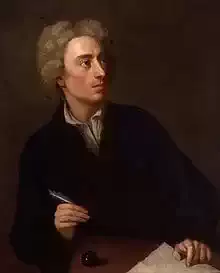
Alexander Pope
Solitude: An Ode
Solitude: An Ode
I.
How happy he, who free from care
The rage of courts, and noise of towns;
Contented breaths his native air,
In his own grounds.
II.
Whose herds with milk, whose fields with bread,
Whose flocks supply him with attire,
Whose trees in summer yield him shade,
In winter fire.
III.
Blest! who can unconcern'dly find
Hours, days, and years slide swift away,
In health of body, peace of mind,
Quiet by day,
IV.
Sound sleep by night; study and ease
Together mix'd; sweet recreation,
And innocence, which most does please,
With meditation.
V.
Thus let me live, unheard, unknown;
Thus unlamented let me dye;
Steal from the world, and not a stone
Tell where I lye.
I.
How happy he, who free from care
The rage of courts, and noise of towns;
Contented breaths his native air,
In his own grounds.
II.
Whose herds with milk, whose fields with bread,
Whose flocks supply him with attire,
Whose trees in summer yield him shade,
In winter fire.
III.
Blest! who can unconcern'dly find
Hours, days, and years slide swift away,
In health of body, peace of mind,
Quiet by day,
IV.
Sound sleep by night; study and ease
Together mix'd; sweet recreation,
And innocence, which most does please,
With meditation.
V.
Thus let me live, unheard, unknown;
Thus unlamented let me dye;
Steal from the world, and not a stone
Tell where I lye.
667
Previous
Page 5