

Poems in this theme
Longing and Absence
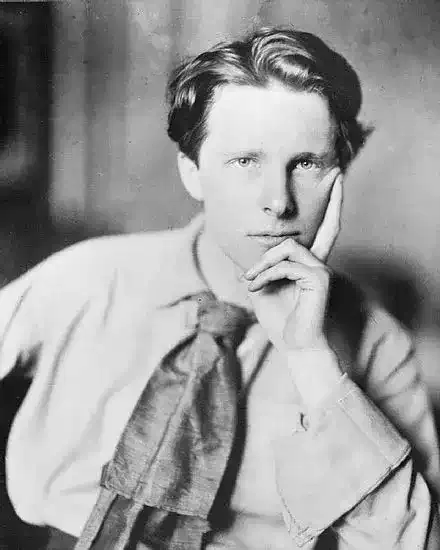
Rupert Brooke
Day That I Have Loved
Day That I Have Loved
Tenderly, day that I have loved, I close your eyes,
And smooth your quiet brow, and fold your thin dead hands.
The grey veils of the half-light deepen; colour dies.
I bear you, a light burden, to the shrouded sands,
Where lies your waiting boat, by wreaths of the sea's making
Mist-garlanded, with all grey weeds of the water crowned.
There you'll be laid, past fear of sleep or hope of waking;
And over the unmoving sea, without a sound,
Faint hands will row you outward, out beyond our sight,
Us with stretched arms and empty eyes on the far-gleaming
And marble sand. . . .
Beyond the shifting cold twilight,
Further than laughter goes, or tears, further than dreaming,
There'll be no port, no dawn-lit islands! But the drear
Waste darkening, and, at length, flame ultimate on the deep.
Oh, the last fire -- and you, unkissed, unfriended there!
Oh, the lone way's red ending, and we not there to weep!
(We found you pale and quiet, and strangely crowned with flowers,
Lovely and secret as a child. You came with us,
Came happily, hand in hand with the young dancing hours,
High on the downs at dawn!) Void now and tenebrous,
The grey sands curve before me. . . .
From the inland meadows,
Fragrant of June and clover, floats the dark, and fills
The hollow sea's dead face with little creeping shadows,
And the white silence brims the hollow of the hills.
Close in the nest is folded every weary wing,
Hushed all the joyful voices; and we, who held you dear,
Eastward we turn and homeward, alone, remembering . . .
Day that I loved, day that I loved, the Night is here!
Tenderly, day that I have loved, I close your eyes,
And smooth your quiet brow, and fold your thin dead hands.
The grey veils of the half-light deepen; colour dies.
I bear you, a light burden, to the shrouded sands,
Where lies your waiting boat, by wreaths of the sea's making
Mist-garlanded, with all grey weeds of the water crowned.
There you'll be laid, past fear of sleep or hope of waking;
And over the unmoving sea, without a sound,
Faint hands will row you outward, out beyond our sight,
Us with stretched arms and empty eyes on the far-gleaming
And marble sand. . . .
Beyond the shifting cold twilight,
Further than laughter goes, or tears, further than dreaming,
There'll be no port, no dawn-lit islands! But the drear
Waste darkening, and, at length, flame ultimate on the deep.
Oh, the last fire -- and you, unkissed, unfriended there!
Oh, the lone way's red ending, and we not there to weep!
(We found you pale and quiet, and strangely crowned with flowers,
Lovely and secret as a child. You came with us,
Came happily, hand in hand with the young dancing hours,
High on the downs at dawn!) Void now and tenebrous,
The grey sands curve before me. . . .
From the inland meadows,
Fragrant of June and clover, floats the dark, and fills
The hollow sea's dead face with little creeping shadows,
And the white silence brims the hollow of the hills.
Close in the nest is folded every weary wing,
Hushed all the joyful voices; and we, who held you dear,
Eastward we turn and homeward, alone, remembering . . .
Day that I loved, day that I loved, the Night is here!
161
Rupert Brooke
Choriambics -- II
Choriambics -- II
Here the flame that was ash, shrine that was void,
lost in the haunted wood,
I have tended and loved, year upon year, I in the solitude
Waiting, quiet and glad-eyed in the dark, knowing that once a gleam
Glowed and went through the wood. Still I abode strong in a golden dream,
Unrecaptured.
For I, I that had faith, knew that a face would glance
One day, white in the dim woods, and a voice call, and a radiance
Fill the grove, and the fire suddenly leap . . . and, in the heart of it,
End of labouring, you! Therefore I kept ready the altar, lit
The flame, burning apart.
Face of my dreams vainly in vision white
Gleaming down to me, lo! hopeless I rise now. For about midnight
Whispers grew through the wood suddenly, strange cries in the boughs above
Grated, cries like a laugh. Silent and black then through the sacred grove
Great birds flew, as a dream, troubling the leaves, passing at length.
I knew
Long expected and long loved, that afar, God of the dim wood, you
Somewhere lay, as a child sleeping, a child suddenly reft from mirth,
White and wonderful yet, white in your youth, stretched upon foreign earth,
God, immortal and dead!
Therefore I go; never to rest, or win
Peace, and worship of you more, and the dumb wood and the shrine therein.
Here the flame that was ash, shrine that was void,
lost in the haunted wood,
I have tended and loved, year upon year, I in the solitude
Waiting, quiet and glad-eyed in the dark, knowing that once a gleam
Glowed and went through the wood. Still I abode strong in a golden dream,
Unrecaptured.
For I, I that had faith, knew that a face would glance
One day, white in the dim woods, and a voice call, and a radiance
Fill the grove, and the fire suddenly leap . . . and, in the heart of it,
End of labouring, you! Therefore I kept ready the altar, lit
The flame, burning apart.
Face of my dreams vainly in vision white
Gleaming down to me, lo! hopeless I rise now. For about midnight
Whispers grew through the wood suddenly, strange cries in the boughs above
Grated, cries like a laugh. Silent and black then through the sacred grove
Great birds flew, as a dream, troubling the leaves, passing at length.
I knew
Long expected and long loved, that afar, God of the dim wood, you
Somewhere lay, as a child sleeping, a child suddenly reft from mirth,
White and wonderful yet, white in your youth, stretched upon foreign earth,
God, immortal and dead!
Therefore I go; never to rest, or win
Peace, and worship of you more, and the dumb wood and the shrine therein.
146
Rupert Brooke
Choriambics II
Choriambics II
Here the flame that was ash, shrine that was void,
lost in the haunted wood,
I have tended and loved, year upon year, I in the solitude
Waiting, quiet and glad-eyed in the dark, knowing that once a gleam
Glowed and went through the wood. Still I abode strong in a golden dream,
Unrecaptured.
For I, I that had faith, knew that a face would glance
One day, white in the dim woods, and a voice call, and a radiance
Fill the grove, and the fire suddenly leap . . . and, in the heart of it,
End of labouring, you! Therefore I kept ready the altar, lit
The flame, burning apart.
Face of my dreams vainly in vision white
Gleaming down to me, lo! hopeless I rise now. For about midnight
Whispers grew through the wood suddenly, strange cries in the boughs above
Grated, cries like a laugh. Silent and black then through the sacred grove
Great birds flew, as a dream, troubling the leaves, passing at length.
I knew
Long expected and long loved, that afar, God of the dim wood, you
Somewhere lay, as a child sleeping, a child suddenly reft from mirth,
White and wonderful yet, white in your youth, stretched upon foreign earth,
God, immortal and dead!
Therefore I go; never to rest, or win
Peace, and worship of you more, and the dumb wood and the shrine therein.
Here the flame that was ash, shrine that was void,
lost in the haunted wood,
I have tended and loved, year upon year, I in the solitude
Waiting, quiet and glad-eyed in the dark, knowing that once a gleam
Glowed and went through the wood. Still I abode strong in a golden dream,
Unrecaptured.
For I, I that had faith, knew that a face would glance
One day, white in the dim woods, and a voice call, and a radiance
Fill the grove, and the fire suddenly leap . . . and, in the heart of it,
End of labouring, you! Therefore I kept ready the altar, lit
The flame, burning apart.
Face of my dreams vainly in vision white
Gleaming down to me, lo! hopeless I rise now. For about midnight
Whispers grew through the wood suddenly, strange cries in the boughs above
Grated, cries like a laugh. Silent and black then through the sacred grove
Great birds flew, as a dream, troubling the leaves, passing at length.
I knew
Long expected and long loved, that afar, God of the dim wood, you
Somewhere lay, as a child sleeping, a child suddenly reft from mirth,
White and wonderful yet, white in your youth, stretched upon foreign earth,
God, immortal and dead!
Therefore I go; never to rest, or win
Peace, and worship of you more, and the dumb wood and the shrine therein.
195
Rupert Brooke
Call, The
Call, The
Out of the nothingness of sleep,
The slow dreams of Eternity,
There was a thunder on the deep:
I came, because you called to me.
I broke the Night's primeval bars,
I dared the old abysmal curse,
And flashed through ranks of frightened stars
Suddenly on the universe!
The eternal silences were broken;
Hell became Heaven as I passed. --
What shall I give you as a token,
A sign that we have met, at last?
I'll break and forge the stars anew,
Shatter the heavens with a song;
Immortal in my love for you,
Because I love you, very strong.
Your mouth shall mock the old and wise,
Your laugh shall fill the world with flame,
I'll write upon the shrinking skies
The scarlet splendour of your name,
Till Heaven cracks, and Hell thereunder
Dies in her ultimate mad fire,
And darkness falls, with scornful thunder,
On dreams of men and men's desire.
Then only in the empty spaces,
Death, walking very silently,
Shall fear the glory of our faces
Through all the dark infinity.
So, clothed about with perfect love,
The eternal end shall find us one,
Alone above the Night, above
The dust of the dead gods, alone.
Out of the nothingness of sleep,
The slow dreams of Eternity,
There was a thunder on the deep:
I came, because you called to me.
I broke the Night's primeval bars,
I dared the old abysmal curse,
And flashed through ranks of frightened stars
Suddenly on the universe!
The eternal silences were broken;
Hell became Heaven as I passed. --
What shall I give you as a token,
A sign that we have met, at last?
I'll break and forge the stars anew,
Shatter the heavens with a song;
Immortal in my love for you,
Because I love you, very strong.
Your mouth shall mock the old and wise,
Your laugh shall fill the world with flame,
I'll write upon the shrinking skies
The scarlet splendour of your name,
Till Heaven cracks, and Hell thereunder
Dies in her ultimate mad fire,
And darkness falls, with scornful thunder,
On dreams of men and men's desire.
Then only in the empty spaces,
Death, walking very silently,
Shall fear the glory of our faces
Through all the dark infinity.
So, clothed about with perfect love,
The eternal end shall find us one,
Alone above the Night, above
The dust of the dead gods, alone.
209
Rupert Brooke
A Channel Passage
A Channel Passage
The damned ship lurched and slithered. Quiet and quick
My cold gorge rose; the long sea rolled; I knew
I must think hard of something, or be sick;
And could think hard of only one thing -- YOU!
You, you alone could hold my fancy ever!
And with you memories come, sharp pain, and dole.
Now there's a choice -- heartache or tortured liver!
A sea-sick body, or a you-sick soul!
Do I forget you? Retchings twist and tie me,
Old meat, good meals, brown gobbets, up I throw.
Do I remember? Acrid return and slimy,
The sobs and slobber of a last years woe.
And still the sick ship rolls. 'Tis hard, I tell ye,
To choose 'twixt love and nausea, heart and belly.
The damned ship lurched and slithered. Quiet and quick
My cold gorge rose; the long sea rolled; I knew
I must think hard of something, or be sick;
And could think hard of only one thing -- YOU!
You, you alone could hold my fancy ever!
And with you memories come, sharp pain, and dole.
Now there's a choice -- heartache or tortured liver!
A sea-sick body, or a you-sick soul!
Do I forget you? Retchings twist and tie me,
Old meat, good meals, brown gobbets, up I throw.
Do I remember? Acrid return and slimy,
The sobs and slobber of a last years woe.
And still the sick ship rolls. 'Tis hard, I tell ye,
To choose 'twixt love and nausea, heart and belly.
250
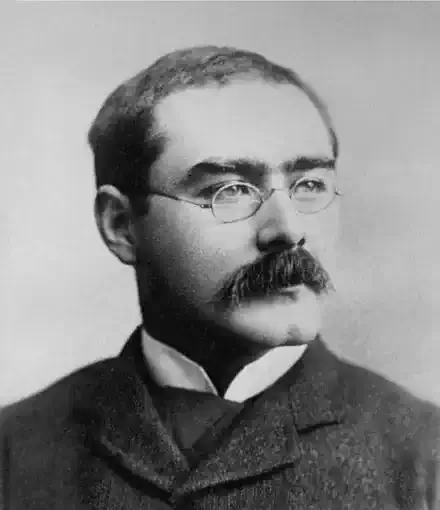
Rudyard Kipling
Toomai of the Elephants
Toomai of the Elephants
I will remember what I was. I am sick of rope and chain--
I will remember my old strength and all my forest-affairs.
I will not sell my back to man for a bundle of sugarcane.
I will go out to my own kind, and the wood-folk in their lairs.
I will go out until the day, until the morning break,
Out to the winds 'untainted kiss, the waters' clean caress.
I will forget my ankle-ring and snap my picket-stake.
I will revisit my lost loves, and playmates masterless!
I will remember what I was. I am sick of rope and chain--
I will remember my old strength and all my forest-affairs.
I will not sell my back to man for a bundle of sugarcane.
I will go out to my own kind, and the wood-folk in their lairs.
I will go out until the day, until the morning break,
Out to the winds 'untainted kiss, the waters' clean caress.
I will forget my ankle-ring and snap my picket-stake.
I will revisit my lost loves, and playmates masterless!
530
Rudyard Kipling
To the Unknown Goddess
To the Unknown Goddess
Will you conquer my heart with your beauty; my sould going out from afar?
Shall I fall to your hand as a victim of crafty and cautions shikar?
Have I met you and passed you already, unknowing, unthinking and blind?
Shall I meet you next session at Simla, O sweetest and best of your kind?
Does the P. and O. bear you to meward, or, clad in short frocks in the West,
Are you growing the charms that shall capture and torture the heart in my breast?
Will you stay in the Plains till September -- my passion as warm as the day?
Will you bring me to book on the Mountains, or where the thermantidotes play?
When the light of your eyes shall make pallid the mean lesser lights I pursue,
And the charm of your presence shall lure me from love of the gay "thirteen-two";
When the peg and the pig-skin shall please not; when I buy me Calcutta-build clothes;
When I quit the Delight of Wild Asses; foreswearing the swearing of oaths ;
As a deer to the hand of the hunter when I turn 'mid the gibes of my friends;
When the days of my freedom are numbered, and the life of the bachelor ends.
Ah, Goddess! child, spinster, or widow -- as of old on Mars Hill whey they raised
To the God that they knew not an altar -- so I, a young Pagan, have praised
The Goddess I know not nor worship; yet, if half that men tell me be true,
You will come in the future, and therefore these verses are written to you.
Will you conquer my heart with your beauty; my sould going out from afar?
Shall I fall to your hand as a victim of crafty and cautions shikar?
Have I met you and passed you already, unknowing, unthinking and blind?
Shall I meet you next session at Simla, O sweetest and best of your kind?
Does the P. and O. bear you to meward, or, clad in short frocks in the West,
Are you growing the charms that shall capture and torture the heart in my breast?
Will you stay in the Plains till September -- my passion as warm as the day?
Will you bring me to book on the Mountains, or where the thermantidotes play?
When the light of your eyes shall make pallid the mean lesser lights I pursue,
And the charm of your presence shall lure me from love of the gay "thirteen-two";
When the peg and the pig-skin shall please not; when I buy me Calcutta-build clothes;
When I quit the Delight of Wild Asses; foreswearing the swearing of oaths ;
As a deer to the hand of the hunter when I turn 'mid the gibes of my friends;
When the days of my freedom are numbered, and the life of the bachelor ends.
Ah, Goddess! child, spinster, or widow -- as of old on Mars Hill whey they raised
To the God that they knew not an altar -- so I, a young Pagan, have praised
The Goddess I know not nor worship; yet, if half that men tell me be true,
You will come in the future, and therefore these verses are written to you.
461
Rudyard Kipling
The Widower
The Widower
For a season there must be pain--
For a little, little space
I shall lose the sight of her face,
Take back the old life again
While She is at rest in her place.
For a season this pain must endure,
For a little, little while
I shall sigh more often than smile
Till time shall work me a cure,
And the pitiful days beguile.
For that season we must be apart,
For a little length of years,
Till my life's last hour nears,
And, above the beat of my heart,
I hear Her voice in my ears.
But I shall not understand--
Being set on some later love,
Shall not know her for whom I strove,
Till she reach me forth her hand,
Saying, "Who but I have the right?"
And out of a troubled night
Shall draw me safe to the land.
For a season there must be pain--
For a little, little space
I shall lose the sight of her face,
Take back the old life again
While She is at rest in her place.
For a season this pain must endure,
For a little, little while
I shall sigh more often than smile
Till time shall work me a cure,
And the pitiful days beguile.
For that season we must be apart,
For a little length of years,
Till my life's last hour nears,
And, above the beat of my heart,
I hear Her voice in my ears.
But I shall not understand--
Being set on some later love,
Shall not know her for whom I strove,
Till she reach me forth her hand,
Saying, "Who but I have the right?"
And out of a troubled night
Shall draw me safe to the land.
430
Rudyard Kipling
The Spring Running
The Spring Running
Man goes to Man! Cry the challenge through the Jungle!
He that was our Brother goes away.
Hear, now, and judge, O ye People of the Jungle--
Answer, who can turn him--who shall stay?
Man goes to Man! He is weeping in the Jungle:
He that was our Brother sorrows sore!
Man goes to Man! (Oh, we loved him in the Jungle!)
To the Man-Trail where we may not follow more.
Man goes to Man! Cry the challenge through the Jungle!
He that was our Brother goes away.
Hear, now, and judge, O ye People of the Jungle--
Answer, who can turn him--who shall stay?
Man goes to Man! He is weeping in the Jungle:
He that was our Brother sorrows sore!
Man goes to Man! (Oh, we loved him in the Jungle!)
To the Man-Trail where we may not follow more.
458
Rudyard Kipling
The Moon of Other Days
The Moon of Other Days
Beneath the deep veranda's shade,
When bats begin to fly,
I sit me down and watch -- alas! --
Another evening die.
Blood-red behind the sere ferash
She rises through the haze.
Sainted Diana! can that be
The Moon of Other Days?
Ah! shade of little Kitty Smith,
Sweet Saint of Kensington!
Say, was it ever thus at Home
The Moon of August shone,
When arm in arm we wandered long
Through Putney's evening haze,
And Hammersmith was Heaven beneath
The moon of Other Days?
But Wandle's stream is Sutlej now,
And Putney's evening haze
The dust that half a hundered kine
Before my window raise.
Unkempt, unclean, athwart the mist
The seething city looms,
In place of Putney's golden gorse
The sickly babul blooms.
Glare down, old Hecate, through the dust,
And bid the pie-dog yell,
Draw from the drain its typhoid-term,
From each bazaar its smell;
Yea, suck the fever from the tank
And sap my strength therewith:
Thank Heaven, you show a smiling face
To little Kitty Smith!
Beneath the deep veranda's shade,
When bats begin to fly,
I sit me down and watch -- alas! --
Another evening die.
Blood-red behind the sere ferash
She rises through the haze.
Sainted Diana! can that be
The Moon of Other Days?
Ah! shade of little Kitty Smith,
Sweet Saint of Kensington!
Say, was it ever thus at Home
The Moon of August shone,
When arm in arm we wandered long
Through Putney's evening haze,
And Hammersmith was Heaven beneath
The moon of Other Days?
But Wandle's stream is Sutlej now,
And Putney's evening haze
The dust that half a hundered kine
Before my window raise.
Unkempt, unclean, athwart the mist
The seething city looms,
In place of Putney's golden gorse
The sickly babul blooms.
Glare down, old Hecate, through the dust,
And bid the pie-dog yell,
Draw from the drain its typhoid-term,
From each bazaar its smell;
Yea, suck the fever from the tank
And sap my strength therewith:
Thank Heaven, you show a smiling face
To little Kitty Smith!
420
Rudyard Kipling
The Love Song of Har Dyal
The Love Song of Har Dyal
Alone upon the housetops to the North
I turn and watch the lightnings in the sky--
The glamour of thy footsteps in the North.
Come back to me, Beloved, or I die.
Below my feet the still bazar is laid--
Far, far below the weary camels lie--
The camels and the captives of thy raid.
Come back to me, Beloved, or I die!
My father's wife is old and harsh with years,
And drudge of all my father's house am I--
My bread is sorrow and my drink is tears.
Come back to me, Beloved, or I die!
Alone upon the housetops to the North
I turn and watch the lightnings in the sky--
The glamour of thy footsteps in the North.
Come back to me, Beloved, or I die.
Below my feet the still bazar is laid--
Far, far below the weary camels lie--
The camels and the captives of thy raid.
Come back to me, Beloved, or I die!
My father's wife is old and harsh with years,
And drudge of all my father's house am I--
My bread is sorrow and my drink is tears.
Come back to me, Beloved, or I die!
523
Rudyard Kipling
The Beginning of the Armadilloes
The Beginning of the Armadilloes
I've never sailed the Amazon,
I've never reached Brazil;
But the Don and Magdalena,
They can go there when they will!
Yes, weekly from Southampton
Great steamers, white and gold,
Go rolling down to Rio
(Roll down--roll down to Rio!).
And I'd like to roll to Rio
Some day before I'm old!
I've never seen a Jaguar,
Nor yet an Armadill--
He's dilloing in his armour,
And I s'pose I never will,
Unless I go to Rio
These wonders to behold--
Roll down--roll down to Rio--
Roll really down to Rio!
Oh, I'd love to roll to Rio
Some day before I'm old!
I've never sailed the Amazon,
I've never reached Brazil;
But the Don and Magdalena,
They can go there when they will!
Yes, weekly from Southampton
Great steamers, white and gold,
Go rolling down to Rio
(Roll down--roll down to Rio!).
And I'd like to roll to Rio
Some day before I'm old!
I've never seen a Jaguar,
Nor yet an Armadill--
He's dilloing in his armour,
And I s'pose I never will,
Unless I go to Rio
These wonders to behold--
Roll down--roll down to Rio--
Roll really down to Rio!
Oh, I'd love to roll to Rio
Some day before I'm old!
470
Rudyard Kipling
Sea-Wife
Sea-Wife
There dwells a wife by the Northern Gate,
And a wealthy wife is she;
She breeds a breed o' rovin' men
And casts them over sea.
And some are drowned in deep water,
And some in sight o' shore,
And word goes back to the weary wife
And ever she sends more.
For since that wife had gate or gear,
Or hearth or garth or bield,
She willed her sons to the white harvest,
And that is a bitter yield.
She wills her sons to the wet ploughing,
To ride the horse of tree,
And syne her sons come back again
Far-spent from out the sea.
The good wife's sons come home again
With little into their hands,
But the lore of men that ha' dealt with men
In the new and naked lands;
But the faith of men that ha' brothered men
By more than easy breath,
And the eyes o' men that ha' read wi' men
In the open books of death.
Rich are they, rich in wonders seen,
But poor in the goods o' men;
So what they ha' got by the skin o' their teeth
They sell for their teeth again.
For whether they lose to the naked life
Or win to their hearts' desire,
They tell it all to the weary wife
That nods beside the fire.
Her hearth is wide to every wind
That makes the white ash spin;
And tide and tide and 'tween the tides
Her sons go out and in;
(Out with great mirth that do desire
Hazard of trackless ways,
In with content to wait their watch
And warm before the blaze);
And some return by failing light,
And some in waking dream,
For she hears the heels of the dripping ghosts
That ride the rough roof-beam.
Home, they come home from all the ports,
The living and the dead;
The good wife's sons come home again
For her blessing on their head!
There dwells a wife by the Northern Gate,
And a wealthy wife is she;
She breeds a breed o' rovin' men
And casts them over sea.
And some are drowned in deep water,
And some in sight o' shore,
And word goes back to the weary wife
And ever she sends more.
For since that wife had gate or gear,
Or hearth or garth or bield,
She willed her sons to the white harvest,
And that is a bitter yield.
She wills her sons to the wet ploughing,
To ride the horse of tree,
And syne her sons come back again
Far-spent from out the sea.
The good wife's sons come home again
With little into their hands,
But the lore of men that ha' dealt with men
In the new and naked lands;
But the faith of men that ha' brothered men
By more than easy breath,
And the eyes o' men that ha' read wi' men
In the open books of death.
Rich are they, rich in wonders seen,
But poor in the goods o' men;
So what they ha' got by the skin o' their teeth
They sell for their teeth again.
For whether they lose to the naked life
Or win to their hearts' desire,
They tell it all to the weary wife
That nods beside the fire.
Her hearth is wide to every wind
That makes the white ash spin;
And tide and tide and 'tween the tides
Her sons go out and in;
(Out with great mirth that do desire
Hazard of trackless ways,
In with content to wait their watch
And warm before the blaze);
And some return by failing light,
And some in waking dream,
For she hears the heels of the dripping ghosts
That ride the rough roof-beam.
Home, they come home from all the ports,
The living and the dead;
The good wife's sons come home again
For her blessing on their head!
468
Rudyard Kipling
My Rival
My Rival
I go to concert, party, ball --
What profit is in these?
I sit alone against the wall
And strive to look at ease.
The incense that is mine by right
They burn before her shrine;
And that's because I'm seventeen
And She is forty-nine.
I cannot check my girlish blush,
My color comes and goes;
I redden to my finger-tips,
And sometimes to my nose.
But She is white where white should be,
And red where red should shine.
The blush that flies at seventeen
Is fixed at forty-nine.
I wish I had Her constant cheek;
I wish that I could sing
All sorts of funny little songs,
Not quite the proper thing.
I'm very gauche and very shy,
Her jokes aren't in my line;
And, worst of all, I'm seventeen
While She is forty-nine.
The young men come, the young men go
Each pink and white and neat,
She's older than their mothers, but
They grovel at Her feet.
They walk beside Her 'rickshaw wheels --
None ever walk by mine;
And that's because I'm seventeen
And She is foty-nine.
She rides with half a dozen men,
(She calls them "boys" and "mashers")
I trot along the Mall alone;
My prettiest frocks and sashes
Don't help to fill my programme-card,
And vainly I repine
From ten to two A.M. Ah me!
Would I were forty-nine!
She calls me "darling," "pet," and "dear,"
And "sweet retiring maid."
I'm always at the back, I know,
She puts me in the shade.
She introduces me to men,
"Cast" lovers, I opine,
For sixty takes to seventeen,
Nineteen to foty-nine.
But even She must older grow
And end Her dancing days,
She can't go on forever so
At concerts, balls and plays.
One ray of priceless hope I see
Before my footsteps shine;
Just think, that She'll be eighty-one
When I am forty-nine.
I go to concert, party, ball --
What profit is in these?
I sit alone against the wall
And strive to look at ease.
The incense that is mine by right
They burn before her shrine;
And that's because I'm seventeen
And She is forty-nine.
I cannot check my girlish blush,
My color comes and goes;
I redden to my finger-tips,
And sometimes to my nose.
But She is white where white should be,
And red where red should shine.
The blush that flies at seventeen
Is fixed at forty-nine.
I wish I had Her constant cheek;
I wish that I could sing
All sorts of funny little songs,
Not quite the proper thing.
I'm very gauche and very shy,
Her jokes aren't in my line;
And, worst of all, I'm seventeen
While She is forty-nine.
The young men come, the young men go
Each pink and white and neat,
She's older than their mothers, but
They grovel at Her feet.
They walk beside Her 'rickshaw wheels --
None ever walk by mine;
And that's because I'm seventeen
And She is foty-nine.
She rides with half a dozen men,
(She calls them "boys" and "mashers")
I trot along the Mall alone;
My prettiest frocks and sashes
Don't help to fill my programme-card,
And vainly I repine
From ten to two A.M. Ah me!
Would I were forty-nine!
She calls me "darling," "pet," and "dear,"
And "sweet retiring maid."
I'm always at the back, I know,
She puts me in the shade.
She introduces me to men,
"Cast" lovers, I opine,
For sixty takes to seventeen,
Nineteen to foty-nine.
But even She must older grow
And end Her dancing days,
She can't go on forever so
At concerts, balls and plays.
One ray of priceless hope I see
Before my footsteps shine;
Just think, that She'll be eighty-one
When I am forty-nine.
440
Rudyard Kipling
M'Andrew's Hymn
M'Andrew's Hymn
Lord, Thou hast made this world below the shadow of a dream,
An', taught by time, I tak' it so -- exceptin' always Steam.
From coupler-flange to spindle-guide I see Thy Hand, O God --
Predestination in the stride o' yon connectin'-rod.
John Calvin might ha' forged the same -- enorrmous, certain, slow --
Ay, wrought it in the furnace-flame -- ~my~ "Institutio".
I cannot get my sleep to-night; old bones are hard to please;
I'll stand the middle watch up here -- alone wi' God an' these
My engines, after ninety days o' race an' rack an' strain
Through all the seas of all Thy world, slam-bangin' home again.
Slam-bang too much -- they knock a wee -- the crosshead-gibs are loose;
But thirty thousand mile o' sea has gied them fair excuse. . . .
Fine, clear an' dark -- a full-draught breeze, wi' Ushant out o' sight,
An' Ferguson relievin' Hay. Old girl, ye'll walk to-night!
His wife's at Plymouth. . . . Seventy --
One -- Two -- Three since he began --
Three turns for Mistress Ferguson. . .and who's to blame the man?
There's none at any port for me, by drivin' fast or slow,
Since Elsie Campbell went to Thee, Lord, thirty years ago.
(The year the ~Sarah Sands~ was burned. Oh roads we used to tread,
Fra' Maryhill to Pollokshaws -- fra' Govan to Parkhead!)
Not but they're ceevil on the Board. Ye'll hear Sir Kenneth say:
"Good-morrn, M'Andrew! Back again? An' how's your bilge to-day?"
Miscallin' technicalities but handin' me my chair
To drink Madeira wi' three Earls -- the auld Fleet Engineer,
That started as a boiler-whelp -- when steam and he were low.
I mind the time we used to serve a broken pipe wi' tow.
Ten pound was all the pressure then -- Eh! Eh! -- a man wad drive;
An' here, our workin' gauges give one hunder fifty-five!
We're creepin' on wi' each new rig -- less weight an' larger power:
There'll be the loco-boiler next an' thirty knots an hour!
Thirty an' more. What I ha' seen since ocean-steam began
Leaves me no doot for the machine: but what about the man?
The man that counts, wi' all his runs, one million mile o' sea:
Four time the span from earth to moon. . . . How far, O Lord, from Thee?
That wast beside him night an' day. Ye mind my first typhoon?
It scoughed the skipper on his way to jock wi' the saloon.
Three feet were on the stokehold-floor -- just slappin' to an' fro --
An' cast me on a furnace-door. I have the marks to show.
Marks! I ha' marks o' more than burns -- deep in my soul an' black,
An' times like this, when things go smooth, my wickudness comes back.
The sins o' four and forty years, all up an' down the seas,
Clack an' repeat like valves half-fed. . . . Forgie's our trespasses.
Nights when I'd come on deck to mark, wi' envy in my gaze,
The couples kittlin' in the dark between the funnel stays;
Years when I raked the ports wi' pride to fill my cup o' wrong --
Judge not, O Lord, my steps aside at Gay Street in Hong-Kong!
Blot out the wastrel hours of mine in sin when I abode --
Jane Harrigan's an' Number Nine, The Reddick an' Grant Road!
An' waur than all -- my crownin' sin -- rank blasphemy an' wild.
I was not four and twenty then -- Ye wadna judge a child?
I'd seen the Tropics first that run -- new fruit, new smells, new air --
How could I tell -- blind-fou wi' sun -- the Deil was lurkin' there?
By day like playhouse-scenes the shore slid past our sleepy eyes;
By night those soft, lasceevious stars leered from those velvet skies,
In port (we used no cargo-steam) I'd daunder down the streets --
An ijjit grinnin' in a dream -- for shells an' parrakeets,
An' walkin'-sticks o' carved bamboo an' blowfish stuffed an' dried --
Fillin' my bunk wi' rubbishry the Chief put overside.
Till, off Sambawa Head, Ye mind, I heard a land-breeze ca',
Milk-warm wi' breath o' spice an' bloom: "M'Andrew, come awa'!"
Firm, clear an' low -- no haste, no hate -- the ghostly whisper went,
Just statin' eevidential facts beyon' all argument:
"Your mither's God's a graspin' deil, the shadow o' yoursel',
Got out o' books by meenisters clean daft on Heaven an' Hell.
They mak' Him in the Broomielaw, o' Glasgie cold an' dirt,
A jealous, pridefu' fetich, lad, that's only strong to hurt,
Ye'll not go back to Him again an' kiss His red-hot rod,
But come wi' Us" (Now, who were ~They~?) "an' know the Leevin' God,
That does not kipper souls for sport or break a life in jest,
But swells the ripenin' cocoanuts an' ripes the woman's breast."
An' there it stopped: cut off: no more; that quiet, certain voice --
For me, six months o' twenty-four, to leave or take at choice.
'Twas on me like a thunderclap -- it racked me through an' through --
Temptation past the show o' speech, unnameable an' new --
The Sin against the Holy Ghost? . . . An' under all, our screw.
That storm blew by but left behind her anchor-shiftin' swell,
Thou knowest all my heart an' mind, Thou knowest, Lord, I fell.
Third on the ~Mary Gloster~ then, and first that night in Hell!
Yet was Thy hand beneath my head, about my feet Thy care --
Fra' Deli clear to Torres Strait, the trial o' despair,
But when we touched the Barrier Reef Thy answer to my prayer!
We dared not run that sea by night but lay an' held our fire,
An' I was drowsin' on the hatch -- sick -- sick wi' doubt an' tire:
"~Better the sight of eyes that see than wanderin' o' desire!~"
Ye mind that word? Clear as our gongs -- again, an' once again,
When rippin' down through coral-trash ran out our moorin'-chain;
An' by Thy Grace I had the Light to see my duty plain.
Light on the engine-room -- no more -- bright as our carbons burn.
I've lost it since a thousand times, but never past return.
Obsairve. Per annum we'll have here two thousand souls aboard --
Think not I dare to justify myself before the Lord,
But -- average fifteen hunder souls safe-borne fra' port to port --
I ~am~ o' service to my kind. Ye wadna blame the thought?
Maybe they steam from grace to wrath -- to sin by folly led, --
It isna mine to judge their path -- their lives are on my head.
Mine at the last -- when all is done it all comes back to me,
The fault that leaves six thousand ton a log upon the sea.
We'll tak' one stretch -- three weeks an' odd by any road ye steer --
Fra' Cape Town east to Wellington -- ye need an engineer.
Fail there -- ye've time to weld your shaft -- ay, eat it, ere ye're spoke;
Or make Kerguelen under sail -- three jiggers burned wi' smoke!
An' home again, the Rio run: it's no child's play to go
Steamin' to bell for fourteen days o' snow an' floe an' blow --
The bergs like kelpies overside that girn an' turn an' shift
Whaur, grindin' like the Mills o' God, goes by the big South drift.
(Hail, snow an' ice that praise the Lord: I've met them at their work,
An' wished we had anither route or they anither kirk.)
Yon's strain, hard strain, o' head an' hand, for though Thy Power brings
All skill to naught, Ye'll understand a man must think o' things.
Then, at the last, we'll get to port an' hoist their baggage clear --
The passengers, wi' gloves an' canes -- an' this is what I'll hear:
"Well, thank ye for a pleasant voyage. The tender's comin' now."
While I go testin' follower-bolts an' watch the skipper bow.
They've words for every one but me -- shake hands wi' half the crew,
Except the dour Scots engineer, the man they never knew.
An' yet I like the wark for all we've dam' few pickin's here --
No pension, an' the most we earn's four hunder pound a year.
Better myself abroad? Maybe. ~I'd~ sooner starve than sail
Wi' such as call a snifter-rod ~ross~. . .French for nightingale.
Commeesion on my stores? Some do; but I can not afford
To lie like stewards wi' patty-pans --. I'm older than the Board.
A bonus on the coal I save? Ou ay, the Scots are close,
But when I grudge the strength Ye gave I'll grudge their food to ~those~.
(There's bricks that I might recommend -- an' clink the fire-bars cruel.
No! Welsh -- Wangarti at the worst -- an' damn all patent fuel!)
Inventions? Ye must stay in port to mak' a patent pay.
My Deeferential Valve-Gear taught me how that business lay,
I blame no chaps wi' clearer head for aught they make or sell.
~I~ found that I could not invent an' look to these -- as well.
So, wrestled wi' Apollyon -- Nah! -- fretted like a bairn --
But burned the workin'-plans last run wi' all I hoped to earn.
Ye know how hard an Idol dies, an' what that meant to me --
E'en tak' it for a sacrifice acceptable to Thee. . . .
~Below there! Oiler! What's your wark? Ye find it runnin' hard?
Ye needn't swill the cap wi' oil -- this isn't the Cunard!
Ye thought? Ye are not paid to think. Go, sweat that off again!~
Tck! Tck! It's deeficult to sweer nor tak' The Name in vain!
Men, ay an' women, call me stern. Wi' these to oversee
Ye'll note I've little time to burn on social repartee.
The bairns see what their elders miss; they'll hunt me to an' fro,
Till for the sake of -- well, a kiss -- I tak' 'em down below.
That minds me of our Viscount loon -- Sir Kenneth's kin -- the chap
Wi' Russia leather tennis-shoon an' spar-decked yachtin'-cap.
I showed him round last week, o'er all -- an' at the last says he:
"Mister M'Andrew, don't you think steam spoils romance at sea?"
Damned ijjit! I'd been doon that morn to see what ailed the throws,
Manholin', on my back -- the cranks three inches off my nose.
Romance! Those first-class passengers they like it very well,
Printed an' bound in little books; but why don't poets tell?
I'm sick of all their quirks an' turns -- the loves an' doves they dream --
Lord, send a man like Robbie Burns to sing the Song o' Steam!
To match wi' Scotia's noblest speech yon orchestra sublime
Whaurto -- uplifted like the Just -- the tail-rods mark the time.
The crank-throws give the double-bass, the feed-pump sobs an' heaves,
An' now the main eccentrics start their quarrel on the sheaves:
Her time, her own appointed time, the rocking link-head bides,
Till -- hear that note? -- the rod's return
whings glimmerin' through the guides.
They're all awa'! True beat, full power, the clangin' chorus goes
Clear to the tunnel where they sit, my purrin' dynamos.
Interdependence absolute, foreseen, ordained, decreed,
To work, Ye'll note, at any tilt an' every rate o' speed.
Fra' skylight-lift to furnace-bars, backed, bolted, braced an' stayed,
An' singin' like the Mornin' Stars for joy that they are made;
While, out o' touch o' vanity, the sweatin' thrust-block says:
"Not unto us the praise, or man -- not unto us the praise!"
Now, a' together, hear them lift their lesson -- theirs an' mine:
"Law, Orrder, Duty an' Restraint, Obedience, Discipline!"
Mill, forge an' try-pit taught them that when roarin' they arose,
An' whiles I wonder if a soul was gied them wi' the blows.
Oh for a man to weld it then, in one trip-hammer strain,
Till even first-class passengers could tell the meanin' plain!
But no one cares except mysel' that serve an' understand
My seven thousand horse-power here.
Eh, Lord! They're grand -- they're grand!
Uplift am I? When first in store the new-made beasties stood,
Were Ye cast down that breathed the Word declarin' all things good?
Not so! O' that warld-liftin' joy no after-fall could vex,
Ye've left a glimmer still to cheer the Man -- the Arrtifex!
~That~ holds, in spite o' knock and scale, o' friction, waste an' slip,
An' by that light -- now, mark my word -- we'll build the Perfect Ship.
I'll never last to judge her lines or take her curve -- not I.
But I ha' lived an' I ha' worked. 'Be thanks to Thee, Most High!
An' I ha' done what I ha' done -- judge Thou if ill or well --
Always Thy Grace preventin' me. . . .
Losh! Yon's the "Stand by" bell.
Pilot so soon? His flare it is. The mornin'-watch is set.
Well, God be thanked, as I was sayin', I'm no Pelagian yet.
Now I'll tak' on. . . .
~'Morrn, Ferguson. Man, have ye ever thought
What your good leddy costs in coal? . . . I'll burn 'em down to port.
Lord, Thou hast made this world below the shadow of a dream,
An', taught by time, I tak' it so -- exceptin' always Steam.
From coupler-flange to spindle-guide I see Thy Hand, O God --
Predestination in the stride o' yon connectin'-rod.
John Calvin might ha' forged the same -- enorrmous, certain, slow --
Ay, wrought it in the furnace-flame -- ~my~ "Institutio".
I cannot get my sleep to-night; old bones are hard to please;
I'll stand the middle watch up here -- alone wi' God an' these
My engines, after ninety days o' race an' rack an' strain
Through all the seas of all Thy world, slam-bangin' home again.
Slam-bang too much -- they knock a wee -- the crosshead-gibs are loose;
But thirty thousand mile o' sea has gied them fair excuse. . . .
Fine, clear an' dark -- a full-draught breeze, wi' Ushant out o' sight,
An' Ferguson relievin' Hay. Old girl, ye'll walk to-night!
His wife's at Plymouth. . . . Seventy --
One -- Two -- Three since he began --
Three turns for Mistress Ferguson. . .and who's to blame the man?
There's none at any port for me, by drivin' fast or slow,
Since Elsie Campbell went to Thee, Lord, thirty years ago.
(The year the ~Sarah Sands~ was burned. Oh roads we used to tread,
Fra' Maryhill to Pollokshaws -- fra' Govan to Parkhead!)
Not but they're ceevil on the Board. Ye'll hear Sir Kenneth say:
"Good-morrn, M'Andrew! Back again? An' how's your bilge to-day?"
Miscallin' technicalities but handin' me my chair
To drink Madeira wi' three Earls -- the auld Fleet Engineer,
That started as a boiler-whelp -- when steam and he were low.
I mind the time we used to serve a broken pipe wi' tow.
Ten pound was all the pressure then -- Eh! Eh! -- a man wad drive;
An' here, our workin' gauges give one hunder fifty-five!
We're creepin' on wi' each new rig -- less weight an' larger power:
There'll be the loco-boiler next an' thirty knots an hour!
Thirty an' more. What I ha' seen since ocean-steam began
Leaves me no doot for the machine: but what about the man?
The man that counts, wi' all his runs, one million mile o' sea:
Four time the span from earth to moon. . . . How far, O Lord, from Thee?
That wast beside him night an' day. Ye mind my first typhoon?
It scoughed the skipper on his way to jock wi' the saloon.
Three feet were on the stokehold-floor -- just slappin' to an' fro --
An' cast me on a furnace-door. I have the marks to show.
Marks! I ha' marks o' more than burns -- deep in my soul an' black,
An' times like this, when things go smooth, my wickudness comes back.
The sins o' four and forty years, all up an' down the seas,
Clack an' repeat like valves half-fed. . . . Forgie's our trespasses.
Nights when I'd come on deck to mark, wi' envy in my gaze,
The couples kittlin' in the dark between the funnel stays;
Years when I raked the ports wi' pride to fill my cup o' wrong --
Judge not, O Lord, my steps aside at Gay Street in Hong-Kong!
Blot out the wastrel hours of mine in sin when I abode --
Jane Harrigan's an' Number Nine, The Reddick an' Grant Road!
An' waur than all -- my crownin' sin -- rank blasphemy an' wild.
I was not four and twenty then -- Ye wadna judge a child?
I'd seen the Tropics first that run -- new fruit, new smells, new air --
How could I tell -- blind-fou wi' sun -- the Deil was lurkin' there?
By day like playhouse-scenes the shore slid past our sleepy eyes;
By night those soft, lasceevious stars leered from those velvet skies,
In port (we used no cargo-steam) I'd daunder down the streets --
An ijjit grinnin' in a dream -- for shells an' parrakeets,
An' walkin'-sticks o' carved bamboo an' blowfish stuffed an' dried --
Fillin' my bunk wi' rubbishry the Chief put overside.
Till, off Sambawa Head, Ye mind, I heard a land-breeze ca',
Milk-warm wi' breath o' spice an' bloom: "M'Andrew, come awa'!"
Firm, clear an' low -- no haste, no hate -- the ghostly whisper went,
Just statin' eevidential facts beyon' all argument:
"Your mither's God's a graspin' deil, the shadow o' yoursel',
Got out o' books by meenisters clean daft on Heaven an' Hell.
They mak' Him in the Broomielaw, o' Glasgie cold an' dirt,
A jealous, pridefu' fetich, lad, that's only strong to hurt,
Ye'll not go back to Him again an' kiss His red-hot rod,
But come wi' Us" (Now, who were ~They~?) "an' know the Leevin' God,
That does not kipper souls for sport or break a life in jest,
But swells the ripenin' cocoanuts an' ripes the woman's breast."
An' there it stopped: cut off: no more; that quiet, certain voice --
For me, six months o' twenty-four, to leave or take at choice.
'Twas on me like a thunderclap -- it racked me through an' through --
Temptation past the show o' speech, unnameable an' new --
The Sin against the Holy Ghost? . . . An' under all, our screw.
That storm blew by but left behind her anchor-shiftin' swell,
Thou knowest all my heart an' mind, Thou knowest, Lord, I fell.
Third on the ~Mary Gloster~ then, and first that night in Hell!
Yet was Thy hand beneath my head, about my feet Thy care --
Fra' Deli clear to Torres Strait, the trial o' despair,
But when we touched the Barrier Reef Thy answer to my prayer!
We dared not run that sea by night but lay an' held our fire,
An' I was drowsin' on the hatch -- sick -- sick wi' doubt an' tire:
"~Better the sight of eyes that see than wanderin' o' desire!~"
Ye mind that word? Clear as our gongs -- again, an' once again,
When rippin' down through coral-trash ran out our moorin'-chain;
An' by Thy Grace I had the Light to see my duty plain.
Light on the engine-room -- no more -- bright as our carbons burn.
I've lost it since a thousand times, but never past return.
Obsairve. Per annum we'll have here two thousand souls aboard --
Think not I dare to justify myself before the Lord,
But -- average fifteen hunder souls safe-borne fra' port to port --
I ~am~ o' service to my kind. Ye wadna blame the thought?
Maybe they steam from grace to wrath -- to sin by folly led, --
It isna mine to judge their path -- their lives are on my head.
Mine at the last -- when all is done it all comes back to me,
The fault that leaves six thousand ton a log upon the sea.
We'll tak' one stretch -- three weeks an' odd by any road ye steer --
Fra' Cape Town east to Wellington -- ye need an engineer.
Fail there -- ye've time to weld your shaft -- ay, eat it, ere ye're spoke;
Or make Kerguelen under sail -- three jiggers burned wi' smoke!
An' home again, the Rio run: it's no child's play to go
Steamin' to bell for fourteen days o' snow an' floe an' blow --
The bergs like kelpies overside that girn an' turn an' shift
Whaur, grindin' like the Mills o' God, goes by the big South drift.
(Hail, snow an' ice that praise the Lord: I've met them at their work,
An' wished we had anither route or they anither kirk.)
Yon's strain, hard strain, o' head an' hand, for though Thy Power brings
All skill to naught, Ye'll understand a man must think o' things.
Then, at the last, we'll get to port an' hoist their baggage clear --
The passengers, wi' gloves an' canes -- an' this is what I'll hear:
"Well, thank ye for a pleasant voyage. The tender's comin' now."
While I go testin' follower-bolts an' watch the skipper bow.
They've words for every one but me -- shake hands wi' half the crew,
Except the dour Scots engineer, the man they never knew.
An' yet I like the wark for all we've dam' few pickin's here --
No pension, an' the most we earn's four hunder pound a year.
Better myself abroad? Maybe. ~I'd~ sooner starve than sail
Wi' such as call a snifter-rod ~ross~. . .French for nightingale.
Commeesion on my stores? Some do; but I can not afford
To lie like stewards wi' patty-pans --. I'm older than the Board.
A bonus on the coal I save? Ou ay, the Scots are close,
But when I grudge the strength Ye gave I'll grudge their food to ~those~.
(There's bricks that I might recommend -- an' clink the fire-bars cruel.
No! Welsh -- Wangarti at the worst -- an' damn all patent fuel!)
Inventions? Ye must stay in port to mak' a patent pay.
My Deeferential Valve-Gear taught me how that business lay,
I blame no chaps wi' clearer head for aught they make or sell.
~I~ found that I could not invent an' look to these -- as well.
So, wrestled wi' Apollyon -- Nah! -- fretted like a bairn --
But burned the workin'-plans last run wi' all I hoped to earn.
Ye know how hard an Idol dies, an' what that meant to me --
E'en tak' it for a sacrifice acceptable to Thee. . . .
~Below there! Oiler! What's your wark? Ye find it runnin' hard?
Ye needn't swill the cap wi' oil -- this isn't the Cunard!
Ye thought? Ye are not paid to think. Go, sweat that off again!~
Tck! Tck! It's deeficult to sweer nor tak' The Name in vain!
Men, ay an' women, call me stern. Wi' these to oversee
Ye'll note I've little time to burn on social repartee.
The bairns see what their elders miss; they'll hunt me to an' fro,
Till for the sake of -- well, a kiss -- I tak' 'em down below.
That minds me of our Viscount loon -- Sir Kenneth's kin -- the chap
Wi' Russia leather tennis-shoon an' spar-decked yachtin'-cap.
I showed him round last week, o'er all -- an' at the last says he:
"Mister M'Andrew, don't you think steam spoils romance at sea?"
Damned ijjit! I'd been doon that morn to see what ailed the throws,
Manholin', on my back -- the cranks three inches off my nose.
Romance! Those first-class passengers they like it very well,
Printed an' bound in little books; but why don't poets tell?
I'm sick of all their quirks an' turns -- the loves an' doves they dream --
Lord, send a man like Robbie Burns to sing the Song o' Steam!
To match wi' Scotia's noblest speech yon orchestra sublime
Whaurto -- uplifted like the Just -- the tail-rods mark the time.
The crank-throws give the double-bass, the feed-pump sobs an' heaves,
An' now the main eccentrics start their quarrel on the sheaves:
Her time, her own appointed time, the rocking link-head bides,
Till -- hear that note? -- the rod's return
whings glimmerin' through the guides.
They're all awa'! True beat, full power, the clangin' chorus goes
Clear to the tunnel where they sit, my purrin' dynamos.
Interdependence absolute, foreseen, ordained, decreed,
To work, Ye'll note, at any tilt an' every rate o' speed.
Fra' skylight-lift to furnace-bars, backed, bolted, braced an' stayed,
An' singin' like the Mornin' Stars for joy that they are made;
While, out o' touch o' vanity, the sweatin' thrust-block says:
"Not unto us the praise, or man -- not unto us the praise!"
Now, a' together, hear them lift their lesson -- theirs an' mine:
"Law, Orrder, Duty an' Restraint, Obedience, Discipline!"
Mill, forge an' try-pit taught them that when roarin' they arose,
An' whiles I wonder if a soul was gied them wi' the blows.
Oh for a man to weld it then, in one trip-hammer strain,
Till even first-class passengers could tell the meanin' plain!
But no one cares except mysel' that serve an' understand
My seven thousand horse-power here.
Eh, Lord! They're grand -- they're grand!
Uplift am I? When first in store the new-made beasties stood,
Were Ye cast down that breathed the Word declarin' all things good?
Not so! O' that warld-liftin' joy no after-fall could vex,
Ye've left a glimmer still to cheer the Man -- the Arrtifex!
~That~ holds, in spite o' knock and scale, o' friction, waste an' slip,
An' by that light -- now, mark my word -- we'll build the Perfect Ship.
I'll never last to judge her lines or take her curve -- not I.
But I ha' lived an' I ha' worked. 'Be thanks to Thee, Most High!
An' I ha' done what I ha' done -- judge Thou if ill or well --
Always Thy Grace preventin' me. . . .
Losh! Yon's the "Stand by" bell.
Pilot so soon? His flare it is. The mornin'-watch is set.
Well, God be thanked, as I was sayin', I'm no Pelagian yet.
Now I'll tak' on. . . .
~'Morrn, Ferguson. Man, have ye ever thought
What your good leddy costs in coal? . . . I'll burn 'em down to port.
420
Rudyard Kipling
In Springtime
In Springtime
My garden blazes brightly with the rose-bush and the peach,
And the koil sings above it, in the siris by the well,
From the creeper-covered trellis comes the squirrel's chattering speech,
And the blue jay screams and flutters where the cheery sat-bhai dwell.
But the rose has lost its fragrance, and the koil's note is strange;
I am sick of endless sunshine, sick of blossom-burdened bough.
Give me back the leafless woodlands where the winds of Springtime range --
Give me back one day in England, for it's Spring in England now!
Through the pines the gusts are booming, o'er the brown fields blowing chill,
From the furrow of the ploughshare streams the fragrance of the loam,
And the hawk nests on the cliffside and the jackdaw in the hill,
And my heart is back in England 'mid the sights and sounds of Home.
But the garland of the sacrifice this wealth of rose and peach is,
Ah! koil, little koil, singing on the siris bough,
In my ears the knell of exile your ceaseless bell like speech is --
Can you tell me aught of England or of Spring in England now?
My garden blazes brightly with the rose-bush and the peach,
And the koil sings above it, in the siris by the well,
From the creeper-covered trellis comes the squirrel's chattering speech,
And the blue jay screams and flutters where the cheery sat-bhai dwell.
But the rose has lost its fragrance, and the koil's note is strange;
I am sick of endless sunshine, sick of blossom-burdened bough.
Give me back the leafless woodlands where the winds of Springtime range --
Give me back one day in England, for it's Spring in England now!
Through the pines the gusts are booming, o'er the brown fields blowing chill,
From the furrow of the ploughshare streams the fragrance of the loam,
And the hawk nests on the cliffside and the jackdaw in the hill,
And my heart is back in England 'mid the sights and sounds of Home.
But the garland of the sacrifice this wealth of rose and peach is,
Ah! koil, little koil, singing on the siris bough,
In my ears the knell of exile your ceaseless bell like speech is --
Can you tell me aught of England or of Spring in England now?
446
Rudyard Kipling
Four-Feet
Four-Feet
I have done mostly what most men do,
And pushed it out of my mind;
But I can't forget, if I wanted to,
Four-Feet trotting behind.
Day after day, the whole day through --
Wherever my road inclined --
Four-feet said, "I am coming with you!"
And trotted along behind.
Now I must go by some other round, --
Which I shall never find --
Somewhere that does not carry the sound
Of Four-Feet trotting behind.
I have done mostly what most men do,
And pushed it out of my mind;
But I can't forget, if I wanted to,
Four-Feet trotting behind.
Day after day, the whole day through --
Wherever my road inclined --
Four-feet said, "I am coming with you!"
And trotted along behind.
Now I must go by some other round, --
Which I shall never find --
Somewhere that does not carry the sound
Of Four-Feet trotting behind.
473
Rudyard Kipling
Christmas in India
Christmas in India
Dim dawn behind the tamerisks -- the sky is saffron-yellow --
As the women in the village grind the corn,
And the parrots seek the riverside, each calling to his fellow
That the Day, the staring Easter Day is born.
Oh the white dust on the highway! Oh the stenches in the byway!
Oh the clammy fog that hovers
And at Home they're making merry 'neath the white and scarlet berry --
What part have India's exiles in their mirth?
Full day begind the tamarisks -- the sky is blue and staring --
As the cattle crawl afield beneath the yoke,
And they bear One o'er the field-path, who is past all hope or caring,
To the ghat below the curling wreaths of smoke.
Call on Rama, going slowly, as ye bear a brother lowly --
Call on Rama -- he may hear, perhaps, your voice!
With our hymn-books and our psalters we appeal to other altars,
And to-day we bid "good Christian men rejoice!"
High noon behind the tamarisks -- the sun is hot above us --
As at Home the Christmas Day is breaking wan.
They will drink our healths at dinner -- those who tell us how they love us,
And forget us till another year be gone!
Oh the toil that knows no breaking! Oh the Heimweh, ceaseless, aching!
Oh the black dividing Sea and alien Plain!
Youth was cheap -- wherefore we sold it.
Gold was good -- we hoped to hold it,
And to-day we know the fulness of our gain.
Grey dusk behind the tamarisks -- the parrots fly together --
As the sun is sinking slowly over Home;
And his last ray seems to mock us shackled in a lifelong tether.
That drags us back how'er so far we roam.
Hard her service, poor her payment -- she is ancient, tattered raiment --
India, she the grim Stepmother of our kind.
If a year of life be lent her, if her temple's shrine we enter,
The door is hut -- we may not look behind.
Black night behind the tamarisks -- the owls begin their chorus --
As the conches from the temple scream and bray.
With the fruitless years behind us, and the hopeless years before us,
Let us honor, O my brother, Christmas Day!
Call a truce, then, to our labors -- let us feast with friends and neighbors,
And be merry as the custom of our caste;
For if "faint and forced the laughter," and if sadness follow after,
We are richer by one mocking Christmas past.
Dim dawn behind the tamerisks -- the sky is saffron-yellow --
As the women in the village grind the corn,
And the parrots seek the riverside, each calling to his fellow
That the Day, the staring Easter Day is born.
Oh the white dust on the highway! Oh the stenches in the byway!
Oh the clammy fog that hovers
And at Home they're making merry 'neath the white and scarlet berry --
What part have India's exiles in their mirth?
Full day begind the tamarisks -- the sky is blue and staring --
As the cattle crawl afield beneath the yoke,
And they bear One o'er the field-path, who is past all hope or caring,
To the ghat below the curling wreaths of smoke.
Call on Rama, going slowly, as ye bear a brother lowly --
Call on Rama -- he may hear, perhaps, your voice!
With our hymn-books and our psalters we appeal to other altars,
And to-day we bid "good Christian men rejoice!"
High noon behind the tamarisks -- the sun is hot above us --
As at Home the Christmas Day is breaking wan.
They will drink our healths at dinner -- those who tell us how they love us,
And forget us till another year be gone!
Oh the toil that knows no breaking! Oh the Heimweh, ceaseless, aching!
Oh the black dividing Sea and alien Plain!
Youth was cheap -- wherefore we sold it.
Gold was good -- we hoped to hold it,
And to-day we know the fulness of our gain.
Grey dusk behind the tamarisks -- the parrots fly together --
As the sun is sinking slowly over Home;
And his last ray seems to mock us shackled in a lifelong tether.
That drags us back how'er so far we roam.
Hard her service, poor her payment -- she is ancient, tattered raiment --
India, she the grim Stepmother of our kind.
If a year of life be lent her, if her temple's shrine we enter,
The door is hut -- we may not look behind.
Black night behind the tamarisks -- the owls begin their chorus --
As the conches from the temple scream and bray.
With the fruitless years behind us, and the hopeless years before us,
Let us honor, O my brother, Christmas Day!
Call a truce, then, to our labors -- let us feast with friends and neighbors,
And be merry as the custom of our caste;
For if "faint and forced the laughter," and if sadness follow after,
We are richer by one mocking Christmas past.
491
Rudyard Kipling
A Ripple Song
A Ripple Song
Once red ripple came to land
In the golden sunset burning--
Lapped against a maiden's hand,
By the ford returning.
Dainty foot and gentle breast--
Here, across, be glad and rest.
"Maiden, wait," the ripple saith;
"Wait awhile, for I am Death!"
"Where my lover calls I go--
Shame it were to treat him coldly--
'Twas a fish that circled so,
Turning over boldly."
Dainty foot and tender heart,
Wait the loaded ferry-raft.
"Wait, ah, wait!" the ripple saith;
"Maiden, wait, for I am Death!"
"When my lover calls I haste--
Dame Disdain was never wedded!"
Ripple-ripple round her waist,
Clear the current eddied.
Foolish heart and faithful hand,
Little feet that touched no land.
Far away the ripple sped,
Ripple-ripple running red!
Once red ripple came to land
In the golden sunset burning--
Lapped against a maiden's hand,
By the ford returning.
Dainty foot and gentle breast--
Here, across, be glad and rest.
"Maiden, wait," the ripple saith;
"Wait awhile, for I am Death!"
"Where my lover calls I go--
Shame it were to treat him coldly--
'Twas a fish that circled so,
Turning over boldly."
Dainty foot and tender heart,
Wait the loaded ferry-raft.
"Wait, ah, wait!" the ripple saith;
"Maiden, wait, for I am Death!"
"When my lover calls I haste--
Dame Disdain was never wedded!"
Ripple-ripple round her waist,
Clear the current eddied.
Foolish heart and faithful hand,
Little feet that touched no land.
Far away the ripple sped,
Ripple-ripple running red!
462
Rudyard Kipling
A Ballad of Jakko Hill
A Ballad of Jakko Hill
One moment bid the horses wait,
Since tiffin is not laid till three,
Below the upward path and straight
You climbed a year ago with me.
Love came upon us suddenly
And loosed -- an idle hour to kill --
A headless, armless armory
That smote us both on Jakko Hill.
Ah Heaven! we would wait and wait
Through Time and to Eternity!
Ah Heaven! we could conquer Fate
With more than Godlike constancy
I cut the date upon a tree --
Here stand the clumsy figures still:
"--, A.D."
Damp with the mist of Jakko Hill.
What came of high resolve and great,
And until Death fidelity!
Whose horse is waiting at your gate?
Whose 'rickshaw-wheels ride over me?
No Saint's, I swear; and -- let me see
To-night what names your programme fill --
We drift asunder merrily,
As drifts the mist on Jakko Hill.
L'ENVOI.
Princess, behold our ancient state
Has clean departed; and we see
'Twas Idleness we took for Fate
That bound light bonds on you and me.
Amen! Here ends the comedy
Where it began in all good will;
Since Love and Leave together flee
As driven mist on Jakko Hill!
One moment bid the horses wait,
Since tiffin is not laid till three,
Below the upward path and straight
You climbed a year ago with me.
Love came upon us suddenly
And loosed -- an idle hour to kill --
A headless, armless armory
That smote us both on Jakko Hill.
Ah Heaven! we would wait and wait
Through Time and to Eternity!
Ah Heaven! we could conquer Fate
With more than Godlike constancy
I cut the date upon a tree --
Here stand the clumsy figures still:
"--, A.D."
Damp with the mist of Jakko Hill.
What came of high resolve and great,
And until Death fidelity!
Whose horse is waiting at your gate?
Whose 'rickshaw-wheels ride over me?
No Saint's, I swear; and -- let me see
To-night what names your programme fill --
We drift asunder merrily,
As drifts the mist on Jakko Hill.
L'ENVOI.
Princess, behold our ancient state
Has clean departed; and we see
'Twas Idleness we took for Fate
That bound light bonds on you and me.
Amen! Here ends the comedy
Where it began in all good will;
Since Love and Leave together flee
As driven mist on Jakko Hill!
498

Robert W. Service
Winnie
Winnie
When I went by the meadow gate
The chestnut mare would trot to meet me,
And as her coming I would wait,
She'd whinney high as if to greet me.
And I would kiss her silky nose,
And stroke her neck until it glistened,
And speak soft words: I don't suppose
She understand - but how she listened!
Then in the war-net I was caught,
Returning three black winters older;
And when the little mare I sought
The farmer told me he had sold her.
And so time passed - when in the street
One day I heard a plaintive whinney
That roused a recollection sweet,
So then I turned and there was Winnie.
I vow she knew me, mooning there.
She raised her nose for me to fondle,
And though I'd lost an arm I'll swear
She kissed the empty sleeve a-dangle.
But oh it cut me to the heart,
Though I was awful glad to meet her,
For lo! she dragged a tinker's cart
And stumbled weakly as he beat her.
Just skin and bone, a sorry hack!
Say, fellow, you may think it funny:
I made a deal and bought her back,
Though it took all my bonus money.
And she'll be in the meadow there,
As long as I have dough for spending . . .
Gee! I'll take care of that old mare "
Sweetheart! you'll have a happy ending."
When I went by the meadow gate
The chestnut mare would trot to meet me,
And as her coming I would wait,
She'd whinney high as if to greet me.
And I would kiss her silky nose,
And stroke her neck until it glistened,
And speak soft words: I don't suppose
She understand - but how she listened!
Then in the war-net I was caught,
Returning three black winters older;
And when the little mare I sought
The farmer told me he had sold her.
And so time passed - when in the street
One day I heard a plaintive whinney
That roused a recollection sweet,
So then I turned and there was Winnie.
I vow she knew me, mooning there.
She raised her nose for me to fondle,
And though I'd lost an arm I'll swear
She kissed the empty sleeve a-dangle.
But oh it cut me to the heart,
Though I was awful glad to meet her,
For lo! she dragged a tinker's cart
And stumbled weakly as he beat her.
Just skin and bone, a sorry hack!
Say, fellow, you may think it funny:
I made a deal and bought her back,
Though it took all my bonus money.
And she'll be in the meadow there,
As long as I have dough for spending . . .
Gee! I'll take care of that old mare "
Sweetheart! you'll have a happy ending."
269
Robert W. Service
Weary Waitress
Weary Waitress
Her smile ineffably is sweet,
Devinely she is slim;
Yet oh how weary are her feet,
How aches her every limb!
Thank God it's near to closing time,
--Merciful midnight chime.
Then in her mackintosh she'll go
Up seven flights of stairs,
And on her bed her body throw,
Too tired to say her prayers;
Yet not too sleepy to forget
Her cheap alarm to set.
She dreams . . . That lonely bank-clerk boy
Who comes each day for tea,--
Oh how his eyes light up with joy
Her comeliness to see!
And yet he is too shy to speak,
Far less to touch her cheek.
He dreams . . . If only I were King
I'd make of her my Queen.
If I were laureate I'd sing
Her loveliness serene.
--How wistfully romance can haunt
A city restaurant!
For as I watch that pensive pair
There stirs within my heart
From Arcady an April air
That shames the sordid mart:
A sense of Spring and singing rills,
--Love mid the daffodils.
Her smile ineffably is sweet,
Devinely she is slim;
Yet oh how weary are her feet,
How aches her every limb!
Thank God it's near to closing time,
--Merciful midnight chime.
Then in her mackintosh she'll go
Up seven flights of stairs,
And on her bed her body throw,
Too tired to say her prayers;
Yet not too sleepy to forget
Her cheap alarm to set.
She dreams . . . That lonely bank-clerk boy
Who comes each day for tea,--
Oh how his eyes light up with joy
Her comeliness to see!
And yet he is too shy to speak,
Far less to touch her cheek.
He dreams . . . If only I were King
I'd make of her my Queen.
If I were laureate I'd sing
Her loveliness serene.
--How wistfully romance can haunt
A city restaurant!
For as I watch that pensive pair
There stirs within my heart
From Arcady an April air
That shames the sordid mart:
A sense of Spring and singing rills,
--Love mid the daffodils.
254
Robert W. Service
The Widower
The Widower
Oh I have worn my mourning out,
And on her grave the green grass grows;
So I will hang each sorry clout
High in the corn to scare the crows.
And I will buy a peacock tie,
And coat of cloth of Donegal;
Then to the Farmer's Fair I'll hie
And peek in at the Barley Ball.
But though the fiddlers saw a jig
I used to foot when I was wed,
I'll walk me home and feed the pig,
And go a lonesome man to bed.
So I will wait another year,
As any decent chap would do,
Till I can think without a tear
Of her whose eyes were cornflower blue.
Then to the Harvest Ball I'll hie,
And I will wear a flower-sprigged vest;
For Maggie has a nut-brown eyes,
And we will foot it with the best.
And if kind-minded she should be
To wife me - 'tis the will if God . . .
But Oh the broken heart f me
For her who lies below the sod!
Oh I have worn my mourning out,
And on her grave the green grass grows;
So I will hang each sorry clout
High in the corn to scare the crows.
And I will buy a peacock tie,
And coat of cloth of Donegal;
Then to the Farmer's Fair I'll hie
And peek in at the Barley Ball.
But though the fiddlers saw a jig
I used to foot when I was wed,
I'll walk me home and feed the pig,
And go a lonesome man to bed.
So I will wait another year,
As any decent chap would do,
Till I can think without a tear
Of her whose eyes were cornflower blue.
Then to the Harvest Ball I'll hie,
And I will wear a flower-sprigged vest;
For Maggie has a nut-brown eyes,
And we will foot it with the best.
And if kind-minded she should be
To wife me - 'tis the will if God . . .
But Oh the broken heart f me
For her who lies below the sod!
218
Robert W. Service
The Whistle Of Sandy McGraw
The Whistle Of Sandy McGraw
You may talk o' your lutes and your dulcimers fine,
Your harps and your tabors and cymbals and a',
But here in the trenches jist gie me for mine
The wee penny whistle o' Sandy McGraw.
Oh, it's: "Sandy, ma lad, will you lilt us a tune?"
And Sandy is willin' and trillin' like mad;
Sae silvery sweet that we a' throng aroun',
And some o' it's gay, but the maist o' it's sad.
Jist the wee simple airs that sink intae your hert,
And grup ye wi' love and wi' longin' for hame;
And ye glour like an owl till you're feelin' the stert
O' a tear, and you blink wi' a feelin' o' shame.
For his song's o' the heather, and here in the dirt
You listen and dream o' a land that's sae braw,
And he mak's you forget a' the harm and the hurt,
For he pipes like a laverock, does Sandy McGraw.
* * * * *
At Eepers I mind me when rank upon rank
We rose from the trenches and swept like the gale,
Till the rapid-fire guns got us fell on the flank
And the murderin' bullets came swishin' like hail:
Till a' that were left o' us faltered and broke;
Till it seemed for a moment a panicky rout,
When shrill through the fume and the flash and the smoke
The wee valiant voice o' a whistle piped out.
`The Campbells are Comin'': Then into the fray
We bounded wi' bayonets reekin' and raw,
And oh we fair revelled in glory that day,
Jist thanks to the whistle o' Sandy McGraw.
* * * * *
At Loose, it wis after a sconnersome fecht,
On the field o' the slain I wis crawlin' aboot;
And the rockets were burnin' red holes in the nicht;
And the guns they were veciously thunderin' oot;
When sudden I heard a bit sound like a sigh,
And there in a crump-hole a kiltie I saw:
"Whit ails ye, ma lad? Are ye woundit?" says I.
"I've lost ma wee whustle," says Sandy McGraw.
"'Twas oot by yon bing where we pressed the attack,
It drapped frae ma pooch, and between noo and dawn
There isna much time so I'm jist crawlin' back. . . ."
"Ye're daft, man!" I telt him, but Sandy wis gone.
Weel, I waited a wee, then I crawled oot masel,
And the big stuff wis gorin' and roarin' around,
And I seemed tae be under the oxter o' hell,
And Creation wis crackin' tae bits by the sound.
And I says in ma mind: "Gang ye back, ye auld fule!"
When I thrilled tae a note that wis saucy and sma';
And there in a crater, collected and cool,
Wi' his wee penny whistle wis Sandy McGraw.
Ay, there he wis playin' as gleg as could be,
And listenin' hard wis a spectacled Boche;
Then Sandy turned roon' and he noddit tae me,
And he says: "Dinna blab on me, Sergeant McTosh.
The auld chap is deein'. He likes me tae play.
It's makin' him happy. Jist see his een shine!"
And thrillin' and sweet in the hert o' the fray
Wee Sandy wis playin' The Watch on the Rhine.
* * * * *
The last scene o' a' -- 'twas the day that we took
That bit o' black ruin they ca' Labbiesell.
It seemed the hale hillside jist shivered and shook,
And the red skies were roarin' and spewin' oot shell.
And the Sergeants were cursin' tae keep us in hand,
And hard on the leash we were strainin' like dugs,
When upward we shot at the word o' command,
And the bullets were dingin' their songs in oor lugs.
And onward we swept wi' a yell and a cheer,
And a' wis destruction, confusion and din,
And we knew that the trench o' the Boches wis near,
And it seemed jist the safest bit hole tae be in.
So we a' tumbled doon, and the Boches were there,
And they held up their hands, and they yelled: "Kamarad!"
And I merched aff wi' ten, wi' their palms in the air,
And my! I wis prood-like, and my! I wis glad.
And I thocht: if ma lassie could see me jist then. . . .
When sudden I sobered at somethin' I saw,
And I stopped and I stared, and I halted ma men,
For there on a stretcher wis Sandy McGraw.
Weel, he looks in ma face, jist as game as ye please:
"Ye ken hoo I hate tae be workin'," says he;
"But noo I can play in the street for bawbees,
Wi' baith o' ma legs taken aff at the knee."
And though I could see he wis rackit wi' pain,
He reached for his whistle and stertit tae play;
And quaverin' sweet wis the pensive refrain:
The floors o' the forest are a' wede away.
Then sudden he stoppit: "Man, wis it no grand
Hoo we took a' them trenches?" . . . He shakit his heid:
"I'll -- no -- play -- nae -- mair ----" feebly doon frae his hand
Slipped the wee penny whistle and -- Sandy wis deid.
* * * * *
And so you may talk o' your Steinways and Strads,
Your wonderful organs and brasses sae braw;
But oot in the trenches jist gie me, ma lads,
Yon wee penny whistle o' Sandy McGraw.
You may talk o' your lutes and your dulcimers fine,
Your harps and your tabors and cymbals and a',
But here in the trenches jist gie me for mine
The wee penny whistle o' Sandy McGraw.
Oh, it's: "Sandy, ma lad, will you lilt us a tune?"
And Sandy is willin' and trillin' like mad;
Sae silvery sweet that we a' throng aroun',
And some o' it's gay, but the maist o' it's sad.
Jist the wee simple airs that sink intae your hert,
And grup ye wi' love and wi' longin' for hame;
And ye glour like an owl till you're feelin' the stert
O' a tear, and you blink wi' a feelin' o' shame.
For his song's o' the heather, and here in the dirt
You listen and dream o' a land that's sae braw,
And he mak's you forget a' the harm and the hurt,
For he pipes like a laverock, does Sandy McGraw.
* * * * *
At Eepers I mind me when rank upon rank
We rose from the trenches and swept like the gale,
Till the rapid-fire guns got us fell on the flank
And the murderin' bullets came swishin' like hail:
Till a' that were left o' us faltered and broke;
Till it seemed for a moment a panicky rout,
When shrill through the fume and the flash and the smoke
The wee valiant voice o' a whistle piped out.
`The Campbells are Comin'': Then into the fray
We bounded wi' bayonets reekin' and raw,
And oh we fair revelled in glory that day,
Jist thanks to the whistle o' Sandy McGraw.
* * * * *
At Loose, it wis after a sconnersome fecht,
On the field o' the slain I wis crawlin' aboot;
And the rockets were burnin' red holes in the nicht;
And the guns they were veciously thunderin' oot;
When sudden I heard a bit sound like a sigh,
And there in a crump-hole a kiltie I saw:
"Whit ails ye, ma lad? Are ye woundit?" says I.
"I've lost ma wee whustle," says Sandy McGraw.
"'Twas oot by yon bing where we pressed the attack,
It drapped frae ma pooch, and between noo and dawn
There isna much time so I'm jist crawlin' back. . . ."
"Ye're daft, man!" I telt him, but Sandy wis gone.
Weel, I waited a wee, then I crawled oot masel,
And the big stuff wis gorin' and roarin' around,
And I seemed tae be under the oxter o' hell,
And Creation wis crackin' tae bits by the sound.
And I says in ma mind: "Gang ye back, ye auld fule!"
When I thrilled tae a note that wis saucy and sma';
And there in a crater, collected and cool,
Wi' his wee penny whistle wis Sandy McGraw.
Ay, there he wis playin' as gleg as could be,
And listenin' hard wis a spectacled Boche;
Then Sandy turned roon' and he noddit tae me,
And he says: "Dinna blab on me, Sergeant McTosh.
The auld chap is deein'. He likes me tae play.
It's makin' him happy. Jist see his een shine!"
And thrillin' and sweet in the hert o' the fray
Wee Sandy wis playin' The Watch on the Rhine.
* * * * *
The last scene o' a' -- 'twas the day that we took
That bit o' black ruin they ca' Labbiesell.
It seemed the hale hillside jist shivered and shook,
And the red skies were roarin' and spewin' oot shell.
And the Sergeants were cursin' tae keep us in hand,
And hard on the leash we were strainin' like dugs,
When upward we shot at the word o' command,
And the bullets were dingin' their songs in oor lugs.
And onward we swept wi' a yell and a cheer,
And a' wis destruction, confusion and din,
And we knew that the trench o' the Boches wis near,
And it seemed jist the safest bit hole tae be in.
So we a' tumbled doon, and the Boches were there,
And they held up their hands, and they yelled: "Kamarad!"
And I merched aff wi' ten, wi' their palms in the air,
And my! I wis prood-like, and my! I wis glad.
And I thocht: if ma lassie could see me jist then. . . .
When sudden I sobered at somethin' I saw,
And I stopped and I stared, and I halted ma men,
For there on a stretcher wis Sandy McGraw.
Weel, he looks in ma face, jist as game as ye please:
"Ye ken hoo I hate tae be workin'," says he;
"But noo I can play in the street for bawbees,
Wi' baith o' ma legs taken aff at the knee."
And though I could see he wis rackit wi' pain,
He reached for his whistle and stertit tae play;
And quaverin' sweet wis the pensive refrain:
The floors o' the forest are a' wede away.
Then sudden he stoppit: "Man, wis it no grand
Hoo we took a' them trenches?" . . . He shakit his heid:
"I'll -- no -- play -- nae -- mair ----" feebly doon frae his hand
Slipped the wee penny whistle and -- Sandy wis deid.
* * * * *
And so you may talk o' your Steinways and Strads,
Your wonderful organs and brasses sae braw;
But oot in the trenches jist gie me, ma lads,
Yon wee penny whistle o' Sandy McGraw.
202