

Poems in this theme
Longing and Absence

Anne Brontë
Weep Not Too Much
Weep Not Too Much
Weep not too much, my darling;
Sigh not too oft for me;
Say not the face of Nature
Has lost its charm for thee.
I have enough of anguish
In my own breast alone;
Thou canst not ease the burden, Love,
By adding still thine own.
I know the faith and fervour
Of that true heart of thine;
But I would have it hopeful
As thou wouldst render mine.
At night, when I lie waking,
More soothing it will be
To say 'She slumbers calmly now,'
Than say 'She weeps for me.'
When through the prison grating
The holy moonbeams shine,
And I am wildly longing
To see the orb divine
Not crossed, deformed, and sullied
By those relentless bars
That will not show the crescent moon,
And scarce the twinkling stars,
It is my only comfort
To think, that unto thee
The sight is not forbidden The
face of heaven is free.
If I could think Zerona
Is gazing upward now Is
gazing with a tearless eye
A calm unruffled brow;
That moon upon her spirit
Sheds sweet, celestial balm, The
thought, like Angel's whisper,
My misery would calm.
And when, at early morning,
A faint flush comes to me,
Reflected from those glowing skies
I almost weep to see;
Or when I catch the murmur
Of gently swaying trees,
Or hear the louder swelling
Of the soulinspiring
breeze,
And pant to feel its freshness
Upon my burning brow,
Or sigh to see the twinkling leaf,
And watch the waving bough;
If, from these fruitless yearnings
Thou wouldst deliver me,
Say that the charms of Nature
Are lovely still to thee;
While I am thus repining,
O! let me but believe,
'These pleasures are not lost to her,'
And I will cease to grieve.
O, scorn not Nature's bounties!
My soul partakes with thee.
Drink bliss from all her fountains,
Drink for thyself and me!
Say not, 'My soul is buried
In dungeon gloom with thine;'
But say, 'His heart is here with me;
His spirit drinks with mine.'
A.E.
Weep not too much, my darling;
Sigh not too oft for me;
Say not the face of Nature
Has lost its charm for thee.
I have enough of anguish
In my own breast alone;
Thou canst not ease the burden, Love,
By adding still thine own.
I know the faith and fervour
Of that true heart of thine;
But I would have it hopeful
As thou wouldst render mine.
At night, when I lie waking,
More soothing it will be
To say 'She slumbers calmly now,'
Than say 'She weeps for me.'
When through the prison grating
The holy moonbeams shine,
And I am wildly longing
To see the orb divine
Not crossed, deformed, and sullied
By those relentless bars
That will not show the crescent moon,
And scarce the twinkling stars,
It is my only comfort
To think, that unto thee
The sight is not forbidden The
face of heaven is free.
If I could think Zerona
Is gazing upward now Is
gazing with a tearless eye
A calm unruffled brow;
That moon upon her spirit
Sheds sweet, celestial balm, The
thought, like Angel's whisper,
My misery would calm.
And when, at early morning,
A faint flush comes to me,
Reflected from those glowing skies
I almost weep to see;
Or when I catch the murmur
Of gently swaying trees,
Or hear the louder swelling
Of the soulinspiring
breeze,
And pant to feel its freshness
Upon my burning brow,
Or sigh to see the twinkling leaf,
And watch the waving bough;
If, from these fruitless yearnings
Thou wouldst deliver me,
Say that the charms of Nature
Are lovely still to thee;
While I am thus repining,
O! let me but believe,
'These pleasures are not lost to her,'
And I will cease to grieve.
O, scorn not Nature's bounties!
My soul partakes with thee.
Drink bliss from all her fountains,
Drink for thyself and me!
Say not, 'My soul is buried
In dungeon gloom with thine;'
But say, 'His heart is here with me;
His spirit drinks with mine.'
A.E.
84
Anne Brontë
The Captive Dove
The Captive Dove
Poor restless dove, I pity thee;
And when I hear thy plaintive moan,
I mourn for thy captivity,
And in thy woes forget mine own.
To see thee stand prepared to fly,
And flap those useless wings of thine,
And gaze into the distant sky,
Would melt a harder heart than mine.
In vain in
vain! Thou canst not rise:
Thy prison roof confines thee there;
Its slender wires delude thine eyes,
And quench thy longings with despair.
Oh, thou wert made to wander free
In sunny mead and shady grove,
And, far beyond the rolling sea,
In distant climes, at will to rove!
Yet, hadst thou but one gentle mate
Thy little drooping heart to cheer,
And share with thee thy captive state,
Thou couldst be happy even there.
Yes, even there, if, listening by,
One faithful dear companion stood,
While gazing on her full bright eye,
Thou mightst forget thy native wood.
But thou, poor solitary dove,
Must make, unheard, thy joyless moan;
The heart, that Nature formed to love,
Must pine, neglected, and alone.
Poor restless dove, I pity thee;
And when I hear thy plaintive moan,
I mourn for thy captivity,
And in thy woes forget mine own.
To see thee stand prepared to fly,
And flap those useless wings of thine,
And gaze into the distant sky,
Would melt a harder heart than mine.
In vain in
vain! Thou canst not rise:
Thy prison roof confines thee there;
Its slender wires delude thine eyes,
And quench thy longings with despair.
Oh, thou wert made to wander free
In sunny mead and shady grove,
And, far beyond the rolling sea,
In distant climes, at will to rove!
Yet, hadst thou but one gentle mate
Thy little drooping heart to cheer,
And share with thee thy captive state,
Thou couldst be happy even there.
Yes, even there, if, listening by,
One faithful dear companion stood,
While gazing on her full bright eye,
Thou mightst forget thy native wood.
But thou, poor solitary dove,
Must make, unheard, thy joyless moan;
The heart, that Nature formed to love,
Must pine, neglected, and alone.
139
Anne Brontë
Severed and Gone
Severed and Gone
Severed and gone, so many years!
And art thou still so dear to me,
That throbbing heart and burning tears
Can witness how I cling to thee?
I know that in the narrow tomb
The form I loved was buried deep,
And left, in silence and in gloom,
To slumber out its dreamless sleep.
I know the corner where it lies,
Is but a dreary place of rest:
The charnel moisture never dries
From the dark flagstones o'er its breast,
For there the sunbeams never shine,
Nor ever breathes the freshening air,
But
not for this do I repine;
For my beloved is not there.
O, no! I do not think of thee
As festering there in slow decay: '
Tis this sole thought oppresses me,
That thou art gone so far away.
For ever gone; for I, by night,
Have prayed, within my silent room,
That Heaven would grant a burst of light
Its cheerless darkness to illume;
And give thee to my longing eyes,
A moment, as thou shinest now,
Fresh from thy mansion in the skies,
With all its glories on thy brow.
Wild was the wish, intense the gaze
I fixed upon the murky air,
Expecting, half, a kindling blaze
Would strike my raptured vision there,
A shape these human nerves would thrill,
A majesty that might appal,
Did not thy earthly likeness, still,
Gleam softly, gladly, through it all.
False hope! vain prayer! it might not be
That thou shouldst visit earth again.
I called on Heaven I
called on thee,
And watched, and waited all
in vain.
Had I one shining tress of thine,
How it would bless these longing eyes!
Or if thy pictured form were mine,
What gold should rob me of the prize?
A few cold words on yonder stone,
A corpse as cold as they can be Vain
words, and mouldering dust, alone Can
this be all that's left of thee?
O, no! thy spirit lingers still
Where'er thy sunny smile was seen:
There's less of darkness, less of chill
On earth, than if thou hadst not been.
Thou breathest in my bosom yet,
And dwellest in my beating heart;
And, while I cannot quite forget,
Thou, darling, canst not quite depart.
Though, freed from sin, and grief, and pain
Thou drinkest now the bliss of Heaven,
Thou didst not visit earth in vain;
And from us, yet, thou art not riven.
Life seems more sweet that thou didst live,
And men more true that thou wert one:
Nothing is lost that thou didst give,
Nothing destroyed that thou hast done.
Earth hath received thine earthly part;
Thine heavenly flame has heavenward flown;
But both still linger in my heart,
Still live, and not in mine alone.
Severed and gone, so many years!
And art thou still so dear to me,
That throbbing heart and burning tears
Can witness how I cling to thee?
I know that in the narrow tomb
The form I loved was buried deep,
And left, in silence and in gloom,
To slumber out its dreamless sleep.
I know the corner where it lies,
Is but a dreary place of rest:
The charnel moisture never dries
From the dark flagstones o'er its breast,
For there the sunbeams never shine,
Nor ever breathes the freshening air,
But
not for this do I repine;
For my beloved is not there.
O, no! I do not think of thee
As festering there in slow decay: '
Tis this sole thought oppresses me,
That thou art gone so far away.
For ever gone; for I, by night,
Have prayed, within my silent room,
That Heaven would grant a burst of light
Its cheerless darkness to illume;
And give thee to my longing eyes,
A moment, as thou shinest now,
Fresh from thy mansion in the skies,
With all its glories on thy brow.
Wild was the wish, intense the gaze
I fixed upon the murky air,
Expecting, half, a kindling blaze
Would strike my raptured vision there,
A shape these human nerves would thrill,
A majesty that might appal,
Did not thy earthly likeness, still,
Gleam softly, gladly, through it all.
False hope! vain prayer! it might not be
That thou shouldst visit earth again.
I called on Heaven I
called on thee,
And watched, and waited all
in vain.
Had I one shining tress of thine,
How it would bless these longing eyes!
Or if thy pictured form were mine,
What gold should rob me of the prize?
A few cold words on yonder stone,
A corpse as cold as they can be Vain
words, and mouldering dust, alone Can
this be all that's left of thee?
O, no! thy spirit lingers still
Where'er thy sunny smile was seen:
There's less of darkness, less of chill
On earth, than if thou hadst not been.
Thou breathest in my bosom yet,
And dwellest in my beating heart;
And, while I cannot quite forget,
Thou, darling, canst not quite depart.
Though, freed from sin, and grief, and pain
Thou drinkest now the bliss of Heaven,
Thou didst not visit earth in vain;
And from us, yet, thou art not riven.
Life seems more sweet that thou didst live,
And men more true that thou wert one:
Nothing is lost that thou didst give,
Nothing destroyed that thou hast done.
Earth hath received thine earthly part;
Thine heavenly flame has heavenward flown;
But both still linger in my heart,
Still live, and not in mine alone.
85
Anne Brontë
Night
Night
I love the silent hour of night,
For blissful dreams may then arise,
Revealing to my charmed sight
What may not bless my waking eyes!
And then a voice may meet my ear
That death has silenced long ago;
And hope and rapture may appear
Instead of solitude and woe.
Cold in the grave for years has lain
The form it was my bliss to see,
And only dreams can bring again
The darling of my heart to me.
I love the silent hour of night,
For blissful dreams may then arise,
Revealing to my charmed sight
What may not bless my waking eyes!
And then a voice may meet my ear
That death has silenced long ago;
And hope and rapture may appear
Instead of solitude and woe.
Cold in the grave for years has lain
The form it was my bliss to see,
And only dreams can bring again
The darling of my heart to me.
85
Anne Brontë
Parting Address From Z.Z. To A.E.
Parting Address From Z.Z. To A.E.
O weep not, love! each tear that springs
In those dear eyes of thine,
To me a keener suffering brings
Than if they flowed from mine.
And do not droop! however drear
The fate awaiting thee.
For my sake, combat pain and care,
And cherish life for me!
I do not fear thy love will fail,
Thy faith is true I know;
But O! my love! thy strength is frail
For such a life of woe.
Were't not for this, I well could trace
(Though banished long from thee)
Life's rugged path, and boldly face
The storms that threaten me.
Fear not for me I've
steeled my mind
Sorrow and strife to greet,
Joy with my love I leave behind,
Care with my friends I meet.
A mother's sad reproachful eye,
A father's scowling brow But
he may frown, and she may sigh;
I will not break my vow!
I love my mother, I revere
My sire, but doubt not me.
Believe that Death alone can tear
This faithful heart from thee.
Zerona
O weep not, love! each tear that springs
In those dear eyes of thine,
To me a keener suffering brings
Than if they flowed from mine.
And do not droop! however drear
The fate awaiting thee.
For my sake, combat pain and care,
And cherish life for me!
I do not fear thy love will fail,
Thy faith is true I know;
But O! my love! thy strength is frail
For such a life of woe.
Were't not for this, I well could trace
(Though banished long from thee)
Life's rugged path, and boldly face
The storms that threaten me.
Fear not for me I've
steeled my mind
Sorrow and strife to greet,
Joy with my love I leave behind,
Care with my friends I meet.
A mother's sad reproachful eye,
A father's scowling brow But
he may frown, and she may sigh;
I will not break my vow!
I love my mother, I revere
My sire, but doubt not me.
Believe that Death alone can tear
This faithful heart from thee.
Zerona
71
Anne Brontë
Farewell
Farewell
Farewell to thee! but not farewell
To all my fondest thoughts of thee:
Within my heart they still shall dwell;
And they shall cheer and comfort me.
O, beautiful, and full of grace!
If thou hadst never met mine eye,
I had not dreamed a living face
Could fancied charms so far outvie.
If I may ne'er behold again
That form and face so dear to me,
Nor hear thy voice, still would I fain
Preserve, for aye, their memory.
That voice, the magic of whose tone
Can wake an echo in my breast,
Creating feelings that, alone,
Can make my tranced spirit blest.
That laughing eye, whose sunny beam
My memory would not cherish less; And
oh, that smile! whose joyous gleam
Nor mortal language can express.
Adieu, but let me cherish, still,
The hope with which I cannot part.
Contempt may wound, and coldness chill,
But still it lingers in my heart.
And who can tell but Heaven, at last,
May answer all my thousand prayers,
And bid the future pay the past
With joy for anguish, smiles for tears?
Farewell to thee! but not farewell
To all my fondest thoughts of thee:
Within my heart they still shall dwell;
And they shall cheer and comfort me.
O, beautiful, and full of grace!
If thou hadst never met mine eye,
I had not dreamed a living face
Could fancied charms so far outvie.
If I may ne'er behold again
That form and face so dear to me,
Nor hear thy voice, still would I fain
Preserve, for aye, their memory.
That voice, the magic of whose tone
Can wake an echo in my breast,
Creating feelings that, alone,
Can make my tranced spirit blest.
That laughing eye, whose sunny beam
My memory would not cherish less; And
oh, that smile! whose joyous gleam
Nor mortal language can express.
Adieu, but let me cherish, still,
The hope with which I cannot part.
Contempt may wound, and coldness chill,
But still it lingers in my heart.
And who can tell but Heaven, at last,
May answer all my thousand prayers,
And bid the future pay the past
With joy for anguish, smiles for tears?
78
Anne Brontë
Call Me Away
Call Me Away
Call me away; there's nothing here,
That wins my soul to stay;
Then let me leave this prospect drear,
And hasten far away.
To our beloved land I'll flee,
Our land of thought and soul,
Where I have roved so oft with thee,
Beyond the world's control.
I'll sit and watch those ancient trees,
Those Scotch firs dark and high;
I'll listen to the eerie breeze,
Among their branches sigh.
The glorious moon shines far above;
How soft her radiance falls,
On snowy heights, and rock, and grove;
And yonder palace walls!
Who stands beneath yon fir trees high?
A youth both slight and fair,
Whose bright and restless azure eye
Proclaims him known to care,
Though fair that brow, it is not smooth;
Though small those features, yet in sooth
Stern passion has been there.
Now on the peaceful moon are fixed
Those eyes so glistening bright,
But trembling teardrops hang betwixt,
And dim the blessed light.
Though late the hour, and keen the blast,
That whistles round him now,
Those raven locks are backward cast,
To cool his burning brow.
His hands above his heaving breast
Are clasped in agony '
O Father! Father! let me rest!
And call my soul to thee!
I know 'tis weakness thus to pray;
But all this cankering care This
doubt tormenting night and day
Is more than I can bear!
With none to comfort, none to guide
And none to strengthen me.
Since thou my only friend hast died I've
pined to follow thee!
Since thou hast died! And did he live
What comfort could his counsel give To
one forlorn like me?
Would he my Idol's form adore Her
soul, her glance, her tone?
And say, "Forget for ever more
Her kindred and thine own;
Let dreams of her thy peace destroy,
Leave every other hope and joy
And live for her alone"?'
He starts, he smiles, and dries the tears,
Still glistening on his cheek,
The lady of his soul appears,
And hark! I hear her speak
'Aye, dry thy tears; thou wilt not weep While
I am by thy side Our
foes all day their watch may keep
But cannot thus divide
Such hearts as ours; and we tonight
Together in the clear moon's light
Their malice will deride.
No fear our present bliss shall blast
And sorrow we'll defy.
Do thou forget the dreary past,
The dreadful future I.'
Forget it? Yes, while thou art by
I think of nought but thee,
'Tis only when thou art not nigh
Remembrance tortures me.
But such a lofty soul to find,
And such a heart as thine,
In such a glorious form enshrined
And still to call thee mine Would
be for earth too great a bliss,
Without a taint of woe like this,
Then why should I repine?
Call me away; there's nothing here,
That wins my soul to stay;
Then let me leave this prospect drear,
And hasten far away.
To our beloved land I'll flee,
Our land of thought and soul,
Where I have roved so oft with thee,
Beyond the world's control.
I'll sit and watch those ancient trees,
Those Scotch firs dark and high;
I'll listen to the eerie breeze,
Among their branches sigh.
The glorious moon shines far above;
How soft her radiance falls,
On snowy heights, and rock, and grove;
And yonder palace walls!
Who stands beneath yon fir trees high?
A youth both slight and fair,
Whose bright and restless azure eye
Proclaims him known to care,
Though fair that brow, it is not smooth;
Though small those features, yet in sooth
Stern passion has been there.
Now on the peaceful moon are fixed
Those eyes so glistening bright,
But trembling teardrops hang betwixt,
And dim the blessed light.
Though late the hour, and keen the blast,
That whistles round him now,
Those raven locks are backward cast,
To cool his burning brow.
His hands above his heaving breast
Are clasped in agony '
O Father! Father! let me rest!
And call my soul to thee!
I know 'tis weakness thus to pray;
But all this cankering care This
doubt tormenting night and day
Is more than I can bear!
With none to comfort, none to guide
And none to strengthen me.
Since thou my only friend hast died I've
pined to follow thee!
Since thou hast died! And did he live
What comfort could his counsel give To
one forlorn like me?
Would he my Idol's form adore Her
soul, her glance, her tone?
And say, "Forget for ever more
Her kindred and thine own;
Let dreams of her thy peace destroy,
Leave every other hope and joy
And live for her alone"?'
He starts, he smiles, and dries the tears,
Still glistening on his cheek,
The lady of his soul appears,
And hark! I hear her speak
'Aye, dry thy tears; thou wilt not weep While
I am by thy side Our
foes all day their watch may keep
But cannot thus divide
Such hearts as ours; and we tonight
Together in the clear moon's light
Their malice will deride.
No fear our present bliss shall blast
And sorrow we'll defy.
Do thou forget the dreary past,
The dreadful future I.'
Forget it? Yes, while thou art by
I think of nought but thee,
'Tis only when thou art not nigh
Remembrance tortures me.
But such a lofty soul to find,
And such a heart as thine,
In such a glorious form enshrined
And still to call thee mine Would
be for earth too great a bliss,
Without a taint of woe like this,
Then why should I repine?
113
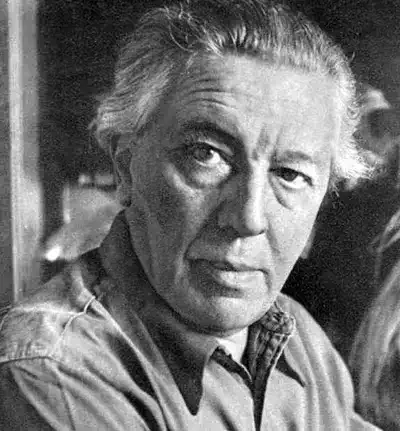
André Breton
Always for the First Time
Always for the First Time
Always for the first time
Hardly do I know you by sight
You return at some hour of the night to a house at an angle to my window
A wholly imaginary house
It is there that from one second to the next
In the inviolate darkness
I anticipate once more the fascinating rift occurring
The one and only rift
In the facade and in my heart
The closer I come to you
In reality
The more the key sings at the door of the unknown room
Where you appear alone before me
At first you coalesce entirely with the brightness
The elusive angle of a curtain
It's a field of jasmine I gazed upon at dawn on a road in the vicinity of Grasse
With the diagonal slant of its girls picking
Behind them the dark falling wing of the plants stripped bare
Before them a T-square of dazzling light
The curtain invisibly raised
In a frenzy all the flowers swarm back in
It is you at grips with that too long hour never dim enough until sleep
You as though you could be
The same except that I shall perhaps never meet you
You pretend not to know I am watching you
Marvelously I am no longer sure you know
You idleness brings tears to my eyes
A swarm of interpretations surrounds each of your gestures
It's a honeydew hunt
There are rocking chairs on a deck there are branches that may well scratch you in the
forest
There are in a shop window in the rue Notre-Dame-de-Lorette
Two lovely crossed legs caught in long stockings
Flaring out in the center of a great white clover
There is a silken ladder rolled out over the ivy
There is
By my leaning over the precipice
Of your presence and your absence in hopeless fusion
My finding the secret
Of loving you
Always for the first time
Always for the first time
Hardly do I know you by sight
You return at some hour of the night to a house at an angle to my window
A wholly imaginary house
It is there that from one second to the next
In the inviolate darkness
I anticipate once more the fascinating rift occurring
The one and only rift
In the facade and in my heart
The closer I come to you
In reality
The more the key sings at the door of the unknown room
Where you appear alone before me
At first you coalesce entirely with the brightness
The elusive angle of a curtain
It's a field of jasmine I gazed upon at dawn on a road in the vicinity of Grasse
With the diagonal slant of its girls picking
Behind them the dark falling wing of the plants stripped bare
Before them a T-square of dazzling light
The curtain invisibly raised
In a frenzy all the flowers swarm back in
It is you at grips with that too long hour never dim enough until sleep
You as though you could be
The same except that I shall perhaps never meet you
You pretend not to know I am watching you
Marvelously I am no longer sure you know
You idleness brings tears to my eyes
A swarm of interpretations surrounds each of your gestures
It's a honeydew hunt
There are rocking chairs on a deck there are branches that may well scratch you in the
forest
There are in a shop window in the rue Notre-Dame-de-Lorette
Two lovely crossed legs caught in long stockings
Flaring out in the center of a great white clover
There is a silken ladder rolled out over the ivy
There is
By my leaning over the precipice
Of your presence and your absence in hopeless fusion
My finding the secret
Of loving you
Always for the first time
1,043
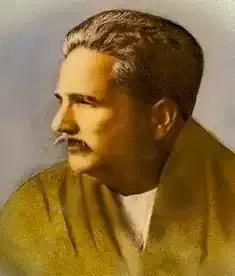
Muhammad Iqbal
The Withered Rose
The Withered Rose
O withered rose! How can I still call you a rose?
How can I call you the longing of nightingale's heart?
Once the zephyr's movement was your rocking cradle
In the garden's expanse joyous rose was your name
The morning breeze acknowledged your benevolence
The garden was like perfumer's tray by your presence
My weeping eye sheds dew on you
My desolate heart is concealed in your sorrow
You are a tiny picture of my destruction
You are the interpretation of my life's dream
Like a flute to my reed-brake I narrate my story
Listen O rose! I complain about separations!
O withered rose! How can I still call you a rose?
How can I call you the longing of nightingale's heart?
Once the zephyr's movement was your rocking cradle
In the garden's expanse joyous rose was your name
The morning breeze acknowledged your benevolence
The garden was like perfumer's tray by your presence
My weeping eye sheds dew on you
My desolate heart is concealed in your sorrow
You are a tiny picture of my destruction
You are the interpretation of my life's dream
Like a flute to my reed-brake I narrate my story
Listen O rose! I complain about separations!
256
Muhammad Iqbal
The One I Was Searching For On the Earth and in Heaven
The One I Was Searching For On the Earth and in Heaven
The one I was searching for on the earth and in heaven
Appeared residing in the recesses of my own heart
When the reality of the self became evident to my eyes
The house appeared among residents of my own heart
If it were somewhat familiar with taste of rubbing foreheads
The stone of Ka’ba’s threshold would have joined the foreheads
O Majnun! Have you ever glanced at yourself
That like Layla you are also sitting in the litter
The months of the union continue flying like moments
But the moments of separation linger for months!
O seaman, how will you protect me from being drowned
As those destined to drowning get drowned in the boats also
The one who concealed His Beauty from Kalim Allah
The same Beloved is manifest among beloveds
The breath of Lovers can light up the extinguished candle
O God! What is kept concealed in the breast of the Lovers?
Serve the fakirs if you have the longing for Love
This pearl is not available in the treasures of kings
Do not ask of these Devotees, if you have faith, you should look at them
They have the illuminated palm up their sleeves
The insightful eye for whose spectacle is tantalized
That elegance of congregation is in these very recluses
Burn the produce of your heart with some such spark
That the Last Day’s sun may also be among your gleaners
For Love search for some heart which would become mortified
This is the wine which is not kept in delicate wine glasses
The Beauty itself becomes the Lover of whose Beauty
O Heart! Does someone among the beautiful has that beauty?
Someone became highly excited at your grace of Ma’arafna
Your rank remained among the most elegant of all the Lovers
Manifest Thyself and show them Thy Beauty some time
Talks have continued among the sagacious since long time
Silent, O Heart! Crying in the full assembly is not good
Decorum is the most important etiquette among the ways of Love
It is not possible for me to deem my critics bad
Because Iqbal, I am myself among my critics
The one I was searching for on the earth and in heaven
Appeared residing in the recesses of my own heart
When the reality of the self became evident to my eyes
The house appeared among residents of my own heart
If it were somewhat familiar with taste of rubbing foreheads
The stone of Ka’ba’s threshold would have joined the foreheads
O Majnun! Have you ever glanced at yourself
That like Layla you are also sitting in the litter
The months of the union continue flying like moments
But the moments of separation linger for months!
O seaman, how will you protect me from being drowned
As those destined to drowning get drowned in the boats also
The one who concealed His Beauty from Kalim Allah
The same Beloved is manifest among beloveds
The breath of Lovers can light up the extinguished candle
O God! What is kept concealed in the breast of the Lovers?
Serve the fakirs if you have the longing for Love
This pearl is not available in the treasures of kings
Do not ask of these Devotees, if you have faith, you should look at them
They have the illuminated palm up their sleeves
The insightful eye for whose spectacle is tantalized
That elegance of congregation is in these very recluses
Burn the produce of your heart with some such spark
That the Last Day’s sun may also be among your gleaners
For Love search for some heart which would become mortified
This is the wine which is not kept in delicate wine glasses
The Beauty itself becomes the Lover of whose Beauty
O Heart! Does someone among the beautiful has that beauty?
Someone became highly excited at your grace of Ma’arafna
Your rank remained among the most elegant of all the Lovers
Manifest Thyself and show them Thy Beauty some time
Talks have continued among the sagacious since long time
Silent, O Heart! Crying in the full assembly is not good
Decorum is the most important etiquette among the ways of Love
It is not possible for me to deem my critics bad
Because Iqbal, I am myself among my critics
324
Muhammad Iqbal
The Crescent
The Crescent
The sun's boat is broken and drowned in the Nile
But a piece is floating about on the water of the Nile
The twilight's pure blood drips into the sky's basin
Has the lancet of Nature drawn the sun's blood?
Has the sky stolen the ear ring of the evening's bride?
Or has the fragile cord in the Nile's waters strolling?
Your caravan is afoot without help of bell's call
The human ear cannot hear your foot-steps' sound
You show the spectacle of rise and fall to the eyes
Where is your home? To which country are you going?
O star-like planet take me with yourself
The prick of Longing's thorn keeps me restless
I am seeking light, I am weary in this habitation
I am the restless child in the existence's school…
The sun's boat is broken and drowned in the Nile
But a piece is floating about on the water of the Nile
The twilight's pure blood drips into the sky's basin
Has the lancet of Nature drawn the sun's blood?
Has the sky stolen the ear ring of the evening's bride?
Or has the fragile cord in the Nile's waters strolling?
Your caravan is afoot without help of bell's call
The human ear cannot hear your foot-steps' sound
You show the spectacle of rise and fall to the eyes
Where is your home? To which country are you going?
O star-like planet take me with yourself
The prick of Longing's thorn keeps me restless
I am seeking light, I am weary in this habitation
I am the restless child in the existence's school…
268
Muhammad Iqbal
The Candle
The Candle
O Candle! I am also an afflicted person in the world assembly
Constant complaint is my lot in the manner of the rue
Love gave the warmth of internal pathos to you
It made me the florist selling blood-mixed tears
Whether you be the candle of a celebrating assembly or one at the grave
In every condition associated with the tears of sorrow you remain
Your eye views all with equity like the Secret's Lovers
My eye is the pride of the tumult of discrimination
Your illumination is alike in the Ka'bah and the temple
I am entangled in the temple and the Haram's discrimination
Your black smoke contains the sigh's elegance
Is some heart hidden in the place of your manifestation?
You burn with pathos due to distance from Tajalli's Light
Your pathos the callous ones consider your light
Though you are burning you are unaware of it all
You see but do not encompass the internal pathos
I quiver like mercury with the excitement of vexation
As well I am aware of vexations of the restless heart
This was also the elegance of some Beloved
Which gave me perception of my own pathos
This cognition of mine keeps me restless
Innumerable fire temples are asleep in this spark
Discrimination between high and low is created by this alone!
Fragrance in flower, ecstasy in wine is created by this alone!
Garden, nightingale, flower, fragrance this Cognition is
Root of the struggle of ‘I and you' this Cognition is
At creation's dawn as Beauty became the abode of Love
The sound of "Kun" taught warmth to the spirit of Love
The command came Beauty of Kun's garden to witness
With one eye a thousand dreadful dreams to witness
Do not ask me of the nature of the veil of being
The eve of separation was the dawn of my being
Gone are the days when unaware of imprisonment I was
That my abode the adornment of the tree of Tur was
I am a prisoner but consider the cage to be a garden
This exile's hovel of sorrow I consider the homeland
Memories of the homeland a needless melancholy became
Now the desire for sight, now Longing for search became
O Candle! Look at the excessive illusion of thought
Look at the end of the one worshipped by celestial denizens
Theme of separation I am, the exalted one I am
Design of the Will of the Universe's Lord I am
He desired my display as He designed me
When at the head of Existence' Divan He wrote me
The pearl likes living in a handful of dust
Style may be dull the subject is excellent
Not seeing it rightly is the fault of shortsighted perception
The universe is the show of effulgence of taste for Cognizance
This network of time and space is the scaling ladder of the Universe
It is the necklace of the neck of Eternal BeautyI
have lost the way, Longing for the goal I am
O Candle! Captive of perception's illusion I am
I am the hunter as well as the circle of tyranny's net!
I am the Haram's roof as well as the bird on Haram's roofAm I the Beauty or head to
foot the melting love am I?
It is not clear whether the beloved or the Lover am I?
am afraid the old secret may come up to my lips again
Lest story of suffering on the Cross may come up again.
O Candle! I am also an afflicted person in the world assembly
Constant complaint is my lot in the manner of the rue
Love gave the warmth of internal pathos to you
It made me the florist selling blood-mixed tears
Whether you be the candle of a celebrating assembly or one at the grave
In every condition associated with the tears of sorrow you remain
Your eye views all with equity like the Secret's Lovers
My eye is the pride of the tumult of discrimination
Your illumination is alike in the Ka'bah and the temple
I am entangled in the temple and the Haram's discrimination
Your black smoke contains the sigh's elegance
Is some heart hidden in the place of your manifestation?
You burn with pathos due to distance from Tajalli's Light
Your pathos the callous ones consider your light
Though you are burning you are unaware of it all
You see but do not encompass the internal pathos
I quiver like mercury with the excitement of vexation
As well I am aware of vexations of the restless heart
This was also the elegance of some Beloved
Which gave me perception of my own pathos
This cognition of mine keeps me restless
Innumerable fire temples are asleep in this spark
Discrimination between high and low is created by this alone!
Fragrance in flower, ecstasy in wine is created by this alone!
Garden, nightingale, flower, fragrance this Cognition is
Root of the struggle of ‘I and you' this Cognition is
At creation's dawn as Beauty became the abode of Love
The sound of "Kun" taught warmth to the spirit of Love
The command came Beauty of Kun's garden to witness
With one eye a thousand dreadful dreams to witness
Do not ask me of the nature of the veil of being
The eve of separation was the dawn of my being
Gone are the days when unaware of imprisonment I was
That my abode the adornment of the tree of Tur was
I am a prisoner but consider the cage to be a garden
This exile's hovel of sorrow I consider the homeland
Memories of the homeland a needless melancholy became
Now the desire for sight, now Longing for search became
O Candle! Look at the excessive illusion of thought
Look at the end of the one worshipped by celestial denizens
Theme of separation I am, the exalted one I am
Design of the Will of the Universe's Lord I am
He desired my display as He designed me
When at the head of Existence' Divan He wrote me
The pearl likes living in a handful of dust
Style may be dull the subject is excellent
Not seeing it rightly is the fault of shortsighted perception
The universe is the show of effulgence of taste for Cognizance
This network of time and space is the scaling ladder of the Universe
It is the necklace of the neck of Eternal BeautyI
have lost the way, Longing for the goal I am
O Candle! Captive of perception's illusion I am
I am the hunter as well as the circle of tyranny's net!
I am the Haram's roof as well as the bird on Haram's roofAm I the Beauty or head to
foot the melting love am I?
It is not clear whether the beloved or the Lover am I?
am afraid the old secret may come up to my lips again
Lest story of suffering on the Cross may come up again.
361
Muhammad Iqbal
Pathos Of Love
Pathos Of Love
O Pathos of Love! You are a glossy pearl
Beware, you should not appear among strangers
The theatre of your display is concealed under the veil
The modern audience' eye accepts only the visible display
New breeze has arrived in the Existence' garden
O Pathos of Love! Now there is no pleasure in display
Beware! You should not be striving for ostentation!
You should not be obligated to the nightingale's lament!
The tulip's wine-cup should be devoid of wine
The dew's tear should be a mere dropp of water
Your secret should be hidden in the bosom somewhere
Your heart-melting tear should not be your betrayer
The flowery-styled poet's tongue should not be talking
Separation's complaint should not be concealed in flute's music
This age is a critic, go and somewhere conceal yourself
In the heart in which you are residing conceal yourself
The learning's surprise is neglecting you, beware!
Your immature eye is not the seeker of Truth, beware
Let the elegant thought remain in search of Truth
Let your wisdom-loving eye remain in astonishment
This is not the garden whose spring you may be
This is not the audience worthy of your appearance
This audience is the lover of the material sights
The purpose of your sight is the closet of secrecy
Every heart is intoxicated with the wine of thinking
Something different is the Tur of the Kalims of this age
O Pathos of Love! You are a glossy pearl
Beware, you should not appear among strangers
The theatre of your display is concealed under the veil
The modern audience' eye accepts only the visible display
New breeze has arrived in the Existence' garden
O Pathos of Love! Now there is no pleasure in display
Beware! You should not be striving for ostentation!
You should not be obligated to the nightingale's lament!
The tulip's wine-cup should be devoid of wine
The dew's tear should be a mere dropp of water
Your secret should be hidden in the bosom somewhere
Your heart-melting tear should not be your betrayer
The flowery-styled poet's tongue should not be talking
Separation's complaint should not be concealed in flute's music
This age is a critic, go and somewhere conceal yourself
In the heart in which you are residing conceal yourself
The learning's surprise is neglecting you, beware!
Your immature eye is not the seeker of Truth, beware
Let the elegant thought remain in search of Truth
Let your wisdom-loving eye remain in astonishment
This is not the garden whose spring you may be
This is not the audience worthy of your appearance
This audience is the lover of the material sights
The purpose of your sight is the closet of secrecy
Every heart is intoxicated with the wine of thinking
Something different is the Tur of the Kalims of this age
543
Muhammad Iqbal
First Date Tree Saeeded By Abdul Rahman The Firs
First Date Tree Saeeded By Abdul Rahman The Firs
You are the apple of my eye,
My heart's delight:
I am remote from my valley,
To me you are the Burning Bush of Sinai!
You are a houri of the Arabian Desert,
Nursed by the Western breeze.
I feel homesick in exile,
You feel homesick in exile:
Prosper in this strange land!
May the morning dew quench your thirst!
The world presents a strange sight:
The vision's mantle is torn apart—
May valour struggle with the waves if it must,
The other side of the river is not to be seen!
Life owes itself to the heat of one's soul:
Flame does not rise from dust.
The Syrian evening's fallen star
Shined brighter in the exile's dawn.
There are no frontiers for the Man of Faith,
He is at home everywhere.
[Translated by the Editors]
*
That blood of pristine vigour is no more;
That yearning heart's power is no more;
Prayer, fasting, hajj, sacrifice survive,
But in thee nature's old dower is no more.
[Translated by Naim Siddiqui]
Not: These verses from Abdul Rahman the First
are quoted in Tarikh al Muqqari. The
following Urdu poem is a liberal
translation (the tree mentioned here was
planted in Madinatut Zahra)
You are the apple of my eye,
My heart's delight:
I am remote from my valley,
To me you are the Burning Bush of Sinai!
You are a houri of the Arabian Desert,
Nursed by the Western breeze.
I feel homesick in exile,
You feel homesick in exile:
Prosper in this strange land!
May the morning dew quench your thirst!
The world presents a strange sight:
The vision's mantle is torn apart—
May valour struggle with the waves if it must,
The other side of the river is not to be seen!
Life owes itself to the heat of one's soul:
Flame does not rise from dust.
The Syrian evening's fallen star
Shined brighter in the exile's dawn.
There are no frontiers for the Man of Faith,
He is at home everywhere.
[Translated by the Editors]
*
That blood of pristine vigour is no more;
That yearning heart's power is no more;
Prayer, fasting, hajj, sacrifice survive,
But in thee nature's old dower is no more.
[Translated by Naim Siddiqui]
Not: These verses from Abdul Rahman the First
are quoted in Tarikh al Muqqari. The
following Urdu poem is a liberal
translation (the tree mentioned here was
planted in Madinatut Zahra)
437
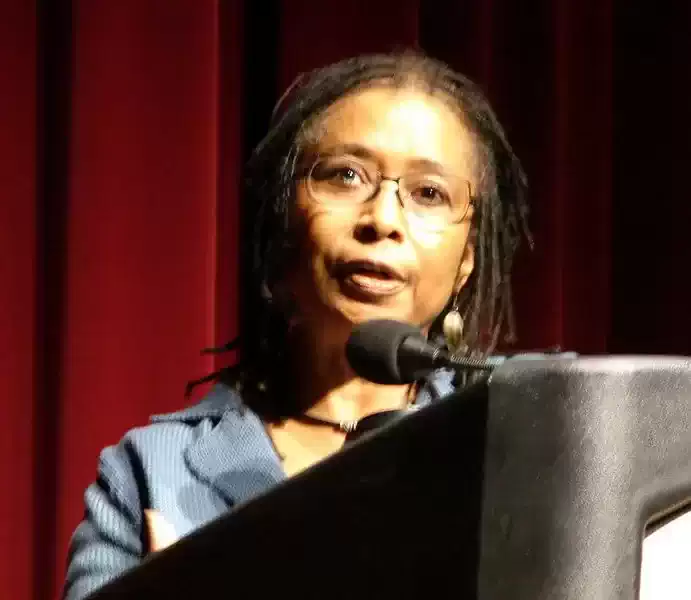
Alice Walker
Turning Madness Into Flowers #1
Turning Madness Into Flowers #1
If my sorrow were deeper
I'd be, along with you, under
the ocean's floor;
but today I learn that the oil
that pools beneath the ocean floor
is essence
residue
remains
of all our
relations
all
our ancestors who have died and turned to oil
without our witness
eons ago.
We've always belonged to them.
Speaking for you, hanging, weeping, over the water's edge
as well as for myself.
It is our grief
heavy, relentless,
trudging
us, however resistant,
to the decaying and rotten
bottom of things:
our grief bringing
us home.
If my sorrow were deeper
I'd be, along with you, under
the ocean's floor;
but today I learn that the oil
that pools beneath the ocean floor
is essence
residue
remains
of all our
relations
all
our ancestors who have died and turned to oil
without our witness
eons ago.
We've always belonged to them.
Speaking for you, hanging, weeping, over the water's edge
as well as for myself.
It is our grief
heavy, relentless,
trudging
us, however resistant,
to the decaying and rotten
bottom of things:
our grief bringing
us home.
18
Alice Walker
I Will Keep Broken Things
I Will Keep Broken Things
I will keep
Broken
Things:
The big clay
Pot
With raised
Iguanas
Chasing
Their
Tails;
Two
Of their
Wise
Heads
Sheared
Off;
I will keep
Broken
things:
The old
Slave
Market
Basket
Brought
To my
Door
By Mississippi
A jagged
Hole
Gouged
In its sturdy
Dark
Oak
Side.
I will keep
Broken
things:
The memory
Of
Those
Long
Delicious
Night
Swims
With
You;
I will keep
Broken
things:
In my house
There
Remains
An
Honored
Shelf
On which
I will
Keep
Broken
Things.
Their beauty
Is
They
Need
Not
Ever
Be
'fixed.'
I will keep
Your
Wild
Free
Laughter
Though
It is now
Missing
Its
Reassuring
And
Graceful
Hinge.
I will keep
Broken
Things:
Thank you
So much!
I will keep
Broken
Things.
I will keep
You:
Pilgrim
Of
Sorrow.
I will keep
Myself.
I will keep
Broken
Things:
The big clay
Pot
With raised
Iguanas
Chasing
Their
Tails;
Two
Of their
Wise
Heads
Sheared
Off;
I will keep
Broken
things:
The old
Slave
Market
Basket
Brought
To my
Door
By Mississippi
A jagged
Hole
Gouged
In its sturdy
Dark
Oak
Side.
I will keep
Broken
things:
The memory
Of
Those
Long
Delicious
Night
Swims
With
You;
I will keep
Broken
things:
In my house
There
Remains
An
Honored
Shelf
On which
I will
Keep
Broken
Things.
Their beauty
Is
They
Need
Not
Ever
Be
'fixed.'
I will keep
Your
Wild
Free
Laughter
Though
It is now
Missing
Its
Reassuring
And
Graceful
Hinge.
I will keep
Broken
Things:
Thank you
So much!
I will keep
Broken
Things.
I will keep
You:
Pilgrim
Of
Sorrow.
I will keep
Myself.
421
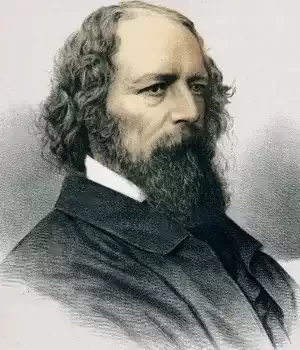
Alfred Lord Tennyson
The Lotos-eaters
The Lotos-eaters
"Courage!" he said, and pointed toward the land,
"This mounting wave will roll us shoreward soon."
In the afternoon they came unto a land
In which it seemed always afternoon.
All round the coast the languid air did swoon,
Breathing like one that hath a weary dream.
Full-faced above the valley stood the moon;
And like a downward smoke, the slender stream
Along the cliff to fall and pause and fall did seem.
A land of streams! some, like a downward smoke,
Slow-dropping veils of thinnest lawn, did go;
And some thro' wavering lights and shadows broke,
Rolling a slumbrous sheet of foam below.
They saw the gleaming river seaward flow
From the inner land: far off, three mountain-tops,
Three silent pinnacles of aged snow,
Stood sunset-flush'd: and, dew'd with showery drops,
Up-clomb the shadowy pine above the woven copse.
The charmed sunset linger'd low adown
In the red West: thro' mountain clefts the dale
Was seen far inland, and the yellow down
Border'd with palm, and many a winding vale
And meadow, set with slender galingale;
A land where all things always seem'd the same!
And round about the keel with faces pale,
Dark faces pale against that rosy flame,
The mild-eyed melancholy Lotos-eaters came.
Branches they bore of that enchanted stem,
Laden with flower and fruit, whereof they gave
To each, but whoso did receive of them,
And taste, to him the gushing of the wave
Far far away did seem to mourn and rave
On alien shores; and if his fellow spake,
His voice was thin, as voices from the grave;
And deep-asleep he seem'd, yet all awake,
And music in his ears his beating heart did make.
They sat them down upon the yellow sand,
Between the sun and moon upon the shore;
And sweet it was to dream of Fatherland,
Of child, and wife, and slave; but evermore
Most weary seem'd the sea, weary the oar,
Weary the wandering fields of barren foam.
Then some one said, "We will return no more";
And all at once they sang, "Our island home
Is far beyond the wave; we will no longer roam."CHORIC SONGI
There is sweet music here that softer falls
Than petals from blown roses on the grass,
Or night-dews on still waters between walls
Of shadowy granite, in a gleaming pass;
Music that gentlier on the spirit lies,
Than tir'd eyelids upon tir'd eyes;
Music that brings sweet sleep down from the blissful skies.
Here are cool mosses deep,
And thro' the moss the ivies creep,
And in the stream the long-leaved flowers weep,
And from the craggy ledge the poppy hangs in sleep."II
Why are we weigh'd upon with heaviness,
And utterly consumed with sharp distress,
While all things else have rest from weariness?
All things have rest: why should we toil alone,
We only toil, who are the first of things,
And make perpetual moan,
Still from one sorrow to another thrown:
Nor ever fold our wings,
And cease from wanderings,
Nor steep our brows in slumber's holy balm;
Nor harken what the inner spirit sings,
"There is no joy but calm!"
Why should we only toil, the roof and crown of things?III
Lo! in the middle of the wood,
The folded leaf is woo'd from out the bud
With winds upon the branch, and there
Grows green and broad, and takes no care,
Sun-steep'd at noon, and in the moon
Nightly dew-fed; and turning yellow
Falls, and floats adown the air.
Lo! sweeten'd with the summer light,
The full-juiced apple, waxing over-mellow,
Drops in a silent autumn night.
All its allotted length of days
The flower ripens in its place,
Ripens and fades, and falls, and hath no toil,
Fast-rooted in the fruitful soil.IV
Hateful is the dark-blue sky,
Vaulted o'er the dark-blue sea.
Death is the end of life; ah, why
Should life all labour be?
Let us alone. Time driveth onward fast,
And in a little while our lips are dumb.
Let us alone. What is it that will last?
All things are taken from us, and become
Portions and parcels of the dreadful past.
Let us alone. What pleasure can we have
To war with evil? Is there any peace
In ever climbing up the climbing wave?
All things have rest, and ripen toward the grave
In silence; ripen, fall and cease:
Give us long rest or death, dark death, or dreamful ease.V
How sweet it were, hearing the downward stream,
With half-shut eyes ever to seem
Falling asleep in a half-dream!
To dream and dream, like yonder amber light,
Which will not leave the myrrh-bush on the height;
To hear each other's whisper'd speech;
Eating the Lotos day by day,
To watch the crisping ripples on the beach,
And tender curving lines of creamy spray;
To lend our hearts and spirits wholly
To the influence of mild-minded melancholy;
To muse and brood and live again in memory,
With those old faces of our infancy
Heap'd over with a mound of grass,
Two handfuls of white dust, shut in an urn of brass!VI
Dear is the memory of our wedded lives,
And dear the last embraces of our wives
And their warm tears: but all hath suffer'd change:
For surely now our household hearths are cold,
Our sons inherit us: our looks are strange:
And we should come like ghosts to trouble joy.
Or else the island princes over-bold
Have eat our substance, and the minstrel sings
Before them of the ten years' war in Troy,
And our great deeds, as half-forgotten things.
Is there confusion in the little isle?
Let what is broken so remain.
The Gods are hard to reconcile:
'Tis hard to settle order once again.
There is confusion worse than death,
Trouble on trouble, pain on pain,
Long labour unto aged breath,
Sore task to hearts worn out by many wars
And eyes grown dim with gazing on the pilot-stars.VII
But, propt on beds of amaranth and moly,
How sweet (while warm airs lull us, blowing lowly)
With half-dropt eyelid still,
Beneath a heaven dark and holy,
To watch the long bright river drawing slowly
His waters from the purple hill-To
hear the dewy echoes calling
From cave to cave thro' the thick-twined vine-To
watch the emerald-colour'd water falling
Thro' many a wov'n acanthus-wreath divine!
Only to hear and see the far-off sparkling brine,
Only to hear were sweet, stretch'd out beneath the pine.VIII
The Lotos blooms below the barren peak:
The Lotos blows by every winding creek:
All day the wind breathes low with mellower tone:
Thro' every hollow cave and alley lone
Round and round the spicy downs the yellow Lotos-dust is blown.
We have had enough of action, and of motion we,
Roll'd to starboard, roll'd to larboard, when the surge was seething free,
Where the wallowing monster spouted his foam-fountains in the sea.
Let us swear an oath, and keep it with an equal mind,
In the hollow Lotos-land to live and lie reclined
On the hills like Gods together, careless of mankind.
For they lie beside their nectar, and the bolts are hurl'd
Far below them in the valleys, and the clouds are lightly curl'd
Round their golden houses, girdled with the gleaming world:
Where they smile in secret, looking over wasted lands,
Blight and famine, plague and earthquake, roaring deeps and fiery sands,
Clanging fights, and flaming towns, and sinking ships, and praying hands.
But they smile, they find a music centred in a doleful song
Steaming up, a lamentation and an ancient tale of wrong,
Like a tale of little meaning tho' the words are strong;
Chanted from an ill-used race of men that cleave the soil,
Sow the seed, and reap the harvest with enduring toil,
Storing yearly little dues of wheat, and wine and oil;
Till they perish and they suffer--some, 'tis whisper'd--down in hell
Suffer endless anguish, others in Elysian valleys dwell,
Resting weary limbs at last on beds of asphodel.
Surely, surely, slumber is more sweet than toil, the shore
Than labour in the deep mid-ocean, wind and wave and oar;
O, rest ye, brother mariners, we will not wander more.Credits and CopyrightTogether
with the editors, the Department ofEnglish (University of Toronto), and the University
of Toronto Press,the following individuals share copyright for the work that wentinto
this edition:Screen Design (Electronic Edition): Sian Meikle (University ofToronto
Library)Scanning: Sharine Leung (Centre for Computing in the Humanities)
"Courage!" he said, and pointed toward the land,
"This mounting wave will roll us shoreward soon."
In the afternoon they came unto a land
In which it seemed always afternoon.
All round the coast the languid air did swoon,
Breathing like one that hath a weary dream.
Full-faced above the valley stood the moon;
And like a downward smoke, the slender stream
Along the cliff to fall and pause and fall did seem.
A land of streams! some, like a downward smoke,
Slow-dropping veils of thinnest lawn, did go;
And some thro' wavering lights and shadows broke,
Rolling a slumbrous sheet of foam below.
They saw the gleaming river seaward flow
From the inner land: far off, three mountain-tops,
Three silent pinnacles of aged snow,
Stood sunset-flush'd: and, dew'd with showery drops,
Up-clomb the shadowy pine above the woven copse.
The charmed sunset linger'd low adown
In the red West: thro' mountain clefts the dale
Was seen far inland, and the yellow down
Border'd with palm, and many a winding vale
And meadow, set with slender galingale;
A land where all things always seem'd the same!
And round about the keel with faces pale,
Dark faces pale against that rosy flame,
The mild-eyed melancholy Lotos-eaters came.
Branches they bore of that enchanted stem,
Laden with flower and fruit, whereof they gave
To each, but whoso did receive of them,
And taste, to him the gushing of the wave
Far far away did seem to mourn and rave
On alien shores; and if his fellow spake,
His voice was thin, as voices from the grave;
And deep-asleep he seem'd, yet all awake,
And music in his ears his beating heart did make.
They sat them down upon the yellow sand,
Between the sun and moon upon the shore;
And sweet it was to dream of Fatherland,
Of child, and wife, and slave; but evermore
Most weary seem'd the sea, weary the oar,
Weary the wandering fields of barren foam.
Then some one said, "We will return no more";
And all at once they sang, "Our island home
Is far beyond the wave; we will no longer roam."CHORIC SONGI
There is sweet music here that softer falls
Than petals from blown roses on the grass,
Or night-dews on still waters between walls
Of shadowy granite, in a gleaming pass;
Music that gentlier on the spirit lies,
Than tir'd eyelids upon tir'd eyes;
Music that brings sweet sleep down from the blissful skies.
Here are cool mosses deep,
And thro' the moss the ivies creep,
And in the stream the long-leaved flowers weep,
And from the craggy ledge the poppy hangs in sleep."II
Why are we weigh'd upon with heaviness,
And utterly consumed with sharp distress,
While all things else have rest from weariness?
All things have rest: why should we toil alone,
We only toil, who are the first of things,
And make perpetual moan,
Still from one sorrow to another thrown:
Nor ever fold our wings,
And cease from wanderings,
Nor steep our brows in slumber's holy balm;
Nor harken what the inner spirit sings,
"There is no joy but calm!"
Why should we only toil, the roof and crown of things?III
Lo! in the middle of the wood,
The folded leaf is woo'd from out the bud
With winds upon the branch, and there
Grows green and broad, and takes no care,
Sun-steep'd at noon, and in the moon
Nightly dew-fed; and turning yellow
Falls, and floats adown the air.
Lo! sweeten'd with the summer light,
The full-juiced apple, waxing over-mellow,
Drops in a silent autumn night.
All its allotted length of days
The flower ripens in its place,
Ripens and fades, and falls, and hath no toil,
Fast-rooted in the fruitful soil.IV
Hateful is the dark-blue sky,
Vaulted o'er the dark-blue sea.
Death is the end of life; ah, why
Should life all labour be?
Let us alone. Time driveth onward fast,
And in a little while our lips are dumb.
Let us alone. What is it that will last?
All things are taken from us, and become
Portions and parcels of the dreadful past.
Let us alone. What pleasure can we have
To war with evil? Is there any peace
In ever climbing up the climbing wave?
All things have rest, and ripen toward the grave
In silence; ripen, fall and cease:
Give us long rest or death, dark death, or dreamful ease.V
How sweet it were, hearing the downward stream,
With half-shut eyes ever to seem
Falling asleep in a half-dream!
To dream and dream, like yonder amber light,
Which will not leave the myrrh-bush on the height;
To hear each other's whisper'd speech;
Eating the Lotos day by day,
To watch the crisping ripples on the beach,
And tender curving lines of creamy spray;
To lend our hearts and spirits wholly
To the influence of mild-minded melancholy;
To muse and brood and live again in memory,
With those old faces of our infancy
Heap'd over with a mound of grass,
Two handfuls of white dust, shut in an urn of brass!VI
Dear is the memory of our wedded lives,
And dear the last embraces of our wives
And their warm tears: but all hath suffer'd change:
For surely now our household hearths are cold,
Our sons inherit us: our looks are strange:
And we should come like ghosts to trouble joy.
Or else the island princes over-bold
Have eat our substance, and the minstrel sings
Before them of the ten years' war in Troy,
And our great deeds, as half-forgotten things.
Is there confusion in the little isle?
Let what is broken so remain.
The Gods are hard to reconcile:
'Tis hard to settle order once again.
There is confusion worse than death,
Trouble on trouble, pain on pain,
Long labour unto aged breath,
Sore task to hearts worn out by many wars
And eyes grown dim with gazing on the pilot-stars.VII
But, propt on beds of amaranth and moly,
How sweet (while warm airs lull us, blowing lowly)
With half-dropt eyelid still,
Beneath a heaven dark and holy,
To watch the long bright river drawing slowly
His waters from the purple hill-To
hear the dewy echoes calling
From cave to cave thro' the thick-twined vine-To
watch the emerald-colour'd water falling
Thro' many a wov'n acanthus-wreath divine!
Only to hear and see the far-off sparkling brine,
Only to hear were sweet, stretch'd out beneath the pine.VIII
The Lotos blooms below the barren peak:
The Lotos blows by every winding creek:
All day the wind breathes low with mellower tone:
Thro' every hollow cave and alley lone
Round and round the spicy downs the yellow Lotos-dust is blown.
We have had enough of action, and of motion we,
Roll'd to starboard, roll'd to larboard, when the surge was seething free,
Where the wallowing monster spouted his foam-fountains in the sea.
Let us swear an oath, and keep it with an equal mind,
In the hollow Lotos-land to live and lie reclined
On the hills like Gods together, careless of mankind.
For they lie beside their nectar, and the bolts are hurl'd
Far below them in the valleys, and the clouds are lightly curl'd
Round their golden houses, girdled with the gleaming world:
Where they smile in secret, looking over wasted lands,
Blight and famine, plague and earthquake, roaring deeps and fiery sands,
Clanging fights, and flaming towns, and sinking ships, and praying hands.
But they smile, they find a music centred in a doleful song
Steaming up, a lamentation and an ancient tale of wrong,
Like a tale of little meaning tho' the words are strong;
Chanted from an ill-used race of men that cleave the soil,
Sow the seed, and reap the harvest with enduring toil,
Storing yearly little dues of wheat, and wine and oil;
Till they perish and they suffer--some, 'tis whisper'd--down in hell
Suffer endless anguish, others in Elysian valleys dwell,
Resting weary limbs at last on beds of asphodel.
Surely, surely, slumber is more sweet than toil, the shore
Than labour in the deep mid-ocean, wind and wave and oar;
O, rest ye, brother mariners, we will not wander more.Credits and CopyrightTogether
with the editors, the Department ofEnglish (University of Toronto), and the University
of Toronto Press,the following individuals share copyright for the work that wentinto
this edition:Screen Design (Electronic Edition): Sian Meikle (University ofToronto
Library)Scanning: Sharine Leung (Centre for Computing in the Humanities)
690
Alfred Lord Tennyson
OEnone
OEnone
. There lies a vale in Ida, lovelier
Than all the valleys of Ionian hills.
The swimming vapour slopes athwart the glen,
Puts forth an arm, and creeps from pine to pine,
And loiters, slowly drawn. On either hand
The lawns and meadow-ledges midway down
Hang rich in flowers, and far below them roars
The long brook falling thro' the clov'n ravine
In cataract after cataract to the sea.
Behind the valley topmost Gargarus
Stands up and takes the morning: but in front
The gorges, opening wide apart, reveal
Troas and Ilion's column'd citadel,
The crown of Troas. Hither came at noon
Mournful OEnone, wandering forlorn
Of Paris, once her playmate on the hills.
Her cheek had lost the rose, and round her neck
Floated her hair or seem'd to float in rest.
She, leaning on a fragment twined with vine,
Sang to the stillness, till the mountain-shade
Sloped downward to her seat from the upper cliff.
'O mother Ida, many-fountain'd Ida,
Dear mother Ida, harken ere I die.
For now the noonday quiet holds the hill:
The grasshopper is silent in the grass:
The lizard, with his shadow on the stone,
Rests like a shadow, and the winds are dead.
The purple flower droops: the golden bee
Is lily-cradled: I alone awake.
My eyes are full of tears, my heart of love,
My heart is breaking, and my eyes are dim,
And I am all aweary of my life.
'O mother Ida, many-fountain'd Ida,
Dear mother Ida, harken ere I die.
Hear me, O Earth, hear me, O Hills, O Caves
That house the cold crown'd snake! O mountain brooks,
I am the daughter of a River-God,
Hear me, for I will speak, and build up all
My sorrow with my song, as yonder walls
Rose slowly to a music slowly breathed,
A cloud that gather'd shape: for it may be
That, while I speak of it, a little while
My heart may wander from its deeper woe.
'O mother Ida, many-fountain'd Ida,
Dear mother Ida, harken ere I die.
I waited underneath the dawning hills,
Aloft the mountain lawn was dewy-dark,
And dewy-dark aloft the mountain pine:
Beautiful Paris, evil-hearted Paris,
Leading a jet-black goat white-horn'd, white-hooved,
Came up from reedy Simois all alone.
'O mother Ida, harken ere I die.
Far-off the torrent call'd me from the cleft:
Far up the solitary morning smote
The streaks of virgin snow. With down-dropt eyes
I sat alone: white-breasted like a star
Fronting the dawn he moved; a leopard skin
Droop'd from his shoulder, but his sunny hair
Cluster'd about his temples like a God's:
And his cheek brighten'd as the foam-bow brightens
When the wind blows the foam, and all my heart
Went forth to embrace him coming ere he came.
'Dear mother Ida, harken ere I die.
He smiled, and opening out his milk-white palm
Disclosed a fruit of pure Hesperian gold,
That smelt ambrosially, and while I look'd
And listen'd, the full-flowing river of speech
Came down upon my heart. `My own OEnone,
Beautiful-brow'd OEnone, my own soul,
Behold this fruit, whose gleaming rind ingrav'n
'For the most fair,' would seem to award it thine,
As lovelier than whatever Oread haunt
The knolls of Ida, loveliest in all grace
Of movement, and the charm of married brows.'
'Dear mother Ida, harken ere I die.
He prest the blossom of his lips to mine,
And added 'This was cast upon the board,
When all the full-faced presence of the Gods
Ranged in the halls of Peleus; whereupon
Rose feud, with question unto whom 'twere due:
But light-foot Iris brought it yester-eve,
Delivering that to me, by common voice
Elected umpire, Herè comes to-day,
Pallas and Aphroditè, claiming each
This meed of fairest. Thou, within the cave
Behind yon whispering tuft of oldest pine,
Mayst well behold them unbeheld, unheard
Hear all, and see thy Paris judge of Gods.'
'Dear mother Ida, harken ere I die.
It was the deep midnoon: one silvery cloud
Had lost his way between the piney sides
Of this long glen. Then to the bower they came,
Naked they came to that smooth-swarded bower,
And at their feet the crocus brake like fire,
Violet, amaracus, and asphodel,
Lotos and lilies: and a wind arose,
And overhead the wandering ivy and vine,
This way and that, in many a wild festoon
Ran riot, garlanding the gnarled boughs
With bunch and berry and flower thro' and thro'.
'O mother Ida, harken ere I die.
On the tree-tops a crested peacock lit,
And o'er him flow'd a golden cloud, and lean'd
Upon him, slowly dropping fragrant dew.
Then first I heard the voice of her, to whom
Coming thro' Heaven, like a light that grows
Larger and clearer, with one mind the Gods
Rise up for reverence. She to Paris made
Proffer of royal power, ample rule
Unquestion'd, overflowing revenue
Wherewith to embellish state, 'from many a vale
And river-sunder'd champaign clothed with corn,
Or labour'd mine undrainable of ore.
Honour,' she said, 'and homage, tax and toll,
From many an inland town and haven large,
Mast-throng'd beneath her shadowing citadel
In glassy bays among her tallest towers.'
'O mother Ida, harken ere I die.
Still she spake on and still she spake of power,
'Which in all action is the end of all;
Power fitted to the season; wisdom-bred
And throned of wisdom-from all neighbour crowns
Alliance and allegiance, till thy hand
Fail from the sceptre-staff. Such boon from me,
From me, Heaven's Queen, Paris, to thee king-born,
A shepherd all thy life but yet king-born,
Should come most welcome, seeing men, in power
Only, are likest Gods, who have attain'd
Rest in a happy place and quiet seats
Above the thunder, with undying bliss
In knowledge of their own supremacy.'
'Dear mother Ida, harken ere I die.
She ceased, and Paris held the costly fruit
Out at arm's-length, so much the thought of power
Flatter'd his spirit; but Pallas where she stood
Somewhat apart, her clear and bared limbs
O'erthwarted with the brazen-headed spear
Upon her pearly shoulder leaning cold,
The while, above, her full and earnest eye
Over her snow-cold breast and angry cheek
Kept watch, waiting decision, made reply.
'`Self-reverence, self-knowledge, self-control,
These three alone lead life to sovereign power.
Yet not for power (power of herself
Would come uncall'd for) but to live by law,
Acting the law we live by without fear;
And, because right is right, to follow right
Were wisdom in the scorn of consequence.'
'Dear mother Ida, harken ere I die.
Again she said: 'I woo thee not with gifts.
Sequel of guerdon could not alter me
To fairer. Judge thou me by what I am,
So shalt thou find me fairest. Yet, indeed,
If gazing on divinity disrobed
Thy mortal eyes are frail to judge of fair,
Unbias'd by self-profit, oh! rest thee sure
That I shall love thee well and cleave to thee,
So that my vigour, wedded to thy blood,
Shall strike within thy pulses, like a God's,
To push thee forward thro' a life of shocks,
Dangers, and deeds, until endurance grow
Sinew'd with action, and the full-grown will,
Circled thro' all experiences, pure law,
Commeasure perfect freedom.' Here she ceas'd
And Paris ponder'd, and I cried, 'O Paris,
Give it to Pallas!' but he heard me not,
Or hearing would not hear me, woe is me!
'O mother Ida, many-fountain'd Ida,
Dear mother Ida, harken ere I die.
Italian Aphroditè beautiful,
Fresh as the foam, new-bathed in Paphian wells,
With rosy slender fingers backward drew
From her warm brows and bosom her deep hair
Ambrosial, golden round her lucid throat
And shoulder: from the violets her light foot
Shone rosy-white, and o'er her rounded form
Between the shadows of the vine-bunches
Floated the glowing sunlights, as she moved.
'Dear mother Ida, harken ere I die.
She with a subtle smile in her mild eyes,
The herald of her triumph, drawing nigh
Half-whisper'd in his ear, 'I promise thee
The fairest and most loving wife in Greece.'
She spoke and laugh'd: I shut my sight for fear:
But when I look'd, Paris had raised his arm,
And I beheld great Herè's angry eyes,
As she withdrew into the golden cloud,
And I was left alone within the bower;
And from that time to this I am alone,
And I shall be alone until I die.
'Yet, mother Ida, harken ere I die.
Fairest-why fairest wife? am I not fair?
My love hath told me so a thousand times.
Methinks I must be fair, for yesterday,
When I past by, a wild and wanton pard,
Eyed like the evening star, with playful tail
Crouch'd fawning in the weed. Most loving is she?
Ah me, my mountain shepherd, that my arms
Were wound about thee, and my hot lips prest
Close, close to thine in that quick-falling dew
Of fruitful kisses, thick as Autumn rains
Flash in the pools of whirling Simois!
'O mother, hear me yet before I die.
They came, they cut away my tallest pines,
My tall dark pines, that plumed the craggy ledge
High over the blue gorge, and all between
The snowy peak and snow-white cataract
Foster'd the callow eaglet-from beneath
Whose thick mysterious boughs in the dark morn
The panther's roar came muffled, while I sat
Low in the valley. Never, never more
Shall lone OEnone see the morning mist
Sweep thro' them; never see them overlaid
With narrow moon-lit slips of silver cloud,
Between the loud stream and the trembling stars.
'O mother, hear me yet before I die.
I wish that somewhere in the ruin'd folds,
Among the fragments tumbled from the glens,
Or the dry thickets, I could meet with her
The Abominable, that uninvited came
Into the fair Pele{:i}an banquet-hall,
And cast the golden fruit upon the board,
And bred this change; that I might speak my mind,
And tell her to her face how much I hate
Her presence, hated both of Gods and men.
'O mother, hear me yet before I die.
Hath he not sworn his love a thousand times,
In this green valley, under this green hill,
Ev'n on this hand, and sitting on this stone?
Seal'd it with kisses? water'd it with tears?
O happy tears, and how unlike to these!
O happy Heaven, how canst thou see my face?
O happy earth, how canst thou bear my weight?
O death, death, death, thou ever-floating cloud,
There are enough unhappy on this earth,
Pass by the happy souls, that love to live:
I pray thee, pass before my light of life,
And shadow all my soul, that I may die.
Thou weighest heavy on the heart within,
Weigh heavy on my eyelids: let me die.
'O mother, hear me yet before I die.
I will not die alone, for fiery thoughts
Do shape themselves within me, more and more,
Whereof I catch the issue, as I hear
Dead sounds at night come from the inmost hills,
Like footsteps upon wool. I dimly see
My far-off doubtful purpose, as a mother
Conjectures of the features of her child
Ere it is born: her child!-a shudder comes
Across me: never child be born of me,
Unblest, to vex me with his father's eyes!
'O mother, hear me yet before I die.
Hear me, O earth. I will not die alone,
Lest their shrill happy laughter come to me
Walking the cold and starless road of death
Uncomforted, leaving my ancient love
With the Greek woman. I will rise and go
Down into Troy, and ere the stars come forth
Talk with the wild Cassandra, for she says
A fire dances before her, and a sound
Rings ever in her ears of armed men.
What this may be I know not, but I know
That, wheresoe'er I am by night and day,
All earth and air seem only burning fire.'
. There lies a vale in Ida, lovelier
Than all the valleys of Ionian hills.
The swimming vapour slopes athwart the glen,
Puts forth an arm, and creeps from pine to pine,
And loiters, slowly drawn. On either hand
The lawns and meadow-ledges midway down
Hang rich in flowers, and far below them roars
The long brook falling thro' the clov'n ravine
In cataract after cataract to the sea.
Behind the valley topmost Gargarus
Stands up and takes the morning: but in front
The gorges, opening wide apart, reveal
Troas and Ilion's column'd citadel,
The crown of Troas. Hither came at noon
Mournful OEnone, wandering forlorn
Of Paris, once her playmate on the hills.
Her cheek had lost the rose, and round her neck
Floated her hair or seem'd to float in rest.
She, leaning on a fragment twined with vine,
Sang to the stillness, till the mountain-shade
Sloped downward to her seat from the upper cliff.
'O mother Ida, many-fountain'd Ida,
Dear mother Ida, harken ere I die.
For now the noonday quiet holds the hill:
The grasshopper is silent in the grass:
The lizard, with his shadow on the stone,
Rests like a shadow, and the winds are dead.
The purple flower droops: the golden bee
Is lily-cradled: I alone awake.
My eyes are full of tears, my heart of love,
My heart is breaking, and my eyes are dim,
And I am all aweary of my life.
'O mother Ida, many-fountain'd Ida,
Dear mother Ida, harken ere I die.
Hear me, O Earth, hear me, O Hills, O Caves
That house the cold crown'd snake! O mountain brooks,
I am the daughter of a River-God,
Hear me, for I will speak, and build up all
My sorrow with my song, as yonder walls
Rose slowly to a music slowly breathed,
A cloud that gather'd shape: for it may be
That, while I speak of it, a little while
My heart may wander from its deeper woe.
'O mother Ida, many-fountain'd Ida,
Dear mother Ida, harken ere I die.
I waited underneath the dawning hills,
Aloft the mountain lawn was dewy-dark,
And dewy-dark aloft the mountain pine:
Beautiful Paris, evil-hearted Paris,
Leading a jet-black goat white-horn'd, white-hooved,
Came up from reedy Simois all alone.
'O mother Ida, harken ere I die.
Far-off the torrent call'd me from the cleft:
Far up the solitary morning smote
The streaks of virgin snow. With down-dropt eyes
I sat alone: white-breasted like a star
Fronting the dawn he moved; a leopard skin
Droop'd from his shoulder, but his sunny hair
Cluster'd about his temples like a God's:
And his cheek brighten'd as the foam-bow brightens
When the wind blows the foam, and all my heart
Went forth to embrace him coming ere he came.
'Dear mother Ida, harken ere I die.
He smiled, and opening out his milk-white palm
Disclosed a fruit of pure Hesperian gold,
That smelt ambrosially, and while I look'd
And listen'd, the full-flowing river of speech
Came down upon my heart. `My own OEnone,
Beautiful-brow'd OEnone, my own soul,
Behold this fruit, whose gleaming rind ingrav'n
'For the most fair,' would seem to award it thine,
As lovelier than whatever Oread haunt
The knolls of Ida, loveliest in all grace
Of movement, and the charm of married brows.'
'Dear mother Ida, harken ere I die.
He prest the blossom of his lips to mine,
And added 'This was cast upon the board,
When all the full-faced presence of the Gods
Ranged in the halls of Peleus; whereupon
Rose feud, with question unto whom 'twere due:
But light-foot Iris brought it yester-eve,
Delivering that to me, by common voice
Elected umpire, Herè comes to-day,
Pallas and Aphroditè, claiming each
This meed of fairest. Thou, within the cave
Behind yon whispering tuft of oldest pine,
Mayst well behold them unbeheld, unheard
Hear all, and see thy Paris judge of Gods.'
'Dear mother Ida, harken ere I die.
It was the deep midnoon: one silvery cloud
Had lost his way between the piney sides
Of this long glen. Then to the bower they came,
Naked they came to that smooth-swarded bower,
And at their feet the crocus brake like fire,
Violet, amaracus, and asphodel,
Lotos and lilies: and a wind arose,
And overhead the wandering ivy and vine,
This way and that, in many a wild festoon
Ran riot, garlanding the gnarled boughs
With bunch and berry and flower thro' and thro'.
'O mother Ida, harken ere I die.
On the tree-tops a crested peacock lit,
And o'er him flow'd a golden cloud, and lean'd
Upon him, slowly dropping fragrant dew.
Then first I heard the voice of her, to whom
Coming thro' Heaven, like a light that grows
Larger and clearer, with one mind the Gods
Rise up for reverence. She to Paris made
Proffer of royal power, ample rule
Unquestion'd, overflowing revenue
Wherewith to embellish state, 'from many a vale
And river-sunder'd champaign clothed with corn,
Or labour'd mine undrainable of ore.
Honour,' she said, 'and homage, tax and toll,
From many an inland town and haven large,
Mast-throng'd beneath her shadowing citadel
In glassy bays among her tallest towers.'
'O mother Ida, harken ere I die.
Still she spake on and still she spake of power,
'Which in all action is the end of all;
Power fitted to the season; wisdom-bred
And throned of wisdom-from all neighbour crowns
Alliance and allegiance, till thy hand
Fail from the sceptre-staff. Such boon from me,
From me, Heaven's Queen, Paris, to thee king-born,
A shepherd all thy life but yet king-born,
Should come most welcome, seeing men, in power
Only, are likest Gods, who have attain'd
Rest in a happy place and quiet seats
Above the thunder, with undying bliss
In knowledge of their own supremacy.'
'Dear mother Ida, harken ere I die.
She ceased, and Paris held the costly fruit
Out at arm's-length, so much the thought of power
Flatter'd his spirit; but Pallas where she stood
Somewhat apart, her clear and bared limbs
O'erthwarted with the brazen-headed spear
Upon her pearly shoulder leaning cold,
The while, above, her full and earnest eye
Over her snow-cold breast and angry cheek
Kept watch, waiting decision, made reply.
'`Self-reverence, self-knowledge, self-control,
These three alone lead life to sovereign power.
Yet not for power (power of herself
Would come uncall'd for) but to live by law,
Acting the law we live by without fear;
And, because right is right, to follow right
Were wisdom in the scorn of consequence.'
'Dear mother Ida, harken ere I die.
Again she said: 'I woo thee not with gifts.
Sequel of guerdon could not alter me
To fairer. Judge thou me by what I am,
So shalt thou find me fairest. Yet, indeed,
If gazing on divinity disrobed
Thy mortal eyes are frail to judge of fair,
Unbias'd by self-profit, oh! rest thee sure
That I shall love thee well and cleave to thee,
So that my vigour, wedded to thy blood,
Shall strike within thy pulses, like a God's,
To push thee forward thro' a life of shocks,
Dangers, and deeds, until endurance grow
Sinew'd with action, and the full-grown will,
Circled thro' all experiences, pure law,
Commeasure perfect freedom.' Here she ceas'd
And Paris ponder'd, and I cried, 'O Paris,
Give it to Pallas!' but he heard me not,
Or hearing would not hear me, woe is me!
'O mother Ida, many-fountain'd Ida,
Dear mother Ida, harken ere I die.
Italian Aphroditè beautiful,
Fresh as the foam, new-bathed in Paphian wells,
With rosy slender fingers backward drew
From her warm brows and bosom her deep hair
Ambrosial, golden round her lucid throat
And shoulder: from the violets her light foot
Shone rosy-white, and o'er her rounded form
Between the shadows of the vine-bunches
Floated the glowing sunlights, as she moved.
'Dear mother Ida, harken ere I die.
She with a subtle smile in her mild eyes,
The herald of her triumph, drawing nigh
Half-whisper'd in his ear, 'I promise thee
The fairest and most loving wife in Greece.'
She spoke and laugh'd: I shut my sight for fear:
But when I look'd, Paris had raised his arm,
And I beheld great Herè's angry eyes,
As she withdrew into the golden cloud,
And I was left alone within the bower;
And from that time to this I am alone,
And I shall be alone until I die.
'Yet, mother Ida, harken ere I die.
Fairest-why fairest wife? am I not fair?
My love hath told me so a thousand times.
Methinks I must be fair, for yesterday,
When I past by, a wild and wanton pard,
Eyed like the evening star, with playful tail
Crouch'd fawning in the weed. Most loving is she?
Ah me, my mountain shepherd, that my arms
Were wound about thee, and my hot lips prest
Close, close to thine in that quick-falling dew
Of fruitful kisses, thick as Autumn rains
Flash in the pools of whirling Simois!
'O mother, hear me yet before I die.
They came, they cut away my tallest pines,
My tall dark pines, that plumed the craggy ledge
High over the blue gorge, and all between
The snowy peak and snow-white cataract
Foster'd the callow eaglet-from beneath
Whose thick mysterious boughs in the dark morn
The panther's roar came muffled, while I sat
Low in the valley. Never, never more
Shall lone OEnone see the morning mist
Sweep thro' them; never see them overlaid
With narrow moon-lit slips of silver cloud,
Between the loud stream and the trembling stars.
'O mother, hear me yet before I die.
I wish that somewhere in the ruin'd folds,
Among the fragments tumbled from the glens,
Or the dry thickets, I could meet with her
The Abominable, that uninvited came
Into the fair Pele{:i}an banquet-hall,
And cast the golden fruit upon the board,
And bred this change; that I might speak my mind,
And tell her to her face how much I hate
Her presence, hated both of Gods and men.
'O mother, hear me yet before I die.
Hath he not sworn his love a thousand times,
In this green valley, under this green hill,
Ev'n on this hand, and sitting on this stone?
Seal'd it with kisses? water'd it with tears?
O happy tears, and how unlike to these!
O happy Heaven, how canst thou see my face?
O happy earth, how canst thou bear my weight?
O death, death, death, thou ever-floating cloud,
There are enough unhappy on this earth,
Pass by the happy souls, that love to live:
I pray thee, pass before my light of life,
And shadow all my soul, that I may die.
Thou weighest heavy on the heart within,
Weigh heavy on my eyelids: let me die.
'O mother, hear me yet before I die.
I will not die alone, for fiery thoughts
Do shape themselves within me, more and more,
Whereof I catch the issue, as I hear
Dead sounds at night come from the inmost hills,
Like footsteps upon wool. I dimly see
My far-off doubtful purpose, as a mother
Conjectures of the features of her child
Ere it is born: her child!-a shudder comes
Across me: never child be born of me,
Unblest, to vex me with his father's eyes!
'O mother, hear me yet before I die.
Hear me, O earth. I will not die alone,
Lest their shrill happy laughter come to me
Walking the cold and starless road of death
Uncomforted, leaving my ancient love
With the Greek woman. I will rise and go
Down into Troy, and ere the stars come forth
Talk with the wild Cassandra, for she says
A fire dances before her, and a sound
Rings ever in her ears of armed men.
What this may be I know not, but I know
That, wheresoe'er I am by night and day,
All earth and air seem only burning fire.'
477
Alfred Lord Tennyson
Mariana
Mariana
WITH BLACKEST moss the flower-plots
Were thickly crusted, one and all:
The rusted nails fell from the knots
That held the pear to the gable-wall.
The broken sheds look'd sad and strange:
Unlifted was the clinking latch;
Weeded and worn the ancient thatch
Upon the lonely moated grange.
She only said, "My life is dreary,
He cometh not," she said;
She said, "I am aweary, aweary,
I would that I were dead!"
Her tears fell with the dews at even;
Her tears fell ere the dews were dried;
She could not look on the sweet heaven,
Either at morn or eventide.
After the flitting of the bats,
When thickest dark did trance the sky,
She drew her casement-curtain by,
And glanced athwart the glooming flats.
She only said, "My life is dreary,
He cometh not," she said;
She said, "I am aweary, aweary,
I would that I were dead!"
Upon the middle of the night,
Waking she heard the night-fowl crow:
The cock sung out an hour ere light:
From the dark fen the oxen's low
Came to her: without hope of change,
In sleep she seem'd to walk forlorn,
Till cold winds woke the gray-eyed morn
About the lonely moated grange.
She only said, "The day is dreary,
He cometh not," she said;
She said, "I am aweary, aweary,
I would that I were dead!"
About a stone-cast from the wall
A sluice with blacken'd waters slept,
And o'er it many, round and small,
The cluster'd marish-mosses crept.
Hard by a poplar shook alway,
All silver-green with gnarled bark:
For leagues no other tree did mark
The level waste, the rounding gray.
She only said, "My life is dreary,
He cometh not," she said;
She said, "I am aweary, aweary,
I would that I were dead!"
And ever when the moon was low,
And the shrill winds were up and away
In the white curtain, to and fro,
She saw the gusty shadow sway.
But when the moon was very low,
And wild winds bound within their cell,
The shadow of the poplar fell
Upon her bed, across her brow.
She only said, "The night is dreary,
He cometh not," she said;
She said, "I am aweary, aweary,
I would that I were dead!"
All day within the dreamy house,
The doors upon their hinges creak'd;
The blue fly sung in the pane; the mouse
Behind the mouldering wainscot shriek'd,
Or from the crevice peer'd about.
Old faces glimmer'd thro' the doors,
Old footsteps trod the upper floors,
Old voices call'd her from without.
She only said, "My life is dreary,
He cometh not," she said;
She said, "I am aweary, aweary,
I would that I were dead!"
The sparrow's chirrup on the roof,
The slow clock ticking, and the sound
Which to the wooing wind aloof
The poplar made, did all confound
Her sense; but most she loath'd the hour
When the thick-moted sunbeam lay
Athwart the chambers, and the day
Was sloping toward his western bower.
Then, said she, "I am very dreary,
He will not come," she said;
She wept, "I am aweary, aweary,
O God, that I were dead!"
.
WITH BLACKEST moss the flower-plots
Were thickly crusted, one and all:
The rusted nails fell from the knots
That held the pear to the gable-wall.
The broken sheds look'd sad and strange:
Unlifted was the clinking latch;
Weeded and worn the ancient thatch
Upon the lonely moated grange.
She only said, "My life is dreary,
He cometh not," she said;
She said, "I am aweary, aweary,
I would that I were dead!"
Her tears fell with the dews at even;
Her tears fell ere the dews were dried;
She could not look on the sweet heaven,
Either at morn or eventide.
After the flitting of the bats,
When thickest dark did trance the sky,
She drew her casement-curtain by,
And glanced athwart the glooming flats.
She only said, "My life is dreary,
He cometh not," she said;
She said, "I am aweary, aweary,
I would that I were dead!"
Upon the middle of the night,
Waking she heard the night-fowl crow:
The cock sung out an hour ere light:
From the dark fen the oxen's low
Came to her: without hope of change,
In sleep she seem'd to walk forlorn,
Till cold winds woke the gray-eyed morn
About the lonely moated grange.
She only said, "The day is dreary,
He cometh not," she said;
She said, "I am aweary, aweary,
I would that I were dead!"
About a stone-cast from the wall
A sluice with blacken'd waters slept,
And o'er it many, round and small,
The cluster'd marish-mosses crept.
Hard by a poplar shook alway,
All silver-green with gnarled bark:
For leagues no other tree did mark
The level waste, the rounding gray.
She only said, "My life is dreary,
He cometh not," she said;
She said, "I am aweary, aweary,
I would that I were dead!"
And ever when the moon was low,
And the shrill winds were up and away
In the white curtain, to and fro,
She saw the gusty shadow sway.
But when the moon was very low,
And wild winds bound within their cell,
The shadow of the poplar fell
Upon her bed, across her brow.
She only said, "The night is dreary,
He cometh not," she said;
She said, "I am aweary, aweary,
I would that I were dead!"
All day within the dreamy house,
The doors upon their hinges creak'd;
The blue fly sung in the pane; the mouse
Behind the mouldering wainscot shriek'd,
Or from the crevice peer'd about.
Old faces glimmer'd thro' the doors,
Old footsteps trod the upper floors,
Old voices call'd her from without.
She only said, "My life is dreary,
He cometh not," she said;
She said, "I am aweary, aweary,
I would that I were dead!"
The sparrow's chirrup on the roof,
The slow clock ticking, and the sound
Which to the wooing wind aloof
The poplar made, did all confound
Her sense; but most she loath'd the hour
When the thick-moted sunbeam lay
Athwart the chambers, and the day
Was sloping toward his western bower.
Then, said she, "I am very dreary,
He will not come," she said;
She wept, "I am aweary, aweary,
O God, that I were dead!"
.
545
Alfred Lord Tennyson
In the Valley of Cauteretz
In the Valley of Cauteretz
All along the valley, stream that flashest white,
Deepening thy voice with the deepening of the night,
All along the valley, where thy waters flow,
I walk'd with one I loved two and thirty years ago.
All along the valley, while I walk'd to-day,
The two and thirty years were a mist that rolls away;
For all along the valley, down thy rocky bed,
Thy living voice to me was as the voice of the dead,
And all along the valley, by rock and cave and tree,
The voice of the dead was a living voice to me.
All along the valley, stream that flashest white,
Deepening thy voice with the deepening of the night,
All along the valley, where thy waters flow,
I walk'd with one I loved two and thirty years ago.
All along the valley, while I walk'd to-day,
The two and thirty years were a mist that rolls away;
For all along the valley, down thy rocky bed,
Thy living voice to me was as the voice of the dead,
And all along the valley, by rock and cave and tree,
The voice of the dead was a living voice to me.
433
Alfred Lord Tennyson
In Memoriam A. H. H.: 82. I wage not any feud with death
In Memoriam A. H. H.: 82. I wage not any feud with death
I wage not any feud with Death
For changes wrought on form and face;
No lower life that earth's embrace
May breed with him, can fright my faith.
Eternal process moving on,
From state to state the spirit walks;
And these are but the shatter'd stalks,
Or ruin'd chrysalis of one.
Nor blame I Death, because he bare
The use of virtue out of earth:
I know transplanted human worth
Will bloom to profit, otherwhere.
For this alone on Death I wreak
The wrath that garners in my heart;
He put our lives so far apart
We cannot hear each other speak.
I wage not any feud with Death
For changes wrought on form and face;
No lower life that earth's embrace
May breed with him, can fright my faith.
Eternal process moving on,
From state to state the spirit walks;
And these are but the shatter'd stalks,
Or ruin'd chrysalis of one.
Nor blame I Death, because he bare
The use of virtue out of earth:
I know transplanted human worth
Will bloom to profit, otherwhere.
For this alone on Death I wreak
The wrath that garners in my heart;
He put our lives so far apart
We cannot hear each other speak.
486
Alfred Lord Tennyson
Ask Me No More
Ask Me No More
Ask me no more: the moon may draw the sea;
The cloud may stoop from heaven and take the shape,
With fold to fold, of mountain or of cape;
But O too fond, when have I answer'd thee?
Ask me no more.
Ask me no more: what answer should I give?
I love not hollow cheek or faded eye:
Yet, O my friend, I will not have thee die!
Ask me no more, lest I should bid thee live;
Ask me no more.
Ask me no more: thy fate and mine are seal'd:
I strove against the stream and all in vain:
Let the great river take me to the main:
No more, dear love, for at a touch I yield;
Ask me no more.
Ask me no more: the moon may draw the sea;
The cloud may stoop from heaven and take the shape,
With fold to fold, of mountain or of cape;
But O too fond, when have I answer'd thee?
Ask me no more.
Ask me no more: what answer should I give?
I love not hollow cheek or faded eye:
Yet, O my friend, I will not have thee die!
Ask me no more, lest I should bid thee live;
Ask me no more.
Ask me no more: thy fate and mine are seal'd:
I strove against the stream and all in vain:
Let the great river take me to the main:
No more, dear love, for at a touch I yield;
Ask me no more.
336
Alfred Lord Tennyson
Œnone
Œnone
There lies a vale in Ida, lovelier
Than all the valleys of Ionian hills.
The swimming vapour slopes athwart the glen,
Puts forth an arm, and creeps from pine to pine,
And loiters, slowly drawn. On either hand
The lawns and meadow-ledges midway down
Hang rich in flowers, and far below them roars
The long brook falling thro' the clov'n ravine
In cataract after cataract to the sea.
Behind the valley topmost Gargarus
Stands up and takes the morning: but in front
The gorges, opening wide apart, reveal
Troas and Ilion's column'd citadel,
The crown of Troas. Hither came at noon
Mournful Œnone, wandering forlorn
Of Paris, once her playmate on the hills.
Her cheek had lost the rose, and round her neck
Floated her hair or seem'd to float in rest.
She, leaning on a fragment twined with vine,
Sang to the stillness, till the mountain-shade
Sloped downward to her seat from the upper cliff.
"O mother Ida, many-fountain'd Ida,
Dear mother Ida, harken ere I die.
For now the noonday quiet holds the hill:
The grasshopper is silent in the grass:
The lizard, with his shadow on the stone,
Rests like a shadow, and the winds are dead.
The purple flower droops: the golden bee
Is lily-cradled: I alone awake.
My eyes are full of tears, my heart of love,
My heart is breaking, and my eyes are dim,
And I am all aweary of my life.
"O mother Ida, many-fountain'd Ida,
Dear mother Ida, harken ere I die.
Hear me, O Earth, hear me, O Hills, O Caves
That house the cold crown'd snake! O mountain brooks,
I am the daughter of a River-God,
Hear me, for I will speak, and build up all
My sorrow with my song, as yonder walls
Rose slowly to a music slowly breathed,
A cloud that gather'd shape: for it may be
That, while I speak of it, a little while
My heart may wander from its deeper woe.
"O mother Ida, many-fountain'd Ida,
Dear mother Ida, harken ere I die.
I waited underneath the dawning hills,
Aloft the mountain lawn was dewy-dark,
And dewy-dark aloft the mountain pine:
Beautiful Paris, evil-hearted Paris,
Leading a jet-black goat white-horn'd, white-hooved,
Came up from reedy Simois all alone.
"O mother Ida, harken ere I die.
Far-off the torrent call'd me from the cleft:
Far up the solitary morning smote
The streaks of virgin snow. With down-dropt eyes
I sat alone: white-breasted like a star
Fronting the dawn he moved; a leopard skin
Droop'd from his shoulder, but his sunny hair
Cluster'd about his temples like a God's:
And his cheek brighten'd as the foam-bow brightens
When the wind blows the foam, and all my heart
Went forth to embrace him coming ere he came.
"Dear mother Ida, harken ere I die.
He smiled, and opening out his milk-white palm
Disclosed a fruit of pure Hesperian gold,
That smelt ambrosially, and while I look'd
And listen'd, the full-flowing river of speech
Came down upon my heart. `My own Œnone,
Beautiful-brow'd Œnone, my own soul,
Behold this fruit, whose gleaming rind ingrav'n
"For the most fair," would seem to award it thine,
As lovelier than whatever Oread haunt
The knolls of Ida, loveliest in all grace
Of movement, and the charm of married brows.'
"Dear mother Ida, harken ere I die.
He prest the blossom of his lips to mine,
And added 'This was cast upon the board,
When all the full-faced presence of the Gods
Ranged in the halls of Peleus; whereupon
Rose feud, with question unto whom 'twere due:
But light-foot Iris brought it yester-eve,
Delivering that to me, by common voice
Elected umpire, Herè comes to-day,
Pallas and Aphroditè, claiming each
This meed of fairest. Thou, within the cave
Behind yon whispering tuft of oldest pine,
Mayst well behold them unbeheld, unheard
Hear all, and see thy Paris judge of Gods.'
"Dear mother Ida, harken ere I die.
It was the deep midnoon: one silvery cloud
Had lost his way between the piney sides
Of this long glen. Then to the bower they came,
Naked they came to that smooth-swarded bower,
And at their feet the crocus brake like fire,
Violet, amaracus, and asphodel,
Lotos and lilies: and a wind arose,
And overhead the wandering ivy and vine,
This way and that, in many a wild festoon
Ran riot, garlanding the gnarled boughs
With bunch and berry and flower thro' and thro'.
"O mother Ida, harken ere I die.
On the tree-tops a crested peacock lit,
And o'er him flow'd a golden cloud, and lean'd
Upon him, slowly dropping fragrant dew.
Then first I heard the voice of her, to whom
Coming thro' Heaven, like a light that grows
Larger and clearer, with one mind the Gods
Rise up for reverence. She to Paris made
Proffer of royal power, ample rule
Unquestion'd, overflowing revenue
Wherewith to embellish state, 'from many a vale
And river-sunder'd champaign clothed with corn,
Or labour'd mine undrainable of ore.
Honour,' she said, 'and homage, tax and toll,
From many an inland town and haven large,
Mast-throng'd beneath her shadowing citadel
In glassy bays among her tallest towers.'
"O mother Ida, harken ere I die.
Still she spake on and still she spake of power,
'Which in all action is the end of all;
Power fitted to the season; wisdom-bred
And throned of wisdom--from all neighbour crowns
Alliance and allegiance, till thy hand
Fail from the sceptre-staff. Such boon from me,
From me, Heaven's Queen, Paris, to thee king-born,
A shepherd all thy life but yet king-born,
Should come most welcome, seeing men, in power
Only, are likest Gods, who have attain'd
Rest in a happy place and quiet seats
Above the thunder, with undying bliss
In knowledge of their own supremacy.'
"Dear mother Ida, harken ere I die.
She ceased, and Paris held the costly fruit
Out at arm's-length, so much the thought of power
Flatter'd his spirit; but Pallas where she stood
Somewhat apart, her clear and bared limbs
O'erthwarted with the brazen-headed spear
Upon her pearly shoulder leaning cold,
The while, above, her full and earnest eye
Over her snow-cold breast and angry cheek
Kept watch, waiting decision, made reply.
"`Self-reverence, self-knowledge, self-control,
These three alone lead life to sovereign power.
Yet not for power (power of herself
Would come uncall'd for) but to live by law,
Acting the law we live by without fear;
And, because right is right, to follow right
Were wisdom in the scorn of consequence.'
"Dear mother Ida, harken ere I die.
Again she said: 'I woo thee not with gifts.
Sequel of guerdon could not alter me
To fairer. Judge thou me by what I am,
So shalt thou find me fairest. Yet, indeed,
If gazing on divinity disrobed
Thy mortal eyes are frail to judge of fair,
Unbias'd by self-profit, oh! rest thee sure
That I shall love thee well and cleave to thee,
So that my vigour, wedded to thy blood,
Shall strike within thy pulses, like a God's,
To push thee forward thro' a life of shocks,
Dangers, and deeds, until endurance grow
Sinew'd with action, and the full-grown will,
Circled thro' all experiences, pure law,
Commeasure perfect freedom.' Here she ceas'd
And Paris ponder'd, and I cried, 'O Paris,
Give it to Pallas!' but he heard me not,
Or hearing would not hear me, woe is me!
"O mother Ida, many-fountain'd Ida,
Dear mother Ida, harken ere I die.
Italian Aphroditè beautiful,
Fresh as the foam, new-bathed in Paphian wells,
With rosy slender fingers backward drew
From her warm brows and bosom her deep hair
Ambrosial, golden round her lucid throat
And shoulder: from the violets her light foot
Shone rosy-white, and o'er her rounded form
Between the shadows of the vine-bunches
Floated the glowing sunlights, as she moved.
"Dear mother Ida, harken ere I die.
She with a subtle smile in her mild eyes,
The herald of her triumph, drawing nigh
Half-whisper'd in his ear, 'I promise thee
The fairest and most loving wife in Greece.'
She spoke and laugh'd: I shut my sight for fear:
But when I look'd, Paris had raised his arm,
And I beheld great Herè's angry eyes,
As she withdrew into the golden cloud,
And I was left alone within the bower;
And from that time to this I am alone,
And I shall be alone until I die.
"Yet, mother Ida, harken ere I die.
Fairest--why fairest wife? am I not fair?
My love hath told me so a thousand times.
Methinks I must be fair, for yesterday,
When I past by, a wild and wanton pard,
Eyed like the evening star, with playful tail
Crouch'd fawning in the weed. Most loving is she?
Ah me, my mountain shepherd, that my arms
Were wound about thee, and my hot lips prest
Close, close to thine in that quick-falling dew
Of fruitful kisses, thick as Autumn rains
Flash in the pools of whirling Simois!
"O mother, hear me yet before I die.
They came, they cut away my tallest pines,
My tall dark pines, that plumed the craggy ledge
High over the blue gorge, and all between
The snowy peak and snow-white cataract
Foster'd the callow eaglet--from beneath
Whose thick mysterious boughs in the dark morn
The panther's roar came muffled, while I sat
Low in the valley. Never, never more
Shall lone Œnone see the morning mist
Sweep thro' them; never see them overlaid
With narrow moon-lit slips of silver cloud,
Between the loud stream and the trembling stars.
"O mother, hear me yet before I die.
I wish that somewhere in the ruin'd folds,
Among the fragments tumbled from the glens,
Or the dry thickets, I could meet with her
The Abominable, that uninvited came
Into the fair Pele{:i}an banquet-hall,
And cast the golden fruit upon the board,
And bred this change; that I might speak my mind,
And tell her to her face how much I hate
Her presence, hated both of Gods and men.
"O mother, hear me yet before I die.
Hath he not sworn his love a thousand times,
In this green valley, under this green hill,
Ev'n on this hand, and sitting on this stone?
Seal'd it with kisses? water'd it with tears?
O happy tears, and how unlike to these!
O happy Heaven, how canst thou see my face?
O happy earth, how canst thou bear my weight?
O death, death, death, thou ever-floating cloud,
There are enough unhappy on this earth,
Pass by the happy souls, that love to live:
I pray thee, pass before my light of life,
And shadow all my soul, that I may die.
Thou weighest heavy on the heart within,
Weigh heavy on my eyelids: let me die.
"O mother, hear me yet before I die.
I will not die alone, for fiery thoughts
Do shape themselves within me, more and more,
Whereof I catch the issue, as I hear
Dead sounds at night come from the inmost hills,
Like footsteps upon wool. I dimly see
My far-off doubtful purpose, as a mother
Conjectures of the features of her child
Ere it is born: her child!--a shudder comes
Across me: never child be born of me,
Unblest, to vex me with his father's eyes!
"O mother, hear me yet before I die.
Hear me, O earth. I will not die alone,
Lest their shrill happy laughter come to me
Walking the cold and starless road of death
Uncomforted, leaving my ancient love
With the Greek woman. I will rise and go
Down into Troy, and ere the stars come forth
Talk with the wild Cassandra, for she says
A fire dances before her, and a sound
Rings ever in her ears of armed men.
What this may be I know not, but I know
That, wheresoe'er I am by night and day,
All earth and air seem only burning fire."
There lies a vale in Ida, lovelier
Than all the valleys of Ionian hills.
The swimming vapour slopes athwart the glen,
Puts forth an arm, and creeps from pine to pine,
And loiters, slowly drawn. On either hand
The lawns and meadow-ledges midway down
Hang rich in flowers, and far below them roars
The long brook falling thro' the clov'n ravine
In cataract after cataract to the sea.
Behind the valley topmost Gargarus
Stands up and takes the morning: but in front
The gorges, opening wide apart, reveal
Troas and Ilion's column'd citadel,
The crown of Troas. Hither came at noon
Mournful Œnone, wandering forlorn
Of Paris, once her playmate on the hills.
Her cheek had lost the rose, and round her neck
Floated her hair or seem'd to float in rest.
She, leaning on a fragment twined with vine,
Sang to the stillness, till the mountain-shade
Sloped downward to her seat from the upper cliff.
"O mother Ida, many-fountain'd Ida,
Dear mother Ida, harken ere I die.
For now the noonday quiet holds the hill:
The grasshopper is silent in the grass:
The lizard, with his shadow on the stone,
Rests like a shadow, and the winds are dead.
The purple flower droops: the golden bee
Is lily-cradled: I alone awake.
My eyes are full of tears, my heart of love,
My heart is breaking, and my eyes are dim,
And I am all aweary of my life.
"O mother Ida, many-fountain'd Ida,
Dear mother Ida, harken ere I die.
Hear me, O Earth, hear me, O Hills, O Caves
That house the cold crown'd snake! O mountain brooks,
I am the daughter of a River-God,
Hear me, for I will speak, and build up all
My sorrow with my song, as yonder walls
Rose slowly to a music slowly breathed,
A cloud that gather'd shape: for it may be
That, while I speak of it, a little while
My heart may wander from its deeper woe.
"O mother Ida, many-fountain'd Ida,
Dear mother Ida, harken ere I die.
I waited underneath the dawning hills,
Aloft the mountain lawn was dewy-dark,
And dewy-dark aloft the mountain pine:
Beautiful Paris, evil-hearted Paris,
Leading a jet-black goat white-horn'd, white-hooved,
Came up from reedy Simois all alone.
"O mother Ida, harken ere I die.
Far-off the torrent call'd me from the cleft:
Far up the solitary morning smote
The streaks of virgin snow. With down-dropt eyes
I sat alone: white-breasted like a star
Fronting the dawn he moved; a leopard skin
Droop'd from his shoulder, but his sunny hair
Cluster'd about his temples like a God's:
And his cheek brighten'd as the foam-bow brightens
When the wind blows the foam, and all my heart
Went forth to embrace him coming ere he came.
"Dear mother Ida, harken ere I die.
He smiled, and opening out his milk-white palm
Disclosed a fruit of pure Hesperian gold,
That smelt ambrosially, and while I look'd
And listen'd, the full-flowing river of speech
Came down upon my heart. `My own Œnone,
Beautiful-brow'd Œnone, my own soul,
Behold this fruit, whose gleaming rind ingrav'n
"For the most fair," would seem to award it thine,
As lovelier than whatever Oread haunt
The knolls of Ida, loveliest in all grace
Of movement, and the charm of married brows.'
"Dear mother Ida, harken ere I die.
He prest the blossom of his lips to mine,
And added 'This was cast upon the board,
When all the full-faced presence of the Gods
Ranged in the halls of Peleus; whereupon
Rose feud, with question unto whom 'twere due:
But light-foot Iris brought it yester-eve,
Delivering that to me, by common voice
Elected umpire, Herè comes to-day,
Pallas and Aphroditè, claiming each
This meed of fairest. Thou, within the cave
Behind yon whispering tuft of oldest pine,
Mayst well behold them unbeheld, unheard
Hear all, and see thy Paris judge of Gods.'
"Dear mother Ida, harken ere I die.
It was the deep midnoon: one silvery cloud
Had lost his way between the piney sides
Of this long glen. Then to the bower they came,
Naked they came to that smooth-swarded bower,
And at their feet the crocus brake like fire,
Violet, amaracus, and asphodel,
Lotos and lilies: and a wind arose,
And overhead the wandering ivy and vine,
This way and that, in many a wild festoon
Ran riot, garlanding the gnarled boughs
With bunch and berry and flower thro' and thro'.
"O mother Ida, harken ere I die.
On the tree-tops a crested peacock lit,
And o'er him flow'd a golden cloud, and lean'd
Upon him, slowly dropping fragrant dew.
Then first I heard the voice of her, to whom
Coming thro' Heaven, like a light that grows
Larger and clearer, with one mind the Gods
Rise up for reverence. She to Paris made
Proffer of royal power, ample rule
Unquestion'd, overflowing revenue
Wherewith to embellish state, 'from many a vale
And river-sunder'd champaign clothed with corn,
Or labour'd mine undrainable of ore.
Honour,' she said, 'and homage, tax and toll,
From many an inland town and haven large,
Mast-throng'd beneath her shadowing citadel
In glassy bays among her tallest towers.'
"O mother Ida, harken ere I die.
Still she spake on and still she spake of power,
'Which in all action is the end of all;
Power fitted to the season; wisdom-bred
And throned of wisdom--from all neighbour crowns
Alliance and allegiance, till thy hand
Fail from the sceptre-staff. Such boon from me,
From me, Heaven's Queen, Paris, to thee king-born,
A shepherd all thy life but yet king-born,
Should come most welcome, seeing men, in power
Only, are likest Gods, who have attain'd
Rest in a happy place and quiet seats
Above the thunder, with undying bliss
In knowledge of their own supremacy.'
"Dear mother Ida, harken ere I die.
She ceased, and Paris held the costly fruit
Out at arm's-length, so much the thought of power
Flatter'd his spirit; but Pallas where she stood
Somewhat apart, her clear and bared limbs
O'erthwarted with the brazen-headed spear
Upon her pearly shoulder leaning cold,
The while, above, her full and earnest eye
Over her snow-cold breast and angry cheek
Kept watch, waiting decision, made reply.
"`Self-reverence, self-knowledge, self-control,
These three alone lead life to sovereign power.
Yet not for power (power of herself
Would come uncall'd for) but to live by law,
Acting the law we live by without fear;
And, because right is right, to follow right
Were wisdom in the scorn of consequence.'
"Dear mother Ida, harken ere I die.
Again she said: 'I woo thee not with gifts.
Sequel of guerdon could not alter me
To fairer. Judge thou me by what I am,
So shalt thou find me fairest. Yet, indeed,
If gazing on divinity disrobed
Thy mortal eyes are frail to judge of fair,
Unbias'd by self-profit, oh! rest thee sure
That I shall love thee well and cleave to thee,
So that my vigour, wedded to thy blood,
Shall strike within thy pulses, like a God's,
To push thee forward thro' a life of shocks,
Dangers, and deeds, until endurance grow
Sinew'd with action, and the full-grown will,
Circled thro' all experiences, pure law,
Commeasure perfect freedom.' Here she ceas'd
And Paris ponder'd, and I cried, 'O Paris,
Give it to Pallas!' but he heard me not,
Or hearing would not hear me, woe is me!
"O mother Ida, many-fountain'd Ida,
Dear mother Ida, harken ere I die.
Italian Aphroditè beautiful,
Fresh as the foam, new-bathed in Paphian wells,
With rosy slender fingers backward drew
From her warm brows and bosom her deep hair
Ambrosial, golden round her lucid throat
And shoulder: from the violets her light foot
Shone rosy-white, and o'er her rounded form
Between the shadows of the vine-bunches
Floated the glowing sunlights, as she moved.
"Dear mother Ida, harken ere I die.
She with a subtle smile in her mild eyes,
The herald of her triumph, drawing nigh
Half-whisper'd in his ear, 'I promise thee
The fairest and most loving wife in Greece.'
She spoke and laugh'd: I shut my sight for fear:
But when I look'd, Paris had raised his arm,
And I beheld great Herè's angry eyes,
As she withdrew into the golden cloud,
And I was left alone within the bower;
And from that time to this I am alone,
And I shall be alone until I die.
"Yet, mother Ida, harken ere I die.
Fairest--why fairest wife? am I not fair?
My love hath told me so a thousand times.
Methinks I must be fair, for yesterday,
When I past by, a wild and wanton pard,
Eyed like the evening star, with playful tail
Crouch'd fawning in the weed. Most loving is she?
Ah me, my mountain shepherd, that my arms
Were wound about thee, and my hot lips prest
Close, close to thine in that quick-falling dew
Of fruitful kisses, thick as Autumn rains
Flash in the pools of whirling Simois!
"O mother, hear me yet before I die.
They came, they cut away my tallest pines,
My tall dark pines, that plumed the craggy ledge
High over the blue gorge, and all between
The snowy peak and snow-white cataract
Foster'd the callow eaglet--from beneath
Whose thick mysterious boughs in the dark morn
The panther's roar came muffled, while I sat
Low in the valley. Never, never more
Shall lone Œnone see the morning mist
Sweep thro' them; never see them overlaid
With narrow moon-lit slips of silver cloud,
Between the loud stream and the trembling stars.
"O mother, hear me yet before I die.
I wish that somewhere in the ruin'd folds,
Among the fragments tumbled from the glens,
Or the dry thickets, I could meet with her
The Abominable, that uninvited came
Into the fair Pele{:i}an banquet-hall,
And cast the golden fruit upon the board,
And bred this change; that I might speak my mind,
And tell her to her face how much I hate
Her presence, hated both of Gods and men.
"O mother, hear me yet before I die.
Hath he not sworn his love a thousand times,
In this green valley, under this green hill,
Ev'n on this hand, and sitting on this stone?
Seal'd it with kisses? water'd it with tears?
O happy tears, and how unlike to these!
O happy Heaven, how canst thou see my face?
O happy earth, how canst thou bear my weight?
O death, death, death, thou ever-floating cloud,
There are enough unhappy on this earth,
Pass by the happy souls, that love to live:
I pray thee, pass before my light of life,
And shadow all my soul, that I may die.
Thou weighest heavy on the heart within,
Weigh heavy on my eyelids: let me die.
"O mother, hear me yet before I die.
I will not die alone, for fiery thoughts
Do shape themselves within me, more and more,
Whereof I catch the issue, as I hear
Dead sounds at night come from the inmost hills,
Like footsteps upon wool. I dimly see
My far-off doubtful purpose, as a mother
Conjectures of the features of her child
Ere it is born: her child!--a shudder comes
Across me: never child be born of me,
Unblest, to vex me with his father's eyes!
"O mother, hear me yet before I die.
Hear me, O earth. I will not die alone,
Lest their shrill happy laughter come to me
Walking the cold and starless road of death
Uncomforted, leaving my ancient love
With the Greek woman. I will rise and go
Down into Troy, and ere the stars come forth
Talk with the wild Cassandra, for she says
A fire dances before her, and a sound
Rings ever in her ears of armed men.
What this may be I know not, but I know
That, wheresoe'er I am by night and day,
All earth and air seem only burning fire."
14
Alfred Edward Housman
The Winds Out of the West Land Blow
The Winds Out of the West Land Blow
The winds out of the west land blow,
My friends have breathed them there;
Warm with the blood of lads I know
Comes east the sighing air.
It fanned their temples, filled their lungs,
Scattered their forelocks free;
My friends made words of it with tongues
That talk no more to me.
Their voices, dying as they fly,
Thick on the wind are sown;
The names of men blow soundless by,
My fellows' and my own.
Oh lads, at home I heard you plain,
But here your speech is still,
And down the sighing wind in vain
You hollo from the hill.
The wind and I, we both were there,
But neither long abode;
Now through the friendless world we fare
And sigh upon the road.
The winds out of the west land blow,
My friends have breathed them there;
Warm with the blood of lads I know
Comes east the sighing air.
It fanned their temples, filled their lungs,
Scattered their forelocks free;
My friends made words of it with tongues
That talk no more to me.
Their voices, dying as they fly,
Thick on the wind are sown;
The names of men blow soundless by,
My fellows' and my own.
Oh lads, at home I heard you plain,
But here your speech is still,
And down the sighing wind in vain
You hollo from the hill.
The wind and I, we both were there,
But neither long abode;
Now through the friendless world we fare
And sigh upon the road.
473