

Poems in this theme
Longing and Absence

Ella Wheeler Wilcox
Over The Alley
Over The Alley
Here in my office I sit and write
Hour on hour, and day on day,
With no one to speak to from morn till night,
Though I have a neighbour just over the way.
Across the alley that yawns between
A maiden sits sewing the whole day long;
A face more lovely is seldom seen
In hall or castle or country throng.
Her curling tresses are golden brown;
Her eyes, I think, are violet blue,
Though her long, thick lashes are always down,
Jealously hiding the orbs from view;
Her neck is slender, and round, and white,
And this way and that way her soft hair blows,
As there in the window from morn till night,
She sits in her beauty, and sings and sews.
And I in my office chair, lounge and dream,
In an idle way, of a sweet 'might be, '
While the maid at her window sews her seam,
With never a glance or a thought for me.
Perhaps she is angry because I look
So long and so often across the way,
Over the top of my ledger-book;
But those stolen glances brighten the day.
And I am blameless of any wrong; She
is the transgressor, by sitting there
And making my eyes turn oft and long
To a face so delicate, pure and fair.
Work is forgotten; the page lies clean,
Untouched by the pen, while hours go by.
Oh, maid of the pensive air and mien!
Give me one glance of your violet eye.
Drop your thimble or spool of thread
Down in the alley, I pray, my sweet,
Or the comb or ribbon from that fair head,
That I may follow with nimble feet;
For how can I tell you my heart has gone
Across the alley, and lingers there,
Till I know your name, my beautiful one?
How could I venture, and how could I dare?
Just one day longer I'll wait and dream,
And then, if you grant me no other way,
I shall write you a letter: 'Maid of the seam,
You have stolen my property; now give pay,
Beautiful robber and charming thief!
Give me one glance for the deed you've done.'
Thus shall I tell you my loss and grief,
Over the alley, my beautiful one.
Here in my office I sit and write
Hour on hour, and day on day,
With no one to speak to from morn till night,
Though I have a neighbour just over the way.
Across the alley that yawns between
A maiden sits sewing the whole day long;
A face more lovely is seldom seen
In hall or castle or country throng.
Her curling tresses are golden brown;
Her eyes, I think, are violet blue,
Though her long, thick lashes are always down,
Jealously hiding the orbs from view;
Her neck is slender, and round, and white,
And this way and that way her soft hair blows,
As there in the window from morn till night,
She sits in her beauty, and sings and sews.
And I in my office chair, lounge and dream,
In an idle way, of a sweet 'might be, '
While the maid at her window sews her seam,
With never a glance or a thought for me.
Perhaps she is angry because I look
So long and so often across the way,
Over the top of my ledger-book;
But those stolen glances brighten the day.
And I am blameless of any wrong; She
is the transgressor, by sitting there
And making my eyes turn oft and long
To a face so delicate, pure and fair.
Work is forgotten; the page lies clean,
Untouched by the pen, while hours go by.
Oh, maid of the pensive air and mien!
Give me one glance of your violet eye.
Drop your thimble or spool of thread
Down in the alley, I pray, my sweet,
Or the comb or ribbon from that fair head,
That I may follow with nimble feet;
For how can I tell you my heart has gone
Across the alley, and lingers there,
Till I know your name, my beautiful one?
How could I venture, and how could I dare?
Just one day longer I'll wait and dream,
And then, if you grant me no other way,
I shall write you a letter: 'Maid of the seam,
You have stolen my property; now give pay,
Beautiful robber and charming thief!
Give me one glance for the deed you've done.'
Thus shall I tell you my loss and grief,
Over the alley, my beautiful one.
430
Ella Wheeler Wilcox
My Vision
My Vision
Wherever my feet may wander
Wherever I chance to be,
There comes, with the coming of even' time
A vision sweet to me.
I see my mother sitting
In the old familiar place,
And she rocks to the tune her needles sing,
And thinks of an absent face.
I can hear the roar of the city
AAbout me now as I write;
But over an hundred miles of snow
My thought-steeds fly tonight,
To the dear little cozy cottage,
And the room where mother sits,
And slowly rocks in her easy chair
And thinks of me as she knits.
Sometimes with the merry dancers
When my feet are keeping time,
And my heart beats high, as young hearts will,
To the music's rhythmic chime.
My spirit slips over the distance
Over the glitter and whirl,
To my mother who sits, and rocks, and knits,
And thinks of her "little girl."
And when I listen to voices that flatter,
And smile, as women do,
To whispered words that may be sweet,
But are not always true;
I think of the sweet, quaint picture
Afar in quiet ways,
And I know one smile of my mother's eyes
Is better than all their praise.
And I know I can never wander
Far from the path of right,
Though snares are set for a woman's feet
In places that seem most bright.
For the vision is with me always,
Wherever I chance to be,
Of mother sitting, rocking, and knitting,
Thinking and praying for me.
Wherever my feet may wander
Wherever I chance to be,
There comes, with the coming of even' time
A vision sweet to me.
I see my mother sitting
In the old familiar place,
And she rocks to the tune her needles sing,
And thinks of an absent face.
I can hear the roar of the city
AAbout me now as I write;
But over an hundred miles of snow
My thought-steeds fly tonight,
To the dear little cozy cottage,
And the room where mother sits,
And slowly rocks in her easy chair
And thinks of me as she knits.
Sometimes with the merry dancers
When my feet are keeping time,
And my heart beats high, as young hearts will,
To the music's rhythmic chime.
My spirit slips over the distance
Over the glitter and whirl,
To my mother who sits, and rocks, and knits,
And thinks of her "little girl."
And when I listen to voices that flatter,
And smile, as women do,
To whispered words that may be sweet,
But are not always true;
I think of the sweet, quaint picture
Afar in quiet ways,
And I know one smile of my mother's eyes
Is better than all their praise.
And I know I can never wander
Far from the path of right,
Though snares are set for a woman's feet
In places that seem most bright.
For the vision is with me always,
Wherever I chance to be,
Of mother sitting, rocking, and knitting,
Thinking and praying for me.
435
Ella Wheeler Wilcox
Lost
Lost
You left me with the autumn time;
When the winter stripped the forest bare,
Then dressed it in his spotless rime;
When frosts were lurking in the air
You left me here and went away.
The winds were cold; you could not stay.
You sought a warmer clime, until
The south wind, artful maid, should break
The winter's trumpets, and should fill
The air with songs of birds; and wake
The sleeping blossoms on the plain
And make the brooks to flow again.
I thought that the winter desolate,
And all times felt a sense of loss.
I taught my longing heart to wait,
And said, 'When Spring shall come across
The hills, with blossoms in her track,
The she, our loved one, will come back.'
And now the hills with grass and moss
The spring with cunning hands has spread,
And yet I feel my grievous loss.
My heart will not be comforted,
But crieth daily, 'Where is she
You promised should come back to me? '
Oh, love! where are you? day by day
I seek to find you, but in vain.
Men point me to a grave, and say:
'There is her bed upon the plain.'
But though I see no trace of you,
I cannot thiink their words are true.
You were too sweet to wholly pass
Away from earth, and leave no trace;
You were to fair to let the grass
Grow rank and tall above your face.
Your voice, that mocked the robin's trill,
I cannot think is hushed and still.
I thought I saw your golden hair
One day, and reached to touch a strand;
I found but yellow sunbeams there
The bright rays fell aslant my hand,
And seemed to mock, with lights and shades,
The silken meshes of your braids.
Again, I thought I saw your hand
Wave, as if beckoning to me;
I found 'twas but a lily, fanned
By the cool zephyrs from the sea.
Oh, love! I find no trace of you -
I wonder if their words were true?
One day I heard a singing voice;
A burst of music, trill on trill.
It made my very soul rejoice;
My heart gave and exultant thrill.
I cried, 'Oh heart, we've found her - hush! '
But no - 'twas the silver-throated thrush.
And once I thought I saw your face,
And wild with joy I ran to you;
But found, when I had reached the place,
'Twas a blush rose, bathed in dew.
Ah, love! I think you must be dead;
And I believe the words they said.
You left me with the autumn time;
When the winter stripped the forest bare,
Then dressed it in his spotless rime;
When frosts were lurking in the air
You left me here and went away.
The winds were cold; you could not stay.
You sought a warmer clime, until
The south wind, artful maid, should break
The winter's trumpets, and should fill
The air with songs of birds; and wake
The sleeping blossoms on the plain
And make the brooks to flow again.
I thought that the winter desolate,
And all times felt a sense of loss.
I taught my longing heart to wait,
And said, 'When Spring shall come across
The hills, with blossoms in her track,
The she, our loved one, will come back.'
And now the hills with grass and moss
The spring with cunning hands has spread,
And yet I feel my grievous loss.
My heart will not be comforted,
But crieth daily, 'Where is she
You promised should come back to me? '
Oh, love! where are you? day by day
I seek to find you, but in vain.
Men point me to a grave, and say:
'There is her bed upon the plain.'
But though I see no trace of you,
I cannot thiink their words are true.
You were too sweet to wholly pass
Away from earth, and leave no trace;
You were to fair to let the grass
Grow rank and tall above your face.
Your voice, that mocked the robin's trill,
I cannot think is hushed and still.
I thought I saw your golden hair
One day, and reached to touch a strand;
I found but yellow sunbeams there
The bright rays fell aslant my hand,
And seemed to mock, with lights and shades,
The silken meshes of your braids.
Again, I thought I saw your hand
Wave, as if beckoning to me;
I found 'twas but a lily, fanned
By the cool zephyrs from the sea.
Oh, love! I find no trace of you -
I wonder if their words were true?
One day I heard a singing voice;
A burst of music, trill on trill.
It made my very soul rejoice;
My heart gave and exultant thrill.
I cried, 'Oh heart, we've found her - hush! '
But no - 'twas the silver-throated thrush.
And once I thought I saw your face,
And wild with joy I ran to you;
But found, when I had reached the place,
'Twas a blush rose, bathed in dew.
Ah, love! I think you must be dead;
And I believe the words they said.
450
Ella Wheeler Wilcox
Little Queen
Little Queen
Do you remember the name I wore –
The old pet-name of Little Queen –
In the dear, dead days that are no more,
The happiest days of our lives, I ween?
For we loved with that passionate love of youth
That blesses but once with its perfect bliss, -
A love that, in spite of its trust and truth,
Seems never to thrive, in a world like this.
I lived for you, and you lived for me;
All was centred in “Little Queen”;
And never a thought in our hearts had we
That strife or trouble could come between,
What utter sinking of self it was!
How little we cared for the world of men!
For love’s fair kingdom, and loves’ sweet laws,
Were all of the world and life to us then.
But a love like ours was a challenge to fate;
She rang down the curtains and shifted the scene;
Yet sometimes now, when the day grows late,
I can hear you calling for Little Queen;
For a happy home and a busy life
Can never wholly crowd out our past;
In the twilight pauses that come from strife,
You will think of me while life shall last.
And however sweet the voice of fame
May sing to me of a great world’s praise,
I shall long sometimes for the old pet-name
That you gave to me in the dear, dead days;
And nothing the angel band can say,
When I reach the shores of the great Unseen,
Can please me so much as on that day
To hear your greeting of “Little Queen.”
Do you remember the name I wore –
The old pet-name of Little Queen –
In the dear, dead days that are no more,
The happiest days of our lives, I ween?
For we loved with that passionate love of youth
That blesses but once with its perfect bliss, -
A love that, in spite of its trust and truth,
Seems never to thrive, in a world like this.
I lived for you, and you lived for me;
All was centred in “Little Queen”;
And never a thought in our hearts had we
That strife or trouble could come between,
What utter sinking of self it was!
How little we cared for the world of men!
For love’s fair kingdom, and loves’ sweet laws,
Were all of the world and life to us then.
But a love like ours was a challenge to fate;
She rang down the curtains and shifted the scene;
Yet sometimes now, when the day grows late,
I can hear you calling for Little Queen;
For a happy home and a busy life
Can never wholly crowd out our past;
In the twilight pauses that come from strife,
You will think of me while life shall last.
And however sweet the voice of fame
May sing to me of a great world’s praise,
I shall long sometimes for the old pet-name
That you gave to me in the dear, dead days;
And nothing the angel band can say,
When I reach the shores of the great Unseen,
Can please me so much as on that day
To hear your greeting of “Little Queen.”
422
Ella Wheeler Wilcox
Desolation
Desolation
I think that the bitterest sorrow or pain
Of love unrequited, or cold death’s woe,
Is sweet, compared to that hour when we know
That some grand passion is on the wane.
When we see that the glory, and glow, and grace
Which lent a splendour to night and day,
Are surely fading, and showing grey
And dull groundwork of the commonplace.
When fond expressions on dull ears fall,
When the hands clasp calmly without one thrill,
When we cannot muster by force of will
The old emotions that came at call.
When the dream has vanished we fain would keep,
When the heart, like a watch, runs out of gear,
And all the savour goes out of the year,
Oh, then is the time – if we could – to weep!
But no tears soften this dull, pale woe;
We must sit and face it with dry, sad eyes.
If we seek to hold it, the swifter joy flies –
We can only be passive, and let it go.
I think that the bitterest sorrow or pain
Of love unrequited, or cold death’s woe,
Is sweet, compared to that hour when we know
That some grand passion is on the wane.
When we see that the glory, and glow, and grace
Which lent a splendour to night and day,
Are surely fading, and showing grey
And dull groundwork of the commonplace.
When fond expressions on dull ears fall,
When the hands clasp calmly without one thrill,
When we cannot muster by force of will
The old emotions that came at call.
When the dream has vanished we fain would keep,
When the heart, like a watch, runs out of gear,
And all the savour goes out of the year,
Oh, then is the time – if we could – to weep!
But no tears soften this dull, pale woe;
We must sit and face it with dry, sad eyes.
If we seek to hold it, the swifter joy flies –
We can only be passive, and let it go.
472
Ella Wheeler Wilcox
Beyond
Beyond
It seemeth such a little way to me
Across to that strange country – the Beyond;
And yet, not strange, for it has grown to be
The home of those whom I am so fond,
They make it seem familiar and most dear,
As journeying friends bring distant regions near.
So close it lies, that when my sight is clear
I think I almost see the gleaming strand.
I know I feel those who have gone from here
Come near enough sometimes, to touch my hand.
I often think, but for our veiled eyes,
We should find heaven right round about us lies.
I cannot make it seem a day to dread,
When from this dear earth I shall journey out
To that still dear country of the dead,
And join the lost ones, so long dreamed about.
I love this world, yet shall I love to go
And meet the friends who wait for me, I know.
I never stand above a bier and see
The seal of death set on some well-loved face
But that I think ‘One more to welcome me,
When I shall cross the intervening space
Between this land and that one “over there”;
One more to make the strange Beyond seem fair.’
And so for me there is no sting to death,
And so the grave has lost its victory.
It is but crossing – with a bated breath,
And white, set face – a little strip of sea,
To find the loved ones waiting on the shore,
More beautiful, more precious than before.
It seemeth such a little way to me
Across to that strange country – the Beyond;
And yet, not strange, for it has grown to be
The home of those whom I am so fond,
They make it seem familiar and most dear,
As journeying friends bring distant regions near.
So close it lies, that when my sight is clear
I think I almost see the gleaming strand.
I know I feel those who have gone from here
Come near enough sometimes, to touch my hand.
I often think, but for our veiled eyes,
We should find heaven right round about us lies.
I cannot make it seem a day to dread,
When from this dear earth I shall journey out
To that still dear country of the dead,
And join the lost ones, so long dreamed about.
I love this world, yet shall I love to go
And meet the friends who wait for me, I know.
I never stand above a bier and see
The seal of death set on some well-loved face
But that I think ‘One more to welcome me,
When I shall cross the intervening space
Between this land and that one “over there”;
One more to make the strange Beyond seem fair.’
And so for me there is no sting to death,
And so the grave has lost its victory.
It is but crossing – with a bated breath,
And white, set face – a little strip of sea,
To find the loved ones waiting on the shore,
More beautiful, more precious than before.
369
Ella Wheeler Wilcox
Are you Loving Enough?
Are you Loving Enough?
Are you loving enough? There is some one dear,
Some one you hold as the dearest of all
In the holiest shrine of your heart.
Are you making it known? Is the truth of it clear
To the one you love? If death's quick call
Should suddenly tear you apart,
Leaving no time for a long farewell,
Would you feel you had nothing to tell---
Nothing you wished you had said before
The closing of that dark door?
Are you loving enough? The swift years fly---
Oh, faster and faster they hurry away,
And each one carries its dead.
The good deed left for the by and by,
The word to be uttered another day,
May never be done or said.
Let the love word sound in the listening ear,
Nor wait to speak it above a bier.
Oh the time for telling your love is brief,
But long, long, long is the time for grief.
Are you loving enough?
Are you loving enough? There is some one dear,
Some one you hold as the dearest of all
In the holiest shrine of your heart.
Are you making it known? Is the truth of it clear
To the one you love? If death's quick call
Should suddenly tear you apart,
Leaving no time for a long farewell,
Would you feel you had nothing to tell---
Nothing you wished you had said before
The closing of that dark door?
Are you loving enough? The swift years fly---
Oh, faster and faster they hurry away,
And each one carries its dead.
The good deed left for the by and by,
The word to be uttered another day,
May never be done or said.
Let the love word sound in the listening ear,
Nor wait to speak it above a bier.
Oh the time for telling your love is brief,
But long, long, long is the time for grief.
Are you loving enough?
400
Ella Wheeler Wilcox
Always At Sea
Always At Sea
Always at sea I think about the dead.
On barques invisible they seem to sail
The self-same course; and from the decks cry 'Hail'!
Then I recall old words that they have said,
And see their faces etched upon the mist-
Dear faces I have kissed.
Always the dead seem very close at sea.
The coarse vibrations of the earth debar
Our spirit friends from coming where we are.
But through God's ether, unimpeded, free,
They wing their way, the ocean deeps above-
And find the hearts that love.
Always at sea my dead come very near.
A growing host; some old in spirit lore,
And some who crossed to find the other shore
But yesterday. All, all, I see and hear
With inner senses, while the voice of faith
Proclaims-there is no death.
Always at sea I think about the dead.
On barques invisible they seem to sail
The self-same course; and from the decks cry 'Hail'!
Then I recall old words that they have said,
And see their faces etched upon the mist-
Dear faces I have kissed.
Always the dead seem very close at sea.
The coarse vibrations of the earth debar
Our spirit friends from coming where we are.
But through God's ether, unimpeded, free,
They wing their way, the ocean deeps above-
And find the hearts that love.
Always at sea my dead come very near.
A growing host; some old in spirit lore,
And some who crossed to find the other shore
But yesterday. All, all, I see and hear
With inner senses, while the voice of faith
Proclaims-there is no death.
308
Ella Wheeler Wilcox
Ad Finum
Ad Finum
On the white throat of useless passion
That scorched my soul with its burning breath
I clutched my fingers in murderous fashion
And gathered them close in a grip of death;
For why should I fan, or feed with fuel,
A love that showed me but blank despair?
So my hold was firm, and my grasp was cruel -
I meant to strangle it then and there!
I thought it was dead. But, with no warning,
It rose from its grave last night and came
And stood by my bed till the early morning.
And over and over it spoke your name.
Its throat was red where my hands had held it;
It burned my brow with its scorching breath;
And I said, the moment my eyes beheld it,
'A love like this can know no death.'
For just one kiss that your lips have given
In the lost and beautiful past to me,
I would gladly barter my hopes of Heaven
And all the bliss of Eternity.
For never a joy are the angels keeping,
To lay at my feet in Paradise,
Like that of into your strong arms creeping,
And looking into your love lit eyes.
I know, in the way that sins are reckoned,
This thought is a sin of the deepest dye;
But I know too that if an angel beckoned,
Standing close by the Throne on High,
And you, adown by the gates infernal,
Should open your loving arms and smile,
I would turn my back on things supernal,
To lie on your breast a little while.
To know for an hour you were mine completely-
Mine in body and soul, my own-
I would bear unending tortures sweetly,
With not a murmur and not a moan.
A lighter sin or lesser error
Might change through hope or fear divine;
But there is no fear, and hell hath no terror,
To change or alter a love like mine.
On the white throat of useless passion
That scorched my soul with its burning breath
I clutched my fingers in murderous fashion
And gathered them close in a grip of death;
For why should I fan, or feed with fuel,
A love that showed me but blank despair?
So my hold was firm, and my grasp was cruel -
I meant to strangle it then and there!
I thought it was dead. But, with no warning,
It rose from its grave last night and came
And stood by my bed till the early morning.
And over and over it spoke your name.
Its throat was red where my hands had held it;
It burned my brow with its scorching breath;
And I said, the moment my eyes beheld it,
'A love like this can know no death.'
For just one kiss that your lips have given
In the lost and beautiful past to me,
I would gladly barter my hopes of Heaven
And all the bliss of Eternity.
For never a joy are the angels keeping,
To lay at my feet in Paradise,
Like that of into your strong arms creeping,
And looking into your love lit eyes.
I know, in the way that sins are reckoned,
This thought is a sin of the deepest dye;
But I know too that if an angel beckoned,
Standing close by the Throne on High,
And you, adown by the gates infernal,
Should open your loving arms and smile,
I would turn my back on things supernal,
To lie on your breast a little while.
To know for an hour you were mine completely-
Mine in body and soul, my own-
I would bear unending tortures sweetly,
With not a murmur and not a moan.
A lighter sin or lesser error
Might change through hope or fear divine;
But there is no fear, and hell hath no terror,
To change or alter a love like mine.
534
Ella Wheeler Wilcox
After the Engagement
After the Engagement
Well, Mabel, 'tis over and ended---
The ball I wrote was to be;
And oh! it was perfectly splendid---
If you could have been here to see.
I've a thousand things to write you
That I know you are wanting to hear,
And one, that is sure to delight you---
I am wearing Joe's diamond, my dear!
Yes, mamma is quite ecstatic
That I am engaged to Joe;
She thinks I am rather erratic,
And feared that I might say "no."
But, Mabel, I'm twenty-seven
(Though nobody dreams it, dear),
And a fortune like Joe's isn't given
To lay at one's feet each year.
You know my old fancy for Harry---
Or, at least, I am certain you guessed
That it took all my sense not to marry
And go with that fellow out west.
But that was my very first season---
And Harry was poor as could be,
And mamma's good practical reason
Took all the romance out of me.
She whisked me off over the ocean,
And had me presented at court,
And got me all out of the notion
That ranch life out west was my forte.
Of course I have never repented--I'm
not such a goose of a thing;
But after I had consented
To Joe---and he gave me the ring---
I felt such a queer sensation.
I seemed to go into a trance,
Away from the music's pulsation,
Away from the lights and the dance.
And the wind o'er the wild prairie
Seemed blowing strong and free,
And it seemed not Joe, but Harry
Who was standing there close to me.
And the funniest feverish feeling
Went up from my feet to my head,
With little chills after it stealing---
And my hands got as numb as the dead.
A moment, and then it was over:
The diamond blazed up in my eyes,
And I saw in the face of my lover
A questioning, strange surprise.
Maybe 'twas the scent of the flowers,
That heavy with fragrance bloomed near,
But I didn't feel natural for hours;
It was odd now, wasn't it, dear?
Write soon to your fortunate Clara
Who has carried the prize away,
And say you'll come on when I marry;
I think it will happen in May.
Well, Mabel, 'tis over and ended---
The ball I wrote was to be;
And oh! it was perfectly splendid---
If you could have been here to see.
I've a thousand things to write you
That I know you are wanting to hear,
And one, that is sure to delight you---
I am wearing Joe's diamond, my dear!
Yes, mamma is quite ecstatic
That I am engaged to Joe;
She thinks I am rather erratic,
And feared that I might say "no."
But, Mabel, I'm twenty-seven
(Though nobody dreams it, dear),
And a fortune like Joe's isn't given
To lay at one's feet each year.
You know my old fancy for Harry---
Or, at least, I am certain you guessed
That it took all my sense not to marry
And go with that fellow out west.
But that was my very first season---
And Harry was poor as could be,
And mamma's good practical reason
Took all the romance out of me.
She whisked me off over the ocean,
And had me presented at court,
And got me all out of the notion
That ranch life out west was my forte.
Of course I have never repented--I'm
not such a goose of a thing;
But after I had consented
To Joe---and he gave me the ring---
I felt such a queer sensation.
I seemed to go into a trance,
Away from the music's pulsation,
Away from the lights and the dance.
And the wind o'er the wild prairie
Seemed blowing strong and free,
And it seemed not Joe, but Harry
Who was standing there close to me.
And the funniest feverish feeling
Went up from my feet to my head,
With little chills after it stealing---
And my hands got as numb as the dead.
A moment, and then it was over:
The diamond blazed up in my eyes,
And I saw in the face of my lover
A questioning, strange surprise.
Maybe 'twas the scent of the flowers,
That heavy with fragrance bloomed near,
But I didn't feel natural for hours;
It was odd now, wasn't it, dear?
Write soon to your fortunate Clara
Who has carried the prize away,
And say you'll come on when I marry;
I think it will happen in May.
414
Ella Wheeler Wilcox
A Fisherman's Baby
A Fisherman's Baby
Oh hush, little baby, thy papa's at sea;
The big billows rock him as mamma rocks thee.
He hastes to his dear ones o'er billows of foam;
Then sleep, little darling, till papa comes home.
Sleep, little baby; hush, little baby;
Papa is coming, no longer to roam.
The shells and the pebbles, all day tossed about,
Are lulled into sleep by the tide ebbing out.
The tired shore slumbers, stretched out in the sand,
While the waves hurry off at mid-ocean's command.
Then hush, little darling; sleep, little darling;
Sleep, baby, rocked by thy mother's own hand.
The winds that have rollicked all day in the west
Are hushed into sleep on the calm evening's breast.
The boats that were out with the wild sea at play
Are now rocked to sleep in the arms of the bay.
Then rest, little baby; sleep, little baby;
Papa will come at the break of the day.
Sleep, little darling; too soon thou wilt be
A man like thy father, to sail o'er the sea.
Then sleep will not come at thy bidding or prayer,
For thou wilt be harassed by danger and care.
Then sleep, little darling; rest, little baby;
Rest whilst thou may, dear, and sleep whilst thou dare.
Oh hush, little baby, thy papa's at sea;
The big billows rock him as mamma rocks thee.
He hastes to his dear ones o'er billows of foam;
Then sleep, little darling, till papa comes home.
Sleep, little baby; hush, little baby;
Papa is coming, no longer to roam.
The shells and the pebbles, all day tossed about,
Are lulled into sleep by the tide ebbing out.
The tired shore slumbers, stretched out in the sand,
While the waves hurry off at mid-ocean's command.
Then hush, little darling; sleep, little darling;
Sleep, baby, rocked by thy mother's own hand.
The winds that have rollicked all day in the west
Are hushed into sleep on the calm evening's breast.
The boats that were out with the wild sea at play
Are now rocked to sleep in the arms of the bay.
Then rest, little baby; sleep, little baby;
Papa will come at the break of the day.
Sleep, little darling; too soon thou wilt be
A man like thy father, to sail o'er the sea.
Then sleep will not come at thy bidding or prayer,
For thou wilt be harassed by danger and care.
Then sleep, little darling; rest, little baby;
Rest whilst thou may, dear, and sleep whilst thou dare.
416

Elizabeth Bishop
North Haven
North Haven
In Memoriam: Robert Lowell
I can make out the rigging of a schooner
a mile off; I can count
the new cones on the spruce. It is so still
the pale bay wears a milky skin; the sky
no clouds except for one long, carded horse¹s tail.
The islands haven't shifted since last summer,
even if I like to pretend they have-drifting,
in a dreamy sort of way,
a little north, a little south, or sidewise-and
that they¹re free within the blue frontiers of bay.
This month our favorite one is full of flowers:
buttercups, red clover, purple vetch,
hackweed still burning, daisies pied, eyebright,
the fragrant bedstraw's incandescent stars,
and more, returned, to paint the meadows with delight.
The goldfinches are back, or others like them,
and the white-throated sparrow's five-note song,
pleading and pleading, brings tears to the eyes.
Nature repeats herself, or almost does:
repeat, repeat, repeat; revise, revise, revise.
Years ago, you told me it was here
(in 1932?) you first "discovered girls"
and learned to sail, and learned to kiss.
You had "such fun," you said, that classic summer.
("Fun"--it always seemed to leave you at a loss...)
You left North Haven, anchored in its rock,
afloat in mystic blue...And now--you've left
for good. You can't derange, or rearrange,
your poems again. (But the sparrows can their song.)
The words won't change again. Sad friend, you cannot change.
In Memoriam: Robert Lowell
I can make out the rigging of a schooner
a mile off; I can count
the new cones on the spruce. It is so still
the pale bay wears a milky skin; the sky
no clouds except for one long, carded horse¹s tail.
The islands haven't shifted since last summer,
even if I like to pretend they have-drifting,
in a dreamy sort of way,
a little north, a little south, or sidewise-and
that they¹re free within the blue frontiers of bay.
This month our favorite one is full of flowers:
buttercups, red clover, purple vetch,
hackweed still burning, daisies pied, eyebright,
the fragrant bedstraw's incandescent stars,
and more, returned, to paint the meadows with delight.
The goldfinches are back, or others like them,
and the white-throated sparrow's five-note song,
pleading and pleading, brings tears to the eyes.
Nature repeats herself, or almost does:
repeat, repeat, repeat; revise, revise, revise.
Years ago, you told me it was here
(in 1932?) you first "discovered girls"
and learned to sail, and learned to kiss.
You had "such fun," you said, that classic summer.
("Fun"--it always seemed to leave you at a loss...)
You left North Haven, anchored in its rock,
afloat in mystic blue...And now--you've left
for good. You can't derange, or rearrange,
your poems again. (But the sparrows can their song.)
The words won't change again. Sad friend, you cannot change.
604
Elizabeth Bishop
A Prodigal
A Prodigal
The brown enormous odor he lived by
was too close, with its breathing and thick hair,
for him to judge. The floor was rotten; the sty
was plastered halfway up with glass-smooth dung.
Light-lashed, self-righteous, above moving snouts,
the pigs' eyes followed him, a cheerful stare-even
to the sow that always ate her young-till,
sickening, he leaned to scratch her head.
But sometimes mornings after drinking bouts
(he hid the pints behind the two-by-fours),
the sunrise glazed the barnyard mud with red
the burning puddles seemed to reassure.
And then he thought he almost might endure
his exile yet another year or more.
But evenings the first star came to warn.
The farmer whom he worked for came at dark
to shut the cows and horses in the barn
beneath their overhanging clouds of hay,
with pitchforks, faint forked lightnings, catching light,
safe and companionable as in the Ark.
The pigs stuck out their little feet and snored.
The lantern--like the sun, going away-laid
on the mud a pacing aureole.
Carrying a bucket along a slimy board,
he felt the bats' uncertain staggering flight,
his shuddering insights, beyond his control,
touching him. But it took him a long time
finally to make up his mind to go home.
The brown enormous odor he lived by
was too close, with its breathing and thick hair,
for him to judge. The floor was rotten; the sty
was plastered halfway up with glass-smooth dung.
Light-lashed, self-righteous, above moving snouts,
the pigs' eyes followed him, a cheerful stare-even
to the sow that always ate her young-till,
sickening, he leaned to scratch her head.
But sometimes mornings after drinking bouts
(he hid the pints behind the two-by-fours),
the sunrise glazed the barnyard mud with red
the burning puddles seemed to reassure.
And then he thought he almost might endure
his exile yet another year or more.
But evenings the first star came to warn.
The farmer whom he worked for came at dark
to shut the cows and horses in the barn
beneath their overhanging clouds of hay,
with pitchforks, faint forked lightnings, catching light,
safe and companionable as in the Ark.
The pigs stuck out their little feet and snored.
The lantern--like the sun, going away-laid
on the mud a pacing aureole.
Carrying a bucket along a slimy board,
he felt the bats' uncertain staggering flight,
his shuddering insights, beyond his control,
touching him. But it took him a long time
finally to make up his mind to go home.
738
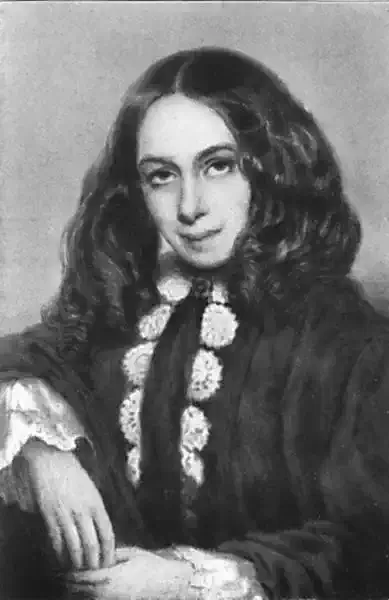
Elizabeth Barrett Browning
XXXV
XXXV
If I leave all for thee, wilt thou exchange
And be all to me ? Shall I never miss
Home-talk and blessing and the common kiss
That comes to each in turn, nor count it strange,
When I look up, to drop on a new range
Of walls and floors, another home than this ?
Nay, wilt thou fill that place by me which is
Filled by dead eyes too tender to know change ?
That 's hardest. If to conquer love, has tried,
To conquer grief, tries more, as all things prove;
For grief indeed is love and grief beside.
Alas, I have grieved sol am hard to love.
Yet love me--wilt thou ? Open thine heart wide,
And fold within the wet wings of thy dove.
If I leave all for thee, wilt thou exchange
And be all to me ? Shall I never miss
Home-talk and blessing and the common kiss
That comes to each in turn, nor count it strange,
When I look up, to drop on a new range
Of walls and floors, another home than this ?
Nay, wilt thou fill that place by me which is
Filled by dead eyes too tender to know change ?
That 's hardest. If to conquer love, has tried,
To conquer grief, tries more, as all things prove;
For grief indeed is love and grief beside.
Alas, I have grieved sol am hard to love.
Yet love me--wilt thou ? Open thine heart wide,
And fold within the wet wings of thy dove.
379
Elizabeth Barrett Browning
XXV
XXV
A heavy heart, Beloved, have I borne
From year to year until I saw thy face,
And sorrow after sorrow took the place
Of all those natural joys as lightly worn
As the stringed pearls, each lifted in its turn
By a beating heart at dance-time. Hopes apace
Were changed to long despairs, till God's own grace
Could scarcely lift above the world forlorn
My heavy heart. Then thou didst bid me bring
And let it drop adown thy calmly great
Deep being ! Fast it sinketh, as a thing
Which its own nature doth precipitate,
While thine doth close above it, mediating
Betwixt the stars and the unaccomplished fate.
A heavy heart, Beloved, have I borne
From year to year until I saw thy face,
And sorrow after sorrow took the place
Of all those natural joys as lightly worn
As the stringed pearls, each lifted in its turn
By a beating heart at dance-time. Hopes apace
Were changed to long despairs, till God's own grace
Could scarcely lift above the world forlorn
My heavy heart. Then thou didst bid me bring
And let it drop adown thy calmly great
Deep being ! Fast it sinketh, as a thing
Which its own nature doth precipitate,
While thine doth close above it, mediating
Betwixt the stars and the unaccomplished fate.
483
Elizabeth Barrett Browning
XX
XX
And wilt thou have me fashion into speech
The love I bear thee, finding words enough,
And hold the torch out, while the winds are rough,
Between our faces, to cast light on each ?--
I drop it at thy feet. I cannot teach
My hand to hold my spirit so far off
From myself--me--that I should bring thee proof
In words, of love hid in me out of reach.
Nay, let the silence of my womanhood
Commend my woman-love to thy belief,--
Seeing that I stand unwon, however wooed,
And rend the garment of my life, in brief,
By a most dauntless, voiceless fortitude,
Lest one touch of this heart convey its grief
And wilt thou have me fashion into speech
The love I bear thee, finding words enough,
And hold the torch out, while the winds are rough,
Between our faces, to cast light on each ?--
I drop it at thy feet. I cannot teach
My hand to hold my spirit so far off
From myself--me--that I should bring thee proof
In words, of love hid in me out of reach.
Nay, let the silence of my womanhood
Commend my woman-love to thy belief,--
Seeing that I stand unwon, however wooed,
And rend the garment of my life, in brief,
By a most dauntless, voiceless fortitude,
Lest one touch of this heart convey its grief
454
Elizabeth Barrett Browning
XV
XV
Accuse me not, beseech thee, that I wear
Too calm and sad a face in front of thine;
For we two look two ways, and cannot shine
With the same sunlight on our brow and hair.
On me thou lookest with no doubting care,
As on a bee shut in a crystalline;
Since sorrow hath shut me safe in love's divine,
And to spread wing and fly in the outer air
Were most impossible failure, if I strove
To fail so. But I look on thee--on thee--
Beholding, besides love, the end of love,
Hearing oblivion beyond memory;
As one who sits and gazes from above,
Over the rivers to the bitter sea.
Accuse me not, beseech thee, that I wear
Too calm and sad a face in front of thine;
For we two look two ways, and cannot shine
With the same sunlight on our brow and hair.
On me thou lookest with no doubting care,
As on a bee shut in a crystalline;
Since sorrow hath shut me safe in love's divine,
And to spread wing and fly in the outer air
Were most impossible failure, if I strove
To fail so. But I look on thee--on thee--
Beholding, besides love, the end of love,
Hearing oblivion beyond memory;
As one who sits and gazes from above,
Over the rivers to the bitter sea.
420
Elizabeth Barrett Browning
XLI
XLI
I thank all who have loved me in their hearts,
With thanks and love from mine. Deep thanks to all
Who paused a little near the prison-wall
To hear my music in its louder parts
Ere they went onward, each one to the mart's
Or temple's occupation, beyond call.
But thou, who, in my voice's sink and fall
When the sob took it, thy divinest Art's
Own instrument didst drop down at thy foot
To hearken what I said between my tears, . . .
Instruct me how to thank thee ! Oh, to shoot
My soul's full meaning into future years,
That they should lend it utterance, and salute
Love that endures, from Life that disappears !
I thank all who have loved me in their hearts,
With thanks and love from mine. Deep thanks to all
Who paused a little near the prison-wall
To hear my music in its louder parts
Ere they went onward, each one to the mart's
Or temple's occupation, beyond call.
But thou, who, in my voice's sink and fall
When the sob took it, thy divinest Art's
Own instrument didst drop down at thy foot
To hearken what I said between my tears, . . .
Instruct me how to thank thee ! Oh, to shoot
My soul's full meaning into future years,
That they should lend it utterance, and salute
Love that endures, from Life that disappears !
477
Elizabeth Barrett Browning
XI
XI
And therefore if to love can be desert,
I am not all unworthy. Cheeks as pale
As these you see, and trembling knees that fail
To bear the burden of a heavy heart,--
This weary minstrel-life that once was girt
To climb Aornus, and can scarce avail
To pipe now 'gainst the valley nightingale
A melancholy music,--why advert
To these things ? O Beloved, it is plain
I am not of thy worth nor for thy place !
And yet, because I love thee, I obtain
From that same love this vindicating grace,
To live on still in love, and yet in vain,--
To bless thee, yet renounce thee to thy face.
And therefore if to love can be desert,
I am not all unworthy. Cheeks as pale
As these you see, and trembling knees that fail
To bear the burden of a heavy heart,--
This weary minstrel-life that once was girt
To climb Aornus, and can scarce avail
To pipe now 'gainst the valley nightingale
A melancholy music,--why advert
To these things ? O Beloved, it is plain
I am not of thy worth nor for thy place !
And yet, because I love thee, I obtain
From that same love this vindicating grace,
To live on still in love, and yet in vain,--
To bless thee, yet renounce thee to thy face.
436
Elizabeth Barrett Browning
Sonnet XXXVI: When We Met First
Sonnet XXXVI: When We Met First
When we met first and loved, I did not build
Upon the event with marble. Could it mean
To last, a love set pendulous between
Sorrow and sorrow? Nay, I rather thrilled,
Distrusting every light that seemed to gild
The onward path, and feared to overlean
A finger even. And, though I have grown serene
And strong since then, I think that God has willed
A still renewable fear ... O love, O troth ...
Lest these enclasped hands should never hold,
This mutual kiss drop down between us both
As an unowned thing, once the lips being cold.
And Love, be false! if he, to keep one oath,
Must lose one joy, by his life's star foretold.
When we met first and loved, I did not build
Upon the event with marble. Could it mean
To last, a love set pendulous between
Sorrow and sorrow? Nay, I rather thrilled,
Distrusting every light that seemed to gild
The onward path, and feared to overlean
A finger even. And, though I have grown serene
And strong since then, I think that God has willed
A still renewable fear ... O love, O troth ...
Lest these enclasped hands should never hold,
This mutual kiss drop down between us both
As an unowned thing, once the lips being cold.
And Love, be false! if he, to keep one oath,
Must lose one joy, by his life's star foretold.
406
Elizabeth Barrett Browning
Sonnet XXXV: If I Leave All for Thee
Sonnet XXXV: If I Leave All for Thee
If I leave all for thee, wilt thou exchange
And be all to me? Shall I never miss
Home-talk and blessings and the common kiss
That comes to each in turn, nor count it strange,
When I look up, to drop on a new range
Of walls and floors, another home than this?
Nay, wilt thou fill that place by me which is
Filled by dead eyes too tender to know change?
That's hardest. If to conquer love, has tried,
To conquer grief, tries more, as all things prove;
For grief indeed is love and grief beside.
Alas, I have grieved so I am hard to love.
Yet love me--wilt thou? Open thine heart wide,
And fold within the wet wings of thy dove.
If I leave all for thee, wilt thou exchange
And be all to me? Shall I never miss
Home-talk and blessings and the common kiss
That comes to each in turn, nor count it strange,
When I look up, to drop on a new range
Of walls and floors, another home than this?
Nay, wilt thou fill that place by me which is
Filled by dead eyes too tender to know change?
That's hardest. If to conquer love, has tried,
To conquer grief, tries more, as all things prove;
For grief indeed is love and grief beside.
Alas, I have grieved so I am hard to love.
Yet love me--wilt thou? Open thine heart wide,
And fold within the wet wings of thy dove.
415
Elizabeth Barrett Browning
Sonnet XXXIII: Yes, Call Me by My Pet-Name!
Sonnet XXXIII: Yes, Call Me by My Pet-Name!
Yes, call me by my pet-name! let me hear
The name I used to run at, when a child,
From innocent play, and leave the cowslips piled,
To glance up in some face that proved me dear
With the look of its eyes. I miss the clear
Fond voices which, being drawn and reconciled
Into the music of Heaven's undefiled,
Call me no longer. Silence on the bier,
While I call God--call God!--So let thy mouth
Be heir to those who are now exanimate.
Gather the north flowers to complete the south,
And catch the early love up in the late.
Yes, call me by that name,--and I, in truth,
With the same heart, will answer and not wait.
Yes, call me by my pet-name! let me hear
The name I used to run at, when a child,
From innocent play, and leave the cowslips piled,
To glance up in some face that proved me dear
With the look of its eyes. I miss the clear
Fond voices which, being drawn and reconciled
Into the music of Heaven's undefiled,
Call me no longer. Silence on the bier,
While I call God--call God!--So let thy mouth
Be heir to those who are now exanimate.
Gather the north flowers to complete the south,
And catch the early love up in the late.
Yes, call me by that name,--and I, in truth,
With the same heart, will answer and not wait.
391
Elizabeth Barrett Browning
Sonnet XXXI: Thou Comest!
Sonnet XXXI: Thou Comest!
Thou comest! all is said without a word.
I sit beneath thy looks, as children do
In the noon-sun, with souls that tremble through
Their happy eyelids from an unaverred
Yet prodigal inward joy. Behold, I erred
In that last doubt! and yet I cannot rue
The sin most, but the occasion--that we two
Should for a moment stand unministered
By a mutual presence. Ah, keep near and close,
Thou dovelike help! and, when my fears would rise,
With thy broad heart serenely interpose:
Brood down with thy divine sufficiencies
These thoughts which tremble when bereft of those,
Like callow birds left desert to the skies.
Thou comest! all is said without a word.
I sit beneath thy looks, as children do
In the noon-sun, with souls that tremble through
Their happy eyelids from an unaverred
Yet prodigal inward joy. Behold, I erred
In that last doubt! and yet I cannot rue
The sin most, but the occasion--that we two
Should for a moment stand unministered
By a mutual presence. Ah, keep near and close,
Thou dovelike help! and, when my fears would rise,
With thy broad heart serenely interpose:
Brood down with thy divine sufficiencies
These thoughts which tremble when bereft of those,
Like callow birds left desert to the skies.
394
Elizabeth Barrett Browning
Sonnet XXV: A Heavy Heart, Belovèd
Sonnet XXV: A Heavy Heart, Belovèd
A heavy heart, Belovèd, have I borne
From year to year until I saw thy face,
And sorrow after sorrow took the place
Of all those natural joys as lightly worn
As the stringed pearls, each lifted in its turn
By a beating heart at dance-time. Hopes apace
Were changed to long despairs, till God's own grace
Could scarcely lift above the world forlorn
My heavy heart. Than thou didst bid me bring
And let it drop adown thy calmly great
Deep being! Fast it sinketh, as a thing
Which its own nature doth precipitate,
While thine doth close above it, mediating
Betwixt the stars and the unaccomplished fate.
A heavy heart, Belovèd, have I borne
From year to year until I saw thy face,
And sorrow after sorrow took the place
Of all those natural joys as lightly worn
As the stringed pearls, each lifted in its turn
By a beating heart at dance-time. Hopes apace
Were changed to long despairs, till God's own grace
Could scarcely lift above the world forlorn
My heavy heart. Than thou didst bid me bring
And let it drop adown thy calmly great
Deep being! Fast it sinketh, as a thing
Which its own nature doth precipitate,
While thine doth close above it, mediating
Betwixt the stars and the unaccomplished fate.
400