

Poems in this theme
Longing and Absence
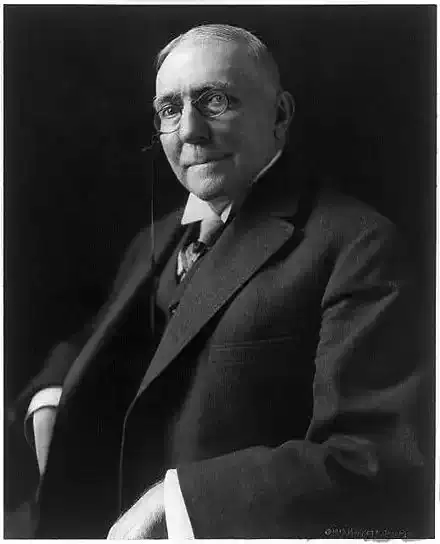
James Whitcomb Riley
Time
Time
1
The ticking-- ticking-- ticking of the clock--!
That vexed me so last night--! 'For though Time keeps
Such drowsy watch,' I moaned, 'he never sleeps,
But only nods above the world to mock
Its restless occupant, then rudely rock
It as the cradle of a babe that weeps!'
I seemed to see the seconds piled in heaps
Like sand about me; and at every shock
O' the bell, the piled sands were swirled away
As by a desert-storm that swept the earth
Stark as a granary floor, whereon the gray
And mist-bedrizzled moon amidst the dearth
Came crawling, like a sickly child, to lay
Its pale face next mine own and weep for day.
2
Wait for the morning! Ah! We wait indeed
For daylight, we who toss about through stress
Of vacant-armed desires and emptiness
Of all the warm, warm touches that we need,
And the warm kisses upon which we feed
Our famished lips in fancy! May God bless
The starved lips of us with but one caress
Warm as the yearning blood our poor hearts bleed...!
A wild prayer--! Bite thy pillow, praying so--
Toss this side, and whirl that, and moan for dawn;
Let the clock's seconds dribble out their woe,
And Time be drained of sorrow! Long ago
We heard the crowing cock, with answer drawn
As hoarsely sad at throat as sobs... Pray on!
1
The ticking-- ticking-- ticking of the clock--!
That vexed me so last night--! 'For though Time keeps
Such drowsy watch,' I moaned, 'he never sleeps,
But only nods above the world to mock
Its restless occupant, then rudely rock
It as the cradle of a babe that weeps!'
I seemed to see the seconds piled in heaps
Like sand about me; and at every shock
O' the bell, the piled sands were swirled away
As by a desert-storm that swept the earth
Stark as a granary floor, whereon the gray
And mist-bedrizzled moon amidst the dearth
Came crawling, like a sickly child, to lay
Its pale face next mine own and weep for day.
2
Wait for the morning! Ah! We wait indeed
For daylight, we who toss about through stress
Of vacant-armed desires and emptiness
Of all the warm, warm touches that we need,
And the warm kisses upon which we feed
Our famished lips in fancy! May God bless
The starved lips of us with but one caress
Warm as the yearning blood our poor hearts bleed...!
A wild prayer--! Bite thy pillow, praying so--
Toss this side, and whirl that, and moan for dawn;
Let the clock's seconds dribble out their woe,
And Time be drained of sorrow! Long ago
We heard the crowing cock, with answer drawn
As hoarsely sad at throat as sobs... Pray on!
333
James Whitcomb Riley
Their Sweet Sorrow
Their Sweet Sorrow
They meet to say farewell: Their way
Of saying this is hard to say--.
He holds her hand an Instant, wholly
Distressed-- and she unclasps it slowly,
He lends his gaze evasively
Over the printed page that she
Recurs to, with a new-moon shoulder
Glimpsed from the lace-mists that infold her.
The clock, beneath its crystal cup,
Discreetly clicks-- 'Quick! Act! Speak up!'
A tension circles both her slender
Wrists-- and her raised eyes flash in splendor,
Even as he feels his dazzled own--.
Then blindingly, round either thrown,
They feel a stress of arms that ever
Strain tremblingly-- and 'Never! Never!'
Is whispered brokenly, with half
A sob, like a belated laugh--,
While cloyingly their blurred kiss closes--,
Sweet as the dew's lip to the rose's.
They meet to say farewell: Their way
Of saying this is hard to say--.
He holds her hand an Instant, wholly
Distressed-- and she unclasps it slowly,
He lends his gaze evasively
Over the printed page that she
Recurs to, with a new-moon shoulder
Glimpsed from the lace-mists that infold her.
The clock, beneath its crystal cup,
Discreetly clicks-- 'Quick! Act! Speak up!'
A tension circles both her slender
Wrists-- and her raised eyes flash in splendor,
Even as he feels his dazzled own--.
Then blindingly, round either thrown,
They feel a stress of arms that ever
Strain tremblingly-- and 'Never! Never!'
Is whispered brokenly, with half
A sob, like a belated laugh--,
While cloyingly their blurred kiss closes--,
Sweet as the dew's lip to the rose's.
283
James Whitcomb Riley
The Harp Of The Minstrel
The Harp Of The Minstrel
The harp of the minstrel has never a tone
As sad as the song in his bosom to-night,
For the magical touch of his fingers alone
Can not waken the echoes that breathe it aright;
But oh! as the smile of the moon may impart
A sorrow to one in an alien clime,
Let the light of the melody fall on the heart,
And cadence his grief into musical rhyme.
The faces have faded, the eyes have grown dim
That once were his passionate love and his pride;
And alas! all the smiles that once blossomed for him
Have fallen away as the flowers have died.
The hands that entwined him the laureate's wreath
And crowned him with fame in the long, long ago,
Like the laurels are withered and folded beneath
The grass and the stubble--the frost and the snow.
Then sigh, if thou wilt, as the whispering strings
Strive ever in vain for the utterance clear,
And think of the sorrowful spirit that sings,
And jewel the song with the gem of a tear.
For the harp of the minstrel has never a tone
As sad as the song in his bosom tonight,
And the magical touch of his fingers alone
Can not waken the echoes that breathe it aright.
The harp of the minstrel has never a tone
As sad as the song in his bosom to-night,
For the magical touch of his fingers alone
Can not waken the echoes that breathe it aright;
But oh! as the smile of the moon may impart
A sorrow to one in an alien clime,
Let the light of the melody fall on the heart,
And cadence his grief into musical rhyme.
The faces have faded, the eyes have grown dim
That once were his passionate love and his pride;
And alas! all the smiles that once blossomed for him
Have fallen away as the flowers have died.
The hands that entwined him the laureate's wreath
And crowned him with fame in the long, long ago,
Like the laurels are withered and folded beneath
The grass and the stubble--the frost and the snow.
Then sigh, if thou wilt, as the whispering strings
Strive ever in vain for the utterance clear,
And think of the sorrowful spirit that sings,
And jewel the song with the gem of a tear.
For the harp of the minstrel has never a tone
As sad as the song in his bosom tonight,
And the magical touch of his fingers alone
Can not waken the echoes that breathe it aright.
261
James Whitcomb Riley
The Curse Of The Wandering Foot
The Curse Of The Wandering Foot
All hope of rest withdrawn me?--
What dread command hath put
This awful curse upon me--
The curse of the wandering foot!
Forward and backward and thither,
And hither and yon again--
Wandering ever! And whither?
Answer them, God! Amen.
The blue skies are far o'er me---
The bleak fields near below:
Where the mother that bore me?--
Where her grave in the snow?--
Glad in her trough of a coffin--
The sad eyes frozen shut
That wept so often, often,
The curse of the wandering foot!
Here in your marts I care not
Whatsoever ye think.
Good folk many who dare not
Give me to eat and drink:
Give me to sup of your pity--
Feast me on prayers!--O ye,
Met I your Christ in the city
He would fare forth with me--
Forward and onward and thither,
And hither again and yon,
With milk for our drink together
And honey to feed upon--
Nor hope of rest withdrawn us,
Since the one Father put
The blessed curse upon us--
The curse of the wandering foot.
All hope of rest withdrawn me?--
What dread command hath put
This awful curse upon me--
The curse of the wandering foot!
Forward and backward and thither,
And hither and yon again--
Wandering ever! And whither?
Answer them, God! Amen.
The blue skies are far o'er me---
The bleak fields near below:
Where the mother that bore me?--
Where her grave in the snow?--
Glad in her trough of a coffin--
The sad eyes frozen shut
That wept so often, often,
The curse of the wandering foot!
Here in your marts I care not
Whatsoever ye think.
Good folk many who dare not
Give me to eat and drink:
Give me to sup of your pity--
Feast me on prayers!--O ye,
Met I your Christ in the city
He would fare forth with me--
Forward and onward and thither,
And hither again and yon,
With milk for our drink together
And honey to feed upon--
Nor hope of rest withdrawn us,
Since the one Father put
The blessed curse upon us--
The curse of the wandering foot.
258
James Whitcomb Riley
Say Something To Me
Say Something To Me
Say something to me! I've waited so long--
Waited and wondered in vain;
Only a sentence would fall like a song
Over this listening pain--
Over a silence that glowers and frowns,--
Even my pencil to-night
Slips in the dews of my sorrow and wounds
Each tender word that I write.
Say something to me--if only to tell
Me you remember the past;
Let the sweet words, like the notes of a bell,
Ring out my vigil at last.
O it were better, far better than this
Doubt and distrust in the breast,--
For in the wine of a fanciful kiss
I could taste Heaven, and--rest.
Say something to me! I kneel and I plead,
In my wild need, for a word;
If my poor heart from this silence were freed,
I could soar up like a bird
In the glad morning, and twitter and sing,
Carol and warble and cry
Blithe as the lark as he cruises awing
Over the deeps of the sky.
Say something to me! I've waited so long--
Waited and wondered in vain;
Only a sentence would fall like a song
Over this listening pain--
Over a silence that glowers and frowns,--
Even my pencil to-night
Slips in the dews of my sorrow and wounds
Each tender word that I write.
Say something to me--if only to tell
Me you remember the past;
Let the sweet words, like the notes of a bell,
Ring out my vigil at last.
O it were better, far better than this
Doubt and distrust in the breast,--
For in the wine of a fanciful kiss
I could taste Heaven, and--rest.
Say something to me! I kneel and I plead,
In my wild need, for a word;
If my poor heart from this silence were freed,
I could soar up like a bird
In the glad morning, and twitter and sing,
Carol and warble and cry
Blithe as the lark as he cruises awing
Over the deeps of the sky.
265
James Whitcomb Riley
Reach Your Hand To Me
Reach Your Hand To Me
Reach your hand to me, my friend,
With its heartiest caress--
Sometime there will come an end
To its present faithfulness--
Sometime I may ask in vain
For the touch of it again,
When between us land or sea
Holds it ever back from me.
Sometime I may need it so,
Groping somewhere in the night,
It will seem to me as though
Just a touch, however light,
Would make all the darkness day,
And along some sunny way
Lead me through an April-shower
Of my tears to this fair hour.
O the present is too sweet
To go on forever thus!
Round the corner of the street
Who can say what waits for us?-Meeting--
greeting, night and day,
Faring each the self-same way--
Still somewhere the path must end.--
Reach your hand to me, my friend!
Reach your hand to me, my friend,
With its heartiest caress--
Sometime there will come an end
To its present faithfulness--
Sometime I may ask in vain
For the touch of it again,
When between us land or sea
Holds it ever back from me.
Sometime I may need it so,
Groping somewhere in the night,
It will seem to me as though
Just a touch, however light,
Would make all the darkness day,
And along some sunny way
Lead me through an April-shower
Of my tears to this fair hour.
O the present is too sweet
To go on forever thus!
Round the corner of the street
Who can say what waits for us?-Meeting--
greeting, night and day,
Faring each the self-same way--
Still somewhere the path must end.--
Reach your hand to me, my friend!
335
James Whitcomb Riley
My Father's Halls
My Father's Halls
My father's halls, so rich and rare,
Are desolate and bleak and bare;
My father's heart and halls are one,
Since I, their life and light, am gone.
O, valiant knight, with hand of steel
And heart of gold, hear my appeal:
Release me from the spoiler's charms,
And bear me to my father's arms.
My father's halls, so rich and rare,
Are desolate and bleak and bare;
My father's heart and halls are one,
Since I, their life and light, am gone.
O, valiant knight, with hand of steel
And heart of gold, hear my appeal:
Release me from the spoiler's charms,
And bear me to my father's arms.
216
James Whitcomb Riley
Lullaby
Lullaby
The maple strews the embers of its leaves
O'er the laggard swallows nestled 'neath the eaves;
And the moody cricket falters in his cry--Baby-bye!--
And the lid of night is falling o'er the sky--Baby-bye!--
The lid of night is falling o'er the sky!
The rose is lying pallid, and the cup
Of the frosted calla-lily folded up;
And the breezes through the garden sob and sigh--Baby-bye!-O'er
the sleeping blooms of summer where they lie--Baby-bye!-O'er
the sleeping blooms of summer where they lie!
Yet, Baby--O my Baby, for your sake
This heart of mine is ever wide awake,
And my love may never droop a drowsy eye--Baby-bye!--
Till your own are wet above me when I die--Baby-bye!--
Till your own are wet above me when I die.
The maple strews the embers of its leaves
O'er the laggard swallows nestled 'neath the eaves;
And the moody cricket falters in his cry--Baby-bye!--
And the lid of night is falling o'er the sky--Baby-bye!--
The lid of night is falling o'er the sky!
The rose is lying pallid, and the cup
Of the frosted calla-lily folded up;
And the breezes through the garden sob and sigh--Baby-bye!-O'er
the sleeping blooms of summer where they lie--Baby-bye!-O'er
the sleeping blooms of summer where they lie!
Yet, Baby--O my Baby, for your sake
This heart of mine is ever wide awake,
And my love may never droop a drowsy eye--Baby-bye!--
Till your own are wet above me when I die--Baby-bye!--
Till your own are wet above me when I die.
295
James Whitcomb Riley
Her Beautiful Hands
Her Beautiful Hands
Your hands--they are strangely fair!
O Fair--for the jewels that sparkle there,-Fair--
for the witchery of the spell
That ivory keys alone can tell;
But when their delicate touches rest
Here in my own do I love them best,
As I clasp with eager, acquisitive spans
My glorious treasure of beautiful hands!
Marvelous--wonderful--beautiful hands!
They can coax roses to bloom in the strands
Of your brown tresses; and ribbons will twine,
Under mysterious touches of thine,
Into such knots as entangle the soul
And fetter the heart under such a control
As only the strength of my love understands--
My passionate love for your beautiful hands.
As I remember the first fair touch
Of those beautiful hands that I love so much,
I seem to thrill as I then was thrilled,
Kissing the glove that I found unfilled--
When I met your gaze, and the queenly bow,
As you said to me, laughingly, 'Keep it now!' . . .
And dazed and alone in a dream I stand,
Kissing this ghost of your beautiful hand.
When first I loved, in the long ago,
And held your hand as I told you so--
Pressed and caressed it and gave it a kiss
And said 'I could die for a hand like this!'
Little I dreamed love's fullness yet
Had to ripen when eyes were wet
And prayers were vain in their wild demands
For one warm touch of your beautiful hands.
. . . . . . . . .
Beautiful Hands!--O Beautiful Hands!
Could you reach out of the alien lands
Where you are lingering, and give me, to-night,
Only a touch--were it ever so light--
My heart were soothed, and my weary brain
Would lull itself into rest again;
For there is no solace the world commands
Like the caress of your beautiful hands.
Your hands--they are strangely fair!
O Fair--for the jewels that sparkle there,-Fair--
for the witchery of the spell
That ivory keys alone can tell;
But when their delicate touches rest
Here in my own do I love them best,
As I clasp with eager, acquisitive spans
My glorious treasure of beautiful hands!
Marvelous--wonderful--beautiful hands!
They can coax roses to bloom in the strands
Of your brown tresses; and ribbons will twine,
Under mysterious touches of thine,
Into such knots as entangle the soul
And fetter the heart under such a control
As only the strength of my love understands--
My passionate love for your beautiful hands.
As I remember the first fair touch
Of those beautiful hands that I love so much,
I seem to thrill as I then was thrilled,
Kissing the glove that I found unfilled--
When I met your gaze, and the queenly bow,
As you said to me, laughingly, 'Keep it now!' . . .
And dazed and alone in a dream I stand,
Kissing this ghost of your beautiful hand.
When first I loved, in the long ago,
And held your hand as I told you so--
Pressed and caressed it and gave it a kiss
And said 'I could die for a hand like this!'
Little I dreamed love's fullness yet
Had to ripen when eyes were wet
And prayers were vain in their wild demands
For one warm touch of your beautiful hands.
. . . . . . . . .
Beautiful Hands!--O Beautiful Hands!
Could you reach out of the alien lands
Where you are lingering, and give me, to-night,
Only a touch--were it ever so light--
My heart were soothed, and my weary brain
Would lull itself into rest again;
For there is no solace the world commands
Like the caress of your beautiful hands.
278
James Whitcomb Riley
Back From A Two-years' Sentence
Back From A Two-years' Sentence
Back from a two-years' sentence!
And though it had been ten,
You think, I were scarred no deeper
In the eyes of my fellow-men.
'My fellow-men--?' Sounds like a satire,
You think-- and I so allow,
Here in my home since childhood,
Yet more than a stranger now!
Pardon--! Not wholly a stranger--,
For I have a wife and child:
That woman has wept for two long years,
And yet last night she smiled--!
Smiled, as I leapt from the platform
Of the midnight train, and then--
All that I knew was that smile of hers,
And our babe in my arms again!
Back from a two-years' sentence--
But I've thought the whole thing through--,
A hint of it came when the bars swung back
And I looked straight up in the blue
Of the blessed skies with my hat off!
O-ho! I've a wife and child:
That woman has wept for two long years,
And yet last night she smiled!
Back from a two-years' sentence!
And though it had been ten,
You think, I were scarred no deeper
In the eyes of my fellow-men.
'My fellow-men--?' Sounds like a satire,
You think-- and I so allow,
Here in my home since childhood,
Yet more than a stranger now!
Pardon--! Not wholly a stranger--,
For I have a wife and child:
That woman has wept for two long years,
And yet last night she smiled--!
Smiled, as I leapt from the platform
Of the midnight train, and then--
All that I knew was that smile of hers,
And our babe in my arms again!
Back from a two-years' sentence--
But I've thought the whole thing through--,
A hint of it came when the bars swung back
And I looked straight up in the blue
Of the blessed skies with my hat off!
O-ho! I've a wife and child:
That woman has wept for two long years,
And yet last night she smiled!
263
James Whitcomb Riley
Away
Away
I cannot say, and I will not say
That he is dead--. He is just away!
With a cheery smile, and a wave of the hand
He has wandered into an unknown land,
And left us dreaming how very fair
It needs must be, since he lingers there.
And you-- O you, who the wildest yearn
For the old-time step and the glad return--,
Think of him faring on, as dear
In the love of There as the love of Here;
And loyal still, as he gave the blows
Of his warrior-strength to his country's foes--.
Mild and gentle, as he was brave--,
When the sweetest love of his life he gave
To simple things--: Where the violets grew
Blue as the eyes they were likened to,
The touches of his hands have strayed
As reverently as his lips have prayed:
When the little brown thrush that harshly chirred
Was dear to him as the mocking-bird;
And he pitied as much as a man in pain
A writhing honey-bee wet with rain--.
Think of him still as the same, I say:
He is not dead-- he is just away!
I cannot say, and I will not say
That he is dead--. He is just away!
With a cheery smile, and a wave of the hand
He has wandered into an unknown land,
And left us dreaming how very fair
It needs must be, since he lingers there.
And you-- O you, who the wildest yearn
For the old-time step and the glad return--,
Think of him faring on, as dear
In the love of There as the love of Here;
And loyal still, as he gave the blows
Of his warrior-strength to his country's foes--.
Mild and gentle, as he was brave--,
When the sweetest love of his life he gave
To simple things--: Where the violets grew
Blue as the eyes they were likened to,
The touches of his hands have strayed
As reverently as his lips have prayed:
When the little brown thrush that harshly chirred
Was dear to him as the mocking-bird;
And he pitied as much as a man in pain
A writhing honey-bee wet with rain--.
Think of him still as the same, I say:
He is not dead-- he is just away!
317
James Whitcomb Riley
A Christmas Memory
A Christmas Memory
Pa he bringed me here to stay
'Til my Ma she's well.--An' nen
He's go' hitch up, Chris'mus-day,
An' come take me back again
Wher' my Ma's at! Won't I be
Tickled when he comes fer me!
My Ma an' my A'nty they
'Uz each-uvver's sisters. Pa-A'nty
telled me, th' other day,--
He comed here an' married Ma....
A'nty said nen, 'Go run play,
I must work now!' ... An' I saw,
When she turn' her face away,
She 'uz cryin'.--An' nen I
'Tend-like I 'run play'--an' cry.
This-here house o' A'nty's wher'
They 'uz borned--my Ma an' her!--
An' her Ma 'uz my Ma's Ma,
An' her Pa 'uz my Ma's Pa-
Ain't that funny?--An' they're dead:
An' this-here's 'th' ole Homestead.'--
An' my A'nty said, an' cried,
It's mine, too, ef my Ma died-Don't
know what she mean--'cause my
Ma she's nuvver go' to die!
When Pa bringed me here 't 'uz night-'
Way dark night! An' A'nty spread
Me a piece--an' light the light
An' say I must go to bed.--
I cry not to---but Pa said,
'Be good boy now, like you telled
Mommy 'at you're go' to be!'
An', when he 'uz kissin' me
My good night, his cheeks' all wet
An' taste salty.--An' he held
Wite close to me an' rocked some
An' langhed-like--'til A'nty come
Git me while he's rockin' yet.
A'nty he'p me, 'til I be
Purt'-nigh strip-pud--nen hug me
In bofe arms an' lif' me 'way
Up in her high bed--an' pray
Wiv me,--'bout my Ma--an' Pa--
An' ole Santy Claus--an' Sleigh--
An' Reindeers an' little Drum--
Yes, an' Picture-books, 'Tom Thumb,'
An' 'Three Bears,' an' ole 'Fee-Faw'-
Yes, an' 'Tweedle-Dee' an' 'Dum,'
An' 'White Knight' an' 'Squidjicum,'
An' most things you ever saw!--
An' when A'nty kissed me, she
'Uz all cryin' over me!
Don't want Santy Claus--ner things
Any kind he ever brings!-Don't
want A'nty!--Don't want Pa!--
I ist only want my Ma!
Pa he bringed me here to stay
'Til my Ma she's well.--An' nen
He's go' hitch up, Chris'mus-day,
An' come take me back again
Wher' my Ma's at! Won't I be
Tickled when he comes fer me!
My Ma an' my A'nty they
'Uz each-uvver's sisters. Pa-A'nty
telled me, th' other day,--
He comed here an' married Ma....
A'nty said nen, 'Go run play,
I must work now!' ... An' I saw,
When she turn' her face away,
She 'uz cryin'.--An' nen I
'Tend-like I 'run play'--an' cry.
This-here house o' A'nty's wher'
They 'uz borned--my Ma an' her!--
An' her Ma 'uz my Ma's Ma,
An' her Pa 'uz my Ma's Pa-
Ain't that funny?--An' they're dead:
An' this-here's 'th' ole Homestead.'--
An' my A'nty said, an' cried,
It's mine, too, ef my Ma died-Don't
know what she mean--'cause my
Ma she's nuvver go' to die!
When Pa bringed me here 't 'uz night-'
Way dark night! An' A'nty spread
Me a piece--an' light the light
An' say I must go to bed.--
I cry not to---but Pa said,
'Be good boy now, like you telled
Mommy 'at you're go' to be!'
An', when he 'uz kissin' me
My good night, his cheeks' all wet
An' taste salty.--An' he held
Wite close to me an' rocked some
An' langhed-like--'til A'nty come
Git me while he's rockin' yet.
A'nty he'p me, 'til I be
Purt'-nigh strip-pud--nen hug me
In bofe arms an' lif' me 'way
Up in her high bed--an' pray
Wiv me,--'bout my Ma--an' Pa--
An' ole Santy Claus--an' Sleigh--
An' Reindeers an' little Drum--
Yes, an' Picture-books, 'Tom Thumb,'
An' 'Three Bears,' an' ole 'Fee-Faw'-
Yes, an' 'Tweedle-Dee' an' 'Dum,'
An' 'White Knight' an' 'Squidjicum,'
An' most things you ever saw!--
An' when A'nty kissed me, she
'Uz all cryin' over me!
Don't want Santy Claus--ner things
Any kind he ever brings!-Don't
want A'nty!--Don't want Pa!--
I ist only want my Ma!
334
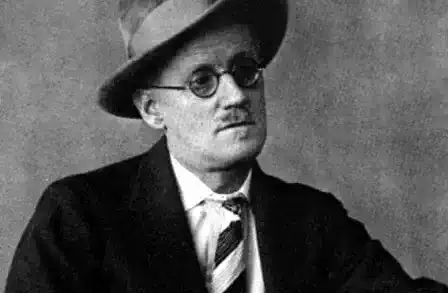
James Joyce
Winds of May
Winds of May
Winds of May, that dance on the sea,
Dancing a ring-around in glee
From furrow to furrow, while overhead
The foam flies up to be garlanded,
In silvery arches spanning the air,
Saw you my true love anywhere?
Welladay! Welladay!
For the winds of May!
Love is unhappy when love is away!
Winds of May, that dance on the sea,
Dancing a ring-around in glee
From furrow to furrow, while overhead
The foam flies up to be garlanded,
In silvery arches spanning the air,
Saw you my true love anywhere?
Welladay! Welladay!
For the winds of May!
Love is unhappy when love is away!
223
James Joyce
When the Shy Star Goes Forth in Heaven
When the Shy Star Goes Forth in Heaven
When the shy star goes forth in heaven
All maidenly, disconsolate,
Hear you amid the drowsy even
One who is singing by your gate.
His song is softer than the dew
And he is come to visit you.
O bend no more in revery
When he at eventide is calling.
Nor muse: Who may this singer be
Whose song about my heart is falling?
Know you by this, the lover's chant,
'Tis I that am your visitant.
When the shy star goes forth in heaven
All maidenly, disconsolate,
Hear you amid the drowsy even
One who is singing by your gate.
His song is softer than the dew
And he is come to visit you.
O bend no more in revery
When he at eventide is calling.
Nor muse: Who may this singer be
Whose song about my heart is falling?
Know you by this, the lover's chant,
'Tis I that am your visitant.
192
James Joyce
Watching the Needleboats at San Sabba
Watching the Needleboats at San Sabba
I heard their young hearts crying
Loveward above the glancing oar
And heard the prairie grasses sighing:
No more, return no more!
O hearts, O sighing grasses,
Vainly your loveblown bannerets mourn!
No more will the wild wind that passes
Return, no more return.
I heard their young hearts crying
Loveward above the glancing oar
And heard the prairie grasses sighing:
No more, return no more!
O hearts, O sighing grasses,
Vainly your loveblown bannerets mourn!
No more will the wild wind that passes
Return, no more return.
164
James Joyce
Tilly
Tilly
He travels after a winter sun,
Urging the cattle along a cold red road,
Calling to them, a voice they know,
He drives his beasts above Cabra.
The voice tells them home is warm.
They moo and make brute music with their hoofs.
He drives them with a flowering branch before him,
Smoke pluming their foreheads.
Boor, bond of the herd,
Tonight stretch full by the fire!
I bleed by the black stream
For my torn bough!
He travels after a winter sun,
Urging the cattle along a cold red road,
Calling to them, a voice they know,
He drives his beasts above Cabra.
The voice tells them home is warm.
They moo and make brute music with their hoofs.
He drives them with a flowering branch before him,
Smoke pluming their foreheads.
Boor, bond of the herd,
Tonight stretch full by the fire!
I bleed by the black stream
For my torn bough!
217
James Joyce
Strings in the Earth and Air
Strings in the Earth and Air
Strings in the earth and air
Make music sweet;
Strings by the river where
The willows meet.
There's music along the river
For Love wanders there,
Pale flowers on his mantle,
Dark leaves on his hair.
All softly playing,
With head to the music bent,
And fingers straying
Upon an instrument.
Strings in the earth and air
Make music sweet;
Strings by the river where
The willows meet.
There's music along the river
For Love wanders there,
Pale flowers on his mantle,
Dark leaves on his hair.
All softly playing,
With head to the music bent,
And fingers straying
Upon an instrument.
216
James Joyce
Rain Has Fallen All the Day
Rain Has Fallen All the Day
Rain has fallen all the day.
O come among the laden trees:
The leaves lie thick upon the way
Of memories.
Staying a little by the way
Of memories shall we depart.
Come, my beloved, where I may
Speak to your heart.
Rain has fallen all the day.
O come among the laden trees:
The leaves lie thick upon the way
Of memories.
Staying a little by the way
Of memories shall we depart.
Come, my beloved, where I may
Speak to your heart.
176
James Joyce
Dear Heart, Why Will You Use Me So?
Dear Heart, Why Will You Use Me So?
Dear heart, why will you use me so?
Dear eyes that gently me upbraid,
Still are you beautiful -- - but O,
How is your beauty raimented!
Through the clear mirror of your eyes,
Through the soft sigh of kiss to kiss,
Desolate winds assail with cries
The shadowy garden where love is.
And soon shall love dissolved be
When over us the wild winds blow -- -
But you, dear love, too dear to me,
Alas! why will you use me so?
Dear heart, why will you use me so?
Dear eyes that gently me upbraid,
Still are you beautiful -- - but O,
How is your beauty raimented!
Through the clear mirror of your eyes,
Through the soft sigh of kiss to kiss,
Desolate winds assail with cries
The shadowy garden where love is.
And soon shall love dissolved be
When over us the wild winds blow -- -
But you, dear love, too dear to me,
Alas! why will you use me so?
200

Jack Kerouac
Nebraska
Nebraska
April doesnt hurt here
Like it does in New England
The ground
Vast and brown
Surrounds dry towns
Located in the dust
Of the coming locust
Live for survival, not for 'kicks'
Be a bangtail describer,
like of shrouded traveler
in Textile tenement & the birds fighting in yr ears-like Burroughs exact to describe &
gettin $
The Angry Hunger
(hunger is anger)
who fears the
hungry feareth
the angry)
And so I came home
To Golden far away
Twas on the horizon
Every blessed day
As we rolled And we rolled
From Donner tragic Pass
Thru April in Nevada And out Salt City Way Into the dry Nebraskas And sad Wyomings
Where young girls And pretty lover boys
With Mickey Mantle eyes
Wander under moons
Sawing in lost cradle
And Judge O Fasterc
Passes whiggling by To ask of young love: ,,Was it the same wind Of April Plains eve
that ruffled the dress
Of my lost love
Louanna
In the Western
Far off night
Lost as the whistle
Of the passing Train
Everywhere West
Roams moaning
The deep basso
-Vom! Vom!
-Was it the same love
Notified my bones As mortify yrs now
Children of the soft
Wyoming April night?
Couldna been!
But was! But was!'
And on the prairie
The wildflower blows
In the night For bees & birds And sleeping hidden Animals of life.
The Chicago
Spitters in the spotty street
Cheap beans, loop, Girls made eyes at me And I had 35 Cents in my jeans -
Then Toledo
Springtime starry
Lover night Of hot rod boys And cool girls A wandering
A wandering
In search of April pain A plash of rain
Will not dispel This fumigatin hell Of lover lane This park of roses Blue as bees
In former airy poses
In aerial O Way hoses
No tamarand And figancine Can the musterand Be less kind
Sol -
Sol -
Bring forth yr Ah Sunflower - Ah me Montana
Phosphorescent Rose
And bridge in
fairly land
I'd understand it all -
April doesnt hurt here
Like it does in New England
The ground
Vast and brown
Surrounds dry towns
Located in the dust
Of the coming locust
Live for survival, not for 'kicks'
Be a bangtail describer,
like of shrouded traveler
in Textile tenement & the birds fighting in yr ears-like Burroughs exact to describe &
gettin $
The Angry Hunger
(hunger is anger)
who fears the
hungry feareth
the angry)
And so I came home
To Golden far away
Twas on the horizon
Every blessed day
As we rolled And we rolled
From Donner tragic Pass
Thru April in Nevada And out Salt City Way Into the dry Nebraskas And sad Wyomings
Where young girls And pretty lover boys
With Mickey Mantle eyes
Wander under moons
Sawing in lost cradle
And Judge O Fasterc
Passes whiggling by To ask of young love: ,,Was it the same wind Of April Plains eve
that ruffled the dress
Of my lost love
Louanna
In the Western
Far off night
Lost as the whistle
Of the passing Train
Everywhere West
Roams moaning
The deep basso
-Vom! Vom!
-Was it the same love
Notified my bones As mortify yrs now
Children of the soft
Wyoming April night?
Couldna been!
But was! But was!'
And on the prairie
The wildflower blows
In the night For bees & birds And sleeping hidden Animals of life.
The Chicago
Spitters in the spotty street
Cheap beans, loop, Girls made eyes at me And I had 35 Cents in my jeans -
Then Toledo
Springtime starry
Lover night Of hot rod boys And cool girls A wandering
A wandering
In search of April pain A plash of rain
Will not dispel This fumigatin hell Of lover lane This park of roses Blue as bees
In former airy poses
In aerial O Way hoses
No tamarand And figancine Can the musterand Be less kind
Sol -
Sol -
Bring forth yr Ah Sunflower - Ah me Montana
Phosphorescent Rose
And bridge in
fairly land
I'd understand it all -
368
Horácio
BkIII:X Cruel One
BkIII:X Cruel One
If you drank the water of furthest Don, Lyce,
married to some fierce husband, you’d still expose me
to the wailing winds of your native North country,
stretched out here by your cruel door.
Hear how the frame creaks, how the trees that are planted
inside your beautiful garden moan in the wind,
and how Jupiter’s pure power and divinity
ices over the fallen snow.
Set aside your disdain, it’s hateful to Venus,
lest the rope fly off, while the wheel is still turning:
you’re no Penelope, resistant to suitors,
nor born of Etruscan parents.
O, spare your suppliants, though nothing moves you,
not gifts, not my prayers, not your lover’s pallor,
that’s tinged with violet, nor your husband smitten
with a Pierian mistress,
you, no more pliant than an unbending oak-tree,
no gentler in spirit than a Moorish serpent.
My body won’t always put up with your threshold,
or the rain that falls from the sky.
If you drank the water of furthest Don, Lyce,
married to some fierce husband, you’d still expose me
to the wailing winds of your native North country,
stretched out here by your cruel door.
Hear how the frame creaks, how the trees that are planted
inside your beautiful garden moan in the wind,
and how Jupiter’s pure power and divinity
ices over the fallen snow.
Set aside your disdain, it’s hateful to Venus,
lest the rope fly off, while the wheel is still turning:
you’re no Penelope, resistant to suitors,
nor born of Etruscan parents.
O, spare your suppliants, though nothing moves you,
not gifts, not my prayers, not your lover’s pallor,
that’s tinged with violet, nor your husband smitten
with a Pierian mistress,
you, no more pliant than an unbending oak-tree,
no gentler in spirit than a Moorish serpent.
My body won’t always put up with your threshold,
or the rain that falls from the sky.
263
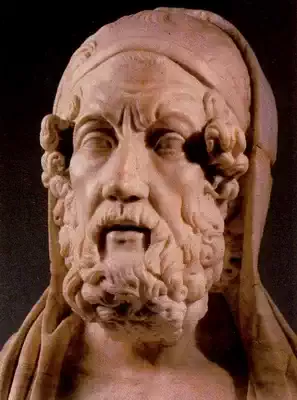
Homero
The Odyssey: Book 9
The Odyssey: Book 9
And Ulysses answered, "King Alcinous, it is a good thing to hear a
bard with such a divine voice as this man has. There is nothing better
or more delightful than when a whole people make merry together,
with the guests sitting orderly to listen, while the table is loaded
with bread and meats, and the cup-bearer draws wine and fills his
cup for every man. This is indeed as fair a sight as a man can see.
Now, however, since you are inclined to ask the story of my sorrows,
and rekindle my own sad memories in respect of them, I do not know how
to begin, nor yet how to continue and conclude my tale, for the hand
of heaven has been laid heavily upon me.
"Firstly, then, I will tell you my name that you too may know it,
and one day, if I outlive this time of sorrow, may become my there
guests though I live so far away from all of you. I am Ulysses son
of Laertes, reknowned among mankind for all manner of subtlety, so
that my fame ascends to heaven. I live in Ithaca, where there is a
high mountain called Neritum, covered with forests; and not far from
it there is a group of islands very near to one another- Dulichium,
Same, and the wooded island of Zacynthus. It lies squat on the
horizon, all highest up in the sea towards the sunset, while the
others lie away from it towards dawn. It is a rugged island, but it
breeds brave men, and my eyes know none that they better love to
look upon. The goddess Calypso kept me with her in her cave, and
wanted me to marry her, as did also the cunning Aeaean goddess
Circe; but they could neither of them persuade me, for there is
nothing dearer to a man than his own country and his parents, and
however splendid a home he may have in a foreign country, if it be far
from father or mother, he does not care about it. Now, however, I will
tell you of the many hazardous adventures which by Jove's will I met
with on my return from Troy.
"When I had set sail thence the wind took me first to Ismarus, which
is the city of the Cicons. There I sacked the town and put the
people to the sword. We took their wives and also much booty, which we
divided equitably amongst us, so that none might have reason to
complain. I then said that we had better make off at once, but my
men very foolishly would not obey me, so they stayed there drinking
much wine and killing great numbers of sheep and oxen on the sea
shore. Meanwhile the Cicons cried out for help to other Cicons who
lived inland. These were more in number, and stronger, and they were
more skilled in the art of war, for they could fight, either from
chariots or on foot as the occasion served; in the morning, therefore,
they came as thick as leaves and bloom in summer, and the hand of
heaven was against us, so that we were hard pressed. They set the
battle in array near the ships, and the hosts aimed their
bronze-shod spears at one another. So long as the day waxed and it was
still morning, we held our own against them, though they were more
in number than we; but as the sun went down, towards the time when men
loose their oxen, the Cicons got the better of us, and we lost half
a dozen men from every ship we had; so we got away with those that
were left.
"Thence we sailed onward with sorrow in our hearts, but glad to have
escaped death though we had lost our comrades, nor did we leave till
we had thrice invoked each one of the poor fellows who had perished by
the hands of the Cicons. Then Jove raised the North wind against us
till it blew a hurricane, so that land and sky were hidden in thick
clouds, and night sprang forth out of the heavens. We let the ships
run before the gale, but the force of the wind tore our sails to
tatters, so we took them down for fear of shipwreck, and rowed our
hardest towards the land. There we lay two days and two nights
suffering much alike from toil and distress of mind, but on the
morning of the third day we again raised our masts, set sail, and took
our places, letting the wind and steersmen direct our ship. I should
have got home at that time unharmed had not the North wind and the
currents been against me as I was doubling Cape Malea, and set me
off my course hard by the island of Cythera.
"I was driven thence by foul winds for a space of nine days upon the
sea, but on the tenth day we reached the land of the Lotus-eater,
who live on a food that comes from a kind of flower. Here we landed to
take in fresh water, and our crews got their mid-day meal on the shore
near the ships. When they had eaten and drunk I sent two of my company
to see what manner of men the people of the place might be, and they
had a third man under them. They started at once, and went about among
the Lotus-eaters, who did them no hurt, but gave them to eat of the
lotus, which was so delicious that those who ate of it left off caring
about home, and did not even want to go back and say what had happened
to them, but were for staying and munching lotus with the
Lotus-eater without thinking further of their return; nevertheless,
though they wept bitterly I forced them back to the ships and made
them fast under the benches. Then I told the rest to go on board at
once, lest any of them should taste of the lotus and leave off wanting
to get home, so they took their places and smote the grey sea with
their oars.
"We sailed hence, always in much distress, till we came to the
land of the lawless and inhuman Cyclopes. Now the Cyclopes neither
plant nor plough, but trust in providence, and live on such wheat,
barley, and grapes as grow wild without any kind of tillage, and their
wild grapes yield them wine as the sun and the rain may grow them.
They have no laws nor assemblies of the people, but live in caves on
the tops of high mountains; each is lord and master in his family, and
they take no account of their neighbours.
"Now off their harbour there lies a wooded and fertile island not
quite close to the land of the Cyclopes, but still not far. It is
overrun with wild goats, that breed there in great numbers and are
never disturbed by foot of man; for sportsmen- who as a rule will
suffer so much hardship in forest or among mountain precipices- do not
go there, nor yet again is it ever ploughed or fed down, but it lies a
wilderness untilled and unsown from year to year, and has no living
thing upon it but only goats. For the Cyclopes have no ships, nor
yet shipwrights who could make ships for them; they cannot therefore
go from city to city, or sail over the sea to one another's country as
people who have ships can do; if they had had these they would have
colonized the island, for it is a very good one, and would yield
everything in due season. There are meadows that in some places come
right down to the sea shore, well watered and full of luscious
grass; grapes would do there excellently; there is level land for
ploughing, and it would always yield heavily at harvest time, for
the soil is deep. There is a good harbour where no cables are
wanted, nor yet anchors, nor need a ship be moored, but all one has to
do is to beach one's vessel and stay there till the wind becomes
fair for putting out to sea again. At the head of the harbour there is
a spring of clear water coming out of a cave, and there are poplars
growing all round it.
"Here we entered, but so dark was the night that some god must
have brought us in, for there was nothing whatever to be seen. A thick
mist hung all round our ships; the moon was hidden behind a mass of
clouds so that no one could have seen the island if he had looked
for it, nor were there any breakers to tell us we were close in
shore before we found ourselves upon the land itself; when, however,
we had beached the ships, we took down the sails, went ashore and
camped upon the beach till daybreak.
"When the child of morning, rosy-fingered Dawn, appeared, we admired
the island and wandered all over it, while the nymphs Jove's daughters
roused the wild goats that we might get some meat for our dinner. On
this we fetched our spears and bows and arrows from the ships, and
dividing ourselves into three bands began to shoot the goats. Heaven
sent us excellent sport; I had twelve ships with me, and each ship got
nine goats, while my own ship had ten; thus through the livelong day
to the going down of the sun we ate and drank our fill,- and we had
plenty of wine left, for each one of us had taken many jars full
when we sacked the city of the Cicons, and this had not yet run out.
While we were feasting we kept turning our eyes towards the land of
the Cyclopes, which was hard by, and saw the smoke of their stubble
fires. We could almost fancy we heard their voices and the bleating of
their sheep and goats, but when the sun went down and it came on dark,
we camped down upon the beach, and next morning I called a council.
"'Stay here, my brave fellows,' said I, 'all the rest of you,
while I go with my ship and exploit these people myself: I want to see
if they are uncivilized savages, or a hospitable and humane race.'
"I went on board, bidding my men to do so also and loose the
hawsers; so they took their places and smote the grey sea with their
oars. When we got to the land, which was not far, there, on the face
of a cliff near the sea, we saw a great cave overhung with laurels. It
was a station for a great many sheep and goats, and outside there
was a large yard, with a high wall round it made of stones built
into the ground and of trees both pine and oak. This was the abode
of a huge monster who was then away from home shepherding his
flocks. He would have nothing to do with other people, but led the
life of an outlaw. He was a horrid creature, not like a human being at
all, but resembling rather some crag that stands out boldly against
the sky on the top of a high mountain.
"I told my men to draw the ship ashore, and stay where they were,
all but the twelve best among them, who were to go along with
myself. I also took a goatskin of sweet black wine which had been
given me by Maron, Apollo son of Euanthes, who was priest of Apollo
the patron god of Ismarus, and lived within the wooded precincts of
the temple. When we were sacking the city we respected him, and spared
his life, as also his wife and child; so he made me some presents of
great value- seven talents of fine gold, and a bowl of silver, with
twelve jars of sweet wine, unblended, and of the most exquisite
flavour. Not a man nor maid in the house knew about it, but only
himself, his wife, and one housekeeper: when he drank it he mixed
twenty parts of water to one of wine, and yet the fragrance from the
mixing-bowl was so exquisite that it was impossible to refrain from
drinking. I filled a large skin with this wine, and took a wallet full
of provisions with me, for my mind misgave me that I might have to
deal with some savage who would be of great strength, and would
respect neither right nor law.
"We soon reached his cave, but he was out shepherding, so we went
inside and took stock of all that we could see. His cheese-racks
were loaded with cheeses, and he had more lambs and kids than his pens
could hold. They were kept in separate flocks; first there were the
hoggets, then the oldest of the younger lambs and lastly the very
young ones all kept apart from one another; as for his dairy, all
the vessels, bowls, and milk pails into which he milked, were swimming
with whey. When they saw all this, my men begged me to let them
first steal some cheeses, and make off with them to the ship; they
would then return, drive down the lambs and kids, put them on board
and sail away with them. It would have been indeed better if we had
done so but I would not listen to them, for I wanted to see the
owner himself, in the hope that he might give me a present. When,
however, we saw him my poor men found him ill to deal with.
"We lit a fire, offered some of the cheeses in sacrifice, ate others
of them, and then sat waiting till the Cyclops should come in with his
sheep. When he came, he brought in with him a huge load of dry
firewood to light the fire for his supper, and this he flung with such
a noise on to the floor of his cave that we hid ourselves for fear
at the far end of the cavern. Meanwhile he drove all the ewes
inside, as well as the she-goats that he was going to milk, leaving
the males, both rams and he-goats, outside in the yards. Then he
rolled a huge stone to the mouth of the cave- so huge that two and
twenty strong four-wheeled waggons would not be enough to draw it from
its place against the doorway. When he had so done he sat down and
milked his ewes and goats, all in due course, and then let each of
them have her own young. He curdled half the milk and set it aside
in wicker strainers, but the other half he poured into bowls that he
might drink it for his supper. When he had got through with all his
work, he lit the fire, and then caught sight of us, whereon he said:
"'Strangers, who are you? Where do sail from? Are you traders, or do
you sail the as rovers, with your hands against every man, and every
man's hand against you?'
"We were frightened out of our senses by his loud voice and
monstrous form, but I managed to say, 'We are Achaeans on our way home
from Troy, but by the will of Jove, and stress of weather, we have
been driven far out of our course. We are the people of Agamemnon, son
of Atreus, who has won infinite renown throughout the whole world,
by sacking so great a city and killing so many people. We therefore
humbly pray you to show us some hospitality, and otherwise make us
such presents as visitors may reasonably expect. May your excellency
fear the wrath of heaven, for we are your suppliants, and Jove takes
all respectable travellers under his protection, for he is the avenger
of all suppliants and foreigners in distress.'
"To this he gave me but a pitiless answer, 'Stranger,' said he, 'you
are a fool, or else you know nothing of this country. Talk to me,
indeed, about fearing the gods or shunning their anger? We Cyclopes do
not care about Jove or any of your blessed gods, for we are ever so
much stronger than they. I shall not spare either yourself or your
companions out of any regard for Jove, unless I am in the humour for
doing so. And now tell me where you made your ship fast when you
came on shore. Was it round the point, or is she lying straight off
the land?'
"He said this to draw me out, but I was too cunning to be caught
in that way, so I answered with a lie; 'Neptune,' said I, 'sent my
ship on to the rocks at the far end of your country, and wrecked it.
We were driven on to them from the open sea, but I and those who are
with me escaped the jaws of death.'
"The cruel wretch vouchsafed me not one word of answer, but with a
sudden clutch he gripped up two of my men at once and dashed them down
upon the ground as though they had been puppies. Their brains were
shed upon the ground, and the earth was wet with their blood. Then
he tore them limb from limb and supped upon them. He gobbled them up
like a lion in the wilderness, flesh, bones, marrow, and entrails,
without leaving anything uneaten. As for us, we wept and lifted up our
hands to heaven on seeing such a horrid sight, for we did not know
what else to do; but when the Cyclops had filled his huge paunch,
and had washed down his meal of human flesh with a drink of neat milk,
he stretched himself full length upon the ground among his sheep,
and went to sleep. I was at first inclined to seize my sword, draw it,
and drive it into his vitals, but I reflected that if I did we
should all certainly be lost, for we should never be able to shift the
stone which the monster had put in front of the door. So we stayed
sobbing and sighing where we were till morning came.
"When the child of morning, rosy-fingered Dawn, appeared, he again
lit his fire, milked his goats and ewes, all quite rightly, and then
let each have her own young one; as soon as he had got through with
all his work, he clutched up two more of my men, and began eating them
for his morning's meal. Presently, with the utmost ease, he rolled the
stone away from the door and drove out his sheep, but he at once put
it back again- as easily as though he were merely clapping the lid
on to a quiver full of arrows. As soon as he had done so he shouted,
and cried 'Shoo, shoo,' after his sheep to drive them on to the
mountain; so I was left to scheme some way of taking my revenge and
covering myself with glory.
"In the end I deemed it would be the best plan to do as follows. The
Cyclops had a great club which was lying near one of the sheep pens;
it was of green olive wood, and he had cut it intending to use it
for a staff as soon as it should be dry. It was so huge that we
could only compare it to the mast of a twenty-oared merchant vessel of
large burden, and able to venture out into open sea. I went up to this
club and cut off about six feet of it; I then gave this piece to the
men and told them to fine it evenly off at one end, which they
proceeded to do, and lastly I brought it to a point myself, charring
the end in the fire to make it harder. When I had done this I hid it
under dung, which was lying about all over the cave, and told the
men to cast lots which of them should venture along with myself to
lift it and bore it into the monster's eye while he was asleep. The
lot fell upon the very four whom I should have chosen, and I myself
made five. In the evening the wretch came back from shepherding, and
drove his flocks into the cave- this time driving them all inside, and
not leaving any in the yards; I suppose some fancy must have taken
him, or a god must have prompted him to do so. As soon as he had put
the stone back to its place against the door, he sat down, milked
his ewes and his goats all quite rightly, and then let each have her
own young one; when he had got through with all this work, he
gripped up two more of my men, and made his supper off them. So I went
up to him with an ivy-wood bowl of black wine in my hands:
"'Look here, Cyclops,' said I, you have been eating a great deal
of man's flesh, so take this and drink some wine, that you may see
what kind of liquor we had on board my ship. I was bringing it to
you as a drink-offering, in the hope that you would take compassion
upon me and further me on my way home, whereas all you do is to go
on ramping and raving most intolerably. You ought to be ashamed
yourself; how can you expect people to come see you any more if you
treat them in this way?'
"He then took the cup and drank. He was so delighted with the
taste of the wine that he begged me for another bowl full. 'Be so
kind,' he said, 'as to give me some more, and tell me your name at
once. I want to make you a present that you will be glad to have. We
have wine even in this country, for our soil grows grapes and the
sun ripens them, but this drinks like nectar and ambrosia all in one.'
"I then gave him some more; three times did I fill the bowl for him,
and three times did he drain it without thought or heed; then, when
I saw that the wine had got into his head, I said to him as
plausibly as I could: 'Cyclops, you ask my name and I will tell it
you; give me, therefore, the present you promised me; my name is
Noman; this is what my father and mother and my friends have always
called me.'
"But the cruel wretch said, 'Then I will eat all Noman's comrades
before Noman himself, and will keep Noman for the last. This is the
present that I will make him.'
As he spoke he reeled, and fell sprawling face upwards on the
ground. His great neck hung heavily backwards and a deep sleep took
hold upon him. Presently he turned sick, and threw up both wine and
the gobbets of human flesh on which he had been gorging, for he was
very drunk. Then I thrust the beam of wood far into the embers to heat
it, and encouraged my men lest any of them should turn
faint-hearted. When the wood, green though it was, was about to blaze,
I drew it out of the fire glowing with heat, and my men gathered round
me, for heaven had filled their hearts with courage. We drove the
sharp end of the beam into the monster's eye, and bearing upon it with
all my weight I kept turning it round and round as though I were
boring a hole in a ship's plank with an auger, which two men with a
wheel and strap can keep on turning as long as they choose. Even
thus did we bore the red hot beam into his eye, till the boiling blood
bubbled all over it as we worked it round and round, so that the steam
from the burning eyeball scalded his eyelids and eyebrows, and the
roots of the eye sputtered in the fire. As a blacksmith plunges an axe
or hatchet into cold water to temper it- for it is this that gives
strength to the iron- and it makes a great hiss as he does so, even
thus did the Cyclops' eye hiss round the beam of olive wood, and his
hideous yells made the cave ring again. We ran away in a fright, but
he plucked the beam all besmirched with gore from his eye, and
hurled it from him in a frenzy of rage and pain, shouting as he did so
to the other Cyclopes who lived on the bleak headlands near him; so
they gathered from all quarters round his cave when they heard him
crying, and asked what was the matter with him.
"'What ails you, Polyphemus,' said they, 'that you make such a
noise, breaking the stillness of the night, and preventing us from
being able to sleep? Surely no man is carrying off your sheep?
Surely no man is trying to kill you either by fraud or by force?
"But Polyphemus shouted to them from inside the cave, 'Noman is
killing me by fraud! Noman is killing me by force!'
"'Then,' said they, 'if no man is attacking you, you must be ill;
when Jove makes people ill, there is no help for it, and you had
better pray to your father Neptune.'
"Then they went away, and I laughed inwardly at the success of my
clever stratagem, but the Cyclops, groaning and in an agony of pain,
felt about with his hands till he found the stone and took it from the
door; then he sat in the doorway and stretched his hands in front of
it to catch anyone going out with the sheep, for he thought I might be
foolish enough to attempt this.
"As for myself I kept on puzzling to think how I could best save
my own life and those of my companions; I schemed and schemed, as
one who knows that his life depends upon it, for the danger was very
great. In the end I deemed that this plan would be the best. The
male sheep were well grown, and carried a heavy black fleece, so I
bound them noiselessly in threes together, with some of the withies on
which the wicked monster used to sleep. There was to be a man under
the middle sheep, and the two on either side were to cover him, so
that there were three sheep to each man. As for myself there was a ram
finer than any of the others, so I caught hold of him by the back,
esconced myself in the thick wool under his belly, and flung on
patiently to his fleece, face upwards, keeping a firm hold on it all
the time.
"Thus, then, did we wait in great fear of mind till morning came,
but when the child of morning, rosy-fingered Dawn, appeared, the
male sheep hurried out to feed, while the ewes remained bleating about
the pens waiting to be milked, for their udders were full to bursting;
but their master in spite of all his pain felt the backs of all the
sheep as they stood upright, without being sharp enough to find out
that the men were underneath their bellies. As the ram was going
out, last of all, heavy with its fleece and with the weight of my
crafty self; Polyphemus laid hold of it and said:
"'My good ram, what is it that makes you the last to leave my cave
this morning? You are not wont to let the ewes go before you, but lead
the mob with a run whether to flowery mead or bubbling fountain, and
are the first to come home again at night; but now you lag last of
all. Is it because you know your master has lost his eye, and are
sorry because that wicked Noman and his horrid crew have got him
down in his drink and blinded him? But I will have his life yet. If
you could understand and talk, you would tell me where the wretch is
hiding, and I would dash his brains upon the ground till they flew all
over the cave. I should thus have some satisfaction for the harm a
this no-good Noman has done me.'
"As spoke he drove the ram outside, but when we were a little way
out from the cave and yards, I first got from under the ram's belly,
and then freed my comrades; as for the sheep, which were very fat,
by constantly heading them in the right direction we managed to
drive them down to the ship. The crew rejoiced greatly at seeing those
of us who had escaped death, but wept for the others whom the
Cyclops had killed. However, I made signs to them by nodding and
frowning that they were to hush their crying, and told them to get all
the sheep on board at once and put out to sea; so they went aboard,
took their places, and smote the grey sea with their oars. Then,
when I had got as far out as my voice would reach, I began to jeer
at the Cyclops.
"'Cyclops,' said I, 'you should have taken better measure of your
man before eating up his comrades in your cave. You wretch, eat up
your visitors in your own house? You might have known that your sin
would find you out, and now Jove and the other gods have punished
you.'
"He got more and more furious as he heard me, so he tore the top
from off a high mountain, and flung it just in front of my ship so
that it was within a little of hitting the end of the rudder. The
sea quaked as the rock fell into it, and the wash of the wave it
raised carried us back towards the mainland, and forced us towards the
shore. But I snatched up a long pole and kept the ship off, making
signs to my men by nodding my head, that they must row for their
lives, whereon they laid out with a will. When we had got twice as far
as we were before, I was for jeering at the Cyclops again, but the men
begged and prayed of me to hold my tongue.
"'Do not,' they exclaimed, 'be mad enough to provoke this savage
creature further; he has thrown one rock at us already which drove
us back again to the mainland, and we made sure it had been the
death of us; if he had then heard any further sound of voices he would
have pounded our heads and our ship's timbers into a jelly with the
rugged rocks he would have heaved at us, for he can throw them a
long way.'
"But I would not listen to them, and shouted out to him in my
rage, 'Cyclops, if any one asks you who it was that put your eye out
and spoiled your beauty, say it was the valiant warrior Ulysses, son
of Laertes, who lives in Ithaca.'
"On this he groaned, and cried out, 'Alas, alas, then the old
prophecy about me is coming true. There was a prophet here, at one
time, a man both brave and of great stature, Telemus son of Eurymus,
who was an excellent seer, and did all the prophesying for the
Cyclopes till he grew old; he told me that all this would happen to me
some day, and said I should lose my sight by the hand of Ulysses. I
have been all along expecting some one of imposing presence and
superhuman strength, whereas he turns out to be a little insignificant
weakling, who has managed to blind my eye by taking advantage of me in
my drink; come here, then, Ulysses, that I may make you presents to
show my hospitality, and urge Neptune to help you forward on your
journey- for Neptune and I are father and son. He, if he so will,
shall heal me, which no one else neither god nor man can do.'
"Then I said, 'I wish I could be as sure of killing you outright and
sending you down to the house of Hades, as I am that it will take more
than Neptune to cure that eye of yours.'
"On this he lifted up his hands to the firmament of heaven and
prayed, saying, 'Hear me, great Neptune; if I am indeed your own
true-begotten son, grant that Ulysses may never reach his home
alive; or if he must get back to his friends at last, let him do so
late and in sore plight after losing all his men [let him reach his
home in another man's ship and find trouble in his house.']
"Thus did he pray, and Neptune heard his prayer. Then he picked up a
rock much larger than the first, swung it aloft and hurled it with
prodigious force. It fell just short of the ship, but was within a
little of hitting the end of the rudder. The sea quaked as the rock
fell into it, and the wash of the wave it raised drove us onwards on
our way towards the shore of the island.
"When at last we got to the island where we had left the rest of our
ships, we found our comrades lamenting us, and anxiously awaiting
our return. We ran our vessel upon the sands and got out of her on
to the sea shore; we also landed the Cyclops' sheep, and divided
them equitably amongst us so that none might have reason to
complain. As for the ram, my companions agreed that I should have it
as an extra share; so I sacrificed it on the sea shore, and burned its
thigh bones to Jove, who is the lord of all. But he heeded not my
sacrifice, and only thought how he might destroy my ships and my
comrades.
"Thus through the livelong day to the going down of the sun we
feasted our fill on meat and drink, but when the sun went down and
it came on dark, we camped upon the beach. When the child of
morning, rosy-fingered Dawn, appeared, I bade my men on board and
loose the hawsers. Then they took their places and smote the grey
sea with their oars; so we sailed on with sorrow in our hearts, but
glad to have escaped death though we had lost our comrades.
Translated by Samuel Butler
And Ulysses answered, "King Alcinous, it is a good thing to hear a
bard with such a divine voice as this man has. There is nothing better
or more delightful than when a whole people make merry together,
with the guests sitting orderly to listen, while the table is loaded
with bread and meats, and the cup-bearer draws wine and fills his
cup for every man. This is indeed as fair a sight as a man can see.
Now, however, since you are inclined to ask the story of my sorrows,
and rekindle my own sad memories in respect of them, I do not know how
to begin, nor yet how to continue and conclude my tale, for the hand
of heaven has been laid heavily upon me.
"Firstly, then, I will tell you my name that you too may know it,
and one day, if I outlive this time of sorrow, may become my there
guests though I live so far away from all of you. I am Ulysses son
of Laertes, reknowned among mankind for all manner of subtlety, so
that my fame ascends to heaven. I live in Ithaca, where there is a
high mountain called Neritum, covered with forests; and not far from
it there is a group of islands very near to one another- Dulichium,
Same, and the wooded island of Zacynthus. It lies squat on the
horizon, all highest up in the sea towards the sunset, while the
others lie away from it towards dawn. It is a rugged island, but it
breeds brave men, and my eyes know none that they better love to
look upon. The goddess Calypso kept me with her in her cave, and
wanted me to marry her, as did also the cunning Aeaean goddess
Circe; but they could neither of them persuade me, for there is
nothing dearer to a man than his own country and his parents, and
however splendid a home he may have in a foreign country, if it be far
from father or mother, he does not care about it. Now, however, I will
tell you of the many hazardous adventures which by Jove's will I met
with on my return from Troy.
"When I had set sail thence the wind took me first to Ismarus, which
is the city of the Cicons. There I sacked the town and put the
people to the sword. We took their wives and also much booty, which we
divided equitably amongst us, so that none might have reason to
complain. I then said that we had better make off at once, but my
men very foolishly would not obey me, so they stayed there drinking
much wine and killing great numbers of sheep and oxen on the sea
shore. Meanwhile the Cicons cried out for help to other Cicons who
lived inland. These were more in number, and stronger, and they were
more skilled in the art of war, for they could fight, either from
chariots or on foot as the occasion served; in the morning, therefore,
they came as thick as leaves and bloom in summer, and the hand of
heaven was against us, so that we were hard pressed. They set the
battle in array near the ships, and the hosts aimed their
bronze-shod spears at one another. So long as the day waxed and it was
still morning, we held our own against them, though they were more
in number than we; but as the sun went down, towards the time when men
loose their oxen, the Cicons got the better of us, and we lost half
a dozen men from every ship we had; so we got away with those that
were left.
"Thence we sailed onward with sorrow in our hearts, but glad to have
escaped death though we had lost our comrades, nor did we leave till
we had thrice invoked each one of the poor fellows who had perished by
the hands of the Cicons. Then Jove raised the North wind against us
till it blew a hurricane, so that land and sky were hidden in thick
clouds, and night sprang forth out of the heavens. We let the ships
run before the gale, but the force of the wind tore our sails to
tatters, so we took them down for fear of shipwreck, and rowed our
hardest towards the land. There we lay two days and two nights
suffering much alike from toil and distress of mind, but on the
morning of the third day we again raised our masts, set sail, and took
our places, letting the wind and steersmen direct our ship. I should
have got home at that time unharmed had not the North wind and the
currents been against me as I was doubling Cape Malea, and set me
off my course hard by the island of Cythera.
"I was driven thence by foul winds for a space of nine days upon the
sea, but on the tenth day we reached the land of the Lotus-eater,
who live on a food that comes from a kind of flower. Here we landed to
take in fresh water, and our crews got their mid-day meal on the shore
near the ships. When they had eaten and drunk I sent two of my company
to see what manner of men the people of the place might be, and they
had a third man under them. They started at once, and went about among
the Lotus-eaters, who did them no hurt, but gave them to eat of the
lotus, which was so delicious that those who ate of it left off caring
about home, and did not even want to go back and say what had happened
to them, but were for staying and munching lotus with the
Lotus-eater without thinking further of their return; nevertheless,
though they wept bitterly I forced them back to the ships and made
them fast under the benches. Then I told the rest to go on board at
once, lest any of them should taste of the lotus and leave off wanting
to get home, so they took their places and smote the grey sea with
their oars.
"We sailed hence, always in much distress, till we came to the
land of the lawless and inhuman Cyclopes. Now the Cyclopes neither
plant nor plough, but trust in providence, and live on such wheat,
barley, and grapes as grow wild without any kind of tillage, and their
wild grapes yield them wine as the sun and the rain may grow them.
They have no laws nor assemblies of the people, but live in caves on
the tops of high mountains; each is lord and master in his family, and
they take no account of their neighbours.
"Now off their harbour there lies a wooded and fertile island not
quite close to the land of the Cyclopes, but still not far. It is
overrun with wild goats, that breed there in great numbers and are
never disturbed by foot of man; for sportsmen- who as a rule will
suffer so much hardship in forest or among mountain precipices- do not
go there, nor yet again is it ever ploughed or fed down, but it lies a
wilderness untilled and unsown from year to year, and has no living
thing upon it but only goats. For the Cyclopes have no ships, nor
yet shipwrights who could make ships for them; they cannot therefore
go from city to city, or sail over the sea to one another's country as
people who have ships can do; if they had had these they would have
colonized the island, for it is a very good one, and would yield
everything in due season. There are meadows that in some places come
right down to the sea shore, well watered and full of luscious
grass; grapes would do there excellently; there is level land for
ploughing, and it would always yield heavily at harvest time, for
the soil is deep. There is a good harbour where no cables are
wanted, nor yet anchors, nor need a ship be moored, but all one has to
do is to beach one's vessel and stay there till the wind becomes
fair for putting out to sea again. At the head of the harbour there is
a spring of clear water coming out of a cave, and there are poplars
growing all round it.
"Here we entered, but so dark was the night that some god must
have brought us in, for there was nothing whatever to be seen. A thick
mist hung all round our ships; the moon was hidden behind a mass of
clouds so that no one could have seen the island if he had looked
for it, nor were there any breakers to tell us we were close in
shore before we found ourselves upon the land itself; when, however,
we had beached the ships, we took down the sails, went ashore and
camped upon the beach till daybreak.
"When the child of morning, rosy-fingered Dawn, appeared, we admired
the island and wandered all over it, while the nymphs Jove's daughters
roused the wild goats that we might get some meat for our dinner. On
this we fetched our spears and bows and arrows from the ships, and
dividing ourselves into three bands began to shoot the goats. Heaven
sent us excellent sport; I had twelve ships with me, and each ship got
nine goats, while my own ship had ten; thus through the livelong day
to the going down of the sun we ate and drank our fill,- and we had
plenty of wine left, for each one of us had taken many jars full
when we sacked the city of the Cicons, and this had not yet run out.
While we were feasting we kept turning our eyes towards the land of
the Cyclopes, which was hard by, and saw the smoke of their stubble
fires. We could almost fancy we heard their voices and the bleating of
their sheep and goats, but when the sun went down and it came on dark,
we camped down upon the beach, and next morning I called a council.
"'Stay here, my brave fellows,' said I, 'all the rest of you,
while I go with my ship and exploit these people myself: I want to see
if they are uncivilized savages, or a hospitable and humane race.'
"I went on board, bidding my men to do so also and loose the
hawsers; so they took their places and smote the grey sea with their
oars. When we got to the land, which was not far, there, on the face
of a cliff near the sea, we saw a great cave overhung with laurels. It
was a station for a great many sheep and goats, and outside there
was a large yard, with a high wall round it made of stones built
into the ground and of trees both pine and oak. This was the abode
of a huge monster who was then away from home shepherding his
flocks. He would have nothing to do with other people, but led the
life of an outlaw. He was a horrid creature, not like a human being at
all, but resembling rather some crag that stands out boldly against
the sky on the top of a high mountain.
"I told my men to draw the ship ashore, and stay where they were,
all but the twelve best among them, who were to go along with
myself. I also took a goatskin of sweet black wine which had been
given me by Maron, Apollo son of Euanthes, who was priest of Apollo
the patron god of Ismarus, and lived within the wooded precincts of
the temple. When we were sacking the city we respected him, and spared
his life, as also his wife and child; so he made me some presents of
great value- seven talents of fine gold, and a bowl of silver, with
twelve jars of sweet wine, unblended, and of the most exquisite
flavour. Not a man nor maid in the house knew about it, but only
himself, his wife, and one housekeeper: when he drank it he mixed
twenty parts of water to one of wine, and yet the fragrance from the
mixing-bowl was so exquisite that it was impossible to refrain from
drinking. I filled a large skin with this wine, and took a wallet full
of provisions with me, for my mind misgave me that I might have to
deal with some savage who would be of great strength, and would
respect neither right nor law.
"We soon reached his cave, but he was out shepherding, so we went
inside and took stock of all that we could see. His cheese-racks
were loaded with cheeses, and he had more lambs and kids than his pens
could hold. They were kept in separate flocks; first there were the
hoggets, then the oldest of the younger lambs and lastly the very
young ones all kept apart from one another; as for his dairy, all
the vessels, bowls, and milk pails into which he milked, were swimming
with whey. When they saw all this, my men begged me to let them
first steal some cheeses, and make off with them to the ship; they
would then return, drive down the lambs and kids, put them on board
and sail away with them. It would have been indeed better if we had
done so but I would not listen to them, for I wanted to see the
owner himself, in the hope that he might give me a present. When,
however, we saw him my poor men found him ill to deal with.
"We lit a fire, offered some of the cheeses in sacrifice, ate others
of them, and then sat waiting till the Cyclops should come in with his
sheep. When he came, he brought in with him a huge load of dry
firewood to light the fire for his supper, and this he flung with such
a noise on to the floor of his cave that we hid ourselves for fear
at the far end of the cavern. Meanwhile he drove all the ewes
inside, as well as the she-goats that he was going to milk, leaving
the males, both rams and he-goats, outside in the yards. Then he
rolled a huge stone to the mouth of the cave- so huge that two and
twenty strong four-wheeled waggons would not be enough to draw it from
its place against the doorway. When he had so done he sat down and
milked his ewes and goats, all in due course, and then let each of
them have her own young. He curdled half the milk and set it aside
in wicker strainers, but the other half he poured into bowls that he
might drink it for his supper. When he had got through with all his
work, he lit the fire, and then caught sight of us, whereon he said:
"'Strangers, who are you? Where do sail from? Are you traders, or do
you sail the as rovers, with your hands against every man, and every
man's hand against you?'
"We were frightened out of our senses by his loud voice and
monstrous form, but I managed to say, 'We are Achaeans on our way home
from Troy, but by the will of Jove, and stress of weather, we have
been driven far out of our course. We are the people of Agamemnon, son
of Atreus, who has won infinite renown throughout the whole world,
by sacking so great a city and killing so many people. We therefore
humbly pray you to show us some hospitality, and otherwise make us
such presents as visitors may reasonably expect. May your excellency
fear the wrath of heaven, for we are your suppliants, and Jove takes
all respectable travellers under his protection, for he is the avenger
of all suppliants and foreigners in distress.'
"To this he gave me but a pitiless answer, 'Stranger,' said he, 'you
are a fool, or else you know nothing of this country. Talk to me,
indeed, about fearing the gods or shunning their anger? We Cyclopes do
not care about Jove or any of your blessed gods, for we are ever so
much stronger than they. I shall not spare either yourself or your
companions out of any regard for Jove, unless I am in the humour for
doing so. And now tell me where you made your ship fast when you
came on shore. Was it round the point, or is she lying straight off
the land?'
"He said this to draw me out, but I was too cunning to be caught
in that way, so I answered with a lie; 'Neptune,' said I, 'sent my
ship on to the rocks at the far end of your country, and wrecked it.
We were driven on to them from the open sea, but I and those who are
with me escaped the jaws of death.'
"The cruel wretch vouchsafed me not one word of answer, but with a
sudden clutch he gripped up two of my men at once and dashed them down
upon the ground as though they had been puppies. Their brains were
shed upon the ground, and the earth was wet with their blood. Then
he tore them limb from limb and supped upon them. He gobbled them up
like a lion in the wilderness, flesh, bones, marrow, and entrails,
without leaving anything uneaten. As for us, we wept and lifted up our
hands to heaven on seeing such a horrid sight, for we did not know
what else to do; but when the Cyclops had filled his huge paunch,
and had washed down his meal of human flesh with a drink of neat milk,
he stretched himself full length upon the ground among his sheep,
and went to sleep. I was at first inclined to seize my sword, draw it,
and drive it into his vitals, but I reflected that if I did we
should all certainly be lost, for we should never be able to shift the
stone which the monster had put in front of the door. So we stayed
sobbing and sighing where we were till morning came.
"When the child of morning, rosy-fingered Dawn, appeared, he again
lit his fire, milked his goats and ewes, all quite rightly, and then
let each have her own young one; as soon as he had got through with
all his work, he clutched up two more of my men, and began eating them
for his morning's meal. Presently, with the utmost ease, he rolled the
stone away from the door and drove out his sheep, but he at once put
it back again- as easily as though he were merely clapping the lid
on to a quiver full of arrows. As soon as he had done so he shouted,
and cried 'Shoo, shoo,' after his sheep to drive them on to the
mountain; so I was left to scheme some way of taking my revenge and
covering myself with glory.
"In the end I deemed it would be the best plan to do as follows. The
Cyclops had a great club which was lying near one of the sheep pens;
it was of green olive wood, and he had cut it intending to use it
for a staff as soon as it should be dry. It was so huge that we
could only compare it to the mast of a twenty-oared merchant vessel of
large burden, and able to venture out into open sea. I went up to this
club and cut off about six feet of it; I then gave this piece to the
men and told them to fine it evenly off at one end, which they
proceeded to do, and lastly I brought it to a point myself, charring
the end in the fire to make it harder. When I had done this I hid it
under dung, which was lying about all over the cave, and told the
men to cast lots which of them should venture along with myself to
lift it and bore it into the monster's eye while he was asleep. The
lot fell upon the very four whom I should have chosen, and I myself
made five. In the evening the wretch came back from shepherding, and
drove his flocks into the cave- this time driving them all inside, and
not leaving any in the yards; I suppose some fancy must have taken
him, or a god must have prompted him to do so. As soon as he had put
the stone back to its place against the door, he sat down, milked
his ewes and his goats all quite rightly, and then let each have her
own young one; when he had got through with all this work, he
gripped up two more of my men, and made his supper off them. So I went
up to him with an ivy-wood bowl of black wine in my hands:
"'Look here, Cyclops,' said I, you have been eating a great deal
of man's flesh, so take this and drink some wine, that you may see
what kind of liquor we had on board my ship. I was bringing it to
you as a drink-offering, in the hope that you would take compassion
upon me and further me on my way home, whereas all you do is to go
on ramping and raving most intolerably. You ought to be ashamed
yourself; how can you expect people to come see you any more if you
treat them in this way?'
"He then took the cup and drank. He was so delighted with the
taste of the wine that he begged me for another bowl full. 'Be so
kind,' he said, 'as to give me some more, and tell me your name at
once. I want to make you a present that you will be glad to have. We
have wine even in this country, for our soil grows grapes and the
sun ripens them, but this drinks like nectar and ambrosia all in one.'
"I then gave him some more; three times did I fill the bowl for him,
and three times did he drain it without thought or heed; then, when
I saw that the wine had got into his head, I said to him as
plausibly as I could: 'Cyclops, you ask my name and I will tell it
you; give me, therefore, the present you promised me; my name is
Noman; this is what my father and mother and my friends have always
called me.'
"But the cruel wretch said, 'Then I will eat all Noman's comrades
before Noman himself, and will keep Noman for the last. This is the
present that I will make him.'
As he spoke he reeled, and fell sprawling face upwards on the
ground. His great neck hung heavily backwards and a deep sleep took
hold upon him. Presently he turned sick, and threw up both wine and
the gobbets of human flesh on which he had been gorging, for he was
very drunk. Then I thrust the beam of wood far into the embers to heat
it, and encouraged my men lest any of them should turn
faint-hearted. When the wood, green though it was, was about to blaze,
I drew it out of the fire glowing with heat, and my men gathered round
me, for heaven had filled their hearts with courage. We drove the
sharp end of the beam into the monster's eye, and bearing upon it with
all my weight I kept turning it round and round as though I were
boring a hole in a ship's plank with an auger, which two men with a
wheel and strap can keep on turning as long as they choose. Even
thus did we bore the red hot beam into his eye, till the boiling blood
bubbled all over it as we worked it round and round, so that the steam
from the burning eyeball scalded his eyelids and eyebrows, and the
roots of the eye sputtered in the fire. As a blacksmith plunges an axe
or hatchet into cold water to temper it- for it is this that gives
strength to the iron- and it makes a great hiss as he does so, even
thus did the Cyclops' eye hiss round the beam of olive wood, and his
hideous yells made the cave ring again. We ran away in a fright, but
he plucked the beam all besmirched with gore from his eye, and
hurled it from him in a frenzy of rage and pain, shouting as he did so
to the other Cyclopes who lived on the bleak headlands near him; so
they gathered from all quarters round his cave when they heard him
crying, and asked what was the matter with him.
"'What ails you, Polyphemus,' said they, 'that you make such a
noise, breaking the stillness of the night, and preventing us from
being able to sleep? Surely no man is carrying off your sheep?
Surely no man is trying to kill you either by fraud or by force?
"But Polyphemus shouted to them from inside the cave, 'Noman is
killing me by fraud! Noman is killing me by force!'
"'Then,' said they, 'if no man is attacking you, you must be ill;
when Jove makes people ill, there is no help for it, and you had
better pray to your father Neptune.'
"Then they went away, and I laughed inwardly at the success of my
clever stratagem, but the Cyclops, groaning and in an agony of pain,
felt about with his hands till he found the stone and took it from the
door; then he sat in the doorway and stretched his hands in front of
it to catch anyone going out with the sheep, for he thought I might be
foolish enough to attempt this.
"As for myself I kept on puzzling to think how I could best save
my own life and those of my companions; I schemed and schemed, as
one who knows that his life depends upon it, for the danger was very
great. In the end I deemed that this plan would be the best. The
male sheep were well grown, and carried a heavy black fleece, so I
bound them noiselessly in threes together, with some of the withies on
which the wicked monster used to sleep. There was to be a man under
the middle sheep, and the two on either side were to cover him, so
that there were three sheep to each man. As for myself there was a ram
finer than any of the others, so I caught hold of him by the back,
esconced myself in the thick wool under his belly, and flung on
patiently to his fleece, face upwards, keeping a firm hold on it all
the time.
"Thus, then, did we wait in great fear of mind till morning came,
but when the child of morning, rosy-fingered Dawn, appeared, the
male sheep hurried out to feed, while the ewes remained bleating about
the pens waiting to be milked, for their udders were full to bursting;
but their master in spite of all his pain felt the backs of all the
sheep as they stood upright, without being sharp enough to find out
that the men were underneath their bellies. As the ram was going
out, last of all, heavy with its fleece and with the weight of my
crafty self; Polyphemus laid hold of it and said:
"'My good ram, what is it that makes you the last to leave my cave
this morning? You are not wont to let the ewes go before you, but lead
the mob with a run whether to flowery mead or bubbling fountain, and
are the first to come home again at night; but now you lag last of
all. Is it because you know your master has lost his eye, and are
sorry because that wicked Noman and his horrid crew have got him
down in his drink and blinded him? But I will have his life yet. If
you could understand and talk, you would tell me where the wretch is
hiding, and I would dash his brains upon the ground till they flew all
over the cave. I should thus have some satisfaction for the harm a
this no-good Noman has done me.'
"As spoke he drove the ram outside, but when we were a little way
out from the cave and yards, I first got from under the ram's belly,
and then freed my comrades; as for the sheep, which were very fat,
by constantly heading them in the right direction we managed to
drive them down to the ship. The crew rejoiced greatly at seeing those
of us who had escaped death, but wept for the others whom the
Cyclops had killed. However, I made signs to them by nodding and
frowning that they were to hush their crying, and told them to get all
the sheep on board at once and put out to sea; so they went aboard,
took their places, and smote the grey sea with their oars. Then,
when I had got as far out as my voice would reach, I began to jeer
at the Cyclops.
"'Cyclops,' said I, 'you should have taken better measure of your
man before eating up his comrades in your cave. You wretch, eat up
your visitors in your own house? You might have known that your sin
would find you out, and now Jove and the other gods have punished
you.'
"He got more and more furious as he heard me, so he tore the top
from off a high mountain, and flung it just in front of my ship so
that it was within a little of hitting the end of the rudder. The
sea quaked as the rock fell into it, and the wash of the wave it
raised carried us back towards the mainland, and forced us towards the
shore. But I snatched up a long pole and kept the ship off, making
signs to my men by nodding my head, that they must row for their
lives, whereon they laid out with a will. When we had got twice as far
as we were before, I was for jeering at the Cyclops again, but the men
begged and prayed of me to hold my tongue.
"'Do not,' they exclaimed, 'be mad enough to provoke this savage
creature further; he has thrown one rock at us already which drove
us back again to the mainland, and we made sure it had been the
death of us; if he had then heard any further sound of voices he would
have pounded our heads and our ship's timbers into a jelly with the
rugged rocks he would have heaved at us, for he can throw them a
long way.'
"But I would not listen to them, and shouted out to him in my
rage, 'Cyclops, if any one asks you who it was that put your eye out
and spoiled your beauty, say it was the valiant warrior Ulysses, son
of Laertes, who lives in Ithaca.'
"On this he groaned, and cried out, 'Alas, alas, then the old
prophecy about me is coming true. There was a prophet here, at one
time, a man both brave and of great stature, Telemus son of Eurymus,
who was an excellent seer, and did all the prophesying for the
Cyclopes till he grew old; he told me that all this would happen to me
some day, and said I should lose my sight by the hand of Ulysses. I
have been all along expecting some one of imposing presence and
superhuman strength, whereas he turns out to be a little insignificant
weakling, who has managed to blind my eye by taking advantage of me in
my drink; come here, then, Ulysses, that I may make you presents to
show my hospitality, and urge Neptune to help you forward on your
journey- for Neptune and I are father and son. He, if he so will,
shall heal me, which no one else neither god nor man can do.'
"Then I said, 'I wish I could be as sure of killing you outright and
sending you down to the house of Hades, as I am that it will take more
than Neptune to cure that eye of yours.'
"On this he lifted up his hands to the firmament of heaven and
prayed, saying, 'Hear me, great Neptune; if I am indeed your own
true-begotten son, grant that Ulysses may never reach his home
alive; or if he must get back to his friends at last, let him do so
late and in sore plight after losing all his men [let him reach his
home in another man's ship and find trouble in his house.']
"Thus did he pray, and Neptune heard his prayer. Then he picked up a
rock much larger than the first, swung it aloft and hurled it with
prodigious force. It fell just short of the ship, but was within a
little of hitting the end of the rudder. The sea quaked as the rock
fell into it, and the wash of the wave it raised drove us onwards on
our way towards the shore of the island.
"When at last we got to the island where we had left the rest of our
ships, we found our comrades lamenting us, and anxiously awaiting
our return. We ran our vessel upon the sands and got out of her on
to the sea shore; we also landed the Cyclops' sheep, and divided
them equitably amongst us so that none might have reason to
complain. As for the ram, my companions agreed that I should have it
as an extra share; so I sacrificed it on the sea shore, and burned its
thigh bones to Jove, who is the lord of all. But he heeded not my
sacrifice, and only thought how he might destroy my ships and my
comrades.
"Thus through the livelong day to the going down of the sun we
feasted our fill on meat and drink, but when the sun went down and
it came on dark, we camped upon the beach. When the child of
morning, rosy-fingered Dawn, appeared, I bade my men on board and
loose the hawsers. Then they took their places and smote the grey
sea with their oars; so we sailed on with sorrow in our hearts, but
glad to have escaped death though we had lost our comrades.
Translated by Samuel Butler
161
Homero
The Odyssey: Book 2
The Odyssey: Book 2
Now when the child of morning, rosy-fingered Dawn, appeared,
Telemachus rose and dressed himself. He bound his sandals on to his
comely feet, girded his sword about his shoulder, and left his room
looking like an immortal god. He at once sent the criers round to call
the people in assembly, so they called them and the people gathered
thereon; then, when they were got together, he went to the place of
assembly spear in hand- not alone, for his two hounds went with him.
Minerva endowed him with a presence of such divine comeliness that all
marvelled at him as he went by, and when he took his place' in his
father's seat even the oldest councillors made way for him.
Aegyptius, a man bent double with age, and of infinite experience,
the first to speak His son Antiphus had gone with Ulysses to Ilius,
land of noble steeds, but the savage Cyclops had killed him when
they were all shut up in the cave, and had cooked his last dinner
for him, He had three sons left, of whom two still worked on their
father's land, while the third, Eurynomus, was one of the suitors;
nevertheless their father could not get over the loss of Antiphus, and
was still weeping for him when he began his speech.
"Men of Ithaca," he said, "hear my words. From the day Ulysses
left us there has been no meeting of our councillors until now; who
then can it be, whether old or young, that finds it so necessary to
convene us? Has he got wind of some host approaching, and does he wish
to warn us, or would he speak upon some other matter of public moment?
I am sure he is an excellent person, and I hope Jove will grant him
his heart's desire."
Telemachus took this speech as of good omen and rose at once, for he
was bursting with what he had to say. He stood in the middle of the
assembly and the good herald Pisenor brought him his staff. Then,
turning to Aegyptius, "Sir," said he, "it is I, as you will shortly
learn, who have convened you, for it is I who am the most aggrieved. I
have not got wind of any host approaching about which I would warn
you, nor is there any matter of public moment on which I would
speak. My grieveance is purely personal, and turns on two great
misfortunes which have fallen upon my house. The first of these is the
loss of my excellent father, who was chief among all you here present,
and was like a father to every one of you; the second is much more
serious, and ere long will be the utter ruin of my estate. The sons of
all the chief men among you are pestering my mother to marry them
against her will. They are afraid to go to her father Icarius,
asking him to choose the one he likes best, and to provide marriage
gifts for his daughter, but day by day they keep hanging about my
father's house, sacrificing our oxen, sheep, and fat goats for their
banquets, and never giving so much as a thought to the quantity of
wine they drink. No estate can stand such recklessness; we have now no
Ulysses to ward off harm from our doors, and I cannot hold my own
against them. I shall never all my days be as good a man as he was,
still I would indeed defend myself if I had power to do so, for I
cannot stand such treatment any longer; my house is being disgraced
and ruined. Have respect, therefore, to your own consciences and to
public opinion. Fear, too, the wrath of heaven, lest the gods should
be displeased and turn upon you. I pray you by Jove and Themis, who is
the beginning and the end of councils, [do not] hold back, my friends,
and leave me singlehanded- unless it be that my brave father Ulysses
did some wrong to the Achaeans which you would now avenge on me, by
aiding and abetting these suitors. Moreover, if I am to be eaten out
of house and home at all, I had rather you did the eating
yourselves, for I could then take action against you to some
purpose, and serve you with notices from house to house till I got
paid in full, whereas now I have no remedy."
With this Telemachus dashed his staff to the ground and burst into
tears. Every one was very sorry for him, but they all sat still and no
one ventured to make him an angry answer, save only Antinous, who
spoke thus:
"Telemachus, insolent braggart that you are, how dare you try to
throw the blame upon us suitors? It is your mother's fault not ours,
for she is a very artful woman. This three years past, and close on
four, she has been driving us out of our minds, by encouraging each
one of us, and sending him messages without meaning one word of what
she says. And then there was that other trick she played us. She set
up a great tambour frame in her room, and began to work on an enormous
piece of fine needlework. 'Sweet hearts,' said she, 'Ulysses is indeed
dead, still do not press me to marry again immediately, wait- for I
would not have skill in needlework perish unrecorded- till I have
completed a pall for the hero Laertes, to be in readiness against
the time when death shall take him. He is very rich, and the women
of the place will talk if he is laid out without a pall.'
"This was what she said, and we assented; whereon we could see her
working on her great web all day long, but at night she would unpick
the stitches again by torchlight. She fooled us in this way for
three years and we never found her out, but as time wore on and she
was now in her fourth year, one of her maids who knew what she was
doing told us, and we caught her in the act of undoing her work, so
she had to finish it whether she would or no. The suitors,
therefore, make you this answer, that both you and the Achaeans may
understand-'Send your mother away, and bid her marry the man of her
own and of her father's choice'; for I do not know what will happen if
she goes on plaguing us much longer with the airs she gives herself on
the score of the accomplishments Minerva has taught her, and because
she is so clever. We never yet heard of such a woman; we know all
about Tyro, Alcmena, Mycene, and the famous women of old, but they
were nothing to your mother, any one of them. It was not fair of her
to treat us in that way, and as long as she continues in the mind with
which heaven has now endowed her, so long shall we go on eating up
your estate; and I do not see why she should change, for she gets
all the honour and glory, and it is you who pay for it, not she.
Understand, then, that we will not go back to our lands, neither
here nor elsewhere, till she has made her choice and married some
one or other of us."
Telemachus answered, "Antinous, how can I drive the mother who
bore me from my father's house? My father is abroad and we do not know
whether he is alive or dead. It will be hard on me if I have to pay
Icarius the large sum which I must give him if I insist on sending his
daughter back to him. Not only will he deal rigorously with me, but
heaven will also punish me; for my mother when she leaves the house
will calf on the Erinyes to avenge her; besides, it would not be a
creditable thing to do, and I will have nothing to say to it. If you
choose to take offence at this, leave the house and feast elsewhere at
one another's houses at your own cost turn and turn about. If, on
the other hand, you elect to persist in spunging upon one man,
heaven help me, but Jove shall reckon with you in full, and when you
fall in my father's house there shall be no man to avenge you."
As he spoke Jove sent two eagles from the top of the mountain, and
they flew on and on with the wind, sailing side by side in their own
lordly flight. When they were right over the middle of the assembly
they wheeled and circled about, beating the air with their wings and
glaring death into the eyes of them that were below; then, fighting
fiercely and tearing at one another, they flew off towards the right
over the town. The people wondered as they saw them, and asked each
other what an this might be; whereon Halitherses, who was the best
prophet and reader of omens among them, spoke to them plainly and in
all honesty, saying:
"Hear me, men of Ithaca, and I speak more particularly to the
suitors, for I see mischief brewing for them. Ulysses is not going
to be away much longer; indeed he is close at hand to deal out death
and destruction, not on them alone, but on many another of us who live
in Ithaca. Let us then be wise in time, and put a stop to this
wickedness before he comes. Let the suitors do so of their own accord;
it will be better for them, for I am not prophesying without due
knowledge; everything has happened to Ulysses as I foretold when the
Argives set out for Troy, and he with them. I said that after going
through much hardship and losing all his men he should come home again
in the twentieth year and that no one would know him; and now all this
is coming true."
Eurymachus son of Polybus then said, "Go home, old man, and prophesy
to your own children, or it may be worse for them. I can read these
omens myself much better than you can; birds are always flying about
in the sunshine somewhere or other, but they seldom mean anything.
Ulysses has died in a far country, and it is a pity you are not dead
along with him, instead of prating here about omens and adding fuel to
the anger of Telemachus which is fierce enough as it is. I suppose you
think he will give you something for your family, but I tell youand
it shall surely be- when an old man like you, who should know
better, talks a young one over till he becomes troublesome, in the
first place his young friend will only fare so much the worse- he will
take nothing by it, for the suitors will prevent this- and in the
next, we will lay a heavier fine, sir, upon yourself than you will
at all like paying, for it will bear hardly upon you. As for
Telemachus, I warn him in the presence of you all to send his mother
back to her father, who will find her a husband and provide her with
all the marriage gifts so dear a daughter may expect. Till we shall go
on harassing him with our suit; for we fear no man, and care neither
for him, with all his fine speeches, nor for any fortune-telling of
yours. You may preach as much as you please, but we shall only hate
you the more. We shall go back and continue to eat up Telemachus's
estate without paying him, till such time as his mother leaves off
tormenting us by keeping us day after day on the tiptoe of
expectation, each vying with the other in his suit for a prize of such
rare perfection. Besides we cannot go after the other women whom we
should marry in due course, but for the way in which she treats us."
Then Telemachus said, "Eurymachus, and you other suitors, I shall
say no more, and entreat you no further, for the gods and the people
of Ithaca now know my story. Give me, then, a ship and a crew of
twenty men to take me hither and thither, and I will go to Sparta
and to Pylos in quest of my father who has so long been missing.
Some one may tell me something, or (and people often hear things in
this way) some heaven-sent message may direct me. If I can hear of him
as alive and on his way home I will put up with the waste you
suitors will make for yet another twelve months. If on the other
hand I hear of his death, I will return at once, celebrate his funeral
rites with all due pomp, build a barrow to his memory, and make my
mother marry again."
With these words he sat down, and Mentor who had been a friend of
Ulysses, and had been left in charge of everything with full authority
over the servants, rose to speak. He, then, plainly and in all honesty
addressed them thus:
"Hear me, men of Ithaca, I hope that you may never have a kind and
well-disposed ruler any more, nor one who will govern you equitably; I
hope that all your chiefs henceforward may be cruel and unjust, for
there is not one of you but has forgotten Ulysses, who ruled you as
though he were your father. I am not half so angry with the suitors,
for if they choose to do violence in the naughtiness of their
hearts, and wager their heads that Ulysses will not return, they can
take the high hand and eat up his estate, but as for you others I am
shocked at the way in which you all sit still without even trying to
stop such scandalous goings on-which you could do if you chose, for
you are many and they are few."
Leiocritus, son of Evenor, answered him saying, "Mentor, what
folly is all this, that you should set the people to stay us? It is
a hard thing for one man to fight with many about his victuals. Even
though Ulysses himself were to set upon us while we are feasting in
his house, and do his best to oust us, his wife, who wants him back so
very badly, would have small cause for rejoicing, and his blood
would be upon his own head if he fought against such great odds. There
is no sense in what you have been saying. Now, therefore, do you
people go about your business, and let his father's old friends,
Mentor and Halitherses, speed this boy on his journey, if he goes at
all- which I do not think he will, for he is more likely to stay where
he is till some one comes and tells him something."
On this he broke up the assembly, and every man went back to his own
abode, while the suitors returned to the house of Ulysses.
Then Telemachus went all alone by the sea side, washed his hands
in the grey waves, and prayed to Minerva.
"Hear me," he cried, "you god who visited me yesterday, and bade
me sail the seas in search of my father who has so long been
missing. I would obey you, but the Achaeans, and more particularly the
wicked suitors, are hindering me that I cannot do so."
As he thus prayed, Minerva came close up to him in the likeness
and with the voice of Mentor. "Telemachus," said she, "if you are made
of the same stuff as your father you will be neither fool nor coward
henceforward, for Ulysses never broke his word nor left his work
half done. If, then, you take after him, your voyage will not be
fruitless, but unless you have the blood of Ulysses and of Penelope in
your veins I see no likelihood of your succeeding. Sons are seldom
as good men as their fathers; they are generally worse, not better;
still, as you are not going to be either fool or coward
henceforward, and are not entirely without some share of your father's
wise discernment, I look with hope upon your undertaking. But mind you
never make common cause with any of those foolish suitors, for they
have neither sense nor virtue, and give no thought to death and to the
doom that will shortly fall on one and all of them, so that they shall
perish on the same day. As for your voyage, it shall not be long
delayed; your father was such an old friend of mine that I will find
you a ship, and will come with you myself. Now, however, return
home, and go about among the suitors; begin getting provisions ready
for your voyage; see everything well stowed, the wine in jars, and the
barley meal, which is the staff of life, in leathern bags, while I
go round the town and beat up volunteers at once. There are many ships
in Ithaca both old and new; I will run my eye over them for you and
will choose the best; we will get her ready and will put out to sea
without delay."
Thus spoke Minerva daughter of Jove, and Telemachus lost no time
in doing as the goddess told him. He went moodily and found the
suitors flaying goats and singeing pigs in the outer court. Antinous
came up to him at once and laughed as he took his hand in his own,
saying, "Telemachus, my fine fire-eater, bear no more ill blood
neither in word nor deed, but eat and drink with us as you used to do.
The Achaeans will find you in everything- a ship and a picked crew
to boot- so that you can set sail for Pylos at once and get news of
your noble father."
"Antinous," answered Telemachus, "I cannot eat in peace, nor take
pleasure of any kind with such men as you are. Was it not enough
that you should waste so much good property of mine while I was yet
a boy? Now that I am older and know more about it, I am also stronger,
and whether here among this people, or by going to Pylos, I will do
you all the harm I can. I shall go, and my going will not be in vain
though, thanks to you suitors, I have neither ship nor crew of my own,
and must be passenger not captain."
As he spoke he snatched his hand from that of Antinous. Meanwhile
the others went on getting dinner ready about the buildings, jeering
at him tauntingly as they did so.
"Telemachus," said one youngster, "means to be the death of us; I
suppose he thinks he can bring friends to help him from Pylos, or
again from Sparta, where he seems bent on going. Or will he go to
Ephyra as well, for poison to put in our wine and kill us?"
Another said, "Perhaps if Telemachus goes on board ship, he will
be like his father and perish far from his friends. In this case we
should have plenty to do, for we could then divide up his property
amongst us: as for the house we can let his mother and the man who
marries her have that."
This was how they talked. But Telemachus went down into the lofty
and spacious store-room where his father's treasure of gold and bronze
lay heaped up upon the floor, and where the linen and spare clothes
were kept in open chests. Here, too, there was a store of fragrant
olive oil, while casks of old, well-ripened wine, unblended and fit
for a god to drink, were ranged against the wall in case Ulysses
should come home again after all. The room was closed with well-made
doors opening in the middle; moreover the faithful old house-keeper
Euryclea, daughter of Ops the son of Pisenor, was in charge of
everything both night and day. Telemachus called her to the store-room
and said:
"Nurse, draw me off some of the best wine you have, after what you
are keeping for my father's own drinking, in case, poor man, he should
escape death, and find his way home again after all. Let me have
twelve jars, and see that they all have lids; also fill me some
well-sewn leathern bags with barley meal- about twenty measures in
all. Get these things put together at once, and say nothing about
it. I will take everything away this evening as soon as my mother
has gone upstairs for the night. I am going to Sparta and to Pylos
to see if I can hear anything about the return of my dear father.
When Euryclea heard this she began to cry, and spoke fondly to
him, saying, "My dear child, what ever can have put such notion as
that into your head? Where in the world do you want to go to- you, who
are the one hope of the house? Your poor father is dead and gone in
some foreign country nobody knows where, and as soon as your back is
turned these wicked ones here will be scheming to get you put out of
the way, and will share all your possessions among themselves; stay
where you are among your own people, and do not go wandering and
worrying your life out on the barren ocean."
"Fear not, nurse," answered Telemachus, "my scheme is not without
heaven's sanction; but swear that you will say nothing about all
this to my mother, till I have been away some ten or twelve days,
unless she hears of my having gone, and asks you; for I do not want
her to spoil her beauty by crying."
The old woman swore most solemnly that she would not, and when she
had completed her oath, she began drawing off the wine into jars,
and getting the barley meal into the bags, while Telemachus went
back to the suitors.
Then Minerva bethought her of another matter. She took his shape,
and went round the town to each one of the crew, telling them to
meet at the ship by sundown. She went also to Noemon son of
Phronius, and asked him to let her have a ship- which he was very
ready to do. When the sun had set and darkness was over all the
land, she got the ship into the water, put all the tackle on board her
that ships generally carry, and stationed her at the end of the
harbour. Presently the crew came up, and the goddess spoke
encouragingly to each of them.
Furthermore she went to the house of Ulysses, and threw the
suitors into a deep slumber. She caused their drink to fuddle them,
and made them drop their cups from their hands, so that instead of
sitting over their wine, they went back into the town to sleep, with
their eyes heavy and full of drowsiness. Then she took the form and
voice of Mentor, and called Telemachus to come outside.
"Telemachus," said she, "the men are on board and at their oars,
waiting for you to give your orders, so make haste and let us be off."
On this she led the way, while Telemachus followed in her steps.
When they got to the ship they found the crew waiting by the water
side, and Telemachus said, "Now my men, help me to get the stores on
board; they are all put together in the cloister, and my mother does
not know anything about it, nor any of the maid servants except one."
With these words he led the way and the others followed after.
When they had brought the things as he told them, Telemachus went on
board, Minerva going before him and taking her seat in the stern of
the vessel, while Telemachus sat beside her. Then the men loosed the
hawsers and took their places on the benches. Minerva sent them a fair
wind from the West, that whistled over the deep blue waves whereon
Telemachus told them to catch hold of the ropes and hoist sail, and
they did as he told them. They set the mast in its socket in the cross
plank, raised it, and made it fast with the forestays; then they
hoisted their white sails aloft with ropes of twisted ox hide. As
the sail bellied out with the wind, the ship flew through the deep
blue water, and the foam hissed against her bows as she sped onward.
Then they made all fast throughout the ship, filled the mixing-bowls
to the brim, and made drink offerings to the immortal gods that are
from everlasting, but more particularly to the grey-eyed daughter of
Jove.
Thus, then, the ship sped on her way through the watches of the
night from dark till dawn.
Translated by Samuel Butler
Now when the child of morning, rosy-fingered Dawn, appeared,
Telemachus rose and dressed himself. He bound his sandals on to his
comely feet, girded his sword about his shoulder, and left his room
looking like an immortal god. He at once sent the criers round to call
the people in assembly, so they called them and the people gathered
thereon; then, when they were got together, he went to the place of
assembly spear in hand- not alone, for his two hounds went with him.
Minerva endowed him with a presence of such divine comeliness that all
marvelled at him as he went by, and when he took his place' in his
father's seat even the oldest councillors made way for him.
Aegyptius, a man bent double with age, and of infinite experience,
the first to speak His son Antiphus had gone with Ulysses to Ilius,
land of noble steeds, but the savage Cyclops had killed him when
they were all shut up in the cave, and had cooked his last dinner
for him, He had three sons left, of whom two still worked on their
father's land, while the third, Eurynomus, was one of the suitors;
nevertheless their father could not get over the loss of Antiphus, and
was still weeping for him when he began his speech.
"Men of Ithaca," he said, "hear my words. From the day Ulysses
left us there has been no meeting of our councillors until now; who
then can it be, whether old or young, that finds it so necessary to
convene us? Has he got wind of some host approaching, and does he wish
to warn us, or would he speak upon some other matter of public moment?
I am sure he is an excellent person, and I hope Jove will grant him
his heart's desire."
Telemachus took this speech as of good omen and rose at once, for he
was bursting with what he had to say. He stood in the middle of the
assembly and the good herald Pisenor brought him his staff. Then,
turning to Aegyptius, "Sir," said he, "it is I, as you will shortly
learn, who have convened you, for it is I who am the most aggrieved. I
have not got wind of any host approaching about which I would warn
you, nor is there any matter of public moment on which I would
speak. My grieveance is purely personal, and turns on two great
misfortunes which have fallen upon my house. The first of these is the
loss of my excellent father, who was chief among all you here present,
and was like a father to every one of you; the second is much more
serious, and ere long will be the utter ruin of my estate. The sons of
all the chief men among you are pestering my mother to marry them
against her will. They are afraid to go to her father Icarius,
asking him to choose the one he likes best, and to provide marriage
gifts for his daughter, but day by day they keep hanging about my
father's house, sacrificing our oxen, sheep, and fat goats for their
banquets, and never giving so much as a thought to the quantity of
wine they drink. No estate can stand such recklessness; we have now no
Ulysses to ward off harm from our doors, and I cannot hold my own
against them. I shall never all my days be as good a man as he was,
still I would indeed defend myself if I had power to do so, for I
cannot stand such treatment any longer; my house is being disgraced
and ruined. Have respect, therefore, to your own consciences and to
public opinion. Fear, too, the wrath of heaven, lest the gods should
be displeased and turn upon you. I pray you by Jove and Themis, who is
the beginning and the end of councils, [do not] hold back, my friends,
and leave me singlehanded- unless it be that my brave father Ulysses
did some wrong to the Achaeans which you would now avenge on me, by
aiding and abetting these suitors. Moreover, if I am to be eaten out
of house and home at all, I had rather you did the eating
yourselves, for I could then take action against you to some
purpose, and serve you with notices from house to house till I got
paid in full, whereas now I have no remedy."
With this Telemachus dashed his staff to the ground and burst into
tears. Every one was very sorry for him, but they all sat still and no
one ventured to make him an angry answer, save only Antinous, who
spoke thus:
"Telemachus, insolent braggart that you are, how dare you try to
throw the blame upon us suitors? It is your mother's fault not ours,
for she is a very artful woman. This three years past, and close on
four, she has been driving us out of our minds, by encouraging each
one of us, and sending him messages without meaning one word of what
she says. And then there was that other trick she played us. She set
up a great tambour frame in her room, and began to work on an enormous
piece of fine needlework. 'Sweet hearts,' said she, 'Ulysses is indeed
dead, still do not press me to marry again immediately, wait- for I
would not have skill in needlework perish unrecorded- till I have
completed a pall for the hero Laertes, to be in readiness against
the time when death shall take him. He is very rich, and the women
of the place will talk if he is laid out without a pall.'
"This was what she said, and we assented; whereon we could see her
working on her great web all day long, but at night she would unpick
the stitches again by torchlight. She fooled us in this way for
three years and we never found her out, but as time wore on and she
was now in her fourth year, one of her maids who knew what she was
doing told us, and we caught her in the act of undoing her work, so
she had to finish it whether she would or no. The suitors,
therefore, make you this answer, that both you and the Achaeans may
understand-'Send your mother away, and bid her marry the man of her
own and of her father's choice'; for I do not know what will happen if
she goes on plaguing us much longer with the airs she gives herself on
the score of the accomplishments Minerva has taught her, and because
she is so clever. We never yet heard of such a woman; we know all
about Tyro, Alcmena, Mycene, and the famous women of old, but they
were nothing to your mother, any one of them. It was not fair of her
to treat us in that way, and as long as she continues in the mind with
which heaven has now endowed her, so long shall we go on eating up
your estate; and I do not see why she should change, for she gets
all the honour and glory, and it is you who pay for it, not she.
Understand, then, that we will not go back to our lands, neither
here nor elsewhere, till she has made her choice and married some
one or other of us."
Telemachus answered, "Antinous, how can I drive the mother who
bore me from my father's house? My father is abroad and we do not know
whether he is alive or dead. It will be hard on me if I have to pay
Icarius the large sum which I must give him if I insist on sending his
daughter back to him. Not only will he deal rigorously with me, but
heaven will also punish me; for my mother when she leaves the house
will calf on the Erinyes to avenge her; besides, it would not be a
creditable thing to do, and I will have nothing to say to it. If you
choose to take offence at this, leave the house and feast elsewhere at
one another's houses at your own cost turn and turn about. If, on
the other hand, you elect to persist in spunging upon one man,
heaven help me, but Jove shall reckon with you in full, and when you
fall in my father's house there shall be no man to avenge you."
As he spoke Jove sent two eagles from the top of the mountain, and
they flew on and on with the wind, sailing side by side in their own
lordly flight. When they were right over the middle of the assembly
they wheeled and circled about, beating the air with their wings and
glaring death into the eyes of them that were below; then, fighting
fiercely and tearing at one another, they flew off towards the right
over the town. The people wondered as they saw them, and asked each
other what an this might be; whereon Halitherses, who was the best
prophet and reader of omens among them, spoke to them plainly and in
all honesty, saying:
"Hear me, men of Ithaca, and I speak more particularly to the
suitors, for I see mischief brewing for them. Ulysses is not going
to be away much longer; indeed he is close at hand to deal out death
and destruction, not on them alone, but on many another of us who live
in Ithaca. Let us then be wise in time, and put a stop to this
wickedness before he comes. Let the suitors do so of their own accord;
it will be better for them, for I am not prophesying without due
knowledge; everything has happened to Ulysses as I foretold when the
Argives set out for Troy, and he with them. I said that after going
through much hardship and losing all his men he should come home again
in the twentieth year and that no one would know him; and now all this
is coming true."
Eurymachus son of Polybus then said, "Go home, old man, and prophesy
to your own children, or it may be worse for them. I can read these
omens myself much better than you can; birds are always flying about
in the sunshine somewhere or other, but they seldom mean anything.
Ulysses has died in a far country, and it is a pity you are not dead
along with him, instead of prating here about omens and adding fuel to
the anger of Telemachus which is fierce enough as it is. I suppose you
think he will give you something for your family, but I tell youand
it shall surely be- when an old man like you, who should know
better, talks a young one over till he becomes troublesome, in the
first place his young friend will only fare so much the worse- he will
take nothing by it, for the suitors will prevent this- and in the
next, we will lay a heavier fine, sir, upon yourself than you will
at all like paying, for it will bear hardly upon you. As for
Telemachus, I warn him in the presence of you all to send his mother
back to her father, who will find her a husband and provide her with
all the marriage gifts so dear a daughter may expect. Till we shall go
on harassing him with our suit; for we fear no man, and care neither
for him, with all his fine speeches, nor for any fortune-telling of
yours. You may preach as much as you please, but we shall only hate
you the more. We shall go back and continue to eat up Telemachus's
estate without paying him, till such time as his mother leaves off
tormenting us by keeping us day after day on the tiptoe of
expectation, each vying with the other in his suit for a prize of such
rare perfection. Besides we cannot go after the other women whom we
should marry in due course, but for the way in which she treats us."
Then Telemachus said, "Eurymachus, and you other suitors, I shall
say no more, and entreat you no further, for the gods and the people
of Ithaca now know my story. Give me, then, a ship and a crew of
twenty men to take me hither and thither, and I will go to Sparta
and to Pylos in quest of my father who has so long been missing.
Some one may tell me something, or (and people often hear things in
this way) some heaven-sent message may direct me. If I can hear of him
as alive and on his way home I will put up with the waste you
suitors will make for yet another twelve months. If on the other
hand I hear of his death, I will return at once, celebrate his funeral
rites with all due pomp, build a barrow to his memory, and make my
mother marry again."
With these words he sat down, and Mentor who had been a friend of
Ulysses, and had been left in charge of everything with full authority
over the servants, rose to speak. He, then, plainly and in all honesty
addressed them thus:
"Hear me, men of Ithaca, I hope that you may never have a kind and
well-disposed ruler any more, nor one who will govern you equitably; I
hope that all your chiefs henceforward may be cruel and unjust, for
there is not one of you but has forgotten Ulysses, who ruled you as
though he were your father. I am not half so angry with the suitors,
for if they choose to do violence in the naughtiness of their
hearts, and wager their heads that Ulysses will not return, they can
take the high hand and eat up his estate, but as for you others I am
shocked at the way in which you all sit still without even trying to
stop such scandalous goings on-which you could do if you chose, for
you are many and they are few."
Leiocritus, son of Evenor, answered him saying, "Mentor, what
folly is all this, that you should set the people to stay us? It is
a hard thing for one man to fight with many about his victuals. Even
though Ulysses himself were to set upon us while we are feasting in
his house, and do his best to oust us, his wife, who wants him back so
very badly, would have small cause for rejoicing, and his blood
would be upon his own head if he fought against such great odds. There
is no sense in what you have been saying. Now, therefore, do you
people go about your business, and let his father's old friends,
Mentor and Halitherses, speed this boy on his journey, if he goes at
all- which I do not think he will, for he is more likely to stay where
he is till some one comes and tells him something."
On this he broke up the assembly, and every man went back to his own
abode, while the suitors returned to the house of Ulysses.
Then Telemachus went all alone by the sea side, washed his hands
in the grey waves, and prayed to Minerva.
"Hear me," he cried, "you god who visited me yesterday, and bade
me sail the seas in search of my father who has so long been
missing. I would obey you, but the Achaeans, and more particularly the
wicked suitors, are hindering me that I cannot do so."
As he thus prayed, Minerva came close up to him in the likeness
and with the voice of Mentor. "Telemachus," said she, "if you are made
of the same stuff as your father you will be neither fool nor coward
henceforward, for Ulysses never broke his word nor left his work
half done. If, then, you take after him, your voyage will not be
fruitless, but unless you have the blood of Ulysses and of Penelope in
your veins I see no likelihood of your succeeding. Sons are seldom
as good men as their fathers; they are generally worse, not better;
still, as you are not going to be either fool or coward
henceforward, and are not entirely without some share of your father's
wise discernment, I look with hope upon your undertaking. But mind you
never make common cause with any of those foolish suitors, for they
have neither sense nor virtue, and give no thought to death and to the
doom that will shortly fall on one and all of them, so that they shall
perish on the same day. As for your voyage, it shall not be long
delayed; your father was such an old friend of mine that I will find
you a ship, and will come with you myself. Now, however, return
home, and go about among the suitors; begin getting provisions ready
for your voyage; see everything well stowed, the wine in jars, and the
barley meal, which is the staff of life, in leathern bags, while I
go round the town and beat up volunteers at once. There are many ships
in Ithaca both old and new; I will run my eye over them for you and
will choose the best; we will get her ready and will put out to sea
without delay."
Thus spoke Minerva daughter of Jove, and Telemachus lost no time
in doing as the goddess told him. He went moodily and found the
suitors flaying goats and singeing pigs in the outer court. Antinous
came up to him at once and laughed as he took his hand in his own,
saying, "Telemachus, my fine fire-eater, bear no more ill blood
neither in word nor deed, but eat and drink with us as you used to do.
The Achaeans will find you in everything- a ship and a picked crew
to boot- so that you can set sail for Pylos at once and get news of
your noble father."
"Antinous," answered Telemachus, "I cannot eat in peace, nor take
pleasure of any kind with such men as you are. Was it not enough
that you should waste so much good property of mine while I was yet
a boy? Now that I am older and know more about it, I am also stronger,
and whether here among this people, or by going to Pylos, I will do
you all the harm I can. I shall go, and my going will not be in vain
though, thanks to you suitors, I have neither ship nor crew of my own,
and must be passenger not captain."
As he spoke he snatched his hand from that of Antinous. Meanwhile
the others went on getting dinner ready about the buildings, jeering
at him tauntingly as they did so.
"Telemachus," said one youngster, "means to be the death of us; I
suppose he thinks he can bring friends to help him from Pylos, or
again from Sparta, where he seems bent on going. Or will he go to
Ephyra as well, for poison to put in our wine and kill us?"
Another said, "Perhaps if Telemachus goes on board ship, he will
be like his father and perish far from his friends. In this case we
should have plenty to do, for we could then divide up his property
amongst us: as for the house we can let his mother and the man who
marries her have that."
This was how they talked. But Telemachus went down into the lofty
and spacious store-room where his father's treasure of gold and bronze
lay heaped up upon the floor, and where the linen and spare clothes
were kept in open chests. Here, too, there was a store of fragrant
olive oil, while casks of old, well-ripened wine, unblended and fit
for a god to drink, were ranged against the wall in case Ulysses
should come home again after all. The room was closed with well-made
doors opening in the middle; moreover the faithful old house-keeper
Euryclea, daughter of Ops the son of Pisenor, was in charge of
everything both night and day. Telemachus called her to the store-room
and said:
"Nurse, draw me off some of the best wine you have, after what you
are keeping for my father's own drinking, in case, poor man, he should
escape death, and find his way home again after all. Let me have
twelve jars, and see that they all have lids; also fill me some
well-sewn leathern bags with barley meal- about twenty measures in
all. Get these things put together at once, and say nothing about
it. I will take everything away this evening as soon as my mother
has gone upstairs for the night. I am going to Sparta and to Pylos
to see if I can hear anything about the return of my dear father.
When Euryclea heard this she began to cry, and spoke fondly to
him, saying, "My dear child, what ever can have put such notion as
that into your head? Where in the world do you want to go to- you, who
are the one hope of the house? Your poor father is dead and gone in
some foreign country nobody knows where, and as soon as your back is
turned these wicked ones here will be scheming to get you put out of
the way, and will share all your possessions among themselves; stay
where you are among your own people, and do not go wandering and
worrying your life out on the barren ocean."
"Fear not, nurse," answered Telemachus, "my scheme is not without
heaven's sanction; but swear that you will say nothing about all
this to my mother, till I have been away some ten or twelve days,
unless she hears of my having gone, and asks you; for I do not want
her to spoil her beauty by crying."
The old woman swore most solemnly that she would not, and when she
had completed her oath, she began drawing off the wine into jars,
and getting the barley meal into the bags, while Telemachus went
back to the suitors.
Then Minerva bethought her of another matter. She took his shape,
and went round the town to each one of the crew, telling them to
meet at the ship by sundown. She went also to Noemon son of
Phronius, and asked him to let her have a ship- which he was very
ready to do. When the sun had set and darkness was over all the
land, she got the ship into the water, put all the tackle on board her
that ships generally carry, and stationed her at the end of the
harbour. Presently the crew came up, and the goddess spoke
encouragingly to each of them.
Furthermore she went to the house of Ulysses, and threw the
suitors into a deep slumber. She caused their drink to fuddle them,
and made them drop their cups from their hands, so that instead of
sitting over their wine, they went back into the town to sleep, with
their eyes heavy and full of drowsiness. Then she took the form and
voice of Mentor, and called Telemachus to come outside.
"Telemachus," said she, "the men are on board and at their oars,
waiting for you to give your orders, so make haste and let us be off."
On this she led the way, while Telemachus followed in her steps.
When they got to the ship they found the crew waiting by the water
side, and Telemachus said, "Now my men, help me to get the stores on
board; they are all put together in the cloister, and my mother does
not know anything about it, nor any of the maid servants except one."
With these words he led the way and the others followed after.
When they had brought the things as he told them, Telemachus went on
board, Minerva going before him and taking her seat in the stern of
the vessel, while Telemachus sat beside her. Then the men loosed the
hawsers and took their places on the benches. Minerva sent them a fair
wind from the West, that whistled over the deep blue waves whereon
Telemachus told them to catch hold of the ropes and hoist sail, and
they did as he told them. They set the mast in its socket in the cross
plank, raised it, and made it fast with the forestays; then they
hoisted their white sails aloft with ropes of twisted ox hide. As
the sail bellied out with the wind, the ship flew through the deep
blue water, and the foam hissed against her bows as she sped onward.
Then they made all fast throughout the ship, filled the mixing-bowls
to the brim, and made drink offerings to the immortal gods that are
from everlasting, but more particularly to the grey-eyed daughter of
Jove.
Thus, then, the ship sped on her way through the watches of the
night from dark till dawn.
Translated by Samuel Butler
154
Homero
The Odyssey: Book 16
The Odyssey: Book 16
Meanwhile Ulysses and the swineherd had lit a fire in the hut and
were were getting breakfast ready at daybreak for they had sent the
men out with the pigs. When Telemachus came up, the dogs did not bark,
but fawned upon him, so Ulysses, hearing the sound of feet and
noticing that the dogs did not bark, said to Eumaeus:
"Eumaeus, I hear footsteps; I suppose one of your men or some one of
your acquaintance is coming here, for the dogs are fawning urn him and
not barking."
The words were hardly out of his mouth before his son stood at the
door. Eumaeus sprang to his feet, and the bowls in which he was mixing
wine fell from his hands, as he made towards his master. He kissed his
head and both his beautiful eyes, and wept for joy. A father could not
be more delighted at the return of an only son, the child of his old
age, after ten years' absence in a foreign country and after having
gone through much hardship. He embraced him, kissed him all over as
though he had come back from the dead, and spoke fondly to him saying:
"So you are come, Telemachus, light of my eyes that you are. When
I heard you had gone to Pylos I made sure I was never going to see you
any more. Come in, my dear child, and sit down, that I may have a good
look at you now you are home again; it is not very often you come into
the country to see us herdsmen; you stick pretty close to the town
generally. I suppose you think it better to keep an eye on what the
suitors are doing."
"So be it, old friend," answered Telemachus, "but I am come now
because I want to see you, and to learn whether my mother is still
at her old home or whether some one else has married her, so that
the bed of Ulysses is without bedding and covered with cobwebs."
"She is still at the house," replied Eumaeus, "grieving and breaking
her heart, and doing nothing but weep, both night and day
continually."
As spoke he took Telemachus' spear, whereon he crossed the stone
threshold and came inside. Ulysses rose from his seat to give him
place as he entered, but Telemachus checked him; "Sit down, stranger."
said he, "I can easily find another seat, and there is one here who
will lay it for me."
Ulysses went back to his own place, and Eumaeus strewed some green
brushwood on the floor and threw a sheepskin on top of it for
Telemachus to sit upon. Then the swineherd brought them platters of
cold meat, the remains from what they had eaten the day before, and he
filled the bread baskets with bread as fast as he could. He mixed wine
also in bowls of ivy-wood, and took his seat facing Ulysses. Then they
laid their hands on the good things that were before them, and as soon
as they had had enough to eat and drink Telemachus said to Eumaeus,
"Old friend, where does this stranger come from? How did his crew
bring him to Ithaca, and who were they?-for assuredly he did not
come here by land"'
To this you answered, O swineherd Eumaeus, "My son, I will tell
you the real truth. He says he is a Cretan, and that he has been a
great traveller. At this moment he is running away from a
Thesprotian ship, and has refuge at my station, so I will put him into
your hands. Do whatever you like with him, only remember that he is
your suppliant."
"I am very much distressed," said Telemachus, "by what you have just
told me. How can I take this stranger into my house? I am as yet
young, and am not strong enough to hold my own if any man attacks
me. My mother cannot make up her mind whether to stay where she is and
look after the house out of respect for public opinion and the
memory of her husband, or whether the time is now come for her to take
the best man of those who are wooing her, and the one who will make
her the most advantageous offer; still, as the stranger has come to
your station I will find him a cloak and shirt of good wear, with a
sword and sandals, and will send him wherever he wants to go. Or if
you like you can keep him here at the station, and I will send him
clothes and food that he may be no burden on you and on your men;
but I will not have him go near the suitors, for they are very
insolent, and are sure to ill-treat him in a way that would greatly
grieve me; no matter how valiant a man may be he can do nothing
against numbers, for they will be too strong for him."
Then Ulysses said, "Sir, it is right that I should say something
myself. I am much shocked about what you have said about the
insolent way in which the suitors are behaving in despite of such a
man as you are. Tell me, do you submit to such treatment tamely, or
has some god set your people against you? May you not complain of your
brothers- for it is to these that a man may look for support,
however great his quarrel may be? I wish I were as young as you are
and in my present mind; if I were son to Ulysses, or, indeed,
Ulysses himself, I would rather some one came and cut my head off, but
I would go to the house and be the bane of every one of these men.
If they were too many for me- I being single-handed- I would rather
die fighting in my own house than see such disgraceful sights day
after day, strangers grossly maltreated, and men dragging the women
servants about the house in an unseemly way, wine drawn recklessly,
and bread wasted all to no purpose for an end that shall never be
accomplished."
And Telemachus answered, "I will tell you truly everything. There is
no emnity between me and my people, nor can I complain of brothers, to
whom a man may look for support however great his quarrel may be. Jove
has made us a race of only sons. Laertes was the only son of
Arceisius, and Ulysses only son of Laertes. I am myself the only son
of Ulysses who left me behind him when he went away, so that I have
never been of any use to him. Hence it comes that my house is in the
hands of numberless marauders; for the chiefs from all the
neighbouring islands, Dulichium, Same, Zacynthus, as also all the
principal men of Ithaca itself, are eating up my house under the
pretext of paying court to my mother, who will neither say point blank
that she will not marry, nor yet bring matters to an end, so they
are making havoc of my estate, and before long will do so with
myself into the bargain. The issue, however, rests with heaven. But do
you, old friend Eumaeus, go at once and tell Penelope that I am safe
and have returned from Pylos. Tell it to herself alone, and then
come back here without letting any one else know, for there are many
who are plotting mischief against me."
"I understand and heed you," replied Eumaeus; "you need instruct
me no further, only I am going that way say whether I had not better
let poor Laertes know that you are returned. He used to superintend
the work on his farm in spite of his bitter sorrow about Ulysses,
and he would eat and drink at will along with his servants; but they
tell me that from the day on which you set out for Pylos he has
neither eaten nor drunk as he ought to do, nor does he look after
his farm, but sits weeping and wasting the flesh from off his bones."
"More's the pity," answered Telemachus, "I am sorry for him, but
we must leave him to himself just now. If people could have everything
their own way, the first thing I should choose would be the return
of my father; but go, and give your message; then make haste back
again, and do not turn out of your way to tell Laertes. Tell my mother
to send one of her women secretly with the news at once, and let him
hear it from her."
Thus did he urge the swineherd; Eumaeus, therefore, took his
sandals, bound them to his feet, and started for the town. Minerva
watched him well off the station, and then came up to it in the form
of a woman- fair, stately, and wise. She stood against the side of the
entry, and revealed herself to Ulysses, but Telemachus could not see
her, and knew not that she was there, for the gods do not let
themselves be seen by everybody. Ulysses saw her, and so did the dogs,
for they did not bark, but went scared and whining off to the other
side of the yards. She nodded her head and motioned to Ulysses with
her eyebrows; whereon he left the hut and stood before her outside the
main wall of the yards. Then she said to him:
"Ulysses, noble son of Laertes, it is now time for you to tell
your son: do not keep him in the dark any longer, but lay your plans
for the destruction of the suitors, and then make for the town. I will
not be long in joining you, for I too am eager for the fray."
As she spoke she touched him with her golden wand. First she threw a
fair clean shirt and cloak about his shoulders; then she made him
younger and of more imposing presence; she gave him back his colour,
filled out his cheeks, and let his beard become dark again. Then she
went away and Ulysses came back inside the hut. His son was
astounded when he saw him, and turned his eyes away for fear he
might be looking upon a god.
"Stranger," said he, "how suddenly you have changed from what you
were a moment or two ago. You are dressed differently and your
colour is not the same. Are you some one or other of the gods that
live in heaven? If so, be propitious to me till I can make you due
sacrifice and offerings of wrought gold. Have mercy upon me."
And Ulysses said, "I am no god, why should you take me for one? I am
your father, on whose account you grieve and suffer so much at the
hands of lawless men."
As he spoke he kissed his son, and a tear fell from his cheek on
to the ground, for he had restrained all tears till now. but
Telemachus could not yet believe that it was his father, and said:
"You are not my father, but some god is flattering me with vain
hopes that I may grieve the more hereafter; no mortal man could of
himself contrive to do as you have been doing, and make yourself old
and young at a moment's notice, unless a god were with him. A second
ago you were old and all in rags, and now you are like some god come
down from heaven."
Ulysses answered, "Telemachus, you ought not to be so immeasurably
astonished at my being really here. There is no other Ulysses who will
come hereafter. Such as I am, it is I, who after long wandering and
much hardship have got home in the twentieth year to my own country.
What you wonder at is the work of the redoubtable goddess Minerva, who
does with me whatever she will, for she can do what she pleases. At
one moment she makes me like a beggar, and the next I am a young man
with good clothes on my back; it is an easy matter for the gods who
live in heaven to make any man look either rich or poor."
As he spoke he sat down, and Telemachus threw his arms about his
father and wept. They were both so much moved that they cried aloud
like eagles or vultures with crooked talons that have been robbed of
their half fledged young by peasants. Thus piteously did they weep,
and the sun would have gone down upon their mourning if Telemachus had
not suddenly said, "In what ship, my dear father, did your crew
bring you to Ithaca? Of what nation did they declare themselves to befor
you cannot have come by land?"
"I will tell you the truth, my son," replied Ulysses. "It was the
Phaeacians who brought me here. They are great sailors, and are in the
habit of giving escorts to any one who reaches their coasts. They took
me over the sea while I was fast asleep, and landed me in Ithaca,
after giving me many presents in bronze, gold, and raiment. These
things by heaven's mercy are lying concealed in a cave, and I am now
come here on the suggestion of Minerva that we may consult about
killing our enemies. First, therefore, give me a list of the
suitors, with their number, that I may learn who, and how many, they
are. I can then turn the matter over in my mind, and see whether we
two can fight the whole body of them ourselves, or whether we must
find others to help us."
To this Telemachus answered, "Father, I have always heard of your
renown both in the field and in council, but the task you talk of is a
very great one: I am awed at the mere thought of it; two men cannot
stand against many and brave ones. There are not ten suitors only, nor
twice ten, but ten many times over; you shall learn their number at
once. There are fifty-two chosen youths from Dulichium, and they
have six servants; from Same there are twenty-four; twenty young
Achaeans from Zacynthus, and twelve from Ithaca itself, all of them
well born. They have with them a servant Medon, a bard, and two men
who can carve at table. If we face such numbers as this, you may
have bitter cause to rue your coming, and your revenge. See whether
you cannot think of some one who would be willing to come and help
us."
"Listen to me," replied Ulysses, "and think whether Minerva and
her father Jove may seem sufficient, or whether I am to try and find
some one else as well."
"Those whom you have named," answered Telemachus, "are a couple of
good allies, for though they dwell high up among the clouds they
have power over both gods and men."
"These two," continued Ulysses, "will not keep long out of the fray,
when the suitors and we join fight in my house. Now, therefore, return
home early to-morrow morning, and go about among the suitors as
before. Later on the swineherd will bring me to the city disguised
as a miserable old beggar. If you see them ill-treating me, steel your
heart against my sufferings; even though they drag me feet foremost
out of the house, or throw things at me, look on and do nothing beyond
gently trying to make them behave more reasonably; but they will not
listen to you, for the day of their reckoning is at hand.
Furthermore I say, and lay my saying to your heart, when Minerva shall
put it in my mind, I will nod my head to you, and on seeing me do this
you must collect all the armour that is in the house and hide it in
the strong store room. Make some excuse when the suitors ask you why
you are removing it; say that you have taken it to be out of the way
of the smoke, inasmuch as it is no longer what it was when Ulysses
went away, but has become soiled and begrimed with soot. Add to this
more particularly that you are afraid Jove may set them on to
quarrel over their wine, and that they may do each other some harm
which may disgrace both banquet and wooing, for the sight of arms
sometimes tempts people to use them. But leave a sword and a spear
apiece for yourself and me, and a couple oxhide shields so that we can
snatch them up at any moment; Jove and Minerva will then soon quiet
these people. There is also another matter; if you are indeed my son
and my blood runs in your veins, let no one know that Ulysses is
within the house- neither Laertes, nor yet the swineherd, nor any of
the servants, nor even Penelope herself. Let you and me exploit the
women alone, and let us also make trial of some other of the men
servants, to see who is on our side and whose hand is against us."
"Father," replied Telemachus, "you will come to know me by and by,
and when you do you will find that I can keep your counsel. I do not
think, however, the plan you propose will turn out well for either
of us. Think it over. It will take us a long time to go the round of
the farms and exploit the men, and all the time the suitors will be
wasting your estate with impunity and without compunction. Prove the
women by all means, to see who are disloyal and who guiltless, but I
am not in favour of going round and trying the men. We can attend to
that later on, if you really have some sign from Jove that he will
support you."
Thus did they converse, and meanwhile the ship which had brought
Telemachus and his crew from Pylos had reached the town of Ithaca.
When they had come inside the harbour they drew the ship on to the
land; their servants came and took their armour from them, and they
left all the presents at the house of Clytius. Then they sent a
servant to tell Penelope that Telemachus had gone into the country,
but had sent the ship to the town to prevent her from being alarmed
and made unhappy. This servant and Eumaeus happened to meet when
they were both on the same errand of going to tell Penelope. When they
reached the House, the servant stood up and said to the queen in the
presence of the waiting women, "Your son, Madam, is now returned
from Pylos"; but Eumaeus went close up to Penelope, and said privately
that her son had given bidden him tell her. When he had given his
message he left the house with its outbuildings and went back to his
pigs again.
The suitors were surprised and angry at what had happened, so they
went outside the great wall that ran round the outer court, and held a
council near the main entrance. Eurymachus, son of Polybus, was the
first to speak.
"My friends," said he, "this voyage of Telemachus's is a very
serious matter; we had made sure that it would come to nothing. Now,
however, let us draw a ship into the water, and get a crew together to
send after the others and tell them to come back as fast as they can."
He had hardly done speaking when Amphinomus turned in his place
and saw the ship inside the harbour, with the crew lowering her sails,
and putting by their oars; so he laughed, and said to the others,
"We need not send them any message, for they are here. Some god must
have told them, or else they saw the ship go by, and could not
overtake her.
On this they rose and went to the water side. The crew then drew the
ship on shore; their servants took their armour from them, and they
went up in a body to the place of assembly, but they would not let any
one old or young sit along with them, and Antinous, son of
Eupeithes, spoke first.
"Good heavens," said he, "see how the gods have saved this man
from destruction. We kept a succession of scouts upon the headlands
all day long, and when the sun was down we never went on shore to
sleep, but waited in the ship all night till morning in the hope of
capturing and killing him; but some god has conveyed him home in spite
of us. Let us consider how we can make an end of him. He must not
escape us; our affair is never likely to come off while is alive,
for he is very shrewd, and public feeling is by no means all on our
side. We must make haste before he can call the Achaeans in
assembly; he will lose no time in doing so, for he will be furious
with us, and will tell all the world how we plotted to kill him, but
failed to take him. The people will not like this when they come to
know of it; we must see that they do us no hurt, nor drive us from our
own country into exile. Let us try and lay hold of him either on his
farm away from the town, or on the road hither. Then we can divide
up his property amongst us, and let his mother and the man who marries
her have the house. If this does not please you, and you wish
Telemachus to live on and hold his father's property, then we must not
gather here and eat up his goods in this way, but must make our offers
to Penelope each from his own house, and she can marry the man who
will give the most for her, and whose lot it is to win her."
They all held their peace until Amphinomus rose to speak. He was the
son of Nisus, who was son to king Aretias, and he was foremost among
all the suitors from the wheat-growing and well grassed island of
Dulichium; his conversation, moreover, was more agreeable to
Penelope than that of any of the other for he was a man of good
natural disposition. "My friends," said he, speaking to them plainly
and in all honestly, "I am not in favour of killing Telemachus. It
is a heinous thing to kill one who is of noble blood. Let us first
take counsel of the gods, and if the oracles of Jove advise it, I will
both help to kill him myself, and will urge everyone else to do so;
but if they dissuade us, I would have you hold your hands."
Thus did he speak, and his words pleased them well, so they rose
forthwith and went to the house of Ulysses where they took their
accustomed seats.
Then Penelope resolved that she would show herself to the suitors.
She knew of the plot against Telemachus, for the servant Medon had
overheard their counsels and had told her; she went down therefore
to the court attended by her maidens, and when she reached the suitors
she stood by one of the bearing-posts supporting the roof of the
cloister holding a veil before her face, and rebuked Antinous saying:
"Antinous, insolent and wicked schemer, they say you are the best
speaker and counsellor of any man your own age in Ithaca, but you
are nothing of the kind. Madman, why should you try to compass the
death of Telemachus, and take no heed of suppliants, whose witness
is Jove himself? It is not right for you to plot thus against one
another. Do you not remember how your father fled to this house in
fear of the people, who were enraged against him for having gone
with some Taphian pirates and plundered the Thesprotians who were at
peace with us? They wanted to tear him in pieces and eat up everything
he had, but Ulysses stayed their hands although they were
infuriated, and now you devour his property without paying for it, and
break my heart by his wooing his wife and trying to kill his son.
Leave off doing so, and stop the others also."
To this Eurymachus son of Polybus answered, "Take heart, Queen
Penelope daughter of Icarius, and do not trouble yourself about
these matters. The man is not yet born, nor never will be, who shall
lay hands upon your son Telemachus, while I yet live to look upon
the face of the earth. I say- and it shall surely be- that my spear
shall be reddened with his blood; for many a time has Ulysses taken me
on his knees, held wine up to my lips to drink, and put pieces of meat
into my hands. Therefore Telemachus is much the dearest friend I have,
and has nothing to fear from the hands of us suitors. Of course, if
death comes to him from the gods, he cannot escape it." He said this
to quiet her, but in reality he was plotting against Telemachus.
Then Penelope went upstairs again and mourned her husband till
Minerva shed sleep over her eyes. In the evening Eumaeus got back to
Ulysses and his son, who had just sacrificed a young pig of a year old
and were ready; helping one another to get supper ready; Minerva
therefore came up to Ulysses, turned him into an old man with a stroke
of her wand, and clad him in his old clothes again, for fear that
the swineherd might recognize him and not keep the secret, but go
and tell Penelope.
Telemachus was the first to speak. "So you have got back,
Eumaeus," said he. "What is the news of the town? Have the suitors
returned, or are they still waiting over yonder, to take me on my
way home?"
"I did not think of asking about that," replied Eumaeus, "when I was
in the town. I thought I would give my message and come back as soon
as I could. I met a man sent by those who had gone with you to
Pylos, and he was the first to tell the new your mother, but I can say
what I saw with my own eyes; I had just got on to the crest of the
hill of Mercury above the town when I saw a ship coming into harbour
with a number of men in her. They had many shields and spears, and I
thought it was the suitors, but I cannot be sure."
On hearing this Telemachus smiled to his father, but so that Eumaeus
could not see him.
Then, when they had finished their work and the meal was ready, they
ate it, and every man had his full share so that all were satisfied.
As soon as they had had enough to eat and drink, they laid down to
rest and enjoyed the boon of sleep.
Translated by Samuel Butler
Meanwhile Ulysses and the swineherd had lit a fire in the hut and
were were getting breakfast ready at daybreak for they had sent the
men out with the pigs. When Telemachus came up, the dogs did not bark,
but fawned upon him, so Ulysses, hearing the sound of feet and
noticing that the dogs did not bark, said to Eumaeus:
"Eumaeus, I hear footsteps; I suppose one of your men or some one of
your acquaintance is coming here, for the dogs are fawning urn him and
not barking."
The words were hardly out of his mouth before his son stood at the
door. Eumaeus sprang to his feet, and the bowls in which he was mixing
wine fell from his hands, as he made towards his master. He kissed his
head and both his beautiful eyes, and wept for joy. A father could not
be more delighted at the return of an only son, the child of his old
age, after ten years' absence in a foreign country and after having
gone through much hardship. He embraced him, kissed him all over as
though he had come back from the dead, and spoke fondly to him saying:
"So you are come, Telemachus, light of my eyes that you are. When
I heard you had gone to Pylos I made sure I was never going to see you
any more. Come in, my dear child, and sit down, that I may have a good
look at you now you are home again; it is not very often you come into
the country to see us herdsmen; you stick pretty close to the town
generally. I suppose you think it better to keep an eye on what the
suitors are doing."
"So be it, old friend," answered Telemachus, "but I am come now
because I want to see you, and to learn whether my mother is still
at her old home or whether some one else has married her, so that
the bed of Ulysses is without bedding and covered with cobwebs."
"She is still at the house," replied Eumaeus, "grieving and breaking
her heart, and doing nothing but weep, both night and day
continually."
As spoke he took Telemachus' spear, whereon he crossed the stone
threshold and came inside. Ulysses rose from his seat to give him
place as he entered, but Telemachus checked him; "Sit down, stranger."
said he, "I can easily find another seat, and there is one here who
will lay it for me."
Ulysses went back to his own place, and Eumaeus strewed some green
brushwood on the floor and threw a sheepskin on top of it for
Telemachus to sit upon. Then the swineherd brought them platters of
cold meat, the remains from what they had eaten the day before, and he
filled the bread baskets with bread as fast as he could. He mixed wine
also in bowls of ivy-wood, and took his seat facing Ulysses. Then they
laid their hands on the good things that were before them, and as soon
as they had had enough to eat and drink Telemachus said to Eumaeus,
"Old friend, where does this stranger come from? How did his crew
bring him to Ithaca, and who were they?-for assuredly he did not
come here by land"'
To this you answered, O swineherd Eumaeus, "My son, I will tell
you the real truth. He says he is a Cretan, and that he has been a
great traveller. At this moment he is running away from a
Thesprotian ship, and has refuge at my station, so I will put him into
your hands. Do whatever you like with him, only remember that he is
your suppliant."
"I am very much distressed," said Telemachus, "by what you have just
told me. How can I take this stranger into my house? I am as yet
young, and am not strong enough to hold my own if any man attacks
me. My mother cannot make up her mind whether to stay where she is and
look after the house out of respect for public opinion and the
memory of her husband, or whether the time is now come for her to take
the best man of those who are wooing her, and the one who will make
her the most advantageous offer; still, as the stranger has come to
your station I will find him a cloak and shirt of good wear, with a
sword and sandals, and will send him wherever he wants to go. Or if
you like you can keep him here at the station, and I will send him
clothes and food that he may be no burden on you and on your men;
but I will not have him go near the suitors, for they are very
insolent, and are sure to ill-treat him in a way that would greatly
grieve me; no matter how valiant a man may be he can do nothing
against numbers, for they will be too strong for him."
Then Ulysses said, "Sir, it is right that I should say something
myself. I am much shocked about what you have said about the
insolent way in which the suitors are behaving in despite of such a
man as you are. Tell me, do you submit to such treatment tamely, or
has some god set your people against you? May you not complain of your
brothers- for it is to these that a man may look for support,
however great his quarrel may be? I wish I were as young as you are
and in my present mind; if I were son to Ulysses, or, indeed,
Ulysses himself, I would rather some one came and cut my head off, but
I would go to the house and be the bane of every one of these men.
If they were too many for me- I being single-handed- I would rather
die fighting in my own house than see such disgraceful sights day
after day, strangers grossly maltreated, and men dragging the women
servants about the house in an unseemly way, wine drawn recklessly,
and bread wasted all to no purpose for an end that shall never be
accomplished."
And Telemachus answered, "I will tell you truly everything. There is
no emnity between me and my people, nor can I complain of brothers, to
whom a man may look for support however great his quarrel may be. Jove
has made us a race of only sons. Laertes was the only son of
Arceisius, and Ulysses only son of Laertes. I am myself the only son
of Ulysses who left me behind him when he went away, so that I have
never been of any use to him. Hence it comes that my house is in the
hands of numberless marauders; for the chiefs from all the
neighbouring islands, Dulichium, Same, Zacynthus, as also all the
principal men of Ithaca itself, are eating up my house under the
pretext of paying court to my mother, who will neither say point blank
that she will not marry, nor yet bring matters to an end, so they
are making havoc of my estate, and before long will do so with
myself into the bargain. The issue, however, rests with heaven. But do
you, old friend Eumaeus, go at once and tell Penelope that I am safe
and have returned from Pylos. Tell it to herself alone, and then
come back here without letting any one else know, for there are many
who are plotting mischief against me."
"I understand and heed you," replied Eumaeus; "you need instruct
me no further, only I am going that way say whether I had not better
let poor Laertes know that you are returned. He used to superintend
the work on his farm in spite of his bitter sorrow about Ulysses,
and he would eat and drink at will along with his servants; but they
tell me that from the day on which you set out for Pylos he has
neither eaten nor drunk as he ought to do, nor does he look after
his farm, but sits weeping and wasting the flesh from off his bones."
"More's the pity," answered Telemachus, "I am sorry for him, but
we must leave him to himself just now. If people could have everything
their own way, the first thing I should choose would be the return
of my father; but go, and give your message; then make haste back
again, and do not turn out of your way to tell Laertes. Tell my mother
to send one of her women secretly with the news at once, and let him
hear it from her."
Thus did he urge the swineherd; Eumaeus, therefore, took his
sandals, bound them to his feet, and started for the town. Minerva
watched him well off the station, and then came up to it in the form
of a woman- fair, stately, and wise. She stood against the side of the
entry, and revealed herself to Ulysses, but Telemachus could not see
her, and knew not that she was there, for the gods do not let
themselves be seen by everybody. Ulysses saw her, and so did the dogs,
for they did not bark, but went scared and whining off to the other
side of the yards. She nodded her head and motioned to Ulysses with
her eyebrows; whereon he left the hut and stood before her outside the
main wall of the yards. Then she said to him:
"Ulysses, noble son of Laertes, it is now time for you to tell
your son: do not keep him in the dark any longer, but lay your plans
for the destruction of the suitors, and then make for the town. I will
not be long in joining you, for I too am eager for the fray."
As she spoke she touched him with her golden wand. First she threw a
fair clean shirt and cloak about his shoulders; then she made him
younger and of more imposing presence; she gave him back his colour,
filled out his cheeks, and let his beard become dark again. Then she
went away and Ulysses came back inside the hut. His son was
astounded when he saw him, and turned his eyes away for fear he
might be looking upon a god.
"Stranger," said he, "how suddenly you have changed from what you
were a moment or two ago. You are dressed differently and your
colour is not the same. Are you some one or other of the gods that
live in heaven? If so, be propitious to me till I can make you due
sacrifice and offerings of wrought gold. Have mercy upon me."
And Ulysses said, "I am no god, why should you take me for one? I am
your father, on whose account you grieve and suffer so much at the
hands of lawless men."
As he spoke he kissed his son, and a tear fell from his cheek on
to the ground, for he had restrained all tears till now. but
Telemachus could not yet believe that it was his father, and said:
"You are not my father, but some god is flattering me with vain
hopes that I may grieve the more hereafter; no mortal man could of
himself contrive to do as you have been doing, and make yourself old
and young at a moment's notice, unless a god were with him. A second
ago you were old and all in rags, and now you are like some god come
down from heaven."
Ulysses answered, "Telemachus, you ought not to be so immeasurably
astonished at my being really here. There is no other Ulysses who will
come hereafter. Such as I am, it is I, who after long wandering and
much hardship have got home in the twentieth year to my own country.
What you wonder at is the work of the redoubtable goddess Minerva, who
does with me whatever she will, for she can do what she pleases. At
one moment she makes me like a beggar, and the next I am a young man
with good clothes on my back; it is an easy matter for the gods who
live in heaven to make any man look either rich or poor."
As he spoke he sat down, and Telemachus threw his arms about his
father and wept. They were both so much moved that they cried aloud
like eagles or vultures with crooked talons that have been robbed of
their half fledged young by peasants. Thus piteously did they weep,
and the sun would have gone down upon their mourning if Telemachus had
not suddenly said, "In what ship, my dear father, did your crew
bring you to Ithaca? Of what nation did they declare themselves to befor
you cannot have come by land?"
"I will tell you the truth, my son," replied Ulysses. "It was the
Phaeacians who brought me here. They are great sailors, and are in the
habit of giving escorts to any one who reaches their coasts. They took
me over the sea while I was fast asleep, and landed me in Ithaca,
after giving me many presents in bronze, gold, and raiment. These
things by heaven's mercy are lying concealed in a cave, and I am now
come here on the suggestion of Minerva that we may consult about
killing our enemies. First, therefore, give me a list of the
suitors, with their number, that I may learn who, and how many, they
are. I can then turn the matter over in my mind, and see whether we
two can fight the whole body of them ourselves, or whether we must
find others to help us."
To this Telemachus answered, "Father, I have always heard of your
renown both in the field and in council, but the task you talk of is a
very great one: I am awed at the mere thought of it; two men cannot
stand against many and brave ones. There are not ten suitors only, nor
twice ten, but ten many times over; you shall learn their number at
once. There are fifty-two chosen youths from Dulichium, and they
have six servants; from Same there are twenty-four; twenty young
Achaeans from Zacynthus, and twelve from Ithaca itself, all of them
well born. They have with them a servant Medon, a bard, and two men
who can carve at table. If we face such numbers as this, you may
have bitter cause to rue your coming, and your revenge. See whether
you cannot think of some one who would be willing to come and help
us."
"Listen to me," replied Ulysses, "and think whether Minerva and
her father Jove may seem sufficient, or whether I am to try and find
some one else as well."
"Those whom you have named," answered Telemachus, "are a couple of
good allies, for though they dwell high up among the clouds they
have power over both gods and men."
"These two," continued Ulysses, "will not keep long out of the fray,
when the suitors and we join fight in my house. Now, therefore, return
home early to-morrow morning, and go about among the suitors as
before. Later on the swineherd will bring me to the city disguised
as a miserable old beggar. If you see them ill-treating me, steel your
heart against my sufferings; even though they drag me feet foremost
out of the house, or throw things at me, look on and do nothing beyond
gently trying to make them behave more reasonably; but they will not
listen to you, for the day of their reckoning is at hand.
Furthermore I say, and lay my saying to your heart, when Minerva shall
put it in my mind, I will nod my head to you, and on seeing me do this
you must collect all the armour that is in the house and hide it in
the strong store room. Make some excuse when the suitors ask you why
you are removing it; say that you have taken it to be out of the way
of the smoke, inasmuch as it is no longer what it was when Ulysses
went away, but has become soiled and begrimed with soot. Add to this
more particularly that you are afraid Jove may set them on to
quarrel over their wine, and that they may do each other some harm
which may disgrace both banquet and wooing, for the sight of arms
sometimes tempts people to use them. But leave a sword and a spear
apiece for yourself and me, and a couple oxhide shields so that we can
snatch them up at any moment; Jove and Minerva will then soon quiet
these people. There is also another matter; if you are indeed my son
and my blood runs in your veins, let no one know that Ulysses is
within the house- neither Laertes, nor yet the swineherd, nor any of
the servants, nor even Penelope herself. Let you and me exploit the
women alone, and let us also make trial of some other of the men
servants, to see who is on our side and whose hand is against us."
"Father," replied Telemachus, "you will come to know me by and by,
and when you do you will find that I can keep your counsel. I do not
think, however, the plan you propose will turn out well for either
of us. Think it over. It will take us a long time to go the round of
the farms and exploit the men, and all the time the suitors will be
wasting your estate with impunity and without compunction. Prove the
women by all means, to see who are disloyal and who guiltless, but I
am not in favour of going round and trying the men. We can attend to
that later on, if you really have some sign from Jove that he will
support you."
Thus did they converse, and meanwhile the ship which had brought
Telemachus and his crew from Pylos had reached the town of Ithaca.
When they had come inside the harbour they drew the ship on to the
land; their servants came and took their armour from them, and they
left all the presents at the house of Clytius. Then they sent a
servant to tell Penelope that Telemachus had gone into the country,
but had sent the ship to the town to prevent her from being alarmed
and made unhappy. This servant and Eumaeus happened to meet when
they were both on the same errand of going to tell Penelope. When they
reached the House, the servant stood up and said to the queen in the
presence of the waiting women, "Your son, Madam, is now returned
from Pylos"; but Eumaeus went close up to Penelope, and said privately
that her son had given bidden him tell her. When he had given his
message he left the house with its outbuildings and went back to his
pigs again.
The suitors were surprised and angry at what had happened, so they
went outside the great wall that ran round the outer court, and held a
council near the main entrance. Eurymachus, son of Polybus, was the
first to speak.
"My friends," said he, "this voyage of Telemachus's is a very
serious matter; we had made sure that it would come to nothing. Now,
however, let us draw a ship into the water, and get a crew together to
send after the others and tell them to come back as fast as they can."
He had hardly done speaking when Amphinomus turned in his place
and saw the ship inside the harbour, with the crew lowering her sails,
and putting by their oars; so he laughed, and said to the others,
"We need not send them any message, for they are here. Some god must
have told them, or else they saw the ship go by, and could not
overtake her.
On this they rose and went to the water side. The crew then drew the
ship on shore; their servants took their armour from them, and they
went up in a body to the place of assembly, but they would not let any
one old or young sit along with them, and Antinous, son of
Eupeithes, spoke first.
"Good heavens," said he, "see how the gods have saved this man
from destruction. We kept a succession of scouts upon the headlands
all day long, and when the sun was down we never went on shore to
sleep, but waited in the ship all night till morning in the hope of
capturing and killing him; but some god has conveyed him home in spite
of us. Let us consider how we can make an end of him. He must not
escape us; our affair is never likely to come off while is alive,
for he is very shrewd, and public feeling is by no means all on our
side. We must make haste before he can call the Achaeans in
assembly; he will lose no time in doing so, for he will be furious
with us, and will tell all the world how we plotted to kill him, but
failed to take him. The people will not like this when they come to
know of it; we must see that they do us no hurt, nor drive us from our
own country into exile. Let us try and lay hold of him either on his
farm away from the town, or on the road hither. Then we can divide
up his property amongst us, and let his mother and the man who marries
her have the house. If this does not please you, and you wish
Telemachus to live on and hold his father's property, then we must not
gather here and eat up his goods in this way, but must make our offers
to Penelope each from his own house, and she can marry the man who
will give the most for her, and whose lot it is to win her."
They all held their peace until Amphinomus rose to speak. He was the
son of Nisus, who was son to king Aretias, and he was foremost among
all the suitors from the wheat-growing and well grassed island of
Dulichium; his conversation, moreover, was more agreeable to
Penelope than that of any of the other for he was a man of good
natural disposition. "My friends," said he, speaking to them plainly
and in all honestly, "I am not in favour of killing Telemachus. It
is a heinous thing to kill one who is of noble blood. Let us first
take counsel of the gods, and if the oracles of Jove advise it, I will
both help to kill him myself, and will urge everyone else to do so;
but if they dissuade us, I would have you hold your hands."
Thus did he speak, and his words pleased them well, so they rose
forthwith and went to the house of Ulysses where they took their
accustomed seats.
Then Penelope resolved that she would show herself to the suitors.
She knew of the plot against Telemachus, for the servant Medon had
overheard their counsels and had told her; she went down therefore
to the court attended by her maidens, and when she reached the suitors
she stood by one of the bearing-posts supporting the roof of the
cloister holding a veil before her face, and rebuked Antinous saying:
"Antinous, insolent and wicked schemer, they say you are the best
speaker and counsellor of any man your own age in Ithaca, but you
are nothing of the kind. Madman, why should you try to compass the
death of Telemachus, and take no heed of suppliants, whose witness
is Jove himself? It is not right for you to plot thus against one
another. Do you not remember how your father fled to this house in
fear of the people, who were enraged against him for having gone
with some Taphian pirates and plundered the Thesprotians who were at
peace with us? They wanted to tear him in pieces and eat up everything
he had, but Ulysses stayed their hands although they were
infuriated, and now you devour his property without paying for it, and
break my heart by his wooing his wife and trying to kill his son.
Leave off doing so, and stop the others also."
To this Eurymachus son of Polybus answered, "Take heart, Queen
Penelope daughter of Icarius, and do not trouble yourself about
these matters. The man is not yet born, nor never will be, who shall
lay hands upon your son Telemachus, while I yet live to look upon
the face of the earth. I say- and it shall surely be- that my spear
shall be reddened with his blood; for many a time has Ulysses taken me
on his knees, held wine up to my lips to drink, and put pieces of meat
into my hands. Therefore Telemachus is much the dearest friend I have,
and has nothing to fear from the hands of us suitors. Of course, if
death comes to him from the gods, he cannot escape it." He said this
to quiet her, but in reality he was plotting against Telemachus.
Then Penelope went upstairs again and mourned her husband till
Minerva shed sleep over her eyes. In the evening Eumaeus got back to
Ulysses and his son, who had just sacrificed a young pig of a year old
and were ready; helping one another to get supper ready; Minerva
therefore came up to Ulysses, turned him into an old man with a stroke
of her wand, and clad him in his old clothes again, for fear that
the swineherd might recognize him and not keep the secret, but go
and tell Penelope.
Telemachus was the first to speak. "So you have got back,
Eumaeus," said he. "What is the news of the town? Have the suitors
returned, or are they still waiting over yonder, to take me on my
way home?"
"I did not think of asking about that," replied Eumaeus, "when I was
in the town. I thought I would give my message and come back as soon
as I could. I met a man sent by those who had gone with you to
Pylos, and he was the first to tell the new your mother, but I can say
what I saw with my own eyes; I had just got on to the crest of the
hill of Mercury above the town when I saw a ship coming into harbour
with a number of men in her. They had many shields and spears, and I
thought it was the suitors, but I cannot be sure."
On hearing this Telemachus smiled to his father, but so that Eumaeus
could not see him.
Then, when they had finished their work and the meal was ready, they
ate it, and every man had his full share so that all were satisfied.
As soon as they had had enough to eat and drink, they laid down to
rest and enjoyed the boon of sleep.
Translated by Samuel Butler
184