

Poems
Wisdom
Poems in this topic

Robert W. Service
Kail Yard Bard
Kail Yard Bard
A very humble pen I ply
Beneath a cottage thatch;
And in the sunny hours I try
To till my cabbage patch;
And in the gloaming glad am I
To lift the latch.
I do not plot to pile up pelf,
With jowl and belly fat;
To simple song I give myself,
And seek no gain at that:
Content if milk is on the shelf
To feed the cat.
I joy that haleness I possess,
Though fame has passed me by;
And see such gold of happiness
A-shining in the sky,
I wonder who has won success,
Proud men or I?
I do not grieve that I am poor,
And by the world unknown;
Free as the wind, serene and sure,
In peace I live alone.
'Tis better to be bard obscure
Than King on Throne.
A very humble pen I ply
Beneath a cottage thatch;
And in the sunny hours I try
To till my cabbage patch;
And in the gloaming glad am I
To lift the latch.
I do not plot to pile up pelf,
With jowl and belly fat;
To simple song I give myself,
And seek no gain at that:
Content if milk is on the shelf
To feed the cat.
I joy that haleness I possess,
Though fame has passed me by;
And see such gold of happiness
A-shining in the sky,
I wonder who has won success,
Proud men or I?
I do not grieve that I am poor,
And by the world unknown;
Free as the wind, serene and sure,
In peace I live alone.
'Tis better to be bard obscure
Than King on Throne.
207
Robert W. Service
Innocence
Innocence
The height of wisdom seems to me
That of a child;
So let my ageing vision be
Serene and mild.
The depth of folly, I aver,
Is to fish deep
In that dark pool of science where
Truth-demons sleep.
Let me not be a bearded sage
Seeing too clear;
In issues of the atom age
Man-doom I fear.
So long as living's outward show
To me is fair,
What lies behind I do not know,
And do not care.
Of woeful fears of future ill
That earth-folk haunt,
Let me, as radiant meadow rill,
Be ignorant.
Aye, though a sorry dunce I be
In learning's school,
Lord, marvellously make of me
Your Happy Fool!
The height of wisdom seems to me
That of a child;
So let my ageing vision be
Serene and mild.
The depth of folly, I aver,
Is to fish deep
In that dark pool of science where
Truth-demons sleep.
Let me not be a bearded sage
Seeing too clear;
In issues of the atom age
Man-doom I fear.
So long as living's outward show
To me is fair,
What lies behind I do not know,
And do not care.
Of woeful fears of future ill
That earth-folk haunt,
Let me, as radiant meadow rill,
Be ignorant.
Aye, though a sorry dunce I be
In learning's school,
Lord, marvellously make of me
Your Happy Fool!
216
Robert W. Service
Ignorance
Ignorance
Oh happy he who cannot see
With scientific eyes;
Who does not know how flowers grow,
And is not planet wise;
Content to find with simple mind
Joys as they are:
To whom a rose is just a rose,
A star--a star.
It is not good, I deem, to brood
On things beyond our ken;
A rustic I would live and die,
Aloof from learned men;
And laugh and sing with zest of Spring
In life's exultant scene,--
For vain my be philosophy,
And what does meaning mean?
I'm talking rot,--I'm really not
As dumb as I pretend;
But happiness, I dimly guess,
Is what counts in the end.
To educate is to dilate
The nerves of pain:
So let us give up books and live
Like hinds again.
The best of wisdom surely is
To be not overwise;
For may not thought be evil fraught,
And truth less kind than lies?
So let me praise the golden days
I played a gay guitar,
And deemed a rose was just a rose,
A star--a star.
Oh happy he who cannot see
With scientific eyes;
Who does not know how flowers grow,
And is not planet wise;
Content to find with simple mind
Joys as they are:
To whom a rose is just a rose,
A star--a star.
It is not good, I deem, to brood
On things beyond our ken;
A rustic I would live and die,
Aloof from learned men;
And laugh and sing with zest of Spring
In life's exultant scene,--
For vain my be philosophy,
And what does meaning mean?
I'm talking rot,--I'm really not
As dumb as I pretend;
But happiness, I dimly guess,
Is what counts in the end.
To educate is to dilate
The nerves of pain:
So let us give up books and live
Like hinds again.
The best of wisdom surely is
To be not overwise;
For may not thought be evil fraught,
And truth less kind than lies?
So let me praise the golden days
I played a gay guitar,
And deemed a rose was just a rose,
A star--a star.
179
Robert W. Service
Compensation Pete
Compensation Pete
He used to say: There ain't a doubt
Misfortune is a bitter pill,
But if you only pry it out
You'll find there's good in every ill.
There's comfort in the worst of woe,
There's consolation in defeat . . .
Oh what a solace-seeker! So
We called him Compensation Pete.
He lost his wealth - but was he pipped?
Why no - "That's fine," he used to say.
"I've got the government plumb gypped -
No more damn income tax to pay.
From cares of property set free,
And with no pesky social ties,
Why, even poverty may be
A benediction in disguise."
He lost his health: "Okay," he said;
"I'm getting on, may be the best.
I've always loved to lie abed,
And now I have the right to rest.
Such heaps o' things I want to do,
I'll have no time to fret or brood.
I'll read the dam ol' Bible through:
Guess it'll do me plenty good."
He has that line of sunny shine
That makes a blessing of a curse,
And he would say: "Don't let's repine,
Though things are bad they might be worse."
And so he cherished to the end
Philosophy so sane and sweet
That everybody was his friend . . .
With optimism hard to beat -
God bless old Compensation Pete.
He used to say: There ain't a doubt
Misfortune is a bitter pill,
But if you only pry it out
You'll find there's good in every ill.
There's comfort in the worst of woe,
There's consolation in defeat . . .
Oh what a solace-seeker! So
We called him Compensation Pete.
He lost his wealth - but was he pipped?
Why no - "That's fine," he used to say.
"I've got the government plumb gypped -
No more damn income tax to pay.
From cares of property set free,
And with no pesky social ties,
Why, even poverty may be
A benediction in disguise."
He lost his health: "Okay," he said;
"I'm getting on, may be the best.
I've always loved to lie abed,
And now I have the right to rest.
Such heaps o' things I want to do,
I'll have no time to fret or brood.
I'll read the dam ol' Bible through:
Guess it'll do me plenty good."
He has that line of sunny shine
That makes a blessing of a curse,
And he would say: "Don't let's repine,
Though things are bad they might be worse."
And so he cherished to the end
Philosophy so sane and sweet
That everybody was his friend . . .
With optimism hard to beat -
God bless old Compensation Pete.
191
Robert W. Service
Careers
Careers
I knew three sisters,--all were sweet;
Wishful to wed was I,
And wondered which would mostly meet
The matrimonial tie.
I asked the first what fate would she
Wish joy of life to bring to her.
She answered: 'I would like to be
A concert singer.'
I asked the second, for my mind
Was set on nuptial noosing,
Unto what lot was she inclined
If she could have the choosing?
Said she: 'For woman I can see
No fortune finer,
Than to go in for Art and be
A dress designer.'
With heavy heart I asked the third
What was her life ambition;
A maiden she in look and word
Of modest disposition.
'Alas, I dearly wish,' said she,
'My aims were deeper:
My highest hope it is to be
A good house-keeper.'
Which did I choose? Look at my home,-The
answer's there;
As neat and sweet as honeycomb,
With children fair.
And so it humbly seems to me,
In common life,
A woman's glory is to be
A good house-wife.
I knew three sisters,--all were sweet;
Wishful to wed was I,
And wondered which would mostly meet
The matrimonial tie.
I asked the first what fate would she
Wish joy of life to bring to her.
She answered: 'I would like to be
A concert singer.'
I asked the second, for my mind
Was set on nuptial noosing,
Unto what lot was she inclined
If she could have the choosing?
Said she: 'For woman I can see
No fortune finer,
Than to go in for Art and be
A dress designer.'
With heavy heart I asked the third
What was her life ambition;
A maiden she in look and word
Of modest disposition.
'Alas, I dearly wish,' said she,
'My aims were deeper:
My highest hope it is to be
A good house-keeper.'
Which did I choose? Look at my home,-The
answer's there;
As neat and sweet as honeycomb,
With children fair.
And so it humbly seems to me,
In common life,
A woman's glory is to be
A good house-wife.
214
Robert W. Service
Belated Conscience
Belated Conscience
To buy for school a copy-book
I asked my Dad for two-pence;
He gave it with a gentle look,
Although he had but few pence.
'Twas then I proved myself a crook
And came a moral cropper,
I bought a penny copy-book
And blued the other copper.
I spent it on a sausage roll
Gulped down with guilt suggestion,
To the damnation of my soul
And awful indigestion.
Poor Dad! His job was hard to hold;
His mouths to feed were many;
Were he alive a millionfold
I'd pay him for his penny.
Now nigh the grave I think with grief,
Though other sins are many,
I am a liar and a thief
'Cause once I stole a penny:
Yet be he pious as a friar
It is my firm believing,
That every man has been a liar
And most of us done thieving.
To buy for school a copy-book
I asked my Dad for two-pence;
He gave it with a gentle look,
Although he had but few pence.
'Twas then I proved myself a crook
And came a moral cropper,
I bought a penny copy-book
And blued the other copper.
I spent it on a sausage roll
Gulped down with guilt suggestion,
To the damnation of my soul
And awful indigestion.
Poor Dad! His job was hard to hold;
His mouths to feed were many;
Were he alive a millionfold
I'd pay him for his penny.
Now nigh the grave I think with grief,
Though other sins are many,
I am a liar and a thief
'Cause once I stole a penny:
Yet be he pious as a friar
It is my firm believing,
That every man has been a liar
And most of us done thieving.
224
Robert W. Service
A Cabbage Patch
A Cabbage Patch
Folk ask if I'm alive,
Most think I'm not;
Yet gaily I contrive
To till my plot.
The world its way can go,
I little heed,
So long as I can grow
The grub I need.
For though long overdue,
The years to me,
Have taught a lesson true,
--Humility.
Such better men than I
I've seen pass on;
Their pay-off when they die;
--Oblivion.
And so I mock at fame,
With books unread;
No monument I claim
When I am dead;
Contented as I see
My cottage thatch
That my last goal should be
--A cabbage patch.
Folk ask if I'm alive,
Most think I'm not;
Yet gaily I contrive
To till my plot.
The world its way can go,
I little heed,
So long as I can grow
The grub I need.
For though long overdue,
The years to me,
Have taught a lesson true,
--Humility.
Such better men than I
I've seen pass on;
Their pay-off when they die;
--Oblivion.
And so I mock at fame,
With books unread;
No monument I claim
When I am dead;
Contented as I see
My cottage thatch
That my last goal should be
--A cabbage patch.
226
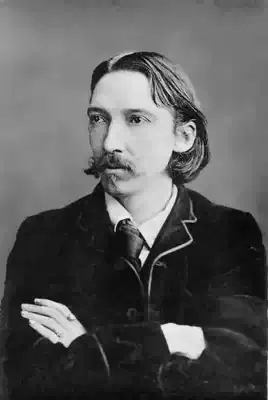
Robert Louis Stevenson
What Man May Learn, What Man May Do
What Man May Learn, What Man May Do
WHAT man may learn, what man may do,
Of right or wrong of false or true,
While, skipper-like, his course he steers
Through nine and twenty mingled years,
Half misconceived and half forgot,
So much I know and practise not.
Old are the words of wisdom, old
The counsels of the wise and bold:
To close the ears, to check the tongue,
To keep the pining spirit young;
To act the right, to say the true,
And to be kind whate'er you do.
Thus we across the modern stage
Follow the wise of every age;
And, as oaks grow and rivers run
Unchanged in the unchanging sun,
So the eternal march of man
Goes forth on an eternal plan.
WHAT man may learn, what man may do,
Of right or wrong of false or true,
While, skipper-like, his course he steers
Through nine and twenty mingled years,
Half misconceived and half forgot,
So much I know and practise not.
Old are the words of wisdom, old
The counsels of the wise and bold:
To close the ears, to check the tongue,
To keep the pining spirit young;
To act the right, to say the true,
And to be kind whate'er you do.
Thus we across the modern stage
Follow the wise of every age;
And, as oaks grow and rivers run
Unchanged in the unchanging sun,
So the eternal march of man
Goes forth on an eternal plan.
239
Robert Louis Stevenson
Sonnet VII
Sonnet VII
The strong man's hand, the snow-cool head of age,
The certain-footed sympathies of youth -
These, and that lofty passion after truth,
Hunger unsatisfied in priest or sage
Or the great men of former years, he needs
That not unworthily would dare to sing
(Hard task!) black care's inevitable ring
Settling with years upon the heart that feeds
Incessantly on glory. Year by year
The narrowing toil grows closer round his feet;
With disenchanting touch rude-handed time
The unlovely web discloses, and strange fear
Leads him at last to eld's inclement seat,
The bitter north of life - a frozen clime.
The strong man's hand, the snow-cool head of age,
The certain-footed sympathies of youth -
These, and that lofty passion after truth,
Hunger unsatisfied in priest or sage
Or the great men of former years, he needs
That not unworthily would dare to sing
(Hard task!) black care's inevitable ring
Settling with years upon the heart that feeds
Incessantly on glory. Year by year
The narrowing toil grows closer round his feet;
With disenchanting touch rude-handed time
The unlovely web discloses, and strange fear
Leads him at last to eld's inclement seat,
The bitter north of life - a frozen clime.
361

Robert Frost
The Secret Sits
The Secret Sits
We dance round in a ring and suppose,
But the Secret sits in the middle and knows.
We dance round in a ring and suppose,
But the Secret sits in the middle and knows.
422
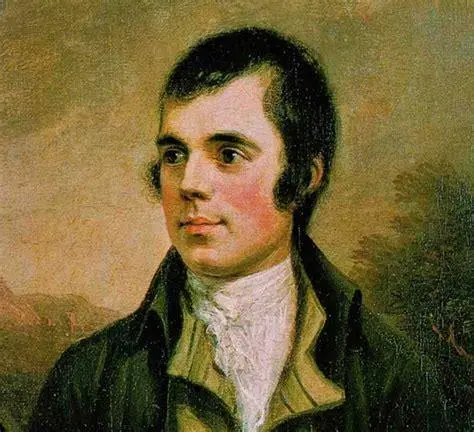
Robert Burns
Epistle to J. Lapraik (excerpt)
Epistle to J. Lapraik (excerpt)
I am nae poet, in a sense,
But just a rhymer like by chance,
An' hae to learning nae pretence;
Yet what the matter?
Whene'er my Muse does on me glance,
I jingle at her.
Your critic-folk may cock their nose,
And say, "How can you e'er propose,
You wha ken hardly verse frae prose,
To mak a sang?"
But, by your leave, my learned foes,
Ye're maybe wrang.
What's a' your jargon o' your schools,
Your Latin names for horns an' stools?
If honest nature made you fools,
What sairs your grammars?
Ye'd better taen up spades and shools,
Or knappin-hammers.
A set o' dull, conceited hashes
Confuse their brains in college classes!
They gang in stirks and come out asses,
Plain truth to speak;
An' syne they think to climb Parnassus
By dint o' Greek!
Gie me ae spark o' Nature's fire,
That's a' the learnin' I desire;
Then, tho' I drudge thro' dub an' mire
At pleugh or cart,
My Muse, though hamely in attire,
May touch the heart....
I am nae poet, in a sense,
But just a rhymer like by chance,
An' hae to learning nae pretence;
Yet what the matter?
Whene'er my Muse does on me glance,
I jingle at her.
Your critic-folk may cock their nose,
And say, "How can you e'er propose,
You wha ken hardly verse frae prose,
To mak a sang?"
But, by your leave, my learned foes,
Ye're maybe wrang.
What's a' your jargon o' your schools,
Your Latin names for horns an' stools?
If honest nature made you fools,
What sairs your grammars?
Ye'd better taen up spades and shools,
Or knappin-hammers.
A set o' dull, conceited hashes
Confuse their brains in college classes!
They gang in stirks and come out asses,
Plain truth to speak;
An' syne they think to climb Parnassus
By dint o' Greek!
Gie me ae spark o' Nature's fire,
That's a' the learnin' I desire;
Then, tho' I drudge thro' dub an' mire
At pleugh or cart,
My Muse, though hamely in attire,
May touch the heart....
259
Robert Burns
Address to the Unco Guid
Address to the Unco Guid
My Son, these maxims make a rule,
An' lump them aye thegither;
The Rigid Righteous is a fool,
The Rigid Wise anither:
The cleanest corn that ere was dight
May hae some pyles o' caff in;
So ne'er a fellow creature slight
For random fits o' daffin.
Solomon.--Eccles. ch. vii. verse
O ye wha are sae guid yoursel',
Sae pious and sae holy,
Ye've nought to do but mark and tell
Your neibours' fauts and folly!
Whase life is like a weel-gaun mill,
Supplied wi' store o' water;
The heapèd happer's ebbing still,
An' still the clap plays clatter.
Hear me, ye venerable core,
As counsel for poor mortals
That frequent pass douce Wisdom's door
For glaikit Folly's portals:
I, for their thoughtless, careless sakes,
Would here propone defences--
Their donsie tricks, their black mistakes,
Their failings and mischances.
Ye see your state wi' theirs compared,
And shudder at the niffer;
But cast a moment's fair regard,
What makes the mighty differ?
Discount what scant occassion gave,
That purity ye pride in;
And (what's aft mair than a' the lave)
Your better art o' hidin.
Think, when your castigated pulse
Gies now and then a wallop,
What ragings must his veins convulse,
That still eternal gallop!
Wi' wind and tide fair i' your tail,
Right on ye scud your sea-way;
But in the teeth o' baith to sail,
It maks a unco lee-way.
See Social Life and Glee sit down,
All joyous and unthinking,
Till, quite transmugrified, they're grown
Debauchery and Drinking:
O would they stay to calculate
Th' external consequences;
Or your more dreaded hell to state
Damnation of expenses!
Ye high, exalted, virtuous dames,
Tied up in godly laces,
Before ye gie poor Frailty names,
Suppose a change o' cases;
A dear-lov'd lad, convenience snug,
A treach'rous inclination--
But let me whisper i' your lug,
Ye're aiblins nae temptation.
Then gently scan your brother man,
Still gentler sister woman;
Tho' they may gang a kennin wrang,
To step aside is human;
One point must still be greatly dark,--
The moving Why they do it;
And just as lamely can ye mark,
How far perhaps they rue it.
Who made the heart, 'tis He alone
Decidedly can try us;
He knows each chord, its various tone,
Each spring, its various bias:
Then at the balance let's be mute,
We never can adjust it;
What's done we partly may compute,
But know not what's resisted.
My Son, these maxims make a rule,
An' lump them aye thegither;
The Rigid Righteous is a fool,
The Rigid Wise anither:
The cleanest corn that ere was dight
May hae some pyles o' caff in;
So ne'er a fellow creature slight
For random fits o' daffin.
Solomon.--Eccles. ch. vii. verse
O ye wha are sae guid yoursel',
Sae pious and sae holy,
Ye've nought to do but mark and tell
Your neibours' fauts and folly!
Whase life is like a weel-gaun mill,
Supplied wi' store o' water;
The heapèd happer's ebbing still,
An' still the clap plays clatter.
Hear me, ye venerable core,
As counsel for poor mortals
That frequent pass douce Wisdom's door
For glaikit Folly's portals:
I, for their thoughtless, careless sakes,
Would here propone defences--
Their donsie tricks, their black mistakes,
Their failings and mischances.
Ye see your state wi' theirs compared,
And shudder at the niffer;
But cast a moment's fair regard,
What makes the mighty differ?
Discount what scant occassion gave,
That purity ye pride in;
And (what's aft mair than a' the lave)
Your better art o' hidin.
Think, when your castigated pulse
Gies now and then a wallop,
What ragings must his veins convulse,
That still eternal gallop!
Wi' wind and tide fair i' your tail,
Right on ye scud your sea-way;
But in the teeth o' baith to sail,
It maks a unco lee-way.
See Social Life and Glee sit down,
All joyous and unthinking,
Till, quite transmugrified, they're grown
Debauchery and Drinking:
O would they stay to calculate
Th' external consequences;
Or your more dreaded hell to state
Damnation of expenses!
Ye high, exalted, virtuous dames,
Tied up in godly laces,
Before ye gie poor Frailty names,
Suppose a change o' cases;
A dear-lov'd lad, convenience snug,
A treach'rous inclination--
But let me whisper i' your lug,
Ye're aiblins nae temptation.
Then gently scan your brother man,
Still gentler sister woman;
Tho' they may gang a kennin wrang,
To step aside is human;
One point must still be greatly dark,--
The moving Why they do it;
And just as lamely can ye mark,
How far perhaps they rue it.
Who made the heart, 'tis He alone
Decidedly can try us;
He knows each chord, its various tone,
Each spring, its various bias:
Then at the balance let's be mute,
We never can adjust it;
What's done we partly may compute,
But know not what's resisted.
311
Robert Burns
A Bard's Epitaph
A Bard's Epitaph
Is there a whim-inspired fool,
Owre fast for thought, owre hot for rule,
Owre blate to seek, owre proud to snool,
Let him draw near;
And owre this grassy heap sing dool,
And drap a tear.
Is there a bard of rustic song,
Who, noteless, steals the crowds among,
That weekly this area throng,
O, pass not by!
But, with a frater-feeling strong,
Here, heave a sigh.
Is there a man, whose judgment clear
Can others teach the course to steer,
Yet runs, himself, life's mad career,
Wild as the wave,
Here pause-and, thro' the starting tear,
Survey this grave.
The poor inhabitant below
Was quick to learn the wise to know,
And keenly felt the friendly glow,
And softer flame;
But thoughtless follies laid him low,
And stain'd his name!
Reader, attend! whether thy soul
Soars fancy's flights beyond the pole,
Or darkling grubs this earthly hole,
In low pursuit:
Know, prudent, cautious, self-control
Is wisdom's root.
Is there a whim-inspired fool,
Owre fast for thought, owre hot for rule,
Owre blate to seek, owre proud to snool,
Let him draw near;
And owre this grassy heap sing dool,
And drap a tear.
Is there a bard of rustic song,
Who, noteless, steals the crowds among,
That weekly this area throng,
O, pass not by!
But, with a frater-feeling strong,
Here, heave a sigh.
Is there a man, whose judgment clear
Can others teach the course to steer,
Yet runs, himself, life's mad career,
Wild as the wave,
Here pause-and, thro' the starting tear,
Survey this grave.
The poor inhabitant below
Was quick to learn the wise to know,
And keenly felt the friendly glow,
And softer flame;
But thoughtless follies laid him low,
And stain'd his name!
Reader, attend! whether thy soul
Soars fancy's flights beyond the pole,
Or darkling grubs this earthly hole,
In low pursuit:
Know, prudent, cautious, self-control
Is wisdom's root.
500
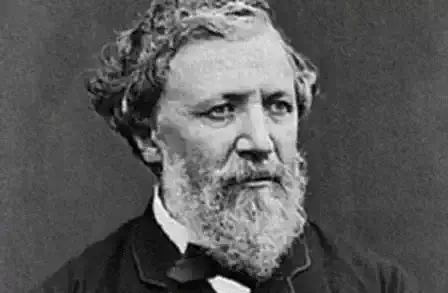
Robert Browning
Rabbi Ben Ezra
Rabbi Ben Ezra
Grow old along with me!
The best is yet to be,
The last of life, for which the first was made:
Our times are in His hand
Who saith 'A whole I planned,
Youth shows but half; trust God: see all, nor be afraid!'
Not that, amassing flowers,
Youth sighed 'Which rose make ours,
Which lily leave and then as best recall?'
Not that, admiring stars,
It yearned 'Nor Jove, nor Mars;
Mine be some figured flame which blends, transcends them all!'
Not for such hopes and fears
Annulling youth's brief years,
Do I remonstrate: folly wide the mark!
Rather I prize the doubt
Low kinds exist without,
Finished and finite clods, untroubled by a spark.
Poor vaunt of life indeed,
Were man but formed to feed
On joy, to solely seek and find and feast:
Such feasting ended, then
As sure an end to men;
Irks care the crop-full bird? Frets doubt the maw-crammed beast?
Rejoice we are allied
To That which doth provide
And not partake, effect and not receive!
A spark disturbs our clod;
Nearer we hold of God
Who gives, than of His tribes that take, I must believe.
Then, welcome each rebuff
That turns earth's smoothness rough,
Each sting that bids nor sit nor stand but go!
Be our joys three-parts pain!
Strive, and hold cheap the strain;
Learn, nor account the pang; dare, never grudge the throe!
For thence,--a paradox
Which comforts while it mocks,--
Shall life succeed in that it seems to fail:
What I aspired to be,
And was not, comforts me:
A brute I might have been, but would not sink i' the scale.
What is he but a brute
Whose flesh has soul to suit,
Whose spirit works lest arms and legs want play?
To man, propose this test--
Thy body at its best,
How far can that project thy soul on its lone way?
Yet gifts should prove their use:
I own the Past profuse
Of power each side, perfection every turn:
Eyes, ears took in their dole,
Brain treasured up the whole;
Should not the heart beat once 'How good to live and learn?'
Not once beat 'Praise be Thine!
I see the whole design,
I, who saw power, see now love perfect too:
Perfect I call Thy plan:
Thanks that I was a man!
Maker, remake, complete,--I trust what Thou shalt do!'
For pleasant is this flesh;
Our soul, in its rose-mesh
Pulled ever to the earth, still yearns for rest;
Would we some prize might hold
To match those manifold
Possessions of the brute,--gain most, as we did best!
Let us not always say,
'Spite of this flesh to-day
I strove, made head, gained ground upon the whole!'
As the bird wings and sings,
Let us cry 'All good things
Are ours, nor soul helps flesh more, now, than flesh helps soul!'
Therefore I summon age
To grant youth's heritage,
Life's struggle having so far reached its term:
Thence shall I pass, approved
A man, for aye removed
From the developed brute; a god though in the germ.
And I shall thereupon
Take rest, ere I be gone
Once more on my adventure brave and new:
Fearless and unperplexed,
When I wage battle next,
What weapons to select, what armour to indue.
Youth ended, I shall try
My gain or loss thereby;
Leave the fire ashes, what survives is gold:
And I shall weigh the same,
Give life its praise or blame:
Young, all lay in dispute; I shall know, being old.
For note, when evening shuts,
A certain moment cuts
The deed off, calls the glory from the grey:
A whisper from the west
Shoots--'Add this to the rest,
Take it and try its worth: here dies another day.'
So, still within this life,
Though lifted o'er its strife,
Let me discern, compare, pronounce at last,
This rage was right i' the main,
That acquiescence vain:
The Future I may face now I have proved the Past.'
For more is not reserved
To man, with soul just nerved
To act to-morrow what he learns to-day:
Here, work enough to watch
The Master work, and catch
Hints of the proper craft, tricks of the tool's true play.
As it was better, youth
Should strive, through acts uncouth,
Toward making, than repose on aught found made:
So, better, age, exempt
From strife, should know, than tempt
Further. Thou waitedst age: wait death nor be afraid!
Enough now, if the Right
And Good and Infinite
Be named here, as thou callest thy hand thine own
With knowledge absolute,
Subject to no dispute
From fools that crowded youth, nor let thee feel alone.
Be there, for once and all,
Severed great minds from small,
Announced to each his station in the Past!
Was I, the world arraigned,
Were they, my soul disdained,
Right? Let age speak the truth and give us peace at last!
Now, who shall arbitrate?
Ten men love what I hate,
Shun what I follow, slight what I receive;
Ten, who in ears and eyes
Match me: we all surmise,
They this thing, and I that: whom shall my soul believe?
Not on the vulgar mass
Called 'work,' must sentence pass,
Things done, that took the eye and had the price;
O'er which, from level stand,
The low world laid its hand,
Found straightway to its mind, could value in a trice:
But all, the world's coarse thumb
And finger failed to plumb,
So passed in making up the main account;
All instincts immature,
All purposes unsure,
That weighed not as his work, yet swelled the man's amount:
Thoughts hardly to be packed
Into a narrow act,
Fancies that broke through language and escaped;
All I could never be,
All, men ignored in me,
This, I was worth to God, whose wheel the pitcher shaped.
Ay, note that Potter's wheel,
That metaphor! and feel
Why time spins fast, why passive lies our clay,--
Thou, to whom fools propound,
When the wine makes its round,
'Since life fleets, all is change; the Past gone, seize to-day!'
Fool! All that is, at all,
Lasts ever, past recall;
Earth changes, but thy soul and God stand sure:
What entered into thee,
That was, is, and shall be:
Time's wheel runs back or stops: Potter and clay endure.
He fixed thee mid this dance
Of plastic circumstance,
This Present, thou, forsooth, wouldst fain arrest:
Machinery just meant
To give thy soul its bent,
Try thee and turn thee forth, sufficiently impressed.
What though the earlier grooves,
Which ran the laughing loves
Around thy base, no longer pause and press?
What though, about thy rim,
Skull-things in order grim
Grow out, in graver mood, obey the sterner stress?
Look not thou down but up!
To uses of a cup,
The festal board, lamp's flash and trumpet's peal,
The new wine's foaming flow,
The Master's lips a-glow!
Thou, heaven's consummate cup, what need'st thou with earth's wheel?
But I need, now as then,
Thee, God, who mouldest men;
And since, not even while the whirl was worst,
Did I,--to the wheel of life
With shapes and colours rife,
Bound dizzily,--mistake my end, to slake Thy thirst:
So, take and use Thy work:
Amend what flaws may lurk,
What strain o' the stuff, what warpings past the aim!
My times be in Thy hand!
Perfect the cup as planned!
Let age approve of youth, and death complete the same!
Grow old along with me!
The best is yet to be,
The last of life, for which the first was made:
Our times are in His hand
Who saith 'A whole I planned,
Youth shows but half; trust God: see all, nor be afraid!'
Not that, amassing flowers,
Youth sighed 'Which rose make ours,
Which lily leave and then as best recall?'
Not that, admiring stars,
It yearned 'Nor Jove, nor Mars;
Mine be some figured flame which blends, transcends them all!'
Not for such hopes and fears
Annulling youth's brief years,
Do I remonstrate: folly wide the mark!
Rather I prize the doubt
Low kinds exist without,
Finished and finite clods, untroubled by a spark.
Poor vaunt of life indeed,
Were man but formed to feed
On joy, to solely seek and find and feast:
Such feasting ended, then
As sure an end to men;
Irks care the crop-full bird? Frets doubt the maw-crammed beast?
Rejoice we are allied
To That which doth provide
And not partake, effect and not receive!
A spark disturbs our clod;
Nearer we hold of God
Who gives, than of His tribes that take, I must believe.
Then, welcome each rebuff
That turns earth's smoothness rough,
Each sting that bids nor sit nor stand but go!
Be our joys three-parts pain!
Strive, and hold cheap the strain;
Learn, nor account the pang; dare, never grudge the throe!
For thence,--a paradox
Which comforts while it mocks,--
Shall life succeed in that it seems to fail:
What I aspired to be,
And was not, comforts me:
A brute I might have been, but would not sink i' the scale.
What is he but a brute
Whose flesh has soul to suit,
Whose spirit works lest arms and legs want play?
To man, propose this test--
Thy body at its best,
How far can that project thy soul on its lone way?
Yet gifts should prove their use:
I own the Past profuse
Of power each side, perfection every turn:
Eyes, ears took in their dole,
Brain treasured up the whole;
Should not the heart beat once 'How good to live and learn?'
Not once beat 'Praise be Thine!
I see the whole design,
I, who saw power, see now love perfect too:
Perfect I call Thy plan:
Thanks that I was a man!
Maker, remake, complete,--I trust what Thou shalt do!'
For pleasant is this flesh;
Our soul, in its rose-mesh
Pulled ever to the earth, still yearns for rest;
Would we some prize might hold
To match those manifold
Possessions of the brute,--gain most, as we did best!
Let us not always say,
'Spite of this flesh to-day
I strove, made head, gained ground upon the whole!'
As the bird wings and sings,
Let us cry 'All good things
Are ours, nor soul helps flesh more, now, than flesh helps soul!'
Therefore I summon age
To grant youth's heritage,
Life's struggle having so far reached its term:
Thence shall I pass, approved
A man, for aye removed
From the developed brute; a god though in the germ.
And I shall thereupon
Take rest, ere I be gone
Once more on my adventure brave and new:
Fearless and unperplexed,
When I wage battle next,
What weapons to select, what armour to indue.
Youth ended, I shall try
My gain or loss thereby;
Leave the fire ashes, what survives is gold:
And I shall weigh the same,
Give life its praise or blame:
Young, all lay in dispute; I shall know, being old.
For note, when evening shuts,
A certain moment cuts
The deed off, calls the glory from the grey:
A whisper from the west
Shoots--'Add this to the rest,
Take it and try its worth: here dies another day.'
So, still within this life,
Though lifted o'er its strife,
Let me discern, compare, pronounce at last,
This rage was right i' the main,
That acquiescence vain:
The Future I may face now I have proved the Past.'
For more is not reserved
To man, with soul just nerved
To act to-morrow what he learns to-day:
Here, work enough to watch
The Master work, and catch
Hints of the proper craft, tricks of the tool's true play.
As it was better, youth
Should strive, through acts uncouth,
Toward making, than repose on aught found made:
So, better, age, exempt
From strife, should know, than tempt
Further. Thou waitedst age: wait death nor be afraid!
Enough now, if the Right
And Good and Infinite
Be named here, as thou callest thy hand thine own
With knowledge absolute,
Subject to no dispute
From fools that crowded youth, nor let thee feel alone.
Be there, for once and all,
Severed great minds from small,
Announced to each his station in the Past!
Was I, the world arraigned,
Were they, my soul disdained,
Right? Let age speak the truth and give us peace at last!
Now, who shall arbitrate?
Ten men love what I hate,
Shun what I follow, slight what I receive;
Ten, who in ears and eyes
Match me: we all surmise,
They this thing, and I that: whom shall my soul believe?
Not on the vulgar mass
Called 'work,' must sentence pass,
Things done, that took the eye and had the price;
O'er which, from level stand,
The low world laid its hand,
Found straightway to its mind, could value in a trice:
But all, the world's coarse thumb
And finger failed to plumb,
So passed in making up the main account;
All instincts immature,
All purposes unsure,
That weighed not as his work, yet swelled the man's amount:
Thoughts hardly to be packed
Into a narrow act,
Fancies that broke through language and escaped;
All I could never be,
All, men ignored in me,
This, I was worth to God, whose wheel the pitcher shaped.
Ay, note that Potter's wheel,
That metaphor! and feel
Why time spins fast, why passive lies our clay,--
Thou, to whom fools propound,
When the wine makes its round,
'Since life fleets, all is change; the Past gone, seize to-day!'
Fool! All that is, at all,
Lasts ever, past recall;
Earth changes, but thy soul and God stand sure:
What entered into thee,
That was, is, and shall be:
Time's wheel runs back or stops: Potter and clay endure.
He fixed thee mid this dance
Of plastic circumstance,
This Present, thou, forsooth, wouldst fain arrest:
Machinery just meant
To give thy soul its bent,
Try thee and turn thee forth, sufficiently impressed.
What though the earlier grooves,
Which ran the laughing loves
Around thy base, no longer pause and press?
What though, about thy rim,
Skull-things in order grim
Grow out, in graver mood, obey the sterner stress?
Look not thou down but up!
To uses of a cup,
The festal board, lamp's flash and trumpet's peal,
The new wine's foaming flow,
The Master's lips a-glow!
Thou, heaven's consummate cup, what need'st thou with earth's wheel?
But I need, now as then,
Thee, God, who mouldest men;
And since, not even while the whirl was worst,
Did I,--to the wheel of life
With shapes and colours rife,
Bound dizzily,--mistake my end, to slake Thy thirst:
So, take and use Thy work:
Amend what flaws may lurk,
What strain o' the stuff, what warpings past the aim!
My times be in Thy hand!
Perfect the cup as planned!
Let age approve of youth, and death complete the same!
318
Robert Browning
Bishop Blougram's Apology
Bishop Blougram's Apology
NO more wine? then we'll push back chairs and talk.
A final glass for me, though: cool, i' faith!
We ought to have our Abbey back, you see.
It's different, preaching in basilicas,
And doing duty in some masterpiece
Like this of brother Pugin's, bless his heart!
I doubt if they're half baked, those chalk rosettes,
Ciphers and stucco-twiddlings everywhere;
It's just like breathing in a lime-kiln: eh?
These hot long ceremonies of our church
Cost us a little--oh, they pay the price,
You take me--amply pay it! Now, we'll talk.
So, you despise me, Mr. Gigadibs.
No deprecation,--nay, I beg you, sir!
Beside 't is our engagement: don't you know,
I promised, if you'd watch a dinner out,
We'd see truth dawn together?--truth that peeps
Over the glasses' edge when dinner's done,
And body gets its sop and holds its noise
And leaves soul free a little. Now's the time:
'T is break of day! You do despise me then.
And if I say, "despise me,"--never fear!
I know you do not in a certain sense--
Not in my arm-chair, for example: here,
I well imagine you respect my place
( Status, entourage , worldly circumstance)
Quite to its value--very much indeed:
--Are up to the protesting eyes of you
In pride at being seated here for once--
You'll turn it to such capital account!
When somebody, through years and years to come,
Hints of the bishop,--names me--that's enough:
"Blougram? I knew him"--(into it you slide)
"Dined with him once, a Corpus Christi Day,
"All alone, we two; he's a clever man:
"And after dinner,--why, the wine you know,--
"Oh, there was wine, and good!--what with the wine . .
"'Faith, we began upon all sorts of talk!
"He's no bad fellow, Blougram; he had seen
"Something of mine he relished, some review:
"He's quite above their humbug in his heart,
"Half-said as much, indeed--the thing's his trade.
"I warrant, Blougram's sceptical at times:
"How otherwise? I liked him, I confess!"
Che che , my dear sir, as we say at Rome,
Don't you protest now! It's fair give and take;
You have had your turn and spoken your home-truths:
The hand's mine now, and here you follow suit.
Thus much conceded, still the first fact stays--
You do despise me; your ideal of life
Is not the bishop's: you would not be I.
You would like better to be Goethe, now,
Or Buonaparte, or, bless me, lower still,
Count D'Orsay,--so you did what you preferred,
Spoke as you thought, and, as you cannot help,
Believed or disbelieved, no matter what,
So long as on that point, whate'er it was,
You loosed your mind, were whole and sole yourself.
--That, my ideal never can include,
Upon that element of truth and worth
Never be based! for say they make me Pope--
(They can't--suppose it for our argument!)
Why, there I'm at my tether's end, I've reached
My height, and not a height which pleases you:
An unbelieving Pope won't do, you say.
It's like those eerie stories nurses tell,
Of how some actor on a stage played Death,
With pasteboard crown, sham orb and tinselled dart,
And called himself the monarch of the world;
Then, going in the tire-room afterward,
Because the play was done, to shift himself,
Got touched upon the sleeve familiarly,
The moment he had shut the closet door,
By Death himself. Thus God might touch a Pope
At unawares, ask what his baubles mean,
And whose part he presumed to play just now?
Best be yourself, imperial, plain and true!
So, drawing comfortable breath again,
You weigh and find, whatever more or less
I boast of my ideal realized,
Is nothing in the balance when opposed
To your ideal, your grand simple life,
Of which you will not realize one jot.
I am much, you are nothing; you would be all,
I would be merely much: you beat me there.
No, friend, you do not beat me: hearken why!
The common problem, yours, mine, every one's,
Is--not to fancy what were fair in life
Provided it could be,--but, finding first
What may be, then find how to make it fair
Up to our means: a very different thing!
No abstract intellectual plan of life
Quite irrespective of life's plainest laws,
But one, a man, who is man and nothing more,
May lead within a world which (by your leave)
Is Rome or London, not Fool's-paradise.
Embellish Rome, idealize away,
Make paradise of London if you can,
You're welcome, nay, you're wise.
A simile!
We mortals cross the ocean of this world
Each in his average cabin of a life;
The best's not big, the worst yields elbow-room.
Now for our six months' voyage--how prepare?
You come on shipboard with a landsman's list
Of things he calls convenient: so they are!
An India screen is pretty furniture,
A piano-forte is a fine resource,
All Balzac's novels occupy one shelf,
The new edition fifty volumes long;
And little Greek books, with the funny type
They get up well at Leipsic, fill the next:
Go on! slabbed marble, what a bath it makes!
And Parma's pride, the Jerome, let us add!
'T were pleasant could Correggio's fleeting glow
Hang full in face of one where'er one roams,
Since he more than the others brings with him
Italy's self,--the marvellous Modenese!--
Yet was not on your list before, perhaps.
--Alas, friend, here's the agent . . . is't the name?
The captain, or whoever's master here--
You see him screw his face up; what's his cry
Ere you set foot on shipboard? "Six feet square!"
If you won't understand what six feet mean,
Compute and purchase stores accordingly--
And if, in pique because he overhauls
Your Jerome, piano, bath, you come on board
Bare--why, you cut a figure at the first
While sympathetic landsmen see you off;
Not afterward, when long ere half seas over,
You peep up from your utterly naked boards
Into some snug and well-appointed berth,
Like mine for instance (try the cooler jug--
Put back the other, but don't jog the ice!)
And mortified you mutter "Well and good;
"He sits enjoying his sea-furniture;
"'T is stout and proper, and there's store of it:
"Though I've the better notion, all agree,
"Of fitting rooms up. Hang the carpenter,
"Neat ship-shape fixings and contrivances--
"I would have brought my Jerome, frame and all!"
And meantime you bring nothing: never mind--
You've proved your artist-nature: what you don't
You might bring, so despise me, as I say.
Now come, let's backward to the starting-place.
See my way: we're two college friends, suppose.
Prepare together for our voyage, then;
Each note and check the other in his work,--
Here's mine, a bishop's outfit; criticize!
What's wrong? why won't you be a bishop too?
Why first, you don't believe, you don't and can't,
(Not statedly, that is, and fixedly
And absolutely and exclusively)
In any revelation called divine.
No dogmas nail your faith; and what remains
But say so, like the honest man you are?
First, therefore, overhaul theology!
Nay, I too, not a fool, you please to think,
Must find believing every whit as hard:
And if I do not frankly say as much,
The ugly consequence is clear enough.
Now wait, my friend: well, I do not believe--
If you'll accept no faith that is not fixed,
Absolute and exclusive, as you say.
You're wrong--I mean to prove it in due time.
Meanwhile, I know where difficulties lie
I could not, cannot solve, nor ever shall,
So give up hope accordingly to solve--
(To you, and over the wine). Our dogmas then
With both of us, though in unlike degree,
Missing full credence--overboard with them!
I mean to meet you on your own premise:
Good, there go mine in company with yours!
And now what are we? unbelievers both,
Calm and complete, determinately fixed
To-day, to-morrow and for ever, pray?
You'll guarantee me that? Not so, I think!
In no wise! all we've gained is, that belief,
As unbelief before, shakes us by fits,
Confounds us like its predecessor. Where's
The gain? how can we guard our unbelief,
Make it bear fruit to us?--the problem here.
Just when we are safest, there's a sunset-touch,
A fancy from a flower-bell, some one's death,
A chorus-ending from Euripides,--
And that's enough for fifty hopes and fears
As old and new at once as nature's self,
To rap and knock and enter in our soul,
Take hands and dance there, a fantastic ring,
Round the ancient idol, on his base again,--
The grand Perhaps! We look on helplessly.
There the old misgivings, crooked questions are--
This good God,--what he could do, if he would,
Would, if he could--then must have done long since:
If so, when, where and how? some way must be,--
Once feel about, and soon or late you hit
Some sense, in which it might be, after all.
Why not, "The Way, the Truth, the Life?"
--That way
Over the mountain, which who stands upon
Is apt to doubt if it be meant for a road;
While, if he views it from the waste itself,
Up goes the line there, plain from base to brow,
Not vague, mistakeable! what's a break or two
Seen from the unbroken desert either side?
And then (to bring in fresh philosophy)
What if the breaks themselves should prove at last
The most consummate of contrivances
To train a man's eye, teach him what is faith?
And so we stumble at truth's very test!
All we have gained then by our unbelief
Is a life of doubt diversified by faith,
For one of faith diversified by doubt:
We called the chess-board white,--we call it black.
"Well," you rejoin, "the end's no worse, at least;
"We've reason for both colours on the board:
"Why not confess then, where I drop the faith
"And you the doubt, that I'm as right as you?"
Because, friend, in the next place, this being so,
And both things even,--faith and unbelief
Left to a man's choice,--we'll proceed a step,
Returning to our image, which I like.
A man's choice, yes--but a cabin-passenger's--
The man made for the special life o' the world--
Do you forget him? I remember though!
Consult our ship's conditions and you find
One and but one choice suitable to all;
The choice, that you unluckily prefer,
Turning things topsy-turvy--they or it
Going to the ground. Belief or unbelief
Bears upon life, determines its whole course,
Begins at its beginning. See the world
Such as it is,--you made it not, nor I;
I mean to take it as it is,--and you,
Not so you'll take it,--though you get nought else.
I know the special kind of life I like,
What suits the most my idiosyncrasy,
Brings out the best of me and bears me fruit
In power, peace, pleasantness and length of days.
I find that positive belief does this
For me, and unbelief, no whit of this.
--For you, it does, however?--that, we'll try!
'T is clear, I cannot lead my life, at least,
Induce the world to let me peaceably,
Without declaring at the outset, "Friends,
"I absolutely and peremptorily
"Believe!"--I say, faith is my waking life:
One sleeps, indeed, and dreams at intervals,
We know, but waking's the main point with us
And my provision's for life's waking part.
Accordingly, I use heart, head and hand
All day, I build, scheme, study, and make friends;
And when night overtakes me, down I lie,
Sleep, dream a little, and get done with it,
The sooner the better, to begin afresh.
What's midnight doubt before the dayspring's faith?
You, the philosopher, that disbelieve,
That recognize the night, give dreams their weight--
To be consistent you should keep your bed,
Abstain from healthy acts that prove you man,
For fear you drowse perhaps at unawares!
And certainly at night you'll sleep and dream,
Live through the day and bustle as you please.
And so you live to sleep as I to wake,
To unbelieve as I to still believe?
Well, and the common sense o' the world calls you
Bed-ridden,--and its good things come to me.
Its estimation, which is half the fight,
That's the first-cabin comfort I secure:
The next . . . but you perceive with half an eye!
Come, come, it's best believing, if we may;
You can't but own that!
Next, concede again,
If once we choose belief, on all accounts
We can't be too decisive in our faith,
Conclusive and exclusive in its terms,
To suit the world which gives us the good things.
In every man's career are certain points
Whereon he dares not be indifferent;
The world detects him clearly, if he dare,
As baffled at the game, and losing life.
He may care little or he may care much
For riches, honour, pleasure, work, repose,
Since various theories of life and life's
Success are extant which might easily
Comport with either estimate of these;
And whoso chooses wealth or poverty,
Labour or quiet, is not judged a fool
Because his fellow would choose otherwise:
We let him choose upon his own account
So long as he's consistent with his choice.
But certain points, left wholly to himself,
When once a man has arbitrated on,
We say he must succeed there or go hang.
Thus, he should wed the woman he loves most
Or needs most, whatsoe'er the love or need--
For he can't wed twice. Then, he must avouch,
Or follow, at the least, sufficiently,
The form of faith his conscience holds the best,
Whate'er the process of conviction was:
For nothing can compensate his mistake
On such a point, the man himself being judge:
He cannot wed twice, nor twice lose his soul.
Well now, there's one great form of Christian faith
I happened to be born in--which to teach
Was given me as I grew up, on all hands,
As best and readiest means of living by;
The same on examination being proved
The most pronounced moreover, fixed, precise
And absolute form of faith in the whole world--
Accordingly, most potent of all forms
For working on the world. Observe, my friend!
Such as you know me, I am free to say,
In these hard latter days which hamper one,
Myself--by no immoderate exercise
Of intellect and learning, but the tact
To let external forces work for me,
--Bid the street's stones be bread and they are bread;
Bid Peter's creed, or rather, Hildebrand's,
Exalt me o'er my fellows in the world
And make my life an ease and joy and pride;
It does so,--which for me's a great point gained,
Who have a soul and body that exact
A comfortable care in many ways.
There's power in me and will to dominate
Which I must exercise, they hurt me else:
In many ways I need mankind's respect,
Obedience, and the love that's born of fear:
While at the same time, there's a taste I have,
A toy of soul, a titillating thing,
Refuses to digest these dainties crude.
The naked life is gross till clothed upon:
I must take what men offer, with a grace
As though I would not, could I help it, take!
An uniform I wear though over-rich--
Something imposed on me, no choice of mine;
No fancy-dress worn for pure fancy's sake
And despicable therefore! now folk kneel
And kiss my hand--of course the Church's hand.
Thus I am made, thus life is best for me,
And thus that it should be I have procured;
And thus it could not be another way,
I venture to imagine.
You'll reply,
So far my choice, no doubt, is a success;
But were I made of better elements,
With nobler instincts, purer tastes, like you,
I hardly would account the thing success
Though it did all for me I say.
But, friend,
We speak of what is; not of what might be,
And how't were better if't were otherwise.
I am the man you see here plain enough:
Grant I'm a beast, why, beasts must lead beasts' lives!
Suppose I own at once to tail and claws;
The tailless man exceeds me: but being tailed
I'll lash out lion fashion, and leave apes
To dock their stump and dress their haunches up.
My business is not to remake myself,
But make the absolute best of what God made.
Or--our first simile--though you prove me doomed
To a viler berth still, to the steerage-hole,
The sheep-pen or the pig-stye, I should strive
To make what use of each were possible;
And as this cabin gets upholstery,
That hutch should rustle with sufficient straw.
But, friend, I don't acknowledge quite so fast
I fail of all your manhood's lofty tastes
Enumerated so complacently,
On the mere ground that you forsooth can find
In this particular life I choose to lead
No fit provision for them. Can you not?
Say you, my fault is I address myself
To grosser estimators than should judge?
And that's no way of holding up the soul,
Which, nobler, needs men's praise perhaps, yet knows
One wise man's verdict outweighs all the fools'--
Would like the two, but, forced to choose, takes that.
I pine among my million imbeciles
(You think) aware some dozen men of sense
Eye me and know me, whether I believe
In the last winking Virgin, as I vow,
And am a fool, or disbelieve in her
And am a knave,--approve in neither case,
Withhold their voices though I look their way:
Like Verdi when, at his worst opera's end
(The thing they gave at Florence,--what's its name?)
While the mad houseful's plaudits near out-bang
His orchestra of salt-box, tongs and bones,
He looks through all the roaring and the wreaths
Where sits Rossini patient in his stall.
Nay, friend, I meet you with an answer here--
That even your prime men who appraise their kind
Are men still, catch a wheel within a wheel,
See more in a truth than the truth's simple self,
Confuse themselves. You see lads walk the street
Sixty the minute; what's to note in that?
You see one lad o'erstride a chimney-stack;
Him you must watch--he's sure to fall, yet stands!
Our interest's on the dangerous edge of things.
The honest thief, the tender murderer,
The superstitious atheist, demirep
That loves and saves her soul in new French books--
We watch while these in equilibrium keep
The giddy line midway: one step aside,
They're classed and done with. I, then, keep the line
Before your sages,--just the men to shrink
From the gross weights, coarse scales and labels broad
You offer their refinement. Fool or knave?
Why needs a bishop be a fool or knave
When there's a thousand diamond weights between?
So, I enlist them. Your picked twelve, you'll find,
Profess themselves indignant, scandalized
At thus being held unable to explain
How a superior man who disbelieves
May not believe as well: that's Schelling's way!
It's through my coming in the tail of time,
Nicking the minute with a happy tact.
Had I been born three hundred years ago
They'd say, "What's strange? Blougram of course believes;"
And, seventy years since, "disbelieves of course."
But now, "He may believe; and yet, and yet
"How can he?" All eyes turn with interest.
Whereas, step off the line on either side--
You, for example, clever to a fault,
The rough and ready man who write apace,
Read somewhat seldomer, think perhaps even less--
You disbelieve! Who wonders and who cares?
Lord So-and-so--his coat bedropped with wax,
All Peter's chains about his waist, his back
Brave with the needlework of Noodledom--
Believes! Again, who wonders and who cares?
But I, the man of sense and learning too,
The able to think yet act, the this, the that,
I, to believe at this late time of day!
Enough; you see, I need not fear contempt.
--Except it's yours! Admire me as these may,
You don't. But whom at least do you admire?
Present your own perfection, your ideal,
Your pattern man for a minute--oh, make haste
Is it Napoleon you would have us grow?
Concede the means; allow his head and hand,
(A large concession, clever as you are)
Good! In our common primal element
Of unbelief (we can't believe, you know--
We're still at that admission, recollect!)
Where do you find--apart from, towering o'er
The secondary temporary aims
Which satisfy the gross taste you despise--
Where do you find his star?--his crazy trust
God knows through what or in what? it's alive
And shines and leads him, and that's all we want.
Have we aught in our sober night shall point
Such ends as his were, and direct the means
Of working out our purpose straight as his,
Nor bring a moment's trouble on success
With after-care to justify the same?
--Be a Napoleon, and yet disbelieve--
Why, the man's mad, friend, take his light away!
What's the vague good o' the world, for which you dare
With comfort to yourself blow millions up?
We neither of us see it! we do see
The blown-up millions--spatter of their brains
And writhing of their bowels and so forth,
In that bewildering entanglement
Of horrible eventualities
Past calculation to the end of time!
Can I mistake for some clear word of God
(Which were my ample warrant for it all)
His puff of hazy instinct, idle talk,
"The State, that's I," quack-nonsense about crowns,
And (when one beats the man to his last hold)
A vague idea of setting things to rights,
Policing people efficaciously,
More to their profit, most of all to his own;
The whole to end that dismallest of ends
By an Austrian marriage, cant to us the Church,
And resurrection of the old régime ?
Would I, who hope to live a dozen years,
Fight Austerlitz for reasons such and such?
No: for, concede me but the merest chance
Doubt may be wrong--there's judgment, life to come!
With just that chance, I dare not. Doubt proves right?
This present life is all?--you offer me
Its dozen noisy years, without a chance
That wedding an archduchess, wearing lace,
And getting called by divers new-coined names,
Will drive off ugly thoughts and let me dine,
Sleep, read and chat in quiet as I like!
Therefore I will not.
Take another case;
Fit up the cabin yet another way.
What say you to the poets? shall we write
Hamlet, Othello--make the world our own,
Without a risk to run of either sort?
I can't--to put the strongest reason first.
"But try," you urge, "the trying shall suffice;
"The aim, if reached or not, makes great the life:
"Try to be Shakespeare, leave the rest to fate!"
Spare my self-knowledge--there's no fooling me!
If I prefer remaining my poor self,
I say so not in self-dispraise but praise.
If I'm a Shakespeare, let the well alone;
Why should I try to be what now I am?
If I'm no Shakespeare, as too probable,--
His power and consciousness and self-delight
And all we want in common, shall I find--
Trying for ever? while on points of taste
Wherewith, to speak it humbly, he and I
Are dowered alike--I'll ask you, I or he,
Which in our two lives realizes most?
Much, he imagined--somewhat, I possess.
He had the imagination; stick to that!
Let him say, "In the face of my soul's works
"Your world is worthless and I touch it not
"Lest I should wrong them"--I'll withdraw my plea.
But does he say so? look upon his life!
Himself, who only can, gives judgment there.
He leaves his towers and gorgeous palaces
To build the trimmest house in Stratford town;
Saves money, spends it, owns the worth of things,
Giulio Romano's pictures, Dowland's lute;
Enjoys a show, respects the puppets, too,
And none more, had he seen its entry once,
Than "Pandulph, of fair Milan cardinal."
Why then should I who play that personage,
The very Pandulph Shakespeare's fancy made,
Be told that had the poet chanced to start
From where I stand now (some degree like mine
Being just the goal he ran his race to reach)
He would have run the whole race back, forsooth,
And left being Pandulph, to begin write plays?
Ah, the earth's best can be but the earth's best!
Did Shakespeare live, he could but sit at home
And get himself in dreams the Vatican,
Greek busts, Venetian paintings, Roman walls,
And English books, none equal to his own,
Which I read, bound in gold (he never did).
--Terni's fall, Naples' bay and Gothard's top--
Eh, friend? I could not fancy one of these;
But, as I pour this claret, there they are:
I've gained them--crossed St. Gothard last July
With ten mules to the carriage and a bed
Slung inside; is my hap the worse for that?
We want the same things, Shakespeare and myself,
And what I want, I have: he, gifted more,
Could fancy he too had them when he liked,
But not so thoroughly that, if fate allowed,
He would not have them also in my sense.
We play one game; I send the ball aloft
No less adroitly that of fifty strokes
Scarce five go o'er the wall so wide and high
Which sends them back to me: I wish and get
He struck balls higher and with better skill,
But at a poor fence level with his head,
And hit--his Stratford house, a coat of arms,
Successful dealings in his grain and wool,--
While I receive heaven's incense in my nose
And style myself the cousin of Queen Bess.
Ask him, if this life's all, who wins the game?
Believe--and our whole argument breaks up.
Enthusiasm's the best thing, I repeat;
Only, we can't command it; fire and life
Are all, dead matter's nothing, we agree:
And be it a mad dream or God's very breath,
The fact's the same,--belief's fire, once in us,
Makes of all else mere stuff to show itself:
We penetrate our life with such a glow
As fire lends wood and iron--this turns steel,
That burns to ash--all's one, fire proves its power
For good or ill, since men call flare success.
But paint a fire, it will not therefore burn.
Light one in me, I'll find it food enough!
Why, to be Luther--that's a life to lead,
Incomparably better than my own.
He comes, reclaims God's earth for God, he says,
Sets up God's rule again by simple means,
Re-opens a shut book, and all is done.
He flared out in the flaring of mankind;
Such Luther's luck was: how shall such be mine?
If he succeeded, nothing's left to do:
And if he did not altogether--well,
Strauss is the next advance. All Strauss should be
I might be also. But to what result?
He looks upon no future: Luther did.
What can I gain on the denying side?
Ice makes no conflagration. State the facts,
Read the text right, emancipate the world--
The emancipated world enjoys itself
With scarce a thank-you: Blougram told it first
It could not owe a farthing,--not to him
More than Saint Paul! 't would press its pay, you think?
Then add there's still that plaguy hundredth chance
Strauss may be wrong. And so a risk is run--
For what gain? not for Luther's, who secured
A real heaven in his heart throughout his life,
Supposing death a little altered things.
"Ay, but since really you lack faith," you cry,
"You run the same risk really on all sides,
"In cool indifference as bold unbelief.
"As well be Strauss as swing 'twixt Paul and him.
"It's not worth having, such imperfect faith,
"No more available to do faith's work
"Than unbelief like mine. Whole faith, or none!"
Softly, my friend! I must dispute that point
Once own the use of faith, I'll find you faith.
We're back on Christian ground. You call for faith:
I show you doubt, to prove that faith exists.
The more of doubt, the stronger faith, I say,
If faith o'ercomes doubt. How I know it does?
By life and man's free will, God gave for that!
To mould life as we choose it, shows our choice:
That's our one act, the previous work's his own.
You criticize the soul? it reared this tree--
This broad life and whatever fruit it bears!
What matter though I doubt at every pore,
Head-doubts, heart-doubts, doubts at my fingers' ends,
Doubts in the trivial work of every day,
Doubts at the very bases of my soul
In the grand moments when she probes herself--
If finally I have a life to show,
The thing I did, brought out in evidence
Against the thing done to me underground
By hell and all its brood, for aught I know?
I say, whence sprang this? shows it faith or doubt?
All's doubt in me; where's break of faith in this?
It is the idea, the feeling and the love,
God means mankind should strive for and show forth
Whatever be the process to that end,--
And not historic knowledge, logic sound,
And metaphysical acumen, sure!
"What think ye of Christ," friend? when all's done and said,
Like you this Christianity or not?
It may be false, but will you wish it true?
Has it your vote to be so if it can?
Trust you an instinct silenced long ago
That will break silence and enjoin you love
What mortified philosophy is hoarse,
And all in vain, with bidding you despise?
If you desire faith--then you've faith enough:
What else seeks God--nay, what else seek ourselves?
You form a notion of me, we'll suppose,
On hearsay; it's a favourable one:
"But still" (you add), "there was no such good man,
"Because of contradiction in the facts.
"One proves, for instance, he was born in Rome,
"This Blougram; yet throughout the tales of him
"I see he figures as an Englishman."
Well, the two things are reconcileable.
But would I rather you discovered that,
Subjoining--"Still, what matter though they be?
"Blougram concerns me nought, born here or there."
Pure faith indeed--you know not what you ask!
Naked belief in God the Omnipotent,
Omniscient, Omnipresent, sears too much
The sense of conscious creatures to be borne.
It were the seeing him, no flesh shall dare
Some think, Creation's meant to show him forth:
I say it's meant to hide him all it can,
And that's what all the blessed evil's for.
Its use in Time is to environ us,
Our breath, our drop of dew, with shield enough
Against that sight till we can bear its stress.
Under a vertical sun, the exposed brain
And lidless eye and disemprisoned heart
Less certainly would wither up at once
Than mind, confronted with the truth of him.
But time and earth case-harden us to live;
The feeblest sense is trusted most; the child
Feels God a moment, ichors o'er the place,
Plays on and grows to be a man like us.
With me, faith means perpetual unbelief
Kept quiet like the snake 'neath Michael's foot
Who stands calm just because he feels it writhe.
Or, if that's too ambitious,--here's my box--
I need the excitation of a pinch
Threatening the torpor of the inside-nose
Nigh on the imminent sneeze that never comes.
"Leave it in peace" advise the simple folk:
Make it aware of peace by itching-fits,
Say I--let doubt occasion still more faith!
You'll say, once all believed, man, woman, child,
In that dear middle-age these noodles praise.
How you'd exult if I could put you back
Six hundred years, blot out cosmogony,
Geology, ethnology, what not
(Greek endings, each the little passing-bell
That signifies some faith's about to die),
And set you square with Genesis again,--
When such a traveller told you his last news,
He saw the ark a-top of Ararat
But did not climb there since 't was getting dusk
And robber-bands infest the mountain's foot!
How should you feel, I ask, in such an age,
How act? As other people felt and did;
With soul more blank than this decanter's knob,
Believe--and yet lie, kill, rob, fornicate
Full in belief's face, like the beast you'd be!
No, when the fight begins within himself,
A man's worth something. God stoops o'er his head,
Satan looks up between his feet--both tug--
He's left, himself, i' the middle: the soul wakes
And grows. Prolong that battle through his life!
Never leave growing till the life to come!
Here, we've got callous to the Virgin's winks
That used to puzzle people wholesomely:
Men have outgrown the shame of being fools.
What are the laws of nature, not to bend
If the Church bid them?--brother Newman asks.
Up with the Immaculate Conception, then--
On to the rack with faith!--is my advice.
Will not that hurry us upon our knees,
Knocking our breasts, "It can't be--yet it shall!
"Who am I, the worm, to argue with my Pope?
"Low things confound the high things!" and so forth.
That's better than acquitting God with grace
As some folk do. He's tried--no case is proved,
Philosophy is lenient--he may go!
You'll say, the old system's not so obsolete
But men believe still: ay, but who and where?
King Bomba's lazzaroni foster yet
The sacred flame, so Antonelli writes;
But even of these, what ragamuffin-saint
Believes God watches him continually,
As he believes in fire that it will burn,
Or rain that it will drench him? Break fire's law,
Sin against rain, although the penalty
Be just a singe or soaking? "No," he smiles;
"Those laws are laws that can enforce themselves."
The sum of all is--yes, my doubt is great,
My faith's still greater, then my faith's enough.
I have read much, thought much, experienced much,
Yet would die rather than avow my fear
The Naples' liquefaction may be false,
When set to happen by the palace-clock
According to the clouds or dinner-time.
I hear you recommend, I might at least
Eliminate, decrassify my faith
Since I adopt it; keeping what I must
And leaving what I can--such points as this.
I won't--that is, I can't throw one away.
Supposing there's no truth in what I hold
About the need of trial to man's faith,
Still, when you bid me purify the same,
To such a process I discern no end.
Clearing off one excrescence to see two,
There's ever a next in size, now grown as big,
That meets the knife: I cut and cut again!
First cut the Liquefaction, what comes last
But Fichte's clever cut at God himself?
Experimentalize on sacred things!
I trust nor hand nor eye nor heart nor brain
To stop betimes: they all get drunk alike.
The first step, I am master not to take.
You'd find the cutting-process to your taste
As much as leaving growths of lies unpruned,
Nor see more danger in it,--you retort.
Your taste's worth mine; but my taste proves more wise
When we consider that the steadfast hold
On the extreme end of the chain of faith
Gives all the advantage, makes the difference
With the rough purblind mass we seek to rule:
We are their lords, or they are free of us,
Just as we tighten or relax our hold.
So, others matters equal, we'll revert
To the first problem--which, if solved my way
And thrown into the balance, turns the scale--
How we may lead a comfortable life,
How suit our luggage to the cabin's size.
Of course you are remarking all this time
How narrowly and grossly I view life,
Respect the creature-comforts, care to rule
The masses, and regard complacently
"The cabin," in our old phrase. Well, I do.
I act for, talk for, live for this world now,
As this world prizes action, life and talk:
No prejudice to what next world may prove,
Whose new laws and requirements, my best pledge
To observe then, is that I observe these now,
Shall do hereafter what I do meanwhile.
Let us concede (gratuitously though)
Next life relieves the soul of body, yields
Pure spiritual enjoyment: well, my friend,
Why lose this life i' the meantime, since its use
May be to make the next life more intense?
Do you know, I have often had a dream
(Work it up in your next month's article)
Of man's poor spirit in its progress, still
Losing true life for ever and a day
Through ever trying to be and ever being--
In the evolution of successive spheres--
Before its actual sphere and place of life,
Halfway into the next, which having reached,
It shoots with corresponding foolery
Halfway into the next still, on and off!
As when a traveller, bound from North to South,
Scouts fur in Russia: what's its use in France?
In France spurns flannel: where's its need in Spain?
In Spain drops cloth, too cumbrous for Algiers!
Linen goes next, and last the skin itself,
A superfluity at Timbuctoo.
When, through his journey, was the fool at ease?
I'm at ease now, friend; worldly in this world,
I take and like its way of life; I think
My brothers, who administer the means,
Live better for my comfort--that's good too;
And God, if he pronounce upon such life,
Approves my service, which is better still.
If he keep silence,--why, for you or me
Or that brute beast pulled-up in to-day's "Times,"
What odds is't, save to ourselves, what life we lead?
You meet me at this issue: you declare,--
All special-pleading done with--truth is truth,
And justifies itself by undreamed ways.
You don't fear but it's better, if we doubt,
To say so, act up to our truth perceived
However feebly. Do then,--act away!
'T is there I'm on the watch for you. How one acts
Is, both of us agree, our chief concern:
And how you'll act is what I fain would see
If, like the candid person you appear,
You dare to make the most of your life's scheme
As I of mine, live up to its full law
Since there's no higher law that counterchecks.
Put natural religion to the test
You've just demolished the revealed with--quick,
Down to the root of all that checks your will,
All prohibition to lie, kill and thieve,
Or even to be an atheistic priest!
Suppose a pricking to incontinence--
Philosophers deduce you chastity
Or shame, from just the fact that at the first
Whoso embraced a woman in the field,
Threw club down and forewent his brains beside,
So, stood a ready victim in the reach
Of any brother savage, club in hand;
Hence saw the use of going out of sight
In wood or cave to prosecute his loves:
I read this in a French book t' other day.
Does law so analysed coerce you much?
Oh, men spin clouds of fuzz where matters end,
But you who reach where the first thread begins,
You'll soon cut that!--which means you can, but won't,
Through certain instincts, blind, unreasoned-out,
You dare not set aside, you can't tell why,
But there they are, and so you let them rule.
Then, friend, you seem as much a slave as I,
A liar, conscious coward and hypocrite,
Without the good the slave expects to get,
In case he has a master after all!
You own your instincts? why, what else do I,
Who want, am made for, and must have a God
Ere I can be aught, do aught?--no mere name
Want, but the true thing with what proves its truth,
To wit, a relation from that thing to me,
Touching from head to foot--which touch I feel,
And with it take the rest, this life of ours!
I live my life here; yours you dare not live.
--Not as I state it, who (you please subjoin)
Disfigure such a life and call it names,
While, to your mind, remains another way
For simple men: knowledge and power have rights,
But ignorance and weakness have rights too.
There needs no crucial effort to find truth
If here or there or anywhere about:
We ought to turn each side, try hard and see,
And if we can't, be glad we've earned at least
The right, by one laborious proof the more,
To graze in peace earth's pleasant pasturage.
Men are not angels, neither are they brutes:
Something we may see, all we cannot see.
What need of lying? I say, I see all,
And swear to each detail the most minute
In what I think a Pan's face--you, mere cloud:
I swear I hear him speak and see him wink,
For fear, if once I drop the emphasis,
Mankind may doubt there's any cloud at all.
You take the simple life--ready to see,
Willing to see (for no cloud's worth a face)--
And leaving quiet what no strength can move,
And which, who bids you move? who has the right?
I bid you; but you are God's sheep, not mine:
" Pastor est tui Dominus ." You find
In this the pleasant pasture of our life
Much you may eat without the least offence,
Much you don't eat because your maw objects,
Much you would eat but that your fellow-flock
Open great eyes at you and even butt,
And thereupon you like your mates so well
You cannot please yourself, offending them;
Though when they seem exorbitantly sheep,
You weigh your pleasure with their butts and bleats
And strike the balance. Sometimes certain fears
Restrain you, real checks since you find them so;
Sometimes you please yourself and nothing checks:
And thus you graze through life with not one lie,
And like it best.
But do you, in truth's name?
If so, you beat--which means you are not I--
Who needs must make earth mine and feed my fill
Not simply unbutted at, unbickered with,
But motioned to the velvet of the sward
By those obsequious wethers' very selves.
Look at me, sir; my age is double yours:
At yours, I knew beforehand, so enjoyed,
What now I should be--as, permit the word,
I pretty well imagine your whole range
And stretch of tether twenty years to come.
We both have minds and bodies much alike:
In truth's name, don't you want my bishopric,
My daily bread, my influence and my state?
You're young. I'm old; you must be old one day;
Will you find then, as I do hour by hour,
Women their lovers kneel to, who cut curls
From your fat lap-dog's ear to grace a brooch--
Dukes, who petition just to kiss your ring--
With much beside you know or may conceive?
Suppose we die to-night: well, here am I,
Such were my gains, life bore this fruit to me,
While writing all the same my articles
On music, poetry, the fictile vase
Found at Albano, chess, Anacreon's Greek.
But you--the highest honour in your life,
The thing you'll crown yourself with, all your days,
Is--dining here and drinking this last glass
I pour you out in sign of amity
Before we part for ever. Of your power
And social influence, worldly worth in short,
Judge what's my estimation by the fact,
I do not condescend to enjoin, beseech,
Hint secrecy on one of all these words!
You're shrewd and know that should you publish one
The world would brand the lie--my enemies first,
Who'd sneer--"the bishop's an arch-hypocrite
"And knave perhaps, but not so frank a fool."
Whereas I should not dare for both my ears
Breathe one such syllable, smile one such smile,
Before the chaplain who reflects myself--
My shade's so much more potent than your flesh.
What's your reward, self-abnegating friend?
Stood you confessed of those exceptional
And privileged great natures that dwarf mine--
A zealot with a mad ideal in reach,
A poet just about to print his ode,
A statesman with a scheme to stop this war,
An artist whose religion is his art--
I should have nothing to object: such men
Carry the fire, all things grow warm to them,
Their drugget's worth my purple, they beat me.
But you,--you're just as little those as I--
You, Gigadibs, who, thirty years of age,
Write statedly for Blackwood's Magazine,
Believe you see two points in Hamlet's soul
Unseized by the Germans yet--which view you'll print--
Meantime the best you have to show being still
That lively lightsome article we took
Almost for the true Dickens,--what's its name?
"The Slum and Cellar, or Whitechapel life
"Limned after dark!" it made me laugh, I know,
And pleased a month, and brought you in ten pounds.
--Success I recognize and compliment,
And therefore give you, if you choose, three words
(The card and pencil-scratch is quite enough)
Which whether here, in Dublin or New York,
Will get you, prompt as at my eyebrow's wink,
Such terms as never you aspired to get
In all our own reviews and some not ours.
Go write your lively sketches! be the first
"Blougram, or The Eccentric Confidence"--
Or better simply say, "The Outward-bound."
Why, men as soon would throw it in my teeth
As copy and quote the infamy chalked broad
About me on the church-door opposite.
You will not wait for that experience though,
I fancy, howsoever you decide,
To discontinue--not detesting, not
Defaming, but at least--despising me!
Over his wine so smiled and talked his hour
Sylvester Blougram, styled in partibus
Episcopus, nec non --(the deuce knows what
It's changed to by our novel hierarchy)
With Gigadibs the literary man,
Who played with spoons, explored his plate's design,
And ranged the olive-stones about its edge,
While the great bishop rolled him out a mind
Long crumpled, till creased consciousness lay smooth.
For Blougram, he believed, say, half he spoke.
The other portion, as he shaped it thus
For argumentatory purposes,
He felt his foe was foolish to dispute.
Some arbitrary accidental thoughts
That crossed his mind, amusing because new,
He chose to represent as fixtures there,
Invariable convictions (such they seemed
Beside his interlocutor's loose cards
Flung daily down, and not the same way twice)
While certain hell deep instincts, man's weak tongue
Is never bold to utter in their truth
Because styled hell-deep ('t is an old mistake
To place hell at the bottom of the earth)
He ignored these,--not having in readiness
Their nomenclature and philosophy:
He said true things, but called them by wrong names.
"On the whole," he thought, "I justify myself
"On every point where cavillers like this
"Oppugn my life: he tries one kind of fence,
"I close, he's worsted, that's enough for him.
"He's on the ground: if ground should break away
"I take my stand on, there's a firmer yet
"Beneath it, both of us may sink and reach.
"His ground was over mine and broke the first:
"So, let him sit with me this many a year!"
He did not sit five minutes. Just a week
Sufficed his sudden healthy vehemence.
Something had struck him in the "Outward-bound"
Another way than Blougram's purpose was:
And having bought, not cabin-furniture
But settler's-implements (enough for three)
And started for Australia--there, I hope,
By this time he has tested his first plough,
And studied his last chapter of St. John.
NO more wine? then we'll push back chairs and talk.
A final glass for me, though: cool, i' faith!
We ought to have our Abbey back, you see.
It's different, preaching in basilicas,
And doing duty in some masterpiece
Like this of brother Pugin's, bless his heart!
I doubt if they're half baked, those chalk rosettes,
Ciphers and stucco-twiddlings everywhere;
It's just like breathing in a lime-kiln: eh?
These hot long ceremonies of our church
Cost us a little--oh, they pay the price,
You take me--amply pay it! Now, we'll talk.
So, you despise me, Mr. Gigadibs.
No deprecation,--nay, I beg you, sir!
Beside 't is our engagement: don't you know,
I promised, if you'd watch a dinner out,
We'd see truth dawn together?--truth that peeps
Over the glasses' edge when dinner's done,
And body gets its sop and holds its noise
And leaves soul free a little. Now's the time:
'T is break of day! You do despise me then.
And if I say, "despise me,"--never fear!
I know you do not in a certain sense--
Not in my arm-chair, for example: here,
I well imagine you respect my place
( Status, entourage , worldly circumstance)
Quite to its value--very much indeed:
--Are up to the protesting eyes of you
In pride at being seated here for once--
You'll turn it to such capital account!
When somebody, through years and years to come,
Hints of the bishop,--names me--that's enough:
"Blougram? I knew him"--(into it you slide)
"Dined with him once, a Corpus Christi Day,
"All alone, we two; he's a clever man:
"And after dinner,--why, the wine you know,--
"Oh, there was wine, and good!--what with the wine . .
"'Faith, we began upon all sorts of talk!
"He's no bad fellow, Blougram; he had seen
"Something of mine he relished, some review:
"He's quite above their humbug in his heart,
"Half-said as much, indeed--the thing's his trade.
"I warrant, Blougram's sceptical at times:
"How otherwise? I liked him, I confess!"
Che che , my dear sir, as we say at Rome,
Don't you protest now! It's fair give and take;
You have had your turn and spoken your home-truths:
The hand's mine now, and here you follow suit.
Thus much conceded, still the first fact stays--
You do despise me; your ideal of life
Is not the bishop's: you would not be I.
You would like better to be Goethe, now,
Or Buonaparte, or, bless me, lower still,
Count D'Orsay,--so you did what you preferred,
Spoke as you thought, and, as you cannot help,
Believed or disbelieved, no matter what,
So long as on that point, whate'er it was,
You loosed your mind, were whole and sole yourself.
--That, my ideal never can include,
Upon that element of truth and worth
Never be based! for say they make me Pope--
(They can't--suppose it for our argument!)
Why, there I'm at my tether's end, I've reached
My height, and not a height which pleases you:
An unbelieving Pope won't do, you say.
It's like those eerie stories nurses tell,
Of how some actor on a stage played Death,
With pasteboard crown, sham orb and tinselled dart,
And called himself the monarch of the world;
Then, going in the tire-room afterward,
Because the play was done, to shift himself,
Got touched upon the sleeve familiarly,
The moment he had shut the closet door,
By Death himself. Thus God might touch a Pope
At unawares, ask what his baubles mean,
And whose part he presumed to play just now?
Best be yourself, imperial, plain and true!
So, drawing comfortable breath again,
You weigh and find, whatever more or less
I boast of my ideal realized,
Is nothing in the balance when opposed
To your ideal, your grand simple life,
Of which you will not realize one jot.
I am much, you are nothing; you would be all,
I would be merely much: you beat me there.
No, friend, you do not beat me: hearken why!
The common problem, yours, mine, every one's,
Is--not to fancy what were fair in life
Provided it could be,--but, finding first
What may be, then find how to make it fair
Up to our means: a very different thing!
No abstract intellectual plan of life
Quite irrespective of life's plainest laws,
But one, a man, who is man and nothing more,
May lead within a world which (by your leave)
Is Rome or London, not Fool's-paradise.
Embellish Rome, idealize away,
Make paradise of London if you can,
You're welcome, nay, you're wise.
A simile!
We mortals cross the ocean of this world
Each in his average cabin of a life;
The best's not big, the worst yields elbow-room.
Now for our six months' voyage--how prepare?
You come on shipboard with a landsman's list
Of things he calls convenient: so they are!
An India screen is pretty furniture,
A piano-forte is a fine resource,
All Balzac's novels occupy one shelf,
The new edition fifty volumes long;
And little Greek books, with the funny type
They get up well at Leipsic, fill the next:
Go on! slabbed marble, what a bath it makes!
And Parma's pride, the Jerome, let us add!
'T were pleasant could Correggio's fleeting glow
Hang full in face of one where'er one roams,
Since he more than the others brings with him
Italy's self,--the marvellous Modenese!--
Yet was not on your list before, perhaps.
--Alas, friend, here's the agent . . . is't the name?
The captain, or whoever's master here--
You see him screw his face up; what's his cry
Ere you set foot on shipboard? "Six feet square!"
If you won't understand what six feet mean,
Compute and purchase stores accordingly--
And if, in pique because he overhauls
Your Jerome, piano, bath, you come on board
Bare--why, you cut a figure at the first
While sympathetic landsmen see you off;
Not afterward, when long ere half seas over,
You peep up from your utterly naked boards
Into some snug and well-appointed berth,
Like mine for instance (try the cooler jug--
Put back the other, but don't jog the ice!)
And mortified you mutter "Well and good;
"He sits enjoying his sea-furniture;
"'T is stout and proper, and there's store of it:
"Though I've the better notion, all agree,
"Of fitting rooms up. Hang the carpenter,
"Neat ship-shape fixings and contrivances--
"I would have brought my Jerome, frame and all!"
And meantime you bring nothing: never mind--
You've proved your artist-nature: what you don't
You might bring, so despise me, as I say.
Now come, let's backward to the starting-place.
See my way: we're two college friends, suppose.
Prepare together for our voyage, then;
Each note and check the other in his work,--
Here's mine, a bishop's outfit; criticize!
What's wrong? why won't you be a bishop too?
Why first, you don't believe, you don't and can't,
(Not statedly, that is, and fixedly
And absolutely and exclusively)
In any revelation called divine.
No dogmas nail your faith; and what remains
But say so, like the honest man you are?
First, therefore, overhaul theology!
Nay, I too, not a fool, you please to think,
Must find believing every whit as hard:
And if I do not frankly say as much,
The ugly consequence is clear enough.
Now wait, my friend: well, I do not believe--
If you'll accept no faith that is not fixed,
Absolute and exclusive, as you say.
You're wrong--I mean to prove it in due time.
Meanwhile, I know where difficulties lie
I could not, cannot solve, nor ever shall,
So give up hope accordingly to solve--
(To you, and over the wine). Our dogmas then
With both of us, though in unlike degree,
Missing full credence--overboard with them!
I mean to meet you on your own premise:
Good, there go mine in company with yours!
And now what are we? unbelievers both,
Calm and complete, determinately fixed
To-day, to-morrow and for ever, pray?
You'll guarantee me that? Not so, I think!
In no wise! all we've gained is, that belief,
As unbelief before, shakes us by fits,
Confounds us like its predecessor. Where's
The gain? how can we guard our unbelief,
Make it bear fruit to us?--the problem here.
Just when we are safest, there's a sunset-touch,
A fancy from a flower-bell, some one's death,
A chorus-ending from Euripides,--
And that's enough for fifty hopes and fears
As old and new at once as nature's self,
To rap and knock and enter in our soul,
Take hands and dance there, a fantastic ring,
Round the ancient idol, on his base again,--
The grand Perhaps! We look on helplessly.
There the old misgivings, crooked questions are--
This good God,--what he could do, if he would,
Would, if he could--then must have done long since:
If so, when, where and how? some way must be,--
Once feel about, and soon or late you hit
Some sense, in which it might be, after all.
Why not, "The Way, the Truth, the Life?"
--That way
Over the mountain, which who stands upon
Is apt to doubt if it be meant for a road;
While, if he views it from the waste itself,
Up goes the line there, plain from base to brow,
Not vague, mistakeable! what's a break or two
Seen from the unbroken desert either side?
And then (to bring in fresh philosophy)
What if the breaks themselves should prove at last
The most consummate of contrivances
To train a man's eye, teach him what is faith?
And so we stumble at truth's very test!
All we have gained then by our unbelief
Is a life of doubt diversified by faith,
For one of faith diversified by doubt:
We called the chess-board white,--we call it black.
"Well," you rejoin, "the end's no worse, at least;
"We've reason for both colours on the board:
"Why not confess then, where I drop the faith
"And you the doubt, that I'm as right as you?"
Because, friend, in the next place, this being so,
And both things even,--faith and unbelief
Left to a man's choice,--we'll proceed a step,
Returning to our image, which I like.
A man's choice, yes--but a cabin-passenger's--
The man made for the special life o' the world--
Do you forget him? I remember though!
Consult our ship's conditions and you find
One and but one choice suitable to all;
The choice, that you unluckily prefer,
Turning things topsy-turvy--they or it
Going to the ground. Belief or unbelief
Bears upon life, determines its whole course,
Begins at its beginning. See the world
Such as it is,--you made it not, nor I;
I mean to take it as it is,--and you,
Not so you'll take it,--though you get nought else.
I know the special kind of life I like,
What suits the most my idiosyncrasy,
Brings out the best of me and bears me fruit
In power, peace, pleasantness and length of days.
I find that positive belief does this
For me, and unbelief, no whit of this.
--For you, it does, however?--that, we'll try!
'T is clear, I cannot lead my life, at least,
Induce the world to let me peaceably,
Without declaring at the outset, "Friends,
"I absolutely and peremptorily
"Believe!"--I say, faith is my waking life:
One sleeps, indeed, and dreams at intervals,
We know, but waking's the main point with us
And my provision's for life's waking part.
Accordingly, I use heart, head and hand
All day, I build, scheme, study, and make friends;
And when night overtakes me, down I lie,
Sleep, dream a little, and get done with it,
The sooner the better, to begin afresh.
What's midnight doubt before the dayspring's faith?
You, the philosopher, that disbelieve,
That recognize the night, give dreams their weight--
To be consistent you should keep your bed,
Abstain from healthy acts that prove you man,
For fear you drowse perhaps at unawares!
And certainly at night you'll sleep and dream,
Live through the day and bustle as you please.
And so you live to sleep as I to wake,
To unbelieve as I to still believe?
Well, and the common sense o' the world calls you
Bed-ridden,--and its good things come to me.
Its estimation, which is half the fight,
That's the first-cabin comfort I secure:
The next . . . but you perceive with half an eye!
Come, come, it's best believing, if we may;
You can't but own that!
Next, concede again,
If once we choose belief, on all accounts
We can't be too decisive in our faith,
Conclusive and exclusive in its terms,
To suit the world which gives us the good things.
In every man's career are certain points
Whereon he dares not be indifferent;
The world detects him clearly, if he dare,
As baffled at the game, and losing life.
He may care little or he may care much
For riches, honour, pleasure, work, repose,
Since various theories of life and life's
Success are extant which might easily
Comport with either estimate of these;
And whoso chooses wealth or poverty,
Labour or quiet, is not judged a fool
Because his fellow would choose otherwise:
We let him choose upon his own account
So long as he's consistent with his choice.
But certain points, left wholly to himself,
When once a man has arbitrated on,
We say he must succeed there or go hang.
Thus, he should wed the woman he loves most
Or needs most, whatsoe'er the love or need--
For he can't wed twice. Then, he must avouch,
Or follow, at the least, sufficiently,
The form of faith his conscience holds the best,
Whate'er the process of conviction was:
For nothing can compensate his mistake
On such a point, the man himself being judge:
He cannot wed twice, nor twice lose his soul.
Well now, there's one great form of Christian faith
I happened to be born in--which to teach
Was given me as I grew up, on all hands,
As best and readiest means of living by;
The same on examination being proved
The most pronounced moreover, fixed, precise
And absolute form of faith in the whole world--
Accordingly, most potent of all forms
For working on the world. Observe, my friend!
Such as you know me, I am free to say,
In these hard latter days which hamper one,
Myself--by no immoderate exercise
Of intellect and learning, but the tact
To let external forces work for me,
--Bid the street's stones be bread and they are bread;
Bid Peter's creed, or rather, Hildebrand's,
Exalt me o'er my fellows in the world
And make my life an ease and joy and pride;
It does so,--which for me's a great point gained,
Who have a soul and body that exact
A comfortable care in many ways.
There's power in me and will to dominate
Which I must exercise, they hurt me else:
In many ways I need mankind's respect,
Obedience, and the love that's born of fear:
While at the same time, there's a taste I have,
A toy of soul, a titillating thing,
Refuses to digest these dainties crude.
The naked life is gross till clothed upon:
I must take what men offer, with a grace
As though I would not, could I help it, take!
An uniform I wear though over-rich--
Something imposed on me, no choice of mine;
No fancy-dress worn for pure fancy's sake
And despicable therefore! now folk kneel
And kiss my hand--of course the Church's hand.
Thus I am made, thus life is best for me,
And thus that it should be I have procured;
And thus it could not be another way,
I venture to imagine.
You'll reply,
So far my choice, no doubt, is a success;
But were I made of better elements,
With nobler instincts, purer tastes, like you,
I hardly would account the thing success
Though it did all for me I say.
But, friend,
We speak of what is; not of what might be,
And how't were better if't were otherwise.
I am the man you see here plain enough:
Grant I'm a beast, why, beasts must lead beasts' lives!
Suppose I own at once to tail and claws;
The tailless man exceeds me: but being tailed
I'll lash out lion fashion, and leave apes
To dock their stump and dress their haunches up.
My business is not to remake myself,
But make the absolute best of what God made.
Or--our first simile--though you prove me doomed
To a viler berth still, to the steerage-hole,
The sheep-pen or the pig-stye, I should strive
To make what use of each were possible;
And as this cabin gets upholstery,
That hutch should rustle with sufficient straw.
But, friend, I don't acknowledge quite so fast
I fail of all your manhood's lofty tastes
Enumerated so complacently,
On the mere ground that you forsooth can find
In this particular life I choose to lead
No fit provision for them. Can you not?
Say you, my fault is I address myself
To grosser estimators than should judge?
And that's no way of holding up the soul,
Which, nobler, needs men's praise perhaps, yet knows
One wise man's verdict outweighs all the fools'--
Would like the two, but, forced to choose, takes that.
I pine among my million imbeciles
(You think) aware some dozen men of sense
Eye me and know me, whether I believe
In the last winking Virgin, as I vow,
And am a fool, or disbelieve in her
And am a knave,--approve in neither case,
Withhold their voices though I look their way:
Like Verdi when, at his worst opera's end
(The thing they gave at Florence,--what's its name?)
While the mad houseful's plaudits near out-bang
His orchestra of salt-box, tongs and bones,
He looks through all the roaring and the wreaths
Where sits Rossini patient in his stall.
Nay, friend, I meet you with an answer here--
That even your prime men who appraise their kind
Are men still, catch a wheel within a wheel,
See more in a truth than the truth's simple self,
Confuse themselves. You see lads walk the street
Sixty the minute; what's to note in that?
You see one lad o'erstride a chimney-stack;
Him you must watch--he's sure to fall, yet stands!
Our interest's on the dangerous edge of things.
The honest thief, the tender murderer,
The superstitious atheist, demirep
That loves and saves her soul in new French books--
We watch while these in equilibrium keep
The giddy line midway: one step aside,
They're classed and done with. I, then, keep the line
Before your sages,--just the men to shrink
From the gross weights, coarse scales and labels broad
You offer their refinement. Fool or knave?
Why needs a bishop be a fool or knave
When there's a thousand diamond weights between?
So, I enlist them. Your picked twelve, you'll find,
Profess themselves indignant, scandalized
At thus being held unable to explain
How a superior man who disbelieves
May not believe as well: that's Schelling's way!
It's through my coming in the tail of time,
Nicking the minute with a happy tact.
Had I been born three hundred years ago
They'd say, "What's strange? Blougram of course believes;"
And, seventy years since, "disbelieves of course."
But now, "He may believe; and yet, and yet
"How can he?" All eyes turn with interest.
Whereas, step off the line on either side--
You, for example, clever to a fault,
The rough and ready man who write apace,
Read somewhat seldomer, think perhaps even less--
You disbelieve! Who wonders and who cares?
Lord So-and-so--his coat bedropped with wax,
All Peter's chains about his waist, his back
Brave with the needlework of Noodledom--
Believes! Again, who wonders and who cares?
But I, the man of sense and learning too,
The able to think yet act, the this, the that,
I, to believe at this late time of day!
Enough; you see, I need not fear contempt.
--Except it's yours! Admire me as these may,
You don't. But whom at least do you admire?
Present your own perfection, your ideal,
Your pattern man for a minute--oh, make haste
Is it Napoleon you would have us grow?
Concede the means; allow his head and hand,
(A large concession, clever as you are)
Good! In our common primal element
Of unbelief (we can't believe, you know--
We're still at that admission, recollect!)
Where do you find--apart from, towering o'er
The secondary temporary aims
Which satisfy the gross taste you despise--
Where do you find his star?--his crazy trust
God knows through what or in what? it's alive
And shines and leads him, and that's all we want.
Have we aught in our sober night shall point
Such ends as his were, and direct the means
Of working out our purpose straight as his,
Nor bring a moment's trouble on success
With after-care to justify the same?
--Be a Napoleon, and yet disbelieve--
Why, the man's mad, friend, take his light away!
What's the vague good o' the world, for which you dare
With comfort to yourself blow millions up?
We neither of us see it! we do see
The blown-up millions--spatter of their brains
And writhing of their bowels and so forth,
In that bewildering entanglement
Of horrible eventualities
Past calculation to the end of time!
Can I mistake for some clear word of God
(Which were my ample warrant for it all)
His puff of hazy instinct, idle talk,
"The State, that's I," quack-nonsense about crowns,
And (when one beats the man to his last hold)
A vague idea of setting things to rights,
Policing people efficaciously,
More to their profit, most of all to his own;
The whole to end that dismallest of ends
By an Austrian marriage, cant to us the Church,
And resurrection of the old régime ?
Would I, who hope to live a dozen years,
Fight Austerlitz for reasons such and such?
No: for, concede me but the merest chance
Doubt may be wrong--there's judgment, life to come!
With just that chance, I dare not. Doubt proves right?
This present life is all?--you offer me
Its dozen noisy years, without a chance
That wedding an archduchess, wearing lace,
And getting called by divers new-coined names,
Will drive off ugly thoughts and let me dine,
Sleep, read and chat in quiet as I like!
Therefore I will not.
Take another case;
Fit up the cabin yet another way.
What say you to the poets? shall we write
Hamlet, Othello--make the world our own,
Without a risk to run of either sort?
I can't--to put the strongest reason first.
"But try," you urge, "the trying shall suffice;
"The aim, if reached or not, makes great the life:
"Try to be Shakespeare, leave the rest to fate!"
Spare my self-knowledge--there's no fooling me!
If I prefer remaining my poor self,
I say so not in self-dispraise but praise.
If I'm a Shakespeare, let the well alone;
Why should I try to be what now I am?
If I'm no Shakespeare, as too probable,--
His power and consciousness and self-delight
And all we want in common, shall I find--
Trying for ever? while on points of taste
Wherewith, to speak it humbly, he and I
Are dowered alike--I'll ask you, I or he,
Which in our two lives realizes most?
Much, he imagined--somewhat, I possess.
He had the imagination; stick to that!
Let him say, "In the face of my soul's works
"Your world is worthless and I touch it not
"Lest I should wrong them"--I'll withdraw my plea.
But does he say so? look upon his life!
Himself, who only can, gives judgment there.
He leaves his towers and gorgeous palaces
To build the trimmest house in Stratford town;
Saves money, spends it, owns the worth of things,
Giulio Romano's pictures, Dowland's lute;
Enjoys a show, respects the puppets, too,
And none more, had he seen its entry once,
Than "Pandulph, of fair Milan cardinal."
Why then should I who play that personage,
The very Pandulph Shakespeare's fancy made,
Be told that had the poet chanced to start
From where I stand now (some degree like mine
Being just the goal he ran his race to reach)
He would have run the whole race back, forsooth,
And left being Pandulph, to begin write plays?
Ah, the earth's best can be but the earth's best!
Did Shakespeare live, he could but sit at home
And get himself in dreams the Vatican,
Greek busts, Venetian paintings, Roman walls,
And English books, none equal to his own,
Which I read, bound in gold (he never did).
--Terni's fall, Naples' bay and Gothard's top--
Eh, friend? I could not fancy one of these;
But, as I pour this claret, there they are:
I've gained them--crossed St. Gothard last July
With ten mules to the carriage and a bed
Slung inside; is my hap the worse for that?
We want the same things, Shakespeare and myself,
And what I want, I have: he, gifted more,
Could fancy he too had them when he liked,
But not so thoroughly that, if fate allowed,
He would not have them also in my sense.
We play one game; I send the ball aloft
No less adroitly that of fifty strokes
Scarce five go o'er the wall so wide and high
Which sends them back to me: I wish and get
He struck balls higher and with better skill,
But at a poor fence level with his head,
And hit--his Stratford house, a coat of arms,
Successful dealings in his grain and wool,--
While I receive heaven's incense in my nose
And style myself the cousin of Queen Bess.
Ask him, if this life's all, who wins the game?
Believe--and our whole argument breaks up.
Enthusiasm's the best thing, I repeat;
Only, we can't command it; fire and life
Are all, dead matter's nothing, we agree:
And be it a mad dream or God's very breath,
The fact's the same,--belief's fire, once in us,
Makes of all else mere stuff to show itself:
We penetrate our life with such a glow
As fire lends wood and iron--this turns steel,
That burns to ash--all's one, fire proves its power
For good or ill, since men call flare success.
But paint a fire, it will not therefore burn.
Light one in me, I'll find it food enough!
Why, to be Luther--that's a life to lead,
Incomparably better than my own.
He comes, reclaims God's earth for God, he says,
Sets up God's rule again by simple means,
Re-opens a shut book, and all is done.
He flared out in the flaring of mankind;
Such Luther's luck was: how shall such be mine?
If he succeeded, nothing's left to do:
And if he did not altogether--well,
Strauss is the next advance. All Strauss should be
I might be also. But to what result?
He looks upon no future: Luther did.
What can I gain on the denying side?
Ice makes no conflagration. State the facts,
Read the text right, emancipate the world--
The emancipated world enjoys itself
With scarce a thank-you: Blougram told it first
It could not owe a farthing,--not to him
More than Saint Paul! 't would press its pay, you think?
Then add there's still that plaguy hundredth chance
Strauss may be wrong. And so a risk is run--
For what gain? not for Luther's, who secured
A real heaven in his heart throughout his life,
Supposing death a little altered things.
"Ay, but since really you lack faith," you cry,
"You run the same risk really on all sides,
"In cool indifference as bold unbelief.
"As well be Strauss as swing 'twixt Paul and him.
"It's not worth having, such imperfect faith,
"No more available to do faith's work
"Than unbelief like mine. Whole faith, or none!"
Softly, my friend! I must dispute that point
Once own the use of faith, I'll find you faith.
We're back on Christian ground. You call for faith:
I show you doubt, to prove that faith exists.
The more of doubt, the stronger faith, I say,
If faith o'ercomes doubt. How I know it does?
By life and man's free will, God gave for that!
To mould life as we choose it, shows our choice:
That's our one act, the previous work's his own.
You criticize the soul? it reared this tree--
This broad life and whatever fruit it bears!
What matter though I doubt at every pore,
Head-doubts, heart-doubts, doubts at my fingers' ends,
Doubts in the trivial work of every day,
Doubts at the very bases of my soul
In the grand moments when she probes herself--
If finally I have a life to show,
The thing I did, brought out in evidence
Against the thing done to me underground
By hell and all its brood, for aught I know?
I say, whence sprang this? shows it faith or doubt?
All's doubt in me; where's break of faith in this?
It is the idea, the feeling and the love,
God means mankind should strive for and show forth
Whatever be the process to that end,--
And not historic knowledge, logic sound,
And metaphysical acumen, sure!
"What think ye of Christ," friend? when all's done and said,
Like you this Christianity or not?
It may be false, but will you wish it true?
Has it your vote to be so if it can?
Trust you an instinct silenced long ago
That will break silence and enjoin you love
What mortified philosophy is hoarse,
And all in vain, with bidding you despise?
If you desire faith--then you've faith enough:
What else seeks God--nay, what else seek ourselves?
You form a notion of me, we'll suppose,
On hearsay; it's a favourable one:
"But still" (you add), "there was no such good man,
"Because of contradiction in the facts.
"One proves, for instance, he was born in Rome,
"This Blougram; yet throughout the tales of him
"I see he figures as an Englishman."
Well, the two things are reconcileable.
But would I rather you discovered that,
Subjoining--"Still, what matter though they be?
"Blougram concerns me nought, born here or there."
Pure faith indeed--you know not what you ask!
Naked belief in God the Omnipotent,
Omniscient, Omnipresent, sears too much
The sense of conscious creatures to be borne.
It were the seeing him, no flesh shall dare
Some think, Creation's meant to show him forth:
I say it's meant to hide him all it can,
And that's what all the blessed evil's for.
Its use in Time is to environ us,
Our breath, our drop of dew, with shield enough
Against that sight till we can bear its stress.
Under a vertical sun, the exposed brain
And lidless eye and disemprisoned heart
Less certainly would wither up at once
Than mind, confronted with the truth of him.
But time and earth case-harden us to live;
The feeblest sense is trusted most; the child
Feels God a moment, ichors o'er the place,
Plays on and grows to be a man like us.
With me, faith means perpetual unbelief
Kept quiet like the snake 'neath Michael's foot
Who stands calm just because he feels it writhe.
Or, if that's too ambitious,--here's my box--
I need the excitation of a pinch
Threatening the torpor of the inside-nose
Nigh on the imminent sneeze that never comes.
"Leave it in peace" advise the simple folk:
Make it aware of peace by itching-fits,
Say I--let doubt occasion still more faith!
You'll say, once all believed, man, woman, child,
In that dear middle-age these noodles praise.
How you'd exult if I could put you back
Six hundred years, blot out cosmogony,
Geology, ethnology, what not
(Greek endings, each the little passing-bell
That signifies some faith's about to die),
And set you square with Genesis again,--
When such a traveller told you his last news,
He saw the ark a-top of Ararat
But did not climb there since 't was getting dusk
And robber-bands infest the mountain's foot!
How should you feel, I ask, in such an age,
How act? As other people felt and did;
With soul more blank than this decanter's knob,
Believe--and yet lie, kill, rob, fornicate
Full in belief's face, like the beast you'd be!
No, when the fight begins within himself,
A man's worth something. God stoops o'er his head,
Satan looks up between his feet--both tug--
He's left, himself, i' the middle: the soul wakes
And grows. Prolong that battle through his life!
Never leave growing till the life to come!
Here, we've got callous to the Virgin's winks
That used to puzzle people wholesomely:
Men have outgrown the shame of being fools.
What are the laws of nature, not to bend
If the Church bid them?--brother Newman asks.
Up with the Immaculate Conception, then--
On to the rack with faith!--is my advice.
Will not that hurry us upon our knees,
Knocking our breasts, "It can't be--yet it shall!
"Who am I, the worm, to argue with my Pope?
"Low things confound the high things!" and so forth.
That's better than acquitting God with grace
As some folk do. He's tried--no case is proved,
Philosophy is lenient--he may go!
You'll say, the old system's not so obsolete
But men believe still: ay, but who and where?
King Bomba's lazzaroni foster yet
The sacred flame, so Antonelli writes;
But even of these, what ragamuffin-saint
Believes God watches him continually,
As he believes in fire that it will burn,
Or rain that it will drench him? Break fire's law,
Sin against rain, although the penalty
Be just a singe or soaking? "No," he smiles;
"Those laws are laws that can enforce themselves."
The sum of all is--yes, my doubt is great,
My faith's still greater, then my faith's enough.
I have read much, thought much, experienced much,
Yet would die rather than avow my fear
The Naples' liquefaction may be false,
When set to happen by the palace-clock
According to the clouds or dinner-time.
I hear you recommend, I might at least
Eliminate, decrassify my faith
Since I adopt it; keeping what I must
And leaving what I can--such points as this.
I won't--that is, I can't throw one away.
Supposing there's no truth in what I hold
About the need of trial to man's faith,
Still, when you bid me purify the same,
To such a process I discern no end.
Clearing off one excrescence to see two,
There's ever a next in size, now grown as big,
That meets the knife: I cut and cut again!
First cut the Liquefaction, what comes last
But Fichte's clever cut at God himself?
Experimentalize on sacred things!
I trust nor hand nor eye nor heart nor brain
To stop betimes: they all get drunk alike.
The first step, I am master not to take.
You'd find the cutting-process to your taste
As much as leaving growths of lies unpruned,
Nor see more danger in it,--you retort.
Your taste's worth mine; but my taste proves more wise
When we consider that the steadfast hold
On the extreme end of the chain of faith
Gives all the advantage, makes the difference
With the rough purblind mass we seek to rule:
We are their lords, or they are free of us,
Just as we tighten or relax our hold.
So, others matters equal, we'll revert
To the first problem--which, if solved my way
And thrown into the balance, turns the scale--
How we may lead a comfortable life,
How suit our luggage to the cabin's size.
Of course you are remarking all this time
How narrowly and grossly I view life,
Respect the creature-comforts, care to rule
The masses, and regard complacently
"The cabin," in our old phrase. Well, I do.
I act for, talk for, live for this world now,
As this world prizes action, life and talk:
No prejudice to what next world may prove,
Whose new laws and requirements, my best pledge
To observe then, is that I observe these now,
Shall do hereafter what I do meanwhile.
Let us concede (gratuitously though)
Next life relieves the soul of body, yields
Pure spiritual enjoyment: well, my friend,
Why lose this life i' the meantime, since its use
May be to make the next life more intense?
Do you know, I have often had a dream
(Work it up in your next month's article)
Of man's poor spirit in its progress, still
Losing true life for ever and a day
Through ever trying to be and ever being--
In the evolution of successive spheres--
Before its actual sphere and place of life,
Halfway into the next, which having reached,
It shoots with corresponding foolery
Halfway into the next still, on and off!
As when a traveller, bound from North to South,
Scouts fur in Russia: what's its use in France?
In France spurns flannel: where's its need in Spain?
In Spain drops cloth, too cumbrous for Algiers!
Linen goes next, and last the skin itself,
A superfluity at Timbuctoo.
When, through his journey, was the fool at ease?
I'm at ease now, friend; worldly in this world,
I take and like its way of life; I think
My brothers, who administer the means,
Live better for my comfort--that's good too;
And God, if he pronounce upon such life,
Approves my service, which is better still.
If he keep silence,--why, for you or me
Or that brute beast pulled-up in to-day's "Times,"
What odds is't, save to ourselves, what life we lead?
You meet me at this issue: you declare,--
All special-pleading done with--truth is truth,
And justifies itself by undreamed ways.
You don't fear but it's better, if we doubt,
To say so, act up to our truth perceived
However feebly. Do then,--act away!
'T is there I'm on the watch for you. How one acts
Is, both of us agree, our chief concern:
And how you'll act is what I fain would see
If, like the candid person you appear,
You dare to make the most of your life's scheme
As I of mine, live up to its full law
Since there's no higher law that counterchecks.
Put natural religion to the test
You've just demolished the revealed with--quick,
Down to the root of all that checks your will,
All prohibition to lie, kill and thieve,
Or even to be an atheistic priest!
Suppose a pricking to incontinence--
Philosophers deduce you chastity
Or shame, from just the fact that at the first
Whoso embraced a woman in the field,
Threw club down and forewent his brains beside,
So, stood a ready victim in the reach
Of any brother savage, club in hand;
Hence saw the use of going out of sight
In wood or cave to prosecute his loves:
I read this in a French book t' other day.
Does law so analysed coerce you much?
Oh, men spin clouds of fuzz where matters end,
But you who reach where the first thread begins,
You'll soon cut that!--which means you can, but won't,
Through certain instincts, blind, unreasoned-out,
You dare not set aside, you can't tell why,
But there they are, and so you let them rule.
Then, friend, you seem as much a slave as I,
A liar, conscious coward and hypocrite,
Without the good the slave expects to get,
In case he has a master after all!
You own your instincts? why, what else do I,
Who want, am made for, and must have a God
Ere I can be aught, do aught?--no mere name
Want, but the true thing with what proves its truth,
To wit, a relation from that thing to me,
Touching from head to foot--which touch I feel,
And with it take the rest, this life of ours!
I live my life here; yours you dare not live.
--Not as I state it, who (you please subjoin)
Disfigure such a life and call it names,
While, to your mind, remains another way
For simple men: knowledge and power have rights,
But ignorance and weakness have rights too.
There needs no crucial effort to find truth
If here or there or anywhere about:
We ought to turn each side, try hard and see,
And if we can't, be glad we've earned at least
The right, by one laborious proof the more,
To graze in peace earth's pleasant pasturage.
Men are not angels, neither are they brutes:
Something we may see, all we cannot see.
What need of lying? I say, I see all,
And swear to each detail the most minute
In what I think a Pan's face--you, mere cloud:
I swear I hear him speak and see him wink,
For fear, if once I drop the emphasis,
Mankind may doubt there's any cloud at all.
You take the simple life--ready to see,
Willing to see (for no cloud's worth a face)--
And leaving quiet what no strength can move,
And which, who bids you move? who has the right?
I bid you; but you are God's sheep, not mine:
" Pastor est tui Dominus ." You find
In this the pleasant pasture of our life
Much you may eat without the least offence,
Much you don't eat because your maw objects,
Much you would eat but that your fellow-flock
Open great eyes at you and even butt,
And thereupon you like your mates so well
You cannot please yourself, offending them;
Though when they seem exorbitantly sheep,
You weigh your pleasure with their butts and bleats
And strike the balance. Sometimes certain fears
Restrain you, real checks since you find them so;
Sometimes you please yourself and nothing checks:
And thus you graze through life with not one lie,
And like it best.
But do you, in truth's name?
If so, you beat--which means you are not I--
Who needs must make earth mine and feed my fill
Not simply unbutted at, unbickered with,
But motioned to the velvet of the sward
By those obsequious wethers' very selves.
Look at me, sir; my age is double yours:
At yours, I knew beforehand, so enjoyed,
What now I should be--as, permit the word,
I pretty well imagine your whole range
And stretch of tether twenty years to come.
We both have minds and bodies much alike:
In truth's name, don't you want my bishopric,
My daily bread, my influence and my state?
You're young. I'm old; you must be old one day;
Will you find then, as I do hour by hour,
Women their lovers kneel to, who cut curls
From your fat lap-dog's ear to grace a brooch--
Dukes, who petition just to kiss your ring--
With much beside you know or may conceive?
Suppose we die to-night: well, here am I,
Such were my gains, life bore this fruit to me,
While writing all the same my articles
On music, poetry, the fictile vase
Found at Albano, chess, Anacreon's Greek.
But you--the highest honour in your life,
The thing you'll crown yourself with, all your days,
Is--dining here and drinking this last glass
I pour you out in sign of amity
Before we part for ever. Of your power
And social influence, worldly worth in short,
Judge what's my estimation by the fact,
I do not condescend to enjoin, beseech,
Hint secrecy on one of all these words!
You're shrewd and know that should you publish one
The world would brand the lie--my enemies first,
Who'd sneer--"the bishop's an arch-hypocrite
"And knave perhaps, but not so frank a fool."
Whereas I should not dare for both my ears
Breathe one such syllable, smile one such smile,
Before the chaplain who reflects myself--
My shade's so much more potent than your flesh.
What's your reward, self-abnegating friend?
Stood you confessed of those exceptional
And privileged great natures that dwarf mine--
A zealot with a mad ideal in reach,
A poet just about to print his ode,
A statesman with a scheme to stop this war,
An artist whose religion is his art--
I should have nothing to object: such men
Carry the fire, all things grow warm to them,
Their drugget's worth my purple, they beat me.
But you,--you're just as little those as I--
You, Gigadibs, who, thirty years of age,
Write statedly for Blackwood's Magazine,
Believe you see two points in Hamlet's soul
Unseized by the Germans yet--which view you'll print--
Meantime the best you have to show being still
That lively lightsome article we took
Almost for the true Dickens,--what's its name?
"The Slum and Cellar, or Whitechapel life
"Limned after dark!" it made me laugh, I know,
And pleased a month, and brought you in ten pounds.
--Success I recognize and compliment,
And therefore give you, if you choose, three words
(The card and pencil-scratch is quite enough)
Which whether here, in Dublin or New York,
Will get you, prompt as at my eyebrow's wink,
Such terms as never you aspired to get
In all our own reviews and some not ours.
Go write your lively sketches! be the first
"Blougram, or The Eccentric Confidence"--
Or better simply say, "The Outward-bound."
Why, men as soon would throw it in my teeth
As copy and quote the infamy chalked broad
About me on the church-door opposite.
You will not wait for that experience though,
I fancy, howsoever you decide,
To discontinue--not detesting, not
Defaming, but at least--despising me!
Over his wine so smiled and talked his hour
Sylvester Blougram, styled in partibus
Episcopus, nec non --(the deuce knows what
It's changed to by our novel hierarchy)
With Gigadibs the literary man,
Who played with spoons, explored his plate's design,
And ranged the olive-stones about its edge,
While the great bishop rolled him out a mind
Long crumpled, till creased consciousness lay smooth.
For Blougram, he believed, say, half he spoke.
The other portion, as he shaped it thus
For argumentatory purposes,
He felt his foe was foolish to dispute.
Some arbitrary accidental thoughts
That crossed his mind, amusing because new,
He chose to represent as fixtures there,
Invariable convictions (such they seemed
Beside his interlocutor's loose cards
Flung daily down, and not the same way twice)
While certain hell deep instincts, man's weak tongue
Is never bold to utter in their truth
Because styled hell-deep ('t is an old mistake
To place hell at the bottom of the earth)
He ignored these,--not having in readiness
Their nomenclature and philosophy:
He said true things, but called them by wrong names.
"On the whole," he thought, "I justify myself
"On every point where cavillers like this
"Oppugn my life: he tries one kind of fence,
"I close, he's worsted, that's enough for him.
"He's on the ground: if ground should break away
"I take my stand on, there's a firmer yet
"Beneath it, both of us may sink and reach.
"His ground was over mine and broke the first:
"So, let him sit with me this many a year!"
He did not sit five minutes. Just a week
Sufficed his sudden healthy vehemence.
Something had struck him in the "Outward-bound"
Another way than Blougram's purpose was:
And having bought, not cabin-furniture
But settler's-implements (enough for three)
And started for Australia--there, I hope,
By this time he has tested his first plough,
And studied his last chapter of St. John.
356
Robert Browning
A Grammarian's Funeral
A Grammarian's Funeral
SHORTLY AFTER THE REVIVAL OF
LEARNING IN EUROPE.
Let us begin and carry up this corpse,
Singing together.
Leave we the common crofts, the vulgar thorpes
Each in its tether
Sleeping safe on the bosom of the plain,
Cared-for till cock-crow:
Look out if yonder be not day again
Rimming the rock-row!
That's the appropriate country; there, man's thought,
Rarer, intenser,
Self-gathered for an outbreak, as it ought,
Chafes in the censer.
Leave we the unlettered plain its herd and crop;
Seek we sepulture
On a tall mountain, citied to the top,
Crowded with culture!
All the peaks soar, but one the rest excels;
Clouds overcome it;
No! yonder sparkle is the citadel's
Circling its summit.
Thither our path lies; wind we up the heights:
Wait ye the warning?
Our low life was the level's and the night's;
He's for the morning.
Step to a tune, square chests, erect each head,
'Ware the beholders!
This is our master, famous calm and dead,
Borne on our shoulders.
Sleep, crop and herd! sleep, darkling thorpe and croft,
Safe from the weather!
He, whom we convoy to his grave aloft,
Singing together,
He was a man born with thy face and throat,
Lyric Apollo!
Long he lived nameless: how should spring take note
Winter would follow?
Till lo, the little touch, and youth was gone!
Cramped and diminished,
Moaned he, ``New measures, other feet anon!
``My dance is finished?''
No, that's the world's way: (keep the mountain-side,
Make for the city!)
He knew the signal, and stepped on with pride
Over men's pity;
Left play for work, and grappled with the world
Bent on escaping:
``What's in the scroll,'' quoth he, ``thou keepest furled?
``Show me their shaping,
``Theirs who most studied man, the bard and sage,---
``Give!''---So, he gowned him,
Straight got by heart that hook to its last page:
Learned, we found him.
Yea, but we found him bald too, eyes like lead,
Accents uncertain:
``Time to taste life,'' another would have said,
``Up with the curtain!''
This man said rather, ``Actual life comes next?
``Patience a moment!
``Grant I have mastered learning's crabbed text,
``Still there's the comment.
``Let me know all! Prate not of most or least,
``Painful or easy!
``Even to the crumbs I'd fain eat up the feast,
``Ay, nor feel queasy.''
Oh, such a life as he resolved to live,
When he had learned it,
When he had gathered all books had to give!
Sooner, he spurned it.
Image the whole, then execute the parts---
Fancy the fabric
Quite, ere you build, ere steel strike fire from quartz,
Ere mortar dab brick!
(Here's the town-gate reached: there's the market-place
Gaping before us.)
Yea, this in him was the peculiar grace
(Hearten our chorus!)
That before living he'd learn how to live---
No end to learning:
Earn the means first---God surely will contrive
Use for our earning.
Others mistrust and say, ``But time escapes:
``Live now or never!''
He said, ``What's time? Leave Now for dogs and apes!
``Man has Forever.''
Back to his book then: deeper drooped his head
_Calculus_ racked him:
Leaden before, his eyes grew dross of lead:
_Tussis_ attacked him.
``Now, master, take a little rest!''---not he!
(Caution redoubled,
Step two abreast, the way winds narrowly!)
Not a whit troubled
Back to his studies, fresher than at first,
Fierce as a dragon
He (soul-hydroptic with a sacred thirst)
Sucked at the flagon.
Oh, if we draw a circle premature,
Heedless of far gain,
Greedy for quick returns of profit, sure
Bad is our bargain!
Was it not great? did not he throw on God,
(He loves the burthen)---
God's task to make the heavenly period
Perfect the earthen?
Did not he magnify the mind, show clear
Just what it all meant?
He would not discount life, as fools do here,
Paid by instalment.
He ventured neck or nothing---heaven's success
Found, or earth's failure:
``Wilt thou trust death or not?'' He answered ``Yes:
``Hence with life's pale lure!''
That low man seeks a little thing to do,
Sees it and does it:
This high man, with a great thing to pursue,
Dies ere he knows it.
That low man goes on adding nine to one,
His hundred's soon hit:
This high man, aiming at a million,
Misses an unit.
That, has the world here---should he need the next,
Let the world mind him!
This, throws himself on God, and unperplexed
Seeking shall find him.
So, with the throttling hands of death at strife,
Ground he at grammar;
Still, thro' the rattle, parts of speech were rife:
While he could stammer
He settled _Hoti's_ business---let it be!---
Properly based _Oun_---
Gave us the doctrine of the enclitic _De_,
Dead from the waist down.
Well, here's the platform, here's the proper place:
Hail to your purlieus,
All ye highfliers of the feathered race,
Swallows and curlews!
Here's the top-peak; the multitude below
Live, for they can, there:
This man decided not to Live but Know---
Bury this man there?
Here---here's his place, where meteors shoot, clouds form,
Lightnings are loosened,
Stars come and go! Let joy break with the storm,
Peace let the dew send!
Lofty designs must close in like effects
Loftily lying,
Leave him---still loftier than the world suspects,
Living and dying.
SHORTLY AFTER THE REVIVAL OF
LEARNING IN EUROPE.
Let us begin and carry up this corpse,
Singing together.
Leave we the common crofts, the vulgar thorpes
Each in its tether
Sleeping safe on the bosom of the plain,
Cared-for till cock-crow:
Look out if yonder be not day again
Rimming the rock-row!
That's the appropriate country; there, man's thought,
Rarer, intenser,
Self-gathered for an outbreak, as it ought,
Chafes in the censer.
Leave we the unlettered plain its herd and crop;
Seek we sepulture
On a tall mountain, citied to the top,
Crowded with culture!
All the peaks soar, but one the rest excels;
Clouds overcome it;
No! yonder sparkle is the citadel's
Circling its summit.
Thither our path lies; wind we up the heights:
Wait ye the warning?
Our low life was the level's and the night's;
He's for the morning.
Step to a tune, square chests, erect each head,
'Ware the beholders!
This is our master, famous calm and dead,
Borne on our shoulders.
Sleep, crop and herd! sleep, darkling thorpe and croft,
Safe from the weather!
He, whom we convoy to his grave aloft,
Singing together,
He was a man born with thy face and throat,
Lyric Apollo!
Long he lived nameless: how should spring take note
Winter would follow?
Till lo, the little touch, and youth was gone!
Cramped and diminished,
Moaned he, ``New measures, other feet anon!
``My dance is finished?''
No, that's the world's way: (keep the mountain-side,
Make for the city!)
He knew the signal, and stepped on with pride
Over men's pity;
Left play for work, and grappled with the world
Bent on escaping:
``What's in the scroll,'' quoth he, ``thou keepest furled?
``Show me their shaping,
``Theirs who most studied man, the bard and sage,---
``Give!''---So, he gowned him,
Straight got by heart that hook to its last page:
Learned, we found him.
Yea, but we found him bald too, eyes like lead,
Accents uncertain:
``Time to taste life,'' another would have said,
``Up with the curtain!''
This man said rather, ``Actual life comes next?
``Patience a moment!
``Grant I have mastered learning's crabbed text,
``Still there's the comment.
``Let me know all! Prate not of most or least,
``Painful or easy!
``Even to the crumbs I'd fain eat up the feast,
``Ay, nor feel queasy.''
Oh, such a life as he resolved to live,
When he had learned it,
When he had gathered all books had to give!
Sooner, he spurned it.
Image the whole, then execute the parts---
Fancy the fabric
Quite, ere you build, ere steel strike fire from quartz,
Ere mortar dab brick!
(Here's the town-gate reached: there's the market-place
Gaping before us.)
Yea, this in him was the peculiar grace
(Hearten our chorus!)
That before living he'd learn how to live---
No end to learning:
Earn the means first---God surely will contrive
Use for our earning.
Others mistrust and say, ``But time escapes:
``Live now or never!''
He said, ``What's time? Leave Now for dogs and apes!
``Man has Forever.''
Back to his book then: deeper drooped his head
_Calculus_ racked him:
Leaden before, his eyes grew dross of lead:
_Tussis_ attacked him.
``Now, master, take a little rest!''---not he!
(Caution redoubled,
Step two abreast, the way winds narrowly!)
Not a whit troubled
Back to his studies, fresher than at first,
Fierce as a dragon
He (soul-hydroptic with a sacred thirst)
Sucked at the flagon.
Oh, if we draw a circle premature,
Heedless of far gain,
Greedy for quick returns of profit, sure
Bad is our bargain!
Was it not great? did not he throw on God,
(He loves the burthen)---
God's task to make the heavenly period
Perfect the earthen?
Did not he magnify the mind, show clear
Just what it all meant?
He would not discount life, as fools do here,
Paid by instalment.
He ventured neck or nothing---heaven's success
Found, or earth's failure:
``Wilt thou trust death or not?'' He answered ``Yes:
``Hence with life's pale lure!''
That low man seeks a little thing to do,
Sees it and does it:
This high man, with a great thing to pursue,
Dies ere he knows it.
That low man goes on adding nine to one,
His hundred's soon hit:
This high man, aiming at a million,
Misses an unit.
That, has the world here---should he need the next,
Let the world mind him!
This, throws himself on God, and unperplexed
Seeking shall find him.
So, with the throttling hands of death at strife,
Ground he at grammar;
Still, thro' the rattle, parts of speech were rife:
While he could stammer
He settled _Hoti's_ business---let it be!---
Properly based _Oun_---
Gave us the doctrine of the enclitic _De_,
Dead from the waist down.
Well, here's the platform, here's the proper place:
Hail to your purlieus,
All ye highfliers of the feathered race,
Swallows and curlews!
Here's the top-peak; the multitude below
Live, for they can, there:
This man decided not to Live but Know---
Bury this man there?
Here---here's his place, where meteors shoot, clouds form,
Lightnings are loosened,
Stars come and go! Let joy break with the storm,
Peace let the dew send!
Lofty designs must close in like effects
Loftily lying,
Leave him---still loftier than the world suspects,
Living and dying.
598
Ralph Waldo Emerson
The Romany Girl
The Romany Girl
The sun goes down, and with him takes
The coarseness of my por attire;
The fair moon mounts, and aye the flame
Of Gypsy beauty blazes higher.
Pale Northern girls! you scorn our race;
You captives of your air-tight halls,
Wear out in-doors your sickly days,
But leave us the horizon walls.
And if I take you, dames, to task,
And say it frankly without guile,
Then you are Gypsies in a mask,
And I the lady all the while.
If, on the heath, below the moon,
I court and play with paler blood,
Me false to mine dare whisper none,--
One sallow horseman knows me good.
Go, keep your cheek's rose from the rain,
For teeth and hair with shopmen deal;
My swarthy tint is in the grain,
The rocks and forest knoww it real.
The wild air bloweth in out lungs,
The keen stars twinkle in our eyes,
The birds gave us our wily tongues,
The panther in our dances flies.
You doubt we read the stars on high,
Nathless we read your fortunes true;
The stars may hide in the upper sky,
But without glass we fathom you.
The sun goes down, and with him takes
The coarseness of my por attire;
The fair moon mounts, and aye the flame
Of Gypsy beauty blazes higher.
Pale Northern girls! you scorn our race;
You captives of your air-tight halls,
Wear out in-doors your sickly days,
But leave us the horizon walls.
And if I take you, dames, to task,
And say it frankly without guile,
Then you are Gypsies in a mask,
And I the lady all the while.
If, on the heath, below the moon,
I court and play with paler blood,
Me false to mine dare whisper none,--
One sallow horseman knows me good.
Go, keep your cheek's rose from the rain,
For teeth and hair with shopmen deal;
My swarthy tint is in the grain,
The rocks and forest knoww it real.
The wild air bloweth in out lungs,
The keen stars twinkle in our eyes,
The birds gave us our wily tongues,
The panther in our dances flies.
You doubt we read the stars on high,
Nathless we read your fortunes true;
The stars may hide in the upper sky,
But without glass we fathom you.
308
Ralph Waldo Emerson
The Problem
The Problem
I like the church; I like a cowl;
I love a prophet of the soul;
And on my heart monastic aisles
Fall like sweet strains, or pensive smiles;
Yet not for all his faith can see
Would I that cowlèd churchman be.
Why should the vest on him allure,
Which I could not on me endure?
Not from a vain or shallow thought
His awful Jove young Phidias brought;
Never from lips of cunning fell
The thrilling Delphic oracle;
Out from the heart of nature rolled
The burdens of the Bible old;
The litanies of nations came,
Like the volcano's tongue of flame,
Up from the burning core below,--
The canticles of love and woe:
The hand that rounded Peter's dome
And groined the aisles of Christian Rome
Wrought in a sad sincerity;
Himself from God he could not free;
He builded better than he knew;--
The conscious stone to beauty grew.
Knowst thou what wove yon wood bird's nest
Of leaves and feathers from her breast?
Or how the fish outbuilt her shell,
Painting with morn each annual cell?
Or how the sacred pine tree adds
To her old leaves new myriads?
Such and so grew these holy piles,
Whilst love and terror laid the tiles.
Earth proudly wears the Parthenon,
As the best gem upon her zone,
And Morning opes with haste her lids
To gaze upon the Pyramids;
O'er England's abbeys bends the sky,
As on its friends, with kindred eye;
For out of Thought's interior sphere
These wonders rose to upper air;
And Nature gladly gave them place,
Adopted them into her race,
And granted them an equal date
With Andes and with Ararat.
These temples grew as grows the grass;
Art might obey, but not surpass.
The passive Master lent his hand
To the vast soul that o'er him planned;
And the same power that reared the shrine
Bestrode the tribes that knelt within.
Ever the fiery Pentecost
Girds with one flame the countless host,
Trances the heart through chanting choirs,
And through the priest the mind inspires.
The word unto the prophet spoken
Was writ on tables yet unbroken;
The word by seers or sibyls told,
In groves of oak, or fames of gold,
Still floats upon the morning wind,
Still whispters to the willing mind.
One accent of the Holy Ghost
The heedless world hath never lost.
I know what say the fathers wise,--
The Book itself before me lies,
Old Chrysostom, best Augustine,
And he who blent both in his line,
The younger Golden Lips or mines,
Taylor, the Shakespeare of divines.
His words are music in my ear.
I see his cowlèd portrait dear;
And yet, for all his faith could see,
I would not the good bishop be.
I like the church; I like a cowl;
I love a prophet of the soul;
And on my heart monastic aisles
Fall like sweet strains, or pensive smiles;
Yet not for all his faith can see
Would I that cowlèd churchman be.
Why should the vest on him allure,
Which I could not on me endure?
Not from a vain or shallow thought
His awful Jove young Phidias brought;
Never from lips of cunning fell
The thrilling Delphic oracle;
Out from the heart of nature rolled
The burdens of the Bible old;
The litanies of nations came,
Like the volcano's tongue of flame,
Up from the burning core below,--
The canticles of love and woe:
The hand that rounded Peter's dome
And groined the aisles of Christian Rome
Wrought in a sad sincerity;
Himself from God he could not free;
He builded better than he knew;--
The conscious stone to beauty grew.
Knowst thou what wove yon wood bird's nest
Of leaves and feathers from her breast?
Or how the fish outbuilt her shell,
Painting with morn each annual cell?
Or how the sacred pine tree adds
To her old leaves new myriads?
Such and so grew these holy piles,
Whilst love and terror laid the tiles.
Earth proudly wears the Parthenon,
As the best gem upon her zone,
And Morning opes with haste her lids
To gaze upon the Pyramids;
O'er England's abbeys bends the sky,
As on its friends, with kindred eye;
For out of Thought's interior sphere
These wonders rose to upper air;
And Nature gladly gave them place,
Adopted them into her race,
And granted them an equal date
With Andes and with Ararat.
These temples grew as grows the grass;
Art might obey, but not surpass.
The passive Master lent his hand
To the vast soul that o'er him planned;
And the same power that reared the shrine
Bestrode the tribes that knelt within.
Ever the fiery Pentecost
Girds with one flame the countless host,
Trances the heart through chanting choirs,
And through the priest the mind inspires.
The word unto the prophet spoken
Was writ on tables yet unbroken;
The word by seers or sibyls told,
In groves of oak, or fames of gold,
Still floats upon the morning wind,
Still whispters to the willing mind.
One accent of the Holy Ghost
The heedless world hath never lost.
I know what say the fathers wise,--
The Book itself before me lies,
Old Chrysostom, best Augustine,
And he who blent both in his line,
The younger Golden Lips or mines,
Taylor, the Shakespeare of divines.
His words are music in my ear.
I see his cowlèd portrait dear;
And yet, for all his faith could see,
I would not the good bishop be.
326
Ralph Waldo Emerson
Ode To William H. Channing
Ode To William H. Channing
Though loth to grieve
The evil time's sole patriot,
I cannot leave
My buried thought
For the priest's cant,
Or statesman's rant.
If I refuse
My study for their politique,
Which at the best is trick,
The angry muse
Puts confusion in my brain.
But who is he that prates
Of the culture of mankind,
Of better arts and life?
Go, blind worm, go,
Behold the famous States
Harrying Mexico
With rifle and with knife.
Or who, with accent bolder,
Dare praise the freedom-loving mountaineer,
I found by thee, O rushing Contoocook!
And in thy valleys, Agiochook!
The jackals of the negro-holder.
The God who made New Hampshire
Taunted the lofty land
With little men.
Small bat and wren
House in the oak.
If earth fire cleave
The upheaved land, and bury the folk,
The southern crocodile would grieve.
Virtue palters, right is hence,
Freedom praised but hid;
Funeral eloquence
Rattles the coffin-lid.
What boots thy zeal,
O glowing friend,
That would indignant rend
The northland from the south?
Wherefore? To what good end?
Boston Bay and Bunker Hill
Would serve things still:
Things are of the snake.
The horseman serves the horse,
The neat-herd serves the neat,
The merchant serves the purse,
The eater serves his meat;
'Tis the day of the chattel,
Web to weave, and corn to grind,
Things are in the saddle,
And ride mankind.
There are two laws discrete
Not reconciled,
Law for man, and law for thing;
The last builds town and fleet,
But it runs wild,
And doth the man unking.
'Tis fit the forest fall,
The steep be graded,
The mountain tunnelled,
The land shaded,
The orchard planted,
The globe tilled,
The prairie planted,
The steamer built.
Live for friendship, live for love,
For truth's and harmony's behoof;
The state may follow how it can,
As Olympus follows Jove.
Yet do not I implore
The wrinkled shopman to my sounding woods,
Nor bid the unwilling senator
Ask votes of thrushes in the solitudes.
Every one to his chosen work.
Foolish hands may mix and mar,
Wise and sure the issues are.
Round they roll, till dark is light,
Sex to sex, and even to odd;
The over-God,
Who marries Right to Might,
Who peoples, unpeoples,
He who exterminates
Races by stronger races,
Black by white faces,
Knows to bring honey
Out of the lion,
Grafts gentlest scion
On Pirate and Turk.
The Cossack eats Poland,
Like stolen fruit;
Her last noble is ruined,
Her last poet mute;
Straight into double band
The victors divide,
Half for freedom strike and stand,
The astonished muse finds thousands at her side.
Though loth to grieve
The evil time's sole patriot,
I cannot leave
My buried thought
For the priest's cant,
Or statesman's rant.
If I refuse
My study for their politique,
Which at the best is trick,
The angry muse
Puts confusion in my brain.
But who is he that prates
Of the culture of mankind,
Of better arts and life?
Go, blind worm, go,
Behold the famous States
Harrying Mexico
With rifle and with knife.
Or who, with accent bolder,
Dare praise the freedom-loving mountaineer,
I found by thee, O rushing Contoocook!
And in thy valleys, Agiochook!
The jackals of the negro-holder.
The God who made New Hampshire
Taunted the lofty land
With little men.
Small bat and wren
House in the oak.
If earth fire cleave
The upheaved land, and bury the folk,
The southern crocodile would grieve.
Virtue palters, right is hence,
Freedom praised but hid;
Funeral eloquence
Rattles the coffin-lid.
What boots thy zeal,
O glowing friend,
That would indignant rend
The northland from the south?
Wherefore? To what good end?
Boston Bay and Bunker Hill
Would serve things still:
Things are of the snake.
The horseman serves the horse,
The neat-herd serves the neat,
The merchant serves the purse,
The eater serves his meat;
'Tis the day of the chattel,
Web to weave, and corn to grind,
Things are in the saddle,
And ride mankind.
There are two laws discrete
Not reconciled,
Law for man, and law for thing;
The last builds town and fleet,
But it runs wild,
And doth the man unking.
'Tis fit the forest fall,
The steep be graded,
The mountain tunnelled,
The land shaded,
The orchard planted,
The globe tilled,
The prairie planted,
The steamer built.
Live for friendship, live for love,
For truth's and harmony's behoof;
The state may follow how it can,
As Olympus follows Jove.
Yet do not I implore
The wrinkled shopman to my sounding woods,
Nor bid the unwilling senator
Ask votes of thrushes in the solitudes.
Every one to his chosen work.
Foolish hands may mix and mar,
Wise and sure the issues are.
Round they roll, till dark is light,
Sex to sex, and even to odd;
The over-God,
Who marries Right to Might,
Who peoples, unpeoples,
He who exterminates
Races by stronger races,
Black by white faces,
Knows to bring honey
Out of the lion,
Grafts gentlest scion
On Pirate and Turk.
The Cossack eats Poland,
Like stolen fruit;
Her last noble is ruined,
Her last poet mute;
Straight into double band
The victors divide,
Half for freedom strike and stand,
The astonished muse finds thousands at her side.
329
Ralph Waldo Emerson
Merops
Merops
What care I, so they stand the same,—
Things of the heavenly mind,—
How long the power to give them fame
Tarries yet behind?
Thus far to-day your favors reach,
O fair, appeasing Presences!
Ye taught my lips a single speech,
And a thousand silences.
Space grants beyond his fated road
No inch to the god of day,
And copious language still bestowed
One word, no more, to say.
What care I, so they stand the same,—
Things of the heavenly mind,—
How long the power to give them fame
Tarries yet behind?
Thus far to-day your favors reach,
O fair, appeasing Presences!
Ye taught my lips a single speech,
And a thousand silences.
Space grants beyond his fated road
No inch to the god of day,
And copious language still bestowed
One word, no more, to say.
347
Ralph Waldo Emerson
Brahma
Brahma
If the red slayer think he slays,
Or if the slain think he is slain,
They know not well the subtle ways
I keep, and pass, and turn again.
Far or forgot to me is near;
Shadow and sunlight are the same;
The vanished gods to me appear;
And one to me are shame and fame.
They reckon ill who leave me out;
When me they fly, I am the wings;
I am the doubter and the doubt,
And I the hymn the Brahmin sings.
The strong gods pine for my abode,
And pine in vain the sacred Seven;
But thou, meek lover of the good!
Find me, and turn thy back on heaven.
If the red slayer think he slays,
Or if the slain think he is slain,
They know not well the subtle ways
I keep, and pass, and turn again.
Far or forgot to me is near;
Shadow and sunlight are the same;
The vanished gods to me appear;
And one to me are shame and fame.
They reckon ill who leave me out;
When me they fly, I am the wings;
I am the doubter and the doubt,
And I the hymn the Brahmin sings.
The strong gods pine for my abode,
And pine in vain the sacred Seven;
But thou, meek lover of the good!
Find me, and turn thy back on heaven.
402
Ralph Waldo Emerson
Berrying
Berrying
"May be true what I had heard,
Earth's a howling wilderness
Truculent with fraud and force,"
Said I, strolling through the pastures,
And along the riverside.
Caught among the blackberry vines,
Feeding on the Ethiops sweet,
Pleasant fancies overtook me:
I said, "What influence me preferred
Elect to dreams thus beautiful?"
The vines replied, "And didst thou deem
No wisdom to our berries went?"
"May be true what I had heard,
Earth's a howling wilderness
Truculent with fraud and force,"
Said I, strolling through the pastures,
And along the riverside.
Caught among the blackberry vines,
Feeding on the Ethiops sweet,
Pleasant fancies overtook me:
I said, "What influence me preferred
Elect to dreams thus beautiful?"
The vines replied, "And didst thou deem
No wisdom to our berries went?"
371
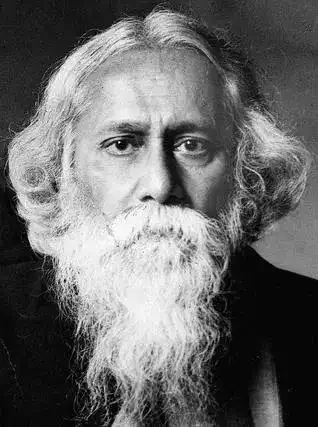
Rabindranath Tagore
The Gardener XLII: O Mad, Superbly Drunk
The Gardener XLII: O Mad, Superbly Drunk
O mad, superbly drunk;
If you kick open your doors and
play the fool in public;
If you empty your bag in a night,
and snap your fingers at prudence;
If you walk in curious paths and
play with useless things;
Reck not rhyme or reason;
If unfurling your sails before the
storm you snap the rudder in two,
Then I will follow you, comrade,
and be drunken and go to the dogs.
I have wasted my days and nights
in the company of steady wise neighbours.
Much knowing has turned my hair
grey, and much watching has made
my sight dim.
For years I have gathered and
heaped up scraps and fragments of
things:
Crush them and dance upon them,
and scatter them all to the winds.
For I know 'tis the height of wisdom
to be drunken and go the dogs.
Let all crooked scruples vanish,
let me hopelessly lose my way.
Let a gust of wild giddiness come
and sweep me away from my anchors.
The world is peopled with worthies,
and workers, useful and clever.
There are men who are easily first,
and men who come decently after.
Let them be happy and prosper,
and let me be foolishly futile.
For I know 'tis the end of all works
to be drunken and go to the dogs.
I swear to surrender this moment
all claims to the ranks of the decent.
I let go my pride of learning and
judgment of right and of wrong.
I'll shatter memory's vessel, scattering
the last drop of tears.
With the foam of the berry-red
wine I will bathe and brighten my
laughter.
The badge of the civil and staid
I'll tear into shreds for the nonce.
I'll take the holy vow to be worthless,
to be drunken and go to the dogs.
O mad, superbly drunk;
If you kick open your doors and
play the fool in public;
If you empty your bag in a night,
and snap your fingers at prudence;
If you walk in curious paths and
play with useless things;
Reck not rhyme or reason;
If unfurling your sails before the
storm you snap the rudder in two,
Then I will follow you, comrade,
and be drunken and go to the dogs.
I have wasted my days and nights
in the company of steady wise neighbours.
Much knowing has turned my hair
grey, and much watching has made
my sight dim.
For years I have gathered and
heaped up scraps and fragments of
things:
Crush them and dance upon them,
and scatter them all to the winds.
For I know 'tis the height of wisdom
to be drunken and go the dogs.
Let all crooked scruples vanish,
let me hopelessly lose my way.
Let a gust of wild giddiness come
and sweep me away from my anchors.
The world is peopled with worthies,
and workers, useful and clever.
There are men who are easily first,
and men who come decently after.
Let them be happy and prosper,
and let me be foolishly futile.
For I know 'tis the end of all works
to be drunken and go to the dogs.
I swear to surrender this moment
all claims to the ranks of the decent.
I let go my pride of learning and
judgment of right and of wrong.
I'll shatter memory's vessel, scattering
the last drop of tears.
With the foam of the berry-red
wine I will bathe and brighten my
laughter.
The badge of the civil and staid
I'll tear into shreds for the nonce.
I'll take the holy vow to be worthless,
to be drunken and go to the dogs.
563
Rabindranath Tagore
Stray Birds 51 - 60
Stray Birds 51 - 60
51
YOUR idol is shattered in the dust
to prove that God's dust is greater than
your idol.
52
MAN does not reveal himself in his history,
he struggles up through it.
53
WHILE the glass lamp rebukes the earthen for calling it cousin,
the moon rises, and the glass lamp,
with a bland smile, calls her,
'My dear, dear sister.'
54
LIKE the meeting of the seagulls
and the waves we meet and come near.
The seagulls fly off,
the waves roll away and we depart.
55
MY day is done,
and I am like a boat drawn on the beach,
listening to the dance-music of t
he tide in the evening.
56
LIFE is given to us,
we earn it by giving it.
57
WE come nearest to the great
when we are great in humility.
58
THE sparrow is sorry for the peacock
at the burden of its tail.
59
NEVER be afraid of the moments-
thus sings the voice of the everlasting.
60
THE hurricane seeks the shortest road
by the no-road,
and suddenly ends its search in the Nowhere.
51
YOUR idol is shattered in the dust
to prove that God's dust is greater than
your idol.
52
MAN does not reveal himself in his history,
he struggles up through it.
53
WHILE the glass lamp rebukes the earthen for calling it cousin,
the moon rises, and the glass lamp,
with a bland smile, calls her,
'My dear, dear sister.'
54
LIKE the meeting of the seagulls
and the waves we meet and come near.
The seagulls fly off,
the waves roll away and we depart.
55
MY day is done,
and I am like a boat drawn on the beach,
listening to the dance-music of t
he tide in the evening.
56
LIFE is given to us,
we earn it by giving it.
57
WE come nearest to the great
when we are great in humility.
58
THE sparrow is sorry for the peacock
at the burden of its tail.
59
NEVER be afraid of the moments-
thus sings the voice of the everlasting.
60
THE hurricane seeks the shortest road
by the no-road,
and suddenly ends its search in the Nowhere.
519