

Poems in this theme
Animals and Nature
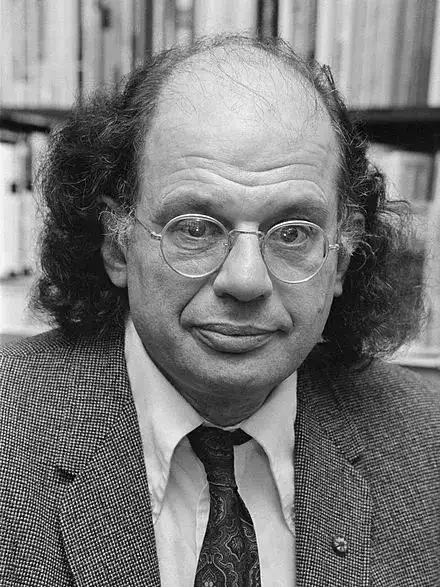
Allen Ginsberg
Syllables at Rocky Mountain Dharma Center
Syllables at Rocky Mountain Dharma Center
Tail turned to red sunset on a juniper crown a lone magpie cawks.
Mad at Oryoki in the shrine-room -- Thistles blossomed late afternoon.
Put on my shirt and took it off in the sun walking the path to lunch.
A dandelion seed floats above the marsh grass with the mosquitos.
At 4 A.M. the two middleaged men sleeping together holding hands.
In the half-light of dawn a few birds warble under the Pleiades.
Sky reddens behind fir trees, larks twitter, sparrows cheep cheep cheep
cheep cheep.
Tail turned to red sunset on a juniper crown a lone magpie cawks.
Mad at Oryoki in the shrine-room -- Thistles blossomed late afternoon.
Put on my shirt and took it off in the sun walking the path to lunch.
A dandelion seed floats above the marsh grass with the mosquitos.
At 4 A.M. the two middleaged men sleeping together holding hands.
In the half-light of dawn a few birds warble under the Pleiades.
Sky reddens behind fir trees, larks twitter, sparrows cheep cheep cheep
cheep cheep.
628
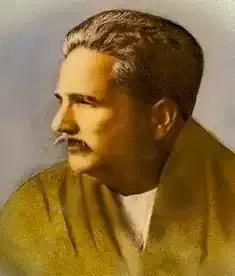
Muhammad Iqbal
The Cloud On The Mountain
The Cloud On The Mountain
Elevation bestows the sky's nearness to my abode
I am the mountain's cloud, my skirt sprinkles roses
Now the wilderness, now the rose garden is my abode
City and wilderness are mine, ocean is mine, forest is mine
If I want to return to some valley for the night
The mountain's verdure is my carpet of velvet
Nature has taught me to be a pearl spreader
To chant the camel song for the camel of the Beloved of Mercy
To be the comforter of the dispirited farmer's heart
To be the elegance of the assembly of the garden's trees
I spread out over the face of the earth like the locks
I get arranged and adorned by the breeze's
I tantalize the expecting eye from a distance
As I pass silently over some habitation
As I approach strolling towards a brook's bank
I endow the brook with ear rings of whirlpools
I am the hope of the freshly grown field's verdure
I am the ocean's offspring, I am nourished by the sun
I gave ocean's tumult to the mountain spring
I charmed the birds into thrilling chants
I pronounced 'Rise' standing by the verdure's head
I conferred the taste for smile to the rose-bud
By my benevolence farmers' huts on the mountain side
Are converted into bed chambers of the opulent.
Elevation bestows the sky's nearness to my abode
I am the mountain's cloud, my skirt sprinkles roses
Now the wilderness, now the rose garden is my abode
City and wilderness are mine, ocean is mine, forest is mine
If I want to return to some valley for the night
The mountain's verdure is my carpet of velvet
Nature has taught me to be a pearl spreader
To chant the camel song for the camel of the Beloved of Mercy
To be the comforter of the dispirited farmer's heart
To be the elegance of the assembly of the garden's trees
I spread out over the face of the earth like the locks
I get arranged and adorned by the breeze's
I tantalize the expecting eye from a distance
As I pass silently over some habitation
As I approach strolling towards a brook's bank
I endow the brook with ear rings of whirlpools
I am the hope of the freshly grown field's verdure
I am the ocean's offspring, I am nourished by the sun
I gave ocean's tumult to the mountain spring
I charmed the birds into thrilling chants
I pronounced 'Rise' standing by the verdure's head
I conferred the taste for smile to the rose-bud
By my benevolence farmers' huts on the mountain side
Are converted into bed chambers of the opulent.
282
Muhammad Iqbal
A Mountain and A Squirrel
A Mountain and A Squirrel
A mountain was saying this to a squirrel
'Commit suicide if you have self-respect
You are insignificant, still so arrogant, how strange!
You are neither wise, nor intelligent! not even shrewd!
It is strange when the insignificant pose as important!
When the stupid ones like you pose as intelligent!
You are no match in comparison with my splendor
Even the earth is low compared with my splendor
The grandeur of mine does not fall to your lot
The poor animal cannot equal the great mountain! '
On hearing this the squirrel said, 'Hold your tongue!
These are immature thoughts, expel them from your heart!
I do not care if I am not large like you!
You are not a pretty little thing like me
Everything shows the Omni-potence of God
Some large, some small, is the wisdom of God
He has created you large in the world
And He has taught me climbing large trees
You are unable to walk a single step
Only large size! What other greatness have you?
If you are large show me some of the skills I have
Show me how you break this beetle nut as I can
Nothing is useless in this world
Nothing is bad in God's creation
A mountain was saying this to a squirrel
'Commit suicide if you have self-respect
You are insignificant, still so arrogant, how strange!
You are neither wise, nor intelligent! not even shrewd!
It is strange when the insignificant pose as important!
When the stupid ones like you pose as intelligent!
You are no match in comparison with my splendor
Even the earth is low compared with my splendor
The grandeur of mine does not fall to your lot
The poor animal cannot equal the great mountain! '
On hearing this the squirrel said, 'Hold your tongue!
These are immature thoughts, expel them from your heart!
I do not care if I am not large like you!
You are not a pretty little thing like me
Everything shows the Omni-potence of God
Some large, some small, is the wisdom of God
He has created you large in the world
And He has taught me climbing large trees
You are unable to walk a single step
Only large size! What other greatness have you?
If you are large show me some of the skills I have
Show me how you break this beetle nut as I can
Nothing is useless in this world
Nothing is bad in God's creation
628
Muhammad Iqbal
A Longing
A Longing
O Lord! I have become weary of human assemblages!
When the heart is sad no pleasure in assemblages can be
I seek escape from tumult, my heart desires
The silence which speech may ardently love!
I vehemently desire silence, I strongly long that
A small hut in the mountain's side may there be
Freed from worry I may live in retirement
Freed from the cares of the world I may be
Birds chirping may give the pleasure of the lyre
In the spring's noise may the orchestra's melody be
The flower bud bursting may give God's message to me
Showing the whole world 1 to me this small wine-cup may be
My arm may be my pillow, and the green grass my bed be
Putting the congregation to shame my solitude's quality be
The nightingale be so familiar with my face that
Her little heart harboring no fear from me may be
Avenues of green trees standing on both sides be
The spring's clear water providing a beautiful picture be
The view of the mountain range may be so beautiful
To see it the waves of water again and again rising be
The verdure may be asleep in the lap of the earth
Water running through the bushes may glistening be
Again and again the flowered boughs touching the water be
As if some beauty looking at itself in mirror be
When the sun apply myrtle to the evening's bride
The tunic of every flower may pinkish golden be
When night's travellers falter behind with fatigue
Their only hope my broken earthenware lamp may be
May the lightning lead them to my hut
When clouds hovering over the whole sky be.
The early dawn's cuckoo, that morning's mu'adhdhin2
May my confidante he be, and may his confidante I be
May I not be obligated to the temple or to the mosque
May the hut's hole alone herald of morning's arrival be
When the dew may come to perform the flowers' ablution
May wailing my supplication, weeping my ablution be
In this silence may my heart's wailing rise so high
That for stars' caravan the clarion's call my wailing be
May every compassionate heart weeping with me be
Perhaps it may awaken those who may unconscious be
O Lord! I have become weary of human assemblages!
When the heart is sad no pleasure in assemblages can be
I seek escape from tumult, my heart desires
The silence which speech may ardently love!
I vehemently desire silence, I strongly long that
A small hut in the mountain's side may there be
Freed from worry I may live in retirement
Freed from the cares of the world I may be
Birds chirping may give the pleasure of the lyre
In the spring's noise may the orchestra's melody be
The flower bud bursting may give God's message to me
Showing the whole world 1 to me this small wine-cup may be
My arm may be my pillow, and the green grass my bed be
Putting the congregation to shame my solitude's quality be
The nightingale be so familiar with my face that
Her little heart harboring no fear from me may be
Avenues of green trees standing on both sides be
The spring's clear water providing a beautiful picture be
The view of the mountain range may be so beautiful
To see it the waves of water again and again rising be
The verdure may be asleep in the lap of the earth
Water running through the bushes may glistening be
Again and again the flowered boughs touching the water be
As if some beauty looking at itself in mirror be
When the sun apply myrtle to the evening's bride
The tunic of every flower may pinkish golden be
When night's travellers falter behind with fatigue
Their only hope my broken earthenware lamp may be
May the lightning lead them to my hut
When clouds hovering over the whole sky be.
The early dawn's cuckoo, that morning's mu'adhdhin2
May my confidante he be, and may his confidante I be
May I not be obligated to the temple or to the mosque
May the hut's hole alone herald of morning's arrival be
When the dew may come to perform the flowers' ablution
May wailing my supplication, weeping my ablution be
In this silence may my heart's wailing rise so high
That for stars' caravan the clarion's call my wailing be
May every compassionate heart weeping with me be
Perhaps it may awaken those who may unconscious be
497
Muhammad Iqbal
The goat replied, 'This complaint is unjust
The goat replied, 'This complaint is unjust
Though truth is always bitter
I shall speak what is fair
This pasture, and this cool breeze
This green grass and this shade
Such comforts, were beyond our lot!
They were a far cry for us speechless poor!
We owe these pleasures to Man
We owe all our happiness to Man
We derive all our prosperity from him
What is better for us, freedom or bondage to him?
Hundreds of dangers lurk in the wilderness
May God protect us from the wilderness!
We are heavily indebted to him
Unjust is our complaint against him
If you appreciate the life's comforts
You would never complain against Man'
Hearing all this the cow felt embarrassed
She was sorry for complaining against Man
She mused over the good and the bad
And thoughtfully she said this
'Small though is the body of the goat
Convincing is the advice of the goat! '
Though truth is always bitter
I shall speak what is fair
This pasture, and this cool breeze
This green grass and this shade
Such comforts, were beyond our lot!
They were a far cry for us speechless poor!
We owe these pleasures to Man
We owe all our happiness to Man
We derive all our prosperity from him
What is better for us, freedom or bondage to him?
Hundreds of dangers lurk in the wilderness
May God protect us from the wilderness!
We are heavily indebted to him
Unjust is our complaint against him
If you appreciate the life's comforts
You would never complain against Man'
Hearing all this the cow felt embarrassed
She was sorry for complaining against Man
She mused over the good and the bad
And thoughtfully she said this
'Small though is the body of the goat
Convincing is the advice of the goat! '
366
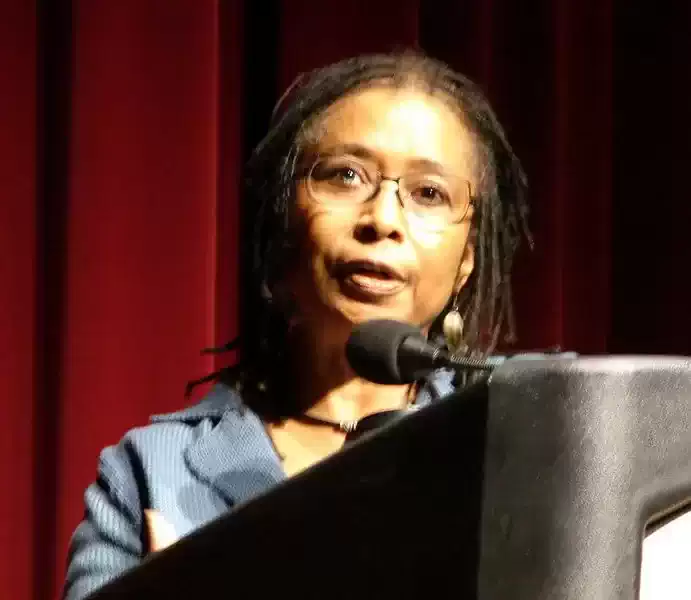
Alice Walker
Working Class Hero
Working Class Hero
My brothers knew
The things you know.
I did not scorn
learning them;
It’s just my mind
Was busy being trained
For “Other Things”:
Poetry, Philosophy, Literature.
Survival, for a girl.
But now,
What a relief
To see you understand
The ways
Of horses
Their shyness
& hatred
Of
Loneliness:
That you will not
Hesitate
To rescue
An old horse,
Dying on
His feet
&
That you will
Cheerfully
Wash him,
Aged
&
Incontinent
Head
To
Toe. Missing
With your bucket
&
Rag
Not
One
Hidden
Crevice
As he
Trembles
& weeps.
What peace
To see
Raising chickens
Does not
Mystify you
and
Hot water heaters
& their ways
Are well known;
That electricity
& how it
Works
Is something
Within
Your grasp.
That you can
Get a car
To run
By poking
It in
A few mysterious
Places
Under
The hood.
That you can
Fix a
Broken
Anything: battery, truck, stove,
Door, fridge, lamp, chicken coop hinge
While teaching me
The ins and outs
Of Opera
Or
While singing
Lusty
Italian
Tenor
That
Shakes
The walls.
That you can
Sit, comfy,
Unperturbed
By traffic
In the womb-like
Back seat
Of my
Aging
Chariot
While I drive
& you
Ride
The silver
Black
& Golden
Horses
Of
Your
Trumpet.
My brothers knew
The things you know.
I did not scorn
learning them;
It’s just my mind
Was busy being trained
For “Other Things”:
Poetry, Philosophy, Literature.
Survival, for a girl.
But now,
What a relief
To see you understand
The ways
Of horses
Their shyness
& hatred
Of
Loneliness:
That you will not
Hesitate
To rescue
An old horse,
Dying on
His feet
&
That you will
Cheerfully
Wash him,
Aged
&
Incontinent
Head
To
Toe. Missing
With your bucket
&
Rag
Not
One
Hidden
Crevice
As he
Trembles
& weeps.
What peace
To see
Raising chickens
Does not
Mystify you
and
Hot water heaters
& their ways
Are well known;
That electricity
& how it
Works
Is something
Within
Your grasp.
That you can
Get a car
To run
By poking
It in
A few mysterious
Places
Under
The hood.
That you can
Fix a
Broken
Anything: battery, truck, stove,
Door, fridge, lamp, chicken coop hinge
While teaching me
The ins and outs
Of Opera
Or
While singing
Lusty
Italian
Tenor
That
Shakes
The walls.
That you can
Sit, comfy,
Unperturbed
By traffic
In the womb-like
Back seat
Of my
Aging
Chariot
While I drive
& you
Ride
The silver
Black
& Golden
Horses
Of
Your
Trumpet.
259
Alice Walker
From: Poems To My Girls
From: Poems To My Girls
I
How can Humanity
look the deer
in
the face?
How can Mommy,
having erected
my fence?
I
How can Humanity
look the deer
in
the face?
How can Mommy,
having erected
my fence?
236
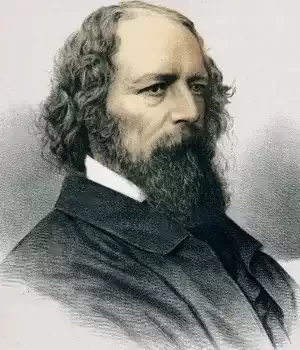
Alfred Lord Tennyson
The Princess: A Medley: Come down, O Maid
The Princess: A Medley: Come down, O Maid
Come down, O maid, from yonder mountain height:
What pleasure lives in height (the shepherd sang)
In height and cold, the splendour of the hills?
But cease to move so near the Heavens, and cease
To glide a sunbeam by the blasted Pine,
To sit a star upon the sparkling spire;
And come, for Love is of the valley, come,
For Love is of the valley, come thou down
And find him; by the happy threshold, he,
Or hand in hand with Plenty in the maize,
Or red with spirted purple of the vats,
Or foxlike in the vine; nor cares to walk
With Death and Morning on the silver horns,
Nor wilt thou snare him in the white ravine,
Nor find him dropt upon the firths of ice,
That huddling slant in furrow-cloven falls
To roll the torrent out of dusky doors:
But follow; let the torrent dance thee down
To find him in the valley; let the wild
Lean-headed Eagles yelp alone, and leave
The monstrous ledges there to slope, and spill
Their thousand wreaths of dangling water-smoke,
That like a broken purpose waste in air:
So waste not thou; but come; for all the vales
Await thee; azure pillars of the hearth
Arise to thee; the children call, and I
Thy shepherd pipe, and sweet is every sound,
Sweeter thy voice, but every sound is sweet;
Myriads of rivulets hurrying thro' the lawn,
The moan of doves in immemorial elms,
And murmuring of innumerable bees.
Come down, O maid, from yonder mountain height:
What pleasure lives in height (the shepherd sang)
In height and cold, the splendour of the hills?
But cease to move so near the Heavens, and cease
To glide a sunbeam by the blasted Pine,
To sit a star upon the sparkling spire;
And come, for Love is of the valley, come,
For Love is of the valley, come thou down
And find him; by the happy threshold, he,
Or hand in hand with Plenty in the maize,
Or red with spirted purple of the vats,
Or foxlike in the vine; nor cares to walk
With Death and Morning on the silver horns,
Nor wilt thou snare him in the white ravine,
Nor find him dropt upon the firths of ice,
That huddling slant in furrow-cloven falls
To roll the torrent out of dusky doors:
But follow; let the torrent dance thee down
To find him in the valley; let the wild
Lean-headed Eagles yelp alone, and leave
The monstrous ledges there to slope, and spill
Their thousand wreaths of dangling water-smoke,
That like a broken purpose waste in air:
So waste not thou; but come; for all the vales
Await thee; azure pillars of the hearth
Arise to thee; the children call, and I
Thy shepherd pipe, and sweet is every sound,
Sweeter thy voice, but every sound is sweet;
Myriads of rivulets hurrying thro' the lawn,
The moan of doves in immemorial elms,
And murmuring of innumerable bees.
422
Alfred Lord Tennyson
The Lotos-eaters
The Lotos-eaters
"Courage!" he said, and pointed toward the land,
"This mounting wave will roll us shoreward soon."
In the afternoon they came unto a land
In which it seemed always afternoon.
All round the coast the languid air did swoon,
Breathing like one that hath a weary dream.
Full-faced above the valley stood the moon;
And like a downward smoke, the slender stream
Along the cliff to fall and pause and fall did seem.
A land of streams! some, like a downward smoke,
Slow-dropping veils of thinnest lawn, did go;
And some thro' wavering lights and shadows broke,
Rolling a slumbrous sheet of foam below.
They saw the gleaming river seaward flow
From the inner land: far off, three mountain-tops,
Three silent pinnacles of aged snow,
Stood sunset-flush'd: and, dew'd with showery drops,
Up-clomb the shadowy pine above the woven copse.
The charmed sunset linger'd low adown
In the red West: thro' mountain clefts the dale
Was seen far inland, and the yellow down
Border'd with palm, and many a winding vale
And meadow, set with slender galingale;
A land where all things always seem'd the same!
And round about the keel with faces pale,
Dark faces pale against that rosy flame,
The mild-eyed melancholy Lotos-eaters came.
Branches they bore of that enchanted stem,
Laden with flower and fruit, whereof they gave
To each, but whoso did receive of them,
And taste, to him the gushing of the wave
Far far away did seem to mourn and rave
On alien shores; and if his fellow spake,
His voice was thin, as voices from the grave;
And deep-asleep he seem'd, yet all awake,
And music in his ears his beating heart did make.
They sat them down upon the yellow sand,
Between the sun and moon upon the shore;
And sweet it was to dream of Fatherland,
Of child, and wife, and slave; but evermore
Most weary seem'd the sea, weary the oar,
Weary the wandering fields of barren foam.
Then some one said, "We will return no more";
And all at once they sang, "Our island home
Is far beyond the wave; we will no longer roam."CHORIC SONGI
There is sweet music here that softer falls
Than petals from blown roses on the grass,
Or night-dews on still waters between walls
Of shadowy granite, in a gleaming pass;
Music that gentlier on the spirit lies,
Than tir'd eyelids upon tir'd eyes;
Music that brings sweet sleep down from the blissful skies.
Here are cool mosses deep,
And thro' the moss the ivies creep,
And in the stream the long-leaved flowers weep,
And from the craggy ledge the poppy hangs in sleep."II
Why are we weigh'd upon with heaviness,
And utterly consumed with sharp distress,
While all things else have rest from weariness?
All things have rest: why should we toil alone,
We only toil, who are the first of things,
And make perpetual moan,
Still from one sorrow to another thrown:
Nor ever fold our wings,
And cease from wanderings,
Nor steep our brows in slumber's holy balm;
Nor harken what the inner spirit sings,
"There is no joy but calm!"
Why should we only toil, the roof and crown of things?III
Lo! in the middle of the wood,
The folded leaf is woo'd from out the bud
With winds upon the branch, and there
Grows green and broad, and takes no care,
Sun-steep'd at noon, and in the moon
Nightly dew-fed; and turning yellow
Falls, and floats adown the air.
Lo! sweeten'd with the summer light,
The full-juiced apple, waxing over-mellow,
Drops in a silent autumn night.
All its allotted length of days
The flower ripens in its place,
Ripens and fades, and falls, and hath no toil,
Fast-rooted in the fruitful soil.IV
Hateful is the dark-blue sky,
Vaulted o'er the dark-blue sea.
Death is the end of life; ah, why
Should life all labour be?
Let us alone. Time driveth onward fast,
And in a little while our lips are dumb.
Let us alone. What is it that will last?
All things are taken from us, and become
Portions and parcels of the dreadful past.
Let us alone. What pleasure can we have
To war with evil? Is there any peace
In ever climbing up the climbing wave?
All things have rest, and ripen toward the grave
In silence; ripen, fall and cease:
Give us long rest or death, dark death, or dreamful ease.V
How sweet it were, hearing the downward stream,
With half-shut eyes ever to seem
Falling asleep in a half-dream!
To dream and dream, like yonder amber light,
Which will not leave the myrrh-bush on the height;
To hear each other's whisper'd speech;
Eating the Lotos day by day,
To watch the crisping ripples on the beach,
And tender curving lines of creamy spray;
To lend our hearts and spirits wholly
To the influence of mild-minded melancholy;
To muse and brood and live again in memory,
With those old faces of our infancy
Heap'd over with a mound of grass,
Two handfuls of white dust, shut in an urn of brass!VI
Dear is the memory of our wedded lives,
And dear the last embraces of our wives
And their warm tears: but all hath suffer'd change:
For surely now our household hearths are cold,
Our sons inherit us: our looks are strange:
And we should come like ghosts to trouble joy.
Or else the island princes over-bold
Have eat our substance, and the minstrel sings
Before them of the ten years' war in Troy,
And our great deeds, as half-forgotten things.
Is there confusion in the little isle?
Let what is broken so remain.
The Gods are hard to reconcile:
'Tis hard to settle order once again.
There is confusion worse than death,
Trouble on trouble, pain on pain,
Long labour unto aged breath,
Sore task to hearts worn out by many wars
And eyes grown dim with gazing on the pilot-stars.VII
But, propt on beds of amaranth and moly,
How sweet (while warm airs lull us, blowing lowly)
With half-dropt eyelid still,
Beneath a heaven dark and holy,
To watch the long bright river drawing slowly
His waters from the purple hill-To
hear the dewy echoes calling
From cave to cave thro' the thick-twined vine-To
watch the emerald-colour'd water falling
Thro' many a wov'n acanthus-wreath divine!
Only to hear and see the far-off sparkling brine,
Only to hear were sweet, stretch'd out beneath the pine.VIII
The Lotos blooms below the barren peak:
The Lotos blows by every winding creek:
All day the wind breathes low with mellower tone:
Thro' every hollow cave and alley lone
Round and round the spicy downs the yellow Lotos-dust is blown.
We have had enough of action, and of motion we,
Roll'd to starboard, roll'd to larboard, when the surge was seething free,
Where the wallowing monster spouted his foam-fountains in the sea.
Let us swear an oath, and keep it with an equal mind,
In the hollow Lotos-land to live and lie reclined
On the hills like Gods together, careless of mankind.
For they lie beside their nectar, and the bolts are hurl'd
Far below them in the valleys, and the clouds are lightly curl'd
Round their golden houses, girdled with the gleaming world:
Where they smile in secret, looking over wasted lands,
Blight and famine, plague and earthquake, roaring deeps and fiery sands,
Clanging fights, and flaming towns, and sinking ships, and praying hands.
But they smile, they find a music centred in a doleful song
Steaming up, a lamentation and an ancient tale of wrong,
Like a tale of little meaning tho' the words are strong;
Chanted from an ill-used race of men that cleave the soil,
Sow the seed, and reap the harvest with enduring toil,
Storing yearly little dues of wheat, and wine and oil;
Till they perish and they suffer--some, 'tis whisper'd--down in hell
Suffer endless anguish, others in Elysian valleys dwell,
Resting weary limbs at last on beds of asphodel.
Surely, surely, slumber is more sweet than toil, the shore
Than labour in the deep mid-ocean, wind and wave and oar;
O, rest ye, brother mariners, we will not wander more.Credits and CopyrightTogether
with the editors, the Department ofEnglish (University of Toronto), and the University
of Toronto Press,the following individuals share copyright for the work that wentinto
this edition:Screen Design (Electronic Edition): Sian Meikle (University ofToronto
Library)Scanning: Sharine Leung (Centre for Computing in the Humanities)
"Courage!" he said, and pointed toward the land,
"This mounting wave will roll us shoreward soon."
In the afternoon they came unto a land
In which it seemed always afternoon.
All round the coast the languid air did swoon,
Breathing like one that hath a weary dream.
Full-faced above the valley stood the moon;
And like a downward smoke, the slender stream
Along the cliff to fall and pause and fall did seem.
A land of streams! some, like a downward smoke,
Slow-dropping veils of thinnest lawn, did go;
And some thro' wavering lights and shadows broke,
Rolling a slumbrous sheet of foam below.
They saw the gleaming river seaward flow
From the inner land: far off, three mountain-tops,
Three silent pinnacles of aged snow,
Stood sunset-flush'd: and, dew'd with showery drops,
Up-clomb the shadowy pine above the woven copse.
The charmed sunset linger'd low adown
In the red West: thro' mountain clefts the dale
Was seen far inland, and the yellow down
Border'd with palm, and many a winding vale
And meadow, set with slender galingale;
A land where all things always seem'd the same!
And round about the keel with faces pale,
Dark faces pale against that rosy flame,
The mild-eyed melancholy Lotos-eaters came.
Branches they bore of that enchanted stem,
Laden with flower and fruit, whereof they gave
To each, but whoso did receive of them,
And taste, to him the gushing of the wave
Far far away did seem to mourn and rave
On alien shores; and if his fellow spake,
His voice was thin, as voices from the grave;
And deep-asleep he seem'd, yet all awake,
And music in his ears his beating heart did make.
They sat them down upon the yellow sand,
Between the sun and moon upon the shore;
And sweet it was to dream of Fatherland,
Of child, and wife, and slave; but evermore
Most weary seem'd the sea, weary the oar,
Weary the wandering fields of barren foam.
Then some one said, "We will return no more";
And all at once they sang, "Our island home
Is far beyond the wave; we will no longer roam."CHORIC SONGI
There is sweet music here that softer falls
Than petals from blown roses on the grass,
Or night-dews on still waters between walls
Of shadowy granite, in a gleaming pass;
Music that gentlier on the spirit lies,
Than tir'd eyelids upon tir'd eyes;
Music that brings sweet sleep down from the blissful skies.
Here are cool mosses deep,
And thro' the moss the ivies creep,
And in the stream the long-leaved flowers weep,
And from the craggy ledge the poppy hangs in sleep."II
Why are we weigh'd upon with heaviness,
And utterly consumed with sharp distress,
While all things else have rest from weariness?
All things have rest: why should we toil alone,
We only toil, who are the first of things,
And make perpetual moan,
Still from one sorrow to another thrown:
Nor ever fold our wings,
And cease from wanderings,
Nor steep our brows in slumber's holy balm;
Nor harken what the inner spirit sings,
"There is no joy but calm!"
Why should we only toil, the roof and crown of things?III
Lo! in the middle of the wood,
The folded leaf is woo'd from out the bud
With winds upon the branch, and there
Grows green and broad, and takes no care,
Sun-steep'd at noon, and in the moon
Nightly dew-fed; and turning yellow
Falls, and floats adown the air.
Lo! sweeten'd with the summer light,
The full-juiced apple, waxing over-mellow,
Drops in a silent autumn night.
All its allotted length of days
The flower ripens in its place,
Ripens and fades, and falls, and hath no toil,
Fast-rooted in the fruitful soil.IV
Hateful is the dark-blue sky,
Vaulted o'er the dark-blue sea.
Death is the end of life; ah, why
Should life all labour be?
Let us alone. Time driveth onward fast,
And in a little while our lips are dumb.
Let us alone. What is it that will last?
All things are taken from us, and become
Portions and parcels of the dreadful past.
Let us alone. What pleasure can we have
To war with evil? Is there any peace
In ever climbing up the climbing wave?
All things have rest, and ripen toward the grave
In silence; ripen, fall and cease:
Give us long rest or death, dark death, or dreamful ease.V
How sweet it were, hearing the downward stream,
With half-shut eyes ever to seem
Falling asleep in a half-dream!
To dream and dream, like yonder amber light,
Which will not leave the myrrh-bush on the height;
To hear each other's whisper'd speech;
Eating the Lotos day by day,
To watch the crisping ripples on the beach,
And tender curving lines of creamy spray;
To lend our hearts and spirits wholly
To the influence of mild-minded melancholy;
To muse and brood and live again in memory,
With those old faces of our infancy
Heap'd over with a mound of grass,
Two handfuls of white dust, shut in an urn of brass!VI
Dear is the memory of our wedded lives,
And dear the last embraces of our wives
And their warm tears: but all hath suffer'd change:
For surely now our household hearths are cold,
Our sons inherit us: our looks are strange:
And we should come like ghosts to trouble joy.
Or else the island princes over-bold
Have eat our substance, and the minstrel sings
Before them of the ten years' war in Troy,
And our great deeds, as half-forgotten things.
Is there confusion in the little isle?
Let what is broken so remain.
The Gods are hard to reconcile:
'Tis hard to settle order once again.
There is confusion worse than death,
Trouble on trouble, pain on pain,
Long labour unto aged breath,
Sore task to hearts worn out by many wars
And eyes grown dim with gazing on the pilot-stars.VII
But, propt on beds of amaranth and moly,
How sweet (while warm airs lull us, blowing lowly)
With half-dropt eyelid still,
Beneath a heaven dark and holy,
To watch the long bright river drawing slowly
His waters from the purple hill-To
hear the dewy echoes calling
From cave to cave thro' the thick-twined vine-To
watch the emerald-colour'd water falling
Thro' many a wov'n acanthus-wreath divine!
Only to hear and see the far-off sparkling brine,
Only to hear were sweet, stretch'd out beneath the pine.VIII
The Lotos blooms below the barren peak:
The Lotos blows by every winding creek:
All day the wind breathes low with mellower tone:
Thro' every hollow cave and alley lone
Round and round the spicy downs the yellow Lotos-dust is blown.
We have had enough of action, and of motion we,
Roll'd to starboard, roll'd to larboard, when the surge was seething free,
Where the wallowing monster spouted his foam-fountains in the sea.
Let us swear an oath, and keep it with an equal mind,
In the hollow Lotos-land to live and lie reclined
On the hills like Gods together, careless of mankind.
For they lie beside their nectar, and the bolts are hurl'd
Far below them in the valleys, and the clouds are lightly curl'd
Round their golden houses, girdled with the gleaming world:
Where they smile in secret, looking over wasted lands,
Blight and famine, plague and earthquake, roaring deeps and fiery sands,
Clanging fights, and flaming towns, and sinking ships, and praying hands.
But they smile, they find a music centred in a doleful song
Steaming up, a lamentation and an ancient tale of wrong,
Like a tale of little meaning tho' the words are strong;
Chanted from an ill-used race of men that cleave the soil,
Sow the seed, and reap the harvest with enduring toil,
Storing yearly little dues of wheat, and wine and oil;
Till they perish and they suffer--some, 'tis whisper'd--down in hell
Suffer endless anguish, others in Elysian valleys dwell,
Resting weary limbs at last on beds of asphodel.
Surely, surely, slumber is more sweet than toil, the shore
Than labour in the deep mid-ocean, wind and wave and oar;
O, rest ye, brother mariners, we will not wander more.Credits and CopyrightTogether
with the editors, the Department ofEnglish (University of Toronto), and the University
of Toronto Press,the following individuals share copyright for the work that wentinto
this edition:Screen Design (Electronic Edition): Sian Meikle (University ofToronto
Library)Scanning: Sharine Leung (Centre for Computing in the Humanities)
690
Alfred Lord Tennyson
The Eagle
The Eagle
He clasps the crag with crooked hands;
Close to the sun in lonely lands,
Ring'd with the azure world, he stands.
The wrinkled sea beneath him crawls;
He watches from his mountain walls,
And like a thunderbolt he falls.
He clasps the crag with crooked hands;
Close to the sun in lonely lands,
Ring'd with the azure world, he stands.
The wrinkled sea beneath him crawls;
He watches from his mountain walls,
And like a thunderbolt he falls.
1,200
Alfred Lord Tennyson
The Coming Of Arthur
The Coming Of Arthur
Leodogran, the King of Cameliard,
Had one fair daughter, and none other child;
And she was the fairest of all flesh on earth,
Guinevere, and in her his one delight.
For many a petty king ere Arthur came
Ruled in this isle, and ever waging war
Each upon other, wasted all the land;
And still from time to time the heathen host
Swarmed overseas, and harried what was left.
And so there grew great tracts of wilderness,
Wherein the beast was ever more and more,
But man was less and less, till Arthur came.
For first Aurelius lived and fought and died,
And after him King Uther fought and died,
But either failed to make the kingdom one.
And after these King Arthur for a space,
And through the puissance of his Table Round,
Drew all their petty princedoms under him.
Their king and head, and made a realm, and reigned.
And thus the land of Cameliard was waste,
Thick with wet woods, and many a beast therein,
And none or few to scare or chase the beast;
So that wild dog, and wolf and boar and bear
Came night and day, and rooted in the fields,
And wallowed in the gardens of the King.
And ever and anon the wolf would steal
The children and devour, but now and then,
Her own brood lost or dead, lent her fierce teat
To human sucklings; and the children, housed
In her foul den, there at their meat would growl,
And mock their foster mother on four feet,
Till, straightened, they grew up to wolf-like men,
Worse than the wolves. And King Leodogran
Groaned for the Roman legions here again,
And Csar's eagle: then his brother king,
Urien, assailed him: last a heathen horde,
Reddening the sun with smoke and earth with blood,
And on the spike that split the mother's heart
Spitting the child, brake on him, till, amazed,
He knew not whither he should turn for aid.
But--for he heard of Arthur newly crowned,
Though not without an uproar made by those
Who cried, `He is not Uther's son'--the King
Sent to him, saying, `Arise, and help us thou!
For here between the man and beast we die.'
And Arthur yet had done no deed of arms,
But heard the call, and came: and Guinevere
Stood by the castle walls to watch him pass;
But since he neither wore on helm or shield
The golden symbol of his kinglihood,
But rode a simple knight among his knights,
And many of these in richer arms than he,
She saw him not, or marked not, if she saw,
One among many, though his face was bare.
But Arthur, looking downward as he past,
Felt the light of her eyes into his life
Smite on the sudden, yet rode on, and pitched
His tents beside the forest. Then he drave
The heathen; after, slew the beast, and felled
The forest, letting in the sun, and made
Broad pathways for the hunter and the knight
And so returned.
For while he lingered there,
A doubt that ever smouldered in the hearts
Of those great Lords and Barons of his realm
Flashed forth and into war: for most of these,
Colleaguing with a score of petty kings,
Made head against him, crying, `Who is he
That he should rule us? who hath proven him
King Uther's son? for lo! we look at him,
And find nor face nor bearing, limbs nor voice,
Are like to those of Uther whom we knew.
This is the son of Gorlos, not the King;
This is the son of Anton, not the King.'
And Arthur, passing thence to battle, felt
Travail, and throes and agonies of the life,
Desiring to be joined with Guinevere;
And thinking as he rode, `Her father said
That there between the man and beast they die.
Shall I not lift her from this land of beasts
Up to my throne, and side by side with me?
What happiness to reign a lonely king,
Vext--O ye stars that shudder over me,
O earth that soundest hollow under me,
Vext with waste dreams? for saving I be joined
To her that is the fairest under heaven,
I seem as nothing in the mighty world,
And cannot will my will, nor work my work
Wholly, nor make myself in mine own realm
Victor and lord. But were I joined with her,
Then might we live together as one life,
And reigning with one will in everything
Have power on this dark land to lighten it,
And power on this dead world to make it live.'
Thereafter--as he speaks who tells the tale--
When Arthur reached a field-of-battle bright
With pitched pavilions of his foe, the world
Was all so clear about him, that he saw
The smallest rock far on the faintest hill,
And even in high day the morning star.
So when the King had set his banner broad,
At once from either side, with trumpet-blast,
And shouts, and clarions shrilling unto blood,
The long-lanced battle let their horses run.
And now the Barons and the kings prevailed,
And now the King, as here and there that war
Went swaying; but the Powers who walk the world
Made lightnings and great thunders over him,
And dazed all eyes, till Arthur by main might,
And mightier of his hands with every blow,
And leading all his knighthood threw the kings
Cardos, Urien, Cradlemont of Wales,
Claudias, and Clariance of Northumberland,
The King Brandagoras of Latangor,
With Anguisant of Erin, Morganore,
And Lot of Orkney. Then, before a voice
As dreadful as the shout of one who sees
To one who sins, and deems himself alone
And all the world asleep, they swerved and brake
Flying, and Arthur called to stay the brands
That hacked among the flyers, `Ho! they yield!'
So like a painted battle the war stood
Silenced, the living quiet as the dead,
And in the heart of Arthur joy was lord.
He laughed upon his warrior whom he loved
And honoured most. `Thou dost not doubt me King,
So well thine arm hath wrought for me today.'
`Sir and my liege,' he cried, `the fire of God
Descends upon thee in the battle-field:
I know thee for my King!' Whereat the two,
For each had warded either in the fight,
Sware on the field of death a deathless love.
And Arthur said, `Man's word is God in man:
Let chance what will, I trust thee to the death.'
Then quickly from the foughten field he sent
Ulfius, and Brastias, and Bedivere,
His new-made knights, to King Leodogran,
Saying, `If I in aught have served thee well,
Give me thy daughter Guinevere to wife.'
Whom when he heard, Leodogran in heart
Debating--`How should I that am a king,
However much he holp me at my need,
Give my one daughter saving to a king,
And a king's son?'--lifted his voice, and called
A hoary man, his chamberlain, to whom
He trusted all things, and of him required
His counsel: `Knowest thou aught of Arthur's birth?'
Then spake the hoary chamberlain and said,
`Sir King, there be but two old men that know:
And each is twice as old as I; and one
Is Merlin, the wise man that ever served
King Uther through his magic art; and one
Is Merlin's master (so they call him) Bleys,
Who taught him magic, but the scholar ran
Before the master, and so far, that Bleys,
Laid magic by, and sat him down, and wrote
All things and whatsoever Merlin did
In one great annal-book, where after-years
Will learn the secret of our Arthur's birth.'
To whom the King Leodogran replied,
`O friend, had I been holpen half as well
By this King Arthur as by thee today,
Then beast and man had had their share of me:
But summon here before us yet once more
Ulfius, and Brastias, and Bedivere.'
Then, when they came before him, the King said,
`I have seen the cuckoo chased by lesser fowl,
And reason in the chase: but wherefore now
Do these your lords stir up the heat of war,
Some calling Arthur born of Gorlos,
Others of Anton? Tell me, ye yourselves,
Hold ye this Arthur for King Uther's son?'
And Ulfius and Brastias answered, `Ay.'
Then Bedivere, the first of all his knights
Knighted by Arthur at his crowning, spake--
For bold in heart and act and word was he,
Whenever slander breathed against the King-
`Sir, there be many rumours on this head:
For there be those who hate him in their hearts,
Call him baseborn, and since his ways are sweet,
And theirs are bestial, hold him less than man:
And there be those who deem him more than man,
And dream he dropt from heaven: but my belief
In all this matter--so ye care to learn--
Sir, for ye know that in King Uther's time
The prince and warrior Gorlos, he that held
Tintagil castle by the Cornish sea,
Was wedded with a winsome wife, Ygerne:
And daughters had she borne him,--one whereof,
Lot's wife, the Queen of Orkney, Bellicent,
Hath ever like a loyal sister cleaved
To Arthur,--but a son she had not borne.
And Uther cast upon her eyes of love:
But she, a stainless wife to Gorlos,
So loathed the bright dishonour of his love,
That Gorlos and King Uther went to war:
And overthrown was Gorlos and slain.
Then Uther in his wrath and heat besieged
Ygerne within Tintagil, where her men,
Seeing the mighty swarm about their walls,
Left her and fled, and Uther entered in,
And there was none to call to but himself.
So, compassed by the power of the King,
Enforced was she to wed him in her tears,
And with a shameful swiftness: afterward,
Not many moons, King Uther died himself,
Moaning and wailing for an heir to rule
After him, lest the realm should go to wrack.
And that same night, the night of the new year,
By reason of the bitterness and grief
That vext his mother, all before his time
Was Arthur born, and all as soon as born
Delivered at a secret postern-gate
To Merlin, to be holden far apart
Until his hour should come; because the lords
Of that fierce day were as the lords of this,
Wild beasts, and surely would have torn the child
Piecemeal among them, had they known; for each
But sought to rule for his own self and hand,
And many hated Uther for the sake
Of Gorlos. Wherefore Merlin took the child,
And gave him to Sir Anton, an old knight
And ancient friend of Uther; and his wife
Nursed the young prince, and reared him with her own;
And no man knew. And ever since the lords
Have foughten like wild beasts among themselves,
So that the realm has gone to wrack: but now,
This year, when Merlin (for his hour had come)
Brought Arthur forth, and set him in the hall,
Proclaiming, "Here is Uther's heir, your king,"
A hundred voices cried, "Away with him!
No king of ours! a son of Gorlos he,
Or else the child of Anton, and no king,
Or else baseborn." Yet Merlin through his craft,
And while the people clamoured for a king,
Had Arthur crowned; but after, the great lords
Banded, and so brake out in open war.'
Then while the King debated with himself
If Arthur were the child of shamefulness,
Or born the son of Gorlos, after death,
Or Uther's son, and born before his time,
Or whether there were truth in anything
Said by these three, there came to Cameliard,
With Gawain and young Modred, her two sons,
Lot's wife, the Queen of Orkney, Bellicent;
Whom as he could, not as he would, the King
Made feast for, saying, as they sat at meat,
`A doubtful throne is ice on summer seas.
Ye come from Arthur's court. Victor his men
Report him! Yea, but ye--think ye this king--
So many those that hate him, and so strong,
So few his knights, however brave they be--
Hath body enow to hold his foemen down?'
`O King,' she cried, `and I will tell thee: few,
Few, but all brave, all of one mind with him;
For I was near him when the savage yells
Of Uther's peerage died, and Arthur sat
Crowned on the das, and his warriors cried,
"Be thou the king, and we will work thy will
Who love thee." Then the King in low deep tones,
And simple words of great authority,
Bound them by so strait vows to his own self,
That when they rose, knighted from kneeling, some
Were pale as at the passing of a ghost,
Some flushed, and others dazed, as one who wakes
Half-blinded at the coming of a light.
`But when he spake and cheered his Table Round
With large, divine, and comfortable words,
Beyond my tongue to tell thee--I beheld
From eye to eye through all their Order flash
A momentary likeness of the King:
And ere it left their faces, through the cross
And those around it and the Crucified,
Down from the casement over Arthur, smote
Flame-colour, vert and azure, in three rays,
One falling upon each of three fair queens,
Who stood in silence near his throne, the friends
Of Arthur, gazing on him, tall, with bright
Sweet faces, who will help him at his need.
`And there I saw mage Merlin, whose vast wit
And hundred winters are but as the hands
Of loyal vassals toiling for their liege.
`And near him stood the Lady of the Lake,
Who knows a subtler magic than his own--
Clothed in white samite, mystic, wonderful.
She gave the King his huge cross-hilted sword,
Whereby to drive the heathen out: a mist
Of incense curled about her, and her face
Wellnigh was hidden in the minster gloom;
But there was heard among the holy hymns
A voice as of the waters, for she dwells
Down in a deep; calm, whatsoever storms
May shake the world, and when the surface rolls,
Hath power to walk the waters like our Lord.
`There likewise I beheld Excalibur
Before him at his crowning borne, the sword
That rose from out the bosom of the lake,
And Arthur rowed across and took it--rich
With jewels, elfin Urim, on the hilt,
Bewildering heart and eye--the blade so bright
That men are blinded by it--on one side,
Graven in the oldest tongue of all this world,
"Take me," but turn the blade and ye shall see,
And written in the speech ye speak yourself,
"Cast me away!" And sad was Arthur's face
Taking it, but old Merlin counselled him,
"Take thou and strike! the time to cast away
Is yet far-off." So this great brand the king
Took, and by this will beat his foemen down.'
Thereat Leodogran rejoiced, but thought
To sift his doubtings to the last, and asked,
Fixing full eyes of question on her face,
`The swallow and the swift are near akin,
But thou art closer to this noble prince,
Being his own dear sister;' and she said,
`Daughter of Gorlos and Ygerne am I;'
`And therefore Arthur's sister?' asked the King.
She answered, `These be secret things,' and signed
To those two sons to pass, and let them be.
And Gawain went, and breaking into song
Sprang out, and followed by his flying hair
Ran like a colt, and leapt at all he saw:
But Modred laid his ear beside the doors,
And there half-heard; the same that afterward
Struck for the throne, and striking found his doom.
And then the Queen made answer, `What know I?
For dark my mother was in eyes and hair,
And dark in hair and eyes am I; and dark
Was Gorlos, yea and dark was Uther too,
Wellnigh to blackness; but this King is fair
Beyond the race of Britons and of men.
Moreover, always in my mind I hear
A cry from out the dawning of my life,
A mother weeping, and I hear her say,
"O that ye had some brother, pretty one,
To guard thee on the rough ways of the world."'
`Ay,' said the King, `and hear ye such a cry?
But when did Arthur chance upon thee first?'
`O King!' she cried, `and I will tell thee true:
He found me first when yet a little maid:
Beaten I had been for a little fault
Whereof I was not guilty; and out I ran
And flung myself down on a bank of heath,
And hated this fair world and all therein,
And wept, and wished that I were dead; and he--
I know not whether of himself he came,
Or brought by Merlin, who, they say, can walk
Unseen at pleasure--he was at my side,
And spake sweet words, and comforted my heart,
And dried my tears, being a child with me.
And many a time he came, and evermore
As I grew greater grew with me; and sad
At times he seemed, and sad with him was I,
Stern too at times, and then I loved him not,
But sweet again, and then I loved him well.
And now of late I see him less and less,
But those first days had golden hours for me,
For then I surely thought he would be king.
`But let me tell thee now another tale:
For Bleys, our Merlin's master, as they say,
Died but of late, and sent his cry to me,
To hear him speak before he left his life.
Shrunk like a fairy changeling lay the mage;
And when I entered told me that himself
And Merlin ever served about the King,
Uther, before he died; and on the night
When Uther in Tintagil past away
Moaning and wailing for an heir, the two
Left the still King, and passing forth to breathe,
Then from the castle gateway by the chasm
Descending through the dismal night--a night
In which the bounds of heaven and earth were lost--
Beheld, so high upon the dreary deeps
It seemed in heaven, a ship, the shape thereof
A dragon winged, and all from stern to stern
Bright with a shining people on the decks,
And gone as soon as seen. And then the two
Dropt to the cove, and watched the great sea fall,
Wave after wave, each mightier than the last,
Till last, a ninth one, gathering half the deep
And full of voices, slowly rose and plunged
Roaring, and all the wave was in a flame:
And down the wave and in the flame was borne
A naked babe, and rode to Merlin's feet,
Who stoopt and caught the babe, and cried "The King!
Here is an heir for Uther!" And the fringe
Of that great breaker, sweeping up the strand,
Lashed at the wizard as he spake the word,
And all at once all round him rose in fire,
So that the child and he were clothed in fire.
And presently thereafter followed calm,
Free sky and stars: "And this the same child," he said,
"Is he who reigns; nor could I part in peace
Till this were told." And saying this the seer
Went through the strait and dreadful pass of death,
Not ever to be questioned any more
Save on the further side; but when I met
Merlin, and asked him if these things were truth--
The shining dragon and the naked child
Descending in the glory of the seas--
He laughed as is his wont, and answered me
In riddling triplets of old time, and said:
`"Rain, rain, and sun! a rainbow in the sky!
A young man will be wiser by and by;
An old man's wit may wander ere he die.
Rain, rain, and sun! a rainbow on the lea!
And truth is this to me, and that to thee;
And truth or clothed or naked let it be.
Rain, sun, and rain! and the free blossom blows:
Sun, rain, and sun! and where is he who knows?
From the great deep to the great deep he goes."
`So Merlin riddling angered me; but thou
Fear not to give this King thy only child,
Guinevere: so great bards of him will sing
Hereafter; and dark sayings from of old
Ranging and ringing through the minds of men,
And echoed by old folk beside their fires
For comfort after their wage-work is done,
Speak of the King; and Merlin in our time
Hath spoken also, not in jest, and sworn
Though men may wound him that he will not die,
But pass, again to come; and then or now
Utterly smite the heathen underfoot,
Till these and all men hail him for their king.'
She spake and King Leodogran rejoiced,
But musing, `Shall I answer yea or nay?'
Doubted, and drowsed, nodded and slept, and saw,
Dreaming, a slope of land that ever grew,
Field after field, up to a height, the peak
Haze-hidden, and thereon a phantom king,
Now looming, and now lost; and on the slope
The sword rose, the hind fell, the herd was driven,
Fire glimpsed; and all the land from roof and rick,
In drifts of smoke before a rolling wind,
Streamed to the peak, and mingled with the haze
And made it thicker; while the phantom king
Sent out at times a voice; and here or there
Stood one who pointed toward the voice, the rest
Slew on and burnt, crying, `No king of ours,
No son of Uther, and no king of ours;'
Till with a wink his dream was changed, the haze
Descended, and the solid earth became
As nothing, but the King stood out in heaven,
Crowned. And Leodogran awoke, and sent
Ulfius, and Brastias and Bedivere,
Back to the court of Arthur answering yea.
Then Arthur charged his warrior whom he loved
And honoured most, Sir Lancelot, to ride forth
And bring the Queen;--and watched him from the gates:
And Lancelot past away among the flowers,
(For then was latter April) and returned
Among the flowers, in May, with Guinevere.
To whom arrived, by Dubric the high saint,
Chief of the church in Britain, and before
The stateliest of her altar-shrines, the King
That morn was married, while in stainless white,
The fair beginners of a nobler time,
And glorying in their vows and him, his knights
Stood around him, and rejoicing in his joy.
Far shone the fields of May through open door,
The sacred altar blossomed white with May,
The Sun of May descended on their King,
They gazed on all earth's beauty in their Queen,
Rolled incense, and there past along the hymns
A voice as of the waters, while the two
Sware at the shrine of Christ a deathless love:
And Arthur said, `Behold, thy doom is mine.
Let chance what will, I love thee to the death!'
To whom the Queen replied with drooping eyes,
`King and my lord, I love thee to the death!'
And holy Dubric spread his hands and spake,
`Reign ye, and live and love, and make the world
Other, and may thy Queen be one with thee,
And all this Order of thy Table Round
Fulfil the boundless purpose of their King!'
So Dubric said; but when they left the shrine
Great Lords from Rome before the portal stood,
In scornful stillness gazing as they past;
Then while they paced a city all on fire
With sun and cloth of gold, the trumpets blew,
And Arthur's knighthood sang before the King:-
`Blow, trumpet, for the world is white with May;
Blow trumpet, the long night hath rolled away!
Blow through the living world--"Let the King reign."
`Shall Rome or Heathen rule in Arthur's realm?
Flash brand and lance, fall battleaxe upon helm,
Fall battleaxe, and flash brand! Let the King reign.
`Strike for the King and live! his knights have heard
That God hath told the King a secret word.
Fall battleaxe, and flash brand! Let the King reign.
`Blow trumpet! he will lift us from the dust.
Blow trumpet! live the strength and die the lust!
Clang battleaxe, and clash brand! Let the King reign.
`Strike for the King and die! and if thou diest,
The King is King, and ever wills the highest.
Clang battleaxe, and clash brand! Let the King reign.
`Blow, for our Sun is mighty in his May!
Blow, for our Sun is mightier day by day!
Clang battleaxe, and clash brand! Let the King reign.
`The King will follow Christ, and we the King
In whom high God hath breathed a secret thing.
Fall battleaxe, and flash brand! Let the King reign.'
So sang the knighthood, moving to their hall.
There at the banquet those great Lords from Rome,
The slowly-fading mistress of the world,
Strode in, and claimed their tribute as of yore.
But Arthur spake, `Behold, for these have sworn
To wage my wars, and worship me their King;
The old order changeth, yielding place to new;
And we that fight for our fair father Christ,
Seeing that ye be grown too weak and old
To drive the heathen from your Roman wall,
No tribute will we pay:' so those great lords
Drew back in wrath, and Arthur strove with Rome.
And Arthur and his knighthood for a space
Were all one will, and through that strength the King
Drew in the petty princedoms under him,
Fought, and in twelve great battles overcame
The heathen hordes, and made a realm and reigned.
Leodogran, the King of Cameliard,
Had one fair daughter, and none other child;
And she was the fairest of all flesh on earth,
Guinevere, and in her his one delight.
For many a petty king ere Arthur came
Ruled in this isle, and ever waging war
Each upon other, wasted all the land;
And still from time to time the heathen host
Swarmed overseas, and harried what was left.
And so there grew great tracts of wilderness,
Wherein the beast was ever more and more,
But man was less and less, till Arthur came.
For first Aurelius lived and fought and died,
And after him King Uther fought and died,
But either failed to make the kingdom one.
And after these King Arthur for a space,
And through the puissance of his Table Round,
Drew all their petty princedoms under him.
Their king and head, and made a realm, and reigned.
And thus the land of Cameliard was waste,
Thick with wet woods, and many a beast therein,
And none or few to scare or chase the beast;
So that wild dog, and wolf and boar and bear
Came night and day, and rooted in the fields,
And wallowed in the gardens of the King.
And ever and anon the wolf would steal
The children and devour, but now and then,
Her own brood lost or dead, lent her fierce teat
To human sucklings; and the children, housed
In her foul den, there at their meat would growl,
And mock their foster mother on four feet,
Till, straightened, they grew up to wolf-like men,
Worse than the wolves. And King Leodogran
Groaned for the Roman legions here again,
And Csar's eagle: then his brother king,
Urien, assailed him: last a heathen horde,
Reddening the sun with smoke and earth with blood,
And on the spike that split the mother's heart
Spitting the child, brake on him, till, amazed,
He knew not whither he should turn for aid.
But--for he heard of Arthur newly crowned,
Though not without an uproar made by those
Who cried, `He is not Uther's son'--the King
Sent to him, saying, `Arise, and help us thou!
For here between the man and beast we die.'
And Arthur yet had done no deed of arms,
But heard the call, and came: and Guinevere
Stood by the castle walls to watch him pass;
But since he neither wore on helm or shield
The golden symbol of his kinglihood,
But rode a simple knight among his knights,
And many of these in richer arms than he,
She saw him not, or marked not, if she saw,
One among many, though his face was bare.
But Arthur, looking downward as he past,
Felt the light of her eyes into his life
Smite on the sudden, yet rode on, and pitched
His tents beside the forest. Then he drave
The heathen; after, slew the beast, and felled
The forest, letting in the sun, and made
Broad pathways for the hunter and the knight
And so returned.
For while he lingered there,
A doubt that ever smouldered in the hearts
Of those great Lords and Barons of his realm
Flashed forth and into war: for most of these,
Colleaguing with a score of petty kings,
Made head against him, crying, `Who is he
That he should rule us? who hath proven him
King Uther's son? for lo! we look at him,
And find nor face nor bearing, limbs nor voice,
Are like to those of Uther whom we knew.
This is the son of Gorlos, not the King;
This is the son of Anton, not the King.'
And Arthur, passing thence to battle, felt
Travail, and throes and agonies of the life,
Desiring to be joined with Guinevere;
And thinking as he rode, `Her father said
That there between the man and beast they die.
Shall I not lift her from this land of beasts
Up to my throne, and side by side with me?
What happiness to reign a lonely king,
Vext--O ye stars that shudder over me,
O earth that soundest hollow under me,
Vext with waste dreams? for saving I be joined
To her that is the fairest under heaven,
I seem as nothing in the mighty world,
And cannot will my will, nor work my work
Wholly, nor make myself in mine own realm
Victor and lord. But were I joined with her,
Then might we live together as one life,
And reigning with one will in everything
Have power on this dark land to lighten it,
And power on this dead world to make it live.'
Thereafter--as he speaks who tells the tale--
When Arthur reached a field-of-battle bright
With pitched pavilions of his foe, the world
Was all so clear about him, that he saw
The smallest rock far on the faintest hill,
And even in high day the morning star.
So when the King had set his banner broad,
At once from either side, with trumpet-blast,
And shouts, and clarions shrilling unto blood,
The long-lanced battle let their horses run.
And now the Barons and the kings prevailed,
And now the King, as here and there that war
Went swaying; but the Powers who walk the world
Made lightnings and great thunders over him,
And dazed all eyes, till Arthur by main might,
And mightier of his hands with every blow,
And leading all his knighthood threw the kings
Cardos, Urien, Cradlemont of Wales,
Claudias, and Clariance of Northumberland,
The King Brandagoras of Latangor,
With Anguisant of Erin, Morganore,
And Lot of Orkney. Then, before a voice
As dreadful as the shout of one who sees
To one who sins, and deems himself alone
And all the world asleep, they swerved and brake
Flying, and Arthur called to stay the brands
That hacked among the flyers, `Ho! they yield!'
So like a painted battle the war stood
Silenced, the living quiet as the dead,
And in the heart of Arthur joy was lord.
He laughed upon his warrior whom he loved
And honoured most. `Thou dost not doubt me King,
So well thine arm hath wrought for me today.'
`Sir and my liege,' he cried, `the fire of God
Descends upon thee in the battle-field:
I know thee for my King!' Whereat the two,
For each had warded either in the fight,
Sware on the field of death a deathless love.
And Arthur said, `Man's word is God in man:
Let chance what will, I trust thee to the death.'
Then quickly from the foughten field he sent
Ulfius, and Brastias, and Bedivere,
His new-made knights, to King Leodogran,
Saying, `If I in aught have served thee well,
Give me thy daughter Guinevere to wife.'
Whom when he heard, Leodogran in heart
Debating--`How should I that am a king,
However much he holp me at my need,
Give my one daughter saving to a king,
And a king's son?'--lifted his voice, and called
A hoary man, his chamberlain, to whom
He trusted all things, and of him required
His counsel: `Knowest thou aught of Arthur's birth?'
Then spake the hoary chamberlain and said,
`Sir King, there be but two old men that know:
And each is twice as old as I; and one
Is Merlin, the wise man that ever served
King Uther through his magic art; and one
Is Merlin's master (so they call him) Bleys,
Who taught him magic, but the scholar ran
Before the master, and so far, that Bleys,
Laid magic by, and sat him down, and wrote
All things and whatsoever Merlin did
In one great annal-book, where after-years
Will learn the secret of our Arthur's birth.'
To whom the King Leodogran replied,
`O friend, had I been holpen half as well
By this King Arthur as by thee today,
Then beast and man had had their share of me:
But summon here before us yet once more
Ulfius, and Brastias, and Bedivere.'
Then, when they came before him, the King said,
`I have seen the cuckoo chased by lesser fowl,
And reason in the chase: but wherefore now
Do these your lords stir up the heat of war,
Some calling Arthur born of Gorlos,
Others of Anton? Tell me, ye yourselves,
Hold ye this Arthur for King Uther's son?'
And Ulfius and Brastias answered, `Ay.'
Then Bedivere, the first of all his knights
Knighted by Arthur at his crowning, spake--
For bold in heart and act and word was he,
Whenever slander breathed against the King-
`Sir, there be many rumours on this head:
For there be those who hate him in their hearts,
Call him baseborn, and since his ways are sweet,
And theirs are bestial, hold him less than man:
And there be those who deem him more than man,
And dream he dropt from heaven: but my belief
In all this matter--so ye care to learn--
Sir, for ye know that in King Uther's time
The prince and warrior Gorlos, he that held
Tintagil castle by the Cornish sea,
Was wedded with a winsome wife, Ygerne:
And daughters had she borne him,--one whereof,
Lot's wife, the Queen of Orkney, Bellicent,
Hath ever like a loyal sister cleaved
To Arthur,--but a son she had not borne.
And Uther cast upon her eyes of love:
But she, a stainless wife to Gorlos,
So loathed the bright dishonour of his love,
That Gorlos and King Uther went to war:
And overthrown was Gorlos and slain.
Then Uther in his wrath and heat besieged
Ygerne within Tintagil, where her men,
Seeing the mighty swarm about their walls,
Left her and fled, and Uther entered in,
And there was none to call to but himself.
So, compassed by the power of the King,
Enforced was she to wed him in her tears,
And with a shameful swiftness: afterward,
Not many moons, King Uther died himself,
Moaning and wailing for an heir to rule
After him, lest the realm should go to wrack.
And that same night, the night of the new year,
By reason of the bitterness and grief
That vext his mother, all before his time
Was Arthur born, and all as soon as born
Delivered at a secret postern-gate
To Merlin, to be holden far apart
Until his hour should come; because the lords
Of that fierce day were as the lords of this,
Wild beasts, and surely would have torn the child
Piecemeal among them, had they known; for each
But sought to rule for his own self and hand,
And many hated Uther for the sake
Of Gorlos. Wherefore Merlin took the child,
And gave him to Sir Anton, an old knight
And ancient friend of Uther; and his wife
Nursed the young prince, and reared him with her own;
And no man knew. And ever since the lords
Have foughten like wild beasts among themselves,
So that the realm has gone to wrack: but now,
This year, when Merlin (for his hour had come)
Brought Arthur forth, and set him in the hall,
Proclaiming, "Here is Uther's heir, your king,"
A hundred voices cried, "Away with him!
No king of ours! a son of Gorlos he,
Or else the child of Anton, and no king,
Or else baseborn." Yet Merlin through his craft,
And while the people clamoured for a king,
Had Arthur crowned; but after, the great lords
Banded, and so brake out in open war.'
Then while the King debated with himself
If Arthur were the child of shamefulness,
Or born the son of Gorlos, after death,
Or Uther's son, and born before his time,
Or whether there were truth in anything
Said by these three, there came to Cameliard,
With Gawain and young Modred, her two sons,
Lot's wife, the Queen of Orkney, Bellicent;
Whom as he could, not as he would, the King
Made feast for, saying, as they sat at meat,
`A doubtful throne is ice on summer seas.
Ye come from Arthur's court. Victor his men
Report him! Yea, but ye--think ye this king--
So many those that hate him, and so strong,
So few his knights, however brave they be--
Hath body enow to hold his foemen down?'
`O King,' she cried, `and I will tell thee: few,
Few, but all brave, all of one mind with him;
For I was near him when the savage yells
Of Uther's peerage died, and Arthur sat
Crowned on the das, and his warriors cried,
"Be thou the king, and we will work thy will
Who love thee." Then the King in low deep tones,
And simple words of great authority,
Bound them by so strait vows to his own self,
That when they rose, knighted from kneeling, some
Were pale as at the passing of a ghost,
Some flushed, and others dazed, as one who wakes
Half-blinded at the coming of a light.
`But when he spake and cheered his Table Round
With large, divine, and comfortable words,
Beyond my tongue to tell thee--I beheld
From eye to eye through all their Order flash
A momentary likeness of the King:
And ere it left their faces, through the cross
And those around it and the Crucified,
Down from the casement over Arthur, smote
Flame-colour, vert and azure, in three rays,
One falling upon each of three fair queens,
Who stood in silence near his throne, the friends
Of Arthur, gazing on him, tall, with bright
Sweet faces, who will help him at his need.
`And there I saw mage Merlin, whose vast wit
And hundred winters are but as the hands
Of loyal vassals toiling for their liege.
`And near him stood the Lady of the Lake,
Who knows a subtler magic than his own--
Clothed in white samite, mystic, wonderful.
She gave the King his huge cross-hilted sword,
Whereby to drive the heathen out: a mist
Of incense curled about her, and her face
Wellnigh was hidden in the minster gloom;
But there was heard among the holy hymns
A voice as of the waters, for she dwells
Down in a deep; calm, whatsoever storms
May shake the world, and when the surface rolls,
Hath power to walk the waters like our Lord.
`There likewise I beheld Excalibur
Before him at his crowning borne, the sword
That rose from out the bosom of the lake,
And Arthur rowed across and took it--rich
With jewels, elfin Urim, on the hilt,
Bewildering heart and eye--the blade so bright
That men are blinded by it--on one side,
Graven in the oldest tongue of all this world,
"Take me," but turn the blade and ye shall see,
And written in the speech ye speak yourself,
"Cast me away!" And sad was Arthur's face
Taking it, but old Merlin counselled him,
"Take thou and strike! the time to cast away
Is yet far-off." So this great brand the king
Took, and by this will beat his foemen down.'
Thereat Leodogran rejoiced, but thought
To sift his doubtings to the last, and asked,
Fixing full eyes of question on her face,
`The swallow and the swift are near akin,
But thou art closer to this noble prince,
Being his own dear sister;' and she said,
`Daughter of Gorlos and Ygerne am I;'
`And therefore Arthur's sister?' asked the King.
She answered, `These be secret things,' and signed
To those two sons to pass, and let them be.
And Gawain went, and breaking into song
Sprang out, and followed by his flying hair
Ran like a colt, and leapt at all he saw:
But Modred laid his ear beside the doors,
And there half-heard; the same that afterward
Struck for the throne, and striking found his doom.
And then the Queen made answer, `What know I?
For dark my mother was in eyes and hair,
And dark in hair and eyes am I; and dark
Was Gorlos, yea and dark was Uther too,
Wellnigh to blackness; but this King is fair
Beyond the race of Britons and of men.
Moreover, always in my mind I hear
A cry from out the dawning of my life,
A mother weeping, and I hear her say,
"O that ye had some brother, pretty one,
To guard thee on the rough ways of the world."'
`Ay,' said the King, `and hear ye such a cry?
But when did Arthur chance upon thee first?'
`O King!' she cried, `and I will tell thee true:
He found me first when yet a little maid:
Beaten I had been for a little fault
Whereof I was not guilty; and out I ran
And flung myself down on a bank of heath,
And hated this fair world and all therein,
And wept, and wished that I were dead; and he--
I know not whether of himself he came,
Or brought by Merlin, who, they say, can walk
Unseen at pleasure--he was at my side,
And spake sweet words, and comforted my heart,
And dried my tears, being a child with me.
And many a time he came, and evermore
As I grew greater grew with me; and sad
At times he seemed, and sad with him was I,
Stern too at times, and then I loved him not,
But sweet again, and then I loved him well.
And now of late I see him less and less,
But those first days had golden hours for me,
For then I surely thought he would be king.
`But let me tell thee now another tale:
For Bleys, our Merlin's master, as they say,
Died but of late, and sent his cry to me,
To hear him speak before he left his life.
Shrunk like a fairy changeling lay the mage;
And when I entered told me that himself
And Merlin ever served about the King,
Uther, before he died; and on the night
When Uther in Tintagil past away
Moaning and wailing for an heir, the two
Left the still King, and passing forth to breathe,
Then from the castle gateway by the chasm
Descending through the dismal night--a night
In which the bounds of heaven and earth were lost--
Beheld, so high upon the dreary deeps
It seemed in heaven, a ship, the shape thereof
A dragon winged, and all from stern to stern
Bright with a shining people on the decks,
And gone as soon as seen. And then the two
Dropt to the cove, and watched the great sea fall,
Wave after wave, each mightier than the last,
Till last, a ninth one, gathering half the deep
And full of voices, slowly rose and plunged
Roaring, and all the wave was in a flame:
And down the wave and in the flame was borne
A naked babe, and rode to Merlin's feet,
Who stoopt and caught the babe, and cried "The King!
Here is an heir for Uther!" And the fringe
Of that great breaker, sweeping up the strand,
Lashed at the wizard as he spake the word,
And all at once all round him rose in fire,
So that the child and he were clothed in fire.
And presently thereafter followed calm,
Free sky and stars: "And this the same child," he said,
"Is he who reigns; nor could I part in peace
Till this were told." And saying this the seer
Went through the strait and dreadful pass of death,
Not ever to be questioned any more
Save on the further side; but when I met
Merlin, and asked him if these things were truth--
The shining dragon and the naked child
Descending in the glory of the seas--
He laughed as is his wont, and answered me
In riddling triplets of old time, and said:
`"Rain, rain, and sun! a rainbow in the sky!
A young man will be wiser by and by;
An old man's wit may wander ere he die.
Rain, rain, and sun! a rainbow on the lea!
And truth is this to me, and that to thee;
And truth or clothed or naked let it be.
Rain, sun, and rain! and the free blossom blows:
Sun, rain, and sun! and where is he who knows?
From the great deep to the great deep he goes."
`So Merlin riddling angered me; but thou
Fear not to give this King thy only child,
Guinevere: so great bards of him will sing
Hereafter; and dark sayings from of old
Ranging and ringing through the minds of men,
And echoed by old folk beside their fires
For comfort after their wage-work is done,
Speak of the King; and Merlin in our time
Hath spoken also, not in jest, and sworn
Though men may wound him that he will not die,
But pass, again to come; and then or now
Utterly smite the heathen underfoot,
Till these and all men hail him for their king.'
She spake and King Leodogran rejoiced,
But musing, `Shall I answer yea or nay?'
Doubted, and drowsed, nodded and slept, and saw,
Dreaming, a slope of land that ever grew,
Field after field, up to a height, the peak
Haze-hidden, and thereon a phantom king,
Now looming, and now lost; and on the slope
The sword rose, the hind fell, the herd was driven,
Fire glimpsed; and all the land from roof and rick,
In drifts of smoke before a rolling wind,
Streamed to the peak, and mingled with the haze
And made it thicker; while the phantom king
Sent out at times a voice; and here or there
Stood one who pointed toward the voice, the rest
Slew on and burnt, crying, `No king of ours,
No son of Uther, and no king of ours;'
Till with a wink his dream was changed, the haze
Descended, and the solid earth became
As nothing, but the King stood out in heaven,
Crowned. And Leodogran awoke, and sent
Ulfius, and Brastias and Bedivere,
Back to the court of Arthur answering yea.
Then Arthur charged his warrior whom he loved
And honoured most, Sir Lancelot, to ride forth
And bring the Queen;--and watched him from the gates:
And Lancelot past away among the flowers,
(For then was latter April) and returned
Among the flowers, in May, with Guinevere.
To whom arrived, by Dubric the high saint,
Chief of the church in Britain, and before
The stateliest of her altar-shrines, the King
That morn was married, while in stainless white,
The fair beginners of a nobler time,
And glorying in their vows and him, his knights
Stood around him, and rejoicing in his joy.
Far shone the fields of May through open door,
The sacred altar blossomed white with May,
The Sun of May descended on their King,
They gazed on all earth's beauty in their Queen,
Rolled incense, and there past along the hymns
A voice as of the waters, while the two
Sware at the shrine of Christ a deathless love:
And Arthur said, `Behold, thy doom is mine.
Let chance what will, I love thee to the death!'
To whom the Queen replied with drooping eyes,
`King and my lord, I love thee to the death!'
And holy Dubric spread his hands and spake,
`Reign ye, and live and love, and make the world
Other, and may thy Queen be one with thee,
And all this Order of thy Table Round
Fulfil the boundless purpose of their King!'
So Dubric said; but when they left the shrine
Great Lords from Rome before the portal stood,
In scornful stillness gazing as they past;
Then while they paced a city all on fire
With sun and cloth of gold, the trumpets blew,
And Arthur's knighthood sang before the King:-
`Blow, trumpet, for the world is white with May;
Blow trumpet, the long night hath rolled away!
Blow through the living world--"Let the King reign."
`Shall Rome or Heathen rule in Arthur's realm?
Flash brand and lance, fall battleaxe upon helm,
Fall battleaxe, and flash brand! Let the King reign.
`Strike for the King and live! his knights have heard
That God hath told the King a secret word.
Fall battleaxe, and flash brand! Let the King reign.
`Blow trumpet! he will lift us from the dust.
Blow trumpet! live the strength and die the lust!
Clang battleaxe, and clash brand! Let the King reign.
`Strike for the King and die! and if thou diest,
The King is King, and ever wills the highest.
Clang battleaxe, and clash brand! Let the King reign.
`Blow, for our Sun is mighty in his May!
Blow, for our Sun is mightier day by day!
Clang battleaxe, and clash brand! Let the King reign.
`The King will follow Christ, and we the King
In whom high God hath breathed a secret thing.
Fall battleaxe, and flash brand! Let the King reign.'
So sang the knighthood, moving to their hall.
There at the banquet those great Lords from Rome,
The slowly-fading mistress of the world,
Strode in, and claimed their tribute as of yore.
But Arthur spake, `Behold, for these have sworn
To wage my wars, and worship me their King;
The old order changeth, yielding place to new;
And we that fight for our fair father Christ,
Seeing that ye be grown too weak and old
To drive the heathen from your Roman wall,
No tribute will we pay:' so those great lords
Drew back in wrath, and Arthur strove with Rome.
And Arthur and his knighthood for a space
Were all one will, and through that strength the King
Drew in the petty princedoms under him,
Fought, and in twelve great battles overcame
The heathen hordes, and made a realm and reigned.
500
Alfred Lord Tennyson
Spring
Spring
Birds' love and birds' song
Flying here and there,
Birds' songand birds' love
And you with gold for hair!
Birds' songand birds' love
Passing with the weather,
Men's song and men's love,
To love once and forever.
Men's love and birds' love,
And women's love and men's!
And you my wren with a crown of gold,
You my queen of the wrens!
You the queen of the wrens -We'll
be birds of a feather,
I'll be King of the Queen of the wrens,
And all in a nest together.
Birds' love and birds' song
Flying here and there,
Birds' songand birds' love
And you with gold for hair!
Birds' songand birds' love
Passing with the weather,
Men's song and men's love,
To love once and forever.
Men's love and birds' love,
And women's love and men's!
And you my wren with a crown of gold,
You my queen of the wrens!
You the queen of the wrens -We'll
be birds of a feather,
I'll be King of the Queen of the wrens,
And all in a nest together.
474
Alfred Lord Tennyson
Come down, O Maid
Come down, O Maid
COME down, O maid, from yonder mountain height:
What pleasure lives in height (the shepherd sang),
In height and cold, the splendour of the hills?
But cease to move so near the Heavens, and cease
To glide a sunbeam by the blasted Pine,
To sit a star upon the sparkling spire;
And come, for Love is of the valley, come,
For Love is of the valley, come thou down
And find him; by the happy threshold, he,
Or hand in hand with Plenty in the maize,
Or red with spirted purple of the vats,
Or foxlike in the vine; nor cares to walk
With Death and Morning on the silver horns,
Nor wilt thou snare him in the white ravine,
Nor find him dropt upon the firths of ice,
That huddling slant in furrow-cloven falls
To roll the torrent out of dusky doors:
But follow; let the torrent dance thee down
To find him in the valley; let the wild
Lean-headed Eagles yelp alone, and leave
The monstrous ledges there to slope, and spill
Their thousand wreaths of dangling water-smoke,
That like a broken purpose waste in air:
So waste not thou; but come; for all the vales
Await thee; azure pillars of the hearth
Arise to thee; the children call, and I
Thy shepherd pipe, and sweet is every sound,
Sweeter thy voice, but every sound is sweet;
Myriads of rivulets hurrying thro' the lawn,
The moan of doves in immemorial elms,
And murmuring of innumerable bees.
COME down, O maid, from yonder mountain height:
What pleasure lives in height (the shepherd sang),
In height and cold, the splendour of the hills?
But cease to move so near the Heavens, and cease
To glide a sunbeam by the blasted Pine,
To sit a star upon the sparkling spire;
And come, for Love is of the valley, come,
For Love is of the valley, come thou down
And find him; by the happy threshold, he,
Or hand in hand with Plenty in the maize,
Or red with spirted purple of the vats,
Or foxlike in the vine; nor cares to walk
With Death and Morning on the silver horns,
Nor wilt thou snare him in the white ravine,
Nor find him dropt upon the firths of ice,
That huddling slant in furrow-cloven falls
To roll the torrent out of dusky doors:
But follow; let the torrent dance thee down
To find him in the valley; let the wild
Lean-headed Eagles yelp alone, and leave
The monstrous ledges there to slope, and spill
Their thousand wreaths of dangling water-smoke,
That like a broken purpose waste in air:
So waste not thou; but come; for all the vales
Await thee; azure pillars of the hearth
Arise to thee; the children call, and I
Thy shepherd pipe, and sweet is every sound,
Sweeter thy voice, but every sound is sweet;
Myriads of rivulets hurrying thro' the lawn,
The moan of doves in immemorial elms,
And murmuring of innumerable bees.
464
Alfred Lord Tennyson
Claribel
Claribel
Where Claribel low-lieth
The breezes pause and die,
Letting the rose-leaves fall:
But the solemn oak-tree sigheth,
Thick-leaved, ambrosial,
With an ancient melody
Of an inward agony,
Where Claribel low-lieth.
At eve the beetle boometh
Athwart the thicket lone:
At noon the wild bee hummeth
About the moss'd headstone:
At midnight the moon cometh,
And looketh down alone.
Her song the lintwhite swelleth,
The clear-voiced mavis dwelleth,
The callow throstle lispeth,
The slumbrous wave outwelleth,
The babbling runnel crispeth,
The hollow grot replieth
Where Claribel low-lieth.
Where Claribel low-lieth
The breezes pause and die,
Letting the rose-leaves fall:
But the solemn oak-tree sigheth,
Thick-leaved, ambrosial,
With an ancient melody
Of an inward agony,
Where Claribel low-lieth.
At eve the beetle boometh
Athwart the thicket lone:
At noon the wild bee hummeth
About the moss'd headstone:
At midnight the moon cometh,
And looketh down alone.
Her song the lintwhite swelleth,
The clear-voiced mavis dwelleth,
The callow throstle lispeth,
The slumbrous wave outwelleth,
The babbling runnel crispeth,
The hollow grot replieth
Where Claribel low-lieth.
419
Alfred Lord Tennyson
Œnone
Œnone
There lies a vale in Ida, lovelier
Than all the valleys of Ionian hills.
The swimming vapour slopes athwart the glen,
Puts forth an arm, and creeps from pine to pine,
And loiters, slowly drawn. On either hand
The lawns and meadow-ledges midway down
Hang rich in flowers, and far below them roars
The long brook falling thro' the clov'n ravine
In cataract after cataract to the sea.
Behind the valley topmost Gargarus
Stands up and takes the morning: but in front
The gorges, opening wide apart, reveal
Troas and Ilion's column'd citadel,
The crown of Troas. Hither came at noon
Mournful Œnone, wandering forlorn
Of Paris, once her playmate on the hills.
Her cheek had lost the rose, and round her neck
Floated her hair or seem'd to float in rest.
She, leaning on a fragment twined with vine,
Sang to the stillness, till the mountain-shade
Sloped downward to her seat from the upper cliff.
"O mother Ida, many-fountain'd Ida,
Dear mother Ida, harken ere I die.
For now the noonday quiet holds the hill:
The grasshopper is silent in the grass:
The lizard, with his shadow on the stone,
Rests like a shadow, and the winds are dead.
The purple flower droops: the golden bee
Is lily-cradled: I alone awake.
My eyes are full of tears, my heart of love,
My heart is breaking, and my eyes are dim,
And I am all aweary of my life.
"O mother Ida, many-fountain'd Ida,
Dear mother Ida, harken ere I die.
Hear me, O Earth, hear me, O Hills, O Caves
That house the cold crown'd snake! O mountain brooks,
I am the daughter of a River-God,
Hear me, for I will speak, and build up all
My sorrow with my song, as yonder walls
Rose slowly to a music slowly breathed,
A cloud that gather'd shape: for it may be
That, while I speak of it, a little while
My heart may wander from its deeper woe.
"O mother Ida, many-fountain'd Ida,
Dear mother Ida, harken ere I die.
I waited underneath the dawning hills,
Aloft the mountain lawn was dewy-dark,
And dewy-dark aloft the mountain pine:
Beautiful Paris, evil-hearted Paris,
Leading a jet-black goat white-horn'd, white-hooved,
Came up from reedy Simois all alone.
"O mother Ida, harken ere I die.
Far-off the torrent call'd me from the cleft:
Far up the solitary morning smote
The streaks of virgin snow. With down-dropt eyes
I sat alone: white-breasted like a star
Fronting the dawn he moved; a leopard skin
Droop'd from his shoulder, but his sunny hair
Cluster'd about his temples like a God's:
And his cheek brighten'd as the foam-bow brightens
When the wind blows the foam, and all my heart
Went forth to embrace him coming ere he came.
"Dear mother Ida, harken ere I die.
He smiled, and opening out his milk-white palm
Disclosed a fruit of pure Hesperian gold,
That smelt ambrosially, and while I look'd
And listen'd, the full-flowing river of speech
Came down upon my heart. `My own Œnone,
Beautiful-brow'd Œnone, my own soul,
Behold this fruit, whose gleaming rind ingrav'n
"For the most fair," would seem to award it thine,
As lovelier than whatever Oread haunt
The knolls of Ida, loveliest in all grace
Of movement, and the charm of married brows.'
"Dear mother Ida, harken ere I die.
He prest the blossom of his lips to mine,
And added 'This was cast upon the board,
When all the full-faced presence of the Gods
Ranged in the halls of Peleus; whereupon
Rose feud, with question unto whom 'twere due:
But light-foot Iris brought it yester-eve,
Delivering that to me, by common voice
Elected umpire, Herè comes to-day,
Pallas and Aphroditè, claiming each
This meed of fairest. Thou, within the cave
Behind yon whispering tuft of oldest pine,
Mayst well behold them unbeheld, unheard
Hear all, and see thy Paris judge of Gods.'
"Dear mother Ida, harken ere I die.
It was the deep midnoon: one silvery cloud
Had lost his way between the piney sides
Of this long glen. Then to the bower they came,
Naked they came to that smooth-swarded bower,
And at their feet the crocus brake like fire,
Violet, amaracus, and asphodel,
Lotos and lilies: and a wind arose,
And overhead the wandering ivy and vine,
This way and that, in many a wild festoon
Ran riot, garlanding the gnarled boughs
With bunch and berry and flower thro' and thro'.
"O mother Ida, harken ere I die.
On the tree-tops a crested peacock lit,
And o'er him flow'd a golden cloud, and lean'd
Upon him, slowly dropping fragrant dew.
Then first I heard the voice of her, to whom
Coming thro' Heaven, like a light that grows
Larger and clearer, with one mind the Gods
Rise up for reverence. She to Paris made
Proffer of royal power, ample rule
Unquestion'd, overflowing revenue
Wherewith to embellish state, 'from many a vale
And river-sunder'd champaign clothed with corn,
Or labour'd mine undrainable of ore.
Honour,' she said, 'and homage, tax and toll,
From many an inland town and haven large,
Mast-throng'd beneath her shadowing citadel
In glassy bays among her tallest towers.'
"O mother Ida, harken ere I die.
Still she spake on and still she spake of power,
'Which in all action is the end of all;
Power fitted to the season; wisdom-bred
And throned of wisdom--from all neighbour crowns
Alliance and allegiance, till thy hand
Fail from the sceptre-staff. Such boon from me,
From me, Heaven's Queen, Paris, to thee king-born,
A shepherd all thy life but yet king-born,
Should come most welcome, seeing men, in power
Only, are likest Gods, who have attain'd
Rest in a happy place and quiet seats
Above the thunder, with undying bliss
In knowledge of their own supremacy.'
"Dear mother Ida, harken ere I die.
She ceased, and Paris held the costly fruit
Out at arm's-length, so much the thought of power
Flatter'd his spirit; but Pallas where she stood
Somewhat apart, her clear and bared limbs
O'erthwarted with the brazen-headed spear
Upon her pearly shoulder leaning cold,
The while, above, her full and earnest eye
Over her snow-cold breast and angry cheek
Kept watch, waiting decision, made reply.
"`Self-reverence, self-knowledge, self-control,
These three alone lead life to sovereign power.
Yet not for power (power of herself
Would come uncall'd for) but to live by law,
Acting the law we live by without fear;
And, because right is right, to follow right
Were wisdom in the scorn of consequence.'
"Dear mother Ida, harken ere I die.
Again she said: 'I woo thee not with gifts.
Sequel of guerdon could not alter me
To fairer. Judge thou me by what I am,
So shalt thou find me fairest. Yet, indeed,
If gazing on divinity disrobed
Thy mortal eyes are frail to judge of fair,
Unbias'd by self-profit, oh! rest thee sure
That I shall love thee well and cleave to thee,
So that my vigour, wedded to thy blood,
Shall strike within thy pulses, like a God's,
To push thee forward thro' a life of shocks,
Dangers, and deeds, until endurance grow
Sinew'd with action, and the full-grown will,
Circled thro' all experiences, pure law,
Commeasure perfect freedom.' Here she ceas'd
And Paris ponder'd, and I cried, 'O Paris,
Give it to Pallas!' but he heard me not,
Or hearing would not hear me, woe is me!
"O mother Ida, many-fountain'd Ida,
Dear mother Ida, harken ere I die.
Italian Aphroditè beautiful,
Fresh as the foam, new-bathed in Paphian wells,
With rosy slender fingers backward drew
From her warm brows and bosom her deep hair
Ambrosial, golden round her lucid throat
And shoulder: from the violets her light foot
Shone rosy-white, and o'er her rounded form
Between the shadows of the vine-bunches
Floated the glowing sunlights, as she moved.
"Dear mother Ida, harken ere I die.
She with a subtle smile in her mild eyes,
The herald of her triumph, drawing nigh
Half-whisper'd in his ear, 'I promise thee
The fairest and most loving wife in Greece.'
She spoke and laugh'd: I shut my sight for fear:
But when I look'd, Paris had raised his arm,
And I beheld great Herè's angry eyes,
As she withdrew into the golden cloud,
And I was left alone within the bower;
And from that time to this I am alone,
And I shall be alone until I die.
"Yet, mother Ida, harken ere I die.
Fairest--why fairest wife? am I not fair?
My love hath told me so a thousand times.
Methinks I must be fair, for yesterday,
When I past by, a wild and wanton pard,
Eyed like the evening star, with playful tail
Crouch'd fawning in the weed. Most loving is she?
Ah me, my mountain shepherd, that my arms
Were wound about thee, and my hot lips prest
Close, close to thine in that quick-falling dew
Of fruitful kisses, thick as Autumn rains
Flash in the pools of whirling Simois!
"O mother, hear me yet before I die.
They came, they cut away my tallest pines,
My tall dark pines, that plumed the craggy ledge
High over the blue gorge, and all between
The snowy peak and snow-white cataract
Foster'd the callow eaglet--from beneath
Whose thick mysterious boughs in the dark morn
The panther's roar came muffled, while I sat
Low in the valley. Never, never more
Shall lone Œnone see the morning mist
Sweep thro' them; never see them overlaid
With narrow moon-lit slips of silver cloud,
Between the loud stream and the trembling stars.
"O mother, hear me yet before I die.
I wish that somewhere in the ruin'd folds,
Among the fragments tumbled from the glens,
Or the dry thickets, I could meet with her
The Abominable, that uninvited came
Into the fair Pele{:i}an banquet-hall,
And cast the golden fruit upon the board,
And bred this change; that I might speak my mind,
And tell her to her face how much I hate
Her presence, hated both of Gods and men.
"O mother, hear me yet before I die.
Hath he not sworn his love a thousand times,
In this green valley, under this green hill,
Ev'n on this hand, and sitting on this stone?
Seal'd it with kisses? water'd it with tears?
O happy tears, and how unlike to these!
O happy Heaven, how canst thou see my face?
O happy earth, how canst thou bear my weight?
O death, death, death, thou ever-floating cloud,
There are enough unhappy on this earth,
Pass by the happy souls, that love to live:
I pray thee, pass before my light of life,
And shadow all my soul, that I may die.
Thou weighest heavy on the heart within,
Weigh heavy on my eyelids: let me die.
"O mother, hear me yet before I die.
I will not die alone, for fiery thoughts
Do shape themselves within me, more and more,
Whereof I catch the issue, as I hear
Dead sounds at night come from the inmost hills,
Like footsteps upon wool. I dimly see
My far-off doubtful purpose, as a mother
Conjectures of the features of her child
Ere it is born: her child!--a shudder comes
Across me: never child be born of me,
Unblest, to vex me with his father's eyes!
"O mother, hear me yet before I die.
Hear me, O earth. I will not die alone,
Lest their shrill happy laughter come to me
Walking the cold and starless road of death
Uncomforted, leaving my ancient love
With the Greek woman. I will rise and go
Down into Troy, and ere the stars come forth
Talk with the wild Cassandra, for she says
A fire dances before her, and a sound
Rings ever in her ears of armed men.
What this may be I know not, but I know
That, wheresoe'er I am by night and day,
All earth and air seem only burning fire."
There lies a vale in Ida, lovelier
Than all the valleys of Ionian hills.
The swimming vapour slopes athwart the glen,
Puts forth an arm, and creeps from pine to pine,
And loiters, slowly drawn. On either hand
The lawns and meadow-ledges midway down
Hang rich in flowers, and far below them roars
The long brook falling thro' the clov'n ravine
In cataract after cataract to the sea.
Behind the valley topmost Gargarus
Stands up and takes the morning: but in front
The gorges, opening wide apart, reveal
Troas and Ilion's column'd citadel,
The crown of Troas. Hither came at noon
Mournful Œnone, wandering forlorn
Of Paris, once her playmate on the hills.
Her cheek had lost the rose, and round her neck
Floated her hair or seem'd to float in rest.
She, leaning on a fragment twined with vine,
Sang to the stillness, till the mountain-shade
Sloped downward to her seat from the upper cliff.
"O mother Ida, many-fountain'd Ida,
Dear mother Ida, harken ere I die.
For now the noonday quiet holds the hill:
The grasshopper is silent in the grass:
The lizard, with his shadow on the stone,
Rests like a shadow, and the winds are dead.
The purple flower droops: the golden bee
Is lily-cradled: I alone awake.
My eyes are full of tears, my heart of love,
My heart is breaking, and my eyes are dim,
And I am all aweary of my life.
"O mother Ida, many-fountain'd Ida,
Dear mother Ida, harken ere I die.
Hear me, O Earth, hear me, O Hills, O Caves
That house the cold crown'd snake! O mountain brooks,
I am the daughter of a River-God,
Hear me, for I will speak, and build up all
My sorrow with my song, as yonder walls
Rose slowly to a music slowly breathed,
A cloud that gather'd shape: for it may be
That, while I speak of it, a little while
My heart may wander from its deeper woe.
"O mother Ida, many-fountain'd Ida,
Dear mother Ida, harken ere I die.
I waited underneath the dawning hills,
Aloft the mountain lawn was dewy-dark,
And dewy-dark aloft the mountain pine:
Beautiful Paris, evil-hearted Paris,
Leading a jet-black goat white-horn'd, white-hooved,
Came up from reedy Simois all alone.
"O mother Ida, harken ere I die.
Far-off the torrent call'd me from the cleft:
Far up the solitary morning smote
The streaks of virgin snow. With down-dropt eyes
I sat alone: white-breasted like a star
Fronting the dawn he moved; a leopard skin
Droop'd from his shoulder, but his sunny hair
Cluster'd about his temples like a God's:
And his cheek brighten'd as the foam-bow brightens
When the wind blows the foam, and all my heart
Went forth to embrace him coming ere he came.
"Dear mother Ida, harken ere I die.
He smiled, and opening out his milk-white palm
Disclosed a fruit of pure Hesperian gold,
That smelt ambrosially, and while I look'd
And listen'd, the full-flowing river of speech
Came down upon my heart. `My own Œnone,
Beautiful-brow'd Œnone, my own soul,
Behold this fruit, whose gleaming rind ingrav'n
"For the most fair," would seem to award it thine,
As lovelier than whatever Oread haunt
The knolls of Ida, loveliest in all grace
Of movement, and the charm of married brows.'
"Dear mother Ida, harken ere I die.
He prest the blossom of his lips to mine,
And added 'This was cast upon the board,
When all the full-faced presence of the Gods
Ranged in the halls of Peleus; whereupon
Rose feud, with question unto whom 'twere due:
But light-foot Iris brought it yester-eve,
Delivering that to me, by common voice
Elected umpire, Herè comes to-day,
Pallas and Aphroditè, claiming each
This meed of fairest. Thou, within the cave
Behind yon whispering tuft of oldest pine,
Mayst well behold them unbeheld, unheard
Hear all, and see thy Paris judge of Gods.'
"Dear mother Ida, harken ere I die.
It was the deep midnoon: one silvery cloud
Had lost his way between the piney sides
Of this long glen. Then to the bower they came,
Naked they came to that smooth-swarded bower,
And at their feet the crocus brake like fire,
Violet, amaracus, and asphodel,
Lotos and lilies: and a wind arose,
And overhead the wandering ivy and vine,
This way and that, in many a wild festoon
Ran riot, garlanding the gnarled boughs
With bunch and berry and flower thro' and thro'.
"O mother Ida, harken ere I die.
On the tree-tops a crested peacock lit,
And o'er him flow'd a golden cloud, and lean'd
Upon him, slowly dropping fragrant dew.
Then first I heard the voice of her, to whom
Coming thro' Heaven, like a light that grows
Larger and clearer, with one mind the Gods
Rise up for reverence. She to Paris made
Proffer of royal power, ample rule
Unquestion'd, overflowing revenue
Wherewith to embellish state, 'from many a vale
And river-sunder'd champaign clothed with corn,
Or labour'd mine undrainable of ore.
Honour,' she said, 'and homage, tax and toll,
From many an inland town and haven large,
Mast-throng'd beneath her shadowing citadel
In glassy bays among her tallest towers.'
"O mother Ida, harken ere I die.
Still she spake on and still she spake of power,
'Which in all action is the end of all;
Power fitted to the season; wisdom-bred
And throned of wisdom--from all neighbour crowns
Alliance and allegiance, till thy hand
Fail from the sceptre-staff. Such boon from me,
From me, Heaven's Queen, Paris, to thee king-born,
A shepherd all thy life but yet king-born,
Should come most welcome, seeing men, in power
Only, are likest Gods, who have attain'd
Rest in a happy place and quiet seats
Above the thunder, with undying bliss
In knowledge of their own supremacy.'
"Dear mother Ida, harken ere I die.
She ceased, and Paris held the costly fruit
Out at arm's-length, so much the thought of power
Flatter'd his spirit; but Pallas where she stood
Somewhat apart, her clear and bared limbs
O'erthwarted with the brazen-headed spear
Upon her pearly shoulder leaning cold,
The while, above, her full and earnest eye
Over her snow-cold breast and angry cheek
Kept watch, waiting decision, made reply.
"`Self-reverence, self-knowledge, self-control,
These three alone lead life to sovereign power.
Yet not for power (power of herself
Would come uncall'd for) but to live by law,
Acting the law we live by without fear;
And, because right is right, to follow right
Were wisdom in the scorn of consequence.'
"Dear mother Ida, harken ere I die.
Again she said: 'I woo thee not with gifts.
Sequel of guerdon could not alter me
To fairer. Judge thou me by what I am,
So shalt thou find me fairest. Yet, indeed,
If gazing on divinity disrobed
Thy mortal eyes are frail to judge of fair,
Unbias'd by self-profit, oh! rest thee sure
That I shall love thee well and cleave to thee,
So that my vigour, wedded to thy blood,
Shall strike within thy pulses, like a God's,
To push thee forward thro' a life of shocks,
Dangers, and deeds, until endurance grow
Sinew'd with action, and the full-grown will,
Circled thro' all experiences, pure law,
Commeasure perfect freedom.' Here she ceas'd
And Paris ponder'd, and I cried, 'O Paris,
Give it to Pallas!' but he heard me not,
Or hearing would not hear me, woe is me!
"O mother Ida, many-fountain'd Ida,
Dear mother Ida, harken ere I die.
Italian Aphroditè beautiful,
Fresh as the foam, new-bathed in Paphian wells,
With rosy slender fingers backward drew
From her warm brows and bosom her deep hair
Ambrosial, golden round her lucid throat
And shoulder: from the violets her light foot
Shone rosy-white, and o'er her rounded form
Between the shadows of the vine-bunches
Floated the glowing sunlights, as she moved.
"Dear mother Ida, harken ere I die.
She with a subtle smile in her mild eyes,
The herald of her triumph, drawing nigh
Half-whisper'd in his ear, 'I promise thee
The fairest and most loving wife in Greece.'
She spoke and laugh'd: I shut my sight for fear:
But when I look'd, Paris had raised his arm,
And I beheld great Herè's angry eyes,
As she withdrew into the golden cloud,
And I was left alone within the bower;
And from that time to this I am alone,
And I shall be alone until I die.
"Yet, mother Ida, harken ere I die.
Fairest--why fairest wife? am I not fair?
My love hath told me so a thousand times.
Methinks I must be fair, for yesterday,
When I past by, a wild and wanton pard,
Eyed like the evening star, with playful tail
Crouch'd fawning in the weed. Most loving is she?
Ah me, my mountain shepherd, that my arms
Were wound about thee, and my hot lips prest
Close, close to thine in that quick-falling dew
Of fruitful kisses, thick as Autumn rains
Flash in the pools of whirling Simois!
"O mother, hear me yet before I die.
They came, they cut away my tallest pines,
My tall dark pines, that plumed the craggy ledge
High over the blue gorge, and all between
The snowy peak and snow-white cataract
Foster'd the callow eaglet--from beneath
Whose thick mysterious boughs in the dark morn
The panther's roar came muffled, while I sat
Low in the valley. Never, never more
Shall lone Œnone see the morning mist
Sweep thro' them; never see them overlaid
With narrow moon-lit slips of silver cloud,
Between the loud stream and the trembling stars.
"O mother, hear me yet before I die.
I wish that somewhere in the ruin'd folds,
Among the fragments tumbled from the glens,
Or the dry thickets, I could meet with her
The Abominable, that uninvited came
Into the fair Pele{:i}an banquet-hall,
And cast the golden fruit upon the board,
And bred this change; that I might speak my mind,
And tell her to her face how much I hate
Her presence, hated both of Gods and men.
"O mother, hear me yet before I die.
Hath he not sworn his love a thousand times,
In this green valley, under this green hill,
Ev'n on this hand, and sitting on this stone?
Seal'd it with kisses? water'd it with tears?
O happy tears, and how unlike to these!
O happy Heaven, how canst thou see my face?
O happy earth, how canst thou bear my weight?
O death, death, death, thou ever-floating cloud,
There are enough unhappy on this earth,
Pass by the happy souls, that love to live:
I pray thee, pass before my light of life,
And shadow all my soul, that I may die.
Thou weighest heavy on the heart within,
Weigh heavy on my eyelids: let me die.
"O mother, hear me yet before I die.
I will not die alone, for fiery thoughts
Do shape themselves within me, more and more,
Whereof I catch the issue, as I hear
Dead sounds at night come from the inmost hills,
Like footsteps upon wool. I dimly see
My far-off doubtful purpose, as a mother
Conjectures of the features of her child
Ere it is born: her child!--a shudder comes
Across me: never child be born of me,
Unblest, to vex me with his father's eyes!
"O mother, hear me yet before I die.
Hear me, O earth. I will not die alone,
Lest their shrill happy laughter come to me
Walking the cold and starless road of death
Uncomforted, leaving my ancient love
With the Greek woman. I will rise and go
Down into Troy, and ere the stars come forth
Talk with the wild Cassandra, for she says
A fire dances before her, and a sound
Rings ever in her ears of armed men.
What this may be I know not, but I know
That, wheresoe'er I am by night and day,
All earth and air seem only burning fire."
14
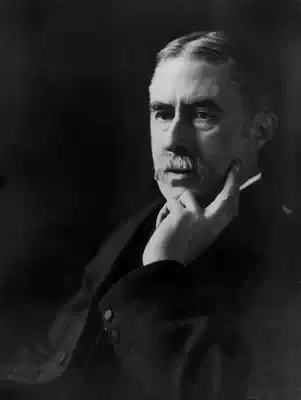
Alfred Edward Housman
The Stinging Nettle
The Stinging Nettle
The stinging nettle only
Will still be found to stand:
The numberless, the lonely,
The thronger of the land,
The leaf that hurts the hand.
That thrives, come sun, come showers;
Blow east, blow west, it springs;
It peoples towns, and towers
Above the courts of Kings,
And touch it and it stings.
The stinging nettle only
Will still be found to stand:
The numberless, the lonely,
The thronger of the land,
The leaf that hurts the hand.
That thrives, come sun, come showers;
Blow east, blow west, it springs;
It peoples towns, and towers
Above the courts of Kings,
And touch it and it stings.
502
Alfred Edward Housman
The Grizzly Bear
The Grizzly Bear
The Grizzly Bear is huge and wild
It has devoured the little child.
The little child is unaware
It has been eaten by the bear.
The Grizzly Bear is huge and wild
It has devoured the little child.
The little child is unaware
It has been eaten by the bear.
370
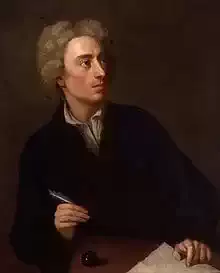
Alexander Pope
Winter - The Fourth Pastoral, or Daphne
Winter - The Fourth Pastoral, or Daphne
Lycidas.
Thyrsis, the music of that murm'ring spring,
Is not so mournful as the strains you sing.
Nor rivers winding thro' the vales below,
So sweetly warble, or so smoothly flow.
Now sleeping flocks on their soft fleeces lie,
The moon, serene in glory, mounts the sky,
Wile silent birds forget their tuneful lays,
Oh sing of Daphne's fate, and Daphne's praise!
Thyrsis.
Behold the groves that shine with silver frost,
Their beauty wither'd, and their verdure lost.
Here shall I try the sweet Alexis' strain,
That call'd the list'ning Dryads to the plain?
Thames heard the numbers as he flow'd along,
And bade his willows learn the moving song.
Lycidas.
So may kind rains their vital moisture yield,
And swell the future harvest of the field.
Begin; this charge the dying Daphne gave,
And said; 'Ye shepherds, sing around my grave!
Sing, while beside the shaded tomb I mourn,
And with fresh bays her rural shrine adorn.'
Thyrsis.
Ye gentle Muses, leave your crystal spring,
Let Nymphs and Sylvans cypress garlands bring;
Ye weeping Loves, the stream with myrtles hide,
And break your vows, as when Adonis died;
And with your golden darts, now useless grown,
Inscribe a verse on this relenting stone:
'Let nature change, let heav'n and earth deplore,
Fair Daphne's dead, and love is now no more!'
'Tis done, and nature's various charms decay,
See gloomy clouds obscure the cheerful day!
Now hung with pearls the dropping trees appear,
Their faded honours scatter'd on her bier.
See, where on earth the flow'ry glories lie,
With her they flourish'd, and with her they die.
Ah what avail the beauties nature wore?
Fair Daphne's dead, and beauty is no more!
For her the flocks refuse their verdant food,
Nor thirsty heifers seek the gliding flood.
The silver swans her hapless fate bemoan,
In notes more sad than when they sing their own;
In hollow caves sweet Echo silent lies,
Silent, or only to her name replies;
Her name with pleasure once she taught the shore,
Now Daphne's dead, and pleasure is no more!
No grateful dews descend from ev'ning skies,
Nor morning odours from the flow'rs arise;
No rich perfumes refresh the fruitful field,
Nor fragrant herbs their native incense yield.
The balmy Zephyrs, silent since her death,
Lament the ceasing of a sweeter breath;
Th' industrious bees neglect their golden store;
Fair Daphne's dead, and sweetness is no more!
No more the mounting larks, while Daphne sings,
Shall list'ning in mid air suspend their wings;
No more the birds shall imitate her lays,
Or hush'd with wonder, hearken from the sprays;
No more the streams their murmur shall forbear,
A sweeter music than their own to hear,
But tell the reeds, and tell the vocal shore,
Fair Daphne's dead, and music is no more!
Her fate is whisper'd by the gentle breeze,
And told in sighs to all the trembling trees;
The trembling trees, in ev'ry plain and wood,
Her fate remurmur to the silver flood;
The silver flood, so lately calm, appears
Swell'd with new passion, and o'erflows with tears;
The winds and trees and floods her death deplore,
Daphne, our grief! our glory now no more!
But see! where Daphne wond'ring mounts on high
Above the clouds, above the starry sky!
Eternal beauties grace the shining scene,
Fields ever fresh, and groves for ever green!
There while you rest in Amaranthine bow'rs,
Or from those meads select unfading flow'rs,
Behold us kindly, who your name implore,
Daphne, our Goddess, and our grief no more!
Lycidas.
How all things listen, while thy Muse complains!
Such silence waits on Philomela's strains,
In some still ev'ning, when the whisp'ring breeze
Pants on the leaves, and dies upon the trees.
To thee, bright goddess, oft a lamb shall bleed,
If teeming ewes increase my fleecy breed.
While plants their shade, or flow'rs their odours give,
Thy name, thy honour, and thy praise shall live!
Thyrsis.
But see, Orion sheds unwholesome dews,
Arise, the pines a noxious shade diffuse;
Sharp Boreas blows, and Nature feels decay,
Time conquers all, and we must Time obey.
Adieu, ye vales, ye mountains, streams and groves,
Adieu, ye shepherd's rural lays and loves;
Adieu, my flocks, farewell ye sylvan crew,
Daphne, farewell, and all the world adieu!
Lycidas.
Thyrsis, the music of that murm'ring spring,
Is not so mournful as the strains you sing.
Nor rivers winding thro' the vales below,
So sweetly warble, or so smoothly flow.
Now sleeping flocks on their soft fleeces lie,
The moon, serene in glory, mounts the sky,
Wile silent birds forget their tuneful lays,
Oh sing of Daphne's fate, and Daphne's praise!
Thyrsis.
Behold the groves that shine with silver frost,
Their beauty wither'd, and their verdure lost.
Here shall I try the sweet Alexis' strain,
That call'd the list'ning Dryads to the plain?
Thames heard the numbers as he flow'd along,
And bade his willows learn the moving song.
Lycidas.
So may kind rains their vital moisture yield,
And swell the future harvest of the field.
Begin; this charge the dying Daphne gave,
And said; 'Ye shepherds, sing around my grave!
Sing, while beside the shaded tomb I mourn,
And with fresh bays her rural shrine adorn.'
Thyrsis.
Ye gentle Muses, leave your crystal spring,
Let Nymphs and Sylvans cypress garlands bring;
Ye weeping Loves, the stream with myrtles hide,
And break your vows, as when Adonis died;
And with your golden darts, now useless grown,
Inscribe a verse on this relenting stone:
'Let nature change, let heav'n and earth deplore,
Fair Daphne's dead, and love is now no more!'
'Tis done, and nature's various charms decay,
See gloomy clouds obscure the cheerful day!
Now hung with pearls the dropping trees appear,
Their faded honours scatter'd on her bier.
See, where on earth the flow'ry glories lie,
With her they flourish'd, and with her they die.
Ah what avail the beauties nature wore?
Fair Daphne's dead, and beauty is no more!
For her the flocks refuse their verdant food,
Nor thirsty heifers seek the gliding flood.
The silver swans her hapless fate bemoan,
In notes more sad than when they sing their own;
In hollow caves sweet Echo silent lies,
Silent, or only to her name replies;
Her name with pleasure once she taught the shore,
Now Daphne's dead, and pleasure is no more!
No grateful dews descend from ev'ning skies,
Nor morning odours from the flow'rs arise;
No rich perfumes refresh the fruitful field,
Nor fragrant herbs their native incense yield.
The balmy Zephyrs, silent since her death,
Lament the ceasing of a sweeter breath;
Th' industrious bees neglect their golden store;
Fair Daphne's dead, and sweetness is no more!
No more the mounting larks, while Daphne sings,
Shall list'ning in mid air suspend their wings;
No more the birds shall imitate her lays,
Or hush'd with wonder, hearken from the sprays;
No more the streams their murmur shall forbear,
A sweeter music than their own to hear,
But tell the reeds, and tell the vocal shore,
Fair Daphne's dead, and music is no more!
Her fate is whisper'd by the gentle breeze,
And told in sighs to all the trembling trees;
The trembling trees, in ev'ry plain and wood,
Her fate remurmur to the silver flood;
The silver flood, so lately calm, appears
Swell'd with new passion, and o'erflows with tears;
The winds and trees and floods her death deplore,
Daphne, our grief! our glory now no more!
But see! where Daphne wond'ring mounts on high
Above the clouds, above the starry sky!
Eternal beauties grace the shining scene,
Fields ever fresh, and groves for ever green!
There while you rest in Amaranthine bow'rs,
Or from those meads select unfading flow'rs,
Behold us kindly, who your name implore,
Daphne, our Goddess, and our grief no more!
Lycidas.
How all things listen, while thy Muse complains!
Such silence waits on Philomela's strains,
In some still ev'ning, when the whisp'ring breeze
Pants on the leaves, and dies upon the trees.
To thee, bright goddess, oft a lamb shall bleed,
If teeming ewes increase my fleecy breed.
While plants their shade, or flow'rs their odours give,
Thy name, thy honour, and thy praise shall live!
Thyrsis.
But see, Orion sheds unwholesome dews,
Arise, the pines a noxious shade diffuse;
Sharp Boreas blows, and Nature feels decay,
Time conquers all, and we must Time obey.
Adieu, ye vales, ye mountains, streams and groves,
Adieu, ye shepherd's rural lays and loves;
Adieu, my flocks, farewell ye sylvan crew,
Daphne, farewell, and all the world adieu!
435
Alexander Pope
Translation of a Prayer of Brutus
Translation of a Prayer of Brutus
Goddess of woods, tremendous in the chase,
To mountain wolves and all the savage race,
Wide o'er the aerial vault extend thy sway,
And o'er the infernal regions void of day.
On thy third reign look down; disclose our fate,
In what new station shall we fix our seat?
When shall we next thy hallow'd altars raise,
And choirs of virgins celebrate thy praise?
Goddess of woods, tremendous in the chase,
To mountain wolves and all the savage race,
Wide o'er the aerial vault extend thy sway,
And o'er the infernal regions void of day.
On thy third reign look down; disclose our fate,
In what new station shall we fix our seat?
When shall we next thy hallow'd altars raise,
And choirs of virgins celebrate thy praise?
347
Alexander Pope
Essay on Man
Essay on Man
The First Epistle
Awake, my ST. JOHN!(1) leave all meaner things
To low ambition, and the pride of Kings.
Let us (since Life can little more supply
Than just to look about us and to die)
Expatiate(2) free o'er all this scene of Man;
A mighty maze! but not without a plan;
A Wild, where weeds and flow'rs promiscuous shoot,
Or Garden, tempting with forbidden fruit.
Together let us beat this ample field,
Try what the open, what the covert yield;
The latent tracts(3), the giddy heights explore
Of all who blindly creep, or sightless soar;
Eye Nature's walks, shoot Folly as it flies,
And catch the Manners living as they rise;
Laugh where we must, be candid where we can;
But vindicate(4) the ways of God to Man.
1. Say first, of God above, or Man below,
What can we reason, but from what we know?
Of Man what see we, but his station here,
From which to reason, or to which refer?
Thro' worlds unnumber'd tho' the God be known,
'Tis ours to trace him only in our own.
He, who thro' vast immensity can pierce,
See worlds on worlds compose one universe,
Observe how system into system runs,
What other planets circle other suns,
What vary'd being peoples ev'ry star,
May tell why Heav'n has made us as we are.
But of this frame the bearings, and the ties,
The strong connections, nice dependencies,
Gradations just, has thy pervading soul
Look'd thro'? or can a part contain the whole?
Is the great chain, that draws all to agree,
And drawn supports, upheld by God, or thee?
II. Presumptuous Man! the reason wouldst thou find,
Why form'd so weak, so little, and so blind!
First, if thou canst, the harder reason guess,
Why form'd no weaker, blinder, and no less!
Ask of thy mother earth, why oaks are made
Taller or stronger than the weeds they shade?
Or ask of yonder argent fields(5) above,
Why JOVE'S Satellites are less than JOVE?(6)
Of Systems possible, if 'tis confest
That Wisdom infinite must form the best,
Where all must full or not coherent be,
And all that rises, rise in due degree;
Then, in the scale of reas'ning life, 'tis plain
There must be, somewhere, such rank as Man;
And all the question (wrangle e'er so long)
Is only this, if God has plac'd him wrong?
Respecting Man, whatever wrong we call,
Nay, must be right, as relative to all.
In human works, tho' labour'd on with pain,
A thousand movements scarce one purpose gain;
In God's, one single can its end produce;
Yet serves to second too some other use.
So Man, who here seems principal alone,
Perhaps acts second to some sphere unknown,
Touches some wheel, or verges to some goal;
'Tis but a part we see, and not a whole.
When the proud steed shall know why Man restrains
His fiery course, or drives him o'er the plains;
When the dull Ox, why now he breaks the clod,
Is now a victim, and now Egypt's God:(7)
Then shall Man's pride and dullness comprehend
His actions', passions', being's, use and end;
Why doing, suff'ring, check'd, impell'd; and why
This hour a slave, the next a deity.
Then say not Man's imperfect, Heav'n in fault;
Say rather, Man's as perfect as he ought;
His knowledge measur'd to his state and place,
His time a moment, and a point his space.
If to be perfect in a certain sphere,
What matter, soon or late, or here or there?
The blest today is as completely so,
As who began a thousand years ago.
III. Heav'n from all creatures hides the book of Fate,
All but the page prescrib'd, their present state;
From brutes what men, from men what spirits know:
Or who could suffer Being here below?
The lamb thy riot dooms to bleed to-day,
Had he thy Reason, would he skip and play?
Pleas'd to the last, he crops the flow'ry food,
And licks the hand just rais'd to shed his blood.
Oh blindness to the future! kindly giv'n,
That each may fill the circle mark'd by Heav'n;
Who sees with equal eye, as God of all,
A hero perish, or a sparrow fall,
Atoms or systems into ruin hurl'd,
And now a bubble burst, and now a world.
Hope humbly then; with trembling pinions soar;
Wait the great teacher Death, and God adore!
What future bliss, he gives not thee to know,
But gives that Hope to be thy blessing now.
Hope springs eternal in the human breast:
Man never Is, but always To be blest:
The soul, uneasy and confin'd from home,
Rests and expatiates in a life to come.
Lo! the poor Indian, whose untutor'd mind
Sees God in clouds, or hears him in the wind;
His soul proud Science never taught to stray
Far as the solar walk, or milky way;
Yet simple Nature to his hope has giv'n,
Behind the cloud-topt hill, an humbler heav'n;
Some safer world in depth of woods embrac'd,
Some happier island in the watry waste,
Where slaves once more their native land behold,
No fiends torment, no Christians thirst for gold!
To Be, contents his natural desire,
He asks no Angel's wing, no Seraph's(8) fire;
But thinks, admitted to that equal sky,
His faithful dog shall bear him company.
IV. Go, wiser thou! and in thy scale of sense
Weigh thy Opinion against Providence;
Call Imperfection what thou fancy'st such,
Say, here he gives too little, there too much;
Destroy all creatures for thy sport or gust,(9)
Yet cry, If Man's unhappy, God's unjust;
If Man alone ingross not Heav'n's high care,
Alone made perfect here, immortal there:
Snatch from his hand the balance(10) and the rod,
Re-judge his justice, be the GOD of GOD!
In Pride, in reas'ning Pride, our error lies;
All quit their sphere, and rush into the skies.
Pride still is aiming at the blest abodes,
Men would be Angels, Angels would be Gods.
Aspiring to be Gods, if Angels fell,
Aspiring to be Angels, Men rebel;
And who but wishes to invert the laws
Of ORDER, sins against th' Eternal Cause.
V. Ask for what end the heav'nly bodies shine,
Earth for whose use? Pride answers, "Tis for mine:
For me kind Nature wakes her genial pow'r,
Suckles each herb, and spreads out ev'ry flow'r;
Annual for me, the grape, the rose renew
The juice nectareous, and the balmy dew;
For me, the mine a thousand treasures brings;
For me, health gushes from a thousand springs;
Seas roll to waft me, suns to light me rise;
My foot-stool earth, my canopy the skies."
But errs not Nature from this gracious end,
From burning suns when livid deaths descend,
When earthquakes swallow, or when tempests sweep
Towns to one grave, whole nations to the deep?
"No ('tis reply'd) the first Almighty Cause
Acts not by partial, but by gen'ral laws;
Th' exceptions few; some change since all began,
And what created perfect?" -- Why then Man?
If the great end be human Happiness,
Then Nature deviates; and can Man do less?
As much that end a constant course requires
Of show'rs and sun-shine, as of Man's desires;
As much eternal springs and cloudless skies,
As Men for ever temp'rate, calm, and wise.
If plagues or earthquakes break not Heav'n's design,
Why then a Borgia,(11) or a Catiline?(12)
Who knows but he, whose hand the light'ning forms,
Who heaves old Ocean, and who wings the storms,
Pours fierce Ambition in a Caesar's(13) mind,
Or turns young Ammon(14) loose to scourge mankind?
From pride, from pride, our very reas'ning springs;
Account for moral as for nat'ral things:
Why charge we Heav'n in those, in these acquit?
In both, to reason right is to submit.
Better for Us, perhaps, it might appear,
Were there all harmony, all virtue here;
That never air or ocean felt the wind;
That never passion discompos'd the mind:
But ALL subsists by elemental strife;
and Passions are the elements of Life.
The gen'ral ORDER, since the whole began,
Is kept in Nature, and is kept in Man.
VI. What would this Man? Now upward will he soar,
And little less than Angel,(15) would be more;
Now looking downwards, just as griev'd appears
To want the strength of bulls, the fur of bears.
Made for his use all creatures if he call,
Say what their use, had he the pow'rs of all?
Nature to these, without profusion kind,
The proper organs, proper pow'rs assign'd;
Each seeming want compensated of course,
Here with degrees of swiftness, there of force;
All in exact proportion to the state;
Nothing to add, and nothing to abate.
Each beast, each insect, happy in its own;
Is Heav'n unkind to Man, and Man alone?
Shall he alone, whom rational we call,
Be pleas'd with nothing, if not bless'd with all?
The bliss of Man (could Pride that blessing find)
Is not to act or think beyond mankind;
No pow'rs of body or of soul to share,
But what his nature and his state can bear.
Why has not Man a microscopic eye?
For this plain reason, Man is not a Fly.
Say what the use, were finer optics giv'n,
T' inspect a mite,(16) not comprehend the heav'n?
Or touch, if tremblingly alive all o'er,
To smart and agonize at ev'ry pore?
Or quick effluvia(17) darting thro' the brain,
Die of a rose in aromatic pain?
If nature thunder'd in his op'ning ears,
And stunn'd him with the music of the spheres,
How would he wish that Heav'n had left him still
The whisp'ring Zephyr,(18) and the purling rill?(19)
Who finds not Providence all good and wise,
Alike in what it gives, and what denies?
VII. Far as Creation's ample range extends,
The scale of sensual, mental pow'rs ascends:
Mark how it mounts, to Man's imperial race,
From the green myriads in the people grass:
What modes of sight betwixt each wide extreme,
The mole's dim curtain, and the lynx's beam:
Of smell, the headlong lioness between,
And hound sagacious(20) on the tainted(21) green:
Of hearing, from the life that fills the flood,(22)
To that which warbles thro' the vernal(23) wood:
The spider's touch, how exquisitely fine!
Feels at each thread, and lives along the line:
In the nice bee, what sense so subtly true
From pois'nous herbs extracts the healing dew:(24)
How Instinct varies in the grov'ling swine,
Compar'd, half-reas'ning elephant, with thine:
'Twixt that, and Reason, what a nice barrier;
For ever sep'rate, yet for ever near!
Remembrance and Reflection how ally'd;
What thin partitions Sense from Thought divide:
And Middle natures,(25) how they long to join,
Yet never pass th' insuperable line!
Without this just gradation, could they be
Subjected these to those, or all to thee?
The pow'rs of all subdu'd by thee alone,
Is not thy Reason all these pow'rs in one?
VIII. See, thro' this air, this ocean, and this earth,
All matter quick, and bursting into birth.
Above, how high progressive life may go!
Around, how wide! how deep extend below!
Vast chain of being, which from God began,
Natures ethereal,(26) human, angel, man
Beast, bird, fish, insect! what no eye can see,
No glass can reach! from Infinite to thee,
From thee to Nothing! -- On superior pow'rs
Were we to press, inferior might on ours:
Or in the full creation leave a void,
Where, one step broken, the great scale's destoy'd:
From Nature's chain whatever link you strike,
Tenth or ten thousandth, breaks the chain alike.
And if each system in gradation roll,
Alike essential to th' amazing whole;
The least confusion but in one, not all
That system only, but the whole must fall.
Let Earth unbalanc'd from her orbit fly,
Planets and Suns run lawless thro' the sky,
Let ruling Angels from their spheres be hurl'd,
Being on being wreck'd, and world on world,
Heav'n's whole foundations to their centre nod,
And Nature tremble to the throne of God:
All this dread ORDER break -- for whom? for thee?
Vile worm! -- oh, Madness, Pride, Impiety!
IX. What if the foot, ordain'd the dust to tread,
Or hand to toil, aspir'd to be the head?
What if the head, the eye, or ear repin'd(27)
To serve mere engines to the ruling Mind?
Just as absurd, to mourn the tasks or pains
The great directing MIND of ALL ordains.
All are but parts of one stupendous whole,
Whose body, Nature is, and God the soul;
That, chang'd thro' all, and yet in all the same,
Great in the earth, as in th' ethereal frame,
Warms in the sun, refreshes in the breeze,
Glows in the stars, and blossoms in the trees,
Lives thro' all life, extends thro' all extent,
Spreads undivided, operates unspent,
Breathes in our soul, informs our mortal parts,
As full, as perfect, in a hair as heart;
As full, as perfect, in vile Man that mourns,
As the rapt Seraph that adores and burns;
To him no high, no low, no great, no small;
He fills, he bounds, connects, and equals all.
X. Cease then, nor ORDER Imperfection name:
Our proper bliss depends on what we blame.
Know thy own point: This kind, this due degree
Of blindness, weakness, Heav'n bestows on thee.
Submit -- In this, or any other sphere,
Secure to be as blest as thou canst bear:
Safe in the hand of one disposing Pow'r,
Or in the natal, or the mortal hour.
All Nature is but Art, unknown to thee;
All Chance, Direction, which thou canst not see;
All Discord, Harmony, not understood;
All partial Evil, universal Good:
And, spite of Pride, in erring Reason's spite,
One truth is clear, "Whatever IS, is RIGHT."
Argument of the Second Epistle:
Of the Nature and State of Man, with respect to Himself, as an Individual. The business
of Man not to pry into God, but
to study himself.
Know then thyself, presume not God to scan;
The proper study of Mankind is Man.
Plac'd on this isthmus of a middle state,(28)
A being darkly wise, and rudely great:
With too much knowledge for the Sceptic side,
With too much weakness for the Stoic's pride,
He hangs between; in doubt to act, or rest,
In doubt to deem himself a God, or Beast;
In doubt his Mind or Body to prefer,
Born but to die, and reas'ning but to err;
Alike in ignorance, his reason such,
Whether he thinks too little, or too much:
Chaos of Thought and Passion, all confus'd;
Still by himself abus'd, or disabus'd;
Created half to rise, and half to fall;
Great lord of all things, yet a prey to all;
Sole judge of Truth, in endless Error hurl'd:
The glory, jest, and riddle of the world!
ENDNOTES:
1[His friend, Henry St. John, Lord Bolingbroke]
2[to wander]
3[hidden areas]
4[explain or defend]
5[silvery fields, i.e., the heavens]
6[the planet Jupiter]
7[ancient Egyptians sometimes worshipped oxen]
8[the highest level of angels]
9[pleasure]
10[the balance used to weigh justice]
11[Caesar Borgia (1476-1507) who used any cruelty to achieve his ends]
12[Lucious Sergius Catilina (108-62 B.C.) who was a traitor to Rome]
13[Julius Caesar (100-44 B.C.) who was thought to be overly ambitious Roman]
14[Alexander the Great (356-323 B.C.)]
15[Psalm 8:5--"Thou hast made him [man] a little lower than the angels...."]
16[small insect]
17[vapors which were believed to pass odors to the brain]
18[the West Wind]
19[stream]
20[able to pick up a scent]
21[having the odor of an animal]
22[ocean]
23[green]
24[honey was thought to have medicinal properties]
25[Animals slightly below humans on the chain of being]
26[heavenly]
27[complained]
28[i.e., on the chain of being between angels and animals]
The First Epistle
Awake, my ST. JOHN!(1) leave all meaner things
To low ambition, and the pride of Kings.
Let us (since Life can little more supply
Than just to look about us and to die)
Expatiate(2) free o'er all this scene of Man;
A mighty maze! but not without a plan;
A Wild, where weeds and flow'rs promiscuous shoot,
Or Garden, tempting with forbidden fruit.
Together let us beat this ample field,
Try what the open, what the covert yield;
The latent tracts(3), the giddy heights explore
Of all who blindly creep, or sightless soar;
Eye Nature's walks, shoot Folly as it flies,
And catch the Manners living as they rise;
Laugh where we must, be candid where we can;
But vindicate(4) the ways of God to Man.
1. Say first, of God above, or Man below,
What can we reason, but from what we know?
Of Man what see we, but his station here,
From which to reason, or to which refer?
Thro' worlds unnumber'd tho' the God be known,
'Tis ours to trace him only in our own.
He, who thro' vast immensity can pierce,
See worlds on worlds compose one universe,
Observe how system into system runs,
What other planets circle other suns,
What vary'd being peoples ev'ry star,
May tell why Heav'n has made us as we are.
But of this frame the bearings, and the ties,
The strong connections, nice dependencies,
Gradations just, has thy pervading soul
Look'd thro'? or can a part contain the whole?
Is the great chain, that draws all to agree,
And drawn supports, upheld by God, or thee?
II. Presumptuous Man! the reason wouldst thou find,
Why form'd so weak, so little, and so blind!
First, if thou canst, the harder reason guess,
Why form'd no weaker, blinder, and no less!
Ask of thy mother earth, why oaks are made
Taller or stronger than the weeds they shade?
Or ask of yonder argent fields(5) above,
Why JOVE'S Satellites are less than JOVE?(6)
Of Systems possible, if 'tis confest
That Wisdom infinite must form the best,
Where all must full or not coherent be,
And all that rises, rise in due degree;
Then, in the scale of reas'ning life, 'tis plain
There must be, somewhere, such rank as Man;
And all the question (wrangle e'er so long)
Is only this, if God has plac'd him wrong?
Respecting Man, whatever wrong we call,
Nay, must be right, as relative to all.
In human works, tho' labour'd on with pain,
A thousand movements scarce one purpose gain;
In God's, one single can its end produce;
Yet serves to second too some other use.
So Man, who here seems principal alone,
Perhaps acts second to some sphere unknown,
Touches some wheel, or verges to some goal;
'Tis but a part we see, and not a whole.
When the proud steed shall know why Man restrains
His fiery course, or drives him o'er the plains;
When the dull Ox, why now he breaks the clod,
Is now a victim, and now Egypt's God:(7)
Then shall Man's pride and dullness comprehend
His actions', passions', being's, use and end;
Why doing, suff'ring, check'd, impell'd; and why
This hour a slave, the next a deity.
Then say not Man's imperfect, Heav'n in fault;
Say rather, Man's as perfect as he ought;
His knowledge measur'd to his state and place,
His time a moment, and a point his space.
If to be perfect in a certain sphere,
What matter, soon or late, or here or there?
The blest today is as completely so,
As who began a thousand years ago.
III. Heav'n from all creatures hides the book of Fate,
All but the page prescrib'd, their present state;
From brutes what men, from men what spirits know:
Or who could suffer Being here below?
The lamb thy riot dooms to bleed to-day,
Had he thy Reason, would he skip and play?
Pleas'd to the last, he crops the flow'ry food,
And licks the hand just rais'd to shed his blood.
Oh blindness to the future! kindly giv'n,
That each may fill the circle mark'd by Heav'n;
Who sees with equal eye, as God of all,
A hero perish, or a sparrow fall,
Atoms or systems into ruin hurl'd,
And now a bubble burst, and now a world.
Hope humbly then; with trembling pinions soar;
Wait the great teacher Death, and God adore!
What future bliss, he gives not thee to know,
But gives that Hope to be thy blessing now.
Hope springs eternal in the human breast:
Man never Is, but always To be blest:
The soul, uneasy and confin'd from home,
Rests and expatiates in a life to come.
Lo! the poor Indian, whose untutor'd mind
Sees God in clouds, or hears him in the wind;
His soul proud Science never taught to stray
Far as the solar walk, or milky way;
Yet simple Nature to his hope has giv'n,
Behind the cloud-topt hill, an humbler heav'n;
Some safer world in depth of woods embrac'd,
Some happier island in the watry waste,
Where slaves once more their native land behold,
No fiends torment, no Christians thirst for gold!
To Be, contents his natural desire,
He asks no Angel's wing, no Seraph's(8) fire;
But thinks, admitted to that equal sky,
His faithful dog shall bear him company.
IV. Go, wiser thou! and in thy scale of sense
Weigh thy Opinion against Providence;
Call Imperfection what thou fancy'st such,
Say, here he gives too little, there too much;
Destroy all creatures for thy sport or gust,(9)
Yet cry, If Man's unhappy, God's unjust;
If Man alone ingross not Heav'n's high care,
Alone made perfect here, immortal there:
Snatch from his hand the balance(10) and the rod,
Re-judge his justice, be the GOD of GOD!
In Pride, in reas'ning Pride, our error lies;
All quit their sphere, and rush into the skies.
Pride still is aiming at the blest abodes,
Men would be Angels, Angels would be Gods.
Aspiring to be Gods, if Angels fell,
Aspiring to be Angels, Men rebel;
And who but wishes to invert the laws
Of ORDER, sins against th' Eternal Cause.
V. Ask for what end the heav'nly bodies shine,
Earth for whose use? Pride answers, "Tis for mine:
For me kind Nature wakes her genial pow'r,
Suckles each herb, and spreads out ev'ry flow'r;
Annual for me, the grape, the rose renew
The juice nectareous, and the balmy dew;
For me, the mine a thousand treasures brings;
For me, health gushes from a thousand springs;
Seas roll to waft me, suns to light me rise;
My foot-stool earth, my canopy the skies."
But errs not Nature from this gracious end,
From burning suns when livid deaths descend,
When earthquakes swallow, or when tempests sweep
Towns to one grave, whole nations to the deep?
"No ('tis reply'd) the first Almighty Cause
Acts not by partial, but by gen'ral laws;
Th' exceptions few; some change since all began,
And what created perfect?" -- Why then Man?
If the great end be human Happiness,
Then Nature deviates; and can Man do less?
As much that end a constant course requires
Of show'rs and sun-shine, as of Man's desires;
As much eternal springs and cloudless skies,
As Men for ever temp'rate, calm, and wise.
If plagues or earthquakes break not Heav'n's design,
Why then a Borgia,(11) or a Catiline?(12)
Who knows but he, whose hand the light'ning forms,
Who heaves old Ocean, and who wings the storms,
Pours fierce Ambition in a Caesar's(13) mind,
Or turns young Ammon(14) loose to scourge mankind?
From pride, from pride, our very reas'ning springs;
Account for moral as for nat'ral things:
Why charge we Heav'n in those, in these acquit?
In both, to reason right is to submit.
Better for Us, perhaps, it might appear,
Were there all harmony, all virtue here;
That never air or ocean felt the wind;
That never passion discompos'd the mind:
But ALL subsists by elemental strife;
and Passions are the elements of Life.
The gen'ral ORDER, since the whole began,
Is kept in Nature, and is kept in Man.
VI. What would this Man? Now upward will he soar,
And little less than Angel,(15) would be more;
Now looking downwards, just as griev'd appears
To want the strength of bulls, the fur of bears.
Made for his use all creatures if he call,
Say what their use, had he the pow'rs of all?
Nature to these, without profusion kind,
The proper organs, proper pow'rs assign'd;
Each seeming want compensated of course,
Here with degrees of swiftness, there of force;
All in exact proportion to the state;
Nothing to add, and nothing to abate.
Each beast, each insect, happy in its own;
Is Heav'n unkind to Man, and Man alone?
Shall he alone, whom rational we call,
Be pleas'd with nothing, if not bless'd with all?
The bliss of Man (could Pride that blessing find)
Is not to act or think beyond mankind;
No pow'rs of body or of soul to share,
But what his nature and his state can bear.
Why has not Man a microscopic eye?
For this plain reason, Man is not a Fly.
Say what the use, were finer optics giv'n,
T' inspect a mite,(16) not comprehend the heav'n?
Or touch, if tremblingly alive all o'er,
To smart and agonize at ev'ry pore?
Or quick effluvia(17) darting thro' the brain,
Die of a rose in aromatic pain?
If nature thunder'd in his op'ning ears,
And stunn'd him with the music of the spheres,
How would he wish that Heav'n had left him still
The whisp'ring Zephyr,(18) and the purling rill?(19)
Who finds not Providence all good and wise,
Alike in what it gives, and what denies?
VII. Far as Creation's ample range extends,
The scale of sensual, mental pow'rs ascends:
Mark how it mounts, to Man's imperial race,
From the green myriads in the people grass:
What modes of sight betwixt each wide extreme,
The mole's dim curtain, and the lynx's beam:
Of smell, the headlong lioness between,
And hound sagacious(20) on the tainted(21) green:
Of hearing, from the life that fills the flood,(22)
To that which warbles thro' the vernal(23) wood:
The spider's touch, how exquisitely fine!
Feels at each thread, and lives along the line:
In the nice bee, what sense so subtly true
From pois'nous herbs extracts the healing dew:(24)
How Instinct varies in the grov'ling swine,
Compar'd, half-reas'ning elephant, with thine:
'Twixt that, and Reason, what a nice barrier;
For ever sep'rate, yet for ever near!
Remembrance and Reflection how ally'd;
What thin partitions Sense from Thought divide:
And Middle natures,(25) how they long to join,
Yet never pass th' insuperable line!
Without this just gradation, could they be
Subjected these to those, or all to thee?
The pow'rs of all subdu'd by thee alone,
Is not thy Reason all these pow'rs in one?
VIII. See, thro' this air, this ocean, and this earth,
All matter quick, and bursting into birth.
Above, how high progressive life may go!
Around, how wide! how deep extend below!
Vast chain of being, which from God began,
Natures ethereal,(26) human, angel, man
Beast, bird, fish, insect! what no eye can see,
No glass can reach! from Infinite to thee,
From thee to Nothing! -- On superior pow'rs
Were we to press, inferior might on ours:
Or in the full creation leave a void,
Where, one step broken, the great scale's destoy'd:
From Nature's chain whatever link you strike,
Tenth or ten thousandth, breaks the chain alike.
And if each system in gradation roll,
Alike essential to th' amazing whole;
The least confusion but in one, not all
That system only, but the whole must fall.
Let Earth unbalanc'd from her orbit fly,
Planets and Suns run lawless thro' the sky,
Let ruling Angels from their spheres be hurl'd,
Being on being wreck'd, and world on world,
Heav'n's whole foundations to their centre nod,
And Nature tremble to the throne of God:
All this dread ORDER break -- for whom? for thee?
Vile worm! -- oh, Madness, Pride, Impiety!
IX. What if the foot, ordain'd the dust to tread,
Or hand to toil, aspir'd to be the head?
What if the head, the eye, or ear repin'd(27)
To serve mere engines to the ruling Mind?
Just as absurd, to mourn the tasks or pains
The great directing MIND of ALL ordains.
All are but parts of one stupendous whole,
Whose body, Nature is, and God the soul;
That, chang'd thro' all, and yet in all the same,
Great in the earth, as in th' ethereal frame,
Warms in the sun, refreshes in the breeze,
Glows in the stars, and blossoms in the trees,
Lives thro' all life, extends thro' all extent,
Spreads undivided, operates unspent,
Breathes in our soul, informs our mortal parts,
As full, as perfect, in a hair as heart;
As full, as perfect, in vile Man that mourns,
As the rapt Seraph that adores and burns;
To him no high, no low, no great, no small;
He fills, he bounds, connects, and equals all.
X. Cease then, nor ORDER Imperfection name:
Our proper bliss depends on what we blame.
Know thy own point: This kind, this due degree
Of blindness, weakness, Heav'n bestows on thee.
Submit -- In this, or any other sphere,
Secure to be as blest as thou canst bear:
Safe in the hand of one disposing Pow'r,
Or in the natal, or the mortal hour.
All Nature is but Art, unknown to thee;
All Chance, Direction, which thou canst not see;
All Discord, Harmony, not understood;
All partial Evil, universal Good:
And, spite of Pride, in erring Reason's spite,
One truth is clear, "Whatever IS, is RIGHT."
Argument of the Second Epistle:
Of the Nature and State of Man, with respect to Himself, as an Individual. The business
of Man not to pry into God, but
to study himself.
Know then thyself, presume not God to scan;
The proper study of Mankind is Man.
Plac'd on this isthmus of a middle state,(28)
A being darkly wise, and rudely great:
With too much knowledge for the Sceptic side,
With too much weakness for the Stoic's pride,
He hangs between; in doubt to act, or rest,
In doubt to deem himself a God, or Beast;
In doubt his Mind or Body to prefer,
Born but to die, and reas'ning but to err;
Alike in ignorance, his reason such,
Whether he thinks too little, or too much:
Chaos of Thought and Passion, all confus'd;
Still by himself abus'd, or disabus'd;
Created half to rise, and half to fall;
Great lord of all things, yet a prey to all;
Sole judge of Truth, in endless Error hurl'd:
The glory, jest, and riddle of the world!
ENDNOTES:
1[His friend, Henry St. John, Lord Bolingbroke]
2[to wander]
3[hidden areas]
4[explain or defend]
5[silvery fields, i.e., the heavens]
6[the planet Jupiter]
7[ancient Egyptians sometimes worshipped oxen]
8[the highest level of angels]
9[pleasure]
10[the balance used to weigh justice]
11[Caesar Borgia (1476-1507) who used any cruelty to achieve his ends]
12[Lucious Sergius Catilina (108-62 B.C.) who was a traitor to Rome]
13[Julius Caesar (100-44 B.C.) who was thought to be overly ambitious Roman]
14[Alexander the Great (356-323 B.C.)]
15[Psalm 8:5--"Thou hast made him [man] a little lower than the angels...."]
16[small insect]
17[vapors which were believed to pass odors to the brain]
18[the West Wind]
19[stream]
20[able to pick up a scent]
21[having the odor of an animal]
22[ocean]
23[green]
24[honey was thought to have medicinal properties]
25[Animals slightly below humans on the chain of being]
26[heavenly]
27[complained]
28[i.e., on the chain of being between angels and animals]
594
Alexander Pope
An Essay on Man in Four Epistles: Epistle 1
An Essay on Man in Four Epistles: Epistle 1
To Henry St. John, Lord Bolingbroke
Awake, my St. John! leave all meaner things
To low ambition, and the pride of kings.
Let us (since life can little more supply
Than just to look about us and to die)
Expatiate free o'er all this scene of man;
A mighty maze! but not without a plan;
A wild, where weeds and flow'rs promiscuous shoot;
Or garden, tempting with forbidden fruit.
Together let us beat this ample field,
Try what the open, what the covert yield;
The latent tracts, the giddy heights explore
Of all who blindly creep, or sightless soar;
Eye Nature's walks, shoot folly as it flies,
And catch the manners living as they rise;
Laugh where we must, be candid where we can;
But vindicate the ways of God to man.I.
Say first, of God above, or man below,
What can we reason, but from what we know?
Of man what see we, but his station here,
From which to reason, or to which refer?
Through worlds unnumber'd though the God be known,
'Tis ours to trace him only in our own.
He, who through vast immensity can pierce,
See worlds on worlds compose one universe,
Observe how system into system runs,
What other planets circle other suns,
What varied being peoples ev'ry star,
May tell why Heav'n has made us as we are.
But of this frame the bearings, and the ties,
The strong connections, nice dependencies,
Gradations just, has thy pervading soul
Look'd through? or can a part contain the whole?
Is the great chain, that draws all to agree,
And drawn supports, upheld by God, or thee?II.
Presumptuous man! the reason wouldst thou find,
Why form'd so weak, so little, and so blind?
First, if thou canst, the harder reason guess,
Why form'd no weaker, blinder, and no less?
Ask of thy mother earth, why oaks are made
Taller or stronger than the weeds they shade?
Or ask of yonder argent fields above,
Why Jove's satellites are less than Jove?
Of systems possible, if 'tis confest
That Wisdom infinite must form the best,
Where all must full or not coherent be,
And all that rises, rise in due degree;
Then, in the scale of reas'ning life, 'tis plain
There must be somewhere, such a rank as man:
And all the question (wrangle e'er so long)
Is only this, if God has plac'd him wrong?
Respecting man, whatever wrong we call,
May, must be right, as relative to all.
In human works, though labour'd on with pain,
A thousand movements scarce one purpose gain;
In God's, one single can its end produce;
Yet serves to second too some other use.
So man, who here seems principal alone,
Perhaps acts second to some sphere unknown,
Touches some wheel, or verges to some goal;
'Tis but a part we see, and not a whole.
When the proud steed shall know why man restrains
His fiery course, or drives him o'er the plains:
When the dull ox, why now he breaks the clod,
Is now a victim, and now Egypt's God:
Then shall man's pride and dulness comprehend
His actions', passions', being's, use and end;
Why doing, suff'ring, check'd, impell'd; and why
This hour a slave, the next a deity.
Then say not man's imperfect, Heav'n in fault;
Say rather, man's as perfect as he ought:
His knowledge measur'd to his state and place;
His time a moment, and a point his space.
If to be perfect in a certain sphere,
What matter, soon or late, or here or there?
The blest today is as completely so,
As who began a thousand years ago.III.
Heav'n from all creatures hides the book of fate,
All but the page prescrib'd, their present state:
From brutes what men, from men what spirits know:
Or who could suffer being here below?
The lamb thy riot dooms to bleed today,
Had he thy reason, would he skip and play?
Pleas'd to the last, he crops the flow'ry food,
And licks the hand just rais'd to shed his blood.
Oh blindness to the future! kindly giv'n,
That each may fill the circle mark'd by Heav'n:
Who sees with equal eye, as God of all,
A hero perish, or a sparrow fall,
Atoms or systems into ruin hurl'd,
And now a bubble burst, and now a world.
Hope humbly then; with trembling pinions soar;
Wait the great teacher Death; and God adore.
What future bliss, he gives not thee to know,
But gives that hope to be thy blessing now.
Hope springs eternal in the human breast:
Man never is, but always to be blest:
The soul, uneasy and confin'd from home,
Rests and expatiates in a life to come.
Lo! the poor Indian, whose untutor'd mind
Sees God in clouds, or hears him in the wind;
His soul, proud science never taught to stray
Far as the solar walk, or milky way;
Yet simple nature to his hope has giv'n,
Behind the cloud topp'd hill, an humbler heav'n;
Some safer world in depth of woods embrac'd,
Some happier island in the wat'ry waste,
Where slaves once more their native land behold,
No fiends torment, no Christians thirst for gold.
To be, contents his natural desire,
He asks no angel's wing, no seraph's fire;
But thinks, admitted to that equal sky,
His faithful dog shall bear him company.IV.
Go, wiser thou! and, in thy scale of sense
Weigh thy opinion against Providence;
Call imperfection what thou fanciest such,
Say, here he gives too little, there too much:
Destroy all creatures for thy sport or gust,
Yet cry, if man's unhappy, God's unjust;
If man alone engross not Heav'n's high care,
Alone made perfect here, immortal there:
Snatch from his hand the balance and the rod,
Rejudge his justice, be the God of God.
In pride, in reas'ning pride, our error lies;
All quit their sphere, and rush into the skies.
Pride still is aiming at the blest abodes,
Men would be angels, angels would be gods.
Aspiring to be gods, if angels fell,
Aspiring to be angels, men rebel:
And who but wishes to invert the laws
Of order, sins against th' Eternal Cause.V.
Ask for what end the heav'nly bodies shine,
Earth for whose use? Pride answers, " 'Tis for mine:
For me kind Nature wakes her genial pow'r,
Suckles each herb, and spreads out ev'ry flow'r;
Annual for me, the grape, the rose renew,
The juice nectareous, and the balmy dew;
For me, the mine a thousand treasures brings;
For me, health gushes from a thousand springs;
Seas roll to waft me, suns to light me rise;
My foot-stool earth, my canopy the skies."
But errs not Nature from this gracious end,
From burning suns when livid deaths descend,
When earthquakes swallow, or when tempests sweep
Towns to one grave, whole nations to the deep?
"No, ('tis replied) the first Almighty Cause
Acts not by partial, but by gen'ral laws;
Th' exceptions few; some change since all began:
And what created perfect?"--Why then man?
If the great end be human happiness,
Then Nature deviates; and can man do less?
As much that end a constant course requires
Of show'rs and sunshine, as of man's desires;
As much eternal springs and cloudless skies,
As men for ever temp'rate, calm, and wise.
If plagues or earthquakes break not Heav'n's design,
Why then a Borgia, or a Catiline?
Who knows but he, whose hand the lightning forms,
Who heaves old ocean, and who wings the storms;
Pours fierce ambition in a Cæsar's mind,
Or turns young Ammon loose to scourge mankind?
From pride, from pride, our very reas'ning springs;
Account for moral, as for nat'ral things:
Why charge we Heav'n in those, in these acquit?
In both, to reason right is to submit.
Better for us, perhaps, it might appear,
Were there all harmony, all virtue here;
That never air or ocean felt the wind;
That never passion discompos'd the mind.
But ALL subsists by elemental strife;
And passions are the elements of life.
The gen'ral order, since the whole began,
Is kept in nature, and is kept in man.VI.
What would this man? Now upward will he soar,
And little less than angel, would be more;
Now looking downwards, just as griev'd appears
To want the strength of bulls, the fur of bears.
Made for his use all creatures if he call,
Say what their use, had he the pow'rs of all?
Nature to these, without profusion, kind,
The proper organs, proper pow'rs assign'd;
Each seeming want compensated of course,
Here with degrees of swiftness, there of force;
All in exact proportion to the state;
Nothing to add, and nothing to abate.
Each beast, each insect, happy in its own:
Is Heav'n unkind to man, and man alone?
Shall he alone, whom rational we call,
Be pleas'd with nothing, if not bless'd with all?
The bliss of man (could pride that blessing find)
Is not to act or think beyond mankind;
No pow'rs of body or of soul to share,
But what his nature and his state can bear.
Why has not man a microscopic eye?
For this plain reason, man is not a fly.
Say what the use, were finer optics giv'n,
T' inspect a mite, not comprehend the heav'n?
Or touch, if tremblingly alive all o'er,
To smart and agonize at ev'ry pore?
Or quick effluvia darting through the brain,
Die of a rose in aromatic pain?
If nature thunder'd in his op'ning ears,
And stunn'd him with the music of the spheres,
How would he wish that Heav'n had left him still
The whisp'ring zephyr, and the purling rill?
Who finds not Providence all good and wise,
Alike in what it gives, and what denies?VII.
Far as creation's ample range extends,
The scale of sensual, mental pow'rs ascends:
Mark how it mounts, to man's imperial race,
From the green myriads in the peopled grass:
What modes of sight betwixt each wide extreme,
The mole's dim curtain, and the lynx's beam:
Of smell, the headlong lioness between,
And hound sagacious on the tainted green:
Of hearing, from the life that fills the flood,
To that which warbles through the vernal wood:
The spider's touch, how exquisitely fine!
Feels at each thread, and lives along the line:
In the nice bee, what sense so subtly true
From pois'nous herbs extracts the healing dew?
How instinct varies in the grov'lling swine,
Compar'd, half-reas'ning elephant, with thine!
'Twixt that, and reason, what a nice barrier;
For ever sep'rate, yet for ever near!
Remembrance and reflection how allied;
What thin partitions sense from thought divide:
And middle natures, how they long to join,
Yet never pass th' insuperable line!
Without this just gradation, could they be
Subjected, these to those, or all to thee?
The pow'rs of all subdu'd by thee alone,
Is not thy reason all these pow'rs in one?VIII.
See, through this air, this ocean, and this earth,
All matter quick, and bursting into birth.
Above, how high, progressive life may go!
Around, how wide! how deep extend below!
Vast chain of being, which from God began,
Natures ethereal, human, angel, man,
Beast, bird, fish, insect! what no eye can see,
No glass can reach! from infinite to thee,
From thee to nothing!--On superior pow'rs
Were we to press, inferior might on ours:
Or in the full creation leave a void,
Where, one step broken, the great scale's destroy'd:
From nature's chain whatever link you strike,
Tenth or ten thousandth, breaks the chain alike.
And, if each system in gradation roll
Alike essential to th' amazing whole,
The least confusion but in one, not all
That system only, but the whole must fall.
Let earth unbalanc'd from her orbit fly,
Planets and suns run lawless through the sky;
Let ruling angels from their spheres be hurl'd,
Being on being wreck'd, and world on world;
Heav'n's whole foundations to their centre nod,
And nature trembles to the throne of God.
All this dread order break--for whom? for thee?
Vile worm!--Oh madness, pride, impiety!IX.
What if the foot ordain'd the dust to tread,
Or hand, to toil, aspir'd to be the head?
What if the head, the eye, or ear repin'd
To serve mere engines to the ruling mind?
Just as absurd for any part to claim
To be another, in this gen'ral frame:
Just as absurd, to mourn the tasks or pains,
The great directing Mind of All ordains.
All are but parts of one stupendous whole,
Whose body Nature is, and God the soul;
That, chang'd through all, and yet in all the same,
Great in the earth, as in th' ethereal frame,
Warms in the sun, refreshes in the breeze,
Glows in the stars, and blossoms in the trees,
Lives through all life, extends through all extent,
Spreads undivided, operates unspent,
Breathes in our soul, informs our mortal part,
As full, as perfect, in a hair as heart;
As full, as perfect, in vile man that mourns,
As the rapt seraph that adores and burns;
To him no high, no low, no great, no small;
He fills, he bounds, connects, and equals all.X.
Cease then, nor order imperfection name:
Our proper bliss depends on what we blame.
Know thy own point: This kind, this due degree
Of blindness, weakness, Heav'n bestows on thee.
Submit.--In this, or any other sphere,
Secure to be as blest as thou canst bear:
Safe in the hand of one disposing pow'r,
Or in the natal, or the mortal hour.
All nature is but art, unknown to thee;
All chance, direction, which thou canst not see;
All discord, harmony, not understood;
All partial evil, universal good:
And, spite of pride, in erring reason's spite,
One truth is clear, Whatever is, is right.
To Henry St. John, Lord Bolingbroke
Awake, my St. John! leave all meaner things
To low ambition, and the pride of kings.
Let us (since life can little more supply
Than just to look about us and to die)
Expatiate free o'er all this scene of man;
A mighty maze! but not without a plan;
A wild, where weeds and flow'rs promiscuous shoot;
Or garden, tempting with forbidden fruit.
Together let us beat this ample field,
Try what the open, what the covert yield;
The latent tracts, the giddy heights explore
Of all who blindly creep, or sightless soar;
Eye Nature's walks, shoot folly as it flies,
And catch the manners living as they rise;
Laugh where we must, be candid where we can;
But vindicate the ways of God to man.I.
Say first, of God above, or man below,
What can we reason, but from what we know?
Of man what see we, but his station here,
From which to reason, or to which refer?
Through worlds unnumber'd though the God be known,
'Tis ours to trace him only in our own.
He, who through vast immensity can pierce,
See worlds on worlds compose one universe,
Observe how system into system runs,
What other planets circle other suns,
What varied being peoples ev'ry star,
May tell why Heav'n has made us as we are.
But of this frame the bearings, and the ties,
The strong connections, nice dependencies,
Gradations just, has thy pervading soul
Look'd through? or can a part contain the whole?
Is the great chain, that draws all to agree,
And drawn supports, upheld by God, or thee?II.
Presumptuous man! the reason wouldst thou find,
Why form'd so weak, so little, and so blind?
First, if thou canst, the harder reason guess,
Why form'd no weaker, blinder, and no less?
Ask of thy mother earth, why oaks are made
Taller or stronger than the weeds they shade?
Or ask of yonder argent fields above,
Why Jove's satellites are less than Jove?
Of systems possible, if 'tis confest
That Wisdom infinite must form the best,
Where all must full or not coherent be,
And all that rises, rise in due degree;
Then, in the scale of reas'ning life, 'tis plain
There must be somewhere, such a rank as man:
And all the question (wrangle e'er so long)
Is only this, if God has plac'd him wrong?
Respecting man, whatever wrong we call,
May, must be right, as relative to all.
In human works, though labour'd on with pain,
A thousand movements scarce one purpose gain;
In God's, one single can its end produce;
Yet serves to second too some other use.
So man, who here seems principal alone,
Perhaps acts second to some sphere unknown,
Touches some wheel, or verges to some goal;
'Tis but a part we see, and not a whole.
When the proud steed shall know why man restrains
His fiery course, or drives him o'er the plains:
When the dull ox, why now he breaks the clod,
Is now a victim, and now Egypt's God:
Then shall man's pride and dulness comprehend
His actions', passions', being's, use and end;
Why doing, suff'ring, check'd, impell'd; and why
This hour a slave, the next a deity.
Then say not man's imperfect, Heav'n in fault;
Say rather, man's as perfect as he ought:
His knowledge measur'd to his state and place;
His time a moment, and a point his space.
If to be perfect in a certain sphere,
What matter, soon or late, or here or there?
The blest today is as completely so,
As who began a thousand years ago.III.
Heav'n from all creatures hides the book of fate,
All but the page prescrib'd, their present state:
From brutes what men, from men what spirits know:
Or who could suffer being here below?
The lamb thy riot dooms to bleed today,
Had he thy reason, would he skip and play?
Pleas'd to the last, he crops the flow'ry food,
And licks the hand just rais'd to shed his blood.
Oh blindness to the future! kindly giv'n,
That each may fill the circle mark'd by Heav'n:
Who sees with equal eye, as God of all,
A hero perish, or a sparrow fall,
Atoms or systems into ruin hurl'd,
And now a bubble burst, and now a world.
Hope humbly then; with trembling pinions soar;
Wait the great teacher Death; and God adore.
What future bliss, he gives not thee to know,
But gives that hope to be thy blessing now.
Hope springs eternal in the human breast:
Man never is, but always to be blest:
The soul, uneasy and confin'd from home,
Rests and expatiates in a life to come.
Lo! the poor Indian, whose untutor'd mind
Sees God in clouds, or hears him in the wind;
His soul, proud science never taught to stray
Far as the solar walk, or milky way;
Yet simple nature to his hope has giv'n,
Behind the cloud topp'd hill, an humbler heav'n;
Some safer world in depth of woods embrac'd,
Some happier island in the wat'ry waste,
Where slaves once more their native land behold,
No fiends torment, no Christians thirst for gold.
To be, contents his natural desire,
He asks no angel's wing, no seraph's fire;
But thinks, admitted to that equal sky,
His faithful dog shall bear him company.IV.
Go, wiser thou! and, in thy scale of sense
Weigh thy opinion against Providence;
Call imperfection what thou fanciest such,
Say, here he gives too little, there too much:
Destroy all creatures for thy sport or gust,
Yet cry, if man's unhappy, God's unjust;
If man alone engross not Heav'n's high care,
Alone made perfect here, immortal there:
Snatch from his hand the balance and the rod,
Rejudge his justice, be the God of God.
In pride, in reas'ning pride, our error lies;
All quit their sphere, and rush into the skies.
Pride still is aiming at the blest abodes,
Men would be angels, angels would be gods.
Aspiring to be gods, if angels fell,
Aspiring to be angels, men rebel:
And who but wishes to invert the laws
Of order, sins against th' Eternal Cause.V.
Ask for what end the heav'nly bodies shine,
Earth for whose use? Pride answers, " 'Tis for mine:
For me kind Nature wakes her genial pow'r,
Suckles each herb, and spreads out ev'ry flow'r;
Annual for me, the grape, the rose renew,
The juice nectareous, and the balmy dew;
For me, the mine a thousand treasures brings;
For me, health gushes from a thousand springs;
Seas roll to waft me, suns to light me rise;
My foot-stool earth, my canopy the skies."
But errs not Nature from this gracious end,
From burning suns when livid deaths descend,
When earthquakes swallow, or when tempests sweep
Towns to one grave, whole nations to the deep?
"No, ('tis replied) the first Almighty Cause
Acts not by partial, but by gen'ral laws;
Th' exceptions few; some change since all began:
And what created perfect?"--Why then man?
If the great end be human happiness,
Then Nature deviates; and can man do less?
As much that end a constant course requires
Of show'rs and sunshine, as of man's desires;
As much eternal springs and cloudless skies,
As men for ever temp'rate, calm, and wise.
If plagues or earthquakes break not Heav'n's design,
Why then a Borgia, or a Catiline?
Who knows but he, whose hand the lightning forms,
Who heaves old ocean, and who wings the storms;
Pours fierce ambition in a Cæsar's mind,
Or turns young Ammon loose to scourge mankind?
From pride, from pride, our very reas'ning springs;
Account for moral, as for nat'ral things:
Why charge we Heav'n in those, in these acquit?
In both, to reason right is to submit.
Better for us, perhaps, it might appear,
Were there all harmony, all virtue here;
That never air or ocean felt the wind;
That never passion discompos'd the mind.
But ALL subsists by elemental strife;
And passions are the elements of life.
The gen'ral order, since the whole began,
Is kept in nature, and is kept in man.VI.
What would this man? Now upward will he soar,
And little less than angel, would be more;
Now looking downwards, just as griev'd appears
To want the strength of bulls, the fur of bears.
Made for his use all creatures if he call,
Say what their use, had he the pow'rs of all?
Nature to these, without profusion, kind,
The proper organs, proper pow'rs assign'd;
Each seeming want compensated of course,
Here with degrees of swiftness, there of force;
All in exact proportion to the state;
Nothing to add, and nothing to abate.
Each beast, each insect, happy in its own:
Is Heav'n unkind to man, and man alone?
Shall he alone, whom rational we call,
Be pleas'd with nothing, if not bless'd with all?
The bliss of man (could pride that blessing find)
Is not to act or think beyond mankind;
No pow'rs of body or of soul to share,
But what his nature and his state can bear.
Why has not man a microscopic eye?
For this plain reason, man is not a fly.
Say what the use, were finer optics giv'n,
T' inspect a mite, not comprehend the heav'n?
Or touch, if tremblingly alive all o'er,
To smart and agonize at ev'ry pore?
Or quick effluvia darting through the brain,
Die of a rose in aromatic pain?
If nature thunder'd in his op'ning ears,
And stunn'd him with the music of the spheres,
How would he wish that Heav'n had left him still
The whisp'ring zephyr, and the purling rill?
Who finds not Providence all good and wise,
Alike in what it gives, and what denies?VII.
Far as creation's ample range extends,
The scale of sensual, mental pow'rs ascends:
Mark how it mounts, to man's imperial race,
From the green myriads in the peopled grass:
What modes of sight betwixt each wide extreme,
The mole's dim curtain, and the lynx's beam:
Of smell, the headlong lioness between,
And hound sagacious on the tainted green:
Of hearing, from the life that fills the flood,
To that which warbles through the vernal wood:
The spider's touch, how exquisitely fine!
Feels at each thread, and lives along the line:
In the nice bee, what sense so subtly true
From pois'nous herbs extracts the healing dew?
How instinct varies in the grov'lling swine,
Compar'd, half-reas'ning elephant, with thine!
'Twixt that, and reason, what a nice barrier;
For ever sep'rate, yet for ever near!
Remembrance and reflection how allied;
What thin partitions sense from thought divide:
And middle natures, how they long to join,
Yet never pass th' insuperable line!
Without this just gradation, could they be
Subjected, these to those, or all to thee?
The pow'rs of all subdu'd by thee alone,
Is not thy reason all these pow'rs in one?VIII.
See, through this air, this ocean, and this earth,
All matter quick, and bursting into birth.
Above, how high, progressive life may go!
Around, how wide! how deep extend below!
Vast chain of being, which from God began,
Natures ethereal, human, angel, man,
Beast, bird, fish, insect! what no eye can see,
No glass can reach! from infinite to thee,
From thee to nothing!--On superior pow'rs
Were we to press, inferior might on ours:
Or in the full creation leave a void,
Where, one step broken, the great scale's destroy'd:
From nature's chain whatever link you strike,
Tenth or ten thousandth, breaks the chain alike.
And, if each system in gradation roll
Alike essential to th' amazing whole,
The least confusion but in one, not all
That system only, but the whole must fall.
Let earth unbalanc'd from her orbit fly,
Planets and suns run lawless through the sky;
Let ruling angels from their spheres be hurl'd,
Being on being wreck'd, and world on world;
Heav'n's whole foundations to their centre nod,
And nature trembles to the throne of God.
All this dread order break--for whom? for thee?
Vile worm!--Oh madness, pride, impiety!IX.
What if the foot ordain'd the dust to tread,
Or hand, to toil, aspir'd to be the head?
What if the head, the eye, or ear repin'd
To serve mere engines to the ruling mind?
Just as absurd for any part to claim
To be another, in this gen'ral frame:
Just as absurd, to mourn the tasks or pains,
The great directing Mind of All ordains.
All are but parts of one stupendous whole,
Whose body Nature is, and God the soul;
That, chang'd through all, and yet in all the same,
Great in the earth, as in th' ethereal frame,
Warms in the sun, refreshes in the breeze,
Glows in the stars, and blossoms in the trees,
Lives through all life, extends through all extent,
Spreads undivided, operates unspent,
Breathes in our soul, informs our mortal part,
As full, as perfect, in a hair as heart;
As full, as perfect, in vile man that mourns,
As the rapt seraph that adores and burns;
To him no high, no low, no great, no small;
He fills, he bounds, connects, and equals all.X.
Cease then, nor order imperfection name:
Our proper bliss depends on what we blame.
Know thy own point: This kind, this due degree
Of blindness, weakness, Heav'n bestows on thee.
Submit.--In this, or any other sphere,
Secure to be as blest as thou canst bear:
Safe in the hand of one disposing pow'r,
Or in the natal, or the mortal hour.
All nature is but art, unknown to thee;
All chance, direction, which thou canst not see;
All discord, harmony, not understood;
All partial evil, universal good:
And, spite of pride, in erring reason's spite,
One truth is clear, Whatever is, is right.
434
Previous
Page 36