

Poems in this theme
Animals and Nature
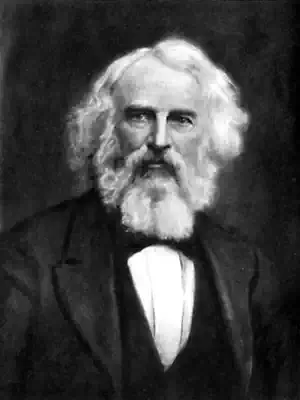
Henry Wadsworth Longfellow
Hiawatha's Fishing
Hiawatha's Fishing
Forth upon the Gitche Gumee,
On the shining Big-Sea-Water,
With his fishing-line of cedar,
Of the twisted bark of cedar,
Forth to catch the sturgeon Nahma,
Mishe-Nahma, King of Fishes,
In his birch canoe exulting
All alone went Hiawatha.
Through the clear, transparent water
He could see the fishes swimming
Far down in the depths below him;
See the yellow perch, the Sahwa,
Like a sunbeam in the water,
See the Shawgashee, the craw-fish,
Like a spider on the bottom,
On the white and sandy bottom.
At the stern sat Hiawatha,
With his fishing-line of cedar;
In his plumes the breeze of morning
Played as in the hemlock branches;
On the bows, with tail erected,
Sat the squirrel, Adjidaumo;
In his fur the breeze of morning
Played as in the prairie grasses.
On the white sand of the bottom
Lay the monster Mishe-Nahma,
Lay the sturgeon, King of Fishes;
Through his gills he breathed the water,
With his fins he fanned and winnowed,
With his tail he swept the sand-floor.
There he lay in all his armor;
On each side a shield to guard him,
Plates of bone upon his forehead,
Down his sides and back and shoulders
Plates of bone with spines projecting
Painted was he with his war-paints,
Stripes of yellow, red, and azure,
Spots of brown and spots of sable;
And he lay there on the bottom,
Fanning with his fins of purple,
As above him Hiawatha
In his birch canoe came sailing,
With his fishing-line of cedar.
"Take my bait," cried Hiawatha,
Dawn into the depths beneath him,
"Take my bait, O Sturgeon, Nahma!
Come up from below the water,
Let us see which is the stronger!"
And he dropped his line of cedar
Through the clear, transparent water,
Waited vainly for an answer,
Long sat waiting for an answer,
And repeating loud and louder,
"Take my bait, O King of Fishes!"
Quiet lay the sturgeon, Nahma,
Fanning slowly in the water,
Looking up at Hiawatha,
Listening to his call and clamor,
His unnecessary tumult,
Till he wearied of the shouting;
And he said to the Kenozha,
To the pike, the Maskenozha,
"Take the bait of this rude fellow,
Break the line of Hiawatha!"
In his fingers Hiawatha
Felt the loose line jerk and tighten,
As he drew it in, it tugged so
That the birch canoe stood endwise,
Like a birch log in the water,
With the squirrel, Adjidaumo,
Perched and frisking on the summit.
Full of scorn was Hiawatha
When he saw the fish rise upward,
Saw the pike, the Maskenozha,
Coming nearer, nearer to him,
And he shouted through the water,
"Esa! esa! shame upon you!
You are but the pike, Kenozha,
You are not the fish I wanted,
You are not the King of Fishes!"
Reeling downward to the bottom
Sank the pike in great confusion,
And the mighty sturgeon, Nahma,
Said to Ugudwash, the sun-fish,
To the bream, with scales of crimson,
"Take the bait of this great boaster,
Break the line of Hiawatha!"
Slowly upward, wavering, gleaming,
Rose the Ugudwash, the sun-fish,
Seized the line of Hiawatha,
Swung with all his weight upon it,
Made a whirlpool in the water,
Whirled the birch canoe in circles,
Round and round in gurgling eddies,
Till the circles in the water
Reached the far-off sandy beaches,
Till the water-flags and rushes
Nodded on the distant margins.
But when Hiawatha saw him
Slowly rising through the water,
Lifting up his disk refulgent,
Loud he shouted in derision,
"Esa! esa! shame upon you!
You are Ugudwash, the sun-fish,
You are not the fish I wanted,
You are not the King of Fishes!"
Slowly downward, wavering, gleaming,
Sank the Ugudwash, the sun-fish,
And again the sturgeon, Nahma,
Heard the shout of Hiawatha,
Heard his challenge of defiance,
The unnecessary tumult,
Ringing far across the water.
From the white sand of the bottom
Up he rose with angry gesture,
Quivering in each nerve and fibre,
Clashing all his plates of armor,
Gleaming bright with all his war-paint;
In his wrath he darted upward,
Flashing leaped into the sunshine,
Opened his great jaws, and swallowed
Both canoe and Hiawatha.
Down into that darksome cavern
Plunged the headlong Hiawatha,
As a log on some black river
Shoots and plunges down the rapids,
Found himself in utter darkness,
Groped about in helpless wonder,
Till he felt a great heart beating,
Throbbing in that utter darkness.
And he smote it in his anger,
With his fist, the heart of Nahma,
Felt the mighty King of Fishes
Shudder through each nerve and fibre,
Heard the water gurgle round him
As he leaped and staggered through it,
Sick at heart, and faint and weary.
Crosswise then did Hiawatha
Drag his birch-canoe for safety,
Lest from out the jaws of Nahma,
In the turmoil and confusion,
Forth he might be hurled and perish.
And the squirrel, Adjidaumo,
Frisked and chatted very gayly,
Toiled and tugged with Hiawatha
Till the labor was completed.
Then said Hiawatha to him,
"O my little friend, the squirrel,
Bravely have you toiled to help me;
Take the thanks of Hiawatha,
And the name which now he gives you;
For hereafter and forever
Boys shall call you Adjidaumo,
Tail-in-air the boys shall call you!"
And again the sturgeon, Nahma,
Gasped and quivered in the water,
Then was still, and drifted landward
Till he grated on the pebbles,
Till the listening Hiawatha
Heard him grate upon the margin,
Felt him strand upon the pebbles,
Knew that Nahma, King of Fishes,
Lay there dead upon the margin.
Then he heard a clang and flapping,
As of many wings assembling,
Heard a screaming and confusion,
As of birds of prey contending,
Saw a gleam of light above him,
Shining through the ribs of Nahma,
Saw the glittering eyes of sea-gulls,
Of Kayoshk, the sea-gulls, peering,
Gazing at him through the opening,
Heard them saying to each other,
"'T is our brother, Hiawatha!"
And he shouted from below them,
Cried exulting from the caverns:
"O ye sea-gulls! O my brothers!
I have slain the sturgeon, Nahma;
Make the rifts a little larger,
With your claws the openings widen,
Set me free from this dark prison,
And henceforward and forever
Men shall speak of your achievements,
Calling you Kayoshk, the sea-gulls,
Yes, Kayoshk, the Noble Scratchers!"
And the wild and clamorous sea-gulls
Toiled with beak and claws together,
Made the rifts and openings wider
In the mighty ribs of Nahma,
And from peril and from prison,
From the body of the sturgeon,
From the peril of the water,
They released my Hiawatha.
He was standing near his wigwam,
On the margin of the water,
And he called to old Nokomis,
Called and beckoned to Nokomis,
Pointed to the sturgeon, Nahma,
Lying lifeless on the pebbles,
With the sea-gulls feeding on him.
"I have slain the Mishe-Nahma,
Slain the King of Fishes!" said he'
"Look! the sea-gulls feed upon him,
Yes, my friends Kayoshk, the sea-gulls;
Drive them not away, Nokomis,
They have saved me from great peril
In the body of the sturgeon,
Wait until their meal is ended,
Till their craws are full with feasting,
Till they homeward fly, at sunset,
To their nests among the marshes;
Then bring all your pots and kettles,
And make oil for us in Winter."
And she waited till the sun set,
Till the pallid moon, the Night-sun,
Rose above the tranquil water,
Till Kayoshk, the sated sea-gulls,
From their banquet rose with clamor,
And across the fiery sunset
Winged their way to far-off islands,
To their nests among the rushes.
To his sleep went Hiawatha,
And Nokomis to her labor,
Toiling patient in the moonlight,
Till the sun and moon changed places,
Till the sky was red with sunrise,
And Kayoshk, the hungry sea-gulls,
Came back from the reedy islands,
Clamorous for their morning banquet.
Three whole days and nights alternate
Old Nokomis and the sea-gulls
Stripped the oily flesh of Nahma,
Till the waves washed through the rib-bones,
Till the sea-gulls came no longer,
And upon the sands lay nothing
But the skeleton of Nahma.
Forth upon the Gitche Gumee,
On the shining Big-Sea-Water,
With his fishing-line of cedar,
Of the twisted bark of cedar,
Forth to catch the sturgeon Nahma,
Mishe-Nahma, King of Fishes,
In his birch canoe exulting
All alone went Hiawatha.
Through the clear, transparent water
He could see the fishes swimming
Far down in the depths below him;
See the yellow perch, the Sahwa,
Like a sunbeam in the water,
See the Shawgashee, the craw-fish,
Like a spider on the bottom,
On the white and sandy bottom.
At the stern sat Hiawatha,
With his fishing-line of cedar;
In his plumes the breeze of morning
Played as in the hemlock branches;
On the bows, with tail erected,
Sat the squirrel, Adjidaumo;
In his fur the breeze of morning
Played as in the prairie grasses.
On the white sand of the bottom
Lay the monster Mishe-Nahma,
Lay the sturgeon, King of Fishes;
Through his gills he breathed the water,
With his fins he fanned and winnowed,
With his tail he swept the sand-floor.
There he lay in all his armor;
On each side a shield to guard him,
Plates of bone upon his forehead,
Down his sides and back and shoulders
Plates of bone with spines projecting
Painted was he with his war-paints,
Stripes of yellow, red, and azure,
Spots of brown and spots of sable;
And he lay there on the bottom,
Fanning with his fins of purple,
As above him Hiawatha
In his birch canoe came sailing,
With his fishing-line of cedar.
"Take my bait," cried Hiawatha,
Dawn into the depths beneath him,
"Take my bait, O Sturgeon, Nahma!
Come up from below the water,
Let us see which is the stronger!"
And he dropped his line of cedar
Through the clear, transparent water,
Waited vainly for an answer,
Long sat waiting for an answer,
And repeating loud and louder,
"Take my bait, O King of Fishes!"
Quiet lay the sturgeon, Nahma,
Fanning slowly in the water,
Looking up at Hiawatha,
Listening to his call and clamor,
His unnecessary tumult,
Till he wearied of the shouting;
And he said to the Kenozha,
To the pike, the Maskenozha,
"Take the bait of this rude fellow,
Break the line of Hiawatha!"
In his fingers Hiawatha
Felt the loose line jerk and tighten,
As he drew it in, it tugged so
That the birch canoe stood endwise,
Like a birch log in the water,
With the squirrel, Adjidaumo,
Perched and frisking on the summit.
Full of scorn was Hiawatha
When he saw the fish rise upward,
Saw the pike, the Maskenozha,
Coming nearer, nearer to him,
And he shouted through the water,
"Esa! esa! shame upon you!
You are but the pike, Kenozha,
You are not the fish I wanted,
You are not the King of Fishes!"
Reeling downward to the bottom
Sank the pike in great confusion,
And the mighty sturgeon, Nahma,
Said to Ugudwash, the sun-fish,
To the bream, with scales of crimson,
"Take the bait of this great boaster,
Break the line of Hiawatha!"
Slowly upward, wavering, gleaming,
Rose the Ugudwash, the sun-fish,
Seized the line of Hiawatha,
Swung with all his weight upon it,
Made a whirlpool in the water,
Whirled the birch canoe in circles,
Round and round in gurgling eddies,
Till the circles in the water
Reached the far-off sandy beaches,
Till the water-flags and rushes
Nodded on the distant margins.
But when Hiawatha saw him
Slowly rising through the water,
Lifting up his disk refulgent,
Loud he shouted in derision,
"Esa! esa! shame upon you!
You are Ugudwash, the sun-fish,
You are not the fish I wanted,
You are not the King of Fishes!"
Slowly downward, wavering, gleaming,
Sank the Ugudwash, the sun-fish,
And again the sturgeon, Nahma,
Heard the shout of Hiawatha,
Heard his challenge of defiance,
The unnecessary tumult,
Ringing far across the water.
From the white sand of the bottom
Up he rose with angry gesture,
Quivering in each nerve and fibre,
Clashing all his plates of armor,
Gleaming bright with all his war-paint;
In his wrath he darted upward,
Flashing leaped into the sunshine,
Opened his great jaws, and swallowed
Both canoe and Hiawatha.
Down into that darksome cavern
Plunged the headlong Hiawatha,
As a log on some black river
Shoots and plunges down the rapids,
Found himself in utter darkness,
Groped about in helpless wonder,
Till he felt a great heart beating,
Throbbing in that utter darkness.
And he smote it in his anger,
With his fist, the heart of Nahma,
Felt the mighty King of Fishes
Shudder through each nerve and fibre,
Heard the water gurgle round him
As he leaped and staggered through it,
Sick at heart, and faint and weary.
Crosswise then did Hiawatha
Drag his birch-canoe for safety,
Lest from out the jaws of Nahma,
In the turmoil and confusion,
Forth he might be hurled and perish.
And the squirrel, Adjidaumo,
Frisked and chatted very gayly,
Toiled and tugged with Hiawatha
Till the labor was completed.
Then said Hiawatha to him,
"O my little friend, the squirrel,
Bravely have you toiled to help me;
Take the thanks of Hiawatha,
And the name which now he gives you;
For hereafter and forever
Boys shall call you Adjidaumo,
Tail-in-air the boys shall call you!"
And again the sturgeon, Nahma,
Gasped and quivered in the water,
Then was still, and drifted landward
Till he grated on the pebbles,
Till the listening Hiawatha
Heard him grate upon the margin,
Felt him strand upon the pebbles,
Knew that Nahma, King of Fishes,
Lay there dead upon the margin.
Then he heard a clang and flapping,
As of many wings assembling,
Heard a screaming and confusion,
As of birds of prey contending,
Saw a gleam of light above him,
Shining through the ribs of Nahma,
Saw the glittering eyes of sea-gulls,
Of Kayoshk, the sea-gulls, peering,
Gazing at him through the opening,
Heard them saying to each other,
"'T is our brother, Hiawatha!"
And he shouted from below them,
Cried exulting from the caverns:
"O ye sea-gulls! O my brothers!
I have slain the sturgeon, Nahma;
Make the rifts a little larger,
With your claws the openings widen,
Set me free from this dark prison,
And henceforward and forever
Men shall speak of your achievements,
Calling you Kayoshk, the sea-gulls,
Yes, Kayoshk, the Noble Scratchers!"
And the wild and clamorous sea-gulls
Toiled with beak and claws together,
Made the rifts and openings wider
In the mighty ribs of Nahma,
And from peril and from prison,
From the body of the sturgeon,
From the peril of the water,
They released my Hiawatha.
He was standing near his wigwam,
On the margin of the water,
And he called to old Nokomis,
Called and beckoned to Nokomis,
Pointed to the sturgeon, Nahma,
Lying lifeless on the pebbles,
With the sea-gulls feeding on him.
"I have slain the Mishe-Nahma,
Slain the King of Fishes!" said he'
"Look! the sea-gulls feed upon him,
Yes, my friends Kayoshk, the sea-gulls;
Drive them not away, Nokomis,
They have saved me from great peril
In the body of the sturgeon,
Wait until their meal is ended,
Till their craws are full with feasting,
Till they homeward fly, at sunset,
To their nests among the marshes;
Then bring all your pots and kettles,
And make oil for us in Winter."
And she waited till the sun set,
Till the pallid moon, the Night-sun,
Rose above the tranquil water,
Till Kayoshk, the sated sea-gulls,
From their banquet rose with clamor,
And across the fiery sunset
Winged their way to far-off islands,
To their nests among the rushes.
To his sleep went Hiawatha,
And Nokomis to her labor,
Toiling patient in the moonlight,
Till the sun and moon changed places,
Till the sky was red with sunrise,
And Kayoshk, the hungry sea-gulls,
Came back from the reedy islands,
Clamorous for their morning banquet.
Three whole days and nights alternate
Old Nokomis and the sea-gulls
Stripped the oily flesh of Nahma,
Till the waves washed through the rib-bones,
Till the sea-gulls came no longer,
And upon the sands lay nothing
But the skeleton of Nahma.
390
Henry Wadsworth Longfellow
Hiawatha's Lamentation
Hiawatha's Lamentation
In those days the Evil Spirits,
All the Manitos of mischief,
Fearing Hiawatha's wisdom,
And his love for Chibiabos,
Jealous of their faithful friendship,
And their noble words and actions,
Made at length a league against them,
To molest them and destroy them.
Hiawatha, wise and wary,
Often said to Chibiabos,
"O my brother! do not leave me,
Lest the Evil Spirits harm you!"
Chibiabos, young and heedless,
Laughing shook his coal-black tresses,
Answered ever sweet and childlike,
"Do not fear for me, O brother!
Harm and evil come not near me!"
Once when Peboan, the Winter,
Roofed with ice the Big-Sea-Water,
When the snow-flakes, whirling downward,
Hissed among the withered oak-leaves,
Changed the pine-trees into wigwams,
Covered all the earth with silence,
Armed with arrows, shod with snow-shoes,
Heeding not his brother's warning,
Fearing not the Evil Spirits,
Forth to hunt the deer with antlers
All alone went Chibiabos.
Right across the Big-Sea-Water
Sprang with speed the deer before him.
With the wind and snow he followed,
O'er the treacherous ice he followed,
Wild with all the fierce commotion
And the rapture of the hunting.
But beneath, the Evil Spirits
Lay in ambush, waiting for him,
Broke the treacherous ice beneath him,
Dragged him downward to the bottom,
Buried in the sand his body.
Unktahee, the god of water,
He the god of the Dacotahs,
Drowned him in the deep abysses
Of the lake of Gitche Gumee.
From the headlands Hiawatha
Sent forth such a wail of anguish,
Such a fearful lamentation,
That the bison paused to listen,
And the wolves howled from the prairies,
And the thunder in the distance
Starting answered "Baim-wawa!"
Then his face with black he painted,
With his robe his head he covered,
In his wigwam sat lamenting,
Seven long weeks he sat lamenting,
Uttering still this moan of sorrow:
"He is dead, the sweet musician!
He the sweetest of all singers!
He has gone from us forever,
He has moved a little nearer
To the Master of all music,
To the Master of all singing!
O my brother, Chibiabos!"
And the melancholy fir-trees
Waved their dark green fans above him,
Waved their purple cones above him,
Sighing with him to console him,
Mingling with his lamentation
Their complaining, their lamenting.
Came the Spring, and all the forest
Looked in vain for Chibiabos;
Sighed the rivulet, Sebowisha,
Sighed the rushes in the meadow.
From the tree-tops sang the bluebird,
Sang the bluebird, the Owaissa,
"Chibiabos! Chibiabos!
He is dead, the sweet musician!"
From the wigwam sang the robin,
Sang the robin, the Opechee,
"Chibiabos! Chibiabos!
He is dead, the sweetest singer!"
And at night through all the forest
Went the whippoorwill complaining,
Wailing went the Wawonaissa,
"Chibiabos! Chibiabos!
He is dead, the sweet musician!
He the sweetest of all singers!"
Then the Medicine-men, the Medas,
The magicians, the Wabenos,
And the Jossakeeds, the Prophets,
Came to visit Hiawatha;
Built a Sacred Lodge beside him,
To appease him, to console him,
Walked in silent, grave procession,
Bearing each a pouch of healing,
Skin of beaver, lynx, or otter,
Filled with magic roots and simples,
Filled with very potent medicines.
When he heard their steps approaching~,
Hiawatha ceased lamenting,
Called no more on Chibiabos;
Naught he questioned, naught he answered,
But his mournful head uncovered,
From his face the mourning colors
Washed he slowly and in silence,
Slowly and in silence followed
Onward to the Sacred Wigwam.
There a magic drink they gave him,
Made of Nahma-wusk, the spearmint,
And Wabeno-wusk, the yarrow,
Roots of power, and herbs of healing;
Beat their drums, and shook their rattles;
Chanted singly and in chorus,
Mystic songs like these, they chanted.
"I myself, myself! behold me!
`T Is the great Gray Eagle talking;
Come, ye white crows, come and hear him!
The loud-speaking thunder helps me;
All the unseen spirits help me;
I can hear their voices calling,
All around the sky I hear them!
I can blow you strong, my brother,
I can heal you, Hiawatha!"
"Hi-au-ha!" replied the chorus,
"Wayha-way!" the mystic chorus.
Friends of mine are all the serpents!
Hear me shake my skin of hen-hawk!
Mahng, the white loon, I can kill him;
I can shoot your heart and kill it!
I can blow you strong, my brother,
I can heal you, Hiawatha !"
"Hi-au-ha!" replied the chorus,
"Wayhaway!" the mystic chorus.
"I myself, myself! the prophet!
When I speak the wigwam trembles,
Shakes the Sacred Lodge with terror,
Hands unseen begin to shake it!
When I walk, the sky I tread on
Bends and makes a noise beneath me!
I can blow you strong, my brother!
Rise and speak, O Hiawatha!"
"Hi-au-ha!" replied the chorus,
"Way-ha-way!" the mystic chorus.
Then they shook their medicine-pouches
O'er the head of Hiawatha,
Danced their medicine-dance around him;
And upstarting wild and haggard,
Like a man from dreams awakened,
He was healed of all his madness.
As the clouds are swept from heaven,
Straightway from his brain departed
All his moody melancholy;
As the ice is swept from rivers,
Straightway from his heart departed
All his sorrow and affliction.
Then they summoned Chibiabos
From his grave beneath the waters,
From the sands of Gitche Gumee
Summoned Hiawatha's brother.
And so mighty was the magic
Of that cry and invocation,
That he heard it as he lay there
Underneath the Big-Sea-Water;
From the sand he rose and listened,
Heard the music and the singing,
Came, obedient to the summons,
To the doorway of the wigwam,
But to enter they forbade him.
Through a chink a coal they gave him,
Through the door a burning fire-brand;
Ruler in the Land of Spirits,
Ruler o'er the dead, they made him,
Telling him a fire to kindle
For all those that died thereafter,
Camp-fires for their night encampments
On their solitary journey
To the kingdom of Ponemah,
To the land of the Hereafter.
From the village of his childhood,
From the homes of those who knew him,
Passing silent through the forest,
Like a smoke-wreath wafted sideways,
Slowly vanished Chibiabos!
Where he passed, the branches moved not,
Where he trod, the grasses bent not,
And the fallen leaves of last year
Made no sound beneath his footstep.
Four whole days he journeyed onward
Down the pathway of the dead men;
On the dead-man's strawberry feasted,
Crossed the melancholy river,
On the swinging log he crossed it,
Came unto the Lake of Silver,
In the Stone Canoe was carried
To the Islands of the Blessed,
To the land of ghosts and shadows.
On that journey, moving slowly,
Many weary spirits saw he,
Panting under heavy burdens,
Laden with war-clubs, bows and arrows,
Robes of fur, and pots and kettles,
And with food that friends had given
For that solitary journey.
"Ay! why do the living," said they,
"Lay such heavy burdens on us!
Better were it to go naked,
Better were it to go fasting,
Than to bear such heavy burdens
On our long and weary journey!"
Forth then issued Hiawatha,
Wandered eastward, wandered westward,
Teaching men the use of simples
And the antidotes for poisons,
And the cure of all diseases.
Thus was first made known to mortals
All the mystery of Medamin,
All the sacred art of healing.
In those days the Evil Spirits,
All the Manitos of mischief,
Fearing Hiawatha's wisdom,
And his love for Chibiabos,
Jealous of their faithful friendship,
And their noble words and actions,
Made at length a league against them,
To molest them and destroy them.
Hiawatha, wise and wary,
Often said to Chibiabos,
"O my brother! do not leave me,
Lest the Evil Spirits harm you!"
Chibiabos, young and heedless,
Laughing shook his coal-black tresses,
Answered ever sweet and childlike,
"Do not fear for me, O brother!
Harm and evil come not near me!"
Once when Peboan, the Winter,
Roofed with ice the Big-Sea-Water,
When the snow-flakes, whirling downward,
Hissed among the withered oak-leaves,
Changed the pine-trees into wigwams,
Covered all the earth with silence,
Armed with arrows, shod with snow-shoes,
Heeding not his brother's warning,
Fearing not the Evil Spirits,
Forth to hunt the deer with antlers
All alone went Chibiabos.
Right across the Big-Sea-Water
Sprang with speed the deer before him.
With the wind and snow he followed,
O'er the treacherous ice he followed,
Wild with all the fierce commotion
And the rapture of the hunting.
But beneath, the Evil Spirits
Lay in ambush, waiting for him,
Broke the treacherous ice beneath him,
Dragged him downward to the bottom,
Buried in the sand his body.
Unktahee, the god of water,
He the god of the Dacotahs,
Drowned him in the deep abysses
Of the lake of Gitche Gumee.
From the headlands Hiawatha
Sent forth such a wail of anguish,
Such a fearful lamentation,
That the bison paused to listen,
And the wolves howled from the prairies,
And the thunder in the distance
Starting answered "Baim-wawa!"
Then his face with black he painted,
With his robe his head he covered,
In his wigwam sat lamenting,
Seven long weeks he sat lamenting,
Uttering still this moan of sorrow:
"He is dead, the sweet musician!
He the sweetest of all singers!
He has gone from us forever,
He has moved a little nearer
To the Master of all music,
To the Master of all singing!
O my brother, Chibiabos!"
And the melancholy fir-trees
Waved their dark green fans above him,
Waved their purple cones above him,
Sighing with him to console him,
Mingling with his lamentation
Their complaining, their lamenting.
Came the Spring, and all the forest
Looked in vain for Chibiabos;
Sighed the rivulet, Sebowisha,
Sighed the rushes in the meadow.
From the tree-tops sang the bluebird,
Sang the bluebird, the Owaissa,
"Chibiabos! Chibiabos!
He is dead, the sweet musician!"
From the wigwam sang the robin,
Sang the robin, the Opechee,
"Chibiabos! Chibiabos!
He is dead, the sweetest singer!"
And at night through all the forest
Went the whippoorwill complaining,
Wailing went the Wawonaissa,
"Chibiabos! Chibiabos!
He is dead, the sweet musician!
He the sweetest of all singers!"
Then the Medicine-men, the Medas,
The magicians, the Wabenos,
And the Jossakeeds, the Prophets,
Came to visit Hiawatha;
Built a Sacred Lodge beside him,
To appease him, to console him,
Walked in silent, grave procession,
Bearing each a pouch of healing,
Skin of beaver, lynx, or otter,
Filled with magic roots and simples,
Filled with very potent medicines.
When he heard their steps approaching~,
Hiawatha ceased lamenting,
Called no more on Chibiabos;
Naught he questioned, naught he answered,
But his mournful head uncovered,
From his face the mourning colors
Washed he slowly and in silence,
Slowly and in silence followed
Onward to the Sacred Wigwam.
There a magic drink they gave him,
Made of Nahma-wusk, the spearmint,
And Wabeno-wusk, the yarrow,
Roots of power, and herbs of healing;
Beat their drums, and shook their rattles;
Chanted singly and in chorus,
Mystic songs like these, they chanted.
"I myself, myself! behold me!
`T Is the great Gray Eagle talking;
Come, ye white crows, come and hear him!
The loud-speaking thunder helps me;
All the unseen spirits help me;
I can hear their voices calling,
All around the sky I hear them!
I can blow you strong, my brother,
I can heal you, Hiawatha!"
"Hi-au-ha!" replied the chorus,
"Wayha-way!" the mystic chorus.
Friends of mine are all the serpents!
Hear me shake my skin of hen-hawk!
Mahng, the white loon, I can kill him;
I can shoot your heart and kill it!
I can blow you strong, my brother,
I can heal you, Hiawatha !"
"Hi-au-ha!" replied the chorus,
"Wayhaway!" the mystic chorus.
"I myself, myself! the prophet!
When I speak the wigwam trembles,
Shakes the Sacred Lodge with terror,
Hands unseen begin to shake it!
When I walk, the sky I tread on
Bends and makes a noise beneath me!
I can blow you strong, my brother!
Rise and speak, O Hiawatha!"
"Hi-au-ha!" replied the chorus,
"Way-ha-way!" the mystic chorus.
Then they shook their medicine-pouches
O'er the head of Hiawatha,
Danced their medicine-dance around him;
And upstarting wild and haggard,
Like a man from dreams awakened,
He was healed of all his madness.
As the clouds are swept from heaven,
Straightway from his brain departed
All his moody melancholy;
As the ice is swept from rivers,
Straightway from his heart departed
All his sorrow and affliction.
Then they summoned Chibiabos
From his grave beneath the waters,
From the sands of Gitche Gumee
Summoned Hiawatha's brother.
And so mighty was the magic
Of that cry and invocation,
That he heard it as he lay there
Underneath the Big-Sea-Water;
From the sand he rose and listened,
Heard the music and the singing,
Came, obedient to the summons,
To the doorway of the wigwam,
But to enter they forbade him.
Through a chink a coal they gave him,
Through the door a burning fire-brand;
Ruler in the Land of Spirits,
Ruler o'er the dead, they made him,
Telling him a fire to kindle
For all those that died thereafter,
Camp-fires for their night encampments
On their solitary journey
To the kingdom of Ponemah,
To the land of the Hereafter.
From the village of his childhood,
From the homes of those who knew him,
Passing silent through the forest,
Like a smoke-wreath wafted sideways,
Slowly vanished Chibiabos!
Where he passed, the branches moved not,
Where he trod, the grasses bent not,
And the fallen leaves of last year
Made no sound beneath his footstep.
Four whole days he journeyed onward
Down the pathway of the dead men;
On the dead-man's strawberry feasted,
Crossed the melancholy river,
On the swinging log he crossed it,
Came unto the Lake of Silver,
In the Stone Canoe was carried
To the Islands of the Blessed,
To the land of ghosts and shadows.
On that journey, moving slowly,
Many weary spirits saw he,
Panting under heavy burdens,
Laden with war-clubs, bows and arrows,
Robes of fur, and pots and kettles,
And with food that friends had given
For that solitary journey.
"Ay! why do the living," said they,
"Lay such heavy burdens on us!
Better were it to go naked,
Better were it to go fasting,
Than to bear such heavy burdens
On our long and weary journey!"
Forth then issued Hiawatha,
Wandered eastward, wandered westward,
Teaching men the use of simples
And the antidotes for poisons,
And the cure of all diseases.
Thus was first made known to mortals
All the mystery of Medamin,
All the sacred art of healing.
313
Henry Wadsworth Longfellow
Hiawatha And The Pearl-Feather
Hiawatha And The Pearl-Feather
On the shores of Gitche Gumee,
Of the shining Big-Sea-Water,
Stood Nokomis, the old woman,
Pointing with her finger westward,
O'er the water pointing westward,
To the purple clouds of sunset.
Fiercely the red sun descending
Burned his way along the heavens,
Set the sky on fire behind him,
As war-parties, when retreating,
Burn the prairies on their war-trail;
And the moon, the Night-sun, eastward,
Suddenly starting from his ambush,
Followed fast those bloody footprints,
Followed in that fiery war-trail,
With its glare upon his features.
And Nokomis, the old woman,
Pointing with her finger westward,
Spake these words to Hiawatha:
"Yonder dwells the great Pearl-Feather,
Megissogwon, the Magician,
Manito of Wealth and Wampum,
Guarded by his fiery serpents,
Guarded by the black pitch-water.
You can see his fiery serpents,
The Kenabeek, the great serpents,
Coiling, playing in the water;
You can see the black pitch-water
Stretching far away beyond them,
To the purple clouds of sunset!
"He it was who slew my father,
By his wicked wiles and cunning,
When he from the moon descended,
When he came on earth to seek me.
He, the mightiest of Magicians,
Sends the fever from the marshes,
Sends the pestilential vapors,
Sends the poisonous exhalations,
Sends the white fog from the fen-lands,
Sends disease and death among us!
"Take your bow, O Hiawatha,
Take your arrows, jasper-headed,
Take your war-club, Puggawaugun,
And your mittens, Minjekahwun,
And your birch-canoe for sailing,
And the oil of Mishe-Nahma,
So to smear its sides, that swiftly
You may pass the black pitch-water;
Slay this merciless magician,
Save the people from the fever
That he breathes across the fen-lands,
And avenge my father's murder!"
Straightway then my Hiawatha
Armed himself with all his war-gear,
Launched his birch-canoe for sailing;
With his palm its sides he patted,
Said with glee, "Cheemaun, my darling,
O my Birch-canoe! leap forward,
Where you see the fiery serpents,
Where you see the black pitch-water!"
Forward leaped Cheemaun exulting,
And the noble Hiawatha
Sang his war-song wild and woful,
And above him the war-eagle,
The Keneu, the great war-eagle,
Master of all fowls with feathers,
Screamed and hurtled through the heavens.
Soon he reached the fiery serpents,
The Kenabeek, the great serpents,
Lying huge upon the water,
Sparkling, rippling in the water,
Lying coiled across the passage,
With their blazing crests uplifted,
Breathing fiery fogs and vapors,
So that none could pass beyond them.
But the fearless Hiawatha
Cried aloud, and spake in this wise,
"Let me pass my way, Kenabeek,
Let me go upon my journey!"
And they answered, hissing fiercely,
With their fiery breath made answer:
"Back, go back! O Shaugodaya!
Back to old Nokomis, Faint-heart!"
Then the angry Hiawatha
Raised his mighty bow of ash-tree,
Seized his arrows, jasper-headed,
Shot them fast among the serpents;
Every twanging of the bow-string
Was a war-cry and a death-cry,
Every whizzing of an arrow
Was a death-song of Kenabeek.
Weltering in the bloody water,
Dead lay all the fiery serpents,
And among them Hiawatha
Harmless sailed, and cried exulting:
"Onward, O Cheemaun, my darling!
Onward to the black pitch-water!"
Then he took the oil of Nahma,
And the bows and sides anointed,
Smeared them well with oil, that swiftly
He might pass the black pitch-water.
All night long he sailed upon it,
Sailed upon that sluggish water,
Covered with its mould of ages,
Black with rotting water-rushes,
Rank with flags and leaves of lilies,
Stagnant, lifeless, dreary, dismal,
Lighted by the shimmering moonlight,
And by will-o'-the-wisps illumined,
Fires by ghosts of dead men kindled,
In their weary night-encampments.
All the air was white with moonlight,
All the water black with shadow,
And around him the Suggema,
The mosquito, sang his war-song,
And the fire-flies, Wah-wah-taysee,
Waved their torches to mislead him;
And the bull-frog, the Dahinda,
Thrust his head into the moonlight,
Fixed his yellow eyes upon him,
Sobbed and sank beneath the surface;
And anon a thousand whistles,
Answered over all the fen-lands,
And the heron, the Shuh-shuh-gah,
Far off on the reedy margin,
Heralded the hero's coming.
Westward thus fared Hiawatha,
Toward the realm of Megissogwon,
Toward the land of the Pearl-Feather,
Till the level moon stared at him
In his face stared pale and haggard,
Till the sun was hot behind him,
Till it burned upon his shoulders,
And before him on the upland
He could see the Shining Wigwam
Of the Manito of Wampum,
Of the mightiest of Magicians.
Then once more Cheemaun he patted,
To his birch-canoe said, "Onward!"
And it stirred in all its fibres,
And with one great bound of triumph
Leaped across the water-lilies,
Leaped through tangled flags and rushes,
And upon the beach beyond them
Dry-shod landed Hiawatha.
Straight he took his bow of ash-tree,
On the sand one end he rested,
With his knee he pressed the middle,
Stretched the faithful bow-string tighter,
Took an arrow, jasperheaded,
Shot it at the Shining Wigwam,
Sent it singing as a herald,
As a bearer of his message,
Of his challenge loud and lofty:
"Come forth from your lodge, Pearl-Feather!
Hiawatha waits your coming!"
Straightway from the Shining Wigwam
Came the mighty Megissogwon,
Tall of stature, broad of shoulder,
Dark and terrible in aspect,
Clad from head to foot in wampum,
Armed with all his warlike weapons,
Painted like the sky of morning,
Streaked with crimson, blue, and yellow,
Crested with great eagle-feathers,
Streaming upward, streaming outward.
"Well I know you, Hiawatha!"
Cried he in a voice of thunder,
In a tone of loud derision.
"Hasten back, O Shaugodaya!
Hasten back among the women,
Back to old Nokomis, Faint-heart!
I will slay you as you stand there,
As of old I slew her father!"
But my Hiawatha answered,
Nothing daunted, fearing nothing:
"Big words do not smite like war-clubs,
Boastful breath is not a bow-string,
Taunts are not so sharp as arrows,
Deeds are better things than words are,
Actions mightier than boastings!"
Then began the greatest battle
That the sun had ever looked on,
That the war-birds ever witnessed.
All a Summer's day it lasted,
From the sunrise to the sunset;
For the shafts of Hiawatha
Harmless hit the shirt of wampum,
Harmless fell the blows he dealt it
With his mittens, Minjekahwun,
Harmless fell the heavy war-club;
It could dash the rocks asunder,
But it could not break the meshes
Of that magic shirt of wampum.
Till at sunset Hiawatha,
Leaning on his bow of ash-tree,
Wounded, weary, and desponding,
With his mighty war-club broken,
With his mittens torn and tattered,
And three useless arrows only,
Paused to rest beneath a pine-tree,
From whose branches trailed the mosses,
And whose trunk was coated over
With the Dead-man's Moccasin-leather,
With the fungus white and yellow.
Suddenly from the boughs above him
Sang the Mama, the woodpecker:
"Aim your arrows, Hiawatha,
At the head of Megissogwon,
Strike the tuft of hair upon it,
At their roots the long black tresses;
There alone can he be wounded!"
Winged with feathers, tipped with jasper,
Swift flew Hiawatha's arrow,
Just as Megissogwon, stooping,
Raised a heavy stone to throw it.
Full upon the crown it struck him,
At the roots of his long tresses,
And he reeled and staggered forward,
Plunging like a wounded bison,
Yes, like Pezhekee, the bison,
When the snow is on the prairie.
Swifter flew the second arrow,
In the pathway of the other,
Piercing deeper than the other,
Wounding sorer than the other;
And the knees of Megissogwon
Shook like windy reeds beneath him,
Bent and trembled like the rushes.
But the third and latest arrow
Swiftest flew, and wounded sorest,
And the mighty Megissogwon
Saw the fiery eyes of Pauguk,
Saw the eyes of Death glare at him,
Heard his voice call in the darkness;
At the feet of Hiawatha
Lifeless lay the great Pearl-Feather,
Lay the mightiest of Magicians.
Then the grateful Hiawatha
Called the Mama, the woodpecker,
From his perch among the branches
Of the melancholy pine-tree,
And, in honor of his service,
Stained with blood the tuft of feathers
On the little head of Mama;
Even to this day he wears it,
Wears the tuft of crimson feathers,
As a symbol of his service.
Then he stripped the shirt of wampum
From the back of Megissogwon,
As a trophy of the battle,
As a signal of his conquest.
On the shore he left the body,
Half on land and half in water,
In the sand his feet were buried,
And his face was in the water.
And above him, wheeled and clamored
The Keneu, the great war-eagle,
Sailing round in narrower circles,
Hovering nearer, nearer, nearer.
From the wigwam Hiawatha
Bore the wealth of Megissogwon,
All his wealth of skins and wampum,
Furs of bison and of beaver,
Furs of sable and of ermine,
Wampum belts and strings and pouches,
Quivers wrought with beads of wampum,
Filled with arrows, silver-headed.
Homeward then he sailed exulting,
Homeward through the black pitch-water,
Homeward through the weltering serpents,
With the trophies of the battle,
With a shout and song of triumph.
On the shore stood old Nokomis,
On the shore stood Chibiabos,
And the very strong man, Kwasind,
Waiting for the hero's coming,
Listening to his songs of triumph.
And the people of the village
Welcomed him with songs and dances,
Made a joyous feast, and shouted:
'Honor be to Hiawatha!
He has slain the great Pearl-Feather,
Slain the mightiest of Magicians,
Him, who sent the fiery fever,
Sent the white fog from the fen-lands,
Sent disease and death among us!"
Ever dear to Hiawatha
Was the memory of Mama!
And in token of his friendship,
As a mark of his remembrance,
He adorned and decked his pipe-stem
With the crimson tuft of feathers,
With the blood-red crest of Mama.
But the wealth of Megissogwon,
All the trophies of the battle,
He divided with his people,
Shared it equally among them.
On the shores of Gitche Gumee,
Of the shining Big-Sea-Water,
Stood Nokomis, the old woman,
Pointing with her finger westward,
O'er the water pointing westward,
To the purple clouds of sunset.
Fiercely the red sun descending
Burned his way along the heavens,
Set the sky on fire behind him,
As war-parties, when retreating,
Burn the prairies on their war-trail;
And the moon, the Night-sun, eastward,
Suddenly starting from his ambush,
Followed fast those bloody footprints,
Followed in that fiery war-trail,
With its glare upon his features.
And Nokomis, the old woman,
Pointing with her finger westward,
Spake these words to Hiawatha:
"Yonder dwells the great Pearl-Feather,
Megissogwon, the Magician,
Manito of Wealth and Wampum,
Guarded by his fiery serpents,
Guarded by the black pitch-water.
You can see his fiery serpents,
The Kenabeek, the great serpents,
Coiling, playing in the water;
You can see the black pitch-water
Stretching far away beyond them,
To the purple clouds of sunset!
"He it was who slew my father,
By his wicked wiles and cunning,
When he from the moon descended,
When he came on earth to seek me.
He, the mightiest of Magicians,
Sends the fever from the marshes,
Sends the pestilential vapors,
Sends the poisonous exhalations,
Sends the white fog from the fen-lands,
Sends disease and death among us!
"Take your bow, O Hiawatha,
Take your arrows, jasper-headed,
Take your war-club, Puggawaugun,
And your mittens, Minjekahwun,
And your birch-canoe for sailing,
And the oil of Mishe-Nahma,
So to smear its sides, that swiftly
You may pass the black pitch-water;
Slay this merciless magician,
Save the people from the fever
That he breathes across the fen-lands,
And avenge my father's murder!"
Straightway then my Hiawatha
Armed himself with all his war-gear,
Launched his birch-canoe for sailing;
With his palm its sides he patted,
Said with glee, "Cheemaun, my darling,
O my Birch-canoe! leap forward,
Where you see the fiery serpents,
Where you see the black pitch-water!"
Forward leaped Cheemaun exulting,
And the noble Hiawatha
Sang his war-song wild and woful,
And above him the war-eagle,
The Keneu, the great war-eagle,
Master of all fowls with feathers,
Screamed and hurtled through the heavens.
Soon he reached the fiery serpents,
The Kenabeek, the great serpents,
Lying huge upon the water,
Sparkling, rippling in the water,
Lying coiled across the passage,
With their blazing crests uplifted,
Breathing fiery fogs and vapors,
So that none could pass beyond them.
But the fearless Hiawatha
Cried aloud, and spake in this wise,
"Let me pass my way, Kenabeek,
Let me go upon my journey!"
And they answered, hissing fiercely,
With their fiery breath made answer:
"Back, go back! O Shaugodaya!
Back to old Nokomis, Faint-heart!"
Then the angry Hiawatha
Raised his mighty bow of ash-tree,
Seized his arrows, jasper-headed,
Shot them fast among the serpents;
Every twanging of the bow-string
Was a war-cry and a death-cry,
Every whizzing of an arrow
Was a death-song of Kenabeek.
Weltering in the bloody water,
Dead lay all the fiery serpents,
And among them Hiawatha
Harmless sailed, and cried exulting:
"Onward, O Cheemaun, my darling!
Onward to the black pitch-water!"
Then he took the oil of Nahma,
And the bows and sides anointed,
Smeared them well with oil, that swiftly
He might pass the black pitch-water.
All night long he sailed upon it,
Sailed upon that sluggish water,
Covered with its mould of ages,
Black with rotting water-rushes,
Rank with flags and leaves of lilies,
Stagnant, lifeless, dreary, dismal,
Lighted by the shimmering moonlight,
And by will-o'-the-wisps illumined,
Fires by ghosts of dead men kindled,
In their weary night-encampments.
All the air was white with moonlight,
All the water black with shadow,
And around him the Suggema,
The mosquito, sang his war-song,
And the fire-flies, Wah-wah-taysee,
Waved their torches to mislead him;
And the bull-frog, the Dahinda,
Thrust his head into the moonlight,
Fixed his yellow eyes upon him,
Sobbed and sank beneath the surface;
And anon a thousand whistles,
Answered over all the fen-lands,
And the heron, the Shuh-shuh-gah,
Far off on the reedy margin,
Heralded the hero's coming.
Westward thus fared Hiawatha,
Toward the realm of Megissogwon,
Toward the land of the Pearl-Feather,
Till the level moon stared at him
In his face stared pale and haggard,
Till the sun was hot behind him,
Till it burned upon his shoulders,
And before him on the upland
He could see the Shining Wigwam
Of the Manito of Wampum,
Of the mightiest of Magicians.
Then once more Cheemaun he patted,
To his birch-canoe said, "Onward!"
And it stirred in all its fibres,
And with one great bound of triumph
Leaped across the water-lilies,
Leaped through tangled flags and rushes,
And upon the beach beyond them
Dry-shod landed Hiawatha.
Straight he took his bow of ash-tree,
On the sand one end he rested,
With his knee he pressed the middle,
Stretched the faithful bow-string tighter,
Took an arrow, jasperheaded,
Shot it at the Shining Wigwam,
Sent it singing as a herald,
As a bearer of his message,
Of his challenge loud and lofty:
"Come forth from your lodge, Pearl-Feather!
Hiawatha waits your coming!"
Straightway from the Shining Wigwam
Came the mighty Megissogwon,
Tall of stature, broad of shoulder,
Dark and terrible in aspect,
Clad from head to foot in wampum,
Armed with all his warlike weapons,
Painted like the sky of morning,
Streaked with crimson, blue, and yellow,
Crested with great eagle-feathers,
Streaming upward, streaming outward.
"Well I know you, Hiawatha!"
Cried he in a voice of thunder,
In a tone of loud derision.
"Hasten back, O Shaugodaya!
Hasten back among the women,
Back to old Nokomis, Faint-heart!
I will slay you as you stand there,
As of old I slew her father!"
But my Hiawatha answered,
Nothing daunted, fearing nothing:
"Big words do not smite like war-clubs,
Boastful breath is not a bow-string,
Taunts are not so sharp as arrows,
Deeds are better things than words are,
Actions mightier than boastings!"
Then began the greatest battle
That the sun had ever looked on,
That the war-birds ever witnessed.
All a Summer's day it lasted,
From the sunrise to the sunset;
For the shafts of Hiawatha
Harmless hit the shirt of wampum,
Harmless fell the blows he dealt it
With his mittens, Minjekahwun,
Harmless fell the heavy war-club;
It could dash the rocks asunder,
But it could not break the meshes
Of that magic shirt of wampum.
Till at sunset Hiawatha,
Leaning on his bow of ash-tree,
Wounded, weary, and desponding,
With his mighty war-club broken,
With his mittens torn and tattered,
And three useless arrows only,
Paused to rest beneath a pine-tree,
From whose branches trailed the mosses,
And whose trunk was coated over
With the Dead-man's Moccasin-leather,
With the fungus white and yellow.
Suddenly from the boughs above him
Sang the Mama, the woodpecker:
"Aim your arrows, Hiawatha,
At the head of Megissogwon,
Strike the tuft of hair upon it,
At their roots the long black tresses;
There alone can he be wounded!"
Winged with feathers, tipped with jasper,
Swift flew Hiawatha's arrow,
Just as Megissogwon, stooping,
Raised a heavy stone to throw it.
Full upon the crown it struck him,
At the roots of his long tresses,
And he reeled and staggered forward,
Plunging like a wounded bison,
Yes, like Pezhekee, the bison,
When the snow is on the prairie.
Swifter flew the second arrow,
In the pathway of the other,
Piercing deeper than the other,
Wounding sorer than the other;
And the knees of Megissogwon
Shook like windy reeds beneath him,
Bent and trembled like the rushes.
But the third and latest arrow
Swiftest flew, and wounded sorest,
And the mighty Megissogwon
Saw the fiery eyes of Pauguk,
Saw the eyes of Death glare at him,
Heard his voice call in the darkness;
At the feet of Hiawatha
Lifeless lay the great Pearl-Feather,
Lay the mightiest of Magicians.
Then the grateful Hiawatha
Called the Mama, the woodpecker,
From his perch among the branches
Of the melancholy pine-tree,
And, in honor of his service,
Stained with blood the tuft of feathers
On the little head of Mama;
Even to this day he wears it,
Wears the tuft of crimson feathers,
As a symbol of his service.
Then he stripped the shirt of wampum
From the back of Megissogwon,
As a trophy of the battle,
As a signal of his conquest.
On the shore he left the body,
Half on land and half in water,
In the sand his feet were buried,
And his face was in the water.
And above him, wheeled and clamored
The Keneu, the great war-eagle,
Sailing round in narrower circles,
Hovering nearer, nearer, nearer.
From the wigwam Hiawatha
Bore the wealth of Megissogwon,
All his wealth of skins and wampum,
Furs of bison and of beaver,
Furs of sable and of ermine,
Wampum belts and strings and pouches,
Quivers wrought with beads of wampum,
Filled with arrows, silver-headed.
Homeward then he sailed exulting,
Homeward through the black pitch-water,
Homeward through the weltering serpents,
With the trophies of the battle,
With a shout and song of triumph.
On the shore stood old Nokomis,
On the shore stood Chibiabos,
And the very strong man, Kwasind,
Waiting for the hero's coming,
Listening to his songs of triumph.
And the people of the village
Welcomed him with songs and dances,
Made a joyous feast, and shouted:
'Honor be to Hiawatha!
He has slain the great Pearl-Feather,
Slain the mightiest of Magicians,
Him, who sent the fiery fever,
Sent the white fog from the fen-lands,
Sent disease and death among us!"
Ever dear to Hiawatha
Was the memory of Mama!
And in token of his friendship,
As a mark of his remembrance,
He adorned and decked his pipe-stem
With the crimson tuft of feathers,
With the blood-red crest of Mama.
But the wealth of Megissogwon,
All the trophies of the battle,
He divided with his people,
Shared it equally among them.
404
Henry Wadsworth Longfellow
Evangeline: Part The First. II.
Evangeline: Part The First. II.
NOW had the season returned, when the nights grow colder and longer,
And the retreating sun the sign of the Scorpion enters.
Birds of passage sailed through the leaden air, from the ice-bound,
Desolate northern bays to the shores of tropical islands.
Harvests were gathered in; and wild with the winds of September
Wrestled the trees of the forest, as Jacob of old with the angel.
All the signs foretold a winter long and inclement.
Bees, with prophetic instinct of want, had hoarded their honey
Till the hives overflowed; and the Indian hunters asserted
Cold would the winter be, for thick was the fur of the foxes.
Such was the advent of autumn. Then followed that beautiful season,
Called by the pious Acadian peasants the Summer of All-Saints!
Filled was the air with a dreamy and magical light; and the landscape
Lay as if new-created in all the freshness of childhood.
Peace seemed to reign upon earth, and the restless heart of the ocean
Was for a moment consoled. All sounds were in harmony blended.
Voices of children at play, the crowing of cocks in the farm-yards,
Whir of wings in the drowsy air, and the cooing of pigeons,
All were subdued and low as the murmurs of love, and the great sun
Looked with the eye of love through the golden vapors around him;
While arrayed in its robes of russet and scarlet and yellow,
Bright with the sheen of the dew, each glittering tree of the forest
Flashed like the plane-tree the Persian adorned with mantles and jewels.
Now recommenced the reign of rest and affection and stillness.
Day with its burden and heat had departed, and twilight descending
Brought back the evening star to the sky, and the herds to the homestead.
Pawing the ground they came, and resting their necks on each other,
And with their nostrils distended inhaling the freshness of evening.
Foremost, bearing the bell, Evangeline's beautiful heifer,
Proud of her snow-white hide, and the ribbon that waved from her collar,
Quietly paced and slow, as if conscious of human affection.
Then came the shepherd back with his bleating flocks from the seaside,
Where was their favorite pasture. Behind them followed the watch-dog,
Patient, full of importance, and grand in the pride of his instinct,
Walking from side to side with a lordly air, and superbly
Waving his bushy tail, and urging forward the stragglers;
Regent of flocks was he when the shepherd slept; their protector,
When from the forest at night, through the starry silence, the wolves howled.
Late, with the rising moon, returned the wains from the marshes,
Laden with briny hay, that filled the air with its odor.
Cheerily neighed the steeds, with dew on their manes and their fetlocks,
While aloft on their shoulders the wooden and ponderous saddles,
Painted with brilliant dyes, and adorned with tassels of crimson,
Nodded in bright array, like hollyhocks heavy with blossoms.
Patiently stood the cows meanwhile, and yielded their udders
Unto the milkmaid's hand; whilst loud and in regular cadence
Into the sounding pails the foaming streamlets descended.
Lowing of cattle and peals of laughter were heard in the farm-yard,
Echoed back by the barns. Anon they sank into stillness;
Heavily closed, with a jarring sound, the valves of the barn-doors,
Rattled the wooden bars, and all for a season was silent.
In-doors, warm by the wide-mouthed fireplace, idly the farmer
Sat in his elbow-chair; and watched how the flames and the smoke-wreaths
Struggled together like foe in a burning city. Behind him,
Nodding and mocking along the wall, with gestures fantastic,
Darted his own huge shadow, and vanished away into darkness.
Faces, clumsily carved in oak, on the back of his arm-chair
Laughed in the flickering light, and the pewter plates on the dresser
Caught and reflected the flame, as shields of armies the sunshine.
Fragments of song the old man sang, and carols of Christmas,
Such as at home, in the olden time, his fathers before him
Sang in their Norman orchards and bright Burgundian vineyards.
Close at her father's side was the gentle Evangeline seated,
Spinning flax for the loom, that stood in the corner behind her.
Silent awhile were its treadles, at rest was its diligent shuttle,
While the monotonous drone of the wheel, like the drone of a bagpipe,
Followed the old man's song, and united the fragments together.
As in a church, when the chant of the choir at intervals ceases,
Footfalls are heard in the aisles, or words of the priest at the altar,
So, in each pause of the song, with measured motion the clock clicked.
Thus as they sat, there were footsteps heard, and, suddenly lifted,
Sounded the wooden latch, and the door swung back on its hinges.
Benedict knew by the hob-nailed shoes it was Basil the blacksmith,
And by her beating heart Evangeline knew who was with him.
'Welcome!' the farmer exclaimed, as their footsteps paused on the threshold,
'Welcome, Basil, my friend! Come, take thy place on the settle
Close by the chimney-side, which is always empty without thee;
Take from the shelf overhead thy pipe and the box of tobacco;
Never so much thyself art thou as when through the curling
Smoke of the pipe or the forge thy friendly and jovial face gleams
Round and red as the harvest moon through the mist of the marshes.'
Then, with a smile of content, thus answered Basil the blacksmith,
Taking with easy air the accustomed seat by the fireside:'
Benedict Bellefontaine, thou hast ever thy jest and thy ballad!
Ever in cheerfullest mood art thou, when others are filled with
Gloomy forebodings of ill, and see only ruin before them.
Happy art thou, as if every day thou hadst picked up a horseshoe.'
Pausing a moment, to take the pipe that Evangeline brought him,
And with a coal from the embers had lighted, he slowly continued:'
Four days now are passed since the English ships at their anchors
Ride in the Gaspereau's mouth, with their cannon pointed against us,
What their design may be is unknown; but all are commanded
On the morrow to meet in the church, where his Majesty's mandate
Will be proclaimed as law in the land. Alas! in the mean time
Many surmises of evil alarm the hearts of the people.'
Then made answer the farmer:-'Perhaps some friendlier purpose
Brings these ships to our shores. Perhaps the harvests in England
By untimely rains or untimelier heat have been blighted,
And from our bursting barns they would feed their cattle and children.'
'Not so thinketh the folk in the village,' said, warmly, the blacksmith,
Shaking his head, as in doubt; then, heaving a sigh, he continued:
'Louisburg is not forgotten, nor Beau Séjour, nor Port Royal.
Many already have fled to the forest, and lurk on its outskirts,
Waiting with anxious hearts the dubious fate of to-morrow.
Arms have been taken from us, and warlike weapons of all kinds;
Nothing is left but the blacksmith's sledge and the scythe of the mower.'
Then with a pleasant smile made answer the jovial farmer:'
Safer are we unarmed, in the midst of our flocks and our cornfields,
Safer within these peaceful dikes, besieged by the ocean,
Than our fathers in forts, besieged by the enemy's cannon.
Fear no evil, my friend, and to-night may no shadow of sorrow
Fall on this house and hearth; for this is the night of the contract.
Built are the house and the barn. The merry lads of the village
Strongly have built them and well; and, breaking the glebe round about them,
Filled the barn with hay, and the house with food for a twelvemonth.
René Leblanc will be here anon, with his papers and inkhorn.
Shall we not then be glad, and rejoice in the joy of our children?'
As apart by the window she stood, with her hand in her lover's,
Blushing Evangeline heard the words that her father had spoken,
And, as they died on his lips, the worthy notary entered.
NOW had the season returned, when the nights grow colder and longer,
And the retreating sun the sign of the Scorpion enters.
Birds of passage sailed through the leaden air, from the ice-bound,
Desolate northern bays to the shores of tropical islands.
Harvests were gathered in; and wild with the winds of September
Wrestled the trees of the forest, as Jacob of old with the angel.
All the signs foretold a winter long and inclement.
Bees, with prophetic instinct of want, had hoarded their honey
Till the hives overflowed; and the Indian hunters asserted
Cold would the winter be, for thick was the fur of the foxes.
Such was the advent of autumn. Then followed that beautiful season,
Called by the pious Acadian peasants the Summer of All-Saints!
Filled was the air with a dreamy and magical light; and the landscape
Lay as if new-created in all the freshness of childhood.
Peace seemed to reign upon earth, and the restless heart of the ocean
Was for a moment consoled. All sounds were in harmony blended.
Voices of children at play, the crowing of cocks in the farm-yards,
Whir of wings in the drowsy air, and the cooing of pigeons,
All were subdued and low as the murmurs of love, and the great sun
Looked with the eye of love through the golden vapors around him;
While arrayed in its robes of russet and scarlet and yellow,
Bright with the sheen of the dew, each glittering tree of the forest
Flashed like the plane-tree the Persian adorned with mantles and jewels.
Now recommenced the reign of rest and affection and stillness.
Day with its burden and heat had departed, and twilight descending
Brought back the evening star to the sky, and the herds to the homestead.
Pawing the ground they came, and resting their necks on each other,
And with their nostrils distended inhaling the freshness of evening.
Foremost, bearing the bell, Evangeline's beautiful heifer,
Proud of her snow-white hide, and the ribbon that waved from her collar,
Quietly paced and slow, as if conscious of human affection.
Then came the shepherd back with his bleating flocks from the seaside,
Where was their favorite pasture. Behind them followed the watch-dog,
Patient, full of importance, and grand in the pride of his instinct,
Walking from side to side with a lordly air, and superbly
Waving his bushy tail, and urging forward the stragglers;
Regent of flocks was he when the shepherd slept; their protector,
When from the forest at night, through the starry silence, the wolves howled.
Late, with the rising moon, returned the wains from the marshes,
Laden with briny hay, that filled the air with its odor.
Cheerily neighed the steeds, with dew on their manes and their fetlocks,
While aloft on their shoulders the wooden and ponderous saddles,
Painted with brilliant dyes, and adorned with tassels of crimson,
Nodded in bright array, like hollyhocks heavy with blossoms.
Patiently stood the cows meanwhile, and yielded their udders
Unto the milkmaid's hand; whilst loud and in regular cadence
Into the sounding pails the foaming streamlets descended.
Lowing of cattle and peals of laughter were heard in the farm-yard,
Echoed back by the barns. Anon they sank into stillness;
Heavily closed, with a jarring sound, the valves of the barn-doors,
Rattled the wooden bars, and all for a season was silent.
In-doors, warm by the wide-mouthed fireplace, idly the farmer
Sat in his elbow-chair; and watched how the flames and the smoke-wreaths
Struggled together like foe in a burning city. Behind him,
Nodding and mocking along the wall, with gestures fantastic,
Darted his own huge shadow, and vanished away into darkness.
Faces, clumsily carved in oak, on the back of his arm-chair
Laughed in the flickering light, and the pewter plates on the dresser
Caught and reflected the flame, as shields of armies the sunshine.
Fragments of song the old man sang, and carols of Christmas,
Such as at home, in the olden time, his fathers before him
Sang in their Norman orchards and bright Burgundian vineyards.
Close at her father's side was the gentle Evangeline seated,
Spinning flax for the loom, that stood in the corner behind her.
Silent awhile were its treadles, at rest was its diligent shuttle,
While the monotonous drone of the wheel, like the drone of a bagpipe,
Followed the old man's song, and united the fragments together.
As in a church, when the chant of the choir at intervals ceases,
Footfalls are heard in the aisles, or words of the priest at the altar,
So, in each pause of the song, with measured motion the clock clicked.
Thus as they sat, there were footsteps heard, and, suddenly lifted,
Sounded the wooden latch, and the door swung back on its hinges.
Benedict knew by the hob-nailed shoes it was Basil the blacksmith,
And by her beating heart Evangeline knew who was with him.
'Welcome!' the farmer exclaimed, as their footsteps paused on the threshold,
'Welcome, Basil, my friend! Come, take thy place on the settle
Close by the chimney-side, which is always empty without thee;
Take from the shelf overhead thy pipe and the box of tobacco;
Never so much thyself art thou as when through the curling
Smoke of the pipe or the forge thy friendly and jovial face gleams
Round and red as the harvest moon through the mist of the marshes.'
Then, with a smile of content, thus answered Basil the blacksmith,
Taking with easy air the accustomed seat by the fireside:'
Benedict Bellefontaine, thou hast ever thy jest and thy ballad!
Ever in cheerfullest mood art thou, when others are filled with
Gloomy forebodings of ill, and see only ruin before them.
Happy art thou, as if every day thou hadst picked up a horseshoe.'
Pausing a moment, to take the pipe that Evangeline brought him,
And with a coal from the embers had lighted, he slowly continued:'
Four days now are passed since the English ships at their anchors
Ride in the Gaspereau's mouth, with their cannon pointed against us,
What their design may be is unknown; but all are commanded
On the morrow to meet in the church, where his Majesty's mandate
Will be proclaimed as law in the land. Alas! in the mean time
Many surmises of evil alarm the hearts of the people.'
Then made answer the farmer:-'Perhaps some friendlier purpose
Brings these ships to our shores. Perhaps the harvests in England
By untimely rains or untimelier heat have been blighted,
And from our bursting barns they would feed their cattle and children.'
'Not so thinketh the folk in the village,' said, warmly, the blacksmith,
Shaking his head, as in doubt; then, heaving a sigh, he continued:
'Louisburg is not forgotten, nor Beau Séjour, nor Port Royal.
Many already have fled to the forest, and lurk on its outskirts,
Waiting with anxious hearts the dubious fate of to-morrow.
Arms have been taken from us, and warlike weapons of all kinds;
Nothing is left but the blacksmith's sledge and the scythe of the mower.'
Then with a pleasant smile made answer the jovial farmer:'
Safer are we unarmed, in the midst of our flocks and our cornfields,
Safer within these peaceful dikes, besieged by the ocean,
Than our fathers in forts, besieged by the enemy's cannon.
Fear no evil, my friend, and to-night may no shadow of sorrow
Fall on this house and hearth; for this is the night of the contract.
Built are the house and the barn. The merry lads of the village
Strongly have built them and well; and, breaking the glebe round about them,
Filled the barn with hay, and the house with food for a twelvemonth.
René Leblanc will be here anon, with his papers and inkhorn.
Shall we not then be glad, and rejoice in the joy of our children?'
As apart by the window she stood, with her hand in her lover's,
Blushing Evangeline heard the words that her father had spoken,
And, as they died on his lips, the worthy notary entered.
228
Henry Wadsworth Longfellow
Daybreak. (Birds Of Passage. Flight The First)
Daybreak. (Birds Of Passage. Flight The First)
A wind came up out of the sea,
And said, 'O mists, make room for me.'
It hailed the ships, and cried, 'Sail on,
Ye mariners, the night is gone.'
And hurried landward far away,
Crying, 'Awake! it is the day.'
It said unto the forest, 'Shout!
Hang all your leafy banners out!'
It touched the wood-bird's folded wing,
And said, 'O bird, awake and sing.'
And o'er the farms, 'O chanticleer,
Your clarion blow; the day is near.'
It whispered to the fields of corn,
'Bow down, and hail the coming morn.'
It shouted through the belfry-tower,
'Awake, O bell! proclaim the hour.'
It crossed the churchyard with a sigh,
And said, 'Not yet! in quiet lie.'
A wind came up out of the sea,
And said, 'O mists, make room for me.'
It hailed the ships, and cried, 'Sail on,
Ye mariners, the night is gone.'
And hurried landward far away,
Crying, 'Awake! it is the day.'
It said unto the forest, 'Shout!
Hang all your leafy banners out!'
It touched the wood-bird's folded wing,
And said, 'O bird, awake and sing.'
And o'er the farms, 'O chanticleer,
Your clarion blow; the day is near.'
It whispered to the fields of corn,
'Bow down, and hail the coming morn.'
It shouted through the belfry-tower,
'Awake, O bell! proclaim the hour.'
It crossed the churchyard with a sigh,
And said, 'Not yet! in quiet lie.'
413
Henry Wadsworth Longfellow
Blessing The Cornfields
Blessing The Cornfields
Sing, O Song of Hiawatha,
Of the happy days that followed,
In the land of the Ojibways,
In the pleasant land and peaceful!
Sing the mysteries of Mondamin,
Sing the Blessing of the Cornfields!
Buried was the bloody hatchet,
Buried was the dreadful war-club,
Buried were all warlike weapons,
And the war-cry was forgotten.
There was peace among the nations;
Unmolested roved the hunters,
Built the birch canoe for sailing,
Caught the fish in lake and river,
Shot the deer and trapped the beaver;
Unmolested worked the women,
Made their sugar from the maple,
Gathered wild rice in the meadows,
Dressed the skins of deer and beaver.
All around the happy village
Stood the maize-fields, green and shining,
Waved the green plumes of Mondamin,
Waved his soft and sunny tresses,
Filling all the land with plenty.
`T was the women who in Spring-time
Planted the broad fields and fruitful,
Buried in the earth Mondamin;
`T was the women who in Autumn
Stripped the yellow husks of harvest,
Stripped the garments from Mondamin,
Even as Hiawatha taught them.
Once, when all the maize was planted,
Hiawatha, wise and thoughtful,
Spake and said to Minnehaha,
To his wife, the Laughing Water:
"You shall bless to-night the cornfields,
Draw a magic circle round them,
To protect them from destruction,
Blast of mildew, blight of insect,
Wagemin, the thief of cornfields,
Paimosaid, who steals the maize-ear
"In the night, when all Is silence,'
In the night, when all Is darkness,
When the Spirit of Sleep, Nepahwin,
Shuts the doors of all the wigwams,
So that not an ear can hear you,
So that not an eye can see you,
Rise up from your bed in silence,
Lay aside your garments wholly,
Walk around the fields you planted,
Round the borders of the cornfields,
Covered by your tresses only,
Robed with darkness as a garment.
"Thus the fields shall be more fruitful,
And the passing of your footsteps
Draw a magic circle round them,
So that neither blight nor mildew,
Neither burrowing worm nor insect,
Shall pass o'er the magic circle;
Not the dragon-fly, Kwo-ne-she,
Nor the spider, Subbekashe,
Nor the grasshopper, Pah-puk-keena;
Nor the mighty caterpillar,
Way-muk-kwana, with the bear-skin,
King of all the caterpillars!"
On the tree-tops near the cornfields
Sat the hungry crows and ravens,
Kahgahgee, the King of Ravens,
With his band of black marauders.
And they laughed at Hiawatha,
Till the tree-tops shook with laughter,
With their melancholy laughter,
At the words of Hiawatha.
"Hear him!" said they; "hear the Wise Man,
Hear the plots of Hiawatha!"
When the noiseless night descended
Broad and dark o'er field and forest,
When the mournful Wawonaissa
Sorrowing sang among the hemlocks,
And the Spirit of Sleep, Nepahwin,
Shut the doors of all the wigwams,
From her bed rose Laughing Water,
Laid aside her garments wholly,
And with darkness clothed and guarded,
Unashamed and unaffrighted,
Walked securely round the cornfields,
Drew the sacred, magic circle
Of her footprints round the cornfields.
No one but the Midnight only
Saw her beauty in the darkness,
No one but the Wawonaissa
Heard the panting of her bosom
Guskewau, the darkness, wrapped her
Closely in his sacred mantle,
So that none might see her beauty,
So that none might boast, "I saw her!"
On the morrow, as the day dawned,
Kahgahgee, the King of Ravens,
Gathered all his black marauders,
Crows and blackbirds, jays and ravens,
Clamorous on the dusky tree-tops,
And descended, fast and fearless,
On the fields of Hiawatha,
On the grave of the Mondamin.
"We will drag Mondamin," said they,
"From the grave where he is buried,
Spite of all the magic circles
Laughing Water draws around it,
Spite of all the sacred footprints
Minnehaha stamps upon it!"
But the wary Hiawatha,
Ever thoughtful, careful, watchful,
Had o'erheard the scornful laughter
When they mocked him from the tree-tops.
"Kaw!" he said, "my friends the ravens!
Kahgahgee, my King of Ravens!
I will teach you all a lesson
That shall not be soon forgotten!"
He had risen before the daybreak,
He had spread o'er all the cornfields
Snares to catch the black marauders,
And was lying now in ambush
In the neighboring grove of pine-trees,
Waiting for the crows and blackbirds,
Waiting for the jays and ravens.
Soon they came with caw and clamor,
Rush of wings and cry of voices,
To their work of devastation,
Settling down upon the cornfields,
Delving deep with beak and talon,
For the body of Mondamin.
And with all their craft and cunning,
All their skill in wiles of warfare,
They perceived no danger near them,
Till their claws became entangled,
Till they found themselves imprisoned
In the snares of Hiawatha.
From his place of ambush came he,
Striding terrible among them,
And so awful was his aspect
That the bravest quailed with terror.
Without mercy he destroyed them
Right and left, by tens and twenties,
And their wretched, lifeless bodies
Hung aloft on poles for scarecrows
Round the consecrated cornfields,
As a signal of his vengeance,
As a warning to marauders.
Only Kahgahgee, the leader,
Kahgahgee, the King of Ravens,
He alone was spared among them
As a hostage for his people.
With his prisoner-string he bound him,
Led him captive to his wigwam,
Tied him fast with cords of elm-bark
To the ridge-pole of his wigwam.
"Kahgahgee, my raven!" said he,
"You the leader of the robbers,
You the plotter of this mischief,
The contriver of this outrage,
I will keep you, I will hold you,
As a hostage for your people,
As a pledge of good behavior!"
And he left him, grim and sulky,
Sitting in the morning sunshine
On the summit of the wigwam,
Croaking fiercely his displeasure,
Flapping his great sable pinions,
Vainly struggling for his freedom,
Vainly calling on his people!
Summer passed, and Shawondasee
Breathed his sighs o'er all the landscape,
From the South-land sent his ardor,
Wafted kisses warm and tender;
And the maize-field grew and ripened,
Till it stood in all the splendor
Of its garments green and yellow,
Of its tassels and its plumage,
And the maize-ears full and shining
Gleamed from bursting sheaths of verdure.
Then Nokomis, the old woman,
Spake, and said to Minnehaha:
`T is the Moon when, leaves are falling;
All the wild rice has been gathered,
And the maize is ripe and ready;
Let us gather in the harvest,
Let us wrestle with Mondamin,
Strip him of his plumes and tassels,
Of his garments green and yellow!"
And the merry Laughing Water
Went rejoicing from the wigwam,
With Nokomis, old and wrinkled,
And they called the women round them,
Called the young men and the maidens,
To the harvest of the cornfields,
To the husking of the maize-ear.
On the border of the forest,
Underneath the fragrant pine-trees,
Sat the old men and the warriors
Smoking in the pleasant shadow.
In uninterrupted silence
Looked they at the gamesome labor
Of the young men and the women;
Listened to their noisy talking,
To their laughter and their singing,
Heard them chattering like the magpies,
Heard them laughing like the blue-jays,
Heard them singing like the robins.
And whene'er some lucky maiden
Found a red ear in the husking,
Found a maize-ear red as blood is,
"Nushka!" cried they all together,
"Nushka! you shall have a sweetheart,
You shall have a handsome husband!"
"Ugh!" the old men all responded
From their seats beneath the pine-trees.
And whene'er a youth or maiden
Found a crooked ear in husking,
Found a maize-ear in the husking
Blighted, mildewed, or misshapen,
Then they laughed and sang together,
Crept and limped about the cornfields,
Mimicked in their gait and gestures
Some old man, bent almost double,
Singing singly or together:
"Wagemin, the thief of cornfields!
Paimosaid, who steals the maize-ear!"
Till the cornfields rang with laughter,
Till from Hiawatha's wigwam
Kahgahgee, the King of Ravens,
Screamed and quivered in his anger,
And from all the neighboring tree-tops
Cawed and croaked the black marauders.
"Ugh!" the old men all responded,
From their seats beneath the pine-trees!
Sing, O Song of Hiawatha,
Of the happy days that followed,
In the land of the Ojibways,
In the pleasant land and peaceful!
Sing the mysteries of Mondamin,
Sing the Blessing of the Cornfields!
Buried was the bloody hatchet,
Buried was the dreadful war-club,
Buried were all warlike weapons,
And the war-cry was forgotten.
There was peace among the nations;
Unmolested roved the hunters,
Built the birch canoe for sailing,
Caught the fish in lake and river,
Shot the deer and trapped the beaver;
Unmolested worked the women,
Made their sugar from the maple,
Gathered wild rice in the meadows,
Dressed the skins of deer and beaver.
All around the happy village
Stood the maize-fields, green and shining,
Waved the green plumes of Mondamin,
Waved his soft and sunny tresses,
Filling all the land with plenty.
`T was the women who in Spring-time
Planted the broad fields and fruitful,
Buried in the earth Mondamin;
`T was the women who in Autumn
Stripped the yellow husks of harvest,
Stripped the garments from Mondamin,
Even as Hiawatha taught them.
Once, when all the maize was planted,
Hiawatha, wise and thoughtful,
Spake and said to Minnehaha,
To his wife, the Laughing Water:
"You shall bless to-night the cornfields,
Draw a magic circle round them,
To protect them from destruction,
Blast of mildew, blight of insect,
Wagemin, the thief of cornfields,
Paimosaid, who steals the maize-ear
"In the night, when all Is silence,'
In the night, when all Is darkness,
When the Spirit of Sleep, Nepahwin,
Shuts the doors of all the wigwams,
So that not an ear can hear you,
So that not an eye can see you,
Rise up from your bed in silence,
Lay aside your garments wholly,
Walk around the fields you planted,
Round the borders of the cornfields,
Covered by your tresses only,
Robed with darkness as a garment.
"Thus the fields shall be more fruitful,
And the passing of your footsteps
Draw a magic circle round them,
So that neither blight nor mildew,
Neither burrowing worm nor insect,
Shall pass o'er the magic circle;
Not the dragon-fly, Kwo-ne-she,
Nor the spider, Subbekashe,
Nor the grasshopper, Pah-puk-keena;
Nor the mighty caterpillar,
Way-muk-kwana, with the bear-skin,
King of all the caterpillars!"
On the tree-tops near the cornfields
Sat the hungry crows and ravens,
Kahgahgee, the King of Ravens,
With his band of black marauders.
And they laughed at Hiawatha,
Till the tree-tops shook with laughter,
With their melancholy laughter,
At the words of Hiawatha.
"Hear him!" said they; "hear the Wise Man,
Hear the plots of Hiawatha!"
When the noiseless night descended
Broad and dark o'er field and forest,
When the mournful Wawonaissa
Sorrowing sang among the hemlocks,
And the Spirit of Sleep, Nepahwin,
Shut the doors of all the wigwams,
From her bed rose Laughing Water,
Laid aside her garments wholly,
And with darkness clothed and guarded,
Unashamed and unaffrighted,
Walked securely round the cornfields,
Drew the sacred, magic circle
Of her footprints round the cornfields.
No one but the Midnight only
Saw her beauty in the darkness,
No one but the Wawonaissa
Heard the panting of her bosom
Guskewau, the darkness, wrapped her
Closely in his sacred mantle,
So that none might see her beauty,
So that none might boast, "I saw her!"
On the morrow, as the day dawned,
Kahgahgee, the King of Ravens,
Gathered all his black marauders,
Crows and blackbirds, jays and ravens,
Clamorous on the dusky tree-tops,
And descended, fast and fearless,
On the fields of Hiawatha,
On the grave of the Mondamin.
"We will drag Mondamin," said they,
"From the grave where he is buried,
Spite of all the magic circles
Laughing Water draws around it,
Spite of all the sacred footprints
Minnehaha stamps upon it!"
But the wary Hiawatha,
Ever thoughtful, careful, watchful,
Had o'erheard the scornful laughter
When they mocked him from the tree-tops.
"Kaw!" he said, "my friends the ravens!
Kahgahgee, my King of Ravens!
I will teach you all a lesson
That shall not be soon forgotten!"
He had risen before the daybreak,
He had spread o'er all the cornfields
Snares to catch the black marauders,
And was lying now in ambush
In the neighboring grove of pine-trees,
Waiting for the crows and blackbirds,
Waiting for the jays and ravens.
Soon they came with caw and clamor,
Rush of wings and cry of voices,
To their work of devastation,
Settling down upon the cornfields,
Delving deep with beak and talon,
For the body of Mondamin.
And with all their craft and cunning,
All their skill in wiles of warfare,
They perceived no danger near them,
Till their claws became entangled,
Till they found themselves imprisoned
In the snares of Hiawatha.
From his place of ambush came he,
Striding terrible among them,
And so awful was his aspect
That the bravest quailed with terror.
Without mercy he destroyed them
Right and left, by tens and twenties,
And their wretched, lifeless bodies
Hung aloft on poles for scarecrows
Round the consecrated cornfields,
As a signal of his vengeance,
As a warning to marauders.
Only Kahgahgee, the leader,
Kahgahgee, the King of Ravens,
He alone was spared among them
As a hostage for his people.
With his prisoner-string he bound him,
Led him captive to his wigwam,
Tied him fast with cords of elm-bark
To the ridge-pole of his wigwam.
"Kahgahgee, my raven!" said he,
"You the leader of the robbers,
You the plotter of this mischief,
The contriver of this outrage,
I will keep you, I will hold you,
As a hostage for your people,
As a pledge of good behavior!"
And he left him, grim and sulky,
Sitting in the morning sunshine
On the summit of the wigwam,
Croaking fiercely his displeasure,
Flapping his great sable pinions,
Vainly struggling for his freedom,
Vainly calling on his people!
Summer passed, and Shawondasee
Breathed his sighs o'er all the landscape,
From the South-land sent his ardor,
Wafted kisses warm and tender;
And the maize-field grew and ripened,
Till it stood in all the splendor
Of its garments green and yellow,
Of its tassels and its plumage,
And the maize-ears full and shining
Gleamed from bursting sheaths of verdure.
Then Nokomis, the old woman,
Spake, and said to Minnehaha:
`T is the Moon when, leaves are falling;
All the wild rice has been gathered,
And the maize is ripe and ready;
Let us gather in the harvest,
Let us wrestle with Mondamin,
Strip him of his plumes and tassels,
Of his garments green and yellow!"
And the merry Laughing Water
Went rejoicing from the wigwam,
With Nokomis, old and wrinkled,
And they called the women round them,
Called the young men and the maidens,
To the harvest of the cornfields,
To the husking of the maize-ear.
On the border of the forest,
Underneath the fragrant pine-trees,
Sat the old men and the warriors
Smoking in the pleasant shadow.
In uninterrupted silence
Looked they at the gamesome labor
Of the young men and the women;
Listened to their noisy talking,
To their laughter and their singing,
Heard them chattering like the magpies,
Heard them laughing like the blue-jays,
Heard them singing like the robins.
And whene'er some lucky maiden
Found a red ear in the husking,
Found a maize-ear red as blood is,
"Nushka!" cried they all together,
"Nushka! you shall have a sweetheart,
You shall have a handsome husband!"
"Ugh!" the old men all responded
From their seats beneath the pine-trees.
And whene'er a youth or maiden
Found a crooked ear in husking,
Found a maize-ear in the husking
Blighted, mildewed, or misshapen,
Then they laughed and sang together,
Crept and limped about the cornfields,
Mimicked in their gait and gestures
Some old man, bent almost double,
Singing singly or together:
"Wagemin, the thief of cornfields!
Paimosaid, who steals the maize-ear!"
Till the cornfields rang with laughter,
Till from Hiawatha's wigwam
Kahgahgee, the King of Ravens,
Screamed and quivered in his anger,
And from all the neighboring tree-tops
Cawed and croaked the black marauders.
"Ugh!" the old men all responded,
From their seats beneath the pine-trees!
443
Henry Wadsworth Longfellow
Autumn
Autumn
Thou comest, Autumn, heralded by the rain,
With banners, by great gales incessant fanned,
Brighter than brightest silks of Samarcand,
And stately oxen harnessed to thy wain!
Thou standest, like imperial Charlemagne,
Upon thy bridge of gold; thy royal hand
Outstretched with benedictions o'er the land,
Blessing the farms through all thy vast domain!
Thy shield is the red harvest moon, suspended
So long beneath the heaven's o'er-hanging eaves;
Thy steps are by the farmer's prayers attended;
Like flames upon an altar shine the sheaves;
And, following thee, in thy ovation splendid,
Thine almoner, the wind, scatters the golden leaves!
Thou comest, Autumn, heralded by the rain,
With banners, by great gales incessant fanned,
Brighter than brightest silks of Samarcand,
And stately oxen harnessed to thy wain!
Thou standest, like imperial Charlemagne,
Upon thy bridge of gold; thy royal hand
Outstretched with benedictions o'er the land,
Blessing the farms through all thy vast domain!
Thy shield is the red harvest moon, suspended
So long beneath the heaven's o'er-hanging eaves;
Thy steps are by the farmer's prayers attended;
Like flames upon an altar shine the sheaves;
And, following thee, in thy ovation splendid,
Thine almoner, the wind, scatters the golden leaves!
409
Henry Wadsworth Longfellow
An April Day
An April Day
When the warm sun, that brings
Seed-time and harvest, has returned again,
'T is sweet to visit the still wood, where springs
The first flower of the plain.
I love the season well,
When forest glades are teeming with bright forms,
Nor dark and many-folded clouds foretell
The coming-on of storms.
From the earth's loosened mould
The sapling draws its sustenance, and thrives;
Though stricken to the heart with winter's cold,
The drooping tree revives.
The softly-warbled song
Comes from the pleasant woods, and colored wings
Glance quick in the bright sun, that moves along
The forest openings.
When the bright sunset fills
The silver woods with light, the green slope throws
Its shadows in the hollows of the hills,
And wide the upland glows.
And when the eve is born,
In the blue lake the sky, o'er-reaching far,
Is hollowed out and the moon dips her horn,
And twinkles many a star.
Inverted in the tide
Stand the gray rocks, and trembling shadows throw,
And the fair trees look over, side by side,
And see themselves below.
Sweet April! many a thought
Is wedded unto thee, as hearts are wed;
Nor shall they fail, till, to its autumn brought,
Life's golden fruit is shed.
When the warm sun, that brings
Seed-time and harvest, has returned again,
'T is sweet to visit the still wood, where springs
The first flower of the plain.
I love the season well,
When forest glades are teeming with bright forms,
Nor dark and many-folded clouds foretell
The coming-on of storms.
From the earth's loosened mould
The sapling draws its sustenance, and thrives;
Though stricken to the heart with winter's cold,
The drooping tree revives.
The softly-warbled song
Comes from the pleasant woods, and colored wings
Glance quick in the bright sun, that moves along
The forest openings.
When the bright sunset fills
The silver woods with light, the green slope throws
Its shadows in the hollows of the hills,
And wide the upland glows.
And when the eve is born,
In the blue lake the sky, o'er-reaching far,
Is hollowed out and the moon dips her horn,
And twinkles many a star.
Inverted in the tide
Stand the gray rocks, and trembling shadows throw,
And the fair trees look over, side by side,
And see themselves below.
Sweet April! many a thought
Is wedded unto thee, as hearts are wed;
Nor shall they fail, till, to its autumn brought,
Life's golden fruit is shed.
496
Henry Wadsworth Longfellow
A Day Of Sunshine. (Birds Of Passage. Flight The Second)
A Day Of Sunshine. (Birds Of Passage. Flight The Second)
O gift of God! O perfect day:
Whereon shall no man work, but play;
Whereon it is enough for me,
Not to be doing, but to be!
Through every fibre of my brain,
Through every nerve, through every vein,
I feel the electric thrill, the touch
Of life, that seems almost too much.
I hear the wind among the trees
Playing celestial symphonies;
I see the branches downward bent,
Like keys of some great instrument.
And over me unrolls on high
The splendid scenery of the sky,
Where though a sapphire sea the sun
Sails like a golden galleon,
Towards yonder cloud-land in the West,
Towards yonder Islands of the Blest,
Whose steep sierra far uplifts
Its craggy summits white with drifts.
Blow, winds! and waft through all the rooms
The snow-flakes of the cherry-blooms!
Blow, winds! and bend within my reach
The fiery blossoms of the peach!
O Life and Love! O happy throng
Of thoughts, whose only speech is song!
O heart of man! canst thou not be
Blithe as the air is, and as free?
O gift of God! O perfect day:
Whereon shall no man work, but play;
Whereon it is enough for me,
Not to be doing, but to be!
Through every fibre of my brain,
Through every nerve, through every vein,
I feel the electric thrill, the touch
Of life, that seems almost too much.
I hear the wind among the trees
Playing celestial symphonies;
I see the branches downward bent,
Like keys of some great instrument.
And over me unrolls on high
The splendid scenery of the sky,
Where though a sapphire sea the sun
Sails like a golden galleon,
Towards yonder cloud-land in the West,
Towards yonder Islands of the Blest,
Whose steep sierra far uplifts
Its craggy summits white with drifts.
Blow, winds! and waft through all the rooms
The snow-flakes of the cherry-blooms!
Blow, winds! and bend within my reach
The fiery blossoms of the peach!
O Life and Love! O happy throng
Of thoughts, whose only speech is song!
O heart of man! canst thou not be
Blithe as the air is, and as free?
327
Henry Van Dyke
Twilight in the Alps
Twilight in the Alps
I love the hour that comes, with dusky hair
And dewy feet, along the Alpine dells
To lead the cattle forth. A thousand bells
Go chiming after her across the fair
And flowery uplands, while the rosy flare
Of sunset on the snowy mountain dwells,
And valleys darken, and the drowsy spells
Of peace are woven through the purple air.
Dear is the magic of this hour: she seems
To walk before the dark by falling rills,
And lend a sweeter song to hidden streams;
She opens all the doors of night, and fills
With moving bells the music of my dreams,
That wander far among the sleeping hills.
I love the hour that comes, with dusky hair
And dewy feet, along the Alpine dells
To lead the cattle forth. A thousand bells
Go chiming after her across the fair
And flowery uplands, while the rosy flare
Of sunset on the snowy mountain dwells,
And valleys darken, and the drowsy spells
Of peace are woven through the purple air.
Dear is the magic of this hour: she seems
To walk before the dark by falling rills,
And lend a sweeter song to hidden streams;
She opens all the doors of night, and fills
With moving bells the music of my dreams,
That wander far among the sleeping hills.
304
Henry Van Dyke
The White Bees
The White Bees
I
LEGEND
Long ago Apollo called to Aristæus,
youngest of the shepherds,
Saying, "I will make you keeper of my bees."
Golden were the hives, and golden was the honey;
golden, too, the music,
Where the honey-makers hummed among the trees.
Happy Aristæus loitered in the garden, wandered
in the orchard,
Careless and contented, indolent and free;
Lightly took his labour, lightly took his pleasure,
till the fated moment
When across his pathway came Eurydice.
Then her eyes enkindled burning love within him;
drove him wild with longing,
For the perfect sweetness of her flower-like face;
Eagerly he followed, while she fled before him,
over mead and mountain,
On through field and forest, in a breathless race.
But the nymph, in flying, trod upon a serpent;
like a dream she vanished;
Pluto's chariot bore her down among the dead;
Lonely Aristæus, sadly home returning, found his
garden empty,
All the hives deserted, all the music fled.
Mournfully bewailing, -- "ah, my honey-makers,
where have you departed?" --
Far and wide he sought them, over sea and shore;
Foolish is the tale that says he ever found them,
brought them home in triumph,
Joys that once escape us fly for evermore.
Yet I dream that somewhere, clad in downy
whiteness, dwell the honey-makers,
In aerial gardens that no mortal sees:
And at times returning, lo, they flutter round us,
gathering mystic harvest,
So I weave the legend of the long-lost bees.
II
THE SWARMING OF THE BEES
I
WHO can tell the hiding of the white bees' nest?
Who can trace the guiding of their swift home flight?
Far would be his riding on a life-long quest:
Surely ere it ended would his beard grow white.
Never in the coming of the rose-red Spring,
Never in the passing of the wine-red Fall,
May you hear the humming of the white bee's wing
Murmur o'er the meadow, ere the night bells call.
Wait till winter hardens in the cold grey sky,
Wait till leaves are fallen and the brooks all freeze,
Then above the gardens where the dead flowers lie,
Swarm the merry millions of the wild white bees.
II
Out of the high-built airy hive,
Deep in the clouds that veil the sun,
Look how the first of the swarm arrive;
Timidly venturing, one by one,
Down through the tranquil air,
Wavering here and there,
Large, and lazy in flight, --
Caught by a lift of the breeze,
Tangled among the naked trees, --
Dropping then, without a sound,
Feather-white, feather-light,
To their rest on the ground.
III
Thus the swarming is begun.
Count the leaders, every one
Perfect as a perfect star
Till the slow descent is done.
Look beyond them, see how far
Down the vistas dim and grey,
Multitudes are on the way.
Now a sudden brightness
Dawns within the sombre day,
Over fields of whiteness;
And the sky is swiftly alive
With the flutter and the flight
Of the shimmering bees, that pour
From the hidden door of the hive
Till you can count no more.
IV
Now on the branches of hemlock and pine
Thickly they settle and cluster and swing,
Bending them low; and the trellised vine
And the dark elm-boughs are traced with a line
Of beauty wherever the white bees cling.
Now they are hiding the wrecks of the flowers,
Softly, softly, covering all,
Over the grave of the summer hours
Spreading a silver pall.
Now they are building the broad roof ledge,
Into a cornice smooth and fair,
Moulding the terrace, from edge to edge,
Into the sweep of a marble stair.
Wonderful workers, swift and dumb,
Numberless myriads, still they come,
Thronging ever faster, faster, faster!
Where is their queen? Who is their master?
The gardens are faded, the fields are frore,
How will they fare in a world so bleak?
Where is the hidden honey they seek?
What is the sweetness they toil to store
In the desolate day, where no blossoms gleam?
Forgetfulness and a dream!
V
But now the fretful wind awakes;
I hear him girding at the trees;
He strikes the bending boughs, and shakes
The quiet clusters of the bees
To powdery drift;
He tosses them away,
He drives them like spray;
He makes them veer and shift
Around his blustering path.
In clouds blindly whirling,
In rings madly swirling,
Full of crazy wrath,
So furious and fast they fly
They blur the earth and blot the sky
In wild, white mirk.
They fill the air with frozen wings
And tiny, angry, icy stings;
They blind the eyes, and choke the breath,
They dance a maddening dance of death
Around their work,
Sweeping the cover from the hill,
Heaping the hollows deeper still,
Effacing every line and mark,
And swarming, storming in the dark
Through the long night;
Until, at dawn, the wind lies down,
Weary of fight.
The last torn cloud, with trailing gown,
Passes the open gates of light;
And the white bees are lost in flight.
VI
Look how the landscape glitters wide and still,
Bright with a pure surprise!
The day begins with joy, and all past ill,
Buried in white oblivion, lies
Beneath the snowdrifts under crystal skies.
New hope, new love, new life, new cheer,
Flow in the sunrise beam,--
The gladness of Apollo when he sees,
Upon the bosom of the wintry year,
The honey-harvest of his wild white bees,
Forgetfulness and a dream!
III
LEGEND
LISTEN, my beloved, while the silver morning,
like a tranquil vision,
Fills the world around us and our hearts with peace;
Quiet is the close of Aristæus' legend, happy is
the ending --
Listen while I tell you how he found release.
Many months he wandered far away in sadness,
desolately thinking
Only of the vanished joys he could not find;
Till the great Apollo, pitying his shepherd, loosed
him from the burden
Of a dark, reluctant, backward-looking mind.
Then he saw around him all the changeful beauty
of the changing seasons,
In the world-wide regions where his journey lay;
Birds that sang to cheer him, flowers that bloomed
beside him, stars that shone to guide him, -Traveller's
joy was plenty all along the way!
Everywhere he journeyed strangers made him
welcome, listened while he taught them
Secret lore of field and forest he had learned:
How to train the vines and make the olives fruitful;
how to guard the sheepfolds;
How to stay the fever when the dog-star burned.
Friendliness and blessing followed in his footsteps;
richer were the harvests,
Happier the dwellings, wheresoe'er he came;
Little children loved him, and he left behind him,
in the hour of parting,
Memories of kindness and a god-like name.
So he travelled onward, desolate no longer,
patient in his seeking,
Reaping all the wayside comfort of his quest;
Till at last in Thracia, high upon Mount Hæmus,
far from human dwelling,
Weary Aristæus laid him down to rest.
Then the honey-makers, clad in downy whiteness,
fluttered soft around him,
Wrapt him in a dreamful slumber pure and deep.
This is life, beloved: first a sheltered garden,
then a troubled journey,
Joy and pain of seeking, -- and at last we sleep!
I
LEGEND
Long ago Apollo called to Aristæus,
youngest of the shepherds,
Saying, "I will make you keeper of my bees."
Golden were the hives, and golden was the honey;
golden, too, the music,
Where the honey-makers hummed among the trees.
Happy Aristæus loitered in the garden, wandered
in the orchard,
Careless and contented, indolent and free;
Lightly took his labour, lightly took his pleasure,
till the fated moment
When across his pathway came Eurydice.
Then her eyes enkindled burning love within him;
drove him wild with longing,
For the perfect sweetness of her flower-like face;
Eagerly he followed, while she fled before him,
over mead and mountain,
On through field and forest, in a breathless race.
But the nymph, in flying, trod upon a serpent;
like a dream she vanished;
Pluto's chariot bore her down among the dead;
Lonely Aristæus, sadly home returning, found his
garden empty,
All the hives deserted, all the music fled.
Mournfully bewailing, -- "ah, my honey-makers,
where have you departed?" --
Far and wide he sought them, over sea and shore;
Foolish is the tale that says he ever found them,
brought them home in triumph,
Joys that once escape us fly for evermore.
Yet I dream that somewhere, clad in downy
whiteness, dwell the honey-makers,
In aerial gardens that no mortal sees:
And at times returning, lo, they flutter round us,
gathering mystic harvest,
So I weave the legend of the long-lost bees.
II
THE SWARMING OF THE BEES
I
WHO can tell the hiding of the white bees' nest?
Who can trace the guiding of their swift home flight?
Far would be his riding on a life-long quest:
Surely ere it ended would his beard grow white.
Never in the coming of the rose-red Spring,
Never in the passing of the wine-red Fall,
May you hear the humming of the white bee's wing
Murmur o'er the meadow, ere the night bells call.
Wait till winter hardens in the cold grey sky,
Wait till leaves are fallen and the brooks all freeze,
Then above the gardens where the dead flowers lie,
Swarm the merry millions of the wild white bees.
II
Out of the high-built airy hive,
Deep in the clouds that veil the sun,
Look how the first of the swarm arrive;
Timidly venturing, one by one,
Down through the tranquil air,
Wavering here and there,
Large, and lazy in flight, --
Caught by a lift of the breeze,
Tangled among the naked trees, --
Dropping then, without a sound,
Feather-white, feather-light,
To their rest on the ground.
III
Thus the swarming is begun.
Count the leaders, every one
Perfect as a perfect star
Till the slow descent is done.
Look beyond them, see how far
Down the vistas dim and grey,
Multitudes are on the way.
Now a sudden brightness
Dawns within the sombre day,
Over fields of whiteness;
And the sky is swiftly alive
With the flutter and the flight
Of the shimmering bees, that pour
From the hidden door of the hive
Till you can count no more.
IV
Now on the branches of hemlock and pine
Thickly they settle and cluster and swing,
Bending them low; and the trellised vine
And the dark elm-boughs are traced with a line
Of beauty wherever the white bees cling.
Now they are hiding the wrecks of the flowers,
Softly, softly, covering all,
Over the grave of the summer hours
Spreading a silver pall.
Now they are building the broad roof ledge,
Into a cornice smooth and fair,
Moulding the terrace, from edge to edge,
Into the sweep of a marble stair.
Wonderful workers, swift and dumb,
Numberless myriads, still they come,
Thronging ever faster, faster, faster!
Where is their queen? Who is their master?
The gardens are faded, the fields are frore,
How will they fare in a world so bleak?
Where is the hidden honey they seek?
What is the sweetness they toil to store
In the desolate day, where no blossoms gleam?
Forgetfulness and a dream!
V
But now the fretful wind awakes;
I hear him girding at the trees;
He strikes the bending boughs, and shakes
The quiet clusters of the bees
To powdery drift;
He tosses them away,
He drives them like spray;
He makes them veer and shift
Around his blustering path.
In clouds blindly whirling,
In rings madly swirling,
Full of crazy wrath,
So furious and fast they fly
They blur the earth and blot the sky
In wild, white mirk.
They fill the air with frozen wings
And tiny, angry, icy stings;
They blind the eyes, and choke the breath,
They dance a maddening dance of death
Around their work,
Sweeping the cover from the hill,
Heaping the hollows deeper still,
Effacing every line and mark,
And swarming, storming in the dark
Through the long night;
Until, at dawn, the wind lies down,
Weary of fight.
The last torn cloud, with trailing gown,
Passes the open gates of light;
And the white bees are lost in flight.
VI
Look how the landscape glitters wide and still,
Bright with a pure surprise!
The day begins with joy, and all past ill,
Buried in white oblivion, lies
Beneath the snowdrifts under crystal skies.
New hope, new love, new life, new cheer,
Flow in the sunrise beam,--
The gladness of Apollo when he sees,
Upon the bosom of the wintry year,
The honey-harvest of his wild white bees,
Forgetfulness and a dream!
III
LEGEND
LISTEN, my beloved, while the silver morning,
like a tranquil vision,
Fills the world around us and our hearts with peace;
Quiet is the close of Aristæus' legend, happy is
the ending --
Listen while I tell you how he found release.
Many months he wandered far away in sadness,
desolately thinking
Only of the vanished joys he could not find;
Till the great Apollo, pitying his shepherd, loosed
him from the burden
Of a dark, reluctant, backward-looking mind.
Then he saw around him all the changeful beauty
of the changing seasons,
In the world-wide regions where his journey lay;
Birds that sang to cheer him, flowers that bloomed
beside him, stars that shone to guide him, -Traveller's
joy was plenty all along the way!
Everywhere he journeyed strangers made him
welcome, listened while he taught them
Secret lore of field and forest he had learned:
How to train the vines and make the olives fruitful;
how to guard the sheepfolds;
How to stay the fever when the dog-star burned.
Friendliness and blessing followed in his footsteps;
richer were the harvests,
Happier the dwellings, wheresoe'er he came;
Little children loved him, and he left behind him,
in the hour of parting,
Memories of kindness and a god-like name.
So he travelled onward, desolate no longer,
patient in his seeking,
Reaping all the wayside comfort of his quest;
Till at last in Thracia, high upon Mount Hæmus,
far from human dwelling,
Weary Aristæus laid him down to rest.
Then the honey-makers, clad in downy whiteness,
fluttered soft around him,
Wrapt him in a dreamful slumber pure and deep.
This is life, beloved: first a sheltered garden,
then a troubled journey,
Joy and pain of seeking, -- and at last we sleep!
322
Henry Van Dyke
The Mocking-Bird
The Mocking-Bird
In mirth he mocks the other birds at noon,
Catching the lilt of every easy tune;
But when the day departs he sings of love,--
His own wild song beneath the listening moon.
In mirth he mocks the other birds at noon,
Catching the lilt of every easy tune;
But when the day departs he sings of love,--
His own wild song beneath the listening moon.
252
Henry Van Dyke
The Hermit Thrush
The Hermit Thrush
O wonderful! How liquid clear
The molten gold of that ethereal tone,
Floating and falling through the wood alone,
A hermit-hymn poured out for God to hear!
0 holy, holy, holy! Hyaline,
Long light, low light, glory of eventide!
Love far away, far up. -- up, -- love divine!
Little love, too, for ever, ever, near,
Warm love, earth love, tender love of mine,
In the leafy dark where you hide,
You are mine, -- mine, -- mine!
Ah, my belovèd, do you feel with me
The hidden virtue of that melody,
The rapture and the purity of love,
The heavenly joy that can not find the word?
Then, while we wait again to hear the bird,
Come very near to me, and do not move, --
Now, hermit of the woodland, fill anew
The cool, green cup of air with harmony,
And we will drink the wine of love with you.
O wonderful! How liquid clear
The molten gold of that ethereal tone,
Floating and falling through the wood alone,
A hermit-hymn poured out for God to hear!
0 holy, holy, holy! Hyaline,
Long light, low light, glory of eventide!
Love far away, far up. -- up, -- love divine!
Little love, too, for ever, ever, near,
Warm love, earth love, tender love of mine,
In the leafy dark where you hide,
You are mine, -- mine, -- mine!
Ah, my belovèd, do you feel with me
The hidden virtue of that melody,
The rapture and the purity of love,
The heavenly joy that can not find the word?
Then, while we wait again to hear the bird,
Come very near to me, and do not move, --
Now, hermit of the woodland, fill anew
The cool, green cup of air with harmony,
And we will drink the wine of love with you.
316
Henry Van Dyke
The Foolish Fir-Tree
The Foolish Fir-Tree
A tale that the poet Rückert told
To German children, in days of old;
Disguised in a random, rollicking rhyme
Like a merry mummer of ancient time,
And sent, in its English dress, to please
The little folk of the Christmas trees.
A little fir grew in the midst of the wood
Contented and happy, as young trees should.
His body was straight and his boughs were clean;
And summer and winter the bountiful sheen
Of his needles bedecked him, from top to root,
In a beautiful, all-the-year, evergreen suit.
But a trouble came into his heart one day,
When he saw that the other trees were gay
In the wonderful raiment that summer weaves
Of manifold shapes and kinds of leaves:
He looked at his needles so stiff and small,
And thought that his dress was the poorest of all.
Then jealousy clouded the little tree's mind,
And he said to himself, "It was not very kind
"To give such an ugly old dress to a tree!
"If the fays of the forest would only ask me,
"I'd tell them how I should like to be dressed,—
"In a garment of gold, to bedazzle the rest!"
So he fell asleep, but his dreams were bad.
When he woke in the morning, his heart was glad;
For every leaf that his boughs could hold
Was made of the brightest beaten gold.
I tell you, children, the tree was proud;
He was something above the common crowd;
And he tinkled his leaves, as if he would say
To a pedlar who happened to pass that way,
"Just look at me! don't you think I am fine?
"And wouldn't you like such a dress as mine?"
"Oh, yes!" said the man, "and I really guess
I must fill my pack with your beautiful dress."
So he picked the golden leaves with care,
And left the little tree shivering there.
"Oh, why did I wish for golden leaves?"
The fir-tree said, "I forgot that thieves
"Would be sure to rob me in passing by.
"If the fairies would give me another try,
"I'd wish for something that cost much less,
"And be satisfied with glass for my dress!"
Then he fell asleep; and, just as before,
The fairies granted his wish once more.
When the night was gone, and the sun rose clear,
The tree was a crystal chandelier;
And it seemed, as he stood in the morning light,
That his branches were covered with jewels bright.
"Aha!" said the tree. "This is something great!"
And he held himself up, very proud and straight;
But a rude young wind through the forest dashed,
In a reckless temper, and quickly smashed
The delicate leaves. With a clashing sound
They broke into pieces and fell on the ground,
Like a silvery, shimmering shower of hail,
And the tree stood naked and bare to the gale.
Then his heart was sad; and he cried, "Alas
"For my beautiful leaves of shining glass!
"Perhaps I have made another mistake
"In choosing a dress so easy to break.
"If the fairies only would hear me again
"I'd ask them for something both pretty and plain:
"It wouldn't cost much to grant my request,—
"In leaves of green lettuce I'd like to be dressed!"
By this time the fairies were laughing, I know;
But they gave him his wish in a second; and so
With leaves of green lettuce, all tender and sweet,
The tree was arrayed, from his head to his feet.
"I knew it!" he cried, "I was sure I could find
"The sort of a suit that would be to my mind.
"There's none of the trees has a prettier dress,
"And none as attractive as I am, I guess."
But a goat, who was taking an afternoon walk,
By chance overheard the fir-tree's talk.
So he came up close for a nearer view;—
"My salad!" he bleated, "I think so too!
"You're the most attractive kind of a tree,
"And I want your leaves for my five-o'clock tea."
So he ate them all without saying grace,
And walked away with a grin on his face;
While the little tree stood in the twilight dim,
With never a leaf on a single limb.
Then he sighed and groaned; but his voice was weak—
He was so ashamed that he could not speak.
He knew at last that he had been a fool,
To think of breaking the forest rule,
And choosing a dress himself to please,
Because he envied the other trees.
But it couldn't be helped, it was now too late,
He must make up his mind to a leafless fate!
So he let himself sink in a slumber deep,
But he moaned and he tossed in his troubled sleep,
Till the morning touched him with joyful beam,
And he woke to find it was all a dream.
For there in his evergreen dress he stood,
A pointed fir in the midst of the wood!
His branches were sweet with the balsam smell,
His needles were green when the white snow fell.
And always contented and happy was he,—
The very best kind of a Christmas tree.
A tale that the poet Rückert told
To German children, in days of old;
Disguised in a random, rollicking rhyme
Like a merry mummer of ancient time,
And sent, in its English dress, to please
The little folk of the Christmas trees.
A little fir grew in the midst of the wood
Contented and happy, as young trees should.
His body was straight and his boughs were clean;
And summer and winter the bountiful sheen
Of his needles bedecked him, from top to root,
In a beautiful, all-the-year, evergreen suit.
But a trouble came into his heart one day,
When he saw that the other trees were gay
In the wonderful raiment that summer weaves
Of manifold shapes and kinds of leaves:
He looked at his needles so stiff and small,
And thought that his dress was the poorest of all.
Then jealousy clouded the little tree's mind,
And he said to himself, "It was not very kind
"To give such an ugly old dress to a tree!
"If the fays of the forest would only ask me,
"I'd tell them how I should like to be dressed,—
"In a garment of gold, to bedazzle the rest!"
So he fell asleep, but his dreams were bad.
When he woke in the morning, his heart was glad;
For every leaf that his boughs could hold
Was made of the brightest beaten gold.
I tell you, children, the tree was proud;
He was something above the common crowd;
And he tinkled his leaves, as if he would say
To a pedlar who happened to pass that way,
"Just look at me! don't you think I am fine?
"And wouldn't you like such a dress as mine?"
"Oh, yes!" said the man, "and I really guess
I must fill my pack with your beautiful dress."
So he picked the golden leaves with care,
And left the little tree shivering there.
"Oh, why did I wish for golden leaves?"
The fir-tree said, "I forgot that thieves
"Would be sure to rob me in passing by.
"If the fairies would give me another try,
"I'd wish for something that cost much less,
"And be satisfied with glass for my dress!"
Then he fell asleep; and, just as before,
The fairies granted his wish once more.
When the night was gone, and the sun rose clear,
The tree was a crystal chandelier;
And it seemed, as he stood in the morning light,
That his branches were covered with jewels bright.
"Aha!" said the tree. "This is something great!"
And he held himself up, very proud and straight;
But a rude young wind through the forest dashed,
In a reckless temper, and quickly smashed
The delicate leaves. With a clashing sound
They broke into pieces and fell on the ground,
Like a silvery, shimmering shower of hail,
And the tree stood naked and bare to the gale.
Then his heart was sad; and he cried, "Alas
"For my beautiful leaves of shining glass!
"Perhaps I have made another mistake
"In choosing a dress so easy to break.
"If the fairies only would hear me again
"I'd ask them for something both pretty and plain:
"It wouldn't cost much to grant my request,—
"In leaves of green lettuce I'd like to be dressed!"
By this time the fairies were laughing, I know;
But they gave him his wish in a second; and so
With leaves of green lettuce, all tender and sweet,
The tree was arrayed, from his head to his feet.
"I knew it!" he cried, "I was sure I could find
"The sort of a suit that would be to my mind.
"There's none of the trees has a prettier dress,
"And none as attractive as I am, I guess."
But a goat, who was taking an afternoon walk,
By chance overheard the fir-tree's talk.
So he came up close for a nearer view;—
"My salad!" he bleated, "I think so too!
"You're the most attractive kind of a tree,
"And I want your leaves for my five-o'clock tea."
So he ate them all without saying grace,
And walked away with a grin on his face;
While the little tree stood in the twilight dim,
With never a leaf on a single limb.
Then he sighed and groaned; but his voice was weak—
He was so ashamed that he could not speak.
He knew at last that he had been a fool,
To think of breaking the forest rule,
And choosing a dress himself to please,
Because he envied the other trees.
But it couldn't be helped, it was now too late,
He must make up his mind to a leafless fate!
So he let himself sink in a slumber deep,
But he moaned and he tossed in his troubled sleep,
Till the morning touched him with joyful beam,
And he woke to find it was all a dream.
For there in his evergreen dress he stood,
A pointed fir in the midst of the wood!
His branches were sweet with the balsam smell,
His needles were green when the white snow fell.
And always contented and happy was he,—
The very best kind of a Christmas tree.
312
Henry Van Dyke
The Black Birds
The Black Birds
I
Once, only once, I saw it clear, --
That Eden every human heart has dreamed
A hundred times, but always far away!
Ah, well do I remember how it seemed,
Through the still atmosphere
Of that enchanted day,
To lie wide open to my weary feet:
A little land of love and joy and rest,
With meadows of soft green,
Rosy with cyclamen, and sweet
With delicate breath of violets unseen, --
And, tranquil 'mid the bloom
As if it waited for a coming guest,
A little house of peace and joy and love
Was nested like a snow-white dove
From the rough mountain where I stood,
Homesick for happiness,
Only a narrow valley and a darkling wood
To cross, and then the long distress
Of solitude would be forever past, --
I should be home at last.
But not too soon! oh, let me linger here
And feed my eyes, hungry with sorrow,
On all this loveliness, so near,
And mine to-morrow!
Then, from the wood, across the silvery blue,
A dark bird flew,
Silent, with sable wings.
Close in his wake another came, --
Fragments of midnight floating through
The sunset flame, --
Another and another, weaving rings
Of blackness on the primrose sky, --
Another, and another, look, a score,
A hundred, yes, a thousand rising heavily
From that accursed, dumb, and ancient wood, --
They boiled into the lucid air
Like smoke from some deep caldron of despair!
And more, and more, and ever more,
The numberless, ill-omened brood,
Flapping their ragged plumes,
Possessed the landscape and the evening light
With menaces and glooms.
Oh, dark, dark, dark they hovered o'er the place
Where once I saw the little house so white
Amid the flowers, covering every trace
Of beauty from my troubled sight, --
And suddenly it was night!
II
At break of day I crossed the wooded vale;
And while the morning made
A trembling light among the tree-tops pale,
I saw the sable birds on every limb,
Clinging together closely in the shade,
And croaking placidly their surly hymn.
But, oh, the little land of peace and love
That those night-loving wings had poised above, --
Where was it gone?
Lost, lost forevermore!
Only a cottage, dull and gray,
In the cold light of dawn,
With iron bars across the door:
Only a garden where the withering heads
Of flowers, presaging decay,
Hung over barren beds:
Only a desolate field that lay
Untilled beneath the desolate day, --
Where Eden seemed to bloom I found but these!
So, wondering, I passed along my way,
With anger in my heart, too deep for words,
Against that grove of evil-sheltering trees,
And the black magic of the croaking birds.
I
Once, only once, I saw it clear, --
That Eden every human heart has dreamed
A hundred times, but always far away!
Ah, well do I remember how it seemed,
Through the still atmosphere
Of that enchanted day,
To lie wide open to my weary feet:
A little land of love and joy and rest,
With meadows of soft green,
Rosy with cyclamen, and sweet
With delicate breath of violets unseen, --
And, tranquil 'mid the bloom
As if it waited for a coming guest,
A little house of peace and joy and love
Was nested like a snow-white dove
From the rough mountain where I stood,
Homesick for happiness,
Only a narrow valley and a darkling wood
To cross, and then the long distress
Of solitude would be forever past, --
I should be home at last.
But not too soon! oh, let me linger here
And feed my eyes, hungry with sorrow,
On all this loveliness, so near,
And mine to-morrow!
Then, from the wood, across the silvery blue,
A dark bird flew,
Silent, with sable wings.
Close in his wake another came, --
Fragments of midnight floating through
The sunset flame, --
Another and another, weaving rings
Of blackness on the primrose sky, --
Another, and another, look, a score,
A hundred, yes, a thousand rising heavily
From that accursed, dumb, and ancient wood, --
They boiled into the lucid air
Like smoke from some deep caldron of despair!
And more, and more, and ever more,
The numberless, ill-omened brood,
Flapping their ragged plumes,
Possessed the landscape and the evening light
With menaces and glooms.
Oh, dark, dark, dark they hovered o'er the place
Where once I saw the little house so white
Amid the flowers, covering every trace
Of beauty from my troubled sight, --
And suddenly it was night!
II
At break of day I crossed the wooded vale;
And while the morning made
A trembling light among the tree-tops pale,
I saw the sable birds on every limb,
Clinging together closely in the shade,
And croaking placidly their surly hymn.
But, oh, the little land of peace and love
That those night-loving wings had poised above, --
Where was it gone?
Lost, lost forevermore!
Only a cottage, dull and gray,
In the cold light of dawn,
With iron bars across the door:
Only a garden where the withering heads
Of flowers, presaging decay,
Hung over barren beds:
Only a desolate field that lay
Untilled beneath the desolate day, --
Where Eden seemed to bloom I found but these!
So, wondering, I passed along my way,
With anger in my heart, too deep for words,
Against that grove of evil-sheltering trees,
And the black magic of the croaking birds.
324
Henry Van Dyke
Spring in the South
Spring in the South
Now in the oak the sap of life is welling,
Tho' to the bough the rusty leafage clings;
Now on the elm the misty buds are swelling,
See how the pine-wood grows alive with wings;
Blue-jays fluttering, yodeling and crying,
Meadow-larks sailing low above the faded grass,
Red-birds whistling clear, silent robins flying,--
Who has waked the birds up? What has come to pass?
Last year's cotton-plants, desolately bowing,
Tremble in the March-wind, ragged and forlorn;
Red are the hill-sides of the early ploughing,
Gray are the lowlands, waiting for the corn.
Earth seems asleep still, but she's only feigning;
Deep in her bosom thrills a sweet unrest.
Look where the jasmine lavishly is raining
Jove's golden shower into Danae's breast!
Now on the plum the snowy bloom is sifted,
Now on the peach the glory of the rose,
Over the hills a tender haze is drifted,
Full to the brim the yellow river flows.
Dark cypress boughs with vivid jewels glisten,
Greener than emeralds shining in the sun.
Who has wrought the magic? Listen, sweetheart, listen!
The mocking-bird is singing Spring has begun.
Hark, in his song no tremor of misgiving!
All of his heart he pours into his lay,-"
Love, love, love, and pure delight of living:
Winter is forgotten: here's a happy day!"
Fair in your face I read the flowery presage,
Snowy on your brow and rosy on your mouth:
Sweet in your voice I hear the season's message,--
Love, love, love, and Spring in the South!
Now in the oak the sap of life is welling,
Tho' to the bough the rusty leafage clings;
Now on the elm the misty buds are swelling,
See how the pine-wood grows alive with wings;
Blue-jays fluttering, yodeling and crying,
Meadow-larks sailing low above the faded grass,
Red-birds whistling clear, silent robins flying,--
Who has waked the birds up? What has come to pass?
Last year's cotton-plants, desolately bowing,
Tremble in the March-wind, ragged and forlorn;
Red are the hill-sides of the early ploughing,
Gray are the lowlands, waiting for the corn.
Earth seems asleep still, but she's only feigning;
Deep in her bosom thrills a sweet unrest.
Look where the jasmine lavishly is raining
Jove's golden shower into Danae's breast!
Now on the plum the snowy bloom is sifted,
Now on the peach the glory of the rose,
Over the hills a tender haze is drifted,
Full to the brim the yellow river flows.
Dark cypress boughs with vivid jewels glisten,
Greener than emeralds shining in the sun.
Who has wrought the magic? Listen, sweetheart, listen!
The mocking-bird is singing Spring has begun.
Hark, in his song no tremor of misgiving!
All of his heart he pours into his lay,-"
Love, love, love, and pure delight of living:
Winter is forgotten: here's a happy day!"
Fair in your face I read the flowery presage,
Snowy on your brow and rosy on your mouth:
Sweet in your voice I hear the season's message,--
Love, love, love, and Spring in the South!
309
Henry Van Dyke
Peace
Peace
I
IN EXCELSIS
Two dwellings, Peace, are thine.
One is the mountain-height,
Uplifted in the loneliness of light
Beyond the realm of shadows,--fine,
And far, and clear,--where advent of the night
Means only glorious nearness of the stars,
And dawn, unhindered, breaks above the bars
That long the lower world in twilight keep.
Thou sleepest not, and hast no need of sleep,
For all thy cares and fears have dropped away;
The night's fatigue, the fever-fret of day,
Are far below thee; and earth's weary wars,
In vain expense of passion, pass
Before thy sight like visions in a glass,
Or like the wrinkles of the storm that creep
Across the sea and leave no trace
Of trouble on that immemorial face,--
So brief appear the conflicts, and so slight
The wounds men give, the things for which they fight.
Here hangs a fortress on the distant steep,--
A lichen clinging to the rock:
There sails a fleet upon the deep,--
A wandering flock
Of snow-winged gulls: and yonder, in the plain,
A marble palace shines,--a grain
Of mica glittering in the rain.
Beneath thy feet the clouds are rolled
By voiceless winds: and far between
The rolling clouds new shores and peaks are seen,
In shimmering robes of green and gold,
And faint aerial hue
That silent fades into the silent blue.
Thou, from thy mountain-hold,
All day, in tranquil wisdom, looking down
On distant scenes of human toil and strife,
All night, with eyes aware of loftier life,
Uplooking to the sky, where stars are sown,
Dost watch the everlasting fields grow white
Unto the harvest of the sons of light,
And welcome to thy dwelling-place sublime
The few strong souls that dare to climb
The slippery crags and find thee on the height.
II
DE PROFUNDIS
But in the depth thou hast another home,
For hearts less daring, or more frail.
Thou dwellest also in the shadowy vale;
And pilgrim-souls that roam
With weary feet o'er hill and dale,
Bearing the burden and the heat
Of toilful days,
Turn from the dusty ways
To find thee in thy green and still retreat.
Here is no vision wide outspread
Before the lonely and exalted seat
Of all-embracing knowledge. Here, instead,
A little garden, and a sheltered nook,
With outlooks brief and sweet
Across the meadows, and along the brook,--
A little stream that little knows
Of the great sea towards which it gladly flows,--
A little field that bears a little wheat
To make a portion of earth's daily bread.
The vast cloud-armies overhead
Are marshalled, and the wild wind blows
Its trumpet, but thou canst not tell
Whence the storm comes nor where it goes.
Nor dost thou greatly care, since all is well;
Thy daily task is done,
And though a lowly one,
Thou gavest it of thy best,
And art content to rest
In patience till its slow reward is won.
Not far thou lookest, but thy sight is clear;
Not much thou knowest, but thy faith is dear;
For life is love, and love is always near.
Here friendship lights the fire, and every heart,
Sure of itself and sure of all the rest,
Dares to be true, and gladly takes its part
In open converse, bringing forth its best:
Here is Sweet music, melting every chain
Of lassitude and pain:
And here, at last, is sleep, the gift of gifts,
The tender nurse, who lifts
The soul grown weary of the waking world,
And lays it, with its thoughts all furled,
Its fears forgotten, and its passions still,
On the deep bosom of the Eternal Will.
I
IN EXCELSIS
Two dwellings, Peace, are thine.
One is the mountain-height,
Uplifted in the loneliness of light
Beyond the realm of shadows,--fine,
And far, and clear,--where advent of the night
Means only glorious nearness of the stars,
And dawn, unhindered, breaks above the bars
That long the lower world in twilight keep.
Thou sleepest not, and hast no need of sleep,
For all thy cares and fears have dropped away;
The night's fatigue, the fever-fret of day,
Are far below thee; and earth's weary wars,
In vain expense of passion, pass
Before thy sight like visions in a glass,
Or like the wrinkles of the storm that creep
Across the sea and leave no trace
Of trouble on that immemorial face,--
So brief appear the conflicts, and so slight
The wounds men give, the things for which they fight.
Here hangs a fortress on the distant steep,--
A lichen clinging to the rock:
There sails a fleet upon the deep,--
A wandering flock
Of snow-winged gulls: and yonder, in the plain,
A marble palace shines,--a grain
Of mica glittering in the rain.
Beneath thy feet the clouds are rolled
By voiceless winds: and far between
The rolling clouds new shores and peaks are seen,
In shimmering robes of green and gold,
And faint aerial hue
That silent fades into the silent blue.
Thou, from thy mountain-hold,
All day, in tranquil wisdom, looking down
On distant scenes of human toil and strife,
All night, with eyes aware of loftier life,
Uplooking to the sky, where stars are sown,
Dost watch the everlasting fields grow white
Unto the harvest of the sons of light,
And welcome to thy dwelling-place sublime
The few strong souls that dare to climb
The slippery crags and find thee on the height.
II
DE PROFUNDIS
But in the depth thou hast another home,
For hearts less daring, or more frail.
Thou dwellest also in the shadowy vale;
And pilgrim-souls that roam
With weary feet o'er hill and dale,
Bearing the burden and the heat
Of toilful days,
Turn from the dusty ways
To find thee in thy green and still retreat.
Here is no vision wide outspread
Before the lonely and exalted seat
Of all-embracing knowledge. Here, instead,
A little garden, and a sheltered nook,
With outlooks brief and sweet
Across the meadows, and along the brook,--
A little stream that little knows
Of the great sea towards which it gladly flows,--
A little field that bears a little wheat
To make a portion of earth's daily bread.
The vast cloud-armies overhead
Are marshalled, and the wild wind blows
Its trumpet, but thou canst not tell
Whence the storm comes nor where it goes.
Nor dost thou greatly care, since all is well;
Thy daily task is done,
And though a lowly one,
Thou gavest it of thy best,
And art content to rest
In patience till its slow reward is won.
Not far thou lookest, but thy sight is clear;
Not much thou knowest, but thy faith is dear;
For life is love, and love is always near.
Here friendship lights the fire, and every heart,
Sure of itself and sure of all the rest,
Dares to be true, and gladly takes its part
In open converse, bringing forth its best:
Here is Sweet music, melting every chain
Of lassitude and pain:
And here, at last, is sleep, the gift of gifts,
The tender nurse, who lifts
The soul grown weary of the waking world,
And lays it, with its thoughts all furled,
Its fears forgotten, and its passions still,
On the deep bosom of the Eternal Will.
368
Henry Van Dyke
Pan Learns Music
Pan Learns Music
Limber-limbed, lazy god, stretched on the rock,
Where is sweet Echo, and where is your flock?
What are you making here? "Listen," said Pan, -"
Out of a river-reed music for man!"
Limber-limbed, lazy god, stretched on the rock,
Where is sweet Echo, and where is your flock?
What are you making here? "Listen," said Pan, -"
Out of a river-reed music for man!"
334

Henry Lawson
When the Ladies Come to the Shearing Shed
When the Ladies Come to the Shearing Shed
‘The ladies are coming,’ the super says
To the shearers sweltering there,
And ‘the ladies’ means in the shearing shed:
‘Don’t cut ’em too bad. Don’t swear.’
The ghost of a pause in the shed’s rough heart,
And lower is bowed each head;
And nothing is heard, save a whispered word,
And the roar of the shearing-shed.
The tall, shy rouser has lost his wits,
And his limbs are all astray;
He leaves a fleece on the shearing-board,
And his broom in the shearer’s way.
There’s a curse in store for that jackaroo
As down by the wall he slants—
And the ringer bends with his legs askew
And wishes he’d ‘patched them pants.’
They are girls from the city. (Our hearts rebel
As we squint at their dainty feet.)
And they gush and say in a girly way
That ‘the dear little lambs’ are ‘sweet.’
And Bill, the ringer, who’d scorn the use
Of a childish word like ‘damn,’
Would give a pound that his tongue were loose
As he tackles a lively lamb.
Swift thoughts of homes in the coastal towns—
Or rivers and waving grass—
And a weight on our hearts that we cannot define
That comes as the ladies pass.
But the rouser ventures a nervous dig
In the ribs of the next to him;
And Barcoo says to his pen-mate: ‘Twig
‘The style of the last un, Jim.’
Jim Moonlight gives her a careless glance—
Then he catches his breath with pain—
His strong hand shakes and the sunlights dance
As he bends to his work again.
But he’s well disguised in a bristling beard,
Bronzed skin, and his shearer’s dress;
And whatever Jim Moonlight hoped or feared
Were hard for his mates to guess.
Jim Moonlight, wiping his broad, white brow,
Explains, with a doleful smile:
‘A stitch in the side,’ and ‘he’s all right now’—
But he leans on the beam awhile,
And gazes out in the blazing noon
On the clearing, brown and bare—
She has come and gone, like a breath of June,
In December’s heat and glare.
The bushmen are big rough boys at the best,
With hearts of a larger growth;
But they hide those hearts with a brutal jest,
And the pain with a reckless oath.
Though the Bills and Jims of the bush-bard sing
Of their life loves, lost or dead,
The love of a girl is a sacred thing
Not voiced in a shearing-shed.
‘The ladies are coming,’ the super says
To the shearers sweltering there,
And ‘the ladies’ means in the shearing shed:
‘Don’t cut ’em too bad. Don’t swear.’
The ghost of a pause in the shed’s rough heart,
And lower is bowed each head;
And nothing is heard, save a whispered word,
And the roar of the shearing-shed.
The tall, shy rouser has lost his wits,
And his limbs are all astray;
He leaves a fleece on the shearing-board,
And his broom in the shearer’s way.
There’s a curse in store for that jackaroo
As down by the wall he slants—
And the ringer bends with his legs askew
And wishes he’d ‘patched them pants.’
They are girls from the city. (Our hearts rebel
As we squint at their dainty feet.)
And they gush and say in a girly way
That ‘the dear little lambs’ are ‘sweet.’
And Bill, the ringer, who’d scorn the use
Of a childish word like ‘damn,’
Would give a pound that his tongue were loose
As he tackles a lively lamb.
Swift thoughts of homes in the coastal towns—
Or rivers and waving grass—
And a weight on our hearts that we cannot define
That comes as the ladies pass.
But the rouser ventures a nervous dig
In the ribs of the next to him;
And Barcoo says to his pen-mate: ‘Twig
‘The style of the last un, Jim.’
Jim Moonlight gives her a careless glance—
Then he catches his breath with pain—
His strong hand shakes and the sunlights dance
As he bends to his work again.
But he’s well disguised in a bristling beard,
Bronzed skin, and his shearer’s dress;
And whatever Jim Moonlight hoped or feared
Were hard for his mates to guess.
Jim Moonlight, wiping his broad, white brow,
Explains, with a doleful smile:
‘A stitch in the side,’ and ‘he’s all right now’—
But he leans on the beam awhile,
And gazes out in the blazing noon
On the clearing, brown and bare—
She has come and gone, like a breath of June,
In December’s heat and glare.
The bushmen are big rough boys at the best,
With hearts of a larger growth;
But they hide those hearts with a brutal jest,
And the pain with a reckless oath.
Though the Bills and Jims of the bush-bard sing
Of their life loves, lost or dead,
The love of a girl is a sacred thing
Not voiced in a shearing-shed.
177
Henry Lawson
Watching The Crows
Watching The Crows
A bushman got lost in a scrub in the North,
And all the long morning the searchers went forth.
They swore at the rain that had washed out the tracks
And left not a trace for the eyes of the blacks;
But, trusting the signs that the blackfellow knows,
A quiet old darkey stood watching the crows.
The solemn old blackman stood silently by;
He stood like a statue, his face to the sky.
Black Billy was out of the bearings—we thought—
If he looked above for the bushman we sought;
For we rather suspected the spirit would go
In—well, quite another direction, you know.
Most bushmen on solemn occasions will joke,
And unto Black Bill ’twas the super who spoke.
He asked, as he cocked his red nose in the air—
“You think it old Harrison sit down up there?”
“I’m watching the crows. Where the white man lies dead
The crows will fly over,” the blackfellow said.
The blackfellow died, and long years have gone round
Since the day when old Harrison’s body was found;
But still do I see, in my vision at night,
A faint figure come like a shadow in sight,
And nearer and nearer it comes till it grows
Like the form of that blackfellow—“watching the crows”.
A bushman got lost in a scrub in the North,
And all the long morning the searchers went forth.
They swore at the rain that had washed out the tracks
And left not a trace for the eyes of the blacks;
But, trusting the signs that the blackfellow knows,
A quiet old darkey stood watching the crows.
The solemn old blackman stood silently by;
He stood like a statue, his face to the sky.
Black Billy was out of the bearings—we thought—
If he looked above for the bushman we sought;
For we rather suspected the spirit would go
In—well, quite another direction, you know.
Most bushmen on solemn occasions will joke,
And unto Black Bill ’twas the super who spoke.
He asked, as he cocked his red nose in the air—
“You think it old Harrison sit down up there?”
“I’m watching the crows. Where the white man lies dead
The crows will fly over,” the blackfellow said.
The blackfellow died, and long years have gone round
Since the day when old Harrison’s body was found;
But still do I see, in my vision at night,
A faint figure come like a shadow in sight,
And nearer and nearer it comes till it grows
Like the form of that blackfellow—“watching the crows”.
279
Henry Lawson
Up The Country
Up The Country
I am back from up the country -- very sorry that I went --
Seeking for the Southern poets' land whereon to pitch my tent;
I have lost a lot of idols, which were broken on the track,
Burnt a lot of fancy verses, and I'm glad that I am back.
Further out may be the pleasant scenes of which our poets boast,
But I think the country's rather more inviting round the coast.
Anyway, I'll stay at present at a boarding-house in town,
Drinking beer and lemon-squashes, taking baths and cooling down.
`Sunny plains'! Great Scott! -- those burning
wastes of barren soil and sand
With their everlasting fences stretching out across the land!
Desolation where the crow is! Desert where the eagle flies,
Paddocks where the luny bullock starts and stares with reddened eyes;
Where, in clouds of dust enveloped, roasted bullock-drivers creep
Slowly past the sun-dried shepherd dragged behind his crawling sheep.
Stunted peak of granite gleaming, glaring like a molten mass
Turned from some infernal furnace on a plain devoid of grass.
Miles and miles of thirsty gutters -- strings of muddy water-holes
In the place of `shining rivers' -- `walled by cliffs and forest boles.'
Barren ridges, gullies, ridges! where the ever-madd'ning flies --
Fiercer than the plagues of Egypt -- swarm about your blighted eyes!
Bush! where there is no horizon! where the buried bushman sees
Nothing -- Nothing! but the sameness of the ragged, stunted trees!
Lonely hut where drought's eternal, suffocating atmosphere
Where the God-forgotten hatter dreams of city life and beer.
Treacherous tracks that trap the stranger,
endless roads that gleam and glare,
Dark and evil-looking gullies, hiding secrets here and there!
Dull dumb flats and stony rises, where the toiling bullocks bake,
And the sinister `gohanna', and the lizard, and the snake.
Land of day and night -- no morning freshness, and no afternoon,
When the great white sun in rising bringeth summer heat in June.
Dismal country for the exile, when the shades begin to fall
From the sad heart-breaking sunset, to the new-chum worst of all.
Dreary land in rainy weather, with the endless clouds that drift
O'er the bushman like a blanket that the Lord will never lift --
Dismal land when it is raining -- growl of floods, and, oh! the woosh
Of the rain and wind together on the dark bed of the bush --
Ghastly fires in lonely humpies where the granite rocks are piled
In the rain-swept wildernesses that are wildest of the wild.
Land where gaunt and haggard women live alone and work like men,
Till their husbands, gone a-droving, will return to them again:
Homes of men! if home had ever such a God-forgotten place,
Where the wild selector's children fly before a stranger's face.
Home of tragedy applauded by the dingoes' dismal yell,
Heaven of the shanty-keeper -- fitting fiend for such a hell -
And the wallaroos and wombats, and, of course, the curlew's call --
And the lone sundowner tramping ever onward through it all!
I am back from up the country, up the country where I went
Seeking for the Southern poets' land whereon to pitch my tent;
I have shattered many idols out along the dusty track,
Burnt a lot of fancy verses -- and I'm glad that I am back.
I believe the Southern poets' dream will not be realised
Till the plains are irrigated and the land is humanised.
I intend to stay at present, as I said before, in town
Drinking beer and lemon-squashes, taking baths and cooling down.
I am back from up the country -- very sorry that I went --
Seeking for the Southern poets' land whereon to pitch my tent;
I have lost a lot of idols, which were broken on the track,
Burnt a lot of fancy verses, and I'm glad that I am back.
Further out may be the pleasant scenes of which our poets boast,
But I think the country's rather more inviting round the coast.
Anyway, I'll stay at present at a boarding-house in town,
Drinking beer and lemon-squashes, taking baths and cooling down.
`Sunny plains'! Great Scott! -- those burning
wastes of barren soil and sand
With their everlasting fences stretching out across the land!
Desolation where the crow is! Desert where the eagle flies,
Paddocks where the luny bullock starts and stares with reddened eyes;
Where, in clouds of dust enveloped, roasted bullock-drivers creep
Slowly past the sun-dried shepherd dragged behind his crawling sheep.
Stunted peak of granite gleaming, glaring like a molten mass
Turned from some infernal furnace on a plain devoid of grass.
Miles and miles of thirsty gutters -- strings of muddy water-holes
In the place of `shining rivers' -- `walled by cliffs and forest boles.'
Barren ridges, gullies, ridges! where the ever-madd'ning flies --
Fiercer than the plagues of Egypt -- swarm about your blighted eyes!
Bush! where there is no horizon! where the buried bushman sees
Nothing -- Nothing! but the sameness of the ragged, stunted trees!
Lonely hut where drought's eternal, suffocating atmosphere
Where the God-forgotten hatter dreams of city life and beer.
Treacherous tracks that trap the stranger,
endless roads that gleam and glare,
Dark and evil-looking gullies, hiding secrets here and there!
Dull dumb flats and stony rises, where the toiling bullocks bake,
And the sinister `gohanna', and the lizard, and the snake.
Land of day and night -- no morning freshness, and no afternoon,
When the great white sun in rising bringeth summer heat in June.
Dismal country for the exile, when the shades begin to fall
From the sad heart-breaking sunset, to the new-chum worst of all.
Dreary land in rainy weather, with the endless clouds that drift
O'er the bushman like a blanket that the Lord will never lift --
Dismal land when it is raining -- growl of floods, and, oh! the woosh
Of the rain and wind together on the dark bed of the bush --
Ghastly fires in lonely humpies where the granite rocks are piled
In the rain-swept wildernesses that are wildest of the wild.
Land where gaunt and haggard women live alone and work like men,
Till their husbands, gone a-droving, will return to them again:
Homes of men! if home had ever such a God-forgotten place,
Where the wild selector's children fly before a stranger's face.
Home of tragedy applauded by the dingoes' dismal yell,
Heaven of the shanty-keeper -- fitting fiend for such a hell -
And the wallaroos and wombats, and, of course, the curlew's call --
And the lone sundowner tramping ever onward through it all!
I am back from up the country, up the country where I went
Seeking for the Southern poets' land whereon to pitch my tent;
I have shattered many idols out along the dusty track,
Burnt a lot of fancy verses -- and I'm glad that I am back.
I believe the Southern poets' dream will not be realised
Till the plains are irrigated and the land is humanised.
I intend to stay at present, as I said before, in town
Drinking beer and lemon-squashes, taking baths and cooling down.
210
Henry Lawson
Trouble on the Selection
Trouble on the Selection
You lazy boy, you’re here at last,
You must be wooden-legged;
Now, are you sure the gate is fast
And all the sliprails pegged
And all the milkers at the yard,
The calves all in the pen?
We don’t want Poley’s calf to suck
His mother dry again.
And did you mend the broken rail
And make it firm and neat?
I s’pose you want that brindle steer
All night among the wheat.
And if he finds the lucerne patch,
He’ll stuff his belly full;
He’ll eat till he gets ‘blown’ on that
And busts like Ryan’s bull.
Old Spot is lost? You’ll drive me mad,
You will, upon my soul!
She might be in the boggy swamps
Or down a digger’s hole.
You needn’t talk, you never looked
You’d find her if you’d choose,
Instead of poking ’possum logs
And hunting kangaroos.
How came your boots as wet as muck?
You tried to drown the ants!
Why don’t you take your bluchers off,
Good Lord, he’s tore his pants!
Your father’s coming home to-night;
You’ll catch it hot, you’ll see.
Now go and wash your filthy face
And come and get your tea.
You lazy boy, you’re here at last,
You must be wooden-legged;
Now, are you sure the gate is fast
And all the sliprails pegged
And all the milkers at the yard,
The calves all in the pen?
We don’t want Poley’s calf to suck
His mother dry again.
And did you mend the broken rail
And make it firm and neat?
I s’pose you want that brindle steer
All night among the wheat.
And if he finds the lucerne patch,
He’ll stuff his belly full;
He’ll eat till he gets ‘blown’ on that
And busts like Ryan’s bull.
Old Spot is lost? You’ll drive me mad,
You will, upon my soul!
She might be in the boggy swamps
Or down a digger’s hole.
You needn’t talk, you never looked
You’d find her if you’d choose,
Instead of poking ’possum logs
And hunting kangaroos.
How came your boots as wet as muck?
You tried to drown the ants!
Why don’t you take your bluchers off,
Good Lord, he’s tore his pants!
Your father’s coming home to-night;
You’ll catch it hot, you’ll see.
Now go and wash your filthy face
And come and get your tea.
215
Henry Lawson
The Soldier Birds
The Soldier Birds
I mind the river from Mount Frome
To Ballanshantie’s Bridge,
The Mudgee Hills, and Buckaroo,
Lowe’s Peak, and Granite Ridge.
The “tailers” in the creek beneath,
The rugged she-oak boles,
The river cod where shallows linked,
The willowed water-holes.
I mind the blacksoil river flats,
The red soil levels, too,
The sidings where below the scrub
The golden wattles grew;
The track that ran by Tierney’s Gap,
The dusk and ghost alarms,
The glorious morning on the hills,
And all the German farms.
I mind the blue-grey gully bush,
The slab-and-shingle school,
The “soldier birds” that picked the crumbs
Beneath the infants’ stool.
(Ah! did those little soldier birds,
That whispered, ever know
That one of us should rise so high
And sadly sink so low?)
I mind the lessons that we droned
In books from Irish schools,
The canings and the keepings-in
For breaking bounds and rules.
Ah! little did the teacher dream
That one of us, perchance,
Might write in London to be read
In Germany and France.
I mind the days we played at camp
With billy-can and swag,
I mind the notes sent home by girls
When someone “played the wag.”
Ah! little did the master think
(Who’d lost the roving star)
What truants in their after years
Would play the wag so far.
I mind when first he gave to me
A pen and ink to write,
And, last, the “Fourth Class Forms” he made
I shared with Lucy White.
The other boys were other boys,
With cricket ball and bat,
They had a fine contempt for girls,
But they got over that.
The “rounders” where the girls came in—
The Tomboy and the rest—
The earnest game of Pris’ners’ Base—
The game that I liked best.
The kangarooing on the ridge,
And in the brown moonlight,
The “possuming” across the flats,
With dogs and gun at night.
The “specking” in old diggers’ heaps
For “colours” after rain,
The horse-shoes saved against the time
The circus came again,
And sold to Jimmy Siver-right—
The blacksmith on the flat;
The five-corners, the swimming hole—
Oh! I remember that!
I mind the holland “dinner bags”—
A book bag of green baize—
The bread and dripping, bread and meat,
And bread and treacle days.
The bread and butter swopped for meat,
The crumb we swopped for crust—
We’ve married—and divorced—since then,
And most old homes are dust.
It was the time, it was the place—
Australia’s hardest page—
When boys were cast for farming work
At fourteen years of age.
It was the time, it was the place,
The latter “Early Day,”
When boys ride home from old bark schools
And to the world away.
I’ve drifted through Port Said since then,
Naples and Leicester Square,
And Collins and Macquarie Streets—
I know the secrets there.
Ah me! The country boy and girl,
The country lass and lad,
As innocent as soldier birds,
Though we thought we were bad!
But, spite of all their daring truth,
And some work that shall last,
The bitter years of my brave youth
Are better in the past.
This does not call for bitterness,
Nor does it call for tears,
The purest little thing perhaps
I’ve printed here for years.
The railway runs by Mudgee Hills,
Old farms are lost or lone,
And children’s children sadly go
To schools of brick and stone.
Yet are the same. The Mudgee Hills
And Mudgee skies as fair—
And the little grey-clad soldier birds
Are just as busy there.
I mind the river from Mount Frome
To Ballanshantie’s Bridge,
The Mudgee Hills, and Buckaroo,
Lowe’s Peak, and Granite Ridge.
The “tailers” in the creek beneath,
The rugged she-oak boles,
The river cod where shallows linked,
The willowed water-holes.
I mind the blacksoil river flats,
The red soil levels, too,
The sidings where below the scrub
The golden wattles grew;
The track that ran by Tierney’s Gap,
The dusk and ghost alarms,
The glorious morning on the hills,
And all the German farms.
I mind the blue-grey gully bush,
The slab-and-shingle school,
The “soldier birds” that picked the crumbs
Beneath the infants’ stool.
(Ah! did those little soldier birds,
That whispered, ever know
That one of us should rise so high
And sadly sink so low?)
I mind the lessons that we droned
In books from Irish schools,
The canings and the keepings-in
For breaking bounds and rules.
Ah! little did the teacher dream
That one of us, perchance,
Might write in London to be read
In Germany and France.
I mind the days we played at camp
With billy-can and swag,
I mind the notes sent home by girls
When someone “played the wag.”
Ah! little did the master think
(Who’d lost the roving star)
What truants in their after years
Would play the wag so far.
I mind when first he gave to me
A pen and ink to write,
And, last, the “Fourth Class Forms” he made
I shared with Lucy White.
The other boys were other boys,
With cricket ball and bat,
They had a fine contempt for girls,
But they got over that.
The “rounders” where the girls came in—
The Tomboy and the rest—
The earnest game of Pris’ners’ Base—
The game that I liked best.
The kangarooing on the ridge,
And in the brown moonlight,
The “possuming” across the flats,
With dogs and gun at night.
The “specking” in old diggers’ heaps
For “colours” after rain,
The horse-shoes saved against the time
The circus came again,
And sold to Jimmy Siver-right—
The blacksmith on the flat;
The five-corners, the swimming hole—
Oh! I remember that!
I mind the holland “dinner bags”—
A book bag of green baize—
The bread and dripping, bread and meat,
And bread and treacle days.
The bread and butter swopped for meat,
The crumb we swopped for crust—
We’ve married—and divorced—since then,
And most old homes are dust.
It was the time, it was the place—
Australia’s hardest page—
When boys were cast for farming work
At fourteen years of age.
It was the time, it was the place,
The latter “Early Day,”
When boys ride home from old bark schools
And to the world away.
I’ve drifted through Port Said since then,
Naples and Leicester Square,
And Collins and Macquarie Streets—
I know the secrets there.
Ah me! The country boy and girl,
The country lass and lad,
As innocent as soldier birds,
Though we thought we were bad!
But, spite of all their daring truth,
And some work that shall last,
The bitter years of my brave youth
Are better in the past.
This does not call for bitterness,
Nor does it call for tears,
The purest little thing perhaps
I’ve printed here for years.
The railway runs by Mudgee Hills,
Old farms are lost or lone,
And children’s children sadly go
To schools of brick and stone.
Yet are the same. The Mudgee Hills
And Mudgee skies as fair—
And the little grey-clad soldier birds
Are just as busy there.
251
Henry Lawson
The Paroo
The Paroo
It was a week from Christmas-time,
As near as I remember,
And half a year since, in the rear,
We'd left the Darling timber.
The track was hot and more than drear;
The day dragged out for ever;
But now we knew that we were near
Our camp - the Paroo River.
With blighted eyes and blistered feet,
With stomachs out of order,
Half-mad with flies and dust and heat
We'd crossed the Queensland border.
I longed to hear a stream go by
And see the circles quiver;
I longed to lay me down and die
That night on Paroo River.
The "nose-bags" heavy on each chest
(God bless one kindly squatter!),
With grateful weight our hearts they pressed -
We only wanted water.
The sun was setting in a spray
Of colour like a liver We'd
fondly hoped to camp and stay
That night by Paroo River.
A cloud was on my mate's broad brow,
And once I heard him mutter:
'What price the good old Darling now? -
God bless that grand old gutter!"
And then he stopped and slowly said
In tones that made me shiver:
"It cannot well be on ahead -
I think we've crossed the river."
But soon we saw a strip of ground
Beside the track we followed,
No damper than the surface round,
But just a little hollowed.
His brow assumed a thoughtful frown -
This speech did he deliver:
"I wonder if we'd best go down
Or up the blessed river?"
"But where," said I, " 's the blooming stream?'
And he replied, 'we're at it!"
I stood awhile, as in a dream,
"Great Scott!" I cried, "is that it?
Why, that is some old bridle-track!"
He chuckled, "Well, I never!
It's plain you've never been Out Back -
This is the Paroo River!"
It was a week from Christmas-time,
As near as I remember,
And half a year since, in the rear,
We'd left the Darling timber.
The track was hot and more than drear;
The day dragged out for ever;
But now we knew that we were near
Our camp - the Paroo River.
With blighted eyes and blistered feet,
With stomachs out of order,
Half-mad with flies and dust and heat
We'd crossed the Queensland border.
I longed to hear a stream go by
And see the circles quiver;
I longed to lay me down and die
That night on Paroo River.
The "nose-bags" heavy on each chest
(God bless one kindly squatter!),
With grateful weight our hearts they pressed -
We only wanted water.
The sun was setting in a spray
Of colour like a liver We'd
fondly hoped to camp and stay
That night by Paroo River.
A cloud was on my mate's broad brow,
And once I heard him mutter:
'What price the good old Darling now? -
God bless that grand old gutter!"
And then he stopped and slowly said
In tones that made me shiver:
"It cannot well be on ahead -
I think we've crossed the river."
But soon we saw a strip of ground
Beside the track we followed,
No damper than the surface round,
But just a little hollowed.
His brow assumed a thoughtful frown -
This speech did he deliver:
"I wonder if we'd best go down
Or up the blessed river?"
"But where," said I, " 's the blooming stream?'
And he replied, 'we're at it!"
I stood awhile, as in a dream,
"Great Scott!" I cried, "is that it?
Why, that is some old bridle-track!"
He chuckled, "Well, I never!
It's plain you've never been Out Back -
This is the Paroo River!"
313