

Poems in this theme
Animals and Nature
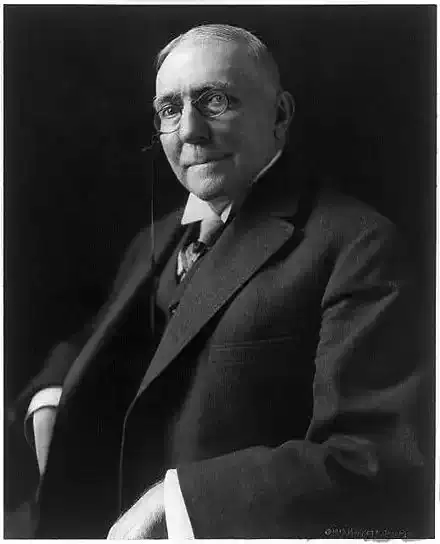
James Whitcomb Riley
A Home-Made Fairy Tale
A Home-Made Fairy Tale
Bud, come here to your uncle a spell,
And I'll tell you something you mustn't tell--
For it's a secret and shore-'nuf true,
And maybe I oughtn't to tell it to you--!
But out in the garden, under the shade
Of the apple-trees, where we romped and played
Till the moon was up, and you thought I'd gone
Fast asleep--, That was all put on!
For I was a-watchin' something queer
Goin' on there in the grass, my dear--!
'Way down deep in it, there I see
A little dude-Fairy who winked at me,
And snapped his fingers, and laughed as low
And fine as the whine of a mus-kee-to!
I kept still-- watchin' him closer-- and
I noticed a little guitar in his hand,
Which he leant 'ginst a little dead bee-- and laid
His cigarette down on a clean grass-blade,
And then climbed up on the shell of a snail--
Carefully dusting his swallowtail--
And pulling up, by a waxed web-thread,
This little guitar, you remember. I said!
And there he trinkled and trilled a tune--,
'My Love, so Fair, Tans in the Moon!'
Till presently, out of the clover-top
He seemed to be singing to, came k'pop!
The purtiest, daintiest Fairy face
In all this world, or any place!
Then the little ser'nader waved his hand,
As much as to say, 'We'll excuse you!' and
I heard, as I squinted my eyelids to,
A kiss like the drip of a drop of dew!
Bud, come here to your uncle a spell,
And I'll tell you something you mustn't tell--
For it's a secret and shore-'nuf true,
And maybe I oughtn't to tell it to you--!
But out in the garden, under the shade
Of the apple-trees, where we romped and played
Till the moon was up, and you thought I'd gone
Fast asleep--, That was all put on!
For I was a-watchin' something queer
Goin' on there in the grass, my dear--!
'Way down deep in it, there I see
A little dude-Fairy who winked at me,
And snapped his fingers, and laughed as low
And fine as the whine of a mus-kee-to!
I kept still-- watchin' him closer-- and
I noticed a little guitar in his hand,
Which he leant 'ginst a little dead bee-- and laid
His cigarette down on a clean grass-blade,
And then climbed up on the shell of a snail--
Carefully dusting his swallowtail--
And pulling up, by a waxed web-thread,
This little guitar, you remember. I said!
And there he trinkled and trilled a tune--,
'My Love, so Fair, Tans in the Moon!'
Till presently, out of the clover-top
He seemed to be singing to, came k'pop!
The purtiest, daintiest Fairy face
In all this world, or any place!
Then the little ser'nader waved his hand,
As much as to say, 'We'll excuse you!' and
I heard, as I squinted my eyelids to,
A kiss like the drip of a drop of dew!
349
James Whitcomb Riley
A Full Harvest
A Full Harvest
Seems like a feller'd ort 'o jes' to-day
Git down and roll and waller, don't you know,
In that-air stubble, and flop up and crow,
Seein' sich craps! I'll undertake to say
There're no wheat's ever turned out thataway
Afore this season!--Folks is keerless tho',
And too fergitful--'caze we'd ort 'o show
More thankfulness!--Jes' looky hyonder, hey?--
And watch that little reaper wadin' thue
That last old yaller hunk o' harvest-ground--
Jes' natchur'ly a-slicin' it in-two
Like honey-comb, and gaumin' it around
The field--like it had nothin' else to do
On'y jes' waste it all on me and you!
Seems like a feller'd ort 'o jes' to-day
Git down and roll and waller, don't you know,
In that-air stubble, and flop up and crow,
Seein' sich craps! I'll undertake to say
There're no wheat's ever turned out thataway
Afore this season!--Folks is keerless tho',
And too fergitful--'caze we'd ort 'o show
More thankfulness!--Jes' looky hyonder, hey?--
And watch that little reaper wadin' thue
That last old yaller hunk o' harvest-ground--
Jes' natchur'ly a-slicin' it in-two
Like honey-comb, and gaumin' it around
The field--like it had nothin' else to do
On'y jes' waste it all on me and you!
323
James Whitcomb Riley
A Canary At The Farm
A Canary At The Farm
Folks has be'n to town, and Sahry
Fetched 'er home a pet canary--,
And of all the blame', contrary,
Aggervatin' things alive!
I love music-- that I love it
When it's free-- and plenty of it--;
But I kindo' git above it,
At a dollar-eighty-five!
Reason's plain as I'm a-sayin'--,
Jes' the idy, now, o' layin'
Out yer money, and a-payin'
Fer a willer-cage and bird,
When the medder-larks is wingin'
Round you, and the woods is ringin'
With the beautifullest singin'
That a mortal ever heard!
Sahry's sot, tho'--. So I tell her
He's a purty little feller,
With his wings o' creamy-yeller,
And his eyes keen as a cat;
And the twitter o' the critter
'Pears to absolutely glitter!
Guess I'll haf to go and git her
A high-priceter cage 'n that!
Folks has be'n to town, and Sahry
Fetched 'er home a pet canary--,
And of all the blame', contrary,
Aggervatin' things alive!
I love music-- that I love it
When it's free-- and plenty of it--;
But I kindo' git above it,
At a dollar-eighty-five!
Reason's plain as I'm a-sayin'--,
Jes' the idy, now, o' layin'
Out yer money, and a-payin'
Fer a willer-cage and bird,
When the medder-larks is wingin'
Round you, and the woods is ringin'
With the beautifullest singin'
That a mortal ever heard!
Sahry's sot, tho'--. So I tell her
He's a purty little feller,
With his wings o' creamy-yeller,
And his eyes keen as a cat;
And the twitter o' the critter
'Pears to absolutely glitter!
Guess I'll haf to go and git her
A high-priceter cage 'n that!
339
James Whitcomb Riley
A Barefoot Boy
A Barefoot Boy
A barefoot boy! I mark him at his play --
For May is here once more, and so is he, --
His dusty trousers, rolled half to the knee,
And his bare ankles grimy, too, as they:
Cross-hatchings of the nettle, in array
Of feverish stripes, hint vividly to me
Of woody pathways winding endlessly
Along the creek, where even yesterday
He plunged his shrinking body -- gasped and shook --
Yet called the water 'warm,' with never lack
Of joy. And so, half enviously I look
Upon this graceless barefoot and his track, --
His toe stubbed -- ay, his big toe-nail knocked back
Like unto the clasp of an old pocketbook.
A barefoot boy! I mark him at his play --
For May is here once more, and so is he, --
His dusty trousers, rolled half to the knee,
And his bare ankles grimy, too, as they:
Cross-hatchings of the nettle, in array
Of feverish stripes, hint vividly to me
Of woody pathways winding endlessly
Along the creek, where even yesterday
He plunged his shrinking body -- gasped and shook --
Yet called the water 'warm,' with never lack
Of joy. And so, half enviously I look
Upon this graceless barefoot and his track, --
His toe stubbed -- ay, his big toe-nail knocked back
Like unto the clasp of an old pocketbook.
410
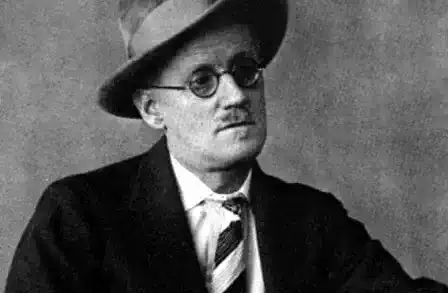
James Joyce
Tilly
Tilly
He travels after a winter sun,
Urging the cattle along a cold red road,
Calling to them, a voice they know,
He drives his beasts above Cabra.
The voice tells them home is warm.
They moo and make brute music with their hoofs.
He drives them with a flowering branch before him,
Smoke pluming their foreheads.
Boor, bond of the herd,
Tonight stretch full by the fire!
I bleed by the black stream
For my torn bough!
He travels after a winter sun,
Urging the cattle along a cold red road,
Calling to them, a voice they know,
He drives his beasts above Cabra.
The voice tells them home is warm.
They moo and make brute music with their hoofs.
He drives them with a flowering branch before him,
Smoke pluming their foreheads.
Boor, bond of the herd,
Tonight stretch full by the fire!
I bleed by the black stream
For my torn bough!
217

Jack Prelutsky
Dora Diller
Dora Diller
'My stomach's full of butterflies!'
lamented Dora Diller.
Her mother sighed. 'That's no surprise,
you ate a caterpillar!'
'My stomach's full of butterflies!'
lamented Dora Diller.
Her mother sighed. 'That's no surprise,
you ate a caterpillar!'
139

Jack Kerouac
One Flower
One Flower
One flower
on the cliffside
Nodding at the canyon
One flower
on the cliffside
Nodding at the canyon
328
Jack Kerouac
Bus East
Bus East
Society has good intentions Bureaucracy is like a friend
5 years ago - other furies other losses
America's
trying to control the uncontrollable Forest fires, Vice
The essential smile In the essential sleep Of the children Of the essential mind
I'm
all thru playing the American
Now I'm going to live a good quiet life
The
world should be built for foot walkers
Oily
rivers Of spiney Nevady
I
am Jake Cake
Rake
Write like Blake
The
horse is not pleased Sight of his
gorgeous finery
in the dust Its silken
nostrils
did disgust
Cats
arent kind Kiddies anent sweet
April
in Nevada - Investigating Dismal Cheyenne Where the war parties
In fields
of straw
Aimed over oxen At Indian Chiefs
In wild headdress Pouring thru
the gap
In Wyoming plain
To make the settlers
Eat more dust than dust
was eaten In the States From East at Seacoast Where wagons made up To dreadful
Plains
Of clazer vup
Saltry
settlers
Anxious to masturbate The Mongol Sea (I'm too tired in Cheyenne -
No sleep in 4 nights now, & 2 to go)
Society has good intentions Bureaucracy is like a friend
5 years ago - other furies other losses
America's
trying to control the uncontrollable Forest fires, Vice
The essential smile In the essential sleep Of the children Of the essential mind
I'm
all thru playing the American
Now I'm going to live a good quiet life
The
world should be built for foot walkers
Oily
rivers Of spiney Nevady
I
am Jake Cake
Rake
Write like Blake
The
horse is not pleased Sight of his
gorgeous finery
in the dust Its silken
nostrils
did disgust
Cats
arent kind Kiddies anent sweet
April
in Nevada - Investigating Dismal Cheyenne Where the war parties
In fields
of straw
Aimed over oxen At Indian Chiefs
In wild headdress Pouring thru
the gap
In Wyoming plain
To make the settlers
Eat more dust than dust
was eaten In the States From East at Seacoast Where wagons made up To dreadful
Plains
Of clazer vup
Saltry
settlers
Anxious to masturbate The Mongol Sea (I'm too tired in Cheyenne -
No sleep in 4 nights now, & 2 to go)
372
Jack Kerouac
Haiku (Birds singing...)
Haiku (Birds singing...)
Birds singing
in the dark
—Rainy dawn.
Birds singing
in the dark
—Rainy dawn.
326
Jack Kerouac
th Chorus Mexico City Blues
th Chorus Mexico City Blues
Roosevelt was worth 6, 7 million dollars
He was Tight
Frog waits
Till poor fly
Flies by
And then they got him
The pool of clear rocks
Covered with vegetable scum
Covered the rocks
Clear the pool
Covered the warm surface
Covered the lotus
Dusted the watermelon flower
Aerial the Pad
Clean queer the clear
blue water
AND THEN THEY GOT HIM
The Oil of the Olive
Bittersweet taffies
Bittersweet cabbage
Cabbage soup made right
A hunk a grass
Sauerkraut let work
in a big barrel
Stunk but Good
Roosevelt was worth 6, 7 million dollars
He was Tight
Frog waits
Till poor fly
Flies by
And then they got him
The pool of clear rocks
Covered with vegetable scum
Covered the rocks
Clear the pool
Covered the warm surface
Covered the lotus
Dusted the watermelon flower
Aerial the Pad
Clean queer the clear
blue water
AND THEN THEY GOT HIM
The Oil of the Olive
Bittersweet taffies
Bittersweet cabbage
Cabbage soup made right
A hunk a grass
Sauerkraut let work
in a big barrel
Stunk but Good
231
Horácio
BkIII:XXV Bacchanalian Song
BkIII:XXV Bacchanalian Song
Where are you taking me, Bacchus,
now I’m full of you? To what caves or groves, driven,
swiftly, by new inspiration?
In what caverns will I be heard planning to set
illustrious Caesar’s lasting
glory among the stars, in the councils of Jove?
I’ll sing a recent achievement,
not yet sung by other lips. So does the sleepless
Bacchante, stand in amazement
on a mountain-ridge, gazing at Hebrus, at Thrace,
shining with snow, at Rhodope,
trodden by barbarous feet, even as I like
to wander gazing, at river
banks, and echoing groves. O master of Naiads,
of Bacchae owning the power
to uproot the tallest ash-trees, with their bare hands,
I’ll sing nothing trivial, no
humble measure, nothing that dies. O, Lenaeus,
the danger of following a god
is sweet, wreathing my brow with green leaves of the vine.
Where are you taking me, Bacchus,
now I’m full of you? To what caves or groves, driven,
swiftly, by new inspiration?
In what caverns will I be heard planning to set
illustrious Caesar’s lasting
glory among the stars, in the councils of Jove?
I’ll sing a recent achievement,
not yet sung by other lips. So does the sleepless
Bacchante, stand in amazement
on a mountain-ridge, gazing at Hebrus, at Thrace,
shining with snow, at Rhodope,
trodden by barbarous feet, even as I like
to wander gazing, at river
banks, and echoing groves. O master of Naiads,
of Bacchae owning the power
to uproot the tallest ash-trees, with their bare hands,
I’ll sing nothing trivial, no
humble measure, nothing that dies. O, Lenaeus,
the danger of following a god
is sweet, wreathing my brow with green leaves of the vine.
223
Horácio
BkIII:XXII To Diana
BkIII:XXII To Diana
Virgin protectress of the mountain and the grove,
who, called on three times, hears young girls, labouring
through childbirth, and rescues them from dying, O
triple formed goddess,
may it be yours, this pine-tree above my farm,
so that I may, happily, through passing years,
offer it the blood of a boar, that’s trying
its first sidelong thrusts.
Virgin protectress of the mountain and the grove,
who, called on three times, hears young girls, labouring
through childbirth, and rescues them from dying, O
triple formed goddess,
may it be yours, this pine-tree above my farm,
so that I may, happily, through passing years,
offer it the blood of a boar, that’s trying
its first sidelong thrusts.
234
Horácio
BkI:XVII The Delights of the Country
BkI:XVII The Delights of the Country
Swift Faunus, the god, will quite often exchange
Arcady for my sweet Mount Lucretilis,
and while he stays he protects my goats
from the midday heat and the driving rain.
The wandering wives of the rank he-goats search,
with impunity, through the safe woodland groves,
for the hidden arbutus, and thyme,
and their kids don’t fear green poisonous snakes,
or the wolf of Mars, my lovely Tyndaris,
once my Mount Ustica’s long sloping valleys,
and its smooth worn rocks, have re-echoed
to the music of sweet divine piping.
The gods protect me: my love and devotion,
and my Muse, are dear to the gods. Here the rich
wealth of the countryside’s beauties will
flow for you, now, from the horn of plenty.
Here you’ll escape from the heat of the dog-star,
in secluded valleys, sing of bright Circe,
labouring over the Teian lyre,
and of Penelope: both loved one man.
Here you’ll bring cups of innocent Lesbian
wine, under the shade, nor will Semele’s son,
that Bacchus, battle it out with Mars,
nor shall you fear the intemperate hands
of insolent Cyrus, jealously watching,
to possess you, girl, unequal to evil,
to tear off the garland that clings to
your hair, or tear off your innocent clothes.
Swift Faunus, the god, will quite often exchange
Arcady for my sweet Mount Lucretilis,
and while he stays he protects my goats
from the midday heat and the driving rain.
The wandering wives of the rank he-goats search,
with impunity, through the safe woodland groves,
for the hidden arbutus, and thyme,
and their kids don’t fear green poisonous snakes,
or the wolf of Mars, my lovely Tyndaris,
once my Mount Ustica’s long sloping valleys,
and its smooth worn rocks, have re-echoed
to the music of sweet divine piping.
The gods protect me: my love and devotion,
and my Muse, are dear to the gods. Here the rich
wealth of the countryside’s beauties will
flow for you, now, from the horn of plenty.
Here you’ll escape from the heat of the dog-star,
in secluded valleys, sing of bright Circe,
labouring over the Teian lyre,
and of Penelope: both loved one man.
Here you’ll bring cups of innocent Lesbian
wine, under the shade, nor will Semele’s son,
that Bacchus, battle it out with Mars,
nor shall you fear the intemperate hands
of insolent Cyrus, jealously watching,
to possess you, girl, unequal to evil,
to tear off the garland that clings to
your hair, or tear off your innocent clothes.
227
Horácio
BkI:IV Spring
BkI:IV Spring
Fierce winter slackens its grip: it’s spring and the west wind’s sweet change:
the ropes are hauling dry hulls towards the shore,
The flock no longer enjoys the fold, or the ploughman the fire,
no more are the meadows white with hoary frost.
Now Cytherean Venus leads out her dancers, under the pendant moon,
and the lovely Graces have joined with the Nymphs,
treading the earth on tripping feet, while Vulcan, all on fire, visits
the tremendous Cyclopean forges.
Now its right to garland our gleaming heads, with green myrtle or flowers,
whatever the unfrozen earth now bears:
now it’s right to sacrifice to Faunus, in groves that are filled with shadow,
whether he asks a lamb, or prefers a kid.
Pale death knocks with impartial foot, at the door of the poor man’s cottage,
and at the prince’s gate. O Sestus, my friend,
the span of brief life prevents us from ever depending on distant hope.
Soon the night will crush you, the fabled spirits,
and Pluto’s bodiless halls: where once you’ve passed inside you’ll no longer
be allotted the lordship of wine by dice,
or marvel at Lycidas, so tender, for whom, already, the boys
are burning, and soon the girls will grow hotter.
Fierce winter slackens its grip: it’s spring and the west wind’s sweet change:
the ropes are hauling dry hulls towards the shore,
The flock no longer enjoys the fold, or the ploughman the fire,
no more are the meadows white with hoary frost.
Now Cytherean Venus leads out her dancers, under the pendant moon,
and the lovely Graces have joined with the Nymphs,
treading the earth on tripping feet, while Vulcan, all on fire, visits
the tremendous Cyclopean forges.
Now its right to garland our gleaming heads, with green myrtle or flowers,
whatever the unfrozen earth now bears:
now it’s right to sacrifice to Faunus, in groves that are filled with shadow,
whether he asks a lamb, or prefers a kid.
Pale death knocks with impartial foot, at the door of the poor man’s cottage,
and at the prince’s gate. O Sestus, my friend,
the span of brief life prevents us from ever depending on distant hope.
Soon the night will crush you, the fabled spirits,
and Pluto’s bodiless halls: where once you’ve passed inside you’ll no longer
be allotted the lordship of wine by dice,
or marvel at Lycidas, so tender, for whom, already, the boys
are burning, and soon the girls will grow hotter.
288
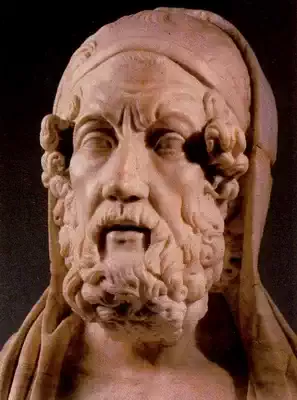
Homero
The Odyssey: Book 14
The Odyssey: Book 14
Ulysses now left the haven, and took the rough track up through
the wooded country and over the crest of the mountain till he
reached the place where Minerva had said that he would find the
swineherd, who was the most thrifty servant he had. He found him
sitting in front of his hut, which was by the yards that he had
built on a site which could be seen from far. He had made them
spacious and fair to see, with a free ran for the pigs all round them;
he had built them during his master's absence, of stones which he
had gathered out of the ground, without saying anything to Penelope or
Laertes, and he had fenced them on top with thorn bushes. Outside
the yard he had run a strong fence of oaken posts, split, and set
pretty close together, while inside lie had built twelve sties near
one another for the sows to lie in. There were fifty pigs wallowing in
each sty, all of them breeding sows; but the boars slept outside and
were much fewer in number, for the suitors kept on eating them, and
die swineherd had to send them the best he had continually. There were
three hundred and sixty boar pigs, and the herdsman's four hounds,
which were as fierce as wolves, slept always with them. The
swineherd was at that moment cutting out a pair of sandals from a good
stout ox hide. Three of his men were out herding the pigs in one place
or another, and he had sent the fourth to town with a boar that he had
been forced to send the suitors that they might sacrifice it and
have their fill of meat.
When the hounds saw Ulysses they set up a furious barking and flew
at him, but Ulysses was cunning enough to sit down and loose his
hold of the stick that he had in his hand: still, he would have been
torn by them in his own homestead had not the swineherd dropped his ox
hide, rushed full speed through the gate of the yard and driven the
dogs off by shouting and throwing stones at them. Then he said to
Ulysses, "Old man, the dogs were likely to have made short work of
you, and then you would have got me into trouble. The gods have
given me quite enough worries without that, for I have lost the best
of masters, and am in continual grief on his account. I have to attend
swine for other people to eat, while he, if he yet lives to see the
light of day, is starving in some distant land. But come inside, and
when you have had your fill of bread and wine, tell me where you
come from, and all about your misfortunes."
On this the swineherd led the way into the hut and bade him sit
down. He strewed a good thick bed of rushes upon the floor, and on the
top of this he threw the shaggy chamois skin- a great thick one- on
which he used to sleep by night. Ulysses was pleased at being made
thus welcome, and said "May Jove, sir, and the rest of the gods
grant you your heart's desire in return for the kind way in which
you have received me."
To this you answered, O swineherd Eumaeus, "Stranger, though a still
poorer man should come here, it would not be right for me to insult
him, for all strangers and beggars are from Jove. You must take what
you can get and be thankful, for servants live in fear when they
have young lords for their masters; and this is my misfortune now, for
heaven has hindered the return of him who would have been always
good to me and given me something of my own- a house, a piece of land,
a good looking wife, and all else that a liberal master allows a
servant who has worked hard for him, and whose labour the gods have
prospered as they have mine in the situation which I hold. If my
master had grown old here he would have done great things by me, but
he is gone, and I wish that Helen's whole race were utterly destroyed,
for she has been the death of many a good man. It was this matter that
took my master to Ilius, the land of noble steeds, to fight the
Trojans in the cause of kin Agamemnon."
As he spoke he bound his girdle round him and went to the sties
where the young sucking pigs were penned. He picked out two which he
brought back with him and sacrificed. He singed them, cut them up, and
spitted on them; when the meat was cooked he brought it all in and set
it before Ulysses, hot and still on the spit, whereon Ulysses
sprinkled it over with white barley meal. The swineherd then mixed
wine in a bowl of ivy-wood, and taking a seat opposite Ulysses told
him to begin.
"Fall to, stranger," said he, "on a dish of servant's pork. The
fat pigs have to go to the suitors, who eat them up without shame or
scruple; but the blessed gods love not such shameful doings, and
respect those who do what is lawful and right. Even the fierce
free-booters who go raiding on other people's land, and Jove gives
them their spoil- even they, when they have filled their ships and got
home again live conscience-stricken, and look fearfully for judgement;
but some god seems to have told these people that Ulysses is dead
and gone; they will not, therefore, go back to their own homes and
make their offers of marriage in the usual way, but waste his estate
by force, without fear or stint. Not a day or night comes out of
heaven, but they sacrifice not one victim nor two only, and they
take the run of his wine, for he was exceedingly rich. No other
great man either in Ithaca or on the mainland is as rich as he was; he
had as much as twenty men put together. I will tell you what he had.
There are twelve herds of cattle upon the mainland, and as many flocks
of sheep, there are also twelve droves of pigs, while his own men
and hired strangers feed him twelve widely spreading herds of goats.
Here in Ithaca he runs even large flocks of goats on the far end of
the island, and they are in the charge of excellent goatherds. Each
one of these sends the suitors the best goat in the flock every day.
As for myself, I am in charge of the pigs that you see here, and I
have to keep picking out the best I have and sending it to them."
This was his story, but Ulysses went on eating and drinking
ravenously without a word, brooding his revenge. When he had eaten
enough and was satisfied, the swineherd took the bowl from which he
usually drank, filled it with wine, and gave it to Ulysses, who was
pleased, and said as he took it in his hands, "My friend, who was this
master of yours that bought you and paid for you, so rich and so
powerful as you tell me? You say he perished in the cause of King
Agamemnon; tell me who he was, in case I may have met with such a
person. Jove and the other gods know, but I may be able to give you
news of him, for I have travelled much."
Eumaeus answered, "Old man, no traveller who comes here with news
will get Ulysses' wife and son to believe his story. Nevertheless,
tramps in want of a lodging keep coming with their mouths full of
lies, and not a word of truth; every one who finds his way to Ithaca
goes to my mistress and tells her falsehoods, whereon she takes them
in, makes much of them, and asks them all manner of questions,
crying all the time as women will when they have lost their
husbands. And you too, old man, for a shirt and a cloak would
doubtless make up a very pretty story. But the wolves and birds of
prey have long since torn Ulysses to pieces, or the fishes of the
sea have eaten him, and his bones are lying buried deep in sand upon
some foreign shore; he is dead and gone, and a bad business it is
for all his friends- for me especially; go where I may I shall never
find so good a master, not even if I were to go home to my mother
and father where I was bred and born. I do not so much care,
however, about my parents now, though I should dearly like to see them
again in my own country; it is the loss of Ulysses that grieves me
most; I cannot speak of him without reverence though he is here no
longer, for he was very fond of me, and took such care of me that
whereever he may be I shall always honour his memory."
"My friend," replied Ulysses, "you are very positive, and very
hard of belief about your master's coming home again, nevertheless I
will not merely say, but will swear, that he is coming. Do not give me
anything for my news till he has actually come, you may then give me a
shirt and cloak of good wear if you will. I am in great want, but I
will not take anything at all till then, for I hate a man, even as I
hate hell fire, who lets his poverty tempt him into lying. I swear
by king Jove, by the rites of hospitality, and by that hearth of
Ulysses to which I have now come, that all will surely happen as I
have said it will. Ulysses will return in this self same year; with
the end of this moon and the beginning of the next he will be here
to do vengeance on all those who are ill treating his wife and son."
To this you answered, O swineherd Eumaeus, "Old man, you will
neither get paid for bringing good news, nor will Ulysses ever come
home; drink you wine in peace, and let us talk about something else.
Do not keep on reminding me of all this; it always pains me when any
one speaks about my honoured master. As for your oath we will let it
alone, but I only wish he may come, as do Penelope, his old father
Laertes, and his son Telemachus. I am terribly unhappy too about
this same boy of his; he was running up fast into manhood, and bade
fare to be no worse man, face and figure, than his father, but some
one, either god or man, has been unsettling his mind, so he has gone
off to Pylos to try and get news of his father, and the suitors are
lying in wait for him as he is coming home, in the hope of leaving the
house of Arceisius without a name in Ithaca. But let us say no more
about him, and leave him to be taken, or else to escape if the son
of Saturn holds his hand over him to protect him. And now, old man,
tell me your own story; tell me also, for I want to know, who you
are and where you come from. Tell me of your town and parents, what
manner of ship you came in, how crew brought you to Ithaca, and from
what country they professed to come- for you cannot have come by
land."
And Ulysses answered, "I will tell you all about it. If there were
meat and wine enough, and we could stay here in the hut with nothing
to do but to eat and drink while the others go to their work, I
could easily talk on for a whole twelve months without ever
finishing the story of the sorrows with which it has pleased heaven to
visit me.
"I am by birth a Cretan; my father was a well-to-do man, who had
many sons born in marriage, whereas I was the son of a slave whom he
had purchased for a concubine; nevertheless, my father Castor son of
Hylax (whose lineage I claim, and who was held in the highest honour
among the Cretans for his wealth, prosperity, and the valour of his
sons) put me on the same level with my brothers who had been born in
wedlock. When, however, death took him to the house of Hades, his sons
divided his estate and cast lots for their shares, but to me they gave
a holding and little else; nevertheless, my valour enabled me to marry
into a rich family, for I was not given to bragging, or shirking on
the field of battle. It is all over now; still, if you look at the
straw you can see what the ear was, for I have had trouble enough
and to spare. Mars and Minerva made me doughty in war; when I had
picked my men to surprise the enemy with an ambuscade I never gave
death so much as a thought, but was the first to leap forward and
spear all whom I could overtake. Such was I in battle, but I did not
care about farm work, nor the frugal home life of those who would
bring up children. My delight was in ships, fighting, javelins, and
arrows- things that most men shudder to think of; but one man likes
one thing and another another, and this was what I was most
naturally inclined to. Before the Achaeans went to Troy, nine times
was I in command of men and ships on foreign service, and I amassed
much wealth. I had my pick of the spoil in the first instance, and
much more was allotted to me later on.
"My house grew apace and I became a great man among the Cretans, but
when Jove counselled that terrible expedition, in which so many
perished, the people required me and Idomeneus to lead their ships
to Troy, and there was no way out of it, for they insisted on our
doing so. There we fought for nine whole years, but in the tenth we
sacked the city of Priam and sailed home again as heaven dispersed us.
Then it was that Jove devised evil against me. I spent but one month
happily with my children, wife, and property, and then I conceived the
idea of making a descent on Egypt, so I fitted out a fine fleet and
manned it. I had nine ships, and the people flocked to fill them.
For six days I and my men made feast, and I found them many victims
both for sacrifice to the gods and for themselves, but on the
seventh day we went on board and set sail from Crete with a fair North
wind behind us though we were going down a river. Nothing went ill
with any of our ships, and we had no sickness on board, but sat
where we were and let the ships go as the wind and steersmen took
them. On the fifth day we reached the river Aegyptus; there I
stationed my ships in the river, bidding my men stay by them and
keep guard over them while I sent out scouts to reconnoitre from every
point of vantage.
"But the men disobeyed my orders, took to their own devices, and
ravaged the land of the Egyptians, killing the men, and taking their
wives and children captive. The alarm was soon carried to the city,
and when they heard the war cry, the people came out at daybreak
till the plain was filled with horsemen and foot soldiers and with the
gleam of armour. Then Jove spread panic among my men, and they would
no longer face the enemy, for they found themselves surrounded. The
Egyptians killed many of us, and took the rest alive to do forced
labour for them. Jove, however, put it in my mind to do thus- and I
wish I had died then and there in Egypt instead, for there was much
sorrow in store for me- I took off my helmet and shield and dropped my
spear from my hand; then I went straight up to the king's chariot,
clasped his knees and kissed them, whereon he spared my life, bade
me get into his chariot, and took me weeping to his own home. Many
made at me with their ashen spears and tried to kil me in their
fury, but the king protected me, for he feared the wrath of Jove the
protector of strangers, who punishes those who do evil.
"I stayed there for seven years and got together much money among
the Egyptians, for they all gave me something; but when it was now
going on for eight years there came a certain Phoenician, a cunning
rascal, who had already committed all sorts of villainy, and this
man talked me over into going with him to Phoenicia, where his house
and his possessions lay. I stayed there for a whole twelve months, but
at the end of that time when months and days had gone by till the same
season had come round again, he set me on board a ship bound for
Libya, on a pretence that I was to take a cargo along with him to that
place, but really that he might sell me as a slave and take the
money I fetched. I suspected his intention, but went on board with
him, for I could not help it.
"The ship ran before a fresh North wind till we had reached the
sea that lies between Crete and Libya; there, however, Jove counselled
their destruction, for as soon as we were well out from Crete and
could see nothing but sea and sky, he raised a black cloud over our
ship and the sea grew dark beneath it. Then Jove let fly with his
thunderbolts and the ship went round and round and was filled with
fire and brimstone as the lightning struck it. The men fell all into
the sea; they were carried about in the water round the ship looking
like so many sea-gulls, but the god presently deprived them of all
chance of getting home again. I was all dismayed; Jove, however,
sent the ship's mast within my reach, which saved my life, for I clung
to it, and drifted before the fury of the gale. Nine days did I
drift but in the darkness of the tenth night a great wave bore me on
to the Thesprotian coast. There Pheidon king of the Thesprotians
entertained me hospitably without charging me anything at all for
his son found me when I was nearly dead with cold and fatigue, whereon
he raised me by the hand, took me to his father's house and gave me
clothes to wear.
"There it was that I heard news of Ulysses, for the king told me
he had entertained him, and shown him much hospitality while he was on
his homeward journey. He showed me also the treasure of gold, and
wrought iron that Ulysses had got together. There was enough to keep
his family for ten generations, so much had he left in the house of
king Pheidon. But the king said Ulysses had gone to Dodona that he
might learn Jove's mind from the god's high oak tree, and know whether
after so long an absence he should return to Ithaca openly, or in
secret. Moreover the king swore in my presence, making drink-offerings
in his own house as he did so, that the ship was by the water side,
and the crew found, that should take him to his own country. He sent
me off however before Ulysses returned, for there happened to be a
Thesprotian ship sailing for the wheat-growing island of Dulichium,
and he told those in charge of her to be sure and take me safely to
King Acastus.
"These men hatched a plot against me that would have reduced me to
the very extreme of misery, for when the ship had got some way out
from land they resolved on selling me as a slave. They stripped me
of the shirt and cloak that I was wearing, and gave me instead the
tattered old clouts in which you now see me; then, towards
nightfall, they reached the tilled lands of Ithaca, and there they
bound me with a strong rope fast in the ship, while they went on shore
to get supper by the sea side. But the gods soon undid my bonds for
me, and having drawn my rags over my head I slid down the rudder
into the sea, where I struck out and swam till I was well clear of
them, and came ashore near a thick wood in which I lay concealed. They
were very angry at my having escaped and went searching about for
me, till at last they thought it was no further use and went back to
their ship. The gods, having hidden me thus easily, then took me to
a good man's door- for it seems that I am not to die yet awhile."
To this you answered, O swineherd Eumaeus, "Poor unhappy stranger, I
have found the story of your misfortunes extremely interesting, but
that part about Ulysses is not right; and you will never get me to
believe it. Why should a man like you go about telling lies in this
way? I know all about the return of my master. The gods one and all of
them detest him, or they would have taken him before Troy, or let
him die with friends around him when the days of his fighting were
done; for then the Achaeans would have built a mound over his ashes
and his son would have been heir to his renown, but now the storm
winds have spirited him away we know not whither.
"As for me I live out of the way here with the pigs, and never go to
the town unless when Penelope sends for me on the arrival of some news
about Ulysses. Then they all sit round and ask questions, both those
who grieve over the king's absence, and those who rejoice at it
because they can eat up his property without paying for it. For my own
part I have never cared about asking anyone else since the time when I
was taken in by an Aetolian, who had killed a man and come a long
way till at last he reached my station, and I was very kind to him. He
said he had seen Ulysses with Idomeneus among the Cretans, refitting
his ships which had been damaged in a gale. He said Ulysses would
return in the following summer or autumn with his men, and that he
would bring back much wealth. And now you, you unfortunate old man,
since fate has brought you to my door, do not try to flatter me in
this way with vain hopes. It is not for any such reason that I shall
treat you kindly, but only out of respect for Jove the god of
hospitality, as fearing him and pitying you."
Ulysses answered, "I see that you are of an unbelieving mind; I have
given you my oath, and yet you will not credit me; let us then make
a bargain, and call all the gods in heaven to witness it. If your
master comes home, give me a cloak and shirt of good wear, and send me
to Dulichium where I want to go; but if he does not come as I say he
will, set your men on to me, and tell them to throw me from yonder
precepice, as a warning to tramps not to go about the country
telling lies."
"And a pretty figure I should cut then," replied Eumaeus, both now
and hereafter, if I were to kill you after receiving you into my hut
and showing you hospitality. I should have to say my prayers in good
earnest if I did; but it is just supper time and I hope my men will
come in directly, that we may cook something savoury for supper."
Thus did they converse, and presently the swineherds came up with
the pigs, which were then shut up for the night in their sties, and
a tremendous squealing they made as they were being driven into
them. But Eumaeus called to his men and said, "Bring in the best pig
you have, that I may sacrifice for this stranger, and we will take
toll of him ourselves. We have had trouble enough this long time
feeding pigs, while others reap the fruit of our labour."
On this he began chopping firewood, while the others brought in a
fine fat five year old boar pig, and set it at the altar. Eumaeus
did not forget the gods, for he was a man of good principles, so the
first thing he did was to cut bristles from the pig's face and throw
them into the fire, praying to all the gods as he did so that
Ulysses might return home again. Then he clubbed the pig with a billet
of oak which he had kept back when he was chopping the firewood, and
stunned it, while the others slaughtered and singed it. Then they
cut it up, and Eumaeus began by putting raw pieces from each joint
on to some of the fat; these he sprinkled with barley meal, and laid
upon the embers; they cut the rest of the meat up small, put the
pieces upon the spits and roasted them till they were done; when
they had taken them off the spits they threw them on to the dresser in
a heap. The swineherd, who was a most equitable man, then stood up
to give every one his share. He made seven portions; one of these he
set apart for Mercury the son of Maia and the nymphs, praying to
them as he did so; the others he dealt out to the men man by man. He
gave Ulysses some slices cut lengthways down the loin as a mark of
especial honour, and Ulysses was much pleased. "I hope, Eumaeus," said
he, "that Jove will be as well disposed towards you as I am, for the
respect you are showing to an outcast like myself."
To this you answered, O swineherd Eumaeus, "Eat, my good fellow, and
enjoy your supper, such as it is. God grants this, and withholds that,
just as he thinks right, for he can do whatever he chooses."
As he spoke he cut off the first piece and offered it as a burnt
sacrifice to the immortal gods; then he made them a drink-offering,
put the cup in the hands of Ulysses, and sat down to his own
portion. Mesaulius brought them their bread; the swineherd had
bought this man on his own account from among the Taphians during
his master's absence, and had paid for him with his own money
without saying anything either to his mistress or Laertes. They then
laid their hands upon the good things that were before them, and
when they had had enough to eat and drink, Mesaulius took away what
was left of the bread, and they all went to bed after having made a
hearty supper.
Now the night came on stormy and very dark, for there was no moon.
It poured without ceasing, and the wind blew strong from the West,
which is a wet quarter, so Ulysses thought he would see whether
Eumaeus, in the excellent care he took of him, would take off his
own cloak and give it him, or make one of his men give him one.
"Listen to me," said he, "Eumaeus and the rest of you; when I have
said a prayer I will tell you something. It is the wine that makes
me talk in this way; wine will make even a wise man fall to singing;
it will make him chuckle and dance and say many a word that he had
better leave unspoken; still, as I have begun, I will go on. Would
that I were still young and strong as when we got up an ambuscade
before Troy. Menelaus and Ulysses were the leaders, but I was in
command also, for the other two would have it so. When we had come
up to the wall of the city we crouched down beneath our armour and lay
there under cover of the reeds and thick brush-wood that grew about
the swamp. It came on to freeze with a North wind blowing; the snow
fell small and fine like hoar frost, and our shields were coated thick
with rime. The others had all got cloaks and shirts, and slept
comfortably enough with their shields about their shoulders, but I had
carelessly left my cloak behind me, not thinking that I should be
too cold, and had gone off in nothing but my shirt and shield. When
the night was two-thirds through and the stars had shifted their their
places, I nudged Ulysses who was close to me with my elbow, and he
at once gave me his ear.
"'Ulysses,' said I, 'this cold will be the death of me, for I have
no cloak; some god fooled me into setting off with nothing on but my
shirt, and I do not know what to do.'
"Ulysses, who was as crafty as he was valiant, hit upon the
following plan:
"'Keep still,' said he in a low voice, 'or the others will hear
you.' Then he raised his head on his elbow.
"'My friends,' said he, 'I have had a dream from heaven in my sleep.
We are a long way from the ships; I wish some one would go down and
tell Agamemnon to send us up more men at once.'
"On this Thoas son of Andraemon threw off his cloak and set out
running to the ships, whereon I took the cloak and lay in it
comfortably enough till morning. Would that I were still young and
strong as I was in those days, for then some one of you swineherds
would give me a cloak both out of good will and for the respect due to
a brave soldier; but now people look down upon me because my clothes
are shabby."
And Eumaeus answered, "Old man, you have told us an excellent story,
and have said nothing so far but what is quite satisfactory; for the
present, therefore, you shall want neither clothing nor anything
else that a stranger in distress may reasonably expect, but
to-morrow morning you have to shake your own old rags about your
body again, for we have not many spare cloaks nor shirts up here,
but every man has only one. When Ulysses' son comes home again he will
give you both cloak and shirt, and send you wherever you may want to
go."
With this he got up and made a bed for Ulysses by throwing some
goatskins and sheepskins on the ground in front of the fire. Here
Ulysses lay down, and Eumaeus covered him over with a great heavy
cloak that he kept for a change in case of extraordinarily bad
weather.
Thus did Ulysses sleep, and the young men slept beside him. But
the swineherd did not like sleeping away from his pigs, so he got
ready to go and Ulysses was glad to see that he looked after his
property during his master's absence. First he slung his sword over
his brawny shoulders and put on a thick cloak to keep out the wind. He
also took the skin of a large and well fed goat, and a javelin in case
of attack from men or dogs. Thus equipped he went to his rest where
the pigs were camping under an overhanging rock that gave them shelter
from the North wind.
Translated by Samuel Butler
Ulysses now left the haven, and took the rough track up through
the wooded country and over the crest of the mountain till he
reached the place where Minerva had said that he would find the
swineherd, who was the most thrifty servant he had. He found him
sitting in front of his hut, which was by the yards that he had
built on a site which could be seen from far. He had made them
spacious and fair to see, with a free ran for the pigs all round them;
he had built them during his master's absence, of stones which he
had gathered out of the ground, without saying anything to Penelope or
Laertes, and he had fenced them on top with thorn bushes. Outside
the yard he had run a strong fence of oaken posts, split, and set
pretty close together, while inside lie had built twelve sties near
one another for the sows to lie in. There were fifty pigs wallowing in
each sty, all of them breeding sows; but the boars slept outside and
were much fewer in number, for the suitors kept on eating them, and
die swineherd had to send them the best he had continually. There were
three hundred and sixty boar pigs, and the herdsman's four hounds,
which were as fierce as wolves, slept always with them. The
swineherd was at that moment cutting out a pair of sandals from a good
stout ox hide. Three of his men were out herding the pigs in one place
or another, and he had sent the fourth to town with a boar that he had
been forced to send the suitors that they might sacrifice it and
have their fill of meat.
When the hounds saw Ulysses they set up a furious barking and flew
at him, but Ulysses was cunning enough to sit down and loose his
hold of the stick that he had in his hand: still, he would have been
torn by them in his own homestead had not the swineherd dropped his ox
hide, rushed full speed through the gate of the yard and driven the
dogs off by shouting and throwing stones at them. Then he said to
Ulysses, "Old man, the dogs were likely to have made short work of
you, and then you would have got me into trouble. The gods have
given me quite enough worries without that, for I have lost the best
of masters, and am in continual grief on his account. I have to attend
swine for other people to eat, while he, if he yet lives to see the
light of day, is starving in some distant land. But come inside, and
when you have had your fill of bread and wine, tell me where you
come from, and all about your misfortunes."
On this the swineherd led the way into the hut and bade him sit
down. He strewed a good thick bed of rushes upon the floor, and on the
top of this he threw the shaggy chamois skin- a great thick one- on
which he used to sleep by night. Ulysses was pleased at being made
thus welcome, and said "May Jove, sir, and the rest of the gods
grant you your heart's desire in return for the kind way in which
you have received me."
To this you answered, O swineherd Eumaeus, "Stranger, though a still
poorer man should come here, it would not be right for me to insult
him, for all strangers and beggars are from Jove. You must take what
you can get and be thankful, for servants live in fear when they
have young lords for their masters; and this is my misfortune now, for
heaven has hindered the return of him who would have been always
good to me and given me something of my own- a house, a piece of land,
a good looking wife, and all else that a liberal master allows a
servant who has worked hard for him, and whose labour the gods have
prospered as they have mine in the situation which I hold. If my
master had grown old here he would have done great things by me, but
he is gone, and I wish that Helen's whole race were utterly destroyed,
for she has been the death of many a good man. It was this matter that
took my master to Ilius, the land of noble steeds, to fight the
Trojans in the cause of kin Agamemnon."
As he spoke he bound his girdle round him and went to the sties
where the young sucking pigs were penned. He picked out two which he
brought back with him and sacrificed. He singed them, cut them up, and
spitted on them; when the meat was cooked he brought it all in and set
it before Ulysses, hot and still on the spit, whereon Ulysses
sprinkled it over with white barley meal. The swineherd then mixed
wine in a bowl of ivy-wood, and taking a seat opposite Ulysses told
him to begin.
"Fall to, stranger," said he, "on a dish of servant's pork. The
fat pigs have to go to the suitors, who eat them up without shame or
scruple; but the blessed gods love not such shameful doings, and
respect those who do what is lawful and right. Even the fierce
free-booters who go raiding on other people's land, and Jove gives
them their spoil- even they, when they have filled their ships and got
home again live conscience-stricken, and look fearfully for judgement;
but some god seems to have told these people that Ulysses is dead
and gone; they will not, therefore, go back to their own homes and
make their offers of marriage in the usual way, but waste his estate
by force, without fear or stint. Not a day or night comes out of
heaven, but they sacrifice not one victim nor two only, and they
take the run of his wine, for he was exceedingly rich. No other
great man either in Ithaca or on the mainland is as rich as he was; he
had as much as twenty men put together. I will tell you what he had.
There are twelve herds of cattle upon the mainland, and as many flocks
of sheep, there are also twelve droves of pigs, while his own men
and hired strangers feed him twelve widely spreading herds of goats.
Here in Ithaca he runs even large flocks of goats on the far end of
the island, and they are in the charge of excellent goatherds. Each
one of these sends the suitors the best goat in the flock every day.
As for myself, I am in charge of the pigs that you see here, and I
have to keep picking out the best I have and sending it to them."
This was his story, but Ulysses went on eating and drinking
ravenously without a word, brooding his revenge. When he had eaten
enough and was satisfied, the swineherd took the bowl from which he
usually drank, filled it with wine, and gave it to Ulysses, who was
pleased, and said as he took it in his hands, "My friend, who was this
master of yours that bought you and paid for you, so rich and so
powerful as you tell me? You say he perished in the cause of King
Agamemnon; tell me who he was, in case I may have met with such a
person. Jove and the other gods know, but I may be able to give you
news of him, for I have travelled much."
Eumaeus answered, "Old man, no traveller who comes here with news
will get Ulysses' wife and son to believe his story. Nevertheless,
tramps in want of a lodging keep coming with their mouths full of
lies, and not a word of truth; every one who finds his way to Ithaca
goes to my mistress and tells her falsehoods, whereon she takes them
in, makes much of them, and asks them all manner of questions,
crying all the time as women will when they have lost their
husbands. And you too, old man, for a shirt and a cloak would
doubtless make up a very pretty story. But the wolves and birds of
prey have long since torn Ulysses to pieces, or the fishes of the
sea have eaten him, and his bones are lying buried deep in sand upon
some foreign shore; he is dead and gone, and a bad business it is
for all his friends- for me especially; go where I may I shall never
find so good a master, not even if I were to go home to my mother
and father where I was bred and born. I do not so much care,
however, about my parents now, though I should dearly like to see them
again in my own country; it is the loss of Ulysses that grieves me
most; I cannot speak of him without reverence though he is here no
longer, for he was very fond of me, and took such care of me that
whereever he may be I shall always honour his memory."
"My friend," replied Ulysses, "you are very positive, and very
hard of belief about your master's coming home again, nevertheless I
will not merely say, but will swear, that he is coming. Do not give me
anything for my news till he has actually come, you may then give me a
shirt and cloak of good wear if you will. I am in great want, but I
will not take anything at all till then, for I hate a man, even as I
hate hell fire, who lets his poverty tempt him into lying. I swear
by king Jove, by the rites of hospitality, and by that hearth of
Ulysses to which I have now come, that all will surely happen as I
have said it will. Ulysses will return in this self same year; with
the end of this moon and the beginning of the next he will be here
to do vengeance on all those who are ill treating his wife and son."
To this you answered, O swineherd Eumaeus, "Old man, you will
neither get paid for bringing good news, nor will Ulysses ever come
home; drink you wine in peace, and let us talk about something else.
Do not keep on reminding me of all this; it always pains me when any
one speaks about my honoured master. As for your oath we will let it
alone, but I only wish he may come, as do Penelope, his old father
Laertes, and his son Telemachus. I am terribly unhappy too about
this same boy of his; he was running up fast into manhood, and bade
fare to be no worse man, face and figure, than his father, but some
one, either god or man, has been unsettling his mind, so he has gone
off to Pylos to try and get news of his father, and the suitors are
lying in wait for him as he is coming home, in the hope of leaving the
house of Arceisius without a name in Ithaca. But let us say no more
about him, and leave him to be taken, or else to escape if the son
of Saturn holds his hand over him to protect him. And now, old man,
tell me your own story; tell me also, for I want to know, who you
are and where you come from. Tell me of your town and parents, what
manner of ship you came in, how crew brought you to Ithaca, and from
what country they professed to come- for you cannot have come by
land."
And Ulysses answered, "I will tell you all about it. If there were
meat and wine enough, and we could stay here in the hut with nothing
to do but to eat and drink while the others go to their work, I
could easily talk on for a whole twelve months without ever
finishing the story of the sorrows with which it has pleased heaven to
visit me.
"I am by birth a Cretan; my father was a well-to-do man, who had
many sons born in marriage, whereas I was the son of a slave whom he
had purchased for a concubine; nevertheless, my father Castor son of
Hylax (whose lineage I claim, and who was held in the highest honour
among the Cretans for his wealth, prosperity, and the valour of his
sons) put me on the same level with my brothers who had been born in
wedlock. When, however, death took him to the house of Hades, his sons
divided his estate and cast lots for their shares, but to me they gave
a holding and little else; nevertheless, my valour enabled me to marry
into a rich family, for I was not given to bragging, or shirking on
the field of battle. It is all over now; still, if you look at the
straw you can see what the ear was, for I have had trouble enough
and to spare. Mars and Minerva made me doughty in war; when I had
picked my men to surprise the enemy with an ambuscade I never gave
death so much as a thought, but was the first to leap forward and
spear all whom I could overtake. Such was I in battle, but I did not
care about farm work, nor the frugal home life of those who would
bring up children. My delight was in ships, fighting, javelins, and
arrows- things that most men shudder to think of; but one man likes
one thing and another another, and this was what I was most
naturally inclined to. Before the Achaeans went to Troy, nine times
was I in command of men and ships on foreign service, and I amassed
much wealth. I had my pick of the spoil in the first instance, and
much more was allotted to me later on.
"My house grew apace and I became a great man among the Cretans, but
when Jove counselled that terrible expedition, in which so many
perished, the people required me and Idomeneus to lead their ships
to Troy, and there was no way out of it, for they insisted on our
doing so. There we fought for nine whole years, but in the tenth we
sacked the city of Priam and sailed home again as heaven dispersed us.
Then it was that Jove devised evil against me. I spent but one month
happily with my children, wife, and property, and then I conceived the
idea of making a descent on Egypt, so I fitted out a fine fleet and
manned it. I had nine ships, and the people flocked to fill them.
For six days I and my men made feast, and I found them many victims
both for sacrifice to the gods and for themselves, but on the
seventh day we went on board and set sail from Crete with a fair North
wind behind us though we were going down a river. Nothing went ill
with any of our ships, and we had no sickness on board, but sat
where we were and let the ships go as the wind and steersmen took
them. On the fifth day we reached the river Aegyptus; there I
stationed my ships in the river, bidding my men stay by them and
keep guard over them while I sent out scouts to reconnoitre from every
point of vantage.
"But the men disobeyed my orders, took to their own devices, and
ravaged the land of the Egyptians, killing the men, and taking their
wives and children captive. The alarm was soon carried to the city,
and when they heard the war cry, the people came out at daybreak
till the plain was filled with horsemen and foot soldiers and with the
gleam of armour. Then Jove spread panic among my men, and they would
no longer face the enemy, for they found themselves surrounded. The
Egyptians killed many of us, and took the rest alive to do forced
labour for them. Jove, however, put it in my mind to do thus- and I
wish I had died then and there in Egypt instead, for there was much
sorrow in store for me- I took off my helmet and shield and dropped my
spear from my hand; then I went straight up to the king's chariot,
clasped his knees and kissed them, whereon he spared my life, bade
me get into his chariot, and took me weeping to his own home. Many
made at me with their ashen spears and tried to kil me in their
fury, but the king protected me, for he feared the wrath of Jove the
protector of strangers, who punishes those who do evil.
"I stayed there for seven years and got together much money among
the Egyptians, for they all gave me something; but when it was now
going on for eight years there came a certain Phoenician, a cunning
rascal, who had already committed all sorts of villainy, and this
man talked me over into going with him to Phoenicia, where his house
and his possessions lay. I stayed there for a whole twelve months, but
at the end of that time when months and days had gone by till the same
season had come round again, he set me on board a ship bound for
Libya, on a pretence that I was to take a cargo along with him to that
place, but really that he might sell me as a slave and take the
money I fetched. I suspected his intention, but went on board with
him, for I could not help it.
"The ship ran before a fresh North wind till we had reached the
sea that lies between Crete and Libya; there, however, Jove counselled
their destruction, for as soon as we were well out from Crete and
could see nothing but sea and sky, he raised a black cloud over our
ship and the sea grew dark beneath it. Then Jove let fly with his
thunderbolts and the ship went round and round and was filled with
fire and brimstone as the lightning struck it. The men fell all into
the sea; they were carried about in the water round the ship looking
like so many sea-gulls, but the god presently deprived them of all
chance of getting home again. I was all dismayed; Jove, however,
sent the ship's mast within my reach, which saved my life, for I clung
to it, and drifted before the fury of the gale. Nine days did I
drift but in the darkness of the tenth night a great wave bore me on
to the Thesprotian coast. There Pheidon king of the Thesprotians
entertained me hospitably without charging me anything at all for
his son found me when I was nearly dead with cold and fatigue, whereon
he raised me by the hand, took me to his father's house and gave me
clothes to wear.
"There it was that I heard news of Ulysses, for the king told me
he had entertained him, and shown him much hospitality while he was on
his homeward journey. He showed me also the treasure of gold, and
wrought iron that Ulysses had got together. There was enough to keep
his family for ten generations, so much had he left in the house of
king Pheidon. But the king said Ulysses had gone to Dodona that he
might learn Jove's mind from the god's high oak tree, and know whether
after so long an absence he should return to Ithaca openly, or in
secret. Moreover the king swore in my presence, making drink-offerings
in his own house as he did so, that the ship was by the water side,
and the crew found, that should take him to his own country. He sent
me off however before Ulysses returned, for there happened to be a
Thesprotian ship sailing for the wheat-growing island of Dulichium,
and he told those in charge of her to be sure and take me safely to
King Acastus.
"These men hatched a plot against me that would have reduced me to
the very extreme of misery, for when the ship had got some way out
from land they resolved on selling me as a slave. They stripped me
of the shirt and cloak that I was wearing, and gave me instead the
tattered old clouts in which you now see me; then, towards
nightfall, they reached the tilled lands of Ithaca, and there they
bound me with a strong rope fast in the ship, while they went on shore
to get supper by the sea side. But the gods soon undid my bonds for
me, and having drawn my rags over my head I slid down the rudder
into the sea, where I struck out and swam till I was well clear of
them, and came ashore near a thick wood in which I lay concealed. They
were very angry at my having escaped and went searching about for
me, till at last they thought it was no further use and went back to
their ship. The gods, having hidden me thus easily, then took me to
a good man's door- for it seems that I am not to die yet awhile."
To this you answered, O swineherd Eumaeus, "Poor unhappy stranger, I
have found the story of your misfortunes extremely interesting, but
that part about Ulysses is not right; and you will never get me to
believe it. Why should a man like you go about telling lies in this
way? I know all about the return of my master. The gods one and all of
them detest him, or they would have taken him before Troy, or let
him die with friends around him when the days of his fighting were
done; for then the Achaeans would have built a mound over his ashes
and his son would have been heir to his renown, but now the storm
winds have spirited him away we know not whither.
"As for me I live out of the way here with the pigs, and never go to
the town unless when Penelope sends for me on the arrival of some news
about Ulysses. Then they all sit round and ask questions, both those
who grieve over the king's absence, and those who rejoice at it
because they can eat up his property without paying for it. For my own
part I have never cared about asking anyone else since the time when I
was taken in by an Aetolian, who had killed a man and come a long
way till at last he reached my station, and I was very kind to him. He
said he had seen Ulysses with Idomeneus among the Cretans, refitting
his ships which had been damaged in a gale. He said Ulysses would
return in the following summer or autumn with his men, and that he
would bring back much wealth. And now you, you unfortunate old man,
since fate has brought you to my door, do not try to flatter me in
this way with vain hopes. It is not for any such reason that I shall
treat you kindly, but only out of respect for Jove the god of
hospitality, as fearing him and pitying you."
Ulysses answered, "I see that you are of an unbelieving mind; I have
given you my oath, and yet you will not credit me; let us then make
a bargain, and call all the gods in heaven to witness it. If your
master comes home, give me a cloak and shirt of good wear, and send me
to Dulichium where I want to go; but if he does not come as I say he
will, set your men on to me, and tell them to throw me from yonder
precepice, as a warning to tramps not to go about the country
telling lies."
"And a pretty figure I should cut then," replied Eumaeus, both now
and hereafter, if I were to kill you after receiving you into my hut
and showing you hospitality. I should have to say my prayers in good
earnest if I did; but it is just supper time and I hope my men will
come in directly, that we may cook something savoury for supper."
Thus did they converse, and presently the swineherds came up with
the pigs, which were then shut up for the night in their sties, and
a tremendous squealing they made as they were being driven into
them. But Eumaeus called to his men and said, "Bring in the best pig
you have, that I may sacrifice for this stranger, and we will take
toll of him ourselves. We have had trouble enough this long time
feeding pigs, while others reap the fruit of our labour."
On this he began chopping firewood, while the others brought in a
fine fat five year old boar pig, and set it at the altar. Eumaeus
did not forget the gods, for he was a man of good principles, so the
first thing he did was to cut bristles from the pig's face and throw
them into the fire, praying to all the gods as he did so that
Ulysses might return home again. Then he clubbed the pig with a billet
of oak which he had kept back when he was chopping the firewood, and
stunned it, while the others slaughtered and singed it. Then they
cut it up, and Eumaeus began by putting raw pieces from each joint
on to some of the fat; these he sprinkled with barley meal, and laid
upon the embers; they cut the rest of the meat up small, put the
pieces upon the spits and roasted them till they were done; when
they had taken them off the spits they threw them on to the dresser in
a heap. The swineherd, who was a most equitable man, then stood up
to give every one his share. He made seven portions; one of these he
set apart for Mercury the son of Maia and the nymphs, praying to
them as he did so; the others he dealt out to the men man by man. He
gave Ulysses some slices cut lengthways down the loin as a mark of
especial honour, and Ulysses was much pleased. "I hope, Eumaeus," said
he, "that Jove will be as well disposed towards you as I am, for the
respect you are showing to an outcast like myself."
To this you answered, O swineherd Eumaeus, "Eat, my good fellow, and
enjoy your supper, such as it is. God grants this, and withholds that,
just as he thinks right, for he can do whatever he chooses."
As he spoke he cut off the first piece and offered it as a burnt
sacrifice to the immortal gods; then he made them a drink-offering,
put the cup in the hands of Ulysses, and sat down to his own
portion. Mesaulius brought them their bread; the swineherd had
bought this man on his own account from among the Taphians during
his master's absence, and had paid for him with his own money
without saying anything either to his mistress or Laertes. They then
laid their hands upon the good things that were before them, and
when they had had enough to eat and drink, Mesaulius took away what
was left of the bread, and they all went to bed after having made a
hearty supper.
Now the night came on stormy and very dark, for there was no moon.
It poured without ceasing, and the wind blew strong from the West,
which is a wet quarter, so Ulysses thought he would see whether
Eumaeus, in the excellent care he took of him, would take off his
own cloak and give it him, or make one of his men give him one.
"Listen to me," said he, "Eumaeus and the rest of you; when I have
said a prayer I will tell you something. It is the wine that makes
me talk in this way; wine will make even a wise man fall to singing;
it will make him chuckle and dance and say many a word that he had
better leave unspoken; still, as I have begun, I will go on. Would
that I were still young and strong as when we got up an ambuscade
before Troy. Menelaus and Ulysses were the leaders, but I was in
command also, for the other two would have it so. When we had come
up to the wall of the city we crouched down beneath our armour and lay
there under cover of the reeds and thick brush-wood that grew about
the swamp. It came on to freeze with a North wind blowing; the snow
fell small and fine like hoar frost, and our shields were coated thick
with rime. The others had all got cloaks and shirts, and slept
comfortably enough with their shields about their shoulders, but I had
carelessly left my cloak behind me, not thinking that I should be
too cold, and had gone off in nothing but my shirt and shield. When
the night was two-thirds through and the stars had shifted their their
places, I nudged Ulysses who was close to me with my elbow, and he
at once gave me his ear.
"'Ulysses,' said I, 'this cold will be the death of me, for I have
no cloak; some god fooled me into setting off with nothing on but my
shirt, and I do not know what to do.'
"Ulysses, who was as crafty as he was valiant, hit upon the
following plan:
"'Keep still,' said he in a low voice, 'or the others will hear
you.' Then he raised his head on his elbow.
"'My friends,' said he, 'I have had a dream from heaven in my sleep.
We are a long way from the ships; I wish some one would go down and
tell Agamemnon to send us up more men at once.'
"On this Thoas son of Andraemon threw off his cloak and set out
running to the ships, whereon I took the cloak and lay in it
comfortably enough till morning. Would that I were still young and
strong as I was in those days, for then some one of you swineherds
would give me a cloak both out of good will and for the respect due to
a brave soldier; but now people look down upon me because my clothes
are shabby."
And Eumaeus answered, "Old man, you have told us an excellent story,
and have said nothing so far but what is quite satisfactory; for the
present, therefore, you shall want neither clothing nor anything
else that a stranger in distress may reasonably expect, but
to-morrow morning you have to shake your own old rags about your
body again, for we have not many spare cloaks nor shirts up here,
but every man has only one. When Ulysses' son comes home again he will
give you both cloak and shirt, and send you wherever you may want to
go."
With this he got up and made a bed for Ulysses by throwing some
goatskins and sheepskins on the ground in front of the fire. Here
Ulysses lay down, and Eumaeus covered him over with a great heavy
cloak that he kept for a change in case of extraordinarily bad
weather.
Thus did Ulysses sleep, and the young men slept beside him. But
the swineherd did not like sleeping away from his pigs, so he got
ready to go and Ulysses was glad to see that he looked after his
property during his master's absence. First he slung his sword over
his brawny shoulders and put on a thick cloak to keep out the wind. He
also took the skin of a large and well fed goat, and a javelin in case
of attack from men or dogs. Thus equipped he went to his rest where
the pigs were camping under an overhanging rock that gave them shelter
from the North wind.
Translated by Samuel Butler
160
Homero
The Iliad: Book 6
The Iliad: Book 6
The fight between Trojans and Achaeans was now left to rage as it
would, and the tide of war surged hither and thither over the plain as
they aimed their bronze-shod spears at one another between the streams
of Simois and Xanthus.
First, Ajax son of Telamon, tower of strength to the Achaeans, broke
a phalanx of the Trojans, and came to the assistance of his comrades
by killing Acamas son of Eussorus, the best man among the Thracians,
being both brave and of great stature. The spear struck the projecting
peak of his helmet: its bronze point then went through his forehead
into the brain, and darkness veiled his eyes.
Then Diomed killed Axylus son of Teuthranus, a rich man who lived in
the strong city of Arisbe, and was beloved by all men; for he had a
house by the roadside, and entertained every one who passed; howbeit
not one of his guests stood before him to save his life, and Diomed
killed both him and his squire Calesius, who was then his
charioteer- so the pair passed beneath the earth.
Euryalus killed Dresus and Opheltius, and then went in pursuit of
Aesepus and Pedasus, whom the naiad nymph Abarbarea had borne to noble
Bucolion. Bucolion was eldest son to Laomedon, but he was a bastard.
While tending his sheep he had converse with the nymph, and she
conceived twin sons; these the son of Mecisteus now slew, and he
stripped the armour from their shoulders. Polypoetes then killed
Astyalus, Ulysses Pidytes of Percote, and Teucer Aretaon. Ablerus fell
by the spear of Nestor's son Antilochus, and Agamemnon, king of men,
killed Elatus who dwelt in Pedasus by the banks of the river
Satnioeis. Leitus killed Phylacus as he was flying, and Eurypylus slew
Melanthus.
Then Menelaus of the loud war-cry took Adrestus alive, for his
horses ran into a tamarisk bush, as they were flying wildly over the
plain, and broke the pole from the car; they went on towards the
city along with the others in full flight, but Adrestus rolled out,
and fell in the dust flat on his face by the wheel of his chariot;
Menelaus came up to him spear in hand, but Adrestus caught him by
the knees begging for his life. "Take me alive," he cried, "son of
Atreus, and you shall have a full ransom for me: my father is rich and
has much treasure of gold, bronze, and wrought iron laid by in his
house. From this store he will give you a large ransom should he
hear of my being alive and at the ships of the Achaeans."
Thus did he plead, and Menelaus was for yielding and giving him to a
squire to take to the ships of the Achaeans, but Agamemnon came
running up to him and rebuked him. "My good Menelaus," said he,
"this is no time for giving quarter. Has, then, your house fared so
well at the hands of the Trojans? Let us not spare a single one of
them- not even the child unborn and in its mother's womb; let not a
man of them be left alive, but let all in Ilius perish, unheeded and
forgotten."
Thus did he speak, and his brother was persuaded by him, for his
words were just. Menelaus, therefore, thrust Adrestus from him,
whereon King Agamemnon struck him in the flank, and he fell: then
the son of Atreus planted his foot upon his breast to draw his spear
from the body.
Meanwhile Nestor shouted to the Argives, saying, "My friends, Danaan
warriors, servants of Mars, let no man lag that he may spoil the dead,
and bring back much booty to the ships. Let us kill as many as we can;
the bodies will lie upon the plain, and you can despoil them later
at your leisure."
With these words he put heart and soul into them all. And now the
Trojans would have been routed and driven back into Ilius, had not
Priam's son Helenus, wisest of augurs, said to Hector and Aeneas,
"Hector and Aeneas, you two are the mainstays of the Trojans and
Lycians, for you are foremost at all times, alike in fight and
counsel; hold your ground here, and go about among the host to rally
them in front of the gates, or they will fling themselves into the
arms of their wives, to the great joy of our foes. Then, when you have
put heart into all our companies, we will stand firm here and fight
the Danaans however hard they press us, for there is nothing else to
be done. Meanwhile do you, Hector, go to the city and tell our
mother what is happening. Tell her to bid the matrons gather at the
temple of Minerva in the acropolis; let her then take her key and open
the doors of the sacred building; there, upon the knees of Minerva,
let her lay the largest, fairest robe she has in her house- the one
she sets most store by; let her, moreover, promise to sacrifice twelve
yearling heifers that have never yet felt the goad, in the temple of
the goddess, if she will take pity on the town, with the wives and
little ones of the Trojans, and keep the son of Tydeus from falling on
the goodly city of Ilius; for he fights with fury and fills men's
souls with panic. I hold him mightiest of them all; we did not fear
even their great champion Achilles, son of a goddess though he be,
as we do this man: his rage is beyond all bounds, and there is none
can vie with him in prowess"
Hector did as his brother bade him. He sprang from his chariot,
and went about everywhere among the host, brandishing his spears,
urging the men on to fight, and raising the dread cry of battle.
Thereon they rallied and again faced the Achaeans, who gave ground and
ceased their murderous onset, for they deemed that some one of the
immortals had come down from starry heaven to help the Trojans, so
strangely had they rallied. And Hector shouted to the Trojans,
"Trojans and allies, be men, my friends, and fight with might and
main, while I go to Ilius and tell the old men of our council and
our wives to pray to the gods and vow hecatombs in their honour."
With this he went his way, and the black rim of hide that went round
his shield beat against his neck and his ancles.
Then Glaucus son of Hippolochus, and the son of Tydeus went into the
open space between the hosts to fight in single combat. When they were
close up to one another Diomed of the loud war-cry was the first to
speak. "Who, my good sir," said he, "who are you among men? I have
never seen you in battle until now, but you are daring beyond all
others if you abide my onset. Woe to those fathers whose sons face
my might. If, however, you are one of the immortals and have come down
from heaven, I will not fight you; for even valiant Lycurgus, son of
Dryas, did not live long when he took to fighting with the gods. He it
was that drove the nursing women who were in charge of frenzied
Bacchus through the land of Nysa, and they flung their thyrsi on the
ground as murderous Lycurgus beat them with his oxgoad. Bacchus
himself plunged terror-stricken into the sea, and Thetis took him to
her bosom to comfort him, for he was scared by the fury with which the
man reviled him. Thereon the gods who live at ease were angry with
Lycurgus and the son of Saturn struck him blind, nor did he live
much longer after he had become hateful to the immortals. Therefore
I will not fight with the blessed gods; but if you are of them that
eat the fruit of the ground, draw near and meet your doom."
And the son of Hippolochus answered, son of Tydeus, why ask me of my
lineage? Men come and go as leaves year by year upon the trees.
Those of autumn the wind sheds upon the ground, but when spring
returns the forest buds forth with fresh vines. Even so is it with the
generations of mankind, the new spring up as the old are passing away.
If, then, you would learn my descent, it is one that is well known
to many. There is a city in the heart of Argos, pasture land of
horses, called Ephyra, where Sisyphus lived, who was the craftiest
of all mankind. He was the son of Aeolus, and had a son named Glaucus,
who was father to Bellerophon, whom heaven endowed with the most
surpassing comeliness and beauty. But Proetus devised his ruin, and
being stronger than he, drove him from the land of the Argives, over
which Jove had made him ruler. For Antea, wife of Proetus, lusted
after him, and would have had him lie with her in secret; but
Bellerophon was an honourable man and would not, so she told lies
about him to Proteus. 'Proetus,' said she, 'kill Bellerophon or die,
for he would have had converse with me against my will.' The king
was angered, but shrank from killing Bellerophon, so he sent him to
Lycia with lying letters of introduction, written on a folded
tablet, and containing much ill against the bearer. He bade
Bellerophon show these letters to his father-in-law, to the end that
he might thus perish; Bellerophon therefore went to Lycia, and the
gods convoyed him safely.
"When he reached the river Xanthus, which is in Lycia, the king
received him with all goodwill, feasted him nine days, and killed nine
heifers in his honour, but when rosy-fingered morning appeared upon
the tenth day, he questioned him and desired to see the letter from
his son-in-law Proetus. When he had received the wicked letter he
first commanded Bellerophon to kill that savage monster, the Chimaera,
who was not a human being, but a goddess, for she had the head of a
lion and the tail of a serpent, while her body was that of a goat, and
she breathed forth flames of fire; but Bellerophon slew her, for he
was guided by signs from heaven. He next fought the far-famed
Solymi, and this, he said, was the hardest of all his battles.
Thirdly, he killed the Amazons, women who were the peers of men, and
as he was returning thence the king devised yet another plan for his
destruction; he picked the bravest warriors in all Lycia, and placed
them in ambuscade, but not a man ever came back, for Bellerophon
killed every one of them. Then the king knew that he must be the
valiant offspring of a god, so he kept him in Lycia, gave him his
daughter in marriage, and made him of equal honour in the kingdom with
himself; and the Lycians gave him a piece of land, the best in all the
country, fair with vineyards and tilled fields, to have and to hold.
"The king's daughter bore Bellerophon three children, Isander,
Hippolochus, and Laodameia. Jove, the lord of counsel, lay with
Laodameia, and she bore him noble Sarpedon; but when Bellerophon
came to be hated by all the gods, he wandered all desolate and
dismayed upon the Alean plain, gnawing at his own heart, and
shunning the path of man. Mars, insatiate of battle, killed his son
Isander while he was fighting the Solymi; his daughter was killed by
Diana of the golden reins, for she was angered with her; but
Hippolochus was father to myself, and when he sent me to Troy he urged
me again and again to fight ever among the foremost and outvie my
peers, so as not to shame the blood of my fathers who were the noblest
in Ephyra and in all Lycia. This, then, is the descent I claim."
Thus did he speak, and the heart of Diomed was glad. He planted
his spear in the ground, and spoke to him with friendly words. "Then,"
he said, you are an old friend of my father's house. Great Oeneus once
entertained Bellerophon for twenty days, and the two exchanged
presents. Oeneus gave a belt rich with purple, and Bellerophon a
double cup, which I left at home when I set out for Troy. I do not
remember Tydeus, for he was taken from us while I was yet a child,
when the army of the Achaeans was cut to pieces before Thebes.
Henceforth, however, I must be your host in middle Argos, and you mine
in Lycia, if I should ever go there; let us avoid one another's spears
even during a general engagement; there are many noble Trojans and
allies whom I can kill, if I overtake them and heaven delivers them
into my hand; so again with yourself, there are many Achaeans whose
lives you may take if you can; we two, then, will exchange armour,
that all present may know of the old ties that subsist between us."
With these words they sprang from their chariots, grasped one
another's hands, and plighted friendship. But the son of Saturn made
Glaucus take leave of his wits, for he exchanged golden armour for
bronze, the worth of a hundred head of cattle for the worth of nine.
Now when Hector reached the Scaean gates and the oak tree, the wives
and daughters of the Trojans came running towards him to ask after
their sons, brothers, kinsmen, and husbands: he told them to set about
praying to the gods, and many were made sorrowful as they heard him.
Presently he reached the splendid palace of King Priam, adorned with
colonnades of hewn stone. In it there were fifty bedchambers- all of
hewn stone- built near one another, where the sons of Priam slept,
each with his wedded wife. Opposite these, on the other side the
courtyard, there were twelve upper rooms also of hewn stone for
Priam's daughters, built near one another, where his sons-in-law slept
with their wives. When Hector got there, his fond mother came up to
him with Laodice the fairest of her daughters. She took his hand
within her own and said, "My son, why have you left the battle to come
hither? Are the Achaeans, woe betide them, pressing you hard about the
city that you have thought fit to come and uplift your hands to Jove
from the citadel? Wait till I can bring you wine that you may make
offering to Jove and to the other immortals, and may then drink and be
refreshed. Wine gives a man fresh strength when he is wearied, as
you now are with fighting on behalf of your kinsmen."
And Hector answered, "Honoured mother, bring no wine, lest you unman
me and I forget my strength. I dare not make a drink-offering to
Jove with unwashed hands; one who is bespattered with blood and
filth may not pray to the son of Saturn. Get the matrons together, and
go with offerings to the temple of Minerva driver of the spoil; there,
upon the knees of Minerva, lay the largest and fairest robe you have
in your house- the one you set most store by; promise, moreover, to
sacrifice twelve yearling heifers that have never yet felt the goad,
in the temple of the goddess if she will take pity on the town, with
the wives and little ones of the Trojans, and keep the son of Tydeus
from off the goodly city of Ilius, for he fights with fury, and
fills men's souls with panic. Go, then, to the temple of Minerva,
while I seek Paris and exhort him, if he will hear my words. Would
that the earth might open her jaws and swallow him, for Jove bred
him to be the bane of the Trojans, and of Priam and Priam's sons.
Could I but see him go down into the house of Hades, my heart would
forget its heaviness."
His mother went into the house and called her waiting-women who
gathered the matrons throughout the city. She then went down into
her fragrant store-room, where her embroidered robes were kept, the
work of Sidonian women, whom Alexandrus had brought over from Sidon
when he sailed the seas upon that voyage during which he carried off
Helen. Hecuba took out the largest robe, and the one that was most
beautifully enriched with embroidery, as an offering to Minerva: it
glittered like a star, and lay at the very bottom of the chest. With
this she went on her way and many matrons with her.
When they reached the temple of Minerva, lovely Theano, daughter
of Cisseus and wife of Antenor, opened the doors, for the Trojans
had made her priestess of Minerva. The women lifted up their hands
to the goddess with a loud cry, and Theano took the robe to lay it
upon the knees of Minerva, praying the while to the daughter of
great Jove. "Holy Minerva," she cried, "protectress of our city,
mighty goddess, break the spear of Diomed and lay him low before the
Scaean gates. Do this, and we will sacrifice twelve heifers that
have never yet known the goad, in your temple, if you will have pity
upon the town, with the wives and little ones If the Trojans." Thus
she prayed, but Pallas Minerva granted not her prayer.
While they were thus praying to the daughter of great Jove, Hector
went to the fair house of Alexandrus, which he had built for him by
the foremost builders in the land. They had built him his house,
storehouse, and courtyard near those of Priam and Hector on the
acropolis. Here Hector entered, with a spear eleven cubits long in his
hand; the bronze point gleamed in front of him, and was fastened to
the shaft of the spear by a ring of gold. He found Alexandrus within
the house, busied about his armour, his shield and cuirass, and
handling his curved bow; there, too, sat Argive Helen with her
women, setting them their several tasks; and as Hector saw him he
rebuked him with words of scorn. "Sir," said he, "you do ill to
nurse this rancour; the people perish fighting round this our town;
you would yourself chide one whom you saw shirking his part in the
combat. Up then, or ere long the city will be in a blaze."
And Alexandrus answered, "Hector, your rebuke is just; listen
therefore, and believe me when I tell you that I am not here so much
through rancour or ill-will towards the Trojans, as from a desire to
indulge my grief. My wife was even now gently urging me to battle, and
I hold it better that I should go, for victory is ever fickle. Wait,
then, while I put on my armour, or go first and I will follow. I shall
be sure to overtake you."
Hector made no answer, but Helen tried to soothe him. "Brother,"
said she, "to my abhorred and sinful self, would that a whirlwind
had caught me up on the day my mother brought me forth, and had
borne me to some mountain or to the waves of the roaring sea that
should have swept me away ere this mischief had come about. But, since
the gods have devised these evils, would, at any rate, that I had been
wife to a better man- to one who could smart under dishonour and men's
evil speeches. This fellow was never yet to be depended upon, nor
never will be, and he will surely reap what he has sown. Still,
brother, come in and rest upon this seat, for it is you who bear the
brunt of that toil that has been caused by my hateful self and by
the sin of Alexandrus- both of whom Jove has doomed to be a theme of
song among those that shall be born hereafter."
And Hector answered, "Bid me not be seated, Helen, for all the
goodwill you bear me. I cannot stay. I am in haste to help the
Trojans, who miss me greatly when I am not among them; but urge your
husband, and of his own self also let him make haste to overtake me
before I am out of the city. I must go home to see my household, my
wife and my little son, for I know not whether I shall ever again
return to them, or whether the gods will cause me to fill by the hands
of the Achaeans."
Then Hector left her, and forthwith was at his own house. He did not
find Andromache, for she was on the wall with her child and one of her
maids, weeping bitterly. Seeing, then, that she was not within, he
stood on the threshold of the women's rooms and said, "Women, tell me,
and tell me true, where did Andromache go when she left the house? Was
it to my sisters, or to my brothers' wives? or is she at the temple of
Minerva where the other women are propitiating the awful goddess?"
His good housekeeper answered, "Hector, since you bid me tell you
truly, she did not go to your sisters nor to your brothers' wives, nor
yet to the temple of Minerva, where the other women are propitiating
the awful goddess, but she is on the high wall of Ilius, for she had
heard the Trojans were being hard pressed, and that the Achaeans
were in great force: she went to the wall in frenzied haste, and the
nurse went with her carrying the child."
Hector hurried from the house when she had done speaking, and went
down the streets by the same way that he had come. When he had gone
through the city and had reached the Scaean gates through which he
would go out on to the plain, his wife came running towards him,
Andromache, daughter of great Eetion who ruled in Thebe under the
wooded slopes of Mt. Placus, and was king of the Cilicians. His
daughter had married Hector, and now came to meet him with a nurse who
carried his little child in her bosom- a mere babe. Hector's darling
son, and lovely as a star. Hector had named him Scamandrius, but the
people called him Astyanax, for his father stood alone as chief
guardian of Ilius. Hector smiled as he looked upon the boy, but he did
not speak, and Andromache stood by him weeping and taking his hand
in her own. "Dear husband," said she, "your valour will bring you to
destruction; think on your infant son, and on my hapless self who
ere long shall be your widow- for the Achaeans will set upon you in
a body and kill you. It would be better for me, should I lose you,
to lie dead and buried, for I shall have nothing left to comfort me
when you are gone, save only sorrow. I have neither father nor
mother now. Achilles slew my father when he sacked Thebe the goodly
city of the Cilicians. He slew him, but did not for very shame despoil
him; when he had burned him in his wondrous armour, he raised a barrow
over his ashes and the mountain nymphs, daughters of aegis-bearing
Jove, planted a grove of elms about his tomb. I had seven brothers
in my father's house, but on the same day they all went within the
house of Hades. Achilles killed them as they were with their sheep and
cattle. My mother- her who had been queen of all the land under Mt.
Placus- he brought hither with the spoil, and freed her for a great
sum, but the archer- queen Diana took her in the house of your father.
Nay- Hector- you who to me are father, mother, brother, and dear
husband- have mercy upon me; stay here upon this wall; make not your
child fatherless, and your wife a widow; as for the host, place them
near the fig-tree, where the city can be best scaled, and the wall
is weakest. Thrice have the bravest of them come thither and
assailed it, under the two Ajaxes, Idomeneus, the sons of Atreus,
and the brave son of Tydeus, either of their own bidding, or because
some soothsayer had told them."
And Hector answered, "Wife, I too have thought upon all this, but
with what face should I look upon the Trojans, men or women, if I
shirked battle like a coward? I cannot do so: I know nothing save to
fight bravely in the forefront of the Trojan host and win renown alike
for my father and myself. Well do I know that the day will surely come
when mighty Ilius shall be destroyed with Priam and Priam's people,
but I grieve for none of these- not even for Hecuba, nor King Priam,
nor for my brothers many and brave who may fall in the dust before
their foes- for none of these do I grieve as for yourself when the day
shall come on which some one of the Achaeans shall rob you for ever of
your freedom, and bear you weeping away. It may be that you will
have to ply the loom in Argos at the bidding of a mistress, or to
fetch water from the springs Messeis or Hypereia, treated brutally
by some cruel task-master; then will one say who sees you weeping,
'She was wife to Hector, the bravest warrior among the Trojans
during the war before Ilius.' On this your tears will break forth anew
for him who would have put away the day of captivity from you. May I
lie dead under the barrow that is heaped over my body ere I hear
your cry as they carry you into bondage."
He stretched his arms towards his child, but the boy cried and
nestled in his nurse's bosom, scared at the sight of his father's
armour, and at the horse-hair plume that nodded fiercely from his
helmet. His father and mother laughed to see him, but Hector took
the helmet from his head and laid it all gleaming upon the ground.
Then he took his darling child, kissed him, and dandled him in his
arms, praying over him the while to Jove and to all the gods.
"Jove," he cried, "grant that this my child may be even as myself,
chief among the Trojans; let him be not less excellent in strength,
and let him rule Ilius with his might. Then may one say of him as he
comes from battle, 'The son is far better than the father.' May he
bring back the blood-stained spoils of him whom he has laid low, and
let his mother's heart be glad.'"
With this he laid the child again in the arms of his wife, who
took him to her own soft bosom, smiling through her tears. As her
husband watched her his heart yearned towards her and he caressed
her fondly, saying, "My own wife, do not take these things too
bitterly to heart. No one can hurry me down to Hades before my time,
but if a man's hour is come, be he brave or be he coward, there is
no escape for him when he has once been born. Go, then, within the
house, and busy yourself with your daily duties, your loom, your
distaff, and the ordering of your servants; for war is man's matter,
and mine above all others of them that have been born in Ilius."
He took his plumed helmet from the ground, and his wife went back
again to her house, weeping bitterly and often looking back towards
him. When she reached her home she found her maidens within, and
bade them all join in her lament; so they mourned Hector in his own
house though he was yet alive, for they deemed that they should
never see him return safe from battle, and from the furious hands of
the Achaeans.
Paris did not remain long in his house. He donned his goodly
armour overlaid with bronze, and hasted through the city as fast as
his feet could take him. As a horse, stabled and fed, breaks loose and
gallops gloriously over the plain to the place where he is wont to
bathe in the fair-flowing river- he holds his head high, and his
mane streams upon his shoulders as he exults in his strength and flies
like the wind to the haunts and feeding ground of the mares- even so
went forth Paris from high Pergamus, gleaming like sunlight in his
armour, and he laughed aloud as he sped swiftly on his way.
Forthwith he came upon his brother Hector, who was then turning away
from the place where he had held converse with his wife, and he was
himself the first to speak. "Sir," said he, "I fear that I have kept
you waiting when you are in haste, and have not come as quickly as you
bade me."
"My good brother," answered Hector, you fight bravely, and no man
with any justice can make light of your doings in battle. But you
are careless and wilfully remiss. It grieves me to the heart to hear
the ill that the Trojans speak about you, for they have suffered
much on your account. Let us be going, and we will make things right
hereafter, should Jove vouchsafe us to set the cup of our
deliverance before ever-living gods of heaven in our own homes, when
we have chased the Achaeans from Troy."
Translated by Samuel Butler
The fight between Trojans and Achaeans was now left to rage as it
would, and the tide of war surged hither and thither over the plain as
they aimed their bronze-shod spears at one another between the streams
of Simois and Xanthus.
First, Ajax son of Telamon, tower of strength to the Achaeans, broke
a phalanx of the Trojans, and came to the assistance of his comrades
by killing Acamas son of Eussorus, the best man among the Thracians,
being both brave and of great stature. The spear struck the projecting
peak of his helmet: its bronze point then went through his forehead
into the brain, and darkness veiled his eyes.
Then Diomed killed Axylus son of Teuthranus, a rich man who lived in
the strong city of Arisbe, and was beloved by all men; for he had a
house by the roadside, and entertained every one who passed; howbeit
not one of his guests stood before him to save his life, and Diomed
killed both him and his squire Calesius, who was then his
charioteer- so the pair passed beneath the earth.
Euryalus killed Dresus and Opheltius, and then went in pursuit of
Aesepus and Pedasus, whom the naiad nymph Abarbarea had borne to noble
Bucolion. Bucolion was eldest son to Laomedon, but he was a bastard.
While tending his sheep he had converse with the nymph, and she
conceived twin sons; these the son of Mecisteus now slew, and he
stripped the armour from their shoulders. Polypoetes then killed
Astyalus, Ulysses Pidytes of Percote, and Teucer Aretaon. Ablerus fell
by the spear of Nestor's son Antilochus, and Agamemnon, king of men,
killed Elatus who dwelt in Pedasus by the banks of the river
Satnioeis. Leitus killed Phylacus as he was flying, and Eurypylus slew
Melanthus.
Then Menelaus of the loud war-cry took Adrestus alive, for his
horses ran into a tamarisk bush, as they were flying wildly over the
plain, and broke the pole from the car; they went on towards the
city along with the others in full flight, but Adrestus rolled out,
and fell in the dust flat on his face by the wheel of his chariot;
Menelaus came up to him spear in hand, but Adrestus caught him by
the knees begging for his life. "Take me alive," he cried, "son of
Atreus, and you shall have a full ransom for me: my father is rich and
has much treasure of gold, bronze, and wrought iron laid by in his
house. From this store he will give you a large ransom should he
hear of my being alive and at the ships of the Achaeans."
Thus did he plead, and Menelaus was for yielding and giving him to a
squire to take to the ships of the Achaeans, but Agamemnon came
running up to him and rebuked him. "My good Menelaus," said he,
"this is no time for giving quarter. Has, then, your house fared so
well at the hands of the Trojans? Let us not spare a single one of
them- not even the child unborn and in its mother's womb; let not a
man of them be left alive, but let all in Ilius perish, unheeded and
forgotten."
Thus did he speak, and his brother was persuaded by him, for his
words were just. Menelaus, therefore, thrust Adrestus from him,
whereon King Agamemnon struck him in the flank, and he fell: then
the son of Atreus planted his foot upon his breast to draw his spear
from the body.
Meanwhile Nestor shouted to the Argives, saying, "My friends, Danaan
warriors, servants of Mars, let no man lag that he may spoil the dead,
and bring back much booty to the ships. Let us kill as many as we can;
the bodies will lie upon the plain, and you can despoil them later
at your leisure."
With these words he put heart and soul into them all. And now the
Trojans would have been routed and driven back into Ilius, had not
Priam's son Helenus, wisest of augurs, said to Hector and Aeneas,
"Hector and Aeneas, you two are the mainstays of the Trojans and
Lycians, for you are foremost at all times, alike in fight and
counsel; hold your ground here, and go about among the host to rally
them in front of the gates, or they will fling themselves into the
arms of their wives, to the great joy of our foes. Then, when you have
put heart into all our companies, we will stand firm here and fight
the Danaans however hard they press us, for there is nothing else to
be done. Meanwhile do you, Hector, go to the city and tell our
mother what is happening. Tell her to bid the matrons gather at the
temple of Minerva in the acropolis; let her then take her key and open
the doors of the sacred building; there, upon the knees of Minerva,
let her lay the largest, fairest robe she has in her house- the one
she sets most store by; let her, moreover, promise to sacrifice twelve
yearling heifers that have never yet felt the goad, in the temple of
the goddess, if she will take pity on the town, with the wives and
little ones of the Trojans, and keep the son of Tydeus from falling on
the goodly city of Ilius; for he fights with fury and fills men's
souls with panic. I hold him mightiest of them all; we did not fear
even their great champion Achilles, son of a goddess though he be,
as we do this man: his rage is beyond all bounds, and there is none
can vie with him in prowess"
Hector did as his brother bade him. He sprang from his chariot,
and went about everywhere among the host, brandishing his spears,
urging the men on to fight, and raising the dread cry of battle.
Thereon they rallied and again faced the Achaeans, who gave ground and
ceased their murderous onset, for they deemed that some one of the
immortals had come down from starry heaven to help the Trojans, so
strangely had they rallied. And Hector shouted to the Trojans,
"Trojans and allies, be men, my friends, and fight with might and
main, while I go to Ilius and tell the old men of our council and
our wives to pray to the gods and vow hecatombs in their honour."
With this he went his way, and the black rim of hide that went round
his shield beat against his neck and his ancles.
Then Glaucus son of Hippolochus, and the son of Tydeus went into the
open space between the hosts to fight in single combat. When they were
close up to one another Diomed of the loud war-cry was the first to
speak. "Who, my good sir," said he, "who are you among men? I have
never seen you in battle until now, but you are daring beyond all
others if you abide my onset. Woe to those fathers whose sons face
my might. If, however, you are one of the immortals and have come down
from heaven, I will not fight you; for even valiant Lycurgus, son of
Dryas, did not live long when he took to fighting with the gods. He it
was that drove the nursing women who were in charge of frenzied
Bacchus through the land of Nysa, and they flung their thyrsi on the
ground as murderous Lycurgus beat them with his oxgoad. Bacchus
himself plunged terror-stricken into the sea, and Thetis took him to
her bosom to comfort him, for he was scared by the fury with which the
man reviled him. Thereon the gods who live at ease were angry with
Lycurgus and the son of Saturn struck him blind, nor did he live
much longer after he had become hateful to the immortals. Therefore
I will not fight with the blessed gods; but if you are of them that
eat the fruit of the ground, draw near and meet your doom."
And the son of Hippolochus answered, son of Tydeus, why ask me of my
lineage? Men come and go as leaves year by year upon the trees.
Those of autumn the wind sheds upon the ground, but when spring
returns the forest buds forth with fresh vines. Even so is it with the
generations of mankind, the new spring up as the old are passing away.
If, then, you would learn my descent, it is one that is well known
to many. There is a city in the heart of Argos, pasture land of
horses, called Ephyra, where Sisyphus lived, who was the craftiest
of all mankind. He was the son of Aeolus, and had a son named Glaucus,
who was father to Bellerophon, whom heaven endowed with the most
surpassing comeliness and beauty. But Proetus devised his ruin, and
being stronger than he, drove him from the land of the Argives, over
which Jove had made him ruler. For Antea, wife of Proetus, lusted
after him, and would have had him lie with her in secret; but
Bellerophon was an honourable man and would not, so she told lies
about him to Proteus. 'Proetus,' said she, 'kill Bellerophon or die,
for he would have had converse with me against my will.' The king
was angered, but shrank from killing Bellerophon, so he sent him to
Lycia with lying letters of introduction, written on a folded
tablet, and containing much ill against the bearer. He bade
Bellerophon show these letters to his father-in-law, to the end that
he might thus perish; Bellerophon therefore went to Lycia, and the
gods convoyed him safely.
"When he reached the river Xanthus, which is in Lycia, the king
received him with all goodwill, feasted him nine days, and killed nine
heifers in his honour, but when rosy-fingered morning appeared upon
the tenth day, he questioned him and desired to see the letter from
his son-in-law Proetus. When he had received the wicked letter he
first commanded Bellerophon to kill that savage monster, the Chimaera,
who was not a human being, but a goddess, for she had the head of a
lion and the tail of a serpent, while her body was that of a goat, and
she breathed forth flames of fire; but Bellerophon slew her, for he
was guided by signs from heaven. He next fought the far-famed
Solymi, and this, he said, was the hardest of all his battles.
Thirdly, he killed the Amazons, women who were the peers of men, and
as he was returning thence the king devised yet another plan for his
destruction; he picked the bravest warriors in all Lycia, and placed
them in ambuscade, but not a man ever came back, for Bellerophon
killed every one of them. Then the king knew that he must be the
valiant offspring of a god, so he kept him in Lycia, gave him his
daughter in marriage, and made him of equal honour in the kingdom with
himself; and the Lycians gave him a piece of land, the best in all the
country, fair with vineyards and tilled fields, to have and to hold.
"The king's daughter bore Bellerophon three children, Isander,
Hippolochus, and Laodameia. Jove, the lord of counsel, lay with
Laodameia, and she bore him noble Sarpedon; but when Bellerophon
came to be hated by all the gods, he wandered all desolate and
dismayed upon the Alean plain, gnawing at his own heart, and
shunning the path of man. Mars, insatiate of battle, killed his son
Isander while he was fighting the Solymi; his daughter was killed by
Diana of the golden reins, for she was angered with her; but
Hippolochus was father to myself, and when he sent me to Troy he urged
me again and again to fight ever among the foremost and outvie my
peers, so as not to shame the blood of my fathers who were the noblest
in Ephyra and in all Lycia. This, then, is the descent I claim."
Thus did he speak, and the heart of Diomed was glad. He planted
his spear in the ground, and spoke to him with friendly words. "Then,"
he said, you are an old friend of my father's house. Great Oeneus once
entertained Bellerophon for twenty days, and the two exchanged
presents. Oeneus gave a belt rich with purple, and Bellerophon a
double cup, which I left at home when I set out for Troy. I do not
remember Tydeus, for he was taken from us while I was yet a child,
when the army of the Achaeans was cut to pieces before Thebes.
Henceforth, however, I must be your host in middle Argos, and you mine
in Lycia, if I should ever go there; let us avoid one another's spears
even during a general engagement; there are many noble Trojans and
allies whom I can kill, if I overtake them and heaven delivers them
into my hand; so again with yourself, there are many Achaeans whose
lives you may take if you can; we two, then, will exchange armour,
that all present may know of the old ties that subsist between us."
With these words they sprang from their chariots, grasped one
another's hands, and plighted friendship. But the son of Saturn made
Glaucus take leave of his wits, for he exchanged golden armour for
bronze, the worth of a hundred head of cattle for the worth of nine.
Now when Hector reached the Scaean gates and the oak tree, the wives
and daughters of the Trojans came running towards him to ask after
their sons, brothers, kinsmen, and husbands: he told them to set about
praying to the gods, and many were made sorrowful as they heard him.
Presently he reached the splendid palace of King Priam, adorned with
colonnades of hewn stone. In it there were fifty bedchambers- all of
hewn stone- built near one another, where the sons of Priam slept,
each with his wedded wife. Opposite these, on the other side the
courtyard, there were twelve upper rooms also of hewn stone for
Priam's daughters, built near one another, where his sons-in-law slept
with their wives. When Hector got there, his fond mother came up to
him with Laodice the fairest of her daughters. She took his hand
within her own and said, "My son, why have you left the battle to come
hither? Are the Achaeans, woe betide them, pressing you hard about the
city that you have thought fit to come and uplift your hands to Jove
from the citadel? Wait till I can bring you wine that you may make
offering to Jove and to the other immortals, and may then drink and be
refreshed. Wine gives a man fresh strength when he is wearied, as
you now are with fighting on behalf of your kinsmen."
And Hector answered, "Honoured mother, bring no wine, lest you unman
me and I forget my strength. I dare not make a drink-offering to
Jove with unwashed hands; one who is bespattered with blood and
filth may not pray to the son of Saturn. Get the matrons together, and
go with offerings to the temple of Minerva driver of the spoil; there,
upon the knees of Minerva, lay the largest and fairest robe you have
in your house- the one you set most store by; promise, moreover, to
sacrifice twelve yearling heifers that have never yet felt the goad,
in the temple of the goddess if she will take pity on the town, with
the wives and little ones of the Trojans, and keep the son of Tydeus
from off the goodly city of Ilius, for he fights with fury, and
fills men's souls with panic. Go, then, to the temple of Minerva,
while I seek Paris and exhort him, if he will hear my words. Would
that the earth might open her jaws and swallow him, for Jove bred
him to be the bane of the Trojans, and of Priam and Priam's sons.
Could I but see him go down into the house of Hades, my heart would
forget its heaviness."
His mother went into the house and called her waiting-women who
gathered the matrons throughout the city. She then went down into
her fragrant store-room, where her embroidered robes were kept, the
work of Sidonian women, whom Alexandrus had brought over from Sidon
when he sailed the seas upon that voyage during which he carried off
Helen. Hecuba took out the largest robe, and the one that was most
beautifully enriched with embroidery, as an offering to Minerva: it
glittered like a star, and lay at the very bottom of the chest. With
this she went on her way and many matrons with her.
When they reached the temple of Minerva, lovely Theano, daughter
of Cisseus and wife of Antenor, opened the doors, for the Trojans
had made her priestess of Minerva. The women lifted up their hands
to the goddess with a loud cry, and Theano took the robe to lay it
upon the knees of Minerva, praying the while to the daughter of
great Jove. "Holy Minerva," she cried, "protectress of our city,
mighty goddess, break the spear of Diomed and lay him low before the
Scaean gates. Do this, and we will sacrifice twelve heifers that
have never yet known the goad, in your temple, if you will have pity
upon the town, with the wives and little ones If the Trojans." Thus
she prayed, but Pallas Minerva granted not her prayer.
While they were thus praying to the daughter of great Jove, Hector
went to the fair house of Alexandrus, which he had built for him by
the foremost builders in the land. They had built him his house,
storehouse, and courtyard near those of Priam and Hector on the
acropolis. Here Hector entered, with a spear eleven cubits long in his
hand; the bronze point gleamed in front of him, and was fastened to
the shaft of the spear by a ring of gold. He found Alexandrus within
the house, busied about his armour, his shield and cuirass, and
handling his curved bow; there, too, sat Argive Helen with her
women, setting them their several tasks; and as Hector saw him he
rebuked him with words of scorn. "Sir," said he, "you do ill to
nurse this rancour; the people perish fighting round this our town;
you would yourself chide one whom you saw shirking his part in the
combat. Up then, or ere long the city will be in a blaze."
And Alexandrus answered, "Hector, your rebuke is just; listen
therefore, and believe me when I tell you that I am not here so much
through rancour or ill-will towards the Trojans, as from a desire to
indulge my grief. My wife was even now gently urging me to battle, and
I hold it better that I should go, for victory is ever fickle. Wait,
then, while I put on my armour, or go first and I will follow. I shall
be sure to overtake you."
Hector made no answer, but Helen tried to soothe him. "Brother,"
said she, "to my abhorred and sinful self, would that a whirlwind
had caught me up on the day my mother brought me forth, and had
borne me to some mountain or to the waves of the roaring sea that
should have swept me away ere this mischief had come about. But, since
the gods have devised these evils, would, at any rate, that I had been
wife to a better man- to one who could smart under dishonour and men's
evil speeches. This fellow was never yet to be depended upon, nor
never will be, and he will surely reap what he has sown. Still,
brother, come in and rest upon this seat, for it is you who bear the
brunt of that toil that has been caused by my hateful self and by
the sin of Alexandrus- both of whom Jove has doomed to be a theme of
song among those that shall be born hereafter."
And Hector answered, "Bid me not be seated, Helen, for all the
goodwill you bear me. I cannot stay. I am in haste to help the
Trojans, who miss me greatly when I am not among them; but urge your
husband, and of his own self also let him make haste to overtake me
before I am out of the city. I must go home to see my household, my
wife and my little son, for I know not whether I shall ever again
return to them, or whether the gods will cause me to fill by the hands
of the Achaeans."
Then Hector left her, and forthwith was at his own house. He did not
find Andromache, for she was on the wall with her child and one of her
maids, weeping bitterly. Seeing, then, that she was not within, he
stood on the threshold of the women's rooms and said, "Women, tell me,
and tell me true, where did Andromache go when she left the house? Was
it to my sisters, or to my brothers' wives? or is she at the temple of
Minerva where the other women are propitiating the awful goddess?"
His good housekeeper answered, "Hector, since you bid me tell you
truly, she did not go to your sisters nor to your brothers' wives, nor
yet to the temple of Minerva, where the other women are propitiating
the awful goddess, but she is on the high wall of Ilius, for she had
heard the Trojans were being hard pressed, and that the Achaeans
were in great force: she went to the wall in frenzied haste, and the
nurse went with her carrying the child."
Hector hurried from the house when she had done speaking, and went
down the streets by the same way that he had come. When he had gone
through the city and had reached the Scaean gates through which he
would go out on to the plain, his wife came running towards him,
Andromache, daughter of great Eetion who ruled in Thebe under the
wooded slopes of Mt. Placus, and was king of the Cilicians. His
daughter had married Hector, and now came to meet him with a nurse who
carried his little child in her bosom- a mere babe. Hector's darling
son, and lovely as a star. Hector had named him Scamandrius, but the
people called him Astyanax, for his father stood alone as chief
guardian of Ilius. Hector smiled as he looked upon the boy, but he did
not speak, and Andromache stood by him weeping and taking his hand
in her own. "Dear husband," said she, "your valour will bring you to
destruction; think on your infant son, and on my hapless self who
ere long shall be your widow- for the Achaeans will set upon you in
a body and kill you. It would be better for me, should I lose you,
to lie dead and buried, for I shall have nothing left to comfort me
when you are gone, save only sorrow. I have neither father nor
mother now. Achilles slew my father when he sacked Thebe the goodly
city of the Cilicians. He slew him, but did not for very shame despoil
him; when he had burned him in his wondrous armour, he raised a barrow
over his ashes and the mountain nymphs, daughters of aegis-bearing
Jove, planted a grove of elms about his tomb. I had seven brothers
in my father's house, but on the same day they all went within the
house of Hades. Achilles killed them as they were with their sheep and
cattle. My mother- her who had been queen of all the land under Mt.
Placus- he brought hither with the spoil, and freed her for a great
sum, but the archer- queen Diana took her in the house of your father.
Nay- Hector- you who to me are father, mother, brother, and dear
husband- have mercy upon me; stay here upon this wall; make not your
child fatherless, and your wife a widow; as for the host, place them
near the fig-tree, where the city can be best scaled, and the wall
is weakest. Thrice have the bravest of them come thither and
assailed it, under the two Ajaxes, Idomeneus, the sons of Atreus,
and the brave son of Tydeus, either of their own bidding, or because
some soothsayer had told them."
And Hector answered, "Wife, I too have thought upon all this, but
with what face should I look upon the Trojans, men or women, if I
shirked battle like a coward? I cannot do so: I know nothing save to
fight bravely in the forefront of the Trojan host and win renown alike
for my father and myself. Well do I know that the day will surely come
when mighty Ilius shall be destroyed with Priam and Priam's people,
but I grieve for none of these- not even for Hecuba, nor King Priam,
nor for my brothers many and brave who may fall in the dust before
their foes- for none of these do I grieve as for yourself when the day
shall come on which some one of the Achaeans shall rob you for ever of
your freedom, and bear you weeping away. It may be that you will
have to ply the loom in Argos at the bidding of a mistress, or to
fetch water from the springs Messeis or Hypereia, treated brutally
by some cruel task-master; then will one say who sees you weeping,
'She was wife to Hector, the bravest warrior among the Trojans
during the war before Ilius.' On this your tears will break forth anew
for him who would have put away the day of captivity from you. May I
lie dead under the barrow that is heaped over my body ere I hear
your cry as they carry you into bondage."
He stretched his arms towards his child, but the boy cried and
nestled in his nurse's bosom, scared at the sight of his father's
armour, and at the horse-hair plume that nodded fiercely from his
helmet. His father and mother laughed to see him, but Hector took
the helmet from his head and laid it all gleaming upon the ground.
Then he took his darling child, kissed him, and dandled him in his
arms, praying over him the while to Jove and to all the gods.
"Jove," he cried, "grant that this my child may be even as myself,
chief among the Trojans; let him be not less excellent in strength,
and let him rule Ilius with his might. Then may one say of him as he
comes from battle, 'The son is far better than the father.' May he
bring back the blood-stained spoils of him whom he has laid low, and
let his mother's heart be glad.'"
With this he laid the child again in the arms of his wife, who
took him to her own soft bosom, smiling through her tears. As her
husband watched her his heart yearned towards her and he caressed
her fondly, saying, "My own wife, do not take these things too
bitterly to heart. No one can hurry me down to Hades before my time,
but if a man's hour is come, be he brave or be he coward, there is
no escape for him when he has once been born. Go, then, within the
house, and busy yourself with your daily duties, your loom, your
distaff, and the ordering of your servants; for war is man's matter,
and mine above all others of them that have been born in Ilius."
He took his plumed helmet from the ground, and his wife went back
again to her house, weeping bitterly and often looking back towards
him. When she reached her home she found her maidens within, and
bade them all join in her lament; so they mourned Hector in his own
house though he was yet alive, for they deemed that they should
never see him return safe from battle, and from the furious hands of
the Achaeans.
Paris did not remain long in his house. He donned his goodly
armour overlaid with bronze, and hasted through the city as fast as
his feet could take him. As a horse, stabled and fed, breaks loose and
gallops gloriously over the plain to the place where he is wont to
bathe in the fair-flowing river- he holds his head high, and his
mane streams upon his shoulders as he exults in his strength and flies
like the wind to the haunts and feeding ground of the mares- even so
went forth Paris from high Pergamus, gleaming like sunlight in his
armour, and he laughed aloud as he sped swiftly on his way.
Forthwith he came upon his brother Hector, who was then turning away
from the place where he had held converse with his wife, and he was
himself the first to speak. "Sir," said he, "I fear that I have kept
you waiting when you are in haste, and have not come as quickly as you
bade me."
"My good brother," answered Hector, you fight bravely, and no man
with any justice can make light of your doings in battle. But you
are careless and wilfully remiss. It grieves me to the heart to hear
the ill that the Trojans speak about you, for they have suffered
much on your account. Let us be going, and we will make things right
hereafter, should Jove vouchsafe us to set the cup of our
deliverance before ever-living gods of heaven in our own homes, when
we have chased the Achaeans from Troy."
Translated by Samuel Butler
197
Homero
The Iliad: Book 13
The Iliad: Book 13
Now when Jove had thus brought Hector and the Trojans to the
ships, he left them to their never-ending toil, and turned his keen
eyes away, looking elsewhither towards the horse-breeders of Thrace,
the Mysians, fighters at close quarters, the noble Hippemolgi, who
live on milk, and the Abians, justest of mankind. He no longer
turned so much as a glance towards Troy, for he did not think that any
of the immortals would go and help either Trojans or Danaans.
But King Neptune had kept no blind look-out; he had been looking
admiringly on the battle from his seat on the topmost crests of wooded
Samothrace, whence he could see all Ida, with the city of Priam and
the ships of the Achaeans. He had come from under the sea and taken
his place here, for he pitied the Achaeans who were being overcome
by the Trojans; and he was furiously angry with Jove.
Presently he came down from his post on the mountain top, and as
he strode swiftly onwards the high hills and the forest quaked beneath
the tread of his immortal feet. Three strides he took, and with the
fourth he reached his goal- Aegae, where is his glittering golden
palace, imperishable, in the depths of the sea. When he got there,
he yoked his fleet brazen-footed steeds with their manes of gold all
flying in the wind; he clothed himself in raiment of gold, grasped his
gold whip, and took his stand upon his chariot. As he went his way
over the waves the sea-monsters left their lairs, for they knew
their lord, and came gambolling round him from every quarter of the
deep, while the sea in her gladness opened a path before his
chariot. So lightly did the horses fly that the bronze axle of the car
was not even wet beneath it; and thus his bounding steeds took him
to the ships of the Achaeans.
Now there is a certain huge cavern in the depths of the sea midway
between Tenedos and rocky Imbrus; here Neptune lord of the
earthquake stayed his horses, unyoked them, and set before them
their ambrosial forage. He hobbled their feet with hobbles of gold
which none could either unloose or break, so that they might stay
there in that place until their lord should return. This done he
went his way to the host of the Achaeans.
Now the Trojans followed Hector son of Priam in close array like a
storm-cloud or flame of fire, fighting with might and main and raising
the cry battle; for they deemed that they should take the ships of the
Achaeans and kill all their chiefest heroes then and there.
Meanwhile earth-encircling Neptune lord of the earthquake cheered on
the Argives, for he had come up out of the sea and had assumed the
form and voice of Calchas.
First he spoke to the two Ajaxes, who were doing their best already,
and said, "Ajaxes, you two can be the saving of the Achaeans if you
will put out all your strength and not let yourselves be daunted. I am
not afraid that the Trojans, who have got over the wall in force, will
be victorious in any other part, for the Achaeans can hold all of them
in check, but I much fear that some evil will befall us here where
furious Hector, who boasts himself the son of great Jove himself, is
leading them on like a pillar of flame. May some god, then, put it
into your hearts to make a firm stand here, and to incite others to do
the like. In this case you will drive him from the ships even though
he be inspired by Jove himself."
As he spoke the earth-encircling lord of the earthquake struck
both of them with his sceptre and filled their hearts with daring.
He made their legs light and active, as also their hands and their
feet. Then, as the soaring falcon poises on the wing high above some
sheer rock, and presently swoops down to chase some bird over the
plain, even so did Neptune lord of the earthquake wing his flight into
the air and leave them. Of the two, swift Ajax son of Oileus was the
first to know who it was that had been speaking with them, and said to
Ajax son of Telamon, "Ajax, this is one of the gods that dwell on
Olympus, who in the likeness of the prophet is bidding us fight hard
by our ships. It was not Calchas the seer and diviner of omens; I knew
him at once by his feet and knees as he turned away, for the gods
are soon recognised. Moreover I feel the lust of battle burn more
fiercely within me, while my hands and my feet under me are more eager
for the fray."
And Ajax son of Telamon answered, "I too feel my hands grasp my
spear more firmly; my strength is greater, and my feet more nimble;
I long, moreover, to meet furious Hector son of Priam, even in
single combat."
Thus did they converse, exulting in the hunger after battle with
which the god had filled them. Meanwhile the earth-encircler roused
the Achaeans, who were resting in the rear by the ships overcome at
once by hard fighting and by grief at seeing that the Trojans had
got over the wall in force. Tears began falling from their eyes as
they beheld them, for they made sure that they should not escape
destruction; but the lord of the earthquake passed lightly about among
them and urged their battalions to the front.
First he went up to Teucer and Leitus, the hero Peneleos, and
Thoas and Deipyrus; Meriones also and Antilochus, valiant warriors;
all did he exhort. "Shame on you young Argives," he cried, "it was
on your prowess I relied for the saving of our ships; if you fight not
with might and main, this very day will see us overcome by the
Trojans. Of a truth my eyes behold a great and terrible portent
which I had never thought to see- the Trojans at our ships- they,
who were heretofore like panic-stricken hinds, the prey of jackals and
wolves in a forest, with no strength but in flight for they cannot
defend themselves. Hitherto the Trojans dared not for one moment
face the attack of the Achaeans, but now they have sallied far from
their city and are fighting at our very ships through the cowardice of
our leader and the disaffection of the people themselves, who in their
discontent care not to fight in defence of the ships but are being
slaughtered near them. True, King Agamemnon son of Atreus is the cause
of our disaster by having insulted the son of Peleus, still this is no
reason why we should leave off fighting. Let us be quick to heal,
for the hearts of the brave heal quickly. You do ill to be thus
remiss, you, who are the finest soldiers in our whole army. I blame no
man for keeping out of battle if he is a weakling, but I am
indignant with such men as you are. My good friends, matters will soon
become even worse through this slackness; think, each one of you, of
his own honour and credit, for the hazard of the fight is extreme.
Great Hector is now fighting at our ships; he has broken through the
gates and the strong bolt that held them."
Thus did the earth-encircler address the Achaeans and urge them
on. Thereon round the two Ajaxes there gathered strong bands of men,
of whom not even Mars nor Minerva, marshaller of hosts could make
light if they went among them, for they were the picked men of all
those who were now awaiting the onset of Hector and the Trojans.
They made a living fence, spear to spear, shield to shield, buckler to
buckler, helmet to helmet, and man to man. The horse-hair crests on
their gleaming helmets touched one another as they nodded forward,
so closely seffied were they; the spears they brandished in their
strong hands were interlaced, and their hearts were set on battle.
The Trojans advanced in a dense body, with Hector at their head
pressing right on as a rock that comes thundering down the side of
some mountain from whose brow the winter torrents have torn it; the
foundations of the dull thing have been loosened by floods of rain,
and as it bounds headlong on its way it sets the whole forest in an
uproar; it swerves neither to right nor left till it reaches level
ground, but then for all its fury it can go no further- even so easily
did Hector for a while seem as though he would career through the
tents and ships of the Achaeans till he had reached the sea in his
murderous course; but the closely serried battalions stayed him when
he reached them, for the sons of the Achaeans thrust at him with
swords and spears pointed at both ends, and drove him from them so
that he staggered and gave ground; thereon he shouted to the
Trojans, "Trojans, Lycians, and Dardanians, fighters in close
combat, stand firm: the Achaeans have set themselves as a wall against
me, but they will not check me for long; they will give ground
before me if the mightiest of the gods, the thundering spouse of Juno,
has indeed inspired my onset."
With these words he put heart and soul into them all. Deiphobus
son of Priam went about among them intent on deeds of daring with
his round shield before him, under cover of which he strode quickly
forward. Meriones took aim at him with a spear, nor did he fail to hit
the broad orb of ox-hide; but he was far from piercing it for the
spear broke in two pieces long ere he could do so; moreover
Deiphobus had seen it coming and had held his shield well away from
him. Meriones drew back under cover of his comrades, angry alike at
having failed to vanquish Deiphobus, and having broken his spear. He
turned therefore towards the ships and tents to fetch a spear which he
had left behind in his tent.
The others continued fighting, and the cry of battle rose up into
the heavens. Teucer son of Telamon was the first to kill his man, to
wit, the warrior Imbrius son of Mentor rich in horses. Until the
Achaeans came he had lived in Pedaeum, and had married Medesicaste a
bastard daughter of Priam; but on the arrival of the Danaan fleet he
had gone back to Ilius, and was a great man among the Trojans,
dwelling near Priam himself, who gave him like honour with his own
sons. The son of Telamon now struck him under the ear with a spear
which he then drew back again, and Imbrius fell headlong as an
ash-tree when it is felled on the crest of some high mountain
beacon, and its delicate green foliage comes toppling down to the
ground. Thus did he fall with his bronze-dight armour ringing
harshly round him, and Teucer sprang forward with intent to strip
him of his armour; but as he was doing so, Hector took aim at him with
a spear. Teucer saw the spear coming and swerved aside, whereon it hit
Amphimachus, son of Cteatus son of Actor, in the chest as he was
coming into battle, and his armour rang rattling round him as he
fell heavily to the ground. Hector sprang forward to take
Amphimachus's helmet from off his temples, and in a moment Ajax
threw a spear at him, but did not wound him, for he was encased all
over in his terrible armour; nevertheless the spear struck the boss of
his shield with such force as to drive him back from the two
corpses, which the Achaeans then drew off. Stichius and Menestheus,
captains of the Athenians, bore away Amphimachus to the host of the
Achaeans, while the two brave and impetuous Ajaxes did the like by
Imbrius. As two lions snatch a goat from the hounds that have it in
their fangs, and bear it through thick brushwood high above the ground
in their jaws, thus did the Ajaxes bear aloft the body of Imbrius, and
strip it of its armour. Then the son of Oileus severed the head from
the neck in revenge for the death of Amphimachus, and sent it whirling
over the crowd as though it had been a ball, till fell in the dust
at Hector's feet.
Neptune was exceedingly angry that his grandson Amphimachus should
have fallen; he therefore went to the tents and ships of the
Achaeans to urge the Danaans still further, and to devise evil for the
Trojans. Idomeneus met him, as he was taking leave of a comrade, who
had just come to him from the fight, wounded in the knee. His
fellow-soldiers bore him off the field, and Idomeneus having given
orders to the physicians went on to his tent, for he was still
thirsting for battle. Neptune spoke in the likeness and with the voice
of Thoas son of Andraemon who ruled the Aetolians of all Pleuron and
high Calydon, and was honoured among his people as though he were a
god. "Idomeneus," said he, "lawgiver to the Cretans, what has now
become of the threats with which the sons of the Achaeans used to
threaten the Trojans?"
And Idomeneus chief among the Cretans answered, "Thoas, no one, so
far as I know, is in fault, for we can all fight. None are held back
neither by fear nor slackness, but it seems to be the of almighty Jove
that the Achaeans should perish ingloriously here far from Argos: you,
Thoas, have been always staunch, and you keep others in heart if you
see any fail in duty; be not then remiss now, but exhort all to do
their utmost."
To this Neptune lord of the earthquake made answer, "Idomeneus,
may he never return from Troy, but remain here for dogs to batten
upon, who is this day wilfully slack in fighting. Get your armour
and go, we must make all haste together if we may be of any use,
though we are only two. Even cowards gain courage from
companionship, and we two can hold our own with the bravest."
Therewith the god went back into the thick of the fight, and
Idomeneus when he had reached his tent donned his armour, grasped
his two spears, and sallied forth. As the lightning which the son of
Saturn brandishes from bright Olympus when he would show a sign to
mortals, and its gleam flashes far and wide- even so did his armour
gleam about him as he ran. Meriones his sturdy squire met him while he
was still near his tent (for he was going to fetch his spear) and
Idomeneus said
"Meriones, fleet son of Molus, best of comrades, why have you left
the field? Are you wounded, and is the point of the weapon hurting
you? or have you been sent to fetch me? I want no fetching; I had
far rather fight than stay in my tent."
"Idomeneus," answered Meriones, "I come for a spear, if I can find
one in my tent; I have broken the one I had, in throwing it at the
shield of Deiphobus."
And Idomeneus captain of the Cretans answered, "You will find one
spear, or twenty if you so please, standing up against the end wall of
my tent. I have taken them from Trojans whom I have killed, for I am
not one to keep my enemy at arm's length; therefore I have spears,
bossed shields, helmets, and burnished corslets."
Then Meriones said, "I too in my tent and at my ship have spoils
taken from the Trojans, but they are not at hand. I have been at all
times valorous, and wherever there has been hard fighting have held my
own among the foremost. There may be those among the Achaeans who do
not know how I fight, but you know it well enough yourself."
Idomeneus answered, "I know you for a brave man: you need not tell
me. If the best men at the ships were being chosen to go on an ambushand
there is nothing like this for showing what a man is made of; it
comes out then who is cowardly and who brave; the coward will change
colour at every touch and turn; he is full of fears, and keeps
shifting his weight first on one knee and then on the other; his heart
beats fast as he thinks of death, and one can hear the chattering of
his teeth; whereas the brave man will not change colour nor be on
finding himself in ambush, but is all the time longing to go into
action- if the best men were being chosen for such a service, no one
could make light of your courage nor feats of arms. If you were struck
by a dart or smitten in close combat, it would not be from behind,
in your neck nor back, but the weapon would hit you in the chest or
belly as you were pressing forward to a place in the front ranks.
But let us no longer stay here talking like children, lest we be ill
spoken of; go, fetch your spear from the tent at once."
On this Meriones, peer of Mars, went to the tent and got himself a
spear of bronze. He then followed after Idomeneus, big with great
deeds of valour. As when baneful Mars sallies forth to battle, and his
son Panic so strong and dauntless goes with him, to strike terror even
into the heart of a hero- the pair have gone from Thrace to arm
themselves among the Ephyri or the brave Phlegyans, but they will
not listen to both the contending hosts, and will give victory to
one side or to the other- even so did Meriones and Idomeneus, captains
of men, go out to battle clad in their bronze armour. Meriones was
first to speak. "Son of Deucalion," said he, "where would you have
us begin fighting? On the right wing of the host, in the centre, or on
the left wing, where I take it the Achaeans will be weakest?"
Idomeneus answered, "There are others to defend the centre- the
two Ajaxes and Teucer, who is the finest archer of all the Achaeans,
and is good also in a hand-to-hand fight. These will give Hector son
of Priam enough to do; fight as he may, he will find it hard to
vanquish their indomitable fury, and fire the ships, unless the son of
Saturn fling a firebrand upon them with his own hand. Great Ajax son
of Telamon will yield to no man who is in mortal mould and eats the
grain of Ceres, if bronze and great stones can overthrow him. He would
not yield even to Achilles in hand-to-hand fight, and in fleetness
of foot there is none to beat him; let us turn therefore towards the
left wing, that we may know forthwith whether we are to give glory
to some other, or he to us."
Meriones, peer of fleet Mars, then led the way till they came to the
part of the host which Idomeneus had named.
Now when the Trojans saw Idomeneus coming on like a flame of fire,
him and his squire clad in their richly wrought armour, they shouted
and made towards him all in a body, and a furious hand-to-hand fight
raged under the ships' sterns. Fierce as the shrill winds that whistle
upon a day when dust lies deep on the roads, and the gusts raise it
into a thick cloud- even such was the fury of the combat, and might
and main did they hack at each other with spear and sword throughout
the host. The field bristled with the long and deadly spears which
they bore. Dazzling was the sheen of their gleaming helmets, their
fresh-burnished breastplates, and glittering shields as they joined
battle with one another. Iron indeed must be his courage who could
take pleasure in the sight of such a turmoil, and look on it without
being dismayed.
Thus did the two mighty sons of Saturn devise evil for mortal
heroes. Jove was minded to give victory to the Trojans and to
Hector, so as to do honour to fleet Achilles, nevertheless he did
not mean to utterly overthrow the Achaean host before Ilius, and
only wanted to glorify Thetis and her valiant son. Neptune on the
other hand went about among the Argives to incite them, having come up
from the grey sea in secret, for he was grieved at seeing them
vanquished by the Trojans, and was furiously angry with Jove. Both
were of the same race and country, but Jove was elder born and knew
more, therefore Neptune feared to defend the Argives openly, but in
the likeness of man, he kept on encouraging them throughout their
host. Thus, then, did these two devise a knot of war and battle,
that none could unloose or break, and set both sides tugging at it, to
the failing of men's knees beneath them.
And now Idomeneus, though his hair was already flecked with grey,
called loud on the Danaans and spread panic among the Trojans as he
leaped in among them. He slew Othryoneus from Cabesus, a sojourner,
who had but lately come to take part in the war. He sought Cassandra
the fairest of Priam's daughters in marriage, but offered no gifts
of wooing, for he promised a great thing, to wit, that he would
drive the sons of the Achaeans willy nilly from Troy; old King Priam
had given his consent and promised her to him, whereon he fought on
the strength of the promises thus made to him. Idomeneus aimed a
spear, and hit him as he came striding on. His cuirass of bronze did
not protect him, and the spear stuck in his belly, so that he fell
heavily to the ground. Then Idomeneus vaunted over him saying,
"Othryoneus, there is no one in the world whom I shall admire more
than I do you, if you indeed perform what you have promised Priam
son of Dardanus in return for his daughter. We too will make you an
offer; we will give you the loveliest daughter of the son of Atreus,
and will bring her from Argos for you to marry, if you will sack the
goodly city of Ilius in company with ourselves; so come along with me,
that we may make a covenant at the ships about the marriage, and we
will not be hard upon you about gifts of wooing."
With this Idomeneus began dragging him by the foot through the thick
of the fight, but Asius came up to protect the body, on foot, in front
of his horses which his esquire drove so close behind him that he
could feel their 'breath upon his shoulder. He was longing to strike
down Idomeneus, but ere he could do so Idomeneus smote him with his
spear in the throat under the chin, and the bronze point went clean
through it. He fell as an oak, or poplar, or pine which shipwrights
have felled for ship's timber upon the mountains with whetted axeseven
thus did he lie full length in front of his chariot and horses,
grinding his teeth and clutching at the bloodstained just. His
charioteer was struck with panic and did not dare turn his horses
round and escape: thereupon Antilochus hit him in the middle of his
body with a spear; his cuirass of bronze did not protect him, and
the spear stuck in his belly. He fell gasping from his chariot and
Antilochus great Nestor's son, drove his horses from the Trojans to
the Achaeans.
Deiphobus then came close up to Idomeneus to avenge Asius, and
took aim at him with a spear, but Idomeneus was on the look-out and
avoided it, for he was covered by the round shield he always bore- a
shield of oxhide and bronze with two arm-rods on the inside. He
crouched under cover of this, and the spear flew over him, but the
shield rang out as the spear grazed it, and the weapon sped not in
vain from the strong hand of Deiphobus, for it struck Hypsenor son
of Hippasus, shepherd of his people, in the liver under the midriff,
and his limbs failed beneath him. Deiphobus vaunted over him and cried
with a loud voice saying, "Of a truth Asius has not fallen
unavenied; he will be glad even while passing into the house of Hades,
strong warden of the gate, that I have sent some one to escort him."
Thus did he vaunt, and the Argives were stung by his saying. Noble
Antilochus was more angry than any one, but grief did not make him
forget his friend and comrade. He ran up to him, bestrode him, and
covered him with his shield; then two of his staunch comrades,
Mecisteus son of Echius, and Alastor stooped down, and bore him away
groaning heavily to the ships. But Idomeneus ceased not his fury. He
kept on striving continually either to enshroud some Trojan in the
darkness of death, or himself to fall while warding off the evil day
from the Achaeans. Then fell Alcathous son of noble Aesyetes: he was
son-in-law to Anchises, having married his eldest daughter Hippodameia
who was the darling of her father and mother, and excelled all her
generation in beauty, accomplishments, and understanding, wherefore
the bravest man in all Troy had taken her to wife- him did Neptune lay
low by the hand of Idomeneus, blinding his bright eyes and binding his
strong limbs in fetters so that he could neither go back nor to one
side, but stood stock still like pillar or lofty tree when Idomeneus
struck him with a spear in the middle of his chest. The coat of mail
that had hitherto protected his body was now broken, and rang
harshly as the spear tore through it. He fell heavily to the ground,
and the spear stuck in his heart, which still beat, and made the
butt-end of the spear quiver till dread Mars put an end to his life.
Idomeneus vaunted over him and cried with a loud voice saying,
"Deiphobus, since you are in a mood to vaunt, shall we cry quits now
that we have killed three men to your one? Nay, sir, stand in fight
with me yourself, that you may learn what manner of Jove-begotten
man am I that have come hither. Jove first begot Minos chief ruler
in Crete, and Minos in his turn begot a son, noble Deucalion;
Deucalion begot me to be a ruler over many men in Crete, and my
ships have now brought me hither, to be the bane of yourself, your
father, and the Trojans."
Thus did he speak, and Deiphobus was in two minds, whether to go
back and fetch some other Trojan to help him, or to take up the
challenge single-handed. In the end, he deemed it best to go and fetch
Aeneas, whom he found standing in the rear, for he had long been
aggrieved with Priam because in spite his brave deeds he did not
give him his due share of honour. Deiphobus went up to him and said,
"Aeneas, prince among the Trojans, if you know any ties of kinship,
help me now to defend the body of your sister's husband; come with
me to the rescue of Alcathous, who being husband to your sister
brought you up when you were a child in his house, and now Idomeneus
has slain him."
With these words he moved the heart of Aeneas, and he went in
pursuit of Idomeneus, big with great deeds of valour; but Idomeneus
was not to be thus daunted as though he were a mere child; he held his
ground as a wild boar at bay upon the mountains, who abides the coming
of a great crowd of men in some lonely place- the bristles stand
upright on his back, his eyes flash fire, and he whets his tusks in
his eagerness to defend himself against hounds and men- even so did
famed Idomeneus hold his ground and budge not at the coming of Aeneas.
He cried aloud to his comrades looking towards Ascalaphus, Aphareus,
Deipyrus, Meriones, and Antilochus, all of them brave soldiers"
Hither my friends," he cried, "and leave me not single-handed- I go
in great fear by fleet Aeneas, who is coming against me, and is a
redoubtable dispenser of death battle. Moreover he is in the flower of
youth when a man's strength is greatest; if I was of the same age as
he is and in my present mind, either he or I should soon bear away the
prize of victory
On this, all of them as one man stood near him, shield on
shoulder. Aeneas on the other side called to his comrades, looking
towards Deiphobus, Paris, and Agenor, who were leaders of the
Trojans along with himself, and the people followed them as sheep
follow the ram when they go down to drink after they have been
feeding, and the heart of the shepherd is glad- even so was the
heart of Aeneas gladdened when he saw his people follow him.
Then they fought furiously in close combat about the body of
Alcathous, wielding their long spears; and the bronze armour about
their bodies rang fearfully as they took aim at one another in the
press of the fight, while the two heroes Aeneas and Idomeneus, peers
of Mars, outxied every one in their desire to hack at each other
with sword and spear. Aeneas took aim first, but Idomeneus was on
the lookout and avoided the spear, so that it sped from Aeneas' strong
hand in vain, and fell quivering in the ground. Idomeneus meanwhile
smote Oenomaus in the middle of his belly, and broke the plate of
his corslet, whereon his bowels came gushing out and he clutched the
earth in the palms of his hands as he fell sprawling in the dust.
Idomeneus drew his spear out of the body, but could not strip him of
the rest of his armour for the rain of darts that were showered upon
him: moreover his strength was now beginning to fail him so that he
could no longer charge, and could neither spring forward to recover
his own weapon nor swerve aside to avoid one that was aimed at him;
therefore, though he still defended himself in hand-to-hand fight, his
heavy feet could not bear him swiftly out of the battle. Deiphobus
aimed a spear at him as he was retreating slowly from the field, for
his bitterness against him was as fierce as ever, but again he
missed him, and hit Ascalaphus, the son of Mars; the spear went
through his shoulder, and he clutched the earth in the palms of his
hands as he fell sprawling in the dust.
Grim Mars of awful voice did not yet know that his son had fallen,
for he was sitting on the summits of Olympus under the golden
clouds, by command of Jove, where the other gods were also sitting,
forbidden to take part in the battle. Meanwhile men fought furiously
about the body. Deiphobus tore the helmet from off his head, but
Meriones sprang upon him, and struck him on the arm with a spear so
that the visored helmet fell from his hand and came ringing down
upon the ground. Thereon Meriones sprang upon him like a vulture, drew
the spear from his shoulder, and fell back under cover of his men.
Then Polites, own brother of Deiphobus passed his arms around his
waist, and bore him away from the battle till he got to his horses
that were standing in the rear of the fight with the chariot and their
driver. These took him towards the city groaning and in great pain,
with the blood flowing from his arm.
The others still fought on, and the battle-cry rose to heaven
without ceasing. Aeneas sprang on Aphareus son of Caletor, and
struck him with a spear in his throat which was turned towards him;
his head fell on one side, his helmet and shield came down along
with him, and death, life's foe, was shed around him. Antilochus spied
his chance, flew forward towards Thoon, and wounded him as he was
turning round. He laid open the vein that runs all the way up the back
to the neck; he cut this vein clean away throughout its whole
course, and Thoon fell in the dust face upwards, stretching out his
hands imploringly towards his comrades. Antilochus sprang upon him and
stripped the armour from his shoulders, glaring round him fearfully as
he did so. The Trojans came about him on every side and struck his
broad and gleaming shield, but could not wound his body, for Neptune
stood guard over the son of Nestor, though the darts fell thickly
round him. He was never clear of the foe, but was always in the
thick of the fight; his spear was never idle; he poised and aimed it
in every direction, so eager was he to hit some one from a distance or
to fight him hand to hand.
As he was thus aiming among the crowd, he was seen by Adamas son
of Asius, who rushed towards him and struck him with a spear in the
middle of his shield, but Neptune made its point without effect, for
he grudged him the life of Antilochus. One half, therefore, of the
spear stuck fast like a charred stake in Antilochus's shield, while
the other lay on the ground. Adamas then sought shelter under cover of
his men, but Meriones followed after and hit him with a spear midway
between the private parts and the navel, where a wound is particualrly
painful to wretched mortals. There did Meriones transfix him, and he
writhed convulsively about the spear as some bull whom mountain
herdsmen have bound with ropes of withes and are taking away perforce.
Even so did he move convulsively for a while, but not for very long,
till Meriones came up and drew the spear out of his body, and his eyes
were veiled in darkness.
Helenus then struck Deipyrus with a great Thracian sword, hitting
him on the temple in close combat and tearing the helmet from his
head; the helmet fell to the ground, and one of those who were
fighting on the Achaean side took charge of it as it rolled at his
feet, but the eyes of Deipyrus were closed in the darkness of death.
On this Menelaus was grieved, and made menacingly towards Helenus,
brandishing his spear; but Helenus drew his bow, and the two
attacked one another at one and the same moment, the one with his
spear, and the other with his bow and arrow. The son of Priam hit
the breastplate of Menelaus's corslet, but the arrow glanced from
off it. As black beans or pulse come pattering down on to a
threshing-floor from the broad winnowing-shovel, blown by shrill winds
and shaken by the shovel- even so did the arrow glance off and
recoil from the shield of Menelaus, who in his turn wounded the hand
with which Helenus carried his bow; the spear went right through his
hand and stuck in the bow itself, so that to his life he retreated
under cover of his men, with his hand dragging by his side- for the
spear weighed it down till Agenor drew it out and bound the hand
carefully up in a woollen sling which his esquire had with him.
Pisander then made straight at Menelaus- his evil destiny luring him
on to his doom, for he was to fall in fight with you, O Menelaus. When
the two were hard by one another the spear of the son of Atreus turned
aside and he missed his aim; Pisander then struck the shield of
brave Menelaus but could not pierce it, for the shield stayed the
spear and broke the shaft; nevertheless he was glad and made sure of
victory; forthwith, however, the son of Atreus drew his sword and
sprang upon him. Pisander then seized the bronze battle-axe, with
its long and polished handle of olive wood that hung by his side under
his shield, and the two made at one another. Pisander struck the
peak of Menelaus's crested helmet just under the crest itself, and
Menelaus hit Pisander as he was coming towards him, on the forehead,
just at the rise of his nose; the bones cracked and his two
gore-bedrabbled eyes fell by his feet in the dust. He fell backwards
to the ground, and Menelaus set his heel upon him, stripped him of his
armour, and vaunted over him saying, "Even thus shall you Trojans
leave the ships of the Achaeans, proud and insatiate of battle
though you be: nor shall you lack any of the disgrace and shame
which you have heaped upon myself. Cowardly she-wolves that you are,
you feared not the anger of dread Jove, avenger of violated
hospitality, who will one day destroy your city; you stole my wedded
wife and wickedly carried off much treasure when you were her guest,
and now you would fling fire upon our ships, and kill our heroes. A
day will come when, rage as you may, you shall be stayed. O father
Jove, you, who they say art above all both gods and men in wisdom, and
from whom all things that befall us do proceed, how can you thus
favour the Trojans- men so proud and overweening, that they are
never tired of fighting? All things pall after a while- sleep, love,
sweet song, and stately dance- still these are things of which a man
would surely have his fill rather than of battle, whereas it is of
battle that the Trojans are insatiate."
So saying Menelaus stripped the blood-stained armour from the body
of Pisander, and handed it over to his men; then he again ranged
himself among those who were in the front of the fight.
Harpalion son of King Pylaemenes then sprang upon him; he had come
to fight at Troy along with his father, but he did not go home
again. He struck the middle of Menelaus's shield with his spear but
could not pierce it, and to save his life drew back under cover of his
men, looking round him on every side lest he should be wounded. But
Meriones aimed a bronze-tipped arrow at him as he was leaving the
field, and hit him on the right buttock; the arrow pierced the bone
through and through, and penetrated the bladder, so he sat down
where he was and breathed his last in the arms of his comrades,
stretched like a worm upon the ground and watering the earth with
the blood that flowed from his wound. The brave Paphlagonians tended
him with all due care; they raised him into his chariot, and bore
him sadly off to the city of Troy; his father went also with him
weeping bitterly, but there was no ransom that could bring his dead
son to life again.
Paris was deeply grieved by the death of Harpalion, who was his host
when he went among the Paphlagonians; he aimed an arrow, therefore, in
order to avenge him. Now there was a certain man named Euchenor, son
of Polyidus the prophet, a brave man and wealthy, whose home was in
Corinth. This Euchenor had set sail for Troy well knowing that it
would be the death of him, for his good old father Polyidus had
often told him that he must either stay at home and die of a
terrible disease, or go with the Achaeans and perish at the hands of
the Trojans; he chose, therefore, to avoid incurring the heavy fine
the Achaeans would have laid upon him, and at the same time to
escape the pain and suffering of disease. Paris now smote him on the
jaw under his ear, whereon the life went out of him and he was
enshrouded in the darkness of death.
Thus then did they fight as it were a flaming fire. But Hector had
not yet heard, and did not know that the Argives were making havoc
of his men on the left wing of the battle, where the Achaeans ere long
would have triumphed over them, so vigorously did Neptune cheer them
on and help them. He therefore held on at the point where he had first
forced his way through the gates and the wall, after breaking
through the serried ranks of Danaan warriors. It was here that the
ships of Ajax and Protesilaus were drawn up by the sea-shore; here the
wall was at its lowest, and the fight both of man and horse raged most
fiercely. The Boeotians and the Ionians with their long tunics, the
Locrians, the men of Phthia, and the famous force of the Epeans
could hardly stay Hector as he rushed on towards the ships, nor
could they drive him from them, for he was as a wall of fire. The
chosen men of the Athenians were in the van, led by Menestheus son
of Peteos, with whom were also Pheidas, Stichius, and stalwart Bias:
Meges son of Phyleus, Amphion, and Dracius commanded the Epeans, while
Medon and staunch Podarces led the men of Phthia. Of these, Medon
was bastard son to Oileus and brother of Ajax, but he lived in Phylace
away from his own country, for he had killed the brother of his
stepmother Eriopis, the wife of Oileus; the other, Podarces, was the
son of Iphiclus son of Phylacus. These two stood in the van of the
Phthians, and defended the ships along with the Boeotians.
Ajax son of Oileus never for a moment left the side of Ajax son of
Telamon, but as two swart oxen both strain their utmost at the
plough which they are drawing in a fallow field, and the sweat
steams upwards from about the roots of their horns- nothing but the
yoke divides them as they break up the ground till they reach the
end of the field- even so did the two Ajaxes stand shoulder to
shoulder by one another. Many and brave comrades followed the son of
Telamon, to relieve him of his shield when he was overcome with
sweat and toil, but the Locrians did not follow so close after the son
of Oileus, for they could not hold their own in a hand-to-hand
fight. They had no bronze helmets with plumes of horse-hair, neither
had they shields nor ashen spears, but they had come to Troy armed
with bows, and with slings of twisted wool from which they showered
their missiles to break the ranks of the Trojans. The others,
therefore, with their heavy armour bore the brunt of the fight with
the Trojans and with Hector, while the Locrians shot from behind,
under their cover; and thus the Trojans began to lose heart, for the
arrows threw them into confusion.
The Trojans would now have been driven in sorry plight from the
ships and tents back to windy Ilius, had not Polydamas presently
said to Hector, "Hector, there is no persuading you to take advice.
Because heaven has so richly endowed you with the arts of war, you
think that you must therefore excel others in counsel; but you
cannot thus claim preeminence in all things. Heaven has made one man
an excellent soldier; of another it has made a dancer or a singer
and player on the lyre; while yet in another Jove has implanted a wise
understanding of which men reap fruit to the saving of many, and he
himself knows more about it than any one; therefore I will say what
I think will be best. The fight has hemmed you in as with a circle
of fire, and even now that the Trojans are within the wall some of
them stand aloof in full armour, while others are fighting scattered
and outnumbered near the ships. Draw back, therefore, and call your
chieftains round you, that we may advise together whether to fall
now upon the ships in the hope that heaven may vouchsafe us victory,
or to beat a retreat while we can yet safely do so. I greatly fear
that the Achaeans will pay us their debt of yesterday in full, for
there is one abiding at their ships who is never weary of battle,
and who will not hold aloof much longer."
Thus spoke Polydamas, and his words pleased Hector well. He sprang
in full armour from his chariot and said, "Polydamas, gather the
chieftains here; I will go yonder into the fight, but will return at
once when I have given them their orders."
He then sped onward, towering like a snowy mountain, and with a loud
cry flew through the ranks of the Trojans and their allies. When
they heard his voice they all hastened to gather round Polydamas the
excellent son of Panthous, but Hector kept on among the foremost,
looking everywhere to find Deiphobus and prince Helenus, Adamas son of
Asius, and Asius son of Hyrtacus; living, indeed, and scatheless he
could no longer find them, for the two last were lying by the sterns
of the Achaean ships, slain by the Argives, while the others had
been also stricken and wounded by them; but upon the left wing of
the dread battle he found Alexandrus, husband of lovely Helen,
cheering his men and urging them on to fight. He went up to him and
upbraided him. "Paris," said he, "evil-hearted Paris, fair to see
but woman-mad and false of tongue, where are Deiphobus and King
Helenus? Where are Adamas son of Asius, and Asius son of Hyrtacus?
Where too is Othryoneus? Ilius is undone and will now surely fall!"
Alexandrus answered, "Hector, why find fault when there is no one to
find fault with? I should hold aloof from battle on any day rather
than this, for my mother bore me with nothing of the coward about
me. From the moment when you set our men fighting about the ships we
have been staying here and doing battle with the Danaans. Our comrades
about whom you ask me are dead; Deiphobus and King Helenus alone
have left the field, wounded both of them in the hand, but the son
of Saturn saved them alive. Now, therefore, lead on where you would
have us go, and we will follow with right goodwill; you shall not find
us fail you in so far as our strength holds out, but no man can do
more than in him lies, no matter how willing he may be."
With these words he satisfied his brother, and the two went
towards the part of the battle where the fight was thickest, about
Cebriones, brave Polydamas, Phalces, Orthaeus, godlike Polyphetes,
Palmys, Ascanius, and Morys son of Hippotion, who had come from
fertile Ascania on the preceding day to relieve other troops. Then
Jove urged them on to fight. They flew forth like the blasts of some
fierce wind that strike earth in the van of a thunderstorm- they
buffet the salt sea into an uproar; many and mighty are the great
waves that come crashing in one after the other upon the shore with
their arching heads all crested with foam- even so did rank behind
rank of Trojans arrayed in gleaming armour follow their leaders
onward. The way was led by Hector son of Priam, peer of murderous
Mars, with his round shield before him- his shield of ox-hides covered
with plates of bronze- and his gleaming helmet upon his temples. He
kept stepping forward under cover of his shield in every direction,
making trial of the ranks to see if they would give way be him, but he
could not daunt the courage of the Achaeans. Ajax was the first to
stride out and challenge him. "Sir," he cried, "draw near; why do
you think thus vainly to dismay the Argives? We Achaeans are excellent
soldiers, but the scourge of Jove has fallen heavily upon us. Your
heart, forsooth, is set on destroying our ships, but we too have bands
that can keep you at bay, and your own fair town shall be sooner taken
and sacked by ourselves. The time is near when you shall pray Jove and
all the gods in your flight, that your steeds may be swifter than
hawks as they raise the dust on the plain and bear you back to your
city."
As he was thus speaking a bird flew by upon his right hand, and
the host of the Achaeans shouted, for they took heart at the omen. But
Hector answered, "Ajax, braggart and false of tongue, would that I
were as sure of being son for evermore to aegis-bearing Jove, with
Queen Juno for my mother, and of being held in like honour with
Minerva and Apollo, as I am that this day is big with the
destruction of the Achaeans; and you shall fall among them if you dare
abide my spear; it shall rend your fair body and bid you glut our
hounds and birds of prey with your fat and your flesh, as you fall
by the ships of the Achaeans."
With these words he led the way and the others followed after with a
cry that rent the air, while the host shouted behind them. The Argives
on their part raised a shout likewise, nor did they forget their
prowess, but stood firm against the onslaught of the Trojan
chieftains, and the cry from both the hosts rose up to heaven and to
the brightness of Jove's presence.
Translated by Samuel Butler
Now when Jove had thus brought Hector and the Trojans to the
ships, he left them to their never-ending toil, and turned his keen
eyes away, looking elsewhither towards the horse-breeders of Thrace,
the Mysians, fighters at close quarters, the noble Hippemolgi, who
live on milk, and the Abians, justest of mankind. He no longer
turned so much as a glance towards Troy, for he did not think that any
of the immortals would go and help either Trojans or Danaans.
But King Neptune had kept no blind look-out; he had been looking
admiringly on the battle from his seat on the topmost crests of wooded
Samothrace, whence he could see all Ida, with the city of Priam and
the ships of the Achaeans. He had come from under the sea and taken
his place here, for he pitied the Achaeans who were being overcome
by the Trojans; and he was furiously angry with Jove.
Presently he came down from his post on the mountain top, and as
he strode swiftly onwards the high hills and the forest quaked beneath
the tread of his immortal feet. Three strides he took, and with the
fourth he reached his goal- Aegae, where is his glittering golden
palace, imperishable, in the depths of the sea. When he got there,
he yoked his fleet brazen-footed steeds with their manes of gold all
flying in the wind; he clothed himself in raiment of gold, grasped his
gold whip, and took his stand upon his chariot. As he went his way
over the waves the sea-monsters left their lairs, for they knew
their lord, and came gambolling round him from every quarter of the
deep, while the sea in her gladness opened a path before his
chariot. So lightly did the horses fly that the bronze axle of the car
was not even wet beneath it; and thus his bounding steeds took him
to the ships of the Achaeans.
Now there is a certain huge cavern in the depths of the sea midway
between Tenedos and rocky Imbrus; here Neptune lord of the
earthquake stayed his horses, unyoked them, and set before them
their ambrosial forage. He hobbled their feet with hobbles of gold
which none could either unloose or break, so that they might stay
there in that place until their lord should return. This done he
went his way to the host of the Achaeans.
Now the Trojans followed Hector son of Priam in close array like a
storm-cloud or flame of fire, fighting with might and main and raising
the cry battle; for they deemed that they should take the ships of the
Achaeans and kill all their chiefest heroes then and there.
Meanwhile earth-encircling Neptune lord of the earthquake cheered on
the Argives, for he had come up out of the sea and had assumed the
form and voice of Calchas.
First he spoke to the two Ajaxes, who were doing their best already,
and said, "Ajaxes, you two can be the saving of the Achaeans if you
will put out all your strength and not let yourselves be daunted. I am
not afraid that the Trojans, who have got over the wall in force, will
be victorious in any other part, for the Achaeans can hold all of them
in check, but I much fear that some evil will befall us here where
furious Hector, who boasts himself the son of great Jove himself, is
leading them on like a pillar of flame. May some god, then, put it
into your hearts to make a firm stand here, and to incite others to do
the like. In this case you will drive him from the ships even though
he be inspired by Jove himself."
As he spoke the earth-encircling lord of the earthquake struck
both of them with his sceptre and filled their hearts with daring.
He made their legs light and active, as also their hands and their
feet. Then, as the soaring falcon poises on the wing high above some
sheer rock, and presently swoops down to chase some bird over the
plain, even so did Neptune lord of the earthquake wing his flight into
the air and leave them. Of the two, swift Ajax son of Oileus was the
first to know who it was that had been speaking with them, and said to
Ajax son of Telamon, "Ajax, this is one of the gods that dwell on
Olympus, who in the likeness of the prophet is bidding us fight hard
by our ships. It was not Calchas the seer and diviner of omens; I knew
him at once by his feet and knees as he turned away, for the gods
are soon recognised. Moreover I feel the lust of battle burn more
fiercely within me, while my hands and my feet under me are more eager
for the fray."
And Ajax son of Telamon answered, "I too feel my hands grasp my
spear more firmly; my strength is greater, and my feet more nimble;
I long, moreover, to meet furious Hector son of Priam, even in
single combat."
Thus did they converse, exulting in the hunger after battle with
which the god had filled them. Meanwhile the earth-encircler roused
the Achaeans, who were resting in the rear by the ships overcome at
once by hard fighting and by grief at seeing that the Trojans had
got over the wall in force. Tears began falling from their eyes as
they beheld them, for they made sure that they should not escape
destruction; but the lord of the earthquake passed lightly about among
them and urged their battalions to the front.
First he went up to Teucer and Leitus, the hero Peneleos, and
Thoas and Deipyrus; Meriones also and Antilochus, valiant warriors;
all did he exhort. "Shame on you young Argives," he cried, "it was
on your prowess I relied for the saving of our ships; if you fight not
with might and main, this very day will see us overcome by the
Trojans. Of a truth my eyes behold a great and terrible portent
which I had never thought to see- the Trojans at our ships- they,
who were heretofore like panic-stricken hinds, the prey of jackals and
wolves in a forest, with no strength but in flight for they cannot
defend themselves. Hitherto the Trojans dared not for one moment
face the attack of the Achaeans, but now they have sallied far from
their city and are fighting at our very ships through the cowardice of
our leader and the disaffection of the people themselves, who in their
discontent care not to fight in defence of the ships but are being
slaughtered near them. True, King Agamemnon son of Atreus is the cause
of our disaster by having insulted the son of Peleus, still this is no
reason why we should leave off fighting. Let us be quick to heal,
for the hearts of the brave heal quickly. You do ill to be thus
remiss, you, who are the finest soldiers in our whole army. I blame no
man for keeping out of battle if he is a weakling, but I am
indignant with such men as you are. My good friends, matters will soon
become even worse through this slackness; think, each one of you, of
his own honour and credit, for the hazard of the fight is extreme.
Great Hector is now fighting at our ships; he has broken through the
gates and the strong bolt that held them."
Thus did the earth-encircler address the Achaeans and urge them
on. Thereon round the two Ajaxes there gathered strong bands of men,
of whom not even Mars nor Minerva, marshaller of hosts could make
light if they went among them, for they were the picked men of all
those who were now awaiting the onset of Hector and the Trojans.
They made a living fence, spear to spear, shield to shield, buckler to
buckler, helmet to helmet, and man to man. The horse-hair crests on
their gleaming helmets touched one another as they nodded forward,
so closely seffied were they; the spears they brandished in their
strong hands were interlaced, and their hearts were set on battle.
The Trojans advanced in a dense body, with Hector at their head
pressing right on as a rock that comes thundering down the side of
some mountain from whose brow the winter torrents have torn it; the
foundations of the dull thing have been loosened by floods of rain,
and as it bounds headlong on its way it sets the whole forest in an
uproar; it swerves neither to right nor left till it reaches level
ground, but then for all its fury it can go no further- even so easily
did Hector for a while seem as though he would career through the
tents and ships of the Achaeans till he had reached the sea in his
murderous course; but the closely serried battalions stayed him when
he reached them, for the sons of the Achaeans thrust at him with
swords and spears pointed at both ends, and drove him from them so
that he staggered and gave ground; thereon he shouted to the
Trojans, "Trojans, Lycians, and Dardanians, fighters in close
combat, stand firm: the Achaeans have set themselves as a wall against
me, but they will not check me for long; they will give ground
before me if the mightiest of the gods, the thundering spouse of Juno,
has indeed inspired my onset."
With these words he put heart and soul into them all. Deiphobus
son of Priam went about among them intent on deeds of daring with
his round shield before him, under cover of which he strode quickly
forward. Meriones took aim at him with a spear, nor did he fail to hit
the broad orb of ox-hide; but he was far from piercing it for the
spear broke in two pieces long ere he could do so; moreover
Deiphobus had seen it coming and had held his shield well away from
him. Meriones drew back under cover of his comrades, angry alike at
having failed to vanquish Deiphobus, and having broken his spear. He
turned therefore towards the ships and tents to fetch a spear which he
had left behind in his tent.
The others continued fighting, and the cry of battle rose up into
the heavens. Teucer son of Telamon was the first to kill his man, to
wit, the warrior Imbrius son of Mentor rich in horses. Until the
Achaeans came he had lived in Pedaeum, and had married Medesicaste a
bastard daughter of Priam; but on the arrival of the Danaan fleet he
had gone back to Ilius, and was a great man among the Trojans,
dwelling near Priam himself, who gave him like honour with his own
sons. The son of Telamon now struck him under the ear with a spear
which he then drew back again, and Imbrius fell headlong as an
ash-tree when it is felled on the crest of some high mountain
beacon, and its delicate green foliage comes toppling down to the
ground. Thus did he fall with his bronze-dight armour ringing
harshly round him, and Teucer sprang forward with intent to strip
him of his armour; but as he was doing so, Hector took aim at him with
a spear. Teucer saw the spear coming and swerved aside, whereon it hit
Amphimachus, son of Cteatus son of Actor, in the chest as he was
coming into battle, and his armour rang rattling round him as he
fell heavily to the ground. Hector sprang forward to take
Amphimachus's helmet from off his temples, and in a moment Ajax
threw a spear at him, but did not wound him, for he was encased all
over in his terrible armour; nevertheless the spear struck the boss of
his shield with such force as to drive him back from the two
corpses, which the Achaeans then drew off. Stichius and Menestheus,
captains of the Athenians, bore away Amphimachus to the host of the
Achaeans, while the two brave and impetuous Ajaxes did the like by
Imbrius. As two lions snatch a goat from the hounds that have it in
their fangs, and bear it through thick brushwood high above the ground
in their jaws, thus did the Ajaxes bear aloft the body of Imbrius, and
strip it of its armour. Then the son of Oileus severed the head from
the neck in revenge for the death of Amphimachus, and sent it whirling
over the crowd as though it had been a ball, till fell in the dust
at Hector's feet.
Neptune was exceedingly angry that his grandson Amphimachus should
have fallen; he therefore went to the tents and ships of the
Achaeans to urge the Danaans still further, and to devise evil for the
Trojans. Idomeneus met him, as he was taking leave of a comrade, who
had just come to him from the fight, wounded in the knee. His
fellow-soldiers bore him off the field, and Idomeneus having given
orders to the physicians went on to his tent, for he was still
thirsting for battle. Neptune spoke in the likeness and with the voice
of Thoas son of Andraemon who ruled the Aetolians of all Pleuron and
high Calydon, and was honoured among his people as though he were a
god. "Idomeneus," said he, "lawgiver to the Cretans, what has now
become of the threats with which the sons of the Achaeans used to
threaten the Trojans?"
And Idomeneus chief among the Cretans answered, "Thoas, no one, so
far as I know, is in fault, for we can all fight. None are held back
neither by fear nor slackness, but it seems to be the of almighty Jove
that the Achaeans should perish ingloriously here far from Argos: you,
Thoas, have been always staunch, and you keep others in heart if you
see any fail in duty; be not then remiss now, but exhort all to do
their utmost."
To this Neptune lord of the earthquake made answer, "Idomeneus,
may he never return from Troy, but remain here for dogs to batten
upon, who is this day wilfully slack in fighting. Get your armour
and go, we must make all haste together if we may be of any use,
though we are only two. Even cowards gain courage from
companionship, and we two can hold our own with the bravest."
Therewith the god went back into the thick of the fight, and
Idomeneus when he had reached his tent donned his armour, grasped
his two spears, and sallied forth. As the lightning which the son of
Saturn brandishes from bright Olympus when he would show a sign to
mortals, and its gleam flashes far and wide- even so did his armour
gleam about him as he ran. Meriones his sturdy squire met him while he
was still near his tent (for he was going to fetch his spear) and
Idomeneus said
"Meriones, fleet son of Molus, best of comrades, why have you left
the field? Are you wounded, and is the point of the weapon hurting
you? or have you been sent to fetch me? I want no fetching; I had
far rather fight than stay in my tent."
"Idomeneus," answered Meriones, "I come for a spear, if I can find
one in my tent; I have broken the one I had, in throwing it at the
shield of Deiphobus."
And Idomeneus captain of the Cretans answered, "You will find one
spear, or twenty if you so please, standing up against the end wall of
my tent. I have taken them from Trojans whom I have killed, for I am
not one to keep my enemy at arm's length; therefore I have spears,
bossed shields, helmets, and burnished corslets."
Then Meriones said, "I too in my tent and at my ship have spoils
taken from the Trojans, but they are not at hand. I have been at all
times valorous, and wherever there has been hard fighting have held my
own among the foremost. There may be those among the Achaeans who do
not know how I fight, but you know it well enough yourself."
Idomeneus answered, "I know you for a brave man: you need not tell
me. If the best men at the ships were being chosen to go on an ambushand
there is nothing like this for showing what a man is made of; it
comes out then who is cowardly and who brave; the coward will change
colour at every touch and turn; he is full of fears, and keeps
shifting his weight first on one knee and then on the other; his heart
beats fast as he thinks of death, and one can hear the chattering of
his teeth; whereas the brave man will not change colour nor be on
finding himself in ambush, but is all the time longing to go into
action- if the best men were being chosen for such a service, no one
could make light of your courage nor feats of arms. If you were struck
by a dart or smitten in close combat, it would not be from behind,
in your neck nor back, but the weapon would hit you in the chest or
belly as you were pressing forward to a place in the front ranks.
But let us no longer stay here talking like children, lest we be ill
spoken of; go, fetch your spear from the tent at once."
On this Meriones, peer of Mars, went to the tent and got himself a
spear of bronze. He then followed after Idomeneus, big with great
deeds of valour. As when baneful Mars sallies forth to battle, and his
son Panic so strong and dauntless goes with him, to strike terror even
into the heart of a hero- the pair have gone from Thrace to arm
themselves among the Ephyri or the brave Phlegyans, but they will
not listen to both the contending hosts, and will give victory to
one side or to the other- even so did Meriones and Idomeneus, captains
of men, go out to battle clad in their bronze armour. Meriones was
first to speak. "Son of Deucalion," said he, "where would you have
us begin fighting? On the right wing of the host, in the centre, or on
the left wing, where I take it the Achaeans will be weakest?"
Idomeneus answered, "There are others to defend the centre- the
two Ajaxes and Teucer, who is the finest archer of all the Achaeans,
and is good also in a hand-to-hand fight. These will give Hector son
of Priam enough to do; fight as he may, he will find it hard to
vanquish their indomitable fury, and fire the ships, unless the son of
Saturn fling a firebrand upon them with his own hand. Great Ajax son
of Telamon will yield to no man who is in mortal mould and eats the
grain of Ceres, if bronze and great stones can overthrow him. He would
not yield even to Achilles in hand-to-hand fight, and in fleetness
of foot there is none to beat him; let us turn therefore towards the
left wing, that we may know forthwith whether we are to give glory
to some other, or he to us."
Meriones, peer of fleet Mars, then led the way till they came to the
part of the host which Idomeneus had named.
Now when the Trojans saw Idomeneus coming on like a flame of fire,
him and his squire clad in their richly wrought armour, they shouted
and made towards him all in a body, and a furious hand-to-hand fight
raged under the ships' sterns. Fierce as the shrill winds that whistle
upon a day when dust lies deep on the roads, and the gusts raise it
into a thick cloud- even such was the fury of the combat, and might
and main did they hack at each other with spear and sword throughout
the host. The field bristled with the long and deadly spears which
they bore. Dazzling was the sheen of their gleaming helmets, their
fresh-burnished breastplates, and glittering shields as they joined
battle with one another. Iron indeed must be his courage who could
take pleasure in the sight of such a turmoil, and look on it without
being dismayed.
Thus did the two mighty sons of Saturn devise evil for mortal
heroes. Jove was minded to give victory to the Trojans and to
Hector, so as to do honour to fleet Achilles, nevertheless he did
not mean to utterly overthrow the Achaean host before Ilius, and
only wanted to glorify Thetis and her valiant son. Neptune on the
other hand went about among the Argives to incite them, having come up
from the grey sea in secret, for he was grieved at seeing them
vanquished by the Trojans, and was furiously angry with Jove. Both
were of the same race and country, but Jove was elder born and knew
more, therefore Neptune feared to defend the Argives openly, but in
the likeness of man, he kept on encouraging them throughout their
host. Thus, then, did these two devise a knot of war and battle,
that none could unloose or break, and set both sides tugging at it, to
the failing of men's knees beneath them.
And now Idomeneus, though his hair was already flecked with grey,
called loud on the Danaans and spread panic among the Trojans as he
leaped in among them. He slew Othryoneus from Cabesus, a sojourner,
who had but lately come to take part in the war. He sought Cassandra
the fairest of Priam's daughters in marriage, but offered no gifts
of wooing, for he promised a great thing, to wit, that he would
drive the sons of the Achaeans willy nilly from Troy; old King Priam
had given his consent and promised her to him, whereon he fought on
the strength of the promises thus made to him. Idomeneus aimed a
spear, and hit him as he came striding on. His cuirass of bronze did
not protect him, and the spear stuck in his belly, so that he fell
heavily to the ground. Then Idomeneus vaunted over him saying,
"Othryoneus, there is no one in the world whom I shall admire more
than I do you, if you indeed perform what you have promised Priam
son of Dardanus in return for his daughter. We too will make you an
offer; we will give you the loveliest daughter of the son of Atreus,
and will bring her from Argos for you to marry, if you will sack the
goodly city of Ilius in company with ourselves; so come along with me,
that we may make a covenant at the ships about the marriage, and we
will not be hard upon you about gifts of wooing."
With this Idomeneus began dragging him by the foot through the thick
of the fight, but Asius came up to protect the body, on foot, in front
of his horses which his esquire drove so close behind him that he
could feel their 'breath upon his shoulder. He was longing to strike
down Idomeneus, but ere he could do so Idomeneus smote him with his
spear in the throat under the chin, and the bronze point went clean
through it. He fell as an oak, or poplar, or pine which shipwrights
have felled for ship's timber upon the mountains with whetted axeseven
thus did he lie full length in front of his chariot and horses,
grinding his teeth and clutching at the bloodstained just. His
charioteer was struck with panic and did not dare turn his horses
round and escape: thereupon Antilochus hit him in the middle of his
body with a spear; his cuirass of bronze did not protect him, and
the spear stuck in his belly. He fell gasping from his chariot and
Antilochus great Nestor's son, drove his horses from the Trojans to
the Achaeans.
Deiphobus then came close up to Idomeneus to avenge Asius, and
took aim at him with a spear, but Idomeneus was on the look-out and
avoided it, for he was covered by the round shield he always bore- a
shield of oxhide and bronze with two arm-rods on the inside. He
crouched under cover of this, and the spear flew over him, but the
shield rang out as the spear grazed it, and the weapon sped not in
vain from the strong hand of Deiphobus, for it struck Hypsenor son
of Hippasus, shepherd of his people, in the liver under the midriff,
and his limbs failed beneath him. Deiphobus vaunted over him and cried
with a loud voice saying, "Of a truth Asius has not fallen
unavenied; he will be glad even while passing into the house of Hades,
strong warden of the gate, that I have sent some one to escort him."
Thus did he vaunt, and the Argives were stung by his saying. Noble
Antilochus was more angry than any one, but grief did not make him
forget his friend and comrade. He ran up to him, bestrode him, and
covered him with his shield; then two of his staunch comrades,
Mecisteus son of Echius, and Alastor stooped down, and bore him away
groaning heavily to the ships. But Idomeneus ceased not his fury. He
kept on striving continually either to enshroud some Trojan in the
darkness of death, or himself to fall while warding off the evil day
from the Achaeans. Then fell Alcathous son of noble Aesyetes: he was
son-in-law to Anchises, having married his eldest daughter Hippodameia
who was the darling of her father and mother, and excelled all her
generation in beauty, accomplishments, and understanding, wherefore
the bravest man in all Troy had taken her to wife- him did Neptune lay
low by the hand of Idomeneus, blinding his bright eyes and binding his
strong limbs in fetters so that he could neither go back nor to one
side, but stood stock still like pillar or lofty tree when Idomeneus
struck him with a spear in the middle of his chest. The coat of mail
that had hitherto protected his body was now broken, and rang
harshly as the spear tore through it. He fell heavily to the ground,
and the spear stuck in his heart, which still beat, and made the
butt-end of the spear quiver till dread Mars put an end to his life.
Idomeneus vaunted over him and cried with a loud voice saying,
"Deiphobus, since you are in a mood to vaunt, shall we cry quits now
that we have killed three men to your one? Nay, sir, stand in fight
with me yourself, that you may learn what manner of Jove-begotten
man am I that have come hither. Jove first begot Minos chief ruler
in Crete, and Minos in his turn begot a son, noble Deucalion;
Deucalion begot me to be a ruler over many men in Crete, and my
ships have now brought me hither, to be the bane of yourself, your
father, and the Trojans."
Thus did he speak, and Deiphobus was in two minds, whether to go
back and fetch some other Trojan to help him, or to take up the
challenge single-handed. In the end, he deemed it best to go and fetch
Aeneas, whom he found standing in the rear, for he had long been
aggrieved with Priam because in spite his brave deeds he did not
give him his due share of honour. Deiphobus went up to him and said,
"Aeneas, prince among the Trojans, if you know any ties of kinship,
help me now to defend the body of your sister's husband; come with
me to the rescue of Alcathous, who being husband to your sister
brought you up when you were a child in his house, and now Idomeneus
has slain him."
With these words he moved the heart of Aeneas, and he went in
pursuit of Idomeneus, big with great deeds of valour; but Idomeneus
was not to be thus daunted as though he were a mere child; he held his
ground as a wild boar at bay upon the mountains, who abides the coming
of a great crowd of men in some lonely place- the bristles stand
upright on his back, his eyes flash fire, and he whets his tusks in
his eagerness to defend himself against hounds and men- even so did
famed Idomeneus hold his ground and budge not at the coming of Aeneas.
He cried aloud to his comrades looking towards Ascalaphus, Aphareus,
Deipyrus, Meriones, and Antilochus, all of them brave soldiers"
Hither my friends," he cried, "and leave me not single-handed- I go
in great fear by fleet Aeneas, who is coming against me, and is a
redoubtable dispenser of death battle. Moreover he is in the flower of
youth when a man's strength is greatest; if I was of the same age as
he is and in my present mind, either he or I should soon bear away the
prize of victory
On this, all of them as one man stood near him, shield on
shoulder. Aeneas on the other side called to his comrades, looking
towards Deiphobus, Paris, and Agenor, who were leaders of the
Trojans along with himself, and the people followed them as sheep
follow the ram when they go down to drink after they have been
feeding, and the heart of the shepherd is glad- even so was the
heart of Aeneas gladdened when he saw his people follow him.
Then they fought furiously in close combat about the body of
Alcathous, wielding their long spears; and the bronze armour about
their bodies rang fearfully as they took aim at one another in the
press of the fight, while the two heroes Aeneas and Idomeneus, peers
of Mars, outxied every one in their desire to hack at each other
with sword and spear. Aeneas took aim first, but Idomeneus was on
the lookout and avoided the spear, so that it sped from Aeneas' strong
hand in vain, and fell quivering in the ground. Idomeneus meanwhile
smote Oenomaus in the middle of his belly, and broke the plate of
his corslet, whereon his bowels came gushing out and he clutched the
earth in the palms of his hands as he fell sprawling in the dust.
Idomeneus drew his spear out of the body, but could not strip him of
the rest of his armour for the rain of darts that were showered upon
him: moreover his strength was now beginning to fail him so that he
could no longer charge, and could neither spring forward to recover
his own weapon nor swerve aside to avoid one that was aimed at him;
therefore, though he still defended himself in hand-to-hand fight, his
heavy feet could not bear him swiftly out of the battle. Deiphobus
aimed a spear at him as he was retreating slowly from the field, for
his bitterness against him was as fierce as ever, but again he
missed him, and hit Ascalaphus, the son of Mars; the spear went
through his shoulder, and he clutched the earth in the palms of his
hands as he fell sprawling in the dust.
Grim Mars of awful voice did not yet know that his son had fallen,
for he was sitting on the summits of Olympus under the golden
clouds, by command of Jove, where the other gods were also sitting,
forbidden to take part in the battle. Meanwhile men fought furiously
about the body. Deiphobus tore the helmet from off his head, but
Meriones sprang upon him, and struck him on the arm with a spear so
that the visored helmet fell from his hand and came ringing down
upon the ground. Thereon Meriones sprang upon him like a vulture, drew
the spear from his shoulder, and fell back under cover of his men.
Then Polites, own brother of Deiphobus passed his arms around his
waist, and bore him away from the battle till he got to his horses
that were standing in the rear of the fight with the chariot and their
driver. These took him towards the city groaning and in great pain,
with the blood flowing from his arm.
The others still fought on, and the battle-cry rose to heaven
without ceasing. Aeneas sprang on Aphareus son of Caletor, and
struck him with a spear in his throat which was turned towards him;
his head fell on one side, his helmet and shield came down along
with him, and death, life's foe, was shed around him. Antilochus spied
his chance, flew forward towards Thoon, and wounded him as he was
turning round. He laid open the vein that runs all the way up the back
to the neck; he cut this vein clean away throughout its whole
course, and Thoon fell in the dust face upwards, stretching out his
hands imploringly towards his comrades. Antilochus sprang upon him and
stripped the armour from his shoulders, glaring round him fearfully as
he did so. The Trojans came about him on every side and struck his
broad and gleaming shield, but could not wound his body, for Neptune
stood guard over the son of Nestor, though the darts fell thickly
round him. He was never clear of the foe, but was always in the
thick of the fight; his spear was never idle; he poised and aimed it
in every direction, so eager was he to hit some one from a distance or
to fight him hand to hand.
As he was thus aiming among the crowd, he was seen by Adamas son
of Asius, who rushed towards him and struck him with a spear in the
middle of his shield, but Neptune made its point without effect, for
he grudged him the life of Antilochus. One half, therefore, of the
spear stuck fast like a charred stake in Antilochus's shield, while
the other lay on the ground. Adamas then sought shelter under cover of
his men, but Meriones followed after and hit him with a spear midway
between the private parts and the navel, where a wound is particualrly
painful to wretched mortals. There did Meriones transfix him, and he
writhed convulsively about the spear as some bull whom mountain
herdsmen have bound with ropes of withes and are taking away perforce.
Even so did he move convulsively for a while, but not for very long,
till Meriones came up and drew the spear out of his body, and his eyes
were veiled in darkness.
Helenus then struck Deipyrus with a great Thracian sword, hitting
him on the temple in close combat and tearing the helmet from his
head; the helmet fell to the ground, and one of those who were
fighting on the Achaean side took charge of it as it rolled at his
feet, but the eyes of Deipyrus were closed in the darkness of death.
On this Menelaus was grieved, and made menacingly towards Helenus,
brandishing his spear; but Helenus drew his bow, and the two
attacked one another at one and the same moment, the one with his
spear, and the other with his bow and arrow. The son of Priam hit
the breastplate of Menelaus's corslet, but the arrow glanced from
off it. As black beans or pulse come pattering down on to a
threshing-floor from the broad winnowing-shovel, blown by shrill winds
and shaken by the shovel- even so did the arrow glance off and
recoil from the shield of Menelaus, who in his turn wounded the hand
with which Helenus carried his bow; the spear went right through his
hand and stuck in the bow itself, so that to his life he retreated
under cover of his men, with his hand dragging by his side- for the
spear weighed it down till Agenor drew it out and bound the hand
carefully up in a woollen sling which his esquire had with him.
Pisander then made straight at Menelaus- his evil destiny luring him
on to his doom, for he was to fall in fight with you, O Menelaus. When
the two were hard by one another the spear of the son of Atreus turned
aside and he missed his aim; Pisander then struck the shield of
brave Menelaus but could not pierce it, for the shield stayed the
spear and broke the shaft; nevertheless he was glad and made sure of
victory; forthwith, however, the son of Atreus drew his sword and
sprang upon him. Pisander then seized the bronze battle-axe, with
its long and polished handle of olive wood that hung by his side under
his shield, and the two made at one another. Pisander struck the
peak of Menelaus's crested helmet just under the crest itself, and
Menelaus hit Pisander as he was coming towards him, on the forehead,
just at the rise of his nose; the bones cracked and his two
gore-bedrabbled eyes fell by his feet in the dust. He fell backwards
to the ground, and Menelaus set his heel upon him, stripped him of his
armour, and vaunted over him saying, "Even thus shall you Trojans
leave the ships of the Achaeans, proud and insatiate of battle
though you be: nor shall you lack any of the disgrace and shame
which you have heaped upon myself. Cowardly she-wolves that you are,
you feared not the anger of dread Jove, avenger of violated
hospitality, who will one day destroy your city; you stole my wedded
wife and wickedly carried off much treasure when you were her guest,
and now you would fling fire upon our ships, and kill our heroes. A
day will come when, rage as you may, you shall be stayed. O father
Jove, you, who they say art above all both gods and men in wisdom, and
from whom all things that befall us do proceed, how can you thus
favour the Trojans- men so proud and overweening, that they are
never tired of fighting? All things pall after a while- sleep, love,
sweet song, and stately dance- still these are things of which a man
would surely have his fill rather than of battle, whereas it is of
battle that the Trojans are insatiate."
So saying Menelaus stripped the blood-stained armour from the body
of Pisander, and handed it over to his men; then he again ranged
himself among those who were in the front of the fight.
Harpalion son of King Pylaemenes then sprang upon him; he had come
to fight at Troy along with his father, but he did not go home
again. He struck the middle of Menelaus's shield with his spear but
could not pierce it, and to save his life drew back under cover of his
men, looking round him on every side lest he should be wounded. But
Meriones aimed a bronze-tipped arrow at him as he was leaving the
field, and hit him on the right buttock; the arrow pierced the bone
through and through, and penetrated the bladder, so he sat down
where he was and breathed his last in the arms of his comrades,
stretched like a worm upon the ground and watering the earth with
the blood that flowed from his wound. The brave Paphlagonians tended
him with all due care; they raised him into his chariot, and bore
him sadly off to the city of Troy; his father went also with him
weeping bitterly, but there was no ransom that could bring his dead
son to life again.
Paris was deeply grieved by the death of Harpalion, who was his host
when he went among the Paphlagonians; he aimed an arrow, therefore, in
order to avenge him. Now there was a certain man named Euchenor, son
of Polyidus the prophet, a brave man and wealthy, whose home was in
Corinth. This Euchenor had set sail for Troy well knowing that it
would be the death of him, for his good old father Polyidus had
often told him that he must either stay at home and die of a
terrible disease, or go with the Achaeans and perish at the hands of
the Trojans; he chose, therefore, to avoid incurring the heavy fine
the Achaeans would have laid upon him, and at the same time to
escape the pain and suffering of disease. Paris now smote him on the
jaw under his ear, whereon the life went out of him and he was
enshrouded in the darkness of death.
Thus then did they fight as it were a flaming fire. But Hector had
not yet heard, and did not know that the Argives were making havoc
of his men on the left wing of the battle, where the Achaeans ere long
would have triumphed over them, so vigorously did Neptune cheer them
on and help them. He therefore held on at the point where he had first
forced his way through the gates and the wall, after breaking
through the serried ranks of Danaan warriors. It was here that the
ships of Ajax and Protesilaus were drawn up by the sea-shore; here the
wall was at its lowest, and the fight both of man and horse raged most
fiercely. The Boeotians and the Ionians with their long tunics, the
Locrians, the men of Phthia, and the famous force of the Epeans
could hardly stay Hector as he rushed on towards the ships, nor
could they drive him from them, for he was as a wall of fire. The
chosen men of the Athenians were in the van, led by Menestheus son
of Peteos, with whom were also Pheidas, Stichius, and stalwart Bias:
Meges son of Phyleus, Amphion, and Dracius commanded the Epeans, while
Medon and staunch Podarces led the men of Phthia. Of these, Medon
was bastard son to Oileus and brother of Ajax, but he lived in Phylace
away from his own country, for he had killed the brother of his
stepmother Eriopis, the wife of Oileus; the other, Podarces, was the
son of Iphiclus son of Phylacus. These two stood in the van of the
Phthians, and defended the ships along with the Boeotians.
Ajax son of Oileus never for a moment left the side of Ajax son of
Telamon, but as two swart oxen both strain their utmost at the
plough which they are drawing in a fallow field, and the sweat
steams upwards from about the roots of their horns- nothing but the
yoke divides them as they break up the ground till they reach the
end of the field- even so did the two Ajaxes stand shoulder to
shoulder by one another. Many and brave comrades followed the son of
Telamon, to relieve him of his shield when he was overcome with
sweat and toil, but the Locrians did not follow so close after the son
of Oileus, for they could not hold their own in a hand-to-hand
fight. They had no bronze helmets with plumes of horse-hair, neither
had they shields nor ashen spears, but they had come to Troy armed
with bows, and with slings of twisted wool from which they showered
their missiles to break the ranks of the Trojans. The others,
therefore, with their heavy armour bore the brunt of the fight with
the Trojans and with Hector, while the Locrians shot from behind,
under their cover; and thus the Trojans began to lose heart, for the
arrows threw them into confusion.
The Trojans would now have been driven in sorry plight from the
ships and tents back to windy Ilius, had not Polydamas presently
said to Hector, "Hector, there is no persuading you to take advice.
Because heaven has so richly endowed you with the arts of war, you
think that you must therefore excel others in counsel; but you
cannot thus claim preeminence in all things. Heaven has made one man
an excellent soldier; of another it has made a dancer or a singer
and player on the lyre; while yet in another Jove has implanted a wise
understanding of which men reap fruit to the saving of many, and he
himself knows more about it than any one; therefore I will say what
I think will be best. The fight has hemmed you in as with a circle
of fire, and even now that the Trojans are within the wall some of
them stand aloof in full armour, while others are fighting scattered
and outnumbered near the ships. Draw back, therefore, and call your
chieftains round you, that we may advise together whether to fall
now upon the ships in the hope that heaven may vouchsafe us victory,
or to beat a retreat while we can yet safely do so. I greatly fear
that the Achaeans will pay us their debt of yesterday in full, for
there is one abiding at their ships who is never weary of battle,
and who will not hold aloof much longer."
Thus spoke Polydamas, and his words pleased Hector well. He sprang
in full armour from his chariot and said, "Polydamas, gather the
chieftains here; I will go yonder into the fight, but will return at
once when I have given them their orders."
He then sped onward, towering like a snowy mountain, and with a loud
cry flew through the ranks of the Trojans and their allies. When
they heard his voice they all hastened to gather round Polydamas the
excellent son of Panthous, but Hector kept on among the foremost,
looking everywhere to find Deiphobus and prince Helenus, Adamas son of
Asius, and Asius son of Hyrtacus; living, indeed, and scatheless he
could no longer find them, for the two last were lying by the sterns
of the Achaean ships, slain by the Argives, while the others had
been also stricken and wounded by them; but upon the left wing of
the dread battle he found Alexandrus, husband of lovely Helen,
cheering his men and urging them on to fight. He went up to him and
upbraided him. "Paris," said he, "evil-hearted Paris, fair to see
but woman-mad and false of tongue, where are Deiphobus and King
Helenus? Where are Adamas son of Asius, and Asius son of Hyrtacus?
Where too is Othryoneus? Ilius is undone and will now surely fall!"
Alexandrus answered, "Hector, why find fault when there is no one to
find fault with? I should hold aloof from battle on any day rather
than this, for my mother bore me with nothing of the coward about
me. From the moment when you set our men fighting about the ships we
have been staying here and doing battle with the Danaans. Our comrades
about whom you ask me are dead; Deiphobus and King Helenus alone
have left the field, wounded both of them in the hand, but the son
of Saturn saved them alive. Now, therefore, lead on where you would
have us go, and we will follow with right goodwill; you shall not find
us fail you in so far as our strength holds out, but no man can do
more than in him lies, no matter how willing he may be."
With these words he satisfied his brother, and the two went
towards the part of the battle where the fight was thickest, about
Cebriones, brave Polydamas, Phalces, Orthaeus, godlike Polyphetes,
Palmys, Ascanius, and Morys son of Hippotion, who had come from
fertile Ascania on the preceding day to relieve other troops. Then
Jove urged them on to fight. They flew forth like the blasts of some
fierce wind that strike earth in the van of a thunderstorm- they
buffet the salt sea into an uproar; many and mighty are the great
waves that come crashing in one after the other upon the shore with
their arching heads all crested with foam- even so did rank behind
rank of Trojans arrayed in gleaming armour follow their leaders
onward. The way was led by Hector son of Priam, peer of murderous
Mars, with his round shield before him- his shield of ox-hides covered
with plates of bronze- and his gleaming helmet upon his temples. He
kept stepping forward under cover of his shield in every direction,
making trial of the ranks to see if they would give way be him, but he
could not daunt the courage of the Achaeans. Ajax was the first to
stride out and challenge him. "Sir," he cried, "draw near; why do
you think thus vainly to dismay the Argives? We Achaeans are excellent
soldiers, but the scourge of Jove has fallen heavily upon us. Your
heart, forsooth, is set on destroying our ships, but we too have bands
that can keep you at bay, and your own fair town shall be sooner taken
and sacked by ourselves. The time is near when you shall pray Jove and
all the gods in your flight, that your steeds may be swifter than
hawks as they raise the dust on the plain and bear you back to your
city."
As he was thus speaking a bird flew by upon his right hand, and
the host of the Achaeans shouted, for they took heart at the omen. But
Hector answered, "Ajax, braggart and false of tongue, would that I
were as sure of being son for evermore to aegis-bearing Jove, with
Queen Juno for my mother, and of being held in like honour with
Minerva and Apollo, as I am that this day is big with the
destruction of the Achaeans; and you shall fall among them if you dare
abide my spear; it shall rend your fair body and bid you glut our
hounds and birds of prey with your fat and your flesh, as you fall
by the ships of the Achaeans."
With these words he led the way and the others followed after with a
cry that rent the air, while the host shouted behind them. The Argives
on their part raised a shout likewise, nor did they forget their
prowess, but stood firm against the onslaught of the Trojan
chieftains, and the cry from both the hosts rose up to heaven and to
the brightness of Jove's presence.
Translated by Samuel Butler
152
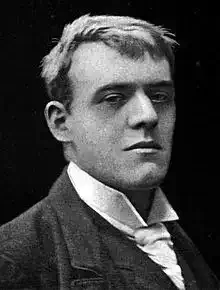
Hilaire Belloc
To A Rhinoceros
To A Rhinoceros
Rhinoceros, your hide looks all undone,
You do not take my fancy in the least:
You have a horn where other brutes have none:
Rhinoceros, you are an ugly beast.
Rhinoceros, your hide looks all undone,
You do not take my fancy in the least:
You have a horn where other brutes have none:
Rhinoceros, you are an ugly beast.
326
Hilaire Belloc
The Whale
The Whale
The Whale that wanders round the Pole
Is not a table fish.
You cannot bake or boil him whole
Nor serve him in a dish;
But you may cut his blubber up
And melt it down for oil.
And so replace the colza bean
(A product of the soil).
These facts should all be noted down
And ruminated on,
By every boy in Oxford town
Who wants to be a Don.
The Whale that wanders round the Pole
Is not a table fish.
You cannot bake or boil him whole
Nor serve him in a dish;
But you may cut his blubber up
And melt it down for oil.
And so replace the colza bean
(A product of the soil).
These facts should all be noted down
And ruminated on,
By every boy in Oxford town
Who wants to be a Don.
337
Hilaire Belloc
The Yak
The Yak
As a friend to the children commend me the Yak.
You will find it exactly the thing:
It will carry and fetch, you can ride on its back,
Or lead it about with a string.
The Tartar who dwells on the plains of Thibet
(A desolate region of snow)
Has for centuries made it a nursery pet.
And surely the Tartar should know!
Then tell your papa where the Yak can be got,
And if he is awfully rich
He will buy you the creature - or else he will not.
(I cannot be positive which.)
As a friend to the children commend me the Yak.
You will find it exactly the thing:
It will carry and fetch, you can ride on its back,
Or lead it about with a string.
The Tartar who dwells on the plains of Thibet
(A desolate region of snow)
Has for centuries made it a nursery pet.
And surely the Tartar should know!
Then tell your papa where the Yak can be got,
And if he is awfully rich
He will buy you the creature - or else he will not.
(I cannot be positive which.)
331
Hilaire Belloc
The Tiger
The Tiger
The tiger, on the other hand,
Is kittenish and mild,
And makes a pretty playfellow
For any little child.
And mothers of large families
(Who claim to common sense)
Will find a tiger well repays
The trouble and expense.
The tiger, on the other hand,
Is kittenish and mild,
And makes a pretty playfellow
For any little child.
And mothers of large families
(Who claim to common sense)
Will find a tiger well repays
The trouble and expense.
350
Hilaire Belloc
The Scorpion
The Scorpion
The Scorpion is as black as soot,
He dearly loves to bite;
He is a most unpleasant brute
To find in bed at night.
The Scorpion is as black as soot,
He dearly loves to bite;
He is a most unpleasant brute
To find in bed at night.
319
Hilaire Belloc
The Lion
The Lion
The Lion, the Lion, he dwells in the Waste,
He has a big head and a very small waist;
But his shoulders are stark, and his jaws they are grim,
And a good little child will not play with him.
The Lion, the Lion, he dwells in the Waste,
He has a big head and a very small waist;
But his shoulders are stark, and his jaws they are grim,
And a good little child will not play with him.
353
Hilaire Belloc
The Gnu
The Gnu
G stands for Gnu, whose weapon of defence
Are long, sharp, curling horns, and common sense.
To these he adds a name so short and strong,
That even hardy Boers pronounce it wrong.
How often on a bright autumnal day
The pious people of Pretoria say,
'Come, let us hunt the______' Then no more is heard
but sounds of strong men struggling with a word;
Meanwhile the distant Gnu with grateful eyes
Oberserves his opportunity and flies.
G stands for Gnu, whose weapon of defence
Are long, sharp, curling horns, and common sense.
To these he adds a name so short and strong,
That even hardy Boers pronounce it wrong.
How often on a bright autumnal day
The pious people of Pretoria say,
'Come, let us hunt the______' Then no more is heard
but sounds of strong men struggling with a word;
Meanwhile the distant Gnu with grateful eyes
Oberserves his opportunity and flies.
323