

Poems
Animals and Nature
Poems in this topic
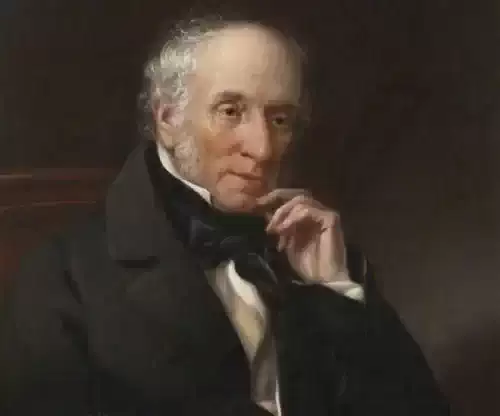
William Wordsworth
Ruth
Ruth
When Ruth was left half desolate,
Her Father took another Mate;
And Ruth, not seven years old,
A slighted child, at her own will
Went wandering over dale and hill,
In thoughtless freedom, bold.
And she had made a pipe of straw,
And music from that pipe could draw
Like sounds of winds and floods;
Had built a bower upon the green,
As if she from her birth had been
An infant of the woods.
Beneath her father's roof, alone
She seemed to live; her thoughts her own;
Herself her own delight;
Pleased with herself, nor sad, nor gay;
And, passing thus the live-long day,
She grew to woman's height.
There came a Youth from Georgia's shore--
A military casque he wore,
With splendid feathers drest;
He brought them from the Cherokees;
The feathers nodded in the breeze,
And made a gallant crest.
From Indian blood you deem him sprung:
But no! he spake the English tongue,
And bore a soldier's name;
And, when America was free
From battle and from jeopardy,
He 'cross the ocean came.
With hues of genius on his cheek
In finest tones the Youth could speak:
--While he was yet a boy,
The moon, the glory of the sun,
And streams that murmur as they run,
Had been his dearest joy.
He was a lovely Youth! I guess
The panther in the wilderness
Was not so fair as he;
And, when he chose to sport and play,
No dolphin ever was so gay
Upon the tropic sea.
Among the Indians he had fought,
And with him many tales he brought
Of pleasure and of fear;
Such tales as told to any maid
By such a Youth, in the green shade,
Were perilous to hear.
He told of girls--a happy rout!
Who quit their fold with dance and shout,
Their pleasant Indian town,
To gather strawberries all day long;
Returning with a choral song
When daylight is gone down.
He spake of plants that hourly change
Their blossoms, through a boundless range
Of intermingling hues;
With budding, fading, faded flowers
They stand the wonder of the bowers
From morn to evening dews.
He told of the magnolia, spread
High as a cloud, high over head!
The cypress and her spire;
--Of flowers that with one scarlet gleam
Cover a hundred leagues, and seem
To set the hills on fire.
The Youth of green savannahs spake,
And many an endless, endless lake,
With all its fairy crowds
Of islands, that together lie
As quietly as spots of sky
Among the evening clouds.
"How pleasant," then he said, "it were
A fisher or a hunter there,
In sunshine or in shade
To wander with an easy mind;
And build a household fire, and find
A home in every glade!
"What days and what bright years! Ah me!
Our life were life indeed, with thee
So passed in quiet bliss,
And all the while," said he, "to know
That we were in a world of woe,
On such an earth as this!"
And then he sometimes interwove
Fond thoughts about a father's love
"For there," said he, "are spun
Around the heart such tender ties,
That our own children to our eyes
Are dearer than the sun.
"Sweet Ruth! and could you go with me
My helpmate in the woods to be,
Our shed at night to rear;
Or run, my own adopted bride,
A sylvan huntress at my side,
And drive the flying deer!
"Beloved Ruth!"--No more he said,
The wakeful Ruth at midnight shed
A solitary tear:
She thought again--and did agree
With him to sail across the sea,
And drive the flying deer.
"And now, as fitting is and right,
We in the church our faith will plight,
A husband and a wife."
Even so they did; and I may say
That to sweet Ruth that happy day
Was more than human life.
Through dream and vision did she sink,
Delighted all the while to think
That on those lonesome floods,
And green savannahs, she should share
His board with lawful joy, and bear
His name in the wild woods.
But, as you have before been told,
This Stripling, sportive, gay, and bold,
And, with his dancing crest,
So beautiful, through savage lands
Had roamed about, with vagrant bands
Of Indians in the West.
The wind, the tempest roaring high,
The tumult of a tropic sky,
Might well be dangerous food
For him, a Youth to whom was given
So much of earth--so much of heaven,
And such impetuous blood.
Whatever in those climes he found
Irregular in sight or sound
Did to his mind impart
A kindred impulse, seemed allied
To his own powers, and justified
The workings of his heart.
Nor less, to feed voluptuous thought,
The beauteous forms of nature wrought,
Fair trees and gorgeous flowers;
The breezes their own languor lent;
The stars had feelings, which they sent
Into those favoured bowers.
Yet, in his worst pursuits, I ween
That sometimes there did intervene
Pure hopes of high intent:
For passions linked to forms so fair
And stately, needs must have their share
Of noble sentiment.
But ill he lived, much evil saw,
With men to whom no better law
Nor better life was known;
Deliberately, and undeceived,
Those wild men's vices he received,
And gave them back his own.
His genius and his moral frame
Were thus impaired, and he became
The slave of low desires:
A Man who without self-control
Would seek what the degraded soul
Unworthily admires.
And yet he with no feigned delight
Had wooed the Maiden, day and night
Had loved her, night and morn:
What could he less than love a Maid
Whose heart with so much nature played?
So kind and so forlorn!
Sometimes, most earnestly, he said,
"O Ruth! I have been worse than dead;
False thoughts, thoughts bold and vain,
Encompassed me on every side
When I, in confidence and pride,
Had crossed the Atlantic main.
"Before me shone a glorious world--
Fresh as a banner bright, unfurled
To music suddenly:
I looked upon those hills and plains,
And seemed as if let loose from chains,
To live at liberty.
"No more of this; for now, by thee
Dear Ruth! more happily set free
With nobler zeal I burn;
My soul from darkness is released,
Like the whole sky when to the east
The morning doth return."
Full soon that better mind was gone;
No hope, no wish remained, not one,--
They stirred him now no more;
New objects did new pleasure give,
And once again he wished to live
As lawless as before.
Meanwhile, as thus with him it fared,
They for the voyage were prepared,
And went to the sea-shore,
But, when they thither came the Youth
Deserted his poor Bride, and Ruth
Could never find him more.
God help thee, Ruth!--Such pains she had,
That she in half a year was mad,
And in a prison housed;
And there, with many a doleful song
Made of wild words, her cup of wrong
She fearfully caroused.
Yet sometimes milder hours she knew,
Nor wanted sun, nor rain, nor dew,
Nor pastimes of the May;
--They all were with her in her cell;
And a clear brook with cheerful knell
Did o'er the pebbles play.
When Ruth three seasons thus had lain,
There came a respite to her pain;
She from her prison fled;
But of the Vagrant none took thought;
And where it liked her best she sought
Her shelter and her bread.
Among the fields she breathed again:
The master-current of her brain
Ran permanent and free;
And, coming to the Banks of Tone,
There did she rest; and dwell alone
Under the greenwood tree.
The engines of her pain, the tools
That shaped her sorrow, rocks and pools,
And airs that gently stir
The vernal leaves--she loved them still;
Nor ever taxed them with the ill
Which had been done to her.
A Barn her 'winter' bed supplies;
But, till the warmth of summer skies
And summer days is gone,
(And all do in this tale agree)
She sleeps beneath the greenwood tree,
And other home hath none.
An innocent life, yet far astray!
And Ruth will, long before her day,
Be broken down and old:
Sore aches she needs must have! but less
Of mind, than body's wretchedness,
From damp, and rain, and cold.
If she is prest by want of food,
She from her dwelling in the wood
Repairs to a road-side;
And there she begs at one steep place
Where up and down with easy pace
The horsemen-travellers ride.
That oaten pipe of hers is mute,
Or thrown away; but with a flute
Her loneliness she cheers:
This flute, made of a hemlock stalk,
At evening in his homeward walk
The Quantock woodman hears.
I, too, have passed her on the hills
Setting her little water-mills
By spouts and fountains wild--
Such small machinery as she turned
Ere she had wept, ere she had mourned,
A young and happy Child!
Farewell! and when thy days are told,
Ill-fated Ruth, in hallowed mould
Thy corpse shall buried be,
For thee a funeral bell shall ring,
And all the congregation sing
A Christian psalm for thee.
When Ruth was left half desolate,
Her Father took another Mate;
And Ruth, not seven years old,
A slighted child, at her own will
Went wandering over dale and hill,
In thoughtless freedom, bold.
And she had made a pipe of straw,
And music from that pipe could draw
Like sounds of winds and floods;
Had built a bower upon the green,
As if she from her birth had been
An infant of the woods.
Beneath her father's roof, alone
She seemed to live; her thoughts her own;
Herself her own delight;
Pleased with herself, nor sad, nor gay;
And, passing thus the live-long day,
She grew to woman's height.
There came a Youth from Georgia's shore--
A military casque he wore,
With splendid feathers drest;
He brought them from the Cherokees;
The feathers nodded in the breeze,
And made a gallant crest.
From Indian blood you deem him sprung:
But no! he spake the English tongue,
And bore a soldier's name;
And, when America was free
From battle and from jeopardy,
He 'cross the ocean came.
With hues of genius on his cheek
In finest tones the Youth could speak:
--While he was yet a boy,
The moon, the glory of the sun,
And streams that murmur as they run,
Had been his dearest joy.
He was a lovely Youth! I guess
The panther in the wilderness
Was not so fair as he;
And, when he chose to sport and play,
No dolphin ever was so gay
Upon the tropic sea.
Among the Indians he had fought,
And with him many tales he brought
Of pleasure and of fear;
Such tales as told to any maid
By such a Youth, in the green shade,
Were perilous to hear.
He told of girls--a happy rout!
Who quit their fold with dance and shout,
Their pleasant Indian town,
To gather strawberries all day long;
Returning with a choral song
When daylight is gone down.
He spake of plants that hourly change
Their blossoms, through a boundless range
Of intermingling hues;
With budding, fading, faded flowers
They stand the wonder of the bowers
From morn to evening dews.
He told of the magnolia, spread
High as a cloud, high over head!
The cypress and her spire;
--Of flowers that with one scarlet gleam
Cover a hundred leagues, and seem
To set the hills on fire.
The Youth of green savannahs spake,
And many an endless, endless lake,
With all its fairy crowds
Of islands, that together lie
As quietly as spots of sky
Among the evening clouds.
"How pleasant," then he said, "it were
A fisher or a hunter there,
In sunshine or in shade
To wander with an easy mind;
And build a household fire, and find
A home in every glade!
"What days and what bright years! Ah me!
Our life were life indeed, with thee
So passed in quiet bliss,
And all the while," said he, "to know
That we were in a world of woe,
On such an earth as this!"
And then he sometimes interwove
Fond thoughts about a father's love
"For there," said he, "are spun
Around the heart such tender ties,
That our own children to our eyes
Are dearer than the sun.
"Sweet Ruth! and could you go with me
My helpmate in the woods to be,
Our shed at night to rear;
Or run, my own adopted bride,
A sylvan huntress at my side,
And drive the flying deer!
"Beloved Ruth!"--No more he said,
The wakeful Ruth at midnight shed
A solitary tear:
She thought again--and did agree
With him to sail across the sea,
And drive the flying deer.
"And now, as fitting is and right,
We in the church our faith will plight,
A husband and a wife."
Even so they did; and I may say
That to sweet Ruth that happy day
Was more than human life.
Through dream and vision did she sink,
Delighted all the while to think
That on those lonesome floods,
And green savannahs, she should share
His board with lawful joy, and bear
His name in the wild woods.
But, as you have before been told,
This Stripling, sportive, gay, and bold,
And, with his dancing crest,
So beautiful, through savage lands
Had roamed about, with vagrant bands
Of Indians in the West.
The wind, the tempest roaring high,
The tumult of a tropic sky,
Might well be dangerous food
For him, a Youth to whom was given
So much of earth--so much of heaven,
And such impetuous blood.
Whatever in those climes he found
Irregular in sight or sound
Did to his mind impart
A kindred impulse, seemed allied
To his own powers, and justified
The workings of his heart.
Nor less, to feed voluptuous thought,
The beauteous forms of nature wrought,
Fair trees and gorgeous flowers;
The breezes their own languor lent;
The stars had feelings, which they sent
Into those favoured bowers.
Yet, in his worst pursuits, I ween
That sometimes there did intervene
Pure hopes of high intent:
For passions linked to forms so fair
And stately, needs must have their share
Of noble sentiment.
But ill he lived, much evil saw,
With men to whom no better law
Nor better life was known;
Deliberately, and undeceived,
Those wild men's vices he received,
And gave them back his own.
His genius and his moral frame
Were thus impaired, and he became
The slave of low desires:
A Man who without self-control
Would seek what the degraded soul
Unworthily admires.
And yet he with no feigned delight
Had wooed the Maiden, day and night
Had loved her, night and morn:
What could he less than love a Maid
Whose heart with so much nature played?
So kind and so forlorn!
Sometimes, most earnestly, he said,
"O Ruth! I have been worse than dead;
False thoughts, thoughts bold and vain,
Encompassed me on every side
When I, in confidence and pride,
Had crossed the Atlantic main.
"Before me shone a glorious world--
Fresh as a banner bright, unfurled
To music suddenly:
I looked upon those hills and plains,
And seemed as if let loose from chains,
To live at liberty.
"No more of this; for now, by thee
Dear Ruth! more happily set free
With nobler zeal I burn;
My soul from darkness is released,
Like the whole sky when to the east
The morning doth return."
Full soon that better mind was gone;
No hope, no wish remained, not one,--
They stirred him now no more;
New objects did new pleasure give,
And once again he wished to live
As lawless as before.
Meanwhile, as thus with him it fared,
They for the voyage were prepared,
And went to the sea-shore,
But, when they thither came the Youth
Deserted his poor Bride, and Ruth
Could never find him more.
God help thee, Ruth!--Such pains she had,
That she in half a year was mad,
And in a prison housed;
And there, with many a doleful song
Made of wild words, her cup of wrong
She fearfully caroused.
Yet sometimes milder hours she knew,
Nor wanted sun, nor rain, nor dew,
Nor pastimes of the May;
--They all were with her in her cell;
And a clear brook with cheerful knell
Did o'er the pebbles play.
When Ruth three seasons thus had lain,
There came a respite to her pain;
She from her prison fled;
But of the Vagrant none took thought;
And where it liked her best she sought
Her shelter and her bread.
Among the fields she breathed again:
The master-current of her brain
Ran permanent and free;
And, coming to the Banks of Tone,
There did she rest; and dwell alone
Under the greenwood tree.
The engines of her pain, the tools
That shaped her sorrow, rocks and pools,
And airs that gently stir
The vernal leaves--she loved them still;
Nor ever taxed them with the ill
Which had been done to her.
A Barn her 'winter' bed supplies;
But, till the warmth of summer skies
And summer days is gone,
(And all do in this tale agree)
She sleeps beneath the greenwood tree,
And other home hath none.
An innocent life, yet far astray!
And Ruth will, long before her day,
Be broken down and old:
Sore aches she needs must have! but less
Of mind, than body's wretchedness,
From damp, and rain, and cold.
If she is prest by want of food,
She from her dwelling in the wood
Repairs to a road-side;
And there she begs at one steep place
Where up and down with easy pace
The horsemen-travellers ride.
That oaten pipe of hers is mute,
Or thrown away; but with a flute
Her loneliness she cheers:
This flute, made of a hemlock stalk,
At evening in his homeward walk
The Quantock woodman hears.
I, too, have passed her on the hills
Setting her little water-mills
By spouts and fountains wild--
Such small machinery as she turned
Ere she had wept, ere she had mourned,
A young and happy Child!
Farewell! and when thy days are told,
Ill-fated Ruth, in hallowed mould
Thy corpse shall buried be,
For thee a funeral bell shall ring,
And all the congregation sing
A Christian psalm for thee.
204
William Wordsworth
Resolution and Independence
Resolution and Independence
I
There was a roaring in the wind all night;
The rain came heavily and fell in floods;
But now the sun is rising calm and bright;
The birds are singing in the distant woods;
Over his own sweet voice the Stock-dove broods;
The Jay makes answer as the Magpie chatters;
And all the air is filled with pleasant noise of waters.
II
All things that love the sun are out of doors;
The sky rejoices in the morning's birth;
The grass is bright with rain-drops;--on the moors
The hare is running races in her mirth;
And with her feet she from the plashy earth
Raises a mist, that, glittering in the sun,
Runs with her all the way, wherever she doth run.
III
I was a Traveller then upon the moor,
I saw the hare that raced about with joy;
I heard the woods and distant waters roar;
Or heard them not, as happy as a boy:
The pleasant season did my heart employ:
My old remembrances went from me wholly;
And all the ways of men, so vain and melancholy.
IV
But, as it sometimes chanceth, from the might
Of joy in minds that can no further go,
As high as we have mounted in delight
In our dejection do we sink as low;
To me that morning did it happen so;
And fears and fancies thick upon me came;
Dim sadness--and blind thoughts, I knew not, nor could name.
V
I heard the sky-lark warbling in the sky;
And I bethought me of the playful hare:
Even such a happy Child of earth am I;
Even as these blissful creatures do I fare;
Far from the world I walk, and from all care;
But there may come another day to me--
Solitude, pain of heart, distress, and poverty.
VI
My whole life I have lived in pleasant thought,
As if life's business were a summer mood;
As if all needful things would come unsought
To genial faith, still rich in genial good;
But how can He expect that others should
Build for him, sow for him, and at his call
Love him, who for himself will take no heed at all?
VII
I thought of Chatterton, the marvellous Boy,
The sleepless Soul that perished in his pride;
Of Him who walked in glory and in joy
Following his plough, along the mountain-side:
By our own spirits are we deified:
We Poets in our youth begin in gladness;
But thereof come in the end despondency and madness.
VIII
Now, whether it were by peculiar grace,
A leading from above, a something given,
Yet it befell, that, in this lonely place,
When I with these untoward thoughts had striven,
Beside a pool bare to the eye of heaven
I saw a Man before me unawares:
The oldest man he seemed that ever wore grey hairs.
IX
As a huge stone is sometimes seen to lie
Couched on the bald top of an eminence;
Wonder to all who do the same espy,
By what means it could thither come, and whence;
So that it seems a thing endued with sense:
Like a sea-beast crawled forth, that on a shelf
Of rock or sand reposeth, there to sun itself;
X
Such seemed this Man, not all alive nor dead,
Nor all asleep--in his extreme old age:
His body was bent double, feet and head
Coming together in life's pilgrimage;
As if some dire constraint of pain, or rage
Of sickness felt by him in times long past,
A more than human weight upon his frame had cast.
XI
Himself he propped, limbs, body, and pale face,
Upon a long grey staff of shaven wood:
And, still as I drew near with gentle pace,
Upon the margin of that moorish flood
Motionless as a cloud the old Man stood,
That heareth not the loud winds when they call
And moveth all together, if it move at all.
XII
At length, himself unsettling, he the pond
Stirred with his staff, and fixedly did look
Upon the muddy water, which he conned,
As if he had been reading in a book:
And now a stranger's privilege I took;
And, drawing to his side, to him did say,
"This morning gives us promise of a glorious day."
XIII
A gentle answer did the old Man make,
In courteous speech which forth he slowly drew:
And him with further words I thus bespake,
"What occupation do you there pursue?
This is a lonesome place for one like you."
Ere he replied, a flash of mild surprise
Broke from the sable orbs of his yet-vivid eyes,
XIV
His words came feebly, from a feeble chest,
But each in solemn order followed each,
With something of a lofty utterance drest--
Choice word and measured phrase, above the reach
Of ordinary men; a stately speech;
Such as grave Livers do in Scotland use,
Religious men, who give to God and man their dues.
XV
He told, that to these waters he had come
To gather leeches, being old and poor:
Employment hazardous and wearisome!
And he had many hardships to endure:
From pond to pond he roamed, from moor to moor;
Housing, with God's good help, by choice or chance,
And in this way he gained an honest maintenance.
XVI
The old Man still stood talking by my side;
But now his voice to me was like a stream
Scarce heard; nor word from word could I divide;
And the whole body of the Man did seem
Like one whom I had met with in a dream;
Or like a man from some far region sent,
To give me human strength, by apt admonishment.
XVII
My former thoughts returned: the fear that kills;
And hope that is unwilling to be fed;
Cold, pain, and labour, and all fleshly ills;
And mighty Poets in their misery dead.
--Perplexed, and longing to be comforted,
My question eagerly did I renew,
"How is it that you live, and what is it you do?"
XVIII
He with a smile did then his words repeat;
And said, that, gathering leeches, far and wide
He travelled; stirring thus about his feet
The waters of the pools where they abide.
"Once I could meet with them on every side;
But they have dwindled long by slow decay;
Yet still I persevere, and find them where I may."
XIX
While he was talking thus, the lonely place,
The old Man's shape, and speech--all troubled me:
In my mind's eye I seemed to see him pace
About the weary moors continually,
Wandering about alone and silently.
While I these thoughts within myself pursued,
He, having made a pause, the same discourse renewed.
XX
And soon with this he other matter blended,
Cheerfully uttered, with demeanour kind,
But stately in the main; and when he ended,
I could have laughed myself to scorn to find
In that decrepit Man so firm a mind.
"God," said I, "be my help and stay secure;
I'll think of the Leech-gatherer on the lonely moor!"
I
There was a roaring in the wind all night;
The rain came heavily and fell in floods;
But now the sun is rising calm and bright;
The birds are singing in the distant woods;
Over his own sweet voice the Stock-dove broods;
The Jay makes answer as the Magpie chatters;
And all the air is filled with pleasant noise of waters.
II
All things that love the sun are out of doors;
The sky rejoices in the morning's birth;
The grass is bright with rain-drops;--on the moors
The hare is running races in her mirth;
And with her feet she from the plashy earth
Raises a mist, that, glittering in the sun,
Runs with her all the way, wherever she doth run.
III
I was a Traveller then upon the moor,
I saw the hare that raced about with joy;
I heard the woods and distant waters roar;
Or heard them not, as happy as a boy:
The pleasant season did my heart employ:
My old remembrances went from me wholly;
And all the ways of men, so vain and melancholy.
IV
But, as it sometimes chanceth, from the might
Of joy in minds that can no further go,
As high as we have mounted in delight
In our dejection do we sink as low;
To me that morning did it happen so;
And fears and fancies thick upon me came;
Dim sadness--and blind thoughts, I knew not, nor could name.
V
I heard the sky-lark warbling in the sky;
And I bethought me of the playful hare:
Even such a happy Child of earth am I;
Even as these blissful creatures do I fare;
Far from the world I walk, and from all care;
But there may come another day to me--
Solitude, pain of heart, distress, and poverty.
VI
My whole life I have lived in pleasant thought,
As if life's business were a summer mood;
As if all needful things would come unsought
To genial faith, still rich in genial good;
But how can He expect that others should
Build for him, sow for him, and at his call
Love him, who for himself will take no heed at all?
VII
I thought of Chatterton, the marvellous Boy,
The sleepless Soul that perished in his pride;
Of Him who walked in glory and in joy
Following his plough, along the mountain-side:
By our own spirits are we deified:
We Poets in our youth begin in gladness;
But thereof come in the end despondency and madness.
VIII
Now, whether it were by peculiar grace,
A leading from above, a something given,
Yet it befell, that, in this lonely place,
When I with these untoward thoughts had striven,
Beside a pool bare to the eye of heaven
I saw a Man before me unawares:
The oldest man he seemed that ever wore grey hairs.
IX
As a huge stone is sometimes seen to lie
Couched on the bald top of an eminence;
Wonder to all who do the same espy,
By what means it could thither come, and whence;
So that it seems a thing endued with sense:
Like a sea-beast crawled forth, that on a shelf
Of rock or sand reposeth, there to sun itself;
X
Such seemed this Man, not all alive nor dead,
Nor all asleep--in his extreme old age:
His body was bent double, feet and head
Coming together in life's pilgrimage;
As if some dire constraint of pain, or rage
Of sickness felt by him in times long past,
A more than human weight upon his frame had cast.
XI
Himself he propped, limbs, body, and pale face,
Upon a long grey staff of shaven wood:
And, still as I drew near with gentle pace,
Upon the margin of that moorish flood
Motionless as a cloud the old Man stood,
That heareth not the loud winds when they call
And moveth all together, if it move at all.
XII
At length, himself unsettling, he the pond
Stirred with his staff, and fixedly did look
Upon the muddy water, which he conned,
As if he had been reading in a book:
And now a stranger's privilege I took;
And, drawing to his side, to him did say,
"This morning gives us promise of a glorious day."
XIII
A gentle answer did the old Man make,
In courteous speech which forth he slowly drew:
And him with further words I thus bespake,
"What occupation do you there pursue?
This is a lonesome place for one like you."
Ere he replied, a flash of mild surprise
Broke from the sable orbs of his yet-vivid eyes,
XIV
His words came feebly, from a feeble chest,
But each in solemn order followed each,
With something of a lofty utterance drest--
Choice word and measured phrase, above the reach
Of ordinary men; a stately speech;
Such as grave Livers do in Scotland use,
Religious men, who give to God and man their dues.
XV
He told, that to these waters he had come
To gather leeches, being old and poor:
Employment hazardous and wearisome!
And he had many hardships to endure:
From pond to pond he roamed, from moor to moor;
Housing, with God's good help, by choice or chance,
And in this way he gained an honest maintenance.
XVI
The old Man still stood talking by my side;
But now his voice to me was like a stream
Scarce heard; nor word from word could I divide;
And the whole body of the Man did seem
Like one whom I had met with in a dream;
Or like a man from some far region sent,
To give me human strength, by apt admonishment.
XVII
My former thoughts returned: the fear that kills;
And hope that is unwilling to be fed;
Cold, pain, and labour, and all fleshly ills;
And mighty Poets in their misery dead.
--Perplexed, and longing to be comforted,
My question eagerly did I renew,
"How is it that you live, and what is it you do?"
XVIII
He with a smile did then his words repeat;
And said, that, gathering leeches, far and wide
He travelled; stirring thus about his feet
The waters of the pools where they abide.
"Once I could meet with them on every side;
But they have dwindled long by slow decay;
Yet still I persevere, and find them where I may."
XIX
While he was talking thus, the lonely place,
The old Man's shape, and speech--all troubled me:
In my mind's eye I seemed to see him pace
About the weary moors continually,
Wandering about alone and silently.
While I these thoughts within myself pursued,
He, having made a pause, the same discourse renewed.
XX
And soon with this he other matter blended,
Cheerfully uttered, with demeanour kind,
But stately in the main; and when he ended,
I could have laughed myself to scorn to find
In that decrepit Man so firm a mind.
"God," said I, "be my help and stay secure;
I'll think of the Leech-gatherer on the lonely moor!"
247
William Wordsworth
Old Cumberland Beggar, The
Old Cumberland Beggar, The
I saw an aged Beggar in my walk;
And he was seated, by the highway side,
On a low structure of rude masonry
Built at the foot of a huge hill, that they
Who lead their horses down the steep rough road
May thence remount at ease. The aged Man
Had placed his staff across the broad smooth stone
That overlays the pile; and, from a bag
All white with flour, the dole of village dames,
He drew his scraps and fragments, one by one;
And scanned them with a fixed and serious look
Of idle computation. In the sun,
Upon the second step of that small pile,
Surrounded by those wild unpeopled hills,
He sat, and ate his food in solitude:
And ever, scattered from his palsied hand,
That, still attempting to prevent the waste,
Was baffled still, the crumbs in little showers
Fell on the ground; and the small mountain birds,
Not venturing yet to peck their destined meal,
Approached within the length of half his staff.
Him from my childhood have I known; and then
He was so old, he seems not older now;
He travels on, a solitary Man,
So helpless in appearance, that for him
The sauntering Horseman throws not with a slack
And careless hand his alms upon the ground,
But stops,--that he may safely lodge the coin
Within the old Man's hat; nor quits him so,
But still, when he has given his horse the rein,
Watches the aged Beggar with a look
Sidelong, and half-reverted. She who tends
The toll-gate, when in summer at her door
She turns her wheel, if on the road she sees
The aged beggar coming, quits her work,
And lifts the latch for him that he may pass.
The post-boy, when his rattling wheels o'ertake
The aged Beggar in the woody lane,
Shouts to him from behind; and if, thus warned,
The old man does not change his course, the boy
Turns with less noisy wheels to the roadside,
And passes gently by, without a curse
Upon his lips, or anger at his heart.
He travels on, a solitary Man;
His age has no companion. On the ground
His eyes are turned, and, as he moves along
'They' move along the ground; and, evermore,
Instead of common and habitual sight
Of fields with rural works, of hill and dale,
And the blue sky, one little span of earth
Is all his prospect. Thus, from day to day,
Bow-bent, his eyes for ever on the ground,
He plies his weary journey; seeing still,
And seldom knowing that he sees, some straw,
Some scattered leaf, or marks which, in one track,
The nails of cart or chariot-wheel have left
Impressed on the white road,--in the same line,
At distance still the same. Poor Traveller!
His staff trails with him; scarcely do his feet
Disturb the summer dust; he is so still
In look and motion, that the cottage curs,
Ere he has passed the door, will turn away,
Weary of barking at him. Boys and girls,
The vacant and the busy, maids and youths,
And urchins newly breeched--all pass him by:
Him even the slow-paced waggon leaves behind.
But deem not this Man useless.--Statesmen! ye
Who are so restless in your wisdom, ye
Who have a broom still ready in your hands
To rid the world of nuisances; ye proud,
Heart-swoln, while in your pride ye contemplate
Your talents, power, or wisdom, deem him not
A burthen of the earth! 'Tis Nature's law
That none, the meanest of created things,
Or forms created the most vile and brute,
The dullest or most noxious, should exist
Divorced from good--a spirit and pulse of good,
A life and soul, to every mode of being
Inseparably linked. Then be assured
That least of all can aught--that ever owned
The heaven-regarding eye and front sublime
Which man is born to--sink, howe'er depressed,
So low as to be scorned without a sin;
Without offence to God cast out of view;
Like the dry remnant of a garden-flower
Whose seeds are shed, or as an implement
Worn out and worthless. While from door to door,
This old Man creeps, the villagers in him
Behold a record which together binds
Past deeds and offices of charity,
Else unremembered, and so keeps alive
The kindly mood in hearts which lapse of years,
And that half-wisdom half-experience gives,
Make slow to feel, and by sure steps resign
To selfishness and cold oblivious cares.
Among the farms and solitary huts,
Hamlets and thinly-scattered villages,
Where'er the aged Beggar takes his rounds,
The mild necessity of use compels
To acts of love; and habit does the work
Of reason; yet prepares that after-joy
Which reason cherishes. And thus the soul,
By that sweet taste of pleasure unpursued,
Doth find herself insensibly disposed
To virtue and true goodness.
Some there are,
By their good works exalted, lofty minds
And meditative, authors of delight
And happiness, which to the end of time
Will live, and spread, and kindle: even such minds
In childhood, from this solitary Being,
Or from like wanderer, haply have received
(A thing more precious far than all that books
Or the solicitudes of love can do!)
That first mild touch of sympathy and thought,
In which they found their kindred with a world
Where want and sorrow were. The easy man
Who sits at his own door,--and, like the pear
That overhangs his head from the green wall,
Feeds in the sunshine; the robust and young,
The prosperous and unthinking, they who live
Sheltered, and flourish in a little grove
Of their own kindred;--all behold in him
A silent monitor, which on their minds
Must needs impress a transitory thought
Of self-congratulation, to the heart
Of each recalling his peculiar boons,
His charters and exemptions; and, perchance,
Though he to no one give the fortitude
And circumspection needful to preserve
His present blessings, and to husband up
The respite of the season, he, at least,
And 'tis no vulgar service, makes them felt.
Yet further.----Many, I believe, there are
Who live a life of virtuous decency,
Men who can hear the Decalogue and feel
No self-reproach; who of the moral law
Established in the land where they abide
Are strict observers; and not negligent
In acts of love to those with whom they dwell,
Their kindred, and the children of their blood.
Praise be to such, and to their slumbers peace!
--But of the poor man ask, the abject poor;
Go, and demand of him, if there be here
In this cold abstinence from evil deeds,
And these inevitable charities,
Wherewith to satisfy the human soul?
No--man is dear to man; the poorest poor
Long for some moments in a weary life
When they can know and feel that they have been,
Themselves, the fathers and the dealers-out
Of some small blessings; have been kind to such
As needed kindness, for this single cause,
That we have all of us one human heart.
--Such pleasure is to one kind Being known,
My neighbour, when with punctual care, each week
Duly as Friday comes, though pressed herself
By her own wants, she from her store of meal
Takes one unsparing handful for the scrip
Of this old Mendicant, and, from her door
Returning with exhilarated heart,
Sits by her fire, and builds her hope in heaven.
Then let him pass, a blessing on his head!
And while in that vast solitude to which
The tide of things has borne him, he appears
To breathe and live but for himself alone,
Unblamed, uninjured, let him bear about
The good which the benignant law of Heaven
Has hung around him: and, while life is his,
Still let him prompt the unlettered villagers
To tender offices and pensive thoughts.
--Then let him pass, a blessing on his head!
And, long as he can wander, let him breathe
The freshness of the valleys; let his blood
Struggle with frosty air and winter snows;
And let the chartered wind that sweeps the heath
Beat his grey locks against his withered face.
Reverence the hope whose vital anxiousness
Gives the last human interest to his heart.
May never HOUSE, misnamed of INDUSTRY,
Make him a captive!--for that pent-up din,
Those life-consuming sounds that clog the air,
Be his the natural silence of old age!
Let him be free of mountain solitudes;
And have around him, whether heard or not,
The pleasant melody of woodland birds.
Few are his pleasures: if his eyes have now
Been doomed so long to settle upon earth
That not without some effort they behold
The countenance of the horizontal sun,
Rising or setting, let the light at least
Find a free entrance to their languid orbs.
And let him, 'where' and 'when' he will, sit down
Beneath the trees, or on a grassy bank
Of highway side, and with the little birds
Share his chance-gathered meal; and, finally,
As in the eye of Nature he has lived,
So in the eye of Nature let him die!
I saw an aged Beggar in my walk;
And he was seated, by the highway side,
On a low structure of rude masonry
Built at the foot of a huge hill, that they
Who lead their horses down the steep rough road
May thence remount at ease. The aged Man
Had placed his staff across the broad smooth stone
That overlays the pile; and, from a bag
All white with flour, the dole of village dames,
He drew his scraps and fragments, one by one;
And scanned them with a fixed and serious look
Of idle computation. In the sun,
Upon the second step of that small pile,
Surrounded by those wild unpeopled hills,
He sat, and ate his food in solitude:
And ever, scattered from his palsied hand,
That, still attempting to prevent the waste,
Was baffled still, the crumbs in little showers
Fell on the ground; and the small mountain birds,
Not venturing yet to peck their destined meal,
Approached within the length of half his staff.
Him from my childhood have I known; and then
He was so old, he seems not older now;
He travels on, a solitary Man,
So helpless in appearance, that for him
The sauntering Horseman throws not with a slack
And careless hand his alms upon the ground,
But stops,--that he may safely lodge the coin
Within the old Man's hat; nor quits him so,
But still, when he has given his horse the rein,
Watches the aged Beggar with a look
Sidelong, and half-reverted. She who tends
The toll-gate, when in summer at her door
She turns her wheel, if on the road she sees
The aged beggar coming, quits her work,
And lifts the latch for him that he may pass.
The post-boy, when his rattling wheels o'ertake
The aged Beggar in the woody lane,
Shouts to him from behind; and if, thus warned,
The old man does not change his course, the boy
Turns with less noisy wheels to the roadside,
And passes gently by, without a curse
Upon his lips, or anger at his heart.
He travels on, a solitary Man;
His age has no companion. On the ground
His eyes are turned, and, as he moves along
'They' move along the ground; and, evermore,
Instead of common and habitual sight
Of fields with rural works, of hill and dale,
And the blue sky, one little span of earth
Is all his prospect. Thus, from day to day,
Bow-bent, his eyes for ever on the ground,
He plies his weary journey; seeing still,
And seldom knowing that he sees, some straw,
Some scattered leaf, or marks which, in one track,
The nails of cart or chariot-wheel have left
Impressed on the white road,--in the same line,
At distance still the same. Poor Traveller!
His staff trails with him; scarcely do his feet
Disturb the summer dust; he is so still
In look and motion, that the cottage curs,
Ere he has passed the door, will turn away,
Weary of barking at him. Boys and girls,
The vacant and the busy, maids and youths,
And urchins newly breeched--all pass him by:
Him even the slow-paced waggon leaves behind.
But deem not this Man useless.--Statesmen! ye
Who are so restless in your wisdom, ye
Who have a broom still ready in your hands
To rid the world of nuisances; ye proud,
Heart-swoln, while in your pride ye contemplate
Your talents, power, or wisdom, deem him not
A burthen of the earth! 'Tis Nature's law
That none, the meanest of created things,
Or forms created the most vile and brute,
The dullest or most noxious, should exist
Divorced from good--a spirit and pulse of good,
A life and soul, to every mode of being
Inseparably linked. Then be assured
That least of all can aught--that ever owned
The heaven-regarding eye and front sublime
Which man is born to--sink, howe'er depressed,
So low as to be scorned without a sin;
Without offence to God cast out of view;
Like the dry remnant of a garden-flower
Whose seeds are shed, or as an implement
Worn out and worthless. While from door to door,
This old Man creeps, the villagers in him
Behold a record which together binds
Past deeds and offices of charity,
Else unremembered, and so keeps alive
The kindly mood in hearts which lapse of years,
And that half-wisdom half-experience gives,
Make slow to feel, and by sure steps resign
To selfishness and cold oblivious cares.
Among the farms and solitary huts,
Hamlets and thinly-scattered villages,
Where'er the aged Beggar takes his rounds,
The mild necessity of use compels
To acts of love; and habit does the work
Of reason; yet prepares that after-joy
Which reason cherishes. And thus the soul,
By that sweet taste of pleasure unpursued,
Doth find herself insensibly disposed
To virtue and true goodness.
Some there are,
By their good works exalted, lofty minds
And meditative, authors of delight
And happiness, which to the end of time
Will live, and spread, and kindle: even such minds
In childhood, from this solitary Being,
Or from like wanderer, haply have received
(A thing more precious far than all that books
Or the solicitudes of love can do!)
That first mild touch of sympathy and thought,
In which they found their kindred with a world
Where want and sorrow were. The easy man
Who sits at his own door,--and, like the pear
That overhangs his head from the green wall,
Feeds in the sunshine; the robust and young,
The prosperous and unthinking, they who live
Sheltered, and flourish in a little grove
Of their own kindred;--all behold in him
A silent monitor, which on their minds
Must needs impress a transitory thought
Of self-congratulation, to the heart
Of each recalling his peculiar boons,
His charters and exemptions; and, perchance,
Though he to no one give the fortitude
And circumspection needful to preserve
His present blessings, and to husband up
The respite of the season, he, at least,
And 'tis no vulgar service, makes them felt.
Yet further.----Many, I believe, there are
Who live a life of virtuous decency,
Men who can hear the Decalogue and feel
No self-reproach; who of the moral law
Established in the land where they abide
Are strict observers; and not negligent
In acts of love to those with whom they dwell,
Their kindred, and the children of their blood.
Praise be to such, and to their slumbers peace!
--But of the poor man ask, the abject poor;
Go, and demand of him, if there be here
In this cold abstinence from evil deeds,
And these inevitable charities,
Wherewith to satisfy the human soul?
No--man is dear to man; the poorest poor
Long for some moments in a weary life
When they can know and feel that they have been,
Themselves, the fathers and the dealers-out
Of some small blessings; have been kind to such
As needed kindness, for this single cause,
That we have all of us one human heart.
--Such pleasure is to one kind Being known,
My neighbour, when with punctual care, each week
Duly as Friday comes, though pressed herself
By her own wants, she from her store of meal
Takes one unsparing handful for the scrip
Of this old Mendicant, and, from her door
Returning with exhilarated heart,
Sits by her fire, and builds her hope in heaven.
Then let him pass, a blessing on his head!
And while in that vast solitude to which
The tide of things has borne him, he appears
To breathe and live but for himself alone,
Unblamed, uninjured, let him bear about
The good which the benignant law of Heaven
Has hung around him: and, while life is his,
Still let him prompt the unlettered villagers
To tender offices and pensive thoughts.
--Then let him pass, a blessing on his head!
And, long as he can wander, let him breathe
The freshness of the valleys; let his blood
Struggle with frosty air and winter snows;
And let the chartered wind that sweeps the heath
Beat his grey locks against his withered face.
Reverence the hope whose vital anxiousness
Gives the last human interest to his heart.
May never HOUSE, misnamed of INDUSTRY,
Make him a captive!--for that pent-up din,
Those life-consuming sounds that clog the air,
Be his the natural silence of old age!
Let him be free of mountain solitudes;
And have around him, whether heard or not,
The pleasant melody of woodland birds.
Few are his pleasures: if his eyes have now
Been doomed so long to settle upon earth
That not without some effort they behold
The countenance of the horizontal sun,
Rising or setting, let the light at least
Find a free entrance to their languid orbs.
And let him, 'where' and 'when' he will, sit down
Beneath the trees, or on a grassy bank
Of highway side, and with the little birds
Share his chance-gathered meal; and, finally,
As in the eye of Nature he has lived,
So in the eye of Nature let him die!
498
William Wordsworth
Ode, Composed On A May Morning
Ode, Composed On A May Morning
While from the purpling east departs
The star that led the dawn,
Blithe Flora from her couch upstarts,
For May is on the lawn.
A quickening hope, a freshening glee,
Foreran the expected Power,
Whose first-drawn breath, from bush and tree,
Shakes off that pearly shower.
All Nature welcomes Her whose sway
Tempers the year's extremes;
Who scattereth lustres o'er noon-day,
Like morning's dewy gleams;
While mellow warble, sprightly trill,
The tremulous heart excite;
And hums the balmy air to still
The balance of delight.
Time was, blest Power! when youth and maids
At peep of dawn would rise,
And wander forth, in forest glades
Thy birth to solemnize.
Though mute the song---to grace the rite
Untouched the hawthorn bough,
Thy Spirit triumphs o'er the slight;
Man changes, but not Thou!
Thy feathered Lieges bill and wings
In love's disport employ;
Warmed by thy influence, creeping things
Awake to silent joy:
Queen art thou still for each gay plant
Where the slim wild deer roves;
And served in depths where fishes haunt
Their own mysterious groves.
Cloud-piercing peak, and trackless heath,
Instinctive homage pay;
Nor wants the dim-lit cave a wreath
To honor thee, sweet May!
Where cities fanned by thy brisk airs
Behold a smokeless sky,
Their puniest flower-pot-nursling dares
To open a bright eye.
And if, on this thy natal morn,
The pole, from which thy name
Hath not departed, stands forlorn
Of song and dance and game;
Still from the village-green a vow
Aspires to thee addrest,
Wherever peace is on the brow,
Or love within the breast.
Yes! where Love nestles thou canst teach
The soul to love the more;
Hearts also shall thy lessons reach
That never loved before.
Stript is the haughty one of pride,
The bashful freed from fear,
While rising, like the ocean-tide,
In flow the joyous year.
Hush, feeble lyre! weak words refuse
The service to prolong!
To yon exulting thrush the Muse
Entrusts the imperfect song;
His voice shall chant, in accents clear,
Throughout the live-long day,
Till the first silver star appear,
The sovereignty of May.
While from the purpling east departs
The star that led the dawn,
Blithe Flora from her couch upstarts,
For May is on the lawn.
A quickening hope, a freshening glee,
Foreran the expected Power,
Whose first-drawn breath, from bush and tree,
Shakes off that pearly shower.
All Nature welcomes Her whose sway
Tempers the year's extremes;
Who scattereth lustres o'er noon-day,
Like morning's dewy gleams;
While mellow warble, sprightly trill,
The tremulous heart excite;
And hums the balmy air to still
The balance of delight.
Time was, blest Power! when youth and maids
At peep of dawn would rise,
And wander forth, in forest glades
Thy birth to solemnize.
Though mute the song---to grace the rite
Untouched the hawthorn bough,
Thy Spirit triumphs o'er the slight;
Man changes, but not Thou!
Thy feathered Lieges bill and wings
In love's disport employ;
Warmed by thy influence, creeping things
Awake to silent joy:
Queen art thou still for each gay plant
Where the slim wild deer roves;
And served in depths where fishes haunt
Their own mysterious groves.
Cloud-piercing peak, and trackless heath,
Instinctive homage pay;
Nor wants the dim-lit cave a wreath
To honor thee, sweet May!
Where cities fanned by thy brisk airs
Behold a smokeless sky,
Their puniest flower-pot-nursling dares
To open a bright eye.
And if, on this thy natal morn,
The pole, from which thy name
Hath not departed, stands forlorn
Of song and dance and game;
Still from the village-green a vow
Aspires to thee addrest,
Wherever peace is on the brow,
Or love within the breast.
Yes! where Love nestles thou canst teach
The soul to love the more;
Hearts also shall thy lessons reach
That never loved before.
Stript is the haughty one of pride,
The bashful freed from fear,
While rising, like the ocean-tide,
In flow the joyous year.
Hush, feeble lyre! weak words refuse
The service to prolong!
To yon exulting thrush the Muse
Entrusts the imperfect song;
His voice shall chant, in accents clear,
Throughout the live-long day,
Till the first silver star appear,
The sovereignty of May.
167
William Wordsworth
Ode Composed On A May Morning
Ode Composed On A May Morning
WHILE from the purpling east departs
The star that led the dawn,
Blithe Flora from her couch upstarts,
For May is on the lawn.
A quickening hope, a freshening glee,
Foreran the expected Power,
Whose first-drawn breath, from bush and tree,
Shakes off that pearly shower.
All Nature welcomes Her whose sway
Tempers the year's extremes;
Who scattereth lustres o'er noon-day,
Like morning's dewy gleams;
While mellow warble, sprightly trill,
The tremulous heart excite;
And hums the balmy air to still
The balance of delight.
Time was, blest Power! when youth and maids
At peep of dawn would rise,
And wander forth, in forest glades
Thy birth to solemnize.
Though mute the song---to grace the rite
Untouched the hawthorn bough,
Thy Spirit triumphs o'er the slight;
Man changes, but not Thou!
Thy feathered Lieges bill and wings
In love's disport employ;
Warmed by thy influence, creeping things
Awake to silent joy:
Queen art thou still for each gay plant
Where the slim wild deer roves;
And served in depths where fishes haunt
Their own mysterious groves.
Cloud-piercing peak, and trackless heath,
Instinctive homage pay;
Nor wants the dim-lit cave a wreath
To honor thee, sweet May!
Where cities fanned by thy brisk airs
Behold a smokeless sky,
Their puniest flower-pot-nursling dares
To open a bright eye.
And if, on this thy natal morn,
The pole, from which thy name
Hath not departed, stands forlorn
Of song and dance and game;
Still from the village-green a vow
Aspires to thee addrest,
Wherever peace is on the brow,
Or love within the breast.
Yes! where Love nestles thou canst teach
The soul to love the more;
Hearts also shall thy lessons reach
That never loved before.
Stript is the haughty one of pride,
The bashful freed from fear,
While rising, like the ocean-tide,
In flow the joyous year.
Hush, feeble lyre! weak words refuse
The service to prolong!
To yon exulting thrush the Muse
Entrusts the imperfect song;
His voice shall chant, in accents clear,
Throughout the live-long day,
Till the first silver star appear,
The sovereignty of May.
WHILE from the purpling east departs
The star that led the dawn,
Blithe Flora from her couch upstarts,
For May is on the lawn.
A quickening hope, a freshening glee,
Foreran the expected Power,
Whose first-drawn breath, from bush and tree,
Shakes off that pearly shower.
All Nature welcomes Her whose sway
Tempers the year's extremes;
Who scattereth lustres o'er noon-day,
Like morning's dewy gleams;
While mellow warble, sprightly trill,
The tremulous heart excite;
And hums the balmy air to still
The balance of delight.
Time was, blest Power! when youth and maids
At peep of dawn would rise,
And wander forth, in forest glades
Thy birth to solemnize.
Though mute the song---to grace the rite
Untouched the hawthorn bough,
Thy Spirit triumphs o'er the slight;
Man changes, but not Thou!
Thy feathered Lieges bill and wings
In love's disport employ;
Warmed by thy influence, creeping things
Awake to silent joy:
Queen art thou still for each gay plant
Where the slim wild deer roves;
And served in depths where fishes haunt
Their own mysterious groves.
Cloud-piercing peak, and trackless heath,
Instinctive homage pay;
Nor wants the dim-lit cave a wreath
To honor thee, sweet May!
Where cities fanned by thy brisk airs
Behold a smokeless sky,
Their puniest flower-pot-nursling dares
To open a bright eye.
And if, on this thy natal morn,
The pole, from which thy name
Hath not departed, stands forlorn
Of song and dance and game;
Still from the village-green a vow
Aspires to thee addrest,
Wherever peace is on the brow,
Or love within the breast.
Yes! where Love nestles thou canst teach
The soul to love the more;
Hearts also shall thy lessons reach
That never loved before.
Stript is the haughty one of pride,
The bashful freed from fear,
While rising, like the ocean-tide,
In flow the joyous year.
Hush, feeble lyre! weak words refuse
The service to prolong!
To yon exulting thrush the Muse
Entrusts the imperfect song;
His voice shall chant, in accents clear,
Throughout the live-long day,
Till the first silver star appear,
The sovereignty of May.
308
William Wordsworth
Nutting
Nutting
---------------------It seems a day
(I speak of one from many singled out)
One of those heavenly days that cannot die;
When, in the eagerness of boyish hope,
I left our cottage-threshold, sallying forth
With a huge wallet o'er my shoulders slung,
A nutting-crook in hand; and turned my steps
Tow'rd some far-distant wood, a Figure quaint,
Tricked out in proud disguise of cast-off weeds
Which for that service had been husbanded,
By exhortation of my frugal Dame--
Motley accoutrement, of power to smile
At thorns, and brakes, and brambles,--and, in truth,
More ragged than need was! O'er pathless rocks,
Through beds of matted fern, and tangled thickets,
Forcing my way, I came to one dear nook
Unvisited, where not a broken bough
Drooped with its withered leaves, ungracious sign
Of devastation; but the hazels rose
Tall and erect, with tempting clusters hung,
A virgin scene!--A little while I stood,
Breathing with such suppression of the heart
As joy delights in; and, with wise restraint
Voluptuous, fearless of a rival, eyed
The banquet;--or beneath the trees I sate
Among the flowers, and with the flowers I played;
A temper known to those, who, after long
And weary expectation, have been blest
With sudden happiness beyond all hope.
Perhaps it was a bower beneath whose leaves
The violets of five seasons re-appear
And fade, unseen by any human eye;
Where fairy water-breaks do murmur on
For ever; and I saw the sparkling foam,
And--with my cheek on one of those green stones
That, fleeced with moss, under the shady trees,
Lay round me, scattered like a flock of sheep--
I heard the murmur and the murmuring sound,
In that sweet mood when pleasure loves to pay
Tribute to ease; and, of its joy secure,
The heart luxuriates with indifferent things,
Wasting its kindliness on stocks and stones,
And on the vacant air. Then up I rose,
And dragged to earth both branch and bough, with crash
And merciless ravage: and the shady nook
Of hazels, and the green and mossy bower,
Deformed and sullied, patiently gave up
Their quiet being: and, unless I now
Confound my present feelings with the past;
Ere from the mutilated bower I turned
Exulting, rich beyond the wealth of kings,
I felt a sense of pain when I beheld
The silent trees, and saw the intruding sky--
Then, dearest Maiden, move along these shades
In gentleness of heart; with gentle hand
Touch--for there is a spirit in the woods.
---------------------It seems a day
(I speak of one from many singled out)
One of those heavenly days that cannot die;
When, in the eagerness of boyish hope,
I left our cottage-threshold, sallying forth
With a huge wallet o'er my shoulders slung,
A nutting-crook in hand; and turned my steps
Tow'rd some far-distant wood, a Figure quaint,
Tricked out in proud disguise of cast-off weeds
Which for that service had been husbanded,
By exhortation of my frugal Dame--
Motley accoutrement, of power to smile
At thorns, and brakes, and brambles,--and, in truth,
More ragged than need was! O'er pathless rocks,
Through beds of matted fern, and tangled thickets,
Forcing my way, I came to one dear nook
Unvisited, where not a broken bough
Drooped with its withered leaves, ungracious sign
Of devastation; but the hazels rose
Tall and erect, with tempting clusters hung,
A virgin scene!--A little while I stood,
Breathing with such suppression of the heart
As joy delights in; and, with wise restraint
Voluptuous, fearless of a rival, eyed
The banquet;--or beneath the trees I sate
Among the flowers, and with the flowers I played;
A temper known to those, who, after long
And weary expectation, have been blest
With sudden happiness beyond all hope.
Perhaps it was a bower beneath whose leaves
The violets of five seasons re-appear
And fade, unseen by any human eye;
Where fairy water-breaks do murmur on
For ever; and I saw the sparkling foam,
And--with my cheek on one of those green stones
That, fleeced with moss, under the shady trees,
Lay round me, scattered like a flock of sheep--
I heard the murmur and the murmuring sound,
In that sweet mood when pleasure loves to pay
Tribute to ease; and, of its joy secure,
The heart luxuriates with indifferent things,
Wasting its kindliness on stocks and stones,
And on the vacant air. Then up I rose,
And dragged to earth both branch and bough, with crash
And merciless ravage: and the shady nook
Of hazels, and the green and mossy bower,
Deformed and sullied, patiently gave up
Their quiet being: and, unless I now
Confound my present feelings with the past;
Ere from the mutilated bower I turned
Exulting, rich beyond the wealth of kings,
I felt a sense of pain when I beheld
The silent trees, and saw the intruding sky--
Then, dearest Maiden, move along these shades
In gentleness of heart; with gentle hand
Touch--for there is a spirit in the woods.
487
William Wordsworth
Lucy iv
Lucy iv
THREE years she grew in sun and shower;
Then Nature said, 'A lovelier flower
On earth was never sown;
This child I to myself will take;
She shall be mine, and I will make
A lady of my own.
"Myself will to my darling be
Both law and impulse: and with me
The girl, in rock and plain,
In earth and heaven, in glade and bower,
Shall feel an overseeing power
To kindle or restrain.
'She shall be sportive as the fawn
That wild with glee across the lawn
Or up the mountain springs;
And hers shall be the breathing balm,
And hers the silence and the calm
Of mute insensate things.
'The floating clouds their state shall lend
To her; for her the willow bend;
Nor shall she fail to see
Even in the motions of the storm
Grace that shall mould the maiden's form
By silent sympathy.
'The stars of midnight shall be dear
To her; and she shall lean her ear
In many a secret place
Where rivulets dance their wayward round,
And beauty born of murmuring sound
Shall pass into her face.
'And vital feelings of delight
Shall rear her form to stately height,
Her virgin bosom swell;
Such thoughts to Lucy I will give
While she and I together live
Here in this happy dell.'
Thus Nature spake--The work was done--
How soon my Lucy's race was run!
She died, and left to me
This heath, this calm, and quiet scene;
The memory of what has been,
And never more will be.
THREE years she grew in sun and shower;
Then Nature said, 'A lovelier flower
On earth was never sown;
This child I to myself will take;
She shall be mine, and I will make
A lady of my own.
"Myself will to my darling be
Both law and impulse: and with me
The girl, in rock and plain,
In earth and heaven, in glade and bower,
Shall feel an overseeing power
To kindle or restrain.
'She shall be sportive as the fawn
That wild with glee across the lawn
Or up the mountain springs;
And hers shall be the breathing balm,
And hers the silence and the calm
Of mute insensate things.
'The floating clouds their state shall lend
To her; for her the willow bend;
Nor shall she fail to see
Even in the motions of the storm
Grace that shall mould the maiden's form
By silent sympathy.
'The stars of midnight shall be dear
To her; and she shall lean her ear
In many a secret place
Where rivulets dance their wayward round,
And beauty born of murmuring sound
Shall pass into her face.
'And vital feelings of delight
Shall rear her form to stately height,
Her virgin bosom swell;
Such thoughts to Lucy I will give
While she and I together live
Here in this happy dell.'
Thus Nature spake--The work was done--
How soon my Lucy's race was run!
She died, and left to me
This heath, this calm, and quiet scene;
The memory of what has been,
And never more will be.
203
William Wordsworth
Lines Written In Early Spring
Lines Written In Early Spring
I HEARD a thousand blended notes,
While in a grove I sate reclined,
In that sweet mood when pleasant thoughts
Bring sad thoughts to the mind.
To her fair works did Nature link
The human soul that through me ran;
And much it grieved my heart to think
What man has made of man.
Through primrose tufts, in that green bower,
The periwinkle trailed its wreaths;
And 'tis my faith that every flower
Enjoys the air it breathes.
The birds around me hopped and played,
Their thoughts I cannot measure:---
But the least motion which they made,
It seemed a thrill of pleasure.
The budding twigs spread out their fan,
To catch the breezy air;
And I must think, do all I can,
That there was pleasure there.
If this belief from heaven be sent,
If such be Nature's holy plan,
Have I not reason to lament
What man has made of man?
I HEARD a thousand blended notes,
While in a grove I sate reclined,
In that sweet mood when pleasant thoughts
Bring sad thoughts to the mind.
To her fair works did Nature link
The human soul that through me ran;
And much it grieved my heart to think
What man has made of man.
Through primrose tufts, in that green bower,
The periwinkle trailed its wreaths;
And 'tis my faith that every flower
Enjoys the air it breathes.
The birds around me hopped and played,
Their thoughts I cannot measure:---
But the least motion which they made,
It seemed a thrill of pleasure.
The budding twigs spread out their fan,
To catch the breezy air;
And I must think, do all I can,
That there was pleasure there.
If this belief from heaven be sent,
If such be Nature's holy plan,
Have I not reason to lament
What man has made of man?
205
William Wordsworth
Kitten And Falling Leaves, The
Kitten And Falling Leaves, The
That way look, my Infant, lo!
What a pretty baby-show!
See the kitten on the wall,
Sporting with the leaves that fall,
Withered leaves---one---two---and three---
From the lofty elder-tree!
Through the calm and frosty air
Of this morning bright and fair,
Eddying round and round they sink
Softly, slowly: one might think,
From the motions that are made,
Every little leaf conveyed
Sylph or Faery hither tending,---
To this lower world descending,
Each invisible and mute,
In his wavering parachute.
---But the Kitten, how she starts,
Crouches, stretches, paws, and darts!
First at one, and then its fellow
Just as light and just as yellow;
There are many now---now one---
Now they stop and there are none
What intenseness of desire
In her upward eye of fire!
With a tiger-leap half way
Now she meets the coming prey,
Lets it go as fast, and then
Has it in her power again:
Now she works with three or four,
Like an Indian conjurer;
Quick as he in feats of art,
Far beyond in joy of heart.
Were her antics played in the eye
Of a thousand standers-by,
Clapping hands with shout and stare,
What would little Tabby care
For the plaudits of the crowd?
Over happy to be proud,
Over wealthy in the treasure
Of her own exceeding pleasure!
'Tis a pretty baby-treat;
Nor, I deem, for me unmeet;
Here, for neither Babe nor me,
Other play-mate can I see.
Of the countless living things,
That with stir of feet and wings
(In the sun or under shade,
Upon bough or grassy blade)
And with busy revellings,
Chirp and song, and murmurings,
Made this orchard's narrow space,
And this vale so blithe a place;
Multitudes are swept away
Never more to breathe the day:
Some are sleeping; some in bands
Travelled into distant lands;
Others slunk to moor and wood,
Far from human neighborhood;
And, among the Kinds that keep
With us closer fellowship,
With us openly abide,
All have laid their mirth aside.
Where is he that giddy Sprite,
Blue-cap, with his colors bright,
Who was blest as bird could be,
Feeding in the apple-tree;
Made such wanton spoil and rout,
Turning blossoms inside out;
Hung---head pointing towards the ground---
Fluttered, perched, into a round
Bound himself, and then unbound;
Lithest, gaudiest Harlequin!
Prettiest Tumbler ever seen!
Light of heart and light of limb;
What is now become of Him?
Lambs, that through the mountains went
Frisking, bleating merriment,
When the year was in its prime,
They are sobered by this time.
If you look to vale or hill,
If you listen, all is still,
Save a little neighboring rill,
That from out the rocky ground
Strikes a solitary sound.
Vainly glitter hill and plain,
And the air is calm in vain;
Vainly Morning spreads the lure
Of a sky serene and pure;
Creature none can she decoy
Into open sign of joy:
Is it that they have a fear
Of the dreary season near?
Or that other pleasures be
Sweeter even than gaiety ?
Yet, whate'er enjoyments dwell
In the impenetrable cell
Of the silent heart which Nature
Furnishes to every creature;
Whatsoe'er we feel and know
Too sedate for outward show,
Such a light of gladness breaks,
Pretty Kitten! from thy freaks,---
Spreads with such a living grace
O'er my little Dora's face;
Yes, the sight so stirs and charms
Thee, Baby, laughing in my arms,
That almost I could repine
That your transports are not mine,
That I do not wholly fare
Even as ye do, thoughtless pair!
And I will have my careless season
Spite of melancholy reason,
Will walk through life in such a way
That, when time brings on decay,
Now and then I may possess
Hours of perfect gladsomeness.
---Pleased by any random toy;
By a kitten's busy joy,
Or an infant's laughing eye
Sharing in the ecstasy;
I would fare like that or this,
Find my wisdom in my bliss;
Keep the sprightly soul awake,
And have faculties to take,
Even from things by sorrow wrought,
Matter for a jocund thought,
Spite of care, and spite of grief,
To gambol with Life's falling Leaf.
That way look, my Infant, lo!
What a pretty baby-show!
See the kitten on the wall,
Sporting with the leaves that fall,
Withered leaves---one---two---and three---
From the lofty elder-tree!
Through the calm and frosty air
Of this morning bright and fair,
Eddying round and round they sink
Softly, slowly: one might think,
From the motions that are made,
Every little leaf conveyed
Sylph or Faery hither tending,---
To this lower world descending,
Each invisible and mute,
In his wavering parachute.
---But the Kitten, how she starts,
Crouches, stretches, paws, and darts!
First at one, and then its fellow
Just as light and just as yellow;
There are many now---now one---
Now they stop and there are none
What intenseness of desire
In her upward eye of fire!
With a tiger-leap half way
Now she meets the coming prey,
Lets it go as fast, and then
Has it in her power again:
Now she works with three or four,
Like an Indian conjurer;
Quick as he in feats of art,
Far beyond in joy of heart.
Were her antics played in the eye
Of a thousand standers-by,
Clapping hands with shout and stare,
What would little Tabby care
For the plaudits of the crowd?
Over happy to be proud,
Over wealthy in the treasure
Of her own exceeding pleasure!
'Tis a pretty baby-treat;
Nor, I deem, for me unmeet;
Here, for neither Babe nor me,
Other play-mate can I see.
Of the countless living things,
That with stir of feet and wings
(In the sun or under shade,
Upon bough or grassy blade)
And with busy revellings,
Chirp and song, and murmurings,
Made this orchard's narrow space,
And this vale so blithe a place;
Multitudes are swept away
Never more to breathe the day:
Some are sleeping; some in bands
Travelled into distant lands;
Others slunk to moor and wood,
Far from human neighborhood;
And, among the Kinds that keep
With us closer fellowship,
With us openly abide,
All have laid their mirth aside.
Where is he that giddy Sprite,
Blue-cap, with his colors bright,
Who was blest as bird could be,
Feeding in the apple-tree;
Made such wanton spoil and rout,
Turning blossoms inside out;
Hung---head pointing towards the ground---
Fluttered, perched, into a round
Bound himself, and then unbound;
Lithest, gaudiest Harlequin!
Prettiest Tumbler ever seen!
Light of heart and light of limb;
What is now become of Him?
Lambs, that through the mountains went
Frisking, bleating merriment,
When the year was in its prime,
They are sobered by this time.
If you look to vale or hill,
If you listen, all is still,
Save a little neighboring rill,
That from out the rocky ground
Strikes a solitary sound.
Vainly glitter hill and plain,
And the air is calm in vain;
Vainly Morning spreads the lure
Of a sky serene and pure;
Creature none can she decoy
Into open sign of joy:
Is it that they have a fear
Of the dreary season near?
Or that other pleasures be
Sweeter even than gaiety ?
Yet, whate'er enjoyments dwell
In the impenetrable cell
Of the silent heart which Nature
Furnishes to every creature;
Whatsoe'er we feel and know
Too sedate for outward show,
Such a light of gladness breaks,
Pretty Kitten! from thy freaks,---
Spreads with such a living grace
O'er my little Dora's face;
Yes, the sight so stirs and charms
Thee, Baby, laughing in my arms,
That almost I could repine
That your transports are not mine,
That I do not wholly fare
Even as ye do, thoughtless pair!
And I will have my careless season
Spite of melancholy reason,
Will walk through life in such a way
That, when time brings on decay,
Now and then I may possess
Hours of perfect gladsomeness.
---Pleased by any random toy;
By a kitten's busy joy,
Or an infant's laughing eye
Sharing in the ecstasy;
I would fare like that or this,
Find my wisdom in my bliss;
Keep the sprightly soul awake,
And have faculties to take,
Even from things by sorrow wrought,
Matter for a jocund thought,
Spite of care, and spite of grief,
To gambol with Life's falling Leaf.
376
William Wordsworth
Influence of Natural Objects
Influence of Natural Objects
Wisdom and Spirit of the universe!
Thou Soul, that art the Eternity of thought!
And giv'st to forms and images a breath
And everlasting motion! not in vain,
By day or star-light, thus from my first dawn
Of childhood didst thou intertwine for me
The passions that build up our human soul;
Not with the mean and vulgar works of Man;
But with high objects, with enduring things,
With life and nature; purifying thus
The elements of feeling and of thought,
And sanctifying by such discipline
Both pain and fear,--until we recognise
A grandeur in the beatings of the heart.
Nor was this fellowship vouchsafed to me
With stinted kindness. In November days,
When vapours rolling down the valleys made
A lonely scene more lonesome; among woods
At noon; and 'mid the calm of summer nights,
When, by the margin of the trembling lake,
Beneath the gloomy hills, homeward I went
In solitude, such intercourse was mine:
Mine was it in the fields both day and night,
And by the waters, all the summer long.
And in the frosty season, when the sun
Was set, and, visible for many a mile,
The cottage-windows through the twilight blazed,
I heeded not the summons: happy time
It was indeed for all of us; for me
It was a time of rapture! Clear and loud
The village-clock tolled six--I wheeled about,
Proud and exulting like an untired horse
That cares not for his home.--All shod with steel
We hissed along the polished ice, in games
Confederate, imitative of the chase
And woodland pleasures,--the resounding horn,
The pack loud-chiming, and the hunted hare.
So through the darkness and the cold we flew,
And not a voice was idle: with the din
Smitten, the precipices rang aloud;
The leafless trees and every icy crag
Tinkled like iron; while far-distant hills
Into the tumult sent an alien sound
Of melancholy, not unnoticed while the stars,
Eastward, were sparkling clear, and in the west
The orange sky of evening died away.
Not seldom from the uproar I retired
Into a silent bay, or sportively
Glanced sideway, leaving the tumultuous throng,
To cut across the reflex of a star;
Image, that, flying still before me, gleamed
Upon the glassy plain: and oftentimes,
When we had given our bodies to the wind,
And all the shadowy banks on either side
Came sweeping through the darkness, spinning still
The rapid line of motion, then at once
Have I, reclining back upon my heels,
Stopped short; yet still the solitary cliffs
Wheeled by me--even as if the earth had rolled
With visible motion her diurnal round!
Behind me did they stretch in solemn train,
Feebler and feebler, and I stood and watched
Till all was tranquil as a summer sea.
Wisdom and Spirit of the universe!
Thou Soul, that art the Eternity of thought!
And giv'st to forms and images a breath
And everlasting motion! not in vain,
By day or star-light, thus from my first dawn
Of childhood didst thou intertwine for me
The passions that build up our human soul;
Not with the mean and vulgar works of Man;
But with high objects, with enduring things,
With life and nature; purifying thus
The elements of feeling and of thought,
And sanctifying by such discipline
Both pain and fear,--until we recognise
A grandeur in the beatings of the heart.
Nor was this fellowship vouchsafed to me
With stinted kindness. In November days,
When vapours rolling down the valleys made
A lonely scene more lonesome; among woods
At noon; and 'mid the calm of summer nights,
When, by the margin of the trembling lake,
Beneath the gloomy hills, homeward I went
In solitude, such intercourse was mine:
Mine was it in the fields both day and night,
And by the waters, all the summer long.
And in the frosty season, when the sun
Was set, and, visible for many a mile,
The cottage-windows through the twilight blazed,
I heeded not the summons: happy time
It was indeed for all of us; for me
It was a time of rapture! Clear and loud
The village-clock tolled six--I wheeled about,
Proud and exulting like an untired horse
That cares not for his home.--All shod with steel
We hissed along the polished ice, in games
Confederate, imitative of the chase
And woodland pleasures,--the resounding horn,
The pack loud-chiming, and the hunted hare.
So through the darkness and the cold we flew,
And not a voice was idle: with the din
Smitten, the precipices rang aloud;
The leafless trees and every icy crag
Tinkled like iron; while far-distant hills
Into the tumult sent an alien sound
Of melancholy, not unnoticed while the stars,
Eastward, were sparkling clear, and in the west
The orange sky of evening died away.
Not seldom from the uproar I retired
Into a silent bay, or sportively
Glanced sideway, leaving the tumultuous throng,
To cut across the reflex of a star;
Image, that, flying still before me, gleamed
Upon the glassy plain: and oftentimes,
When we had given our bodies to the wind,
And all the shadowy banks on either side
Came sweeping through the darkness, spinning still
The rapid line of motion, then at once
Have I, reclining back upon my heels,
Stopped short; yet still the solitary cliffs
Wheeled by me--even as if the earth had rolled
With visible motion her diurnal round!
Behind me did they stretch in solemn train,
Feebler and feebler, and I stood and watched
Till all was tranquil as a summer sea.
291
William Wordsworth
Idiot Boy, The
Idiot Boy, The
'Tis eight o'clock,--a clear March night,
The moon is up,--the sky is blue,
The owlet, in the moonlight air,
Shouts from nobody knows where;
He lengthens out his lonely shout,
Halloo! halloo! a long halloo!
--Why bustle thus about your door,
What means this bustle, Betty Foy?
Why are you in this mighty fret?
And why on horseback have you set
Him whom you love, your Idiot Boy?
Scarcely a soul is out of bed;
Good Betty, put him down again;
His lips with joy they burr at you;
But, Betty! what has he to do
With stirrup, saddle, or with rein?
But Betty's bent on her intent;
For her good neighbour, Susan Gale,
Old Susan, she who dwells alone,
Is sick, and makes a piteous moan
As if her very life would fail.
There's not a house within a mile,
No hand to help them in distress;
Old Susan lies a-bed in pain,
And sorely puzzled are the twain,
For what she ails they cannot guess.
And Betty's husband's at the wood,
Where by the week he doth abide,
A woodman in the distant vale;
There's none to help poor Susan Gale;
What must be done? what will betide?
And Betty from the lane has fetched
Her Pony, that is mild and good;
Whether he be in joy or pain,
Feeding at will along the lane,
Or bringing faggots from the wood.
And he is all in travelling trim,--
And, by the moonlight, Betty Foy
Has on the well-girt saddle set
(The like was never heard of yet)
Him whom she loves, her Idiot Boy.
And he must post without delay
Across the bridge and through the dale,
And by the church, and o'er the down,
To bring a Doctor from the town,
Or she will die, old Susan Gale.
There is no need of boot or spur,
There is no need of whip or wand;
For Johnny has his holly-bough,
And with a 'hurly-burly' now
He shakes the green bough in his hand.
And Betty o'er and o'er has told
The Boy, who is her best delight,
Both what to follow, what to shun,
What do, and what to leave undone,
How turn to left, and how to right.
And Betty's most especial charge,
Was, "Johnny! Johnny! mind that you
Come home again, nor stop at all,--
Come home again, whate'er befall,
My Johnny, do, I pray you do."
To this did Johnny answer make,
Both with his head and with his hand,
And proudly shook the bridle too;
And then! his words were not a few,
Which Betty well could understand.
And now that Johnny is just going,
Though Betty's in a mighty flurry,
She gently pats the Pony's side,
On which her Idiot Boy must ride,
And seems no longer in a hurry.
But when the Pony moved his legs,
Oh! then for the poor Idiot Boy!
For joy he cannot hold the bridle,
For joy his head and heels are idle,
He's idle all for very joy.
And while the Pony moves his legs,
In Johnny's left hand you may see
The green bough motionless and dead:
The Moon that shines above his head
Is not more still and mute than he.
His heart it was so full of glee,
That till full fifty yards were gone,
He quite forgot his holly whip,
And all his skill in horsemanship:
Oh! happy, happy, happy John.
And while the Mother, at the door,
Stands fixed, her face with joy o'erflows,
Proud of herself, and proud of him,
She sees him in his travelling trim,
How quietly her Johnny goes.
The silence of her Idiot Boy,
What hopes it sends to Betty's heart!
He's at the guide-post--he turns right;
She watches till he's out of sight,
And Betty will not then depart.
Burr, burr--now Johnny's lips they burr,
As loud as any mill, or near it;
Meek as a lamb the Pony moves,
And Johnny makes the noise he loves,
And Betty listens, glad to hear it.
Away she hies to Susan Gale:
Her Messenger's in merry tune;
The owlets hoot, the owlets curr,
And Johnny's lips they burr, burr, burr,
As on he goes beneath the moon.
His steed and he right well agree;
For of this Pony there's a rumour,
That, should he lose his eyes and ears,
And should he live a thousand years,
He never will be out of humour.
But then he is a horse that thinks!
And when he thinks, his pace is slack;
Now, though he knows poor Johnny well,
Yet, for his life, he cannot tell
What he has got upon his back.
So through the moonlight lanes they go,
And far into the moonlight dale,
And by the church, and o'er the down,
To bring a Doctor from the town,
To comfort poor old Susan Gale.
And Betty, now at Susan's side,
Is in the middle of her story,
What speedy help her Boy will bring,
With many a most diverting thing,
Of Johnny's wit, and Johnny's glory.
And Betty, still at Susan's side,
By this time is not quite so flurried:
Demure with porringer and plate
She sits, as if in Susan's fate
Her life and soul were buried.
But Betty, poor good woman! she,
You plainly in her face may read it,
Could lend out of that moment's store
Five years of happiness or more
To any that might need it.
But yet I guess that now and then
With Betty all was not so well;
And to the road she turns her ears,
And thence full many a sound she hears,
Which she to Susan will not tell.
Poor Susan moans, poor Susan groans;
"As sure as there's a moon in heaven,"
Cries Betty, "he'll be back again;
They'll both be here--'tis almost ten--
Both will be here before eleven."
Poor Susan moans, poor Susan groans;
The clock gives warning for eleven;
'Tis on the stroke--"He must be near,"
Quoth Betty, "and will soon be here,
As sure as there's a moon in heaven."
The clock is on the stroke of twelve,
And Johnny is not yet in sight:
--The Moon's in heaven, as Betty sees,
But Betty is not quite at ease;
And Susan has a dreadful night.
And Betty, half an hour ago,
On Johnny vile reflections cast:
"A little idle sauntering Thing!"
With other names, an endless string;
But now that time is gone and past.
And Betty's drooping at the heart,
That happy time all past and gone,
"How can it be he is so late?
The Doctor, he has made him wait;
Susan! they'll both be here anon."
And Susan's growing worse and worse,
And Betty's in a sad 'quandary';
And then there's nobody to say
If she must go, or she must stay!
--She's in a sad 'quandary'.
The clock is on the stroke of one;
But neither Doctor nor his Guide
Appears along the moonlight road;
There's neither horse nor man abroad,
And Betty's still at Susan's side.
And Susan now begins to fear
Of sad mischances not a few,
That Johnny may perhaps be drowned;
Or lost, perhaps, and never found;
Which they must both for ever rue.
She prefaced half a hint of this
With, "God forbid it should be true!"
At the first word that Susan said
Cried Betty, rising from the bed,
"Susan, I'd gladly stay with you.
"I must be gone, I must away:
Consider, Johnny's but half-wise;
Susan, we must take care of him,
If he is hurt in life or limb"--
"Oh God forbid!" poor Susan cries.
"What can I do?" says Betty, going,
"What can I do to ease your pain?
Good Susan tell me, and I'll stay;
I fear you're in a dreadful way,
But I shall soon be back again."
"Nay, Betty, go! good Betty, go!
There's nothing that can ease my pain,"
Then off she hies, but with a prayer
That God poor Susan's life would spare,
Till she comes back again.
So, through the moonlight lane she goes,
And far into the moonlight dale;
And how she ran, and how she walked,
And all that to herself she talked,
Would surely be a tedious tale.
In high and low, above, below,
In great and small, in round and square,
In tree and tower was Johnny seen,
In bush and brake, in black and green;
'Twas Johnny, Johnny, every where.
And while she crossed the bridge, there came
A thought with which her heart is sore--
Johnny perhaps his horse forsook,
To hunt the moon within the brook,
And never will be heard of more.
Now is she high upon the down,
Alone amid a prospect wide;
There's neither Johnny nor his Horse
Among the fern or in the gorse;
There's neither Doctor nor his Guide.
"O saints! what is become of him?
Perhaps he's climbed into an oak,
Where he will stay till he is dead;
Or, sadly he has been misled,
And joined the wandering gipsy-folk.
"Or him that wicked Pony's carried
To the dark cave, the goblin's hall;
Or in the castle he's pursuing
Among the ghosts his own undoing;
Or playing with the waterfall."
At poor old Susan then she railed,
While to the town she posts away;
"If Susan had not been so ill,
Alas! I should have had him still,
My Johnny, till my dying day."
Poor Betty, in this sad distemper,
The Doctor's self could hardly spare:
Unworthy things she talked, and wild;
Even he, of cattle the most mild,
The Pony had his share.
But now she's fairly in the town,
And to the Doctor's door she hies;
'Tis silence all on every side;
The town so long, the town so wide,
Is silent as the skies.
And now she's at the Doctor's door,
She lifts the knocker, rap, rap, rap;
The Doctor at the casement shows
His glimmering eyes that peep and doze!
And one hand rubs his old night-cap.
"O Doctor! Doctor! where's my Johnny?"
"I'm here, what is't you want with me?"
"O Sir! you know I'm Betty Foy,
And I have lost my poor dear Boy,
You know him--him you often see;
"He's not so wise as some folks be:"
"The devil take his wisdom!" said
The Doctor, looking somewhat grim,
"What, Woman! should I know of him?"
And, grumbling, he went back to bed!
"O woe is me! O woe is me!
Here will I die, here will I die;
I thought to find my lost one here,
But he is neither far nor near,
Oh! what a wretched Mother I!"
She stops, she stands, she looks about;
Which way to turn she cannot tell.
Poor Betty! it would ease her pain
If she had heart to knock again;
--The clock strikes three--a dismal knell!
Then up along the town she hies,
No wonder if her senses fail;
This piteous news so much it shocked her,
She quite forgot to send the Doctor,
To comfort poor old Susan Gale.
And now she's high upon the down,
And she can see a mile of road:
"O cruel! I'm almost threescore;
Such night as this was ne'er before,
There's not a single soul abroad."
She listens, but she cannot hear
The foot of horse, the voice of man;
The streams with softest sound are flowing,
The grass you almost hear it growing,
You hear it now, if e'er you can.
The owlets through the long blue night
Are shouting to each other still:
Fond lovers! yet not quite hob nob,
They lengthen out the tremulous sob,
That echoes far from hill to hill.
Poor Betty now has lost all hope,
Her thoughts are bent on deadly sin,
A green-grown pond she just has past,
And from the brink she hurries fast,
Lest she should drown herself therein.
And now she sits her down and weeps;
Such tears she never shed before;
"Oh dear, dear Pony! my sweet joy!
Oh carry back my Idiot Boy!
And we will ne'er o'erload thee more."
A thought is come into her head:
The Pony he is mild and good,
And we have always used him well;
Perhaps he's gone along the dell,
And carried Johnny to the wood.
Then up she springs as if on wings;
She thinks no more of deadly sin;
If Betty fifty ponds should see,
The last of all her thoughts would be
To drown herself therein.
O Reader! now that I might tell
What Johnny and his Horse are doing
What they've been doing all this time,
Oh could I put it into rhyme,
A most delightful tale pursuing!
Perhaps, and no unlikely thought!
He with his Pony now doth roam
The cliffs and peaks so high that are,
To lay his hands upon a star,
And in his pocket bring it home.
Perhaps he's turned himself about,
His face unto his horse's tail,
And, still and mute, in wonder lost,
All silent as a horseman-ghost,
He travels slowly down the vale.
And now, perhaps, is hunting sheep,
A fierce and dreadful hunter he;
Yon valley, now so trim and green,
In five months' time, should he be seen,
A desert wilderness will be!
Perhaps, with head and heels on fire,
And like the very soul of evil,
He's galloping away, away,
And so will gallop on for aye,
The bane of all that dread the devil!
I to the Muses have been bound
These fourteen years, by strong indentures:
O gentle Muses! let me tell
But half of what to him befell;
He surely met with strange adventures.
O gentle Muses! is this kind?
Why will ye thus my suit repel?
Why of your further aid bereave me?
And can ye thus unfriended leave me
Ye Muses! whom I love so well?
Who's yon, that, near the waterfall,
Which thunders down with headlong force,
Beneath the moon, yet shining fair,
As careless as if nothing were,
Sits upright on a feeding horse?
Unto his horse--there feeding free,
He seems, I think, the rein to give;
Of moon or stars he takes no heed;
Of such we in romances read:
--'Tis Johnny! Johnny! as I live.
And that's the very Pony, too!
Where is she, where is Betty Foy?
She hardly can sustain her fears;
The roaring waterfall she hears,
And cannot find her Idiot Boy.
Your Pony's worth his weight in gold:
Then calm your terrors, Betty Foy!
She's coming from among the trees,
And now all full in view she sees
Him whom she loves, her Idiot Boy.
And Betty sees the Pony too:
Why stand you thus, good Betty Foy?
It is no goblin, 'tis no ghost,
'Tis he whom you so long have lost,
He whom you love, your Idiot Boy.
She looks again--her arms are up--
She screams--she cannot move for joy;
She darts, as with a torrent's force,
She almost has o'erturned the Horse,
And fast she holds her Idiot Boy.
And Johnny burrs, and laughs aloud;
Whether in cunning or in joy
I cannot tell; but while he laughs,
Betty a drunken pleasure quaffs
To hear again her Idiot Boy.
And now she's at the Pony's tail,
And now is at the Pony's head,--
On that side now, and now on this;
And, almost stifled with her bliss,
A few sad tears does Betty shed.
She kisses o'er and o'er again
Him whom she loves, her Idiot Boy;
She's happy here, is happy there,
She is uneasy every where;
Her limbs are all alive with joy.
She pats the Pony, where or when
She knows not, happy Betty Foy!
The little Pony glad may be,
But he is milder far than she,
You hardly can perceive his joy.
"Oh! Johnny, never mind the Doctor;
You've done your best, and that is all:"
She took the reins, when this was said,
And gently turned the Pony's head
From the loud waterfall.
By this the stars were almost gone,
The moon was setting on the hill,
So pale you scarcely looked at her:
The little birds began to stir,
Though yet their tongues were still.
The Pony, Betty, and her Boy,
Wind slowly through the woody dale;
And who is she, betimes abroad,
That hobbles up the steep rough road?
Who is it, but old Susan Gale?
Long time lay Susan lost in thought;
And many dreadful fears beset her,
Both for her Messenger and Nurse;
And, as her mind grew worse and worse,
Her body--it grew better.
She turned, she tossed herself in bed,
On all sides doubts and terrors met her;
Point after point did she discuss;
And, while her mind was fighting thus,
Her body still grew better.
"Alas! what is become of them?
These fears can never be endured;
I'll to the wood."--The word scarce said,
Did Susan rise up from her bed,
As if by magic cured.
Away she goes up hill and down,
And to the wood at length is come;
She spies her Friends, she shouts a greeting;
Oh me! it is a merry meeting
As ever was in Christendom.
The owls have hardly sung their last,
While our four travellers homeward wend;
The owls have hooted all night long,
And with the owls began my song,
And with the owls must end.
For while they all were travelling home,
Cried Betty, "Tell us, Johnny, do,
Where all this long night you have been,
What you have heard, what you have seen:
And, Johnny, mind you tell us true."
Now Johnny all night long had heard
The owls in tuneful concert strive;
No doubt too he the moon had seen;
For in the moonlight he had been
From eight o'clock till five.
And thus, to Betty's question, he
Made answer, like a traveller bold,
(His very words I give to you,)
"The cocks did crow to-whoo, to-whoo,
And the sun did shine so cold!"
--Thus answered Johnny in his glory,
And that was all his travel's story,
'Tis eight o'clock,--a clear March night,
The moon is up,--the sky is blue,
The owlet, in the moonlight air,
Shouts from nobody knows where;
He lengthens out his lonely shout,
Halloo! halloo! a long halloo!
--Why bustle thus about your door,
What means this bustle, Betty Foy?
Why are you in this mighty fret?
And why on horseback have you set
Him whom you love, your Idiot Boy?
Scarcely a soul is out of bed;
Good Betty, put him down again;
His lips with joy they burr at you;
But, Betty! what has he to do
With stirrup, saddle, or with rein?
But Betty's bent on her intent;
For her good neighbour, Susan Gale,
Old Susan, she who dwells alone,
Is sick, and makes a piteous moan
As if her very life would fail.
There's not a house within a mile,
No hand to help them in distress;
Old Susan lies a-bed in pain,
And sorely puzzled are the twain,
For what she ails they cannot guess.
And Betty's husband's at the wood,
Where by the week he doth abide,
A woodman in the distant vale;
There's none to help poor Susan Gale;
What must be done? what will betide?
And Betty from the lane has fetched
Her Pony, that is mild and good;
Whether he be in joy or pain,
Feeding at will along the lane,
Or bringing faggots from the wood.
And he is all in travelling trim,--
And, by the moonlight, Betty Foy
Has on the well-girt saddle set
(The like was never heard of yet)
Him whom she loves, her Idiot Boy.
And he must post without delay
Across the bridge and through the dale,
And by the church, and o'er the down,
To bring a Doctor from the town,
Or she will die, old Susan Gale.
There is no need of boot or spur,
There is no need of whip or wand;
For Johnny has his holly-bough,
And with a 'hurly-burly' now
He shakes the green bough in his hand.
And Betty o'er and o'er has told
The Boy, who is her best delight,
Both what to follow, what to shun,
What do, and what to leave undone,
How turn to left, and how to right.
And Betty's most especial charge,
Was, "Johnny! Johnny! mind that you
Come home again, nor stop at all,--
Come home again, whate'er befall,
My Johnny, do, I pray you do."
To this did Johnny answer make,
Both with his head and with his hand,
And proudly shook the bridle too;
And then! his words were not a few,
Which Betty well could understand.
And now that Johnny is just going,
Though Betty's in a mighty flurry,
She gently pats the Pony's side,
On which her Idiot Boy must ride,
And seems no longer in a hurry.
But when the Pony moved his legs,
Oh! then for the poor Idiot Boy!
For joy he cannot hold the bridle,
For joy his head and heels are idle,
He's idle all for very joy.
And while the Pony moves his legs,
In Johnny's left hand you may see
The green bough motionless and dead:
The Moon that shines above his head
Is not more still and mute than he.
His heart it was so full of glee,
That till full fifty yards were gone,
He quite forgot his holly whip,
And all his skill in horsemanship:
Oh! happy, happy, happy John.
And while the Mother, at the door,
Stands fixed, her face with joy o'erflows,
Proud of herself, and proud of him,
She sees him in his travelling trim,
How quietly her Johnny goes.
The silence of her Idiot Boy,
What hopes it sends to Betty's heart!
He's at the guide-post--he turns right;
She watches till he's out of sight,
And Betty will not then depart.
Burr, burr--now Johnny's lips they burr,
As loud as any mill, or near it;
Meek as a lamb the Pony moves,
And Johnny makes the noise he loves,
And Betty listens, glad to hear it.
Away she hies to Susan Gale:
Her Messenger's in merry tune;
The owlets hoot, the owlets curr,
And Johnny's lips they burr, burr, burr,
As on he goes beneath the moon.
His steed and he right well agree;
For of this Pony there's a rumour,
That, should he lose his eyes and ears,
And should he live a thousand years,
He never will be out of humour.
But then he is a horse that thinks!
And when he thinks, his pace is slack;
Now, though he knows poor Johnny well,
Yet, for his life, he cannot tell
What he has got upon his back.
So through the moonlight lanes they go,
And far into the moonlight dale,
And by the church, and o'er the down,
To bring a Doctor from the town,
To comfort poor old Susan Gale.
And Betty, now at Susan's side,
Is in the middle of her story,
What speedy help her Boy will bring,
With many a most diverting thing,
Of Johnny's wit, and Johnny's glory.
And Betty, still at Susan's side,
By this time is not quite so flurried:
Demure with porringer and plate
She sits, as if in Susan's fate
Her life and soul were buried.
But Betty, poor good woman! she,
You plainly in her face may read it,
Could lend out of that moment's store
Five years of happiness or more
To any that might need it.
But yet I guess that now and then
With Betty all was not so well;
And to the road she turns her ears,
And thence full many a sound she hears,
Which she to Susan will not tell.
Poor Susan moans, poor Susan groans;
"As sure as there's a moon in heaven,"
Cries Betty, "he'll be back again;
They'll both be here--'tis almost ten--
Both will be here before eleven."
Poor Susan moans, poor Susan groans;
The clock gives warning for eleven;
'Tis on the stroke--"He must be near,"
Quoth Betty, "and will soon be here,
As sure as there's a moon in heaven."
The clock is on the stroke of twelve,
And Johnny is not yet in sight:
--The Moon's in heaven, as Betty sees,
But Betty is not quite at ease;
And Susan has a dreadful night.
And Betty, half an hour ago,
On Johnny vile reflections cast:
"A little idle sauntering Thing!"
With other names, an endless string;
But now that time is gone and past.
And Betty's drooping at the heart,
That happy time all past and gone,
"How can it be he is so late?
The Doctor, he has made him wait;
Susan! they'll both be here anon."
And Susan's growing worse and worse,
And Betty's in a sad 'quandary';
And then there's nobody to say
If she must go, or she must stay!
--She's in a sad 'quandary'.
The clock is on the stroke of one;
But neither Doctor nor his Guide
Appears along the moonlight road;
There's neither horse nor man abroad,
And Betty's still at Susan's side.
And Susan now begins to fear
Of sad mischances not a few,
That Johnny may perhaps be drowned;
Or lost, perhaps, and never found;
Which they must both for ever rue.
She prefaced half a hint of this
With, "God forbid it should be true!"
At the first word that Susan said
Cried Betty, rising from the bed,
"Susan, I'd gladly stay with you.
"I must be gone, I must away:
Consider, Johnny's but half-wise;
Susan, we must take care of him,
If he is hurt in life or limb"--
"Oh God forbid!" poor Susan cries.
"What can I do?" says Betty, going,
"What can I do to ease your pain?
Good Susan tell me, and I'll stay;
I fear you're in a dreadful way,
But I shall soon be back again."
"Nay, Betty, go! good Betty, go!
There's nothing that can ease my pain,"
Then off she hies, but with a prayer
That God poor Susan's life would spare,
Till she comes back again.
So, through the moonlight lane she goes,
And far into the moonlight dale;
And how she ran, and how she walked,
And all that to herself she talked,
Would surely be a tedious tale.
In high and low, above, below,
In great and small, in round and square,
In tree and tower was Johnny seen,
In bush and brake, in black and green;
'Twas Johnny, Johnny, every where.
And while she crossed the bridge, there came
A thought with which her heart is sore--
Johnny perhaps his horse forsook,
To hunt the moon within the brook,
And never will be heard of more.
Now is she high upon the down,
Alone amid a prospect wide;
There's neither Johnny nor his Horse
Among the fern or in the gorse;
There's neither Doctor nor his Guide.
"O saints! what is become of him?
Perhaps he's climbed into an oak,
Where he will stay till he is dead;
Or, sadly he has been misled,
And joined the wandering gipsy-folk.
"Or him that wicked Pony's carried
To the dark cave, the goblin's hall;
Or in the castle he's pursuing
Among the ghosts his own undoing;
Or playing with the waterfall."
At poor old Susan then she railed,
While to the town she posts away;
"If Susan had not been so ill,
Alas! I should have had him still,
My Johnny, till my dying day."
Poor Betty, in this sad distemper,
The Doctor's self could hardly spare:
Unworthy things she talked, and wild;
Even he, of cattle the most mild,
The Pony had his share.
But now she's fairly in the town,
And to the Doctor's door she hies;
'Tis silence all on every side;
The town so long, the town so wide,
Is silent as the skies.
And now she's at the Doctor's door,
She lifts the knocker, rap, rap, rap;
The Doctor at the casement shows
His glimmering eyes that peep and doze!
And one hand rubs his old night-cap.
"O Doctor! Doctor! where's my Johnny?"
"I'm here, what is't you want with me?"
"O Sir! you know I'm Betty Foy,
And I have lost my poor dear Boy,
You know him--him you often see;
"He's not so wise as some folks be:"
"The devil take his wisdom!" said
The Doctor, looking somewhat grim,
"What, Woman! should I know of him?"
And, grumbling, he went back to bed!
"O woe is me! O woe is me!
Here will I die, here will I die;
I thought to find my lost one here,
But he is neither far nor near,
Oh! what a wretched Mother I!"
She stops, she stands, she looks about;
Which way to turn she cannot tell.
Poor Betty! it would ease her pain
If she had heart to knock again;
--The clock strikes three--a dismal knell!
Then up along the town she hies,
No wonder if her senses fail;
This piteous news so much it shocked her,
She quite forgot to send the Doctor,
To comfort poor old Susan Gale.
And now she's high upon the down,
And she can see a mile of road:
"O cruel! I'm almost threescore;
Such night as this was ne'er before,
There's not a single soul abroad."
She listens, but she cannot hear
The foot of horse, the voice of man;
The streams with softest sound are flowing,
The grass you almost hear it growing,
You hear it now, if e'er you can.
The owlets through the long blue night
Are shouting to each other still:
Fond lovers! yet not quite hob nob,
They lengthen out the tremulous sob,
That echoes far from hill to hill.
Poor Betty now has lost all hope,
Her thoughts are bent on deadly sin,
A green-grown pond she just has past,
And from the brink she hurries fast,
Lest she should drown herself therein.
And now she sits her down and weeps;
Such tears she never shed before;
"Oh dear, dear Pony! my sweet joy!
Oh carry back my Idiot Boy!
And we will ne'er o'erload thee more."
A thought is come into her head:
The Pony he is mild and good,
And we have always used him well;
Perhaps he's gone along the dell,
And carried Johnny to the wood.
Then up she springs as if on wings;
She thinks no more of deadly sin;
If Betty fifty ponds should see,
The last of all her thoughts would be
To drown herself therein.
O Reader! now that I might tell
What Johnny and his Horse are doing
What they've been doing all this time,
Oh could I put it into rhyme,
A most delightful tale pursuing!
Perhaps, and no unlikely thought!
He with his Pony now doth roam
The cliffs and peaks so high that are,
To lay his hands upon a star,
And in his pocket bring it home.
Perhaps he's turned himself about,
His face unto his horse's tail,
And, still and mute, in wonder lost,
All silent as a horseman-ghost,
He travels slowly down the vale.
And now, perhaps, is hunting sheep,
A fierce and dreadful hunter he;
Yon valley, now so trim and green,
In five months' time, should he be seen,
A desert wilderness will be!
Perhaps, with head and heels on fire,
And like the very soul of evil,
He's galloping away, away,
And so will gallop on for aye,
The bane of all that dread the devil!
I to the Muses have been bound
These fourteen years, by strong indentures:
O gentle Muses! let me tell
But half of what to him befell;
He surely met with strange adventures.
O gentle Muses! is this kind?
Why will ye thus my suit repel?
Why of your further aid bereave me?
And can ye thus unfriended leave me
Ye Muses! whom I love so well?
Who's yon, that, near the waterfall,
Which thunders down with headlong force,
Beneath the moon, yet shining fair,
As careless as if nothing were,
Sits upright on a feeding horse?
Unto his horse--there feeding free,
He seems, I think, the rein to give;
Of moon or stars he takes no heed;
Of such we in romances read:
--'Tis Johnny! Johnny! as I live.
And that's the very Pony, too!
Where is she, where is Betty Foy?
She hardly can sustain her fears;
The roaring waterfall she hears,
And cannot find her Idiot Boy.
Your Pony's worth his weight in gold:
Then calm your terrors, Betty Foy!
She's coming from among the trees,
And now all full in view she sees
Him whom she loves, her Idiot Boy.
And Betty sees the Pony too:
Why stand you thus, good Betty Foy?
It is no goblin, 'tis no ghost,
'Tis he whom you so long have lost,
He whom you love, your Idiot Boy.
She looks again--her arms are up--
She screams--she cannot move for joy;
She darts, as with a torrent's force,
She almost has o'erturned the Horse,
And fast she holds her Idiot Boy.
And Johnny burrs, and laughs aloud;
Whether in cunning or in joy
I cannot tell; but while he laughs,
Betty a drunken pleasure quaffs
To hear again her Idiot Boy.
And now she's at the Pony's tail,
And now is at the Pony's head,--
On that side now, and now on this;
And, almost stifled with her bliss,
A few sad tears does Betty shed.
She kisses o'er and o'er again
Him whom she loves, her Idiot Boy;
She's happy here, is happy there,
She is uneasy every where;
Her limbs are all alive with joy.
She pats the Pony, where or when
She knows not, happy Betty Foy!
The little Pony glad may be,
But he is milder far than she,
You hardly can perceive his joy.
"Oh! Johnny, never mind the Doctor;
You've done your best, and that is all:"
She took the reins, when this was said,
And gently turned the Pony's head
From the loud waterfall.
By this the stars were almost gone,
The moon was setting on the hill,
So pale you scarcely looked at her:
The little birds began to stir,
Though yet their tongues were still.
The Pony, Betty, and her Boy,
Wind slowly through the woody dale;
And who is she, betimes abroad,
That hobbles up the steep rough road?
Who is it, but old Susan Gale?
Long time lay Susan lost in thought;
And many dreadful fears beset her,
Both for her Messenger and Nurse;
And, as her mind grew worse and worse,
Her body--it grew better.
She turned, she tossed herself in bed,
On all sides doubts and terrors met her;
Point after point did she discuss;
And, while her mind was fighting thus,
Her body still grew better.
"Alas! what is become of them?
These fears can never be endured;
I'll to the wood."--The word scarce said,
Did Susan rise up from her bed,
As if by magic cured.
Away she goes up hill and down,
And to the wood at length is come;
She spies her Friends, she shouts a greeting;
Oh me! it is a merry meeting
As ever was in Christendom.
The owls have hardly sung their last,
While our four travellers homeward wend;
The owls have hooted all night long,
And with the owls began my song,
And with the owls must end.
For while they all were travelling home,
Cried Betty, "Tell us, Johnny, do,
Where all this long night you have been,
What you have heard, what you have seen:
And, Johnny, mind you tell us true."
Now Johnny all night long had heard
The owls in tuneful concert strive;
No doubt too he the moon had seen;
For in the moonlight he had been
From eight o'clock till five.
And thus, to Betty's question, he
Made answer, like a traveller bold,
(His very words I give to you,)
"The cocks did crow to-whoo, to-whoo,
And the sun did shine so cold!"
--Thus answered Johnny in his glory,
And that was all his travel's story,
262
William Wordsworth
Green Linnet, The
Green Linnet, The
Beneath these fruit-tree boughs that shed
Their snow-white blossoms on my head,
With brightest sunshine round me spread
Of spring's unclouded weather,
In this sequestered nook how sweet
To sit upon my orchard-seat!
And birds and flowers once more to greet,
My last year's friends together.
One have I marked, the happiest guest
In all this covert of the blest:
Hail to Thee, far above the rest
In joy of voice and pinion!
Thou, Linnet! in thy green array,
Presiding Spirit here today,
Dost lead the revels of the May;
And this is thy dominion.
While bird, and butterflies, and flowers,
Make all one band of paramours,
Thou, ranging up and down the bowers,
Art sole in thy employment:
A Life, a Presence like the Air,
Scattering thy gladness without care,
Too blest with any one to pair;
Thyself thy own enjoyment.
Amid yon tuft of hazel trees,
That twinkle to the gusty breeze,
Behold him perched in ecstasies,
Yet seeming still to hover;
There! where the flutter of his wings
Upon his back and body flings
Shadows and sunny glimmerings,
That cover him all over.
My dazzled sight he oft deceives,
A Brother of the dancing leaves;
Then flits, and from the cottage eaves
Pours forth his song in gushes;
As if by that exulting strain
He mocked and treated with disdain
The voiceless Form he chose to feign,
While fluttering in the bushes.
Beneath these fruit-tree boughs that shed
Their snow-white blossoms on my head,
With brightest sunshine round me spread
Of spring's unclouded weather,
In this sequestered nook how sweet
To sit upon my orchard-seat!
And birds and flowers once more to greet,
My last year's friends together.
One have I marked, the happiest guest
In all this covert of the blest:
Hail to Thee, far above the rest
In joy of voice and pinion!
Thou, Linnet! in thy green array,
Presiding Spirit here today,
Dost lead the revels of the May;
And this is thy dominion.
While bird, and butterflies, and flowers,
Make all one band of paramours,
Thou, ranging up and down the bowers,
Art sole in thy employment:
A Life, a Presence like the Air,
Scattering thy gladness without care,
Too blest with any one to pair;
Thyself thy own enjoyment.
Amid yon tuft of hazel trees,
That twinkle to the gusty breeze,
Behold him perched in ecstasies,
Yet seeming still to hover;
There! where the flutter of his wings
Upon his back and body flings
Shadows and sunny glimmerings,
That cover him all over.
My dazzled sight he oft deceives,
A Brother of the dancing leaves;
Then flits, and from the cottage eaves
Pours forth his song in gushes;
As if by that exulting strain
He mocked and treated with disdain
The voiceless Form he chose to feign,
While fluttering in the bushes.
189
William Wordsworth
Hart-Leap Well
Hart-Leap Well
The Knight had ridden down from Wensley Moor
With the slow motion of a summer's cloud,
And now, as he approached a vassal's door,
"Bring forth another horse!" he cried aloud.
"Another horse!"--That shout the vassal heard
And saddled his best Steed, a comely grey;
Sir Walter mounted him; he was the third
Which he had mounted on that glorious day.
Joy sparkled in the prancing courser's eyes;
The horse and horseman are a happy pair;
But, though Sir Walter like a falcon flies,
There is a doleful silence in the air.
A rout this morning left Sir Walter's Hall,
That as they galloped made the echoes roar;
But horse and man are vanished, one and all;
Such race, I think, was never seen before.
Sir Walter, restless as a veering wind,
Calls to the few tired dogs that yet remain:
Blanch, Swift, and Music, noblest of their kind,
Follow, and up the weary mountain strain.
The Knight hallooed, he cheered and chid them on
With suppliant gestures and upbraidings stern;
But breath and eyesight fail; and, one by one,
The dogs are stretched among the mountain fern.
Where is the throng, the tumult of the race?
The bugles that so joyfully were blown?
--This chase it looks not like an earthly chase;
Sir Walter and the Hart are left alone.
The poor Hart toils along the mountainside;
I will not stop to tell how far he fled,
Nor will I mention by what death he died;
But now the Knight beholds him lying dead.
Dismounting, then, he leaned against a thorn;
He had no follower, dog, nor man, nor boy:
He neither cracked his whip, nor blew his horn,
But gazed upon the spoil with silent joy.
Close to the thorn on which Sir Walter leaned,
Stood his dumb partner in this glorious feat;
Weak as a lamb the hour that it is yeaned;
And white with foam as if with cleaving sleet.
Upon his side the Hart was lying stretched:
His nostril touched a spring beneath a hill,
And with the last deep groan his breath had fetched
The waters of the spring were trembling still.
And now, too happy for repose or rest,
(Never had living man such joyful lot!)
Sir Walter walked all round, north, south, and west,
And gazed and gazed upon that darling spot.
And climbing up the hill--(it was at least
Four roods of sheer ascent) Sir Walter found
Three several hoof-marks which the hunted Beast
Had left imprinted on the grassy ground.
Sir Walter wiped his face, and cried, "Till now
Such sight was never seen by human eyes:
Three leaps have borne him from this lofty brow,
Down to the very fountain where he lies.
"I'll build a pleasure-house upon this spot,
And a small arbour, made for rural joy;
'Twill be the traveller's shed, the pilgrim's cot,
A place of love for damsels that are coy.
"A cunning artist will I have to frame
A basin for that fountain in the dell!
And they who do make mention of the same,
From this day forth, shall call it HART-LEAP WELL.
"And, gallant Stag! to make thy praises known,
Another monument shall here be raised;
Three several pillars, each a rough-hewn stone,
And planted where thy hoofs the turf have grazed.
"And, in the summer-time when days are long,
I will come hither with my Paramour;
And with the dancers and the minstrel's song
We will make merry in that pleasant bower.
"Till the foundations of the mountains fail
My mansion with its arbour shall endure;--
The joy of them who till the fields of Swale,
And them who dwell among the woods of Ure!"
Then home he went, and left the Hart, stone-dead,
With breathless nostrils stretched above the spring.
--Soon did the Knight perform what he had said;
And far and wide the fame thereof did ring.
Ere thrice the Moon into her port had steered,
A cup of stone received the living well;
Three pillars of rude stone Sir Walter reared,
And built a house of pleasure in the dell.
And near the fountain, flowers of stature tall
With trailing plants and trees were intertwined,--
Which soon composed a little sylvan hall,
A leafy shelter from the sun and wind.
And thither, when the summer days were long,
Sir Walter led his wondering Paramour;
And with the dancers and the minstrel's song
Made merriment within that pleasant bower.
The Knight, Sir Walter, died in course of time,
And his bones lie in his paternal vale.--
But there is matter for a second rhyme,
And I to this would add another tale.
PART SECOND
THE moving accident is not my trade;
To freeze the blood I have no ready arts:
'Tis my delight, alone in summer shade,
To pipe a simple song for thinking hearts.
As I from Hawes to Richmond did repair,
It chanced that I saw standing in a dell
Three aspens at three corners of a square;
And one, not four yards distant, near a well.
What this imported I could ill divine:
And, pulling now the rein my horse to stop,
I saw three pillars standing in a line,--
The last stone-pillar on a dark hill-top.
The trees were grey, with neither arms nor head;
Half wasted the square mound of tawny green;
So that you just might say, as then I said,
"Here in old time the hand of man hath been."
I looked upon the hill both far and near,
More doleful place did never eye survey;
It seemed as if the spring-time came not here,
And Nature here were willing to decay.
I stood in various thoughts and fancies lost,
When one, who was in shepherd's garb attired,
Came up the hollow:--him did I accost,
And what this place might be I then inquired.
The Shepherd stopped, and that same story told
Which in my former rhyme I have rehearsed.
"A jolly place," said he, "in times of old!
But something ails it now: the spot is curst.
"You see these lifeless stumps of aspen wood--
Some say that they are beeches, others elms--
These were the bower; and here a mansion stood,
The finest palace of a hundred realms!
"The arbour does its own condition tell;
You see the stones, the fountain, and the stream;
But as to the great Lodge! you might as well
Hunt half a day for a forgotten dream.
"There's neither dog nor heifer, horse nor sheep,
Will wet his lips within that cup of stone;
And oftentimes, when all are fast asleep,
This water doth send forth a dolorous groan.
"Some say that here a murder has been done,
And blood cries out for blood: but, for my part,
I've guessed, when I've been sitting in the sun,
That it was all for that unhappy Hart.
"What thoughts must through the creature's brain have past!
Even from the topmost stone, upon the steep,
Are but three bounds--and look, Sir, at this last--
O Master! it has been a cruel leap.
"For thirteen hours he ran a desperate race;
And in my simple mind we cannot tell
What cause the Hart might have to love this place,
And come and make his deathbed near the well.
"Here on the grass perhaps asleep he sank,
Lulled by the fountain in the summer-tide;
This water was perhaps the first he drank
When he had wandered from his mother's side.
"In April here beneath the flowering thorn
He heard the birds their morning carols sing;
And he, perhaps, for aught we know, was born
Not half a furlong from that self-same spring.
"Now, here is neither grass nor pleasant shade;
The sun on drearier hollow never shone;
So will it be, as I have often said,
Till trees, and stones, and fountain, all are gone."
"Grey-headed Shepherd, thou hast spoken well;
Small difference lies between thy creed and mine:
This Beast not unobserved by Nature fell;
His death was mourned by sympathy divine.
"The Being, that is in the clouds and air,
That is in the green leaves among the groves,
Maintains a deep and reverential care
For the unoffending creatures whom he loves.
"The pleasure-house is dust:--behind, before,
This is no common waste, no common gloom;
But Nature, in due course of time, once more
Shall here put on her beauty and her bloom.
"She leaves these objects to a slow decay,
That what we are, and have been, may be known;
But at the coming of the milder day,
These monuments shall all be overgrown.
"One lesson, Shepherd, let us two divide,
Taught both by what she shows, and what conceals;
Never to blend our pleasure or our pride
With sorrow of the meanest thing that feels."
The Knight had ridden down from Wensley Moor
With the slow motion of a summer's cloud,
And now, as he approached a vassal's door,
"Bring forth another horse!" he cried aloud.
"Another horse!"--That shout the vassal heard
And saddled his best Steed, a comely grey;
Sir Walter mounted him; he was the third
Which he had mounted on that glorious day.
Joy sparkled in the prancing courser's eyes;
The horse and horseman are a happy pair;
But, though Sir Walter like a falcon flies,
There is a doleful silence in the air.
A rout this morning left Sir Walter's Hall,
That as they galloped made the echoes roar;
But horse and man are vanished, one and all;
Such race, I think, was never seen before.
Sir Walter, restless as a veering wind,
Calls to the few tired dogs that yet remain:
Blanch, Swift, and Music, noblest of their kind,
Follow, and up the weary mountain strain.
The Knight hallooed, he cheered and chid them on
With suppliant gestures and upbraidings stern;
But breath and eyesight fail; and, one by one,
The dogs are stretched among the mountain fern.
Where is the throng, the tumult of the race?
The bugles that so joyfully were blown?
--This chase it looks not like an earthly chase;
Sir Walter and the Hart are left alone.
The poor Hart toils along the mountainside;
I will not stop to tell how far he fled,
Nor will I mention by what death he died;
But now the Knight beholds him lying dead.
Dismounting, then, he leaned against a thorn;
He had no follower, dog, nor man, nor boy:
He neither cracked his whip, nor blew his horn,
But gazed upon the spoil with silent joy.
Close to the thorn on which Sir Walter leaned,
Stood his dumb partner in this glorious feat;
Weak as a lamb the hour that it is yeaned;
And white with foam as if with cleaving sleet.
Upon his side the Hart was lying stretched:
His nostril touched a spring beneath a hill,
And with the last deep groan his breath had fetched
The waters of the spring were trembling still.
And now, too happy for repose or rest,
(Never had living man such joyful lot!)
Sir Walter walked all round, north, south, and west,
And gazed and gazed upon that darling spot.
And climbing up the hill--(it was at least
Four roods of sheer ascent) Sir Walter found
Three several hoof-marks which the hunted Beast
Had left imprinted on the grassy ground.
Sir Walter wiped his face, and cried, "Till now
Such sight was never seen by human eyes:
Three leaps have borne him from this lofty brow,
Down to the very fountain where he lies.
"I'll build a pleasure-house upon this spot,
And a small arbour, made for rural joy;
'Twill be the traveller's shed, the pilgrim's cot,
A place of love for damsels that are coy.
"A cunning artist will I have to frame
A basin for that fountain in the dell!
And they who do make mention of the same,
From this day forth, shall call it HART-LEAP WELL.
"And, gallant Stag! to make thy praises known,
Another monument shall here be raised;
Three several pillars, each a rough-hewn stone,
And planted where thy hoofs the turf have grazed.
"And, in the summer-time when days are long,
I will come hither with my Paramour;
And with the dancers and the minstrel's song
We will make merry in that pleasant bower.
"Till the foundations of the mountains fail
My mansion with its arbour shall endure;--
The joy of them who till the fields of Swale,
And them who dwell among the woods of Ure!"
Then home he went, and left the Hart, stone-dead,
With breathless nostrils stretched above the spring.
--Soon did the Knight perform what he had said;
And far and wide the fame thereof did ring.
Ere thrice the Moon into her port had steered,
A cup of stone received the living well;
Three pillars of rude stone Sir Walter reared,
And built a house of pleasure in the dell.
And near the fountain, flowers of stature tall
With trailing plants and trees were intertwined,--
Which soon composed a little sylvan hall,
A leafy shelter from the sun and wind.
And thither, when the summer days were long,
Sir Walter led his wondering Paramour;
And with the dancers and the minstrel's song
Made merriment within that pleasant bower.
The Knight, Sir Walter, died in course of time,
And his bones lie in his paternal vale.--
But there is matter for a second rhyme,
And I to this would add another tale.
PART SECOND
THE moving accident is not my trade;
To freeze the blood I have no ready arts:
'Tis my delight, alone in summer shade,
To pipe a simple song for thinking hearts.
As I from Hawes to Richmond did repair,
It chanced that I saw standing in a dell
Three aspens at three corners of a square;
And one, not four yards distant, near a well.
What this imported I could ill divine:
And, pulling now the rein my horse to stop,
I saw three pillars standing in a line,--
The last stone-pillar on a dark hill-top.
The trees were grey, with neither arms nor head;
Half wasted the square mound of tawny green;
So that you just might say, as then I said,
"Here in old time the hand of man hath been."
I looked upon the hill both far and near,
More doleful place did never eye survey;
It seemed as if the spring-time came not here,
And Nature here were willing to decay.
I stood in various thoughts and fancies lost,
When one, who was in shepherd's garb attired,
Came up the hollow:--him did I accost,
And what this place might be I then inquired.
The Shepherd stopped, and that same story told
Which in my former rhyme I have rehearsed.
"A jolly place," said he, "in times of old!
But something ails it now: the spot is curst.
"You see these lifeless stumps of aspen wood--
Some say that they are beeches, others elms--
These were the bower; and here a mansion stood,
The finest palace of a hundred realms!
"The arbour does its own condition tell;
You see the stones, the fountain, and the stream;
But as to the great Lodge! you might as well
Hunt half a day for a forgotten dream.
"There's neither dog nor heifer, horse nor sheep,
Will wet his lips within that cup of stone;
And oftentimes, when all are fast asleep,
This water doth send forth a dolorous groan.
"Some say that here a murder has been done,
And blood cries out for blood: but, for my part,
I've guessed, when I've been sitting in the sun,
That it was all for that unhappy Hart.
"What thoughts must through the creature's brain have past!
Even from the topmost stone, upon the steep,
Are but three bounds--and look, Sir, at this last--
O Master! it has been a cruel leap.
"For thirteen hours he ran a desperate race;
And in my simple mind we cannot tell
What cause the Hart might have to love this place,
And come and make his deathbed near the well.
"Here on the grass perhaps asleep he sank,
Lulled by the fountain in the summer-tide;
This water was perhaps the first he drank
When he had wandered from his mother's side.
"In April here beneath the flowering thorn
He heard the birds their morning carols sing;
And he, perhaps, for aught we know, was born
Not half a furlong from that self-same spring.
"Now, here is neither grass nor pleasant shade;
The sun on drearier hollow never shone;
So will it be, as I have often said,
Till trees, and stones, and fountain, all are gone."
"Grey-headed Shepherd, thou hast spoken well;
Small difference lies between thy creed and mine:
This Beast not unobserved by Nature fell;
His death was mourned by sympathy divine.
"The Being, that is in the clouds and air,
That is in the green leaves among the groves,
Maintains a deep and reverential care
For the unoffending creatures whom he loves.
"The pleasure-house is dust:--behind, before,
This is no common waste, no common gloom;
But Nature, in due course of time, once more
Shall here put on her beauty and her bloom.
"She leaves these objects to a slow decay,
That what we are, and have been, may be known;
But at the coming of the milder day,
These monuments shall all be overgrown.
"One lesson, Shepherd, let us two divide,
Taught both by what she shows, and what conceals;
Never to blend our pleasure or our pride
With sorrow of the meanest thing that feels."
239
William Wordsworth
Daffodils
Daffodils
I wandered lonely as a cloud
That floats on high o'er vales and hills,
When all at once I saw a crowd,
A host, of golden daffodils;
Beside the lake, beneath the trees,
Fluttering and dancing in the breeze.
Continuous as the stars that shine
And twinkle on the milky way,
They stretched in never-ending line
Along the margin of a bay:
Ten thousand saw I at a glance,
Tossing their heads in sprightly dance.
The waves beside them danced; but they
Out-did the sparkling waves in glee:
A poet could not but be gay,
In such a jocund company:
I gazed--and gazed--but little thought
What wealth the show to me had brought:
For oft, when on my couch I lie
In vacant or in pensive mood,
They flash upon that inward eye
Which is the bliss of solitude;
And then my heart with pleasure fills,
And dances with the daffodils.
I wandered lonely as a cloud
That floats on high o'er vales and hills,
When all at once I saw a crowd,
A host, of golden daffodils;
Beside the lake, beneath the trees,
Fluttering and dancing in the breeze.
Continuous as the stars that shine
And twinkle on the milky way,
They stretched in never-ending line
Along the margin of a bay:
Ten thousand saw I at a glance,
Tossing their heads in sprightly dance.
The waves beside them danced; but they
Out-did the sparkling waves in glee:
A poet could not but be gay,
In such a jocund company:
I gazed--and gazed--but little thought
What wealth the show to me had brought:
For oft, when on my couch I lie
In vacant or in pensive mood,
They flash upon that inward eye
Which is the bliss of solitude;
And then my heart with pleasure fills,
And dances with the daffodils.
389
William Wordsworth
Animal Tranquility and Decay
Animal Tranquility and Decay
The little hedgerow birds,
That peck along the roads, regard him not.
He travels on, and in his face, his step,
His gait, is one expression: every limb,
His look and bending figure, all bespeak
A man who does not move with pain, but moves
With thought.--He is insensibly subdued
To settled quiet: he is one by whom
All effort seems forgotten; one to whom
Long patience hath such mild composure given,
That patience now doth seem a thing of which
He hath no need. He is by nature led
To peace so perfect that the young behold
With envy, what the Old Man hardly feels.
The little hedgerow birds,
That peck along the roads, regard him not.
He travels on, and in his face, his step,
His gait, is one expression: every limb,
His look and bending figure, all bespeak
A man who does not move with pain, but moves
With thought.--He is insensibly subdued
To settled quiet: he is one by whom
All effort seems forgotten; one to whom
Long patience hath such mild composure given,
That patience now doth seem a thing of which
He hath no need. He is by nature led
To peace so perfect that the young behold
With envy, what the Old Man hardly feels.
183
William Wordsworth
A Wren's Nest
A Wren's Nest
AMONG the dwellings framed by birds
In field or forest with nice care,
Is none that with the little Wren's
In snugness may compare.
No door the tenement requires,
And seldom needs a laboured roof;
Yet is it to the fiercest sun
Impervious, and storm-proof.
So warm, so beautiful withal,
In perfect fitness for its aim,
That to the Kind by special grace
Their instinct surely came.
And when for their abodes they seek
An opportune recess,
The hermit has no finer eye
For shadowy quietness.
These find, 'mid ivied abbey-walls,
A canopy in some still nook;
Others are pent-housed by a brae
That overhangs a brook.
There to the brooding bird her mate
Warbles by fits his low clear song;
And by the busy streamlet both
Are sung to all day long.
Or in sequestered lanes they build,
Where, till the flitting bird's return,
Her eggs within the nest repose,
Like relics in an urn.
But still, where general choice is good,
There is a better and a best;
And, among fairest objects, some
Are fairer than the rest;
This, one of those small builders proved
In a green covert, where, from out
The forehead of a pollard oak,
The leafy antlers sprout;
For She who planned the mossy lodge,
Mistrusting her evasive skill,
Had to a Primrose looked for aid
Her wishes to fulfill.
High on the trunk's projecting brow,
And fixed an infant's span above
The budding flowers, peeped forth the nest
The prettiest of the grove!
The treasure proudly did I show
To some whose minds without disdain
Can turn to little things; but once
Looked up for it in vain:
'Tis gone---a ruthless spoiler's prey,
Who heeds not beauty, love, or song,
'Tis gone! (so seemed it) and we grieved
Indignant at the wrong.
Just three days after, passing by
In clearer light the moss-built cell
I saw, espied its shaded mouth;
And felt that all was well.
The Primrose for a veil had spread
The largest of her upright leaves;
And thus, for purposes benign,
A simple flower deceives.
Concealed from friends who might disturb
Thy quiet with no ill intent,
Secure from evil eyes and hands
On barbarous plunder bent,
Rest, Mother-bird! and when thy young
Take flight, and thou art free to roam,
When withered is the guardian Flower,
And empty thy late home,
Think how ye prospered, thou and thine,
Amid the unviolated grove
Housed near the growing Primrose-tuft
In foresight, or in love.
AMONG the dwellings framed by birds
In field or forest with nice care,
Is none that with the little Wren's
In snugness may compare.
No door the tenement requires,
And seldom needs a laboured roof;
Yet is it to the fiercest sun
Impervious, and storm-proof.
So warm, so beautiful withal,
In perfect fitness for its aim,
That to the Kind by special grace
Their instinct surely came.
And when for their abodes they seek
An opportune recess,
The hermit has no finer eye
For shadowy quietness.
These find, 'mid ivied abbey-walls,
A canopy in some still nook;
Others are pent-housed by a brae
That overhangs a brook.
There to the brooding bird her mate
Warbles by fits his low clear song;
And by the busy streamlet both
Are sung to all day long.
Or in sequestered lanes they build,
Where, till the flitting bird's return,
Her eggs within the nest repose,
Like relics in an urn.
But still, where general choice is good,
There is a better and a best;
And, among fairest objects, some
Are fairer than the rest;
This, one of those small builders proved
In a green covert, where, from out
The forehead of a pollard oak,
The leafy antlers sprout;
For She who planned the mossy lodge,
Mistrusting her evasive skill,
Had to a Primrose looked for aid
Her wishes to fulfill.
High on the trunk's projecting brow,
And fixed an infant's span above
The budding flowers, peeped forth the nest
The prettiest of the grove!
The treasure proudly did I show
To some whose minds without disdain
Can turn to little things; but once
Looked up for it in vain:
'Tis gone---a ruthless spoiler's prey,
Who heeds not beauty, love, or song,
'Tis gone! (so seemed it) and we grieved
Indignant at the wrong.
Just three days after, passing by
In clearer light the moss-built cell
I saw, espied its shaded mouth;
And felt that all was well.
The Primrose for a veil had spread
The largest of her upright leaves;
And thus, for purposes benign,
A simple flower deceives.
Concealed from friends who might disturb
Thy quiet with no ill intent,
Secure from evil eyes and hands
On barbarous plunder bent,
Rest, Mother-bird! and when thy young
Take flight, and thou art free to roam,
When withered is the guardian Flower,
And empty thy late home,
Think how ye prospered, thou and thine,
Amid the unviolated grove
Housed near the growing Primrose-tuft
In foresight, or in love.
293
William Wordsworth
The World Is To Much With Us; Late and Soon
"The World Is To Much With Us; Late and Soon"
The world is too much with us; late and soon,
Getting and spending, we lay waste our powers:
Little we see in Nature that is ours;
We have given our hearts away, a sordid boon!
This Sea that bares her bosom to the moon;
The winds that will be howling at all hours,
And are up-gathered now like sleeping flowers;
For this, for everything, we are out of tune,
It moves us not.--Great God! I'd rather be
A Pagan suckled in a creed outworn;
So might I, standing on this pleasant lea,
Have glimpses that would make me less forlorn;
Have sight of Proteus rising from the sea;
Or hear old Triton blow his wreathed horn.
The world is too much with us; late and soon,
Getting and spending, we lay waste our powers:
Little we see in Nature that is ours;
We have given our hearts away, a sordid boon!
This Sea that bares her bosom to the moon;
The winds that will be howling at all hours,
And are up-gathered now like sleeping flowers;
For this, for everything, we are out of tune,
It moves us not.--Great God! I'd rather be
A Pagan suckled in a creed outworn;
So might I, standing on this pleasant lea,
Have glimpses that would make me less forlorn;
Have sight of Proteus rising from the sea;
Or hear old Triton blow his wreathed horn.
170
William Wordsworth
I Wandered Lonely as a Cloud
"I Wandered Lonely as a Cloud"
I wandered lonely as a cloud
That floats on high o'er vales and hills,
When all at once I saw a crowd,
A host, of golden daffodils;
Beside the lake, beneath the trees,
Fluttering and dancing in the breeze.
Continuous as the stars that shine
And twinkle on the milky way,
They stretched in never-ending line
Along the margin of a bay:
Ten thousand saw I at a glance,
Tossing their heads in sprightly dance.
The waves beside them danced; but they
Out-did the sparkling waves in glee:
A poet could not but be gay,
In such a jocund company:
I gazed---and gazed---but little thought
What wealth the show to me had brought:
For oft, when on my couch I lie
In vacant or in pensive mood,
They flash upon that inward eye
Which is the bliss of solitude;
And then my heart with pleasure fills,
And dances with the daffodils.
I wandered lonely as a cloud
That floats on high o'er vales and hills,
When all at once I saw a crowd,
A host, of golden daffodils;
Beside the lake, beneath the trees,
Fluttering and dancing in the breeze.
Continuous as the stars that shine
And twinkle on the milky way,
They stretched in never-ending line
Along the margin of a bay:
Ten thousand saw I at a glance,
Tossing their heads in sprightly dance.
The waves beside them danced; but they
Out-did the sparkling waves in glee:
A poet could not but be gay,
In such a jocund company:
I gazed---and gazed---but little thought
What wealth the show to me had brought:
For oft, when on my couch I lie
In vacant or in pensive mood,
They flash upon that inward eye
Which is the bliss of solitude;
And then my heart with pleasure fills,
And dances with the daffodils.
204
William Wordsworth
A Whirl-Blast from Behind the Hill
"A Whirl-Blast from Behind the Hill"
A Whirl-Blast from behind the hill
Rushed o'er the wood with startling sound;
Then--all at once the air was still,
And showers of hailstones pattered round.
Where leafless oaks towered high above,
I sat within an undergrove
Of tallest hollies, tall and green;
A fairer bower was never seen.
From year to year the spacious floor
With withered leaves is covered o'er,
And all the year the bower is green.
But see! where'er the hailstones drop
The withered leaves all skip and hop;
There's not a breeze--no breath of air--
Yet here, and there, and everywhere
Along the floor, beneath the shade
By those embowering hollies made,
The leaves in myriads jump and spring,
As if with pipes and music rare
Some Robin Good-fellow were there,
And all those leaves, in festive glee,
Were dancing to the minstrelsy.
A Whirl-Blast from behind the hill
Rushed o'er the wood with startling sound;
Then--all at once the air was still,
And showers of hailstones pattered round.
Where leafless oaks towered high above,
I sat within an undergrove
Of tallest hollies, tall and green;
A fairer bower was never seen.
From year to year the spacious floor
With withered leaves is covered o'er,
And all the year the bower is green.
But see! where'er the hailstones drop
The withered leaves all skip and hop;
There's not a breeze--no breath of air--
Yet here, and there, and everywhere
Along the floor, beneath the shade
By those embowering hollies made,
The leaves in myriads jump and spring,
As if with pipes and music rare
Some Robin Good-fellow were there,
And all those leaves, in festive glee,
Were dancing to the minstrelsy.
181

William Shakespeare
Spring
Spring
When daisies pied, and violets blue,
And lady-smocks all silver-white,
And cuckoo-buds of yellow hue
Do paint the meadows with delight,
The cuckoo then, on every tree,
Mocks married men, for thus sings he:
'Cuckoo!
Cuckoo, cuckoo!' O word of fear,
Unpleasing to a married ear.
When shepherds pipe on oaten straws,
And merry larks are ploughmen's clocks,
When turtles tread, and rooks, and daws,
And maidens bleach their summer smocks,
The cuckoo then, on every tree,
Mocks married men, for thus sings he:
'Cuckoo!
Cuckoo, cuckoo!' O word of fear,
Unpleasing to a married ear.
When daisies pied, and violets blue,
And lady-smocks all silver-white,
And cuckoo-buds of yellow hue
Do paint the meadows with delight,
The cuckoo then, on every tree,
Mocks married men, for thus sings he:
'Cuckoo!
Cuckoo, cuckoo!' O word of fear,
Unpleasing to a married ear.
When shepherds pipe on oaten straws,
And merry larks are ploughmen's clocks,
When turtles tread, and rooks, and daws,
And maidens bleach their summer smocks,
The cuckoo then, on every tree,
Mocks married men, for thus sings he:
'Cuckoo!
Cuckoo, cuckoo!' O word of fear,
Unpleasing to a married ear.
334
William Shakespeare
Orpheus
Orpheus
? or John Fletcher.
ORPHEUS with his lute made trees
And the mountain tops that freeze
Bow themselves when he did sing:
To his music plants and flowers
Ever sprung; as sun and showers
There had made a lasting spring.
Every thing that heard him play,
Even the billows of the sea,
Hung their heads and then lay by.
In sweet music is such art,
Killing care and grief of heart
Fall asleep, or hearing, die.
? or John Fletcher.
ORPHEUS with his lute made trees
And the mountain tops that freeze
Bow themselves when he did sing:
To his music plants and flowers
Ever sprung; as sun and showers
There had made a lasting spring.
Every thing that heard him play,
Even the billows of the sea,
Hung their heads and then lay by.
In sweet music is such art,
Killing care and grief of heart
Fall asleep, or hearing, die.
465
William Shakespeare
Now, my co-mates and brothers in exile
Now, my co-mates and brothers in exile
Now, my co-mates and brothers in exile,
Hath not old customs make this life more sweet
Than that of painted pomp? Are not these woods
More free from peril than the envious court!
Here feel we not the penalty of Adam,
The seasons difference; as the icy fang
And churlish chiding of the winters wind,
Which when it bites and blows upon my body,
Even till I shrink with cold, I smile and say
This is no flattery; these are counsellors
That feelingly persuade me what I am.
Sweet are the uses of adversity;
Which, like the toad, ugly and venomous,
Wears yet a precious jewel in his head;
And this our life, exempt from public haunt,
Finds tongues in trees, books in the running brooks,
Sermons in stones, and good in everything.
I would not change it.
Now, my co-mates and brothers in exile,
Hath not old customs make this life more sweet
Than that of painted pomp? Are not these woods
More free from peril than the envious court!
Here feel we not the penalty of Adam,
The seasons difference; as the icy fang
And churlish chiding of the winters wind,
Which when it bites and blows upon my body,
Even till I shrink with cold, I smile and say
This is no flattery; these are counsellors
That feelingly persuade me what I am.
Sweet are the uses of adversity;
Which, like the toad, ugly and venomous,
Wears yet a precious jewel in his head;
And this our life, exempt from public haunt,
Finds tongues in trees, books in the running brooks,
Sermons in stones, and good in everything.
I would not change it.
306
William Shakespeare
Hark! Hark! The Lark
Hark! Hark! The Lark
Hark! hark! the lark at heaven's gate sings,
And Phoebus 'gins arise,
His steeds to water at those springs
On chalic'd flowers that lies;
And winking Mary-buds begin
To ope their golden eyes;
With everything that pretty is,
My lady sweet, arise:
Arise, arise!
Hark! hark! the lark at heaven's gate sings,
And Phoebus 'gins arise,
His steeds to water at those springs
On chalic'd flowers that lies;
And winking Mary-buds begin
To ope their golden eyes;
With everything that pretty is,
My lady sweet, arise:
Arise, arise!
390
William Shakespeare
Fairy Land v
Fairy Land v
FULL fathom five thy father lies;
Of his bones are coral made;
Those are pearls that were his eyes:
Nothing of him that doth fade,
But doth suffer a sea-change
Into something rich and strange.
Sea-nymphs hourly ring his knell:
Ding-dong.
Hark! now I hear them-Ding-
dong, bell!
FULL fathom five thy father lies;
Of his bones are coral made;
Those are pearls that were his eyes:
Nothing of him that doth fade,
But doth suffer a sea-change
Into something rich and strange.
Sea-nymphs hourly ring his knell:
Ding-dong.
Hark! now I hear them-Ding-
dong, bell!
300