

Poems in this theme
Animals and Nature
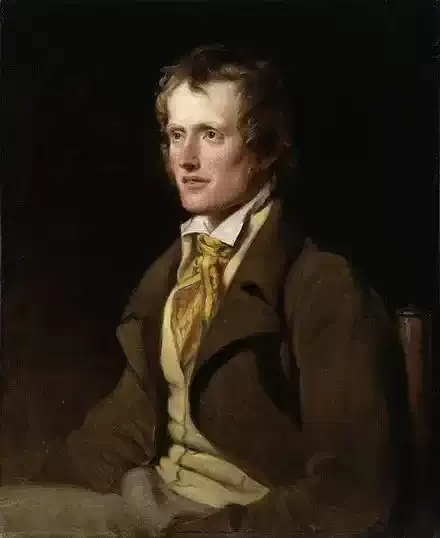
John Clare
Snow Storm
Snow Storm
What a night! The wind howls, hisses, and but stops
To howl more loud, while the snow volley keeps
Incessant batter at the window pane,
Making our comfort feel as sweet again;
And in the morning, when the tempest drops,
At every cottage door mountainous heaps
Of snow lie drifted, that all entrance stops
Untill the beesom and the shovel gain
The path, and leave a wall on either side.
The shepherd rambling valleys white and wide
With new sensations his old memory fills,
When hedges left at night, no more descried,
Are turned to one white sweep of curving hills,
And trees turned bushes half their bodies hide.
The boy that goes to fodder with surprise
Walks oer the gate he opened yesternight.
The hedges all have vanished from his eyes;
Een some tree tops the sheep could reach to bite.
The novel scene emboldens new delight,
And, though with cautious steps his sports begin,
He bolder shuffles the huge hills of snow,
Till down he drops and plunges to the chin,
And struggles much and oft escape to win--
Then turns and laughs but dare not further go;
For deep the grass and bushes lie below,
Where little birds that soon at eve went in
With heads tucked in their wings now pine for day
And little feel boys oer their heads can stray.
What a night! The wind howls, hisses, and but stops
To howl more loud, while the snow volley keeps
Incessant batter at the window pane,
Making our comfort feel as sweet again;
And in the morning, when the tempest drops,
At every cottage door mountainous heaps
Of snow lie drifted, that all entrance stops
Untill the beesom and the shovel gain
The path, and leave a wall on either side.
The shepherd rambling valleys white and wide
With new sensations his old memory fills,
When hedges left at night, no more descried,
Are turned to one white sweep of curving hills,
And trees turned bushes half their bodies hide.
The boy that goes to fodder with surprise
Walks oer the gate he opened yesternight.
The hedges all have vanished from his eyes;
Een some tree tops the sheep could reach to bite.
The novel scene emboldens new delight,
And, though with cautious steps his sports begin,
He bolder shuffles the huge hills of snow,
Till down he drops and plunges to the chin,
And struggles much and oft escape to win--
Then turns and laughs but dare not further go;
For deep the grass and bushes lie below,
Where little birds that soon at eve went in
With heads tucked in their wings now pine for day
And little feel boys oer their heads can stray.
420
John Clare
Secret Love
Secret Love
I hid my love when young till I
Couldn't bear the buzzing of a fly;
I hid my love to my despite
Till I could not bear to look at light:
I dare not gaze upon her face
But left her memory in each place;
Where eer I saw a wild flower lie
I kissed and bade my love good bye.
I met her in the greenest dells
Where dewdrops pearl the wood blue bells
The lost breeze kissed her bright blue eye,
The bee kissed and went singing by,
A sunbeam found a passage there,
A gold chain round her neck so fair;
As secret as the wild bee's song
She lay there all the summer long.
I hid my love in field and town
Till een the breeze would knock me down,
The bees seemed singing ballads oer,
The fly's bass turned a lion's roar;
And even silence found a tongue,
To haunt me all the summer long;
The riddle nature could not prove
Was nothing else but secret love.
I hid my love when young till I
Couldn't bear the buzzing of a fly;
I hid my love to my despite
Till I could not bear to look at light:
I dare not gaze upon her face
But left her memory in each place;
Where eer I saw a wild flower lie
I kissed and bade my love good bye.
I met her in the greenest dells
Where dewdrops pearl the wood blue bells
The lost breeze kissed her bright blue eye,
The bee kissed and went singing by,
A sunbeam found a passage there,
A gold chain round her neck so fair;
As secret as the wild bee's song
She lay there all the summer long.
I hid my love in field and town
Till een the breeze would knock me down,
The bees seemed singing ballads oer,
The fly's bass turned a lion's roar;
And even silence found a tongue,
To haunt me all the summer long;
The riddle nature could not prove
Was nothing else but secret love.
407
John Clare
Ploughman Singing
Ploughman Singing
Here morning in the ploughman's songs is met
Ere yet one footstep shows in all the sky,
And twilight in the east, a doubt as yet,
Shows not her sleeve of grey to know her bye.
Woke early, I arose and thought that first
In winter time of all the world was I.
The old owls might have hallooed if they durst,
But joy just then was up and whistled bye
A merry tune which I had known full long,
But could not to my memory wake it back,
Until the ploughman changed it to the song.
O happiness, how simple is thy track.
--Tinged like the willow shoots, the east's young brow
Glows red and finds thee singing at the plough.
Here morning in the ploughman's songs is met
Ere yet one footstep shows in all the sky,
And twilight in the east, a doubt as yet,
Shows not her sleeve of grey to know her bye.
Woke early, I arose and thought that first
In winter time of all the world was I.
The old owls might have hallooed if they durst,
But joy just then was up and whistled bye
A merry tune which I had known full long,
But could not to my memory wake it back,
Until the ploughman changed it to the song.
O happiness, how simple is thy track.
--Tinged like the willow shoots, the east's young brow
Glows red and finds thee singing at the plough.
340
John Clare
Market Day
Market Day
With arms and legs at work and gentle stroke
That urges switching tail nor mends his pace,
On an old ribbed and weather beaten horse,
The farmer goes jogtrotting to the fair.
Both keep their pace that nothing can provoke
Followed by brindled dog that snuffs the ground
With urging bark and hurries at his heels.
His hat slouched down, and great coat buttoned close
Bellied like hooped keg, and chuffy face
Red as the morning sun, he takes his round
And talks of stock: and when his jobs are done
And Dobbin's hay is eaten from the rack,
He drinks success to corn in language hoarse,
And claps old Dobbin's hide, and potters back.
With arms and legs at work and gentle stroke
That urges switching tail nor mends his pace,
On an old ribbed and weather beaten horse,
The farmer goes jogtrotting to the fair.
Both keep their pace that nothing can provoke
Followed by brindled dog that snuffs the ground
With urging bark and hurries at his heels.
His hat slouched down, and great coat buttoned close
Bellied like hooped keg, and chuffy face
Red as the morning sun, he takes his round
And talks of stock: and when his jobs are done
And Dobbin's hay is eaten from the rack,
He drinks success to corn in language hoarse,
And claps old Dobbin's hide, and potters back.
409
John Clare
Little Trotty Wagtail
Little Trotty Wagtail
Little trotty wagtail he went in the rain,
And tittering, tottering sideways he neer got straight again,
He stooped to get a worm, and looked up to get a fly,
And then he flew away ere his feathers they were dry.
Little trotty wagtail, he waddled in the mud,
And left his little footmarks, trample where he would.
He waddled in the water-pudge, and waggle went his tail,
And chirrupt up his wings to dry upon the garden rail.
Little trotty wagtail, you nimble all about,
And in the dimpling water-pudge you waddle in and out;
Your home is nigh at hand, and in the warm pig-stye,
So, little Master Wagtail, I'll bid you a good-bye.
Little trotty wagtail he went in the rain,
And tittering, tottering sideways he neer got straight again,
He stooped to get a worm, and looked up to get a fly,
And then he flew away ere his feathers they were dry.
Little trotty wagtail, he waddled in the mud,
And left his little footmarks, trample where he would.
He waddled in the water-pudge, and waggle went his tail,
And chirrupt up his wings to dry upon the garden rail.
Little trotty wagtail, you nimble all about,
And in the dimpling water-pudge you waddle in and out;
Your home is nigh at hand, and in the warm pig-stye,
So, little Master Wagtail, I'll bid you a good-bye.
368
John Clare
In Hilly-Wood
In Hilly-Wood
How sweet to be thus nestling deep in boughs,
Upon an ashen stoven pillowing me;
Faintly are heard the ploughmen at their ploughs,
But not an eye can find its way to see.
The sunbeams scarce molest me with a smile,
So thick the leafy armies gather round;
And where they do, the breeze blows cool the while,
Their leafy shadows dancing on the ground.
Full many a flower, too, wishing to be seen,
Perks up its head the hiding grass between.-
In mid-wood silence, thus, how sweet to be;
Where all the noises, that on peace intrude,
Come from the chittering cricket, bird, and bee,
Whose songs have charms to sweeten solitude.
How sweet to be thus nestling deep in boughs,
Upon an ashen stoven pillowing me;
Faintly are heard the ploughmen at their ploughs,
But not an eye can find its way to see.
The sunbeams scarce molest me with a smile,
So thick the leafy armies gather round;
And where they do, the breeze blows cool the while,
Their leafy shadows dancing on the ground.
Full many a flower, too, wishing to be seen,
Perks up its head the hiding grass between.-
In mid-wood silence, thus, how sweet to be;
Where all the noises, that on peace intrude,
Come from the chittering cricket, bird, and bee,
Whose songs have charms to sweeten solitude.
380
John Clare
House Or Window Flies
House Or Window Flies
These little window dwellers, in cottages and halls, were always
entertaining to me; after dancing in the window all day from sunrise
to sunset they would sip of the tea, drink of the beer, and eat of the
sugar, and be welcome all summer long. They look like things of mind
or fairies, and seem pleased or dull as the weather permits. In many
clean cottages and genteel houses, they are allowed every liberty to
creep, fly, or do as they like; and seldom or ever do wrong. In fact
they are the small or dwarfish portion of our own family, and so many
fairy familiars that we know and treat as one of ourselves.
These little window dwellers, in cottages and halls, were always
entertaining to me; after dancing in the window all day from sunrise
to sunset they would sip of the tea, drink of the beer, and eat of the
sugar, and be welcome all summer long. They look like things of mind
or fairies, and seem pleased or dull as the weather permits. In many
clean cottages and genteel houses, they are allowed every liberty to
creep, fly, or do as they like; and seldom or ever do wrong. In fact
they are the small or dwarfish portion of our own family, and so many
fairy familiars that we know and treat as one of ourselves.
354
John Clare
Grasshoppers
Grasshoppers
Grasshoppers go in many a thumming spring
And now to stalks of tasseled sow-grass cling,
That shakes and swees awhile, but still keeps straight;
While arching oxeye doubles with his weight.
Next on the cat-tail-grass with farther bound
He springs, that bends until they touch the ground.
Grasshoppers go in many a thumming spring
And now to stalks of tasseled sow-grass cling,
That shakes and swees awhile, but still keeps straight;
While arching oxeye doubles with his weight.
Next on the cat-tail-grass with farther bound
He springs, that bends until they touch the ground.
356
John Clare
Hen's Nest
Hen's Nest
Among the orchard weeds, from every search,
Snugly and sure, the old hen’s nest is made,
Who cackles every morning from her perch
To tell the servant girl new eggs are laid;
Who lays her washing by, and far and near
Goes seeking all about from day to day,
And stung with nettles tramples everywhere;
But still the cackling pullet lays away.
The boy on Sundays goes the stack to pull
In hopes to find her there, but naught is seen,
And takes his hat and thinks to find it full,
She’s laid so long so many might have been.
But naught is found and all is given o’er
Till the young brood come chirping to the door.
Among the orchard weeds, from every search,
Snugly and sure, the old hen’s nest is made,
Who cackles every morning from her perch
To tell the servant girl new eggs are laid;
Who lays her washing by, and far and near
Goes seeking all about from day to day,
And stung with nettles tramples everywhere;
But still the cackling pullet lays away.
The boy on Sundays goes the stack to pull
In hopes to find her there, but naught is seen,
And takes his hat and thinks to find it full,
She’s laid so long so many might have been.
But naught is found and all is given o’er
Till the young brood come chirping to the door.
453
John Clare
Farmer's Boy
Farmer's Boy
He waits all day beside his little flock
And asks the passing stranger what's o'clock,
But those who often pass his daily tasks
Look at their watch and tell before he asks.
He mutters stories to himself and lies
Where the thick hedge the warmest house supplies,
And when he hears the hunters far and wide
He climbs the highest tree to see them ride--
He climbs till all the fields are blea and bare
And makes the old crow's nest an easy chair.
And soon his sheep are got in other grounds--
He hastens down and fears his master come,
He stops the gap and keeps them all in bounds
And tends them closely till it's time for home.
He waits all day beside his little flock
And asks the passing stranger what's o'clock,
But those who often pass his daily tasks
Look at their watch and tell before he asks.
He mutters stories to himself and lies
Where the thick hedge the warmest house supplies,
And when he hears the hunters far and wide
He climbs the highest tree to see them ride--
He climbs till all the fields are blea and bare
And makes the old crow's nest an easy chair.
And soon his sheep are got in other grounds--
He hastens down and fears his master come,
He stops the gap and keeps them all in bounds
And tends them closely till it's time for home.
410
John Clare
Evening Primrose
Evening Primrose
When once the sun sinks in the west,
And dewdrops pearl the evening's breast;
Almost as pale as moonbeams are,
Or its companionable star,
The evening primrose opes anew
Its delicate blossoms to the dew;
And, hermit-like, shunning the light,
Wastes its fair bloom upon the night,
Who, blindfold to its fond caresses,
Knows not the beauty it possesses;
Thus it blooms on while night is by;
When day looks out with open eye,
Bashed at the gaze it cannot shun,
It faints and withers and is gone.
When once the sun sinks in the west,
And dewdrops pearl the evening's breast;
Almost as pale as moonbeams are,
Or its companionable star,
The evening primrose opes anew
Its delicate blossoms to the dew;
And, hermit-like, shunning the light,
Wastes its fair bloom upon the night,
Who, blindfold to its fond caresses,
Knows not the beauty it possesses;
Thus it blooms on while night is by;
When day looks out with open eye,
Bashed at the gaze it cannot shun,
It faints and withers and is gone.
511
John Clare
Emmonsail's Heath in Winter
Emmonsail's Heath in Winter
I love to see the old heath's withered brake
Mingle its crimpled leaves with furze and ling,
While the old heron from the lonely lake
Starts slow and flaps its melancholy wing,
An oddling crow in idle motion swing
On the half-rotten ash-tree's topmost twig,
Beside whose trunk the gypsy makes his bed.
Up flies the bouncing woodcock from the brig
Where a black quagmire quakes beneath the tread;
The fieldfares chatter in the whistling thorn
And for the haw round fields and closen rove,
And coy bumbarrels, twenty in a drove,
Flit down the hedgerows in the frozen plain
And hang on little twigs and start again.
I love to see the old heath's withered brake
Mingle its crimpled leaves with furze and ling,
While the old heron from the lonely lake
Starts slow and flaps its melancholy wing,
An oddling crow in idle motion swing
On the half-rotten ash-tree's topmost twig,
Beside whose trunk the gypsy makes his bed.
Up flies the bouncing woodcock from the brig
Where a black quagmire quakes beneath the tread;
The fieldfares chatter in the whistling thorn
And for the haw round fields and closen rove,
And coy bumbarrels, twenty in a drove,
Flit down the hedgerows in the frozen plain
And hang on little twigs and start again.
430
John Clare
Early Spring
Early Spring
The Spring is come, and Spring flowers coming too,
The crocus, patty kay, the rich hearts' ease;
The polyanthus peeps with blebs of dew,
And daisy flowers; the buds swell on the trees;
While oer the odd flowers swim grandfather bees
In the old homestead rests the cottage cow;
The dogs sit on their haunches near the pail,
The least one to the stranger growls 'bow wow,'
Then hurries to the door and cocks his tail,
To knaw the unfinished bone; the placid cow
Looks oer the gate; the thresher's lumping flail
Is all the noise the spring encounters now.
The Spring is come, and Spring flowers coming too,
The crocus, patty kay, the rich hearts' ease;
The polyanthus peeps with blebs of dew,
And daisy flowers; the buds swell on the trees;
While oer the odd flowers swim grandfather bees
In the old homestead rests the cottage cow;
The dogs sit on their haunches near the pail,
The least one to the stranger growls 'bow wow,'
Then hurries to the door and cocks his tail,
To knaw the unfinished bone; the placid cow
Looks oer the gate; the thresher's lumping flail
Is all the noise the spring encounters now.
407
John Clare
Dewdrops
Dewdrops
The dewdrops on every blade of grass are so much like silver drops
that I am obliged to stoop down as I walk to see if they are pearls,
and those sprinkled on the ivy-woven beds of primroses underneath the
hazels, whitethorns and maples are so like gold beads that I stooped
down to feel if they were hard, but they melted from my finger. And
where the dew lies on the primrose, the violet and whitethorn leaves
they are emerald and beryl, yet nothing more than the dews of the
morning on the budding leaves; nay, the road grasses are covered with
gold and silver beads, and the further we go the brighter they seem to
shine, like solid gold and silver. It is nothing more than the sun's
light and shade upon them in the dewy morning; every thorn-point and
every bramble-spear has its trembling ornament: till the wind gets
a little brisker, and then all is shaken off, and all the shining
jewelry passes away into a common spring morning full of budding
leaves, primroses, violets, vernal speedwell, bluebell and orchis, and
commonplace objects.
The dewdrops on every blade of grass are so much like silver drops
that I am obliged to stoop down as I walk to see if they are pearls,
and those sprinkled on the ivy-woven beds of primroses underneath the
hazels, whitethorns and maples are so like gold beads that I stooped
down to feel if they were hard, but they melted from my finger. And
where the dew lies on the primrose, the violet and whitethorn leaves
they are emerald and beryl, yet nothing more than the dews of the
morning on the budding leaves; nay, the road grasses are covered with
gold and silver beads, and the further we go the brighter they seem to
shine, like solid gold and silver. It is nothing more than the sun's
light and shade upon them in the dewy morning; every thorn-point and
every bramble-spear has its trembling ornament: till the wind gets
a little brisker, and then all is shaken off, and all the shining
jewelry passes away into a common spring morning full of budding
leaves, primroses, violets, vernal speedwell, bluebell and orchis, and
commonplace objects.
387
John Clare
Dyke Side
Dyke Side
The frog croaks loud, and maidens dare not pass
But fear the noisome toad and shun the grass;
And on the sunny banks they dare not go
Where hissing snakes run to the flood below.
The nuthatch noises loud in wood and wild,
Like women turning skreeking to a child.
The schoolboy hears and brushes through the trees
And runs about till drabbled to the knees.
The old hawk winnows round the old crow's nest;
The schoolboy hears and wonder fills his breast.
He throws his basket down to climb the tree
And wonders what the red blotched eggs can be:
The green woodpecker bounces from the view
And hollos as he buzzes bye 'kew kew.'
The frog croaks loud, and maidens dare not pass
But fear the noisome toad and shun the grass;
And on the sunny banks they dare not go
Where hissing snakes run to the flood below.
The nuthatch noises loud in wood and wild,
Like women turning skreeking to a child.
The schoolboy hears and brushes through the trees
And runs about till drabbled to the knees.
The old hawk winnows round the old crow's nest;
The schoolboy hears and wonder fills his breast.
He throws his basket down to climb the tree
And wonders what the red blotched eggs can be:
The green woodpecker bounces from the view
And hollos as he buzzes bye 'kew kew.'
408
John Clare
Badger
Badger
The badger grunting on his woodland track
With shaggy hide and sharp nose scrowed with black
Roots in the bushes and the woods, and makes
A great high burrow in the ferns and brakes.
With nose on ground he runs an awkward pace,
And anything will beat him in the race.
The shepherd's dog will run him to his den
Followed and hooted by the dogs and men.
The woodman when the hunting comes about
Goes round at night to stop the foxes out
And hurrying through the bushes to the chin
Breaks the old holes, and tumbles headlong in.
When midnight comes a host of dogs and men
Go out and track the badger to his den,
And put a sack within the hole, and lie
Till the old grunting badger passes bye.
He comes and hears—they let the strongest loose.
The old fox hears the noise and drops the goose.
The poacher shoots and hurries from the cry,
And the old hare half wounded buzzes bye.
They get a forked stick to bear him down
And clap the dogs and take him to the town,
And bait him all the day with many dogs,
And laugh and shout and fright the scampering hogs.
He runs along and bites at all he meets:
They shout and hollo down the noisy streets.
He turns about to face the loud uproar
And drives the rebels to their very door.
The frequent stone is hurled where e'er they go;
When badgers fight, then every one's a foe.
The dogs are clapt and urged to join the fray;
The badger turns and drives them all away.
Though scarcely half as big, demure and small,
He fights with dogs for bones and beats them all.
The heavy mastiff, savage in the fray,
Lies down and licks his feet and turns away.
The bulldog knows his match and waxes cold,
The badger grins and never leaves his hold.
He drives the crowd and follows at their heels
And bites them through—the drunkard swears and reels.
The frighted women take the boys away,
The blackguard laughs and hurries on the fray.
He tries to reach the woods, an awkward race,
But sticks and cudgels quickly stop the chase.
He turns again and drives the noisy crowd
And beats the many dogs in noises loud.
He drives away and beats them every one,
And then they loose them all and set them on.
He falls as dead and kicked by boys and men,
Then starts and grins and drives the crowd again;
Till kicked and torn and beaten out he lies
And leaves his hold and cackles, groans, and dies.
Some keep a baited badger tame as hog
And tame him till he follows like the dog.
They urge him on like dogs and show fair play.
He beats and scarcely wounded goes away.
Lapt up as if asleep, he scorns to fly
And seizes any dog that ventures nigh.
Clapt like a dog, he never bites the men
But worries dogs and hurries to his den.
They let him out and turn a harrow down
And there he fights the host of all the town.
He licks the patting hand, and tries to play
And never tries to bite or run away,
And runs away from the noise in hollow trees
Burnt by the boys to get a swarm of bees.
The badger grunting on his woodland track
With shaggy hide and sharp nose scrowed with black
Roots in the bushes and the woods, and makes
A great high burrow in the ferns and brakes.
With nose on ground he runs an awkward pace,
And anything will beat him in the race.
The shepherd's dog will run him to his den
Followed and hooted by the dogs and men.
The woodman when the hunting comes about
Goes round at night to stop the foxes out
And hurrying through the bushes to the chin
Breaks the old holes, and tumbles headlong in.
When midnight comes a host of dogs and men
Go out and track the badger to his den,
And put a sack within the hole, and lie
Till the old grunting badger passes bye.
He comes and hears—they let the strongest loose.
The old fox hears the noise and drops the goose.
The poacher shoots and hurries from the cry,
And the old hare half wounded buzzes bye.
They get a forked stick to bear him down
And clap the dogs and take him to the town,
And bait him all the day with many dogs,
And laugh and shout and fright the scampering hogs.
He runs along and bites at all he meets:
They shout and hollo down the noisy streets.
He turns about to face the loud uproar
And drives the rebels to their very door.
The frequent stone is hurled where e'er they go;
When badgers fight, then every one's a foe.
The dogs are clapt and urged to join the fray;
The badger turns and drives them all away.
Though scarcely half as big, demure and small,
He fights with dogs for bones and beats them all.
The heavy mastiff, savage in the fray,
Lies down and licks his feet and turns away.
The bulldog knows his match and waxes cold,
The badger grins and never leaves his hold.
He drives the crowd and follows at their heels
And bites them through—the drunkard swears and reels.
The frighted women take the boys away,
The blackguard laughs and hurries on the fray.
He tries to reach the woods, an awkward race,
But sticks and cudgels quickly stop the chase.
He turns again and drives the noisy crowd
And beats the many dogs in noises loud.
He drives away and beats them every one,
And then they loose them all and set them on.
He falls as dead and kicked by boys and men,
Then starts and grins and drives the crowd again;
Till kicked and torn and beaten out he lies
And leaves his hold and cackles, groans, and dies.
Some keep a baited badger tame as hog
And tame him till he follows like the dog.
They urge him on like dogs and show fair play.
He beats and scarcely wounded goes away.
Lapt up as if asleep, he scorns to fly
And seizes any dog that ventures nigh.
Clapt like a dog, he never bites the men
But worries dogs and hurries to his den.
They let him out and turn a harrow down
And there he fights the host of all the town.
He licks the patting hand, and tries to play
And never tries to bite or run away,
And runs away from the noise in hollow trees
Burnt by the boys to get a swarm of bees.
439
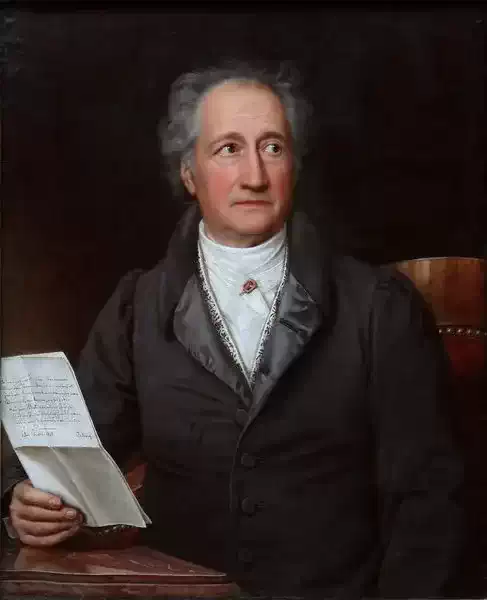
Johann Wolfgang von Goethe
The Yelpers
The Yelpers
OUR rides in all directions bend,
For business or for pleasure,
Yet yelpings on our steps attend,
And barkings without measure.
The dog that in our stable dwells,
After our heels is striding,
And all the while his noisy yells
But show that we are riding.
OUR rides in all directions bend,
For business or for pleasure,
Yet yelpings on our steps attend,
And barkings without measure.
The dog that in our stable dwells,
After our heels is striding,
And all the while his noisy yells
But show that we are riding.
334
Johann Wolfgang von Goethe
The Same
The Same
HUSH'D on the hill
Is the breeze;
Scarce by the zephyr
The trees
Softly are press'd;
The woodbird's asleep on the bough.
Wait, then, and thou
Soon wilt find rest.
HUSH'D on the hill
Is the breeze;
Scarce by the zephyr
The trees
Softly are press'd;
The woodbird's asleep on the bough.
Wait, then, and thou
Soon wilt find rest.
371
Johann Wolfgang von Goethe
The Shepherd's Lament
The Shepherd's Lament
ON yonder lofty mountain
A thousand times I stand,
And on my staff reclining,
Look down on the smiling land.
My grazing flocks then I follow,
My dog protecting them well;
I find myself in the valley,
But how, I scarcely can tell.
The whole of the meadow is cover'd
With flowers of beauty rare;
I pluck them, but pluck them unknowing
To whom the offering to bear.
In rain and storm and tempest,
I tarry beneath the tree,
But closed remaineth yon portal;
'Tis all but a vision to me.
High over yonder dwelling,
There rises a rainbow gay;
But she from home hath departed
And wander'd far, far away.
Yes, far away bath she wander'd,
Perchance e'en over the sea;
Move onward, ye sheep, then, move onward!
Full sad the shepherd must be.
ON yonder lofty mountain
A thousand times I stand,
And on my staff reclining,
Look down on the smiling land.
My grazing flocks then I follow,
My dog protecting them well;
I find myself in the valley,
But how, I scarcely can tell.
The whole of the meadow is cover'd
With flowers of beauty rare;
I pluck them, but pluck them unknowing
To whom the offering to bear.
In rain and storm and tempest,
I tarry beneath the tree,
But closed remaineth yon portal;
'Tis all but a vision to me.
High over yonder dwelling,
There rises a rainbow gay;
But she from home hath departed
And wander'd far, far away.
Yes, far away bath she wander'd,
Perchance e'en over the sea;
Move onward, ye sheep, then, move onward!
Full sad the shepherd must be.
410
Johann Wolfgang von Goethe
The Fox And The Crane
The Fox And The Crane
ONCE two persons uninvited
Came to join my dinner table;
For the nonce they lived united,
Fox and crane yclept in fable.
Civil greetings pass'd between us
Then I pluck'd some pigeons tender
For the fox of jackal-genius,
Adding grapes in full-grown splendour.
Long-neck'd flasks I put as dishes
For the crane, without delaying,
Fill'd with gold and silver fishes,
In the limpid water playing.
Had ye witness'd Reynard planted
At his flat plate, all demurely,
Ye with envy must have granted:
"Ne'er was such a gourmand, surely!"
While the bird with circumspection
On one foot, as usual, cradled,
From the flasks his fish-refection
With his bill and long neck ladled.
One the pigeons praised,--the other,
As they went, extoll'd the fishes,
Each one scoffing at his brother
For preferring vulgar dishes.
*
If thou wouldst preserve thy credit,
When thou askest folks to guzzle
At thy hoard, take care to spread it
Suited both for bill and muzzle.
ONCE two persons uninvited
Came to join my dinner table;
For the nonce they lived united,
Fox and crane yclept in fable.
Civil greetings pass'd between us
Then I pluck'd some pigeons tender
For the fox of jackal-genius,
Adding grapes in full-grown splendour.
Long-neck'd flasks I put as dishes
For the crane, without delaying,
Fill'd with gold and silver fishes,
In the limpid water playing.
Had ye witness'd Reynard planted
At his flat plate, all demurely,
Ye with envy must have granted:
"Ne'er was such a gourmand, surely!"
While the bird with circumspection
On one foot, as usual, cradled,
From the flasks his fish-refection
With his bill and long neck ladled.
One the pigeons praised,--the other,
As they went, extoll'd the fishes,
Each one scoffing at his brother
For preferring vulgar dishes.
*
If thou wouldst preserve thy credit,
When thou askest folks to guzzle
At thy hoard, take care to spread it
Suited both for bill and muzzle.
385
Johann Wolfgang von Goethe
The Dilettante And The Critic
The Dilettante And The Critic
A BOY a pigeon once possess'd,
In gay and brilliant plumage dress'd;
He loved it well, and in boyish sport
Its food to take from his mouth he taught,
And in his pigeon he took such pride,
That his joy to others he needs must confide.
An aged fox near the place chanc'd to dwell,
Talkative, clever, and learned as well;
The boy his society used to prize,
Hearing with pleasure his wonders and lies.
"My friend the fox my pigeon must see
He ran, and stretch'd 'mongst the bushes lay he
"Look, fox, at my pigeon, my pigeon so fair!
His equal I'm sure thou hast look'd upon ne'er!"
"Let's see!"--The boy gave it.--"'Tis really not bad;
And yet, it is far from complete, I must add.
The feathers, for, instance, how short! 'Tis absurd!"
So he set to work straightway to pluck the poor bird.
The boy screamed.--"Thou must now stronger pinions supply,
Or else 'twill be ugly, unable to fly."--
Soon 'twas stripp'd--oh, the villain!--and torn all to pieces.
The boy was heart-broken,--and so my tale ceases.
He who sees in the boy shadow'd forth his own case,
Should be on his guard 'gainst the fox's whole race.
A BOY a pigeon once possess'd,
In gay and brilliant plumage dress'd;
He loved it well, and in boyish sport
Its food to take from his mouth he taught,
And in his pigeon he took such pride,
That his joy to others he needs must confide.
An aged fox near the place chanc'd to dwell,
Talkative, clever, and learned as well;
The boy his society used to prize,
Hearing with pleasure his wonders and lies.
"My friend the fox my pigeon must see
He ran, and stretch'd 'mongst the bushes lay he
"Look, fox, at my pigeon, my pigeon so fair!
His equal I'm sure thou hast look'd upon ne'er!"
"Let's see!"--The boy gave it.--"'Tis really not bad;
And yet, it is far from complete, I must add.
The feathers, for, instance, how short! 'Tis absurd!"
So he set to work straightway to pluck the poor bird.
The boy screamed.--"Thou must now stronger pinions supply,
Or else 'twill be ugly, unable to fly."--
Soon 'twas stripp'd--oh, the villain!--and torn all to pieces.
The boy was heart-broken,--and so my tale ceases.
He who sees in the boy shadow'd forth his own case,
Should be on his guard 'gainst the fox's whole race.
380
Johann Wolfgang von Goethe
Swiss Song
Swiss Song
Up in th' mountain
I was a-sitting,
With the bird there
As my guest,
Blithely singing,
Blithely springing,
And building
His nest.
In the garden
I was a-standing,
And the bee there
Saw as well,
Buzzing, humming,
Going, coming,
And building
His cell.
O'er the meadow
I was a-going,
And there saw the
Butterflies,
Sipping, dancing,
Flying, glancing,
And charming
The eyes.
And then came my
Dear Hansel,
And I show'd them
With glee,
Sipping, quaffing,
And he, laughing,
Sweet kisses
Gave me.
Up in th' mountain
I was a-sitting,
With the bird there
As my guest,
Blithely singing,
Blithely springing,
And building
His nest.
In the garden
I was a-standing,
And the bee there
Saw as well,
Buzzing, humming,
Going, coming,
And building
His cell.
O'er the meadow
I was a-going,
And there saw the
Butterflies,
Sipping, dancing,
Flying, glancing,
And charming
The eyes.
And then came my
Dear Hansel,
And I show'd them
With glee,
Sipping, quaffing,
And he, laughing,
Sweet kisses
Gave me.
368
Johann Wolfgang von Goethe
River Lilies
River Lilies
Saw a boy three lilies white,
Lilies in the river,
Half heart-open to the light,
Full of golden arrows bright,
Each a silver quiver.
Lilies, lilies, lilies white,
Lilies in the river.
Said the boy, “I’ll pluck you there,
Lilies in the river!”
Said the lilies, “If you dare
You shall drown, or homeward fare
Dripping and a-shiver!”
Lilies, lilies, lilies white,
Lilies in the river.
Wilful still the boy would clasp
Lilies in the river;
Tumbled in ere he could grasp,
Scrambled out with puff and gasp,
Plucked no lilies ever.
Lilies, lilies, lilies white,
Lilies in the river.
Saw a boy three lilies white,
Lilies in the river,
Half heart-open to the light,
Full of golden arrows bright,
Each a silver quiver.
Lilies, lilies, lilies white,
Lilies in the river.
Said the boy, “I’ll pluck you there,
Lilies in the river!”
Said the lilies, “If you dare
You shall drown, or homeward fare
Dripping and a-shiver!”
Lilies, lilies, lilies white,
Lilies in the river.
Wilful still the boy would clasp
Lilies in the river;
Tumbled in ere he could grasp,
Scrambled out with puff and gasp,
Plucked no lilies ever.
Lilies, lilies, lilies white,
Lilies in the river.
326
Johann Wolfgang von Goethe
Like And Like
Like And Like
A FAIR bell-flower
Sprang tip from the ground;
And early its fragrance
It shed all around;
A bee came thither
And sipp'd from its bell;
That they for each other
Were made, we see well.
A FAIR bell-flower
Sprang tip from the ground;
And early its fragrance
It shed all around;
A bee came thither
And sipp'd from its bell;
That they for each other
Were made, we see well.
365