

Poems in this theme
Animals and Nature
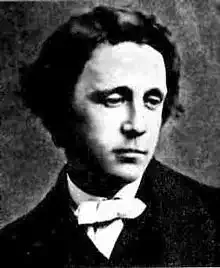
Lewis Carroll
A Sea Dirge
A Sea Dirge
There are certain things as,
a spider, a ghost,
The incometax,
gout, an umbrella for three That
I hate, but the thing that I hate the most
Is a thing they call the Sea.
Pour some salt water over the floor Ugly
I'm sure you'll allow it to be:
Suppose it extended a mile or more,
THAT'S very like the Sea.
Beat a dog till it howls outright Cruel,
but all very well for a spree:
Suppose that he did so day and night,
THAT would be like the Sea.
I had a vision of nurserymaids;
Tens of thousands passed by me All
leading children with wooden spades,
And this was by the Sea.
Who invented those spades of wood?
Who was it cut them out of the tree?
None, I think, but an idiot could Or
one that loved the Sea.
It is pleasant and dreamy, no doubt, to float
With 'thoughts as boundless, and souls as free':
But, suppose you are very unwell in the boat,
How do you like the Sea?
There is an insect that people avoid
(Whence is derived the verb 'to flee').
Where have you been by it most annoyed?
In lodgings by the Sea.
If you like your coffee with sand for dregs,
A decided hint of salt in your tea,
And a fishy taste in the very eggs By
all means choose the Sea.
And if, with these dainties to drink and eat,
You prefer not a vestige of grass or tree,
And a chronic state of wet in your feet,
Then I
recommend the Sea.
For I have friends who dwell by the coast Pleasant
friends they are to me!
It is when I am with them I wonder most
That anyone likes the Sea.
They take me a walk: though tired and stiff,
To climb the heights I madly agree;
And, after a tumble or so from the cliff,
They kindly suggest the Sea.
I try the rocks, and I think it cool
That they laugh with such an excess of glee,
As I heavily slip into every pool
That skirts the cold cold Sea.
There are certain things as,
a spider, a ghost,
The incometax,
gout, an umbrella for three That
I hate, but the thing that I hate the most
Is a thing they call the Sea.
Pour some salt water over the floor Ugly
I'm sure you'll allow it to be:
Suppose it extended a mile or more,
THAT'S very like the Sea.
Beat a dog till it howls outright Cruel,
but all very well for a spree:
Suppose that he did so day and night,
THAT would be like the Sea.
I had a vision of nurserymaids;
Tens of thousands passed by me All
leading children with wooden spades,
And this was by the Sea.
Who invented those spades of wood?
Who was it cut them out of the tree?
None, I think, but an idiot could Or
one that loved the Sea.
It is pleasant and dreamy, no doubt, to float
With 'thoughts as boundless, and souls as free':
But, suppose you are very unwell in the boat,
How do you like the Sea?
There is an insect that people avoid
(Whence is derived the verb 'to flee').
Where have you been by it most annoyed?
In lodgings by the Sea.
If you like your coffee with sand for dregs,
A decided hint of salt in your tea,
And a fishy taste in the very eggs By
all means choose the Sea.
And if, with these dainties to drink and eat,
You prefer not a vestige of grass or tree,
And a chronic state of wet in your feet,
Then I
recommend the Sea.
For I have friends who dwell by the coast Pleasant
friends they are to me!
It is when I am with them I wonder most
That anyone likes the Sea.
They take me a walk: though tired and stiff,
To climb the heights I madly agree;
And, after a tumble or so from the cliff,
They kindly suggest the Sea.
I try the rocks, and I think it cool
That they laugh with such an excess of glee,
As I heavily slip into every pool
That skirts the cold cold Sea.
201
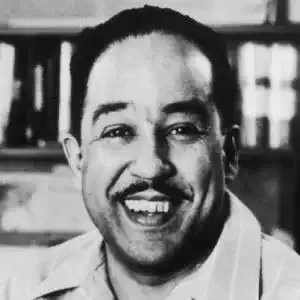
Langston Hughes
Snake
Snake
He glides so swiftly
Back into the grass-
Gives me the courtesy of road
To let me pass,
That I am half ashamed
To seek a stone
To kill him.
He glides so swiftly
Back into the grass-
Gives me the courtesy of road
To let me pass,
That I am half ashamed
To seek a stone
To kill him.
382
Langston Hughes
Negro Speaks of Rivers
Negro Speaks of Rivers
I've known rivers:
I've known rivers ancient as the world and older than the
flow of human blood in human veins
My soul has grown deep like the rivers.
I bathed in the Euphrates when dawns were young
I built my hut near the Congo and it lulled me to sleep.
I looked upon the Nile and raised the pyramids above it.
I heard the singing of the Mississippi when Abe Lincoln
went down to New Orleans, and I've seen its muddy
bosom turn all golden in the sunset
I've known rivers:
Ancient, dusky rivers.
My soul has grown deep like the rivers.
I've known rivers:
I've known rivers ancient as the world and older than the
flow of human blood in human veins
My soul has grown deep like the rivers.
I bathed in the Euphrates when dawns were young
I built my hut near the Congo and it lulled me to sleep.
I looked upon the Nile and raised the pyramids above it.
I heard the singing of the Mississippi when Abe Lincoln
went down to New Orleans, and I've seen its muddy
bosom turn all golden in the sunset
I've known rivers:
Ancient, dusky rivers.
My soul has grown deep like the rivers.
460
Langston Hughes
In Time Of Silver Rain
In Time Of Silver Rain
In time of silver rain
The earth puts forth new life again,
Green grasses grow
And flowers lift their heads,
And over all the plain
The wonder spreads
Of Life,
Of Life,
Of life!
In time of silver rain
The butterflies lift silken wings
To catch a rainbow cry,
And trees put forth new leaves to sing
In joy beneath the sky
As down the roadway
Passing boys and girls
Go singing, too,
In time of silver rain When spring
And life
Are new.
In time of silver rain
The earth puts forth new life again,
Green grasses grow
And flowers lift their heads,
And over all the plain
The wonder spreads
Of Life,
Of Life,
Of life!
In time of silver rain
The butterflies lift silken wings
To catch a rainbow cry,
And trees put forth new leaves to sing
In joy beneath the sky
As down the roadway
Passing boys and girls
Go singing, too,
In time of silver rain When spring
And life
Are new.
399
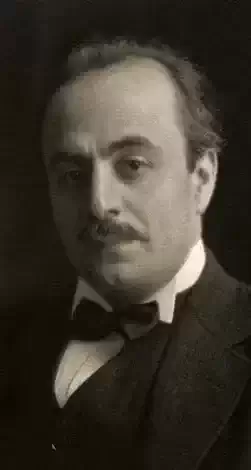
Khalil Gibran
The Life of Love XVI
The Life of Love XVI
Spring
Come, my beloved; let us walk amidst the knolls,
For the snow is water, and Life is alive from its
Slumber and is roaming the hills and valleys.
Let us follow the footprints of Spring into the
Distant fields, and mount the hilltops to draw
Inspiration high above the cool green plains.
Dawn of Spring has unfolded her winter-kept garment
And placed it on the peach and citrus trees; and
They appear as brides in the ceremonial custom of
the Night of Kedre.
The sprigs of grapevine embrace each other like
Sweethearts, and the brooks burst out in dance
Between the rocks, repeating the song of joy;
And the flowers bud suddenly from the heart of
Nature, like foam from the rich heart of the sea.
Come, my beloved; let us drink the last of Winter's
Tears from the cupped lilies, and soothe our spirits
With the shower of notes from the birds, and wander
In exhilaration through the intoxicating breeze.
Let us sit by that rock, where violets hide; let us
Pursue their exchange of the sweetness of kisses.
Summer
Let us go into the fields, my beloved, for the
Time of harvest approaches, and the sun's eyes
Are ripening the grain.
Let us tend the fruit of the earth, as the
Spirit nourishes the grains of Joy from the
Seeds of Love, sowed deep in our hearts.
Let us fill our bins with the products of
Nature, as life fills so abundantly the
Domain of our hearts with her endless bounty.
Let us make the flowers our bed, and the
Sky our blanket, and rest our heads together
Upon pillows of soft hay.
Let us relax after the day's toil, and listen
To the provoking murmur of the brook.
Autumn
Let us go and gather grapes in the vineyard
For the winepress, and keep the wine in old
Vases, as the spirit keeps Knowledge of the
Ages in eternal vessels.
Let us return to our dwelling, for the wind has
Caused the yellow leaves to fall and shroud the
Withering flowers that whisper elegy to Summer.
Come home, my eternal sweetheart, for the birds
Have made pilgrimage to warmth and lest the chilled
Prairies suffering pangs of solitude. The jasmine
And myrtle have no more tears.
Let us retreat, for the tired brook has
Ceased its song; and the bubblesome springs
Are drained of their copious weeping; and
Their cautious old hills have stored away
Their colorful garments.
Come, my beloved; Nature is justly weary
And is bidding her enthusiasm farewell
With quiet and contented melody.
Winter
Come close to me, oh companion of my full life;
Come close to me and let not Winter's touch
Enter between us. Sit by me before the hearth,
For fire is the only fruit of Winter.
Speak to me of the glory of your heart, for
That is greater than the shrieking elements
Beyond our door.
Bind the door and seal the transoms, for the
Angry countenance of the heaven depresses my
Spirit, and the face of our snow-laden fields
Makes my soul cry.
Feed the lamp with oil and let it not dim, and
Place it by you, so I can read with tears what
Your life with me has written upon your face.
Bring Autumn's wine. Let us drink and sing the
Song of remembrance to Spring's carefree sowing,
And Summer's watchful tending, and Autumn's
Reward in harvest.
Come close to me, oh beloved of my soul; the
Fire is cooling and fleeing under the ashes.
Embrace me, for I fear loneliness; the lamp is
Dim, and the wine which we pressed is closing
Our eyes. Let us look upon each other before
They are shut.
Find me with your arms and embrace me; let
Slumber then embrace our souls as one.
Kiss me, my beloved, for Winter has stolen
All but our moving lips.
You are close by me, My Forever.
How deep and wide will be the ocean of Slumber,
And how recent was the dawn!
Spring
Come, my beloved; let us walk amidst the knolls,
For the snow is water, and Life is alive from its
Slumber and is roaming the hills and valleys.
Let us follow the footprints of Spring into the
Distant fields, and mount the hilltops to draw
Inspiration high above the cool green plains.
Dawn of Spring has unfolded her winter-kept garment
And placed it on the peach and citrus trees; and
They appear as brides in the ceremonial custom of
the Night of Kedre.
The sprigs of grapevine embrace each other like
Sweethearts, and the brooks burst out in dance
Between the rocks, repeating the song of joy;
And the flowers bud suddenly from the heart of
Nature, like foam from the rich heart of the sea.
Come, my beloved; let us drink the last of Winter's
Tears from the cupped lilies, and soothe our spirits
With the shower of notes from the birds, and wander
In exhilaration through the intoxicating breeze.
Let us sit by that rock, where violets hide; let us
Pursue their exchange of the sweetness of kisses.
Summer
Let us go into the fields, my beloved, for the
Time of harvest approaches, and the sun's eyes
Are ripening the grain.
Let us tend the fruit of the earth, as the
Spirit nourishes the grains of Joy from the
Seeds of Love, sowed deep in our hearts.
Let us fill our bins with the products of
Nature, as life fills so abundantly the
Domain of our hearts with her endless bounty.
Let us make the flowers our bed, and the
Sky our blanket, and rest our heads together
Upon pillows of soft hay.
Let us relax after the day's toil, and listen
To the provoking murmur of the brook.
Autumn
Let us go and gather grapes in the vineyard
For the winepress, and keep the wine in old
Vases, as the spirit keeps Knowledge of the
Ages in eternal vessels.
Let us return to our dwelling, for the wind has
Caused the yellow leaves to fall and shroud the
Withering flowers that whisper elegy to Summer.
Come home, my eternal sweetheart, for the birds
Have made pilgrimage to warmth and lest the chilled
Prairies suffering pangs of solitude. The jasmine
And myrtle have no more tears.
Let us retreat, for the tired brook has
Ceased its song; and the bubblesome springs
Are drained of their copious weeping; and
Their cautious old hills have stored away
Their colorful garments.
Come, my beloved; Nature is justly weary
And is bidding her enthusiasm farewell
With quiet and contented melody.
Winter
Come close to me, oh companion of my full life;
Come close to me and let not Winter's touch
Enter between us. Sit by me before the hearth,
For fire is the only fruit of Winter.
Speak to me of the glory of your heart, for
That is greater than the shrieking elements
Beyond our door.
Bind the door and seal the transoms, for the
Angry countenance of the heaven depresses my
Spirit, and the face of our snow-laden fields
Makes my soul cry.
Feed the lamp with oil and let it not dim, and
Place it by you, so I can read with tears what
Your life with me has written upon your face.
Bring Autumn's wine. Let us drink and sing the
Song of remembrance to Spring's carefree sowing,
And Summer's watchful tending, and Autumn's
Reward in harvest.
Come close to me, oh beloved of my soul; the
Fire is cooling and fleeing under the ashes.
Embrace me, for I fear loneliness; the lamp is
Dim, and the wine which we pressed is closing
Our eyes. Let us look upon each other before
They are shut.
Find me with your arms and embrace me; let
Slumber then embrace our souls as one.
Kiss me, my beloved, for Winter has stolen
All but our moving lips.
You are close by me, My Forever.
How deep and wide will be the ocean of Slumber,
And how recent was the dawn!
408
Khalil Gibran
Eating and Drinking chapter VI
Eating and Drinking chapter VI
Then an old man, a keeper of an inn, said, "Speak to us of Eating and Drinking."
And he said:
Would that you could live on the fragrance of the earth, and like an air plant be
sustained by the light.
But since you must kill to eat, and rob the young of its mother's milk to quench your
thirst, let it then be an act of worship,
And let your board stand an altar on which the pure and the innocent of forest and
plain are sacrificed for that which is purer and still more innocent in many.
When you kill a beast say to him in your heart,
"By the same power that slays you, I to am slain; and I too shall be consumed. For the
law that delivered you into my hand shall deliver me into a mightier hand.
Your blood and my blood is naught but the sap that feeds the tree of heaven."
And when you crush an apple with your teeth, say to it in your heart,
"Your seeds shall live in my body,
And the buds of your tomorrow shall blossom in my heart,
And your fragrance shall be my breath,
And together we shall rejoice through all the seasons."
And in the autumn, when you gather the grapes of your vineyard for the winepress,
say in you heart,
"I too am a vineyard, and my fruit shall be gathered for the winepress,
And like new wine I shall be kept in eternal vessels."
And in winter, when you draw the wine, let there be in your heart a song for each cup;
And let there be in the song a remembrance for the autumn days, and for the vineyard,
and for the winepress.
Then an old man, a keeper of an inn, said, "Speak to us of Eating and Drinking."
And he said:
Would that you could live on the fragrance of the earth, and like an air plant be
sustained by the light.
But since you must kill to eat, and rob the young of its mother's milk to quench your
thirst, let it then be an act of worship,
And let your board stand an altar on which the pure and the innocent of forest and
plain are sacrificed for that which is purer and still more innocent in many.
When you kill a beast say to him in your heart,
"By the same power that slays you, I to am slain; and I too shall be consumed. For the
law that delivered you into my hand shall deliver me into a mightier hand.
Your blood and my blood is naught but the sap that feeds the tree of heaven."
And when you crush an apple with your teeth, say to it in your heart,
"Your seeds shall live in my body,
And the buds of your tomorrow shall blossom in my heart,
And your fragrance shall be my breath,
And together we shall rejoice through all the seasons."
And in the autumn, when you gather the grapes of your vineyard for the winepress,
say in you heart,
"I too am a vineyard, and my fruit shall be gathered for the winepress,
And like new wine I shall be kept in eternal vessels."
And in winter, when you draw the wine, let there be in your heart a song for each cup;
And let there be in the song a remembrance for the autumn days, and for the vineyard,
and for the winepress.
324

Kazi Nazrul Islam
Ting-A-Ling, Ting-A-Ling, Ting-A-Ling,
Ting-A-Ling, Ting-A-Ling, Ting-A-Ling,
Ting-a-ling, ting-a-ling, ting-a-ling,
Who goes there stepping over the date leaves
Raising a melodious jingling?
Her scarf flutters in the dancing wind,
Her steps scatter flowers on the rocky road.
As she trips gaily on
Her arched eyebrows sparkle like a sword,
And her feet kick tiny stones
Scattering them like a jewelled necklace.
She is pretty as the peach blossoms,
And even the young Eid-moon is in love with her.
It pines for her rosy cheeks.
She is a, mirage and a vision rare
Many a prince riding an Arab mare
Sought her in vain in Sahara's desert sands.
For her many a young traveller
Lost their lives in strange, far-off lands.
And, lured by her haunting charm,
Died, many a forest deer.
[Original: Rum jhum jhum jhum; Translation: Kabir Chowdhury]
Ting-a-ling, ting-a-ling, ting-a-ling,
Who goes there stepping over the date leaves
Raising a melodious jingling?
Her scarf flutters in the dancing wind,
Her steps scatter flowers on the rocky road.
As she trips gaily on
Her arched eyebrows sparkle like a sword,
And her feet kick tiny stones
Scattering them like a jewelled necklace.
She is pretty as the peach blossoms,
And even the young Eid-moon is in love with her.
It pines for her rosy cheeks.
She is a, mirage and a vision rare
Many a prince riding an Arab mare
Sought her in vain in Sahara's desert sands.
For her many a young traveller
Lost their lives in strange, far-off lands.
And, lured by her haunting charm,
Died, many a forest deer.
[Original: Rum jhum jhum jhum; Translation: Kabir Chowdhury]
524
Kazi Nazrul Islam
The Run-Away
The Run-Away
O Chakravaki! What distant melodious
call of a known flute hast thou heard?
O my fugitive Bird!
What lost abode dost thou remember?
What paradise of thy dream?
O my Fugitive!
Tears flood thy unsteady eyes,
Tell, O tell me hat long-lost mother
calleth thee?
There under the shades of dusk from
the distant horizon some deep magic
spell beckoneth thee
Dost thou know who it is? O my wayward one!
Out of the fullness of heart and from the
depths of love it seems to call, Come,
Come, O Come,
Be in my lap, O my tyrant child,
O my fugitive Bird!
The south wind blowing over the forest,
Dose thy mother call thee now by raising
her hand, O Dear?
Dost thou, after all, distinguish thy kin
from one who isn't thy kin?
So, at the very peep of dawn descends
dusk on my low-roofed house!
The sheaves of paddy, or the secret call of Shyama
Dear! prey, tell me
What startled thee and made thee break thy bonds?
The eyes are overflowed with tears,
Who hath made thee drink Hemlock
. of evergreen tender love?
It seems of a sudden some young hare
startles and cries
'O Come, come, come
Come, O my dear Child,'
To the forest come back, O thou
Chakrabaki of the wood!
O Fickle Fugitive! . ,
[Translation: Abdul Hakim]
O Chakravaki! What distant melodious
call of a known flute hast thou heard?
O my fugitive Bird!
What lost abode dost thou remember?
What paradise of thy dream?
O my Fugitive!
Tears flood thy unsteady eyes,
Tell, O tell me hat long-lost mother
calleth thee?
There under the shades of dusk from
the distant horizon some deep magic
spell beckoneth thee
Dost thou know who it is? O my wayward one!
Out of the fullness of heart and from the
depths of love it seems to call, Come,
Come, O Come,
Be in my lap, O my tyrant child,
O my fugitive Bird!
The south wind blowing over the forest,
Dose thy mother call thee now by raising
her hand, O Dear?
Dost thou, after all, distinguish thy kin
from one who isn't thy kin?
So, at the very peep of dawn descends
dusk on my low-roofed house!
The sheaves of paddy, or the secret call of Shyama
Dear! prey, tell me
What startled thee and made thee break thy bonds?
The eyes are overflowed with tears,
Who hath made thee drink Hemlock
. of evergreen tender love?
It seems of a sudden some young hare
startles and cries
'O Come, come, come
Come, O my dear Child,'
To the forest come back, O thou
Chakrabaki of the wood!
O Fickle Fugitive! . ,
[Translation: Abdul Hakim]
522
Kazi Nazrul Islam
Song of the Do-Nothing
Song of the Do-Nothing
My mind as the Bee today runs a-field
amid the blossoms of the grass in
the field of mator-shuti -
On this winter morn enamored of the
sun-light.
I like to accompany the restless butterfly
From bud to bud
In the field of flowery Maw plants.
And at night I hear the farewell wails
of Amman paddy in the meadow
Who's today taking a round amid
Kusha grasses along the bank of the dead river?
Lo! her yellow skirt gets entangled
among aroher flowers
She wears t hat Babla flower as her
nose-top.
And around her body is her cloth
of green Aparajita.
I am keen for a touch of that fair unknown!
She send me while walking
speechless message of her eyes.
And so my mind as the Bee runs
in wild ecstasy amid the blossoms
of the grass in the field of Mator-Shuti.
[Translation: Abdul Hakim]
My mind as the Bee today runs a-field
amid the blossoms of the grass in
the field of mator-shuti -
On this winter morn enamored of the
sun-light.
I like to accompany the restless butterfly
From bud to bud
In the field of flowery Maw plants.
And at night I hear the farewell wails
of Amman paddy in the meadow
Who's today taking a round amid
Kusha grasses along the bank of the dead river?
Lo! her yellow skirt gets entangled
among aroher flowers
She wears t hat Babla flower as her
nose-top.
And around her body is her cloth
of green Aparajita.
I am keen for a touch of that fair unknown!
She send me while walking
speechless message of her eyes.
And so my mind as the Bee runs
in wild ecstasy amid the blossoms
of the grass in the field of Mator-Shuti.
[Translation: Abdul Hakim]
565
Kazi Nazrul Islam
My Dearest Nightingale
My Dearest Nightingale
Please come back, come back to my empty bosom
The morning flowers wither away untimely
Mourning your loss
Won't you return to my empty bosom!
O, my dearest silly one,
Without your presence the moon turned pale
The river cries out in pain
Pleading you to return
O, the beautiful one
The trees search for you spreading out their branches
Up in the sky
The storm churns through the woods
Looking for you
Branches lay on the dirt in deep pain
O my restless one
When you return
Lotus will re-bloom
Your glance will make the gray sky
Turn azure again
O, my dear one, please return to my empty bosom!
Please return!
[Translation: Gulshan Ara]
Please come back, come back to my empty bosom
The morning flowers wither away untimely
Mourning your loss
Won't you return to my empty bosom!
O, my dearest silly one,
Without your presence the moon turned pale
The river cries out in pain
Pleading you to return
O, the beautiful one
The trees search for you spreading out their branches
Up in the sky
The storm churns through the woods
Looking for you
Branches lay on the dirt in deep pain
O my restless one
When you return
Lotus will re-bloom
Your glance will make the gray sky
Turn azure again
O, my dear one, please return to my empty bosom!
Please return!
[Translation: Gulshan Ara]
486
Kazi Nazrul Islam
Baby Sparrow
Baby Sparrow
From its nest behind the termite-eaten
wooden beams of the huge building
a baby sparrow cried out for its mother.
The mother, catching dragonflies
in the nearby field heard the cry.
'Must be that some mischievous child is trying to
take away my baby,' she thought
and, with her heart overcome with anxiety,
desperately headed back for the nest.
The fledgling saw its mother coming
and thought, 'Why don't I fly to her chest?'
and tried to do just that.
Alas, it hadn't learn to fly yet
and therefore fell all the way down to the floor. T
he mother, with tearful eyes saw this
and without any thoughts for her own life
flew down to her baby, trying
to protect her under her wings.
But soon some children came running,
chasing after them and finally catching the baby.
They showed no concern for
how precious the baby was to its mother.
They kept putting it inside an umbrella,
inside pockets, etc.
They all were laughing, except for one boyhis
eyes were overcome with tears.
His mother had passed away long ago,
he'd even forgotten what it was like
to be loved by his mother,
Yet, he felt a cry of pain deep within his heart.
With a ladder, he put the baby sparrow back in its
The tearful eyes of the baby sparrow
held heartfelt blessings for him.
The mother kept looking at the boy with great surprise,
her eyes too expressing her heartfelt gratitude for him.
These silent blessings that
the mother bird bestowed upon him,
the entire world cannot equal by a single speck.
[Original: Chorui Pakhir Chhana; Translation: Sajed Kamal]
From its nest behind the termite-eaten
wooden beams of the huge building
a baby sparrow cried out for its mother.
The mother, catching dragonflies
in the nearby field heard the cry.
'Must be that some mischievous child is trying to
take away my baby,' she thought
and, with her heart overcome with anxiety,
desperately headed back for the nest.
The fledgling saw its mother coming
and thought, 'Why don't I fly to her chest?'
and tried to do just that.
Alas, it hadn't learn to fly yet
and therefore fell all the way down to the floor. T
he mother, with tearful eyes saw this
and without any thoughts for her own life
flew down to her baby, trying
to protect her under her wings.
But soon some children came running,
chasing after them and finally catching the baby.
They showed no concern for
how precious the baby was to its mother.
They kept putting it inside an umbrella,
inside pockets, etc.
They all were laughing, except for one boyhis
eyes were overcome with tears.
His mother had passed away long ago,
he'd even forgotten what it was like
to be loved by his mother,
Yet, he felt a cry of pain deep within his heart.
With a ladder, he put the baby sparrow back in its
The tearful eyes of the baby sparrow
held heartfelt blessings for him.
The mother kept looking at the boy with great surprise,
her eyes too expressing her heartfelt gratitude for him.
These silent blessings that
the mother bird bestowed upon him,
the entire world cannot equal by a single speck.
[Original: Chorui Pakhir Chhana; Translation: Sajed Kamal]
649
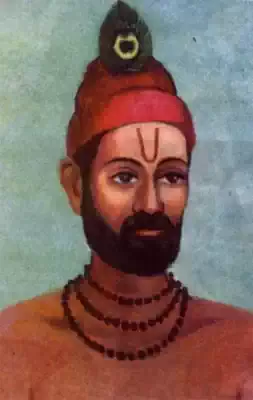
Kabir
When The Day Came
When The Day Came
When the Day came -
The Day I had lived and died for -
The Day that is not in any calendar -
Clouds heavy with love
Showered me with wild abundance.
Inside me, my soul was drenched.
Around me, even the desert grew green.
When the Day came -
The Day I had lived and died for -
The Day that is not in any calendar -
Clouds heavy with love
Showered me with wild abundance.
Inside me, my soul was drenched.
Around me, even the desert grew green.
398
Kabir
The self forgets itself
The self forgets itself
The self forgets itself
as a frantic dog in a glass temple
barks himself to death;
as a lion, seeing a form in the well,
leaps on the image;
as a rutting elephant sticks his tusk
in a crystal boulder.
The monkey has his fistful of sweets
and won't let go. So
from house to house
he gibbers.
Kabir says, parrot-on-a-pole:
who has caught you?
The self forgets itself
as a frantic dog in a glass temple
barks himself to death;
as a lion, seeing a form in the well,
leaps on the image;
as a rutting elephant sticks his tusk
in a crystal boulder.
The monkey has his fistful of sweets
and won't let go. So
from house to house
he gibbers.
Kabir says, parrot-on-a-pole:
who has caught you?
295

Joyce Kilmer
Trees
Trees
I think that I shall never see
A poem as lovely as a tree.
A tree whose hungry mouth is prest
Against the earth's sweet flowing breast;
A tree that looks at God all day,
And lifts her leafy arms to pray;
A tree that may in Summer wear
A nest of robins in her hair;
Upon whose bosom snow has lain;
Who intimately lives with rain.
Poems are made by fools like me,
But only God can make a tree.
I think that I shall never see
A poem as lovely as a tree.
A tree whose hungry mouth is prest
Against the earth's sweet flowing breast;
A tree that looks at God all day,
And lifts her leafy arms to pray;
A tree that may in Summer wear
A nest of robins in her hair;
Upon whose bosom snow has lain;
Who intimately lives with rain.
Poems are made by fools like me,
But only God can make a tree.
190
Joyce Kilmer
Dave Lilly
Dave Lilly
There's a brook on the side of Greylock that used to be full of trout,
But there's nothing there now but minnows; they say it is all fished out.
I fished there many a Summer day some twenty years ago,
And I never quit without getting a mess of a dozen or so.
There was a man, Dave Lilly, who lived on the North Adams road,
And he spent all his time fishing, while his neighbors reaped and sowed.
He was the luckiest fisherman in the Berkshire hills, I think.
And when he didn't go fishing he'd sit in the tavern and drink.
Well, Dave is dead and buried and nobody cares very much;
They have no use in Greylock for drunkards and loafers and such.
But I always liked Dave Lilly, he was pleasant as you could wish;
He was shiftless and good-for-nothing, but he certainly could fish.
The other night I was walking up the hill from Williamstown
And I came to the brook I mentioned,
and I stopped on the bridge and sat down.
I looked at the blackened water with its little flecks of white
And I heard it ripple and whisper in the still of the Summer night.
And after I'd been there a minute it seemed to me I could feel
The presence of someone near me, and I heard the hum of a reel.
And the water was churned and broken, and something was brought to land
By a twist and flirt of a shadowy rod in a deft and shadowy hand.
I scrambled down to the brookside and hunted all about;
There wasn't a sign of a fisherman; there wasn't a sign of a trout.
But I heard somebody chuckle behind the hollow oak
And I got a whiff of tobacco like Lilly used to smoke.
It's fifteen years, they tell me, since anyone fished that brook;
And there's nothing in it but minnows that nibble the bait off your hook.
But before the sun has risen and after the moon has set
I know that it's full of ghostly trout for Lilly's ghost to get.
I guess I'll go to the tavern and get a bottle of rye
And leave it down by the hollow oak, where Lilly's ghost went by.
I meant to go up on the hillside and try to find his grave
And put some flowers on it -- but this will be better for Dave.
There's a brook on the side of Greylock that used to be full of trout,
But there's nothing there now but minnows; they say it is all fished out.
I fished there many a Summer day some twenty years ago,
And I never quit without getting a mess of a dozen or so.
There was a man, Dave Lilly, who lived on the North Adams road,
And he spent all his time fishing, while his neighbors reaped and sowed.
He was the luckiest fisherman in the Berkshire hills, I think.
And when he didn't go fishing he'd sit in the tavern and drink.
Well, Dave is dead and buried and nobody cares very much;
They have no use in Greylock for drunkards and loafers and such.
But I always liked Dave Lilly, he was pleasant as you could wish;
He was shiftless and good-for-nothing, but he certainly could fish.
The other night I was walking up the hill from Williamstown
And I came to the brook I mentioned,
and I stopped on the bridge and sat down.
I looked at the blackened water with its little flecks of white
And I heard it ripple and whisper in the still of the Summer night.
And after I'd been there a minute it seemed to me I could feel
The presence of someone near me, and I heard the hum of a reel.
And the water was churned and broken, and something was brought to land
By a twist and flirt of a shadowy rod in a deft and shadowy hand.
I scrambled down to the brookside and hunted all about;
There wasn't a sign of a fisherman; there wasn't a sign of a trout.
But I heard somebody chuckle behind the hollow oak
And I got a whiff of tobacco like Lilly used to smoke.
It's fifteen years, they tell me, since anyone fished that brook;
And there's nothing in it but minnows that nibble the bait off your hook.
But before the sun has risen and after the moon has set
I know that it's full of ghostly trout for Lilly's ghost to get.
I guess I'll go to the tavern and get a bottle of rye
And leave it down by the hollow oak, where Lilly's ghost went by.
I meant to go up on the hillside and try to find his grave
And put some flowers on it -- but this will be better for Dave.
166
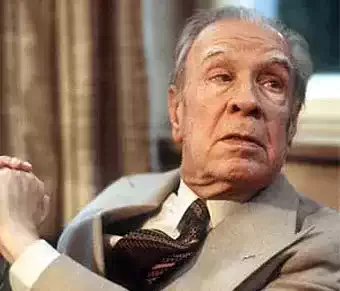
Jorge Luis Borges
To a Cat
To a Cat
Mirrors are not more silent
nor the creeping dawn more secretive;
in the moonlight, you are that panther
we catch sight of from afar.
By the inexplicable workings of a divine law,
we look for you in vain;
More remote, even, than the Ganges or the setting sun,
yours is the solitude, yours the secret.
Your haunch allows the lingering
caress of my hand. You have accepted,
since that long forgotten past,
the love of the distrustful hand.
You belong to another time. You are lord
of a place bounded like a dream.
Mirrors are not more silent
nor the creeping dawn more secretive;
in the moonlight, you are that panther
we catch sight of from afar.
By the inexplicable workings of a divine law,
we look for you in vain;
More remote, even, than the Ganges or the setting sun,
yours is the solitude, yours the secret.
Your haunch allows the lingering
caress of my hand. You have accepted,
since that long forgotten past,
the love of the distrustful hand.
You belong to another time. You are lord
of a place bounded like a dream.
661

Jonathan Swift
Elegy Upon Tiger
Elegy Upon Tiger
Her dead lady's joy and comfort,
Who departed this life
The last day of March, 1727:
To the great joy of Bryan
That his antagonist is gone.
And is poor Tiger laid at last so low?
O day of sorrow! -Day of dismal woe!
Bloodhounds, or spaniels, lap-dogs, 'tis all one,
When Death once whistles -snap! -away they're gone.
See how she lies, and hangs her lifeless ears,
Bathed in her mournful lady's tears!
Dumb is her throat, and wagless is her tail,
Doomed to the grave, to Death's eternal jail!
In a few days this lovely creature must
First turn to clay, and then be changed to dust.
That mouth which used its lady's mouth to lick
Must yield its jaw-bones to the worms to pick.
That mouth which used the partridge-wing to eat
Must give its palate to the worms to eat.
Methinks I see her now in Charon's boat
Bark at the Stygian fish which round it float;
While Cerberus, alarmed to hear the sound,
Makes Hell's wide concave bellow all around.
She sees him not, but hears him through the dark,
And valiantly returns him bark for bark.
But now she trembles -though a ghost, she dreads
To see a dog with three large yawning heads.
Spare her, you hell-hounds, case your frightful paws,
And let poor Tiger 'scape your furious jaws.
Let her go safe to the Elysian plains,
Where Hylax barks among the Mantuan swains;
There let her frisk about her new-found love:
She loved a dog when she was here above.
The Epitaph
Here lies beneath this marble
An animal could bark, or warble:
Sometimes a bitch, sometimes a bird,
Could eat a tart, or eat a t -.
Her dead lady's joy and comfort,
Who departed this life
The last day of March, 1727:
To the great joy of Bryan
That his antagonist is gone.
And is poor Tiger laid at last so low?
O day of sorrow! -Day of dismal woe!
Bloodhounds, or spaniels, lap-dogs, 'tis all one,
When Death once whistles -snap! -away they're gone.
See how she lies, and hangs her lifeless ears,
Bathed in her mournful lady's tears!
Dumb is her throat, and wagless is her tail,
Doomed to the grave, to Death's eternal jail!
In a few days this lovely creature must
First turn to clay, and then be changed to dust.
That mouth which used its lady's mouth to lick
Must yield its jaw-bones to the worms to pick.
That mouth which used the partridge-wing to eat
Must give its palate to the worms to eat.
Methinks I see her now in Charon's boat
Bark at the Stygian fish which round it float;
While Cerberus, alarmed to hear the sound,
Makes Hell's wide concave bellow all around.
She sees him not, but hears him through the dark,
And valiantly returns him bark for bark.
But now she trembles -though a ghost, she dreads
To see a dog with three large yawning heads.
Spare her, you hell-hounds, case your frightful paws,
And let poor Tiger 'scape your furious jaws.
Let her go safe to the Elysian plains,
Where Hylax barks among the Mantuan swains;
There let her frisk about her new-found love:
She loved a dog when she was here above.
The Epitaph
Here lies beneath this marble
An animal could bark, or warble:
Sometimes a bitch, sometimes a bird,
Could eat a tart, or eat a t -.
233
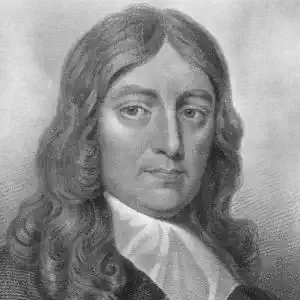
John Milton
Sonnet 01
Sonnet 01
I
O Nightingale, that on yon bloomy Spray
Warbl'st at eeve, when all the Woods are still,
Thou with fresh hope the Lovers heart dost fill,
While the jolly hours lead on propitious May,
Thy liquid notes that close the eye of Day,
First heard before the shallow Cuccoo's bill
Portend success in love; O if Jove's will
Have linkt that amorous power to thy soft lay,
Now timely sing, ere the rude Bird of Hate
Foretell my hopeles doom in som Grove ny:
As thou from yeer to yeer hast sung too late
For my relief; yet hadst no reason why,
Whether the Muse, or Love call thee his mate,
Both them I serve, and of their train am I.
I
O Nightingale, that on yon bloomy Spray
Warbl'st at eeve, when all the Woods are still,
Thou with fresh hope the Lovers heart dost fill,
While the jolly hours lead on propitious May,
Thy liquid notes that close the eye of Day,
First heard before the shallow Cuccoo's bill
Portend success in love; O if Jove's will
Have linkt that amorous power to thy soft lay,
Now timely sing, ere the rude Bird of Hate
Foretell my hopeles doom in som Grove ny:
As thou from yeer to yeer hast sung too late
For my relief; yet hadst no reason why,
Whether the Muse, or Love call thee his mate,
Both them I serve, and of their train am I.
947
John Milton
Psalm 08
Psalm 08
Aug. 14. 1653.
O Jehovah our Lord how wondrous great
And glorious is thy name through all the earth?
So as above the Heavens thy praise to set
Out of the tender mouths of latest bearth,
Out of the mouths of babes and sucklings thou
Hast founded strength because of all thy foes
To stint th'enemy, and slack th'avengers brow
That bends his rage thy providence to oppose.
When I behold thy Heavens, thy Fingers art,
The Moon and Starrs which thou so bright hast set,
In the pure firmament, then saith my heart,
O What is man that thou remembrest yet,
And think'st upon him; or of man begot
That him thou visit'st and of him art found;
Scarce to be less then Gods, thou mad'st his lot,
With honour and with state thou hast him crown'd.
O're the works of thy hand thou mad'st him Lord,
Thou hast put all under his lordly feet,
All Flocks, and Herds, by thy commanding word,
All beasts that in the field or forrest meet.
Fowl of the Heavens, and Fish that through the wet
Sea-paths in shoals do slide. And know no dearth.
O Jehovah our Lord how wondrous great
And glorious is thy name through all the earth.
Aug. 14. 1653.
O Jehovah our Lord how wondrous great
And glorious is thy name through all the earth?
So as above the Heavens thy praise to set
Out of the tender mouths of latest bearth,
Out of the mouths of babes and sucklings thou
Hast founded strength because of all thy foes
To stint th'enemy, and slack th'avengers brow
That bends his rage thy providence to oppose.
When I behold thy Heavens, thy Fingers art,
The Moon and Starrs which thou so bright hast set,
In the pure firmament, then saith my heart,
O What is man that thou remembrest yet,
And think'st upon him; or of man begot
That him thou visit'st and of him art found;
Scarce to be less then Gods, thou mad'st his lot,
With honour and with state thou hast him crown'd.
O're the works of thy hand thou mad'st him Lord,
Thou hast put all under his lordly feet,
All Flocks, and Herds, by thy commanding word,
All beasts that in the field or forrest meet.
Fowl of the Heavens, and Fish that through the wet
Sea-paths in shoals do slide. And know no dearth.
O Jehovah our Lord how wondrous great
And glorious is thy name through all the earth.
479
John Milton
Paradise Lost: Book 08
Paradise Lost: Book 08
The Angel ended, and in Adam's ear
So charming left his voice, that he a while
Thought him still speaking, still stood fixed to hear;
Then, as new waked, thus gratefully replied.
What thanks sufficient, or what recompence
Equal, have I to render thee, divine
Historian, who thus largely hast allayed
The thirst I had of knowledge, and vouchsafed
This friendly condescension to relate
Things, else by me unsearchable; now heard
With wonder, but delight, and, as is due,
With glory attributed to the high
Creator! Something yet of doubt remains,
Which only thy solution can resolve.
When I behold this goodly frame, this world,
Of Heaven and Earth consisting; and compute
Their magnitudes; this Earth, a spot, a grain,
An atom, with the firmament compared
And all her numbered stars, that seem to roll
Spaces incomprehensible, (for such
Their distance argues, and their swift return
Diurnal,) merely to officiate light
Round this opacous Earth, this punctual spot,
One day and night; in all her vast survey
Useless besides; reasoning I oft admire,
How Nature wise and frugal could commit
Such disproportions, with superfluous hand
So many nobler bodies to create,
Greater so manifold, to this one use,
For aught appears, and on their orbs impose
Such restless revolution day by day
Repeated; while the sedentary Earth,
That better might with far less compass move,
Served by more noble than herself, attains
Her end without least motion, and receives,
As tribute, such a sumless journey brought
Of incorporeal speed, her warmth and light;
Speed, to describe whose swiftness number fails.
So spake our sire, and by his countenance seemed
Entering on studious thoughts abstruse; which Eve
Perceiving, where she sat retired in sight,
With lowliness majestick from her seat,
And grace that won who saw to wish her stay,
Rose, and went forth among her fruits and flowers,
To visit how they prospered, bud and bloom,
Her nursery; they at her coming sprung,
And, touched by her fair tendance, gladlier grew.
Yet went she not, as not with such discourse
Delighted, or not capable her ear
Of what was high: such pleasure she reserved,
Adam relating, she sole auditress;
Her husband the relater she preferred
Before the Angel, and of him to ask
Chose rather; he, she knew, would intermix
Grateful digressions, and solve high dispute
With conjugal caresses: from his lip
Not words alone pleased her. O! when meet now
Such pairs, in love and mutual honour joined?
With Goddess-like demeanour forth she went,
Not unattended; for on her, as Queen,
A pomp of winning Graces waited still,
And from about her shot darts of desire
Into all eyes, to wish her still in sight.
And Raphael now, to Adam's doubt proposed,
Benevolent and facile thus replied.
To ask or search, I blame thee not; for Heaven
Is as the book of God before thee set,
Wherein to read his wonderous works, and learn
His seasons, hours, or days, or months, or years:
This to attain, whether Heaven move or Earth,
Imports not, if thou reckon right; the rest
From Man or Angel the great Architect
Did wisely to conceal, and not divulge
His secrets to be scanned by them who ought
Rather admire; or, if they list to try
Conjecture, he his fabrick of the Heavens
Hath left to their disputes, perhaps to move
His laughter at their quaint opinions wide
Hereafter; when they come to model Heaven
And calculate the stars, how they will wield
The mighty frame; how build, unbuild, contrive
To save appearances; how gird the sphere
With centrick and eccentrick scribbled o'er,
Cycle and epicycle, orb in orb:
Already by thy reasoning this I guess,
Who art to lead thy offspring, and supposest
That bodies bright and greater should not serve
The less not bright, nor Heaven such journeys run,
Earth sitting still, when she alone receives
The benefit: Consider first, that great
Or bright infers not excellence: the Earth
Though, in comparison of Heaven, so small,
Nor glistering, may of solid good contain
More plenty than the sun that barren shines;
Whose virtue on itself works no effect,
But in the fruitful Earth; there first received,
His beams, unactive else, their vigour find.
Yet not to Earth are those bright luminaries
Officious; but to thee, Earth's habitant.
And for the Heaven's wide circuit, let it speak
The Maker's high magnificence, who built
So spacious, and his line stretched out so far;
That Man may know he dwells not in his own;
An edifice too large for him to fill,
Lodged in a small partition; and the rest
Ordained for uses to his Lord best known.
The swiftness of those circles attribute,
Though numberless, to his Omnipotence,
That to corporeal substances could add
Speed almost spiritual: Me thou thinkest not slow,
Who since the morning-hour set out from Heaven
Where God resides, and ere mid-day arrived
In Eden; distance inexpressible
By numbers that have name. But this I urge,
Admitting motion in the Heavens, to show
Invalid that which thee to doubt it moved;
Not that I so affirm, though so it seem
To thee who hast thy dwelling here on Earth.
God, to remove his ways from human sense,
Placed Heaven from Earth so far, that earthly sight,
If it presume, might err in things too high,
And no advantage gain. What if the sun
Be center to the world; and other stars,
By his attractive virtue and their own
Incited, dance about him various rounds?
Their wandering course now high, now low, then hid,
Progressive, retrograde, or standing still,
In six thou seest; and what if seventh to these
The planet earth, so stedfast though she seem,
Insensibly three different motions move?
Which else to several spheres thou must ascribe,
Moved contrary with thwart obliquities;
Or save the sun his labour, and that swift
Nocturnal and diurnal rhomb supposed,
Invisible else above all stars, the wheel
Of day and night; which needs not thy belief,
If earth, industrious of herself, fetch day
Travelling east, and with her part averse
From the sun's beam meet night, her other part
Still luminous by his ray. What if that light,
Sent from her through the wide transpicuous air,
To the terrestrial moon be as a star,
Enlightening her by day, as she by night
This earth? reciprocal, if land be there,
Fields and inhabitants: Her spots thou seest
As clouds, and clouds may rain, and rain produce
Fruits in her softened soil for some to eat
Allotted there; and other suns perhaps,
With their attendant moons, thou wilt descry,
Communicating male and female light;
Which two great sexes animate the world,
Stored in each orb perhaps with some that live.
For such vast room in Nature unpossessed
By living soul, desart and desolate,
Only to shine, yet scarce to contribute
Each orb a glimpse of light, conveyed so far
Down to this habitable, which returns
Light back to them, is obvious to dispute.
But whether thus these things, or whether not;
But whether the sun, predominant in Heaven,
Rise on the earth; or earth rise on the sun;
He from the east his flaming road begin;
Or she from west her silent course advance,
With inoffensive pace that spinning sleeps
On her soft axle, while she paces even,
And bears thee soft with the smooth hair along;
Sollicit not thy thoughts with matters hid;
Leave them to God above; him serve, and fear!
Of other creatures, as him pleases best,
Wherever placed, let him dispose; joy thou
In what he gives to thee, this Paradise
And thy fair Eve; Heaven is for thee too high
To know what passes there; be lowly wise:
Think only what concerns thee, and thy being;
Dream not of other worlds, what creatures there
Live, in what state, condition, or degree;
Contented that thus far hath been revealed
Not of Earth only, but of highest Heaven.
To whom thus Adam, cleared of doubt, replied.
How fully hast thou satisfied me, pure
Intelligence of Heaven, Angel serene!
And, freed from intricacies, taught to live
The easiest way; nor with perplexing thoughts
To interrupt the sweet of life, from which
God hath bid dwell far off all anxious cares,
And not molest us; unless we ourselves
Seek them with wandering thoughts, and notions vain.
But apt the mind or fancy is to rove
Unchecked, and of her roving is no end;
Till warned, or by experience taught, she learn,
That, not to know at large of things remote
From use, obscure and subtle; but, to know
That which before us lies in daily life,
Is the prime wisdom: What is more, is fume,
Or emptiness, or fond impertinence:
And renders us, in things that most concern,
Unpractised, unprepared, and still to seek.
Therefore from this high pitch let us descend
A lower flight, and speak of things at hand
Useful; whence, haply, mention may arise
Of something not unseasonable to ask,
By sufferance, and thy wonted favour, deigned.
Thee I have heard relating what was done
Ere my remembrance: now, hear me relate
My story, which perhaps thou hast not heard;
And day is not yet spent; till then thou seest
How subtly to detain thee I devise;
Inviting thee to hear while I relate;
Fond! were it not in hope of thy reply:
For, while I sit with thee, I seem in Heaven;
And sweeter thy discourse is to my ear
Than fruits of palm-tree pleasantest to thirst
And hunger both, from labour, at the hour
Of sweet repast; they satiate, and soon fill,
Though pleasant; but thy words, with grace divine
Imbued, bring to their sweetness no satiety.
To whom thus Raphael answered heavenly meek.
Nor are thy lips ungraceful, Sire of men,
Nor tongue ineloquent; for God on thee
Abundantly his gifts hath also poured
Inward and outward both, his image fair:
Speaking, or mute, all comeliness and grace
Attends thee; and each word, each motion, forms;
Nor less think we in Heaven of thee on Earth
Than of our fellow-servant, and inquire
Gladly into the ways of God with Man:
For God, we see, hath honoured thee, and set
On Man his equal love: Say therefore on;
For I that day was absent, as befel,
Bound on a voyage uncouth and obscure,
Far on excursion toward the gates of Hell;
Squared in full legion (such command we had)
To see that none thence issued forth a spy,
Or enemy, while God was in his work;
Lest he, incensed at such eruption bold,
Destruction with creation might have mixed.
Not that they durst without his leave attempt;
But us he sends upon his high behests
For state, as Sovran King; and to inure
Our prompt obedience. Fast we found, fast shut,
The dismal gates, and barricadoed strong;
But long ere our approaching heard within
Noise, other than the sound of dance or song,
Torment, and loud lament, and furious rage.
Glad we returned up to the coasts of light
Ere sabbath-evening: so we had in charge.
But thy relation now; for I attend,
Pleased with thy words no less than thou with mine.
So spake the Godlike Power, and thus our Sire.
For Man to tell how human life began
Is hard; for who himself beginning knew
Desire with thee still longer to converse
Induced me. As new waked from soundest sleep,
Soft on the flowery herb I found me laid,
In balmy sweat; which with his beams the sun
Soon dried, and on the reeking moisture fed.
Straight toward Heaven my wondering eyes I turned,
And gazed a while the ample sky; till, raised
By quick instinctive motion, up I sprung,
As thitherward endeavouring, and upright
Stood on my feet: about me round I saw
Hill, dale, and shady woods, and sunny plains,
And liquid lapse of murmuring streams; by these,
Creatures that lived and moved, and walked, or flew;
Birds on the branches warbling; all things smiled;
With fragrance and with joy my heart o'erflowed.
Myself I then perused, and limb by limb
Surveyed, and sometimes went, and sometimes ran
With supple joints, as lively vigour led:
But who I was, or where, or from what cause,
Knew not; to speak I tried, and forthwith spake;
My tongue obeyed, and readily could name
Whate'er I saw. Thou Sun, said I, fair light,
And thou enlightened Earth, so fresh and gay,
Ye Hills, and Dales, ye Rivers, Woods, and Plains,
And ye that live and move, fair Creatures, tell,
Tell, if ye saw, how I came thus, how here?--
Not of myself;--by some great Maker then,
In goodness and in power pre-eminent:
Tell me, how may I know him, how adore,
From whom I have that thus I move and live,
And feel that I am happier than I know.--
While thus I called, and strayed I knew not whither,
From where I first drew air, and first beheld
This happy light; when, answer none returned,
On a green shady bank, profuse of flowers,
Pensive I sat me down: There gentle sleep
First found me, and with soft oppression seised
My droused sense, untroubled, though I thought
I then was passing to my former state
Insensible, and forthwith to dissolve:
When suddenly stood at my head a dream,
Whose inward apparition gently moved
My fancy to believe I yet had being,
And lived: One came, methought, of shape divine,
And said, 'Thy mansion wants thee, Adam; rise,
'First Man, of men innumerable ordained
'First Father! called by thee, I come thy guide
'To the garden of bliss, thy seat prepared.'
So saying, by the hand he took me raised,
And over fields and waters, as in air
Smooth-sliding without step, last led me up
A woody mountain; whose high top was plain,
A circuit wide, enclosed, with goodliest trees
Planted, with walks, and bowers; that what I saw
Of Earth before scarce pleasant seemed. Each tree,
Loaden with fairest fruit that hung to the eye
Tempting, stirred in me sudden appetite
To pluck and eat; whereat I waked, and found
Before mine eyes all real, as the dream
Had lively shadowed: Here had new begun
My wandering, had not he, who was my guide
Up hither, from among the trees appeared,
Presence Divine. Rejoicing, but with awe,
In adoration at his feet I fell
Submiss: He reared me, and 'Whom thou soughtest I am,'
Said mildly, 'Author of all this thou seest
'Above, or round about thee, or beneath.
'This Paradise I give thee, count it thine
'To till and keep, and of the fruit to eat:
'Of every tree that in the garden grows
'Eat freely with glad heart; fear here no dearth:
'But of the tree whose operation brings
'Knowledge of good and ill, which I have set
'The pledge of thy obedience and thy faith,
'Amid the garden by the tree of life,
'Remember what I warn thee, shun to taste,
'And shun the bitter consequence: for know,
'The day thou eatest thereof, my sole command
'Transgressed, inevitably thou shalt die,
'From that day mortal; and this happy state
'Shalt lose, expelled from hence into a world
'Of woe and sorrow.' Sternly he pronounced
The rigid interdiction, which resounds
Yet dreadful in mine ear, though in my choice
Not to incur; but soon his clear aspect
Returned, and gracious purpose thus renewed.
'Not only these fair bounds, but all the Earth
'To thee and to thy race I give; as lords
'Possess it, and all things that therein live,
'Or live in sea, or air; beast, fish, and fowl.
'In sign whereof, each bird and beast behold
'After their kinds; I bring them to receive
'From thee their names, and pay thee fealty
'With low subjection; understand the same
'Of fish within their watery residence,
'Not hither summoned, since they cannot change
'Their element, to draw the thinner air.'
As thus he spake, each bird and beast behold
Approaching two and two; these cowering low
With blandishment; each bird stooped on his wing.
I named them, as they passed, and understood
Their nature, with such knowledge God endued
My sudden apprehension: But in these
I found not what methought I wanted still;
And to the heavenly Vision thus presumed.
O, by what name, for thou above all these,
Above mankind, or aught than mankind higher,
Surpassest far my naming; how may I
Adore thee, Author of this universe,
And all this good to man? for whose well being
So amply, and with hands so liberal,
Thou hast provided all things: But with me
I see not who partakes. In solitude
What happiness, who can enjoy alone,
Or, all enjoying, what contentment find?
Thus I presumptuous; and the Vision bright,
As with a smile more brightened, thus replied.
What callest thou solitude? Is not the Earth
With various living creatures, and the air
Replenished, and all these at thy command
To come and play before thee? Knowest thou not
Their language and their ways? They also know,
And reason not contemptibly: With these
Find pastime, and bear rule; thy realm is large.
So spake the Universal Lord, and seemed
So ordering: I, with leave of speech implored,
And humble deprecation, thus replied.
Let not my words offend thee, Heavenly Power;
My Maker, be propitious while I speak.
Hast thou not made me here thy substitute,
And these inferiour far beneath me set?
Among unequals what society
Can sort, what harmony, or true delight?
Which must be mutual, in proportion due
Given and received; but, in disparity
The one intense, the other still remiss,
Cannot well suit with either, but soon prove
Tedious alike: Of fellowship I speak
Such as I seek, fit to participate
All rational delight: wherein the brute
Cannot be human consort: They rejoice
Each with their kind, lion with lioness;
So fitly them in pairs thou hast combined:
Much less can bird with beast, or fish with fowl
So well converse, nor with the ox the ape;
Worse then can man with beast, and least of all.
Whereto the Almighty answered, not displeased.
A nice and subtle happiness, I see,
Thou to thyself proposest, in the choice
Of thy associates, Adam! and wilt taste
No pleasure, though in pleasure, solitary.
What thinkest thou then of me, and this my state?
Seem I to thee sufficiently possessed
Of happiness, or not? who am alone
From all eternity; for none I know
Second to me or like, equal much less.
How have I then with whom to hold converse,
Save with the creatures which I made, and those
To me inferiour, infinite descents
Beneath what other creatures are to thee?
He ceased; I lowly answered. To attain
The highth and depth of thy eternal ways
All human thoughts come short, Supreme of things!
Thou in thyself art perfect, and in thee
Is no deficience found: Not so is Man,
But in degree; the cause of his desire
By conversation with his like to help
Or solace his defects. No need that thou
Shouldst propagate, already Infinite;
And through all numbers absolute, though One:
But Man by number is to manifest
His single imperfection, and beget
Like of his like, his image multiplied,
In unity defective; which requires
Collateral love, and dearest amity.
Thou in thy secresy although alone,
Best with thyself accompanied, seekest not
Social communication; yet, so pleased,
Canst raise thy creature to what highth thou wilt
Of union or communion, deified:
I, by conversing, cannot these erect
From prone; nor in their ways complacence find.
Thus I emboldened spake, and freedom used
Permissive, and acceptance found; which gained
This answer from the gracious Voice Divine.
Thus far to try thee, Adam, I was pleased;
And find thee knowing, not of beasts alone,
Which thou hast rightly named, but of thyself;
Expressing well the spirit within thee free,
My image, not imparted to the brute;
Whose fellowship therefore unmeet for thee
Good reason was thou freely shouldst dislike;
And be so minded still: I, ere thou spakest,
Knew it not good for Man to be alone;
And no such company as then thou sawest
Intended thee; for trial only brought,
To see how thou couldest judge of fit and meet:
What next I bring shall please thee, be assured,
Thy likeness, thy fit help, thy other self,
Thy wish exactly to thy heart's desire.
He ended, or I heard no more; for now
My earthly by his heavenly overpowered,
Which it had long stood under, strained to the highth
In that celestial colloquy sublime,
As with an object that excels the sense
Dazzled and spent, sunk down; and sought repair
Of sleep, which instantly fell on me, called
By Nature as in aid, and closed mine eyes.
Mine eyes he closed, but open left the cell
Of fancy, my internal sight; by which,
Abstract as in a trance, methought I saw,
Though sleeping, where I lay, and saw the shape
Still glorious before whom awake I stood:
Who stooping opened my left side, and took
From thence a rib, with cordial spirits warm,
And life-blood streaming fresh; wide was the wound,
But suddenly with flesh filled up and healed:
The rib he formed and fashioned with his hands;
Under his forming hands a creature grew,
Man-like, but different sex; so lovely fair,
That what seemed fair in all the world, seemed now
Mean, or in her summed up, in her contained
And in her looks; which from that time infused
Sweetness into my heart, unfelt before,
And into all things from her air inspired
The spirit of love and amorous delight.
She disappeared, and left me dark; I waked
To find her, or for ever to deplore
Her loss, and other pleasures all abjure:
When out of hope, behold her, not far off,
Such as I saw her in my dream, adorned
With what all Earth or Heaven could bestow
To make her amiable: On she came,
Led by her heavenly Maker, though unseen,
And guided by his voice; nor uninformed
Of nuptial sanctity, and marriage rites:
Grace was in all her steps, Heaven in her eye,
In every gesture dignity and love.
I, overjoyed, could not forbear aloud.
This turn hath made amends; thou hast fulfilled
Thy words, Creator bounteous and benign,
Giver of all things fair! but fairest this
Of all thy gifts! nor enviest. I now see
Bone of my bone, flesh of my flesh, myself
Before me: Woman is her name;of Man
Extracted: for this cause he shall forego
Father and mother, and to his wife adhere;
And they shall be one flesh, one heart, one soul.
She heard me thus; and though divinely brought,
Yet innocence, and virgin modesty,
Her virtue, and the conscience of her worth,
That would be wooed, and not unsought be won,
Not obvious, not obtrusive, but, retired,
The more desirable; or, to say all,
Nature herself, though pure of sinful thought,
Wrought in her so, that, seeing me, she turned:
I followed her; she what was honour knew,
And with obsequious majesty approved
My pleaded reason. To the nuptial bower
I led her blushing like the morn: All Heaven,
And happy constellations, on that hour
Shed their selectest influence; the Earth
Gave sign of gratulation, and each hill;
Joyous the birds; fresh gales and gentle airs
Whispered it to the woods, and from their wings
Flung rose, flung odours from the spicy shrub,
Disporting, till the amorous bird of night
Sung spousal, and bid haste the evening-star
On his hill top, to light the bridal lamp.
Thus have I told thee all my state, and brought
My story to the sum of earthly bliss,
Which I enjoy; and must confess to find
In all things else delight indeed, but such
As, used or not, works in the mind no change,
Nor vehement desire; these delicacies
I mean of taste, sight, smell, herbs, fruits, and flowers,
Walks, and the melody of birds: but here
Far otherwise, transported I behold,
Transported touch; here passion first I felt,
Commotion strange! in all enjoyments else
Superiour and unmoved; here only weak
Against the charm of Beauty's powerful glance.
Or Nature failed in me, and left some part
Not proof enough such object to sustain;
Or, from my side subducting, took perhaps
More than enough; at least on her bestowed
Too much of ornament, in outward show
Elaborate, of inward less exact.
For well I understand in the prime end
Of Nature her the inferiour, in the mind
And inward faculties, which most excel;
In outward also her resembling less
His image who made both, and less expressing
The character of that dominion given
O'er other creatures: Yet when I approach
Her loveliness, so absolute she seems
And in herself complete, so well to know
Her own, that what she wills to do or say,
Seems wisest, virtuousest, discreetest, best:
All higher knowledge in her presence falls
Degraded; Wisdom in discourse with her
Loses discountenanced, and like Folly shows;
Authority and Reason on her wait,
As one intended first, not after made
Occasionally; and, to consummate all,
Greatness of mind and Nobleness their seat
Build in her loveliest, and create an awe
About her, as a guard angelick placed.
To whom the Angel with contracted brow.
Accuse not Nature, she hath done her part;
Do thou but thine; and be not diffident
Of Wisdom; she deserts thee not, if thou
Dismiss not her, when most thou needest her nigh,
By attributing overmuch to things
Less excellent, as thou thyself perceivest.
For, what admirest thou, what transports thee so,
An outside? fair, no doubt, and worthy well
Thy cherishing, thy honouring, and thy love;
Not thy subjection: Weigh with her thyself;
Then value: Oft-times nothing profits more
Than self-esteem, grounded on just and right
Well managed; of that skill the more thou knowest,
The more she will acknowledge thee her head,
And to realities yield all her shows:
Made so adorn for thy delight the more,
So awful, that with honour thou mayest love
Thy mate, who sees when thou art seen least wise.
But if the sense of touch, whereby mankind
Is propagated, seem such dear delight
Beyond all other; think the same vouchsafed
To cattle and each beast; which would not be
To them made common and divulged, if aught
Therein enjoyed were worthy to subdue
The soul of man, or passion in him move.
What higher in her society thou findest
Attractive, human, rational, love still;
In loving thou dost well, in passion not,
Wherein true love consists not: Love refines
The thoughts, and heart enlarges; hath his seat
In reason, and is judicious; is the scale
By which to heavenly love thou mayest ascend,
Not sunk in carnal pleasure; for which cause,
Among the beasts no mate for thee was found.
To whom thus, half abashed, Adam replied.
Neither her outside formed so fair, nor aught
In procreation common to all kinds,
(Though higher of the genial bed by far,
And with mysterious reverence I deem,)
So much delights me, as those graceful acts,
Those thousand decencies, that daily flow
From all her words and actions mixed with love
And sweet compliance, which declare unfeigned
Union of mind, or in us both one soul;
Harmony to behold in wedded pair
More grateful than harmonious sound to the ear.
Yet these subject not; I to thee disclose
What inward thence I feel, not therefore foiled,
Who meet with various objects, from the sense
Variously representing; yet, still free,
Approve the best, and follow what I approve.
To love, thou blamest me not; for Love, thou sayest,
Leads up to Heaven, is both the way and guide;
Bear with me then, if lawful what I ask:
Love not the heavenly Spirits, and how their love
Express they? by looks only? or do they mix
Irradiance, virtual or immediate touch?
To whom the Angel, with a smile that glowed
Celestial rosy red, Love's proper hue,
Answered. Let it suffice thee that thou knowest
Us happy, and without love no happiness.
Whatever pure thou in the body enjoyest,
(And pure thou wert created) we enjoy
In eminence; and obstacle find none
Of membrane, joint, or limb, exclusive bars;
Easier than air with air, if Spirits embrace,
Total they mix, union of pure with pure
Desiring, nor restrained conveyance need,
As flesh to mix with flesh, or soul with soul.
But I can now no more; the parting sun
Beyond the Earth's green Cape and verdant Isles
Hesperian sets, my signal to depart.
Be strong, live happy, and love! But, first of all,
Him, whom to love is to obey, and keep
His great command; take heed lest passion sway
Thy judgement to do aught, which else free will
Would not admit: thine, and of all thy sons,
The weal or woe in thee is placed; beware!
I in thy persevering shall rejoice,
And all the Blest: Stand fast;to stand or fall
Free in thine own arbitrement it lies.
Perfect within, no outward aid require;
And all temptation to transgress repel.
So saying, he arose; whom Adam thus
Followed with benediction. Since to part,
Go, heavenly guest, ethereal Messenger,
Sent from whose sovran goodness I adore!
Gentle to me and affable hath been
Thy condescension, and shall be honoured ever
With grateful memory: Thou to mankind
Be good and friendly still, and oft return!
So parted they; the Angel up to Heaven
From the thick shade, and Adam to his bower.
The Angel ended, and in Adam's ear
So charming left his voice, that he a while
Thought him still speaking, still stood fixed to hear;
Then, as new waked, thus gratefully replied.
What thanks sufficient, or what recompence
Equal, have I to render thee, divine
Historian, who thus largely hast allayed
The thirst I had of knowledge, and vouchsafed
This friendly condescension to relate
Things, else by me unsearchable; now heard
With wonder, but delight, and, as is due,
With glory attributed to the high
Creator! Something yet of doubt remains,
Which only thy solution can resolve.
When I behold this goodly frame, this world,
Of Heaven and Earth consisting; and compute
Their magnitudes; this Earth, a spot, a grain,
An atom, with the firmament compared
And all her numbered stars, that seem to roll
Spaces incomprehensible, (for such
Their distance argues, and their swift return
Diurnal,) merely to officiate light
Round this opacous Earth, this punctual spot,
One day and night; in all her vast survey
Useless besides; reasoning I oft admire,
How Nature wise and frugal could commit
Such disproportions, with superfluous hand
So many nobler bodies to create,
Greater so manifold, to this one use,
For aught appears, and on their orbs impose
Such restless revolution day by day
Repeated; while the sedentary Earth,
That better might with far less compass move,
Served by more noble than herself, attains
Her end without least motion, and receives,
As tribute, such a sumless journey brought
Of incorporeal speed, her warmth and light;
Speed, to describe whose swiftness number fails.
So spake our sire, and by his countenance seemed
Entering on studious thoughts abstruse; which Eve
Perceiving, where she sat retired in sight,
With lowliness majestick from her seat,
And grace that won who saw to wish her stay,
Rose, and went forth among her fruits and flowers,
To visit how they prospered, bud and bloom,
Her nursery; they at her coming sprung,
And, touched by her fair tendance, gladlier grew.
Yet went she not, as not with such discourse
Delighted, or not capable her ear
Of what was high: such pleasure she reserved,
Adam relating, she sole auditress;
Her husband the relater she preferred
Before the Angel, and of him to ask
Chose rather; he, she knew, would intermix
Grateful digressions, and solve high dispute
With conjugal caresses: from his lip
Not words alone pleased her. O! when meet now
Such pairs, in love and mutual honour joined?
With Goddess-like demeanour forth she went,
Not unattended; for on her, as Queen,
A pomp of winning Graces waited still,
And from about her shot darts of desire
Into all eyes, to wish her still in sight.
And Raphael now, to Adam's doubt proposed,
Benevolent and facile thus replied.
To ask or search, I blame thee not; for Heaven
Is as the book of God before thee set,
Wherein to read his wonderous works, and learn
His seasons, hours, or days, or months, or years:
This to attain, whether Heaven move or Earth,
Imports not, if thou reckon right; the rest
From Man or Angel the great Architect
Did wisely to conceal, and not divulge
His secrets to be scanned by them who ought
Rather admire; or, if they list to try
Conjecture, he his fabrick of the Heavens
Hath left to their disputes, perhaps to move
His laughter at their quaint opinions wide
Hereafter; when they come to model Heaven
And calculate the stars, how they will wield
The mighty frame; how build, unbuild, contrive
To save appearances; how gird the sphere
With centrick and eccentrick scribbled o'er,
Cycle and epicycle, orb in orb:
Already by thy reasoning this I guess,
Who art to lead thy offspring, and supposest
That bodies bright and greater should not serve
The less not bright, nor Heaven such journeys run,
Earth sitting still, when she alone receives
The benefit: Consider first, that great
Or bright infers not excellence: the Earth
Though, in comparison of Heaven, so small,
Nor glistering, may of solid good contain
More plenty than the sun that barren shines;
Whose virtue on itself works no effect,
But in the fruitful Earth; there first received,
His beams, unactive else, their vigour find.
Yet not to Earth are those bright luminaries
Officious; but to thee, Earth's habitant.
And for the Heaven's wide circuit, let it speak
The Maker's high magnificence, who built
So spacious, and his line stretched out so far;
That Man may know he dwells not in his own;
An edifice too large for him to fill,
Lodged in a small partition; and the rest
Ordained for uses to his Lord best known.
The swiftness of those circles attribute,
Though numberless, to his Omnipotence,
That to corporeal substances could add
Speed almost spiritual: Me thou thinkest not slow,
Who since the morning-hour set out from Heaven
Where God resides, and ere mid-day arrived
In Eden; distance inexpressible
By numbers that have name. But this I urge,
Admitting motion in the Heavens, to show
Invalid that which thee to doubt it moved;
Not that I so affirm, though so it seem
To thee who hast thy dwelling here on Earth.
God, to remove his ways from human sense,
Placed Heaven from Earth so far, that earthly sight,
If it presume, might err in things too high,
And no advantage gain. What if the sun
Be center to the world; and other stars,
By his attractive virtue and their own
Incited, dance about him various rounds?
Their wandering course now high, now low, then hid,
Progressive, retrograde, or standing still,
In six thou seest; and what if seventh to these
The planet earth, so stedfast though she seem,
Insensibly three different motions move?
Which else to several spheres thou must ascribe,
Moved contrary with thwart obliquities;
Or save the sun his labour, and that swift
Nocturnal and diurnal rhomb supposed,
Invisible else above all stars, the wheel
Of day and night; which needs not thy belief,
If earth, industrious of herself, fetch day
Travelling east, and with her part averse
From the sun's beam meet night, her other part
Still luminous by his ray. What if that light,
Sent from her through the wide transpicuous air,
To the terrestrial moon be as a star,
Enlightening her by day, as she by night
This earth? reciprocal, if land be there,
Fields and inhabitants: Her spots thou seest
As clouds, and clouds may rain, and rain produce
Fruits in her softened soil for some to eat
Allotted there; and other suns perhaps,
With their attendant moons, thou wilt descry,
Communicating male and female light;
Which two great sexes animate the world,
Stored in each orb perhaps with some that live.
For such vast room in Nature unpossessed
By living soul, desart and desolate,
Only to shine, yet scarce to contribute
Each orb a glimpse of light, conveyed so far
Down to this habitable, which returns
Light back to them, is obvious to dispute.
But whether thus these things, or whether not;
But whether the sun, predominant in Heaven,
Rise on the earth; or earth rise on the sun;
He from the east his flaming road begin;
Or she from west her silent course advance,
With inoffensive pace that spinning sleeps
On her soft axle, while she paces even,
And bears thee soft with the smooth hair along;
Sollicit not thy thoughts with matters hid;
Leave them to God above; him serve, and fear!
Of other creatures, as him pleases best,
Wherever placed, let him dispose; joy thou
In what he gives to thee, this Paradise
And thy fair Eve; Heaven is for thee too high
To know what passes there; be lowly wise:
Think only what concerns thee, and thy being;
Dream not of other worlds, what creatures there
Live, in what state, condition, or degree;
Contented that thus far hath been revealed
Not of Earth only, but of highest Heaven.
To whom thus Adam, cleared of doubt, replied.
How fully hast thou satisfied me, pure
Intelligence of Heaven, Angel serene!
And, freed from intricacies, taught to live
The easiest way; nor with perplexing thoughts
To interrupt the sweet of life, from which
God hath bid dwell far off all anxious cares,
And not molest us; unless we ourselves
Seek them with wandering thoughts, and notions vain.
But apt the mind or fancy is to rove
Unchecked, and of her roving is no end;
Till warned, or by experience taught, she learn,
That, not to know at large of things remote
From use, obscure and subtle; but, to know
That which before us lies in daily life,
Is the prime wisdom: What is more, is fume,
Or emptiness, or fond impertinence:
And renders us, in things that most concern,
Unpractised, unprepared, and still to seek.
Therefore from this high pitch let us descend
A lower flight, and speak of things at hand
Useful; whence, haply, mention may arise
Of something not unseasonable to ask,
By sufferance, and thy wonted favour, deigned.
Thee I have heard relating what was done
Ere my remembrance: now, hear me relate
My story, which perhaps thou hast not heard;
And day is not yet spent; till then thou seest
How subtly to detain thee I devise;
Inviting thee to hear while I relate;
Fond! were it not in hope of thy reply:
For, while I sit with thee, I seem in Heaven;
And sweeter thy discourse is to my ear
Than fruits of palm-tree pleasantest to thirst
And hunger both, from labour, at the hour
Of sweet repast; they satiate, and soon fill,
Though pleasant; but thy words, with grace divine
Imbued, bring to their sweetness no satiety.
To whom thus Raphael answered heavenly meek.
Nor are thy lips ungraceful, Sire of men,
Nor tongue ineloquent; for God on thee
Abundantly his gifts hath also poured
Inward and outward both, his image fair:
Speaking, or mute, all comeliness and grace
Attends thee; and each word, each motion, forms;
Nor less think we in Heaven of thee on Earth
Than of our fellow-servant, and inquire
Gladly into the ways of God with Man:
For God, we see, hath honoured thee, and set
On Man his equal love: Say therefore on;
For I that day was absent, as befel,
Bound on a voyage uncouth and obscure,
Far on excursion toward the gates of Hell;
Squared in full legion (such command we had)
To see that none thence issued forth a spy,
Or enemy, while God was in his work;
Lest he, incensed at such eruption bold,
Destruction with creation might have mixed.
Not that they durst without his leave attempt;
But us he sends upon his high behests
For state, as Sovran King; and to inure
Our prompt obedience. Fast we found, fast shut,
The dismal gates, and barricadoed strong;
But long ere our approaching heard within
Noise, other than the sound of dance or song,
Torment, and loud lament, and furious rage.
Glad we returned up to the coasts of light
Ere sabbath-evening: so we had in charge.
But thy relation now; for I attend,
Pleased with thy words no less than thou with mine.
So spake the Godlike Power, and thus our Sire.
For Man to tell how human life began
Is hard; for who himself beginning knew
Desire with thee still longer to converse
Induced me. As new waked from soundest sleep,
Soft on the flowery herb I found me laid,
In balmy sweat; which with his beams the sun
Soon dried, and on the reeking moisture fed.
Straight toward Heaven my wondering eyes I turned,
And gazed a while the ample sky; till, raised
By quick instinctive motion, up I sprung,
As thitherward endeavouring, and upright
Stood on my feet: about me round I saw
Hill, dale, and shady woods, and sunny plains,
And liquid lapse of murmuring streams; by these,
Creatures that lived and moved, and walked, or flew;
Birds on the branches warbling; all things smiled;
With fragrance and with joy my heart o'erflowed.
Myself I then perused, and limb by limb
Surveyed, and sometimes went, and sometimes ran
With supple joints, as lively vigour led:
But who I was, or where, or from what cause,
Knew not; to speak I tried, and forthwith spake;
My tongue obeyed, and readily could name
Whate'er I saw. Thou Sun, said I, fair light,
And thou enlightened Earth, so fresh and gay,
Ye Hills, and Dales, ye Rivers, Woods, and Plains,
And ye that live and move, fair Creatures, tell,
Tell, if ye saw, how I came thus, how here?--
Not of myself;--by some great Maker then,
In goodness and in power pre-eminent:
Tell me, how may I know him, how adore,
From whom I have that thus I move and live,
And feel that I am happier than I know.--
While thus I called, and strayed I knew not whither,
From where I first drew air, and first beheld
This happy light; when, answer none returned,
On a green shady bank, profuse of flowers,
Pensive I sat me down: There gentle sleep
First found me, and with soft oppression seised
My droused sense, untroubled, though I thought
I then was passing to my former state
Insensible, and forthwith to dissolve:
When suddenly stood at my head a dream,
Whose inward apparition gently moved
My fancy to believe I yet had being,
And lived: One came, methought, of shape divine,
And said, 'Thy mansion wants thee, Adam; rise,
'First Man, of men innumerable ordained
'First Father! called by thee, I come thy guide
'To the garden of bliss, thy seat prepared.'
So saying, by the hand he took me raised,
And over fields and waters, as in air
Smooth-sliding without step, last led me up
A woody mountain; whose high top was plain,
A circuit wide, enclosed, with goodliest trees
Planted, with walks, and bowers; that what I saw
Of Earth before scarce pleasant seemed. Each tree,
Loaden with fairest fruit that hung to the eye
Tempting, stirred in me sudden appetite
To pluck and eat; whereat I waked, and found
Before mine eyes all real, as the dream
Had lively shadowed: Here had new begun
My wandering, had not he, who was my guide
Up hither, from among the trees appeared,
Presence Divine. Rejoicing, but with awe,
In adoration at his feet I fell
Submiss: He reared me, and 'Whom thou soughtest I am,'
Said mildly, 'Author of all this thou seest
'Above, or round about thee, or beneath.
'This Paradise I give thee, count it thine
'To till and keep, and of the fruit to eat:
'Of every tree that in the garden grows
'Eat freely with glad heart; fear here no dearth:
'But of the tree whose operation brings
'Knowledge of good and ill, which I have set
'The pledge of thy obedience and thy faith,
'Amid the garden by the tree of life,
'Remember what I warn thee, shun to taste,
'And shun the bitter consequence: for know,
'The day thou eatest thereof, my sole command
'Transgressed, inevitably thou shalt die,
'From that day mortal; and this happy state
'Shalt lose, expelled from hence into a world
'Of woe and sorrow.' Sternly he pronounced
The rigid interdiction, which resounds
Yet dreadful in mine ear, though in my choice
Not to incur; but soon his clear aspect
Returned, and gracious purpose thus renewed.
'Not only these fair bounds, but all the Earth
'To thee and to thy race I give; as lords
'Possess it, and all things that therein live,
'Or live in sea, or air; beast, fish, and fowl.
'In sign whereof, each bird and beast behold
'After their kinds; I bring them to receive
'From thee their names, and pay thee fealty
'With low subjection; understand the same
'Of fish within their watery residence,
'Not hither summoned, since they cannot change
'Their element, to draw the thinner air.'
As thus he spake, each bird and beast behold
Approaching two and two; these cowering low
With blandishment; each bird stooped on his wing.
I named them, as they passed, and understood
Their nature, with such knowledge God endued
My sudden apprehension: But in these
I found not what methought I wanted still;
And to the heavenly Vision thus presumed.
O, by what name, for thou above all these,
Above mankind, or aught than mankind higher,
Surpassest far my naming; how may I
Adore thee, Author of this universe,
And all this good to man? for whose well being
So amply, and with hands so liberal,
Thou hast provided all things: But with me
I see not who partakes. In solitude
What happiness, who can enjoy alone,
Or, all enjoying, what contentment find?
Thus I presumptuous; and the Vision bright,
As with a smile more brightened, thus replied.
What callest thou solitude? Is not the Earth
With various living creatures, and the air
Replenished, and all these at thy command
To come and play before thee? Knowest thou not
Their language and their ways? They also know,
And reason not contemptibly: With these
Find pastime, and bear rule; thy realm is large.
So spake the Universal Lord, and seemed
So ordering: I, with leave of speech implored,
And humble deprecation, thus replied.
Let not my words offend thee, Heavenly Power;
My Maker, be propitious while I speak.
Hast thou not made me here thy substitute,
And these inferiour far beneath me set?
Among unequals what society
Can sort, what harmony, or true delight?
Which must be mutual, in proportion due
Given and received; but, in disparity
The one intense, the other still remiss,
Cannot well suit with either, but soon prove
Tedious alike: Of fellowship I speak
Such as I seek, fit to participate
All rational delight: wherein the brute
Cannot be human consort: They rejoice
Each with their kind, lion with lioness;
So fitly them in pairs thou hast combined:
Much less can bird with beast, or fish with fowl
So well converse, nor with the ox the ape;
Worse then can man with beast, and least of all.
Whereto the Almighty answered, not displeased.
A nice and subtle happiness, I see,
Thou to thyself proposest, in the choice
Of thy associates, Adam! and wilt taste
No pleasure, though in pleasure, solitary.
What thinkest thou then of me, and this my state?
Seem I to thee sufficiently possessed
Of happiness, or not? who am alone
From all eternity; for none I know
Second to me or like, equal much less.
How have I then with whom to hold converse,
Save with the creatures which I made, and those
To me inferiour, infinite descents
Beneath what other creatures are to thee?
He ceased; I lowly answered. To attain
The highth and depth of thy eternal ways
All human thoughts come short, Supreme of things!
Thou in thyself art perfect, and in thee
Is no deficience found: Not so is Man,
But in degree; the cause of his desire
By conversation with his like to help
Or solace his defects. No need that thou
Shouldst propagate, already Infinite;
And through all numbers absolute, though One:
But Man by number is to manifest
His single imperfection, and beget
Like of his like, his image multiplied,
In unity defective; which requires
Collateral love, and dearest amity.
Thou in thy secresy although alone,
Best with thyself accompanied, seekest not
Social communication; yet, so pleased,
Canst raise thy creature to what highth thou wilt
Of union or communion, deified:
I, by conversing, cannot these erect
From prone; nor in their ways complacence find.
Thus I emboldened spake, and freedom used
Permissive, and acceptance found; which gained
This answer from the gracious Voice Divine.
Thus far to try thee, Adam, I was pleased;
And find thee knowing, not of beasts alone,
Which thou hast rightly named, but of thyself;
Expressing well the spirit within thee free,
My image, not imparted to the brute;
Whose fellowship therefore unmeet for thee
Good reason was thou freely shouldst dislike;
And be so minded still: I, ere thou spakest,
Knew it not good for Man to be alone;
And no such company as then thou sawest
Intended thee; for trial only brought,
To see how thou couldest judge of fit and meet:
What next I bring shall please thee, be assured,
Thy likeness, thy fit help, thy other self,
Thy wish exactly to thy heart's desire.
He ended, or I heard no more; for now
My earthly by his heavenly overpowered,
Which it had long stood under, strained to the highth
In that celestial colloquy sublime,
As with an object that excels the sense
Dazzled and spent, sunk down; and sought repair
Of sleep, which instantly fell on me, called
By Nature as in aid, and closed mine eyes.
Mine eyes he closed, but open left the cell
Of fancy, my internal sight; by which,
Abstract as in a trance, methought I saw,
Though sleeping, where I lay, and saw the shape
Still glorious before whom awake I stood:
Who stooping opened my left side, and took
From thence a rib, with cordial spirits warm,
And life-blood streaming fresh; wide was the wound,
But suddenly with flesh filled up and healed:
The rib he formed and fashioned with his hands;
Under his forming hands a creature grew,
Man-like, but different sex; so lovely fair,
That what seemed fair in all the world, seemed now
Mean, or in her summed up, in her contained
And in her looks; which from that time infused
Sweetness into my heart, unfelt before,
And into all things from her air inspired
The spirit of love and amorous delight.
She disappeared, and left me dark; I waked
To find her, or for ever to deplore
Her loss, and other pleasures all abjure:
When out of hope, behold her, not far off,
Such as I saw her in my dream, adorned
With what all Earth or Heaven could bestow
To make her amiable: On she came,
Led by her heavenly Maker, though unseen,
And guided by his voice; nor uninformed
Of nuptial sanctity, and marriage rites:
Grace was in all her steps, Heaven in her eye,
In every gesture dignity and love.
I, overjoyed, could not forbear aloud.
This turn hath made amends; thou hast fulfilled
Thy words, Creator bounteous and benign,
Giver of all things fair! but fairest this
Of all thy gifts! nor enviest. I now see
Bone of my bone, flesh of my flesh, myself
Before me: Woman is her name;of Man
Extracted: for this cause he shall forego
Father and mother, and to his wife adhere;
And they shall be one flesh, one heart, one soul.
She heard me thus; and though divinely brought,
Yet innocence, and virgin modesty,
Her virtue, and the conscience of her worth,
That would be wooed, and not unsought be won,
Not obvious, not obtrusive, but, retired,
The more desirable; or, to say all,
Nature herself, though pure of sinful thought,
Wrought in her so, that, seeing me, she turned:
I followed her; she what was honour knew,
And with obsequious majesty approved
My pleaded reason. To the nuptial bower
I led her blushing like the morn: All Heaven,
And happy constellations, on that hour
Shed their selectest influence; the Earth
Gave sign of gratulation, and each hill;
Joyous the birds; fresh gales and gentle airs
Whispered it to the woods, and from their wings
Flung rose, flung odours from the spicy shrub,
Disporting, till the amorous bird of night
Sung spousal, and bid haste the evening-star
On his hill top, to light the bridal lamp.
Thus have I told thee all my state, and brought
My story to the sum of earthly bliss,
Which I enjoy; and must confess to find
In all things else delight indeed, but such
As, used or not, works in the mind no change,
Nor vehement desire; these delicacies
I mean of taste, sight, smell, herbs, fruits, and flowers,
Walks, and the melody of birds: but here
Far otherwise, transported I behold,
Transported touch; here passion first I felt,
Commotion strange! in all enjoyments else
Superiour and unmoved; here only weak
Against the charm of Beauty's powerful glance.
Or Nature failed in me, and left some part
Not proof enough such object to sustain;
Or, from my side subducting, took perhaps
More than enough; at least on her bestowed
Too much of ornament, in outward show
Elaborate, of inward less exact.
For well I understand in the prime end
Of Nature her the inferiour, in the mind
And inward faculties, which most excel;
In outward also her resembling less
His image who made both, and less expressing
The character of that dominion given
O'er other creatures: Yet when I approach
Her loveliness, so absolute she seems
And in herself complete, so well to know
Her own, that what she wills to do or say,
Seems wisest, virtuousest, discreetest, best:
All higher knowledge in her presence falls
Degraded; Wisdom in discourse with her
Loses discountenanced, and like Folly shows;
Authority and Reason on her wait,
As one intended first, not after made
Occasionally; and, to consummate all,
Greatness of mind and Nobleness their seat
Build in her loveliest, and create an awe
About her, as a guard angelick placed.
To whom the Angel with contracted brow.
Accuse not Nature, she hath done her part;
Do thou but thine; and be not diffident
Of Wisdom; she deserts thee not, if thou
Dismiss not her, when most thou needest her nigh,
By attributing overmuch to things
Less excellent, as thou thyself perceivest.
For, what admirest thou, what transports thee so,
An outside? fair, no doubt, and worthy well
Thy cherishing, thy honouring, and thy love;
Not thy subjection: Weigh with her thyself;
Then value: Oft-times nothing profits more
Than self-esteem, grounded on just and right
Well managed; of that skill the more thou knowest,
The more she will acknowledge thee her head,
And to realities yield all her shows:
Made so adorn for thy delight the more,
So awful, that with honour thou mayest love
Thy mate, who sees when thou art seen least wise.
But if the sense of touch, whereby mankind
Is propagated, seem such dear delight
Beyond all other; think the same vouchsafed
To cattle and each beast; which would not be
To them made common and divulged, if aught
Therein enjoyed were worthy to subdue
The soul of man, or passion in him move.
What higher in her society thou findest
Attractive, human, rational, love still;
In loving thou dost well, in passion not,
Wherein true love consists not: Love refines
The thoughts, and heart enlarges; hath his seat
In reason, and is judicious; is the scale
By which to heavenly love thou mayest ascend,
Not sunk in carnal pleasure; for which cause,
Among the beasts no mate for thee was found.
To whom thus, half abashed, Adam replied.
Neither her outside formed so fair, nor aught
In procreation common to all kinds,
(Though higher of the genial bed by far,
And with mysterious reverence I deem,)
So much delights me, as those graceful acts,
Those thousand decencies, that daily flow
From all her words and actions mixed with love
And sweet compliance, which declare unfeigned
Union of mind, or in us both one soul;
Harmony to behold in wedded pair
More grateful than harmonious sound to the ear.
Yet these subject not; I to thee disclose
What inward thence I feel, not therefore foiled,
Who meet with various objects, from the sense
Variously representing; yet, still free,
Approve the best, and follow what I approve.
To love, thou blamest me not; for Love, thou sayest,
Leads up to Heaven, is both the way and guide;
Bear with me then, if lawful what I ask:
Love not the heavenly Spirits, and how their love
Express they? by looks only? or do they mix
Irradiance, virtual or immediate touch?
To whom the Angel, with a smile that glowed
Celestial rosy red, Love's proper hue,
Answered. Let it suffice thee that thou knowest
Us happy, and without love no happiness.
Whatever pure thou in the body enjoyest,
(And pure thou wert created) we enjoy
In eminence; and obstacle find none
Of membrane, joint, or limb, exclusive bars;
Easier than air with air, if Spirits embrace,
Total they mix, union of pure with pure
Desiring, nor restrained conveyance need,
As flesh to mix with flesh, or soul with soul.
But I can now no more; the parting sun
Beyond the Earth's green Cape and verdant Isles
Hesperian sets, my signal to depart.
Be strong, live happy, and love! But, first of all,
Him, whom to love is to obey, and keep
His great command; take heed lest passion sway
Thy judgement to do aught, which else free will
Would not admit: thine, and of all thy sons,
The weal or woe in thee is placed; beware!
I in thy persevering shall rejoice,
And all the Blest: Stand fast;to stand or fall
Free in thine own arbitrement it lies.
Perfect within, no outward aid require;
And all temptation to transgress repel.
So saying, he arose; whom Adam thus
Followed with benediction. Since to part,
Go, heavenly guest, ethereal Messenger,
Sent from whose sovran goodness I adore!
Gentle to me and affable hath been
Thy condescension, and shall be honoured ever
With grateful memory: Thou to mankind
Be good and friendly still, and oft return!
So parted they; the Angel up to Heaven
From the thick shade, and Adam to his bower.
971
John Milton
Comus (excerpts)
Comus (excerpts)
SONG1Sweet
Echo, sweetest nymph that liv'st unseen
-
Within thy airy shell
-
By slow Meander's margent green,
-
And in the violet-imbroider'd vale
-
Where the love-lorn nightingale
-
Nightly to thee her sad song mourneth well:
-
Canst thou not tell me of a gentle pair
-
That likest thy Narcissus are?
-
O if thou have
-
Hid them in some flow'ry cave,
-
Tell me but where
-
Sweet Queen of Parley, Daughter of the Sphere,
-
So mayst thou be translated to the skies,
-
And give resounding grace to all heav'ns harmonies.
SONG
-
Sabrina fair
-
Listen where thou art sitting
-
Under the glassy, cool, translucent wave,
-
In twisted braids of lilies knitting
-
The loose train of thy amber-dropping hair;
-
Listen for dear honour's sake,
-
Goddess of the silver lake,
-
Listen and save.
-
Listen and appear to us
-
In name of great Oceanus,
-
By the earth-shaking Neptune's mace,
-
And Tethys' grave majestic pace;
-
By hoary Nereus' wrinkled look,
-
And the Carpathian wizard's hook;
-
By scaly Triton's winding shell,
-
And old soothsaying Glaucus' spell;
-
By Leucothea's lovely hands,
-
And her son that rules the strands;
-
By Thetis' tinsel-slipper'd feet,
-
And the songs of Sirens sweet;
-
By dead Parthenope's dear tomb,
-
And fair Ligea's golden comb,
-
Wherewith she sits on diamond rocks
-
Sleeking her soft alluring locks;
-
By all the nymphs that nightly dance
-
Upon thy streams with wily glance,
-
Rise, rise, and heave thy rosy head
-
From thy coral-pav'n bed,
-
And bridle in thy headlong wave,
-
Till thou our summons answer'd have.
-
Listen and save.
SABRINA RISES, ATTENDED BY WATER-NYMPHS, AND SINGS
-
By the rushy-fringed bank,
-
Where grows the willow and the osier dank,
-
My sliding chariot stays,
-
Thick set with agate, and the azurn sheen
-
Of turkis blue, and em'rald green
-
That in the channel strays,
-
Whilst from off the waters fleet
-
Thus I set my printless feet
-
O'er the cowslip's velvet head,
-
That bends not as I tread;
-
Gentle swain at thy request
-
I am here.
SONG1Sweet
Echo, sweetest nymph that liv'st unseen
-
Within thy airy shell
-
By slow Meander's margent green,
-
And in the violet-imbroider'd vale
-
Where the love-lorn nightingale
-
Nightly to thee her sad song mourneth well:
-
Canst thou not tell me of a gentle pair
-
That likest thy Narcissus are?
-
O if thou have
-
Hid them in some flow'ry cave,
-
Tell me but where
-
Sweet Queen of Parley, Daughter of the Sphere,
-
So mayst thou be translated to the skies,
-
And give resounding grace to all heav'ns harmonies.
SONG
-
Sabrina fair
-
Listen where thou art sitting
-
Under the glassy, cool, translucent wave,
-
In twisted braids of lilies knitting
-
The loose train of thy amber-dropping hair;
-
Listen for dear honour's sake,
-
Goddess of the silver lake,
-
Listen and save.
-
Listen and appear to us
-
In name of great Oceanus,
-
By the earth-shaking Neptune's mace,
-
And Tethys' grave majestic pace;
-
By hoary Nereus' wrinkled look,
-
And the Carpathian wizard's hook;
-
By scaly Triton's winding shell,
-
And old soothsaying Glaucus' spell;
-
By Leucothea's lovely hands,
-
And her son that rules the strands;
-
By Thetis' tinsel-slipper'd feet,
-
And the songs of Sirens sweet;
-
By dead Parthenope's dear tomb,
-
And fair Ligea's golden comb,
-
Wherewith she sits on diamond rocks
-
Sleeking her soft alluring locks;
-
By all the nymphs that nightly dance
-
Upon thy streams with wily glance,
-
Rise, rise, and heave thy rosy head
-
From thy coral-pav'n bed,
-
And bridle in thy headlong wave,
-
Till thou our summons answer'd have.
-
Listen and save.
SABRINA RISES, ATTENDED BY WATER-NYMPHS, AND SINGS
-
By the rushy-fringed bank,
-
Where grows the willow and the osier dank,
-
My sliding chariot stays,
-
Thick set with agate, and the azurn sheen
-
Of turkis blue, and em'rald green
-
That in the channel strays,
-
Whilst from off the waters fleet
-
Thus I set my printless feet
-
O'er the cowslip's velvet head,
-
That bends not as I tread;
-
Gentle swain at thy request
-
I am here.
626
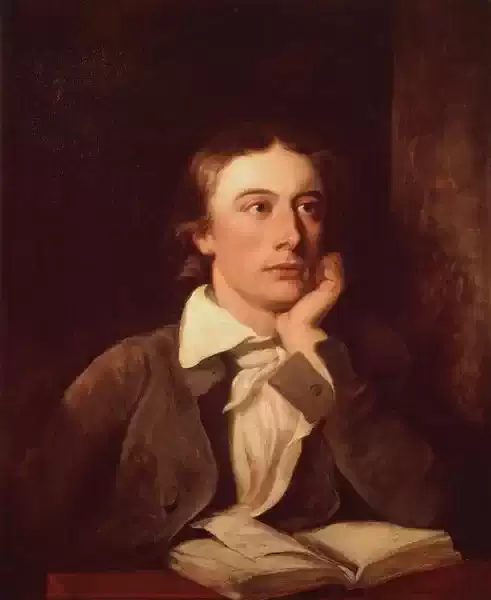
John Keats
Teignmouth
Teignmouth
I.
Here all the summer could I stay,
For there's Bishop's teign
And King's teign
And Coomb at the clear Teign head--
Where close by the stream
You may have your cream
All spread upon barley bread.
II.
There's Arch Brook
And there's Larch Brook
Both turning many a mill,
And cooling the drouth
Of the salmon's mouth
And fattening his silver gill.
III.
There is Wild wood,
A Mild hood
To the sheep on the lea o' the down,
Where the golden furze,
With its green, thin spurs,
Doth catch at the maiden's gown.
IV.
There is Newton Marsh
With its spear grass harsh--
A pleasant summer level
Where the maidens sweet
Of the Market Street
Do meet in the dusk to revel.
V.
There's the Barton rich
With dyke and ditch
And hedge for the thrush to live in,
And the hollow tree
For the buzzing bee
And a bank for the wasp to hive in.
VI.
And O, and O
The daisies blow
And the primroses are waken'd,
And violets white
Sit in silver plight,
And the green bud's as long as the spike end.
VII.
Then who would go
Into dark Soho,
And chatter with dack'd-hair'd critics,
When he can stay
For the new-mown hay,
And startle the dappled Prickets?
I.
Here all the summer could I stay,
For there's Bishop's teign
And King's teign
And Coomb at the clear Teign head--
Where close by the stream
You may have your cream
All spread upon barley bread.
II.
There's Arch Brook
And there's Larch Brook
Both turning many a mill,
And cooling the drouth
Of the salmon's mouth
And fattening his silver gill.
III.
There is Wild wood,
A Mild hood
To the sheep on the lea o' the down,
Where the golden furze,
With its green, thin spurs,
Doth catch at the maiden's gown.
IV.
There is Newton Marsh
With its spear grass harsh--
A pleasant summer level
Where the maidens sweet
Of the Market Street
Do meet in the dusk to revel.
V.
There's the Barton rich
With dyke and ditch
And hedge for the thrush to live in,
And the hollow tree
For the buzzing bee
And a bank for the wasp to hive in.
VI.
And O, and O
The daisies blow
And the primroses are waken'd,
And violets white
Sit in silver plight,
And the green bud's as long as the spike end.
VII.
Then who would go
Into dark Soho,
And chatter with dack'd-hair'd critics,
When he can stay
For the new-mown hay,
And startle the dappled Prickets?
482
John Keats
Sonnet XV. On The Grasshopper And Cricket
Sonnet XV. On The Grasshopper And Cricket
The poetry of earth is never dead:
When all the birds are faint with the hot sun,
And hide in cooling trees, a voice will run
From hedge to hedge about the new-mown mead;
That is the Grasshopper's -- he takes the lead
In summer luxury, -- he has never done
With his delights; for when tired out with fun
He rests at ease beneath some pleasant weed.
The poetry of earth is ceasing never:
On a lone winter evening, when the frost
Has wrought a silence, from the stove there shrills
The Cricket's song, in warmth increasing ever,
And seems to one in drowsiness half lost,
The Grasshopper's among some grassy hills.
The poetry of earth is never dead:
When all the birds are faint with the hot sun,
And hide in cooling trees, a voice will run
From hedge to hedge about the new-mown mead;
That is the Grasshopper's -- he takes the lead
In summer luxury, -- he has never done
With his delights; for when tired out with fun
He rests at ease beneath some pleasant weed.
The poetry of earth is ceasing never:
On a lone winter evening, when the frost
Has wrought a silence, from the stove there shrills
The Cricket's song, in warmth increasing ever,
And seems to one in drowsiness half lost,
The Grasshopper's among some grassy hills.
788
John Keats
Sonnet To The Nile
Sonnet To The Nile
Son of the old Moon-mountains African!
Chief of the Pyramid and Crocodile!
We call thee fruitful, and that very while
A desert fills our seeing's inward span:
Nurse of swart nations since the world began,
Art thou so fruitful? or dost thou beguile
Such men to honour thee, who, worn with toil,
Rest for a space 'twixt Cairo and Decan?
O may dark fancies err! They surely do;
'Tis ignorance that makes a barren waste
Of all beyond itself. Thou dost bedew
Green rushes like our rivers, and dost taste
The pleasant sunrise. Green isles hast thou too,
And to the sea as happily dost haste.
Son of the old Moon-mountains African!
Chief of the Pyramid and Crocodile!
We call thee fruitful, and that very while
A desert fills our seeing's inward span:
Nurse of swart nations since the world began,
Art thou so fruitful? or dost thou beguile
Such men to honour thee, who, worn with toil,
Rest for a space 'twixt Cairo and Decan?
O may dark fancies err! They surely do;
'Tis ignorance that makes a barren waste
Of all beyond itself. Thou dost bedew
Green rushes like our rivers, and dost taste
The pleasant sunrise. Green isles hast thou too,
And to the sea as happily dost haste.
430