

Poems in this theme
Animals and Nature
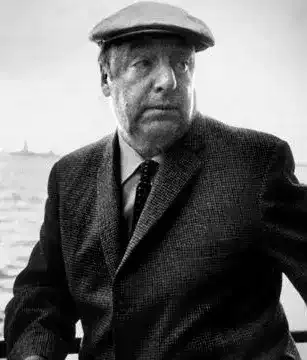
Pablo Neruda
Some Beasts
Some Beasts
It was the twilight of the iguana:
From a rainbowing battlement,
a tongue like a javelin
lunging in verdure;
an ant heap treading the jungle,
monastic, on musical feet;
the guanaco, oxygen-fine
in the high places swarthed with distances,
cobbling his feet into gold;
the llama of scrupulous eye
the widens his gaze on the dews
of a delicate world.
A monkey is weaving
a thread of insatiable lusts
on the margins of morning:
he topples a pollen-fall,
startles the violet-flght
of the butterfly, wings on the Muzo.
It was the night of the alligator:
snouts moving out of the slime,
in original darkness, the pullulations,
a clatter of armour, opaque
in the sleep of the bog,
turning back to the chalk of the sources.
The jaguar touches the leaves
with his phosphorous absence,
the puma speeds to his covert
in the blaze of his hungers,
his eyeballs, a jungle of alcohol,
burn in his head.
It was the twilight of the iguana:
From a rainbowing battlement,
a tongue like a javelin
lunging in verdure;
an ant heap treading the jungle,
monastic, on musical feet;
the guanaco, oxygen-fine
in the high places swarthed with distances,
cobbling his feet into gold;
the llama of scrupulous eye
the widens his gaze on the dews
of a delicate world.
A monkey is weaving
a thread of insatiable lusts
on the margins of morning:
he topples a pollen-fall,
startles the violet-flght
of the butterfly, wings on the Muzo.
It was the night of the alligator:
snouts moving out of the slime,
in original darkness, the pullulations,
a clatter of armour, opaque
in the sleep of the bog,
turning back to the chalk of the sources.
The jaguar touches the leaves
with his phosphorous absence,
the puma speeds to his covert
in the blaze of his hungers,
his eyeballs, a jungle of alcohol,
burn in his head.
559
Pablo Neruda
Ode to Salt
Ode to Salt
This salt
in the salt cellar
I once saw in the salt mines.
I know
you won't
believe me
but
it sings
salt sings, the skin
of the salt mines
sings
with a mouth smothered
by the earth.
I shivered in those
solitudes
when I heard
the voice
of
the salt
in the desert.
Near Antofagasta
the nitrous
pampa
resounds:
a
broken
voice,
a mournful
song.
In its caves
the salt moans, mountain
of buried light,
translucent cathedral,
crystal of the sea, oblivion
of the waves.
And then on every table
in the world,
salt,
we see your piquant
powder
sprinkling
vital light
upon
our food.
Preserver
of the ancient
holds of ships,
discoverer
on
the high seas,
earliest
sailor
of the unknown, shifting
byways of the foam.
Dust of the sea, in you
the tongue receives a kiss
from ocean night:
taste imparts to every seasoned
dish your ocean essence;
the smallest,
miniature
wave from the saltcellar
reveals to us
more than domestic whiteness;
in it, we taste finitude.
This salt
in the salt cellar
I once saw in the salt mines.
I know
you won't
believe me
but
it sings
salt sings, the skin
of the salt mines
sings
with a mouth smothered
by the earth.
I shivered in those
solitudes
when I heard
the voice
of
the salt
in the desert.
Near Antofagasta
the nitrous
pampa
resounds:
a
broken
voice,
a mournful
song.
In its caves
the salt moans, mountain
of buried light,
translucent cathedral,
crystal of the sea, oblivion
of the waves.
And then on every table
in the world,
salt,
we see your piquant
powder
sprinkling
vital light
upon
our food.
Preserver
of the ancient
holds of ships,
discoverer
on
the high seas,
earliest
sailor
of the unknown, shifting
byways of the foam.
Dust of the sea, in you
the tongue receives a kiss
from ocean night:
taste imparts to every seasoned
dish your ocean essence;
the smallest,
miniature
wave from the saltcellar
reveals to us
more than domestic whiteness;
in it, we taste finitude.
660
Pablo Neruda
Ode to a Large Tuna in the Market
Ode to a Large Tuna in the Market
Among the market greens,
a bullet
from the ocean
depths,
a swimming
projectile,
I saw you,
dead.
All around you
were lettuces,
sea foam
of the earth,
carrots,
grapes,
but
of the ocean
truth,
of the unknown,
of the
unfathomable
shadow, the
depths
of the sea,
the abyss,
only you had survived,
a pitch-black, varnished
witness
to deepest night.
Only you, well-aimed
dark bullet
from the abyss,
mangled
at one tip,
but constantly
reborn,
at anchor in the current,
winged fins
windmilling
in the swift
flight
of
the
marine
shadow,
a mourning arrow,
dart of the sea,
olive, oily fish.
I saw you dead,
a deceased king
of my own ocean,
green
assault, silver
submarine fir,
seed
of seaquakes,
now
only dead remains,
yet
in all the market
yours
was the only
purposeful form
amid
the bewildering rout
of nature;
amid the fragile greens
you were
a solitary ship,
armed
among the vegetables
fin and prow black and oiled,
as if you were still
the vessel of the wind,
the one and only
pure
ocean
machine:
unflawed, navigating
the waters of death.
Among the market greens,
a bullet
from the ocean
depths,
a swimming
projectile,
I saw you,
dead.
All around you
were lettuces,
sea foam
of the earth,
carrots,
grapes,
but
of the ocean
truth,
of the unknown,
of the
unfathomable
shadow, the
depths
of the sea,
the abyss,
only you had survived,
a pitch-black, varnished
witness
to deepest night.
Only you, well-aimed
dark bullet
from the abyss,
mangled
at one tip,
but constantly
reborn,
at anchor in the current,
winged fins
windmilling
in the swift
flight
of
the
marine
shadow,
a mourning arrow,
dart of the sea,
olive, oily fish.
I saw you dead,
a deceased king
of my own ocean,
green
assault, silver
submarine fir,
seed
of seaquakes,
now
only dead remains,
yet
in all the market
yours
was the only
purposeful form
amid
the bewildering rout
of nature;
amid the fragile greens
you were
a solitary ship,
armed
among the vegetables
fin and prow black and oiled,
as if you were still
the vessel of the wind,
the one and only
pure
ocean
machine:
unflawed, navigating
the waters of death.
530
Pablo Neruda
Ode To Bird Watching
Ode To Bird Watching
Now
Let's look for birds!
The tall iron branches
in the forest,
The dense
fertility on the ground.
The world
is wet.
A dewdrop or raindrop
shines,
a diminutive star
among the leaves.
The morning time
mother earth
is cool.
The air
is like a river
which shakes
the silence.
It smells of rosemary,
of space
and roots.
Overhead,
a crazy song.
It's a bird.
How
out of its throat
smaller than a finger
can there fall the waters
of its song?
Luminous ease!
Invisible
power
torrent
of music
in the leaves.
Sacred conversations!
Clean and fresh washed
is this
day resounding
like a green dulcimer.
I bury
my shoes
in the mud,
jump over rivulets.
A thorn
bites me and a gust
of air like a crystal
wave
splits up inside my chest.
Where
are the birds?
Maybe it was
that
rustling in the foliage
or that fleeting pellet
of brown velvet
or that displaced
perfume? That
leaf that let loose cinnamon smell
-was that a bird? That dust
from an irritated magnolia
or that fruit
which fell with a thump was
that a flight?
Oh, invisible little
critters
birds of the devil
with their ringing
with their useless feathers.
I only want
to caress them,
to see them resplendent.
I don't want
to see under glass
the embalmed lightning.
I want to see them living.
I want to touch their gloves
of real hide,
which they never forget in
the branches
and to converse with
them
sitting on my shoulders
although they may leave
me like certain statues
undeservedly whitewashed.
Impossible.
You can't touch them.
You can hear them
like a heavenly
rustle or movement.
They converse
with precision.
They repeat
their observations.
They brag
of how much they do.
They comment
on everything that exists.
They learn
certain sciences
like hydrography.
and by a sure science
they know
where there are harvests
of grain
Now
Let's look for birds!
The tall iron branches
in the forest,
The dense
fertility on the ground.
The world
is wet.
A dewdrop or raindrop
shines,
a diminutive star
among the leaves.
The morning time
mother earth
is cool.
The air
is like a river
which shakes
the silence.
It smells of rosemary,
of space
and roots.
Overhead,
a crazy song.
It's a bird.
How
out of its throat
smaller than a finger
can there fall the waters
of its song?
Luminous ease!
Invisible
power
torrent
of music
in the leaves.
Sacred conversations!
Clean and fresh washed
is this
day resounding
like a green dulcimer.
I bury
my shoes
in the mud,
jump over rivulets.
A thorn
bites me and a gust
of air like a crystal
wave
splits up inside my chest.
Where
are the birds?
Maybe it was
that
rustling in the foliage
or that fleeting pellet
of brown velvet
or that displaced
perfume? That
leaf that let loose cinnamon smell
-was that a bird? That dust
from an irritated magnolia
or that fruit
which fell with a thump was
that a flight?
Oh, invisible little
critters
birds of the devil
with their ringing
with their useless feathers.
I only want
to caress them,
to see them resplendent.
I don't want
to see under glass
the embalmed lightning.
I want to see them living.
I want to touch their gloves
of real hide,
which they never forget in
the branches
and to converse with
them
sitting on my shoulders
although they may leave
me like certain statues
undeservedly whitewashed.
Impossible.
You can't touch them.
You can hear them
like a heavenly
rustle or movement.
They converse
with precision.
They repeat
their observations.
They brag
of how much they do.
They comment
on everything that exists.
They learn
certain sciences
like hydrography.
and by a sure science
they know
where there are harvests
of grain
644
Pablo Neruda
Cat's Dream
Cat's Dream
How neatly a cat sleeps,
sleeps with its paws and its posture,
sleeps with its wicked claws,
and with its unfeeling blood,
sleeps with all the rings-a
series of burnt circles-which
have formed the odd geology
of its sand-colored tail.
I should like to sleep like a cat,
with all the fur of time,
with a tongue rough as flint,
with the dry sex of fire;
and after speaking to no one,
stretch myself over the world,
over roofs and landscapes,
with a passionate desire
to hunt the rats in my dreams.
I have seen how the cat asleep
would undulate, how the night
flowed through it like dark water;
and at times, it was going to fall
or possibly plunge into
the bare deserted snowdrifts.
Sometimes it grew so much in sleep
like a tiger's great-grandfather,
and would leap in the darkness over
rooftops, clouds and volcanoes.
Sleep, sleep cat of the night,
with episcopal ceremony
and your stone-carved moustache.
Take care of all our dreams;
control the obscurity
of our slumbering prowess
with your relentless heart
and the great ruff of your tail.
Translated by Alastair Reid
Submitted by Jen
How neatly a cat sleeps,
sleeps with its paws and its posture,
sleeps with its wicked claws,
and with its unfeeling blood,
sleeps with all the rings-a
series of burnt circles-which
have formed the odd geology
of its sand-colored tail.
I should like to sleep like a cat,
with all the fur of time,
with a tongue rough as flint,
with the dry sex of fire;
and after speaking to no one,
stretch myself over the world,
over roofs and landscapes,
with a passionate desire
to hunt the rats in my dreams.
I have seen how the cat asleep
would undulate, how the night
flowed through it like dark water;
and at times, it was going to fall
or possibly plunge into
the bare deserted snowdrifts.
Sometimes it grew so much in sleep
like a tiger's great-grandfather,
and would leap in the darkness over
rooftops, clouds and volcanoes.
Sleep, sleep cat of the night,
with episcopal ceremony
and your stone-carved moustache.
Take care of all our dreams;
control the obscurity
of our slumbering prowess
with your relentless heart
and the great ruff of your tail.
Translated by Alastair Reid
Submitted by Jen
710
Pablo Neruda
Bird
Bird
It was passed from one bird to another,
the whole gift of the day.
The day went from flute to flute,
went dressed in vegetation,
in flights which opened a tunnel
through the wind would pass
to where birds were breaking open
the dense blue air and
there, night came in.
When I returned from so many journeys,
I stayed suspended and green
between sun and geography -
I saw how wings worked,
how perfumes are transmitted
by feathery telegraph,
and from above I saw the path,
the springs and the roof tiles,
the fishermen at their trades,
the trousers of the foam;
I saw it all from my green sky.
I had no more alphabet
than the swallows in their courses,
the tiny, shining water
of the small bird on fire
which dances out of the pollen.
It was passed from one bird to another,
the whole gift of the day.
The day went from flute to flute,
went dressed in vegetation,
in flights which opened a tunnel
through the wind would pass
to where birds were breaking open
the dense blue air and
there, night came in.
When I returned from so many journeys,
I stayed suspended and green
between sun and geography -
I saw how wings worked,
how perfumes are transmitted
by feathery telegraph,
and from above I saw the path,
the springs and the roof tiles,
the fishermen at their trades,
the trousers of the foam;
I saw it all from my green sky.
I had no more alphabet
than the swallows in their courses,
the tiny, shining water
of the small bird on fire
which dances out of the pollen.
898
Pablo Neruda
A Lemon
A Lemon
Out of lemon flowers
loosed
on the moonlight, love's
lashed and insatiable
essences,
sodden with fragrance,
the lemon tree's yellow
emerges,
the lemons
move down
from the tree's planetarium
Delicate merchandise!
The harbors are big with itbazaars
for the light and the
barbarous gold.
We open
the halves
of a miracle,
and a clotting of acids
brims
into the starry
divisions:
creation's
original juices,
irreducible, changeless,
alive:
so the freshness lives on
in a lemon,
in the sweet-smelling house of the rind,
the proportions, arcane and acerb.
Cutting the lemon
the knife
leaves a little cathedral:
alcoves unguessed by the eye
that open acidulous glass
to the light; topazes
riding the droplets,
altars,
aromatic facades.
So, while the hand
holds the cut of the lemon,
half a world
on a trencher,
the gold of the universe
wells
to your touch:
a cup yellow
with miracles,
a breast and a nipple
perfuming the earth;
a flashing made fruitage,
the diminutive fire of a planet.
Out of lemon flowers
loosed
on the moonlight, love's
lashed and insatiable
essences,
sodden with fragrance,
the lemon tree's yellow
emerges,
the lemons
move down
from the tree's planetarium
Delicate merchandise!
The harbors are big with itbazaars
for the light and the
barbarous gold.
We open
the halves
of a miracle,
and a clotting of acids
brims
into the starry
divisions:
creation's
original juices,
irreducible, changeless,
alive:
so the freshness lives on
in a lemon,
in the sweet-smelling house of the rind,
the proportions, arcane and acerb.
Cutting the lemon
the knife
leaves a little cathedral:
alcoves unguessed by the eye
that open acidulous glass
to the light; topazes
riding the droplets,
altars,
aromatic facades.
So, while the hand
holds the cut of the lemon,
half a world
on a trencher,
the gold of the universe
wells
to your touch:
a cup yellow
with miracles,
a breast and a nipple
perfuming the earth;
a flashing made fruitage,
the diminutive fire of a planet.
958
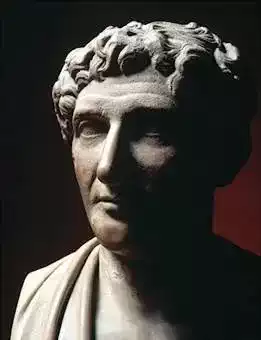
Ovídio
Metamorphoses: Book The Eleventh
Metamorphoses: Book The Eleventh
HERE, while the Thracian bard's enchanting strain
Sooths beasts, and woods, and all the listn'ing
plain,
The female Bacchanals, devoutly mad,
In shaggy skins, like savage creatures, clad,
Warbling in air perceiv'd his lovely lay,
And from a rising ground beheld him play.
When one, the wildest, with dishevel'd hair,
That loosely stream'd, and ruffled in the air;
Soon as her frantick eye the lyrist spy'd,
See, see! the hater of our sex, she cry'd.
Then at his face her missive javelin sent,
Which whiz'd along, and brusht him as it went;
But the soft wreathes of ivy twisted round,
Prevent a deep impression of the wound.
Another, for a weapon, hurls a stone,
Which, by the sound subdu'd as soon as thrown,
Falls at his feet, and with a seeming sense
Implores his pardon for its late offence.
The Death of But now their frantick rage unbounded grows,
Orpheus Turns all to madness, and no measure knows:
Yet this the charms of musick might subdue,
But that, with all its charms, is conquer'd too;
In louder strains their hideous yellings rise,
And squeaking horn-pipes eccho thro' the skies,
Which, in hoarse consort with the drum, confound
The moving lyre, and ev'ry gentle sound:
Then 'twas the deafen'd stones flew on with speed,
And saw, unsooth'd, their tuneful poet bleed.
The birds, the beasts, and all the savage crew
Which the sweet lyrist to attention drew,
Now, by the female mob's more furious rage,
Are driv'n, and forc'd to quit the shady stage.
Next their fierce hands the bard himself assail,
Nor can his song against their wrath prevail:
They flock, like birds, when in a clustring flight,
By day they chase the boding fowl of night.
So crowded amphitheatres survey
The stag, to greedy dogs a future prey.
Their steely javelins, which soft curls entwine
Of budding tendrils from the leafy vine,
For sacred rites of mild religion made,
Are flung promiscuous at the poet's head.
Those clods of earth or flints discharge, and these
Hurl prickly branches sliver'd from the trees.
And, lest their passion shou'd be unsupply'd,
The rabble crew, by chance, at distance spy'd
Where oxen, straining at the heavy yoke,
The fallow'd field with slow advances broke;
Nigh which the brawny peasants dug the soil,
Procuring food with long laborious toil.
These, when they saw the ranting throng draw near,
Quitted their tools, and fled, possest with fear.
Long spades, and rakes of mighty size were found,
Carelesly left upon the broken ground.
With these the furious lunaticks engage,
And first the lab'ring oxen feel their rage;
Then to the poet they return with speed,
Whose fate was, past prevention, now decreed:
In vain he lifts his suppliant hands, in vain
He tries, before, his never-failing strain.
And, from those sacred lips, whose thrilling sound
Fierce tygers, and insensate rocks cou'd wound,
Ah Gods! how moving was the mournful sight!
To see the fleeting soul now take its flight.
Thee the soft warblers of the feather'd kind
Bewail'd; for thee thy savage audience pin'd;
Those rocks and woods that oft thy strain had led,
Mourn for their charmer, and lament him dead;
And drooping trees their leafy glories shed.
Naids and Dryads with dishevel'd hair
Promiscuous weep, and scarfs of sable wear;
Nor cou'd the river-Gods conceal their moan,
But with new floods of tears augment their own.
His mangled limbs lay scatter'd all around,
His head, and harp a better fortune found;
In Hebrus' streams they gently roul'd along,
And sooth'd the waters with a mournful song.
Soft deadly notes the lifeless tongue inspire,
A doleful tune sounds from the floating lyre;
The hollows banks in solemn consort mourn,
And the sad strain in ecchoing groans return.
Now with the current to the sea they glide,
Born by the billows of the briny tide;
And driv'n where waves round rocky Lesbos roar,
They strand, and lodge upon Methymna's shore.
But here, when landed on the foreign soil,
A venom'd snake, the product of the isle
Attempts the head, and sacred locks embru'd
With clotted gore, and still fresh-dropping blood.
Phoebus, at last, his kind protection gives,
And from the fact the greedy monster drives:
Whose marbled jaws his impious crime atone,
Still grinning ghastly, tho' transform'd to stone.
His ghost flies downward to the Stygian shore,
And knows the places it had seen before:
Among the shadows of the pious train
He finds Eurydice, and loves again;
With pleasure views the beauteous phantom's charms,
And clasps her in his unsubstantial arms.
There side by side they unmolested walk,
Or pass their blissful hours in pleasing talk;
Aft or before the bard securely goes,
And, without danger, can review his spouse.
The Thracian Bacchus, resolving to revenge the wrong,
Women Of Orpheus murder'd, on the madding throng,
transform'd to Decreed that each accomplice dame should stand
Trees Fix'd by the roots along the conscious land.
Their wicked feet, that late so nimbly ran
To wreak their malice on the guiltless man,
Sudden with twisted ligatures were bound,
Like trees, deep planted in the turfy ground.
And, as the fowler with his subtle gins,
His feather'd captives by the feet entwines,
That flutt'ring pant, and struggle to get loose,
Yet only closer draw the fatal noose;
So these were caught; and, as they strove in vain
To quit the place, they but encreas'd their pain.
They flounce and toil, yet find themselves
controul'd;
The root, tho' pliant, toughly keeps its hold.
In vain their toes and feet they look to find,
For ev'n their shapely legs are cloath'd with rind.
One smites her thighs with a lamenting stroke,
And finds the flesh transform'd to solid oak;
Another, with surprize, and grief distrest,
Lays on above, but beats a wooden breast.
A rugged bark their softer neck invades,
Their branching arms shoot up delightful shades;
At once they seem, and are, a real grove,
With mossy trunks below, and verdant leaves above.
The Fable of Nor this suffic'd; the God's disgust remains,
Midas And he resolves to quit their hated plains;
The vineyards of Tymole ingross his care,
And, with a better choir, he fixes there;
Where the smooth streams of clear Pactolus roll'd,
Then undistinguish'd for its sands of gold.
The satyrs with the nymphs, his usual throng,
Come to salute their God, and jovial danc'd along.
Silenus only miss'd; for while he reel'd,
Feeble with age, and wine, about the field,
The hoary drunkard had forgot his way,
And to the Phrygian clowns became a prey;
Who to king Midas drag the captive God,
While on his totty pate the wreaths of ivy nod.
Midas from Orpheus had been taught his lore,
And knew the rites of Bacchus long before.
He, when he saw his venerable guest,
In honour of the God ordain'd a feast.
Ten days in course, with each continu'd night,
Were spent in genial mirth, and brisk delight:
Then on th' eleventh, when with brighter ray
Phosphor had chac'd the fading stars away,
The king thro' Lydia's fields young Bacchus sought,
And to the God his foster-father brought.
Pleas'd with the welcome sight, he bids him soon
But name his wish, and swears to grant the boon.
A glorious offer! yet but ill bestow'd
On him whose choice so little judgment show'd.
Give me, says he (nor thought he ask'd too much),
That with my body whatsoe'er I touch,
Chang'd from the nature which it held of old,
May be converted into yellow gold.
He had his wish; but yet the God repin'd,
To think the fool no better wish could find.
But the brave king departed from the place,
With smiles of gladness sparkling in his face:
Nor could contain, but, as he took his way,
Impatient longs to make the first essay.
Down from a lowly branch a twig he drew,
The twig strait glitter'd with a golden hue:
He takes a stone, the stone was turn'd to gold;
A clod he touches, and the crumbling mold
Acknowledg'd soon the great transforming pow'r,
In weight and substance like a mass of ore.
He pluck'd the corn, and strait his grasp appears
Fill'd with a bending tuft of golden ears.
An apple next he takes, and seems to hold
The bright Hesperian vegetable gold.
His hand he careless on a pillar lays.
With shining gold the fluted pillars blaze:
And while he washes, as the servants pour,
His touch converts the stream to Danae's show'r.
To see these miracles so finely wrought,
Fires with transporting joy his giddy thought.
The ready slaves prepare a sumptuous board,
Spread with rich dainties for their happy lord;
Whose pow'rful hands the bread no sooner hold,
But its whole substance is transform'd to gold:
Up to his mouth he lifts the sav'ry meat,
Which turns to gold as he attempts to eat:
His patron's noble juice of purple hue,
Touch'd by his lips, a gilded cordial grew;
Unfit for drink, and wondrous to behold,
It trickles from his jaws a fluid gold.
The rich poor fool, confounded with surprize,
Starving in all his various plenty lies:
Sick of his wish, he now detests the pow'r,
For which he ask'd so earnestly before;
Amidst his gold with pinching famine curst;
And justly tortur'd with an equal thirst.
At last his shining arms to Heav'n he rears,
And in distress, for refuge, flies to pray'rs.
O father Bacchus, I have sinn'd, he cry'd,
And foolishly thy gracious gift apply'd;
Thy pity now, repenting, I implore;
Oh! may I feel the golden plague no more.
The hungry wretch, his folly thus confest,
Touch'd the kind deity's good-natur'd breast;
The gentle God annull'd his first decree,
And from the cruel compact set him free.
But then, to cleanse him quite from further harm,
And to dilute the relicks of the charm,
He bids him seek the stream that cuts the land
Nigh where the tow'rs of Lydian Sardis stand;
Then trace the river to the fountain head,
And meet it rising from its rocky bed;
There, as the bubling tide pours forth amain,
To plunge his body in, and wash away the stain.
The king instructed to the fount retires,
But with the golden charm the stream inspires:
For while this quality the man forsakes,
An equal pow'r the limpid water takes;
Informs with veins of gold the neighb'ring land,
And glides along a bed of golden sand.
Now loathing wealth, th' occasion of his woes,
Far in the woods he sought a calm repose;
In caves and grottos, where the nymphs resort,
And keep with mountain Pan their sylvan court.
Ah! had he left his stupid soul behind!
But his condition alter'd not his mind.
For where high Tmolus rears his shady brow,
And from his cliffs surveys the seas below,
In his descent, by Sardis bounded here,
By the small confines of Hypaepa there,
Pan to the nymphs his frolick ditties play'd,
Tuning his reeds beneath the chequer'd shade.
The nymphs are pleas'd, the boasting sylvan plays,
And speaks with slight of great Apollo's lays.
Tmolus was arbiter; the boaster still
Accepts the tryal with unequal skill.
The venerable judge was seated high
On his own hill, that seem'd to touch the sky.
Above the whisp'ring trees his head he rears,
From their encumbring boughs to free his ears;
A wreath of oak alone his temples bound,
The pendant acorns loosely dangled round.
In me your judge, says he, there's no delay:
Then bids the goatherd God begin, and play.
Pan tun'd the pipe, and with his rural song
Pleas'd the low taste of all the vulgar throng;
Such songs a vulgar judgment mostly please,
Midas was there, and Midas judg'd with these.
The mountain sire with grave deportment now
To Phoebus turns his venerable brow:
And, as he turns, with him the listning wood
In the same posture of attention stood.
The God his own Parnassian laurel crown'd,
And in a wreath his golden tresses bound,
Graceful his purple mantle swept the ground.
High on the left his iv'ry lute he rais'd,
The lute, emboss'd with glitt'ring jewels, blaz'd
In his right hand he nicely held the quill,
His easy posture spoke a master's skill.
The strings he touch'd with more than human art,
Which pleas'd the judge's ear, and sooth'd his
heart;
Who soon judiciously the palm decreed,
And to the lute postpon'd the squeaking reed.
All, with applause, the rightful sentence heard,
Midas alone dissatisfy'd appear'd;
To him unjustly giv'n the judgment seems,
For Pan's barbarick notes he most esteems.
The lyrick God, who thought his untun'd ear
Deserv'd but ill a human form to wear,
Of that deprives him, and supplies the place
With some more fit, and of an ampler space:
Fix'd on his noddle an unseemly pair,
Flagging, and large, and full of whitish hair;
Without a total change from what he was,
Still in the man preserves the simple ass.
He, to conceal the scandal of the deed,
A purple turbant folds about his head;
Veils the reproach from publick view, and fears
The laughing world would spy his monstrous ears.
One trusty barber-slave, that us'd to dress
His master's hair, when lengthen'd to excess,
The mighty secret knew, but knew alone,
And, tho' impatient, durst not make it known.
Restless, at last, a private place he found,
Then dug a hole, and told it to the ground;
In a low whisper he reveal'd the case,
And cover'd in the earth, and silent left the
place.
In time, of trembling reeds a plenteous crop
From the confided furrow sprouted up;
Which, high advancing with the ripening year,
Made known the tiller, and his fruitless care:
For then the rustling blades, and whisp'ring wind,
To tell th' important secret, both combin'd.
The Building of Phoebus, with full revenge, from Tmolus flies,
Troy Darts thro' the air, and cleaves the liquid skies;
Near Hellespont he lights, and treads the plains
Where great Laomedon sole monarch reigns;
Where, built between the two projecting strands,
To Panomphaean Jove an altar stands.
Here first aspiring thoughts the king employ,
To found the lofty tow'rs of future Troy.
The work, from schemes magnificent begun,
At vast expence was slowly carry'd on:
Which Phoebus seeing, with the trident God
Who rules the swelling surges with his nod,
Assuming each a mortal shape, combine
At a set price to finish his design.
The work was built; the king their price denies,
And his injustice backs with perjuries.
This Neptune cou'd not brook, but drove the main,
A mighty deluge, o'er the Phrygian plain:
'Twas all a sea; the waters of the deep
From ev'ry vale the copious harvest sweep;
The briny billows overflow the soil,
Ravage the fields, and mock the plowman's toil.
Nor this appeas'd the God's revengeful mind,
For still a greater plague remains behind;
A huge sea-monster lodges on the sands,
And the king's daughter for his prey demands.
To him that sav'd the damsel, was decreed
A set of horses of the Sun's fine breed:
But when Alcides from the rock unty'd
The trembling fair, the ransom was deny'd.
He, in revenge, the new-built walls attack'd,
And the twice-perjur'd city bravely sack'd.
Telamon aided, and in justice shar'd
Part of the plunder as his due reward:
The princess, rescu'd late, with all her charms,
Hesione, was yielded to his arms;
For Peleus, with a Goddess-bride, was more
Proud of his spouse, than of his birth before:
Grandsons to Jove there might be more than one,
But he the Goddess had enjoy'd alone.
The Story of For Proteus thus to virgin Thetis said,
Thetis and Fair Goddess of the waves, consent to wed,
Peleus And take some spritely lover to your bed.
A son you'll have, the terror of the field,
To whom in fame, and pow'r his sire shall yield.
Jove, who ador'd the nymph with boundless love,
Did from his breast the dangerous flame remove.
He knew the Fates, nor car'd to raise up one,
Whose fame and greatness should eclipse his own,
On happy Peleus he bestow'd her charms,
And bless'd his grandson in the Goddess' arms:
A silent creek Thessalia's coast can show;
Two arms project, and shape it like a bow;
'Twould make a bay, but the transparent tide
Does scarce the yellow-gravell'd bottom hide;
For the quick eye may thro' the liquid wave
A firm unweedy level beach perceive.
A grove of fragrant myrtle near it grows,
Whose boughs, tho' thick, a beauteous grot
disclose;
The well-wrought fabrick, to discerning eyes,
Rather by art than Nature seems to rise.
A bridled dolphin oft fair Thetis bore
To this her lov'd retreat, her fav'rite shore.
Here Peleus seiz'd her, slumbring while she lay,
And urg'd his suit with all that love could say:
But when he found her obstinately coy,
Resolv'd to force her, and command the joy;
The nymph, o'erpowr'd, to art for succour flies
And various shapes the eager youth surprize:
A bird she seems, but plies her wings in vain,
His hands the fleeting substance still detain:
A branchy tree high in the air she grew;
About its bark his nimble arms he threw:
A tyger next she glares with flaming eyes;
The frighten'd lover quits his hold, and flies:
The sea-Gods he with sacred rites adores,
Then a libation on the ocean pours;
While the fat entrails crackle in the fire,
And sheets of smoak in sweet perfume aspire;
'Till Proteus rising from his oozy bed,
Thus to the poor desponding lover said:
No more in anxious thoughts your mind employ,
For yet you shall possess the dear expected joy.
You must once more th' unwary nymph surprize,
As in her cooly grot she slumbring lies;
Then bind her fast with unrelenting hands,
And strain her tender limbs with knotted bands.
Still hold her under ev'ry different shape,
'Till tir'd she tries no longer to escape.
Thus he: then sunk beneath the glassy flood,
And broken accents flutter'd, where he stood.
Bright Sol had almost now his journey done,
And down the steepy western convex run;
When the fair Nereid left the briny wave,
And, as she us'd, retreated to her cave.
He scarce had bound her fast, when she arose,
And into various shapes her body throws:
She went to move her arms, and found 'em ty'd;
Then with a sigh, Some God assists ye, cry'd,
And in her proper shape stood blushing by his side.
About her waiste his longing arms he flung,
From which embrace the great Achilles sprung.
The Peleus unmix'd felicity enjoy'd
Transformation (Blest in a valiant son, and virtuous bride),
of Daedalion 'Till Fortune did in blood his hands imbrue,
And his own brother by curst chance he slew:
Then driv'n from Thessaly, his native clime,
Trachinia first gave shelter to his crime;
Where peaceful Ceyx mildly fill'd the throne,
And like his sire, the morning planet, shone;
But now, unlike himself, bedew'd with tears,
Mourning a brother lost, his brow appears.
First to the town with travel spent, and care,
Peleus, and his small company repair:
His herds, and flocks the while at leisure feed,
On the rich pasture of a neighb'ring mead.
The prince before the royal presence brought,
Shew'd by the suppliant olive what he sought;
Then tells his name, and race, and country right,
But hides th' unhappy reason of his flight.
He begs the king some little town to give,
Where they may safe his faithful vassals live.
Ceyx reply'd: To all my bounty flows,
A hospitable realm your suit has chose.
Your glorious race, and far-resounding fame,
And grandsire Jove, peculiar favours claim.
All you can wish, I grant; entreaties spare;
My kingdom (would 'twere worth the sharing) share.
Tears stop'd his speech: astonish'd Peleus pleads
To know the cause from whence his grief proceeds.
The prince reply'd: There's none of ye but deems
This hawk was ever such as now it seems;
Know 'twas a heroe once, Daedalion nam'd,
For warlike deeds, and haughty valour fam'd;
Like me to that bright luminary born,
Who wakes Aurora, and brings on the morn.
His fierceness still remains, and love of blood,
Now dread of birds, and tyrant of the wood.
My make was softer, peace my greatest care;
But this my brother wholly bent on war;
Late nations fear'd, and routed armies fled
That force, which now the tim'rous pigeons dread.
A daughter he possess'd, divinely fair,
And scarcely yet had seen her fifteenth year;
Young Chione: a thousand rivals strove
To win the maid, and teach her how to love.
Phoebus, and Mercury by chance one day
From Delphi, and Cyllene past this way;
Together they the virgin saw: desire
At once warm'd both their breasts with am'rous
fire.
Phoebus resolv'd to wait 'till close of day;
But Mercury's hot love brook'd no delay;
With his entrancing rod the maid he charms,
And unresisted revels in her arms.
'Twas night, and Phoebus in a beldam's dress,
To the late rifled beauty got access.
Her time compleat nine circling moons had run;
To either God she bore a lovely son:
To Mercury Autolycus she brought,
Who turn'd to thefts and tricks his subtle thought;
Possess'd he was of all his father's slight,
At will made white look black, and black look
white.
Philammon born to Phoebus, like his sire,
The Muses lov'd, and finely struck the lyre,
And made his voice, and touch in harmony conspire.
In vain, fond maid, you boast this double birth,
The love of Gods, and royal father's worth,
And Jove among your ancestors rehearse!
Could blessings such as these e'er prove a curse?
To her they did, who with audacious pride,
Vain of her own, Diana's charms decry'd.
Her taunts the Goddess with resentment fill;
My face you like not, you shall try my skill.
She said; and strait her vengeful bow she strung,
And sent a shaft that pierc'd her guilty tongue:
The bleeding tongue in vain its accents tries;
In the red stream her soul reluctant flies.
With sorrow wild I ran to her relief,
And try'd to moderate my brother's grief.
He, deaf as rocks by stormy surges beat,
Loudly laments, and hears me not intreat.
When on the fun'ral pile he saw her laid,
Thrice he to rush into the flames assay'd,
Thrice with officious care by us was stay'd.
Now, mad with grief, away he fled amain,
Like a stung heifer that resents the pain,
And bellowing wildly bounds along the plain.
O'er the most rugged ways so fast he ran,
He seem'd a bird already, not a man:
He left us breathless all behind; and now
In quest of death had gain'd Parnassus' brow:
But when from thence headlong himself he threw,
He fell not, but with airy pinions flew.
Phoebus in pity chang'd him to a fowl,
Whose crooked beak and claws the birds controul,
Little of bulk, but of a warlike soul.
A hawk become, the feather'd race's foe,
He tries to case his own by other's woe.
A Wolf turn'd While they astonish'd heard the king relate
into Marble These wonders of his hapless brother's fate;
The prince's herdsman at the court arrives,
And fresh surprize to all the audience gives.
O Peleus, Peleus! dreadful news I bear,
He said; and trembled as he spoke for fear.
The worst, affrighted Peleus bid him tell,
Whilst Ceyx too grew pale with friendly zeal.
Thus he began: When Sol mid-heav'n had gain'd,
And half his way was past, and half remain'd,
I to the level shore my cattle drove,
And let them freely in the meadows rove.
Some stretch'd at length admire the watry plain,
Some crop'd the herb, some wanton swam the main.
A temple stands of antique make hard by,
Where no gilt domes, nor marble lure the eye;
Unpolish'd rafters bear its lowly height,
Hid by a grove, as ancient, from the sight.
Here Nereus, and the Nereids they adore;
I learnt it from the man who thither bore
His net, to dry it on the sunny shore.
Adjoyns a lake, inclos'd with willows round,
Where swelling waves have overflow'd the mound,
And, muddy, stagnate on the lower ground.
From thence a russling noise increasing flies,
Strikes the still shore; and frights us with
surprize,
Strait a huge wolf rush'd from the marshy wood,
His jaws besmear'd with mingled foam, and blood,
Tho' equally by hunger urg'd, and rage,
His appetite he minds not to asswage;
Nought that he meets, his rabid fury spares,
But the whole herd with mad disorder tears.
Some of our men who strove to drive him thence,
Torn by his teeth, have dy'd in their defence.
The echoing lakes, the sea, and fields, and shore,
Impurpled blush with streams of reeking gore.
Delay is loss, nor have we time for thought;
While yet some few remain alive, we ought
To seize our arms, and with confederate force
Try if we so can stop his bloody course.
But Peleus car'd not for his ruin'd herd;
His crime he call'd to mind, and thence inferr'd,
That Psamathe's revenge this havock made,
In sacrifice to murder'd Phocus' shade.
The king commands his servants to their arms;
Resolv'd to go; but the loud noise alarms
His lovely queen, who from her chamber flew,
And her half-plaited hair behind her threw:
About his neck she hung with loving fears,
And now with words, and now with pleading tears,
Intreated that he'd send his men alone,
And stay himself, to save two lives in one.
Then Peleus: Your just fears, o queen, forget;
Too much the offer leaves me in your debt.
No arms against the monster I shall bear,
But the sea nymphs appease with humble pray'r.
The citadel's high turrets pierce the sky,
Which home-bound vessels, glad, from far descry;
This they ascend, and thence with sorrow ken
The mangled heifers lye, and bleeding men;
Th' inexorable ravager they view,
With blood discolour'd, still the rest pursue:
There Peleus pray'd submissive tow'rds the sea,
And deprecates the ire of injur'd Psamathe.
But deaf to all his pray'rs the nymph remain'd,
'Till Thetis for her spouse the boon obtain'd.
Pleas'd with the luxury, the furious beast,
Unstop'd, continues still his bloody feast:
While yet upon a sturdy bull he flew,
Chang'd by the nymph, a marble block he grew.
No longer dreadful now the wolf appears,
Bury'd in stone, and vanish'd like their fears.
Yet still the Fates unhappy Peleus vex'd;
To the Magnesian shore he wanders next.
Acastus there, who rul'd the peaceful clime,
Grants his request, and expiates his crime.
The Story of These prodigies affect the pious prince,
Ceyx and But more perplex'd with those that happen'd since,
Alcyone He purposes to seek the Clarian God,
Avoiding Delphi, his more fam'd abode,
Since Phlegyan robbers made unsafe the road.
Yet could he not from her he lov'd so well,
The fatal voyage, he resolv'd, conceal;
But when she saw her lord prepar'd to part,
A deadly cold ran shiv'ring to her heart;
Her faded cheeks are chang'd to boxen hue,
And in her eyes the tears are ever new.
She thrice essay'd to speak; her accents hung,
And falt'ring dy'd unfinish'd on her tongue,
And vanish'd into sighs: with long delay
Her voice return'd, and found the wonted way.
Tell me, my lord, she said, what fault unknown
Thy once belov'd Alcyone has done?
Whither, ah, whither, is thy kindness gone!
Can Ceyx then sustain to leave his wife,
And unconcern'd forsake the sweets of life?
What can thy mind to this long journey move?
Or need'st thou absence to renew thy love?
Yet, if thou go'st by land, tho' grief possess
My soul ev'n then, my fears will be the less.
But ah! be warn'd to shun the watry way,
The face is frightful of the stormy sea:
For late I saw a-drift disjointed planks,
And empty tombs erected on the banks.
Nor let false hopes to trust betray thy mind,
Because my sire in caves constrains the wind,
Can with a breath their clam'rous rage appease,
They fear his whistle, and forsake the seas:
Not so; for once indulg'd, they sweep the main;
Deaf to the call, or hearing, hear in vain;
But bent on mischief bear the waves before,
And not content with seas, insult the shore,
When ocean, air, and Earth, at once ingage,
And rooted forests fly before their rage:
At once the clashing clouds to battel move,
And lightnings run across the fields above:
I know them well, and mark'd their rude comport,
While yet a child within my father's court:
In times of tempest they command alone,
And he but sits precarious on the throne:
The more I know, the more my fears augment;
And fears are oft prophetick of th' event.
But if not fears, or reasons will prevail,
If Fate has fix'd thee obstinate to sail,
Go not without thy wife, but let me bear
My part of danger with an equal share,
And present, what I suffer only fear:
Then o'er the bounding billows shall we fly,
Secure to live together, or to die.
These reasons mov'd her warlike husband's heart,
But still he held his purpose to depart:
For as he lov'd her equal to his life,
He would not to the seas expose his wife;
Nor could be wrought his voyage to refrain,
But sought by arguments to sooth her pain:
Nor these avail'd; at length he lights on one,
With which so difficult a cause he won:
My love, so short an absence cease to fear,
For by my father's holy flame I swear,
Before two moons their orb with light adorn,
If Heav'n allow me life, I will return.
This promise of so short a stay prevails;
He soon equips the ship, supplies the sails,
And gives the word to launch; she trembling views
This pomp of death, and parting tears renews:
Last with a kiss, she took a long farewel,
Sigh'd with a sad presage, and swooning fell:
While Ceyx seeks delays, the lusty crew,
Rais'd on their banks, their oars in order drew
To their broad breasts, the ship with fury flew.
The queen recover'd, rears her humid eyes,
And first her husband on the poop espies,
Shaking his hand at distance on the main;
She took the sign, and shook her hand again.
Still as the ground recedes, contracts her view
With sharpen'd sight, 'till she no longer knew
The much-lov'd face; that comfort lost supplies
With less, and with the galley feeds her eyes;
The galley born from view by rising gales,
She follow'd with her sight the flying sails:
When ev'n the flying sails were seen no more,
Forsaken of all sight she left the shore.
Then on her bridal bed her body throws,
And sought in sleep her wearied eyes to close:
Her husband's pillow, and the widow'd part
Which once he press'd, renew'd the former smart.
And now a breeze from shoar began to blow,
The sailors ship their oars, and cease to row;
Then hoist their yards a-trip, and all their sails
Let fall, to court the wind, and catch the gales:
By this the vessel half her course had run,
Both shoars were lost to sight, when at the close
Of day a stiffer gale at east arose:
The sea grew white, the rouling waves from far,
Like heralds, first denounce the watry war.
This seen, the master soon began to cry,
Strike, strike the top-sail; let the main-sheet
fly,
And furl your sails: the winds repel the sound,
And in the speaker's mouth the speech is drown'd.
Yet of their own accord, as danger taught
Each in his way, officiously they wrought;
Some stow their oars, or stop the leaky sides,
Another bolder, yet the yard bestrides,
And folds the sails; a fourth with labour laves
Th' intruding seas, and waves ejects on waves.
In this confusion while their work they ply,
The winds augment the winter of the sky,
And wage intestine wars; the suff'ring seas
Are toss'd, and mingled, as their tyrants please.
The master would command, but in despair
Of safety, stands amaz'd with stupid care,
Nor what to bid, or what forbid he knows,
Th' ungovern'd tempest to such fury grows:
Vain is his force, and vainer is his skill;
With such a concourse comes the flood of ill;
The cries of men are mix'd with rattling shrowds;
Seas dash on seas, and clouds encounter clouds:
At once from east to west, from pole to pole,
The forky lightnings flash, the roaring thunders
roul.
Now waves on waves ascending scale the skies,
And in the fires above the water fries:
When yellow sands are sifted from below,
The glittering billows give a golden show:
And when the fouler bottom spews the black
The Stygian dye the tainted waters take:
Then frothy white appear the flatted seas,
And change their colour, changing their disease,
Like various fits the Trachin vessel finds,
And now sublime, she rides upon the winds;
As from a lofty summit looks from high,
And from the clouds beholds the nether sky;
Now from the depth of Hell they lift their sight,
And at a distance see superior light;
The lashing billows make a loud report,
And beat her sides, as batt'ring rams a fort:
Or as a lion bounding in his way,
With force augmented, bears against his prey,
Sidelong to seize; or unapal'd with fear,
Springs on the toils, and rushes on the spear:
So seas impell'd by winds, with added pow'r
Assault the sides, and o'er the hatches tow'r.
The planks (their pitchy cov'ring wash'd away)
Now yield; and now a yawning breach display:
The roaring waters with a hostile tide
Rush through the ruins of her gaping side.
Mean-time in sheets of rain the sky descends,
And ocean swell'd with waters upwards tends;
One rising, falling one, the Heav'ns and sea
Meet at their confines, in the middle way:
The sails are drunk with show'rs, and drop with
rain,
Sweet waters mingle with the briny main.
No star appears to lend his friendly light;
Darkness, and tempest make a double night;
But flashing fires disclose the deep by turns,
And while the lightnings blaze, the water burns.
Now all the waves their scatter'd force unite,
And as a soldier foremost in the fight,
Makes way for others, and an host alone
Still presses on, and urging gains the town;
So while th' invading billows come a-breast,
The hero tenth advanc'd before the rest,
Sweeps all before him with impetuous sway,
And from the walls descends upon the prey;
Part following enter, part remain without,
With envy hear their fellows' conqu'ring shout,
And mount on others' backs, in hopes to share
The city, thus become the seat of war.
An universal cry resounds aloud,
The sailors run in heaps, a helpless crowd;
Art fails, and courage falls, no succour near;
As many waves, as many deaths appear.
One weeps, and yet despairs of late relief;
One cannot weep, his fears congeal his grief,
But stupid, with dry eyes expects his fate:
One with loud shrieks laments his lost estate,
And calls those happy whom their fun'rals wait.
This wretch with pray'rs and vows the Gods
implores,
And ev'n the skies he cannot see, adores.
That other on his friends his thoughts bestows,
His careful father, and his faithful spouse.
The covetous worldling in his anxious mind,
Thinks only on the wealth he left behind.
All Ceyx his Alcyone employs,
For her he grieves, yet in her absence joys:
His wife he wishes, and would still be near,
Not her with him, but wishes him with her:
Now with last looks he seeks his native shoar,
Which Fate has destin'd him to see no more;
He sought, but in the dark tempestuous night
He knew not whither to direct his sight.
So whirl the seas, such darkness blinds the sky,
That the black night receives a deeper dye.
The giddy ship ran round; the tempest tore
Her mast, and over-board the rudder bore.
One billow mounts, and with a scornful brow,
Proud of her conquest gain'd, insults the waves
below;
Nor lighter falls, than if some giant tore
Pindus and Athos with the freight they bore,
And toss'd on seas; press'd with the pond'rous
blow,
Down sinks the ship within th' abyss below:
Down with the vessel sink into the main
The many, never more to rise again.
Some few on scatter'd planks, with fruitless care,
Lay hold, and swim; but while they swim, despair.
Ev'n he who late a scepter did command,
Now grasps a floating fragment in his hand;
And while he struggles on the stormy main,
Invokes his father, and his wife's, in vain.
But yet his consort is his greatest care,
Alcyone he names amidst his pray'r;
Names as a charm against the waves and wind;
Most in his mouth, and ever in his mind.
Tir'd with his toil, all hopes of safety past,
From pray'rs to wishes he descends at last;
That his dead body, wafted to the sands,
Might have its burial from her friendly hands,
As oft as he can catch a gulp of air,
And peep above the seas, he names the fair;
And ev'n when plung'd beneath, on her he raves,
Murm'ring Alcyone below the waves:
At last a falling billow stops his breath,
Breaks o'er his head, and whelms him underneath.
That night, his heav'nly form obscur'd with tears,
And since he was forbid to leave the skies,
He muffled with a cloud his mournful eyes.
Mean-time Alcyone (his fate unknown)
Computes how many nights he had been gone.
Observes the waining moon with hourly view,
Numbers her age, and wishes for a new;
Against the promis'd time provides with care,
And hastens in the woof the robes he was to wear:
And for her self employs another loom,
New-dress'd to meet her lord returning home,
Flatt'ring her heart with joys, that never were to
come:
She fum'd the temples with an od'rous flame,
And oft before the sacred altars came,
To pray for him, who was an empty name.
All Pow'rs implor'd, but far above the rest
To Juno she her pious vows address'd,
Her much-lov'd lord from perils to protect,
And safe o'er seas his voyage to direct:
Then pray'd, that she might still possess his
heart,
And no pretending rival share a part;
This last petition heard of all her pray'r,
The rest, dispers'd by winds, were lost in air.
But she, the Goddess of the nuptial bed,
Tir'd with her vain devotions for the dead,
Resolv'd the tainted hand should be repell'd,
Which incense offer'd, and her altar held:
Then Iris thus bespoke: Thou faithful maid,
By whom thy queen's commands are well convey'd,
Haste to the house of sleep, and bid the God
Who rules the night by visions with a nod,
Prepare a dream, in figure, and in form
Resembling him, who perish'd in the storm;
This form before Alcyone present,
To make her certain of the sad event.
Indu'd with robes of various hue she flies,
And flying draws an arch (a segment of the skies):
Then leaves her bending bow, and from the steep
Descends, to search the silent house of sleep.
The House of Near the Cymmerians, in his dark abode,
Sleep Deep in a cavern, dwells the drowzy God;
Whose gloomy mansion nor the rising sun,
Nor setting, visits, nor the lightsome noon;
But lazy vapours round the region fly,
Perpetual twilight, and a doubtful sky:
No crowing cock does there his wings display,
Nor with his horny bill provoke the day;
Nor watchful dogs, nor the more wakeful geese,
Disturb with nightly noise the sacred peace;
Nor beast of Nature, nor the tame are nigh,
Nor trees with tempests rock'd, nor human cry;
But safe repose without an air of breath
Dwells here, and a dumb quiet next to death.
An arm of Lethe, with a gentle flow
Arising upwards from the rock below,
The palace moats, and o'er the pebbles creeps,
And with soft murmurs calls the coming sleeps.
Around its entry nodding poppies grow,
And all cool simples that sweet rest bestow;
Night from the plants their sleepy virtue drains,
And passing, sheds it on the silent plains:
No door there was th' unguarded house to keep,
On creaking hinges turn'd, to break his sleep.
But in the gloomy court was rais'd a bed,
Stuff'd with black plumes, and on an ebon-sted:
Black was the cov'ring too, where lay the God,
And slept supine, his limbs display'd abroad:
About his head fantastick visions fly,
Which various images of things supply,
And mock their forms; the leaves on trees not more,
Nor bearded ears in fields, nor sands upon the
shore.
The virgin ent'ring bright, indulg'd the day
To the brown cave, and brush'd the dreams away:
The God disturb'd with this new glare of light,
Cast sudden on his face, unseal'd his sight,
And rais'd his tardy head, which sunk again,
And sinking, on his bosom knock'd his chin;
At length shook off himself, and ask'd the dame,
(And asking yawn'd) for what intent she came.
To whom the Goddess thus: O sacred rest,
Sweet pleasing sleep, of all the Pow'rs the best!
O peace of mind, repairer of decay,
Whose balms renew the limbs to labours of the day,
Care shuns thy soft approach, and sullen flies
away!
Adorn a dream, expressing human form,
The shape of him who suffer'd in the storm,
And send it flitting to the Trachin court,
The wreck of wretched Ceyx to report:
Before his queen bid the pale spectre stand,
Who begs a vain relief at Juno's hand.
She said, and scarce awake her eyes could keep,
Unable to support the fumes of sleep;
But fled, returning by the way she went,
And swerv'd along her bow with swift ascent.
The God, uneasy 'till he slept again,
Resolv'd at once to rid himself of pain;
And, tho' against his custom, call'd aloud,
Exciting Morpheus from the sleepy crowd:
Morpheus, of all his numerous train, express'd
The shape of man, and imitated best;
The walk, the words, the gesture could supply,
The habit mimick, and the mein bely;
Plays well, but all his action is confin'd,
Extending not beyond our human kind.
Another, birds, and beasts, and dragons apes,
And dreadful images, and monster shapes:
This demon, Icelos, in Heav'n's high hall
The Gods have nam'd; but men Phobetor call.
A third is Phantasus, whose actions roul
On meaner thoughts, and things devoid of soul;
Earth, fruits, and flow'rs he represents in dreams,
And solid rocks unmov'd, and running streams.
These three to kings, and chiefs their scenes
display,
The rest before th' ignoble commons play.
Of these the chosen Morpheus is dispatch'd;
Which done, the lazy monarch, over-watch'd,
Down from his propping elbow drops his head,
Dissolv'd in sleep, and shrinks within his bed.
Darkling the demon glides, for flight prepar'd,
So soft, that scarce his fanning wings are heard.
To Trachin, swift as thought, the flitting shade,
Thro' air his momentary journey made:
Then lays aside the steerage of his wings,
Forsakes his proper form, assumes the king's;
And pale, as death, despoil'd of his array,
Into the queen's apartment takes his way,
And stands before the bed at dawn of day:
Unmov'd his eyes, and wet his beard appears;
And shedding vain, but seeming real tears;
The briny waters dropping from his hairs.
Then staring on her with a ghastly look,
And hollow voice, he thus the queen bespoke.
Know'st thou not me? Not yet, unhappy wife?
Or are my features perish'd with my life?
Look once again, and for thy husband lost,
Lo all that's left of him, thy husband's ghost!
Thy vows for my return were all in vain,
The stormy south o'ertook us in the main,
And never shalt thou see thy living lord again.
Bear witness, Heav'n, I call'd on thee in death,
And while I call'd, a billow stop'd my breath.
Think not, that flying fame reports my fate;
I present, I appear, and my own wreck relate.
Rise, wretched widow, rise; nor undeplor'd
Permit my soul to pass the Stygian ford;
But rise, prepar'd in black, to mourn thy perish'd
lord.
Thus said the player-God; and adding art
Of voice and gesture, so perform'd his part,
She thought (so like her love the shade appears)
That Ceyx spake the words, and Ceyx shed the tears;
She groan'd, her inward soul with grief opprest,
She sigh'd, she wept, and sleeping beat her breast;
Then stretch'd her arms t' embrace his body bare;
Her clasping arms inclose but empty air:
At this, not yet awake, she cry'd, O stay;
One is our fate, and common is our way!
So dreadful was the dream, so loud she spoke,
That starting sudden up, the slumber broke:
Then cast her eyes around, in hope to view
Her vanish'd lord, and find the vision true:
For now the maids, who waited her commands,
Ran in with lighted tapers in their hands.
Tir'd with the search, not finding what she seeks,
With cruel blows she pounds her blubber'd cheeks;
Then from her beaten breast the linnen tare,
And cut the golden caul that bound her hair.
Her nurse demands the cause; with louder cries
She prosecutes her griefs, and thus replies.
No more Alcyone; she suffer'd death
With her lov'd lord, when Ceyx lost his breath:
No flatt'ry, no false comfort, give me none,
My shipwreck'd Ceyx is for ever gone:
I saw, I saw him manifest in view,
His voice, his figure, and his gestures knew:
His lustre lost, and ev'ry living grace,
Yet I retain'd the features of his face;
Tho' with pale cheeks, wet beard, and dropping
hair,
None but my Ceyx could appear so fair:
I would have strain'd him with a strict embrace,
But thro' my arms he slipt, and vanish'd from the
place:
There, ev'n just there he stood; and as she spoke,
Where last the spectre was she cast her look:
Fain would she hope, and gaz'd upon the ground,
If any printed footsteps might be found.
Then sigh'd, and said: This I too well foreknew,
And my prophetick fears presag'd too true:
'Twas what I begg'd, when with a bleeding heart
I took my leave, and suffer'd thee to part;
Or I to go along, or thou to stay,
Never, ah never to divide our way!
Happier for me, that all our hours assign'd
Together we had liv'd; ev'n not in death disjoin'd!
So had my Ceyx still been living here,
Or with my Ceyx I had perish'd there:
Now I die absent, in the vast profound;
And me, without my self, the seas have drown'd.
The storms were not so cruel: should I strive
To lengthen life, and such a grief survive;
But neither will I strive, nor wretched thee
In death forsake, but keep thee company.
If not one common sepulchre contains
Our bodies, or one urn our last remains,
Yet Ceyx and Alcyone shall join,
Their names remember'd in one common line.
No farther voice her mighty grief affords,
For sighs come rushing in betwixt her words,
And stop'd her tongue; but what her tongue deny'd,
Soft tears, and groans, and dumb complaints
supply'd.
'Twas morning; to the port she takes her way,
And stands upon the margin of the sea:
That place, that very spot of ground she sought,
Or thither by her destiny was brought,
Where last he stood: and while she sadly said,
'Twas here he left me, lingring here delay'd
His parting kiss, and there his anchors weigh'd.
Thus speaking, while her thoughts past actions
trace,
And call to mind, admonish'd by the place,
Sharp at her utmost ken she cast her eyes,
And somewhat floating from afar descries:
It seems a corps a-drift to distant sight,
But at a distance who could judge aright?
It wafted nearer yet, and then she knew,
That what before she but surmis'd, was true:
A corps it was, but whose it was, unknown,
Yet mov'd, howe'er, she made the cause her own.
Took the bad omen of a shipwreck'd man,
As for a stranger wept, and thus began.
Poor wretch, on stormy seas to lose thy life,
Unhappy thou, but more thy widow'd wife;
At this she paus'd: for now the flowing tide
Had brought the body nearer to the side:
The more she looks, the more her fears increase,
At nearer sight; and she's her self the less:
Now driv'n ashore, and at her feet it lies,
She knows too much in knowing whom she sees:
Her husband's corps; at this she loudly shrieks,
'Tis he, 'tis he, she cries, and tears her cheeks,
Her hair, and vest; and stooping to the sands,
About his neck she cast her trembling hands.
And is it thus, o dearer than my life,
Thus, thus return'st thou to thy longing wife!
She said, and to the neighbouring mole she strode,
(Rais'd there to break th' incursions of the
flood).
Headlong from hence to plunge her self she
springs,
But shoots along, supported on her wings;
A bird new-made, about the banks she plies,
Not far from shore, and short excursions tries;
Nor seeks in air her humble flight to raise,
Content to skim the surface of the seas:
Her bill tho' slender, sends a creaking noise,
And imitates a lamentable voice.
Now lighting where the bloodless body lies,
She with a fun'ral note renews her cries:
At all her stretch, her little wings she spread,
And with her feather'd arms embrac'd the dead:
Then flick'ring to his palid lips, she strove
To print a kiss, the last essay of love.
Whether the vital touch reviv'd the dead,
Or that the moving waters rais'd his head
To meet the kiss, the vulgar doubt alone;
For sure a present miracle was shown.
The Gods their shapes to winter-birds translate,
But both obnoxious to their former fate.
Their conjugal affection still is ty'd,
And still the mournful race is multiply'd:
They bill, they tread; Alcyone compress'd,
Sev'n days sits brooding on her floating nest:
A wintry queen: her sire at length is kind,
Calms ev'ry storm, and hushes ev'ry wind;
Prepares his empire for his daughter's ease,
And for his hatching nephews smooths the seas.
Aesacus These some old man sees wanton in the air,
transform'd And praises the unhappy constant pair.
into a Then to his friend the long-neck'd corm'rant shows,
Cormorant The former tale reviving others' woes:
That sable bird, he cries, which cuts the flood
With slender legs, was once of royal blood;
His ancestors from mighty Tros proceed,
The brave Laomedon, and Ganymede
(Whose beauty tempted Jove to steal the boy),
And Priam, hapless prince! who fell with Troy:
Himself was Hector's brother, and (had Fate
But giv'n this hopeful youth a longer date)
Perhaps had rival'd warlike Hector's worth,
Tho' on the mother's side of meaner birth;
Fair Alyxothoe, a country maid,
Bare Aesacus by stealth in Ida's shade.
He fled the noisy town, and pompous court,
Lov'd the lone hills, and simple rural sport.
And seldom to the city would resort.
Yet he no rustick clownishness profest,
Nor was soft love a stranger to his breast:
The youth had long the nymph Hesperie woo'd,
Oft thro' the thicket, or the mead pursu'd:
Her haply on her father's bank he spy'd,
While fearless she her silver tresses dry'd;
Away she fled: not stags with half such speed,
Before the prowling wolf, scud o'er the mead;
Not ducks, when they the safer flood forsake,
Pursu'd by hawks, so swift regain the lake.
As fast he follow'd in the hot career;
Desire the lover wing'd, the virgin fear.
A snake unseen now pierc'd her heedless foot;
Quick thro' the veins the venom'd juices shoot:
She fell, and 'scap'd by death his fierce pursuit;
Her lifeless body, frighted, he embrac'd,
And cry'd, Not this I dreaded, but thy haste:
O had my love been less, or less thy fear!
The victory, thus bought, is far too dear.
Accursed snake! yet I more curs'd than he!
He gave the wound; the cause was given by me.
Yet none shall say, that unreveng'd you dy'd.
He spoke; then climb'd a cliff's o'er-hanging side,
And, resolute, leap'd on the foaming tide.
Tethys receiv'd him gently on the wave;
The death he sought deny'd, and feathers gave.
Debarr'd the surest remedy of grief,
And forc'd to live, he curst th' unask'd relief.
Then on his airy pinions upward flies,
And at a second fall successless tries;
The downy plume a quick descent denies.
Enrag'd, he often dives beneath the wave,
And there in vain expects to find a grave.
His ceaseless sorrow for th' unhappy maid,
Meager'd his look, and on his spirits prey'd.
Still near the sounding deep he lives; his name
From frequent diving and emerging came.
The End of the Eleventh Book.
Translated into English verse under the direction of
Sir Samuel Garth by John Dryden, Alexander Pope, Joseph Addison,
William Congreve and other eminent hands
HERE, while the Thracian bard's enchanting strain
Sooths beasts, and woods, and all the listn'ing
plain,
The female Bacchanals, devoutly mad,
In shaggy skins, like savage creatures, clad,
Warbling in air perceiv'd his lovely lay,
And from a rising ground beheld him play.
When one, the wildest, with dishevel'd hair,
That loosely stream'd, and ruffled in the air;
Soon as her frantick eye the lyrist spy'd,
See, see! the hater of our sex, she cry'd.
Then at his face her missive javelin sent,
Which whiz'd along, and brusht him as it went;
But the soft wreathes of ivy twisted round,
Prevent a deep impression of the wound.
Another, for a weapon, hurls a stone,
Which, by the sound subdu'd as soon as thrown,
Falls at his feet, and with a seeming sense
Implores his pardon for its late offence.
The Death of But now their frantick rage unbounded grows,
Orpheus Turns all to madness, and no measure knows:
Yet this the charms of musick might subdue,
But that, with all its charms, is conquer'd too;
In louder strains their hideous yellings rise,
And squeaking horn-pipes eccho thro' the skies,
Which, in hoarse consort with the drum, confound
The moving lyre, and ev'ry gentle sound:
Then 'twas the deafen'd stones flew on with speed,
And saw, unsooth'd, their tuneful poet bleed.
The birds, the beasts, and all the savage crew
Which the sweet lyrist to attention drew,
Now, by the female mob's more furious rage,
Are driv'n, and forc'd to quit the shady stage.
Next their fierce hands the bard himself assail,
Nor can his song against their wrath prevail:
They flock, like birds, when in a clustring flight,
By day they chase the boding fowl of night.
So crowded amphitheatres survey
The stag, to greedy dogs a future prey.
Their steely javelins, which soft curls entwine
Of budding tendrils from the leafy vine,
For sacred rites of mild religion made,
Are flung promiscuous at the poet's head.
Those clods of earth or flints discharge, and these
Hurl prickly branches sliver'd from the trees.
And, lest their passion shou'd be unsupply'd,
The rabble crew, by chance, at distance spy'd
Where oxen, straining at the heavy yoke,
The fallow'd field with slow advances broke;
Nigh which the brawny peasants dug the soil,
Procuring food with long laborious toil.
These, when they saw the ranting throng draw near,
Quitted their tools, and fled, possest with fear.
Long spades, and rakes of mighty size were found,
Carelesly left upon the broken ground.
With these the furious lunaticks engage,
And first the lab'ring oxen feel their rage;
Then to the poet they return with speed,
Whose fate was, past prevention, now decreed:
In vain he lifts his suppliant hands, in vain
He tries, before, his never-failing strain.
And, from those sacred lips, whose thrilling sound
Fierce tygers, and insensate rocks cou'd wound,
Ah Gods! how moving was the mournful sight!
To see the fleeting soul now take its flight.
Thee the soft warblers of the feather'd kind
Bewail'd; for thee thy savage audience pin'd;
Those rocks and woods that oft thy strain had led,
Mourn for their charmer, and lament him dead;
And drooping trees their leafy glories shed.
Naids and Dryads with dishevel'd hair
Promiscuous weep, and scarfs of sable wear;
Nor cou'd the river-Gods conceal their moan,
But with new floods of tears augment their own.
His mangled limbs lay scatter'd all around,
His head, and harp a better fortune found;
In Hebrus' streams they gently roul'd along,
And sooth'd the waters with a mournful song.
Soft deadly notes the lifeless tongue inspire,
A doleful tune sounds from the floating lyre;
The hollows banks in solemn consort mourn,
And the sad strain in ecchoing groans return.
Now with the current to the sea they glide,
Born by the billows of the briny tide;
And driv'n where waves round rocky Lesbos roar,
They strand, and lodge upon Methymna's shore.
But here, when landed on the foreign soil,
A venom'd snake, the product of the isle
Attempts the head, and sacred locks embru'd
With clotted gore, and still fresh-dropping blood.
Phoebus, at last, his kind protection gives,
And from the fact the greedy monster drives:
Whose marbled jaws his impious crime atone,
Still grinning ghastly, tho' transform'd to stone.
His ghost flies downward to the Stygian shore,
And knows the places it had seen before:
Among the shadows of the pious train
He finds Eurydice, and loves again;
With pleasure views the beauteous phantom's charms,
And clasps her in his unsubstantial arms.
There side by side they unmolested walk,
Or pass their blissful hours in pleasing talk;
Aft or before the bard securely goes,
And, without danger, can review his spouse.
The Thracian Bacchus, resolving to revenge the wrong,
Women Of Orpheus murder'd, on the madding throng,
transform'd to Decreed that each accomplice dame should stand
Trees Fix'd by the roots along the conscious land.
Their wicked feet, that late so nimbly ran
To wreak their malice on the guiltless man,
Sudden with twisted ligatures were bound,
Like trees, deep planted in the turfy ground.
And, as the fowler with his subtle gins,
His feather'd captives by the feet entwines,
That flutt'ring pant, and struggle to get loose,
Yet only closer draw the fatal noose;
So these were caught; and, as they strove in vain
To quit the place, they but encreas'd their pain.
They flounce and toil, yet find themselves
controul'd;
The root, tho' pliant, toughly keeps its hold.
In vain their toes and feet they look to find,
For ev'n their shapely legs are cloath'd with rind.
One smites her thighs with a lamenting stroke,
And finds the flesh transform'd to solid oak;
Another, with surprize, and grief distrest,
Lays on above, but beats a wooden breast.
A rugged bark their softer neck invades,
Their branching arms shoot up delightful shades;
At once they seem, and are, a real grove,
With mossy trunks below, and verdant leaves above.
The Fable of Nor this suffic'd; the God's disgust remains,
Midas And he resolves to quit their hated plains;
The vineyards of Tymole ingross his care,
And, with a better choir, he fixes there;
Where the smooth streams of clear Pactolus roll'd,
Then undistinguish'd for its sands of gold.
The satyrs with the nymphs, his usual throng,
Come to salute their God, and jovial danc'd along.
Silenus only miss'd; for while he reel'd,
Feeble with age, and wine, about the field,
The hoary drunkard had forgot his way,
And to the Phrygian clowns became a prey;
Who to king Midas drag the captive God,
While on his totty pate the wreaths of ivy nod.
Midas from Orpheus had been taught his lore,
And knew the rites of Bacchus long before.
He, when he saw his venerable guest,
In honour of the God ordain'd a feast.
Ten days in course, with each continu'd night,
Were spent in genial mirth, and brisk delight:
Then on th' eleventh, when with brighter ray
Phosphor had chac'd the fading stars away,
The king thro' Lydia's fields young Bacchus sought,
And to the God his foster-father brought.
Pleas'd with the welcome sight, he bids him soon
But name his wish, and swears to grant the boon.
A glorious offer! yet but ill bestow'd
On him whose choice so little judgment show'd.
Give me, says he (nor thought he ask'd too much),
That with my body whatsoe'er I touch,
Chang'd from the nature which it held of old,
May be converted into yellow gold.
He had his wish; but yet the God repin'd,
To think the fool no better wish could find.
But the brave king departed from the place,
With smiles of gladness sparkling in his face:
Nor could contain, but, as he took his way,
Impatient longs to make the first essay.
Down from a lowly branch a twig he drew,
The twig strait glitter'd with a golden hue:
He takes a stone, the stone was turn'd to gold;
A clod he touches, and the crumbling mold
Acknowledg'd soon the great transforming pow'r,
In weight and substance like a mass of ore.
He pluck'd the corn, and strait his grasp appears
Fill'd with a bending tuft of golden ears.
An apple next he takes, and seems to hold
The bright Hesperian vegetable gold.
His hand he careless on a pillar lays.
With shining gold the fluted pillars blaze:
And while he washes, as the servants pour,
His touch converts the stream to Danae's show'r.
To see these miracles so finely wrought,
Fires with transporting joy his giddy thought.
The ready slaves prepare a sumptuous board,
Spread with rich dainties for their happy lord;
Whose pow'rful hands the bread no sooner hold,
But its whole substance is transform'd to gold:
Up to his mouth he lifts the sav'ry meat,
Which turns to gold as he attempts to eat:
His patron's noble juice of purple hue,
Touch'd by his lips, a gilded cordial grew;
Unfit for drink, and wondrous to behold,
It trickles from his jaws a fluid gold.
The rich poor fool, confounded with surprize,
Starving in all his various plenty lies:
Sick of his wish, he now detests the pow'r,
For which he ask'd so earnestly before;
Amidst his gold with pinching famine curst;
And justly tortur'd with an equal thirst.
At last his shining arms to Heav'n he rears,
And in distress, for refuge, flies to pray'rs.
O father Bacchus, I have sinn'd, he cry'd,
And foolishly thy gracious gift apply'd;
Thy pity now, repenting, I implore;
Oh! may I feel the golden plague no more.
The hungry wretch, his folly thus confest,
Touch'd the kind deity's good-natur'd breast;
The gentle God annull'd his first decree,
And from the cruel compact set him free.
But then, to cleanse him quite from further harm,
And to dilute the relicks of the charm,
He bids him seek the stream that cuts the land
Nigh where the tow'rs of Lydian Sardis stand;
Then trace the river to the fountain head,
And meet it rising from its rocky bed;
There, as the bubling tide pours forth amain,
To plunge his body in, and wash away the stain.
The king instructed to the fount retires,
But with the golden charm the stream inspires:
For while this quality the man forsakes,
An equal pow'r the limpid water takes;
Informs with veins of gold the neighb'ring land,
And glides along a bed of golden sand.
Now loathing wealth, th' occasion of his woes,
Far in the woods he sought a calm repose;
In caves and grottos, where the nymphs resort,
And keep with mountain Pan their sylvan court.
Ah! had he left his stupid soul behind!
But his condition alter'd not his mind.
For where high Tmolus rears his shady brow,
And from his cliffs surveys the seas below,
In his descent, by Sardis bounded here,
By the small confines of Hypaepa there,
Pan to the nymphs his frolick ditties play'd,
Tuning his reeds beneath the chequer'd shade.
The nymphs are pleas'd, the boasting sylvan plays,
And speaks with slight of great Apollo's lays.
Tmolus was arbiter; the boaster still
Accepts the tryal with unequal skill.
The venerable judge was seated high
On his own hill, that seem'd to touch the sky.
Above the whisp'ring trees his head he rears,
From their encumbring boughs to free his ears;
A wreath of oak alone his temples bound,
The pendant acorns loosely dangled round.
In me your judge, says he, there's no delay:
Then bids the goatherd God begin, and play.
Pan tun'd the pipe, and with his rural song
Pleas'd the low taste of all the vulgar throng;
Such songs a vulgar judgment mostly please,
Midas was there, and Midas judg'd with these.
The mountain sire with grave deportment now
To Phoebus turns his venerable brow:
And, as he turns, with him the listning wood
In the same posture of attention stood.
The God his own Parnassian laurel crown'd,
And in a wreath his golden tresses bound,
Graceful his purple mantle swept the ground.
High on the left his iv'ry lute he rais'd,
The lute, emboss'd with glitt'ring jewels, blaz'd
In his right hand he nicely held the quill,
His easy posture spoke a master's skill.
The strings he touch'd with more than human art,
Which pleas'd the judge's ear, and sooth'd his
heart;
Who soon judiciously the palm decreed,
And to the lute postpon'd the squeaking reed.
All, with applause, the rightful sentence heard,
Midas alone dissatisfy'd appear'd;
To him unjustly giv'n the judgment seems,
For Pan's barbarick notes he most esteems.
The lyrick God, who thought his untun'd ear
Deserv'd but ill a human form to wear,
Of that deprives him, and supplies the place
With some more fit, and of an ampler space:
Fix'd on his noddle an unseemly pair,
Flagging, and large, and full of whitish hair;
Without a total change from what he was,
Still in the man preserves the simple ass.
He, to conceal the scandal of the deed,
A purple turbant folds about his head;
Veils the reproach from publick view, and fears
The laughing world would spy his monstrous ears.
One trusty barber-slave, that us'd to dress
His master's hair, when lengthen'd to excess,
The mighty secret knew, but knew alone,
And, tho' impatient, durst not make it known.
Restless, at last, a private place he found,
Then dug a hole, and told it to the ground;
In a low whisper he reveal'd the case,
And cover'd in the earth, and silent left the
place.
In time, of trembling reeds a plenteous crop
From the confided furrow sprouted up;
Which, high advancing with the ripening year,
Made known the tiller, and his fruitless care:
For then the rustling blades, and whisp'ring wind,
To tell th' important secret, both combin'd.
The Building of Phoebus, with full revenge, from Tmolus flies,
Troy Darts thro' the air, and cleaves the liquid skies;
Near Hellespont he lights, and treads the plains
Where great Laomedon sole monarch reigns;
Where, built between the two projecting strands,
To Panomphaean Jove an altar stands.
Here first aspiring thoughts the king employ,
To found the lofty tow'rs of future Troy.
The work, from schemes magnificent begun,
At vast expence was slowly carry'd on:
Which Phoebus seeing, with the trident God
Who rules the swelling surges with his nod,
Assuming each a mortal shape, combine
At a set price to finish his design.
The work was built; the king their price denies,
And his injustice backs with perjuries.
This Neptune cou'd not brook, but drove the main,
A mighty deluge, o'er the Phrygian plain:
'Twas all a sea; the waters of the deep
From ev'ry vale the copious harvest sweep;
The briny billows overflow the soil,
Ravage the fields, and mock the plowman's toil.
Nor this appeas'd the God's revengeful mind,
For still a greater plague remains behind;
A huge sea-monster lodges on the sands,
And the king's daughter for his prey demands.
To him that sav'd the damsel, was decreed
A set of horses of the Sun's fine breed:
But when Alcides from the rock unty'd
The trembling fair, the ransom was deny'd.
He, in revenge, the new-built walls attack'd,
And the twice-perjur'd city bravely sack'd.
Telamon aided, and in justice shar'd
Part of the plunder as his due reward:
The princess, rescu'd late, with all her charms,
Hesione, was yielded to his arms;
For Peleus, with a Goddess-bride, was more
Proud of his spouse, than of his birth before:
Grandsons to Jove there might be more than one,
But he the Goddess had enjoy'd alone.
The Story of For Proteus thus to virgin Thetis said,
Thetis and Fair Goddess of the waves, consent to wed,
Peleus And take some spritely lover to your bed.
A son you'll have, the terror of the field,
To whom in fame, and pow'r his sire shall yield.
Jove, who ador'd the nymph with boundless love,
Did from his breast the dangerous flame remove.
He knew the Fates, nor car'd to raise up one,
Whose fame and greatness should eclipse his own,
On happy Peleus he bestow'd her charms,
And bless'd his grandson in the Goddess' arms:
A silent creek Thessalia's coast can show;
Two arms project, and shape it like a bow;
'Twould make a bay, but the transparent tide
Does scarce the yellow-gravell'd bottom hide;
For the quick eye may thro' the liquid wave
A firm unweedy level beach perceive.
A grove of fragrant myrtle near it grows,
Whose boughs, tho' thick, a beauteous grot
disclose;
The well-wrought fabrick, to discerning eyes,
Rather by art than Nature seems to rise.
A bridled dolphin oft fair Thetis bore
To this her lov'd retreat, her fav'rite shore.
Here Peleus seiz'd her, slumbring while she lay,
And urg'd his suit with all that love could say:
But when he found her obstinately coy,
Resolv'd to force her, and command the joy;
The nymph, o'erpowr'd, to art for succour flies
And various shapes the eager youth surprize:
A bird she seems, but plies her wings in vain,
His hands the fleeting substance still detain:
A branchy tree high in the air she grew;
About its bark his nimble arms he threw:
A tyger next she glares with flaming eyes;
The frighten'd lover quits his hold, and flies:
The sea-Gods he with sacred rites adores,
Then a libation on the ocean pours;
While the fat entrails crackle in the fire,
And sheets of smoak in sweet perfume aspire;
'Till Proteus rising from his oozy bed,
Thus to the poor desponding lover said:
No more in anxious thoughts your mind employ,
For yet you shall possess the dear expected joy.
You must once more th' unwary nymph surprize,
As in her cooly grot she slumbring lies;
Then bind her fast with unrelenting hands,
And strain her tender limbs with knotted bands.
Still hold her under ev'ry different shape,
'Till tir'd she tries no longer to escape.
Thus he: then sunk beneath the glassy flood,
And broken accents flutter'd, where he stood.
Bright Sol had almost now his journey done,
And down the steepy western convex run;
When the fair Nereid left the briny wave,
And, as she us'd, retreated to her cave.
He scarce had bound her fast, when she arose,
And into various shapes her body throws:
She went to move her arms, and found 'em ty'd;
Then with a sigh, Some God assists ye, cry'd,
And in her proper shape stood blushing by his side.
About her waiste his longing arms he flung,
From which embrace the great Achilles sprung.
The Peleus unmix'd felicity enjoy'd
Transformation (Blest in a valiant son, and virtuous bride),
of Daedalion 'Till Fortune did in blood his hands imbrue,
And his own brother by curst chance he slew:
Then driv'n from Thessaly, his native clime,
Trachinia first gave shelter to his crime;
Where peaceful Ceyx mildly fill'd the throne,
And like his sire, the morning planet, shone;
But now, unlike himself, bedew'd with tears,
Mourning a brother lost, his brow appears.
First to the town with travel spent, and care,
Peleus, and his small company repair:
His herds, and flocks the while at leisure feed,
On the rich pasture of a neighb'ring mead.
The prince before the royal presence brought,
Shew'd by the suppliant olive what he sought;
Then tells his name, and race, and country right,
But hides th' unhappy reason of his flight.
He begs the king some little town to give,
Where they may safe his faithful vassals live.
Ceyx reply'd: To all my bounty flows,
A hospitable realm your suit has chose.
Your glorious race, and far-resounding fame,
And grandsire Jove, peculiar favours claim.
All you can wish, I grant; entreaties spare;
My kingdom (would 'twere worth the sharing) share.
Tears stop'd his speech: astonish'd Peleus pleads
To know the cause from whence his grief proceeds.
The prince reply'd: There's none of ye but deems
This hawk was ever such as now it seems;
Know 'twas a heroe once, Daedalion nam'd,
For warlike deeds, and haughty valour fam'd;
Like me to that bright luminary born,
Who wakes Aurora, and brings on the morn.
His fierceness still remains, and love of blood,
Now dread of birds, and tyrant of the wood.
My make was softer, peace my greatest care;
But this my brother wholly bent on war;
Late nations fear'd, and routed armies fled
That force, which now the tim'rous pigeons dread.
A daughter he possess'd, divinely fair,
And scarcely yet had seen her fifteenth year;
Young Chione: a thousand rivals strove
To win the maid, and teach her how to love.
Phoebus, and Mercury by chance one day
From Delphi, and Cyllene past this way;
Together they the virgin saw: desire
At once warm'd both their breasts with am'rous
fire.
Phoebus resolv'd to wait 'till close of day;
But Mercury's hot love brook'd no delay;
With his entrancing rod the maid he charms,
And unresisted revels in her arms.
'Twas night, and Phoebus in a beldam's dress,
To the late rifled beauty got access.
Her time compleat nine circling moons had run;
To either God she bore a lovely son:
To Mercury Autolycus she brought,
Who turn'd to thefts and tricks his subtle thought;
Possess'd he was of all his father's slight,
At will made white look black, and black look
white.
Philammon born to Phoebus, like his sire,
The Muses lov'd, and finely struck the lyre,
And made his voice, and touch in harmony conspire.
In vain, fond maid, you boast this double birth,
The love of Gods, and royal father's worth,
And Jove among your ancestors rehearse!
Could blessings such as these e'er prove a curse?
To her they did, who with audacious pride,
Vain of her own, Diana's charms decry'd.
Her taunts the Goddess with resentment fill;
My face you like not, you shall try my skill.
She said; and strait her vengeful bow she strung,
And sent a shaft that pierc'd her guilty tongue:
The bleeding tongue in vain its accents tries;
In the red stream her soul reluctant flies.
With sorrow wild I ran to her relief,
And try'd to moderate my brother's grief.
He, deaf as rocks by stormy surges beat,
Loudly laments, and hears me not intreat.
When on the fun'ral pile he saw her laid,
Thrice he to rush into the flames assay'd,
Thrice with officious care by us was stay'd.
Now, mad with grief, away he fled amain,
Like a stung heifer that resents the pain,
And bellowing wildly bounds along the plain.
O'er the most rugged ways so fast he ran,
He seem'd a bird already, not a man:
He left us breathless all behind; and now
In quest of death had gain'd Parnassus' brow:
But when from thence headlong himself he threw,
He fell not, but with airy pinions flew.
Phoebus in pity chang'd him to a fowl,
Whose crooked beak and claws the birds controul,
Little of bulk, but of a warlike soul.
A hawk become, the feather'd race's foe,
He tries to case his own by other's woe.
A Wolf turn'd While they astonish'd heard the king relate
into Marble These wonders of his hapless brother's fate;
The prince's herdsman at the court arrives,
And fresh surprize to all the audience gives.
O Peleus, Peleus! dreadful news I bear,
He said; and trembled as he spoke for fear.
The worst, affrighted Peleus bid him tell,
Whilst Ceyx too grew pale with friendly zeal.
Thus he began: When Sol mid-heav'n had gain'd,
And half his way was past, and half remain'd,
I to the level shore my cattle drove,
And let them freely in the meadows rove.
Some stretch'd at length admire the watry plain,
Some crop'd the herb, some wanton swam the main.
A temple stands of antique make hard by,
Where no gilt domes, nor marble lure the eye;
Unpolish'd rafters bear its lowly height,
Hid by a grove, as ancient, from the sight.
Here Nereus, and the Nereids they adore;
I learnt it from the man who thither bore
His net, to dry it on the sunny shore.
Adjoyns a lake, inclos'd with willows round,
Where swelling waves have overflow'd the mound,
And, muddy, stagnate on the lower ground.
From thence a russling noise increasing flies,
Strikes the still shore; and frights us with
surprize,
Strait a huge wolf rush'd from the marshy wood,
His jaws besmear'd with mingled foam, and blood,
Tho' equally by hunger urg'd, and rage,
His appetite he minds not to asswage;
Nought that he meets, his rabid fury spares,
But the whole herd with mad disorder tears.
Some of our men who strove to drive him thence,
Torn by his teeth, have dy'd in their defence.
The echoing lakes, the sea, and fields, and shore,
Impurpled blush with streams of reeking gore.
Delay is loss, nor have we time for thought;
While yet some few remain alive, we ought
To seize our arms, and with confederate force
Try if we so can stop his bloody course.
But Peleus car'd not for his ruin'd herd;
His crime he call'd to mind, and thence inferr'd,
That Psamathe's revenge this havock made,
In sacrifice to murder'd Phocus' shade.
The king commands his servants to their arms;
Resolv'd to go; but the loud noise alarms
His lovely queen, who from her chamber flew,
And her half-plaited hair behind her threw:
About his neck she hung with loving fears,
And now with words, and now with pleading tears,
Intreated that he'd send his men alone,
And stay himself, to save two lives in one.
Then Peleus: Your just fears, o queen, forget;
Too much the offer leaves me in your debt.
No arms against the monster I shall bear,
But the sea nymphs appease with humble pray'r.
The citadel's high turrets pierce the sky,
Which home-bound vessels, glad, from far descry;
This they ascend, and thence with sorrow ken
The mangled heifers lye, and bleeding men;
Th' inexorable ravager they view,
With blood discolour'd, still the rest pursue:
There Peleus pray'd submissive tow'rds the sea,
And deprecates the ire of injur'd Psamathe.
But deaf to all his pray'rs the nymph remain'd,
'Till Thetis for her spouse the boon obtain'd.
Pleas'd with the luxury, the furious beast,
Unstop'd, continues still his bloody feast:
While yet upon a sturdy bull he flew,
Chang'd by the nymph, a marble block he grew.
No longer dreadful now the wolf appears,
Bury'd in stone, and vanish'd like their fears.
Yet still the Fates unhappy Peleus vex'd;
To the Magnesian shore he wanders next.
Acastus there, who rul'd the peaceful clime,
Grants his request, and expiates his crime.
The Story of These prodigies affect the pious prince,
Ceyx and But more perplex'd with those that happen'd since,
Alcyone He purposes to seek the Clarian God,
Avoiding Delphi, his more fam'd abode,
Since Phlegyan robbers made unsafe the road.
Yet could he not from her he lov'd so well,
The fatal voyage, he resolv'd, conceal;
But when she saw her lord prepar'd to part,
A deadly cold ran shiv'ring to her heart;
Her faded cheeks are chang'd to boxen hue,
And in her eyes the tears are ever new.
She thrice essay'd to speak; her accents hung,
And falt'ring dy'd unfinish'd on her tongue,
And vanish'd into sighs: with long delay
Her voice return'd, and found the wonted way.
Tell me, my lord, she said, what fault unknown
Thy once belov'd Alcyone has done?
Whither, ah, whither, is thy kindness gone!
Can Ceyx then sustain to leave his wife,
And unconcern'd forsake the sweets of life?
What can thy mind to this long journey move?
Or need'st thou absence to renew thy love?
Yet, if thou go'st by land, tho' grief possess
My soul ev'n then, my fears will be the less.
But ah! be warn'd to shun the watry way,
The face is frightful of the stormy sea:
For late I saw a-drift disjointed planks,
And empty tombs erected on the banks.
Nor let false hopes to trust betray thy mind,
Because my sire in caves constrains the wind,
Can with a breath their clam'rous rage appease,
They fear his whistle, and forsake the seas:
Not so; for once indulg'd, they sweep the main;
Deaf to the call, or hearing, hear in vain;
But bent on mischief bear the waves before,
And not content with seas, insult the shore,
When ocean, air, and Earth, at once ingage,
And rooted forests fly before their rage:
At once the clashing clouds to battel move,
And lightnings run across the fields above:
I know them well, and mark'd their rude comport,
While yet a child within my father's court:
In times of tempest they command alone,
And he but sits precarious on the throne:
The more I know, the more my fears augment;
And fears are oft prophetick of th' event.
But if not fears, or reasons will prevail,
If Fate has fix'd thee obstinate to sail,
Go not without thy wife, but let me bear
My part of danger with an equal share,
And present, what I suffer only fear:
Then o'er the bounding billows shall we fly,
Secure to live together, or to die.
These reasons mov'd her warlike husband's heart,
But still he held his purpose to depart:
For as he lov'd her equal to his life,
He would not to the seas expose his wife;
Nor could be wrought his voyage to refrain,
But sought by arguments to sooth her pain:
Nor these avail'd; at length he lights on one,
With which so difficult a cause he won:
My love, so short an absence cease to fear,
For by my father's holy flame I swear,
Before two moons their orb with light adorn,
If Heav'n allow me life, I will return.
This promise of so short a stay prevails;
He soon equips the ship, supplies the sails,
And gives the word to launch; she trembling views
This pomp of death, and parting tears renews:
Last with a kiss, she took a long farewel,
Sigh'd with a sad presage, and swooning fell:
While Ceyx seeks delays, the lusty crew,
Rais'd on their banks, their oars in order drew
To their broad breasts, the ship with fury flew.
The queen recover'd, rears her humid eyes,
And first her husband on the poop espies,
Shaking his hand at distance on the main;
She took the sign, and shook her hand again.
Still as the ground recedes, contracts her view
With sharpen'd sight, 'till she no longer knew
The much-lov'd face; that comfort lost supplies
With less, and with the galley feeds her eyes;
The galley born from view by rising gales,
She follow'd with her sight the flying sails:
When ev'n the flying sails were seen no more,
Forsaken of all sight she left the shore.
Then on her bridal bed her body throws,
And sought in sleep her wearied eyes to close:
Her husband's pillow, and the widow'd part
Which once he press'd, renew'd the former smart.
And now a breeze from shoar began to blow,
The sailors ship their oars, and cease to row;
Then hoist their yards a-trip, and all their sails
Let fall, to court the wind, and catch the gales:
By this the vessel half her course had run,
Both shoars were lost to sight, when at the close
Of day a stiffer gale at east arose:
The sea grew white, the rouling waves from far,
Like heralds, first denounce the watry war.
This seen, the master soon began to cry,
Strike, strike the top-sail; let the main-sheet
fly,
And furl your sails: the winds repel the sound,
And in the speaker's mouth the speech is drown'd.
Yet of their own accord, as danger taught
Each in his way, officiously they wrought;
Some stow their oars, or stop the leaky sides,
Another bolder, yet the yard bestrides,
And folds the sails; a fourth with labour laves
Th' intruding seas, and waves ejects on waves.
In this confusion while their work they ply,
The winds augment the winter of the sky,
And wage intestine wars; the suff'ring seas
Are toss'd, and mingled, as their tyrants please.
The master would command, but in despair
Of safety, stands amaz'd with stupid care,
Nor what to bid, or what forbid he knows,
Th' ungovern'd tempest to such fury grows:
Vain is his force, and vainer is his skill;
With such a concourse comes the flood of ill;
The cries of men are mix'd with rattling shrowds;
Seas dash on seas, and clouds encounter clouds:
At once from east to west, from pole to pole,
The forky lightnings flash, the roaring thunders
roul.
Now waves on waves ascending scale the skies,
And in the fires above the water fries:
When yellow sands are sifted from below,
The glittering billows give a golden show:
And when the fouler bottom spews the black
The Stygian dye the tainted waters take:
Then frothy white appear the flatted seas,
And change their colour, changing their disease,
Like various fits the Trachin vessel finds,
And now sublime, she rides upon the winds;
As from a lofty summit looks from high,
And from the clouds beholds the nether sky;
Now from the depth of Hell they lift their sight,
And at a distance see superior light;
The lashing billows make a loud report,
And beat her sides, as batt'ring rams a fort:
Or as a lion bounding in his way,
With force augmented, bears against his prey,
Sidelong to seize; or unapal'd with fear,
Springs on the toils, and rushes on the spear:
So seas impell'd by winds, with added pow'r
Assault the sides, and o'er the hatches tow'r.
The planks (their pitchy cov'ring wash'd away)
Now yield; and now a yawning breach display:
The roaring waters with a hostile tide
Rush through the ruins of her gaping side.
Mean-time in sheets of rain the sky descends,
And ocean swell'd with waters upwards tends;
One rising, falling one, the Heav'ns and sea
Meet at their confines, in the middle way:
The sails are drunk with show'rs, and drop with
rain,
Sweet waters mingle with the briny main.
No star appears to lend his friendly light;
Darkness, and tempest make a double night;
But flashing fires disclose the deep by turns,
And while the lightnings blaze, the water burns.
Now all the waves their scatter'd force unite,
And as a soldier foremost in the fight,
Makes way for others, and an host alone
Still presses on, and urging gains the town;
So while th' invading billows come a-breast,
The hero tenth advanc'd before the rest,
Sweeps all before him with impetuous sway,
And from the walls descends upon the prey;
Part following enter, part remain without,
With envy hear their fellows' conqu'ring shout,
And mount on others' backs, in hopes to share
The city, thus become the seat of war.
An universal cry resounds aloud,
The sailors run in heaps, a helpless crowd;
Art fails, and courage falls, no succour near;
As many waves, as many deaths appear.
One weeps, and yet despairs of late relief;
One cannot weep, his fears congeal his grief,
But stupid, with dry eyes expects his fate:
One with loud shrieks laments his lost estate,
And calls those happy whom their fun'rals wait.
This wretch with pray'rs and vows the Gods
implores,
And ev'n the skies he cannot see, adores.
That other on his friends his thoughts bestows,
His careful father, and his faithful spouse.
The covetous worldling in his anxious mind,
Thinks only on the wealth he left behind.
All Ceyx his Alcyone employs,
For her he grieves, yet in her absence joys:
His wife he wishes, and would still be near,
Not her with him, but wishes him with her:
Now with last looks he seeks his native shoar,
Which Fate has destin'd him to see no more;
He sought, but in the dark tempestuous night
He knew not whither to direct his sight.
So whirl the seas, such darkness blinds the sky,
That the black night receives a deeper dye.
The giddy ship ran round; the tempest tore
Her mast, and over-board the rudder bore.
One billow mounts, and with a scornful brow,
Proud of her conquest gain'd, insults the waves
below;
Nor lighter falls, than if some giant tore
Pindus and Athos with the freight they bore,
And toss'd on seas; press'd with the pond'rous
blow,
Down sinks the ship within th' abyss below:
Down with the vessel sink into the main
The many, never more to rise again.
Some few on scatter'd planks, with fruitless care,
Lay hold, and swim; but while they swim, despair.
Ev'n he who late a scepter did command,
Now grasps a floating fragment in his hand;
And while he struggles on the stormy main,
Invokes his father, and his wife's, in vain.
But yet his consort is his greatest care,
Alcyone he names amidst his pray'r;
Names as a charm against the waves and wind;
Most in his mouth, and ever in his mind.
Tir'd with his toil, all hopes of safety past,
From pray'rs to wishes he descends at last;
That his dead body, wafted to the sands,
Might have its burial from her friendly hands,
As oft as he can catch a gulp of air,
And peep above the seas, he names the fair;
And ev'n when plung'd beneath, on her he raves,
Murm'ring Alcyone below the waves:
At last a falling billow stops his breath,
Breaks o'er his head, and whelms him underneath.
That night, his heav'nly form obscur'd with tears,
And since he was forbid to leave the skies,
He muffled with a cloud his mournful eyes.
Mean-time Alcyone (his fate unknown)
Computes how many nights he had been gone.
Observes the waining moon with hourly view,
Numbers her age, and wishes for a new;
Against the promis'd time provides with care,
And hastens in the woof the robes he was to wear:
And for her self employs another loom,
New-dress'd to meet her lord returning home,
Flatt'ring her heart with joys, that never were to
come:
She fum'd the temples with an od'rous flame,
And oft before the sacred altars came,
To pray for him, who was an empty name.
All Pow'rs implor'd, but far above the rest
To Juno she her pious vows address'd,
Her much-lov'd lord from perils to protect,
And safe o'er seas his voyage to direct:
Then pray'd, that she might still possess his
heart,
And no pretending rival share a part;
This last petition heard of all her pray'r,
The rest, dispers'd by winds, were lost in air.
But she, the Goddess of the nuptial bed,
Tir'd with her vain devotions for the dead,
Resolv'd the tainted hand should be repell'd,
Which incense offer'd, and her altar held:
Then Iris thus bespoke: Thou faithful maid,
By whom thy queen's commands are well convey'd,
Haste to the house of sleep, and bid the God
Who rules the night by visions with a nod,
Prepare a dream, in figure, and in form
Resembling him, who perish'd in the storm;
This form before Alcyone present,
To make her certain of the sad event.
Indu'd with robes of various hue she flies,
And flying draws an arch (a segment of the skies):
Then leaves her bending bow, and from the steep
Descends, to search the silent house of sleep.
The House of Near the Cymmerians, in his dark abode,
Sleep Deep in a cavern, dwells the drowzy God;
Whose gloomy mansion nor the rising sun,
Nor setting, visits, nor the lightsome noon;
But lazy vapours round the region fly,
Perpetual twilight, and a doubtful sky:
No crowing cock does there his wings display,
Nor with his horny bill provoke the day;
Nor watchful dogs, nor the more wakeful geese,
Disturb with nightly noise the sacred peace;
Nor beast of Nature, nor the tame are nigh,
Nor trees with tempests rock'd, nor human cry;
But safe repose without an air of breath
Dwells here, and a dumb quiet next to death.
An arm of Lethe, with a gentle flow
Arising upwards from the rock below,
The palace moats, and o'er the pebbles creeps,
And with soft murmurs calls the coming sleeps.
Around its entry nodding poppies grow,
And all cool simples that sweet rest bestow;
Night from the plants their sleepy virtue drains,
And passing, sheds it on the silent plains:
No door there was th' unguarded house to keep,
On creaking hinges turn'd, to break his sleep.
But in the gloomy court was rais'd a bed,
Stuff'd with black plumes, and on an ebon-sted:
Black was the cov'ring too, where lay the God,
And slept supine, his limbs display'd abroad:
About his head fantastick visions fly,
Which various images of things supply,
And mock their forms; the leaves on trees not more,
Nor bearded ears in fields, nor sands upon the
shore.
The virgin ent'ring bright, indulg'd the day
To the brown cave, and brush'd the dreams away:
The God disturb'd with this new glare of light,
Cast sudden on his face, unseal'd his sight,
And rais'd his tardy head, which sunk again,
And sinking, on his bosom knock'd his chin;
At length shook off himself, and ask'd the dame,
(And asking yawn'd) for what intent she came.
To whom the Goddess thus: O sacred rest,
Sweet pleasing sleep, of all the Pow'rs the best!
O peace of mind, repairer of decay,
Whose balms renew the limbs to labours of the day,
Care shuns thy soft approach, and sullen flies
away!
Adorn a dream, expressing human form,
The shape of him who suffer'd in the storm,
And send it flitting to the Trachin court,
The wreck of wretched Ceyx to report:
Before his queen bid the pale spectre stand,
Who begs a vain relief at Juno's hand.
She said, and scarce awake her eyes could keep,
Unable to support the fumes of sleep;
But fled, returning by the way she went,
And swerv'd along her bow with swift ascent.
The God, uneasy 'till he slept again,
Resolv'd at once to rid himself of pain;
And, tho' against his custom, call'd aloud,
Exciting Morpheus from the sleepy crowd:
Morpheus, of all his numerous train, express'd
The shape of man, and imitated best;
The walk, the words, the gesture could supply,
The habit mimick, and the mein bely;
Plays well, but all his action is confin'd,
Extending not beyond our human kind.
Another, birds, and beasts, and dragons apes,
And dreadful images, and monster shapes:
This demon, Icelos, in Heav'n's high hall
The Gods have nam'd; but men Phobetor call.
A third is Phantasus, whose actions roul
On meaner thoughts, and things devoid of soul;
Earth, fruits, and flow'rs he represents in dreams,
And solid rocks unmov'd, and running streams.
These three to kings, and chiefs their scenes
display,
The rest before th' ignoble commons play.
Of these the chosen Morpheus is dispatch'd;
Which done, the lazy monarch, over-watch'd,
Down from his propping elbow drops his head,
Dissolv'd in sleep, and shrinks within his bed.
Darkling the demon glides, for flight prepar'd,
So soft, that scarce his fanning wings are heard.
To Trachin, swift as thought, the flitting shade,
Thro' air his momentary journey made:
Then lays aside the steerage of his wings,
Forsakes his proper form, assumes the king's;
And pale, as death, despoil'd of his array,
Into the queen's apartment takes his way,
And stands before the bed at dawn of day:
Unmov'd his eyes, and wet his beard appears;
And shedding vain, but seeming real tears;
The briny waters dropping from his hairs.
Then staring on her with a ghastly look,
And hollow voice, he thus the queen bespoke.
Know'st thou not me? Not yet, unhappy wife?
Or are my features perish'd with my life?
Look once again, and for thy husband lost,
Lo all that's left of him, thy husband's ghost!
Thy vows for my return were all in vain,
The stormy south o'ertook us in the main,
And never shalt thou see thy living lord again.
Bear witness, Heav'n, I call'd on thee in death,
And while I call'd, a billow stop'd my breath.
Think not, that flying fame reports my fate;
I present, I appear, and my own wreck relate.
Rise, wretched widow, rise; nor undeplor'd
Permit my soul to pass the Stygian ford;
But rise, prepar'd in black, to mourn thy perish'd
lord.
Thus said the player-God; and adding art
Of voice and gesture, so perform'd his part,
She thought (so like her love the shade appears)
That Ceyx spake the words, and Ceyx shed the tears;
She groan'd, her inward soul with grief opprest,
She sigh'd, she wept, and sleeping beat her breast;
Then stretch'd her arms t' embrace his body bare;
Her clasping arms inclose but empty air:
At this, not yet awake, she cry'd, O stay;
One is our fate, and common is our way!
So dreadful was the dream, so loud she spoke,
That starting sudden up, the slumber broke:
Then cast her eyes around, in hope to view
Her vanish'd lord, and find the vision true:
For now the maids, who waited her commands,
Ran in with lighted tapers in their hands.
Tir'd with the search, not finding what she seeks,
With cruel blows she pounds her blubber'd cheeks;
Then from her beaten breast the linnen tare,
And cut the golden caul that bound her hair.
Her nurse demands the cause; with louder cries
She prosecutes her griefs, and thus replies.
No more Alcyone; she suffer'd death
With her lov'd lord, when Ceyx lost his breath:
No flatt'ry, no false comfort, give me none,
My shipwreck'd Ceyx is for ever gone:
I saw, I saw him manifest in view,
His voice, his figure, and his gestures knew:
His lustre lost, and ev'ry living grace,
Yet I retain'd the features of his face;
Tho' with pale cheeks, wet beard, and dropping
hair,
None but my Ceyx could appear so fair:
I would have strain'd him with a strict embrace,
But thro' my arms he slipt, and vanish'd from the
place:
There, ev'n just there he stood; and as she spoke,
Where last the spectre was she cast her look:
Fain would she hope, and gaz'd upon the ground,
If any printed footsteps might be found.
Then sigh'd, and said: This I too well foreknew,
And my prophetick fears presag'd too true:
'Twas what I begg'd, when with a bleeding heart
I took my leave, and suffer'd thee to part;
Or I to go along, or thou to stay,
Never, ah never to divide our way!
Happier for me, that all our hours assign'd
Together we had liv'd; ev'n not in death disjoin'd!
So had my Ceyx still been living here,
Or with my Ceyx I had perish'd there:
Now I die absent, in the vast profound;
And me, without my self, the seas have drown'd.
The storms were not so cruel: should I strive
To lengthen life, and such a grief survive;
But neither will I strive, nor wretched thee
In death forsake, but keep thee company.
If not one common sepulchre contains
Our bodies, or one urn our last remains,
Yet Ceyx and Alcyone shall join,
Their names remember'd in one common line.
No farther voice her mighty grief affords,
For sighs come rushing in betwixt her words,
And stop'd her tongue; but what her tongue deny'd,
Soft tears, and groans, and dumb complaints
supply'd.
'Twas morning; to the port she takes her way,
And stands upon the margin of the sea:
That place, that very spot of ground she sought,
Or thither by her destiny was brought,
Where last he stood: and while she sadly said,
'Twas here he left me, lingring here delay'd
His parting kiss, and there his anchors weigh'd.
Thus speaking, while her thoughts past actions
trace,
And call to mind, admonish'd by the place,
Sharp at her utmost ken she cast her eyes,
And somewhat floating from afar descries:
It seems a corps a-drift to distant sight,
But at a distance who could judge aright?
It wafted nearer yet, and then she knew,
That what before she but surmis'd, was true:
A corps it was, but whose it was, unknown,
Yet mov'd, howe'er, she made the cause her own.
Took the bad omen of a shipwreck'd man,
As for a stranger wept, and thus began.
Poor wretch, on stormy seas to lose thy life,
Unhappy thou, but more thy widow'd wife;
At this she paus'd: for now the flowing tide
Had brought the body nearer to the side:
The more she looks, the more her fears increase,
At nearer sight; and she's her self the less:
Now driv'n ashore, and at her feet it lies,
She knows too much in knowing whom she sees:
Her husband's corps; at this she loudly shrieks,
'Tis he, 'tis he, she cries, and tears her cheeks,
Her hair, and vest; and stooping to the sands,
About his neck she cast her trembling hands.
And is it thus, o dearer than my life,
Thus, thus return'st thou to thy longing wife!
She said, and to the neighbouring mole she strode,
(Rais'd there to break th' incursions of the
flood).
Headlong from hence to plunge her self she
springs,
But shoots along, supported on her wings;
A bird new-made, about the banks she plies,
Not far from shore, and short excursions tries;
Nor seeks in air her humble flight to raise,
Content to skim the surface of the seas:
Her bill tho' slender, sends a creaking noise,
And imitates a lamentable voice.
Now lighting where the bloodless body lies,
She with a fun'ral note renews her cries:
At all her stretch, her little wings she spread,
And with her feather'd arms embrac'd the dead:
Then flick'ring to his palid lips, she strove
To print a kiss, the last essay of love.
Whether the vital touch reviv'd the dead,
Or that the moving waters rais'd his head
To meet the kiss, the vulgar doubt alone;
For sure a present miracle was shown.
The Gods their shapes to winter-birds translate,
But both obnoxious to their former fate.
Their conjugal affection still is ty'd,
And still the mournful race is multiply'd:
They bill, they tread; Alcyone compress'd,
Sev'n days sits brooding on her floating nest:
A wintry queen: her sire at length is kind,
Calms ev'ry storm, and hushes ev'ry wind;
Prepares his empire for his daughter's ease,
And for his hatching nephews smooths the seas.
Aesacus These some old man sees wanton in the air,
transform'd And praises the unhappy constant pair.
into a Then to his friend the long-neck'd corm'rant shows,
Cormorant The former tale reviving others' woes:
That sable bird, he cries, which cuts the flood
With slender legs, was once of royal blood;
His ancestors from mighty Tros proceed,
The brave Laomedon, and Ganymede
(Whose beauty tempted Jove to steal the boy),
And Priam, hapless prince! who fell with Troy:
Himself was Hector's brother, and (had Fate
But giv'n this hopeful youth a longer date)
Perhaps had rival'd warlike Hector's worth,
Tho' on the mother's side of meaner birth;
Fair Alyxothoe, a country maid,
Bare Aesacus by stealth in Ida's shade.
He fled the noisy town, and pompous court,
Lov'd the lone hills, and simple rural sport.
And seldom to the city would resort.
Yet he no rustick clownishness profest,
Nor was soft love a stranger to his breast:
The youth had long the nymph Hesperie woo'd,
Oft thro' the thicket, or the mead pursu'd:
Her haply on her father's bank he spy'd,
While fearless she her silver tresses dry'd;
Away she fled: not stags with half such speed,
Before the prowling wolf, scud o'er the mead;
Not ducks, when they the safer flood forsake,
Pursu'd by hawks, so swift regain the lake.
As fast he follow'd in the hot career;
Desire the lover wing'd, the virgin fear.
A snake unseen now pierc'd her heedless foot;
Quick thro' the veins the venom'd juices shoot:
She fell, and 'scap'd by death his fierce pursuit;
Her lifeless body, frighted, he embrac'd,
And cry'd, Not this I dreaded, but thy haste:
O had my love been less, or less thy fear!
The victory, thus bought, is far too dear.
Accursed snake! yet I more curs'd than he!
He gave the wound; the cause was given by me.
Yet none shall say, that unreveng'd you dy'd.
He spoke; then climb'd a cliff's o'er-hanging side,
And, resolute, leap'd on the foaming tide.
Tethys receiv'd him gently on the wave;
The death he sought deny'd, and feathers gave.
Debarr'd the surest remedy of grief,
And forc'd to live, he curst th' unask'd relief.
Then on his airy pinions upward flies,
And at a second fall successless tries;
The downy plume a quick descent denies.
Enrag'd, he often dives beneath the wave,
And there in vain expects to find a grave.
His ceaseless sorrow for th' unhappy maid,
Meager'd his look, and on his spirits prey'd.
Still near the sounding deep he lives; his name
From frequent diving and emerging came.
The End of the Eleventh Book.
Translated into English verse under the direction of
Sir Samuel Garth by John Dryden, Alexander Pope, Joseph Addison,
William Congreve and other eminent hands
190
Oscar Wilde
Magdalen Walks
Magdalen Walks
THE little white clouds are racing over the sky,
And the fields are strewn with the gold of the flower of March,
The daffodil breaks under foot, and the tasselled larch
Sways and swings as the thrush goes hurrying by.
A delicate odour is borne on the wings of the morning breeze,
The odour of leaves, and of grass, and of newly up-turned earth,
The birds are singing for joy of the Spring's glad birth,
Hopping from branch to branch on the rocking trees.
And all the woods are alive with the murmur and sound of Spring,
And the rosebud breaks into pink on the climbing briar,
And the crocus-bed is a quivering moon of fire
Girdled round with the belt of an amethyst ring.
And the plane to the pine-tree is whispering some tale of love
Till it rustles with laughter and tosses its mantle of green,
And the gloom of the wych-elm's hollow is lit with the iris sheen
Of the burnished rainbow throat and the silver breast of a dove.
See! the lark starts up from his bed in the meadow there,
Breaking the gossamer threads and the nets of dew,
And flashing a-down the river, a flame of blue!
The kingfisher flies like an arrow, and wounds the air.
THE little white clouds are racing over the sky,
And the fields are strewn with the gold of the flower of March,
The daffodil breaks under foot, and the tasselled larch
Sways and swings as the thrush goes hurrying by.
A delicate odour is borne on the wings of the morning breeze,
The odour of leaves, and of grass, and of newly up-turned earth,
The birds are singing for joy of the Spring's glad birth,
Hopping from branch to branch on the rocking trees.
And all the woods are alive with the murmur and sound of Spring,
And the rosebud breaks into pink on the climbing briar,
And the crocus-bed is a quivering moon of fire
Girdled round with the belt of an amethyst ring.
And the plane to the pine-tree is whispering some tale of love
Till it rustles with laughter and tosses its mantle of green,
And the gloom of the wych-elm's hollow is lit with the iris sheen
Of the burnished rainbow throat and the silver breast of a dove.
See! the lark starts up from his bed in the meadow there,
Breaking the gossamer threads and the nets of dew,
And flashing a-down the river, a flame of blue!
The kingfisher flies like an arrow, and wounds the air.
200
Oscar Wilde
Le Reveillon
Le Reveillon
THE sky is laced with fitful red,
The circling mists and shadows flee,
The dawn is rising from the sea,
Like a white lady from her bed.
And jagged brazen arrows fall
Athwart the feathers of the night,
And a long wave of yellow light
Breaks silently on tower and hall,
And spreading wide across the wold
Wakes into flight some fluttering bird,
And all the chestnut tops are stirred,
And all the branches streaked with gold.
THE sky is laced with fitful red,
The circling mists and shadows flee,
The dawn is rising from the sea,
Like a white lady from her bed.
And jagged brazen arrows fall
Athwart the feathers of the night,
And a long wave of yellow light
Breaks silently on tower and hall,
And spreading wide across the wold
Wakes into flight some fluttering bird,
And all the chestnut tops are stirred,
And all the branches streaked with gold.
185
Oscar Wilde
La Mer
La Mer
A white mist drifts across the shrouds,
A wild moon in this wintry sky
Gleams like an angry lion's eye
Out of a mane of tawny clouds.
The muffled steersman at the wheel
Is but a shadow in the gloom; -
And in the throbbing engine-room
Leap the long rods of polished steel.
The shattered storm has left its trace
Upon this huge and heaving dome,
For the thin threads of yellow foam
Float on the waves like ravelled lace.
A white mist drifts across the shrouds,
A wild moon in this wintry sky
Gleams like an angry lion's eye
Out of a mane of tawny clouds.
The muffled steersman at the wheel
Is but a shadow in the gloom; -
And in the throbbing engine-room
Leap the long rods of polished steel.
The shattered storm has left its trace
Upon this huge and heaving dome,
For the thin threads of yellow foam
Float on the waves like ravelled lace.
226
Oscar Wilde
In The Forest
In The Forest
Out of the mid-wood's twilight
Into the meadow's dawn,
Ivory limbed and brown-eyed,
Flashes my Faun!
He skips through the copses singing,
And his shadow dances along,
And I know not which I should follow,
Shadow or song!
O Hunter, snare me his shadow!
O Nightingale, catch me his strain!
Else moonstruck with music and madness
I track him in vain!
Out of the mid-wood's twilight
Into the meadow's dawn,
Ivory limbed and brown-eyed,
Flashes my Faun!
He skips through the copses singing,
And his shadow dances along,
And I know not which I should follow,
Shadow or song!
O Hunter, snare me his shadow!
O Nightingale, catch me his strain!
Else moonstruck with music and madness
I track him in vain!
191
Oscar Wilde
Charmides
Charmides
HE was a Grecian lad, who coming home
With pulpy figs and wine from Sicily
Stood at his galley's prow, and let the foam
Blow through his crisp brown curls unconsciously,
And holding wave and wind in boy's despite
Peered from his dripping seat across the wet and stormy night
Till with the dawn he saw a burnished spear
Like a thin thread of gold against the sky,
And hoisted sail, and strained the creaking gear,
And bade the pilot head her lustily
Against the nor'west gale, and all day long
Held on his way, and marked the rowers' time with measured song,
And when the faint Corinthian hills were red
Dropped anchor in a little sandy bay,
And with fresh boughs of olive crowned his head,
And brushed from cheek and throat the hoary spray,
And washed his limbs with oil, and from the hold
Brought out his linen tunic and his sandals brazen-soled,
And a rich robe stained with the fishes' juice
Which of some swarthy trader he had bought
Upon the sunny quay at Syracuse,
And was with Tyrian broideries inwrought,
And by the questioning merchants made his way
Up through the soft and silver woods, and when the labouring day
Had spun its tangled web of crimson cloud,
Clomb the high hill, and with swift silent feet
Crept to the fane unnoticed by the crowd
Of busy priests, and from some dark retreat
Watched the young swains his frolic playmates bring
The firstling of their little flock, and the shy shepherd fling
The crackling salt upon the flame, or hang
His studded crook against the temple wall
To Her who keeps away the ravenous fang
Of the base wolf from homestead and from stall;
And then the clear-voiced maidens 'gan to sing,
And to the altar each man brought some goodly offering,
A beechen cup brimming with milky foam,
A fair cloth wrought with cunning imagery
Of hounds in chase, a waxen honey-comb
Dripping with oozy gold which scarce the bee
Had ceased from building, a black skin of oil
Meet for the wrestlers, a great boar the fierce and white-tusked
spoil
Stolen from Artemis that jealous maid
To please Athena, and the dappled hide
Of a tall stag who in some mountain glade
Had met the shaft; and then the herald cried,
And from the pillared precinct one by one
Went the glad Greeks well pleased that they their simple vows had
done.
And the old priest put out the waning fires
Save that one lamp whose restless ruby glowed
For ever in the cell, and the shrill lyres
Came fainter on the wind, as down the road
In joyous dance these country folk did pass,
And with stout hands the warder closed the gates of polished brass.
Long time he lay and hardly dared to breathe,
And heard the cadenced drip of spilt-out wine,
And the rose-petals falling from the wreath
As the night breezes wandered through the shrine,
And seemed to be in some entrancèd swoon
Till through the open roof above the full and brimming moon
Flooded with sheeny waves the marble floor,
When from his nook upleapt the venturous lad,
And flinging wide the cedar-carven door
Beheld an awful image saffron-clad
And armed for battle! the gaunt Griffin glared
From the huge helm, and the long lance of wreck and ruin flared
Like a red rod of flame, stony and steeled
The Gorgon's head its leaden eyeballs rolled,
And writhed its snaky horrors through the shield,
And gaped aghast with bloodless lips and cold
In passion impotent, while with blind gaze
The blinking owl between the feet hooted in shrill amaze.
The lonely fisher as he trimmed his lamp
Far out at sea off Sunium, or cast
The net for tunnies, heard a brazen tramp
Of horses smite the waves, and a wild blast
Divide the folded curtains of the night,
And knelt upon the little poop, and prayed in holy fright.
And guilty lovers in their venery
Forgat a little while their stolen sweets,
Deeming they heard dread Dian's bitter cry;
And the grim watchmen on their lofty seats
Ran to their shields in haste precipitate,
Or strained black-bearded throats across the dusky parapet.
For round the temple rolled the clang of arms,
And the twelve Gods leapt up in marble fear,
And the air quaked with dissonant alarums
Till huge Poseidon shook his mighty spear,
And on the frieze the prancing horses neighed,
And the low tread of hurrying feet rang from the cavalcade.
Ready for death with parted lips he stood,
And well content at such a price to see
That calm wide brow, that terrible maidenhood,
The marvel of that pitiless chastity,
Ah! well content indeed, for never wight
Since Troy's young shepherd prince had seen so wonderful a sight.
Ready for death he stood, but lo! the air
Grew silent, and the horses ceased to neigh,
And off his brow he tossed the clustering hair,
And from his limbs he threw the cloak away,
For whom would not such love make desperate,
And nigher came, and touched her throat, and with hands violate
Undid the cuirass, and the crocus gown,
And bared the breasts of polished ivory,
Till from the waist the peplos falling down
Left visible the secret mystery
Which to no lover will Athena show,
The grand cool flanks, the crescent thighs, the bossy hills of snow.
Those who have never known a lover's sin
Let them not read my ditty, it will be
To their dull ears so musicless and thin
That they will have no joy of it, but ye
To whose wan cheeks now creeps the lingering smile,
Ye who have learned who Eros is,--O listen yet a-while.
A little space he let his greedy eyes
Rest on the burnished image, till mere sight
Half swooned for surfeit of such luxuries,
And then his lips in hungering delight
Fed on her lips, and round the towered neck
He flung his arms, nor cared at all his passion's will to check.
Never I ween did lover hold such tryst,
For all night long he murmured honeyed word,
And saw her sweet unravished limbs, and kissed
Her pale and argent body undisturbed,
And paddled with the polished throat, and pressed
His hot and beating heart upon her chill and icy breast.
It was as if Numidian javelins
Pierced through and through his wild and whirling brain,
And his nerves thrilled like throbbing violins
In exquisite pulsation, and the pain
Was such sweet anguish that he never drew
His lips from hers till overhead the lark of warning flew.
They who have never seen the daylight peer
Into a darkened room, and drawn the curtain,
And with dull eyes and wearied from some dear
And worshipped body risen, they for certain
Will never know of what I try to sing,
How long the last kiss was, how fond and late his lingering.
The moon was girdled with a crystal rim,
The sign which shipmen say is ominous
Of wrath in heaven, the wan stars were dim,
And the low lightening east was tremulous
With the faint fluttering wings of flying dawn,
Ere from the silent sombre shrine this lover had withdrawn.
Down the steep rock with hurried feet and fast
Clomb the brave lad, and reached the cave of Pan,
And heard the goat-foot snoring as he passed,
And leapt upon a grassy knoll and ran
Like a young fawn unto an olive wood
Which in a shady valley by the well-built city stood.
And sought a little stream, which well he knew,
For oftentimes with boyish careless shout
The green and crested grebe he would pursue,
Or snare in woven net the silver trout,
And down amid the startled reeds he lay
Panting in breathless sweet affright, and waited for the day.
On the green bank he lay, and let one hand
Dip in the cool dark eddies listlessly,
And soon the breath of morning came and fanned
His hot flushed cheeks, or lifted wantonly
The tangled curls from off his forehead, while
He on the running water gazed with strange and secret smile.
And soon the shepherd in rough woollen cloak
With his long crook undid the wattled cotes,
And from the stack a thin blue wreath of smoke
Curled through the air across the ripening oats,
And on the hill the yellow house-dog bayed
As through the crisp and rustling fern the heavy cattle strayed.
And when the light-foot mower went afield
Across the meadows laced with threaded dew,
And the sheep bleated on the misty weald,
And from its nest the waking corn-crake flew,
Some woodmen saw him lying by the stream
And marvelled much that any lad so beautiful could seem,
Nor deemed him born of mortals, and one said,
'It is young Hylas, that false runaway
Who with a Naiad now would make his bed
Forgetting Herakles,' but others, 'Nay,
It is Narcissus, his own paramour,
Those are the fond and crimson lips no woman can allure.'
And when they nearer came a third one cried,
'It is young Dionysos who has hid
His spear and fawnskin by the river side
Weary of hunting with the Bassarid,
And wise indeed were we away to fly
They live not long who on the gods immortal come to spy.'
So turned they back, and feared to look behind,
And told the timid swain how they had seen
Amid the reeds some woodland God reclined,
And no man dared to cross the open green,
And on that day no olive-tree was slain,
Nor rushes cut, but all deserted was the fair domain.
Save when the neat-herd's lad, his empty pail
Well slung upon his back, with leap and bound
Raced on the other side, and stopped to hail
Hoping that he some comrade new had found,
And gat no answer, and then half afraid
Passed on his simple way, or down the still and silent glade
A little girl ran laughing from the farm
Not thinking of love's secret mysteries,
And when she saw the white and gleaming arm
And all his manlihood, with longing eyes
Whose passion mocked her sweet virginity
Watched him a-while, and then stole back sadly and wearily.
Far off he heard the city's hum and noise,
And now and then the shriller laughter where
The passionate purity of brown-limbed boys
Wrestled or raced in the clear healthful air,
And now and then a little tinkling bell
As the shorn wether led the sheep down to the mossy well.
Through the grey willows danced the fretful gnat,
The grasshopper chirped idly from the tree,
In sleek and oily coat the water-rat
Breasting the little ripples manfully
Made for the wild-duck's nest, from bough to bough
Hopped the shy finch, and the huge tortoise crept across the slough.
On the faint wind floated the silky seeds,
As the bright scythe swept through the waving grass,
The ousel-cock splashed circles in the reeds
And flecked with silver whorls the forest's glass,
Which scarce had caught again its imagery
Ere from its bed the dusky tench leapt at the dragonfly.
But little care had he for any thing
Though up and down the beech the squirrel played,
And from the copse the linnet 'gan to sing
To her brown mate her sweetest serenade,
Ah! little care indeed, for he had seen
The breasts of Pallas and the naked wonder of the Queen.
But when the herdsman called his straggling goats
With whistling pipe across the rocky road,
And the shard-beetle with its trumpet-notes
Boomed through the darkening woods, and seemed to bode
Of coming storm, and the belated crane
Passed homeward like a shadow, and the dull big drops of rain
Fell on the pattering fig-leaves, up he rose,
And from the gloomy forest went his way
Past sombre homestead and wet orchard-close,
And came at last unto a little quay,
And called his mates a-board, and took his seat
On the high poop, and pushed from land, and loosed the dripping
sheet,
And steered across the bay, and when nine suns
Passed down the long and laddered way of gold,
And nine pale moons had breathed their orisons
To the chaste stars their confessors, or told
Their dearest secret to the downy moth
That will not fly at noonday, through the foam and surging froth
Came a great owl with yellow sulphurous eyes
And lit upon the ship, whose timbers creaked
As though the lading of three argosies
Were in the hold, and flapped its wings, and shrieked,
And darkness straightway stole across the deep,
Sheathed was Orion's sword, dread Mars himself fled down the steep,
And the moon hid behind a tawny mask
Of drifting cloud, and from the ocean's marge
Rose the red plume, the huge and hornèd casque,
The seven-cubit spear, the brazen targe!
And clad in bright and burnished panoply
Athena strode across the stretch of sick and shivering sea!
To the dull sailors' sight her loosened locks
Seemed like the jagged storm-rack, and her feet
Only the spume that floats on hidden rocks,
And marking how the rising waters beat
Against the rolling ship, the pilot cried
To the young helmsman at the stern to luff to windward side.
But he, the over-bold adulterer,
A dear profaner of great mysteries,
An ardent amorous idolater,
When he beheld those grand relentless eyes
Laughed loud for joy, and crying out 'I come'
Leapt from the lofty poop into the chill and churning foam.
Then fell from the high heaven one bright star,
One dancer left the circling galaxy,
And back to Athens on her clattering car
In all the pride of venged divinity
Pale Pallas swept with shrill and steely clank,
And a few gurgling bubbles rose where her boy lover sank.
And the mast shuddered as the gaunt owl flew
With mocking hoots after the wrathful Queen,
And the old pilot bade the trembling crew
Hoist the big sail, and told how he had seen
Close to the stern a dim and giant form,
And like a dipping swallow the stout ship dashed through the storm.
And no man dared to speak of Charmides
Deeming that he some evil thing had wrought,
And when they reached the strait Symplegades
They beached their galley on the shore, and sought
The toll-gate of the city hastily,
And in the market showed their brown and pictured pottery.
II.
But some good Triton-god had ruth, and bare
The boy's drowned body back to Grecian land,
And mermaids combed his dank and dripping hair
And smoothed his brow, and loosed his clenching hand,
Some brought sweet spices from far Araby,
And others bade the halcyon sing her softest lullaby.
And when he neared his old Athenian home,
A mighty billow rose up suddenly
Upon whose oily back the clotted foam
Lay diapered in some strange fantasy,
And clasping him unto its glassy breast,
Swept landward, like a white-maned steed upon a venturous quest!
Now where Colonos leans unto the sea
There lies a long and level stretch of lawn,
The rabbit knows it, and the mountain bee
For it deserts Hymettus, and the Faun
Is not afraid, for never through the day
Comes a cry ruder than the shout of shepherd lads at play.
But often from the thorny labyrinth
And tangled branches of the circling wood
The stealthy hunter sees young Hyacinth
Hurling the polished disk, and draws his hood
Over his guilty gaze, and creeps away,
Nor dares to wind his horn, or--else at the first break of day
The Dyrads come and throw the leathern ball
Along the reedy shore, and circumvent
Some goat-eared Pan to be their seneschal
For fear of bold Poseidon's ravishment,
And loose their girdles, with shy timorous eyes,
Lest from the surf his azure arms and purple beard should rise.
On this side and on that a rocky cave,
Hung with the yellow-bell'd laburnum, stands,
Smooth is the beach, save where some ebbing wave
Leaves its faint outline etched upon the sands,
As though it feared to be too soon forgot
By the green rush, its playfellow,--and yet, it is a spot
So small, that the inconstant butterfly
Could steal the hoarded honey from each flower
Ere it was noon, and still not satisfy
Its over-greedy love,--within an hour
A sailor boy, were he but rude enow
To land and pluck a garland for his galley's painted prow,
Would almost leave the little meadow bare,
For it knows nothing of great pageantry,
Only a few narcissi here and there
Stand separate in sweet austerity,
Dotting the unmown grass with silver stars,
And here and there a daffodil waves tiny scimetars.
Hither the billow brought him, and was glad
Of such dear servitude, and where the land
Was virgin of all waters laid the lad
Upon the golden margent of the strand,
And like a lingering lover oft returned
To kiss those pallid limbs which once with intense fire burned,
Ere the wet seas had quenched that holocaust,
That self-fed flame, that passionate lustihead,
Ere grisly death with chill and nipping frost
Had withered up those lilies white and red
Which, while the boy would through the forest range,
Answered each other in a sweet antiphonal counterchange.
And when at dawn the woodnymphs, hand-in-hand,
Threaded the bosky dell, their satyr spied
The boy's pale body stretched upon the sand,
And feared Poseidon's treachery, and cried,
And like bright sunbeams flitting through a glade,
Each startled Dryad sought some safe and leafy ambuscade.
Save one white girl, who deemed it would not be
So dread a thing to feel a sea-god's arms
Crushing her breasts in amorous tyranny,
And longed to listen to those subtle charms
Insidious lovers weave when they would win
Some fencèd fortress, and stole back again, nor thought it sin
To yield her treasure unto one so fair,
And lay beside him, thirsty with love's drouth,
Called him soft names, played with his tangled hair,
And with hot lips made havoc of his mouth
Afraid he might not wake, and then afraid
Lest he might wake too soon, fled back, and then, fond renegade,
Returned to fresh assault, and all day long
Sat at his side, and laughed at her new toy,
And held his hand, and sang her sweetest song,
Then frowned to see how froward was the boy
Who would not with her maidenhood entwine,
Nor knew that three days since his eyes had looked on Proserpine,
Nor knew what sacrilege his lips had done,
But said, 'He will awake, I know him well,
He will awake at evening when the sun
Hangs his red shield on Corinth's citadel,
This sleep is but a cruel treachery
To make me love him more, and in some cavern of the sea
Deeper than ever falls the fisher's line
Already a huge Triton blows his horn,
And weaves a garland from the crystalline
And drifting ocean-tendrils to adorn
The emerald pillars of our bridal bed,
For sphered in foaming silver, and with coral-crownèd head,
We two will sit upon a throne of pearl,
And a blue wave will be our canopy,
And at our feet the water-snakes will curl
In all their amethystine panoply
Of diamonded mail, and we will mark
The mullets swimming by the mast of some storm-foundered bark,
Vermilion-finned with eyes of bossy gold
Like flakes of crimson light, and the great deep
His glassy-portaled chamber will unfold,
And we will see the painted dolphins sleep
Cradled by murmuring halcyons on the rocks
Where Proteus in quaint suit of green pastures his monstrous flocks.
And tremulous opal-hued anemones
Will wave their purple fringes where we tread
Upon the mirrored floor, and argosies
Of fishes flecked with tawny scales will thread
The drifting cordage of the shattered wreck,
And honey-coloured amber beads our twining limbs will deck.'
But when that baffled Lord of War the Sun
With gaudy pennon flying passed away
Into his brazen House, and one by one
The little yellow stars began to stray
Across the field of heaven, ah! then indeed
She feared his lips upon her lips would never care to feed,
And cried, 'Awake, already the pale moon
Washes the trees with silver, and the wave
Creeps grey and chilly up this sandy dune,
The croaking frogs are out, and from the cave
The night-jar shrieks, the fluttering bats repass,
And the brown stoat with hollow flanks creeps through the dusky
grass.
Nay, though thou art a God, be not so coy,
For in yon stream there is a little reed
That often whispers how a lovely boy
Lay with her once upon a grassy mead,
Who when his cruel pleasure he had done
Spread wings of rustling gold and soared aloft into the sun.
Be not so coy, the laurel trembles still
With great Apollo's kisses, and the fir
Whose clustering sisters fringe the sea-ward hill
Hath many a tale of that bold ravisher
Whom men call Boreas, and I have seen
The mocking eyes of Hermes through the poplar's silvery sheen.
Even the jealous Naiads call me fair,
And every morn a young and ruddy swain
Wooes me with apples and with locks of hair,
And seeks to soothe my virginal disdain
By all the gifts the gentle wood-nymphs love;
But yesterday he brought to me an iris-plumaged dove
With little crimson feet, which with its store
Of seven spotted eggs the cruel lad
Had stolen from the lofty sycamore
At day-break, when her amorous comrade had
Flown off in search of berried juniper
Which most they love; the fretful wasp, that earliest vintager
Of the blue grapes, hath not persistency
So constant as this simple shepherd-boy
For my poor lips, his joyous purity
And laughing sunny eyes might well decoy
A Dryad from her oath to Artemis;
For very beautiful is he, his mouth was made to kiss,
His argent forehead, like a rising moon
Over the dusky hills of meeting brows,
Is crescent shaped, the hot and Tyrian noon
Leads from the myrtle-grove no goodlier spouse
For Cytheræa, the first silky down
Fringes his blushing cheeks, and his young limbs are strong and
brown:
And he is rich, and fat and fleecy herds
Of bleating sheep upon his meadows lie,
And many an earthen bowl of yellow curds
Is in his homestead for the thievish fly
To swim and drown in, the pink clover mead
Keeps its sweet store for him, and he can pipe on oaten reed.
And yet I love him not, it was for thee
I kept my love, I knew that thou would'st come
To rid me of this pallid chastity;
Thou fairest flower of the flowerless foam
Of all the wide Ægean, brightest star
Of ocean's azure heavens where the mirrored planets are!
I knew that thou would'st come, for when at first
The dry wood burgeoned, and the sap of Spring
Swelled in my green and tender bark or burst
To myriad multitudinous blossoming
Which mocked the midnight with its mimic moons
That did not dread the dawn, and first the thrushes' rapturous tunes
Startled the squirrel from its granary,
And cuckoo flowers fringed the narrow lane,
Through my young leaves a sensuous ecstasy
Crept like new wine, and every mossy vein
Throbbed with the fitful pulse of amorous blood,
And the wild winds of passion shook my slim stem's maidenhood.
The trooping fawns at evening came and laid
Their cool black noses on my lowest boughs
And on my topmost branch the blackbird made
A little nest of grasses for his spouse,
And now and then a twittering wren would light
On a thin twig which hardly bare the weigh of such delight.
I was the Attic shepherd's trysting place,
Beneath my shadow Amaryllis lay,
And round my trunk would laughing Daphnis chase
The timorous girl, till tired out with play
She felt his hot breath stir her tangled hair,
And turned, and looked, and fled no more from such delightful snare.
Then come away unto my ambuscade
Where clustering woodbine weaves a canopy
For amorous pleasaunce, and the rustling shade
Of Paphian myrtles seems to sanctify
The dearest rites of love, there in the cool
And green recesses of its farthest depth there is a pool,
The ouzel's haunt, the wild bee's pasturage,
For round its rim great creamy lilies float
Through their flat leaves in verdant anchorage,
Each cup a white-sailed golden-laden boat
Steered by a dragon-fly,--be not afraid
To leave this wan and wave-kissed shore, surely the place were made
For lovers such as we, the Cyprian Queen,
One arm around her boyish paramour,
Strays often there at eve, and I have seen
The moon strip off her misty vestiture
For young Endymion's eyes, be not afraid,
The panther feet of Dian never tread that secret glade.
Nay if thou wil'st, back to the beating brine,
Back to the boisterous billow let us go,
And walk all day beneath the hyaline
Huge vault of Neptune's watery portico,
And watch the purple monsters of the deep
Sport in ungainly play, and from his lair keen Xiphias leap.
For if my mistress find me lying here
She will not ruth or gentle pity show,
But lay her boar-spear down, and with austere
Relentless fingers string the cornel bow,
And draw the feathered notch against her breast,
And loose the archèd cord, ay, even now upon the quest
I hear her hurrying feet,--awake, awake,
Thou laggard in love's battle! once at least
Let me drink deep of passion's wine, and slake
My parchèd being with the nectarous feast
Which even Gods affect! O come Love come,
Still we have time to reach the cavern of thine azure home.'
Scarce had she spoken when the shuddering trees
Shook, and the leaves divided, and the air
Grew conscious of a God, and the grey seas
Crawled backward, and a long and dismal blare
Blew from some tasselled horn, a sleuth-hound bayed,
And like a flame a barbèd reed flew whizzing down the glade.
And where the little flowers of her breast
Just brake into their milky blossoming,
This murderous paramour, this unbidden guest,
Pierced and struck deep in horrid chambering,
And ploughed a bloody furrow with its dart,
And dug a long red road, and cleft with wingèd death her heart.
Sobbing her life out with a bitter cry
On the boy's body fell the Dryad maid,
Sobbing for incomplete virginity,
And raptures unenjoyed, and pleasures dead,
And all the pain of things unsatisfied,
And the bright drops of crimson youth crept down her throbbing
side.
Ah! pitiful it was to hear her moan,
And very pitiful to see her die
Ere she had yielded up her sweets, or known
The joy of passion, that dread mystery
Which not to know is not to live at all,
And yet to know is to be held in death's most deadly thrall.
But as it hapt the Queen of Cythere,
Who with Adonis all night long had lain
Within some shepherd's hut in Arcady,
On team of silver doves and gilded wane
Was journeying Paphos-ward, high up afar
From mortal ken between the mountains and the morning star,
And when low down she spied the hapless pair,
And heard the Oread's faint despairing cry,
Whose cadence seemed to play upon the air
As though it were a viol, hastily
She bade her pigeons fold each straining plume,
And dropt to earth, and reached the strand, and saw their dolorous
doom.
For as a gardener turning back his head
To catch the last notes of the linnet, mows
With careless scythe too near some flower bed,
And cuts the thorny pillar of the rose,
And with the flower's loosened loveliness
Strews the brown mould, or as some shepherd lad in wantonness
Driving his little flock along the mead
Treads down two daffodils which side by side
Have lured the lady-bird with yellow brede
And made the gaudy moth forget its pride,
Treads down their brimming golden chalices
Under light feet which were not made for such rude ravages,
Or as a schoolboy tired of his book
Flings himself down upon the reedy grass
And plucks two water-lilies from the brook,
And for a time forgets the hour glass,
Then wearies of their sweets, and goes his way,
And lets the hot sun kill them, even so these lovers lay.
And Venus cried, 'It is dread Artemis
Whose bitter hand hath wrought this cruelty,
Or else that mightier may whose care it is
To guard her strong and stainless majesty
Upon the hill Athenian,--alas!
That they who loved so well unloved into Death's house should pass.
So with soft hands she laid the boy and girl
In the great golden waggon tenderly,
Her white throat whiter than a moony pearl
Just threaded with a blue vein's tapestry
Had not yet ceased to throb, and still her breast
Swayed like a wind-stirred lily in ambiguous unrest.
And then each pigeon spread its milky van,
The bright car soared into the dawning sky,
And like a cloud the aerial caravan
Passed over the Ægean silently,
Till the faint air was troubled with the song
From the wan mouths that call on bleeding Thammuz all night long.
But when the doves had reached their wonted goal
Where the wide stair of orbèd marble dips
Its snows into the sea, her fluttering soul
Just shook the trembling petals of her lips
And passed into the void, and Venus knew
That one fair maid the less would walk amid her retinue,
And bade her servants carve a cedar chest
With all the wonder of this history,
Within whose scented womb their limbs should rest
Where olive-trees make tender the blue sky
On the low hills of Paphos, and the faun
Pipes in the noonday, and the nightingale sings on till dawn.
Nor failed they to obey her hest, and ere
The morning bee had stung the daffodil
With tiny fretful spear, or from its lair
The waking stag had leapt across the rill
And roused the ouzel, or the lizard crept
Athwart the sunny rock, beneath the grass their bodies slept.
And when day brake, within that silver shrine
Fed by the flames of cressets tremulous,
Queen Venus knelt and prayed to Proserpine
That she whose beauty made Death amorous
Should beg a guerdon from her pallid Lord,
And let Desire pass across dread Charon's icy ford.
III.
In melancholy moonless Acheron,
Far from the goodly earth and joyous day,
Where no spring ever buds, nor ripening sun
Weighs down the apple trees, nor flowery May
Chequers with chestnut blooms the grassy floor,
Where thrushes never sing, and piping linnets mate no more,
There by a dim and dark Lethæan well
Young Charmides was lying, wearily
He plucked the blossoms from the asphodel,
And with its little rifled treasury
Strewed the dull waters of the dusky stream,
And watched the white stars founder, and the land was like a
dream,
When as he gazed into the watery glass
And through his brown hair's curly tangles scanned
His own wan face, a shadow seemed to pass
Across the mirror, and a little hand
Stole into his, and warm lips timidly
Brushed his pale cheeks, and breathed their secret forth into a sigh.
Then turned he round his weary eyes and saw,
And ever nigher still their faces came,
And nigher ever did their young mouths draw
Until they seemed one perfect rose of flame,
And longing arms around her neck he cast,
And felt her throbbing bosom, and his breath came hot and fast,
And all his hoarded sweets were hers to kiss,
And all her maidenhood was his to slay,
And limb to limb in long and rapturous bliss
Their passion waxed and waned,--O why essay
To pipe again of love too venturous reed!
Enough, enough that Erôs laughed upon that flowerless mead.
Too venturous poesy O why essay
To pipe again of passion! fold thy wings
O'er daring Icarus and bid thy lay
Sleep hidden in the lyre's silent strings,
Till thou hast found the old Castalian rill,
Or from the Lesbian waters plucked drowned Sappho's golden quill!
Enough, enough that he whose life had been
A fiery pulse of sin, a splendid shame,
Could in the loveless land of Hades glean
One scorching harvest from those fields of flame
Where passion walks with naked unshod feet
And is not wounded,--ah! enough that once their lips could meet
In that wild throb when all existences
Seem narrowed to one single ecstasy
Which dies through its own sweetness and the stress
Of too much pleasure, ere Persephone
Had bade them serve her by the ebon throne
Of the pale God who in the fields of Enna loosed her zone.
HE was a Grecian lad, who coming home
With pulpy figs and wine from Sicily
Stood at his galley's prow, and let the foam
Blow through his crisp brown curls unconsciously,
And holding wave and wind in boy's despite
Peered from his dripping seat across the wet and stormy night
Till with the dawn he saw a burnished spear
Like a thin thread of gold against the sky,
And hoisted sail, and strained the creaking gear,
And bade the pilot head her lustily
Against the nor'west gale, and all day long
Held on his way, and marked the rowers' time with measured song,
And when the faint Corinthian hills were red
Dropped anchor in a little sandy bay,
And with fresh boughs of olive crowned his head,
And brushed from cheek and throat the hoary spray,
And washed his limbs with oil, and from the hold
Brought out his linen tunic and his sandals brazen-soled,
And a rich robe stained with the fishes' juice
Which of some swarthy trader he had bought
Upon the sunny quay at Syracuse,
And was with Tyrian broideries inwrought,
And by the questioning merchants made his way
Up through the soft and silver woods, and when the labouring day
Had spun its tangled web of crimson cloud,
Clomb the high hill, and with swift silent feet
Crept to the fane unnoticed by the crowd
Of busy priests, and from some dark retreat
Watched the young swains his frolic playmates bring
The firstling of their little flock, and the shy shepherd fling
The crackling salt upon the flame, or hang
His studded crook against the temple wall
To Her who keeps away the ravenous fang
Of the base wolf from homestead and from stall;
And then the clear-voiced maidens 'gan to sing,
And to the altar each man brought some goodly offering,
A beechen cup brimming with milky foam,
A fair cloth wrought with cunning imagery
Of hounds in chase, a waxen honey-comb
Dripping with oozy gold which scarce the bee
Had ceased from building, a black skin of oil
Meet for the wrestlers, a great boar the fierce and white-tusked
spoil
Stolen from Artemis that jealous maid
To please Athena, and the dappled hide
Of a tall stag who in some mountain glade
Had met the shaft; and then the herald cried,
And from the pillared precinct one by one
Went the glad Greeks well pleased that they their simple vows had
done.
And the old priest put out the waning fires
Save that one lamp whose restless ruby glowed
For ever in the cell, and the shrill lyres
Came fainter on the wind, as down the road
In joyous dance these country folk did pass,
And with stout hands the warder closed the gates of polished brass.
Long time he lay and hardly dared to breathe,
And heard the cadenced drip of spilt-out wine,
And the rose-petals falling from the wreath
As the night breezes wandered through the shrine,
And seemed to be in some entrancèd swoon
Till through the open roof above the full and brimming moon
Flooded with sheeny waves the marble floor,
When from his nook upleapt the venturous lad,
And flinging wide the cedar-carven door
Beheld an awful image saffron-clad
And armed for battle! the gaunt Griffin glared
From the huge helm, and the long lance of wreck and ruin flared
Like a red rod of flame, stony and steeled
The Gorgon's head its leaden eyeballs rolled,
And writhed its snaky horrors through the shield,
And gaped aghast with bloodless lips and cold
In passion impotent, while with blind gaze
The blinking owl between the feet hooted in shrill amaze.
The lonely fisher as he trimmed his lamp
Far out at sea off Sunium, or cast
The net for tunnies, heard a brazen tramp
Of horses smite the waves, and a wild blast
Divide the folded curtains of the night,
And knelt upon the little poop, and prayed in holy fright.
And guilty lovers in their venery
Forgat a little while their stolen sweets,
Deeming they heard dread Dian's bitter cry;
And the grim watchmen on their lofty seats
Ran to their shields in haste precipitate,
Or strained black-bearded throats across the dusky parapet.
For round the temple rolled the clang of arms,
And the twelve Gods leapt up in marble fear,
And the air quaked with dissonant alarums
Till huge Poseidon shook his mighty spear,
And on the frieze the prancing horses neighed,
And the low tread of hurrying feet rang from the cavalcade.
Ready for death with parted lips he stood,
And well content at such a price to see
That calm wide brow, that terrible maidenhood,
The marvel of that pitiless chastity,
Ah! well content indeed, for never wight
Since Troy's young shepherd prince had seen so wonderful a sight.
Ready for death he stood, but lo! the air
Grew silent, and the horses ceased to neigh,
And off his brow he tossed the clustering hair,
And from his limbs he threw the cloak away,
For whom would not such love make desperate,
And nigher came, and touched her throat, and with hands violate
Undid the cuirass, and the crocus gown,
And bared the breasts of polished ivory,
Till from the waist the peplos falling down
Left visible the secret mystery
Which to no lover will Athena show,
The grand cool flanks, the crescent thighs, the bossy hills of snow.
Those who have never known a lover's sin
Let them not read my ditty, it will be
To their dull ears so musicless and thin
That they will have no joy of it, but ye
To whose wan cheeks now creeps the lingering smile,
Ye who have learned who Eros is,--O listen yet a-while.
A little space he let his greedy eyes
Rest on the burnished image, till mere sight
Half swooned for surfeit of such luxuries,
And then his lips in hungering delight
Fed on her lips, and round the towered neck
He flung his arms, nor cared at all his passion's will to check.
Never I ween did lover hold such tryst,
For all night long he murmured honeyed word,
And saw her sweet unravished limbs, and kissed
Her pale and argent body undisturbed,
And paddled with the polished throat, and pressed
His hot and beating heart upon her chill and icy breast.
It was as if Numidian javelins
Pierced through and through his wild and whirling brain,
And his nerves thrilled like throbbing violins
In exquisite pulsation, and the pain
Was such sweet anguish that he never drew
His lips from hers till overhead the lark of warning flew.
They who have never seen the daylight peer
Into a darkened room, and drawn the curtain,
And with dull eyes and wearied from some dear
And worshipped body risen, they for certain
Will never know of what I try to sing,
How long the last kiss was, how fond and late his lingering.
The moon was girdled with a crystal rim,
The sign which shipmen say is ominous
Of wrath in heaven, the wan stars were dim,
And the low lightening east was tremulous
With the faint fluttering wings of flying dawn,
Ere from the silent sombre shrine this lover had withdrawn.
Down the steep rock with hurried feet and fast
Clomb the brave lad, and reached the cave of Pan,
And heard the goat-foot snoring as he passed,
And leapt upon a grassy knoll and ran
Like a young fawn unto an olive wood
Which in a shady valley by the well-built city stood.
And sought a little stream, which well he knew,
For oftentimes with boyish careless shout
The green and crested grebe he would pursue,
Or snare in woven net the silver trout,
And down amid the startled reeds he lay
Panting in breathless sweet affright, and waited for the day.
On the green bank he lay, and let one hand
Dip in the cool dark eddies listlessly,
And soon the breath of morning came and fanned
His hot flushed cheeks, or lifted wantonly
The tangled curls from off his forehead, while
He on the running water gazed with strange and secret smile.
And soon the shepherd in rough woollen cloak
With his long crook undid the wattled cotes,
And from the stack a thin blue wreath of smoke
Curled through the air across the ripening oats,
And on the hill the yellow house-dog bayed
As through the crisp and rustling fern the heavy cattle strayed.
And when the light-foot mower went afield
Across the meadows laced with threaded dew,
And the sheep bleated on the misty weald,
And from its nest the waking corn-crake flew,
Some woodmen saw him lying by the stream
And marvelled much that any lad so beautiful could seem,
Nor deemed him born of mortals, and one said,
'It is young Hylas, that false runaway
Who with a Naiad now would make his bed
Forgetting Herakles,' but others, 'Nay,
It is Narcissus, his own paramour,
Those are the fond and crimson lips no woman can allure.'
And when they nearer came a third one cried,
'It is young Dionysos who has hid
His spear and fawnskin by the river side
Weary of hunting with the Bassarid,
And wise indeed were we away to fly
They live not long who on the gods immortal come to spy.'
So turned they back, and feared to look behind,
And told the timid swain how they had seen
Amid the reeds some woodland God reclined,
And no man dared to cross the open green,
And on that day no olive-tree was slain,
Nor rushes cut, but all deserted was the fair domain.
Save when the neat-herd's lad, his empty pail
Well slung upon his back, with leap and bound
Raced on the other side, and stopped to hail
Hoping that he some comrade new had found,
And gat no answer, and then half afraid
Passed on his simple way, or down the still and silent glade
A little girl ran laughing from the farm
Not thinking of love's secret mysteries,
And when she saw the white and gleaming arm
And all his manlihood, with longing eyes
Whose passion mocked her sweet virginity
Watched him a-while, and then stole back sadly and wearily.
Far off he heard the city's hum and noise,
And now and then the shriller laughter where
The passionate purity of brown-limbed boys
Wrestled or raced in the clear healthful air,
And now and then a little tinkling bell
As the shorn wether led the sheep down to the mossy well.
Through the grey willows danced the fretful gnat,
The grasshopper chirped idly from the tree,
In sleek and oily coat the water-rat
Breasting the little ripples manfully
Made for the wild-duck's nest, from bough to bough
Hopped the shy finch, and the huge tortoise crept across the slough.
On the faint wind floated the silky seeds,
As the bright scythe swept through the waving grass,
The ousel-cock splashed circles in the reeds
And flecked with silver whorls the forest's glass,
Which scarce had caught again its imagery
Ere from its bed the dusky tench leapt at the dragonfly.
But little care had he for any thing
Though up and down the beech the squirrel played,
And from the copse the linnet 'gan to sing
To her brown mate her sweetest serenade,
Ah! little care indeed, for he had seen
The breasts of Pallas and the naked wonder of the Queen.
But when the herdsman called his straggling goats
With whistling pipe across the rocky road,
And the shard-beetle with its trumpet-notes
Boomed through the darkening woods, and seemed to bode
Of coming storm, and the belated crane
Passed homeward like a shadow, and the dull big drops of rain
Fell on the pattering fig-leaves, up he rose,
And from the gloomy forest went his way
Past sombre homestead and wet orchard-close,
And came at last unto a little quay,
And called his mates a-board, and took his seat
On the high poop, and pushed from land, and loosed the dripping
sheet,
And steered across the bay, and when nine suns
Passed down the long and laddered way of gold,
And nine pale moons had breathed their orisons
To the chaste stars their confessors, or told
Their dearest secret to the downy moth
That will not fly at noonday, through the foam and surging froth
Came a great owl with yellow sulphurous eyes
And lit upon the ship, whose timbers creaked
As though the lading of three argosies
Were in the hold, and flapped its wings, and shrieked,
And darkness straightway stole across the deep,
Sheathed was Orion's sword, dread Mars himself fled down the steep,
And the moon hid behind a tawny mask
Of drifting cloud, and from the ocean's marge
Rose the red plume, the huge and hornèd casque,
The seven-cubit spear, the brazen targe!
And clad in bright and burnished panoply
Athena strode across the stretch of sick and shivering sea!
To the dull sailors' sight her loosened locks
Seemed like the jagged storm-rack, and her feet
Only the spume that floats on hidden rocks,
And marking how the rising waters beat
Against the rolling ship, the pilot cried
To the young helmsman at the stern to luff to windward side.
But he, the over-bold adulterer,
A dear profaner of great mysteries,
An ardent amorous idolater,
When he beheld those grand relentless eyes
Laughed loud for joy, and crying out 'I come'
Leapt from the lofty poop into the chill and churning foam.
Then fell from the high heaven one bright star,
One dancer left the circling galaxy,
And back to Athens on her clattering car
In all the pride of venged divinity
Pale Pallas swept with shrill and steely clank,
And a few gurgling bubbles rose where her boy lover sank.
And the mast shuddered as the gaunt owl flew
With mocking hoots after the wrathful Queen,
And the old pilot bade the trembling crew
Hoist the big sail, and told how he had seen
Close to the stern a dim and giant form,
And like a dipping swallow the stout ship dashed through the storm.
And no man dared to speak of Charmides
Deeming that he some evil thing had wrought,
And when they reached the strait Symplegades
They beached their galley on the shore, and sought
The toll-gate of the city hastily,
And in the market showed their brown and pictured pottery.
II.
But some good Triton-god had ruth, and bare
The boy's drowned body back to Grecian land,
And mermaids combed his dank and dripping hair
And smoothed his brow, and loosed his clenching hand,
Some brought sweet spices from far Araby,
And others bade the halcyon sing her softest lullaby.
And when he neared his old Athenian home,
A mighty billow rose up suddenly
Upon whose oily back the clotted foam
Lay diapered in some strange fantasy,
And clasping him unto its glassy breast,
Swept landward, like a white-maned steed upon a venturous quest!
Now where Colonos leans unto the sea
There lies a long and level stretch of lawn,
The rabbit knows it, and the mountain bee
For it deserts Hymettus, and the Faun
Is not afraid, for never through the day
Comes a cry ruder than the shout of shepherd lads at play.
But often from the thorny labyrinth
And tangled branches of the circling wood
The stealthy hunter sees young Hyacinth
Hurling the polished disk, and draws his hood
Over his guilty gaze, and creeps away,
Nor dares to wind his horn, or--else at the first break of day
The Dyrads come and throw the leathern ball
Along the reedy shore, and circumvent
Some goat-eared Pan to be their seneschal
For fear of bold Poseidon's ravishment,
And loose their girdles, with shy timorous eyes,
Lest from the surf his azure arms and purple beard should rise.
On this side and on that a rocky cave,
Hung with the yellow-bell'd laburnum, stands,
Smooth is the beach, save where some ebbing wave
Leaves its faint outline etched upon the sands,
As though it feared to be too soon forgot
By the green rush, its playfellow,--and yet, it is a spot
So small, that the inconstant butterfly
Could steal the hoarded honey from each flower
Ere it was noon, and still not satisfy
Its over-greedy love,--within an hour
A sailor boy, were he but rude enow
To land and pluck a garland for his galley's painted prow,
Would almost leave the little meadow bare,
For it knows nothing of great pageantry,
Only a few narcissi here and there
Stand separate in sweet austerity,
Dotting the unmown grass with silver stars,
And here and there a daffodil waves tiny scimetars.
Hither the billow brought him, and was glad
Of such dear servitude, and where the land
Was virgin of all waters laid the lad
Upon the golden margent of the strand,
And like a lingering lover oft returned
To kiss those pallid limbs which once with intense fire burned,
Ere the wet seas had quenched that holocaust,
That self-fed flame, that passionate lustihead,
Ere grisly death with chill and nipping frost
Had withered up those lilies white and red
Which, while the boy would through the forest range,
Answered each other in a sweet antiphonal counterchange.
And when at dawn the woodnymphs, hand-in-hand,
Threaded the bosky dell, their satyr spied
The boy's pale body stretched upon the sand,
And feared Poseidon's treachery, and cried,
And like bright sunbeams flitting through a glade,
Each startled Dryad sought some safe and leafy ambuscade.
Save one white girl, who deemed it would not be
So dread a thing to feel a sea-god's arms
Crushing her breasts in amorous tyranny,
And longed to listen to those subtle charms
Insidious lovers weave when they would win
Some fencèd fortress, and stole back again, nor thought it sin
To yield her treasure unto one so fair,
And lay beside him, thirsty with love's drouth,
Called him soft names, played with his tangled hair,
And with hot lips made havoc of his mouth
Afraid he might not wake, and then afraid
Lest he might wake too soon, fled back, and then, fond renegade,
Returned to fresh assault, and all day long
Sat at his side, and laughed at her new toy,
And held his hand, and sang her sweetest song,
Then frowned to see how froward was the boy
Who would not with her maidenhood entwine,
Nor knew that three days since his eyes had looked on Proserpine,
Nor knew what sacrilege his lips had done,
But said, 'He will awake, I know him well,
He will awake at evening when the sun
Hangs his red shield on Corinth's citadel,
This sleep is but a cruel treachery
To make me love him more, and in some cavern of the sea
Deeper than ever falls the fisher's line
Already a huge Triton blows his horn,
And weaves a garland from the crystalline
And drifting ocean-tendrils to adorn
The emerald pillars of our bridal bed,
For sphered in foaming silver, and with coral-crownèd head,
We two will sit upon a throne of pearl,
And a blue wave will be our canopy,
And at our feet the water-snakes will curl
In all their amethystine panoply
Of diamonded mail, and we will mark
The mullets swimming by the mast of some storm-foundered bark,
Vermilion-finned with eyes of bossy gold
Like flakes of crimson light, and the great deep
His glassy-portaled chamber will unfold,
And we will see the painted dolphins sleep
Cradled by murmuring halcyons on the rocks
Where Proteus in quaint suit of green pastures his monstrous flocks.
And tremulous opal-hued anemones
Will wave their purple fringes where we tread
Upon the mirrored floor, and argosies
Of fishes flecked with tawny scales will thread
The drifting cordage of the shattered wreck,
And honey-coloured amber beads our twining limbs will deck.'
But when that baffled Lord of War the Sun
With gaudy pennon flying passed away
Into his brazen House, and one by one
The little yellow stars began to stray
Across the field of heaven, ah! then indeed
She feared his lips upon her lips would never care to feed,
And cried, 'Awake, already the pale moon
Washes the trees with silver, and the wave
Creeps grey and chilly up this sandy dune,
The croaking frogs are out, and from the cave
The night-jar shrieks, the fluttering bats repass,
And the brown stoat with hollow flanks creeps through the dusky
grass.
Nay, though thou art a God, be not so coy,
For in yon stream there is a little reed
That often whispers how a lovely boy
Lay with her once upon a grassy mead,
Who when his cruel pleasure he had done
Spread wings of rustling gold and soared aloft into the sun.
Be not so coy, the laurel trembles still
With great Apollo's kisses, and the fir
Whose clustering sisters fringe the sea-ward hill
Hath many a tale of that bold ravisher
Whom men call Boreas, and I have seen
The mocking eyes of Hermes through the poplar's silvery sheen.
Even the jealous Naiads call me fair,
And every morn a young and ruddy swain
Wooes me with apples and with locks of hair,
And seeks to soothe my virginal disdain
By all the gifts the gentle wood-nymphs love;
But yesterday he brought to me an iris-plumaged dove
With little crimson feet, which with its store
Of seven spotted eggs the cruel lad
Had stolen from the lofty sycamore
At day-break, when her amorous comrade had
Flown off in search of berried juniper
Which most they love; the fretful wasp, that earliest vintager
Of the blue grapes, hath not persistency
So constant as this simple shepherd-boy
For my poor lips, his joyous purity
And laughing sunny eyes might well decoy
A Dryad from her oath to Artemis;
For very beautiful is he, his mouth was made to kiss,
His argent forehead, like a rising moon
Over the dusky hills of meeting brows,
Is crescent shaped, the hot and Tyrian noon
Leads from the myrtle-grove no goodlier spouse
For Cytheræa, the first silky down
Fringes his blushing cheeks, and his young limbs are strong and
brown:
And he is rich, and fat and fleecy herds
Of bleating sheep upon his meadows lie,
And many an earthen bowl of yellow curds
Is in his homestead for the thievish fly
To swim and drown in, the pink clover mead
Keeps its sweet store for him, and he can pipe on oaten reed.
And yet I love him not, it was for thee
I kept my love, I knew that thou would'st come
To rid me of this pallid chastity;
Thou fairest flower of the flowerless foam
Of all the wide Ægean, brightest star
Of ocean's azure heavens where the mirrored planets are!
I knew that thou would'st come, for when at first
The dry wood burgeoned, and the sap of Spring
Swelled in my green and tender bark or burst
To myriad multitudinous blossoming
Which mocked the midnight with its mimic moons
That did not dread the dawn, and first the thrushes' rapturous tunes
Startled the squirrel from its granary,
And cuckoo flowers fringed the narrow lane,
Through my young leaves a sensuous ecstasy
Crept like new wine, and every mossy vein
Throbbed with the fitful pulse of amorous blood,
And the wild winds of passion shook my slim stem's maidenhood.
The trooping fawns at evening came and laid
Their cool black noses on my lowest boughs
And on my topmost branch the blackbird made
A little nest of grasses for his spouse,
And now and then a twittering wren would light
On a thin twig which hardly bare the weigh of such delight.
I was the Attic shepherd's trysting place,
Beneath my shadow Amaryllis lay,
And round my trunk would laughing Daphnis chase
The timorous girl, till tired out with play
She felt his hot breath stir her tangled hair,
And turned, and looked, and fled no more from such delightful snare.
Then come away unto my ambuscade
Where clustering woodbine weaves a canopy
For amorous pleasaunce, and the rustling shade
Of Paphian myrtles seems to sanctify
The dearest rites of love, there in the cool
And green recesses of its farthest depth there is a pool,
The ouzel's haunt, the wild bee's pasturage,
For round its rim great creamy lilies float
Through their flat leaves in verdant anchorage,
Each cup a white-sailed golden-laden boat
Steered by a dragon-fly,--be not afraid
To leave this wan and wave-kissed shore, surely the place were made
For lovers such as we, the Cyprian Queen,
One arm around her boyish paramour,
Strays often there at eve, and I have seen
The moon strip off her misty vestiture
For young Endymion's eyes, be not afraid,
The panther feet of Dian never tread that secret glade.
Nay if thou wil'st, back to the beating brine,
Back to the boisterous billow let us go,
And walk all day beneath the hyaline
Huge vault of Neptune's watery portico,
And watch the purple monsters of the deep
Sport in ungainly play, and from his lair keen Xiphias leap.
For if my mistress find me lying here
She will not ruth or gentle pity show,
But lay her boar-spear down, and with austere
Relentless fingers string the cornel bow,
And draw the feathered notch against her breast,
And loose the archèd cord, ay, even now upon the quest
I hear her hurrying feet,--awake, awake,
Thou laggard in love's battle! once at least
Let me drink deep of passion's wine, and slake
My parchèd being with the nectarous feast
Which even Gods affect! O come Love come,
Still we have time to reach the cavern of thine azure home.'
Scarce had she spoken when the shuddering trees
Shook, and the leaves divided, and the air
Grew conscious of a God, and the grey seas
Crawled backward, and a long and dismal blare
Blew from some tasselled horn, a sleuth-hound bayed,
And like a flame a barbèd reed flew whizzing down the glade.
And where the little flowers of her breast
Just brake into their milky blossoming,
This murderous paramour, this unbidden guest,
Pierced and struck deep in horrid chambering,
And ploughed a bloody furrow with its dart,
And dug a long red road, and cleft with wingèd death her heart.
Sobbing her life out with a bitter cry
On the boy's body fell the Dryad maid,
Sobbing for incomplete virginity,
And raptures unenjoyed, and pleasures dead,
And all the pain of things unsatisfied,
And the bright drops of crimson youth crept down her throbbing
side.
Ah! pitiful it was to hear her moan,
And very pitiful to see her die
Ere she had yielded up her sweets, or known
The joy of passion, that dread mystery
Which not to know is not to live at all,
And yet to know is to be held in death's most deadly thrall.
But as it hapt the Queen of Cythere,
Who with Adonis all night long had lain
Within some shepherd's hut in Arcady,
On team of silver doves and gilded wane
Was journeying Paphos-ward, high up afar
From mortal ken between the mountains and the morning star,
And when low down she spied the hapless pair,
And heard the Oread's faint despairing cry,
Whose cadence seemed to play upon the air
As though it were a viol, hastily
She bade her pigeons fold each straining plume,
And dropt to earth, and reached the strand, and saw their dolorous
doom.
For as a gardener turning back his head
To catch the last notes of the linnet, mows
With careless scythe too near some flower bed,
And cuts the thorny pillar of the rose,
And with the flower's loosened loveliness
Strews the brown mould, or as some shepherd lad in wantonness
Driving his little flock along the mead
Treads down two daffodils which side by side
Have lured the lady-bird with yellow brede
And made the gaudy moth forget its pride,
Treads down their brimming golden chalices
Under light feet which were not made for such rude ravages,
Or as a schoolboy tired of his book
Flings himself down upon the reedy grass
And plucks two water-lilies from the brook,
And for a time forgets the hour glass,
Then wearies of their sweets, and goes his way,
And lets the hot sun kill them, even so these lovers lay.
And Venus cried, 'It is dread Artemis
Whose bitter hand hath wrought this cruelty,
Or else that mightier may whose care it is
To guard her strong and stainless majesty
Upon the hill Athenian,--alas!
That they who loved so well unloved into Death's house should pass.
So with soft hands she laid the boy and girl
In the great golden waggon tenderly,
Her white throat whiter than a moony pearl
Just threaded with a blue vein's tapestry
Had not yet ceased to throb, and still her breast
Swayed like a wind-stirred lily in ambiguous unrest.
And then each pigeon spread its milky van,
The bright car soared into the dawning sky,
And like a cloud the aerial caravan
Passed over the Ægean silently,
Till the faint air was troubled with the song
From the wan mouths that call on bleeding Thammuz all night long.
But when the doves had reached their wonted goal
Where the wide stair of orbèd marble dips
Its snows into the sea, her fluttering soul
Just shook the trembling petals of her lips
And passed into the void, and Venus knew
That one fair maid the less would walk amid her retinue,
And bade her servants carve a cedar chest
With all the wonder of this history,
Within whose scented womb their limbs should rest
Where olive-trees make tender the blue sky
On the low hills of Paphos, and the faun
Pipes in the noonday, and the nightingale sings on till dawn.
Nor failed they to obey her hest, and ere
The morning bee had stung the daffodil
With tiny fretful spear, or from its lair
The waking stag had leapt across the rill
And roused the ouzel, or the lizard crept
Athwart the sunny rock, beneath the grass their bodies slept.
And when day brake, within that silver shrine
Fed by the flames of cressets tremulous,
Queen Venus knelt and prayed to Proserpine
That she whose beauty made Death amorous
Should beg a guerdon from her pallid Lord,
And let Desire pass across dread Charon's icy ford.
III.
In melancholy moonless Acheron,
Far from the goodly earth and joyous day,
Where no spring ever buds, nor ripening sun
Weighs down the apple trees, nor flowery May
Chequers with chestnut blooms the grassy floor,
Where thrushes never sing, and piping linnets mate no more,
There by a dim and dark Lethæan well
Young Charmides was lying, wearily
He plucked the blossoms from the asphodel,
And with its little rifled treasury
Strewed the dull waters of the dusky stream,
And watched the white stars founder, and the land was like a
dream,
When as he gazed into the watery glass
And through his brown hair's curly tangles scanned
His own wan face, a shadow seemed to pass
Across the mirror, and a little hand
Stole into his, and warm lips timidly
Brushed his pale cheeks, and breathed their secret forth into a sigh.
Then turned he round his weary eyes and saw,
And ever nigher still their faces came,
And nigher ever did their young mouths draw
Until they seemed one perfect rose of flame,
And longing arms around her neck he cast,
And felt her throbbing bosom, and his breath came hot and fast,
And all his hoarded sweets were hers to kiss,
And all her maidenhood was his to slay,
And limb to limb in long and rapturous bliss
Their passion waxed and waned,--O why essay
To pipe again of love too venturous reed!
Enough, enough that Erôs laughed upon that flowerless mead.
Too venturous poesy O why essay
To pipe again of passion! fold thy wings
O'er daring Icarus and bid thy lay
Sleep hidden in the lyre's silent strings,
Till thou hast found the old Castalian rill,
Or from the Lesbian waters plucked drowned Sappho's golden quill!
Enough, enough that he whose life had been
A fiery pulse of sin, a splendid shame,
Could in the loveless land of Hades glean
One scorching harvest from those fields of flame
Where passion walks with naked unshod feet
And is not wounded,--ah! enough that once their lips could meet
In that wild throb when all existences
Seem narrowed to one single ecstasy
Which dies through its own sweetness and the stress
Of too much pleasure, ere Persephone
Had bade them serve her by the ebon throne
Of the pale God who in the fields of Enna loosed her zone.
197
Oscar Wilde
By The Arno
By The Arno
THE oleander on the wall
Grows crimson in the dawning light,
Though the grey shadows of the night
Lie yet on Florence like a pall.
The dew is bright upon the hill,
And bright the blossoms overhead,
But ah! the grasshoppers have fled,
The little Attic song is still.
Only the leaves are gently stirred
By the soft breathing of the gale,
And in the almond-scented vale
The lonely nightingale is heard.
The day will make thee silent soon,
O nightingale sing on for love!
While yet upon the shadowy grove
Splinter the arrows of the moon.
Before across the silent lawn
In sea-green mist the morning steals,
And to love's frightened eyes reveals
The long white fingers of the dawn
Fast climbing up the eastern sky
To grasp and slay the shuddering night,
All careless of my heart's delight,
Or if the nightingale should die.
THE oleander on the wall
Grows crimson in the dawning light,
Though the grey shadows of the night
Lie yet on Florence like a pall.
The dew is bright upon the hill,
And bright the blossoms overhead,
But ah! the grasshoppers have fled,
The little Attic song is still.
Only the leaves are gently stirred
By the soft breathing of the gale,
And in the almond-scented vale
The lonely nightingale is heard.
The day will make thee silent soon,
O nightingale sing on for love!
While yet upon the shadowy grove
Splinter the arrows of the moon.
Before across the silent lawn
In sea-green mist the morning steals,
And to love's frightened eyes reveals
The long white fingers of the dawn
Fast climbing up the eastern sky
To grasp and slay the shuddering night,
All careless of my heart's delight,
Or if the nightingale should die.
234

Ogden Nash
The Turtle
The Turtle
The turtle lives 'twixt plated decks
Which practically conceal its sex.
I think it clever of the turtle
such a fix to be so fertile.
The turtle lives 'twixt plated decks
Which practically conceal its sex.
I think it clever of the turtle
such a fix to be so fertile.
268
Ogden Nash
The Termite
The Termite
Some primal termite knocked on wood
And tasted it, and found it good!
And that is why your Cousin May
Fell through the parlor floor today.
Some primal termite knocked on wood
And tasted it, and found it good!
And that is why your Cousin May
Fell through the parlor floor today.
285
Ogden Nash
The Solitary Huntsman
The Solitary Huntsman
The solitary huntsman
No coat of pink doth wear,
But midnight black from cap to spur
Upon his midnight mare.
He drones a tuneless jingle
In lieu of tally-ho:
“I’ll catch a fox
And put him in a box
And never let him go.”
The solitary huntsman,
He follows silent hounds.
No horn proclaims his joyless sport,
And never a hoofbeat sounds.
His hundred hounds, his thousands,
Their master’s will they know:
To catch a fox
And put him in a box
And never let him go.
For all the fox’s doubling
They track him to his den.
The chase may fill a morning,
Or threescore years and ten.
The huntsman never sated
Screaks to his saddlebow,
“I’ll catch another fox
And put him in a box
And never let him go.”
The solitary huntsman
No coat of pink doth wear,
But midnight black from cap to spur
Upon his midnight mare.
He drones a tuneless jingle
In lieu of tally-ho:
“I’ll catch a fox
And put him in a box
And never let him go.”
The solitary huntsman,
He follows silent hounds.
No horn proclaims his joyless sport,
And never a hoofbeat sounds.
His hundred hounds, his thousands,
Their master’s will they know:
To catch a fox
And put him in a box
And never let him go.
For all the fox’s doubling
They track him to his den.
The chase may fill a morning,
Or threescore years and ten.
The huntsman never sated
Screaks to his saddlebow,
“I’ll catch another fox
And put him in a box
And never let him go.”
229
Ogden Nash
The Shrimp
The Shrimp
A shrimp who sought his lady shrimp
Could catch no glimpse
Not even a glimp.
At times, translucence
Is rather a nuisance.
A shrimp who sought his lady shrimp
Could catch no glimpse
Not even a glimp.
At times, translucence
Is rather a nuisance.
266
Ogden Nash
The Rhinoceros
The Rhinoceros
The rhino is a homely beast,
For human eyes he's not a feast.
Farwell, farewell, you old rhinoceros,
I'll stare at something less prepoceros.
The rhino is a homely beast,
For human eyes he's not a feast.
Farwell, farewell, you old rhinoceros,
I'll stare at something less prepoceros.
242
Ogden Nash
The Praying Mantis
The Praying Mantis
From whence arrived the praying mantis?
From outer space, or lost Atlantis?
glimpse the grin, green metal mug
at masks the pseudo-saintly bug,
Orthopterous, also carnivorous,
And faintly whisper, Lord deliver us.
From whence arrived the praying mantis?
From outer space, or lost Atlantis?
glimpse the grin, green metal mug
at masks the pseudo-saintly bug,
Orthopterous, also carnivorous,
And faintly whisper, Lord deliver us.
272
Ogden Nash
The Octopus
The Octopus
Tell me, O Octopus, I begs
Is those things arms, or is they legs?
I marvel at thee, Octopus;
If I were thou, I'd call me Us.
Tell me, O Octopus, I begs
Is those things arms, or is they legs?
I marvel at thee, Octopus;
If I were thou, I'd call me Us.
302
Ogden Nash
The Lion
The Lion
Oh, weep for Mr. and Mrs. Bryan!
He was eaten by a lion;
Following which, the lion's lioness
Up and swallowed Bryan's Bryaness.
Oh, weep for Mr. and Mrs. Bryan!
He was eaten by a lion;
Following which, the lion's lioness
Up and swallowed Bryan's Bryaness.
262
Ogden Nash
The Hippopotamus
The Hippopotamus
Behold the hippopotamus!
We laugh at how he looks to us,
And yet in moments dank and grim,
I wonder how we look to him.
Peace, peace, thou hippopotamus!
We really look all right to us,
As you no doubt delight the eye
Of other hippopotami.
Behold the hippopotamus!
We laugh at how he looks to us,
And yet in moments dank and grim,
I wonder how we look to him.
Peace, peace, thou hippopotamus!
We really look all right to us,
As you no doubt delight the eye
Of other hippopotami.
242
Ogden Nash
The Germ
The Germ
A mighty creature is the germ,
Though smaller than the pachyderm.
His customary dwelling place
Is deep within the human race.
His childish pride he often pleases
By giving people strange diseases.
Do you, my poppet, feel infirm?
You probably contain a germ.
A mighty creature is the germ,
Though smaller than the pachyderm.
His customary dwelling place
Is deep within the human race.
His childish pride he often pleases
By giving people strange diseases.
Do you, my poppet, feel infirm?
You probably contain a germ.
279