

Poems in this theme
Anger and Indignation
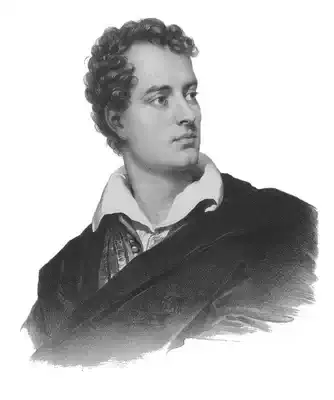
Lord Byron
Lines On Hearing That Lady Byron Was Ill
Lines On Hearing That Lady Byron Was Ill
And thou wert sad yet
I was not with thee;
And thou wert sick, and yet I was not near;
Methought that joy and health alone could be
Where I was not and
pain and sorrow here!
And is it thus?it
is as I foretold,
And shall be more so; for the mind recoils
Upon itself, and the wreck'd heart lies cold,
While heaviness collects the shatter'd spoils.
It is not in the storm nor in the strife
We feel benumb'd, and wish to be no more,
But in the after silence
on the shore.
When all is lost, except a little life.
I am too well avenged! but
'twas my right ;
Whate'er my sins might be, thou wert not sent
To be the Nemesis who should requite Nor
did Heaven choose so near an instrument.
Mercy is for the merciful! thou
Hast been of such, 'twill be accorded now.
Thy nights are banish'd from the realms of sleep! Yes!
they may flatter thee, but thou shalt feel
A hollow agony which will not heal,
For thou art pillow'd on a curse too deep;
Thou hast sown in my sorrow, and must reap
The bitter harvest in a woe as real!
I have had many foes, but none like thee;
For 'gainst the rest myself I could defend,
And be avenged, or turn them into friend;
But thou in safe implacability
Hadst nought to dread in
thy own weakness shielded,
And in my love, which hath but too much yielded,
And spared, for thy sake, some I should not spare;
And thus upon the world trust
in thy truth,
And the wild fame of my ungovern'd youth On
things that were not, and on things that are Even
upon such a basis hast thou built
A monument, whose cement hath been guilt!
The moral Clytemnestra of thy lord,
And hew'd down, with an unsuspected sword,
Fame, peace, and hope and
all the better life,
Which, but for this cold treason of thy heart,
Might still have risen from out the grave of strife,
And found a nobler duty than to part.
But of thy virtues didst thou make a vice,
Trafficking with them in a purpose cold,
For present anger, and for future gold And
buying others' grief at any price.
And thus once enter 'd into crooked ways,
The earthly truth, which was thy proper praise,
Did not still walk beside thee but
at times,
And with a breast unknowing its own crimes,
Deceit, averments incompatible,
Equivocations, and the thoughts which dwell
In Janusspirits
the
significant eye
Which learns to lie with silence the
pretext
Of prudence, with advantages annex'd The
acquiescence in all things which tend,
No matter how, to the desired end
All found a place in thy philosophy.
The means were worthy, and the end is won
I would not do by thee as thou hast done!
September 1816.
And thou wert sad yet
I was not with thee;
And thou wert sick, and yet I was not near;
Methought that joy and health alone could be
Where I was not and
pain and sorrow here!
And is it thus?it
is as I foretold,
And shall be more so; for the mind recoils
Upon itself, and the wreck'd heart lies cold,
While heaviness collects the shatter'd spoils.
It is not in the storm nor in the strife
We feel benumb'd, and wish to be no more,
But in the after silence
on the shore.
When all is lost, except a little life.
I am too well avenged! but
'twas my right ;
Whate'er my sins might be, thou wert not sent
To be the Nemesis who should requite Nor
did Heaven choose so near an instrument.
Mercy is for the merciful! thou
Hast been of such, 'twill be accorded now.
Thy nights are banish'd from the realms of sleep! Yes!
they may flatter thee, but thou shalt feel
A hollow agony which will not heal,
For thou art pillow'd on a curse too deep;
Thou hast sown in my sorrow, and must reap
The bitter harvest in a woe as real!
I have had many foes, but none like thee;
For 'gainst the rest myself I could defend,
And be avenged, or turn them into friend;
But thou in safe implacability
Hadst nought to dread in
thy own weakness shielded,
And in my love, which hath but too much yielded,
And spared, for thy sake, some I should not spare;
And thus upon the world trust
in thy truth,
And the wild fame of my ungovern'd youth On
things that were not, and on things that are Even
upon such a basis hast thou built
A monument, whose cement hath been guilt!
The moral Clytemnestra of thy lord,
And hew'd down, with an unsuspected sword,
Fame, peace, and hope and
all the better life,
Which, but for this cold treason of thy heart,
Might still have risen from out the grave of strife,
And found a nobler duty than to part.
But of thy virtues didst thou make a vice,
Trafficking with them in a purpose cold,
For present anger, and for future gold And
buying others' grief at any price.
And thus once enter 'd into crooked ways,
The earthly truth, which was thy proper praise,
Did not still walk beside thee but
at times,
And with a breast unknowing its own crimes,
Deceit, averments incompatible,
Equivocations, and the thoughts which dwell
In Janusspirits
the
significant eye
Which learns to lie with silence the
pretext
Of prudence, with advantages annex'd The
acquiescence in all things which tend,
No matter how, to the desired end
All found a place in thy philosophy.
The means were worthy, and the end is won
I would not do by thee as thou hast done!
September 1816.
432
Lord Byron
Epitaph On John Adams, Of Southwell - A Carrier, Who Died Of Drunkenness
Epitaph On John Adams, Of Southwell - A Carrier, Who Died Of Drunkenness
JOHN ADAMS lies here, of the parish of Southwell,
A Carrier who carried his can to his mouth well:
He carried so much, and he carried so fast,
He could carry no more‑so was carried at last;
For, the liquor he drank, being too much for one,
He could not carry off,so
he's now carrion.
JOHN ADAMS lies here, of the parish of Southwell,
A Carrier who carried his can to his mouth well:
He carried so much, and he carried so fast,
He could carry no more‑so was carried at last;
For, the liquor he drank, being too much for one,
He could not carry off,so
he's now carrion.
481
Lord Byron
Epigram
Epigram
In digging up your bones, Tom Paine,
Will. Cobbett has done well:
You visit him on earth again,
He'll visit you in hell.
In digging up your bones, Tom Paine,
Will. Cobbett has done well:
You visit him on earth again,
He'll visit you in hell.
457
Lord Byron
Don Juan: Canto The Thirteenth
Don Juan: Canto The Thirteenth
I now mean to be serious;it
is time,
Since laughter nowadays
is deem'd too serious.
A jest at Vice by Virtue's call'd a crime,
And critically held as deleterious:
Besides, the sad's a source of the sublime,
Although when long a little apt to weary us;
And therefore shall my lay soar high and solemn,
As an old temple dwindled to a column.
The Lady Adeline Amundeville
('Tis an old Norman name, and to be found
In pedigrees, by those who wander still
Along the last fields of that Gothic ground)
Was highborn,
wealthy by her father's will,
And beauteous, even where beauties most abound,
In Britain which
of course true patriots find
The goodliest soil of body and of mind.
I'll not gainsay them; it is not my cue;
I'll leave them to their taste, no doubt the best:
An eye's an eye, and whether black or blue,
Is no great matter, so 'tis in request,
'Tis nonsense to dispute about a hue The
kindest may be taken as a test.
The fair sex should be always fair; and no man,
Till thirty, should perceive there 's a plain woman.
And after that serene and somewhat dull
Epoch, that awkward corner turn'd for days
More quiet, when our moon's no more at full,
We may presume to criticise or praise;
Because indifference begins to lull
Our passions, and we walk in wisdom's ways;
Also because the figure and the face
Hint, that 'tis time to give the younger place.
I know that some would fain postpone this era,
Reluctant as all placemen to resign
Their post; but theirs is merely a chimera,
For they have pass'd life's equinoctial line:
But then they have their claret and Madeira
To irrigate the dryness of decline;
And county meetings, and the parliament,
And debt, and what not, for their solace sent.
And is there not religion, and reform,
Peace, war, the taxes, and what's call'd the 'Nation'?
The struggle to be pilots in a storm?
The landed and the monied speculation?
The joys of mutual hate to keep them warm,
Instead of love, that mere hallucination?
Now hatred is by far the longest pleasure;
Men love in haste, but they detest at leisure.
Rough Johnson, the great moralist, profess'd,
Right honestly, 'he liked an honest hater!'The
only truth that yet has been confest
Within these latest thousand years or later.
Perhaps the fine old fellow spoke in jest:For
my part, I am but a mere spectator,
And gaze where'er the palace or the hovel is,
Much in the mode of Goethe's Mephistopheles;
But neither love nor hate in much excess;
Though 'twas not once so. If I sneer sometimes,
It is because I cannot well do less,
And now and then it also suits my rhymes.
I should be very willing to redress
Men's wrongs, and rather check than punish crimes,
Had not Cervantes, in that too true tale
Of Quixote, shown how all such efforts fail.
Of all tales 'tis the saddest and
more sad,
Because it makes us smile: his hero 's right,
And still pursues the right;to
curb the bad
His only object, and 'gainst odds to fight
His guerdon: 'tis his virtue makes him mad!
But his adventures form a sorry sight;
A sorrier still is the great moral taught
By that real epic unto all who have thought.
Redressing injury, revenging wrong,
To aid the damsel and destroy the caitiff;
Opposing singly the united strong,
From foreign yoke to free the helpless native:Alas!
must noblest views, like an old song,
Be for mere fancy's sport a theme creative,
A jest, a riddle, Fame through thin and thick sought!
And Socrates himself but Wisdom's Quixote?
Cervantes smiled Spain's chivalry away;
A single laugh demolish'd the right arm
Of his own country;seldom
since that day
Has Spain had heroes. While Romance could charm,
The world gave ground before her bright array;
And therefore have his volumes done such harm,
That all their glory, as a composition,
Was dearly purchased by his land's perdition.
I'm 'at my old lunes'digression,
and forget
The Lady Adeline Amundeville;
The fair most fatal Juan ever met,
Although she was not evil nor meant ill;
But Destiny and Passion spread the net
(Fate is a good excuse for our own will),
And caught them;what
do they not catch, methinks?
But I 'm not OEdipus, and life's a Sphinx.
I tell the tale as it is told, nor dare
To venture a solution: 'Davus sum!'
And now I will proceed upon the pair.
Sweet Adeline, amidst the gay world's hum,
Was the Queen Bee,
the glass of all that 's fair;
Whose charms made all men speak, and women dumb.
The last's a miracle, and such was reckon'd,
And since that time there has not been a second.
Chaste was she, to detraction's desperation,
And wedded unto one she had loved well A
man known in the councils of the nation,
Cool, and quite English, imperturbable,
Though apt to act with fire upon occasion,
Proud of himself and her: the world could tell
Nought against either, and both seem'd secure She
in her virtue, he in his hauteur.
It chanced some diplomatical relations,
Arising out of business, often brought
Himself and Juan in their mutual stations
Into close contact. Though reserved, nor caught
By specious seeming, Juan's youth, and patience,
And talent, on his haughty spirit wrought,
And form'd a basis of esteem, which ends
In making men what courtesy calls friends.
And thus Lord Henry, who was cautious as
Reserve and pride could make him, and full slow
In judging men when
once his judgment was
Determined, right or wrong, on friend or foe,
Had all the pertinacity pride has,
Which knows no ebb to its imperious flow,
And loves or hates, disdaining to be guided,
Because its own good pleasure hath decided.
His friendships, therefore, and no less aversions,
Though oft well founded, which confirm'd but more
His prepossessions, like the laws of Persians
And Medes, would ne'er revoke what went before.
His feelings had not those strange fits, like tertians,
Of common likings, which make some deplore
What they should laugh at the
mere ague still
Of men's regard, the fever or the chill.
''Tis not in mortals to command success:
But do you more, Sempronius don't
deserve it,'
And take my word, you won't have any less.
Be wary, watch the time, and always serve it;
Give gently way, when there's too great a press;
And for your conscience, only learn to nerve it,
For, like a racer, or a boxer training,
'Twill make, if proved, vast efforts without paining.
Lord Henry also liked to be superior,
As most men do, the little or the great;
The very lowest find out an inferior,
At least they think so, to exert their state
Upon: for there are very few things wearier
Than solitary Pride's oppressive weight,
Which mortals generously would divide,
By bidding others carry while they ride.
In birth, in rank, in fortune likewise equal,
O'er Juan he could no distinction claim;
In years he had the advantage of time's sequel;
And, as he thought, in country much the same Because
bold Britons have a tongue and free quill,
At which all modern nations vainly aim;
And the Lord Henry was a great debater,
So that few members kept the house up later.
These were advantages: and then he thought It
was his foible, but by no means sinister That
few or none more than himself had caught
Court mysteries, having been himself a minister:
He liked to teach that which he had been taught,
And greatly shone whenever there had been a stir;
And reconciled all qualities which grace man,
Always a patriot, and sometimes a placeman.
He liked the gentle Spaniard for his gravity;
He almost honour'd him for his docility;
Because, though young, he acquiesced with suavity,
Or contradicted but with proud humility.
He knew the world, and would not see depravity
In faults which sometimes show the soil's fertility,
If that the weeds o'erlive not the first crop For
then they are very difficult to stop.
And then he talk'd with him about Madrid,
Constantinople, and such distant places;
Where people always did as they were bid,
Or did what they should not with foreign graces.
Of coursers also spake they: Henry rid
Well, like most Englishmen, and loved the races;
And Juan, like a trueborn
Andalusian,
Could back a horse, as despots ride a Russian.
And thus acquaintance grew, at noble routs,
And diplomatic dinners, or at other For
Juan stood well both with Ins and Outs,
As in freemasonry a higher brother.
Upon his talent Henry had no doubts;
His manner show'd him sprung from a high mother;
And all men like to show their hospitality
To him whose breeding matches with his quality.
At BlankBlank
Square;for
we will break no squares
By naming streets: since men are so censorious,
And apt to sow an author's wheat with tares,
Reaping allusions private and inglorious,
Where none were dreamt of, unto love's affairs,
Which were, or are, or are to be notorious,
That therefore do I previously declare,
Lord Henry's mansion was in BlankBlank
Square.
Also there bin another pious reason
For making squares and streets anonymous;
Which is, that there is scarce a single season
Which doth not shake some very splendid house
With some slight heartquake
of domestic treason A
topic scandal doth delight to rouse:
Such I might stumble over unawares,
Unless I knew the very chastest squares.
'Tis true, I might have chosen Piccadilly,
A place where peccadillos are unknown;
But I have motives, whether wise or silly,
For letting that pure sanctuary alone.
Therefore I name not square, street, place, until I
Find one where nothing naughty can be shown,
A vestal shrine of innocence of heart:
At Henry's mansion then, in BlankBlank
Square,
Was Juan a recherche, welcome guest,
As many other noble scions were;
And some who had but talent for their crest;
Or wealth, which is a passport every where;
Or even mere fashion, which indeed's the best
Recommendation; and to be well drest
Will very often supersede the rest.
And since 'there's safety in a multitude
Of counsellors,' as Solomon has said,
Or some one for him, in some sage, grave mood;Indeed
we see the daily proof display'd
In senates, at the bar, in wordy feud,
Where'er collective wisdom can parade,
Which is the only cause that we can guess
Of Britain's present wealth and happiness;
But as 'there's safety' grafted in the number
'Of counsellors' for men, thus for the sex
A large acquaintance lets not Virtue slumber;
Or should it shake, the choice will more perplex Variety
itself will more encumber.
'Midst many rocks we guard more against wrecks;
And thus with women: howsoe'er it shocks some's
Selflove,
there's safety in a crowd of coxcombs.
But Adeline had not the least occasion
For such a shield, which leaves but little merit
To virtue proper, or good education.
Her chief resource was in her own high spirit,
Which judged mankind at their due estimation;
And for coquetry, she disdain'd to wear it:
Secure of admiration, its impression
Was faint, as of an everyday
possession.
To all she was polite without parade;
To some she show'd attention of that kind
Which flatters, but is flattery convey'd
In such a sort as cannot leave behind
A trace unworthy either wife or maid;A
gentle, genial courtesy of mind,
To those who were, or pass'd for meritorious,
Just to console sad glory for being glorious;
Which is in all respects, save now and then,
A dull and desolate appendage. Gaze
Upon the shades of those distinguish'd men
Who were or are the puppetshows
of praise,
The praise of persecution; gaze again
On the most favour'd; and amidst the blaze
Of sunset halos o'er the laurelbrow'd,
What can ye recognise?a
gilded cloud.
There also was of course in Adeline
That calm patrician polish in the address,
Which ne'er can pass the equinoctial line
Of any thing which nature would express;
Just as a mandarin finds nothing fine,At
least his manner suffers not to guess
That any thing he views can greatly please.
Perhaps we have borrow'd this from the Chinese
Perhaps from Horace: his 'Nil admirari'
Was what he call'd the 'Art of Happiness;'
An art on which the artists greatly vary,
And have not yet attain'd to much success.
However, 'tis expedient to be wary:
Indifference certes don't produce distress;
And rash enthusiasm in good society
Were nothing but a moral inebriety.
But Adeline was not indifferent: for
(Now for a commonplace!)
beneath the snow,
As a volcano holds the lava more
Withinet
caetera. Shall I go on?No!
I hate to hunt down a tired metaphor,
So let the oftenused
volcano go.
Poor thing! How frequently, by me and others,
It hath been stirr'd up till its smoke quite smothers!
I'll have another figure in a trice:What
say you to a bottle of champagne?
Frozen into a very vinous ice,
Which leaves few drops of that immortal rain,
Yet in the very centre, past all price,
About a liquid glassful will remain;
And this is stronger than the strongest grape
Could e'er express in its expanded shape:
'Tis the whole spirit brought to a quintessence;
And thus the chilliest aspects may concentre
A hidden nectar under a cold presence.
And such are many though
I only meant her
From whom I now deduce these moral lessons,
On which the Muse has always sought to enter.
And your cold people are beyond all price,
When once you have broken their confounded ice.
But after all they are a NorthWest
Passage
Unto the glowing India of the soul;
And as the good ships sent upon that message
Have not exactly ascertain'd the Pole
(Though Parry's efforts look a lucky presage),
Thus gentlemen may run upon a shoal;
For if the Pole's not open, but all frost
(A chance still), 'tis a voyage or vessel lost.
And young beginners may as well commence
With quiet cruising o'er the ocean woman;
While those who are not beginners should have sense
Enough to make for port, ere time shall summon
With his grey signalflag;
and the past tense,
The dreary 'Fuimus' of all things human,
Must be declined, while life's thin thread's spun out
Between the gaping heir and gnawing gout.
But heaven must be diverted; its diversion
Is sometimes truculent but
never mind:
The world upon the whole is worth the assertion
(If but for comfort) that all things are kind:
And that same devilish doctrine of the Persian,
Of the two principles, but leaves behind
As many doubts as any other doctrine
Has ever puzzled Faith withal, or yoked her in.
The English winter ending
in July,
To recommence in August now
was done.
'Tis the postilion's paradise: wheels fly;
On roads, east, south, north, west, there is a run.
But for posthorses
who finds sympathy?
Man's pity's for himself, or for his son,
Always premising that said son at college
Has not contracted much more debt than knowledge.
The London winter's ended in July Sometimes
a little later. I don't err
In this: whatever other blunders lie
Upon my shoulders, here I must aver
My Muse a glass of weatherology;
For parliament is our barometer:
Let radicals its other acts attack,
Its sessions form our only almanack.
When its quicksilver's down at zero,lo
Coach, chariot, luggage, baggage, equipage!
Wheels whirl from Carlton palace to Soho,
And happiest they who horses can engage;
The turnpikes glow with dust; and Rotten Row
Sleeps from the chivalry of this bright age;
And tradesmen, with long bills and longer faces,
Sigh as
the postboys fasten on the traces.
They and their bills, 'Arcadians both,' are left
To the Greek kalends of another session.
Alas! to them of ready cash bereft,
What hope remains? Of hope the full possession,
Or generous draft, conceded as a gift,
At a long date till
they can get a fresh one Hawk'd
about at a discount, small or large;
Also the solace of an overcharge.
But these are trifles. Downward flies my lord,
Nodding beside my lady in his carriage.
Away! away! 'Fresh horses!' are the word,
And changed as quickly as hearts after marriage;
The obsequious landlord hath the change restored;
The postboys have no reason to disparage
Their fee; but ere the water'd wheels may hiss hence,
The ostler pleads too for a reminiscence.
'Tis granted; and the valet mounts the dickey That
gentleman of lords and gentlemen;
Also my lady's gentlewoman, tricky,
Trick'd out, but modest more than poet's pen
Can paint,'
Cosi viaggino i Ricchi!'
(Excuse a foreign slipslop now and then,
If but to show I've travell'd; and what's travel,
Unless it teaches one to quote and cavil?)
The London winter and the country summer
Were well nigh over. 'Tis perhaps a pity,
When nature wears the gown that doth become her,
To lose those best months in a sweaty city,
And wait until the nightingale grows dumber,
Listening debates not very wise or witty,
Ere patriots their true country can remember;But
there 's no shooting (save grouse) till September.
I've done with my tirade. The world was gone;
The twice two thousand, for whom earth was made,
Were vanish'd to be what they call alone That
is, with thirty servants for parade,
As many guests, or more; before whom groan
As many covers, duly, daily, laid.
Let none accuse Old England's hospitality Its
quantity is but condensed to quality.
Lord Henry and the Lady Adeline
Departed like the rest of their compeers,
The peerage, to a mansion very fine;
The Gothic Babel of a thousand years.
None than themselves could boast a longer line,
Where time through heroes and through beauties steers;
And oaks as olden as their pedigree
Told of their sires, a tomb in every tree.
A paragraph in every paper told
Of their departure: such is modern fame:
'Tis pity that it takes no farther hold
Than an advertisement, or much the same;
When, ere the ink be dry, the sound grows cold.
The Morning Post was foremost to proclaim '
Departure, for his country seat, today,
Lord H. Amundeville and Lady A.
'We understand the splendid host intends
To entertain, this autumn, a select
And numerous party of his noble friends;
'Midst whom we have heard, from sources quite correct,
With many more by rank and fashion deck'd;
Also a foreigner of high condition,
The envoy of the secret Russian mission.'
And thus we see who
doubts the Morning Post?
(Whose articles are like the 'Thirty nine,'
Which those most swear to who believe them most)Our
gay Russ Spaniard was ordain'd to shine,
Deck'd by the rays reflected from his host,
With those who, Pope says, 'greatly daring dine.'
'T is odd, but true,last
war the News abounded
More with these dinners than the kill'd or wounded;
As thus: 'On Thursday there was a grand dinner;
Present, Lords A. B. C.'Earls,
dukes, by name
Announced with no less pomp than victory's winner:
Then underneath, and in the very same
Column; date, 'Falmouth. There has lately been here
The Slapdash
regiment, so well known to fame,
Whose loss in the late action we regret:
The vacancies are fill'd up see
Gazette.'
To Norman Abbey whirl'd the noble pair,An
old, old monastery once, and now
Still older mansion; of a rich and rare
Mix'd Gothic, such as artists all allow
Few specimens yet left us can compare
Withal: it lies perhaps a little low,
Because the monks preferr'd a hill behind,
To shelter their devotion from the wind.
It stood embosom'd in a happy valley,
Crown'd by high woodlands, where the Druid oak
Stood like Caractacus in act to rally
His host, with broad arms 'gainst the thunderstroke;
And from beneath his boughs were seen to sally
The dappled foresters as
day awoke,
The branching stag swept down with all his herd,
To quaff a brook which murmur'd like a bird.
Before the mansion lay a lucid lake,
Broad as transparent, deep, and freshly fed
By a river, which its soften'd way did take
In currents through the calmer water spread
Around: the wildfowl nestled in the brake
And sedges, brooding in their liquid bed:
The woods sloped downwards to its brink, and stood
With their green faces fix'd upon the flood.
Its outlet dash'd into a deep cascade,
Sparkling with foam, until again subsiding,
Its shriller echoes like
an infant made
Quiet sank
into softer ripples, gliding
Into a rivulet; and thus allay'd,
Pursued its course, now gleaming, and now hiding
Its windings through the woods; now clear, now blue,
According as the skies their shadows threw.
A glorious remnant of the Gothic pile
(While yet the church was Rome's) stood half apart
In a grand arch, which once screen'd many an aisle.
These last had disappear'd a
loss to art:
The first yet frown'd superbly o'er the soil,
And kindled feelings in the roughest heart,
Which mourn'd the power of time's or tempest's march,
In gazing on that venerable arch.
Within a niche, nigh to its pinnacle,
Twelve saints had once stood sanctified in stone;
But these had fallen, not when the friars fell,
But in the war which struck Charles from his throne,
When each house was a fortalice, as tell
The annals of full many a line undone,The
gallant cavaliers, who fought in vain
For those who knew not to resign or reign.
But in a higher niche, alone, but crowned,
The Virgin Mother of the God born
Child,
With her Son in her blessed arms, look'd round,
Spared by some chance when all beside was spoil'd;
She made the earth below seem holy ground.
This may be superstition, weak or wild,
But even the faintest relics of a shrine
Of any worship wake some thoughts divine.
A mighty window, hollow in the centre,
Shorn of its glass of thousand colourings,
Through which the deepen'd glories once could enter,
Streaming from off the sun like seraph's wings,
Now yawns all desolate: now loud, now fainter,
The gale sweeps through its fretwork, and oft sings
The owl his anthem, where the silenced quire
Lie with their hallelujahs quench'd like fire.
But in the noontide of the moon, and when
The wind is winged from one point of heaven,
There moans a strange unearthly sound, which then
Is musical a
dying accent driven
Through the huge arch, which soars and sinks again.
Some deem it but the distant echo given
Back to the night wind by the waterfall,
And harmonised by the old choral wall:
Others, that some original shape, or form
Shaped by decay perchance, hath given the power
(Though less than that of Memnon's statue, warm
In Egypt's rays, to harp at a fix'd hour)
To this grey ruin, with a voice to charm.
Sad, but serene, it sweeps o'er tree or tower;
The cause I know not, nor can solve; but such
The fact:I
've heard it once
perhaps too much.
Amidst the court a Gothic fountain play'd,
Symmetrical, but deck'd with carvings quaint Strange
faces, like to men in masquerade,
And here perhaps a monster, there a saint:
The spring gush'd through grim mouths of granite made,
And sparkled into basins, where it spent
Its little torrent in a thousand bubbles,
Like man's vain glory, and his vainer troubles.
The mansion's self was vast and venerable,
With more of the monastic than has been
Elsewhere preserved: the cloisters still were stable,
The cells, too, and refectory, I ween:
An exquisite small chapel had been able,
Still unimpair'd, to decorate the scene;
The rest had been reform'd, replaced, or sunk,
And spoke more of the baron than the monk.
Huge halls, long galleries, spacious chambers, join'd
By no quite lawful marriage of the arts,
Might shock a connoisseur; but when combined,
Form'd a whole which, irregular in parts,
Yet left a grand impression on the mind,
At least of those whose eyes are in their hearts:
We gaze upon a giant for his stature,
Nor judge at first if all be true to nature.
Steel barons, molten the next generation
To silken rows of gay and garter'd earls,
Glanced from the walls in goodly preservation;
And Lady Marys blooming into girls,
With fair long locks, had also kept their station;
And countesses mature in robes and pearls:
Also some beauties of Sir Peter Lely,
Whose drapery hints we may admire them freely.
Judges in very formidable ermine
Were there, with brows that did not much invite
The accused to think their lordships would determine
His cause by leaning much from might to right:
Bishops, who had not left a single sermon:
Attorneys general,
awful to the sight,
As hinting more (unless our judgments warp us)
Of the 'Star Chamber' than of 'Habeas Corpus.'
Generals, some all in armour, of the old
And iron time, ere lead had ta'en the lead;
Others in wigs of Marlborough's martial fold,
Huger than twelve of our degenerate breed:
Lordlings, with staves of white or keys of gold:
Nimrods, whose canvass scarce contain'd the steed;
And here and there some stern high patriot stood,
Who could not get the place for which he sued.
But ever and anon, to soothe your vision,
Fatigued with these hereditary glories,
There rose a Carlo Dolce or a Titian,
Or wilder group of savage Salvatore's;
Here danced Albano's boys, and here the sea shone
In Vernet's ocean lights; and there the stories
Of martyrs awed, as Spagnoletto tainted
His brush with all the blood of all the sainted.
Here sweetly spread a landscape of Lorraine;
There Rembrandt made his darkness equal light,
Or gloomy Caravaggio's gloomier stain
Bronzed o'er some lean and stoic anchorite:But,
lo! a Teniers woos, and not in vain,
Your eyes to revel in a livelier sight:
His bell mouth'd
goblet makes me feel quite Danish
Or Dutch with thirst What,
ho! a flask of Rhenish.
O reader! if that thou canst read,and
know,
'T is not enough to spell, or even to read,
To constitute a reader; there must go
Virtues of which both you and I have need;Firstly,
begin with the beginning (though
That clause is hard); and secondly, proceed;
Thirdly, commence not with the end or,
sinning
In this sort, end at least with the beginning.
But, reader, thou hast patient been of late,
While I, without remorse of rhyme, or fear,
Have built and laid out ground at such a rate,
Dan Phoebus takes me for an auctioneer.
That poets were so from their earliest date,
By Homer's 'Catalogue of ships' is clear;
But a mere modern must be moderate I
spare you then the furniture and plate.
The mellow autumn came, and with it came
The promised party, to enjoy its sweets.
The corn is cut, the manor full of game;
The pointer ranges, and the sportsman beats
In russet jacket:lynx
like
is his aim;
Full grows his bag, and wonderful his feats.
Ah, nut brown
partridges! Ah, brilliant pheasants!
And ah, ye poachers!'
T is no sport for peasants.
An English autumn, though it hath no vines,
Blushing with Bacchant coronals along
The paths, o'er which the far festoon entwines
The red grape in the sunny lands of song,
Hath yet a purchased choice of choicest wines;
The claret light, and the Madeira strong.
If Britain mourn her bleakness, we can tell her,
The very best of vineyards is the cellar.
Then, if she hath not that serene decline
Which makes the southern autumn's day appear
As if 't would to a second spring resign
The season, rather than to winter drear,
Of in door
comforts still she hath a mine,The
sea coal
fires the 'earliest of the year;'
Without doors, too, she may compete in mellow,
As what is lost in green is gain'd in yellow.
And for the effeminate villeggiatura Rife
with more horns than hounds she
hath the chase,
So animated that it might allure
Saint from his beads to join the jocund race;
Even Nimrod's self might leave the plains of Dura,
And wear the Melton jacket for a space:
If she hath no wild boars, she hath a tame
Preserve of bores, who ought to be made game.
The noble guests, assembled at the Abbey,
Consisted of we
give the sex the pas The
Duchess of Fitz Fulke;
the Countess Crabby;
The Ladies Scilly, Busey;Miss
Eclat,
Miss Bombazeen, Miss Mackstay, Miss O'Tabby,
And Mrs. Rabbi, the rich banker's squaw;
Also the honourable Mrs. Sleep,
Who look'd a white lamb, yet was a black sheep:
With other Countesses of Blank but
rank;
At once the 'lie' and the 'elite' of crowds;
Who pass like water filter'd in a tank,
All purged and pious from their native clouds;
Or paper turn'd to money by the Bank:
No matter how or why, the passport shrouds
The 'passee' and the past; for good society
Is no less famed for tolerance than piety,
That is, up to a certain point; which point
Forms the most difficult in punctuation.
Appearances appear to form the joint
On which it hinges in a higher station;
And so that no explosion cry 'Aroint
Thee, witch!' or each Medea has her Jason;
Or (to the point with Horace and with Pulci)
'Omne tulit punctum, quae miscuit utile dulci.'
I can't exactly trace their rule of right,
Which hath a little leaning to a lottery.
I 've seen a virtuous woman put down quite
By the mere combination of a coterie;
Also a so so
matron boldly fight
Her way back to the world by dint of plottery,
And shine the very Siria of the spheres,
Escaping with a few slight, scarless sneers.
I have seen more than I 'll say:but
we will see
How our villeggiatura will get on.
The party might consist of thirty three
Of highest caste the
Brahmins of the ton.
I have named a few, not foremost in degree,
But ta'en at hazard as the rhyme may run.
By way of sprinkling, scatter'd amongst these,
There also were some Irish absentees.
There was Parolles, too, the legal bully,
Who limits all his battles to the bar
And senate: when invited elsewhere, truly,
He shows more appetite for words than war.
There was the young bard Rackrhyme, who had newly
Come out and glimmer'd as a six weeks' star.
There was Lord Pyrrho, too, the great freethinker;
And Sir John Pottledeep, the mighty drinker.
There was the Duke of Dash, who was a duke,
'Ay, every inch a' duke; there were twelve peers
Like Charlemagne's and
all such peers in look
And intellect, that neither eyes nor ears
For commoners had ever them mistook.
There were the six Miss Rawbolds pretty
dears!
All song and sentiment; whose hearts were set
Less on a convent than a coronet.
There were four Honourable Misters, whose
Honour was more before their names than after;
There was the preux Chevalier de la Ruse,
Whom France and Fortune lately deign'd to waft here,
Whose chiefly harmless talent was to amuse;
But the clubs found it rather serious laughter,
Because such
was his magic power to please The
dice seem'd charm'd, too, with his repartees.
There was Dick Dubious, the metaphysician,
Who loved philosophy and a good dinner;
Angle, the soi disant
mathematician;
Sir Henry Silvercup, the great race winner.
There was the Reverend Rodomont Precisian,
Who did not hate so much the sin as sinner;
And Lord Augustus Fitz Plantagenet,
Good at all things, but better at a bet.
There was jack jargon, the gigantic guardsman;
And General Fireface, famous in the field,
A great tactician, and no less a swordsman,
Who ate, last war, more Yankees than he kill'd.
There was the waggish Welsh Judge, Jefferies Hardsman,
In his grave office so completely skill'd,
That when a culprit came far condemnation,
He had his judge's joke for consolation.
Good company 's a chess board
there
are kings,
Queens, bishops, knights, rooks, pawns; the world 's a game;
Save that the puppets pull at their own strings,
Methinks gay Punch hath something of the same.
My Muse, the butterfly hath but her wings,
Not stings, and flits through ether without aim,
Alighting rarely:were
she but a hornet,
Perhaps there might be vices which would mourn it.
I had forgotten but
must not forget An
orator, the latest of the session,
Who had deliver'd well a very set
Smooth speech, his first and maidenly transgression
Upon debate: the papers echoed yet
With his debut, which made a strong impression,
And rank'd with what is every day display'd '
The best first speech that ever yet was made.'
Proud of his 'Hear hims!' proud, too, of his vote
And lost virginity of oratory,
Proud of his learning (just enough to quote),
He revell'd in his Ciceronian glory:
With memory excellent to get by rote,
With wit to hatch a pun or tell a story,
Graced with some merit, and with more effrontery,
'His country's pride,' he came down to the country.
There also were two wits by acclamation,
Longbow from Ireland, Strongbow from the Tweed,
Both lawyers and both men of education;
But Strongbow's wit was of more polish'd breed:
Longbow was rich in an imagination
As beautiful and bounding as a steed,
But sometimes stumbling over a potato,While
Strongbow's best things might have come from Cato.
Strongbow was like a new tuned
harpsichord;
But Longbow wild as an AEolian harp,
With which the winds of heaven can claim accord,
And make a music, whether flat or sharp.
Of Strongbow's talk you would not change a word:
At Longbow's phrases you might sometimes carp:
Both wits one
born so, and the other bred This
by his heart, his rival by his head.
If all these seem a heterogeneous mas
To be assembled at a country seat,
Yet think, a specimen of every class
Is better than a humdrum tete a
tete.
The days of Comedy are gone, alas!
When Congreve's fool could vie with Moliere's bete:
Society is smooth'd to that excess,
That manners hardly differ more than dress.
Our ridicules are kept in the back ground
Ridiculous
enough, but also dull;
Professions, too, are no more to be found
Professional; and there is nought to cull
Of folly's fruit; for though your fools abound,
They're barren, and not worth the pains to pull.
Society is now one polish'd horde,
Form'd of two mighty tribes, the Bores and Bored.
But from being farmers, we turn gleaners, gleaning
The scanty but right well
thresh'd ears of truth;
And, gentle reader! when you gather meaning,
You may be Boaz, and I modest
Ruth.
Farther I 'd quote, but Scripture intervening
Forbids. it great impression in my youth
Was made by Mrs. Adams, where she cries,
'That Scriptures out of church are blasphemies.'
But what we can we glean in this vile age
Of chaff, although our gleanings be not grist.
I must not quite omit the talking sage,
Kit Cat,
the famous Conversationist,
Who, in his common place
book, had a page
Prepared each morn for evenings. 'List, oh, list!''
Alas, poor ghost!'What
unexpected woes
Await those who have studied their bon mots!
Firstly, they must allure the conversation
By many windings to their clever clinch;
And secondly, must let slip no occasion,
Nor bate (abate) their hearers of an inch,
But take an ell and
make a great sensation,
If possible; and thirdly, never flinch
When some smart talker puts them to the test,
But seize the last word, which no doubt 's the best.
Lord Henry and his lady were the hosts;
The party we have touch'd on were the guests:
Their table was a board to tempt even ghosts
To pass the Styx for more substantial feasts.
I will not dwell upon ragouts or roasts,
Albeit all human history attests
That happiness for man the
hungry sinner!Since
Eve ate apples, much depends on dinner.
Witness the lands which 'flow'd with milk and honey,'
Held out unto the hungry Israelites;
To this we have added since, the love of money,
The only sort of pleasure which requites.
Youth fades, and leaves our days no longer sunny;
We tire of mistresses and parasites;
But oh, ambrosial cash! Ah! who would lose thee?
When we no more can use, or even abuse thee!
The gentlemen got up betimes to shoot,
Or hunt: the young, because they liked the sport The
first thing boys like after play and fruit;
The middle aged
to make the day more short;
For ennui is a growth of English root,
Though nameless in our language:we
retort
The fact for words, and let the French translate
That awful yawn which sleep can not abate.
The elderly walk'd through the library,
And tumbled books, or criticised the pictures,
Or saunter'd through the gardens piteously,
And made upon the hot house
several strictures,
Or rode a nag which trotted not too high,
Or on the morning papers read their lectures,
Or on the watch their longing eyes would fix,
Longing at sixty for the hour of six.
But none were 'gene:' the great hour of union
Was rung by dinner's knell; till then all were
Masters of their own time or
in communion,
Or solitary, as they chose to bear
The hours, which how to pass is but to few known.
Each rose up at his own, and had to spare
What time he chose for dress, and broke his fast
When, where, and how he chose for that repast.
The ladies some
rouged, some a little pale Met
the morn as they might. If fine, they rode,
Or walk'd; if foul, they read, or told a tale,
Sung, or rehearsed the last dance from abroad;
Discuss'd the fashion which might next prevail,
And settled bonnets by the newest code,
Or cramm'd twelve sheets into one little letter,
To make each correspondent a new debtor.
For some had absent lovers, all had friends.
The earth has nothing like a she epistle,
And hardly heaven because
it never ends.
I love the mystery of a female missal,
Which, like a creed, ne'er says all it intends,
But full of cunning as Ulysses' whistle,
When he allured poor Dolon:you
had better
Take care what you reply to such a letter.
Then there were billiards; cards, too, but no dice;Save
in the clubs no man of honour plays;Boats
when 't was water, skating when 't was ice,
And the hard frost destroy'd the scenting days:
And angling, too, that solitary vice,
Whatever Izaak Walton sings or says;
The quaint, old, cruel coxcomb, in his gullet
Should have a hook, and a small trout to pull it.
With evening came the banquet and the wine;
The conversazione; the duet,
Attuned by voices more or less divine
(My heart or head aches with the memory yet).
The four Miss Rawbolds in a glee would shine;
But the two youngest loved more to be set
Down to the harp because
to music's charms
They added graceful necks, white hands and arms.
Sometimes a dance (though rarely on field days,
For then the gentlemen were rather tired)
Display'd some sylph like
figures in its maze;
Then there was small talk
ready when required;
Flirtation but
decorous; the mere praise
Of charms that should or should not be admired.
The hunters fought their fox hunt
o'er again,
And then retreated soberly at
ten.
The politicians, in a nook apart,
Discuss'd the world, and settled all the spheres;
The wits watch'd every loophole for their art,
To introduce a bon mot
head and ears;
Small is the rest of those who would be smart,
A moment's good thing may have cost them years
Before they find an hour to introduce it;
And then, even then, some bore may make them lose it.
But all was gentle and aristocratic
In this our party; polish'd, smooth, and cold,
As Phidian forms cut out of marble Attic.
There now are no Squire Westerns as of old;
And our Sophias are not so emphatic,
But fair as then, or fairer to behold.
We have no accomplish'd blackguards, like Tom Jones,
But gentlemen in stays, as stiff as stones.
They separated at an early hour;
That is, ere midnight which
is London's noon:
But in the country ladies seek their bower
A little earlier than the waning moon.
Peace to the slumbers of each folded flower May
the rose call back its true colour soon!
Good hours of fair cheeks are the fairest tinters,
And lower the price of rouge at
least some winters.
I now mean to be serious;it
is time,
Since laughter nowadays
is deem'd too serious.
A jest at Vice by Virtue's call'd a crime,
And critically held as deleterious:
Besides, the sad's a source of the sublime,
Although when long a little apt to weary us;
And therefore shall my lay soar high and solemn,
As an old temple dwindled to a column.
The Lady Adeline Amundeville
('Tis an old Norman name, and to be found
In pedigrees, by those who wander still
Along the last fields of that Gothic ground)
Was highborn,
wealthy by her father's will,
And beauteous, even where beauties most abound,
In Britain which
of course true patriots find
The goodliest soil of body and of mind.
I'll not gainsay them; it is not my cue;
I'll leave them to their taste, no doubt the best:
An eye's an eye, and whether black or blue,
Is no great matter, so 'tis in request,
'Tis nonsense to dispute about a hue The
kindest may be taken as a test.
The fair sex should be always fair; and no man,
Till thirty, should perceive there 's a plain woman.
And after that serene and somewhat dull
Epoch, that awkward corner turn'd for days
More quiet, when our moon's no more at full,
We may presume to criticise or praise;
Because indifference begins to lull
Our passions, and we walk in wisdom's ways;
Also because the figure and the face
Hint, that 'tis time to give the younger place.
I know that some would fain postpone this era,
Reluctant as all placemen to resign
Their post; but theirs is merely a chimera,
For they have pass'd life's equinoctial line:
But then they have their claret and Madeira
To irrigate the dryness of decline;
And county meetings, and the parliament,
And debt, and what not, for their solace sent.
And is there not religion, and reform,
Peace, war, the taxes, and what's call'd the 'Nation'?
The struggle to be pilots in a storm?
The landed and the monied speculation?
The joys of mutual hate to keep them warm,
Instead of love, that mere hallucination?
Now hatred is by far the longest pleasure;
Men love in haste, but they detest at leisure.
Rough Johnson, the great moralist, profess'd,
Right honestly, 'he liked an honest hater!'The
only truth that yet has been confest
Within these latest thousand years or later.
Perhaps the fine old fellow spoke in jest:For
my part, I am but a mere spectator,
And gaze where'er the palace or the hovel is,
Much in the mode of Goethe's Mephistopheles;
But neither love nor hate in much excess;
Though 'twas not once so. If I sneer sometimes,
It is because I cannot well do less,
And now and then it also suits my rhymes.
I should be very willing to redress
Men's wrongs, and rather check than punish crimes,
Had not Cervantes, in that too true tale
Of Quixote, shown how all such efforts fail.
Of all tales 'tis the saddest and
more sad,
Because it makes us smile: his hero 's right,
And still pursues the right;to
curb the bad
His only object, and 'gainst odds to fight
His guerdon: 'tis his virtue makes him mad!
But his adventures form a sorry sight;
A sorrier still is the great moral taught
By that real epic unto all who have thought.
Redressing injury, revenging wrong,
To aid the damsel and destroy the caitiff;
Opposing singly the united strong,
From foreign yoke to free the helpless native:Alas!
must noblest views, like an old song,
Be for mere fancy's sport a theme creative,
A jest, a riddle, Fame through thin and thick sought!
And Socrates himself but Wisdom's Quixote?
Cervantes smiled Spain's chivalry away;
A single laugh demolish'd the right arm
Of his own country;seldom
since that day
Has Spain had heroes. While Romance could charm,
The world gave ground before her bright array;
And therefore have his volumes done such harm,
That all their glory, as a composition,
Was dearly purchased by his land's perdition.
I'm 'at my old lunes'digression,
and forget
The Lady Adeline Amundeville;
The fair most fatal Juan ever met,
Although she was not evil nor meant ill;
But Destiny and Passion spread the net
(Fate is a good excuse for our own will),
And caught them;what
do they not catch, methinks?
But I 'm not OEdipus, and life's a Sphinx.
I tell the tale as it is told, nor dare
To venture a solution: 'Davus sum!'
And now I will proceed upon the pair.
Sweet Adeline, amidst the gay world's hum,
Was the Queen Bee,
the glass of all that 's fair;
Whose charms made all men speak, and women dumb.
The last's a miracle, and such was reckon'd,
And since that time there has not been a second.
Chaste was she, to detraction's desperation,
And wedded unto one she had loved well A
man known in the councils of the nation,
Cool, and quite English, imperturbable,
Though apt to act with fire upon occasion,
Proud of himself and her: the world could tell
Nought against either, and both seem'd secure She
in her virtue, he in his hauteur.
It chanced some diplomatical relations,
Arising out of business, often brought
Himself and Juan in their mutual stations
Into close contact. Though reserved, nor caught
By specious seeming, Juan's youth, and patience,
And talent, on his haughty spirit wrought,
And form'd a basis of esteem, which ends
In making men what courtesy calls friends.
And thus Lord Henry, who was cautious as
Reserve and pride could make him, and full slow
In judging men when
once his judgment was
Determined, right or wrong, on friend or foe,
Had all the pertinacity pride has,
Which knows no ebb to its imperious flow,
And loves or hates, disdaining to be guided,
Because its own good pleasure hath decided.
His friendships, therefore, and no less aversions,
Though oft well founded, which confirm'd but more
His prepossessions, like the laws of Persians
And Medes, would ne'er revoke what went before.
His feelings had not those strange fits, like tertians,
Of common likings, which make some deplore
What they should laugh at the
mere ague still
Of men's regard, the fever or the chill.
''Tis not in mortals to command success:
But do you more, Sempronius don't
deserve it,'
And take my word, you won't have any less.
Be wary, watch the time, and always serve it;
Give gently way, when there's too great a press;
And for your conscience, only learn to nerve it,
For, like a racer, or a boxer training,
'Twill make, if proved, vast efforts without paining.
Lord Henry also liked to be superior,
As most men do, the little or the great;
The very lowest find out an inferior,
At least they think so, to exert their state
Upon: for there are very few things wearier
Than solitary Pride's oppressive weight,
Which mortals generously would divide,
By bidding others carry while they ride.
In birth, in rank, in fortune likewise equal,
O'er Juan he could no distinction claim;
In years he had the advantage of time's sequel;
And, as he thought, in country much the same Because
bold Britons have a tongue and free quill,
At which all modern nations vainly aim;
And the Lord Henry was a great debater,
So that few members kept the house up later.
These were advantages: and then he thought It
was his foible, but by no means sinister That
few or none more than himself had caught
Court mysteries, having been himself a minister:
He liked to teach that which he had been taught,
And greatly shone whenever there had been a stir;
And reconciled all qualities which grace man,
Always a patriot, and sometimes a placeman.
He liked the gentle Spaniard for his gravity;
He almost honour'd him for his docility;
Because, though young, he acquiesced with suavity,
Or contradicted but with proud humility.
He knew the world, and would not see depravity
In faults which sometimes show the soil's fertility,
If that the weeds o'erlive not the first crop For
then they are very difficult to stop.
And then he talk'd with him about Madrid,
Constantinople, and such distant places;
Where people always did as they were bid,
Or did what they should not with foreign graces.
Of coursers also spake they: Henry rid
Well, like most Englishmen, and loved the races;
And Juan, like a trueborn
Andalusian,
Could back a horse, as despots ride a Russian.
And thus acquaintance grew, at noble routs,
And diplomatic dinners, or at other For
Juan stood well both with Ins and Outs,
As in freemasonry a higher brother.
Upon his talent Henry had no doubts;
His manner show'd him sprung from a high mother;
And all men like to show their hospitality
To him whose breeding matches with his quality.
At BlankBlank
Square;for
we will break no squares
By naming streets: since men are so censorious,
And apt to sow an author's wheat with tares,
Reaping allusions private and inglorious,
Where none were dreamt of, unto love's affairs,
Which were, or are, or are to be notorious,
That therefore do I previously declare,
Lord Henry's mansion was in BlankBlank
Square.
Also there bin another pious reason
For making squares and streets anonymous;
Which is, that there is scarce a single season
Which doth not shake some very splendid house
With some slight heartquake
of domestic treason A
topic scandal doth delight to rouse:
Such I might stumble over unawares,
Unless I knew the very chastest squares.
'Tis true, I might have chosen Piccadilly,
A place where peccadillos are unknown;
But I have motives, whether wise or silly,
For letting that pure sanctuary alone.
Therefore I name not square, street, place, until I
Find one where nothing naughty can be shown,
A vestal shrine of innocence of heart:
At Henry's mansion then, in BlankBlank
Square,
Was Juan a recherche, welcome guest,
As many other noble scions were;
And some who had but talent for their crest;
Or wealth, which is a passport every where;
Or even mere fashion, which indeed's the best
Recommendation; and to be well drest
Will very often supersede the rest.
And since 'there's safety in a multitude
Of counsellors,' as Solomon has said,
Or some one for him, in some sage, grave mood;Indeed
we see the daily proof display'd
In senates, at the bar, in wordy feud,
Where'er collective wisdom can parade,
Which is the only cause that we can guess
Of Britain's present wealth and happiness;
But as 'there's safety' grafted in the number
'Of counsellors' for men, thus for the sex
A large acquaintance lets not Virtue slumber;
Or should it shake, the choice will more perplex Variety
itself will more encumber.
'Midst many rocks we guard more against wrecks;
And thus with women: howsoe'er it shocks some's
Selflove,
there's safety in a crowd of coxcombs.
But Adeline had not the least occasion
For such a shield, which leaves but little merit
To virtue proper, or good education.
Her chief resource was in her own high spirit,
Which judged mankind at their due estimation;
And for coquetry, she disdain'd to wear it:
Secure of admiration, its impression
Was faint, as of an everyday
possession.
To all she was polite without parade;
To some she show'd attention of that kind
Which flatters, but is flattery convey'd
In such a sort as cannot leave behind
A trace unworthy either wife or maid;A
gentle, genial courtesy of mind,
To those who were, or pass'd for meritorious,
Just to console sad glory for being glorious;
Which is in all respects, save now and then,
A dull and desolate appendage. Gaze
Upon the shades of those distinguish'd men
Who were or are the puppetshows
of praise,
The praise of persecution; gaze again
On the most favour'd; and amidst the blaze
Of sunset halos o'er the laurelbrow'd,
What can ye recognise?a
gilded cloud.
There also was of course in Adeline
That calm patrician polish in the address,
Which ne'er can pass the equinoctial line
Of any thing which nature would express;
Just as a mandarin finds nothing fine,At
least his manner suffers not to guess
That any thing he views can greatly please.
Perhaps we have borrow'd this from the Chinese
Perhaps from Horace: his 'Nil admirari'
Was what he call'd the 'Art of Happiness;'
An art on which the artists greatly vary,
And have not yet attain'd to much success.
However, 'tis expedient to be wary:
Indifference certes don't produce distress;
And rash enthusiasm in good society
Were nothing but a moral inebriety.
But Adeline was not indifferent: for
(Now for a commonplace!)
beneath the snow,
As a volcano holds the lava more
Withinet
caetera. Shall I go on?No!
I hate to hunt down a tired metaphor,
So let the oftenused
volcano go.
Poor thing! How frequently, by me and others,
It hath been stirr'd up till its smoke quite smothers!
I'll have another figure in a trice:What
say you to a bottle of champagne?
Frozen into a very vinous ice,
Which leaves few drops of that immortal rain,
Yet in the very centre, past all price,
About a liquid glassful will remain;
And this is stronger than the strongest grape
Could e'er express in its expanded shape:
'Tis the whole spirit brought to a quintessence;
And thus the chilliest aspects may concentre
A hidden nectar under a cold presence.
And such are many though
I only meant her
From whom I now deduce these moral lessons,
On which the Muse has always sought to enter.
And your cold people are beyond all price,
When once you have broken their confounded ice.
But after all they are a NorthWest
Passage
Unto the glowing India of the soul;
And as the good ships sent upon that message
Have not exactly ascertain'd the Pole
(Though Parry's efforts look a lucky presage),
Thus gentlemen may run upon a shoal;
For if the Pole's not open, but all frost
(A chance still), 'tis a voyage or vessel lost.
And young beginners may as well commence
With quiet cruising o'er the ocean woman;
While those who are not beginners should have sense
Enough to make for port, ere time shall summon
With his grey signalflag;
and the past tense,
The dreary 'Fuimus' of all things human,
Must be declined, while life's thin thread's spun out
Between the gaping heir and gnawing gout.
But heaven must be diverted; its diversion
Is sometimes truculent but
never mind:
The world upon the whole is worth the assertion
(If but for comfort) that all things are kind:
And that same devilish doctrine of the Persian,
Of the two principles, but leaves behind
As many doubts as any other doctrine
Has ever puzzled Faith withal, or yoked her in.
The English winter ending
in July,
To recommence in August now
was done.
'Tis the postilion's paradise: wheels fly;
On roads, east, south, north, west, there is a run.
But for posthorses
who finds sympathy?
Man's pity's for himself, or for his son,
Always premising that said son at college
Has not contracted much more debt than knowledge.
The London winter's ended in July Sometimes
a little later. I don't err
In this: whatever other blunders lie
Upon my shoulders, here I must aver
My Muse a glass of weatherology;
For parliament is our barometer:
Let radicals its other acts attack,
Its sessions form our only almanack.
When its quicksilver's down at zero,lo
Coach, chariot, luggage, baggage, equipage!
Wheels whirl from Carlton palace to Soho,
And happiest they who horses can engage;
The turnpikes glow with dust; and Rotten Row
Sleeps from the chivalry of this bright age;
And tradesmen, with long bills and longer faces,
Sigh as
the postboys fasten on the traces.
They and their bills, 'Arcadians both,' are left
To the Greek kalends of another session.
Alas! to them of ready cash bereft,
What hope remains? Of hope the full possession,
Or generous draft, conceded as a gift,
At a long date till
they can get a fresh one Hawk'd
about at a discount, small or large;
Also the solace of an overcharge.
But these are trifles. Downward flies my lord,
Nodding beside my lady in his carriage.
Away! away! 'Fresh horses!' are the word,
And changed as quickly as hearts after marriage;
The obsequious landlord hath the change restored;
The postboys have no reason to disparage
Their fee; but ere the water'd wheels may hiss hence,
The ostler pleads too for a reminiscence.
'Tis granted; and the valet mounts the dickey That
gentleman of lords and gentlemen;
Also my lady's gentlewoman, tricky,
Trick'd out, but modest more than poet's pen
Can paint,'
Cosi viaggino i Ricchi!'
(Excuse a foreign slipslop now and then,
If but to show I've travell'd; and what's travel,
Unless it teaches one to quote and cavil?)
The London winter and the country summer
Were well nigh over. 'Tis perhaps a pity,
When nature wears the gown that doth become her,
To lose those best months in a sweaty city,
And wait until the nightingale grows dumber,
Listening debates not very wise or witty,
Ere patriots their true country can remember;But
there 's no shooting (save grouse) till September.
I've done with my tirade. The world was gone;
The twice two thousand, for whom earth was made,
Were vanish'd to be what they call alone That
is, with thirty servants for parade,
As many guests, or more; before whom groan
As many covers, duly, daily, laid.
Let none accuse Old England's hospitality Its
quantity is but condensed to quality.
Lord Henry and the Lady Adeline
Departed like the rest of their compeers,
The peerage, to a mansion very fine;
The Gothic Babel of a thousand years.
None than themselves could boast a longer line,
Where time through heroes and through beauties steers;
And oaks as olden as their pedigree
Told of their sires, a tomb in every tree.
A paragraph in every paper told
Of their departure: such is modern fame:
'Tis pity that it takes no farther hold
Than an advertisement, or much the same;
When, ere the ink be dry, the sound grows cold.
The Morning Post was foremost to proclaim '
Departure, for his country seat, today,
Lord H. Amundeville and Lady A.
'We understand the splendid host intends
To entertain, this autumn, a select
And numerous party of his noble friends;
'Midst whom we have heard, from sources quite correct,
With many more by rank and fashion deck'd;
Also a foreigner of high condition,
The envoy of the secret Russian mission.'
And thus we see who
doubts the Morning Post?
(Whose articles are like the 'Thirty nine,'
Which those most swear to who believe them most)Our
gay Russ Spaniard was ordain'd to shine,
Deck'd by the rays reflected from his host,
With those who, Pope says, 'greatly daring dine.'
'T is odd, but true,last
war the News abounded
More with these dinners than the kill'd or wounded;
As thus: 'On Thursday there was a grand dinner;
Present, Lords A. B. C.'Earls,
dukes, by name
Announced with no less pomp than victory's winner:
Then underneath, and in the very same
Column; date, 'Falmouth. There has lately been here
The Slapdash
regiment, so well known to fame,
Whose loss in the late action we regret:
The vacancies are fill'd up see
Gazette.'
To Norman Abbey whirl'd the noble pair,An
old, old monastery once, and now
Still older mansion; of a rich and rare
Mix'd Gothic, such as artists all allow
Few specimens yet left us can compare
Withal: it lies perhaps a little low,
Because the monks preferr'd a hill behind,
To shelter their devotion from the wind.
It stood embosom'd in a happy valley,
Crown'd by high woodlands, where the Druid oak
Stood like Caractacus in act to rally
His host, with broad arms 'gainst the thunderstroke;
And from beneath his boughs were seen to sally
The dappled foresters as
day awoke,
The branching stag swept down with all his herd,
To quaff a brook which murmur'd like a bird.
Before the mansion lay a lucid lake,
Broad as transparent, deep, and freshly fed
By a river, which its soften'd way did take
In currents through the calmer water spread
Around: the wildfowl nestled in the brake
And sedges, brooding in their liquid bed:
The woods sloped downwards to its brink, and stood
With their green faces fix'd upon the flood.
Its outlet dash'd into a deep cascade,
Sparkling with foam, until again subsiding,
Its shriller echoes like
an infant made
Quiet sank
into softer ripples, gliding
Into a rivulet; and thus allay'd,
Pursued its course, now gleaming, and now hiding
Its windings through the woods; now clear, now blue,
According as the skies their shadows threw.
A glorious remnant of the Gothic pile
(While yet the church was Rome's) stood half apart
In a grand arch, which once screen'd many an aisle.
These last had disappear'd a
loss to art:
The first yet frown'd superbly o'er the soil,
And kindled feelings in the roughest heart,
Which mourn'd the power of time's or tempest's march,
In gazing on that venerable arch.
Within a niche, nigh to its pinnacle,
Twelve saints had once stood sanctified in stone;
But these had fallen, not when the friars fell,
But in the war which struck Charles from his throne,
When each house was a fortalice, as tell
The annals of full many a line undone,The
gallant cavaliers, who fought in vain
For those who knew not to resign or reign.
But in a higher niche, alone, but crowned,
The Virgin Mother of the God born
Child,
With her Son in her blessed arms, look'd round,
Spared by some chance when all beside was spoil'd;
She made the earth below seem holy ground.
This may be superstition, weak or wild,
But even the faintest relics of a shrine
Of any worship wake some thoughts divine.
A mighty window, hollow in the centre,
Shorn of its glass of thousand colourings,
Through which the deepen'd glories once could enter,
Streaming from off the sun like seraph's wings,
Now yawns all desolate: now loud, now fainter,
The gale sweeps through its fretwork, and oft sings
The owl his anthem, where the silenced quire
Lie with their hallelujahs quench'd like fire.
But in the noontide of the moon, and when
The wind is winged from one point of heaven,
There moans a strange unearthly sound, which then
Is musical a
dying accent driven
Through the huge arch, which soars and sinks again.
Some deem it but the distant echo given
Back to the night wind by the waterfall,
And harmonised by the old choral wall:
Others, that some original shape, or form
Shaped by decay perchance, hath given the power
(Though less than that of Memnon's statue, warm
In Egypt's rays, to harp at a fix'd hour)
To this grey ruin, with a voice to charm.
Sad, but serene, it sweeps o'er tree or tower;
The cause I know not, nor can solve; but such
The fact:I
've heard it once
perhaps too much.
Amidst the court a Gothic fountain play'd,
Symmetrical, but deck'd with carvings quaint Strange
faces, like to men in masquerade,
And here perhaps a monster, there a saint:
The spring gush'd through grim mouths of granite made,
And sparkled into basins, where it spent
Its little torrent in a thousand bubbles,
Like man's vain glory, and his vainer troubles.
The mansion's self was vast and venerable,
With more of the monastic than has been
Elsewhere preserved: the cloisters still were stable,
The cells, too, and refectory, I ween:
An exquisite small chapel had been able,
Still unimpair'd, to decorate the scene;
The rest had been reform'd, replaced, or sunk,
And spoke more of the baron than the monk.
Huge halls, long galleries, spacious chambers, join'd
By no quite lawful marriage of the arts,
Might shock a connoisseur; but when combined,
Form'd a whole which, irregular in parts,
Yet left a grand impression on the mind,
At least of those whose eyes are in their hearts:
We gaze upon a giant for his stature,
Nor judge at first if all be true to nature.
Steel barons, molten the next generation
To silken rows of gay and garter'd earls,
Glanced from the walls in goodly preservation;
And Lady Marys blooming into girls,
With fair long locks, had also kept their station;
And countesses mature in robes and pearls:
Also some beauties of Sir Peter Lely,
Whose drapery hints we may admire them freely.
Judges in very formidable ermine
Were there, with brows that did not much invite
The accused to think their lordships would determine
His cause by leaning much from might to right:
Bishops, who had not left a single sermon:
Attorneys general,
awful to the sight,
As hinting more (unless our judgments warp us)
Of the 'Star Chamber' than of 'Habeas Corpus.'
Generals, some all in armour, of the old
And iron time, ere lead had ta'en the lead;
Others in wigs of Marlborough's martial fold,
Huger than twelve of our degenerate breed:
Lordlings, with staves of white or keys of gold:
Nimrods, whose canvass scarce contain'd the steed;
And here and there some stern high patriot stood,
Who could not get the place for which he sued.
But ever and anon, to soothe your vision,
Fatigued with these hereditary glories,
There rose a Carlo Dolce or a Titian,
Or wilder group of savage Salvatore's;
Here danced Albano's boys, and here the sea shone
In Vernet's ocean lights; and there the stories
Of martyrs awed, as Spagnoletto tainted
His brush with all the blood of all the sainted.
Here sweetly spread a landscape of Lorraine;
There Rembrandt made his darkness equal light,
Or gloomy Caravaggio's gloomier stain
Bronzed o'er some lean and stoic anchorite:But,
lo! a Teniers woos, and not in vain,
Your eyes to revel in a livelier sight:
His bell mouth'd
goblet makes me feel quite Danish
Or Dutch with thirst What,
ho! a flask of Rhenish.
O reader! if that thou canst read,and
know,
'T is not enough to spell, or even to read,
To constitute a reader; there must go
Virtues of which both you and I have need;Firstly,
begin with the beginning (though
That clause is hard); and secondly, proceed;
Thirdly, commence not with the end or,
sinning
In this sort, end at least with the beginning.
But, reader, thou hast patient been of late,
While I, without remorse of rhyme, or fear,
Have built and laid out ground at such a rate,
Dan Phoebus takes me for an auctioneer.
That poets were so from their earliest date,
By Homer's 'Catalogue of ships' is clear;
But a mere modern must be moderate I
spare you then the furniture and plate.
The mellow autumn came, and with it came
The promised party, to enjoy its sweets.
The corn is cut, the manor full of game;
The pointer ranges, and the sportsman beats
In russet jacket:lynx
like
is his aim;
Full grows his bag, and wonderful his feats.
Ah, nut brown
partridges! Ah, brilliant pheasants!
And ah, ye poachers!'
T is no sport for peasants.
An English autumn, though it hath no vines,
Blushing with Bacchant coronals along
The paths, o'er which the far festoon entwines
The red grape in the sunny lands of song,
Hath yet a purchased choice of choicest wines;
The claret light, and the Madeira strong.
If Britain mourn her bleakness, we can tell her,
The very best of vineyards is the cellar.
Then, if she hath not that serene decline
Which makes the southern autumn's day appear
As if 't would to a second spring resign
The season, rather than to winter drear,
Of in door
comforts still she hath a mine,The
sea coal
fires the 'earliest of the year;'
Without doors, too, she may compete in mellow,
As what is lost in green is gain'd in yellow.
And for the effeminate villeggiatura Rife
with more horns than hounds she
hath the chase,
So animated that it might allure
Saint from his beads to join the jocund race;
Even Nimrod's self might leave the plains of Dura,
And wear the Melton jacket for a space:
If she hath no wild boars, she hath a tame
Preserve of bores, who ought to be made game.
The noble guests, assembled at the Abbey,
Consisted of we
give the sex the pas The
Duchess of Fitz Fulke;
the Countess Crabby;
The Ladies Scilly, Busey;Miss
Eclat,
Miss Bombazeen, Miss Mackstay, Miss O'Tabby,
And Mrs. Rabbi, the rich banker's squaw;
Also the honourable Mrs. Sleep,
Who look'd a white lamb, yet was a black sheep:
With other Countesses of Blank but
rank;
At once the 'lie' and the 'elite' of crowds;
Who pass like water filter'd in a tank,
All purged and pious from their native clouds;
Or paper turn'd to money by the Bank:
No matter how or why, the passport shrouds
The 'passee' and the past; for good society
Is no less famed for tolerance than piety,
That is, up to a certain point; which point
Forms the most difficult in punctuation.
Appearances appear to form the joint
On which it hinges in a higher station;
And so that no explosion cry 'Aroint
Thee, witch!' or each Medea has her Jason;
Or (to the point with Horace and with Pulci)
'Omne tulit punctum, quae miscuit utile dulci.'
I can't exactly trace their rule of right,
Which hath a little leaning to a lottery.
I 've seen a virtuous woman put down quite
By the mere combination of a coterie;
Also a so so
matron boldly fight
Her way back to the world by dint of plottery,
And shine the very Siria of the spheres,
Escaping with a few slight, scarless sneers.
I have seen more than I 'll say:but
we will see
How our villeggiatura will get on.
The party might consist of thirty three
Of highest caste the
Brahmins of the ton.
I have named a few, not foremost in degree,
But ta'en at hazard as the rhyme may run.
By way of sprinkling, scatter'd amongst these,
There also were some Irish absentees.
There was Parolles, too, the legal bully,
Who limits all his battles to the bar
And senate: when invited elsewhere, truly,
He shows more appetite for words than war.
There was the young bard Rackrhyme, who had newly
Come out and glimmer'd as a six weeks' star.
There was Lord Pyrrho, too, the great freethinker;
And Sir John Pottledeep, the mighty drinker.
There was the Duke of Dash, who was a duke,
'Ay, every inch a' duke; there were twelve peers
Like Charlemagne's and
all such peers in look
And intellect, that neither eyes nor ears
For commoners had ever them mistook.
There were the six Miss Rawbolds pretty
dears!
All song and sentiment; whose hearts were set
Less on a convent than a coronet.
There were four Honourable Misters, whose
Honour was more before their names than after;
There was the preux Chevalier de la Ruse,
Whom France and Fortune lately deign'd to waft here,
Whose chiefly harmless talent was to amuse;
But the clubs found it rather serious laughter,
Because such
was his magic power to please The
dice seem'd charm'd, too, with his repartees.
There was Dick Dubious, the metaphysician,
Who loved philosophy and a good dinner;
Angle, the soi disant
mathematician;
Sir Henry Silvercup, the great race winner.
There was the Reverend Rodomont Precisian,
Who did not hate so much the sin as sinner;
And Lord Augustus Fitz Plantagenet,
Good at all things, but better at a bet.
There was jack jargon, the gigantic guardsman;
And General Fireface, famous in the field,
A great tactician, and no less a swordsman,
Who ate, last war, more Yankees than he kill'd.
There was the waggish Welsh Judge, Jefferies Hardsman,
In his grave office so completely skill'd,
That when a culprit came far condemnation,
He had his judge's joke for consolation.
Good company 's a chess board
there
are kings,
Queens, bishops, knights, rooks, pawns; the world 's a game;
Save that the puppets pull at their own strings,
Methinks gay Punch hath something of the same.
My Muse, the butterfly hath but her wings,
Not stings, and flits through ether without aim,
Alighting rarely:were
she but a hornet,
Perhaps there might be vices which would mourn it.
I had forgotten but
must not forget An
orator, the latest of the session,
Who had deliver'd well a very set
Smooth speech, his first and maidenly transgression
Upon debate: the papers echoed yet
With his debut, which made a strong impression,
And rank'd with what is every day display'd '
The best first speech that ever yet was made.'
Proud of his 'Hear hims!' proud, too, of his vote
And lost virginity of oratory,
Proud of his learning (just enough to quote),
He revell'd in his Ciceronian glory:
With memory excellent to get by rote,
With wit to hatch a pun or tell a story,
Graced with some merit, and with more effrontery,
'His country's pride,' he came down to the country.
There also were two wits by acclamation,
Longbow from Ireland, Strongbow from the Tweed,
Both lawyers and both men of education;
But Strongbow's wit was of more polish'd breed:
Longbow was rich in an imagination
As beautiful and bounding as a steed,
But sometimes stumbling over a potato,While
Strongbow's best things might have come from Cato.
Strongbow was like a new tuned
harpsichord;
But Longbow wild as an AEolian harp,
With which the winds of heaven can claim accord,
And make a music, whether flat or sharp.
Of Strongbow's talk you would not change a word:
At Longbow's phrases you might sometimes carp:
Both wits one
born so, and the other bred This
by his heart, his rival by his head.
If all these seem a heterogeneous mas
To be assembled at a country seat,
Yet think, a specimen of every class
Is better than a humdrum tete a
tete.
The days of Comedy are gone, alas!
When Congreve's fool could vie with Moliere's bete:
Society is smooth'd to that excess,
That manners hardly differ more than dress.
Our ridicules are kept in the back ground
Ridiculous
enough, but also dull;
Professions, too, are no more to be found
Professional; and there is nought to cull
Of folly's fruit; for though your fools abound,
They're barren, and not worth the pains to pull.
Society is now one polish'd horde,
Form'd of two mighty tribes, the Bores and Bored.
But from being farmers, we turn gleaners, gleaning
The scanty but right well
thresh'd ears of truth;
And, gentle reader! when you gather meaning,
You may be Boaz, and I modest
Ruth.
Farther I 'd quote, but Scripture intervening
Forbids. it great impression in my youth
Was made by Mrs. Adams, where she cries,
'That Scriptures out of church are blasphemies.'
But what we can we glean in this vile age
Of chaff, although our gleanings be not grist.
I must not quite omit the talking sage,
Kit Cat,
the famous Conversationist,
Who, in his common place
book, had a page
Prepared each morn for evenings. 'List, oh, list!''
Alas, poor ghost!'What
unexpected woes
Await those who have studied their bon mots!
Firstly, they must allure the conversation
By many windings to their clever clinch;
And secondly, must let slip no occasion,
Nor bate (abate) their hearers of an inch,
But take an ell and
make a great sensation,
If possible; and thirdly, never flinch
When some smart talker puts them to the test,
But seize the last word, which no doubt 's the best.
Lord Henry and his lady were the hosts;
The party we have touch'd on were the guests:
Their table was a board to tempt even ghosts
To pass the Styx for more substantial feasts.
I will not dwell upon ragouts or roasts,
Albeit all human history attests
That happiness for man the
hungry sinner!Since
Eve ate apples, much depends on dinner.
Witness the lands which 'flow'd with milk and honey,'
Held out unto the hungry Israelites;
To this we have added since, the love of money,
The only sort of pleasure which requites.
Youth fades, and leaves our days no longer sunny;
We tire of mistresses and parasites;
But oh, ambrosial cash! Ah! who would lose thee?
When we no more can use, or even abuse thee!
The gentlemen got up betimes to shoot,
Or hunt: the young, because they liked the sport The
first thing boys like after play and fruit;
The middle aged
to make the day more short;
For ennui is a growth of English root,
Though nameless in our language:we
retort
The fact for words, and let the French translate
That awful yawn which sleep can not abate.
The elderly walk'd through the library,
And tumbled books, or criticised the pictures,
Or saunter'd through the gardens piteously,
And made upon the hot house
several strictures,
Or rode a nag which trotted not too high,
Or on the morning papers read their lectures,
Or on the watch their longing eyes would fix,
Longing at sixty for the hour of six.
But none were 'gene:' the great hour of union
Was rung by dinner's knell; till then all were
Masters of their own time or
in communion,
Or solitary, as they chose to bear
The hours, which how to pass is but to few known.
Each rose up at his own, and had to spare
What time he chose for dress, and broke his fast
When, where, and how he chose for that repast.
The ladies some
rouged, some a little pale Met
the morn as they might. If fine, they rode,
Or walk'd; if foul, they read, or told a tale,
Sung, or rehearsed the last dance from abroad;
Discuss'd the fashion which might next prevail,
And settled bonnets by the newest code,
Or cramm'd twelve sheets into one little letter,
To make each correspondent a new debtor.
For some had absent lovers, all had friends.
The earth has nothing like a she epistle,
And hardly heaven because
it never ends.
I love the mystery of a female missal,
Which, like a creed, ne'er says all it intends,
But full of cunning as Ulysses' whistle,
When he allured poor Dolon:you
had better
Take care what you reply to such a letter.
Then there were billiards; cards, too, but no dice;Save
in the clubs no man of honour plays;Boats
when 't was water, skating when 't was ice,
And the hard frost destroy'd the scenting days:
And angling, too, that solitary vice,
Whatever Izaak Walton sings or says;
The quaint, old, cruel coxcomb, in his gullet
Should have a hook, and a small trout to pull it.
With evening came the banquet and the wine;
The conversazione; the duet,
Attuned by voices more or less divine
(My heart or head aches with the memory yet).
The four Miss Rawbolds in a glee would shine;
But the two youngest loved more to be set
Down to the harp because
to music's charms
They added graceful necks, white hands and arms.
Sometimes a dance (though rarely on field days,
For then the gentlemen were rather tired)
Display'd some sylph like
figures in its maze;
Then there was small talk
ready when required;
Flirtation but
decorous; the mere praise
Of charms that should or should not be admired.
The hunters fought their fox hunt
o'er again,
And then retreated soberly at
ten.
The politicians, in a nook apart,
Discuss'd the world, and settled all the spheres;
The wits watch'd every loophole for their art,
To introduce a bon mot
head and ears;
Small is the rest of those who would be smart,
A moment's good thing may have cost them years
Before they find an hour to introduce it;
And then, even then, some bore may make them lose it.
But all was gentle and aristocratic
In this our party; polish'd, smooth, and cold,
As Phidian forms cut out of marble Attic.
There now are no Squire Westerns as of old;
And our Sophias are not so emphatic,
But fair as then, or fairer to behold.
We have no accomplish'd blackguards, like Tom Jones,
But gentlemen in stays, as stiff as stones.
They separated at an early hour;
That is, ere midnight which
is London's noon:
But in the country ladies seek their bower
A little earlier than the waning moon.
Peace to the slumbers of each folded flower May
the rose call back its true colour soon!
Good hours of fair cheeks are the fairest tinters,
And lower the price of rouge at
least some winters.
455

Ezra Pound
Song Of The Six Hundred M.P.'S
Song Of The Six Hundred M.P.'S
‘We are 'ere met together
in this momentous hower,
Ter lick th' bankers' dirty boots
an' keep the Bank in power.’
We are 'ere met together
ter grind the same old axes
And keep the people in its place
a'payin' us the taxes.
We are six hundred beefy men
(but mostly gas and suet)
An’ every year we meet to let
some other feller do it.'
I see their 'igh 'ats on the seats
an' them sprawling on the benches
And thinks about a Rowton 'ouse
and a lot of small street stenches.
'O Britain, muvver of parliaments,
'ave you seen yer larst sweet litter?
Could yeh swap th' brains of orl this lot
fer 'arft a pint o' bitter?'
‘I couldn't,' she sez, ‘an' I aint tried,
They're me own,' she sez to me,
‘As footlin' a lot as was ever spawned
to defend democracy.'
‘We are 'ere met together
in this momentous hower,
Ter lick th' bankers' dirty boots
an' keep the Bank in power.’
We are 'ere met together
ter grind the same old axes
And keep the people in its place
a'payin' us the taxes.
We are six hundred beefy men
(but mostly gas and suet)
An’ every year we meet to let
some other feller do it.'
I see their 'igh 'ats on the seats
an' them sprawling on the benches
And thinks about a Rowton 'ouse
and a lot of small street stenches.
'O Britain, muvver of parliaments,
'ave you seen yer larst sweet litter?
Could yeh swap th' brains of orl this lot
fer 'arft a pint o' bitter?'
‘I couldn't,' she sez, ‘an' I aint tried,
They're me own,' she sez to me,
‘As footlin' a lot as was ever spawned
to defend democracy.'
446
Ezra Pound
Sestina: Altaforte
Sestina: Altaforte
Loquitur: En Bertrans de Born.
Dante Alighieri put this man in hell for that he was a
stirrer-up of strife.
Eccovi!
Judge ye!
Have I dug him up again?
The scene in at his castle, Altaforte. "Papiols" is his jongleur.
"The Leopard," the device of Richard (Cúur de Lion).
I
Damn it all! all this our South stinks peace.
You whoreson dog, Papiols, come! Let's to music!
I have no life save when the swords clash.
But ah! when I see the standards gold, vair, purple, opposing
And the broad fields beneath them turn crimson,
Then howl I my heart nigh mad with rejoicing.
II
In hot summer have I great rejoicing
When the tempests kill the earth's foul peace,
And the lightnings from black heav'n flash crimson,
And the fierce thunders roar me their music
And the winds shriek through the clouds mad, opposing,
And through all the riven skies God's swords clash.
III
Hell grant soon we hear again the swords clash!
And the shrill neighs of destriers in battle rejoicing,
Spiked breast to spiked breast opposing!
Better one hour's stour than a year's peace
With fat boards, bawds, wine and frail music!
Bah! there's no wine like the blood's crimson!
IV
And I love to see the sun rise blood-crimson.
And I watch his spears through the dark clash
And it fills all my heart with rejoicing
And pries wide my mouth with fast music
When I see him so scorn and defy peace,
His lone might 'gainst all darkness opposing.
V
The man who fears war and squats opposing
My words for stour, hath no blood of crimson
But is fit only to rot in womanish peace
Far from where worth's won and the swords clash
For the death of such sluts I go rejoicing;
Yea, I fill all the air with my music.
VI
Papiols, Papiols, to the music!
There's no sound like to swords swords opposing,
No cry like the battle's rejoicing
When our elbows and swords drip the crimson
And our charges 'gainst "The Leopard's" rush clash.
May God damn for ever all who cry "Peace!"
VII
And let the music of the swords make them crimson!
Hell grant soon we hear again the swords clash!
Hell blot black for always the thought "Peace!"
Loquitur: En Bertrans de Born.
Dante Alighieri put this man in hell for that he was a
stirrer-up of strife.
Eccovi!
Judge ye!
Have I dug him up again?
The scene in at his castle, Altaforte. "Papiols" is his jongleur.
"The Leopard," the device of Richard (Cúur de Lion).
I
Damn it all! all this our South stinks peace.
You whoreson dog, Papiols, come! Let's to music!
I have no life save when the swords clash.
But ah! when I see the standards gold, vair, purple, opposing
And the broad fields beneath them turn crimson,
Then howl I my heart nigh mad with rejoicing.
II
In hot summer have I great rejoicing
When the tempests kill the earth's foul peace,
And the lightnings from black heav'n flash crimson,
And the fierce thunders roar me their music
And the winds shriek through the clouds mad, opposing,
And through all the riven skies God's swords clash.
III
Hell grant soon we hear again the swords clash!
And the shrill neighs of destriers in battle rejoicing,
Spiked breast to spiked breast opposing!
Better one hour's stour than a year's peace
With fat boards, bawds, wine and frail music!
Bah! there's no wine like the blood's crimson!
IV
And I love to see the sun rise blood-crimson.
And I watch his spears through the dark clash
And it fills all my heart with rejoicing
And pries wide my mouth with fast music
When I see him so scorn and defy peace,
His lone might 'gainst all darkness opposing.
V
The man who fears war and squats opposing
My words for stour, hath no blood of crimson
But is fit only to rot in womanish peace
Far from where worth's won and the swords clash
For the death of such sluts I go rejoicing;
Yea, I fill all the air with my music.
VI
Papiols, Papiols, to the music!
There's no sound like to swords swords opposing,
No cry like the battle's rejoicing
When our elbows and swords drip the crimson
And our charges 'gainst "The Leopard's" rush clash.
May God damn for ever all who cry "Peace!"
VII
And let the music of the swords make them crimson!
Hell grant soon we hear again the swords clash!
Hell blot black for always the thought "Peace!"
489
Ezra Pound
Salvationists
Salvationists
I
Come, my songs, let us speak of perfection
We shall get ourselves rather disliked.
II
Ah yes, my songs, let us resurrect
The very excellent term Rusticus.
Let us apply it in all its opprobrium
To those to whom it applies.
And you may decline to make them immortal,
For we shall consider them and their state
In delicate
Opulent silence.
III
Come, my songs,
Let us take arms against this sea of stupidities-
Beginning with Mumpodorus;
And against this sea of vulgarities
Beginning with Nimmim;
And against this sea of imbeciles
All the Bulmenian literati.
I
Come, my songs, let us speak of perfection
We shall get ourselves rather disliked.
II
Ah yes, my songs, let us resurrect
The very excellent term Rusticus.
Let us apply it in all its opprobrium
To those to whom it applies.
And you may decline to make them immortal,
For we shall consider them and their state
In delicate
Opulent silence.
III
Come, my songs,
Let us take arms against this sea of stupidities-
Beginning with Mumpodorus;
And against this sea of vulgarities
Beginning with Nimmim;
And against this sea of imbeciles
All the Bulmenian literati.
441
Ezra Pound
Piere Vidal Old
Piere Vidal Old
When I but think upon the great dead days
And turn my mind upon that splendid madness,
Lo! I do curse my strength
And blame the sun his gladness;
For that the one is dead
And the red sun mocks my sadness.
Behold me, Vidal, that was fool of fools!
Swift as the king wolf was I and as strong
When tall stags fled me through the alder brakes,
And every jongleur knew me in his song,
And the hounds fled and the deer fled
And none fled over long.
Even the grey pack knew me and knew fear.
God! how the swiftest hind's blood spurted hot
Over the sharpened teeth and purpling lips!
Hot was that hind's blood yet it scorched me not
As did first scorn, then lips of the Penautier!
Aye ye are fools, if ye think time can blot
From Piere Vidal’s remembrance that blue night.
God! but the purple of the sky was deep!
Clear, deep, translucent, so the stars me seemed
Set deep in crystal; and because my sleep
Rare visitor came not, the Saints I guerdon
For that restlessness Piere set to keep
One more fool's vigil with the hollyhocks.
Swift came the Loba, as a branch that's caught,
Torn, green and silent in the swollen Rhone,
Green was her mantle, close, and wrought
Of some thin silk stuff that's scarce stuff at all,
But like a mist wherethrough her white form fought,
And conquered! Ah God! conquered!
Silent my mate came as the night was still.
Speech? Words? Faugh! Who talks of words and love?!
Hot is such love and silent,
Silent as fate is, and as strong until
It faints in taking and in giving all.
Stark, keen, triumphant, till it plays at death.
God! she was white then, splendid as some tomb
High wrought of marble, and the panting breath
Ceased utterly. Well, then I waited, drew,
Half-sheathed, then naked from its saffron sheath
Drew full this dagger that doth tremble here.
Just then she woke and mocked the less keen blade.
Ah God, the Loba! and my only mate!
Was there such flesh made ever and unmade!
God curse the years that turn such women grey!
Behold here Vidal, that was hunted, flayed,
Shamed and yet bowed not and that won at last.
And yet I curse the sun for his red gladness,
I that have known strath, garth, brake, dale,
And every run-away of the wood through that great
madness,
Behold me shrivelled as an old oak's trunk
And made men's mock'ry in my rotten sadness!
No man hath heard the glory of my days:
No man hath dared and won his dare as I:
One night, one body and one welding flame!
What do ye own, ye niggards! that can buy
Such glory of the earth? Or who will win
Such battle-guerdon with his 'prowesse high' ?
O age gone lax! O stunted followers,
That mask at passions and desire desires,
Behold me shrivelled, and your mock of mocks;
And yet I mock you by the mighty fires
That burnt me to this ash.
Ah! Cabaret! Ah Cabaret, thy hills again!
Take your hands off me! . . . [Sniffing the air.
Ha! this scent is hot!
When I but think upon the great dead days
And turn my mind upon that splendid madness,
Lo! I do curse my strength
And blame the sun his gladness;
For that the one is dead
And the red sun mocks my sadness.
Behold me, Vidal, that was fool of fools!
Swift as the king wolf was I and as strong
When tall stags fled me through the alder brakes,
And every jongleur knew me in his song,
And the hounds fled and the deer fled
And none fled over long.
Even the grey pack knew me and knew fear.
God! how the swiftest hind's blood spurted hot
Over the sharpened teeth and purpling lips!
Hot was that hind's blood yet it scorched me not
As did first scorn, then lips of the Penautier!
Aye ye are fools, if ye think time can blot
From Piere Vidal’s remembrance that blue night.
God! but the purple of the sky was deep!
Clear, deep, translucent, so the stars me seemed
Set deep in crystal; and because my sleep
Rare visitor came not, the Saints I guerdon
For that restlessness Piere set to keep
One more fool's vigil with the hollyhocks.
Swift came the Loba, as a branch that's caught,
Torn, green and silent in the swollen Rhone,
Green was her mantle, close, and wrought
Of some thin silk stuff that's scarce stuff at all,
But like a mist wherethrough her white form fought,
And conquered! Ah God! conquered!
Silent my mate came as the night was still.
Speech? Words? Faugh! Who talks of words and love?!
Hot is such love and silent,
Silent as fate is, and as strong until
It faints in taking and in giving all.
Stark, keen, triumphant, till it plays at death.
God! she was white then, splendid as some tomb
High wrought of marble, and the panting breath
Ceased utterly. Well, then I waited, drew,
Half-sheathed, then naked from its saffron sheath
Drew full this dagger that doth tremble here.
Just then she woke and mocked the less keen blade.
Ah God, the Loba! and my only mate!
Was there such flesh made ever and unmade!
God curse the years that turn such women grey!
Behold here Vidal, that was hunted, flayed,
Shamed and yet bowed not and that won at last.
And yet I curse the sun for his red gladness,
I that have known strath, garth, brake, dale,
And every run-away of the wood through that great
madness,
Behold me shrivelled as an old oak's trunk
And made men's mock'ry in my rotten sadness!
No man hath heard the glory of my days:
No man hath dared and won his dare as I:
One night, one body and one welding flame!
What do ye own, ye niggards! that can buy
Such glory of the earth? Or who will win
Such battle-guerdon with his 'prowesse high' ?
O age gone lax! O stunted followers,
That mask at passions and desire desires,
Behold me shrivelled, and your mock of mocks;
And yet I mock you by the mighty fires
That burnt me to this ash.
Ah! Cabaret! Ah Cabaret, thy hills again!
Take your hands off me! . . . [Sniffing the air.
Ha! this scent is hot!
544
Ezra Pound
Further Instructions
Further Instructions
Come, my songs, let us express our baser passions.
Let us express our envy for the man with a steady job and no worry about the future.
You are very idle, my songs,
I fear you will come to a bad end.
You stand about the streets, You loiter at the corners and bus-stops,
You do next to nothing at all.
You do not even express our inner nobilitys,
You will come to a very bad end.
And I? I have gone half-cracked.
I have talked to you so much that I almost see you about me,
Insolent little beasts! Shameless! Devoid of clothing!
But you, newest song of the lot,
You are not old enough to have done much mischief.
I will get you a green coat out of China
With dragons worked upon it.
I will get you the scarlet silk trousers
From the statue of the infant Christ at Santa Maria Novella;
Lest they say we are lacking in taste,
Or that there is no caste in this family.
Come, my songs, let us express our baser passions.
Let us express our envy for the man with a steady job and no worry about the future.
You are very idle, my songs,
I fear you will come to a bad end.
You stand about the streets, You loiter at the corners and bus-stops,
You do next to nothing at all.
You do not even express our inner nobilitys,
You will come to a very bad end.
And I? I have gone half-cracked.
I have talked to you so much that I almost see you about me,
Insolent little beasts! Shameless! Devoid of clothing!
But you, newest song of the lot,
You are not old enough to have done much mischief.
I will get you a green coat out of China
With dragons worked upon it.
I will get you the scarlet silk trousers
From the statue of the infant Christ at Santa Maria Novella;
Lest they say we are lacking in taste,
Or that there is no caste in this family.
438
Ezra Pound
Ezra on the Strike
Ezra on the Strike
Wal, Thanksgivin' do be comin' round.
With the price of turkeys on the bound,
And coal, by gum! Thet were just found,
Is surely gettin' cheaper.
The winds will soon begin to howl,
And winter, in its yearly growl,
Across the medders begin to prowl,
And Jack Frost gettin' deeper.
By shucks! It seems to me,
That you I orter be
Thankful, that our Ted could see
A way to operate it.
I sez to Mandy, sure, sez I,
I'll bet thet air patch o' rye
Thet he'll squash 'em by-and-by,
And he did, by cricket!
No use talkin', he's the man -
One of the best thet ever ran,
Fer didn't I turn Republican
One o' the fust?
I 'lowed as how he'd beat the rest,
But old Si Perkins, he hemmed and guessed,
And sed as how it wuzn't best
To meddle with the trust.
Wal, Thanksgivin' do be comin' round.
With the price of turkeys on the bound,
And coal, by gum! Thet were just found,
Is surely gettin' cheaper.
The winds will soon begin to howl,
And winter, in its yearly growl,
Across the medders begin to prowl,
And Jack Frost gettin' deeper.
By shucks! It seems to me,
That you I orter be
Thankful, that our Ted could see
A way to operate it.
I sez to Mandy, sure, sez I,
I'll bet thet air patch o' rye
Thet he'll squash 'em by-and-by,
And he did, by cricket!
No use talkin', he's the man -
One of the best thet ever ran,
Fer didn't I turn Republican
One o' the fust?
I 'lowed as how he'd beat the rest,
But old Si Perkins, he hemmed and guessed,
And sed as how it wuzn't best
To meddle with the trust.
447
Ezra Pound
Ancient Music
Ancient Music
Winter is icummen in,
Lhude sing Goddamm.
Raineth drop and staineth slop,
And how the wind doth ramm!
Sing: Goddamm.
Skiddeth bus and sloppeth us,
An ague hath my ham.
Freezeth river, turneth liver,
Damn you, sing: Goddamm.
Goddamm, Goddamm, 'tis why I am, Goddamm,
So 'gainst the winter's balm.
Sing goddamm, damm, sing Goddamm.
Sing goddamm, sing goddamm, DAMM.
Winter is icummen in,
Lhude sing Goddamm.
Raineth drop and staineth slop,
And how the wind doth ramm!
Sing: Goddamm.
Skiddeth bus and sloppeth us,
An ague hath my ham.
Freezeth river, turneth liver,
Damn you, sing: Goddamm.
Goddamm, Goddamm, 'tis why I am, Goddamm,
So 'gainst the winter's balm.
Sing goddamm, damm, sing Goddamm.
Sing goddamm, sing goddamm, DAMM.
348
Ezra Pound
Alf’s Tenth Bit
Alf’s Tenth Bit
WIND
Scarce and thin, scarce and thin
The government's excuse,
Never at all will they do
Aught of the slightest use.
Over the dying half-wits blow,
Over the empty-headed, and the slow
Marchers, not getting forwarder,
While Ramsay MacDonald sleeps, sleeps.
Fester and rot, fester and rot,
And angle and tergiversate
One thing among all things you will not
Do, that is: think, before it's too late.
Election will not come very soon,
And those born with a silver spoon,
Will keep it a little longer,
Until the mind of the old nation gets a little stronger.
WIND
Scarce and thin, scarce and thin
The government's excuse,
Never at all will they do
Aught of the slightest use.
Over the dying half-wits blow,
Over the empty-headed, and the slow
Marchers, not getting forwarder,
While Ramsay MacDonald sleeps, sleeps.
Fester and rot, fester and rot,
And angle and tergiversate
One thing among all things you will not
Do, that is: think, before it's too late.
Election will not come very soon,
And those born with a silver spoon,
Will keep it a little longer,
Until the mind of the old nation gets a little stronger.
453
Ezra Pound
Alf’s Fifth Bit
Alf’s Fifth Bit
The pomps of butchery, financial power,
Told 'em to die in war, and then to save,
Then cut their saving to the half or lower;
When will this system lie down in its grave?
The pomps of Fleet St., festering year on year,
Hid truth and lied, and lied and hid the facts.
The pimps of Whitehall ever more in fear,
Hid health statistics, dodged the Labour Acts.
All drew their pay, and as the pay grew less,
The money rotten and more rotten yet,
Hid more statistics, more feared to confess
C.3, C.4, 'twere better to forget
How many weak of mind, how much tuberculosis
Filled the back alleys and the back to back houses.
'The medical report this week discloses . . .'
'Time for that question!' Front Bench interposes.
Time for that question? and the time is NOW.
Who ate the profits, and who locked 'em in
The unsafe safe, wherein all rots, and no man can say how
What was the nation's, now by Norman's kin
Is one day blown up large, the next, ducked in?
The pomps of butchery, financial power,
Told 'em to die in war, and then to save,
Then cut their saving to the half or lower;
When will this system lie down in its grave?
The pomps of Fleet St., festering year on year,
Hid truth and lied, and lied and hid the facts.
The pimps of Whitehall ever more in fear,
Hid health statistics, dodged the Labour Acts.
All drew their pay, and as the pay grew less,
The money rotten and more rotten yet,
Hid more statistics, more feared to confess
C.3, C.4, 'twere better to forget
How many weak of mind, how much tuberculosis
Filled the back alleys and the back to back houses.
'The medical report this week discloses . . .'
'Time for that question!' Front Bench interposes.
Time for that question? and the time is NOW.
Who ate the profits, and who locked 'em in
The unsafe safe, wherein all rots, and no man can say how
What was the nation's, now by Norman's kin
Is one day blown up large, the next, ducked in?
422

Emily Dickinson
My Soul—accused me—And I quailed
My Soul—accused me—And I quailed
753
My Soul—accused me—And I quailed—
As Tongue of Diamond had reviled
All else accused me—and I smiled—
My Soul—that Morning—was My friend—
Her favor—is the best Disdain
Toward Artifice of Time—or Men—
But Her Disdain—'twere lighter bear
A finger of Enamelled Fire—
753
My Soul—accused me—And I quailed—
As Tongue of Diamond had reviled
All else accused me—and I smiled—
My Soul—that Morning—was My friend—
Her favor—is the best Disdain
Toward Artifice of Time—or Men—
But Her Disdain—'twere lighter bear
A finger of Enamelled Fire—
184
Emily Dickinson
My friend attacks my friend!
My friend attacks my friend!
118
My friend attacks my friend!
Oh Battle picturesque!
Then I turn Soldier too,
And he turns Satirist!
How martial is this place!
Had I a mighty gun
I think I'd shoot the human race
And then to glory run!
118
My friend attacks my friend!
Oh Battle picturesque!
Then I turn Soldier too,
And he turns Satirist!
How martial is this place!
Had I a mighty gun
I think I'd shoot the human race
And then to glory run!
359

Ella Wheeler Wilcox
What I Have Seen #4
What I Have Seen #4
I saw a youth, one of God's favored few,
Crowned with beauty, and talents, and health;
He had climbed the steep pathway, and cut his way through
To the summit of glory and wealth.
The day is breaking, hearts are waking,
Refreshed for the field of labor:
Arise, arise, like the king of the skies,
With a greeting for friend and neighbor.
He had toiled hard for the honors he'd won,
He had climbed over high rocks, forded streams;
Braved the bleak winter snow, the hot summer sun,
He was reaching the goal of his dreams.
The day hangs around us, the sun hath bound us
With fetters silken and yellow:
Flow, flow away, fleeting day,
Golden-hearted and mellow.
I saw the youth lift a mug to his mouth,
Drink the last drop of the fearful first glass!
Ah! his veins thrill in a fierce, scorching drouth,
He fills it again, again drinks it! alas!
The day is dying, hearts are sighing,
Crushed with a weight of sorrow:
Sleep, oh! sleep, in a slumber deep,
And wait for a bright to-morrow.
I saw him low in the dust at my feet,
Gone beauty, health, wealth, strength, talents, all;
From the summit of Fame to the slime of the street,
He had bartered his soul for the fiend Alcohol.
The night hangs o'er us, the wind's wild chorus
Shrieks like a demons' revel:
Weep, sob, weep, for the fog is deep,
And the world is sold to the devil.
I saw a youth, one of God's favored few,
Crowned with beauty, and talents, and health;
He had climbed the steep pathway, and cut his way through
To the summit of glory and wealth.
The day is breaking, hearts are waking,
Refreshed for the field of labor:
Arise, arise, like the king of the skies,
With a greeting for friend and neighbor.
He had toiled hard for the honors he'd won,
He had climbed over high rocks, forded streams;
Braved the bleak winter snow, the hot summer sun,
He was reaching the goal of his dreams.
The day hangs around us, the sun hath bound us
With fetters silken and yellow:
Flow, flow away, fleeting day,
Golden-hearted and mellow.
I saw the youth lift a mug to his mouth,
Drink the last drop of the fearful first glass!
Ah! his veins thrill in a fierce, scorching drouth,
He fills it again, again drinks it! alas!
The day is dying, hearts are sighing,
Crushed with a weight of sorrow:
Sleep, oh! sleep, in a slumber deep,
And wait for a bright to-morrow.
I saw him low in the dust at my feet,
Gone beauty, health, wealth, strength, talents, all;
From the summit of Fame to the slime of the street,
He had bartered his soul for the fiend Alcohol.
The night hangs o'er us, the wind's wild chorus
Shrieks like a demons' revel:
Weep, sob, weep, for the fog is deep,
And the world is sold to the devil.
14
Ella Wheeler Wilcox
What I Have Seen #2
What I Have Seen #2
I saw a maid with her chivalrous lover:
He was both tender and true;
He kissed her lips, vowing over and over,
'Darling, I worship you.'
Sing, sing, bird of the spring,
Tell of the flowers the summer will bring.
I saw the maiden, sweet, loving, confiding,
Smile when he whispered 'Mine,'
Saw her lips meet his with no word of chiding,
Though his breath fumed with wine.
Wail, wail, Nightingale,
Sing of a mourner bowed and pale.
I saw the lover and maid at the altar,
Bound by the bands divine;
Heard the responses-they fail not nor falter-
Saw the guests pledge in wine.
Howl, howl, ominous Owl,
Shriek of the terrible tempest's scowl.
I saw the drunkard's wife weeping in anguish,
Saw her struck down by a blow;
I saw the husband in prison-cells languish-
Thus ends the tale of woe.
Shriek, shriek, O Raven! speak
Of the terrible midnight, dark and bleak.
I saw a maid with her chivalrous lover:
He was both tender and true;
He kissed her lips, vowing over and over,
'Darling, I worship you.'
Sing, sing, bird of the spring,
Tell of the flowers the summer will bring.
I saw the maiden, sweet, loving, confiding,
Smile when he whispered 'Mine,'
Saw her lips meet his with no word of chiding,
Though his breath fumed with wine.
Wail, wail, Nightingale,
Sing of a mourner bowed and pale.
I saw the lover and maid at the altar,
Bound by the bands divine;
Heard the responses-they fail not nor falter-
Saw the guests pledge in wine.
Howl, howl, ominous Owl,
Shriek of the terrible tempest's scowl.
I saw the drunkard's wife weeping in anguish,
Saw her struck down by a blow;
I saw the husband in prison-cells languish-
Thus ends the tale of woe.
Shriek, shriek, O Raven! speak
Of the terrible midnight, dark and bleak.
18
Ella Wheeler Wilcox
War
War
I
There is no picturesqueness and no glory,
No halo of romance, in war to-day.
It is a hideous thing; Time would turn grey
With horror, were he not already hoary
At sight of this vile monster, foul and gory.
Yet while sweet women perish as they pray,
And new-born babes are slaughtered, who dare say
'Halt!' till Right pens its 'Finis' to the story!
There is no pathway, but the path through blood,
Out of the horrors of this holocaust.
Hell has let loose its scalding crimson flood,
And he who stops to argue now is lost.
Not brooms of creeds, not Pacifistic words
Can stem the tide, but swords-uplifted swords!
II
Yet, after Peace has turned the clean white page
There shall be sorrow on the earth for years;
Abysmal grief, that has no eyes for tears,
And youth that hobbles through the earth like age.
But better to play this part upon life's stage
Than to aid structures that a tyrant rears,
To live a stalwart hireling torn with fears,
And shamed by feeding on a conqueror's wage.
Death, yea, a thousand deaths, were sweet in truth
Rather than such ignoble life. God gave
Being, and breath, and high resolve to youth
That it might be Wrong's master, not its slave.
Our road to Freedom is the road to guns!
Go, arm your sons! I say, Go, arm your sons!
III
Arm! arm! that mandate on each wind is whirled.
Let no man hesitate or look askance,
For from the devastated homes of France
And ruined Belgium the cry is hurled.
Why, Christ Himself would keep peace banners furled
Were He among us, till, with lifted lance,
He saw the hosts of Righteousness advance
To purify the Temples of the world.
There is no safety on the earth to-day
For any sacred thing, or clean, or fair;
Nor can there be, until men rise and slay
The hydra-headed monster in his lair.
War! horrid War! now Virtue's only friend;
Clasp hands with War, and battle to the end!
I
There is no picturesqueness and no glory,
No halo of romance, in war to-day.
It is a hideous thing; Time would turn grey
With horror, were he not already hoary
At sight of this vile monster, foul and gory.
Yet while sweet women perish as they pray,
And new-born babes are slaughtered, who dare say
'Halt!' till Right pens its 'Finis' to the story!
There is no pathway, but the path through blood,
Out of the horrors of this holocaust.
Hell has let loose its scalding crimson flood,
And he who stops to argue now is lost.
Not brooms of creeds, not Pacifistic words
Can stem the tide, but swords-uplifted swords!
II
Yet, after Peace has turned the clean white page
There shall be sorrow on the earth for years;
Abysmal grief, that has no eyes for tears,
And youth that hobbles through the earth like age.
But better to play this part upon life's stage
Than to aid structures that a tyrant rears,
To live a stalwart hireling torn with fears,
And shamed by feeding on a conqueror's wage.
Death, yea, a thousand deaths, were sweet in truth
Rather than such ignoble life. God gave
Being, and breath, and high resolve to youth
That it might be Wrong's master, not its slave.
Our road to Freedom is the road to guns!
Go, arm your sons! I say, Go, arm your sons!
III
Arm! arm! that mandate on each wind is whirled.
Let no man hesitate or look askance,
For from the devastated homes of France
And ruined Belgium the cry is hurled.
Why, Christ Himself would keep peace banners furled
Were He among us, till, with lifted lance,
He saw the hosts of Righteousness advance
To purify the Temples of the world.
There is no safety on the earth to-day
For any sacred thing, or clean, or fair;
Nor can there be, until men rise and slay
The hydra-headed monster in his lair.
War! horrid War! now Virtue's only friend;
Clasp hands with War, and battle to the end!
372
Ella Wheeler Wilcox
The Truth Teller
The Truth Teller
The Truth Teller lifts the curtain,
And shows us the people's plight;
And everything seems uncertain,
And nothing at all looks right.
Yet out of the blackness groping,
My heart finds a world in bloom;
For it somehow is fashioned for hoping,
And it cannot live in the gloom.
He tells us from border to border,
That race is warring with race;
With riot and mad disorder,
The earth is a wretched place;
And yet ere the sun is setting
I am thinking of peace, not strife;
For my heart has a way of forgetting
All things save the joy of life.
I heard in my Youth's beginning
That earth was a region of woe,
And trouble, and sorrow, and sinning:
The Truth Teller told me so.
I knew it was true, and tragic;
And I mourned over much that was wrong;
And then, by some curious magic,
The heart of me burst into song.
The years have been going, going,
A mixture of pleasure and pain;
But the Truth Teller's books are showing
That evil is on the gain.
And I know that I ought to be grieving,
And I should be too sad to sing;
But somehow I keep on believing
That life is a glorious thing.
The Truth Teller lifts the curtain,
And shows us the people's plight;
And everything seems uncertain,
And nothing at all looks right.
Yet out of the blackness groping,
My heart finds a world in bloom;
For it somehow is fashioned for hoping,
And it cannot live in the gloom.
He tells us from border to border,
That race is warring with race;
With riot and mad disorder,
The earth is a wretched place;
And yet ere the sun is setting
I am thinking of peace, not strife;
For my heart has a way of forgetting
All things save the joy of life.
I heard in my Youth's beginning
That earth was a region of woe,
And trouble, and sorrow, and sinning:
The Truth Teller told me so.
I knew it was true, and tragic;
And I mourned over much that was wrong;
And then, by some curious magic,
The heart of me burst into song.
The years have been going, going,
A mixture of pleasure and pain;
But the Truth Teller's books are showing
That evil is on the gain.
And I know that I ought to be grieving,
And I should be too sad to sing;
But somehow I keep on believing
That life is a glorious thing.
369
Ella Wheeler Wilcox
The Cry Of The People
The Cry Of The People
Fire! Fire! Fire! the cry rang out on the night air,
The roving winds caught it up, and the very heavens resounded.
Louder and louder still, by voices grown hoarse with terror,
The cry went up and out and a nation stood still to listen.
'Come, for the love of God, and help us fight the demon!
Come and help us to chain the fiend that is making us homeless:
His hot and scorching breath has melted our hard-earned fortunes,
And, not contented with this, he is snatching our loved ones from us.
The air is thick with the stream that pours in clouds from his nostrils:
Come, for the love of God, and help us to fetter or slay him.'
The ear of the Nation heard, the heart of the Nation responded:
The smith left anvil and forge, and hastened to render assistance;
The clergyman went from the pulpit, the lawyer went from his office,
The houses of trade were closed, and a Nation was in commotion.
For the hungry tongue of Fire was lapping the skirts of the city,
The royal Queen of the West, and her people were crying in anguish.
Nobly and well they worked, till they chained and fettered the demon,
Bound him hand and foot, and hindered his work of destruction.
Over the land on wires, over the mighty cable,
Flashed the terrible truth: 'Ruin and destitution
Reigns where but yesterday there was lavish wealth and plenty.'
And up from the South came aid, and aid came down from the Northland,
And it came from East and West, wholesome food for the hungry,
Shelter for houseless heads, and clothes to cover the naked.
Hark! there's a sound abroad, like the cry of a suffering people,
Loud and louder it swells, and echoes from ocean to ocean,
The raving winds catch it up, and from throats that are hoarse with crying
The wail goes up and out, but is answered only by echoes.
'Come for the love of God, and help us to fetter the demon
That is taking the bread from our mouths, and the mouths of our helpless children;
He is walking abroad in the land, and all things perish before him:
Homesteads crumble away, and fortunes vanish like snow wreaths;
And, not contented with this, he is slaying our best and our fairest,
Stealing the brains of the wise, and bringing the young to the gallows;
He is making the home forlorn, and crowding the jails and the prisons,
He moves the hand of the thief-he drives the assassin's dagger.'
The ear of the Nation is deaf, the heart of the Nation is hardened:
The smith at his anvil and forge sings in the midst of his labor;
The clergyman stands in his pulpit, and prays for the soul of the sinner,
But says no word of the fiend who wrecked and ruined the mortal;
The lawyer smokes his cigar or sips his glass of Burgundy;
The merchant, day after day, thinks only of buying and selling.
And up and down through the land, night and day, walks the demon,
Poverty, sorrow, and shame follow the print of his footsteps.
The cry of the people goes up, a cry of anguish and pleading,
But only a few respond, a few too feeble to chain him.
The multitude stands aloof, or aids the fiend of destruction,
While he tramples under his hoofs hundreds and thousands of victims-
And the multitude's ear is deaf to the wail of the beggared orphans.
Shame, oh! shame to the Nation that leaves the demon of Traffic
Free to roam through the land, and pillage and rob the helpless.
Shame to the multitude that will not render assistance,
But leaves a few to do what many can only accomplish.
Arouse! ye listless hosts! and answer the suffering people!
Spring to the aid of the million, as ye sprang to the aid of the thousand:
As you fettered the demon Fire, fetter the demon Traffic,
Who slays his tens of thousands, where the other slew only hundreds.
Fire! Fire! Fire! the cry rang out on the night air,
The roving winds caught it up, and the very heavens resounded.
Louder and louder still, by voices grown hoarse with terror,
The cry went up and out and a nation stood still to listen.
'Come, for the love of God, and help us fight the demon!
Come and help us to chain the fiend that is making us homeless:
His hot and scorching breath has melted our hard-earned fortunes,
And, not contented with this, he is snatching our loved ones from us.
The air is thick with the stream that pours in clouds from his nostrils:
Come, for the love of God, and help us to fetter or slay him.'
The ear of the Nation heard, the heart of the Nation responded:
The smith left anvil and forge, and hastened to render assistance;
The clergyman went from the pulpit, the lawyer went from his office,
The houses of trade were closed, and a Nation was in commotion.
For the hungry tongue of Fire was lapping the skirts of the city,
The royal Queen of the West, and her people were crying in anguish.
Nobly and well they worked, till they chained and fettered the demon,
Bound him hand and foot, and hindered his work of destruction.
Over the land on wires, over the mighty cable,
Flashed the terrible truth: 'Ruin and destitution
Reigns where but yesterday there was lavish wealth and plenty.'
And up from the South came aid, and aid came down from the Northland,
And it came from East and West, wholesome food for the hungry,
Shelter for houseless heads, and clothes to cover the naked.
Hark! there's a sound abroad, like the cry of a suffering people,
Loud and louder it swells, and echoes from ocean to ocean,
The raving winds catch it up, and from throats that are hoarse with crying
The wail goes up and out, but is answered only by echoes.
'Come for the love of God, and help us to fetter the demon
That is taking the bread from our mouths, and the mouths of our helpless children;
He is walking abroad in the land, and all things perish before him:
Homesteads crumble away, and fortunes vanish like snow wreaths;
And, not contented with this, he is slaying our best and our fairest,
Stealing the brains of the wise, and bringing the young to the gallows;
He is making the home forlorn, and crowding the jails and the prisons,
He moves the hand of the thief-he drives the assassin's dagger.'
The ear of the Nation is deaf, the heart of the Nation is hardened:
The smith at his anvil and forge sings in the midst of his labor;
The clergyman stands in his pulpit, and prays for the soul of the sinner,
But says no word of the fiend who wrecked and ruined the mortal;
The lawyer smokes his cigar or sips his glass of Burgundy;
The merchant, day after day, thinks only of buying and selling.
And up and down through the land, night and day, walks the demon,
Poverty, sorrow, and shame follow the print of his footsteps.
The cry of the people goes up, a cry of anguish and pleading,
But only a few respond, a few too feeble to chain him.
The multitude stands aloof, or aids the fiend of destruction,
While he tramples under his hoofs hundreds and thousands of victims-
And the multitude's ear is deaf to the wail of the beggared orphans.
Shame, oh! shame to the Nation that leaves the demon of Traffic
Free to roam through the land, and pillage and rob the helpless.
Shame to the multitude that will not render assistance,
But leaves a few to do what many can only accomplish.
Arouse! ye listless hosts! and answer the suffering people!
Spring to the aid of the million, as ye sprang to the aid of the thousand:
As you fettered the demon Fire, fetter the demon Traffic,
Who slays his tens of thousands, where the other slew only hundreds.
453
Ella Wheeler Wilcox
Older Than You
Older Than You
We are younger in years! Yes, that is true;
But in some things we are older than you.
For instance, you sometimes say with a smile,
'It will do to drink wine once in a while.'
We say, 'It will not do at all!'
Wine is an imp of old Alcohol.
So are gin and beer, and cider, too.
If you drink up them, they will eat up you.
'Cider is not a strong drink,' you say.
Ah! but, my friend, it opens the way
For brandy and whiskey to follow fast.
It has done it many a time in the past.
It tempts and teases the appetite.
Let it alone, boys, keep to the right;
Onward and upward we mean to go.
Heaven is reached that way, you know.
People who drink are behind the time.
They are back with darkness, and woe, and crime.
This age is progressive. You people who drink,
Though ever so little, just pause and think-
Think of the anguish that liquor makes;
Think of the hearts that it burdens and breaks.
Let it alone: stop drinking to-day-
This is what we, the children, say.
We are younger in years! Yes, that is true;
But in some things we are older than you.
For instance, you sometimes say with a smile,
'It will do to drink wine once in a while.'
We say, 'It will not do at all!'
Wine is an imp of old Alcohol.
So are gin and beer, and cider, too.
If you drink up them, they will eat up you.
'Cider is not a strong drink,' you say.
Ah! but, my friend, it opens the way
For brandy and whiskey to follow fast.
It has done it many a time in the past.
It tempts and teases the appetite.
Let it alone, boys, keep to the right;
Onward and upward we mean to go.
Heaven is reached that way, you know.
People who drink are behind the time.
They are back with darkness, and woe, and crime.
This age is progressive. You people who drink,
Though ever so little, just pause and think-
Think of the anguish that liquor makes;
Think of the hearts that it burdens and breaks.
Let it alone: stop drinking to-day-
This is what we, the children, say.
376
Ella Wheeler Wilcox
Death Of Labour
Death Of Labour
Methought a great wind swept across the earth,
And all the toilers perished. Then I saw
Pale terror blanch the rosy face of mirth,
And careless eyes grow full of fear and awe.
The sounds of pleasure ceased; the laughing song
On folly's lip changed to an angry cures:
A nameless horror seized the idle throng,
And death and ruin filled the universe.
Methought a great wind swept across the earth,
And all the toilers perished. Then I saw
Pale terror blanch the rosy face of mirth,
And careless eyes grow full of fear and awe.
The sounds of pleasure ceased; the laughing song
On folly's lip changed to an angry cures:
A nameless horror seized the idle throng,
And death and ruin filled the universe.
362

Elizabeth Bishop
Songs for a Colored Singer
Songs for a Colored Singer
I
A washing hangs upon the line,
but it's not mine.
None of the things that I can see
belong to me.
The neighbors got a radio with an aerial;
we got a little portable.
They got a lot of closet space;
we got a suitcase.
I say, "Le Roy, just how much are we owing?
Something I can't comprehend,
the more we got the more we spend...."
He only answers, "Let's get going."
Le Roy, you're earning too much money now.
I sit and look at our backyard
and find it very hard.
What have we got for all his dollars and cents?
--A pile of bottles by the fence.
He's faithful and he's kind
but he sure has an inquiring mind.
He's seen a lot; he's bound to see the rest,
and if I protest
Le Roy answers with a frown,
"Darling, when I earns I spends.
The world is wide; it still extends....
I'm going to get a job in the next town."
Le Roy, you're earning too much money now.
II
The time has come to call a halt;
and so it ends.
He's gone off with his other friends.
He needn't try to make amends,
this occasion's all his fault.
Through rain and dark I see his face
across the street at Flossie's place.
He's drinking in the warm pink glow
to th' accompaniment of the piccolo.
The time has come to call a halt.
I met him walking with Varella
and hit him twice with my umbrella.
Perhaps that occasion was my fault,
but the time has come to call a halt.
Go drink your wine and go get tight.
Let the piccolo play.
I'm sick of all your fussing anyway.
Now I'm pursuing my own way.
I'm leaving on the bus tonight.
Far down the highway wet and black
I'll ride and ride and not come back.
I'm going to go and take the bus
and find someone monogamous.
The time has come to call a halt.
I've borrowed fifteen dollars fare
and it will take me anywhere.
For this occasion's all his fault.
The time has come to call a halt.
III
Lullaby.
Adult and child
sink to their rest.
At sea the big ship sinks and dies,
lead in its breast.
Lullaby.
Let mations rage,
let nations fall.
The shadow of the crib makes an enormous cage
upon the wall.
Lullaby.
Sleep on and on,
war's over soon.
Drop the silly, harmless toy,
pick up the moon.
Lullaby.
If they should say
you have no sense,
don't you mind them; it won't make
much difference.
Lullaby.
Adult and child
sink to their rest.
At sea the big ship sinks and dies,
lead in its breast.
IV
What's that shining in the leaves,
the shadowy leaves,
like tears when somebody grieves,
shining, shining in the leaves?
Is it dew or is it tears,
dew or tears,
hanging there for years and years
like a heavy dew of tears?
Then that dew begins to fall,
roll down and fall,
Maybe it's not tears at all.
See it, see it roll and fall.
Hear it falling on the ground,
hear, all around.
That is not a tearful sound,
beating, beating on the ground.
See it lying there like seeds,
like black seeds.
see it taking root like weeds,
faster, faster than the weeds,
all the shining seeds take root,
conspiring root,
and what curious flower or fruit
will grow from that conspiring root?
fruit or flower? It is a face.
Yes, a face.
In that dark and dreary place
each seed grows into a face.
Like an army in a dream
the faces seem,
darker, darker, like a dream.
They're too real to be a dream.
I
A washing hangs upon the line,
but it's not mine.
None of the things that I can see
belong to me.
The neighbors got a radio with an aerial;
we got a little portable.
They got a lot of closet space;
we got a suitcase.
I say, "Le Roy, just how much are we owing?
Something I can't comprehend,
the more we got the more we spend...."
He only answers, "Let's get going."
Le Roy, you're earning too much money now.
I sit and look at our backyard
and find it very hard.
What have we got for all his dollars and cents?
--A pile of bottles by the fence.
He's faithful and he's kind
but he sure has an inquiring mind.
He's seen a lot; he's bound to see the rest,
and if I protest
Le Roy answers with a frown,
"Darling, when I earns I spends.
The world is wide; it still extends....
I'm going to get a job in the next town."
Le Roy, you're earning too much money now.
II
The time has come to call a halt;
and so it ends.
He's gone off with his other friends.
He needn't try to make amends,
this occasion's all his fault.
Through rain and dark I see his face
across the street at Flossie's place.
He's drinking in the warm pink glow
to th' accompaniment of the piccolo.
The time has come to call a halt.
I met him walking with Varella
and hit him twice with my umbrella.
Perhaps that occasion was my fault,
but the time has come to call a halt.
Go drink your wine and go get tight.
Let the piccolo play.
I'm sick of all your fussing anyway.
Now I'm pursuing my own way.
I'm leaving on the bus tonight.
Far down the highway wet and black
I'll ride and ride and not come back.
I'm going to go and take the bus
and find someone monogamous.
The time has come to call a halt.
I've borrowed fifteen dollars fare
and it will take me anywhere.
For this occasion's all his fault.
The time has come to call a halt.
III
Lullaby.
Adult and child
sink to their rest.
At sea the big ship sinks and dies,
lead in its breast.
Lullaby.
Let mations rage,
let nations fall.
The shadow of the crib makes an enormous cage
upon the wall.
Lullaby.
Sleep on and on,
war's over soon.
Drop the silly, harmless toy,
pick up the moon.
Lullaby.
If they should say
you have no sense,
don't you mind them; it won't make
much difference.
Lullaby.
Adult and child
sink to their rest.
At sea the big ship sinks and dies,
lead in its breast.
IV
What's that shining in the leaves,
the shadowy leaves,
like tears when somebody grieves,
shining, shining in the leaves?
Is it dew or is it tears,
dew or tears,
hanging there for years and years
like a heavy dew of tears?
Then that dew begins to fall,
roll down and fall,
Maybe it's not tears at all.
See it, see it roll and fall.
Hear it falling on the ground,
hear, all around.
That is not a tearful sound,
beating, beating on the ground.
See it lying there like seeds,
like black seeds.
see it taking root like weeds,
faster, faster than the weeds,
all the shining seeds take root,
conspiring root,
and what curious flower or fruit
will grow from that conspiring root?
fruit or flower? It is a face.
Yes, a face.
In that dark and dreary place
each seed grows into a face.
Like an army in a dream
the faces seem,
darker, darker, like a dream.
They're too real to be a dream.
562
Elizabeth Bishop
Roosters
Roosters
At four o'clock
in the gun-metal blue dark
we hear the first crow of the first cock
just below
the gun-metal blue window
and immediately there is an echo
off in the distance,
then one from the backyard fence,
then one, with horrible insistence,
grates like a wet match
from the broccoli patch,
flares,and all over town begins to catch.
Cries galore
come from the water-closet door,
from the dropping-plastered henhouse floor,
where in the blue blur
their rusting wives admire,
the roosters brace their cruel feet and glare
with stupid eyes
while from their beaks there rise
the uncontrolled, traditional cries.
Deep from protruding chests
in green-gold medals dressed,
planned to command and terrorize the rest,
the many wives
who lead hens' lives
of being courted and despised;
deep from raw throats
a senseless order floats
all over town. A rooster gloats
over our beds
from rusty irons sheds
and fences made from old bedsteads,
over our churches
where the tin rooster perches,
over our little wooden northern houses,
making sallies
from all the muddy alleys,
marking out maps like Rand McNally's:
glass-headed pins,
oil-golds and copper greens,
anthracite blues, alizarins,
each one an active
displacement in perspective;
each screaming, "This is where I live!"
Each screaming
"Get up! Stop dreaming!"
Roosters, what are you projecting?
You, whom the Greeks elected
to shoot at on a post, who struggled
when sacrificed, you whom they labeled
"Very combative..."
what right have you to give
commands and tell us how to live,
cry "Here!" and "Here!"
and wake us here where are
unwanted love, conceit and war?
The crown of red
set on your little head
is charged with all your fighting blood
Yes, that excrescence
makes a most virile presence,
plus all that vulgar beauty of iridescence
Now in mid-air
by two they fight each other.
Down comes a first flame-feather,
and one is flying,
with raging heroism defying
even the sensation of dying.
And one has fallen
but still above the town
his torn-out, bloodied feathers drift down;
and what he sung
no matter. He is flung
on the gray ash-heap, lies in dung
with his dead wives
with open, bloody eyes,
while those metallic feathers oxidize.
St. Peter's sin
was worse than that of Magdalen
whose sin was of the flesh alone;
of spirit, Peter's,
falling, beneath the flares,
among the "servants and officers."
Old holy sculpture
could set it all together
in one small scene, past and future:
Christ stands amazed,
Peter, two fingers raised
to surprised lips, both as if dazed.
But in between
a little cock is seen
carved on a dim column in the travertine,
explained by gallus canit;
flet Petrus underneath it,
There is inescapable hope, the pivot;
yes, and there Peter's tears
run down our chanticleer's
sides and gem his spurs.
Tear-encrusted thick
as a medieval relic
he waits. Poor Peter, heart-sick,
still cannot guess
those cock-a-doodles yet might bless,
his dreadful rooster come to mean forgiveness,
a new weathervane
on basilica and barn,
and that outside the Lateran
there would always be
a bronze cock on a porphyry
pillar so the people and the Pope might see
that event the Prince
of the Apostles long since
had been forgiven, and to convince
all the assembly
that "Deny deny deny"
is not all the roosters cry.
In the morning
a low light is floating
in the backyard, and gilding
from underneath
the broccoli, leaf by leaf;
how could the night have come to grief?
gilding the tiny
floating swallow's belly
and lines of pink cloud in the sky,
the day's preamble
like wandering lines in marble,
The cocks are now almost inaudible.
The sun climbs in,
following "to see the end,"
faithful as enemy, or friend.
At four o'clock
in the gun-metal blue dark
we hear the first crow of the first cock
just below
the gun-metal blue window
and immediately there is an echo
off in the distance,
then one from the backyard fence,
then one, with horrible insistence,
grates like a wet match
from the broccoli patch,
flares,and all over town begins to catch.
Cries galore
come from the water-closet door,
from the dropping-plastered henhouse floor,
where in the blue blur
their rusting wives admire,
the roosters brace their cruel feet and glare
with stupid eyes
while from their beaks there rise
the uncontrolled, traditional cries.
Deep from protruding chests
in green-gold medals dressed,
planned to command and terrorize the rest,
the many wives
who lead hens' lives
of being courted and despised;
deep from raw throats
a senseless order floats
all over town. A rooster gloats
over our beds
from rusty irons sheds
and fences made from old bedsteads,
over our churches
where the tin rooster perches,
over our little wooden northern houses,
making sallies
from all the muddy alleys,
marking out maps like Rand McNally's:
glass-headed pins,
oil-golds and copper greens,
anthracite blues, alizarins,
each one an active
displacement in perspective;
each screaming, "This is where I live!"
Each screaming
"Get up! Stop dreaming!"
Roosters, what are you projecting?
You, whom the Greeks elected
to shoot at on a post, who struggled
when sacrificed, you whom they labeled
"Very combative..."
what right have you to give
commands and tell us how to live,
cry "Here!" and "Here!"
and wake us here where are
unwanted love, conceit and war?
The crown of red
set on your little head
is charged with all your fighting blood
Yes, that excrescence
makes a most virile presence,
plus all that vulgar beauty of iridescence
Now in mid-air
by two they fight each other.
Down comes a first flame-feather,
and one is flying,
with raging heroism defying
even the sensation of dying.
And one has fallen
but still above the town
his torn-out, bloodied feathers drift down;
and what he sung
no matter. He is flung
on the gray ash-heap, lies in dung
with his dead wives
with open, bloody eyes,
while those metallic feathers oxidize.
St. Peter's sin
was worse than that of Magdalen
whose sin was of the flesh alone;
of spirit, Peter's,
falling, beneath the flares,
among the "servants and officers."
Old holy sculpture
could set it all together
in one small scene, past and future:
Christ stands amazed,
Peter, two fingers raised
to surprised lips, both as if dazed.
But in between
a little cock is seen
carved on a dim column in the travertine,
explained by gallus canit;
flet Petrus underneath it,
There is inescapable hope, the pivot;
yes, and there Peter's tears
run down our chanticleer's
sides and gem his spurs.
Tear-encrusted thick
as a medieval relic
he waits. Poor Peter, heart-sick,
still cannot guess
those cock-a-doodles yet might bless,
his dreadful rooster come to mean forgiveness,
a new weathervane
on basilica and barn,
and that outside the Lateran
there would always be
a bronze cock on a porphyry
pillar so the people and the Pope might see
that event the Prince
of the Apostles long since
had been forgiven, and to convince
all the assembly
that "Deny deny deny"
is not all the roosters cry.
In the morning
a low light is floating
in the backyard, and gilding
from underneath
the broccoli, leaf by leaf;
how could the night have come to grief?
gilding the tiny
floating swallow's belly
and lines of pink cloud in the sky,
the day's preamble
like wandering lines in marble,
The cocks are now almost inaudible.
The sun climbs in,
following "to see the end,"
faithful as enemy, or friend.
658