

Poems in this theme
Purpose and Meaning of Life
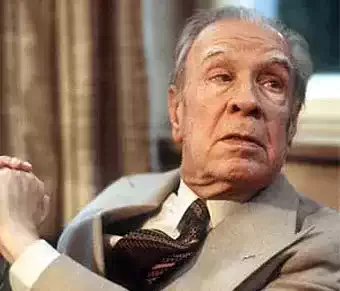
Jorge Luis Borges
The Art of Poetry
The Art of Poetry
To gaze at a river made of time and water
And remember Time is another river.
To know we stray like a river
and our faces vanish like water.
To feel that waking is another dream
that dreams of not dreaming and that the death
we fear in our bones is the death
that every night we call a dream.
To see in every day and year a symbol
of all the days of man and his years,
and convert the outrage of the years
into a music, a sound, and a symbol.
To see in death a dream, in the sunset
a golden sadness--such is poetry,
humble and immortal, poetry,
returning, like dawn and the sunset.
Sometimes at evening there's a face
that sees us from the deeps of a mirror.
Art must be that sort of mirror,
disclosing to each of us his face.
They say Ulysses, wearied of wonders,
wept with love on seeing Ithaca,
humble and green. Art is that Ithaca,
a green eternity, not wonders.
Art is endless like a river flowing,
passing, yet remaining, a mirror to the same
inconstant Heraclitus, who is the same
and yet another, like the river flowing.
To gaze at a river made of time and water
And remember Time is another river.
To know we stray like a river
and our faces vanish like water.
To feel that waking is another dream
that dreams of not dreaming and that the death
we fear in our bones is the death
that every night we call a dream.
To see in every day and year a symbol
of all the days of man and his years,
and convert the outrage of the years
into a music, a sound, and a symbol.
To see in death a dream, in the sunset
a golden sadness--such is poetry,
humble and immortal, poetry,
returning, like dawn and the sunset.
Sometimes at evening there's a face
that sees us from the deeps of a mirror.
Art must be that sort of mirror,
disclosing to each of us his face.
They say Ulysses, wearied of wonders,
wept with love on seeing Ithaca,
humble and green. Art is that Ithaca,
a green eternity, not wonders.
Art is endless like a river flowing,
passing, yet remaining, a mirror to the same
inconstant Heraclitus, who is the same
and yet another, like the river flowing.
823
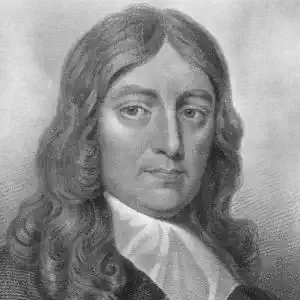
John Milton
To Cyriack Skinner
To Cyriack Skinner
Cyriack, whose grandsire on the royal bench
Of British Themis, with no mean applause,
Pronounced, and in his volumes taught, our laws,
Which others at their bar so often wrench,
To-day deep thoughts resolve with me to drench
In mirth that after no repenting draws;
Let Euclid rest, and Archimedes pause,
And what the Swede intend, and what the French.
To measure life learn thou betimes, and know
Toward solid good what leads the nearest way;
For other things mild Heaven a time ordains,
And disapproves that care, though wise in show,
That with superfluous burden loads the day,
And, when God sends a cheerful hour, refrains.
Cyriack, whose grandsire on the royal bench
Of British Themis, with no mean applause,
Pronounced, and in his volumes taught, our laws,
Which others at their bar so often wrench,
To-day deep thoughts resolve with me to drench
In mirth that after no repenting draws;
Let Euclid rest, and Archimedes pause,
And what the Swede intend, and what the French.
To measure life learn thou betimes, and know
Toward solid good what leads the nearest way;
For other things mild Heaven a time ordains,
And disapproves that care, though wise in show,
That with superfluous burden loads the day,
And, when God sends a cheerful hour, refrains.
550
John Milton
Sonnet 16
Sonnet 16
XVI
When I consider how my light is spent,
E're half my days, in this dark world and wide,
And that one Talent which is death to hide,
Lodg'd with me useless, though my Soul more bent
To serve therewith my Maker, and present
My true account, least he returning chide,
Doth God exact day-labour, light deny'd,
I fondly ask; But patience to prevent
That murmur, soon replies, God doth not need
Either man's work or his own gifts, who best
Bear his milde yoak, they serve him best, his State
Is Kingly. Thousands at his bidding speed
And post o're Land and Ocean without rest:
They also serve who only stand and waite.
XVI
When I consider how my light is spent,
E're half my days, in this dark world and wide,
And that one Talent which is death to hide,
Lodg'd with me useless, though my Soul more bent
To serve therewith my Maker, and present
My true account, least he returning chide,
Doth God exact day-labour, light deny'd,
I fondly ask; But patience to prevent
That murmur, soon replies, God doth not need
Either man's work or his own gifts, who best
Bear his milde yoak, they serve him best, his State
Is Kingly. Thousands at his bidding speed
And post o're Land and Ocean without rest:
They also serve who only stand and waite.
570
John Milton
Paradise Regained: The Third Book
Paradise Regained: The Third Book
So spake the Son of God; and Satan stood
A while as mute, confounded what to say,
What to reply, confuted and convinced
Of his weak arguing and fallacious drift;
At length, collecting all his serpent wiles,
With soothing words renewed, him thus accosts:
"I see thou know'st what is of use to know,
What best to say canst say, to do canst do;
Thy actions to thy words accord; thy words
To thy large heart give utterance due; thy heart
Contains of good, wise, just, the perfet shape.
Should kings and nations from thy mouth consult,
Thy counsel would be as the oracle
Urim and Thummim, those oraculous gems
On Aaron's breast, or tongue of Seers old
Infallible; or, wert thou sought to deeds
That might require the array of war, thy skill
Of conduct would be such that all the world
Could not sustain thy prowess, or subsist
In battle, though against thy few in arms.
These godlike virtues wherefore dost thou hide?
Affecting private life, or more obscure
In savage wilderness, wherefore deprive
All Earth her wonder at thy acts, thyself
The fame and glory-glory, the reward
That sole excites to high attempts the flame
Of most erected spirits, most tempered pure
AEthereal, who all pleasures else despise,
All treasures and all gain esteem as dross,
And dignities and powers, all but the highest?
Thy years are ripe, and over-ripe. The son
Of Macedonian Philip had ere these
Won Asia, and the throne of Cyrus held
At his dispose; young Scipio had brought down
The Carthaginian pride; young Pompey quelled
The Pontic king, and in triumph had rode.
Yet years, and to ripe years judgment mature,
Quench not the thirst of glory, but augment.
Great Julius, whom now all the world admires,
The more he grew in years, the more inflamed
With glory, wept that he had lived so long
Ingloroious. But thou yet art not too late."
To whom our Saviour calmly thus replied:"
Thou neither dost persuade me to seek wealth
For empire's sake, nor empire to affect
For glory's sake, by all thy argument.
For what is glory but the blaze of fame,
The people's praise, if always praise unmixed?
And what the people but a herd confused,
A miscellaneous rabble, who extol
Things vulgar, and, well weighed, scarce worth the praise?
They praise and they admire they know not what,
And know not whom, but as one leads the other;
And what delight to be by such extolled,
To live upon their tongues, and be their talk?
Of whom to be dispraised were no small praise-
His lot who dares be singularly good.
The intelligent among them and the wise
Are few, and glory scarce of few is raised.
This is true glory and renown-when God,
Looking on the Earth, with approbation marks
The just man, and divulges him through Heaven
To all his Angels, who with true applause
Recount his praises. Thus he did to Job,
When, to extend his fame through Heaven and Earth,
As thou to thy reproach may'st well remember,
He asked thee, 'Hast thou seen my servant Job?'
Famous he was in Heaven; on Earth less known,
Where glory is false glory, attributed
To things not glorious, men not worthy of fame.
They err who count it glorious to subdue
By conquest far and wide, to overrun
Large countries, and in field great battles win,
Great cities by assault. What do these worthies
But rob and spoil, burn, slaughter, and enslave
Peaceable nations, neighbouring or remote,
Made captive, yet deserving freedom more
Than those their conquerors, who leave behind
Nothing but ruin wheresoe'er they rove,
And all the flourishing works of peace destroy;
Then swell with pride, and must be titled Gods,
Great benefactors of mankind, Deliverers,
Worshipped with temple, priest, and sacrifice?
One is the son of Jove, of Mars the other;
Till conqueror Death discover them scarce men,
Rowling in brutish vices, and deformed,
Violent or shameful death their due reward.
But, if there be in glory aught of good;
It may be means far different be attained,
Without ambition, war, or violence-
By deeds of peace, by wisdom eminent,
By patience, temperance. I mention still
Him whom thy wrongs, with saintly patience borne,
Made famous in a land and times obscure;
Who names not now with honour patient Job?
Poor Socrates, (who next more memorable?)
By what he taught and suffered for so doing,
For truth's sake suffering death unjust, lives now
Equal in fame to proudest conquerors.
Yet, if for fame and glory aught be done,
Aught suffered-if young African for fame
His wasted country freed from Punic rage-
The deed becomes unpraised, the man at least,
And loses, though but verbal, his reward.
Shall I seek glory, then, as vain men seek,
Oft not deserved? I seek not mine, but His
Who sent me, and thereby witness whence I am."
To whom the Tempter, murmuring, thus replied:"
Think not so slight of glory, therein least
Resembling thy great Father. He seeks glory,
And for his glory all things made, all things
Orders and governs; nor content in Heaven,
By all his Angels glorified, requires
Glory from men, from all men, good or bad,
Wise or unwise, no difference, no exemption.
Above all sacrifice, or hallowed gift,
Glory he requires, and glory he receives,
Promiscuous from all nations, Jew, or Greek,
Or Barbarous, nor exception hath declared;
From us, his foes pronounced, glory he exacts."
To whom our Saviour fervently replied:
"And reason; since his Word all things produced,
Though chiefly not for glory as prime end,
But to shew forth his goodness, and impart
His good communicable to every soul
Freely; of whom what could He less expect
Than glory and benediction-that is, thanks-
The slightest, easiest, readiest recompense
From them who could return him nothing else,
And, not returning that, would likeliest render
Contempt instead, dishonour, obloquy?
Hard recompense, unsuitable return
For so much good, so much beneficience!
But why should man seek glory, who of his own
Hath nothing, and to whom nothing belongs
But condemnation, ignominy, and shame-
Who, for so many benefits received,
Turned recreant to God, ingrate and false,
And so of all true good himself despoiled;
Yet, sacrilegious, to himself would take
That which to God alone of right belongs?
Yet so much bounty is in God, such grace,
That who advances his glory, not their own,
Them he himself to glory will advance."
So spake the Son of God; and here again
Satan had not to answer, but stood struck
With guilt of his own sin-for he himself,
Insatiable of glory, had lost all;
Yet of another plea bethought him soon:
"Of glory, as thou wilt," said he, "so deem;
Worth or not worth the seeking, let it pass.
But to a Kingdom thou art born-ordained
To sit upon thy father David's throne,
By mother's side thy father, though thy right
Be now in powerful hands, that will not part
Easily from possession won with arms.
Judaea now and all the Promised Land,
Reduced a province under Roman yoke,
Obeys Tiberius, nor is always ruled
With temperate sway: oft have they violated
The Temple, oft the Law, with foul affronts,
Abominations rather, as did once
Antiochus. And think'st thou to regain
Thy right by sitting still, or thus retiring?
So did not Machabeus. He indeed
Retired unto the Desert, but with arms;
And o'er a mighty king so oft prevailed
That by strong hand his family obtained,
Though priests, the crown, and David's throne usurped,
With Modin and her suburbs once content.
If kingdom move thee not, let move thee zeal
And duty-zeal and duty are not slow,
But on Occasion's forelock watchful wait:
They themselves rather are occasion best-
Zeal of thy Father's house, duty to free
Thy country from her heathen servitude.
So shalt thou best fulfil, best verify,
The Prophets old, who sung thy endless reign-
The happier reign the sooner it begins.
Rein then; what canst thou better do the while?"
To whom our Saviour answer thus returned:"
All things are best fulfilled in their due time;
And time there is for all things, Truth hath said.
If of my reign Prophetic Writ hath told
That it shall never end, so, when begin
The Father in his purpose hath decreed-
He in whose hand all times and seasons rowl.
What if he hath decreed that I shall first
Be tried in humble state, and things adverse,
By tribulations, injuries, insults,
Contempts, and scorns, and snares, and violence,
Suffering, abstaining, quietly expecting
Without distrust or doubt, that He may know
What I can suffer, how obey? Who best
Can suffer best can do, best reign who first
Well hath obeyed-just trial ere I merit
My exaltation without change or end.
But what concerns it thee when I begin
My everlasting Kingdom? Why art thou
Solicitous? What moves thy inquisition?
Know'st thou not that my rising is thy fall,
And my promotion will be thy destruction?"
To whom the Tempter, inly racked, replied:"
Let that come when it comes. All hope is lost
Of my reception into grace; what worse?
For where no hope is left is left no fear.
If there be worse, the expectation more
Of worse torments me than the feeling can.
I would be at the worst; worst is my port,
My harbour, and my ultimate repose,
The end I would attain, my final good.
My error was my error, and my crime
My crime; whatever, for itself condemned,
And will alike be punished, whether thou
Reign or reign not-though to that gentle brow
Willingly I could fly, and hope thy reign,
From that placid aspect and meek regard,
Rather than aggravate my evil state,
Would stand between me and thy Father's ire
(Whose ire I dread more than the fire of Hell)
A shelter and a kind of shading cool
Interposition, as a summer's cloud.
If I, then, to the worst that can be haste,
Why move thy feet so slow to what is best?
Happiest, both to thyself and all the world,
That thou, who worthiest art, shouldst be their King!
Perhaps thou linger'st in deep thoughts detained
Of the enterprise so hazardous and high!
No wonder; for, though in thee be united
What of perfection can in Man be found,
Or human nature can receive, consider
Thy life hath yet been private, most part spent
At home, scarce viewed the Galilean towns,
And once a year Jerusalem, few days'
Short sojourn; and what thence couldst thou observe?
The world thou hast not seen, much less her glory,
Empires, and monarchs, and their radiant courts-
Best school of best experience, quickest in sight
In all things that to greatest actions lead.
The wisest, unexperienced, will be ever
Timorous, and loth, with novice modesty
(As he who, seeking asses, found a kingdom)
Irresolute, unhardy, unadventrous.
But I will bring thee where thou soon shalt quit
Those rudiments, and see before thine eyes
The monarchies of the Earth, their pomp and state-
Sufficient introduction to inform
Thee, of thyself so apt, in regal arts,
And regal mysteries; that thou may'st know
How best their opposition to withstand."
With that (such power was given him then), he took
The Son of God up to a mountain high.
It was a mountain at whose verdant feet
A spacious plain outstretched in circuit wide
Lay pleasant; from his side two rivers flowed,
The one winding, the other straight, and left between
Fair champaign, with less rivers interveined,
Then meeting joined their tribute to the sea.
Fertil of corn the glebe, of oil, and wine;
With herds the pasture thronged, with flocks the hills;
Huge cities and high-towered, that well might seem
The seats of mightiest monarchs; and so large
The prospect was that here and there was room
For barren desert, fountainless and dry.
To this high mountain-top the Tempter brought
Our Saviour, and new train of words began:"
Well have we speeded, and o'er hill and dale,
Forest, and field, and flood, temples and towers,
Cut shorter many a league. Here thou behold'st
Assyria, and her empire's ancient bounds,
Araxes and the Caspian lake; thence on
As far as Indus east, Euphrates west,
And oft beyond; to south the Persian bay,
And, inaccessible, the Arabian drouth:
Here, Nineveh, of length within her wall
Several days' journey, built by Ninus old,
Of that first golden monarchy the seat,
And seat of Salmanassar, whose success
Israel in long captivity still mourns;
There Babylon, the wonder of all tongues,
As ancient, but rebuilt by him who twice
Judah and all thy father David's house
Led captive, and Jerusalem laid waste,
Till Cyrus set them free; Persepolis,
His city, there thou seest, and Bactra there;
Ecbatana her structure vast there shews,
And Hecatompylos her hunderd gates;
There Susa by Choaspes, amber stream,
The drink of none but kings; of later fame,
Built by Emathian or by Parthian hands,
The great Seleucia, Nisibis, and there
Artaxata, Teredon, Ctesiphon,
Turning with easy eye, thou may'st behold.
All these the Parthian (now some ages past
By great Arsaces led, who founded first
That empire) under his dominion holds,
From the luxurious kings of Antioch won.
And just in time thou com'st to have a view
Of his great power; for now the Parthian king
In Ctesiphon hath gathered all his host
Against the Scythian, whose incursions wild
Have wasted Sogdiana; to her aid
He marches now in haste. See, though from far,
His thousands, in what martial equipage
They issue forth, steel bows and shafts their arms,
Of equal dread in flight or in pursuit-
All horsemen, in which fight they most excel;
See how in warlike muster they appear,
In rhombs, and wedges, and half-moons, and wings."
He looked, and saw what numbers numberless
The city gates outpoured, light-armed troops
In coats of mail and military pride.
In mail their horses clad, yet fleet and strong,
Prauncing their riders bore, the flower and choice
Of many provinces from bound to bound-
From Arachosia, from Candaor east,
And Margiana, to the Hyrcanian cliffs
Of Caucasus, and dark Iberian dales;
From Atropatia, and the neighbouring plains
Of Adiabene, Media, and the south
Of Susiana, to Balsara's haven.
He saw them in their forms of battle ranged,
How quick they wheeled, and flying behind them shot
Sharp sleet of arrowy showers against the face
Of their pursuers, and overcame by flight;
The field all iron cast a gleaming brown.
Nor wanted clouds of foot, nor, on each horn,
Cuirassiers all in steel for standing fight,
Chariots, or elephants indorsed with towers
Of archers; nor of labouring pioners
A multitude, with spades and axes armed,
To lay hills plain, fell woods, or valleys fill,
Or where plain was raise hill, or overlay
With bridges rivers proud, as with a yoke:
Mules after these, camels and dromedaries,
And waggons fraught with utensils of war.
Such forces met not, nor so wide a camp,
When Agrican, with all his northern powers,
Besieged Albracea, as romances tell,
The city of Gallaphrone, from thence to win
The fairest of her sex, Angelica,
His daughter, sought by many prowest knights,
Both Paynim and the peers of Charlemane.
Such and so numerous was their chivalry;
At sight whereof the Fiend yet more presumed,
And to our Saviour thus his words renewed:"
That thou may'st know I seek not to engage
Thy virtue, and not every way secure
On no slight grounds thy safety, hear and mark
To what end I have brought thee hither, and shew
All this fair sight. Thy kingdom, though foretold
By Prophet or by Angel, unless thou
Endeavour, as thy father David did,
Thou never shalt obtain: prediction still
In all things, and all men, supposes means;
Without means used, what it predicts revokes.
But say thou wert possessed of David's throne
By free consent of all, none opposite,
Samaritan or Jew; how couldst thou hope
Long to enjoy it quiet and secure
Between two such enclosing enemies,
Roman and Parthian? Therefore one of these
Thou must make sure thy own: the Parthian first,
By my advice, as nearer, and of late
Found able by invasion to annoy
Thy country, and captive lead away her kings,
Antigonus and old Hyrcanus, bound,
Maugre the Roman. It shall be my task
To render thee the Parthian at dispose,
Choose which thou wilt, by conquest or by league.
By him thou shalt regain, without him not,
That which alone can truly reinstall thee
In David's royal seat, his true successor-
Deliverance of thy brethren, those Ten Tribes
Whose offspring in his territory yet serve
In Habor, and among the Medes dispersed:
The sons of Jacob, two of Joseph, lost
Thus long from Israel, serving, as of old
Their fathers in the land of Egypt served,
This offer sets before thee to deliver.
These if from servitude thou shalt restore
To their inheritance, then, nor till then,
Thou on the throne of David in full glory,
From Egypt to Euphrates and beyond,
Shalt reign, and Rome or Caesar not need fear."
To whom our Saviour answered thus, unmoved:
"Much ostentation vain of fleshly arm
And fragile arms, much instrument of war,
Long in preparing, soon to nothing brought,
Before mine eyes thou hast set, and in my ear
Vented much policy, and projects deep
Of enemies, of aids, battles, and leagues,
Plausible to the world, to me worth naught.
Means I must use, thou say'st; prediction else
Will unpredict, and fail me of the throne!
My time, I told thee (and that time for thee
Were better farthest off), is not yet come.
When that comes, think not thou to find me slack
On my part aught endeavouring, or to need
Thy politic maxims, or that cumbersome
Luggage of war there shewn me-argument
Of human weakness rather than of strength.
My brethren, as thou call'st them, those Ten Tribes,
I must deliver, if I mean to reign
David's true heir, and his full sceptre sway
To just extent over all Israel's sons!
But whence to thee this zeal? Where was it then
For Israel, or for David, or his throne,
When thou stood'st up his tempter to the pride
Of numbering Israel-which cost the lives
of threescore and ten thousand Israelites
By three days' pestilence? Such was thy zeal
To Israel then, the same that now to me.
As for those captive tribes, themselves were they
Who wrought their own captivity, fell off
From God to worship calves, the deities
Of Egypt, Baal next and Ashtaroth,
And all the idolatries of heathen round,
Besides their other worse than heathenish crimes;
Nor in the land of their captivity
Humbled themselves, or penitent besought
The God of their forefathers, but so died
Impenitent, and left a race behind
Like to themselves, distinguishable scarce
From Gentiles, but by circumcision vain,
And God with idols in their worship joined.
Should I of these the liberty regard,
Who, freed, as to their ancient patrimony,
Unhumbled, unrepentant, unreformed,
Headlong would follow, and to their gods perhaps
Of Bethel and of Dan? No; let them serve
Their enemies who serve idols with God.
Yet He at length, time to himself best known,
Remembering Abraham, by some wondrous call
May bring them back, repentant and sincere,
And at their passing cleave the Assyrian flood,
While to their native land with joy they haste,
As the Red Sea and Jordan once he cleft,
When to the Promised Land their fathers passed.
To his due time and providence I leave them."
So spake Israel's true King, and to the Fiend
Made answer meet, that made void all his wiles.
So fares it when with truth falsehood contends.
So spake the Son of God; and Satan stood
A while as mute, confounded what to say,
What to reply, confuted and convinced
Of his weak arguing and fallacious drift;
At length, collecting all his serpent wiles,
With soothing words renewed, him thus accosts:
"I see thou know'st what is of use to know,
What best to say canst say, to do canst do;
Thy actions to thy words accord; thy words
To thy large heart give utterance due; thy heart
Contains of good, wise, just, the perfet shape.
Should kings and nations from thy mouth consult,
Thy counsel would be as the oracle
Urim and Thummim, those oraculous gems
On Aaron's breast, or tongue of Seers old
Infallible; or, wert thou sought to deeds
That might require the array of war, thy skill
Of conduct would be such that all the world
Could not sustain thy prowess, or subsist
In battle, though against thy few in arms.
These godlike virtues wherefore dost thou hide?
Affecting private life, or more obscure
In savage wilderness, wherefore deprive
All Earth her wonder at thy acts, thyself
The fame and glory-glory, the reward
That sole excites to high attempts the flame
Of most erected spirits, most tempered pure
AEthereal, who all pleasures else despise,
All treasures and all gain esteem as dross,
And dignities and powers, all but the highest?
Thy years are ripe, and over-ripe. The son
Of Macedonian Philip had ere these
Won Asia, and the throne of Cyrus held
At his dispose; young Scipio had brought down
The Carthaginian pride; young Pompey quelled
The Pontic king, and in triumph had rode.
Yet years, and to ripe years judgment mature,
Quench not the thirst of glory, but augment.
Great Julius, whom now all the world admires,
The more he grew in years, the more inflamed
With glory, wept that he had lived so long
Ingloroious. But thou yet art not too late."
To whom our Saviour calmly thus replied:"
Thou neither dost persuade me to seek wealth
For empire's sake, nor empire to affect
For glory's sake, by all thy argument.
For what is glory but the blaze of fame,
The people's praise, if always praise unmixed?
And what the people but a herd confused,
A miscellaneous rabble, who extol
Things vulgar, and, well weighed, scarce worth the praise?
They praise and they admire they know not what,
And know not whom, but as one leads the other;
And what delight to be by such extolled,
To live upon their tongues, and be their talk?
Of whom to be dispraised were no small praise-
His lot who dares be singularly good.
The intelligent among them and the wise
Are few, and glory scarce of few is raised.
This is true glory and renown-when God,
Looking on the Earth, with approbation marks
The just man, and divulges him through Heaven
To all his Angels, who with true applause
Recount his praises. Thus he did to Job,
When, to extend his fame through Heaven and Earth,
As thou to thy reproach may'st well remember,
He asked thee, 'Hast thou seen my servant Job?'
Famous he was in Heaven; on Earth less known,
Where glory is false glory, attributed
To things not glorious, men not worthy of fame.
They err who count it glorious to subdue
By conquest far and wide, to overrun
Large countries, and in field great battles win,
Great cities by assault. What do these worthies
But rob and spoil, burn, slaughter, and enslave
Peaceable nations, neighbouring or remote,
Made captive, yet deserving freedom more
Than those their conquerors, who leave behind
Nothing but ruin wheresoe'er they rove,
And all the flourishing works of peace destroy;
Then swell with pride, and must be titled Gods,
Great benefactors of mankind, Deliverers,
Worshipped with temple, priest, and sacrifice?
One is the son of Jove, of Mars the other;
Till conqueror Death discover them scarce men,
Rowling in brutish vices, and deformed,
Violent or shameful death their due reward.
But, if there be in glory aught of good;
It may be means far different be attained,
Without ambition, war, or violence-
By deeds of peace, by wisdom eminent,
By patience, temperance. I mention still
Him whom thy wrongs, with saintly patience borne,
Made famous in a land and times obscure;
Who names not now with honour patient Job?
Poor Socrates, (who next more memorable?)
By what he taught and suffered for so doing,
For truth's sake suffering death unjust, lives now
Equal in fame to proudest conquerors.
Yet, if for fame and glory aught be done,
Aught suffered-if young African for fame
His wasted country freed from Punic rage-
The deed becomes unpraised, the man at least,
And loses, though but verbal, his reward.
Shall I seek glory, then, as vain men seek,
Oft not deserved? I seek not mine, but His
Who sent me, and thereby witness whence I am."
To whom the Tempter, murmuring, thus replied:"
Think not so slight of glory, therein least
Resembling thy great Father. He seeks glory,
And for his glory all things made, all things
Orders and governs; nor content in Heaven,
By all his Angels glorified, requires
Glory from men, from all men, good or bad,
Wise or unwise, no difference, no exemption.
Above all sacrifice, or hallowed gift,
Glory he requires, and glory he receives,
Promiscuous from all nations, Jew, or Greek,
Or Barbarous, nor exception hath declared;
From us, his foes pronounced, glory he exacts."
To whom our Saviour fervently replied:
"And reason; since his Word all things produced,
Though chiefly not for glory as prime end,
But to shew forth his goodness, and impart
His good communicable to every soul
Freely; of whom what could He less expect
Than glory and benediction-that is, thanks-
The slightest, easiest, readiest recompense
From them who could return him nothing else,
And, not returning that, would likeliest render
Contempt instead, dishonour, obloquy?
Hard recompense, unsuitable return
For so much good, so much beneficience!
But why should man seek glory, who of his own
Hath nothing, and to whom nothing belongs
But condemnation, ignominy, and shame-
Who, for so many benefits received,
Turned recreant to God, ingrate and false,
And so of all true good himself despoiled;
Yet, sacrilegious, to himself would take
That which to God alone of right belongs?
Yet so much bounty is in God, such grace,
That who advances his glory, not their own,
Them he himself to glory will advance."
So spake the Son of God; and here again
Satan had not to answer, but stood struck
With guilt of his own sin-for he himself,
Insatiable of glory, had lost all;
Yet of another plea bethought him soon:
"Of glory, as thou wilt," said he, "so deem;
Worth or not worth the seeking, let it pass.
But to a Kingdom thou art born-ordained
To sit upon thy father David's throne,
By mother's side thy father, though thy right
Be now in powerful hands, that will not part
Easily from possession won with arms.
Judaea now and all the Promised Land,
Reduced a province under Roman yoke,
Obeys Tiberius, nor is always ruled
With temperate sway: oft have they violated
The Temple, oft the Law, with foul affronts,
Abominations rather, as did once
Antiochus. And think'st thou to regain
Thy right by sitting still, or thus retiring?
So did not Machabeus. He indeed
Retired unto the Desert, but with arms;
And o'er a mighty king so oft prevailed
That by strong hand his family obtained,
Though priests, the crown, and David's throne usurped,
With Modin and her suburbs once content.
If kingdom move thee not, let move thee zeal
And duty-zeal and duty are not slow,
But on Occasion's forelock watchful wait:
They themselves rather are occasion best-
Zeal of thy Father's house, duty to free
Thy country from her heathen servitude.
So shalt thou best fulfil, best verify,
The Prophets old, who sung thy endless reign-
The happier reign the sooner it begins.
Rein then; what canst thou better do the while?"
To whom our Saviour answer thus returned:"
All things are best fulfilled in their due time;
And time there is for all things, Truth hath said.
If of my reign Prophetic Writ hath told
That it shall never end, so, when begin
The Father in his purpose hath decreed-
He in whose hand all times and seasons rowl.
What if he hath decreed that I shall first
Be tried in humble state, and things adverse,
By tribulations, injuries, insults,
Contempts, and scorns, and snares, and violence,
Suffering, abstaining, quietly expecting
Without distrust or doubt, that He may know
What I can suffer, how obey? Who best
Can suffer best can do, best reign who first
Well hath obeyed-just trial ere I merit
My exaltation without change or end.
But what concerns it thee when I begin
My everlasting Kingdom? Why art thou
Solicitous? What moves thy inquisition?
Know'st thou not that my rising is thy fall,
And my promotion will be thy destruction?"
To whom the Tempter, inly racked, replied:"
Let that come when it comes. All hope is lost
Of my reception into grace; what worse?
For where no hope is left is left no fear.
If there be worse, the expectation more
Of worse torments me than the feeling can.
I would be at the worst; worst is my port,
My harbour, and my ultimate repose,
The end I would attain, my final good.
My error was my error, and my crime
My crime; whatever, for itself condemned,
And will alike be punished, whether thou
Reign or reign not-though to that gentle brow
Willingly I could fly, and hope thy reign,
From that placid aspect and meek regard,
Rather than aggravate my evil state,
Would stand between me and thy Father's ire
(Whose ire I dread more than the fire of Hell)
A shelter and a kind of shading cool
Interposition, as a summer's cloud.
If I, then, to the worst that can be haste,
Why move thy feet so slow to what is best?
Happiest, both to thyself and all the world,
That thou, who worthiest art, shouldst be their King!
Perhaps thou linger'st in deep thoughts detained
Of the enterprise so hazardous and high!
No wonder; for, though in thee be united
What of perfection can in Man be found,
Or human nature can receive, consider
Thy life hath yet been private, most part spent
At home, scarce viewed the Galilean towns,
And once a year Jerusalem, few days'
Short sojourn; and what thence couldst thou observe?
The world thou hast not seen, much less her glory,
Empires, and monarchs, and their radiant courts-
Best school of best experience, quickest in sight
In all things that to greatest actions lead.
The wisest, unexperienced, will be ever
Timorous, and loth, with novice modesty
(As he who, seeking asses, found a kingdom)
Irresolute, unhardy, unadventrous.
But I will bring thee where thou soon shalt quit
Those rudiments, and see before thine eyes
The monarchies of the Earth, their pomp and state-
Sufficient introduction to inform
Thee, of thyself so apt, in regal arts,
And regal mysteries; that thou may'st know
How best their opposition to withstand."
With that (such power was given him then), he took
The Son of God up to a mountain high.
It was a mountain at whose verdant feet
A spacious plain outstretched in circuit wide
Lay pleasant; from his side two rivers flowed,
The one winding, the other straight, and left between
Fair champaign, with less rivers interveined,
Then meeting joined their tribute to the sea.
Fertil of corn the glebe, of oil, and wine;
With herds the pasture thronged, with flocks the hills;
Huge cities and high-towered, that well might seem
The seats of mightiest monarchs; and so large
The prospect was that here and there was room
For barren desert, fountainless and dry.
To this high mountain-top the Tempter brought
Our Saviour, and new train of words began:"
Well have we speeded, and o'er hill and dale,
Forest, and field, and flood, temples and towers,
Cut shorter many a league. Here thou behold'st
Assyria, and her empire's ancient bounds,
Araxes and the Caspian lake; thence on
As far as Indus east, Euphrates west,
And oft beyond; to south the Persian bay,
And, inaccessible, the Arabian drouth:
Here, Nineveh, of length within her wall
Several days' journey, built by Ninus old,
Of that first golden monarchy the seat,
And seat of Salmanassar, whose success
Israel in long captivity still mourns;
There Babylon, the wonder of all tongues,
As ancient, but rebuilt by him who twice
Judah and all thy father David's house
Led captive, and Jerusalem laid waste,
Till Cyrus set them free; Persepolis,
His city, there thou seest, and Bactra there;
Ecbatana her structure vast there shews,
And Hecatompylos her hunderd gates;
There Susa by Choaspes, amber stream,
The drink of none but kings; of later fame,
Built by Emathian or by Parthian hands,
The great Seleucia, Nisibis, and there
Artaxata, Teredon, Ctesiphon,
Turning with easy eye, thou may'st behold.
All these the Parthian (now some ages past
By great Arsaces led, who founded first
That empire) under his dominion holds,
From the luxurious kings of Antioch won.
And just in time thou com'st to have a view
Of his great power; for now the Parthian king
In Ctesiphon hath gathered all his host
Against the Scythian, whose incursions wild
Have wasted Sogdiana; to her aid
He marches now in haste. See, though from far,
His thousands, in what martial equipage
They issue forth, steel bows and shafts their arms,
Of equal dread in flight or in pursuit-
All horsemen, in which fight they most excel;
See how in warlike muster they appear,
In rhombs, and wedges, and half-moons, and wings."
He looked, and saw what numbers numberless
The city gates outpoured, light-armed troops
In coats of mail and military pride.
In mail their horses clad, yet fleet and strong,
Prauncing their riders bore, the flower and choice
Of many provinces from bound to bound-
From Arachosia, from Candaor east,
And Margiana, to the Hyrcanian cliffs
Of Caucasus, and dark Iberian dales;
From Atropatia, and the neighbouring plains
Of Adiabene, Media, and the south
Of Susiana, to Balsara's haven.
He saw them in their forms of battle ranged,
How quick they wheeled, and flying behind them shot
Sharp sleet of arrowy showers against the face
Of their pursuers, and overcame by flight;
The field all iron cast a gleaming brown.
Nor wanted clouds of foot, nor, on each horn,
Cuirassiers all in steel for standing fight,
Chariots, or elephants indorsed with towers
Of archers; nor of labouring pioners
A multitude, with spades and axes armed,
To lay hills plain, fell woods, or valleys fill,
Or where plain was raise hill, or overlay
With bridges rivers proud, as with a yoke:
Mules after these, camels and dromedaries,
And waggons fraught with utensils of war.
Such forces met not, nor so wide a camp,
When Agrican, with all his northern powers,
Besieged Albracea, as romances tell,
The city of Gallaphrone, from thence to win
The fairest of her sex, Angelica,
His daughter, sought by many prowest knights,
Both Paynim and the peers of Charlemane.
Such and so numerous was their chivalry;
At sight whereof the Fiend yet more presumed,
And to our Saviour thus his words renewed:"
That thou may'st know I seek not to engage
Thy virtue, and not every way secure
On no slight grounds thy safety, hear and mark
To what end I have brought thee hither, and shew
All this fair sight. Thy kingdom, though foretold
By Prophet or by Angel, unless thou
Endeavour, as thy father David did,
Thou never shalt obtain: prediction still
In all things, and all men, supposes means;
Without means used, what it predicts revokes.
But say thou wert possessed of David's throne
By free consent of all, none opposite,
Samaritan or Jew; how couldst thou hope
Long to enjoy it quiet and secure
Between two such enclosing enemies,
Roman and Parthian? Therefore one of these
Thou must make sure thy own: the Parthian first,
By my advice, as nearer, and of late
Found able by invasion to annoy
Thy country, and captive lead away her kings,
Antigonus and old Hyrcanus, bound,
Maugre the Roman. It shall be my task
To render thee the Parthian at dispose,
Choose which thou wilt, by conquest or by league.
By him thou shalt regain, without him not,
That which alone can truly reinstall thee
In David's royal seat, his true successor-
Deliverance of thy brethren, those Ten Tribes
Whose offspring in his territory yet serve
In Habor, and among the Medes dispersed:
The sons of Jacob, two of Joseph, lost
Thus long from Israel, serving, as of old
Their fathers in the land of Egypt served,
This offer sets before thee to deliver.
These if from servitude thou shalt restore
To their inheritance, then, nor till then,
Thou on the throne of David in full glory,
From Egypt to Euphrates and beyond,
Shalt reign, and Rome or Caesar not need fear."
To whom our Saviour answered thus, unmoved:
"Much ostentation vain of fleshly arm
And fragile arms, much instrument of war,
Long in preparing, soon to nothing brought,
Before mine eyes thou hast set, and in my ear
Vented much policy, and projects deep
Of enemies, of aids, battles, and leagues,
Plausible to the world, to me worth naught.
Means I must use, thou say'st; prediction else
Will unpredict, and fail me of the throne!
My time, I told thee (and that time for thee
Were better farthest off), is not yet come.
When that comes, think not thou to find me slack
On my part aught endeavouring, or to need
Thy politic maxims, or that cumbersome
Luggage of war there shewn me-argument
Of human weakness rather than of strength.
My brethren, as thou call'st them, those Ten Tribes,
I must deliver, if I mean to reign
David's true heir, and his full sceptre sway
To just extent over all Israel's sons!
But whence to thee this zeal? Where was it then
For Israel, or for David, or his throne,
When thou stood'st up his tempter to the pride
Of numbering Israel-which cost the lives
of threescore and ten thousand Israelites
By three days' pestilence? Such was thy zeal
To Israel then, the same that now to me.
As for those captive tribes, themselves were they
Who wrought their own captivity, fell off
From God to worship calves, the deities
Of Egypt, Baal next and Ashtaroth,
And all the idolatries of heathen round,
Besides their other worse than heathenish crimes;
Nor in the land of their captivity
Humbled themselves, or penitent besought
The God of their forefathers, but so died
Impenitent, and left a race behind
Like to themselves, distinguishable scarce
From Gentiles, but by circumcision vain,
And God with idols in their worship joined.
Should I of these the liberty regard,
Who, freed, as to their ancient patrimony,
Unhumbled, unrepentant, unreformed,
Headlong would follow, and to their gods perhaps
Of Bethel and of Dan? No; let them serve
Their enemies who serve idols with God.
Yet He at length, time to himself best known,
Remembering Abraham, by some wondrous call
May bring them back, repentant and sincere,
And at their passing cleave the Assyrian flood,
While to their native land with joy they haste,
As the Red Sea and Jordan once he cleft,
When to the Promised Land their fathers passed.
To his due time and providence I leave them."
So spake Israel's true King, and to the Fiend
Made answer meet, that made void all his wiles.
So fares it when with truth falsehood contends.
527
John Milton
How Soon Hath Time
How Soon Hath Time
How soon hath Time, the subtle thief of youth,
Stoln on his wing my three and twentieth year!
My hasting days fly on wtih full career,
But my late spring no bud or blossom shew'th.
Perhaps my semblance might deceive the truth,
That I to manhood am arrived so near,
And inward ripeness doth much less appear,
That some more timely-happy spirits endu'th.
Yet be it less or more, or soon or slow,
It shall be still in strictest measure even
To that same lot, however mean or high,
Toward which Time leads me, and the will of Heaven;
All is, if I have grace to use it so,
As ever in my great Taskmaster's eye.
How soon hath Time, the subtle thief of youth,
Stoln on his wing my three and twentieth year!
My hasting days fly on wtih full career,
But my late spring no bud or blossom shew'th.
Perhaps my semblance might deceive the truth,
That I to manhood am arrived so near,
And inward ripeness doth much less appear,
That some more timely-happy spirits endu'th.
Yet be it less or more, or soon or slow,
It shall be still in strictest measure even
To that same lot, however mean or high,
Toward which Time leads me, and the will of Heaven;
All is, if I have grace to use it so,
As ever in my great Taskmaster's eye.
563
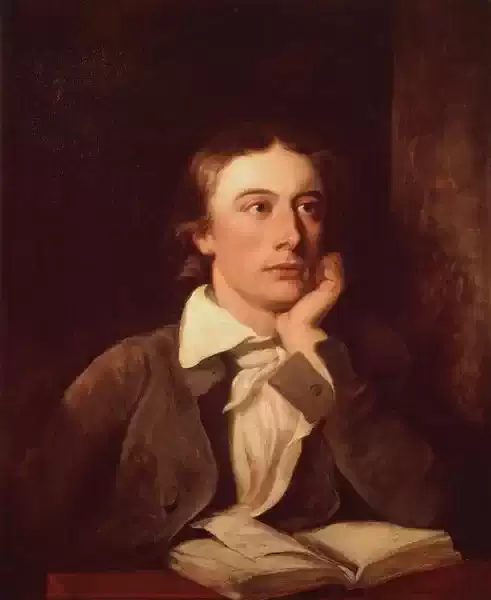
John Keats
Why did I laugh tonight? No voice will tell
Why did I laugh tonight? No voice will tell
Why did I laugh tonight? No voice will tell
No God, no demon of severe response
Deigns to reply from heaven or from hell
Then to my human heart I turn at once:
Heart, thou and I are here, sad and alone,
Say, why did I laugh? O mortal pain!
O darkness! darkness! Forever must I moan
To question heaven and hell and heart in vain?
Why did I laugh? I know this being's lease
My fancy to it's utmost blisses spreads
Yet would I on this very midnight cease
And all the world's gaudy ensigns see in shreds
Verse, fame and beauty are intense indeed
But death intenser, death is life's high meed.
Why did I laugh tonight? No voice will tell
No God, no demon of severe response
Deigns to reply from heaven or from hell
Then to my human heart I turn at once:
Heart, thou and I are here, sad and alone,
Say, why did I laugh? O mortal pain!
O darkness! darkness! Forever must I moan
To question heaven and hell and heart in vain?
Why did I laugh? I know this being's lease
My fancy to it's utmost blisses spreads
Yet would I on this very midnight cease
And all the world's gaudy ensigns see in shreds
Verse, fame and beauty are intense indeed
But death intenser, death is life's high meed.
453
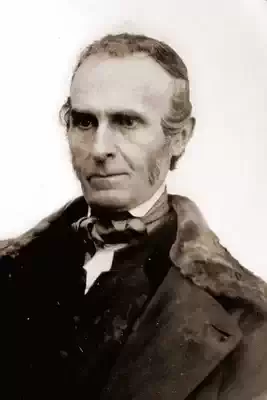
John Greenleaf Whittier
What The Voice Said
What The Voice Said
MADDENED by Earth's wrong and evil,
'Lord!' I cried in sudden ire,
'From Thy right hand, clothed with thunder,
Shake the bolted fire!
'Love is lost, and Faith is dying;
With the brute the man is sold;
And the dropping blood of labor
Hardens into gold.
'Here the dying wail of Famine,
There the battle's groan of pain;
And, in silence, smooth-faced Mammon
Reaping men like grain.
''Where is God, that we should fear Him?'
Thus the earth-born Titans say
'God! if Thou art living, hear us!'
Thus the weak ones pray.'
'Thou, the patient Heaven upbraiding,'
Spake a solemn Voice within;
'Weary of our Lord's forbearance,
Art thou free from sin?
'Fearless brow to Him uplifting,
Canst thou for His thunders call,
Knowing that to guilt's attraction
Evermore they fall?
'Know'st thou not all germs of evil
In thy heart await their time?
Not thyself, but God's restraining,
Stays their growth of crime.
'Couldst thou boast, O child of weakness!
O'er the sons of wrong and strife,
Were their strong temptations planted
In thy path of life?
'Thou hast seen two streamlets gushing
From one fountain, clear and free,
But by widely varying channels
Searching for the sea.
'Glideth one through greenest valleys,
Kissing them with lips still sweet;
One, mad roaring down the mountains,
Stagnates at their feet.
'Is it choice whereby the Parsee
Kneels before his mother's fire?
In his black tent did the Tartar
Choose his wandering sire?
'He alone, whose hand is bounding
Human power and human will,
Looking through each soul's surrounding,
Knows its good or ill.
'For thyself, while wrong and sorrow
Make to thee their strong appeal,
Coward wert thou not to utter
What the heart must feel.
'Earnest words must needs be spoken
When the warm heart bleeds or burns
With its scorn of wrong, or pity
For the wronged, by turns.
'But, by all thy nature's weakness,
Hidden faults and follies known,
Be thou, in rebuking evil,
Conscious of thine own.
'Not the less shall stern-eyed Duty
To thy lips her trumpet set,
But with harsher blasts shall mingle
Wailings of regret.'
Cease not, Voice of holy speaking,
Teacher sent of God, be near,
Whispering through the day's cool silence,
Let my spirit hear!
So, when thoughts of evil-doers
Waken scorn, or hatred move,
Shall a mournful fellow-feeling
Temper all with love.
MADDENED by Earth's wrong and evil,
'Lord!' I cried in sudden ire,
'From Thy right hand, clothed with thunder,
Shake the bolted fire!
'Love is lost, and Faith is dying;
With the brute the man is sold;
And the dropping blood of labor
Hardens into gold.
'Here the dying wail of Famine,
There the battle's groan of pain;
And, in silence, smooth-faced Mammon
Reaping men like grain.
''Where is God, that we should fear Him?'
Thus the earth-born Titans say
'God! if Thou art living, hear us!'
Thus the weak ones pray.'
'Thou, the patient Heaven upbraiding,'
Spake a solemn Voice within;
'Weary of our Lord's forbearance,
Art thou free from sin?
'Fearless brow to Him uplifting,
Canst thou for His thunders call,
Knowing that to guilt's attraction
Evermore they fall?
'Know'st thou not all germs of evil
In thy heart await their time?
Not thyself, but God's restraining,
Stays their growth of crime.
'Couldst thou boast, O child of weakness!
O'er the sons of wrong and strife,
Were their strong temptations planted
In thy path of life?
'Thou hast seen two streamlets gushing
From one fountain, clear and free,
But by widely varying channels
Searching for the sea.
'Glideth one through greenest valleys,
Kissing them with lips still sweet;
One, mad roaring down the mountains,
Stagnates at their feet.
'Is it choice whereby the Parsee
Kneels before his mother's fire?
In his black tent did the Tartar
Choose his wandering sire?
'He alone, whose hand is bounding
Human power and human will,
Looking through each soul's surrounding,
Knows its good or ill.
'For thyself, while wrong and sorrow
Make to thee their strong appeal,
Coward wert thou not to utter
What the heart must feel.
'Earnest words must needs be spoken
When the warm heart bleeds or burns
With its scorn of wrong, or pity
For the wronged, by turns.
'But, by all thy nature's weakness,
Hidden faults and follies known,
Be thou, in rebuking evil,
Conscious of thine own.
'Not the less shall stern-eyed Duty
To thy lips her trumpet set,
But with harsher blasts shall mingle
Wailings of regret.'
Cease not, Voice of holy speaking,
Teacher sent of God, be near,
Whispering through the day's cool silence,
Let my spirit hear!
So, when thoughts of evil-doers
Waken scorn, or hatred move,
Shall a mournful fellow-feeling
Temper all with love.
303
John Greenleaf Whittier
Trust
Trust
The same old baffling questions! O my friend,
I cannot answer them. In vain I send
My soul into the dark, where never burn
The lamps of science, nor the natural light
Of Reason's sun and stars! I cannot learn
Their great and solemn meanings, nor discern
The awful secrets of the eyes which turn
Evermore on us through the day and night
With silent challenge and a dumb demand,
Proffering the riddles of the dread unknown,
Like the calm Sphinxes, with their eyes of stone,
Questioning the centuries from their veils of sand!
I have no answer for myself or thee,
Save that I learned beside my mother's knee;
'All is of God that is, and is to be;
And God is good.' Let this suffice us still,
Resting in childlike trust upon His will
Who moves to His great ends unthwarted by the ill.
The same old baffling questions! O my friend,
I cannot answer them. In vain I send
My soul into the dark, where never burn
The lamps of science, nor the natural light
Of Reason's sun and stars! I cannot learn
Their great and solemn meanings, nor discern
The awful secrets of the eyes which turn
Evermore on us through the day and night
With silent challenge and a dumb demand,
Proffering the riddles of the dread unknown,
Like the calm Sphinxes, with their eyes of stone,
Questioning the centuries from their veils of sand!
I have no answer for myself or thee,
Save that I learned beside my mother's knee;
'All is of God that is, and is to be;
And God is good.' Let this suffice us still,
Resting in childlike trust upon His will
Who moves to His great ends unthwarted by the ill.
409
John Greenleaf Whittier
To William H. Seward
To William H. Seward
STATESMAN, I thank thee! and, if yet dissent
Mingles, reluctant, with my large content,
I cannot censure what was nobly meant.
But, while constrained to hold even Union less
Than Liberty and Truth and Righteousness,
I thank thee in the sweet and holy name
Of peace, for wise calm words that put to shame
Passion and party. Courage may be shown
Not in defiance of the wrong alone;
He may be bravest who, unweaponed, bears
The olive branch, and, strong in justice, spares
The rash wrong-doer, giving widest scope
To Christian charity and generous hope.
If, without damage to the sacred cause
Of Freedom and the safeguard of its laws —
If, without yielding that for which alone
We prize the Union, thou canst save it now
From a baptism of blood, upon thy brow
A wreath whose flowers no earthly soil have known,
Woven of the beatitudes, shall rest,
And the peacemaker be forever blest!
STATESMAN, I thank thee! and, if yet dissent
Mingles, reluctant, with my large content,
I cannot censure what was nobly meant.
But, while constrained to hold even Union less
Than Liberty and Truth and Righteousness,
I thank thee in the sweet and holy name
Of peace, for wise calm words that put to shame
Passion and party. Courage may be shown
Not in defiance of the wrong alone;
He may be bravest who, unweaponed, bears
The olive branch, and, strong in justice, spares
The rash wrong-doer, giving widest scope
To Christian charity and generous hope.
If, without damage to the sacred cause
Of Freedom and the safeguard of its laws —
If, without yielding that for which alone
We prize the Union, thou canst save it now
From a baptism of blood, upon thy brow
A wreath whose flowers no earthly soil have known,
Woven of the beatitudes, shall rest,
And the peacemaker be forever blest!
194
John Greenleaf Whittier
The Wish Of To-Day
The Wish Of To-Day
I ask not now for gold to gild
With mocking shine a weary frame;
The yearning of the mind is stilled,
I ask not now for Fame.
A rose-cloud, dimly seen above,
Melting in heaven's blue depths away;
Oh, sweet, fond dream of human Love
For thee I may not pray.
But, bowed in lowliness of mind,
I make my humble wishes known;
I only ask a will resigned,
O Father, to Thine own!
To-day, beneath Thy chastening eye
I crave alone for peace and rest,
Submissive in Thy hand to lie,
And feel that it is best.
A marvel seems the Universe,
A miracle our Life and Death;
A mystery which I cannot pierce,
Around, above, beneath.
In vain I task my aching brain,
In vain the sage's thought I scan,
I only feel how weak and vain,
How poor and blind, is man.
And now my spirit sighs for home,
And longs for light whereby to see,
And, like a weary child, would come,
O Father, unto Thee!
Though oft, like letters traced on sand,
My weak resolves have passed away,
In mercy lend Thy helping hand
Unto my prayer to-day!
I ask not now for gold to gild
With mocking shine a weary frame;
The yearning of the mind is stilled,
I ask not now for Fame.
A rose-cloud, dimly seen above,
Melting in heaven's blue depths away;
Oh, sweet, fond dream of human Love
For thee I may not pray.
But, bowed in lowliness of mind,
I make my humble wishes known;
I only ask a will resigned,
O Father, to Thine own!
To-day, beneath Thy chastening eye
I crave alone for peace and rest,
Submissive in Thy hand to lie,
And feel that it is best.
A marvel seems the Universe,
A miracle our Life and Death;
A mystery which I cannot pierce,
Around, above, beneath.
In vain I task my aching brain,
In vain the sage's thought I scan,
I only feel how weak and vain,
How poor and blind, is man.
And now my spirit sighs for home,
And longs for light whereby to see,
And, like a weary child, would come,
O Father, unto Thee!
Though oft, like letters traced on sand,
My weak resolves have passed away,
In mercy lend Thy helping hand
Unto my prayer to-day!
255
John Greenleaf Whittier
The Vow Of Washington
The Vow Of Washington
The sword was sheathed: in April's sun
Lay green the fields by Freedom won;
And severed sections, weary of debates,
Joined hands at last and were United States.
O City sitting by the Sea
How proud the day that dawned on thee,
When the new era, long desired, began,
And, in its need, the hour had found the man!
One thought the cannon salvos spoke,
The resonant bell-tower's vibrant stroke,
The voiceful streets, the plaudit-echoing halls,
And prayer and hymn borne heavenward from St. Paul's!
How felt the land in every part
The strong throb of a nation's heart,
As its great leader gave, with reverent awe,
His pledge to Union, Liberty, and Law.
That pledge the heavens above him heard,
That vow the sleep of centuries stirred;
In world-wide wonder listening peoples bent
Their gaze on Freedom's great experiment.
Could it succeed? Of honor sold
And hopes deceived all history told.
Above the wrecks that strewed the mournful past,
Was the long dream of ages true at last?
Thank God! the people's choice was just,
The one man equal to his trust,
Wise beyond lore, and without weakness good,
Calm in the strength of flawless rectitude.
His rule of justice, order, peace,
Made possible the world's release;
Taught prince and serf that power is but a trust,
And rule, alone, which serves the ruled, is just;
That Freedom generous is, but strong
In hate of fraud and selfish wrong,
Pretence that turns her holy truths to lies,
And lawless license masking in her guise.
Land of his love! with one glad voice
Let thy great sisterhood rejoice;
A century's suns o'er thee have risen and set,
And, God be praised, we are one nation yet.
And still we trust the years to be
Shall prove his hope was destiny,
Leaving our flag, with all its added stars,
Unrent by faction and unstained by wars.
Lo! where with patient toil he nursed
And trained the new-set plant at first,
The widening branches of a stately tree
Stretch from the sunrise to the sunset sea.
And in its broad and sheltering shade,
Sitting with none to make afraid,
Were we now silent, through each mighty limb,
The winds of heaven would sing the praise of him.
Our first and best!--his ashes lie
Beneath his own Virginian sky.
Forgive, forget, O true and just and brave,
The storm that swept above thy sacred grave.
For, ever in the awful strife
And dark hours of the nation's life,
Through the fierce tumult pierced his warning word,
Their father's voice his erring children heard.
The change for which he prayed and sought
In that sharp agony was wrought;
No partial interest draws its alien line
'Twixt North and South, the cypress and the pine!
One people now, all doubt beyond,
His name shall be our Union-bond;
We lift our hands to Heaven, and here and now.
Take on our lips the old Centennial vow.
For rule and trust must needs be ours;
Chooser and chosen both are powers
Equal in service as in rights; the claim
Of Duty rests on each and all the same.
Then let the sovereign millions, where
Our banner floats in sun and air,
From the warm palm-lands to Alaska's cold,
Repeat with us the pledge a century old?
The sword was sheathed: in April's sun
Lay green the fields by Freedom won;
And severed sections, weary of debates,
Joined hands at last and were United States.
O City sitting by the Sea
How proud the day that dawned on thee,
When the new era, long desired, began,
And, in its need, the hour had found the man!
One thought the cannon salvos spoke,
The resonant bell-tower's vibrant stroke,
The voiceful streets, the plaudit-echoing halls,
And prayer and hymn borne heavenward from St. Paul's!
How felt the land in every part
The strong throb of a nation's heart,
As its great leader gave, with reverent awe,
His pledge to Union, Liberty, and Law.
That pledge the heavens above him heard,
That vow the sleep of centuries stirred;
In world-wide wonder listening peoples bent
Their gaze on Freedom's great experiment.
Could it succeed? Of honor sold
And hopes deceived all history told.
Above the wrecks that strewed the mournful past,
Was the long dream of ages true at last?
Thank God! the people's choice was just,
The one man equal to his trust,
Wise beyond lore, and without weakness good,
Calm in the strength of flawless rectitude.
His rule of justice, order, peace,
Made possible the world's release;
Taught prince and serf that power is but a trust,
And rule, alone, which serves the ruled, is just;
That Freedom generous is, but strong
In hate of fraud and selfish wrong,
Pretence that turns her holy truths to lies,
And lawless license masking in her guise.
Land of his love! with one glad voice
Let thy great sisterhood rejoice;
A century's suns o'er thee have risen and set,
And, God be praised, we are one nation yet.
And still we trust the years to be
Shall prove his hope was destiny,
Leaving our flag, with all its added stars,
Unrent by faction and unstained by wars.
Lo! where with patient toil he nursed
And trained the new-set plant at first,
The widening branches of a stately tree
Stretch from the sunrise to the sunset sea.
And in its broad and sheltering shade,
Sitting with none to make afraid,
Were we now silent, through each mighty limb,
The winds of heaven would sing the praise of him.
Our first and best!--his ashes lie
Beneath his own Virginian sky.
Forgive, forget, O true and just and brave,
The storm that swept above thy sacred grave.
For, ever in the awful strife
And dark hours of the nation's life,
Through the fierce tumult pierced his warning word,
Their father's voice his erring children heard.
The change for which he prayed and sought
In that sharp agony was wrought;
No partial interest draws its alien line
'Twixt North and South, the cypress and the pine!
One people now, all doubt beyond,
His name shall be our Union-bond;
We lift our hands to Heaven, and here and now.
Take on our lips the old Centennial vow.
For rule and trust must needs be ours;
Chooser and chosen both are powers
Equal in service as in rights; the claim
Of Duty rests on each and all the same.
Then let the sovereign millions, where
Our banner floats in sun and air,
From the warm palm-lands to Alaska's cold,
Repeat with us the pledge a century old?
253
John Greenleaf Whittier
The Two Loves
The Two Loves
Smoothing soft the nestling head
Of a maiden fancy-led,
Thus a grave-eyed woman said:
'Richest gifts are those we make,
Dearer than the love we take
That we give for love's own sake.
'Well I know the heart's unrest;
Mine has been the common quest,
To be loved and therefore blest.
'Favors undeserved were mine;
At my feet as on a shrine
Love has laid its gifts divine.
'Sweet the offerings seemed, and yet
With their sweetness came regret,
And a sense of unpaid debt.
'Heart of mine unsatisfied,
Was it vanity or pride
That a deeper joy denied?
'Hands that ope but to receive
Empty close; they only live
Richly who can richly give.
'Still,' she sighed, with moistening eyes,
'Love is sweet in any guise;
But its best is sacrifice!
'He who, giving, does not crave
Likest is to Him who gave
Life itself the loved to save.
'Love, that self-forgetful gives,
Sows surprise of ripened sheaves,
Late or soon its own receives.'
Smoothing soft the nestling head
Of a maiden fancy-led,
Thus a grave-eyed woman said:
'Richest gifts are those we make,
Dearer than the love we take
That we give for love's own sake.
'Well I know the heart's unrest;
Mine has been the common quest,
To be loved and therefore blest.
'Favors undeserved were mine;
At my feet as on a shrine
Love has laid its gifts divine.
'Sweet the offerings seemed, and yet
With their sweetness came regret,
And a sense of unpaid debt.
'Heart of mine unsatisfied,
Was it vanity or pride
That a deeper joy denied?
'Hands that ope but to receive
Empty close; they only live
Richly who can richly give.
'Still,' she sighed, with moistening eyes,
'Love is sweet in any guise;
But its best is sacrifice!
'He who, giving, does not crave
Likest is to Him who gave
Life itself the loved to save.
'Love, that self-forgetful gives,
Sows surprise of ripened sheaves,
Late or soon its own receives.'
308
John Greenleaf Whittier
The Shadow And The Light
The Shadow And The Light
The fourteen centuries fall away
Between us and the Afric saint,
And at his side we urge, to-day,
The immemorial quest and old complaint.
No outward sign to us is given,-From
sea or earth comes no reply;
Hushed as the warm Numidian heaven
He vainly questioned bends our frozen sky.
No victory comes of all our strife,-From
all we grasp the meaning slips;
The Sphinx sits at the gate of life,
With the old question on her awful lips.
In paths unknown we hear the feet
Of fear before, and guilt behind;
We pluck the wayside fruit, and eat
Ashes and dust beneath its golden rind.
From age to age descends unchecked
The sad bequest of sire to son,
The body's taint, the mind's defect;
Through every web of life the dark threads run.
Oh, why and whither? God knows all;
I only know that He is good,
And that whatever may befall
Or here or there, must be the best that could.
Between the dreadful cherubim
A Father's face I still discern,
As Moses looked of old on Him,
And saw His glory into goodness turn!
For He is merciful as just;
And so, by faith correcting sight,
I bow before His will, and trust
Howe'er they seem He doeth all things right.
And dare to hope that Tie will make
The rugged smooth, the doubtful plain;
His mercy never quite forsake;
His healing visit every realm of pain;
That suffering is not His revenge
Upon His creatures weak and frail,
Sent on a pathway new and strange
With feet that wander and with eyes that fail;
That, o'er the crucible of pain,
Watches the tender eye of Love
The slow transmuting of the chain
Whose links are iron below to gold above!
Ah me! we doubt the shining skies,
Seen through our shadows of offence,
And drown with our poor childish cries
The cradle-hymn of kindly Providence.
And still we love the evil cause,
And of the just effect complain
We tread upon life's broken laws,
And murmur at our self-inflicted pain;
We turn us from the light, and find
Our spectral shapes before us thrown,
As they who leave the sun behind
Walk in the shadows of themselves alone.
And scarce by will or strength of ours
We set our faces to the day;
Weak, wavering, blind, the Eternal Powers
Alone can turn us from ourselves away.
Our weakness is the strength of sin,
But love must needs be stronger far,
Outreaching all and gathering in
The erring spirit and the wandering star.
A Voice grows with the growing years;
Earth, hushing down her bitter cry,
Looks upward from her graves, and hears,
'The Resurrection and the Life am I.'
O Love Divine!--whose constant beam
Shines on the eyes that will not see,
And waits to bless us, while we dream
Thou leavest us because we turn from thee!
All souls that struggle and aspire,
All hearts of prayer by thee are lit;
And, dim or clear, thy tongues of fire
On dusky tribes and twilight centuries sit.
Nor bounds, nor clime, nor creed thou know'st,
Wide as our need thy favors fall;
The white wings of the Holy Ghost
Stoop, seen or unseen, o'er the heads of all.
O Beauty, old yet ever new!
Eternal Voice, and Inward Word,
The Logos of the Greek and Jew,
The old sphere-music which the Samian heard!
Truth, which the sage and prophet saw,
Long sought without, but found within,
The Law of Love beyond all law,
The Life o'erflooding mortal death and sin!
Shine on us with the light which glowed
Upon the trance-bound shepherd's way.
Who saw the Darkness overflowed
And drowned by tides of everlasting Day.
Shine, light of God!--make broad thy scope
To all who sin and suffer; more
And better than we dare to hope
With Heaven's compassion make our longings poor!
The fourteen centuries fall away
Between us and the Afric saint,
And at his side we urge, to-day,
The immemorial quest and old complaint.
No outward sign to us is given,-From
sea or earth comes no reply;
Hushed as the warm Numidian heaven
He vainly questioned bends our frozen sky.
No victory comes of all our strife,-From
all we grasp the meaning slips;
The Sphinx sits at the gate of life,
With the old question on her awful lips.
In paths unknown we hear the feet
Of fear before, and guilt behind;
We pluck the wayside fruit, and eat
Ashes and dust beneath its golden rind.
From age to age descends unchecked
The sad bequest of sire to son,
The body's taint, the mind's defect;
Through every web of life the dark threads run.
Oh, why and whither? God knows all;
I only know that He is good,
And that whatever may befall
Or here or there, must be the best that could.
Between the dreadful cherubim
A Father's face I still discern,
As Moses looked of old on Him,
And saw His glory into goodness turn!
For He is merciful as just;
And so, by faith correcting sight,
I bow before His will, and trust
Howe'er they seem He doeth all things right.
And dare to hope that Tie will make
The rugged smooth, the doubtful plain;
His mercy never quite forsake;
His healing visit every realm of pain;
That suffering is not His revenge
Upon His creatures weak and frail,
Sent on a pathway new and strange
With feet that wander and with eyes that fail;
That, o'er the crucible of pain,
Watches the tender eye of Love
The slow transmuting of the chain
Whose links are iron below to gold above!
Ah me! we doubt the shining skies,
Seen through our shadows of offence,
And drown with our poor childish cries
The cradle-hymn of kindly Providence.
And still we love the evil cause,
And of the just effect complain
We tread upon life's broken laws,
And murmur at our self-inflicted pain;
We turn us from the light, and find
Our spectral shapes before us thrown,
As they who leave the sun behind
Walk in the shadows of themselves alone.
And scarce by will or strength of ours
We set our faces to the day;
Weak, wavering, blind, the Eternal Powers
Alone can turn us from ourselves away.
Our weakness is the strength of sin,
But love must needs be stronger far,
Outreaching all and gathering in
The erring spirit and the wandering star.
A Voice grows with the growing years;
Earth, hushing down her bitter cry,
Looks upward from her graves, and hears,
'The Resurrection and the Life am I.'
O Love Divine!--whose constant beam
Shines on the eyes that will not see,
And waits to bless us, while we dream
Thou leavest us because we turn from thee!
All souls that struggle and aspire,
All hearts of prayer by thee are lit;
And, dim or clear, thy tongues of fire
On dusky tribes and twilight centuries sit.
Nor bounds, nor clime, nor creed thou know'st,
Wide as our need thy favors fall;
The white wings of the Holy Ghost
Stoop, seen or unseen, o'er the heads of all.
O Beauty, old yet ever new!
Eternal Voice, and Inward Word,
The Logos of the Greek and Jew,
The old sphere-music which the Samian heard!
Truth, which the sage and prophet saw,
Long sought without, but found within,
The Law of Love beyond all law,
The Life o'erflooding mortal death and sin!
Shine on us with the light which glowed
Upon the trance-bound shepherd's way.
Who saw the Darkness overflowed
And drowned by tides of everlasting Day.
Shine, light of God!--make broad thy scope
To all who sin and suffer; more
And better than we dare to hope
With Heaven's compassion make our longings poor!
286
John Greenleaf Whittier
The Seeking Of The Waterfall
The Seeking Of The Waterfall
They left their home of summer ease
Beneath the lowland's sheltering trees,
To seek, by ways unknown to all,
The promise of the waterfall.
Some vague, faint rumor to the vale
Had crept--perchance a hunter's tale-Of
its wild mirth of waters lost
On the dark woods through which it tossed.
Somewhere it laughed and sang; somewhere
Whirled in mad dance its misty hair;
But who had raised its veil, or seen
The rainbow skirts of that Undine?
They sought it where the mountain brook
Its swift way to the valley took;
Along the rugged slope they clomb,
Their guide a thread of sound and foam.
Height after height they slowly won;
The fiery javelins of the sun
Smote the bare ledge; the tangled shade
With rock and vine their steps delayed.
But, through leaf-openings, now and then
They saw the cheerful homes of men,
And the great mountains with their wall
Of misty purple girdling all.
The leaves through which the glad winds blew
Shared. the wild dance the waters knew;
And where the shadows deepest fell
The wood-thrush rang his silver bell.
Fringing the stream, at every turn
Swung low the waving fronds of fern;
From stony cleft and mossy sod
Pale asters sprang, and golden-rod.
And still the water sang the sweet,
Glad song that stirred its gliding feet,
And found in rock and root the keys
Of its beguiling melodies.
Beyond, above, its signals flew
Of tossing foam the birch-trees through;
Now seen, now lost, but baffling still
The weary seekers' slackening will.
Each called to each: 'Lo here! Lo there!
Its white scarf flutters in the air!'
They climbed anew; the vision fled,
To beckon higher overhead.
So toiled they up the mountain-slope
With faint and ever fainter hope;
With faint and fainter voice the brook
Still bade them listen, pause, and look.
Meanwhile below the day was done;
Above the tall peaks saw the sun
Sink, beam-shorn, to its misty set
Behind the hills of violet.
'Here ends our quest!' the seekers cried,
'The brook and rumor both have lied!
The phantom of a waterfall
Has led us at its beck and call.'
But one, with years grown wiser, said
'So, always baffled, not misled,
We follow where before us runs
The vision of the shining ones.
'Not where they seem their signals fly,
Their voices while we listen die;
We cannot keep, however fleet,
The quick time of their winged feet.
'From youth to age unresting stray
These kindly mockers in our way;
Yet lead they not, the baffling elves,
To something better than themselves?
'Here, though unreached the goal we sought,
Its own reward our toil has brought:
The winding water's sounding rush,
The long note of the hermit thrush,
'The turquoise lakes, the glimpse of pond
And river track, and, vast, beyond
Broad meadows belted round with pines,
The grand uplift of mountain lines!
'What matter though we seek with pain
The garden of the gods in vain,
If lured thereby we climb to greet
Some wayside blossom Eden-sweet?
'To seek is better than to gain,
The fond hope dies as we attain;
Life's fairest things are those which seem,
The best is that of which we dream.
'Then let us trust our waterfall
Still flashes down its rocky wall,
With rainbow crescent curved across
Its sunlit spray from moss to moss.
'And we, forgetful of our pain,
In thought shall seek it oft again;
Shall see this aster-blossomed sod,
This sunshine of the golden-rod,
'And haply gain, through parting boughs,
Grand glimpses of great mountain brows
Cloud-turbaned, and the sharp steel sheen
Of lakes deep set in valleys green.
'So failure wins; the consequence
Of loss becomes its recompense;
And evermore the end shall tell
The unreached ideal guided well.
'Our sweet illusions only die
Fulfilling love's sure prophecy;
And every wish for better things
An undreamed beauty nearer brings.
'For fate is servitor of love;
Desire and hope and longing prove
The secret of immortal youth,
And Nature cheats us into truth.
'O kind allurers, wisely sent,
Beguiling with benign intent,
Still move us, through divine unrest,
To seek the loveliest and the best!
'Go with us when our souls go free,
And, in the clear, white light to be,
Add unto Heaven's beatitude
The old delight of seeking good!'
They left their home of summer ease
Beneath the lowland's sheltering trees,
To seek, by ways unknown to all,
The promise of the waterfall.
Some vague, faint rumor to the vale
Had crept--perchance a hunter's tale-Of
its wild mirth of waters lost
On the dark woods through which it tossed.
Somewhere it laughed and sang; somewhere
Whirled in mad dance its misty hair;
But who had raised its veil, or seen
The rainbow skirts of that Undine?
They sought it where the mountain brook
Its swift way to the valley took;
Along the rugged slope they clomb,
Their guide a thread of sound and foam.
Height after height they slowly won;
The fiery javelins of the sun
Smote the bare ledge; the tangled shade
With rock and vine their steps delayed.
But, through leaf-openings, now and then
They saw the cheerful homes of men,
And the great mountains with their wall
Of misty purple girdling all.
The leaves through which the glad winds blew
Shared. the wild dance the waters knew;
And where the shadows deepest fell
The wood-thrush rang his silver bell.
Fringing the stream, at every turn
Swung low the waving fronds of fern;
From stony cleft and mossy sod
Pale asters sprang, and golden-rod.
And still the water sang the sweet,
Glad song that stirred its gliding feet,
And found in rock and root the keys
Of its beguiling melodies.
Beyond, above, its signals flew
Of tossing foam the birch-trees through;
Now seen, now lost, but baffling still
The weary seekers' slackening will.
Each called to each: 'Lo here! Lo there!
Its white scarf flutters in the air!'
They climbed anew; the vision fled,
To beckon higher overhead.
So toiled they up the mountain-slope
With faint and ever fainter hope;
With faint and fainter voice the brook
Still bade them listen, pause, and look.
Meanwhile below the day was done;
Above the tall peaks saw the sun
Sink, beam-shorn, to its misty set
Behind the hills of violet.
'Here ends our quest!' the seekers cried,
'The brook and rumor both have lied!
The phantom of a waterfall
Has led us at its beck and call.'
But one, with years grown wiser, said
'So, always baffled, not misled,
We follow where before us runs
The vision of the shining ones.
'Not where they seem their signals fly,
Their voices while we listen die;
We cannot keep, however fleet,
The quick time of their winged feet.
'From youth to age unresting stray
These kindly mockers in our way;
Yet lead they not, the baffling elves,
To something better than themselves?
'Here, though unreached the goal we sought,
Its own reward our toil has brought:
The winding water's sounding rush,
The long note of the hermit thrush,
'The turquoise lakes, the glimpse of pond
And river track, and, vast, beyond
Broad meadows belted round with pines,
The grand uplift of mountain lines!
'What matter though we seek with pain
The garden of the gods in vain,
If lured thereby we climb to greet
Some wayside blossom Eden-sweet?
'To seek is better than to gain,
The fond hope dies as we attain;
Life's fairest things are those which seem,
The best is that of which we dream.
'Then let us trust our waterfall
Still flashes down its rocky wall,
With rainbow crescent curved across
Its sunlit spray from moss to moss.
'And we, forgetful of our pain,
In thought shall seek it oft again;
Shall see this aster-blossomed sod,
This sunshine of the golden-rod,
'And haply gain, through parting boughs,
Grand glimpses of great mountain brows
Cloud-turbaned, and the sharp steel sheen
Of lakes deep set in valleys green.
'So failure wins; the consequence
Of loss becomes its recompense;
And evermore the end shall tell
The unreached ideal guided well.
'Our sweet illusions only die
Fulfilling love's sure prophecy;
And every wish for better things
An undreamed beauty nearer brings.
'For fate is servitor of love;
Desire and hope and longing prove
The secret of immortal youth,
And Nature cheats us into truth.
'O kind allurers, wisely sent,
Beguiling with benign intent,
Still move us, through divine unrest,
To seek the loveliest and the best!
'Go with us when our souls go free,
And, in the clear, white light to be,
Add unto Heaven's beatitude
The old delight of seeking good!'
306
John Greenleaf Whittier
The Over-Heart
The Over-Heart
Above, below, in sky and sod,
In leaf and spar, in star and man,
Well might the wise Athenian scan
The geometric signs of God,
The measured order of His plan.
And India's mystics sang aright
Of the One Life pervading all,-One
Being's tidal rise and fall
In soul and form, in sound and sight,-Eternal
outflow and recall.
God is: and man in guilt and fear
The central fact of Nature owns;
Kneels, trembling, by his altar-stones,
And darkly dreams the ghastly smear
Of blood appeases and atones.
Guilt shapes the Terror: deep within
The human heart the secret lies
Of all the hideous deities;
And, painted on a ground of sin,
The fabled gods of torment rise!
And what is He? The ripe grain nods,
The sweet dews fall, the sweet flowers blow;
But darker signs His presence show
The earthquake and the storm are God's,
And good and evil interflow.
O hearts of love! O souls that turn
Like sunflowers to the pure and best!
To you the truth is manifest:
For they the mind of Christ discern
Who lean like John upon His breast!
In him of whom the sibyl told,
For whom the prophet's harp was toned,
Whose need the sage and magian owned,
The loving heart of God behold,
The hope for which the ages groaned!
Fade, pomp of dreadful imagery
Wherewith mankind have deified
Their hate, and selfishness, and pride!
Let the scared dreamer wake to see
The Christ of Nazareth at his side!
What doth that holy Guide require?
No rite of pain, nor gift of blood,
But man a kindly brotherhood,
Looking, where duty is desire,
To Him, the beautiful and good.
Gone be the faithlessness of fear,
And let the pitying heaven's sweet rain
Wash out the altar's bloody stain;
The law of Hatred disappear,
The law of Love alone remain.
How fall the idols false and grim!
And to! their hideous wreck above
The emblems of the Lamb and Dove!
Man turns from God, not God from him;
And guilt, in suffering, whispers Love!
The world sits at the feet of Christ,
Unknowing, blind, and unconsoled;
It yet shall touch His garment's fold,
And feel the heavenly Alchemist
Transform its very dust to gold.
The theme befitting angel tongues
Beyond a mortal's scope has grown.
O heart of mine! with reverence own
The fulness which to it belongs,
And trust the unknown for the known.
Above, below, in sky and sod,
In leaf and spar, in star and man,
Well might the wise Athenian scan
The geometric signs of God,
The measured order of His plan.
And India's mystics sang aright
Of the One Life pervading all,-One
Being's tidal rise and fall
In soul and form, in sound and sight,-Eternal
outflow and recall.
God is: and man in guilt and fear
The central fact of Nature owns;
Kneels, trembling, by his altar-stones,
And darkly dreams the ghastly smear
Of blood appeases and atones.
Guilt shapes the Terror: deep within
The human heart the secret lies
Of all the hideous deities;
And, painted on a ground of sin,
The fabled gods of torment rise!
And what is He? The ripe grain nods,
The sweet dews fall, the sweet flowers blow;
But darker signs His presence show
The earthquake and the storm are God's,
And good and evil interflow.
O hearts of love! O souls that turn
Like sunflowers to the pure and best!
To you the truth is manifest:
For they the mind of Christ discern
Who lean like John upon His breast!
In him of whom the sibyl told,
For whom the prophet's harp was toned,
Whose need the sage and magian owned,
The loving heart of God behold,
The hope for which the ages groaned!
Fade, pomp of dreadful imagery
Wherewith mankind have deified
Their hate, and selfishness, and pride!
Let the scared dreamer wake to see
The Christ of Nazareth at his side!
What doth that holy Guide require?
No rite of pain, nor gift of blood,
But man a kindly brotherhood,
Looking, where duty is desire,
To Him, the beautiful and good.
Gone be the faithlessness of fear,
And let the pitying heaven's sweet rain
Wash out the altar's bloody stain;
The law of Hatred disappear,
The law of Love alone remain.
How fall the idols false and grim!
And to! their hideous wreck above
The emblems of the Lamb and Dove!
Man turns from God, not God from him;
And guilt, in suffering, whispers Love!
The world sits at the feet of Christ,
Unknowing, blind, and unconsoled;
It yet shall touch His garment's fold,
And feel the heavenly Alchemist
Transform its very dust to gold.
The theme befitting angel tongues
Beyond a mortal's scope has grown.
O heart of mine! with reverence own
The fulness which to it belongs,
And trust the unknown for the known.
291
John Greenleaf Whittier
Tauler
Tauler
Tauler, the preacher, walked, one autumn day,
Without the walls of Strasburg, by the Rhine,
Pondering the solemn Miracle of Life;
As one who, wandering in a starless night,
Feels momently the jar of unseen waves,
And hears the thunder of an unknown sea,
Breaking along an unimagined shore.
And as he walked he prayed. Even the same
Old prayer with which, for half a score of years,
Morning, and noon, and evening, lip and heart
Had groaned: 'Have pity upon me, Lord!
Thou seest, while teaching others, I am blind.
Send me a man who can direct my steps!'
Then, as he mused, he heard along his path
A sound as of an old man's staff among
The dry, dead linden-leaves; and, looking up,
He saw a stranger, weak, and poor, and old.
'Peace be unto thee, father!' Tauler said,
'God give thee a good day!' The old man raised
Slowly his calm blue eyes. 'I thank thee, son;
But all my days are good, and none are ill.'
Wondering thereat, the preacher spake again,
'God give thee happy life.' The old man smiled,
'I never am unhappy.'
Tauler laid
His hand upon the stranger's coarse gray sleeve
'Tell me, O father, what thy strange words mean.
Surely man's days are evil, and his life
Sad as the grave it leads to.' 'Nay, my son,
Our times are in God's hands, and all our days
Are as our needs; for shadow as for sun,
For cold as heat, for want as wealth, alike
Our thanks are due, since that is best which is;
And that which is not, sharing not His life,
Is evil only as devoid of good.
And for the happiness of which I spake,
I find it in submission to his will,
And calm trust in the holy Trinity
Of Knowledge, Goodness, and Almighty Power.'
Silently wondering, for a little space,
Stood the great preacher; then he spake as one
Who, suddenly grappling with a haunting thought
Which long has followed, whispering through the dark
Strange terrors, drags it, shrieking, into light
'What if God's will consign thee hence to Hell?'
'Then,' said the stranger, cheerily, 'be it so.
What Hell may be I know not; this I know,I
cannot lose the presence of the Lord.
One arm, Humility, takes hold upon
His dear Humanity; the other, Love,
Clasps his Divinity. So where I go
He goes; and better fire-walled Hell with Him
Than golden-gated Paradise without.'
Tears sprang in Tauler's eyes. A sudden light,
Like the first ray which fell on chaos, clove
Apart the shadow wherein he had walked
Darkly at noon. And, as the strange old man
Went his slow way, until his silver hair
Set like the white moon where the hills of vine
Slope to the Rhine, he bowed his head and said
'My prayer is answered. God hath sent the man
Long sought, to teach me, by his simple trust,
Wisdom the weary schoolmen never knew.'
So, entering with a changed and cheerful step
The city gates, he saw, far down the street,
A mighty shadow break the light of noon,
Which tracing backward till its airy lines
Hardened to stony plinths, he raised his eyes
O'er broad facade and lofty pediment,
O'er architrave and frieze and sainted niche,
Up the stone lace-work chiselled by the wise
Erwin of Steinbach, dizzily up to where
In the noon-brightness the great Minster's tower,
Jewelled with sunbeams on its mural crown,
Rose like a visible prayer. 'Behold!' he said,
'The stranger's faith made plain before mine eyes.
As yonder tower outstretches to the earth
The dark triangle of its shade alone
When the clear day is shining on its top,
So, darkness in the pathway of Man's life
Is but the shadow of God's providence,
By the great Sun of Wisdom cast thereon;
And what is dark below is light in Heaven.'
Tauler, the preacher, walked, one autumn day,
Without the walls of Strasburg, by the Rhine,
Pondering the solemn Miracle of Life;
As one who, wandering in a starless night,
Feels momently the jar of unseen waves,
And hears the thunder of an unknown sea,
Breaking along an unimagined shore.
And as he walked he prayed. Even the same
Old prayer with which, for half a score of years,
Morning, and noon, and evening, lip and heart
Had groaned: 'Have pity upon me, Lord!
Thou seest, while teaching others, I am blind.
Send me a man who can direct my steps!'
Then, as he mused, he heard along his path
A sound as of an old man's staff among
The dry, dead linden-leaves; and, looking up,
He saw a stranger, weak, and poor, and old.
'Peace be unto thee, father!' Tauler said,
'God give thee a good day!' The old man raised
Slowly his calm blue eyes. 'I thank thee, son;
But all my days are good, and none are ill.'
Wondering thereat, the preacher spake again,
'God give thee happy life.' The old man smiled,
'I never am unhappy.'
Tauler laid
His hand upon the stranger's coarse gray sleeve
'Tell me, O father, what thy strange words mean.
Surely man's days are evil, and his life
Sad as the grave it leads to.' 'Nay, my son,
Our times are in God's hands, and all our days
Are as our needs; for shadow as for sun,
For cold as heat, for want as wealth, alike
Our thanks are due, since that is best which is;
And that which is not, sharing not His life,
Is evil only as devoid of good.
And for the happiness of which I spake,
I find it in submission to his will,
And calm trust in the holy Trinity
Of Knowledge, Goodness, and Almighty Power.'
Silently wondering, for a little space,
Stood the great preacher; then he spake as one
Who, suddenly grappling with a haunting thought
Which long has followed, whispering through the dark
Strange terrors, drags it, shrieking, into light
'What if God's will consign thee hence to Hell?'
'Then,' said the stranger, cheerily, 'be it so.
What Hell may be I know not; this I know,I
cannot lose the presence of the Lord.
One arm, Humility, takes hold upon
His dear Humanity; the other, Love,
Clasps his Divinity. So where I go
He goes; and better fire-walled Hell with Him
Than golden-gated Paradise without.'
Tears sprang in Tauler's eyes. A sudden light,
Like the first ray which fell on chaos, clove
Apart the shadow wherein he had walked
Darkly at noon. And, as the strange old man
Went his slow way, until his silver hair
Set like the white moon where the hills of vine
Slope to the Rhine, he bowed his head and said
'My prayer is answered. God hath sent the man
Long sought, to teach me, by his simple trust,
Wisdom the weary schoolmen never knew.'
So, entering with a changed and cheerful step
The city gates, he saw, far down the street,
A mighty shadow break the light of noon,
Which tracing backward till its airy lines
Hardened to stony plinths, he raised his eyes
O'er broad facade and lofty pediment,
O'er architrave and frieze and sainted niche,
Up the stone lace-work chiselled by the wise
Erwin of Steinbach, dizzily up to where
In the noon-brightness the great Minster's tower,
Jewelled with sunbeams on its mural crown,
Rose like a visible prayer. 'Behold!' he said,
'The stranger's faith made plain before mine eyes.
As yonder tower outstretches to the earth
The dark triangle of its shade alone
When the clear day is shining on its top,
So, darkness in the pathway of Man's life
Is but the shadow of God's providence,
By the great Sun of Wisdom cast thereon;
And what is dark below is light in Heaven.'
251
John Greenleaf Whittier
Revelation
Revelation
Still, as of old, in Beavor's Vale,
O man of God! our hope and faith
The Elements and Stars assail,
And the awed spirit holds its breath,
Blown over by a wind of death.
Takes Nature thought for such as we,
What place her human atom fills,
The weed-drift of her careless sea,
The mist on her unheeding hills?
What reeks she of our helpless wills?
Strange god of Force, with fear, not love,
Its trembling worshipper! Can prayer
Reach the shut ear of Fate, or move
Unpitying Energy to spare?
What doth the cosmic Vastness care?
In vain to this dread Unconcern
For the All-Father's love we look;
In vain, in quest of it, we turn
The storied leaves of Nature's book,
The prints her rocky tablets took.
I pray for faith, I long to trust;
I listen with my heart, and hear
A Voice without a sound: 'Be just,
Be true, be merciful, revere
The Word within thee: God is near!
'A light to sky and earth unknown
Pales all their lights: a mightier force
Than theirs the powers of Nature own,
And, to its goal as at its source,
His Spirit moves the Universe.
'Believe and trust. Through stars and suns,
Through life and death, through soul and sense,
His wise, paternal purpose runs;
The darkness of His providence
Is star-lit with benign intents.'
O joy supreme! I know the Voice,
Like none beside on earth or sea;
Yea, more, O soul of mine, rejoice,
By all that He requires of me,
I know what God himself must be.
No picture to my aid I call,
I shape no image in my prayer;
I only know in Him is all
Of life, light, beauty, everywhere,
Eternal Goodness here and there!
I know He is, and what He is,
Whose one great purpose is the good
Of all. I rest my soul on His
Immortal Love and Fatherhood;
And trust Him, as His children should.
I fear no more. The clouded face
Of Nature smiles; through all her things
Of time and space and sense I trace
The moving of the Spirit's wings,
And hear the song of hope she sings.
Still, as of old, in Beavor's Vale,
O man of God! our hope and faith
The Elements and Stars assail,
And the awed spirit holds its breath,
Blown over by a wind of death.
Takes Nature thought for such as we,
What place her human atom fills,
The weed-drift of her careless sea,
The mist on her unheeding hills?
What reeks she of our helpless wills?
Strange god of Force, with fear, not love,
Its trembling worshipper! Can prayer
Reach the shut ear of Fate, or move
Unpitying Energy to spare?
What doth the cosmic Vastness care?
In vain to this dread Unconcern
For the All-Father's love we look;
In vain, in quest of it, we turn
The storied leaves of Nature's book,
The prints her rocky tablets took.
I pray for faith, I long to trust;
I listen with my heart, and hear
A Voice without a sound: 'Be just,
Be true, be merciful, revere
The Word within thee: God is near!
'A light to sky and earth unknown
Pales all their lights: a mightier force
Than theirs the powers of Nature own,
And, to its goal as at its source,
His Spirit moves the Universe.
'Believe and trust. Through stars and suns,
Through life and death, through soul and sense,
His wise, paternal purpose runs;
The darkness of His providence
Is star-lit with benign intents.'
O joy supreme! I know the Voice,
Like none beside on earth or sea;
Yea, more, O soul of mine, rejoice,
By all that He requires of me,
I know what God himself must be.
No picture to my aid I call,
I shape no image in my prayer;
I only know in Him is all
Of life, light, beauty, everywhere,
Eternal Goodness here and there!
I know He is, and what He is,
Whose one great purpose is the good
Of all. I rest my soul on His
Immortal Love and Fatherhood;
And trust Him, as His children should.
I fear no more. The clouded face
Of Nature smiles; through all her things
Of time and space and sense I trace
The moving of the Spirit's wings,
And hear the song of hope she sings.
215
John Greenleaf Whittier
My Soul And I
My Soul And I
Stand still, my soul, in the silent dark
I would question thee,
Alone in the shadow drear and stark
With God and me!
What, my soul, was thy errand here?
Was it mirth or ease,
Or heaping up dust from year to year?
'Nay, none of these!'
Speak, soul, aright in His holy sight
Whose eye looks still
And steadily on thee through the night
'To do His will!'
What hast thou done, O soul of mine,
That thou tremblest so?
Hast thou wrought His task, and kept the line
He bade thee go?
Aha! thou tremblest!--well I see
Thou 'rt craven grown.
Is it so hard with God and me
To stand alone?
Summon thy sunshine bravery back,
O wretched sprite!
Let me hear thy voice through this deep and black
Abysmal night.
What hast thou wrought for Right and Truth,
For God and Man,
From the golden hours of bright-eyed youth
To life's mid span?
What, silent all! art sad of cheer?
Art fearful now?
When God seemed far and men were near,
How brave wert thou!
Ah, soul of mine, thy tones I hear,
But weak and low,
Like far sad murmurs on my ear
They come and go.
I have wrestled stoutly with the Wrong,
And borne the Right
From beneath the footfall of the throng
To life and light.
'Wherever Freedom shivered a chain,
God speed, quoth I;
To Error amidst her shouting train
I gave the lie.'
Ah, soul of mine! ah, soul of mine!
Thy deeds are well:
Were they wrought for Truth's sake or for thine?
My soul, pray tell.
'Of all the work my hand hath wrought
Beneath the sky,
Save a place in kindly human thought,
No gain have I.'
Go to, go to! for thy very self
Thy deeds were done
Thou for fame, the miser for pelf,
Your end is one!
And where art thou going, soul of mine?
Canst see the end?
And whither this troubled life of thine
Evermore doth tend?
What daunts thee now? what shakes thee so?
My sad soul say.
'I see a cloud like a curtain low
Hang o'er my way.
'Whither I go I cannot tell
That cloud hangs black,
High as the heaven and deep as hell
Across my track.
'I see its shadow coldly enwrap
The souls before.
Sadly they enter it, step by step,
To return no more.
'They shrink, they shudder, dear God! they kneel
To Thee in prayer.
They shut their eyes on the cloud, but feel
That it still is there.
'In vain they turn from the dread Before
To the Known and Gone;
For while gazing behind them evermore
Their feet glide on.
'Yet, at times, I see upon sweet pale faces
A light begin
To tremble, as if from holy places
And shrines within.
'And at times methinks their cold lips move
With hymn and prayer,
As if somewhat of awe, but more of love
And hope were there.
'I call on the souls who have left the light
To reveal their lot;
I bend mine ear to that wall of night,
And they answer not.
'But I hear around me sighs of pain
And the cry of fear,
And a sound like the slow sad dropping of rain,
Each drop a tear!
'Ah, the cloud is dark, and day by day
I am moving thither
I must pass beneath it on my way-God
pity me!--whither?'
Ah, soul of mine! so brave and wise
In the life-storm loud,
Fronting so calmly all human eyes
In the sunlit crowd!
Now standing apart with God and me
Thou art weakness all,
Gazing vainly after the things to be
Through Death's dread wall.
But never for this, never for this
Was thy being lent;
For the craven's fear is but selfishness,
Like his merriment.
Folly and Fear are sisters twain
One closing her eyes.
The other peopling the dark inane
With spectral lies.
Know well, my soul, God's hand controls
Whate'er thou fearest;
Round Him in calmest music rolls
Whate'er thou Nearest.
What to thee is shadow, to Him is day,
And the end He knoweth,
And not on a blind and aimless way
The spirit goeth.
Man sees no future,--a phantom show
Is alone before him;
Past Time is dead, and the grasses grow,
And flowers bloom o'er him.
Nothing before, nothing behind;
The steps of Faith
Fall on the seeming void, and find
The rock beneath.
The Present, the Present is all thou hast
For thy sure possessing;
Like the patriarch's angel hold it fast
Till it gives its blessing.
Why fear the night? why shrink from Death;
That phantom wan?
There is nothing in heaven or earth beneath
Save God and man.
Peopling the shadows we turn from Him
And from one another;
All is spectral and vague and dim
Save God and our brother!
Like warp and woof all destinies
Are woven fast,
Linked in sympathy like the keys
Of an organ vast.
Pluck one thread, and the web ye mar;
Break but one
Of a thousand keys, and the paining jar
Through all will run.
O restless spirit! wherefore strain
Beyond thy sphere?
Heaven and hell, with their joy and pain,
Are now and here.
Back to thyself is measured well
All thou hast given;
Thy neighbor's wrong is thy present hell,
His bliss, thy heaven.
And in life, in death, in dark and light,
All are in God's care
Sound the black abyss, pierce the deep of night,
And He is there!
All which is real now remaineth,
And fadeth never
The hand which upholds it now sustaineth
The soul forever.
Leaning on Him, make with reverent meekness
His own thy will,
And with strength from Him shall thy utter weakness
Life's task fulfil;
And that cloud itself, which now before thee
Lies dark in view,
Shall with beams of light from the inner glory
Be stricken through.
And like meadow mist through autumn's dawn
Uprolling thin,
Its thickest folds when about thee drawn
Let sunlight in.
Then of what is to be, and of what is done,
Why queriest thou?
The past and the time to be are one,
And both are now!
Stand still, my soul, in the silent dark
I would question thee,
Alone in the shadow drear and stark
With God and me!
What, my soul, was thy errand here?
Was it mirth or ease,
Or heaping up dust from year to year?
'Nay, none of these!'
Speak, soul, aright in His holy sight
Whose eye looks still
And steadily on thee through the night
'To do His will!'
What hast thou done, O soul of mine,
That thou tremblest so?
Hast thou wrought His task, and kept the line
He bade thee go?
Aha! thou tremblest!--well I see
Thou 'rt craven grown.
Is it so hard with God and me
To stand alone?
Summon thy sunshine bravery back,
O wretched sprite!
Let me hear thy voice through this deep and black
Abysmal night.
What hast thou wrought for Right and Truth,
For God and Man,
From the golden hours of bright-eyed youth
To life's mid span?
What, silent all! art sad of cheer?
Art fearful now?
When God seemed far and men were near,
How brave wert thou!
Ah, soul of mine, thy tones I hear,
But weak and low,
Like far sad murmurs on my ear
They come and go.
I have wrestled stoutly with the Wrong,
And borne the Right
From beneath the footfall of the throng
To life and light.
'Wherever Freedom shivered a chain,
God speed, quoth I;
To Error amidst her shouting train
I gave the lie.'
Ah, soul of mine! ah, soul of mine!
Thy deeds are well:
Were they wrought for Truth's sake or for thine?
My soul, pray tell.
'Of all the work my hand hath wrought
Beneath the sky,
Save a place in kindly human thought,
No gain have I.'
Go to, go to! for thy very self
Thy deeds were done
Thou for fame, the miser for pelf,
Your end is one!
And where art thou going, soul of mine?
Canst see the end?
And whither this troubled life of thine
Evermore doth tend?
What daunts thee now? what shakes thee so?
My sad soul say.
'I see a cloud like a curtain low
Hang o'er my way.
'Whither I go I cannot tell
That cloud hangs black,
High as the heaven and deep as hell
Across my track.
'I see its shadow coldly enwrap
The souls before.
Sadly they enter it, step by step,
To return no more.
'They shrink, they shudder, dear God! they kneel
To Thee in prayer.
They shut their eyes on the cloud, but feel
That it still is there.
'In vain they turn from the dread Before
To the Known and Gone;
For while gazing behind them evermore
Their feet glide on.
'Yet, at times, I see upon sweet pale faces
A light begin
To tremble, as if from holy places
And shrines within.
'And at times methinks their cold lips move
With hymn and prayer,
As if somewhat of awe, but more of love
And hope were there.
'I call on the souls who have left the light
To reveal their lot;
I bend mine ear to that wall of night,
And they answer not.
'But I hear around me sighs of pain
And the cry of fear,
And a sound like the slow sad dropping of rain,
Each drop a tear!
'Ah, the cloud is dark, and day by day
I am moving thither
I must pass beneath it on my way-God
pity me!--whither?'
Ah, soul of mine! so brave and wise
In the life-storm loud,
Fronting so calmly all human eyes
In the sunlit crowd!
Now standing apart with God and me
Thou art weakness all,
Gazing vainly after the things to be
Through Death's dread wall.
But never for this, never for this
Was thy being lent;
For the craven's fear is but selfishness,
Like his merriment.
Folly and Fear are sisters twain
One closing her eyes.
The other peopling the dark inane
With spectral lies.
Know well, my soul, God's hand controls
Whate'er thou fearest;
Round Him in calmest music rolls
Whate'er thou Nearest.
What to thee is shadow, to Him is day,
And the end He knoweth,
And not on a blind and aimless way
The spirit goeth.
Man sees no future,--a phantom show
Is alone before him;
Past Time is dead, and the grasses grow,
And flowers bloom o'er him.
Nothing before, nothing behind;
The steps of Faith
Fall on the seeming void, and find
The rock beneath.
The Present, the Present is all thou hast
For thy sure possessing;
Like the patriarch's angel hold it fast
Till it gives its blessing.
Why fear the night? why shrink from Death;
That phantom wan?
There is nothing in heaven or earth beneath
Save God and man.
Peopling the shadows we turn from Him
And from one another;
All is spectral and vague and dim
Save God and our brother!
Like warp and woof all destinies
Are woven fast,
Linked in sympathy like the keys
Of an organ vast.
Pluck one thread, and the web ye mar;
Break but one
Of a thousand keys, and the paining jar
Through all will run.
O restless spirit! wherefore strain
Beyond thy sphere?
Heaven and hell, with their joy and pain,
Are now and here.
Back to thyself is measured well
All thou hast given;
Thy neighbor's wrong is thy present hell,
His bliss, thy heaven.
And in life, in death, in dark and light,
All are in God's care
Sound the black abyss, pierce the deep of night,
And He is there!
All which is real now remaineth,
And fadeth never
The hand which upholds it now sustaineth
The soul forever.
Leaning on Him, make with reverent meekness
His own thy will,
And with strength from Him shall thy utter weakness
Life's task fulfil;
And that cloud itself, which now before thee
Lies dark in view,
Shall with beams of light from the inner glory
Be stricken through.
And like meadow mist through autumn's dawn
Uprolling thin,
Its thickest folds when about thee drawn
Let sunlight in.
Then of what is to be, and of what is done,
Why queriest thou?
The past and the time to be are one,
And both are now!
322
John Greenleaf Whittier
Laying Up Treasure
Laying Up Treasure
From the Mahabharata.
Before the Ender comes, whose charioteer
Is swift or slow Disease, lay up each year
Thy harvests of well-doing, wealth that kings
Nor thieves can take away. When all the things
Thou tallest thine, goods, pleasures, honors fall,
Thou in thy virtue shalt survive them all.
From the Mahabharata.
Before the Ender comes, whose charioteer
Is swift or slow Disease, lay up each year
Thy harvests of well-doing, wealth that kings
Nor thieves can take away. When all the things
Thou tallest thine, goods, pleasures, honors fall,
Thou in thy virtue shalt survive them all.
239
John Greenleaf Whittier
Hymns From The French Of Lamartine
Hymns From The French Of Lamartine
I.
'Encore un hymne, O ma lyre
Un hymn pour le Seigneur,
Un hymne dans mon delire,
Un hymne dans mon bonheur.'
One hymn more, O my lyre!
Praise to the God above,
Of joy and life and love,
Sweeping its strings of fire!
Oh, who the speed of bird and wind
And sunbeam's glance will lend to me,
That, soaring upward, I may find
My resting-place and home in Thee?
Thou, whom my soul, midst doubt and gloom,
Adoreth with a fervent flame,-Mysterious
spirit! unto whom
Pertain nor sign nor name!
Swiftly my lyre's soft murmurs go,
Up from the cold and joyless earth,
Back to the God who bade them flow,
Whose moving spirit sent them forth.
But as for me, O God! for me,
The lowly creature of Thy will,
Lingering and sad, I sigh to Thee,
An earth-bound pilgrim still!
Was not my spirit born to shine
Where yonder stars and suns are glowing?
To breathe with them the light divine
From God's own holy altar flowing?
To be, indeed, whate'er the soul
In dreams hath thirsted for so long,-A
portion of heaven's glorious whole
Of loveliness and song?
Oh, watchers of the stars at night,
Who breathe their fire, as we the air,-Suns,
thunders, stars, and rays of light,
Oh, say, is He, the Eternal, there?
Bend there around His awful throne
The seraph's glance, the angel's knee?
Or are thy inmost depths His own,
O wild and mighty sea?
Thoughts of my soul, how swift ye go!
Swift as the eagle's glance of fire,
Or arrows from the archer's bow,
To the far aim of your desire!
Thought after thought, ye thronging rise,
Like spring-doves from the startled wood,
Bearing like them your sacrifice
Of music unto God!
And shall these thoughts of joy and love
Come back again no more to me?
Returning like the patriarch's dove
Wing-weary from the eternal sea,
To bear within my longing arms
The promise-bough of kindlier skies,
Plucked from the green, immortal palms
Which shadow Paradise?
All-moving spirit! freely forth
At Thy command the strong wind goes
Its errand to the passive earth,
Nor art can stay, nor strength oppose,
Until it folds its weary wing
Once more within the hand divine;
So, weary from its wandering,
My spirit turns to Thine!
Child of the sea, the mountain stream,
From its dark caverns, hurries on,
Ceaseless, by night and morning's beam,
By evening's star and noontide's sun,
Until at last it sinks to rest,
O'erwearied, in the waiting sea,
And moans upon its mother's breast,-So
turns my soul to Thee!
O Thou who bidst the torrent flow,
Who lendest wings unto the wind,-Mover
of all things! where art Thou?
Oh, whither shall I go to find
The secret of Thy resting-place?
Is there no holy wing for me,
That, soaring, I may search the space
Of highest heaven for Thee?
Oh, would I were as free to rise
As leaves on autumn's whirlwind borne,-The
arrowy light of sunset skies,
Or sound, or ray, or star of morn,
Which melts in heaven at twilight's close,
Or aught which soars unchecked and free
Through earth and heaven; that I might lose
Myself in finding Thee!
II.
LE CRI DE L'AME.
'Quand le souffle divin qui flotte sur le monde.'
When the breath divine is flowing,
Zephyr-like o'er all things going,
And, as the touch of viewless fingers,
Softly on my soul it lingers,
Open to a breath the lightest,
Conscious of a touch the slightest,-As
some calm, still lake, whereon
Sinks the snowy-bosomed swan,
And the glistening water-rings
Circle round her moving wings
When my upward gaze is turning
Where the stars of heaven are burning
Through the deep and dark abyss,
Flowers of midnight's wilderness,
Blowing with the evening's breath
Sweetly in their Maker's path
When the breaking day is flushing
All the east, and light is gushing
Upward through the horizon's haze,
Sheaf-like, with its thousand rays,
Spreading, until all above
Overflows with joy and love,
And below, on earth's green bosom,
All is changed to light and blossom:
When my waking fancies over
Forms of brightness flit and hover
Holy as the seraphs are,
Who by Zion's fountains wear
On their foreheads, white and broad,
'Holiness unto the Lord!'
When, inspired with rapture high,
It would seem a single sigh
Could a world of love create;
That my life could know no date,
And my eager thoughts could fill
Heaven and Earth, o'erflowing still!
Then, O Father! Thou alone,
From the shadow of Thy throne,
To the sighing of my breast
And its rapture answerest.
All my thoughts, which, upward winging,
Bathe where Thy own light is springing,-All
my yearnings to be free
Are at echoes answering Thee!
Seldom upon lips of mine,
Father! rests that name of Thine;
Deep within my inmost breast,
In the secret place of mind,
Like an awful presence shrined,
Doth the dread idea rest
Hushed and holy dwells it there,
Prompter of the silent prayer,
Lifting up my spirit's eye
And its faint, but earnest cry,
From its dark and cold abode,
Unto Thee, my Guide and God!
I.
'Encore un hymne, O ma lyre
Un hymn pour le Seigneur,
Un hymne dans mon delire,
Un hymne dans mon bonheur.'
One hymn more, O my lyre!
Praise to the God above,
Of joy and life and love,
Sweeping its strings of fire!
Oh, who the speed of bird and wind
And sunbeam's glance will lend to me,
That, soaring upward, I may find
My resting-place and home in Thee?
Thou, whom my soul, midst doubt and gloom,
Adoreth with a fervent flame,-Mysterious
spirit! unto whom
Pertain nor sign nor name!
Swiftly my lyre's soft murmurs go,
Up from the cold and joyless earth,
Back to the God who bade them flow,
Whose moving spirit sent them forth.
But as for me, O God! for me,
The lowly creature of Thy will,
Lingering and sad, I sigh to Thee,
An earth-bound pilgrim still!
Was not my spirit born to shine
Where yonder stars and suns are glowing?
To breathe with them the light divine
From God's own holy altar flowing?
To be, indeed, whate'er the soul
In dreams hath thirsted for so long,-A
portion of heaven's glorious whole
Of loveliness and song?
Oh, watchers of the stars at night,
Who breathe their fire, as we the air,-Suns,
thunders, stars, and rays of light,
Oh, say, is He, the Eternal, there?
Bend there around His awful throne
The seraph's glance, the angel's knee?
Or are thy inmost depths His own,
O wild and mighty sea?
Thoughts of my soul, how swift ye go!
Swift as the eagle's glance of fire,
Or arrows from the archer's bow,
To the far aim of your desire!
Thought after thought, ye thronging rise,
Like spring-doves from the startled wood,
Bearing like them your sacrifice
Of music unto God!
And shall these thoughts of joy and love
Come back again no more to me?
Returning like the patriarch's dove
Wing-weary from the eternal sea,
To bear within my longing arms
The promise-bough of kindlier skies,
Plucked from the green, immortal palms
Which shadow Paradise?
All-moving spirit! freely forth
At Thy command the strong wind goes
Its errand to the passive earth,
Nor art can stay, nor strength oppose,
Until it folds its weary wing
Once more within the hand divine;
So, weary from its wandering,
My spirit turns to Thine!
Child of the sea, the mountain stream,
From its dark caverns, hurries on,
Ceaseless, by night and morning's beam,
By evening's star and noontide's sun,
Until at last it sinks to rest,
O'erwearied, in the waiting sea,
And moans upon its mother's breast,-So
turns my soul to Thee!
O Thou who bidst the torrent flow,
Who lendest wings unto the wind,-Mover
of all things! where art Thou?
Oh, whither shall I go to find
The secret of Thy resting-place?
Is there no holy wing for me,
That, soaring, I may search the space
Of highest heaven for Thee?
Oh, would I were as free to rise
As leaves on autumn's whirlwind borne,-The
arrowy light of sunset skies,
Or sound, or ray, or star of morn,
Which melts in heaven at twilight's close,
Or aught which soars unchecked and free
Through earth and heaven; that I might lose
Myself in finding Thee!
II.
LE CRI DE L'AME.
'Quand le souffle divin qui flotte sur le monde.'
When the breath divine is flowing,
Zephyr-like o'er all things going,
And, as the touch of viewless fingers,
Softly on my soul it lingers,
Open to a breath the lightest,
Conscious of a touch the slightest,-As
some calm, still lake, whereon
Sinks the snowy-bosomed swan,
And the glistening water-rings
Circle round her moving wings
When my upward gaze is turning
Where the stars of heaven are burning
Through the deep and dark abyss,
Flowers of midnight's wilderness,
Blowing with the evening's breath
Sweetly in their Maker's path
When the breaking day is flushing
All the east, and light is gushing
Upward through the horizon's haze,
Sheaf-like, with its thousand rays,
Spreading, until all above
Overflows with joy and love,
And below, on earth's green bosom,
All is changed to light and blossom:
When my waking fancies over
Forms of brightness flit and hover
Holy as the seraphs are,
Who by Zion's fountains wear
On their foreheads, white and broad,
'Holiness unto the Lord!'
When, inspired with rapture high,
It would seem a single sigh
Could a world of love create;
That my life could know no date,
And my eager thoughts could fill
Heaven and Earth, o'erflowing still!
Then, O Father! Thou alone,
From the shadow of Thy throne,
To the sighing of my breast
And its rapture answerest.
All my thoughts, which, upward winging,
Bathe where Thy own light is springing,-All
my yearnings to be free
Are at echoes answering Thee!
Seldom upon lips of mine,
Father! rests that name of Thine;
Deep within my inmost breast,
In the secret place of mind,
Like an awful presence shrined,
Doth the dread idea rest
Hushed and holy dwells it there,
Prompter of the silent prayer,
Lifting up my spirit's eye
And its faint, but earnest cry,
From its dark and cold abode,
Unto Thee, my Guide and God!
254
John Greenleaf Whittier
Conduct
Conduct
From the Mahabharata.
Heed how thou livest. Do no act by day
Which from the night shall drive thy peace away.
In months of sun so live that months of rain
Shall still be happy. Evermore restrain
Evil and cherish good, so shall there be
Another and a happier life for thee.
From the Mahabharata.
Heed how thou livest. Do no act by day
Which from the night shall drive thy peace away.
In months of sun so live that months of rain
Shall still be happy. Evermore restrain
Evil and cherish good, so shall there be
Another and a happier life for thee.
394
John Greenleaf Whittier
Burning Drift-Wood
Burning Drift-Wood
Before my drift-wood fire I sit,
And see, with every waif I burn,
Old dreams and fancies coloring it,
And folly's unlaid ghosts return.
O ships of mine, whose swift keels cleft
The enchanted sea on which they sailed,
Are these poor fragments only left
Of vain desires and hopes that failed?
Did I not watch from them the light
Of sunset on my towers in Spain,
And see, far off, uploom in sight
The Fortunate Isles I might not gain?
Did sudden lift of fog reveal
Arcadia's vales of song and spring,
And did I pass, with grazing keel,
The rocks whereon the sirens sing?
Have I not drifted hard upon
The unmapped regions lost to man,
The cloud-pitched tents of Prester John,
The palace domes of Kubla Khan?
Did land winds blow from jasmine flowers,
Where Youth the ageless Fountain fills?
Did Love make sign from rose blown bowers,
And gold from Eldorado's hills?
Alas! the gallant ships, that sailed
On blind Adventure's errand sent,
Howe'er they laid their courses, failed
To reach the haven of Content.
And of my ventures, those alone
Which Love had freighted, safely sped,
Seeking a good beyond my own,
By clear-eyed Duty piloted.
O mariners, hoping still to meet
The luck Arabian voyagers met,
And find in Bagdad's moonlit street,
Haroun al Raschid walking yet,
Take with you, on your Sea of Dreams,
The fair, fond fancies dear to youth.
I turn from all that only seems,
And seek the sober grounds of truth.
What matter that it is not May,
That birds have flown, and trees are bare,
That darker grows the shortening day,
And colder blows the wintry air!
The wrecks of passion and desire,
The castles I no more rebuild,
May fitly feed my drift-wood fire,
And warm the hands that age has chilled.
Whatever perished with my ships,
I only know the best remains;
A song of praise is on my lips
For losses which are now my gains.
Heap high my hearth! No worth is lost;
No wisdom with the folly dies.
Burn on, poor shreds, your holocaust
Shall be my evening sacrifice!
Far more than all I dared to dream,
Unsought before my door I see;
On wings of fire and steeds of steam
The world's great wonders come to me,
And holier signs, unmarked before,
Of Love to seek and Power to save, -The
righting of the wronged and poor,
The man evolving from the slave;
And life, no longer chance or fate,
Safe in the gracious Fatherhood.
I fold o'er-wearied hands and wait,
In full assurance of the good.
And well the waiting time must be,
Though brief or long its granted days,
If Faith and Hope and Charity
Sit by my evening hearth-fire's blaze.
And with them, friends whom Heaven has spared,
Whose love my heart has comforted,
And, sharing all my joys, has shared
My tender memories of the dead, -
Dear souls who left us lonely here,
Bound on their last, long voyage, to whom
We, day by day, are drawing near,
Where every bark has sailing room.
I know the solemn monotone
Of waters calling unto me;
I know from whence the airs have blown
That whisper of the Eternal Sea.
As low my fires of drift-wood burn,
I hear that sea's deep sounds increase,
And, fair in sunset light, discern
Its mirage-lifted Isles of Peace.
Before my drift-wood fire I sit,
And see, with every waif I burn,
Old dreams and fancies coloring it,
And folly's unlaid ghosts return.
O ships of mine, whose swift keels cleft
The enchanted sea on which they sailed,
Are these poor fragments only left
Of vain desires and hopes that failed?
Did I not watch from them the light
Of sunset on my towers in Spain,
And see, far off, uploom in sight
The Fortunate Isles I might not gain?
Did sudden lift of fog reveal
Arcadia's vales of song and spring,
And did I pass, with grazing keel,
The rocks whereon the sirens sing?
Have I not drifted hard upon
The unmapped regions lost to man,
The cloud-pitched tents of Prester John,
The palace domes of Kubla Khan?
Did land winds blow from jasmine flowers,
Where Youth the ageless Fountain fills?
Did Love make sign from rose blown bowers,
And gold from Eldorado's hills?
Alas! the gallant ships, that sailed
On blind Adventure's errand sent,
Howe'er they laid their courses, failed
To reach the haven of Content.
And of my ventures, those alone
Which Love had freighted, safely sped,
Seeking a good beyond my own,
By clear-eyed Duty piloted.
O mariners, hoping still to meet
The luck Arabian voyagers met,
And find in Bagdad's moonlit street,
Haroun al Raschid walking yet,
Take with you, on your Sea of Dreams,
The fair, fond fancies dear to youth.
I turn from all that only seems,
And seek the sober grounds of truth.
What matter that it is not May,
That birds have flown, and trees are bare,
That darker grows the shortening day,
And colder blows the wintry air!
The wrecks of passion and desire,
The castles I no more rebuild,
May fitly feed my drift-wood fire,
And warm the hands that age has chilled.
Whatever perished with my ships,
I only know the best remains;
A song of praise is on my lips
For losses which are now my gains.
Heap high my hearth! No worth is lost;
No wisdom with the folly dies.
Burn on, poor shreds, your holocaust
Shall be my evening sacrifice!
Far more than all I dared to dream,
Unsought before my door I see;
On wings of fire and steeds of steam
The world's great wonders come to me,
And holier signs, unmarked before,
Of Love to seek and Power to save, -The
righting of the wronged and poor,
The man evolving from the slave;
And life, no longer chance or fate,
Safe in the gracious Fatherhood.
I fold o'er-wearied hands and wait,
In full assurance of the good.
And well the waiting time must be,
Though brief or long its granted days,
If Faith and Hope and Charity
Sit by my evening hearth-fire's blaze.
And with them, friends whom Heaven has spared,
Whose love my heart has comforted,
And, sharing all my joys, has shared
My tender memories of the dead, -
Dear souls who left us lonely here,
Bound on their last, long voyage, to whom
We, day by day, are drawing near,
Where every bark has sailing room.
I know the solemn monotone
Of waters calling unto me;
I know from whence the airs have blown
That whisper of the Eternal Sea.
As low my fires of drift-wood burn,
I hear that sea's deep sounds increase,
And, fair in sunset light, discern
Its mirage-lifted Isles of Peace.
329
John Greenleaf Whittier
A Lay Of Old Time
A Lay Of Old Time
One morning of the first sad Fall,
Poor Adam and his bride
Sat in the shade of Eden's wall-But
on the outer side.
She, blushing in her fig-leaf suit
For the chaste garb of old;
He, sighing o'er his bitter fruit
For Eden's drupes of gold.
Behind them, smiling in the morn,
Their forfeit garden lay,
Before them, wild with rock and thorn,
The desert stretched away.
They heard the air above them fanned,
A light step on the sward,
And lo! they saw before them stand
The angel of the Lord!
'Arise,' he said, 'why look behind,
When hope is all before,
And patient hand and willing mind,
Your loss may yet restore?
'I leave with you a spell whose power
Can make the desert glad,
And call around you fruit and flower
As fair as Eden had.
'I clothe your hands with power to lift
The curse from off your soil;
Your very doom shall seem a gift,
Your loss a gain through Toil.
'Go, cheerful as yon humming-bees,
To labor as to play.'
White glimmering over Eden's trees
The angel passed away.
The pilgrims of the world went forth
Obedient to the word,
And found where'er they tilled the earth
A garden of the Lord!
The thorn-tree cast its evil fruit
And blushed with plum and pear,
And seeded grass and trodden root
Grew sweet beneath their care.
We share our primal parents' fate,
And, in our turn and day,
Look back on Eden's sworded gate
As sad and lost as they.
But still for us his native skies
The pitying Angel leaves,
And leads through Toil to Paradise
New Adams and new Eves!
One morning of the first sad Fall,
Poor Adam and his bride
Sat in the shade of Eden's wall-But
on the outer side.
She, blushing in her fig-leaf suit
For the chaste garb of old;
He, sighing o'er his bitter fruit
For Eden's drupes of gold.
Behind them, smiling in the morn,
Their forfeit garden lay,
Before them, wild with rock and thorn,
The desert stretched away.
They heard the air above them fanned,
A light step on the sward,
And lo! they saw before them stand
The angel of the Lord!
'Arise,' he said, 'why look behind,
When hope is all before,
And patient hand and willing mind,
Your loss may yet restore?
'I leave with you a spell whose power
Can make the desert glad,
And call around you fruit and flower
As fair as Eden had.
'I clothe your hands with power to lift
The curse from off your soil;
Your very doom shall seem a gift,
Your loss a gain through Toil.
'Go, cheerful as yon humming-bees,
To labor as to play.'
White glimmering over Eden's trees
The angel passed away.
The pilgrims of the world went forth
Obedient to the word,
And found where'er they tilled the earth
A garden of the Lord!
The thorn-tree cast its evil fruit
And blushed with plum and pear,
And seeded grass and trodden root
Grew sweet beneath their care.
We share our primal parents' fate,
And, in our turn and day,
Look back on Eden's sworded gate
As sad and lost as they.
But still for us his native skies
The pitying Angel leaves,
And leads through Toil to Paradise
New Adams and new Eves!
312
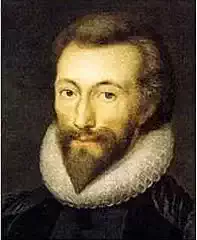
John Donne
To Mr. Tilman After He Had Taken Orders
To Mr. Tilman After He Had Taken Orders
THOU, whose diviner soul hath caused thee now
To put thy hand unto the holy plough,
Making lay-scornings of the ministry
Not an impediment, but victory ;
What bring'st thou home with thee ? how is thy mind
Affected since the vintage ? Dost thou find
New thoughts and stirrings in thee ? and, as steel
Touch'd with a loadstone, dost new motions feel ?
Or, as a ship after much pain and care
For iron and cloth brings home rich Indian ware,
Hast thou thus traffick'd, but with far more gain
Of noble goods, and with less time and pain ?
Thou art the same materials, as before,
Only the stamp is changèd, but no more.
And as new crowned kings alter the face,
But not the money's substance, so hath grace
Changed only God's old image by creation,
To Christ's new stamp, at this thy coronation ;
Or, as we paint angels with wings, because
They bear God's message and proclaim His laws,
Since thou must do the like and so must move,
Art thou new feather'd with celestial love ?
Dear, tell me where thy purchase lies, and show
What thy advantage is above, below.
But if thy gainings do surmount expression,
Why doth the foolish world scorn that profession,
Whose joys pass speech ? Why do they think unfit
That gentry should join families with it ?
As if their day were only to be spent
In dressing, mistressing and compliment.
Alas ! poor joys, but poorer men, whose trust
Seems richly placèd in sublimèd dust,
—For such are clothes and beauty, which though gay,
Are, at the best, but of sublimèd clay—
Let then the world thy calling disrespect,
But go thou on, and pity their neglect.
What function is so noble, as to be
Ambassador to God, and destiny ?
To open life ? to give kingdoms to more
Than kings give dignities? to keep heaven's door ?
Mary's prerogative was to bear Christ, so
'Tis preachers' to convey Him, for they do,
As angels out of clouds, from pulpits speak ;
And bless the poor beneath, the lame, the weak.
If then th' astronomers, whereas they spy
A new-found star, their optics magnify,
How brave are those, who with their engine can
Bring man to heaven, and heaven again to man ?
These are thy titles and pre-eminences,
In whom must meet God's graces, men's offences ;
And so the heavens which beget all things here,
And the earth, our mother, which these things doth bear ;
Both these in thee, are in thy calling knit
And make thee now a blest hermaphrodite.
THOU, whose diviner soul hath caused thee now
To put thy hand unto the holy plough,
Making lay-scornings of the ministry
Not an impediment, but victory ;
What bring'st thou home with thee ? how is thy mind
Affected since the vintage ? Dost thou find
New thoughts and stirrings in thee ? and, as steel
Touch'd with a loadstone, dost new motions feel ?
Or, as a ship after much pain and care
For iron and cloth brings home rich Indian ware,
Hast thou thus traffick'd, but with far more gain
Of noble goods, and with less time and pain ?
Thou art the same materials, as before,
Only the stamp is changèd, but no more.
And as new crowned kings alter the face,
But not the money's substance, so hath grace
Changed only God's old image by creation,
To Christ's new stamp, at this thy coronation ;
Or, as we paint angels with wings, because
They bear God's message and proclaim His laws,
Since thou must do the like and so must move,
Art thou new feather'd with celestial love ?
Dear, tell me where thy purchase lies, and show
What thy advantage is above, below.
But if thy gainings do surmount expression,
Why doth the foolish world scorn that profession,
Whose joys pass speech ? Why do they think unfit
That gentry should join families with it ?
As if their day were only to be spent
In dressing, mistressing and compliment.
Alas ! poor joys, but poorer men, whose trust
Seems richly placèd in sublimèd dust,
—For such are clothes and beauty, which though gay,
Are, at the best, but of sublimèd clay—
Let then the world thy calling disrespect,
But go thou on, and pity their neglect.
What function is so noble, as to be
Ambassador to God, and destiny ?
To open life ? to give kingdoms to more
Than kings give dignities? to keep heaven's door ?
Mary's prerogative was to bear Christ, so
'Tis preachers' to convey Him, for they do,
As angels out of clouds, from pulpits speak ;
And bless the poor beneath, the lame, the weak.
If then th' astronomers, whereas they spy
A new-found star, their optics magnify,
How brave are those, who with their engine can
Bring man to heaven, and heaven again to man ?
These are thy titles and pre-eminences,
In whom must meet God's graces, men's offences ;
And so the heavens which beget all things here,
And the earth, our mother, which these things doth bear ;
Both these in thee, are in thy calling knit
And make thee now a blest hermaphrodite.
325