

Poems in this theme
Purpose and Meaning of Life

Anne Brontë
Vanitas Vanitatum, Omnia Vanitas
Vanitas Vanitatum, Omnia Vanitas
In all we do, and hear, and see,
Is restless Toil and Vanity.
While yet the rolling earth abides,
Men come and go like Ocean tides;
And ere one generation dies,
Another in its place shall rise;
That, sinking soon into the grave,
Others succeed, like wave on wave;
And as they rise, they pass away.
The sun arises every day,
And, hastening onward to the West,
He nightly sinks, but not to rest:
Returning to the eastern skies,
Again to light us, he must rise.
And still the restless wind comes forth,
Now blowing keenly from the North;
Now from the South, the East, the West,
For ever changing, ne'er at rest.
The fountains, gushing from the hills,
Supply the everrunning
rills;
The thirsty rivers drink their store,
And bear it rolling to the shore,
But still the ocean craves for more.
'Tis endless labour everywhere!
Sound cannot satisfy the ear,
Light cannot fill the craving eye,
Nor riches half our wants supply;
Pleasure but doubles future pain,
And joy brings sorrow in her train;
Laughter is mad, and reckless mirth What
does she in this weary earth?
Should Wealth, or Fame, our Life employ,
Death comes, our labour to destroy;
To snatch the untasted cup away,
For which we toiled so many a day.
What, then, remains for wretched man?
To use life's comforts while he can,
Enjoy the blessings Heaven bestows,
Assist his friends, forgive his foes;
Trust God, and keep his statutes still,
Upright and firm, through good and ill;
Thankful for all that God has given,
Fixing his firmest hopes on heaven;
Knowing that earthly joys decay,
But hoping through the darkest day.
Acton
In all we do, and hear, and see,
Is restless Toil and Vanity.
While yet the rolling earth abides,
Men come and go like Ocean tides;
And ere one generation dies,
Another in its place shall rise;
That, sinking soon into the grave,
Others succeed, like wave on wave;
And as they rise, they pass away.
The sun arises every day,
And, hastening onward to the West,
He nightly sinks, but not to rest:
Returning to the eastern skies,
Again to light us, he must rise.
And still the restless wind comes forth,
Now blowing keenly from the North;
Now from the South, the East, the West,
For ever changing, ne'er at rest.
The fountains, gushing from the hills,
Supply the everrunning
rills;
The thirsty rivers drink their store,
And bear it rolling to the shore,
But still the ocean craves for more.
'Tis endless labour everywhere!
Sound cannot satisfy the ear,
Light cannot fill the craving eye,
Nor riches half our wants supply;
Pleasure but doubles future pain,
And joy brings sorrow in her train;
Laughter is mad, and reckless mirth What
does she in this weary earth?
Should Wealth, or Fame, our Life employ,
Death comes, our labour to destroy;
To snatch the untasted cup away,
For which we toiled so many a day.
What, then, remains for wretched man?
To use life's comforts while he can,
Enjoy the blessings Heaven bestows,
Assist his friends, forgive his foes;
Trust God, and keep his statutes still,
Upright and firm, through good and ill;
Thankful for all that God has given,
Fixing his firmest hopes on heaven;
Knowing that earthly joys decay,
But hoping through the darkest day.
Acton
87
Anne Brontë
The Narrow Way
The Narrow Way
Believe not those who say
The upward path is smooth,
Lest thou shouldst stumble in the way
And faint before the truth.
It is the only road
Unto the realms of joy;
But he who seeks that blest abode
Must all his powers employ.
Bright hopes and pure delights
Upon his course may beam,
And there amid the sternest heights,
The sweetest flowerets gleam;
On all her breezes borne
Earth yields no scents like those;
But he, that dares not grasp the thorn
Should never crave the rose.
Arm, arm thee for the fight!
Cast useless loads away:
Watch through the darkest hours of night;
Toil through the hottest day.
Crush pride into the dust,
Or thou must needs be slack;
And trample down rebellious lust,
Or it will hold thee back.
Seek not thy treasure here;
Waive pleasure and renown;
The World's dread scoff undaunted bear,
And face its deadliest frown.
To labour and to love,
To pardon and endure,
To lift thy heart to God above,
And keep thy conscience pure,
Be this thy constant aim,
Thy hope and thy delight, What
matters who should whisper blame,
Or who should scorn or slight?
What matters if
thy God approve,
And if within thy breast,
Thou feel the comfort of his love,
The earnest of his rest?
Believe not those who say
The upward path is smooth,
Lest thou shouldst stumble in the way
And faint before the truth.
It is the only road
Unto the realms of joy;
But he who seeks that blest abode
Must all his powers employ.
Bright hopes and pure delights
Upon his course may beam,
And there amid the sternest heights,
The sweetest flowerets gleam;
On all her breezes borne
Earth yields no scents like those;
But he, that dares not grasp the thorn
Should never crave the rose.
Arm, arm thee for the fight!
Cast useless loads away:
Watch through the darkest hours of night;
Toil through the hottest day.
Crush pride into the dust,
Or thou must needs be slack;
And trample down rebellious lust,
Or it will hold thee back.
Seek not thy treasure here;
Waive pleasure and renown;
The World's dread scoff undaunted bear,
And face its deadliest frown.
To labour and to love,
To pardon and endure,
To lift thy heart to God above,
And keep thy conscience pure,
Be this thy constant aim,
Thy hope and thy delight, What
matters who should whisper blame,
Or who should scorn or slight?
What matters if
thy God approve,
And if within thy breast,
Thou feel the comfort of his love,
The earnest of his rest?
82
Anne Brontë
My God! O let me call Thee mine!
My God! O let me call Thee mine!
My God! O let me call Thee mine!
Weak wretched sinner though I be,
My trembling soul would fain be Thine,
My feeble faith still clings to Thee,
My feeble faith still clings to Thee.
Not only for the past I grieve,
The future fills me with dismay;
Unless Thou hasten to relieve,
I know my heart will fall away,
I know my heart will fall away.
I cannot say my faith is strong,
I dare not hope my love is great;
But strength and love to Thee belong,
O, do not leave me desolate!
O, do not leave me desolate!
I know I owe my all to Thee,
O, take this heart I cannot give.
Do Thou my Strength my Saviour be;
And make me to Thy glory live!
And make me to Thy glory live!
My God! O let me call Thee mine!
Weak wretched sinner though I be,
My trembling soul would fain be Thine,
My feeble faith still clings to Thee,
My feeble faith still clings to Thee.
Not only for the past I grieve,
The future fills me with dismay;
Unless Thou hasten to relieve,
I know my heart will fall away,
I know my heart will fall away.
I cannot say my faith is strong,
I dare not hope my love is great;
But strength and love to Thee belong,
O, do not leave me desolate!
O, do not leave me desolate!
I know I owe my all to Thee,
O, take this heart I cannot give.
Do Thou my Strength my Saviour be;
And make me to Thy glory live!
And make me to Thy glory live!
86
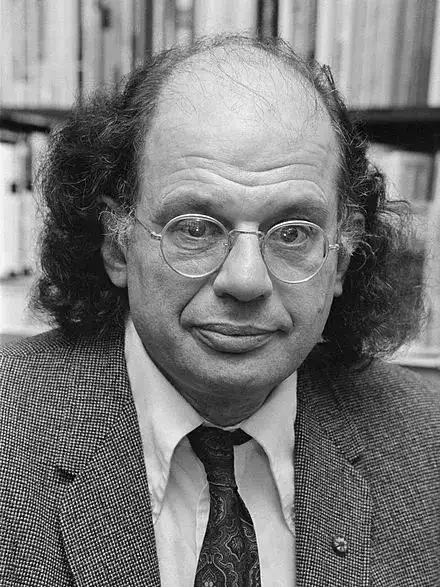
Allen Ginsberg
When the Light Appears
When the Light Appears
You'll bare your bones you'll grow you'll pray you'll only know
When the light appears, boy, when the light appears
You'll sing & you'll love you'll praise blue heavens above
When the light appears, boy, when the light appears
You'll whimper & you'll cry you'll get yourself sick and sigh
You'll sleep & you'll dream you'll only know what you mean
When the light appears, boy, when the light appears
You'll come & you'll go, you'll wander to and fro
You'll go home in despair you'll wonder why'd you care
You'll stammer & you'll lie you'll ask everybody why
You'll cough and you'll pout you'll kick your toe with gout
You'll jump you'll shout you'll knock you're friends about
You'll bawl and you'll deny & announce your eyes are dry
You'll roll and you'll rock you'll show your big hard cock
You'll love and you'll grieve & one day you'll come believe
As you whistle & you smile the lord made you worthwhile
You'll preach and you'll glide on the pulpit in your pride
Sneak & slide across the stage like a river in high tide
You'll come fast or come on slow just the same you'll never know
When the light appears, boy, when the light appears
You'll bare your bones you'll grow you'll pray you'll only know
When the light appears, boy, when the light appears
You'll sing & you'll love you'll praise blue heavens above
When the light appears, boy, when the light appears
You'll whimper & you'll cry you'll get yourself sick and sigh
You'll sleep & you'll dream you'll only know what you mean
When the light appears, boy, when the light appears
You'll come & you'll go, you'll wander to and fro
You'll go home in despair you'll wonder why'd you care
You'll stammer & you'll lie you'll ask everybody why
You'll cough and you'll pout you'll kick your toe with gout
You'll jump you'll shout you'll knock you're friends about
You'll bawl and you'll deny & announce your eyes are dry
You'll roll and you'll rock you'll show your big hard cock
You'll love and you'll grieve & one day you'll come believe
As you whistle & you smile the lord made you worthwhile
You'll preach and you'll glide on the pulpit in your pride
Sneak & slide across the stage like a river in high tide
You'll come fast or come on slow just the same you'll never know
When the light appears, boy, when the light appears
572
Allen Ginsberg
The Terms In Which I Think Of Reality
The Terms In Which I Think Of Reality
Reality is a question
of realizing how real
the world is already.
Time is Eternity,
ultimate and immovable;
everyone's an angel.
It's Heaven's mystery
of changing perfection :
absolute Eternity
changes! Cars are always
going down the street,
lamps go off and on.
It's a great flat plain;
we can see everything
on top of a table.
Clams open on the table,
lambs are eaten by worms
on the plain. The motion
of change is beautiful,
as well as form called
in and out of being.
Next : to distinguish process
in its particularity with
an eye to the initiation
of gratifying new changes
desired in the real world.
Here we're overwhelmed
with such unpleasant detail
we dream again of Heaven.
For the world is a mountain
of shit : if it's going to
be moved at all, it's got
to be taken by handfuls.
Man lives like the unhappy
whore on River Street who
in her Eternity gets only
a couple of bucks and a lot
of snide remarks in return
for seeking physical love
the best way she knows how,
never really heard of a glad
job or joyous marriage or
a difference in the heart :
or thinks it isn't for her,
which is her worst misery.
Reality is a question
of realizing how real
the world is already.
Time is Eternity,
ultimate and immovable;
everyone's an angel.
It's Heaven's mystery
of changing perfection :
absolute Eternity
changes! Cars are always
going down the street,
lamps go off and on.
It's a great flat plain;
we can see everything
on top of a table.
Clams open on the table,
lambs are eaten by worms
on the plain. The motion
of change is beautiful,
as well as form called
in and out of being.
Next : to distinguish process
in its particularity with
an eye to the initiation
of gratifying new changes
desired in the real world.
Here we're overwhelmed
with such unpleasant detail
we dream again of Heaven.
For the world is a mountain
of shit : if it's going to
be moved at all, it's got
to be taken by handfuls.
Man lives like the unhappy
whore on River Street who
in her Eternity gets only
a couple of bucks and a lot
of snide remarks in return
for seeking physical love
the best way she knows how,
never really heard of a glad
job or joyous marriage or
a difference in the heart :
or thinks it isn't for her,
which is her worst misery.
558
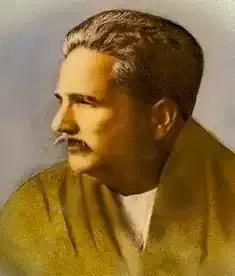
Muhammad Iqbal
The One I Was Searching For On the Earth and in Heaven
The One I Was Searching For On the Earth and in Heaven
The one I was searching for on the earth and in heaven
Appeared residing in the recesses of my own heart
When the reality of the self became evident to my eyes
The house appeared among residents of my own heart
If it were somewhat familiar with taste of rubbing foreheads
The stone of Ka’ba’s threshold would have joined the foreheads
O Majnun! Have you ever glanced at yourself
That like Layla you are also sitting in the litter
The months of the union continue flying like moments
But the moments of separation linger for months!
O seaman, how will you protect me from being drowned
As those destined to drowning get drowned in the boats also
The one who concealed His Beauty from Kalim Allah
The same Beloved is manifest among beloveds
The breath of Lovers can light up the extinguished candle
O God! What is kept concealed in the breast of the Lovers?
Serve the fakirs if you have the longing for Love
This pearl is not available in the treasures of kings
Do not ask of these Devotees, if you have faith, you should look at them
They have the illuminated palm up their sleeves
The insightful eye for whose spectacle is tantalized
That elegance of congregation is in these very recluses
Burn the produce of your heart with some such spark
That the Last Day’s sun may also be among your gleaners
For Love search for some heart which would become mortified
This is the wine which is not kept in delicate wine glasses
The Beauty itself becomes the Lover of whose Beauty
O Heart! Does someone among the beautiful has that beauty?
Someone became highly excited at your grace of Ma’arafna
Your rank remained among the most elegant of all the Lovers
Manifest Thyself and show them Thy Beauty some time
Talks have continued among the sagacious since long time
Silent, O Heart! Crying in the full assembly is not good
Decorum is the most important etiquette among the ways of Love
It is not possible for me to deem my critics bad
Because Iqbal, I am myself among my critics
The one I was searching for on the earth and in heaven
Appeared residing in the recesses of my own heart
When the reality of the self became evident to my eyes
The house appeared among residents of my own heart
If it were somewhat familiar with taste of rubbing foreheads
The stone of Ka’ba’s threshold would have joined the foreheads
O Majnun! Have you ever glanced at yourself
That like Layla you are also sitting in the litter
The months of the union continue flying like moments
But the moments of separation linger for months!
O seaman, how will you protect me from being drowned
As those destined to drowning get drowned in the boats also
The one who concealed His Beauty from Kalim Allah
The same Beloved is manifest among beloveds
The breath of Lovers can light up the extinguished candle
O God! What is kept concealed in the breast of the Lovers?
Serve the fakirs if you have the longing for Love
This pearl is not available in the treasures of kings
Do not ask of these Devotees, if you have faith, you should look at them
They have the illuminated palm up their sleeves
The insightful eye for whose spectacle is tantalized
That elegance of congregation is in these very recluses
Burn the produce of your heart with some such spark
That the Last Day’s sun may also be among your gleaners
For Love search for some heart which would become mortified
This is the wine which is not kept in delicate wine glasses
The Beauty itself becomes the Lover of whose Beauty
O Heart! Does someone among the beautiful has that beauty?
Someone became highly excited at your grace of Ma’arafna
Your rank remained among the most elegant of all the Lovers
Manifest Thyself and show them Thy Beauty some time
Talks have continued among the sagacious since long time
Silent, O Heart! Crying in the full assembly is not good
Decorum is the most important etiquette among the ways of Love
It is not possible for me to deem my critics bad
Because Iqbal, I am myself among my critics
324
Muhammad Iqbal
The Sun
The Sun
O Sun! The world's essence and motivator you are
The organizer of the book of the world you are
The splendor of existence has been created by you
The verdure of the garden of existence depends on you
The spectacle of elements is maintained by you
The exigency of life in all is maintained by you
Your appearance confers stability on everything
Your illumination and concord is completion of life
You are the sun which establishes light in the world
Which establishes heart, intellect, essence and wisdom
O Sun! Bestow on us the light of wisdom
Bestow your luster's light on the intellect's eye
You are the decorator of necessaries of existence' assemblage
You are the Yazdan of the denizens of the high and the low
Your excellence is reflected from every living thing
The mountain range also shows your elegance
You are the sustainer of the life of all
You are the king of the light's children
There is no beginning and no end of yours
Free of limits of time is the light of yours
O Sun! The world's essence and motivator you are
The organizer of the book of the world you are
The splendor of existence has been created by you
The verdure of the garden of existence depends on you
The spectacle of elements is maintained by you
The exigency of life in all is maintained by you
Your appearance confers stability on everything
Your illumination and concord is completion of life
You are the sun which establishes light in the world
Which establishes heart, intellect, essence and wisdom
O Sun! Bestow on us the light of wisdom
Bestow your luster's light on the intellect's eye
You are the decorator of necessaries of existence' assemblage
You are the Yazdan of the denizens of the high and the low
Your excellence is reflected from every living thing
The mountain range also shows your elegance
You are the sustainer of the life of all
You are the king of the light's children
There is no beginning and no end of yours
Free of limits of time is the light of yours
338
Muhammad Iqbal
The goat replied, 'This complaint is unjust
The goat replied, 'This complaint is unjust
Though truth is always bitter
I shall speak what is fair
This pasture, and this cool breeze
This green grass and this shade
Such comforts, were beyond our lot!
They were a far cry for us speechless poor!
We owe these pleasures to Man
We owe all our happiness to Man
We derive all our prosperity from him
What is better for us, freedom or bondage to him?
Hundreds of dangers lurk in the wilderness
May God protect us from the wilderness!
We are heavily indebted to him
Unjust is our complaint against him
If you appreciate the life's comforts
You would never complain against Man'
Hearing all this the cow felt embarrassed
She was sorry for complaining against Man
She mused over the good and the bad
And thoughtfully she said this
'Small though is the body of the goat
Convincing is the advice of the goat! '
Though truth is always bitter
I shall speak what is fair
This pasture, and this cool breeze
This green grass and this shade
Such comforts, were beyond our lot!
They were a far cry for us speechless poor!
We owe these pleasures to Man
We owe all our happiness to Man
We derive all our prosperity from him
What is better for us, freedom or bondage to him?
Hundreds of dangers lurk in the wilderness
May God protect us from the wilderness!
We are heavily indebted to him
Unjust is our complaint against him
If you appreciate the life's comforts
You would never complain against Man'
Hearing all this the cow felt embarrassed
She was sorry for complaining against Man
She mused over the good and the bad
And thoughtfully she said this
'Small though is the body of the goat
Convincing is the advice of the goat! '
366
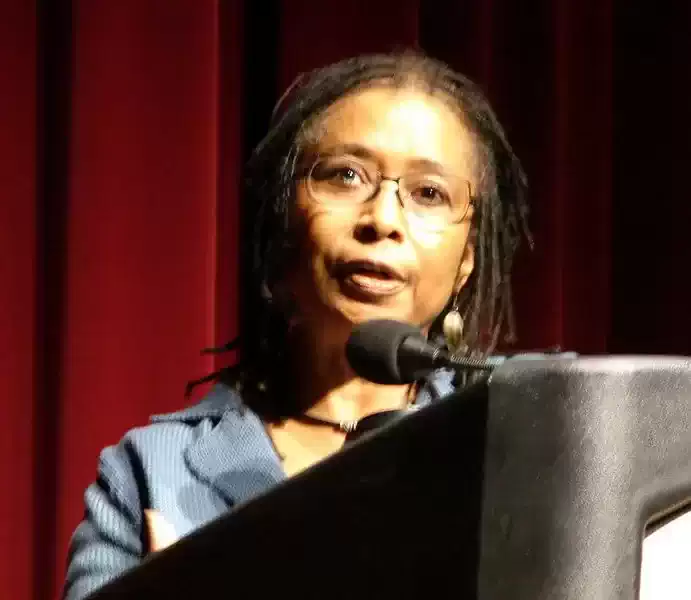
Alice Walker
Blessed Are The Poor In Spirit
Blessed Are The Poor In Spirit
Did you ever understand this?
If my spirit was poor, how could I enter heaven?
Was I depressed?
Understanding editing,
I see how a comma, removed or inserted
with careful plan,
can change everything.
I was reminded of this
when a poor young man
in Tunisia
desperate to live
and humiliated for trying
set himself ablaze;
I felt uncomfortably warm
as if scalded by his shame.
I do not have to sell vegetables from a cart as he did
or live in narrow rooms too small for spacious thought;
and, at this late date,
I do not worry that someone will
remove every single opportunity
for me to thrive.
Still, I am connected to, inseparable from,
this young man.
Blessed are the poor, in spirit, for theirs is the kingdom of heaven.
Jesus. (Commas restored) .
Jesus was as usual talking about solidarity: about how we join with others
and, in spirit, feel the world, and suffering, the same as them.
This is the kingdom of owning the other as self, the self as other;
that transforms grief into
peace and delight.
I, and you, might enter the heaven
of right here
through this door.
In this spirit, knowing we are blessed,
we might remain poor
Did you ever understand this?
If my spirit was poor, how could I enter heaven?
Was I depressed?
Understanding editing,
I see how a comma, removed or inserted
with careful plan,
can change everything.
I was reminded of this
when a poor young man
in Tunisia
desperate to live
and humiliated for trying
set himself ablaze;
I felt uncomfortably warm
as if scalded by his shame.
I do not have to sell vegetables from a cart as he did
or live in narrow rooms too small for spacious thought;
and, at this late date,
I do not worry that someone will
remove every single opportunity
for me to thrive.
Still, I am connected to, inseparable from,
this young man.
Blessed are the poor, in spirit, for theirs is the kingdom of heaven.
Jesus. (Commas restored) .
Jesus was as usual talking about solidarity: about how we join with others
and, in spirit, feel the world, and suffering, the same as them.
This is the kingdom of owning the other as self, the self as other;
that transforms grief into
peace and delight.
I, and you, might enter the heaven
of right here
through this door.
In this spirit, knowing we are blessed,
we might remain poor
272
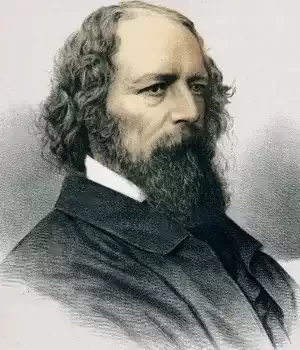
Alfred Lord Tennyson
In Memoriam A. H. H.: The Prelude
In Memoriam A. H. H.: The Prelude
Strong Son of God, immortal Love,
Whom we, that have not seen thy face,
By faith, and faith alone, embrace,
Believing where we cannot prove;
Thine are these orbs of light and shade;
Thou madest Life in man and brute;
Thou madest Death; and lo, thy foot
Is on the skull which thou hast made.
Thou wilt not leave us in the dust:
Thou madest man, he knows not why,
He thinks he was not made to die;
And thou hast made him: thou art just.
Thou seemest human and divine,
The highest, holiest manhood, thou.
Our wills are ours, we know not how,
Our wills are ours, to make them thine.
Our little systems have their day;
They have their day and cease to be:
They are but broken lights of thee,
And thou, O Lord, art more than they.
We have but faith: we cannot know;
For knowledge is of things we see;
And yet we trust it comes from thee,
A beam in darkness: let it grow.
Let knowledge grow from more to more,
But more of reverence in us dwell;
That mind and soul, according well,
May make one music as before,
But vaster. We are fools and slight;
We mock thee when we do not fear:
But help thy foolish ones to bear;
Help thy vain worlds to bear thy light.
Forgive what seem'd my sin in me,
What seem'd my worth since I began;
For merit lives from man to man,
And not from man, O Lord, to thee.
Forgive my grief for one removed,
Thy creature, whom I found so fair.
I trust he lives in thee, and there
I find him worthier to be loved.
Forgive these wild and wandering cries,
Confusions of a wasted youth;
Forgive them where they fail in truth,
And in thy wisdom make me wise.
Strong Son of God, immortal Love,
Whom we, that have not seen thy face,
By faith, and faith alone, embrace,
Believing where we cannot prove;
Thine are these orbs of light and shade;
Thou madest Life in man and brute;
Thou madest Death; and lo, thy foot
Is on the skull which thou hast made.
Thou wilt not leave us in the dust:
Thou madest man, he knows not why,
He thinks he was not made to die;
And thou hast made him: thou art just.
Thou seemest human and divine,
The highest, holiest manhood, thou.
Our wills are ours, we know not how,
Our wills are ours, to make them thine.
Our little systems have their day;
They have their day and cease to be:
They are but broken lights of thee,
And thou, O Lord, art more than they.
We have but faith: we cannot know;
For knowledge is of things we see;
And yet we trust it comes from thee,
A beam in darkness: let it grow.
Let knowledge grow from more to more,
But more of reverence in us dwell;
That mind and soul, according well,
May make one music as before,
But vaster. We are fools and slight;
We mock thee when we do not fear:
But help thy foolish ones to bear;
Help thy vain worlds to bear thy light.
Forgive what seem'd my sin in me,
What seem'd my worth since I began;
For merit lives from man to man,
And not from man, O Lord, to thee.
Forgive my grief for one removed,
Thy creature, whom I found so fair.
I trust he lives in thee, and there
I find him worthier to be loved.
Forgive these wild and wandering cries,
Confusions of a wasted youth;
Forgive them where they fail in truth,
And in thy wisdom make me wise.
391
Alfred Lord Tennyson
In Memoriam A. H. H.: 56. So careful of the type? but no
In Memoriam A. H. H.: 56. So careful of the type? but no
"So careful of the type?" but no.
From scarped cliff and quarried stone
She cries, "A thousand types are gone:
I care for nothing, all shall go.
"Thou makest thine appeal to me:
I bring to life, I bring to death:
The spirit does but mean the breath:
I know no more." And he, shall he,
Man, her last work, who seem'd so fair,
Such splendid purpose in his eyes,
Who roll'd the psalm to wintry skies,
Who built him fanes of fruitless prayer,
Who trusted God was love indeed
And love Creation's final law-Tho'
Nature, red in tooth and claw
With ravine, shriek'd against his creed-
Who loved, who suffer'd countless ills,
Who battled for the True, the Just,
Be blown about the desert dust,
Or seal'd within the iron hills?
No more? A monster then, a dream,
A discord. Dragons of the prime,
That tare each other in their slime,
Were mellow music match'd with him.
O life as futile, then, as frail!
O for thy voice to soothe and bless!
What hope of answer, or redress?
Behind the veil, behind the veil.
"So careful of the type?" but no.
From scarped cliff and quarried stone
She cries, "A thousand types are gone:
I care for nothing, all shall go.
"Thou makest thine appeal to me:
I bring to life, I bring to death:
The spirit does but mean the breath:
I know no more." And he, shall he,
Man, her last work, who seem'd so fair,
Such splendid purpose in his eyes,
Who roll'd the psalm to wintry skies,
Who built him fanes of fruitless prayer,
Who trusted God was love indeed
And love Creation's final law-Tho'
Nature, red in tooth and claw
With ravine, shriek'd against his creed-
Who loved, who suffer'd countless ills,
Who battled for the True, the Just,
Be blown about the desert dust,
Or seal'd within the iron hills?
No more? A monster then, a dream,
A discord. Dragons of the prime,
That tare each other in their slime,
Were mellow music match'd with him.
O life as futile, then, as frail!
O for thy voice to soothe and bless!
What hope of answer, or redress?
Behind the veil, behind the veil.
427
Alfred Lord Tennyson
In Memoriam A. H. H.: 118. Contemplate all this work of Tim
In Memoriam A. H. H.: 118. Contemplate all this work of Tim
Contemplate all this work of Time,
The giant labouring in his youth;
Nor dream of human love and truth,
As dying Nature's earth and lime;
But trust that those we call the dead
Are breathers of an ampler day
For ever nobler ends. They say,
The solid earth whereon we tread
In tracts of fluent heat began,
And grew to seeming-random forms,
The seeming prey of cyclic storms,
Till at the last arose the man;
Who throve and branch'd from clime to clime,
The herald of a higher race,
And of himself in higher place,
If so he type this work of time
Within himself, from more to more;
Or, crown'd with attributes of woe
Like glories, move his course, and show
That life is not as idle ore,
But iron dug from central gloom,
And heated hot with burning fears,
And dipt in baths of hissing tears,
And batter'd with the shocks of doom
To shape and use. Arise and fly
The reeling Faun, the sensual feast;
Move upward, working out the beast,
And let the ape and tiger die.
Contemplate all this work of Time,
The giant labouring in his youth;
Nor dream of human love and truth,
As dying Nature's earth and lime;
But trust that those we call the dead
Are breathers of an ampler day
For ever nobler ends. They say,
The solid earth whereon we tread
In tracts of fluent heat began,
And grew to seeming-random forms,
The seeming prey of cyclic storms,
Till at the last arose the man;
Who throve and branch'd from clime to clime,
The herald of a higher race,
And of himself in higher place,
If so he type this work of time
Within himself, from more to more;
Or, crown'd with attributes of woe
Like glories, move his course, and show
That life is not as idle ore,
But iron dug from central gloom,
And heated hot with burning fears,
And dipt in baths of hissing tears,
And batter'd with the shocks of doom
To shape and use. Arise and fly
The reeling Faun, the sensual feast;
Move upward, working out the beast,
And let the ape and tiger die.
409
Alfred Lord Tennyson
By an Evolutionist
By an Evolutionist
By an Evolutionist
The Lord let the house of a brute to the soul of a man,
And the man said, ‘Am I your debtor?’
And the Lord–‘Not yet; but make it as clean as you can,
And then I will let you a better.’
I.
If my body come from brutes, my soul uncertain or a fable,
Why not bask amid the senses while the sun of morning shines,
I, the finer brute rejoicing in my hounds, and in my stable,
Youth and health, and birth and wealth, and choice of women and of wines?
II.
What hast thou done for me, grim Old Age, save breaking my bones on the rack?
Would I had past in the morning that looks so bright from afar!
OLD AGE
Done for thee? starved the wild beast that was linkt with thee eighty years back.
Less weight now for the ladder-of-heaven that hangs on a star.
I.
If my body come from brutes, tho’ somewhat finer than their own,
I am heir, and this my kingdom. Shall the royal voice be mute?
No, but if the rebel subject seek to drag me from the throne,
Hold the sceptre, Human Soul, and rule thy province of the brute.
II.
I have climb’d to the snows of Age, and I gaze at a field in the Past.
Where I sank with the body at times in the sloughs of a low desire,
But I hear no yelp of the beast, and the Man is quiet at last,
As he stands on the heights of his life with a glimpse of a height that is higher.
By an Evolutionist
The Lord let the house of a brute to the soul of a man,
And the man said, ‘Am I your debtor?’
And the Lord–‘Not yet; but make it as clean as you can,
And then I will let you a better.’
I.
If my body come from brutes, my soul uncertain or a fable,
Why not bask amid the senses while the sun of morning shines,
I, the finer brute rejoicing in my hounds, and in my stable,
Youth and health, and birth and wealth, and choice of women and of wines?
II.
What hast thou done for me, grim Old Age, save breaking my bones on the rack?
Would I had past in the morning that looks so bright from afar!
OLD AGE
Done for thee? starved the wild beast that was linkt with thee eighty years back.
Less weight now for the ladder-of-heaven that hangs on a star.
I.
If my body come from brutes, tho’ somewhat finer than their own,
I am heir, and this my kingdom. Shall the royal voice be mute?
No, but if the rebel subject seek to drag me from the throne,
Hold the sceptre, Human Soul, and rule thy province of the brute.
II.
I have climb’d to the snows of Age, and I gaze at a field in the Past.
Where I sank with the body at times in the sloughs of a low desire,
But I hear no yelp of the beast, and the Man is quiet at last,
As he stands on the heights of his life with a glimpse of a height that is higher.
465
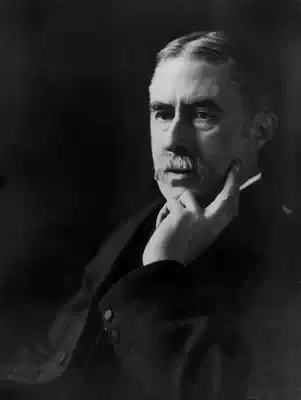
Alfred Edward Housman
Twice a Week the Winter Thorough
Twice a Week the Winter Thorough
Twice a week the winter thorough
Here stood I to keep the goal:
Football then was fighting sorrow
For the young man's soul.
Now in Maytime to the wicket
Out I march with bat and pad:
See the son of grief at cricket
Trying to be glad.
Try I will; no harm in trying:
Wonder 'tis how little mirth
Keeps the bones of man from lying
On the bed of earth.
Twice a week the winter thorough
Here stood I to keep the goal:
Football then was fighting sorrow
For the young man's soul.
Now in Maytime to the wicket
Out I march with bat and pad:
See the son of grief at cricket
Trying to be glad.
Try I will; no harm in trying:
Wonder 'tis how little mirth
Keeps the bones of man from lying
On the bed of earth.
414
Alfred Edward Housman
Ho, everyone that thirsteth
Ho, everyone that thirsteth
Ho, everyone that thirsteth
And hath the price to give,
Come to the stolen waters,
Drink and your soul shall live.
Come to the stolen waters,
And leap the guarded pale,
And pull the flower in season
Before desire shall fail.
It shall not last for ever,
No more than earth and skies;
But he that drinks in season
Shall live before he dies.
June suns, you cannot store them
To warm the winter's cold,
The lad that hopes for heaven
Shall fill his mouth with mold.
Ho, everyone that thirsteth
And hath the price to give,
Come to the stolen waters,
Drink and your soul shall live.
Come to the stolen waters,
And leap the guarded pale,
And pull the flower in season
Before desire shall fail.
It shall not last for ever,
No more than earth and skies;
But he that drinks in season
Shall live before he dies.
June suns, you cannot store them
To warm the winter's cold,
The lad that hopes for heaven
Shall fill his mouth with mold.
418
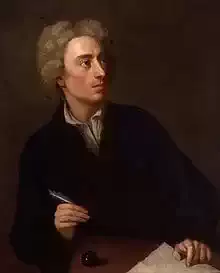
Alexander Pope
Universal Prayer
Universal Prayer
Father of all! In every age,
In ev'ry clime ador'd,
By saint, by savage, and by sage,
Jehovah, Jove, or Lord!
Thou Great First Cause, least understood,
Who all my sense confin'd
To know but this, that Thou art good,
And that myself am blind:
Yet gave me, in this dark estate,
To see the good from ill;
And, binding Nature fast in Fate,
Left free the human Will.
What Conscience dictates to be done,
Or warns me not to do;
This teach me more than Hell to shun,
That more than Heav'n pursue.
What blessings thy free bounty gives
Let me not cast away;
For God is paid when man receives;
T' enjoy is to obey.
Yet not to earth's contracted span
Thy goodness let me bound,
Or think thee Lord alone of man,
When thousand worlds are round.
Let not this weak, unknowing hand
Presume thy bolts to throw,
And teach damnation round the land
On each I judge thy foe.
If I am right, thy grace impart,
Still in the right to stay;
If I am wrong, O teach my heart
To find that better way.
Save me alike from foolish Pride
Or impious Discontent,
At aught thy wisdom has denied,
Or aught that goodness lent.
Teach me to feel another's woe,
To right the fault I see:
That mercy I to others show,
That mercy show to me.
Mean tho' I am, not wholly so,
Since quicken'd by thy breath;
O lead me whereso'er I go,
Thro' this day's life or death!
This day be bread and peace my lot:
All else beneath the sun
Though know'st if best bestow'd or not,
And let Thy will be done.
To Thee, whose temple is of Space,
Whose altar earth, sea, skies,
One chorus let all Beings raise!
All Nature's incense rise!
Father of all! In every age,
In ev'ry clime ador'd,
By saint, by savage, and by sage,
Jehovah, Jove, or Lord!
Thou Great First Cause, least understood,
Who all my sense confin'd
To know but this, that Thou art good,
And that myself am blind:
Yet gave me, in this dark estate,
To see the good from ill;
And, binding Nature fast in Fate,
Left free the human Will.
What Conscience dictates to be done,
Or warns me not to do;
This teach me more than Hell to shun,
That more than Heav'n pursue.
What blessings thy free bounty gives
Let me not cast away;
For God is paid when man receives;
T' enjoy is to obey.
Yet not to earth's contracted span
Thy goodness let me bound,
Or think thee Lord alone of man,
When thousand worlds are round.
Let not this weak, unknowing hand
Presume thy bolts to throw,
And teach damnation round the land
On each I judge thy foe.
If I am right, thy grace impart,
Still in the right to stay;
If I am wrong, O teach my heart
To find that better way.
Save me alike from foolish Pride
Or impious Discontent,
At aught thy wisdom has denied,
Or aught that goodness lent.
Teach me to feel another's woe,
To right the fault I see:
That mercy I to others show,
That mercy show to me.
Mean tho' I am, not wholly so,
Since quicken'd by thy breath;
O lead me whereso'er I go,
Thro' this day's life or death!
This day be bread and peace my lot:
All else beneath the sun
Though know'st if best bestow'd or not,
And let Thy will be done.
To Thee, whose temple is of Space,
Whose altar earth, sea, skies,
One chorus let all Beings raise!
All Nature's incense rise!
421
Alexander Pope
From an Essay on Man
From an Essay on Man
Heav'n from all creatures hides the book of fate,
All but the page prescrib'd, their present state:
From brutes what men, from men what spirits know:
Or who could suffer being here below?
The lamb thy riot dooms to bleed today,
Had he thy reason, would he skip and play?
Pleas'd to the last, he crops the flow'ry food,
And licks the hand just rais'd to shed his blood.
Oh blindness to the future! kindly giv'n,
That each may fill the circle mark'd by Heav'n:
Who sees with equal eye, as God of all,
A hero perish, or a sparrow fall,
Atoms or systems into ruin hurl'd,
And now a bubble burst, and now a world.
Hope humbly then; with trembling pinions soar;
Wait the great teacher Death; and God adore.
What future bliss, he gives not thee to know,
But gives that hope to be thy blessing now.
Hope springs eternal in the human breast:
Man never is, but always to be blest:
The soul, uneasy and confin'd from home,
Rests and expatiates in a life to come.
Lo! the poor Indian, whose untutor'd mind
Sees God in clouds, or hears him in the wind;
His soul, proud science never taught to stray
Far as the solar walk, or milky way;
Yet simple nature to his hope has giv'n,
Behind the cloud topp'd hill, an humbler heav'n;
Some safer world in depth of woods embrac'd,
Some happier island in the wat'ry waste,
Where slaves once more their native land behold,
No fiends torment, no Christians thirst for gold.
To be, contents his natural desire,
He asks no angel's wing, no seraph's fire;
But thinks, admitted to that equal sky.
Heav'n from all creatures hides the book of fate,
All but the page prescrib'd, their present state:
From brutes what men, from men what spirits know:
Or who could suffer being here below?
The lamb thy riot dooms to bleed today,
Had he thy reason, would he skip and play?
Pleas'd to the last, he crops the flow'ry food,
And licks the hand just rais'd to shed his blood.
Oh blindness to the future! kindly giv'n,
That each may fill the circle mark'd by Heav'n:
Who sees with equal eye, as God of all,
A hero perish, or a sparrow fall,
Atoms or systems into ruin hurl'd,
And now a bubble burst, and now a world.
Hope humbly then; with trembling pinions soar;
Wait the great teacher Death; and God adore.
What future bliss, he gives not thee to know,
But gives that hope to be thy blessing now.
Hope springs eternal in the human breast:
Man never is, but always to be blest:
The soul, uneasy and confin'd from home,
Rests and expatiates in a life to come.
Lo! the poor Indian, whose untutor'd mind
Sees God in clouds, or hears him in the wind;
His soul, proud science never taught to stray
Far as the solar walk, or milky way;
Yet simple nature to his hope has giv'n,
Behind the cloud topp'd hill, an humbler heav'n;
Some safer world in depth of woods embrac'd,
Some happier island in the wat'ry waste,
Where slaves once more their native land behold,
No fiends torment, no Christians thirst for gold.
To be, contents his natural desire,
He asks no angel's wing, no seraph's fire;
But thinks, admitted to that equal sky.
365
Alexander Pope
Essay on Man
Essay on Man
The First Epistle
Awake, my ST. JOHN!(1) leave all meaner things
To low ambition, and the pride of Kings.
Let us (since Life can little more supply
Than just to look about us and to die)
Expatiate(2) free o'er all this scene of Man;
A mighty maze! but not without a plan;
A Wild, where weeds and flow'rs promiscuous shoot,
Or Garden, tempting with forbidden fruit.
Together let us beat this ample field,
Try what the open, what the covert yield;
The latent tracts(3), the giddy heights explore
Of all who blindly creep, or sightless soar;
Eye Nature's walks, shoot Folly as it flies,
And catch the Manners living as they rise;
Laugh where we must, be candid where we can;
But vindicate(4) the ways of God to Man.
1. Say first, of God above, or Man below,
What can we reason, but from what we know?
Of Man what see we, but his station here,
From which to reason, or to which refer?
Thro' worlds unnumber'd tho' the God be known,
'Tis ours to trace him only in our own.
He, who thro' vast immensity can pierce,
See worlds on worlds compose one universe,
Observe how system into system runs,
What other planets circle other suns,
What vary'd being peoples ev'ry star,
May tell why Heav'n has made us as we are.
But of this frame the bearings, and the ties,
The strong connections, nice dependencies,
Gradations just, has thy pervading soul
Look'd thro'? or can a part contain the whole?
Is the great chain, that draws all to agree,
And drawn supports, upheld by God, or thee?
II. Presumptuous Man! the reason wouldst thou find,
Why form'd so weak, so little, and so blind!
First, if thou canst, the harder reason guess,
Why form'd no weaker, blinder, and no less!
Ask of thy mother earth, why oaks are made
Taller or stronger than the weeds they shade?
Or ask of yonder argent fields(5) above,
Why JOVE'S Satellites are less than JOVE?(6)
Of Systems possible, if 'tis confest
That Wisdom infinite must form the best,
Where all must full or not coherent be,
And all that rises, rise in due degree;
Then, in the scale of reas'ning life, 'tis plain
There must be, somewhere, such rank as Man;
And all the question (wrangle e'er so long)
Is only this, if God has plac'd him wrong?
Respecting Man, whatever wrong we call,
Nay, must be right, as relative to all.
In human works, tho' labour'd on with pain,
A thousand movements scarce one purpose gain;
In God's, one single can its end produce;
Yet serves to second too some other use.
So Man, who here seems principal alone,
Perhaps acts second to some sphere unknown,
Touches some wheel, or verges to some goal;
'Tis but a part we see, and not a whole.
When the proud steed shall know why Man restrains
His fiery course, or drives him o'er the plains;
When the dull Ox, why now he breaks the clod,
Is now a victim, and now Egypt's God:(7)
Then shall Man's pride and dullness comprehend
His actions', passions', being's, use and end;
Why doing, suff'ring, check'd, impell'd; and why
This hour a slave, the next a deity.
Then say not Man's imperfect, Heav'n in fault;
Say rather, Man's as perfect as he ought;
His knowledge measur'd to his state and place,
His time a moment, and a point his space.
If to be perfect in a certain sphere,
What matter, soon or late, or here or there?
The blest today is as completely so,
As who began a thousand years ago.
III. Heav'n from all creatures hides the book of Fate,
All but the page prescrib'd, their present state;
From brutes what men, from men what spirits know:
Or who could suffer Being here below?
The lamb thy riot dooms to bleed to-day,
Had he thy Reason, would he skip and play?
Pleas'd to the last, he crops the flow'ry food,
And licks the hand just rais'd to shed his blood.
Oh blindness to the future! kindly giv'n,
That each may fill the circle mark'd by Heav'n;
Who sees with equal eye, as God of all,
A hero perish, or a sparrow fall,
Atoms or systems into ruin hurl'd,
And now a bubble burst, and now a world.
Hope humbly then; with trembling pinions soar;
Wait the great teacher Death, and God adore!
What future bliss, he gives not thee to know,
But gives that Hope to be thy blessing now.
Hope springs eternal in the human breast:
Man never Is, but always To be blest:
The soul, uneasy and confin'd from home,
Rests and expatiates in a life to come.
Lo! the poor Indian, whose untutor'd mind
Sees God in clouds, or hears him in the wind;
His soul proud Science never taught to stray
Far as the solar walk, or milky way;
Yet simple Nature to his hope has giv'n,
Behind the cloud-topt hill, an humbler heav'n;
Some safer world in depth of woods embrac'd,
Some happier island in the watry waste,
Where slaves once more their native land behold,
No fiends torment, no Christians thirst for gold!
To Be, contents his natural desire,
He asks no Angel's wing, no Seraph's(8) fire;
But thinks, admitted to that equal sky,
His faithful dog shall bear him company.
IV. Go, wiser thou! and in thy scale of sense
Weigh thy Opinion against Providence;
Call Imperfection what thou fancy'st such,
Say, here he gives too little, there too much;
Destroy all creatures for thy sport or gust,(9)
Yet cry, If Man's unhappy, God's unjust;
If Man alone ingross not Heav'n's high care,
Alone made perfect here, immortal there:
Snatch from his hand the balance(10) and the rod,
Re-judge his justice, be the GOD of GOD!
In Pride, in reas'ning Pride, our error lies;
All quit their sphere, and rush into the skies.
Pride still is aiming at the blest abodes,
Men would be Angels, Angels would be Gods.
Aspiring to be Gods, if Angels fell,
Aspiring to be Angels, Men rebel;
And who but wishes to invert the laws
Of ORDER, sins against th' Eternal Cause.
V. Ask for what end the heav'nly bodies shine,
Earth for whose use? Pride answers, "Tis for mine:
For me kind Nature wakes her genial pow'r,
Suckles each herb, and spreads out ev'ry flow'r;
Annual for me, the grape, the rose renew
The juice nectareous, and the balmy dew;
For me, the mine a thousand treasures brings;
For me, health gushes from a thousand springs;
Seas roll to waft me, suns to light me rise;
My foot-stool earth, my canopy the skies."
But errs not Nature from this gracious end,
From burning suns when livid deaths descend,
When earthquakes swallow, or when tempests sweep
Towns to one grave, whole nations to the deep?
"No ('tis reply'd) the first Almighty Cause
Acts not by partial, but by gen'ral laws;
Th' exceptions few; some change since all began,
And what created perfect?" -- Why then Man?
If the great end be human Happiness,
Then Nature deviates; and can Man do less?
As much that end a constant course requires
Of show'rs and sun-shine, as of Man's desires;
As much eternal springs and cloudless skies,
As Men for ever temp'rate, calm, and wise.
If plagues or earthquakes break not Heav'n's design,
Why then a Borgia,(11) or a Catiline?(12)
Who knows but he, whose hand the light'ning forms,
Who heaves old Ocean, and who wings the storms,
Pours fierce Ambition in a Caesar's(13) mind,
Or turns young Ammon(14) loose to scourge mankind?
From pride, from pride, our very reas'ning springs;
Account for moral as for nat'ral things:
Why charge we Heav'n in those, in these acquit?
In both, to reason right is to submit.
Better for Us, perhaps, it might appear,
Were there all harmony, all virtue here;
That never air or ocean felt the wind;
That never passion discompos'd the mind:
But ALL subsists by elemental strife;
and Passions are the elements of Life.
The gen'ral ORDER, since the whole began,
Is kept in Nature, and is kept in Man.
VI. What would this Man? Now upward will he soar,
And little less than Angel,(15) would be more;
Now looking downwards, just as griev'd appears
To want the strength of bulls, the fur of bears.
Made for his use all creatures if he call,
Say what their use, had he the pow'rs of all?
Nature to these, without profusion kind,
The proper organs, proper pow'rs assign'd;
Each seeming want compensated of course,
Here with degrees of swiftness, there of force;
All in exact proportion to the state;
Nothing to add, and nothing to abate.
Each beast, each insect, happy in its own;
Is Heav'n unkind to Man, and Man alone?
Shall he alone, whom rational we call,
Be pleas'd with nothing, if not bless'd with all?
The bliss of Man (could Pride that blessing find)
Is not to act or think beyond mankind;
No pow'rs of body or of soul to share,
But what his nature and his state can bear.
Why has not Man a microscopic eye?
For this plain reason, Man is not a Fly.
Say what the use, were finer optics giv'n,
T' inspect a mite,(16) not comprehend the heav'n?
Or touch, if tremblingly alive all o'er,
To smart and agonize at ev'ry pore?
Or quick effluvia(17) darting thro' the brain,
Die of a rose in aromatic pain?
If nature thunder'd in his op'ning ears,
And stunn'd him with the music of the spheres,
How would he wish that Heav'n had left him still
The whisp'ring Zephyr,(18) and the purling rill?(19)
Who finds not Providence all good and wise,
Alike in what it gives, and what denies?
VII. Far as Creation's ample range extends,
The scale of sensual, mental pow'rs ascends:
Mark how it mounts, to Man's imperial race,
From the green myriads in the people grass:
What modes of sight betwixt each wide extreme,
The mole's dim curtain, and the lynx's beam:
Of smell, the headlong lioness between,
And hound sagacious(20) on the tainted(21) green:
Of hearing, from the life that fills the flood,(22)
To that which warbles thro' the vernal(23) wood:
The spider's touch, how exquisitely fine!
Feels at each thread, and lives along the line:
In the nice bee, what sense so subtly true
From pois'nous herbs extracts the healing dew:(24)
How Instinct varies in the grov'ling swine,
Compar'd, half-reas'ning elephant, with thine:
'Twixt that, and Reason, what a nice barrier;
For ever sep'rate, yet for ever near!
Remembrance and Reflection how ally'd;
What thin partitions Sense from Thought divide:
And Middle natures,(25) how they long to join,
Yet never pass th' insuperable line!
Without this just gradation, could they be
Subjected these to those, or all to thee?
The pow'rs of all subdu'd by thee alone,
Is not thy Reason all these pow'rs in one?
VIII. See, thro' this air, this ocean, and this earth,
All matter quick, and bursting into birth.
Above, how high progressive life may go!
Around, how wide! how deep extend below!
Vast chain of being, which from God began,
Natures ethereal,(26) human, angel, man
Beast, bird, fish, insect! what no eye can see,
No glass can reach! from Infinite to thee,
From thee to Nothing! -- On superior pow'rs
Were we to press, inferior might on ours:
Or in the full creation leave a void,
Where, one step broken, the great scale's destoy'd:
From Nature's chain whatever link you strike,
Tenth or ten thousandth, breaks the chain alike.
And if each system in gradation roll,
Alike essential to th' amazing whole;
The least confusion but in one, not all
That system only, but the whole must fall.
Let Earth unbalanc'd from her orbit fly,
Planets and Suns run lawless thro' the sky,
Let ruling Angels from their spheres be hurl'd,
Being on being wreck'd, and world on world,
Heav'n's whole foundations to their centre nod,
And Nature tremble to the throne of God:
All this dread ORDER break -- for whom? for thee?
Vile worm! -- oh, Madness, Pride, Impiety!
IX. What if the foot, ordain'd the dust to tread,
Or hand to toil, aspir'd to be the head?
What if the head, the eye, or ear repin'd(27)
To serve mere engines to the ruling Mind?
Just as absurd, to mourn the tasks or pains
The great directing MIND of ALL ordains.
All are but parts of one stupendous whole,
Whose body, Nature is, and God the soul;
That, chang'd thro' all, and yet in all the same,
Great in the earth, as in th' ethereal frame,
Warms in the sun, refreshes in the breeze,
Glows in the stars, and blossoms in the trees,
Lives thro' all life, extends thro' all extent,
Spreads undivided, operates unspent,
Breathes in our soul, informs our mortal parts,
As full, as perfect, in a hair as heart;
As full, as perfect, in vile Man that mourns,
As the rapt Seraph that adores and burns;
To him no high, no low, no great, no small;
He fills, he bounds, connects, and equals all.
X. Cease then, nor ORDER Imperfection name:
Our proper bliss depends on what we blame.
Know thy own point: This kind, this due degree
Of blindness, weakness, Heav'n bestows on thee.
Submit -- In this, or any other sphere,
Secure to be as blest as thou canst bear:
Safe in the hand of one disposing Pow'r,
Or in the natal, or the mortal hour.
All Nature is but Art, unknown to thee;
All Chance, Direction, which thou canst not see;
All Discord, Harmony, not understood;
All partial Evil, universal Good:
And, spite of Pride, in erring Reason's spite,
One truth is clear, "Whatever IS, is RIGHT."
Argument of the Second Epistle:
Of the Nature and State of Man, with respect to Himself, as an Individual. The business
of Man not to pry into God, but
to study himself.
Know then thyself, presume not God to scan;
The proper study of Mankind is Man.
Plac'd on this isthmus of a middle state,(28)
A being darkly wise, and rudely great:
With too much knowledge for the Sceptic side,
With too much weakness for the Stoic's pride,
He hangs between; in doubt to act, or rest,
In doubt to deem himself a God, or Beast;
In doubt his Mind or Body to prefer,
Born but to die, and reas'ning but to err;
Alike in ignorance, his reason such,
Whether he thinks too little, or too much:
Chaos of Thought and Passion, all confus'd;
Still by himself abus'd, or disabus'd;
Created half to rise, and half to fall;
Great lord of all things, yet a prey to all;
Sole judge of Truth, in endless Error hurl'd:
The glory, jest, and riddle of the world!
ENDNOTES:
1[His friend, Henry St. John, Lord Bolingbroke]
2[to wander]
3[hidden areas]
4[explain or defend]
5[silvery fields, i.e., the heavens]
6[the planet Jupiter]
7[ancient Egyptians sometimes worshipped oxen]
8[the highest level of angels]
9[pleasure]
10[the balance used to weigh justice]
11[Caesar Borgia (1476-1507) who used any cruelty to achieve his ends]
12[Lucious Sergius Catilina (108-62 B.C.) who was a traitor to Rome]
13[Julius Caesar (100-44 B.C.) who was thought to be overly ambitious Roman]
14[Alexander the Great (356-323 B.C.)]
15[Psalm 8:5--"Thou hast made him [man] a little lower than the angels...."]
16[small insect]
17[vapors which were believed to pass odors to the brain]
18[the West Wind]
19[stream]
20[able to pick up a scent]
21[having the odor of an animal]
22[ocean]
23[green]
24[honey was thought to have medicinal properties]
25[Animals slightly below humans on the chain of being]
26[heavenly]
27[complained]
28[i.e., on the chain of being between angels and animals]
The First Epistle
Awake, my ST. JOHN!(1) leave all meaner things
To low ambition, and the pride of Kings.
Let us (since Life can little more supply
Than just to look about us and to die)
Expatiate(2) free o'er all this scene of Man;
A mighty maze! but not without a plan;
A Wild, where weeds and flow'rs promiscuous shoot,
Or Garden, tempting with forbidden fruit.
Together let us beat this ample field,
Try what the open, what the covert yield;
The latent tracts(3), the giddy heights explore
Of all who blindly creep, or sightless soar;
Eye Nature's walks, shoot Folly as it flies,
And catch the Manners living as they rise;
Laugh where we must, be candid where we can;
But vindicate(4) the ways of God to Man.
1. Say first, of God above, or Man below,
What can we reason, but from what we know?
Of Man what see we, but his station here,
From which to reason, or to which refer?
Thro' worlds unnumber'd tho' the God be known,
'Tis ours to trace him only in our own.
He, who thro' vast immensity can pierce,
See worlds on worlds compose one universe,
Observe how system into system runs,
What other planets circle other suns,
What vary'd being peoples ev'ry star,
May tell why Heav'n has made us as we are.
But of this frame the bearings, and the ties,
The strong connections, nice dependencies,
Gradations just, has thy pervading soul
Look'd thro'? or can a part contain the whole?
Is the great chain, that draws all to agree,
And drawn supports, upheld by God, or thee?
II. Presumptuous Man! the reason wouldst thou find,
Why form'd so weak, so little, and so blind!
First, if thou canst, the harder reason guess,
Why form'd no weaker, blinder, and no less!
Ask of thy mother earth, why oaks are made
Taller or stronger than the weeds they shade?
Or ask of yonder argent fields(5) above,
Why JOVE'S Satellites are less than JOVE?(6)
Of Systems possible, if 'tis confest
That Wisdom infinite must form the best,
Where all must full or not coherent be,
And all that rises, rise in due degree;
Then, in the scale of reas'ning life, 'tis plain
There must be, somewhere, such rank as Man;
And all the question (wrangle e'er so long)
Is only this, if God has plac'd him wrong?
Respecting Man, whatever wrong we call,
Nay, must be right, as relative to all.
In human works, tho' labour'd on with pain,
A thousand movements scarce one purpose gain;
In God's, one single can its end produce;
Yet serves to second too some other use.
So Man, who here seems principal alone,
Perhaps acts second to some sphere unknown,
Touches some wheel, or verges to some goal;
'Tis but a part we see, and not a whole.
When the proud steed shall know why Man restrains
His fiery course, or drives him o'er the plains;
When the dull Ox, why now he breaks the clod,
Is now a victim, and now Egypt's God:(7)
Then shall Man's pride and dullness comprehend
His actions', passions', being's, use and end;
Why doing, suff'ring, check'd, impell'd; and why
This hour a slave, the next a deity.
Then say not Man's imperfect, Heav'n in fault;
Say rather, Man's as perfect as he ought;
His knowledge measur'd to his state and place,
His time a moment, and a point his space.
If to be perfect in a certain sphere,
What matter, soon or late, or here or there?
The blest today is as completely so,
As who began a thousand years ago.
III. Heav'n from all creatures hides the book of Fate,
All but the page prescrib'd, their present state;
From brutes what men, from men what spirits know:
Or who could suffer Being here below?
The lamb thy riot dooms to bleed to-day,
Had he thy Reason, would he skip and play?
Pleas'd to the last, he crops the flow'ry food,
And licks the hand just rais'd to shed his blood.
Oh blindness to the future! kindly giv'n,
That each may fill the circle mark'd by Heav'n;
Who sees with equal eye, as God of all,
A hero perish, or a sparrow fall,
Atoms or systems into ruin hurl'd,
And now a bubble burst, and now a world.
Hope humbly then; with trembling pinions soar;
Wait the great teacher Death, and God adore!
What future bliss, he gives not thee to know,
But gives that Hope to be thy blessing now.
Hope springs eternal in the human breast:
Man never Is, but always To be blest:
The soul, uneasy and confin'd from home,
Rests and expatiates in a life to come.
Lo! the poor Indian, whose untutor'd mind
Sees God in clouds, or hears him in the wind;
His soul proud Science never taught to stray
Far as the solar walk, or milky way;
Yet simple Nature to his hope has giv'n,
Behind the cloud-topt hill, an humbler heav'n;
Some safer world in depth of woods embrac'd,
Some happier island in the watry waste,
Where slaves once more their native land behold,
No fiends torment, no Christians thirst for gold!
To Be, contents his natural desire,
He asks no Angel's wing, no Seraph's(8) fire;
But thinks, admitted to that equal sky,
His faithful dog shall bear him company.
IV. Go, wiser thou! and in thy scale of sense
Weigh thy Opinion against Providence;
Call Imperfection what thou fancy'st such,
Say, here he gives too little, there too much;
Destroy all creatures for thy sport or gust,(9)
Yet cry, If Man's unhappy, God's unjust;
If Man alone ingross not Heav'n's high care,
Alone made perfect here, immortal there:
Snatch from his hand the balance(10) and the rod,
Re-judge his justice, be the GOD of GOD!
In Pride, in reas'ning Pride, our error lies;
All quit their sphere, and rush into the skies.
Pride still is aiming at the blest abodes,
Men would be Angels, Angels would be Gods.
Aspiring to be Gods, if Angels fell,
Aspiring to be Angels, Men rebel;
And who but wishes to invert the laws
Of ORDER, sins against th' Eternal Cause.
V. Ask for what end the heav'nly bodies shine,
Earth for whose use? Pride answers, "Tis for mine:
For me kind Nature wakes her genial pow'r,
Suckles each herb, and spreads out ev'ry flow'r;
Annual for me, the grape, the rose renew
The juice nectareous, and the balmy dew;
For me, the mine a thousand treasures brings;
For me, health gushes from a thousand springs;
Seas roll to waft me, suns to light me rise;
My foot-stool earth, my canopy the skies."
But errs not Nature from this gracious end,
From burning suns when livid deaths descend,
When earthquakes swallow, or when tempests sweep
Towns to one grave, whole nations to the deep?
"No ('tis reply'd) the first Almighty Cause
Acts not by partial, but by gen'ral laws;
Th' exceptions few; some change since all began,
And what created perfect?" -- Why then Man?
If the great end be human Happiness,
Then Nature deviates; and can Man do less?
As much that end a constant course requires
Of show'rs and sun-shine, as of Man's desires;
As much eternal springs and cloudless skies,
As Men for ever temp'rate, calm, and wise.
If plagues or earthquakes break not Heav'n's design,
Why then a Borgia,(11) or a Catiline?(12)
Who knows but he, whose hand the light'ning forms,
Who heaves old Ocean, and who wings the storms,
Pours fierce Ambition in a Caesar's(13) mind,
Or turns young Ammon(14) loose to scourge mankind?
From pride, from pride, our very reas'ning springs;
Account for moral as for nat'ral things:
Why charge we Heav'n in those, in these acquit?
In both, to reason right is to submit.
Better for Us, perhaps, it might appear,
Were there all harmony, all virtue here;
That never air or ocean felt the wind;
That never passion discompos'd the mind:
But ALL subsists by elemental strife;
and Passions are the elements of Life.
The gen'ral ORDER, since the whole began,
Is kept in Nature, and is kept in Man.
VI. What would this Man? Now upward will he soar,
And little less than Angel,(15) would be more;
Now looking downwards, just as griev'd appears
To want the strength of bulls, the fur of bears.
Made for his use all creatures if he call,
Say what their use, had he the pow'rs of all?
Nature to these, without profusion kind,
The proper organs, proper pow'rs assign'd;
Each seeming want compensated of course,
Here with degrees of swiftness, there of force;
All in exact proportion to the state;
Nothing to add, and nothing to abate.
Each beast, each insect, happy in its own;
Is Heav'n unkind to Man, and Man alone?
Shall he alone, whom rational we call,
Be pleas'd with nothing, if not bless'd with all?
The bliss of Man (could Pride that blessing find)
Is not to act or think beyond mankind;
No pow'rs of body or of soul to share,
But what his nature and his state can bear.
Why has not Man a microscopic eye?
For this plain reason, Man is not a Fly.
Say what the use, were finer optics giv'n,
T' inspect a mite,(16) not comprehend the heav'n?
Or touch, if tremblingly alive all o'er,
To smart and agonize at ev'ry pore?
Or quick effluvia(17) darting thro' the brain,
Die of a rose in aromatic pain?
If nature thunder'd in his op'ning ears,
And stunn'd him with the music of the spheres,
How would he wish that Heav'n had left him still
The whisp'ring Zephyr,(18) and the purling rill?(19)
Who finds not Providence all good and wise,
Alike in what it gives, and what denies?
VII. Far as Creation's ample range extends,
The scale of sensual, mental pow'rs ascends:
Mark how it mounts, to Man's imperial race,
From the green myriads in the people grass:
What modes of sight betwixt each wide extreme,
The mole's dim curtain, and the lynx's beam:
Of smell, the headlong lioness between,
And hound sagacious(20) on the tainted(21) green:
Of hearing, from the life that fills the flood,(22)
To that which warbles thro' the vernal(23) wood:
The spider's touch, how exquisitely fine!
Feels at each thread, and lives along the line:
In the nice bee, what sense so subtly true
From pois'nous herbs extracts the healing dew:(24)
How Instinct varies in the grov'ling swine,
Compar'd, half-reas'ning elephant, with thine:
'Twixt that, and Reason, what a nice barrier;
For ever sep'rate, yet for ever near!
Remembrance and Reflection how ally'd;
What thin partitions Sense from Thought divide:
And Middle natures,(25) how they long to join,
Yet never pass th' insuperable line!
Without this just gradation, could they be
Subjected these to those, or all to thee?
The pow'rs of all subdu'd by thee alone,
Is not thy Reason all these pow'rs in one?
VIII. See, thro' this air, this ocean, and this earth,
All matter quick, and bursting into birth.
Above, how high progressive life may go!
Around, how wide! how deep extend below!
Vast chain of being, which from God began,
Natures ethereal,(26) human, angel, man
Beast, bird, fish, insect! what no eye can see,
No glass can reach! from Infinite to thee,
From thee to Nothing! -- On superior pow'rs
Were we to press, inferior might on ours:
Or in the full creation leave a void,
Where, one step broken, the great scale's destoy'd:
From Nature's chain whatever link you strike,
Tenth or ten thousandth, breaks the chain alike.
And if each system in gradation roll,
Alike essential to th' amazing whole;
The least confusion but in one, not all
That system only, but the whole must fall.
Let Earth unbalanc'd from her orbit fly,
Planets and Suns run lawless thro' the sky,
Let ruling Angels from their spheres be hurl'd,
Being on being wreck'd, and world on world,
Heav'n's whole foundations to their centre nod,
And Nature tremble to the throne of God:
All this dread ORDER break -- for whom? for thee?
Vile worm! -- oh, Madness, Pride, Impiety!
IX. What if the foot, ordain'd the dust to tread,
Or hand to toil, aspir'd to be the head?
What if the head, the eye, or ear repin'd(27)
To serve mere engines to the ruling Mind?
Just as absurd, to mourn the tasks or pains
The great directing MIND of ALL ordains.
All are but parts of one stupendous whole,
Whose body, Nature is, and God the soul;
That, chang'd thro' all, and yet in all the same,
Great in the earth, as in th' ethereal frame,
Warms in the sun, refreshes in the breeze,
Glows in the stars, and blossoms in the trees,
Lives thro' all life, extends thro' all extent,
Spreads undivided, operates unspent,
Breathes in our soul, informs our mortal parts,
As full, as perfect, in a hair as heart;
As full, as perfect, in vile Man that mourns,
As the rapt Seraph that adores and burns;
To him no high, no low, no great, no small;
He fills, he bounds, connects, and equals all.
X. Cease then, nor ORDER Imperfection name:
Our proper bliss depends on what we blame.
Know thy own point: This kind, this due degree
Of blindness, weakness, Heav'n bestows on thee.
Submit -- In this, or any other sphere,
Secure to be as blest as thou canst bear:
Safe in the hand of one disposing Pow'r,
Or in the natal, or the mortal hour.
All Nature is but Art, unknown to thee;
All Chance, Direction, which thou canst not see;
All Discord, Harmony, not understood;
All partial Evil, universal Good:
And, spite of Pride, in erring Reason's spite,
One truth is clear, "Whatever IS, is RIGHT."
Argument of the Second Epistle:
Of the Nature and State of Man, with respect to Himself, as an Individual. The business
of Man not to pry into God, but
to study himself.
Know then thyself, presume not God to scan;
The proper study of Mankind is Man.
Plac'd on this isthmus of a middle state,(28)
A being darkly wise, and rudely great:
With too much knowledge for the Sceptic side,
With too much weakness for the Stoic's pride,
He hangs between; in doubt to act, or rest,
In doubt to deem himself a God, or Beast;
In doubt his Mind or Body to prefer,
Born but to die, and reas'ning but to err;
Alike in ignorance, his reason such,
Whether he thinks too little, or too much:
Chaos of Thought and Passion, all confus'd;
Still by himself abus'd, or disabus'd;
Created half to rise, and half to fall;
Great lord of all things, yet a prey to all;
Sole judge of Truth, in endless Error hurl'd:
The glory, jest, and riddle of the world!
ENDNOTES:
1[His friend, Henry St. John, Lord Bolingbroke]
2[to wander]
3[hidden areas]
4[explain or defend]
5[silvery fields, i.e., the heavens]
6[the planet Jupiter]
7[ancient Egyptians sometimes worshipped oxen]
8[the highest level of angels]
9[pleasure]
10[the balance used to weigh justice]
11[Caesar Borgia (1476-1507) who used any cruelty to achieve his ends]
12[Lucious Sergius Catilina (108-62 B.C.) who was a traitor to Rome]
13[Julius Caesar (100-44 B.C.) who was thought to be overly ambitious Roman]
14[Alexander the Great (356-323 B.C.)]
15[Psalm 8:5--"Thou hast made him [man] a little lower than the angels...."]
16[small insect]
17[vapors which were believed to pass odors to the brain]
18[the West Wind]
19[stream]
20[able to pick up a scent]
21[having the odor of an animal]
22[ocean]
23[green]
24[honey was thought to have medicinal properties]
25[Animals slightly below humans on the chain of being]
26[heavenly]
27[complained]
28[i.e., on the chain of being between angels and animals]
593
Alexander Pope
An Essay on Man in Four Epistles: Epistle 1
An Essay on Man in Four Epistles: Epistle 1
To Henry St. John, Lord Bolingbroke
Awake, my St. John! leave all meaner things
To low ambition, and the pride of kings.
Let us (since life can little more supply
Than just to look about us and to die)
Expatiate free o'er all this scene of man;
A mighty maze! but not without a plan;
A wild, where weeds and flow'rs promiscuous shoot;
Or garden, tempting with forbidden fruit.
Together let us beat this ample field,
Try what the open, what the covert yield;
The latent tracts, the giddy heights explore
Of all who blindly creep, or sightless soar;
Eye Nature's walks, shoot folly as it flies,
And catch the manners living as they rise;
Laugh where we must, be candid where we can;
But vindicate the ways of God to man.I.
Say first, of God above, or man below,
What can we reason, but from what we know?
Of man what see we, but his station here,
From which to reason, or to which refer?
Through worlds unnumber'd though the God be known,
'Tis ours to trace him only in our own.
He, who through vast immensity can pierce,
See worlds on worlds compose one universe,
Observe how system into system runs,
What other planets circle other suns,
What varied being peoples ev'ry star,
May tell why Heav'n has made us as we are.
But of this frame the bearings, and the ties,
The strong connections, nice dependencies,
Gradations just, has thy pervading soul
Look'd through? or can a part contain the whole?
Is the great chain, that draws all to agree,
And drawn supports, upheld by God, or thee?II.
Presumptuous man! the reason wouldst thou find,
Why form'd so weak, so little, and so blind?
First, if thou canst, the harder reason guess,
Why form'd no weaker, blinder, and no less?
Ask of thy mother earth, why oaks are made
Taller or stronger than the weeds they shade?
Or ask of yonder argent fields above,
Why Jove's satellites are less than Jove?
Of systems possible, if 'tis confest
That Wisdom infinite must form the best,
Where all must full or not coherent be,
And all that rises, rise in due degree;
Then, in the scale of reas'ning life, 'tis plain
There must be somewhere, such a rank as man:
And all the question (wrangle e'er so long)
Is only this, if God has plac'd him wrong?
Respecting man, whatever wrong we call,
May, must be right, as relative to all.
In human works, though labour'd on with pain,
A thousand movements scarce one purpose gain;
In God's, one single can its end produce;
Yet serves to second too some other use.
So man, who here seems principal alone,
Perhaps acts second to some sphere unknown,
Touches some wheel, or verges to some goal;
'Tis but a part we see, and not a whole.
When the proud steed shall know why man restrains
His fiery course, or drives him o'er the plains:
When the dull ox, why now he breaks the clod,
Is now a victim, and now Egypt's God:
Then shall man's pride and dulness comprehend
His actions', passions', being's, use and end;
Why doing, suff'ring, check'd, impell'd; and why
This hour a slave, the next a deity.
Then say not man's imperfect, Heav'n in fault;
Say rather, man's as perfect as he ought:
His knowledge measur'd to his state and place;
His time a moment, and a point his space.
If to be perfect in a certain sphere,
What matter, soon or late, or here or there?
The blest today is as completely so,
As who began a thousand years ago.III.
Heav'n from all creatures hides the book of fate,
All but the page prescrib'd, their present state:
From brutes what men, from men what spirits know:
Or who could suffer being here below?
The lamb thy riot dooms to bleed today,
Had he thy reason, would he skip and play?
Pleas'd to the last, he crops the flow'ry food,
And licks the hand just rais'd to shed his blood.
Oh blindness to the future! kindly giv'n,
That each may fill the circle mark'd by Heav'n:
Who sees with equal eye, as God of all,
A hero perish, or a sparrow fall,
Atoms or systems into ruin hurl'd,
And now a bubble burst, and now a world.
Hope humbly then; with trembling pinions soar;
Wait the great teacher Death; and God adore.
What future bliss, he gives not thee to know,
But gives that hope to be thy blessing now.
Hope springs eternal in the human breast:
Man never is, but always to be blest:
The soul, uneasy and confin'd from home,
Rests and expatiates in a life to come.
Lo! the poor Indian, whose untutor'd mind
Sees God in clouds, or hears him in the wind;
His soul, proud science never taught to stray
Far as the solar walk, or milky way;
Yet simple nature to his hope has giv'n,
Behind the cloud topp'd hill, an humbler heav'n;
Some safer world in depth of woods embrac'd,
Some happier island in the wat'ry waste,
Where slaves once more their native land behold,
No fiends torment, no Christians thirst for gold.
To be, contents his natural desire,
He asks no angel's wing, no seraph's fire;
But thinks, admitted to that equal sky,
His faithful dog shall bear him company.IV.
Go, wiser thou! and, in thy scale of sense
Weigh thy opinion against Providence;
Call imperfection what thou fanciest such,
Say, here he gives too little, there too much:
Destroy all creatures for thy sport or gust,
Yet cry, if man's unhappy, God's unjust;
If man alone engross not Heav'n's high care,
Alone made perfect here, immortal there:
Snatch from his hand the balance and the rod,
Rejudge his justice, be the God of God.
In pride, in reas'ning pride, our error lies;
All quit their sphere, and rush into the skies.
Pride still is aiming at the blest abodes,
Men would be angels, angels would be gods.
Aspiring to be gods, if angels fell,
Aspiring to be angels, men rebel:
And who but wishes to invert the laws
Of order, sins against th' Eternal Cause.V.
Ask for what end the heav'nly bodies shine,
Earth for whose use? Pride answers, " 'Tis for mine:
For me kind Nature wakes her genial pow'r,
Suckles each herb, and spreads out ev'ry flow'r;
Annual for me, the grape, the rose renew,
The juice nectareous, and the balmy dew;
For me, the mine a thousand treasures brings;
For me, health gushes from a thousand springs;
Seas roll to waft me, suns to light me rise;
My foot-stool earth, my canopy the skies."
But errs not Nature from this gracious end,
From burning suns when livid deaths descend,
When earthquakes swallow, or when tempests sweep
Towns to one grave, whole nations to the deep?
"No, ('tis replied) the first Almighty Cause
Acts not by partial, but by gen'ral laws;
Th' exceptions few; some change since all began:
And what created perfect?"--Why then man?
If the great end be human happiness,
Then Nature deviates; and can man do less?
As much that end a constant course requires
Of show'rs and sunshine, as of man's desires;
As much eternal springs and cloudless skies,
As men for ever temp'rate, calm, and wise.
If plagues or earthquakes break not Heav'n's design,
Why then a Borgia, or a Catiline?
Who knows but he, whose hand the lightning forms,
Who heaves old ocean, and who wings the storms;
Pours fierce ambition in a Cæsar's mind,
Or turns young Ammon loose to scourge mankind?
From pride, from pride, our very reas'ning springs;
Account for moral, as for nat'ral things:
Why charge we Heav'n in those, in these acquit?
In both, to reason right is to submit.
Better for us, perhaps, it might appear,
Were there all harmony, all virtue here;
That never air or ocean felt the wind;
That never passion discompos'd the mind.
But ALL subsists by elemental strife;
And passions are the elements of life.
The gen'ral order, since the whole began,
Is kept in nature, and is kept in man.VI.
What would this man? Now upward will he soar,
And little less than angel, would be more;
Now looking downwards, just as griev'd appears
To want the strength of bulls, the fur of bears.
Made for his use all creatures if he call,
Say what their use, had he the pow'rs of all?
Nature to these, without profusion, kind,
The proper organs, proper pow'rs assign'd;
Each seeming want compensated of course,
Here with degrees of swiftness, there of force;
All in exact proportion to the state;
Nothing to add, and nothing to abate.
Each beast, each insect, happy in its own:
Is Heav'n unkind to man, and man alone?
Shall he alone, whom rational we call,
Be pleas'd with nothing, if not bless'd with all?
The bliss of man (could pride that blessing find)
Is not to act or think beyond mankind;
No pow'rs of body or of soul to share,
But what his nature and his state can bear.
Why has not man a microscopic eye?
For this plain reason, man is not a fly.
Say what the use, were finer optics giv'n,
T' inspect a mite, not comprehend the heav'n?
Or touch, if tremblingly alive all o'er,
To smart and agonize at ev'ry pore?
Or quick effluvia darting through the brain,
Die of a rose in aromatic pain?
If nature thunder'd in his op'ning ears,
And stunn'd him with the music of the spheres,
How would he wish that Heav'n had left him still
The whisp'ring zephyr, and the purling rill?
Who finds not Providence all good and wise,
Alike in what it gives, and what denies?VII.
Far as creation's ample range extends,
The scale of sensual, mental pow'rs ascends:
Mark how it mounts, to man's imperial race,
From the green myriads in the peopled grass:
What modes of sight betwixt each wide extreme,
The mole's dim curtain, and the lynx's beam:
Of smell, the headlong lioness between,
And hound sagacious on the tainted green:
Of hearing, from the life that fills the flood,
To that which warbles through the vernal wood:
The spider's touch, how exquisitely fine!
Feels at each thread, and lives along the line:
In the nice bee, what sense so subtly true
From pois'nous herbs extracts the healing dew?
How instinct varies in the grov'lling swine,
Compar'd, half-reas'ning elephant, with thine!
'Twixt that, and reason, what a nice barrier;
For ever sep'rate, yet for ever near!
Remembrance and reflection how allied;
What thin partitions sense from thought divide:
And middle natures, how they long to join,
Yet never pass th' insuperable line!
Without this just gradation, could they be
Subjected, these to those, or all to thee?
The pow'rs of all subdu'd by thee alone,
Is not thy reason all these pow'rs in one?VIII.
See, through this air, this ocean, and this earth,
All matter quick, and bursting into birth.
Above, how high, progressive life may go!
Around, how wide! how deep extend below!
Vast chain of being, which from God began,
Natures ethereal, human, angel, man,
Beast, bird, fish, insect! what no eye can see,
No glass can reach! from infinite to thee,
From thee to nothing!--On superior pow'rs
Were we to press, inferior might on ours:
Or in the full creation leave a void,
Where, one step broken, the great scale's destroy'd:
From nature's chain whatever link you strike,
Tenth or ten thousandth, breaks the chain alike.
And, if each system in gradation roll
Alike essential to th' amazing whole,
The least confusion but in one, not all
That system only, but the whole must fall.
Let earth unbalanc'd from her orbit fly,
Planets and suns run lawless through the sky;
Let ruling angels from their spheres be hurl'd,
Being on being wreck'd, and world on world;
Heav'n's whole foundations to their centre nod,
And nature trembles to the throne of God.
All this dread order break--for whom? for thee?
Vile worm!--Oh madness, pride, impiety!IX.
What if the foot ordain'd the dust to tread,
Or hand, to toil, aspir'd to be the head?
What if the head, the eye, or ear repin'd
To serve mere engines to the ruling mind?
Just as absurd for any part to claim
To be another, in this gen'ral frame:
Just as absurd, to mourn the tasks or pains,
The great directing Mind of All ordains.
All are but parts of one stupendous whole,
Whose body Nature is, and God the soul;
That, chang'd through all, and yet in all the same,
Great in the earth, as in th' ethereal frame,
Warms in the sun, refreshes in the breeze,
Glows in the stars, and blossoms in the trees,
Lives through all life, extends through all extent,
Spreads undivided, operates unspent,
Breathes in our soul, informs our mortal part,
As full, as perfect, in a hair as heart;
As full, as perfect, in vile man that mourns,
As the rapt seraph that adores and burns;
To him no high, no low, no great, no small;
He fills, he bounds, connects, and equals all.X.
Cease then, nor order imperfection name:
Our proper bliss depends on what we blame.
Know thy own point: This kind, this due degree
Of blindness, weakness, Heav'n bestows on thee.
Submit.--In this, or any other sphere,
Secure to be as blest as thou canst bear:
Safe in the hand of one disposing pow'r,
Or in the natal, or the mortal hour.
All nature is but art, unknown to thee;
All chance, direction, which thou canst not see;
All discord, harmony, not understood;
All partial evil, universal good:
And, spite of pride, in erring reason's spite,
One truth is clear, Whatever is, is right.
To Henry St. John, Lord Bolingbroke
Awake, my St. John! leave all meaner things
To low ambition, and the pride of kings.
Let us (since life can little more supply
Than just to look about us and to die)
Expatiate free o'er all this scene of man;
A mighty maze! but not without a plan;
A wild, where weeds and flow'rs promiscuous shoot;
Or garden, tempting with forbidden fruit.
Together let us beat this ample field,
Try what the open, what the covert yield;
The latent tracts, the giddy heights explore
Of all who blindly creep, or sightless soar;
Eye Nature's walks, shoot folly as it flies,
And catch the manners living as they rise;
Laugh where we must, be candid where we can;
But vindicate the ways of God to man.I.
Say first, of God above, or man below,
What can we reason, but from what we know?
Of man what see we, but his station here,
From which to reason, or to which refer?
Through worlds unnumber'd though the God be known,
'Tis ours to trace him only in our own.
He, who through vast immensity can pierce,
See worlds on worlds compose one universe,
Observe how system into system runs,
What other planets circle other suns,
What varied being peoples ev'ry star,
May tell why Heav'n has made us as we are.
But of this frame the bearings, and the ties,
The strong connections, nice dependencies,
Gradations just, has thy pervading soul
Look'd through? or can a part contain the whole?
Is the great chain, that draws all to agree,
And drawn supports, upheld by God, or thee?II.
Presumptuous man! the reason wouldst thou find,
Why form'd so weak, so little, and so blind?
First, if thou canst, the harder reason guess,
Why form'd no weaker, blinder, and no less?
Ask of thy mother earth, why oaks are made
Taller or stronger than the weeds they shade?
Or ask of yonder argent fields above,
Why Jove's satellites are less than Jove?
Of systems possible, if 'tis confest
That Wisdom infinite must form the best,
Where all must full or not coherent be,
And all that rises, rise in due degree;
Then, in the scale of reas'ning life, 'tis plain
There must be somewhere, such a rank as man:
And all the question (wrangle e'er so long)
Is only this, if God has plac'd him wrong?
Respecting man, whatever wrong we call,
May, must be right, as relative to all.
In human works, though labour'd on with pain,
A thousand movements scarce one purpose gain;
In God's, one single can its end produce;
Yet serves to second too some other use.
So man, who here seems principal alone,
Perhaps acts second to some sphere unknown,
Touches some wheel, or verges to some goal;
'Tis but a part we see, and not a whole.
When the proud steed shall know why man restrains
His fiery course, or drives him o'er the plains:
When the dull ox, why now he breaks the clod,
Is now a victim, and now Egypt's God:
Then shall man's pride and dulness comprehend
His actions', passions', being's, use and end;
Why doing, suff'ring, check'd, impell'd; and why
This hour a slave, the next a deity.
Then say not man's imperfect, Heav'n in fault;
Say rather, man's as perfect as he ought:
His knowledge measur'd to his state and place;
His time a moment, and a point his space.
If to be perfect in a certain sphere,
What matter, soon or late, or here or there?
The blest today is as completely so,
As who began a thousand years ago.III.
Heav'n from all creatures hides the book of fate,
All but the page prescrib'd, their present state:
From brutes what men, from men what spirits know:
Or who could suffer being here below?
The lamb thy riot dooms to bleed today,
Had he thy reason, would he skip and play?
Pleas'd to the last, he crops the flow'ry food,
And licks the hand just rais'd to shed his blood.
Oh blindness to the future! kindly giv'n,
That each may fill the circle mark'd by Heav'n:
Who sees with equal eye, as God of all,
A hero perish, or a sparrow fall,
Atoms or systems into ruin hurl'd,
And now a bubble burst, and now a world.
Hope humbly then; with trembling pinions soar;
Wait the great teacher Death; and God adore.
What future bliss, he gives not thee to know,
But gives that hope to be thy blessing now.
Hope springs eternal in the human breast:
Man never is, but always to be blest:
The soul, uneasy and confin'd from home,
Rests and expatiates in a life to come.
Lo! the poor Indian, whose untutor'd mind
Sees God in clouds, or hears him in the wind;
His soul, proud science never taught to stray
Far as the solar walk, or milky way;
Yet simple nature to his hope has giv'n,
Behind the cloud topp'd hill, an humbler heav'n;
Some safer world in depth of woods embrac'd,
Some happier island in the wat'ry waste,
Where slaves once more their native land behold,
No fiends torment, no Christians thirst for gold.
To be, contents his natural desire,
He asks no angel's wing, no seraph's fire;
But thinks, admitted to that equal sky,
His faithful dog shall bear him company.IV.
Go, wiser thou! and, in thy scale of sense
Weigh thy opinion against Providence;
Call imperfection what thou fanciest such,
Say, here he gives too little, there too much:
Destroy all creatures for thy sport or gust,
Yet cry, if man's unhappy, God's unjust;
If man alone engross not Heav'n's high care,
Alone made perfect here, immortal there:
Snatch from his hand the balance and the rod,
Rejudge his justice, be the God of God.
In pride, in reas'ning pride, our error lies;
All quit their sphere, and rush into the skies.
Pride still is aiming at the blest abodes,
Men would be angels, angels would be gods.
Aspiring to be gods, if angels fell,
Aspiring to be angels, men rebel:
And who but wishes to invert the laws
Of order, sins against th' Eternal Cause.V.
Ask for what end the heav'nly bodies shine,
Earth for whose use? Pride answers, " 'Tis for mine:
For me kind Nature wakes her genial pow'r,
Suckles each herb, and spreads out ev'ry flow'r;
Annual for me, the grape, the rose renew,
The juice nectareous, and the balmy dew;
For me, the mine a thousand treasures brings;
For me, health gushes from a thousand springs;
Seas roll to waft me, suns to light me rise;
My foot-stool earth, my canopy the skies."
But errs not Nature from this gracious end,
From burning suns when livid deaths descend,
When earthquakes swallow, or when tempests sweep
Towns to one grave, whole nations to the deep?
"No, ('tis replied) the first Almighty Cause
Acts not by partial, but by gen'ral laws;
Th' exceptions few; some change since all began:
And what created perfect?"--Why then man?
If the great end be human happiness,
Then Nature deviates; and can man do less?
As much that end a constant course requires
Of show'rs and sunshine, as of man's desires;
As much eternal springs and cloudless skies,
As men for ever temp'rate, calm, and wise.
If plagues or earthquakes break not Heav'n's design,
Why then a Borgia, or a Catiline?
Who knows but he, whose hand the lightning forms,
Who heaves old ocean, and who wings the storms;
Pours fierce ambition in a Cæsar's mind,
Or turns young Ammon loose to scourge mankind?
From pride, from pride, our very reas'ning springs;
Account for moral, as for nat'ral things:
Why charge we Heav'n in those, in these acquit?
In both, to reason right is to submit.
Better for us, perhaps, it might appear,
Were there all harmony, all virtue here;
That never air or ocean felt the wind;
That never passion discompos'd the mind.
But ALL subsists by elemental strife;
And passions are the elements of life.
The gen'ral order, since the whole began,
Is kept in nature, and is kept in man.VI.
What would this man? Now upward will he soar,
And little less than angel, would be more;
Now looking downwards, just as griev'd appears
To want the strength of bulls, the fur of bears.
Made for his use all creatures if he call,
Say what their use, had he the pow'rs of all?
Nature to these, without profusion, kind,
The proper organs, proper pow'rs assign'd;
Each seeming want compensated of course,
Here with degrees of swiftness, there of force;
All in exact proportion to the state;
Nothing to add, and nothing to abate.
Each beast, each insect, happy in its own:
Is Heav'n unkind to man, and man alone?
Shall he alone, whom rational we call,
Be pleas'd with nothing, if not bless'd with all?
The bliss of man (could pride that blessing find)
Is not to act or think beyond mankind;
No pow'rs of body or of soul to share,
But what his nature and his state can bear.
Why has not man a microscopic eye?
For this plain reason, man is not a fly.
Say what the use, were finer optics giv'n,
T' inspect a mite, not comprehend the heav'n?
Or touch, if tremblingly alive all o'er,
To smart and agonize at ev'ry pore?
Or quick effluvia darting through the brain,
Die of a rose in aromatic pain?
If nature thunder'd in his op'ning ears,
And stunn'd him with the music of the spheres,
How would he wish that Heav'n had left him still
The whisp'ring zephyr, and the purling rill?
Who finds not Providence all good and wise,
Alike in what it gives, and what denies?VII.
Far as creation's ample range extends,
The scale of sensual, mental pow'rs ascends:
Mark how it mounts, to man's imperial race,
From the green myriads in the peopled grass:
What modes of sight betwixt each wide extreme,
The mole's dim curtain, and the lynx's beam:
Of smell, the headlong lioness between,
And hound sagacious on the tainted green:
Of hearing, from the life that fills the flood,
To that which warbles through the vernal wood:
The spider's touch, how exquisitely fine!
Feels at each thread, and lives along the line:
In the nice bee, what sense so subtly true
From pois'nous herbs extracts the healing dew?
How instinct varies in the grov'lling swine,
Compar'd, half-reas'ning elephant, with thine!
'Twixt that, and reason, what a nice barrier;
For ever sep'rate, yet for ever near!
Remembrance and reflection how allied;
What thin partitions sense from thought divide:
And middle natures, how they long to join,
Yet never pass th' insuperable line!
Without this just gradation, could they be
Subjected, these to those, or all to thee?
The pow'rs of all subdu'd by thee alone,
Is not thy reason all these pow'rs in one?VIII.
See, through this air, this ocean, and this earth,
All matter quick, and bursting into birth.
Above, how high, progressive life may go!
Around, how wide! how deep extend below!
Vast chain of being, which from God began,
Natures ethereal, human, angel, man,
Beast, bird, fish, insect! what no eye can see,
No glass can reach! from infinite to thee,
From thee to nothing!--On superior pow'rs
Were we to press, inferior might on ours:
Or in the full creation leave a void,
Where, one step broken, the great scale's destroy'd:
From nature's chain whatever link you strike,
Tenth or ten thousandth, breaks the chain alike.
And, if each system in gradation roll
Alike essential to th' amazing whole,
The least confusion but in one, not all
That system only, but the whole must fall.
Let earth unbalanc'd from her orbit fly,
Planets and suns run lawless through the sky;
Let ruling angels from their spheres be hurl'd,
Being on being wreck'd, and world on world;
Heav'n's whole foundations to their centre nod,
And nature trembles to the throne of God.
All this dread order break--for whom? for thee?
Vile worm!--Oh madness, pride, impiety!IX.
What if the foot ordain'd the dust to tread,
Or hand, to toil, aspir'd to be the head?
What if the head, the eye, or ear repin'd
To serve mere engines to the ruling mind?
Just as absurd for any part to claim
To be another, in this gen'ral frame:
Just as absurd, to mourn the tasks or pains,
The great directing Mind of All ordains.
All are but parts of one stupendous whole,
Whose body Nature is, and God the soul;
That, chang'd through all, and yet in all the same,
Great in the earth, as in th' ethereal frame,
Warms in the sun, refreshes in the breeze,
Glows in the stars, and blossoms in the trees,
Lives through all life, extends through all extent,
Spreads undivided, operates unspent,
Breathes in our soul, informs our mortal part,
As full, as perfect, in a hair as heart;
As full, as perfect, in vile man that mourns,
As the rapt seraph that adores and burns;
To him no high, no low, no great, no small;
He fills, he bounds, connects, and equals all.X.
Cease then, nor order imperfection name:
Our proper bliss depends on what we blame.
Know thy own point: This kind, this due degree
Of blindness, weakness, Heav'n bestows on thee.
Submit.--In this, or any other sphere,
Secure to be as blest as thou canst bear:
Safe in the hand of one disposing pow'r,
Or in the natal, or the mortal hour.
All nature is but art, unknown to thee;
All chance, direction, which thou canst not see;
All discord, harmony, not understood;
All partial evil, universal good:
And, spite of pride, in erring reason's spite,
One truth is clear, Whatever is, is right.
434
Previous
Page 16