

Poems in this theme
Purpose and Meaning of Life

Henry Lawson
The Two Samaritans and the Tramp
The Two Samaritans and the Tramp
A TRAMP was trampin’ on the road—
The afternoon was warm an’ muggy—
And by-and-by he chanced to meet
A parsin ridin’ in a buggy.
Said he: “As follerers ov the Loard,
To do good offices we oughter!”
An’ from a water-bag he poured,
An’ guv the tramp, a drink er water.
The parsin he went rattlin’ ’ome
To ware his fam-i-lee was thrivin’,
The tramp went on until he met
A bullick-driver, bullick drivin’—
“It’s bilin’ ’ot,” the driver sed
As soon’s the dirty tramp drawed nearer,
And from a little keg he poured,
And giv the tramp a pint of beer—“ah!”
(P.S.—The “ah” is meant to stand for the tramp a-drinking ov it.)
I ain’t agin the temperance cause,
Nor yet no advocate ov drinkin’—
I only tells the yarn because—
Well, at the time it somehow seemed
Ter kind ov set me thinkin’.
A TRAMP was trampin’ on the road—
The afternoon was warm an’ muggy—
And by-and-by he chanced to meet
A parsin ridin’ in a buggy.
Said he: “As follerers ov the Loard,
To do good offices we oughter!”
An’ from a water-bag he poured,
An’ guv the tramp, a drink er water.
The parsin he went rattlin’ ’ome
To ware his fam-i-lee was thrivin’,
The tramp went on until he met
A bullick-driver, bullick drivin’—
“It’s bilin’ ’ot,” the driver sed
As soon’s the dirty tramp drawed nearer,
And from a little keg he poured,
And giv the tramp a pint of beer—“ah!”
(P.S.—The “ah” is meant to stand for the tramp a-drinking ov it.)
I ain’t agin the temperance cause,
Nor yet no advocate ov drinkin’—
I only tells the yarn because—
Well, at the time it somehow seemed
Ter kind ov set me thinkin’.
256
Henry Lawson
The Soul of a Poet
The Soul of a Poet
I HAVE written, long years I have written
For the sake of my people and right,
I was true when the iron had bitten
Deep into my soul in the night;
And I wrote not for praise nor for money,
I craved but the soul and the pen,
And I felt not the sting in the honey
Of praising the kindness of men.
You read and you saw without seeing,
My work seemed a trifle apart,
While the truth of things thrilled through my being,
And the wrong of things murdered my heart!
Cast out and despised and neglected,
And weak, and in fear, and in debt,
My songs, mutilated, rejected,
Shall ring through the Commonwealth yet!
And you, too, the pure and the guileless,
In the peace of your comfort and pride,
You have mocked at my bodily vileness,
You have tempted and cast me aside.
But wronged, and cast out, drink-sodden,
But shunned, and insane and unclean,
I have dared where few others have trodden,
I have seen what few others have seen.
I have seen your souls bare for a season,
I have heard as a deaf man can hear,
I have seen you deprived of your reason
And stricken with deadliest fear.
And when beautiful night hid the shocking
Black shame of the day that was past,
I felt the great universe rocking
With the truth that was coming at last!
I HAVE written, long years I have written
For the sake of my people and right,
I was true when the iron had bitten
Deep into my soul in the night;
And I wrote not for praise nor for money,
I craved but the soul and the pen,
And I felt not the sting in the honey
Of praising the kindness of men.
You read and you saw without seeing,
My work seemed a trifle apart,
While the truth of things thrilled through my being,
And the wrong of things murdered my heart!
Cast out and despised and neglected,
And weak, and in fear, and in debt,
My songs, mutilated, rejected,
Shall ring through the Commonwealth yet!
And you, too, the pure and the guileless,
In the peace of your comfort and pride,
You have mocked at my bodily vileness,
You have tempted and cast me aside.
But wronged, and cast out, drink-sodden,
But shunned, and insane and unclean,
I have dared where few others have trodden,
I have seen what few others have seen.
I have seen your souls bare for a season,
I have heard as a deaf man can hear,
I have seen you deprived of your reason
And stricken with deadliest fear.
And when beautiful night hid the shocking
Black shame of the day that was past,
I felt the great universe rocking
With the truth that was coming at last!
238
Henry Lawson
Grey Wolves Grey
Grey Wolves Grey
The Russian march is soft and slow,
Through dust and heat, or slush and snow,
When the Russian skies hang grey and low
To the frontiers far where the Russians go;
And they march to-night and they march to-day
Like the grey wolves grey, like the grey wolves grey.
Nor song nor sound their track reveals,
Save the ceaseless “clock” of the waggon wheels;
But a rift in the mist shows a glint of sun
On the long, dark shape of a toiling gun;
And they strain by night and they drag by day
To a distant goal, like the grey wolves grey.
As the horses toil at the ends of trains,
And the ends of roads on the Blacksoil Plains.
And Ivan digs in the frozen clay,
And he rolls the logs a bed to lay
For a gun that’s five hundred miles away,
But as sure to come as the grey wolves grey.
He is marching on with a purpose grand,
For brother Slav in another land;
Whose tongue, perchance, he cannot understand.—
But he knows the cry from the far-away,
And he smells the blood like the grey wolves grey.
And Ivan’s wife in her den at home,
While hunger looms and his lean wolves come—
With her grey-black bread like the Darling mud,
And her tea-bricks bound with the bullock’s blood—
She shields her cubs by night and day
Like the crouching sluts of the grey wolves grey.
And I march with Ivan where’er he be,
With the foreign blood that is strong in me,
And the love and the hate that is fantasy,
Like the ghosts of a father’s memory.
With the blood that is strange to us to-day
As the strange wild blood of the grey wolves grey.
Grey wolves,
Grey wolves—
The strange wild blood of the grey wolves grey.
The Russian march is soft and slow,
Through dust and heat, or slush and snow,
When the Russian skies hang grey and low
To the frontiers far where the Russians go;
And they march to-night and they march to-day
Like the grey wolves grey, like the grey wolves grey.
Nor song nor sound their track reveals,
Save the ceaseless “clock” of the waggon wheels;
But a rift in the mist shows a glint of sun
On the long, dark shape of a toiling gun;
And they strain by night and they drag by day
To a distant goal, like the grey wolves grey.
As the horses toil at the ends of trains,
And the ends of roads on the Blacksoil Plains.
And Ivan digs in the frozen clay,
And he rolls the logs a bed to lay
For a gun that’s five hundred miles away,
But as sure to come as the grey wolves grey.
He is marching on with a purpose grand,
For brother Slav in another land;
Whose tongue, perchance, he cannot understand.—
But he knows the cry from the far-away,
And he smells the blood like the grey wolves grey.
And Ivan’s wife in her den at home,
While hunger looms and his lean wolves come—
With her grey-black bread like the Darling mud,
And her tea-bricks bound with the bullock’s blood—
She shields her cubs by night and day
Like the crouching sluts of the grey wolves grey.
And I march with Ivan where’er he be,
With the foreign blood that is strong in me,
And the love and the hate that is fantasy,
Like the ghosts of a father’s memory.
With the blood that is strange to us to-day
As the strange wild blood of the grey wolves grey.
Grey wolves,
Grey wolves—
The strange wild blood of the grey wolves grey.
234
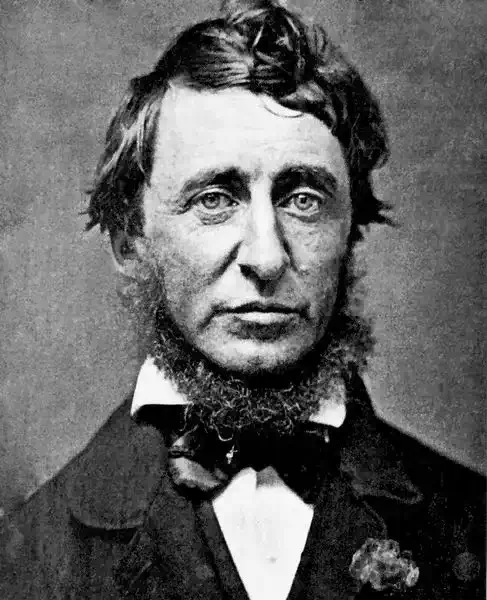
Henry David Thoreau
Song Of Nature
Song Of Nature
Mine are the night and morning,
The pits of air, the gull of space,
The sportive sun, the gibbous moon,
The innumerable days.
I hide in the solar glory,
I am dumb in the pealing song,
I rest on the pitch of the torrent,
In slumber I am strong.
No numbers have counted my tallies,
No tribes my house can fill,
I sit by the shining Fount of Life
And pour the deluge still;
And ever by delicate powers
Gathering along the centuries
From race on race the rarest flowers,
My wreath shall nothing miss.
And many a thousand summers
My gardens ripened well,
And light from meliorating stars
With firmer glory fell.
I wrote the past in characters
Of rock and fire the scroll,
The building in the coral sea,
The planting of the coal.
And thefts from satellites and rings
And broken stars I drew,
And out of spent and aged things
I formed the world anew;
What time the gods kept carnival,
Tricked out in star and flower,
And in cramp elf and saurian forms
They swathed their too much power.
Time and Thought were my surveyors,
They laid their courses well,
They boiled the sea, and piled the layers
Of granite, marl and shell.
But he, the man-child glorious, -
Where tarries he the while?
The rainbow shines his harbinger,
The sunset gleams his smile.
My boreal lights leap upward,
Forthright my planets roll,
And still the man-child is not born,
The summit of the whole.
Must time and tide forever run?
Will never my winds go sleep in the west?
Will never my wheels which whirl the sun
And satellites have rest?
Too much of donning and doffing,
Too slow the rainbow fades,
I weary of my robe of snow,
My leaves and my cascades;
I tire of globes and races,
Too long the game is played;
What without him is summer's pomp,
Or winter's frozen shade?
I travail in pain for him,
My creatures travail and wait;
His couriers come by squadrons,
He comes not to the gate.
Twice I have moulded an image,
And thrice outstretched my hand,
Made one of day and one of night
And one of the salt sea-sand.
One in a Judaean manger,
And one by Avon stream,
One over against the mouths of Nile,
And one in the Academe.
I moulded kings and saviors,
And bards o'er kings to rule; -
But fell the starry influence short,
The cup was never full.
Yet whirl the glowing wheels once more,
And mix the bowl again;
Seethe, Fate! the ancient elements,
Heat, cold, wet, dry, and peace, and pain.
Let war and trade and creeds and song
Blend, ripen race on race,
The sunburnt world a man shall breed
Of all the zones and countless days.
No ray is dimmed, no atom worn,
My oldest force is good as new,
And the fresh rose on yonder thorn
Gives back the bending heavens in dew.
Mine are the night and morning,
The pits of air, the gull of space,
The sportive sun, the gibbous moon,
The innumerable days.
I hide in the solar glory,
I am dumb in the pealing song,
I rest on the pitch of the torrent,
In slumber I am strong.
No numbers have counted my tallies,
No tribes my house can fill,
I sit by the shining Fount of Life
And pour the deluge still;
And ever by delicate powers
Gathering along the centuries
From race on race the rarest flowers,
My wreath shall nothing miss.
And many a thousand summers
My gardens ripened well,
And light from meliorating stars
With firmer glory fell.
I wrote the past in characters
Of rock and fire the scroll,
The building in the coral sea,
The planting of the coal.
And thefts from satellites and rings
And broken stars I drew,
And out of spent and aged things
I formed the world anew;
What time the gods kept carnival,
Tricked out in star and flower,
And in cramp elf and saurian forms
They swathed their too much power.
Time and Thought were my surveyors,
They laid their courses well,
They boiled the sea, and piled the layers
Of granite, marl and shell.
But he, the man-child glorious, -
Where tarries he the while?
The rainbow shines his harbinger,
The sunset gleams his smile.
My boreal lights leap upward,
Forthright my planets roll,
And still the man-child is not born,
The summit of the whole.
Must time and tide forever run?
Will never my winds go sleep in the west?
Will never my wheels which whirl the sun
And satellites have rest?
Too much of donning and doffing,
Too slow the rainbow fades,
I weary of my robe of snow,
My leaves and my cascades;
I tire of globes and races,
Too long the game is played;
What without him is summer's pomp,
Or winter's frozen shade?
I travail in pain for him,
My creatures travail and wait;
His couriers come by squadrons,
He comes not to the gate.
Twice I have moulded an image,
And thrice outstretched my hand,
Made one of day and one of night
And one of the salt sea-sand.
One in a Judaean manger,
And one by Avon stream,
One over against the mouths of Nile,
And one in the Academe.
I moulded kings and saviors,
And bards o'er kings to rule; -
But fell the starry influence short,
The cup was never full.
Yet whirl the glowing wheels once more,
And mix the bowl again;
Seethe, Fate! the ancient elements,
Heat, cold, wet, dry, and peace, and pain.
Let war and trade and creeds and song
Blend, ripen race on race,
The sunburnt world a man shall breed
Of all the zones and countless days.
No ray is dimmed, no atom worn,
My oldest force is good as new,
And the fresh rose on yonder thorn
Gives back the bending heavens in dew.
251
Henry David Thoreau
Inspiration
Inspiration
Whate'er we leave to God, God does,
And blesses us;
The work we choose should be our own,
God leaves alone.
If with light head erect I sing,
Though all the Muses lend their force,
From my poor love of anything,
The verse is weak and shallow as its source.
But if with bended neck I grope
Listening behind me for my wit,
With faith superior to hope,
More anxious to keep back than forward it;
Making my soul accomplice there
Unto the flame my heart hath lit,
Then will the verse forever wear--
Time cannot bend the line which God hath writ.
Always the general show of things
Floats in review before my mind,
And such true love and reverence brings,
That sometimes I forget that I am blind.
But now there comes unsought, unseen,
Some clear divine electuary,
And I, who had but sensual been,
Grow sensible, and as God is, am wary.
I hearing get, who had but ears,
And sight, who had but eyes before,
I moments live, who lived but years,
And truth discern, who knew but learning's lore.
I hear beyond the range of sound,
I see beyond the range of sight,
New earths and skies and seas around,
And in my day the sun doth pale his light.
A clear and ancient harmony
Pierces my soul through all its din,
As through its utmost melody--
Farther behind than they, farther within.
More swift its bolt than lightning is,
Its voice than thunder is more loud,
It doth expand my privacies
To all, and leave me single in the crowd.
It speaks with such authority,
With so serene and lofty tone,
That idle Time runs gadding by,
And leaves me with Eternity alone.
Now chiefly is my natal hour,
And only now my prime of life;
Of manhood's strength it is the flower,
'Tis peace's end and war's beginning strife.
It comes in summer's broadest noon,
By a grey wall or some chance place,
Unseasoning Time, insulting June,
And vexing day with its presuming face.
Such fragrance round my couch it makes,
More rich than are Arabian drugs,
That my soul scents its life and wakes
The body up beneath its perfumed rugs.
Such is the Muse, the heavenly maid,
The star that guides our mortal course,
Which shows where life's true kernel's laid,
Its wheat's fine flour, and its undying force.
She with one breath attunes the spheres,
And also my poor human heart,
With one impulse propels the years
Around, and gives my throbbing pulse its start.
I will not doubt for evermore,
Nor falter from a steadfast faith,
For thought the system be turned o'er,
God takes not back the word which once He saith.
I will not doubt the love untold
Which not my worth nor want has bought,
Which wooed me young, and woos me old,
And to this evening hath me brought.
My memory I'll educate
To know the one historic truth,
Remembering to the latest date
The only true and sole immortal youth.
Be but thy inspiration given,
No matter through what danger sought,
I'll fathom hell or climb to heaven,
And yet esteem that cheap which love has bought.
Fame cannot tempt the bard
Who's famous with his God,
Nor laurel him reward
Who has his Maker's nod.
Whate'er we leave to God, God does,
And blesses us;
The work we choose should be our own,
God leaves alone.
If with light head erect I sing,
Though all the Muses lend their force,
From my poor love of anything,
The verse is weak and shallow as its source.
But if with bended neck I grope
Listening behind me for my wit,
With faith superior to hope,
More anxious to keep back than forward it;
Making my soul accomplice there
Unto the flame my heart hath lit,
Then will the verse forever wear--
Time cannot bend the line which God hath writ.
Always the general show of things
Floats in review before my mind,
And such true love and reverence brings,
That sometimes I forget that I am blind.
But now there comes unsought, unseen,
Some clear divine electuary,
And I, who had but sensual been,
Grow sensible, and as God is, am wary.
I hearing get, who had but ears,
And sight, who had but eyes before,
I moments live, who lived but years,
And truth discern, who knew but learning's lore.
I hear beyond the range of sound,
I see beyond the range of sight,
New earths and skies and seas around,
And in my day the sun doth pale his light.
A clear and ancient harmony
Pierces my soul through all its din,
As through its utmost melody--
Farther behind than they, farther within.
More swift its bolt than lightning is,
Its voice than thunder is more loud,
It doth expand my privacies
To all, and leave me single in the crowd.
It speaks with such authority,
With so serene and lofty tone,
That idle Time runs gadding by,
And leaves me with Eternity alone.
Now chiefly is my natal hour,
And only now my prime of life;
Of manhood's strength it is the flower,
'Tis peace's end and war's beginning strife.
It comes in summer's broadest noon,
By a grey wall or some chance place,
Unseasoning Time, insulting June,
And vexing day with its presuming face.
Such fragrance round my couch it makes,
More rich than are Arabian drugs,
That my soul scents its life and wakes
The body up beneath its perfumed rugs.
Such is the Muse, the heavenly maid,
The star that guides our mortal course,
Which shows where life's true kernel's laid,
Its wheat's fine flour, and its undying force.
She with one breath attunes the spheres,
And also my poor human heart,
With one impulse propels the years
Around, and gives my throbbing pulse its start.
I will not doubt for evermore,
Nor falter from a steadfast faith,
For thought the system be turned o'er,
God takes not back the word which once He saith.
I will not doubt the love untold
Which not my worth nor want has bought,
Which wooed me young, and woos me old,
And to this evening hath me brought.
My memory I'll educate
To know the one historic truth,
Remembering to the latest date
The only true and sole immortal youth.
Be but thy inspiration given,
No matter through what danger sought,
I'll fathom hell or climb to heaven,
And yet esteem that cheap which love has bought.
Fame cannot tempt the bard
Who's famous with his God,
Nor laurel him reward
Who has his Maker's nod.
215
Henry David Thoreau
Great God, I Ask for no Meaner Pelf
Great God, I Ask for no Meaner Pelf
Great God, I ask for no meaner pelf
Than that I may not disappoint myself,
That in my action I may soar as high
As I can now discern with this clear eye.
And next in value, which thy kindness lends,
That I may greatly disappoint my friends,
Howe'er they think or hope that it may be,
They may not dream how thou'st distinguished me.
That my weak hand may equal my firm faith
And my life practice what my tongue saith
That my low conduct may not show
Nor my relenting lines
That I thy purpose did not know
Or overrated thy designs.
Great God, I ask for no meaner pelf
Than that I may not disappoint myself,
That in my action I may soar as high
As I can now discern with this clear eye.
And next in value, which thy kindness lends,
That I may greatly disappoint my friends,
Howe'er they think or hope that it may be,
They may not dream how thou'st distinguished me.
That my weak hand may equal my firm faith
And my life practice what my tongue saith
That my low conduct may not show
Nor my relenting lines
That I thy purpose did not know
Or overrated thy designs.
157
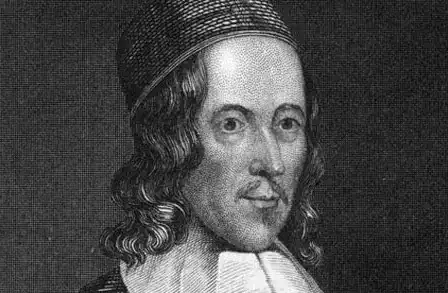
George Herbert
The World
The World
Love built a stately house, where Fortune came,
And spinning fancies, she was heard to say
That her fine cobwebs did support the frame,
Whereas they were supported by the same;
But Wisdom quickly swept them all away.
The Pleasure came, who, liking not the fashion,
Began to make balconies, terraces,
Till she had weakened all by alteration;
But reverend laws, and many a proclomation
Reforméd all at length with menaces.
Then entered Sin, and with that sycamore
Whose leaves first sheltered man from drought and dew,
Working and winding slily evermore,
The inward walls and summers cleft and tore;
But Grace shored these, and cut that as it grew.
Then Sin combined with death in a firm band,
To raze the building to the very floor;
Which they effected,--none could them withstand;
But Love and Grace took Glory by the hand,
And built a braver palace than before.
Love built a stately house, where Fortune came,
And spinning fancies, she was heard to say
That her fine cobwebs did support the frame,
Whereas they were supported by the same;
But Wisdom quickly swept them all away.
The Pleasure came, who, liking not the fashion,
Began to make balconies, terraces,
Till she had weakened all by alteration;
But reverend laws, and many a proclomation
Reforméd all at length with menaces.
Then entered Sin, and with that sycamore
Whose leaves first sheltered man from drought and dew,
Working and winding slily evermore,
The inward walls and summers cleft and tore;
But Grace shored these, and cut that as it grew.
Then Sin combined with death in a firm band,
To raze the building to the very floor;
Which they effected,--none could them withstand;
But Love and Grace took Glory by the hand,
And built a braver palace than before.
354
George Herbert
Providence
Providence
O Sacred Providence, who from end to end
Strongly and sweetly movest! shall I write,
And not of thee, through whom my fingers bend
To hold my quill? shall they not do thee right?
Of all the creatures both in sea and land
Onely to Man thou hast made known thy wayes,
And put the penne alone into his hand,
And made him Secretarie of thy praise.
Beasts fain would sing; birds dittie to their notes;
Trees would be tuning on their native lute
To thy renown: but all their hands and throats
Are brought to Man, while they are lame and mute.
Man is the worlds high Priest: he doth present
The sacrifice for all; while they below
Unto the service mutter an assent,
Such as springs use that fall, and windes that blow.
He that to praise and laud thee doth refrain,
Doth not refrain unto himself alone,
But robs a thousand who would praise thee fain,
And doth commit a world of sinne in one.
The beasts say, Eat me: but, if beasts must teach,
The tongue is yours to eat, but mine to praise.
The trees say, Pull me: but the hand you stretch,
Is mine to write, as it is yours to raise.
Wherefore, most sacred Spirit, I here present
For me and all my fellows praise to thee:
And just it is that I should pay the rent,
Because the benefit accrues to me.
We all acknowledge both thy power and love
To be exact, transcendent, and divine;
Who dost so strongly and so sweetly move,
While all things have their will, yet none but thine.
For either thy command, or thy permission
Lay hands on all: they are thy right and left.
The first puts on with speed and expedition;
The other curbs sinnes stealing pace and theft.
Nothing escapes them both; all must appeare,
And be dispos'd, and dress'd, and tun'd by thee,
Who sweetly temper'st all. If we could heare
Thy skill and art, what musick would it be!
Thou art in small things great, not small in any:
Thy even praise can neither rise, nor fall.
Thou art in all things one, in each thing many:
For thou art infinite in one and all.
Tempests are calm to thee; they know thy hand,
And hold it fast, as children do their fathers,
Which crie and follow. Thou hast made poore sand
Check the proud sea, ev'n when it swells and gathers.
Thy cupboard serves the world: the meat is set,
Where all may reach: no beast but knows his feed.
Birds teach us hawking; fishes have their net:
The great prey on the lesse, they on some weed.
Nothing ingendred doth prevent his meat:
Flies have their table spread, ere they appeare.
Some creatures have in winter what to eat;
Others do sleep, and envie not their cheer.
How finely dost thou times and seasons spin.
And make a twist checker'd with night and day!
Which as it lengthens windes, and windes us in,
As bouls go on, but turning all the way.
Each creature hath a wisdome for his good.
The pigeons feed their tender off-spring, crying,
When they are callow; but withdraw their food
When they are fledge, that need may teach them flying.
Bees work for man; and yet they never bruise
Their masters flower, but leave it, having done,
As fair as ever, and as fit to use;
So both the flower doth stay, and hony run.
Sheep eat the grasse, and dung the ground for more:
Trees after bearing drop their leaves for soil:
Springs vent their streams, and by expense get store:
Clouds cool by heat, and baths by cooling boil.
Who hath the vertue to expresse the rare
And curious vertues both of herbs and stones?
Is there a herb for that? O that thy care
Would show a root, that gives expressions!
And if an herb hath power, what have the starres?
A rose, besides his beautie, is a cure.
Doubtlesse our plagues and plentie, peace and warres
Are there much surer then our art is sure.
Thou hast hid metals: man may take them thence;
But at his peril: when he digs the place,
He makes a grave; as if the thing had sense,
And threatned man, that he should fill the space.
Ev'n poysons praise thee. Should a thing be lost?
Should creatures want for want of heed their due?
Since where are poysons, antidots are most:
The help stands close, and keeps the fear in view.
The sea, which seems to stop the traveller,
Is by a ship the speedier passage made.
The windes, who think they rule the mariner,
Are rul'd by him, and taught to serve his trade.
And as thy house is full, so I adore
Thy curious art in marshalling thy goods.
The hills and health abound; the vales with store;
The South with marble; North with furres & woods.
Hard things are glorious; easie things good cheap.
The common all men have; that which is rare,
Men therefore seek to have, and care to keep.
The healthy frosts with summer-fruits compare.
Light without winde is glasse: warm without weight
Is wooll and furres: cool without closenesse, shade:
Speed without pains, a horse: tall without height,
A servile hawk: low without losse, a spade.
All countreys have enough to serve their need:
If they seek fine things, thou dost make them run
For their offence; and then dost turn their speed
To be commerce and trade from sunne to sunne.
Nothing wears clothes, but Man; nothing doth need
But he to wear them. Nothing useth fire,
But Man alone, to show his heav'nly breed:
And onely he hath fuell in desire.
When th'earth was dry, thou mad'st a sea of wet:
When that lay gather'd, thou didst broach the mountains:
When yet some places could no moisture get,
The windes grew gard'ners, and the clouds good fountains.
Rain, do not hurt my flowers; but gently spend
Your hony drops: presse not to smell them here:
When they are ripe, their odour will ascend,
And at your lodging with their thanks appeare.
How harsh are thorns to pears! and yet they make
A better hedge, and need lesse reparation.
How smooth are silks compared with a stake,
Or with a stone! yet make no good foundation.
Sometimes thou dost divide thy gifts to man,
Sometimes unite. The Indian nut alone
Is clothing, meat and trencher, drink and kan,
Boat, cable, sail and needle, all in one.
Most herbs that grow in brooks, are hot and dry.
Cold fruits warm kernells help against the winde.
The lemmons juice and rinde cure mutually.
The whey of milk doth loose, the milk doth binde.
Thy creatures leap not, but expresse a feast,
Where all the guests sit close, and nothing wants.
Frogs marry fish and flesh; bats, bird and beast;
Sponges, non-sense and sense; mines, th'earth & plants.
To show thou art not bound, as if thy lot
Were worse then ours; sometimes thou shiftest hands.
Most things move th'under-jaw; the Crocodile not.
Most things sleep lying; th’ Elephant leans or stands.
But who hath praise enough? nay who hath any?
None can expresse thy works, but he that knows them:
And none can know thy works, which are so many,
And so complete, but onely he that owes them.
All things that are, though they have sev'rall wayes,
Yet in their being joyn with one advise
To honour thee: and so I give thee praise
In all my other hymnes, but in this twice.
Each thing that is, although in use and name
It go for one, hath many wayes in store
To honour thee; and so each hymne thy fame
Extolleth many wayes, yet this one more.
O Sacred Providence, who from end to end
Strongly and sweetly movest! shall I write,
And not of thee, through whom my fingers bend
To hold my quill? shall they not do thee right?
Of all the creatures both in sea and land
Onely to Man thou hast made known thy wayes,
And put the penne alone into his hand,
And made him Secretarie of thy praise.
Beasts fain would sing; birds dittie to their notes;
Trees would be tuning on their native lute
To thy renown: but all their hands and throats
Are brought to Man, while they are lame and mute.
Man is the worlds high Priest: he doth present
The sacrifice for all; while they below
Unto the service mutter an assent,
Such as springs use that fall, and windes that blow.
He that to praise and laud thee doth refrain,
Doth not refrain unto himself alone,
But robs a thousand who would praise thee fain,
And doth commit a world of sinne in one.
The beasts say, Eat me: but, if beasts must teach,
The tongue is yours to eat, but mine to praise.
The trees say, Pull me: but the hand you stretch,
Is mine to write, as it is yours to raise.
Wherefore, most sacred Spirit, I here present
For me and all my fellows praise to thee:
And just it is that I should pay the rent,
Because the benefit accrues to me.
We all acknowledge both thy power and love
To be exact, transcendent, and divine;
Who dost so strongly and so sweetly move,
While all things have their will, yet none but thine.
For either thy command, or thy permission
Lay hands on all: they are thy right and left.
The first puts on with speed and expedition;
The other curbs sinnes stealing pace and theft.
Nothing escapes them both; all must appeare,
And be dispos'd, and dress'd, and tun'd by thee,
Who sweetly temper'st all. If we could heare
Thy skill and art, what musick would it be!
Thou art in small things great, not small in any:
Thy even praise can neither rise, nor fall.
Thou art in all things one, in each thing many:
For thou art infinite in one and all.
Tempests are calm to thee; they know thy hand,
And hold it fast, as children do their fathers,
Which crie and follow. Thou hast made poore sand
Check the proud sea, ev'n when it swells and gathers.
Thy cupboard serves the world: the meat is set,
Where all may reach: no beast but knows his feed.
Birds teach us hawking; fishes have their net:
The great prey on the lesse, they on some weed.
Nothing ingendred doth prevent his meat:
Flies have their table spread, ere they appeare.
Some creatures have in winter what to eat;
Others do sleep, and envie not their cheer.
How finely dost thou times and seasons spin.
And make a twist checker'd with night and day!
Which as it lengthens windes, and windes us in,
As bouls go on, but turning all the way.
Each creature hath a wisdome for his good.
The pigeons feed their tender off-spring, crying,
When they are callow; but withdraw their food
When they are fledge, that need may teach them flying.
Bees work for man; and yet they never bruise
Their masters flower, but leave it, having done,
As fair as ever, and as fit to use;
So both the flower doth stay, and hony run.
Sheep eat the grasse, and dung the ground for more:
Trees after bearing drop their leaves for soil:
Springs vent their streams, and by expense get store:
Clouds cool by heat, and baths by cooling boil.
Who hath the vertue to expresse the rare
And curious vertues both of herbs and stones?
Is there a herb for that? O that thy care
Would show a root, that gives expressions!
And if an herb hath power, what have the starres?
A rose, besides his beautie, is a cure.
Doubtlesse our plagues and plentie, peace and warres
Are there much surer then our art is sure.
Thou hast hid metals: man may take them thence;
But at his peril: when he digs the place,
He makes a grave; as if the thing had sense,
And threatned man, that he should fill the space.
Ev'n poysons praise thee. Should a thing be lost?
Should creatures want for want of heed their due?
Since where are poysons, antidots are most:
The help stands close, and keeps the fear in view.
The sea, which seems to stop the traveller,
Is by a ship the speedier passage made.
The windes, who think they rule the mariner,
Are rul'd by him, and taught to serve his trade.
And as thy house is full, so I adore
Thy curious art in marshalling thy goods.
The hills and health abound; the vales with store;
The South with marble; North with furres & woods.
Hard things are glorious; easie things good cheap.
The common all men have; that which is rare,
Men therefore seek to have, and care to keep.
The healthy frosts with summer-fruits compare.
Light without winde is glasse: warm without weight
Is wooll and furres: cool without closenesse, shade:
Speed without pains, a horse: tall without height,
A servile hawk: low without losse, a spade.
All countreys have enough to serve their need:
If they seek fine things, thou dost make them run
For their offence; and then dost turn their speed
To be commerce and trade from sunne to sunne.
Nothing wears clothes, but Man; nothing doth need
But he to wear them. Nothing useth fire,
But Man alone, to show his heav'nly breed:
And onely he hath fuell in desire.
When th'earth was dry, thou mad'st a sea of wet:
When that lay gather'd, thou didst broach the mountains:
When yet some places could no moisture get,
The windes grew gard'ners, and the clouds good fountains.
Rain, do not hurt my flowers; but gently spend
Your hony drops: presse not to smell them here:
When they are ripe, their odour will ascend,
And at your lodging with their thanks appeare.
How harsh are thorns to pears! and yet they make
A better hedge, and need lesse reparation.
How smooth are silks compared with a stake,
Or with a stone! yet make no good foundation.
Sometimes thou dost divide thy gifts to man,
Sometimes unite. The Indian nut alone
Is clothing, meat and trencher, drink and kan,
Boat, cable, sail and needle, all in one.
Most herbs that grow in brooks, are hot and dry.
Cold fruits warm kernells help against the winde.
The lemmons juice and rinde cure mutually.
The whey of milk doth loose, the milk doth binde.
Thy creatures leap not, but expresse a feast,
Where all the guests sit close, and nothing wants.
Frogs marry fish and flesh; bats, bird and beast;
Sponges, non-sense and sense; mines, th'earth & plants.
To show thou art not bound, as if thy lot
Were worse then ours; sometimes thou shiftest hands.
Most things move th'under-jaw; the Crocodile not.
Most things sleep lying; th’ Elephant leans or stands.
But who hath praise enough? nay who hath any?
None can expresse thy works, but he that knows them:
And none can know thy works, which are so many,
And so complete, but onely he that owes them.
All things that are, though they have sev'rall wayes,
Yet in their being joyn with one advise
To honour thee: and so I give thee praise
In all my other hymnes, but in this twice.
Each thing that is, although in use and name
It go for one, hath many wayes in store
To honour thee; and so each hymne thy fame
Extolleth many wayes, yet this one more.
266
George Herbert
Man's Medley
Man's Medley
Hark, how the birds do sing,
and woods do ring.
All creatures have their joy: and man hath his.
Yet if we rightly measure,
Man's joy and pleasure
Rather hereafter, than in present, is.
To this life things of sense
Make their pretense:
In th'other Angels have a right by birth:
Man ties them both alone,
And makes them one,
With th'one hand touching heav'n, with th'other earth.
In soul he mounts and flies,
In flesh he dies.
He wears a stuff whose thread is coarse and round,
But trimm'd with curious lace
And should take place
After the trimming, not the stuff and ground.
Not that he may not here
Taste of the cheer,
But as birds drink, and straight lift up their head,
So must he sip and think
Of better drink
He may attain to, after he is dead.
But as his joys are double,
So is his trouble.
He hath two winters, other things but one:
Both frosts and thoughts do nip,
And bite his lip;
And he of all things fears two deaths alone.
Yet ev'n the greatest griefs
May be reliefs,
Could he but take them right, and in their ways.
Happy is he, whose heart
Hath found the art
To turn his double pains to double praise.
Hark, how the birds do sing,
and woods do ring.
All creatures have their joy: and man hath his.
Yet if we rightly measure,
Man's joy and pleasure
Rather hereafter, than in present, is.
To this life things of sense
Make their pretense:
In th'other Angels have a right by birth:
Man ties them both alone,
And makes them one,
With th'one hand touching heav'n, with th'other earth.
In soul he mounts and flies,
In flesh he dies.
He wears a stuff whose thread is coarse and round,
But trimm'd with curious lace
And should take place
After the trimming, not the stuff and ground.
Not that he may not here
Taste of the cheer,
But as birds drink, and straight lift up their head,
So must he sip and think
Of better drink
He may attain to, after he is dead.
But as his joys are double,
So is his trouble.
He hath two winters, other things but one:
Both frosts and thoughts do nip,
And bite his lip;
And he of all things fears two deaths alone.
Yet ev'n the greatest griefs
May be reliefs,
Could he but take them right, and in their ways.
Happy is he, whose heart
Hath found the art
To turn his double pains to double praise.
238
George Herbert
Employment (I)
Employment (I)
If as a flower doth spread and die,
Thou wouldst extend me to some good,
Before I were by frost's extremity
Nipt in the bud;
The sweetness and the praise were thine;
But the extension and the room,
Which in thy garland I should fill, were mine
At thy great doom.
For as thou dost impart thy grace,
The greater shall our glory be.
The measure of our joys is in this place,
The stuff with thee.
Let me not languish then, and spend
A life as barren to thy praise,
As is the dust, to which that life doth tend,
But with delays.
All things are busy; only I
Neither bring honey with the bees,
Nor flowers to make that, nor the husbandry
To water these.
I am no link of thy great chain,
But all my company is a weed.
Lord place me in thy consort; give one strain
To my poor reed.
If as a flower doth spread and die,
Thou wouldst extend me to some good,
Before I were by frost's extremity
Nipt in the bud;
The sweetness and the praise were thine;
But the extension and the room,
Which in thy garland I should fill, were mine
At thy great doom.
For as thou dost impart thy grace,
The greater shall our glory be.
The measure of our joys is in this place,
The stuff with thee.
Let me not languish then, and spend
A life as barren to thy praise,
As is the dust, to which that life doth tend,
But with delays.
All things are busy; only I
Neither bring honey with the bees,
Nor flowers to make that, nor the husbandry
To water these.
I am no link of thy great chain,
But all my company is a weed.
Lord place me in thy consort; give one strain
To my poor reed.
251
George Herbert
Clasping of Hands
Clasping of Hands
LORD, Thou art mine, and I am Thine,
If mine I am; and Thine much more
Then I or ought or can be mine.
Yet to be Thine doth me restore,
So that again I now am mine,
And with advantage mine the more,
Since this being mine brings with it Thine,
And Thou with me dost Thee restore:
If I without Thee would be mine,
I neither should be mine nor Thine.
Lord, I am Thine, and Thou art mine;
So mine Thou art, that something more
I may presume Thee mine then Thine,
For Thou didst suffer to restore
Not Thee, but me, and to be mine:
And with advantage mine the more,
Since Thou in death wast none of Thine,
Yet then as mine didst me restore:
O, be mine still; still make me Thine;
Or rather make no Thine and Mine.
LORD, Thou art mine, and I am Thine,
If mine I am; and Thine much more
Then I or ought or can be mine.
Yet to be Thine doth me restore,
So that again I now am mine,
And with advantage mine the more,
Since this being mine brings with it Thine,
And Thou with me dost Thee restore:
If I without Thee would be mine,
I neither should be mine nor Thine.
Lord, I am Thine, and Thou art mine;
So mine Thou art, that something more
I may presume Thee mine then Thine,
For Thou didst suffer to restore
Not Thee, but me, and to be mine:
And with advantage mine the more,
Since Thou in death wast none of Thine,
Yet then as mine didst me restore:
O, be mine still; still make me Thine;
Or rather make no Thine and Mine.
240
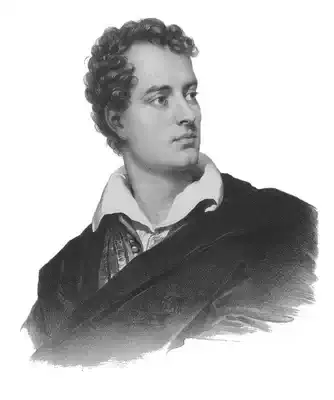
Lord Byron
Sonnet to Lake Leman
Sonnet to Lake Leman
Rousseau Voltaire
our
Gibbon De
Staël Leman!
these names are worthy of thy shore,
Thy shore of names like these! wert thou no more,
Their memory thy remembrance would recall:
To them thy banks were lovely as to all,
But they have made them lovelier, for the lore
Of mighty minds doth hallow in the core
Of human hearts the ruin of a wall
Where dwelt the wise and wondrous; but by thee
How much more, Lake of Beauty! do we feel,
In sweetly gliding o'er thy crystal sea,
The wild glow of that not ungentle zeal,
Which of the heirs of immortality
Is proud, and makes the breath of glory real!
Rousseau Voltaire
our
Gibbon De
Staël Leman!
these names are worthy of thy shore,
Thy shore of names like these! wert thou no more,
Their memory thy remembrance would recall:
To them thy banks were lovely as to all,
But they have made them lovelier, for the lore
Of mighty minds doth hallow in the core
Of human hearts the ruin of a wall
Where dwelt the wise and wondrous; but by thee
How much more, Lake of Beauty! do we feel,
In sweetly gliding o'er thy crystal sea,
The wild glow of that not ungentle zeal,
Which of the heirs of immortality
Is proud, and makes the breath of glory real!
568
Lord Byron
Prometheus
Prometheus
Titan! to whose immortal eyes
The sufferings of mortality,
Seen in their sad reality,
Were not as things that gods despise;
What was thy pity's recompense?
A silent suffering, and intense;
The rock, the vulture, and the chain,
All that the proud can feel of pain,
The agony they do not show,
The suffocating sense of woe,
Which speaks but in its loneliness,
And then is jealous lest the sky
Should have a listener, nor will sigh
Until its voice is echoless.
Titan! to thee the strife was given
Between the suffering and the will,
Which torture where they cannot kill;
And the inexorable Heaven,
And the deaf tyranny of Fate,
The ruling principle of Hate,
Which for its pleasure doth create
The things it may annihilate,
Refus'd thee even the boon to die:
The wretched gift Eternity
Was thineand
thou hast borne it well.
All that the Thunderer wrung from thee
Was but the menace which flung back
On him the torments of thy rack;
The fate thou didst so well foresee,
But would not to appease him tell;
And in thy Silence was his Sentence,
And in his Soul a vain repentance,
And evil dread so ill dissembled,
That in his hand the lightnings trembled.
Thy Godlike crime was to be kind,
To render with thy precepts less
The sum of human wretchedness,
And strengthen Man with his own mind;
But baffled as thou wert from high,
Still in thy patient energy,
In the endurance, and repulse
Of thine impenetrable Spirit,
Which Earth and Heaven could not convulse,
A mighty lesson we inherit:
Thou art a symbol and a sign
To Mortals of their fate and force;
Like thee, Man is in part divine,
A troubled stream from a pure source;
And Man in portions can foresee
His own funereal destiny;
His wretchedness, and his resistance,
And his sad unallied existence:
To which his Spirit may oppose
Itselfand
equal to all woes,
And a firm will, and a deep sense,
Which even in torture can descry
Its own concenter'd recompense,
Triumphant where it dares defy,
And making Death a Victory.
Titan! to whose immortal eyes
The sufferings of mortality,
Seen in their sad reality,
Were not as things that gods despise;
What was thy pity's recompense?
A silent suffering, and intense;
The rock, the vulture, and the chain,
All that the proud can feel of pain,
The agony they do not show,
The suffocating sense of woe,
Which speaks but in its loneliness,
And then is jealous lest the sky
Should have a listener, nor will sigh
Until its voice is echoless.
Titan! to thee the strife was given
Between the suffering and the will,
Which torture where they cannot kill;
And the inexorable Heaven,
And the deaf tyranny of Fate,
The ruling principle of Hate,
Which for its pleasure doth create
The things it may annihilate,
Refus'd thee even the boon to die:
The wretched gift Eternity
Was thineand
thou hast borne it well.
All that the Thunderer wrung from thee
Was but the menace which flung back
On him the torments of thy rack;
The fate thou didst so well foresee,
But would not to appease him tell;
And in thy Silence was his Sentence,
And in his Soul a vain repentance,
And evil dread so ill dissembled,
That in his hand the lightnings trembled.
Thy Godlike crime was to be kind,
To render with thy precepts less
The sum of human wretchedness,
And strengthen Man with his own mind;
But baffled as thou wert from high,
Still in thy patient energy,
In the endurance, and repulse
Of thine impenetrable Spirit,
Which Earth and Heaven could not convulse,
A mighty lesson we inherit:
Thou art a symbol and a sign
To Mortals of their fate and force;
Like thee, Man is in part divine,
A troubled stream from a pure source;
And Man in portions can foresee
His own funereal destiny;
His wretchedness, and his resistance,
And his sad unallied existence:
To which his Spirit may oppose
Itselfand
equal to all woes,
And a firm will, and a deep sense,
Which even in torture can descry
Its own concenter'd recompense,
Triumphant where it dares defy,
And making Death a Victory.
534
Lord Byron
If That High World
If That High World
If that high world, which lies beyond
Our own, surviving Love endears;
If there the cherish'd heart be fond,
The eye the same, except in tears How
welcome those untrodden spheres!
How sweet this very your to die!
To soar from earth and find all fears
Lost in thy light Eternity!
It must be so: 'tis not for self
That we so tremble on the brink;
And striving to o'erleap the gulf,
Yet cling to Being's severing link.
Oh! in that future let us think
To hold each heart the heart that shares;
With them the immortal waters drink,
And soul in soul grow deathless theirs
If that high world, which lies beyond
Our own, surviving Love endears;
If there the cherish'd heart be fond,
The eye the same, except in tears How
welcome those untrodden spheres!
How sweet this very your to die!
To soar from earth and find all fears
Lost in thy light Eternity!
It must be so: 'tis not for self
That we so tremble on the brink;
And striving to o'erleap the gulf,
Yet cling to Being's severing link.
Oh! in that future let us think
To hold each heart the heart that shares;
With them the immortal waters drink,
And soul in soul grow deathless theirs
519
Lord Byron
Don Juan: Canto The Seventeenth
Don Juan: Canto The Seventeenth
The world is full of orphans: firstly, those
Who are so in the strict sense of the phrase
(But many a lonely tree the loftier grows
Than others crowded in the forest's maze);
The next are such as are not doomed to lose
Their tender parents in their budding days,
But merely their parental tenderness,
Which leaves them orphans of the heart no less.
The next are 'only children', as they are styled,
Who grow up children only, since the old saw
Pronounces that an 'only' 's a spoilt child.
But not to go too far, I hold it law
That where their education, harsh or mild,
'Transgresses the great bounds of love or awe,
The sufferers, be't in heart or intellect,
Whate'er the cause are orphans in effect.
But to return unto the stricter rule
(As far as words make rules), our common notion
Of orphans paints at once a parish school,
A halfstarved
babe, a wreck upon life's ocean,
A human (what the Italians nickname) 'mule',
A theme for pity or some worse emotion;
Yet, if examined, it might be admitted
The wealthiest orphans are to be more pitied.
Too soon they are parents to themselves; for what
Are tutors, guardians, and so forth, compared
With Nature's genial genitors, so that
A child of Chancery, that Star Chamber ward
(I'll take the likeness I can first come at),
Is like a duckling by Dame Partlett reared
And frights, especially if 'tis a daughter,
The old hen by running headlong to the water.
There is a commonplace book argument,
Which glibly glides from every vulgar tongue
When any dare a new light to present:
'If you are right, then everybody's wrong.'
Suppose the converse of this precedent
So often urged, so loudly and so long:
'If you are wrong, then everybody's right.'
Was ever everybody yet so quite?
Therefore I would solicit free discussion
Upon all points, no matter what or whose,
Because as ages upon ages push on,
The last is apt the former to accuse
Of pillowing its head on a pincushion,
Heedless of pricks because it was obtuse.
What was a paradox becomes a truth or
A something like it, as bear witness Luther.
The sacraments have been reduced to two
And witches unto none, though somewhat late
Since burning aged women (save a few,
Not witches, only bitches, who create
Mischief in families, as some know or knew,
Should still be singed, but slightly let me state)
Has been declared an act of inurbanity,
Malgé Sir Matthew Hale's great humanity.
Great Galileo was debarred the sun,
Because he fixed it, and to stop his talking
How earth could round the solar orbit run,
Found his own legs embargoed from mere walking.
The man was well nigh dead, ere men begun
To think his skull had not some need of caulking,
But now it seems he's right, his notion just,
No doubt a consolation to his dust.
Pythagoras, Locke, Socrates but
pages
Might be filled up, as vainly as before,
With the sad usage of all sorts of sages,
Who in his lifetime each was deemed a bore.
The loftiest minds outrun their tardy ages;
This they must bear with and perhaps much more.
The wise man's sure when he no more can share it, he
Will have a firm post~obit on posterity.
If such doom waits each intellectual giant,
We little people in our lesser way
To life's small rubs should surely be more pliant,
And so for one will I, as well I may.
Would that I were less bilious but
oh fie on't!
Just as I make my mind up everyday
To be a totus teres stoic, sage,
The wind shifts and I fly into a rage.
Temperate I am, yet never had a temper;
Modest I am, yet with some slight assurance;
Changeable too, yet somehow idem semper;
Patient, but not enamoured of endurance;
Cheerful, but sometimes rather apt to whimper;
Mild, but at times a sort of Hercules furens;
So that I almost think that the same skin
For one without has two or three within.
Our hero was in canto the sixteenth
Left in a tender moonlight situation,
Such as enables man to show his strength
Moral or physical On this occasion
Whether his virtue triumphed, or at length
His vice for
he was of a kindling nation Is
more than I shall venture to describe,
Unless some beauty with a kiss should bribe.
I leave the thing a problem, like all things.
The morning came, and breakfast, tea and toast,
Of which most men partake, but no one sings.
The company, whose birth, wealth, worth have cost
My trembling lyre already several strings,
Assembled with our hostess and mine host.
The guests dropped in, the last but one, Her Grace,
The latest, Juan with his virgin face.
Which best is to encounter, ghost or none,
'Twere difficult to say, but Juan looked
As if he had combated with more than one,
Being wan and worn, with eyes that hardly brooked
The light that through the Gothic windows shone.
Her Grace too had a sort of air rebuked,
Seemed pale and shivered, as if she had kept
A vigil or dreamt rather more than slept.
The world is full of orphans: firstly, those
Who are so in the strict sense of the phrase
(But many a lonely tree the loftier grows
Than others crowded in the forest's maze);
The next are such as are not doomed to lose
Their tender parents in their budding days,
But merely their parental tenderness,
Which leaves them orphans of the heart no less.
The next are 'only children', as they are styled,
Who grow up children only, since the old saw
Pronounces that an 'only' 's a spoilt child.
But not to go too far, I hold it law
That where their education, harsh or mild,
'Transgresses the great bounds of love or awe,
The sufferers, be't in heart or intellect,
Whate'er the cause are orphans in effect.
But to return unto the stricter rule
(As far as words make rules), our common notion
Of orphans paints at once a parish school,
A halfstarved
babe, a wreck upon life's ocean,
A human (what the Italians nickname) 'mule',
A theme for pity or some worse emotion;
Yet, if examined, it might be admitted
The wealthiest orphans are to be more pitied.
Too soon they are parents to themselves; for what
Are tutors, guardians, and so forth, compared
With Nature's genial genitors, so that
A child of Chancery, that Star Chamber ward
(I'll take the likeness I can first come at),
Is like a duckling by Dame Partlett reared
And frights, especially if 'tis a daughter,
The old hen by running headlong to the water.
There is a commonplace book argument,
Which glibly glides from every vulgar tongue
When any dare a new light to present:
'If you are right, then everybody's wrong.'
Suppose the converse of this precedent
So often urged, so loudly and so long:
'If you are wrong, then everybody's right.'
Was ever everybody yet so quite?
Therefore I would solicit free discussion
Upon all points, no matter what or whose,
Because as ages upon ages push on,
The last is apt the former to accuse
Of pillowing its head on a pincushion,
Heedless of pricks because it was obtuse.
What was a paradox becomes a truth or
A something like it, as bear witness Luther.
The sacraments have been reduced to two
And witches unto none, though somewhat late
Since burning aged women (save a few,
Not witches, only bitches, who create
Mischief in families, as some know or knew,
Should still be singed, but slightly let me state)
Has been declared an act of inurbanity,
Malgé Sir Matthew Hale's great humanity.
Great Galileo was debarred the sun,
Because he fixed it, and to stop his talking
How earth could round the solar orbit run,
Found his own legs embargoed from mere walking.
The man was well nigh dead, ere men begun
To think his skull had not some need of caulking,
But now it seems he's right, his notion just,
No doubt a consolation to his dust.
Pythagoras, Locke, Socrates but
pages
Might be filled up, as vainly as before,
With the sad usage of all sorts of sages,
Who in his lifetime each was deemed a bore.
The loftiest minds outrun their tardy ages;
This they must bear with and perhaps much more.
The wise man's sure when he no more can share it, he
Will have a firm post~obit on posterity.
If such doom waits each intellectual giant,
We little people in our lesser way
To life's small rubs should surely be more pliant,
And so for one will I, as well I may.
Would that I were less bilious but
oh fie on't!
Just as I make my mind up everyday
To be a totus teres stoic, sage,
The wind shifts and I fly into a rage.
Temperate I am, yet never had a temper;
Modest I am, yet with some slight assurance;
Changeable too, yet somehow idem semper;
Patient, but not enamoured of endurance;
Cheerful, but sometimes rather apt to whimper;
Mild, but at times a sort of Hercules furens;
So that I almost think that the same skin
For one without has two or three within.
Our hero was in canto the sixteenth
Left in a tender moonlight situation,
Such as enables man to show his strength
Moral or physical On this occasion
Whether his virtue triumphed, or at length
His vice for
he was of a kindling nation Is
more than I shall venture to describe,
Unless some beauty with a kiss should bribe.
I leave the thing a problem, like all things.
The morning came, and breakfast, tea and toast,
Of which most men partake, but no one sings.
The company, whose birth, wealth, worth have cost
My trembling lyre already several strings,
Assembled with our hostess and mine host.
The guests dropped in, the last but one, Her Grace,
The latest, Juan with his virgin face.
Which best is to encounter, ghost or none,
'Twere difficult to say, but Juan looked
As if he had combated with more than one,
Being wan and worn, with eyes that hardly brooked
The light that through the Gothic windows shone.
Her Grace too had a sort of air rebuked,
Seemed pale and shivered, as if she had kept
A vigil or dreamt rather more than slept.
511
Lord Byron
Don Juan: Canto The Fourteenth
Don Juan: Canto The Fourteenth
If from great nature's or our own abyss
Of thought we could but snatch a certainty,
Perhaps mankind might find the path they missBut
then 'twould spoil much good philosophy.
One system eats another up, and this
Much as old Saturn ate his progeny;
For when his pious consort gave him stones
In lieu of sons, of these he made no bones.
But System doth reverse the Titan's breakfast,
And eats her parents, albeit the digestion
Is difficult. Pray tell me, can you make fast,
After due search, your faith to any question?
Look back o'er ages, ere unto the stake fast
You bind yourself, and call some mode the best one.
Nothing more true than not to trust your senses;
And yet what are your other evidences?
For me, I know nought; nothing I deny,
Admit, reject, contemn; and what know you,
Except perhaps that you were born to die?
And both may after all turn out untrue.
An age may come, Font of Eternity,
When nothing shall be either old or new.
Death, so call'd, is a thing which makes men weep,
And yet a third of life is pass'd in sleep.
A sleep without dreams, after a rough day
Of toil, is what we covet most; and yet
How clay shrinks back from more quiescent clay!
The very Suicide that pays his debt
At once without instalments (an old way
Of paying debts, which creditors regret)
Lets out impatiently his rushing breath,
Less from disgust of life than dread of death.
'Tis round him, near him, here, there, every where;
And there's a courage which grows out of fear,
Perhaps of all most desperate, which will dare
The worst to know it:when
the mountains rear
Their peaks beneath your human foot, and there
You look down o'er the precipice, and drear
The gulf of rock yawns,you
can't gaze a minute
Without an awful wish to plunge within it.
'Tis true, you don't but,
pale and struck with terror,
Retire: but look into your past impression!
And you will find, though shuddering at the mirror
Of your own thoughts, in all their selfconfession,
The lurking bias, be it truth or error,
To the unknown; a secret prepossession,
To plunge with all your fears but
where? You know not,
And that's the reason why you do or
do not.
But what's this to the purpose? you will say.
Gent. reader, nothing; a mere speculation,
For which my sole excuse is '
tis my way;
Sometimes with and sometimes without occasion
I write what's uppermost, without delay:
This narrative is not meant for narration,
But a mere airy and fantastic basis,
To build up common things with common places.
You know, or don't know, that great Bacon saith,
'Fling up a straw, 'twill show the way the wind blows;'
And such a straw, borne on by human breath,
Is poesy, according as the mind glows;
A paper kite which flies 'twixt life and death,
A shadow which the onward soul behind throws:
And mine's a bubble, not blown up for praise,
But just to play with, as an infant plays.
The world is all before me or
behind;
For I have seen a portion of that same,
And quite enough for me to keep in mind;Of
passions, too, I have proved enough to blame,
To the great pleasure of our friends, mankind,
Who like to mix some slight alloy with fame;
For I was rather famous in my time,
Until I fairly knock'd it up with rhyme.
I have brought this world about my ears, and eke
The other; that's to say, the clergy, who
Upon my head have bid their thunders break
In pious libels by no means a few.
And yet I can't help scribbling once a week,
Tiring old readers, nor discovering new.
In youth I wrote because my mind was full,
And now because I feel it growing dull.
But 'why then publish?'There
are no rewards
Of fame or profit when the world grows weary.
I ask in turn,Why
do you play at cards?
Why drink? Why read?To
make some hour less dreary.
It occupies me to turn back regards
On what I've seen or ponder'd, sad or cheery;
And what I write I cast upon the stream,
To swim or sink I
have had at least my dream.
I think that were I certain of success,
I hardly could compose another line:
So long I've battled either more or less,
That no defeat can drive me from the Nine.
This feeling 'tis not easy to express,
And yet 'tis not affected, I opine.
In play, there are two pleasures for your choosing The
one is winning, and the other losing.
Besides, my Muse by no means deals in fiction:
She gathers a repertory of facts,
Of course with some reserve and slight restriction,
But mostly sings of human things and acts And
that's one cause she meets with contradiction;
For too much truth, at first sight, ne'er attracts;
And were her object only what's call'd glory,
With more ease too she 'd tell a different story.
Love, war, a tempest surely
there 's variety;
Also a seasoning slight of lucubration;
A bird'seye
view, too, of that wild, Society;
A slight glance thrown on men of every station.
If you have nought else, here 's at least satiety
Both in performance and in preparation;
And though these lines should only line portmanteaus,
Trade will be all the better for these Cantos.
The portion of this world which I at present
Have taken up to fill the following sermon,
Is one of which there's no description recent.
The reason why is easy to determine:
Although it seems both prominent and pleasant,
There is a sameness in its gems and ermine,
A dull and family likeness through all ages,
Of no great promise for poetic pages.
With much to excite, there's little to exalt;
Nothing that speaks to all men and all times;
A sort of varnish over every fault;
A kind of commonplace,
even in their crimes;
Factitious passions, wit without much salt,
A want of that true nature which sublimes
Whate'er it shows with truth; a smooth monotony
Of character, in those at least who have got any.
Sometimes, indeed, like soldiers off parade,
They break their ranks and gladly leave the drill;
But then the rollcall
draws them back afraid,
And they must be or seem what they were: still
Doubtless it is a brilliant masquerade;
But when of the first sight you have had your fill,
It palls at
least it did so upon me,
This paradise of pleasure and ennui.
When we have made our love, and gamed our gaming,
Drest, voted, shone, and, may be, something more;
With dandies dined; heard senators declaiming;
Seen beauties brought to market by the score,
Sad rakes to sadder husbands chastely taming;
There's little left but to be bored or bore.
Witness those 'cidevant
jeunes hommes' who stem
The stream, nor leave the world which leaveth them.
'Tis said indeed
a general complaint That
no one has succeeded in describing
The monde, exactly as they ought to paint:
Some say, that authors only snatch, by bribing
The porter, some slight scandals strange and quaint,
To furnish matter for their moral gibing;
And that their books have but one style in common My
lady's prattle, filter'd through her woman.
But this can't well be true, just now; for writers
Are grown of the beau monde a part potential:
I've seen them balance even the scale with fighters,
Especially when young, for that's essential.
Why do their sketches fail them as inditers
Of what they deem themselves most consequential,
The real portrait of the highest tribe?
'Tis that, in fact, there's little to describe.
'Haud ignara loquor;' these are Nugae, 'quarum
Pars parva fui,' but still art and part.
Now I could much more easily sketch a harem,
A battle, wreck, or history of the heart,
Than these things; and besides, I wish to spare 'em,
For reasons which I choose to keep apart.
'Vetabo Cereris sacrum qui vulgarit'
Which means that vulgar people must not share it.
And therefore what I throw off is ideal Lower'd,
leaven'd, like a history of freemasons;
Which bears the same relation to the real,
As Captain Parry's voyage may do to Jason's.
The grand arcanum's not for men to see all;
My music has some mystic diapasons;
And there is much which could not be appreciated
In any manner by the uninitiated.
Alas! worlds fall and
woman, since she fell'd
The world (as, since that history less polite
Than true, hath been a creed so strictly held)
Has not yet given up the practice quite.
Poor thing of usages! coerced, compell'd,
Victim when wrong, and martyr oft when right,
Condemn'd to childbed,
as men for their sins
Have shaving too entail'd upon their chins,
A daily plague, which in the aggregate
May average on the whole with parturition.
But as to women, who can penetrate
The real sufferings of their she condition?
Man's very sympathy with their estate
Has much of selfishness, and more suspicion.
Their love, their virtue, beauty, education,
But form good housekeepers, to breed a nation.
All this were very well, and can't be better;
But even this is difficult, Heaven knows,
So many troubles from her birth beset her,
Such small distinction between friends and foes,
The gilding wears so soon from off her fetter,
That but
ask any woman if she'd choose
(Take her at thirty, that is) to have been
Female or male? a schoolboy or a queen?
'Petticoat influence' is a great reproach,
Which even those who obey would fain be thought
To fly from, as from hungry pikes a roach;
But since beneath it upon earth we are brought,
By various joltings of life's hackney coach,
I for one venerate a petticoatA
garment of a mystical sublimity,
No matter whether russet, silk, or dimity.
Much I respect, and much I have adored,
In my young days, that chaste and goodly veil,
Which holds a treasure, like a miser's hoard,
And more attracts by all it doth concealA
golden scabbard on a Damasque sword,
A loving letter with a mystic seal,
A cure for grief for
what can ever rankle
Before a petticoat and peeping ankle?
And when upon a silent, sullen day,
With a sirocco, for example, blowing,
When even the sea looks dim with all its spray,
And sulkily the river's ripple's flowing,
And the sky shows that very ancient gray,
The sober, sad antithesis to glowing,'
Tis pleasant, if then any thing is pleasant,
To catch a glimpse even of a pretty peasant.
We left our heroes and our heroines
In that fair clime which don't depend on climate,
Quite independent of the Zodiac's signs,
Though certainly more difficult to rhyme at,
Because the sun, and stars, and aught that shines,
Mountains, and all we can be most sublime at,
Are there oft dull and dreary as a dun Whether
a sky's or tradesman's is all one.
An indoor
life is less poetical;
And out of door hath showers, and mists, and sleet,
With which I could not brew a pastoral.
But be it as it may, a bard must meet
All difficulties, whether great or small,
To spoil his undertaking or complete,
And work away like spirit upon matter,
Embarrass'd somewhat both with fire and water.
Juan in
this respect, at least, like saints Was
all things unto people of all sorts,
And lived contentedly, without complaints,
In camps, in ships, in cottages, or courts Born
with that happy soul which seldom faints,
And mingling modestly in toils or sports.
He likewise could be most things to all women,
Without the coxcombry of certain she men.
A fox hunt
to a foreigner is strange;
'T is also subject to the double danger
Of tumbling first, and having in exchange
Some pleasant jesting at the awkward stranger:
But Juan had been early taught to range
The wilds, as doth an Arab turn'd avenger,
So that his horse, or charger, hunter, hack,
Knew that he had a rider on his back.
And now in this new field, with some applause,
He clear'd hedge, ditch, and double post, and rail,
And never craned, and made but few 'faux pas,'
And only fretted when the scent 'gan fail.
He broke, 'tis true, some statutes of the laws
Of hunting for
the sagest youth is frail;
Rode o'er the hounds, it may be, now and then,
And once o'er several country gentlemen.
But on the whole, to general admiration
He acquitted both himself and horse: the squires
Marvell'd at merit of another nation;
The boors cried 'Dang it? who'd have thought it?'Sires,
The Nestors of the sporting generation,
Swore praises, and recall'd their former fires;
The huntsman's self relented to a grin,
And rated him almost a whipperin.
Such were his trophiesnot
of spear and shield,
But leaps, and bursts, and sometimes foxes' brushes;
Yet I must own,although
in this I yield
To patriot sympathy a Briton's blushes,He
thought at heart like courtly Chesterfield,
Who, after a long chase o'er hills, dales, bushes,
And what not, though he rode beyond all price,
Ask'd next day, 'If men ever hunted twice?'
He also had a quality uncommon
To early risers after a long chase,
Who wake in winter ere the cock can summon
December's drowsy day to his dull race,A
quality agreeable to woman,
When her soft, liquid words run on apace,
Who likes a listener, whether saint or sinner,He
did not fall asleep just after dinner;
But, light and airy, stood on the alert,
And shone in the best part of dialogue,
By humouring always what they might assert,
And listening to the topics most in vogue;
Now grave, now gay, but never dull or pert;
And smiling but in secretcunning
rogue!
He ne'er presumed to make an error clearer;In
short, there never was a better hearer.
And then he danced;all
foreigners excel
The serious Angles in the eloquence
Of pantomime;he
danced, I say, right well,
With emphasis, and also with good senseA
thing in footing indispensable;
He danced without theatrical pretence,
Not like a balletmaster
in the van
Of his drill'd nymphs, but like a gentleman.
Chaste were his steps, each kept within due bound,
And elegance was sprinkled o'er his figure;
Like swift Camilla, he scarce skimm'd the ground,
And rather held in than put forth his vigour;
And then he had an ear for music's sound,
Which might defy a crotchet critic's rigour.
Such classic passans
flawsset
off our hero,
He glanced like a personified Bolero;
Or, like a flying Hour before Aurora,
In Guido's famous fresco which alone
Is worth a tour to Rome, although no more a
Remnant were there of the old world's sole throne.
The 'tout ensemble' of his movements wore a
Grace of the soft ideal, seldom shown,
And ne'er to be described; for to the dolour
Of bards and prosers, words are void of colour.
No marvel then he was a favourite;
A full grown
Cupid, very much admired;
A little spoilt, but by no means so quite;
At least he kept his vanity retired.
Such was his tact, he could alike delight
The chaste, and those who are not so much inspired.
The Duchess of FitzFulke,
who loved 'tracasserie,'
Began to treat him with some small 'agacerie.'
She was a fine and somewhat fullblown
blonde,
Desirable, distinguish'd, celebrated
For several winters in the grand, grand monde.
I'd rather not say what might be related
Of her exploits, for this were ticklish ground;
Besides there might be falsehood in what's stated:
Her late performance had been a dead set
At Lord Augustus FitzPlantagenet.
This noble personage began to look
A little black upon this new flirtation;
But such small licences must lovers brook,
Mere freedoms of the female corporation.
Woe to the man who ventures a rebuke!
'Twill but precipitate a situation
Extremely disagreeable, but common
To calculators when they count on woman.
The circle smiled, then whisper'd, and then sneer'd;
The Misses bridled, and the matrons frown'd;
Some hoped things might not turn out as they fear'd;
Some would not deem such women could be found;
Some ne'er believed one half of what they heard;
Some look'd perplex'd, and others look'd profound;
And several pitied with sincere regret
Poor Lord Augustus FitzPlantagenet.
But what is odd, none ever named the duke,
Who, one might think, was something in the affair;
True, he was absent, and, 'twas rumour'd, took
But small concern about the when, or where,
Or what his consort did: if he could brook
Her gaieties, none had a right to stare:
Theirs was that best of unions, past all doubt,
Which never meets, and therefore can't fall out.
But, oh! that I should ever pen so sad a line!
Fired with an abstract love of virtue, she,
My Dian of the Ephesians, Lady Adeline,
Began to think the duchess' conduct free;
Regretting much that she had chosen so bad a line,
And waxing chiller in her courtesy,
Look'd grave and pale to see her friend's fragility,
For which most friends reserve their sensibility.
There's nought in this bad world like sympathy:
'Tis so becoming to the soul and face,
Sets to soft music the harmonious sigh,
And robes sweet friendship in a Brussels lace.
Without a friend, what were humanity,
To hunt our errors up with a good grace?
Consoling us with '
Would you had thought twice!
Ah, if you had but follow'd my advice!'
O job! you had two friends: one's quite enough,
Especially when we are ill at ease;
They are but bad pilots when the weather's rough,
Doctors less famous for their cures than fees.
Let no man grumble when his friends fall off,
As they will do like leaves at the first breeze:
When your affairs come round, one way or t'other,
Go to the coffeehouse,
and take another.
But this is not my maxim: had it been,
Some heartaches
had been spared me: yet I care notI
would not be a tortoise in his screen
Of stubborn shell, which waves and weather wear not.
'Tis better on the whole to have felt and seen
That which humanity may bear, or bear not:
'Twill teach discernment to the sensitive,
And not to pour their ocean in a sieve.
Of all the horrid, hideous notes of woe,
Sadder than owlsongs
or the midnight blast,
Is that portentous phrase, 'I told you so,'
Utter'd by friends, those prophets of the past,
Who, 'stead of saying what you now should do,
Own they foresaw that you would fall at last,
And solace your slight lapse 'gainst 'bonos mores,'
With a long memorandum of old stories.
The Lady Adeline's serene severity
Was not confined to feeling for her friend,
Whose fame she rather doubted with posterity,
Unless her habits should begin to mend:
But Juan also shared in her austerity,
But mix'd with pity, pure as e'er was penn'd:
His inexperience moved her gentle ruth,
And (as her junior by six weeks) his youth.
These forty days' advantage of her yearsAnd
hers were those which can face calculation,
Boldly referring to the list of peers
And noble births, nor dread the enumerationGave
her a right to have maternal fears
For a young gentleman's fit education,
Though she was far from that leap year, whose leap,
In female dates, strikes Time all of a heap.
This may be fix'd at somewhere before thirtySay
sevenandtwenty;
for I never knew
The strictest in chronology and virtue
Advance beyond, while they could pass for new.
O Time! why dost not pause? Thy scythe, so dirty
With rust, should surely cease to hack and hew.
Reset it; shave more smoothly, also slower,
If but to keep thy credit as a mower.
But Adeline was far from that ripe age,
Whose ripeness is but bitter at the best:
'Twas rather her experience made her sage,
For she had seen the world and stood its test,
As I have said inI
forget what page;
My Muse despises reference, as you have guess'd
By this time;but
strike six from seven and
twenty,
And you will find her sum of years in plenty.
At sixteen she came out; presented, vaunted,
She put all coronets into commotion:
At seventeen, too, the world was still enchanted
With the new Venus of their brilliant ocean:
At eighteen, though below her feet still panted
A hecatomb of suitors with devotion,
She had consented to create again
That Adam, call'd 'The happiest of men.'
Since then she had sparkled through three glowing winters,
Admired, adored; but also so correct,
That she had puzzled all the acutest hinters,
Without the apparel of being circumspect:
They could not even glean the slightest splinters
From off the marble, which had no defect.
She had also snatch'd a moment since her marriage
To bear a son and heir and
one miscarriage.
Fondly the wheeling fireflies
flew around her,
Those little glitterers of the London night;
But none of these possess'd a sting to wound her She
was a pitch beyond a coxcomb's flight.
Perhaps she wish'd an aspirant profounder;
But whatsoe'er she wish'd, she acted right;
And whether coldness, pride, or virtue dignify
A woman, so she's good, what does it signify?
I hate a motive, like a lingering bottle
Which with the landlord makes too long a stand,
Leaving allclaretless
the unmoisten'd throttle,
Especially with politics on hand;
I hate it, as I hate a drove of cattle,
Who whirl the dust as simooms whirl the sand;
I hate it, as I hate an argument,
A laureate's ode, or servile peer's 'content.'
'Tis sad to hack into the roots of things,
They are so much intertwisted with the earth;
So that the branch a goodly verdure flings,
I reck not if an acorn gave it birth.
To trace all actions to their secret springs
Would make indeed some melancholy mirth;
But this is not at present my concern,
And I refer you to wise Oxenstiern.
With the kind view of saving an eclat,
Both to the duchess and diplomatist,
The Lady Adeline, as soon's she saw
That Juan was unlikely to resist
(For foreigners don't know that a faux pas
In England ranks quite on a different list
From those of other lands unblest with juries,
Whose verdict for such sin a certain cure is);
The Lady Adeline resolved to take
Such measures as she thought might best impede
The farther progress of this sad mistake.
She thought with some simplicity indeed;
But innocence is bold even at the stake,
And simple in the world, and doth not need
Nor use those palisades by dames erected,
Whose virtue lies in never being detected.
It was not that she fear'd the very worst:
His Grace was an enduring, married man,
And was not likely all at once to burst
Into a scene, and swell the clients' clan
Of Doctors' Commons: but she dreaded first
The magic of her Grace's talisman,
And next a quarrel (as he seem'd to fret)
With Lord Augustus FitzPlantagenet.
Her Grace, too, pass'd for being an intrigante,
And somewhat mechante in her amorous sphere;
One of those pretty, precious plagues, which haunt
A lover with caprices soft and dear,
That like to make a quarrel, when they can't
Find one, each day of the delightful year;
Bewitching, torturing, as they freeze or glow,
And what
is worst of all won't
let you go:
The sort of thing to turn a young man's head,
Or make a Werter of him in the end.
No wonder then a purer soul should dread
This sort of chaste liaison for a friend;
It were much better to be wed or dead,
Than wear a heart a woman loves to rend.
'T is best to pause, and think, ere you rush on,
If that a 'bonne fortune' be really 'bonne.'
And first, in the o'erflowing of her heart,
Which really knew or thought it knew no guile,
She call'd her husband now and then apart,
And bade him counsel Juan. With a smile
Lord Henry heard her plans of artless art
To wean Don Juan from the siren's wile;
And answer'd, like a statesman or a prophet,
In such guise that she could make nothing of it.
Firstly, he said, 'he never interfered
In any body's business but the king's:'
Next, that 'he never judged from what appear'd,
Without strong reason, of those sort of things:'
Thirdly, that 'Juan had more brain than beard,
And was not to be held in leading strings;'
And fourthly, what need hardly be said twice,
'That good but rarely came from good advice.'
And, therefore, doubtless to approve the truth
Of the last axiom, he advised his spouse
To leave the parties to themselves, forsooth At
least as far as bienseance allows:
That time would temper Juan's faults of youth;
That young men rarely made monastic vows;
That opposition only more attaches But
here a messenger brought in despatches:
And being of the council call'd 'the Privy,'
Lord Henry walk'd into his cabinet,
To furnish matter for some future Livy
To tell how he reduced the nation's debt;
And if their full contents I do not give ye,
It is because I do not know them yet;
But I shall add them in a brief appendix,
To come between mine epic and its index.
But ere he went, he added a slight hint,
Another gentle commonplace
or two,
Such as are coin'd in conversation's mint,
And pass, for want of better, though not new:
Then broke his packet, to see what was in 't,
And having casually glanced it through,
Retired; and, as went out, calmly kiss'd her,
Less like a young wife than an aged sister.
He was a cold, good, honourable man,
Proud of his birth, and proud of every thing;
A goodly spirit for a state divan,
A figure fit to walk before a king;
Tall, stately, form'd to lead the courtly van
On birthdays, glorious with a star and string;
The very model of a chamberlainAnd
such I mean to make him when I reign.
But there was something wanting on the wholeI
don't know what, and therefore cannot tellWhich
pretty womenthe
sweet souls!call
soul.
Certes it was not body; he was well
Proportion'd, as a poplar or a pole,
A handsome man, that human miracle;
And in each circumstance of love or war
Had still preserved his perpendicular.
Still there was something wanting, as I've said That
undefinable 'Je ne scais quoi,'
Which, for what I know, may of yore have led
To Homer's Iliad, since it drew to Troy
The Greek Eve, Helen, from the Spartan's bed;
Though on the whole, no doubt, the Dardan boy
Was much inferior to King Menelaus:But
thus it is some women will betray us.
There is an awkward thing which much perplexes,
Unless like wise Tiresias we had proved
By turns the difference of the several sexes;
Neither can show quite how they would be loved.
The sensual for a short time but connects us,
The sentimental boasts to be unmoved;
But both together form a kind of centaur,
Upon whose back 'tis better not to venture.
A something allsufficient
for the heart
Is that for which the sex are always seeking:
But how to fill up that same vacant part?
There lies the ruband
this they are but weak in.
Frail mariners afloat without a chart,
They run before the wind through high seas breaking;
And when they have made the shore through every shock,
'Tis odd, or odds, it may turn out a rock.
There is a flower call'd 'Love in Idleness,'
For which see Shakspeare's everblooming garden;I
will not make his great description less,
And beg his British godship's humble pardon,
If in my extremity of rhyme's distress,
I touch a single leaf where he is warden;But
though the flower is different, with the French
Or Swiss Rousseau, cry 'Voila la Pervenche!'
Eureka! I have found it! What I mean
To say is, not that love is idleness,
But that in love such idleness has been
An accessory, as I have cause to guess.
Hard labour's an indifferent gobetween;
Your men of business are not apt to express
Much passion, since the merchantship,
the Argo,
Convey'd Medea as her supercargo.
'Beatus ille procul!' from 'negotiis,'
Saith Horace; the great little poet's wrong;
His other maxim, 'Noscitur a sociis,'
Is much more to the purpose of his song;
Though even that were sometimes too ferocious,
Unless good company be kept too long;
But, in his teeth, whate'er their state or station,
Thrice happy they who have an occupation!
Adam exchanged his Paradise for ploughing,
Eve made up millinery with fig leaves The
earliest knowledge from the tree so knowing,
As far as I know, that the church receives:
And since that time it need not cost much showing,
That many of the ills o'er which man grieves,
And still more women, spring from not employing
Some hours to make the remnant worth enjoying.
And hence high life is oft a dreary void,
A rack of pleasures, where we must invent
A something wherewithal to be annoy'd.
Bards may sing what they please about Content;
Contented, when translated, means but cloy'd;
And hence arise the woes of sentiment,
Blue devils, and blue stockings,
and romances
Reduced to practice, and perform'd like dances.
I do declare, upon an affidavit,
Romances I ne'er read like those I have seen;
Nor, if unto the world I ever gave it,
Would some believe that such a tale had been:
But such intent I never had, nor have it;
Some truths are better kept behind a screen,
Especially when they would look like lies;
I therefore deal in generalities.
'An oyster may be cross'd in love,'and
why?
Because he mopeth idly in his shell,
And heaves a lonely subterraqueous sigh,
Much as a monk may do within his cell:
And apropos
of monks, their piety
With sloth hath found it difficult to dwell;
Those vegetables of the Catholic creed
Are apt exceedingly to run to seed.
O Wilberforce! thou man of black renown,
Whose merit none enough can sing or say,
Thou hast struck one immense Colossus down,
Thou moral Washington of Africa!
But there's another little thing, I own,
Which you should perpetrate some summer's day,
And set the other halt of earth to rights;
You have freed the blacks now
pray shut up the whites.
Shut up the baldcoot
bully Alexander!
Ship off the Holy Three to Senegal;
Teach them that 'sauce for goose is sauce for gander,'
And ask them how they like to be in thrall?
Shut up each high heroic salamander,
Who eats fire gratis (since the pay's but small);
Shut up no,
not the King, but the Pavilion,
Or else 'twill cost us all another million.
Shut up the world at large, let Bedlam out;
And you will be perhaps surprised to find
All things pursue exactly the same route,
As now with those of soi disant
sound mind.
This I could prove beyond a single doubt,
Were there a jot of sense among mankind;
But till that point d'appui is found, alas!
Like Archimedes, I leave earth as 'twas.
Our gentle Adeline had one defectHer
heart was vacant, though a splendid mansion;
Her conduct had been perfectly correct,
As she had seen nought claiming its expansion.
A wavering spirit may be easier wreck'd,
Because 'tis frailer, doubtless, than a stanch one;
But when the latter works its own undoing,
Its inner crash is like an earthquake's ruin.
She loved her lord, or thought so; but that love
Cost her an effort, which is a sad toil,
The stone of Sisyphus, if once we move
Our feelings 'gainst the nature of the soil.
She had nothing to complain of, or reprove,
No bickerings, no connubial turmoil:
Their union was a model to behold,
Serene and noble,conjugal,
but cold.
There was no great disparity of years,
Though much in temper; but they never clash'd:
They moved like stars united in their spheres,
Or like the Rhone by Leman's waters wash'd,
Where mingled and yet separate appears
The river from the lake, all bluely dash'd
Through the serene and placid glassy deep,
Which fain would lull its riverchild
to sleep.
Now when she once had ta'en an interest
In any thing, however she might flatter
Herself that her intentions were the best,
Intense intentions are a dangerous matter:
Impressions were much stronger than she guess'd,
And gather'd as they run like growing water
Upon her mind; the more so, as her breast
Was not at first too readily impress'd.
But when it was, she had that lurking demon
Of double nature, and thus doubly named Firmness
yclept in heroes, kings, and seamen,
That is, when they succeed; but greatly blamed
As obstinacy, both in men and women,
Whene'er their triumph pales, or star is tamed:And
'twill perplex the casuist in morality
To fix the due bounds of this dangerous quality.
Had Buonaparte won at Waterloo,
It had been firmness; now 'tis pertinacity:
Must the event decide between the two?
I leave it to your people of sagacity
To draw the line between the false and true,
If such can e'er be drawn by man's capacity:
My business is with Lady Adeline,
Who in her way too was a heroine.
She knew not her own heart; then how should I?
I think not she was then in love with Juan:
If so, she would have had the strength to fly
The wild sensation, unto her a new one:
She merely felt a common sympathy
(I will not say it was a false or true one)
In him, because she thought he was in danger,Her
husband's friend, her own, young, and a stranger,
She was, or thought she was, his friend and
this
Without the farce of friendship, or romance
Of Platonism, which leads so oft amiss
Ladies who have studied friendship but in France,
Or Germany, where people purely kiss.
To thus much Adeline would not advance;
But of such friendship as man's may to man be
She was as capable as woman can be.
No doubt the secret influence of the sex
Will there, as also in the ties of blood,
An innocent predominance annex,
And tune the concord to a finer mood.
If free from passion, which all friendship checks,
And your true feelings fully understood,
No friend like to a woman earth discovers,
So that you have not been nor will be lovers.
Love bears within its breast the very germ
Of change; and how should this be otherwise?
That violent things more quickly find a term
Is shown through nature's whole analogies;
And how should the most fierce of all be firm?
Would you have endless lightning in the skies?
Methinks Love's very title says enough:
How should 'the tender passion' e'er be tough?
Alas! by all experience, seldom yet
(I merely quote what I have heard from many)
Had lovers not some reason to regret
The passion which made Solomon a zany.
I've also seen some wives (not to forget
The marriage state, the best or worst of any)
Who were the very paragons of wives,
Yet made the misery of at least two lives.
I've also seen some female friends ('tis odd,
But trueas,
if expedient, I could prove)
That faithful were through thick and thin, abroad,
At home, far more than ever yet was LoveWho
did not quit me when Oppression trod
Upon me; whom no scandal could remove;
Who fought, and fight, in absence, too, my battles,
Despite the snake Society's loud rattles.
Whether Don Juan and chaste Adeline
Grew friends in this or any other sense,
Will be discuss'd hereafter, I opine:
At present I am glad of a pretence
To leave them hovering, as the effect is fine,
And keeps the atrocious reader in suspense;
The surest way for ladies and for books
To bait their tender, or their tenter, hooks.
Whether they rode, or walk'd, or studied Spanish
To read Don Quixote in the original,
A pleasure before which all others vanish;
Whether their talk was of the kind call'd 'small,'
Or serious, are the topics I must banish
To the next Canto; where perhaps I shall
Say something to the purpose, and display
Considerable talent in my way.
Above all, I beg all men to forbear
Anticipating aught about the matter:
They'll only make mistakes about the fair,
And Juan too, especially the latter.
And I shall take a much more serious air
Than I have yet done, in this epic satire.
It is not clear that Adeline and Juan
Will fall; but if they do, 'twill be their ruin.
But great things spring from little:Would
you think,
That in our youth, as dangerous a passion
As e'er brought man and woman to the brink
Of ruin, rose from such a slight occasion,
As few would ever dream could form the link
Of such a sentimental situation?
You'll never guess, I 'll bet you millions, milliardsIt
all sprung from a harmless game at billiards.
'Tis strange,but
true; for truth is always strange;
Stranger than fiction; if it could be told,
How much would novels gain by the exchange!
How differently the world would men behold!
How oft would vice and virtue places change!
The new world would be nothing to the old,
If some Columbus of the moral seas
Would show mankind their souls' antipodes.
What 'antres vast and deserts idle' then
Would be discover'd in the human soul!
What icebergs in the hearts of mighty men,
With selflove
in the centre as their pole!
What Anthropophagi are nine of ten
Of those who hold the kingdoms in control
Were things but only call'd by their right name,
Caesar himself would be ashamed of fame.
If from great nature's or our own abyss
Of thought we could but snatch a certainty,
Perhaps mankind might find the path they missBut
then 'twould spoil much good philosophy.
One system eats another up, and this
Much as old Saturn ate his progeny;
For when his pious consort gave him stones
In lieu of sons, of these he made no bones.
But System doth reverse the Titan's breakfast,
And eats her parents, albeit the digestion
Is difficult. Pray tell me, can you make fast,
After due search, your faith to any question?
Look back o'er ages, ere unto the stake fast
You bind yourself, and call some mode the best one.
Nothing more true than not to trust your senses;
And yet what are your other evidences?
For me, I know nought; nothing I deny,
Admit, reject, contemn; and what know you,
Except perhaps that you were born to die?
And both may after all turn out untrue.
An age may come, Font of Eternity,
When nothing shall be either old or new.
Death, so call'd, is a thing which makes men weep,
And yet a third of life is pass'd in sleep.
A sleep without dreams, after a rough day
Of toil, is what we covet most; and yet
How clay shrinks back from more quiescent clay!
The very Suicide that pays his debt
At once without instalments (an old way
Of paying debts, which creditors regret)
Lets out impatiently his rushing breath,
Less from disgust of life than dread of death.
'Tis round him, near him, here, there, every where;
And there's a courage which grows out of fear,
Perhaps of all most desperate, which will dare
The worst to know it:when
the mountains rear
Their peaks beneath your human foot, and there
You look down o'er the precipice, and drear
The gulf of rock yawns,you
can't gaze a minute
Without an awful wish to plunge within it.
'Tis true, you don't but,
pale and struck with terror,
Retire: but look into your past impression!
And you will find, though shuddering at the mirror
Of your own thoughts, in all their selfconfession,
The lurking bias, be it truth or error,
To the unknown; a secret prepossession,
To plunge with all your fears but
where? You know not,
And that's the reason why you do or
do not.
But what's this to the purpose? you will say.
Gent. reader, nothing; a mere speculation,
For which my sole excuse is '
tis my way;
Sometimes with and sometimes without occasion
I write what's uppermost, without delay:
This narrative is not meant for narration,
But a mere airy and fantastic basis,
To build up common things with common places.
You know, or don't know, that great Bacon saith,
'Fling up a straw, 'twill show the way the wind blows;'
And such a straw, borne on by human breath,
Is poesy, according as the mind glows;
A paper kite which flies 'twixt life and death,
A shadow which the onward soul behind throws:
And mine's a bubble, not blown up for praise,
But just to play with, as an infant plays.
The world is all before me or
behind;
For I have seen a portion of that same,
And quite enough for me to keep in mind;Of
passions, too, I have proved enough to blame,
To the great pleasure of our friends, mankind,
Who like to mix some slight alloy with fame;
For I was rather famous in my time,
Until I fairly knock'd it up with rhyme.
I have brought this world about my ears, and eke
The other; that's to say, the clergy, who
Upon my head have bid their thunders break
In pious libels by no means a few.
And yet I can't help scribbling once a week,
Tiring old readers, nor discovering new.
In youth I wrote because my mind was full,
And now because I feel it growing dull.
But 'why then publish?'There
are no rewards
Of fame or profit when the world grows weary.
I ask in turn,Why
do you play at cards?
Why drink? Why read?To
make some hour less dreary.
It occupies me to turn back regards
On what I've seen or ponder'd, sad or cheery;
And what I write I cast upon the stream,
To swim or sink I
have had at least my dream.
I think that were I certain of success,
I hardly could compose another line:
So long I've battled either more or less,
That no defeat can drive me from the Nine.
This feeling 'tis not easy to express,
And yet 'tis not affected, I opine.
In play, there are two pleasures for your choosing The
one is winning, and the other losing.
Besides, my Muse by no means deals in fiction:
She gathers a repertory of facts,
Of course with some reserve and slight restriction,
But mostly sings of human things and acts And
that's one cause she meets with contradiction;
For too much truth, at first sight, ne'er attracts;
And were her object only what's call'd glory,
With more ease too she 'd tell a different story.
Love, war, a tempest surely
there 's variety;
Also a seasoning slight of lucubration;
A bird'seye
view, too, of that wild, Society;
A slight glance thrown on men of every station.
If you have nought else, here 's at least satiety
Both in performance and in preparation;
And though these lines should only line portmanteaus,
Trade will be all the better for these Cantos.
The portion of this world which I at present
Have taken up to fill the following sermon,
Is one of which there's no description recent.
The reason why is easy to determine:
Although it seems both prominent and pleasant,
There is a sameness in its gems and ermine,
A dull and family likeness through all ages,
Of no great promise for poetic pages.
With much to excite, there's little to exalt;
Nothing that speaks to all men and all times;
A sort of varnish over every fault;
A kind of commonplace,
even in their crimes;
Factitious passions, wit without much salt,
A want of that true nature which sublimes
Whate'er it shows with truth; a smooth monotony
Of character, in those at least who have got any.
Sometimes, indeed, like soldiers off parade,
They break their ranks and gladly leave the drill;
But then the rollcall
draws them back afraid,
And they must be or seem what they were: still
Doubtless it is a brilliant masquerade;
But when of the first sight you have had your fill,
It palls at
least it did so upon me,
This paradise of pleasure and ennui.
When we have made our love, and gamed our gaming,
Drest, voted, shone, and, may be, something more;
With dandies dined; heard senators declaiming;
Seen beauties brought to market by the score,
Sad rakes to sadder husbands chastely taming;
There's little left but to be bored or bore.
Witness those 'cidevant
jeunes hommes' who stem
The stream, nor leave the world which leaveth them.
'Tis said indeed
a general complaint That
no one has succeeded in describing
The monde, exactly as they ought to paint:
Some say, that authors only snatch, by bribing
The porter, some slight scandals strange and quaint,
To furnish matter for their moral gibing;
And that their books have but one style in common My
lady's prattle, filter'd through her woman.
But this can't well be true, just now; for writers
Are grown of the beau monde a part potential:
I've seen them balance even the scale with fighters,
Especially when young, for that's essential.
Why do their sketches fail them as inditers
Of what they deem themselves most consequential,
The real portrait of the highest tribe?
'Tis that, in fact, there's little to describe.
'Haud ignara loquor;' these are Nugae, 'quarum
Pars parva fui,' but still art and part.
Now I could much more easily sketch a harem,
A battle, wreck, or history of the heart,
Than these things; and besides, I wish to spare 'em,
For reasons which I choose to keep apart.
'Vetabo Cereris sacrum qui vulgarit'
Which means that vulgar people must not share it.
And therefore what I throw off is ideal Lower'd,
leaven'd, like a history of freemasons;
Which bears the same relation to the real,
As Captain Parry's voyage may do to Jason's.
The grand arcanum's not for men to see all;
My music has some mystic diapasons;
And there is much which could not be appreciated
In any manner by the uninitiated.
Alas! worlds fall and
woman, since she fell'd
The world (as, since that history less polite
Than true, hath been a creed so strictly held)
Has not yet given up the practice quite.
Poor thing of usages! coerced, compell'd,
Victim when wrong, and martyr oft when right,
Condemn'd to childbed,
as men for their sins
Have shaving too entail'd upon their chins,
A daily plague, which in the aggregate
May average on the whole with parturition.
But as to women, who can penetrate
The real sufferings of their she condition?
Man's very sympathy with their estate
Has much of selfishness, and more suspicion.
Their love, their virtue, beauty, education,
But form good housekeepers, to breed a nation.
All this were very well, and can't be better;
But even this is difficult, Heaven knows,
So many troubles from her birth beset her,
Such small distinction between friends and foes,
The gilding wears so soon from off her fetter,
That but
ask any woman if she'd choose
(Take her at thirty, that is) to have been
Female or male? a schoolboy or a queen?
'Petticoat influence' is a great reproach,
Which even those who obey would fain be thought
To fly from, as from hungry pikes a roach;
But since beneath it upon earth we are brought,
By various joltings of life's hackney coach,
I for one venerate a petticoatA
garment of a mystical sublimity,
No matter whether russet, silk, or dimity.
Much I respect, and much I have adored,
In my young days, that chaste and goodly veil,
Which holds a treasure, like a miser's hoard,
And more attracts by all it doth concealA
golden scabbard on a Damasque sword,
A loving letter with a mystic seal,
A cure for grief for
what can ever rankle
Before a petticoat and peeping ankle?
And when upon a silent, sullen day,
With a sirocco, for example, blowing,
When even the sea looks dim with all its spray,
And sulkily the river's ripple's flowing,
And the sky shows that very ancient gray,
The sober, sad antithesis to glowing,'
Tis pleasant, if then any thing is pleasant,
To catch a glimpse even of a pretty peasant.
We left our heroes and our heroines
In that fair clime which don't depend on climate,
Quite independent of the Zodiac's signs,
Though certainly more difficult to rhyme at,
Because the sun, and stars, and aught that shines,
Mountains, and all we can be most sublime at,
Are there oft dull and dreary as a dun Whether
a sky's or tradesman's is all one.
An indoor
life is less poetical;
And out of door hath showers, and mists, and sleet,
With which I could not brew a pastoral.
But be it as it may, a bard must meet
All difficulties, whether great or small,
To spoil his undertaking or complete,
And work away like spirit upon matter,
Embarrass'd somewhat both with fire and water.
Juan in
this respect, at least, like saints Was
all things unto people of all sorts,
And lived contentedly, without complaints,
In camps, in ships, in cottages, or courts Born
with that happy soul which seldom faints,
And mingling modestly in toils or sports.
He likewise could be most things to all women,
Without the coxcombry of certain she men.
A fox hunt
to a foreigner is strange;
'T is also subject to the double danger
Of tumbling first, and having in exchange
Some pleasant jesting at the awkward stranger:
But Juan had been early taught to range
The wilds, as doth an Arab turn'd avenger,
So that his horse, or charger, hunter, hack,
Knew that he had a rider on his back.
And now in this new field, with some applause,
He clear'd hedge, ditch, and double post, and rail,
And never craned, and made but few 'faux pas,'
And only fretted when the scent 'gan fail.
He broke, 'tis true, some statutes of the laws
Of hunting for
the sagest youth is frail;
Rode o'er the hounds, it may be, now and then,
And once o'er several country gentlemen.
But on the whole, to general admiration
He acquitted both himself and horse: the squires
Marvell'd at merit of another nation;
The boors cried 'Dang it? who'd have thought it?'Sires,
The Nestors of the sporting generation,
Swore praises, and recall'd their former fires;
The huntsman's self relented to a grin,
And rated him almost a whipperin.
Such were his trophiesnot
of spear and shield,
But leaps, and bursts, and sometimes foxes' brushes;
Yet I must own,although
in this I yield
To patriot sympathy a Briton's blushes,He
thought at heart like courtly Chesterfield,
Who, after a long chase o'er hills, dales, bushes,
And what not, though he rode beyond all price,
Ask'd next day, 'If men ever hunted twice?'
He also had a quality uncommon
To early risers after a long chase,
Who wake in winter ere the cock can summon
December's drowsy day to his dull race,A
quality agreeable to woman,
When her soft, liquid words run on apace,
Who likes a listener, whether saint or sinner,He
did not fall asleep just after dinner;
But, light and airy, stood on the alert,
And shone in the best part of dialogue,
By humouring always what they might assert,
And listening to the topics most in vogue;
Now grave, now gay, but never dull or pert;
And smiling but in secretcunning
rogue!
He ne'er presumed to make an error clearer;In
short, there never was a better hearer.
And then he danced;all
foreigners excel
The serious Angles in the eloquence
Of pantomime;he
danced, I say, right well,
With emphasis, and also with good senseA
thing in footing indispensable;
He danced without theatrical pretence,
Not like a balletmaster
in the van
Of his drill'd nymphs, but like a gentleman.
Chaste were his steps, each kept within due bound,
And elegance was sprinkled o'er his figure;
Like swift Camilla, he scarce skimm'd the ground,
And rather held in than put forth his vigour;
And then he had an ear for music's sound,
Which might defy a crotchet critic's rigour.
Such classic passans
flawsset
off our hero,
He glanced like a personified Bolero;
Or, like a flying Hour before Aurora,
In Guido's famous fresco which alone
Is worth a tour to Rome, although no more a
Remnant were there of the old world's sole throne.
The 'tout ensemble' of his movements wore a
Grace of the soft ideal, seldom shown,
And ne'er to be described; for to the dolour
Of bards and prosers, words are void of colour.
No marvel then he was a favourite;
A full grown
Cupid, very much admired;
A little spoilt, but by no means so quite;
At least he kept his vanity retired.
Such was his tact, he could alike delight
The chaste, and those who are not so much inspired.
The Duchess of FitzFulke,
who loved 'tracasserie,'
Began to treat him with some small 'agacerie.'
She was a fine and somewhat fullblown
blonde,
Desirable, distinguish'd, celebrated
For several winters in the grand, grand monde.
I'd rather not say what might be related
Of her exploits, for this were ticklish ground;
Besides there might be falsehood in what's stated:
Her late performance had been a dead set
At Lord Augustus FitzPlantagenet.
This noble personage began to look
A little black upon this new flirtation;
But such small licences must lovers brook,
Mere freedoms of the female corporation.
Woe to the man who ventures a rebuke!
'Twill but precipitate a situation
Extremely disagreeable, but common
To calculators when they count on woman.
The circle smiled, then whisper'd, and then sneer'd;
The Misses bridled, and the matrons frown'd;
Some hoped things might not turn out as they fear'd;
Some would not deem such women could be found;
Some ne'er believed one half of what they heard;
Some look'd perplex'd, and others look'd profound;
And several pitied with sincere regret
Poor Lord Augustus FitzPlantagenet.
But what is odd, none ever named the duke,
Who, one might think, was something in the affair;
True, he was absent, and, 'twas rumour'd, took
But small concern about the when, or where,
Or what his consort did: if he could brook
Her gaieties, none had a right to stare:
Theirs was that best of unions, past all doubt,
Which never meets, and therefore can't fall out.
But, oh! that I should ever pen so sad a line!
Fired with an abstract love of virtue, she,
My Dian of the Ephesians, Lady Adeline,
Began to think the duchess' conduct free;
Regretting much that she had chosen so bad a line,
And waxing chiller in her courtesy,
Look'd grave and pale to see her friend's fragility,
For which most friends reserve their sensibility.
There's nought in this bad world like sympathy:
'Tis so becoming to the soul and face,
Sets to soft music the harmonious sigh,
And robes sweet friendship in a Brussels lace.
Without a friend, what were humanity,
To hunt our errors up with a good grace?
Consoling us with '
Would you had thought twice!
Ah, if you had but follow'd my advice!'
O job! you had two friends: one's quite enough,
Especially when we are ill at ease;
They are but bad pilots when the weather's rough,
Doctors less famous for their cures than fees.
Let no man grumble when his friends fall off,
As they will do like leaves at the first breeze:
When your affairs come round, one way or t'other,
Go to the coffeehouse,
and take another.
But this is not my maxim: had it been,
Some heartaches
had been spared me: yet I care notI
would not be a tortoise in his screen
Of stubborn shell, which waves and weather wear not.
'Tis better on the whole to have felt and seen
That which humanity may bear, or bear not:
'Twill teach discernment to the sensitive,
And not to pour their ocean in a sieve.
Of all the horrid, hideous notes of woe,
Sadder than owlsongs
or the midnight blast,
Is that portentous phrase, 'I told you so,'
Utter'd by friends, those prophets of the past,
Who, 'stead of saying what you now should do,
Own they foresaw that you would fall at last,
And solace your slight lapse 'gainst 'bonos mores,'
With a long memorandum of old stories.
The Lady Adeline's serene severity
Was not confined to feeling for her friend,
Whose fame she rather doubted with posterity,
Unless her habits should begin to mend:
But Juan also shared in her austerity,
But mix'd with pity, pure as e'er was penn'd:
His inexperience moved her gentle ruth,
And (as her junior by six weeks) his youth.
These forty days' advantage of her yearsAnd
hers were those which can face calculation,
Boldly referring to the list of peers
And noble births, nor dread the enumerationGave
her a right to have maternal fears
For a young gentleman's fit education,
Though she was far from that leap year, whose leap,
In female dates, strikes Time all of a heap.
This may be fix'd at somewhere before thirtySay
sevenandtwenty;
for I never knew
The strictest in chronology and virtue
Advance beyond, while they could pass for new.
O Time! why dost not pause? Thy scythe, so dirty
With rust, should surely cease to hack and hew.
Reset it; shave more smoothly, also slower,
If but to keep thy credit as a mower.
But Adeline was far from that ripe age,
Whose ripeness is but bitter at the best:
'Twas rather her experience made her sage,
For she had seen the world and stood its test,
As I have said inI
forget what page;
My Muse despises reference, as you have guess'd
By this time;but
strike six from seven and
twenty,
And you will find her sum of years in plenty.
At sixteen she came out; presented, vaunted,
She put all coronets into commotion:
At seventeen, too, the world was still enchanted
With the new Venus of their brilliant ocean:
At eighteen, though below her feet still panted
A hecatomb of suitors with devotion,
She had consented to create again
That Adam, call'd 'The happiest of men.'
Since then she had sparkled through three glowing winters,
Admired, adored; but also so correct,
That she had puzzled all the acutest hinters,
Without the apparel of being circumspect:
They could not even glean the slightest splinters
From off the marble, which had no defect.
She had also snatch'd a moment since her marriage
To bear a son and heir and
one miscarriage.
Fondly the wheeling fireflies
flew around her,
Those little glitterers of the London night;
But none of these possess'd a sting to wound her She
was a pitch beyond a coxcomb's flight.
Perhaps she wish'd an aspirant profounder;
But whatsoe'er she wish'd, she acted right;
And whether coldness, pride, or virtue dignify
A woman, so she's good, what does it signify?
I hate a motive, like a lingering bottle
Which with the landlord makes too long a stand,
Leaving allclaretless
the unmoisten'd throttle,
Especially with politics on hand;
I hate it, as I hate a drove of cattle,
Who whirl the dust as simooms whirl the sand;
I hate it, as I hate an argument,
A laureate's ode, or servile peer's 'content.'
'Tis sad to hack into the roots of things,
They are so much intertwisted with the earth;
So that the branch a goodly verdure flings,
I reck not if an acorn gave it birth.
To trace all actions to their secret springs
Would make indeed some melancholy mirth;
But this is not at present my concern,
And I refer you to wise Oxenstiern.
With the kind view of saving an eclat,
Both to the duchess and diplomatist,
The Lady Adeline, as soon's she saw
That Juan was unlikely to resist
(For foreigners don't know that a faux pas
In England ranks quite on a different list
From those of other lands unblest with juries,
Whose verdict for such sin a certain cure is);
The Lady Adeline resolved to take
Such measures as she thought might best impede
The farther progress of this sad mistake.
She thought with some simplicity indeed;
But innocence is bold even at the stake,
And simple in the world, and doth not need
Nor use those palisades by dames erected,
Whose virtue lies in never being detected.
It was not that she fear'd the very worst:
His Grace was an enduring, married man,
And was not likely all at once to burst
Into a scene, and swell the clients' clan
Of Doctors' Commons: but she dreaded first
The magic of her Grace's talisman,
And next a quarrel (as he seem'd to fret)
With Lord Augustus FitzPlantagenet.
Her Grace, too, pass'd for being an intrigante,
And somewhat mechante in her amorous sphere;
One of those pretty, precious plagues, which haunt
A lover with caprices soft and dear,
That like to make a quarrel, when they can't
Find one, each day of the delightful year;
Bewitching, torturing, as they freeze or glow,
And what
is worst of all won't
let you go:
The sort of thing to turn a young man's head,
Or make a Werter of him in the end.
No wonder then a purer soul should dread
This sort of chaste liaison for a friend;
It were much better to be wed or dead,
Than wear a heart a woman loves to rend.
'T is best to pause, and think, ere you rush on,
If that a 'bonne fortune' be really 'bonne.'
And first, in the o'erflowing of her heart,
Which really knew or thought it knew no guile,
She call'd her husband now and then apart,
And bade him counsel Juan. With a smile
Lord Henry heard her plans of artless art
To wean Don Juan from the siren's wile;
And answer'd, like a statesman or a prophet,
In such guise that she could make nothing of it.
Firstly, he said, 'he never interfered
In any body's business but the king's:'
Next, that 'he never judged from what appear'd,
Without strong reason, of those sort of things:'
Thirdly, that 'Juan had more brain than beard,
And was not to be held in leading strings;'
And fourthly, what need hardly be said twice,
'That good but rarely came from good advice.'
And, therefore, doubtless to approve the truth
Of the last axiom, he advised his spouse
To leave the parties to themselves, forsooth At
least as far as bienseance allows:
That time would temper Juan's faults of youth;
That young men rarely made monastic vows;
That opposition only more attaches But
here a messenger brought in despatches:
And being of the council call'd 'the Privy,'
Lord Henry walk'd into his cabinet,
To furnish matter for some future Livy
To tell how he reduced the nation's debt;
And if their full contents I do not give ye,
It is because I do not know them yet;
But I shall add them in a brief appendix,
To come between mine epic and its index.
But ere he went, he added a slight hint,
Another gentle commonplace
or two,
Such as are coin'd in conversation's mint,
And pass, for want of better, though not new:
Then broke his packet, to see what was in 't,
And having casually glanced it through,
Retired; and, as went out, calmly kiss'd her,
Less like a young wife than an aged sister.
He was a cold, good, honourable man,
Proud of his birth, and proud of every thing;
A goodly spirit for a state divan,
A figure fit to walk before a king;
Tall, stately, form'd to lead the courtly van
On birthdays, glorious with a star and string;
The very model of a chamberlainAnd
such I mean to make him when I reign.
But there was something wanting on the wholeI
don't know what, and therefore cannot tellWhich
pretty womenthe
sweet souls!call
soul.
Certes it was not body; he was well
Proportion'd, as a poplar or a pole,
A handsome man, that human miracle;
And in each circumstance of love or war
Had still preserved his perpendicular.
Still there was something wanting, as I've said That
undefinable 'Je ne scais quoi,'
Which, for what I know, may of yore have led
To Homer's Iliad, since it drew to Troy
The Greek Eve, Helen, from the Spartan's bed;
Though on the whole, no doubt, the Dardan boy
Was much inferior to King Menelaus:But
thus it is some women will betray us.
There is an awkward thing which much perplexes,
Unless like wise Tiresias we had proved
By turns the difference of the several sexes;
Neither can show quite how they would be loved.
The sensual for a short time but connects us,
The sentimental boasts to be unmoved;
But both together form a kind of centaur,
Upon whose back 'tis better not to venture.
A something allsufficient
for the heart
Is that for which the sex are always seeking:
But how to fill up that same vacant part?
There lies the ruband
this they are but weak in.
Frail mariners afloat without a chart,
They run before the wind through high seas breaking;
And when they have made the shore through every shock,
'Tis odd, or odds, it may turn out a rock.
There is a flower call'd 'Love in Idleness,'
For which see Shakspeare's everblooming garden;I
will not make his great description less,
And beg his British godship's humble pardon,
If in my extremity of rhyme's distress,
I touch a single leaf where he is warden;But
though the flower is different, with the French
Or Swiss Rousseau, cry 'Voila la Pervenche!'
Eureka! I have found it! What I mean
To say is, not that love is idleness,
But that in love such idleness has been
An accessory, as I have cause to guess.
Hard labour's an indifferent gobetween;
Your men of business are not apt to express
Much passion, since the merchantship,
the Argo,
Convey'd Medea as her supercargo.
'Beatus ille procul!' from 'negotiis,'
Saith Horace; the great little poet's wrong;
His other maxim, 'Noscitur a sociis,'
Is much more to the purpose of his song;
Though even that were sometimes too ferocious,
Unless good company be kept too long;
But, in his teeth, whate'er their state or station,
Thrice happy they who have an occupation!
Adam exchanged his Paradise for ploughing,
Eve made up millinery with fig leaves The
earliest knowledge from the tree so knowing,
As far as I know, that the church receives:
And since that time it need not cost much showing,
That many of the ills o'er which man grieves,
And still more women, spring from not employing
Some hours to make the remnant worth enjoying.
And hence high life is oft a dreary void,
A rack of pleasures, where we must invent
A something wherewithal to be annoy'd.
Bards may sing what they please about Content;
Contented, when translated, means but cloy'd;
And hence arise the woes of sentiment,
Blue devils, and blue stockings,
and romances
Reduced to practice, and perform'd like dances.
I do declare, upon an affidavit,
Romances I ne'er read like those I have seen;
Nor, if unto the world I ever gave it,
Would some believe that such a tale had been:
But such intent I never had, nor have it;
Some truths are better kept behind a screen,
Especially when they would look like lies;
I therefore deal in generalities.
'An oyster may be cross'd in love,'and
why?
Because he mopeth idly in his shell,
And heaves a lonely subterraqueous sigh,
Much as a monk may do within his cell:
And apropos
of monks, their piety
With sloth hath found it difficult to dwell;
Those vegetables of the Catholic creed
Are apt exceedingly to run to seed.
O Wilberforce! thou man of black renown,
Whose merit none enough can sing or say,
Thou hast struck one immense Colossus down,
Thou moral Washington of Africa!
But there's another little thing, I own,
Which you should perpetrate some summer's day,
And set the other halt of earth to rights;
You have freed the blacks now
pray shut up the whites.
Shut up the baldcoot
bully Alexander!
Ship off the Holy Three to Senegal;
Teach them that 'sauce for goose is sauce for gander,'
And ask them how they like to be in thrall?
Shut up each high heroic salamander,
Who eats fire gratis (since the pay's but small);
Shut up no,
not the King, but the Pavilion,
Or else 'twill cost us all another million.
Shut up the world at large, let Bedlam out;
And you will be perhaps surprised to find
All things pursue exactly the same route,
As now with those of soi disant
sound mind.
This I could prove beyond a single doubt,
Were there a jot of sense among mankind;
But till that point d'appui is found, alas!
Like Archimedes, I leave earth as 'twas.
Our gentle Adeline had one defectHer
heart was vacant, though a splendid mansion;
Her conduct had been perfectly correct,
As she had seen nought claiming its expansion.
A wavering spirit may be easier wreck'd,
Because 'tis frailer, doubtless, than a stanch one;
But when the latter works its own undoing,
Its inner crash is like an earthquake's ruin.
She loved her lord, or thought so; but that love
Cost her an effort, which is a sad toil,
The stone of Sisyphus, if once we move
Our feelings 'gainst the nature of the soil.
She had nothing to complain of, or reprove,
No bickerings, no connubial turmoil:
Their union was a model to behold,
Serene and noble,conjugal,
but cold.
There was no great disparity of years,
Though much in temper; but they never clash'd:
They moved like stars united in their spheres,
Or like the Rhone by Leman's waters wash'd,
Where mingled and yet separate appears
The river from the lake, all bluely dash'd
Through the serene and placid glassy deep,
Which fain would lull its riverchild
to sleep.
Now when she once had ta'en an interest
In any thing, however she might flatter
Herself that her intentions were the best,
Intense intentions are a dangerous matter:
Impressions were much stronger than she guess'd,
And gather'd as they run like growing water
Upon her mind; the more so, as her breast
Was not at first too readily impress'd.
But when it was, she had that lurking demon
Of double nature, and thus doubly named Firmness
yclept in heroes, kings, and seamen,
That is, when they succeed; but greatly blamed
As obstinacy, both in men and women,
Whene'er their triumph pales, or star is tamed:And
'twill perplex the casuist in morality
To fix the due bounds of this dangerous quality.
Had Buonaparte won at Waterloo,
It had been firmness; now 'tis pertinacity:
Must the event decide between the two?
I leave it to your people of sagacity
To draw the line between the false and true,
If such can e'er be drawn by man's capacity:
My business is with Lady Adeline,
Who in her way too was a heroine.
She knew not her own heart; then how should I?
I think not she was then in love with Juan:
If so, she would have had the strength to fly
The wild sensation, unto her a new one:
She merely felt a common sympathy
(I will not say it was a false or true one)
In him, because she thought he was in danger,Her
husband's friend, her own, young, and a stranger,
She was, or thought she was, his friend and
this
Without the farce of friendship, or romance
Of Platonism, which leads so oft amiss
Ladies who have studied friendship but in France,
Or Germany, where people purely kiss.
To thus much Adeline would not advance;
But of such friendship as man's may to man be
She was as capable as woman can be.
No doubt the secret influence of the sex
Will there, as also in the ties of blood,
An innocent predominance annex,
And tune the concord to a finer mood.
If free from passion, which all friendship checks,
And your true feelings fully understood,
No friend like to a woman earth discovers,
So that you have not been nor will be lovers.
Love bears within its breast the very germ
Of change; and how should this be otherwise?
That violent things more quickly find a term
Is shown through nature's whole analogies;
And how should the most fierce of all be firm?
Would you have endless lightning in the skies?
Methinks Love's very title says enough:
How should 'the tender passion' e'er be tough?
Alas! by all experience, seldom yet
(I merely quote what I have heard from many)
Had lovers not some reason to regret
The passion which made Solomon a zany.
I've also seen some wives (not to forget
The marriage state, the best or worst of any)
Who were the very paragons of wives,
Yet made the misery of at least two lives.
I've also seen some female friends ('tis odd,
But trueas,
if expedient, I could prove)
That faithful were through thick and thin, abroad,
At home, far more than ever yet was LoveWho
did not quit me when Oppression trod
Upon me; whom no scandal could remove;
Who fought, and fight, in absence, too, my battles,
Despite the snake Society's loud rattles.
Whether Don Juan and chaste Adeline
Grew friends in this or any other sense,
Will be discuss'd hereafter, I opine:
At present I am glad of a pretence
To leave them hovering, as the effect is fine,
And keeps the atrocious reader in suspense;
The surest way for ladies and for books
To bait their tender, or their tenter, hooks.
Whether they rode, or walk'd, or studied Spanish
To read Don Quixote in the original,
A pleasure before which all others vanish;
Whether their talk was of the kind call'd 'small,'
Or serious, are the topics I must banish
To the next Canto; where perhaps I shall
Say something to the purpose, and display
Considerable talent in my way.
Above all, I beg all men to forbear
Anticipating aught about the matter:
They'll only make mistakes about the fair,
And Juan too, especially the latter.
And I shall take a much more serious air
Than I have yet done, in this epic satire.
It is not clear that Adeline and Juan
Will fall; but if they do, 'twill be their ruin.
But great things spring from little:Would
you think,
That in our youth, as dangerous a passion
As e'er brought man and woman to the brink
Of ruin, rose from such a slight occasion,
As few would ever dream could form the link
Of such a sentimental situation?
You'll never guess, I 'll bet you millions, milliardsIt
all sprung from a harmless game at billiards.
'Tis strange,but
true; for truth is always strange;
Stranger than fiction; if it could be told,
How much would novels gain by the exchange!
How differently the world would men behold!
How oft would vice and virtue places change!
The new world would be nothing to the old,
If some Columbus of the moral seas
Would show mankind their souls' antipodes.
What 'antres vast and deserts idle' then
Would be discover'd in the human soul!
What icebergs in the hearts of mighty men,
With selflove
in the centre as their pole!
What Anthropophagi are nine of ten
Of those who hold the kingdoms in control
Were things but only call'd by their right name,
Caesar himself would be ashamed of fame.
519
Lord Byron
All Is Vanity, Saieth the Preacher
All Is Vanity, Saieth the Preacher
I.
Fame, wisdom, love, and power were mine,
And health and youth possess'd me;
My goblets blush'd from every vine,
And lovely forms caress'd me;
I sunn'd my heart in beauty's eyes,
And felt my soul grow tender:
All earth can give, or mortal prize,
Was mine of regal splendour.
II.
I strive to number o'er what days
Remembrance can discover,
Which all that life or earth displays
Would lure me to live over.
There rose no day, there roll'd no hour
Of pleasure unembitter'd;
And not a trapping deck'd my power
That gall'd not while it glitter'd.
III.
The serpent of the field, by art
And spells, is won from harming;
But that which coils around the heart,
Oh! who hath pwer of charming?
It will not list to wisdom's lore,
Nor music's voice can lure it;
But there it stings for evermore
The soul that must endure it.
I.
Fame, wisdom, love, and power were mine,
And health and youth possess'd me;
My goblets blush'd from every vine,
And lovely forms caress'd me;
I sunn'd my heart in beauty's eyes,
And felt my soul grow tender:
All earth can give, or mortal prize,
Was mine of regal splendour.
II.
I strive to number o'er what days
Remembrance can discover,
Which all that life or earth displays
Would lure me to live over.
There rose no day, there roll'd no hour
Of pleasure unembitter'd;
And not a trapping deck'd my power
That gall'd not while it glitter'd.
III.
The serpent of the field, by art
And spells, is won from harming;
But that which coils around the heart,
Oh! who hath pwer of charming?
It will not list to wisdom's lore,
Nor music's voice can lure it;
But there it stings for evermore
The soul that must endure it.
480

Emily Jane Brontë
Speak, God Of Visions
Speak, God Of Visions
O, thy bright eyes must answer now,
When Reason, with a scornful brow,
Is mocking at my overthrow!
O, thy sweet tongue must plead for me,
And tell why I have chosen thee!
Stern Reason is to judgment come,
Arrayed in all her forms of gloom:
Wilt thou, my advocate, be dumb?
No, radiant angel, speak and say
Why I did cast the world away;
Why I have presevered to shun
The common paths that others run,
And on a strange road journeyed on,
Heedless alike of wealth and power,
Of Glory's wreath and Pleasure's flower.
These once, indeed, seemed Beings Divine;
And they, perchance, heard vows of mine,
And saw my offerings on their shrine;
But careless gifts are seldom prized,
And mine were worthily despised.
So, with a ready heart I swore
To seek their altar-stone no more;
And gave my spirit to adore
Thee, ever-present, phantom thing—
My slave, my comrade, and my king.
A slave, because I rule thee still,
Incline thee to my changeful will,
And make thy influence good or ill;
A comrade, for by day and night
Thou art my intimate delight,—
My darling pain that wounds and sears,
And wrings a blessing out of tears
Be deadening me to earthly cares;
And yet, a king, though Prudence well
Have taught thy subject to rebel.
And I am wrong to worship where
Faith cannot doubt, nor Hope despair,
Since my own soul can grant my prayer?
Speak, God of Visions, plead for me,
And tell why I have chosen thee!
O, thy bright eyes must answer now,
When Reason, with a scornful brow,
Is mocking at my overthrow!
O, thy sweet tongue must plead for me,
And tell why I have chosen thee!
Stern Reason is to judgment come,
Arrayed in all her forms of gloom:
Wilt thou, my advocate, be dumb?
No, radiant angel, speak and say
Why I did cast the world away;
Why I have presevered to shun
The common paths that others run,
And on a strange road journeyed on,
Heedless alike of wealth and power,
Of Glory's wreath and Pleasure's flower.
These once, indeed, seemed Beings Divine;
And they, perchance, heard vows of mine,
And saw my offerings on their shrine;
But careless gifts are seldom prized,
And mine were worthily despised.
So, with a ready heart I swore
To seek their altar-stone no more;
And gave my spirit to adore
Thee, ever-present, phantom thing—
My slave, my comrade, and my king.
A slave, because I rule thee still,
Incline thee to my changeful will,
And make thy influence good or ill;
A comrade, for by day and night
Thou art my intimate delight,—
My darling pain that wounds and sears,
And wrings a blessing out of tears
Be deadening me to earthly cares;
And yet, a king, though Prudence well
Have taught thy subject to rebel.
And I am wrong to worship where
Faith cannot doubt, nor Hope despair,
Since my own soul can grant my prayer?
Speak, God of Visions, plead for me,
And tell why I have chosen thee!
194
Emily Jane Brontë
Riches I hold in light esteem
Riches I hold in light esteem
Riches I hold in light esteem
And Love I laugh to scorn
And lust of Fame was but a dream
That vanished with the morn–
And if I pray, the only prayer
That moves my lips for me
Is–'Leave the heart that now I bear
And give me liberty.'
Yes, as my swift days near their goal
'Tis all that I implore
Through life and death, a chainless soul
With courage to endure!
(March 1, 1841)
Riches I hold in light esteem
And Love I laugh to scorn
And lust of Fame was but a dream
That vanished with the morn–
And if I pray, the only prayer
That moves my lips for me
Is–'Leave the heart that now I bear
And give me liberty.'
Yes, as my swift days near their goal
'Tis all that I implore
Through life and death, a chainless soul
With courage to endure!
(March 1, 1841)
179
Emily Jane Brontë
Plead For Me
Plead For Me
Oh, thy bright eyes must answer now,
When Reason, with a scornful brow,
Is mocking at my overthrow!
Oh, thy sweet tongue must plead for me
And tell, why I have chosen thee!
Stern Reason is to judgment come,
Arrayed in all her forms of gloom:
Wilt thou, my advocate, be dumb?
No, radiant angel, speak and say,
Why I did cast the world away.
Why I have persevered to shun
The common paths that others run,
And on a strange road journeyed on,
Heedless, alike, of wealth and power -
Of glory's wreath and pleasure's flower.
These, once, indeed, seemed Beings Divine;
And they, perchance, heard vows of mine,
And saw my offerings on their shrine;
But, careless gifts are seldom prized,
And mine were worthily despised.
So, with a ready heart I swore
To seek their altar-stone no more;
And gave my spirit to adore
Thee, ever - present, phantom thing;
My slave, my comrade, and my king,
A slave, because I rule thee still;
Incline thee to my changeful will,
And make thy influence good or ill:
A comrade, for by day and night
Thou art my intimate delight, -
My darling pain that wounds and sears
And wrings a blessing out from tears
By deadening me to earthly cares;
And yet, a king, though Prudence well
Have taught thy subject to rebel.
And am I wrong to worship, where
Faith cannot doubt, nor hope despair,
Since my own soul can grant my prayer?
Speak, God of visions, plead for me,
And tell why I have chosen thee !
Oh, thy bright eyes must answer now,
When Reason, with a scornful brow,
Is mocking at my overthrow!
Oh, thy sweet tongue must plead for me
And tell, why I have chosen thee!
Stern Reason is to judgment come,
Arrayed in all her forms of gloom:
Wilt thou, my advocate, be dumb?
No, radiant angel, speak and say,
Why I did cast the world away.
Why I have persevered to shun
The common paths that others run,
And on a strange road journeyed on,
Heedless, alike, of wealth and power -
Of glory's wreath and pleasure's flower.
These, once, indeed, seemed Beings Divine;
And they, perchance, heard vows of mine,
And saw my offerings on their shrine;
But, careless gifts are seldom prized,
And mine were worthily despised.
So, with a ready heart I swore
To seek their altar-stone no more;
And gave my spirit to adore
Thee, ever - present, phantom thing;
My slave, my comrade, and my king,
A slave, because I rule thee still;
Incline thee to my changeful will,
And make thy influence good or ill:
A comrade, for by day and night
Thou art my intimate delight, -
My darling pain that wounds and sears
And wrings a blessing out from tears
By deadening me to earthly cares;
And yet, a king, though Prudence well
Have taught thy subject to rebel.
And am I wrong to worship, where
Faith cannot doubt, nor hope despair,
Since my own soul can grant my prayer?
Speak, God of visions, plead for me,
And tell why I have chosen thee !
215
Emily Jane Brontë
Oh, For The Time When I Shall Sleep
Oh, For The Time When I Shall Sleep
Oh, for the time when I shall sleep
Without identity,
And never care how rain may steep,
Or snow may cover me!
No promised heaven these wild desires
Could all, or half, fulful;
No threatened hell, with quenchless fires,
Subdue this quenchless will!
So said I, and still say the same;
Still, to my death, will say—
Three gods within this little frame
Are warring night and day:
Heaven could not hold them all, and yet
They all are held in me;
And must be mine till I forget
My present entity!
Oh, for the time when in my breast
Their struggles will be o'er!
Oh, for the day when I shall rest,
And never suffer more!
Oh, for the time when I shall sleep
Without identity,
And never care how rain may steep,
Or snow may cover me!
No promised heaven these wild desires
Could all, or half, fulful;
No threatened hell, with quenchless fires,
Subdue this quenchless will!
So said I, and still say the same;
Still, to my death, will say—
Three gods within this little frame
Are warring night and day:
Heaven could not hold them all, and yet
They all are held in me;
And must be mine till I forget
My present entity!
Oh, for the time when in my breast
Their struggles will be o'er!
Oh, for the day when I shall rest,
And never suffer more!
212

Emily Dickinson
You're right—
You're right—
234
You're right—"the way is narrow"—
And "difficult the Gate"—
And "few there be"—Correct again—
That "enter in—thereat"—
'Tis Costly—So are purples!
'Tis just the price of Breath—
With but the "Discount" of the Grave—
Termed by the Brokers—"Death"!
And after that—there's Heaven—
The Good Man's—"Dividend"—
And Bad Men—"go to Jail"—
I guess—
234
You're right—"the way is narrow"—
And "difficult the Gate"—
And "few there be"—Correct again—
That "enter in—thereat"—
'Tis Costly—So are purples!
'Tis just the price of Breath—
With but the "Discount" of the Grave—
Termed by the Brokers—"Death"!
And after that—there's Heaven—
The Good Man's—"Dividend"—
And Bad Men—"go to Jail"—
I guess—
336
Emily Dickinson
What did They do since I saw Them?
What did They do since I saw Them?
900
What did They do since I saw Them?
Were They industrious?
So many questions to put Them
Have I the eagerness
That could I snatch Their Faces
That could Their lips reply
Not till the last was answered
Should They start for the Sky.
Not if Their Party were waiting,
Not if to talk with Me
Were to Them now, Homesickness
After Eternity.
Not if the Just suspect me
And offer a Reward
Would I restore my Booty
To that Bold Person, God-
900
What did They do since I saw Them?
Were They industrious?
So many questions to put Them
Have I the eagerness
That could I snatch Their Faces
That could Their lips reply
Not till the last was answered
Should They start for the Sky.
Not if Their Party were waiting,
Not if to talk with Me
Were to Them now, Homesickness
After Eternity.
Not if the Just suspect me
And offer a Reward
Would I restore my Booty
To that Bold Person, God-
291
Emily Dickinson
Uncertain lease—develops lustre
Uncertain lease—develops lustre
857
Uncertain lease—develops lustre
On Time
Uncertain Grasp, appreciation
Of Sum—
The shorter Fate—is oftener the chiefest
Because
Inheritors upon a tenure
Prize—
857
Uncertain lease—develops lustre
On Time
Uncertain Grasp, appreciation
Of Sum—
The shorter Fate—is oftener the chiefest
Because
Inheritors upon a tenure
Prize—
256