

Poems in this theme
Politics and Power
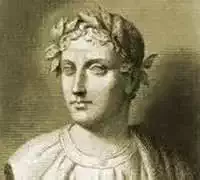
Horácio
BkIV:XIV Drusus and Tiberius
BkIV:XIV Drusus and Tiberius
What care the Citizens and the Senators
shall take in immortalising your virtues,
granting you full honours, Augustus,
with titles and memorial plaques, O,
greatest of princes, wherever the sun shines
over the countries where people can live, you,
whose power in war the Vindelici
free of our Roman laws, till now, have learnt.
For, with your army, brave Drusus, demolished
the Genauni, that implacable race, in more
direct retaliation, the swift
Breuni, and their defences, established
on the formidable Alpine heights: and soon
Tiberius, the elder Nero, entered
that fierce fight, with his favourable
omens, defeating the wild Rhaetians:
it was wonderful to see with what destruction,
in contesting the war, he exhausted those minds
intent on the deaths of our freemen,
as the south wind, almost, when it troubles
the ungovernable waves, while the Pleiades’
constellation pierces the clouds, he was eager
to attack the hostile ranks, and drive
his neighing horse through the midst of their fire.
As, bull-like, the Aufidus rolls on, flowing
by the domains of Apulian Daunus,
when it rages and threatens fearful
destruction to their cultivated fields,
so Tiberius overwhelmed the armoured
ranks of barbarians, his fierce impetus
covering the earth, mowing down front
and rear, and conquering them without loss,
yours the troops, the strategy and the friendly
gods. For on that date when Alexandria
opened all its harbour, and empty
palaces to you, in supplication,
good Fortune, fifteen years later, delivered
a favourable outcome to the campaign,
and awarded fame, and the glory
hoped-for, to your imperial action.
The Spaniards, never conquered before, the Medes,
the Indians, marvel at you, the roving
Scythians, O eager protector
of Italy and Imperial Rome.
The Nile, that conceals its origin, hears you,
the Danube hears, and the swift-flowing Tigris,
the Ocean, filled with monsters, roaring
around the distant island of Britain,
and the regions of Gaul, unafraid of death,
and the stubborn Iberian land, hear you:
Sygambri, delighting in slaughter,
stand, with grounded weapons, worshipping you.
What care the Citizens and the Senators
shall take in immortalising your virtues,
granting you full honours, Augustus,
with titles and memorial plaques, O,
greatest of princes, wherever the sun shines
over the countries where people can live, you,
whose power in war the Vindelici
free of our Roman laws, till now, have learnt.
For, with your army, brave Drusus, demolished
the Genauni, that implacable race, in more
direct retaliation, the swift
Breuni, and their defences, established
on the formidable Alpine heights: and soon
Tiberius, the elder Nero, entered
that fierce fight, with his favourable
omens, defeating the wild Rhaetians:
it was wonderful to see with what destruction,
in contesting the war, he exhausted those minds
intent on the deaths of our freemen,
as the south wind, almost, when it troubles
the ungovernable waves, while the Pleiades’
constellation pierces the clouds, he was eager
to attack the hostile ranks, and drive
his neighing horse through the midst of their fire.
As, bull-like, the Aufidus rolls on, flowing
by the domains of Apulian Daunus,
when it rages and threatens fearful
destruction to their cultivated fields,
so Tiberius overwhelmed the armoured
ranks of barbarians, his fierce impetus
covering the earth, mowing down front
and rear, and conquering them without loss,
yours the troops, the strategy and the friendly
gods. For on that date when Alexandria
opened all its harbour, and empty
palaces to you, in supplication,
good Fortune, fifteen years later, delivered
a favourable outcome to the campaign,
and awarded fame, and the glory
hoped-for, to your imperial action.
The Spaniards, never conquered before, the Medes,
the Indians, marvel at you, the roving
Scythians, O eager protector
of Italy and Imperial Rome.
The Nile, that conceals its origin, hears you,
the Danube hears, and the swift-flowing Tigris,
the Ocean, filled with monsters, roaring
around the distant island of Britain,
and the regions of Gaul, unafraid of death,
and the stubborn Iberian land, hear you:
Sygambri, delighting in slaughter,
stand, with grounded weapons, worshipping you.
227
Horácio
BkIII:XXIV Destructive Wealth
BkIII:XXIV Destructive Wealth
Though you’re richer than the untouched
riches of Araby, than wealthy India,
and you fill the land, and inshore
waters, with your deposits of builders’ rubble:
if dread Necessity fixes
her adamantine nails in your highest rooftops,
you’ll not free your spirit from fear,
nor free your very being from the noose of death.
Better to live like Scythians
in the Steppes, whose wagons haul their movable homes,
that’s custom, or the fierce Getae,
whose unallocated acres produce their fruits,
their harvests of rye, in common,
where cultivation’s not decided for more than
a year, and when one turn is done,
it’s carried on by other hands, as a duty.
There, as their own, the unselfish
women raise those children who have lost their mothers:
and the richly dowered wife never
rules her husband, or believes in shining lovers.
Their greatest dowry’s their parents’
virtue, and their own chastity, which is careful
of another’s husband, in pure
loyalty, sin is wrong and death’s its penalty.
O whoever would end impious
killing, and civil disorder, and would desire
to have ‘City Father’ inscribed
on their statues, let them be braver, and rein in
unbridled licence, and win fame
among posterity: since we, alas, for shame,
filled with envy, hate chaste virtue,
and only seek it when it’s hidden from our eyes.
What use are sad lamentations,
if crime is never suppressed by its punishment?
What use are all these empty laws
without the behaviour that should accompany them?
if neither those parts of the Earth
enclosed by heat, nor those far confines of the North,
snow frozen solid on the ground,
deter the trader, if cunning sailors conquer
the stormy seas, if poverty,
is considered a great disgrace, and directs us
to do and to bear everything,
and abandon the arduous paths of virtue?
Let’s send our jewels, our precious
stones, our destructive gold, to the Capitol, while
the crowd applauds, and raises its strident clamour,
or ship them to the nearest sea,
as causes of our deepest ills,
if we truly repent of all our wickedness.
Let the source of our perverted
greed be lost, and then let our inadequate minds
be trained in more serious things.
The inexperienced noble youth is unskilled
at staying in the saddle, he
fears to hunt, and he’s much better at playing games,
whether you order him to fool
with a Greek hoop, or you prefer forbidden dice,
while his father’s perjured trust cheats
his partner and his friends, hurrying to amass
money for his unworthy heir.
While it’s true that in this way his ill-gotten gains
increase, yet there’s always something
lacking in a fortune forever incomplete.
Though you’re richer than the untouched
riches of Araby, than wealthy India,
and you fill the land, and inshore
waters, with your deposits of builders’ rubble:
if dread Necessity fixes
her adamantine nails in your highest rooftops,
you’ll not free your spirit from fear,
nor free your very being from the noose of death.
Better to live like Scythians
in the Steppes, whose wagons haul their movable homes,
that’s custom, or the fierce Getae,
whose unallocated acres produce their fruits,
their harvests of rye, in common,
where cultivation’s not decided for more than
a year, and when one turn is done,
it’s carried on by other hands, as a duty.
There, as their own, the unselfish
women raise those children who have lost their mothers:
and the richly dowered wife never
rules her husband, or believes in shining lovers.
Their greatest dowry’s their parents’
virtue, and their own chastity, which is careful
of another’s husband, in pure
loyalty, sin is wrong and death’s its penalty.
O whoever would end impious
killing, and civil disorder, and would desire
to have ‘City Father’ inscribed
on their statues, let them be braver, and rein in
unbridled licence, and win fame
among posterity: since we, alas, for shame,
filled with envy, hate chaste virtue,
and only seek it when it’s hidden from our eyes.
What use are sad lamentations,
if crime is never suppressed by its punishment?
What use are all these empty laws
without the behaviour that should accompany them?
if neither those parts of the Earth
enclosed by heat, nor those far confines of the North,
snow frozen solid on the ground,
deter the trader, if cunning sailors conquer
the stormy seas, if poverty,
is considered a great disgrace, and directs us
to do and to bear everything,
and abandon the arduous paths of virtue?
Let’s send our jewels, our precious
stones, our destructive gold, to the Capitol, while
the crowd applauds, and raises its strident clamour,
or ship them to the nearest sea,
as causes of our deepest ills,
if we truly repent of all our wickedness.
Let the source of our perverted
greed be lost, and then let our inadequate minds
be trained in more serious things.
The inexperienced noble youth is unskilled
at staying in the saddle, he
fears to hunt, and he’s much better at playing games,
whether you order him to fool
with a Greek hoop, or you prefer forbidden dice,
while his father’s perjured trust cheats
his partner and his friends, hurrying to amass
money for his unworthy heir.
While it’s true that in this way his ill-gotten gains
increase, yet there’s always something
lacking in a fortune forever incomplete.
246
Horácio
BkI:XIV The Ship of State
BkI:XIV The Ship of State
O ship the fresh tide carries back to sea again.
Where are you going! Quickly, run for harbour.
Can’t you see how your sides
have been stripped bare of oars,
how your shattered masts and yards are groaning loudly
in the swift south-westerly, and bare of rigging,
your hull can scarce tolerate
the overpowering waters?
You haven’t a single sail that’s still intact now,
no gods, that people call to when they’re in trouble.
Though you’re built of Pontic pine,
a child of those famous forests,
though you can boast of your race, and an idle name:
the fearful sailor puts no faith in gaudy keels.
You must beware of being
merely a plaything of the winds.
You, who not long ago were troubling weariness
to me, and now are my passion and anxious care,
avoid the glistening seas
between the shining Cyclades.
O ship the fresh tide carries back to sea again.
Where are you going! Quickly, run for harbour.
Can’t you see how your sides
have been stripped bare of oars,
how your shattered masts and yards are groaning loudly
in the swift south-westerly, and bare of rigging,
your hull can scarce tolerate
the overpowering waters?
You haven’t a single sail that’s still intact now,
no gods, that people call to when they’re in trouble.
Though you’re built of Pontic pine,
a child of those famous forests,
though you can boast of your race, and an idle name:
the fearful sailor puts no faith in gaudy keels.
You must beware of being
merely a plaything of the winds.
You, who not long ago were troubling weariness
to me, and now are my passion and anxious care,
avoid the glistening seas
between the shining Cyclades.
289
Horácio
BkI:XII Praising Augustus
BkI:XII Praising Augustus
What god, man, or hero do you choose to praise
on the high pitched flute or the lyre, Clio?
Whose name will it be that joyfully resounds
in playful echoes,
either on shadowed slopes of Mount Helicon,
or on Pindus’s crest, or on cool Haemus,
where the trees followed thoughtlessly after
Orpheus’s call,
that held back the swift-running streams and the rush
of the breeze, by his mother the Muse’s art,
and seductively drew the listening oaks
with enchaining song?
Which shall I sing first of the praises reserved
for the Father, who commands mortals and gods,
who controls the seas, and the land, and the world’s
various seasons?
From whom nothing’s born that’s greater than he is,
and there’s nothing that’s like him or near him,
though Athene has honour approaching his,
she’s bravest in war:
I won’t be silent about you, O Bacchus,
or you Diana, virgin inimical
to wild creatures, or you Apollo, so feared
for your sure arrows.
I’ll sing Hercules, too, and Leda’s twin boys,
one famed for winning with horses, the other
in boxing. When their clear stars are shining bright
for those on the sea,
the storm-tossed water streams down from the headland,
the high winds die down, and the clouds disappear,
and, because they wish it, the menacing waves
repose in the deep.
I don’t know whether to speak next, after those,
of Romulus, or of Numa’s peaceful reign,
of Tarquin’s proud axes, or of that younger
Cato’s noble death.
Gratefully, I speak in distinguished verses
of Regulus: and the Scauri: and Paulus
careless of his life, when Hannibal conquered:
of Fabricius.
Of him, and of Curius with uncut hair,
and Camillus too, whom their harsh poverty
and their ancestral gods, and their ancient farms,
inured to struggle.
Marcellus’ glory grows like a tree, quietly
with time: the Julian constellation shines,
among the other stars, as the Moon among
the lesser fires.
Father, and guardian of the human race,
son of Saturn, the care of mighty Caesar
was given you by fate: may you reign forever
with Caesar below.
Whether its the conquered Persians, menacing
Latium, that he leads, in well-earned triumph,
or the Seres and the Indians who lie
beneath Eastern skies,
under you, he’ll rule the wide earth with justice:
you’ll shake Olympus with your heavy chariot,
you’ll send your hostile lightning down to shatter
once-pure sacred groves.
What god, man, or hero do you choose to praise
on the high pitched flute or the lyre, Clio?
Whose name will it be that joyfully resounds
in playful echoes,
either on shadowed slopes of Mount Helicon,
or on Pindus’s crest, or on cool Haemus,
where the trees followed thoughtlessly after
Orpheus’s call,
that held back the swift-running streams and the rush
of the breeze, by his mother the Muse’s art,
and seductively drew the listening oaks
with enchaining song?
Which shall I sing first of the praises reserved
for the Father, who commands mortals and gods,
who controls the seas, and the land, and the world’s
various seasons?
From whom nothing’s born that’s greater than he is,
and there’s nothing that’s like him or near him,
though Athene has honour approaching his,
she’s bravest in war:
I won’t be silent about you, O Bacchus,
or you Diana, virgin inimical
to wild creatures, or you Apollo, so feared
for your sure arrows.
I’ll sing Hercules, too, and Leda’s twin boys,
one famed for winning with horses, the other
in boxing. When their clear stars are shining bright
for those on the sea,
the storm-tossed water streams down from the headland,
the high winds die down, and the clouds disappear,
and, because they wish it, the menacing waves
repose in the deep.
I don’t know whether to speak next, after those,
of Romulus, or of Numa’s peaceful reign,
of Tarquin’s proud axes, or of that younger
Cato’s noble death.
Gratefully, I speak in distinguished verses
of Regulus: and the Scauri: and Paulus
careless of his life, when Hannibal conquered:
of Fabricius.
Of him, and of Curius with uncut hair,
and Camillus too, whom their harsh poverty
and their ancestral gods, and their ancient farms,
inured to struggle.
Marcellus’ glory grows like a tree, quietly
with time: the Julian constellation shines,
among the other stars, as the Moon among
the lesser fires.
Father, and guardian of the human race,
son of Saturn, the care of mighty Caesar
was given you by fate: may you reign forever
with Caesar below.
Whether its the conquered Persians, menacing
Latium, that he leads, in well-earned triumph,
or the Seres and the Indians who lie
beneath Eastern skies,
under you, he’ll rule the wide earth with justice:
you’ll shake Olympus with your heavy chariot,
you’ll send your hostile lightning down to shatter
once-pure sacred groves.
249
Horácio
BkI:II To Augustus
BkI:II To Augustus
The Father’s sent enough dread hail
and snow to earth already, striking
sacred hills with fiery hand,
to scare the city,
and scare the people, lest again
we know Pyrrha’s age of pain
when Proteus his sea-herds drove
across high mountains,
and fishes lodged in all the elms,
that used to be the haunt of doves,
and the trembling roe-deer swam
the whelming waters.
We saw the yellow Tiber’s waves
hurled backwards from the Tuscan shore,
toppling Numa’s Regia and
the shrine of Vesta,
far too fierce now, the fond river,
in his revenge of wronged Ilia,
drowning the whole left bank, deep,
without permission.
Our children, fewer for their father’s
vices, will hear metal sharpened
that’s better destined for the Persians,
and of battles too.
Which gods shall the people call on
when the Empire falls in ruins?
With what prayer shall the virgins
tire heedless Vesta?
Whom will Jupiter assign to
expiate our sins? We pray you,
come, cloud veiling your bright shoulders,
far-sighted Apollo:
or laughing Venus Erycina,
if you will, whom Cupid circles,
or you, if you see your children
neglected, Leader,
you sated from the long campaign,
who love the war-shouts and the helmets,
and the Moor’s cruel face among his
blood-stained enemies.
Or you, winged son of kindly Maia,
changing shape on earth to human
form, and ready to be named as
Caesar’s avenger:
Don’t rush back to the sky, stay long
among the people of Quirinus,
no swifter breeze take you away,
unhappy with our
sins: here to delight in triumphs,
in being called our prince and father,
making sure the Medes are punished,
lead us, O Caesar.
The Father’s sent enough dread hail
and snow to earth already, striking
sacred hills with fiery hand,
to scare the city,
and scare the people, lest again
we know Pyrrha’s age of pain
when Proteus his sea-herds drove
across high mountains,
and fishes lodged in all the elms,
that used to be the haunt of doves,
and the trembling roe-deer swam
the whelming waters.
We saw the yellow Tiber’s waves
hurled backwards from the Tuscan shore,
toppling Numa’s Regia and
the shrine of Vesta,
far too fierce now, the fond river,
in his revenge of wronged Ilia,
drowning the whole left bank, deep,
without permission.
Our children, fewer for their father’s
vices, will hear metal sharpened
that’s better destined for the Persians,
and of battles too.
Which gods shall the people call on
when the Empire falls in ruins?
With what prayer shall the virgins
tire heedless Vesta?
Whom will Jupiter assign to
expiate our sins? We pray you,
come, cloud veiling your bright shoulders,
far-sighted Apollo:
or laughing Venus Erycina,
if you will, whom Cupid circles,
or you, if you see your children
neglected, Leader,
you sated from the long campaign,
who love the war-shouts and the helmets,
and the Moor’s cruel face among his
blood-stained enemies.
Or you, winged son of kindly Maia,
changing shape on earth to human
form, and ready to be named as
Caesar’s avenger:
Don’t rush back to the sky, stay long
among the people of Quirinus,
no swifter breeze take you away,
unhappy with our
sins: here to delight in triumphs,
in being called our prince and father,
making sure the Medes are punished,
lead us, O Caesar.
250
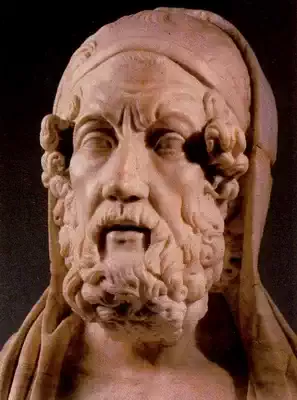
Homero
The Iliad: Book 8
The Iliad: Book 8
Now when Morning, clad in her robe of saffron, had begun to suffuse
light over the earth, Jove called the gods in council on the topmost
crest of serrated Olympus. Then he spoke and all the other gods gave
ear. "Hear me," said he, "gods and goddesses, that I may speak even as
I am minded. Let none of you neither goddess nor god try to cross
me, but obey me every one of you that I may bring this matter to an
end. If I see anyone acting apart and helping either Trojans or
Danaans, he shall be beaten inordinately ere he come back again to
Olympus; or I will hurl him down into dark Tartarus far into the
deepest pit under the earth, where the gates are iron and the floor
bronze, as far beneath Hades as heaven is high above the earth, that
you may learn how much the mightiest I am among you. Try me and find
out for yourselves. Hangs me a golden chain from heaven, and lay
hold of it all of you, gods and goddesses together- tug as you will,
you will not drag Jove the supreme counsellor from heaven to earth;
but were I to pull at it myself I should draw you up with earth and
sea into the bargain, then would I bind the chain about some
pinnacle of Olympus and leave you all dangling in the mid firmament.
So far am I above all others either of gods or men."
They were frightened and all of them of held their peace, for he had
spoken masterfully; but at last Minerva answered, "Father, son of
Saturn, king of kings, we all know that your might is not to be
gainsaid, but we are also sorry for the Danaan warriors, who are
perishing and coming to a bad end. We will, however, since you so
bid us, refrain from actual fighting, but we will make serviceable
suggestions to the Argives that they may not all of them perish in
your displeasure."
Jove smiled at her and answered, "Take heart, my child,
Trito-born; I am not really in earnest, and I wish to be kind to you."
With this he yoked his fleet horses, with hoofs of bronze and
manes of glittering gold. He girded himself also with gold about the
body, seized his gold whip and took his seat in his chariot. Thereon
he lashed his horses and they flew forward nothing loth midway twixt
earth and starry heaven. After a while he reached many-fountained Ida,
mother of wild beasts, and Gargarus, where are his grove and
fragrant altar. There the father of gods and men stayed his horses,
took them from the chariot, and hid them in a thick cloud; then he
took his seat all glorious upon the topmost crests, looking down
upon the city of Troy and the ships of the Achaeans.
The Achaeans took their morning meal hastily at the ships, and
afterwards put on their armour. The Trojans on the other hand likewise
armed themselves throughout the city, fewer in numbers but
nevertheless eager perforce to do battle for their wives and children.
All the gates were flung wide open, and horse and foot sallied forth
with the tramp as of a great multitude.
When they were got together in one place, shield clashed with
shield, and spear with spear, in the conflict of mail-clad men. Mighty
was the din as the bossed shields pressed hard on one anotherdeath-
cry and shout of triumph of slain and slayers, and the earth
ran red with blood.
Now so long as the day waxed and it was still morning their
weapons beat against one another, and the people fell, but when the
sun had reached mid-heaven, the sire of all balanced his golden
scales, and put two fates of death within them, one for the Trojans
and the other for the Achaeans. He took the balance by the middle, and
when he lifted it up the day of the Achaeans sank; the death-fraught
scale of the Achaeans settled down upon the ground, while that of
the Trojans rose heavenwards. Then he thundered aloud from Ida, and
sent the glare of his lightning upon the Achaeans; when they saw this,
pale fear fell upon them and they were sore afraid.
Idomeneus dared not stay nor yet Agamemnon, nor did the two
Ajaxes, servants of Mars, hold their ground. Nestor knight of Gerene
alone stood firm, bulwark of the Achaeans, not of his own will, but
one of his horses was disabled. Alexandrus husband of lovely Helen had
hit it with an arrow just on the top of its head where the mane begins
to grow away from the skull, a very deadly place. The horse bounded in
his anguish as the arrow pierced his brain, and his struggles threw
others into confusion. The old man instantly began cutting the
traces with his sword, but Hector's fleet horses bore down upon him
through the rout with their bold charioteer, even Hector himself,
and the old man would have perished there and then had not Diomed been
quick to mark, and with a loud cry called Ulysses to help him.
"Ulysses," he cried, "noble son of Laertes where are you flying
to, with your back turned like a coward? See that you are not struck
with a spear between the shoulders. Stay here and help me to defend
Nestor from this man's furious onset."
Ulysses would not give ear, but sped onward to the ships of the
Achaeans, and the son of Tydeus flinging himself alone into the
thick of the fight took his stand before the horses of the son of
Neleus. "Sir," said he, "these young warriors are pressing you hard,
your force is spent, and age is heavy upon you, your squire is naught,
and your horses are slow to move. Mount my chariot and see what the
horses of Tros can do- how cleverly they can scud hither and thither
over the plain either in flight or in pursuit. I took them from the
hero Aeneas. Let our squires attend to your own steeds, but let us
drive mine straight at the Trojans, that Hector may learn how
furiously I too can wield my spear."
Nestor knight of Gerene hearkened to his words. Thereon the
doughty squires, Sthenelus and kind-hearted Eurymedon, saw to Nestor's
horses, while the two both mounted Diomed's chariot. Nestor took the
reins in his hands and lashed the horses on; they were soon close up
with Hector, and the son of Tydeus aimed a spear at him as he was
charging full speed towards them. He missed him, but struck his
charioteer and squire Eniopeus son of noble Thebaeus in the breast
by the nipple while the reins were in his hands, so that he died there
and then, and the horses swerved as he fell headlong from the chariot.
Hector was greatly grieved at the loss of his charioteer, but let
him lie for all his sorrow, while he went in quest of another
driver; nor did his steeds have to go long without one, for he
presently found brave Archeptolemus the son of Iphitus, and made him
get up behind the horses, giving the reins into his hand.
All had then been lost and no help for it, for they would have
been penned up in Ilius like sheep, had not the sire of gods and men
been quick to mark, and hurled a fiery flaming thunderbolt which
fell just in front of Diomed's horses with a flare of burning
brimstone. The horses were frightened and tried to back beneath the
car, while the reins dropped from Nestor's hands. Then he was afraid
and said to Diomed, "Son of Tydeus, turn your horses in flight; see
you not that the hand of Jove is against you? To-day he vouchsafes
victory to Hector; to-morrow, if it so please him, he will again grant
it to ourselves; no man, however brave, may thwart the purpose of
Jove, for he is far stronger than any."
Diomed answered, "All that you have said is true; there is a grief
however which pierces me to the very heart, for Hector will talk among
the Trojans and say, 'The son of Tydeus fled before me to the
ships.' This is the vaunt he will make, and may earth then swallow
me."
"Son of Tydeus," replied Nestor, "what mean you? Though Hector say
that you are a coward the Trojans and Dardanians will not believe him,
nor yet the wives of the mighty warriors whom you have laid low."
So saying he turned the horses back through the thick of the battle,
and with a cry that rent the air the Trojans and Hector rained their
darts after them. Hector shouted to him and said, "Son of Tydeus,
the Danaans have done you honour hitherto as regards your place at
table, the meals they give you, and the filling of your cup with wine.
Henceforth they will despise you, for you are become no better than
a woman. Be off, girl and coward that you are, you shall not scale our
walls through any Hinching upon my part; neither shall you carry off
our wives in your ships, for I shall kill you with my own hand."
The son of Tydeus was in two minds whether or no to turn his
horses round again and fight him. Thrice did he doubt, and thrice
did Jove thunder from the heights of. Ida in token to the Trojans that
he would turn the battle in their favour. Hector then shouted to
them and said, "Trojans, Lycians, and Dardanians, lovers of close
fighting, be men, my friends, and fight with might and with main; I
see that Jove is minded to vouchsafe victory and great glory to
myself, while he will deal destruction upon the Danaans. Fools, for
having thought of building this weak and worthless wall. It shall
not stay my fury; my horses will spring lightly over their trench, and
when I am BOOK at their ships forget not to bring me fire that I may
burn them, while I slaughter the Argives who will be all dazed and
bewildered by the smoke."
Then he cried to his horses, "Xanthus and Podargus, and you Aethon
and goodly Lampus, pay me for your keep now and for all the
honey-sweet corn with which Andromache daughter of great Eetion has
fed you, and for she has mixed wine and water for you to drink
whenever you would, before doing so even for me who am her own
husband. Haste in pursuit, that we may take the shield of Nestor,
the fame of which ascends to heaven, for it is of solid gold, arm-rods
and all, and that we may strip from the shoulders of Diomed. the
cuirass which Vulcan made him. Could we take these two things, the
Achaeans would set sail in their ships this self-same night."
Thus did he vaunt, but Queen Juno made high Olympus quake as she
shook with rage upon her throne. Then said she to the mighty god of
Neptune, "What now, wide ruling lord of the earthquake? Can you find
no compassion in your heart for the dying Danaans, who bring you
many a welcome offering to Helice and to Aegae? Wish them well then.
If all of us who are with the Danaans were to drive the Trojans back
and keep Jove from helping them, he would have to sit there sulking
alone on Ida."
King Neptune was greatly troubled and answered, "Juno, rash of
tongue, what are you talking about? We other gods must not set
ourselves against Jove, for he is far stronger than we are."
Thus did they converse; but the whole space enclosed by the ditch,
from the ships even to the wall, was filled with horses and
warriors, who were pent up there by Hector son of Priam, now that
the hand of Jove was with him. He would even have set fire to the
ships and burned them, had not Queen Juno put it into the mind of
Agamemnon, to bestir himself and to encourage the Achaeans. To this
end he went round the ships and tents carrying a great purple cloak,
and took his stand by the huge black hull of Ulysses' ship, which
was middlemost of all; it was from this place that his voice would
carry farthest, on the one hand towards the tents of Ajax son of
Telamon, and on the other towards those of Achilles- for these two
heroes, well assured of their own strength, had valorously drawn up
their ships at the two ends of the line. From this spot then, with a
voice that could be heard afar, he shouted to the Danaans, saying,
"Argives, shame on you cowardly creatures, brave in semblance only;
where are now our vaunts that we should prove victorious- the vaunts
we made so vaingloriously in Lemnos, when we ate the flesh of horned
cattle and filled our mixing-bowls to the brim? You vowed that you
would each of you stand against a hundred or two hundred men, and
now you prove no match even for one- for Hector, who will be ere
long setting our ships in a blaze. Father Jove, did you ever so ruin a
great king and rob him so utterly of his greatness? yet, when to my
sorrow I was coming hither, I never let my ship pass your altars
without offering the fat and thigh-bones of heifers upon every one
of them, so eager was I to sack the city of Troy. Vouchsafe me then
this prayer- suffer us to escape at any rate with our lives, and let
not the Achaeans be so utterly vanquished by the Trojans."
Thus did he pray, and father Jove pitying his tears vouchsafed him
that his people should live, not die; forthwith he sent them an eagle,
most unfailingly portentous of all birds, with a young fawn in its
talons; the eagle dropped the fawn by the altar on which the
Achaeans sacrificed to Jove the lord of omens; When, therefore, the
people saw that the bird had come from Jove, they sprang more fiercely
upon the Trojans and fought more boldly.
There was no man of all the many Danaans who could then boast that
he had driven his horses over the trench and gone forth to fight
sooner than the son of Tydeus; long before any one else could do so he
slew an armed warrior of the Trojans, Agelaus the son of Phradmon.
He had turned his horses in flight, but the spear struck him in the
back midway between his shoulders and went right through his chest,
and his armour rang rattling round him as he fell forward from his
chariot.
After him came Agamemnon and Menelaus, sons of Atreus, the two
Ajaxes clothed in valour as with a garment, Idomeneus and his
companion in arms Meriones, peer of murderous Mars, and Eurypylus
the brave son of Euaemon. Ninth came Teucer with his bow, and took his
place under cover of the shield of Ajax son of Telamon. When Ajax
lifted his shield Teucer would peer round, and when he had hit any one
in the throng, the man would fall dead; then Teucer would hie back
to Ajax as a child to its mother, and again duck down under his
shield.
Which of the Trojans did brave Teucer first kill? Orsilochus, and
then Ormenus and Ophelestes, Daetor, Chromius, and godlike
Lycophontes, Amopaon son of Polyaemon, and Melanippus. these in turn
did he lay low upon the earth, and King Agamemnon was glad when he saw
him making havoc of the Trojans with his mighty bow. He went up to him
and said, "Teucer, man after my own heart, son of Telamon, captain
among the host, shoot on, and be at once the saving of the Danaans and
the glory of your father Telamon, who brought you up and took care
of you in his own house when you were a child, bastard though you
were. Cover him with glory though he is far off; I will promise and
I will assuredly perform; if aegis-bearing Jove and Minerva grant me
to sack the city of Ilius, you shall have the next best meed of honour
after my own- a tripod, or two horses with their chariot, or a woman
who shall go up into your bed."
And Teucer answered, "Most noble son of Atreus, you need not urge
me; from the moment we began to drive them back to Ilius, I have never
ceased so far as in me lies to look out for men whom I can shoot and
kill; I have shot eight barbed shafts, and all of them have been
buried in the flesh of warlike youths, but this mad dog I cannot hit."
As he spoke he aimed another arrow straight at Hector, for he was
bent on hitting him; nevertheless he missed him, and the arrow hit
Priam's brave son Gorgythion in the breast. His mother, fair
Castianeira, lovely as a goddess, had been married from Aesyme, and
now he bowed his head as a garden poppy in full bloom when it is
weighed down by showers in spring- even thus heavy bowed his head
beneath the weight of his helmet.
Again he aimed at Hector, for he was longing to hit him, and again
his arrow missed, for Apollo turned it aside; but he hit Hector's
brave charioteer Archeptolemus in the breast, by the nipple, as he was
driving furiously into the fight. The horses swerved aside as he
fell headlong from the chariot, and there was no life left in him.
Hector was greatly grieved at the loss of his charioteer, but for
all his sorrow he let him lie where he fell, and bade his brother
Cebriones, who was hard by, take the reins. Cebriones did as he had
said. Hector thereon with a loud cry sprang from his chariot to the
ground, and seizing a great stone made straight for Teucer with intent
kill him. Teucer had just taken an arrow from his quiver and had
laid it upon the bow-string, but Hector struck him with the jagged
stone as he was taking aim and drawing the string to his shoulder;
he hit him just where the collar-bone divides the neck from the chest,
a very deadly place, and broke the sinew of his arm so that his
wrist was less, and the bow dropped from his hand as he fell forward
on his knees. Ajax saw that his brother had fallen, and running
towards him bestrode him and sheltered him with his shield.
Meanwhile his two trusty squires, Mecisteus son of Echius, and
Alastor, came up and bore him to the ships groaning in his great pain.
glad when he saw
Jove now again put heart into the Trojans, and they drove the
Achaeans to their deep trench with Hector in all his glory at their
head. As a hound grips a wild boar or lion in flank or buttock when he
gives him chase, and watches warily for his wheeling, even so did
Hector follow close upon the Achaeans, ever killing the hindmost as
they rushed panic-stricken onwards. When they had fled through the set
stakes and trench and many Achaeans had been laid low at the hands
of the Trojans, they halted at their ships, calling upon one another
and praying every man instantly as they lifted up their hands to the
gods; but Hector wheeled his horses this way and that, his eyes
glaring like those of Gorgo or murderous Mars.
Juno when she saw them had pity upon them, and at once said to
Minerva, "Alas, child of aegis-bearing Jove, shall you and I take no
more thought for the dying Danaans, though it be the last time we ever
do so? See how they perish and come to a bad end before the onset of
but a single man. Hector the son of Priam rages with intolerable fury,
and has already done great mischief."
Minerva answered, "Would, indeed, this fellow might die in his own
land, and fall by the hands of the Achaeans; but my father Jove is mad
with spleen, ever foiling me, ever headstrong and unjust. He forgets
how often I saved his son when he was worn out by the labours
Eurystheus had laid on him. He would weep till his cry came up to
heaven, and then Jove would send me down to help him; if I had had the
sense to foresee all this, when Eurystheus sent him to the house of
Hades, to fetch the hell-hound from Erebus, he would never have come
back alive out of the deep waters of the river Styx. And now Jove
hates me, while he lets Thetis have her way because she kissed his
knees and took hold of his beard, when she was begging him to do
honour to Achilles. I shall know what to do next time he begins
calling me his grey-eyed darling. Get our horses ready, while I go
within the house of aegis-bearing Jove and put on my armour; we
shall then find out whether Priam's son Hector will be glad to meet us
in the highways of battle, or whether the Trojans will glut hounds and
vultures with the fat of their flesh as they he dead by the ships of
the Achaeans."
Thus did she speak and white-armed Juno, daughter of great Saturn,
obeyed her words; she set about harnessing her gold-bedizened
steeds, while Minerva daughter of aegis-bearing Jove flung her
richly vesture, made with her own hands, on to the threshold of her
father, and donned the shirt of Jove, arming herself for battle.
Then she stepped into her flaming chariot, and grasped the spear so
stout and sturdy and strong with which she quells the ranks of
heroes who have displeased her. Juno lashed her horses, and the
gates of heaven bellowed as they flew open of their own accordgates
over which the Hours preside, in whose hands are heaven and
Olympus, either to open the dense cloud that hides them or to close
it. Through these the goddesses drove their obedient steeds.
But father Jove when he saw them from Ida was very angry, and sent
winged Iris with a message to them. "Go," said he, "fleet Iris, turn
them back, and see that they do not come near me, for if we come to
fighting there will be mischief. This is what I say, and this is
what I mean to do. I will lame their horses for them; I will hurl them
from their chariot, and will break it in pieces. It will take them all
ten years to heal the wounds my lightning shall inflict upon them;
my grey-eyed daughter will then learn what quarrelling with her father
means. I am less surprised and angry with Juno, for whatever I say she
always contradicts me."
With this Iris went her way, fleet as the wind, from the heights
of Ida to the lofty summits of Olympus. She met the goddesses at the
outer gates of its many valleys and gave them her message. "What,"
said she, "are you about? Are you mad? The son of Saturn forbids
going. This is what he says, and this is he means to do, he will
lame your horses for you, he will hurl you from your chariot, and will
break it in pieces. It will take you all ten years to heal the
wounds his lightning will inflict upon you, that you may learn,
grey-eyed goddess, what quarrelling with your father means. He is less
hurt and angry with Juno, for whatever he says she always
contradicts him but you, bold bold hussy, will you really dare to
raise your huge spear in defiance of Jove?"
With this she left them, and Juno said to Minerva, "Of a truth,
child of aegis-bearing Jove, I am not for fighting men's battles
further in defiance of Jove. Let them live or die as luck will have
it, and let Jove mete out his judgements upon the Trojans and
Danaans according to his own pleasure."
She turned her steeds; the Hours presently unyoked them, made them
fast to their ambrosial mangers, and leaned the chariot against the
end wall of the courtyard. The two goddesses then sat down upon
their golden thrones, amid the company of the other gods; but they
were very angry.
Presently father Jove drove his chariot to Olympus, and entered
the assembly of gods. The mighty lord of the earthquake unyoked his
horses for him, set the car upon its stand, and threw a cloth over it.
Jove then sat down upon his golden throne and Olympus reeled beneath
him. Minerva and Juno sat alone, apart from Jove, and neither spoke
nor asked him questions, but Jove knew what they meant, and said,
"Minerva and Juno, why are you so angry? Are you fatigued with killing
so many of your dear friends the Trojans? Be this as it may, such is
the might of my hands that all the gods in Olympus cannot turn me; you
were both of you trembling all over ere ever you saw the fight and its
terrible doings. I tell you therefore-and it would have surely been- I
should have struck you with lighting, and your chariots would never
have brought you back again to Olympus."
Minerva and Juno groaned in spirit as they sat side by side and
brooded mischief for the Trojans. Minerva sat silent without a word,
for she was in a furious passion and bitterly incensed against her
father; but Juno could not contain herself and said, "What, dread
son of Saturn, are you talking about? We know how great your power is,
nevertheless we have compassion upon the Danaan warriors who are
perishing and coming to a bad end. We will, however, since you so
bid us, refrain from actual fighting, but we will make serviceable
suggestions to the Argives, that they may not all of them perish in
your displeasure."
And Jove answered, "To-morrow morning, Juno, if you choose to do so,
you will see the son of Saturn destroying large numbers of the
Argives, for fierce Hector shall not cease fighting till he has roused
the son of Peleus when they are fighting in dire straits at their
ships' sterns about the body of Patroclus. Like it or no, this is
how it is decreed; for aught I care, you may go to the lowest depths
beneath earth and sea, where Iapetus and Saturn dwell in lone Tartarus
with neither ray of light nor breath of wind to cheer them. You may go
on and on till you get there, and I shall not care one whit for your
displeasure; you are the greatest vixen living."
Juno made him no answer. The sun's glorious orb now sank into
Oceanus and drew down night over the land. Sorry indeed were the
Trojans when light failed them, but welcome and thrice prayed for
did darkness fall upon the Achaeans.
Then Hector led the Trojans back from the ships, and held a
council on the open space near the river, where there was a spot ear
corpses. They left their chariots and sat down on the ground to hear
the speech he made them. He grasped a spear eleven cubits long, the
bronze point of which gleamed in front of it, while the ring round the
spear-head was of gold Spear in hand he spoke. "Hear me," said he,
"Trojans, Dardanians, and allies. I deemed but now that I should
destroy the ships and all the Achaeans with them ere I went back to
Ilius, but darkness came on too soon. It was this alone that saved
them and their ships upon the seashore. Now, therefore, let us obey
the behests of night, and prepare our suppers. Take your horses out of
their chariots and give them their feeds of corn; then make speed to
bring sheep and cattle from the city; bring wine also and corn for
your horses and gather much wood, that from dark till dawn we may burn
watchfires whose flare may reach to heaven. For the Achaeans may try
to fly beyond the sea by night, and they must not embark scatheless
and unmolested; many a man among them must take a dart with him to
nurse at home, hit with spear or arrow as he is leaping on board his
ship, that others may fear to bring war and weeping upon the
Trojans. Moreover let the heralds tell it about the city that the
growing youths and grey-bearded men are to camp upon its
heaven-built walls. Let the women each of them light a great fire in
her house, and let watch be safely kept lest the town be entered by
surprise while the host is outside. See to it, brave Trojans, as I
have said, and let this suffice for the moment; at daybreak I will
instruct you further. I pray in hope to Jove and to the gods that we
may then drive those fate-sped hounds from our land, for 'tis the
fates that have borne them and their ships hither. This night,
therefore, let us keep watch, but with early morning let us put on our
armour and rouse fierce war at the ships of the Achaeans; I shall then
know whether brave Diomed the son of Tydeus will drive me back from
the ships to the wall, or whether I shall myself slay him and carry
off his bloodstained spoils. To-morrow let him show his mettle,
abide my spear if he dare. I ween that at break of day, he shall be
among the first to fall and many another of his comrades round him.
Would that I were as sure of being immortal and never growing old, and
of being worshipped like Minerva and Apollo, as I am that this day
will bring evil to the Argives."
Thus spoke Hector and the Trojans shouted applause. They took
their sweating steeds from under the yoke, and made them fast each
by his own chariot. They made haste to bring sheep and cattle from the
city, they brought wine also and corn from their houses and gathered
much wood. They then offered unblemished hecatombs to the immortals,
and the wind carried the sweet savour of sacrifice to heaven- but
the blessed gods partook not thereof, for they bitterly hated Ilius
with Priam and Priam's people. Thus high in hope they sat through
the livelong night by the highways of war, and many a watchfire did
they kindle. As when the stars shine clear, and the moon is brightthere
is not a breath of air, not a peak nor glade nor jutting
headland but it stands out in the ineffable radiance that breaks
from the serene of heaven; the stars can all of them be told and the
heart of the shepherd is glad- even thus shone the watchfires of the
Trojans before Ilius midway between the ships and the river Xanthus. A
thousand camp-fires gleamed upon the plain, and in the glow of each
there sat fifty men, while the horses, champing oats and corn beside
their chariots, waited till dawn should come.
Translated by Samuel Butler
Now when Morning, clad in her robe of saffron, had begun to suffuse
light over the earth, Jove called the gods in council on the topmost
crest of serrated Olympus. Then he spoke and all the other gods gave
ear. "Hear me," said he, "gods and goddesses, that I may speak even as
I am minded. Let none of you neither goddess nor god try to cross
me, but obey me every one of you that I may bring this matter to an
end. If I see anyone acting apart and helping either Trojans or
Danaans, he shall be beaten inordinately ere he come back again to
Olympus; or I will hurl him down into dark Tartarus far into the
deepest pit under the earth, where the gates are iron and the floor
bronze, as far beneath Hades as heaven is high above the earth, that
you may learn how much the mightiest I am among you. Try me and find
out for yourselves. Hangs me a golden chain from heaven, and lay
hold of it all of you, gods and goddesses together- tug as you will,
you will not drag Jove the supreme counsellor from heaven to earth;
but were I to pull at it myself I should draw you up with earth and
sea into the bargain, then would I bind the chain about some
pinnacle of Olympus and leave you all dangling in the mid firmament.
So far am I above all others either of gods or men."
They were frightened and all of them of held their peace, for he had
spoken masterfully; but at last Minerva answered, "Father, son of
Saturn, king of kings, we all know that your might is not to be
gainsaid, but we are also sorry for the Danaan warriors, who are
perishing and coming to a bad end. We will, however, since you so
bid us, refrain from actual fighting, but we will make serviceable
suggestions to the Argives that they may not all of them perish in
your displeasure."
Jove smiled at her and answered, "Take heart, my child,
Trito-born; I am not really in earnest, and I wish to be kind to you."
With this he yoked his fleet horses, with hoofs of bronze and
manes of glittering gold. He girded himself also with gold about the
body, seized his gold whip and took his seat in his chariot. Thereon
he lashed his horses and they flew forward nothing loth midway twixt
earth and starry heaven. After a while he reached many-fountained Ida,
mother of wild beasts, and Gargarus, where are his grove and
fragrant altar. There the father of gods and men stayed his horses,
took them from the chariot, and hid them in a thick cloud; then he
took his seat all glorious upon the topmost crests, looking down
upon the city of Troy and the ships of the Achaeans.
The Achaeans took their morning meal hastily at the ships, and
afterwards put on their armour. The Trojans on the other hand likewise
armed themselves throughout the city, fewer in numbers but
nevertheless eager perforce to do battle for their wives and children.
All the gates were flung wide open, and horse and foot sallied forth
with the tramp as of a great multitude.
When they were got together in one place, shield clashed with
shield, and spear with spear, in the conflict of mail-clad men. Mighty
was the din as the bossed shields pressed hard on one anotherdeath-
cry and shout of triumph of slain and slayers, and the earth
ran red with blood.
Now so long as the day waxed and it was still morning their
weapons beat against one another, and the people fell, but when the
sun had reached mid-heaven, the sire of all balanced his golden
scales, and put two fates of death within them, one for the Trojans
and the other for the Achaeans. He took the balance by the middle, and
when he lifted it up the day of the Achaeans sank; the death-fraught
scale of the Achaeans settled down upon the ground, while that of
the Trojans rose heavenwards. Then he thundered aloud from Ida, and
sent the glare of his lightning upon the Achaeans; when they saw this,
pale fear fell upon them and they were sore afraid.
Idomeneus dared not stay nor yet Agamemnon, nor did the two
Ajaxes, servants of Mars, hold their ground. Nestor knight of Gerene
alone stood firm, bulwark of the Achaeans, not of his own will, but
one of his horses was disabled. Alexandrus husband of lovely Helen had
hit it with an arrow just on the top of its head where the mane begins
to grow away from the skull, a very deadly place. The horse bounded in
his anguish as the arrow pierced his brain, and his struggles threw
others into confusion. The old man instantly began cutting the
traces with his sword, but Hector's fleet horses bore down upon him
through the rout with their bold charioteer, even Hector himself,
and the old man would have perished there and then had not Diomed been
quick to mark, and with a loud cry called Ulysses to help him.
"Ulysses," he cried, "noble son of Laertes where are you flying
to, with your back turned like a coward? See that you are not struck
with a spear between the shoulders. Stay here and help me to defend
Nestor from this man's furious onset."
Ulysses would not give ear, but sped onward to the ships of the
Achaeans, and the son of Tydeus flinging himself alone into the
thick of the fight took his stand before the horses of the son of
Neleus. "Sir," said he, "these young warriors are pressing you hard,
your force is spent, and age is heavy upon you, your squire is naught,
and your horses are slow to move. Mount my chariot and see what the
horses of Tros can do- how cleverly they can scud hither and thither
over the plain either in flight or in pursuit. I took them from the
hero Aeneas. Let our squires attend to your own steeds, but let us
drive mine straight at the Trojans, that Hector may learn how
furiously I too can wield my spear."
Nestor knight of Gerene hearkened to his words. Thereon the
doughty squires, Sthenelus and kind-hearted Eurymedon, saw to Nestor's
horses, while the two both mounted Diomed's chariot. Nestor took the
reins in his hands and lashed the horses on; they were soon close up
with Hector, and the son of Tydeus aimed a spear at him as he was
charging full speed towards them. He missed him, but struck his
charioteer and squire Eniopeus son of noble Thebaeus in the breast
by the nipple while the reins were in his hands, so that he died there
and then, and the horses swerved as he fell headlong from the chariot.
Hector was greatly grieved at the loss of his charioteer, but let
him lie for all his sorrow, while he went in quest of another
driver; nor did his steeds have to go long without one, for he
presently found brave Archeptolemus the son of Iphitus, and made him
get up behind the horses, giving the reins into his hand.
All had then been lost and no help for it, for they would have
been penned up in Ilius like sheep, had not the sire of gods and men
been quick to mark, and hurled a fiery flaming thunderbolt which
fell just in front of Diomed's horses with a flare of burning
brimstone. The horses were frightened and tried to back beneath the
car, while the reins dropped from Nestor's hands. Then he was afraid
and said to Diomed, "Son of Tydeus, turn your horses in flight; see
you not that the hand of Jove is against you? To-day he vouchsafes
victory to Hector; to-morrow, if it so please him, he will again grant
it to ourselves; no man, however brave, may thwart the purpose of
Jove, for he is far stronger than any."
Diomed answered, "All that you have said is true; there is a grief
however which pierces me to the very heart, for Hector will talk among
the Trojans and say, 'The son of Tydeus fled before me to the
ships.' This is the vaunt he will make, and may earth then swallow
me."
"Son of Tydeus," replied Nestor, "what mean you? Though Hector say
that you are a coward the Trojans and Dardanians will not believe him,
nor yet the wives of the mighty warriors whom you have laid low."
So saying he turned the horses back through the thick of the battle,
and with a cry that rent the air the Trojans and Hector rained their
darts after them. Hector shouted to him and said, "Son of Tydeus,
the Danaans have done you honour hitherto as regards your place at
table, the meals they give you, and the filling of your cup with wine.
Henceforth they will despise you, for you are become no better than
a woman. Be off, girl and coward that you are, you shall not scale our
walls through any Hinching upon my part; neither shall you carry off
our wives in your ships, for I shall kill you with my own hand."
The son of Tydeus was in two minds whether or no to turn his
horses round again and fight him. Thrice did he doubt, and thrice
did Jove thunder from the heights of. Ida in token to the Trojans that
he would turn the battle in their favour. Hector then shouted to
them and said, "Trojans, Lycians, and Dardanians, lovers of close
fighting, be men, my friends, and fight with might and with main; I
see that Jove is minded to vouchsafe victory and great glory to
myself, while he will deal destruction upon the Danaans. Fools, for
having thought of building this weak and worthless wall. It shall
not stay my fury; my horses will spring lightly over their trench, and
when I am BOOK at their ships forget not to bring me fire that I may
burn them, while I slaughter the Argives who will be all dazed and
bewildered by the smoke."
Then he cried to his horses, "Xanthus and Podargus, and you Aethon
and goodly Lampus, pay me for your keep now and for all the
honey-sweet corn with which Andromache daughter of great Eetion has
fed you, and for she has mixed wine and water for you to drink
whenever you would, before doing so even for me who am her own
husband. Haste in pursuit, that we may take the shield of Nestor,
the fame of which ascends to heaven, for it is of solid gold, arm-rods
and all, and that we may strip from the shoulders of Diomed. the
cuirass which Vulcan made him. Could we take these two things, the
Achaeans would set sail in their ships this self-same night."
Thus did he vaunt, but Queen Juno made high Olympus quake as she
shook with rage upon her throne. Then said she to the mighty god of
Neptune, "What now, wide ruling lord of the earthquake? Can you find
no compassion in your heart for the dying Danaans, who bring you
many a welcome offering to Helice and to Aegae? Wish them well then.
If all of us who are with the Danaans were to drive the Trojans back
and keep Jove from helping them, he would have to sit there sulking
alone on Ida."
King Neptune was greatly troubled and answered, "Juno, rash of
tongue, what are you talking about? We other gods must not set
ourselves against Jove, for he is far stronger than we are."
Thus did they converse; but the whole space enclosed by the ditch,
from the ships even to the wall, was filled with horses and
warriors, who were pent up there by Hector son of Priam, now that
the hand of Jove was with him. He would even have set fire to the
ships and burned them, had not Queen Juno put it into the mind of
Agamemnon, to bestir himself and to encourage the Achaeans. To this
end he went round the ships and tents carrying a great purple cloak,
and took his stand by the huge black hull of Ulysses' ship, which
was middlemost of all; it was from this place that his voice would
carry farthest, on the one hand towards the tents of Ajax son of
Telamon, and on the other towards those of Achilles- for these two
heroes, well assured of their own strength, had valorously drawn up
their ships at the two ends of the line. From this spot then, with a
voice that could be heard afar, he shouted to the Danaans, saying,
"Argives, shame on you cowardly creatures, brave in semblance only;
where are now our vaunts that we should prove victorious- the vaunts
we made so vaingloriously in Lemnos, when we ate the flesh of horned
cattle and filled our mixing-bowls to the brim? You vowed that you
would each of you stand against a hundred or two hundred men, and
now you prove no match even for one- for Hector, who will be ere
long setting our ships in a blaze. Father Jove, did you ever so ruin a
great king and rob him so utterly of his greatness? yet, when to my
sorrow I was coming hither, I never let my ship pass your altars
without offering the fat and thigh-bones of heifers upon every one
of them, so eager was I to sack the city of Troy. Vouchsafe me then
this prayer- suffer us to escape at any rate with our lives, and let
not the Achaeans be so utterly vanquished by the Trojans."
Thus did he pray, and father Jove pitying his tears vouchsafed him
that his people should live, not die; forthwith he sent them an eagle,
most unfailingly portentous of all birds, with a young fawn in its
talons; the eagle dropped the fawn by the altar on which the
Achaeans sacrificed to Jove the lord of omens; When, therefore, the
people saw that the bird had come from Jove, they sprang more fiercely
upon the Trojans and fought more boldly.
There was no man of all the many Danaans who could then boast that
he had driven his horses over the trench and gone forth to fight
sooner than the son of Tydeus; long before any one else could do so he
slew an armed warrior of the Trojans, Agelaus the son of Phradmon.
He had turned his horses in flight, but the spear struck him in the
back midway between his shoulders and went right through his chest,
and his armour rang rattling round him as he fell forward from his
chariot.
After him came Agamemnon and Menelaus, sons of Atreus, the two
Ajaxes clothed in valour as with a garment, Idomeneus and his
companion in arms Meriones, peer of murderous Mars, and Eurypylus
the brave son of Euaemon. Ninth came Teucer with his bow, and took his
place under cover of the shield of Ajax son of Telamon. When Ajax
lifted his shield Teucer would peer round, and when he had hit any one
in the throng, the man would fall dead; then Teucer would hie back
to Ajax as a child to its mother, and again duck down under his
shield.
Which of the Trojans did brave Teucer first kill? Orsilochus, and
then Ormenus and Ophelestes, Daetor, Chromius, and godlike
Lycophontes, Amopaon son of Polyaemon, and Melanippus. these in turn
did he lay low upon the earth, and King Agamemnon was glad when he saw
him making havoc of the Trojans with his mighty bow. He went up to him
and said, "Teucer, man after my own heart, son of Telamon, captain
among the host, shoot on, and be at once the saving of the Danaans and
the glory of your father Telamon, who brought you up and took care
of you in his own house when you were a child, bastard though you
were. Cover him with glory though he is far off; I will promise and
I will assuredly perform; if aegis-bearing Jove and Minerva grant me
to sack the city of Ilius, you shall have the next best meed of honour
after my own- a tripod, or two horses with their chariot, or a woman
who shall go up into your bed."
And Teucer answered, "Most noble son of Atreus, you need not urge
me; from the moment we began to drive them back to Ilius, I have never
ceased so far as in me lies to look out for men whom I can shoot and
kill; I have shot eight barbed shafts, and all of them have been
buried in the flesh of warlike youths, but this mad dog I cannot hit."
As he spoke he aimed another arrow straight at Hector, for he was
bent on hitting him; nevertheless he missed him, and the arrow hit
Priam's brave son Gorgythion in the breast. His mother, fair
Castianeira, lovely as a goddess, had been married from Aesyme, and
now he bowed his head as a garden poppy in full bloom when it is
weighed down by showers in spring- even thus heavy bowed his head
beneath the weight of his helmet.
Again he aimed at Hector, for he was longing to hit him, and again
his arrow missed, for Apollo turned it aside; but he hit Hector's
brave charioteer Archeptolemus in the breast, by the nipple, as he was
driving furiously into the fight. The horses swerved aside as he
fell headlong from the chariot, and there was no life left in him.
Hector was greatly grieved at the loss of his charioteer, but for
all his sorrow he let him lie where he fell, and bade his brother
Cebriones, who was hard by, take the reins. Cebriones did as he had
said. Hector thereon with a loud cry sprang from his chariot to the
ground, and seizing a great stone made straight for Teucer with intent
kill him. Teucer had just taken an arrow from his quiver and had
laid it upon the bow-string, but Hector struck him with the jagged
stone as he was taking aim and drawing the string to his shoulder;
he hit him just where the collar-bone divides the neck from the chest,
a very deadly place, and broke the sinew of his arm so that his
wrist was less, and the bow dropped from his hand as he fell forward
on his knees. Ajax saw that his brother had fallen, and running
towards him bestrode him and sheltered him with his shield.
Meanwhile his two trusty squires, Mecisteus son of Echius, and
Alastor, came up and bore him to the ships groaning in his great pain.
glad when he saw
Jove now again put heart into the Trojans, and they drove the
Achaeans to their deep trench with Hector in all his glory at their
head. As a hound grips a wild boar or lion in flank or buttock when he
gives him chase, and watches warily for his wheeling, even so did
Hector follow close upon the Achaeans, ever killing the hindmost as
they rushed panic-stricken onwards. When they had fled through the set
stakes and trench and many Achaeans had been laid low at the hands
of the Trojans, they halted at their ships, calling upon one another
and praying every man instantly as they lifted up their hands to the
gods; but Hector wheeled his horses this way and that, his eyes
glaring like those of Gorgo or murderous Mars.
Juno when she saw them had pity upon them, and at once said to
Minerva, "Alas, child of aegis-bearing Jove, shall you and I take no
more thought for the dying Danaans, though it be the last time we ever
do so? See how they perish and come to a bad end before the onset of
but a single man. Hector the son of Priam rages with intolerable fury,
and has already done great mischief."
Minerva answered, "Would, indeed, this fellow might die in his own
land, and fall by the hands of the Achaeans; but my father Jove is mad
with spleen, ever foiling me, ever headstrong and unjust. He forgets
how often I saved his son when he was worn out by the labours
Eurystheus had laid on him. He would weep till his cry came up to
heaven, and then Jove would send me down to help him; if I had had the
sense to foresee all this, when Eurystheus sent him to the house of
Hades, to fetch the hell-hound from Erebus, he would never have come
back alive out of the deep waters of the river Styx. And now Jove
hates me, while he lets Thetis have her way because she kissed his
knees and took hold of his beard, when she was begging him to do
honour to Achilles. I shall know what to do next time he begins
calling me his grey-eyed darling. Get our horses ready, while I go
within the house of aegis-bearing Jove and put on my armour; we
shall then find out whether Priam's son Hector will be glad to meet us
in the highways of battle, or whether the Trojans will glut hounds and
vultures with the fat of their flesh as they he dead by the ships of
the Achaeans."
Thus did she speak and white-armed Juno, daughter of great Saturn,
obeyed her words; she set about harnessing her gold-bedizened
steeds, while Minerva daughter of aegis-bearing Jove flung her
richly vesture, made with her own hands, on to the threshold of her
father, and donned the shirt of Jove, arming herself for battle.
Then she stepped into her flaming chariot, and grasped the spear so
stout and sturdy and strong with which she quells the ranks of
heroes who have displeased her. Juno lashed her horses, and the
gates of heaven bellowed as they flew open of their own accordgates
over which the Hours preside, in whose hands are heaven and
Olympus, either to open the dense cloud that hides them or to close
it. Through these the goddesses drove their obedient steeds.
But father Jove when he saw them from Ida was very angry, and sent
winged Iris with a message to them. "Go," said he, "fleet Iris, turn
them back, and see that they do not come near me, for if we come to
fighting there will be mischief. This is what I say, and this is
what I mean to do. I will lame their horses for them; I will hurl them
from their chariot, and will break it in pieces. It will take them all
ten years to heal the wounds my lightning shall inflict upon them;
my grey-eyed daughter will then learn what quarrelling with her father
means. I am less surprised and angry with Juno, for whatever I say she
always contradicts me."
With this Iris went her way, fleet as the wind, from the heights
of Ida to the lofty summits of Olympus. She met the goddesses at the
outer gates of its many valleys and gave them her message. "What,"
said she, "are you about? Are you mad? The son of Saturn forbids
going. This is what he says, and this is he means to do, he will
lame your horses for you, he will hurl you from your chariot, and will
break it in pieces. It will take you all ten years to heal the
wounds his lightning will inflict upon you, that you may learn,
grey-eyed goddess, what quarrelling with your father means. He is less
hurt and angry with Juno, for whatever he says she always
contradicts him but you, bold bold hussy, will you really dare to
raise your huge spear in defiance of Jove?"
With this she left them, and Juno said to Minerva, "Of a truth,
child of aegis-bearing Jove, I am not for fighting men's battles
further in defiance of Jove. Let them live or die as luck will have
it, and let Jove mete out his judgements upon the Trojans and
Danaans according to his own pleasure."
She turned her steeds; the Hours presently unyoked them, made them
fast to their ambrosial mangers, and leaned the chariot against the
end wall of the courtyard. The two goddesses then sat down upon
their golden thrones, amid the company of the other gods; but they
were very angry.
Presently father Jove drove his chariot to Olympus, and entered
the assembly of gods. The mighty lord of the earthquake unyoked his
horses for him, set the car upon its stand, and threw a cloth over it.
Jove then sat down upon his golden throne and Olympus reeled beneath
him. Minerva and Juno sat alone, apart from Jove, and neither spoke
nor asked him questions, but Jove knew what they meant, and said,
"Minerva and Juno, why are you so angry? Are you fatigued with killing
so many of your dear friends the Trojans? Be this as it may, such is
the might of my hands that all the gods in Olympus cannot turn me; you
were both of you trembling all over ere ever you saw the fight and its
terrible doings. I tell you therefore-and it would have surely been- I
should have struck you with lighting, and your chariots would never
have brought you back again to Olympus."
Minerva and Juno groaned in spirit as they sat side by side and
brooded mischief for the Trojans. Minerva sat silent without a word,
for she was in a furious passion and bitterly incensed against her
father; but Juno could not contain herself and said, "What, dread
son of Saturn, are you talking about? We know how great your power is,
nevertheless we have compassion upon the Danaan warriors who are
perishing and coming to a bad end. We will, however, since you so
bid us, refrain from actual fighting, but we will make serviceable
suggestions to the Argives, that they may not all of them perish in
your displeasure."
And Jove answered, "To-morrow morning, Juno, if you choose to do so,
you will see the son of Saturn destroying large numbers of the
Argives, for fierce Hector shall not cease fighting till he has roused
the son of Peleus when they are fighting in dire straits at their
ships' sterns about the body of Patroclus. Like it or no, this is
how it is decreed; for aught I care, you may go to the lowest depths
beneath earth and sea, where Iapetus and Saturn dwell in lone Tartarus
with neither ray of light nor breath of wind to cheer them. You may go
on and on till you get there, and I shall not care one whit for your
displeasure; you are the greatest vixen living."
Juno made him no answer. The sun's glorious orb now sank into
Oceanus and drew down night over the land. Sorry indeed were the
Trojans when light failed them, but welcome and thrice prayed for
did darkness fall upon the Achaeans.
Then Hector led the Trojans back from the ships, and held a
council on the open space near the river, where there was a spot ear
corpses. They left their chariots and sat down on the ground to hear
the speech he made them. He grasped a spear eleven cubits long, the
bronze point of which gleamed in front of it, while the ring round the
spear-head was of gold Spear in hand he spoke. "Hear me," said he,
"Trojans, Dardanians, and allies. I deemed but now that I should
destroy the ships and all the Achaeans with them ere I went back to
Ilius, but darkness came on too soon. It was this alone that saved
them and their ships upon the seashore. Now, therefore, let us obey
the behests of night, and prepare our suppers. Take your horses out of
their chariots and give them their feeds of corn; then make speed to
bring sheep and cattle from the city; bring wine also and corn for
your horses and gather much wood, that from dark till dawn we may burn
watchfires whose flare may reach to heaven. For the Achaeans may try
to fly beyond the sea by night, and they must not embark scatheless
and unmolested; many a man among them must take a dart with him to
nurse at home, hit with spear or arrow as he is leaping on board his
ship, that others may fear to bring war and weeping upon the
Trojans. Moreover let the heralds tell it about the city that the
growing youths and grey-bearded men are to camp upon its
heaven-built walls. Let the women each of them light a great fire in
her house, and let watch be safely kept lest the town be entered by
surprise while the host is outside. See to it, brave Trojans, as I
have said, and let this suffice for the moment; at daybreak I will
instruct you further. I pray in hope to Jove and to the gods that we
may then drive those fate-sped hounds from our land, for 'tis the
fates that have borne them and their ships hither. This night,
therefore, let us keep watch, but with early morning let us put on our
armour and rouse fierce war at the ships of the Achaeans; I shall then
know whether brave Diomed the son of Tydeus will drive me back from
the ships to the wall, or whether I shall myself slay him and carry
off his bloodstained spoils. To-morrow let him show his mettle,
abide my spear if he dare. I ween that at break of day, he shall be
among the first to fall and many another of his comrades round him.
Would that I were as sure of being immortal and never growing old, and
of being worshipped like Minerva and Apollo, as I am that this day
will bring evil to the Argives."
Thus spoke Hector and the Trojans shouted applause. They took
their sweating steeds from under the yoke, and made them fast each
by his own chariot. They made haste to bring sheep and cattle from the
city, they brought wine also and corn from their houses and gathered
much wood. They then offered unblemished hecatombs to the immortals,
and the wind carried the sweet savour of sacrifice to heaven- but
the blessed gods partook not thereof, for they bitterly hated Ilius
with Priam and Priam's people. Thus high in hope they sat through
the livelong night by the highways of war, and many a watchfire did
they kindle. As when the stars shine clear, and the moon is brightthere
is not a breath of air, not a peak nor glade nor jutting
headland but it stands out in the ineffable radiance that breaks
from the serene of heaven; the stars can all of them be told and the
heart of the shepherd is glad- even thus shone the watchfires of the
Trojans before Ilius midway between the ships and the river Xanthus. A
thousand camp-fires gleamed upon the plain, and in the glow of each
there sat fifty men, while the horses, champing oats and corn beside
their chariots, waited till dawn should come.
Translated by Samuel Butler
165
Homero
The Iliad: Book 4
The Iliad: Book 4
Now the gods were sitting with Jove in council upon the golden floor
while Hebe went round pouring out nectar for them to drink, and as
they pledged one another in their cups of gold they looked down upon
the town of Troy. The son of Saturn then began to tease Juno,
talking at her so as to provoke her. "Menelaus," said he, "has two
good friends among the goddesses, Juno of Argos, and Minerva of
Alalcomene, but they only sit still and look on, while Venus keeps
ever by Alexandrus' side to defend him in any danger; indeed she has
just rescued him when he made sure that it was all over with himfor
the victory really did lie with Menelaus. We must consider what we
shall do about all this; shall we set them fighting anew or make peace
between them? If you will agree to this last Menelaus can take back
Helen and the city of Priam may remain still inhabited."
Minerva and Juno muttered their discontent as they sat side by
side hatching mischief for the Trojans. Minerva scowled at her father,
for she was in a furious passion with him, and said nothing, but
Juno could not contain herself. "Dread son of Saturn," said she,
"what, pray, is the meaning of all this? Is my trouble, then, to go
for nothing, and the sweat that I have sweated, to say nothing of my
horses, while getting the people together against Priam and his
children? Do as you will, but we other gods shall not all of us
approve your counsel."
Jove was angry and answered, "My dear, what harm have Priam and
his sons done you that you are so hotly bent on sacking the city of
Ilius? Will nothing do for you but you must within their walls and eat
Priam raw, with his sons and all the other Trojans to boot? Have it
your own way then; for I would not have this matter become a bone of
contention between us. I say further, and lay my saying to your heart,
if ever I want to sack a city belonging to friends of yours, you
must not try to stop me; you will have to let me do it, for I am
giving in to you sorely against my will. Of all inhabited cities under
the sun and stars of heaven, there was none that I so much respected
as Ilius with Priam and his whole people. Equitable feasts were
never wanting about my altar, nor the savour of burning fat, which
is honour due to ourselves."
"My own three favourite cities," answered Juno, "are Argos,
Sparta, and Mycenae. Sack them whenever you may be displeased with
them. I shall not defend them and I shall not care. Even if I did, and
tried to stay you, I should take nothing by it, for you are much
stronger than I am, but I will not have my own work wasted. I too am a
god and of the same race with yourself. I am Saturn's eldest daughter,
and am honourable not on this ground only, but also because I am
your wife, and you are king over the gods. Let it be a case, then,
of give-and-take between us, and the rest of the gods will follow
our lead. Tell Minerva to go and take part in the fight at once, and
let her contrive that the Trojans shall be the first to break their
oaths and set upon the Achaeans."
The sire of gods and men heeded her words, and said to Minerva,
"Go at once into the Trojan and Achaean hosts, and contrive that the
Trojans shall be the first to break their oaths and set upon the
Achaeans."
This was what Minerva was already eager to do, so down she darted
from the topmost summits of Olympus. She shot through the sky as
some brilliant meteor which the son of scheming Saturn has sent as a
sign to mariners or to some great army, and a fiery train of light
follows in its wake. The Trojans and Achaeans were struck with awe
as they beheld, and one would turn to his neighbour, saying, "Either
we shall again have war and din of combat, or Jove the lord of
battle will now make peace between us."
Thus did they converse. Then Minerva took the form of Laodocus,
son of Antenor, and went through the ranks of the Trojans to find
Pandarus, the redoubtable son of Lycaon. She found him standing
among the stalwart heroes who had followed him from the banks of the
Aesopus, so she went close up to him and said, "Brave son of Lycaon,
will you do as I tell you? If you dare send an arrow at Menelaus you
will win honour and thanks from all the Trojans, and especially from
prince Alexandrus- he would be the first to requite you very
handsomely if he could see Menelaus mount his funeral pyre, slain by
an arrow from your hand. Take your home aim then, and pray to Lycian
Apollo, the famous archer; vow that when you get home to your strong
city of Zelea you will offer a hecatomb of firstling lambs in his
honour."
His fool's heart was persuaded, and he took his bow from its case.
This bow was made from the horns of a wild ibex which he had killed as
it was bounding from a rock; he had stalked it, and it had fallen as
the arrow struck it to the heart. Its horns were sixteen palms long,
and a worker in horn had made them into a bow, smoothing them well
down, and giving them tips of gold. When Pandarus had strung his bow
he laid it carefully on the ground, and his brave followers held their
shields before him lest the Achaeans should set upon him before he had
shot Menelaus. Then he opened the lid of his quiver and took out a
winged arrow that had yet been shot, fraught with the pangs of
death. He laid the arrow on the string and prayed to Lycian Apollo,
the famous archer, vowing that when he got home to his strong city
of Zelea he would offer a hecatomb of firstling lambs in his honour.
He laid the notch of the arrow on the oxhide bowstring, and drew
both notch and string to his breast till the arrow-head was near the
bow; then when the bow was arched into a half-circle he let fly, and
the bow twanged, and the string sang as the arrow flew gladly on
over the heads of the throng.
But the blessed gods did not forget thee, O Menelaus, and Jove's
daughter, driver of the spoil, was the first to stand before thee
and ward off the piercing arrow. She turned it from his skin as a
mother whisks a fly from off her child when it is sleeping sweetly;
she guided it to the part where the golden buckles of the belt that
passed over his double cuirass were fastened, so the arrow struck
the belt that went tightly round him. It went right through this and
through the cuirass of cunning workmanship; it also pierced the belt
beneath it, which he wore next his skin to keep out darts or arrows;
it was this that served him in the best stead, nevertheless the
arrow went through it and grazed the top of the skin, so that blood
began flowing from the wound.
As when some woman of Meonia or Caria strains purple dye on to a
piece of ivory that is to be the cheek-piece of a horse, and is to
be laid up in a treasure house- many a knight is fain to bear it,
but the king keeps it as an ornament of which both horse and driver
may be proud- even so, O Menelaus, were your shapely thighs and your
legs down to your fair ancles stained with blood.
When King Agamemnon saw the blood flowing from the wound he was
afraid, and so was brave Menelaus himself till he saw that the barbs
of the arrow and the thread that bound the arrow-head to the shaft
were still outside the wound. Then he took heart, but Agamemnon heaved
a deep sigh as he held Menelaus's hand in his own, and his comrades
made moan in concert. "Dear brother, "he cried, "I have been the death
of you in pledging this covenant and letting you come forward as our
champion. The Trojans have trampled on their oaths and have wounded
you; nevertheless the oath, the blood of lambs, the drink-offerings
and the right hands of fellowship in which have put our trust shall
not be vain. If he that rules Olympus fulfil it not here and now,
he. will yet fulfil it hereafter, and they shall pay dearly with their
lives and with their wives and children. The day will surely come when
mighty Ilius shall be laid low, with Priam and Priam's people, when
the son of Saturn from his high throne shall overshadow them with
his awful aegis in punishment of their present treachery. This shall
surely be; but how, Menelaus, shall I mourn you, if it be your lot now
to die? I should return to Argos as a by-word, for the Achaeans will
at once go home. We shall leave Priam and the Trojans the glory of
still keeping Helen, and the earth will rot your bones as you lie here
at Troy with your purpose not fulfilled. Then shall some braggart
Trojan leap upon your tomb and say, 'Ever thus may Agamemnon wreak his
vengeance; he brought his army in vain; he is gone home to his own
land with empty ships, and has left Menelaus behind him.' Thus will
one of them say, and may the earth then swallow me."
But Menelaus reassured him and said, "Take heart, and do not alarm
the people; the arrow has not struck me in a mortal part, for my outer
belt of burnished metal first stayed it, and under this my cuirass and
the belt of mail which the bronze-smiths made me."
And Agamemnon answered, "I trust, dear Menelaus, that it may be even
so, but the surgeon shall examine your wound and lay herbs upon it
to relieve your pain."
He then said to Talthybius, "Talthybius, tell Machaon, son to the
great physician, Aesculapius, to come and see Menelaus immediately.
Some Trojan or Lycian archer has wounded him with an arrow to our
dismay, and to his own great glory."
Talthybius did as he was told, and went about the host trying to
find Machaon. Presently he found standing amid the brave warriors
who had followed him from Tricca; thereon he went up to him and
said, "Son of Aesculapius, King Agamemnon says you are to come and see
Menelaus immediately. Some Trojan or Lycian archer has wounded him
with an arrow to our dismay and to his own great glory."
Thus did he speak, and Machaon was moved to go. They passed
through the spreading host of the Achaeans and went on till they
came to the place where Menelaus had been wounded and was lying with
the chieftains gathered in a circle round him. Machaon passed into the
middle of the ring and at once drew the arrow from the belt, bending
its barbs back through the force with which he pulled it out. He undid
the burnished belt, and beneath this the cuirass and the belt of
mail which the bronze-smiths had made; then, when he had seen the
wound, he wiped away the blood and applied some soothing drugs which
Chiron had given to Aesculapius out of the good will he bore him.
While they were thus busy about Menelaus, the Trojans came forward
against them, for they had put on their armour, and now renewed the
fight.
You would not have then found Agamemnon asleep nor cowardly and
unwilling to fight, but eager rather for the fray. He left his chariot
rich with bronze and his panting steeds in charge of Eurymedon, son of
Ptolemaeus the son of Peiraeus, and bade him hold them in readiness
against the time his limbs should weary of going about and giving
orders to so many, for he went among the ranks on foot. When he saw
men hasting to the front he stood by them and cheered them on.
"Argives," said he, "slacken not one whit in your onset; father Jove
will be no helper of liars; the Trojans have been the first to break
their oaths and to attack us; therefore they shall be devoured of
vultures; we shall take their city and carry off their wives and
children in our ships."
But he angrily rebuked those whom he saw shirking and disinclined to
fight. "Argives," he cried, "cowardly miserable creatures, have you no
shame to stand here like frightened fawns who, when they can no longer
scud over the plain, huddle together, but show no fight? You are as
dazed and spiritless as deer. Would you wait till the Trojans reach
the sterns of our ships as they lie on the shore, to see, whether
the son of Saturn will hold his hand over you to protect you?"
Thus did he go about giving his orders among the ranks. Passing
through the crowd, he came presently on the Cretans, arming round
Idomeneus, who was at their head, fierce as a wild boar, while
Meriones was bringing up the battalions that were in the rear.
Agamemnon was glad when he saw him, and spoke him fairly. "Idomeneus,"
said he, "I treat you with greater distinction than I do any others of
the Achaeans, whether in war or in other things, or at table. When the
princes are mixing my choicest wines in the mixing-bowls, they have
each of them a fixed allowance, but your cup is kept always full
like my own, that you may drink whenever you are minded. Go,
therefore, into battle, and show yourself the man you have been always
proud to be."
Idomeneus answered, "I will be a trusty comrade, as I promised you
from the first I would be. Urge on the other Achaeans, that we may
join battle at once, for the Trojans have trampled upon their
covenants. Death and destruction shall be theirs, seeing they have
been the first to break their oaths and to attack us."
The son of Atreus went on, glad at heart, till he came upon the
two Ajaxes arming themselves amid a host of foot-soldiers. As when a
goat-herd from some high post watches a storm drive over the deep
before the west wind- black as pitch is the offing and a mighty
whirlwind draws towards him, so that he is afraid and drives his flock
into a cave- even thus did the ranks of stalwart youths move in a dark
mass to battle under the Ajaxes, horrid with shield and spear. Glad
was King Agamemnon when he saw them. "No need," he cried, "to give
orders to such leaders of the Argives as you are, for of your own
selves you spur your men on to fight with might and main. Would, by
father Jove, Minerva, and Apollo that all were so minded as you are,
for the city of Priam would then soon fall beneath our hands, and we
should sack it."
With this he left them and went onward to Nestor, the facile speaker
of the Pylians, who was marshalling his men and urging them on, in
company with Pelagon, Alastor, Chromius, Haemon, and Bias shepherd
of his people. He placed his knights with their chariots and horses in
the front rank, while the foot-soldiers, brave men and many, whom he
could trust, were in the rear. The cowards he drove into the middle,
that they might fight whether they would or no. He gave his orders
to the knights first, bidding them hold their horses well in hand,
so as to avoid confusion. "Let no man," he said, "relying on his
strength or horsemanship, get before the others and engage singly with
the Trojans, nor yet let him lag behind or you will weaken your
attack; but let each when he meets an enemy's chariot throw his
spear from his own; this be much the best; this is how the men of
old took towns and strongholds; in this wise were they minded."
Thus did the old man charge them, for he had been in many a fight,
and King Agamemnon was glad. "I wish," he said to him, that your limbs
were as supple and your strength as sure as your judgment is; but age,
the common enemy of mankind, has laid his hand upon you; would that it
had fallen upon some other, and that you were still young."
And Nestor, knight of Gerene, answered, "Son of Atreus, I too
would gladly be the man I was when I slew mighty Ereuthalion; but
the gods will not give us everything at one and the same time. I was
then young, and now I am old; still I can go with my knights and
give them that counsel which old men have a right to give. The
wielding of the spear I leave to those who are younger and stronger
than myself."
Agamemnon went his way rejoicing, and presently found Menestheus,
son of Peteos, tarrying in his place, and with him were the
Athenians loud of tongue in battle. Near him also tarried cunning
Ulysses, with his sturdy Cephallenians round him; they had not yet
heard the battle-cry, for the ranks of Trojans and Achaeans had only
just begun to move, so they were standing still, waiting for some
other columns of the Achaeans to attack the Trojans and begin the
fighting. When he saw this Agamemnon rebuked them and said, "Son of
Peteos, and you other, steeped in cunning, heart of guile, why stand
you here cowering and waiting on others? You two should be of all
men foremost when there is hard fighting to be done, for you are
ever foremost to accept my invitation when we councillors of the
Achaeans are holding feast. You are glad enough then to take your fill
of roast meats and to drink wine as long as you please, whereas now
you would not care though you saw ten columns of Achaeans engage the
enemy in front of you."
Ulysses glared at him and answered, "Son of Atreus, what are you
talking about? How can you say that we are slack? When the Achaeans
are in full fight with the Trojans, you shall see, if you care to do
so, that the father of Telemachus will join battle with the foremost
of them. You are talking idly."
When Agamemnon saw that Ulysses was angry, he smiled pleasantly at
him and withdrew his words. "Ulysses," said he, "noble son of Laertes,
excellent in all good counsel, I have neither fault to find nor orders
to give you, for I know your heart is right, and that you and I are of
a mind. Enough; I will make you amends for what I have said, and if
any ill has now been spoken may the gods bring it to nothing."
He then left them and went on to others. Presently he saw the son of
Tydeus, noble Diomed, standing by his chariot and horses, with
Sthenelus the son of Capaneus beside him; whereon he began to
upbraid him. "Son of Tydeus," he said, "why stand you cowering here
upon the brink of battle? Tydeus did not shrink thus, but was ever
ahead of his men when leading them on against the foe- so, at least,
say they that saw him in battle, for I never set eyes upon him myself.
They say that there was no man like him. He came once to Mycenae,
not as an enemy but as a guest, in company with Polynices to recruit
his forces, for they were levying war against the strong city of
Thebes, and prayed our people for a body of picked men to help them.
The men of Mycenae were willing to let them have one, but Jove
dissuaded them by showing them unfavourable omens. Tydeus,
therefore, and Polynices went their way. When they had got as far
the deep-meadowed and rush-grown banks of the Aesopus, the Achaeans
sent Tydeus as their envoy, and he found the Cadmeans gathered in
great numbers to a banquet in the house of Eteocles. Stranger though
he was, he knew no fear on finding himself single-handed among so
many, but challenged them to contests of all kinds, and in each one of
them was at once victorious, so mightily did Minerva help him. The
Cadmeans were incensed at his success, and set a force of fifty youths
with two captains- the godlike hero Maeon, son of Haemon, and
Polyphontes, son of Autophonus- at their head, to lie in wait for
him on his return journey; but Tydeus slew every man of them, save
only Maeon, whom he let go in obedience to heaven's omens. Such was
Tydeus of Aetolia. His son can talk more glibly, but he cannot fight
as his father did."
Diomed made no answer, for he was shamed by the rebuke of Agamemnon;
but the son of Capaneus took up his words and said, "Son of Atreus,
tell no lies, for you can speak truth if you will. We boast
ourselves as even better men than our fathers; we took seven-gated
Thebes, though the wall was stronger and our men were fewer in number,
for we trusted in the omens of the gods and in the help of Jove,
whereas they perished through their own sheer folly; hold not, then,
our fathers in like honour with us."
Diomed looked sternly at him and said, "Hold your peace, my
friend, as I bid you. It is not amiss that Agamemnon should urge the
Achaeans forward, for the glory will be his if we take the city, and
his the shame if we are vanquished. Therefore let us acquit
ourselves with valour."
As he spoke he sprang from his chariot, and his armour rang so
fiercely about his body that even a brave man might well have been
scared to hear it.
As when some mighty wave that thunders on the beach when the west
wind has lashed it into fury- it has reared its head afar and now
comes crashing down on the shore; it bows its arching crest high
over the jagged rocks and spews its salt foam in all directions
even so did the serried phalanxes of the Danaans march steadfastly
to battle. The chiefs gave orders each to his own people, but the
men said never a word; no man would think it, for huge as the host
was, it seemed as though there was not a tongue among them, so
silent were they in their obedience; and as they marched the armour
about their bodies glistened in the sun. But the clamour of the Trojan
ranks was as that of many thousand ewes that stand waiting to be
milked in the yards of some rich flockmaster, and bleat incessantly in
answer to the bleating of their lambs; for they had not one speech nor
language, but their tongues were diverse, and they came from many
different places. These were inspired of Mars, but the others by
Minerva- and with them came Panic, Rout, and Strife whose fury never
tires, sister and friend of murderous Mars, who, from being at first
but low in stature, grows till she uprears her head to heaven,
though her feet are still on earth. She it was that went about among
them and flung down discord to the waxing of sorrow with even hand
between them.
When they were got together in one place shield clashed with
shield and spear with spear in the rage of battle. The bossed
shields beat one upon another, and there was a tramp as of a great
multitude- death-cry and shout of triumph of slain and slayers, and
the earth ran red with blood. As torrents swollen with rain course
madly down their deep channels till the angry floods meet in some
gorge, and the shepherd the hillside hears their roaring from afareven
such was the toil and uproar of the hosts as they joined in
battle.
First Antilochus slew an armed warrior of the Trojans, Echepolus,
son of Thalysius, fighting in the foremost ranks. He struck at the
projecting part of his helmet and drove the spear into his brow; the
point of bronze pierced the bone, and darkness veiled his eyes;
headlong as a tower he fell amid the press of the fight, and as he
dropped King Elephenor, son of Chalcodon and captain of the proud
Abantes began dragging him out of reach of the darts that were falling
around him, in haste to strip him of his armour. But his purpose was
not for long; Agenor saw him haling the body away, and smote him in
the side with his bronze-shod spear- for as he stooped his side was
left unprotected by his shield- and thus he perished. Then the fight
between Trojans and Achaeans grew furious over his body, and they flew
upon each other like wolves, man and man crushing one upon the other.
Forthwith Ajax, son of Telamon, slew the fair youth Simoeisius,
son of Anthemion, whom his mother bore by the banks of the Simois,
as she was coming down from Mt. Ida, where she had been with her
parents to see their flocks. Therefore he was named Simoeisius, but he
did not live to pay his parents for his rearing, for he was cut off
untimely by the spear of mighty Ajax, who struck him in the breast
by the right nipple as he was coming on among the foremost fighters;
the spear went right through his shoulder, and he fell as a poplar
that has grown straight and tall in a meadow by some mere, and its top
is thick with branches. Then the wheelwright lays his axe to its roots
that he may fashion a felloe for the wheel of some goodly chariot, and
it lies seasoning by the waterside. In such wise did Ajax fell to
earth Simoeisius, son of Anthemion. Thereon Antiphus of the gleaming
corslet, son of Priam, hurled a spear at Ajax from amid the crowd
and missed him, but he hit Leucus, the brave comrade of Ulysses, in
the groin, as he was dragging the body of Simoeisius over to the other
side; so he fell upon the body and loosed his hold upon it. Ulysses
was furious when he saw Leucus slain, and strode in full armour
through the front ranks till he was quite close; then he glared
round about him and took aim, and the Trojans fell back as he did
so. His dart was not sped in vain, for it struck Democoon, the bastard
son of Priam, who had come to him from Abydos, where he had charge
of his father's mares. Ulysses, infuriated by the death of his
comrade, hit him with his spear on one temple, and the bronze point
came through on the other side of his forehead. Thereon darkness
veiled his eyes, and his armour rang rattling round him as he fell
heavily to the ground. Hector, and they that were in front, then
gave round while the Argives raised a shout and drew off the dead,
pressing further forward as they did so. But Apollo looked down from
Pergamus and called aloud to the Trojans, for he was displeased.
"Trojans," he cried, "rush on the foe, and do not let yourselves be
thus beaten by the Argives. Their skins are not stone nor iron that
when hit them you do them no harm. Moreover, Achilles, the son of
lovely Thetis, is not fighting, but is nursing his anger at the
ships."
Thus spoke the mighty god, crying to them from the city, while
Jove's redoubtable daughter, the Trito-born, went about among the host
of the Achaeans, and urged them forward whenever she beheld them
slackening.
Then fate fell upon Diores, son of Amarynceus, for he was struck
by a jagged stone near the ancle of his right leg. He that hurled it
was Peirous, son of Imbrasus, captain of the Thracians, who had come
from Aenus; the bones and both the tendons were crushed by the
pitiless stone. He fell to the ground on his back, and in his death
throes stretched out his hands towards his comrades. But Peirous,
who had wounded him, sprang on him and thrust a spear into his
belly, so that his bowels came gushing out upon the ground, and
darkness veiled his eyes. As he was leaving the body, Thoas of Aetolia
struck him in the chest near the nipple, and the point fixed itself in
his lungs. Thoas came close up to him, pulled the spear out of his
chest, and then drawing his sword, smote him in the middle of the
belly so that he died; but he did not strip him of his armour, for his
Thracian comrades, men who wear their hair in a tuft at the top of
their heads, stood round the body and kept him off with their long
spears for all his great stature and valour; so he was driven back.
Thus the two corpses lay stretched on earth near to one another, the
one captain of the Thracians and the other of the Epeans; and many
another fell round them.
And now no man would have made light of the fighting if he could
have gone about among it scatheless and unwounded, with Minerva
leading him by the hand, and protecting him from the storm of spears
and arrows. For many Trojans and Achaeans on that day lay stretched
side by side face downwards upon the earth.
Translated by Samuel Butler
Now the gods were sitting with Jove in council upon the golden floor
while Hebe went round pouring out nectar for them to drink, and as
they pledged one another in their cups of gold they looked down upon
the town of Troy. The son of Saturn then began to tease Juno,
talking at her so as to provoke her. "Menelaus," said he, "has two
good friends among the goddesses, Juno of Argos, and Minerva of
Alalcomene, but they only sit still and look on, while Venus keeps
ever by Alexandrus' side to defend him in any danger; indeed she has
just rescued him when he made sure that it was all over with himfor
the victory really did lie with Menelaus. We must consider what we
shall do about all this; shall we set them fighting anew or make peace
between them? If you will agree to this last Menelaus can take back
Helen and the city of Priam may remain still inhabited."
Minerva and Juno muttered their discontent as they sat side by
side hatching mischief for the Trojans. Minerva scowled at her father,
for she was in a furious passion with him, and said nothing, but
Juno could not contain herself. "Dread son of Saturn," said she,
"what, pray, is the meaning of all this? Is my trouble, then, to go
for nothing, and the sweat that I have sweated, to say nothing of my
horses, while getting the people together against Priam and his
children? Do as you will, but we other gods shall not all of us
approve your counsel."
Jove was angry and answered, "My dear, what harm have Priam and
his sons done you that you are so hotly bent on sacking the city of
Ilius? Will nothing do for you but you must within their walls and eat
Priam raw, with his sons and all the other Trojans to boot? Have it
your own way then; for I would not have this matter become a bone of
contention between us. I say further, and lay my saying to your heart,
if ever I want to sack a city belonging to friends of yours, you
must not try to stop me; you will have to let me do it, for I am
giving in to you sorely against my will. Of all inhabited cities under
the sun and stars of heaven, there was none that I so much respected
as Ilius with Priam and his whole people. Equitable feasts were
never wanting about my altar, nor the savour of burning fat, which
is honour due to ourselves."
"My own three favourite cities," answered Juno, "are Argos,
Sparta, and Mycenae. Sack them whenever you may be displeased with
them. I shall not defend them and I shall not care. Even if I did, and
tried to stay you, I should take nothing by it, for you are much
stronger than I am, but I will not have my own work wasted. I too am a
god and of the same race with yourself. I am Saturn's eldest daughter,
and am honourable not on this ground only, but also because I am
your wife, and you are king over the gods. Let it be a case, then,
of give-and-take between us, and the rest of the gods will follow
our lead. Tell Minerva to go and take part in the fight at once, and
let her contrive that the Trojans shall be the first to break their
oaths and set upon the Achaeans."
The sire of gods and men heeded her words, and said to Minerva,
"Go at once into the Trojan and Achaean hosts, and contrive that the
Trojans shall be the first to break their oaths and set upon the
Achaeans."
This was what Minerva was already eager to do, so down she darted
from the topmost summits of Olympus. She shot through the sky as
some brilliant meteor which the son of scheming Saturn has sent as a
sign to mariners or to some great army, and a fiery train of light
follows in its wake. The Trojans and Achaeans were struck with awe
as they beheld, and one would turn to his neighbour, saying, "Either
we shall again have war and din of combat, or Jove the lord of
battle will now make peace between us."
Thus did they converse. Then Minerva took the form of Laodocus,
son of Antenor, and went through the ranks of the Trojans to find
Pandarus, the redoubtable son of Lycaon. She found him standing
among the stalwart heroes who had followed him from the banks of the
Aesopus, so she went close up to him and said, "Brave son of Lycaon,
will you do as I tell you? If you dare send an arrow at Menelaus you
will win honour and thanks from all the Trojans, and especially from
prince Alexandrus- he would be the first to requite you very
handsomely if he could see Menelaus mount his funeral pyre, slain by
an arrow from your hand. Take your home aim then, and pray to Lycian
Apollo, the famous archer; vow that when you get home to your strong
city of Zelea you will offer a hecatomb of firstling lambs in his
honour."
His fool's heart was persuaded, and he took his bow from its case.
This bow was made from the horns of a wild ibex which he had killed as
it was bounding from a rock; he had stalked it, and it had fallen as
the arrow struck it to the heart. Its horns were sixteen palms long,
and a worker in horn had made them into a bow, smoothing them well
down, and giving them tips of gold. When Pandarus had strung his bow
he laid it carefully on the ground, and his brave followers held their
shields before him lest the Achaeans should set upon him before he had
shot Menelaus. Then he opened the lid of his quiver and took out a
winged arrow that had yet been shot, fraught with the pangs of
death. He laid the arrow on the string and prayed to Lycian Apollo,
the famous archer, vowing that when he got home to his strong city
of Zelea he would offer a hecatomb of firstling lambs in his honour.
He laid the notch of the arrow on the oxhide bowstring, and drew
both notch and string to his breast till the arrow-head was near the
bow; then when the bow was arched into a half-circle he let fly, and
the bow twanged, and the string sang as the arrow flew gladly on
over the heads of the throng.
But the blessed gods did not forget thee, O Menelaus, and Jove's
daughter, driver of the spoil, was the first to stand before thee
and ward off the piercing arrow. She turned it from his skin as a
mother whisks a fly from off her child when it is sleeping sweetly;
she guided it to the part where the golden buckles of the belt that
passed over his double cuirass were fastened, so the arrow struck
the belt that went tightly round him. It went right through this and
through the cuirass of cunning workmanship; it also pierced the belt
beneath it, which he wore next his skin to keep out darts or arrows;
it was this that served him in the best stead, nevertheless the
arrow went through it and grazed the top of the skin, so that blood
began flowing from the wound.
As when some woman of Meonia or Caria strains purple dye on to a
piece of ivory that is to be the cheek-piece of a horse, and is to
be laid up in a treasure house- many a knight is fain to bear it,
but the king keeps it as an ornament of which both horse and driver
may be proud- even so, O Menelaus, were your shapely thighs and your
legs down to your fair ancles stained with blood.
When King Agamemnon saw the blood flowing from the wound he was
afraid, and so was brave Menelaus himself till he saw that the barbs
of the arrow and the thread that bound the arrow-head to the shaft
were still outside the wound. Then he took heart, but Agamemnon heaved
a deep sigh as he held Menelaus's hand in his own, and his comrades
made moan in concert. "Dear brother, "he cried, "I have been the death
of you in pledging this covenant and letting you come forward as our
champion. The Trojans have trampled on their oaths and have wounded
you; nevertheless the oath, the blood of lambs, the drink-offerings
and the right hands of fellowship in which have put our trust shall
not be vain. If he that rules Olympus fulfil it not here and now,
he. will yet fulfil it hereafter, and they shall pay dearly with their
lives and with their wives and children. The day will surely come when
mighty Ilius shall be laid low, with Priam and Priam's people, when
the son of Saturn from his high throne shall overshadow them with
his awful aegis in punishment of their present treachery. This shall
surely be; but how, Menelaus, shall I mourn you, if it be your lot now
to die? I should return to Argos as a by-word, for the Achaeans will
at once go home. We shall leave Priam and the Trojans the glory of
still keeping Helen, and the earth will rot your bones as you lie here
at Troy with your purpose not fulfilled. Then shall some braggart
Trojan leap upon your tomb and say, 'Ever thus may Agamemnon wreak his
vengeance; he brought his army in vain; he is gone home to his own
land with empty ships, and has left Menelaus behind him.' Thus will
one of them say, and may the earth then swallow me."
But Menelaus reassured him and said, "Take heart, and do not alarm
the people; the arrow has not struck me in a mortal part, for my outer
belt of burnished metal first stayed it, and under this my cuirass and
the belt of mail which the bronze-smiths made me."
And Agamemnon answered, "I trust, dear Menelaus, that it may be even
so, but the surgeon shall examine your wound and lay herbs upon it
to relieve your pain."
He then said to Talthybius, "Talthybius, tell Machaon, son to the
great physician, Aesculapius, to come and see Menelaus immediately.
Some Trojan or Lycian archer has wounded him with an arrow to our
dismay, and to his own great glory."
Talthybius did as he was told, and went about the host trying to
find Machaon. Presently he found standing amid the brave warriors
who had followed him from Tricca; thereon he went up to him and
said, "Son of Aesculapius, King Agamemnon says you are to come and see
Menelaus immediately. Some Trojan or Lycian archer has wounded him
with an arrow to our dismay and to his own great glory."
Thus did he speak, and Machaon was moved to go. They passed
through the spreading host of the Achaeans and went on till they
came to the place where Menelaus had been wounded and was lying with
the chieftains gathered in a circle round him. Machaon passed into the
middle of the ring and at once drew the arrow from the belt, bending
its barbs back through the force with which he pulled it out. He undid
the burnished belt, and beneath this the cuirass and the belt of
mail which the bronze-smiths had made; then, when he had seen the
wound, he wiped away the blood and applied some soothing drugs which
Chiron had given to Aesculapius out of the good will he bore him.
While they were thus busy about Menelaus, the Trojans came forward
against them, for they had put on their armour, and now renewed the
fight.
You would not have then found Agamemnon asleep nor cowardly and
unwilling to fight, but eager rather for the fray. He left his chariot
rich with bronze and his panting steeds in charge of Eurymedon, son of
Ptolemaeus the son of Peiraeus, and bade him hold them in readiness
against the time his limbs should weary of going about and giving
orders to so many, for he went among the ranks on foot. When he saw
men hasting to the front he stood by them and cheered them on.
"Argives," said he, "slacken not one whit in your onset; father Jove
will be no helper of liars; the Trojans have been the first to break
their oaths and to attack us; therefore they shall be devoured of
vultures; we shall take their city and carry off their wives and
children in our ships."
But he angrily rebuked those whom he saw shirking and disinclined to
fight. "Argives," he cried, "cowardly miserable creatures, have you no
shame to stand here like frightened fawns who, when they can no longer
scud over the plain, huddle together, but show no fight? You are as
dazed and spiritless as deer. Would you wait till the Trojans reach
the sterns of our ships as they lie on the shore, to see, whether
the son of Saturn will hold his hand over you to protect you?"
Thus did he go about giving his orders among the ranks. Passing
through the crowd, he came presently on the Cretans, arming round
Idomeneus, who was at their head, fierce as a wild boar, while
Meriones was bringing up the battalions that were in the rear.
Agamemnon was glad when he saw him, and spoke him fairly. "Idomeneus,"
said he, "I treat you with greater distinction than I do any others of
the Achaeans, whether in war or in other things, or at table. When the
princes are mixing my choicest wines in the mixing-bowls, they have
each of them a fixed allowance, but your cup is kept always full
like my own, that you may drink whenever you are minded. Go,
therefore, into battle, and show yourself the man you have been always
proud to be."
Idomeneus answered, "I will be a trusty comrade, as I promised you
from the first I would be. Urge on the other Achaeans, that we may
join battle at once, for the Trojans have trampled upon their
covenants. Death and destruction shall be theirs, seeing they have
been the first to break their oaths and to attack us."
The son of Atreus went on, glad at heart, till he came upon the
two Ajaxes arming themselves amid a host of foot-soldiers. As when a
goat-herd from some high post watches a storm drive over the deep
before the west wind- black as pitch is the offing and a mighty
whirlwind draws towards him, so that he is afraid and drives his flock
into a cave- even thus did the ranks of stalwart youths move in a dark
mass to battle under the Ajaxes, horrid with shield and spear. Glad
was King Agamemnon when he saw them. "No need," he cried, "to give
orders to such leaders of the Argives as you are, for of your own
selves you spur your men on to fight with might and main. Would, by
father Jove, Minerva, and Apollo that all were so minded as you are,
for the city of Priam would then soon fall beneath our hands, and we
should sack it."
With this he left them and went onward to Nestor, the facile speaker
of the Pylians, who was marshalling his men and urging them on, in
company with Pelagon, Alastor, Chromius, Haemon, and Bias shepherd
of his people. He placed his knights with their chariots and horses in
the front rank, while the foot-soldiers, brave men and many, whom he
could trust, were in the rear. The cowards he drove into the middle,
that they might fight whether they would or no. He gave his orders
to the knights first, bidding them hold their horses well in hand,
so as to avoid confusion. "Let no man," he said, "relying on his
strength or horsemanship, get before the others and engage singly with
the Trojans, nor yet let him lag behind or you will weaken your
attack; but let each when he meets an enemy's chariot throw his
spear from his own; this be much the best; this is how the men of
old took towns and strongholds; in this wise were they minded."
Thus did the old man charge them, for he had been in many a fight,
and King Agamemnon was glad. "I wish," he said to him, that your limbs
were as supple and your strength as sure as your judgment is; but age,
the common enemy of mankind, has laid his hand upon you; would that it
had fallen upon some other, and that you were still young."
And Nestor, knight of Gerene, answered, "Son of Atreus, I too
would gladly be the man I was when I slew mighty Ereuthalion; but
the gods will not give us everything at one and the same time. I was
then young, and now I am old; still I can go with my knights and
give them that counsel which old men have a right to give. The
wielding of the spear I leave to those who are younger and stronger
than myself."
Agamemnon went his way rejoicing, and presently found Menestheus,
son of Peteos, tarrying in his place, and with him were the
Athenians loud of tongue in battle. Near him also tarried cunning
Ulysses, with his sturdy Cephallenians round him; they had not yet
heard the battle-cry, for the ranks of Trojans and Achaeans had only
just begun to move, so they were standing still, waiting for some
other columns of the Achaeans to attack the Trojans and begin the
fighting. When he saw this Agamemnon rebuked them and said, "Son of
Peteos, and you other, steeped in cunning, heart of guile, why stand
you here cowering and waiting on others? You two should be of all
men foremost when there is hard fighting to be done, for you are
ever foremost to accept my invitation when we councillors of the
Achaeans are holding feast. You are glad enough then to take your fill
of roast meats and to drink wine as long as you please, whereas now
you would not care though you saw ten columns of Achaeans engage the
enemy in front of you."
Ulysses glared at him and answered, "Son of Atreus, what are you
talking about? How can you say that we are slack? When the Achaeans
are in full fight with the Trojans, you shall see, if you care to do
so, that the father of Telemachus will join battle with the foremost
of them. You are talking idly."
When Agamemnon saw that Ulysses was angry, he smiled pleasantly at
him and withdrew his words. "Ulysses," said he, "noble son of Laertes,
excellent in all good counsel, I have neither fault to find nor orders
to give you, for I know your heart is right, and that you and I are of
a mind. Enough; I will make you amends for what I have said, and if
any ill has now been spoken may the gods bring it to nothing."
He then left them and went on to others. Presently he saw the son of
Tydeus, noble Diomed, standing by his chariot and horses, with
Sthenelus the son of Capaneus beside him; whereon he began to
upbraid him. "Son of Tydeus," he said, "why stand you cowering here
upon the brink of battle? Tydeus did not shrink thus, but was ever
ahead of his men when leading them on against the foe- so, at least,
say they that saw him in battle, for I never set eyes upon him myself.
They say that there was no man like him. He came once to Mycenae,
not as an enemy but as a guest, in company with Polynices to recruit
his forces, for they were levying war against the strong city of
Thebes, and prayed our people for a body of picked men to help them.
The men of Mycenae were willing to let them have one, but Jove
dissuaded them by showing them unfavourable omens. Tydeus,
therefore, and Polynices went their way. When they had got as far
the deep-meadowed and rush-grown banks of the Aesopus, the Achaeans
sent Tydeus as their envoy, and he found the Cadmeans gathered in
great numbers to a banquet in the house of Eteocles. Stranger though
he was, he knew no fear on finding himself single-handed among so
many, but challenged them to contests of all kinds, and in each one of
them was at once victorious, so mightily did Minerva help him. The
Cadmeans were incensed at his success, and set a force of fifty youths
with two captains- the godlike hero Maeon, son of Haemon, and
Polyphontes, son of Autophonus- at their head, to lie in wait for
him on his return journey; but Tydeus slew every man of them, save
only Maeon, whom he let go in obedience to heaven's omens. Such was
Tydeus of Aetolia. His son can talk more glibly, but he cannot fight
as his father did."
Diomed made no answer, for he was shamed by the rebuke of Agamemnon;
but the son of Capaneus took up his words and said, "Son of Atreus,
tell no lies, for you can speak truth if you will. We boast
ourselves as even better men than our fathers; we took seven-gated
Thebes, though the wall was stronger and our men were fewer in number,
for we trusted in the omens of the gods and in the help of Jove,
whereas they perished through their own sheer folly; hold not, then,
our fathers in like honour with us."
Diomed looked sternly at him and said, "Hold your peace, my
friend, as I bid you. It is not amiss that Agamemnon should urge the
Achaeans forward, for the glory will be his if we take the city, and
his the shame if we are vanquished. Therefore let us acquit
ourselves with valour."
As he spoke he sprang from his chariot, and his armour rang so
fiercely about his body that even a brave man might well have been
scared to hear it.
As when some mighty wave that thunders on the beach when the west
wind has lashed it into fury- it has reared its head afar and now
comes crashing down on the shore; it bows its arching crest high
over the jagged rocks and spews its salt foam in all directions
even so did the serried phalanxes of the Danaans march steadfastly
to battle. The chiefs gave orders each to his own people, but the
men said never a word; no man would think it, for huge as the host
was, it seemed as though there was not a tongue among them, so
silent were they in their obedience; and as they marched the armour
about their bodies glistened in the sun. But the clamour of the Trojan
ranks was as that of many thousand ewes that stand waiting to be
milked in the yards of some rich flockmaster, and bleat incessantly in
answer to the bleating of their lambs; for they had not one speech nor
language, but their tongues were diverse, and they came from many
different places. These were inspired of Mars, but the others by
Minerva- and with them came Panic, Rout, and Strife whose fury never
tires, sister and friend of murderous Mars, who, from being at first
but low in stature, grows till she uprears her head to heaven,
though her feet are still on earth. She it was that went about among
them and flung down discord to the waxing of sorrow with even hand
between them.
When they were got together in one place shield clashed with
shield and spear with spear in the rage of battle. The bossed
shields beat one upon another, and there was a tramp as of a great
multitude- death-cry and shout of triumph of slain and slayers, and
the earth ran red with blood. As torrents swollen with rain course
madly down their deep channels till the angry floods meet in some
gorge, and the shepherd the hillside hears their roaring from afareven
such was the toil and uproar of the hosts as they joined in
battle.
First Antilochus slew an armed warrior of the Trojans, Echepolus,
son of Thalysius, fighting in the foremost ranks. He struck at the
projecting part of his helmet and drove the spear into his brow; the
point of bronze pierced the bone, and darkness veiled his eyes;
headlong as a tower he fell amid the press of the fight, and as he
dropped King Elephenor, son of Chalcodon and captain of the proud
Abantes began dragging him out of reach of the darts that were falling
around him, in haste to strip him of his armour. But his purpose was
not for long; Agenor saw him haling the body away, and smote him in
the side with his bronze-shod spear- for as he stooped his side was
left unprotected by his shield- and thus he perished. Then the fight
between Trojans and Achaeans grew furious over his body, and they flew
upon each other like wolves, man and man crushing one upon the other.
Forthwith Ajax, son of Telamon, slew the fair youth Simoeisius,
son of Anthemion, whom his mother bore by the banks of the Simois,
as she was coming down from Mt. Ida, where she had been with her
parents to see their flocks. Therefore he was named Simoeisius, but he
did not live to pay his parents for his rearing, for he was cut off
untimely by the spear of mighty Ajax, who struck him in the breast
by the right nipple as he was coming on among the foremost fighters;
the spear went right through his shoulder, and he fell as a poplar
that has grown straight and tall in a meadow by some mere, and its top
is thick with branches. Then the wheelwright lays his axe to its roots
that he may fashion a felloe for the wheel of some goodly chariot, and
it lies seasoning by the waterside. In such wise did Ajax fell to
earth Simoeisius, son of Anthemion. Thereon Antiphus of the gleaming
corslet, son of Priam, hurled a spear at Ajax from amid the crowd
and missed him, but he hit Leucus, the brave comrade of Ulysses, in
the groin, as he was dragging the body of Simoeisius over to the other
side; so he fell upon the body and loosed his hold upon it. Ulysses
was furious when he saw Leucus slain, and strode in full armour
through the front ranks till he was quite close; then he glared
round about him and took aim, and the Trojans fell back as he did
so. His dart was not sped in vain, for it struck Democoon, the bastard
son of Priam, who had come to him from Abydos, where he had charge
of his father's mares. Ulysses, infuriated by the death of his
comrade, hit him with his spear on one temple, and the bronze point
came through on the other side of his forehead. Thereon darkness
veiled his eyes, and his armour rang rattling round him as he fell
heavily to the ground. Hector, and they that were in front, then
gave round while the Argives raised a shout and drew off the dead,
pressing further forward as they did so. But Apollo looked down from
Pergamus and called aloud to the Trojans, for he was displeased.
"Trojans," he cried, "rush on the foe, and do not let yourselves be
thus beaten by the Argives. Their skins are not stone nor iron that
when hit them you do them no harm. Moreover, Achilles, the son of
lovely Thetis, is not fighting, but is nursing his anger at the
ships."
Thus spoke the mighty god, crying to them from the city, while
Jove's redoubtable daughter, the Trito-born, went about among the host
of the Achaeans, and urged them forward whenever she beheld them
slackening.
Then fate fell upon Diores, son of Amarynceus, for he was struck
by a jagged stone near the ancle of his right leg. He that hurled it
was Peirous, son of Imbrasus, captain of the Thracians, who had come
from Aenus; the bones and both the tendons were crushed by the
pitiless stone. He fell to the ground on his back, and in his death
throes stretched out his hands towards his comrades. But Peirous,
who had wounded him, sprang on him and thrust a spear into his
belly, so that his bowels came gushing out upon the ground, and
darkness veiled his eyes. As he was leaving the body, Thoas of Aetolia
struck him in the chest near the nipple, and the point fixed itself in
his lungs. Thoas came close up to him, pulled the spear out of his
chest, and then drawing his sword, smote him in the middle of the
belly so that he died; but he did not strip him of his armour, for his
Thracian comrades, men who wear their hair in a tuft at the top of
their heads, stood round the body and kept him off with their long
spears for all his great stature and valour; so he was driven back.
Thus the two corpses lay stretched on earth near to one another, the
one captain of the Thracians and the other of the Epeans; and many
another fell round them.
And now no man would have made light of the fighting if he could
have gone about among it scatheless and unwounded, with Minerva
leading him by the hand, and protecting him from the storm of spears
and arrows. For many Trojans and Achaeans on that day lay stretched
side by side face downwards upon the earth.
Translated by Samuel Butler
168
Homero
The Iliad: Book 15
The Iliad: Book 15
But when their flight had taken them past the trench and the set
stakes, and many had fallen by the hands of the Danaans, the Trojans
made a halt on reaching their chariots, routed and pale with fear.
Jove now woke on the crests of Ida, where he was lying with
golden-throned Juno by his side, and starting to his feet he saw the
Trojans and Achaeans, the one thrown into confusion, and the others
driving them pell-mell before them with King Neptune in their midst.
He saw Hector lying on the ground with his comrades gathered round
him, gasping for breath, wandering in mind and vomiting blood, for
it was not the feeblest of the Achaeans who struck him.
The sire of gods and men had pity on him, and looked fiercely on
Juno. "I see, Juno," said he, "you mischief- making trickster, that
your cunning has stayed Hector from fighting and has caused the rout
of his host. I am in half a mind to thrash you, in which case you will
be the first to reap the fruits of your scurvy knavery. Do you not
remember how once upon a time I had you hanged? I fastened two
anvils on to your feet, and bound your hands in a chain of gold
which none might break, and you hung in mid-air among the clouds.
All the gods in Olympus were in a fury, but they could not reach you
to set you free; when I caught any one of them I gripped him and
hurled him from the heavenly threshold till he came fainting down to
earth; yet even this did not relieve my mind from the incessant
anxiety which I felt about noble Hercules whom you and Boreas had
spitefully conveyed beyond the seas to Cos, after suborning the
tempests; but I rescued him, and notwithstanding all his mighty
labours I brought him back again to Argos. I would remind you of
this that you may learn to leave off being so deceitful, and
discover how much you are likely to gain by the embraces out of
which you have come here to trick me."
Juno trembled as he spoke, and said, "May heaven above and earth
below be my witnesses, with the waters of the river Styx- and this
is the most solemn oath that a blessed god can take- nay, I swear also
by your own almighty head and by our bridal bed- things over which I
could never possibly perjure myself- that Neptune is not punishing
Hector and the Trojans and helping the Achaeans through any doing of
mine; it is all of his own mere motion because he was sorry to see the
Achaeans hard pressed at their ships: if I were advising him, I should
tell him to do as you bid him."
The sire of gods and men smiled and answered, "If you, Juno, were
always to support me when we sit in council of the gods, Neptune, like
it or no, would soon come round to your and my way of thinking. If,
then, you are speaking the truth and mean what you say, go among the
rank and file of the gods, and tell Iris and Apollo lord of the bow,
that I want them- Iris, that she may go to the Achaean host and tell
Neptune to leave off fighting and go home, and Apollo, that he may
send Hector again into battle and give him fresh strength; he will
thus forget his present sufferings, and drive the Achaeans back in
confusion till they fall among the ships of Achilles son of Peleus.
Achilles will then send his comrade Patroclus into battle, and
Hector will kill him in front of Ilius after he has slain many
warriors, and among them my own noble son Sarpedon. Achilles will kill
Hector to avenge Patroclus, and from that time I will bring it about
that the Achaeans shall persistently drive the Trojans back till
they fulfil the counsels of Minerva and take Ilius. But I will not
stay my anger, nor permit any god to help the Danaans till I have
accomplished the desire of the son of Peleus, according to the promise
I made by bowing my head on the day when Thetis touched my knees and
besought me to give him honour."
Juno heeded his words and went from the heights of Ida to great
Olympus. Swift as the thought of one whose fancy carries him over vast
continents, and he says to himself, "Now I will be here, or there,"
and he would have all manner of things- even so swiftly did Juno
wing her way till she came to high Olympus and went in among the
gods who were gathered in the house of Jove. When they saw her they
all of them came up to her, and held out their cups to her by way of
greeting. She let the others be, but took the cup offered her by
lovely Themis, who was first to come running up to her. "Juno," said
she, "why are you here? And you seem troubled- has your husband the
son of Saturn been frightening you?"
And Juno answered, "Themis, do not ask me about it. You know what
a proud and cruel disposition my husband has. Lead the gods to
table, where you and all the immortals can hear the wicked designs
which he has avowed. Many a one, mortal and immortal, will be
angered by them, however peaceably he may be feasting now."
On this Juno sat down, and the gods were troubled throughout the
house of Jove. Laughter sat on her lips but her brow was furrowed with
care, and she spoke up in a rage. "Fools that we are," she cried,
"to be thus madly angry with Jove; we keep on wanting to go up to
him and stay him by force or by persuasion, but he sits aloof and
cares for nobody, for he knows that he is much stronger than any other
of the immortals. Make the best, therefore, of whatever ills he may
choose to send each one of you; Mars, I take it, has had a taste of
them already, for his son Ascalaphus has fallen in battle- the man
whom of all others he loved most dearly and whose father he owns
himself to be."
When he heard this Mars smote his two sturdy thighs with the flat of
his hands, and said in anger, "Do not blame me, you gods that dwell in
heaven, if I go to the ships of the Achaeans and avenge the death of
my son, even though it end in my being struck by Jove's lightning
and lying in blood and dust among the corpses."
As he spoke he gave orders to yoke his horses Panic and Rout,
while he put on his armour. On this, Jove would have been roused to
still more fierce and implacable enmity against the other immortals,
had not Minerva, ararmed for the safety of the gods, sprung from her
seat and hurried outside. She tore the helmet from his head and the
shield from his shoulders, and she took the bronze spear from his
strong hand and set it on one side; then she said to Mars, "Madman,
you are undone; you have ears that hear not, or you have lost all
judgement and understanding; have you not heard what Juno has said
on coming straight from the presence of Olympian Jove? Do you wish
to go through all kinds of suffering before you are brought back
sick and sorry to Olympus, after having caused infinite mischief to
all us others? Jove would instantly leave the Trojans and Achaeans
to themselves; he would come to Olympus to punish us, and would grip
us up one after another, guilty or not guilty. Therefore lay aside
your anger for the death of your son; better men than he have either
been killed already or will fall hereafter, and one cannot protect
every one's whole family."
With these words she took Mars back to his seat. Meanwhile Juno
called Apollo outside, with Iris the messenger of the gods. "Jove,"
she said to them, "desires you to go to him at once on Mt. Ida; when
you have seen him you are to do as he may then bid you."
Thereon Juno left them and resumed her seat inside, while Iris and
Apollo made all haste on their way. When they reached
many-fountained Ida, mother of wild beasts, they found Jove seated
on topmost Gargarus with a fragrant cloud encircling his head as
with a diadem. They stood before his presence, and he was pleased with
them for having been so quick in obeying the orders his wife had given
them.
He spoke to Iris first. "Go," said he, "fleet Iris, tell King
Neptune what I now bid you- and tell him true. Bid him leave off
fighting, and either join the company of the gods, or go down into the
sea. If he takes no heed and disobeys me, let him consider well
whether he is strong enough to hold his own against me if I attack
him. I am older and much stronger than he is; yet he is not afraid
to set himself up as on a level with myself, of whom all the other
gods stand in awe."
Iris, fleet as the wind, obeyed him, and as the cold hail or
snowflakes that fly from out the clouds before the blast of Boreas,
even so did she wing her way till she came close up to the great
shaker of the earth. Then she said, "I have come, O dark-haired king
that holds the world in his embrace, to bring you a message from Jove.
He bids you leave off fighting, and either join the company of the
gods or go down into the sea; if, however, you take no heed and
disobey him, he says he will come down here and fight you. He would
have you keep out of his reach, for he is older and much stronger than
you are, and yet you are not afraid to set yourself up as on a level
with himself, of whom all the other gods stand in awe."
Neptune was very angry and said, "Great heavens! strong as Jove
may be, he has said more than he can do if he has threatened
violence against me, who am of like honour with himself. We were three
brothers whom Rhea bore to Saturn- Jove, myself, and Hades who rules
the world below. Heaven and earth were divided into three parts, and
each of us was to have an equal share. When we cast lots, it fell to
me to have my dwelling in the sea for evermore; Hades took the
darkness of the realms under the earth, while air and sky and clouds
were the portion that fell to Jove; but earth and great Olympus are
the common property of all. Therefore I will not walk as Jove would
have me. For all his strength, let him keep to his own third share and
be contented without threatening to lay hands upon me as though I were
nobody. Let him keep his bragging talk for his own sons and daughters,
who must perforce obey him.
Iris fleet as the wind then answered, "Am I really, Neptune, to take
this daring and unyielding message to Jove, or will you reconsider
your answer? Sensible people are open to argument, and you know that
the Erinyes always range themselves on the side of the older person."
Neptune answered, "Goddess Iris, your words have been spoken in
season. It is well when a messenger shows so much discretion.
Nevertheless it cuts me to the very heart that any one should rebuke
so angrily another who is his own peer, and of like empire with
himself. Now, however, I will give way in spite of my displeasure;
furthermore let me tell you, and I mean what I say- if contrary to the
desire of myself, Minerva driver of the spoil, Juno, Mercury, and King
Vulcan, Jove spares steep Ilius, and will not let the Achaeans have
the great triumph of sacking it, let him understand that he will incur
our implacable resentment."
Neptune now left the field to go down under the sea, and sorely
did the Achaeans miss him. Then Jove said to Apollo, "Go, dear
Phoebus, to Hector, for Neptune who holds the earth in his embrace has
now gone down under the sea to avoid the severity of my displeasure.
Had he not done so those gods who are below with Saturn would have
come to hear of the fight between us. It is better for both of us that
he should have curbed his anger and kept out of my reach, for I should
have had much trouble with him. Take, then, your tasselled aegis,
and shake it furiously, so as to set the Achaean heroes in a panic;
take, moreover, brave Hector, O Far-Darter, into your own care, and
rouse him to deeds of daring, till the Achaeans are sent flying back
to their ships and to the Hellespont. From that point I will think
it well over, how the Achaeans may have a respite from their
troubles."
Apollo obeyed his father's saying, and left the crests of Ida,
flying like a falcon, bane of doves and swiftest of all birds. He
found Hector no longer lying upon the ground, but sitting up, for he
had just come to himself again. He knew those who were about him,
and the sweat and hard breathing had left him from the moment when the
will of aegis-bearing Jove had revived him. Apollo stood beside him
and said, "Hector, son of Priam, why are you so faint, and why are you
here away from the others? Has any mishap befallen you?"
Hector in a weak voice answered, "And which, kind sir, of the gods
are you, who now ask me thus? Do you not know that Ajax struck me on
the chest with a stone as I was killing his comrades at the ships of
the Achaeans, and compelled me to leave off fighting? I made sure that
this very day I should breathe my last and go down into the house of
Hades."
Then King Apollo said to him, "Take heart; the son of Saturn has
sent you a mighty helper from Ida to stand by you and defend you, even
me, Phoebus Apollo of the golden sword, who have been guardian
hitherto not only of yourself but of your city. Now, therefore,
order your horsemen to drive their chariots to the ships in great
multitudes. I will go before your horses to smooth the way for them,
and will turn the Achaeans in flight."
As he spoke he infused great strength into the shepherd of his
people. And as a horse, stabled and full-fed, breaks loose and gallops
gloriously over the plain to the place where he is wont to take his
bath in the river- he tosses his head, and his mane streams over his
shoulders as in all the pride of his strength he flies full speed to
the pastures where the mares are feeding- even so Hector, when he
heard what the god said, urged his horsemen on, and sped forward as
fast as his limbs could take him. As country peasants set their hounds
on to a homed stag or wild goat- he has taken shelter under rock or
thicket, and they cannot find him, but, lo, a bearded lion whom
their shouts have roused stands in their path, and they are in no
further humour for the chase- even so the Achaeans were still charging
on in a body, using their swords and spears pointed at both ends,
but when they saw Hector going about among his men they were afraid,
and their hearts fell down into their feet.
Then spoke Thoas son of Andraemon, leader of the Aetolians, a man
who could throw a good throw, and who was staunch also in close fight,
while few could surpass him in debate when opinions were divided. He
then with all sincerity and goodwill addressed them thus: "What, in
heaven's name, do I now see? Is it not Hector come to life again?
Every one made sure he had been killed by Ajax son of Telamon, but
it seems that one of the gods has again rescued him. He has killed
many of us Danaans already, and I take it will yet do so, for the hand
of Jove must be with him or he would never dare show himself so
masterful in the forefront of the battle. Now, therefore, let us all
do as I say; let us order the main body of our forces to fall back
upon the ships, but let those of us who profess to be the flower of
the army stand firm, and see whether we cannot hold Hector back at the
point of our spears as soon as he comes near us; I conceive that he
will then think better of it before he tries to charge into the
press of the Danaans."
Thus did he speak, and they did even as he had said. Those who
were about Ajax and King Idomeneus, the followers moreover of
Teucer, Meriones, and Meges peer of Mars called all their best men
about them and sustained the fight against Hector and the Trojans, but
the main body fell back upon the ships of the Achaeans.
The Trojans pressed forward in a dense body, with Hector striding on
at their head. Before him went Phoebus Apollo shrouded in cloud
about his shoulders. He bore aloft the terrible aegis with its
shaggy fringe, which Vulcan the smith had given Jove to strike
terror into the hearts of men. With this in his hand he led on the
Trojans.
The Argives held together and stood their ground. The cry of
battle rose high from either side, and the arrows flew from the
bowstrings. Many a spear sped from strong hands and fastened in the
bodies of many a valiant warrior, while others fell to earth midway,
before they could taste of man's fair flesh and glut themselves with
blood. So long as Phoebus Apollo held his aegis quietly and without
shaking it, the weapons on either side took effect and the people
fell, but when he shook it straight in the face of the Danaans and
raised his mighty battle-cry their hearts fainted within them and they
forgot their former prowess. As when two wild beasts spring in the
dead of night on a herd of cattle or a large flock of sheep when the
herdsman is not there- even so were the Danaans struck helpless, for
Apollo filled them with panic and gave victory to Hector and the
Trojans.
The fight then became more scattered and they killed one another
where they best could. Hector killed Stichius and Arcesilaus, the one,
leader of the Boeotians, and the other, friend and comrade of
Menestheus. Aeneas killed Medon and Iasus. The first was bastard son
to Oileus, and brother to Ajax, but he lived in Phylace away from
his own country, for he had killed a man, a kinsman of his
stepmother Eriopis whom Oileus had married. Iasus had become a
leader of the Athenians, and was son of Sphelus the son of Boucolos.
Polydamas killed Mecisteus, and Polites Echius, in the front of the
battle, while Agenor slew Clonius. Paris struck Deiochus from behind
in the lower part of the shoulder, as he was flying among the
foremost, and the point of the spear went clean through him.
While they were spoiling these heroes of their armour, the
Achaeans were flying pellmell to the trench and the set stakes, and
were forced back within their wall. Hector then cried out to the
Trojans, "Forward to the ships, and let the spoils be. If I see any
man keeping back on the other side the wall away from the ships I will
have him killed: his kinsmen and kinswomen shall not give him his dues
of fire, but dogs shall tear him in pieces in front of our city."
As he spoke he laid his whip about his horses' shoulders and
called to the Trojans throughout their ranks; the Trojans shouted with
a cry that rent the air, and kept their horses neck and neck with
his own. Phoebus Apollo went before, and kicked down the banks of
the deep trench into its middle so as to make a great broad bridge, as
broad as the throw of a spear when a man is trying his strength. The
Trojan battalions poured over the bridge, and Apollo with his
redoubtable aegis led the way. He kicked down the wall of the Achaeans
as easily as a child who playing on the sea-shore has built a house of
sand and then kicks it down again and destroys it- even so did you,
O Apollo, shed toil and trouble upon the Argives, filling them with
panic and confusion.
Thus then were the Achaeans hemmed in at their ships, calling out to
one another and raising their hands with loud cries every man to
heaven. Nestor of Gerene, tower of strength to the Achaeans, lifted up
his hands to the starry firmament of heaven, and prayed more fervently
than any of them. "Father Jove," said he, "if ever any one in
wheat-growing Argos burned you fat thigh-bones of sheep or heifer
and prayed that he might return safely home, whereon you bowed your
head to him in assent, bear it in mind now, and suffer not the Trojans
to triumph thus over the Achaeans."
All counselling Jove thundered loudly in answer to die prayer of the
aged son of Neleus. When the heard Jove thunder they flung
themselves yet more fiercely on the Achaeans. As a wave breaking
over the bulwarks of a ship when the sea runs high before a galefor
it is the force of the wind that makes the waves so great- even so
did the Trojans spring over the wall with a shout, and drive their
chariots onwards. The two sides fought with their double-pointed
spears in hand-to-hand encounter-the Trojans from their chariots,
and the Achaeans climbing up into their ships and wielding the long
pikes that were lying on the decks ready for use in a sea-fight,
jointed and shod with bronze.
Now Patroclus, so long as the Achaeans and Trojans were fighting
about the wall, but were not yet within it and at the ships,
remained sitting in the tent of good Eurypylus, entertaining him
with his conversation and spreading herbs over his wound to ease his
pain. When, however, he saw the Trojans swarming through the breach in
the wall, while the Achaeans were clamouring and struck with panic, he
cried aloud, and smote his two thighs with the flat of his hands.
"Eurypylus," said he in his dismay, "I know you want me badly, but I
cannot stay with you any longer, for there is hard fighting going
on; a servant shall take care of you now, for I must make all speed to
Achilles, and induce him to fight if I can; who knows but with
heaven's help I may persuade him. A man does well to listen to the
advice of a friend."
When he had thus spoken he went his way. The Achaeans stood firm and
resisted the attack of the Trojans, yet though these were fewer in
number, they could not drive them back from the ships, neither could
the Trojans break the Achaean ranks and make their way in among the
tents and ships. As a carpenter's line gives a true edge to a piece of
ship's timber, in the hand of some skilled workman whom Minerva has
instructed in all kinds of useful arts- even so level was the issue of
the fight between the two sides, as they fought some round one and
some round another.
Hector made straight for Ajax, and the two fought fiercely about the
same ship. Hector could not force Ajax back and fire the ship, nor yet
could Ajax drive Hector from the spot to which heaven had brought him.
Then Ajax struck Caletor son of Clytius in the chest with a spear as
he was bringing fire towards the ship. He fell heavily to the ground
and the torch dropped from his hand. When Hector saw his cousin fallen
in front of the ship he shouted to the Trojans and Lycians saying,
"Trojans, Lycians, and Dardanians good in close fight, bate not a jot,
but rescue the son of Clytius lest the Achaeans strip him of his
armour now that he has fallen."
He then aimed a spear at Ajax, and missed him, but he hit
Lycophron a follower of Ajax, who came from Cythera, but was living
with Ajax inasmuch as he had killed a man among the Cythereans.
Hector's spear struck him on the head below the ear, and he fell
headlong from the ship's prow on to the ground with no life left in
him. Ajax shook with rage and said to his brother, "Teucer, my good
fellow, our trusty comrade the son of Mastor has fallen, he came to
live with us from Cythera and whom we honoured as much as our own
parents. Hector has just killed him; fetch your deadly arrows at
once and the bow which Phoebus Apollo gave you."
Teucer heard him and hastened towards him with his bow and quiver in
his hands. Forthwith he showered his arrows on the Trojans, and hit
Cleitus the son of Pisenor, comrade of Polydamas the noble son of
Panthous, with the reins in his hands as he was attending to his
horses; he was in the middle of the very thickest part of the fight,
doing good service to Hector and the Trojans, but evil had now come
upon him, and not one of those who were fain to do so could avert
it, for the arrow struck him on the back of the neck. He fell from his
chariot and his horses shook the empty car as they swerved aside. King
Polydamas saw what had happened, and was the first to come up to the
horses; he gave them in charge to Astynous son of Protiaon, and
ordered him to look on, and to keep the horses near at hand. He then
went back and took his place in the front ranks.
Teucer then aimed another arrow at Hector, and there would have been
no more fighting at the ships if he had hit him and killed him then
and there: Jove, however, who kept watch over Hector, had his eyes
on Teucer, and deprived him of his triumph, by breaking his
bowstring for him just as he was drawing it and about to take his aim;
on this the arrow went astray and the bow fell from his hands.
Teucer shook with anger and said to his brother, "Alas, see how heaven
thwarts us in all we do; it has broken my bowstring and snatched the
bow from my hand, though I strung it this selfsame morning that it
might serve me for many an arrow."
Ajax son of Telamon answered, "My good fellow, let your bow and your
arrows be, for Jove has made them useless in order to spite the
Danaans. Take your spear, lay your shield upon your shoulder, and both
fight the Trojans yourself and urge others to do so. They may be
successful for the moment but if we fight as we ought they will find
it a hard matter to take the ships."
Teucer then took his bow and put it by in his tent. He hung a shield
four hides thick about his shoulders, and on his comely head he set
his helmet well wrought with a crest of horse-hair that nodded
menacingly above it; he grasped his redoubtable bronze-shod spear, and
forthwith he was by the side of Ajax.
When Hector saw that Teucer's bow was of no more use to him, he
shouted out to the Trojans and Lycians, "Trojans, Lycians, and
Dardanians good in close fight, be men, my friends, and show your
mettle here at the ships, for I see the weapon of one of their
chieftains made useless by the hand of Jove. It is easy to see when
Jove is helping people and means to help them still further, or
again when he is bringing them down and will do nothing for them; he
is now on our side, and is going against the Argives. Therefore
swarm round the ships and fight. If any of you is struck by spear or
sword and loses his life, let him die; he dies with honour who dies
fighting for his country; and he will leave his wife and children safe
behind him, with his house and allotment unplundered if only the
Achaeans can be driven back to their own land, they and their ships."
With these words he put heart and soul into them all. Ajax on the
other side exhorted his comrades saying, "Shame on you Argives, we are
now utterly undone, unless we can save ourselves by driving the
enemy from our ships. Do you think, if Hector takes them, that you
will be able to get home by land? Can you not hear him cheering on his
whole host to fire our fleet, and bidding them remember that they
are not at a dance but in battle? Our only course is to fight them
with might and main; we had better chance it, life or death, once
for all, than fight long and without issue hemmed in at our ships by
worse men than ourselves."
With these words he put life and soul into them all. Hector then
killed Schedius son of Perimedes, leader of the Phoceans, and Ajax
killed Laodamas captain of foot soldiers and son to Antenor. Polydamas
killed Otus of Cyllene a comrade of the son of Phyleus and chief of
the proud Epeans. When Meges saw this he sprang upon him, but
Polydamas crouched down, and he missed him, for Apollo would not
suffer the son of Panthous to fall in battle; but the spear hit
Croesmus in the middle of his chest, whereon he fell heavily to the
ground, and Meges stripped him of his armour. At that moment the
valiant soldier Dolops son of Lampus sprang upon Lampus was son of
Laomedon and for his valour, while his son Dolops was versed in all
the ways of war. He then struck the middle of the son of Phyleus'
shield with his spear, setting on him at close quarters, but his
good corslet made with plates of metal saved him; Phyleus had
brought it from Ephyra and the river Selleis, where his host, King
Euphetes, had given it him to wear in battle and protect him. It now
served to save the life of his son. Then Meges struck the topmost
crest of Dolops's bronze helmet with his spear and tore away its plume
of horse-hair, so that all newly dyed with scarlet as it was it
tumbled down into the dust. While he was still fighting and
confident of victory, Menelaus came up to help Meges, and got by the
side of Dolops unperceived; he then speared him in the shoulder,
from behind, and the point, driven so furiously, went through into his
chest, whereon he fell headlong. The two then made towards him to
strip him of his armour, but Hector called on all his brothers for
help, and he especially upbraided brave Melanippus son of Hiketaon,
who erewhile used to pasture his herds of cattle in Percote before the
war broke out; but when the ships of the Danaans came, he went back to
Ilius, where he was eminent among the Trojans, and lived near Priam
who treated him as one of his own sons. Hector now rebuked him and
said, "Why, Melanippus, are we thus remiss? do you take no note of the
death of your kinsman, and do you not see how they are trying to
take Dolops's armour? Follow me; there must be no fighting the Argives
from a distance now, but we must do so in close combat till either
we kill them or they take the high wall of Ilius and slay her people."
He led on as he spoke, and the hero Melanippus followed after.
Meanwhile Ajax son of Telamon was cheering on the Argives. "My
friends," he cried, "be men, and fear dishonour; quit yourselves in
battle so as to win respect from one another. Men who respect each
other's good opinion are less likely to be killed than those who do
not, but in flight there is neither gain nor glory."
Thus did he exhort men who were already bent upon driving back the
Trojans. They laid his words to heart and hedged the ships as with a
wall of bronze, while Jove urged on the Trojans. Menelaus of the
loud battle-cry urged Antilochus on. "Antilochus," said he, "you are
young and there is none of the Achaeans more fleet of foot or more
valiant than you are. See if you cannot spring upon some Trojan and
kill him."
He hurried away when he had thus spurred Antilochus, who at once
darted out from the front ranks and aimed a spear, after looking
carefully round him. The Trojans fell back as he threw, and the dart
did not speed from his hand without effect, for it struck Melanippus
the proud son of Hiketaon in the breast by the nipple as he was coming
forward, and his armour rang rattling round him as he fell heavily
to the ground. Antilochus sprang upon him as a dog springs on a fawn
which a hunter has hit as it was breaking away from its covert, and
killed it. Even so, O Melanippus, did stalwart Antilochus spring
upon you to strip you of your armour; but noble Hector marked him, and
came running up to him through the thick of the battle. Antilochus,
brave soldier though he was, would not stay to face him, but fled like
some savage creature which knows it has done wrong, and flies, when it
has killed a dog or a man who is herding his cattle, before a body
of men can be gathered to attack it. Even so did the son of Nestor
fly, and the Trojans and Hector with a cry that rent the air
showered their weapons after him; nor did he turn round and stay his
flight till he had reached his comrades.
The Trojans, fierce as lions, were still rushing on towards the
ships in fulfilment of the behests of Jove who kept spurring them on
to new deeds of daring, while he deadened the courage of the Argives
and defeated them by encouraging the Trojans. For he meant giving
glory to Hector son of Priam, and letting him throw fire upon the
ships, till he had fulfilled the unrighteous prayer that Thetis had
made him; Jove, therefore, bided his time till he should see the glare
of a blazing ship. From that hour he was about so to order that the
Trojans should be driven back from the ships and to vouchsafe glory to
the Achaeans. With this purpose he inspired Hector son of Priam, who
was cager enough already, to assail the ships. His fury was as that of
Mars, or as when a fire is raging in the glades of some dense forest
upon the mountains; he foamed at the mouth, his eyes glared under
his terrible eye-brows, and his helmet quivered on his temples by
reason of the fury with which he fought. Jove from heaven was with
him, and though he was but one against many, vouchsafed him victory
and glory; for he was doomed to an early death, and already Pallas
Minerva was hurrying on the hour of his destruction at the hands of
the son of Peleus. Now, however, he kept trying to break the ranks
of the enemy wherever he could see them thickest, and in the goodliest
armour; but do what he might he could not break through them, for they
stood as a tower foursquare, or as some high cliff rising from the
grey sea that braves the anger of the gale, and of the waves that
thunder up against it. He fell upon them like flames of fire from
every quarter. As when a wave, raised mountain high by wind and storm,
breaks over a ship and covers it deep in foam, the fierce winds roar
against the mast, the hearts of the sailors fail them for fear, and
they are saved but by a very little from destruction- even so were the
hearts of the Achaeans fainting within them. Or as a savage lion
attacking a herd of cows while they are feeding by thousands in the
low-lying meadows by some wide-watered shore- the herdsman is at his
wit's end how to protect his herd and keeps going about now in the van
and now in the rear of his cattle, while the lion springs into the
thick of them and fastens on a cow so that they all tremble for
fear- even so were the Achaeans utterly panic-stricken by Hector and
father Jove. Nevertheless Hector only killed Periphetes of Mycenae; he
was son of Copreus who was wont to take the orders of King
Eurystheus to mighty Hercules, but the son was a far better man than
the father in every way; he was fleet of foot, a valiant warrior,
and in understanding ranked among the foremost men of Mycenae. He it
was who then afforded Hector a triumph, for as he was turning back
he stumbled against the rim of his shield which reached his feet,
and served to keep the javelins off him. He tripped against this and
fell face upward, his helmet ringing loudly about his head as he did
so. Hector saw him fall and ran up to him; he then thrust a spear into
his chest, and killed him close to his own comrades. These, for all
their sorrow, could not help him for they were themselves terribly
afraid of Hector.
They had now reached the ships and the prows of those that had
been drawn up first were on every side of them, but the Trojans came
pouring after them. The Argives were driven back from the first row of
ships, but they made a stand by their tents without being broken up
and scattered; shame and fear restrained them. They kept shouting
incessantly to one another, and Nestor of Gerene, tower of strength to
the Achaeans, was loudest in imploring every man by his parents, and
beseeching him to stand firm.
"Be men, my friends," he cried, "and respect one another's good
opinion. Think, all of you, on your children, your wives, your
property, and your parents whether these be alive or dead. On their
behalf though they are not here, I implore you to stand firm, and
not to turn in flight."
With these words he put heart and soul into them all. Minerva lifted
the thick veil of darkness from their eyes, and much light fell upon
them, alike on the side of the ships and on that where the fight was
raging. They could see Hector and all his men, both those in the
rear who were taking no part in the battle, and those who were
fighting by the ships.
Ajax could not bring himself to retreat along with the rest, but
strode from deck to deck with a great sea-pike in his hands twelve
cubits long and jointed with rings. As a man skilled in feats of
horsemanship couples four horses together and comes tearing full speed
along the public way from the country into some large town- many
both men and women marvel as they see him for he keeps all the time
changing his horse, springing from one to another without ever missing
his feet while the horses are at a gallop- even so did Ajax go
striding from one ship's deck to another, and his voice went up into
the heavens. He kept on shouting his orders to the Danaans and
exhorting them to defend their ships and tents; neither did Hector
remain within the main body of the Trojan warriors, but as a dun eagle
swoops down upon a flock of wild-fowl feeding near a river-geese, it
may be, or cranes, or long-necked swans- even so did Hector make
straight for a dark-prowed ship, rushing right towards it; for Jove
with his mighty hand impelled him forward, and roused his people to
follow him.
And now the battle again raged furiously at the ships. You would
have thought the men were coming on fresh and unwearied, so fiercely
did they fight; and this was the mind in which they were- the Achaeans
did not believe they should escape destruction but thought
themselves doomed, while there was not a Trojan but his heart beat
high with the hope of firing the ships and putting the Achaean
heroes to the sword.
Thus were the two sides minded. Then Hector seized the stern of
the good ship that had brought Protesilaus to Troy, but never bore him
back to his native land. Round this ship there raged a close
hand-to-hand fight between Danaans and Trojans. They did not fight
at a distance with bows and javelins, but with one mind hacked at
one another in close combat with their mighty swords and spears
pointed at both ends; they fought moreover with keen battle-axes and
with hatchets. Many a good stout blade hilted and scabbarded with
iron, fell from hand or shoulder as they fought, and the earth ran red
with blood. Hector, when he had seized the ship, would not loose his
hold but held on to its curved stern and shouted to the Trojans,
"Bring fire, and raise the battle-cry all of you with a single
voice. Now has Jove vouchsafed us a day that will pay us for all the
rest; this day we shall take the ships which came hither against
heaven's will, and which have caused us such infinite suffering
through the cowardice of our councillors, who when I would have done
battle at the ships held me back and forbade the host to follow me; if
Jove did then indeed warp our judgements, himself now commands me
and cheers me on."
As he spoke thus the Trojans sprang yet more fiercely on the
Achaeans, and Ajax no longer held his ground, for he was overcome by
the darts that were flung at him, and made sure that he was doomed.
Therefore he left the raised deck at the stern, and stepped back on to
the seven-foot bench of the oarsmen. Here he stood on the look-out,
and with his spear held back Trojan whom he saw bringing fire to the
ships. All the time he kept on shouting at the top of his voice and
exhorting the Danaans. "My friends," he cried, "Danaan heroes,
servants of Mars, be men my friends, and fight with might and with
main. Can we hope to find helpers hereafter, or a wall to shield us
more surely than the one we have? There is no strong city within
reach, whence we may draw fresh forces to turn the scales in our
favour. We are on the plain of the armed Trojans with the sea behind
us, and far from our own country. Our salvation, therefore, is in
the might of our hands and in hard fighting."
As he spoke he wielded his spear with still greater fury, and when
any Trojan made towards the ships with fire at Hector's bidding, he
would be on the look-out for him, and drive at him with his long
spear. Twelve men did he thus kill in hand-to-hand fight before the
ships.
Translated by Samuel Butler
But when their flight had taken them past the trench and the set
stakes, and many had fallen by the hands of the Danaans, the Trojans
made a halt on reaching their chariots, routed and pale with fear.
Jove now woke on the crests of Ida, where he was lying with
golden-throned Juno by his side, and starting to his feet he saw the
Trojans and Achaeans, the one thrown into confusion, and the others
driving them pell-mell before them with King Neptune in their midst.
He saw Hector lying on the ground with his comrades gathered round
him, gasping for breath, wandering in mind and vomiting blood, for
it was not the feeblest of the Achaeans who struck him.
The sire of gods and men had pity on him, and looked fiercely on
Juno. "I see, Juno," said he, "you mischief- making trickster, that
your cunning has stayed Hector from fighting and has caused the rout
of his host. I am in half a mind to thrash you, in which case you will
be the first to reap the fruits of your scurvy knavery. Do you not
remember how once upon a time I had you hanged? I fastened two
anvils on to your feet, and bound your hands in a chain of gold
which none might break, and you hung in mid-air among the clouds.
All the gods in Olympus were in a fury, but they could not reach you
to set you free; when I caught any one of them I gripped him and
hurled him from the heavenly threshold till he came fainting down to
earth; yet even this did not relieve my mind from the incessant
anxiety which I felt about noble Hercules whom you and Boreas had
spitefully conveyed beyond the seas to Cos, after suborning the
tempests; but I rescued him, and notwithstanding all his mighty
labours I brought him back again to Argos. I would remind you of
this that you may learn to leave off being so deceitful, and
discover how much you are likely to gain by the embraces out of
which you have come here to trick me."
Juno trembled as he spoke, and said, "May heaven above and earth
below be my witnesses, with the waters of the river Styx- and this
is the most solemn oath that a blessed god can take- nay, I swear also
by your own almighty head and by our bridal bed- things over which I
could never possibly perjure myself- that Neptune is not punishing
Hector and the Trojans and helping the Achaeans through any doing of
mine; it is all of his own mere motion because he was sorry to see the
Achaeans hard pressed at their ships: if I were advising him, I should
tell him to do as you bid him."
The sire of gods and men smiled and answered, "If you, Juno, were
always to support me when we sit in council of the gods, Neptune, like
it or no, would soon come round to your and my way of thinking. If,
then, you are speaking the truth and mean what you say, go among the
rank and file of the gods, and tell Iris and Apollo lord of the bow,
that I want them- Iris, that she may go to the Achaean host and tell
Neptune to leave off fighting and go home, and Apollo, that he may
send Hector again into battle and give him fresh strength; he will
thus forget his present sufferings, and drive the Achaeans back in
confusion till they fall among the ships of Achilles son of Peleus.
Achilles will then send his comrade Patroclus into battle, and
Hector will kill him in front of Ilius after he has slain many
warriors, and among them my own noble son Sarpedon. Achilles will kill
Hector to avenge Patroclus, and from that time I will bring it about
that the Achaeans shall persistently drive the Trojans back till
they fulfil the counsels of Minerva and take Ilius. But I will not
stay my anger, nor permit any god to help the Danaans till I have
accomplished the desire of the son of Peleus, according to the promise
I made by bowing my head on the day when Thetis touched my knees and
besought me to give him honour."
Juno heeded his words and went from the heights of Ida to great
Olympus. Swift as the thought of one whose fancy carries him over vast
continents, and he says to himself, "Now I will be here, or there,"
and he would have all manner of things- even so swiftly did Juno
wing her way till she came to high Olympus and went in among the
gods who were gathered in the house of Jove. When they saw her they
all of them came up to her, and held out their cups to her by way of
greeting. She let the others be, but took the cup offered her by
lovely Themis, who was first to come running up to her. "Juno," said
she, "why are you here? And you seem troubled- has your husband the
son of Saturn been frightening you?"
And Juno answered, "Themis, do not ask me about it. You know what
a proud and cruel disposition my husband has. Lead the gods to
table, where you and all the immortals can hear the wicked designs
which he has avowed. Many a one, mortal and immortal, will be
angered by them, however peaceably he may be feasting now."
On this Juno sat down, and the gods were troubled throughout the
house of Jove. Laughter sat on her lips but her brow was furrowed with
care, and she spoke up in a rage. "Fools that we are," she cried,
"to be thus madly angry with Jove; we keep on wanting to go up to
him and stay him by force or by persuasion, but he sits aloof and
cares for nobody, for he knows that he is much stronger than any other
of the immortals. Make the best, therefore, of whatever ills he may
choose to send each one of you; Mars, I take it, has had a taste of
them already, for his son Ascalaphus has fallen in battle- the man
whom of all others he loved most dearly and whose father he owns
himself to be."
When he heard this Mars smote his two sturdy thighs with the flat of
his hands, and said in anger, "Do not blame me, you gods that dwell in
heaven, if I go to the ships of the Achaeans and avenge the death of
my son, even though it end in my being struck by Jove's lightning
and lying in blood and dust among the corpses."
As he spoke he gave orders to yoke his horses Panic and Rout,
while he put on his armour. On this, Jove would have been roused to
still more fierce and implacable enmity against the other immortals,
had not Minerva, ararmed for the safety of the gods, sprung from her
seat and hurried outside. She tore the helmet from his head and the
shield from his shoulders, and she took the bronze spear from his
strong hand and set it on one side; then she said to Mars, "Madman,
you are undone; you have ears that hear not, or you have lost all
judgement and understanding; have you not heard what Juno has said
on coming straight from the presence of Olympian Jove? Do you wish
to go through all kinds of suffering before you are brought back
sick and sorry to Olympus, after having caused infinite mischief to
all us others? Jove would instantly leave the Trojans and Achaeans
to themselves; he would come to Olympus to punish us, and would grip
us up one after another, guilty or not guilty. Therefore lay aside
your anger for the death of your son; better men than he have either
been killed already or will fall hereafter, and one cannot protect
every one's whole family."
With these words she took Mars back to his seat. Meanwhile Juno
called Apollo outside, with Iris the messenger of the gods. "Jove,"
she said to them, "desires you to go to him at once on Mt. Ida; when
you have seen him you are to do as he may then bid you."
Thereon Juno left them and resumed her seat inside, while Iris and
Apollo made all haste on their way. When they reached
many-fountained Ida, mother of wild beasts, they found Jove seated
on topmost Gargarus with a fragrant cloud encircling his head as
with a diadem. They stood before his presence, and he was pleased with
them for having been so quick in obeying the orders his wife had given
them.
He spoke to Iris first. "Go," said he, "fleet Iris, tell King
Neptune what I now bid you- and tell him true. Bid him leave off
fighting, and either join the company of the gods, or go down into the
sea. If he takes no heed and disobeys me, let him consider well
whether he is strong enough to hold his own against me if I attack
him. I am older and much stronger than he is; yet he is not afraid
to set himself up as on a level with myself, of whom all the other
gods stand in awe."
Iris, fleet as the wind, obeyed him, and as the cold hail or
snowflakes that fly from out the clouds before the blast of Boreas,
even so did she wing her way till she came close up to the great
shaker of the earth. Then she said, "I have come, O dark-haired king
that holds the world in his embrace, to bring you a message from Jove.
He bids you leave off fighting, and either join the company of the
gods or go down into the sea; if, however, you take no heed and
disobey him, he says he will come down here and fight you. He would
have you keep out of his reach, for he is older and much stronger than
you are, and yet you are not afraid to set yourself up as on a level
with himself, of whom all the other gods stand in awe."
Neptune was very angry and said, "Great heavens! strong as Jove
may be, he has said more than he can do if he has threatened
violence against me, who am of like honour with himself. We were three
brothers whom Rhea bore to Saturn- Jove, myself, and Hades who rules
the world below. Heaven and earth were divided into three parts, and
each of us was to have an equal share. When we cast lots, it fell to
me to have my dwelling in the sea for evermore; Hades took the
darkness of the realms under the earth, while air and sky and clouds
were the portion that fell to Jove; but earth and great Olympus are
the common property of all. Therefore I will not walk as Jove would
have me. For all his strength, let him keep to his own third share and
be contented without threatening to lay hands upon me as though I were
nobody. Let him keep his bragging talk for his own sons and daughters,
who must perforce obey him.
Iris fleet as the wind then answered, "Am I really, Neptune, to take
this daring and unyielding message to Jove, or will you reconsider
your answer? Sensible people are open to argument, and you know that
the Erinyes always range themselves on the side of the older person."
Neptune answered, "Goddess Iris, your words have been spoken in
season. It is well when a messenger shows so much discretion.
Nevertheless it cuts me to the very heart that any one should rebuke
so angrily another who is his own peer, and of like empire with
himself. Now, however, I will give way in spite of my displeasure;
furthermore let me tell you, and I mean what I say- if contrary to the
desire of myself, Minerva driver of the spoil, Juno, Mercury, and King
Vulcan, Jove spares steep Ilius, and will not let the Achaeans have
the great triumph of sacking it, let him understand that he will incur
our implacable resentment."
Neptune now left the field to go down under the sea, and sorely
did the Achaeans miss him. Then Jove said to Apollo, "Go, dear
Phoebus, to Hector, for Neptune who holds the earth in his embrace has
now gone down under the sea to avoid the severity of my displeasure.
Had he not done so those gods who are below with Saturn would have
come to hear of the fight between us. It is better for both of us that
he should have curbed his anger and kept out of my reach, for I should
have had much trouble with him. Take, then, your tasselled aegis,
and shake it furiously, so as to set the Achaean heroes in a panic;
take, moreover, brave Hector, O Far-Darter, into your own care, and
rouse him to deeds of daring, till the Achaeans are sent flying back
to their ships and to the Hellespont. From that point I will think
it well over, how the Achaeans may have a respite from their
troubles."
Apollo obeyed his father's saying, and left the crests of Ida,
flying like a falcon, bane of doves and swiftest of all birds. He
found Hector no longer lying upon the ground, but sitting up, for he
had just come to himself again. He knew those who were about him,
and the sweat and hard breathing had left him from the moment when the
will of aegis-bearing Jove had revived him. Apollo stood beside him
and said, "Hector, son of Priam, why are you so faint, and why are you
here away from the others? Has any mishap befallen you?"
Hector in a weak voice answered, "And which, kind sir, of the gods
are you, who now ask me thus? Do you not know that Ajax struck me on
the chest with a stone as I was killing his comrades at the ships of
the Achaeans, and compelled me to leave off fighting? I made sure that
this very day I should breathe my last and go down into the house of
Hades."
Then King Apollo said to him, "Take heart; the son of Saturn has
sent you a mighty helper from Ida to stand by you and defend you, even
me, Phoebus Apollo of the golden sword, who have been guardian
hitherto not only of yourself but of your city. Now, therefore,
order your horsemen to drive their chariots to the ships in great
multitudes. I will go before your horses to smooth the way for them,
and will turn the Achaeans in flight."
As he spoke he infused great strength into the shepherd of his
people. And as a horse, stabled and full-fed, breaks loose and gallops
gloriously over the plain to the place where he is wont to take his
bath in the river- he tosses his head, and his mane streams over his
shoulders as in all the pride of his strength he flies full speed to
the pastures where the mares are feeding- even so Hector, when he
heard what the god said, urged his horsemen on, and sped forward as
fast as his limbs could take him. As country peasants set their hounds
on to a homed stag or wild goat- he has taken shelter under rock or
thicket, and they cannot find him, but, lo, a bearded lion whom
their shouts have roused stands in their path, and they are in no
further humour for the chase- even so the Achaeans were still charging
on in a body, using their swords and spears pointed at both ends,
but when they saw Hector going about among his men they were afraid,
and their hearts fell down into their feet.
Then spoke Thoas son of Andraemon, leader of the Aetolians, a man
who could throw a good throw, and who was staunch also in close fight,
while few could surpass him in debate when opinions were divided. He
then with all sincerity and goodwill addressed them thus: "What, in
heaven's name, do I now see? Is it not Hector come to life again?
Every one made sure he had been killed by Ajax son of Telamon, but
it seems that one of the gods has again rescued him. He has killed
many of us Danaans already, and I take it will yet do so, for the hand
of Jove must be with him or he would never dare show himself so
masterful in the forefront of the battle. Now, therefore, let us all
do as I say; let us order the main body of our forces to fall back
upon the ships, but let those of us who profess to be the flower of
the army stand firm, and see whether we cannot hold Hector back at the
point of our spears as soon as he comes near us; I conceive that he
will then think better of it before he tries to charge into the
press of the Danaans."
Thus did he speak, and they did even as he had said. Those who
were about Ajax and King Idomeneus, the followers moreover of
Teucer, Meriones, and Meges peer of Mars called all their best men
about them and sustained the fight against Hector and the Trojans, but
the main body fell back upon the ships of the Achaeans.
The Trojans pressed forward in a dense body, with Hector striding on
at their head. Before him went Phoebus Apollo shrouded in cloud
about his shoulders. He bore aloft the terrible aegis with its
shaggy fringe, which Vulcan the smith had given Jove to strike
terror into the hearts of men. With this in his hand he led on the
Trojans.
The Argives held together and stood their ground. The cry of
battle rose high from either side, and the arrows flew from the
bowstrings. Many a spear sped from strong hands and fastened in the
bodies of many a valiant warrior, while others fell to earth midway,
before they could taste of man's fair flesh and glut themselves with
blood. So long as Phoebus Apollo held his aegis quietly and without
shaking it, the weapons on either side took effect and the people
fell, but when he shook it straight in the face of the Danaans and
raised his mighty battle-cry their hearts fainted within them and they
forgot their former prowess. As when two wild beasts spring in the
dead of night on a herd of cattle or a large flock of sheep when the
herdsman is not there- even so were the Danaans struck helpless, for
Apollo filled them with panic and gave victory to Hector and the
Trojans.
The fight then became more scattered and they killed one another
where they best could. Hector killed Stichius and Arcesilaus, the one,
leader of the Boeotians, and the other, friend and comrade of
Menestheus. Aeneas killed Medon and Iasus. The first was bastard son
to Oileus, and brother to Ajax, but he lived in Phylace away from
his own country, for he had killed a man, a kinsman of his
stepmother Eriopis whom Oileus had married. Iasus had become a
leader of the Athenians, and was son of Sphelus the son of Boucolos.
Polydamas killed Mecisteus, and Polites Echius, in the front of the
battle, while Agenor slew Clonius. Paris struck Deiochus from behind
in the lower part of the shoulder, as he was flying among the
foremost, and the point of the spear went clean through him.
While they were spoiling these heroes of their armour, the
Achaeans were flying pellmell to the trench and the set stakes, and
were forced back within their wall. Hector then cried out to the
Trojans, "Forward to the ships, and let the spoils be. If I see any
man keeping back on the other side the wall away from the ships I will
have him killed: his kinsmen and kinswomen shall not give him his dues
of fire, but dogs shall tear him in pieces in front of our city."
As he spoke he laid his whip about his horses' shoulders and
called to the Trojans throughout their ranks; the Trojans shouted with
a cry that rent the air, and kept their horses neck and neck with
his own. Phoebus Apollo went before, and kicked down the banks of
the deep trench into its middle so as to make a great broad bridge, as
broad as the throw of a spear when a man is trying his strength. The
Trojan battalions poured over the bridge, and Apollo with his
redoubtable aegis led the way. He kicked down the wall of the Achaeans
as easily as a child who playing on the sea-shore has built a house of
sand and then kicks it down again and destroys it- even so did you,
O Apollo, shed toil and trouble upon the Argives, filling them with
panic and confusion.
Thus then were the Achaeans hemmed in at their ships, calling out to
one another and raising their hands with loud cries every man to
heaven. Nestor of Gerene, tower of strength to the Achaeans, lifted up
his hands to the starry firmament of heaven, and prayed more fervently
than any of them. "Father Jove," said he, "if ever any one in
wheat-growing Argos burned you fat thigh-bones of sheep or heifer
and prayed that he might return safely home, whereon you bowed your
head to him in assent, bear it in mind now, and suffer not the Trojans
to triumph thus over the Achaeans."
All counselling Jove thundered loudly in answer to die prayer of the
aged son of Neleus. When the heard Jove thunder they flung
themselves yet more fiercely on the Achaeans. As a wave breaking
over the bulwarks of a ship when the sea runs high before a galefor
it is the force of the wind that makes the waves so great- even so
did the Trojans spring over the wall with a shout, and drive their
chariots onwards. The two sides fought with their double-pointed
spears in hand-to-hand encounter-the Trojans from their chariots,
and the Achaeans climbing up into their ships and wielding the long
pikes that were lying on the decks ready for use in a sea-fight,
jointed and shod with bronze.
Now Patroclus, so long as the Achaeans and Trojans were fighting
about the wall, but were not yet within it and at the ships,
remained sitting in the tent of good Eurypylus, entertaining him
with his conversation and spreading herbs over his wound to ease his
pain. When, however, he saw the Trojans swarming through the breach in
the wall, while the Achaeans were clamouring and struck with panic, he
cried aloud, and smote his two thighs with the flat of his hands.
"Eurypylus," said he in his dismay, "I know you want me badly, but I
cannot stay with you any longer, for there is hard fighting going
on; a servant shall take care of you now, for I must make all speed to
Achilles, and induce him to fight if I can; who knows but with
heaven's help I may persuade him. A man does well to listen to the
advice of a friend."
When he had thus spoken he went his way. The Achaeans stood firm and
resisted the attack of the Trojans, yet though these were fewer in
number, they could not drive them back from the ships, neither could
the Trojans break the Achaean ranks and make their way in among the
tents and ships. As a carpenter's line gives a true edge to a piece of
ship's timber, in the hand of some skilled workman whom Minerva has
instructed in all kinds of useful arts- even so level was the issue of
the fight between the two sides, as they fought some round one and
some round another.
Hector made straight for Ajax, and the two fought fiercely about the
same ship. Hector could not force Ajax back and fire the ship, nor yet
could Ajax drive Hector from the spot to which heaven had brought him.
Then Ajax struck Caletor son of Clytius in the chest with a spear as
he was bringing fire towards the ship. He fell heavily to the ground
and the torch dropped from his hand. When Hector saw his cousin fallen
in front of the ship he shouted to the Trojans and Lycians saying,
"Trojans, Lycians, and Dardanians good in close fight, bate not a jot,
but rescue the son of Clytius lest the Achaeans strip him of his
armour now that he has fallen."
He then aimed a spear at Ajax, and missed him, but he hit
Lycophron a follower of Ajax, who came from Cythera, but was living
with Ajax inasmuch as he had killed a man among the Cythereans.
Hector's spear struck him on the head below the ear, and he fell
headlong from the ship's prow on to the ground with no life left in
him. Ajax shook with rage and said to his brother, "Teucer, my good
fellow, our trusty comrade the son of Mastor has fallen, he came to
live with us from Cythera and whom we honoured as much as our own
parents. Hector has just killed him; fetch your deadly arrows at
once and the bow which Phoebus Apollo gave you."
Teucer heard him and hastened towards him with his bow and quiver in
his hands. Forthwith he showered his arrows on the Trojans, and hit
Cleitus the son of Pisenor, comrade of Polydamas the noble son of
Panthous, with the reins in his hands as he was attending to his
horses; he was in the middle of the very thickest part of the fight,
doing good service to Hector and the Trojans, but evil had now come
upon him, and not one of those who were fain to do so could avert
it, for the arrow struck him on the back of the neck. He fell from his
chariot and his horses shook the empty car as they swerved aside. King
Polydamas saw what had happened, and was the first to come up to the
horses; he gave them in charge to Astynous son of Protiaon, and
ordered him to look on, and to keep the horses near at hand. He then
went back and took his place in the front ranks.
Teucer then aimed another arrow at Hector, and there would have been
no more fighting at the ships if he had hit him and killed him then
and there: Jove, however, who kept watch over Hector, had his eyes
on Teucer, and deprived him of his triumph, by breaking his
bowstring for him just as he was drawing it and about to take his aim;
on this the arrow went astray and the bow fell from his hands.
Teucer shook with anger and said to his brother, "Alas, see how heaven
thwarts us in all we do; it has broken my bowstring and snatched the
bow from my hand, though I strung it this selfsame morning that it
might serve me for many an arrow."
Ajax son of Telamon answered, "My good fellow, let your bow and your
arrows be, for Jove has made them useless in order to spite the
Danaans. Take your spear, lay your shield upon your shoulder, and both
fight the Trojans yourself and urge others to do so. They may be
successful for the moment but if we fight as we ought they will find
it a hard matter to take the ships."
Teucer then took his bow and put it by in his tent. He hung a shield
four hides thick about his shoulders, and on his comely head he set
his helmet well wrought with a crest of horse-hair that nodded
menacingly above it; he grasped his redoubtable bronze-shod spear, and
forthwith he was by the side of Ajax.
When Hector saw that Teucer's bow was of no more use to him, he
shouted out to the Trojans and Lycians, "Trojans, Lycians, and
Dardanians good in close fight, be men, my friends, and show your
mettle here at the ships, for I see the weapon of one of their
chieftains made useless by the hand of Jove. It is easy to see when
Jove is helping people and means to help them still further, or
again when he is bringing them down and will do nothing for them; he
is now on our side, and is going against the Argives. Therefore
swarm round the ships and fight. If any of you is struck by spear or
sword and loses his life, let him die; he dies with honour who dies
fighting for his country; and he will leave his wife and children safe
behind him, with his house and allotment unplundered if only the
Achaeans can be driven back to their own land, they and their ships."
With these words he put heart and soul into them all. Ajax on the
other side exhorted his comrades saying, "Shame on you Argives, we are
now utterly undone, unless we can save ourselves by driving the
enemy from our ships. Do you think, if Hector takes them, that you
will be able to get home by land? Can you not hear him cheering on his
whole host to fire our fleet, and bidding them remember that they
are not at a dance but in battle? Our only course is to fight them
with might and main; we had better chance it, life or death, once
for all, than fight long and without issue hemmed in at our ships by
worse men than ourselves."
With these words he put life and soul into them all. Hector then
killed Schedius son of Perimedes, leader of the Phoceans, and Ajax
killed Laodamas captain of foot soldiers and son to Antenor. Polydamas
killed Otus of Cyllene a comrade of the son of Phyleus and chief of
the proud Epeans. When Meges saw this he sprang upon him, but
Polydamas crouched down, and he missed him, for Apollo would not
suffer the son of Panthous to fall in battle; but the spear hit
Croesmus in the middle of his chest, whereon he fell heavily to the
ground, and Meges stripped him of his armour. At that moment the
valiant soldier Dolops son of Lampus sprang upon Lampus was son of
Laomedon and for his valour, while his son Dolops was versed in all
the ways of war. He then struck the middle of the son of Phyleus'
shield with his spear, setting on him at close quarters, but his
good corslet made with plates of metal saved him; Phyleus had
brought it from Ephyra and the river Selleis, where his host, King
Euphetes, had given it him to wear in battle and protect him. It now
served to save the life of his son. Then Meges struck the topmost
crest of Dolops's bronze helmet with his spear and tore away its plume
of horse-hair, so that all newly dyed with scarlet as it was it
tumbled down into the dust. While he was still fighting and
confident of victory, Menelaus came up to help Meges, and got by the
side of Dolops unperceived; he then speared him in the shoulder,
from behind, and the point, driven so furiously, went through into his
chest, whereon he fell headlong. The two then made towards him to
strip him of his armour, but Hector called on all his brothers for
help, and he especially upbraided brave Melanippus son of Hiketaon,
who erewhile used to pasture his herds of cattle in Percote before the
war broke out; but when the ships of the Danaans came, he went back to
Ilius, where he was eminent among the Trojans, and lived near Priam
who treated him as one of his own sons. Hector now rebuked him and
said, "Why, Melanippus, are we thus remiss? do you take no note of the
death of your kinsman, and do you not see how they are trying to
take Dolops's armour? Follow me; there must be no fighting the Argives
from a distance now, but we must do so in close combat till either
we kill them or they take the high wall of Ilius and slay her people."
He led on as he spoke, and the hero Melanippus followed after.
Meanwhile Ajax son of Telamon was cheering on the Argives. "My
friends," he cried, "be men, and fear dishonour; quit yourselves in
battle so as to win respect from one another. Men who respect each
other's good opinion are less likely to be killed than those who do
not, but in flight there is neither gain nor glory."
Thus did he exhort men who were already bent upon driving back the
Trojans. They laid his words to heart and hedged the ships as with a
wall of bronze, while Jove urged on the Trojans. Menelaus of the
loud battle-cry urged Antilochus on. "Antilochus," said he, "you are
young and there is none of the Achaeans more fleet of foot or more
valiant than you are. See if you cannot spring upon some Trojan and
kill him."
He hurried away when he had thus spurred Antilochus, who at once
darted out from the front ranks and aimed a spear, after looking
carefully round him. The Trojans fell back as he threw, and the dart
did not speed from his hand without effect, for it struck Melanippus
the proud son of Hiketaon in the breast by the nipple as he was coming
forward, and his armour rang rattling round him as he fell heavily
to the ground. Antilochus sprang upon him as a dog springs on a fawn
which a hunter has hit as it was breaking away from its covert, and
killed it. Even so, O Melanippus, did stalwart Antilochus spring
upon you to strip you of your armour; but noble Hector marked him, and
came running up to him through the thick of the battle. Antilochus,
brave soldier though he was, would not stay to face him, but fled like
some savage creature which knows it has done wrong, and flies, when it
has killed a dog or a man who is herding his cattle, before a body
of men can be gathered to attack it. Even so did the son of Nestor
fly, and the Trojans and Hector with a cry that rent the air
showered their weapons after him; nor did he turn round and stay his
flight till he had reached his comrades.
The Trojans, fierce as lions, were still rushing on towards the
ships in fulfilment of the behests of Jove who kept spurring them on
to new deeds of daring, while he deadened the courage of the Argives
and defeated them by encouraging the Trojans. For he meant giving
glory to Hector son of Priam, and letting him throw fire upon the
ships, till he had fulfilled the unrighteous prayer that Thetis had
made him; Jove, therefore, bided his time till he should see the glare
of a blazing ship. From that hour he was about so to order that the
Trojans should be driven back from the ships and to vouchsafe glory to
the Achaeans. With this purpose he inspired Hector son of Priam, who
was cager enough already, to assail the ships. His fury was as that of
Mars, or as when a fire is raging in the glades of some dense forest
upon the mountains; he foamed at the mouth, his eyes glared under
his terrible eye-brows, and his helmet quivered on his temples by
reason of the fury with which he fought. Jove from heaven was with
him, and though he was but one against many, vouchsafed him victory
and glory; for he was doomed to an early death, and already Pallas
Minerva was hurrying on the hour of his destruction at the hands of
the son of Peleus. Now, however, he kept trying to break the ranks
of the enemy wherever he could see them thickest, and in the goodliest
armour; but do what he might he could not break through them, for they
stood as a tower foursquare, or as some high cliff rising from the
grey sea that braves the anger of the gale, and of the waves that
thunder up against it. He fell upon them like flames of fire from
every quarter. As when a wave, raised mountain high by wind and storm,
breaks over a ship and covers it deep in foam, the fierce winds roar
against the mast, the hearts of the sailors fail them for fear, and
they are saved but by a very little from destruction- even so were the
hearts of the Achaeans fainting within them. Or as a savage lion
attacking a herd of cows while they are feeding by thousands in the
low-lying meadows by some wide-watered shore- the herdsman is at his
wit's end how to protect his herd and keeps going about now in the van
and now in the rear of his cattle, while the lion springs into the
thick of them and fastens on a cow so that they all tremble for
fear- even so were the Achaeans utterly panic-stricken by Hector and
father Jove. Nevertheless Hector only killed Periphetes of Mycenae; he
was son of Copreus who was wont to take the orders of King
Eurystheus to mighty Hercules, but the son was a far better man than
the father in every way; he was fleet of foot, a valiant warrior,
and in understanding ranked among the foremost men of Mycenae. He it
was who then afforded Hector a triumph, for as he was turning back
he stumbled against the rim of his shield which reached his feet,
and served to keep the javelins off him. He tripped against this and
fell face upward, his helmet ringing loudly about his head as he did
so. Hector saw him fall and ran up to him; he then thrust a spear into
his chest, and killed him close to his own comrades. These, for all
their sorrow, could not help him for they were themselves terribly
afraid of Hector.
They had now reached the ships and the prows of those that had
been drawn up first were on every side of them, but the Trojans came
pouring after them. The Argives were driven back from the first row of
ships, but they made a stand by their tents without being broken up
and scattered; shame and fear restrained them. They kept shouting
incessantly to one another, and Nestor of Gerene, tower of strength to
the Achaeans, was loudest in imploring every man by his parents, and
beseeching him to stand firm.
"Be men, my friends," he cried, "and respect one another's good
opinion. Think, all of you, on your children, your wives, your
property, and your parents whether these be alive or dead. On their
behalf though they are not here, I implore you to stand firm, and
not to turn in flight."
With these words he put heart and soul into them all. Minerva lifted
the thick veil of darkness from their eyes, and much light fell upon
them, alike on the side of the ships and on that where the fight was
raging. They could see Hector and all his men, both those in the
rear who were taking no part in the battle, and those who were
fighting by the ships.
Ajax could not bring himself to retreat along with the rest, but
strode from deck to deck with a great sea-pike in his hands twelve
cubits long and jointed with rings. As a man skilled in feats of
horsemanship couples four horses together and comes tearing full speed
along the public way from the country into some large town- many
both men and women marvel as they see him for he keeps all the time
changing his horse, springing from one to another without ever missing
his feet while the horses are at a gallop- even so did Ajax go
striding from one ship's deck to another, and his voice went up into
the heavens. He kept on shouting his orders to the Danaans and
exhorting them to defend their ships and tents; neither did Hector
remain within the main body of the Trojan warriors, but as a dun eagle
swoops down upon a flock of wild-fowl feeding near a river-geese, it
may be, or cranes, or long-necked swans- even so did Hector make
straight for a dark-prowed ship, rushing right towards it; for Jove
with his mighty hand impelled him forward, and roused his people to
follow him.
And now the battle again raged furiously at the ships. You would
have thought the men were coming on fresh and unwearied, so fiercely
did they fight; and this was the mind in which they were- the Achaeans
did not believe they should escape destruction but thought
themselves doomed, while there was not a Trojan but his heart beat
high with the hope of firing the ships and putting the Achaean
heroes to the sword.
Thus were the two sides minded. Then Hector seized the stern of
the good ship that had brought Protesilaus to Troy, but never bore him
back to his native land. Round this ship there raged a close
hand-to-hand fight between Danaans and Trojans. They did not fight
at a distance with bows and javelins, but with one mind hacked at
one another in close combat with their mighty swords and spears
pointed at both ends; they fought moreover with keen battle-axes and
with hatchets. Many a good stout blade hilted and scabbarded with
iron, fell from hand or shoulder as they fought, and the earth ran red
with blood. Hector, when he had seized the ship, would not loose his
hold but held on to its curved stern and shouted to the Trojans,
"Bring fire, and raise the battle-cry all of you with a single
voice. Now has Jove vouchsafed us a day that will pay us for all the
rest; this day we shall take the ships which came hither against
heaven's will, and which have caused us such infinite suffering
through the cowardice of our councillors, who when I would have done
battle at the ships held me back and forbade the host to follow me; if
Jove did then indeed warp our judgements, himself now commands me
and cheers me on."
As he spoke thus the Trojans sprang yet more fiercely on the
Achaeans, and Ajax no longer held his ground, for he was overcome by
the darts that were flung at him, and made sure that he was doomed.
Therefore he left the raised deck at the stern, and stepped back on to
the seven-foot bench of the oarsmen. Here he stood on the look-out,
and with his spear held back Trojan whom he saw bringing fire to the
ships. All the time he kept on shouting at the top of his voice and
exhorting the Danaans. "My friends," he cried, "Danaan heroes,
servants of Mars, be men my friends, and fight with might and with
main. Can we hope to find helpers hereafter, or a wall to shield us
more surely than the one we have? There is no strong city within
reach, whence we may draw fresh forces to turn the scales in our
favour. We are on the plain of the armed Trojans with the sea behind
us, and far from our own country. Our salvation, therefore, is in
the might of our hands and in hard fighting."
As he spoke he wielded his spear with still greater fury, and when
any Trojan made towards the ships with fire at Hector's bidding, he
would be on the look-out for him, and drive at him with his long
spear. Twelve men did he thus kill in hand-to-hand fight before the
ships.
Translated by Samuel Butler
169
Hilaire Belloc
On Vital Statistics
On Vital Statistics
Ill fares the land to hast'ning ills a prey (1)
Where wealth accumulates and men decay.'
But how much more unfortunate are those
Where wealth declines and population grows!
(1)This line is execrable; and I note it.
I quote it as the faulty poet wrote it.
Ill fares the land to hast'ning ills a prey (1)
Where wealth accumulates and men decay.'
But how much more unfortunate are those
Where wealth declines and population grows!
(1)This line is execrable; and I note it.
I quote it as the faulty poet wrote it.
334
Hilaire Belloc
Epitah on the Politician Himself
Epitah on the Politician Himself
Here richly, with ridiculous display,
The Politician's corpse was laid away.
While all of his acquaintance sneered and slanged
I wept: for I had longed to see him hanged.
Another on the Same
This, the last ornament among the peers,
Bribed, bullied, swindled and blackmailed for years:
But Death's what even Politicians fail
To bribe or swindle, bully or blackmail.
On Another Politician
The Politician, dead and turned to clay,
Will make a clout to keep the wind away.
I am not fond of draughts, and yet I doubt
If I could get myself to touch that clout.
On Yet Another
Fame to her darling Shifter glory gives;
And Shifter is immortal while he lives.
Epitah Upon Himself
Lauda tu Ilarion audacem et splendidum,
Who was always beginning things and never ended 'em.
Here richly, with ridiculous display,
The Politician's corpse was laid away.
While all of his acquaintance sneered and slanged
I wept: for I had longed to see him hanged.
Another on the Same
This, the last ornament among the peers,
Bribed, bullied, swindled and blackmailed for years:
But Death's what even Politicians fail
To bribe or swindle, bully or blackmail.
On Another Politician
The Politician, dead and turned to clay,
Will make a clout to keep the wind away.
I am not fond of draughts, and yet I doubt
If I could get myself to touch that clout.
On Yet Another
Fame to her darling Shifter glory gives;
And Shifter is immortal while he lives.
Epitah Upon Himself
Lauda tu Ilarion audacem et splendidum,
Who was always beginning things and never ended 'em.
628
Henry Wadsworth Longfellow
Tales Of A Wayside Inn : Part 1. The Sicilian's Tale; King Robert of Sicily
Tales Of A Wayside Inn : Part 1. The Sicilian's Tale; King Robert of Sicily
Robert of Sicily, brother of Pope Urbane
And Valmond, Emperor of Allemaine,
Apparelled in magnificent attire,
With retinue of many a knight and squire,
On St. John's eve, at vespers, proudly sat
And heard the priests chant the Magnificat,
And as he listened, o'er and o'er again
Repeated, like a burden or refrain,
He caught the words, 'Deposuit potentes
De sede, et exaltavit humiles;'
And slowly lifting up his kingly head
He to a learned clerk beside him said,
'What mean these words?' The clerk made answer meet,
'He has put down the mighty from their seat,
And has exalted them of low degree.'
Thereat King Robert muttered scornfully,
''T is well that such seditious words are sung
Only by priests and in the Latin tongue;
For unto priests and people be it known,
There is no power can push me from my throne!'
And leaning back, he yawned and fell asleep,
Lulled by the chant monotonous and deep.
When he awoke, it was already night;
The church was empty, and there was no light,
Save where the lamps, that glimmered few and faint,
Lighted a little space before some saint.
He started from his seat and gazed around,
But saw no living thing and heard no sound.
He groped towards the door, but it was locked;
He cried aloud, and listened, and then knocked,
And uttered awful threatenings and complaints,
And imprecations upon men and saints.
The sounds reëchoed from the roof and walls
As if dead priests were laughing in their stalls.
At length the sexton, hearing from without
The tumult of the knocking and the shout,
And thinking thieves were in the house of prayer,
Came with his lantern, asking, 'Who is there?'
Half choked with rage, King Robert fiercely said,
'Open: 't is I, the King! Art thou afraid?'
The frightened sexton, muttering, with a curse,
'This is some drunken vagabond, or worse!'
Turned the great key and flung the portal wide;
A man rushed by him at a single stride,
Haggard, half naked, without hat or cloak,
Who neither turned, nor looked at him, nor spoke,
But leaped into the blackness of the night,
And vanished like a spectre from his sight.
Robert of Sicily, brother of Pope Urbane
And Valmond, Emperor of Allemaine,
Despoiled of his magnificent attire,
Bareheaded, breathless, and besprent with mire,
With sense of wrong and outrage desperate,
Strode on and thundered at the palace gate;
Rushed through the courtyard, thrusting in his rage
To right and left each seneschal and page,
And hurried up the broad and sounding stair,
His white face ghastly in the torches' glare.
From hall to hall he passed with breathless speed;
Voices and cries he heard, but did not heed,
Until at last he reached the banquet-room,
Blazing with light, and breathing with perfume.
There on the dais sat another king,
Wearing his robes, his crown, his signet-ring,
King Robert's self in features, form, and height,
But all transfigured with angelic light!
It was an Angel; and his presence there
With a divine effulgence filled the air,
An exaltation, piercing the disguise,
Though none the hidden Angel recognize.
A moment speechless, motionless, amazed,
The throneless monarch on the Angel gazed,
Who met his look of anger and surprise
With the divine compassion of his eyes;
Then said, 'Who art thou? and why com'st thou here?'
To which King Robert answered, with a sneer,
'I am the King, and come to claim my own
From an impostor, who usurps my throne!'
And suddenly, at these audacious words,
Up sprang the angry guests, and drew their swords;
The Angel answered, with unruffled brow,
'Nay, not the King, but the King's Jester, thou
Henceforth shall wear the bells and scalloped cape,
And for thy counsellor shalt lead an ape;
Thou shalt obey my servants when they call,
And wait upon my henchmen in the hall!'
Deaf to King Robert's threats and cries and prayers,
They thrust him from the hall and down the stairs;
A group of tittering pages ran before,
And as they opened wide the folding-door,
His heart failed, for he heard, with strange alarms,
The boisterous laughter of the men-at-arms,
And all the vaulted chamber roar and ring
With the mock plaudits of 'Long live the King!'
Next morning, waking with the day's first beam,
He said within himself, 'It was a dream!'
But the straw rustled as he turned his head,
There were the cap and bells beside his bed,
Around him rose the bare, discolored walls,
Close by, the steeds were champing in their stalls,
And in the corner, a revolting shape,
Shivering and chattering sat the wretched ape.
It was no dream; the world he loved so much
Had turned to dust and ashes at his touch!
Days came and went; and now returned again
To Sicily the old Saturnian reign;
Under the Angel's governance benign
The happy island danced with corn and wine,
And deep within the mountain's burning breast
Enceladus, the giant, was at rest.
Meanwhile King Robert yielded to his fate,
Sullen and silent and disconsolate.
Dressed in the motley garb that Jesters wear,
With look bewildered and a vacant stare,
Close shaven above the ears, as monks are shorn,
By courtiers mocked, by pages laughed to scorn,
His only friend the ape, his only food
What others left,--he still was unsubdued.
And when the Angel met him on his way,
And half in earnest, half in jest, would say,
Sternly, though tenderly, that he might feel
The velvet scabbard held a sword of steel,
'Art thou the King?' the passion of his woe
Burst from him in resistless overflow,
And, lifting high his forehead, he would fling
The haughty answer back, 'I am, I am the King!'
Almost three years were ended; when there came
Ambassadors of great repute and name
From Valmond, Emperor of Allemaine,
Unto King Robert, saying that Pope Urbane
By letter summoned them forthwith to come
On Holy Thursday to his city of Rome.
The Angel with great joy received his guests,
And gave them presents of embroidered vests,
And velvet mantles with rich ermine lined,
And rings and jewels of the rarest kind.
Then he departed with them o'er the sea
Into the lovely land of Italy,
Whose loveliness was more resplendent made
By the mere passing of that cavalcade,
With plumes, and cloaks, and housings, and the stir
Of jewelled bridle and of golden spur.
And lo! among the menials, in mock state,
Upon a piebald steed, with shambling gait,
His cloak of fox-tails flapping in the wind,
The solemn ape demurely perched behind,
King Robert rode, making huge merriment
In all the country towns through which they went.
The Pope received them with great pomp and blare
Of bannered trumpets, on Saint Peter's square,
Giving his benediction and embrace,
Fervent, and full of apostolic grace.
While with congratulations and with prayers
He entertained the Angel unawares,
Robert, the Jester, bursting through the crowd,
Into their presence rushed, and cried aloud,
'I am the King! Look, and behold in me
Robert, your brother, King of Sicily!
This man, who wears my semblance to your eyes,
Is an impostor in a king's disguise.
Do you not know me? does no voice within
Answer my cry, and say we are akin?'
The Pope in silence, but with troubled mien,
Gazed at the Angel's countenance serene;
The Emperor, laughing, said, 'It is strange sport
To keep a madman for thy Fool at court!'
And the poor, baffled Jester in disgrace
Was hustled back among the populace.
In solemn state the Holy Week went by,
And Easter Sunday gleamed upon the sky;
The presence of the Angel, with its light,
Before the sun rose, made the city bright,
And with new fervor filled the hearts of men,
Who felt that Christ indeed had risen again.
Even the Jester, on his bed of straw,
With haggard eyes the unwonted splendor saw,
He felt within a power unfelt before,
And, kneeling humbly on his chamber floor,
He heard the rushing garments of the Lord
Sweep through the silent air, ascending heavenward.
And now the visit ending, and once more
Valmond returning to the Danube's shore,
Homeward the Angel journeyed, and again
The land was made resplendent with his train,
Flashing along the towns of Italy
Unto Salerno, and from thence by sea.
And when once more within Palermo's wall,
And, seated on the throne in his great hall,
He heard the Angelus from convent towers,
As if the better world conversed with ours,
He beckoned to King Robert to draw nigher,
And with a gesture bade the rest retire;
And when they were alone, the Angel said,
'Art thou the King?' Then, bowing down his head,
King Robert crossed both hands upon his breast,
And meekly answered him: 'Thou knowest best!
My sins as scarlet are; let me go hence,
And in some cloister's school of penitence,
Across those stones, that pave the way to heaven,
Walk barefoot, till my guilty soul be shriven!'
The Angel smiled, and from his radiant face
A holy light illumined all the place,
And through the open window, loud and clear,
They heard the monks chant in the chapel near,
Above the stir and tumult of the street:
'He has put down the mighty from their seat,
And has exalted them of low degree!'
And through the chant a second melody
Rose like the throbbing of a single string:
'I am an Angel, and thou art the King!'
King Robert, who was standing near the throne,
Lifted his eyes, and lo! he was alone!
But all apparelled as in days of old,
With ermined mantle and with cloth of gold;
And when his courtiers came, they found him there
Kneeling upon the floor, absorbed in silent prayer.
Robert of Sicily, brother of Pope Urbane
And Valmond, Emperor of Allemaine,
Apparelled in magnificent attire,
With retinue of many a knight and squire,
On St. John's eve, at vespers, proudly sat
And heard the priests chant the Magnificat,
And as he listened, o'er and o'er again
Repeated, like a burden or refrain,
He caught the words, 'Deposuit potentes
De sede, et exaltavit humiles;'
And slowly lifting up his kingly head
He to a learned clerk beside him said,
'What mean these words?' The clerk made answer meet,
'He has put down the mighty from their seat,
And has exalted them of low degree.'
Thereat King Robert muttered scornfully,
''T is well that such seditious words are sung
Only by priests and in the Latin tongue;
For unto priests and people be it known,
There is no power can push me from my throne!'
And leaning back, he yawned and fell asleep,
Lulled by the chant monotonous and deep.
When he awoke, it was already night;
The church was empty, and there was no light,
Save where the lamps, that glimmered few and faint,
Lighted a little space before some saint.
He started from his seat and gazed around,
But saw no living thing and heard no sound.
He groped towards the door, but it was locked;
He cried aloud, and listened, and then knocked,
And uttered awful threatenings and complaints,
And imprecations upon men and saints.
The sounds reëchoed from the roof and walls
As if dead priests were laughing in their stalls.
At length the sexton, hearing from without
The tumult of the knocking and the shout,
And thinking thieves were in the house of prayer,
Came with his lantern, asking, 'Who is there?'
Half choked with rage, King Robert fiercely said,
'Open: 't is I, the King! Art thou afraid?'
The frightened sexton, muttering, with a curse,
'This is some drunken vagabond, or worse!'
Turned the great key and flung the portal wide;
A man rushed by him at a single stride,
Haggard, half naked, without hat or cloak,
Who neither turned, nor looked at him, nor spoke,
But leaped into the blackness of the night,
And vanished like a spectre from his sight.
Robert of Sicily, brother of Pope Urbane
And Valmond, Emperor of Allemaine,
Despoiled of his magnificent attire,
Bareheaded, breathless, and besprent with mire,
With sense of wrong and outrage desperate,
Strode on and thundered at the palace gate;
Rushed through the courtyard, thrusting in his rage
To right and left each seneschal and page,
And hurried up the broad and sounding stair,
His white face ghastly in the torches' glare.
From hall to hall he passed with breathless speed;
Voices and cries he heard, but did not heed,
Until at last he reached the banquet-room,
Blazing with light, and breathing with perfume.
There on the dais sat another king,
Wearing his robes, his crown, his signet-ring,
King Robert's self in features, form, and height,
But all transfigured with angelic light!
It was an Angel; and his presence there
With a divine effulgence filled the air,
An exaltation, piercing the disguise,
Though none the hidden Angel recognize.
A moment speechless, motionless, amazed,
The throneless monarch on the Angel gazed,
Who met his look of anger and surprise
With the divine compassion of his eyes;
Then said, 'Who art thou? and why com'st thou here?'
To which King Robert answered, with a sneer,
'I am the King, and come to claim my own
From an impostor, who usurps my throne!'
And suddenly, at these audacious words,
Up sprang the angry guests, and drew their swords;
The Angel answered, with unruffled brow,
'Nay, not the King, but the King's Jester, thou
Henceforth shall wear the bells and scalloped cape,
And for thy counsellor shalt lead an ape;
Thou shalt obey my servants when they call,
And wait upon my henchmen in the hall!'
Deaf to King Robert's threats and cries and prayers,
They thrust him from the hall and down the stairs;
A group of tittering pages ran before,
And as they opened wide the folding-door,
His heart failed, for he heard, with strange alarms,
The boisterous laughter of the men-at-arms,
And all the vaulted chamber roar and ring
With the mock plaudits of 'Long live the King!'
Next morning, waking with the day's first beam,
He said within himself, 'It was a dream!'
But the straw rustled as he turned his head,
There were the cap and bells beside his bed,
Around him rose the bare, discolored walls,
Close by, the steeds were champing in their stalls,
And in the corner, a revolting shape,
Shivering and chattering sat the wretched ape.
It was no dream; the world he loved so much
Had turned to dust and ashes at his touch!
Days came and went; and now returned again
To Sicily the old Saturnian reign;
Under the Angel's governance benign
The happy island danced with corn and wine,
And deep within the mountain's burning breast
Enceladus, the giant, was at rest.
Meanwhile King Robert yielded to his fate,
Sullen and silent and disconsolate.
Dressed in the motley garb that Jesters wear,
With look bewildered and a vacant stare,
Close shaven above the ears, as monks are shorn,
By courtiers mocked, by pages laughed to scorn,
His only friend the ape, his only food
What others left,--he still was unsubdued.
And when the Angel met him on his way,
And half in earnest, half in jest, would say,
Sternly, though tenderly, that he might feel
The velvet scabbard held a sword of steel,
'Art thou the King?' the passion of his woe
Burst from him in resistless overflow,
And, lifting high his forehead, he would fling
The haughty answer back, 'I am, I am the King!'
Almost three years were ended; when there came
Ambassadors of great repute and name
From Valmond, Emperor of Allemaine,
Unto King Robert, saying that Pope Urbane
By letter summoned them forthwith to come
On Holy Thursday to his city of Rome.
The Angel with great joy received his guests,
And gave them presents of embroidered vests,
And velvet mantles with rich ermine lined,
And rings and jewels of the rarest kind.
Then he departed with them o'er the sea
Into the lovely land of Italy,
Whose loveliness was more resplendent made
By the mere passing of that cavalcade,
With plumes, and cloaks, and housings, and the stir
Of jewelled bridle and of golden spur.
And lo! among the menials, in mock state,
Upon a piebald steed, with shambling gait,
His cloak of fox-tails flapping in the wind,
The solemn ape demurely perched behind,
King Robert rode, making huge merriment
In all the country towns through which they went.
The Pope received them with great pomp and blare
Of bannered trumpets, on Saint Peter's square,
Giving his benediction and embrace,
Fervent, and full of apostolic grace.
While with congratulations and with prayers
He entertained the Angel unawares,
Robert, the Jester, bursting through the crowd,
Into their presence rushed, and cried aloud,
'I am the King! Look, and behold in me
Robert, your brother, King of Sicily!
This man, who wears my semblance to your eyes,
Is an impostor in a king's disguise.
Do you not know me? does no voice within
Answer my cry, and say we are akin?'
The Pope in silence, but with troubled mien,
Gazed at the Angel's countenance serene;
The Emperor, laughing, said, 'It is strange sport
To keep a madman for thy Fool at court!'
And the poor, baffled Jester in disgrace
Was hustled back among the populace.
In solemn state the Holy Week went by,
And Easter Sunday gleamed upon the sky;
The presence of the Angel, with its light,
Before the sun rose, made the city bright,
And with new fervor filled the hearts of men,
Who felt that Christ indeed had risen again.
Even the Jester, on his bed of straw,
With haggard eyes the unwonted splendor saw,
He felt within a power unfelt before,
And, kneeling humbly on his chamber floor,
He heard the rushing garments of the Lord
Sweep through the silent air, ascending heavenward.
And now the visit ending, and once more
Valmond returning to the Danube's shore,
Homeward the Angel journeyed, and again
The land was made resplendent with his train,
Flashing along the towns of Italy
Unto Salerno, and from thence by sea.
And when once more within Palermo's wall,
And, seated on the throne in his great hall,
He heard the Angelus from convent towers,
As if the better world conversed with ours,
He beckoned to King Robert to draw nigher,
And with a gesture bade the rest retire;
And when they were alone, the Angel said,
'Art thou the King?' Then, bowing down his head,
King Robert crossed both hands upon his breast,
And meekly answered him: 'Thou knowest best!
My sins as scarlet are; let me go hence,
And in some cloister's school of penitence,
Across those stones, that pave the way to heaven,
Walk barefoot, till my guilty soul be shriven!'
The Angel smiled, and from his radiant face
A holy light illumined all the place,
And through the open window, loud and clear,
They heard the monks chant in the chapel near,
Above the stir and tumult of the street:
'He has put down the mighty from their seat,
And has exalted them of low degree!'
And through the chant a second melody
Rose like the throbbing of a single string:
'I am an Angel, and thou art the King!'
King Robert, who was standing near the throne,
Lifted his eyes, and lo! he was alone!
But all apparelled as in days of old,
With ermined mantle and with cloth of gold;
And when his courtiers came, they found him there
Kneeling upon the floor, absorbed in silent prayer.
227
Henry Wadsworth Longfellow
Tales Of A Wayside Inn : Part 1. The Musician's Tale; The Saga of King Olaf
Tales Of A Wayside Inn : Part 1. The Musician's Tale; The Saga of King Olaf
XVI. -- Queen Thuri And The Angelica Stalks
Northward over Drontheim,
Flew the clamorous sea-gulls,
Sang the lark and linnet
From the meadows green;
Weeping in her chamber,
Lonely and unhappy,
Sat the Drottning Thyri,
Sat King Olaf's Queen.
In at all the windows
Streamed the pleasant sunshine,
On the roof above her
Softly cooed the dove;
But the sound she heard not,
Nor the sunshine heeded,
For the thoughts of Thyri
Were not thoughts of love,
Then King Olaf entered,
Beautiful as morning,
Like the sun at Easter
Shone his happy face;
In his hand he carried
Angelicas uprooted,
With delicious fragrance
Filling all the place.
Like a rainy midnight
Sat the Drottning Thyri,
Even the smile of Olaf
Could not cheer her gloom;
Nor the stalks he gave her
With a gracious gesture,
And with words as pleasant
As their own perfume.
In her hands he placed them,
And her jewelled fingers
Through the green leaves glistened
Like the dews of morn;
But she cast them from her,
Haughty and indignant,
On the floor she threw them
With a look of scorn.
'Richer presents,' said she,
'Gave King Harald Gormson
To the Queen, my mother,
Than such worthless weeds;
'When he ravaged Norway,
Laying waste the kingdom,
Seizing scatt and treasure
For her royal needs.
'But thou darest not venture
Through the Sound to Vendland,
My domains to rescue
From King Burislaf;
'Lest King Svend of Denmark,
Forked Beard, my brother,
Scatter all thy vessels
As the wind the chaff.'
Then up sprang King Olaf,
Like a reindeer bounding,
With an oath he answered
Thus the luckless Queen:
'Never yet did Olaf
Fear King Svend of Denmark;
This right hand shall hale him
By his forked chin!'
Then he left the chamber,
Thundering through the doorway,
Loud his steps resounded
Down the outer stair.
Smarting with the insult,
Through the streets of Drontheim
Strode he red and wrathful,
With his stately air.
All his ships he gathered,
Summoned all his forces,
Making his war levy
In the region round;
Down the coast of Norway,
Like a flock of sea-gulls,
Sailed the fleet of Olaf
Through the Danish Sound.
With his own hand fearless,
Steered he the Long Serpent,
Strained the creaking cordage,
Bent each boom and gaff;
Till in Venland landing,
The domains of Thyri
He redeemed and rescued
From King Burislaf.
Then said Olaf, laughing,
'Not ten yoke of oxen
Have the power to draw us
Like a woman's hair!
'Now will I confess it,
Better things are jewels
Than angelica stalks are
For a Queen to wear.'
XVI. -- Queen Thuri And The Angelica Stalks
Northward over Drontheim,
Flew the clamorous sea-gulls,
Sang the lark and linnet
From the meadows green;
Weeping in her chamber,
Lonely and unhappy,
Sat the Drottning Thyri,
Sat King Olaf's Queen.
In at all the windows
Streamed the pleasant sunshine,
On the roof above her
Softly cooed the dove;
But the sound she heard not,
Nor the sunshine heeded,
For the thoughts of Thyri
Were not thoughts of love,
Then King Olaf entered,
Beautiful as morning,
Like the sun at Easter
Shone his happy face;
In his hand he carried
Angelicas uprooted,
With delicious fragrance
Filling all the place.
Like a rainy midnight
Sat the Drottning Thyri,
Even the smile of Olaf
Could not cheer her gloom;
Nor the stalks he gave her
With a gracious gesture,
And with words as pleasant
As their own perfume.
In her hands he placed them,
And her jewelled fingers
Through the green leaves glistened
Like the dews of morn;
But she cast them from her,
Haughty and indignant,
On the floor she threw them
With a look of scorn.
'Richer presents,' said she,
'Gave King Harald Gormson
To the Queen, my mother,
Than such worthless weeds;
'When he ravaged Norway,
Laying waste the kingdom,
Seizing scatt and treasure
For her royal needs.
'But thou darest not venture
Through the Sound to Vendland,
My domains to rescue
From King Burislaf;
'Lest King Svend of Denmark,
Forked Beard, my brother,
Scatter all thy vessels
As the wind the chaff.'
Then up sprang King Olaf,
Like a reindeer bounding,
With an oath he answered
Thus the luckless Queen:
'Never yet did Olaf
Fear King Svend of Denmark;
This right hand shall hale him
By his forked chin!'
Then he left the chamber,
Thundering through the doorway,
Loud his steps resounded
Down the outer stair.
Smarting with the insult,
Through the streets of Drontheim
Strode he red and wrathful,
With his stately air.
All his ships he gathered,
Summoned all his forces,
Making his war levy
In the region round;
Down the coast of Norway,
Like a flock of sea-gulls,
Sailed the fleet of Olaf
Through the Danish Sound.
With his own hand fearless,
Steered he the Long Serpent,
Strained the creaking cordage,
Bent each boom and gaff;
Till in Venland landing,
The domains of Thyri
He redeemed and rescued
From King Burislaf.
Then said Olaf, laughing,
'Not ten yoke of oxen
Have the power to draw us
Like a woman's hair!
'Now will I confess it,
Better things are jewels
Than angelica stalks are
For a Queen to wear.'
352
Henry Van Dyke
The Vain King
The Vain King
In robes of Tyrian blue the King was drest,
A jewelled collar shone upon his breast,
A giant ruby glittered in his crown -----
Lord of rich lands and many a splendid town.
In him the glories of an ancient line
Of sober kings, who ruled by right divine,
Were centred; and to him with loyal awe
The people looked for leadership and law.
Ten thousand knights, the safeguard of the land,
Lay like a single sword within his hand;
A hundred courts, with power of life and death,
Proclaimed decrees justice by his breath;
And all the sacred growths that men had known
Of order and of rule upheld his throne.
Proud was the King: yet not with such a heart
As fits a man to play a royal part.
Not his the pride that honours as a trust
The right to rule, the duty to be just:
Not his the dignity that bends to bear
The monarch's yoke, the master's load of care,
And labours like the peasant at his gate,
To serve the people and protect the State.
Another pride was his, and other joys:
To him the crown and sceptre were but toys,
With which he played at glory's idle game,
To please himself and win the wreaths of fame.
The throne his fathers held from age to age
Built for King Martin to diplay at will,
His mighty strength and universal skill.
No conscious child, that, spoiled with praising, tries
At every step to win admiring eyes, ----
No favourite mountebank, whose acting draws
From gaping crowds loud thunder of applause,
Was vainer than the King: his only thirst
Was to be hailed, in every race, the first.
When tournament was held, in knightly guise
The King would ride the lists and win the prize;
When music charmed the court, with golden lyre
The King would take the stage and lead the choir;
In hunting, his the lance to slay the boar;
In hawking, see his falcon highest soar;
In painting, he would wield the master's brush;
In high debate, -----"the King is speaking! Hush!"
Thus, with a restless heart, in every field
He sought renown, and found his subjects yield
As if he were a demi-god revealed.
But while he played the petty games of life
His kingdom fell a prey to inward strife;
Corruption through the court unheeded crept,
And on the seat of honour justice slept.
The strong trod down the weak; the helpless poor
Groaned under burdens grievous to endure.
The nation's wealth was spent in vain display,
And weakness wore the nation's heart away.
Yet think not Earth is blind to human woes ---
Man has more friends and helpers than he knows;
And when a patient people are oppressed,
The land that bore them feels it in her breast.
Spirits of field and flood, of heath and hill,
Are grieved and angry at the spreading ill;
The trees complain together in the night,
Voices of wrath are heard along the height,
And secret vows are sworn, by stream and strand,
To bring the tyrant low and liberate the land.
But little recked the pampered King of these;
He heard no voice but such as praise and please.
Flattered and fooled, victor in every sport,
One day he wandered idly with his court
Beside the river, seeking to devise
New ways to show his skill to wondering eyes.
There in the stream a patient fisher stood,
And cast his line across the rippling flood.
His silver spoil lay near him on the green:
"Such fish," the courtiers cried, "were never seen!"
"Three salmon larger than a cloth-yard shaft--"
This man must be the master of his craft!"
"An easy art!" the jealous King replied:
"Myself could learn it better, if I tried,
"And catch a hundred larger fish a week--"
Wilt thou accept the challenge, fellow? Speak!"
The fisher turned, came near, and bent his knee:
"'Tis not for kings to strive with such as me;
"Yet if the King commands it, I obey.
"But one condition of the strife I pray:
"The fisherman who brings the least to land
"Shall do whate'er the other may command."
Loud laughed the King: "A foolish fisher thou!
"For I shall win and rule thee then as now."
So to Prince John, a sober soul, sedate
And slow, King Martin left the helm of state,
While to the novel game with eager zest
He all his time and all his powers addrest.
Sure such a sight was never seen before!
For robed and crowned the monarch trod the shore;
His golden hooks were decked with feathers fine,
His jewelled reel ran out a silken line.
With kingly strokes he flogged the crystal stream,
Far-off the salmon saw his tackle gleam;
Careless of kings, they eyed with calm disdain
The gaudy lure, and Martin fished in vain.
On Friday, when the week was almost spent,
He scanned his empty creel with discontent,
Called for a net, and cast it far and wide,
And drew --- a thousand minnows from the tide!
Then came the fisher to conclude the match,
And at the monarch's feet spread out his catch ---
A hundred salmon, greater than before --"
I win!" he cried: "the King must pay the score."
Then Martin, angry, threw his tackle down:
"Rather than lose this game I'd lose me crown!"
"Nay, thou has lost them both," the fisher said;
And as he spoke a wondrous light was shed
Around his form; he dropped his garments mean,
And in his place the River-god was seen.
"Thy vanity hast brought thee in my power,
"And thou shalt pay the forfeit at this hour:
"For thou hast shown thyself a royal fool,
"Too proud to angle, and too vain to rule.
"Eager to win in every trivial strife, --"
Go! Thou shalt fish for minnows all thy life!"
Wrathful, the King the scornful sentence heard;
He strove to answer, but he only chirr-r-ed:
His Tyrian robe was changed to wings of blue,
His crown became a crest, --- away he flew!
And still, along the reaches of the stream,
The vain King-fisher flits, an azure gleam, ---
You see his ruby crest, you hear his jealous scream.
In robes of Tyrian blue the King was drest,
A jewelled collar shone upon his breast,
A giant ruby glittered in his crown -----
Lord of rich lands and many a splendid town.
In him the glories of an ancient line
Of sober kings, who ruled by right divine,
Were centred; and to him with loyal awe
The people looked for leadership and law.
Ten thousand knights, the safeguard of the land,
Lay like a single sword within his hand;
A hundred courts, with power of life and death,
Proclaimed decrees justice by his breath;
And all the sacred growths that men had known
Of order and of rule upheld his throne.
Proud was the King: yet not with such a heart
As fits a man to play a royal part.
Not his the pride that honours as a trust
The right to rule, the duty to be just:
Not his the dignity that bends to bear
The monarch's yoke, the master's load of care,
And labours like the peasant at his gate,
To serve the people and protect the State.
Another pride was his, and other joys:
To him the crown and sceptre were but toys,
With which he played at glory's idle game,
To please himself and win the wreaths of fame.
The throne his fathers held from age to age
Built for King Martin to diplay at will,
His mighty strength and universal skill.
No conscious child, that, spoiled with praising, tries
At every step to win admiring eyes, ----
No favourite mountebank, whose acting draws
From gaping crowds loud thunder of applause,
Was vainer than the King: his only thirst
Was to be hailed, in every race, the first.
When tournament was held, in knightly guise
The King would ride the lists and win the prize;
When music charmed the court, with golden lyre
The King would take the stage and lead the choir;
In hunting, his the lance to slay the boar;
In hawking, see his falcon highest soar;
In painting, he would wield the master's brush;
In high debate, -----"the King is speaking! Hush!"
Thus, with a restless heart, in every field
He sought renown, and found his subjects yield
As if he were a demi-god revealed.
But while he played the petty games of life
His kingdom fell a prey to inward strife;
Corruption through the court unheeded crept,
And on the seat of honour justice slept.
The strong trod down the weak; the helpless poor
Groaned under burdens grievous to endure.
The nation's wealth was spent in vain display,
And weakness wore the nation's heart away.
Yet think not Earth is blind to human woes ---
Man has more friends and helpers than he knows;
And when a patient people are oppressed,
The land that bore them feels it in her breast.
Spirits of field and flood, of heath and hill,
Are grieved and angry at the spreading ill;
The trees complain together in the night,
Voices of wrath are heard along the height,
And secret vows are sworn, by stream and strand,
To bring the tyrant low and liberate the land.
But little recked the pampered King of these;
He heard no voice but such as praise and please.
Flattered and fooled, victor in every sport,
One day he wandered idly with his court
Beside the river, seeking to devise
New ways to show his skill to wondering eyes.
There in the stream a patient fisher stood,
And cast his line across the rippling flood.
His silver spoil lay near him on the green:
"Such fish," the courtiers cried, "were never seen!"
"Three salmon larger than a cloth-yard shaft--"
This man must be the master of his craft!"
"An easy art!" the jealous King replied:
"Myself could learn it better, if I tried,
"And catch a hundred larger fish a week--"
Wilt thou accept the challenge, fellow? Speak!"
The fisher turned, came near, and bent his knee:
"'Tis not for kings to strive with such as me;
"Yet if the King commands it, I obey.
"But one condition of the strife I pray:
"The fisherman who brings the least to land
"Shall do whate'er the other may command."
Loud laughed the King: "A foolish fisher thou!
"For I shall win and rule thee then as now."
So to Prince John, a sober soul, sedate
And slow, King Martin left the helm of state,
While to the novel game with eager zest
He all his time and all his powers addrest.
Sure such a sight was never seen before!
For robed and crowned the monarch trod the shore;
His golden hooks were decked with feathers fine,
His jewelled reel ran out a silken line.
With kingly strokes he flogged the crystal stream,
Far-off the salmon saw his tackle gleam;
Careless of kings, they eyed with calm disdain
The gaudy lure, and Martin fished in vain.
On Friday, when the week was almost spent,
He scanned his empty creel with discontent,
Called for a net, and cast it far and wide,
And drew --- a thousand minnows from the tide!
Then came the fisher to conclude the match,
And at the monarch's feet spread out his catch ---
A hundred salmon, greater than before --"
I win!" he cried: "the King must pay the score."
Then Martin, angry, threw his tackle down:
"Rather than lose this game I'd lose me crown!"
"Nay, thou has lost them both," the fisher said;
And as he spoke a wondrous light was shed
Around his form; he dropped his garments mean,
And in his place the River-god was seen.
"Thy vanity hast brought thee in my power,
"And thou shalt pay the forfeit at this hour:
"For thou hast shown thyself a royal fool,
"Too proud to angle, and too vain to rule.
"Eager to win in every trivial strife, --"
Go! Thou shalt fish for minnows all thy life!"
Wrathful, the King the scornful sentence heard;
He strove to answer, but he only chirr-r-ed:
His Tyrian robe was changed to wings of blue,
His crown became a crest, --- away he flew!
And still, along the reaches of the stream,
The vain King-fisher flits, an azure gleam, ---
You see his ruby crest, you hear his jealous scream.
408

Henry Lawson
When The Duke of Clarence Died
When The Duke of Clarence Died
Let us sing in tear-choked numbers how the Duke of Clarence went,
Just to make a royal sorrow rather more pre-eminent.
Ladies sighed and sobbed and drivelled—toadies spoke with bated breath,
And the banners floating half-mast made a mockery of death,
And they said Australia sorrowed for the Prince’s death—they lied!
She had done with kings and princes ere the Duke of Clarence died.
What’s a death in lofty places? What’s a noble birth?—say I—
To the poor who die in hundreds, as a man should never die?
Can they shed a tear, or sorrow for a royal dunce’s fate?
No! for royalty has taught them how to sing the songs of hate;
O’er the sounds of grief in Europe, and the lands across the tide
Rose the growl of revolution, when the Duke of Clarence died.
We—it matters not how lonely our o’er-burdened lives are spent—
Claim in common with a Clarence, straight from Adam our descent!
Even the man they call a “bastard” has a lineage to himself,
Though he traces not his fathers through the sordid line of Guelph,
And, perhaps in some foul garret in his misery and pride,
One of Nature’s Kings was dying when the Duke of Clarence died.
Ah! the workgirl’s bloodless fingers, in the plundered human hive,
Sew the banners of rebellion, while the kings and princes thrive;
In the cold of northern winter—in the south in dust and heat—
Weary workmen preach sedition at the corners of the street.
They pre-eminent in sorrow! ’tis pre-eminence in cheek;
We shall hear what care and pain is when the slums begin to speak;
Hundreds starved to pay the shadow of a crown upon his head!
Yellow gold (at last impotent) fought with death beside his bed.
And, perhaps, a Prince of Nature sat despairing by the side
Of a noble mother STARVING when the Duke of Clarence died.
Ignoble living—splendid dead! behold the pomp of royal woe!
Lo, the funeral! battle-hero never yet was buried so.
Who and what was he? What has he done to benefit mankind?
Has he nought to show Saint Peter save a royal race behind?
Who is worthy? Who is noble? God! shall gold alone decide?
Better men like dogs were buried ere the Duke of Clarence died.
Thrones of earth and earthly rulers soon shall all be swept aside,
And ’twere better for his comfort that the Duke of Clarence died.
Let us sing in tear-choked numbers how the Duke of Clarence went,
Just to make a royal sorrow rather more pre-eminent.
Ladies sighed and sobbed and drivelled—toadies spoke with bated breath,
And the banners floating half-mast made a mockery of death,
And they said Australia sorrowed for the Prince’s death—they lied!
She had done with kings and princes ere the Duke of Clarence died.
What’s a death in lofty places? What’s a noble birth?—say I—
To the poor who die in hundreds, as a man should never die?
Can they shed a tear, or sorrow for a royal dunce’s fate?
No! for royalty has taught them how to sing the songs of hate;
O’er the sounds of grief in Europe, and the lands across the tide
Rose the growl of revolution, when the Duke of Clarence died.
We—it matters not how lonely our o’er-burdened lives are spent—
Claim in common with a Clarence, straight from Adam our descent!
Even the man they call a “bastard” has a lineage to himself,
Though he traces not his fathers through the sordid line of Guelph,
And, perhaps in some foul garret in his misery and pride,
One of Nature’s Kings was dying when the Duke of Clarence died.
Ah! the workgirl’s bloodless fingers, in the plundered human hive,
Sew the banners of rebellion, while the kings and princes thrive;
In the cold of northern winter—in the south in dust and heat—
Weary workmen preach sedition at the corners of the street.
They pre-eminent in sorrow! ’tis pre-eminence in cheek;
We shall hear what care and pain is when the slums begin to speak;
Hundreds starved to pay the shadow of a crown upon his head!
Yellow gold (at last impotent) fought with death beside his bed.
And, perhaps, a Prince of Nature sat despairing by the side
Of a noble mother STARVING when the Duke of Clarence died.
Ignoble living—splendid dead! behold the pomp of royal woe!
Lo, the funeral! battle-hero never yet was buried so.
Who and what was he? What has he done to benefit mankind?
Has he nought to show Saint Peter save a royal race behind?
Who is worthy? Who is noble? God! shall gold alone decide?
Better men like dogs were buried ere the Duke of Clarence died.
Thrones of earth and earthly rulers soon shall all be swept aside,
And ’twere better for his comfort that the Duke of Clarence died.
235
Henry Lawson
The Patriotic League
The Patriotic League
Behold! the biased foes of Right
Are conscious of their danger,
They’re startled by the dawning light,
So very long a stranger.
And fearing for their rotting laws—
Whose reign is nearly ended—
To study out the People’s cause
At last they’ve condescended.
“And this they call the ‘People’s Cause’,
Why this is insurrection!
They would revoke the very laws
We made for our protection!
An equal right with us they claim!
They’ll rob us by and by, sir!
We’ll form a league and steal a name
And tell another lie, sir.”
They took to gloss a base intrigue
A name that was demotic.
They stole a name and formed a league
And called it “Patriotic”.
They’ve resurrected ancient lies—
The world had most forgotten—
The liars think the world will rise
To back a Cause that’s rotten.
I know their creed, and know it well,
Too mean are its creators
To hope for heaven, or fear the hell
They’d make for agitators.
Old as the hills—and quite as dense
Though shaking like a jelly.
Time honoured to magnificence,
Religion of the Belly!
Behold! the biased foes of Right
Are conscious of their danger,
They’re startled by the dawning light,
So very long a stranger.
And fearing for their rotting laws—
Whose reign is nearly ended—
To study out the People’s cause
At last they’ve condescended.
“And this they call the ‘People’s Cause’,
Why this is insurrection!
They would revoke the very laws
We made for our protection!
An equal right with us they claim!
They’ll rob us by and by, sir!
We’ll form a league and steal a name
And tell another lie, sir.”
They took to gloss a base intrigue
A name that was demotic.
They stole a name and formed a league
And called it “Patriotic”.
They’ve resurrected ancient lies—
The world had most forgotten—
The liars think the world will rise
To back a Cause that’s rotten.
I know their creed, and know it well,
Too mean are its creators
To hope for heaven, or fear the hell
They’d make for agitators.
Old as the hills—and quite as dense
Though shaking like a jelly.
Time honoured to magnificence,
Religion of the Belly!
285
Henry Lawson
The League of Nations
The League of Nations
Light on the towns and cities, and peace for evermore!
The Big Five met in the world's light as many had met before,
And the future of man is settled and there shall be no more war.
The lamb shall lie down with the lion, and trust with treachery;
The brave man go with the coward, and the chained mind shackle the free,
And the truthful sit with the liar ever by land and sea.
And there shall be no more passion and no more love nor hate;
No more contempt for the paltry, no more respect for the great;
And the people shall breed like rabbits and mate as animals mate.
For lo! the Big Five have said it, each with a fearsome frown;
Each for his chosen country, State, and city and town;
Each for his lawn and table and the bed where he lies him down.
Cobbler and crank and chandler, magpie and ape disguised;
Each bound to his grocery corner – these are the Five we prized;
Bleating the teaching of others whom they ever despised.
But three shall meet in a cellar, companions of mildew and rats;
And three shall meet in a garret, pungent with stench of the cats,
And three in a cave in the forest where the torchlight maddens the bats –
Bats as blind as the people, streaming into the glare –
And the Nine shall turn the nations back to the plain things there;
Tracing in chalk and charcoal treaties that none can tear:
Truth that goes higher than airships and deeper than submarines,
And a message swifter than wireless – and none shall know what it means –
Till an army is rushed together and ready behind the scenes.
The Big Five sit together in the light of the World and day,
Each tied to his grocery corner though he travel the world for aye,
Each bleating the dreams of dreamers whom he has despised alway.
And intellect shall be tortured, and art destroyed for a span –
The brute shall defile the pictures as he did when the age began;
He shall hawk and spit in the palace to prove that he is a man.
Cobbler and crank and chandler, magpie and ape disguised;
Each bound to his grocery corner – these are the Five we prized;
Bleating the teaching of others whom they ever despised.
Let the nations scatter their armies and level their arsenals well,
Let them blow their airships to Heaven and sink their warships to Hell,
Let them maim the feet of the runner and silence the drum and the bell;
But shapes shall glide from the cellar who never had dared to "strike",
And shapes shall drop from the garret (ghastly and so alike)
To drag from the cave in the forest powder and cannon and pike.
As of old, we are sending a message to Garcia still –
Smoke from the peak by sunlight, beacon by night from the hill;
And the drum shall throb in the distance – the drum that never was still.
Light on the towns and cities, and peace for evermore!
The Big Five met in the world's light as many had met before,
And the future of man is settled and there shall be no more war.
The lamb shall lie down with the lion, and trust with treachery;
The brave man go with the coward, and the chained mind shackle the free,
And the truthful sit with the liar ever by land and sea.
And there shall be no more passion and no more love nor hate;
No more contempt for the paltry, no more respect for the great;
And the people shall breed like rabbits and mate as animals mate.
For lo! the Big Five have said it, each with a fearsome frown;
Each for his chosen country, State, and city and town;
Each for his lawn and table and the bed where he lies him down.
Cobbler and crank and chandler, magpie and ape disguised;
Each bound to his grocery corner – these are the Five we prized;
Bleating the teaching of others whom they ever despised.
But three shall meet in a cellar, companions of mildew and rats;
And three shall meet in a garret, pungent with stench of the cats,
And three in a cave in the forest where the torchlight maddens the bats –
Bats as blind as the people, streaming into the glare –
And the Nine shall turn the nations back to the plain things there;
Tracing in chalk and charcoal treaties that none can tear:
Truth that goes higher than airships and deeper than submarines,
And a message swifter than wireless – and none shall know what it means –
Till an army is rushed together and ready behind the scenes.
The Big Five sit together in the light of the World and day,
Each tied to his grocery corner though he travel the world for aye,
Each bleating the dreams of dreamers whom he has despised alway.
And intellect shall be tortured, and art destroyed for a span –
The brute shall defile the pictures as he did when the age began;
He shall hawk and spit in the palace to prove that he is a man.
Cobbler and crank and chandler, magpie and ape disguised;
Each bound to his grocery corner – these are the Five we prized;
Bleating the teaching of others whom they ever despised.
Let the nations scatter their armies and level their arsenals well,
Let them blow their airships to Heaven and sink their warships to Hell,
Let them maim the feet of the runner and silence the drum and the bell;
But shapes shall glide from the cellar who never had dared to "strike",
And shapes shall drop from the garret (ghastly and so alike)
To drag from the cave in the forest powder and cannon and pike.
As of old, we are sending a message to Garcia still –
Smoke from the peak by sunlight, beacon by night from the hill;
And the drum shall throb in the distance – the drum that never was still.
253
Henry Lawson
The King (II)
The King (II)
And now a son has come again
To keep the peace or strike the blow,
And have a long, great, glorious reign,
Through calm or tempest, weal or woe.
And strange things set me wondering –
As man and youth, we knew him here,
The one the only British King,
To see his Southern Hemisphere.
‘Midst pealing bells and cannons’ din
The countless thousands cheer and strive
To catch one glance of their new King
And queenly Mary, his fair bride;
‘Til on their knees, within the Fane,
The Royal couple meekly kneel,
The Great God’s clemency to claim,
And pray Him for their people’s weal.
And so I see, in vision clear,
The long reign of this noble line,
How on and on, from year to year
The star of peace shall brighter shine,
How men and nations, without fear
Shall hope and labour, strive and sing:
“The day of liberty is here!
The King is Dead! Long Live the King”
And now a son has come again
To keep the peace or strike the blow,
And have a long, great, glorious reign,
Through calm or tempest, weal or woe.
And strange things set me wondering –
As man and youth, we knew him here,
The one the only British King,
To see his Southern Hemisphere.
‘Midst pealing bells and cannons’ din
The countless thousands cheer and strive
To catch one glance of their new King
And queenly Mary, his fair bride;
‘Til on their knees, within the Fane,
The Royal couple meekly kneel,
The Great God’s clemency to claim,
And pray Him for their people’s weal.
And so I see, in vision clear,
The long reign of this noble line,
How on and on, from year to year
The star of peace shall brighter shine,
How men and nations, without fear
Shall hope and labour, strive and sing:
“The day of liberty is here!
The King is Dead! Long Live the King”
262
Henry Lawson
The Federal City
The Federal City
OH! the folly, the waste, and the pity! Oh, the time that is flung behind!
They are seeking a site for a city, whose eyes shall be always blind,
Whose love for their ease grows greater, and whose care for their country less—
They are seeking a site for a city—a City of Selfishness.
In ignorance, deafness, blindness, in the cities by the sea,
With waste of time and of money, and with local jealousy;
With Anti-Federal envy, and personal paltriness,
They are seeking a site for a city—while Australia moans in distress.
By the coast with the people crowding, where Australia’s danger lies,
By the hills and the clear, cool rivers, and under the softer skies,
Where the fat shall not melt, and the ranter grow cool in the fresh’ning breeze,
And the dwellers drivel in comfort and the boodlers swindle at ease.
They are seeking a site for a city in the beauty spots of the land,
While I see so plainly, my children, where the Federal towers should stand!
Where the heart of Australia beats strongest and highest in desert air.
Make a site for a Federal City, and build you your capital there!
Where the crowd should be drawn from the coast line to the great bush that cradled
the race,
Where the bush might be armed and directed should the seaboard be lost for a space;
Where the waste should be watered and gardened, in the drought-land of Never
Despair,
There build you your Federal City, and make you a paradise there.
It shall be a world-wide object-lesson; it shall stand while a bushman is true,
And I tell you the bushmen will build it to show what a nation can do;
And there shall Australia sit queenly, and there shall her children be schooled,
For, I say, from the heart of Australia shall the whole of Australia be ruled.
OH! the folly, the waste, and the pity! Oh, the time that is flung behind!
They are seeking a site for a city, whose eyes shall be always blind,
Whose love for their ease grows greater, and whose care for their country less—
They are seeking a site for a city—a City of Selfishness.
In ignorance, deafness, blindness, in the cities by the sea,
With waste of time and of money, and with local jealousy;
With Anti-Federal envy, and personal paltriness,
They are seeking a site for a city—while Australia moans in distress.
By the coast with the people crowding, where Australia’s danger lies,
By the hills and the clear, cool rivers, and under the softer skies,
Where the fat shall not melt, and the ranter grow cool in the fresh’ning breeze,
And the dwellers drivel in comfort and the boodlers swindle at ease.
They are seeking a site for a city in the beauty spots of the land,
While I see so plainly, my children, where the Federal towers should stand!
Where the heart of Australia beats strongest and highest in desert air.
Make a site for a Federal City, and build you your capital there!
Where the crowd should be drawn from the coast line to the great bush that cradled
the race,
Where the bush might be armed and directed should the seaboard be lost for a space;
Where the waste should be watered and gardened, in the drought-land of Never
Despair,
There build you your Federal City, and make you a paradise there.
It shall be a world-wide object-lesson; it shall stand while a bushman is true,
And I tell you the bushmen will build it to show what a nation can do;
And there shall Australia sit queenly, and there shall her children be schooled,
For, I say, from the heart of Australia shall the whole of Australia be ruled.
455
Henry Lawson
Said the Kaiser to the Spy
Said the Kaiser to the Spy
“Now tell me what can England do?”
Said the Kaiser to the Spy.
“She can do nought, your Majesty—
You rule the sea and sky.
Her day of destiny is done;
Her path of peace is plain;
For she dare never throw a troop
Across the Strait again.”
The Kaiser sent his mighty host,
With Bombast in advance,
To set his seal on Paris first,
And make an end of France.
Their guns were heard in Paris streets,
And trembling Europe heard;
(They’re staggering back in Belgium now)
And England said no word.
“Now tell me what can England do?”
Said the Kaiser to the Spy.
“She can do nought in Southern seas
Where her possessions lie!
Her colonies are arming now—
They only wait your aid!”
“I’ll send my ships,” the Kaiser said,
“And I will kill her trade!”
The Kaiser sent his cruisers forth
To do their worst or best;
And one made trouble in the North—
The Cocos tell the rest.
He sent a squadron to a coast
Where treachery prevailed—
Gra’mercy! They were stricken hard
On seas that Raleigh sailed!
“Now tell me what can England do?”
Said the Kaiser to the Spy.
“Her ports are all unfortified
And there your chances lie!”
He sent his ships to Scarborough,
And called them back again.
The Blucher lies in Channel ooze
With seven hundred men.
“Oh, tell me what can England do?”
Said the Kaiser to the Spy.
“She can’t hold Egypt for a day—
(I have it from On High.”)
And so the Kaiser paid the Turk
To put the matter through—
And England’s Queen of Egypt now,
And boss of Turkey too.
“Now tell me what shall England do?”
Said the Kaiser to the Spy.
You see that neither of them knew
Much more than you or I.
But the blooming thing that’s troubling me
As the pregnant weeks go by,
Is wotinell shall England do
When the Kaiser hangs that Spy!
“Now tell me what can England do?”
Said the Kaiser to the Spy.
“She can do nought, your Majesty—
You rule the sea and sky.
Her day of destiny is done;
Her path of peace is plain;
For she dare never throw a troop
Across the Strait again.”
The Kaiser sent his mighty host,
With Bombast in advance,
To set his seal on Paris first,
And make an end of France.
Their guns were heard in Paris streets,
And trembling Europe heard;
(They’re staggering back in Belgium now)
And England said no word.
“Now tell me what can England do?”
Said the Kaiser to the Spy.
“She can do nought in Southern seas
Where her possessions lie!
Her colonies are arming now—
They only wait your aid!”
“I’ll send my ships,” the Kaiser said,
“And I will kill her trade!”
The Kaiser sent his cruisers forth
To do their worst or best;
And one made trouble in the North—
The Cocos tell the rest.
He sent a squadron to a coast
Where treachery prevailed—
Gra’mercy! They were stricken hard
On seas that Raleigh sailed!
“Now tell me what can England do?”
Said the Kaiser to the Spy.
“Her ports are all unfortified
And there your chances lie!”
He sent his ships to Scarborough,
And called them back again.
The Blucher lies in Channel ooze
With seven hundred men.
“Oh, tell me what can England do?”
Said the Kaiser to the Spy.
“She can’t hold Egypt for a day—
(I have it from On High.”)
And so the Kaiser paid the Turk
To put the matter through—
And England’s Queen of Egypt now,
And boss of Turkey too.
“Now tell me what shall England do?”
Said the Kaiser to the Spy.
You see that neither of them knew
Much more than you or I.
But the blooming thing that’s troubling me
As the pregnant weeks go by,
Is wotinell shall England do
When the Kaiser hangs that Spy!
264
Henry Lawson
Queen Hilda of Virland
Queen Hilda of Virland
PART I
Queen Hilda rode along the lines,
And she was young and fair;
And forward on her shoulders fell
The heavy braids of hair:
No gold was ever dug from earth
Like that burnished there –
No sky so blue as were her eyes
Had man seen anywhere.
'Twas so her gay court poets sang,
And we believed it true.
But men must fight for golden hair
And die for eyes of blue!
Cheer after cheer, the long half mile
(It has been ever thus),
And evermore her winsome smile
She turned and turned on us.
The Spring-burst over wood and sea,
The day was warm and bright –
Young Clarence stood on my left hand,
Old Withen on the right.
With fifteen thousand men, or more,
With plumes and banners gay,
To sail that day to foreign war,
And our ships swarmed on the bay.
Old Withen muttered in his beard I listened with a sigh –
"Good Faith! for such a chit as that
Strong men must kill and die.
She'll back to her embroideree,
And fools that bow and smirk,
And we must sail across the sea
And go to other work.
"And wherefore? Wherefore," Withen said,
"Is this red quarrel sought?
Because of clacking painted hags
And foreign fops at Court!
Because 'tis said a drunken king,
In lands we've never seen,
Said something foolish in his cups
Of our young silly queen!
"Good faith! in her old great-aunt's time
'Twere different, I vow:
If old Dame Ruth were here, she'd get
Some sharp advising now!"
(At this a grim smile went about
For men could say in sooth
That none who'd seen her face could doubt
The fair fame of Dame Ruth.)
If Clarence heard, he said no word;
His soul was fresh and clean;
The glory in his boyish eyes
Was shining for his Queen!
And as she passed, he gazed as one
An angel might regard.
(Old Withen looked as if he'd like
To take and smack her hard.)
We only smiled at anything
That good old Withen said,
For he, half blind, through smoke and flame
Had borne her grandsire dead;
And he, in Virland's danger time,
Where both her brothers died,
Had ridden to red victory
By her brave father's side.
Queen Hilda rode along the lines
'Mid thundering cheers the while,
And each man sought – and seemed to get –
Her proud and happy smile.
Queen Hilda little dreamed – Ah, me! –
On what dark miry plain,
And what blood-blinded eyes would see
Her girlish smile again!
Queen Hilda rode on through the crowd,
We heard the distant roar;
We heard the clack of gear and plank,
The sailors on the shore.
Queen Hilda sought her "bower" to rest,
(For her day's work was done),
We kissed our wives – or others' wives –
And sailed ere set of sun.
(Some sail because they're married men,
And some because they're free –
To come or not come back agen,
And such of old were we.
Some sail for fame and some for loot
And some for love – or lust –
And some to fish and some to shoot
And some because they must.
(Some sail who know not why they roam
When they are come aboard,
And some for wives and loves at home,
And some for those abroad.
Some sail because the path is plain,
And some because they choose,
And some with nothing left to gain
And nothing left to lose.
(And we have sailed from Virland, we,
For a woman's right or wrong,
And we are One, and One, and Three,
And Fifteen Thousand strong.
For Right or Wrong and Virland's fame –
You dared us and we come
To write in blood a woman's name
And take a letter home.)
PART II
King Death came riding down the lines
And broken lines were they,
With scarce a soldier who could tell
Where friend or foeman lay:
The storm cloud looming over all,
Save where the west was red,
And on the field, of friend and foe,
Ten thousand men lay dead.
Boy Clarence lay in slush and blood
With his face deathly white;
Old Withen lay by his left side
And I knelt at his right.
And Clarence ever whispered,
Though with dying eyes serene:
"I loved her for her girlhood,.
Will someone tell the Queen?"
And this old Withen's message,
When his time shortly came:
"I loved her for her father's sake
But I fought for Virland's fame:
Go, take you this, a message
From me," Old Withen said,
"Who knelt beside her father,
And his when they were dead:
"I who in sport or council,
I who as boy and man,
Would aye speak plainly to them
Were it Court, or battle's van –
(Nay! fear not, she will listen
And my words be understood,
And she will heed my message,
For I know her father's blood.)
"If shame there was – (I judge not
As I'd not be judged above:
The Royal blood of Virland
Was ever hot to love,
Or fight.) – the slander's wiped out,
As witness here the slain:
But, if shame there was, then tell her
Let it not be again."
At home once more in Virland
The glorious Spring-burst shines:
Queen Hilda rides right proudly
Down our victorious lines.
The gaps were filled with striplings,
And Hilda wears a rose:
And what the wrong or right of it
Queen Hilda only knows.
But, be it state or nation
Or castle, town, or shed,
Or be she wife or monarch
Or widowed or unwed –
Now this is for your comfort,
And it has ever been:
That, wrong or right, a man must fight
For his country and his queen.
PART I
Queen Hilda rode along the lines,
And she was young and fair;
And forward on her shoulders fell
The heavy braids of hair:
No gold was ever dug from earth
Like that burnished there –
No sky so blue as were her eyes
Had man seen anywhere.
'Twas so her gay court poets sang,
And we believed it true.
But men must fight for golden hair
And die for eyes of blue!
Cheer after cheer, the long half mile
(It has been ever thus),
And evermore her winsome smile
She turned and turned on us.
The Spring-burst over wood and sea,
The day was warm and bright –
Young Clarence stood on my left hand,
Old Withen on the right.
With fifteen thousand men, or more,
With plumes and banners gay,
To sail that day to foreign war,
And our ships swarmed on the bay.
Old Withen muttered in his beard I listened with a sigh –
"Good Faith! for such a chit as that
Strong men must kill and die.
She'll back to her embroideree,
And fools that bow and smirk,
And we must sail across the sea
And go to other work.
"And wherefore? Wherefore," Withen said,
"Is this red quarrel sought?
Because of clacking painted hags
And foreign fops at Court!
Because 'tis said a drunken king,
In lands we've never seen,
Said something foolish in his cups
Of our young silly queen!
"Good faith! in her old great-aunt's time
'Twere different, I vow:
If old Dame Ruth were here, she'd get
Some sharp advising now!"
(At this a grim smile went about
For men could say in sooth
That none who'd seen her face could doubt
The fair fame of Dame Ruth.)
If Clarence heard, he said no word;
His soul was fresh and clean;
The glory in his boyish eyes
Was shining for his Queen!
And as she passed, he gazed as one
An angel might regard.
(Old Withen looked as if he'd like
To take and smack her hard.)
We only smiled at anything
That good old Withen said,
For he, half blind, through smoke and flame
Had borne her grandsire dead;
And he, in Virland's danger time,
Where both her brothers died,
Had ridden to red victory
By her brave father's side.
Queen Hilda rode along the lines
'Mid thundering cheers the while,
And each man sought – and seemed to get –
Her proud and happy smile.
Queen Hilda little dreamed – Ah, me! –
On what dark miry plain,
And what blood-blinded eyes would see
Her girlish smile again!
Queen Hilda rode on through the crowd,
We heard the distant roar;
We heard the clack of gear and plank,
The sailors on the shore.
Queen Hilda sought her "bower" to rest,
(For her day's work was done),
We kissed our wives – or others' wives –
And sailed ere set of sun.
(Some sail because they're married men,
And some because they're free –
To come or not come back agen,
And such of old were we.
Some sail for fame and some for loot
And some for love – or lust –
And some to fish and some to shoot
And some because they must.
(Some sail who know not why they roam
When they are come aboard,
And some for wives and loves at home,
And some for those abroad.
Some sail because the path is plain,
And some because they choose,
And some with nothing left to gain
And nothing left to lose.
(And we have sailed from Virland, we,
For a woman's right or wrong,
And we are One, and One, and Three,
And Fifteen Thousand strong.
For Right or Wrong and Virland's fame –
You dared us and we come
To write in blood a woman's name
And take a letter home.)
PART II
King Death came riding down the lines
And broken lines were they,
With scarce a soldier who could tell
Where friend or foeman lay:
The storm cloud looming over all,
Save where the west was red,
And on the field, of friend and foe,
Ten thousand men lay dead.
Boy Clarence lay in slush and blood
With his face deathly white;
Old Withen lay by his left side
And I knelt at his right.
And Clarence ever whispered,
Though with dying eyes serene:
"I loved her for her girlhood,.
Will someone tell the Queen?"
And this old Withen's message,
When his time shortly came:
"I loved her for her father's sake
But I fought for Virland's fame:
Go, take you this, a message
From me," Old Withen said,
"Who knelt beside her father,
And his when they were dead:
"I who in sport or council,
I who as boy and man,
Would aye speak plainly to them
Were it Court, or battle's van –
(Nay! fear not, she will listen
And my words be understood,
And she will heed my message,
For I know her father's blood.)
"If shame there was – (I judge not
As I'd not be judged above:
The Royal blood of Virland
Was ever hot to love,
Or fight.) – the slander's wiped out,
As witness here the slain:
But, if shame there was, then tell her
Let it not be again."
At home once more in Virland
The glorious Spring-burst shines:
Queen Hilda rides right proudly
Down our victorious lines.
The gaps were filled with striplings,
And Hilda wears a rose:
And what the wrong or right of it
Queen Hilda only knows.
But, be it state or nation
Or castle, town, or shed,
Or be she wife or monarch
Or widowed or unwed –
Now this is for your comfort,
And it has ever been:
That, wrong or right, a man must fight
For his country and his queen.
243
Henry Lawson
John Cornstalk
John Cornstalk
Jack Cornstalk lives in the Southern Land—
What says Cornstalk John?
Jack Cornstalk says in a loud firm voice:
“Land of the South, lead on.”
CHORUS:
Land of the South, lead on, lead on,
Land of the South, lead on!
Land of the South, lead on, lead on,
Lead on, Land of the South!
John Bull lays claim to the Southern Land.
Jack, is the South Land thine?
John Cornstalk cries in a loud, firm voice:
“The Land of the South is mine!”
Land of the South, lead on, lead on,
Land of the South, lead on!
Land of the South, lead on, lead on,
Lead on, Land of the South!
“By the long, long years my father toiled
In the pioneering band;
By the hardships of those early days,
I claim the Southern Land!”
Land of the South, lead on, lead on,
Land of the South, lead on!
Land of the South, lead on, lead on,
Lead on, Land of the South!
But where shall the Land of the South lead to?
Where lead the nation’s van?
Jack Cornstalk cries from his strong young heart:
“To the Dynasty of Man.”
Land of the South, lead on, lead on,
Land of the South, lead on!
Land of the South, lead on, lead on,
Lead on, Land of the South!
Jack Cornstalk lives in the Southern Land—
What says Cornstalk John?
Jack Cornstalk says in a loud firm voice:
“Land of the South, lead on.”
CHORUS:
Land of the South, lead on, lead on,
Land of the South, lead on!
Land of the South, lead on, lead on,
Lead on, Land of the South!
John Bull lays claim to the Southern Land.
Jack, is the South Land thine?
John Cornstalk cries in a loud, firm voice:
“The Land of the South is mine!”
Land of the South, lead on, lead on,
Land of the South, lead on!
Land of the South, lead on, lead on,
Lead on, Land of the South!
“By the long, long years my father toiled
In the pioneering band;
By the hardships of those early days,
I claim the Southern Land!”
Land of the South, lead on, lead on,
Land of the South, lead on!
Land of the South, lead on, lead on,
Lead on, Land of the South!
But where shall the Land of the South lead to?
Where lead the nation’s van?
Jack Cornstalk cries from his strong young heart:
“To the Dynasty of Man.”
Land of the South, lead on, lead on,
Land of the South, lead on!
Land of the South, lead on, lead on,
Lead on, Land of the South!
234
Henry Lawson
In the Storm that is to come
In the Storm that is to come
By our place in the midst of the furthest seas we were fated to stand alone -
When the nations fly at each other's throats let Australia look to her own;
Let her spend her gold on the barren west, let her keep her men at home;
For the South must look to the South for strength in the storm that is to come.
Now who shall gallop from cape to cape, and who shall defend our shores -
The crowd that stand on the kerb agape and glares at the cricket scores?
And who will hold the invader back when the shells tear up the ground -
The weeds that yelp by the cycling track while a nigger scorches round?
There may be many to man the forts in the big towns beside the sea -
But the East will call to the West for scouts in the storm that is to be:
The West cries out to the East in drought, but the coastal towns are dumb;
And the East must look to the West for food in the war that is to come.
The rain comes down on the Western land and the rivers run to waste,
When the city folk rush for the special tram in their childless, senseless haste,
And never a pile of a lock we drive - but a few mean tanks we scratch -
For the fate of a nation is nought compared with the turn of a cricket match!
There's a gutter of mud where there spread a flood from the land-long western creeks,
There is dust and drought on the plains far out where the water lay for weeks,
There's a pitiful dam where a dyke should stretch and a tank where a lake should be,
And the rain goes down through the silt and sand and the floods waste into the seas.
We'll fight for Britain or for Japan, we will fling the land's wealth out;
While every penny and every man should be used to fight the drought.
God helps the nation that helps itself, and the water brings the rain,
And a deadlier foe than the world could send is loose on the western plain.
I saw a vision in days gone by and would dream that dream again
Of the days when the Darling shall not back her billabongs up in vain.
There were reservoirs and grand canals where the Dry Country had been,
And a glorious network of aqueducts, and the fields were always green.
I have seen so long in the land I love what the land I love might be,
Where the Darling rises from Queensland rains and the floods run into the sea.
And it is our fate that we'll wake to late to the truth that we were blind,
With a foreign foe at our harbour gate and a blazing drought behind!
By our place in the midst of the furthest seas we were fated to stand alone -
When the nations fly at each other's throats let Australia look to her own;
Let her spend her gold on the barren west, let her keep her men at home;
For the South must look to the South for strength in the storm that is to come.
Now who shall gallop from cape to cape, and who shall defend our shores -
The crowd that stand on the kerb agape and glares at the cricket scores?
And who will hold the invader back when the shells tear up the ground -
The weeds that yelp by the cycling track while a nigger scorches round?
There may be many to man the forts in the big towns beside the sea -
But the East will call to the West for scouts in the storm that is to be:
The West cries out to the East in drought, but the coastal towns are dumb;
And the East must look to the West for food in the war that is to come.
The rain comes down on the Western land and the rivers run to waste,
When the city folk rush for the special tram in their childless, senseless haste,
And never a pile of a lock we drive - but a few mean tanks we scratch -
For the fate of a nation is nought compared with the turn of a cricket match!
There's a gutter of mud where there spread a flood from the land-long western creeks,
There is dust and drought on the plains far out where the water lay for weeks,
There's a pitiful dam where a dyke should stretch and a tank where a lake should be,
And the rain goes down through the silt and sand and the floods waste into the seas.
We'll fight for Britain or for Japan, we will fling the land's wealth out;
While every penny and every man should be used to fight the drought.
God helps the nation that helps itself, and the water brings the rain,
And a deadlier foe than the world could send is loose on the western plain.
I saw a vision in days gone by and would dream that dream again
Of the days when the Darling shall not back her billabongs up in vain.
There were reservoirs and grand canals where the Dry Country had been,
And a glorious network of aqueducts, and the fields were always green.
I have seen so long in the land I love what the land I love might be,
Where the Darling rises from Queensland rains and the floods run into the sea.
And it is our fate that we'll wake to late to the truth that we were blind,
With a foreign foe at our harbour gate and a blazing drought behind!
222
Henry Lawson
Every Man Should have a Rifle
Every Man Should have a Rifle
So I sit and write and ponder, while the house is deaf and dumb,
Seeing visions "over yonder" of the war I know must come.
In the corner - not a vision - but a sign for coming days
Stand a box of ammunition and a rifle in green baize.
And in this, the living present, let the word go through the land,
Every tradesman, clerk and peasant should have these two things at hand.
No - no ranting song is needed, and no meeting, flag or fuss -
In the future, still unheeded, shall the spirit come to us!
Without feathers, drum or riot on the day that is to be,
We shall march down, very quiet, to our stations by the sea.
While the bitter parties stifle every voice that warns of war,
Every man should own a rifle and have cartridges in store!
So I sit and write and ponder, while the house is deaf and dumb,
Seeing visions "over yonder" of the war I know must come.
In the corner - not a vision - but a sign for coming days
Stand a box of ammunition and a rifle in green baize.
And in this, the living present, let the word go through the land,
Every tradesman, clerk and peasant should have these two things at hand.
No - no ranting song is needed, and no meeting, flag or fuss -
In the future, still unheeded, shall the spirit come to us!
Without feathers, drum or riot on the day that is to be,
We shall march down, very quiet, to our stations by the sea.
While the bitter parties stifle every voice that warns of war,
Every man should own a rifle and have cartridges in store!
245
Henry Lawson
A Mixed Battle Song
A Mixed Battle Song
Lo! the Boar’s tail is salted, and the Kangaroo’s exalted,
And his right eye is extinguished by a man-o’-warsman’s cap;
He is flying round the fences where the Southern Sea commences,
And he’s very much excited for a quiet sort of chap.
For his ships have had a scrap and they’ve marked it on the map
Where the H.M.A.S. Sydney dropped across a German trap.
So the Kangaroo’s a-chasing of his Blessed Self, and racing
From Cape York right round to Leeuwin, from the coast to Nevertire;
And of him need be no more said, save that to the tail aforesaid
Is the Blue Australian Ensign firmly fixed with copper wire.
(When he’s filled the map with white men there’ll be little to desire.)
I was sulky, I was moody (I’m inclined to being broody)
When the news appeared in Sydney, bringing joy and bringing tears,
(There’s an undertone of sorrow that you’ll understand to-morrow)
And I felt a something in me that had not been there for years.
Though I lean in the direction of most absolute Protection
(And of wheat on the selection)
And, considering Congestion and the hopeless unemployed,
I’d a notion (but I hid it) that, the way the Emden did it,
’Twould be better for Australia if her “commerce” was destroyed.
You may say that war’s a curse, but the peace curse may be worse,
When it’s lasted till it’s rotten—rotten from the inmost core,
To the mouldy skin which we are, in the land we call the freer—
And I almost feel inclined to call for “Three Cheers for the War!”
For I think, when all is over, from Magellan’s Straits to Dover,
Things will be a great deal better than they ever were before.
But, since “Peace” and “Right” are squalling, I’ll content myself with calling
For three rousers—like the ringing cheers we used to give of yore—
For the Emden!
For the Sydney!
And their gallant crews and captains—both of whom we’ve met before!
And, for Kaiser William’s nevvy, we shall venture three cheers more!
Cheers that go to end a war.
Lo! the Boar’s tail is salted, and the Kangaroo’s exalted,
And his right eye is extinguished by a man-o’-warsman’s cap;
He is flying round the fences where the Southern Sea commences,
And he’s very much excited for a quiet sort of chap.
For his ships have had a scrap and they’ve marked it on the map
Where the H.M.A.S. Sydney dropped across a German trap.
So the Kangaroo’s a-chasing of his Blessed Self, and racing
From Cape York right round to Leeuwin, from the coast to Nevertire;
And of him need be no more said, save that to the tail aforesaid
Is the Blue Australian Ensign firmly fixed with copper wire.
(When he’s filled the map with white men there’ll be little to desire.)
I was sulky, I was moody (I’m inclined to being broody)
When the news appeared in Sydney, bringing joy and bringing tears,
(There’s an undertone of sorrow that you’ll understand to-morrow)
And I felt a something in me that had not been there for years.
Though I lean in the direction of most absolute Protection
(And of wheat on the selection)
And, considering Congestion and the hopeless unemployed,
I’d a notion (but I hid it) that, the way the Emden did it,
’Twould be better for Australia if her “commerce” was destroyed.
You may say that war’s a curse, but the peace curse may be worse,
When it’s lasted till it’s rotten—rotten from the inmost core,
To the mouldy skin which we are, in the land we call the freer—
And I almost feel inclined to call for “Three Cheers for the War!”
For I think, when all is over, from Magellan’s Straits to Dover,
Things will be a great deal better than they ever were before.
But, since “Peace” and “Right” are squalling, I’ll content myself with calling
For three rousers—like the ringing cheers we used to give of yore—
For the Emden!
For the Sydney!
And their gallant crews and captains—both of whom we’ve met before!
And, for Kaiser William’s nevvy, we shall venture three cheers more!
Cheers that go to end a war.
261