

Poems in this theme
Past and Future

Robert W. Service
The Ballad Of The Northern Lights
The Ballad Of The Northern Lights
One of the Down and Out--that's me. Stare at me well, ay, stare!
Stare and shrink--say! you wouldn't think that I was a millionaire.
Look at my face, it's crimped and gouged--one of them death-mask things;
Don't seem the sort of man, do I, as might be the pal of kings?
Slouching along in smelly rags, a bleary-eyed, no-good bum;
A knight of the hollow needle, pard, spewed from the sodden slum.
Look me all over from head to foot; how much would you think I was worth?
A dollar? a dime? a nickel? Why, I'm the wealthest man on earth.
No, don't you think that I'm off my base. You'll sing a different tune
If only you'll let me spin my yarn. Come over to this saloon;
Wet my throat--it's as dry as chalk, and seeing as how it's you,
I'll tell the tale of a Northern trail, and so help me God, it's true.
I'll tell of the howling wilderness and the haggard Arctic heights,
Of a reckless vow that I made, and how I staked the Northern Lights.
Remember the year of the Big Stampede and the trail of Ninety-eight,
When the eyes of the world were turned to the North, and the hearts of men elate;
Hearts of the old dare-devil breed thrilled at the wondrous strike,
And to every man who could hold a pan came the message, "Up and hike".
Well, I was there with the best of them, and I knew I would not fail.
You wouldn't believe it to see me now; but wait till you've heard my tale.
You've read of the trail of Ninety-eight, but its woe no man may tell;
It was all of a piece and a whole yard wide, and the name of the brand was "Hell".
We heard the call and we staked our all; we were plungers playing blind,
And no man cared how his neighbor fared, and no man looked behind;
For a ruthless greed was born of need, and the weakling went to the wall,
And a curse might avail where a prayer would fail, and the gold lust crazed us all.
Bold were we, and they called us three the "Unholy Trinity";
There was Ole Olson, the Sailor Swede, and the Dago Kid and me.
We were the discards of the pack, the foreloopers of Unrest,
Reckless spirits of fierce revolt in the ferment of the West.
We were bound to win and we revelled in the hardships of the way.
We staked our ground and our hopes were crowned, and we hoisted out the pay.
We were rich in a day beyond our dreams, it was gold from the grass-roots down;
But we weren't used to such sudden wealth, and there was the siren town.
We were crude and careless frontiersmen, with much in us of the beast;
We could bear the famine worthily, but we lost our heads at the feast.
The town looked mighty bright to us, with a bunch of dust to spend,
And nothing was half too good them days, and everyone was our friend.
Wining meant more than mining then, and life was a dizzy whirl,
Gambling and dropping chunks of gold down the neck of a dance-hall girl;
Till we went clean mad, it seems to me, and we squandered our last poke,
And we sold our claim, and we found ourselves one bitter morning--broke.
The Dago Kid he dreamed a dream of his mother's aunt who died--
In the dawn-light dim she came to him, and she stood by his bedside,
And she said: "Go forth to the highest North till a lonely trail ye find;
Follow it far and trust your star, and fortune will be kind."
But I jeered at him, and then there came the Sailor Swede to me,
And he said: "I dreamed of my sister's son, who croaked at the age of three.
From the herded dead he sneaked and said: `Seek you an Arctic trail;
'Tis pale and grim by the Polar rim, but seek and ye shall not fail.'"
And lo! that night I too did dream of my mother's sister's son,
And he said to me: "By the Arctic Sea there's a treasure to be won.
Follow and follow a lone moose trail, till you come to a valley grim,
On the slope of the lonely watershed that borders the Polar brim."
Then I woke my pals, and soft we swore by the mystic Silver Flail,
'Twas the hand of Fate, and to-morrow straight we would seek the lone moose trail.
We watched the groaning ice wrench free, crash on with a hollow din;
Men of the wilderness were we, freed from the taint of sin.
The mighty river snatched us up and it bore us swift along;
The days were bright, and the morning light was sweet with jewelled song.
We poled and lined up nameless streams, portaged o'er hill and plain;
We burnt our boat to save the nails, and built our boat again;
We guessed and groped, North, ever North, with many a twist and turn;
We saw ablaze in the deathless days the splendid sunsets burn.
O'er soundless lakes where the grayling makes a rush at the clumsy fly;
By bluffs so steep that the hard-hit sheep falls sheer from out the sky;
By lilied pools where the bull moose cools and wallows in huge content;
By rocky lairs where the pig-eyed bears peered at our tiny tent.
Through the black canyon's angry foam we hurled to dreamy bars,
And round in a ring the dog-nosed peaks bayed to the mocking stars.
Spring and summer and autumn went; the sky had a tallow gleam,
Yet North and ever North we pressed to the land of our Golden Dream.
So we came at last to a tundra vast and dark and grim and lone;
And there was the little lone moose trail, and we knew it for our own.
By muskeg hollow and nigger-head it wandered endlessly;
Sorry of heart and sore of foot, weary men were we.
The short-lived sun had a leaden glare and the darkness came too soon,
And stationed there with a solemn stare was the pinched, anaemic moon.
Silence and silvern solitude till it made you dumbly shrink,
And you thought to hear with an outward ear the things you thought to think.
Oh, it was wild and weird and wan, and ever in camp o' nights
We would watch and watch the silver dance of the mystic Northern Lights.
And soft they danced from the Polar sky and swept in primrose haze;
And swift they pranced with their silver feet, and pierced with a blinding blaze.
They danced a cotillion in the sky; they were rose and silver shod;
It was not good for the eyes of man--'twas a sight for the eyes of God.
It made us mad and strange and sad, and the gold whereof we dreamed
Was all forgot, and our only thought was of the lights that gleamed.
Oh, the tundra sponge it was golden brown, and some was a bright blood-red;
And the reindeer moss gleamed here and there like the tombstones of the dead.
And in and out and around about the little trail ran clear,
And we hated it with a deadly hate and we feared with a deadly fear.
And the skies of night were alive with light, with a throbbing, thrilling flame;
Amber and rose and violet, opal and gold it came.
It swept the sky like a giant scythe, it quivered back to a wedge;
Argently bright, it cleft the night with a wavy golden edge.
Pennants of silver waved and streamed, lazy banners unfurled;
Sudden splendors of sabres gleamed, lightning javelins were hurled.
There in our awe we crouched and saw with our wild, uplifted eyes
Charge and retire the hosts of fire in the battlefield of the skies.
But all things come to an end at last, and the muskeg melted away,
And frowning down to bar our path a muddle of mountains lay.
And a gorge sheered up in granite walls, and the moose trail crept betwixt;
'Twas as if the earth had gaped too far and her stony jaws were fixt.
Then the winter fell with a sudden swoop, and the heavy clouds sagged low,
And earth and sky were blotted out in a whirl of driving snow.
We were climbing up a glacier in the neck of a mountain pass,
When the Dago Kid slipped down and fell into a deep crevasse.
When we got him out one leg hung limp, and his brow was wreathed with pain,
And he says: "'Tis badly broken, boys, and I'll never walk again.
It's death for all if ye linger here, and that's no cursed lie;
Go on, go on while the trail is good, and leave me down to die."
He raved and swore, but we tended him with our uncouth, clumsy care.
The camp-fire gleamed and he gazed and dreamed with a fixed and curious stare.
Then all at once he grabbed my gun and he put it to his head,
And he says: "I'll fix it for you, boys"--them are the words he said.
So we sewed him up in a canvas sack and we slung him to a tree;
And the stars like needles stabbed our eyes, and woeful men were we.
And on we went on our woeful way, wrapped in a daze of dream,
And the Northern Lights in the crystal nights came forth with a mystic gleam.
They danced and they danced the devil-dance over the naked snow;
And soft they rolled like a tide upshoaled with a ceaseless ebb and flow.
They rippled green with a wondrous sheen, they fluttered out like a fan;
They spread with a blaze of rose-pink rays never yet seen of man.
They writhed like a brood of angry snakes, hissing and sulphur pale;
Then swift they changed to a dragon vast, lashing a cloven tail.
It seemed to us, as we gazed aloft with an everlasting stare,
The sky was a pit of bale and dread, and a monster revelled there.
We climbed the rise of a hog-back range that was desolate and drear,
When the Sailor Swede had a crazy fit, and he got to talking queer.
He talked of his home in Oregon and the peach trees all in bloom,
And the fern head-high, and the topaz sky, and the forest's scented gloom.
He talked of the sins of his misspent life, and then he seemed to brood,
And I watched him there like a fox a hare, for I knew it was not good.
And sure enough in the dim dawn-light I missed him from the tent,
And a fresh trail broke through the crusted snow, and I knew not where it went.
But I followed it o'er the seamless waste, and I found him at shut of day,
Naked there as a new-born babe--so I left him where he lay.
Day after day was sinister, and I fought fierce-eyed despair,
And I clung to life, and I struggled on, I knew not why nor where.
I packed my grub in short relays, and I cowered down in my tent,
And the world around was purged of sound like a frozen continent.
Day after day was dark as death, but ever and ever at nights,
With a brilliancy that grew and grew, blazed up the Northern Lights.
They rolled around with a soundless sound like softly bruised silk;
They poured into the bowl of the sky with the gentle flow of milk.
In eager, pulsing violet their wheeling chariots came,
Or they poised above the Polar rim like a coronal of flame.
From depths of darkness fathomless their lancing rays were hurled,
Like the all-combining search-lights of the navies of the world.
There on the roof-pole of the world as one bewitched I gazed,
And howled and grovelled like a beast as the awful splendors blazed.
My eyes were seared, yet thralled I peered through the parka hood nigh blind;
But I staggered on to the lights that shone, and never I looked behind.
There is a mountain round and low that lies by the Polar rim,
And I climbed its height in a whirl of light, and I peered o'er its jagged brim;
And there in a crater deep and vast, ungained, unguessed of men,
The mystery of the Arctic world was flashed into my ken.
For there these poor dim eyes of mine beheld the sight of sights--
That hollow ring was the source and spring of the mystic Northern Lights.
Then I staked that place from crown to base, and I hit the homeward trail.
Ah, God! it was good, though my eyes were blurred, and I crawled like a sickly snail.
In that vast white world where the silent sky communes with the silent snow,
In hunger and cold and misery I wandered to and fro.
But the Lord took pity on my pain, and He led me to the sea,
And some ice-bound whalers heard my moan, and they fed and sheltered me.
They fed the feeble scarecrow thing that stumbled out of the wild
With the ravaged face of a mask of death and the wandering wits of a child--
A craven, cowering bag of bones that once had been a man.
They tended me and they brought me back to the world, and here I am.
Some say that the Northern Lights are the glare of the Arctic ice and snow;
And some that it's electricity, and nobody seems to know.
But I'll tell you now--and if I lie, may my lips be stricken dumb-It's
a mine, a mine of the precious stuff that men call radium.
I'ts a million dollars a pound, they say, and there's tons and tons in sight.
You can see it gleam in a golden stream in the solitudes of night.
And it's mine, all mine--and say! if you have a hundred plunks to spare,
I'll let you have the chance of your life, I'll sell you a quarter share.
You turn it down? Well, I'll make it ten, seeing as you are my friend.
Nothing doing? Say! don't be hard--have you got a dollar to lend?
Just a dollar to help me out, I know you'll treat me white;
I'll do as much for you some day . . . God bless you, sir; good-night.
One of the Down and Out--that's me. Stare at me well, ay, stare!
Stare and shrink--say! you wouldn't think that I was a millionaire.
Look at my face, it's crimped and gouged--one of them death-mask things;
Don't seem the sort of man, do I, as might be the pal of kings?
Slouching along in smelly rags, a bleary-eyed, no-good bum;
A knight of the hollow needle, pard, spewed from the sodden slum.
Look me all over from head to foot; how much would you think I was worth?
A dollar? a dime? a nickel? Why, I'm the wealthest man on earth.
No, don't you think that I'm off my base. You'll sing a different tune
If only you'll let me spin my yarn. Come over to this saloon;
Wet my throat--it's as dry as chalk, and seeing as how it's you,
I'll tell the tale of a Northern trail, and so help me God, it's true.
I'll tell of the howling wilderness and the haggard Arctic heights,
Of a reckless vow that I made, and how I staked the Northern Lights.
Remember the year of the Big Stampede and the trail of Ninety-eight,
When the eyes of the world were turned to the North, and the hearts of men elate;
Hearts of the old dare-devil breed thrilled at the wondrous strike,
And to every man who could hold a pan came the message, "Up and hike".
Well, I was there with the best of them, and I knew I would not fail.
You wouldn't believe it to see me now; but wait till you've heard my tale.
You've read of the trail of Ninety-eight, but its woe no man may tell;
It was all of a piece and a whole yard wide, and the name of the brand was "Hell".
We heard the call and we staked our all; we were plungers playing blind,
And no man cared how his neighbor fared, and no man looked behind;
For a ruthless greed was born of need, and the weakling went to the wall,
And a curse might avail where a prayer would fail, and the gold lust crazed us all.
Bold were we, and they called us three the "Unholy Trinity";
There was Ole Olson, the Sailor Swede, and the Dago Kid and me.
We were the discards of the pack, the foreloopers of Unrest,
Reckless spirits of fierce revolt in the ferment of the West.
We were bound to win and we revelled in the hardships of the way.
We staked our ground and our hopes were crowned, and we hoisted out the pay.
We were rich in a day beyond our dreams, it was gold from the grass-roots down;
But we weren't used to such sudden wealth, and there was the siren town.
We were crude and careless frontiersmen, with much in us of the beast;
We could bear the famine worthily, but we lost our heads at the feast.
The town looked mighty bright to us, with a bunch of dust to spend,
And nothing was half too good them days, and everyone was our friend.
Wining meant more than mining then, and life was a dizzy whirl,
Gambling and dropping chunks of gold down the neck of a dance-hall girl;
Till we went clean mad, it seems to me, and we squandered our last poke,
And we sold our claim, and we found ourselves one bitter morning--broke.
The Dago Kid he dreamed a dream of his mother's aunt who died--
In the dawn-light dim she came to him, and she stood by his bedside,
And she said: "Go forth to the highest North till a lonely trail ye find;
Follow it far and trust your star, and fortune will be kind."
But I jeered at him, and then there came the Sailor Swede to me,
And he said: "I dreamed of my sister's son, who croaked at the age of three.
From the herded dead he sneaked and said: `Seek you an Arctic trail;
'Tis pale and grim by the Polar rim, but seek and ye shall not fail.'"
And lo! that night I too did dream of my mother's sister's son,
And he said to me: "By the Arctic Sea there's a treasure to be won.
Follow and follow a lone moose trail, till you come to a valley grim,
On the slope of the lonely watershed that borders the Polar brim."
Then I woke my pals, and soft we swore by the mystic Silver Flail,
'Twas the hand of Fate, and to-morrow straight we would seek the lone moose trail.
We watched the groaning ice wrench free, crash on with a hollow din;
Men of the wilderness were we, freed from the taint of sin.
The mighty river snatched us up and it bore us swift along;
The days were bright, and the morning light was sweet with jewelled song.
We poled and lined up nameless streams, portaged o'er hill and plain;
We burnt our boat to save the nails, and built our boat again;
We guessed and groped, North, ever North, with many a twist and turn;
We saw ablaze in the deathless days the splendid sunsets burn.
O'er soundless lakes where the grayling makes a rush at the clumsy fly;
By bluffs so steep that the hard-hit sheep falls sheer from out the sky;
By lilied pools where the bull moose cools and wallows in huge content;
By rocky lairs where the pig-eyed bears peered at our tiny tent.
Through the black canyon's angry foam we hurled to dreamy bars,
And round in a ring the dog-nosed peaks bayed to the mocking stars.
Spring and summer and autumn went; the sky had a tallow gleam,
Yet North and ever North we pressed to the land of our Golden Dream.
So we came at last to a tundra vast and dark and grim and lone;
And there was the little lone moose trail, and we knew it for our own.
By muskeg hollow and nigger-head it wandered endlessly;
Sorry of heart and sore of foot, weary men were we.
The short-lived sun had a leaden glare and the darkness came too soon,
And stationed there with a solemn stare was the pinched, anaemic moon.
Silence and silvern solitude till it made you dumbly shrink,
And you thought to hear with an outward ear the things you thought to think.
Oh, it was wild and weird and wan, and ever in camp o' nights
We would watch and watch the silver dance of the mystic Northern Lights.
And soft they danced from the Polar sky and swept in primrose haze;
And swift they pranced with their silver feet, and pierced with a blinding blaze.
They danced a cotillion in the sky; they were rose and silver shod;
It was not good for the eyes of man--'twas a sight for the eyes of God.
It made us mad and strange and sad, and the gold whereof we dreamed
Was all forgot, and our only thought was of the lights that gleamed.
Oh, the tundra sponge it was golden brown, and some was a bright blood-red;
And the reindeer moss gleamed here and there like the tombstones of the dead.
And in and out and around about the little trail ran clear,
And we hated it with a deadly hate and we feared with a deadly fear.
And the skies of night were alive with light, with a throbbing, thrilling flame;
Amber and rose and violet, opal and gold it came.
It swept the sky like a giant scythe, it quivered back to a wedge;
Argently bright, it cleft the night with a wavy golden edge.
Pennants of silver waved and streamed, lazy banners unfurled;
Sudden splendors of sabres gleamed, lightning javelins were hurled.
There in our awe we crouched and saw with our wild, uplifted eyes
Charge and retire the hosts of fire in the battlefield of the skies.
But all things come to an end at last, and the muskeg melted away,
And frowning down to bar our path a muddle of mountains lay.
And a gorge sheered up in granite walls, and the moose trail crept betwixt;
'Twas as if the earth had gaped too far and her stony jaws were fixt.
Then the winter fell with a sudden swoop, and the heavy clouds sagged low,
And earth and sky were blotted out in a whirl of driving snow.
We were climbing up a glacier in the neck of a mountain pass,
When the Dago Kid slipped down and fell into a deep crevasse.
When we got him out one leg hung limp, and his brow was wreathed with pain,
And he says: "'Tis badly broken, boys, and I'll never walk again.
It's death for all if ye linger here, and that's no cursed lie;
Go on, go on while the trail is good, and leave me down to die."
He raved and swore, but we tended him with our uncouth, clumsy care.
The camp-fire gleamed and he gazed and dreamed with a fixed and curious stare.
Then all at once he grabbed my gun and he put it to his head,
And he says: "I'll fix it for you, boys"--them are the words he said.
So we sewed him up in a canvas sack and we slung him to a tree;
And the stars like needles stabbed our eyes, and woeful men were we.
And on we went on our woeful way, wrapped in a daze of dream,
And the Northern Lights in the crystal nights came forth with a mystic gleam.
They danced and they danced the devil-dance over the naked snow;
And soft they rolled like a tide upshoaled with a ceaseless ebb and flow.
They rippled green with a wondrous sheen, they fluttered out like a fan;
They spread with a blaze of rose-pink rays never yet seen of man.
They writhed like a brood of angry snakes, hissing and sulphur pale;
Then swift they changed to a dragon vast, lashing a cloven tail.
It seemed to us, as we gazed aloft with an everlasting stare,
The sky was a pit of bale and dread, and a monster revelled there.
We climbed the rise of a hog-back range that was desolate and drear,
When the Sailor Swede had a crazy fit, and he got to talking queer.
He talked of his home in Oregon and the peach trees all in bloom,
And the fern head-high, and the topaz sky, and the forest's scented gloom.
He talked of the sins of his misspent life, and then he seemed to brood,
And I watched him there like a fox a hare, for I knew it was not good.
And sure enough in the dim dawn-light I missed him from the tent,
And a fresh trail broke through the crusted snow, and I knew not where it went.
But I followed it o'er the seamless waste, and I found him at shut of day,
Naked there as a new-born babe--so I left him where he lay.
Day after day was sinister, and I fought fierce-eyed despair,
And I clung to life, and I struggled on, I knew not why nor where.
I packed my grub in short relays, and I cowered down in my tent,
And the world around was purged of sound like a frozen continent.
Day after day was dark as death, but ever and ever at nights,
With a brilliancy that grew and grew, blazed up the Northern Lights.
They rolled around with a soundless sound like softly bruised silk;
They poured into the bowl of the sky with the gentle flow of milk.
In eager, pulsing violet their wheeling chariots came,
Or they poised above the Polar rim like a coronal of flame.
From depths of darkness fathomless their lancing rays were hurled,
Like the all-combining search-lights of the navies of the world.
There on the roof-pole of the world as one bewitched I gazed,
And howled and grovelled like a beast as the awful splendors blazed.
My eyes were seared, yet thralled I peered through the parka hood nigh blind;
But I staggered on to the lights that shone, and never I looked behind.
There is a mountain round and low that lies by the Polar rim,
And I climbed its height in a whirl of light, and I peered o'er its jagged brim;
And there in a crater deep and vast, ungained, unguessed of men,
The mystery of the Arctic world was flashed into my ken.
For there these poor dim eyes of mine beheld the sight of sights--
That hollow ring was the source and spring of the mystic Northern Lights.
Then I staked that place from crown to base, and I hit the homeward trail.
Ah, God! it was good, though my eyes were blurred, and I crawled like a sickly snail.
In that vast white world where the silent sky communes with the silent snow,
In hunger and cold and misery I wandered to and fro.
But the Lord took pity on my pain, and He led me to the sea,
And some ice-bound whalers heard my moan, and they fed and sheltered me.
They fed the feeble scarecrow thing that stumbled out of the wild
With the ravaged face of a mask of death and the wandering wits of a child--
A craven, cowering bag of bones that once had been a man.
They tended me and they brought me back to the world, and here I am.
Some say that the Northern Lights are the glare of the Arctic ice and snow;
And some that it's electricity, and nobody seems to know.
But I'll tell you now--and if I lie, may my lips be stricken dumb-It's
a mine, a mine of the precious stuff that men call radium.
I'ts a million dollars a pound, they say, and there's tons and tons in sight.
You can see it gleam in a golden stream in the solitudes of night.
And it's mine, all mine--and say! if you have a hundred plunks to spare,
I'll let you have the chance of your life, I'll sell you a quarter share.
You turn it down? Well, I'll make it ten, seeing as you are my friend.
Nothing doing? Say! don't be hard--have you got a dollar to lend?
Just a dollar to help me out, I know you'll treat me white;
I'll do as much for you some day . . . God bless you, sir; good-night.
170
Robert W. Service
The Ballad Of Hank The Finn
The Ballad Of Hank The Finn
Now Fireman Flynn met Hank the Finn where lights of Lust-land glow;
"Let's leave," says he, "the lousy sea, and give the land a show.
I'm fed up to the molar mark with wallopin' the brine;
I feel the bloody barnacles a-carkin' on me spine.
Let's hit the hard-boiled North a crack, where creeks are paved with gold."
"You count me in," says Hank the Finn. "Ay do as Ay ban told."
And so they sought the Lonely Land and drifted down its stream,
Where sunny silence round them spanned, as dopey as a dream.
But to the spell of flood and fell their gold-grimed eyes were blind;
By pine and peak they paused to seek, but nothing did they find;
No yellow glint of dust to mint, just mud and mocking sand,
And a hateful hush that seemed to crush them down on every hand.
Till Fireman Flynn grew mean as sin, and cursed his comrade cold,
But Hank the Finn would only grin, and . . . do as he was told.
Now Fireman Flynn had pieces ten of yellow Yankee gold,
Which every night he would invite his partner to behold.
"Look hard," says he; "It's all you'll see in this god-blasted land;
But you fret, I'm gonna let you hold them i your hand.
Yeah! Watch 'em gleam, then go and dream they're yours to have and hold."
Then Hank the Finn would scratch his chin and . . . do as he was told.
But every night by camp-fire light, he'd incubate his woes,
And fan the hate of mate for mate, the evil Artic knows.
In dreams the Lapland withes gloomed like gargoyles overhead,
While the devils three of Helsinkee came cowering by his bed.
"Go take," said they, "the yellow loot he's clinking in his belt,
And leave the sneaking wolverines to snout around his pelt.
Last night he called you Swedish scum, from out the glory-hole;
To-day he said you were a bum, and damned your mother's soul.
Go, plug with lead his scurvy head, and grab his greasy gold . . ."
Then Hank the Finn saw red within, and . . . did as he was told.
So in due course the famous Force of Men Who Get Their Man,
Swooped down on sleeping Hank the Finn, and popped him in the can.
And in due time his grievous crime was judged without a plea,
And he was dated up to swing upon the gallows tree.
Then Sheriff gave a party in the Law's almighty name,
He gave a neck-tie party, and he asked me to the same.
There was no hooch a-flowin' and his party wasn't gay,
For O our hearts were heavy at the dawning of the day.
There was no band a-playin' and the only dancin' there
Was Hank the Fin interpretin' his solo in the air.
We climbed the scaffold steps and stood beside the knotted rope.
We watched the hooded hangman and his eyes were dazed with dope.
The Sheriff was in evening dress; a bell began to toll,
A beastly bell that struck a knell of horror to the soul.
As if the doomed one was myself, I shuddered, waiting there.
I spoke no word, then . . . then I heard his step upon the stair;
His halting foot, moccasin clad . . . and then I saw him stand
Between a weeping warder and a priest with Cross in hand.
And at the sight a murmur rose of terror and of awe,
And all them hardened gallows fans were sick at what they saw:
For as he towered above the mob, his limbs with leather triced,
By all that's wonderful, I swear, his face was that of Christ.
Now I ain't no blaspheming cuss, so don't you start to shout.
You see, his beard had grown so long it framed his face about.
His rippling hair was long and fair, his cheeks were spirit-pale,
His face was bright with holy light that made us wince and quail.
He looked at us with eyes a-shine, and sore were we confused,
As if he were the Judge divine, and we were the accused.
Aye, as serene he stood between the hangman and the cord,
You would have sworn, with anguish torn, he was the Blessed Lord.
The priest was wet with icy sweat, the Sheriff's lips were dry,
And we were staring starkly at the man who had to die.
"Lo! I am raised above you all," his pale lips seemed to say,
"For in a moment I shall leap to God's Eternal Day.
Am I not happy! I forgive you each for what you do;
Redeemed and penitent I go, with heart of love for you."
So there he stood in mystic mood, with scorn sublime of death.
I saw him gently kiss the Cross, and then I held by breath.
That blessed smile was blotted out; they dropped the hood of black;
They fixed the noose around his neck, the rope was hanging slack.
I heard him pray, I saw him sway, then . . . then he was not there;
A rope, a ghastly yellow rope was jerking in the air;
A jigging rope that soon was still; a hush as of the tomb,
And Hank the Finn, that man of sin, had met his rightful doom.
His rightful doom! Now that's the point. I'm wondering, because
I hold a man is what he is, and never what he was.
You see, the priest had filled that guy so full of holy dope,
That at the last he came to die as pious as the Pope.
A gentle ray of sunshine made a halo round his head.
I thought to see a sinner - lo! I saw a Saint instead.
Aye, as he stood as martyrs stand, clean-cleansed of mortal dross,
I think he might have gloried had . . . WE NAILED HIM TO A CROSS.
Now Fireman Flynn met Hank the Finn where lights of Lust-land glow;
"Let's leave," says he, "the lousy sea, and give the land a show.
I'm fed up to the molar mark with wallopin' the brine;
I feel the bloody barnacles a-carkin' on me spine.
Let's hit the hard-boiled North a crack, where creeks are paved with gold."
"You count me in," says Hank the Finn. "Ay do as Ay ban told."
And so they sought the Lonely Land and drifted down its stream,
Where sunny silence round them spanned, as dopey as a dream.
But to the spell of flood and fell their gold-grimed eyes were blind;
By pine and peak they paused to seek, but nothing did they find;
No yellow glint of dust to mint, just mud and mocking sand,
And a hateful hush that seemed to crush them down on every hand.
Till Fireman Flynn grew mean as sin, and cursed his comrade cold,
But Hank the Finn would only grin, and . . . do as he was told.
Now Fireman Flynn had pieces ten of yellow Yankee gold,
Which every night he would invite his partner to behold.
"Look hard," says he; "It's all you'll see in this god-blasted land;
But you fret, I'm gonna let you hold them i your hand.
Yeah! Watch 'em gleam, then go and dream they're yours to have and hold."
Then Hank the Finn would scratch his chin and . . . do as he was told.
But every night by camp-fire light, he'd incubate his woes,
And fan the hate of mate for mate, the evil Artic knows.
In dreams the Lapland withes gloomed like gargoyles overhead,
While the devils three of Helsinkee came cowering by his bed.
"Go take," said they, "the yellow loot he's clinking in his belt,
And leave the sneaking wolverines to snout around his pelt.
Last night he called you Swedish scum, from out the glory-hole;
To-day he said you were a bum, and damned your mother's soul.
Go, plug with lead his scurvy head, and grab his greasy gold . . ."
Then Hank the Finn saw red within, and . . . did as he was told.
So in due course the famous Force of Men Who Get Their Man,
Swooped down on sleeping Hank the Finn, and popped him in the can.
And in due time his grievous crime was judged without a plea,
And he was dated up to swing upon the gallows tree.
Then Sheriff gave a party in the Law's almighty name,
He gave a neck-tie party, and he asked me to the same.
There was no hooch a-flowin' and his party wasn't gay,
For O our hearts were heavy at the dawning of the day.
There was no band a-playin' and the only dancin' there
Was Hank the Fin interpretin' his solo in the air.
We climbed the scaffold steps and stood beside the knotted rope.
We watched the hooded hangman and his eyes were dazed with dope.
The Sheriff was in evening dress; a bell began to toll,
A beastly bell that struck a knell of horror to the soul.
As if the doomed one was myself, I shuddered, waiting there.
I spoke no word, then . . . then I heard his step upon the stair;
His halting foot, moccasin clad . . . and then I saw him stand
Between a weeping warder and a priest with Cross in hand.
And at the sight a murmur rose of terror and of awe,
And all them hardened gallows fans were sick at what they saw:
For as he towered above the mob, his limbs with leather triced,
By all that's wonderful, I swear, his face was that of Christ.
Now I ain't no blaspheming cuss, so don't you start to shout.
You see, his beard had grown so long it framed his face about.
His rippling hair was long and fair, his cheeks were spirit-pale,
His face was bright with holy light that made us wince and quail.
He looked at us with eyes a-shine, and sore were we confused,
As if he were the Judge divine, and we were the accused.
Aye, as serene he stood between the hangman and the cord,
You would have sworn, with anguish torn, he was the Blessed Lord.
The priest was wet with icy sweat, the Sheriff's lips were dry,
And we were staring starkly at the man who had to die.
"Lo! I am raised above you all," his pale lips seemed to say,
"For in a moment I shall leap to God's Eternal Day.
Am I not happy! I forgive you each for what you do;
Redeemed and penitent I go, with heart of love for you."
So there he stood in mystic mood, with scorn sublime of death.
I saw him gently kiss the Cross, and then I held by breath.
That blessed smile was blotted out; they dropped the hood of black;
They fixed the noose around his neck, the rope was hanging slack.
I heard him pray, I saw him sway, then . . . then he was not there;
A rope, a ghastly yellow rope was jerking in the air;
A jigging rope that soon was still; a hush as of the tomb,
And Hank the Finn, that man of sin, had met his rightful doom.
His rightful doom! Now that's the point. I'm wondering, because
I hold a man is what he is, and never what he was.
You see, the priest had filled that guy so full of holy dope,
That at the last he came to die as pious as the Pope.
A gentle ray of sunshine made a halo round his head.
I thought to see a sinner - lo! I saw a Saint instead.
Aye, as he stood as martyrs stand, clean-cleansed of mortal dross,
I think he might have gloried had . . . WE NAILED HIM TO A CROSS.
224
Robert W. Service
Shakespeare And Cervantes
Shakespeare And Cervantes
Obit 23rd April 1616
Is it not strange that on this common date,
Two titans of their age, aye of all Time,
Together should renounce this mortal state,
And rise like gods, unsullied and sublime?
Should mutually render up the ghost,
And hand n hand join Jove's celestial host?
What wondrous welcome from the scribes on high!
Homer and Virgil would be waiting there;
Plato and Aristotle standing nigh;
Petrarch and Dante greet the peerless pair:
And as in harmony they make their bow,
Horace might quip: "Great timing, you'll allow."
Imagine this transcendant team arrive
At some hilarious banquet of the gods!
Their nations battled when they were alive,
And they were bitter foes - but what's the odd?
Actor and soldier, happy hand in hand,
By death close-linked, like loving brothers stand.
But how diverse! Our Will had gold and gear,
Chattels and land, the starshine of success;
The bleak Castilian fought with casque and spear,
Passing his life in prisons - more or less.
The Bard of Avon was accounted rich;
Cervantes often bedded in a ditch.
Yet when I slough this flesh, if I could meet
By sweet, fantastic fate one of these two,
In languorous Elysian retreat,
Which would I choose? Fair reader, which would you?
Well, though our William more divinely wrote,
By gad! the lousy Spaniard has my vote.
Obit 23rd April 1616
Is it not strange that on this common date,
Two titans of their age, aye of all Time,
Together should renounce this mortal state,
And rise like gods, unsullied and sublime?
Should mutually render up the ghost,
And hand n hand join Jove's celestial host?
What wondrous welcome from the scribes on high!
Homer and Virgil would be waiting there;
Plato and Aristotle standing nigh;
Petrarch and Dante greet the peerless pair:
And as in harmony they make their bow,
Horace might quip: "Great timing, you'll allow."
Imagine this transcendant team arrive
At some hilarious banquet of the gods!
Their nations battled when they were alive,
And they were bitter foes - but what's the odd?
Actor and soldier, happy hand in hand,
By death close-linked, like loving brothers stand.
But how diverse! Our Will had gold and gear,
Chattels and land, the starshine of success;
The bleak Castilian fought with casque and spear,
Passing his life in prisons - more or less.
The Bard of Avon was accounted rich;
Cervantes often bedded in a ditch.
Yet when I slough this flesh, if I could meet
By sweet, fantastic fate one of these two,
In languorous Elysian retreat,
Which would I choose? Fair reader, which would you?
Well, though our William more divinely wrote,
By gad! the lousy Spaniard has my vote.
219
Robert W. Service
Ruins
Ruins
Ruins in Rome are four a penny,
And here along the Appian Way
I see the monuments of many
Esteemed almighty in their day. . . .
Or so he makes me understand -
My glib guide of the rubber bus,
And tells me with a gesture grand:
"Behold! the tomb of Romulus."
Whereat I stared with eyes of awe,
And yet a whit dismayed was I,
When on its crumbling wall I saw
A washing hanging out to dry;
Yea, that relict of slow decay,
With peristyle and gnarly frieze,
Was garnished with a daft display
Of bifurcation and chemise.
But as we went our Southward way
Another ruin soon I saw;
No antique tower, gaunt and grey,
But modern manor rubbled raw;
And on its sill a maiden sat,
And told me in a tone of rue:
It was your allied bombs did that . . .
But do not think we're blaming you."
Thought I: Time is more kind than we
Who blot out beauty with a blow;
And truly it was sad to see
A gracious mansion levelled low . . .
While moulderings of ancient Rome
Still serve the peasants for their swine,
We do not leave a lovely home
A wall to hang a washing line.
Ruins in Rome are four a penny,
And here along the Appian Way
I see the monuments of many
Esteemed almighty in their day. . . .
Or so he makes me understand -
My glib guide of the rubber bus,
And tells me with a gesture grand:
"Behold! the tomb of Romulus."
Whereat I stared with eyes of awe,
And yet a whit dismayed was I,
When on its crumbling wall I saw
A washing hanging out to dry;
Yea, that relict of slow decay,
With peristyle and gnarly frieze,
Was garnished with a daft display
Of bifurcation and chemise.
But as we went our Southward way
Another ruin soon I saw;
No antique tower, gaunt and grey,
But modern manor rubbled raw;
And on its sill a maiden sat,
And told me in a tone of rue:
It was your allied bombs did that . . .
But do not think we're blaming you."
Thought I: Time is more kind than we
Who blot out beauty with a blow;
And truly it was sad to see
A gracious mansion levelled low . . .
While moulderings of ancient Rome
Still serve the peasants for their swine,
We do not leave a lovely home
A wall to hang a washing line.
223
Robert W. Service
Old Engine Driver
Old Engine Driver
For five and twenty years I've run
A famous train;
But now my spell of speed is done,
No more I'll strain
My sight along the treadless tracks,
The gleamy rails:
My hand upon the throttle slacks,
My vision fails.
No more I'll urge my steed of steel
Through hostile nights;
No more the mastery I'll feel
Of monster might.
I'll miss the hiss of giant steam,
The clank, the roar;
The agony of brakes that scream
I'll hear no more.
Oh I have held within my hand
A million lives;
And now my son takes command
And proudly drives;
While from my cottage wistfully
I watch his train,
And wave and wave and seem to see
Myself again.
For five and twenty years I've run
A famous train;
But now my spell of speed is done,
No more I'll strain
My sight along the treadless tracks,
The gleamy rails:
My hand upon the throttle slacks,
My vision fails.
No more I'll urge my steed of steel
Through hostile nights;
No more the mastery I'll feel
Of monster might.
I'll miss the hiss of giant steam,
The clank, the roar;
The agony of brakes that scream
I'll hear no more.
Oh I have held within my hand
A million lives;
And now my son takes command
And proudly drives;
While from my cottage wistfully
I watch his train,
And wave and wave and seem to see
Myself again.
185
Robert W. Service
My Future
My Future
"Let's make him a sailor," said Father,
"And he will adventure the sea."
"A soldier," said Mother, "is rather
What I would prefer him to be."
"A lawyer," said Father, "would please me,
For then he could draw up my will."
"A doctor," said Mother, "would ease me;
Maybe he could give me a pill."
Said Father: "Lt's make him a curate,
A Bishop in gaiters to be."
Said Mother: "I couldn't endure it
To have Willie preaching to me."
Said Father: ""Let him be a poet;
So often he's gathering wool."
Said Mother with temper: "Oh stow it!
You know it, a poet's a fool."
Said Farther: "Your son is a duffer,
A stupid and mischievous elf."
Said Mother, who's rather a huffer:
"That's right - he takes after yourself."
Controlling parental emotion
They turned to me, seeking a cue,
And sudden conceived the bright notion
To ask what I wanted to do.
Said I: "my ambition is modest:
A clown in a circus I'd be,
And turn somersaults in the sawdust
With audience laughing at me."
. . . Poor parents! they're dead and decaying,
But I am a clown as you see;
And though in no circus I'm playing,
How people are laughing at me!
"Let's make him a sailor," said Father,
"And he will adventure the sea."
"A soldier," said Mother, "is rather
What I would prefer him to be."
"A lawyer," said Father, "would please me,
For then he could draw up my will."
"A doctor," said Mother, "would ease me;
Maybe he could give me a pill."
Said Father: "Lt's make him a curate,
A Bishop in gaiters to be."
Said Mother: "I couldn't endure it
To have Willie preaching to me."
Said Father: ""Let him be a poet;
So often he's gathering wool."
Said Mother with temper: "Oh stow it!
You know it, a poet's a fool."
Said Farther: "Your son is a duffer,
A stupid and mischievous elf."
Said Mother, who's rather a huffer:
"That's right - he takes after yourself."
Controlling parental emotion
They turned to me, seeking a cue,
And sudden conceived the bright notion
To ask what I wanted to do.
Said I: "my ambition is modest:
A clown in a circus I'd be,
And turn somersaults in the sawdust
With audience laughing at me."
. . . Poor parents! they're dead and decaying,
But I am a clown as you see;
And though in no circus I'm playing,
How people are laughing at me!
222
Robert W. Service
Longevity
Longevity
I watched one day a parrot grey - 'twas in a barber shop.
"Cuckold!" he cried, until I sighed: "You feathered devil, stop!"
Then balefully he looked at me, and slid along his perch,
With sneering eye that seemed to pry me very soul to search.
So fierce, so bold, so grim, so cold, so agate was his stare:
And then that bird I thought I heard this sentiment declare:
"As it appears, a hundred years a parrot may survive,
When you are gone I'll sit upon this perch and be alive.
In this same spot I'll drop my crot, and crack my sunflower seeds,
And cackle loud when in a shroud you rot beneath the weeds.
I'll carry on when carrion you lie beneath the yew;
With claw and beak my grub I'll seek when grubs are seeking you."
"Foul fowl! said I, "don't prophesy, I'll jolly well contrive
That when I rot in bone-yard lot you cease to be alive."
So I bespoke that barber bloke: "Joe, here's a five pound note.
It's crisp and new, and yours if you will slice that parrot's throat."
"In part," says he, "I must agree, for poor I be in pelf,
With right good will I'll take your bill, but - cut his throat yourself."
So it occurred I took that bird to my ancestral hall,
And there he sat and sniggered at the portraits on the wall.
I sought to cut his wind-pipe but he gave me such a peck,
So cross was I, I swore I'd try to wring his blasted neck;
When shrill he cried: "It's parrotcide what you propose to do;
For every time you make a rhyme you're just a parrot too."
Said I: "It's true. I bow to you. Poor parrots are we all."
And now I sense with reverence the wisdom of his poll.
For every time I want a rhyme he seems to find the word;
In any doubt he helps me out - a most amazing bird.
This line that lies before your eyes he helped me to indite;
I sling the ink but often think it's he who ought to write.
It's he who should in mystic mood concoct poetic screeds,
And I who ought to drop my crot and crackle sunflower seeds.
A parrot nears a hundred years (or so the legend goes),
So were I he this century I might see to its close.
Then I might swing within my ring while revolutions roar,
And watch a world to ruin hurled - and find it all a bore.
As upside-down I cling and clown, I might with parrot eyes
Blink blandly when excited men are moulding Paradise.
New Christs might die, while grimly I would croak and carry on,
Till gnarled and old I should behold the year TWO THOUSAND dawn.
But what a fate! How I should hate upon my perch to sit,
And nothing do to make anew a world for angels fit.
No, better far, though feeble are my lyric notes and flat,
Be dead and done than anyone who lives a life like that.
Though critic-scarred a humble bard I feel I'd rather be,
Than flap and flit and shriek and spit through all a century.
So feathered friend, until the end you may divide my den,
And make a mess, which (more or less) I clean up now and then.
But I prefer the doom to share of dead and gone compeers,
Than parrot be, and live to see ten times a hundred years.
I watched one day a parrot grey - 'twas in a barber shop.
"Cuckold!" he cried, until I sighed: "You feathered devil, stop!"
Then balefully he looked at me, and slid along his perch,
With sneering eye that seemed to pry me very soul to search.
So fierce, so bold, so grim, so cold, so agate was his stare:
And then that bird I thought I heard this sentiment declare:
"As it appears, a hundred years a parrot may survive,
When you are gone I'll sit upon this perch and be alive.
In this same spot I'll drop my crot, and crack my sunflower seeds,
And cackle loud when in a shroud you rot beneath the weeds.
I'll carry on when carrion you lie beneath the yew;
With claw and beak my grub I'll seek when grubs are seeking you."
"Foul fowl! said I, "don't prophesy, I'll jolly well contrive
That when I rot in bone-yard lot you cease to be alive."
So I bespoke that barber bloke: "Joe, here's a five pound note.
It's crisp and new, and yours if you will slice that parrot's throat."
"In part," says he, "I must agree, for poor I be in pelf,
With right good will I'll take your bill, but - cut his throat yourself."
So it occurred I took that bird to my ancestral hall,
And there he sat and sniggered at the portraits on the wall.
I sought to cut his wind-pipe but he gave me such a peck,
So cross was I, I swore I'd try to wring his blasted neck;
When shrill he cried: "It's parrotcide what you propose to do;
For every time you make a rhyme you're just a parrot too."
Said I: "It's true. I bow to you. Poor parrots are we all."
And now I sense with reverence the wisdom of his poll.
For every time I want a rhyme he seems to find the word;
In any doubt he helps me out - a most amazing bird.
This line that lies before your eyes he helped me to indite;
I sling the ink but often think it's he who ought to write.
It's he who should in mystic mood concoct poetic screeds,
And I who ought to drop my crot and crackle sunflower seeds.
A parrot nears a hundred years (or so the legend goes),
So were I he this century I might see to its close.
Then I might swing within my ring while revolutions roar,
And watch a world to ruin hurled - and find it all a bore.
As upside-down I cling and clown, I might with parrot eyes
Blink blandly when excited men are moulding Paradise.
New Christs might die, while grimly I would croak and carry on,
Till gnarled and old I should behold the year TWO THOUSAND dawn.
But what a fate! How I should hate upon my perch to sit,
And nothing do to make anew a world for angels fit.
No, better far, though feeble are my lyric notes and flat,
Be dead and done than anyone who lives a life like that.
Though critic-scarred a humble bard I feel I'd rather be,
Than flap and flit and shriek and spit through all a century.
So feathered friend, until the end you may divide my den,
And make a mess, which (more or less) I clean up now and then.
But I prefer the doom to share of dead and gone compeers,
Than parrot be, and live to see ten times a hundred years.
195
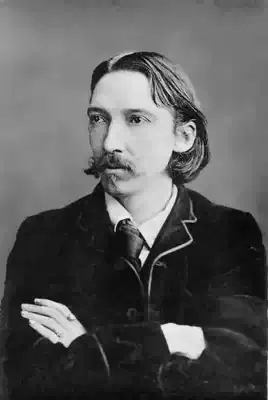
Robert Louis Stevenson
The Wind Is Without There And Howls In The Trees
The Wind Is Without There And Howls In The Trees
THE wind is without there and howls in the trees,
And the rain-flurries drum on the glass:
Alone by the fireside with elbows on knees
I can number the hours as they pass.
Yet now, when to cheer me the crickets begin,
And my pipe is just happily lit,
Believe me, my friend, tho' the evening draws in,
That not all uncontested I sit.
Alone, did I say? O no, nowise alone
With the Past sitting warm on my knee,
To gossip of days that are over and gone,
But still charming to her and to me.
With much to be glad of and much to deplore,
Yet, as these days with those we compare,
Believe me, my friend, tho' the sorrows seem more
They are somehow more easy to bear.
And thou, faded Future, uncertain and frail,
As I cherish thy light in each draught,
His lamp is not more to the miner - their sail
Is not more to the crew on the raft.
For Hope can make feeble ones earnest and brave,
And, as forth thro' the years I look on,
Believe me, my friend, between this and the grave,
I see wonderful things to be done.
To do or to try; and, believe me, my friend,
If the call should come early for me,
I can leave these foundations uprooted, and tend
For some new city over the sea.
To do or to try; and if failure be mine,
And if Fortune go cross to my plan,
Believe me, my friend, tho' I mourn the design
I shall never lament for the man.
THE wind is without there and howls in the trees,
And the rain-flurries drum on the glass:
Alone by the fireside with elbows on knees
I can number the hours as they pass.
Yet now, when to cheer me the crickets begin,
And my pipe is just happily lit,
Believe me, my friend, tho' the evening draws in,
That not all uncontested I sit.
Alone, did I say? O no, nowise alone
With the Past sitting warm on my knee,
To gossip of days that are over and gone,
But still charming to her and to me.
With much to be glad of and much to deplore,
Yet, as these days with those we compare,
Believe me, my friend, tho' the sorrows seem more
They are somehow more easy to bear.
And thou, faded Future, uncertain and frail,
As I cherish thy light in each draught,
His lamp is not more to the miner - their sail
Is not more to the crew on the raft.
For Hope can make feeble ones earnest and brave,
And, as forth thro' the years I look on,
Believe me, my friend, between this and the grave,
I see wonderful things to be done.
To do or to try; and, believe me, my friend,
If the call should come early for me,
I can leave these foundations uprooted, and tend
For some new city over the sea.
To do or to try; and if failure be mine,
And if Fortune go cross to my plan,
Believe me, my friend, tho' I mourn the design
I shall never lament for the man.
544
Robert Louis Stevenson
I WHo All The Winter Through
I WHo All The Winter Through
I WHO all the winter through
Cherished other loves than you,
And kept hands with hoary policy in marriage-bed and pew;
Now I know the false and true,
For the earnest sun looks through,
And my old love comes to meet me in the dawning and the dew.
Now the hedged meads renew
Rustic odour, smiling hue,
And the clean air shines and tinkles as the world goes wheeling through;
And my heart springs up anew,
Bright and confident and true,
And my old love comes to meet me in the dawning and the dew.
I WHO all the winter through
Cherished other loves than you,
And kept hands with hoary policy in marriage-bed and pew;
Now I know the false and true,
For the earnest sun looks through,
And my old love comes to meet me in the dawning and the dew.
Now the hedged meads renew
Rustic odour, smiling hue,
And the clean air shines and tinkles as the world goes wheeling through;
And my heart springs up anew,
Bright and confident and true,
And my old love comes to meet me in the dawning and the dew.
287
Robert Louis Stevenson
Fixed Is The Doom
Fixed Is The Doom
FIXED is the doom; and to the last of years
Teacher and taught, friend, lover, parent, child,
Each walks, though near, yet separate; each beholds
His dear ones shine beyond him like the stars.
We also, love, forever dwell apart;
With cries approach, with cries behold the gulph,
The Unvaulted; as two great eagles that do wheel in air
Above a mountain, and with screams confer,
Far heard athwart the cedars.
Yet the years
Shall bring us ever nearer; day by day
Endearing, week by week, till death at last
Dissolve that long divorce. By faith we love,
Not knowledge; and by faith, though far removed,
Dwell as in perfect nearness, heart to heart.
We but excuse
Those things we merely are; and to our souls
A brave deception cherish.
So from unhappy war a man returns
Unfearing, or the seaman from the deep;
So from cool night and woodlands to a feast
May someone enter, and still breathe of dews,
And in her eyes still wear the dusky night.
FIXED is the doom; and to the last of years
Teacher and taught, friend, lover, parent, child,
Each walks, though near, yet separate; each beholds
His dear ones shine beyond him like the stars.
We also, love, forever dwell apart;
With cries approach, with cries behold the gulph,
The Unvaulted; as two great eagles that do wheel in air
Above a mountain, and with screams confer,
Far heard athwart the cedars.
Yet the years
Shall bring us ever nearer; day by day
Endearing, week by week, till death at last
Dissolve that long divorce. By faith we love,
Not knowledge; and by faith, though far removed,
Dwell as in perfect nearness, heart to heart.
We but excuse
Those things we merely are; and to our souls
A brave deception cherish.
So from unhappy war a man returns
Unfearing, or the seaman from the deep;
So from cool night and woodlands to a feast
May someone enter, and still breathe of dews,
And in her eyes still wear the dusky night.
393
Robert Louis Stevenson
Dedication
Dedication
MY first gift and my last, to you
I dedicate this fascicle of songs -
The only wealth I have:
Just as they are, to you.
I speak the truth in soberness, and say
I had rather bring a light to your clear eyes,
Had rather hear you praise
This bosomful of songs
Than that the whole, hard world with one consent,
In one continuous chorus of applause
Poured forth for me and mine
The homage of ripe praise.
I write the finis here against my love,
This is my love's last epitaph and tomb.
Here the road forks, and I
Go my way, far from yours.
MY first gift and my last, to you
I dedicate this fascicle of songs -
The only wealth I have:
Just as they are, to you.
I speak the truth in soberness, and say
I had rather bring a light to your clear eyes,
Had rather hear you praise
This bosomful of songs
Than that the whole, hard world with one consent,
In one continuous chorus of applause
Poured forth for me and mine
The homage of ripe praise.
I write the finis here against my love,
This is my love's last epitaph and tomb.
Here the road forks, and I
Go my way, far from yours.
404

Robert Frost
The Road Not Taken
The Road Not Taken
Two roads diverged in a yellow wood,
And sorry I could not travel both
And be one traveler, long I stood
And looked down one as far as I could
To where it bent in the undergrowth;
Then took the other, just as fair,
And having perhaps the better claim
Because it was grassy and wanted wear,
Though as for that the passing there
Had worn them really about the same,
And both that morning equally lay
In leaves no step had trodden black.
Oh, I marked the first for another day!
Yet knowing how way leads on to way
I doubted if I should ever come back.
I shall be telling this with a sigh
Somewhere ages and ages hence:
Two roads diverged in a wood, and I,
I took the one less traveled by,
And that has made all the difference.
Two roads diverged in a yellow wood,
And sorry I could not travel both
And be one traveler, long I stood
And looked down one as far as I could
To where it bent in the undergrowth;
Then took the other, just as fair,
And having perhaps the better claim
Because it was grassy and wanted wear,
Though as for that the passing there
Had worn them really about the same,
And both that morning equally lay
In leaves no step had trodden black.
Oh, I marked the first for another day!
Yet knowing how way leads on to way
I doubted if I should ever come back.
I shall be telling this with a sigh
Somewhere ages and ages hence:
Two roads diverged in a wood, and I,
I took the one less traveled by,
And that has made all the difference.
489
Robert Frost
A Boundless Moment
A Boundless Moment
He halted in the wind, and -- what was that
Far in the maples, pale, but not a ghost?
He stood there bringing March against his thought,
And yet too ready to believe the most.
"Oh, that's the Paradise-in-bloom," I said;
And truly it was fair enough for flowers
had we but in us to assume in march
Such white luxuriance of May for ours.
We stood a moment so in a strange world,
Myself as one his own pretense deceives;
And then I said the truth (and we moved on).
A young beech clinging to its last year's leaves.
He halted in the wind, and -- what was that
Far in the maples, pale, but not a ghost?
He stood there bringing March against his thought,
And yet too ready to believe the most.
"Oh, that's the Paradise-in-bloom," I said;
And truly it was fair enough for flowers
had we but in us to assume in march
Such white luxuriance of May for ours.
We stood a moment so in a strange world,
Myself as one his own pretense deceives;
And then I said the truth (and we moved on).
A young beech clinging to its last year's leaves.
489
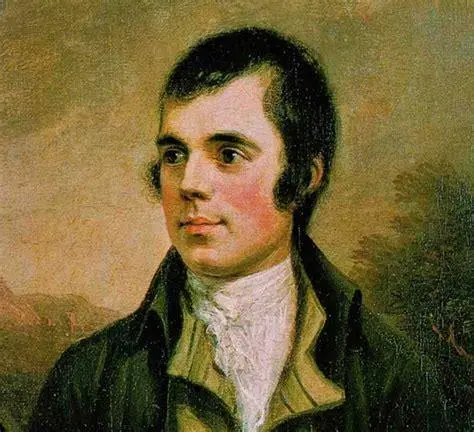
Robert Burns
The Gloomy Night Is Gath'ring Fast
The Gloomy Night Is Gath'ring Fast
The gloomy night is gath'ring fast,
Loud roars the wild inconstant blast;
Yon murky cloud is filled with rain,
I see it driving o'er the plain;
The hunter now has left the moor,
The scatt'red coveys meet secure;
While here I wander, prest with care,
Along the lonely banks of Ayr.
The Autumn mourns her rip'ning corn
By early Winter's ravage torn;
Across her placid, azure sky,
She sees the scowling tempest fly;
Chill runs my blood to hear it rave:
I think upon the stormy wave,
Where many a danger I must dare,
Far from the bonie banks of Ayr.
'Tis not the surging billows' roar,
'Tis not the fatal, deadly shore;
Tho' death inev'ry shape appear,
The wretched have no more to fear:
But round my heart the ties are bound,
That heart transpierc'd with many a wound;
These bleed afresh, those ties I tear,
To leave the bonie banks of Ayr.
Farewell, old Coila's hills and dales,
Her heathy moors and winding vales;
The scenes where wretched Fancy roves,
Pursuing past, unhappy loves!
Farewell my friends! Farewell my foes!
My peace with these, my love with those--
The bursting tears my heart declare,
Farewell, my bonie banks of Ayr.
The gloomy night is gath'ring fast,
Loud roars the wild inconstant blast;
Yon murky cloud is filled with rain,
I see it driving o'er the plain;
The hunter now has left the moor,
The scatt'red coveys meet secure;
While here I wander, prest with care,
Along the lonely banks of Ayr.
The Autumn mourns her rip'ning corn
By early Winter's ravage torn;
Across her placid, azure sky,
She sees the scowling tempest fly;
Chill runs my blood to hear it rave:
I think upon the stormy wave,
Where many a danger I must dare,
Far from the bonie banks of Ayr.
'Tis not the surging billows' roar,
'Tis not the fatal, deadly shore;
Tho' death inev'ry shape appear,
The wretched have no more to fear:
But round my heart the ties are bound,
That heart transpierc'd with many a wound;
These bleed afresh, those ties I tear,
To leave the bonie banks of Ayr.
Farewell, old Coila's hills and dales,
Her heathy moors and winding vales;
The scenes where wretched Fancy roves,
Pursuing past, unhappy loves!
Farewell my friends! Farewell my foes!
My peace with these, my love with those--
The bursting tears my heart declare,
Farewell, my bonie banks of Ayr.
233
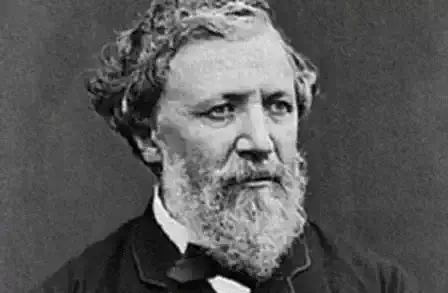
Robert Browning
You'll love me yet!—and I can tarry
You'll love me yet!—and I can tarry
You'll love me yet!—and I can tarry
Your love's protracted growing:
June reared that bunch of flowers you carry
From seeds of April's sowing.
I plant a heartful now: some seed
At least is sure to strike,
And yield—what you'll not pluck indeed,
Not love, but, may be, like!
You'll look at least on love's remains,
A grave's one violet:
Your look?—that pays a thousand pains.
What's death?—You'll love me yet!
You'll love me yet!—and I can tarry
Your love's protracted growing:
June reared that bunch of flowers you carry
From seeds of April's sowing.
I plant a heartful now: some seed
At least is sure to strike,
And yield—what you'll not pluck indeed,
Not love, but, may be, like!
You'll look at least on love's remains,
A grave's one violet:
Your look?—that pays a thousand pains.
What's death?—You'll love me yet!
219
Robert Browning
The Patriot
The Patriot
AN OLD STORY.
I.
It was roses, roses, all the way,
With myrtle mixed in my path like mad:
The house-roofs seemed to heave and sway,
The church-spires flamed, such flags they had,
A year ago on this very day.
II.
The air broke into a mist with bells,
The old walls rocked with the crowd and cries.
Had I said, ``Good folk, mere noise repels---
But give me your sun from yonder skies!''
They had answered, ``And afterward, what else?''
III.
Alack, it was I who leaped at the sun
To give it my loving friends to keep!
Nought man could do, have I left undone:
And you see my harvest, what I reap
This very day, now a year is run.
IV.
There's nobody on the house-tops now---
Just a palsied few at the windows set;
For the best of the sight is, all allow,
At the Shambles' Gate---or, better yet,
By the very scaffold's foot, I trow.
V.
I go in the rain, and, more than needs,
A rope cuts both my wrists behind;
And I think, by the feel, my forehead bleeds,
For they fling, whoever has a mind,
Stones at me for my year's misdeeds.
VI.
Thus I entered, and thus I go!
In triumphs, people have dropped down dead.
``Paid by the world, what dost thou owe
``Me?''---God might question; now instead,
'Tis God shall repay: I am safer so.
AN OLD STORY.
I.
It was roses, roses, all the way,
With myrtle mixed in my path like mad:
The house-roofs seemed to heave and sway,
The church-spires flamed, such flags they had,
A year ago on this very day.
II.
The air broke into a mist with bells,
The old walls rocked with the crowd and cries.
Had I said, ``Good folk, mere noise repels---
But give me your sun from yonder skies!''
They had answered, ``And afterward, what else?''
III.
Alack, it was I who leaped at the sun
To give it my loving friends to keep!
Nought man could do, have I left undone:
And you see my harvest, what I reap
This very day, now a year is run.
IV.
There's nobody on the house-tops now---
Just a palsied few at the windows set;
For the best of the sight is, all allow,
At the Shambles' Gate---or, better yet,
By the very scaffold's foot, I trow.
V.
I go in the rain, and, more than needs,
A rope cuts both my wrists behind;
And I think, by the feel, my forehead bleeds,
For they fling, whoever has a mind,
Stones at me for my year's misdeeds.
VI.
Thus I entered, and thus I go!
In triumphs, people have dropped down dead.
``Paid by the world, what dost thou owe
``Me?''---God might question; now instead,
'Tis God shall repay: I am safer so.
795
Robert Browning
Parting At Morning
Parting At Morning
Round the cape of a sudden came the sea,
And the sun looked over the mountain's rim:
And straight was a path of gold for him,
And the need of a world of men for me.
Round the cape of a sudden came the sea,
And the sun looked over the mountain's rim:
And straight was a path of gold for him,
And the need of a world of men for me.
304
Robert Browning
Love Among The Ruins
Love Among The Ruins
I.
Where the quiet-coloured end of evening smiles,
Miles and miles
On the solitary pastures where our sheep
Half-asleep
Tinkle homeward thro' the twilight, stray or stop
As they crop---
Was the site once of a city great and gay,
(So they say)
Of our country's very capital, its prince
Ages since
Held his court in, gathered councils, wielding far
Peace or war.
II.
Now,---the country does not even boast a tree,
As you see,
To distinguish slopes of verdure, certain rills
From the hills
Intersect and give a name to, (else they run
Into one)
Where the domed and daring palace shot its spires
Up like fires
O'er the hundred-gated circuit of a wall
Bounding all,
Made of marble, men might march on nor be pressed,
Twelve abreast.
III.
And such plenty and perfection, see, of grass
Never was!
Such a carpet as, this summer-time, o'erspreads
And embeds
Every vestige of the city, guessed alone,
Stock or stone---
Where a multitude of men breathed joy and woe
Long ago;
Lust of glory pricked their hearts up, dread of shame
Struck them tame;
And that glory and that shame alike, the gold
Bought and sold.
IV.
Now,---the single little turret that remains
On the plains,
By the caper overrooted, by the gourd
Overscored,
While the patching houseleek's head of blossom winks
Through the chinks---
Marks the basement whence a tower in ancient time
Sprang sublime,
And a burning ring, all round, the chariots traced
As they raced,
And the monarch and his minions and his dames
Viewed the games.
V.
And I know, while thus the quiet-coloured eve
Smiles to leave
To their folding, all our many-tinkling fleece
In such peace,
And the slopes and rills in undistinguished grey
Melt away---
That a girl with eager eyes and yellow hair
Waits me there
In the turret whence the charioteers caught soul
For the goal,
When the king looked, where she looks now, breathless, dumb
Till I come.
VI.
But he looked upon the city, every side,
Far and wide,
All the mountains topped with temples, all the glades'
Colonnades,
All the causeys, bridges, aqueducts,---and then,
All the men!
When I do come, she will speak not, she will stand,
Either hand
On my shoulder, give her eyes the first embrace
Of my face,
Ere we rush, ere we extinguish sight and speech
Each on each.
VII.
In one year they sent a million fighters forth
South and North,
And they built their gods a brazen pillar high
As the sky,
Yet reserved a thousand chariots in full force---
Gold, of course.
Oh heart! oh blood that freezes, blood that burns!
Earth's returns
For whole centuries of folly, noise and sin!
Shut them in,
With their triumphs and their glories and the rest!
Love is best.
I.
Where the quiet-coloured end of evening smiles,
Miles and miles
On the solitary pastures where our sheep
Half-asleep
Tinkle homeward thro' the twilight, stray or stop
As they crop---
Was the site once of a city great and gay,
(So they say)
Of our country's very capital, its prince
Ages since
Held his court in, gathered councils, wielding far
Peace or war.
II.
Now,---the country does not even boast a tree,
As you see,
To distinguish slopes of verdure, certain rills
From the hills
Intersect and give a name to, (else they run
Into one)
Where the domed and daring palace shot its spires
Up like fires
O'er the hundred-gated circuit of a wall
Bounding all,
Made of marble, men might march on nor be pressed,
Twelve abreast.
III.
And such plenty and perfection, see, of grass
Never was!
Such a carpet as, this summer-time, o'erspreads
And embeds
Every vestige of the city, guessed alone,
Stock or stone---
Where a multitude of men breathed joy and woe
Long ago;
Lust of glory pricked their hearts up, dread of shame
Struck them tame;
And that glory and that shame alike, the gold
Bought and sold.
IV.
Now,---the single little turret that remains
On the plains,
By the caper overrooted, by the gourd
Overscored,
While the patching houseleek's head of blossom winks
Through the chinks---
Marks the basement whence a tower in ancient time
Sprang sublime,
And a burning ring, all round, the chariots traced
As they raced,
And the monarch and his minions and his dames
Viewed the games.
V.
And I know, while thus the quiet-coloured eve
Smiles to leave
To their folding, all our many-tinkling fleece
In such peace,
And the slopes and rills in undistinguished grey
Melt away---
That a girl with eager eyes and yellow hair
Waits me there
In the turret whence the charioteers caught soul
For the goal,
When the king looked, where she looks now, breathless, dumb
Till I come.
VI.
But he looked upon the city, every side,
Far and wide,
All the mountains topped with temples, all the glades'
Colonnades,
All the causeys, bridges, aqueducts,---and then,
All the men!
When I do come, she will speak not, she will stand,
Either hand
On my shoulder, give her eyes the first embrace
Of my face,
Ere we rush, ere we extinguish sight and speech
Each on each.
VII.
In one year they sent a million fighters forth
South and North,
And they built their gods a brazen pillar high
As the sky,
Yet reserved a thousand chariots in full force---
Gold, of course.
Oh heart! oh blood that freezes, blood that burns!
Earth's returns
For whole centuries of folly, noise and sin!
Shut them in,
With their triumphs and their glories and the rest!
Love is best.
531
Robert Browning
Any Wife To Any Husband
Any Wife To Any Husband
My love, this is the bitterest, that thou---
Who art all truth, and who dost love me now
As thine eyes say, as thy voice breaks to say---
Shouldst love so truly, and couldst love me still
A whole long life through, had but love its will,
Would death that leads me from thee brook delay.
II.
I have but to be by thee, and thy hand
Will never let mine go, nor heart withstand
The beating of my heart to reach its place.
When shall I look for thee and feel thee gone?
When cry for the old comfort and find none?
Never, I know! Thy soul is in thy face.
III.
Oh, I should fade---'tis willed so! Might I save,
Gladly I would, whatever beauty gave
Joy to thy sense, for that was precious too.
It is not to be granted. But the soul
Whence the love comes, all ravage leaves that whole;
Vainly the flesh fades; soul makes all things new.
IV.
It would not be because my eye grew dim
Thou couldst not find the love there, thanks to Him
Who never is dishonoured in the spark
He gave us from his fire of fires, and bade
Remember whence it sprang, nor be afraid
While that burns on, though all the rest grow dark.
V.
So, how thou wouldst be perfect, white and clean
Outside as inside, soul and soul's demesne
Alike, this body given to show it by!
Oh, three-parts through the worst of life's abyss,
What plaudits from the next world after this,
Couldst thou repeat a stroke and gain the sky!
VI.
And is it not the bitterer to think
That, disengage our hands and thou wilt sink
Although thy love was love in very deed?
I know that nature! Pass a festive day,
Thou dost not throw its relic-flower away
Nor bid its music's loitering echo speed.
VII.
Thou let'st the stranger's glove lie where it fell;
If old things remain old things all is well,
For thou art grateful as becomes man best
And hadst thou only heard me play one tune,
Or viewed me from a window, not so soon
With thee would such things fade as with the rest.
VIII.
I seem to see! We meet and part; 'tis brief;
The book I opened keeps a folded leaf,
The very chair I sat on, breaks the rank
That is a portrait of me on the wall---
Three lines, my face comes at so slight a call:
And for all this, one little hour to thank!
IX.
But now, because the hour through years was fixed,
Because our inmost beings met and mixed,
Because thou once hast loved me---wilt thou dare
Say to thy soul and Who may list beside,
``Therefore she is immortally my bride;
``Chance cannot change my love, nor time impair.
X.
``So, what if in the dusk of life that's left,
``I, a tired traveller of my sun bereft,
Look from my path when, mimicking the same,
``The fire-fly glimpses past me, come and gone?
``---Where was it till the sunset? where anon
``It will be at the sunrise! What's to blame?''
XI.
Is it so helpful to thee? Canst thou take
The mimic up, nor, for the true thing's sake,
Put gently by such efforts at a beam?
Is the remainder of the way so long,
Thou need'st the little solace, thou the strong
Watch out thy watch, let weak ones doze and dream!
XII.
---Ah, but the fresher faces! ``Is it true,''
Thou'lt ask, ``some eyes are beautiful and new?
``Some hair,---how can one choose but grasp such wealth?
``And if a man would press his lips to lips
``Fresh as the wilding hedge-rose-cup there slips
``The dew-drop out of, must it be by stealth?
XIII.
``It cannot change the love still kept for Her,
``More than if such a picture I prefer
``Passing a day with, to a room's bare side:
The painted form takes nothing she possessed,
Yet, while the Titian's Venus lies at rest,
A man looks. Once more, what is there to chide?''
XIV.
So must I see, from where I sit and watch,
My own self sell myself, my hand attach
Its warrant to the very thefts from me---
Thy singleness of soul that made me proud,
Thy purity of heart I loved aloud,
Thy man's-truth I was bold to bid God see!
XV.
Love so, then, if thou wilt! Give all thou canst
Away to the new faces---disentranced,
(Say it and think it) obdurate no more:
Re-issue looks and words from the old mint,
Pass them afresh, no matter whose the print
Image and superscription once they bore
XVI.
Re-coin thyself and give it them to spend,---
It all comes to the same thing at the end,
Since mine thou wast, mine art and mine shalt be,
Faithful or faithless, scaling up the sum
Or lavish of my treasure, thou must come
Back to the heart's place here I keep for thee!
XVII.
Only, why should it be with stain at all?
Why must I, 'twixt the leaves of coronal,
Put any kiss of pardon on thy brow?
Why need the other women know so much,
And talk together, ``Such the look and such
``The smile he used to love with, then as now!''
XVIII.
Might I die last and show thee! Should I find
Such hardship in the few years left behind,
If free to take and light my lamp, and go
Into thy tomb, and shut the door and sit,
Seeing thy face on those four sides of it
The better that they are so blank, I know!
XIX.
Why, time was what I wanted, to turn o'er
Within my mind each look, get more and more
By heart each word, too much to learn at first;
And join thee all the fitter for the pause
'Neath the low doorway's lintel. That were cause
For lingering, though thou calledst, if I durst!
XX.
And yet thou art the nobler of us two
What dare I dream of, that thou canst not do,
Outstripping my ten small steps with one stride?
I'll say then, here's a trial and a task---
Is it to bear?---if easy, I'll not ask:
Though love fail, I can trust on in thy pride.
XXI.
Pride?---when those eyes forestall the life behind
The death I have to go through!---when I find,
Now that I want thy help most, all of thee!
What did I fear? Thy love shall hold me fast
Until the little minute's sleep is past
And I wake saved.---And yet it will not be!
My love, this is the bitterest, that thou---
Who art all truth, and who dost love me now
As thine eyes say, as thy voice breaks to say---
Shouldst love so truly, and couldst love me still
A whole long life through, had but love its will,
Would death that leads me from thee brook delay.
II.
I have but to be by thee, and thy hand
Will never let mine go, nor heart withstand
The beating of my heart to reach its place.
When shall I look for thee and feel thee gone?
When cry for the old comfort and find none?
Never, I know! Thy soul is in thy face.
III.
Oh, I should fade---'tis willed so! Might I save,
Gladly I would, whatever beauty gave
Joy to thy sense, for that was precious too.
It is not to be granted. But the soul
Whence the love comes, all ravage leaves that whole;
Vainly the flesh fades; soul makes all things new.
IV.
It would not be because my eye grew dim
Thou couldst not find the love there, thanks to Him
Who never is dishonoured in the spark
He gave us from his fire of fires, and bade
Remember whence it sprang, nor be afraid
While that burns on, though all the rest grow dark.
V.
So, how thou wouldst be perfect, white and clean
Outside as inside, soul and soul's demesne
Alike, this body given to show it by!
Oh, three-parts through the worst of life's abyss,
What plaudits from the next world after this,
Couldst thou repeat a stroke and gain the sky!
VI.
And is it not the bitterer to think
That, disengage our hands and thou wilt sink
Although thy love was love in very deed?
I know that nature! Pass a festive day,
Thou dost not throw its relic-flower away
Nor bid its music's loitering echo speed.
VII.
Thou let'st the stranger's glove lie where it fell;
If old things remain old things all is well,
For thou art grateful as becomes man best
And hadst thou only heard me play one tune,
Or viewed me from a window, not so soon
With thee would such things fade as with the rest.
VIII.
I seem to see! We meet and part; 'tis brief;
The book I opened keeps a folded leaf,
The very chair I sat on, breaks the rank
That is a portrait of me on the wall---
Three lines, my face comes at so slight a call:
And for all this, one little hour to thank!
IX.
But now, because the hour through years was fixed,
Because our inmost beings met and mixed,
Because thou once hast loved me---wilt thou dare
Say to thy soul and Who may list beside,
``Therefore she is immortally my bride;
``Chance cannot change my love, nor time impair.
X.
``So, what if in the dusk of life that's left,
``I, a tired traveller of my sun bereft,
Look from my path when, mimicking the same,
``The fire-fly glimpses past me, come and gone?
``---Where was it till the sunset? where anon
``It will be at the sunrise! What's to blame?''
XI.
Is it so helpful to thee? Canst thou take
The mimic up, nor, for the true thing's sake,
Put gently by such efforts at a beam?
Is the remainder of the way so long,
Thou need'st the little solace, thou the strong
Watch out thy watch, let weak ones doze and dream!
XII.
---Ah, but the fresher faces! ``Is it true,''
Thou'lt ask, ``some eyes are beautiful and new?
``Some hair,---how can one choose but grasp such wealth?
``And if a man would press his lips to lips
``Fresh as the wilding hedge-rose-cup there slips
``The dew-drop out of, must it be by stealth?
XIII.
``It cannot change the love still kept for Her,
``More than if such a picture I prefer
``Passing a day with, to a room's bare side:
The painted form takes nothing she possessed,
Yet, while the Titian's Venus lies at rest,
A man looks. Once more, what is there to chide?''
XIV.
So must I see, from where I sit and watch,
My own self sell myself, my hand attach
Its warrant to the very thefts from me---
Thy singleness of soul that made me proud,
Thy purity of heart I loved aloud,
Thy man's-truth I was bold to bid God see!
XV.
Love so, then, if thou wilt! Give all thou canst
Away to the new faces---disentranced,
(Say it and think it) obdurate no more:
Re-issue looks and words from the old mint,
Pass them afresh, no matter whose the print
Image and superscription once they bore
XVI.
Re-coin thyself and give it them to spend,---
It all comes to the same thing at the end,
Since mine thou wast, mine art and mine shalt be,
Faithful or faithless, scaling up the sum
Or lavish of my treasure, thou must come
Back to the heart's place here I keep for thee!
XVII.
Only, why should it be with stain at all?
Why must I, 'twixt the leaves of coronal,
Put any kiss of pardon on thy brow?
Why need the other women know so much,
And talk together, ``Such the look and such
``The smile he used to love with, then as now!''
XVIII.
Might I die last and show thee! Should I find
Such hardship in the few years left behind,
If free to take and light my lamp, and go
Into thy tomb, and shut the door and sit,
Seeing thy face on those four sides of it
The better that they are so blank, I know!
XIX.
Why, time was what I wanted, to turn o'er
Within my mind each look, get more and more
By heart each word, too much to learn at first;
And join thee all the fitter for the pause
'Neath the low doorway's lintel. That were cause
For lingering, though thou calledst, if I durst!
XX.
And yet thou art the nobler of us two
What dare I dream of, that thou canst not do,
Outstripping my ten small steps with one stride?
I'll say then, here's a trial and a task---
Is it to bear?---if easy, I'll not ask:
Though love fail, I can trust on in thy pride.
XXI.
Pride?---when those eyes forestall the life behind
The death I have to go through!---when I find,
Now that I want thy help most, all of thee!
What did I fear? Thy love shall hold me fast
Until the little minute's sleep is past
And I wake saved.---And yet it will not be!
386
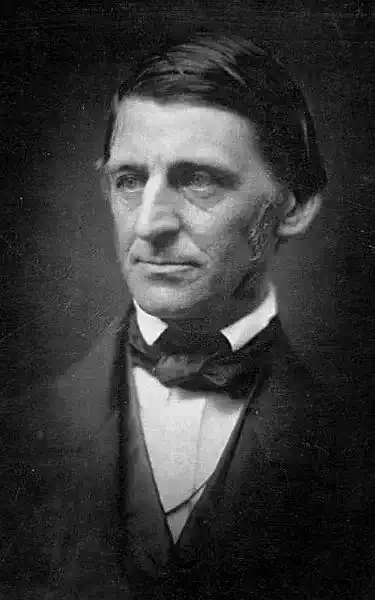
Ralph Waldo Emerson
To-day
To-day
I rake no coffined clay, nor publish wide
The resurrection of departed pride.
Safe in their ancient crannies, dark and deep,
Let kings and conquerors, saints and soldiers sleep--
Late in the world,--too late perchance for fame,
Just late enough to reap abundant blame,--
I choose a novel theme, a bold abuse
Of critic charters, an unlaurelled Muse.
Old mouldy men and books and names and lands
Disgust my reason and defile my hands.
I had as lief respect an ancient shoe,
As love old things for age, and hate the new.
I spurn the Past, my mind disdains its nod,
Nor kneels in homage to so mean a God.
I laugh at those who, while they gape and gaze,
The bald antiquity of China praise.
Youth is (whatever cynic tubs pretend)
The fault that boys and nations soonest mend.
I rake no coffined clay, nor publish wide
The resurrection of departed pride.
Safe in their ancient crannies, dark and deep,
Let kings and conquerors, saints and soldiers sleep--
Late in the world,--too late perchance for fame,
Just late enough to reap abundant blame,--
I choose a novel theme, a bold abuse
Of critic charters, an unlaurelled Muse.
Old mouldy men and books and names and lands
Disgust my reason and defile my hands.
I had as lief respect an ancient shoe,
As love old things for age, and hate the new.
I spurn the Past, my mind disdains its nod,
Nor kneels in homage to so mean a God.
I laugh at those who, while they gape and gaze,
The bald antiquity of China praise.
Youth is (whatever cynic tubs pretend)
The fault that boys and nations soonest mend.
320
Ralph Waldo Emerson
The Amulet
The Amulet
Your picture smiles as first it smiled,
The ring you gave is still the same,
Your letter tells, O changing child,
No tidings since it came.
Give me an amulet
That keeps intelligence with you,
Red when you love, and rosier red,
And when you love not, pale and blue.
Alas, that neither bonds nor vows
Can certify possession;
Torments me still the fear that love
Died in its last expression.
Your picture smiles as first it smiled,
The ring you gave is still the same,
Your letter tells, O changing child,
No tidings since it came.
Give me an amulet
That keeps intelligence with you,
Red when you love, and rosier red,
And when you love not, pale and blue.
Alas, that neither bonds nor vows
Can certify possession;
Torments me still the fear that love
Died in its last expression.
397
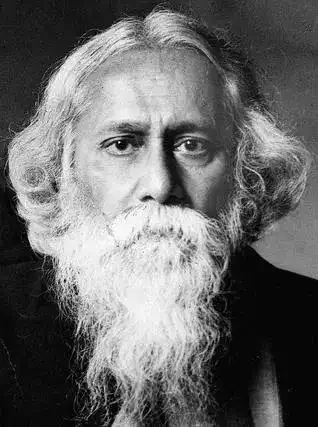
Rabindranath Tagore
Unending Love
Unending Love
I seem to have loved you in numberless forms, numberless times…
In life after life, in age after age, forever.
My spellbound heart has made and remade the necklace of songs,
That you take as a gift, wear round your neck in your many forms,
In life after life, in age after age, forever.
Whenever I hear old chronicles of love, it's age-old pain,
It's ancient tale of being apart or together.
As I stare on and on into the past, in the end you emerge,
Clad in the light of a pole-star piercing the darkness of time:
You become an image of what is remembered forever.
You and I have floated here on the stream that brings from the fount.
At the heart of time, love of one for another.
We have played along side millions of lovers, shared in the same
Shy sweetness of meeting, the same distressful tears of farewell-
Old love but in shapes that renew and renew forever.
Today it is heaped at your feet, it has found its end in you
The love of all man’s days both past and forever:
Universal joy, universal sorrow, universal life.
The memories of all loves merging with this one love of ours –
And the songs of every poet past and forever.
I seem to have loved you in numberless forms, numberless times…
In life after life, in age after age, forever.
My spellbound heart has made and remade the necklace of songs,
That you take as a gift, wear round your neck in your many forms,
In life after life, in age after age, forever.
Whenever I hear old chronicles of love, it's age-old pain,
It's ancient tale of being apart or together.
As I stare on and on into the past, in the end you emerge,
Clad in the light of a pole-star piercing the darkness of time:
You become an image of what is remembered forever.
You and I have floated here on the stream that brings from the fount.
At the heart of time, love of one for another.
We have played along side millions of lovers, shared in the same
Shy sweetness of meeting, the same distressful tears of farewell-
Old love but in shapes that renew and renew forever.
Today it is heaped at your feet, it has found its end in you
The love of all man’s days both past and forever:
Universal joy, universal sorrow, universal life.
The memories of all loves merging with this one love of ours –
And the songs of every poet past and forever.
1,123
Rabindranath Tagore
Lover's Gifts XXXIX: There Is a Looker-On
Lover's Gifts XXXIX: There Is a Looker-On
There is a looker-on who sits behind my eyes. I seems he has seen
things in ages and worlds beyond memory's shore, and those
forgotten sights glisten on the grass and shiver on the leaves. He
has seen under new veils the face of the one beloved, in twilight
hours of many a nameless star. Therefore his sky seems to ache with
the pain of countless meetings and partings, and a longing pervades
this spring breeze, -the longing that is full of the whisper of
ages without beginning.
There is a looker-on who sits behind my eyes. I seems he has seen
things in ages and worlds beyond memory's shore, and those
forgotten sights glisten on the grass and shiver on the leaves. He
has seen under new veils the face of the one beloved, in twilight
hours of many a nameless star. Therefore his sky seems to ache with
the pain of countless meetings and partings, and a longing pervades
this spring breeze, -the longing that is full of the whisper of
ages without beginning.
464
Rabindranath Tagore
Lover's Gifts XL: A Message Came
Lover's Gifts XL: A Message Came
A message came from my youth of vanished days, saying, " I wait for
you among the quivering of unborn May, where smiles ripen for tears
and hours ache with songs unsung."
It says, "Come to me across the worn-out track of age, through
the gates of death. For dreams fade, hopes fail, the fathered
fruits of the year decay, but I am the eternal truth, and you shall
meet me again and again in your voyage of life from shore to
shore."
A message came from my youth of vanished days, saying, " I wait for
you among the quivering of unborn May, where smiles ripen for tears
and hours ache with songs unsung."
It says, "Come to me across the worn-out track of age, through
the gates of death. For dreams fade, hopes fail, the fathered
fruits of the year decay, but I am the eternal truth, and you shall
meet me again and again in your voyage of life from shore to
shore."
490