

Poems in this theme
Past and Future
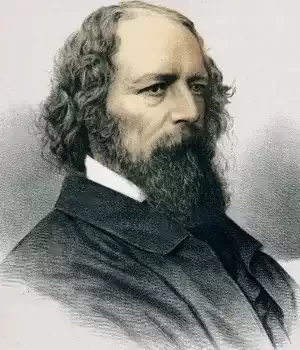
Alfred Lord Tennyson
In Memoriam A. H. H.: 82. I wage not any feud with death
In Memoriam A. H. H.: 82. I wage not any feud with death
I wage not any feud with Death
For changes wrought on form and face;
No lower life that earth's embrace
May breed with him, can fright my faith.
Eternal process moving on,
From state to state the spirit walks;
And these are but the shatter'd stalks,
Or ruin'd chrysalis of one.
Nor blame I Death, because he bare
The use of virtue out of earth:
I know transplanted human worth
Will bloom to profit, otherwhere.
For this alone on Death I wreak
The wrath that garners in my heart;
He put our lives so far apart
We cannot hear each other speak.
I wage not any feud with Death
For changes wrought on form and face;
No lower life that earth's embrace
May breed with him, can fright my faith.
Eternal process moving on,
From state to state the spirit walks;
And these are but the shatter'd stalks,
Or ruin'd chrysalis of one.
Nor blame I Death, because he bare
The use of virtue out of earth:
I know transplanted human worth
Will bloom to profit, otherwhere.
For this alone on Death I wreak
The wrath that garners in my heart;
He put our lives so far apart
We cannot hear each other speak.
486
Alfred Lord Tennyson
In Memoriam A. H. H.: 105. To-night ungather'd let us leave
In Memoriam A. H. H.: 105. To-night ungather'd let us leave
To-night ungather'd let us leave
This laurel, let this holly stand:
We live within the stranger's land,
And strangely falls our Christmas-eve.
Our father's dust is left alone
And silent under other snows:
There in due time the woodbine blows,
The violet comes, but we are gone.
No more shall wayward grief abuse
The genial hour with mask and mime;
For change of place, like growth of time,
Has broke the bond of dying use.
Let cares that petty shadows cast,
By which our lives are chiefly proved,
A little spare the night I loved,
And hold it solemn to the past.
But let no footstep beat the floor,
Nor bowl of wassail mantle warm;
For who would keep an ancient form
Thro' which the spirit breathes no more?
Be neither song, nor game, nor feast;
Nor harp be touch'd, nor flute be blown;
No dance, no motion, save alone
What lightens in the lucid east
Of rising worlds by yonder wood.
Long sleeps the summer in the seed;
Run out your measured arcs, and lead
The closing cycle rich in good.
To-night ungather'd let us leave
This laurel, let this holly stand:
We live within the stranger's land,
And strangely falls our Christmas-eve.
Our father's dust is left alone
And silent under other snows:
There in due time the woodbine blows,
The violet comes, but we are gone.
No more shall wayward grief abuse
The genial hour with mask and mime;
For change of place, like growth of time,
Has broke the bond of dying use.
Let cares that petty shadows cast,
By which our lives are chiefly proved,
A little spare the night I loved,
And hold it solemn to the past.
But let no footstep beat the floor,
Nor bowl of wassail mantle warm;
For who would keep an ancient form
Thro' which the spirit breathes no more?
Be neither song, nor game, nor feast;
Nor harp be touch'd, nor flute be blown;
No dance, no motion, save alone
What lightens in the lucid east
Of rising worlds by yonder wood.
Long sleeps the summer in the seed;
Run out your measured arcs, and lead
The closing cycle rich in good.
417
Alfred Lord Tennyson
Geraint And Enid
Geraint And Enid
O purblind race of miserable men,
How many among us at this very hour
Do forge a life-long trouble for ourselves,
By taking true for false, or false for true;
Here, through the feeble twilight of this world
Groping, how many, until we pass and reach
That other, where we see as we are seen!
So fared it with Geraint, who issuing forth
That morning, when they both had got to horse,
Perhaps because he loved her passionately,
And felt that tempest brooding round his heart,
Which, if he spoke at all, would break perforce
Upon a head so dear in thunder, said:
'Not at my side. I charge thee ride before,
Ever a good way on before; and this
I charge thee, on thy duty as a wife,
Whatever happens, not to speak to me,
No, not a word!' and Enid was aghast;
And forth they rode, but scarce three paces on,
When crying out, 'Effeminate as I am,
I will not fight my way with gilded arms,
All shall be iron;' he loosed a mighty purse,
Hung at his belt, and hurled it toward the squire.
So the last sight that Enid had of home
Was all the marble threshold flashing, strown
With gold and scattered coinage, and the squire
Chafing his shoulder: then he cried again,
'To the wilds!' and Enid leading down the tracks
Through which he bad her lead him on, they past
The marches, and by bandit-haunted holds,
Gray swamps and pools, waste places of the hern,
And wildernesses, perilous paths, they rode:
Round was their pace at first, but slackened soon:
A stranger meeting them had surely thought
They rode so slowly and they looked so pale,
That each had suffered some exceeding wrong.
For he was ever saying to himself,
'O I that wasted time to tend upon her,
To compass her with sweet observances,
To dress her beautifully and keep her true'--
And there he broke the sentence in his heart
Abruptly, as a man upon his tongue
May break it, when his passion masters him.
And she was ever praying the sweet heavens
To save her dear lord whole from any wound.
And ever in her mind she cast about
For that unnoticed failing in herself,
Which made him look so cloudy and so cold;
Till the great plover's human whistle amazed
Her heart, and glancing round the waste she feared
In ever wavering brake an ambuscade.
Then thought again, 'If there be such in me,
I might amend it by the grace of Heaven,
If he would only speak and tell me of it.'
But when the fourth part of the day was gone,
Then Enid was aware of three tall knights
On horseback, wholly armed, behind a rock
In shadow, waiting for them, caitiffs all;
And heard one crying to his fellow, 'Look,
Here comes a laggard hanging down his head,
Who seems no bolder than a beaten hound;
Come, we will slay him and will have his horse
And armour, and his damsel shall be ours.'
Then Enid pondered in her heart, and said:
'I will go back a little to my lord,
And I will tell him all their caitiff talk;
For, be he wroth even to slaying me,
Far liefer by his dear hand had I die,
Than that my lord should suffer loss or shame.'
Then she went back some paces of return,
Met his full frown timidly firm, and said;
'My lord, I saw three bandits by the rock
Waiting to fall on you, and heard them boast
That they would slay you, and possess your horse
And armour, and your damsel should be theirs.'
He made a wrathful answer: 'Did I wish
Your warning or your silence? one command
I laid upon you, not to speak to me,
And thus ye keep it! Well then, look--for now,
Whether ye wish me victory or defeat,
Long for my life, or hunger for my death,
Yourself shall see my vigour is not lost.'
Then Enid waited pale and sorrowful,
And down upon him bare the bandit three.
And at the midmost charging, Prince Geraint
Drave the long spear a cubit through his breast
And out beyond; and then against his brace
Of comrades, each of whom had broken on him
A lance that splintered like an icicle,
Swung from his brand a windy buffet out
Once, twice, to right, to left, and stunned the twain
Or slew them, and dismounting like a man
That skins the wild beast after slaying him,
Stript from the three dead wolves of woman born
The three gay suits of armour which they wore,
And let the bodies lie, but bound the suits
Of armour on their horses, each on each,
And tied the bridle-reins of all the three
Together, and said to her, 'Drive them on
Before you;' and she drove them through the waste.
He followed nearer; ruth began to work
Against his anger in him, while he watched
The being he loved best in all the world,
With difficulty in mild obedience
Driving them on: he fain had spoken to her,
And loosed in words of sudden fire the wrath
And smouldered wrong that burnt him all within;
But evermore it seemed an easier thing
At once without remorse to strike her dead,
Than to cry 'Halt,' and to her own bright face
Accuse her of the least immodesty:
And thus tongue-tied, it made him wroth the more
That she COULD speak whom his own ear had heard
Call herself false: and suffering thus he made
Minutes an age: but in scarce longer time
Than at Caerleon the full-tided Usk,
Before he turn to fall seaward again,
Pauses, did Enid, keeping watch, behold
In the first shallow shade of a deep wood,
Before a gloom of stubborn-shafted oaks,
Three other horsemen waiting, wholly armed,
Whereof one seemed far larger than her lord,
And shook her pulses, crying, 'Look, a prize!
Three horses and three goodly suits of arms,
And all in charge of whom? a girl: set on.'
'Nay,' said the second, 'yonder comes a knight.'
The third, 'A craven; how he hangs his head.'
The giant answered merrily, 'Yea, but one?
Wait here, and when he passes fall upon him.'
And Enid pondered in her heart and said,
'I will abide the coming of my lord,
And I will tell him all their villainy.
My lord is weary with the fight before,
And they will fall upon him unawares.
I needs must disobey him for his good;
How should I dare obey him to his harm?
Needs must I speak, and though he kill me for it,
I save a life dearer to me than mine.'
And she abode his coming, and said to him
With timid firmness, 'Have I leave to speak?'
He said, 'Ye take it, speaking,' and she spoke.
'There lurk three villains yonder in the wood,
And each of them is wholly armed, and one
Is larger-limbed than you are, and they say
That they will fall upon you while ye pass.'
To which he flung a wrathful answer back:
'And if there were an hundred in the wood,
And every man were larger-limbed than I,
And all at once should sally out upon me,
I swear it would not ruffle me so much
As you that not obey me. Stand aside,
And if I fall, cleave to the better man.'
And Enid stood aside to wait the event,
Not dare to watch the combat, only breathe
Short fits of prayer, at every stroke a breath.
And he, she dreaded most, bare down upon him.
Aimed at the helm, his lance erred; but Geraint's,
A little in the late encounter strained,
Struck through the bulky bandit's corselet home,
And then brake short, and down his enemy rolled,
And there lay still; as he that tells the tale
Saw once a great piece of a promontory,
That had a sapling growing on it, slide
From the long shore-cliff's windy walls to the beach,
And there lie still, and yet the sapling grew:
So lay the man transfixt. His craven pair
Of comrades making slowlier at the Prince,
When now they saw their bulwark fallen, stood;
On whom the victor, to confound them more,
Spurred with his terrible war-cry; for as one,
That listens near a torrent mountain-brook,
All through the crash of the near cataract hears
The drumming thunder of the huger fall
At distance, were the soldiers wont to hear
His voice in battle, and be kindled by it,
And foemen scared, like that false pair who turned
Flying, but, overtaken, died the death
Themselves had wrought on many an innocent.
Thereon Geraint, dismounting, picked the lance
That pleased him best, and drew from those dead wolves
Their three gay suits of armour, each from each,
And bound them on their horses, each on each,
And tied the bridle-reins of all the three
Together, and said to her, 'Drive them on
Before you,' and she drove them through the wood.
He followed nearer still: the pain she had
To keep them in the wild ways of the wood,
Two sets of three laden with jingling arms,
Together, served a little to disedge
The sharpness of that pain about her heart:
And they themselves, like creatures gently born
But into bad hands fallen, and now so long
By bandits groomed, pricked their light ears, and felt
Her low firm voice and tender government.
So through the green gloom of the wood they past,
And issuing under open heavens beheld
A little town with towers, upon a rock,
And close beneath, a meadow gemlike chased
In the brown wild, and mowers mowing in it:
And down a rocky pathway from the place
There came a fair-haired youth, that in his hand
Bare victual for the mowers: and Geraint
Had ruth again on Enid looking pale:
Then, moving downward to the meadow ground,
He, when the fair-haired youth came by him, said,
'Friend, let her eat; the damsel is so faint.'
'Yea, willingly,' replied the youth; 'and thou,
My lord, eat also, though the fare is coarse,
And only meet for mowers;' then set down
His basket, and dismounting on the sward
They let the horses graze, and ate themselves.
And Enid took a little delicately,
Less having stomach for it than desire
To close with her lord's pleasure; but Geraint
Ate all the mowers' victual unawares,
And when he found all empty, was amazed;
And 'Boy,' said he, 'I have eaten all, but take
A horse and arms for guerdon; choose the best.'
He, reddening in extremity of delight,
'My lord, you overpay me fifty-fold.'
'Ye will be all the wealthier,' cried the Prince.
'I take it as free gift, then,' said the boy,
'Not guerdon; for myself can easily,
While your good damsel rests, return, and fetch
Fresh victual for these mowers of our Earl;
For these are his, and all the field is his,
And I myself am his; and I will tell him
How great a man thou art: he loves to know
When men of mark are in his territory:
And he will have thee to his palace here,
And serve thee costlier than with mowers' fare.'
Then said Geraint, 'I wish no better fare:
I never ate with angrier appetite
Than when I left your mowers dinnerless.
And into no Earl's palace will I go.
I know, God knows, too much of palaces!
And if he want me, let him come to me.
But hire us some fair chamber for the night,
And stalling for the horses, and return
With victual for these men, and let us know.'
'Yea, my kind lord,' said the glad youth, and went,
Held his head high, and thought himself a knight,
And up the rocky pathway disappeared,
Leading the horse, and they were left alone.
But when the Prince had brought his errant eyes
Home from the rock, sideways he let them glance
At Enid, where she droopt: his own false doom,
That shadow of mistrust should never cross
Betwixt them, came upon him, and he sighed;
Then with another humorous ruth remarked
The lusty mowers labouring dinnerless,
And watched the sun blaze on the turning scythe,
And after nodded sleepily in the heat.
But she, remembering her old ruined hall,
And all the windy clamour of the daws
About her hollow turret, plucked the grass
There growing longest by the meadow's edge,
And into many a listless annulet,
Now over, now beneath her marriage ring,
Wove and unwove it, till the boy returned
And told them of a chamber, and they went;
Where, after saying to her, 'If ye will,
Call for the woman of the house,' to which
She answered, 'Thanks, my lord;' the two remained
Apart by all the chamber's width, and mute
As two creatures voiceless through the fault of birth,
Or two wild men supporters of a shield,
Painted, who stare at open space, nor glance
The one at other, parted by the shield.
On a sudden, many a voice along the street,
And heel against the pavement echoing, burst
Their drowse; and either started while the door,
Pushed from without, drave backward to the wall,
And midmost of a rout of roisterers,
Femininely fair and dissolutely pale,
Her suitor in old years before Geraint,
Entered, the wild lord of the place, Limours.
He moving up with pliant courtliness,
Greeted Geraint full face, but stealthily,
In the mid-warmth of welcome and graspt hand,
Found Enid with the corner of his eye,
And knew her sitting sad and solitary.
Then cried Geraint for wine and goodly cheer
To feed the sudden guest, and sumptuously
According to his fashion, bad the host
Call in what men soever were his friends,
And feast with these in honour of their Earl;
'And care not for the cost; the cost is mine.'
And wine and food were brought, and Earl Limours
Drank till he jested with all ease, and told
Free tales, and took the word and played upon it,
And made it of two colours; for his talk,
When wine and free companions kindled him,
Was wont to glance and sparkle like a gem
Of fifty facets; thus he moved the Prince
To laughter and his comrades to applause.
Then, when the Prince was merry, asked Limours,
'Your leave, my lord, to cross the room, and speak
To your good damsel there who sits apart,
And seems so lonely?' 'My free leave,' he said;
'Get her to speak: she doth not speak to me.'
Then rose Limours, and looking at his feet,
Like him who tries the bridge he fears may fail,
Crost and came near, lifted adoring eyes,
Bowed at her side and uttered whisperingly:
'Enid, the pilot star of my lone life,
Enid, my early and my only love,
Enid, the loss of whom hath turned me wild--
What chance is this? how is it I see you here?
Ye are in my power at last, are in my power.
Yet fear me not: I call mine own self wild,
But keep a touch of sweet civility
Here in the heart of waste and wilderness.
I thought, but that your father came between,
In former days you saw me favourably.
And if it were so do not keep it back:
Make me a little happier: let me know it:
Owe you me nothing for a life half-lost?
Yea, yea, the whole dear debt of all you are.
And, Enid, you and he, I see with joy,
Ye sit apart, you do not speak to him,
You come with no attendance, page or maid,
To serve you--doth he love you as of old?
For, call it lovers' quarrels, yet I know
Though men may bicker with the things they love,
They would not make them laughable in all eyes,
Not while they loved them; and your wretched dress,
A wretched insult on you, dumbly speaks
Your story, that this man loves you no more.
Your beauty is no beauty to him now:
A common chance--right well I know it--palled--
For I know men: nor will ye win him back,
For the man's love once gone never returns.
But here is one who loves you as of old;
With more exceeding passion than of old:
Good, speak the word: my followers ring him round:
He sits unarmed; I hold a finger up;
They understand: nay; I do not mean blood:
Nor need ye look so scared at what I say:
My malice is no deeper than a moat,
No stronger than a wall: there is the keep;
He shall not cross us more; speak but the word:
Or speak it not; but then by Him that made me
The one true lover whom you ever owned,
I will make use of all the power I have.
O pardon me! the madness of that hour,
When first I parted from thee, moves me yet.'
At this the tender sound of his own voice
And sweet self-pity, or the fancy of it,
Made his eye moist; but Enid feared his eyes,
Moist as they were, wine-heated from the feast;
And answered with such craft as women use,
Guilty or guiltless, to stave off a chance
That breaks upon them perilously, and said:
'Earl, if you love me as in former years,
And do not practise on me, come with morn,
And snatch me from him as by violence;
Leave me tonight: I am weary to the death.'
Low at leave-taking, with his brandished plume
Brushing his instep, bowed the all-amorous Earl,
And the stout Prince bad him a loud good-night.
He moving homeward babbled to his men,
How Enid never loved a man but him,
Nor cared a broken egg-shell for her lord.
But Enid left alone with Prince Geraint,
Debating his command of silence given,
And that she now perforce must violate it,
Held commune with herself, and while she held
He fell asleep, and Enid had no heart
To wake him, but hung o'er him, wholly pleased
To find him yet unwounded after fight,
And hear him breathing low and equally.
Anon she rose, and stepping lightly, heaped
The pieces of his armour in one place,
All to be there against a sudden need;
Then dozed awhile herself, but overtoiled
By that day's grief and travel, evermore
Seemed catching at a rootless thorn, and then
Went slipping down horrible precipices,
And strongly striking out her limbs awoke;
Then thought she heard the wild Earl at the door,
With all his rout of random followers,
Sound on a dreadful trumpet, summoning her;
Which was the red cock shouting to the light,
As the gray dawn stole o'er the dewy world,
And glimmered on his armour in the room.
And once again she rose to look at it,
But touched it unawares: jangling, the casque
Fell, and he started up and stared at her.
Then breaking his command of silence given,
She told him all that Earl Limours had said,
Except the passage that he loved her not;
Nor left untold the craft herself had used;
But ended with apology so sweet,
Low-spoken, and of so few words, and seemed
So justified by that necessity,
That though he thought 'was it for him she wept
In Devon?' he but gave a wrathful groan,
Saying, 'Your sweet faces make good fellows fools
And traitors. Call the host and bid him bring
Charger and palfrey.' So she glided out
Among the heavy breathings of the house,
And like a household Spirit at the walls
Beat, till she woke the sleepers, and returned:
Then tending her rough lord, though all unasked,
In silence, did him service as a squire;
Till issuing armed he found the host and cried,
'Thy reckoning, friend?' and ere he learnt it, 'Take
Five horses and their armours;' and the host
Suddenly honest, answered in amaze,
'My lord, I scarce have spent the worth of one!'
'Ye will be all the wealthier,' said the Prince,
And then to Enid, 'Forward! and today
I charge you, Enid, more especially,
What thing soever ye may hear, or see,
Or fancy (though I count it of small use
To charge you) that ye speak not but obey.'
And Enid answered, 'Yea, my lord, I know
Your wish, and would obey; but riding first,
I hear the violent threats you do not hear,
I see the danger which you cannot see:
Then not to give you warning, that seems hard;
Almost beyond me: yet I would obey.'
'Yea so,' said he, 'do it: be not too wise;
Seeing that ye are wedded to a man,
Not all mismated with a yawning clown,
But one with arms to guard his head and yours,
With eyes to find you out however far,
And ears to hear you even in his dreams.'
With that he turned and looked as keenly at her
As careful robins eye the delver's toil;
And that within her, which a wanton fool,
Or hasty judger would have called her guilt,
Made her cheek burn and either eyelid fall.
And Geraint looked and was not satisfied.
Then forward by a way which, beaten broad,
Led from the territory of false Limours
To the waste earldom of another earl,
Doorm, whom his shaking vassals called the Bull,
Went Enid with her sullen follower on.
Once she looked back, and when she saw him ride
More near by many a rood than yestermorn,
It wellnigh made her cheerful; till Geraint
Waving an angry hand as who should say
'Ye watch me,' saddened all her heart again.
But while the sun yet beat a dewy blade,
The sound of many a heavily-galloping hoof
Smote on her ear, and turning round she saw
Dust, and the points of lances bicker in it.
Then not to disobey her lord's behest,
And yet to give him warning, for he rode
As if he heard not, moving back she held
Her finger up, and pointed to the dust.
At which the warrior in his obstinacy,
Because she kept the letter of his word,
Was in a manner pleased, and turning, stood.
And in the moment after, wild Limours,
Borne on a black horse, like a thunder-cloud
Whose skirts are loosened by the breaking storm,
Half ridden off with by the thing he rode,
And all in passion uttering a dry shriek,
Dashed down on Geraint, who closed with him, and bore
Down by the length of lance and arm beyond
The crupper, and so left him stunned or dead,
And overthrew the next that followed him,
And blindly rushed on all the rout behind.
But at the flash and motion of the man
They vanished panic-stricken, like a shoal
Of darting fish, that on a summer morn
Adown the crystal dykes at Camelot
Come slipping o'er their shadows on the sand,
But if a man who stands upon the brink
But lift a shining hand against the sun,
There is not left the twinkle of a fin
Betwixt the cressy islets white in flower;
So, scared but at the motion of the man,
Fled all the boon companions of the Earl,
And left him lying in the public way;
So vanish friendships only made in wine.
Then like a stormy sunlight smiled Geraint,
Who saw the chargers of the two that fell
Start from their fallen lords, and wildly fly,
Mixt with the flyers. 'Horse and man,' he said,
'All of one mind and all right-honest friends!
Not a hoof left: and I methinks till now
Was honest--paid with horses and with arms;
I cannot steal or plunder, no nor beg:
And so what say ye, shall we strip him there
Your lover? has your palfrey heart enough
To bear his armour? shall we fast, or dine?
No?--then do thou, being right honest, pray
That we may meet the horsemen of Earl Doorm,
I too would still be honest.' Thus he said:
And sadly gazing on her bridle-reins,
And answering not one word, she led the way.
But as a man to whom a dreadful loss
Falls in a far land and he knows it not,
But coming back he learns it, and the loss
So pains him that he sickens nigh to death;
So fared it with Geraint, who being pricked
In combat with the follower of Limours,
Bled underneath his armour secretly,
And so rode on, nor told his gentle wife
What ailed him, hardly knowing it himself,
Till his eye darkened and his helmet wagged;
And at a sudden swerving of the road,
Though happily down on a bank of grass,
The Prince, without a word, from his horse fell.
And Enid heard the clashing of his fall,
Suddenly came, and at his side all pale
Dismounting, loosed the fastenings of his arms,
Nor let her true hand falter, nor blue eye
Moisten, till she had lighted on his wound,
And tearing off her veil of faded silk
Had bared her forehead to the blistering sun,
And swathed the hurt that drained her dear lord's life.
Then after all was done that hand could do,
She rested, and her desolation came
Upon her, and she wept beside the way.
And many past, but none regarded her,
For in that realm of lawless turbulence,
A woman weeping for her murdered mate
Was cared as much for as a summer shower:
One took him for a victim of Earl Doorm,
Nor dared to waste a perilous pity on him:
Another hurrying past, a man-at-arms,
Rode on a mission to the bandit Earl;
Half whistling and half singing a coarse song,
He drove the dust against her veilless eyes:
Another, flying from the wrath of Doorm
Before an ever-fancied arrow, made
The long way smoke beneath him in his fear;
At which her palfrey whinnying lifted heel,
And scoured into the coppices and was lost,
While the great charger stood, grieved like a man.
But at the point of noon the huge Earl Doorm,
Broad-faced with under-fringe of russet beard,
Bound on a foray, rolling eyes of prey,
Came riding with a hundred lances up;
But ere he came, like one that hails a ship,
Cried out with a big voice, 'What, is he dead?'
'No, no, not dead!' she answered in all haste.
'Would some of your people take him up,
And bear him hence out of this cruel sun?
Most sure am I, quite sure, he is not dead.'
Then said Earl Doorm: 'Well, if he be not dead,
Why wail ye for him thus? ye seem a child.
And be he dead, I count you for a fool;
Your wailing will not quicken him: dead or not,
Ye mar a comely face with idiot tears.
Yet, since the face IS comely--some of you,
Here, take him up, and bear him to our hall:
An if he live, we will have him of our band;
And if he die, why earth has earth enough
To hide him. See ye take the charger too,
A noble one.'
He spake, and past away,
But left two brawny spearmen, who advanced,
Each growling like a dog, when his good bone
Seems to be plucked at by the village boys
Who love to vex him eating, and he fears
To lose his bone, and lays his foot upon it,
Gnawing and growling: so the ruffians growled,
Fearing to lose, and all for a dead man,
Their chance of booty from the morning's raid,
Yet raised and laid him on a litter-bier,
Such as they brought upon their forays out
For those that might be wounded; laid him on it
All in the hollow of his shield, and took
And bore him to the naked hall of Doorm,
(His gentle charger following him unled)
And cast him and the bier in which he lay
Down on an oaken settle in the hall,
And then departed, hot in haste to join
Their luckier mates, but growling as before,
And cursing their lost time, and the dead man,
And their own Earl, and their own souls, and her.
They might as well have blest her: she was deaf
To blessing or to cursing save from one.
So for long hours sat Enid by her lord,
There in the naked hall, propping his head,
And chafing his pale hands, and calling to him.
Till at the last he wakened from his swoon,
And found his own dear bride propping his head,
And chafing his faint hands, and calling to him;
And felt the warm tears falling on his face;
And said to his own heart, 'She weeps for me:'
And yet lay still, and feigned himself as dead,
That he might prove her to the uttermost,
And say to his own heart, 'She weeps for me.'
But in the falling afternoon returned
The huge Earl Doorm with plunder to the hall.
His lusty spearmen followed him with noise:
Each hurling down a heap of things that rang
Against his pavement, cast his lance aside,
And doffed his helm: and then there fluttered in,
Half-bold, half-frighted, with dilated eyes,
A tribe of women, dressed in many hues,
And mingled with the spearmen: and Earl Doorm
Struck with a knife's haft hard against the board,
And called for flesh and wine to feed his spears.
And men brought in whole hogs and quarter beeves,
And all the hall was dim with steam of flesh:
And none spake word, but all sat down at once,
And ate with tumult in the naked hall,
Feeding like horses when you hear them feed;
Till Enid shrank far back into herself,
To shun the wild ways of the lawless tribe.
But when Earl Doorm had eaten all he would,
He rolled his eyes about the hall, and found
A damsel drooping in a corner of it.
Then he remembered her, and how she wept;
And out of her there came a power upon him;
And rising on the sudden he said, 'Eat!
I never yet beheld a thing so pale.
God's curse, it makes me mad to see you weep.
Eat! Look yourself. Good luck had your good man,
For were I dead who is it would weep for me?
Sweet lady, never since I first drew breath
Have I beheld a lily like yourself.
And so there lived some colour in your cheek,
There is not one among my gentlewomen
Were fit to wear your slipper for a glove.
But listen to me, and by me be ruled,
And I will do the thing I have not done,
For ye shall share my earldom with me, girl,
And we will live like two birds in one nest,
And I will fetch you forage from all fields,
For I compel all creatures to my will.'
He spoke: the brawny spearman let his cheek
Bulge with the unswallowed piece, and turning stared;
While some, whose souls the old serpent long had drawn
Down, as the worm draws in the withered leaf
And makes it earth, hissed each at other's ear
What shall not be recorded--women they,
Women, or what had been those gracious things,
But now desired the humbling of their best,
Yea, would have helped him to it: and all at once
They hated her, who took no thought of them,
But answered in low voice, her meek head yet
Drooping, 'I pray you of your courtesy,
He being as he is, to let me be.'
She spake so low he hardly heard her speak,
But like a mighty patron, satisfied
With what himself had done so graciously,
Assumed that she had thanked him, adding, 'Yea,
Eat and be glad, for I account you mine.'
She answered meekly, 'How should I be glad
Henceforth in all the world at anything,
Until my lord arise and look upon me?'
Here the huge Earl cried out upon her talk,
As all but empty heart and weariness
And sickly nothing; suddenly seized on her,
And bare her by main violence to the board,
And thrust the dish before her, crying, 'Eat.'
'No, no,' said Enid, vext, 'I will not eat
Till yonder man upon the bier arise,
And eat with me.' 'Drink, then,' he answered. 'Here!'
(And filled a horn with wine and held it to her,)
'Lo! I, myself, when flushed with fight, or hot,
God's curse, with anger--often I myself,
Before I well have drunken, scarce can eat:
Drink therefore and the wine will change thy will.'
'Not so,' she cried, 'by Heaven, I will not drink
Till my dear lord arise and bid me do it,
And drink with me; and if he rise no more,
I will not look at wine until I die.'
At this he turned all red and paced his hall,
Now gnawed his under, now his upper lip,
And coming up close to her, said at last:
'Girl, for I see ye scorn my courtesies,
Take warning: yonder man is surely dead;
And I compel all creatures to my will.
Not eat nor drink? And wherefore wail for one,
Who put your beauty to this flout and scorn
By dressing it in rags? Amazed am I,
Beholding how ye butt against my wish,
That I forbear you thus: cross me no more.
At least put off to please me this poor gown,
This silken rag, this beggar-woman's weed:
I love that beauty should go beautifully:
For see ye not my gentlewomen here,
How gay, how suited to the house of one
Who loves that beauty should go beautifully?
Rise therefore; robe yourself in this: obey.'
He spoke, and one among his gentlewomen
Displayed a splendid silk of foreign loom,
Where like a shoaling sea the lovely blue
Played into green, and thicker down the front
With jewels than the sward with drops of dew,
When all night long a cloud clings to the hill,
And with the dawn ascending lets the day
Strike where it clung: so thickly shone the gems.
But Enid answered, harder to be moved
Than hardest tyrants in their day of power,
With life-long injuries burning unavenged,
And now their hour has come; and Enid said:
'In this poor gown my dear lord found me first,
And loved me serving in my father's hall:
In this poor gown I rode with him to court,
And there the Queen arrayed me like the sun:
In this poor gown he bad me clothe myself,
When now we rode upon this fatal quest
Of honour, where no honour can be gained:
And this poor gown I will not cast aside
Until himself arise a living man,
And bid me cast it. I have griefs enough:
Pray you be gentle, pray you let me be:
I never loved, can never love but him:
Yea, God, I pray you of your gentleness,
He being as he is, to let me be.'
Then strode the brute Earl up and down his hall,
And took his russet beard between his teeth;
Last, coming up quite close, and in his mood
Crying, 'I count it of no more avail,
Dame, to be gentle than ungentle with you;
Take my salute,' unknightly with flat hand,
However lightly, smote her on the cheek.
Then Enid, in her utter helplessness,
And since she thought, 'He had not dared to do it,
Except he surely knew my lord was dead,'
Sent forth a sudden sharp and bitter cry,
As of a wild thing taken in the trap,
Which sees the trapper coming through the wood.
This heard Geraint, and grasping at his sword,
(It lay beside him in the hollow shield),
Made but a single bound, and with a sweep of it
Shore through the swarthy neck, and like a ball
The russet-bearded head rolled on the floor.
So died Earl Doorm by him he counted dead.
And all the men and women in the hall
Rose when they saw the dead man rise, and fled
Yelling as from a spectre, and the two
Were left alone together, and he said:
'Enid, I have used you worse than that dead man;
Done you more wrong: we both have undergone
That trouble which has left me thrice your own:
Henceforward I will rather die than doubt.
And here I lay this penance on myself,
Not, though mine own ears heard you yestermorn--
You thought me sleeping, but I heard you say,
I heard you say, that you were no true wife:
I swear I will not ask your meaning in it:
I do believe yourself against yourself,
And will henceforward rather die than doubt.'
And Enid could not say one tender word,
She felt so blunt and stupid at the heart:
She only prayed him, 'Fly, they will return
And slay you; fly, your charger is without,
My palfrey lost.' 'Then, Enid, shall you ride
Behind me.' 'Yea,' said Enid, 'let us go.'
And moving out they found the stately horse,
Who now no more a vassal to the thief,
But free to stretch his limbs in lawful fight,
Neighed with all gladness as they came, and stooped
With a low whinny toward the pair: and she
Kissed the white star upon his noble front,
Glad also; then Geraint upon the horse
Mounted, and reached a hand, and on his foot
She set her own and climbed; he turned his face
And kissed her climbing, and she cast her arms
About him, and at once they rode away.
And never yet, since high in Paradise
O'er the four rivers the first roses blew,
Came purer pleasure unto mortal kind
Than lived through her, who in that perilous hour
Put hand to hand beneath her husband's heart,
And felt him hers again: she did not weep,
But o'er her meek eyes came a happy mist
Like that which kept the heart of Eden green
Before the useful trouble of the rain:
Yet not so misty were her meek blue eyes
As not to see before them on the path,
Right in the gateway of the bandit hold,
A knight of Arthur's court, who laid his lance
In rest, and made as if to fall upon him.
Then, fearing for his hurt and loss of blood,
She, with her mind all full of what had chanced,
Shrieked to the stranger 'Slay not a dead man!'
'The voice of Enid,' said the knight; but she,
Beholding it was Edyrn son of Nudd,
Was moved so much the more, and shrieked again,
'O cousin, slay not him who gave you life.'
And Edyrn moving frankly forward spake:
'My lord Geraint, I greet you with all love;
I took you for a bandit knight of Doorm;
And fear not, Enid, I should fall upon him,
Who love you, Prince, with something of the love
Wherewith we love the Heaven that chastens us.
For once, when I was up so high in pride
That I was halfway down the slope to Hell,
By overthrowing me you threw me higher.
Now, made a knight of Arthur's Table Round,
And since I knew this Earl, when I myself
Was half a bandit in my lawless hour,
I come the mouthpiece of our King to Doorm
(The King is close behind me) bidding him
Disband himself, and scatter all his powers,
Submit, and hear the judgment of the King.'
'He hears the judgment of the King of kings,'
Cried the wan Prince; 'and lo, the powers of Doorm
Are scattered,' and he pointed to the field,
Where, huddled here and there on mound and knoll,
Were men and women staring and aghast,
While some yet fled; and then he plainlier told
How the huge Earl lay slain within his hall.
But when the knight besought him, 'Follow me,
Prince, to the camp, and in the King's own ear
Speak what has chanced; ye surely have endured
Strange chances here alone;' that other flushed,
And hung his head, and halted in reply,
Fearing the mild face of the blameless King,
And after madness acted question asked:
Till Edyrn crying, 'If ye will not go
To Arthur, then will Arthur come to you,'
'Enough,' he said, 'I follow,' and they went.
But Enid in their going had two fears,
One from the bandit scattered in the field,
And one from Edyrn. Every now and then,
When Edyrn reined his charger at her side,
She shrank a little. In a hollow land,
From which old fires have broken, men may fear
Fresh fire and ruin. He, perceiving, said:
'Fair and dear cousin, you that most had cause
To fear me, fear no longer, I am changed.
Yourself were first the blameless cause to make
My nature's prideful sparkle in the blood
Break into furious flame; being repulsed
By Yniol and yourself, I schemed and wrought
Until I overturned him; then set up
(With one main purpose ever at my heart)
My haughty jousts, and took a paramour;
Did her mock-honour as the fairest fair,
And, toppling over all antagonism,
So waxed in pride, that I believed myself
Unconquerable, for I was wellnigh mad:
And, but for my main purpose in these jousts,
I should have slain your father, seized yourself.
I lived in hope that sometime you would come
To these my lists with him whom best you loved;
And there, poor cousin, with your meek blue eyes
The truest eyes that ever answered Heaven,
Behold me overturn and trample on him.
Then, had you cried, or knelt, or prayed to me,
I should not less have killed him. And so you came,--
But once you came,--and with your own true eyes
Beheld the man you loved (I speak as one
Speaks of a service done him) overthrow
My proud self, and my purpose three years old,
And set his foot upon me, and give me life.
There was I broken down; there was I saved:
Though thence I rode all-shamed, hating the life
He gave me, meaning to be rid of it.
And all the penance the Queen laid upon me
Was but to rest awhile within her court;
Where first as sullen as a beast new-caged,
And waiting to be treated like a wolf,
Because I knew my deeds were known, I found,
Instead of scornful pity or pure scorn,
Such fine reserve and noble reticence,
Manners so kind, yet stately, such a grace
Of tenderest courtesy, that I began
To glance behind me at my former life,
And find that it had been the wolf's indeed:
And oft I talked with Dubric, the high saint,
Who, with mild heat of holy oratory,
Subdued me somewhat to that gentleness,
Which, when it weds with manhood, makes a man.
And you were often there about the Queen,
But saw me not, or marked not if you saw;
Nor did I care or dare to speak with you,
But kept myself aloof till I was changed;
And fear not, cousin; I am changed indeed.'
He spoke, and Enid easily believed,
Like simple noble natures, credulous
Of what they long for, good in friend or foe,
There most in those who most have done them ill.
And when they reached the camp the King himself
Advanced to greet them, and beholding her
Though pale, yet happy, asked her not a word,
But went apart with Edyrn, whom he held
In converse for a little, and returned,
And, gravely smiling, lifted her from horse,
And kissed her with all pureness, brother-like,
And showed an empty tent allotted her,
And glancing for a minute, till he saw her
Pass into it, turned to the Prince, and said:
'Prince, when of late ye prayed me for my leave
To move to your own land, and there defend
Your marches, I was pricked with some reproof,
As one that let foul wrong stagnate and be,
By having looked too much through alien eyes,
And wrought too long with delegated hands,
Not used mine own: but now behold me come
To cleanse this common sewer of all my realm,
With Edyrn and with others: have ye looked
At Edyrn? have ye seen how nobly changed?
This work of his is great and wonderful.
His very face with change of heart is changed.
The world will not believe a man repents:
And this wise world of ours is mainly right.
Full seldom doth a man repent, or use
Both grace and will to pick the vicious quitch
Of blood and custom wholly out of him,
And make all clean, and plant himself afresh.
Edyrn has done it, weeding all his heart
As I will weed this land before I go.
I, therefore, made him of our Table Round,
Not rashly, but have proved him everyway
One of our noblest, our most valorous,
Sanest and most obedient: and indeed
This work of Edyrn wrought upon himself
After a life of violence, seems to me
A thousand-fold more great and wonderful
Than if some knight of mine, risking his life,
My subject with my subjects under him,
Should make an onslaught single on a realm
Of robbers, though he slew them one by one,
And were himself nigh wounded to the death.'
So spake the King; low bowed the Prince, and felt
His work was neither great nor wonderful,
And past to Enid's tent; and thither came
The King's own leech to look into his hurt;
And Enid tended on him there; and there
Her constant motion round him, and the breath
Of her sweet tendance hovering over him,
Filled all the genial courses of his blood
With deeper and with ever deeper love,
As the south-west that blowing Bala lake
Fills all the sacred Dee. So past the days.
But while Geraint lay healing of his hurt,
The blameless King went forth and cast his eyes
On each of all whom Uther left in charge
Long since, to guard the justice of the King:
He looked and found them wanting; and as now
Men weed the white horse on the Berkshire hills
To keep him bright and clean as heretofore,
He rooted out the slothful officer
Or guilty, which for bribe had winked at wrong,
And in their chairs set up a stronger race
With hearts and hands, and sent a thousand men
To till the wastes, and moving everywhere
Cleared the dark places and let in the law,
And broke the bandit holds and cleansed the land.
Then, when Geraint was whole again, they past
With Arthur to Caerleon upon Usk.
There the great Queen once more embraced her friend,
And clothed her in apparel like the day.
And though Geraint could never take again
That comfort from their converse which he took
Before the Queen's fair name was breathed upon,
He rested well content that all was well.
Thence after tarrying for a space they rode,
And fifty knights rode with them to the shores
Of Severn, and they past to their own land.
And there he kept the justice of the King
So vigorously yet mildly, that all hearts
Applauded, and the spiteful whisper died:
And being ever foremost in the chase,
And victor at the tilt and tournament,
They called him the great Prince and man of men.
But Enid, whom her ladies loved to call
Enid the Fair, a grateful people named
Enid the Good; and in their halls arose
The cry of children, Enids and Geraints
Of times to be; nor did he doubt her more,
But rested in her falty, till he crowned
A happy life with a fair death, and fell
Against the heathen of the Northern Sea
In battle, fighting for the blameless King.
O purblind race of miserable men,
How many among us at this very hour
Do forge a life-long trouble for ourselves,
By taking true for false, or false for true;
Here, through the feeble twilight of this world
Groping, how many, until we pass and reach
That other, where we see as we are seen!
So fared it with Geraint, who issuing forth
That morning, when they both had got to horse,
Perhaps because he loved her passionately,
And felt that tempest brooding round his heart,
Which, if he spoke at all, would break perforce
Upon a head so dear in thunder, said:
'Not at my side. I charge thee ride before,
Ever a good way on before; and this
I charge thee, on thy duty as a wife,
Whatever happens, not to speak to me,
No, not a word!' and Enid was aghast;
And forth they rode, but scarce three paces on,
When crying out, 'Effeminate as I am,
I will not fight my way with gilded arms,
All shall be iron;' he loosed a mighty purse,
Hung at his belt, and hurled it toward the squire.
So the last sight that Enid had of home
Was all the marble threshold flashing, strown
With gold and scattered coinage, and the squire
Chafing his shoulder: then he cried again,
'To the wilds!' and Enid leading down the tracks
Through which he bad her lead him on, they past
The marches, and by bandit-haunted holds,
Gray swamps and pools, waste places of the hern,
And wildernesses, perilous paths, they rode:
Round was their pace at first, but slackened soon:
A stranger meeting them had surely thought
They rode so slowly and they looked so pale,
That each had suffered some exceeding wrong.
For he was ever saying to himself,
'O I that wasted time to tend upon her,
To compass her with sweet observances,
To dress her beautifully and keep her true'--
And there he broke the sentence in his heart
Abruptly, as a man upon his tongue
May break it, when his passion masters him.
And she was ever praying the sweet heavens
To save her dear lord whole from any wound.
And ever in her mind she cast about
For that unnoticed failing in herself,
Which made him look so cloudy and so cold;
Till the great plover's human whistle amazed
Her heart, and glancing round the waste she feared
In ever wavering brake an ambuscade.
Then thought again, 'If there be such in me,
I might amend it by the grace of Heaven,
If he would only speak and tell me of it.'
But when the fourth part of the day was gone,
Then Enid was aware of three tall knights
On horseback, wholly armed, behind a rock
In shadow, waiting for them, caitiffs all;
And heard one crying to his fellow, 'Look,
Here comes a laggard hanging down his head,
Who seems no bolder than a beaten hound;
Come, we will slay him and will have his horse
And armour, and his damsel shall be ours.'
Then Enid pondered in her heart, and said:
'I will go back a little to my lord,
And I will tell him all their caitiff talk;
For, be he wroth even to slaying me,
Far liefer by his dear hand had I die,
Than that my lord should suffer loss or shame.'
Then she went back some paces of return,
Met his full frown timidly firm, and said;
'My lord, I saw three bandits by the rock
Waiting to fall on you, and heard them boast
That they would slay you, and possess your horse
And armour, and your damsel should be theirs.'
He made a wrathful answer: 'Did I wish
Your warning or your silence? one command
I laid upon you, not to speak to me,
And thus ye keep it! Well then, look--for now,
Whether ye wish me victory or defeat,
Long for my life, or hunger for my death,
Yourself shall see my vigour is not lost.'
Then Enid waited pale and sorrowful,
And down upon him bare the bandit three.
And at the midmost charging, Prince Geraint
Drave the long spear a cubit through his breast
And out beyond; and then against his brace
Of comrades, each of whom had broken on him
A lance that splintered like an icicle,
Swung from his brand a windy buffet out
Once, twice, to right, to left, and stunned the twain
Or slew them, and dismounting like a man
That skins the wild beast after slaying him,
Stript from the three dead wolves of woman born
The three gay suits of armour which they wore,
And let the bodies lie, but bound the suits
Of armour on their horses, each on each,
And tied the bridle-reins of all the three
Together, and said to her, 'Drive them on
Before you;' and she drove them through the waste.
He followed nearer; ruth began to work
Against his anger in him, while he watched
The being he loved best in all the world,
With difficulty in mild obedience
Driving them on: he fain had spoken to her,
And loosed in words of sudden fire the wrath
And smouldered wrong that burnt him all within;
But evermore it seemed an easier thing
At once without remorse to strike her dead,
Than to cry 'Halt,' and to her own bright face
Accuse her of the least immodesty:
And thus tongue-tied, it made him wroth the more
That she COULD speak whom his own ear had heard
Call herself false: and suffering thus he made
Minutes an age: but in scarce longer time
Than at Caerleon the full-tided Usk,
Before he turn to fall seaward again,
Pauses, did Enid, keeping watch, behold
In the first shallow shade of a deep wood,
Before a gloom of stubborn-shafted oaks,
Three other horsemen waiting, wholly armed,
Whereof one seemed far larger than her lord,
And shook her pulses, crying, 'Look, a prize!
Three horses and three goodly suits of arms,
And all in charge of whom? a girl: set on.'
'Nay,' said the second, 'yonder comes a knight.'
The third, 'A craven; how he hangs his head.'
The giant answered merrily, 'Yea, but one?
Wait here, and when he passes fall upon him.'
And Enid pondered in her heart and said,
'I will abide the coming of my lord,
And I will tell him all their villainy.
My lord is weary with the fight before,
And they will fall upon him unawares.
I needs must disobey him for his good;
How should I dare obey him to his harm?
Needs must I speak, and though he kill me for it,
I save a life dearer to me than mine.'
And she abode his coming, and said to him
With timid firmness, 'Have I leave to speak?'
He said, 'Ye take it, speaking,' and she spoke.
'There lurk three villains yonder in the wood,
And each of them is wholly armed, and one
Is larger-limbed than you are, and they say
That they will fall upon you while ye pass.'
To which he flung a wrathful answer back:
'And if there were an hundred in the wood,
And every man were larger-limbed than I,
And all at once should sally out upon me,
I swear it would not ruffle me so much
As you that not obey me. Stand aside,
And if I fall, cleave to the better man.'
And Enid stood aside to wait the event,
Not dare to watch the combat, only breathe
Short fits of prayer, at every stroke a breath.
And he, she dreaded most, bare down upon him.
Aimed at the helm, his lance erred; but Geraint's,
A little in the late encounter strained,
Struck through the bulky bandit's corselet home,
And then brake short, and down his enemy rolled,
And there lay still; as he that tells the tale
Saw once a great piece of a promontory,
That had a sapling growing on it, slide
From the long shore-cliff's windy walls to the beach,
And there lie still, and yet the sapling grew:
So lay the man transfixt. His craven pair
Of comrades making slowlier at the Prince,
When now they saw their bulwark fallen, stood;
On whom the victor, to confound them more,
Spurred with his terrible war-cry; for as one,
That listens near a torrent mountain-brook,
All through the crash of the near cataract hears
The drumming thunder of the huger fall
At distance, were the soldiers wont to hear
His voice in battle, and be kindled by it,
And foemen scared, like that false pair who turned
Flying, but, overtaken, died the death
Themselves had wrought on many an innocent.
Thereon Geraint, dismounting, picked the lance
That pleased him best, and drew from those dead wolves
Their three gay suits of armour, each from each,
And bound them on their horses, each on each,
And tied the bridle-reins of all the three
Together, and said to her, 'Drive them on
Before you,' and she drove them through the wood.
He followed nearer still: the pain she had
To keep them in the wild ways of the wood,
Two sets of three laden with jingling arms,
Together, served a little to disedge
The sharpness of that pain about her heart:
And they themselves, like creatures gently born
But into bad hands fallen, and now so long
By bandits groomed, pricked their light ears, and felt
Her low firm voice and tender government.
So through the green gloom of the wood they past,
And issuing under open heavens beheld
A little town with towers, upon a rock,
And close beneath, a meadow gemlike chased
In the brown wild, and mowers mowing in it:
And down a rocky pathway from the place
There came a fair-haired youth, that in his hand
Bare victual for the mowers: and Geraint
Had ruth again on Enid looking pale:
Then, moving downward to the meadow ground,
He, when the fair-haired youth came by him, said,
'Friend, let her eat; the damsel is so faint.'
'Yea, willingly,' replied the youth; 'and thou,
My lord, eat also, though the fare is coarse,
And only meet for mowers;' then set down
His basket, and dismounting on the sward
They let the horses graze, and ate themselves.
And Enid took a little delicately,
Less having stomach for it than desire
To close with her lord's pleasure; but Geraint
Ate all the mowers' victual unawares,
And when he found all empty, was amazed;
And 'Boy,' said he, 'I have eaten all, but take
A horse and arms for guerdon; choose the best.'
He, reddening in extremity of delight,
'My lord, you overpay me fifty-fold.'
'Ye will be all the wealthier,' cried the Prince.
'I take it as free gift, then,' said the boy,
'Not guerdon; for myself can easily,
While your good damsel rests, return, and fetch
Fresh victual for these mowers of our Earl;
For these are his, and all the field is his,
And I myself am his; and I will tell him
How great a man thou art: he loves to know
When men of mark are in his territory:
And he will have thee to his palace here,
And serve thee costlier than with mowers' fare.'
Then said Geraint, 'I wish no better fare:
I never ate with angrier appetite
Than when I left your mowers dinnerless.
And into no Earl's palace will I go.
I know, God knows, too much of palaces!
And if he want me, let him come to me.
But hire us some fair chamber for the night,
And stalling for the horses, and return
With victual for these men, and let us know.'
'Yea, my kind lord,' said the glad youth, and went,
Held his head high, and thought himself a knight,
And up the rocky pathway disappeared,
Leading the horse, and they were left alone.
But when the Prince had brought his errant eyes
Home from the rock, sideways he let them glance
At Enid, where she droopt: his own false doom,
That shadow of mistrust should never cross
Betwixt them, came upon him, and he sighed;
Then with another humorous ruth remarked
The lusty mowers labouring dinnerless,
And watched the sun blaze on the turning scythe,
And after nodded sleepily in the heat.
But she, remembering her old ruined hall,
And all the windy clamour of the daws
About her hollow turret, plucked the grass
There growing longest by the meadow's edge,
And into many a listless annulet,
Now over, now beneath her marriage ring,
Wove and unwove it, till the boy returned
And told them of a chamber, and they went;
Where, after saying to her, 'If ye will,
Call for the woman of the house,' to which
She answered, 'Thanks, my lord;' the two remained
Apart by all the chamber's width, and mute
As two creatures voiceless through the fault of birth,
Or two wild men supporters of a shield,
Painted, who stare at open space, nor glance
The one at other, parted by the shield.
On a sudden, many a voice along the street,
And heel against the pavement echoing, burst
Their drowse; and either started while the door,
Pushed from without, drave backward to the wall,
And midmost of a rout of roisterers,
Femininely fair and dissolutely pale,
Her suitor in old years before Geraint,
Entered, the wild lord of the place, Limours.
He moving up with pliant courtliness,
Greeted Geraint full face, but stealthily,
In the mid-warmth of welcome and graspt hand,
Found Enid with the corner of his eye,
And knew her sitting sad and solitary.
Then cried Geraint for wine and goodly cheer
To feed the sudden guest, and sumptuously
According to his fashion, bad the host
Call in what men soever were his friends,
And feast with these in honour of their Earl;
'And care not for the cost; the cost is mine.'
And wine and food were brought, and Earl Limours
Drank till he jested with all ease, and told
Free tales, and took the word and played upon it,
And made it of two colours; for his talk,
When wine and free companions kindled him,
Was wont to glance and sparkle like a gem
Of fifty facets; thus he moved the Prince
To laughter and his comrades to applause.
Then, when the Prince was merry, asked Limours,
'Your leave, my lord, to cross the room, and speak
To your good damsel there who sits apart,
And seems so lonely?' 'My free leave,' he said;
'Get her to speak: she doth not speak to me.'
Then rose Limours, and looking at his feet,
Like him who tries the bridge he fears may fail,
Crost and came near, lifted adoring eyes,
Bowed at her side and uttered whisperingly:
'Enid, the pilot star of my lone life,
Enid, my early and my only love,
Enid, the loss of whom hath turned me wild--
What chance is this? how is it I see you here?
Ye are in my power at last, are in my power.
Yet fear me not: I call mine own self wild,
But keep a touch of sweet civility
Here in the heart of waste and wilderness.
I thought, but that your father came between,
In former days you saw me favourably.
And if it were so do not keep it back:
Make me a little happier: let me know it:
Owe you me nothing for a life half-lost?
Yea, yea, the whole dear debt of all you are.
And, Enid, you and he, I see with joy,
Ye sit apart, you do not speak to him,
You come with no attendance, page or maid,
To serve you--doth he love you as of old?
For, call it lovers' quarrels, yet I know
Though men may bicker with the things they love,
They would not make them laughable in all eyes,
Not while they loved them; and your wretched dress,
A wretched insult on you, dumbly speaks
Your story, that this man loves you no more.
Your beauty is no beauty to him now:
A common chance--right well I know it--palled--
For I know men: nor will ye win him back,
For the man's love once gone never returns.
But here is one who loves you as of old;
With more exceeding passion than of old:
Good, speak the word: my followers ring him round:
He sits unarmed; I hold a finger up;
They understand: nay; I do not mean blood:
Nor need ye look so scared at what I say:
My malice is no deeper than a moat,
No stronger than a wall: there is the keep;
He shall not cross us more; speak but the word:
Or speak it not; but then by Him that made me
The one true lover whom you ever owned,
I will make use of all the power I have.
O pardon me! the madness of that hour,
When first I parted from thee, moves me yet.'
At this the tender sound of his own voice
And sweet self-pity, or the fancy of it,
Made his eye moist; but Enid feared his eyes,
Moist as they were, wine-heated from the feast;
And answered with such craft as women use,
Guilty or guiltless, to stave off a chance
That breaks upon them perilously, and said:
'Earl, if you love me as in former years,
And do not practise on me, come with morn,
And snatch me from him as by violence;
Leave me tonight: I am weary to the death.'
Low at leave-taking, with his brandished plume
Brushing his instep, bowed the all-amorous Earl,
And the stout Prince bad him a loud good-night.
He moving homeward babbled to his men,
How Enid never loved a man but him,
Nor cared a broken egg-shell for her lord.
But Enid left alone with Prince Geraint,
Debating his command of silence given,
And that she now perforce must violate it,
Held commune with herself, and while she held
He fell asleep, and Enid had no heart
To wake him, but hung o'er him, wholly pleased
To find him yet unwounded after fight,
And hear him breathing low and equally.
Anon she rose, and stepping lightly, heaped
The pieces of his armour in one place,
All to be there against a sudden need;
Then dozed awhile herself, but overtoiled
By that day's grief and travel, evermore
Seemed catching at a rootless thorn, and then
Went slipping down horrible precipices,
And strongly striking out her limbs awoke;
Then thought she heard the wild Earl at the door,
With all his rout of random followers,
Sound on a dreadful trumpet, summoning her;
Which was the red cock shouting to the light,
As the gray dawn stole o'er the dewy world,
And glimmered on his armour in the room.
And once again she rose to look at it,
But touched it unawares: jangling, the casque
Fell, and he started up and stared at her.
Then breaking his command of silence given,
She told him all that Earl Limours had said,
Except the passage that he loved her not;
Nor left untold the craft herself had used;
But ended with apology so sweet,
Low-spoken, and of so few words, and seemed
So justified by that necessity,
That though he thought 'was it for him she wept
In Devon?' he but gave a wrathful groan,
Saying, 'Your sweet faces make good fellows fools
And traitors. Call the host and bid him bring
Charger and palfrey.' So she glided out
Among the heavy breathings of the house,
And like a household Spirit at the walls
Beat, till she woke the sleepers, and returned:
Then tending her rough lord, though all unasked,
In silence, did him service as a squire;
Till issuing armed he found the host and cried,
'Thy reckoning, friend?' and ere he learnt it, 'Take
Five horses and their armours;' and the host
Suddenly honest, answered in amaze,
'My lord, I scarce have spent the worth of one!'
'Ye will be all the wealthier,' said the Prince,
And then to Enid, 'Forward! and today
I charge you, Enid, more especially,
What thing soever ye may hear, or see,
Or fancy (though I count it of small use
To charge you) that ye speak not but obey.'
And Enid answered, 'Yea, my lord, I know
Your wish, and would obey; but riding first,
I hear the violent threats you do not hear,
I see the danger which you cannot see:
Then not to give you warning, that seems hard;
Almost beyond me: yet I would obey.'
'Yea so,' said he, 'do it: be not too wise;
Seeing that ye are wedded to a man,
Not all mismated with a yawning clown,
But one with arms to guard his head and yours,
With eyes to find you out however far,
And ears to hear you even in his dreams.'
With that he turned and looked as keenly at her
As careful robins eye the delver's toil;
And that within her, which a wanton fool,
Or hasty judger would have called her guilt,
Made her cheek burn and either eyelid fall.
And Geraint looked and was not satisfied.
Then forward by a way which, beaten broad,
Led from the territory of false Limours
To the waste earldom of another earl,
Doorm, whom his shaking vassals called the Bull,
Went Enid with her sullen follower on.
Once she looked back, and when she saw him ride
More near by many a rood than yestermorn,
It wellnigh made her cheerful; till Geraint
Waving an angry hand as who should say
'Ye watch me,' saddened all her heart again.
But while the sun yet beat a dewy blade,
The sound of many a heavily-galloping hoof
Smote on her ear, and turning round she saw
Dust, and the points of lances bicker in it.
Then not to disobey her lord's behest,
And yet to give him warning, for he rode
As if he heard not, moving back she held
Her finger up, and pointed to the dust.
At which the warrior in his obstinacy,
Because she kept the letter of his word,
Was in a manner pleased, and turning, stood.
And in the moment after, wild Limours,
Borne on a black horse, like a thunder-cloud
Whose skirts are loosened by the breaking storm,
Half ridden off with by the thing he rode,
And all in passion uttering a dry shriek,
Dashed down on Geraint, who closed with him, and bore
Down by the length of lance and arm beyond
The crupper, and so left him stunned or dead,
And overthrew the next that followed him,
And blindly rushed on all the rout behind.
But at the flash and motion of the man
They vanished panic-stricken, like a shoal
Of darting fish, that on a summer morn
Adown the crystal dykes at Camelot
Come slipping o'er their shadows on the sand,
But if a man who stands upon the brink
But lift a shining hand against the sun,
There is not left the twinkle of a fin
Betwixt the cressy islets white in flower;
So, scared but at the motion of the man,
Fled all the boon companions of the Earl,
And left him lying in the public way;
So vanish friendships only made in wine.
Then like a stormy sunlight smiled Geraint,
Who saw the chargers of the two that fell
Start from their fallen lords, and wildly fly,
Mixt with the flyers. 'Horse and man,' he said,
'All of one mind and all right-honest friends!
Not a hoof left: and I methinks till now
Was honest--paid with horses and with arms;
I cannot steal or plunder, no nor beg:
And so what say ye, shall we strip him there
Your lover? has your palfrey heart enough
To bear his armour? shall we fast, or dine?
No?--then do thou, being right honest, pray
That we may meet the horsemen of Earl Doorm,
I too would still be honest.' Thus he said:
And sadly gazing on her bridle-reins,
And answering not one word, she led the way.
But as a man to whom a dreadful loss
Falls in a far land and he knows it not,
But coming back he learns it, and the loss
So pains him that he sickens nigh to death;
So fared it with Geraint, who being pricked
In combat with the follower of Limours,
Bled underneath his armour secretly,
And so rode on, nor told his gentle wife
What ailed him, hardly knowing it himself,
Till his eye darkened and his helmet wagged;
And at a sudden swerving of the road,
Though happily down on a bank of grass,
The Prince, without a word, from his horse fell.
And Enid heard the clashing of his fall,
Suddenly came, and at his side all pale
Dismounting, loosed the fastenings of his arms,
Nor let her true hand falter, nor blue eye
Moisten, till she had lighted on his wound,
And tearing off her veil of faded silk
Had bared her forehead to the blistering sun,
And swathed the hurt that drained her dear lord's life.
Then after all was done that hand could do,
She rested, and her desolation came
Upon her, and she wept beside the way.
And many past, but none regarded her,
For in that realm of lawless turbulence,
A woman weeping for her murdered mate
Was cared as much for as a summer shower:
One took him for a victim of Earl Doorm,
Nor dared to waste a perilous pity on him:
Another hurrying past, a man-at-arms,
Rode on a mission to the bandit Earl;
Half whistling and half singing a coarse song,
He drove the dust against her veilless eyes:
Another, flying from the wrath of Doorm
Before an ever-fancied arrow, made
The long way smoke beneath him in his fear;
At which her palfrey whinnying lifted heel,
And scoured into the coppices and was lost,
While the great charger stood, grieved like a man.
But at the point of noon the huge Earl Doorm,
Broad-faced with under-fringe of russet beard,
Bound on a foray, rolling eyes of prey,
Came riding with a hundred lances up;
But ere he came, like one that hails a ship,
Cried out with a big voice, 'What, is he dead?'
'No, no, not dead!' she answered in all haste.
'Would some of your people take him up,
And bear him hence out of this cruel sun?
Most sure am I, quite sure, he is not dead.'
Then said Earl Doorm: 'Well, if he be not dead,
Why wail ye for him thus? ye seem a child.
And be he dead, I count you for a fool;
Your wailing will not quicken him: dead or not,
Ye mar a comely face with idiot tears.
Yet, since the face IS comely--some of you,
Here, take him up, and bear him to our hall:
An if he live, we will have him of our band;
And if he die, why earth has earth enough
To hide him. See ye take the charger too,
A noble one.'
He spake, and past away,
But left two brawny spearmen, who advanced,
Each growling like a dog, when his good bone
Seems to be plucked at by the village boys
Who love to vex him eating, and he fears
To lose his bone, and lays his foot upon it,
Gnawing and growling: so the ruffians growled,
Fearing to lose, and all for a dead man,
Their chance of booty from the morning's raid,
Yet raised and laid him on a litter-bier,
Such as they brought upon their forays out
For those that might be wounded; laid him on it
All in the hollow of his shield, and took
And bore him to the naked hall of Doorm,
(His gentle charger following him unled)
And cast him and the bier in which he lay
Down on an oaken settle in the hall,
And then departed, hot in haste to join
Their luckier mates, but growling as before,
And cursing their lost time, and the dead man,
And their own Earl, and their own souls, and her.
They might as well have blest her: she was deaf
To blessing or to cursing save from one.
So for long hours sat Enid by her lord,
There in the naked hall, propping his head,
And chafing his pale hands, and calling to him.
Till at the last he wakened from his swoon,
And found his own dear bride propping his head,
And chafing his faint hands, and calling to him;
And felt the warm tears falling on his face;
And said to his own heart, 'She weeps for me:'
And yet lay still, and feigned himself as dead,
That he might prove her to the uttermost,
And say to his own heart, 'She weeps for me.'
But in the falling afternoon returned
The huge Earl Doorm with plunder to the hall.
His lusty spearmen followed him with noise:
Each hurling down a heap of things that rang
Against his pavement, cast his lance aside,
And doffed his helm: and then there fluttered in,
Half-bold, half-frighted, with dilated eyes,
A tribe of women, dressed in many hues,
And mingled with the spearmen: and Earl Doorm
Struck with a knife's haft hard against the board,
And called for flesh and wine to feed his spears.
And men brought in whole hogs and quarter beeves,
And all the hall was dim with steam of flesh:
And none spake word, but all sat down at once,
And ate with tumult in the naked hall,
Feeding like horses when you hear them feed;
Till Enid shrank far back into herself,
To shun the wild ways of the lawless tribe.
But when Earl Doorm had eaten all he would,
He rolled his eyes about the hall, and found
A damsel drooping in a corner of it.
Then he remembered her, and how she wept;
And out of her there came a power upon him;
And rising on the sudden he said, 'Eat!
I never yet beheld a thing so pale.
God's curse, it makes me mad to see you weep.
Eat! Look yourself. Good luck had your good man,
For were I dead who is it would weep for me?
Sweet lady, never since I first drew breath
Have I beheld a lily like yourself.
And so there lived some colour in your cheek,
There is not one among my gentlewomen
Were fit to wear your slipper for a glove.
But listen to me, and by me be ruled,
And I will do the thing I have not done,
For ye shall share my earldom with me, girl,
And we will live like two birds in one nest,
And I will fetch you forage from all fields,
For I compel all creatures to my will.'
He spoke: the brawny spearman let his cheek
Bulge with the unswallowed piece, and turning stared;
While some, whose souls the old serpent long had drawn
Down, as the worm draws in the withered leaf
And makes it earth, hissed each at other's ear
What shall not be recorded--women they,
Women, or what had been those gracious things,
But now desired the humbling of their best,
Yea, would have helped him to it: and all at once
They hated her, who took no thought of them,
But answered in low voice, her meek head yet
Drooping, 'I pray you of your courtesy,
He being as he is, to let me be.'
She spake so low he hardly heard her speak,
But like a mighty patron, satisfied
With what himself had done so graciously,
Assumed that she had thanked him, adding, 'Yea,
Eat and be glad, for I account you mine.'
She answered meekly, 'How should I be glad
Henceforth in all the world at anything,
Until my lord arise and look upon me?'
Here the huge Earl cried out upon her talk,
As all but empty heart and weariness
And sickly nothing; suddenly seized on her,
And bare her by main violence to the board,
And thrust the dish before her, crying, 'Eat.'
'No, no,' said Enid, vext, 'I will not eat
Till yonder man upon the bier arise,
And eat with me.' 'Drink, then,' he answered. 'Here!'
(And filled a horn with wine and held it to her,)
'Lo! I, myself, when flushed with fight, or hot,
God's curse, with anger--often I myself,
Before I well have drunken, scarce can eat:
Drink therefore and the wine will change thy will.'
'Not so,' she cried, 'by Heaven, I will not drink
Till my dear lord arise and bid me do it,
And drink with me; and if he rise no more,
I will not look at wine until I die.'
At this he turned all red and paced his hall,
Now gnawed his under, now his upper lip,
And coming up close to her, said at last:
'Girl, for I see ye scorn my courtesies,
Take warning: yonder man is surely dead;
And I compel all creatures to my will.
Not eat nor drink? And wherefore wail for one,
Who put your beauty to this flout and scorn
By dressing it in rags? Amazed am I,
Beholding how ye butt against my wish,
That I forbear you thus: cross me no more.
At least put off to please me this poor gown,
This silken rag, this beggar-woman's weed:
I love that beauty should go beautifully:
For see ye not my gentlewomen here,
How gay, how suited to the house of one
Who loves that beauty should go beautifully?
Rise therefore; robe yourself in this: obey.'
He spoke, and one among his gentlewomen
Displayed a splendid silk of foreign loom,
Where like a shoaling sea the lovely blue
Played into green, and thicker down the front
With jewels than the sward with drops of dew,
When all night long a cloud clings to the hill,
And with the dawn ascending lets the day
Strike where it clung: so thickly shone the gems.
But Enid answered, harder to be moved
Than hardest tyrants in their day of power,
With life-long injuries burning unavenged,
And now their hour has come; and Enid said:
'In this poor gown my dear lord found me first,
And loved me serving in my father's hall:
In this poor gown I rode with him to court,
And there the Queen arrayed me like the sun:
In this poor gown he bad me clothe myself,
When now we rode upon this fatal quest
Of honour, where no honour can be gained:
And this poor gown I will not cast aside
Until himself arise a living man,
And bid me cast it. I have griefs enough:
Pray you be gentle, pray you let me be:
I never loved, can never love but him:
Yea, God, I pray you of your gentleness,
He being as he is, to let me be.'
Then strode the brute Earl up and down his hall,
And took his russet beard between his teeth;
Last, coming up quite close, and in his mood
Crying, 'I count it of no more avail,
Dame, to be gentle than ungentle with you;
Take my salute,' unknightly with flat hand,
However lightly, smote her on the cheek.
Then Enid, in her utter helplessness,
And since she thought, 'He had not dared to do it,
Except he surely knew my lord was dead,'
Sent forth a sudden sharp and bitter cry,
As of a wild thing taken in the trap,
Which sees the trapper coming through the wood.
This heard Geraint, and grasping at his sword,
(It lay beside him in the hollow shield),
Made but a single bound, and with a sweep of it
Shore through the swarthy neck, and like a ball
The russet-bearded head rolled on the floor.
So died Earl Doorm by him he counted dead.
And all the men and women in the hall
Rose when they saw the dead man rise, and fled
Yelling as from a spectre, and the two
Were left alone together, and he said:
'Enid, I have used you worse than that dead man;
Done you more wrong: we both have undergone
That trouble which has left me thrice your own:
Henceforward I will rather die than doubt.
And here I lay this penance on myself,
Not, though mine own ears heard you yestermorn--
You thought me sleeping, but I heard you say,
I heard you say, that you were no true wife:
I swear I will not ask your meaning in it:
I do believe yourself against yourself,
And will henceforward rather die than doubt.'
And Enid could not say one tender word,
She felt so blunt and stupid at the heart:
She only prayed him, 'Fly, they will return
And slay you; fly, your charger is without,
My palfrey lost.' 'Then, Enid, shall you ride
Behind me.' 'Yea,' said Enid, 'let us go.'
And moving out they found the stately horse,
Who now no more a vassal to the thief,
But free to stretch his limbs in lawful fight,
Neighed with all gladness as they came, and stooped
With a low whinny toward the pair: and she
Kissed the white star upon his noble front,
Glad also; then Geraint upon the horse
Mounted, and reached a hand, and on his foot
She set her own and climbed; he turned his face
And kissed her climbing, and she cast her arms
About him, and at once they rode away.
And never yet, since high in Paradise
O'er the four rivers the first roses blew,
Came purer pleasure unto mortal kind
Than lived through her, who in that perilous hour
Put hand to hand beneath her husband's heart,
And felt him hers again: she did not weep,
But o'er her meek eyes came a happy mist
Like that which kept the heart of Eden green
Before the useful trouble of the rain:
Yet not so misty were her meek blue eyes
As not to see before them on the path,
Right in the gateway of the bandit hold,
A knight of Arthur's court, who laid his lance
In rest, and made as if to fall upon him.
Then, fearing for his hurt and loss of blood,
She, with her mind all full of what had chanced,
Shrieked to the stranger 'Slay not a dead man!'
'The voice of Enid,' said the knight; but she,
Beholding it was Edyrn son of Nudd,
Was moved so much the more, and shrieked again,
'O cousin, slay not him who gave you life.'
And Edyrn moving frankly forward spake:
'My lord Geraint, I greet you with all love;
I took you for a bandit knight of Doorm;
And fear not, Enid, I should fall upon him,
Who love you, Prince, with something of the love
Wherewith we love the Heaven that chastens us.
For once, when I was up so high in pride
That I was halfway down the slope to Hell,
By overthrowing me you threw me higher.
Now, made a knight of Arthur's Table Round,
And since I knew this Earl, when I myself
Was half a bandit in my lawless hour,
I come the mouthpiece of our King to Doorm
(The King is close behind me) bidding him
Disband himself, and scatter all his powers,
Submit, and hear the judgment of the King.'
'He hears the judgment of the King of kings,'
Cried the wan Prince; 'and lo, the powers of Doorm
Are scattered,' and he pointed to the field,
Where, huddled here and there on mound and knoll,
Were men and women staring and aghast,
While some yet fled; and then he plainlier told
How the huge Earl lay slain within his hall.
But when the knight besought him, 'Follow me,
Prince, to the camp, and in the King's own ear
Speak what has chanced; ye surely have endured
Strange chances here alone;' that other flushed,
And hung his head, and halted in reply,
Fearing the mild face of the blameless King,
And after madness acted question asked:
Till Edyrn crying, 'If ye will not go
To Arthur, then will Arthur come to you,'
'Enough,' he said, 'I follow,' and they went.
But Enid in their going had two fears,
One from the bandit scattered in the field,
And one from Edyrn. Every now and then,
When Edyrn reined his charger at her side,
She shrank a little. In a hollow land,
From which old fires have broken, men may fear
Fresh fire and ruin. He, perceiving, said:
'Fair and dear cousin, you that most had cause
To fear me, fear no longer, I am changed.
Yourself were first the blameless cause to make
My nature's prideful sparkle in the blood
Break into furious flame; being repulsed
By Yniol and yourself, I schemed and wrought
Until I overturned him; then set up
(With one main purpose ever at my heart)
My haughty jousts, and took a paramour;
Did her mock-honour as the fairest fair,
And, toppling over all antagonism,
So waxed in pride, that I believed myself
Unconquerable, for I was wellnigh mad:
And, but for my main purpose in these jousts,
I should have slain your father, seized yourself.
I lived in hope that sometime you would come
To these my lists with him whom best you loved;
And there, poor cousin, with your meek blue eyes
The truest eyes that ever answered Heaven,
Behold me overturn and trample on him.
Then, had you cried, or knelt, or prayed to me,
I should not less have killed him. And so you came,--
But once you came,--and with your own true eyes
Beheld the man you loved (I speak as one
Speaks of a service done him) overthrow
My proud self, and my purpose three years old,
And set his foot upon me, and give me life.
There was I broken down; there was I saved:
Though thence I rode all-shamed, hating the life
He gave me, meaning to be rid of it.
And all the penance the Queen laid upon me
Was but to rest awhile within her court;
Where first as sullen as a beast new-caged,
And waiting to be treated like a wolf,
Because I knew my deeds were known, I found,
Instead of scornful pity or pure scorn,
Such fine reserve and noble reticence,
Manners so kind, yet stately, such a grace
Of tenderest courtesy, that I began
To glance behind me at my former life,
And find that it had been the wolf's indeed:
And oft I talked with Dubric, the high saint,
Who, with mild heat of holy oratory,
Subdued me somewhat to that gentleness,
Which, when it weds with manhood, makes a man.
And you were often there about the Queen,
But saw me not, or marked not if you saw;
Nor did I care or dare to speak with you,
But kept myself aloof till I was changed;
And fear not, cousin; I am changed indeed.'
He spoke, and Enid easily believed,
Like simple noble natures, credulous
Of what they long for, good in friend or foe,
There most in those who most have done them ill.
And when they reached the camp the King himself
Advanced to greet them, and beholding her
Though pale, yet happy, asked her not a word,
But went apart with Edyrn, whom he held
In converse for a little, and returned,
And, gravely smiling, lifted her from horse,
And kissed her with all pureness, brother-like,
And showed an empty tent allotted her,
And glancing for a minute, till he saw her
Pass into it, turned to the Prince, and said:
'Prince, when of late ye prayed me for my leave
To move to your own land, and there defend
Your marches, I was pricked with some reproof,
As one that let foul wrong stagnate and be,
By having looked too much through alien eyes,
And wrought too long with delegated hands,
Not used mine own: but now behold me come
To cleanse this common sewer of all my realm,
With Edyrn and with others: have ye looked
At Edyrn? have ye seen how nobly changed?
This work of his is great and wonderful.
His very face with change of heart is changed.
The world will not believe a man repents:
And this wise world of ours is mainly right.
Full seldom doth a man repent, or use
Both grace and will to pick the vicious quitch
Of blood and custom wholly out of him,
And make all clean, and plant himself afresh.
Edyrn has done it, weeding all his heart
As I will weed this land before I go.
I, therefore, made him of our Table Round,
Not rashly, but have proved him everyway
One of our noblest, our most valorous,
Sanest and most obedient: and indeed
This work of Edyrn wrought upon himself
After a life of violence, seems to me
A thousand-fold more great and wonderful
Than if some knight of mine, risking his life,
My subject with my subjects under him,
Should make an onslaught single on a realm
Of robbers, though he slew them one by one,
And were himself nigh wounded to the death.'
So spake the King; low bowed the Prince, and felt
His work was neither great nor wonderful,
And past to Enid's tent; and thither came
The King's own leech to look into his hurt;
And Enid tended on him there; and there
Her constant motion round him, and the breath
Of her sweet tendance hovering over him,
Filled all the genial courses of his blood
With deeper and with ever deeper love,
As the south-west that blowing Bala lake
Fills all the sacred Dee. So past the days.
But while Geraint lay healing of his hurt,
The blameless King went forth and cast his eyes
On each of all whom Uther left in charge
Long since, to guard the justice of the King:
He looked and found them wanting; and as now
Men weed the white horse on the Berkshire hills
To keep him bright and clean as heretofore,
He rooted out the slothful officer
Or guilty, which for bribe had winked at wrong,
And in their chairs set up a stronger race
With hearts and hands, and sent a thousand men
To till the wastes, and moving everywhere
Cleared the dark places and let in the law,
And broke the bandit holds and cleansed the land.
Then, when Geraint was whole again, they past
With Arthur to Caerleon upon Usk.
There the great Queen once more embraced her friend,
And clothed her in apparel like the day.
And though Geraint could never take again
That comfort from their converse which he took
Before the Queen's fair name was breathed upon,
He rested well content that all was well.
Thence after tarrying for a space they rode,
And fifty knights rode with them to the shores
Of Severn, and they past to their own land.
And there he kept the justice of the King
So vigorously yet mildly, that all hearts
Applauded, and the spiteful whisper died:
And being ever foremost in the chase,
And victor at the tilt and tournament,
They called him the great Prince and man of men.
But Enid, whom her ladies loved to call
Enid the Fair, a grateful people named
Enid the Good; and in their halls arose
The cry of children, Enids and Geraints
Of times to be; nor did he doubt her more,
But rested in her falty, till he crowned
A happy life with a fair death, and fell
Against the heathen of the Northern Sea
In battle, fighting for the blameless King.
495
Alfred Lord Tennyson
Crossing the Bar
Crossing the Bar
Sunset and evening star,
And one clear call for me!
And may there be no moaning of the bar,
When I put out to sea,
But such a tide as moving seems asleep,
Too full for sound and foam,
When that which drew from out the boundless deep
Turns again home.
Twilight and evening bell,
And after that the dark!
And may there be no sadness of farewell,
When I embark;
For though from out our bourne of Time and Place
The flood may bear me far,
I hope to see my Pilot face to face
When I have crost the bar.
Sunset and evening star,
And one clear call for me!
And may there be no moaning of the bar,
When I put out to sea,
But such a tide as moving seems asleep,
Too full for sound and foam,
When that which drew from out the boundless deep
Turns again home.
Twilight and evening bell,
And after that the dark!
And may there be no sadness of farewell,
When I embark;
For though from out our bourne of Time and Place
The flood may bear me far,
I hope to see my Pilot face to face
When I have crost the bar.
639
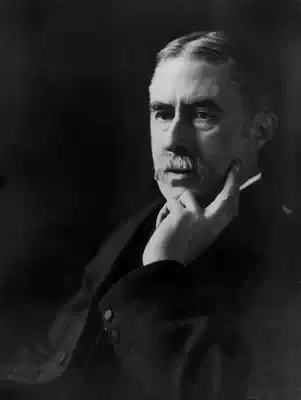
Alfred Edward Housman
When I Was One-and-Twenty
When I Was One-and-Twenty
When I was one-and-twenty
I heard a wise man say,
"Give crowns and pounds and guineas
But not your heart away;
Give pearls away and rubies
But keep your fancy free."
But I was one-and-twenty,
No use to talk to me.
When I was one-and-twenty
I heard him say again,
"The heart out of the bosom
Was never given in vain;
'Tis paid with sighs a plenty
And sold for endless rue."
And I am two-and-twenty,
And oh, 'tis true, 'tis true.
When I was one-and-twenty
I heard a wise man say,
"Give crowns and pounds and guineas
But not your heart away;
Give pearls away and rubies
But keep your fancy free."
But I was one-and-twenty,
No use to talk to me.
When I was one-and-twenty
I heard him say again,
"The heart out of the bosom
Was never given in vain;
'Tis paid with sighs a plenty
And sold for endless rue."
And I am two-and-twenty,
And oh, 'tis true, 'tis true.
786
Alfred Edward Housman
Westward on the High-Hilled Plains
Westward on the High-Hilled Plains
Westward on the high-hilled plains
Where for me the world began,
Still, I think, in newer veins
Frets the changeless blood of man.
Now that other lads than I
Strip to bathe on Severn shore,
They, no help, for all they try,
Tread the mill I trod before.
There, when hueless is the west
And the darkness hushes wide,
Where the lad lies down to rest
Stands the troubled dream beside.
There, on thoughts that once were mine,
Day looks down the eastern steep,
And the youth at morning shine
Makes the vow he will not keep.
Westward on the high-hilled plains
Where for me the world began,
Still, I think, in newer veins
Frets the changeless blood of man.
Now that other lads than I
Strip to bathe on Severn shore,
They, no help, for all they try,
Tread the mill I trod before.
There, when hueless is the west
And the darkness hushes wide,
Where the lad lies down to rest
Stands the troubled dream beside.
There, on thoughts that once were mine,
Day looks down the eastern steep,
And the youth at morning shine
Makes the vow he will not keep.
449
Alfred Edward Housman
Oh, when I was in love with you
Oh, when I was in love with you
Oh, when I was in love with you,
Then I was clean and brave,
And miles around the wonder grew
How well did I behave.
And now the fancy passes by,
And nothing will remain,
And miles around they'll say that I
Am quite myself again.
Oh, when I was in love with you,
Then I was clean and brave,
And miles around the wonder grew
How well did I behave.
And now the fancy passes by,
And nothing will remain,
And miles around they'll say that I
Am quite myself again.
503
Alfred Edward Housman
Now Hollow Fires Burn Out to Black
Now Hollow Fires Burn Out to Black
Now hollow fires burn out to black,
And lights are guttering low:
Square your shoulders, lift your pack,
And leave your friends and go.
Oh never fear, man, nought's to dread,
Look not to left nor right:
In all the endless road you tread
There's nothing but the night.
Now hollow fires burn out to black,
And lights are guttering low:
Square your shoulders, lift your pack,
And leave your friends and go.
Oh never fear, man, nought's to dread,
Look not to left nor right:
In all the endless road you tread
There's nothing but the night.
390
Alfred Edward Housman
From Far, From Eve and Morning
From Far, From Eve and Morning
From far, from eve and morning
And yon twelve-winded sky,
The stuff of life to knit me
Blew hither: here am I.
Now-- for a breath I tarry
Nor yet disperse apart--
Take my hand quick and tell me,
What have you in your heart.
Speak now, and I will answer;
How shall I help you, say;
Ere to the wind's twelve quarters
I take my endless way.
From far, from eve and morning
And yon twelve-winded sky,
The stuff of life to knit me
Blew hither: here am I.
Now-- for a breath I tarry
Nor yet disperse apart--
Take my hand quick and tell me,
What have you in your heart.
Speak now, and I will answer;
How shall I help you, say;
Ere to the wind's twelve quarters
I take my endless way.
480
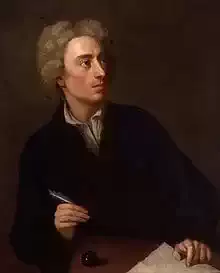
Alexander Pope
The Temple of Fame
The Temple of Fame
In that soft season, when descending show'rs
Call forth the greens, and wake the rising flow'rs;
When op'ning buds salute the welcome day,
And earth relenting feels the genial day,
As balmy sleep had charm'd my cares to rest,
And love itself was banish'd from my breast,
(What time the morn mysterious visions brings,
While purer slumbers spread their golden wings)
A train of phantoms in wild order rose,
And, join'd, this intellectual sense compose.
I stood, methought, betwixt earth, seas, and skies;
The whole creation open to my eyes:
In air self-balanc'd hung the globe below,
Where mountains rise and circling oceans flow;
Here naked rocks, and empty wastes were seen,
There tow'ry cities, and the forests green:
Here sailing ships delight the wand'ring eyes:
There trees, and intermingled temples rise;
Now a clear sun the shining scene displays,
The transient landscape now in clouds decays.
O'er the wide Prospect as I gaz'd around,
Sudden I heard a wild promiscuous sound,
Like broken thunders that at distance roar,
Then gazing up, a glorious pile beheld,
Whose tow'ring summit ambient clouds conceal'd.
High on a rock of Ice the structure lay,
Steep its ascent, and slipp'ry was the way;
The wond'rous rock like Parian marble shone,
And seem'd, to distant sight, of solid stone.
Inscriptions here of various Names I view'd,
The greater part by hostile time subdu'd;
Yet wide was spread their fame in ages past,
And Poets once had promis'd they should last.
Some fresh engrav'd appear'd of Wits renown'd;
I look'd again, nor could their trace be found.
Critics I saw, that other names deface,
And fix their own, with labour, in their place:
Their own, like others, soon their place resign'd,
Or disappear'd, and left the first behind.
Nor was the work impair'd by storms alone,
But felt th' approaches of too warm a sun;
For Fame, impatient of extremes, decays
Not more by Envy than excess of Praise.
Yet part no injuries of heav'n could feel,
Like crystal faithful to th' graving steel:
The rock's high summit, in the temple's shade,
Nor heat could melt, nor beating storm invade.
Their names inscrib'd, unnumber'd ages past
From time's first birth, with time itself shall last;
These ever new, nor subject to decays,
Spread, and grow brighter with the length of days.
So Zembla's rocks (the beauteous work of frost)
Rise white in air, and glitter o'er the coast;
Pale suns, unfelt, at distance roll away,
And on th' impassive ice the light'nings play;
Eternal snows the growing mass supply,
Till the bright mountains prop th' incumbent sky:
As Atlas fix'd, each hoary pile appears,
The gather'd winter of a thousand years.
On this foundation Fame's high temple stands;
Stupendous pile! not rear'd by mortal hands.
Whate'er proud Rome or artful Greece beheld,
Or elder Babylon, its frame excell'd.
Four faces had the dome, and ev'ry face
Of various structure, but of equal grace:
Four brazen gates, on columns lifted high,
Salute the diff'rent quarters of the sky.
Here fabled Chiefs in darker ages born,
Or Worthies old, whom arms or arts adorn,
Who cities rais'd, or tam'd a monstrous race;
The walls in venerable order grace:
Heroes in animated marble frown,
And Legislators seem to think in stone.
Westward, a sumptuous frontispiece appear'd,
On Doric pillars of white marble rear'd,
Crown'd with an architrave of antique mold,
And sculpture rising on the roughen'd mold,
In shaggy spoils here Theseus was beheld,
And Perseus dreadful with Minerva's shield:
There great Alcides stooping with his toil,
Rests on his club, and holds th' Hesperian spoil.
Here Orpheus sings; trees moving to the sound
Start from their roots, and form a shade around:
Amphion there the loud creating lyre
Strikes, and beholds a sudden Thebes aspire!
Cithaeron's echoes answer to his call,
And half the mountain rolls into a wall:
There might you see the length'ning spires ascend,
The domes swell up, the wid'ning arches bend,
The growing tow'rs, like exhalations rise,
And the huge columns heave into the skies.
The Eastern front was glorious to behold,
With di'mond flaming, and Barbaric gold.
There Ninus shone, who spread th' Assyrian fame,
And the great founder of the Persian name:
There in long robes the royal Magi stand,
Grave Zoroaster waves the circling wand,
The sage Chaldaeans rob'd in white appear'd,
And Brahmans, deep in desert woods rever'd.
These stop'd the moon, and call'd th' unbody'd shades
To midnight banquets in the glimm'ring glades;
Made visionary fabrics round them rise,
And airy spectres skim before their eyes;
Of Talismans and Sigils knew the pow'r,
And careful watch'd the Planetary hour.
Superior, and alone, Confucius stood,
Who taught that useful science, to be good.
But on the South, a long majestic race
Of AEgypt's Priests the gilded niches grace,
Who measur'd earth, describ'd the starry spheres,
And trac'd the long records of lunar years.
High on his car Sesostris struck my view,
Whom scepter'd slaves in golden harness drew:
His hands a bow and pointed javelin hold;
His giant limbs are arm'd in scales of gold.
Between the statues Obelisks were plac'd,
And the learn'd walls with Hieroglyphics grac'd.
Of Gothic structure was the Northern side,
O'erwrought with ornaments of barb'rous pride.
There huge Colosses rose, with trophies crown'd,
And Runic characters were grav'd around.
There sate Zamolxis with erected eyes,
And Odin here in mimic trances dies.
There on rude iron columns, smear'd with blood,
The horrid forms of Scythian heroes stood,
Druids and Bards (their once loud harps unstrung)
And youths that died to be by Poets sung.
These and a thousand more of doubtful fame,
To whom old fables gave a lasting name,
In ranks adorn'd the Temple's outward face;
The wall in lustre and effect like Glass,
Which o'er each object casting various dyes,
Enlarges some, and others multiplies:
Nor void of emblem was the mystic wall,
For thus romantic Fame increases all.
The Temple shakes, the sounding gates unfold,
Wide vaults appear, and roofs of fretted gold:
Rais'd on a thousand pillars, wreath'd around
With laurel-foliage, and with eagles crown'd:
Of bright, transparent beryl were the walls,
The friezes gold, an gold the capitals:
As heav'n with stars, the roof with jewels glows,
And ever-living lamps depend in rows.
Full in the passage of each spacious gate,
The sage Historians in white garments wait;
Grav'd o'er their seats the form of Time was found,
His scythe revers'd, and both his pinions bound.
Within stood Heroes, who thro' loud alarms
In bloody fields pursu'd renown in arms.
High on a throne with trophies charg'd, I view'd
The Youth that all things but himself subdu'd;
His feet on sceptres and tiara's trod,
And his horn'd head bely'd the Libyan God.
There Caesar, grac'd with both Minerva's, shone;
Unmov'd, superior still in ev'ry state,
And scarce detested in his Country's fate.
But chief were those, who not for empire fought,
But with their toils their people's safety bought:
High o'er the rest Epaminondas stood;
Timoleon, glorious in his brother's blood;
Bold Scipio, saviour of the Roman state;
Great in his triumphs, in retirement great;
And wise Aurelius, in whose well-taught mind
With boundless pow'r unbounded virtue join'd,
His own strict judge, and patron of mankind.
Much-suff'ring heroes next their honours claim,
Those of less noisy, and less guilty fame,
Fair Virtue's silent train: supreme of these
Here ever shines the godlike Socrates:
He whom ungrateful Athens could expell,
At all times just, but when he sign'd the Shell:
Here his abode the martyr'd Phocion claims,
With Agis, not the last of Spartan names:
Unconquered Cato shews the wound he tore,
And Brutus his ill Genius meets no more.
But in the centre of the hallow'd choir,
Six pompous columns o'er the rest aspire;
Around the shrine itself of Fame they stand,
Hold the chief honours, and the fane command.
High on the first, the mighty Homer shone;
Eternal Adamant compos'd his throne;
Father of verse! in holy fillets drest,
His silver beard wav'd gently o'er his breast;
Tho' blind, a boldness in his looks appears;
In years he seem'd, but not impair'd by years.
The wars of Troy were round the Pillar seen:
Here fierce Tydides wounds the Cyprian Queen;
Here Hector glorious from Patroclus' fall,
Here dragg'd in triumph round the Trojan wall,
Motion and life did ev'ry part inspire,
Bold was the work, and prov'd the master's fire;
A strong expression most he seem'd t' affect,
And here and there disclos'd a brave neglect.
A golden column next in rank appear'd,
On which a shrine of purest gold was rear'd;
Finish'd the whole, and labour'd ev'ry part,
With patient touches of unweary'd art:
The Mantuan there in sober triumph sate,
Compos'd his posture, and his look sedate;
On Homer still he fix'd a rev'rend eye,
Great without pride, in modest majesty.
In living sculpture on the sides were spread
The Latian Wars, and haughty Turnus dead;
Eliza stretch'd upon the fun'ral pyre,
AEneas ending with his aged sire:
Troy flam'd in burning gold, and o'er the throne
Arms of the Man in golden cyphers shone.
Four swans sustain a car of silver bright,
With heads advanc'd, and pinions stretch'd for flight:
Here, like some furious prophet, Pindar rode,
And seem'd to labour with th' inspiring God.
Across the harp a careless hand he flings,
And boldly sinks into the sounding strings.
The figur'd games of Greece the column grace,
Neptune and Jove survey the rapid race.
The youths hand o'er their chariots as they run;
The fiery steeds seem starting from the stone;
The champions in distorted postures threat;
And all appear'd irregularly great.
Here happy Horace tun'd th' Ausonian lyre
To sweeter sounds, and temper'd Pindar's fire:
Pleas'd with Alcaeus' manly rage t' infuse
The softer spirit of the Sapphic Muse.
The polish'd pillar diff'rent sculptures grace;
A work outlasting monumental brass.
Here smiling Loves and Bacchanals appear,
The Julian star, and great Augustus here,
The Doves that round the infant poet spread
Myrtles and bays, hung hov'ring o'er his head.
Here in a shrine that cast a dazzling light,
Sate fix'd in thought the mighty Stagirite;
His sacred head a radiant Zodiac crown'd,
And various Animals his sides surround;
His piercing eyes, erect, appear to view
Superior worlds, and look all Nature through.
With equal rays immortal Tully shone,
The Roman Rostra deck'd the Consul's throne:
Gath'ring his flowing robe, he seem'd to stand
In act to speak, and graceful stretch'd his hand.
Behind, Rome's Genius waits with Civic crowns,
And the great Father of his country owns.
These massy columns in a circle rise,
O'er which a pompous dome invades the skies:
Scarce to the top I stretch'd my aching sight,
So large it spread, and swell'd to such a height.
Full in the midst proud Fame's imperial seat,
With jewels blaz'd, magnificently great;
The vivid em'ralds there revive the eye,
The flaming rubies shew their sanguine dye,
Bright azure rays from lively sapphrys stream,
And lucid amber casts a golden gleam.
With various-colour'd light the pavement shone,
And all on fire appear'd the glowing throne;
The dome's high arch reflects the mingled blaze,
And forms a rainbow of alternate rays.
When on the Goddess first I cast my sight,
Scarce seem'd her stature of a cubit's height;
But swell'd to larger size, the more I gaz'd,
Till to the roof her tow'ring front she rais'd.
With her, the Temple ev'ry moment grew,
And ampler Vista's open'd to my view:
Upward the columns shoot, the roofs ascend,
And arches widen, and long aisles extend.
Such was her form as ancient bards have told,
Wings raise her arms, and wings her feet infold;
A thousand busy tongues the Goddess bears,
And thousand open eyes, and thousand list'ning ears.
Beneath, in order rang'd, the tuneful Nine
(Her virgin handmaids) still attend the shrine:
With eyes on Fame for ever fix'd, they sing;
For Fame they raise the voice, and tune the string;
With time's first birth began the heav'nly lays,
And last, eternal, thro' the length of days.
Around these wonders as I cast a look,
The trumpet sounded, and the temple shoo,
And all the nations, summon'd at the call,
From diff'rent quarters fill the crowded hall:
Of various tongues the mingled sounds were heard;
In various garbs promiscuous throngs appear'd;
Thick as the bees, that with the spring renew
Their flow'ry toils, and sip the fragrant dew,
When the wing'd colonies first tempt the sky,
O'er dusky fields and shaded waters fly,
Or settling, seize the sweets the blossoms yield,
And a low murmur runs along the field.
Millions of suppliant crowds the shrine attend,
And all degrees before the Goddess bend;
The poor, the rich, the valiant and the sage,
And boasting youth, and narrative old-age.
Their pleas were diff'rent, their request the same:
For good and bad alike are fond of Fame.
Some she disgrac'd, and some with honours crown'd;
Unlike successes equal merits found.
Thus her blind sister, fickle Fortune, reigns,
And, undiscerning, scatters crowns and chains.
First at the shrine the Learned world appear,
And to the Goddess thus prefer their play'r.
'Long have we sought t' instruct and please mankind,
With studies pale, with midnight vigils blind;
But thank'd by few, rewarded yet by none,
We here appeal to thy superior throne:
On wit and learning the just prize bestow,
For fame is all we must expect below.'
The Goddess heard, and bade the Muses raise
The golden Trumpet of eternal Praise:
From pole to pole the winds diffuse the sound,
That fills the circuit of the world around;
Not all at once, as thunder breaks the cloud;
The notes at first were rather sweet than loud:
By just degrees they ev'ry moment rise,
Fill the wide earth, and gain upon the skies.
At ev'ry breath were balmy odours shed,
Which still grew sweeter as they wider spread;
Less fragrant scents th' unfolding rose exhales,
Or spices breathing in Arabian gales.
Next these the good and just, an awful train,
Thus on their knees address the sacred fane.
'Since living virtue is with envy curs'd,
And the best men are treated like the worst,
Do thou, just Goddess, call our merits forth,
And give each deed th' exact intrinsic worth.'
'Not with bare justice shall your act be crown'd'
(Said Fame) 'but high above desert renown'd:
Let fuller notes th' applauding world amaze,
And the full loud clarion labour in your praise.'
This band dismiss'd, behold another croud
The constant tenour of whose well-spent days
No less deserv'd a just return of praise.
But strait the direful Trump of Slander sounds;
Thro' the big dome the doubling thunder bounds;
Loud as the burst of cannon rends the skies,
The dire report thro' ev'ry region flies,
In ev'ry ear incessant rumours rung,
And gath'ring scandals grew on ev'ry tongue.
From the black trumpet's rusty concave broke
Sulphureous flames, and clouds of rolling smoke:
The pois'nous vapour blots the purple skies,
And withers all before it as it flies.
A troop came next, who crowns and armour wore,
And proud defiance in their looks they bore:
'For thee' (they cry'd) 'amidst alarms and strife,
We sail'd in tempests down the stream of life;
For thee whole nations fill'd with flames and blood,
And swam to empire thro' the purple flood.
Those ills we dar'd, thy inspiration own,
What virtue seem'd, was done for thee alone.'
'Ambitious fools!' (the Queen reply'd, and frown'd)
'Be all your acts in dark oblivion drown'd;
There sleep forgot, with mighty tyrants gone,
Your statues moulder'd, and your names unknown!'
A sudden cloud straight snatch'd them from my sight,
And each majestic phantom sunk in night.
Then came the smallest tribe I yet had seen;
Plain was their dress, and modest was their mien.
'Great idol of mankind! we neither claim
The praise of merit, nor aspire to fame!
But safe in deserts from th' applause of men,
Would die unheard of, as we liv'd unseen,
'Tis all we beg thee, to conceal from sight
Those acts of goodness, which themselves requite.
To follow virtue ev'n for virtue's sake.'
'And live there men, who slight immortal fame?
Who then with incense shall adore our name?
But mortals! know, 'tis still our greatest pride
To blaze those virtues, which the good would hide.
Rise! Muses, rise; add all your tuneful breath,
These must not sleep in darkness and in death.'
She said: in air the trembling music floats,
And on the winds triumphant swell the notes;
So soft, tho' high, so loud, and yet so clear,
Ev'n list'ning Angels lean'd from heav'n to hear:
To farthest shores th' Ambrosial spirit flies,
Sweet to the world, and grateful to the skies.
Next these a youthful train their vows express'd,
With feathers crown'd, with gay embroid'ry dress'd:
'Hither,' they cry'd, 'direct your eyes, and see
The men of pleasure, dress, and gallantry;
Ours is the place at banquets, balls, and plays,
Sprightly our nights, polite are all our days;
Courts we frequent, where 'tis our pleasing care
To pay due visits, and address the fair:
In fact, 'tis true, no nymph we could persuade,
But still in fancy vanquish'd ev'ry maid;
Of unknown Duchesses lewd tales we tell,
Yet, would the world believe us, all were well.
The joy let others have, and we the name,
And what we want in pleasure, grant in fame.'
The Queen assents, the trumpet rends the skies,
And at each blast a Lady's honour dies.
Pleas'd with the strange success, vast numbers prest
Around the shrine, and made the same request:
'What? you,' (she cry'd) 'unlearn'd in arts to please,
Slaves to yourselves, and ev'n fatigu'd with ease,
Who lose a length of undeserving days,
Would you usurp the lover's dear-bought praise?
To just contempt, ye vain pretenders, fall,
The people's fable, and the scorn of all.'
Straight the black clarion sends a horrid sound,
Loud laughs burst out, and bitter scoffs fly round,
Whispers are heard, with taunts reviling loud,
And scornful hisses run thro' the crowd.
Last, those who boast of mighty mischiefs done,
Enslave their country, or usurp a throne;
Or who their glory's dire foundation lay'd
On Sov'reigns ruin'd, or on friends betray'd;
Calm, thinking villains, whom no faith could fix,
Of crooked counsels and dark politics;
Of these a gloomy tribe surround the throne,
And beg to make th' immortal treasons known.
The trumpet roars, long flaky flames expire,
With sparks, that seem'd to set the world on fire.
At the dread sound, pale mortals stood aghast,
And startled nature trembled with the blast.
This having heard and seen, and snatch'd me from the throne.
Before my view appear'd a structure fair,
Its site uncertain, if in earth or air;
With rapid motion turn'd the mansion round;
With ceaseless noise the ringing walls resound;
Not less in number were the spacious doors,
Than leaves on trees, or sand upon the shores;
Which still unfolded stand, by night, by day,
Pervious to winds, and open ev'ry way.
As flames by nature to the skies ascend,
As weighty bodies to the centre tend,
As to the sea returning rivers toll,
And the touch'd needle trembles to the pole;
Hither, as to their proper place, arise
All various sounds from earth, and seas, and skies,
Or spoke aloud, or whisper'd in the ear;
Nor ever silence, rest, or peace is here.
As on the smooth expanse of crystal lakes
The sinking stone at first a circle makes;
The trembling surface by the motion stir'd,
Spreads in a second circle, then a third;
Wide, and more wide, the floating rings advance,
Fill all the wat'ry plain, and to the margin dance:
Thus ev'ry voice and sound, when first they break,
On neighb'ring air a soft impression make;
Another ambient circle then they move;
That, in its turn, impels the next above;
Thro' undulating air the sounds are sent,
And spread o'er all the fluid element.
There various news I heard of love and strife,
Of peace and war, health, sickness, death, and life,
Of loss and gain, of famine and of store,
Of storms at sea, and travels on the shore,
Of prodigies, and portents seen in air,
Of fires and plagues, and stars with blazing hair,
Of turns of fortune, changes in the state,
The falls of fav'rites, projects of the great,
Of old mismanagements, taxations new:
All neither wholly false, nor wholly true.
Above, below, without, within, around.
Confus'd, unnumber'd multitudes are found,
Who pass, repass, advance, and glide away;
Hosts rais'd by fear, and phantoms of a day:
Astrologers, that future fates foreshew,
Projectors, quacks, and lawyers not a few;
And priests, and party-zealots, num'rous bands
With home-born lies, or tales from foreign lands;
Each talk'd aloud, or in some secret place,
And wild impatience star'd in ev'ry face.
The flying rumours gather'd as they roll'd,
Scarce any tale was sooner heard than told;
And all who told it added something new,
And all who heard it, made enlargements too,
In ev'ry ear it spread, on ev'ry tongue it grew.
Thus flying east and west, and north and south,
News travel'd with increase from mouth to mouth.
So from a spark, that kindled first by chance,
With gath'ring force the quick'ning flames advance;
Till to the clouds their curling heads aspire,
And tow'rs and temples sink in floods of fire.
When thus ripe lies are to perfection sprung,
Full grown, and fit to grace a mortal tongue,
Thro' thousand vents, impatient, forth they flow,
And rush in millions on the world below.
Fame sits aloft, and points them out their course,
Their date determines, and prescribes their force:
Some to remain, and some to perish soon;
Or wane and wax alternate like the moon.
Around, a thousand winged wonders fly,
Borne by the trumpet's blast, and scatter'd thro' the sky.
There, at one passage, oft you might survey
A lie and truth contending for the way;
And long 'twas doubtful, both so closely pent,
Which first should issue thro' the narrow vent:
At last agreed, together out they fly,
Inseparable now, the truth and lie;
The strict companions are for ever join'd,
And this or that unmix'd, no mortal e'er shall find.
While thus I stood, intent to see and hear,
One came, methought, and whisper'd in my ear:
What could thus high thy rash ambition raise?
Art thou, fond youth, a candidate for praise?
'Tis true, said I, not void of hopes I came,
For who so fond as youthful bards of Fame?
But few, alas! the casual blessing boast,
So hard to gain, so easy to be lost.
How vain that second life in others breath,
Th' estate which wits inherit after death!
Ease, health, and life, for this they must resign,
(Unsure the tenure, but how vast the fine!)
The great man's curse, without the gains endure,
Be envy'd, wretched, and be flatter'd, poor;
All luckless wits their enemies profest,
And all successful, jealous friends at best.
Nor Fame I slight, nor for her favours call;
She comes unlook'd for, if she comes at all.
But if the purchase costs so dear a price,
As soothing Folly, or exalting Vice:
Oh! if the Muse must flatter lawless sway,
And follow still where fortune leads the way;
Or if no basis bear my rising name,
But the fall'n ruin of another's fame;
Then teach me, heav'n! to scorn the guilty bays,
Drive from my breast that wretched lust of praise,
Unblemish'd let me live, or die unknown;
Oh grant an honest fame, or grant me none!
In that soft season, when descending show'rs
Call forth the greens, and wake the rising flow'rs;
When op'ning buds salute the welcome day,
And earth relenting feels the genial day,
As balmy sleep had charm'd my cares to rest,
And love itself was banish'd from my breast,
(What time the morn mysterious visions brings,
While purer slumbers spread their golden wings)
A train of phantoms in wild order rose,
And, join'd, this intellectual sense compose.
I stood, methought, betwixt earth, seas, and skies;
The whole creation open to my eyes:
In air self-balanc'd hung the globe below,
Where mountains rise and circling oceans flow;
Here naked rocks, and empty wastes were seen,
There tow'ry cities, and the forests green:
Here sailing ships delight the wand'ring eyes:
There trees, and intermingled temples rise;
Now a clear sun the shining scene displays,
The transient landscape now in clouds decays.
O'er the wide Prospect as I gaz'd around,
Sudden I heard a wild promiscuous sound,
Like broken thunders that at distance roar,
Then gazing up, a glorious pile beheld,
Whose tow'ring summit ambient clouds conceal'd.
High on a rock of Ice the structure lay,
Steep its ascent, and slipp'ry was the way;
The wond'rous rock like Parian marble shone,
And seem'd, to distant sight, of solid stone.
Inscriptions here of various Names I view'd,
The greater part by hostile time subdu'd;
Yet wide was spread their fame in ages past,
And Poets once had promis'd they should last.
Some fresh engrav'd appear'd of Wits renown'd;
I look'd again, nor could their trace be found.
Critics I saw, that other names deface,
And fix their own, with labour, in their place:
Their own, like others, soon their place resign'd,
Or disappear'd, and left the first behind.
Nor was the work impair'd by storms alone,
But felt th' approaches of too warm a sun;
For Fame, impatient of extremes, decays
Not more by Envy than excess of Praise.
Yet part no injuries of heav'n could feel,
Like crystal faithful to th' graving steel:
The rock's high summit, in the temple's shade,
Nor heat could melt, nor beating storm invade.
Their names inscrib'd, unnumber'd ages past
From time's first birth, with time itself shall last;
These ever new, nor subject to decays,
Spread, and grow brighter with the length of days.
So Zembla's rocks (the beauteous work of frost)
Rise white in air, and glitter o'er the coast;
Pale suns, unfelt, at distance roll away,
And on th' impassive ice the light'nings play;
Eternal snows the growing mass supply,
Till the bright mountains prop th' incumbent sky:
As Atlas fix'd, each hoary pile appears,
The gather'd winter of a thousand years.
On this foundation Fame's high temple stands;
Stupendous pile! not rear'd by mortal hands.
Whate'er proud Rome or artful Greece beheld,
Or elder Babylon, its frame excell'd.
Four faces had the dome, and ev'ry face
Of various structure, but of equal grace:
Four brazen gates, on columns lifted high,
Salute the diff'rent quarters of the sky.
Here fabled Chiefs in darker ages born,
Or Worthies old, whom arms or arts adorn,
Who cities rais'd, or tam'd a monstrous race;
The walls in venerable order grace:
Heroes in animated marble frown,
And Legislators seem to think in stone.
Westward, a sumptuous frontispiece appear'd,
On Doric pillars of white marble rear'd,
Crown'd with an architrave of antique mold,
And sculpture rising on the roughen'd mold,
In shaggy spoils here Theseus was beheld,
And Perseus dreadful with Minerva's shield:
There great Alcides stooping with his toil,
Rests on his club, and holds th' Hesperian spoil.
Here Orpheus sings; trees moving to the sound
Start from their roots, and form a shade around:
Amphion there the loud creating lyre
Strikes, and beholds a sudden Thebes aspire!
Cithaeron's echoes answer to his call,
And half the mountain rolls into a wall:
There might you see the length'ning spires ascend,
The domes swell up, the wid'ning arches bend,
The growing tow'rs, like exhalations rise,
And the huge columns heave into the skies.
The Eastern front was glorious to behold,
With di'mond flaming, and Barbaric gold.
There Ninus shone, who spread th' Assyrian fame,
And the great founder of the Persian name:
There in long robes the royal Magi stand,
Grave Zoroaster waves the circling wand,
The sage Chaldaeans rob'd in white appear'd,
And Brahmans, deep in desert woods rever'd.
These stop'd the moon, and call'd th' unbody'd shades
To midnight banquets in the glimm'ring glades;
Made visionary fabrics round them rise,
And airy spectres skim before their eyes;
Of Talismans and Sigils knew the pow'r,
And careful watch'd the Planetary hour.
Superior, and alone, Confucius stood,
Who taught that useful science, to be good.
But on the South, a long majestic race
Of AEgypt's Priests the gilded niches grace,
Who measur'd earth, describ'd the starry spheres,
And trac'd the long records of lunar years.
High on his car Sesostris struck my view,
Whom scepter'd slaves in golden harness drew:
His hands a bow and pointed javelin hold;
His giant limbs are arm'd in scales of gold.
Between the statues Obelisks were plac'd,
And the learn'd walls with Hieroglyphics grac'd.
Of Gothic structure was the Northern side,
O'erwrought with ornaments of barb'rous pride.
There huge Colosses rose, with trophies crown'd,
And Runic characters were grav'd around.
There sate Zamolxis with erected eyes,
And Odin here in mimic trances dies.
There on rude iron columns, smear'd with blood,
The horrid forms of Scythian heroes stood,
Druids and Bards (their once loud harps unstrung)
And youths that died to be by Poets sung.
These and a thousand more of doubtful fame,
To whom old fables gave a lasting name,
In ranks adorn'd the Temple's outward face;
The wall in lustre and effect like Glass,
Which o'er each object casting various dyes,
Enlarges some, and others multiplies:
Nor void of emblem was the mystic wall,
For thus romantic Fame increases all.
The Temple shakes, the sounding gates unfold,
Wide vaults appear, and roofs of fretted gold:
Rais'd on a thousand pillars, wreath'd around
With laurel-foliage, and with eagles crown'd:
Of bright, transparent beryl were the walls,
The friezes gold, an gold the capitals:
As heav'n with stars, the roof with jewels glows,
And ever-living lamps depend in rows.
Full in the passage of each spacious gate,
The sage Historians in white garments wait;
Grav'd o'er their seats the form of Time was found,
His scythe revers'd, and both his pinions bound.
Within stood Heroes, who thro' loud alarms
In bloody fields pursu'd renown in arms.
High on a throne with trophies charg'd, I view'd
The Youth that all things but himself subdu'd;
His feet on sceptres and tiara's trod,
And his horn'd head bely'd the Libyan God.
There Caesar, grac'd with both Minerva's, shone;
Unmov'd, superior still in ev'ry state,
And scarce detested in his Country's fate.
But chief were those, who not for empire fought,
But with their toils their people's safety bought:
High o'er the rest Epaminondas stood;
Timoleon, glorious in his brother's blood;
Bold Scipio, saviour of the Roman state;
Great in his triumphs, in retirement great;
And wise Aurelius, in whose well-taught mind
With boundless pow'r unbounded virtue join'd,
His own strict judge, and patron of mankind.
Much-suff'ring heroes next their honours claim,
Those of less noisy, and less guilty fame,
Fair Virtue's silent train: supreme of these
Here ever shines the godlike Socrates:
He whom ungrateful Athens could expell,
At all times just, but when he sign'd the Shell:
Here his abode the martyr'd Phocion claims,
With Agis, not the last of Spartan names:
Unconquered Cato shews the wound he tore,
And Brutus his ill Genius meets no more.
But in the centre of the hallow'd choir,
Six pompous columns o'er the rest aspire;
Around the shrine itself of Fame they stand,
Hold the chief honours, and the fane command.
High on the first, the mighty Homer shone;
Eternal Adamant compos'd his throne;
Father of verse! in holy fillets drest,
His silver beard wav'd gently o'er his breast;
Tho' blind, a boldness in his looks appears;
In years he seem'd, but not impair'd by years.
The wars of Troy were round the Pillar seen:
Here fierce Tydides wounds the Cyprian Queen;
Here Hector glorious from Patroclus' fall,
Here dragg'd in triumph round the Trojan wall,
Motion and life did ev'ry part inspire,
Bold was the work, and prov'd the master's fire;
A strong expression most he seem'd t' affect,
And here and there disclos'd a brave neglect.
A golden column next in rank appear'd,
On which a shrine of purest gold was rear'd;
Finish'd the whole, and labour'd ev'ry part,
With patient touches of unweary'd art:
The Mantuan there in sober triumph sate,
Compos'd his posture, and his look sedate;
On Homer still he fix'd a rev'rend eye,
Great without pride, in modest majesty.
In living sculpture on the sides were spread
The Latian Wars, and haughty Turnus dead;
Eliza stretch'd upon the fun'ral pyre,
AEneas ending with his aged sire:
Troy flam'd in burning gold, and o'er the throne
Arms of the Man in golden cyphers shone.
Four swans sustain a car of silver bright,
With heads advanc'd, and pinions stretch'd for flight:
Here, like some furious prophet, Pindar rode,
And seem'd to labour with th' inspiring God.
Across the harp a careless hand he flings,
And boldly sinks into the sounding strings.
The figur'd games of Greece the column grace,
Neptune and Jove survey the rapid race.
The youths hand o'er their chariots as they run;
The fiery steeds seem starting from the stone;
The champions in distorted postures threat;
And all appear'd irregularly great.
Here happy Horace tun'd th' Ausonian lyre
To sweeter sounds, and temper'd Pindar's fire:
Pleas'd with Alcaeus' manly rage t' infuse
The softer spirit of the Sapphic Muse.
The polish'd pillar diff'rent sculptures grace;
A work outlasting monumental brass.
Here smiling Loves and Bacchanals appear,
The Julian star, and great Augustus here,
The Doves that round the infant poet spread
Myrtles and bays, hung hov'ring o'er his head.
Here in a shrine that cast a dazzling light,
Sate fix'd in thought the mighty Stagirite;
His sacred head a radiant Zodiac crown'd,
And various Animals his sides surround;
His piercing eyes, erect, appear to view
Superior worlds, and look all Nature through.
With equal rays immortal Tully shone,
The Roman Rostra deck'd the Consul's throne:
Gath'ring his flowing robe, he seem'd to stand
In act to speak, and graceful stretch'd his hand.
Behind, Rome's Genius waits with Civic crowns,
And the great Father of his country owns.
These massy columns in a circle rise,
O'er which a pompous dome invades the skies:
Scarce to the top I stretch'd my aching sight,
So large it spread, and swell'd to such a height.
Full in the midst proud Fame's imperial seat,
With jewels blaz'd, magnificently great;
The vivid em'ralds there revive the eye,
The flaming rubies shew their sanguine dye,
Bright azure rays from lively sapphrys stream,
And lucid amber casts a golden gleam.
With various-colour'd light the pavement shone,
And all on fire appear'd the glowing throne;
The dome's high arch reflects the mingled blaze,
And forms a rainbow of alternate rays.
When on the Goddess first I cast my sight,
Scarce seem'd her stature of a cubit's height;
But swell'd to larger size, the more I gaz'd,
Till to the roof her tow'ring front she rais'd.
With her, the Temple ev'ry moment grew,
And ampler Vista's open'd to my view:
Upward the columns shoot, the roofs ascend,
And arches widen, and long aisles extend.
Such was her form as ancient bards have told,
Wings raise her arms, and wings her feet infold;
A thousand busy tongues the Goddess bears,
And thousand open eyes, and thousand list'ning ears.
Beneath, in order rang'd, the tuneful Nine
(Her virgin handmaids) still attend the shrine:
With eyes on Fame for ever fix'd, they sing;
For Fame they raise the voice, and tune the string;
With time's first birth began the heav'nly lays,
And last, eternal, thro' the length of days.
Around these wonders as I cast a look,
The trumpet sounded, and the temple shoo,
And all the nations, summon'd at the call,
From diff'rent quarters fill the crowded hall:
Of various tongues the mingled sounds were heard;
In various garbs promiscuous throngs appear'd;
Thick as the bees, that with the spring renew
Their flow'ry toils, and sip the fragrant dew,
When the wing'd colonies first tempt the sky,
O'er dusky fields and shaded waters fly,
Or settling, seize the sweets the blossoms yield,
And a low murmur runs along the field.
Millions of suppliant crowds the shrine attend,
And all degrees before the Goddess bend;
The poor, the rich, the valiant and the sage,
And boasting youth, and narrative old-age.
Their pleas were diff'rent, their request the same:
For good and bad alike are fond of Fame.
Some she disgrac'd, and some with honours crown'd;
Unlike successes equal merits found.
Thus her blind sister, fickle Fortune, reigns,
And, undiscerning, scatters crowns and chains.
First at the shrine the Learned world appear,
And to the Goddess thus prefer their play'r.
'Long have we sought t' instruct and please mankind,
With studies pale, with midnight vigils blind;
But thank'd by few, rewarded yet by none,
We here appeal to thy superior throne:
On wit and learning the just prize bestow,
For fame is all we must expect below.'
The Goddess heard, and bade the Muses raise
The golden Trumpet of eternal Praise:
From pole to pole the winds diffuse the sound,
That fills the circuit of the world around;
Not all at once, as thunder breaks the cloud;
The notes at first were rather sweet than loud:
By just degrees they ev'ry moment rise,
Fill the wide earth, and gain upon the skies.
At ev'ry breath were balmy odours shed,
Which still grew sweeter as they wider spread;
Less fragrant scents th' unfolding rose exhales,
Or spices breathing in Arabian gales.
Next these the good and just, an awful train,
Thus on their knees address the sacred fane.
'Since living virtue is with envy curs'd,
And the best men are treated like the worst,
Do thou, just Goddess, call our merits forth,
And give each deed th' exact intrinsic worth.'
'Not with bare justice shall your act be crown'd'
(Said Fame) 'but high above desert renown'd:
Let fuller notes th' applauding world amaze,
And the full loud clarion labour in your praise.'
This band dismiss'd, behold another croud
The constant tenour of whose well-spent days
No less deserv'd a just return of praise.
But strait the direful Trump of Slander sounds;
Thro' the big dome the doubling thunder bounds;
Loud as the burst of cannon rends the skies,
The dire report thro' ev'ry region flies,
In ev'ry ear incessant rumours rung,
And gath'ring scandals grew on ev'ry tongue.
From the black trumpet's rusty concave broke
Sulphureous flames, and clouds of rolling smoke:
The pois'nous vapour blots the purple skies,
And withers all before it as it flies.
A troop came next, who crowns and armour wore,
And proud defiance in their looks they bore:
'For thee' (they cry'd) 'amidst alarms and strife,
We sail'd in tempests down the stream of life;
For thee whole nations fill'd with flames and blood,
And swam to empire thro' the purple flood.
Those ills we dar'd, thy inspiration own,
What virtue seem'd, was done for thee alone.'
'Ambitious fools!' (the Queen reply'd, and frown'd)
'Be all your acts in dark oblivion drown'd;
There sleep forgot, with mighty tyrants gone,
Your statues moulder'd, and your names unknown!'
A sudden cloud straight snatch'd them from my sight,
And each majestic phantom sunk in night.
Then came the smallest tribe I yet had seen;
Plain was their dress, and modest was their mien.
'Great idol of mankind! we neither claim
The praise of merit, nor aspire to fame!
But safe in deserts from th' applause of men,
Would die unheard of, as we liv'd unseen,
'Tis all we beg thee, to conceal from sight
Those acts of goodness, which themselves requite.
To follow virtue ev'n for virtue's sake.'
'And live there men, who slight immortal fame?
Who then with incense shall adore our name?
But mortals! know, 'tis still our greatest pride
To blaze those virtues, which the good would hide.
Rise! Muses, rise; add all your tuneful breath,
These must not sleep in darkness and in death.'
She said: in air the trembling music floats,
And on the winds triumphant swell the notes;
So soft, tho' high, so loud, and yet so clear,
Ev'n list'ning Angels lean'd from heav'n to hear:
To farthest shores th' Ambrosial spirit flies,
Sweet to the world, and grateful to the skies.
Next these a youthful train their vows express'd,
With feathers crown'd, with gay embroid'ry dress'd:
'Hither,' they cry'd, 'direct your eyes, and see
The men of pleasure, dress, and gallantry;
Ours is the place at banquets, balls, and plays,
Sprightly our nights, polite are all our days;
Courts we frequent, where 'tis our pleasing care
To pay due visits, and address the fair:
In fact, 'tis true, no nymph we could persuade,
But still in fancy vanquish'd ev'ry maid;
Of unknown Duchesses lewd tales we tell,
Yet, would the world believe us, all were well.
The joy let others have, and we the name,
And what we want in pleasure, grant in fame.'
The Queen assents, the trumpet rends the skies,
And at each blast a Lady's honour dies.
Pleas'd with the strange success, vast numbers prest
Around the shrine, and made the same request:
'What? you,' (she cry'd) 'unlearn'd in arts to please,
Slaves to yourselves, and ev'n fatigu'd with ease,
Who lose a length of undeserving days,
Would you usurp the lover's dear-bought praise?
To just contempt, ye vain pretenders, fall,
The people's fable, and the scorn of all.'
Straight the black clarion sends a horrid sound,
Loud laughs burst out, and bitter scoffs fly round,
Whispers are heard, with taunts reviling loud,
And scornful hisses run thro' the crowd.
Last, those who boast of mighty mischiefs done,
Enslave their country, or usurp a throne;
Or who their glory's dire foundation lay'd
On Sov'reigns ruin'd, or on friends betray'd;
Calm, thinking villains, whom no faith could fix,
Of crooked counsels and dark politics;
Of these a gloomy tribe surround the throne,
And beg to make th' immortal treasons known.
The trumpet roars, long flaky flames expire,
With sparks, that seem'd to set the world on fire.
At the dread sound, pale mortals stood aghast,
And startled nature trembled with the blast.
This having heard and seen, and snatch'd me from the throne.
Before my view appear'd a structure fair,
Its site uncertain, if in earth or air;
With rapid motion turn'd the mansion round;
With ceaseless noise the ringing walls resound;
Not less in number were the spacious doors,
Than leaves on trees, or sand upon the shores;
Which still unfolded stand, by night, by day,
Pervious to winds, and open ev'ry way.
As flames by nature to the skies ascend,
As weighty bodies to the centre tend,
As to the sea returning rivers toll,
And the touch'd needle trembles to the pole;
Hither, as to their proper place, arise
All various sounds from earth, and seas, and skies,
Or spoke aloud, or whisper'd in the ear;
Nor ever silence, rest, or peace is here.
As on the smooth expanse of crystal lakes
The sinking stone at first a circle makes;
The trembling surface by the motion stir'd,
Spreads in a second circle, then a third;
Wide, and more wide, the floating rings advance,
Fill all the wat'ry plain, and to the margin dance:
Thus ev'ry voice and sound, when first they break,
On neighb'ring air a soft impression make;
Another ambient circle then they move;
That, in its turn, impels the next above;
Thro' undulating air the sounds are sent,
And spread o'er all the fluid element.
There various news I heard of love and strife,
Of peace and war, health, sickness, death, and life,
Of loss and gain, of famine and of store,
Of storms at sea, and travels on the shore,
Of prodigies, and portents seen in air,
Of fires and plagues, and stars with blazing hair,
Of turns of fortune, changes in the state,
The falls of fav'rites, projects of the great,
Of old mismanagements, taxations new:
All neither wholly false, nor wholly true.
Above, below, without, within, around.
Confus'd, unnumber'd multitudes are found,
Who pass, repass, advance, and glide away;
Hosts rais'd by fear, and phantoms of a day:
Astrologers, that future fates foreshew,
Projectors, quacks, and lawyers not a few;
And priests, and party-zealots, num'rous bands
With home-born lies, or tales from foreign lands;
Each talk'd aloud, or in some secret place,
And wild impatience star'd in ev'ry face.
The flying rumours gather'd as they roll'd,
Scarce any tale was sooner heard than told;
And all who told it added something new,
And all who heard it, made enlargements too,
In ev'ry ear it spread, on ev'ry tongue it grew.
Thus flying east and west, and north and south,
News travel'd with increase from mouth to mouth.
So from a spark, that kindled first by chance,
With gath'ring force the quick'ning flames advance;
Till to the clouds their curling heads aspire,
And tow'rs and temples sink in floods of fire.
When thus ripe lies are to perfection sprung,
Full grown, and fit to grace a mortal tongue,
Thro' thousand vents, impatient, forth they flow,
And rush in millions on the world below.
Fame sits aloft, and points them out their course,
Their date determines, and prescribes their force:
Some to remain, and some to perish soon;
Or wane and wax alternate like the moon.
Around, a thousand winged wonders fly,
Borne by the trumpet's blast, and scatter'd thro' the sky.
There, at one passage, oft you might survey
A lie and truth contending for the way;
And long 'twas doubtful, both so closely pent,
Which first should issue thro' the narrow vent:
At last agreed, together out they fly,
Inseparable now, the truth and lie;
The strict companions are for ever join'd,
And this or that unmix'd, no mortal e'er shall find.
While thus I stood, intent to see and hear,
One came, methought, and whisper'd in my ear:
What could thus high thy rash ambition raise?
Art thou, fond youth, a candidate for praise?
'Tis true, said I, not void of hopes I came,
For who so fond as youthful bards of Fame?
But few, alas! the casual blessing boast,
So hard to gain, so easy to be lost.
How vain that second life in others breath,
Th' estate which wits inherit after death!
Ease, health, and life, for this they must resign,
(Unsure the tenure, but how vast the fine!)
The great man's curse, without the gains endure,
Be envy'd, wretched, and be flatter'd, poor;
All luckless wits their enemies profest,
And all successful, jealous friends at best.
Nor Fame I slight, nor for her favours call;
She comes unlook'd for, if she comes at all.
But if the purchase costs so dear a price,
As soothing Folly, or exalting Vice:
Oh! if the Muse must flatter lawless sway,
And follow still where fortune leads the way;
Or if no basis bear my rising name,
But the fall'n ruin of another's fame;
Then teach me, heav'n! to scorn the guilty bays,
Drive from my breast that wretched lust of praise,
Unblemish'd let me live, or die unknown;
Oh grant an honest fame, or grant me none!
354
Alexander Pope
The Challenge: A Court Ballad
The Challenge: A Court Ballad
I.
To one fair lady out of Court,
And two fair ladies in,
Who think the Turk and Pope a sport,
And wit and love no sin!
Come, these soft lines, with nothing stiff in,
To Bellenden, Lepell, and Griffin.
With a fa, la, la.
II.
What passes in the dark third row,
And what behind the scene,
Couches and crippled chairs I know,
And garrets hung with green;
I know the swing of sinful hack,
Where many damsels cry alack.
With a fa, la, la.
III.
Then why to Courts should I repair,
Where's such ado with Townsend?
To hear each mortal stamp and swear,
And every speech with 'Zounds' end;
To hear them rail at honest Sunderland,
And rashly blame the realm of Blunderland.
With a fa, la, la.
IV.
Alas! like Schutz I cannot pun,
Like Grafton court the Germans;
Tell Pickenbourg how slim she's grown,
Like Meadows run to sermons;
To court ambitious men may roam,
But I and Marlbro' stay at home.
With a fa, la, la.
V.
In truth, by what I can discern,
Of courtiers, 'twixt you three,
Some wit you have, and more may learn
From Court, than Gay or Me:
Perhaps, in time, you'll leave high diet,
To sup with us on milk and quiet.
With a fa, la, la.
VI.
At Leicester Fields, a house full nigh,
With door all painted green,
(A Milliner, I mean);
There may you meet us three to three,
For Gay can well make two of Me.
With a fa, la, la.
VII.
But should you catch the prudish itch,
And each become a coward,
Bring sometimes with you lady Rich,
And sometimes mistress Howard;
For virgins, to keep chaste, must go
Abroad with such as are not so.
With a fa, la, la.
VIII.
And thus, fair maids, my ballad ends;
God send the king safe landing;
And make all honest ladies friends
To armies that are standing;
Preserve the limits of those nations,
And take off ladies' limitations.
With a fa, la, la.
I.
To one fair lady out of Court,
And two fair ladies in,
Who think the Turk and Pope a sport,
And wit and love no sin!
Come, these soft lines, with nothing stiff in,
To Bellenden, Lepell, and Griffin.
With a fa, la, la.
II.
What passes in the dark third row,
And what behind the scene,
Couches and crippled chairs I know,
And garrets hung with green;
I know the swing of sinful hack,
Where many damsels cry alack.
With a fa, la, la.
III.
Then why to Courts should I repair,
Where's such ado with Townsend?
To hear each mortal stamp and swear,
And every speech with 'Zounds' end;
To hear them rail at honest Sunderland,
And rashly blame the realm of Blunderland.
With a fa, la, la.
IV.
Alas! like Schutz I cannot pun,
Like Grafton court the Germans;
Tell Pickenbourg how slim she's grown,
Like Meadows run to sermons;
To court ambitious men may roam,
But I and Marlbro' stay at home.
With a fa, la, la.
V.
In truth, by what I can discern,
Of courtiers, 'twixt you three,
Some wit you have, and more may learn
From Court, than Gay or Me:
Perhaps, in time, you'll leave high diet,
To sup with us on milk and quiet.
With a fa, la, la.
VI.
At Leicester Fields, a house full nigh,
With door all painted green,
(A Milliner, I mean);
There may you meet us three to three,
For Gay can well make two of Me.
With a fa, la, la.
VII.
But should you catch the prudish itch,
And each become a coward,
Bring sometimes with you lady Rich,
And sometimes mistress Howard;
For virgins, to keep chaste, must go
Abroad with such as are not so.
With a fa, la, la.
VIII.
And thus, fair maids, my ballad ends;
God send the king safe landing;
And make all honest ladies friends
To armies that are standing;
Preserve the limits of those nations,
And take off ladies' limitations.
With a fa, la, la.
332
Previous
Page 18