

Poems in this theme
Past and Future

Henry Lawson
Written Afterwards
Written Afterwards
So the days of my tramping are over,
And the days of my riding are done—
I’m about as content as a rover
Will ever be under the sun;
I write, after reading your letter—
My pipe with old memories rife—
And I feel in a mood that had better
Not meet the true eyes of the wife.
You must never admit a suggestion
That old things are good to recall;
You must never consider the question:
‘Was I happier then, after all?’
You must banish the old hope and sorrow
That make the sad pleasures of life,
You must live for To-day and To-morrow
If you want to be just to the wife.
I have changed since the first day I kissed her.
Which is due—Heaven bless her!—to her;
I’m respected and trusted—I’m ‘Mister,’
Addressed by the children as ‘Sir.’
And I feel the respect without feigning—
But you’d laugh the great laugh of your life
If you only saw me entertaining
An old lady friend of the wife.
By-the-way, when you’re writing, remember
That you never went drinking with me,
And forget our last night of December,
Lest our sev’ral accounts disagree.
And, for my sake, old man, you had better
Avoid the old language of strife,
For the technical terms of your letter
May be misunderstood by the wife.
Never hint of the girls appertaining
To the past (when you’re writing again),
For they take such a lot of explaining,
And you know how I hate to explain.
There are some things, we know to our sorrow,
That cut to the heart like a knife,
And your past is To-day and To-morrow
If you want to be true to the wife.
I believe that the creed we were chums in
Was grand, but too abstract and bold,
And the knowledge of life only comes in
When you’re married and fathered and old.
And it’s well. You may travel as few men,
You may stick to a mistress for life;
But the world, as it is, born of woman
Must be seen through the eyes of the wife.
No doubt you are dreaming as I did
And going the careless old pace,
While my future grows dull and decided,
And the world narrows down to the Place.
Let it be. If my ‘treason’s’ resented,
You may do worse, old man, in your life;
Let me dream, too, that I am contented—
For the sake of a true little wife.
So the days of my tramping are over,
And the days of my riding are done—
I’m about as content as a rover
Will ever be under the sun;
I write, after reading your letter—
My pipe with old memories rife—
And I feel in a mood that had better
Not meet the true eyes of the wife.
You must never admit a suggestion
That old things are good to recall;
You must never consider the question:
‘Was I happier then, after all?’
You must banish the old hope and sorrow
That make the sad pleasures of life,
You must live for To-day and To-morrow
If you want to be just to the wife.
I have changed since the first day I kissed her.
Which is due—Heaven bless her!—to her;
I’m respected and trusted—I’m ‘Mister,’
Addressed by the children as ‘Sir.’
And I feel the respect without feigning—
But you’d laugh the great laugh of your life
If you only saw me entertaining
An old lady friend of the wife.
By-the-way, when you’re writing, remember
That you never went drinking with me,
And forget our last night of December,
Lest our sev’ral accounts disagree.
And, for my sake, old man, you had better
Avoid the old language of strife,
For the technical terms of your letter
May be misunderstood by the wife.
Never hint of the girls appertaining
To the past (when you’re writing again),
For they take such a lot of explaining,
And you know how I hate to explain.
There are some things, we know to our sorrow,
That cut to the heart like a knife,
And your past is To-day and To-morrow
If you want to be true to the wife.
I believe that the creed we were chums in
Was grand, but too abstract and bold,
And the knowledge of life only comes in
When you’re married and fathered and old.
And it’s well. You may travel as few men,
You may stick to a mistress for life;
But the world, as it is, born of woman
Must be seen through the eyes of the wife.
No doubt you are dreaming as I did
And going the careless old pace,
While my future grows dull and decided,
And the world narrows down to the Place.
Let it be. If my ‘treason’s’ resented,
You may do worse, old man, in your life;
Let me dream, too, that I am contented—
For the sake of a true little wife.
208
Henry Lawson
Who’ll Wear the Beaten Colours?
Who’ll Wear the Beaten Colours?
Who’ll wear the beaten colours—and cheer the beaten men?
Who’ll wear the beaten colours, till our time comes again?
Where sullen crowds are densest, and fickle as the sea,
Who’ll wear the beaten colours, and wear them home with me?
We closed the bars and gambling dens and voted straight and clean,
Our women walked while motor cars were whirling round the scene,
The Potts Point Vote was one for Greed and Ease and Luxury
With all to hold, and coward gold, and beaten folk are we.
Who’ll wear the beaten colours, with hands and pockets clean?
(I wore the beaten colours since I was seventeen)
I wore them up, and wore them down, Outback and across the sea—
Who’ll wear the beaten colours, and wear them home with me?
We wore them back from Ladysmith to where the peace was signed,
And wore them through the London streets where Jingoes howled behind.
We wore them to the Queen’s Hall, while England yelled “Pro-Boers!”
And sat them over victory while London banged the doors.1
We wore them from Port Arthur round till all sunk in the sea—
(Who’ll wear the white man’s colours, and wear them home with me?)
I’ve worn them through with gentlemen, with work-slaves and alone—
Who’ll wear the beaten colours, boys, and wear them on his own?
There’s one would look with startled eyes and shrink while I caressed,
Came I not with the colours of the conquered on my breast.
And twenty thousand Bushmen would stand with hands behind
And scorn in all their faces for the coward of his kind.
Who’ll wear the beaten colours and raise the voice they drowned—
It may be when we march again, they’ll bear some other sound—
Who’ll pin the beaten colours on and drive the beaten pen—
It may be other steel and ink when we march out again.
Who’ll wear the beaten colours—and cheer the beaten men?
Who’ll wear the beaten colours, till our time comes again?
Where sullen crowds are densest, and fickle as the sea,
Who’ll wear the beaten colours, and wear them home with me?
We closed the bars and gambling dens and voted straight and clean,
Our women walked while motor cars were whirling round the scene,
The Potts Point Vote was one for Greed and Ease and Luxury
With all to hold, and coward gold, and beaten folk are we.
Who’ll wear the beaten colours, with hands and pockets clean?
(I wore the beaten colours since I was seventeen)
I wore them up, and wore them down, Outback and across the sea—
Who’ll wear the beaten colours, and wear them home with me?
We wore them back from Ladysmith to where the peace was signed,
And wore them through the London streets where Jingoes howled behind.
We wore them to the Queen’s Hall, while England yelled “Pro-Boers!”
And sat them over victory while London banged the doors.1
We wore them from Port Arthur round till all sunk in the sea—
(Who’ll wear the white man’s colours, and wear them home with me?)
I’ve worn them through with gentlemen, with work-slaves and alone—
Who’ll wear the beaten colours, boys, and wear them on his own?
There’s one would look with startled eyes and shrink while I caressed,
Came I not with the colours of the conquered on my breast.
And twenty thousand Bushmen would stand with hands behind
And scorn in all their faces for the coward of his kind.
Who’ll wear the beaten colours and raise the voice they drowned—
It may be when we march again, they’ll bear some other sound—
Who’ll pin the beaten colours on and drive the beaten pen—
It may be other steel and ink when we march out again.
167
Henry Lawson
When Hopes Ran High
When Hopes Ran High
When hopes ran high the world was young,
We thought that we would never die,
And glorious were the songs we sung
In those grand days when hopes ran high.
When hopes ran high the world was true
We thought that friends could never lie—
There have been bitter truths for you
And me, since days when hopes ran high.
When hopes ran high the world was young,
We thought that we would never die,
And glorious were the songs we sung
In those grand days when hopes ran high.
When hopes ran high the world was true
We thought that friends could never lie—
There have been bitter truths for you
And me, since days when hopes ran high.
222
Henry Lawson
To-Morrow
To-Morrow
When you’re suffering hard for your sins, old man,
When you wake to trouble and sleep ill—
Oh, this is the clack of the middle class,
‘Win back the respect of the people!’
You are weak, you’re a fool, or a drunken brute
When you’re deep in trouble and sorrow;
But walk down the street in a decent suit,
And their hats will be off to-morrow! Old Chap—
And their hats will be off to-morrow!
They cant and they cackle—‘Redeem the Past!’
Who never had past worth redeeming:
Your soul seems dead, but you’ll find at last
That somewhere your soul lay dreaming.
You may stagger down-hill in a beer-stained coat,
You may loaf, you may cadge and borrow—
But walk down the street with a ten-pound note
And their hats will be off to-morrow! Old Man—
Yes, their hats will be off to-morrow!
But stick to it, man! for your old self’s sake,
Though to brood on the past is human;
Hold up for the sake of the mate who was true,
And the sake of the Other Woman.
And as for the rest, you may take off your hat
And banish all signs of sorrow;
You may take their hands, but in spite of that,
Can they win your respect to-morrow? Old Man—
Can they win your respect to-morrow?
When you’re suffering hard for your sins, old man,
When you wake to trouble and sleep ill—
Oh, this is the clack of the middle class,
‘Win back the respect of the people!’
You are weak, you’re a fool, or a drunken brute
When you’re deep in trouble and sorrow;
But walk down the street in a decent suit,
And their hats will be off to-morrow! Old Chap—
And their hats will be off to-morrow!
They cant and they cackle—‘Redeem the Past!’
Who never had past worth redeeming:
Your soul seems dead, but you’ll find at last
That somewhere your soul lay dreaming.
You may stagger down-hill in a beer-stained coat,
You may loaf, you may cadge and borrow—
But walk down the street with a ten-pound note
And their hats will be off to-morrow! Old Man—
Yes, their hats will be off to-morrow!
But stick to it, man! for your old self’s sake,
Though to brood on the past is human;
Hold up for the sake of the mate who was true,
And the sake of the Other Woman.
And as for the rest, you may take off your hat
And banish all signs of sorrow;
You may take their hands, but in spite of that,
Can they win your respect to-morrow? Old Man—
Can they win your respect to-morrow?
244
Henry Lawson
To Jack
To Jack
SO, I’ve battled it through on my own, Jack,
I have done with all dreaming and doubt.
Though “stoney” to-night and alone, Jack,
I am watching the Old Year out.
I have finished with brooding and fears,
Jack, And the spirit is rising in me,
For the sake of the old New Years, Jack,
And the bright New Years to be.
I have fallen in worldly disgrace, Jack,
And I know very well that you heard;
They have blackened my name in this place, Jack,
And I answered them never a word.
But why should I bluster or grieve,
Jack? So narrow and paltry they be—
I knew you would never believe, Jack,
The lies that were said against me.
That is done which shall never be undone,
And I blame not, I blame not my land,
But I’m hearing the Calling of London,
And I long for the roar of the Strand.
It was always the same with our race,
Jack; You know how a vagabond feels—
We can fight a straight man face to face, Jack.
But we can’t keep the curs from our heels.
You know I loved women and drink, Jack,
And that’s how the trouble began;
But you know that I never would shrink,
Jack, From a deed that was worthy a man!
I never was paltry or mean, Jack.
And cruel I never could be,
I will give you a hand which is clean,
Jack, When we meet again over the sea.
I will bring a few wrinkles of care,
Jack; I have altered a lot, I am told;
The steel-filings show in my hair, Jack;
But my heart is as young as of old.
I have faith still in women, and men, Jack,
Though selfish and blind they may be.
I still have my soul and my pen, Jack,
And my country seems dearer to me.
I will sail when your summer sets in, Jack,
And good-bye to my own native land;
Oh, I long for a glimpse of your grin, Jack,
And I long for the grip of your hand.
We both suffered sorrow and pain, Jack,
And sinned in the days that are done;
But we’ll fight the old battle again, Jack,
Where the battle is worth being won.
SO, I’ve battled it through on my own, Jack,
I have done with all dreaming and doubt.
Though “stoney” to-night and alone, Jack,
I am watching the Old Year out.
I have finished with brooding and fears,
Jack, And the spirit is rising in me,
For the sake of the old New Years, Jack,
And the bright New Years to be.
I have fallen in worldly disgrace, Jack,
And I know very well that you heard;
They have blackened my name in this place, Jack,
And I answered them never a word.
But why should I bluster or grieve,
Jack? So narrow and paltry they be—
I knew you would never believe, Jack,
The lies that were said against me.
That is done which shall never be undone,
And I blame not, I blame not my land,
But I’m hearing the Calling of London,
And I long for the roar of the Strand.
It was always the same with our race,
Jack; You know how a vagabond feels—
We can fight a straight man face to face, Jack.
But we can’t keep the curs from our heels.
You know I loved women and drink, Jack,
And that’s how the trouble began;
But you know that I never would shrink,
Jack, From a deed that was worthy a man!
I never was paltry or mean, Jack.
And cruel I never could be,
I will give you a hand which is clean,
Jack, When we meet again over the sea.
I will bring a few wrinkles of care,
Jack; I have altered a lot, I am told;
The steel-filings show in my hair, Jack;
But my heart is as young as of old.
I have faith still in women, and men, Jack,
Though selfish and blind they may be.
I still have my soul and my pen, Jack,
And my country seems dearer to me.
I will sail when your summer sets in, Jack,
And good-bye to my own native land;
Oh, I long for a glimpse of your grin, Jack,
And I long for the grip of your hand.
We both suffered sorrow and pain, Jack,
And sinned in the days that are done;
But we’ll fight the old battle again, Jack,
Where the battle is worth being won.
232
Henry Lawson
To Be Amused
To Be Amused
You ask me to be gay and glad
While lurid clouds of danger loom,
And vain and bad and gambling mad,
Australia races to her doom.
You bid me sing the light and fair,
The dance, the glance on pleasure's wings –
While you have wives who will not bear,
And beer to drown the fear of things.
A war with reason you would wage
To be amused for your short span,
Until your children's heritage
Is claimed for China by Japan.
The football match, the cricket score,
The "scraps", the tote, the mad'ning Cup –
You drunken fools that evermore
"To-morrow morning" sober up!
I see again with haggard eyes,
The thirsty land, the wasted flood;
Unpeopled plains beyond the skies,
And precious streams that run to mud;
The ruined health, the wasted wealth,
In our mad cities by the seas,
The black race suicide by stealth,
The starved and murdered industries!
You bid me make a farce of day,
And make a mockery of death;
While not five thousand miles away
The yellow millions pant for breath!
But heed me now, nor ask me this –
Lest you too late should wake to find
That hopeless patriotism is
The strongest passion in mankind!
You'd think the seer sees, perhaps,
While staring on from days like these,
Politeness in the conquering Japs,
Or mercy in the banned Chinese!
I mind the days when parents stood,
And spake no word, while children ran
From Christian lanes and deemed it good
To stone a helpless Chinaman.
I see the stricken city fall,
The fathers murdered at their doors,
The sack, the massacre of all
Save healthy slaves and paramours –
The wounded hero at the stake,
The pure girl to the leper's kiss –
God, give us faith, for Christ's own sake
To kill our womankind ere this.
I see the Bushman from Out Back,
From mountain range and rolling downs,
And carts race on each rough bush track
With food and rifles from the towns;
I see my Bushmen fight and die
Amongst the torn blood-spattered trees,
And hear all night the wounded cry
For men! More men and batteries!
I see the brown and yellow rule
The southern lands and southern waves,
White children in the heathen school,
And black and white together slaves;
I see the colour-line so drawn
(I see it plain and speak I must),
That our brown masters of the dawn
Might, aye, have fair girls for their lusts!
With land and life and race at stake –
No matter which race wronged, or how –
Let all and one Australia make
A superhuman effort now.
Clear out the blasting parasites,
The paid-for-one-thing manifold,
And curb the goggled "social-lights"
That "scorch" to nowhere with our gold.
Store guns and ammunition first,
Build forts and warlike factories,
Sink bores and tanks where drought is worst,
Give over time to industries.
The outpost of the white man's race,
Where next his flag shall be unfurled,
Make clean the place! Make strong the place!
Call white men in from all the world!
You ask me to be gay and glad
While lurid clouds of danger loom,
And vain and bad and gambling mad,
Australia races to her doom.
You bid me sing the light and fair,
The dance, the glance on pleasure's wings –
While you have wives who will not bear,
And beer to drown the fear of things.
A war with reason you would wage
To be amused for your short span,
Until your children's heritage
Is claimed for China by Japan.
The football match, the cricket score,
The "scraps", the tote, the mad'ning Cup –
You drunken fools that evermore
"To-morrow morning" sober up!
I see again with haggard eyes,
The thirsty land, the wasted flood;
Unpeopled plains beyond the skies,
And precious streams that run to mud;
The ruined health, the wasted wealth,
In our mad cities by the seas,
The black race suicide by stealth,
The starved and murdered industries!
You bid me make a farce of day,
And make a mockery of death;
While not five thousand miles away
The yellow millions pant for breath!
But heed me now, nor ask me this –
Lest you too late should wake to find
That hopeless patriotism is
The strongest passion in mankind!
You'd think the seer sees, perhaps,
While staring on from days like these,
Politeness in the conquering Japs,
Or mercy in the banned Chinese!
I mind the days when parents stood,
And spake no word, while children ran
From Christian lanes and deemed it good
To stone a helpless Chinaman.
I see the stricken city fall,
The fathers murdered at their doors,
The sack, the massacre of all
Save healthy slaves and paramours –
The wounded hero at the stake,
The pure girl to the leper's kiss –
God, give us faith, for Christ's own sake
To kill our womankind ere this.
I see the Bushman from Out Back,
From mountain range and rolling downs,
And carts race on each rough bush track
With food and rifles from the towns;
I see my Bushmen fight and die
Amongst the torn blood-spattered trees,
And hear all night the wounded cry
For men! More men and batteries!
I see the brown and yellow rule
The southern lands and southern waves,
White children in the heathen school,
And black and white together slaves;
I see the colour-line so drawn
(I see it plain and speak I must),
That our brown masters of the dawn
Might, aye, have fair girls for their lusts!
With land and life and race at stake –
No matter which race wronged, or how –
Let all and one Australia make
A superhuman effort now.
Clear out the blasting parasites,
The paid-for-one-thing manifold,
And curb the goggled "social-lights"
That "scorch" to nowhere with our gold.
Store guns and ammunition first,
Build forts and warlike factories,
Sink bores and tanks where drought is worst,
Give over time to industries.
The outpost of the white man's race,
Where next his flag shall be unfurled,
Make clean the place! Make strong the place!
Call white men in from all the world!
255
Henry Lawson
The Three Kings [1]
The Three Kings [1]
The East is dead and the West is done, and again our course lies thus
South-east by Fate and the Rising Sun where the Three Kings wait for us.
When our hearts are young and the world is wide, and the heights seem grand to
climb—
We are off and away to the Sydney-side; but the Three Kings bide their time.
‘I’ve been to the West,’ the digger said: he was bearded, bronzed and old;
Ah, the smothering curse of the East is wool, and the curse of the West is gold.
I went to the West in the golden boom, with Hope and a life-long mate,
‘They sleep in the sand by the Boulder Soak, and long may the Three Kings wait.’
‘I’ve had my fling on the Sydney-side,’ said a blacksheep to the sea,
Let the young fool learn when he can’t be taught: I’ve learnt what’s good for me.’
And he gazed ahead on the sea-line dim—grown dim in his softened eyes—
With a pain in his heart that was good for him—as he saw the Three Kings rise.
A pale girl sits on the foc’sle head—she is back, Three Kings! so soon;
But it seems to her like a life-time dead since she fled with him ‘saloon.’
There is refuge still in the old folks’ arms for the child that loved too well;
They will hide her shame on the Southern farm—and the Three Kings will not tell.
’Twas a restless heart on the tide of life, and a false star in the skies
That led me on to the deadly strife where the Southern London lies;
But I dream in peace of a home for me, by a glorious southern sound,
As the sunset fades from a moonlit sea, and the Three Kings show us round.
Our hearts are young and the old hearts old, and life, on the farms is slow,
And away in the world there is fame and gold—and the Three Kings watch us go.
Our heads seem wise and the world seems wide, and its heights are ours to climb,
So it’s off and away in our youthful pride—but the Three Kings bide our time.
The East is dead and the West is done, and again our course lies thus
South-east by Fate and the Rising Sun where the Three Kings wait for us.
When our hearts are young and the world is wide, and the heights seem grand to
climb—
We are off and away to the Sydney-side; but the Three Kings bide their time.
‘I’ve been to the West,’ the digger said: he was bearded, bronzed and old;
Ah, the smothering curse of the East is wool, and the curse of the West is gold.
I went to the West in the golden boom, with Hope and a life-long mate,
‘They sleep in the sand by the Boulder Soak, and long may the Three Kings wait.’
‘I’ve had my fling on the Sydney-side,’ said a blacksheep to the sea,
Let the young fool learn when he can’t be taught: I’ve learnt what’s good for me.’
And he gazed ahead on the sea-line dim—grown dim in his softened eyes—
With a pain in his heart that was good for him—as he saw the Three Kings rise.
A pale girl sits on the foc’sle head—she is back, Three Kings! so soon;
But it seems to her like a life-time dead since she fled with him ‘saloon.’
There is refuge still in the old folks’ arms for the child that loved too well;
They will hide her shame on the Southern farm—and the Three Kings will not tell.
’Twas a restless heart on the tide of life, and a false star in the skies
That led me on to the deadly strife where the Southern London lies;
But I dream in peace of a home for me, by a glorious southern sound,
As the sunset fades from a moonlit sea, and the Three Kings show us round.
Our hearts are young and the old hearts old, and life, on the farms is slow,
And away in the world there is fame and gold—and the Three Kings watch us go.
Our heads seem wise and the world seems wide, and its heights are ours to climb,
So it’s off and away in our youthful pride—but the Three Kings bide our time.
275
Henry Lawson
The Rovers
The Rovers
Some born of homely parents
For ages settled down—
The steady generations
Of village, farm, and town:
And some of dusky fathers
Who wandered since the flood—
The fairest skin or darkest
Might hold the roving blood—
Some born of brutish peasants,
And some of dainty peers,
In poverty or plenty
They pass their early years;
But, born in pride of purple,
Or straw and squalid sin,
In all the far world corners
The wanderers are kin.
A rover or a rebel,
Conceived and born to roam,
As babies they will toddle
With faces turned from home;
They’ve fought beyond the vanguard
Wherever storm has raged,
And home is but a prison
They pace like lions caged.
They smile and are not happy;
They sing and are not gay;
They weary, yet they wander;
They love, and cannot stay;
They marry, and are single
Who watch the roving star,
For, by the family fireside,
Oh, lonely men they are!
They die of peace and quiet—
The deadly ease of life;
They die of home and comfort;
They live in storm and strife;
No poverty can tie them,
Nor wealth nor place restrain—
Girl, wife, or child might draw them,
But they’ll be gone again!
Across the glowing desert;
Through naked trees and snow;
Across the rolling prairies
The skies have seen them go;
They fought to where the ocean
Receives the setting sun;—
But where shall fight the rovers
When all the lands are won?
They thirst on Greenland snowfields,
On Never-Never sands;
Where man is not to conquer
They conquer barren lands;
They feel that most are cowards,
That all depends on ‘nerve,’
They lead who cannot follow,
They rule who cannot serve.
Across the plains and ranges,
Away across the seas,
On blue and green horizons
They camp by twos and threes;
They hold on stormy borders
Of states that trouble earth
The honour of the country
That only gave them birth.
Unlisted, uncommissioned,
Untaught of any school,
In far-away world corners
Unconquered tribes they rule;
The lone hand and revolver—
Sad eyes that never quail—
The lone hand and the rifle
That win where armies fail.
They slumber sound where murder
And treachery are bare—
The pluck of self-reliance,
The pluck of past despair;
Thin brown men in pyjamas—
The thin brown wiry men!—
The helmet and revolver
That lie beside the pen.
Through drought and desolation
They won the way Out Back;
The commonplace and selfish
Have followed on their track;
They conquer lands for others,
For others find the gold,
But where shall go the rovers
When all the lands are old?
A rover and a rebel—
And so the worlds commence!
Their hearts shall beat as wildly
Ten generations hence;
And when the world is crowded—
’Tis signed and sealed by Fate—
The roving blood will rise to make
The countries desolate.
Some born of homely parents
For ages settled down—
The steady generations
Of village, farm, and town:
And some of dusky fathers
Who wandered since the flood—
The fairest skin or darkest
Might hold the roving blood—
Some born of brutish peasants,
And some of dainty peers,
In poverty or plenty
They pass their early years;
But, born in pride of purple,
Or straw and squalid sin,
In all the far world corners
The wanderers are kin.
A rover or a rebel,
Conceived and born to roam,
As babies they will toddle
With faces turned from home;
They’ve fought beyond the vanguard
Wherever storm has raged,
And home is but a prison
They pace like lions caged.
They smile and are not happy;
They sing and are not gay;
They weary, yet they wander;
They love, and cannot stay;
They marry, and are single
Who watch the roving star,
For, by the family fireside,
Oh, lonely men they are!
They die of peace and quiet—
The deadly ease of life;
They die of home and comfort;
They live in storm and strife;
No poverty can tie them,
Nor wealth nor place restrain—
Girl, wife, or child might draw them,
But they’ll be gone again!
Across the glowing desert;
Through naked trees and snow;
Across the rolling prairies
The skies have seen them go;
They fought to where the ocean
Receives the setting sun;—
But where shall fight the rovers
When all the lands are won?
They thirst on Greenland snowfields,
On Never-Never sands;
Where man is not to conquer
They conquer barren lands;
They feel that most are cowards,
That all depends on ‘nerve,’
They lead who cannot follow,
They rule who cannot serve.
Across the plains and ranges,
Away across the seas,
On blue and green horizons
They camp by twos and threes;
They hold on stormy borders
Of states that trouble earth
The honour of the country
That only gave them birth.
Unlisted, uncommissioned,
Untaught of any school,
In far-away world corners
Unconquered tribes they rule;
The lone hand and revolver—
Sad eyes that never quail—
The lone hand and the rifle
That win where armies fail.
They slumber sound where murder
And treachery are bare—
The pluck of self-reliance,
The pluck of past despair;
Thin brown men in pyjamas—
The thin brown wiry men!—
The helmet and revolver
That lie beside the pen.
Through drought and desolation
They won the way Out Back;
The commonplace and selfish
Have followed on their track;
They conquer lands for others,
For others find the gold,
But where shall go the rovers
When all the lands are old?
A rover and a rebel—
And so the worlds commence!
Their hearts shall beat as wildly
Ten generations hence;
And when the world is crowded—
’Tis signed and sealed by Fate—
The roving blood will rise to make
The countries desolate.
197
Henry Lawson
The Professional Wanderer
The Professional Wanderer
When you’ve knocked about the country—been away from home for years;
When the past, by distance softened, nearly fills your eyes with tears—
You are haunted oft, wherever or however you may roam,
By a fancy that you ought to go and see the folks at home.
You forget the family quarrels—little things that used to jar—
And you think of how they’ll worry—how they wonder where you are;
You will think you served them badly, and your own part you’ll condemn,
And it strikes you that you’ll surely be a novelty to them,
For your voice has somewhat altered, and your face has somewhat changed—
And your views of men and matters over wider fields have ranged.
Then it’s time to save your money, or to watch it (how it goes!);
Then it’s time to get a ‘Gladstone’ and a decent suit of clothes;
Then it’s time to practise daily with a hair-brush and a comb,
Till you drop in unexpected on the folks and friends at home.
When you’ve been at home for some time, and the novelty’s worn off,
And old chums no longer court you, and your friends begin to scoff;
When ‘the girls’ no longer kiss you, crying ‘Jack! how you have changed!’
When you’re stale to your relations, and their manner seems estranged ;
When the old domestic quarrels, round the table thrice a day,
Make it too much like the old times—make you wish you’d stayed away,
When, in short, you’ve spent your money in the fulness of your heart,
And your clothes are getting shabby . . . Then it’s high time to depart.
When you’ve knocked about the country—been away from home for years;
When the past, by distance softened, nearly fills your eyes with tears—
You are haunted oft, wherever or however you may roam,
By a fancy that you ought to go and see the folks at home.
You forget the family quarrels—little things that used to jar—
And you think of how they’ll worry—how they wonder where you are;
You will think you served them badly, and your own part you’ll condemn,
And it strikes you that you’ll surely be a novelty to them,
For your voice has somewhat altered, and your face has somewhat changed—
And your views of men and matters over wider fields have ranged.
Then it’s time to save your money, or to watch it (how it goes!);
Then it’s time to get a ‘Gladstone’ and a decent suit of clothes;
Then it’s time to practise daily with a hair-brush and a comb,
Till you drop in unexpected on the folks and friends at home.
When you’ve been at home for some time, and the novelty’s worn off,
And old chums no longer court you, and your friends begin to scoff;
When ‘the girls’ no longer kiss you, crying ‘Jack! how you have changed!’
When you’re stale to your relations, and their manner seems estranged ;
When the old domestic quarrels, round the table thrice a day,
Make it too much like the old times—make you wish you’d stayed away,
When, in short, you’ve spent your money in the fulness of your heart,
And your clothes are getting shabby . . . Then it’s high time to depart.
232
Henry Lawson
The Drums of Ages
The Drums of Ages
Drums of all that’s right and wrong—of love and hate and scorn,
And the new-born baby hears them and it wails when it is born.
Drums of all that is to be, and all that has gone by,
And we hear them when we’re dreaming, and we hear them while we die.
Drums of martyred innocence and drums of driven guilt
Beating backward from the future when the first rude town was built;
Beating louder through the slave days and the dark and hungry nights,
While the hovels filled the valleys and the castles crowned the heights;
Beating louder while the mansions shifted east from miles of slums—
Don’t you hear them? Don’t you hear them? Don’t you hear the alley drums?
Drums of human sacrifice and drums of war at home—
While the Romans conquered nations they were beating loud in Rome.
Children heard them through the ages, mothers paused and glanced behind,
Madmen saw and heard the drummers, but the rest were deaf and blind.
Peasants starved on fields of plenty, workmen rotted in the slums—
Till the drummers came to Paris and the nations heard the drums.
Drums of hope and bursting hearts—the drums of Westward Ho!—
From the homes of generations and their native land they go.
’Groom and bride and grey-haired mother, bent old men who go alone—
Fleeing bitter persecution for the terrible unknown:
Seeking freedom, rest, or justice—and the peace that never comes—
And the wilderness was conquered when the pilgrims beat their drums.
Drums of Greed that followed fast where men had made the way,
Waking drums of stern rebellion when the exiles turned at bay,
Spreading death and desolation, breeding old-world hells anew,
Until England lost a nation for the blindness of a few.
Still the dirty Jewish talon reached from palaces and slums
Till a hundred thousand English died to stop the farmers’ drums.
Drums of tortured hearts o’ men—the drums that never ceased—
Throbbing through the British Empire from the heart of London East;
Growling louder still wherever, in the wake of those who lead,
Comes the murmur of the board-room and the stealthy steps of greed;
Growling through the Southern cities, murmuring in the Western gums,
Till the Empire falls to pieces at the beating of the drums!
Drums of all that’s right and wrong—of love and hate and scorn;
And the new-born baby hears them, and he wails when he is born.
Drums of all that is to be, and all that has gone by—
And we hear there when we’re dreaming, and we hear then while we die.
Drums of all that’s right and wrong—of love and hate and scorn,
And the new-born baby hears them and it wails when it is born.
Drums of all that is to be, and all that has gone by,
And we hear them when we’re dreaming, and we hear them while we die.
Drums of martyred innocence and drums of driven guilt
Beating backward from the future when the first rude town was built;
Beating louder through the slave days and the dark and hungry nights,
While the hovels filled the valleys and the castles crowned the heights;
Beating louder while the mansions shifted east from miles of slums—
Don’t you hear them? Don’t you hear them? Don’t you hear the alley drums?
Drums of human sacrifice and drums of war at home—
While the Romans conquered nations they were beating loud in Rome.
Children heard them through the ages, mothers paused and glanced behind,
Madmen saw and heard the drummers, but the rest were deaf and blind.
Peasants starved on fields of plenty, workmen rotted in the slums—
Till the drummers came to Paris and the nations heard the drums.
Drums of hope and bursting hearts—the drums of Westward Ho!—
From the homes of generations and their native land they go.
’Groom and bride and grey-haired mother, bent old men who go alone—
Fleeing bitter persecution for the terrible unknown:
Seeking freedom, rest, or justice—and the peace that never comes—
And the wilderness was conquered when the pilgrims beat their drums.
Drums of Greed that followed fast where men had made the way,
Waking drums of stern rebellion when the exiles turned at bay,
Spreading death and desolation, breeding old-world hells anew,
Until England lost a nation for the blindness of a few.
Still the dirty Jewish talon reached from palaces and slums
Till a hundred thousand English died to stop the farmers’ drums.
Drums of tortured hearts o’ men—the drums that never ceased—
Throbbing through the British Empire from the heart of London East;
Growling louder still wherever, in the wake of those who lead,
Comes the murmur of the board-room and the stealthy steps of greed;
Growling through the Southern cities, murmuring in the Western gums,
Till the Empire falls to pieces at the beating of the drums!
Drums of all that’s right and wrong—of love and hate and scorn;
And the new-born baby hears them, and he wails when he is born.
Drums of all that is to be, and all that has gone by—
And we hear there when we’re dreaming, and we hear then while we die.
252
Henry Lawson
The Battling Days
The Battling Days
So, sit you down in a straight-backed chair, with your pipe and your wife content,
And cross your knees with your wisest air, and preach of the ‘days mis-spent;’
Grown fat and moral apace, old man! you prate of the change ‘since then’—
In spite of all, I’d as lief be back in those hard old days again.
They were hard old days; they were battling days; they were cruel at times—but then,
In spite of all, I would rather be back in those hard old days again.
The land was barren to sow wild oats in the days when we sowed our own—
(’Twas little we thought or our friends believed that ours would ever be sown)
But the wild oats wave on their stormy path, and they speak of the hearts of men—
I would sow a crop if I had my time in those hard old days again.
We travel first, or we go saloon—on the planned-out trips we go,
With those who are neither rich nor poor, and we find that the life is slow;
It’s ‘a pleasant trip’ where they cried, ‘Good luck!’ There was fun in the steerage then—
In spite of all, I would fain be back in those vagabond days again.
On Saturday night we’ve a pound to spare—a pound for a trip down town—
We took more joy in those hard old days for a hardly spared half-crown;
We took more pride in the pants we patched than the suits we have had since then—
In spite of all, I would rather be back in those comical days again.
’Twas We and the World—and the rest go hang—as the Outside tracks we trod;
Each thought of himself as a man and mate, and not as a martyred god;
The world goes wrong when your heart is strong—and this is the way with men—
The world goes right when your liver is white, and you preach of the change ‘since
then.’
They were hard old days; they were battling days; they were cruel times—but then,
In spite of all, we shall live to-night in those hard old days again.
So, sit you down in a straight-backed chair, with your pipe and your wife content,
And cross your knees with your wisest air, and preach of the ‘days mis-spent;’
Grown fat and moral apace, old man! you prate of the change ‘since then’—
In spite of all, I’d as lief be back in those hard old days again.
They were hard old days; they were battling days; they were cruel at times—but then,
In spite of all, I would rather be back in those hard old days again.
The land was barren to sow wild oats in the days when we sowed our own—
(’Twas little we thought or our friends believed that ours would ever be sown)
But the wild oats wave on their stormy path, and they speak of the hearts of men—
I would sow a crop if I had my time in those hard old days again.
We travel first, or we go saloon—on the planned-out trips we go,
With those who are neither rich nor poor, and we find that the life is slow;
It’s ‘a pleasant trip’ where they cried, ‘Good luck!’ There was fun in the steerage then—
In spite of all, I would fain be back in those vagabond days again.
On Saturday night we’ve a pound to spare—a pound for a trip down town—
We took more joy in those hard old days for a hardly spared half-crown;
We took more pride in the pants we patched than the suits we have had since then—
In spite of all, I would rather be back in those comical days again.
’Twas We and the World—and the rest go hang—as the Outside tracks we trod;
Each thought of himself as a man and mate, and not as a martyred god;
The world goes wrong when your heart is strong—and this is the way with men—
The world goes right when your liver is white, and you preach of the change ‘since
then.’
They were hard old days; they were battling days; they were cruel times—but then,
In spite of all, we shall live to-night in those hard old days again.
228
Henry Lawson
Out Back
Out Back
The old year went, and the new returned, in the withering weeks of drought,
The cheque was spent that the shearer earned,
and the sheds were all cut out;
The publican's words were short and few,
and the publican's looks were black --
And the time had come, as the shearer knew, to carry his swag Out Back.
For time means tucker, and tramp you must,
where the scrubs and plains are wide,
With seldom a track that a man can trust, or a mountain peak to guide;
All day long in the dust and heat -- when summer is on the track -With
stinted stomachs and blistered feet,
they carry their swags Out Back.
He tramped away from the shanty there, when the days were long and hot,
With never a soul to know or care if he died on the track or not.
The poor of the city have friends in woe, no matter how much they lack,
But only God and the swagmen know how a poor man fares Out Back.
He begged his way on the parched Paroo and the Warrego tracks once more,
And lived like a dog, as the swagmen do, till the Western stations shore;
But men were many, and sheds were full, for work in the town was slack --
The traveller never got hands in wool,
though he tramped for a year Out Back.
In stifling noons when his back was wrung
by its load, and the air seemed dead,
And the water warmed in the bag that hung to his aching arm like lead,
Or in times of flood, when plains were seas,
and the scrubs were cold and black,
He ploughed in mud to his trembling knees, and paid for his sins Out Back.
He blamed himself in the year `Too Late' -
in the heaviest hours of life -'
Twas little he dreamed that a shearing-mate had care of his home and wife;
There are times when wrongs from your kindred come,
and treacherous tongues attack --
When a man is better away from home, and dead to the world, Out Back.
And dirty and careless and old he wore, as his lamp of hope grew dim;
He tramped for years till the swag he bore seemed part of himself to him.
As a bullock drags in the sandy ruts, he followed the dreary track,
With never a thought but to reach the huts when the sun went down Out Back.
It chanced one day, when the north wind blew
in his face like a furnace-breath,
He left the track for a tank he knew -- 'twas a short-cut to his death;
For the bed of the tank was hard and dry, and crossed with many a crack,
And, oh! it's a terrible thing to die of thirst in the scrub Out Back.
A drover came, but the fringe of law was eastward many a mile;
He never reported the thing he saw, for it was not worth his while.
The tanks are full and the grass is high in the mulga off the track,
Where the bleaching bones of a white man lie
by his mouldering swag Out Back.
For time means tucker, and tramp they must,
where the plains and scrubs are wide,
With seldom a track that a man can trust, or a mountain peak to guide;
All day long in the flies and heat the men of the outside track
With stinted stomachs and blistered feet
must carry their swags Out Back.
The old year went, and the new returned, in the withering weeks of drought,
The cheque was spent that the shearer earned,
and the sheds were all cut out;
The publican's words were short and few,
and the publican's looks were black --
And the time had come, as the shearer knew, to carry his swag Out Back.
For time means tucker, and tramp you must,
where the scrubs and plains are wide,
With seldom a track that a man can trust, or a mountain peak to guide;
All day long in the dust and heat -- when summer is on the track -With
stinted stomachs and blistered feet,
they carry their swags Out Back.
He tramped away from the shanty there, when the days were long and hot,
With never a soul to know or care if he died on the track or not.
The poor of the city have friends in woe, no matter how much they lack,
But only God and the swagmen know how a poor man fares Out Back.
He begged his way on the parched Paroo and the Warrego tracks once more,
And lived like a dog, as the swagmen do, till the Western stations shore;
But men were many, and sheds were full, for work in the town was slack --
The traveller never got hands in wool,
though he tramped for a year Out Back.
In stifling noons when his back was wrung
by its load, and the air seemed dead,
And the water warmed in the bag that hung to his aching arm like lead,
Or in times of flood, when plains were seas,
and the scrubs were cold and black,
He ploughed in mud to his trembling knees, and paid for his sins Out Back.
He blamed himself in the year `Too Late' -
in the heaviest hours of life -'
Twas little he dreamed that a shearing-mate had care of his home and wife;
There are times when wrongs from your kindred come,
and treacherous tongues attack --
When a man is better away from home, and dead to the world, Out Back.
And dirty and careless and old he wore, as his lamp of hope grew dim;
He tramped for years till the swag he bore seemed part of himself to him.
As a bullock drags in the sandy ruts, he followed the dreary track,
With never a thought but to reach the huts when the sun went down Out Back.
It chanced one day, when the north wind blew
in his face like a furnace-breath,
He left the track for a tank he knew -- 'twas a short-cut to his death;
For the bed of the tank was hard and dry, and crossed with many a crack,
And, oh! it's a terrible thing to die of thirst in the scrub Out Back.
A drover came, but the fringe of law was eastward many a mile;
He never reported the thing he saw, for it was not worth his while.
The tanks are full and the grass is high in the mulga off the track,
Where the bleaching bones of a white man lie
by his mouldering swag Out Back.
For time means tucker, and tramp they must,
where the plains and scrubs are wide,
With seldom a track that a man can trust, or a mountain peak to guide;
All day long in the flies and heat the men of the outside track
With stinted stomachs and blistered feet
must carry their swags Out Back.
237
Henry Lawson
On the March
On the March
So the time seems come at last,
And the drums go rolling past,
And above them in the sunlight Labour's banners float and flow;
They are marching with the sun,
But I look in vain for one
Of the men who fought for freedom more than fifteen years ago.
They were men who did the work
Out at Blackall, Hay, and Bourke –
They were men who fought the battle that the world shall never know;
And they vanished one by one
When their bitter task was done –
Men who worked and wrote for freedom more than fifteen years ago.
Some are scattered, some are dead,
By the shanty and the shed,
In the lignum and the mulga, by the river running low;
And I often wish in vain
I could call them back again –
Mates of mine who fought for freedom more than fifteen years ago.
From the country of their birth
Some have sailed and proved their worth;
Some have died on distant deserts, some have perished in the snow.
Some are gloomy, bitter men,
And I meet them now and then –
Men who'd give their lives for Labour more than fifteen years ago.
Oh, the drums come back to me,
And they beat for victory,
But my heart is scarcely quickened, and I never feel the glow;
For I've learnt the world since then,
And the hopelessness of men,
And the fire it burnt too fiercely more than fifteen years ago.
Lucky you who still are young,
When the rebel war-hymn's sung,
And the sons of slaves are marching with their faces all aglow,
When the revolution comes
And the blood is on the drums –
Oh! I wish the storm had found me more than fifteen years ago!
Bear the olden banner still!
Let the nations fight who will!
'Tis the flag of generations – the flag that all the peoples know;
And they'll bear it, brave and red,
Over ancient rebel dead,
In the future to the finish as a thousand years ago!
So the time seems come at last,
And the drums go rolling past,
And above them in the sunlight Labour's banners float and flow;
They are marching with the sun,
But I look in vain for one
Of the men who fought for freedom more than fifteen years ago.
They were men who did the work
Out at Blackall, Hay, and Bourke –
They were men who fought the battle that the world shall never know;
And they vanished one by one
When their bitter task was done –
Men who worked and wrote for freedom more than fifteen years ago.
Some are scattered, some are dead,
By the shanty and the shed,
In the lignum and the mulga, by the river running low;
And I often wish in vain
I could call them back again –
Mates of mine who fought for freedom more than fifteen years ago.
From the country of their birth
Some have sailed and proved their worth;
Some have died on distant deserts, some have perished in the snow.
Some are gloomy, bitter men,
And I meet them now and then –
Men who'd give their lives for Labour more than fifteen years ago.
Oh, the drums come back to me,
And they beat for victory,
But my heart is scarcely quickened, and I never feel the glow;
For I've learnt the world since then,
And the hopelessness of men,
And the fire it burnt too fiercely more than fifteen years ago.
Lucky you who still are young,
When the rebel war-hymn's sung,
And the sons of slaves are marching with their faces all aglow,
When the revolution comes
And the blood is on the drums –
Oh! I wish the storm had found me more than fifteen years ago!
Bear the olden banner still!
Let the nations fight who will!
'Tis the flag of generations – the flag that all the peoples know;
And they'll bear it, brave and red,
Over ancient rebel dead,
In the future to the finish as a thousand years ago!
259
Henry Lawson
Never, Never Land
Never, Never Land
By hut, homestead and shearing shed,
By railroad, coach and track-
By lonely graves where rest the dead,
Up-Country and Out-Back:
To where beneath the clustered stars
The dreamy plains expand-
My home lies wide a thousand miles
In Never-Never Land.
It lies beyond the farming belt,
Wide wastes of scrub and plain,
A blazing desert in the drought,
A lake-land after rain;
To the skyline sweeps the waving grass,
Or whirls the scorching sand-
A phantom land, a mystic realm!
The Never-Never Land.
Where lone Mount Desolation lies
Mounts Dreadful and Despair'
Tis lost beneath the rainless skies
In hopeless deserts there;
It spreads nor-west by No-Man's Land
Where clouds are seldom seen
To where the cattle stations lie
Three hundred miles between.
The drovers of the Great Stock Routes
The strange Gulf country Know
Where, travelling from the southern droughts,
The big lean bullocks go;
And camped by night where plains lie wide,
Like some old ocean's bed,
The watchmen in the starlight ride
Round fifteen hundred head.
Lest in the city I forget
True mateship after all,
My water-bag and billy yet
Are hanging on the wall;
And I, to save my soul again,
Would tramp to sunsets grand
With sad-eyed mates across the plain
In Never-Never Land.
By hut, homestead and shearing shed,
By railroad, coach and track-
By lonely graves where rest the dead,
Up-Country and Out-Back:
To where beneath the clustered stars
The dreamy plains expand-
My home lies wide a thousand miles
In Never-Never Land.
It lies beyond the farming belt,
Wide wastes of scrub and plain,
A blazing desert in the drought,
A lake-land after rain;
To the skyline sweeps the waving grass,
Or whirls the scorching sand-
A phantom land, a mystic realm!
The Never-Never Land.
Where lone Mount Desolation lies
Mounts Dreadful and Despair'
Tis lost beneath the rainless skies
In hopeless deserts there;
It spreads nor-west by No-Man's Land
Where clouds are seldom seen
To where the cattle stations lie
Three hundred miles between.
The drovers of the Great Stock Routes
The strange Gulf country Know
Where, travelling from the southern droughts,
The big lean bullocks go;
And camped by night where plains lie wide,
Like some old ocean's bed,
The watchmen in the starlight ride
Round fifteen hundred head.
Lest in the city I forget
True mateship after all,
My water-bag and billy yet
Are hanging on the wall;
And I, to save my soul again,
Would tramp to sunsets grand
With sad-eyed mates across the plain
In Never-Never Land.
196
Henry Lawson
Jack Cornstalk in his Teens
Jack Cornstalk in his Teens
“If not in the Garden, he had in the ark,
To neither the beasts’ nor the passengers’ joy.
Full many a boyish and monkeyish lark,
The sandy-complexioned, the freckle-faced boy.
And down through the ages he rattles the drums,
While armies and nations each other destroy;
The century goes, and the century comes
But he lives on forever, the freckle-faced boy.
All over the world are the lands of his birth;
And when Time and Transgression this planet destroy
He will come to advise the last man on earth
The fatherly, chummy, the freckle-faced boy.”
“If not in the Garden, he had in the ark,
To neither the beasts’ nor the passengers’ joy.
Full many a boyish and monkeyish lark,
The sandy-complexioned, the freckle-faced boy.
And down through the ages he rattles the drums,
While armies and nations each other destroy;
The century goes, and the century comes
But he lives on forever, the freckle-faced boy.
All over the world are the lands of his birth;
And when Time and Transgression this planet destroy
He will come to advise the last man on earth
The fatherly, chummy, the freckle-faced boy.”
239
Henry Lawson
How the Land was Won
How the Land was Won
The future was dark and the past was dead
As they gazed on the sea once more –
But a nation was born when the immigrants said
"Good-bye!" as they stepped ashore!
In their loneliness they were parted thus
Because of the work to do,
A wild wide land to be won for us
By hearts and hands so few.
The darkest land 'neath a blue sky's dome,
And the widest waste on earth;
The strangest scenes and the least like home
In the lands of our fathers' birth;
The loneliest land in the wide world then,
And away on the furthest seas,
A land most barren of life for men –
And they won it by twos and threes!
With God, or a dog, to watch, they slept
By the camp-fires' ghastly glow,
Where the scrubs were dark as the blacks that crept
With "nulla" and spear held low;
Death was hidden amongst the trees,
And bare on the glaring sand
They fought and perished by twos and threes –
And that's how they won the land!
It was two that failed by the dry creek bed,
While one reeled on alone –
The dust of Australia's greatest dead
With the dust of the desert blown!
Gaunt cheek-bones cracking the parchment skin
That scorched in the blazing sun,
Black lips that broke in a ghastly grin –
And that's how the land was won!
Starvation and toil on the tracks they went,
And death by the lonely way;
The childbirth under the tilt or tent,
The childbirth under the dray!
The childbirth out in the desolate hut
With a half-wild gin for nurse –
That's how the first were born to bear
The brunt of the first man's curse!
They toiled and they fought through the shame of it –
Through wilderness, flood, and drought;
They worked, in the struggles of early days,
Their sons' salvation out.
The white girl-wife in the hut alone,
The men on the boundless run,
The miseries suffered, unvoiced, unknown –
And that's how the land was won.
No armchair rest for the old folk then –
But, ruined by blight and drought,
They blazed the tracks to the camps again
In the big scrubs further out.
The worn haft, wet with a father's sweat,
Gripped hard by the eldest son,
The boy's back formed to the hump of toil –
And that's how the land was won!
And beyond Up Country, beyond Out Back,
And the rainless belt, they ride,
The currency lad and the ne'er-do-well
And the black sheep, side by side;
In wheeling horizons of endless haze
That disk through the Great North-west,
They ride for ever by twos and by threes –
And that's how they win the rest.
The future was dark and the past was dead
As they gazed on the sea once more –
But a nation was born when the immigrants said
"Good-bye!" as they stepped ashore!
In their loneliness they were parted thus
Because of the work to do,
A wild wide land to be won for us
By hearts and hands so few.
The darkest land 'neath a blue sky's dome,
And the widest waste on earth;
The strangest scenes and the least like home
In the lands of our fathers' birth;
The loneliest land in the wide world then,
And away on the furthest seas,
A land most barren of life for men –
And they won it by twos and threes!
With God, or a dog, to watch, they slept
By the camp-fires' ghastly glow,
Where the scrubs were dark as the blacks that crept
With "nulla" and spear held low;
Death was hidden amongst the trees,
And bare on the glaring sand
They fought and perished by twos and threes –
And that's how they won the land!
It was two that failed by the dry creek bed,
While one reeled on alone –
The dust of Australia's greatest dead
With the dust of the desert blown!
Gaunt cheek-bones cracking the parchment skin
That scorched in the blazing sun,
Black lips that broke in a ghastly grin –
And that's how the land was won!
Starvation and toil on the tracks they went,
And death by the lonely way;
The childbirth under the tilt or tent,
The childbirth under the dray!
The childbirth out in the desolate hut
With a half-wild gin for nurse –
That's how the first were born to bear
The brunt of the first man's curse!
They toiled and they fought through the shame of it –
Through wilderness, flood, and drought;
They worked, in the struggles of early days,
Their sons' salvation out.
The white girl-wife in the hut alone,
The men on the boundless run,
The miseries suffered, unvoiced, unknown –
And that's how the land was won.
No armchair rest for the old folk then –
But, ruined by blight and drought,
They blazed the tracks to the camps again
In the big scrubs further out.
The worn haft, wet with a father's sweat,
Gripped hard by the eldest son,
The boy's back formed to the hump of toil –
And that's how the land was won!
And beyond Up Country, beyond Out Back,
And the rainless belt, they ride,
The currency lad and the ne'er-do-well
And the black sheep, side by side;
In wheeling horizons of endless haze
That disk through the Great North-west,
They ride for ever by twos and by threes –
And that's how they win the rest.
203
Henry Lawson
Clinging Back
Clinging Back
When you see a man come walking down through George Street loose and free,
Suit of saddle tweed and soft shirt, and a belt and cabbagetree,
With the careless swing and carriage, and the confidence you lack—
There is freedom in Australia! he’s a man that’s clinging back.
Clingin’ back,
Holdin’ back,
To the old things and the bold things clinging back.
When you see a woman riding as I saw one ride to-day
Down the street to Milson’s Ferry on a big, upstanding bay,
With her body gently swaying to the horse-shoes’ click-a-clack,
You might lift your hat (with caution)—she’s a girl who’s clinging back.
Clinging back,
Swinging back.
To the old things and the bold things clinging back.
When you see a rich man pulling on the harbour in a boat,
With the motor launches racing till they scarcely seem to float,
And the little skiff is lifting to his muscles tense and slack,
You say “Go it” to a sane man. He’s a man that’s clinging back.
Clinging back,
Swinging back,
To the old things and the bold things clinging back.
When you see two lovers strolling, arm-in-arm—or round the waist,
And they never seem to loiter, and they never seem to haste,
But indifferent to others take the rock or bush-hid track
You be sure about their future, they’re a pair that’s clinging back.
Clinging back,
Holding back,
To the old things and the bold things clinging back.
I, a weary picture writer in a time that’s cruel plain,
Have been clinging all too sadly to what shall not come again,
To what shall not come and should not! for the silver’s mostly black,
And the gold a dull red copper by the springs where I held back.
Clinging back,
Holding back,
To the old things and the cold things clinging back.
But if you should read a writer sending truths home every time,
While his every “point” goes ringing like the grandest prose in rhyme,
Though he writes the people’s grammar, and he spreads the people’s “clack,”
He is stronger than the Public! and he’ll jerk the mad world back.
Yank it back,
Hold it back,
For the love of little children hold it back.
When you see a man come walking down through George Street loose and free,
Suit of saddle tweed and soft shirt, and a belt and cabbagetree,
With the careless swing and carriage, and the confidence you lack—
There is freedom in Australia! he’s a man that’s clinging back.
Clingin’ back,
Holdin’ back,
To the old things and the bold things clinging back.
When you see a woman riding as I saw one ride to-day
Down the street to Milson’s Ferry on a big, upstanding bay,
With her body gently swaying to the horse-shoes’ click-a-clack,
You might lift your hat (with caution)—she’s a girl who’s clinging back.
Clinging back,
Swinging back.
To the old things and the bold things clinging back.
When you see a rich man pulling on the harbour in a boat,
With the motor launches racing till they scarcely seem to float,
And the little skiff is lifting to his muscles tense and slack,
You say “Go it” to a sane man. He’s a man that’s clinging back.
Clinging back,
Swinging back,
To the old things and the bold things clinging back.
When you see two lovers strolling, arm-in-arm—or round the waist,
And they never seem to loiter, and they never seem to haste,
But indifferent to others take the rock or bush-hid track
You be sure about their future, they’re a pair that’s clinging back.
Clinging back,
Holding back,
To the old things and the bold things clinging back.
I, a weary picture writer in a time that’s cruel plain,
Have been clinging all too sadly to what shall not come again,
To what shall not come and should not! for the silver’s mostly black,
And the gold a dull red copper by the springs where I held back.
Clinging back,
Holding back,
To the old things and the cold things clinging back.
But if you should read a writer sending truths home every time,
While his every “point” goes ringing like the grandest prose in rhyme,
Though he writes the people’s grammar, and he spreads the people’s “clack,”
He is stronger than the Public! and he’ll jerk the mad world back.
Yank it back,
Hold it back,
For the love of little children hold it back.
287
Henry Lawson
Break o’ Day
Break o’ Day
You love me, you say, and I think you do,
But I know so many who don’t,
And how can I say I’ll be true to you
When I know very well that I won’t?
I have journeyed long and my goal is far,
I love, but I cannot bide,
For as sure as rises the morning star,
With the break of day I’ll ride.
I was doomed to ruin or doomed to mar
The home wherever I stay,
But I’ll think of you as the morning star
And they call me Break o’ Day.
They well might have named me the Fall o’ Night,
For drear is the track I mark,
But I love fair girls and I love the light,
For I and my tribe were dark.
You may love me dear, for a day and night,
You may cast your life aside;
But as sure as the morning star shines bright
With the break of day I’ll ride.
There was never a lover so proud and kind,
There was never a friend so true;
But the song of my life I have left behind
In the heart of a girl like you.
There was never so deep or cruel a wrong
In the land that is far away,
There was never so bitter a broken heart
That rode at the break of day.
God bless you, dear, with your red-gold hair
And your pitying eyes of grey—
Oh! my heart forbids that a star so fair
Should be marred by the Break o’ Day.
Live on, my girl, as the girl you are,
Be a good and a true man’s bride,
For as sure as beckons the evening star
With the fall o’ night I’ll ride.
I was born to ruin or born to mar
The home wherever I light.
Oh! I wish that you were the Evening Star
And that I were the Fall o’ Night.
You love me, you say, and I think you do,
But I know so many who don’t,
And how can I say I’ll be true to you
When I know very well that I won’t?
I have journeyed long and my goal is far,
I love, but I cannot bide,
For as sure as rises the morning star,
With the break of day I’ll ride.
I was doomed to ruin or doomed to mar
The home wherever I stay,
But I’ll think of you as the morning star
And they call me Break o’ Day.
They well might have named me the Fall o’ Night,
For drear is the track I mark,
But I love fair girls and I love the light,
For I and my tribe were dark.
You may love me dear, for a day and night,
You may cast your life aside;
But as sure as the morning star shines bright
With the break of day I’ll ride.
There was never a lover so proud and kind,
There was never a friend so true;
But the song of my life I have left behind
In the heart of a girl like you.
There was never so deep or cruel a wrong
In the land that is far away,
There was never so bitter a broken heart
That rode at the break of day.
God bless you, dear, with your red-gold hair
And your pitying eyes of grey—
Oh! my heart forbids that a star so fair
Should be marred by the Break o’ Day.
Live on, my girl, as the girl you are,
Be a good and a true man’s bride,
For as sure as beckons the evening star
With the fall o’ night I’ll ride.
I was born to ruin or born to mar
The home wherever I light.
Oh! I wish that you were the Evening Star
And that I were the Fall o’ Night.
187
Henry Lawson
Bound for the Lord-Knows-Where
Bound for the Lord-Knows-Where
'Where are you going with your horse and bike,
And the townsfolk still at rest?
Where are you going, with your swag and pack,
And the night still in the West?
Your clothes are worn, and your cheques are gone,
But your eyes are free from care?”
“We’re bushmen down for a spree in town,
And we’re bound for the Lord-knows-where,
Old chap—we’re bound for the Lord-knows-where.”
(There are great dark scrubs in the Lord-knows-where,
Where they fight it out alone,
There are wide wide plains in the Lord-knows-where,
Where a man’s soul is his own.
There is healthy work, there is healthy rest,
There is peace from self-torture there,
And the glorious freedom from paltriness!
And they’re bound for the Lord-knows-where.)
“Now, where are you going in your Sunday suit,
And a bag for your second best?
Now where are you going with your chest of tools,
And the old togs in the chest?
With your six clean shirts and a pound of ‘weed’,
And enough for a third-class fare?”
“Oh! I’ll be afloat by the very next boat,
And I’m bound for the Lord-knows-where,
Old chap—I’m bound for the Lord-knows-where.”
(There are wide wide seas to the Lord-knows-where,
Where a man might have a spell,
The things turn up in the Lord-knows-where that
We waited for too well.
There’s a stranger land in the Lord-knows-where,
And a show for the stranger there.
There is war and quake more work to make,
And he’s bound for the Lord-knows-where.)
“Now where are you going with your Gladstone bag,
With your shirt-case and valise?
Now where are you going with your cap and shoes,
And your looks of joyful peace?
Now where are you going with your money belts,
And your drafts on the first bank there?”
“’We have made a hit,’ or ‘we’ve made a bit,’
And we’re bound for the Lord-knows-where,
Old chap—we’re bound for the Lord-knows-where.”
(There are sinful ports in the Lord-knows-where,
There are marvellous sights to see,
There are high old games in the Lord-knows-where,
That were known to you and me.
There is love and music, and life and light from
The Heads to “Lester” Square,
There is more than space for their high young hearts
There is safety or danger there,
And they’ll come back wild, or they’ll come back tamed
When they’ve been to the Lord-knows-where.)
“Now where am I going with my whisky flask,
And with little else beside?
Now where am I going with my second shirt,
To wear while the first is dried?
I have marred my name, and I’ve lost my fame,
But my hope’s in good repair.
There are lies about, there are warrants out—
And I’m bound for the Lord-knows-where,
Old Chap—and I’m bound for the Lord-knows-where.”
(There’s a rise and fall of the sloping decks,
That is good for a soul in pain;
There’s the drowsy rest on the sunlight sea
Till your strength comes back again.
Oh, the wild mad spirit is hypnotized,
And nerves are tranquil there,
And the past is hushed in forgetfulness,
On the road to the Lord-knows-where.)
'Where are you going with your horse and bike,
And the townsfolk still at rest?
Where are you going, with your swag and pack,
And the night still in the West?
Your clothes are worn, and your cheques are gone,
But your eyes are free from care?”
“We’re bushmen down for a spree in town,
And we’re bound for the Lord-knows-where,
Old chap—we’re bound for the Lord-knows-where.”
(There are great dark scrubs in the Lord-knows-where,
Where they fight it out alone,
There are wide wide plains in the Lord-knows-where,
Where a man’s soul is his own.
There is healthy work, there is healthy rest,
There is peace from self-torture there,
And the glorious freedom from paltriness!
And they’re bound for the Lord-knows-where.)
“Now, where are you going in your Sunday suit,
And a bag for your second best?
Now where are you going with your chest of tools,
And the old togs in the chest?
With your six clean shirts and a pound of ‘weed’,
And enough for a third-class fare?”
“Oh! I’ll be afloat by the very next boat,
And I’m bound for the Lord-knows-where,
Old chap—I’m bound for the Lord-knows-where.”
(There are wide wide seas to the Lord-knows-where,
Where a man might have a spell,
The things turn up in the Lord-knows-where that
We waited for too well.
There’s a stranger land in the Lord-knows-where,
And a show for the stranger there.
There is war and quake more work to make,
And he’s bound for the Lord-knows-where.)
“Now where are you going with your Gladstone bag,
With your shirt-case and valise?
Now where are you going with your cap and shoes,
And your looks of joyful peace?
Now where are you going with your money belts,
And your drafts on the first bank there?”
“’We have made a hit,’ or ‘we’ve made a bit,’
And we’re bound for the Lord-knows-where,
Old chap—we’re bound for the Lord-knows-where.”
(There are sinful ports in the Lord-knows-where,
There are marvellous sights to see,
There are high old games in the Lord-knows-where,
That were known to you and me.
There is love and music, and life and light from
The Heads to “Lester” Square,
There is more than space for their high young hearts
There is safety or danger there,
And they’ll come back wild, or they’ll come back tamed
When they’ve been to the Lord-knows-where.)
“Now where am I going with my whisky flask,
And with little else beside?
Now where am I going with my second shirt,
To wear while the first is dried?
I have marred my name, and I’ve lost my fame,
But my hope’s in good repair.
There are lies about, there are warrants out—
And I’m bound for the Lord-knows-where,
Old Chap—and I’m bound for the Lord-knows-where.”
(There’s a rise and fall of the sloping decks,
That is good for a soul in pain;
There’s the drowsy rest on the sunlight sea
Till your strength comes back again.
Oh, the wild mad spirit is hypnotized,
And nerves are tranquil there,
And the past is hushed in forgetfulness,
On the road to the Lord-knows-where.)
216
Henry Lawson
Before We Were Married
Before We Were Married
BLACKSOIL PLAINS were grey soil, grey soil in the drought.
Fifteen years away, and five hundred miles out;
Swag and bag and billy carried all our care
Before we were married, and I wish that I were there.
River banks were grassy—grassy in the bends,
Running through the land where mateship never ends;
We belled the lazy fishing lines and droned the time away
Before we were married, and I wish it were to-day.
Working down the telegraph—winters’ gales and rains
Cross the tumbled scenery of Marlborough “plains”,
Beach and bluff and cook’s tent—and the cook was a “cow”
Before we were married, but I wish that it was now.
The rolling road to Melbourne, and grey-eyed girl in fur—
One arm to a stanchion—and one round her;
Seat abaft the skylight when the moon had set—
Before she was married, and I wish it wasn’t yet.
BLACKSOIL PLAINS were grey soil, grey soil in the drought.
Fifteen years away, and five hundred miles out;
Swag and bag and billy carried all our care
Before we were married, and I wish that I were there.
River banks were grassy—grassy in the bends,
Running through the land where mateship never ends;
We belled the lazy fishing lines and droned the time away
Before we were married, and I wish it were to-day.
Working down the telegraph—winters’ gales and rains
Cross the tumbled scenery of Marlborough “plains”,
Beach and bluff and cook’s tent—and the cook was a “cow”
Before we were married, but I wish that it was now.
The rolling road to Melbourne, and grey-eyed girl in fur—
One arm to a stanchion—and one round her;
Seat abaft the skylight when the moon had set—
Before she was married, and I wish it wasn’t yet.
271
Henry Lawson
After All
After All
The brooding ghosts of Australian night have gone from the bush and town;
My spirit revives in the morning breeze,
though it died when the sun went down;
The river is high and the stream is strong,
and the grass is green and tall,
And I fain would think that this world of ours is a good world after all.
The light of passion in dreamy eyes, and a page of truth well read,
The glorious thrill in a heart grown cold of the spirit I thought was dead,
A song that goes to a comrade's heart, and a tear of pride let fall --
And my soul is strong! and the world to me is a grand world after all!
Let our enemies go by their old dull tracks,
and theirs be the fault or shame
(The man is bitter against the world who has only himself to blame);
Let the darkest side of the past be dark, and only the good recall;
For I must believe that the world, my dear, is a kind world after all.
It well may be that I saw too plain, and it may be I was blind;
But I'll keep my face to the dawning light,
though the devil may stand behind!
Though the devil may stand behind my back, I'll not see his shadow fall,
But read the signs in the morning stars of a good world after all.
Rest, for your eyes are weary, girl -- you have driven the worst away --
The ghost of the man that I might have been is gone from my heart to-day;
We'll live for life and the best it brings till our twilight shadows fall;
My heart grows brave, and the world, my girl, is a good world after all.
The brooding ghosts of Australian night have gone from the bush and town;
My spirit revives in the morning breeze,
though it died when the sun went down;
The river is high and the stream is strong,
and the grass is green and tall,
And I fain would think that this world of ours is a good world after all.
The light of passion in dreamy eyes, and a page of truth well read,
The glorious thrill in a heart grown cold of the spirit I thought was dead,
A song that goes to a comrade's heart, and a tear of pride let fall --
And my soul is strong! and the world to me is a grand world after all!
Let our enemies go by their old dull tracks,
and theirs be the fault or shame
(The man is bitter against the world who has only himself to blame);
Let the darkest side of the past be dark, and only the good recall;
For I must believe that the world, my dear, is a kind world after all.
It well may be that I saw too plain, and it may be I was blind;
But I'll keep my face to the dawning light,
though the devil may stand behind!
Though the devil may stand behind my back, I'll not see his shadow fall,
But read the signs in the morning stars of a good world after all.
Rest, for your eyes are weary, girl -- you have driven the worst away --
The ghost of the man that I might have been is gone from my heart to-day;
We'll live for life and the best it brings till our twilight shadows fall;
My heart grows brave, and the world, my girl, is a good world after all.
245
Henry Lawson
I only woke this morning
I only woke this morning
To find the world is fair—
I’m going on for forty,
With scarcely one grey hair;
I’m going on for forty,
Where man’s strong life begins,
With scarce a sign of crows’ feet,
In spite of all my sins.
Then here’s the living Forties!
The Forties! The Forties!
Then here’s the living Forties!
We’re good for ten years more.
The teens were black and bitter,
A smothered boyhood’s grave—
A farm-drudge in the drought-time,
A weary workshop slave.
But twenty years have laid them,
And all the world is fair—
We’ll find time in the Forties,
To have some boyhood there.
Then here’s the wide, free Forties—
The Forties! The Forties!
Then here’s the wide, free Forties!
We’re good for ten years more!
The twenties they were noble,
The bravest years, I think;
’Twas man to man in trouble,
In working and in drink;
’Twas man to man in fighting,
For money or for praise.
And we’ll find in the Forties
Some more Bohemian days.
Then here’s the wiser Forties!
The Forties! The Forties!
Then here’s the wiser Forties!
We’re good for ten years more.
The thirties were the fate years;
I fought behind the scenes.
The thirties were more cruel
And blacker than the teens;
I held them not but bore them—
They were no years of mine;
But they are going from me,
For I am thirty-nine.
So here’s the stronger Forties!
The Forties! The Forties!
And here’s the good old Forties!
We’re good for ten years more.
To find the world is fair—
I’m going on for forty,
With scarcely one grey hair;
I’m going on for forty,
Where man’s strong life begins,
With scarce a sign of crows’ feet,
In spite of all my sins.
Then here’s the living Forties!
The Forties! The Forties!
Then here’s the living Forties!
We’re good for ten years more.
The teens were black and bitter,
A smothered boyhood’s grave—
A farm-drudge in the drought-time,
A weary workshop slave.
But twenty years have laid them,
And all the world is fair—
We’ll find time in the Forties,
To have some boyhood there.
Then here’s the wide, free Forties—
The Forties! The Forties!
Then here’s the wide, free Forties!
We’re good for ten years more!
The twenties they were noble,
The bravest years, I think;
’Twas man to man in trouble,
In working and in drink;
’Twas man to man in fighting,
For money or for praise.
And we’ll find in the Forties
Some more Bohemian days.
Then here’s the wiser Forties!
The Forties! The Forties!
Then here’s the wiser Forties!
We’re good for ten years more.
The thirties were the fate years;
I fought behind the scenes.
The thirties were more cruel
And blacker than the teens;
I held them not but bore them—
They were no years of mine;
But they are going from me,
For I am thirty-nine.
So here’s the stronger Forties!
The Forties! The Forties!
And here’s the good old Forties!
We’re good for ten years more.
244
Henry Lawson
For there's a swellin' in my heart -- a tightness in my throat --
For there's a swellin' in my heart -- a tightness in my throat --
We are for'ard when there's trouble! We are for'ard when there's graft!
But the men who never battle always seem to travel aft;
With their dressin'-cases, aft,
With their swell pyjamas, aft --
Yes! the idle and the careless, they have ease an' comfort, aft.
I feel so low an' wretched, as I mooch about the deck,
That I'm ripe for jumpin' over -- an' I wish there was a wreck!
We are driven to New Zealand to be shot out over there --
Scarce a shillin' in our pockets, nor a decent rag to wear,
With the everlastin' worry lest we don't get into graft --
There is little left to land for if you cannot travel aft;
No anxiety abaft,
They have stuff to land with, aft --
Oh, there's little left to land for if you cannot travel aft;
But it's grand at sea this mornin', an' Creation almost speaks,
Sailin' past the Bay of Islands with its pinnacles an' peaks,
With the sunny haze all round us an' the white-caps on the blue,
An' the orphan rocks an' breakers -- Oh, it's glorious sailin' through!
To the south a distant steamer, to the west a coastin' craft,
An' we see the beauty for'ard, better than if we were aft;
Spite of op'ra-glasses, aft;
But, ah well, they're brothers aft --
Nature seems to draw us closer -- bring us nearer fore-'n'-aft.
What's the use of bein' bitter? What's the use of gettin' mad?
What's the use of bein' narrer just because yer luck is bad?
What's the blessed use of frettin' like a child that wants the moon?
There is broken hearts an' trouble in the gilded first saloon!
We are used to bein' shabby -- we have got no overdraft --
We can laugh at troubles for'ard that they couldn't laugh at aft;
Spite o' pride an' tone abaft
(Keepin' up appearance, aft)
There's anxiety an' worry in the breezy cabins aft.
But the curse o' class distinctions from our shoulders shall be hurled,
An' the influence of woman revolutionize the world;
There'll be higher education for the toilin' starvin' clown,
An' the rich an' educated shall be educated down;
An' we all will meet amidships on this stout old earthly craft,
An' there won't be any friction 'twixt the classes fore-'n'-aft.
We'll be brothers, fore-'n'-aft!
Yes, an' sisters, fore-'n'-aft!
When the people work together, and there ain't no fore-'n'-aft.
We are for'ard when there's trouble! We are for'ard when there's graft!
But the men who never battle always seem to travel aft;
With their dressin'-cases, aft,
With their swell pyjamas, aft --
Yes! the idle and the careless, they have ease an' comfort, aft.
I feel so low an' wretched, as I mooch about the deck,
That I'm ripe for jumpin' over -- an' I wish there was a wreck!
We are driven to New Zealand to be shot out over there --
Scarce a shillin' in our pockets, nor a decent rag to wear,
With the everlastin' worry lest we don't get into graft --
There is little left to land for if you cannot travel aft;
No anxiety abaft,
They have stuff to land with, aft --
Oh, there's little left to land for if you cannot travel aft;
But it's grand at sea this mornin', an' Creation almost speaks,
Sailin' past the Bay of Islands with its pinnacles an' peaks,
With the sunny haze all round us an' the white-caps on the blue,
An' the orphan rocks an' breakers -- Oh, it's glorious sailin' through!
To the south a distant steamer, to the west a coastin' craft,
An' we see the beauty for'ard, better than if we were aft;
Spite of op'ra-glasses, aft;
But, ah well, they're brothers aft --
Nature seems to draw us closer -- bring us nearer fore-'n'-aft.
What's the use of bein' bitter? What's the use of gettin' mad?
What's the use of bein' narrer just because yer luck is bad?
What's the blessed use of frettin' like a child that wants the moon?
There is broken hearts an' trouble in the gilded first saloon!
We are used to bein' shabby -- we have got no overdraft --
We can laugh at troubles for'ard that they couldn't laugh at aft;
Spite o' pride an' tone abaft
(Keepin' up appearance, aft)
There's anxiety an' worry in the breezy cabins aft.
But the curse o' class distinctions from our shoulders shall be hurled,
An' the influence of woman revolutionize the world;
There'll be higher education for the toilin' starvin' clown,
An' the rich an' educated shall be educated down;
An' we all will meet amidships on this stout old earthly craft,
An' there won't be any friction 'twixt the classes fore-'n'-aft.
We'll be brothers, fore-'n'-aft!
Yes, an' sisters, fore-'n'-aft!
When the people work together, and there ain't no fore-'n'-aft.
179
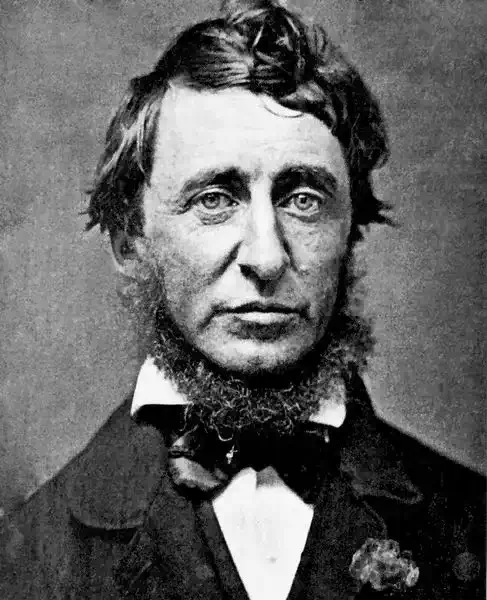
Henry David Thoreau
Sic Vita
Sic Vita
I am a parcel of vain strivings tied
By a chance bond together,
Dangling this way and that, their links
Were made so loose and wide,
Methinks,
For milder weather.
A bunch of violets without their roots,
And sorrel intermixed,
Encircled by a wisp of straw
Once coiled about their shoots,
The law
By which I'm fixed.
A nosegay which Time clutched from out
Those fair Elysian fields,
With weeds and broken stems, in haste,
Doth make the rabble rout
That waste
The day he yields.
And here I bloom for a short hour unseen,
Drinking my juices up,
With no root in the land
To keep my branches green,
But stand
In a bare cup.
Some tender buds were left upon my stem
In mimicry of life,
But ah! the children will not know,
Till time has withered them,
The woe
With which they're rife.
But now I see I was not plucked for naught,
And after in life's vase
Of glass set while I might survive,
But by a kind hand brought
Alive
To a strange place.
That stock thus thinned will soon redeem its hours,
And by another year,
Such as God knows, with freer air,
More fruits and fairer flowers
Will bear,
While I droop here.
I am a parcel of vain strivings tied
By a chance bond together,
Dangling this way and that, their links
Were made so loose and wide,
Methinks,
For milder weather.
A bunch of violets without their roots,
And sorrel intermixed,
Encircled by a wisp of straw
Once coiled about their shoots,
The law
By which I'm fixed.
A nosegay which Time clutched from out
Those fair Elysian fields,
With weeds and broken stems, in haste,
Doth make the rabble rout
That waste
The day he yields.
And here I bloom for a short hour unseen,
Drinking my juices up,
With no root in the land
To keep my branches green,
But stand
In a bare cup.
Some tender buds were left upon my stem
In mimicry of life,
But ah! the children will not know,
Till time has withered them,
The woe
With which they're rife.
But now I see I was not plucked for naught,
And after in life's vase
Of glass set while I might survive,
But by a kind hand brought
Alive
To a strange place.
That stock thus thinned will soon redeem its hours,
And by another year,
Such as God knows, with freer air,
More fruits and fairer flowers
Will bear,
While I droop here.
228