

Poems in this theme
Anguish
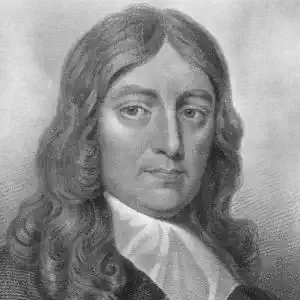
John Milton
Psalm 06
Psalm 06
Aug. 13. 1653.
Lord in thine anger do not reprehend me
Nor in thy hot displeasure me correct;
Pity me Lord for I am much deject
Am very weak and faint; heal and amend me,
For all my bones, that even with anguish ake,
Are troubled, yea my soul is troubled sore
And thou O Lord how long? turn Lord, restore
My soul, O save me for thy goodness sake
For in death no remembrance is of thee;
Who in the grave can celebrate thy praise?
Wearied I am with sighing out my dayes.
Nightly my Couch I make a kind of Sea;
My Bed I water with my tears; mine Eie
Through grief consumes, is waxen old and dark
Ith' mid'st of all mine enemies that mark.
Depart all ye that work iniquitie.
Depart from me, for the voice of my weeping
The Lord hath heard, the Lord hath heard my prai'r
My supplication with acceptance fair
The Lord will own, and have me in his keeping.
Mine enemies shall all be blank and dash't
With much confusion; then grow red with shame,
They shall return in hast the way they came
And in a moment shall be quite abash't.
Aug. 13. 1653.
Lord in thine anger do not reprehend me
Nor in thy hot displeasure me correct;
Pity me Lord for I am much deject
Am very weak and faint; heal and amend me,
For all my bones, that even with anguish ake,
Are troubled, yea my soul is troubled sore
And thou O Lord how long? turn Lord, restore
My soul, O save me for thy goodness sake
For in death no remembrance is of thee;
Who in the grave can celebrate thy praise?
Wearied I am with sighing out my dayes.
Nightly my Couch I make a kind of Sea;
My Bed I water with my tears; mine Eie
Through grief consumes, is waxen old and dark
Ith' mid'st of all mine enemies that mark.
Depart all ye that work iniquitie.
Depart from me, for the voice of my weeping
The Lord hath heard, the Lord hath heard my prai'r
My supplication with acceptance fair
The Lord will own, and have me in his keeping.
Mine enemies shall all be blank and dash't
With much confusion; then grow red with shame,
They shall return in hast the way they came
And in a moment shall be quite abash't.
923
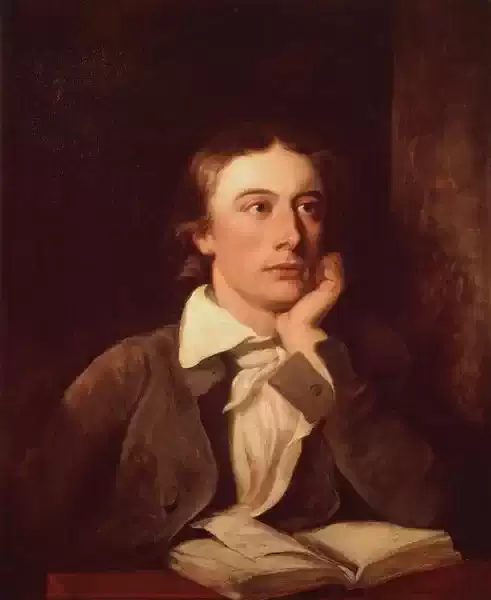
John Keats
Why did I laugh tonight? No voice will tell
Why did I laugh tonight? No voice will tell
Why did I laugh tonight? No voice will tell
No God, no demon of severe response
Deigns to reply from heaven or from hell
Then to my human heart I turn at once:
Heart, thou and I are here, sad and alone,
Say, why did I laugh? O mortal pain!
O darkness! darkness! Forever must I moan
To question heaven and hell and heart in vain?
Why did I laugh? I know this being's lease
My fancy to it's utmost blisses spreads
Yet would I on this very midnight cease
And all the world's gaudy ensigns see in shreds
Verse, fame and beauty are intense indeed
But death intenser, death is life's high meed.
Why did I laugh tonight? No voice will tell
No God, no demon of severe response
Deigns to reply from heaven or from hell
Then to my human heart I turn at once:
Heart, thou and I are here, sad and alone,
Say, why did I laugh? O mortal pain!
O darkness! darkness! Forever must I moan
To question heaven and hell and heart in vain?
Why did I laugh? I know this being's lease
My fancy to it's utmost blisses spreads
Yet would I on this very midnight cease
And all the world's gaudy ensigns see in shreds
Verse, fame and beauty are intense indeed
But death intenser, death is life's high meed.
453
John Keats
When I Have Fears
When I Have Fears
When I have fears that I may cease to be
Before my pen has glean'd my teeming brain,
Before high-piled books, in charactery,
Hold like rich garners the full ripen'd grain;
When I behold, upon the night's starr'd face,
Huge cloudy symbols of a high romance,
And think that I may never live to trace
Their shadows, with the magic hand of chance;
And when I feel, fair creature of an hour,
That I shall never look upon thee more,
Never have relish in the faery power
Of unreflecting love;--then on the shore
Of the wide world I stand alone, and think
Till love and fame to nothingness do sink.
When I have fears that I may cease to be
Before my pen has glean'd my teeming brain,
Before high-piled books, in charactery,
Hold like rich garners the full ripen'd grain;
When I behold, upon the night's starr'd face,
Huge cloudy symbols of a high romance,
And think that I may never live to trace
Their shadows, with the magic hand of chance;
And when I feel, fair creature of an hour,
That I shall never look upon thee more,
Never have relish in the faery power
Of unreflecting love;--then on the shore
Of the wide world I stand alone, and think
Till love and fame to nothingness do sink.
464
John Keats
Sonnet To Sleep
Sonnet To Sleep
O soft embalmer of the still midnight!
Shutting, with careful fingers and benign,
Our gloom-pleas'd eyes, embower'd from the light,
Enshaded in forgetfulness divine;
O soothest Sleep! if so it please thee, close,
In midst of this thine hymn, my willing eyes.
Or wait the Amen, ere thy poppy throws
Around my bed its lulling charities;
Then save me, or the passed day will shine
Upon my pillow, breeding many woes;
Save me from curious conscience, that still hoards
Its strength for darkness, burrowing like a mole;
Turn the key deftly in the oiled wards,
And seal the hushed casket of my soul.
O soft embalmer of the still midnight!
Shutting, with careful fingers and benign,
Our gloom-pleas'd eyes, embower'd from the light,
Enshaded in forgetfulness divine;
O soothest Sleep! if so it please thee, close,
In midst of this thine hymn, my willing eyes.
Or wait the Amen, ere thy poppy throws
Around my bed its lulling charities;
Then save me, or the passed day will shine
Upon my pillow, breeding many woes;
Save me from curious conscience, that still hoards
Its strength for darkness, burrowing like a mole;
Turn the key deftly in the oiled wards,
And seal the hushed casket of my soul.
388
John Keats
On Leaving Some Friends At An Early Hour
On Leaving Some Friends At An Early Hour
Give me a golden pen, and let me lean
On heaped-up flowers, in regions clear, and far;
Bring me a tablet whiter than a star,
Or hand of hymning angel, when 'tis seen
The silver strings of heavenly harp atween:
And let there glide by many a pearly car
Pink robes, and wavy hair, and diamond jar,
And half-discovered wings, and glances keen.
The while let music wander round my ears,
And as it reaches each delicious ending,
Let me write down a line of glorious tone,
And full of many wonders of the spheres:
For what a height my spirit is contending!
'Tis not content so soon to be alone.
Give me a golden pen, and let me lean
On heaped-up flowers, in regions clear, and far;
Bring me a tablet whiter than a star,
Or hand of hymning angel, when 'tis seen
The silver strings of heavenly harp atween:
And let there glide by many a pearly car
Pink robes, and wavy hair, and diamond jar,
And half-discovered wings, and glances keen.
The while let music wander round my ears,
And as it reaches each delicious ending,
Let me write down a line of glorious tone,
And full of many wonders of the spheres:
For what a height my spirit is contending!
'Tis not content so soon to be alone.
360
John Keats
Ode on Melancholy
Ode on Melancholy
No, no! go not to Lethe, neither twist
Wolf's-bane, tight-rooted, for its poisonous wine;
Nor suffer thy pale forehead to be kissed
By nightshade, ruby grape of Proserpine;
Make not your rosary of yew-berries,
Nor let the beetle nor the death-moth be
Your mournful Psyche, nor the downy owl
A partner in your sorrow's mysteries;
For shade to shade will come too drowsily,
And drown the wakeful anguish of the soul.
But when the melancholy fit shall fall
Sudden from heaven like a weeping cloud,
That fosters the droop-headed flowers all,
And hides the green hill in an April shroud;
Then glut thy sorrow on a morning rose,
Or on the rainbow of the salt sand-wave,
Or on the wealth of globed peonies;
Or if thy mistress some rich anger shows,
Emprison her soft hand, and let her rave,
And feed deep, deep upon her peerless eyes.
She dwells with Beauty -- Beauty that must die;
And Joy, whose hand is ever at his lips
Bidding adieu; and aching Pleasure nigh,
Turning to poison while the bee-mouth sips;
Ay, in the very temple of delight
Veiled Melancholy has her sovran shrine,
Though seen of none save him whose strenuous
tongue
Can burst Joy's grape against his palate fine;
His soul shall taste the sadness of her might,
And be among her cloudy trophies hung.
No, no! go not to Lethe, neither twist
Wolf's-bane, tight-rooted, for its poisonous wine;
Nor suffer thy pale forehead to be kissed
By nightshade, ruby grape of Proserpine;
Make not your rosary of yew-berries,
Nor let the beetle nor the death-moth be
Your mournful Psyche, nor the downy owl
A partner in your sorrow's mysteries;
For shade to shade will come too drowsily,
And drown the wakeful anguish of the soul.
But when the melancholy fit shall fall
Sudden from heaven like a weeping cloud,
That fosters the droop-headed flowers all,
And hides the green hill in an April shroud;
Then glut thy sorrow on a morning rose,
Or on the rainbow of the salt sand-wave,
Or on the wealth of globed peonies;
Or if thy mistress some rich anger shows,
Emprison her soft hand, and let her rave,
And feed deep, deep upon her peerless eyes.
She dwells with Beauty -- Beauty that must die;
And Joy, whose hand is ever at his lips
Bidding adieu; and aching Pleasure nigh,
Turning to poison while the bee-mouth sips;
Ay, in the very temple of delight
Veiled Melancholy has her sovran shrine,
Though seen of none save him whose strenuous
tongue
Can burst Joy's grape against his palate fine;
His soul shall taste the sadness of her might,
And be among her cloudy trophies hung.
650
John Keats
Hyperion. Book I
Hyperion. Book I
Deep in the shady sadness of a vale
Far sunken from the healthy breath of morn,
Far from the fiery noon, and eve's one star,
Sat gray-hair'd Saturn, quiet as a stone,
Still as the silence round about his lair;
Forest on forest hung above his head
Like cloud on cloud. No stir of air was there,
Not so much life as on a summer's day
Robs not one light seed from the feather'd grass,
But where the dead leaf fell, there did it rest.
A stream went voiceless by, still deadened more
By reason of his fallen divinity
Spreading a shade: the Naiad 'mid her reeds
Press'd her cold finger closer to her lips.
Along the margin-sand large foot-marks went,
No further than to where his feet had stray'd,
And slept there since. Upon the sodden ground
His old right hand lay nerveless, listless, dead,
Unsceptred; and his realmless eyes were closed;
While his bow'd head seem'd list'ning to the Earth,
His ancient mother, for some comfort yet.
It seem'd no force could wake him from his place;
But there came one, who with a kindred hand
Touch'd his wide shoulders, after bending low
With reverence, though to one who knew it not.
She was a Goddess of the infant world;
By her in stature the tall Amazon
Had stood a pigmy's height: she would have ta'en
Achilles by the hair and bent his neck;
Or with a finger stay'd Ixion's wheel.
Her face was large as that of Memphian sphinx,
Pedestal'd haply in a palace court,
When sages look'd to Egypt for their lore.
But oh! how unlike marble was that face:
How beautiful, if sorrow had not made
Sorrow more beautiful than Beauty's self.
There was a listening fear in her regard,
As if calamity had but begun;
As if the vanward clouds of evil days
Had spent their malice, and the sullen rear
Was with its stored thunder labouring up.
One hand she press'd upon that aching spot
Where beats the human heart, as if just there,
Though an immortal, she felt cruel pain:
The other upon Saturn's bended neck
She laid, and to the level of his ear
Leaning with parted lips, some words she spake
In solemn tenor and deep organ tone:
Some mourning words, which in our feeble tongue
Would come in these like accents; O how frail
To that large utterance of the early Gods!
'Saturn, look up!--though wherefore, poor old King?
I have no comfort for thee, no not one:
I cannot say, 'O wherefore sleepest thou?'
For heaven is parted from thee, and the earth
Knows thee not, thus afflicted, for a God;
And ocean too, with all its solemn noise,
Has from thy sceptre pass'd; and all the air
Is emptied of thine hoary majesty.
Thy thunder, conscious of the new command,
Rumbles reluctant o'er our fallen house;
And thy sharp lightning in unpractised hands
Scorches and burns our once serene domain.
O aching time! O moments big as years!
All as ye pass swell out the monstrous truth,
And press it so upon our weary griefs
That unbelief has not a space to breathe.
Saturn, sleep on:--O thoughtless, why did I
Thus violate thy slumbrous solitude?
Why should I ope thy melancholy eyes?
Saturn, sleep on! while at thy feet I weep.'
As when, upon a tranced summer-night,
Those green-rob'd senators of mighty woods,
Tall oaks, branch-charmed by the earnest stars,
Dream, and so dream all night without a stir,
Save from one gradual solitary gust
Which comes upon the silence, and dies off,
As if the ebbing air had but one wave;
So came these words and went; the while in tears
She touch'd her fair large forehead to the ground,
Just where her fallen hair might be outspread
A soft and silken mat for Saturn's feet.
One moon, with alteration slow, had shed
Her silver seasons four upon the night,
And still these two were postured motionless,
Like natural sculpture in cathedral cavern;
The frozen God still couchant on the earth,
And the sad Goddess weeping at his feet:
Until at length old Saturn lifted up
His faded eyes, and saw his kingdom gone,
And all the gloom and sorrow ofthe place,
And that fair kneeling Goddess; and then spake,
As with a palsied tongue, and while his beard
Shook horrid with such aspen-malady:
'O tender spouse of gold Hyperion,
Thea, I feel thee ere I see thy face;
Look up, and let me see our doom in it;
Look up, and tell me if this feeble shape
Is Saturn's; tell me, if thou hear'st the voice
Of Saturn; tell me, if this wrinkling brow,
Naked and bare of its great diadem,
Peers like the front of Saturn? Who had power
To make me desolate? Whence came the strength?
How was it nurtur'd to such bursting forth,
While Fate seem'd strangled in my nervous grasp?
But it is so; and I am smother'd up,
And buried from all godlike exercise
Of influence benign on planets pale,
Of admonitions to the winds and seas,
Of peaceful sway above man's harvesting,
And all those acts which Deity supreme
Doth ease its heart of love in.--I am gone
Away from my own bosom: I have left
My strong identity, my real self,
Somewhere between the throne, and where I sit
Here on this spot of earth. Search, Thea, search!
Open thine eyes eterne, and sphere them round
Upon all space: space starr'd, and lorn of light;
Space region'd with life-air; and barren void;
Spaces of fire, and all the yawn of hell.--
Search, Thea, search! and tell me, if thou seest
A certain shape or shadow, making way
With wings or chariot fierce to repossess
A heaven he lost erewhile: it must--it must
Be of ripe progress--Saturn must be King.
Yes, there must be a golden victory;
There must be Gods thrown down, and trumpets blown
Of triumph calm, and hymns of festival
Upon the gold clouds metropolitan,
Voices of soft proclaim, and silver stir
Of strings in hollow shells; and there shall be
Beautiful things made new, for the surprise
Of the sky-children; I will give command:
Thea! Thea! Thea! where is Saturn?'
This passion lifted him upon his feet,
And made his hands to struggle in the air,
His Druid locks to shake and ooze with sweat,
His eyes to fever out, his voice to cease.
He stood, and heard not Thea's sobbing deep;
A little time, and then again he snatch'd
Utterance thus.--'But cannot I create?
Cannot I form? Cannot I fashion forth
Another world, another universe,
To overbear and crumble this to nought?
Where is another Chaos? Where?'--That word
Found way unto Olympus, and made quake
The rebel three.--Thea was startled up,
And in her bearing was a sort of hope,
As thus she quick-voic'd spake, yet full of awe.
'This cheers our fallen house: come to our friends,
O Saturn! come away, and give them heart;
I know the covert, for thence came I hither.'
Thus brief; then with beseeching eyes she went
With backward footing through the shade a space:
He follow'd, and she turn'd to lead the way
Through aged boughs, that yielded like the mist
Which eagles cleave upmounting from their nest.
Meanwhile in other realms big tears were shed,
More sorrow like to this, and such like woe,
Too huge for mortal tongue or pen of scribe:
The Titans fierce, self-hid, or prison-bound,
Groan'd for the old allegiance once more,
And listen'd in sharp pain for Saturn's voice.
But one of the whole mammoth-brood still kept
His sov'reigny, and rule, and majesy;--
Blazing Hyperion on his orbed fire
Still sat, still snuff'd the incense, teeming up
From man to the sun's God: yet unsecure:
For as among us mortals omens drear
Fright and perplex, so also shuddered he--
Not at dog's howl, or gloom-bird's hated screech,
Or the familiar visiting of one
Upon the first toll of his passing-bell,
Or prophesyings of the midnight lamp;
But horrors, portion'd to a giant nerve,
Oft made Hyperion ache. His palace bright,
Bastion'd with pyramids of glowing gold,
And touch'd with shade of bronzed obelisks,
Glar'd a blood-red through all its thousand courts,
Arches, and domes, and fiery galleries;
And all its curtains of Aurorian clouds
Flush'd angerly: while sometimes eagles' wings,
Unseen before by Gods or wondering men,
Darken'd the place; and neighing steeds were heard
Not heard before by Gods or wondering men.
Also, when he would taste the spicy wreaths
Of incense, breath'd aloft from sacred hills,
Instead of sweets, his ample palate took
Savor of poisonous brass and metal sick:
And so, when harbor'd in the sleepy west,
After the full completion of fair day,--
For rest divine upon exalted couch,
And slumber in the arms of melody,
He pac'd away the pleasant hours of ease
With stride colossal, on from hall to hall;
While far within each aisle and deep recess,
His winged minions in close clusters stood,
Amaz'd and full offear; like anxious men
Who on wide plains gather in panting troops,
When earthquakes jar their battlements and towers.
Even now, while Saturn, rous'd from icy trance,
Went step for step with Thea through the woods,
Hyperion, leaving twilight in the rear,
Came slope upon the threshold of the west;
Then, as was wont, his palace-door flew ope
In smoothest silence, save what solemn tubes,
Blown by the serious Zephyrs, gave of sweet
And wandering sounds, slow-breathed melodies;
And like a rose in vermeil tint and shape,
In fragrance soft, and coolness to the eye,
That inlet to severe magnificence
Stood full blown, for the God to enter in.
He enter'd, but he enter'd full of wrath;
His flaming robes stream'd out beyond his heels,
And gave a roar, as if of earthly fire,
That scar'd away the meek ethereal Hours
And made their dove-wings tremble. On he flared
From stately nave to nave, from vault to vault,
Through bowers of fragrant and enwreathed light,
And diamond-paved lustrous long arcades,
Until he reach'd the great main cupola;
There standing fierce beneath, he stampt his foot,
And from the basements deep to the high towers
Jarr'd his own golden region; and before
The quavering thunder thereupon had ceas'd,
His voice leapt out, despite of godlike curb,
To this result: 'O dreams of day and night!
O monstrous forms! O effigies of pain!
O spectres busy in a cold, cold gloom!
O lank-eared phantoms of black-weeded pools!
Why do I know ye? why have I seen ye? why
Is my eternal essence thus distraught
To see and to behold these horrors new?
Saturn is fallen, am I too to fall?
Am I to leave this haven of my rest,
This cradle of my glory, this soft clime,
This calm luxuriance of blissful light,
These crystalline pavilions, and pure fanes,
Of all my lucent empire? It is left
Deserted, void, nor any haunt of mine.
The blaze, the splendor, and the symmetry,
I cannot see but darkness, death, and darkness.
Even here, into my centre of repose,
The shady visions come to domineer,
Insult, and blind, and stifle up my pomp.-Fall!--
No, by Tellus and her briny robes!
Over the fiery frontier of my realms
I will advance a terrible right arm
Shall scare that infant thunderer, rebel Jove,
And bid old Saturn take his throne again.'--
He spake, and ceas'd, the while a heavier threat
Held struggle with his throat but came not forth;
For as in theatres of crowded men
Hubbub increases more they call out 'Hush!'
So at Hyperion's words the phantoms pale
Bestirr'd themselves, thrice horrible and cold;
And from the mirror'd level where he stood
A mist arose, as from a scummy marsh.
At this, through all his bulk an agony
Crept gradual, from the feet unto the crown,
Like a lithe serpent vast and muscular
Making slow way, with head and neck convuls'd
From over-strained might. Releas'd, he fled
To the eastern gates, and full six dewy hours
Before the dawn in season due should blush,
He breath'd fierce breath against the sleepy portals,
Clear'd them of heavy vapours, burst them wide
Suddenly on the ocean's chilly streams.
The planet orb of fire, whereon he rode
Each day from east to west the heavens through,
Spun round in sable curtaining of clouds;
Not therefore veiled quite, blindfold, and hid,
But ever and anon the glancing spheres,
Circles, and arcs, and broad-belting colure,
Glow'd through, and wrought upon the muffling dark
Sweet-shaped lightnings from the nadir deep
Up to the zenith,--hieroglyphics old,
Which sages and keen-eyed astrologers
Then living on the earth, with laboring thought
Won from the gaze of many centuries:
Now lost, save what we find on remnants huge
Of stone, or rnarble swart; their import gone,
Their wisdom long since fled.--Two wings this orb
Possess'd for glory, two fair argent wings,
Ever exalted at the God's approach:
And now, from forth the gloom their plumes immense
Rose, one by one, till all outspreaded were;
While still the dazzling globe maintain'd eclipse,
Awaiting for Hyperion's command.
Fain would he have commanded, fain took throne
And bid the day begin, if but for change.
He might not:--No, though a primeval God:
The sacred seasons might not be disturb'd.
Therefore the operations of the dawn
Stay'd in their birth, even as here 'tis told.
Those silver wings expanded sisterly,
Eager to sail their orb; the porches wide
Open'd upon the dusk demesnes of night
And the bright Titan, phrenzied with new woes,
Unus'd to bend, by hard compulsion bent
His spirit to the sorrow of the time;
And all along a dismal rack of clouds,
Upon the boundaries of day and night,
He stretch'd himself in grief and radiance faint.
There as he lay, the Heaven with its stars
Look'd down on him with pity, and the voice
Of Coelus, from the universal space,
Thus whisper'd low and solemn in his ear:
'O brightest of my children dear, earth-born
And sky-engendered, son of mysteries
All unrevealed even to the powers
Which met at thy creating; at whose joys
And palpitations sweet, and pleasures soft,
I, Coelus, wonder, how they came and whence;
And at the fruits thereof what shapes they be,
Distinct, and visible; symbols divine,
Manifestations of that beauteous life
Diffus'd unseen throughout eternal space:
Of these new-form'd art thou, O brightest child!
Of these, thy brethren and the Goddesses!
There is sad feud among ye, and rebellion
Of son against his sire. I saw him fall,
I saw my first-born tumbled from his throne!
To me his arms were spread, to me his voice
Found way from forth the thunders round his head!
Pale wox I, and in vapours hid my face.
Art thou, too, near such doom? vague fear there is:
For I have seen my sons most unlike Gods.
Divine ye were created, and divine
In sad demeanour, solemn, undisturb'd,
Unruffled, like high Gods, ye liv'd and ruled:
Now I behold in you fear, hope, and wrath;
Actions of rage and passion; even as
I see them, on the mortal world beneath,
In men who die.--This is the grief, O son!
Sad sign of ruin, sudden dismay, and fall!
Yet do thou strive; as thou art capable,
As thou canst move about, an evident God;
And canst oppose to each malignant hour
Ethereal presence:--I am but a voice;
My life is but the life of winds and tides,
No more than winds and tides can I avail:--
But thou canst.--Be thou therefore in the van
Of circumstance; yea, seize the arrow's barb
Before the tense string murmur.--To the earth!
For there thou wilt find Saturn, and his woes.
Meantime I will keep watch on thy bright sun,
And of thy seasons be a careful nurse.'--
Ere half this region-whisper had come down,
Hyperion arose, and on the stars
Lifted his curved lids, and kept them wide
Until it ceas'd; and still he kept them wide:
And still they were the same bright, patient stars.
Then with a slow incline of his broad breast,
Like to a diver in the pearly seas,
Forward he stoop'd over the airy shore,
And plung'd all noiseless into the deep night.
Deep in the shady sadness of a vale
Far sunken from the healthy breath of morn,
Far from the fiery noon, and eve's one star,
Sat gray-hair'd Saturn, quiet as a stone,
Still as the silence round about his lair;
Forest on forest hung above his head
Like cloud on cloud. No stir of air was there,
Not so much life as on a summer's day
Robs not one light seed from the feather'd grass,
But where the dead leaf fell, there did it rest.
A stream went voiceless by, still deadened more
By reason of his fallen divinity
Spreading a shade: the Naiad 'mid her reeds
Press'd her cold finger closer to her lips.
Along the margin-sand large foot-marks went,
No further than to where his feet had stray'd,
And slept there since. Upon the sodden ground
His old right hand lay nerveless, listless, dead,
Unsceptred; and his realmless eyes were closed;
While his bow'd head seem'd list'ning to the Earth,
His ancient mother, for some comfort yet.
It seem'd no force could wake him from his place;
But there came one, who with a kindred hand
Touch'd his wide shoulders, after bending low
With reverence, though to one who knew it not.
She was a Goddess of the infant world;
By her in stature the tall Amazon
Had stood a pigmy's height: she would have ta'en
Achilles by the hair and bent his neck;
Or with a finger stay'd Ixion's wheel.
Her face was large as that of Memphian sphinx,
Pedestal'd haply in a palace court,
When sages look'd to Egypt for their lore.
But oh! how unlike marble was that face:
How beautiful, if sorrow had not made
Sorrow more beautiful than Beauty's self.
There was a listening fear in her regard,
As if calamity had but begun;
As if the vanward clouds of evil days
Had spent their malice, and the sullen rear
Was with its stored thunder labouring up.
One hand she press'd upon that aching spot
Where beats the human heart, as if just there,
Though an immortal, she felt cruel pain:
The other upon Saturn's bended neck
She laid, and to the level of his ear
Leaning with parted lips, some words she spake
In solemn tenor and deep organ tone:
Some mourning words, which in our feeble tongue
Would come in these like accents; O how frail
To that large utterance of the early Gods!
'Saturn, look up!--though wherefore, poor old King?
I have no comfort for thee, no not one:
I cannot say, 'O wherefore sleepest thou?'
For heaven is parted from thee, and the earth
Knows thee not, thus afflicted, for a God;
And ocean too, with all its solemn noise,
Has from thy sceptre pass'd; and all the air
Is emptied of thine hoary majesty.
Thy thunder, conscious of the new command,
Rumbles reluctant o'er our fallen house;
And thy sharp lightning in unpractised hands
Scorches and burns our once serene domain.
O aching time! O moments big as years!
All as ye pass swell out the monstrous truth,
And press it so upon our weary griefs
That unbelief has not a space to breathe.
Saturn, sleep on:--O thoughtless, why did I
Thus violate thy slumbrous solitude?
Why should I ope thy melancholy eyes?
Saturn, sleep on! while at thy feet I weep.'
As when, upon a tranced summer-night,
Those green-rob'd senators of mighty woods,
Tall oaks, branch-charmed by the earnest stars,
Dream, and so dream all night without a stir,
Save from one gradual solitary gust
Which comes upon the silence, and dies off,
As if the ebbing air had but one wave;
So came these words and went; the while in tears
She touch'd her fair large forehead to the ground,
Just where her fallen hair might be outspread
A soft and silken mat for Saturn's feet.
One moon, with alteration slow, had shed
Her silver seasons four upon the night,
And still these two were postured motionless,
Like natural sculpture in cathedral cavern;
The frozen God still couchant on the earth,
And the sad Goddess weeping at his feet:
Until at length old Saturn lifted up
His faded eyes, and saw his kingdom gone,
And all the gloom and sorrow ofthe place,
And that fair kneeling Goddess; and then spake,
As with a palsied tongue, and while his beard
Shook horrid with such aspen-malady:
'O tender spouse of gold Hyperion,
Thea, I feel thee ere I see thy face;
Look up, and let me see our doom in it;
Look up, and tell me if this feeble shape
Is Saturn's; tell me, if thou hear'st the voice
Of Saturn; tell me, if this wrinkling brow,
Naked and bare of its great diadem,
Peers like the front of Saturn? Who had power
To make me desolate? Whence came the strength?
How was it nurtur'd to such bursting forth,
While Fate seem'd strangled in my nervous grasp?
But it is so; and I am smother'd up,
And buried from all godlike exercise
Of influence benign on planets pale,
Of admonitions to the winds and seas,
Of peaceful sway above man's harvesting,
And all those acts which Deity supreme
Doth ease its heart of love in.--I am gone
Away from my own bosom: I have left
My strong identity, my real self,
Somewhere between the throne, and where I sit
Here on this spot of earth. Search, Thea, search!
Open thine eyes eterne, and sphere them round
Upon all space: space starr'd, and lorn of light;
Space region'd with life-air; and barren void;
Spaces of fire, and all the yawn of hell.--
Search, Thea, search! and tell me, if thou seest
A certain shape or shadow, making way
With wings or chariot fierce to repossess
A heaven he lost erewhile: it must--it must
Be of ripe progress--Saturn must be King.
Yes, there must be a golden victory;
There must be Gods thrown down, and trumpets blown
Of triumph calm, and hymns of festival
Upon the gold clouds metropolitan,
Voices of soft proclaim, and silver stir
Of strings in hollow shells; and there shall be
Beautiful things made new, for the surprise
Of the sky-children; I will give command:
Thea! Thea! Thea! where is Saturn?'
This passion lifted him upon his feet,
And made his hands to struggle in the air,
His Druid locks to shake and ooze with sweat,
His eyes to fever out, his voice to cease.
He stood, and heard not Thea's sobbing deep;
A little time, and then again he snatch'd
Utterance thus.--'But cannot I create?
Cannot I form? Cannot I fashion forth
Another world, another universe,
To overbear and crumble this to nought?
Where is another Chaos? Where?'--That word
Found way unto Olympus, and made quake
The rebel three.--Thea was startled up,
And in her bearing was a sort of hope,
As thus she quick-voic'd spake, yet full of awe.
'This cheers our fallen house: come to our friends,
O Saturn! come away, and give them heart;
I know the covert, for thence came I hither.'
Thus brief; then with beseeching eyes she went
With backward footing through the shade a space:
He follow'd, and she turn'd to lead the way
Through aged boughs, that yielded like the mist
Which eagles cleave upmounting from their nest.
Meanwhile in other realms big tears were shed,
More sorrow like to this, and such like woe,
Too huge for mortal tongue or pen of scribe:
The Titans fierce, self-hid, or prison-bound,
Groan'd for the old allegiance once more,
And listen'd in sharp pain for Saturn's voice.
But one of the whole mammoth-brood still kept
His sov'reigny, and rule, and majesy;--
Blazing Hyperion on his orbed fire
Still sat, still snuff'd the incense, teeming up
From man to the sun's God: yet unsecure:
For as among us mortals omens drear
Fright and perplex, so also shuddered he--
Not at dog's howl, or gloom-bird's hated screech,
Or the familiar visiting of one
Upon the first toll of his passing-bell,
Or prophesyings of the midnight lamp;
But horrors, portion'd to a giant nerve,
Oft made Hyperion ache. His palace bright,
Bastion'd with pyramids of glowing gold,
And touch'd with shade of bronzed obelisks,
Glar'd a blood-red through all its thousand courts,
Arches, and domes, and fiery galleries;
And all its curtains of Aurorian clouds
Flush'd angerly: while sometimes eagles' wings,
Unseen before by Gods or wondering men,
Darken'd the place; and neighing steeds were heard
Not heard before by Gods or wondering men.
Also, when he would taste the spicy wreaths
Of incense, breath'd aloft from sacred hills,
Instead of sweets, his ample palate took
Savor of poisonous brass and metal sick:
And so, when harbor'd in the sleepy west,
After the full completion of fair day,--
For rest divine upon exalted couch,
And slumber in the arms of melody,
He pac'd away the pleasant hours of ease
With stride colossal, on from hall to hall;
While far within each aisle and deep recess,
His winged minions in close clusters stood,
Amaz'd and full offear; like anxious men
Who on wide plains gather in panting troops,
When earthquakes jar their battlements and towers.
Even now, while Saturn, rous'd from icy trance,
Went step for step with Thea through the woods,
Hyperion, leaving twilight in the rear,
Came slope upon the threshold of the west;
Then, as was wont, his palace-door flew ope
In smoothest silence, save what solemn tubes,
Blown by the serious Zephyrs, gave of sweet
And wandering sounds, slow-breathed melodies;
And like a rose in vermeil tint and shape,
In fragrance soft, and coolness to the eye,
That inlet to severe magnificence
Stood full blown, for the God to enter in.
He enter'd, but he enter'd full of wrath;
His flaming robes stream'd out beyond his heels,
And gave a roar, as if of earthly fire,
That scar'd away the meek ethereal Hours
And made their dove-wings tremble. On he flared
From stately nave to nave, from vault to vault,
Through bowers of fragrant and enwreathed light,
And diamond-paved lustrous long arcades,
Until he reach'd the great main cupola;
There standing fierce beneath, he stampt his foot,
And from the basements deep to the high towers
Jarr'd his own golden region; and before
The quavering thunder thereupon had ceas'd,
His voice leapt out, despite of godlike curb,
To this result: 'O dreams of day and night!
O monstrous forms! O effigies of pain!
O spectres busy in a cold, cold gloom!
O lank-eared phantoms of black-weeded pools!
Why do I know ye? why have I seen ye? why
Is my eternal essence thus distraught
To see and to behold these horrors new?
Saturn is fallen, am I too to fall?
Am I to leave this haven of my rest,
This cradle of my glory, this soft clime,
This calm luxuriance of blissful light,
These crystalline pavilions, and pure fanes,
Of all my lucent empire? It is left
Deserted, void, nor any haunt of mine.
The blaze, the splendor, and the symmetry,
I cannot see but darkness, death, and darkness.
Even here, into my centre of repose,
The shady visions come to domineer,
Insult, and blind, and stifle up my pomp.-Fall!--
No, by Tellus and her briny robes!
Over the fiery frontier of my realms
I will advance a terrible right arm
Shall scare that infant thunderer, rebel Jove,
And bid old Saturn take his throne again.'--
He spake, and ceas'd, the while a heavier threat
Held struggle with his throat but came not forth;
For as in theatres of crowded men
Hubbub increases more they call out 'Hush!'
So at Hyperion's words the phantoms pale
Bestirr'd themselves, thrice horrible and cold;
And from the mirror'd level where he stood
A mist arose, as from a scummy marsh.
At this, through all his bulk an agony
Crept gradual, from the feet unto the crown,
Like a lithe serpent vast and muscular
Making slow way, with head and neck convuls'd
From over-strained might. Releas'd, he fled
To the eastern gates, and full six dewy hours
Before the dawn in season due should blush,
He breath'd fierce breath against the sleepy portals,
Clear'd them of heavy vapours, burst them wide
Suddenly on the ocean's chilly streams.
The planet orb of fire, whereon he rode
Each day from east to west the heavens through,
Spun round in sable curtaining of clouds;
Not therefore veiled quite, blindfold, and hid,
But ever and anon the glancing spheres,
Circles, and arcs, and broad-belting colure,
Glow'd through, and wrought upon the muffling dark
Sweet-shaped lightnings from the nadir deep
Up to the zenith,--hieroglyphics old,
Which sages and keen-eyed astrologers
Then living on the earth, with laboring thought
Won from the gaze of many centuries:
Now lost, save what we find on remnants huge
Of stone, or rnarble swart; their import gone,
Their wisdom long since fled.--Two wings this orb
Possess'd for glory, two fair argent wings,
Ever exalted at the God's approach:
And now, from forth the gloom their plumes immense
Rose, one by one, till all outspreaded were;
While still the dazzling globe maintain'd eclipse,
Awaiting for Hyperion's command.
Fain would he have commanded, fain took throne
And bid the day begin, if but for change.
He might not:--No, though a primeval God:
The sacred seasons might not be disturb'd.
Therefore the operations of the dawn
Stay'd in their birth, even as here 'tis told.
Those silver wings expanded sisterly,
Eager to sail their orb; the porches wide
Open'd upon the dusk demesnes of night
And the bright Titan, phrenzied with new woes,
Unus'd to bend, by hard compulsion bent
His spirit to the sorrow of the time;
And all along a dismal rack of clouds,
Upon the boundaries of day and night,
He stretch'd himself in grief and radiance faint.
There as he lay, the Heaven with its stars
Look'd down on him with pity, and the voice
Of Coelus, from the universal space,
Thus whisper'd low and solemn in his ear:
'O brightest of my children dear, earth-born
And sky-engendered, son of mysteries
All unrevealed even to the powers
Which met at thy creating; at whose joys
And palpitations sweet, and pleasures soft,
I, Coelus, wonder, how they came and whence;
And at the fruits thereof what shapes they be,
Distinct, and visible; symbols divine,
Manifestations of that beauteous life
Diffus'd unseen throughout eternal space:
Of these new-form'd art thou, O brightest child!
Of these, thy brethren and the Goddesses!
There is sad feud among ye, and rebellion
Of son against his sire. I saw him fall,
I saw my first-born tumbled from his throne!
To me his arms were spread, to me his voice
Found way from forth the thunders round his head!
Pale wox I, and in vapours hid my face.
Art thou, too, near such doom? vague fear there is:
For I have seen my sons most unlike Gods.
Divine ye were created, and divine
In sad demeanour, solemn, undisturb'd,
Unruffled, like high Gods, ye liv'd and ruled:
Now I behold in you fear, hope, and wrath;
Actions of rage and passion; even as
I see them, on the mortal world beneath,
In men who die.--This is the grief, O son!
Sad sign of ruin, sudden dismay, and fall!
Yet do thou strive; as thou art capable,
As thou canst move about, an evident God;
And canst oppose to each malignant hour
Ethereal presence:--I am but a voice;
My life is but the life of winds and tides,
No more than winds and tides can I avail:--
But thou canst.--Be thou therefore in the van
Of circumstance; yea, seize the arrow's barb
Before the tense string murmur.--To the earth!
For there thou wilt find Saturn, and his woes.
Meantime I will keep watch on thy bright sun,
And of thy seasons be a careful nurse.'--
Ere half this region-whisper had come down,
Hyperion arose, and on the stars
Lifted his curved lids, and kept them wide
Until it ceas'd; and still he kept them wide:
And still they were the same bright, patient stars.
Then with a slow incline of his broad breast,
Like to a diver in the pearly seas,
Forward he stoop'd over the airy shore,
And plung'd all noiseless into the deep night.
638
John Keats
Endymion: Book IV
Endymion: Book IV
Muse of my native land! loftiest Muse!
O first-born on the mountains! by the hues
Of heaven on the spiritual air begot:
Long didst thou sit alone in northern grot,
While yet our England was a wolfish den;
Before our forests heard the talk of men;
Before the first of Druids was a child;--
Long didst thou sit amid our regions wild
Rapt in a deep prophetic solitude.
There came an eastern voice of solemn mood:--
Yet wast thou patient. Then sang forth the Nine,
Apollo's garland:--yet didst thou divine
Such home-bred glory, that they cry'd in vain,
"Come hither, Sister of the Island!" Plain
Spake fair Ausonia; and once more she spake
A higher summons:--still didst thou betake
Thee to thy native hopes. O thou hast won
A full accomplishment! The thing is done,
Which undone, these our latter days had risen
On barren souls. Great Muse, thou know'st what prison
Of flesh and bone, curbs, and confines, and frets
Our spirit's wings: despondency besets
Our pillows; and the fresh to-morrow morn
Seems to give forth its light in very scorn
Of our dull, uninspired, snail-paced lives.
Long have I said, how happy he who shrives
To thee! But then I thought on poets gone,
And could not pray:--nor can I now--so on
I move to the end in lowliness of heart.---
"Ah, woe is me! that I should fondly part
From my dear native land! Ah, foolish maid!
Glad was the hour, when, with thee, myriads bade
Adieu to Ganges and their pleasant fields!
To one so friendless the clear freshet yields
A bitter coolness, the ripe grape is sour:
Yet I would have, great gods! but one short hour
Of native air--let me but die at home."
Endymion to heaven's airy dome
Was offering up a hecatomb of vows,
When these words reach'd him. Whereupon he bows
His head through thorny-green entanglement
Of underwood, and to the sound is bent,
Anxious as hind towards her hidden fawn.
"Is no one near to help me? No fair dawn
Of life from charitable voice? No sweet saying
To set my dull and sadden'd spirit playing?
No hand to toy with mine? No lips so sweet
That I may worship them? No eyelids meet
To twinkle on my bosom? No one dies
Before me, till from these enslaving eyes
Redemption sparkles!--I am sad and lost."
Thou, Carian lord, hadst better have been tost
Into a whirlpool. Vanish into air,
Warm mountaineer! for canst thou only bear
A woman's sigh alone and in distress?
See not her charms! Is Phoebe passionless?
Phoebe is fairer far--O gaze no more:--
Yet if thou wilt behold all beauty's store,
Behold her panting in the forest grass!
Do not those curls of glossy jet surpass
For tenderness the arms so idly lain
Amongst them? Feelest not a kindred pain,
To see such lovely eyes in swimming search
After some warm delight, that seems to perch
Dovelike in the dim cell lying beyond
Their upper lids?--Hist! "O for Hermes' wand
To touch this flower into human shape!
That woodland Hyacinthus could escape
From his green prison, and here kneeling down
Call me his queen, his second life's fair crown!
Ah me, how I could love!--My soul doth melt
For the unhappy youth--Love! I have felt
So faint a kindness, such a meek surrender
To what my own full thoughts had made too tender,
That but for tears my life had fled away!--
Ye deaf and senseless minutes of the day,
And thou, old forest, hold ye this for true,
There is no lightning, no authentic dew
But in the eye of love: there's not a sound,
Melodious howsoever, can confound
The heavens and earth in one to such a death
As doth the voice of love: there's not a breath
Will mingle kindly with the meadow air,
Till it has panted round, and stolen a share
Of passion from the heart!"-
Upon a bough
He leant, wretched. He surely cannot now
Thirst for another love: O impious,
That he can even dream upon it thus!--
Thought he, "Why am I not as are the dead,
Since to a woe like this I have been led
Through the dark earth, and through the wondrous sea?
Goddess! I love thee not the less: from thee
By Juno's smile I turn not--no, no, no--
While the great waters are at ebb and flow.--
I have a triple soul! O fond pretence--
For both, for both my love is so immense,
I feel my heart is cut in twain for them."
And so he groan'd, as one by beauty slain.
The lady's heart beat quick, and he could see
Her gentle bosom heave tumultuously.
He sprang from his green covert: there she lay,
Sweet as a muskrose upon new-made hay;
With all her limbs on tremble, and her eyes
Shut softly up alive. To speak he tries.
"Fair damsel, pity me! forgive that I
Thus violate thy bower's sanctity!
O pardon me, for I am full of grief--
Grief born of thee, young angel! fairest thief!
Who stolen hast away the wings wherewith
I was to top the heavens. Dear maid, sith
Thou art my executioner, and I feel
Loving and hatred, misery and weal,
Will in a few short hours be nothing to me,
And all my story that much passion slew me;
Do smile upon the evening of my days:
And, for my tortur'd brain begins to craze,
Be thou my nurse; and let me understand
How dying I shall kiss that lily hand.--
Dost weep for me? Then should I be content.
Scowl on, ye fates! until the firmament
Outblackens Erebus, and the full-cavern'd earth
Crumbles into itself. By the cloud girth
Of Jove, those tears have given me a thirst
To meet oblivion."--As her heart would burst
The maiden sobb'd awhile, and then replied:
"Why must such desolation betide
As that thou speakest of? Are not these green nooks
Empty of all misfortune? Do the brooks
Utter a gorgon voice? Does yonder thrush,
Schooling its half-fledg'd little ones to brush
About the dewy forest, whisper tales?--
Speak not of grief, young stranger, or cold snails
Will slime the rose to night. Though if thou wilt,
Methinks 'twould be a guilt--a very guilt--
Not to companion thee, and sigh away
The light--the dusk--the dark--till break of day!"
"Dear lady," said Endymion, "'tis past:
I love thee! and my days can never last.
That I may pass in patience still speak:
Let me have music dying, and I seek
No more delight--I bid adieu to all.
Didst thou not after other climates call,
And murmur about Indian streams?"--Then she,
Sitting beneath the midmost forest tree,
For pity sang this roundelay-----
"O Sorrow,
Why dost borrow
The natural hue of health, from vermeil lips?-To
give maiden blushes
To the white rose bushes?
Or is it thy dewy hand the daisy tips?
"O Sorrow,
Why dost borrow
The lustrous passion from a falcon-eye?-To
give the glow-worm light?
Or, on a moonless night,
To tinge, on syren shores, the salt sea-spry?
"O Sorrow,
Why dost borrow
The mellow ditties from a mourning tongue?-To
give at evening pale
Unto the nightingale,
That thou mayst listen the cold dews among?
"O Sorrow,
Why dost borrow
Heart's lightness from the merriment of May?-A
lover would not tread
A cowslip on the head,
Though he should dance from eve till peep of day-Nor
any drooping flower
Held sacred for thy bower,
Wherever he may sport himself and play.
"To Sorrow
I bade good-morrow,
And thought to leave her far away behind;
But cheerly, cheerly,
She loves me dearly;
She is so constant to me, and so kind:
I would deceive her
And so leave her,
But ah! she is so constant and so kind.
"Beneath my palm trees, by the river side,
I sat a weeping: in the whole world wide
There was no one to ask me why I wept,-
And so I kept
Brimming the water-lily cups with tears
Cold as my fears.
"Beneath my palm trees, by the river side,
I sat a weeping: what enamour'd bride,
Cheated by shadowy wooer from the clouds,
But hides and shrouds
Beneath dark palm trees by a river side?
"And as I sat, over the light blue hills
There came a noise of revellers: the rills
Into the wide stream came of purple hue-
'Twas Bacchus and his crew!
The earnest trumpet spake, and silver thrills
From kissing cymbals made a merry din-
'Twas Bacchus and his kin!
Like to a moving vintage down they came,
Crown'd with green leaves, and faces all on flame;
All madly dancing through the pleasant valley,
To scare thee, Melancholy!
O then, O then, thou wast a simple name!
And I forgot thee, as the berried holly
By shepherds is forgotten, when, in June,
Tall chesnuts keep away the sun and moon:-
I rush'd into the folly!
"Within his car, aloft, young Bacchus stood,
Trifling his ivy-dart, in dancing mood,
With sidelong laughing;
And little rills of crimson wine imbrued
His plump white arms, and shoulders, enough white
For Venus' pearly bite;
And near him rode Silenus on his ass,
Pelted with flowers as he on did pass
Tipsily quaffing.
"Whence came ye, merry Damsels! whence came ye!
So many, and so many, and such glee?
Why have ye left your bowers desolate,
Your lutes, and gentler fate?-‘
We follow Bacchus! Bacchus on the wing?
A conquering!
Bacchus, young Bacchus! good or ill betide,
We dance before him thorough kingdoms wide:--
Come hither, lady fair, and joined be
To our wild minstrelsy!'
"Whence came ye, jolly Satyrs! whence came ye!
So many, and so many, and such glee?
Why have ye left your forest haunts, why left
Your nuts in oak-tree cleft?-‘
For wine, for wine we left our kernel tree;
For wine we left our heath, and yellow brooms,
And cold mushrooms;
For wine we follow Bacchus through the earth;
Great God of breathless cups and chirping mirth!--
Come hither, lady fair, and joined be
To our mad minstrelsy!'
"Over wide streams and mountains great we went,
And, save when Bacchus kept his ivy tent,
Onward the tiger and the leopard pants,
With Asian elephants:
Onward these myriads--with song and dance,
With zebras striped, and sleek Arabians' prance,
Web-footed alligators, crocodiles,
Bearing upon their scaly backs, in files,
Plump infant laughers mimicking the coil
Of seamen, and stout galley-rowers' toil:
With toying oars and silken sails they glide,
Nor care for wind and tide.
"Mounted on panthers' furs and lions' manes,
From rear to van they scour about the plains;
A three days' journey in a moment done:
And always, at the rising of the sun,
About the wilds they hunt with spear and horn,
On spleenful unicorn.
"I saw Osirian Egypt kneel adown
Before the vine-wreath crown!
I saw parch'd Abyssinia rouse and sing
To the silver cymbals' ring!
I saw the whelming vintage hotly pierce
Old Tartary the fierce!
The kings of Inde their jewel-sceptres vail,
And from their treasures scatter pearled hail;
Great Brahma from his mystic heaven groans,
And all his priesthood moans;
Before young Bacchus' eye-wink turning pale.--
Into these regions came I following him,
Sick hearted, weary--so I took a whim
To stray away into these forests drear
Alone, without a peer:
And I have told thee all thou mayest hear.
"Young stranger!
I've been a ranger
In search of pleasure throughout every clime:
Alas! 'tis not for me!
Bewitch'd I sure must be,
To lose in grieving all my maiden prime.
"Come then, Sorrow!
Sweetest Sorrow!
Like an own babe I nurse thee on my breast:
I thought to leave thee
And deceive thee,
But now of all the world I love thee best.
"There is not one,
No, no, not one
But thee to comfort a poor lonely maid;
Thou art her mother,
And her brother,
Her playmate, and her wooer in the shade."
O what a sigh she gave in finishing,
And look, quite dead to every worldly thing!
Endymion could not speak, but gazed on her;
And listened to the wind that now did stir
About the crisped oaks full drearily,
Yet with as sweet a softness as might be
Remember'd from its velvet summer song.
At last he said: "Poor lady, how thus long
Have I been able to endure that voice?
Fair Melody! kind Syren! I've no choice;
I must be thy sad servant evermore:
I cannot choose but kneel here and adore.
Alas, I must not think--by Phoebe, no!
Let me not think, soft Angel! shall it be so?
Say, beautifullest, shall I never think?
O thou could'st foster me beyond the brink
Of recollection! make my watchful care
Close up its bloodshot eyes, nor see despair!
Do gently murder half my soul, and I
Shall feel the other half so utterly!-
I'm giddy at that cheek so fair and smooth;
O let it blush so ever! let it soothe
My madness! let it mantle rosy-warm
With the tinge of love, panting in safe alarm.--
This cannot be thy hand, and yet it is;
And this is sure thine other softling--this
Thine own fair bosom, and I am so near!
Wilt fall asleep? O let me sip that tear!
And whisper one sweet word that I may know
This is this world--sweet dewy blossom!"--Woe!
Woe! Woe to that Endymion! Where is he?--
Even these words went echoing dismally
Through the wide forest--a most fearful tone,
Like one repenting in his latest moan;
And while it died away a shade pass'd by,
As of a thunder cloud. When arrows fly
Through the thick branches, poor ring-doves sleek forth
Their timid necks and tremble; so these both
Leant to each other trembling, and sat so
Waiting for some destruction--when lo,
Foot-feather'd Mercury appear'd sublime
Beyond the tall tree tops; and in less time
Than shoots the slanted hail-storm, down he dropt
Towards the ground; but rested not, nor stopt
One moment from his home: only the sward
He with his wand light touch'd, and heavenward
Swifter than sight was gone--even before
The teeming earth a sudden witness bore
Of his swift magic. Diving swans appear
Above the crystal circlings white and clear;
And catch the cheated eye in wild surprise,
How they can dive in sight and unseen rise--
So from the turf outsprang two steeds jet-black,
Each with large dark blue wings upon his back.
The youth of Caria plac'd the lovely dame
On one, and felt himself in spleen to tame
The other's fierceness. Through the air they flew,
High as the eagles. Like two drops of dew
Exhal'd to Phoebus' lips, away they are gone,
Far from the earth away--unseen, alone,
Among cool clouds and winds, but that the free,
The buoyant life of song can floating be
Above their heads, and follow them untir'd.--
Muse of my native land, am I inspir'd?
This is the giddy air, and I must spread
Wide pinions to keep here; nor do I dread
Or height, or depth, or width, or any chance
Precipitous: I have beneath my glance
Those towering horses and their mournful freight.
Could I thus sail, and see, and thus await
Fearless for power of thought, without thine aid?--
There is a sleepy dusk, an odorous shade
From some approaching wonder, and behold
Those winged steeds, with snorting nostrils bold
Snuff at its faint extreme, and seem to tire,
Dying to embers from their native fire!
There curl'd a purple mist around them; soon,
It seem'd as when around the pale new moon
Sad Zephyr droops the clouds like weeping willow:
'Twas Sleep slow journeying with head on pillow.
For the first time, since he came nigh dead born
From the old womb of night, his cave forlorn
Had he left more forlorn; for the first time,
He felt aloof the day and morning's prime--
Because into his depth Cimmerian
There came a dream, shewing how a young man,
Ere a lean bat could plump its wintery skin,
Would at high Jove's empyreal footstool win
An immortality, and how espouse
Jove's daughter, and be reckon'd of his house.
Now was he slumbering towards heaven's gate,
That he might at the threshold one hour wait
To hear the marriage melodies, and then
Sink downward to his dusky cave again.
His litter of smooth semilucent mist,
Diversely ting'd with rose and amethyst,
Puzzled those eyes that for the centre sought;
And scarcely for one moment could be caught
His sluggish form reposing motionless.
Those two on winged steeds, with all the stress
Of vision search'd for him, as one would look
Athwart the sallows of a river nook
To catch a glance at silver throated eels,--
Or from old Skiddaw's top, when fog conceals
His rugged forehead in a mantle pale,
With an eye-guess towards some pleasant vale
Descry a favourite hamlet faint and far.
These raven horses, though they foster'd are
Of earth's splenetic fire, dully drop
Their full-veined ears, nostrils blood wide, and stop;
Upon the spiritless mist have they outspread
Their ample feathers, are in slumber dead,--
And on those pinions, level in mid air,
Endymion sleepeth and the lady fair.
Slowly they sail, slowly as icy isle
Upon a calm sea drifting: and meanwhile
The mournful wanderer dreams. Behold! he walks
On heaven's pavement; brotherly he talks
To divine powers: from his hand full fain
Juno's proud birds are pecking pearly grain:
He tries the nerve of Phoebus' golden bow,
And asketh where the golden apples grow:
Upon his arm he braces Pallas' shield,
And strives in vain to unsettle and wield
A Jovian thunderbolt: arch Hebe brings
A full-brimm'd goblet, dances lightly, sings
And tantalizes long; at last he drinks,
And lost in pleasure at her feet he sinks,
Touching with dazzled lips her starlight hand.
He blows a bugle,--an ethereal band
Are visible above: the Seasons four,-Green-
kyrtled Spring, flush Summer, golden store
In Autumn's sickle, Winter frosty hoar,
Join dance with shadowy Hours; while still the blast,
In swells unmitigated, still doth last
To sway their floating morris. "Whose is this?
Whose bugle?" he inquires: they smile--"O Dis!
Why is this mortal here? Dost thou not know
Its mistress' lips? Not thou?--'Tis Dian's: lo!
She rises crescented!" He looks, 'tis she,
His very goddess: good-bye earth, and sea,
And air, and pains, and care, and suffering;
Good-bye to all but love! Then doth he spring
Towards her, and awakes--and, strange, o'erhead,
Of those same fragrant exhalations bred,
Beheld awake his very dream: the gods
Stood smiling; merry Hebe laughs and nods;
And Phoebe bends towards him crescented.
O state perplexing! On the pinion bed,
Too well awake, he feels the panting side
Of his delicious lady. He who died
For soaring too audacious in the sun,
Where that same treacherous wax began to run,
Felt not more tongue-tied than Endymion.
His heart leapt up as to its rightful throne,
To that fair shadow'd passion puls'd its way--
Ah, what perplexity! Ah, well a day!
So fond, so beauteous was his bed-fellow,
He could not help but kiss her: then he grew
Awhile forgetful of all beauty save
Young Phoebe's, golden hair'd; and so 'gan crave
Forgiveness: yet he turn'd once more to look
At the sweet sleeper,--all his soul was shook,--
She press'd his hand in slumber; so once more
He could not help but kiss her and adore.
At this the shadow wept, melting away.
The Latmian started up: "Bright goddess, stay!
Search my most hidden breast! By truth's own tongue,
I have no dædale heart: why is it wrung
To desperation? Is there nought for me,
Upon the bourne of bliss, but misery?"
These words awoke the stranger of dark tresses:
Her dawning love-look rapt Endymion blesses
With 'haviour soft. Sleep yawned from underneath.
"Thou swan of Ganges, let us no more breathe
This murky phantasm! thou contented seem'st
Pillow'd in lovely idleness, nor dream'st
What horrors may discomfort thee and me.
Ah, shouldst thou die from my heart-treachery!--
Yet did she merely weep--her gentle soul
Hath no revenge in it: as it is whole
In tenderness, would I were whole in love!
Can I prize thee, fair maid, all price above,
Even when I feel as true as innocence?
I do, I do.--What is this soul then? Whence
Came it? It does not seem my own, and I
Have no self-passion or identity.
Some fearful end must be: where, where is it?
By Nemesis, I see my spirit flit
Alone about the dark--Forgive me, sweet:
Shall we away?" He rous'd the steeds: they beat
Their wings chivalrous into the clear air,
Leaving old Sleep within his vapoury lair.
The good-night blush of eve was waning slow,
And Vesper, risen star, began to throe
In the dusk heavens silvery, when they
Thus sprang direct towards the Galaxy.
Nor did speed hinder converse soft and strange--
Eternal oaths and vows they interchange,
In such wise, in such temper, so aloof
Up in the winds, beneath a starry roof,
So witless of their doom, that verily
'Tis well nigh past man's search their hearts to see;
Whether they wept, or laugh'd, or griev'd, or toy'd--
Most like with joy gone mad, with sorrow cloy'd.
Full facing their swift flight, from ebon streak,
The moon put forth a little diamond peak,
No bigger than an unobserved star,
Or tiny point of fairy scymetar;
Bright signal that she only stoop'd to tie
Her silver sandals, ere deliciously
She bow'd into the heavens her timid head.
Slowly she rose, as though she would have fled,
While to his lady meek the Carian turn'd,
To mark if her dark eyes had yet discern'd
This beauty in its birth--Despair! despair!
He saw her body fading gaunt and spare
In the cold moonshine. Straight he seiz'd her wrist;
It melted from his grasp: her hand he kiss'd,
And, horror! kiss'd his own--he was alone.
Her steed a little higher soar'd, and then
Dropt hawkwise to the earth. There lies a den,
Beyond the seeming confines of the space
Made for the soul to wander in and trace
Its own existence, of remotest glooms.
Dark regions are around it, where the tombs
Of buried griefs the spirit sees, but scarce
One hour doth linger weeping, for the pierce
Of new-born woe it feels more inly smart:
And in these regions many a venom'd dart
At random flies; they are the proper home
Of every ill: the man is yet to come
Who hath not journeyed in this native hell.
But few have ever felt how calm and well
Sleep may be had in that deep den of all.
There anguish does not sting; nor pleasure pall:
Woe-hurricanes beat ever at the gate,
Yet all is still within and desolate.
Beset with painful gusts, within ye hear
No sound so loud as when on curtain'd bier
The death-watch tick is stifled. Enter none
Who strive therefore: on the sudden it is won.
Just when the sufferer begins to burn,
Then it is free to him; and from an urn,
Still fed by melting ice, he takes a draught--
Young Semele such richness never quaft
In her maternal longing. Happy gloom!
Dark Paradise! where pale becomes the bloom
Of health by due; where silence dreariest
Is most articulate; where hopes infest;
Where those eyes are the brightest far that keep
Their lids shut longest in a dreamless sleep.
O happy spirit-home! O wondrous soul!
Pregnant with such a den to save the whole
In thine own depth. Hail, gentle Carian!
For, never since thy griefs and woes began,
Hast thou felt so content: a grievous feud
Hath let thee to this Cave of Quietude.
Aye, his lull'd soul was there, although upborne
With dangerous speed: and so he did not mourn
Because he knew not whither he was going.
So happy was he, not the aerial blowing
Of trumpets at clear parley from the east
Could rouse from that fine relish, that high feast.
They stung the feather'd horse: with fierce alarm
He flapp'd towards the sound. Alas, no charm
Could lift Endymion's head, or he had view'd
A skyey mask, a pinion'd multitude,--
And silvery was its passing: voices sweet
Warbling the while as if to lull and greet
The wanderer in his path. Thus warbled they,
While past the vision went in bright array.
"Who, who from Dian's feast would be away?
For all the golden bowers of the day
Are empty left? Who, who away would be
From Cynthia's wedding and festivity?
Not Hesperus: lo! upon his silver wings
He leans away for highest heaven and sings,
Snapping his lucid fingers merrily!--
Ah, Zephyrus! art here, and Flora too!
Ye tender bibbers of the rain and dew,
Young playmates of the rose and daffodil,
Be careful, ere ye enter in, to fill
Your baskets high
With fennel green, and balm, and golden pines,
Savory, latter-mint, and columbines,
Cool parsley, basil sweet, and sunny thyme;
Yea, every flower and leaf of every clime,
All gather'd in the dewy morning: hie
Away! fly, fly!--
Crystalline brother of the belt of heaven,
Aquarius! to whom king Jove has given
Two liquid pulse streams 'stead of feather'd wings,
Two fan-like fountains,--thine illuminings
For Dian play:
Dissolve the frozen purity of air;
Let thy white shoulders silvery and bare
Shew cold through watery pinions; make more bright
The Star-Queen's crescent on her marriage night:
Haste, haste away!--
Castor has tamed the planet Lion, see!
And of the Bear has Pollux mastery:
A third is in the race! who is the third,
Speeding away swift as the eagle bird?
The ramping Centaur!
The Lion's mane's on end: the Bear how fierce!
The Centaur's arrow ready seems to pierce
Some enemy: far forth his bow is bent
Into the blue of heaven. He'll be shent,
Pale unrelentor,
When he shall hear the wedding lutes a playing.--
Andromeda! sweet woman! why delaying
So timidly among the stars: come hither!
Join this bright throng, and nimbly follow whither
They all are going.
Danae's Son, before Jove newly bow'd,
Has wept for thee, calling to Jove aloud.
Thee, gentle lady, did he disenthral:
Ye shall for ever live and love, for all
Thy tears are flowing.--
By Daphne's fright, behold Apollo!--"
More
Endymion heard not: down his steed him bore,
Prone to the green head of a misty hill.
His first touch of the earth went nigh to kill.
"Alas!" said he, "were I but always borne
Through dangerous winds, had but my footsteps worn
A path in hell, for ever would I bless
Horrors which nourish an uneasiness
For my own sullen conquering: to him
Who lives beyond earth's boundary, grief is dim,
Sorrow is but a shadow: now I see
The grass; I feel the solid ground--Ah, me!
It is thy voice--divinest! Where?--who? who
Left thee so quiet on this bed of dew?
Behold upon this happy earth we are;
Let us ay love each other; let us fare
On forest-fruits, and never, never go
Among the abodes of mortals here below,
Or be by phantoms duped. O destiny!
Into a labyrinth now my soul would fly,
But with thy beauty will I deaden it.
Where didst thou melt too? By thee will I sit
For ever: let our fate stop here--a kid
I on this spot will offer: Pan will bid
Us live in peace, in love and peace among
His forest wildernesses. I have clung
To nothing, lov'd a nothing, nothing seen
Or felt but a great dream! O I have been
Presumptuous against love, against the sky,
Against all elements, against the tie
Of mortals each to each, against the blooms
Of flowers, rush of rivers, and the tombs
Of heroes gone! Against his proper glory
Has my own soul conspired: so my story
Will I to children utter, and repent.
There never liv'd a mortal man, who bent
His appetite beyond his natural sphere,
But starv'd and died. My sweetest Indian, here,
Here will I kneel, for thou redeemed hast
My life from too thin breathing: gone and past
Are cloudy phantasms. Caverns lone, farewel!
And air of visions, and the monstrous swell
Of visionary seas! No, never more
Shall airy voices cheat me to the shore
Of tangled wonder, breathless and aghast.
Adieu, my daintiest Dream! although so vast
My love is still for thee. The hour may come
When we shall meet in pure elysium.
On earth I may not love thee; and therefore
Doves will I offer up, and sweetest store
All through the teeming year: so thou wilt shine
On me, and on this damsel fair of mine,
And bless our simple lives. My Indian bliss!
My river-lily bud! one human kiss!
One sigh of real breath--one gentle squeeze,
Warm as a dove's nest among summer trees,
And warm with dew at ooze from living blood!
Whither didst melt? Ah, what of that!--all good
We'll talk about--no more of dreaming.--Now,
Where shall our dwelling be? Under the brow
Of some steep mossy hill, where ivy dun
Would hide us up, although spring leaves were none;
And where dark yew trees, as we rustle through,
Will drop their scarlet berry cups of dew?
O thou wouldst joy to live in such a place;
Dusk for our loves, yet light enough to grace
Those gentle limbs on mossy bed reclin'd:
For by one step the blue sky shouldst thou find,
And by another, in deep dell below,
See, through the trees, a little river go
All in its mid-day gold and glimmering.
Honey from out the gnarled hive I'll bring,
And apples, wan with sweetness, gather thee,--
Cresses that grow where no man may them see,
And sorrel untorn by the dew-claw'd stag:
Pipes will I fashion of the syrinx flag,
That thou mayst always know whither I roam,
When it shall please thee in our quiet home
To listen and think of love. Still let me speak;
Still let me dive into the joy I seek,--
For yet the past doth prison me. The rill,
Thou haply mayst delight in, will I fill
With fairy fishes from the mountain tarn,
And thou shalt feed them from the squirrel's barn.
Its bottom will I strew with amber shells,
And pebbles blue from deep enchanted wells.
Its sides I'll plant with dew-sweet eglantine,
And honeysuckles full of clear bee-wine.
I will entice this crystal rill to trace
Love's silver name upon the meadow's face.
I'll kneel to Vesta, for a flame of fire;
And to god Phoebus, for a golden lyre;
To Empress Dian, for a hunting spear;
To Vesper, for a taper silver-clear,
That I may see thy beauty through the night;
To Flora, and a nightingale shall light
Tame on thy finger; to the River-gods,
And they shall bring thee taper fishing-rods
Of gold, and lines of Naiads' long bright tress.
Heaven shield thee for thine utter loveliness!
Thy mossy footstool shall the altar be
'Fore which I'll bend, bending, dear love, to thee:
Those lips shall be my Delphos, and shall speak
Laws to my footsteps, colour to my cheek,
Trembling or stedfastness to this same voice,
And of three sweetest pleasurings the choice:
And that affectionate light, those diamond things,
Those eyes, those passions, those supreme pearl springs,
Shall be my grief, or twinkle me to pleasure.
Say, is not bliss within our perfect seisure?
O that I could not doubt?"
The mountaineer
Thus strove by fancies vain and crude to clear
His briar'd path to some tranquillity.
It gave bright gladness to his lady's eye,
And yet the tears she wept were tears of sorrow;
Answering thus, just as the golden morrow
Beam'd upward from the vallies of the east:
"O that the flutter of this heart had ceas'd,
Or the sweet name of love had pass'd away.
Young feather'd tyrant! by a swift decay
Wilt thou devote this body to the earth:
And I do think that at my very birth
I lisp'd thy blooming titles inwardly;
For at the first, first dawn and thought of thee,
With uplift hands I blest the stars of heaven.
Art thou not cruel? Ever have I striven
To think thee kind, but ah, it will not do!
When yet a child, I heard that kisses drew
Favour from thee, and so I kisses gave
To the void air, bidding them find out love:
But when I came to feel how far above
All fancy, pride, and fickle maidenhood,
All earthly pleasure, all imagin'd good,
Was the warm tremble of a devout kiss,--
Even then, that moment, at the thought of this,
Fainting I fell into a bed of flowers,
And languish'd there three days. Ye milder powers,
Am I not cruelly wrong'd? Believe, believe
Me, dear Endymion, were I to weave
With my own fancies garlands of sweet life,
Thou shouldst be one of all. Ah, bitter strife!
I may not be thy love: I am forbidden--
Indeed I am--thwarted, affrighted, chidden,
By things I trembled at, and gorgon wrath.
Twice hast thou ask'd whither I went: henceforth
Ask me no more! I may not utter it,
Nor may I be thy love. We might commit
Ourselves at once to vengeance; we might die;
We might embrace and die: voluptuous thought!
Enlarge not to my hunger, or I'm caught
In trammels of perverse deliciousness.
No, no, that shall not be: thee will I bless,
And bid a long adieu."
The Carian
No word return'd: both lovelorn, silent, wan,
Into the vallies green together went.
Far wandering, they were perforce content
To sit beneath a fair lone beechen tree;
Nor at each other gaz'd, but heavily
Por'd on its hazle cirque of shedded leaves.
Endymion! unhappy! it nigh grieves
Me to behold thee thus in last extreme:
Ensky'd ere this, but truly that I deem
Truth the best music in a first-born song.
Thy lute-voic'd brother will I sing ere long,
And thou shalt aid--hast thou not aided me?
Yes, moonlight Emperor! felicity
Has been thy meed for many thousand years;
Yet often have I, on the brink of tears,
Mourn'd as if yet thou wert a forester,--
Forgetting the old tale.
He did not stir
His eyes from the dead leaves, or one small pulse
Of joy he might have felt. The spirit culls
Unfaded amaranth, when wild it strays
Through the old garden-ground of boyish days.
A little onward ran the very stream
By which he took his first soft poppy dream;
And on the very bark 'gainst which he leant
A crescent he had carv'd, and round it spent
His skill in little stars. The teeming tree
Had swollen and green'd the pious charactery,
But not ta'en out. Why, there was not a slope
Up which he had not fear'd the antelope;
And not a tree, beneath whose rooty shade
He had not with his tamed leopards play'd.
Nor could an arrow light, or javelin,
Fly in the air where his had never been--
And yet he knew it not.
O treachery!
Why does his lady smile, pleasing her eye
With all his sorrowing? He sees her not.
But who so stares on him? His sister sure!
Peona of the woods!--Can she endure-Impossible--
how dearly they embrace!
His lady smiles; delight is in her face;
It is no treachery.
"Dear brother mine!
Endymion, weep not so! Why shouldst thou pine
When all great Latmos so exalt wilt be?
Thank the great gods, and look not bitterly;
And speak not one pale word, and sigh no more.
Sure I will not believe thou hast such store
Of grief, to last thee to my kiss again.
Thou surely canst not bear a mind in pain,
Come hand in hand with one so beautiful.
Be happy both of you! for I will pull
The flowers of autumn for your coronals.
Pan's holy priest for young Endymion calls;
And when he is restor'd, thou, fairest dame,
Shalt be our queen. Now, is it not a shame
To see ye thus,--not very, very sad?
Perhaps ye are too happy to be glad:
O feel as if it were a common day;
Free-voic'd as one who never was away.
No tongue shall ask, whence come ye? but ye shall
Be gods of your own rest imperial.
Not even I, for one whole month, will pry
Into the hours that have pass'd us by,
Since in my arbour I did sing to thee.
O Hermes! on this very night will be
A hymning up to Cynthia, queen of light;
For the soothsayers old saw yesternight
Good visions in the air,--whence will befal,
As say these sages, health perpetual
To shepherds and their flocks; and furthermore,
In Dian's face they read the gentle lore:
Therefore for her these vesper-carols are.
Our friends will all be there from nigh and far.
Many upon thy death have ditties made;
And many, even now, their foreheads shade
With cypress, on a day of sacrifice.
New singing for our maids shalt thou devise,
And pluck the sorrow from our huntsmen's brows.
Tell me, my lady-queen, how to espouse
This wayward brother to his rightful joys!
His eyes are on thee bent, as thou didst poise
His fate most goddess-like. Help me, I pray,
To lure--Endymion, dear brother, say
What ails thee?" He could bear no more, and so
Bent his soul fiercely like a spiritual bow,
And twang'd it inwardly, and calmly said:
"I would have thee my only friend, sweet maid!
My only visitor! not ignorant though,
That those deceptions which for pleasure go
'Mong men, are pleasures real as real may be:
But there are higher ones I may not see,
If impiously an earthly realm I take.
Since I saw thee, I have been wide awake
Night after night, and day by day, until
Of the empyrean I have drunk my fill.
Let it content thee, Sister, seeing me
More happy than betides mortality.
A hermit young, I'll live in mossy cave,
Where thou alone shalt come to me, and lave
Thy spirit in the wonders I shall tell.
Through me the shepherd realm shall prosper well;
For to thy tongue will I all health confide.
And, for my sake, let this young maid abide
With thee as a dear sister. Thou alone,
Peona, mayst return to me. I own
This may sound strangely: but when, dearest girl,
Thou seest it for my happiness, no pearl
Will trespass down those cheeks. Companion fair!
Wilt be content to dwell with her, to share
This sister's love with me?" Like one resign'd
And bent by circumstance, and thereby blind
In self-commitment, thus that meek unknown:
"Aye, but a buzzing by my ears has flown,
Of jubilee to Dian:--truth I heard!
Well then, I see there is no little bird,
Tender soever, but is Jove's own care.
Long have I sought for rest, and, unaware,
Behold I find it! so exalted too!
So after my own heart! I knew, I knew
There was a place untenanted in it:
In that same void white Chastity shall sit,
And monitor me nightly to lone slumber.
With sanest lips I vow me to the number
Of Dian's sisterhood; and, kind lady,
With thy good help, this very night shall see
My future days to her fane consecrate."
As feels a dreamer what doth most create
His own particular fright, so these three felt:
Or like one who, in after ages, knelt
To Lucifer or Baal, when he'd pine
After a little sleep: or when in mine
Far under-ground, a sleeper meets his friends
Who know him not. Each diligently bends
Towards common thoughts and things for very fear;
Striving their ghastly malady to cheer,
By thinking it a thing of yes and no,
That housewives talk of. But the spirit-blow
Was struck, and all were dreamers. At the last
Endymion said: "Are not our fates all cast?
Why stand we here? Adieu, ye tender pair!
Adieu!" Whereat those maidens, with wild stare,
Walk'd dizzily away. Pained and hot
His eyes went after them, until they got
Near to a cypress grove, whose deadly maw,
In one swift moment, would what then he saw
Engulph for ever. "Stay!" he cried, "ah, stay!
Turn, damsels! hist! one word I have to say.
Sweet Indian, I would see thee once again.
It is a thing I dote on: so I'd fain,
Peona, ye should hand in hand repair
Into those holy groves, that silent are
Behind great Dian's temple. I'll be yon,
At vesper's earliest twinkle--they are gone--
But once, once, once again--" At this he press'd
His hands against his face, and then did rest
His head upon a mossy hillock green,
And so remain'd as he a corpse had been
All the long day; save when he scantly lifted
His eyes abroad, to see how shadows shifted
With the slow move of time,--sluggish and weary
Until the poplar tops, in journey dreary,
Had reach'd the river's brim. Then up he rose,
And, slowly as that very river flows,
Walk'd towards the temple grove with this lament:
"Why such a golden eve? The breeze is sent
Careful and soft, that not a leaf may fall
Before the serene father of them all
Bows down his summer head below the west.
Now am I of breath, speech, and speed possest,
But at the setting I must bid adieu
To her for the last time. Night will strew
On the damp grass myriads of lingering leaves,
And with them shall I die; nor much it grieves
To die, when summer dies on the cold sward.
Why, I have been a butterfly, a lord
Of flowers, garlands, love-knots, silly posies,
Groves, meadows, melodies, and arbour roses;
My kingdom's at its death, and just it is
That I should die with it: so in all this
We miscal grief, bale, sorrow, heartbreak, woe,
What is there to plain of? By Titan's foe
I am but rightly serv'd." So saying, he
Tripp'd lightly on, in sort of deathful glee;
Laughing at the clear stream and setting sun,
As though they jests had been: nor had he done
His laugh at nature's holy countenance,
Until that grove appear'd, as if perchance,
And then his tongue with sober seemlihed
Gave utterance as he entered: "Ha!" I said,
"King of the butterflies; but by this gloom,
And by old Rhadamanthus' tongue of doom,
This dusk religion, pomp of solitude,
And the Promethean clay by thief endued,
By old Saturnus' forelock, by his head
Shook with eternal palsy, I did wed
Myself to things of light from infancy;
And thus to be cast out, thus lorn to die,
Is sure enough to make a mortal man
Grow impious." So he inwardly began
On things for which no wording can be found;
Deeper and deeper sinking, until drown'd
Beyond the reach of music: for the choir
Of Cynthia he heard not, though rough briar
Nor muffling thicket interpos'd to dull
The vesper hymn, far swollen, soft and full,
Through the dark pillars of those sylvan aisles.
He saw not the two maidens, nor their smiles,
Wan as primroses gather'd at midnight
By chilly finger'd spring. "Unhappy wight!
Endymion!" said Peona, "we are here!
What wouldst thou ere we all are laid on bier?"
Then he embrac'd her, and his lady's hand
Press'd, saying:" Sister, I would have command,
If it were heaven's will, on our sad fate."
At which that dark-eyed stranger stood elate
And said, in a new voice, but sweet as love,
To Endymion's amaze: "By Cupid's dove,
And so thou shalt! and by the lily truth
Of my own breast thou shalt, beloved youth!"
And as she spake, into her face there came
Light, as reflected from a silver flame:
Her long black hair swell'd ampler, in display
Full golden; in her eyes a brighter day
Dawn'd blue and full of love. Aye, he beheld
Phoebe, his passion! joyous she upheld
Her lucid bow, continuing thus; "Drear, drear
Has our delaying been; but foolish fear
Withheld me first; and then decrees of fate;
And then 'twas fit that from this mortal state
Thou shouldst, my love, by some unlook'd for change
Be spiritualiz'd. Peona, we shall range
These forests, and to thee they safe shall be
As was thy cradle; hither shalt thou flee
To meet us many a time." Next Cynthia bright
Peona kiss'd, and bless'd with fair good night:
Her brother kiss'd her too, and knelt adown
Before his goddess, in a blissful swoon.
She gave her fair hands to him, and behold,
Before three swiftest kisses he had told,
They vanish'd far away!--Peona went
Home through the gloomy wood in wonderment.
Muse of my native land! loftiest Muse!
O first-born on the mountains! by the hues
Of heaven on the spiritual air begot:
Long didst thou sit alone in northern grot,
While yet our England was a wolfish den;
Before our forests heard the talk of men;
Before the first of Druids was a child;--
Long didst thou sit amid our regions wild
Rapt in a deep prophetic solitude.
There came an eastern voice of solemn mood:--
Yet wast thou patient. Then sang forth the Nine,
Apollo's garland:--yet didst thou divine
Such home-bred glory, that they cry'd in vain,
"Come hither, Sister of the Island!" Plain
Spake fair Ausonia; and once more she spake
A higher summons:--still didst thou betake
Thee to thy native hopes. O thou hast won
A full accomplishment! The thing is done,
Which undone, these our latter days had risen
On barren souls. Great Muse, thou know'st what prison
Of flesh and bone, curbs, and confines, and frets
Our spirit's wings: despondency besets
Our pillows; and the fresh to-morrow morn
Seems to give forth its light in very scorn
Of our dull, uninspired, snail-paced lives.
Long have I said, how happy he who shrives
To thee! But then I thought on poets gone,
And could not pray:--nor can I now--so on
I move to the end in lowliness of heart.---
"Ah, woe is me! that I should fondly part
From my dear native land! Ah, foolish maid!
Glad was the hour, when, with thee, myriads bade
Adieu to Ganges and their pleasant fields!
To one so friendless the clear freshet yields
A bitter coolness, the ripe grape is sour:
Yet I would have, great gods! but one short hour
Of native air--let me but die at home."
Endymion to heaven's airy dome
Was offering up a hecatomb of vows,
When these words reach'd him. Whereupon he bows
His head through thorny-green entanglement
Of underwood, and to the sound is bent,
Anxious as hind towards her hidden fawn.
"Is no one near to help me? No fair dawn
Of life from charitable voice? No sweet saying
To set my dull and sadden'd spirit playing?
No hand to toy with mine? No lips so sweet
That I may worship them? No eyelids meet
To twinkle on my bosom? No one dies
Before me, till from these enslaving eyes
Redemption sparkles!--I am sad and lost."
Thou, Carian lord, hadst better have been tost
Into a whirlpool. Vanish into air,
Warm mountaineer! for canst thou only bear
A woman's sigh alone and in distress?
See not her charms! Is Phoebe passionless?
Phoebe is fairer far--O gaze no more:--
Yet if thou wilt behold all beauty's store,
Behold her panting in the forest grass!
Do not those curls of glossy jet surpass
For tenderness the arms so idly lain
Amongst them? Feelest not a kindred pain,
To see such lovely eyes in swimming search
After some warm delight, that seems to perch
Dovelike in the dim cell lying beyond
Their upper lids?--Hist! "O for Hermes' wand
To touch this flower into human shape!
That woodland Hyacinthus could escape
From his green prison, and here kneeling down
Call me his queen, his second life's fair crown!
Ah me, how I could love!--My soul doth melt
For the unhappy youth--Love! I have felt
So faint a kindness, such a meek surrender
To what my own full thoughts had made too tender,
That but for tears my life had fled away!--
Ye deaf and senseless minutes of the day,
And thou, old forest, hold ye this for true,
There is no lightning, no authentic dew
But in the eye of love: there's not a sound,
Melodious howsoever, can confound
The heavens and earth in one to such a death
As doth the voice of love: there's not a breath
Will mingle kindly with the meadow air,
Till it has panted round, and stolen a share
Of passion from the heart!"-
Upon a bough
He leant, wretched. He surely cannot now
Thirst for another love: O impious,
That he can even dream upon it thus!--
Thought he, "Why am I not as are the dead,
Since to a woe like this I have been led
Through the dark earth, and through the wondrous sea?
Goddess! I love thee not the less: from thee
By Juno's smile I turn not--no, no, no--
While the great waters are at ebb and flow.--
I have a triple soul! O fond pretence--
For both, for both my love is so immense,
I feel my heart is cut in twain for them."
And so he groan'd, as one by beauty slain.
The lady's heart beat quick, and he could see
Her gentle bosom heave tumultuously.
He sprang from his green covert: there she lay,
Sweet as a muskrose upon new-made hay;
With all her limbs on tremble, and her eyes
Shut softly up alive. To speak he tries.
"Fair damsel, pity me! forgive that I
Thus violate thy bower's sanctity!
O pardon me, for I am full of grief--
Grief born of thee, young angel! fairest thief!
Who stolen hast away the wings wherewith
I was to top the heavens. Dear maid, sith
Thou art my executioner, and I feel
Loving and hatred, misery and weal,
Will in a few short hours be nothing to me,
And all my story that much passion slew me;
Do smile upon the evening of my days:
And, for my tortur'd brain begins to craze,
Be thou my nurse; and let me understand
How dying I shall kiss that lily hand.--
Dost weep for me? Then should I be content.
Scowl on, ye fates! until the firmament
Outblackens Erebus, and the full-cavern'd earth
Crumbles into itself. By the cloud girth
Of Jove, those tears have given me a thirst
To meet oblivion."--As her heart would burst
The maiden sobb'd awhile, and then replied:
"Why must such desolation betide
As that thou speakest of? Are not these green nooks
Empty of all misfortune? Do the brooks
Utter a gorgon voice? Does yonder thrush,
Schooling its half-fledg'd little ones to brush
About the dewy forest, whisper tales?--
Speak not of grief, young stranger, or cold snails
Will slime the rose to night. Though if thou wilt,
Methinks 'twould be a guilt--a very guilt--
Not to companion thee, and sigh away
The light--the dusk--the dark--till break of day!"
"Dear lady," said Endymion, "'tis past:
I love thee! and my days can never last.
That I may pass in patience still speak:
Let me have music dying, and I seek
No more delight--I bid adieu to all.
Didst thou not after other climates call,
And murmur about Indian streams?"--Then she,
Sitting beneath the midmost forest tree,
For pity sang this roundelay-----
"O Sorrow,
Why dost borrow
The natural hue of health, from vermeil lips?-To
give maiden blushes
To the white rose bushes?
Or is it thy dewy hand the daisy tips?
"O Sorrow,
Why dost borrow
The lustrous passion from a falcon-eye?-To
give the glow-worm light?
Or, on a moonless night,
To tinge, on syren shores, the salt sea-spry?
"O Sorrow,
Why dost borrow
The mellow ditties from a mourning tongue?-To
give at evening pale
Unto the nightingale,
That thou mayst listen the cold dews among?
"O Sorrow,
Why dost borrow
Heart's lightness from the merriment of May?-A
lover would not tread
A cowslip on the head,
Though he should dance from eve till peep of day-Nor
any drooping flower
Held sacred for thy bower,
Wherever he may sport himself and play.
"To Sorrow
I bade good-morrow,
And thought to leave her far away behind;
But cheerly, cheerly,
She loves me dearly;
She is so constant to me, and so kind:
I would deceive her
And so leave her,
But ah! she is so constant and so kind.
"Beneath my palm trees, by the river side,
I sat a weeping: in the whole world wide
There was no one to ask me why I wept,-
And so I kept
Brimming the water-lily cups with tears
Cold as my fears.
"Beneath my palm trees, by the river side,
I sat a weeping: what enamour'd bride,
Cheated by shadowy wooer from the clouds,
But hides and shrouds
Beneath dark palm trees by a river side?
"And as I sat, over the light blue hills
There came a noise of revellers: the rills
Into the wide stream came of purple hue-
'Twas Bacchus and his crew!
The earnest trumpet spake, and silver thrills
From kissing cymbals made a merry din-
'Twas Bacchus and his kin!
Like to a moving vintage down they came,
Crown'd with green leaves, and faces all on flame;
All madly dancing through the pleasant valley,
To scare thee, Melancholy!
O then, O then, thou wast a simple name!
And I forgot thee, as the berried holly
By shepherds is forgotten, when, in June,
Tall chesnuts keep away the sun and moon:-
I rush'd into the folly!
"Within his car, aloft, young Bacchus stood,
Trifling his ivy-dart, in dancing mood,
With sidelong laughing;
And little rills of crimson wine imbrued
His plump white arms, and shoulders, enough white
For Venus' pearly bite;
And near him rode Silenus on his ass,
Pelted with flowers as he on did pass
Tipsily quaffing.
"Whence came ye, merry Damsels! whence came ye!
So many, and so many, and such glee?
Why have ye left your bowers desolate,
Your lutes, and gentler fate?-‘
We follow Bacchus! Bacchus on the wing?
A conquering!
Bacchus, young Bacchus! good or ill betide,
We dance before him thorough kingdoms wide:--
Come hither, lady fair, and joined be
To our wild minstrelsy!'
"Whence came ye, jolly Satyrs! whence came ye!
So many, and so many, and such glee?
Why have ye left your forest haunts, why left
Your nuts in oak-tree cleft?-‘
For wine, for wine we left our kernel tree;
For wine we left our heath, and yellow brooms,
And cold mushrooms;
For wine we follow Bacchus through the earth;
Great God of breathless cups and chirping mirth!--
Come hither, lady fair, and joined be
To our mad minstrelsy!'
"Over wide streams and mountains great we went,
And, save when Bacchus kept his ivy tent,
Onward the tiger and the leopard pants,
With Asian elephants:
Onward these myriads--with song and dance,
With zebras striped, and sleek Arabians' prance,
Web-footed alligators, crocodiles,
Bearing upon their scaly backs, in files,
Plump infant laughers mimicking the coil
Of seamen, and stout galley-rowers' toil:
With toying oars and silken sails they glide,
Nor care for wind and tide.
"Mounted on panthers' furs and lions' manes,
From rear to van they scour about the plains;
A three days' journey in a moment done:
And always, at the rising of the sun,
About the wilds they hunt with spear and horn,
On spleenful unicorn.
"I saw Osirian Egypt kneel adown
Before the vine-wreath crown!
I saw parch'd Abyssinia rouse and sing
To the silver cymbals' ring!
I saw the whelming vintage hotly pierce
Old Tartary the fierce!
The kings of Inde their jewel-sceptres vail,
And from their treasures scatter pearled hail;
Great Brahma from his mystic heaven groans,
And all his priesthood moans;
Before young Bacchus' eye-wink turning pale.--
Into these regions came I following him,
Sick hearted, weary--so I took a whim
To stray away into these forests drear
Alone, without a peer:
And I have told thee all thou mayest hear.
"Young stranger!
I've been a ranger
In search of pleasure throughout every clime:
Alas! 'tis not for me!
Bewitch'd I sure must be,
To lose in grieving all my maiden prime.
"Come then, Sorrow!
Sweetest Sorrow!
Like an own babe I nurse thee on my breast:
I thought to leave thee
And deceive thee,
But now of all the world I love thee best.
"There is not one,
No, no, not one
But thee to comfort a poor lonely maid;
Thou art her mother,
And her brother,
Her playmate, and her wooer in the shade."
O what a sigh she gave in finishing,
And look, quite dead to every worldly thing!
Endymion could not speak, but gazed on her;
And listened to the wind that now did stir
About the crisped oaks full drearily,
Yet with as sweet a softness as might be
Remember'd from its velvet summer song.
At last he said: "Poor lady, how thus long
Have I been able to endure that voice?
Fair Melody! kind Syren! I've no choice;
I must be thy sad servant evermore:
I cannot choose but kneel here and adore.
Alas, I must not think--by Phoebe, no!
Let me not think, soft Angel! shall it be so?
Say, beautifullest, shall I never think?
O thou could'st foster me beyond the brink
Of recollection! make my watchful care
Close up its bloodshot eyes, nor see despair!
Do gently murder half my soul, and I
Shall feel the other half so utterly!-
I'm giddy at that cheek so fair and smooth;
O let it blush so ever! let it soothe
My madness! let it mantle rosy-warm
With the tinge of love, panting in safe alarm.--
This cannot be thy hand, and yet it is;
And this is sure thine other softling--this
Thine own fair bosom, and I am so near!
Wilt fall asleep? O let me sip that tear!
And whisper one sweet word that I may know
This is this world--sweet dewy blossom!"--Woe!
Woe! Woe to that Endymion! Where is he?--
Even these words went echoing dismally
Through the wide forest--a most fearful tone,
Like one repenting in his latest moan;
And while it died away a shade pass'd by,
As of a thunder cloud. When arrows fly
Through the thick branches, poor ring-doves sleek forth
Their timid necks and tremble; so these both
Leant to each other trembling, and sat so
Waiting for some destruction--when lo,
Foot-feather'd Mercury appear'd sublime
Beyond the tall tree tops; and in less time
Than shoots the slanted hail-storm, down he dropt
Towards the ground; but rested not, nor stopt
One moment from his home: only the sward
He with his wand light touch'd, and heavenward
Swifter than sight was gone--even before
The teeming earth a sudden witness bore
Of his swift magic. Diving swans appear
Above the crystal circlings white and clear;
And catch the cheated eye in wild surprise,
How they can dive in sight and unseen rise--
So from the turf outsprang two steeds jet-black,
Each with large dark blue wings upon his back.
The youth of Caria plac'd the lovely dame
On one, and felt himself in spleen to tame
The other's fierceness. Through the air they flew,
High as the eagles. Like two drops of dew
Exhal'd to Phoebus' lips, away they are gone,
Far from the earth away--unseen, alone,
Among cool clouds and winds, but that the free,
The buoyant life of song can floating be
Above their heads, and follow them untir'd.--
Muse of my native land, am I inspir'd?
This is the giddy air, and I must spread
Wide pinions to keep here; nor do I dread
Or height, or depth, or width, or any chance
Precipitous: I have beneath my glance
Those towering horses and their mournful freight.
Could I thus sail, and see, and thus await
Fearless for power of thought, without thine aid?--
There is a sleepy dusk, an odorous shade
From some approaching wonder, and behold
Those winged steeds, with snorting nostrils bold
Snuff at its faint extreme, and seem to tire,
Dying to embers from their native fire!
There curl'd a purple mist around them; soon,
It seem'd as when around the pale new moon
Sad Zephyr droops the clouds like weeping willow:
'Twas Sleep slow journeying with head on pillow.
For the first time, since he came nigh dead born
From the old womb of night, his cave forlorn
Had he left more forlorn; for the first time,
He felt aloof the day and morning's prime--
Because into his depth Cimmerian
There came a dream, shewing how a young man,
Ere a lean bat could plump its wintery skin,
Would at high Jove's empyreal footstool win
An immortality, and how espouse
Jove's daughter, and be reckon'd of his house.
Now was he slumbering towards heaven's gate,
That he might at the threshold one hour wait
To hear the marriage melodies, and then
Sink downward to his dusky cave again.
His litter of smooth semilucent mist,
Diversely ting'd with rose and amethyst,
Puzzled those eyes that for the centre sought;
And scarcely for one moment could be caught
His sluggish form reposing motionless.
Those two on winged steeds, with all the stress
Of vision search'd for him, as one would look
Athwart the sallows of a river nook
To catch a glance at silver throated eels,--
Or from old Skiddaw's top, when fog conceals
His rugged forehead in a mantle pale,
With an eye-guess towards some pleasant vale
Descry a favourite hamlet faint and far.
These raven horses, though they foster'd are
Of earth's splenetic fire, dully drop
Their full-veined ears, nostrils blood wide, and stop;
Upon the spiritless mist have they outspread
Their ample feathers, are in slumber dead,--
And on those pinions, level in mid air,
Endymion sleepeth and the lady fair.
Slowly they sail, slowly as icy isle
Upon a calm sea drifting: and meanwhile
The mournful wanderer dreams. Behold! he walks
On heaven's pavement; brotherly he talks
To divine powers: from his hand full fain
Juno's proud birds are pecking pearly grain:
He tries the nerve of Phoebus' golden bow,
And asketh where the golden apples grow:
Upon his arm he braces Pallas' shield,
And strives in vain to unsettle and wield
A Jovian thunderbolt: arch Hebe brings
A full-brimm'd goblet, dances lightly, sings
And tantalizes long; at last he drinks,
And lost in pleasure at her feet he sinks,
Touching with dazzled lips her starlight hand.
He blows a bugle,--an ethereal band
Are visible above: the Seasons four,-Green-
kyrtled Spring, flush Summer, golden store
In Autumn's sickle, Winter frosty hoar,
Join dance with shadowy Hours; while still the blast,
In swells unmitigated, still doth last
To sway their floating morris. "Whose is this?
Whose bugle?" he inquires: they smile--"O Dis!
Why is this mortal here? Dost thou not know
Its mistress' lips? Not thou?--'Tis Dian's: lo!
She rises crescented!" He looks, 'tis she,
His very goddess: good-bye earth, and sea,
And air, and pains, and care, and suffering;
Good-bye to all but love! Then doth he spring
Towards her, and awakes--and, strange, o'erhead,
Of those same fragrant exhalations bred,
Beheld awake his very dream: the gods
Stood smiling; merry Hebe laughs and nods;
And Phoebe bends towards him crescented.
O state perplexing! On the pinion bed,
Too well awake, he feels the panting side
Of his delicious lady. He who died
For soaring too audacious in the sun,
Where that same treacherous wax began to run,
Felt not more tongue-tied than Endymion.
His heart leapt up as to its rightful throne,
To that fair shadow'd passion puls'd its way--
Ah, what perplexity! Ah, well a day!
So fond, so beauteous was his bed-fellow,
He could not help but kiss her: then he grew
Awhile forgetful of all beauty save
Young Phoebe's, golden hair'd; and so 'gan crave
Forgiveness: yet he turn'd once more to look
At the sweet sleeper,--all his soul was shook,--
She press'd his hand in slumber; so once more
He could not help but kiss her and adore.
At this the shadow wept, melting away.
The Latmian started up: "Bright goddess, stay!
Search my most hidden breast! By truth's own tongue,
I have no dædale heart: why is it wrung
To desperation? Is there nought for me,
Upon the bourne of bliss, but misery?"
These words awoke the stranger of dark tresses:
Her dawning love-look rapt Endymion blesses
With 'haviour soft. Sleep yawned from underneath.
"Thou swan of Ganges, let us no more breathe
This murky phantasm! thou contented seem'st
Pillow'd in lovely idleness, nor dream'st
What horrors may discomfort thee and me.
Ah, shouldst thou die from my heart-treachery!--
Yet did she merely weep--her gentle soul
Hath no revenge in it: as it is whole
In tenderness, would I were whole in love!
Can I prize thee, fair maid, all price above,
Even when I feel as true as innocence?
I do, I do.--What is this soul then? Whence
Came it? It does not seem my own, and I
Have no self-passion or identity.
Some fearful end must be: where, where is it?
By Nemesis, I see my spirit flit
Alone about the dark--Forgive me, sweet:
Shall we away?" He rous'd the steeds: they beat
Their wings chivalrous into the clear air,
Leaving old Sleep within his vapoury lair.
The good-night blush of eve was waning slow,
And Vesper, risen star, began to throe
In the dusk heavens silvery, when they
Thus sprang direct towards the Galaxy.
Nor did speed hinder converse soft and strange--
Eternal oaths and vows they interchange,
In such wise, in such temper, so aloof
Up in the winds, beneath a starry roof,
So witless of their doom, that verily
'Tis well nigh past man's search their hearts to see;
Whether they wept, or laugh'd, or griev'd, or toy'd--
Most like with joy gone mad, with sorrow cloy'd.
Full facing their swift flight, from ebon streak,
The moon put forth a little diamond peak,
No bigger than an unobserved star,
Or tiny point of fairy scymetar;
Bright signal that she only stoop'd to tie
Her silver sandals, ere deliciously
She bow'd into the heavens her timid head.
Slowly she rose, as though she would have fled,
While to his lady meek the Carian turn'd,
To mark if her dark eyes had yet discern'd
This beauty in its birth--Despair! despair!
He saw her body fading gaunt and spare
In the cold moonshine. Straight he seiz'd her wrist;
It melted from his grasp: her hand he kiss'd,
And, horror! kiss'd his own--he was alone.
Her steed a little higher soar'd, and then
Dropt hawkwise to the earth. There lies a den,
Beyond the seeming confines of the space
Made for the soul to wander in and trace
Its own existence, of remotest glooms.
Dark regions are around it, where the tombs
Of buried griefs the spirit sees, but scarce
One hour doth linger weeping, for the pierce
Of new-born woe it feels more inly smart:
And in these regions many a venom'd dart
At random flies; they are the proper home
Of every ill: the man is yet to come
Who hath not journeyed in this native hell.
But few have ever felt how calm and well
Sleep may be had in that deep den of all.
There anguish does not sting; nor pleasure pall:
Woe-hurricanes beat ever at the gate,
Yet all is still within and desolate.
Beset with painful gusts, within ye hear
No sound so loud as when on curtain'd bier
The death-watch tick is stifled. Enter none
Who strive therefore: on the sudden it is won.
Just when the sufferer begins to burn,
Then it is free to him; and from an urn,
Still fed by melting ice, he takes a draught--
Young Semele such richness never quaft
In her maternal longing. Happy gloom!
Dark Paradise! where pale becomes the bloom
Of health by due; where silence dreariest
Is most articulate; where hopes infest;
Where those eyes are the brightest far that keep
Their lids shut longest in a dreamless sleep.
O happy spirit-home! O wondrous soul!
Pregnant with such a den to save the whole
In thine own depth. Hail, gentle Carian!
For, never since thy griefs and woes began,
Hast thou felt so content: a grievous feud
Hath let thee to this Cave of Quietude.
Aye, his lull'd soul was there, although upborne
With dangerous speed: and so he did not mourn
Because he knew not whither he was going.
So happy was he, not the aerial blowing
Of trumpets at clear parley from the east
Could rouse from that fine relish, that high feast.
They stung the feather'd horse: with fierce alarm
He flapp'd towards the sound. Alas, no charm
Could lift Endymion's head, or he had view'd
A skyey mask, a pinion'd multitude,--
And silvery was its passing: voices sweet
Warbling the while as if to lull and greet
The wanderer in his path. Thus warbled they,
While past the vision went in bright array.
"Who, who from Dian's feast would be away?
For all the golden bowers of the day
Are empty left? Who, who away would be
From Cynthia's wedding and festivity?
Not Hesperus: lo! upon his silver wings
He leans away for highest heaven and sings,
Snapping his lucid fingers merrily!--
Ah, Zephyrus! art here, and Flora too!
Ye tender bibbers of the rain and dew,
Young playmates of the rose and daffodil,
Be careful, ere ye enter in, to fill
Your baskets high
With fennel green, and balm, and golden pines,
Savory, latter-mint, and columbines,
Cool parsley, basil sweet, and sunny thyme;
Yea, every flower and leaf of every clime,
All gather'd in the dewy morning: hie
Away! fly, fly!--
Crystalline brother of the belt of heaven,
Aquarius! to whom king Jove has given
Two liquid pulse streams 'stead of feather'd wings,
Two fan-like fountains,--thine illuminings
For Dian play:
Dissolve the frozen purity of air;
Let thy white shoulders silvery and bare
Shew cold through watery pinions; make more bright
The Star-Queen's crescent on her marriage night:
Haste, haste away!--
Castor has tamed the planet Lion, see!
And of the Bear has Pollux mastery:
A third is in the race! who is the third,
Speeding away swift as the eagle bird?
The ramping Centaur!
The Lion's mane's on end: the Bear how fierce!
The Centaur's arrow ready seems to pierce
Some enemy: far forth his bow is bent
Into the blue of heaven. He'll be shent,
Pale unrelentor,
When he shall hear the wedding lutes a playing.--
Andromeda! sweet woman! why delaying
So timidly among the stars: come hither!
Join this bright throng, and nimbly follow whither
They all are going.
Danae's Son, before Jove newly bow'd,
Has wept for thee, calling to Jove aloud.
Thee, gentle lady, did he disenthral:
Ye shall for ever live and love, for all
Thy tears are flowing.--
By Daphne's fright, behold Apollo!--"
More
Endymion heard not: down his steed him bore,
Prone to the green head of a misty hill.
His first touch of the earth went nigh to kill.
"Alas!" said he, "were I but always borne
Through dangerous winds, had but my footsteps worn
A path in hell, for ever would I bless
Horrors which nourish an uneasiness
For my own sullen conquering: to him
Who lives beyond earth's boundary, grief is dim,
Sorrow is but a shadow: now I see
The grass; I feel the solid ground--Ah, me!
It is thy voice--divinest! Where?--who? who
Left thee so quiet on this bed of dew?
Behold upon this happy earth we are;
Let us ay love each other; let us fare
On forest-fruits, and never, never go
Among the abodes of mortals here below,
Or be by phantoms duped. O destiny!
Into a labyrinth now my soul would fly,
But with thy beauty will I deaden it.
Where didst thou melt too? By thee will I sit
For ever: let our fate stop here--a kid
I on this spot will offer: Pan will bid
Us live in peace, in love and peace among
His forest wildernesses. I have clung
To nothing, lov'd a nothing, nothing seen
Or felt but a great dream! O I have been
Presumptuous against love, against the sky,
Against all elements, against the tie
Of mortals each to each, against the blooms
Of flowers, rush of rivers, and the tombs
Of heroes gone! Against his proper glory
Has my own soul conspired: so my story
Will I to children utter, and repent.
There never liv'd a mortal man, who bent
His appetite beyond his natural sphere,
But starv'd and died. My sweetest Indian, here,
Here will I kneel, for thou redeemed hast
My life from too thin breathing: gone and past
Are cloudy phantasms. Caverns lone, farewel!
And air of visions, and the monstrous swell
Of visionary seas! No, never more
Shall airy voices cheat me to the shore
Of tangled wonder, breathless and aghast.
Adieu, my daintiest Dream! although so vast
My love is still for thee. The hour may come
When we shall meet in pure elysium.
On earth I may not love thee; and therefore
Doves will I offer up, and sweetest store
All through the teeming year: so thou wilt shine
On me, and on this damsel fair of mine,
And bless our simple lives. My Indian bliss!
My river-lily bud! one human kiss!
One sigh of real breath--one gentle squeeze,
Warm as a dove's nest among summer trees,
And warm with dew at ooze from living blood!
Whither didst melt? Ah, what of that!--all good
We'll talk about--no more of dreaming.--Now,
Where shall our dwelling be? Under the brow
Of some steep mossy hill, where ivy dun
Would hide us up, although spring leaves were none;
And where dark yew trees, as we rustle through,
Will drop their scarlet berry cups of dew?
O thou wouldst joy to live in such a place;
Dusk for our loves, yet light enough to grace
Those gentle limbs on mossy bed reclin'd:
For by one step the blue sky shouldst thou find,
And by another, in deep dell below,
See, through the trees, a little river go
All in its mid-day gold and glimmering.
Honey from out the gnarled hive I'll bring,
And apples, wan with sweetness, gather thee,--
Cresses that grow where no man may them see,
And sorrel untorn by the dew-claw'd stag:
Pipes will I fashion of the syrinx flag,
That thou mayst always know whither I roam,
When it shall please thee in our quiet home
To listen and think of love. Still let me speak;
Still let me dive into the joy I seek,--
For yet the past doth prison me. The rill,
Thou haply mayst delight in, will I fill
With fairy fishes from the mountain tarn,
And thou shalt feed them from the squirrel's barn.
Its bottom will I strew with amber shells,
And pebbles blue from deep enchanted wells.
Its sides I'll plant with dew-sweet eglantine,
And honeysuckles full of clear bee-wine.
I will entice this crystal rill to trace
Love's silver name upon the meadow's face.
I'll kneel to Vesta, for a flame of fire;
And to god Phoebus, for a golden lyre;
To Empress Dian, for a hunting spear;
To Vesper, for a taper silver-clear,
That I may see thy beauty through the night;
To Flora, and a nightingale shall light
Tame on thy finger; to the River-gods,
And they shall bring thee taper fishing-rods
Of gold, and lines of Naiads' long bright tress.
Heaven shield thee for thine utter loveliness!
Thy mossy footstool shall the altar be
'Fore which I'll bend, bending, dear love, to thee:
Those lips shall be my Delphos, and shall speak
Laws to my footsteps, colour to my cheek,
Trembling or stedfastness to this same voice,
And of three sweetest pleasurings the choice:
And that affectionate light, those diamond things,
Those eyes, those passions, those supreme pearl springs,
Shall be my grief, or twinkle me to pleasure.
Say, is not bliss within our perfect seisure?
O that I could not doubt?"
The mountaineer
Thus strove by fancies vain and crude to clear
His briar'd path to some tranquillity.
It gave bright gladness to his lady's eye,
And yet the tears she wept were tears of sorrow;
Answering thus, just as the golden morrow
Beam'd upward from the vallies of the east:
"O that the flutter of this heart had ceas'd,
Or the sweet name of love had pass'd away.
Young feather'd tyrant! by a swift decay
Wilt thou devote this body to the earth:
And I do think that at my very birth
I lisp'd thy blooming titles inwardly;
For at the first, first dawn and thought of thee,
With uplift hands I blest the stars of heaven.
Art thou not cruel? Ever have I striven
To think thee kind, but ah, it will not do!
When yet a child, I heard that kisses drew
Favour from thee, and so I kisses gave
To the void air, bidding them find out love:
But when I came to feel how far above
All fancy, pride, and fickle maidenhood,
All earthly pleasure, all imagin'd good,
Was the warm tremble of a devout kiss,--
Even then, that moment, at the thought of this,
Fainting I fell into a bed of flowers,
And languish'd there three days. Ye milder powers,
Am I not cruelly wrong'd? Believe, believe
Me, dear Endymion, were I to weave
With my own fancies garlands of sweet life,
Thou shouldst be one of all. Ah, bitter strife!
I may not be thy love: I am forbidden--
Indeed I am--thwarted, affrighted, chidden,
By things I trembled at, and gorgon wrath.
Twice hast thou ask'd whither I went: henceforth
Ask me no more! I may not utter it,
Nor may I be thy love. We might commit
Ourselves at once to vengeance; we might die;
We might embrace and die: voluptuous thought!
Enlarge not to my hunger, or I'm caught
In trammels of perverse deliciousness.
No, no, that shall not be: thee will I bless,
And bid a long adieu."
The Carian
No word return'd: both lovelorn, silent, wan,
Into the vallies green together went.
Far wandering, they were perforce content
To sit beneath a fair lone beechen tree;
Nor at each other gaz'd, but heavily
Por'd on its hazle cirque of shedded leaves.
Endymion! unhappy! it nigh grieves
Me to behold thee thus in last extreme:
Ensky'd ere this, but truly that I deem
Truth the best music in a first-born song.
Thy lute-voic'd brother will I sing ere long,
And thou shalt aid--hast thou not aided me?
Yes, moonlight Emperor! felicity
Has been thy meed for many thousand years;
Yet often have I, on the brink of tears,
Mourn'd as if yet thou wert a forester,--
Forgetting the old tale.
He did not stir
His eyes from the dead leaves, or one small pulse
Of joy he might have felt. The spirit culls
Unfaded amaranth, when wild it strays
Through the old garden-ground of boyish days.
A little onward ran the very stream
By which he took his first soft poppy dream;
And on the very bark 'gainst which he leant
A crescent he had carv'd, and round it spent
His skill in little stars. The teeming tree
Had swollen and green'd the pious charactery,
But not ta'en out. Why, there was not a slope
Up which he had not fear'd the antelope;
And not a tree, beneath whose rooty shade
He had not with his tamed leopards play'd.
Nor could an arrow light, or javelin,
Fly in the air where his had never been--
And yet he knew it not.
O treachery!
Why does his lady smile, pleasing her eye
With all his sorrowing? He sees her not.
But who so stares on him? His sister sure!
Peona of the woods!--Can she endure-Impossible--
how dearly they embrace!
His lady smiles; delight is in her face;
It is no treachery.
"Dear brother mine!
Endymion, weep not so! Why shouldst thou pine
When all great Latmos so exalt wilt be?
Thank the great gods, and look not bitterly;
And speak not one pale word, and sigh no more.
Sure I will not believe thou hast such store
Of grief, to last thee to my kiss again.
Thou surely canst not bear a mind in pain,
Come hand in hand with one so beautiful.
Be happy both of you! for I will pull
The flowers of autumn for your coronals.
Pan's holy priest for young Endymion calls;
And when he is restor'd, thou, fairest dame,
Shalt be our queen. Now, is it not a shame
To see ye thus,--not very, very sad?
Perhaps ye are too happy to be glad:
O feel as if it were a common day;
Free-voic'd as one who never was away.
No tongue shall ask, whence come ye? but ye shall
Be gods of your own rest imperial.
Not even I, for one whole month, will pry
Into the hours that have pass'd us by,
Since in my arbour I did sing to thee.
O Hermes! on this very night will be
A hymning up to Cynthia, queen of light;
For the soothsayers old saw yesternight
Good visions in the air,--whence will befal,
As say these sages, health perpetual
To shepherds and their flocks; and furthermore,
In Dian's face they read the gentle lore:
Therefore for her these vesper-carols are.
Our friends will all be there from nigh and far.
Many upon thy death have ditties made;
And many, even now, their foreheads shade
With cypress, on a day of sacrifice.
New singing for our maids shalt thou devise,
And pluck the sorrow from our huntsmen's brows.
Tell me, my lady-queen, how to espouse
This wayward brother to his rightful joys!
His eyes are on thee bent, as thou didst poise
His fate most goddess-like. Help me, I pray,
To lure--Endymion, dear brother, say
What ails thee?" He could bear no more, and so
Bent his soul fiercely like a spiritual bow,
And twang'd it inwardly, and calmly said:
"I would have thee my only friend, sweet maid!
My only visitor! not ignorant though,
That those deceptions which for pleasure go
'Mong men, are pleasures real as real may be:
But there are higher ones I may not see,
If impiously an earthly realm I take.
Since I saw thee, I have been wide awake
Night after night, and day by day, until
Of the empyrean I have drunk my fill.
Let it content thee, Sister, seeing me
More happy than betides mortality.
A hermit young, I'll live in mossy cave,
Where thou alone shalt come to me, and lave
Thy spirit in the wonders I shall tell.
Through me the shepherd realm shall prosper well;
For to thy tongue will I all health confide.
And, for my sake, let this young maid abide
With thee as a dear sister. Thou alone,
Peona, mayst return to me. I own
This may sound strangely: but when, dearest girl,
Thou seest it for my happiness, no pearl
Will trespass down those cheeks. Companion fair!
Wilt be content to dwell with her, to share
This sister's love with me?" Like one resign'd
And bent by circumstance, and thereby blind
In self-commitment, thus that meek unknown:
"Aye, but a buzzing by my ears has flown,
Of jubilee to Dian:--truth I heard!
Well then, I see there is no little bird,
Tender soever, but is Jove's own care.
Long have I sought for rest, and, unaware,
Behold I find it! so exalted too!
So after my own heart! I knew, I knew
There was a place untenanted in it:
In that same void white Chastity shall sit,
And monitor me nightly to lone slumber.
With sanest lips I vow me to the number
Of Dian's sisterhood; and, kind lady,
With thy good help, this very night shall see
My future days to her fane consecrate."
As feels a dreamer what doth most create
His own particular fright, so these three felt:
Or like one who, in after ages, knelt
To Lucifer or Baal, when he'd pine
After a little sleep: or when in mine
Far under-ground, a sleeper meets his friends
Who know him not. Each diligently bends
Towards common thoughts and things for very fear;
Striving their ghastly malady to cheer,
By thinking it a thing of yes and no,
That housewives talk of. But the spirit-blow
Was struck, and all were dreamers. At the last
Endymion said: "Are not our fates all cast?
Why stand we here? Adieu, ye tender pair!
Adieu!" Whereat those maidens, with wild stare,
Walk'd dizzily away. Pained and hot
His eyes went after them, until they got
Near to a cypress grove, whose deadly maw,
In one swift moment, would what then he saw
Engulph for ever. "Stay!" he cried, "ah, stay!
Turn, damsels! hist! one word I have to say.
Sweet Indian, I would see thee once again.
It is a thing I dote on: so I'd fain,
Peona, ye should hand in hand repair
Into those holy groves, that silent are
Behind great Dian's temple. I'll be yon,
At vesper's earliest twinkle--they are gone--
But once, once, once again--" At this he press'd
His hands against his face, and then did rest
His head upon a mossy hillock green,
And so remain'd as he a corpse had been
All the long day; save when he scantly lifted
His eyes abroad, to see how shadows shifted
With the slow move of time,--sluggish and weary
Until the poplar tops, in journey dreary,
Had reach'd the river's brim. Then up he rose,
And, slowly as that very river flows,
Walk'd towards the temple grove with this lament:
"Why such a golden eve? The breeze is sent
Careful and soft, that not a leaf may fall
Before the serene father of them all
Bows down his summer head below the west.
Now am I of breath, speech, and speed possest,
But at the setting I must bid adieu
To her for the last time. Night will strew
On the damp grass myriads of lingering leaves,
And with them shall I die; nor much it grieves
To die, when summer dies on the cold sward.
Why, I have been a butterfly, a lord
Of flowers, garlands, love-knots, silly posies,
Groves, meadows, melodies, and arbour roses;
My kingdom's at its death, and just it is
That I should die with it: so in all this
We miscal grief, bale, sorrow, heartbreak, woe,
What is there to plain of? By Titan's foe
I am but rightly serv'd." So saying, he
Tripp'd lightly on, in sort of deathful glee;
Laughing at the clear stream and setting sun,
As though they jests had been: nor had he done
His laugh at nature's holy countenance,
Until that grove appear'd, as if perchance,
And then his tongue with sober seemlihed
Gave utterance as he entered: "Ha!" I said,
"King of the butterflies; but by this gloom,
And by old Rhadamanthus' tongue of doom,
This dusk religion, pomp of solitude,
And the Promethean clay by thief endued,
By old Saturnus' forelock, by his head
Shook with eternal palsy, I did wed
Myself to things of light from infancy;
And thus to be cast out, thus lorn to die,
Is sure enough to make a mortal man
Grow impious." So he inwardly began
On things for which no wording can be found;
Deeper and deeper sinking, until drown'd
Beyond the reach of music: for the choir
Of Cynthia he heard not, though rough briar
Nor muffling thicket interpos'd to dull
The vesper hymn, far swollen, soft and full,
Through the dark pillars of those sylvan aisles.
He saw not the two maidens, nor their smiles,
Wan as primroses gather'd at midnight
By chilly finger'd spring. "Unhappy wight!
Endymion!" said Peona, "we are here!
What wouldst thou ere we all are laid on bier?"
Then he embrac'd her, and his lady's hand
Press'd, saying:" Sister, I would have command,
If it were heaven's will, on our sad fate."
At which that dark-eyed stranger stood elate
And said, in a new voice, but sweet as love,
To Endymion's amaze: "By Cupid's dove,
And so thou shalt! and by the lily truth
Of my own breast thou shalt, beloved youth!"
And as she spake, into her face there came
Light, as reflected from a silver flame:
Her long black hair swell'd ampler, in display
Full golden; in her eyes a brighter day
Dawn'd blue and full of love. Aye, he beheld
Phoebe, his passion! joyous she upheld
Her lucid bow, continuing thus; "Drear, drear
Has our delaying been; but foolish fear
Withheld me first; and then decrees of fate;
And then 'twas fit that from this mortal state
Thou shouldst, my love, by some unlook'd for change
Be spiritualiz'd. Peona, we shall range
These forests, and to thee they safe shall be
As was thy cradle; hither shalt thou flee
To meet us many a time." Next Cynthia bright
Peona kiss'd, and bless'd with fair good night:
Her brother kiss'd her too, and knelt adown
Before his goddess, in a blissful swoon.
She gave her fair hands to him, and behold,
Before three swiftest kisses he had told,
They vanish'd far away!--Peona went
Home through the gloomy wood in wonderment.
622
John Greenleaf Whittier
The Haschish
The Haschish
Of all that Orient lands can vaunt
Of marvels with our own competing,
The strangest is the Haschish plant,
And what will follow on its eating.
What pictures to the taster rise,
Of Dervish or of Almeh dances!
Of Eblis, or of Paradise,
Set all aglow with Houri glances!
The poppy visions of Cathay,
The heavy beer-trance of the Suabian;
The wizard lights and demon play
Of nights Walpurgis and Arabian!
The Mollah and the Christian dog
Change place in mad metempsychosis;
The Muezzin climbs the synagogue,
The Rabbi shakes his beard at Moses!
The Arab by his desert well
Sits choosing from some Caliph's daughters,
And hears his single camel's bell
Sound welcome to his regal quarters.
The Koran's reader makes complaint
Of Shitan dancing on and off it;
The robber offers alms, the saint
Drinks Tokay and blasphemes the Prophet.
Such scenes that Eastern plant awakes;
But we have one ordained to beat it,
The Haschish of the West, which makes
Or fools or knaves of all who eat it.
The preacher eats, and straight appears
His Bible in a new translation;
Its angels negro overseers,
And Heaven itself a snug plantation!
The man of peace, about whose dreams
The sweet millennial angels cluster,
Tastes the mad weed, and plots and schemes,
A raving Cuban filibuster!
The noisiest Democrat, with ease,
It turns to Slavery's parish beadle;
The shrewdest statesman eats and sees
Due southward point the polar needle.
The Judge partakes, and sits erelong
Upon his bench a railing blackguard;
Decides off-hand that right is wrong,
And reads the ten commandments backward.
O potent plant! so rare a taste
Has never Turk or Gentoo gotten;
The hempen Haschish of the East
Is powerless to our Western Cotton!
Of all that Orient lands can vaunt
Of marvels with our own competing,
The strangest is the Haschish plant,
And what will follow on its eating.
What pictures to the taster rise,
Of Dervish or of Almeh dances!
Of Eblis, or of Paradise,
Set all aglow with Houri glances!
The poppy visions of Cathay,
The heavy beer-trance of the Suabian;
The wizard lights and demon play
Of nights Walpurgis and Arabian!
The Mollah and the Christian dog
Change place in mad metempsychosis;
The Muezzin climbs the synagogue,
The Rabbi shakes his beard at Moses!
The Arab by his desert well
Sits choosing from some Caliph's daughters,
And hears his single camel's bell
Sound welcome to his regal quarters.
The Koran's reader makes complaint
Of Shitan dancing on and off it;
The robber offers alms, the saint
Drinks Tokay and blasphemes the Prophet.
Such scenes that Eastern plant awakes;
But we have one ordained to beat it,
The Haschish of the West, which makes
Or fools or knaves of all who eat it.
The preacher eats, and straight appears
His Bible in a new translation;
Its angels negro overseers,
And Heaven itself a snug plantation!
The man of peace, about whose dreams
The sweet millennial angels cluster,
Tastes the mad weed, and plots and schemes,
A raving Cuban filibuster!
The noisiest Democrat, with ease,
It turns to Slavery's parish beadle;
The shrewdest statesman eats and sees
Due southward point the polar needle.
The Judge partakes, and sits erelong
Upon his bench a railing blackguard;
Decides off-hand that right is wrong,
And reads the ten commandments backward.
O potent plant! so rare a taste
Has never Turk or Gentoo gotten;
The hempen Haschish of the East
Is powerless to our Western Cotton!
304
John Greenleaf Whittier
Kallundborg Church ( From The Tent on the Beach)
Kallundborg Church ( From The Tent on the Beach)
"Tie stille, barn min!
Imorgen kommer Fin,
Fa'er din,
Og gi'er dich Esbern Snares öine og hjerte at lege med!"
Zealand Rhyme.
"BUILD at Kallundborg by the sea
A church as stately as church may be,
And there shalt thou wed my daughter fair,"
Said the Lord of Nesvek to Esbern Snare.
And the Baron laughed. But Esbern said,
"Though I lose my soul, I will Helva wed!"
And off he strode, in his pride of will,
To the Troll who dwelt in Ulshoi hill.
"Build, O Troll, a church for me
At Kallundborg by the mighty sea;
Build it stately, and build it fair,
Build it quickly," said Esbern Snare.
But the sly Dwarf said, "No work is wrought
By Trolls of the Hills, O man, for naught.
What wilt thou give for thy church so fair?"
"Set thy own price," quoth Esbern Snare.
"When Kallundborg church is builded well,
Thou must the name of its builder tell,
Or thy heart and thy eyes must be my boon."
"Build," said Esbern, "and build it soon."
By night and by day the Troll wrought on;
He hewed the timbers, he piled the stone;
But day by day, as the walls rose fair,
Darker and sadder grew Esbern Snare.
He listened by night, he watched by day,
He sought and thought, but he dared not pray;
In vain he called on the Elle-maids shy,
And the Neck and the Nis gave no reply.
Of his evil bargain far and wide
A rumor ran through the country-side;
And Helva of Nesvek, young and fair,
Prayed for the soul of Esbern Snare.
And now the church was wellnigh done;
One pillar it lacked, and one alone;
And the grim Troll muttered, "Fool thou art!
To-morrow gives me thy eyes and heart!"
By Kallundborg in black despair,
Through wood and meadow, walked Esbern Snare,
Till, worn and weary, the strong man sank
Under the birches on Ulshoi bank.
At his last day's work he heard the Troll
Hammer and delve in the quarry's hole;
Before him the church stood large and fair:
"I have builded my tomb," said Esbern Snare.
And he closed his eyes the sight to hide,
When he heard a light step at his side:
"O Esbern Snare! a sweet voice said,
"Would I might die now in thy stead!"
With a grasp by love and by fear made strong,
He held her fast, and he held her long;
With the beating heart of a bird afeard,
She hid her face in his flame-red beard.
"O love!" he cried, "let me look to-day
In thine eyes ere mine are plucked away;
Let me hold thee close, let me feel thy heart
Ere mine by the Troll is torn apart!
"I sinned, O Helva, for love of thee!
Pray that the Lord Christ pardon me!"
But fast as she prayed, and faster still,
Hammered the Troll in Ulshoi hill.
He knew, as he wrought, that a loving heart
Was somehow baffling his evil art;
For more than spell of Elf or Troll
Is a maiden's prayer for her lover's soul.
And Esbern listened, and caught the sound
Of a Troll-wife singing underground:
"To-morrow comes Fine, father thine:
Lie still and hush thee, baby mine!
"Lie still, my darling! next sunrise
Thou'lt play with Esbern Snare's heart and eyes!"
"Ho! ho!" quoth Esbern, "is that your game?
Thanks to the Troll-wife, I know his name!"
The Troll he heard him, and hurried on
To Kallundborg church with the lacking stone.
"Too late, Gaffer Fine!" cried Esbern Snare;
And Troll and pillar vanished in air!
That night the harvesters heard the sound
Of a woman sobbing underground,
And the voice of the Hill-Troll loud with blame
Of the careless singer who told his name.
Of the Troll of the Church they sing the rune
By the Northern Sea in the harvest moon;
And the fishers of Zealand hear him still
Scolding his wife in Ulshoi hill.
And seaward over its groves of birch
Still looks the tower of Kallundborg church
Where, first at its altar, a wedded pair,
Stood Helva of Nesvek and Esbern Snare!
"Tie stille, barn min!
Imorgen kommer Fin,
Fa'er din,
Og gi'er dich Esbern Snares öine og hjerte at lege med!"
Zealand Rhyme.
"BUILD at Kallundborg by the sea
A church as stately as church may be,
And there shalt thou wed my daughter fair,"
Said the Lord of Nesvek to Esbern Snare.
And the Baron laughed. But Esbern said,
"Though I lose my soul, I will Helva wed!"
And off he strode, in his pride of will,
To the Troll who dwelt in Ulshoi hill.
"Build, O Troll, a church for me
At Kallundborg by the mighty sea;
Build it stately, and build it fair,
Build it quickly," said Esbern Snare.
But the sly Dwarf said, "No work is wrought
By Trolls of the Hills, O man, for naught.
What wilt thou give for thy church so fair?"
"Set thy own price," quoth Esbern Snare.
"When Kallundborg church is builded well,
Thou must the name of its builder tell,
Or thy heart and thy eyes must be my boon."
"Build," said Esbern, "and build it soon."
By night and by day the Troll wrought on;
He hewed the timbers, he piled the stone;
But day by day, as the walls rose fair,
Darker and sadder grew Esbern Snare.
He listened by night, he watched by day,
He sought and thought, but he dared not pray;
In vain he called on the Elle-maids shy,
And the Neck and the Nis gave no reply.
Of his evil bargain far and wide
A rumor ran through the country-side;
And Helva of Nesvek, young and fair,
Prayed for the soul of Esbern Snare.
And now the church was wellnigh done;
One pillar it lacked, and one alone;
And the grim Troll muttered, "Fool thou art!
To-morrow gives me thy eyes and heart!"
By Kallundborg in black despair,
Through wood and meadow, walked Esbern Snare,
Till, worn and weary, the strong man sank
Under the birches on Ulshoi bank.
At his last day's work he heard the Troll
Hammer and delve in the quarry's hole;
Before him the church stood large and fair:
"I have builded my tomb," said Esbern Snare.
And he closed his eyes the sight to hide,
When he heard a light step at his side:
"O Esbern Snare! a sweet voice said,
"Would I might die now in thy stead!"
With a grasp by love and by fear made strong,
He held her fast, and he held her long;
With the beating heart of a bird afeard,
She hid her face in his flame-red beard.
"O love!" he cried, "let me look to-day
In thine eyes ere mine are plucked away;
Let me hold thee close, let me feel thy heart
Ere mine by the Troll is torn apart!
"I sinned, O Helva, for love of thee!
Pray that the Lord Christ pardon me!"
But fast as she prayed, and faster still,
Hammered the Troll in Ulshoi hill.
He knew, as he wrought, that a loving heart
Was somehow baffling his evil art;
For more than spell of Elf or Troll
Is a maiden's prayer for her lover's soul.
And Esbern listened, and caught the sound
Of a Troll-wife singing underground:
"To-morrow comes Fine, father thine:
Lie still and hush thee, baby mine!
"Lie still, my darling! next sunrise
Thou'lt play with Esbern Snare's heart and eyes!"
"Ho! ho!" quoth Esbern, "is that your game?
Thanks to the Troll-wife, I know his name!"
The Troll he heard him, and hurried on
To Kallundborg church with the lacking stone.
"Too late, Gaffer Fine!" cried Esbern Snare;
And Troll and pillar vanished in air!
That night the harvesters heard the sound
Of a woman sobbing underground,
And the voice of the Hill-Troll loud with blame
Of the careless singer who told his name.
Of the Troll of the Church they sing the rune
By the Northern Sea in the harvest moon;
And the fishers of Zealand hear him still
Scolding his wife in Ulshoi hill.
And seaward over its groves of birch
Still looks the tower of Kallundborg church
Where, first at its altar, a wedded pair,
Stood Helva of Nesvek and Esbern Snare!
246
John Greenleaf Whittier
Ezekiel
Ezekiel
They hear Thee not, O God! nor see;
Beneath Thy rod they mock at Thee;
The princes of our ancient line
Lie drunken with Assyrian wine;
The priests around Thy altar speak
The false words which their hearers seek;
And hymns which Chaldea's wanton maids
Have sung in Dura's idol-shades
Are with the Levites' chant ascending,
With Zion's holiest anthems blending!
On Israel's bleeding bosom set,
The heathen heel is crushing yet;
The towers upon our holy hill
Echo Chaldean footsteps still.
Our wasted shrines,--who weeps for them?
Who mourneth for Jerusalem?
Who turneth from his gains away?
Whose knee with mine is bowed to pray?
Who, leaving feast and purpling cup,
Takes Zion's lamentation up?
A sad and thoughtful youth, I went
With Israel's early banishment;
And where the sullen Chebar crept,
The ritual of my fathers kept.
The water for the trench I drew,
The firstling of the flock I slew,
And, standing at the altar's side,
I shared the Levites' lingering pride,
That still, amidst her mocking foes,
The smoke of Zion's offering rose.
In sudden whirlwind, cloud and flame,
The Spirit of the Highest came!
Before mine eyes a vision passed,
A glory terrible and vast;
With dreadful eyes of living things,
And sounding sweep of angel wings,
With circling light and sapphire throne,
And flame-like form of One thereon,
And voice of that dread Likeness sent
Down from the crystal firmament!
The burden of a prophet's power
Fell on me in that fearful hour;
From off unutterable woes
The curtain of the future rose;
I saw far down the coming time
The fiery chastisement of crime;
With noise of mingling hosts, and jar
Of falling towers and shouts of war,
I saw the nations rise and fall,
Like fire-gleams on my tent's white wall.
In dream and trance, I--saw the slain
Of Egypt heaped like harvest grain.
I saw the walls of sea-born Tyre
Swept over by the spoiler's fire;
And heard the low, expiring moan
Of Edom on his rocky throne;
And, woe is me! the wild lament
From Zion's desolation sent;
And felt within my heart each blow
Which laid her holy places low.
In bonds and sorrow, day by day,
Before the pictured tile I lay;
And there, as in a mirror, saw
The coming of Assyria's war;
Her swarthy lines of spearmen pass
Like locusts through Bethhoron's grass;
I saw them draw their stormy hem
Of battle round Jerusalem;
And, listening, heard the Hebrew wail!
Blend with the victor-trump of Baal!
Who trembled at my warning word?
Who owned the prophet of the Lord?
How mocked the rude, how scoffed the vile,
How stung the Levites' scornful smile,
As o'er my spirit, dark and slow,
The shadow crept of Israel's woe
As if the angel's mournful roll
Had left its record on my soul,
And traced in lines of darkness there
The picture of its great despair!
Yet ever at the hour I feel
My lips in prophecy unseal.
Prince, priest, and Levite gather near,
And Salem's daughters haste to hear,
On Chebar's waste and alien shore,
The harp of Judah swept once more.
They listen, as in Babel's throng
The Chaldeans to the dancer's song,
Or wild sabbeka's nightly play,-As
careless and as vain as they.
. . . . .
And thus, O Prophet-bard of old,
Hast thou thy tale of sorrow told
The same which earth's unwelcome seers
Have felt in all succeeding years.
Sport of the changeful multitude,
Nor calmly heard nor understood,
Their song has seemed a trick of art,
Their warnings but, the actor's part.
With bonds, and scorn, and evil will,
The world requites its prophets still.
So was it when the Holy One
The garments of the flesh put on
Men followed where the Highest led
For common gifts of daily bread,
And gross of ear, of vision dim,
Owned not the Godlike power of Him.
Vain as a dreamer's words to them
His wail above Jerusalem,
And meaningless the watch He kept
Through which His weak disciples slept.
Yet shrink not thou, whoe'er thou art,
For God's great purpose set apart,
Before whose far-discerning eyes,
The Future as the Present lies!
Beyond a narrow-bounded age
Stretches thy prophet-heritage,
Through Heaven's vast spaces angel-trod,
And through the eternal years of God
Thy audience, worlds!--all things to be
The witness of the Truth in thee!
They hear Thee not, O God! nor see;
Beneath Thy rod they mock at Thee;
The princes of our ancient line
Lie drunken with Assyrian wine;
The priests around Thy altar speak
The false words which their hearers seek;
And hymns which Chaldea's wanton maids
Have sung in Dura's idol-shades
Are with the Levites' chant ascending,
With Zion's holiest anthems blending!
On Israel's bleeding bosom set,
The heathen heel is crushing yet;
The towers upon our holy hill
Echo Chaldean footsteps still.
Our wasted shrines,--who weeps for them?
Who mourneth for Jerusalem?
Who turneth from his gains away?
Whose knee with mine is bowed to pray?
Who, leaving feast and purpling cup,
Takes Zion's lamentation up?
A sad and thoughtful youth, I went
With Israel's early banishment;
And where the sullen Chebar crept,
The ritual of my fathers kept.
The water for the trench I drew,
The firstling of the flock I slew,
And, standing at the altar's side,
I shared the Levites' lingering pride,
That still, amidst her mocking foes,
The smoke of Zion's offering rose.
In sudden whirlwind, cloud and flame,
The Spirit of the Highest came!
Before mine eyes a vision passed,
A glory terrible and vast;
With dreadful eyes of living things,
And sounding sweep of angel wings,
With circling light and sapphire throne,
And flame-like form of One thereon,
And voice of that dread Likeness sent
Down from the crystal firmament!
The burden of a prophet's power
Fell on me in that fearful hour;
From off unutterable woes
The curtain of the future rose;
I saw far down the coming time
The fiery chastisement of crime;
With noise of mingling hosts, and jar
Of falling towers and shouts of war,
I saw the nations rise and fall,
Like fire-gleams on my tent's white wall.
In dream and trance, I--saw the slain
Of Egypt heaped like harvest grain.
I saw the walls of sea-born Tyre
Swept over by the spoiler's fire;
And heard the low, expiring moan
Of Edom on his rocky throne;
And, woe is me! the wild lament
From Zion's desolation sent;
And felt within my heart each blow
Which laid her holy places low.
In bonds and sorrow, day by day,
Before the pictured tile I lay;
And there, as in a mirror, saw
The coming of Assyria's war;
Her swarthy lines of spearmen pass
Like locusts through Bethhoron's grass;
I saw them draw their stormy hem
Of battle round Jerusalem;
And, listening, heard the Hebrew wail!
Blend with the victor-trump of Baal!
Who trembled at my warning word?
Who owned the prophet of the Lord?
How mocked the rude, how scoffed the vile,
How stung the Levites' scornful smile,
As o'er my spirit, dark and slow,
The shadow crept of Israel's woe
As if the angel's mournful roll
Had left its record on my soul,
And traced in lines of darkness there
The picture of its great despair!
Yet ever at the hour I feel
My lips in prophecy unseal.
Prince, priest, and Levite gather near,
And Salem's daughters haste to hear,
On Chebar's waste and alien shore,
The harp of Judah swept once more.
They listen, as in Babel's throng
The Chaldeans to the dancer's song,
Or wild sabbeka's nightly play,-As
careless and as vain as they.
. . . . .
And thus, O Prophet-bard of old,
Hast thou thy tale of sorrow told
The same which earth's unwelcome seers
Have felt in all succeeding years.
Sport of the changeful multitude,
Nor calmly heard nor understood,
Their song has seemed a trick of art,
Their warnings but, the actor's part.
With bonds, and scorn, and evil will,
The world requites its prophets still.
So was it when the Holy One
The garments of the flesh put on
Men followed where the Highest led
For common gifts of daily bread,
And gross of ear, of vision dim,
Owned not the Godlike power of Him.
Vain as a dreamer's words to them
His wail above Jerusalem,
And meaningless the watch He kept
Through which His weak disciples slept.
Yet shrink not thou, whoe'er thou art,
For God's great purpose set apart,
Before whose far-discerning eyes,
The Future as the Present lies!
Beyond a narrow-bounded age
Stretches thy prophet-heritage,
Through Heaven's vast spaces angel-trod,
And through the eternal years of God
Thy audience, worlds!--all things to be
The witness of the Truth in thee!
332
John Donne
The Dissolution
The Dissolution
She's dead; and all which die
To their first elements resolve;
And we were mutual elements to us,
And made of one another.
My body then doth hers involve,
And those things whereof I consist hereby
In me abundant grow, and burdenous,
And nourish not, but smother.
My fire of passion, sighs of air,
Water of tears, and earthly sad despair,
Which my materials be,
But near worn out by love's security,
She, to my loss, doth by her death repair,
And I might live long wretched so
But that my fire doth with my fuel grow.
Now as those Active Kings
Whose foreign conquest treasure brings,
Receive more, and spend more, and soonest break:
This (which I am amazed that I can speak)
This death hath with my store
My use increased.
And so my soul more earnestly released
Will outstrip hers; as bullets flown before
A latter bullet may o'ertake, the powder being more.
She's dead; and all which die
To their first elements resolve;
And we were mutual elements to us,
And made of one another.
My body then doth hers involve,
And those things whereof I consist hereby
In me abundant grow, and burdenous,
And nourish not, but smother.
My fire of passion, sighs of air,
Water of tears, and earthly sad despair,
Which my materials be,
But near worn out by love's security,
She, to my loss, doth by her death repair,
And I might live long wretched so
But that my fire doth with my fuel grow.
Now as those Active Kings
Whose foreign conquest treasure brings,
Receive more, and spend more, and soonest break:
This (which I am amazed that I can speak)
This death hath with my store
My use increased.
And so my soul more earnestly released
Will outstrip hers; as bullets flown before
A latter bullet may o'ertake, the powder being more.
338
John Donne
Satire IV
Satire IV
Well; I may now receive, and die. My sin
Indeed is great, but yet I have been in
A purgatory, such as fear'd hell is
A recreation and scant map of this.
My mind, neither with pride's itch, nor yet hath been
Poison'd with love to see, or to be seen.
I had no suit there, nor new suit to show,
Yet went to court; but as Glaze which did go
To'a mass in jest, catch'd, was fain to disburse
The hundred marks, which is the statute's curse,
Before he 'scap'd; so'it pleas'd my destiny
(Guilty of my sin of going) to think me
As prone to all ill, and of good as forget{-}
Full, as proud, as lustful, and as much in debt,
As vain, as witless, and as false as they
Which dwell in court, for once going that way.
Therefore I suffered this; towards me did run
A thing more strange, than on Nile's slime the sun
E'er bred, or all which into Noah's ark came;
A thing which would have pos'd Adam to name;
Stranger than seven antiquaries' studies,
Than Afric's monsters, Guiana's rarities;
Stranger than strangers; one, who for a Dane,
In the Danes' massacre had sure been slain,
If he had liv'd then; and without help dies,
When next the 'prentices 'gainst strangers rise;
One, whom the watch, at noon, lets scarce go by;
One, to whom the examining justice sure would cry,
"Sir, by your priesthood, tell me what you are."
His clothes were strange, though coarse; and black, though bare;
Sleeveless his jerkin was, and it had been
Velvet, but 'twas now (so much ground was seen)
Become tufftaffaty; and our children shall
See it plain rash awhile, then nought at all.
This thing hath travell'd, and, saith, speaks all tongues,
And only knoweth what to all states belongs.
Made of th' accents and best phrase of all these,
He speaks one language. If strange meats displease,
Art can deceive, or hunger force my taste,
But pedants' motley tongue, soldiers' bombast,
Mountebanks' drug-tongue, nor the terms of law
Are strong enough preparatives, to draw
Me to bear this; yet I must be content
With his tongue, in his tongue, call'd compliment;
In which he can win widows, and pay scores,
Make men speak treason, cozen subtlest whores,
Out-flatter favourites, or outlie either
Jovius, or Surius, or both together.
He names me, and comes to me; I whisper, "God!
How have I sinn'd, that Thy wrath's furious rod,
This fellow, chooseth me?" He saith, "Sir,
I love your judgment; whom do you prefer,
For the best linguist?" And I seelily
Said, that I thought Calepine's dictionary.
"Nay, but of men, most sweet Sir?" Beza then,
Some Jesuits, and two reverend men
Of our two Academies, I named. There
He stopp'd me, and said; "Nay, your apostles were
Good pretty linguists, and so Panurge was;
Yet a poor gentleman all these may pass
By travel." Then, as if he would have sold
His tongue, he prais'd it, and such wonders told,
That I was fain to say, "If you'had liv'd, sir,
Time enough to have been interpreter
To Babel's bricklayers, sure the tower had stood."
He adds, "If of court life you knew the good,
You would leave loneness." I said, "Not alone
My loneness is; but Spartan's fashion,
To teach by painting drunkards, doth not last
Now; Aretine's pictures have made few chaste;
No more can princes' courts, though there be few
Better pictures of vice, teach me virtue."
He, like to a high-stretch'd lute-string, squeak'd, "O sir,
'Tis sweet to talk of kings." "At Westminster,"
Said I, "the man that keeps the abbey tombs,
And for his price doth with whoever comes
Of all our Harrys and our Edwards talk,
From king to king, and all their kin can walk.
Your ears shall hear nought, but kings; your eyes meet
Kings only; the way to it is King street."
He smack'd and cried, "He's base, mechanic, coarse,
So are all your Englishmen in their discourse.
Are not your Frenchmen neat?" "Mine? As you see,
I have but one Frenchman, look--he follows me."
"Certes they are neatly cloth'd. I of this mind am,
Your only wearing is your grogaram."
"Not so, sir, I have more." Under this pitch
He would not fly; I chaff'd him; but as itch
Scratch'd into smart, and as blunt iron ground
Into an edge, hurts worse; so I (fool) found
Crossing hurt me. To fit my sullenness,
He to another key his style doth dress,
And asks, "What news?" I tell him of new plays.
He takes my hand, and as a still which stays
A sembrief, 'twixt each drop, he niggardly,
As loth to enrich me, so tells many a lie,
More than ten Holinsheds, or Halls, or Stows,
Of trivial household trash, he knows. He knows
When the Queen frown'd, or smil'd, and he knows what
A subtle statesman may gather of that;
He knows who loves; whom; and who by poison
Hastes to an office's reversion;
He knows who'hath sold his land, and now doth beg
A licence, old iron, boots, shoes, and egg{-}
Shells to transport; shortly boys shall not play
At span-counter, or blow-point, but shall pay
Toll to some courtier; and wiser than all us,
He knows what lady is not painted. Thus
He with home meats tries me. I belch, spew, spit,
Look pale and sickly, like a patient, yet
He thrusts on more; and as if he'd undertook
To say Gallo-Belgicus without book,
Speaks of all states, and deeds, that have been since
The Spaniards came, to the loss of Amiens.
Like a big wife, at sight of loathed meat,
Ready to travail, so I sigh and sweat
To hear this Macaron talk. In vain; for yet,
Either my humour, or his own to fit,
He, like a privileg'd spy, whom nothing can
Discredit, libels now 'gainst each great man.
He names a price for every office paid;
He saith, our wars thrive ill, because delay'd;
That offices are entail'd, and that there are
Perpetuities of them, lasting as far
As the last day; and that great officers
Do with the pirates share, and Dunkirkers.
...
Toughly and stubbornly I bear this cross; but the' hour
Of mercy now was come; he tries to bring
Me to pay a fine to 'scape his torturing,
And says, "Sir, can you spare me"--I said, "Willingly";
"Nay, sir, can you spare me a crown"? Thankfully I
Gave it, as ransom; but as fiddlers, still,
Though they be paid to be gone, yet needs will
Thrust one more jig upon you; so did he
With his long complimental thanks vex me.
But he is gone, thanks to his needy want,
And the prerogative of my crown; scant
His thanks were ended, when I (which did see
All the court fill'd with more strange things than he)
Ran from thence with such, or more haste than one
Who fears more actions doth make from prison.
Well; I may now receive, and die. My sin
Indeed is great, but yet I have been in
A purgatory, such as fear'd hell is
A recreation and scant map of this.
My mind, neither with pride's itch, nor yet hath been
Poison'd with love to see, or to be seen.
I had no suit there, nor new suit to show,
Yet went to court; but as Glaze which did go
To'a mass in jest, catch'd, was fain to disburse
The hundred marks, which is the statute's curse,
Before he 'scap'd; so'it pleas'd my destiny
(Guilty of my sin of going) to think me
As prone to all ill, and of good as forget{-}
Full, as proud, as lustful, and as much in debt,
As vain, as witless, and as false as they
Which dwell in court, for once going that way.
Therefore I suffered this; towards me did run
A thing more strange, than on Nile's slime the sun
E'er bred, or all which into Noah's ark came;
A thing which would have pos'd Adam to name;
Stranger than seven antiquaries' studies,
Than Afric's monsters, Guiana's rarities;
Stranger than strangers; one, who for a Dane,
In the Danes' massacre had sure been slain,
If he had liv'd then; and without help dies,
When next the 'prentices 'gainst strangers rise;
One, whom the watch, at noon, lets scarce go by;
One, to whom the examining justice sure would cry,
"Sir, by your priesthood, tell me what you are."
His clothes were strange, though coarse; and black, though bare;
Sleeveless his jerkin was, and it had been
Velvet, but 'twas now (so much ground was seen)
Become tufftaffaty; and our children shall
See it plain rash awhile, then nought at all.
This thing hath travell'd, and, saith, speaks all tongues,
And only knoweth what to all states belongs.
Made of th' accents and best phrase of all these,
He speaks one language. If strange meats displease,
Art can deceive, or hunger force my taste,
But pedants' motley tongue, soldiers' bombast,
Mountebanks' drug-tongue, nor the terms of law
Are strong enough preparatives, to draw
Me to bear this; yet I must be content
With his tongue, in his tongue, call'd compliment;
In which he can win widows, and pay scores,
Make men speak treason, cozen subtlest whores,
Out-flatter favourites, or outlie either
Jovius, or Surius, or both together.
He names me, and comes to me; I whisper, "God!
How have I sinn'd, that Thy wrath's furious rod,
This fellow, chooseth me?" He saith, "Sir,
I love your judgment; whom do you prefer,
For the best linguist?" And I seelily
Said, that I thought Calepine's dictionary.
"Nay, but of men, most sweet Sir?" Beza then,
Some Jesuits, and two reverend men
Of our two Academies, I named. There
He stopp'd me, and said; "Nay, your apostles were
Good pretty linguists, and so Panurge was;
Yet a poor gentleman all these may pass
By travel." Then, as if he would have sold
His tongue, he prais'd it, and such wonders told,
That I was fain to say, "If you'had liv'd, sir,
Time enough to have been interpreter
To Babel's bricklayers, sure the tower had stood."
He adds, "If of court life you knew the good,
You would leave loneness." I said, "Not alone
My loneness is; but Spartan's fashion,
To teach by painting drunkards, doth not last
Now; Aretine's pictures have made few chaste;
No more can princes' courts, though there be few
Better pictures of vice, teach me virtue."
He, like to a high-stretch'd lute-string, squeak'd, "O sir,
'Tis sweet to talk of kings." "At Westminster,"
Said I, "the man that keeps the abbey tombs,
And for his price doth with whoever comes
Of all our Harrys and our Edwards talk,
From king to king, and all their kin can walk.
Your ears shall hear nought, but kings; your eyes meet
Kings only; the way to it is King street."
He smack'd and cried, "He's base, mechanic, coarse,
So are all your Englishmen in their discourse.
Are not your Frenchmen neat?" "Mine? As you see,
I have but one Frenchman, look--he follows me."
"Certes they are neatly cloth'd. I of this mind am,
Your only wearing is your grogaram."
"Not so, sir, I have more." Under this pitch
He would not fly; I chaff'd him; but as itch
Scratch'd into smart, and as blunt iron ground
Into an edge, hurts worse; so I (fool) found
Crossing hurt me. To fit my sullenness,
He to another key his style doth dress,
And asks, "What news?" I tell him of new plays.
He takes my hand, and as a still which stays
A sembrief, 'twixt each drop, he niggardly,
As loth to enrich me, so tells many a lie,
More than ten Holinsheds, or Halls, or Stows,
Of trivial household trash, he knows. He knows
When the Queen frown'd, or smil'd, and he knows what
A subtle statesman may gather of that;
He knows who loves; whom; and who by poison
Hastes to an office's reversion;
He knows who'hath sold his land, and now doth beg
A licence, old iron, boots, shoes, and egg{-}
Shells to transport; shortly boys shall not play
At span-counter, or blow-point, but shall pay
Toll to some courtier; and wiser than all us,
He knows what lady is not painted. Thus
He with home meats tries me. I belch, spew, spit,
Look pale and sickly, like a patient, yet
He thrusts on more; and as if he'd undertook
To say Gallo-Belgicus without book,
Speaks of all states, and deeds, that have been since
The Spaniards came, to the loss of Amiens.
Like a big wife, at sight of loathed meat,
Ready to travail, so I sigh and sweat
To hear this Macaron talk. In vain; for yet,
Either my humour, or his own to fit,
He, like a privileg'd spy, whom nothing can
Discredit, libels now 'gainst each great man.
He names a price for every office paid;
He saith, our wars thrive ill, because delay'd;
That offices are entail'd, and that there are
Perpetuities of them, lasting as far
As the last day; and that great officers
Do with the pirates share, and Dunkirkers.
...
Toughly and stubbornly I bear this cross; but the' hour
Of mercy now was come; he tries to bring
Me to pay a fine to 'scape his torturing,
And says, "Sir, can you spare me"--I said, "Willingly";
"Nay, sir, can you spare me a crown"? Thankfully I
Gave it, as ransom; but as fiddlers, still,
Though they be paid to be gone, yet needs will
Thrust one more jig upon you; so did he
With his long complimental thanks vex me.
But he is gone, thanks to his needy want,
And the prerogative of my crown; scant
His thanks were ended, when I (which did see
All the court fill'd with more strange things than he)
Ran from thence with such, or more haste than one
Who fears more actions doth make from prison.
359
John Donne
On The Progress Of The Soul...
On The Progress Of The Soul...
Forget this rotten world, and unto thee
Let thine own times as an old story be.
Be not concern'd; study not why, nor when;
Do not so much as not believe a man.
For though to err, be worst, to try truths forth
Is far more business than this world is worth.
I'he world is but a carcass; thou art fed
By it, but as a worm, that carcass bred;
And why shouldst thou, poor worm, consider more,
When this world will grow better than before,
Than those thy fellow-worms do think upon
That carcass's last resurrection?
Forget this world, and scarce think of it so,
As of old clothes, cast off a year ago.
To be thus stupid is alacrity;
Men thus lethargic have best memory.
Look upward; that's towards her, whose happy state
We now lament not, but congratulate.
She, to whom all this world was but a stage,
Where all sat heark'ning how her youthful age
Should be employ'd, because in all she did
Some figure of the golden times was hid.
Who could not lack, what'er this world could give,
Because she was the form, that made it live;
Nor could complain that this world was unfit
To be stay'd in, then when she was in it;
She, that first tried indifferent desires
By virtue, and virtue by religious fires;
She, to whose person paradise adher'd,
As courts to princes; she, whose eyes enspher'd
Star-light enough t' have made the South control,
(Had she been there) the star-full Northern Pole;
She, she is gone; she is gone; when thou knowest this,
What fragmentary rubbish this world is
Thou knowest, and that it is not worth a thought;
He honours it too much that thinks it nought.
Think then, my soul, that death is but a groom,
Which brings a taper to the outward room,
Whence thou spiest first a little glimmering light,
And after brings it nearer to thy sight;
For such approaches doth heaven make in death.
Think thyself labouring now with broken breath,
And think those broken and soft notes to be
Division, and thy happiest harmony.
Think thee laid on thy death-bed, loose and slack,
And think that but unbinding of a pack,
To take one precious thing, thy soul, from thence.
Think thyself parch'd with fever's violence;
Anger thine ague more, by calling it
Thy physic; chide the slackness of the fit.
Think that thou hear'st thy knell, and think no more,
But that, as bells call'd thee to church before,
So this to the Triumphant Church calls thee.
Think Satan's sergeants round about thee be,
And think that but for legacies they thrust;
Give one thy pride, to'another give thy lust;
Give them those sins which they gave thee before,
And trust th' immaculate blood to wash thy score.
Think thy friends weeping round, and think that they
Weep but because they go not yet thy way.
Think that they close thine eyes, and think in this,
That they confess much in the world amiss,
Who dare not trust a dead man's eye with that
Which they from God and angels cover not.
Think that they shroud thee up, and think from thence
They reinvest thee in white innocence.
Think that thy body rots, and (if so low,
Thy soul exalted so, thy thoughts can go)
Think thee a prince, who of themselves create
Worms, which insensibly devour their state.
Think that they bury thee, and think that rite
Lays thee to sleep but a Saint Lucy's night.
....
Forget this rotten world, and unto thee
Let thine own times as an old story be.
Be not concern'd; study not why, nor when;
Do not so much as not believe a man.
For though to err, be worst, to try truths forth
Is far more business than this world is worth.
I'he world is but a carcass; thou art fed
By it, but as a worm, that carcass bred;
And why shouldst thou, poor worm, consider more,
When this world will grow better than before,
Than those thy fellow-worms do think upon
That carcass's last resurrection?
Forget this world, and scarce think of it so,
As of old clothes, cast off a year ago.
To be thus stupid is alacrity;
Men thus lethargic have best memory.
Look upward; that's towards her, whose happy state
We now lament not, but congratulate.
She, to whom all this world was but a stage,
Where all sat heark'ning how her youthful age
Should be employ'd, because in all she did
Some figure of the golden times was hid.
Who could not lack, what'er this world could give,
Because she was the form, that made it live;
Nor could complain that this world was unfit
To be stay'd in, then when she was in it;
She, that first tried indifferent desires
By virtue, and virtue by religious fires;
She, to whose person paradise adher'd,
As courts to princes; she, whose eyes enspher'd
Star-light enough t' have made the South control,
(Had she been there) the star-full Northern Pole;
She, she is gone; she is gone; when thou knowest this,
What fragmentary rubbish this world is
Thou knowest, and that it is not worth a thought;
He honours it too much that thinks it nought.
Think then, my soul, that death is but a groom,
Which brings a taper to the outward room,
Whence thou spiest first a little glimmering light,
And after brings it nearer to thy sight;
For such approaches doth heaven make in death.
Think thyself labouring now with broken breath,
And think those broken and soft notes to be
Division, and thy happiest harmony.
Think thee laid on thy death-bed, loose and slack,
And think that but unbinding of a pack,
To take one precious thing, thy soul, from thence.
Think thyself parch'd with fever's violence;
Anger thine ague more, by calling it
Thy physic; chide the slackness of the fit.
Think that thou hear'st thy knell, and think no more,
But that, as bells call'd thee to church before,
So this to the Triumphant Church calls thee.
Think Satan's sergeants round about thee be,
And think that but for legacies they thrust;
Give one thy pride, to'another give thy lust;
Give them those sins which they gave thee before,
And trust th' immaculate blood to wash thy score.
Think thy friends weeping round, and think that they
Weep but because they go not yet thy way.
Think that they close thine eyes, and think in this,
That they confess much in the world amiss,
Who dare not trust a dead man's eye with that
Which they from God and angels cover not.
Think that they shroud thee up, and think from thence
They reinvest thee in white innocence.
Think that thy body rots, and (if so low,
Thy soul exalted so, thy thoughts can go)
Think thee a prince, who of themselves create
Worms, which insensibly devour their state.
Think that they bury thee, and think that rite
Lays thee to sleep but a Saint Lucy's night.
....
324
John Donne
Love's Deity
Love's Deity
I long to talk with some old lover's ghost,
Who died before the god of love was born.
I cannot think that he, who then lov'd most,
Sunk so low as to love one which did scorn.
But since this god produc'd a destiny,
And that vice-nature, custom, lets it be,
I must love her, that loves not me.
Sure, they which made him god, meant not so much,
Nor he in his young godhead practis'd it.
But when an even flame two hearts did touch,
His office was indulgently to fit
Actives to passives. Correspondency
Only his subject was; it cannot be
Love, till I love her, that loves me.
But every modern god will now extend
His vast prerogative as far as Jove.
To rage, to lust, to write to, to commend,
All is the purlieu of the god of love.
O! were we waken'd by this tyranny
To ungod this child again, it could not be
I should love her, who loves not me.
Rebel and atheist too, why murmur I,
As though I felt the worst that love could do?
Love might make me leave loving, or might try
A deeper plague, to make her love me too;
Which, since she loves before, I'am loth to see.
Falsehood is worse than hate; and that must be,
If she whom I love, should love me.
I long to talk with some old lover's ghost,
Who died before the god of love was born.
I cannot think that he, who then lov'd most,
Sunk so low as to love one which did scorn.
But since this god produc'd a destiny,
And that vice-nature, custom, lets it be,
I must love her, that loves not me.
Sure, they which made him god, meant not so much,
Nor he in his young godhead practis'd it.
But when an even flame two hearts did touch,
His office was indulgently to fit
Actives to passives. Correspondency
Only his subject was; it cannot be
Love, till I love her, that loves me.
But every modern god will now extend
His vast prerogative as far as Jove.
To rage, to lust, to write to, to commend,
All is the purlieu of the god of love.
O! were we waken'd by this tyranny
To ungod this child again, it could not be
I should love her, who loves not me.
Rebel and atheist too, why murmur I,
As though I felt the worst that love could do?
Love might make me leave loving, or might try
A deeper plague, to make her love me too;
Which, since she loves before, I'am loth to see.
Falsehood is worse than hate; and that must be,
If she whom I love, should love me.
345
John Donne
Holy Sonnet XVII: Since She Whom I Loved
Holy Sonnet XVII: Since She Whom I Loved
Since she whom I loved hath paid her last debt
To Nature, and to hers, and my good is dead,
And her soul early into heaven ravished,
Wholly on heavenly things my mind is set.
here the admiring her my mind did whet
To seek thee, God; so streams do show the head;
But though I have found thee, and thou my thirst hast fed,
a holy thristy dropsy melts me yet.
But why should I beg more love, whenas thou
Dost woo my soul, for hers offering all thine:
And dost not only fear lest I allow
My love to saints and angels, things divine,
but in they tender jealousy dost doubt
lest the world, flesh, yea, devil put thee out.
Since she whom I loved hath paid her last debt
To Nature, and to hers, and my good is dead,
And her soul early into heaven ravished,
Wholly on heavenly things my mind is set.
here the admiring her my mind did whet
To seek thee, God; so streams do show the head;
But though I have found thee, and thou my thirst hast fed,
a holy thristy dropsy melts me yet.
But why should I beg more love, whenas thou
Dost woo my soul, for hers offering all thine:
And dost not only fear lest I allow
My love to saints and angels, things divine,
but in they tender jealousy dost doubt
lest the world, flesh, yea, devil put thee out.
400
John Donne
Holy Sonnet XIX: Oh, To Vex Me, Contraries Meet In One
Holy Sonnet XIX: Oh, To Vex Me, Contraries Meet In One
Oh, to vex me, contraries meet in one:
Inconstancy unnaturally hath begot
A constant habit; that when I would not
I change in vows, and in devotion.
As humorous is my contrition
As my profane love, and as soon forgot:
As riddlingly distempered, cold and hot,
As praying, as mute; as infinite, as none.
I durst not view heaven yesterday; and today
In prayers and flattering speeches I court God:
Tomorrow I quake with true fear of his rod.
So my devout fits come and go away
Like a fantastic ague; save that here
Those are my best days, when I shake with feare.
Oh, to vex me, contraries meet in one:
Inconstancy unnaturally hath begot
A constant habit; that when I would not
I change in vows, and in devotion.
As humorous is my contrition
As my profane love, and as soon forgot:
As riddlingly distempered, cold and hot,
As praying, as mute; as infinite, as none.
I durst not view heaven yesterday; and today
In prayers and flattering speeches I court God:
Tomorrow I quake with true fear of his rod.
So my devout fits come and go away
Like a fantastic ague; save that here
Those are my best days, when I shake with feare.
303
John Donne
Holy Sonnet I: Thou Hast Made Me
Holy Sonnet I: Thou Hast Made Me
Thou hast made me, and shall thy work decay?
Repair me now, for now mine end doth haste;
I run to death, and death meets me as fast,
And all my pleasures are like yesterday.
I dare not move my dim eyes any way,
Despair behind, and death before doth cast
Such terror, and my feeble flesh doth waste
By sin in it, which it towards hell doth weigh.
Only thou art above, and when towards thee
By thy leave I can look, I rise again;
But our old subtle foe so tempteth me
That not one hour myself I can sustain.
Thy grace may wing me to prevent his art,
And thou like adamant draw mine iron heart.
Thou hast made me, and shall thy work decay?
Repair me now, for now mine end doth haste;
I run to death, and death meets me as fast,
And all my pleasures are like yesterday.
I dare not move my dim eyes any way,
Despair behind, and death before doth cast
Such terror, and my feeble flesh doth waste
By sin in it, which it towards hell doth weigh.
Only thou art above, and when towards thee
By thy leave I can look, I rise again;
But our old subtle foe so tempteth me
That not one hour myself I can sustain.
Thy grace may wing me to prevent his art,
And thou like adamant draw mine iron heart.
337
John Donne
Elegy VI
Elegy VI
Oh, let me not serve so, as those men serve
Whom honour's smokes at once fatten and starve;
Poorly enrich't with great men's words or looks;
Nor so write my name in thy loving books
As those idolatrous flatterers, which still
Their Prince's styles, with many realms fulfil
Whence they no tribute have, and where no sway.
Such services I offer as shall pay
Themselves, I hate dead names: Oh then let me
Favourite in Ordinary, or no favourite be.
When my soul was in her own body sheathed,
Nor yet by oaths betrothed, nor kisses breathed
Into my Purgatory, faithless thee,
Thy heart seemed wax, and steel thy constancy:
So, careless flowers strowed on the waters face
The curled whirlpools suck, smack, and embrace,
Yet drown them; so, the taper's beamy eye
Amorously twinkling beckons the giddy fly,
Yet burns his wings; and such the devil is,
Scarce visiting them who are entirely his.
When I behold a stream which, from the spring,
Doth with doubtful melodious murmuring,
Or in a speechless slumber, calmly ride
Her wedded channels' bosom, and then chide
And bend her brows, and swell if any bough
Do but stoop down, or kiss her upmost brow:
Yet, if her often gnawing kisses win
The traiterous bank to gape, and let her in,
She rusheth violently, and doth divorce
Her from her native, and her long-kept course,
And roars, and braves it, and in gallant scorn,
In flattering eddies promising retorn,
She flouts the channel, who thenceforth is dry;
Then say I, That is she, and this am I.
Yet let not thy deep bitterness beget
Careless despair in me, for that will whet
My mind to scorn; and Oh, love dulled with pain
Was ne'er so wise, nor well armed as disdain.
Then with new eyes I shall survey thee, and spy
Death in thy cheeks, and darkness in thine eye.
Though hope bred faith and love: thus taught, I shall,
As nations do from Rome, from thy love fall.
My hate shall outgrow thine, and utterly
I will renounce thy dalliance: and when I
Am the recusant, in that resolute state,
What hurts it me to be excommunicate?
Oh, let me not serve so, as those men serve
Whom honour's smokes at once fatten and starve;
Poorly enrich't with great men's words or looks;
Nor so write my name in thy loving books
As those idolatrous flatterers, which still
Their Prince's styles, with many realms fulfil
Whence they no tribute have, and where no sway.
Such services I offer as shall pay
Themselves, I hate dead names: Oh then let me
Favourite in Ordinary, or no favourite be.
When my soul was in her own body sheathed,
Nor yet by oaths betrothed, nor kisses breathed
Into my Purgatory, faithless thee,
Thy heart seemed wax, and steel thy constancy:
So, careless flowers strowed on the waters face
The curled whirlpools suck, smack, and embrace,
Yet drown them; so, the taper's beamy eye
Amorously twinkling beckons the giddy fly,
Yet burns his wings; and such the devil is,
Scarce visiting them who are entirely his.
When I behold a stream which, from the spring,
Doth with doubtful melodious murmuring,
Or in a speechless slumber, calmly ride
Her wedded channels' bosom, and then chide
And bend her brows, and swell if any bough
Do but stoop down, or kiss her upmost brow:
Yet, if her often gnawing kisses win
The traiterous bank to gape, and let her in,
She rusheth violently, and doth divorce
Her from her native, and her long-kept course,
And roars, and braves it, and in gallant scorn,
In flattering eddies promising retorn,
She flouts the channel, who thenceforth is dry;
Then say I, That is she, and this am I.
Yet let not thy deep bitterness beget
Careless despair in me, for that will whet
My mind to scorn; and Oh, love dulled with pain
Was ne'er so wise, nor well armed as disdain.
Then with new eyes I shall survey thee, and spy
Death in thy cheeks, and darkness in thine eye.
Though hope bred faith and love: thus taught, I shall,
As nations do from Rome, from thy love fall.
My hate shall outgrow thine, and utterly
I will renounce thy dalliance: and when I
Am the recusant, in that resolute state,
What hurts it me to be excommunicate?
298
John Donne
A Litany
A Litany
I.
THE FATHER.
FATHER of Heaven, and Him, by whom
It, and us for it, and all else for us,
Thou madest, and govern'st ever, come
And re-create me, now grown ruinous:
My heart is by dejection, clay,
And by self-murder, red.
From this red earth, O Father, purge away
All vicious tinctures, that new-fashioned
I may rise up from death, before I'm dead.
II.
THE SON.
O Son of God, who, seeing two things,
Sin and Death, crept in, which were never made,
By bearing one, tried'st with what stings
The other could Thine heritage invade ;
O be Thou nail'd unto my heart,
And crucified again ;
Part not from it, though it from Thee would part,
But let it be by applying so Thy pain,
Drown'd in Thy blood, and in Thy passion slain.
III.
THE HOLY GHOST.
O Holy Ghost, whose temple I
Am, but of mud walls , and condensèd dust,
And being sacrilegiously
Half wasted with youth's fires of pride and lust,
Must with new storms be weather-beat,
Double in my heart Thy flame,
Which let devout sad tears intend, and let—
Though this glass lanthorn, flesh, do suffer maim—
Fire, sacrifice, priest, altar be the same.
IV.
THE TRINITY.
O blessed glorious Trinity,
Bones to philosophy, but milk to faith,
Which, as wise serpents, diversely
Most slipperiness, yet most entanglings hath,
As you distinguish'd, undistinct,
By power, love, knowledge be,
Give me a such self different instinct,
Of these let all me elemented be,
Of power, to love, to know you unnumbered three.
V.
THE VIRGIN MARY.
For that fair blessed mother-maid,
Whose flesh redeem'd us, that she-cherubin,
Which unlock'd paradise, and made
One claim for innocence, and disseizèd sin,
Whose womb was a strange heaven, for there
God clothed Himself, and grew,
Our zealous thanks we pour. As her deeds were
Our helps, so are her prayers ; nor can she sue
In vain, who hath such titles unto you.
VI.
THE ANGELS.
And since this life our nonage is,
And we in wardship to Thine angels be,
Native in heaven's fair palaces
Where we shall be but denizen'd by Thee ;
As th' earth conceiving by the sun,
Yields fair diversity,
Yet never knows what course that light doth run ;
So let me study that mine actions be
Worthy their sight, though blind in how they see.
VII.
THE PATRIARCHS.
And let Thy patriarchs' desire,
—Those great grandfathers of Thy Church, which saw
More in the cloud than we in fire,
Whom nature clear'd more, than us grace and law,
And now in heaven still pray, that we
May use our new helps right—
Be satisfied, and fructify in me ;
Let not my mind be blinder by more light,
Nor faith by reason added lose her sight.
VIII.
THE PROPHETS.
Thy eagle-sighted prophets too,
—Which were Thy Church's organs, and did sound
That harmony which made of two
One law, and did unite, but not confound ;
Those heavenly poets which did see
Thy will, and it express
In rhythmic feet—in common pray for me,
That I by them excuse not my excess
In seeking secrets, or poeticness.
IX.
THE APOSTLES.
And thy illustrious zodiac
Of twelve apostles, which engirt this All,
—From whom whosoever do not take
Their light, to dark deep pits throw down and fall ;—
As through their prayers Thou'st let me know
That their books are divine,
May they pray still, and be heard, that I go
Th' old broad way in applying ; O decline
Me, when my comment would make Thy word mine.
X.
THE MARTYRS.
And since Thou so desirously
Didst long to die, that long before Thou couldst,
And long since Thou no more couldst die,
Thou in thy scatter'd mystic body wouldst
In Abel die, and ever since
In Thine ; let their blood come
To beg for us a discreet patience
Of death, or of worse life ; for O, to some
Not to be martyrs, is a martyrdom.
XI.
THE CONFESSORS.
Therefore with Thee triumpheth there
A virgin squadron of white confessors,
Whose bloods betroth'd not married were,
Tender'd, not taken by those ravishers.
They know, and pray that we may know,
In every Christian
Hourly tempestuous persecutions grow ;
Temptations martyr us alive ; a man
Is to himself a Diocletian.
XII.
THE VIRGINS.
The cold white snowy nunnery,
Which, as Thy Mother, their high abbess, sent
Their bodies back again to Thee,
As Thou hadst lent them, clean and innocent ;
Though they have not obtain'd of Thee,
That or Thy Church or I
Should keep, as they, our first integrity,
Divorce Thou sin in us, or bid it die,
And call chaste widowhead virginity.
XIII.
THE DOCTORS.
The sacred academy above
Of Doctors, whose pains have unclasp'd, and taught
Both books of life to us—for love
To know Thy scriptures tells us, we are wrote
In Thy other book—pray for us there,
That what they have misdone
Or missaid, we to that may not adhere.
Their zeal may be our sin. Lord, let us run
Mean ways, and call them stars, but not the sun.
XIV.
And whilst this universal quire,
That Church in triumph, this in warfare here,
Warm'd with one all-partaking fire
Of love, that none be lost, which cost Thee dear,
Prays ceaselessly, and Thou hearken too
—Since to be gracious
Our task is treble, to pray, bear, and do—
Hear this prayer, Lord ; O Lord, deliver us
From trusting in those prayers, though pour'd out
thus.
XV.
From being anxious, or secure,
Dead clods of sadness, or light squibs of mirth,
From thinking that great courts immure
All, or no happiness, or that this earth
Is only for our prison framed,
Or that Thou'rt covetous
To them whom Thou lovest, or that they are maim'd
From reaching this world's sweet who seek Thee
thus,
With all their might, good Lord, deliver us.
XVI.
From needing danger, to be good,
From owing Thee yesterday's tears to-day,
From trusting so much to Thy blood
That in that hope we wound our soul away,
From bribing Thee with alms, to excuse
Some sin more burdenous,
From light affecting, in religion, news,
From thinking us all soul, neglecting thus
Our mutual duties, Lord, deliver us.
XVII.
From tempting Satan to tempt us,
By our connivance, or slack company,
From measuring ill by vicious
Neglecting to choke sin's spawn, vanity,
From indiscreet humility,
Which might be scandalous
And cast reproach on Christianity,
From being spies, or to spies pervious,
From thirst or scorn of fame, deliver us.
XVIII.
Deliver us through Thy descent
Into the Virgin, whose womb was a place
Of middle kind ; and Thou being sent
To ungracious us, stay'dst at her full of grace ;
And through Thy poor birth, where first Thou
Glorified'st poverty ;
And yet soon after riches didst allow,
By accepting kings' gifts in th' Epiphany ;
Deliver us, and make us to both ways free.
XIX.
And through that bitter agony,
Which is still th' agony of pious wits,
Disputing what distorted Thee,
And interrupted evenness with fits ;
And through Thy free confession,
Though thereby they were then
Made blind, so that Thou mightst from them have gone ;
Good Lord, deliver us, and teach us when
We may not, and we may, blind unjust men.
XX.
Through Thy submitting all, to blows
Thy face, Thy robes to spoil, Thy fame to scorn,
All ways, which rage, or justice knows,
And by which Thou couldst show that Thou wast born ;
And through Thy gallant humbleness
Which Thou in death didst show,
Dying before Thy soul they could express ;
Deliver us from death, by dying so
To this world, ere this world do bid us go.
XXI.
When senses, which Thy soldiers are,
We arm against Thee, and they fight for sin ;
When want, sent but to tame, doth war,
And work despair a breach to enter in ;
When plenty, God's image, and seal,
Makes us idolatrous,
And love it, not him, whom it should reveal ;
When we are moved to seem religious
Only to vent wit ; Lord, deliver us.
XXII.
In churches, when th' infirmity
Of him which speaks, diminishes the word ;
When magistrates do misapply
To us, as we judge, lay or ghostly sword ;
When plague, which is Thine angel, reigns,
Or wars, Thy champions, sway ;
When heresy, Thy second deluge, gains ;
In th' hour of death, th' eve of last Judgment day ;
Deliver us from the sinister way.
XXIII.
Hear us, O hear us, Lord; to Thee
A sinner is more music, when he prays,
Than spheres' or angels' praises be,
In panegyric alleluias ;
Hear us, for till Thou hear us, Lord,
We know not what to say ;
Thine ear to our sighs, tears, thoughts, gives voice and word ;
O Thou, who Satan heard'st in Job's sick day,
Hear Thyself now, for Thou in us dost pray.
XXIV.
That we may change to evenness
This intermitting aguish piety ;
That snatching cramps of wickedness
And apoplexies of fast sin may die ;
That music of Thy promises,
Not threats in thunder may
Awaken us to our just offices ;
What in Thy book Thou dost, or creatures say,
That we may hear, Lord, hear us when we pray.
XXV.
That our ears' sickness we may cure,
And rectify those labyrinths aright,
That we by heark'ning not procure
Our praise, nor others' dispraise so invite ;
That we get not a slipp'riness
And senselessly decline,
From hearing bold wits jest at kings' excess,
To admit the like of majesty divine ;
That we may lock our ears, Lord, open Thine.
XXVI.
That living law, the magistrate,
Which to give us, and make us physic, doth
Our vices often aggravate ;
That preachers taxing sin, before her growth ;
That Satan, and envenom'd men—
Which will, if we starve, dine—
When they do most accuse us, may see then
Us to amendment hear them, Thee decline ;
That we may open our ears, Lord, lock Thine.
XXVII.
That learning, Thine ambassador,
From Thine allegiance we never tempt ;
That beauty, paradise's flower
For physic made, from poison be exempt ;
That wit—born apt high good to do—
By dwelling lazily
On nature's nothing be not nothing too ;
That our affections kill us not, nor die ;
Hear us, weak echoes, O, Thou Ear and Eye.
XXVIII.
Son of God, hear us, and since Thou
By taking our blood, owest it us again,
Gain to Thyself, or us allow ;
And let not both us and Thyself be slain ;
O Lamb of God, which took'st our sin,
Which could not stick to Thee,
O let it not return to us again ;
But patient and physician being free,
As sin is nothing, let it nowhere be.
I.
THE FATHER.
FATHER of Heaven, and Him, by whom
It, and us for it, and all else for us,
Thou madest, and govern'st ever, come
And re-create me, now grown ruinous:
My heart is by dejection, clay,
And by self-murder, red.
From this red earth, O Father, purge away
All vicious tinctures, that new-fashioned
I may rise up from death, before I'm dead.
II.
THE SON.
O Son of God, who, seeing two things,
Sin and Death, crept in, which were never made,
By bearing one, tried'st with what stings
The other could Thine heritage invade ;
O be Thou nail'd unto my heart,
And crucified again ;
Part not from it, though it from Thee would part,
But let it be by applying so Thy pain,
Drown'd in Thy blood, and in Thy passion slain.
III.
THE HOLY GHOST.
O Holy Ghost, whose temple I
Am, but of mud walls , and condensèd dust,
And being sacrilegiously
Half wasted with youth's fires of pride and lust,
Must with new storms be weather-beat,
Double in my heart Thy flame,
Which let devout sad tears intend, and let—
Though this glass lanthorn, flesh, do suffer maim—
Fire, sacrifice, priest, altar be the same.
IV.
THE TRINITY.
O blessed glorious Trinity,
Bones to philosophy, but milk to faith,
Which, as wise serpents, diversely
Most slipperiness, yet most entanglings hath,
As you distinguish'd, undistinct,
By power, love, knowledge be,
Give me a such self different instinct,
Of these let all me elemented be,
Of power, to love, to know you unnumbered three.
V.
THE VIRGIN MARY.
For that fair blessed mother-maid,
Whose flesh redeem'd us, that she-cherubin,
Which unlock'd paradise, and made
One claim for innocence, and disseizèd sin,
Whose womb was a strange heaven, for there
God clothed Himself, and grew,
Our zealous thanks we pour. As her deeds were
Our helps, so are her prayers ; nor can she sue
In vain, who hath such titles unto you.
VI.
THE ANGELS.
And since this life our nonage is,
And we in wardship to Thine angels be,
Native in heaven's fair palaces
Where we shall be but denizen'd by Thee ;
As th' earth conceiving by the sun,
Yields fair diversity,
Yet never knows what course that light doth run ;
So let me study that mine actions be
Worthy their sight, though blind in how they see.
VII.
THE PATRIARCHS.
And let Thy patriarchs' desire,
—Those great grandfathers of Thy Church, which saw
More in the cloud than we in fire,
Whom nature clear'd more, than us grace and law,
And now in heaven still pray, that we
May use our new helps right—
Be satisfied, and fructify in me ;
Let not my mind be blinder by more light,
Nor faith by reason added lose her sight.
VIII.
THE PROPHETS.
Thy eagle-sighted prophets too,
—Which were Thy Church's organs, and did sound
That harmony which made of two
One law, and did unite, but not confound ;
Those heavenly poets which did see
Thy will, and it express
In rhythmic feet—in common pray for me,
That I by them excuse not my excess
In seeking secrets, or poeticness.
IX.
THE APOSTLES.
And thy illustrious zodiac
Of twelve apostles, which engirt this All,
—From whom whosoever do not take
Their light, to dark deep pits throw down and fall ;—
As through their prayers Thou'st let me know
That their books are divine,
May they pray still, and be heard, that I go
Th' old broad way in applying ; O decline
Me, when my comment would make Thy word mine.
X.
THE MARTYRS.
And since Thou so desirously
Didst long to die, that long before Thou couldst,
And long since Thou no more couldst die,
Thou in thy scatter'd mystic body wouldst
In Abel die, and ever since
In Thine ; let their blood come
To beg for us a discreet patience
Of death, or of worse life ; for O, to some
Not to be martyrs, is a martyrdom.
XI.
THE CONFESSORS.
Therefore with Thee triumpheth there
A virgin squadron of white confessors,
Whose bloods betroth'd not married were,
Tender'd, not taken by those ravishers.
They know, and pray that we may know,
In every Christian
Hourly tempestuous persecutions grow ;
Temptations martyr us alive ; a man
Is to himself a Diocletian.
XII.
THE VIRGINS.
The cold white snowy nunnery,
Which, as Thy Mother, their high abbess, sent
Their bodies back again to Thee,
As Thou hadst lent them, clean and innocent ;
Though they have not obtain'd of Thee,
That or Thy Church or I
Should keep, as they, our first integrity,
Divorce Thou sin in us, or bid it die,
And call chaste widowhead virginity.
XIII.
THE DOCTORS.
The sacred academy above
Of Doctors, whose pains have unclasp'd, and taught
Both books of life to us—for love
To know Thy scriptures tells us, we are wrote
In Thy other book—pray for us there,
That what they have misdone
Or missaid, we to that may not adhere.
Their zeal may be our sin. Lord, let us run
Mean ways, and call them stars, but not the sun.
XIV.
And whilst this universal quire,
That Church in triumph, this in warfare here,
Warm'd with one all-partaking fire
Of love, that none be lost, which cost Thee dear,
Prays ceaselessly, and Thou hearken too
—Since to be gracious
Our task is treble, to pray, bear, and do—
Hear this prayer, Lord ; O Lord, deliver us
From trusting in those prayers, though pour'd out
thus.
XV.
From being anxious, or secure,
Dead clods of sadness, or light squibs of mirth,
From thinking that great courts immure
All, or no happiness, or that this earth
Is only for our prison framed,
Or that Thou'rt covetous
To them whom Thou lovest, or that they are maim'd
From reaching this world's sweet who seek Thee
thus,
With all their might, good Lord, deliver us.
XVI.
From needing danger, to be good,
From owing Thee yesterday's tears to-day,
From trusting so much to Thy blood
That in that hope we wound our soul away,
From bribing Thee with alms, to excuse
Some sin more burdenous,
From light affecting, in religion, news,
From thinking us all soul, neglecting thus
Our mutual duties, Lord, deliver us.
XVII.
From tempting Satan to tempt us,
By our connivance, or slack company,
From measuring ill by vicious
Neglecting to choke sin's spawn, vanity,
From indiscreet humility,
Which might be scandalous
And cast reproach on Christianity,
From being spies, or to spies pervious,
From thirst or scorn of fame, deliver us.
XVIII.
Deliver us through Thy descent
Into the Virgin, whose womb was a place
Of middle kind ; and Thou being sent
To ungracious us, stay'dst at her full of grace ;
And through Thy poor birth, where first Thou
Glorified'st poverty ;
And yet soon after riches didst allow,
By accepting kings' gifts in th' Epiphany ;
Deliver us, and make us to both ways free.
XIX.
And through that bitter agony,
Which is still th' agony of pious wits,
Disputing what distorted Thee,
And interrupted evenness with fits ;
And through Thy free confession,
Though thereby they were then
Made blind, so that Thou mightst from them have gone ;
Good Lord, deliver us, and teach us when
We may not, and we may, blind unjust men.
XX.
Through Thy submitting all, to blows
Thy face, Thy robes to spoil, Thy fame to scorn,
All ways, which rage, or justice knows,
And by which Thou couldst show that Thou wast born ;
And through Thy gallant humbleness
Which Thou in death didst show,
Dying before Thy soul they could express ;
Deliver us from death, by dying so
To this world, ere this world do bid us go.
XXI.
When senses, which Thy soldiers are,
We arm against Thee, and they fight for sin ;
When want, sent but to tame, doth war,
And work despair a breach to enter in ;
When plenty, God's image, and seal,
Makes us idolatrous,
And love it, not him, whom it should reveal ;
When we are moved to seem religious
Only to vent wit ; Lord, deliver us.
XXII.
In churches, when th' infirmity
Of him which speaks, diminishes the word ;
When magistrates do misapply
To us, as we judge, lay or ghostly sword ;
When plague, which is Thine angel, reigns,
Or wars, Thy champions, sway ;
When heresy, Thy second deluge, gains ;
In th' hour of death, th' eve of last Judgment day ;
Deliver us from the sinister way.
XXIII.
Hear us, O hear us, Lord; to Thee
A sinner is more music, when he prays,
Than spheres' or angels' praises be,
In panegyric alleluias ;
Hear us, for till Thou hear us, Lord,
We know not what to say ;
Thine ear to our sighs, tears, thoughts, gives voice and word ;
O Thou, who Satan heard'st in Job's sick day,
Hear Thyself now, for Thou in us dost pray.
XXIV.
That we may change to evenness
This intermitting aguish piety ;
That snatching cramps of wickedness
And apoplexies of fast sin may die ;
That music of Thy promises,
Not threats in thunder may
Awaken us to our just offices ;
What in Thy book Thou dost, or creatures say,
That we may hear, Lord, hear us when we pray.
XXV.
That our ears' sickness we may cure,
And rectify those labyrinths aright,
That we by heark'ning not procure
Our praise, nor others' dispraise so invite ;
That we get not a slipp'riness
And senselessly decline,
From hearing bold wits jest at kings' excess,
To admit the like of majesty divine ;
That we may lock our ears, Lord, open Thine.
XXVI.
That living law, the magistrate,
Which to give us, and make us physic, doth
Our vices often aggravate ;
That preachers taxing sin, before her growth ;
That Satan, and envenom'd men—
Which will, if we starve, dine—
When they do most accuse us, may see then
Us to amendment hear them, Thee decline ;
That we may open our ears, Lord, lock Thine.
XXVII.
That learning, Thine ambassador,
From Thine allegiance we never tempt ;
That beauty, paradise's flower
For physic made, from poison be exempt ;
That wit—born apt high good to do—
By dwelling lazily
On nature's nothing be not nothing too ;
That our affections kill us not, nor die ;
Hear us, weak echoes, O, Thou Ear and Eye.
XXVIII.
Son of God, hear us, and since Thou
By taking our blood, owest it us again,
Gain to Thyself, or us allow ;
And let not both us and Thyself be slain ;
O Lamb of God, which took'st our sin,
Which could not stick to Thee,
O let it not return to us again ;
But patient and physician being free,
As sin is nothing, let it nowhere be.
409
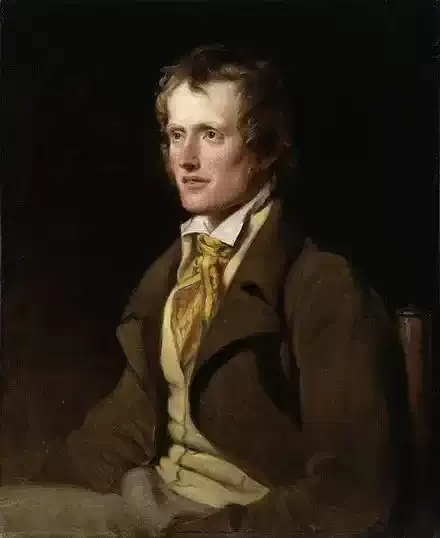
John Clare
Song #2
Song #2
One gloomy eve I roamed about
Neath Oxey's hazel bowers,
While timid hares were darting out,
To crop the dewy flowers;
And soothing was the scene to me,
Right pleased was my soul,
My breast was calm as summer's sea
When waves forget to roll.
But short was even's placid smile,
My startled soul to charm,
When Nelly lightly skipt the stile,
With milk-pail on her arm:
One careless look on me she flung,
As bright as parting day;
And like a hawk from covert sprung,
It pounced my peace away.
One gloomy eve I roamed about
Neath Oxey's hazel bowers,
While timid hares were darting out,
To crop the dewy flowers;
And soothing was the scene to me,
Right pleased was my soul,
My breast was calm as summer's sea
When waves forget to roll.
But short was even's placid smile,
My startled soul to charm,
When Nelly lightly skipt the stile,
With milk-pail on her arm:
One careless look on me she flung,
As bright as parting day;
And like a hawk from covert sprung,
It pounced my peace away.
21
John Clare
Farewell And Defiance To Love
Farewell And Defiance To Love
Love and thy vain employs, away
From this too oft deluded breast!
No longer will I court thy stay,
To be my bosom's teazing guest.
Thou treacherous medicine, reckoned pure,
Thou quackery of the harassed heart,
That kills what it pretends to cure,
Life's mountebank thou art.
With nostrums vain of boasted powers,
That, ta'en, a worse disorder leave;
An asp hid in a group of flowers,
That bites and stings when few perceive;
Thou mock-truce to the troubled mind,
Leading it more in sorrow's way,
Freedom, that leaves us more confined,
I bid thee hence away.
Dost taunt, and deem thy power beyond
The resolution reason gave?
Tut! Falsity hath snapt each bond,
That kept me once thy quiet slave,
And made thy snare a spider's thread,
Which een my breath can break in twain;
Nor will I be, like Sampson, led
To trust thy wiles again.
I took thee as my staff to guide
Me on the road I did pursue,
And when my weakness most relied
Upon its strength it broke in two.
I took thee as my friendly host
That counsel might in dangers show,
But when I needed thee the most
I found thou wert my foe.
Tempt me no more with rosy cheeks,
Nor daze my reason with bright eyes;
I'm wearied with thy painted freaks,
And sicken at such vanities:
Be roses fine as eer they will,
They, with the meanest, fade and die,
And eyes, though thronged with darts to kill,
Share like mortality.
Feed the young bard, that madly sips
His nectar-draughts from folly's flowers,
Bright eyes, fair cheeks, and ruby lips,
Till muses melt to honey showers;
Lure him to thrum thy empty lays,
While flattery listens to the chimes,
Till words themselves grow sick with praise
And stop for want of rhymes.
Let such be still thy paramours,
And chaunt love's old and idle tune,
Robbing the spring of all its flowers,
And heaven of all her stars and moon,
To gild with dazzling similes
Blind folly's vain and empty lay:
I'm sobered from such phantasies,
So get thee hence away.
Nor bid me sigh for mine own cost,
Nor count its loss, for mine annoy,
Nor say my stubbornness hath lost
A paradise of dainty joy:
I'll not believe thee, till I know
That sober reason turns an ape,
And acts the harlequin, to show
That cares in every shape,
Heart-achings, sighs, and grief-wrung tears,
Shame-blushes at betrayed distress,
Dissembled smiles, and jealous fears,
Are nought but real happiness:
Then will I mourn what now I brave,
And suffer Celia's quirks to be
(Like a poor fate-bewilder'd slave,)
The rulers of my destiny.
I'll weep and sigh wheneer she wills
To frown, and when she deigns to smile
It shall be cure for all my ills,
And, foolish still, I'll laugh the while;
But till that comes, I'll bless the rules
Experience taught, and deem it wise
To hold thee as the game of fools,
And all thy tricks despise.
Love and thy vain employs, away
From this too oft deluded breast!
No longer will I court thy stay,
To be my bosom's teazing guest.
Thou treacherous medicine, reckoned pure,
Thou quackery of the harassed heart,
That kills what it pretends to cure,
Life's mountebank thou art.
With nostrums vain of boasted powers,
That, ta'en, a worse disorder leave;
An asp hid in a group of flowers,
That bites and stings when few perceive;
Thou mock-truce to the troubled mind,
Leading it more in sorrow's way,
Freedom, that leaves us more confined,
I bid thee hence away.
Dost taunt, and deem thy power beyond
The resolution reason gave?
Tut! Falsity hath snapt each bond,
That kept me once thy quiet slave,
And made thy snare a spider's thread,
Which een my breath can break in twain;
Nor will I be, like Sampson, led
To trust thy wiles again.
I took thee as my staff to guide
Me on the road I did pursue,
And when my weakness most relied
Upon its strength it broke in two.
I took thee as my friendly host
That counsel might in dangers show,
But when I needed thee the most
I found thou wert my foe.
Tempt me no more with rosy cheeks,
Nor daze my reason with bright eyes;
I'm wearied with thy painted freaks,
And sicken at such vanities:
Be roses fine as eer they will,
They, with the meanest, fade and die,
And eyes, though thronged with darts to kill,
Share like mortality.
Feed the young bard, that madly sips
His nectar-draughts from folly's flowers,
Bright eyes, fair cheeks, and ruby lips,
Till muses melt to honey showers;
Lure him to thrum thy empty lays,
While flattery listens to the chimes,
Till words themselves grow sick with praise
And stop for want of rhymes.
Let such be still thy paramours,
And chaunt love's old and idle tune,
Robbing the spring of all its flowers,
And heaven of all her stars and moon,
To gild with dazzling similes
Blind folly's vain and empty lay:
I'm sobered from such phantasies,
So get thee hence away.
Nor bid me sigh for mine own cost,
Nor count its loss, for mine annoy,
Nor say my stubbornness hath lost
A paradise of dainty joy:
I'll not believe thee, till I know
That sober reason turns an ape,
And acts the harlequin, to show
That cares in every shape,
Heart-achings, sighs, and grief-wrung tears,
Shame-blushes at betrayed distress,
Dissembled smiles, and jealous fears,
Are nought but real happiness:
Then will I mourn what now I brave,
And suffer Celia's quirks to be
(Like a poor fate-bewilder'd slave,)
The rulers of my destiny.
I'll weep and sigh wheneer she wills
To frown, and when she deigns to smile
It shall be cure for all my ills,
And, foolish still, I'll laugh the while;
But till that comes, I'll bless the rules
Experience taught, and deem it wise
To hold thee as the game of fools,
And all thy tricks despise.
401
Johann Wolfgang von Goethe
The Pupil In Magic
The Pupil In Magic
I AM now,--what joy to hear it!--
Of the old magician rid;
And henceforth shall ev'ry spirit
Do whate'er by me is bid;
I have watch'd with rigour
All he used to do,
And will now with vigour
Work my wonders too.
Wander, wander
Onward lightly,
So that rightly
Flow the torrent,
And with teeming waters yonder
In the bath discharge its current!
And now come, thou well-worn broom,
And thy wretched form bestir;
Thou hast ever served as groom,
So fulfil my pleasure, sir!
On two legs now stand,
With a head on top;
Waterpail in hand,
Haste, and do not stop!
Wander, wander
Onward lightly,
So that rightly
Flow the torrent,
And with teeming waters yonder
In the bath discharge its current!
See! he's running to the shore,
And has now attain'd the pool,
And with lightning speed once more
Comes here, with his bucket full!
Back he then repairs;
See how swells the tide!
How each pail he bears
Straightway is supplied!
Stop, for, lo!
All the measure
Of thy treasure
Now is right!-
Ah, I see it! woe, oh woe!
I forget the word of might.
Ah, the word whose sound can straight
Make him what he was before!
Ah, he runs with nimble gait!
Would thou wert a broom once more!
Streams renew'd for ever
Quickly bringeth he;
River after river
Rusheth on poor me!
Now no longer
Can I bear him;
I will snare him,
Knavish sprite!
Ah, my terror waxes stronger!
What a look! what fearful sight
Oh, thou villain child of hell!
Shall the house through thee be drown'd
Floods I see that wildly swell,
O'er the threshold gaining ground.
Wilt thou not obey,
Oh, thou broom accurs'd?
Be thou still I pray,
As thou wert at first!
Will enough
Never please thee?
I will seize thee,
Hold thee fast,
And thy nimble wood so tough,
With my sharp axe split at last.
See, once more he hastens back!
Now, oh Cobold, thou shalt catch it!
I will rush upon his track;
Crashing on him falls my hatchet.
Bravely done, indeed!
See, he's cleft in twain!
Now from care I'm freed,
And can breathe again.
Woe, oh woe!
Both the parts,
Quick as darts,
Stand on end,
Servants of my dreaded foe!
Oh, ye gods protection send!
And they run! and wetter still
Grow the steps and grows the hail.
Lord and master hear me call!
Ever seems the flood to fill,
Ah, he's coming! see,
Great is my dismay!
Spirits raised by me
Vainly would I lay!
"To the side
Of the room
Hasten, broom,
As of old!
Spirits I have ne'er untied
Save to act as they are told."
I AM now,--what joy to hear it!--
Of the old magician rid;
And henceforth shall ev'ry spirit
Do whate'er by me is bid;
I have watch'd with rigour
All he used to do,
And will now with vigour
Work my wonders too.
Wander, wander
Onward lightly,
So that rightly
Flow the torrent,
And with teeming waters yonder
In the bath discharge its current!
And now come, thou well-worn broom,
And thy wretched form bestir;
Thou hast ever served as groom,
So fulfil my pleasure, sir!
On two legs now stand,
With a head on top;
Waterpail in hand,
Haste, and do not stop!
Wander, wander
Onward lightly,
So that rightly
Flow the torrent,
And with teeming waters yonder
In the bath discharge its current!
See! he's running to the shore,
And has now attain'd the pool,
And with lightning speed once more
Comes here, with his bucket full!
Back he then repairs;
See how swells the tide!
How each pail he bears
Straightway is supplied!
Stop, for, lo!
All the measure
Of thy treasure
Now is right!-
Ah, I see it! woe, oh woe!
I forget the word of might.
Ah, the word whose sound can straight
Make him what he was before!
Ah, he runs with nimble gait!
Would thou wert a broom once more!
Streams renew'd for ever
Quickly bringeth he;
River after river
Rusheth on poor me!
Now no longer
Can I bear him;
I will snare him,
Knavish sprite!
Ah, my terror waxes stronger!
What a look! what fearful sight
Oh, thou villain child of hell!
Shall the house through thee be drown'd
Floods I see that wildly swell,
O'er the threshold gaining ground.
Wilt thou not obey,
Oh, thou broom accurs'd?
Be thou still I pray,
As thou wert at first!
Will enough
Never please thee?
I will seize thee,
Hold thee fast,
And thy nimble wood so tough,
With my sharp axe split at last.
See, once more he hastens back!
Now, oh Cobold, thou shalt catch it!
I will rush upon his track;
Crashing on him falls my hatchet.
Bravely done, indeed!
See, he's cleft in twain!
Now from care I'm freed,
And can breathe again.
Woe, oh woe!
Both the parts,
Quick as darts,
Stand on end,
Servants of my dreaded foe!
Oh, ye gods protection send!
And they run! and wetter still
Grow the steps and grows the hail.
Lord and master hear me call!
Ever seems the flood to fill,
Ah, he's coming! see,
Great is my dismay!
Spirits raised by me
Vainly would I lay!
"To the side
Of the room
Hasten, broom,
As of old!
Spirits I have ne'er untied
Save to act as they are told."
338
Johann Wolfgang von Goethe
The Misanthrope
The Misanthrope
AT first awhile sits he,
With calm, unruffled brow;
His features then I see,
Distorted hideously,--
An owl's they might be now.
What is it, askest thou?
Is't love, or is't ennui?
'Tis both at once, I vow.
AT first awhile sits he,
With calm, unruffled brow;
His features then I see,
Distorted hideously,--
An owl's they might be now.
What is it, askest thou?
Is't love, or is't ennui?
'Tis both at once, I vow.
355