

Poems in this theme
Anguish

Christina Rossetti
Lord Jesus, Who Would Think That I Am Thine?
Lord Jesus, Who Would Think That I Am Thine?
Lord Jesus, who would think that I am Thine?
Ah, who would think
Who sees me ready to turn back or sink,
That Thou art mine?
I cannot hold Thee fast though Thou art mine:
Hold Thou me fast,
So earth shall know at last and heaven at last
That I am Thine.
Lord Jesus, who would think that I am Thine?
Ah, who would think
Who sees me ready to turn back or sink,
That Thou art mine?
I cannot hold Thee fast though Thou art mine:
Hold Thou me fast,
So earth shall know at last and heaven at last
That I am Thine.
208
Christina Rossetti
Fata Morgana
Fata Morgana
A blue-eyed phantom far before
Is laughing, leaping toward the sun:
Like lead I chase it evermore,
I pant and run.
It breaks the sunlight bound on bound:
Goes singing as it leaps along
To sheep-bells with a dreamy sound
A dreamy song.
I laugh, it is so brisk and gay;
It is so far before, I weep:
I hope I shall lie down some day,
Lie down and sleep.
A blue-eyed phantom far before
Is laughing, leaping toward the sun:
Like lead I chase it evermore,
I pant and run.
It breaks the sunlight bound on bound:
Goes singing as it leaps along
To sheep-bells with a dreamy sound
A dreamy song.
I laugh, it is so brisk and gay;
It is so far before, I weep:
I hope I shall lie down some day,
Lie down and sleep.
263
Christina Rossetti
A Pause Of Thought
A Pause Of Thought
I looked for that which is not, nor can be,
And hope deferred made my heart sick in truth:
But years must pass before a hope of youth
Is resigned utterly.
I watched and waited with a steadfast will:
And though the object seemed to flee away
That I so longed for, ever day by day
I watched and waited still.
Sometimes I said: This thing shall be no more;
My expectation wearies and shall cease;
I will resign it now and be at peace:
Yet never gave it o'er.
Sometimes I said: It is an empty name
I long for; to a name why should I give
The peace of all the days I have to live?—
Yet gave it all the same.
Alas, thou foolish one! alike unfit
For healthy joy and salutary pain:
Thou knowest the chase useless, and again
Turnest to follow it.
I looked for that which is not, nor can be,
And hope deferred made my heart sick in truth:
But years must pass before a hope of youth
Is resigned utterly.
I watched and waited with a steadfast will:
And though the object seemed to flee away
That I so longed for, ever day by day
I watched and waited still.
Sometimes I said: This thing shall be no more;
My expectation wearies and shall cease;
I will resign it now and be at peace:
Yet never gave it o'er.
Sometimes I said: It is an empty name
I long for; to a name why should I give
The peace of all the days I have to live?—
Yet gave it all the same.
Alas, thou foolish one! alike unfit
For healthy joy and salutary pain:
Thou knowest the chase useless, and again
Turnest to follow it.
239
Christina Rossetti
A Better Ressurection
A Better Ressurection
I have no wit, no words, no tears;
My heart within me like a stone
Is numbed too much for hopes or fears.
Look right, look left, I dwell alone;
I lift mine eyes, but dimmed with grief
No everlasting hills I see;
My life is in the falling leaf:
O Jesus, quicken me.
My life is like a faded leaf,
My harvest dwindled to a husk:
Truly my life is void and brief
And tedious in the barren dusk;
My life is like a frozen thing,
No bud nor greenness can I see:
Yet rise it shall--the sap of spring;
O Jesus, rise in me.
My life is like a broken bowl,
A broken bowl that cannot hold
One drop of water for my soul
Or cordial in the searching cold;
Cast in the fire the perished thing;
Melt and remould it, till it be
A royal cup for Him, my King:
O Jesus, drink of me.
I have no wit, no words, no tears;
My heart within me like a stone
Is numbed too much for hopes or fears.
Look right, look left, I dwell alone;
I lift mine eyes, but dimmed with grief
No everlasting hills I see;
My life is in the falling leaf:
O Jesus, quicken me.
My life is like a faded leaf,
My harvest dwindled to a husk:
Truly my life is void and brief
And tedious in the barren dusk;
My life is like a frozen thing,
No bud nor greenness can I see:
Yet rise it shall--the sap of spring;
O Jesus, rise in me.
My life is like a broken bowl,
A broken bowl that cannot hold
One drop of water for my soul
Or cordial in the searching cold;
Cast in the fire the perished thing;
Melt and remould it, till it be
A royal cup for Him, my King:
O Jesus, drink of me.
202

Charlotte Brontë
The Teacher's Monologue
The Teacher's Monologue
THE room is quiet, thoughts alone
People its mute tranquillity;
The yoke put on, the long task done,I
am, as it is bliss to be,
Still and untroubled. Now, I see,
For the first time, how soft the day
O'er waveless water, stirless tree,
Silent and sunny, wings its way.
Now, as I watch that distant hill,
So faint, so blue, so far removed,
Sweet dreams of home my heart may fill,
That home where I am known and loved:
It lies beyond; yon azure brow
Parts me from all Earth holds for me;
And, morn and eve, my yearnings flow
Thitherward tending, changelessly.
My happiest hours, aye ! all the time,
I love to keep in memory,
Lapsed among moors, ere life's first prime
Decayed to dark anxiety.
Sometimes, I think a narrow heart
Makes me thus mourn those far away,
And keeps my love so far apart
From friends and friendships of today;
Sometimes, I think 'tis but a dream
I measure up so jealously,
All the sweet thoughts I live on seem
To vanish into vacancy:
And then, this strange, coarse world around
Seems all that's palpable and true;
And every sight, and every sound,
Combines my spirit to subdue
To aching grief, so void and lone
Is Life and Earthso
worse than vain,
The hopes that, in my own heart sown,
And cherished by such sun and rain
As Joy and transient Sorrow shed,
Have ripened to a harvest there:
Alas ! methinks I hear it said,
'Thy golden sheaves are empty air.'
All fades away; my very home
I think will soon be desolate;
I hear, at times, a warning come
Of bitter partings at its gate;
And, if I should return and see
The hearthfire
quenched, the vacant chair;
And hear it whispered mournfully,
That farewells have been spoken there,
What shall I do, and whither turn ?
Where look for peace ? When cease to mourn ?
'Tis not the air I wished to play,
The strain I wished to sing;
My wilful spirit slipped away
And struck another string.
I neither wanted smile nor tear,
Bright joy nor bitter woe,
But just a song that sweet and clear,
Though haply sad, might flow.
A quiet song, to solace me
When sleep refused to come;
A strain to chase despondency,
When sorrowful for home.
In vain I try; I cannot sing;
All feels so cold and dead;
No wild distress, no gushing spring
Of tears in anguish shed;
But all the impatient gloom of one
Who waits a distant day,
When, some great task of suffering done,
Repose shall toil repay.
For youth departs, and pleasure flies,
And life consumes away,
And youth's rejoicing ardour dies
Beneath this drear delay;
And Patience, weary with her yoke,
Is yielding to despair,
And Health's elastic spring is broke
Beneath the strain of care.
Life will be gone ere I have lived;
Where now is Life's first prime ?
I've worked and studied, longed and grieved,
Through all that rosy time.
To toil, to think, to long, to grieve,Is
such my future fate ?
The morn was dreary, must the eve
Be also desolate ?
Well, such a life at least makes Death
A welcome, wishedfor
friend;
Then, aid me, Reason, Patience, Faith,
To suffer to the end !
THE room is quiet, thoughts alone
People its mute tranquillity;
The yoke put on, the long task done,I
am, as it is bliss to be,
Still and untroubled. Now, I see,
For the first time, how soft the day
O'er waveless water, stirless tree,
Silent and sunny, wings its way.
Now, as I watch that distant hill,
So faint, so blue, so far removed,
Sweet dreams of home my heart may fill,
That home where I am known and loved:
It lies beyond; yon azure brow
Parts me from all Earth holds for me;
And, morn and eve, my yearnings flow
Thitherward tending, changelessly.
My happiest hours, aye ! all the time,
I love to keep in memory,
Lapsed among moors, ere life's first prime
Decayed to dark anxiety.
Sometimes, I think a narrow heart
Makes me thus mourn those far away,
And keeps my love so far apart
From friends and friendships of today;
Sometimes, I think 'tis but a dream
I measure up so jealously,
All the sweet thoughts I live on seem
To vanish into vacancy:
And then, this strange, coarse world around
Seems all that's palpable and true;
And every sight, and every sound,
Combines my spirit to subdue
To aching grief, so void and lone
Is Life and Earthso
worse than vain,
The hopes that, in my own heart sown,
And cherished by such sun and rain
As Joy and transient Sorrow shed,
Have ripened to a harvest there:
Alas ! methinks I hear it said,
'Thy golden sheaves are empty air.'
All fades away; my very home
I think will soon be desolate;
I hear, at times, a warning come
Of bitter partings at its gate;
And, if I should return and see
The hearthfire
quenched, the vacant chair;
And hear it whispered mournfully,
That farewells have been spoken there,
What shall I do, and whither turn ?
Where look for peace ? When cease to mourn ?
'Tis not the air I wished to play,
The strain I wished to sing;
My wilful spirit slipped away
And struck another string.
I neither wanted smile nor tear,
Bright joy nor bitter woe,
But just a song that sweet and clear,
Though haply sad, might flow.
A quiet song, to solace me
When sleep refused to come;
A strain to chase despondency,
When sorrowful for home.
In vain I try; I cannot sing;
All feels so cold and dead;
No wild distress, no gushing spring
Of tears in anguish shed;
But all the impatient gloom of one
Who waits a distant day,
When, some great task of suffering done,
Repose shall toil repay.
For youth departs, and pleasure flies,
And life consumes away,
And youth's rejoicing ardour dies
Beneath this drear delay;
And Patience, weary with her yoke,
Is yielding to despair,
And Health's elastic spring is broke
Beneath the strain of care.
Life will be gone ere I have lived;
Where now is Life's first prime ?
I've worked and studied, longed and grieved,
Through all that rosy time.
To toil, to think, to long, to grieve,Is
such my future fate ?
The morn was dreary, must the eve
Be also desolate ?
Well, such a life at least makes Death
A welcome, wishedfor
friend;
Then, aid me, Reason, Patience, Faith,
To suffer to the end !
265
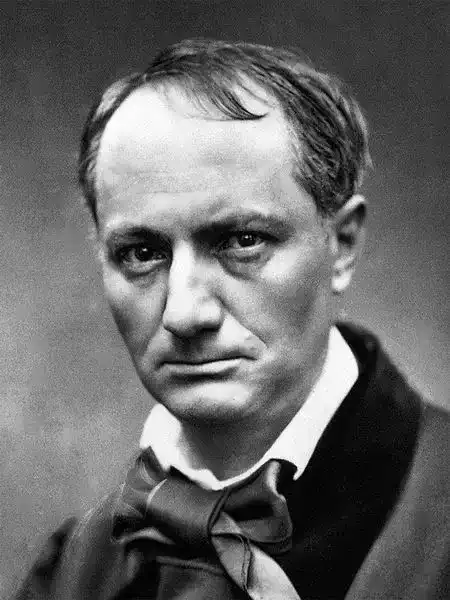
Charles Baudelaire
Voyage to Cythera
Voyage to Cythera
Free as a bird and joyfully my heart
Soared up among the rigging, in and out;
Under a cloudless sky the ship rolled on
Like an angel drunk with brilliant sun.
"That dark, grim island there--which would that be?"
"Cythera," we're told, "the legendary isle
Old bachelors tell stories of and smile.
There's really not much to it, you can see."
O place of many a mystic sacrament!
Archaic Aphrodite's splendid shade
Lingers above your waters like a scent
Infusing spirits with an amorous mood.
Worshipped from of old by every nation,
Myrtle-green isle, where each new bud discloses
Sighs of souls in loving adoration
Breathing like incense from a bank of roses
Or like a dove roo-cooing endlessly . . .
No; Cythera was a poor infertile rock,
A stony desert harrowed by the shriek
Of gulls. And yet there was something to see:
This was no temple deep in flowers and trees
With a young priestess moving to and fro,
Her body heated by a secret glow,
Her robe half-opening to every breeze;
But coasting nearer, close enough to land
To scatter flocks of birds as we passed by,
We saw a tall cypress-shaped thing at hand--
A triple gibbet black against the sky.
Ferocious birds, each perched on its own meal,
Were madly tearing at the thing that hung
And ripened; each, its filthy beak a drill,
Made little bleeding holes to root among.
The eyes were hollowed. Heavy guts cascading
Flowed like water halfway down the thighs;
The torturers, though gorged on these vile joys,
Had also put their beaks to use castrating
The corpse. A pack of dogs beneath its feet,
Their muzzles lifted, whirled and snapped and gnawed;
One bigger beast amidst this jealous lot
Looked like an executioner with his guard.
O Cytherean, child of this fair clime,
Silently you suffered these attacks,
Paying the penalty for whatever acts
Of infamy had kept you from a tomb.
Grotesquely dangling, somehow you brought on--
Violent as vomit rising from the chest,
Strong as a river bilious to taste--
A flow of sufferings I'd thought long gone.
Confronted with such dear remembered freight,
Poor devil, now it was my turn to feel
A panther's slavering jaws, a beak's cruel drill--
Once it was my flesh they loved to eat.
The sky was lovely, and the sea divine,
but something thick and binding like a shroud
Wrapped my heart in layers of black and blood;
Henceforth this allegory would be mine.
O Venus! On your isle what did I see
But my own image on the gallows tree?
O God, give me the strength to contemplate
My own heart, my own body without hate!
Free as a bird and joyfully my heart
Soared up among the rigging, in and out;
Under a cloudless sky the ship rolled on
Like an angel drunk with brilliant sun.
"That dark, grim island there--which would that be?"
"Cythera," we're told, "the legendary isle
Old bachelors tell stories of and smile.
There's really not much to it, you can see."
O place of many a mystic sacrament!
Archaic Aphrodite's splendid shade
Lingers above your waters like a scent
Infusing spirits with an amorous mood.
Worshipped from of old by every nation,
Myrtle-green isle, where each new bud discloses
Sighs of souls in loving adoration
Breathing like incense from a bank of roses
Or like a dove roo-cooing endlessly . . .
No; Cythera was a poor infertile rock,
A stony desert harrowed by the shriek
Of gulls. And yet there was something to see:
This was no temple deep in flowers and trees
With a young priestess moving to and fro,
Her body heated by a secret glow,
Her robe half-opening to every breeze;
But coasting nearer, close enough to land
To scatter flocks of birds as we passed by,
We saw a tall cypress-shaped thing at hand--
A triple gibbet black against the sky.
Ferocious birds, each perched on its own meal,
Were madly tearing at the thing that hung
And ripened; each, its filthy beak a drill,
Made little bleeding holes to root among.
The eyes were hollowed. Heavy guts cascading
Flowed like water halfway down the thighs;
The torturers, though gorged on these vile joys,
Had also put their beaks to use castrating
The corpse. A pack of dogs beneath its feet,
Their muzzles lifted, whirled and snapped and gnawed;
One bigger beast amidst this jealous lot
Looked like an executioner with his guard.
O Cytherean, child of this fair clime,
Silently you suffered these attacks,
Paying the penalty for whatever acts
Of infamy had kept you from a tomb.
Grotesquely dangling, somehow you brought on--
Violent as vomit rising from the chest,
Strong as a river bilious to taste--
A flow of sufferings I'd thought long gone.
Confronted with such dear remembered freight,
Poor devil, now it was my turn to feel
A panther's slavering jaws, a beak's cruel drill--
Once it was my flesh they loved to eat.
The sky was lovely, and the sea divine,
but something thick and binding like a shroud
Wrapped my heart in layers of black and blood;
Henceforth this allegory would be mine.
O Venus! On your isle what did I see
But my own image on the gallows tree?
O God, give me the strength to contemplate
My own heart, my own body without hate!
678
Charles Baudelaire
The Sick Muse
The Sick Muse
My impoverished muse, alas! What have you for me this morning?
Your empty eyes are stocked with nocturnal visions,
In your cheek's cold and taciturn reflection,
I see insanity and horror forming.
The green succubus and the red urchin,
Have they poured you fear and love from their urns?
The nightmare of a mutinous fist that despotically turns,
Does it drown you at the bottom of a loch beyond searching?
I wish that your breast exhaled the scent of sanity,
That your womb of thought was not a tomb more frequently
And that your Christian blood flowed around a buoy that was rhythmical,
Like the numberless sounds of antique syllables,
Where reigns in turn the father of songs,
Phoebus, and the great Pan, the harvest sovereign.
Translated by William A. Sigler
Submitted by Ryan McGuire
My impoverished muse, alas! What have you for me this morning?
Your empty eyes are stocked with nocturnal visions,
In your cheek's cold and taciturn reflection,
I see insanity and horror forming.
The green succubus and the red urchin,
Have they poured you fear and love from their urns?
The nightmare of a mutinous fist that despotically turns,
Does it drown you at the bottom of a loch beyond searching?
I wish that your breast exhaled the scent of sanity,
That your womb of thought was not a tomb more frequently
And that your Christian blood flowed around a buoy that was rhythmical,
Like the numberless sounds of antique syllables,
Where reigns in turn the father of songs,
Phoebus, and the great Pan, the harvest sovereign.
Translated by William A. Sigler
Submitted by Ryan McGuire
663
Charles Baudelaire
Spleen
Spleen
I'm like the king of a rain-country, rich
but sterile, young but with an old wolf's itch,
one who escapes Fénelon's apologues,
and kills the day in boredom with his dogs;
nothing cheers him, darts, tennis, falconry,
his people dying by the balcony;
the bawdry of the pet hermaphrodite
no longer gets him through a single night;
his bed of fleur-de-lys becomes a tomb;
even the ladies of the court, for whom
all kings are beautiful, cannot put on
shameful enough dresses for this skeleton;
the scholar who makes his gold cannot invent
washes to cleanse the poisoned element;
even in baths of blood, Rome's legacy,
our tyrants' solace in senility,
we cannot warm up his shot corpse, whose food
is syrup-green Lethean ooze, not blood.
I'm like the king of a rain-country, rich
but sterile, young but with an old wolf's itch,
one who escapes Fénelon's apologues,
and kills the day in boredom with his dogs;
nothing cheers him, darts, tennis, falconry,
his people dying by the balcony;
the bawdry of the pet hermaphrodite
no longer gets him through a single night;
his bed of fleur-de-lys becomes a tomb;
even the ladies of the court, for whom
all kings are beautiful, cannot put on
shameful enough dresses for this skeleton;
the scholar who makes his gold cannot invent
washes to cleanse the poisoned element;
even in baths of blood, Rome's legacy,
our tyrants' solace in senility,
we cannot warm up his shot corpse, whose food
is syrup-green Lethean ooze, not blood.
610
Charles Baudelaire
Overcast
Overcast
Are they blue, gray or green? Mysterious eyes
(as if in fact you were looking through a mist)
in alternation tender, dreamy, grim
to match the shiftless pallor of the sky.
That's what you're like- these warm white afternoons
which make the ravished heart dissolve in tears,
the nerves, inexplicably overwrought,
outrage the dozing mind.
Not always, though-sometimes
you're like the horizon when the sun
ignites our cloudy autumn-how you glow!
A sodden countryside in sudden rout,
turned incandescent by a changing wind.
Dangerous woman-demoralizing days!
Will I adore your killing frost as much,
and in that implacable winter, when it comes,
discover pleasures sharper than iron and ice?
Are they blue, gray or green? Mysterious eyes
(as if in fact you were looking through a mist)
in alternation tender, dreamy, grim
to match the shiftless pallor of the sky.
That's what you're like- these warm white afternoons
which make the ravished heart dissolve in tears,
the nerves, inexplicably overwrought,
outrage the dozing mind.
Not always, though-sometimes
you're like the horizon when the sun
ignites our cloudy autumn-how you glow!
A sodden countryside in sudden rout,
turned incandescent by a changing wind.
Dangerous woman-demoralizing days!
Will I adore your killing frost as much,
and in that implacable winter, when it comes,
discover pleasures sharper than iron and ice?
490
Charles Baudelaire
My Earlier Life
My Earlier Life
I've been home a long time among the vast porticos,
Which the mariner sun has tinged with a million fires,
Whose grandest pillars, upright, majestic and cold
Render them the same, this evening, as caves with basalt spires.
The swells' overwhelming accords of rich music,
Heaving images of heaven to the skies,
Mingle in a way solemn and mystic
With the colors of the horizon reflected by my eyes.
It was here I was true to the voluptuous calm,
The milieu of azure, the waves, the splendors,
And the nude slaves, all impregnated with odors,
Who refreshed my brow with waving palms
My only care to bring to meaning from anguish
The sad secret in which I languish.
Translated by William A. Sigler
Submitted by Ryan McGuire
I've been home a long time among the vast porticos,
Which the mariner sun has tinged with a million fires,
Whose grandest pillars, upright, majestic and cold
Render them the same, this evening, as caves with basalt spires.
The swells' overwhelming accords of rich music,
Heaving images of heaven to the skies,
Mingle in a way solemn and mystic
With the colors of the horizon reflected by my eyes.
It was here I was true to the voluptuous calm,
The milieu of azure, the waves, the splendors,
And the nude slaves, all impregnated with odors,
Who refreshed my brow with waving palms
My only care to bring to meaning from anguish
The sad secret in which I languish.
Translated by William A. Sigler
Submitted by Ryan McGuire
532
Charles Baudelaire
Le Gout du Néant
Le Gout du Néant
Morne esprit, autrefois amoureux de la lutte,
L'Espoir, dont l'éperon attisait ton ardeur,
Ne veut plus t'enfourcher! Couche-toi sans pudeur,
Vieux cheval dont le pied à chaque obstacle bute.
Morne esprit, autrefois amoureux de la lutte,
L'Espoir, dont l'éperon attisait ton ardeur,
Ne veut plus t'enfourcher! Couche-toi sans pudeur,
Vieux cheval dont le pied à chaque obstacle bute.
519
Charles Baudelaire
Ill-Starred
Ill-Starred
To bear a weight that cannot be borne,
Sisyphus, even you aren't that strong,
Although your heart cannot be torn
Time is short and Art is long.
Far from celebrated sepulchers
Toward a solitary graveyard
My heart, like a drum muffled hard
Beats a funeral march for the ill-starred.
—Many jewels are buried or shrouded
In darkness and oblivion's clouds,
Far from any pick or drill bit,
Many a flower unburdens with regret
Its perfume sweet like a secret;
In profoundly empty solitude to sit.
Translated by William A. Sigler
Submitted by Ryan McGuire
To bear a weight that cannot be borne,
Sisyphus, even you aren't that strong,
Although your heart cannot be torn
Time is short and Art is long.
Far from celebrated sepulchers
Toward a solitary graveyard
My heart, like a drum muffled hard
Beats a funeral march for the ill-starred.
—Many jewels are buried or shrouded
In darkness and oblivion's clouds,
Far from any pick or drill bit,
Many a flower unburdens with regret
Its perfume sweet like a secret;
In profoundly empty solitude to sit.
Translated by William A. Sigler
Submitted by Ryan McGuire
457
Charles Baudelaire
De Profundis Clamavi
De Profundis Clamavi
Have pity, You alone whom I adore
From down this black pit where my heart is sped,
A sombre universe ringed round with lead
Where fear and curses the long night explore.
Six months a cold sun hovers overhead;
The other six is night upon this land.
No beast; no stream; no wood; no leaves expand.
The desert Pole is not a waste so dead.
Now in the whole world there's no horror quite
so cold and cruel as this glacial sun,
So like old Chaos as this boundless night;
I envy the least animals that run,
Which can find respite in brute slumber drowned,
So slowly is the skein of time unwound.
Have pity, You alone whom I adore
From down this black pit where my heart is sped,
A sombre universe ringed round with lead
Where fear and curses the long night explore.
Six months a cold sun hovers overhead;
The other six is night upon this land.
No beast; no stream; no wood; no leaves expand.
The desert Pole is not a waste so dead.
Now in the whole world there's no horror quite
so cold and cruel as this glacial sun,
So like old Chaos as this boundless night;
I envy the least animals that run,
Which can find respite in brute slumber drowned,
So slowly is the skein of time unwound.
559
Charles Baudelaire
Au Lecteur
Au Lecteur
La sottise, l'erreur, le péché, la lésine,
Occupent nos esprits et travaillent nos corps,
Et nous alimentons nos aimables remords,
Comme les mendiants nourrissent leur vermine.
La sottise, l'erreur, le péché, la lésine,
Occupent nos esprits et travaillent nos corps,
Et nous alimentons nos aimables remords,
Comme les mendiants nourrissent leur vermine.
647
Charles Baudelaire
Anywhere Out of the World
Anywhere Out of the World
This life is a hospital where every patient is possessed with the desire to change beds;
one man would like to
suffer in front of the stove, and another believes that he would recover his health
beside the window.
It always seems to me that I should feel well in the place where I am not, and this
question of removal is one
which I discuss incessantly with my soul.
'Tell me, my soul, poor chilled soul, what do you think of going to live in Lisbon? It
must be warm there, and there
you would invigorate yourself like a lizard. This city is on the sea-shore; they say that
it is built of marble
and that the people there have such a hatred of vegetation that they uproot all the
trees. There you have a landscape
that corresponds to your taste! a landscape made of light and mineral, and liquid to
reflect them!'
My soul does not reply.
'Since you are so fond of stillness, coupled with the show of movement, would you like
to settle in Holland,
that beatifying country? Perhaps you would find some diversion in that land whose
image you have so often admired
in the art galleries. What do you think of Rotterdam, you who love forests of masts,
and ships moored at the foot of
houses?'
My soul remains silent.
'Perhaps Batavia attracts you more? There we should find, amongst other things, the
spirit of Europe
married to tropical beauty.'
Not a word. Could my soul be dead?
'Is it then that you have reached such a degree of lethargy that you acquiesce in your
sickness? If so, let us
flee to lands that are analogues of death. I see how it is, poor soul! We shall pack our
trunks for Tornio. Let us go
farther still to the extreme end of the Baltic; or farther still from life, if that is possible;
let us settle at the Pole. There
the sun only grazes the earth obliquely, and the slow alternation of light and darkness
suppresses variety and
increases monotony, that half-nothingness. There we shall be able to take long baths
of darkness, while for our
amusement the aurora borealis shall send us its rose-coloured rays that are like the
reflection of Hell's own
fireworks!'
At last my soul explodes, and wisely cries out to me: 'No matter where! No matter
where! As long as it's out
of the world!'
This life is a hospital where every patient is possessed with the desire to change beds;
one man would like to
suffer in front of the stove, and another believes that he would recover his health
beside the window.
It always seems to me that I should feel well in the place where I am not, and this
question of removal is one
which I discuss incessantly with my soul.
'Tell me, my soul, poor chilled soul, what do you think of going to live in Lisbon? It
must be warm there, and there
you would invigorate yourself like a lizard. This city is on the sea-shore; they say that
it is built of marble
and that the people there have such a hatred of vegetation that they uproot all the
trees. There you have a landscape
that corresponds to your taste! a landscape made of light and mineral, and liquid to
reflect them!'
My soul does not reply.
'Since you are so fond of stillness, coupled with the show of movement, would you like
to settle in Holland,
that beatifying country? Perhaps you would find some diversion in that land whose
image you have so often admired
in the art galleries. What do you think of Rotterdam, you who love forests of masts,
and ships moored at the foot of
houses?'
My soul remains silent.
'Perhaps Batavia attracts you more? There we should find, amongst other things, the
spirit of Europe
married to tropical beauty.'
Not a word. Could my soul be dead?
'Is it then that you have reached such a degree of lethargy that you acquiesce in your
sickness? If so, let us
flee to lands that are analogues of death. I see how it is, poor soul! We shall pack our
trunks for Tornio. Let us go
farther still to the extreme end of the Baltic; or farther still from life, if that is possible;
let us settle at the Pole. There
the sun only grazes the earth obliquely, and the slow alternation of light and darkness
suppresses variety and
increases monotony, that half-nothingness. There we shall be able to take long baths
of darkness, while for our
amusement the aurora borealis shall send us its rose-coloured rays that are like the
reflection of Hell's own
fireworks!'
At last my soul explodes, and wisely cries out to me: 'No matter where! No matter
where! As long as it's out
of the world!'
1,078

Carl Sandburg
Under A Hat Rim
Under A Hat Rim
While the hum and the hurry
Of passing footfalls
Beat in my ear like the restless surf
Of a wind-blown sea,
A soul came to me
Out of the look on a face.
Eyes like a lake
Where a storm-wind roams
Caught me from under
The rim of a hat.
I thought of a midsea wreck
and bruised fingers clinging
to a broken state-room door.
While the hum and the hurry
Of passing footfalls
Beat in my ear like the restless surf
Of a wind-blown sea,
A soul came to me
Out of the look on a face.
Eyes like a lake
Where a storm-wind roams
Caught me from under
The rim of a hat.
I thought of a midsea wreck
and bruised fingers clinging
to a broken state-room door.
326
Carl Sandburg
The Noon Hour
The Noon Hour
She sits in the dust at the walls
And makes cigars,
Bending at the bench
With fingers wage-anxious,
Changing her sweat for the day’s pay.
Now the noon hour has come,
And she leans with her bare arms
On the window-sill over the river,
Leans and feels at her throat
Cool-moving things out of the free open ways:
At her throat and eyes and nostrils
The touch and the blowing cool
Of great free ways beyond the walls.
She sits in the dust at the walls
And makes cigars,
Bending at the bench
With fingers wage-anxious,
Changing her sweat for the day’s pay.
Now the noon hour has come,
And she leans with her bare arms
On the window-sill over the river,
Leans and feels at her throat
Cool-moving things out of the free open ways:
At her throat and eyes and nostrils
The touch and the blowing cool
Of great free ways beyond the walls.
355
Carl Sandburg
The Hangman at Home
The Hangman at Home
What does a hangman think about
When he goes home at night from work?
When he sits down with his wife and
Children for a cup of coffee and a
Plate of ham and eggs, do they ask
Him if it was a good day's work
And everything went well or do they
Stay off some topics and kill about
The weather, baseball, politics
And the comic strips in the papers
And the movies? Do they look at his
Hands when he reaches for the coffee
Or the ham and eggs? If the little
Ones say, Daddy, play horse, here's
A rope--does he answer like a joke:
I seen enough rope for today?
Or does his face light up like a
Bonfire of joy and does he say:
It's a good and dandy world we live
'In. And if a white face moon looks
In through a window where a baby girl
Sleeps and the moon-gleams mix with
Baby ears and baby hair--the hangman--
How does he act then? It must be easy
For him. Anything is easy for a hangman,
I guess.
What does a hangman think about
When he goes home at night from work?
When he sits down with his wife and
Children for a cup of coffee and a
Plate of ham and eggs, do they ask
Him if it was a good day's work
And everything went well or do they
Stay off some topics and kill about
The weather, baseball, politics
And the comic strips in the papers
And the movies? Do they look at his
Hands when he reaches for the coffee
Or the ham and eggs? If the little
Ones say, Daddy, play horse, here's
A rope--does he answer like a joke:
I seen enough rope for today?
Or does his face light up like a
Bonfire of joy and does he say:
It's a good and dandy world we live
'In. And if a white face moon looks
In through a window where a baby girl
Sleeps and the moon-gleams mix with
Baby ears and baby hair--the hangman--
How does he act then? It must be easy
For him. Anything is easy for a hangman,
I guess.
331
Carl Sandburg
It Is Much
It Is Much
Women of night life amid the lights
Where the line of your full, round throats
Matches in gleam the glint of your eyes
And the ring of your heart-deep laughter:
It is much to be warm and sure of to-morrow.
Women of night life along the shadows,
Lean at your throats and skulking the walls,
Gaunt as a bitch worn to the bone,
Under the paint of your smiling faces:
It is much to be warm and sure of to-morrow.
Women of night life amid the lights
Where the line of your full, round throats
Matches in gleam the glint of your eyes
And the ring of your heart-deep laughter:
It is much to be warm and sure of to-morrow.
Women of night life along the shadows,
Lean at your throats and skulking the walls,
Gaunt as a bitch worn to the bone,
Under the paint of your smiling faces:
It is much to be warm and sure of to-morrow.
347
Carl Sandburg
Eleventh Avenue Racket
Eleventh Avenue Racket
There is something terrible
about a hurdy-gurdy,
a gipsy man and woman,
and a monkey in red flannel
all stopping in front of a big house
with a sign “For Rent” on the door
and the blinds hanging loose
and nobody home.
I never saw this.
I hope to God I never will.
Whoop-de-doodle-de-doo.
Hoodle-de-harr-de-hum.
Nobody home? Everybody home.
Whoop-de-doodle-de-doo.
Mamie Riley married Jimmy Higgins last night: Eddie Jones died of whooping cough:
George Hacks got a job on the police force: the Rosenheims bought a brass bed: Lena
Hart giggled at a jackie: a pushcart man called tomaytoes, tomaytoes.
Whoop-de-doodle-de-doo.
Hoodle-de-harr-de-hum.
Nobody home? Everybody home.
There is something terrible
about a hurdy-gurdy,
a gipsy man and woman,
and a monkey in red flannel
all stopping in front of a big house
with a sign “For Rent” on the door
and the blinds hanging loose
and nobody home.
I never saw this.
I hope to God I never will.
Whoop-de-doodle-de-doo.
Hoodle-de-harr-de-hum.
Nobody home? Everybody home.
Whoop-de-doodle-de-doo.
Mamie Riley married Jimmy Higgins last night: Eddie Jones died of whooping cough:
George Hacks got a job on the police force: the Rosenheims bought a brass bed: Lena
Hart giggled at a jackie: a pushcart man called tomaytoes, tomaytoes.
Whoop-de-doodle-de-doo.
Hoodle-de-harr-de-hum.
Nobody home? Everybody home.
322
Carl Sandburg
Dusty Doors
Dusty Doors
Child of the Aztec gods,
how long must we listen here,
how long before we go?
The dust is deep on the lintels.
The dust is dark on the doors.
If the dreams shake our bones,
what can we say or do?
Since early morning we waited.
Since early, early morning, child.
There must be dreams on the way now.
There must be a song for our bones.
The dust gets deeper and darker.
Do the doors and lintels shudder?
How long must we listen here?
How long before we go?
Child of the Aztec gods,
how long must we listen here,
how long before we go?
The dust is deep on the lintels.
The dust is dark on the doors.
If the dreams shake our bones,
what can we say or do?
Since early morning we waited.
Since early, early morning, child.
There must be dreams on the way now.
There must be a song for our bones.
The dust gets deeper and darker.
Do the doors and lintels shudder?
How long must we listen here?
How long before we go?
324
Carl Sandburg
Death Snips Proud Men
Death Snips Proud Men
DEATH is stronger than all the governments because
the governments are men and men die and then
death laughs: Now you see 'em, now you don't.
Death is stronger than all proud men and so death
snips proud men on the nose, throws a pair of
dice and says: Read 'em and weep.
Death sends a radiogram every day: When I want
you I'll drop in--and then one day he comes with a
master-key and lets himself in and says: We'll
go now.
Death is a nurse mother with big arms: 'Twon't hurt
you at all; it's your time now; just need a
long sleep, child; what have you had anyhow
better than sleep?
DEATH is stronger than all the governments because
the governments are men and men die and then
death laughs: Now you see 'em, now you don't.
Death is stronger than all proud men and so death
snips proud men on the nose, throws a pair of
dice and says: Read 'em and weep.
Death sends a radiogram every day: When I want
you I'll drop in--and then one day he comes with a
master-key and lets himself in and says: We'll
go now.
Death is a nurse mother with big arms: 'Twon't hurt
you at all; it's your time now; just need a
long sleep, child; what have you had anyhow
better than sleep?
319
Carl Sandburg
Crimson
Crimson
Crimson is the slow smolder of the cigar end I hold,
Gray is the ash that stiffens and covers all silent the fire.
(A great man I know is dead and while he lies in his coffin a gone flame I sit here in
cumbering shadows and smoke and watch my thoughts come and go.)
Crimson is the slow smolder of the cigar end I hold,
Gray is the ash that stiffens and covers all silent the fire.
(A great man I know is dead and while he lies in his coffin a gone flame I sit here in
cumbering shadows and smoke and watch my thoughts come and go.)
305
Carl Sandburg
And This Will Be All....
And This Will Be All....
And this will be all?
And the gates will never open again?
And the dust and the wind will play around the rusty door hinges and the songs of
October moan, Why-oh, why-oh?
And you will look to the mountains
And the mountains will look to you
And you will wish you were a mountain
And the mountain will wish nothing at all?
This will be all?
The gates will never-never open again?
The dust and the wind only
And the rusty door hinges and moaning October
And Why-oh, why-oh, in the moaning dry leaves,
This will be all?
Nothing in the air but songs
And no singers, no mouths to know the songs?
You tell us a woman with a heartache tells you it is so?
This will be all?
And this will be all?
And the gates will never open again?
And the dust and the wind will play around the rusty door hinges and the songs of
October moan, Why-oh, why-oh?
And you will look to the mountains
And the mountains will look to you
And you will wish you were a mountain
And the mountain will wish nothing at all?
This will be all?
The gates will never-never open again?
The dust and the wind only
And the rusty door hinges and moaning October
And Why-oh, why-oh, in the moaning dry leaves,
This will be all?
Nothing in the air but songs
And no singers, no mouths to know the songs?
You tell us a woman with a heartache tells you it is so?
This will be all?
382