

Poems in this theme
Anguish
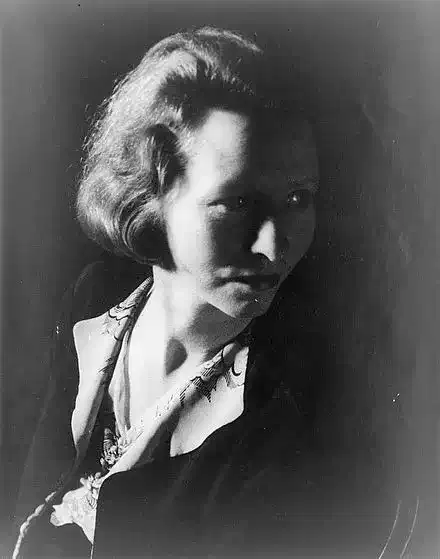
Edna St. Vincent Millay
Renascence
Renascence
All I could see from where I stood
Was three long mountains and a wood;
I turned and looked another way,
And saw three islands in a bay.
So with my eyes I traced the line
Of the horizon, thin and fine,
Straight around till I was come
Back to where I'd started from;
And all I saw from where I stood
Was three long mountains and a wood.
Over these things I could not see;
These were the things that bounded me;
And I could touch them with my hand,
Almost, I thought, from where I stand.
And all at once things seemed so small
My breath came short, and scarce at all.
But, sure, the sky is big, I said;
Miles and miles above my head;
So here upon my back I'll lie
And look my fill into the sky.
And so I looked, and, after all,
The sky was not so very tall.
The sky, I said, must somewhere stop,
And -- sure enough! -- I see the top!
The sky, I thought, is not so grand;
I 'most could touch it with my hand!
And, reaching up my hand to try,
I screamed to feel it touch the sky.
I screamed, and -- lo! -- Infinity
Came down and settled over me;
And, pressing of the Undefined
The definition on my mind,
Held up before my eyes a glass
Through which my shrinking sight did pass
Until it seemed I must behold
Immensity made manifold;
Whispered to me a word whose sound
Deafened the air for worlds around,
And brought unmuffled to my ears
The gossiping of friendly spheres,
The creaking of the tented sky,
The ticking of Eternity.
I saw and heard, and knew at last
The How and Why of all things, past,
And present, and forevermore.
The universe, cleft to the core,
Lay open to my probing sense
That, sick'ning, I would fain pluck thence
But could not, -- nay! But needs must suck
At the great wound, and could not pluck
My lips away till I had drawn
All venom out. -- Ah, fearful pawn!
For my omniscience paid I toll
In infinite remorse of soul.
All sin was of my sinning, all
Atoning mine, and mine the gall
Of all regret. Mine was the weight
Of every brooded wrong, the hate
That stood behind each envious thrust,
Mine every greed, mine every lust.
And all the while for every grief,
Each suffering, I craved relief
With individual desire, --
Craved all in vain! And felt fierce fire
About a thousand people crawl;
Perished with each, -- then mourned for all!
A man was starving in Capri;
He moved his eyes and looked at me;
I felt his gaze, I heard his moan,
And knew his hunger as my own.
I saw at sea a great fog-bank
Between two ships that struck and sank;
A thousand screams the heavens smote;
And every scream tore through my throat.
No hurt I did not feel, no death
That was not mine; mine each last breath
That, crying, met an answering cry
From the compassion that was I.
All suffering mine, and mine its rod;
Mine, pity like the pity of God.
Ah, awful weight! Infinity
Pressed down upon the finite Me!
My anguished spirit, like a bird,
Beating against my lips I heard;
Yet lay the weight so close about
There was no room for it without.
And so beneath the Weight lay I
And suffered death, but could not die.
Long had I lain thus, craving death,
When quietly the earth beneath
Gave way, and inch by inch, so great
At last had grown the crushing weight,
Into the earth I sank till I
Full six feet under ground did lie,
And sank no more, -- there is no weight
Can follow here, however great.
From off my breast I felt it roll,
And as it went my tortured soul
Burst forth and fled in such a gust
That all about me swirled the dust.
Deep in the earth I rested now;
Cool is its hand upon the brow
And soft its breast beneath the head
Of one who is so gladly dead.
And all at once, and over all,
The pitying rain began to fall;
I lay and heard each pattering hoof
Upon my lowly, thatched roof,
And seemed to love the sound far more
Than ever I had done before.
For rain it hath a friendly sound
To one who's six feet underground;
And scarce the friendly voice or face:
A grave is such a quiet place.
The rain, I said, is kind to come
And speak to me in my new home.
I would I were alive again
To kiss the fingers of the rain,
To drink into my eyes the shine
Of every slanting silver line,
To catch the freshened, fragrant breeze
From drenched and dripping apple-trees.
For soon the shower will be done,
And then the broad face of the sun
Will laugh above the rain-soaked earth
Until the world with answering mirth
Shakes joyously, and each round drop
Rolls, twinkling, from its grass-blade top.
How can I bear it; buried here,
While overhead the sky grows clear
And blue again after the storm?
O, multi-colored, multiform,
Beloved beauty over me,
That I shall never, never see
Again! Spring-silver, autumn-gold,
That I shall never more behold!
Sleeping your myriad magics through,
Close-sepulchred away from you!
O God, I cried, give me new birth,
And put me back upon the earth!
Upset each cloud's gigantic gourd
And let the heavy rain, down-poured
In one big torrent, set me free,
Washing my grave away from me!
I ceased; and, through the breathless hush
That answered me, the far-off rush
Of herald wings came whispering
Like music down the vibrant string
Of my ascending prayer, and -- crash!
Before the wild wind's whistling lash
The startled storm-clouds reared on high
And plunged in terror down the sky,
And the big rain in one black wave
Fell from the sky and struck my grave.
I know not how such things can be
I only know there came to me
A fragrance such as never clings
To aught save happy living things;
A sound as of some joyous elf
Singing sweet songs to please himself,
And, through and over everything,
A sense of glad awakening.
The grass, a-tiptoe at my ear,
Whispering to me I could hear;
I felt the rain's cool finger-tips
Brushed tenderly across my lips,
Laid gently on my sealed sight,
And all at once the heavy night
Fell from my eyes and I could see, --
A drenched and dripping apple-tree,
A last long line of silver rain,
A sky grown clear and blue again.
And as I looked a quickening gust
Of wind blew up to me and thrust
Into my face a miracle
Of orchard-breath, and with the smell, --
I know not how such things can be! --
I breathed my soul back into me.
Ah! Up then from the ground sprang I
And hailed the earth with such a cry
As is not heard save from a man
Who has been dead, and lives again.
About the trees my arms I wound;
Like one gone mad I hugged the ground;
I raised my quivering arms on high;
I laughed and laughed into the sky,
Till at my throat a strangling sob
Caught fiercely, and a great heart-throb
Sent instant tears into my eyes;
O God, I cried, no dark disguise
Can e'er hereafter hide from me
Thy radiant identity!
Thou canst not move across the grass
But my quick eyes will see Thee pass,
Nor speak, however silently,
But my hushed voice will answer Thee.
I know the path that tells Thy way
Through the cool eve of every day;
God, I can push the grass apart
And lay my finger on Thy heart!
The world stands out on either side
No wider than the heart is wide;
Above the world is stretched the sky, --
No higher than the soul is high.
The heart can push the sea and land
Farther away on either hand;
The soul can split the sky in two,
And let the face of God shine through.
But East and West will pinch the heart
That cannot keep them pushed apart;
And he whose soul is flat -- the sky
Will cave in on him by and by.
All I could see from where I stood
Was three long mountains and a wood;
I turned and looked another way,
And saw three islands in a bay.
So with my eyes I traced the line
Of the horizon, thin and fine,
Straight around till I was come
Back to where I'd started from;
And all I saw from where I stood
Was three long mountains and a wood.
Over these things I could not see;
These were the things that bounded me;
And I could touch them with my hand,
Almost, I thought, from where I stand.
And all at once things seemed so small
My breath came short, and scarce at all.
But, sure, the sky is big, I said;
Miles and miles above my head;
So here upon my back I'll lie
And look my fill into the sky.
And so I looked, and, after all,
The sky was not so very tall.
The sky, I said, must somewhere stop,
And -- sure enough! -- I see the top!
The sky, I thought, is not so grand;
I 'most could touch it with my hand!
And, reaching up my hand to try,
I screamed to feel it touch the sky.
I screamed, and -- lo! -- Infinity
Came down and settled over me;
And, pressing of the Undefined
The definition on my mind,
Held up before my eyes a glass
Through which my shrinking sight did pass
Until it seemed I must behold
Immensity made manifold;
Whispered to me a word whose sound
Deafened the air for worlds around,
And brought unmuffled to my ears
The gossiping of friendly spheres,
The creaking of the tented sky,
The ticking of Eternity.
I saw and heard, and knew at last
The How and Why of all things, past,
And present, and forevermore.
The universe, cleft to the core,
Lay open to my probing sense
That, sick'ning, I would fain pluck thence
But could not, -- nay! But needs must suck
At the great wound, and could not pluck
My lips away till I had drawn
All venom out. -- Ah, fearful pawn!
For my omniscience paid I toll
In infinite remorse of soul.
All sin was of my sinning, all
Atoning mine, and mine the gall
Of all regret. Mine was the weight
Of every brooded wrong, the hate
That stood behind each envious thrust,
Mine every greed, mine every lust.
And all the while for every grief,
Each suffering, I craved relief
With individual desire, --
Craved all in vain! And felt fierce fire
About a thousand people crawl;
Perished with each, -- then mourned for all!
A man was starving in Capri;
He moved his eyes and looked at me;
I felt his gaze, I heard his moan,
And knew his hunger as my own.
I saw at sea a great fog-bank
Between two ships that struck and sank;
A thousand screams the heavens smote;
And every scream tore through my throat.
No hurt I did not feel, no death
That was not mine; mine each last breath
That, crying, met an answering cry
From the compassion that was I.
All suffering mine, and mine its rod;
Mine, pity like the pity of God.
Ah, awful weight! Infinity
Pressed down upon the finite Me!
My anguished spirit, like a bird,
Beating against my lips I heard;
Yet lay the weight so close about
There was no room for it without.
And so beneath the Weight lay I
And suffered death, but could not die.
Long had I lain thus, craving death,
When quietly the earth beneath
Gave way, and inch by inch, so great
At last had grown the crushing weight,
Into the earth I sank till I
Full six feet under ground did lie,
And sank no more, -- there is no weight
Can follow here, however great.
From off my breast I felt it roll,
And as it went my tortured soul
Burst forth and fled in such a gust
That all about me swirled the dust.
Deep in the earth I rested now;
Cool is its hand upon the brow
And soft its breast beneath the head
Of one who is so gladly dead.
And all at once, and over all,
The pitying rain began to fall;
I lay and heard each pattering hoof
Upon my lowly, thatched roof,
And seemed to love the sound far more
Than ever I had done before.
For rain it hath a friendly sound
To one who's six feet underground;
And scarce the friendly voice or face:
A grave is such a quiet place.
The rain, I said, is kind to come
And speak to me in my new home.
I would I were alive again
To kiss the fingers of the rain,
To drink into my eyes the shine
Of every slanting silver line,
To catch the freshened, fragrant breeze
From drenched and dripping apple-trees.
For soon the shower will be done,
And then the broad face of the sun
Will laugh above the rain-soaked earth
Until the world with answering mirth
Shakes joyously, and each round drop
Rolls, twinkling, from its grass-blade top.
How can I bear it; buried here,
While overhead the sky grows clear
And blue again after the storm?
O, multi-colored, multiform,
Beloved beauty over me,
That I shall never, never see
Again! Spring-silver, autumn-gold,
That I shall never more behold!
Sleeping your myriad magics through,
Close-sepulchred away from you!
O God, I cried, give me new birth,
And put me back upon the earth!
Upset each cloud's gigantic gourd
And let the heavy rain, down-poured
In one big torrent, set me free,
Washing my grave away from me!
I ceased; and, through the breathless hush
That answered me, the far-off rush
Of herald wings came whispering
Like music down the vibrant string
Of my ascending prayer, and -- crash!
Before the wild wind's whistling lash
The startled storm-clouds reared on high
And plunged in terror down the sky,
And the big rain in one black wave
Fell from the sky and struck my grave.
I know not how such things can be
I only know there came to me
A fragrance such as never clings
To aught save happy living things;
A sound as of some joyous elf
Singing sweet songs to please himself,
And, through and over everything,
A sense of glad awakening.
The grass, a-tiptoe at my ear,
Whispering to me I could hear;
I felt the rain's cool finger-tips
Brushed tenderly across my lips,
Laid gently on my sealed sight,
And all at once the heavy night
Fell from my eyes and I could see, --
A drenched and dripping apple-tree,
A last long line of silver rain,
A sky grown clear and blue again.
And as I looked a quickening gust
Of wind blew up to me and thrust
Into my face a miracle
Of orchard-breath, and with the smell, --
I know not how such things can be! --
I breathed my soul back into me.
Ah! Up then from the ground sprang I
And hailed the earth with such a cry
As is not heard save from a man
Who has been dead, and lives again.
About the trees my arms I wound;
Like one gone mad I hugged the ground;
I raised my quivering arms on high;
I laughed and laughed into the sky,
Till at my throat a strangling sob
Caught fiercely, and a great heart-throb
Sent instant tears into my eyes;
O God, I cried, no dark disguise
Can e'er hereafter hide from me
Thy radiant identity!
Thou canst not move across the grass
But my quick eyes will see Thee pass,
Nor speak, however silently,
But my hushed voice will answer Thee.
I know the path that tells Thy way
Through the cool eve of every day;
God, I can push the grass apart
And lay my finger on Thy heart!
The world stands out on either side
No wider than the heart is wide;
Above the world is stretched the sky, --
No higher than the soul is high.
The heart can push the sea and land
Farther away on either hand;
The soul can split the sky in two,
And let the face of God shine through.
But East and West will pinch the heart
That cannot keep them pushed apart;
And he whose soul is flat -- the sky
Will cave in on him by and by.
378
Edna St. Vincent Millay
Journey
Journey
Ah, could I lay me down in this long grass
And close my eyes, and let the quiet wind
Blow over me—I am so tired, so tired
Of passing pleasant places! All my life,
Following Care along the dusty road,
Have I looked back at loveliness and sighed;
Yet at my hand an unrelenting hand
Tugged ever, and I passed. All my life long
Over my shoulder have I looked at peace;
And now I fain would lie in this long grass
And close my eyes.
Yet onward!
Cat birds call
Through the long afternoon, and creeks at dusk
Are guttural. Whip-poor-wills wake and cry,
Drawing the twilight close about their throats.
Only my heart makes answer. Eager vines
Go up the rocks and wait; flushed apple-trees
Pause in their dance and break the ring for me;
And bayberry, that through sweet bevies thread
Of round-faced roses, pink and petulant,
Look back and beckon ere they disappear.
Only my heart, only my heart responds.
Yet, ah, my path is sweet on either side
All through the dragging day,—sharp underfoot
And hot, and like dead mist the dry dust hangs—
But far, oh, far as passionate eye can reach,
And long, ah, long as rapturous eye can cling,
The world is mine: blue hill, still silver lake,
Broad field, bright flower, and the long white road
A gateless garden, and an open path:
My feet to follow, and my heart to hold.
Ah, could I lay me down in this long grass
And close my eyes, and let the quiet wind
Blow over me—I am so tired, so tired
Of passing pleasant places! All my life,
Following Care along the dusty road,
Have I looked back at loveliness and sighed;
Yet at my hand an unrelenting hand
Tugged ever, and I passed. All my life long
Over my shoulder have I looked at peace;
And now I fain would lie in this long grass
And close my eyes.
Yet onward!
Cat birds call
Through the long afternoon, and creeks at dusk
Are guttural. Whip-poor-wills wake and cry,
Drawing the twilight close about their throats.
Only my heart makes answer. Eager vines
Go up the rocks and wait; flushed apple-trees
Pause in their dance and break the ring for me;
And bayberry, that through sweet bevies thread
Of round-faced roses, pink and petulant,
Look back and beckon ere they disappear.
Only my heart, only my heart responds.
Yet, ah, my path is sweet on either side
All through the dragging day,—sharp underfoot
And hot, and like dead mist the dry dust hangs—
But far, oh, far as passionate eye can reach,
And long, ah, long as rapturous eye can cling,
The world is mine: blue hill, still silver lake,
Broad field, bright flower, and the long white road
A gateless garden, and an open path:
My feet to follow, and my heart to hold.
451
Edna St. Vincent Millay
Fontaine, Je Ne Boirai Pas De Ton Eau!
Fontaine, Je Ne Boirai Pas De Ton Eau!
I know I might have lived in such a way
As to have suffered only pain:
Loving not man nor dog;
Not money, even; feeling
Toothache perhaps, but never more than an hour away
From skill and novocaine;
Making no contacts, dealing with life through Agents, drinking
one cocktail, betting two dollars, wearing raincoats in the
rain.
Betrayed at length by no one but the fog
Whispering to the wing of the plane.
"Fountain," I have cried to that unbubbling well, "I will not
drink of thy water!" Yet I thirst
For a mouthful of—not to swallow, only to rinse my mouth in
—peace.
And while the eyes of the past condemn,
The eyes of the present narrow into assignation. And—
worst—
The young are so old, they are born with their fingers crossed;
I shall get no help from them.
I know I might have lived in such a way
As to have suffered only pain:
Loving not man nor dog;
Not money, even; feeling
Toothache perhaps, but never more than an hour away
From skill and novocaine;
Making no contacts, dealing with life through Agents, drinking
one cocktail, betting two dollars, wearing raincoats in the
rain.
Betrayed at length by no one but the fog
Whispering to the wing of the plane.
"Fountain," I have cried to that unbubbling well, "I will not
drink of thy water!" Yet I thirst
For a mouthful of—not to swallow, only to rinse my mouth in
—peace.
And while the eyes of the past condemn,
The eyes of the present narrow into assignation. And—
worst—
The young are so old, they are born with their fingers crossed;
I shall get no help from them.
300
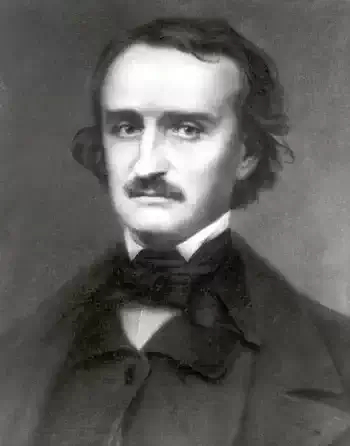
Edgar Allan Poe
The Haunted Palace
The Haunted Palace
In the greenest of our valleys
By good angels tenanted,
Once a fair and stately palaceRadiant
palace- reared its head.
In the monarch Thought's dominionIt
stood there!
Never seraph spread a pinion
Over fabric half so fair!
Banners yellow, glorious, golden,
On its roof did float and flow,
(This- all this- was in the olden
Time long ago,)
And every gentle air that dallied,
In that sweet day,
Along the ramparts plumed and pallid,
A winged odor went away.
Wanderers in that happy valley,
Through two luminous windows, saw
Spirits moving musically,
To a lute's well-tuned law,
Round about a throne where, sitting
(Porphyrogene!)
In state his glory well-befitting,
The ruler of the realm was seen.
And all with pearl and ruby glowing
Was the fair palace door,
Through which came flowing, flowing, flowing,
And sparkling evermore,
A troop of Echoes, whose sweet duty
Was but to sing,
In voices of surpassing beauty,
The wit and wisdom of their king.
But evil things, in robes of sorrow,
Assailed the monarch's high estate.
(Ah, let us mourn!- for never morrow
Shall dawn upon him desolate!)
And round about his home the glory
That blushed and bloomed,
Is but a dim-remembered story
Of the old time entombed.
And travellers, now, within that valley,
Through the red-litten windows see
Vast forms, that move fantastically
To a discordant melody,
While, like a ghastly rapid river,
Through the pale door
A hideous throng rush out forever
And laugh- but smile no more.
-THE END
.
In the greenest of our valleys
By good angels tenanted,
Once a fair and stately palaceRadiant
palace- reared its head.
In the monarch Thought's dominionIt
stood there!
Never seraph spread a pinion
Over fabric half so fair!
Banners yellow, glorious, golden,
On its roof did float and flow,
(This- all this- was in the olden
Time long ago,)
And every gentle air that dallied,
In that sweet day,
Along the ramparts plumed and pallid,
A winged odor went away.
Wanderers in that happy valley,
Through two luminous windows, saw
Spirits moving musically,
To a lute's well-tuned law,
Round about a throne where, sitting
(Porphyrogene!)
In state his glory well-befitting,
The ruler of the realm was seen.
And all with pearl and ruby glowing
Was the fair palace door,
Through which came flowing, flowing, flowing,
And sparkling evermore,
A troop of Echoes, whose sweet duty
Was but to sing,
In voices of surpassing beauty,
The wit and wisdom of their king.
But evil things, in robes of sorrow,
Assailed the monarch's high estate.
(Ah, let us mourn!- for never morrow
Shall dawn upon him desolate!)
And round about his home the glory
That blushed and bloomed,
Is but a dim-remembered story
Of the old time entombed.
And travellers, now, within that valley,
Through the red-litten windows see
Vast forms, that move fantastically
To a discordant melody,
While, like a ghastly rapid river,
Through the pale door
A hideous throng rush out forever
And laugh- but smile no more.
-THE END
.
696
Edgar Allan Poe
Tamerlane
Tamerlane
Kind solace in a dying hour!
Such, father, is not (now) my theme
I will not madly deem that power
Of Earth may shrive me of the sin
Unearthly pride hath revell'd in
I have no time to dote or dream:
You call it hope- that fire of fire!
It is but agony of desire:
If I can hope- Oh God! I can
Its fount is holier- more divineI
would not call thee fool, old man,
But such is not a gift of thine.
Know thou the secret of a spirit
Bow'd from its wild pride into shame.
O yearning heart! I did inherit
Thy withering portion with the fame,
The searing glory which hath shone
Amid the jewels of my throne,
Halo of Hell! and with a pain
Not Hell shall make me fear againO
craving heart, for the lost flowers
And sunshine of my summer hours!
The undying voice of that dead time,
With its interminable chime,
Rings, in the spirit of a spell,
Upon thy emptiness- a knell.
I have not always been as now:
The fever'd diadem on my brow
I claim'd and won usurpingly
Hath not the same fierce heirdom given
Rome to the Caesar- this to me?
The heritage of a kingly mind,
And a proud spirit which hath striven
Triumphantly with human kind.
On mountain soil I first drew life:
The mists of the Taglay have shed
Nightly their dews upon my head,
And, I believe, the winged strife
And tumult of the headlong air
Have nestled in my very hair.
So late from Heaven- that dew- it fell
(Mid dreams of an unholy night)
Upon me with the touch of Hell,
While the red flashing of the light
From clouds that hung, like banners, o'er,
Appeared to my half-closing eye
The pageantry of monarchy,
And the deep trumpet-thunder's roar
Came hurriedly upon me, telling
Of human battle, where my voice,
My own voice, silly child!- was swelling
(O! how my spirit would rejoice,
And leap within me at the cry)
The battle-cry of Victory!
The rain came down upon my head
Unshelter'd- and the heavy wind
Rendered me mad and deaf and blind.
It was but man, I thought, who shed
Laurels upon me: and the rushThe
torrent of the chilly air
Gurgled within my ear the crush
Of empires- with the captive's prayerThe
hum of suitors- and the tone
Of flattery 'round a sovereign's throne.
My passions, from that hapless hour,
Usurp'd a tyranny which men
Have deem'd, since I have reach'd to power,
My innate nature- be it so:
But father, there liv'd one who, then,
Then- in my boyhood- when their fire
Burn'd with a still intenser glow,
(For passion must, with youth, expire)
E'en then who knew this iron heart
In woman's weakness had a part.
I have no words- alas!- to tell
The loveliness of loving well!
Nor would I now attempt to trace
The more than beauty of a face
Whose lineaments, upon my mind,
Are- shadows on th' unstable wind:
Thus I remember having dwelt
Some page of early lore upon,
With loitering eye, till I have felt
The letters- with their meaning- melt
To fantasies- with none.
O, she was worthy of all love!
Love- as in infancy was mine'
Twas such as angel minds above
Might envy; her young heart the shrine
On which my every hope and thought
Were incense- then a goodly gift,
For they were childish and uprightPure-
as her young example taught:
Why did I leave it, and, adrift,
Trust to the fire within, for light?
We grew in age- and love- together,
Roaming the forest, and the wild;
My breast her shield in wintry weather
And when the friendly sunshine smil'd,
And she would mark the opening skies,
I saw no Heaven- but in her eyes.
Young Love's first lesson is- the heart:
For 'mid that sunshine, and those smiles,
When, from our little cares apart,
And laughing at her girlish wiles,
I'd throw me on her throbbing breast,
And pour my spirit out in tearsThere
was no need to speak the rest
No need to quiet any fears
Of her- who ask'd no reason why,
But turn'd on me her quiet eye!
Yet more than worthy of the love
My spirit struggled with, and strove,
When, on the mountain peak, alone,
Ambition lent it a new toneI
had no being- but in thee:
The world, and all it did contain
In the earth- the air- the seaIts
joy- its little lot of pain
That was new pleasure- the ideal,
Dim vanities of dreams by night
And dimmer nothings which were real(
Shadows- and a more shadowy light!)
Parted upon their misty wings,
And, so, confusedly, became
Thine image, and- a name- a name!
Two separate- yet most intimate things.
I was ambitious- have you known
The passion, father? You have not:
A cottager, I mark'd a throne
Of half the world as all my own,
And murmur'd at such lowly lotBut,
just like any other dream,
Upon the vapour of the dew
My own had past, did not the beam
Of beauty which did while it thro'
The minute- the hour- the day- oppress
My mind with double loveliness.
We walk'd together on the crown
Of a high mountain which look'd down
Afar from its proud natural towers
Of rock and forest, on the hills
The dwindled hills! begirt with bowers,
And shouting with a thousand rills.
I spoke to her of power and pride,
But mystically- in such guise
That she might deem it nought beside
The moment's converse; in her eyes
I read, perhaps too carelesslyA
mingled feeling with my ownThe
flush on her bright cheek, to me
Seem'd to become a queenly throne
Too well that I should let it be
Light in the wilderness alone.
I wrapp'd myself in grandeur then,
And donn'd a visionary crownYet
it was not that Fantasy
Had thrown her mantle over me
But that, among the rabble- men,
Lion ambition is chained downAnd
crouches to a keeper's handNot
so in deserts where the grandThe
wild- the terrible conspire
With their own breath to fan his fire.
Look 'round thee now on Samarcand!
Is not she queen of Earth? her pride
Above all cities? in her hand
Their destinies? in all beside
Of glory which the world hath known
Stands she not nobly and alone?
Falling- her veriest stepping-stone
Shall form the pedestal of a throneAnd
who her sovereign? Timour- he
Whom the astonished people saw
Striding o'er empires haughtily
A diadem'd outlaw!
O, human love! thou spirit given
On Earth, of all we hope in Heaven!
Which fall'st into the soul like rain
Upon the Siroc-wither'd plain,
And, failing in thy power to bless,
But leav'st the heart a wilderness!
Idea! which bindest life around
With music of so strange a sound,
And beauty of so wild a birthFarewell!
for I have won the Earth.
When Hope, the eagle that tower'd, could see
No cliff beyond him in the sky,
His pinions were bent droopingly
And homeward turn'd his soften'd eye.
'Twas sunset: when the sun will part
There comes a sullenness of heart
To him who still would look upon
The glory of the summer sun.
That soul will hate the ev'ning mist,
So often lovely, and will list
To the sound of the coming darkness (known
To those whose spirits hearken) as one
Who, in a dream of night, would fly
But cannot from a danger nigh.
What tho' the moon- the white moon
Shed all the splendour of her noon,
Her smile is chilly, and her beam,
In that time of dreariness, will seem
(So like you gather in your breath)
A portrait taken after death.
And boyhood is a summer sun
Whose waning is the dreariest oneFor
all we live to know is known,
And all we seek to keep hath flownLet
life, then, as the day-flower, fall
With the noon-day beauty- which is all.
I reach'd my home- my home no more
For all had flown who made it so.
I pass'd from out its mossy door,
And, tho' my tread was soft and low,
A voice came from the threshold stone
Of one whom I had earlier known
O, I defy thee, Hell, to show
On beds of fire that burn below,
A humbler heart- a deeper woe.
Father, I firmly do believeI
know- for Death, who comes for me
From regions of the blest afar,
Where there is nothing to deceive,
Hath left his iron gate ajar,
And rays of truth you cannot see
Are flashing thro' Eternity
I do believe that Eblis hath
A snare in every human pathElse
how, when in the holy grove
I wandered of the idol, Love,
Who daily scents his snowy wings
With incense of burnt offerings
From the most unpolluted things,
Whose pleasant bowers are yet so riven
Above with trellis'd rays from Heaven,
No mote may shun- no tiniest fly
The lightning of his eagle eyeHow
was it that Ambition crept,
Unseen, amid the revels there,
Till growing bold, he laughed and leapt
In the tangles of Love's very hair?
Kind solace in a dying hour!
Such, father, is not (now) my theme
I will not madly deem that power
Of Earth may shrive me of the sin
Unearthly pride hath revell'd in
I have no time to dote or dream:
You call it hope- that fire of fire!
It is but agony of desire:
If I can hope- Oh God! I can
Its fount is holier- more divineI
would not call thee fool, old man,
But such is not a gift of thine.
Know thou the secret of a spirit
Bow'd from its wild pride into shame.
O yearning heart! I did inherit
Thy withering portion with the fame,
The searing glory which hath shone
Amid the jewels of my throne,
Halo of Hell! and with a pain
Not Hell shall make me fear againO
craving heart, for the lost flowers
And sunshine of my summer hours!
The undying voice of that dead time,
With its interminable chime,
Rings, in the spirit of a spell,
Upon thy emptiness- a knell.
I have not always been as now:
The fever'd diadem on my brow
I claim'd and won usurpingly
Hath not the same fierce heirdom given
Rome to the Caesar- this to me?
The heritage of a kingly mind,
And a proud spirit which hath striven
Triumphantly with human kind.
On mountain soil I first drew life:
The mists of the Taglay have shed
Nightly their dews upon my head,
And, I believe, the winged strife
And tumult of the headlong air
Have nestled in my very hair.
So late from Heaven- that dew- it fell
(Mid dreams of an unholy night)
Upon me with the touch of Hell,
While the red flashing of the light
From clouds that hung, like banners, o'er,
Appeared to my half-closing eye
The pageantry of monarchy,
And the deep trumpet-thunder's roar
Came hurriedly upon me, telling
Of human battle, where my voice,
My own voice, silly child!- was swelling
(O! how my spirit would rejoice,
And leap within me at the cry)
The battle-cry of Victory!
The rain came down upon my head
Unshelter'd- and the heavy wind
Rendered me mad and deaf and blind.
It was but man, I thought, who shed
Laurels upon me: and the rushThe
torrent of the chilly air
Gurgled within my ear the crush
Of empires- with the captive's prayerThe
hum of suitors- and the tone
Of flattery 'round a sovereign's throne.
My passions, from that hapless hour,
Usurp'd a tyranny which men
Have deem'd, since I have reach'd to power,
My innate nature- be it so:
But father, there liv'd one who, then,
Then- in my boyhood- when their fire
Burn'd with a still intenser glow,
(For passion must, with youth, expire)
E'en then who knew this iron heart
In woman's weakness had a part.
I have no words- alas!- to tell
The loveliness of loving well!
Nor would I now attempt to trace
The more than beauty of a face
Whose lineaments, upon my mind,
Are- shadows on th' unstable wind:
Thus I remember having dwelt
Some page of early lore upon,
With loitering eye, till I have felt
The letters- with their meaning- melt
To fantasies- with none.
O, she was worthy of all love!
Love- as in infancy was mine'
Twas such as angel minds above
Might envy; her young heart the shrine
On which my every hope and thought
Were incense- then a goodly gift,
For they were childish and uprightPure-
as her young example taught:
Why did I leave it, and, adrift,
Trust to the fire within, for light?
We grew in age- and love- together,
Roaming the forest, and the wild;
My breast her shield in wintry weather
And when the friendly sunshine smil'd,
And she would mark the opening skies,
I saw no Heaven- but in her eyes.
Young Love's first lesson is- the heart:
For 'mid that sunshine, and those smiles,
When, from our little cares apart,
And laughing at her girlish wiles,
I'd throw me on her throbbing breast,
And pour my spirit out in tearsThere
was no need to speak the rest
No need to quiet any fears
Of her- who ask'd no reason why,
But turn'd on me her quiet eye!
Yet more than worthy of the love
My spirit struggled with, and strove,
When, on the mountain peak, alone,
Ambition lent it a new toneI
had no being- but in thee:
The world, and all it did contain
In the earth- the air- the seaIts
joy- its little lot of pain
That was new pleasure- the ideal,
Dim vanities of dreams by night
And dimmer nothings which were real(
Shadows- and a more shadowy light!)
Parted upon their misty wings,
And, so, confusedly, became
Thine image, and- a name- a name!
Two separate- yet most intimate things.
I was ambitious- have you known
The passion, father? You have not:
A cottager, I mark'd a throne
Of half the world as all my own,
And murmur'd at such lowly lotBut,
just like any other dream,
Upon the vapour of the dew
My own had past, did not the beam
Of beauty which did while it thro'
The minute- the hour- the day- oppress
My mind with double loveliness.
We walk'd together on the crown
Of a high mountain which look'd down
Afar from its proud natural towers
Of rock and forest, on the hills
The dwindled hills! begirt with bowers,
And shouting with a thousand rills.
I spoke to her of power and pride,
But mystically- in such guise
That she might deem it nought beside
The moment's converse; in her eyes
I read, perhaps too carelesslyA
mingled feeling with my ownThe
flush on her bright cheek, to me
Seem'd to become a queenly throne
Too well that I should let it be
Light in the wilderness alone.
I wrapp'd myself in grandeur then,
And donn'd a visionary crownYet
it was not that Fantasy
Had thrown her mantle over me
But that, among the rabble- men,
Lion ambition is chained downAnd
crouches to a keeper's handNot
so in deserts where the grandThe
wild- the terrible conspire
With their own breath to fan his fire.
Look 'round thee now on Samarcand!
Is not she queen of Earth? her pride
Above all cities? in her hand
Their destinies? in all beside
Of glory which the world hath known
Stands she not nobly and alone?
Falling- her veriest stepping-stone
Shall form the pedestal of a throneAnd
who her sovereign? Timour- he
Whom the astonished people saw
Striding o'er empires haughtily
A diadem'd outlaw!
O, human love! thou spirit given
On Earth, of all we hope in Heaven!
Which fall'st into the soul like rain
Upon the Siroc-wither'd plain,
And, failing in thy power to bless,
But leav'st the heart a wilderness!
Idea! which bindest life around
With music of so strange a sound,
And beauty of so wild a birthFarewell!
for I have won the Earth.
When Hope, the eagle that tower'd, could see
No cliff beyond him in the sky,
His pinions were bent droopingly
And homeward turn'd his soften'd eye.
'Twas sunset: when the sun will part
There comes a sullenness of heart
To him who still would look upon
The glory of the summer sun.
That soul will hate the ev'ning mist,
So often lovely, and will list
To the sound of the coming darkness (known
To those whose spirits hearken) as one
Who, in a dream of night, would fly
But cannot from a danger nigh.
What tho' the moon- the white moon
Shed all the splendour of her noon,
Her smile is chilly, and her beam,
In that time of dreariness, will seem
(So like you gather in your breath)
A portrait taken after death.
And boyhood is a summer sun
Whose waning is the dreariest oneFor
all we live to know is known,
And all we seek to keep hath flownLet
life, then, as the day-flower, fall
With the noon-day beauty- which is all.
I reach'd my home- my home no more
For all had flown who made it so.
I pass'd from out its mossy door,
And, tho' my tread was soft and low,
A voice came from the threshold stone
Of one whom I had earlier known
O, I defy thee, Hell, to show
On beds of fire that burn below,
A humbler heart- a deeper woe.
Father, I firmly do believeI
know- for Death, who comes for me
From regions of the blest afar,
Where there is nothing to deceive,
Hath left his iron gate ajar,
And rays of truth you cannot see
Are flashing thro' Eternity
I do believe that Eblis hath
A snare in every human pathElse
how, when in the holy grove
I wandered of the idol, Love,
Who daily scents his snowy wings
With incense of burnt offerings
From the most unpolluted things,
Whose pleasant bowers are yet so riven
Above with trellis'd rays from Heaven,
No mote may shun- no tiniest fly
The lightning of his eagle eyeHow
was it that Ambition crept,
Unseen, amid the revels there,
Till growing bold, he laughed and leapt
In the tangles of Love's very hair?
276

Dylan Thomas
Once It Was the Colour of Saying
Once It Was the Colour of Saying
Once it was the colour of saying
Soaked my table the uglier side of a hill
With a capsized field where a school sat still
And a black and white patch of girls grew playing;
The gentle seaslides of saying I must undo
That all the charmingly drowned arise to cockcrow and kill.
When I whistled with mitching boys through a reservoir park
Where at night we stoned the cold and cuckoo
Lovers in the dirt of their leafy beds,
The shade of their trees was a word of many shades
And a lamp of lightning for the poor in the dark;
Now my saying shall be my undoing,
And every stone I wind off like a reel.
Once it was the colour of saying
Soaked my table the uglier side of a hill
With a capsized field where a school sat still
And a black and white patch of girls grew playing;
The gentle seaslides of saying I must undo
That all the charmingly drowned arise to cockcrow and kill.
When I whistled with mitching boys through a reservoir park
Where at night we stoned the cold and cuckoo
Lovers in the dirt of their leafy beds,
The shade of their trees was a word of many shades
And a lamp of lightning for the poor in the dark;
Now my saying shall be my undoing,
And every stone I wind off like a reel.
204
Dylan Thomas
Now
Now
Now
Say nay,
Man dry man,
Dry lover mine
The deadrock base and blow the flowered anchor,
Should he, for centre sake, hop in the dust,
Forsake, the fool, the hardiness of anger.
Now
Say nay,
Sir no say,
Death to the yes,
the yes to death, the yesman and the answer,
Should he who split his children with a cure
Have brotherless his sister on the handsaw.
Now
Say nay,
No say sir
Yea the dead stir,
And this, nor this, is shade, the landed crow,
He lying low with ruin in his ear,
The cockrel's tide upcasting from the fire.
Now
Say nay,
So star fall,
So the ball fail,
So solve the mystic sun, the wife of light,
The sun that leaps on petals through a nought,
the come-a-cropper rider of the flower.
Now
Say nay
A fig for
The seal of fire,
Death hairy-heeled and the tapped ghost in wood,
We make me mystic as the arm of air,
The two-a-vein, the foreskin, and the cloud.
Now
Say nay,
Man dry man,
Dry lover mine
The deadrock base and blow the flowered anchor,
Should he, for centre sake, hop in the dust,
Forsake, the fool, the hardiness of anger.
Now
Say nay,
Sir no say,
Death to the yes,
the yes to death, the yesman and the answer,
Should he who split his children with a cure
Have brotherless his sister on the handsaw.
Now
Say nay,
No say sir
Yea the dead stir,
And this, nor this, is shade, the landed crow,
He lying low with ruin in his ear,
The cockrel's tide upcasting from the fire.
Now
Say nay,
So star fall,
So the ball fail,
So solve the mystic sun, the wife of light,
The sun that leaps on petals through a nought,
the come-a-cropper rider of the flower.
Now
Say nay
A fig for
The seal of fire,
Death hairy-heeled and the tapped ghost in wood,
We make me mystic as the arm of air,
The two-a-vein, the foreskin, and the cloud.
253
Dylan Thomas
Into Her Lying Down Head
Into Her Lying Down Head
I
Into her lying down head
His enemies entered bed,
Under the encumbered eyelid,
Through the rippled drum of the hair-buried ear;
And Noah's rekindled now unkind dove
Flew man-bearing there.
Last night in a raping wave
Whales unreined from the green grave
In fountains of origin gave up their love,
Along her innocence glided
Jaun aflame and savagely young King Lear,
Queen Catherine howling bare
And Samson drowned in his hair,
The colossal intimacies of silent
Once seen strangers or shades on a stair;
There the dark blade and wanton sighing her down
To a haycock couch and the scythes of his arms
Rode and whistled a hundred times
Before the crowing morning climbed;
Man was the burning England she was sleep-walking, and the enamouring island
Made her limbs blind by luminous charms,
Sleep to a newborn sleep in a swaddling loin-leaf stroked and sang
And his runaway beloved childlike laid in the acorned sand.
II
There where a numberless tongue
Wound their room with a male moan,
His faith around her flew undone
And darkness hung the walls with baskets of snakes,
A furnace-nostrilled column-membered
Super-or-near man
Resembling to her dulled sense
The thief of adolescence,
Early imaginary half remembered
Oceanic lover alone
Jealousy cannot forget for all her sakes,
Made his bad bed in her good
Night, and enjoyed as he would.
Crying, white gowned, from the middle moonlit stages
Out to the tiered and hearing tide,
Close and far she announced the theft of the heart
In the taken body at many ages,
Trespasser and broken bride
Celebrating at her side
All blood-signed assailing and vanished marriages in which he had no lovely part
Nor could share, for his pride, to the least
Mutter and foul wingbeat of the solemnizing nightpriest
Her holy unholy hours with the always anonymous beast.
III
Two sand grains together in bed,
Head to heaven-circling head,
Singly lie with the whole wide shore,
The covering sea their nightfall with no names;
And out of every domed and soil-based shell
One voice in chains declaims
The female, deadly, and male
Libidinous betrayal,
Golden dissolving under the water veil.
A she bird sleeping brittle by
Her lover's wings that fold to-morrow's flight,
Within the nested treefork
Sings to the treading hawk
Carrion, paradise, chirrup my bright yolk.
A blade of grass longs with the meadow,
A stone lies lost and locked in the lark-high hill.
Open as to the air to the naked shadow
O she lies alone and still,
Innocent between two wars,
With the incestuous secret brother in the seconds to perpetuate the stars,
A man torn up mourns in the sole night.
And the second comers, the severers, the enemies from the deep
Forgotten dark, rest their pulse and bury their dead in her faithless sleep.
I
Into her lying down head
His enemies entered bed,
Under the encumbered eyelid,
Through the rippled drum of the hair-buried ear;
And Noah's rekindled now unkind dove
Flew man-bearing there.
Last night in a raping wave
Whales unreined from the green grave
In fountains of origin gave up their love,
Along her innocence glided
Jaun aflame and savagely young King Lear,
Queen Catherine howling bare
And Samson drowned in his hair,
The colossal intimacies of silent
Once seen strangers or shades on a stair;
There the dark blade and wanton sighing her down
To a haycock couch and the scythes of his arms
Rode and whistled a hundred times
Before the crowing morning climbed;
Man was the burning England she was sleep-walking, and the enamouring island
Made her limbs blind by luminous charms,
Sleep to a newborn sleep in a swaddling loin-leaf stroked and sang
And his runaway beloved childlike laid in the acorned sand.
II
There where a numberless tongue
Wound their room with a male moan,
His faith around her flew undone
And darkness hung the walls with baskets of snakes,
A furnace-nostrilled column-membered
Super-or-near man
Resembling to her dulled sense
The thief of adolescence,
Early imaginary half remembered
Oceanic lover alone
Jealousy cannot forget for all her sakes,
Made his bad bed in her good
Night, and enjoyed as he would.
Crying, white gowned, from the middle moonlit stages
Out to the tiered and hearing tide,
Close and far she announced the theft of the heart
In the taken body at many ages,
Trespasser and broken bride
Celebrating at her side
All blood-signed assailing and vanished marriages in which he had no lovely part
Nor could share, for his pride, to the least
Mutter and foul wingbeat of the solemnizing nightpriest
Her holy unholy hours with the always anonymous beast.
III
Two sand grains together in bed,
Head to heaven-circling head,
Singly lie with the whole wide shore,
The covering sea their nightfall with no names;
And out of every domed and soil-based shell
One voice in chains declaims
The female, deadly, and male
Libidinous betrayal,
Golden dissolving under the water veil.
A she bird sleeping brittle by
Her lover's wings that fold to-morrow's flight,
Within the nested treefork
Sings to the treading hawk
Carrion, paradise, chirrup my bright yolk.
A blade of grass longs with the meadow,
A stone lies lost and locked in the lark-high hill.
Open as to the air to the naked shadow
O she lies alone and still,
Innocent between two wars,
With the incestuous secret brother in the seconds to perpetuate the stars,
A man torn up mourns in the sole night.
And the second comers, the severers, the enemies from the deep
Forgotten dark, rest their pulse and bury their dead in her faithless sleep.
272
Dylan Thomas
If my head hurt a hair's foot
If my head hurt a hair's foot
'If my head hurt a hair's foot
Pack back the downed bone. If the unpricked ball of my breath
Bump on a spout let the bubbles jump out.
Sooner drop with the worm of the ropes round my throat
Than bully ill love in the clouted scene.
'All game phrases fit your ring of a cockfight:
I'll comb the snared woods with a glove on a lamp,
Peck, sprint, dance on fountains and duck time
Before I rush in a crouch the ghost with a hammer, air,
Strike light, and bloody a loud room.
'If my bunched, monkey coming is cruel
Rage me back to the making house. My hand unravel
When you sew the deep door. The bed is a cross place.
Bend, if my journey ache, direction like an arc or make
A limp and riderless shape to leap nine thinning months.'
'No. Not for Christ's dazzling bed
Or a nacreous sleep among soft particles and charms
My dear would I change my tears or your iron head.
Thrust, my daughter or son, to escape, there is none, none, none,
Nor when all ponderous heaven's host of waters breaks.
'Now to awake husked of gestures and my joy like a cave
To the anguish and carrion, to the infant forever unfree,
O my lost love bounced from a good home;
The grain that hurries this way from the rim of the grave
Has a voice and a house, and there and here you must couch and cry.
'Rest beyond choice in the dust-appointed grain,
At the breast stored with seas. No return
Through the waves of the fat streets nor the skeleton's thin ways.
The grave and my calm body are shut to your coming as stone,
And the endless beginning of prodigies suffers open.'
'If my head hurt a hair's foot
Pack back the downed bone. If the unpricked ball of my breath
Bump on a spout let the bubbles jump out.
Sooner drop with the worm of the ropes round my throat
Than bully ill love in the clouted scene.
'All game phrases fit your ring of a cockfight:
I'll comb the snared woods with a glove on a lamp,
Peck, sprint, dance on fountains and duck time
Before I rush in a crouch the ghost with a hammer, air,
Strike light, and bloody a loud room.
'If my bunched, monkey coming is cruel
Rage me back to the making house. My hand unravel
When you sew the deep door. The bed is a cross place.
Bend, if my journey ache, direction like an arc or make
A limp and riderless shape to leap nine thinning months.'
'No. Not for Christ's dazzling bed
Or a nacreous sleep among soft particles and charms
My dear would I change my tears or your iron head.
Thrust, my daughter or son, to escape, there is none, none, none,
Nor when all ponderous heaven's host of waters breaks.
'Now to awake husked of gestures and my joy like a cave
To the anguish and carrion, to the infant forever unfree,
O my lost love bounced from a good home;
The grain that hurries this way from the rim of the grave
Has a voice and a house, and there and here you must couch and cry.
'Rest beyond choice in the dust-appointed grain,
At the breast stored with seas. No return
Through the waves of the fat streets nor the skeleton's thin ways.
The grave and my calm body are shut to your coming as stone,
And the endless beginning of prodigies suffers open.'
325
Dylan Thomas
I Make This In A Warring Absence
I Make This In A Warring Absence
I make this in a warring absence when
Each ancient, stone-necked minute of love's season
Harbours my anchored tongue, slips the quaystone,
When, praise is blessed, her pride in mast and fountain
Sailed and set dazzling by the handshaped ocean,
In that proud sailing tree with branches driven
Through the last vault and vegetable groyne,
And this weak house to marrow-columned heaven,
Is corner-cast, breath's rag, scrawled weed, a vain
And opium head, crow stalk, puffed, cut, and blown,
Or like the tide-looped breastknot reefed again
Or rent ancestrally the roped sea-hymen,
And, pride is last, is like a child alone
By magnet winds to her blind mother drawn,
Bread and milk mansion in a toothless town.
She makes for me a nettle's innocence
And a silk pigeon's guilt in her proud absence,
In the molested rocks the shell of virgins,
The frank, closed pearl, the sea-girls' lineaments
Glint in the staved and siren-printed caverns,
Is maiden in the shameful oak, omens
Whalebed and bulldance, the gold bush of lions,
Proud as a sucked stone and huge as sandgrains.
These are her contraries: the beast who follows
With priest's grave foot and hand of five assassins
Her molten flight up cinder-nesting columns,
Calls the starved fire herd, is cast in ice,
Lost in a limp-treed and uneating silence,
Who scales a hailing hill in her cold flintsteps
Falls on a ring of summers and locked noons.
I make a weapon of an ass's skeleton
And walk the warring sands by the dead town.
Cudgel great air, wreck east, and topple sundown,
Storm her sped heart, hang with beheaded veins
Its wringing shell, and let her eyelids fasten.
Destruction, picked by birds, brays through the jaw-bone,
And, for that murder's sake, dark with contagion
Like an approaching wave I sprawl to ruin.
Ruin, the room of errors, one rood dropped
Down the stacked sea and water-pillared shade,
Weighed in rock shroud, is my proud pyramid;
Where, wound in emerald linen and sharp wind,
The hero's head lies scraped of every legend,
Comes love's anatomist with sun-gloved hand
Who picks the live heart on a diamond.
'His mother's womb had a tongue that lapped up mud,'
Cried the topless, inchtaped lips from hank and hood
In that bright anchorground where I lay linened,
'A lizard darting with black venom's thread
Doubled, to fork him back, through the lockjaw bed
And the breath-white, curtained mouth of seed.'
'See,' drummed the taut masks, 'how the dead ascend:
In the groin's endless coil a man is tangled.'
These once-blind eyes have breathed a wind of visions,
The cauldron's root through this once-rindless hand
Fumed like a tree, and tossed a burning bird;
With loud, torn tooth and tail and cobweb drum
The crumpled packs fled past this ghost in bloom,
And, mild as pardon from a cloud of pride,
The terrible world my brother bares his skin.
Now in the cloud's big breast lie quiet countries,
Delivered seas my love from her proud place
Walks with no wound, nor lightning in her face,
A calm wind blows that raised the trees like hair
Once where the soft snow's blood was turned to ice.
And though my love pulls the pale, nippled air,
Prides of to-morrow suckling in her eyes,
Yet this I make in a forgiving presence.
I make this in a warring absence when
Each ancient, stone-necked minute of love's season
Harbours my anchored tongue, slips the quaystone,
When, praise is blessed, her pride in mast and fountain
Sailed and set dazzling by the handshaped ocean,
In that proud sailing tree with branches driven
Through the last vault and vegetable groyne,
And this weak house to marrow-columned heaven,
Is corner-cast, breath's rag, scrawled weed, a vain
And opium head, crow stalk, puffed, cut, and blown,
Or like the tide-looped breastknot reefed again
Or rent ancestrally the roped sea-hymen,
And, pride is last, is like a child alone
By magnet winds to her blind mother drawn,
Bread and milk mansion in a toothless town.
She makes for me a nettle's innocence
And a silk pigeon's guilt in her proud absence,
In the molested rocks the shell of virgins,
The frank, closed pearl, the sea-girls' lineaments
Glint in the staved and siren-printed caverns,
Is maiden in the shameful oak, omens
Whalebed and bulldance, the gold bush of lions,
Proud as a sucked stone and huge as sandgrains.
These are her contraries: the beast who follows
With priest's grave foot and hand of five assassins
Her molten flight up cinder-nesting columns,
Calls the starved fire herd, is cast in ice,
Lost in a limp-treed and uneating silence,
Who scales a hailing hill in her cold flintsteps
Falls on a ring of summers and locked noons.
I make a weapon of an ass's skeleton
And walk the warring sands by the dead town.
Cudgel great air, wreck east, and topple sundown,
Storm her sped heart, hang with beheaded veins
Its wringing shell, and let her eyelids fasten.
Destruction, picked by birds, brays through the jaw-bone,
And, for that murder's sake, dark with contagion
Like an approaching wave I sprawl to ruin.
Ruin, the room of errors, one rood dropped
Down the stacked sea and water-pillared shade,
Weighed in rock shroud, is my proud pyramid;
Where, wound in emerald linen and sharp wind,
The hero's head lies scraped of every legend,
Comes love's anatomist with sun-gloved hand
Who picks the live heart on a diamond.
'His mother's womb had a tongue that lapped up mud,'
Cried the topless, inchtaped lips from hank and hood
In that bright anchorground where I lay linened,
'A lizard darting with black venom's thread
Doubled, to fork him back, through the lockjaw bed
And the breath-white, curtained mouth of seed.'
'See,' drummed the taut masks, 'how the dead ascend:
In the groin's endless coil a man is tangled.'
These once-blind eyes have breathed a wind of visions,
The cauldron's root through this once-rindless hand
Fumed like a tree, and tossed a burning bird;
With loud, torn tooth and tail and cobweb drum
The crumpled packs fled past this ghost in bloom,
And, mild as pardon from a cloud of pride,
The terrible world my brother bares his skin.
Now in the cloud's big breast lie quiet countries,
Delivered seas my love from her proud place
Walks with no wound, nor lightning in her face,
A calm wind blows that raised the trees like hair
Once where the soft snow's blood was turned to ice.
And though my love pulls the pale, nippled air,
Prides of to-morrow suckling in her eyes,
Yet this I make in a forgiving presence.
257
Dylan Thomas
Because The Pleasure-Bird Whistles
Because The Pleasure-Bird Whistles
Because the pleasure-bird whistles after the hot wires,
Shall the blind horse sing sweeter?
Convenient bird and beast lie lodged to suffer
The supper and knives of a mood.
In the sniffed and poured snow on the tip of the tongue of the year
That clouts the spittle like bubbles with broken rooms,
An enamoured man alone by the twigs of his eyes, two fires,
Camped in the drug-white shower of nerves and food,
Savours the lick of the times through a deadly wood of hair
In a wind that plucked a goose,
Nor ever, as the wild tongue breaks its tombs,
Rounds to look at the red, wagged root.
Because there stands, one story out of the bum city,
That frozen wife whose juices drift like a fixed sea
Secretly in statuary,
Shall I, struck on the hot and rocking street,
Not spin to stare at an old year
Toppling and burning in the muddle of towers and galleries
Like the mauled pictures of boys?
The salt person and blasted place
I furnish with the meat of a fable;
If the dead starve, their stomachs turn to tumble
An upright man in the antipodes
Or spray-based and rock-chested sea:
Over the past table I repeat this present grace.
Because the pleasure-bird whistles after the hot wires,
Shall the blind horse sing sweeter?
Convenient bird and beast lie lodged to suffer
The supper and knives of a mood.
In the sniffed and poured snow on the tip of the tongue of the year
That clouts the spittle like bubbles with broken rooms,
An enamoured man alone by the twigs of his eyes, two fires,
Camped in the drug-white shower of nerves and food,
Savours the lick of the times through a deadly wood of hair
In a wind that plucked a goose,
Nor ever, as the wild tongue breaks its tombs,
Rounds to look at the red, wagged root.
Because there stands, one story out of the bum city,
That frozen wife whose juices drift like a fixed sea
Secretly in statuary,
Shall I, struck on the hot and rocking street,
Not spin to stare at an old year
Toppling and burning in the muddle of towers and galleries
Like the mauled pictures of boys?
The salt person and blasted place
I furnish with the meat of a fable;
If the dead starve, their stomachs turn to tumble
An upright man in the antipodes
Or spray-based and rock-chested sea:
Over the past table I repeat this present grace.
239
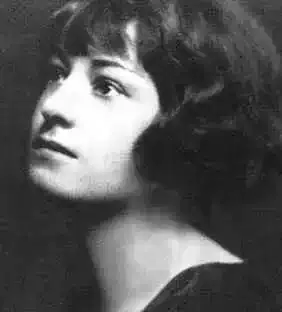
Dorothy Parker
Theory
Theory
Into love and out again,
Thus I went, and thus I go.
Spare your voice, and hold your penWell
and bitterly I know
All the songs were ever sung,
All the words were ever said;
Could it be, when I was young,
Some one dropped me on my head?
Into love and out again,
Thus I went, and thus I go.
Spare your voice, and hold your penWell
and bitterly I know
All the songs were ever sung,
All the words were ever said;
Could it be, when I was young,
Some one dropped me on my head?
364
Dorothy Parker
Symptom Recital
Symptom Recital
I do not like my state of mind;
I'm bitter, querulous, unkind.
I hate my legs, I hate my hands,
I do not yearn for lovelier lands.
I dread the dawn's recurrent light;
I hate to go to bed at night.
I snoot at simple, earnest folk.
I cannot take the gentlest joke.
I find no peace in paint or type.
My world is but a lot of tripe.
I'm disillusioned, empty-breasted.
For what I think, I'd be arrested.
I am not sick, I am not well.
My quondam dreams are shot to hell.
My soul is crushed, my spirit sore;
I do not like me any more.
I cavil, quarrel, grumble, grouse.
I ponder on the narrow house.
I shudder at the thought of men....
I'm due to fall in love again.
I do not like my state of mind;
I'm bitter, querulous, unkind.
I hate my legs, I hate my hands,
I do not yearn for lovelier lands.
I dread the dawn's recurrent light;
I hate to go to bed at night.
I snoot at simple, earnest folk.
I cannot take the gentlest joke.
I find no peace in paint or type.
My world is but a lot of tripe.
I'm disillusioned, empty-breasted.
For what I think, I'd be arrested.
I am not sick, I am not well.
My quondam dreams are shot to hell.
My soul is crushed, my spirit sore;
I do not like me any more.
I cavil, quarrel, grumble, grouse.
I ponder on the narrow house.
I shudder at the thought of men....
I'm due to fall in love again.
502
Dorothy Parker
Coda
Coda
There's little in taking or giving,
There's little in water or wine;
This living, this living, this living
Was never a project of mine.
Oh, hard is the struggle, and sparse is
The gain of the one at the top,
For art is a form of catharsis,
And love is a permanent flop,
And work is the province of cattle,
And rest's for a clam in a shell,
So I'm thinking of throwing the battleWould
you kindly direct me to hell?
There's little in taking or giving,
There's little in water or wine;
This living, this living, this living
Was never a project of mine.
Oh, hard is the struggle, and sparse is
The gain of the one at the top,
For art is a form of catharsis,
And love is a permanent flop,
And work is the province of cattle,
And rest's for a clam in a shell,
So I'm thinking of throwing the battleWould
you kindly direct me to hell?
436
Dorothy Parker
Braggart
Braggart
The days will rally, wreathing
Their crazy tarantelle;
And you must go on breathing,
But I'll be safe in hell.
Like January weather,
The years will bite and smart,
And pull your bones together
To wrap your chattering heart.
The pretty stuff you're made of
Will crack and crease and dry.
The thing you are afraid of
Will look from every eye.
You will go faltering after
The bright, imperious line,
And split your throat on laughter,
And burn your eyes with brine.
You will be frail and musty
With peering, furtive head,
Whilst I am young and lusty
Among the roaring dead.
The days will rally, wreathing
Their crazy tarantelle;
And you must go on breathing,
But I'll be safe in hell.
Like January weather,
The years will bite and smart,
And pull your bones together
To wrap your chattering heart.
The pretty stuff you're made of
Will crack and crease and dry.
The thing you are afraid of
Will look from every eye.
You will go faltering after
The bright, imperious line,
And split your throat on laughter,
And burn your eyes with brine.
You will be frail and musty
With peering, furtive head,
Whilst I am young and lusty
Among the roaring dead.
353

D.H. Lawrence
The Punisher
The Punisher
I have fetched the tears up out of the little wells,
Scooped them up with small, iron words,
Dripping over the runnels.
The harsh, cold wind of my words drove on, and still
I watched the tears on the guilty cheek of the boys
Glitter and spill.
Cringing Pity, and Love, white-handed, came
Hovering about the Judgment which stood in my eyes,
Whirling a flame.
. . . . . . .
The tears are dry, and the cheeks’ young fruits are fresh
With laughter, and clear the exonerated eyes, since pain
Beat through the flesh.
The Angel of Judgment has departed again to the Nearness.
Desolate I am as a church whose lights are put out.
And night enters in drearness.
The fire rose up in the bush and blazed apace,
The thorn-leaves crackled and twisted and sweated in anguish;
Then God left the place.
Like a flower that the frost has hugged and let go, my head
Is heavy, and my heart beats slowly, laboriously,
My strength is shed.
I have fetched the tears up out of the little wells,
Scooped them up with small, iron words,
Dripping over the runnels.
The harsh, cold wind of my words drove on, and still
I watched the tears on the guilty cheek of the boys
Glitter and spill.
Cringing Pity, and Love, white-handed, came
Hovering about the Judgment which stood in my eyes,
Whirling a flame.
. . . . . . .
The tears are dry, and the cheeks’ young fruits are fresh
With laughter, and clear the exonerated eyes, since pain
Beat through the flesh.
The Angel of Judgment has departed again to the Nearness.
Desolate I am as a church whose lights are put out.
And night enters in drearness.
The fire rose up in the bush and blazed apace,
The thorn-leaves crackled and twisted and sweated in anguish;
Then God left the place.
Like a flower that the frost has hugged and let go, my head
Is heavy, and my heart beats slowly, laboriously,
My strength is shed.
265
D.H. Lawrence
The Enkindled Spring
The Enkindled Spring
This spring as it comes bursts up in bonfires green,
Wild puffing of emerald trees, and flame-filled bushes,
Thorn-blossom lifting in wreaths of smoke between
Where the wood fumes up and the watery, flickering rushes.
I am amazed at this spring, this conflagration
Of green fires lit on the soil of the earth, this blaze
Of growing, and sparks that puff in wild gyration,
Faces of people streaming across my gaze.
And I, what fountain of fire am I among
This leaping combustion of spring? My spirit is tossed
About like a shadow buffeted in the throng
Of flames, a shadow that’s gone astray, and is lost.
This spring as it comes bursts up in bonfires green,
Wild puffing of emerald trees, and flame-filled bushes,
Thorn-blossom lifting in wreaths of smoke between
Where the wood fumes up and the watery, flickering rushes.
I am amazed at this spring, this conflagration
Of green fires lit on the soil of the earth, this blaze
Of growing, and sparks that puff in wild gyration,
Faces of people streaming across my gaze.
And I, what fountain of fire am I among
This leaping combustion of spring? My spirit is tossed
About like a shadow buffeted in the throng
Of flames, a shadow that’s gone astray, and is lost.
228
D.H. Lawrence
The Hands of the Betrothed
The Hands of the Betrothed
Her tawny eyes are onyx of thoughtlessness,
Hardened they are like gems in ancient modesty;
Yea, and her mouth’s prudent and crude caress
Means even less than her many words to me.
Though her kiss betrays me also this, this only
Consolation, that in her lips her blood at climax clips
Two wild, dumb paws in anguish on the lonely
Fruit of my heart, ere down, rebuked, it slips.
I know from her hardened lips that still her heart is
Hungry for me, yet if I put my hand in her breast
She puts me away, like a saleswoman whose mart is
Endangered by the pilferer on his quest.
But her hands are still the woman, the large, strong hands
Heavier than mine, yet like leverets caught in steel
When I hold them; my still soul understands
Their dumb confession of what her sort must feel.
For never her hands come nigh me but they lift
Like heavy birds from the morning stubble, to settle
Upon me like sleeping birds, like birds that shift
Uneasily in their sleep, disturbing my mettle.
How caressingly she lays her hand on my knee,
How strangely she tries to disown it, as it sinks
In my flesh and bone and forages into me,
How it stirs like a subtle stoat, whatever she thinks!
And often I see her clench her fingers tight
And thrust her fists suppressed in the folds of her skirt;
And sometimes, how she grasps her arms with her bright
Big hands, as if surely her arms did hurt.
And I have seen her stand all unaware
Pressing her spread hands over her breasts, as she
Would crush their mounds on her heart, to kill in there
The pain that is her simple ache for me.
Her strong hands take my part, the part of a man
To her; she crushes them into her bosom deep
Where I should lie, and with her own strong span
Closes her arms, that should fold me in sleep.
Ah, and she puts her hands upon the wall,
Presses them there, and kisses her bright hands,
Then lets her black hair loose, the darkness fall
About her from her maiden-folded bands.
And sits in her own dark night of her bitter hair
Dreaming—God knows of what, for to me she’s the same
Betrothed young lady who loves me, and takes care
Of her womanly virtue and of my good name.
Her tawny eyes are onyx of thoughtlessness,
Hardened they are like gems in ancient modesty;
Yea, and her mouth’s prudent and crude caress
Means even less than her many words to me.
Though her kiss betrays me also this, this only
Consolation, that in her lips her blood at climax clips
Two wild, dumb paws in anguish on the lonely
Fruit of my heart, ere down, rebuked, it slips.
I know from her hardened lips that still her heart is
Hungry for me, yet if I put my hand in her breast
She puts me away, like a saleswoman whose mart is
Endangered by the pilferer on his quest.
But her hands are still the woman, the large, strong hands
Heavier than mine, yet like leverets caught in steel
When I hold them; my still soul understands
Their dumb confession of what her sort must feel.
For never her hands come nigh me but they lift
Like heavy birds from the morning stubble, to settle
Upon me like sleeping birds, like birds that shift
Uneasily in their sleep, disturbing my mettle.
How caressingly she lays her hand on my knee,
How strangely she tries to disown it, as it sinks
In my flesh and bone and forages into me,
How it stirs like a subtle stoat, whatever she thinks!
And often I see her clench her fingers tight
And thrust her fists suppressed in the folds of her skirt;
And sometimes, how she grasps her arms with her bright
Big hands, as if surely her arms did hurt.
And I have seen her stand all unaware
Pressing her spread hands over her breasts, as she
Would crush their mounds on her heart, to kill in there
The pain that is her simple ache for me.
Her strong hands take my part, the part of a man
To her; she crushes them into her bosom deep
Where I should lie, and with her own strong span
Closes her arms, that should fold me in sleep.
Ah, and she puts her hands upon the wall,
Presses them there, and kisses her bright hands,
Then lets her black hair loose, the darkness fall
About her from her maiden-folded bands.
And sits in her own dark night of her bitter hair
Dreaming—God knows of what, for to me she’s the same
Betrothed young lady who loves me, and takes care
Of her womanly virtue and of my good name.
252
D.H. Lawrence
Restlessness
Restlessness
At the open door of the room I stand and look at the night,
Hold my hand to catch the raindrops, that slant into sight,
Arriving grey from the darkness above suddenly into the light of the room.
I will escape from the hollow room, the box of light,
And be out in the bewildering darkness, which is always fecund, which might
Mate my hungry soul with a germ of its womb.
I will go out to the night, as a man goes down to the shore
To draw his net through the surf’s thin line, at the dawn before
The sun warms the sea, little, lonely and sad, sifting the sobbing tide.
I will sift the surf that edges the night, with my net, the four
Strands of my eyes and my lips and my hands and my feet, sifting the store
Of flotsam until my soul is tired or satisfied.
I will catch in my eyes’ quick net
The faces of all the women as they go past,
Bend over them with my soul, to cherish the wet
Cheeks and wet hair a moment, saying: “Is it you?”
Looking earnestly under the dark umbrellas, held fast
Against the wind; and if, where the lamplight blew
Its rainy swill about us, she answered me
With a laugh and a merry wildness that it was she
Who was seeking me, and had found me at last to free
Me now from the stunting bonds of my chastity,
How glad I should be!
Moving along in the mysterious ebb of the night
Pass the men whose eyes are shut like anemones in a dark pool;
Why don’t they open with vision and speak to me, what have they in sight?
Why do I wander aimless among them, desirous fool?
I can always linger over the huddled books on the stalls,
Always gladden my amorous fingers with the touch of their leaves,
Always kneel in courtship to the shelves in the doorways, where falls
The shadow, always offer myself to one mistress, who always receives.
But oh, it is not enough, it is all no good.
There is something I want to feel in my running blood,
Something I want to touch; I must hold my face to the rain,
I must hold my face to the wind, and let it explain
Me its life as it hurries in secret.
I will trail my hands again through the drenched, cold leaves
Till my hands are full of the chillness and touch of leaves,
Till at length they induce me to sleep, and to forget.
At the open door of the room I stand and look at the night,
Hold my hand to catch the raindrops, that slant into sight,
Arriving grey from the darkness above suddenly into the light of the room.
I will escape from the hollow room, the box of light,
And be out in the bewildering darkness, which is always fecund, which might
Mate my hungry soul with a germ of its womb.
I will go out to the night, as a man goes down to the shore
To draw his net through the surf’s thin line, at the dawn before
The sun warms the sea, little, lonely and sad, sifting the sobbing tide.
I will sift the surf that edges the night, with my net, the four
Strands of my eyes and my lips and my hands and my feet, sifting the store
Of flotsam until my soul is tired or satisfied.
I will catch in my eyes’ quick net
The faces of all the women as they go past,
Bend over them with my soul, to cherish the wet
Cheeks and wet hair a moment, saying: “Is it you?”
Looking earnestly under the dark umbrellas, held fast
Against the wind; and if, where the lamplight blew
Its rainy swill about us, she answered me
With a laugh and a merry wildness that it was she
Who was seeking me, and had found me at last to free
Me now from the stunting bonds of my chastity,
How glad I should be!
Moving along in the mysterious ebb of the night
Pass the men whose eyes are shut like anemones in a dark pool;
Why don’t they open with vision and speak to me, what have they in sight?
Why do I wander aimless among them, desirous fool?
I can always linger over the huddled books on the stalls,
Always gladden my amorous fingers with the touch of their leaves,
Always kneel in courtship to the shelves in the doorways, where falls
The shadow, always offer myself to one mistress, who always receives.
But oh, it is not enough, it is all no good.
There is something I want to feel in my running blood,
Something I want to touch; I must hold my face to the rain,
I must hold my face to the wind, and let it explain
Me its life as it hurries in secret.
I will trail my hands again through the drenched, cold leaves
Till my hands are full of the chillness and touch of leaves,
Till at length they induce me to sleep, and to forget.
213
D.H. Lawrence
Dissolute
Dissolute
Many years have I still to burn, detained
Like a candle flame on this body; but I enshine
A darkness within me, a presence which sleeps contained
In my flame of living, her soul enfolded in mine.
And through these years, while I burn on the fuel of life,
What matter the stuff I lick up in my living flame,
Seeing I keep in the fire-core, inviolate,
A night where she dreams my dreams for me, ever the same.
Many years have I still to burn, detained
Like a candle flame on this body; but I enshine
A darkness within me, a presence which sleeps contained
In my flame of living, her soul enfolded in mine.
And through these years, while I burn on the fuel of life,
What matter the stuff I lick up in my living flame,
Seeing I keep in the fire-core, inviolate,
A night where she dreams my dreams for me, ever the same.
186
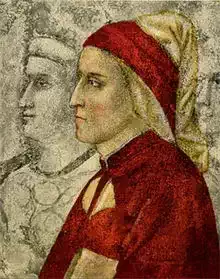
Dante Alighieri
Inferno Canto03
Inferno Canto03
Per me si va ne la città dolente,
per me si va ne l'etterno dolore,
per me si va tra la perduta gente .
THROUGH ME THE WAY INTO THE SUFFERING CITY,
THROUGH ME THE WAY TO THE ETERNAL PAIN,
THROUGH ME THE WAY THAT RUNS AMONG THE LOST.
Giustizia mosse il mio alto fattore:
fecemi la divina podestate,
la somma sapienza e 'l primo amore .
JUSTICE URGED ON MY HIGH ARTIFICER;
MY MAKER WAS DIVINE AUTHORITY,
THE HIGHEST WISDOM, AND THE PRIMAL LOVE.
Dinanzi a me non fuor cose create
se non etterne, e io etterno duro.
Lasciate ogne speranza, voi ch'intrate ".
BEFORE ME NOTHING BUT ETERNAL THINGS
WERE MADE, AND I ENDURE ETERNALLY.
ABANDON EVERY HOPE, WHO ENTER HERE.
Queste parole di colore oscuro
vid'io scritte al sommo d'una porta;
per ch'io: «Maestro, il senso lor m'è duro ».
These words-their aspect was obscure-I read
inscribed above a gateway, and I said:
"Master, their meaning is difficult for me."
Ed elli a me, come persona accorta:
«Qui si convien lasciare ogne sospetto;
ogne viltà convien che qui sia morta .
And he to me, as one who comprehends:
"Here one must leave behind all hesitation;
here every cowardice must meet its death.
Noi siam venuti al loco ov'i' t'ho detto
che tu vedrai le genti dolorose
c'hanno perduto il ben de l'intelletto ».
For we have reached the place of which I spoke,
where you will see the miserable people,
those who have lost the good of the intellect."
E poi che la sua mano a la mia puose
con lieto volto, ond'io mi confortai,
mi mise dentro a le segrete cose .
And when, with gladness in his face, he placed
his hand upon my own, to comfort me,
he drew me in among the hidden things.
Quivi sospiri, pianti e alti guai
risonavan per l'aere sanza stelle,
per ch'io al cominciar ne lagrimai .
Here sighs and lamentations and loud cries
were echoing across the starless air,
so that, as soon as I set out, I wept.
Diverse lingue, orribili favelle,
parole di dolore, accenti d'ira,
voci alte e fioche, e suon di man con elle
Strange utterances, horrible pronouncements,
accents of anger, words of suffering,
and voices shrill and faint, and beating hands
facevano un tumulto, il qual s'aggira
sempre in quell'aura sanza tempo tinta,
come la rena quando turbo spira .
all went to make a tumult that will whirl
forever through that turbid, timeless air,
like sand that eddies when a whirlwind swirls.
E io ch'avea d'error la testa cinta,
dissi: «Maestro, che è quel ch'i' odo?
e che gent'è che par nel duol sì vinta ?».
And I-my head oppressed by horror-said:
"Master, what is it that I hear? Who are
those people so defeated by their pain?"
Ed elli a me: «Questo misero modo
tegnon l'anime triste di coloro
che visser sanza 'nfamia e sanza lodo .
And he to me: "This miserable way
is taken by the sorry souls of those
who lived without disgrace and without praise.
Mischiate sono a quel cattivo coro
de li angeli che non furon ribelli
né fur fedeli a Dio, ma per sé fuoro .
They now commingle with the coward angels,
the company of those who were not rebels
nor faithful to their God, but stood apart.
Caccianli i ciel per non esser men belli,
né lo profondo inferno li riceve,
ch'alcuna gloria i rei avrebber d'elli ».
The heavens, that their beauty not be lessened,
have cast them out, nor will deep Hell receive themeven
the wicked cannot glory in them."
E io: «Maestro, che è tanto greve
a lor, che lamentar li fa sì forte?».
Rispuose: «Dicerolti molto breve .
And I: "What is it, master, that oppresses
these souls, compelling them to wail so loud?"
He answered: "I shall tell you in few words.
Questi non hanno speranza di morte
e la lor cieca vita è tanto bassa,
che 'nvidiosi son d'ogne altra sorte .
Those who are here can place no hope in death,
and their blind life is so abject that they
are envious of every other fate.
Fama di loro il mondo esser non lassa;
misericordia e giustizia li sdegna:
non ragioniam di lor, ma guarda e passa ».
The world will let no fame of theirs endure;
both justice and compassion must disdain them;
let us not talk of them, but look and pass."
E io, che riguardai, vidi una 'nsegna
che girando correva tanto ratta,
che d'ogne posa mi parea indegna ;
And I, looking more closely, saw a banner
that, as it wheeled about, raced on-so quick
that any respite seemed unsuited to it.
e dietro le venìa sì lunga tratta
di gente, ch'i' non averei creduto
che morte tanta n'avesse disfatta .
Behind that banner trailed so long a file
of people-I should never have believed
that death could have unmade so many souls.
Poscia ch'io v'ebbi alcun riconosciuto,
vidi e conobbi l'ombra di colui
che fece per viltade il gran rifiuto .
After I had identified a few,
I saw and recognized the shade of him
who made, through cowardice, the great refusal.
Incontanente intesi e certo fui
che questa era la setta d'i cattivi,
a Dio spiacenti e a' nemici sui .
At once I understood with certainty:
this company contained the cowardly,
hateful to God and to His enemies.
Questi sciaurati, che mai non fur vivi,
erano ignudi e stimolati molto
da mosconi e da vespe ch'eran ivi .
These wretched ones, who never were alive,
went naked and were stung again, again
by horseflies and by wasps that circled them.
Elle rigavan lor di sangue il volto,
che, mischiato di lagrime, a' lor piedi
da fastidiosi vermi era ricolto .
The insects streaked their faces with their blood,
which, mingled with their tears, fell at their feet,
where it was gathered up by sickening worms.
E poi ch'a riguardar oltre mi diedi,
vidi genti a la riva d'un gran fiume;
per ch'io dissi: «Maestro, or mi concedi
And then, looking beyond them, I could see
a crowd along the bank of a great river;
at which I said: "Allow me now to know
ch'i' sappia quali sono, e qual costume
le fa di trapassar parer sì pronte,
com'io discerno per lo fioco lume ».
who are these people-master-and what law
has made them seem so eager for the crossing,
as I can see despite the feeble light."
Ed elli a me: «Le cose ti fier conte
quando noi fermerem li nostri passi
su la trista riviera d'Acheronte ».
And he to me: "When we have stopped along
the melancholy shore of Acheron,
then all these matters will be plain to you."
Allor con li occhi vergognosi e bassi,
temendo no 'l mio dir li fosse grave,
infino al fiume del parlar mi trassi .
At that, with eyes ashamed, downcast, and fearing
that what I said had given him offense,
I did not speak until we reached the river.
Ed ecco verso noi venir per nave
un vecchio, bianco per antico pelo,
gridando: «Guai a voi, anime prave !
And here, advancing toward us, in a boat,
an aged man-his hair was white with yearswas
shouting: "Woe to you, corrupted souls!
Non isperate mai veder lo cielo:
i' vegno per menarvi a l'altra riva
ne le tenebre etterne, in caldo e 'n gelo .
Forget your hope of ever seeing Heaven:
I come to lead you to the other shore,
to the eternal dark, to fire and frost.
E tu che se' costì, anima viva,
pàrtiti da cotesti che son morti».
Ma poi che vide ch'io non mi partiva ,
And you approaching there, you living soul,
keep well away from these-they are the dead."
But when he saw I made no move to go,
disse: «Per altra via, per altri porti
verrai a piaggia, non qui, per passare:
più lieve legno convien che ti porti ».
he said: "Another way and other harborsnot
here-will bring you passage to your shore:
a lighter craft will have to carry you."
E 'l duca lui: «Caron, non ti crucciare:
vuolsi così colà dove si puote
ciò che si vuole, e più non dimandare ».
My guide then: "Charon, don't torment yourself:
our passage has been willed above, where One
can do what He has willed; and ask no more."
Quinci fuor quete le lanose gote
al nocchier de la livida palude,
che 'ntorno a li occhi avea di fiamme rote .
Now silence fell upon the wooly cheeks
of Charon, pilot of the livid marsh,
whose eyes were ringed about with wheels of flame.
Ma quell'anime, ch'eran lasse e nude,
cangiar colore e dibattero i denti,
ratto che 'nteser le parole crude .
But all those spirits, naked and exhausted,
had lost their color, and they gnashed their teeth
as soon as they heard Charon's cruel words;
Bestemmiavano Dio e lor parenti,
l'umana spezie e 'l loco e 'l tempo e 'l seme
di lor semenza e di lor nascimenti .
they execrated God and their own parents
and humankind, and then the place and time
of their conception's seed and of their birth.
Poi si ritrasser tutte quante insieme,
forte piangendo, a la riva malvagia
ch'attende ciascun uom che Dio non teme .
Then they forgathered, huddled in one throng,
weeping aloud along that wretched shore
which waits for all who have no fear of God.
Caron dimonio, con occhi di bragia,
loro accennando, tutte le raccoglie;
batte col remo qualunque s'adagia .
The demon Charon, with his eyes like embers,
by signaling to them, has all embark;
his oar strikes anyone who stretches out.
Come d'autunno si levan le foglie
l'una appresso de l'altra, fin che 'l ramo
vede a la terra tutte le sue spoglie ,
As, in the autumn, leaves detach themselves,
first one and then the other, till the bough
sees all its fallen garments on the ground,
Aen.VI.
similemente il mal seme d'Adamo
gittansi di quel lito ad una ad una,
per cenni come augel per suo richiamo .
similarly, the evil seed of Adam
descended from the shoreline one by one,
when signaled, as a falcon-called-will come.
Così sen vanno su per l'onda bruna,
e avanti che sien di là discese,
anche di qua nuova schiera s'auna .
So do they move across the darkened waters;
even before they reach the farther shore,
new ranks already gather on this bank.
«Figliuol mio», disse 'l maestro cortese,
«quelli che muoion ne l'ira di Dio
tutti convegnon qui d'ogne paese :
"My son," the gracious master said to me,
"those who have died beneath the wrath of God,
all these assemble here from every country;
e pronti sono a trapassar lo rio,
ché la divina giustizia li sprona,
sì che la tema si volve in disio .
and they are eager for the river crossing
because celestial justice spurs them on,
so that their fear is turned into desire.
Quinci non passa mai anima buona;
e però, se Caron di te si lagna,
ben puoi sapere omai che 'l suo dir suona ».
No good soul ever takes its passage here;
therefore, if Charon has complained of you,
by now you can be sure what his words mean."
Finito questo, la buia campagna
tremò sì forte, che de lo spavento
la mente di sudore ancor mi bagna .
And after this was said, the darkened plain
quaked so tremendously-the memory
of terror then, bathes me in sweat again.
La terra lagrimosa diede vento,
che balenò una luce vermiglia
la qual mi vinse ciascun sentimento ;
A whirlwind burst out of the tear-drenched earth,
a wind that crackled with a bloodred light,
a light that overcame all of my senses;
e caddi come l'uom cui sonno piglia.
and like a man whom sleep has seized, I fell.
Per me si va ne la città dolente,
per me si va ne l'etterno dolore,
per me si va tra la perduta gente .
THROUGH ME THE WAY INTO THE SUFFERING CITY,
THROUGH ME THE WAY TO THE ETERNAL PAIN,
THROUGH ME THE WAY THAT RUNS AMONG THE LOST.
Giustizia mosse il mio alto fattore:
fecemi la divina podestate,
la somma sapienza e 'l primo amore .
JUSTICE URGED ON MY HIGH ARTIFICER;
MY MAKER WAS DIVINE AUTHORITY,
THE HIGHEST WISDOM, AND THE PRIMAL LOVE.
Dinanzi a me non fuor cose create
se non etterne, e io etterno duro.
Lasciate ogne speranza, voi ch'intrate ".
BEFORE ME NOTHING BUT ETERNAL THINGS
WERE MADE, AND I ENDURE ETERNALLY.
ABANDON EVERY HOPE, WHO ENTER HERE.
Queste parole di colore oscuro
vid'io scritte al sommo d'una porta;
per ch'io: «Maestro, il senso lor m'è duro ».
These words-their aspect was obscure-I read
inscribed above a gateway, and I said:
"Master, their meaning is difficult for me."
Ed elli a me, come persona accorta:
«Qui si convien lasciare ogne sospetto;
ogne viltà convien che qui sia morta .
And he to me, as one who comprehends:
"Here one must leave behind all hesitation;
here every cowardice must meet its death.
Noi siam venuti al loco ov'i' t'ho detto
che tu vedrai le genti dolorose
c'hanno perduto il ben de l'intelletto ».
For we have reached the place of which I spoke,
where you will see the miserable people,
those who have lost the good of the intellect."
E poi che la sua mano a la mia puose
con lieto volto, ond'io mi confortai,
mi mise dentro a le segrete cose .
And when, with gladness in his face, he placed
his hand upon my own, to comfort me,
he drew me in among the hidden things.
Quivi sospiri, pianti e alti guai
risonavan per l'aere sanza stelle,
per ch'io al cominciar ne lagrimai .
Here sighs and lamentations and loud cries
were echoing across the starless air,
so that, as soon as I set out, I wept.
Diverse lingue, orribili favelle,
parole di dolore, accenti d'ira,
voci alte e fioche, e suon di man con elle
Strange utterances, horrible pronouncements,
accents of anger, words of suffering,
and voices shrill and faint, and beating hands
facevano un tumulto, il qual s'aggira
sempre in quell'aura sanza tempo tinta,
come la rena quando turbo spira .
all went to make a tumult that will whirl
forever through that turbid, timeless air,
like sand that eddies when a whirlwind swirls.
E io ch'avea d'error la testa cinta,
dissi: «Maestro, che è quel ch'i' odo?
e che gent'è che par nel duol sì vinta ?».
And I-my head oppressed by horror-said:
"Master, what is it that I hear? Who are
those people so defeated by their pain?"
Ed elli a me: «Questo misero modo
tegnon l'anime triste di coloro
che visser sanza 'nfamia e sanza lodo .
And he to me: "This miserable way
is taken by the sorry souls of those
who lived without disgrace and without praise.
Mischiate sono a quel cattivo coro
de li angeli che non furon ribelli
né fur fedeli a Dio, ma per sé fuoro .
They now commingle with the coward angels,
the company of those who were not rebels
nor faithful to their God, but stood apart.
Caccianli i ciel per non esser men belli,
né lo profondo inferno li riceve,
ch'alcuna gloria i rei avrebber d'elli ».
The heavens, that their beauty not be lessened,
have cast them out, nor will deep Hell receive themeven
the wicked cannot glory in them."
E io: «Maestro, che è tanto greve
a lor, che lamentar li fa sì forte?».
Rispuose: «Dicerolti molto breve .
And I: "What is it, master, that oppresses
these souls, compelling them to wail so loud?"
He answered: "I shall tell you in few words.
Questi non hanno speranza di morte
e la lor cieca vita è tanto bassa,
che 'nvidiosi son d'ogne altra sorte .
Those who are here can place no hope in death,
and their blind life is so abject that they
are envious of every other fate.
Fama di loro il mondo esser non lassa;
misericordia e giustizia li sdegna:
non ragioniam di lor, ma guarda e passa ».
The world will let no fame of theirs endure;
both justice and compassion must disdain them;
let us not talk of them, but look and pass."
E io, che riguardai, vidi una 'nsegna
che girando correva tanto ratta,
che d'ogne posa mi parea indegna ;
And I, looking more closely, saw a banner
that, as it wheeled about, raced on-so quick
that any respite seemed unsuited to it.
e dietro le venìa sì lunga tratta
di gente, ch'i' non averei creduto
che morte tanta n'avesse disfatta .
Behind that banner trailed so long a file
of people-I should never have believed
that death could have unmade so many souls.
Poscia ch'io v'ebbi alcun riconosciuto,
vidi e conobbi l'ombra di colui
che fece per viltade il gran rifiuto .
After I had identified a few,
I saw and recognized the shade of him
who made, through cowardice, the great refusal.
Incontanente intesi e certo fui
che questa era la setta d'i cattivi,
a Dio spiacenti e a' nemici sui .
At once I understood with certainty:
this company contained the cowardly,
hateful to God and to His enemies.
Questi sciaurati, che mai non fur vivi,
erano ignudi e stimolati molto
da mosconi e da vespe ch'eran ivi .
These wretched ones, who never were alive,
went naked and were stung again, again
by horseflies and by wasps that circled them.
Elle rigavan lor di sangue il volto,
che, mischiato di lagrime, a' lor piedi
da fastidiosi vermi era ricolto .
The insects streaked their faces with their blood,
which, mingled with their tears, fell at their feet,
where it was gathered up by sickening worms.
E poi ch'a riguardar oltre mi diedi,
vidi genti a la riva d'un gran fiume;
per ch'io dissi: «Maestro, or mi concedi
And then, looking beyond them, I could see
a crowd along the bank of a great river;
at which I said: "Allow me now to know
ch'i' sappia quali sono, e qual costume
le fa di trapassar parer sì pronte,
com'io discerno per lo fioco lume ».
who are these people-master-and what law
has made them seem so eager for the crossing,
as I can see despite the feeble light."
Ed elli a me: «Le cose ti fier conte
quando noi fermerem li nostri passi
su la trista riviera d'Acheronte ».
And he to me: "When we have stopped along
the melancholy shore of Acheron,
then all these matters will be plain to you."
Allor con li occhi vergognosi e bassi,
temendo no 'l mio dir li fosse grave,
infino al fiume del parlar mi trassi .
At that, with eyes ashamed, downcast, and fearing
that what I said had given him offense,
I did not speak until we reached the river.
Ed ecco verso noi venir per nave
un vecchio, bianco per antico pelo,
gridando: «Guai a voi, anime prave !
And here, advancing toward us, in a boat,
an aged man-his hair was white with yearswas
shouting: "Woe to you, corrupted souls!
Non isperate mai veder lo cielo:
i' vegno per menarvi a l'altra riva
ne le tenebre etterne, in caldo e 'n gelo .
Forget your hope of ever seeing Heaven:
I come to lead you to the other shore,
to the eternal dark, to fire and frost.
E tu che se' costì, anima viva,
pàrtiti da cotesti che son morti».
Ma poi che vide ch'io non mi partiva ,
And you approaching there, you living soul,
keep well away from these-they are the dead."
But when he saw I made no move to go,
disse: «Per altra via, per altri porti
verrai a piaggia, non qui, per passare:
più lieve legno convien che ti porti ».
he said: "Another way and other harborsnot
here-will bring you passage to your shore:
a lighter craft will have to carry you."
E 'l duca lui: «Caron, non ti crucciare:
vuolsi così colà dove si puote
ciò che si vuole, e più non dimandare ».
My guide then: "Charon, don't torment yourself:
our passage has been willed above, where One
can do what He has willed; and ask no more."
Quinci fuor quete le lanose gote
al nocchier de la livida palude,
che 'ntorno a li occhi avea di fiamme rote .
Now silence fell upon the wooly cheeks
of Charon, pilot of the livid marsh,
whose eyes were ringed about with wheels of flame.
Ma quell'anime, ch'eran lasse e nude,
cangiar colore e dibattero i denti,
ratto che 'nteser le parole crude .
But all those spirits, naked and exhausted,
had lost their color, and they gnashed their teeth
as soon as they heard Charon's cruel words;
Bestemmiavano Dio e lor parenti,
l'umana spezie e 'l loco e 'l tempo e 'l seme
di lor semenza e di lor nascimenti .
they execrated God and their own parents
and humankind, and then the place and time
of their conception's seed and of their birth.
Poi si ritrasser tutte quante insieme,
forte piangendo, a la riva malvagia
ch'attende ciascun uom che Dio non teme .
Then they forgathered, huddled in one throng,
weeping aloud along that wretched shore
which waits for all who have no fear of God.
Caron dimonio, con occhi di bragia,
loro accennando, tutte le raccoglie;
batte col remo qualunque s'adagia .
The demon Charon, with his eyes like embers,
by signaling to them, has all embark;
his oar strikes anyone who stretches out.
Come d'autunno si levan le foglie
l'una appresso de l'altra, fin che 'l ramo
vede a la terra tutte le sue spoglie ,
As, in the autumn, leaves detach themselves,
first one and then the other, till the bough
sees all its fallen garments on the ground,
Aen.VI.
similemente il mal seme d'Adamo
gittansi di quel lito ad una ad una,
per cenni come augel per suo richiamo .
similarly, the evil seed of Adam
descended from the shoreline one by one,
when signaled, as a falcon-called-will come.
Così sen vanno su per l'onda bruna,
e avanti che sien di là discese,
anche di qua nuova schiera s'auna .
So do they move across the darkened waters;
even before they reach the farther shore,
new ranks already gather on this bank.
«Figliuol mio», disse 'l maestro cortese,
«quelli che muoion ne l'ira di Dio
tutti convegnon qui d'ogne paese :
"My son," the gracious master said to me,
"those who have died beneath the wrath of God,
all these assemble here from every country;
e pronti sono a trapassar lo rio,
ché la divina giustizia li sprona,
sì che la tema si volve in disio .
and they are eager for the river crossing
because celestial justice spurs them on,
so that their fear is turned into desire.
Quinci non passa mai anima buona;
e però, se Caron di te si lagna,
ben puoi sapere omai che 'l suo dir suona ».
No good soul ever takes its passage here;
therefore, if Charon has complained of you,
by now you can be sure what his words mean."
Finito questo, la buia campagna
tremò sì forte, che de lo spavento
la mente di sudore ancor mi bagna .
And after this was said, the darkened plain
quaked so tremendously-the memory
of terror then, bathes me in sweat again.
La terra lagrimosa diede vento,
che balenò una luce vermiglia
la qual mi vinse ciascun sentimento ;
A whirlwind burst out of the tear-drenched earth,
a wind that crackled with a bloodred light,
a light that overcame all of my senses;
e caddi come l'uom cui sonno piglia.
and like a man whom sleep has seized, I fell.
236
Dante Alighieri
Inferno Canto 01
Inferno Canto 01
Nel mezzo del cammin di nostra vita
mi ritrovai per una selva oscura
ché la diritta via era smarrita .
When I had journeyed half of our life's way,
I found myself within a shadowed forest,
for I had lost the path that does not stray.
Ahi quanto a dir qual era è cosa dura
esta selva selvaggia e aspra e forte
che nel pensier rinova la paura !
Ah, it is hard to speak of what it was,
that savage forest, dense and difficult,
which even in recall renews my fear:
Tant'è amara che poco è più morte;
ma per trattar del ben ch'i' vi trovai,
dirò de l'altre cose ch'i' v'ho scorte .
so bitter-death is hardly more severe!
But to retell the good discovered there,
I'll also tell the other things I saw.
Io non so ben ridir com'i' v'intrai,
tant'era pien di sonno a quel punto
che la verace via abbandonai .
I cannot clearly say how I had entered
the wood; I was so full of sleep just at
the point where I abandoned the true path.
Ma poi ch'i' fui al piè d'un colle giunto,
là dove terminava quella valle
che m'avea di paura il cor compunto ,
But when I'd reached the bottom of a hillit
rose along the boundary of the valley
that had harassed my heart with so much fear
guardai in alto, e vidi le sue spalle
vestite già de' raggi del pianeta
che mena dritto altrui per ogne calle .
I looked on high and saw its shoulders clothed
already by the rays of that same planet
which serves to lead men straight along all roads.
Allor fu la paura un poco queta
che nel lago del cor m'era durata
la notte ch'i' passai con tanta pieta .
At this my fear was somewhat quieted;
for through the night of sorrow I had spent,
the lake within my heart felt terror present.
E come quei che con lena affannata
uscito fuor del pelago a la riva
si volge a l'acqua perigliosa e guata ,
And just as he who, with exhausted breath,
having escaped from sea to shore, turns back
to watch the dangerous waters he has quit,
così l'animo mio, ch'ancor fuggiva,
si volse a retro a rimirar lo passo
che non lasciò già mai persona viva .
so did my spirit, still a fugitive,
turn back to look intently at the pass
that never has let any man survive.
Poi ch'èi posato un poco il corpo lasso,
ripresi via per la piaggia diserta,
sì che 'l piè fermo sempre era 'l più basso .
I let my tired body rest awhile.
Moving again, I tried the lonely slopemy
firm foot always was the one below.
Ed ecco, quasi al cominciar de l'erta,
una lonza leggera e presta molto,
che di pel macolato era coverta ;
And almost where the hillside starts to riselook
there!-a leopard, very quick and lithe,
a leopard covered with a spotted hide.
e non mi si partia dinanzi al volto,
anzi 'mpediva tanto il mio cammino,
ch'i' fui per ritornar più volte vòlto .
He did not disappear from sight, but stayed;
indeed, he so impeded my ascent
that I had often to turn back again.
Temp'era dal principio del mattino,
e 'l sol montava 'n sù con quelle stelle
ch'eran con lui quando l'amor divino
The time was the beginning of the morning;
the sun was rising now in fellowship
with the same stars that had escorted it
mosse di prima quelle cose belle;
sì ch'a bene sperar m'era cagione
di quella fiera a la gaetta pelle
when Divine Love first moved those things of beauty;
so that the hour and the gentle season
gave me good cause for hopefulness on seeing
l'ora del tempo e la dolce stagione;
ma non sì che paura non mi desse
la vista che m'apparve d'un leone .
that beast before me with his speckled skin;
but hope was hardly able to prevent
the fear I felt when I beheld a lion.
Questi parea che contra me venisse
con la test'alta e con rabbiosa fame,
sì che parea che l'aere ne tremesse .
His head held high and ravenous with hungereven
the air around him seemed to shudderthis
lion seemed to make his way against me.
Ed una lupa, che di tutte brame
sembiava carca ne la sua magrezza,
e molte genti fé già viver grame ,
And then a she-wolf showed herself; she seemed
to carry every craving in her leanness;
she had already brought despair to many.
questa mi porse tanto di gravezza
con la paura ch'uscia di sua vista,
ch'io perdei la speranza de l'altezza .
The very sight of her so weighted me
with fearfulness that I abandoned hope
of ever climbing up that mountain slope.
E qual è quei che volontieri acquista,
e giugne 'l tempo che perder lo face,
che 'n tutt'i suoi pensier piange e s'attrista ;
Even as he who glories while he gains
will, when the time has come to tally loss,
lament with every thought and turn despondent,
tal mi fece la bestia sanza pace,
che, venendomi 'ncontro, a poco a poco
mi ripigneva là dove 'l sol tace .
so was I when I faced that restless beast
which, even as she stalked me, step by step
had thrust me back to where the sun is speechless.
Mentre ch'i' rovinava in basso loco,
dinanzi a li occhi mi si fu offerto
chi per lungo silenzio parea fioco .
While I retreated down to lower ground,
before my eyes there suddenly appeared
one who seemed faint because of the long silence.
Quando vidi costui nel gran diserto,
«Miserere di me», gridai a lui,
«qual che tu sii, od ombra od omo certo !».
When I saw him in that vast wilderness,
"Have pity on me," were the words I cried,
"whatever you may be-a shade, a man."
Rispuosemi: «Non omo, omo già fui,
e li parenti miei furon lombardi,
mantoani per patria ambedui .
He answered me: "Not man; I once was man.
Both of my parents came from Lombardy,
and both claimed Mantua as native city.
Nacqui sub Iulio, ancor che fosse tardi,
e vissi a Roma sotto 'l buono Augusto
nel tempo de li dèi falsi e bugiardi .
And I was born, though late, sub Julio,
and lived in Rome under the good Augustusthe
season of the false and lying gods.
Poeta fui, e cantai di quel giusto
figliuol d'Anchise che venne di Troia,
poi che 'l superbo Ilión fu combusto .
I was a poet, and I sang the righteous
son of Anchises who had come from Troy
when flames destroyed the pride of Ilium.
Ma tu perché ritorni a tanta noia?
perché non sali il dilettoso monte
ch'è principio e cagion di tutta gioia? ».
But why do you return to wretchedness?
Why not climb up the mountain of delight,
the origin and cause of every joy?"
«Or se' tu quel Virgilio e quella fonte
che spandi di parlar sì largo fiume?»,
rispuos'io lui con vergognosa fronte .
"And are you then that Virgil, you the fountain
that freely pours so rich a stream of speech?"
I answered him with shame upon my brow.
«O de li altri poeti onore e lume
vagliami 'l lungo studio e 'l grande amore
che m'ha fatto cercar lo tuo volume .
"O light and honor of all other poets,
may my long study and the intense love
that made me search your volume serve me now.
Tu se' lo mio maestro e 'l mio autore;
tu se' solo colui da cu' io tolsi
lo bello stilo che m'ha fatto onore .
You are my master and my author, youthe
only one from whom my writing drew
the noble style for which I have been honored.
Vedi la bestia per cu' io mi volsi:
aiutami da lei, famoso saggio,
ch'ella mi fa tremar le vene e i polsi ».
You see the beast that made me turn aside;
help me, o famous sage, to stand against her,
for she has made my blood and pulses shudder,"
«A te convien tenere altro viaggio»,
rispuose poi che lagrimar mi vide,
«se vuo' campar d'esto loco selvaggio :
"It is another path that you must take,"
he answered when he saw my tearfulness,
"if you would leave this savage wilderness;
ché questa bestia, per la qual tu gride,
non lascia altrui passar per la sua via,
ma tanto lo 'mpedisce che l'uccide ;
the beast that is the cause of your outcry
allows no man to pass along her track,
but blocks him even to the point of death;
e ha natura sì malvagia e ria,
che mai non empie la bramosa voglia,
e dopo 'l pasto ha più fame che pria .
her nature is so squalid, so malicious
that she can never sate her greedy will;
when she has fed, she's hungrier than ever.
Molti son li animali a cui s'ammoglia,
e più saranno ancora, infin che 'l veltro
verrà, che la farà morir con doglia .
She mates with many living souls and shall
yet mate with many more, until the Greyhound
arrives, inflicting painful death on her.
Questi non ciberà terra né peltro,
ma sapienza, amore e virtute,
e sua nazion sarà tra feltro e feltro .
That Hound will never feed on land or pewter,
but find his fare in wisdom, love, and virtue;
his place of birth shall be between two felts.
Di quella umile Italia fia salute
per cui morì la vergine Cammilla,
Eurialo e Turno e Niso di ferute .
He will restore low-lying Italy for which
the maid Camilla died of wounds,
and Nisus, Turnus, and Euryalus.
Questi la caccerà per ogne villa,
fin che l'avrà rimessa ne lo 'nferno,
là onde 'nvidia prima dipartilla .
And he will hunt that beast through every city
until he thrusts her back again to Hell,
for which she was first sent above by envy.
Ond'io per lo tuo me' penso e discerno
che tu mi segui, e io sarò tua guida,
e trarrotti di qui per loco etterno ,
Therefore, I think and judge it best for you
to follow me, and I shall guide you, taking
you from this place through an eternal place,
ove udirai le disperate strida,
vedrai li antichi spiriti dolenti,
ch'a la seconda morte ciascun grida ;
where you shall hear the howls of desperation
and see the ancient spirits in their pain,
as each of them laments his second death;
e vederai color che son contenti
nel foco, perché speran di venire
quando che sia a le beate genti .
and you shall see those souls who are content
within the fire, for they hope to reachwhenever
that may be-the blessed people.
A le quai poi se tu vorrai salire,
anima fia a ciò più di me degna:
con lei ti lascerò nel mio partire ;
If you would then ascend as high as these,
a soul more worthy than I am will guide you;
I'll leave you in her care when I depart,
ché quello imperador che là sù regna,
perch'i' fu' ribellante a la sua legge,
non vuol che 'n sua città per me si vegna .
because that Emperor who reigns above,
since I have been rebellious to His law,
will not allow me entry to His city.
In tutte parti impera e quivi regge;
quivi è la sua città e l'alto seggio:
oh felice colui cu' ivi elegge! ».
He governs everywhere, but rules from there;
there is His city, His high capital:
o happy those He chooses to be there!"
E io a lui: «Poeta, io ti richeggio
per quello Dio che tu non conoscesti,
acciò ch'io fugga questo male e peggio ,
And I replied: "O poet-by that God
whom you had never come to know-I beg you,
that I may flee this evil and worse evils,
che tu mi meni là dov'or dicesti,
sì ch'io veggia la porta di san Pietro
e color cui tu fai cotanto mesti ».
to lead me to the place of which you spoke,
that I may see the gateway of Saint Peter
and those whom you describe as sorrowful."
Allor si mosse, e io li tenni dietro.
Then he set out, and I moved on behind him.
Nel mezzo del cammin di nostra vita
mi ritrovai per una selva oscura
ché la diritta via era smarrita .
When I had journeyed half of our life's way,
I found myself within a shadowed forest,
for I had lost the path that does not stray.
Ahi quanto a dir qual era è cosa dura
esta selva selvaggia e aspra e forte
che nel pensier rinova la paura !
Ah, it is hard to speak of what it was,
that savage forest, dense and difficult,
which even in recall renews my fear:
Tant'è amara che poco è più morte;
ma per trattar del ben ch'i' vi trovai,
dirò de l'altre cose ch'i' v'ho scorte .
so bitter-death is hardly more severe!
But to retell the good discovered there,
I'll also tell the other things I saw.
Io non so ben ridir com'i' v'intrai,
tant'era pien di sonno a quel punto
che la verace via abbandonai .
I cannot clearly say how I had entered
the wood; I was so full of sleep just at
the point where I abandoned the true path.
Ma poi ch'i' fui al piè d'un colle giunto,
là dove terminava quella valle
che m'avea di paura il cor compunto ,
But when I'd reached the bottom of a hillit
rose along the boundary of the valley
that had harassed my heart with so much fear
guardai in alto, e vidi le sue spalle
vestite già de' raggi del pianeta
che mena dritto altrui per ogne calle .
I looked on high and saw its shoulders clothed
already by the rays of that same planet
which serves to lead men straight along all roads.
Allor fu la paura un poco queta
che nel lago del cor m'era durata
la notte ch'i' passai con tanta pieta .
At this my fear was somewhat quieted;
for through the night of sorrow I had spent,
the lake within my heart felt terror present.
E come quei che con lena affannata
uscito fuor del pelago a la riva
si volge a l'acqua perigliosa e guata ,
And just as he who, with exhausted breath,
having escaped from sea to shore, turns back
to watch the dangerous waters he has quit,
così l'animo mio, ch'ancor fuggiva,
si volse a retro a rimirar lo passo
che non lasciò già mai persona viva .
so did my spirit, still a fugitive,
turn back to look intently at the pass
that never has let any man survive.
Poi ch'èi posato un poco il corpo lasso,
ripresi via per la piaggia diserta,
sì che 'l piè fermo sempre era 'l più basso .
I let my tired body rest awhile.
Moving again, I tried the lonely slopemy
firm foot always was the one below.
Ed ecco, quasi al cominciar de l'erta,
una lonza leggera e presta molto,
che di pel macolato era coverta ;
And almost where the hillside starts to riselook
there!-a leopard, very quick and lithe,
a leopard covered with a spotted hide.
e non mi si partia dinanzi al volto,
anzi 'mpediva tanto il mio cammino,
ch'i' fui per ritornar più volte vòlto .
He did not disappear from sight, but stayed;
indeed, he so impeded my ascent
that I had often to turn back again.
Temp'era dal principio del mattino,
e 'l sol montava 'n sù con quelle stelle
ch'eran con lui quando l'amor divino
The time was the beginning of the morning;
the sun was rising now in fellowship
with the same stars that had escorted it
mosse di prima quelle cose belle;
sì ch'a bene sperar m'era cagione
di quella fiera a la gaetta pelle
when Divine Love first moved those things of beauty;
so that the hour and the gentle season
gave me good cause for hopefulness on seeing
l'ora del tempo e la dolce stagione;
ma non sì che paura non mi desse
la vista che m'apparve d'un leone .
that beast before me with his speckled skin;
but hope was hardly able to prevent
the fear I felt when I beheld a lion.
Questi parea che contra me venisse
con la test'alta e con rabbiosa fame,
sì che parea che l'aere ne tremesse .
His head held high and ravenous with hungereven
the air around him seemed to shudderthis
lion seemed to make his way against me.
Ed una lupa, che di tutte brame
sembiava carca ne la sua magrezza,
e molte genti fé già viver grame ,
And then a she-wolf showed herself; she seemed
to carry every craving in her leanness;
she had already brought despair to many.
questa mi porse tanto di gravezza
con la paura ch'uscia di sua vista,
ch'io perdei la speranza de l'altezza .
The very sight of her so weighted me
with fearfulness that I abandoned hope
of ever climbing up that mountain slope.
E qual è quei che volontieri acquista,
e giugne 'l tempo che perder lo face,
che 'n tutt'i suoi pensier piange e s'attrista ;
Even as he who glories while he gains
will, when the time has come to tally loss,
lament with every thought and turn despondent,
tal mi fece la bestia sanza pace,
che, venendomi 'ncontro, a poco a poco
mi ripigneva là dove 'l sol tace .
so was I when I faced that restless beast
which, even as she stalked me, step by step
had thrust me back to where the sun is speechless.
Mentre ch'i' rovinava in basso loco,
dinanzi a li occhi mi si fu offerto
chi per lungo silenzio parea fioco .
While I retreated down to lower ground,
before my eyes there suddenly appeared
one who seemed faint because of the long silence.
Quando vidi costui nel gran diserto,
«Miserere di me», gridai a lui,
«qual che tu sii, od ombra od omo certo !».
When I saw him in that vast wilderness,
"Have pity on me," were the words I cried,
"whatever you may be-a shade, a man."
Rispuosemi: «Non omo, omo già fui,
e li parenti miei furon lombardi,
mantoani per patria ambedui .
He answered me: "Not man; I once was man.
Both of my parents came from Lombardy,
and both claimed Mantua as native city.
Nacqui sub Iulio, ancor che fosse tardi,
e vissi a Roma sotto 'l buono Augusto
nel tempo de li dèi falsi e bugiardi .
And I was born, though late, sub Julio,
and lived in Rome under the good Augustusthe
season of the false and lying gods.
Poeta fui, e cantai di quel giusto
figliuol d'Anchise che venne di Troia,
poi che 'l superbo Ilión fu combusto .
I was a poet, and I sang the righteous
son of Anchises who had come from Troy
when flames destroyed the pride of Ilium.
Ma tu perché ritorni a tanta noia?
perché non sali il dilettoso monte
ch'è principio e cagion di tutta gioia? ».
But why do you return to wretchedness?
Why not climb up the mountain of delight,
the origin and cause of every joy?"
«Or se' tu quel Virgilio e quella fonte
che spandi di parlar sì largo fiume?»,
rispuos'io lui con vergognosa fronte .
"And are you then that Virgil, you the fountain
that freely pours so rich a stream of speech?"
I answered him with shame upon my brow.
«O de li altri poeti onore e lume
vagliami 'l lungo studio e 'l grande amore
che m'ha fatto cercar lo tuo volume .
"O light and honor of all other poets,
may my long study and the intense love
that made me search your volume serve me now.
Tu se' lo mio maestro e 'l mio autore;
tu se' solo colui da cu' io tolsi
lo bello stilo che m'ha fatto onore .
You are my master and my author, youthe
only one from whom my writing drew
the noble style for which I have been honored.
Vedi la bestia per cu' io mi volsi:
aiutami da lei, famoso saggio,
ch'ella mi fa tremar le vene e i polsi ».
You see the beast that made me turn aside;
help me, o famous sage, to stand against her,
for she has made my blood and pulses shudder,"
«A te convien tenere altro viaggio»,
rispuose poi che lagrimar mi vide,
«se vuo' campar d'esto loco selvaggio :
"It is another path that you must take,"
he answered when he saw my tearfulness,
"if you would leave this savage wilderness;
ché questa bestia, per la qual tu gride,
non lascia altrui passar per la sua via,
ma tanto lo 'mpedisce che l'uccide ;
the beast that is the cause of your outcry
allows no man to pass along her track,
but blocks him even to the point of death;
e ha natura sì malvagia e ria,
che mai non empie la bramosa voglia,
e dopo 'l pasto ha più fame che pria .
her nature is so squalid, so malicious
that she can never sate her greedy will;
when she has fed, she's hungrier than ever.
Molti son li animali a cui s'ammoglia,
e più saranno ancora, infin che 'l veltro
verrà, che la farà morir con doglia .
She mates with many living souls and shall
yet mate with many more, until the Greyhound
arrives, inflicting painful death on her.
Questi non ciberà terra né peltro,
ma sapienza, amore e virtute,
e sua nazion sarà tra feltro e feltro .
That Hound will never feed on land or pewter,
but find his fare in wisdom, love, and virtue;
his place of birth shall be between two felts.
Di quella umile Italia fia salute
per cui morì la vergine Cammilla,
Eurialo e Turno e Niso di ferute .
He will restore low-lying Italy for which
the maid Camilla died of wounds,
and Nisus, Turnus, and Euryalus.
Questi la caccerà per ogne villa,
fin che l'avrà rimessa ne lo 'nferno,
là onde 'nvidia prima dipartilla .
And he will hunt that beast through every city
until he thrusts her back again to Hell,
for which she was first sent above by envy.
Ond'io per lo tuo me' penso e discerno
che tu mi segui, e io sarò tua guida,
e trarrotti di qui per loco etterno ,
Therefore, I think and judge it best for you
to follow me, and I shall guide you, taking
you from this place through an eternal place,
ove udirai le disperate strida,
vedrai li antichi spiriti dolenti,
ch'a la seconda morte ciascun grida ;
where you shall hear the howls of desperation
and see the ancient spirits in their pain,
as each of them laments his second death;
e vederai color che son contenti
nel foco, perché speran di venire
quando che sia a le beate genti .
and you shall see those souls who are content
within the fire, for they hope to reachwhenever
that may be-the blessed people.
A le quai poi se tu vorrai salire,
anima fia a ciò più di me degna:
con lei ti lascerò nel mio partire ;
If you would then ascend as high as these,
a soul more worthy than I am will guide you;
I'll leave you in her care when I depart,
ché quello imperador che là sù regna,
perch'i' fu' ribellante a la sua legge,
non vuol che 'n sua città per me si vegna .
because that Emperor who reigns above,
since I have been rebellious to His law,
will not allow me entry to His city.
In tutte parti impera e quivi regge;
quivi è la sua città e l'alto seggio:
oh felice colui cu' ivi elegge! ».
He governs everywhere, but rules from there;
there is His city, His high capital:
o happy those He chooses to be there!"
E io a lui: «Poeta, io ti richeggio
per quello Dio che tu non conoscesti,
acciò ch'io fugga questo male e peggio ,
And I replied: "O poet-by that God
whom you had never come to know-I beg you,
that I may flee this evil and worse evils,
che tu mi meni là dov'or dicesti,
sì ch'io veggia la porta di san Pietro
e color cui tu fai cotanto mesti ».
to lead me to the place of which you spoke,
that I may see the gateway of Saint Peter
and those whom you describe as sorrowful."
Allor si mosse, e io li tenni dietro.
Then he set out, and I moved on behind him.
256

Claude Mckay
Tormented
Tormented
I will not reason, wrestle here with you,
Though you pursue and worry me about;
As well put forth my swarthy arm to stop
The wild wind howling, darkly mad without.
The night is yours for revels; day will light.
I will not fight you, bold and tigerish,
For I am weak, while you are gaining strength;
Peace! cease tormenting me to have your wish.
But when you're filled and sated with the flesh,
I shall go swiftly to the silver stream,
To cleanse my body for the spirit's sake,
And sun my limbs, and close my eyes to dream.
I will not reason, wrestle here with you,
Though you pursue and worry me about;
As well put forth my swarthy arm to stop
The wild wind howling, darkly mad without.
The night is yours for revels; day will light.
I will not fight you, bold and tigerish,
For I am weak, while you are gaining strength;
Peace! cease tormenting me to have your wish.
But when you're filled and sated with the flesh,
I shall go swiftly to the silver stream,
To cleanse my body for the spirit's sake,
And sun my limbs, and close my eyes to dream.
507
Claude Mckay
Joy in the Woods
Joy in the Woods
There is joy in the woods just now,
The leaves are whispers of song,
And the birds make mirth on the bough
And music the whole day long,
And God! to dwell in the town
In these springlike summer days,
On my brow an unfading frown
And hate in my heart always—
A machine out of gear, aye, tired,
Yet forced to go on—for I’m hired.
Just forced to go on through fear,
For every day I must eat
And find ugly clothes to wear,
And bad shoes to hurt my feet
And a shelter for work-drugged sleep!
A mere drudge! but what can one do?
A man that’s a man cannot weep!
Suicide? A quitter? Oh, no!
But a slave should never grow tired,
Whom the masters have kindly hired.
But oh! for the woods, the flowers
Of natural, sweet perfume,
The heartening, summer showers
And the smiling shrubs in bloom,
Dust-free, dew-tinted at morn,
The fresh and life-giving air,
The billowing waves of corn
And the birds’ notes rich and clear:—
For a man-machine toil-tired
May crave beauty too—though he’s hired
There is joy in the woods just now,
The leaves are whispers of song,
And the birds make mirth on the bough
And music the whole day long,
And God! to dwell in the town
In these springlike summer days,
On my brow an unfading frown
And hate in my heart always—
A machine out of gear, aye, tired,
Yet forced to go on—for I’m hired.
Just forced to go on through fear,
For every day I must eat
And find ugly clothes to wear,
And bad shoes to hurt my feet
And a shelter for work-drugged sleep!
A mere drudge! but what can one do?
A man that’s a man cannot weep!
Suicide? A quitter? Oh, no!
But a slave should never grow tired,
Whom the masters have kindly hired.
But oh! for the woods, the flowers
Of natural, sweet perfume,
The heartening, summer showers
And the smiling shrubs in bloom,
Dust-free, dew-tinted at morn,
The fresh and life-giving air,
The billowing waves of corn
And the birds’ notes rich and clear:—
For a man-machine toil-tired
May crave beauty too—though he’s hired
626