

Poems in this theme
Pride

Edgar Albert Guest
The Wrist Watch Man
The Wrist Watch Man
He is marching dusty highways and he's riding bitter trails,
His eyes are clear and shining and his muscles hard as nails.
He is wearing Yankee khaki and a healthy coat of tan,
And the chap that we are backing is the Wrist Watch Man.
He's no parlour dude, a-prancing, he's no puny pacifist,
And it's not for affectation there's a watch upon his wrist.
He's a fine two-fisted scrapper, he is pure American,
And the backbone of the nation is the Wrist Watch Man.
He is marching with a rifle, he is digging in a trench,
He is swapping English phrases with a poilu for his French;
You will find him in the navy doing anything he can,
For at every post of duty is the Wrist Watch Man.
Oh, the time was that we chuckled at the soft and flabby chap
Who wore a little wrist watch that was fastened with a strap.
But the chuckles all have vanished, and with glory now we scan
The courage and the splendor of the Wrist Watch Man.
He is not the man we laughed at, not the one who won our jeers,
He's the man that we are proud of, he's the man that owns our cheers;
He's the finest of the finest, he's the bravest of the clan,
And I pray for God's protection for our Wrist Watch Man.
He is marching dusty highways and he's riding bitter trails,
His eyes are clear and shining and his muscles hard as nails.
He is wearing Yankee khaki and a healthy coat of tan,
And the chap that we are backing is the Wrist Watch Man.
He's no parlour dude, a-prancing, he's no puny pacifist,
And it's not for affectation there's a watch upon his wrist.
He's a fine two-fisted scrapper, he is pure American,
And the backbone of the nation is the Wrist Watch Man.
He is marching with a rifle, he is digging in a trench,
He is swapping English phrases with a poilu for his French;
You will find him in the navy doing anything he can,
For at every post of duty is the Wrist Watch Man.
Oh, the time was that we chuckled at the soft and flabby chap
Who wore a little wrist watch that was fastened with a strap.
But the chuckles all have vanished, and with glory now we scan
The courage and the splendor of the Wrist Watch Man.
He is not the man we laughed at, not the one who won our jeers,
He's the man that we are proud of, he's the man that owns our cheers;
He's the finest of the finest, he's the bravest of the clan,
And I pray for God's protection for our Wrist Watch Man.
625
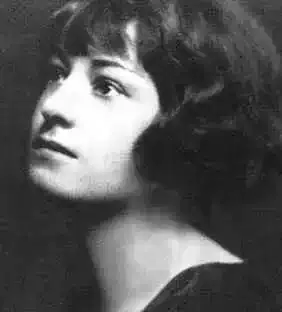
Dorothy Parker
Sonnet For The End Of A Sequence
Sonnet For The End Of A Sequence
So take my vows and scatter them to sea;
Who swears the sweetest is no more than human.
And say no kinder words than these of me:
"Ever she longed for peace, but was a woman!
And thus they are, whose silly female dust
Needs little enough to clutter it and bind it,
Who meet a slanted gaze, and ever must
Go build themselves a soul to dwell behind it."
For now I am my own again, my friend!
This scar but points the whiteness of my breast;
This frenzy, like its betters, spins an end,
And now I am my own. And that is best.
Therefore, I am immeasurably grateful
To you, for proving shallow, false, and hateful.
So take my vows and scatter them to sea;
Who swears the sweetest is no more than human.
And say no kinder words than these of me:
"Ever she longed for peace, but was a woman!
And thus they are, whose silly female dust
Needs little enough to clutter it and bind it,
Who meet a slanted gaze, and ever must
Go build themselves a soul to dwell behind it."
For now I am my own again, my friend!
This scar but points the whiteness of my breast;
This frenzy, like its betters, spins an end,
And now I am my own. And that is best.
Therefore, I am immeasurably grateful
To you, for proving shallow, false, and hateful.
344
Dorothy Parker
Observation
Observation
If I don't drive around the park,
I'm pretty sure to make my mark.
If I'm in bed each night by ten,
I may get back my looks again,
If I abstain from fun and such,
I'll probably amount to much,
But I shall stay the way I am,
Because I do not give a damn.
If I don't drive around the park,
I'm pretty sure to make my mark.
If I'm in bed each night by ten,
I may get back my looks again,
If I abstain from fun and such,
I'll probably amount to much,
But I shall stay the way I am,
Because I do not give a damn.
257
Dorothy Parker
Light Of Love
Light Of Love
Joy stayed with me a night --
Young and free and fair --
And in the morning light
He left me there.
Then Sorrow came to stay,
And lay upon my breast
He walked with me in the day.
And knew me best.
I'll never be a bride,
Nor yet celibate,
So I'm living now with Pride --
A cold bedmate.
He must not hear nor see,
Nor could he forgive
That Sorrow still visits me
Each day I live.
Joy stayed with me a night --
Young and free and fair --
And in the morning light
He left me there.
Then Sorrow came to stay,
And lay upon my breast
He walked with me in the day.
And knew me best.
I'll never be a bride,
Nor yet celibate,
So I'm living now with Pride --
A cold bedmate.
He must not hear nor see,
Nor could he forgive
That Sorrow still visits me
Each day I live.
443
Dorothy Parker
Indian Summer
Indian Summer
In youth, it was a way I had
To do my best to please,
And change, with every passing lad,
To suit his theories.
But now I know the things I know,
And do the things I do;
And if you do not like me so,
To hell, my love, with you!
In youth, it was a way I had
To do my best to please,
And change, with every passing lad,
To suit his theories.
But now I know the things I know,
And do the things I do;
And if you do not like me so,
To hell, my love, with you!
427
Dorothy Parker
For A Lady Who Must Write Verse
For A Lady Who Must Write Verse
Unto seventy years and seven,
Hide your double birthright well-
You, that are the brat of Heaven
And the pampered heir to Hell.
Let your rhymes be tinsel treasures,
Strung and seen and thrown aside.
Drill your apt and docile measures
Sternly as you drill your pride.
Show your quick, alarming skill in
Tidy mockeries of art;
Never, never dip your quill in
Ink that rushes from your heart.
When your pain must come to paper,
See it dust, before the day;
Let your night-light curl and caper,
Let it lick the words away.
Never print, poor child, a lay on
Love and tears and anguishing,
Lest a cooled, benignant Phaon
Murmur, "Silly little thing!"
Unto seventy years and seven,
Hide your double birthright well-
You, that are the brat of Heaven
And the pampered heir to Hell.
Let your rhymes be tinsel treasures,
Strung and seen and thrown aside.
Drill your apt and docile measures
Sternly as you drill your pride.
Show your quick, alarming skill in
Tidy mockeries of art;
Never, never dip your quill in
Ink that rushes from your heart.
When your pain must come to paper,
See it dust, before the day;
Let your night-light curl and caper,
Let it lick the words away.
Never print, poor child, a lay on
Love and tears and anguishing,
Lest a cooled, benignant Phaon
Murmur, "Silly little thing!"
338
Dorothy Parker
Charles Dickens
Charles Dickens
Who call him spurious and shoddy
Shall do it o'er my lifeless body.
I heartily invite such birds
To come outside and say those words!
Who call him spurious and shoddy
Shall do it o'er my lifeless body.
I heartily invite such birds
To come outside and say those words!
320

D.H. Lawrence
Conceit
Conceit
It is conceit that kills us
and makes us cowards instead of gods.
Under the great Command: Know thy self, and that thou art mortal!
we have become fatally self-conscious, fatally self-important, fatally entangled in the
Laocoön coils of our conceit.
Now we have to admit we can't know ourselves, we can only know about ourselves.
And I am not interested to know about myself any more,
I only entangle myself in the knowing.
Now let me be myself,
now let me be myself, and flicker forth,
now let me be myself, in the being, one of the gods.
It is conceit that kills us
and makes us cowards instead of gods.
Under the great Command: Know thy self, and that thou art mortal!
we have become fatally self-conscious, fatally self-important, fatally entangled in the
Laocoön coils of our conceit.
Now we have to admit we can't know ourselves, we can only know about ourselves.
And I am not interested to know about myself any more,
I only entangle myself in the knowing.
Now let me be myself,
now let me be myself, and flicker forth,
now let me be myself, in the being, one of the gods.
263

Christina Rossetti
Consider
Consider
Consider
The lilies of the field whose bloom is brief:—
We are as they;
Like them we fade away,
As doth a leaf.
Consider
The sparrows of the air of small account:
Our God doth view
Whether they fall or mount,—
He guards us too.
Consider
The lilies that do neither spin nor toil,
Yet are most fair:—
What profits all this care
And all this coil?
Consider
The birds that have no barn nor harvest-weeks;
God gives them food:—
Much more our Father seeks
To do us good.
Helen Grey
Because one loves you, Helen Grey,
Is that a reason you should pout,
And like a March wind veer about,
And frown, and say your shrewish say?
Don't strain the cord until it snaps,
Don't split the sound heart with your wedge,
Don't cut your fingers with the edge
Of your keen wit; you may, perhaps.
Because you're handsome, Helen Grey,
Is that a reason to be proud?
Your eyes are bold, your laugh is loud,
Your steps go mincing on their way;
But so you miss that modest charm
Which is the surest charm of all:
Take heed, you yet may trip and fall,
And no man care to stretch his arm.
Stoop from your cold height, Helen Grey,
Come down, and take a lowlier place;
Come down, to fill it now with grace;
Come down you must perforce some day:
For years cannot be kept at bay,
And fading years will make you old;
Then in their turn will men seem cold,
When you yourself are nipped and grey.
Consider
The lilies of the field whose bloom is brief:—
We are as they;
Like them we fade away,
As doth a leaf.
Consider
The sparrows of the air of small account:
Our God doth view
Whether they fall or mount,—
He guards us too.
Consider
The lilies that do neither spin nor toil,
Yet are most fair:—
What profits all this care
And all this coil?
Consider
The birds that have no barn nor harvest-weeks;
God gives them food:—
Much more our Father seeks
To do us good.
Helen Grey
Because one loves you, Helen Grey,
Is that a reason you should pout,
And like a March wind veer about,
And frown, and say your shrewish say?
Don't strain the cord until it snaps,
Don't split the sound heart with your wedge,
Don't cut your fingers with the edge
Of your keen wit; you may, perhaps.
Because you're handsome, Helen Grey,
Is that a reason to be proud?
Your eyes are bold, your laugh is loud,
Your steps go mincing on their way;
But so you miss that modest charm
Which is the surest charm of all:
Take heed, you yet may trip and fall,
And no man care to stretch his arm.
Stoop from your cold height, Helen Grey,
Come down, and take a lowlier place;
Come down, to fill it now with grace;
Come down you must perforce some day:
For years cannot be kept at bay,
And fading years will make you old;
Then in their turn will men seem cold,
When you yourself are nipped and grey.
224

Anonymous
Beowulf (Episode )
Beowulf (Episode )
UNFERTH spake, the son of Ecglaf,
who sat at the feet of the Scyldings' lord,
unbound the battle-runes. -- Beowulf's quest,
sturdy seafarer's, sorely galled him;
ever he envied that other men
should more achieve in middle-earth
of fame under heaven than he himself. --
"Art thou that Beowulf, Breca's rival,
who emulous swam on the open sea,
when for pride the pair of you proved the floods,
and wantonly dared in waters deep
to risk your lives? No living man,
or lief or loath, from your labor dire
could you dissuade, from swimming the main.
Ocean-tides with your arms ye covered,
with strenuous hands the sea-streets measured,
swam o'er the waters. Winter's storm
rolled the rough waves. In realm of sea
a sennight strove ye. In swimming he topped thee,
had more of main! Him at morning-tide
billows bore to the Battling Reamas,
whence he hied to his home so dear
beloved of his liegemen, to land of Brondings,
fastness fair, where his folk he ruled,
town and treasure. In triumph o'er thee
Beanstan's bairn his boast achieved.
So ween I for thee a worse adventure
-- though in buffet of battle thou brave hast been,
in struggle grim, -- if Grendel's approach
thou darst await through the watch of night!"
Beowulf spake, bairn of Ecgtheow: --
"What a deal hast uttered, dear my Unferth,
drunken with beer, of Breca now,
told of his triumph! Truth I claim it,
that I had more of might in the sea
than any man else, more ocean-endurance.
We twain had talked, in time of youth,
and made our boast, -- we were merely boys,
striplings still, -- to stake our lives
far at sea: and so we performed it.
Naked swords, as we swam along,
we held in hand, with hope to guard us
against the whales. Not a whit from me
could he float afar o'er the flood of waves,
haste o'er the billows; nor him I abandoned.
Together we twain on the tides abode
five nights full till the flood divided us,
churning waves and chillest weather,
darkling night, and the northern wind
ruthless rushed on us: rough was the surge.
Now the wrath of the sea-fish rose apace;
yet me 'gainst the monsters my mailed coat,
hard and hand-linked, help afforded, --
battle-sark braided my breast to ward,
garnished with gold. There grasped me firm
and haled me to bottom the hated foe,
with grimmest gripe. 'Twas granted me, though,
to pierce the monster with point of sword,
with blade of battle: huge beast of the sea
was whelmed by the hurly through hand of mine.
"Began the fight." Breca.
UNFERTH spake, the son of Ecglaf,
who sat at the feet of the Scyldings' lord,
unbound the battle-runes. -- Beowulf's quest,
sturdy seafarer's, sorely galled him;
ever he envied that other men
should more achieve in middle-earth
of fame under heaven than he himself. --
"Art thou that Beowulf, Breca's rival,
who emulous swam on the open sea,
when for pride the pair of you proved the floods,
and wantonly dared in waters deep
to risk your lives? No living man,
or lief or loath, from your labor dire
could you dissuade, from swimming the main.
Ocean-tides with your arms ye covered,
with strenuous hands the sea-streets measured,
swam o'er the waters. Winter's storm
rolled the rough waves. In realm of sea
a sennight strove ye. In swimming he topped thee,
had more of main! Him at morning-tide
billows bore to the Battling Reamas,
whence he hied to his home so dear
beloved of his liegemen, to land of Brondings,
fastness fair, where his folk he ruled,
town and treasure. In triumph o'er thee
Beanstan's bairn his boast achieved.
So ween I for thee a worse adventure
-- though in buffet of battle thou brave hast been,
in struggle grim, -- if Grendel's approach
thou darst await through the watch of night!"
Beowulf spake, bairn of Ecgtheow: --
"What a deal hast uttered, dear my Unferth,
drunken with beer, of Breca now,
told of his triumph! Truth I claim it,
that I had more of might in the sea
than any man else, more ocean-endurance.
We twain had talked, in time of youth,
and made our boast, -- we were merely boys,
striplings still, -- to stake our lives
far at sea: and so we performed it.
Naked swords, as we swam along,
we held in hand, with hope to guard us
against the whales. Not a whit from me
could he float afar o'er the flood of waves,
haste o'er the billows; nor him I abandoned.
Together we twain on the tides abode
five nights full till the flood divided us,
churning waves and chillest weather,
darkling night, and the northern wind
ruthless rushed on us: rough was the surge.
Now the wrath of the sea-fish rose apace;
yet me 'gainst the monsters my mailed coat,
hard and hand-linked, help afforded, --
battle-sark braided my breast to ward,
garnished with gold. There grasped me firm
and haled me to bottom the hated foe,
with grimmest gripe. 'Twas granted me, though,
to pierce the monster with point of sword,
with blade of battle: huge beast of the sea
was whelmed by the hurly through hand of mine.
"Began the fight." Breca.
343
Anonymous
At Liberty I Sit and See
At Liberty I Sit and See
At liberty I sit and see
Them, that have erst laugh'd me to scorn,
Whipp'd with the whip that scourged me:
And now they ban that they were born.
I see them sit full soberly
And think their earnest looks to hide;
Now, in themselves, they cannot spy
That they or this in me have spied.
I see them sitting all alone,
Marking the steps, each word and look;
And now they tread where I have gone,
The painful path that I forsook.
Now I see well I saw no whit
When they saw well, that now are blind;
But happy hap hath made me quit,
And just judgement hath them assign'd.
I see them wander all alone,
And tread full fast, in dreadful doubt,
The self-same path that I have gone:
Blessed be hap that brought me out!
At liberty all this I see,
And say no word but erst among,
Smiling at them that laugh'd at me:
Lo, such is hap! Mark well my song!
At liberty I sit and see
Them, that have erst laugh'd me to scorn,
Whipp'd with the whip that scourged me:
And now they ban that they were born.
I see them sit full soberly
And think their earnest looks to hide;
Now, in themselves, they cannot spy
That they or this in me have spied.
I see them sitting all alone,
Marking the steps, each word and look;
And now they tread where I have gone,
The painful path that I forsook.
Now I see well I saw no whit
When they saw well, that now are blind;
But happy hap hath made me quit,
And just judgement hath them assign'd.
I see them wander all alone,
And tread full fast, in dreadful doubt,
The self-same path that I have gone:
Blessed be hap that brought me out!
At liberty all this I see,
And say no word but erst among,
Smiling at them that laugh'd at me:
Lo, such is hap! Mark well my song!
206
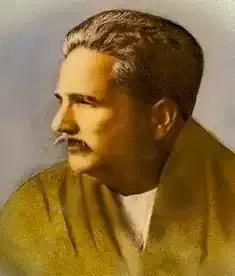
Muhammad Iqbal
A Mountain and A Squirrel
A Mountain and A Squirrel
A mountain was saying this to a squirrel
'Commit suicide if you have self-respect
You are insignificant, still so arrogant, how strange!
You are neither wise, nor intelligent! not even shrewd!
It is strange when the insignificant pose as important!
When the stupid ones like you pose as intelligent!
You are no match in comparison with my splendor
Even the earth is low compared with my splendor
The grandeur of mine does not fall to your lot
The poor animal cannot equal the great mountain! '
On hearing this the squirrel said, 'Hold your tongue!
These are immature thoughts, expel them from your heart!
I do not care if I am not large like you!
You are not a pretty little thing like me
Everything shows the Omni-potence of God
Some large, some small, is the wisdom of God
He has created you large in the world
And He has taught me climbing large trees
You are unable to walk a single step
Only large size! What other greatness have you?
If you are large show me some of the skills I have
Show me how you break this beetle nut as I can
Nothing is useless in this world
Nothing is bad in God's creation
A mountain was saying this to a squirrel
'Commit suicide if you have self-respect
You are insignificant, still so arrogant, how strange!
You are neither wise, nor intelligent! not even shrewd!
It is strange when the insignificant pose as important!
When the stupid ones like you pose as intelligent!
You are no match in comparison with my splendor
Even the earth is low compared with my splendor
The grandeur of mine does not fall to your lot
The poor animal cannot equal the great mountain! '
On hearing this the squirrel said, 'Hold your tongue!
These are immature thoughts, expel them from your heart!
I do not care if I am not large like you!
You are not a pretty little thing like me
Everything shows the Omni-potence of God
Some large, some small, is the wisdom of God
He has created you large in the world
And He has taught me climbing large trees
You are unable to walk a single step
Only large size! What other greatness have you?
If you are large show me some of the skills I have
Show me how you break this beetle nut as I can
Nothing is useless in this world
Nothing is bad in God's creation
626

Alice Walker
When You Thought Me Poor
When You Thought Me Poor
When you thought me poor,
my poverty was shaming.
When blackness was unwelcome
we found it best
that I stay home.
When by the miracle
of fierce dreaming and hard work
Life fulfilled our every want
you found me crassly
well off;
not trimly,
inconspicuously wealthy
like your rich friends.
Still black too,
now
I owned too much and too many
of everything.
Woe is me: I became a
success! Blackness, who
knows how?
Became suddenly
in!
What to do?
Now that Fate appears
(for the moment anyhow)
to have dismissed
abject failure
in any case?
Now that moonlight and night
have blessed me.
Now that the sun
unaffected by criticism
of any sort,
implacably beams
the kiss filled magic that creates
the dark and radiant wonder
of my face.
When you thought me poor,
my poverty was shaming.
When blackness was unwelcome
we found it best
that I stay home.
When by the miracle
of fierce dreaming and hard work
Life fulfilled our every want
you found me crassly
well off;
not trimly,
inconspicuously wealthy
like your rich friends.
Still black too,
now
I owned too much and too many
of everything.
Woe is me: I became a
success! Blackness, who
knows how?
Became suddenly
in!
What to do?
Now that Fate appears
(for the moment anyhow)
to have dismissed
abject failure
in any case?
Now that moonlight and night
have blessed me.
Now that the sun
unaffected by criticism
of any sort,
implacably beams
the kiss filled magic that creates
the dark and radiant wonder
of my face.
384
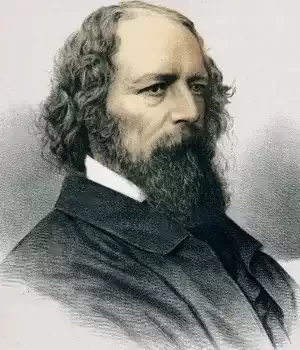
Alfred Lord Tennyson
Hendecasyllabics
Hendecasyllabics
O you chorus of indolent reviewers,
Irresponsible, indolent reviewers,
Look, I come to the test, a tiny poem
All composed in a metre of Catullus,
All in quantity, careful of my motion,
Like the skater on ice that hardly bears him,
Lest I fall unawares before the people,
Waking laughter in indolent reviewers.
Should I flounder awhile without a tumble
Thro' this metrification of Catullus,
They should speak to me not without a welcome,
All that chorus of indolent reviewers.
Hard, hard, hard it is, only not to tumble,
So fantastical is the dainty meter.
Wherefore slight me not wholly, nor believe me
Too presumptuous, indolent reviewers.
O blatant Magazines, regard me rather Since
I blush to belaud myself a moment As
some rare little rose, a piece of inmost
Horticultural art, or half-coquette-like
Maiden, not to be greeted unbenignly.
O you chorus of indolent reviewers,
Irresponsible, indolent reviewers,
Look, I come to the test, a tiny poem
All composed in a metre of Catullus,
All in quantity, careful of my motion,
Like the skater on ice that hardly bears him,
Lest I fall unawares before the people,
Waking laughter in indolent reviewers.
Should I flounder awhile without a tumble
Thro' this metrification of Catullus,
They should speak to me not without a welcome,
All that chorus of indolent reviewers.
Hard, hard, hard it is, only not to tumble,
So fantastical is the dainty meter.
Wherefore slight me not wholly, nor believe me
Too presumptuous, indolent reviewers.
O blatant Magazines, regard me rather Since
I blush to belaud myself a moment As
some rare little rose, a piece of inmost
Horticultural art, or half-coquette-like
Maiden, not to be greeted unbenignly.
493
Alfred Lord Tennyson
Balin and Balan
Balin and Balan
Pellam the King, who held and lost with Lot
In that first war, and had his realm restored
But rendered tributary, failed of late
To send his tribute; wherefore Arthur called
His treasurer, one of many years, and spake,
'Go thou with him and him and bring it to us,
Lest we should set one truer on his throne.
Man's word is God in man.'
His Baron said
'We go but harken: there be two strange knights
Who sit near Camelot at a fountain-side,
A mile beneath the forest, challenging
And overthrowing every knight who comes.
Wilt thou I undertake them as we pass,
And send them to thee?'
Arthur laughed upon him.
'Old friend, too old to be so young, depart,
Delay not thou for aught, but let them sit,
Until they find a lustier than themselves.'
So these departed. Early, one fair dawn,
The light-winged spirit of his youth returned
On Arthur's heart; he armed himself and went,
So coming to the fountain-side beheld
Balin and Balan sitting statuelike,
Brethren, to right and left the spring, that down,
From underneath a plume of lady-fern,
Sang, and the sand danced at the bottom of it.
And on the right of Balin Balin's horse
Was fast beside an alder, on the left
Of Balan Balan's near a poplartree.
'Fair Sirs,' said Arthur, 'wherefore sit ye here?'
Balin and Balan answered 'For the sake
Of glory; we be mightier men than all
In Arthur's court; that also have we proved;
For whatsoever knight against us came
Or I or he have easily overthrown.'
'I too,' said Arthur, 'am of Arthur's hall,
But rather proven in his Paynim wars
Than famous jousts; but see, or proven or not,
Whether me likewise ye can overthrow.'
And Arthur lightly smote the brethren down,
And lightly so returned, and no man knew.
Then Balin rose, and Balan, and beside
The carolling water set themselves again,
And spake no word until the shadow turned;
When from the fringe of coppice round them burst
A spangled pursuivant, and crying 'Sirs,
Rise, follow! ye be sent for by the King,'
They followed; whom when Arthur seeing asked
'Tell me your names; why sat ye by the well?'
Balin the stillness of a minute broke
Saying 'An unmelodious name to thee,
Balin, "the Savage"--that addition thine--
My brother and my better, this man here,
Balan. I smote upon the naked skull
A thrall of thine in open hall, my hand
Was gauntleted, half slew him; for I heard
He had spoken evil of me; thy just wrath
Sent me a three-years' exile from thine eyes.
I have not lived my life delightsomely:
For I that did that violence to thy thrall,
Had often wrought some fury on myself,
Saving for Balan: those three kingless years
Have past--were wormwood-bitter to me. King,
Methought that if we sat beside the well,
And hurled to ground what knight soever spurred
Against us, thou would'st take me gladlier back,
And make, as ten-times worthier to be thine
Than twenty Balins, Balan knight. I have said.
Not so--not all. A man of thine today
Abashed us both, and brake my boast. Thy will?'
Said Arthur 'Thou hast ever spoken truth;
Thy too fierce manhood would not let thee lie.
Rise, my true knight. As children learn, be thou
Wiser for falling! walk with me, and move
To music with thine Order and the King.
Thy chair, a grief to all the brethren, stands
Vacant, but thou retake it, mine again!'
Thereafter, when Sir Balin entered hall,
The Lost one Found was greeted as in Heaven
With joy that blazed itself in woodland wealth
Of leaf, and gayest garlandage of flowers,
Along the walls and down the board; they sat,
And cup clashed cup; they drank and some one sang,
Sweet-voiced, a song of welcome, whereupon
Their common shout in chorus, mounting, made
Those banners of twelve battles overhead
Stir, as they stirred of old, when Arthur's host
Proclaimed him Victor, and the day was won.
Then Balan added to their Order lived
A wealthier life than heretofore with these
And Balin, till their embassage returned.
'Sir King' they brought report 'we hardly found,
So bushed about it is with gloom, the hall
Of him to whom ye sent us, Pellam, once
A Christless foe of thine as ever dashed
Horse against horse; but seeing that thy realm
Hath prospered in the name of Christ, the King
Took, as in rival heat, to holy things;
And finds himself descended from the Saint
Arimathan Joseph; him who first
Brought the great faith to Britain over seas;
He boasts his life as purer than thine own;
Eats scarce enow to keep his pulse abeat;
Hath pushed aside his faithful wife, nor lets
Or dame or damsel enter at his gates
Lest he should be polluted. This gray King
Showed us a shrine wherein were wonders--yea--
Rich arks with priceless bones of martyrdom,
Thorns of the crown and shivers of the cross,
And therewithal (for thus he told us) brought
By holy Joseph thither, that same spear
Wherewith the Roman pierced the side of Christ.
He much amazed us; after, when we sought
The tribute, answered "I have quite foregone
All matters of this world: Garlon, mine heir,
Of him demand it," which this Garlon gave
With much ado, railing at thine and thee.
'But when we left, in those deep woods we found
A knight of thine spear-stricken from behind,
Dead, whom we buried; more than one of us
Cried out on Garlon, but a woodman there
Reported of some demon in the woods
Was once a man, who driven by evil tongues
From all his fellows, lived alone, and came
To learn black magic, and to hate his kind
With such a hate, that when he died, his soul
Became a Fiend, which, as the man in life
Was wounded by blind tongues he saw not whence,
Strikes from behind. This woodman showed the cave
From which he sallies, and wherein he dwelt.
We saw the hoof-print of a horse, no more.'
Then Arthur, 'Let who goes before me, see
He do not fall behind me: foully slain
And villainously! who will hunt for me
This demon of the woods?' Said Balan, 'I'!
So claimed the quest and rode away, but first,
Embracing Balin, 'Good my brother, hear!
Let not thy moods prevail, when I am gone
Who used to lay them! hold them outer fiends,
Who leap at thee to tear thee; shake them aside,
Dreams ruling when wit sleeps! yea, but to dream
That any of these would wrong thee, wrongs thyself.
Witness their flowery welcome. Bound are they
To speak no evil. Truly save for fears,
My fears for thee, so rich a fellowship
Would make me wholly blest: thou one of them,
Be one indeed: consider them, and all
Their bearing in their common bond of love,
No more of hatred than in Heaven itself,
No more of jealousy than in Paradise.'
So Balan warned, and went; Balin remained:
Who--for but three brief moons had glanced away
From being knighted till he smote the thrall,
And faded from the presence into years
Of exile--now would strictlier set himself
To learn what Arthur meant by courtesy,
Manhood, and knighthood; wherefore hovered round
Lancelot, but when he marked his high sweet smile
In passing, and a transitory word
Make knight or churl or child or damsel seem
From being smiled at happier in themselves--
Sighed, as a boy lame-born beneath a height,
That glooms his valley, sighs to see the peak
Sun-flushed, or touch at night the northern star;
For one from out his village lately climed
And brought report of azure lands and fair,
Far seen to left and right; and he himself
Hath hardly scaled with help a hundred feet
Up from the base: so Balin marvelling oft
How far beyond him Lancelot seemed to move,
Groaned, and at times would mutter, 'These be gifts,
Born with the blood, not learnable, divine,
Beyond MY reach. Well had I foughten--well--
In those fierce wars, struck hard--and had I crowned
With my slain self the heaps of whom I slew-So--
better!--But this worship of the Queen,
That honour too wherein she holds him--this,
This was the sunshine that hath given the man
A growth, a name that branches o'er the rest,
And strength against all odds, and what the King
So prizes--overprizes--gentleness.
Her likewise would I worship an I might.
I never can be close with her, as he
That brought her hither. Shall I pray the King
To let me bear some token of his Queen
Whereon to gaze, remembering her--forget
My heats and violences? live afresh?
What, if the Queen disdained to grant it! nay
Being so stately-gentle, would she make
My darkness blackness? and with how sweet grace
She greeted my return! Bold will I be--
Some goodly cognizance of Guinevere,
In lieu of this rough beast upon my shield,
Langued gules, and toothed with grinning savagery.'
And Arthur, when Sir Balin sought him, said
'What wilt thou bear?' Balin was bold, and asked
To bear her own crown-royal upon shield,
Whereat she smiled and turned her to the King,
Who answered 'Thou shalt put the crown to use.
The crown is but the shadow of the King,
And this a shadow's shadow, let him have it,
So this will help him of his violences!'
'No shadow' said Sir Balin 'O my Queen,
But light to me! no shadow, O my King,
But golden earnest of a gentler life!'
So Balin bare the crown, and all the knights
Approved him, and the Queen, and all the world
Made music, and he felt his being move
In music with his Order, and the King.
The nightingale, full-toned in middle May,
Hath ever and anon a note so thin
It seems another voice in other groves;
Thus, after some quick burst of sudden wrath,
The music in him seemed to change, and grow
Faint and far-off.
And once he saw the thrall
His passion half had gauntleted to death,
That causer of his banishment and shame,
Smile at him, as he deemed, presumptuously:
His arm half rose to strike again, but fell:
The memory of that cognizance on shield
Weighted it down, but in himself he moaned:
'Too high this mount of Camelot for me:
These high-set courtesies are not for me.
Shall I not rather prove the worse for these?
Fierier and stormier from restraining, break
Into some madness even before the Queen?'
Thus, as a hearth lit in a mountain home,
And glancing on the window, when the gloom
Of twilight deepens round it, seems a flame
That rages in the woodland far below,
So when his moods were darkened, court and King
And all the kindly warmth of Arthur's hall
Shadowed an angry distance: yet he strove
To learn the graces of their Table, fought
Hard with himself, and seemed at length in peace.
Then chanced, one morning, that Sir Balin sat
Close-bowered in that garden nigh the hall.
A walk of roses ran from door to door;
A walk of lilies crost it to the bower:
And down that range of roses the great Queen
Came with slow steps, the morning on her face;
And all in shadow from the counter door
Sir Lancelot as to meet her, then at once,
As if he saw not, glanced aside, and paced
The long white walk of lilies toward the bower.
Followed the Queen; Sir Balin heard her 'Prince,
Art thou so little loyal to thy Queen,
As pass without good morrow to thy Queen?'
To whom Sir Lancelot with his eyes on earth,
'Fain would I still be loyal to the Queen.'
'Yea so' she said 'but so to pass me by--
So loyal scarce is loyal to thyself,
Whom all men rate the king of courtesy.
Let be: ye stand, fair lord, as in a dream.'
Then Lancelot with his hand among the flowers
'Yea--for a dream. Last night methought I saw
That maiden Saint who stands with lily in hand
In yonder shrine. All round her prest the dark,
And all the light upon her silver face
Flowed from the spiritual lily that she held.
Lo! these her emblems drew mine eyes--away:
For see, how perfect-pure! As light a flush
As hardly tints the blossom of the quince
Would mar their charm of stainless maidenhood.'
'Sweeter to me' she said 'this garden rose
Deep-hued and many-folded! sweeter still
The wild-wood hyacinth and the bloom of May.
Prince, we have ridden before among the flowers
In those fair days--not all as cool as these,
Though season-earlier. Art thou sad? or sick?
Our noble King will send thee his own leech--
Sick? or for any matter angered at me?'
Then Lancelot lifted his large eyes; they dwelt
Deep-tranced on hers, and could not fall: her hue
Changed at his gaze: so turning side by side
They past, and Balin started from his bower.
'Queen? subject? but I see not what I see.
Damsel and lover? hear not what I hear.
My father hath begotten me in his wrath.
I suffer from the things before me, know,
Learn nothing; am not worthy to be knight;
A churl, a clown!' and in him gloom on gloom
Deepened: he sharply caught his lance and shield,
Nor stayed to crave permission of the King,
But, mad for strange adventure, dashed away.
He took the selfsame track as Balan, saw
The fountain where they sat together, sighed
'Was I not better there with him?' and rode
The skyless woods, but under open blue
Came on the hoarhead woodman at a bough
Wearily hewing. 'Churl, thine axe!' he cried,
Descended, and disjointed it at a blow:
To whom the woodman uttered wonderingly
'Lord, thou couldst lay the Devil of these woods
If arm of flesh could lay him.' Balin cried
'Him, or the viler devil who plays his part,
To lay that devil would lay the Devil in me.'
'Nay' said the churl, 'our devil is a truth,
I saw the flash of him but yestereven.
And some DO say that our Sir Garlon too
Hath learned black magic, and to ride unseen.
Look to the cave.' But Balin answered him
'Old fabler, these be fancies of the churl,
Look to thy woodcraft,' and so leaving him,
Now with slack rein and careless of himself,
Now with dug spur and raving at himself,
Now with droopt brow down the long glades he rode;
So marked not on his right a cavern-chasm
Yawn over darkness, where, nor far within,
The whole day died, but, dying, gleamed on rocks
Roof-pendent, sharp; and others from the floor,
Tusklike, arising, made that mouth of night
Whereout the Demon issued up from Hell.
He marked not this, but blind and deaf to all
Save that chained rage, which ever yelpt within,
Past eastward from the falling sun. At once
He felt the hollow-beaten mosses thud
And tremble, and then the shadow of a spear,
Shot from behind him, ran along the ground.
Sideways he started from the path, and saw,
With pointed lance as if to pierce, a shape,
A light of armour by him flash, and pass
And vanish in the woods; and followed this,
But all so blind in rage that unawares
He burst his lance against a forest bough,
Dishorsed himself, and rose again, and fled
Far, till the castle of a King, the hall
Of Pellam, lichen-bearded, grayly draped
With streaming grass, appeared, low-built but strong;
The ruinous donjon as a knoll of moss,
The battlement overtopt with ivytods,
A home of bats, in every tower an owl.
Then spake the men of Pellam crying 'Lord,
Why wear ye this crown-royal upon shield?'
Said Balin 'For the fairest and the best
Of ladies living gave me this to bear.'
So stalled his horse, and strode across the court,
But found the greetings both of knight and King
Faint in the low dark hall of banquet: leaves
Laid their green faces flat against the panes,
Sprays grated, and the cankered boughs without
Whined in the wood; for all was hushed within,
Till when at feast Sir Garlon likewise asked
'Why wear ye that crown-royal?' Balin said
'The Queen we worship, Lancelot, I, and all,
As fairest, best and purest, granted me
To bear it!' Such a sound (for Arthur's knights
Were hated strangers in the hall) as makes
The white swan-mother, sitting, when she hears
A strange knee rustle through her secret reeds,
Made Garlon, hissing; then he sourly smiled.
'Fairest I grant her: I have seen; but best,
Best, purest? THOU from Arthur's hall, and yet
So simple! hast thou eyes, or if, are these
So far besotted that they fail to see
This fair wife-worship cloaks a secret shame?
Truly, ye men of Arthur be but babes.'
A goblet on the board by Balin, bossed
With holy Joseph's legend, on his right
Stood, all of massiest bronze: one side had sea
And ship and sail and angels blowing on it:
And one was rough with wattling, and the walls
Of that low church he built at Glastonbury.
This Balin graspt, but while in act to hurl,
Through memory of that token on the shield
Relaxed his hold: 'I will be gentle' he thought
'And passing gentle' caught his hand away,
Then fiercely to Sir Garlon 'Eyes have I
That saw today the shadow of a spear,
Shot from behind me, run along the ground;
Eyes too that long have watched how Lancelot draws
From homage to the best and purest, might,
Name, manhood, and a grace, but scantly thine,
Who, sitting in thine own hall, canst endure
To mouth so huge a foulness--to thy guest,
Me, me of Arthur's Table. Felon talk!
Let be! no more!'
But not the less by night
The scorn of Garlon, poisoning all his rest,
Stung him in dreams. At length, and dim through leaves
Blinkt the white morn, sprays grated, and old boughs
Whined in the wood. He rose, descended, met
The scorner in the castle court, and fain,
For hate and loathing, would have past him by;
But when Sir Garlon uttered mocking-wise;
'What, wear ye still that same crown-scandalous?'
His countenance blackened, and his forehead veins
Bloated, and branched; and tearing out of sheath
The brand, Sir Balin with a fiery 'Ha!
So thou be shadow, here I make thee ghost,'
Hard upon helm smote him, and the blade flew
Splintering in six, and clinkt upon the stones.
Then Garlon, reeling slowly backward, fell,
And Balin by the banneret of his helm
Dragged him, and struck, but from the castle a cry
Sounded across the court, and--men-at-arms,
A score with pointed lances, making at him--
He dashed the pummel at the foremost face,
Beneath a low door dipt, and made his feet
Wings through a glimmering gallery, till he marked
The portal of King Pellam's chapel wide
And inward to the wall; he stept behind;
Thence in a moment heard them pass like wolves
Howling; but while he stared about the shrine,
In which he scarce could spy the Christ for Saints,
Beheld before a golden altar lie
The longest lance his eyes had ever seen,
Point-painted red; and seizing thereupon
Pushed through an open casement down, leaned on it,
Leapt in a semicircle, and lit on earth;
Then hand at ear, and harkening from what side
The blindfold rummage buried in the walls
Might echo, ran the counter path, and found
His charger, mounted on him and away.
An arrow whizzed to the right, one to the left,
One overhead; and Pellam's feeble cry
'Stay, stay him! he defileth heavenly things
With earthly uses'--made him quickly dive
Beneath the boughs, and race through many a mile
Of dense and open, till his goodly horse,
Arising wearily at a fallen oak,
Stumbled headlong, and cast him face to ground.
Half-wroth he had not ended, but all glad,
Knightlike, to find his charger yet unlamed,
Sir Balin drew the shield from off his neck,
Stared at the priceless cognizance, and thought
'I have shamed thee so that now thou shamest me,
Thee will I bear no more,' high on a branch
Hung it, and turned aside into the woods,
And there in gloom cast himself all along,
Moaning 'My violences, my violences!'
But now the wholesome music of the wood
Was dumbed by one from out the hall of Mark,
A damsel-errant, warbling, as she rode
The woodland alleys, Vivien, with her Squire.
'The fire of Heaven has killed the barren cold,
And kindled all the plain and all the wold.
The new leaf ever pushes off the old.
The fire of Heaven is not the flame of Hell.
'Old priest, who mumble worship in your quire--
Old monk and nun, ye scorn the world's desire,
Yet in your frosty cells ye feel the fire!
The fire of Heaven is not the flame of Hell.
'The fire of Heaven is on the dusty ways.
The wayside blossoms open to the blaze.
The whole wood-world is one full peal of praise.
The fire of Heaven is not the flame of Hell.
'The fire of Heaven is lord of all things good,
And starve not thou this fire within thy blood,
But follow Vivien through the fiery flood!
The fire of Heaven is not the flame of Hell!'
Then turning to her Squire 'This fire of Heaven,
This old sun-worship, boy, will rise again,
And beat the cross to earth, and break the King
And all his Table.'
Then they reached a glade,
Where under one long lane of cloudless air
Before another wood, the royal crown
Sparkled, and swaying upon a restless elm
Drew the vague glance of Vivien, and her Squire;
Amazed were these; 'Lo there' she cried--'a crown--
Borne by some high lord-prince of Arthur's hall,
And there a horse! the rider? where is he?
See, yonder lies one dead within the wood.
Not dead; he stirs!--but sleeping. I will speak.
Hail, royal knight, we break on thy sweet rest,
Not, doubtless, all unearned by noble deeds.
But bounden art thou, if from Arthur's hall,
To help the weak. Behold, I fly from shame,
A lustful King, who sought to win my love
Through evil ways: the knight, with whom I rode,
Hath suffered misadventure, and my squire
Hath in him small defence; but thou, Sir Prince,
Wilt surely guide me to the warrior King,
Arthur the blameless, pure as any maid,
To get me shelter for my maidenhood.
I charge thee by that crown upon thy shield,
And by the great Queen's name, arise and hence.'
And Balin rose, 'Thither no more! nor Prince
Nor knight am I, but one that hath defamed
The cognizance she gave me: here I dwell
Savage among the savage woods, here die--
Die: let the wolves' black maws ensepulchre
Their brother beast, whose anger was his lord.
O me, that such a name as Guinevere's,
Which our high Lancelot hath so lifted up,
And been thereby uplifted, should through me,
My violence, and my villainy, come to shame.'
Thereat she suddenly laughed and shrill, anon
Sighed all as suddenly. Said Balin to her
'Is this thy courtesy--to mock me, ha?
Hence, for I will not with thee.' Again she sighed
'Pardon, sweet lord! we maidens often laugh
When sick at heart, when rather we should weep.
I knew thee wronged. I brake upon thy rest,
And now full loth am I to break thy dream,
But thou art man, and canst abide a truth,
Though bitter. Hither, boy--and mark me well.
Dost thou remember at Caerleon once--
A year ago--nay, then I love thee not--
Ay, thou rememberest well--one summer dawn--
By the great tower--Caerleon upon Usk--
Nay, truly we were hidden: this fair lord,
The flower of all their vestal knighthood, knelt
In amorous homage--knelt--what else?--O ay
Knelt, and drew down from out his night-black hair
And mumbled that white hand whose ringed caress
Had wandered from her own King's golden head,
And lost itself in darkness, till she cried--
I thought the great tower would crash down on both-"
Rise, my sweet King, and kiss me on the lips,
Thou art my King." This lad, whose lightest word
Is mere white truth in simple nakedness,
Saw them embrace: he reddens, cannot speak,
So bashful, he! but all the maiden Saints,
The deathless mother-maidenhood of Heaven,
Cry out upon her. Up then, ride with me!
Talk not of shame! thou canst not, an thou would'st,
Do these more shame than these have done themselves.'
She lied with ease; but horror-stricken he,
Remembering that dark bower at Camelot,
Breathed in a dismal whisper 'It is truth.'
Sunnily she smiled 'And even in this lone wood,
Sweet lord, ye do right well to whisper this.
Fools prate, and perish traitors. Woods have tongues,
As walls have ears: but thou shalt go with me,
And we will speak at first exceeding low.
Meet is it the good King be not deceived.
See now, I set thee high on vantage ground,
From whence to watch the time, and eagle-like
Stoop at thy will on Lancelot and the Queen.'
She ceased; his evil spirit upon him leapt,
He ground his teeth together, sprang with a yell,
Tore from the branch, and cast on earth, the shield,
Drove his mailed heel athwart the royal crown,
Stampt all into defacement, hurled it from him
Among the forest weeds, and cursed the tale,
The told-of, and the teller.
That weird yell,
Unearthlier than all shriek of bird or beast,
Thrilled through the woods; and Balan lurking there
(His quest was unaccomplished) heard and thought
'The scream of that Wood-devil I came to quell!'
Then nearing 'Lo! he hath slain some brother-knight,
And tramples on the goodly shield to show
His loathing of our Order and the Queen.
My quest, meseems, is here. Or devil or man
Guard thou thine head.' Sir Balin spake not word,
But snatched a sudden buckler from the Squire,
And vaulted on his horse, and so they crashed
In onset, and King Pellam's holy spear,
Reputed to be red with sinless blood,
Redded at once with sinful, for the point
Across the maiden shield of Balan pricked
The hauberk to the flesh; and Balin's horse
Was wearied to the death, and, when they clashed,
Rolling back upon Balin, crushed the man
Inward, and either fell, and swooned away.
Then to her Squire muttered the damsel 'Fools!
This fellow hath wrought some foulness with his Queen:
Else never had he borne her crown, nor raved
And thus foamed over at a rival name:
But thou, Sir Chick, that scarce hast broken shell,
Art yet half-yolk, not even come to down--
Who never sawest Caerleon upon Usk--
And yet hast often pleaded for my love--
See what I see, be thou where I have been,
Or else Sir Chick--dismount and loose their casques
I fain would know what manner of men they be.'
And when the Squire had loosed them, 'Goodly!--look!
They might have cropt the myriad flower of May,
And butt each other here, like brainless bulls,
Dead for one heifer!
Then the gentle Squire
'I hold them happy, so they died for love:
And, Vivien, though ye beat me like your dog,
I too could die, as now I live, for thee.'
'Live on, Sir Boy,' she cried. 'I better prize
The living dog than the dead lion: away!
I cannot brook to gaze upon the dead.'
Then leapt her palfrey o'er the fallen oak,
And bounding forward 'Leave them to the wolves.'
But when their foreheads felt the cooling air,
Balin first woke, and seeing that true face,
Familiar up from cradle-time, so wan,
Crawled slowly with low moans to where he lay,
And on his dying brother cast himself
Dying; and HE lifted faint eyes; he felt
One near him; all at once they found the world,
Staring wild-wide; then with a childlike wail
And drawing down the dim disastrous brow
That o'er him hung, he kissed it, moaned and spake;
'O Balin, Balin, I that fain had died
To save thy life, have brought thee to thy death.
Why had ye not the shield I knew? and why
Trampled ye thus on that which bare the Crown?'
Then Balin told him brokenly, and in gasps,
All that had chanced, and Balan moaned again.
'Brother, I dwelt a day in Pellam's hall:
This Garlon mocked me, but I heeded not.
And one said "Eat in peace! a liar is he,
And hates thee for the tribute!" this good knight
Told me, that twice a wanton damsel came,
And sought for Garlon at the castle-gates,
Whom Pellam drove away with holy heat.
I well believe this damsel, and the one
Who stood beside thee even now, the same.
"She dwells among the woods" he said "and meets
And dallies with him in the Mouth of Hell."
Foul are their lives; foul are their lips; they lied.
Pure as our own true Mother is our Queen."
'O brother' answered Balin 'woe is me!
My madness all thy life has been thy doom,
Thy curse, and darkened all thy day; and now
The night has come. I scarce can see thee now.
Goodnight! for we shall never bid again
Goodmorrow--Dark my doom was here, and dark
It will be there. I see thee now no more.
I would not mine again should darken thine,
Goodnight, true brother.
Balan answered low
'Goodnight, true brother here! goodmorrow there!
We two were born together, and we die
Together by one doom:' and while he spoke
Closed his death-drowsing eyes, and slept the sleep
With Balin, either locked in either's arm.
Pellam the King, who held and lost with Lot
In that first war, and had his realm restored
But rendered tributary, failed of late
To send his tribute; wherefore Arthur called
His treasurer, one of many years, and spake,
'Go thou with him and him and bring it to us,
Lest we should set one truer on his throne.
Man's word is God in man.'
His Baron said
'We go but harken: there be two strange knights
Who sit near Camelot at a fountain-side,
A mile beneath the forest, challenging
And overthrowing every knight who comes.
Wilt thou I undertake them as we pass,
And send them to thee?'
Arthur laughed upon him.
'Old friend, too old to be so young, depart,
Delay not thou for aught, but let them sit,
Until they find a lustier than themselves.'
So these departed. Early, one fair dawn,
The light-winged spirit of his youth returned
On Arthur's heart; he armed himself and went,
So coming to the fountain-side beheld
Balin and Balan sitting statuelike,
Brethren, to right and left the spring, that down,
From underneath a plume of lady-fern,
Sang, and the sand danced at the bottom of it.
And on the right of Balin Balin's horse
Was fast beside an alder, on the left
Of Balan Balan's near a poplartree.
'Fair Sirs,' said Arthur, 'wherefore sit ye here?'
Balin and Balan answered 'For the sake
Of glory; we be mightier men than all
In Arthur's court; that also have we proved;
For whatsoever knight against us came
Or I or he have easily overthrown.'
'I too,' said Arthur, 'am of Arthur's hall,
But rather proven in his Paynim wars
Than famous jousts; but see, or proven or not,
Whether me likewise ye can overthrow.'
And Arthur lightly smote the brethren down,
And lightly so returned, and no man knew.
Then Balin rose, and Balan, and beside
The carolling water set themselves again,
And spake no word until the shadow turned;
When from the fringe of coppice round them burst
A spangled pursuivant, and crying 'Sirs,
Rise, follow! ye be sent for by the King,'
They followed; whom when Arthur seeing asked
'Tell me your names; why sat ye by the well?'
Balin the stillness of a minute broke
Saying 'An unmelodious name to thee,
Balin, "the Savage"--that addition thine--
My brother and my better, this man here,
Balan. I smote upon the naked skull
A thrall of thine in open hall, my hand
Was gauntleted, half slew him; for I heard
He had spoken evil of me; thy just wrath
Sent me a three-years' exile from thine eyes.
I have not lived my life delightsomely:
For I that did that violence to thy thrall,
Had often wrought some fury on myself,
Saving for Balan: those three kingless years
Have past--were wormwood-bitter to me. King,
Methought that if we sat beside the well,
And hurled to ground what knight soever spurred
Against us, thou would'st take me gladlier back,
And make, as ten-times worthier to be thine
Than twenty Balins, Balan knight. I have said.
Not so--not all. A man of thine today
Abashed us both, and brake my boast. Thy will?'
Said Arthur 'Thou hast ever spoken truth;
Thy too fierce manhood would not let thee lie.
Rise, my true knight. As children learn, be thou
Wiser for falling! walk with me, and move
To music with thine Order and the King.
Thy chair, a grief to all the brethren, stands
Vacant, but thou retake it, mine again!'
Thereafter, when Sir Balin entered hall,
The Lost one Found was greeted as in Heaven
With joy that blazed itself in woodland wealth
Of leaf, and gayest garlandage of flowers,
Along the walls and down the board; they sat,
And cup clashed cup; they drank and some one sang,
Sweet-voiced, a song of welcome, whereupon
Their common shout in chorus, mounting, made
Those banners of twelve battles overhead
Stir, as they stirred of old, when Arthur's host
Proclaimed him Victor, and the day was won.
Then Balan added to their Order lived
A wealthier life than heretofore with these
And Balin, till their embassage returned.
'Sir King' they brought report 'we hardly found,
So bushed about it is with gloom, the hall
Of him to whom ye sent us, Pellam, once
A Christless foe of thine as ever dashed
Horse against horse; but seeing that thy realm
Hath prospered in the name of Christ, the King
Took, as in rival heat, to holy things;
And finds himself descended from the Saint
Arimathan Joseph; him who first
Brought the great faith to Britain over seas;
He boasts his life as purer than thine own;
Eats scarce enow to keep his pulse abeat;
Hath pushed aside his faithful wife, nor lets
Or dame or damsel enter at his gates
Lest he should be polluted. This gray King
Showed us a shrine wherein were wonders--yea--
Rich arks with priceless bones of martyrdom,
Thorns of the crown and shivers of the cross,
And therewithal (for thus he told us) brought
By holy Joseph thither, that same spear
Wherewith the Roman pierced the side of Christ.
He much amazed us; after, when we sought
The tribute, answered "I have quite foregone
All matters of this world: Garlon, mine heir,
Of him demand it," which this Garlon gave
With much ado, railing at thine and thee.
'But when we left, in those deep woods we found
A knight of thine spear-stricken from behind,
Dead, whom we buried; more than one of us
Cried out on Garlon, but a woodman there
Reported of some demon in the woods
Was once a man, who driven by evil tongues
From all his fellows, lived alone, and came
To learn black magic, and to hate his kind
With such a hate, that when he died, his soul
Became a Fiend, which, as the man in life
Was wounded by blind tongues he saw not whence,
Strikes from behind. This woodman showed the cave
From which he sallies, and wherein he dwelt.
We saw the hoof-print of a horse, no more.'
Then Arthur, 'Let who goes before me, see
He do not fall behind me: foully slain
And villainously! who will hunt for me
This demon of the woods?' Said Balan, 'I'!
So claimed the quest and rode away, but first,
Embracing Balin, 'Good my brother, hear!
Let not thy moods prevail, when I am gone
Who used to lay them! hold them outer fiends,
Who leap at thee to tear thee; shake them aside,
Dreams ruling when wit sleeps! yea, but to dream
That any of these would wrong thee, wrongs thyself.
Witness their flowery welcome. Bound are they
To speak no evil. Truly save for fears,
My fears for thee, so rich a fellowship
Would make me wholly blest: thou one of them,
Be one indeed: consider them, and all
Their bearing in their common bond of love,
No more of hatred than in Heaven itself,
No more of jealousy than in Paradise.'
So Balan warned, and went; Balin remained:
Who--for but three brief moons had glanced away
From being knighted till he smote the thrall,
And faded from the presence into years
Of exile--now would strictlier set himself
To learn what Arthur meant by courtesy,
Manhood, and knighthood; wherefore hovered round
Lancelot, but when he marked his high sweet smile
In passing, and a transitory word
Make knight or churl or child or damsel seem
From being smiled at happier in themselves--
Sighed, as a boy lame-born beneath a height,
That glooms his valley, sighs to see the peak
Sun-flushed, or touch at night the northern star;
For one from out his village lately climed
And brought report of azure lands and fair,
Far seen to left and right; and he himself
Hath hardly scaled with help a hundred feet
Up from the base: so Balin marvelling oft
How far beyond him Lancelot seemed to move,
Groaned, and at times would mutter, 'These be gifts,
Born with the blood, not learnable, divine,
Beyond MY reach. Well had I foughten--well--
In those fierce wars, struck hard--and had I crowned
With my slain self the heaps of whom I slew-So--
better!--But this worship of the Queen,
That honour too wherein she holds him--this,
This was the sunshine that hath given the man
A growth, a name that branches o'er the rest,
And strength against all odds, and what the King
So prizes--overprizes--gentleness.
Her likewise would I worship an I might.
I never can be close with her, as he
That brought her hither. Shall I pray the King
To let me bear some token of his Queen
Whereon to gaze, remembering her--forget
My heats and violences? live afresh?
What, if the Queen disdained to grant it! nay
Being so stately-gentle, would she make
My darkness blackness? and with how sweet grace
She greeted my return! Bold will I be--
Some goodly cognizance of Guinevere,
In lieu of this rough beast upon my shield,
Langued gules, and toothed with grinning savagery.'
And Arthur, when Sir Balin sought him, said
'What wilt thou bear?' Balin was bold, and asked
To bear her own crown-royal upon shield,
Whereat she smiled and turned her to the King,
Who answered 'Thou shalt put the crown to use.
The crown is but the shadow of the King,
And this a shadow's shadow, let him have it,
So this will help him of his violences!'
'No shadow' said Sir Balin 'O my Queen,
But light to me! no shadow, O my King,
But golden earnest of a gentler life!'
So Balin bare the crown, and all the knights
Approved him, and the Queen, and all the world
Made music, and he felt his being move
In music with his Order, and the King.
The nightingale, full-toned in middle May,
Hath ever and anon a note so thin
It seems another voice in other groves;
Thus, after some quick burst of sudden wrath,
The music in him seemed to change, and grow
Faint and far-off.
And once he saw the thrall
His passion half had gauntleted to death,
That causer of his banishment and shame,
Smile at him, as he deemed, presumptuously:
His arm half rose to strike again, but fell:
The memory of that cognizance on shield
Weighted it down, but in himself he moaned:
'Too high this mount of Camelot for me:
These high-set courtesies are not for me.
Shall I not rather prove the worse for these?
Fierier and stormier from restraining, break
Into some madness even before the Queen?'
Thus, as a hearth lit in a mountain home,
And glancing on the window, when the gloom
Of twilight deepens round it, seems a flame
That rages in the woodland far below,
So when his moods were darkened, court and King
And all the kindly warmth of Arthur's hall
Shadowed an angry distance: yet he strove
To learn the graces of their Table, fought
Hard with himself, and seemed at length in peace.
Then chanced, one morning, that Sir Balin sat
Close-bowered in that garden nigh the hall.
A walk of roses ran from door to door;
A walk of lilies crost it to the bower:
And down that range of roses the great Queen
Came with slow steps, the morning on her face;
And all in shadow from the counter door
Sir Lancelot as to meet her, then at once,
As if he saw not, glanced aside, and paced
The long white walk of lilies toward the bower.
Followed the Queen; Sir Balin heard her 'Prince,
Art thou so little loyal to thy Queen,
As pass without good morrow to thy Queen?'
To whom Sir Lancelot with his eyes on earth,
'Fain would I still be loyal to the Queen.'
'Yea so' she said 'but so to pass me by--
So loyal scarce is loyal to thyself,
Whom all men rate the king of courtesy.
Let be: ye stand, fair lord, as in a dream.'
Then Lancelot with his hand among the flowers
'Yea--for a dream. Last night methought I saw
That maiden Saint who stands with lily in hand
In yonder shrine. All round her prest the dark,
And all the light upon her silver face
Flowed from the spiritual lily that she held.
Lo! these her emblems drew mine eyes--away:
For see, how perfect-pure! As light a flush
As hardly tints the blossom of the quince
Would mar their charm of stainless maidenhood.'
'Sweeter to me' she said 'this garden rose
Deep-hued and many-folded! sweeter still
The wild-wood hyacinth and the bloom of May.
Prince, we have ridden before among the flowers
In those fair days--not all as cool as these,
Though season-earlier. Art thou sad? or sick?
Our noble King will send thee his own leech--
Sick? or for any matter angered at me?'
Then Lancelot lifted his large eyes; they dwelt
Deep-tranced on hers, and could not fall: her hue
Changed at his gaze: so turning side by side
They past, and Balin started from his bower.
'Queen? subject? but I see not what I see.
Damsel and lover? hear not what I hear.
My father hath begotten me in his wrath.
I suffer from the things before me, know,
Learn nothing; am not worthy to be knight;
A churl, a clown!' and in him gloom on gloom
Deepened: he sharply caught his lance and shield,
Nor stayed to crave permission of the King,
But, mad for strange adventure, dashed away.
He took the selfsame track as Balan, saw
The fountain where they sat together, sighed
'Was I not better there with him?' and rode
The skyless woods, but under open blue
Came on the hoarhead woodman at a bough
Wearily hewing. 'Churl, thine axe!' he cried,
Descended, and disjointed it at a blow:
To whom the woodman uttered wonderingly
'Lord, thou couldst lay the Devil of these woods
If arm of flesh could lay him.' Balin cried
'Him, or the viler devil who plays his part,
To lay that devil would lay the Devil in me.'
'Nay' said the churl, 'our devil is a truth,
I saw the flash of him but yestereven.
And some DO say that our Sir Garlon too
Hath learned black magic, and to ride unseen.
Look to the cave.' But Balin answered him
'Old fabler, these be fancies of the churl,
Look to thy woodcraft,' and so leaving him,
Now with slack rein and careless of himself,
Now with dug spur and raving at himself,
Now with droopt brow down the long glades he rode;
So marked not on his right a cavern-chasm
Yawn over darkness, where, nor far within,
The whole day died, but, dying, gleamed on rocks
Roof-pendent, sharp; and others from the floor,
Tusklike, arising, made that mouth of night
Whereout the Demon issued up from Hell.
He marked not this, but blind and deaf to all
Save that chained rage, which ever yelpt within,
Past eastward from the falling sun. At once
He felt the hollow-beaten mosses thud
And tremble, and then the shadow of a spear,
Shot from behind him, ran along the ground.
Sideways he started from the path, and saw,
With pointed lance as if to pierce, a shape,
A light of armour by him flash, and pass
And vanish in the woods; and followed this,
But all so blind in rage that unawares
He burst his lance against a forest bough,
Dishorsed himself, and rose again, and fled
Far, till the castle of a King, the hall
Of Pellam, lichen-bearded, grayly draped
With streaming grass, appeared, low-built but strong;
The ruinous donjon as a knoll of moss,
The battlement overtopt with ivytods,
A home of bats, in every tower an owl.
Then spake the men of Pellam crying 'Lord,
Why wear ye this crown-royal upon shield?'
Said Balin 'For the fairest and the best
Of ladies living gave me this to bear.'
So stalled his horse, and strode across the court,
But found the greetings both of knight and King
Faint in the low dark hall of banquet: leaves
Laid their green faces flat against the panes,
Sprays grated, and the cankered boughs without
Whined in the wood; for all was hushed within,
Till when at feast Sir Garlon likewise asked
'Why wear ye that crown-royal?' Balin said
'The Queen we worship, Lancelot, I, and all,
As fairest, best and purest, granted me
To bear it!' Such a sound (for Arthur's knights
Were hated strangers in the hall) as makes
The white swan-mother, sitting, when she hears
A strange knee rustle through her secret reeds,
Made Garlon, hissing; then he sourly smiled.
'Fairest I grant her: I have seen; but best,
Best, purest? THOU from Arthur's hall, and yet
So simple! hast thou eyes, or if, are these
So far besotted that they fail to see
This fair wife-worship cloaks a secret shame?
Truly, ye men of Arthur be but babes.'
A goblet on the board by Balin, bossed
With holy Joseph's legend, on his right
Stood, all of massiest bronze: one side had sea
And ship and sail and angels blowing on it:
And one was rough with wattling, and the walls
Of that low church he built at Glastonbury.
This Balin graspt, but while in act to hurl,
Through memory of that token on the shield
Relaxed his hold: 'I will be gentle' he thought
'And passing gentle' caught his hand away,
Then fiercely to Sir Garlon 'Eyes have I
That saw today the shadow of a spear,
Shot from behind me, run along the ground;
Eyes too that long have watched how Lancelot draws
From homage to the best and purest, might,
Name, manhood, and a grace, but scantly thine,
Who, sitting in thine own hall, canst endure
To mouth so huge a foulness--to thy guest,
Me, me of Arthur's Table. Felon talk!
Let be! no more!'
But not the less by night
The scorn of Garlon, poisoning all his rest,
Stung him in dreams. At length, and dim through leaves
Blinkt the white morn, sprays grated, and old boughs
Whined in the wood. He rose, descended, met
The scorner in the castle court, and fain,
For hate and loathing, would have past him by;
But when Sir Garlon uttered mocking-wise;
'What, wear ye still that same crown-scandalous?'
His countenance blackened, and his forehead veins
Bloated, and branched; and tearing out of sheath
The brand, Sir Balin with a fiery 'Ha!
So thou be shadow, here I make thee ghost,'
Hard upon helm smote him, and the blade flew
Splintering in six, and clinkt upon the stones.
Then Garlon, reeling slowly backward, fell,
And Balin by the banneret of his helm
Dragged him, and struck, but from the castle a cry
Sounded across the court, and--men-at-arms,
A score with pointed lances, making at him--
He dashed the pummel at the foremost face,
Beneath a low door dipt, and made his feet
Wings through a glimmering gallery, till he marked
The portal of King Pellam's chapel wide
And inward to the wall; he stept behind;
Thence in a moment heard them pass like wolves
Howling; but while he stared about the shrine,
In which he scarce could spy the Christ for Saints,
Beheld before a golden altar lie
The longest lance his eyes had ever seen,
Point-painted red; and seizing thereupon
Pushed through an open casement down, leaned on it,
Leapt in a semicircle, and lit on earth;
Then hand at ear, and harkening from what side
The blindfold rummage buried in the walls
Might echo, ran the counter path, and found
His charger, mounted on him and away.
An arrow whizzed to the right, one to the left,
One overhead; and Pellam's feeble cry
'Stay, stay him! he defileth heavenly things
With earthly uses'--made him quickly dive
Beneath the boughs, and race through many a mile
Of dense and open, till his goodly horse,
Arising wearily at a fallen oak,
Stumbled headlong, and cast him face to ground.
Half-wroth he had not ended, but all glad,
Knightlike, to find his charger yet unlamed,
Sir Balin drew the shield from off his neck,
Stared at the priceless cognizance, and thought
'I have shamed thee so that now thou shamest me,
Thee will I bear no more,' high on a branch
Hung it, and turned aside into the woods,
And there in gloom cast himself all along,
Moaning 'My violences, my violences!'
But now the wholesome music of the wood
Was dumbed by one from out the hall of Mark,
A damsel-errant, warbling, as she rode
The woodland alleys, Vivien, with her Squire.
'The fire of Heaven has killed the barren cold,
And kindled all the plain and all the wold.
The new leaf ever pushes off the old.
The fire of Heaven is not the flame of Hell.
'Old priest, who mumble worship in your quire--
Old monk and nun, ye scorn the world's desire,
Yet in your frosty cells ye feel the fire!
The fire of Heaven is not the flame of Hell.
'The fire of Heaven is on the dusty ways.
The wayside blossoms open to the blaze.
The whole wood-world is one full peal of praise.
The fire of Heaven is not the flame of Hell.
'The fire of Heaven is lord of all things good,
And starve not thou this fire within thy blood,
But follow Vivien through the fiery flood!
The fire of Heaven is not the flame of Hell!'
Then turning to her Squire 'This fire of Heaven,
This old sun-worship, boy, will rise again,
And beat the cross to earth, and break the King
And all his Table.'
Then they reached a glade,
Where under one long lane of cloudless air
Before another wood, the royal crown
Sparkled, and swaying upon a restless elm
Drew the vague glance of Vivien, and her Squire;
Amazed were these; 'Lo there' she cried--'a crown--
Borne by some high lord-prince of Arthur's hall,
And there a horse! the rider? where is he?
See, yonder lies one dead within the wood.
Not dead; he stirs!--but sleeping. I will speak.
Hail, royal knight, we break on thy sweet rest,
Not, doubtless, all unearned by noble deeds.
But bounden art thou, if from Arthur's hall,
To help the weak. Behold, I fly from shame,
A lustful King, who sought to win my love
Through evil ways: the knight, with whom I rode,
Hath suffered misadventure, and my squire
Hath in him small defence; but thou, Sir Prince,
Wilt surely guide me to the warrior King,
Arthur the blameless, pure as any maid,
To get me shelter for my maidenhood.
I charge thee by that crown upon thy shield,
And by the great Queen's name, arise and hence.'
And Balin rose, 'Thither no more! nor Prince
Nor knight am I, but one that hath defamed
The cognizance she gave me: here I dwell
Savage among the savage woods, here die--
Die: let the wolves' black maws ensepulchre
Their brother beast, whose anger was his lord.
O me, that such a name as Guinevere's,
Which our high Lancelot hath so lifted up,
And been thereby uplifted, should through me,
My violence, and my villainy, come to shame.'
Thereat she suddenly laughed and shrill, anon
Sighed all as suddenly. Said Balin to her
'Is this thy courtesy--to mock me, ha?
Hence, for I will not with thee.' Again she sighed
'Pardon, sweet lord! we maidens often laugh
When sick at heart, when rather we should weep.
I knew thee wronged. I brake upon thy rest,
And now full loth am I to break thy dream,
But thou art man, and canst abide a truth,
Though bitter. Hither, boy--and mark me well.
Dost thou remember at Caerleon once--
A year ago--nay, then I love thee not--
Ay, thou rememberest well--one summer dawn--
By the great tower--Caerleon upon Usk--
Nay, truly we were hidden: this fair lord,
The flower of all their vestal knighthood, knelt
In amorous homage--knelt--what else?--O ay
Knelt, and drew down from out his night-black hair
And mumbled that white hand whose ringed caress
Had wandered from her own King's golden head,
And lost itself in darkness, till she cried--
I thought the great tower would crash down on both-"
Rise, my sweet King, and kiss me on the lips,
Thou art my King." This lad, whose lightest word
Is mere white truth in simple nakedness,
Saw them embrace: he reddens, cannot speak,
So bashful, he! but all the maiden Saints,
The deathless mother-maidenhood of Heaven,
Cry out upon her. Up then, ride with me!
Talk not of shame! thou canst not, an thou would'st,
Do these more shame than these have done themselves.'
She lied with ease; but horror-stricken he,
Remembering that dark bower at Camelot,
Breathed in a dismal whisper 'It is truth.'
Sunnily she smiled 'And even in this lone wood,
Sweet lord, ye do right well to whisper this.
Fools prate, and perish traitors. Woods have tongues,
As walls have ears: but thou shalt go with me,
And we will speak at first exceeding low.
Meet is it the good King be not deceived.
See now, I set thee high on vantage ground,
From whence to watch the time, and eagle-like
Stoop at thy will on Lancelot and the Queen.'
She ceased; his evil spirit upon him leapt,
He ground his teeth together, sprang with a yell,
Tore from the branch, and cast on earth, the shield,
Drove his mailed heel athwart the royal crown,
Stampt all into defacement, hurled it from him
Among the forest weeds, and cursed the tale,
The told-of, and the teller.
That weird yell,
Unearthlier than all shriek of bird or beast,
Thrilled through the woods; and Balan lurking there
(His quest was unaccomplished) heard and thought
'The scream of that Wood-devil I came to quell!'
Then nearing 'Lo! he hath slain some brother-knight,
And tramples on the goodly shield to show
His loathing of our Order and the Queen.
My quest, meseems, is here. Or devil or man
Guard thou thine head.' Sir Balin spake not word,
But snatched a sudden buckler from the Squire,
And vaulted on his horse, and so they crashed
In onset, and King Pellam's holy spear,
Reputed to be red with sinless blood,
Redded at once with sinful, for the point
Across the maiden shield of Balan pricked
The hauberk to the flesh; and Balin's horse
Was wearied to the death, and, when they clashed,
Rolling back upon Balin, crushed the man
Inward, and either fell, and swooned away.
Then to her Squire muttered the damsel 'Fools!
This fellow hath wrought some foulness with his Queen:
Else never had he borne her crown, nor raved
And thus foamed over at a rival name:
But thou, Sir Chick, that scarce hast broken shell,
Art yet half-yolk, not even come to down--
Who never sawest Caerleon upon Usk--
And yet hast often pleaded for my love--
See what I see, be thou where I have been,
Or else Sir Chick--dismount and loose their casques
I fain would know what manner of men they be.'
And when the Squire had loosed them, 'Goodly!--look!
They might have cropt the myriad flower of May,
And butt each other here, like brainless bulls,
Dead for one heifer!
Then the gentle Squire
'I hold them happy, so they died for love:
And, Vivien, though ye beat me like your dog,
I too could die, as now I live, for thee.'
'Live on, Sir Boy,' she cried. 'I better prize
The living dog than the dead lion: away!
I cannot brook to gaze upon the dead.'
Then leapt her palfrey o'er the fallen oak,
And bounding forward 'Leave them to the wolves.'
But when their foreheads felt the cooling air,
Balin first woke, and seeing that true face,
Familiar up from cradle-time, so wan,
Crawled slowly with low moans to where he lay,
And on his dying brother cast himself
Dying; and HE lifted faint eyes; he felt
One near him; all at once they found the world,
Staring wild-wide; then with a childlike wail
And drawing down the dim disastrous brow
That o'er him hung, he kissed it, moaned and spake;
'O Balin, Balin, I that fain had died
To save thy life, have brought thee to thy death.
Why had ye not the shield I knew? and why
Trampled ye thus on that which bare the Crown?'
Then Balin told him brokenly, and in gasps,
All that had chanced, and Balan moaned again.
'Brother, I dwelt a day in Pellam's hall:
This Garlon mocked me, but I heeded not.
And one said "Eat in peace! a liar is he,
And hates thee for the tribute!" this good knight
Told me, that twice a wanton damsel came,
And sought for Garlon at the castle-gates,
Whom Pellam drove away with holy heat.
I well believe this damsel, and the one
Who stood beside thee even now, the same.
"She dwells among the woods" he said "and meets
And dallies with him in the Mouth of Hell."
Foul are their lives; foul are their lips; they lied.
Pure as our own true Mother is our Queen."
'O brother' answered Balin 'woe is me!
My madness all thy life has been thy doom,
Thy curse, and darkened all thy day; and now
The night has come. I scarce can see thee now.
Goodnight! for we shall never bid again
Goodmorrow--Dark my doom was here, and dark
It will be there. I see thee now no more.
I would not mine again should darken thine,
Goodnight, true brother.
Balan answered low
'Goodnight, true brother here! goodmorrow there!
We two were born together, and we die
Together by one doom:' and while he spoke
Closed his death-drowsing eyes, and slept the sleep
With Balin, either locked in either's arm.
442
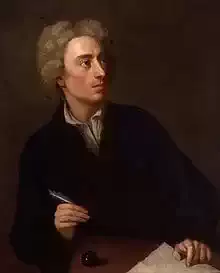
Alexander Pope
In Imitation of E. of Dorset : Artemisia
In Imitation of E. of Dorset : Artemisia
Tho' Artemisia talks, by fits,
Of councils, classics, fathers, wits;
Reads Malbranche, Boyle, and Locke;
Yet in some things methinks she fails,
'Twere well if she would pare her nails,
And wear a cleaner smock.
Haughty and huge as High-Dutch bride,
Such nastiness, and so much pride
Are oddly join'd by fate:
On her large squab you find her spread,
Like a fat corpse upon a bed,
That lies and stinks in state.
She wears no colours (sign of grace)
On any part except her face;
All white and black beside:
Dauntless her look, her gesture proud,
Her voice theatrically loud,
And masculine her stride.
So have I seen, in black and white
A prating thing, a Magpye hight,
Majestically stalk;
A stately, worthless animal,
That plies the tongue, and wags the tail,
All flutter, pride, and talk.
Tho' Artemisia talks, by fits,
Of councils, classics, fathers, wits;
Reads Malbranche, Boyle, and Locke;
Yet in some things methinks she fails,
'Twere well if she would pare her nails,
And wear a cleaner smock.
Haughty and huge as High-Dutch bride,
Such nastiness, and so much pride
Are oddly join'd by fate:
On her large squab you find her spread,
Like a fat corpse upon a bed,
That lies and stinks in state.
She wears no colours (sign of grace)
On any part except her face;
All white and black beside:
Dauntless her look, her gesture proud,
Her voice theatrically loud,
And masculine her stride.
So have I seen, in black and white
A prating thing, a Magpye hight,
Majestically stalk;
A stately, worthless animal,
That plies the tongue, and wags the tail,
All flutter, pride, and talk.
252
Previous
Page 6