

Poems
Pride
Poems in this topic
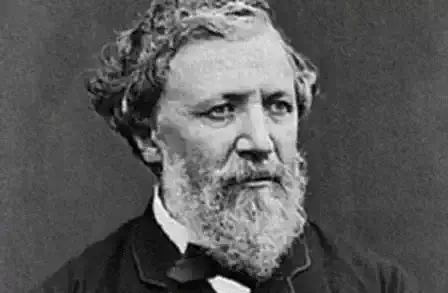
Robert Browning
Bishop Blougram's Apology
Bishop Blougram's Apology
NO more wine? then we'll push back chairs and talk.
A final glass for me, though: cool, i' faith!
We ought to have our Abbey back, you see.
It's different, preaching in basilicas,
And doing duty in some masterpiece
Like this of brother Pugin's, bless his heart!
I doubt if they're half baked, those chalk rosettes,
Ciphers and stucco-twiddlings everywhere;
It's just like breathing in a lime-kiln: eh?
These hot long ceremonies of our church
Cost us a little--oh, they pay the price,
You take me--amply pay it! Now, we'll talk.
So, you despise me, Mr. Gigadibs.
No deprecation,--nay, I beg you, sir!
Beside 't is our engagement: don't you know,
I promised, if you'd watch a dinner out,
We'd see truth dawn together?--truth that peeps
Over the glasses' edge when dinner's done,
And body gets its sop and holds its noise
And leaves soul free a little. Now's the time:
'T is break of day! You do despise me then.
And if I say, "despise me,"--never fear!
I know you do not in a certain sense--
Not in my arm-chair, for example: here,
I well imagine you respect my place
( Status, entourage , worldly circumstance)
Quite to its value--very much indeed:
--Are up to the protesting eyes of you
In pride at being seated here for once--
You'll turn it to such capital account!
When somebody, through years and years to come,
Hints of the bishop,--names me--that's enough:
"Blougram? I knew him"--(into it you slide)
"Dined with him once, a Corpus Christi Day,
"All alone, we two; he's a clever man:
"And after dinner,--why, the wine you know,--
"Oh, there was wine, and good!--what with the wine . .
"'Faith, we began upon all sorts of talk!
"He's no bad fellow, Blougram; he had seen
"Something of mine he relished, some review:
"He's quite above their humbug in his heart,
"Half-said as much, indeed--the thing's his trade.
"I warrant, Blougram's sceptical at times:
"How otherwise? I liked him, I confess!"
Che che , my dear sir, as we say at Rome,
Don't you protest now! It's fair give and take;
You have had your turn and spoken your home-truths:
The hand's mine now, and here you follow suit.
Thus much conceded, still the first fact stays--
You do despise me; your ideal of life
Is not the bishop's: you would not be I.
You would like better to be Goethe, now,
Or Buonaparte, or, bless me, lower still,
Count D'Orsay,--so you did what you preferred,
Spoke as you thought, and, as you cannot help,
Believed or disbelieved, no matter what,
So long as on that point, whate'er it was,
You loosed your mind, were whole and sole yourself.
--That, my ideal never can include,
Upon that element of truth and worth
Never be based! for say they make me Pope--
(They can't--suppose it for our argument!)
Why, there I'm at my tether's end, I've reached
My height, and not a height which pleases you:
An unbelieving Pope won't do, you say.
It's like those eerie stories nurses tell,
Of how some actor on a stage played Death,
With pasteboard crown, sham orb and tinselled dart,
And called himself the monarch of the world;
Then, going in the tire-room afterward,
Because the play was done, to shift himself,
Got touched upon the sleeve familiarly,
The moment he had shut the closet door,
By Death himself. Thus God might touch a Pope
At unawares, ask what his baubles mean,
And whose part he presumed to play just now?
Best be yourself, imperial, plain and true!
So, drawing comfortable breath again,
You weigh and find, whatever more or less
I boast of my ideal realized,
Is nothing in the balance when opposed
To your ideal, your grand simple life,
Of which you will not realize one jot.
I am much, you are nothing; you would be all,
I would be merely much: you beat me there.
No, friend, you do not beat me: hearken why!
The common problem, yours, mine, every one's,
Is--not to fancy what were fair in life
Provided it could be,--but, finding first
What may be, then find how to make it fair
Up to our means: a very different thing!
No abstract intellectual plan of life
Quite irrespective of life's plainest laws,
But one, a man, who is man and nothing more,
May lead within a world which (by your leave)
Is Rome or London, not Fool's-paradise.
Embellish Rome, idealize away,
Make paradise of London if you can,
You're welcome, nay, you're wise.
A simile!
We mortals cross the ocean of this world
Each in his average cabin of a life;
The best's not big, the worst yields elbow-room.
Now for our six months' voyage--how prepare?
You come on shipboard with a landsman's list
Of things he calls convenient: so they are!
An India screen is pretty furniture,
A piano-forte is a fine resource,
All Balzac's novels occupy one shelf,
The new edition fifty volumes long;
And little Greek books, with the funny type
They get up well at Leipsic, fill the next:
Go on! slabbed marble, what a bath it makes!
And Parma's pride, the Jerome, let us add!
'T were pleasant could Correggio's fleeting glow
Hang full in face of one where'er one roams,
Since he more than the others brings with him
Italy's self,--the marvellous Modenese!--
Yet was not on your list before, perhaps.
--Alas, friend, here's the agent . . . is't the name?
The captain, or whoever's master here--
You see him screw his face up; what's his cry
Ere you set foot on shipboard? "Six feet square!"
If you won't understand what six feet mean,
Compute and purchase stores accordingly--
And if, in pique because he overhauls
Your Jerome, piano, bath, you come on board
Bare--why, you cut a figure at the first
While sympathetic landsmen see you off;
Not afterward, when long ere half seas over,
You peep up from your utterly naked boards
Into some snug and well-appointed berth,
Like mine for instance (try the cooler jug--
Put back the other, but don't jog the ice!)
And mortified you mutter "Well and good;
"He sits enjoying his sea-furniture;
"'T is stout and proper, and there's store of it:
"Though I've the better notion, all agree,
"Of fitting rooms up. Hang the carpenter,
"Neat ship-shape fixings and contrivances--
"I would have brought my Jerome, frame and all!"
And meantime you bring nothing: never mind--
You've proved your artist-nature: what you don't
You might bring, so despise me, as I say.
Now come, let's backward to the starting-place.
See my way: we're two college friends, suppose.
Prepare together for our voyage, then;
Each note and check the other in his work,--
Here's mine, a bishop's outfit; criticize!
What's wrong? why won't you be a bishop too?
Why first, you don't believe, you don't and can't,
(Not statedly, that is, and fixedly
And absolutely and exclusively)
In any revelation called divine.
No dogmas nail your faith; and what remains
But say so, like the honest man you are?
First, therefore, overhaul theology!
Nay, I too, not a fool, you please to think,
Must find believing every whit as hard:
And if I do not frankly say as much,
The ugly consequence is clear enough.
Now wait, my friend: well, I do not believe--
If you'll accept no faith that is not fixed,
Absolute and exclusive, as you say.
You're wrong--I mean to prove it in due time.
Meanwhile, I know where difficulties lie
I could not, cannot solve, nor ever shall,
So give up hope accordingly to solve--
(To you, and over the wine). Our dogmas then
With both of us, though in unlike degree,
Missing full credence--overboard with them!
I mean to meet you on your own premise:
Good, there go mine in company with yours!
And now what are we? unbelievers both,
Calm and complete, determinately fixed
To-day, to-morrow and for ever, pray?
You'll guarantee me that? Not so, I think!
In no wise! all we've gained is, that belief,
As unbelief before, shakes us by fits,
Confounds us like its predecessor. Where's
The gain? how can we guard our unbelief,
Make it bear fruit to us?--the problem here.
Just when we are safest, there's a sunset-touch,
A fancy from a flower-bell, some one's death,
A chorus-ending from Euripides,--
And that's enough for fifty hopes and fears
As old and new at once as nature's self,
To rap and knock and enter in our soul,
Take hands and dance there, a fantastic ring,
Round the ancient idol, on his base again,--
The grand Perhaps! We look on helplessly.
There the old misgivings, crooked questions are--
This good God,--what he could do, if he would,
Would, if he could--then must have done long since:
If so, when, where and how? some way must be,--
Once feel about, and soon or late you hit
Some sense, in which it might be, after all.
Why not, "The Way, the Truth, the Life?"
--That way
Over the mountain, which who stands upon
Is apt to doubt if it be meant for a road;
While, if he views it from the waste itself,
Up goes the line there, plain from base to brow,
Not vague, mistakeable! what's a break or two
Seen from the unbroken desert either side?
And then (to bring in fresh philosophy)
What if the breaks themselves should prove at last
The most consummate of contrivances
To train a man's eye, teach him what is faith?
And so we stumble at truth's very test!
All we have gained then by our unbelief
Is a life of doubt diversified by faith,
For one of faith diversified by doubt:
We called the chess-board white,--we call it black.
"Well," you rejoin, "the end's no worse, at least;
"We've reason for both colours on the board:
"Why not confess then, where I drop the faith
"And you the doubt, that I'm as right as you?"
Because, friend, in the next place, this being so,
And both things even,--faith and unbelief
Left to a man's choice,--we'll proceed a step,
Returning to our image, which I like.
A man's choice, yes--but a cabin-passenger's--
The man made for the special life o' the world--
Do you forget him? I remember though!
Consult our ship's conditions and you find
One and but one choice suitable to all;
The choice, that you unluckily prefer,
Turning things topsy-turvy--they or it
Going to the ground. Belief or unbelief
Bears upon life, determines its whole course,
Begins at its beginning. See the world
Such as it is,--you made it not, nor I;
I mean to take it as it is,--and you,
Not so you'll take it,--though you get nought else.
I know the special kind of life I like,
What suits the most my idiosyncrasy,
Brings out the best of me and bears me fruit
In power, peace, pleasantness and length of days.
I find that positive belief does this
For me, and unbelief, no whit of this.
--For you, it does, however?--that, we'll try!
'T is clear, I cannot lead my life, at least,
Induce the world to let me peaceably,
Without declaring at the outset, "Friends,
"I absolutely and peremptorily
"Believe!"--I say, faith is my waking life:
One sleeps, indeed, and dreams at intervals,
We know, but waking's the main point with us
And my provision's for life's waking part.
Accordingly, I use heart, head and hand
All day, I build, scheme, study, and make friends;
And when night overtakes me, down I lie,
Sleep, dream a little, and get done with it,
The sooner the better, to begin afresh.
What's midnight doubt before the dayspring's faith?
You, the philosopher, that disbelieve,
That recognize the night, give dreams their weight--
To be consistent you should keep your bed,
Abstain from healthy acts that prove you man,
For fear you drowse perhaps at unawares!
And certainly at night you'll sleep and dream,
Live through the day and bustle as you please.
And so you live to sleep as I to wake,
To unbelieve as I to still believe?
Well, and the common sense o' the world calls you
Bed-ridden,--and its good things come to me.
Its estimation, which is half the fight,
That's the first-cabin comfort I secure:
The next . . . but you perceive with half an eye!
Come, come, it's best believing, if we may;
You can't but own that!
Next, concede again,
If once we choose belief, on all accounts
We can't be too decisive in our faith,
Conclusive and exclusive in its terms,
To suit the world which gives us the good things.
In every man's career are certain points
Whereon he dares not be indifferent;
The world detects him clearly, if he dare,
As baffled at the game, and losing life.
He may care little or he may care much
For riches, honour, pleasure, work, repose,
Since various theories of life and life's
Success are extant which might easily
Comport with either estimate of these;
And whoso chooses wealth or poverty,
Labour or quiet, is not judged a fool
Because his fellow would choose otherwise:
We let him choose upon his own account
So long as he's consistent with his choice.
But certain points, left wholly to himself,
When once a man has arbitrated on,
We say he must succeed there or go hang.
Thus, he should wed the woman he loves most
Or needs most, whatsoe'er the love or need--
For he can't wed twice. Then, he must avouch,
Or follow, at the least, sufficiently,
The form of faith his conscience holds the best,
Whate'er the process of conviction was:
For nothing can compensate his mistake
On such a point, the man himself being judge:
He cannot wed twice, nor twice lose his soul.
Well now, there's one great form of Christian faith
I happened to be born in--which to teach
Was given me as I grew up, on all hands,
As best and readiest means of living by;
The same on examination being proved
The most pronounced moreover, fixed, precise
And absolute form of faith in the whole world--
Accordingly, most potent of all forms
For working on the world. Observe, my friend!
Such as you know me, I am free to say,
In these hard latter days which hamper one,
Myself--by no immoderate exercise
Of intellect and learning, but the tact
To let external forces work for me,
--Bid the street's stones be bread and they are bread;
Bid Peter's creed, or rather, Hildebrand's,
Exalt me o'er my fellows in the world
And make my life an ease and joy and pride;
It does so,--which for me's a great point gained,
Who have a soul and body that exact
A comfortable care in many ways.
There's power in me and will to dominate
Which I must exercise, they hurt me else:
In many ways I need mankind's respect,
Obedience, and the love that's born of fear:
While at the same time, there's a taste I have,
A toy of soul, a titillating thing,
Refuses to digest these dainties crude.
The naked life is gross till clothed upon:
I must take what men offer, with a grace
As though I would not, could I help it, take!
An uniform I wear though over-rich--
Something imposed on me, no choice of mine;
No fancy-dress worn for pure fancy's sake
And despicable therefore! now folk kneel
And kiss my hand--of course the Church's hand.
Thus I am made, thus life is best for me,
And thus that it should be I have procured;
And thus it could not be another way,
I venture to imagine.
You'll reply,
So far my choice, no doubt, is a success;
But were I made of better elements,
With nobler instincts, purer tastes, like you,
I hardly would account the thing success
Though it did all for me I say.
But, friend,
We speak of what is; not of what might be,
And how't were better if't were otherwise.
I am the man you see here plain enough:
Grant I'm a beast, why, beasts must lead beasts' lives!
Suppose I own at once to tail and claws;
The tailless man exceeds me: but being tailed
I'll lash out lion fashion, and leave apes
To dock their stump and dress their haunches up.
My business is not to remake myself,
But make the absolute best of what God made.
Or--our first simile--though you prove me doomed
To a viler berth still, to the steerage-hole,
The sheep-pen or the pig-stye, I should strive
To make what use of each were possible;
And as this cabin gets upholstery,
That hutch should rustle with sufficient straw.
But, friend, I don't acknowledge quite so fast
I fail of all your manhood's lofty tastes
Enumerated so complacently,
On the mere ground that you forsooth can find
In this particular life I choose to lead
No fit provision for them. Can you not?
Say you, my fault is I address myself
To grosser estimators than should judge?
And that's no way of holding up the soul,
Which, nobler, needs men's praise perhaps, yet knows
One wise man's verdict outweighs all the fools'--
Would like the two, but, forced to choose, takes that.
I pine among my million imbeciles
(You think) aware some dozen men of sense
Eye me and know me, whether I believe
In the last winking Virgin, as I vow,
And am a fool, or disbelieve in her
And am a knave,--approve in neither case,
Withhold their voices though I look their way:
Like Verdi when, at his worst opera's end
(The thing they gave at Florence,--what's its name?)
While the mad houseful's plaudits near out-bang
His orchestra of salt-box, tongs and bones,
He looks through all the roaring and the wreaths
Where sits Rossini patient in his stall.
Nay, friend, I meet you with an answer here--
That even your prime men who appraise their kind
Are men still, catch a wheel within a wheel,
See more in a truth than the truth's simple self,
Confuse themselves. You see lads walk the street
Sixty the minute; what's to note in that?
You see one lad o'erstride a chimney-stack;
Him you must watch--he's sure to fall, yet stands!
Our interest's on the dangerous edge of things.
The honest thief, the tender murderer,
The superstitious atheist, demirep
That loves and saves her soul in new French books--
We watch while these in equilibrium keep
The giddy line midway: one step aside,
They're classed and done with. I, then, keep the line
Before your sages,--just the men to shrink
From the gross weights, coarse scales and labels broad
You offer their refinement. Fool or knave?
Why needs a bishop be a fool or knave
When there's a thousand diamond weights between?
So, I enlist them. Your picked twelve, you'll find,
Profess themselves indignant, scandalized
At thus being held unable to explain
How a superior man who disbelieves
May not believe as well: that's Schelling's way!
It's through my coming in the tail of time,
Nicking the minute with a happy tact.
Had I been born three hundred years ago
They'd say, "What's strange? Blougram of course believes;"
And, seventy years since, "disbelieves of course."
But now, "He may believe; and yet, and yet
"How can he?" All eyes turn with interest.
Whereas, step off the line on either side--
You, for example, clever to a fault,
The rough and ready man who write apace,
Read somewhat seldomer, think perhaps even less--
You disbelieve! Who wonders and who cares?
Lord So-and-so--his coat bedropped with wax,
All Peter's chains about his waist, his back
Brave with the needlework of Noodledom--
Believes! Again, who wonders and who cares?
But I, the man of sense and learning too,
The able to think yet act, the this, the that,
I, to believe at this late time of day!
Enough; you see, I need not fear contempt.
--Except it's yours! Admire me as these may,
You don't. But whom at least do you admire?
Present your own perfection, your ideal,
Your pattern man for a minute--oh, make haste
Is it Napoleon you would have us grow?
Concede the means; allow his head and hand,
(A large concession, clever as you are)
Good! In our common primal element
Of unbelief (we can't believe, you know--
We're still at that admission, recollect!)
Where do you find--apart from, towering o'er
The secondary temporary aims
Which satisfy the gross taste you despise--
Where do you find his star?--his crazy trust
God knows through what or in what? it's alive
And shines and leads him, and that's all we want.
Have we aught in our sober night shall point
Such ends as his were, and direct the means
Of working out our purpose straight as his,
Nor bring a moment's trouble on success
With after-care to justify the same?
--Be a Napoleon, and yet disbelieve--
Why, the man's mad, friend, take his light away!
What's the vague good o' the world, for which you dare
With comfort to yourself blow millions up?
We neither of us see it! we do see
The blown-up millions--spatter of their brains
And writhing of their bowels and so forth,
In that bewildering entanglement
Of horrible eventualities
Past calculation to the end of time!
Can I mistake for some clear word of God
(Which were my ample warrant for it all)
His puff of hazy instinct, idle talk,
"The State, that's I," quack-nonsense about crowns,
And (when one beats the man to his last hold)
A vague idea of setting things to rights,
Policing people efficaciously,
More to their profit, most of all to his own;
The whole to end that dismallest of ends
By an Austrian marriage, cant to us the Church,
And resurrection of the old régime ?
Would I, who hope to live a dozen years,
Fight Austerlitz for reasons such and such?
No: for, concede me but the merest chance
Doubt may be wrong--there's judgment, life to come!
With just that chance, I dare not. Doubt proves right?
This present life is all?--you offer me
Its dozen noisy years, without a chance
That wedding an archduchess, wearing lace,
And getting called by divers new-coined names,
Will drive off ugly thoughts and let me dine,
Sleep, read and chat in quiet as I like!
Therefore I will not.
Take another case;
Fit up the cabin yet another way.
What say you to the poets? shall we write
Hamlet, Othello--make the world our own,
Without a risk to run of either sort?
I can't--to put the strongest reason first.
"But try," you urge, "the trying shall suffice;
"The aim, if reached or not, makes great the life:
"Try to be Shakespeare, leave the rest to fate!"
Spare my self-knowledge--there's no fooling me!
If I prefer remaining my poor self,
I say so not in self-dispraise but praise.
If I'm a Shakespeare, let the well alone;
Why should I try to be what now I am?
If I'm no Shakespeare, as too probable,--
His power and consciousness and self-delight
And all we want in common, shall I find--
Trying for ever? while on points of taste
Wherewith, to speak it humbly, he and I
Are dowered alike--I'll ask you, I or he,
Which in our two lives realizes most?
Much, he imagined--somewhat, I possess.
He had the imagination; stick to that!
Let him say, "In the face of my soul's works
"Your world is worthless and I touch it not
"Lest I should wrong them"--I'll withdraw my plea.
But does he say so? look upon his life!
Himself, who only can, gives judgment there.
He leaves his towers and gorgeous palaces
To build the trimmest house in Stratford town;
Saves money, spends it, owns the worth of things,
Giulio Romano's pictures, Dowland's lute;
Enjoys a show, respects the puppets, too,
And none more, had he seen its entry once,
Than "Pandulph, of fair Milan cardinal."
Why then should I who play that personage,
The very Pandulph Shakespeare's fancy made,
Be told that had the poet chanced to start
From where I stand now (some degree like mine
Being just the goal he ran his race to reach)
He would have run the whole race back, forsooth,
And left being Pandulph, to begin write plays?
Ah, the earth's best can be but the earth's best!
Did Shakespeare live, he could but sit at home
And get himself in dreams the Vatican,
Greek busts, Venetian paintings, Roman walls,
And English books, none equal to his own,
Which I read, bound in gold (he never did).
--Terni's fall, Naples' bay and Gothard's top--
Eh, friend? I could not fancy one of these;
But, as I pour this claret, there they are:
I've gained them--crossed St. Gothard last July
With ten mules to the carriage and a bed
Slung inside; is my hap the worse for that?
We want the same things, Shakespeare and myself,
And what I want, I have: he, gifted more,
Could fancy he too had them when he liked,
But not so thoroughly that, if fate allowed,
He would not have them also in my sense.
We play one game; I send the ball aloft
No less adroitly that of fifty strokes
Scarce five go o'er the wall so wide and high
Which sends them back to me: I wish and get
He struck balls higher and with better skill,
But at a poor fence level with his head,
And hit--his Stratford house, a coat of arms,
Successful dealings in his grain and wool,--
While I receive heaven's incense in my nose
And style myself the cousin of Queen Bess.
Ask him, if this life's all, who wins the game?
Believe--and our whole argument breaks up.
Enthusiasm's the best thing, I repeat;
Only, we can't command it; fire and life
Are all, dead matter's nothing, we agree:
And be it a mad dream or God's very breath,
The fact's the same,--belief's fire, once in us,
Makes of all else mere stuff to show itself:
We penetrate our life with such a glow
As fire lends wood and iron--this turns steel,
That burns to ash--all's one, fire proves its power
For good or ill, since men call flare success.
But paint a fire, it will not therefore burn.
Light one in me, I'll find it food enough!
Why, to be Luther--that's a life to lead,
Incomparably better than my own.
He comes, reclaims God's earth for God, he says,
Sets up God's rule again by simple means,
Re-opens a shut book, and all is done.
He flared out in the flaring of mankind;
Such Luther's luck was: how shall such be mine?
If he succeeded, nothing's left to do:
And if he did not altogether--well,
Strauss is the next advance. All Strauss should be
I might be also. But to what result?
He looks upon no future: Luther did.
What can I gain on the denying side?
Ice makes no conflagration. State the facts,
Read the text right, emancipate the world--
The emancipated world enjoys itself
With scarce a thank-you: Blougram told it first
It could not owe a farthing,--not to him
More than Saint Paul! 't would press its pay, you think?
Then add there's still that plaguy hundredth chance
Strauss may be wrong. And so a risk is run--
For what gain? not for Luther's, who secured
A real heaven in his heart throughout his life,
Supposing death a little altered things.
"Ay, but since really you lack faith," you cry,
"You run the same risk really on all sides,
"In cool indifference as bold unbelief.
"As well be Strauss as swing 'twixt Paul and him.
"It's not worth having, such imperfect faith,
"No more available to do faith's work
"Than unbelief like mine. Whole faith, or none!"
Softly, my friend! I must dispute that point
Once own the use of faith, I'll find you faith.
We're back on Christian ground. You call for faith:
I show you doubt, to prove that faith exists.
The more of doubt, the stronger faith, I say,
If faith o'ercomes doubt. How I know it does?
By life and man's free will, God gave for that!
To mould life as we choose it, shows our choice:
That's our one act, the previous work's his own.
You criticize the soul? it reared this tree--
This broad life and whatever fruit it bears!
What matter though I doubt at every pore,
Head-doubts, heart-doubts, doubts at my fingers' ends,
Doubts in the trivial work of every day,
Doubts at the very bases of my soul
In the grand moments when she probes herself--
If finally I have a life to show,
The thing I did, brought out in evidence
Against the thing done to me underground
By hell and all its brood, for aught I know?
I say, whence sprang this? shows it faith or doubt?
All's doubt in me; where's break of faith in this?
It is the idea, the feeling and the love,
God means mankind should strive for and show forth
Whatever be the process to that end,--
And not historic knowledge, logic sound,
And metaphysical acumen, sure!
"What think ye of Christ," friend? when all's done and said,
Like you this Christianity or not?
It may be false, but will you wish it true?
Has it your vote to be so if it can?
Trust you an instinct silenced long ago
That will break silence and enjoin you love
What mortified philosophy is hoarse,
And all in vain, with bidding you despise?
If you desire faith--then you've faith enough:
What else seeks God--nay, what else seek ourselves?
You form a notion of me, we'll suppose,
On hearsay; it's a favourable one:
"But still" (you add), "there was no such good man,
"Because of contradiction in the facts.
"One proves, for instance, he was born in Rome,
"This Blougram; yet throughout the tales of him
"I see he figures as an Englishman."
Well, the two things are reconcileable.
But would I rather you discovered that,
Subjoining--"Still, what matter though they be?
"Blougram concerns me nought, born here or there."
Pure faith indeed--you know not what you ask!
Naked belief in God the Omnipotent,
Omniscient, Omnipresent, sears too much
The sense of conscious creatures to be borne.
It were the seeing him, no flesh shall dare
Some think, Creation's meant to show him forth:
I say it's meant to hide him all it can,
And that's what all the blessed evil's for.
Its use in Time is to environ us,
Our breath, our drop of dew, with shield enough
Against that sight till we can bear its stress.
Under a vertical sun, the exposed brain
And lidless eye and disemprisoned heart
Less certainly would wither up at once
Than mind, confronted with the truth of him.
But time and earth case-harden us to live;
The feeblest sense is trusted most; the child
Feels God a moment, ichors o'er the place,
Plays on and grows to be a man like us.
With me, faith means perpetual unbelief
Kept quiet like the snake 'neath Michael's foot
Who stands calm just because he feels it writhe.
Or, if that's too ambitious,--here's my box--
I need the excitation of a pinch
Threatening the torpor of the inside-nose
Nigh on the imminent sneeze that never comes.
"Leave it in peace" advise the simple folk:
Make it aware of peace by itching-fits,
Say I--let doubt occasion still more faith!
You'll say, once all believed, man, woman, child,
In that dear middle-age these noodles praise.
How you'd exult if I could put you back
Six hundred years, blot out cosmogony,
Geology, ethnology, what not
(Greek endings, each the little passing-bell
That signifies some faith's about to die),
And set you square with Genesis again,--
When such a traveller told you his last news,
He saw the ark a-top of Ararat
But did not climb there since 't was getting dusk
And robber-bands infest the mountain's foot!
How should you feel, I ask, in such an age,
How act? As other people felt and did;
With soul more blank than this decanter's knob,
Believe--and yet lie, kill, rob, fornicate
Full in belief's face, like the beast you'd be!
No, when the fight begins within himself,
A man's worth something. God stoops o'er his head,
Satan looks up between his feet--both tug--
He's left, himself, i' the middle: the soul wakes
And grows. Prolong that battle through his life!
Never leave growing till the life to come!
Here, we've got callous to the Virgin's winks
That used to puzzle people wholesomely:
Men have outgrown the shame of being fools.
What are the laws of nature, not to bend
If the Church bid them?--brother Newman asks.
Up with the Immaculate Conception, then--
On to the rack with faith!--is my advice.
Will not that hurry us upon our knees,
Knocking our breasts, "It can't be--yet it shall!
"Who am I, the worm, to argue with my Pope?
"Low things confound the high things!" and so forth.
That's better than acquitting God with grace
As some folk do. He's tried--no case is proved,
Philosophy is lenient--he may go!
You'll say, the old system's not so obsolete
But men believe still: ay, but who and where?
King Bomba's lazzaroni foster yet
The sacred flame, so Antonelli writes;
But even of these, what ragamuffin-saint
Believes God watches him continually,
As he believes in fire that it will burn,
Or rain that it will drench him? Break fire's law,
Sin against rain, although the penalty
Be just a singe or soaking? "No," he smiles;
"Those laws are laws that can enforce themselves."
The sum of all is--yes, my doubt is great,
My faith's still greater, then my faith's enough.
I have read much, thought much, experienced much,
Yet would die rather than avow my fear
The Naples' liquefaction may be false,
When set to happen by the palace-clock
According to the clouds or dinner-time.
I hear you recommend, I might at least
Eliminate, decrassify my faith
Since I adopt it; keeping what I must
And leaving what I can--such points as this.
I won't--that is, I can't throw one away.
Supposing there's no truth in what I hold
About the need of trial to man's faith,
Still, when you bid me purify the same,
To such a process I discern no end.
Clearing off one excrescence to see two,
There's ever a next in size, now grown as big,
That meets the knife: I cut and cut again!
First cut the Liquefaction, what comes last
But Fichte's clever cut at God himself?
Experimentalize on sacred things!
I trust nor hand nor eye nor heart nor brain
To stop betimes: they all get drunk alike.
The first step, I am master not to take.
You'd find the cutting-process to your taste
As much as leaving growths of lies unpruned,
Nor see more danger in it,--you retort.
Your taste's worth mine; but my taste proves more wise
When we consider that the steadfast hold
On the extreme end of the chain of faith
Gives all the advantage, makes the difference
With the rough purblind mass we seek to rule:
We are their lords, or they are free of us,
Just as we tighten or relax our hold.
So, others matters equal, we'll revert
To the first problem--which, if solved my way
And thrown into the balance, turns the scale--
How we may lead a comfortable life,
How suit our luggage to the cabin's size.
Of course you are remarking all this time
How narrowly and grossly I view life,
Respect the creature-comforts, care to rule
The masses, and regard complacently
"The cabin," in our old phrase. Well, I do.
I act for, talk for, live for this world now,
As this world prizes action, life and talk:
No prejudice to what next world may prove,
Whose new laws and requirements, my best pledge
To observe then, is that I observe these now,
Shall do hereafter what I do meanwhile.
Let us concede (gratuitously though)
Next life relieves the soul of body, yields
Pure spiritual enjoyment: well, my friend,
Why lose this life i' the meantime, since its use
May be to make the next life more intense?
Do you know, I have often had a dream
(Work it up in your next month's article)
Of man's poor spirit in its progress, still
Losing true life for ever and a day
Through ever trying to be and ever being--
In the evolution of successive spheres--
Before its actual sphere and place of life,
Halfway into the next, which having reached,
It shoots with corresponding foolery
Halfway into the next still, on and off!
As when a traveller, bound from North to South,
Scouts fur in Russia: what's its use in France?
In France spurns flannel: where's its need in Spain?
In Spain drops cloth, too cumbrous for Algiers!
Linen goes next, and last the skin itself,
A superfluity at Timbuctoo.
When, through his journey, was the fool at ease?
I'm at ease now, friend; worldly in this world,
I take and like its way of life; I think
My brothers, who administer the means,
Live better for my comfort--that's good too;
And God, if he pronounce upon such life,
Approves my service, which is better still.
If he keep silence,--why, for you or me
Or that brute beast pulled-up in to-day's "Times,"
What odds is't, save to ourselves, what life we lead?
You meet me at this issue: you declare,--
All special-pleading done with--truth is truth,
And justifies itself by undreamed ways.
You don't fear but it's better, if we doubt,
To say so, act up to our truth perceived
However feebly. Do then,--act away!
'T is there I'm on the watch for you. How one acts
Is, both of us agree, our chief concern:
And how you'll act is what I fain would see
If, like the candid person you appear,
You dare to make the most of your life's scheme
As I of mine, live up to its full law
Since there's no higher law that counterchecks.
Put natural religion to the test
You've just demolished the revealed with--quick,
Down to the root of all that checks your will,
All prohibition to lie, kill and thieve,
Or even to be an atheistic priest!
Suppose a pricking to incontinence--
Philosophers deduce you chastity
Or shame, from just the fact that at the first
Whoso embraced a woman in the field,
Threw club down and forewent his brains beside,
So, stood a ready victim in the reach
Of any brother savage, club in hand;
Hence saw the use of going out of sight
In wood or cave to prosecute his loves:
I read this in a French book t' other day.
Does law so analysed coerce you much?
Oh, men spin clouds of fuzz where matters end,
But you who reach where the first thread begins,
You'll soon cut that!--which means you can, but won't,
Through certain instincts, blind, unreasoned-out,
You dare not set aside, you can't tell why,
But there they are, and so you let them rule.
Then, friend, you seem as much a slave as I,
A liar, conscious coward and hypocrite,
Without the good the slave expects to get,
In case he has a master after all!
You own your instincts? why, what else do I,
Who want, am made for, and must have a God
Ere I can be aught, do aught?--no mere name
Want, but the true thing with what proves its truth,
To wit, a relation from that thing to me,
Touching from head to foot--which touch I feel,
And with it take the rest, this life of ours!
I live my life here; yours you dare not live.
--Not as I state it, who (you please subjoin)
Disfigure such a life and call it names,
While, to your mind, remains another way
For simple men: knowledge and power have rights,
But ignorance and weakness have rights too.
There needs no crucial effort to find truth
If here or there or anywhere about:
We ought to turn each side, try hard and see,
And if we can't, be glad we've earned at least
The right, by one laborious proof the more,
To graze in peace earth's pleasant pasturage.
Men are not angels, neither are they brutes:
Something we may see, all we cannot see.
What need of lying? I say, I see all,
And swear to each detail the most minute
In what I think a Pan's face--you, mere cloud:
I swear I hear him speak and see him wink,
For fear, if once I drop the emphasis,
Mankind may doubt there's any cloud at all.
You take the simple life--ready to see,
Willing to see (for no cloud's worth a face)--
And leaving quiet what no strength can move,
And which, who bids you move? who has the right?
I bid you; but you are God's sheep, not mine:
" Pastor est tui Dominus ." You find
In this the pleasant pasture of our life
Much you may eat without the least offence,
Much you don't eat because your maw objects,
Much you would eat but that your fellow-flock
Open great eyes at you and even butt,
And thereupon you like your mates so well
You cannot please yourself, offending them;
Though when they seem exorbitantly sheep,
You weigh your pleasure with their butts and bleats
And strike the balance. Sometimes certain fears
Restrain you, real checks since you find them so;
Sometimes you please yourself and nothing checks:
And thus you graze through life with not one lie,
And like it best.
But do you, in truth's name?
If so, you beat--which means you are not I--
Who needs must make earth mine and feed my fill
Not simply unbutted at, unbickered with,
But motioned to the velvet of the sward
By those obsequious wethers' very selves.
Look at me, sir; my age is double yours:
At yours, I knew beforehand, so enjoyed,
What now I should be--as, permit the word,
I pretty well imagine your whole range
And stretch of tether twenty years to come.
We both have minds and bodies much alike:
In truth's name, don't you want my bishopric,
My daily bread, my influence and my state?
You're young. I'm old; you must be old one day;
Will you find then, as I do hour by hour,
Women their lovers kneel to, who cut curls
From your fat lap-dog's ear to grace a brooch--
Dukes, who petition just to kiss your ring--
With much beside you know or may conceive?
Suppose we die to-night: well, here am I,
Such were my gains, life bore this fruit to me,
While writing all the same my articles
On music, poetry, the fictile vase
Found at Albano, chess, Anacreon's Greek.
But you--the highest honour in your life,
The thing you'll crown yourself with, all your days,
Is--dining here and drinking this last glass
I pour you out in sign of amity
Before we part for ever. Of your power
And social influence, worldly worth in short,
Judge what's my estimation by the fact,
I do not condescend to enjoin, beseech,
Hint secrecy on one of all these words!
You're shrewd and know that should you publish one
The world would brand the lie--my enemies first,
Who'd sneer--"the bishop's an arch-hypocrite
"And knave perhaps, but not so frank a fool."
Whereas I should not dare for both my ears
Breathe one such syllable, smile one such smile,
Before the chaplain who reflects myself--
My shade's so much more potent than your flesh.
What's your reward, self-abnegating friend?
Stood you confessed of those exceptional
And privileged great natures that dwarf mine--
A zealot with a mad ideal in reach,
A poet just about to print his ode,
A statesman with a scheme to stop this war,
An artist whose religion is his art--
I should have nothing to object: such men
Carry the fire, all things grow warm to them,
Their drugget's worth my purple, they beat me.
But you,--you're just as little those as I--
You, Gigadibs, who, thirty years of age,
Write statedly for Blackwood's Magazine,
Believe you see two points in Hamlet's soul
Unseized by the Germans yet--which view you'll print--
Meantime the best you have to show being still
That lively lightsome article we took
Almost for the true Dickens,--what's its name?
"The Slum and Cellar, or Whitechapel life
"Limned after dark!" it made me laugh, I know,
And pleased a month, and brought you in ten pounds.
--Success I recognize and compliment,
And therefore give you, if you choose, three words
(The card and pencil-scratch is quite enough)
Which whether here, in Dublin or New York,
Will get you, prompt as at my eyebrow's wink,
Such terms as never you aspired to get
In all our own reviews and some not ours.
Go write your lively sketches! be the first
"Blougram, or The Eccentric Confidence"--
Or better simply say, "The Outward-bound."
Why, men as soon would throw it in my teeth
As copy and quote the infamy chalked broad
About me on the church-door opposite.
You will not wait for that experience though,
I fancy, howsoever you decide,
To discontinue--not detesting, not
Defaming, but at least--despising me!
Over his wine so smiled and talked his hour
Sylvester Blougram, styled in partibus
Episcopus, nec non --(the deuce knows what
It's changed to by our novel hierarchy)
With Gigadibs the literary man,
Who played with spoons, explored his plate's design,
And ranged the olive-stones about its edge,
While the great bishop rolled him out a mind
Long crumpled, till creased consciousness lay smooth.
For Blougram, he believed, say, half he spoke.
The other portion, as he shaped it thus
For argumentatory purposes,
He felt his foe was foolish to dispute.
Some arbitrary accidental thoughts
That crossed his mind, amusing because new,
He chose to represent as fixtures there,
Invariable convictions (such they seemed
Beside his interlocutor's loose cards
Flung daily down, and not the same way twice)
While certain hell deep instincts, man's weak tongue
Is never bold to utter in their truth
Because styled hell-deep ('t is an old mistake
To place hell at the bottom of the earth)
He ignored these,--not having in readiness
Their nomenclature and philosophy:
He said true things, but called them by wrong names.
"On the whole," he thought, "I justify myself
"On every point where cavillers like this
"Oppugn my life: he tries one kind of fence,
"I close, he's worsted, that's enough for him.
"He's on the ground: if ground should break away
"I take my stand on, there's a firmer yet
"Beneath it, both of us may sink and reach.
"His ground was over mine and broke the first:
"So, let him sit with me this many a year!"
He did not sit five minutes. Just a week
Sufficed his sudden healthy vehemence.
Something had struck him in the "Outward-bound"
Another way than Blougram's purpose was:
And having bought, not cabin-furniture
But settler's-implements (enough for three)
And started for Australia--there, I hope,
By this time he has tested his first plough,
And studied his last chapter of St. John.
NO more wine? then we'll push back chairs and talk.
A final glass for me, though: cool, i' faith!
We ought to have our Abbey back, you see.
It's different, preaching in basilicas,
And doing duty in some masterpiece
Like this of brother Pugin's, bless his heart!
I doubt if they're half baked, those chalk rosettes,
Ciphers and stucco-twiddlings everywhere;
It's just like breathing in a lime-kiln: eh?
These hot long ceremonies of our church
Cost us a little--oh, they pay the price,
You take me--amply pay it! Now, we'll talk.
So, you despise me, Mr. Gigadibs.
No deprecation,--nay, I beg you, sir!
Beside 't is our engagement: don't you know,
I promised, if you'd watch a dinner out,
We'd see truth dawn together?--truth that peeps
Over the glasses' edge when dinner's done,
And body gets its sop and holds its noise
And leaves soul free a little. Now's the time:
'T is break of day! You do despise me then.
And if I say, "despise me,"--never fear!
I know you do not in a certain sense--
Not in my arm-chair, for example: here,
I well imagine you respect my place
( Status, entourage , worldly circumstance)
Quite to its value--very much indeed:
--Are up to the protesting eyes of you
In pride at being seated here for once--
You'll turn it to such capital account!
When somebody, through years and years to come,
Hints of the bishop,--names me--that's enough:
"Blougram? I knew him"--(into it you slide)
"Dined with him once, a Corpus Christi Day,
"All alone, we two; he's a clever man:
"And after dinner,--why, the wine you know,--
"Oh, there was wine, and good!--what with the wine . .
"'Faith, we began upon all sorts of talk!
"He's no bad fellow, Blougram; he had seen
"Something of mine he relished, some review:
"He's quite above their humbug in his heart,
"Half-said as much, indeed--the thing's his trade.
"I warrant, Blougram's sceptical at times:
"How otherwise? I liked him, I confess!"
Che che , my dear sir, as we say at Rome,
Don't you protest now! It's fair give and take;
You have had your turn and spoken your home-truths:
The hand's mine now, and here you follow suit.
Thus much conceded, still the first fact stays--
You do despise me; your ideal of life
Is not the bishop's: you would not be I.
You would like better to be Goethe, now,
Or Buonaparte, or, bless me, lower still,
Count D'Orsay,--so you did what you preferred,
Spoke as you thought, and, as you cannot help,
Believed or disbelieved, no matter what,
So long as on that point, whate'er it was,
You loosed your mind, were whole and sole yourself.
--That, my ideal never can include,
Upon that element of truth and worth
Never be based! for say they make me Pope--
(They can't--suppose it for our argument!)
Why, there I'm at my tether's end, I've reached
My height, and not a height which pleases you:
An unbelieving Pope won't do, you say.
It's like those eerie stories nurses tell,
Of how some actor on a stage played Death,
With pasteboard crown, sham orb and tinselled dart,
And called himself the monarch of the world;
Then, going in the tire-room afterward,
Because the play was done, to shift himself,
Got touched upon the sleeve familiarly,
The moment he had shut the closet door,
By Death himself. Thus God might touch a Pope
At unawares, ask what his baubles mean,
And whose part he presumed to play just now?
Best be yourself, imperial, plain and true!
So, drawing comfortable breath again,
You weigh and find, whatever more or less
I boast of my ideal realized,
Is nothing in the balance when opposed
To your ideal, your grand simple life,
Of which you will not realize one jot.
I am much, you are nothing; you would be all,
I would be merely much: you beat me there.
No, friend, you do not beat me: hearken why!
The common problem, yours, mine, every one's,
Is--not to fancy what were fair in life
Provided it could be,--but, finding first
What may be, then find how to make it fair
Up to our means: a very different thing!
No abstract intellectual plan of life
Quite irrespective of life's plainest laws,
But one, a man, who is man and nothing more,
May lead within a world which (by your leave)
Is Rome or London, not Fool's-paradise.
Embellish Rome, idealize away,
Make paradise of London if you can,
You're welcome, nay, you're wise.
A simile!
We mortals cross the ocean of this world
Each in his average cabin of a life;
The best's not big, the worst yields elbow-room.
Now for our six months' voyage--how prepare?
You come on shipboard with a landsman's list
Of things he calls convenient: so they are!
An India screen is pretty furniture,
A piano-forte is a fine resource,
All Balzac's novels occupy one shelf,
The new edition fifty volumes long;
And little Greek books, with the funny type
They get up well at Leipsic, fill the next:
Go on! slabbed marble, what a bath it makes!
And Parma's pride, the Jerome, let us add!
'T were pleasant could Correggio's fleeting glow
Hang full in face of one where'er one roams,
Since he more than the others brings with him
Italy's self,--the marvellous Modenese!--
Yet was not on your list before, perhaps.
--Alas, friend, here's the agent . . . is't the name?
The captain, or whoever's master here--
You see him screw his face up; what's his cry
Ere you set foot on shipboard? "Six feet square!"
If you won't understand what six feet mean,
Compute and purchase stores accordingly--
And if, in pique because he overhauls
Your Jerome, piano, bath, you come on board
Bare--why, you cut a figure at the first
While sympathetic landsmen see you off;
Not afterward, when long ere half seas over,
You peep up from your utterly naked boards
Into some snug and well-appointed berth,
Like mine for instance (try the cooler jug--
Put back the other, but don't jog the ice!)
And mortified you mutter "Well and good;
"He sits enjoying his sea-furniture;
"'T is stout and proper, and there's store of it:
"Though I've the better notion, all agree,
"Of fitting rooms up. Hang the carpenter,
"Neat ship-shape fixings and contrivances--
"I would have brought my Jerome, frame and all!"
And meantime you bring nothing: never mind--
You've proved your artist-nature: what you don't
You might bring, so despise me, as I say.
Now come, let's backward to the starting-place.
See my way: we're two college friends, suppose.
Prepare together for our voyage, then;
Each note and check the other in his work,--
Here's mine, a bishop's outfit; criticize!
What's wrong? why won't you be a bishop too?
Why first, you don't believe, you don't and can't,
(Not statedly, that is, and fixedly
And absolutely and exclusively)
In any revelation called divine.
No dogmas nail your faith; and what remains
But say so, like the honest man you are?
First, therefore, overhaul theology!
Nay, I too, not a fool, you please to think,
Must find believing every whit as hard:
And if I do not frankly say as much,
The ugly consequence is clear enough.
Now wait, my friend: well, I do not believe--
If you'll accept no faith that is not fixed,
Absolute and exclusive, as you say.
You're wrong--I mean to prove it in due time.
Meanwhile, I know where difficulties lie
I could not, cannot solve, nor ever shall,
So give up hope accordingly to solve--
(To you, and over the wine). Our dogmas then
With both of us, though in unlike degree,
Missing full credence--overboard with them!
I mean to meet you on your own premise:
Good, there go mine in company with yours!
And now what are we? unbelievers both,
Calm and complete, determinately fixed
To-day, to-morrow and for ever, pray?
You'll guarantee me that? Not so, I think!
In no wise! all we've gained is, that belief,
As unbelief before, shakes us by fits,
Confounds us like its predecessor. Where's
The gain? how can we guard our unbelief,
Make it bear fruit to us?--the problem here.
Just when we are safest, there's a sunset-touch,
A fancy from a flower-bell, some one's death,
A chorus-ending from Euripides,--
And that's enough for fifty hopes and fears
As old and new at once as nature's self,
To rap and knock and enter in our soul,
Take hands and dance there, a fantastic ring,
Round the ancient idol, on his base again,--
The grand Perhaps! We look on helplessly.
There the old misgivings, crooked questions are--
This good God,--what he could do, if he would,
Would, if he could--then must have done long since:
If so, when, where and how? some way must be,--
Once feel about, and soon or late you hit
Some sense, in which it might be, after all.
Why not, "The Way, the Truth, the Life?"
--That way
Over the mountain, which who stands upon
Is apt to doubt if it be meant for a road;
While, if he views it from the waste itself,
Up goes the line there, plain from base to brow,
Not vague, mistakeable! what's a break or two
Seen from the unbroken desert either side?
And then (to bring in fresh philosophy)
What if the breaks themselves should prove at last
The most consummate of contrivances
To train a man's eye, teach him what is faith?
And so we stumble at truth's very test!
All we have gained then by our unbelief
Is a life of doubt diversified by faith,
For one of faith diversified by doubt:
We called the chess-board white,--we call it black.
"Well," you rejoin, "the end's no worse, at least;
"We've reason for both colours on the board:
"Why not confess then, where I drop the faith
"And you the doubt, that I'm as right as you?"
Because, friend, in the next place, this being so,
And both things even,--faith and unbelief
Left to a man's choice,--we'll proceed a step,
Returning to our image, which I like.
A man's choice, yes--but a cabin-passenger's--
The man made for the special life o' the world--
Do you forget him? I remember though!
Consult our ship's conditions and you find
One and but one choice suitable to all;
The choice, that you unluckily prefer,
Turning things topsy-turvy--they or it
Going to the ground. Belief or unbelief
Bears upon life, determines its whole course,
Begins at its beginning. See the world
Such as it is,--you made it not, nor I;
I mean to take it as it is,--and you,
Not so you'll take it,--though you get nought else.
I know the special kind of life I like,
What suits the most my idiosyncrasy,
Brings out the best of me and bears me fruit
In power, peace, pleasantness and length of days.
I find that positive belief does this
For me, and unbelief, no whit of this.
--For you, it does, however?--that, we'll try!
'T is clear, I cannot lead my life, at least,
Induce the world to let me peaceably,
Without declaring at the outset, "Friends,
"I absolutely and peremptorily
"Believe!"--I say, faith is my waking life:
One sleeps, indeed, and dreams at intervals,
We know, but waking's the main point with us
And my provision's for life's waking part.
Accordingly, I use heart, head and hand
All day, I build, scheme, study, and make friends;
And when night overtakes me, down I lie,
Sleep, dream a little, and get done with it,
The sooner the better, to begin afresh.
What's midnight doubt before the dayspring's faith?
You, the philosopher, that disbelieve,
That recognize the night, give dreams their weight--
To be consistent you should keep your bed,
Abstain from healthy acts that prove you man,
For fear you drowse perhaps at unawares!
And certainly at night you'll sleep and dream,
Live through the day and bustle as you please.
And so you live to sleep as I to wake,
To unbelieve as I to still believe?
Well, and the common sense o' the world calls you
Bed-ridden,--and its good things come to me.
Its estimation, which is half the fight,
That's the first-cabin comfort I secure:
The next . . . but you perceive with half an eye!
Come, come, it's best believing, if we may;
You can't but own that!
Next, concede again,
If once we choose belief, on all accounts
We can't be too decisive in our faith,
Conclusive and exclusive in its terms,
To suit the world which gives us the good things.
In every man's career are certain points
Whereon he dares not be indifferent;
The world detects him clearly, if he dare,
As baffled at the game, and losing life.
He may care little or he may care much
For riches, honour, pleasure, work, repose,
Since various theories of life and life's
Success are extant which might easily
Comport with either estimate of these;
And whoso chooses wealth or poverty,
Labour or quiet, is not judged a fool
Because his fellow would choose otherwise:
We let him choose upon his own account
So long as he's consistent with his choice.
But certain points, left wholly to himself,
When once a man has arbitrated on,
We say he must succeed there or go hang.
Thus, he should wed the woman he loves most
Or needs most, whatsoe'er the love or need--
For he can't wed twice. Then, he must avouch,
Or follow, at the least, sufficiently,
The form of faith his conscience holds the best,
Whate'er the process of conviction was:
For nothing can compensate his mistake
On such a point, the man himself being judge:
He cannot wed twice, nor twice lose his soul.
Well now, there's one great form of Christian faith
I happened to be born in--which to teach
Was given me as I grew up, on all hands,
As best and readiest means of living by;
The same on examination being proved
The most pronounced moreover, fixed, precise
And absolute form of faith in the whole world--
Accordingly, most potent of all forms
For working on the world. Observe, my friend!
Such as you know me, I am free to say,
In these hard latter days which hamper one,
Myself--by no immoderate exercise
Of intellect and learning, but the tact
To let external forces work for me,
--Bid the street's stones be bread and they are bread;
Bid Peter's creed, or rather, Hildebrand's,
Exalt me o'er my fellows in the world
And make my life an ease and joy and pride;
It does so,--which for me's a great point gained,
Who have a soul and body that exact
A comfortable care in many ways.
There's power in me and will to dominate
Which I must exercise, they hurt me else:
In many ways I need mankind's respect,
Obedience, and the love that's born of fear:
While at the same time, there's a taste I have,
A toy of soul, a titillating thing,
Refuses to digest these dainties crude.
The naked life is gross till clothed upon:
I must take what men offer, with a grace
As though I would not, could I help it, take!
An uniform I wear though over-rich--
Something imposed on me, no choice of mine;
No fancy-dress worn for pure fancy's sake
And despicable therefore! now folk kneel
And kiss my hand--of course the Church's hand.
Thus I am made, thus life is best for me,
And thus that it should be I have procured;
And thus it could not be another way,
I venture to imagine.
You'll reply,
So far my choice, no doubt, is a success;
But were I made of better elements,
With nobler instincts, purer tastes, like you,
I hardly would account the thing success
Though it did all for me I say.
But, friend,
We speak of what is; not of what might be,
And how't were better if't were otherwise.
I am the man you see here plain enough:
Grant I'm a beast, why, beasts must lead beasts' lives!
Suppose I own at once to tail and claws;
The tailless man exceeds me: but being tailed
I'll lash out lion fashion, and leave apes
To dock their stump and dress their haunches up.
My business is not to remake myself,
But make the absolute best of what God made.
Or--our first simile--though you prove me doomed
To a viler berth still, to the steerage-hole,
The sheep-pen or the pig-stye, I should strive
To make what use of each were possible;
And as this cabin gets upholstery,
That hutch should rustle with sufficient straw.
But, friend, I don't acknowledge quite so fast
I fail of all your manhood's lofty tastes
Enumerated so complacently,
On the mere ground that you forsooth can find
In this particular life I choose to lead
No fit provision for them. Can you not?
Say you, my fault is I address myself
To grosser estimators than should judge?
And that's no way of holding up the soul,
Which, nobler, needs men's praise perhaps, yet knows
One wise man's verdict outweighs all the fools'--
Would like the two, but, forced to choose, takes that.
I pine among my million imbeciles
(You think) aware some dozen men of sense
Eye me and know me, whether I believe
In the last winking Virgin, as I vow,
And am a fool, or disbelieve in her
And am a knave,--approve in neither case,
Withhold their voices though I look their way:
Like Verdi when, at his worst opera's end
(The thing they gave at Florence,--what's its name?)
While the mad houseful's plaudits near out-bang
His orchestra of salt-box, tongs and bones,
He looks through all the roaring and the wreaths
Where sits Rossini patient in his stall.
Nay, friend, I meet you with an answer here--
That even your prime men who appraise their kind
Are men still, catch a wheel within a wheel,
See more in a truth than the truth's simple self,
Confuse themselves. You see lads walk the street
Sixty the minute; what's to note in that?
You see one lad o'erstride a chimney-stack;
Him you must watch--he's sure to fall, yet stands!
Our interest's on the dangerous edge of things.
The honest thief, the tender murderer,
The superstitious atheist, demirep
That loves and saves her soul in new French books--
We watch while these in equilibrium keep
The giddy line midway: one step aside,
They're classed and done with. I, then, keep the line
Before your sages,--just the men to shrink
From the gross weights, coarse scales and labels broad
You offer their refinement. Fool or knave?
Why needs a bishop be a fool or knave
When there's a thousand diamond weights between?
So, I enlist them. Your picked twelve, you'll find,
Profess themselves indignant, scandalized
At thus being held unable to explain
How a superior man who disbelieves
May not believe as well: that's Schelling's way!
It's through my coming in the tail of time,
Nicking the minute with a happy tact.
Had I been born three hundred years ago
They'd say, "What's strange? Blougram of course believes;"
And, seventy years since, "disbelieves of course."
But now, "He may believe; and yet, and yet
"How can he?" All eyes turn with interest.
Whereas, step off the line on either side--
You, for example, clever to a fault,
The rough and ready man who write apace,
Read somewhat seldomer, think perhaps even less--
You disbelieve! Who wonders and who cares?
Lord So-and-so--his coat bedropped with wax,
All Peter's chains about his waist, his back
Brave with the needlework of Noodledom--
Believes! Again, who wonders and who cares?
But I, the man of sense and learning too,
The able to think yet act, the this, the that,
I, to believe at this late time of day!
Enough; you see, I need not fear contempt.
--Except it's yours! Admire me as these may,
You don't. But whom at least do you admire?
Present your own perfection, your ideal,
Your pattern man for a minute--oh, make haste
Is it Napoleon you would have us grow?
Concede the means; allow his head and hand,
(A large concession, clever as you are)
Good! In our common primal element
Of unbelief (we can't believe, you know--
We're still at that admission, recollect!)
Where do you find--apart from, towering o'er
The secondary temporary aims
Which satisfy the gross taste you despise--
Where do you find his star?--his crazy trust
God knows through what or in what? it's alive
And shines and leads him, and that's all we want.
Have we aught in our sober night shall point
Such ends as his were, and direct the means
Of working out our purpose straight as his,
Nor bring a moment's trouble on success
With after-care to justify the same?
--Be a Napoleon, and yet disbelieve--
Why, the man's mad, friend, take his light away!
What's the vague good o' the world, for which you dare
With comfort to yourself blow millions up?
We neither of us see it! we do see
The blown-up millions--spatter of their brains
And writhing of their bowels and so forth,
In that bewildering entanglement
Of horrible eventualities
Past calculation to the end of time!
Can I mistake for some clear word of God
(Which were my ample warrant for it all)
His puff of hazy instinct, idle talk,
"The State, that's I," quack-nonsense about crowns,
And (when one beats the man to his last hold)
A vague idea of setting things to rights,
Policing people efficaciously,
More to their profit, most of all to his own;
The whole to end that dismallest of ends
By an Austrian marriage, cant to us the Church,
And resurrection of the old régime ?
Would I, who hope to live a dozen years,
Fight Austerlitz for reasons such and such?
No: for, concede me but the merest chance
Doubt may be wrong--there's judgment, life to come!
With just that chance, I dare not. Doubt proves right?
This present life is all?--you offer me
Its dozen noisy years, without a chance
That wedding an archduchess, wearing lace,
And getting called by divers new-coined names,
Will drive off ugly thoughts and let me dine,
Sleep, read and chat in quiet as I like!
Therefore I will not.
Take another case;
Fit up the cabin yet another way.
What say you to the poets? shall we write
Hamlet, Othello--make the world our own,
Without a risk to run of either sort?
I can't--to put the strongest reason first.
"But try," you urge, "the trying shall suffice;
"The aim, if reached or not, makes great the life:
"Try to be Shakespeare, leave the rest to fate!"
Spare my self-knowledge--there's no fooling me!
If I prefer remaining my poor self,
I say so not in self-dispraise but praise.
If I'm a Shakespeare, let the well alone;
Why should I try to be what now I am?
If I'm no Shakespeare, as too probable,--
His power and consciousness and self-delight
And all we want in common, shall I find--
Trying for ever? while on points of taste
Wherewith, to speak it humbly, he and I
Are dowered alike--I'll ask you, I or he,
Which in our two lives realizes most?
Much, he imagined--somewhat, I possess.
He had the imagination; stick to that!
Let him say, "In the face of my soul's works
"Your world is worthless and I touch it not
"Lest I should wrong them"--I'll withdraw my plea.
But does he say so? look upon his life!
Himself, who only can, gives judgment there.
He leaves his towers and gorgeous palaces
To build the trimmest house in Stratford town;
Saves money, spends it, owns the worth of things,
Giulio Romano's pictures, Dowland's lute;
Enjoys a show, respects the puppets, too,
And none more, had he seen its entry once,
Than "Pandulph, of fair Milan cardinal."
Why then should I who play that personage,
The very Pandulph Shakespeare's fancy made,
Be told that had the poet chanced to start
From where I stand now (some degree like mine
Being just the goal he ran his race to reach)
He would have run the whole race back, forsooth,
And left being Pandulph, to begin write plays?
Ah, the earth's best can be but the earth's best!
Did Shakespeare live, he could but sit at home
And get himself in dreams the Vatican,
Greek busts, Venetian paintings, Roman walls,
And English books, none equal to his own,
Which I read, bound in gold (he never did).
--Terni's fall, Naples' bay and Gothard's top--
Eh, friend? I could not fancy one of these;
But, as I pour this claret, there they are:
I've gained them--crossed St. Gothard last July
With ten mules to the carriage and a bed
Slung inside; is my hap the worse for that?
We want the same things, Shakespeare and myself,
And what I want, I have: he, gifted more,
Could fancy he too had them when he liked,
But not so thoroughly that, if fate allowed,
He would not have them also in my sense.
We play one game; I send the ball aloft
No less adroitly that of fifty strokes
Scarce five go o'er the wall so wide and high
Which sends them back to me: I wish and get
He struck balls higher and with better skill,
But at a poor fence level with his head,
And hit--his Stratford house, a coat of arms,
Successful dealings in his grain and wool,--
While I receive heaven's incense in my nose
And style myself the cousin of Queen Bess.
Ask him, if this life's all, who wins the game?
Believe--and our whole argument breaks up.
Enthusiasm's the best thing, I repeat;
Only, we can't command it; fire and life
Are all, dead matter's nothing, we agree:
And be it a mad dream or God's very breath,
The fact's the same,--belief's fire, once in us,
Makes of all else mere stuff to show itself:
We penetrate our life with such a glow
As fire lends wood and iron--this turns steel,
That burns to ash--all's one, fire proves its power
For good or ill, since men call flare success.
But paint a fire, it will not therefore burn.
Light one in me, I'll find it food enough!
Why, to be Luther--that's a life to lead,
Incomparably better than my own.
He comes, reclaims God's earth for God, he says,
Sets up God's rule again by simple means,
Re-opens a shut book, and all is done.
He flared out in the flaring of mankind;
Such Luther's luck was: how shall such be mine?
If he succeeded, nothing's left to do:
And if he did not altogether--well,
Strauss is the next advance. All Strauss should be
I might be also. But to what result?
He looks upon no future: Luther did.
What can I gain on the denying side?
Ice makes no conflagration. State the facts,
Read the text right, emancipate the world--
The emancipated world enjoys itself
With scarce a thank-you: Blougram told it first
It could not owe a farthing,--not to him
More than Saint Paul! 't would press its pay, you think?
Then add there's still that plaguy hundredth chance
Strauss may be wrong. And so a risk is run--
For what gain? not for Luther's, who secured
A real heaven in his heart throughout his life,
Supposing death a little altered things.
"Ay, but since really you lack faith," you cry,
"You run the same risk really on all sides,
"In cool indifference as bold unbelief.
"As well be Strauss as swing 'twixt Paul and him.
"It's not worth having, such imperfect faith,
"No more available to do faith's work
"Than unbelief like mine. Whole faith, or none!"
Softly, my friend! I must dispute that point
Once own the use of faith, I'll find you faith.
We're back on Christian ground. You call for faith:
I show you doubt, to prove that faith exists.
The more of doubt, the stronger faith, I say,
If faith o'ercomes doubt. How I know it does?
By life and man's free will, God gave for that!
To mould life as we choose it, shows our choice:
That's our one act, the previous work's his own.
You criticize the soul? it reared this tree--
This broad life and whatever fruit it bears!
What matter though I doubt at every pore,
Head-doubts, heart-doubts, doubts at my fingers' ends,
Doubts in the trivial work of every day,
Doubts at the very bases of my soul
In the grand moments when she probes herself--
If finally I have a life to show,
The thing I did, brought out in evidence
Against the thing done to me underground
By hell and all its brood, for aught I know?
I say, whence sprang this? shows it faith or doubt?
All's doubt in me; where's break of faith in this?
It is the idea, the feeling and the love,
God means mankind should strive for and show forth
Whatever be the process to that end,--
And not historic knowledge, logic sound,
And metaphysical acumen, sure!
"What think ye of Christ," friend? when all's done and said,
Like you this Christianity or not?
It may be false, but will you wish it true?
Has it your vote to be so if it can?
Trust you an instinct silenced long ago
That will break silence and enjoin you love
What mortified philosophy is hoarse,
And all in vain, with bidding you despise?
If you desire faith--then you've faith enough:
What else seeks God--nay, what else seek ourselves?
You form a notion of me, we'll suppose,
On hearsay; it's a favourable one:
"But still" (you add), "there was no such good man,
"Because of contradiction in the facts.
"One proves, for instance, he was born in Rome,
"This Blougram; yet throughout the tales of him
"I see he figures as an Englishman."
Well, the two things are reconcileable.
But would I rather you discovered that,
Subjoining--"Still, what matter though they be?
"Blougram concerns me nought, born here or there."
Pure faith indeed--you know not what you ask!
Naked belief in God the Omnipotent,
Omniscient, Omnipresent, sears too much
The sense of conscious creatures to be borne.
It were the seeing him, no flesh shall dare
Some think, Creation's meant to show him forth:
I say it's meant to hide him all it can,
And that's what all the blessed evil's for.
Its use in Time is to environ us,
Our breath, our drop of dew, with shield enough
Against that sight till we can bear its stress.
Under a vertical sun, the exposed brain
And lidless eye and disemprisoned heart
Less certainly would wither up at once
Than mind, confronted with the truth of him.
But time and earth case-harden us to live;
The feeblest sense is trusted most; the child
Feels God a moment, ichors o'er the place,
Plays on and grows to be a man like us.
With me, faith means perpetual unbelief
Kept quiet like the snake 'neath Michael's foot
Who stands calm just because he feels it writhe.
Or, if that's too ambitious,--here's my box--
I need the excitation of a pinch
Threatening the torpor of the inside-nose
Nigh on the imminent sneeze that never comes.
"Leave it in peace" advise the simple folk:
Make it aware of peace by itching-fits,
Say I--let doubt occasion still more faith!
You'll say, once all believed, man, woman, child,
In that dear middle-age these noodles praise.
How you'd exult if I could put you back
Six hundred years, blot out cosmogony,
Geology, ethnology, what not
(Greek endings, each the little passing-bell
That signifies some faith's about to die),
And set you square with Genesis again,--
When such a traveller told you his last news,
He saw the ark a-top of Ararat
But did not climb there since 't was getting dusk
And robber-bands infest the mountain's foot!
How should you feel, I ask, in such an age,
How act? As other people felt and did;
With soul more blank than this decanter's knob,
Believe--and yet lie, kill, rob, fornicate
Full in belief's face, like the beast you'd be!
No, when the fight begins within himself,
A man's worth something. God stoops o'er his head,
Satan looks up between his feet--both tug--
He's left, himself, i' the middle: the soul wakes
And grows. Prolong that battle through his life!
Never leave growing till the life to come!
Here, we've got callous to the Virgin's winks
That used to puzzle people wholesomely:
Men have outgrown the shame of being fools.
What are the laws of nature, not to bend
If the Church bid them?--brother Newman asks.
Up with the Immaculate Conception, then--
On to the rack with faith!--is my advice.
Will not that hurry us upon our knees,
Knocking our breasts, "It can't be--yet it shall!
"Who am I, the worm, to argue with my Pope?
"Low things confound the high things!" and so forth.
That's better than acquitting God with grace
As some folk do. He's tried--no case is proved,
Philosophy is lenient--he may go!
You'll say, the old system's not so obsolete
But men believe still: ay, but who and where?
King Bomba's lazzaroni foster yet
The sacred flame, so Antonelli writes;
But even of these, what ragamuffin-saint
Believes God watches him continually,
As he believes in fire that it will burn,
Or rain that it will drench him? Break fire's law,
Sin against rain, although the penalty
Be just a singe or soaking? "No," he smiles;
"Those laws are laws that can enforce themselves."
The sum of all is--yes, my doubt is great,
My faith's still greater, then my faith's enough.
I have read much, thought much, experienced much,
Yet would die rather than avow my fear
The Naples' liquefaction may be false,
When set to happen by the palace-clock
According to the clouds or dinner-time.
I hear you recommend, I might at least
Eliminate, decrassify my faith
Since I adopt it; keeping what I must
And leaving what I can--such points as this.
I won't--that is, I can't throw one away.
Supposing there's no truth in what I hold
About the need of trial to man's faith,
Still, when you bid me purify the same,
To such a process I discern no end.
Clearing off one excrescence to see two,
There's ever a next in size, now grown as big,
That meets the knife: I cut and cut again!
First cut the Liquefaction, what comes last
But Fichte's clever cut at God himself?
Experimentalize on sacred things!
I trust nor hand nor eye nor heart nor brain
To stop betimes: they all get drunk alike.
The first step, I am master not to take.
You'd find the cutting-process to your taste
As much as leaving growths of lies unpruned,
Nor see more danger in it,--you retort.
Your taste's worth mine; but my taste proves more wise
When we consider that the steadfast hold
On the extreme end of the chain of faith
Gives all the advantage, makes the difference
With the rough purblind mass we seek to rule:
We are their lords, or they are free of us,
Just as we tighten or relax our hold.
So, others matters equal, we'll revert
To the first problem--which, if solved my way
And thrown into the balance, turns the scale--
How we may lead a comfortable life,
How suit our luggage to the cabin's size.
Of course you are remarking all this time
How narrowly and grossly I view life,
Respect the creature-comforts, care to rule
The masses, and regard complacently
"The cabin," in our old phrase. Well, I do.
I act for, talk for, live for this world now,
As this world prizes action, life and talk:
No prejudice to what next world may prove,
Whose new laws and requirements, my best pledge
To observe then, is that I observe these now,
Shall do hereafter what I do meanwhile.
Let us concede (gratuitously though)
Next life relieves the soul of body, yields
Pure spiritual enjoyment: well, my friend,
Why lose this life i' the meantime, since its use
May be to make the next life more intense?
Do you know, I have often had a dream
(Work it up in your next month's article)
Of man's poor spirit in its progress, still
Losing true life for ever and a day
Through ever trying to be and ever being--
In the evolution of successive spheres--
Before its actual sphere and place of life,
Halfway into the next, which having reached,
It shoots with corresponding foolery
Halfway into the next still, on and off!
As when a traveller, bound from North to South,
Scouts fur in Russia: what's its use in France?
In France spurns flannel: where's its need in Spain?
In Spain drops cloth, too cumbrous for Algiers!
Linen goes next, and last the skin itself,
A superfluity at Timbuctoo.
When, through his journey, was the fool at ease?
I'm at ease now, friend; worldly in this world,
I take and like its way of life; I think
My brothers, who administer the means,
Live better for my comfort--that's good too;
And God, if he pronounce upon such life,
Approves my service, which is better still.
If he keep silence,--why, for you or me
Or that brute beast pulled-up in to-day's "Times,"
What odds is't, save to ourselves, what life we lead?
You meet me at this issue: you declare,--
All special-pleading done with--truth is truth,
And justifies itself by undreamed ways.
You don't fear but it's better, if we doubt,
To say so, act up to our truth perceived
However feebly. Do then,--act away!
'T is there I'm on the watch for you. How one acts
Is, both of us agree, our chief concern:
And how you'll act is what I fain would see
If, like the candid person you appear,
You dare to make the most of your life's scheme
As I of mine, live up to its full law
Since there's no higher law that counterchecks.
Put natural religion to the test
You've just demolished the revealed with--quick,
Down to the root of all that checks your will,
All prohibition to lie, kill and thieve,
Or even to be an atheistic priest!
Suppose a pricking to incontinence--
Philosophers deduce you chastity
Or shame, from just the fact that at the first
Whoso embraced a woman in the field,
Threw club down and forewent his brains beside,
So, stood a ready victim in the reach
Of any brother savage, club in hand;
Hence saw the use of going out of sight
In wood or cave to prosecute his loves:
I read this in a French book t' other day.
Does law so analysed coerce you much?
Oh, men spin clouds of fuzz where matters end,
But you who reach where the first thread begins,
You'll soon cut that!--which means you can, but won't,
Through certain instincts, blind, unreasoned-out,
You dare not set aside, you can't tell why,
But there they are, and so you let them rule.
Then, friend, you seem as much a slave as I,
A liar, conscious coward and hypocrite,
Without the good the slave expects to get,
In case he has a master after all!
You own your instincts? why, what else do I,
Who want, am made for, and must have a God
Ere I can be aught, do aught?--no mere name
Want, but the true thing with what proves its truth,
To wit, a relation from that thing to me,
Touching from head to foot--which touch I feel,
And with it take the rest, this life of ours!
I live my life here; yours you dare not live.
--Not as I state it, who (you please subjoin)
Disfigure such a life and call it names,
While, to your mind, remains another way
For simple men: knowledge and power have rights,
But ignorance and weakness have rights too.
There needs no crucial effort to find truth
If here or there or anywhere about:
We ought to turn each side, try hard and see,
And if we can't, be glad we've earned at least
The right, by one laborious proof the more,
To graze in peace earth's pleasant pasturage.
Men are not angels, neither are they brutes:
Something we may see, all we cannot see.
What need of lying? I say, I see all,
And swear to each detail the most minute
In what I think a Pan's face--you, mere cloud:
I swear I hear him speak and see him wink,
For fear, if once I drop the emphasis,
Mankind may doubt there's any cloud at all.
You take the simple life--ready to see,
Willing to see (for no cloud's worth a face)--
And leaving quiet what no strength can move,
And which, who bids you move? who has the right?
I bid you; but you are God's sheep, not mine:
" Pastor est tui Dominus ." You find
In this the pleasant pasture of our life
Much you may eat without the least offence,
Much you don't eat because your maw objects,
Much you would eat but that your fellow-flock
Open great eyes at you and even butt,
And thereupon you like your mates so well
You cannot please yourself, offending them;
Though when they seem exorbitantly sheep,
You weigh your pleasure with their butts and bleats
And strike the balance. Sometimes certain fears
Restrain you, real checks since you find them so;
Sometimes you please yourself and nothing checks:
And thus you graze through life with not one lie,
And like it best.
But do you, in truth's name?
If so, you beat--which means you are not I--
Who needs must make earth mine and feed my fill
Not simply unbutted at, unbickered with,
But motioned to the velvet of the sward
By those obsequious wethers' very selves.
Look at me, sir; my age is double yours:
At yours, I knew beforehand, so enjoyed,
What now I should be--as, permit the word,
I pretty well imagine your whole range
And stretch of tether twenty years to come.
We both have minds and bodies much alike:
In truth's name, don't you want my bishopric,
My daily bread, my influence and my state?
You're young. I'm old; you must be old one day;
Will you find then, as I do hour by hour,
Women their lovers kneel to, who cut curls
From your fat lap-dog's ear to grace a brooch--
Dukes, who petition just to kiss your ring--
With much beside you know or may conceive?
Suppose we die to-night: well, here am I,
Such were my gains, life bore this fruit to me,
While writing all the same my articles
On music, poetry, the fictile vase
Found at Albano, chess, Anacreon's Greek.
But you--the highest honour in your life,
The thing you'll crown yourself with, all your days,
Is--dining here and drinking this last glass
I pour you out in sign of amity
Before we part for ever. Of your power
And social influence, worldly worth in short,
Judge what's my estimation by the fact,
I do not condescend to enjoin, beseech,
Hint secrecy on one of all these words!
You're shrewd and know that should you publish one
The world would brand the lie--my enemies first,
Who'd sneer--"the bishop's an arch-hypocrite
"And knave perhaps, but not so frank a fool."
Whereas I should not dare for both my ears
Breathe one such syllable, smile one such smile,
Before the chaplain who reflects myself--
My shade's so much more potent than your flesh.
What's your reward, self-abnegating friend?
Stood you confessed of those exceptional
And privileged great natures that dwarf mine--
A zealot with a mad ideal in reach,
A poet just about to print his ode,
A statesman with a scheme to stop this war,
An artist whose religion is his art--
I should have nothing to object: such men
Carry the fire, all things grow warm to them,
Their drugget's worth my purple, they beat me.
But you,--you're just as little those as I--
You, Gigadibs, who, thirty years of age,
Write statedly for Blackwood's Magazine,
Believe you see two points in Hamlet's soul
Unseized by the Germans yet--which view you'll print--
Meantime the best you have to show being still
That lively lightsome article we took
Almost for the true Dickens,--what's its name?
"The Slum and Cellar, or Whitechapel life
"Limned after dark!" it made me laugh, I know,
And pleased a month, and brought you in ten pounds.
--Success I recognize and compliment,
And therefore give you, if you choose, three words
(The card and pencil-scratch is quite enough)
Which whether here, in Dublin or New York,
Will get you, prompt as at my eyebrow's wink,
Such terms as never you aspired to get
In all our own reviews and some not ours.
Go write your lively sketches! be the first
"Blougram, or The Eccentric Confidence"--
Or better simply say, "The Outward-bound."
Why, men as soon would throw it in my teeth
As copy and quote the infamy chalked broad
About me on the church-door opposite.
You will not wait for that experience though,
I fancy, howsoever you decide,
To discontinue--not detesting, not
Defaming, but at least--despising me!
Over his wine so smiled and talked his hour
Sylvester Blougram, styled in partibus
Episcopus, nec non --(the deuce knows what
It's changed to by our novel hierarchy)
With Gigadibs the literary man,
Who played with spoons, explored his plate's design,
And ranged the olive-stones about its edge,
While the great bishop rolled him out a mind
Long crumpled, till creased consciousness lay smooth.
For Blougram, he believed, say, half he spoke.
The other portion, as he shaped it thus
For argumentatory purposes,
He felt his foe was foolish to dispute.
Some arbitrary accidental thoughts
That crossed his mind, amusing because new,
He chose to represent as fixtures there,
Invariable convictions (such they seemed
Beside his interlocutor's loose cards
Flung daily down, and not the same way twice)
While certain hell deep instincts, man's weak tongue
Is never bold to utter in their truth
Because styled hell-deep ('t is an old mistake
To place hell at the bottom of the earth)
He ignored these,--not having in readiness
Their nomenclature and philosophy:
He said true things, but called them by wrong names.
"On the whole," he thought, "I justify myself
"On every point where cavillers like this
"Oppugn my life: he tries one kind of fence,
"I close, he's worsted, that's enough for him.
"He's on the ground: if ground should break away
"I take my stand on, there's a firmer yet
"Beneath it, both of us may sink and reach.
"His ground was over mine and broke the first:
"So, let him sit with me this many a year!"
He did not sit five minutes. Just a week
Sufficed his sudden healthy vehemence.
Something had struck him in the "Outward-bound"
Another way than Blougram's purpose was:
And having bought, not cabin-furniture
But settler's-implements (enough for three)
And started for Australia--there, I hope,
By this time he has tested his first plough,
And studied his last chapter of St. John.
356
Ralph Waldo Emerson
Sursum Corda
Sursum Corda
Seek not the Spirit, if it hide,
Inexorable to thy zeal:
Baby, do not whine and chide;
Art thou not also real?
Why should'st thou stoop to poor excuse?
Turn on the Accuser roundly; say,
"Here am I, here will I remain
Forever to myself soothfast,
Go thou, sweet Heaven, or, at thy pleasure stay."—
Already Heaven with thee its lot has cast,
For it only can absolutely deal.
Seek not the Spirit, if it hide,
Inexorable to thy zeal:
Baby, do not whine and chide;
Art thou not also real?
Why should'st thou stoop to poor excuse?
Turn on the Accuser roundly; say,
"Here am I, here will I remain
Forever to myself soothfast,
Go thou, sweet Heaven, or, at thy pleasure stay."—
Already Heaven with thee its lot has cast,
For it only can absolutely deal.
368
Ralph Waldo Emerson
Astræ
Astræ
Himself it was who wrote
His rank, and quartered his own coat.
There is no king nor sovereign state
That can fix a hero's rate;
Each to all is venerable,
Cap-a-pie invulnerable,
Until he write, where all eyes rest,
Slave or master on his breast.
I saw men go up and down
In the country and the town,
With this prayer upon their neck,
"Judgment and a judge we seek."
Not to monarchs they repair,
Nor to learned jurist's chair,
But they hurry to their peers,
To their kinsfolk and their dears,
Louder than with speech they pray,
What am I? companion; say.
And the friend not hesitates
To assign just place and mates,
Answers not in word or letter,
Yet is understood the better;—
Is to his friend a looking-glass,
Reflects his figure that doth pass.
Every wayfarer he meets
What himself declared, repeats;
What himself confessed, records;
Sentences him in his words,
The form is his own corporal form,
And his thought the penal worm.
Yet shine for ever virgin minds,
Loved by stars and purest winds,
Which, o'er passion throned sedate,
Have not hazarded their state,
Disconcert the searching spy,
Rendering to a curious eye
The durance of a granite ledge
To those who gaze from the sea's edge.
It is there for benefit,
It is there for purging light,
There for purifying storms,
And its depths reflect all forms;
It cannot parley with the mean,
Pure by impure is not seen.
For there's no sequestered grot,
Lone mountain tam, or isle forgot,
But justice journeying in the sphere
Daily stoops to harbor there.
Himself it was who wrote
His rank, and quartered his own coat.
There is no king nor sovereign state
That can fix a hero's rate;
Each to all is venerable,
Cap-a-pie invulnerable,
Until he write, where all eyes rest,
Slave or master on his breast.
I saw men go up and down
In the country and the town,
With this prayer upon their neck,
"Judgment and a judge we seek."
Not to monarchs they repair,
Nor to learned jurist's chair,
But they hurry to their peers,
To their kinsfolk and their dears,
Louder than with speech they pray,
What am I? companion; say.
And the friend not hesitates
To assign just place and mates,
Answers not in word or letter,
Yet is understood the better;—
Is to his friend a looking-glass,
Reflects his figure that doth pass.
Every wayfarer he meets
What himself declared, repeats;
What himself confessed, records;
Sentences him in his words,
The form is his own corporal form,
And his thought the penal worm.
Yet shine for ever virgin minds,
Loved by stars and purest winds,
Which, o'er passion throned sedate,
Have not hazarded their state,
Disconcert the searching spy,
Rendering to a curious eye
The durance of a granite ledge
To those who gaze from the sea's edge.
It is there for benefit,
It is there for purging light,
There for purifying storms,
And its depths reflect all forms;
It cannot parley with the mean,
Pure by impure is not seen.
For there's no sequestered grot,
Lone mountain tam, or isle forgot,
But justice journeying in the sphere
Daily stoops to harbor there.
338
Phillis Wheatley
To Captain H-----d, of the th Regiment
To Captain H-----d, of the th Regiment
Say, muse divine, can hostile scenes delight
The warrior's bosom in the fields of fight?
Lo! here the christian and the hero join
With mutual grace to form the man divine.
In H-----D see with pleasure and surprise,
Where valour kindles, and where virtue lies:
Go, hero brave, still grace the post of fame,
And add new glories to thine honour'd name,
Still to the field, and still to virtue true:
Britannia glories in no son like you.
Say, muse divine, can hostile scenes delight
The warrior's bosom in the fields of fight?
Lo! here the christian and the hero join
With mutual grace to form the man divine.
In H-----D see with pleasure and surprise,
Where valour kindles, and where virtue lies:
Go, hero brave, still grace the post of fame,
And add new glories to thine honour'd name,
Still to the field, and still to virtue true:
Britannia glories in no son like you.
162
Percy Bysshe Shelley
Ozymandias
Ozymandias
I met a traveller from an antique land
Who said: `Two vast and trunkless legs of stone
Stand in the desert. Near them, on the sand,
Half sunk, a shattered visage lies, whose frown,
And wrinkled lip, and sneer of cold command,
Tell that its sculptor well those passions read
Which yet survive, stamped on these lifeless things,
The hand that mocked them and the heart that fed.
And on the pedestal these words appear --
"My name is Ozymandias, king of kings:
Look on my works, ye Mighty, and despair!"
Nothing beside remains. Round the decay
Of that colossal wreck, boundless and bare
The lone and level sands stretch far away.'
I met a traveller from an antique land
Who said: `Two vast and trunkless legs of stone
Stand in the desert. Near them, on the sand,
Half sunk, a shattered visage lies, whose frown,
And wrinkled lip, and sneer of cold command,
Tell that its sculptor well those passions read
Which yet survive, stamped on these lifeless things,
The hand that mocked them and the heart that fed.
And on the pedestal these words appear --
"My name is Ozymandias, king of kings:
Look on my works, ye Mighty, and despair!"
Nothing beside remains. Round the decay
Of that colossal wreck, boundless and bare
The lone and level sands stretch far away.'
563
Pablo Neruda
La Reina (The Queen)
La Reina (The Queen)
I have named you queen.
There are taller than you, taller.
There are purer than you, purer.
There are lovelier than you, lovelier.
But you are the queen.
When you go through the streets
No one recognizes you.
No one sees your crystal crown, no one looks
At the carpet of red gold
That you tread as you pass,
The nonexistent carpet.
And when you appear
All the rivers sound
In my body, bells
Shake the sky,
And a hymn fills the world.
Only you and I,
Only you and I, my love,
Listen to me.
I have named you queen.
There are taller than you, taller.
There are purer than you, purer.
There are lovelier than you, lovelier.
But you are the queen.
When you go through the streets
No one recognizes you.
No one sees your crystal crown, no one looks
At the carpet of red gold
That you tread as you pass,
The nonexistent carpet.
And when you appear
All the rivers sound
In my body, bells
Shake the sky,
And a hymn fills the world.
Only you and I,
Only you and I, my love,
Listen to me.
612
Ovídio
Metamorphoses: Book The Sixth
Metamorphoses: Book The Sixth
PALLAS, attending to the Muse's song,
Approv'd the just resentment of their wrong;
And thus reflects: While tamely I commend
Those who their injur'd deities defend,
My own divinity affronted stands,
And calls aloud for justice at my hands;
Then takes the hint, asham'd to lag behind,
And on Arachne' bends her vengeful mind;
One at the loom so excellently skill'd,
That to the Goddess she refus'd to yield.
The Low was her birth, and small her native town,
Transformation She from her art alone obtain'd renown.
of Arachne Idmon, her father, made it his employ,
into a Spider To give the spungy fleece a purple dye:
Of vulgar strain her mother, lately dead,
With her own rank had been content to wed;
Yet she their daughter, tho' her time was spent
In a small hamlet, and of mean descent,
Thro' the great towns of Lydia gain'd a name,
And fill'd the neighb'ring countries with her fame.
Oft, to admire the niceness of her skill,
The Nymphs would quit their fountain, shade, or
hill:
Thither, from green Tymolus, they repair,
And leave the vineyards, their peculiar care;
Thither, from fam'd Pactolus' golden stream,
Drawn by her art, the curious Naiads came.
Nor would the work, when finish'd, please so much,
As, while she wrought, to view each graceful touch;
Whether the shapeless wool in balls she wound,
Or with quick motion turn'd the spindle round,
Or with her pencil drew the neat design,
Pallas her mistress shone in every line.
This the proud maid with scornful air denies,
And ev'n the Goddess at her work defies;
Disowns her heav'nly mistress ev'ry hour,
Nor asks her aid, nor deprecates her pow'r.
Let us, she cries, but to a tryal come,
And, if she conquers, let her fix my doom.
The Goddess then a beldame's form put on,
With silver hairs her hoary temples shone;
Prop'd by a staff, she hobbles in her walk,
And tott'ring thus begins her old wives' talk.
Young maid attend, nor stubbornly despise
The admonitions of the old, and wise;
For age, tho' scorn'd, a ripe experience bears,
That golden fruit, unknown to blooming years:
Still may remotest fame your labours crown,
And mortals your superior genius own;
But to the Goddess yield, and humbly meek
A pardon for your bold presumption seek;
The Goddess will forgive. At this the maid,
With passion fir'd, her gliding shuttle stay'd;
And, darting vengeance with an angry look,
To Pallas in disguise thus fiercely spoke.
Thou doating thing, whose idle babling tongue
But too well shews the plague of living long;
Hence, and reprove, with this your sage advice,
Your giddy daughter, or your aukward neice;
Know, I despise your counsel, and am still
A woman, ever wedded to my will;
And, if your skilful Goddess better knows,
Let her accept the tryal I propose.
She does, impatient Pallas strait replies,
And, cloath'd with heavenly light, sprung from her
odd disguise.
The Nymphs, and virgins of the plain adore
The awful Goddess, and confess her pow'r;
The maid alone stood unappall'd; yet show'd
A transient blush, that for a moment glow'd,
Then disappear'd; as purple streaks adorn
The opening beauties of the rosy morn;
Till Phoebus rising prevalently bright,
Allays the tincture with his silver light.
Yet she persists, and obstinately great,
In hopes of conquest hurries on her fate.
The Goddess now the challenge waves no more,
Nor, kindly good, advises as before.
Strait to their posts appointed both repair,
And fix their threaded looms with equal care:
Around the solid beam the web is ty'd,
While hollow canes the parting warp divide;
Thro' which with nimble flight the shuttles play,
And for the woof prepare a ready way;
The woof and warp unite, press'd by the toothy
slay.
Thus both, their mantles button'd to their
breast,
Their skilful fingers ply with willing haste,
And work with pleasure; while they chear the eye
With glowing purple of the Tyrian dye:
Or, justly intermixing shades with light,
Their colourings insensibly unite.
As when a show'r transpierc'd with sunny rays,
Its mighty arch along the heav'n displays;
From whence a thousand diff'rent colours rise,
Whose fine transition cheats the clearest eyes;
So like the intermingled shading seems,
And only differs in the last extreams.
Then threads of gold both artfully dispose,
And, as each part in just proportion rose,
Some antique fable in their work disclose.
Pallas in figures wrought the heav'nly Pow'rs,
And Mars's hill among th' Athenian tow'rs.
On lofty thrones twice six celestials sate,
Jove in the midst, and held their warm debate;
The subject weighty, and well-known to fame,
From whom the city shou'd receive its name.
Each God by proper features was exprest,
Jove with majestick mein excell'd the rest.
His three-fork'd mace the dewy sea-God shook,
And, looking sternly, smote the ragged rock;
When from the stone leapt forth a spritely steed,
And Neptune claims the city for the deed.
Herself she blazons, with a glitt'ring spear,
And crested helm that veil'd her braided hair,
With shield, and scaly breast-plate, implements of
war.
Struck with her pointed launce, the teeming Earth
Seem'd to produce a new surprizing birth;
When, from the glebe, the pledge of conquest
sprung,
A tree pale-green with fairest olives hung.
And then, to let her giddy rival learn
What just rewards such boldness was to earn,
Four tryals at each corner had their part,
Design'd in miniature, and touch'd with art.
Haemus in one, and Rodope of Thrace
Transform'd to mountains, fill'd the foremost
place;
Who claim'd the titles of the Gods above,
And vainly us'd the epithets of Jove.
Another shew'd, where the Pigmaean dame,
Profaning Juno's venerable name,
Turn'd to an airy crane, descends from far,
And with her Pigmy subjects wages war.
In a third part, the rage of Heav'n's great queen,
Display'd on proud Antigone, was seen:
Who with presumptuous boldness dar'd to vye,
For beauty with the empress of the sky.
Ah! what avails her ancient princely race,
Her sire a king, and Troy her native place:
Now, to a noisy stork transform'd, she flies,
And with her whiten'd pinions cleaves the skies.
And in the last remaining part was drawn
Poor Cinyras that seem'd to weep in stone;
Clasping the temple steps, he sadly mourn'd
His lovely daughters, now to marble turn'd.
With her own tree the finish'd piece is crown'd,
And wreaths of peaceful olive all the work
surround.
Arachne drew the fam'd intrigues of Jove,
Chang'd to a bull to gratify his love;
How thro' the briny tide all foaming hoar,
Lovely Europa on his back he bore.
The sea seem'd waving, and the trembling maid
Shrunk up her tender feet, as if afraid;
And, looking back on the forsaken strand,
To her companions wafts her distant hand.
Next she design'd Asteria's fabled rape,
When Jove assum'd a soaring eagle's shape:
And shew'd how Leda lay supinely press'd,
Whilst the soft snowy swan sate hov'ring o'er her
breast,
How in a satyr's form the God beguil'd,
When fair Antiope with twins he fill'd.
Then, like Amphytrion, but a real Jove,
In fair Alcmena's arms he cool'd his love.
In fluid gold to Danae's heart he came,
Aegina felt him in a lambent flame.
He took Mnemosyne in shepherd's make,
And for Deois was a speckled snake.
She made thee, Neptune, like a wanton steer,
Pacing the meads for love of Arne dear;
Next like a stream, thy burning flame to slake,
And like a ram, for fair Bisaltis' sake.
Then Ceres in a steed your vigour try'd,
Nor cou'd the mare the yellow Goddess hide.
Next, to a fowl transform'd, you won by force
The snake-hair'd mother of the winged horse;
And, in a dolphin's fishy form, subdu'd
Melantho sweet beneath the oozy flood.
All these the maid with lively features drew,
And open'd proper landskips to the view.
There Phoebus, roving like a country swain,
Attunes his jolly pipe along the plain;
For lovely Isse's sake in shepherd's weeds,
O'er pastures green his bleating flock he feeds,
There Bacchus, imag'd like the clust'ring grape,
Melting bedrops Erigone's fair lap;
And there old Saturn, stung with youthful heat,
Form'd like a stallion, rushes to the feat.
Fresh flow'rs, which twists of ivy intertwine,
Mingling a running foliage, close the neat design.
This the bright Goddess passionately mov'd,
With envy saw, yet inwardly approv'd.
The scene of heav'nly guilt with haste she tore,
Nor longer the affront with patience bore;
A boxen shuttle in her hand she took,
And more than once Arachne's forehead struck.
Th' unhappy maid, impatient of the wrong,
Down from a beam her injur'd person hung;
When Pallas, pitying her wretched state,
At once prevented, and pronounc'd her fate:
Live; but depend, vile wretch, the Goddess cry'd,
Doom'd in suspence for ever to be ty'd;
That all your race, to utmost date of time,
May feel the vengeance, and detest the crime.
Then, going off, she sprinkled her with juice,
Which leaves of baneful aconite produce.
Touch'd with the pois'nous drug, her flowing hair
Fell to the ground, and left her temples bare;
Her usual features vanish'd from their place,
Her body lessen'd all, but most her face.
Her slender fingers, hanging on each side
With many joynts, the use of legs supply'd:
A spider's bag the rest, from which she gives
A thread, and still by constant weaving lives.
The Story of Swift thro' the Phrygian towns the rumour flies,
Niobe And the strange news each female tongue employs:
Niobe, who before she married knew
The famous nymph, now found the story true;
Yet, unreclaim'd by poor Arachne's fate,
Vainly above the Gods assum'd a state.
Her husband's fame, their family's descent,
Their pow'r, and rich dominion's wide extent,
Might well have justify'd a decent pride;
But not on these alone the dame rely'd.
Her lovely progeny, that far excell'd,
The mother's heart with vain ambition swell'd:
The happiest mother not unjustly styl'd,
Had no conceited thoughts her tow'ring fancy
fill'd.
For once a prophetess with zeal inspir'd,
Their slow neglect to warm devotion fir'd;
Thro' ev'ry street of Thebes who ran possess'd,
And thus in accents wild her charge express'd:
Haste, haste, ye Theban matrons, and adore,
With hallow'd rites, Latona's mighty pow'r;
And, to the heav'nly twins that from her spring,
With laurel crown'd, your smoaking incense bring.
Strait the great summons ev'ry dame obey'd,
And due submission to the Goddess paid:
Graceful, with laurel chaplets dress'd, they came,
And offer'd incense in the sacred flame.
Mean-while, surrounded with a courtly guard,
The royal Niobe in state appear'd;
Attir'd in robes embroider'd o'er with gold,
And mad with rage, yet lovely to behold:
Her comely tresses, trembling as she stood,
Down her fine neck with easy motion flow'd;
Then, darting round a proud disdainful look,
In haughty tone her hasty passion broke,
And thus began: What madness this, to court
A Goddess, founded meerly on report?
Dare ye a poor pretended Pow'r invoke,
While yet no altars to my godhead smoke?
Mine, whose immediate lineage stands confess'd
From Tantalus, the only mortal guest
That e'er the Gods admitted to their feast.
A sister of the Pleiads gave me birth;
And Atlas, mightiest mountain upon Earth,
Who bears the globe of all the stars above,
My grandsire was, and Atlas sprung from Jove.
The Theban towns my majesty adore,
And neighb'ring Phrygia trembles at my pow'r:
Rais'd by my husband's lute, with turrets crown'd,
Our lofty city stands secur'd around.
Within my court, where-e'er I turn my eyes,
Unbounded treasures to my prospect rise:
With these my face I modestly may name,
As not unworthy of so high a claim;
Seven are my daughters, of a form divine,
With seven fair sons, an indefective line.
Go, fools! consider this; and ask the cause
From which my pride its strong presumption draws;
Consider this; and then prefer to me
Caeus the Titan's vagrant progeny;
To whom, in travel, the whole spacious Earth
No room afforded for her spurious birth.
Not the least part in Earth, in Heav'n, or seas,
Would grant your out-law'd Goddess any ease:
'Till pitying hers, from his own wand'ring case,
Delos, the floating island, gave a place.
There she a mother was, of two at most;
Only the seventh part of what I boast.
My joys all are beyond suspicion fix'd;
With no pollutions of misfortune mix'd;
Safe on the Basis of my pow'r I stand,
Above the reach of Fortune's fickle hand.
Lessen she may my inexhausted store,
And much destroy, yet still must leave me more.
Suppose it possible that some may dye
Of this my num'rous lovely progeny;
Still with Latona I might safely vye.
Who, by her scanty breed, scarce fit to name,
But just escapes the childless woman's shame.
Go then, with speed your laurel'd heads uncrown,
And leave the silly farce you have begun.
The tim'rous throng their sacred rites forbore,
And from their heads the verdant laurel tore;
Their haughty queen they with regret obey'd,
And still in gentle murmurs softly pray'd.
High, on the top of Cynthus' shady mount,
With grief the Goddess saw the base affront;
And, the abuse revolving in her breast,
The mother her twin-offspring thus addrest.
Lo I, my children, who with comfort knew
Your God-like birth, and thence my glory drew;
And thence have claim'd precedency of place
From all but Juno of the heav'nly race,
Must now despair, and languish in disgrace.
My godhead question'd, and all rites divine,
Unless you succour, banish'd from my shrine.
Nay more, the imp of Tantalus has flung
Reflections with her vile paternal tongue;
Has dar'd prefer her mortal breed to mine,
And call'd me childless; which, just fate, may she
repine!
When to urge more the Goddess was prepar'd,
Phoebus in haste replies, Too much we've heard,
And ev'ry moment's lost, while vengeance is
defer'd.
Diana spoke the same. Then both enshroud
Their heav'nly bodies in a sable cloud;
And to the Theban tow'rs descending light,
Thro' the soft yielding air direct their flight.
Without the wall there lies a champian ground
With even surface, far extending round,
Beaten and level'd, while it daily feels
The trampling horse, and chariot's grinding wheels.
Part of proud Niobe's young rival breed,
Practising there to ride the manag'd steed,
Their bridles boss'd with gold, were mounted high
On stately furniture of Tyrian dye.
Of these, Ismenos, who by birth had been
The first fair issue of the fruitful queen,
Just as he drew the rein to guide his horse,
Around the compass of the circling course,
Sigh'd deeply, and the pangs of smart express'd,
While the shaft stuck, engor'd within his breast:
And, the reins dropping from his dying hand,
He sunk quite down, and tumbled on the sand.
Sipylus next the rattling quiver heard,
And with full speed for his escape prepar'd;
As when the pilot from the black'ning skies
A gath'ring storm of wintry rain descries,
His sails unfurl'd, and crowded all with wind,
He strives to leave the threat'ning cloud behind:
So fled the youth; but an unerring dart
O'ertook him, quick discharg'd, and sped with art;
Fix'd in his neck behind, it trembling stood,
And at his throat display'd the point besmear'd
with blood
Prone, as his posture was, he tumbled o'er,
And bath'd his courser's mane with steaming gore.
Next at young Phaedimus they took their aim,
And Tantalus who bore his grandsire's name:
These, when their other exercise was done,
To try the wrestler's oily sport begun;
And, straining ev'ry nerve, their skill express'd
In closest grapple, joining breast to breast:
When from the bending bow an arrow sent,
Joyn'd as they were, thro' both their bodies went:
Both groan'd, and writhing both their limbs with
pain,
They fell together bleeding on the plain;
Then both their languid eye-balls faintly roul,
And thus together breathe away their soul.
With grief Alphenor saw their doleful plight,
And smote his breast, and sicken'd at the sight;
Then to their succour ran with eager haste,
And, fondly griev'd, their stiff'ning limbs
embrac'd;
But in the action falls: a thrilling dart,
By Phoebus guided, pierc'd him to the heart.
This, as they drew it forth, his midriff tore,
Its barbed point the fleshy fragments bore,
And let the soul gush out in streams of purple
gore.
But Damasichthon, by a double wound,
Beardless, and young, lay gasping on the ground.
Fix'd in his sinewy ham, the steely point
Stuck thro' his knee, and pierc'd the nervous
joint:
And, as he stoop'd to tug the painful dart,
Another struck him in a vital part;
Shot thro' his wezon, by the wing it hung.
The life-blood forc'd it out, and darting upward
sprung,
Ilioneus, the last, with terror stands,
Lifting in pray'r his unavailing hands;
And, ignorant from whom his griefs arise,
Spare me, o all ye heav'nly Pow'rs, he cries:
Phoebus was touch'd too late, the sounding bow
Had sent the shaft, and struck the fatal blow;
Which yet but gently gor'd his tender side,
So by a slight and easy wound he dy'd.
Swift to the mother's ears the rumour came,
And doleful sighs the heavy news proclaim;
With anger and surprize inflam'd by turns,
In furious rage her haughty stomach burns:
First she disputes th' effects of heav'nly pow'r,
Then at their daring boldness wonders more;
For poor Amphion with sore grief distrest,
Hoping to sooth his cares by endless rest,
Had sheath'd a dagger in his wretched breast.
And she, who toss'd her high disdainful head,
When thro' the streets in solemn pomp she led
The throng that from Latona's altar fled,
Assuming state beyond the proudest queen;
Was now the miserablest object seen.
Prostrate among the clay-cold dead she fell,
And kiss'd an undistinguish'd last farewel.
Then her pale arms advancing to the skies,
Cruel Latona! triumph now, she cries.
My grieving soul in bitter anguish drench,
And with my woes your thirsty passion quench;
Feast your black malice at a price thus dear,
While the sore pangs of sev'n such deaths I bear.
Triumph, too cruel rival, and display
Your conqu'ring standard; for you've won the day.
Yet I'll excel; for yet, tho' sev'n are slain,
Superior still in number I remain.
Scarce had she spoke; the bow-string's twanging
sound
Was heard, and dealt fresh terrors all around;
Which all, but Niobe alone, confound.
Stunn'd, and obdurate by her load of grief,
Insensible she sits, nor hopes relief.
Before the fun'ral biers, all weeping sad,
Her daughters stood, in vests of sable clad,
When one, surpriz'd, and stung with sudden smart,
In vain attempts to draw the sticking dart:
But to grim death her blooming youth resigns,
And o'er her brother's corpse her dying head
reclines.
This, to asswage her mother's anguish tries,
And, silenc'd in the pious action, dies;
Shot by a secret arrow, wing'd with death,
Her fault'ring lips but only gasp'd for breath.
One, on her dying sister, breathes her last;
Vainly in flight another's hopes are plac'd:
This hiding, from her fate a shelter seeks;
That trembling stands, and fills the air with
shrieks.
And all in vain; for now all six had found
Their way to death, each by a diff'rent wound.
The last, with eager care the mother veil'd,
Behind her spreading mantle close conceal'd,
And with her body guarded, as a shield.
Only for this, this youngest, I implore,
Grant me this one request, I ask no more;
O grant me this! she passionately cries:
But while she speaks, the destin'd virgin dies.
The Widow'd, and childless, lamentable state!
Transformation A doleful sight, among the dead she sate;
of Niobe Harden'd with woes, a statue of despair,
To ev'ry breath of wind unmov'd her hair;
Her cheek still red'ning, but its colour dead,
Faded her eyes, and set within her head.
No more her pliant tongue its motion keeps,
But stands congeal'd within her frozen lips.
Stagnate, and dull, within her purple veins,
Its current stop'd, the lifeless blood remains.
Her feet their usual offices refuse,
Her arms, and neck their graceful gestures lose:
Action, and life from ev'ry part are gone,
And ev'n her entrails turn to solid stone;
Yet still she weeps, and whirl'd by stormy winds,
Born thro' the air, her native country finds;
There fix'd, she stands upon a bleaky hill,
There yet her marble cheeks eternal tears distil.
The Peasants Then all, reclaim'd by this example, show'd
of Lycia A due regard for each peculiar God:
transform'd to Both men, and women their devoirs express'd,
Frogs And great Latona's awful pow'r confess'd.
Then, tracing instances of older time,
To suit the nature of the present crime,
Thus one begins his tale.- Where Lycia yields
A golden harvest from its fertile fields,
Some churlish peasants, in the days of yore,
Provok'd the Goddess to exert her pow'r.
The thing indeed the meanness of the place
Has made obscure, surprizing as it was;
But I my self once happen'd to behold
This famous lake of which the story's told.
My father then, worn out by length of days,
Nor able to sustain the tedious ways,
Me with a guide had sent the plains to roam,
And drive his well-fed stragling heifers home.
Here, as we saunter'd thro' the verdant meads,
We spy'd a lake o'er-grown with trembling reeds,
Whose wavy tops an op'ning scene disclose,
From which an antique smoaky altar rose.
I, as my susperstitious guide had done,
Stop'd short, and bless'd my self, and then went
on;
Yet I enquir'd to whom the altar stood,
Faunus, the Naids, or some native God?
No silvan deity, my friend replies,
Enshrin'd within this hallow'd altar lies.
For this, o youth, to that fam'd Goddess stands,
Whom, at th' imperial Juno's rough commands,
Of ev'ry quarter of the Earth bereav'd,
Delos, the floating isle, at length receiv'd.
Who there, in spite of enemies, brought forth,
Beneath an olive's shade, her great twin-birth.
Hence too she fled the furious stepdame's pow'r,
And in her arms a double godhead bore;
And now the borders of fair Lycia gain'd,
Just when the summer solstice parch'd the land.
With thirst the Goddess languishing, no more
Her empty'd breast would yield its milky store;
When, from below, the smiling valley show'd
A silver lake that in its bottom flow'd:
A sort of clowns were reaping, near the bank,
The bending osier, and the bullrush dank;
The cresse, and water-lilly, fragrant weed,
Whose juicy stalk the liquid fountains feed.
The Goddess came, and kneeling on the brink,
Stoop'd at the fresh repast, prepar'd to drink.
Then thus, being hinder'd by the rabble race,
In accents mild expostulates the case.
Water I only ask, and sure 'tis hard
From Nature's common rights to be debar'd:
This, as the genial sun, and vital air,
Should flow alike to ev'ry creature's share.
Yet still I ask, and as a favour crave,
That which, a publick bounty, Nature gave.
Nor do I seek my weary limbs to drench;
Only, with one cool draught, my thirst I'd quench.
Now from my throat the usual moisture dries,
And ev'n my voice in broken accents dies:
One draught as dear as life I should esteem,
And water, now I thirst, would nectar seem.
Oh! let my little babes your pity move,
And melt your hearts to charitable love;
They (as by chance they did) extend to you
Their little hands, and my request pursue.
Whom would these soft perswasions not subdue,
Tho' the most rustick, and unmanner'd crew?
Yet they the Goddess's request refuse,
And with rude words reproachfully abuse:
Nay more, with spiteful feet the villains trod
O'er the soft bottom of the marshy flood,
And blacken'd all the lake with clouds of rising
mud.
Her thirst by indignation was suppress'd;
Bent on revenge, the Goddess stood confess'd.
Her suppliant hands uplifting to the skies,
For a redress, to Heav'n she now applies.
And, May you live, she passionately cry'd,
Doom'd in that pool for ever to abide.
The Goddess has her wish; for now they chuse
To plunge, and dive among the watry ooze;
Sometimes they shew their head above the brim,
And on the glassy surface spread to swim;
Often upon the bank their station take,
Then spring, and leap into the cooly lake.
Still, void of shame, they lead a clam'rous life,
And, croaking, still scold on in endless strife;
Compell'd to live beneath the liquid stream,
Where still they quarrel, and attempt to skream.
Now, from their bloated throat, their voice puts on
Imperfect murmurs in a hoarser tone;
Their noisy jaws, with bawling now grown wide,
An ugly sight! extend on either side:
Their motly back, streak'd with a list of green,
Joyn'd to their head, without a neck is seen;
And, with a belly broad and white, they look
Meer frogs, and still frequent the muddy brook.
The Fate of Scarce had the man this famous story told,
Marsyas Of vengeance on the Lycians shown of old,
When strait another pictures to their view
The Satyr's fate, whom angry Phoebus slew;
Who, rais'd with high conceit, and puff'd with
pride,
At his own pipe the skilful God defy'd.
Why do you tear me from my self, he cries?
Ah cruel! must my skin be made the prize?
This for a silly pipe? he roaring said,
Mean-while the skin from off his limbs was flay'd.
All bare, and raw, one large continu'd wound,
With streams of blood his body bath'd the ground.
The blueish veins their trembling pulse disclos'd,
The stringy nerves lay naked, and expos'd;
His guts appear'd, distinctly each express'd,
With ev'ry shining fibre of his breast.
The Fauns, and Silvans, with the Nymphs that rove
Among the Satyrs in the shady grove;
Olympus, known of old, and ev'ry swain
That fed, or flock, or herd upon the plain,
Bewail'd the loss; and with their tears that
flow'd,
A kindly moisture on the earth bestow'd;
That soon, conjoyn'd, and in a body rang'd,
Sprung from the ground, to limpid water chang'd;
Which, down thro' Phrygia's rocks, a mighty stream,
Comes tumbling to the sea, and Marsya is its name.
The Story of From these relations strait the people turn
Pelops To present truths, and lost Amphion mourn:
The mother most was blam'd, yet some relate
That Pelops pity'd, and bewail'd her fate,
And stript his cloaths, and laid his shoulder bare,
And made the iv'ry miracle appear.
This shoulder, from the first, was form'd of flesh,
As lively as the other, and as fresh;
But, when the youth was by his father slain,
The Gods restor'd his mangled limbs again;
Only that place which joins the neck and arm,
The rest untouch'd, was found to suffer harm:
The loss of which an iv'ry piece sustain'd;
And thus the youth his limbs, and life regain'd.
The Story of To Thebes the neighb'ring princes all repair,
Tereus, Procne, And with condolance the misfortune share.
and Philomela Each bord'ring state in solemn form address'd,
And each betimes a friendly grief express'd.
Argos, with Sparta's, and Mycenae's towns,
And Calydon, yet free from fierce Diana's frowns.
Corinth for finest brass well fam'd of old,
Orthomenos for men of courage bold:
Cleonae lying in the lowly dale,
And rich Messene with its fertile vale:
Pylos, for Nestor's City after fam'd,
And Troezen, not as yet from Pittheus nam'd.
And those fair cities, which are hem'd around
By double seas within the Isthmian ground;
And those, which farther from the sea-coast stand,
Lodg'd in the bosom of the spacious land.
Who can believe it? Athens was the last:
Tho' for politeness fam'd for ages past.
For a strait siege, which then their walls
enclos'd,
Such acts of kind humanity oppos'd:
And thick with ships, from foreign nations bound,
Sea-ward their city lay invested round.
These, with auxiliar forces led from far,
Tereus of Thrace, brave, and inur'd to war,
Had quite defeated, and obtain'd a name,
The warrior's due, among the sons of Fame.
This, with his wealth, and pow'r, and ancient line,
From Mars deriv'd, Pandions's thoughts incline
His daughter Procne with the prince to joyn.
Nor Hymen, nor the Graces here preside,
Nor Juno to befriend the blooming bride;
But Fiends with fun'ral brands the process led,
And Furies waited at the Genial bed:
And all night long the scrieching owl aloof,
With baleful notes, sate brooding o'er the roof.
With such ill Omens was the match begun,
That made them parents of a hopeful son.
Now Thrace congratulates their seeming joy,
And they, in thankful rites, their minds employ.
If the fair queen's espousals pleas'd before,
Itys, the new-born prince, now pleases more;
And each bright day, the birth, and bridal feast,
Were kept with hallow'd pomp above the rest.
So far true happiness may lye conceal'd,
When, by false lights, we fancy 'tis reveal'd!
Now, since their nuptials, had the golden sun
Five courses round his ample zodiac run;
When gentle Procne thus her lord address'd,
And spoke the secret wishes of her breast:
If I, she said, have ever favour found,
Let my petition with success be crown'd:
Let me at Athens my dear sister see,
Or let her come to Thrace, and visit me.
And, lest my father should her absence mourn,
Promise that she shall make a quick return.
With thanks I'd own the obligation due
Only, o Tereus, to the Gods, and you.
Now, ply'd with oar, and sail at his command,
The nimble gallies reach'd th' Athenian land,
And anchor'd in the fam'd Piraean bay,
While Tereus to the palace takes his way;
The king salutes, and ceremonies past,
Begins the fatal embassy at last;
The occasion of his voyage he declares,
And, with his own, his wife's request prefers:
Asks leave that, only for a little space,
Their lovely sister might embark for Thrace.
Thus while he spoke, appear'd the royal maid,
Bright Philomela, splendidly array'd;
But most attractive in her charming face,
And comely person, turn'd with ev'ry grace:
Like those fair Nymphs, that are describ'd to rove
Across the glades, and op'nings of the grove;
Only that these are dress'd for silvan sports,
And less become the finery of courts.
Tereus beheld the virgin, and admir'd,
And with the coals of burning lust was fir'd:
Like crackling stubble, or the summer hay,
When forked lightnings o'er the meadows play.
Such charms in any breast might kindle love,
But him the heats of inbred lewdness move;
To which, tho' Thrace is naturally prone,
Yet his is still superior, and his own.
Strait her attendants he designs to buy,
And with large bribes her governess would try:
Herself with ample gifts resolves to bend,
And his whole kingdom in th' attempt expend:
Or, snatch'd away by force of arms, to bear,
And justify the rape with open war.
The boundless passion boils within his breast,
And his projecting soul admits no rest.
And now, impatient of the least delay,
By pleading Procne's cause, he speeds his way:
The eloquence of love his tongue inspires,
And, in his wife's, he speaks his own desires;
Hence all his importunities arise,
And tears unmanly trickle from his eyes.
Ye Gods! what thick involving darkness blinds
The stupid faculties of mortal minds!
Tereus the credit of good-nature gains
From these his crimes; so well the villain feigns.
And, unsuspecting of his base designs,
In the request fair Philomela joyns;
Her snowy arms her aged sire embrace,
And clasp his neck with an endearing grace:
Only to see her sister she entreats,
A seeming blessing, which a curse compleats.
Tereus surveys her with a luscious eye,
And in his mind forestalls the blissful joy:
Her circling arms a scene of lust inspire,
And ev'ry kiss foments the raging fire.
Fondly he wishes for the father's place,
To feel, and to return the warm embrace;
Since not the nearest ties of filial blood
Would damp his flame, and force him to be good.
At length, for both their sakes, the king agrees;
And Philomela, on her bended knees,
Thanks him for what her fancy calls success,
When cruel fate intends her nothing less.
Now Phoebus, hastning to ambrosial rest,
His fiery steeds drove sloping down the west:
The sculptur'd gold with sparkling wines was
fill'd,
And, with rich meats, each chearful table smil'd.
Plenty, and mirth the royal banquet close,
Then all retire to sleep, and sweet repose.
But the lewd monarch, tho' withdrawn apart,
Still feels love's poison rankling in his heart:
Her face divine is stamp'd within his breast,
Fancy imagines, and improves the rest:
And thus, kept waking by intense desire,
He nourishes his own prevailing fire.
Next day the good old king for Tereus sends,
And to his charge the virgin recommends;
His hand with tears th' indulgent father press'd,
Then spoke, and thus with tenderness address'd.
Since the kind instances of pious love,
Do all pretence of obstacle remove;
Since Procne's, and her own, with your request,
O'er-rule the fears of a paternal breast;
With you, dear son, my daughter I entrust,
And by the Gods adjure you to be just;
By truth, and ev'ry consanguineal tye,
To watch, and guard her with a father's eye.
And, since the least delay will tedious prove,
In keeping from my sight the child I love,
With speed return her, kindly to asswage
The tedious troubles of my lingring age.
And you, my Philomel, let it suffice,
To know your sister's banish'd from my eyes;
If any sense of duty sways your mind,
Let me from you the shortest absence find.
He wept; then kiss'd his child; and while he
speaks,
The tears fall gently down his aged cheeks.
Next, as a pledge of fealty, he demands,
And, with a solemn charge, conjoyns their hands;
Then to his daughter, and his grandson sends,
And by their mouth a blessing recommends;
While, in a voice with dire forebodings broke,
Sobbing, and faint, the last farewel was spoke.
Now Philomela, scarce receiv'd on board,
And in the royal gilded bark secur'd,
Beheld the dashes of the bending oar,
The ruffled sea, and the receding shore;
When strait (his joy impatient of disguise)
We've gain'd our point, the rough Barbarian cries;
Now I possess the dear, the blissful hour,
And ev'ry wish subjected to my pow'r.
Transports of lust his vicious thoughts employ,
And he forbears, with pain, th' expected joy.
His gloting eyes incessantly survey'd
The virgin beauties of the lovely maid:
As when the bold rapacious bird of Jove,
With crooked talons stooping from above,
Has snatcht, and carry'd to his lofty nest
A captive hare, with cruel gripes opprest;
Secure, with fix'd, and unrelenting eyes,
He sits, and views the helpless, trembling prize.
Their vessels now had made th' intended land,
And all with joy descend upon the strand;
When the false tyrant seiz'd the princely maid,
And to a lodge in distant woods convey'd;
Pale, sinking, and distress'd with jealous fears,
And asking for her sister all in tears.
The letcher, for enjoyment fully bent,
No longer now conceal'd his base intent;
But with rude haste the bloomy girl deflow'r'd,
Tender, defenceless, and with ease o'erpower'd.
Her piercing accents to her sire complain,
And to her absent sister, but in vain:
In vain she importunes, with doleful cries,
Each unattentive godhead of the skies.
She pants and trembles, like the bleating prey,
From some close-hunted wolf just snatch'd away;
That still, with fearful horror, looks around,
And on its flank regards the bleeding wound.
Or, as the tim'rous dove, the danger o'er,
Beholds her shining plumes besmear'd with gore,
And, tho' deliver'd from the faulcon's claw,
Yet shivers, and retains a secret awe.
But when her mind a calm reflection shar'd,
And all her scatter'd spirits were repair'd:
Torn, and disorder'd while her tresses hung,
Her livid hands, like one that mourn'd, she wrung;
Then thus, with grief o'erwhelm'd her languid eyes,
Savage, inhumane, cruel wretch! she cries;
Whom not a parent's strict commands could move,
Tho' charg'd, and utter'd with the tears of love;
Nor virgin innocence, nor all that's due
To the strong contract of the nuptial vow:
Virtue, by this, in wild confusion's laid,
And I compell'd to wrong my sister's bed;
Whilst you, regardless of your marriage oath,
With stains of incest have defil'd us both.
Tho' I deserv'd some punishment to find,
This was, ye Gods! too cruel, and unkind.
Yet, villain, to compleat your horrid guilt,
Stab here, and let my tainted blood be spilt.
Oh happy! had it come, before I knew
The curs'd embrace of vile perfidious you;
Then my pale ghost, pure from incestuous love,
Had wander'd spotless thro' th' Elysian grove.
But, if the Gods above have pow'r to know,
And judge those actions that are done below;
Unless the dreaded thunders of the sky,
Like me, subdu'd, and violated lye;
Still my revenge shall take its proper time,
And suit the baseness of your hellish crime.
My self, abandon'd, and devoid of shame,
Thro' the wide world your actions will proclaim;
Or tho' I'm prison'd in this lonely den,
Obscur'd, and bury'd from the sight of men,
My mournful voice the pitying rocks shall move,
And my complainings eccho thro' the grove.
Hear me, o Heav'n! and, if a God be there,
Let him regard me, and accept my pray'r.
Struck with these words, the tyrant's guilty
breast
With fear, and anger, was, by turns, possest;
Now, with remorse his conscience deeply stung,
He drew the faulchion that beside her hung,
And first her tender arms behind her bound,
Then drag'd her by the hair along the ground.
The princess willingly her throat reclin'd,
And view'd the steel with a contented mind;
But soon her tongue the girding pinchers strain,
With anguish, soon she feels the piercing pain:
Oh father! father! would fain have spoke,
But the sharp torture her intention broke;
In vain she tries, for now the blade has cut
Her tongue sheer off, close to the trembling root.
The mangled part still quiver'd on the ground,
Murmuring with a faint imperfect sound:
And, as a serpent writhes his wounded train,
Uneasy, panting, and possess'd with pain;
The piece, while life remain'd, still trembled
fast,
And to its mistress pointed to the last.
Yet, after this so damn'd, and black a deed,
Fame (which I scarce can credit) has agreed,
That on her rifled charms, still void of shame,
He frequently indulg'd his lustful flame,
At last he ventures to his Procne's sight,
Loaded with guilt, and cloy'd with long delight;
There, with feign'd grief, and false, dissembled
sighs,
Begins a formal narrative of lies;
Her sister's death he artfully declares,
Then weeps, and raises credit from his tears.
Her vest, with flow'rs of gold embroider'd o'er,
With grief distress'd, the mournful matron tore,
And a beseeming suit of gloomy sable wore.
With cost, an honorary tomb she rais'd,
And thus th' imaginary ghost appeas'd.
Deluded queen! the fate of her you love,
Nor grief, nor pity, but revenge should move.
Thro' the twelve signs had pass'd the circling
sun,
And round the compass of the Zodiac run;
What must unhappy Philomela do,
For ever subject to her keeper's view?
Huge walls of massy stone the lodge surround,
From her own mouth no way of speaking's found.
But all our wants by wit may be supply'd,
And art makes up, what fortune has deny'd:
With skill exact a Phrygian web she strung,
Fix'd to a loom that in her chamber hung,
Where in-wrought letters, upon white display'd,
In purple notes, her wretched case betray'd:
The piece, when finish'd, secretly she gave
Into the charge of one poor menial slave;
And then, with gestures, made him understand,
It must be safe convey'd to Procne's hand.
The slave, with speed, the queen's apartment
sought,
And render'd up his charge, unknowing what he
brought.
But when the cyphers, figur'd in each fold,
Her sister's melancholy story told
(Strange that she could!) with silence, she
survey'd
The tragick piece, and without weeping read:
In such tumultuous haste her passions sprung,
They choak'd her voice, and quite disarm'd her
tongue.
No room for female tears; the Furies rise,
Darting vindictive glances from her eyes;
And, stung with rage, she bounds from place to
place,
While stern revenge sits low'ring in her face.
Now the triennial celebration came,
Observ'd to Bacchus by each Thracian dame;
When, in the privacies of night retir'd,
They act his rites, with sacred rapture fir'd:
By night, the tinkling cymbals ring around,
While the shrill notes from Rhodope resound;
By night, the queen, disguis'd, forsakes the court,
To mingle in the festival resort.
Leaves of the curling vine her temples shade,
And, with a circling wreath, adorn her head:
Adown her back the stag's rough spoils appear,
Light on her shoulder leans a cornel spear.
Thus, in the fury of the God conceal'd,
Procne her own mad headstrong passion veil'd;
Now, with her gang, to the thick wood she flies,
And with religious yellings fills the skies;
The fatal lodge, as 'twere by chance, she seeks,
And, thro' the bolted doors, an entrance breaks;
From thence, her sister snatching by the hand,
Mask'd like the ranting Bacchanalian band,
Within the limits of the court she drew,
Shading, with ivy green, her outward hue.
But Philomela, conscious of the place,
Felt new reviving pangs of her disgrace;
A shiv'ring cold prevail'd in ev'ry part,
And the chill'd blood ran trembling to her heart.
Soon as the queen a fit retirement found,
Stript of the garlands that her temples crown'd,
She strait unveil'd her blushing sister's face,
And fondly clasp'd her with a close embrace:
But, in confusion lost, th' unhappy maid,
With shame dejected, hung her drooping head,
As guilty of a crime that stain'd her sister's bed.
That speech, that should her injur'd virtue clear,
And make her spotless innocence appear,
Is now no more; only her hands, and eyes
Appeal, in signals, to the conscious skies.
In Procne's breast the rising passions boil,
And burst in anger with a mad recoil;
Her sister's ill-tim'd grief, with scorn, she
blames,
Then, in these furious words her rage proclaims.
Tears, unavailing, but defer our time,
The stabbing sword must expiate the crime;
Or worse, if wit, on bloody vengeance bent,
A weapon more tormenting can invent.
O sister! I've prepar'd my stubborn heart,
To act some hellish, and unheard-of part;
Either the palace to surround with fire,
And see the villain in the flames expire;
Or, with a knife, dig out his cursed eyes,
Or, his false tongue with racking engines seize;
Or, cut away the part that injur'd you,
And, thro' a thousand wounds, his guilty soul
pursue.
Tortures enough my passion has design'd,
But the variety distracts my mind.
A-while, thus wav'ring, stood the furious dame,
When Itys fondling to his mother came;
From him the cruel fatal hint she took,
She view'd him with a stern remorseless look:
Ah! but too like thy wicked sire, she said,
Forming the direful purpose in her head.
At this a sullen grief her voice supprest,
While silent passions struggle in her breast.
Now, at her lap arriv'd, the flatt'ring boy
Salutes his parent with a smiling joy:
About her neck his little arms are thrown,
And he accosts her in a pratling tone.
Then her tempestuous anger was allay'd,
And in its full career her vengeance stay'd;
While tender thoughts, in spite of passion, rise,
And melting tears disarm her threat'ning eyes.
But when she found the mother's easy heart,
Too fondly swerving from th' intended part;
Her injur'd sister's face again she view'd:
And, as by turns surveying both she stood,
While this fond boy (she said) can thus express
The moving accents of his fond address;
Why stands my sister of her tongue bereft,
Forlorn, and sad, in speechless silence left?
O Procne, see the fortune of your house!
Such is your fate, when match'd to such a spouse!
Conjugal duty, if observ'd to him,
Would change from virtue, and become a crime;
For all respect to Tereus must debase
The noble blood of great Pandion's race.
Strait at these words, with big resentment
fill'd,
Furious her look, she flew, and seiz'd her child;
Like a fell tigress of the savage kind,
That drags the tender suckling of the hind
Thro' India's gloomy groves, where Ganges laves
The shady scene, and rouls his streamy waves.
Now to a close apartment they were come,
Far off retir'd within the spacious dome;
When Procne, on revengeful mischief bent,
Home to his heart a piercing ponyard sent.
Itys, with rueful cries, but all too late,
Holds out his hands, and deprecates his fate;
Still at his mother's neck he fondly aims,
And strives to melt her with endearing names;
Yet still the cruel mother perseveres,
Nor with concern his bitter anguish hears.
This might suffice; but Philomela too
Across his throat a shining curtlass drew.
Then both, with knives, dissect each quiv'ring
part,
And carve the butcher'd limbs with cruel art;
Which, whelm'd in boiling cauldrons o'er the fire,
Or turn'd on spits, in steamy smoak aspire:
While the long entries, with their slipp'ry floor,
Run down in purple streams of clotted gore.
Ask'd by his wife to this inhuman feast,
Tereus unknowingly is made a guest:
Whilst she her plot the better to disguise,
Styles it some unknown mystick sacrifice;
And such the nature of the hallow'd rite,
The wife her husband only could invite,
The slaves must all withdraw, and be debarr'd the
sight.
Tereus, upon a throne of antique state,
Loftily rais'd, before the banquet sate;
And glutton like, luxuriously pleas'd,
With his own flesh his hungry maw appeas'd.
Nay, such a blindness o'er his senses falls,
That he for Itys to the table calls.
When Procne, now impatient to disclose
The joy that from her full revenge arose,
Cries out, in transports of a cruel mind,
Within your self your Itys you may find.
Still, at this puzzling answer, with surprise,
Around the room he sends his curious eyes;
And, as he still inquir'd, and call'd aloud,
Fierce Philomela, all besmear'd with blood,
Her hands with murder stain'd, her spreading hair
Hanging dishevel'd with a ghastly air,
Stept forth, and flung full in the tyrant's face
The head of Itys, goary as it was:
Nor ever so much to use her tongue,
And with a just reproach to vindicate her wrong.
The Thracian monarch from the table flings,
While with his cries the vaulted parlour rings;
His imprecations eccho down to Hell,
And rouze the snaky Furies from their Stygian cell.
One while he labours to disgorge his breast,
And free his stomach from the cursed feast;
Then, weeping o'er his lamentable doom,
He styles himself his son's sepulchral tomb.
Now, with drawn sabre, and impetuous speed,
In close pursuit he drives Pandion's breed;
Whose nimble feet spring with so swift a force
Across the fields, they seem to wing their course.
And now, on real wings themselves they raise,
And steer their airy flight by diff'rent ways;
One to the woodland's shady covert hies,
Around the smoaky roof the other flies;
Whose feathers yet the marks of murder stain,
Where stampt upon her breast, the crimson spots
remain.
Tereus, through grief, and haste to be reveng'd,
Shares the like fate, and to a bird is chang'd:
Fix'd on his head, the crested plumes appear,
Long is his beak, and sharpen'd like a spear;
Thus arm'd, his looks his inward mind display,
And, to a lapwing turn'd, he fans his way.
Exceeding trouble, for his children's fate,
Shorten'd Pandion's days, and chang'd his date;
Down to the shades below, with sorrow spent,
An earlier, unexpected ghost he went.
Boreas in Love Erechtheus next th' Athenian sceptre sway'd,
Whose rule the state with joynt consent obey'd;
So mix'd his justice with his valour flow'd,
His reign one scene of princely goodness shew'd.
Four hopeful youths, as many females bright,
Sprung from his loyns, and sooth'd him with
delight.
Two of these sisters, of a lovelier air,
Excell'd the rest, tho' all the rest were fair.
Procris, to Cephalus in wedlock ty'd,
Bless'd the young silvan with a blooming bride:
For Orithyia Boreas suffer'd pain,
For the coy maid sued long, but sued in vain;
Tereus his neighbour, and his Thracian blood,
Against the match a main objection stood;
Which made his vows, and all his suppliant love,
Empty as air and ineffectual prove.
But when he found his soothing flatt'ries fail,
Nor saw his soft addresses cou'd avail;
Blust'ring with ire, he quickly has recourse
To rougher arts, and his own native force.
'Tis well, he said; such usage is my due,
When thus disguis'd by foreign ways I sue;
When my stern airs, and fierceness I disclaim,
And sigh for love, ridiculously tame;
When soft addresses foolishly I try,
Nor my own stronger remedies apply.
By force and violence I chiefly live,
By them the lowring stormy tempests drive;
In foaming billows raise the hoary deep,
Writhe knotted oaks, and sandy desarts sweep;
Congeal the falling flakes of fleecy snow,
And bruise, with ratling hall, the plains below.
I, and my brother-winds, when joyn'd above,
Thro' the waste champian of the skies we rove,
With such a boist'rous full career engage,
That Heav'n's whole concave thunders at our rage.
While, struck from nitrous clouds, fierce
lightnings play,
Dart thro' the storm, and gild the gloomy day.
Or when, in subterraneous caverns pent,
My breath, against the hollow Earth, is bent,
The quaking world above, and ghosts below,
My mighty pow'r, by dear experience, know,
Tremble with fear, and dread the fatal blow.
This is the only cure to be apply'd,
Thus to Erechtheus I should be ally'd;
And thus the scornful virgin should be woo'd,
Not by intreaty, but by force subdu'd.
Boreas, in passion, spoke these huffing things,
And, as he spoke, he shook his dreadful wings;
At which, afar the shiv'ring sea was fan'd,
And the wide surface of the distant land:
His dusty mantle o'er the hills he drew,
And swept the lowly vallies, as he flew;
Then, with his yellow wings, embrac'd the maid,
And, wrapt in dusky clouds, far off convey'd.
The sparkling blaze of Love's prevailing fire
Shone brighter as he flew, and flam'd the higher.
And now the God, possess'd of his delight,
To northern Thrace pursu'd his airy flight,
Where the young ravish'd nymph became his bride,
And soon the luscious sweets of wedlock try'd.
Two lovely twins, th' effect of this embrace,
Crown their soft labours, and their nuptials grace;
Who, like their mother, beautiful, and fair,
Their father's strength, and feather'd pinions
share:
Yet these, at first, were wanting, as 'tis said,
And after, as they grew, their shoulders spread.
Zethes and Calais, the pretty twins,
Remain'd unfledg'd, while smooth their beardless
chins;
But when, in time, the budding silver down
Shaded their face, and on their cheeks was grown,
Two sprouting wings upon their shoulders sprung,
Like those in birds, that veil the callow young.
Then as their age advanc'd, and they began
From greener youth to ripen into man,
With Jason's Argonauts they cross'd the seas,
Embark'd in quest of the fam'd golden fleece;
There, with the rest, the first frail vessel try'd,
And boldly ventur'd on the swelling tide.
The End of the Sixth Book.
Translated into English verse under the direction of
Sir Samuel Garth by John Dryden, Alexander Pope, Joseph Addison,
William Congreve and other eminent hands
PALLAS, attending to the Muse's song,
Approv'd the just resentment of their wrong;
And thus reflects: While tamely I commend
Those who their injur'd deities defend,
My own divinity affronted stands,
And calls aloud for justice at my hands;
Then takes the hint, asham'd to lag behind,
And on Arachne' bends her vengeful mind;
One at the loom so excellently skill'd,
That to the Goddess she refus'd to yield.
The Low was her birth, and small her native town,
Transformation She from her art alone obtain'd renown.
of Arachne Idmon, her father, made it his employ,
into a Spider To give the spungy fleece a purple dye:
Of vulgar strain her mother, lately dead,
With her own rank had been content to wed;
Yet she their daughter, tho' her time was spent
In a small hamlet, and of mean descent,
Thro' the great towns of Lydia gain'd a name,
And fill'd the neighb'ring countries with her fame.
Oft, to admire the niceness of her skill,
The Nymphs would quit their fountain, shade, or
hill:
Thither, from green Tymolus, they repair,
And leave the vineyards, their peculiar care;
Thither, from fam'd Pactolus' golden stream,
Drawn by her art, the curious Naiads came.
Nor would the work, when finish'd, please so much,
As, while she wrought, to view each graceful touch;
Whether the shapeless wool in balls she wound,
Or with quick motion turn'd the spindle round,
Or with her pencil drew the neat design,
Pallas her mistress shone in every line.
This the proud maid with scornful air denies,
And ev'n the Goddess at her work defies;
Disowns her heav'nly mistress ev'ry hour,
Nor asks her aid, nor deprecates her pow'r.
Let us, she cries, but to a tryal come,
And, if she conquers, let her fix my doom.
The Goddess then a beldame's form put on,
With silver hairs her hoary temples shone;
Prop'd by a staff, she hobbles in her walk,
And tott'ring thus begins her old wives' talk.
Young maid attend, nor stubbornly despise
The admonitions of the old, and wise;
For age, tho' scorn'd, a ripe experience bears,
That golden fruit, unknown to blooming years:
Still may remotest fame your labours crown,
And mortals your superior genius own;
But to the Goddess yield, and humbly meek
A pardon for your bold presumption seek;
The Goddess will forgive. At this the maid,
With passion fir'd, her gliding shuttle stay'd;
And, darting vengeance with an angry look,
To Pallas in disguise thus fiercely spoke.
Thou doating thing, whose idle babling tongue
But too well shews the plague of living long;
Hence, and reprove, with this your sage advice,
Your giddy daughter, or your aukward neice;
Know, I despise your counsel, and am still
A woman, ever wedded to my will;
And, if your skilful Goddess better knows,
Let her accept the tryal I propose.
She does, impatient Pallas strait replies,
And, cloath'd with heavenly light, sprung from her
odd disguise.
The Nymphs, and virgins of the plain adore
The awful Goddess, and confess her pow'r;
The maid alone stood unappall'd; yet show'd
A transient blush, that for a moment glow'd,
Then disappear'd; as purple streaks adorn
The opening beauties of the rosy morn;
Till Phoebus rising prevalently bright,
Allays the tincture with his silver light.
Yet she persists, and obstinately great,
In hopes of conquest hurries on her fate.
The Goddess now the challenge waves no more,
Nor, kindly good, advises as before.
Strait to their posts appointed both repair,
And fix their threaded looms with equal care:
Around the solid beam the web is ty'd,
While hollow canes the parting warp divide;
Thro' which with nimble flight the shuttles play,
And for the woof prepare a ready way;
The woof and warp unite, press'd by the toothy
slay.
Thus both, their mantles button'd to their
breast,
Their skilful fingers ply with willing haste,
And work with pleasure; while they chear the eye
With glowing purple of the Tyrian dye:
Or, justly intermixing shades with light,
Their colourings insensibly unite.
As when a show'r transpierc'd with sunny rays,
Its mighty arch along the heav'n displays;
From whence a thousand diff'rent colours rise,
Whose fine transition cheats the clearest eyes;
So like the intermingled shading seems,
And only differs in the last extreams.
Then threads of gold both artfully dispose,
And, as each part in just proportion rose,
Some antique fable in their work disclose.
Pallas in figures wrought the heav'nly Pow'rs,
And Mars's hill among th' Athenian tow'rs.
On lofty thrones twice six celestials sate,
Jove in the midst, and held their warm debate;
The subject weighty, and well-known to fame,
From whom the city shou'd receive its name.
Each God by proper features was exprest,
Jove with majestick mein excell'd the rest.
His three-fork'd mace the dewy sea-God shook,
And, looking sternly, smote the ragged rock;
When from the stone leapt forth a spritely steed,
And Neptune claims the city for the deed.
Herself she blazons, with a glitt'ring spear,
And crested helm that veil'd her braided hair,
With shield, and scaly breast-plate, implements of
war.
Struck with her pointed launce, the teeming Earth
Seem'd to produce a new surprizing birth;
When, from the glebe, the pledge of conquest
sprung,
A tree pale-green with fairest olives hung.
And then, to let her giddy rival learn
What just rewards such boldness was to earn,
Four tryals at each corner had their part,
Design'd in miniature, and touch'd with art.
Haemus in one, and Rodope of Thrace
Transform'd to mountains, fill'd the foremost
place;
Who claim'd the titles of the Gods above,
And vainly us'd the epithets of Jove.
Another shew'd, where the Pigmaean dame,
Profaning Juno's venerable name,
Turn'd to an airy crane, descends from far,
And with her Pigmy subjects wages war.
In a third part, the rage of Heav'n's great queen,
Display'd on proud Antigone, was seen:
Who with presumptuous boldness dar'd to vye,
For beauty with the empress of the sky.
Ah! what avails her ancient princely race,
Her sire a king, and Troy her native place:
Now, to a noisy stork transform'd, she flies,
And with her whiten'd pinions cleaves the skies.
And in the last remaining part was drawn
Poor Cinyras that seem'd to weep in stone;
Clasping the temple steps, he sadly mourn'd
His lovely daughters, now to marble turn'd.
With her own tree the finish'd piece is crown'd,
And wreaths of peaceful olive all the work
surround.
Arachne drew the fam'd intrigues of Jove,
Chang'd to a bull to gratify his love;
How thro' the briny tide all foaming hoar,
Lovely Europa on his back he bore.
The sea seem'd waving, and the trembling maid
Shrunk up her tender feet, as if afraid;
And, looking back on the forsaken strand,
To her companions wafts her distant hand.
Next she design'd Asteria's fabled rape,
When Jove assum'd a soaring eagle's shape:
And shew'd how Leda lay supinely press'd,
Whilst the soft snowy swan sate hov'ring o'er her
breast,
How in a satyr's form the God beguil'd,
When fair Antiope with twins he fill'd.
Then, like Amphytrion, but a real Jove,
In fair Alcmena's arms he cool'd his love.
In fluid gold to Danae's heart he came,
Aegina felt him in a lambent flame.
He took Mnemosyne in shepherd's make,
And for Deois was a speckled snake.
She made thee, Neptune, like a wanton steer,
Pacing the meads for love of Arne dear;
Next like a stream, thy burning flame to slake,
And like a ram, for fair Bisaltis' sake.
Then Ceres in a steed your vigour try'd,
Nor cou'd the mare the yellow Goddess hide.
Next, to a fowl transform'd, you won by force
The snake-hair'd mother of the winged horse;
And, in a dolphin's fishy form, subdu'd
Melantho sweet beneath the oozy flood.
All these the maid with lively features drew,
And open'd proper landskips to the view.
There Phoebus, roving like a country swain,
Attunes his jolly pipe along the plain;
For lovely Isse's sake in shepherd's weeds,
O'er pastures green his bleating flock he feeds,
There Bacchus, imag'd like the clust'ring grape,
Melting bedrops Erigone's fair lap;
And there old Saturn, stung with youthful heat,
Form'd like a stallion, rushes to the feat.
Fresh flow'rs, which twists of ivy intertwine,
Mingling a running foliage, close the neat design.
This the bright Goddess passionately mov'd,
With envy saw, yet inwardly approv'd.
The scene of heav'nly guilt with haste she tore,
Nor longer the affront with patience bore;
A boxen shuttle in her hand she took,
And more than once Arachne's forehead struck.
Th' unhappy maid, impatient of the wrong,
Down from a beam her injur'd person hung;
When Pallas, pitying her wretched state,
At once prevented, and pronounc'd her fate:
Live; but depend, vile wretch, the Goddess cry'd,
Doom'd in suspence for ever to be ty'd;
That all your race, to utmost date of time,
May feel the vengeance, and detest the crime.
Then, going off, she sprinkled her with juice,
Which leaves of baneful aconite produce.
Touch'd with the pois'nous drug, her flowing hair
Fell to the ground, and left her temples bare;
Her usual features vanish'd from their place,
Her body lessen'd all, but most her face.
Her slender fingers, hanging on each side
With many joynts, the use of legs supply'd:
A spider's bag the rest, from which she gives
A thread, and still by constant weaving lives.
The Story of Swift thro' the Phrygian towns the rumour flies,
Niobe And the strange news each female tongue employs:
Niobe, who before she married knew
The famous nymph, now found the story true;
Yet, unreclaim'd by poor Arachne's fate,
Vainly above the Gods assum'd a state.
Her husband's fame, their family's descent,
Their pow'r, and rich dominion's wide extent,
Might well have justify'd a decent pride;
But not on these alone the dame rely'd.
Her lovely progeny, that far excell'd,
The mother's heart with vain ambition swell'd:
The happiest mother not unjustly styl'd,
Had no conceited thoughts her tow'ring fancy
fill'd.
For once a prophetess with zeal inspir'd,
Their slow neglect to warm devotion fir'd;
Thro' ev'ry street of Thebes who ran possess'd,
And thus in accents wild her charge express'd:
Haste, haste, ye Theban matrons, and adore,
With hallow'd rites, Latona's mighty pow'r;
And, to the heav'nly twins that from her spring,
With laurel crown'd, your smoaking incense bring.
Strait the great summons ev'ry dame obey'd,
And due submission to the Goddess paid:
Graceful, with laurel chaplets dress'd, they came,
And offer'd incense in the sacred flame.
Mean-while, surrounded with a courtly guard,
The royal Niobe in state appear'd;
Attir'd in robes embroider'd o'er with gold,
And mad with rage, yet lovely to behold:
Her comely tresses, trembling as she stood,
Down her fine neck with easy motion flow'd;
Then, darting round a proud disdainful look,
In haughty tone her hasty passion broke,
And thus began: What madness this, to court
A Goddess, founded meerly on report?
Dare ye a poor pretended Pow'r invoke,
While yet no altars to my godhead smoke?
Mine, whose immediate lineage stands confess'd
From Tantalus, the only mortal guest
That e'er the Gods admitted to their feast.
A sister of the Pleiads gave me birth;
And Atlas, mightiest mountain upon Earth,
Who bears the globe of all the stars above,
My grandsire was, and Atlas sprung from Jove.
The Theban towns my majesty adore,
And neighb'ring Phrygia trembles at my pow'r:
Rais'd by my husband's lute, with turrets crown'd,
Our lofty city stands secur'd around.
Within my court, where-e'er I turn my eyes,
Unbounded treasures to my prospect rise:
With these my face I modestly may name,
As not unworthy of so high a claim;
Seven are my daughters, of a form divine,
With seven fair sons, an indefective line.
Go, fools! consider this; and ask the cause
From which my pride its strong presumption draws;
Consider this; and then prefer to me
Caeus the Titan's vagrant progeny;
To whom, in travel, the whole spacious Earth
No room afforded for her spurious birth.
Not the least part in Earth, in Heav'n, or seas,
Would grant your out-law'd Goddess any ease:
'Till pitying hers, from his own wand'ring case,
Delos, the floating island, gave a place.
There she a mother was, of two at most;
Only the seventh part of what I boast.
My joys all are beyond suspicion fix'd;
With no pollutions of misfortune mix'd;
Safe on the Basis of my pow'r I stand,
Above the reach of Fortune's fickle hand.
Lessen she may my inexhausted store,
And much destroy, yet still must leave me more.
Suppose it possible that some may dye
Of this my num'rous lovely progeny;
Still with Latona I might safely vye.
Who, by her scanty breed, scarce fit to name,
But just escapes the childless woman's shame.
Go then, with speed your laurel'd heads uncrown,
And leave the silly farce you have begun.
The tim'rous throng their sacred rites forbore,
And from their heads the verdant laurel tore;
Their haughty queen they with regret obey'd,
And still in gentle murmurs softly pray'd.
High, on the top of Cynthus' shady mount,
With grief the Goddess saw the base affront;
And, the abuse revolving in her breast,
The mother her twin-offspring thus addrest.
Lo I, my children, who with comfort knew
Your God-like birth, and thence my glory drew;
And thence have claim'd precedency of place
From all but Juno of the heav'nly race,
Must now despair, and languish in disgrace.
My godhead question'd, and all rites divine,
Unless you succour, banish'd from my shrine.
Nay more, the imp of Tantalus has flung
Reflections with her vile paternal tongue;
Has dar'd prefer her mortal breed to mine,
And call'd me childless; which, just fate, may she
repine!
When to urge more the Goddess was prepar'd,
Phoebus in haste replies, Too much we've heard,
And ev'ry moment's lost, while vengeance is
defer'd.
Diana spoke the same. Then both enshroud
Their heav'nly bodies in a sable cloud;
And to the Theban tow'rs descending light,
Thro' the soft yielding air direct their flight.
Without the wall there lies a champian ground
With even surface, far extending round,
Beaten and level'd, while it daily feels
The trampling horse, and chariot's grinding wheels.
Part of proud Niobe's young rival breed,
Practising there to ride the manag'd steed,
Their bridles boss'd with gold, were mounted high
On stately furniture of Tyrian dye.
Of these, Ismenos, who by birth had been
The first fair issue of the fruitful queen,
Just as he drew the rein to guide his horse,
Around the compass of the circling course,
Sigh'd deeply, and the pangs of smart express'd,
While the shaft stuck, engor'd within his breast:
And, the reins dropping from his dying hand,
He sunk quite down, and tumbled on the sand.
Sipylus next the rattling quiver heard,
And with full speed for his escape prepar'd;
As when the pilot from the black'ning skies
A gath'ring storm of wintry rain descries,
His sails unfurl'd, and crowded all with wind,
He strives to leave the threat'ning cloud behind:
So fled the youth; but an unerring dart
O'ertook him, quick discharg'd, and sped with art;
Fix'd in his neck behind, it trembling stood,
And at his throat display'd the point besmear'd
with blood
Prone, as his posture was, he tumbled o'er,
And bath'd his courser's mane with steaming gore.
Next at young Phaedimus they took their aim,
And Tantalus who bore his grandsire's name:
These, when their other exercise was done,
To try the wrestler's oily sport begun;
And, straining ev'ry nerve, their skill express'd
In closest grapple, joining breast to breast:
When from the bending bow an arrow sent,
Joyn'd as they were, thro' both their bodies went:
Both groan'd, and writhing both their limbs with
pain,
They fell together bleeding on the plain;
Then both their languid eye-balls faintly roul,
And thus together breathe away their soul.
With grief Alphenor saw their doleful plight,
And smote his breast, and sicken'd at the sight;
Then to their succour ran with eager haste,
And, fondly griev'd, their stiff'ning limbs
embrac'd;
But in the action falls: a thrilling dart,
By Phoebus guided, pierc'd him to the heart.
This, as they drew it forth, his midriff tore,
Its barbed point the fleshy fragments bore,
And let the soul gush out in streams of purple
gore.
But Damasichthon, by a double wound,
Beardless, and young, lay gasping on the ground.
Fix'd in his sinewy ham, the steely point
Stuck thro' his knee, and pierc'd the nervous
joint:
And, as he stoop'd to tug the painful dart,
Another struck him in a vital part;
Shot thro' his wezon, by the wing it hung.
The life-blood forc'd it out, and darting upward
sprung,
Ilioneus, the last, with terror stands,
Lifting in pray'r his unavailing hands;
And, ignorant from whom his griefs arise,
Spare me, o all ye heav'nly Pow'rs, he cries:
Phoebus was touch'd too late, the sounding bow
Had sent the shaft, and struck the fatal blow;
Which yet but gently gor'd his tender side,
So by a slight and easy wound he dy'd.
Swift to the mother's ears the rumour came,
And doleful sighs the heavy news proclaim;
With anger and surprize inflam'd by turns,
In furious rage her haughty stomach burns:
First she disputes th' effects of heav'nly pow'r,
Then at their daring boldness wonders more;
For poor Amphion with sore grief distrest,
Hoping to sooth his cares by endless rest,
Had sheath'd a dagger in his wretched breast.
And she, who toss'd her high disdainful head,
When thro' the streets in solemn pomp she led
The throng that from Latona's altar fled,
Assuming state beyond the proudest queen;
Was now the miserablest object seen.
Prostrate among the clay-cold dead she fell,
And kiss'd an undistinguish'd last farewel.
Then her pale arms advancing to the skies,
Cruel Latona! triumph now, she cries.
My grieving soul in bitter anguish drench,
And with my woes your thirsty passion quench;
Feast your black malice at a price thus dear,
While the sore pangs of sev'n such deaths I bear.
Triumph, too cruel rival, and display
Your conqu'ring standard; for you've won the day.
Yet I'll excel; for yet, tho' sev'n are slain,
Superior still in number I remain.
Scarce had she spoke; the bow-string's twanging
sound
Was heard, and dealt fresh terrors all around;
Which all, but Niobe alone, confound.
Stunn'd, and obdurate by her load of grief,
Insensible she sits, nor hopes relief.
Before the fun'ral biers, all weeping sad,
Her daughters stood, in vests of sable clad,
When one, surpriz'd, and stung with sudden smart,
In vain attempts to draw the sticking dart:
But to grim death her blooming youth resigns,
And o'er her brother's corpse her dying head
reclines.
This, to asswage her mother's anguish tries,
And, silenc'd in the pious action, dies;
Shot by a secret arrow, wing'd with death,
Her fault'ring lips but only gasp'd for breath.
One, on her dying sister, breathes her last;
Vainly in flight another's hopes are plac'd:
This hiding, from her fate a shelter seeks;
That trembling stands, and fills the air with
shrieks.
And all in vain; for now all six had found
Their way to death, each by a diff'rent wound.
The last, with eager care the mother veil'd,
Behind her spreading mantle close conceal'd,
And with her body guarded, as a shield.
Only for this, this youngest, I implore,
Grant me this one request, I ask no more;
O grant me this! she passionately cries:
But while she speaks, the destin'd virgin dies.
The Widow'd, and childless, lamentable state!
Transformation A doleful sight, among the dead she sate;
of Niobe Harden'd with woes, a statue of despair,
To ev'ry breath of wind unmov'd her hair;
Her cheek still red'ning, but its colour dead,
Faded her eyes, and set within her head.
No more her pliant tongue its motion keeps,
But stands congeal'd within her frozen lips.
Stagnate, and dull, within her purple veins,
Its current stop'd, the lifeless blood remains.
Her feet their usual offices refuse,
Her arms, and neck their graceful gestures lose:
Action, and life from ev'ry part are gone,
And ev'n her entrails turn to solid stone;
Yet still she weeps, and whirl'd by stormy winds,
Born thro' the air, her native country finds;
There fix'd, she stands upon a bleaky hill,
There yet her marble cheeks eternal tears distil.
The Peasants Then all, reclaim'd by this example, show'd
of Lycia A due regard for each peculiar God:
transform'd to Both men, and women their devoirs express'd,
Frogs And great Latona's awful pow'r confess'd.
Then, tracing instances of older time,
To suit the nature of the present crime,
Thus one begins his tale.- Where Lycia yields
A golden harvest from its fertile fields,
Some churlish peasants, in the days of yore,
Provok'd the Goddess to exert her pow'r.
The thing indeed the meanness of the place
Has made obscure, surprizing as it was;
But I my self once happen'd to behold
This famous lake of which the story's told.
My father then, worn out by length of days,
Nor able to sustain the tedious ways,
Me with a guide had sent the plains to roam,
And drive his well-fed stragling heifers home.
Here, as we saunter'd thro' the verdant meads,
We spy'd a lake o'er-grown with trembling reeds,
Whose wavy tops an op'ning scene disclose,
From which an antique smoaky altar rose.
I, as my susperstitious guide had done,
Stop'd short, and bless'd my self, and then went
on;
Yet I enquir'd to whom the altar stood,
Faunus, the Naids, or some native God?
No silvan deity, my friend replies,
Enshrin'd within this hallow'd altar lies.
For this, o youth, to that fam'd Goddess stands,
Whom, at th' imperial Juno's rough commands,
Of ev'ry quarter of the Earth bereav'd,
Delos, the floating isle, at length receiv'd.
Who there, in spite of enemies, brought forth,
Beneath an olive's shade, her great twin-birth.
Hence too she fled the furious stepdame's pow'r,
And in her arms a double godhead bore;
And now the borders of fair Lycia gain'd,
Just when the summer solstice parch'd the land.
With thirst the Goddess languishing, no more
Her empty'd breast would yield its milky store;
When, from below, the smiling valley show'd
A silver lake that in its bottom flow'd:
A sort of clowns were reaping, near the bank,
The bending osier, and the bullrush dank;
The cresse, and water-lilly, fragrant weed,
Whose juicy stalk the liquid fountains feed.
The Goddess came, and kneeling on the brink,
Stoop'd at the fresh repast, prepar'd to drink.
Then thus, being hinder'd by the rabble race,
In accents mild expostulates the case.
Water I only ask, and sure 'tis hard
From Nature's common rights to be debar'd:
This, as the genial sun, and vital air,
Should flow alike to ev'ry creature's share.
Yet still I ask, and as a favour crave,
That which, a publick bounty, Nature gave.
Nor do I seek my weary limbs to drench;
Only, with one cool draught, my thirst I'd quench.
Now from my throat the usual moisture dries,
And ev'n my voice in broken accents dies:
One draught as dear as life I should esteem,
And water, now I thirst, would nectar seem.
Oh! let my little babes your pity move,
And melt your hearts to charitable love;
They (as by chance they did) extend to you
Their little hands, and my request pursue.
Whom would these soft perswasions not subdue,
Tho' the most rustick, and unmanner'd crew?
Yet they the Goddess's request refuse,
And with rude words reproachfully abuse:
Nay more, with spiteful feet the villains trod
O'er the soft bottom of the marshy flood,
And blacken'd all the lake with clouds of rising
mud.
Her thirst by indignation was suppress'd;
Bent on revenge, the Goddess stood confess'd.
Her suppliant hands uplifting to the skies,
For a redress, to Heav'n she now applies.
And, May you live, she passionately cry'd,
Doom'd in that pool for ever to abide.
The Goddess has her wish; for now they chuse
To plunge, and dive among the watry ooze;
Sometimes they shew their head above the brim,
And on the glassy surface spread to swim;
Often upon the bank their station take,
Then spring, and leap into the cooly lake.
Still, void of shame, they lead a clam'rous life,
And, croaking, still scold on in endless strife;
Compell'd to live beneath the liquid stream,
Where still they quarrel, and attempt to skream.
Now, from their bloated throat, their voice puts on
Imperfect murmurs in a hoarser tone;
Their noisy jaws, with bawling now grown wide,
An ugly sight! extend on either side:
Their motly back, streak'd with a list of green,
Joyn'd to their head, without a neck is seen;
And, with a belly broad and white, they look
Meer frogs, and still frequent the muddy brook.
The Fate of Scarce had the man this famous story told,
Marsyas Of vengeance on the Lycians shown of old,
When strait another pictures to their view
The Satyr's fate, whom angry Phoebus slew;
Who, rais'd with high conceit, and puff'd with
pride,
At his own pipe the skilful God defy'd.
Why do you tear me from my self, he cries?
Ah cruel! must my skin be made the prize?
This for a silly pipe? he roaring said,
Mean-while the skin from off his limbs was flay'd.
All bare, and raw, one large continu'd wound,
With streams of blood his body bath'd the ground.
The blueish veins their trembling pulse disclos'd,
The stringy nerves lay naked, and expos'd;
His guts appear'd, distinctly each express'd,
With ev'ry shining fibre of his breast.
The Fauns, and Silvans, with the Nymphs that rove
Among the Satyrs in the shady grove;
Olympus, known of old, and ev'ry swain
That fed, or flock, or herd upon the plain,
Bewail'd the loss; and with their tears that
flow'd,
A kindly moisture on the earth bestow'd;
That soon, conjoyn'd, and in a body rang'd,
Sprung from the ground, to limpid water chang'd;
Which, down thro' Phrygia's rocks, a mighty stream,
Comes tumbling to the sea, and Marsya is its name.
The Story of From these relations strait the people turn
Pelops To present truths, and lost Amphion mourn:
The mother most was blam'd, yet some relate
That Pelops pity'd, and bewail'd her fate,
And stript his cloaths, and laid his shoulder bare,
And made the iv'ry miracle appear.
This shoulder, from the first, was form'd of flesh,
As lively as the other, and as fresh;
But, when the youth was by his father slain,
The Gods restor'd his mangled limbs again;
Only that place which joins the neck and arm,
The rest untouch'd, was found to suffer harm:
The loss of which an iv'ry piece sustain'd;
And thus the youth his limbs, and life regain'd.
The Story of To Thebes the neighb'ring princes all repair,
Tereus, Procne, And with condolance the misfortune share.
and Philomela Each bord'ring state in solemn form address'd,
And each betimes a friendly grief express'd.
Argos, with Sparta's, and Mycenae's towns,
And Calydon, yet free from fierce Diana's frowns.
Corinth for finest brass well fam'd of old,
Orthomenos for men of courage bold:
Cleonae lying in the lowly dale,
And rich Messene with its fertile vale:
Pylos, for Nestor's City after fam'd,
And Troezen, not as yet from Pittheus nam'd.
And those fair cities, which are hem'd around
By double seas within the Isthmian ground;
And those, which farther from the sea-coast stand,
Lodg'd in the bosom of the spacious land.
Who can believe it? Athens was the last:
Tho' for politeness fam'd for ages past.
For a strait siege, which then their walls
enclos'd,
Such acts of kind humanity oppos'd:
And thick with ships, from foreign nations bound,
Sea-ward their city lay invested round.
These, with auxiliar forces led from far,
Tereus of Thrace, brave, and inur'd to war,
Had quite defeated, and obtain'd a name,
The warrior's due, among the sons of Fame.
This, with his wealth, and pow'r, and ancient line,
From Mars deriv'd, Pandions's thoughts incline
His daughter Procne with the prince to joyn.
Nor Hymen, nor the Graces here preside,
Nor Juno to befriend the blooming bride;
But Fiends with fun'ral brands the process led,
And Furies waited at the Genial bed:
And all night long the scrieching owl aloof,
With baleful notes, sate brooding o'er the roof.
With such ill Omens was the match begun,
That made them parents of a hopeful son.
Now Thrace congratulates their seeming joy,
And they, in thankful rites, their minds employ.
If the fair queen's espousals pleas'd before,
Itys, the new-born prince, now pleases more;
And each bright day, the birth, and bridal feast,
Were kept with hallow'd pomp above the rest.
So far true happiness may lye conceal'd,
When, by false lights, we fancy 'tis reveal'd!
Now, since their nuptials, had the golden sun
Five courses round his ample zodiac run;
When gentle Procne thus her lord address'd,
And spoke the secret wishes of her breast:
If I, she said, have ever favour found,
Let my petition with success be crown'd:
Let me at Athens my dear sister see,
Or let her come to Thrace, and visit me.
And, lest my father should her absence mourn,
Promise that she shall make a quick return.
With thanks I'd own the obligation due
Only, o Tereus, to the Gods, and you.
Now, ply'd with oar, and sail at his command,
The nimble gallies reach'd th' Athenian land,
And anchor'd in the fam'd Piraean bay,
While Tereus to the palace takes his way;
The king salutes, and ceremonies past,
Begins the fatal embassy at last;
The occasion of his voyage he declares,
And, with his own, his wife's request prefers:
Asks leave that, only for a little space,
Their lovely sister might embark for Thrace.
Thus while he spoke, appear'd the royal maid,
Bright Philomela, splendidly array'd;
But most attractive in her charming face,
And comely person, turn'd with ev'ry grace:
Like those fair Nymphs, that are describ'd to rove
Across the glades, and op'nings of the grove;
Only that these are dress'd for silvan sports,
And less become the finery of courts.
Tereus beheld the virgin, and admir'd,
And with the coals of burning lust was fir'd:
Like crackling stubble, or the summer hay,
When forked lightnings o'er the meadows play.
Such charms in any breast might kindle love,
But him the heats of inbred lewdness move;
To which, tho' Thrace is naturally prone,
Yet his is still superior, and his own.
Strait her attendants he designs to buy,
And with large bribes her governess would try:
Herself with ample gifts resolves to bend,
And his whole kingdom in th' attempt expend:
Or, snatch'd away by force of arms, to bear,
And justify the rape with open war.
The boundless passion boils within his breast,
And his projecting soul admits no rest.
And now, impatient of the least delay,
By pleading Procne's cause, he speeds his way:
The eloquence of love his tongue inspires,
And, in his wife's, he speaks his own desires;
Hence all his importunities arise,
And tears unmanly trickle from his eyes.
Ye Gods! what thick involving darkness blinds
The stupid faculties of mortal minds!
Tereus the credit of good-nature gains
From these his crimes; so well the villain feigns.
And, unsuspecting of his base designs,
In the request fair Philomela joyns;
Her snowy arms her aged sire embrace,
And clasp his neck with an endearing grace:
Only to see her sister she entreats,
A seeming blessing, which a curse compleats.
Tereus surveys her with a luscious eye,
And in his mind forestalls the blissful joy:
Her circling arms a scene of lust inspire,
And ev'ry kiss foments the raging fire.
Fondly he wishes for the father's place,
To feel, and to return the warm embrace;
Since not the nearest ties of filial blood
Would damp his flame, and force him to be good.
At length, for both their sakes, the king agrees;
And Philomela, on her bended knees,
Thanks him for what her fancy calls success,
When cruel fate intends her nothing less.
Now Phoebus, hastning to ambrosial rest,
His fiery steeds drove sloping down the west:
The sculptur'd gold with sparkling wines was
fill'd,
And, with rich meats, each chearful table smil'd.
Plenty, and mirth the royal banquet close,
Then all retire to sleep, and sweet repose.
But the lewd monarch, tho' withdrawn apart,
Still feels love's poison rankling in his heart:
Her face divine is stamp'd within his breast,
Fancy imagines, and improves the rest:
And thus, kept waking by intense desire,
He nourishes his own prevailing fire.
Next day the good old king for Tereus sends,
And to his charge the virgin recommends;
His hand with tears th' indulgent father press'd,
Then spoke, and thus with tenderness address'd.
Since the kind instances of pious love,
Do all pretence of obstacle remove;
Since Procne's, and her own, with your request,
O'er-rule the fears of a paternal breast;
With you, dear son, my daughter I entrust,
And by the Gods adjure you to be just;
By truth, and ev'ry consanguineal tye,
To watch, and guard her with a father's eye.
And, since the least delay will tedious prove,
In keeping from my sight the child I love,
With speed return her, kindly to asswage
The tedious troubles of my lingring age.
And you, my Philomel, let it suffice,
To know your sister's banish'd from my eyes;
If any sense of duty sways your mind,
Let me from you the shortest absence find.
He wept; then kiss'd his child; and while he
speaks,
The tears fall gently down his aged cheeks.
Next, as a pledge of fealty, he demands,
And, with a solemn charge, conjoyns their hands;
Then to his daughter, and his grandson sends,
And by their mouth a blessing recommends;
While, in a voice with dire forebodings broke,
Sobbing, and faint, the last farewel was spoke.
Now Philomela, scarce receiv'd on board,
And in the royal gilded bark secur'd,
Beheld the dashes of the bending oar,
The ruffled sea, and the receding shore;
When strait (his joy impatient of disguise)
We've gain'd our point, the rough Barbarian cries;
Now I possess the dear, the blissful hour,
And ev'ry wish subjected to my pow'r.
Transports of lust his vicious thoughts employ,
And he forbears, with pain, th' expected joy.
His gloting eyes incessantly survey'd
The virgin beauties of the lovely maid:
As when the bold rapacious bird of Jove,
With crooked talons stooping from above,
Has snatcht, and carry'd to his lofty nest
A captive hare, with cruel gripes opprest;
Secure, with fix'd, and unrelenting eyes,
He sits, and views the helpless, trembling prize.
Their vessels now had made th' intended land,
And all with joy descend upon the strand;
When the false tyrant seiz'd the princely maid,
And to a lodge in distant woods convey'd;
Pale, sinking, and distress'd with jealous fears,
And asking for her sister all in tears.
The letcher, for enjoyment fully bent,
No longer now conceal'd his base intent;
But with rude haste the bloomy girl deflow'r'd,
Tender, defenceless, and with ease o'erpower'd.
Her piercing accents to her sire complain,
And to her absent sister, but in vain:
In vain she importunes, with doleful cries,
Each unattentive godhead of the skies.
She pants and trembles, like the bleating prey,
From some close-hunted wolf just snatch'd away;
That still, with fearful horror, looks around,
And on its flank regards the bleeding wound.
Or, as the tim'rous dove, the danger o'er,
Beholds her shining plumes besmear'd with gore,
And, tho' deliver'd from the faulcon's claw,
Yet shivers, and retains a secret awe.
But when her mind a calm reflection shar'd,
And all her scatter'd spirits were repair'd:
Torn, and disorder'd while her tresses hung,
Her livid hands, like one that mourn'd, she wrung;
Then thus, with grief o'erwhelm'd her languid eyes,
Savage, inhumane, cruel wretch! she cries;
Whom not a parent's strict commands could move,
Tho' charg'd, and utter'd with the tears of love;
Nor virgin innocence, nor all that's due
To the strong contract of the nuptial vow:
Virtue, by this, in wild confusion's laid,
And I compell'd to wrong my sister's bed;
Whilst you, regardless of your marriage oath,
With stains of incest have defil'd us both.
Tho' I deserv'd some punishment to find,
This was, ye Gods! too cruel, and unkind.
Yet, villain, to compleat your horrid guilt,
Stab here, and let my tainted blood be spilt.
Oh happy! had it come, before I knew
The curs'd embrace of vile perfidious you;
Then my pale ghost, pure from incestuous love,
Had wander'd spotless thro' th' Elysian grove.
But, if the Gods above have pow'r to know,
And judge those actions that are done below;
Unless the dreaded thunders of the sky,
Like me, subdu'd, and violated lye;
Still my revenge shall take its proper time,
And suit the baseness of your hellish crime.
My self, abandon'd, and devoid of shame,
Thro' the wide world your actions will proclaim;
Or tho' I'm prison'd in this lonely den,
Obscur'd, and bury'd from the sight of men,
My mournful voice the pitying rocks shall move,
And my complainings eccho thro' the grove.
Hear me, o Heav'n! and, if a God be there,
Let him regard me, and accept my pray'r.
Struck with these words, the tyrant's guilty
breast
With fear, and anger, was, by turns, possest;
Now, with remorse his conscience deeply stung,
He drew the faulchion that beside her hung,
And first her tender arms behind her bound,
Then drag'd her by the hair along the ground.
The princess willingly her throat reclin'd,
And view'd the steel with a contented mind;
But soon her tongue the girding pinchers strain,
With anguish, soon she feels the piercing pain:
Oh father! father! would fain have spoke,
But the sharp torture her intention broke;
In vain she tries, for now the blade has cut
Her tongue sheer off, close to the trembling root.
The mangled part still quiver'd on the ground,
Murmuring with a faint imperfect sound:
And, as a serpent writhes his wounded train,
Uneasy, panting, and possess'd with pain;
The piece, while life remain'd, still trembled
fast,
And to its mistress pointed to the last.
Yet, after this so damn'd, and black a deed,
Fame (which I scarce can credit) has agreed,
That on her rifled charms, still void of shame,
He frequently indulg'd his lustful flame,
At last he ventures to his Procne's sight,
Loaded with guilt, and cloy'd with long delight;
There, with feign'd grief, and false, dissembled
sighs,
Begins a formal narrative of lies;
Her sister's death he artfully declares,
Then weeps, and raises credit from his tears.
Her vest, with flow'rs of gold embroider'd o'er,
With grief distress'd, the mournful matron tore,
And a beseeming suit of gloomy sable wore.
With cost, an honorary tomb she rais'd,
And thus th' imaginary ghost appeas'd.
Deluded queen! the fate of her you love,
Nor grief, nor pity, but revenge should move.
Thro' the twelve signs had pass'd the circling
sun,
And round the compass of the Zodiac run;
What must unhappy Philomela do,
For ever subject to her keeper's view?
Huge walls of massy stone the lodge surround,
From her own mouth no way of speaking's found.
But all our wants by wit may be supply'd,
And art makes up, what fortune has deny'd:
With skill exact a Phrygian web she strung,
Fix'd to a loom that in her chamber hung,
Where in-wrought letters, upon white display'd,
In purple notes, her wretched case betray'd:
The piece, when finish'd, secretly she gave
Into the charge of one poor menial slave;
And then, with gestures, made him understand,
It must be safe convey'd to Procne's hand.
The slave, with speed, the queen's apartment
sought,
And render'd up his charge, unknowing what he
brought.
But when the cyphers, figur'd in each fold,
Her sister's melancholy story told
(Strange that she could!) with silence, she
survey'd
The tragick piece, and without weeping read:
In such tumultuous haste her passions sprung,
They choak'd her voice, and quite disarm'd her
tongue.
No room for female tears; the Furies rise,
Darting vindictive glances from her eyes;
And, stung with rage, she bounds from place to
place,
While stern revenge sits low'ring in her face.
Now the triennial celebration came,
Observ'd to Bacchus by each Thracian dame;
When, in the privacies of night retir'd,
They act his rites, with sacred rapture fir'd:
By night, the tinkling cymbals ring around,
While the shrill notes from Rhodope resound;
By night, the queen, disguis'd, forsakes the court,
To mingle in the festival resort.
Leaves of the curling vine her temples shade,
And, with a circling wreath, adorn her head:
Adown her back the stag's rough spoils appear,
Light on her shoulder leans a cornel spear.
Thus, in the fury of the God conceal'd,
Procne her own mad headstrong passion veil'd;
Now, with her gang, to the thick wood she flies,
And with religious yellings fills the skies;
The fatal lodge, as 'twere by chance, she seeks,
And, thro' the bolted doors, an entrance breaks;
From thence, her sister snatching by the hand,
Mask'd like the ranting Bacchanalian band,
Within the limits of the court she drew,
Shading, with ivy green, her outward hue.
But Philomela, conscious of the place,
Felt new reviving pangs of her disgrace;
A shiv'ring cold prevail'd in ev'ry part,
And the chill'd blood ran trembling to her heart.
Soon as the queen a fit retirement found,
Stript of the garlands that her temples crown'd,
She strait unveil'd her blushing sister's face,
And fondly clasp'd her with a close embrace:
But, in confusion lost, th' unhappy maid,
With shame dejected, hung her drooping head,
As guilty of a crime that stain'd her sister's bed.
That speech, that should her injur'd virtue clear,
And make her spotless innocence appear,
Is now no more; only her hands, and eyes
Appeal, in signals, to the conscious skies.
In Procne's breast the rising passions boil,
And burst in anger with a mad recoil;
Her sister's ill-tim'd grief, with scorn, she
blames,
Then, in these furious words her rage proclaims.
Tears, unavailing, but defer our time,
The stabbing sword must expiate the crime;
Or worse, if wit, on bloody vengeance bent,
A weapon more tormenting can invent.
O sister! I've prepar'd my stubborn heart,
To act some hellish, and unheard-of part;
Either the palace to surround with fire,
And see the villain in the flames expire;
Or, with a knife, dig out his cursed eyes,
Or, his false tongue with racking engines seize;
Or, cut away the part that injur'd you,
And, thro' a thousand wounds, his guilty soul
pursue.
Tortures enough my passion has design'd,
But the variety distracts my mind.
A-while, thus wav'ring, stood the furious dame,
When Itys fondling to his mother came;
From him the cruel fatal hint she took,
She view'd him with a stern remorseless look:
Ah! but too like thy wicked sire, she said,
Forming the direful purpose in her head.
At this a sullen grief her voice supprest,
While silent passions struggle in her breast.
Now, at her lap arriv'd, the flatt'ring boy
Salutes his parent with a smiling joy:
About her neck his little arms are thrown,
And he accosts her in a pratling tone.
Then her tempestuous anger was allay'd,
And in its full career her vengeance stay'd;
While tender thoughts, in spite of passion, rise,
And melting tears disarm her threat'ning eyes.
But when she found the mother's easy heart,
Too fondly swerving from th' intended part;
Her injur'd sister's face again she view'd:
And, as by turns surveying both she stood,
While this fond boy (she said) can thus express
The moving accents of his fond address;
Why stands my sister of her tongue bereft,
Forlorn, and sad, in speechless silence left?
O Procne, see the fortune of your house!
Such is your fate, when match'd to such a spouse!
Conjugal duty, if observ'd to him,
Would change from virtue, and become a crime;
For all respect to Tereus must debase
The noble blood of great Pandion's race.
Strait at these words, with big resentment
fill'd,
Furious her look, she flew, and seiz'd her child;
Like a fell tigress of the savage kind,
That drags the tender suckling of the hind
Thro' India's gloomy groves, where Ganges laves
The shady scene, and rouls his streamy waves.
Now to a close apartment they were come,
Far off retir'd within the spacious dome;
When Procne, on revengeful mischief bent,
Home to his heart a piercing ponyard sent.
Itys, with rueful cries, but all too late,
Holds out his hands, and deprecates his fate;
Still at his mother's neck he fondly aims,
And strives to melt her with endearing names;
Yet still the cruel mother perseveres,
Nor with concern his bitter anguish hears.
This might suffice; but Philomela too
Across his throat a shining curtlass drew.
Then both, with knives, dissect each quiv'ring
part,
And carve the butcher'd limbs with cruel art;
Which, whelm'd in boiling cauldrons o'er the fire,
Or turn'd on spits, in steamy smoak aspire:
While the long entries, with their slipp'ry floor,
Run down in purple streams of clotted gore.
Ask'd by his wife to this inhuman feast,
Tereus unknowingly is made a guest:
Whilst she her plot the better to disguise,
Styles it some unknown mystick sacrifice;
And such the nature of the hallow'd rite,
The wife her husband only could invite,
The slaves must all withdraw, and be debarr'd the
sight.
Tereus, upon a throne of antique state,
Loftily rais'd, before the banquet sate;
And glutton like, luxuriously pleas'd,
With his own flesh his hungry maw appeas'd.
Nay, such a blindness o'er his senses falls,
That he for Itys to the table calls.
When Procne, now impatient to disclose
The joy that from her full revenge arose,
Cries out, in transports of a cruel mind,
Within your self your Itys you may find.
Still, at this puzzling answer, with surprise,
Around the room he sends his curious eyes;
And, as he still inquir'd, and call'd aloud,
Fierce Philomela, all besmear'd with blood,
Her hands with murder stain'd, her spreading hair
Hanging dishevel'd with a ghastly air,
Stept forth, and flung full in the tyrant's face
The head of Itys, goary as it was:
Nor ever so much to use her tongue,
And with a just reproach to vindicate her wrong.
The Thracian monarch from the table flings,
While with his cries the vaulted parlour rings;
His imprecations eccho down to Hell,
And rouze the snaky Furies from their Stygian cell.
One while he labours to disgorge his breast,
And free his stomach from the cursed feast;
Then, weeping o'er his lamentable doom,
He styles himself his son's sepulchral tomb.
Now, with drawn sabre, and impetuous speed,
In close pursuit he drives Pandion's breed;
Whose nimble feet spring with so swift a force
Across the fields, they seem to wing their course.
And now, on real wings themselves they raise,
And steer their airy flight by diff'rent ways;
One to the woodland's shady covert hies,
Around the smoaky roof the other flies;
Whose feathers yet the marks of murder stain,
Where stampt upon her breast, the crimson spots
remain.
Tereus, through grief, and haste to be reveng'd,
Shares the like fate, and to a bird is chang'd:
Fix'd on his head, the crested plumes appear,
Long is his beak, and sharpen'd like a spear;
Thus arm'd, his looks his inward mind display,
And, to a lapwing turn'd, he fans his way.
Exceeding trouble, for his children's fate,
Shorten'd Pandion's days, and chang'd his date;
Down to the shades below, with sorrow spent,
An earlier, unexpected ghost he went.
Boreas in Love Erechtheus next th' Athenian sceptre sway'd,
Whose rule the state with joynt consent obey'd;
So mix'd his justice with his valour flow'd,
His reign one scene of princely goodness shew'd.
Four hopeful youths, as many females bright,
Sprung from his loyns, and sooth'd him with
delight.
Two of these sisters, of a lovelier air,
Excell'd the rest, tho' all the rest were fair.
Procris, to Cephalus in wedlock ty'd,
Bless'd the young silvan with a blooming bride:
For Orithyia Boreas suffer'd pain,
For the coy maid sued long, but sued in vain;
Tereus his neighbour, and his Thracian blood,
Against the match a main objection stood;
Which made his vows, and all his suppliant love,
Empty as air and ineffectual prove.
But when he found his soothing flatt'ries fail,
Nor saw his soft addresses cou'd avail;
Blust'ring with ire, he quickly has recourse
To rougher arts, and his own native force.
'Tis well, he said; such usage is my due,
When thus disguis'd by foreign ways I sue;
When my stern airs, and fierceness I disclaim,
And sigh for love, ridiculously tame;
When soft addresses foolishly I try,
Nor my own stronger remedies apply.
By force and violence I chiefly live,
By them the lowring stormy tempests drive;
In foaming billows raise the hoary deep,
Writhe knotted oaks, and sandy desarts sweep;
Congeal the falling flakes of fleecy snow,
And bruise, with ratling hall, the plains below.
I, and my brother-winds, when joyn'd above,
Thro' the waste champian of the skies we rove,
With such a boist'rous full career engage,
That Heav'n's whole concave thunders at our rage.
While, struck from nitrous clouds, fierce
lightnings play,
Dart thro' the storm, and gild the gloomy day.
Or when, in subterraneous caverns pent,
My breath, against the hollow Earth, is bent,
The quaking world above, and ghosts below,
My mighty pow'r, by dear experience, know,
Tremble with fear, and dread the fatal blow.
This is the only cure to be apply'd,
Thus to Erechtheus I should be ally'd;
And thus the scornful virgin should be woo'd,
Not by intreaty, but by force subdu'd.
Boreas, in passion, spoke these huffing things,
And, as he spoke, he shook his dreadful wings;
At which, afar the shiv'ring sea was fan'd,
And the wide surface of the distant land:
His dusty mantle o'er the hills he drew,
And swept the lowly vallies, as he flew;
Then, with his yellow wings, embrac'd the maid,
And, wrapt in dusky clouds, far off convey'd.
The sparkling blaze of Love's prevailing fire
Shone brighter as he flew, and flam'd the higher.
And now the God, possess'd of his delight,
To northern Thrace pursu'd his airy flight,
Where the young ravish'd nymph became his bride,
And soon the luscious sweets of wedlock try'd.
Two lovely twins, th' effect of this embrace,
Crown their soft labours, and their nuptials grace;
Who, like their mother, beautiful, and fair,
Their father's strength, and feather'd pinions
share:
Yet these, at first, were wanting, as 'tis said,
And after, as they grew, their shoulders spread.
Zethes and Calais, the pretty twins,
Remain'd unfledg'd, while smooth their beardless
chins;
But when, in time, the budding silver down
Shaded their face, and on their cheeks was grown,
Two sprouting wings upon their shoulders sprung,
Like those in birds, that veil the callow young.
Then as their age advanc'd, and they began
From greener youth to ripen into man,
With Jason's Argonauts they cross'd the seas,
Embark'd in quest of the fam'd golden fleece;
There, with the rest, the first frail vessel try'd,
And boldly ventur'd on the swelling tide.
The End of the Sixth Book.
Translated into English verse under the direction of
Sir Samuel Garth by John Dryden, Alexander Pope, Joseph Addison,
William Congreve and other eminent hands
197
Langston Hughes
My People
My People
The night is beautiful,
So the faces of my people.
The stars are beautiful,
So the eyes of my people.
Beautiful, also, is the sun.
Beautiful, also, are the souls of my people.
The night is beautiful,
So the faces of my people.
The stars are beautiful,
So the eyes of my people.
Beautiful, also, is the sun.
Beautiful, also, are the souls of my people.
405
Langston Hughes
Madam and the Census Man
Madam and the Census Man
The census man,
The day he came round,
Wanted my name
To put it down.
I said, Johnson,
Alberta K.
But he hated to write
The K that way.
He said, What
Does K stand for?
I said, K--
And nothing more.
He said, I'm gonna put it
KÐAÐY.
I said, If you do,
You lie.
My mother christened me
Alberta K.
You leave my name
Just that way!
He said, Mrs.,
(With a snort)
Just a K
Makes your name too short.
I said, I don't
Give a damn!
Leave me and my name
Just like I am!
Furthermore, rub out
That MRS., too-I'll
have you know
I'm Madam to you!
The census man,
The day he came round,
Wanted my name
To put it down.
I said, Johnson,
Alberta K.
But he hated to write
The K that way.
He said, What
Does K stand for?
I said, K--
And nothing more.
He said, I'm gonna put it
KÐAÐY.
I said, If you do,
You lie.
My mother christened me
Alberta K.
You leave my name
Just that way!
He said, Mrs.,
(With a snort)
Just a K
Makes your name too short.
I said, I don't
Give a damn!
Leave me and my name
Just like I am!
Furthermore, rub out
That MRS., too-I'll
have you know
I'm Madam to you!
397
Langston Hughes
Children's Rhymes
Children's Rhymes
By what sends
the white kids
I ain't sent:
I know I can't
be President.
What don't bug
them white kids
sure bugs me:
We know everybody
ain't free.
Lies written down
for white folks
ain't for us a-tall:
Liberty And Justice--
Huh!--For All?
By what sends
the white kids
I ain't sent:
I know I can't
be President.
What don't bug
them white kids
sure bugs me:
We know everybody
ain't free.
Lies written down
for white folks
ain't for us a-tall:
Liberty And Justice--
Huh!--For All?
343

Kazi Nazrul Islam
I am a Proud Muslim Woman
I am a Proud Muslim Woman
I am a proud muslim woman,
I'm the scent of a flower in the household-desert.
The dark Ka'aba I've illuminated with a light,
and on Eid-day brought a plate of gifts.
I was the first to be converted,
I was the first to garland the prophet.
I have sacrificed my son, my husband,
my relations in the battles of karbala and badar
That is known to all the planets,
and to Allah.
[Ami gorobini muslim bala; Translation: Abu Rushd]
I am a proud muslim woman,
I'm the scent of a flower in the household-desert.
The dark Ka'aba I've illuminated with a light,
and on Eid-day brought a plate of gifts.
I was the first to be converted,
I was the first to garland the prophet.
I have sacrificed my son, my husband,
my relations in the battles of karbala and badar
That is known to all the planets,
and to Allah.
[Ami gorobini muslim bala; Translation: Abu Rushd]
723
John Milton
Paradise Regained: The Third Book
Paradise Regained: The Third Book
So spake the Son of God; and Satan stood
A while as mute, confounded what to say,
What to reply, confuted and convinced
Of his weak arguing and fallacious drift;
At length, collecting all his serpent wiles,
With soothing words renewed, him thus accosts:
"I see thou know'st what is of use to know,
What best to say canst say, to do canst do;
Thy actions to thy words accord; thy words
To thy large heart give utterance due; thy heart
Contains of good, wise, just, the perfet shape.
Should kings and nations from thy mouth consult,
Thy counsel would be as the oracle
Urim and Thummim, those oraculous gems
On Aaron's breast, or tongue of Seers old
Infallible; or, wert thou sought to deeds
That might require the array of war, thy skill
Of conduct would be such that all the world
Could not sustain thy prowess, or subsist
In battle, though against thy few in arms.
These godlike virtues wherefore dost thou hide?
Affecting private life, or more obscure
In savage wilderness, wherefore deprive
All Earth her wonder at thy acts, thyself
The fame and glory-glory, the reward
That sole excites to high attempts the flame
Of most erected spirits, most tempered pure
AEthereal, who all pleasures else despise,
All treasures and all gain esteem as dross,
And dignities and powers, all but the highest?
Thy years are ripe, and over-ripe. The son
Of Macedonian Philip had ere these
Won Asia, and the throne of Cyrus held
At his dispose; young Scipio had brought down
The Carthaginian pride; young Pompey quelled
The Pontic king, and in triumph had rode.
Yet years, and to ripe years judgment mature,
Quench not the thirst of glory, but augment.
Great Julius, whom now all the world admires,
The more he grew in years, the more inflamed
With glory, wept that he had lived so long
Ingloroious. But thou yet art not too late."
To whom our Saviour calmly thus replied:"
Thou neither dost persuade me to seek wealth
For empire's sake, nor empire to affect
For glory's sake, by all thy argument.
For what is glory but the blaze of fame,
The people's praise, if always praise unmixed?
And what the people but a herd confused,
A miscellaneous rabble, who extol
Things vulgar, and, well weighed, scarce worth the praise?
They praise and they admire they know not what,
And know not whom, but as one leads the other;
And what delight to be by such extolled,
To live upon their tongues, and be their talk?
Of whom to be dispraised were no small praise-
His lot who dares be singularly good.
The intelligent among them and the wise
Are few, and glory scarce of few is raised.
This is true glory and renown-when God,
Looking on the Earth, with approbation marks
The just man, and divulges him through Heaven
To all his Angels, who with true applause
Recount his praises. Thus he did to Job,
When, to extend his fame through Heaven and Earth,
As thou to thy reproach may'st well remember,
He asked thee, 'Hast thou seen my servant Job?'
Famous he was in Heaven; on Earth less known,
Where glory is false glory, attributed
To things not glorious, men not worthy of fame.
They err who count it glorious to subdue
By conquest far and wide, to overrun
Large countries, and in field great battles win,
Great cities by assault. What do these worthies
But rob and spoil, burn, slaughter, and enslave
Peaceable nations, neighbouring or remote,
Made captive, yet deserving freedom more
Than those their conquerors, who leave behind
Nothing but ruin wheresoe'er they rove,
And all the flourishing works of peace destroy;
Then swell with pride, and must be titled Gods,
Great benefactors of mankind, Deliverers,
Worshipped with temple, priest, and sacrifice?
One is the son of Jove, of Mars the other;
Till conqueror Death discover them scarce men,
Rowling in brutish vices, and deformed,
Violent or shameful death their due reward.
But, if there be in glory aught of good;
It may be means far different be attained,
Without ambition, war, or violence-
By deeds of peace, by wisdom eminent,
By patience, temperance. I mention still
Him whom thy wrongs, with saintly patience borne,
Made famous in a land and times obscure;
Who names not now with honour patient Job?
Poor Socrates, (who next more memorable?)
By what he taught and suffered for so doing,
For truth's sake suffering death unjust, lives now
Equal in fame to proudest conquerors.
Yet, if for fame and glory aught be done,
Aught suffered-if young African for fame
His wasted country freed from Punic rage-
The deed becomes unpraised, the man at least,
And loses, though but verbal, his reward.
Shall I seek glory, then, as vain men seek,
Oft not deserved? I seek not mine, but His
Who sent me, and thereby witness whence I am."
To whom the Tempter, murmuring, thus replied:"
Think not so slight of glory, therein least
Resembling thy great Father. He seeks glory,
And for his glory all things made, all things
Orders and governs; nor content in Heaven,
By all his Angels glorified, requires
Glory from men, from all men, good or bad,
Wise or unwise, no difference, no exemption.
Above all sacrifice, or hallowed gift,
Glory he requires, and glory he receives,
Promiscuous from all nations, Jew, or Greek,
Or Barbarous, nor exception hath declared;
From us, his foes pronounced, glory he exacts."
To whom our Saviour fervently replied:
"And reason; since his Word all things produced,
Though chiefly not for glory as prime end,
But to shew forth his goodness, and impart
His good communicable to every soul
Freely; of whom what could He less expect
Than glory and benediction-that is, thanks-
The slightest, easiest, readiest recompense
From them who could return him nothing else,
And, not returning that, would likeliest render
Contempt instead, dishonour, obloquy?
Hard recompense, unsuitable return
For so much good, so much beneficience!
But why should man seek glory, who of his own
Hath nothing, and to whom nothing belongs
But condemnation, ignominy, and shame-
Who, for so many benefits received,
Turned recreant to God, ingrate and false,
And so of all true good himself despoiled;
Yet, sacrilegious, to himself would take
That which to God alone of right belongs?
Yet so much bounty is in God, such grace,
That who advances his glory, not their own,
Them he himself to glory will advance."
So spake the Son of God; and here again
Satan had not to answer, but stood struck
With guilt of his own sin-for he himself,
Insatiable of glory, had lost all;
Yet of another plea bethought him soon:
"Of glory, as thou wilt," said he, "so deem;
Worth or not worth the seeking, let it pass.
But to a Kingdom thou art born-ordained
To sit upon thy father David's throne,
By mother's side thy father, though thy right
Be now in powerful hands, that will not part
Easily from possession won with arms.
Judaea now and all the Promised Land,
Reduced a province under Roman yoke,
Obeys Tiberius, nor is always ruled
With temperate sway: oft have they violated
The Temple, oft the Law, with foul affronts,
Abominations rather, as did once
Antiochus. And think'st thou to regain
Thy right by sitting still, or thus retiring?
So did not Machabeus. He indeed
Retired unto the Desert, but with arms;
And o'er a mighty king so oft prevailed
That by strong hand his family obtained,
Though priests, the crown, and David's throne usurped,
With Modin and her suburbs once content.
If kingdom move thee not, let move thee zeal
And duty-zeal and duty are not slow,
But on Occasion's forelock watchful wait:
They themselves rather are occasion best-
Zeal of thy Father's house, duty to free
Thy country from her heathen servitude.
So shalt thou best fulfil, best verify,
The Prophets old, who sung thy endless reign-
The happier reign the sooner it begins.
Rein then; what canst thou better do the while?"
To whom our Saviour answer thus returned:"
All things are best fulfilled in their due time;
And time there is for all things, Truth hath said.
If of my reign Prophetic Writ hath told
That it shall never end, so, when begin
The Father in his purpose hath decreed-
He in whose hand all times and seasons rowl.
What if he hath decreed that I shall first
Be tried in humble state, and things adverse,
By tribulations, injuries, insults,
Contempts, and scorns, and snares, and violence,
Suffering, abstaining, quietly expecting
Without distrust or doubt, that He may know
What I can suffer, how obey? Who best
Can suffer best can do, best reign who first
Well hath obeyed-just trial ere I merit
My exaltation without change or end.
But what concerns it thee when I begin
My everlasting Kingdom? Why art thou
Solicitous? What moves thy inquisition?
Know'st thou not that my rising is thy fall,
And my promotion will be thy destruction?"
To whom the Tempter, inly racked, replied:"
Let that come when it comes. All hope is lost
Of my reception into grace; what worse?
For where no hope is left is left no fear.
If there be worse, the expectation more
Of worse torments me than the feeling can.
I would be at the worst; worst is my port,
My harbour, and my ultimate repose,
The end I would attain, my final good.
My error was my error, and my crime
My crime; whatever, for itself condemned,
And will alike be punished, whether thou
Reign or reign not-though to that gentle brow
Willingly I could fly, and hope thy reign,
From that placid aspect and meek regard,
Rather than aggravate my evil state,
Would stand between me and thy Father's ire
(Whose ire I dread more than the fire of Hell)
A shelter and a kind of shading cool
Interposition, as a summer's cloud.
If I, then, to the worst that can be haste,
Why move thy feet so slow to what is best?
Happiest, both to thyself and all the world,
That thou, who worthiest art, shouldst be their King!
Perhaps thou linger'st in deep thoughts detained
Of the enterprise so hazardous and high!
No wonder; for, though in thee be united
What of perfection can in Man be found,
Or human nature can receive, consider
Thy life hath yet been private, most part spent
At home, scarce viewed the Galilean towns,
And once a year Jerusalem, few days'
Short sojourn; and what thence couldst thou observe?
The world thou hast not seen, much less her glory,
Empires, and monarchs, and their radiant courts-
Best school of best experience, quickest in sight
In all things that to greatest actions lead.
The wisest, unexperienced, will be ever
Timorous, and loth, with novice modesty
(As he who, seeking asses, found a kingdom)
Irresolute, unhardy, unadventrous.
But I will bring thee where thou soon shalt quit
Those rudiments, and see before thine eyes
The monarchies of the Earth, their pomp and state-
Sufficient introduction to inform
Thee, of thyself so apt, in regal arts,
And regal mysteries; that thou may'st know
How best their opposition to withstand."
With that (such power was given him then), he took
The Son of God up to a mountain high.
It was a mountain at whose verdant feet
A spacious plain outstretched in circuit wide
Lay pleasant; from his side two rivers flowed,
The one winding, the other straight, and left between
Fair champaign, with less rivers interveined,
Then meeting joined their tribute to the sea.
Fertil of corn the glebe, of oil, and wine;
With herds the pasture thronged, with flocks the hills;
Huge cities and high-towered, that well might seem
The seats of mightiest monarchs; and so large
The prospect was that here and there was room
For barren desert, fountainless and dry.
To this high mountain-top the Tempter brought
Our Saviour, and new train of words began:"
Well have we speeded, and o'er hill and dale,
Forest, and field, and flood, temples and towers,
Cut shorter many a league. Here thou behold'st
Assyria, and her empire's ancient bounds,
Araxes and the Caspian lake; thence on
As far as Indus east, Euphrates west,
And oft beyond; to south the Persian bay,
And, inaccessible, the Arabian drouth:
Here, Nineveh, of length within her wall
Several days' journey, built by Ninus old,
Of that first golden monarchy the seat,
And seat of Salmanassar, whose success
Israel in long captivity still mourns;
There Babylon, the wonder of all tongues,
As ancient, but rebuilt by him who twice
Judah and all thy father David's house
Led captive, and Jerusalem laid waste,
Till Cyrus set them free; Persepolis,
His city, there thou seest, and Bactra there;
Ecbatana her structure vast there shews,
And Hecatompylos her hunderd gates;
There Susa by Choaspes, amber stream,
The drink of none but kings; of later fame,
Built by Emathian or by Parthian hands,
The great Seleucia, Nisibis, and there
Artaxata, Teredon, Ctesiphon,
Turning with easy eye, thou may'st behold.
All these the Parthian (now some ages past
By great Arsaces led, who founded first
That empire) under his dominion holds,
From the luxurious kings of Antioch won.
And just in time thou com'st to have a view
Of his great power; for now the Parthian king
In Ctesiphon hath gathered all his host
Against the Scythian, whose incursions wild
Have wasted Sogdiana; to her aid
He marches now in haste. See, though from far,
His thousands, in what martial equipage
They issue forth, steel bows and shafts their arms,
Of equal dread in flight or in pursuit-
All horsemen, in which fight they most excel;
See how in warlike muster they appear,
In rhombs, and wedges, and half-moons, and wings."
He looked, and saw what numbers numberless
The city gates outpoured, light-armed troops
In coats of mail and military pride.
In mail their horses clad, yet fleet and strong,
Prauncing their riders bore, the flower and choice
Of many provinces from bound to bound-
From Arachosia, from Candaor east,
And Margiana, to the Hyrcanian cliffs
Of Caucasus, and dark Iberian dales;
From Atropatia, and the neighbouring plains
Of Adiabene, Media, and the south
Of Susiana, to Balsara's haven.
He saw them in their forms of battle ranged,
How quick they wheeled, and flying behind them shot
Sharp sleet of arrowy showers against the face
Of their pursuers, and overcame by flight;
The field all iron cast a gleaming brown.
Nor wanted clouds of foot, nor, on each horn,
Cuirassiers all in steel for standing fight,
Chariots, or elephants indorsed with towers
Of archers; nor of labouring pioners
A multitude, with spades and axes armed,
To lay hills plain, fell woods, or valleys fill,
Or where plain was raise hill, or overlay
With bridges rivers proud, as with a yoke:
Mules after these, camels and dromedaries,
And waggons fraught with utensils of war.
Such forces met not, nor so wide a camp,
When Agrican, with all his northern powers,
Besieged Albracea, as romances tell,
The city of Gallaphrone, from thence to win
The fairest of her sex, Angelica,
His daughter, sought by many prowest knights,
Both Paynim and the peers of Charlemane.
Such and so numerous was their chivalry;
At sight whereof the Fiend yet more presumed,
And to our Saviour thus his words renewed:"
That thou may'st know I seek not to engage
Thy virtue, and not every way secure
On no slight grounds thy safety, hear and mark
To what end I have brought thee hither, and shew
All this fair sight. Thy kingdom, though foretold
By Prophet or by Angel, unless thou
Endeavour, as thy father David did,
Thou never shalt obtain: prediction still
In all things, and all men, supposes means;
Without means used, what it predicts revokes.
But say thou wert possessed of David's throne
By free consent of all, none opposite,
Samaritan or Jew; how couldst thou hope
Long to enjoy it quiet and secure
Between two such enclosing enemies,
Roman and Parthian? Therefore one of these
Thou must make sure thy own: the Parthian first,
By my advice, as nearer, and of late
Found able by invasion to annoy
Thy country, and captive lead away her kings,
Antigonus and old Hyrcanus, bound,
Maugre the Roman. It shall be my task
To render thee the Parthian at dispose,
Choose which thou wilt, by conquest or by league.
By him thou shalt regain, without him not,
That which alone can truly reinstall thee
In David's royal seat, his true successor-
Deliverance of thy brethren, those Ten Tribes
Whose offspring in his territory yet serve
In Habor, and among the Medes dispersed:
The sons of Jacob, two of Joseph, lost
Thus long from Israel, serving, as of old
Their fathers in the land of Egypt served,
This offer sets before thee to deliver.
These if from servitude thou shalt restore
To their inheritance, then, nor till then,
Thou on the throne of David in full glory,
From Egypt to Euphrates and beyond,
Shalt reign, and Rome or Caesar not need fear."
To whom our Saviour answered thus, unmoved:
"Much ostentation vain of fleshly arm
And fragile arms, much instrument of war,
Long in preparing, soon to nothing brought,
Before mine eyes thou hast set, and in my ear
Vented much policy, and projects deep
Of enemies, of aids, battles, and leagues,
Plausible to the world, to me worth naught.
Means I must use, thou say'st; prediction else
Will unpredict, and fail me of the throne!
My time, I told thee (and that time for thee
Were better farthest off), is not yet come.
When that comes, think not thou to find me slack
On my part aught endeavouring, or to need
Thy politic maxims, or that cumbersome
Luggage of war there shewn me-argument
Of human weakness rather than of strength.
My brethren, as thou call'st them, those Ten Tribes,
I must deliver, if I mean to reign
David's true heir, and his full sceptre sway
To just extent over all Israel's sons!
But whence to thee this zeal? Where was it then
For Israel, or for David, or his throne,
When thou stood'st up his tempter to the pride
Of numbering Israel-which cost the lives
of threescore and ten thousand Israelites
By three days' pestilence? Such was thy zeal
To Israel then, the same that now to me.
As for those captive tribes, themselves were they
Who wrought their own captivity, fell off
From God to worship calves, the deities
Of Egypt, Baal next and Ashtaroth,
And all the idolatries of heathen round,
Besides their other worse than heathenish crimes;
Nor in the land of their captivity
Humbled themselves, or penitent besought
The God of their forefathers, but so died
Impenitent, and left a race behind
Like to themselves, distinguishable scarce
From Gentiles, but by circumcision vain,
And God with idols in their worship joined.
Should I of these the liberty regard,
Who, freed, as to their ancient patrimony,
Unhumbled, unrepentant, unreformed,
Headlong would follow, and to their gods perhaps
Of Bethel and of Dan? No; let them serve
Their enemies who serve idols with God.
Yet He at length, time to himself best known,
Remembering Abraham, by some wondrous call
May bring them back, repentant and sincere,
And at their passing cleave the Assyrian flood,
While to their native land with joy they haste,
As the Red Sea and Jordan once he cleft,
When to the Promised Land their fathers passed.
To his due time and providence I leave them."
So spake Israel's true King, and to the Fiend
Made answer meet, that made void all his wiles.
So fares it when with truth falsehood contends.
So spake the Son of God; and Satan stood
A while as mute, confounded what to say,
What to reply, confuted and convinced
Of his weak arguing and fallacious drift;
At length, collecting all his serpent wiles,
With soothing words renewed, him thus accosts:
"I see thou know'st what is of use to know,
What best to say canst say, to do canst do;
Thy actions to thy words accord; thy words
To thy large heart give utterance due; thy heart
Contains of good, wise, just, the perfet shape.
Should kings and nations from thy mouth consult,
Thy counsel would be as the oracle
Urim and Thummim, those oraculous gems
On Aaron's breast, or tongue of Seers old
Infallible; or, wert thou sought to deeds
That might require the array of war, thy skill
Of conduct would be such that all the world
Could not sustain thy prowess, or subsist
In battle, though against thy few in arms.
These godlike virtues wherefore dost thou hide?
Affecting private life, or more obscure
In savage wilderness, wherefore deprive
All Earth her wonder at thy acts, thyself
The fame and glory-glory, the reward
That sole excites to high attempts the flame
Of most erected spirits, most tempered pure
AEthereal, who all pleasures else despise,
All treasures and all gain esteem as dross,
And dignities and powers, all but the highest?
Thy years are ripe, and over-ripe. The son
Of Macedonian Philip had ere these
Won Asia, and the throne of Cyrus held
At his dispose; young Scipio had brought down
The Carthaginian pride; young Pompey quelled
The Pontic king, and in triumph had rode.
Yet years, and to ripe years judgment mature,
Quench not the thirst of glory, but augment.
Great Julius, whom now all the world admires,
The more he grew in years, the more inflamed
With glory, wept that he had lived so long
Ingloroious. But thou yet art not too late."
To whom our Saviour calmly thus replied:"
Thou neither dost persuade me to seek wealth
For empire's sake, nor empire to affect
For glory's sake, by all thy argument.
For what is glory but the blaze of fame,
The people's praise, if always praise unmixed?
And what the people but a herd confused,
A miscellaneous rabble, who extol
Things vulgar, and, well weighed, scarce worth the praise?
They praise and they admire they know not what,
And know not whom, but as one leads the other;
And what delight to be by such extolled,
To live upon their tongues, and be their talk?
Of whom to be dispraised were no small praise-
His lot who dares be singularly good.
The intelligent among them and the wise
Are few, and glory scarce of few is raised.
This is true glory and renown-when God,
Looking on the Earth, with approbation marks
The just man, and divulges him through Heaven
To all his Angels, who with true applause
Recount his praises. Thus he did to Job,
When, to extend his fame through Heaven and Earth,
As thou to thy reproach may'st well remember,
He asked thee, 'Hast thou seen my servant Job?'
Famous he was in Heaven; on Earth less known,
Where glory is false glory, attributed
To things not glorious, men not worthy of fame.
They err who count it glorious to subdue
By conquest far and wide, to overrun
Large countries, and in field great battles win,
Great cities by assault. What do these worthies
But rob and spoil, burn, slaughter, and enslave
Peaceable nations, neighbouring or remote,
Made captive, yet deserving freedom more
Than those their conquerors, who leave behind
Nothing but ruin wheresoe'er they rove,
And all the flourishing works of peace destroy;
Then swell with pride, and must be titled Gods,
Great benefactors of mankind, Deliverers,
Worshipped with temple, priest, and sacrifice?
One is the son of Jove, of Mars the other;
Till conqueror Death discover them scarce men,
Rowling in brutish vices, and deformed,
Violent or shameful death their due reward.
But, if there be in glory aught of good;
It may be means far different be attained,
Without ambition, war, or violence-
By deeds of peace, by wisdom eminent,
By patience, temperance. I mention still
Him whom thy wrongs, with saintly patience borne,
Made famous in a land and times obscure;
Who names not now with honour patient Job?
Poor Socrates, (who next more memorable?)
By what he taught and suffered for so doing,
For truth's sake suffering death unjust, lives now
Equal in fame to proudest conquerors.
Yet, if for fame and glory aught be done,
Aught suffered-if young African for fame
His wasted country freed from Punic rage-
The deed becomes unpraised, the man at least,
And loses, though but verbal, his reward.
Shall I seek glory, then, as vain men seek,
Oft not deserved? I seek not mine, but His
Who sent me, and thereby witness whence I am."
To whom the Tempter, murmuring, thus replied:"
Think not so slight of glory, therein least
Resembling thy great Father. He seeks glory,
And for his glory all things made, all things
Orders and governs; nor content in Heaven,
By all his Angels glorified, requires
Glory from men, from all men, good or bad,
Wise or unwise, no difference, no exemption.
Above all sacrifice, or hallowed gift,
Glory he requires, and glory he receives,
Promiscuous from all nations, Jew, or Greek,
Or Barbarous, nor exception hath declared;
From us, his foes pronounced, glory he exacts."
To whom our Saviour fervently replied:
"And reason; since his Word all things produced,
Though chiefly not for glory as prime end,
But to shew forth his goodness, and impart
His good communicable to every soul
Freely; of whom what could He less expect
Than glory and benediction-that is, thanks-
The slightest, easiest, readiest recompense
From them who could return him nothing else,
And, not returning that, would likeliest render
Contempt instead, dishonour, obloquy?
Hard recompense, unsuitable return
For so much good, so much beneficience!
But why should man seek glory, who of his own
Hath nothing, and to whom nothing belongs
But condemnation, ignominy, and shame-
Who, for so many benefits received,
Turned recreant to God, ingrate and false,
And so of all true good himself despoiled;
Yet, sacrilegious, to himself would take
That which to God alone of right belongs?
Yet so much bounty is in God, such grace,
That who advances his glory, not their own,
Them he himself to glory will advance."
So spake the Son of God; and here again
Satan had not to answer, but stood struck
With guilt of his own sin-for he himself,
Insatiable of glory, had lost all;
Yet of another plea bethought him soon:
"Of glory, as thou wilt," said he, "so deem;
Worth or not worth the seeking, let it pass.
But to a Kingdom thou art born-ordained
To sit upon thy father David's throne,
By mother's side thy father, though thy right
Be now in powerful hands, that will not part
Easily from possession won with arms.
Judaea now and all the Promised Land,
Reduced a province under Roman yoke,
Obeys Tiberius, nor is always ruled
With temperate sway: oft have they violated
The Temple, oft the Law, with foul affronts,
Abominations rather, as did once
Antiochus. And think'st thou to regain
Thy right by sitting still, or thus retiring?
So did not Machabeus. He indeed
Retired unto the Desert, but with arms;
And o'er a mighty king so oft prevailed
That by strong hand his family obtained,
Though priests, the crown, and David's throne usurped,
With Modin and her suburbs once content.
If kingdom move thee not, let move thee zeal
And duty-zeal and duty are not slow,
But on Occasion's forelock watchful wait:
They themselves rather are occasion best-
Zeal of thy Father's house, duty to free
Thy country from her heathen servitude.
So shalt thou best fulfil, best verify,
The Prophets old, who sung thy endless reign-
The happier reign the sooner it begins.
Rein then; what canst thou better do the while?"
To whom our Saviour answer thus returned:"
All things are best fulfilled in their due time;
And time there is for all things, Truth hath said.
If of my reign Prophetic Writ hath told
That it shall never end, so, when begin
The Father in his purpose hath decreed-
He in whose hand all times and seasons rowl.
What if he hath decreed that I shall first
Be tried in humble state, and things adverse,
By tribulations, injuries, insults,
Contempts, and scorns, and snares, and violence,
Suffering, abstaining, quietly expecting
Without distrust or doubt, that He may know
What I can suffer, how obey? Who best
Can suffer best can do, best reign who first
Well hath obeyed-just trial ere I merit
My exaltation without change or end.
But what concerns it thee when I begin
My everlasting Kingdom? Why art thou
Solicitous? What moves thy inquisition?
Know'st thou not that my rising is thy fall,
And my promotion will be thy destruction?"
To whom the Tempter, inly racked, replied:"
Let that come when it comes. All hope is lost
Of my reception into grace; what worse?
For where no hope is left is left no fear.
If there be worse, the expectation more
Of worse torments me than the feeling can.
I would be at the worst; worst is my port,
My harbour, and my ultimate repose,
The end I would attain, my final good.
My error was my error, and my crime
My crime; whatever, for itself condemned,
And will alike be punished, whether thou
Reign or reign not-though to that gentle brow
Willingly I could fly, and hope thy reign,
From that placid aspect and meek regard,
Rather than aggravate my evil state,
Would stand between me and thy Father's ire
(Whose ire I dread more than the fire of Hell)
A shelter and a kind of shading cool
Interposition, as a summer's cloud.
If I, then, to the worst that can be haste,
Why move thy feet so slow to what is best?
Happiest, both to thyself and all the world,
That thou, who worthiest art, shouldst be their King!
Perhaps thou linger'st in deep thoughts detained
Of the enterprise so hazardous and high!
No wonder; for, though in thee be united
What of perfection can in Man be found,
Or human nature can receive, consider
Thy life hath yet been private, most part spent
At home, scarce viewed the Galilean towns,
And once a year Jerusalem, few days'
Short sojourn; and what thence couldst thou observe?
The world thou hast not seen, much less her glory,
Empires, and monarchs, and their radiant courts-
Best school of best experience, quickest in sight
In all things that to greatest actions lead.
The wisest, unexperienced, will be ever
Timorous, and loth, with novice modesty
(As he who, seeking asses, found a kingdom)
Irresolute, unhardy, unadventrous.
But I will bring thee where thou soon shalt quit
Those rudiments, and see before thine eyes
The monarchies of the Earth, their pomp and state-
Sufficient introduction to inform
Thee, of thyself so apt, in regal arts,
And regal mysteries; that thou may'st know
How best their opposition to withstand."
With that (such power was given him then), he took
The Son of God up to a mountain high.
It was a mountain at whose verdant feet
A spacious plain outstretched in circuit wide
Lay pleasant; from his side two rivers flowed,
The one winding, the other straight, and left between
Fair champaign, with less rivers interveined,
Then meeting joined their tribute to the sea.
Fertil of corn the glebe, of oil, and wine;
With herds the pasture thronged, with flocks the hills;
Huge cities and high-towered, that well might seem
The seats of mightiest monarchs; and so large
The prospect was that here and there was room
For barren desert, fountainless and dry.
To this high mountain-top the Tempter brought
Our Saviour, and new train of words began:"
Well have we speeded, and o'er hill and dale,
Forest, and field, and flood, temples and towers,
Cut shorter many a league. Here thou behold'st
Assyria, and her empire's ancient bounds,
Araxes and the Caspian lake; thence on
As far as Indus east, Euphrates west,
And oft beyond; to south the Persian bay,
And, inaccessible, the Arabian drouth:
Here, Nineveh, of length within her wall
Several days' journey, built by Ninus old,
Of that first golden monarchy the seat,
And seat of Salmanassar, whose success
Israel in long captivity still mourns;
There Babylon, the wonder of all tongues,
As ancient, but rebuilt by him who twice
Judah and all thy father David's house
Led captive, and Jerusalem laid waste,
Till Cyrus set them free; Persepolis,
His city, there thou seest, and Bactra there;
Ecbatana her structure vast there shews,
And Hecatompylos her hunderd gates;
There Susa by Choaspes, amber stream,
The drink of none but kings; of later fame,
Built by Emathian or by Parthian hands,
The great Seleucia, Nisibis, and there
Artaxata, Teredon, Ctesiphon,
Turning with easy eye, thou may'st behold.
All these the Parthian (now some ages past
By great Arsaces led, who founded first
That empire) under his dominion holds,
From the luxurious kings of Antioch won.
And just in time thou com'st to have a view
Of his great power; for now the Parthian king
In Ctesiphon hath gathered all his host
Against the Scythian, whose incursions wild
Have wasted Sogdiana; to her aid
He marches now in haste. See, though from far,
His thousands, in what martial equipage
They issue forth, steel bows and shafts their arms,
Of equal dread in flight or in pursuit-
All horsemen, in which fight they most excel;
See how in warlike muster they appear,
In rhombs, and wedges, and half-moons, and wings."
He looked, and saw what numbers numberless
The city gates outpoured, light-armed troops
In coats of mail and military pride.
In mail their horses clad, yet fleet and strong,
Prauncing their riders bore, the flower and choice
Of many provinces from bound to bound-
From Arachosia, from Candaor east,
And Margiana, to the Hyrcanian cliffs
Of Caucasus, and dark Iberian dales;
From Atropatia, and the neighbouring plains
Of Adiabene, Media, and the south
Of Susiana, to Balsara's haven.
He saw them in their forms of battle ranged,
How quick they wheeled, and flying behind them shot
Sharp sleet of arrowy showers against the face
Of their pursuers, and overcame by flight;
The field all iron cast a gleaming brown.
Nor wanted clouds of foot, nor, on each horn,
Cuirassiers all in steel for standing fight,
Chariots, or elephants indorsed with towers
Of archers; nor of labouring pioners
A multitude, with spades and axes armed,
To lay hills plain, fell woods, or valleys fill,
Or where plain was raise hill, or overlay
With bridges rivers proud, as with a yoke:
Mules after these, camels and dromedaries,
And waggons fraught with utensils of war.
Such forces met not, nor so wide a camp,
When Agrican, with all his northern powers,
Besieged Albracea, as romances tell,
The city of Gallaphrone, from thence to win
The fairest of her sex, Angelica,
His daughter, sought by many prowest knights,
Both Paynim and the peers of Charlemane.
Such and so numerous was their chivalry;
At sight whereof the Fiend yet more presumed,
And to our Saviour thus his words renewed:"
That thou may'st know I seek not to engage
Thy virtue, and not every way secure
On no slight grounds thy safety, hear and mark
To what end I have brought thee hither, and shew
All this fair sight. Thy kingdom, though foretold
By Prophet or by Angel, unless thou
Endeavour, as thy father David did,
Thou never shalt obtain: prediction still
In all things, and all men, supposes means;
Without means used, what it predicts revokes.
But say thou wert possessed of David's throne
By free consent of all, none opposite,
Samaritan or Jew; how couldst thou hope
Long to enjoy it quiet and secure
Between two such enclosing enemies,
Roman and Parthian? Therefore one of these
Thou must make sure thy own: the Parthian first,
By my advice, as nearer, and of late
Found able by invasion to annoy
Thy country, and captive lead away her kings,
Antigonus and old Hyrcanus, bound,
Maugre the Roman. It shall be my task
To render thee the Parthian at dispose,
Choose which thou wilt, by conquest or by league.
By him thou shalt regain, without him not,
That which alone can truly reinstall thee
In David's royal seat, his true successor-
Deliverance of thy brethren, those Ten Tribes
Whose offspring in his territory yet serve
In Habor, and among the Medes dispersed:
The sons of Jacob, two of Joseph, lost
Thus long from Israel, serving, as of old
Their fathers in the land of Egypt served,
This offer sets before thee to deliver.
These if from servitude thou shalt restore
To their inheritance, then, nor till then,
Thou on the throne of David in full glory,
From Egypt to Euphrates and beyond,
Shalt reign, and Rome or Caesar not need fear."
To whom our Saviour answered thus, unmoved:
"Much ostentation vain of fleshly arm
And fragile arms, much instrument of war,
Long in preparing, soon to nothing brought,
Before mine eyes thou hast set, and in my ear
Vented much policy, and projects deep
Of enemies, of aids, battles, and leagues,
Plausible to the world, to me worth naught.
Means I must use, thou say'st; prediction else
Will unpredict, and fail me of the throne!
My time, I told thee (and that time for thee
Were better farthest off), is not yet come.
When that comes, think not thou to find me slack
On my part aught endeavouring, or to need
Thy politic maxims, or that cumbersome
Luggage of war there shewn me-argument
Of human weakness rather than of strength.
My brethren, as thou call'st them, those Ten Tribes,
I must deliver, if I mean to reign
David's true heir, and his full sceptre sway
To just extent over all Israel's sons!
But whence to thee this zeal? Where was it then
For Israel, or for David, or his throne,
When thou stood'st up his tempter to the pride
Of numbering Israel-which cost the lives
of threescore and ten thousand Israelites
By three days' pestilence? Such was thy zeal
To Israel then, the same that now to me.
As for those captive tribes, themselves were they
Who wrought their own captivity, fell off
From God to worship calves, the deities
Of Egypt, Baal next and Ashtaroth,
And all the idolatries of heathen round,
Besides their other worse than heathenish crimes;
Nor in the land of their captivity
Humbled themselves, or penitent besought
The God of their forefathers, but so died
Impenitent, and left a race behind
Like to themselves, distinguishable scarce
From Gentiles, but by circumcision vain,
And God with idols in their worship joined.
Should I of these the liberty regard,
Who, freed, as to their ancient patrimony,
Unhumbled, unrepentant, unreformed,
Headlong would follow, and to their gods perhaps
Of Bethel and of Dan? No; let them serve
Their enemies who serve idols with God.
Yet He at length, time to himself best known,
Remembering Abraham, by some wondrous call
May bring them back, repentant and sincere,
And at their passing cleave the Assyrian flood,
While to their native land with joy they haste,
As the Red Sea and Jordan once he cleft,
When to the Promised Land their fathers passed.
To his due time and providence I leave them."
So spake Israel's true King, and to the Fiend
Made answer meet, that made void all his wiles.
So fares it when with truth falsehood contends.
526
John Milton
Paradise Lost: Book 04
Paradise Lost: Book 04
O, for that warning voice, which he, who saw
The Apocalypse, heard cry in Heaven aloud,
Then when the Dragon, put to second rout,
Came furious down to be revenged on men,
Woe to the inhabitants on earth! that now,
While time was, our first parents had been warned
The coming of their secret foe, and 'scaped,
Haply so 'scaped his mortal snare: For now
Satan, now first inflamed with rage, came down,
The tempter ere the accuser of mankind,
To wreak on innocent frail Man his loss
Of that first battle, and his flight to Hell:
Yet, not rejoicing in his speed, though bold
Far off and fearless, nor with cause to boast,
Begins his dire attempt; which nigh the birth
Now rolling boils in his tumultuous breast,
And like a devilish engine back recoils
Upon himself; horrour and doubt distract
His troubled thoughts, and from the bottom stir
The Hell within him; for within him Hell
He brings, and round about him, nor from Hell
One step, no more than from himself, can fly
By change of place: Now conscience wakes despair,
That slumbered; wakes the bitter memory
Of what he was, what is, and what must be
Worse; of worse deeds worse sufferings must ensue.
Sometimes towards Eden, which now in his view
Lay pleasant, his grieved look he fixes sad;
Sometimes towards Heaven, and the full-blazing sun,
Which now sat high in his meridian tower:
Then, much revolving, thus in sighs began.
O thou, that, with surpassing glory crowned,
Lookest from thy sole dominion like the God
Of this new world; at whose sight all the stars
Hide their diminished heads; to thee I call,
But with no friendly voice, and add thy name,
Of Sun! to tell thee how I hate thy beams,
That bring to my remembrance from what state
I fell, how glorious once above thy sphere;
Till pride and worse ambition threw me down
Warring in Heaven against Heaven's matchless King:
Ah, wherefore! he deserved no such return
From me, whom he created what I was
In that bright eminence, and with his good
Upbraided none; nor was his service hard.
What could be less than to afford him praise,
The easiest recompence, and pay him thanks,
How due! yet all his good proved ill in me,
And wrought but malice; lifted up so high
I sdeined subjection, and thought one step higher
Would set me highest, and in a moment quit
The debt immense of endless gratitude,
So burdensome still paying, still to owe,
Forgetful what from him I still received,
And understood not that a grateful mind
By owing owes not, but still pays, at once
Indebted and discharged; what burden then
O, had his powerful destiny ordained
Me some inferiour Angel, I had stood
Then happy; no unbounded hope had raised
Ambition! Yet why not some other Power
As great might have aspired, and me, though mean,
Drawn to his part; but other Powers as great
Fell not, but stand unshaken, from within
Or from without, to all temptations armed.
Hadst thou the same free will and power to stand?
Thou hadst: whom hast thou then or what to accuse,
But Heaven's free love dealt equally to all?
Be then his love accursed, since love or hate,
To me alike, it deals eternal woe.
Nay, cursed be thou; since against his thy will
Chose freely what it now so justly rues.
Me miserable! which way shall I fly
Infinite wrath, and infinite despair?
Which way I fly is Hell; myself am Hell;
And, in the lowest deep, a lower deep
Still threatening to devour me opens wide,
To which the Hell I suffer seems a Heaven.
O, then, at last relent: Is there no place
Left for repentance, none for pardon left?
None left but by submission; and that word
Disdain forbids me, and my dread of shame
Among the Spirits beneath, whom I seduced
With other promises and other vaunts
Than to submit, boasting I could subdue
The Omnipotent. Ay me! they little know
How dearly I abide that boast so vain,
Under what torments inwardly I groan,
While they adore me on the throne of Hell.
With diadem and scepter high advanced,
The lower still I fall, only supreme
In misery: Such joy ambition finds.
But say I could repent, and could obtain,
By act of grace, my former state; how soon
Would highth recall high thoughts, how soon unsay
What feigned submission swore? Ease would recant
Vows made in pain, as violent and void.
For never can true reconcilement grow,
Where wounds of deadly hate have pierced so deep:
Which would but lead me to a worse relapse
And heavier fall: so should I purchase dear
Short intermission bought with double smart.
This knows my Punisher; therefore as far
From granting he, as I from begging, peace;
All hope excluded thus, behold, in stead
Mankind created, and for him this world.
So farewell, hope; and with hope farewell, fear;
Farewell, remorse! all good to me is lost;
Evil, be thou my good; by thee at least
Divided empire with Heaven's King I hold,
By thee, and more than half perhaps will reign;
As Man ere long, and this new world, shall know.
Thus while he spake, each passion dimmed his face
Thrice changed with pale, ire, envy, and despair;
Which marred his borrowed visage, and betrayed
Him counterfeit, if any eye beheld.
For heavenly minds from such distempers foul
Are ever clear. Whereof he soon aware,
Each perturbation smoothed with outward calm,
Artificer of fraud; and was the first
That practised falsehood under saintly show,
Deep malice to conceal, couched with revenge:
Yet not enough had practised to deceive
Uriel once warned; whose eye pursued him down
The way he went, and on the Assyrian mount
Saw him disfigured, more than could befall
Spirit of happy sort; his gestures fierce
He marked and mad demeanour, then alone,
As he supposed, all unobserved, unseen.
So on he fares, and to the border comes
Of Eden, where delicious Paradise,
Now nearer, crowns with her enclosure green,
As with a rural mound, the champaign head
Of a steep wilderness, whose hairy sides
Access denied; and overhead upgrew
Insuperable height of loftiest shade,
Cedar, and pine, and fir, and branching palm,
A sylvan scene, and, as the ranks ascend,
Shade above shade, a woody theatre
Of stateliest view. Yet higher than their tops
The verdurous wall of Paradise upsprung;
Which to our general sire gave prospect large
Into his nether empire neighbouring round.
And higher than that wall a circling row
Of goodliest trees, loaden with fairest fruit,
Blossoms and fruits at once of golden hue,
Appeared, with gay enamelled colours mixed:
On which the sun more glad impressed his beams
Than in fair evening cloud, or humid bow,
When God hath showered the earth; so lovely seemed
That landskip: And of pure now purer air
Meets his approach, and to the heart inspires
Vernal delight and joy, able to drive
All sadness but despair: Now gentle gales,
Fanning their odoriferous wings, dispense
Native perfumes, and whisper whence they stole
Those balmy spoils. As when to them who fail
Beyond the Cape of Hope, and now are past
Mozambick, off at sea north-east winds blow
Sabean odours from the spicy shore
Of Araby the blest; with such delay
Well pleased they slack their course, and many a league
Cheered with the grateful smell old Ocean smiles:
So entertained those odorous sweets the Fiend,
Who came their bane; though with them better pleased
Than Asmodeus with the fishy fume
That drove him, though enamoured, from the spouse
Of Tobit's son, and with a vengeance sent
From Media post to Egypt, there fast bound.
Now to the ascent of that steep savage hill
Satan had journeyed on, pensive and slow;
But further way found none, so thick entwined,
As one continued brake, the undergrowth
Of shrubs and tangling bushes had perplexed
All path of man or beast that passed that way.
One gate there only was, and that looked east
On the other side: which when the arch-felon saw,
Due entrance he disdained; and, in contempt,
At one flight bound high over-leaped all bound
Of hill or highest wall, and sheer within
Lights on his feet. As when a prowling wolf,
Whom hunger drives to seek new haunt for prey,
Watching where shepherds pen their flocks at eve
In hurdled cotes amid the field secure,
Leaps o'er the fence with ease into the fold:
Or as a thief, bent to unhoard the cash
Of some rich burgher, whose substantial doors,
Cross-barred and bolted fast, fear no assault,
In at the window climbs, or o'er the tiles:
So clomb this first grand thief into God's fold;
So since into his church lewd hirelings climb.
Thence up he flew, and on the tree of life,
The middle tree and highest there that grew,
Sat like a cormorant; yet not true life
Thereby regained, but sat devising death
To them who lived; nor on the virtue thought
Of that life-giving plant, but only used
For prospect, what well used had been the pledge
Of immortality. So little knows
Any, but God alone, to value right
The good before him, but perverts best things
To worst abuse, or to their meanest use.
Beneath him with new wonder now he views,
To all delight of human sense exposed,
In narrow room, Nature's whole wealth, yea more,
A Heaven on Earth: For blissful Paradise
Of God the garden was, by him in the east
Of Eden planted; Eden stretched her line
From Auran eastward to the royal towers
Of great Seleucia, built by Grecian kings,
Of where the sons of Eden long before
Dwelt in Telassar: In this pleasant soil
His far more pleasant garden God ordained;
Out of the fertile ground he caused to grow
All trees of noblest kind for sight, smell, taste;
And all amid them stood the tree of life,
High eminent, blooming ambrosial fruit
Of vegetable gold; and next to life,
Our death, the tree of knowledge, grew fast by,
Knowledge of good bought dear by knowing ill.
Southward through Eden went a river large,
Nor changed his course, but through the shaggy hill
Passed underneath ingulfed; for God had thrown
That mountain as his garden-mould high raised
Upon the rapid current, which, through veins
Of porous earth with kindly thirst up-drawn,
Rose a fresh fountain, and with many a rill
Watered the garden; thence united fell
Down the steep glade, and met the nether flood,
Which from his darksome passage now appears,
And now, divided into four main streams,
Runs diverse, wandering many a famous realm
And country, whereof here needs no account;
But rather to tell how, if Art could tell,
How from that sapphire fount the crisped brooks,
Rolling on orient pearl and sands of gold,
With mazy errour under pendant shades
Ran nectar, visiting each plant, and fed
Flowers worthy of Paradise, which not nice Art
In beds and curious knots, but Nature boon
Poured forth profuse on hill, and dale, and plain,
Both where the morning sun first warmly smote
The open field, and where the unpierced shade
Imbrowned the noontide bowers: Thus was this place
A happy rural seat of various view;
Groves whose rich trees wept odorous gums and balm,
Others whose fruit, burnished with golden rind,
Hung amiable, Hesperian fables true,
If true, here only, and of delicious taste:
Betwixt them lawns, or level downs, and flocks
Grazing the tender herb, were interposed,
Or palmy hillock; or the flowery lap
Of some irriguous valley spread her store,
Flowers of all hue, and without thorn the rose:
Another side, umbrageous grots and caves
Of cool recess, o'er which the mantling vine
Lays forth her purple grape, and gently creeps
Luxuriant; mean while murmuring waters fall
Down the slope hills, dispersed, or in a lake,
That to the fringed bank with myrtle crowned
Her crystal mirrour holds, unite their streams.
The birds their quire apply; airs, vernal airs,
Breathing the smell of field and grove, attune
The trembling leaves, while universal Pan,
Knit with the Graces and the Hours in dance,
Led on the eternal Spring. Not that fair field
Of Enna, where Proserpine gathering flowers,
Herself a fairer flower by gloomy Dis
Was gathered, which cost Ceres all that pain
To seek her through the world; nor that sweet grove
Of Daphne by Orontes, and the inspired
Castalian spring, might with this Paradise
Of Eden strive; nor that Nyseian isle
Girt with the river Triton, where old Cham,
Whom Gentiles Ammon call and Libyan Jove,
Hid Amalthea, and her florid son
Young Bacchus, from his stepdame Rhea's eye;
Nor where Abassin kings their issue guard,
Mount Amara, though this by some supposed
True Paradise under the Ethiop line
By Nilus' head, enclosed with shining rock,
A whole day's journey high, but wide remote
From this Assyrian garden, where the Fiend
Saw, undelighted, all delight, all kind
Of living creatures, new to sight, and strange
Two of far nobler shape, erect and tall,
Godlike erect, with native honour clad
In naked majesty seemed lords of all:
And worthy seemed; for in their looks divine
The image of their glorious Maker shone,
Truth, wisdom, sanctitude severe and pure,
(Severe, but in true filial freedom placed,)
Whence true authority in men; though both
Not equal, as their sex not equal seemed;
For contemplation he and valour formed;
For softness she and sweet attractive grace;
He for God only, she for God in him:
His fair large front and eye sublime declared
Absolute rule; and hyacinthine locks
Round from his parted forelock manly hung
Clustering, but not beneath his shoulders broad:
She, as a veil, down to the slender waist
Her unadorned golden tresses wore
Dishevelled, but in wanton ringlets waved
As the vine curls her tendrils, which implied
Subjection, but required with gentle sway,
And by her yielded, by him best received,
Yielded with coy submission, modest pride,
And sweet, reluctant, amorous delay.
Nor those mysterious parts were then concealed;
Then was not guilty shame, dishonest shame
Of nature's works, honour dishonourable,
Sin-bred, how have ye troubled all mankind
With shows instead, mere shows of seeming pure,
And banished from man's life his happiest life,
Simplicity and spotless innocence!
So passed they naked on, nor shunned the sight
Of God or Angel; for they thought no ill:
So hand in hand they passed, the loveliest pair,
That ever since in love's embraces met;
Adam the goodliest man of men since born
His sons, the fairest of her daughters Eve.
Under a tuft of shade that on a green
Stood whispering soft, by a fresh fountain side
They sat them down; and, after no more toil
Of their sweet gardening labour than sufficed
To recommend cool Zephyr, and made ease
More easy, wholesome thirst and appetite
More grateful, to their supper-fruits they fell,
Nectarine fruits which the compliant boughs
Yielded them, side-long as they sat recline
On the soft downy bank damasked with flowers:
The savoury pulp they chew, and in the rind,
Still as they thirsted, scoop the brimming stream;
Nor gentle purpose, nor endearing smiles
Wanted, nor youthful dalliance, as beseems
Fair couple, linked in happy nuptial league,
Alone as they. About them frisking played
All beasts of the earth, since wild, and of all chase
In wood or wilderness, forest or den;
Sporting the lion ramped, and in his paw
Dandled the kid; bears, tigers, ounces, pards,
Gambolled before them; the unwieldy elephant,
To make them mirth, used all his might, and wreathed
His?kithetmroboscis; close the serpent sly,
Insinuating, wove with Gordian twine
His braided train, and of his fatal guile
Gave proof unheeded; others on the grass
Couched, and now filled with pasture gazing sat,
Or bedward ruminating; for the sun,
Declined, was hasting now with prone career
To the ocean isles, and in the ascending scale
Of Heaven the stars that usher evening rose:
When Satan still in gaze, as first he stood,
Scarce thus at length failed speech recovered sad.
O Hell! what do mine eyes with grief behold!
Into our room of bliss thus high advanced
Creatures of other mould, earth-born perhaps,
Not Spirits, yet to heavenly Spirits bright
Little inferiour; whom my thoughts pursue
With wonder, and could love, so lively shines
In them divine resemblance, and such grace
The hand that formed them on their shape hath poured.
Ah! gentle pair, ye little think how nigh
Your change approaches, when all these delights
Will vanish, and deliver ye to woe;
More woe, the more your taste is now of joy;
Happy, but for so happy ill secured
Long to continue, and this high seat your Heaven
Ill fenced for Heaven to keep out such a foe
As now is entered; yet no purposed foe
To you, whom I could pity thus forlorn,
Though I unpitied: League with you I seek,
And mutual amity, so strait, so close,
That I with you must dwell, or you with me
Henceforth; my dwelling haply may not please,
Like this fair Paradise, your sense; yet such
Accept your Maker's work; he gave it me,
Which I as freely give: Hell shall unfold,
To entertain you two, her widest gates,
And send forth all her kings; there will be room,
Not like these narrow limits, to receive
Your numerous offspring; if no better place,
Thank him who puts me loth to this revenge
On you who wrong me not for him who wronged.
And should I at your harmless innocence
Melt, as I do, yet publick reason just,
Honour and empire with revenge enlarged,
By conquering this new world, compels me now
To do what else, though damned, I should abhor.
So spake the Fiend, and with necessity,
The tyrant's plea, excused his devilish deeds.
Then from his lofty stand on that high tree
Down he alights among the sportful herd
Of those four-footed kinds, himself now one,
Now other, as their shape served best his end
Nearer to view his prey, and, unespied,
To mark what of their state he more might learn,
By word or action marked. About them round
A lion now he stalks with fiery glare;
Then as a tiger, who by chance hath spied
In some purlieu two gentle fawns at play,
Straight couches close, then, rising, changes oft
His couchant watch, as one who chose his ground,
Whence rushing, he might surest seize them both,
Griped in each paw: when, Adam first of men
To first of women Eve thus moving speech,
Turned him, all ear to hear new utterance flow.
Sole partner, and sole part, of all these joys,
Dearer thyself than all; needs must the Power
That made us, and for us this ample world,
Be infinitely good, and of his good
As liberal and free as infinite;
That raised us from the dust, and placed us here
In all this happiness, who at his hand
Have nothing merited, nor can perform
Aught whereof he hath need; he who requires
From us no other service than to keep
This one, this easy charge, of all the trees
In Paradise that bear delicious fruit
So various, not to taste that only tree
Of knowledge, planted by the tree of life;
So near grows death to life, whate'er death is,
Some dreadful thing no doubt; for well thou knowest
God hath pronounced it death to taste that tree,
The only sign of our obedience left,
Among so many signs of power and rule
Conferred upon us, and dominion given
Over all other creatures that possess
Earth, air, and sea. Then let us not think hard
One easy prohibition, who enjoy
Free leave so large to all things else, and choice
Unlimited of manifold delights:
But let us ever praise him, and extol
His bounty, following our delightful task,
To prune these growing plants, and tend these flowers,
Which were it toilsome, yet with thee were sweet.
To whom thus Eve replied. O thou for whom
And from whom I was formed, flesh of thy flesh,
And without whom am to no end, my guide
And head! what thou hast said is just and right.
For we to him indeed all praises owe,
And daily thanks; I chiefly, who enjoy
So far the happier lot, enjoying thee
Pre-eminent by so much odds, while thou
Like consort to thyself canst no where find.
That day I oft remember, when from sleep
I first awaked, and found myself reposed
Under a shade on flowers, much wondering where
And what I was, whence thither brought, and how.
Not distant far from thence a murmuring sound
Of waters issued from a cave, and spread
Into a liquid plain, then stood unmoved
Pure as the expanse of Heaven; I thither went
With unexperienced thought, and laid me down
On the green bank, to look into the clear
Smooth lake, that to me seemed another sky.
As I bent down to look, just opposite
A shape within the watery gleam appeared,
Bending to look on me: I started back,
It started back; but pleased I soon returned,
Pleased it returned as soon with answering looks
Of sympathy and love: There I had fixed
Mine eyes till now, and pined with vain desire,
Had not a voice thus warned me; 'What thou seest,
'What there thou seest, fair Creature, is thyself;
'With thee it came and goes: but follow me,
'And I will bring thee where no shadow stays
'Thy coming, and thy soft embraces, he
'Whose image thou art; him thou shalt enjoy
'Inseparably thine, to him shalt bear
'Multitudes like thyself, and thence be called
'Mother of human race.' What could I do,
But follow straight, invisibly thus led?
Till I espied thee, fair indeed and tall,
Under a platane; yet methought less fair,
Less winning soft, less amiably mild,
Than that smooth watery image: Back I turned;
Thou following cryedst aloud, 'Return, fair Eve;
'Whom flyest thou? whom thou flyest, of him thou art,
'His flesh, his bone; to give thee being I lent
'Out of my side to thee, nearest my heart,
'Substantial life, to have thee by my side
'Henceforth an individual solace dear;
'Part of my soul I seek thee, and thee claim
'My other half:' With that thy gentle hand
Seised mine: I yielded;and from that time see
How beauty is excelled by manly grace,
And wisdom, which alone is truly fair.
So spake our general mother, and with eyes
Of conjugal attraction unreproved,
And meek surrender, half-embracing leaned
On our first father; half her swelling breast
Naked met his, under the flowing gold
Of her loose tresses hid: he in delight
Both of her beauty, and submissive charms,
Smiled with superiour love, as Jupiter
On Juno smiles, when he impregns the clouds
That shed Mayflowers; and pressed her matron lip
With kisses pure: Aside the Devil turned
For envy; yet with jealous leer malign
Eyed them askance, and to himself thus plained.
Sight hateful, sight tormenting! thus these two,
Imparadised in one another's arms,
The happier Eden, shall enjoy their fill
Of bliss on bliss; while I to Hell am thrust,
Where neither joy nor love, but fierce desire,
Among our other torments not the least,
Still unfulfilled with pain of longing pines.
Yet let me not forget what I have gained
From their own mouths: All is not theirs, it seems;
One fatal tree there stands, of knowledge called,
Forbidden them to taste: Knowledge forbidden
Suspicious, reasonless. Why should their Lord
Envy them that? Can it be sin to know?
Can it be death? And do they only stand
By ignorance? Is that their happy state,
The proof of their obedience and their faith?
O fair foundation laid whereon to build
Their ruin! hence I will excite their minds
With more desire to know, and to reject
Envious commands, invented with design
To keep them low, whom knowledge might exalt
Equal with Gods: aspiring to be such,
They taste and die: What likelier can ensue
But first with narrow search I must walk round
This garden, and no corner leave unspied;
A chance but chance may lead where I may meet
Some wandering Spirit of Heaven by fountain side,
Or in thick shade retired, from him to draw
What further would be learned. Live while ye may,
Yet happy pair; enjoy, till I return,
Short pleasures, for long woes are to succeed!
So saying, his proud step he scornful turned,
But with sly circumspection, and began
Through wood, through waste, o'er hill, o'er dale, his roam
Mean while in utmost longitude, where Heaven
With earth and ocean meets, the setting sun
Slowly descended, and with right aspect
Against the eastern gate of Paradise
Levelled his evening rays: It was a rock
Of alabaster, piled up to the clouds,
Conspicuous far, winding with one ascent
Accessible from earth, one entrance high;
The rest was craggy cliff, that overhung
Still as it rose, impossible to climb.
Betwixt these rocky pillars Gabriel sat,
Chief of the angelick guards, awaiting night;
About him exercised heroick games
The unarmed youth of Heaven, but nigh at hand
Celestial armoury, shields, helms, and spears,
Hung high with diamond flaming, and with gold.
Thither came Uriel, gliding through the even
On a sun-beam, swift as a shooting star
In autumn thwarts the night, when vapours fired
Impress the air, and shows the mariner
From what point of his compass to beware
Impetuous winds: He thus began in haste.
Gabriel, to thee thy course by lot hath given
Charge and strict watch, that to this happy place
No evil thing approach or enter in.
This day at highth of noon came to my sphere
A Spirit, zealous, as he seemed, to know
More of the Almighty's works, and chiefly Man,
God's latest image: I described his way
Bent all on speed, and marked his aery gait;
But in the mount that lies from Eden north,
Where he first lighted, soon discerned his looks
Alien from Heaven, with passions foul obscured:
Mine eye pursued him still, but under shade
Lost sight of him: One of the banished crew,
I fear, hath ventured from the deep, to raise
New troubles; him thy care must be to find.
To whom the winged warriour thus returned.
Uriel, no wonder if thy perfect sight,
Amid the sun's bright circle where thou sitst,
See far and wide: In at this gate none pass
The vigilance here placed, but such as come
Well known from Heaven; and since meridian hour
No creature thence: If Spirit of other sort,
So minded, have o'er-leaped these earthly bounds
On purpose, hard thou knowest it to exclude
Spiritual substance with corporeal bar.
But if within the circuit of these walks,
In whatsoever shape he lurk, of whom
Thou tellest, by morrow dawning I shall know.
So promised he; and Uriel to his charge
Returned on that bright beam, whose point now raised
Bore him slope downward to the sun now fallen
Beneath the Azores; whether the prime orb,
Incredible how swift, had thither rolled
Diurnal, or this less volubil earth,
By shorter flight to the east, had left him there
Arraying with reflected purple and gold
The clouds that on his western throne attend.
Now came still Evening on, and Twilight gray
Had in her sober livery all things clad;
Silence accompanied; for beast and bird,
They to their grassy couch, these to their nests
Were slunk, all but the wakeful nightingale;
She all night long her amorous descant sung;
Silence was pleased: Now glowed the firmament
With living sapphires: Hesperus, that led
The starry host, rode brightest, till the moon,
Rising in clouded majesty, at length
Apparent queen unveiled her peerless light,
And o'er the dark her silver mantle threw.
When Adam thus to Eve. Fair Consort, the hour
Of night, and all things now retired to rest,
Mind us of like repose; since God hath set
Labour and rest, as day and night, to men
Successive; and the timely dew of sleep,
Now falling with soft slumbrous weight, inclines
Our eye-lids: Other creatures all day long
Rove idle, unemployed, and less need rest;
Man hath his daily work of body or mind
Appointed, which declares his dignity,
And the regard of Heaven on all his ways;
While other animals unactive range,
And of their doings God takes no account.
To-morrow, ere fresh morning streak the east
With first approach of light, we must be risen,
And at our pleasant labour, to reform
Yon flowery arbours, yonder alleys green,
Our walk at noon, with branches overgrown,
That mock our scant manuring, and require
More hands than ours to lop their wanton growth:
Those blossoms also, and those dropping gums,
That lie bestrown, unsightly and unsmooth,
Ask riddance, if we mean to tread with ease;
Mean while, as Nature wills, night bids us rest.
To whom thus Eve, with perfect beauty adorned
My Author and Disposer, what thou bidst
Unargued I obey: So God ordains;
God is thy law, thou mine: To know no more
Is woman's happiest knowledge, and her praise.
With thee conversing I forget all time;
All seasons, and their change, all please alike.
Sweet is the breath of Morn, her rising sweet,
With charm of earliest birds: pleasant the sun,
When first on this delightful land he spreads
His orient beams, on herb, tree, fruit, and flower,
Glistering with dew; fragrant the fertile earth
After soft showers; and sweet the coming on
Of grateful Evening mild; then silent Night,
With this her solemn bird, and this fair moon,
And these the gems of Heaven, her starry train:
But neither breath of Morn, when she ascends
With charm of earliest birds; nor rising sun
On this delightful land; nor herb, fruit, flower,
Glistering with dew; nor fragrance after showers;
Nor grateful Evening mild; nor silent Night,
With this her solemn bird, nor walk by moon,
Or glittering star-light, without thee is sweet.
But wherefore all night long shine these? for whom
This glorious sight, when sleep hath shut all eyes?
To whom our general ancestor replied.
Daughter of God and Man, accomplished Eve,
These have their course to finish round the earth,
By morrow evening, and from land to land
In order, though to nations yet unborn,
Ministring light prepared, they set and rise;
Lest total Darkness should by night regain
Her old possession, and extinguish life
In Nature and all things; which these soft fires
Not only enlighten, but with kindly heat
Of various influence foment and warm,
Temper or nourish, or in part shed down
Their stellar virtue on all kinds that grow
On earth, made hereby apter to receive
Perfection from the sun's more potent ray.
These then, though unbeheld in deep of night,
Shine not in vain; nor think, though men were none,
That Heaven would want spectators, God want praise:
Millions of spiritual creatures walk the earth
Unseen, both when we wake, and when we sleep:
All these with ceaseless praise his works behold
Both day and night: How often from the steep
Of echoing hill or thicket have we heard
Celestial voices to the midnight air,
Sole, or responsive each to others note,
Singing their great Creator? oft in bands
While they keep watch, or nightly rounding walk,
With heavenly touch of instrumental sounds
In full harmonick number joined, their songs
Divide the night, and lift our thoughts to Heaven.
Thus talking, hand in hand alone they passed
On to their blissful bower: it was a place
Chosen by the sovran Planter, when he framed
All things to Man's delightful use; the roof
Of thickest covert was inwoven shade
Laurel and myrtle, and what higher grew
Of firm and fragrant leaf; on either side
Acanthus, and each odorous bushy shrub,
Fenced up the verdant wall; each beauteous flower,
Iris all hues, roses, and jessamin,
Reared high their flourished heads between, and wrought
Mosaick; underfoot the violet,
Crocus, and hyacinth, with rich inlay
Broidered the ground, more coloured than with stone
Of costliest emblem: Other creature here,
Bird, beast, insect, or worm, durst enter none,
Such was their awe of Man. In shadier bower
More sacred and sequestered, though but feigned,
Pan or Sylvanus never slept, nor Nymph
Nor Faunus haunted. Here, in close recess,
With flowers, garlands, and sweet-smelling herbs,
Espoused Eve decked first her nuptial bed;
And heavenly quires the hymenaean sung,
What day the genial Angel to our sire
Brought her in naked beauty more adorned,
More lovely, than Pandora, whom the Gods
Endowed with all their gifts, and O! too like
In sad event, when to the unwiser son
Of Japhet brought by Hermes, she ensnared
Mankind with her fair looks, to be avenged
On him who had stole Jove's authentick fire.
Thus, at their shady lodge arrived, both stood,
Both turned, and under open sky adored
The God that made both sky, air, earth, and heaven,
Which they beheld, the moon's resplendent globe,
And starry pole: Thou also madest the night,
Maker Omnipotent, and thou the day,
Which we, in our appointed work employed,
Have finished, happy in our mutual help
And mutual love, the crown of all our bliss
Ordained by thee; and this delicious place
For us too large, where thy abundance wants
Partakers, and uncropt falls to the ground.
But thou hast promised from us two a race
To fill the earth, who shall with us extol
Thy goodness infinite, both when we wake,
And when we seek, as now, thy gift of sleep.
This said unanimous, and other rites
Observing none, but adoration pure
Which God likes best, into their inmost bower
Handed they went; and, eased the putting off
These troublesome disguises which we wear,
Straight side by side were laid; nor turned, I ween,
Adam from his fair spouse, nor Eve the rites
Mysterious of connubial love refused:
Whatever hypocrites austerely talk
Of purity, and place, and innocence,
Defaming as impure what God declares
Pure, and commands to some, leaves free to all.
Our Maker bids encrease; who bids abstain
But our Destroyer, foe to God and Man?
Hail, wedded Love, mysterious law, true source
Of human offspring, sole propriety
In Paradise of all things common else!
By thee adulterous Lust was driven from men
Among the bestial herds to range; by thee
Founded in reason, loyal, just, and pure,
Relations dear, and all the charities
Of father, son, and brother, first were known.
Far be it, that I should write thee sin or blame,
Or think thee unbefitting holiest place,
Perpetual fountain of domestick sweets,
Whose bed is undefiled and chaste pronounced,
Present, or past, as saints and patriarchs used.
Here Love his golden shafts employs, here lights
His constant lamp, and waves his purple wings,
Reigns here and revels; not in the bought smile
Of harlots, loveless, joyless, unendeared,
Casual fruition; nor in court-amours,
Mixed dance, or wanton mask, or midnight ball,
Or serenate, which the starved lover sings
To his proud fair, best quitted with disdain.
These, lulled by nightingales, embracing slept,
And on their naked limbs the flowery roof
Showered roses, which the morn repaired. Sleep on,
Blest pair; and O!yet happiest, if ye seek
No happier state, and know to know no more.
Now had night measured with her shadowy cone
Half way up hill this vast sublunar vault,
And from their ivory port the Cherubim,
Forth issuing at the accustomed hour, stood armed
To their night watches in warlike parade;
When Gabriel to his next in power thus spake.
Uzziel, half these draw off, and coast the south
With strictest watch; these other wheel the north;
Our circuit meets full west. As flame they part,
Half wheeling to the shield, half to the spear.
From these, two strong and subtle Spirits he called
That near him stood, and gave them thus in charge.
Ithuriel and Zephon, with winged speed
Search through this garden, leave unsearched no nook;
But chiefly where those two fair creatures lodge,
Now laid perhaps asleep, secure of harm.
This evening from the sun's decline arrived,
Who tells of some infernal Spirit seen
Hitherward bent (who could have thought?) escaped
The bars of Hell, on errand bad no doubt:
Such, where ye find, seise fast, and hither bring.
So saying, on he led his radiant files,
Dazzling the moon; these to the bower direct
In search of whom they sought: Him there they found
Squat like a toad, close at the ear of Eve,
Assaying by his devilish art to reach
The organs of her fancy, and with them forge
Illusions, as he list, phantasms and dreams;
Or if, inspiring venom, he might taint
The animal spirits, that from pure blood arise
Like gentle breaths from rivers pure, thence raise
At least distempered, discontented thoughts,
Vain hopes, vain aims, inordinate desires,
Blown up with high conceits ingendering pride.
Him thus intent Ithuriel with his spear
Touched lightly; for no falshood can endure
Touch of celestial temper, but returns
Of force to its own likeness: Up he starts
Discovered and surprised. As when a spark
Lights on a heap of nitrous powder, laid
Fit for the tun some magazine to store
Against a rumoured war, the smutty grain,
With sudden blaze diffused, inflames the air;
So started up in his own shape the Fiend.
Back stept those two fair Angels, half amazed
So sudden to behold the grisly king;
Yet thus, unmoved with fear, accost him soon.
Which of those rebel Spirits adjudged to Hell
Comest thou, escaped thy prison? and, transformed,
Why sat'st thou like an enemy in wait,
Here watching at the head of these that sleep?
Know ye not then said Satan, filled with scorn,
Know ye not me? ye knew me once no mate
For you, there sitting where ye durst not soar:
Not to know me argues yourselves unknown,
The lowest of your throng; or, if ye know,
Why ask ye, and superfluous begin
Your message, like to end as much in vain?
To whom thus Zephon, answering scorn with scorn.
Think not, revolted Spirit, thy shape the same,
Or undiminished brightness to be known,
As when thou stoodest in Heaven upright and pure;
That glory then, when thou no more wast good,
Departed from thee; and thou resemblest now
Thy sin and place of doom obscure and foul.
But come, for thou, be sure, shalt give account
To him who sent us, whose charge is to keep
This place inviolable, and these from harm.
So spake the Cherub; and his grave rebuke,
Severe in youthful beauty, added grace
Invincible: Abashed the Devil stood,
And felt how awful goodness is, and saw
Virtue in her shape how lovely; saw, and pined
His loss; but chiefly to find here observed
His lustre visibly impaired; yet seemed
Undaunted. If I must contend, said he,
Best with the best, the sender, not the sent,
Or all at once; more glory will be won,
Or less be lost. Thy fear, said Zephon bold,
Will save us trial what the least can do
Single against thee wicked, and thence weak.
The Fiend replied not, overcome with rage;
But, like a proud steed reined, went haughty on,
Champing his iron curb: To strive or fly
He held it vain; awe from above had quelled
His heart, not else dismayed. Now drew they nigh
The western point, where those half-rounding guards
Just met, and closing stood in squadron joined,
A waiting next command. To whom their Chief,
Gabriel, from the front thus called aloud.
O friends! I hear the tread of nimble feet
Hasting this way, and now by glimpse discern
Ithuriel and Zephon through the shade;
And with them comes a third of regal port,
But faded splendour wan; who by his gait
And fierce demeanour seems the Prince of Hell,
Not likely to part hence without contest;
Stand firm, for in his look defiance lours.
He scarce had ended, when those two approached,
And brief related whom they brought, where found,
How busied, in what form and posture couched.
To whom with stern regard thus Gabriel spake.
Why hast thou, Satan, broke the bounds prescribed
To thy transgressions, and disturbed the charge
Of others, who approve not to transgress
By thy example, but have power and right
To question thy bold entrance on this place;
Employed, it seems, to violate sleep, and those
Whose dwelling God hath planted here in bliss!
To whom thus Satan with contemptuous brow.
Gabriel? thou hadst in Heaven the esteem of wise,
And such I held thee; but this question asked
Puts me in doubt. Lives there who loves his pain!
Who would not, finding way, break loose from Hell,
Though thither doomed! Thou wouldst thyself, no doubt
And boldly venture to whatever place
Farthest from pain, where thou mightst hope to change
Torment with ease, and soonest recompense
Dole with delight, which in this place I sought;
To thee no reason, who knowest only good,
But evil hast not tried: and wilt object
His will who bounds us! Let him surer bar
His iron gates, if he intends our stay
In that dark durance: Thus much what was asked.
The rest is true, they found me where they say;
But that implies not violence or harm.
Thus he in scorn. The warlike Angel moved,
Disdainfully half smiling, thus replied.
O loss of one in Heaven to judge of wise
Since Satan fell, whom folly overthrew,
And now returns him from his prison 'scaped,
Gravely in doubt whether to hold them wise
Or not, who ask what boldness brought him hither
Unlicensed from his bounds in Hell prescribed;
So wise he judges it to fly from pain
However, and to 'scape his punishment!
So judge thou still, presumptuous! till the wrath,
Which thou incurrest by flying, meet thy flight
Sevenfold, and scourge that wisdom back to Hell,
Which taught thee yet no better, that no pain
Can equal anger infinite provoked.
But wherefore thou alone? wherefore with thee
Came not all hell broke loose? or thou than they
Less hardy to endure? Courageous Chief!
The first in flight from pain! hadst thou alleged
To thy deserted host this cause of flight,
Thou surely hadst not come sole fugitive.
To which the Fiend thus answered, frowning stern.
Not that I less endure, or shrink from pain,
Insulting Angel! well thou knowest I stood
Thy fiercest, when in battle to thy aid
The blasting vollied thunder made all speed,
And seconded thy else not dreaded spear.
But still thy words at random, as before,
Argue thy inexperience what behoves
From hard assays and ill successes past
A faithful leader, not to hazard all
Through ways of danger by himself untried:
I, therefore, I alone first undertook
To wing the desolate abyss, and spy
This new created world, whereof in Hell
Fame is not silent, here in hope to find
Better abode, and my afflicted Powers
To settle here on earth, or in mid air;
Though for possession put to try once more
What thou and thy gay legions dare against;
Whose easier business were to serve their Lord
High up in Heaven, with songs to hymn his throne,
And practised distances to cringe, not fight,
To whom the warriour Angel soon replied.
To say and straight unsay, pretending first
Wise to fly pain, professing next the spy,
Argues no leader but a liear traced,
Satan, and couldst thou faithful add? O name,
O sacred name of faithfulness profaned!
Faithful to whom? to thy rebellious crew?
Army of Fiends, fit body to fit head.
Was this your discipline and faith engaged,
Your military obedience, to dissolve
Allegiance to the acknowledged Power supreme?
And thou, sly hypocrite, who now wouldst seem
Patron of liberty, who more than thou
Once fawned, and cringed, and servily adored
Heaven's awful Monarch? wherefore, but in hope
To dispossess him, and thyself to reign?
But mark what I arreed thee now, Avant;
Fly neither whence thou fledst! If from this hour
Within these hallowed limits thou appear,
Back to the infernal pit I drag thee chained,
And seal thee so, as henceforth not to scorn
The facile gates of Hell too slightly barred.
So threatened he; but Satan to no threats
Gave heed, but waxing more in rage replied.
Then when I am thy captive talk of chains,
Proud limitary Cherub! but ere then
Far heavier load thyself expect to feel
From my prevailing arm, though Heaven's King
Ride on thy wings, and thou with thy compeers,
Us'd to the yoke, drawest his triumphant wheels
In progress through the road of Heaven star-paved.
While thus he spake, the angelick squadron bright
Turned fiery red, sharpening in mooned horns
Their phalanx, and began to hem him round
With ported spears, as thick as when a field
Of Ceres ripe for harvest waving bends
Her bearded grove of ears, which way the wind
Sways them; the careful plowman doubting stands,
Left on the threshing floor his hopeless sheaves
Prove chaff. On the other side, Satan, alarmed,
Collecting all his might, dilated stood,
Like Teneriff or Atlas, unremoved:
His stature reached the sky, and on his crest
Sat Horrour plumed; nor wanted in his grasp
What seemed both spear and shield: Now dreadful deeds
Might have ensued, nor only Paradise
In this commotion, but the starry cope
Of Heaven perhaps, or all the elements
At least had gone to wrack, disturbed and torn
With violence of this conflict, had not soon
The Eternal, to prevent such horrid fray,
Hung forth in Heaven his golden scales, yet seen
Betwixt Astrea and the Scorpion sign,
Wherein all things created first he weighed,
The pendulous round earth with balanced air
In counterpoise, now ponders all events,
Battles and realms: In these he put two weights,
The sequel each of parting and of fight:
The latter quick up flew, and kicked the beam,
Which Gabriel spying, thus bespake the Fiend.
Satan, I know thy strength, and thou knowest mine;
Neither our own, but given: What folly then
To boast what arms can do? since thine no more
Than Heaven permits, nor mine, though doubled now
To trample thee as mire: For proof look up,
And read thy lot in yon celestial sign;
Where thou art weighed, and shown how light, how weak,
If thou resist. The Fiend looked up, and knew
His mounted scale aloft: Nor more;but fled
Murmuring, and with him fled the shades of night.
O, for that warning voice, which he, who saw
The Apocalypse, heard cry in Heaven aloud,
Then when the Dragon, put to second rout,
Came furious down to be revenged on men,
Woe to the inhabitants on earth! that now,
While time was, our first parents had been warned
The coming of their secret foe, and 'scaped,
Haply so 'scaped his mortal snare: For now
Satan, now first inflamed with rage, came down,
The tempter ere the accuser of mankind,
To wreak on innocent frail Man his loss
Of that first battle, and his flight to Hell:
Yet, not rejoicing in his speed, though bold
Far off and fearless, nor with cause to boast,
Begins his dire attempt; which nigh the birth
Now rolling boils in his tumultuous breast,
And like a devilish engine back recoils
Upon himself; horrour and doubt distract
His troubled thoughts, and from the bottom stir
The Hell within him; for within him Hell
He brings, and round about him, nor from Hell
One step, no more than from himself, can fly
By change of place: Now conscience wakes despair,
That slumbered; wakes the bitter memory
Of what he was, what is, and what must be
Worse; of worse deeds worse sufferings must ensue.
Sometimes towards Eden, which now in his view
Lay pleasant, his grieved look he fixes sad;
Sometimes towards Heaven, and the full-blazing sun,
Which now sat high in his meridian tower:
Then, much revolving, thus in sighs began.
O thou, that, with surpassing glory crowned,
Lookest from thy sole dominion like the God
Of this new world; at whose sight all the stars
Hide their diminished heads; to thee I call,
But with no friendly voice, and add thy name,
Of Sun! to tell thee how I hate thy beams,
That bring to my remembrance from what state
I fell, how glorious once above thy sphere;
Till pride and worse ambition threw me down
Warring in Heaven against Heaven's matchless King:
Ah, wherefore! he deserved no such return
From me, whom he created what I was
In that bright eminence, and with his good
Upbraided none; nor was his service hard.
What could be less than to afford him praise,
The easiest recompence, and pay him thanks,
How due! yet all his good proved ill in me,
And wrought but malice; lifted up so high
I sdeined subjection, and thought one step higher
Would set me highest, and in a moment quit
The debt immense of endless gratitude,
So burdensome still paying, still to owe,
Forgetful what from him I still received,
And understood not that a grateful mind
By owing owes not, but still pays, at once
Indebted and discharged; what burden then
O, had his powerful destiny ordained
Me some inferiour Angel, I had stood
Then happy; no unbounded hope had raised
Ambition! Yet why not some other Power
As great might have aspired, and me, though mean,
Drawn to his part; but other Powers as great
Fell not, but stand unshaken, from within
Or from without, to all temptations armed.
Hadst thou the same free will and power to stand?
Thou hadst: whom hast thou then or what to accuse,
But Heaven's free love dealt equally to all?
Be then his love accursed, since love or hate,
To me alike, it deals eternal woe.
Nay, cursed be thou; since against his thy will
Chose freely what it now so justly rues.
Me miserable! which way shall I fly
Infinite wrath, and infinite despair?
Which way I fly is Hell; myself am Hell;
And, in the lowest deep, a lower deep
Still threatening to devour me opens wide,
To which the Hell I suffer seems a Heaven.
O, then, at last relent: Is there no place
Left for repentance, none for pardon left?
None left but by submission; and that word
Disdain forbids me, and my dread of shame
Among the Spirits beneath, whom I seduced
With other promises and other vaunts
Than to submit, boasting I could subdue
The Omnipotent. Ay me! they little know
How dearly I abide that boast so vain,
Under what torments inwardly I groan,
While they adore me on the throne of Hell.
With diadem and scepter high advanced,
The lower still I fall, only supreme
In misery: Such joy ambition finds.
But say I could repent, and could obtain,
By act of grace, my former state; how soon
Would highth recall high thoughts, how soon unsay
What feigned submission swore? Ease would recant
Vows made in pain, as violent and void.
For never can true reconcilement grow,
Where wounds of deadly hate have pierced so deep:
Which would but lead me to a worse relapse
And heavier fall: so should I purchase dear
Short intermission bought with double smart.
This knows my Punisher; therefore as far
From granting he, as I from begging, peace;
All hope excluded thus, behold, in stead
Mankind created, and for him this world.
So farewell, hope; and with hope farewell, fear;
Farewell, remorse! all good to me is lost;
Evil, be thou my good; by thee at least
Divided empire with Heaven's King I hold,
By thee, and more than half perhaps will reign;
As Man ere long, and this new world, shall know.
Thus while he spake, each passion dimmed his face
Thrice changed with pale, ire, envy, and despair;
Which marred his borrowed visage, and betrayed
Him counterfeit, if any eye beheld.
For heavenly minds from such distempers foul
Are ever clear. Whereof he soon aware,
Each perturbation smoothed with outward calm,
Artificer of fraud; and was the first
That practised falsehood under saintly show,
Deep malice to conceal, couched with revenge:
Yet not enough had practised to deceive
Uriel once warned; whose eye pursued him down
The way he went, and on the Assyrian mount
Saw him disfigured, more than could befall
Spirit of happy sort; his gestures fierce
He marked and mad demeanour, then alone,
As he supposed, all unobserved, unseen.
So on he fares, and to the border comes
Of Eden, where delicious Paradise,
Now nearer, crowns with her enclosure green,
As with a rural mound, the champaign head
Of a steep wilderness, whose hairy sides
Access denied; and overhead upgrew
Insuperable height of loftiest shade,
Cedar, and pine, and fir, and branching palm,
A sylvan scene, and, as the ranks ascend,
Shade above shade, a woody theatre
Of stateliest view. Yet higher than their tops
The verdurous wall of Paradise upsprung;
Which to our general sire gave prospect large
Into his nether empire neighbouring round.
And higher than that wall a circling row
Of goodliest trees, loaden with fairest fruit,
Blossoms and fruits at once of golden hue,
Appeared, with gay enamelled colours mixed:
On which the sun more glad impressed his beams
Than in fair evening cloud, or humid bow,
When God hath showered the earth; so lovely seemed
That landskip: And of pure now purer air
Meets his approach, and to the heart inspires
Vernal delight and joy, able to drive
All sadness but despair: Now gentle gales,
Fanning their odoriferous wings, dispense
Native perfumes, and whisper whence they stole
Those balmy spoils. As when to them who fail
Beyond the Cape of Hope, and now are past
Mozambick, off at sea north-east winds blow
Sabean odours from the spicy shore
Of Araby the blest; with such delay
Well pleased they slack their course, and many a league
Cheered with the grateful smell old Ocean smiles:
So entertained those odorous sweets the Fiend,
Who came their bane; though with them better pleased
Than Asmodeus with the fishy fume
That drove him, though enamoured, from the spouse
Of Tobit's son, and with a vengeance sent
From Media post to Egypt, there fast bound.
Now to the ascent of that steep savage hill
Satan had journeyed on, pensive and slow;
But further way found none, so thick entwined,
As one continued brake, the undergrowth
Of shrubs and tangling bushes had perplexed
All path of man or beast that passed that way.
One gate there only was, and that looked east
On the other side: which when the arch-felon saw,
Due entrance he disdained; and, in contempt,
At one flight bound high over-leaped all bound
Of hill or highest wall, and sheer within
Lights on his feet. As when a prowling wolf,
Whom hunger drives to seek new haunt for prey,
Watching where shepherds pen their flocks at eve
In hurdled cotes amid the field secure,
Leaps o'er the fence with ease into the fold:
Or as a thief, bent to unhoard the cash
Of some rich burgher, whose substantial doors,
Cross-barred and bolted fast, fear no assault,
In at the window climbs, or o'er the tiles:
So clomb this first grand thief into God's fold;
So since into his church lewd hirelings climb.
Thence up he flew, and on the tree of life,
The middle tree and highest there that grew,
Sat like a cormorant; yet not true life
Thereby regained, but sat devising death
To them who lived; nor on the virtue thought
Of that life-giving plant, but only used
For prospect, what well used had been the pledge
Of immortality. So little knows
Any, but God alone, to value right
The good before him, but perverts best things
To worst abuse, or to their meanest use.
Beneath him with new wonder now he views,
To all delight of human sense exposed,
In narrow room, Nature's whole wealth, yea more,
A Heaven on Earth: For blissful Paradise
Of God the garden was, by him in the east
Of Eden planted; Eden stretched her line
From Auran eastward to the royal towers
Of great Seleucia, built by Grecian kings,
Of where the sons of Eden long before
Dwelt in Telassar: In this pleasant soil
His far more pleasant garden God ordained;
Out of the fertile ground he caused to grow
All trees of noblest kind for sight, smell, taste;
And all amid them stood the tree of life,
High eminent, blooming ambrosial fruit
Of vegetable gold; and next to life,
Our death, the tree of knowledge, grew fast by,
Knowledge of good bought dear by knowing ill.
Southward through Eden went a river large,
Nor changed his course, but through the shaggy hill
Passed underneath ingulfed; for God had thrown
That mountain as his garden-mould high raised
Upon the rapid current, which, through veins
Of porous earth with kindly thirst up-drawn,
Rose a fresh fountain, and with many a rill
Watered the garden; thence united fell
Down the steep glade, and met the nether flood,
Which from his darksome passage now appears,
And now, divided into four main streams,
Runs diverse, wandering many a famous realm
And country, whereof here needs no account;
But rather to tell how, if Art could tell,
How from that sapphire fount the crisped brooks,
Rolling on orient pearl and sands of gold,
With mazy errour under pendant shades
Ran nectar, visiting each plant, and fed
Flowers worthy of Paradise, which not nice Art
In beds and curious knots, but Nature boon
Poured forth profuse on hill, and dale, and plain,
Both where the morning sun first warmly smote
The open field, and where the unpierced shade
Imbrowned the noontide bowers: Thus was this place
A happy rural seat of various view;
Groves whose rich trees wept odorous gums and balm,
Others whose fruit, burnished with golden rind,
Hung amiable, Hesperian fables true,
If true, here only, and of delicious taste:
Betwixt them lawns, or level downs, and flocks
Grazing the tender herb, were interposed,
Or palmy hillock; or the flowery lap
Of some irriguous valley spread her store,
Flowers of all hue, and without thorn the rose:
Another side, umbrageous grots and caves
Of cool recess, o'er which the mantling vine
Lays forth her purple grape, and gently creeps
Luxuriant; mean while murmuring waters fall
Down the slope hills, dispersed, or in a lake,
That to the fringed bank with myrtle crowned
Her crystal mirrour holds, unite their streams.
The birds their quire apply; airs, vernal airs,
Breathing the smell of field and grove, attune
The trembling leaves, while universal Pan,
Knit with the Graces and the Hours in dance,
Led on the eternal Spring. Not that fair field
Of Enna, where Proserpine gathering flowers,
Herself a fairer flower by gloomy Dis
Was gathered, which cost Ceres all that pain
To seek her through the world; nor that sweet grove
Of Daphne by Orontes, and the inspired
Castalian spring, might with this Paradise
Of Eden strive; nor that Nyseian isle
Girt with the river Triton, where old Cham,
Whom Gentiles Ammon call and Libyan Jove,
Hid Amalthea, and her florid son
Young Bacchus, from his stepdame Rhea's eye;
Nor where Abassin kings their issue guard,
Mount Amara, though this by some supposed
True Paradise under the Ethiop line
By Nilus' head, enclosed with shining rock,
A whole day's journey high, but wide remote
From this Assyrian garden, where the Fiend
Saw, undelighted, all delight, all kind
Of living creatures, new to sight, and strange
Two of far nobler shape, erect and tall,
Godlike erect, with native honour clad
In naked majesty seemed lords of all:
And worthy seemed; for in their looks divine
The image of their glorious Maker shone,
Truth, wisdom, sanctitude severe and pure,
(Severe, but in true filial freedom placed,)
Whence true authority in men; though both
Not equal, as their sex not equal seemed;
For contemplation he and valour formed;
For softness she and sweet attractive grace;
He for God only, she for God in him:
His fair large front and eye sublime declared
Absolute rule; and hyacinthine locks
Round from his parted forelock manly hung
Clustering, but not beneath his shoulders broad:
She, as a veil, down to the slender waist
Her unadorned golden tresses wore
Dishevelled, but in wanton ringlets waved
As the vine curls her tendrils, which implied
Subjection, but required with gentle sway,
And by her yielded, by him best received,
Yielded with coy submission, modest pride,
And sweet, reluctant, amorous delay.
Nor those mysterious parts were then concealed;
Then was not guilty shame, dishonest shame
Of nature's works, honour dishonourable,
Sin-bred, how have ye troubled all mankind
With shows instead, mere shows of seeming pure,
And banished from man's life his happiest life,
Simplicity and spotless innocence!
So passed they naked on, nor shunned the sight
Of God or Angel; for they thought no ill:
So hand in hand they passed, the loveliest pair,
That ever since in love's embraces met;
Adam the goodliest man of men since born
His sons, the fairest of her daughters Eve.
Under a tuft of shade that on a green
Stood whispering soft, by a fresh fountain side
They sat them down; and, after no more toil
Of their sweet gardening labour than sufficed
To recommend cool Zephyr, and made ease
More easy, wholesome thirst and appetite
More grateful, to their supper-fruits they fell,
Nectarine fruits which the compliant boughs
Yielded them, side-long as they sat recline
On the soft downy bank damasked with flowers:
The savoury pulp they chew, and in the rind,
Still as they thirsted, scoop the brimming stream;
Nor gentle purpose, nor endearing smiles
Wanted, nor youthful dalliance, as beseems
Fair couple, linked in happy nuptial league,
Alone as they. About them frisking played
All beasts of the earth, since wild, and of all chase
In wood or wilderness, forest or den;
Sporting the lion ramped, and in his paw
Dandled the kid; bears, tigers, ounces, pards,
Gambolled before them; the unwieldy elephant,
To make them mirth, used all his might, and wreathed
His?kithetmroboscis; close the serpent sly,
Insinuating, wove with Gordian twine
His braided train, and of his fatal guile
Gave proof unheeded; others on the grass
Couched, and now filled with pasture gazing sat,
Or bedward ruminating; for the sun,
Declined, was hasting now with prone career
To the ocean isles, and in the ascending scale
Of Heaven the stars that usher evening rose:
When Satan still in gaze, as first he stood,
Scarce thus at length failed speech recovered sad.
O Hell! what do mine eyes with grief behold!
Into our room of bliss thus high advanced
Creatures of other mould, earth-born perhaps,
Not Spirits, yet to heavenly Spirits bright
Little inferiour; whom my thoughts pursue
With wonder, and could love, so lively shines
In them divine resemblance, and such grace
The hand that formed them on their shape hath poured.
Ah! gentle pair, ye little think how nigh
Your change approaches, when all these delights
Will vanish, and deliver ye to woe;
More woe, the more your taste is now of joy;
Happy, but for so happy ill secured
Long to continue, and this high seat your Heaven
Ill fenced for Heaven to keep out such a foe
As now is entered; yet no purposed foe
To you, whom I could pity thus forlorn,
Though I unpitied: League with you I seek,
And mutual amity, so strait, so close,
That I with you must dwell, or you with me
Henceforth; my dwelling haply may not please,
Like this fair Paradise, your sense; yet such
Accept your Maker's work; he gave it me,
Which I as freely give: Hell shall unfold,
To entertain you two, her widest gates,
And send forth all her kings; there will be room,
Not like these narrow limits, to receive
Your numerous offspring; if no better place,
Thank him who puts me loth to this revenge
On you who wrong me not for him who wronged.
And should I at your harmless innocence
Melt, as I do, yet publick reason just,
Honour and empire with revenge enlarged,
By conquering this new world, compels me now
To do what else, though damned, I should abhor.
So spake the Fiend, and with necessity,
The tyrant's plea, excused his devilish deeds.
Then from his lofty stand on that high tree
Down he alights among the sportful herd
Of those four-footed kinds, himself now one,
Now other, as their shape served best his end
Nearer to view his prey, and, unespied,
To mark what of their state he more might learn,
By word or action marked. About them round
A lion now he stalks with fiery glare;
Then as a tiger, who by chance hath spied
In some purlieu two gentle fawns at play,
Straight couches close, then, rising, changes oft
His couchant watch, as one who chose his ground,
Whence rushing, he might surest seize them both,
Griped in each paw: when, Adam first of men
To first of women Eve thus moving speech,
Turned him, all ear to hear new utterance flow.
Sole partner, and sole part, of all these joys,
Dearer thyself than all; needs must the Power
That made us, and for us this ample world,
Be infinitely good, and of his good
As liberal and free as infinite;
That raised us from the dust, and placed us here
In all this happiness, who at his hand
Have nothing merited, nor can perform
Aught whereof he hath need; he who requires
From us no other service than to keep
This one, this easy charge, of all the trees
In Paradise that bear delicious fruit
So various, not to taste that only tree
Of knowledge, planted by the tree of life;
So near grows death to life, whate'er death is,
Some dreadful thing no doubt; for well thou knowest
God hath pronounced it death to taste that tree,
The only sign of our obedience left,
Among so many signs of power and rule
Conferred upon us, and dominion given
Over all other creatures that possess
Earth, air, and sea. Then let us not think hard
One easy prohibition, who enjoy
Free leave so large to all things else, and choice
Unlimited of manifold delights:
But let us ever praise him, and extol
His bounty, following our delightful task,
To prune these growing plants, and tend these flowers,
Which were it toilsome, yet with thee were sweet.
To whom thus Eve replied. O thou for whom
And from whom I was formed, flesh of thy flesh,
And without whom am to no end, my guide
And head! what thou hast said is just and right.
For we to him indeed all praises owe,
And daily thanks; I chiefly, who enjoy
So far the happier lot, enjoying thee
Pre-eminent by so much odds, while thou
Like consort to thyself canst no where find.
That day I oft remember, when from sleep
I first awaked, and found myself reposed
Under a shade on flowers, much wondering where
And what I was, whence thither brought, and how.
Not distant far from thence a murmuring sound
Of waters issued from a cave, and spread
Into a liquid plain, then stood unmoved
Pure as the expanse of Heaven; I thither went
With unexperienced thought, and laid me down
On the green bank, to look into the clear
Smooth lake, that to me seemed another sky.
As I bent down to look, just opposite
A shape within the watery gleam appeared,
Bending to look on me: I started back,
It started back; but pleased I soon returned,
Pleased it returned as soon with answering looks
Of sympathy and love: There I had fixed
Mine eyes till now, and pined with vain desire,
Had not a voice thus warned me; 'What thou seest,
'What there thou seest, fair Creature, is thyself;
'With thee it came and goes: but follow me,
'And I will bring thee where no shadow stays
'Thy coming, and thy soft embraces, he
'Whose image thou art; him thou shalt enjoy
'Inseparably thine, to him shalt bear
'Multitudes like thyself, and thence be called
'Mother of human race.' What could I do,
But follow straight, invisibly thus led?
Till I espied thee, fair indeed and tall,
Under a platane; yet methought less fair,
Less winning soft, less amiably mild,
Than that smooth watery image: Back I turned;
Thou following cryedst aloud, 'Return, fair Eve;
'Whom flyest thou? whom thou flyest, of him thou art,
'His flesh, his bone; to give thee being I lent
'Out of my side to thee, nearest my heart,
'Substantial life, to have thee by my side
'Henceforth an individual solace dear;
'Part of my soul I seek thee, and thee claim
'My other half:' With that thy gentle hand
Seised mine: I yielded;and from that time see
How beauty is excelled by manly grace,
And wisdom, which alone is truly fair.
So spake our general mother, and with eyes
Of conjugal attraction unreproved,
And meek surrender, half-embracing leaned
On our first father; half her swelling breast
Naked met his, under the flowing gold
Of her loose tresses hid: he in delight
Both of her beauty, and submissive charms,
Smiled with superiour love, as Jupiter
On Juno smiles, when he impregns the clouds
That shed Mayflowers; and pressed her matron lip
With kisses pure: Aside the Devil turned
For envy; yet with jealous leer malign
Eyed them askance, and to himself thus plained.
Sight hateful, sight tormenting! thus these two,
Imparadised in one another's arms,
The happier Eden, shall enjoy their fill
Of bliss on bliss; while I to Hell am thrust,
Where neither joy nor love, but fierce desire,
Among our other torments not the least,
Still unfulfilled with pain of longing pines.
Yet let me not forget what I have gained
From their own mouths: All is not theirs, it seems;
One fatal tree there stands, of knowledge called,
Forbidden them to taste: Knowledge forbidden
Suspicious, reasonless. Why should their Lord
Envy them that? Can it be sin to know?
Can it be death? And do they only stand
By ignorance? Is that their happy state,
The proof of their obedience and their faith?
O fair foundation laid whereon to build
Their ruin! hence I will excite their minds
With more desire to know, and to reject
Envious commands, invented with design
To keep them low, whom knowledge might exalt
Equal with Gods: aspiring to be such,
They taste and die: What likelier can ensue
But first with narrow search I must walk round
This garden, and no corner leave unspied;
A chance but chance may lead where I may meet
Some wandering Spirit of Heaven by fountain side,
Or in thick shade retired, from him to draw
What further would be learned. Live while ye may,
Yet happy pair; enjoy, till I return,
Short pleasures, for long woes are to succeed!
So saying, his proud step he scornful turned,
But with sly circumspection, and began
Through wood, through waste, o'er hill, o'er dale, his roam
Mean while in utmost longitude, where Heaven
With earth and ocean meets, the setting sun
Slowly descended, and with right aspect
Against the eastern gate of Paradise
Levelled his evening rays: It was a rock
Of alabaster, piled up to the clouds,
Conspicuous far, winding with one ascent
Accessible from earth, one entrance high;
The rest was craggy cliff, that overhung
Still as it rose, impossible to climb.
Betwixt these rocky pillars Gabriel sat,
Chief of the angelick guards, awaiting night;
About him exercised heroick games
The unarmed youth of Heaven, but nigh at hand
Celestial armoury, shields, helms, and spears,
Hung high with diamond flaming, and with gold.
Thither came Uriel, gliding through the even
On a sun-beam, swift as a shooting star
In autumn thwarts the night, when vapours fired
Impress the air, and shows the mariner
From what point of his compass to beware
Impetuous winds: He thus began in haste.
Gabriel, to thee thy course by lot hath given
Charge and strict watch, that to this happy place
No evil thing approach or enter in.
This day at highth of noon came to my sphere
A Spirit, zealous, as he seemed, to know
More of the Almighty's works, and chiefly Man,
God's latest image: I described his way
Bent all on speed, and marked his aery gait;
But in the mount that lies from Eden north,
Where he first lighted, soon discerned his looks
Alien from Heaven, with passions foul obscured:
Mine eye pursued him still, but under shade
Lost sight of him: One of the banished crew,
I fear, hath ventured from the deep, to raise
New troubles; him thy care must be to find.
To whom the winged warriour thus returned.
Uriel, no wonder if thy perfect sight,
Amid the sun's bright circle where thou sitst,
See far and wide: In at this gate none pass
The vigilance here placed, but such as come
Well known from Heaven; and since meridian hour
No creature thence: If Spirit of other sort,
So minded, have o'er-leaped these earthly bounds
On purpose, hard thou knowest it to exclude
Spiritual substance with corporeal bar.
But if within the circuit of these walks,
In whatsoever shape he lurk, of whom
Thou tellest, by morrow dawning I shall know.
So promised he; and Uriel to his charge
Returned on that bright beam, whose point now raised
Bore him slope downward to the sun now fallen
Beneath the Azores; whether the prime orb,
Incredible how swift, had thither rolled
Diurnal, or this less volubil earth,
By shorter flight to the east, had left him there
Arraying with reflected purple and gold
The clouds that on his western throne attend.
Now came still Evening on, and Twilight gray
Had in her sober livery all things clad;
Silence accompanied; for beast and bird,
They to their grassy couch, these to their nests
Were slunk, all but the wakeful nightingale;
She all night long her amorous descant sung;
Silence was pleased: Now glowed the firmament
With living sapphires: Hesperus, that led
The starry host, rode brightest, till the moon,
Rising in clouded majesty, at length
Apparent queen unveiled her peerless light,
And o'er the dark her silver mantle threw.
When Adam thus to Eve. Fair Consort, the hour
Of night, and all things now retired to rest,
Mind us of like repose; since God hath set
Labour and rest, as day and night, to men
Successive; and the timely dew of sleep,
Now falling with soft slumbrous weight, inclines
Our eye-lids: Other creatures all day long
Rove idle, unemployed, and less need rest;
Man hath his daily work of body or mind
Appointed, which declares his dignity,
And the regard of Heaven on all his ways;
While other animals unactive range,
And of their doings God takes no account.
To-morrow, ere fresh morning streak the east
With first approach of light, we must be risen,
And at our pleasant labour, to reform
Yon flowery arbours, yonder alleys green,
Our walk at noon, with branches overgrown,
That mock our scant manuring, and require
More hands than ours to lop their wanton growth:
Those blossoms also, and those dropping gums,
That lie bestrown, unsightly and unsmooth,
Ask riddance, if we mean to tread with ease;
Mean while, as Nature wills, night bids us rest.
To whom thus Eve, with perfect beauty adorned
My Author and Disposer, what thou bidst
Unargued I obey: So God ordains;
God is thy law, thou mine: To know no more
Is woman's happiest knowledge, and her praise.
With thee conversing I forget all time;
All seasons, and their change, all please alike.
Sweet is the breath of Morn, her rising sweet,
With charm of earliest birds: pleasant the sun,
When first on this delightful land he spreads
His orient beams, on herb, tree, fruit, and flower,
Glistering with dew; fragrant the fertile earth
After soft showers; and sweet the coming on
Of grateful Evening mild; then silent Night,
With this her solemn bird, and this fair moon,
And these the gems of Heaven, her starry train:
But neither breath of Morn, when she ascends
With charm of earliest birds; nor rising sun
On this delightful land; nor herb, fruit, flower,
Glistering with dew; nor fragrance after showers;
Nor grateful Evening mild; nor silent Night,
With this her solemn bird, nor walk by moon,
Or glittering star-light, without thee is sweet.
But wherefore all night long shine these? for whom
This glorious sight, when sleep hath shut all eyes?
To whom our general ancestor replied.
Daughter of God and Man, accomplished Eve,
These have their course to finish round the earth,
By morrow evening, and from land to land
In order, though to nations yet unborn,
Ministring light prepared, they set and rise;
Lest total Darkness should by night regain
Her old possession, and extinguish life
In Nature and all things; which these soft fires
Not only enlighten, but with kindly heat
Of various influence foment and warm,
Temper or nourish, or in part shed down
Their stellar virtue on all kinds that grow
On earth, made hereby apter to receive
Perfection from the sun's more potent ray.
These then, though unbeheld in deep of night,
Shine not in vain; nor think, though men were none,
That Heaven would want spectators, God want praise:
Millions of spiritual creatures walk the earth
Unseen, both when we wake, and when we sleep:
All these with ceaseless praise his works behold
Both day and night: How often from the steep
Of echoing hill or thicket have we heard
Celestial voices to the midnight air,
Sole, or responsive each to others note,
Singing their great Creator? oft in bands
While they keep watch, or nightly rounding walk,
With heavenly touch of instrumental sounds
In full harmonick number joined, their songs
Divide the night, and lift our thoughts to Heaven.
Thus talking, hand in hand alone they passed
On to their blissful bower: it was a place
Chosen by the sovran Planter, when he framed
All things to Man's delightful use; the roof
Of thickest covert was inwoven shade
Laurel and myrtle, and what higher grew
Of firm and fragrant leaf; on either side
Acanthus, and each odorous bushy shrub,
Fenced up the verdant wall; each beauteous flower,
Iris all hues, roses, and jessamin,
Reared high their flourished heads between, and wrought
Mosaick; underfoot the violet,
Crocus, and hyacinth, with rich inlay
Broidered the ground, more coloured than with stone
Of costliest emblem: Other creature here,
Bird, beast, insect, or worm, durst enter none,
Such was their awe of Man. In shadier bower
More sacred and sequestered, though but feigned,
Pan or Sylvanus never slept, nor Nymph
Nor Faunus haunted. Here, in close recess,
With flowers, garlands, and sweet-smelling herbs,
Espoused Eve decked first her nuptial bed;
And heavenly quires the hymenaean sung,
What day the genial Angel to our sire
Brought her in naked beauty more adorned,
More lovely, than Pandora, whom the Gods
Endowed with all their gifts, and O! too like
In sad event, when to the unwiser son
Of Japhet brought by Hermes, she ensnared
Mankind with her fair looks, to be avenged
On him who had stole Jove's authentick fire.
Thus, at their shady lodge arrived, both stood,
Both turned, and under open sky adored
The God that made both sky, air, earth, and heaven,
Which they beheld, the moon's resplendent globe,
And starry pole: Thou also madest the night,
Maker Omnipotent, and thou the day,
Which we, in our appointed work employed,
Have finished, happy in our mutual help
And mutual love, the crown of all our bliss
Ordained by thee; and this delicious place
For us too large, where thy abundance wants
Partakers, and uncropt falls to the ground.
But thou hast promised from us two a race
To fill the earth, who shall with us extol
Thy goodness infinite, both when we wake,
And when we seek, as now, thy gift of sleep.
This said unanimous, and other rites
Observing none, but adoration pure
Which God likes best, into their inmost bower
Handed they went; and, eased the putting off
These troublesome disguises which we wear,
Straight side by side were laid; nor turned, I ween,
Adam from his fair spouse, nor Eve the rites
Mysterious of connubial love refused:
Whatever hypocrites austerely talk
Of purity, and place, and innocence,
Defaming as impure what God declares
Pure, and commands to some, leaves free to all.
Our Maker bids encrease; who bids abstain
But our Destroyer, foe to God and Man?
Hail, wedded Love, mysterious law, true source
Of human offspring, sole propriety
In Paradise of all things common else!
By thee adulterous Lust was driven from men
Among the bestial herds to range; by thee
Founded in reason, loyal, just, and pure,
Relations dear, and all the charities
Of father, son, and brother, first were known.
Far be it, that I should write thee sin or blame,
Or think thee unbefitting holiest place,
Perpetual fountain of domestick sweets,
Whose bed is undefiled and chaste pronounced,
Present, or past, as saints and patriarchs used.
Here Love his golden shafts employs, here lights
His constant lamp, and waves his purple wings,
Reigns here and revels; not in the bought smile
Of harlots, loveless, joyless, unendeared,
Casual fruition; nor in court-amours,
Mixed dance, or wanton mask, or midnight ball,
Or serenate, which the starved lover sings
To his proud fair, best quitted with disdain.
These, lulled by nightingales, embracing slept,
And on their naked limbs the flowery roof
Showered roses, which the morn repaired. Sleep on,
Blest pair; and O!yet happiest, if ye seek
No happier state, and know to know no more.
Now had night measured with her shadowy cone
Half way up hill this vast sublunar vault,
And from their ivory port the Cherubim,
Forth issuing at the accustomed hour, stood armed
To their night watches in warlike parade;
When Gabriel to his next in power thus spake.
Uzziel, half these draw off, and coast the south
With strictest watch; these other wheel the north;
Our circuit meets full west. As flame they part,
Half wheeling to the shield, half to the spear.
From these, two strong and subtle Spirits he called
That near him stood, and gave them thus in charge.
Ithuriel and Zephon, with winged speed
Search through this garden, leave unsearched no nook;
But chiefly where those two fair creatures lodge,
Now laid perhaps asleep, secure of harm.
This evening from the sun's decline arrived,
Who tells of some infernal Spirit seen
Hitherward bent (who could have thought?) escaped
The bars of Hell, on errand bad no doubt:
Such, where ye find, seise fast, and hither bring.
So saying, on he led his radiant files,
Dazzling the moon; these to the bower direct
In search of whom they sought: Him there they found
Squat like a toad, close at the ear of Eve,
Assaying by his devilish art to reach
The organs of her fancy, and with them forge
Illusions, as he list, phantasms and dreams;
Or if, inspiring venom, he might taint
The animal spirits, that from pure blood arise
Like gentle breaths from rivers pure, thence raise
At least distempered, discontented thoughts,
Vain hopes, vain aims, inordinate desires,
Blown up with high conceits ingendering pride.
Him thus intent Ithuriel with his spear
Touched lightly; for no falshood can endure
Touch of celestial temper, but returns
Of force to its own likeness: Up he starts
Discovered and surprised. As when a spark
Lights on a heap of nitrous powder, laid
Fit for the tun some magazine to store
Against a rumoured war, the smutty grain,
With sudden blaze diffused, inflames the air;
So started up in his own shape the Fiend.
Back stept those two fair Angels, half amazed
So sudden to behold the grisly king;
Yet thus, unmoved with fear, accost him soon.
Which of those rebel Spirits adjudged to Hell
Comest thou, escaped thy prison? and, transformed,
Why sat'st thou like an enemy in wait,
Here watching at the head of these that sleep?
Know ye not then said Satan, filled with scorn,
Know ye not me? ye knew me once no mate
For you, there sitting where ye durst not soar:
Not to know me argues yourselves unknown,
The lowest of your throng; or, if ye know,
Why ask ye, and superfluous begin
Your message, like to end as much in vain?
To whom thus Zephon, answering scorn with scorn.
Think not, revolted Spirit, thy shape the same,
Or undiminished brightness to be known,
As when thou stoodest in Heaven upright and pure;
That glory then, when thou no more wast good,
Departed from thee; and thou resemblest now
Thy sin and place of doom obscure and foul.
But come, for thou, be sure, shalt give account
To him who sent us, whose charge is to keep
This place inviolable, and these from harm.
So spake the Cherub; and his grave rebuke,
Severe in youthful beauty, added grace
Invincible: Abashed the Devil stood,
And felt how awful goodness is, and saw
Virtue in her shape how lovely; saw, and pined
His loss; but chiefly to find here observed
His lustre visibly impaired; yet seemed
Undaunted. If I must contend, said he,
Best with the best, the sender, not the sent,
Or all at once; more glory will be won,
Or less be lost. Thy fear, said Zephon bold,
Will save us trial what the least can do
Single against thee wicked, and thence weak.
The Fiend replied not, overcome with rage;
But, like a proud steed reined, went haughty on,
Champing his iron curb: To strive or fly
He held it vain; awe from above had quelled
His heart, not else dismayed. Now drew they nigh
The western point, where those half-rounding guards
Just met, and closing stood in squadron joined,
A waiting next command. To whom their Chief,
Gabriel, from the front thus called aloud.
O friends! I hear the tread of nimble feet
Hasting this way, and now by glimpse discern
Ithuriel and Zephon through the shade;
And with them comes a third of regal port,
But faded splendour wan; who by his gait
And fierce demeanour seems the Prince of Hell,
Not likely to part hence without contest;
Stand firm, for in his look defiance lours.
He scarce had ended, when those two approached,
And brief related whom they brought, where found,
How busied, in what form and posture couched.
To whom with stern regard thus Gabriel spake.
Why hast thou, Satan, broke the bounds prescribed
To thy transgressions, and disturbed the charge
Of others, who approve not to transgress
By thy example, but have power and right
To question thy bold entrance on this place;
Employed, it seems, to violate sleep, and those
Whose dwelling God hath planted here in bliss!
To whom thus Satan with contemptuous brow.
Gabriel? thou hadst in Heaven the esteem of wise,
And such I held thee; but this question asked
Puts me in doubt. Lives there who loves his pain!
Who would not, finding way, break loose from Hell,
Though thither doomed! Thou wouldst thyself, no doubt
And boldly venture to whatever place
Farthest from pain, where thou mightst hope to change
Torment with ease, and soonest recompense
Dole with delight, which in this place I sought;
To thee no reason, who knowest only good,
But evil hast not tried: and wilt object
His will who bounds us! Let him surer bar
His iron gates, if he intends our stay
In that dark durance: Thus much what was asked.
The rest is true, they found me where they say;
But that implies not violence or harm.
Thus he in scorn. The warlike Angel moved,
Disdainfully half smiling, thus replied.
O loss of one in Heaven to judge of wise
Since Satan fell, whom folly overthrew,
And now returns him from his prison 'scaped,
Gravely in doubt whether to hold them wise
Or not, who ask what boldness brought him hither
Unlicensed from his bounds in Hell prescribed;
So wise he judges it to fly from pain
However, and to 'scape his punishment!
So judge thou still, presumptuous! till the wrath,
Which thou incurrest by flying, meet thy flight
Sevenfold, and scourge that wisdom back to Hell,
Which taught thee yet no better, that no pain
Can equal anger infinite provoked.
But wherefore thou alone? wherefore with thee
Came not all hell broke loose? or thou than they
Less hardy to endure? Courageous Chief!
The first in flight from pain! hadst thou alleged
To thy deserted host this cause of flight,
Thou surely hadst not come sole fugitive.
To which the Fiend thus answered, frowning stern.
Not that I less endure, or shrink from pain,
Insulting Angel! well thou knowest I stood
Thy fiercest, when in battle to thy aid
The blasting vollied thunder made all speed,
And seconded thy else not dreaded spear.
But still thy words at random, as before,
Argue thy inexperience what behoves
From hard assays and ill successes past
A faithful leader, not to hazard all
Through ways of danger by himself untried:
I, therefore, I alone first undertook
To wing the desolate abyss, and spy
This new created world, whereof in Hell
Fame is not silent, here in hope to find
Better abode, and my afflicted Powers
To settle here on earth, or in mid air;
Though for possession put to try once more
What thou and thy gay legions dare against;
Whose easier business were to serve their Lord
High up in Heaven, with songs to hymn his throne,
And practised distances to cringe, not fight,
To whom the warriour Angel soon replied.
To say and straight unsay, pretending first
Wise to fly pain, professing next the spy,
Argues no leader but a liear traced,
Satan, and couldst thou faithful add? O name,
O sacred name of faithfulness profaned!
Faithful to whom? to thy rebellious crew?
Army of Fiends, fit body to fit head.
Was this your discipline and faith engaged,
Your military obedience, to dissolve
Allegiance to the acknowledged Power supreme?
And thou, sly hypocrite, who now wouldst seem
Patron of liberty, who more than thou
Once fawned, and cringed, and servily adored
Heaven's awful Monarch? wherefore, but in hope
To dispossess him, and thyself to reign?
But mark what I arreed thee now, Avant;
Fly neither whence thou fledst! If from this hour
Within these hallowed limits thou appear,
Back to the infernal pit I drag thee chained,
And seal thee so, as henceforth not to scorn
The facile gates of Hell too slightly barred.
So threatened he; but Satan to no threats
Gave heed, but waxing more in rage replied.
Then when I am thy captive talk of chains,
Proud limitary Cherub! but ere then
Far heavier load thyself expect to feel
From my prevailing arm, though Heaven's King
Ride on thy wings, and thou with thy compeers,
Us'd to the yoke, drawest his triumphant wheels
In progress through the road of Heaven star-paved.
While thus he spake, the angelick squadron bright
Turned fiery red, sharpening in mooned horns
Their phalanx, and began to hem him round
With ported spears, as thick as when a field
Of Ceres ripe for harvest waving bends
Her bearded grove of ears, which way the wind
Sways them; the careful plowman doubting stands,
Left on the threshing floor his hopeless sheaves
Prove chaff. On the other side, Satan, alarmed,
Collecting all his might, dilated stood,
Like Teneriff or Atlas, unremoved:
His stature reached the sky, and on his crest
Sat Horrour plumed; nor wanted in his grasp
What seemed both spear and shield: Now dreadful deeds
Might have ensued, nor only Paradise
In this commotion, but the starry cope
Of Heaven perhaps, or all the elements
At least had gone to wrack, disturbed and torn
With violence of this conflict, had not soon
The Eternal, to prevent such horrid fray,
Hung forth in Heaven his golden scales, yet seen
Betwixt Astrea and the Scorpion sign,
Wherein all things created first he weighed,
The pendulous round earth with balanced air
In counterpoise, now ponders all events,
Battles and realms: In these he put two weights,
The sequel each of parting and of fight:
The latter quick up flew, and kicked the beam,
Which Gabriel spying, thus bespake the Fiend.
Satan, I know thy strength, and thou knowest mine;
Neither our own, but given: What folly then
To boast what arms can do? since thine no more
Than Heaven permits, nor mine, though doubled now
To trample thee as mire: For proof look up,
And read thy lot in yon celestial sign;
Where thou art weighed, and shown how light, how weak,
If thou resist. The Fiend looked up, and knew
His mounted scale aloft: Nor more;but fled
Murmuring, and with him fled the shades of night.
675
John Keats
To Fanny
To Fanny
I cry your mercy-pity-love!-aye, love!
Merciful love that tantalizes not,
One-thoughted, never-wandering, guileless love,
Unmasked, and being seen-without a blot!
O! let me have thee whole,-all-all-be mine!
That shape, that fairness, that sweet minor zest
Of love, your kiss,-those hands, those eyes divine,
That warm, white, lucent, million-pleasured breast,Yourself-
your soul-in pity give me all,
Withhold no atom's atom or I die,
Or living on, perhaps, your wretched thrall,
Forget, in the mist of idle misery,
Life's purposes,-the palate of my mind
Losing its gust, and my ambition blind!
I cry your mercy-pity-love!-aye, love!
Merciful love that tantalizes not,
One-thoughted, never-wandering, guileless love,
Unmasked, and being seen-without a blot!
O! let me have thee whole,-all-all-be mine!
That shape, that fairness, that sweet minor zest
Of love, your kiss,-those hands, those eyes divine,
That warm, white, lucent, million-pleasured breast,Yourself-
your soul-in pity give me all,
Withhold no atom's atom or I die,
Or living on, perhaps, your wretched thrall,
Forget, in the mist of idle misery,
Life's purposes,-the palate of my mind
Losing its gust, and my ambition blind!
444
John Keats
Sonnet XIII. Addressed To Haydon
Sonnet XIII. Addressed To Haydon
High-mindedness, a jealousy for good,
A loving-kindness for the great man's fame,
Dwells here and there with people of no name,
In noisome alley, and in pathless wood:
And where we think the truth least understood,
Oft may be found a 'singleness of aim,'
That ought to frighten into hooded shame
A money-mongering, pitiable brood.
How glorious this affection for the cause
Of steadfast genius, toiling gallantly!
What when a stout unbending champion awes
Envy and malice to their native sty?
Unnumbered souls breathe out a still applause,
Proud to behold him in his country's eye.
High-mindedness, a jealousy for good,
A loving-kindness for the great man's fame,
Dwells here and there with people of no name,
In noisome alley, and in pathless wood:
And where we think the truth least understood,
Oft may be found a 'singleness of aim,'
That ought to frighten into hooded shame
A money-mongering, pitiable brood.
How glorious this affection for the cause
Of steadfast genius, toiling gallantly!
What when a stout unbending champion awes
Envy and malice to their native sty?
Unnumbered souls breathe out a still applause,
Proud to behold him in his country's eye.
292
John Keats
On Receiving A Laurel Crown From Leigh Hunt
On Receiving A Laurel Crown From Leigh Hunt
MINUTES are flying swiftly, and as yet
Nothing unearthly has enticed my brain
Into a delphic Labyrinth I would fain
Catch an unmortal thought to pay the debt
I owe to the kind Poet who has set
Upon my ambitious head a glorious gain.
Two bending laurel Sprigs 'tis nearly pain
To be conscious of such a Coronet.
Still time is fleeting, and no dream arises
Gorgeous as I would have it only I see
A Trampling down of what the world most prizes
Turbans and Crowns, and blank regality;
And then I run into most wild surmises
Of all the many glories that may be.
MINUTES are flying swiftly, and as yet
Nothing unearthly has enticed my brain
Into a delphic Labyrinth I would fain
Catch an unmortal thought to pay the debt
I owe to the kind Poet who has set
Upon my ambitious head a glorious gain.
Two bending laurel Sprigs 'tis nearly pain
To be conscious of such a Coronet.
Still time is fleeting, and no dream arises
Gorgeous as I would have it only I see
A Trampling down of what the world most prizes
Turbans and Crowns, and blank regality;
And then I run into most wild surmises
Of all the many glories that may be.
469
John Greenleaf Whittier
To James T. Fields
To James T. Fields
ON A BLANK LEAF OF 'POEMS PRINTED, NOT PUBLISHED.'
Well thought! who would not rather hear
The songs to Love and Friendship sung
Than those which move the stranger's tongue,
And feed his unselected ear?
Our social joys are more than fame;
Life withers in the public look.
Why mount the pillory of a book,
Or barter comfort for a name?
Who in a house of glass would dwell,
With curious eyes at every pane?
To ring him in and out again,
Who wants the public crier's bell?
To see the angel in one's way,
Who wants to play the ass's part,-Bear
on his back the wizard Art,
And in his service speak or bray?
And who his manly locks would shave,
And quench the eyes of common sense,
To share the noisy recompense
That mocked the shorn and blinded slave?
The heart has needs beyond the head,
And, starving in the plenitude
Of strange gifts, craves its common food,-Our
human nature's daily bread.
We are but men: no gods are we,
To sit in mid-heaven, cold and bleak,
Each separate, on his painful peak,
Thin-cloaked in self-complacency.
Better his lot whose axe is swung
In Wartburg woods, or that poor girl's
Who by the him her spindle whirls
And sings the songs that Luther sung,
Than his who, old, and cold, and vain,
At Weimar sat, a demigod,
And bowed with Jove's imperial nod
His votaries in and out again!
Ply, Vanity, thy winged feet!
Ambition, hew thy rocky stair!
Who envies him who feeds on air
The icy splendor of his seat?
I see your Alps, above me, cut
The dark, cold sky; and dim and lone
I see ye sitting,--stone on stone,-With
human senses dulled and shut.
I could not reach you, if I would,
Nor sit among your cloudy shapes;
And (spare the fable of the grapes
And fox) I would not if I could.
Keep to your lofty pedestals!
The safer plain below I choose
Who never wins can rarely lose,
Who never climbs as rarely falls.
Let such as love the eagle's scream
Divide with him his home of ice
For me shall gentler notes suffice,-The
valley-song of bird and stream;
The pastoral bleat, the drone of bees,
The flail-beat chiming far away,
The cattle-low, at shut of day,
The voice of God in leaf and breeze;
Then lend thy hand, my wiser friend,
And help me to the vales below,
(In truth, I have not far to go,)
Where sweet with flowers the fields extend.
ON A BLANK LEAF OF 'POEMS PRINTED, NOT PUBLISHED.'
Well thought! who would not rather hear
The songs to Love and Friendship sung
Than those which move the stranger's tongue,
And feed his unselected ear?
Our social joys are more than fame;
Life withers in the public look.
Why mount the pillory of a book,
Or barter comfort for a name?
Who in a house of glass would dwell,
With curious eyes at every pane?
To ring him in and out again,
Who wants the public crier's bell?
To see the angel in one's way,
Who wants to play the ass's part,-Bear
on his back the wizard Art,
And in his service speak or bray?
And who his manly locks would shave,
And quench the eyes of common sense,
To share the noisy recompense
That mocked the shorn and blinded slave?
The heart has needs beyond the head,
And, starving in the plenitude
Of strange gifts, craves its common food,-Our
human nature's daily bread.
We are but men: no gods are we,
To sit in mid-heaven, cold and bleak,
Each separate, on his painful peak,
Thin-cloaked in self-complacency.
Better his lot whose axe is swung
In Wartburg woods, or that poor girl's
Who by the him her spindle whirls
And sings the songs that Luther sung,
Than his who, old, and cold, and vain,
At Weimar sat, a demigod,
And bowed with Jove's imperial nod
His votaries in and out again!
Ply, Vanity, thy winged feet!
Ambition, hew thy rocky stair!
Who envies him who feeds on air
The icy splendor of his seat?
I see your Alps, above me, cut
The dark, cold sky; and dim and lone
I see ye sitting,--stone on stone,-With
human senses dulled and shut.
I could not reach you, if I would,
Nor sit among your cloudy shapes;
And (spare the fable of the grapes
And fox) I would not if I could.
Keep to your lofty pedestals!
The safer plain below I choose
Who never wins can rarely lose,
Who never climbs as rarely falls.
Let such as love the eagle's scream
Divide with him his home of ice
For me shall gentler notes suffice,-The
valley-song of bird and stream;
The pastoral bleat, the drone of bees,
The flail-beat chiming far away,
The cattle-low, at shut of day,
The voice of God in leaf and breeze;
Then lend thy hand, my wiser friend,
And help me to the vales below,
(In truth, I have not far to go,)
Where sweet with flowers the fields extend.
277
John Greenleaf Whittier
The Hero
The Hero
'O for a knight like Bayard,
Without reproach or fear;
My light glove on his casque of steel,
My love-knot on his spear!
'O for the white plume floating
Sad Zutphen's field above,
The lion heart in battle,
The woman's heart in love!
'O that man once more were manly,
Woman's pride, and not her scorn
That once more the pale young mother
Dared to boast `a man is born'!
'But, now life's slumberous current
No sun-bowed cascade wakes;
No tall, heroic manhood
The level dulness breaks.
'O for a knight like Bayard,
Without reproach or fear!
My light glove on his casque of steel
My love-knot on his spear!'
Then I said, my own heart throbbing
To the time her proud pulse beat,
'Life hath its regal natures yet,True,
tender, brave, and sweet!
'Smile not, fair unbeliever!
One man, at least, I know,
Who might wear the crest of Bayard
Or Sydney's plume of snow.
'Once, when over purple mountains
Died away the Grecian sun,
And the far Cyllenian ranges
Paled and darkened, one by one,
'Fell the Turk, a bolt of thunder,
Cleaving all the quiet sky,
And against his sharp steel lightnings
Stood the Suliote but to die.
'Woe for the weak and halting!
The crescent blazed behind
A curving line of sabres
Like fire before the wind!
'Last to fly, and first to rally,
Rode he of whom I speak,
When, groaning in his bridle path,
Sank down like a wounded Greek.
'With the rich Albanian costume
Wet with many a ghastly stain,
Gazing on earth and sky as one
Who might not gaze again!
'He looked forward to the mountains,
Back on foes that never spare,
Then flung him from his saddle,
And place the stranger there.
''Allah! hu!' Through flashing sabres,
Through a stormy hail of lead,
The good Thessalian charger
Up the slopes of olives sped.
'Hot spurred the turbaned riders;
He almost felt their breath,
Where a mountain stream rolled darkly down
Between the hills and death.
'One brave and manful struggle,He
gained the solid land,
And the cover of the mountains,
And the carbines of his band!'
'It was very great and noble,'
Said the moist-eyed listener then,
'But one brave deed makes no hero;
Tell me what he since hath been!'
'Still a brave and generous manhood,
Still and honor without stain,
In the prison of the Kaiser,
By the barricades of Seine.
'But dream not helm and harness
The sign of valor true;
Peace bath higher tests of manhood
Than battle ever knew.
'Wouldst know him now? Behold him,
The Cadmus of the blind,
Giving the dumb lip language,
The idiot clay a mind.
'Walking his round of duty
Serenely day by day,
With the strong man's hand of labor
And childhood's heart of play.
'True as the knights of story,
Sir Lancelot and his peers,
Brave in his calm endurance
As they in tilt of spears.
'As waves in stillest waters,
As stars in noonday skies,
All that wakes to noble action
In his noon of calmness lies.
'Wherever outraged Nature
Asks word or action brave,
Wherever struggles labor,
Wherever groans a slave,
'Wherever rise the peoples,
Wherever sinks a throne,
The throbbing heart of Freedom finds
An answer in his own.
'Knight of a better era,
Without reproach or fear!
Said I not well that Bayards
And Sidneys still are here?
'O for a knight like Bayard,
Without reproach or fear;
My light glove on his casque of steel,
My love-knot on his spear!
'O for the white plume floating
Sad Zutphen's field above,
The lion heart in battle,
The woman's heart in love!
'O that man once more were manly,
Woman's pride, and not her scorn
That once more the pale young mother
Dared to boast `a man is born'!
'But, now life's slumberous current
No sun-bowed cascade wakes;
No tall, heroic manhood
The level dulness breaks.
'O for a knight like Bayard,
Without reproach or fear!
My light glove on his casque of steel
My love-knot on his spear!'
Then I said, my own heart throbbing
To the time her proud pulse beat,
'Life hath its regal natures yet,True,
tender, brave, and sweet!
'Smile not, fair unbeliever!
One man, at least, I know,
Who might wear the crest of Bayard
Or Sydney's plume of snow.
'Once, when over purple mountains
Died away the Grecian sun,
And the far Cyllenian ranges
Paled and darkened, one by one,
'Fell the Turk, a bolt of thunder,
Cleaving all the quiet sky,
And against his sharp steel lightnings
Stood the Suliote but to die.
'Woe for the weak and halting!
The crescent blazed behind
A curving line of sabres
Like fire before the wind!
'Last to fly, and first to rally,
Rode he of whom I speak,
When, groaning in his bridle path,
Sank down like a wounded Greek.
'With the rich Albanian costume
Wet with many a ghastly stain,
Gazing on earth and sky as one
Who might not gaze again!
'He looked forward to the mountains,
Back on foes that never spare,
Then flung him from his saddle,
And place the stranger there.
''Allah! hu!' Through flashing sabres,
Through a stormy hail of lead,
The good Thessalian charger
Up the slopes of olives sped.
'Hot spurred the turbaned riders;
He almost felt their breath,
Where a mountain stream rolled darkly down
Between the hills and death.
'One brave and manful struggle,He
gained the solid land,
And the cover of the mountains,
And the carbines of his band!'
'It was very great and noble,'
Said the moist-eyed listener then,
'But one brave deed makes no hero;
Tell me what he since hath been!'
'Still a brave and generous manhood,
Still and honor without stain,
In the prison of the Kaiser,
By the barricades of Seine.
'But dream not helm and harness
The sign of valor true;
Peace bath higher tests of manhood
Than battle ever knew.
'Wouldst know him now? Behold him,
The Cadmus of the blind,
Giving the dumb lip language,
The idiot clay a mind.
'Walking his round of duty
Serenely day by day,
With the strong man's hand of labor
And childhood's heart of play.
'True as the knights of story,
Sir Lancelot and his peers,
Brave in his calm endurance
As they in tilt of spears.
'As waves in stillest waters,
As stars in noonday skies,
All that wakes to noble action
In his noon of calmness lies.
'Wherever outraged Nature
Asks word or action brave,
Wherever struggles labor,
Wherever groans a slave,
'Wherever rise the peoples,
Wherever sinks a throne,
The throbbing heart of Freedom finds
An answer in his own.
'Knight of a better era,
Without reproach or fear!
Said I not well that Bayards
And Sidneys still are here?
241
John Clare
The Vanities Of Life
The Vanities Of Life
Vanity of vanities, all is vanity.--_Solomon_
What are life's joys and gains?
What pleasures crowd its ways,
That man should take such pains
To seek them all his days?
Sift this untoward strife
On which thy mind is bent:
See if this chaff of life
Is worth the trouble spent.
Is pride thy heart's desire?
Is power thy climbing aim?
Is love thy folly's fire?
Is wealth thy restless game?
Pride, power, love, wealth, and all
Time's touchstone shall destroy,
And, like base coin, prove all
Vain substitutes for joy.
Dost think that pride exalts
Thyself in other's eyes,
And hides thy folly's faults,
Which reason will despise?
Dost strut, and turn, and stride,
Like walking weathercocks?
The shadow by thy side
Becomes thy ape, and mocks.
Dost think that power's disguise
Can make thee mighty seem?
It may in folly's eyes,
But not in worth's esteem,
When all that thou canst ask,
And all that she can give,
Is but a paltry mask
Which tyrants wear and live.
Go, let thy fancies range
And ramble where they may;
View power in every change,
And what is the display?
--The country magistrate,
The meanest shade in power,
To rulers of the state,
The meteors of an hour.
View all, and mark the end
Of every proud extreme,
Where flattery turns a friend,
And counterfeits esteem;
Where worth is aped in show,
That doth her name purloin,
Like toys of golden glow
That's sold for copper coin.
Ambition's haughty nod
With fancies may deceive,
Nay, tell thee thou'rt a god,
And wilt thou such believe?
Go, bid the seas be dry;
Go, hold earth like a ball,
Or throw thy fancies by,
For God can do it all.
Dost thou possess the dower
Of laws to spare or kill?
Call it not heavenly power
When but a tyrant's will.
Know what a God will do,
And know thyself a fool,
Nor, tyrant-like, pursue
Where He alone should rule.
O put away thy pride,
Or be ashamed of power
That cannot turn aside
The breeze that waves a flower.
Or bid the clouds be still:
Though shadows, they can brave
Thy poor power mocking will:
Then make not man a slave.
Dost think, when wealth is won,
Thy heart has its desire?
Hold ice up to the sun,
And wax before the fire;
Nor triumph oer the reign
Which they so soon resign;
In this world's ways they gain,
Insurance safe as thine.
Dost think life's peace secure
In house and in land?
Go, read the fairy lure
To twist a cord in sand;
Lodge stones upon the sky,
Hold water in a sieve,
Nor give such tales the lie,
And still thine own believe.
Whoso with riches deals,
And thinks peace bought and sold,
Will find them slipping eels,
That slide the firmest hold:
Though sweet as sleep with health
Thy lulling luck may be,
Pride may oerstride thy wealth,
And check prosperity.
Dost think that beauty's power
Life sweetest pleasure gives?
Go, pluck the summer flower,
And see how long it lives:
Behold, the rays glide on
Along the summer plain
Ere thou canst say 'they're gone,'
And measure beauty's reign.
Look on the brightest eye,
Nor teach it to be proud;
View but the clearest sky,
And thou shalt find a cloud;
Nor call each face ye meet
An angel's, cause it's fair,
But look beneath your feet,
And think of what they are.
Who thinks that love doth live
In beauty's tempting show,
Shall find his hopes ungive,
And melt in reason's thaw.
Who thinks that pleasure lies
In every fairy bower,
Shall oft, to his surprise,
Find poison in the flower.
Dost lawless passions grasp?
Judge not thou deal'st in joy:
Its flowers but hide the asp,
Thy revels to destroy.
Who trusts an harlot's smile,
And by her wiles are led,
Plays, with a sword the while
Hung dropping oer his head.
Dost doubt my warning song?
Then doubt the sun gives light,
Doubt truth to teach thee wrong,
And wrong alone as right;
And live as lives the knave,
Intrigue's deceiving guest;
Be tyrant, or be slave,
As suits thy ends the best.
Or pause amid thy toils
For visions won and lost,
And count the fancied spoils,
If eer they quit the cost:
And if they still possess
Thy mind, as worthy things,
Plat straws with bedlam Bess,
And call them diamond rings.
Thy folly's past advice,
Thy heart's already won,
Thy fall's above all price,
So go, and be undone;
For all who thus prefer
The seeming great for small
Shall make wine vinegar,
And sweetest honey gall.
Wouldst heed the truths I sing,
To profit wherewithal,
Clip folly's wanton wing,
And keep her within call.
I've little else to give,
What thou canst easy try;
The lesson how to live
Is but to learn to die.
Vanity of vanities, all is vanity.--_Solomon_
What are life's joys and gains?
What pleasures crowd its ways,
That man should take such pains
To seek them all his days?
Sift this untoward strife
On which thy mind is bent:
See if this chaff of life
Is worth the trouble spent.
Is pride thy heart's desire?
Is power thy climbing aim?
Is love thy folly's fire?
Is wealth thy restless game?
Pride, power, love, wealth, and all
Time's touchstone shall destroy,
And, like base coin, prove all
Vain substitutes for joy.
Dost think that pride exalts
Thyself in other's eyes,
And hides thy folly's faults,
Which reason will despise?
Dost strut, and turn, and stride,
Like walking weathercocks?
The shadow by thy side
Becomes thy ape, and mocks.
Dost think that power's disguise
Can make thee mighty seem?
It may in folly's eyes,
But not in worth's esteem,
When all that thou canst ask,
And all that she can give,
Is but a paltry mask
Which tyrants wear and live.
Go, let thy fancies range
And ramble where they may;
View power in every change,
And what is the display?
--The country magistrate,
The meanest shade in power,
To rulers of the state,
The meteors of an hour.
View all, and mark the end
Of every proud extreme,
Where flattery turns a friend,
And counterfeits esteem;
Where worth is aped in show,
That doth her name purloin,
Like toys of golden glow
That's sold for copper coin.
Ambition's haughty nod
With fancies may deceive,
Nay, tell thee thou'rt a god,
And wilt thou such believe?
Go, bid the seas be dry;
Go, hold earth like a ball,
Or throw thy fancies by,
For God can do it all.
Dost thou possess the dower
Of laws to spare or kill?
Call it not heavenly power
When but a tyrant's will.
Know what a God will do,
And know thyself a fool,
Nor, tyrant-like, pursue
Where He alone should rule.
O put away thy pride,
Or be ashamed of power
That cannot turn aside
The breeze that waves a flower.
Or bid the clouds be still:
Though shadows, they can brave
Thy poor power mocking will:
Then make not man a slave.
Dost think, when wealth is won,
Thy heart has its desire?
Hold ice up to the sun,
And wax before the fire;
Nor triumph oer the reign
Which they so soon resign;
In this world's ways they gain,
Insurance safe as thine.
Dost think life's peace secure
In house and in land?
Go, read the fairy lure
To twist a cord in sand;
Lodge stones upon the sky,
Hold water in a sieve,
Nor give such tales the lie,
And still thine own believe.
Whoso with riches deals,
And thinks peace bought and sold,
Will find them slipping eels,
That slide the firmest hold:
Though sweet as sleep with health
Thy lulling luck may be,
Pride may oerstride thy wealth,
And check prosperity.
Dost think that beauty's power
Life sweetest pleasure gives?
Go, pluck the summer flower,
And see how long it lives:
Behold, the rays glide on
Along the summer plain
Ere thou canst say 'they're gone,'
And measure beauty's reign.
Look on the brightest eye,
Nor teach it to be proud;
View but the clearest sky,
And thou shalt find a cloud;
Nor call each face ye meet
An angel's, cause it's fair,
But look beneath your feet,
And think of what they are.
Who thinks that love doth live
In beauty's tempting show,
Shall find his hopes ungive,
And melt in reason's thaw.
Who thinks that pleasure lies
In every fairy bower,
Shall oft, to his surprise,
Find poison in the flower.
Dost lawless passions grasp?
Judge not thou deal'st in joy:
Its flowers but hide the asp,
Thy revels to destroy.
Who trusts an harlot's smile,
And by her wiles are led,
Plays, with a sword the while
Hung dropping oer his head.
Dost doubt my warning song?
Then doubt the sun gives light,
Doubt truth to teach thee wrong,
And wrong alone as right;
And live as lives the knave,
Intrigue's deceiving guest;
Be tyrant, or be slave,
As suits thy ends the best.
Or pause amid thy toils
For visions won and lost,
And count the fancied spoils,
If eer they quit the cost:
And if they still possess
Thy mind, as worthy things,
Plat straws with bedlam Bess,
And call them diamond rings.
Thy folly's past advice,
Thy heart's already won,
Thy fall's above all price,
So go, and be undone;
For all who thus prefer
The seeming great for small
Shall make wine vinegar,
And sweetest honey gall.
Wouldst heed the truths I sing,
To profit wherewithal,
Clip folly's wanton wing,
And keep her within call.
I've little else to give,
What thou canst easy try;
The lesson how to live
Is but to learn to die.
413
John Clare
Braggart
Braggart
With careful step to keep his balance up
He reels on warily along the street,
Slabbering at mouth and with a staggering stoop
Mutters an angry look at all he meets.
Bumptious and vain and proud he shoulders up
And would be something if he knew but how;
To any man on earth he will not stoop
But cracks of work, of horses and of plough.
Proud of the foolish talk, the ale he quaffs,
He never heeds the insult loud that laughs:
With rosy maid he tries to joke and play,--
Who shrugs and nettles deep his pomp and pride.
And calls him 'drunken beast' and runs away--
King to himself and fool to all beside.
With careful step to keep his balance up
He reels on warily along the street,
Slabbering at mouth and with a staggering stoop
Mutters an angry look at all he meets.
Bumptious and vain and proud he shoulders up
And would be something if he knew but how;
To any man on earth he will not stoop
But cracks of work, of horses and of plough.
Proud of the foolish talk, the ale he quaffs,
He never heeds the insult loud that laughs:
With rosy maid he tries to joke and play,--
Who shrugs and nettles deep his pomp and pride.
And calls him 'drunken beast' and runs away--
King to himself and fool to all beside.
392
James Whitcomb Riley
The Frog
The Frog
Who am I but the Frog--the Frog!
My realm is the dark bayou,
And my throne is the muddy and moss-grown log
That the poison-vine clings to--
And the blacksnakes slide in the slimy tide
Where the ghost of the moon looks blue.
What am I but a King--a King!--
For the royal robes I wear--
A scepter, too, and a signet-ring,
As vassals and serfs declare:
And a voice, god wot, that is equaled not
In the wide world anywhere!
I can talk to the Night--the Night!--
Under her big black wing
She tells me the tale of the world outright,
And the secret of everything;
For she knows you all, from the time you crawl,
To the doom that death will bring.
The Storm swoops down, and he blows--and blows,--
While I drum on his swollen cheek,
And croak in his angered eye that glows
With the lurid lightning's streak;
While the rushes drown in the watery frown
That his bursting passions leak.
And I can see through the sky--the sky--
As clear as a piece of glass;
And I can tell you the how and why
Of the things that come to pass--
And whether the dead are there instead,
Or under the graveyard grass.
To your Sovereign lord all hail--all hail!--
To your Prince on his throne so grim!
Let the moon swing low, and the high stars trail
Their heads in the dust to him;
And the wide world sing: Long live the King,
And grace to his royal whim!
Who am I but the Frog--the Frog!
My realm is the dark bayou,
And my throne is the muddy and moss-grown log
That the poison-vine clings to--
And the blacksnakes slide in the slimy tide
Where the ghost of the moon looks blue.
What am I but a King--a King!--
For the royal robes I wear--
A scepter, too, and a signet-ring,
As vassals and serfs declare:
And a voice, god wot, that is equaled not
In the wide world anywhere!
I can talk to the Night--the Night!--
Under her big black wing
She tells me the tale of the world outright,
And the secret of everything;
For she knows you all, from the time you crawl,
To the doom that death will bring.
The Storm swoops down, and he blows--and blows,--
While I drum on his swollen cheek,
And croak in his angered eye that glows
With the lurid lightning's streak;
While the rushes drown in the watery frown
That his bursting passions leak.
And I can see through the sky--the sky--
As clear as a piece of glass;
And I can tell you the how and why
Of the things that come to pass--
And whether the dead are there instead,
Or under the graveyard grass.
To your Sovereign lord all hail--all hail!--
To your Prince on his throne so grim!
Let the moon swing low, and the high stars trail
Their heads in the dust to him;
And the wide world sing: Long live the King,
And grace to his royal whim!
248
James Whitcomb Riley
Johnson's Boy
Johnson's Boy
The world is turned ag'in' me,
And people says, 'They guess
That nothin' else is in me
But pure maliciousness!'
I git the blame for doin'
What other chaps destroy,
And I'm a-goin' to ruin
Because I'm 'Johnson's boy.'
THAT ain't my name--I'd ruther
They'd call me IKE or PAT--
But they've forgot the other--
And so have _I_, for that!
I reckon it's as handy,
When Nibsy breaks his toy,
Or some one steals his candy,
To say 'twas 'JOHNSON'S BOY!'
You can't git any water
At the pump, and find the spout
So durn chuck-full o' mortar
That you have to bore it out;
You tackle any scholar
In Wisdom's wise employ,
And I'll bet you half a dollar
He'll say it's 'Johnson's boy!'
Folks don't know how I suffer
In my uncomplainin' way--
They think I'm gittin' tougher
And tougher every day.
Last Sunday night, when Flinder
Was a-shoutin' out for joy,
And some one shook the winder,
He prayed for 'Johnson's boy.'
I'm tired of bein' follered
By farmers every day,
And then o' bein' collared
For coaxin' hounds away;
Hounds always plays me double-It's
a trick they all enjoy--
To git me into trouble,
Because I'm 'Johnson's boy.'
But if I git to Heaven,
I hope the Lord'll see
SOME boy has been perfect,
And lay it on to me;
I'll swell the song sonorous,
And clap my wings for joy,
And sail off on the chorus-
'Hurrah for 'Johnson's boy!''
The world is turned ag'in' me,
And people says, 'They guess
That nothin' else is in me
But pure maliciousness!'
I git the blame for doin'
What other chaps destroy,
And I'm a-goin' to ruin
Because I'm 'Johnson's boy.'
THAT ain't my name--I'd ruther
They'd call me IKE or PAT--
But they've forgot the other--
And so have _I_, for that!
I reckon it's as handy,
When Nibsy breaks his toy,
Or some one steals his candy,
To say 'twas 'JOHNSON'S BOY!'
You can't git any water
At the pump, and find the spout
So durn chuck-full o' mortar
That you have to bore it out;
You tackle any scholar
In Wisdom's wise employ,
And I'll bet you half a dollar
He'll say it's 'Johnson's boy!'
Folks don't know how I suffer
In my uncomplainin' way--
They think I'm gittin' tougher
And tougher every day.
Last Sunday night, when Flinder
Was a-shoutin' out for joy,
And some one shook the winder,
He prayed for 'Johnson's boy.'
I'm tired of bein' follered
By farmers every day,
And then o' bein' collared
For coaxin' hounds away;
Hounds always plays me double-It's
a trick they all enjoy--
To git me into trouble,
Because I'm 'Johnson's boy.'
But if I git to Heaven,
I hope the Lord'll see
SOME boy has been perfect,
And lay it on to me;
I'll swell the song sonorous,
And clap my wings for joy,
And sail off on the chorus-
'Hurrah for 'Johnson's boy!''
292
James Whitcomb Riley
A Letter To A Friend
A Letter To A Friend
The past is like a story
I have listened to in dreams
That vanished in the glory
Of the Morning's early gleams;
And--at my shadow glancing--
I feel a loss of strength,
As the Day of Life advancing
Leaves it shorn of half its length.
But it's all in vain to worry
At the rapid race of Time--
And he flies in such a flurry
When I trip him with a rhyme,
I'll bother him no longer
Than to thank you for the thought
That 'my fame is growing stronger
As you really think it ought.'
And though I fall below it,
I might know as much of mirth
To live and die a poet
Of unacknowledged worth;
For Fame is but a vagrant--
Though a loyal one and brave,
And his laurels ne'er so fragrant
As when scattered o'er the grave.
The past is like a story
I have listened to in dreams
That vanished in the glory
Of the Morning's early gleams;
And--at my shadow glancing--
I feel a loss of strength,
As the Day of Life advancing
Leaves it shorn of half its length.
But it's all in vain to worry
At the rapid race of Time--
And he flies in such a flurry
When I trip him with a rhyme,
I'll bother him no longer
Than to thank you for the thought
That 'my fame is growing stronger
As you really think it ought.'
And though I fall below it,
I might know as much of mirth
To live and die a poet
Of unacknowledged worth;
For Fame is but a vagrant--
Though a loyal one and brave,
And his laurels ne'er so fragrant
As when scattered o'er the grave.
247
James Joyce
Be Not Sad
Be Not Sad
Be not sad because all men
Prefer a lying clamour before you:
Sweetheart, be at peace again -- -
Can they dishonour you?
They are sadder than all tears;
Their lives ascend as a continual sigh.
Proudly answer to their tears:
As they deny, deny.
Be not sad because all men
Prefer a lying clamour before you:
Sweetheart, be at peace again -- -
Can they dishonour you?
They are sadder than all tears;
Their lives ascend as a continual sigh.
Proudly answer to their tears:
As they deny, deny.
204