

Poems in this theme
Nostalgia

Robert W. Service
Portrait
Portrait
Because life's passing show
Is little to his mind,
There is a man I know
Indrawn from human kind.
His dearest friends are books;
Yet oh how glad he talks
To birds and trees and brooks
On lonely walks.
He takes the same still way
By grove and hill and sea;
He lives that each new day
May like the last one be.
He hates all kinds of change;
His step is sure and slow:
Though life has little range
He loves it so.
He makes it his one aim
His pleasure to repeat;
To always do the same,
Since sameness is so sweet;
In simple things to find
The dearest to his mood.
His true life in his mind
Is oh so good!
Please leave him to his dream,
This old, unweary man,
Who shuns the busy stream
And has outlived his span.
Just leave him on his shelf
To watch the world go by . . .
Because he is--myself:
Yea, such be I.
Because life's passing show
Is little to his mind,
There is a man I know
Indrawn from human kind.
His dearest friends are books;
Yet oh how glad he talks
To birds and trees and brooks
On lonely walks.
He takes the same still way
By grove and hill and sea;
He lives that each new day
May like the last one be.
He hates all kinds of change;
His step is sure and slow:
Though life has little range
He loves it so.
He makes it his one aim
His pleasure to repeat;
To always do the same,
Since sameness is so sweet;
In simple things to find
The dearest to his mood.
His true life in his mind
Is oh so good!
Please leave him to his dream,
This old, unweary man,
Who shuns the busy stream
And has outlived his span.
Just leave him on his shelf
To watch the world go by . . .
Because he is--myself:
Yea, such be I.
204
Robert W. Service
Old Trouper
Old Trouper
I was Mojeska's leading man
And famous parts I used to play,
But now I do the best I can
To earn my bread from day to day;
Here in this Burg of Breaking Hears,
Where one wins as a thousand fail,
I play a score of scurvy parts
Till Time writes Finis to my tale.
My wife is dead, my daughter wed,
With heaps of trouble of their own;
And though I hold aloft my head
I'm humble, scared and all alone . . .
To-night I burn each photograph,
Each record of my former fame,
And oh, how bitterly I laugh
And feed them to the hungry flame!
Behold how handsome I was then -
What glowing eye, what noble mien;
I towered above my fellow men,
And proudly strode the painted scene.
Ah, Vanity! What fools are we,
With empty ends and foolish aims . . .
There now, I fling with savage glee
My David Garrick to the flames.
"Is this a dagger that I see":
Oh, how I used to love that speech;
We were old-fashioned - "hams" maybe,
Yet we Young Arrogance could teach.
"Out, out brief candle!" There are gone
My Lear, my Hamlet and MacBeth;
And now by ashes cold and wan
I wait my cue, my prompter Death.
This life of ours is just a play;
Its end is fashioned from the start;
Fate writes each word we have to say,
And puppet-like we strut our part.
Once I wore laurels on my brow,
But now I wait, a sorry clown,
To make my furtive, farewell bow . . .
Haste Time! Oh, ring the Curtain down.
I was Mojeska's leading man
And famous parts I used to play,
But now I do the best I can
To earn my bread from day to day;
Here in this Burg of Breaking Hears,
Where one wins as a thousand fail,
I play a score of scurvy parts
Till Time writes Finis to my tale.
My wife is dead, my daughter wed,
With heaps of trouble of their own;
And though I hold aloft my head
I'm humble, scared and all alone . . .
To-night I burn each photograph,
Each record of my former fame,
And oh, how bitterly I laugh
And feed them to the hungry flame!
Behold how handsome I was then -
What glowing eye, what noble mien;
I towered above my fellow men,
And proudly strode the painted scene.
Ah, Vanity! What fools are we,
With empty ends and foolish aims . . .
There now, I fling with savage glee
My David Garrick to the flames.
"Is this a dagger that I see":
Oh, how I used to love that speech;
We were old-fashioned - "hams" maybe,
Yet we Young Arrogance could teach.
"Out, out brief candle!" There are gone
My Lear, my Hamlet and MacBeth;
And now by ashes cold and wan
I wait my cue, my prompter Death.
This life of ours is just a play;
Its end is fashioned from the start;
Fate writes each word we have to say,
And puppet-like we strut our part.
Once I wore laurels on my brow,
But now I wait, a sorry clown,
To make my furtive, farewell bow . . .
Haste Time! Oh, ring the Curtain down.
266
Robert W. Service
Old Sweethearts
Old Sweethearts
Oh Maggie, do you mind the day
We went to school together,
And as we stoppit by the way
I rolled you in the heather?
My! but you were the bonny lass
And we were awfu' late for class.
Your locks are now as white as snow,
And you are ripe and wrinkled,
A grandmother ten times or so,
Yet how your blue eyes twinkled
At me above your spectacles,
Recalling naughty neck-tickles!
It must be fifty years today
I left you for the Yukon;
You haven't changed - your just as gay
And just as sweet to look on.
But can you see in this old fool
The lad who made you late for school?
Oh Maggie, ask me in to tea
And we can talk things over,
And contemplate the nuptial state,
For I am still your lover:
And though the bell be slow to chime
We'll no be grudgin' o' the time
Oh Maggie, do you mind the day
We went to school together,
And as we stoppit by the way
I rolled you in the heather?
My! but you were the bonny lass
And we were awfu' late for class.
Your locks are now as white as snow,
And you are ripe and wrinkled,
A grandmother ten times or so,
Yet how your blue eyes twinkled
At me above your spectacles,
Recalling naughty neck-tickles!
It must be fifty years today
I left you for the Yukon;
You haven't changed - your just as gay
And just as sweet to look on.
But can you see in this old fool
The lad who made you late for school?
Oh Maggie, ask me in to tea
And we can talk things over,
And contemplate the nuptial state,
For I am still your lover:
And though the bell be slow to chime
We'll no be grudgin' o' the time
187
Robert W. Service
Old David Smail
Old David Smail
He dreamed away his hours in school;
He sat with such an absent air,
The master reckoned him a fool,
And gave him up in dull despair.
When other lads were making hay
You'd find him loafing by the stream;
He'd take a book and slip away,
And just pretend to fish . . . and dream.
His brothers passed him in the race;
They climbed the hill and clutched the prize.
He did not seem to heed, his face
Was tranquil as the evening skies.
He lived apart, he spoke with few;
Abstractedly through life he went;
Oh, what he dreamed of no one knew,
And yet he seemed to be content.
I see him now, so old and gray,
His eyes with inward vision dim;
And though he faltered on the way,
Somehow I almost envied him.
At last beside his bed I stood:
"And is Life done so soon?" he sighed;
"It's been so rich, so full, so good,
I've loved it all . . ." -- and so he died.
He dreamed away his hours in school;
He sat with such an absent air,
The master reckoned him a fool,
And gave him up in dull despair.
When other lads were making hay
You'd find him loafing by the stream;
He'd take a book and slip away,
And just pretend to fish . . . and dream.
His brothers passed him in the race;
They climbed the hill and clutched the prize.
He did not seem to heed, his face
Was tranquil as the evening skies.
He lived apart, he spoke with few;
Abstractedly through life he went;
Oh, what he dreamed of no one knew,
And yet he seemed to be content.
I see him now, so old and gray,
His eyes with inward vision dim;
And though he faltered on the way,
Somehow I almost envied him.
At last beside his bed I stood:
"And is Life done so soon?" he sighed;
"It's been so rich, so full, so good,
I've loved it all . . ." -- and so he died.
197
Robert W. Service
No More Music
No More Music
The Porch was blazoned with geranium bloom;
Myrtle and jasmine meadows lit the lea;
With rose and violet the vale's perfume
Languished to where the hyacinthine sea
Dreamed tenderly . . . "And I must go," said he.
He spoke in that dim, ghostly voice of his:
"I was a singer; then the Was . . . and GAS."
(I had to lean to him, no word to miss.)
"We bought this little café nigh to Grasse;
With sun and flowers my last few days will pass.
"And music too. I have my mandolin:
Say! Maybe you can strum on your guitar . . .
Come on - we two will make melodious din,
While Madame sings to us behind the bar:
You'll see how sweet Italian folk-songs are."
So he would play and I would thrum the while;
I used to there every lovely day;
His wife would listen with a sunny smile,
And when I left: "Please come again," she'd say.
"He seems quite sad when you have one away."
Alas! I had to leave without good-bye,
And lived in sooty cities for ayear.
Oh, how my heart ached for that happy sky!
Then, then one day my café I drew near -
God! it was strange how I was gripped with fear.
So still it was; I saw no mandolin,
No gay guitar with ribbons blue and red;
Then all in black, stone-faced the wife came in . . .
I did not ask; I looked, she shook her head:
"La musique est fini," was all she said.
The Porch was blazoned with geranium bloom;
Myrtle and jasmine meadows lit the lea;
With rose and violet the vale's perfume
Languished to where the hyacinthine sea
Dreamed tenderly . . . "And I must go," said he.
He spoke in that dim, ghostly voice of his:
"I was a singer; then the Was . . . and GAS."
(I had to lean to him, no word to miss.)
"We bought this little café nigh to Grasse;
With sun and flowers my last few days will pass.
"And music too. I have my mandolin:
Say! Maybe you can strum on your guitar . . .
Come on - we two will make melodious din,
While Madame sings to us behind the bar:
You'll see how sweet Italian folk-songs are."
So he would play and I would thrum the while;
I used to there every lovely day;
His wife would listen with a sunny smile,
And when I left: "Please come again," she'd say.
"He seems quite sad when you have one away."
Alas! I had to leave without good-bye,
And lived in sooty cities for ayear.
Oh, how my heart ached for that happy sky!
Then, then one day my café I drew near -
God! it was strange how I was gripped with fear.
So still it was; I saw no mandolin,
No gay guitar with ribbons blue and red;
Then all in black, stone-faced the wife came in . . .
I did not ask; I looked, she shook her head:
"La musique est fini," was all she said.
250
Robert W. Service
My Library
My Library
Like prim Professor of a College
I primed my shelves with books of knowledge;
And now I stand before them dumb,
Just like a child that sucks its thumb,
And stares forlorn and turns away,
With dolls or painted bricks to play.
They glour at me, my tomes of learning.
"You dolt!" they jibe; "you undiscerning
Moronic oaf, you make a fuss,
With highbrow swank selecting us;
Saying: "I'll read you all some day' -
And now you yawn and turn away.
"Unwanted wait we with our store
Of facts and philosophic lore;
The scholarship of all the ages
Snug packed within our uncut pages;
The mystery of all mankind
In part revealed - but you are blind.
"You have no time to read, you tell us;
Oh, do not think that we are jealous
Of all the trash that wins your favour,
The flimsy fiction that you savour:
We only beg that sometimes you
Will spare us just an hour or two.
"For all the minds that went to make us
Are dust if folk like you forsake us,
And they can only live again
By virtue of your kindling brain;
In magice print they packed their best:
Come - try their wisdom to digest. . . ."
Said I: "Alas! I am not able;
I lay my cards upon the table,
And with deep shame and blame avow
I am too old to read you now;
So I will lock you in glass cases
And shun your sad, reproachful faces."
* * * * * * * * *
My library is noble planned,
Yet in it desolate I stand;
And though my thousand books I prize,
Feeling a witling in their eyes,
I turn from them in weariness
To wallow in the Daily Press.
For, oh, I never, never will
The noble field of knowledge till:
I pattern words with artful tricks,
As children play with painted bricks,
And realize with futile woe,
Nothing I know - nor want to know.
My library has windowed nooks;
And so I turn from arid books
To vastitude of sea and sky,
And like a child content am I
With peak and plain and brook and tree,
Crying: "Behold! the books for me:
Nature, be thou my Library!"
Like prim Professor of a College
I primed my shelves with books of knowledge;
And now I stand before them dumb,
Just like a child that sucks its thumb,
And stares forlorn and turns away,
With dolls or painted bricks to play.
They glour at me, my tomes of learning.
"You dolt!" they jibe; "you undiscerning
Moronic oaf, you make a fuss,
With highbrow swank selecting us;
Saying: "I'll read you all some day' -
And now you yawn and turn away.
"Unwanted wait we with our store
Of facts and philosophic lore;
The scholarship of all the ages
Snug packed within our uncut pages;
The mystery of all mankind
In part revealed - but you are blind.
"You have no time to read, you tell us;
Oh, do not think that we are jealous
Of all the trash that wins your favour,
The flimsy fiction that you savour:
We only beg that sometimes you
Will spare us just an hour or two.
"For all the minds that went to make us
Are dust if folk like you forsake us,
And they can only live again
By virtue of your kindling brain;
In magice print they packed their best:
Come - try their wisdom to digest. . . ."
Said I: "Alas! I am not able;
I lay my cards upon the table,
And with deep shame and blame avow
I am too old to read you now;
So I will lock you in glass cases
And shun your sad, reproachful faces."
* * * * * * * * *
My library is noble planned,
Yet in it desolate I stand;
And though my thousand books I prize,
Feeling a witling in their eyes,
I turn from them in weariness
To wallow in the Daily Press.
For, oh, I never, never will
The noble field of knowledge till:
I pattern words with artful tricks,
As children play with painted bricks,
And realize with futile woe,
Nothing I know - nor want to know.
My library has windowed nooks;
And so I turn from arid books
To vastitude of sea and sky,
And like a child content am I
With peak and plain and brook and tree,
Crying: "Behold! the books for me:
Nature, be thou my Library!"
214
Robert W. Service
My Hour
My Hour
Day after day behold me plying
My pen within an office drear;
The dullest dog, till homeward hieing,
Then lo! I reign a king of cheer.
A throne have I of padded leather,
A little court of kiddies three,
A wife who smiles whate'er the weather,
A feast of muffins, jam and tea.
The table cleared, a romping battle,
A fairy tale, a "Children, bed,"
A kiss, a hug, a hush of prattle
(God save each little drowsy head!)
A cozy chat with wife a-sewing,
A silver lining clouds that low'r,
Then she too goes, and with her going,
I come again into my Hour.
I poke the fire, I snugly settle,
My pipe I prime with proper care;
The water's purring in the kettle,
Rum, lemon, sugar, all are there.
And now the honest grog is steaming,
And now the trusty briar's aglow:
Alas! in smoking, drinking, dreaming,
How sadly swift the moments go!
Oh, golden hour! 'twixt love and duty,
All others I to others give;
But you are mine to yield to Beauty,
To glean Romance, to greatly live.
For in my easy-chair reclining . . .
I feel the sting of ocean spray;
And yonder wondrously are shining
The Magic Isles of Far Away.
Beyond the comber's crashing thunder
Strange beaches flash into my ken;
On jetties heaped head-high with plunder
I dance and dice with sailor-men.
Strange stars swarm down to burn above me,
Strange shadows haunt, strange voices greet;
Strange women lure and laugh and love me,
And fling their bastards at my feet.
Oh, I would wish the wide world over,
In ports of passion and unrest,
To drink and drain, a tarry rover
With dragons tattooed on my chest,
With haunted eyes that hold red glories
Of foaming seas and crashing shores,
With lips that tell the strangest stories
Of sunken ships and gold moidores;
Till sick of storm and strife and slaughter,
Some ghostly night when hides the moon,
I slip into the milk-warm water
And softly swim the stale lagoon.
Then through some jungle python-haunted,
Or plumed morass, or woodland wild,
I win my way with heart undaunted,
And all the wonder of a child.
The pathless plains shall swoon around me,
The forests frown, the floods appall;
The mountains tiptoe to confound me,
The rivers roar to speed my fall.
Wild dooms shall daunt, and dawns be gory,
And Death shall sit beside my knee;
Till after terror, torment, glory,
I win again the sea, the sea. . . .
Oh, anguish sweet! Oh, triumph splendid!
Oh, dreams adieu! my pipe is dead.
My glass is dry, my Hour is ended,
It's time indeed I stole to bed.
How peacefully the house is sleeping!
Ah! why should I strange fortunes plan?
To guard the dear ones in my keeping -That's
task enough for any man.
So through dim seas I'll ne'er go spoiling;
The red Tortugas never roam;
Please God! I'll keep the pot a-boiling,
And make at least a happy home.
My children's path shall gleam with roses,
Their grace abound, their joy increase.
And so my Hour divinely closes
With tender thoughts of praise and peace.
Day after day behold me plying
My pen within an office drear;
The dullest dog, till homeward hieing,
Then lo! I reign a king of cheer.
A throne have I of padded leather,
A little court of kiddies three,
A wife who smiles whate'er the weather,
A feast of muffins, jam and tea.
The table cleared, a romping battle,
A fairy tale, a "Children, bed,"
A kiss, a hug, a hush of prattle
(God save each little drowsy head!)
A cozy chat with wife a-sewing,
A silver lining clouds that low'r,
Then she too goes, and with her going,
I come again into my Hour.
I poke the fire, I snugly settle,
My pipe I prime with proper care;
The water's purring in the kettle,
Rum, lemon, sugar, all are there.
And now the honest grog is steaming,
And now the trusty briar's aglow:
Alas! in smoking, drinking, dreaming,
How sadly swift the moments go!
Oh, golden hour! 'twixt love and duty,
All others I to others give;
But you are mine to yield to Beauty,
To glean Romance, to greatly live.
For in my easy-chair reclining . . .
I feel the sting of ocean spray;
And yonder wondrously are shining
The Magic Isles of Far Away.
Beyond the comber's crashing thunder
Strange beaches flash into my ken;
On jetties heaped head-high with plunder
I dance and dice with sailor-men.
Strange stars swarm down to burn above me,
Strange shadows haunt, strange voices greet;
Strange women lure and laugh and love me,
And fling their bastards at my feet.
Oh, I would wish the wide world over,
In ports of passion and unrest,
To drink and drain, a tarry rover
With dragons tattooed on my chest,
With haunted eyes that hold red glories
Of foaming seas and crashing shores,
With lips that tell the strangest stories
Of sunken ships and gold moidores;
Till sick of storm and strife and slaughter,
Some ghostly night when hides the moon,
I slip into the milk-warm water
And softly swim the stale lagoon.
Then through some jungle python-haunted,
Or plumed morass, or woodland wild,
I win my way with heart undaunted,
And all the wonder of a child.
The pathless plains shall swoon around me,
The forests frown, the floods appall;
The mountains tiptoe to confound me,
The rivers roar to speed my fall.
Wild dooms shall daunt, and dawns be gory,
And Death shall sit beside my knee;
Till after terror, torment, glory,
I win again the sea, the sea. . . .
Oh, anguish sweet! Oh, triumph splendid!
Oh, dreams adieu! my pipe is dead.
My glass is dry, my Hour is ended,
It's time indeed I stole to bed.
How peacefully the house is sleeping!
Ah! why should I strange fortunes plan?
To guard the dear ones in my keeping -That's
task enough for any man.
So through dim seas I'll ne'er go spoiling;
The red Tortugas never roam;
Please God! I'll keep the pot a-boiling,
And make at least a happy home.
My children's path shall gleam with roses,
Their grace abound, their joy increase.
And so my Hour divinely closes
With tender thoughts of praise and peace.
184
Robert W. Service
Music In The Bush
Music In The Bush
O'er the dark pines she sees the silver moon,
And in the west, all tremulous, a star;
And soothing sweet she hears the mellow tune
Of cow-bells jangled in the fields afar.
Quite listless, for her daily stent is done,
She stands, sad exile, at her rose-wreathed door,
And sends her love eternal with the sun
That goes to gild the land she'll see no more.
The grave, gaunt pines imprison her sad gaze,
All still the sky and darkling drearily;
She feels the chilly breath of dear, dead days
Come sifting through the alders eerily.
Oh, how the roses riot in their bloom!
The curtains stir as with an ancient pain;
Her old piano gleams from out the gloom
And waits and waits her tender touch in vain.
But now her hands like moonlight brush the keys
With velvet grace -- melodious delight;
And now a sad refrain from over seas
Goes sobbing on the bosom of the night;
And now she sings. (O! singer in the gloom,
Voicing a sorrow we can ne'er express,
Here in the Farness where we few have room
Unshamed to show our love and tenderness,
Our hearts will echo, till they beat no more,
That song of sadness and of motherland;
And, stretched in deathless love to England's shore,
Some day she'll hearken and she'll understand.)
A prima-donna in the shining past,
But now a mother growing old and gray,
She thinks of how she held a people fast
In thrall, and gleaned the triumphs of a day.
She sees a sea of faces like a dream;
She sees herself a queen of song once more;
She sees lips part in rapture, eyes agleam;
She sings as never once she sang before.
She sings a wild, sweet song that throbs with pain,
The added pain of life that transcends art --
A song of home, a deep, celestial strain,
The glorious swan-song of a dying heart.
A lame tramp comes along the railway track,
A grizzled dog whose day is nearly done;
He passes, pauses, then comes slowly back
And listens there -- an audience of one.
She sings -- her golden voice is passion-fraught,
As when she charmed a thousand eager ears;
He listens trembling, and she knows it not,
And down his hollow cheeks roll bitter tears.
She ceases and is still, as if to pray;
There is no sound, the stars are all alight --
Only a wretch who stumbles on his way,
Only a vagrant sobbing in the night.
O'er the dark pines she sees the silver moon,
And in the west, all tremulous, a star;
And soothing sweet she hears the mellow tune
Of cow-bells jangled in the fields afar.
Quite listless, for her daily stent is done,
She stands, sad exile, at her rose-wreathed door,
And sends her love eternal with the sun
That goes to gild the land she'll see no more.
The grave, gaunt pines imprison her sad gaze,
All still the sky and darkling drearily;
She feels the chilly breath of dear, dead days
Come sifting through the alders eerily.
Oh, how the roses riot in their bloom!
The curtains stir as with an ancient pain;
Her old piano gleams from out the gloom
And waits and waits her tender touch in vain.
But now her hands like moonlight brush the keys
With velvet grace -- melodious delight;
And now a sad refrain from over seas
Goes sobbing on the bosom of the night;
And now she sings. (O! singer in the gloom,
Voicing a sorrow we can ne'er express,
Here in the Farness where we few have room
Unshamed to show our love and tenderness,
Our hearts will echo, till they beat no more,
That song of sadness and of motherland;
And, stretched in deathless love to England's shore,
Some day she'll hearken and she'll understand.)
A prima-donna in the shining past,
But now a mother growing old and gray,
She thinks of how she held a people fast
In thrall, and gleaned the triumphs of a day.
She sees a sea of faces like a dream;
She sees herself a queen of song once more;
She sees lips part in rapture, eyes agleam;
She sings as never once she sang before.
She sings a wild, sweet song that throbs with pain,
The added pain of life that transcends art --
A song of home, a deep, celestial strain,
The glorious swan-song of a dying heart.
A lame tramp comes along the railway track,
A grizzled dog whose day is nearly done;
He passes, pauses, then comes slowly back
And listens there -- an audience of one.
She sings -- her golden voice is passion-fraught,
As when she charmed a thousand eager ears;
He listens trembling, and she knows it not,
And down his hollow cheeks roll bitter tears.
She ceases and is still, as if to pray;
There is no sound, the stars are all alight --
Only a wretch who stumbles on his way,
Only a vagrant sobbing in the night.
242
Robert W. Service
Mazie's Ghost
Mazie's Ghost
In London City I evade
For charming Burlington Arcade -
For thee in youth I met a maid
By name of Mazie,
Who lost no time in telling me
The Ritz put up a topping tea,
But having only shillings three
My smile was hazy.
:Instead," said I, "it might be sport
To take a bus to Hampton Court,"
(Her manner, I remarked, was short,)
But she assented.
We climbed on top, and all the way
I held her hand, I felt quite gay,
Bu Mazie, I regret to say,
Seemed discontented.
In fact we almost had a tiff.
It's true it rained and she was stiff,
And all she did was sneeze and sniff
And shudder coldly.
So I said: "Mazzie, there's the maze;
Let's frolic in its leafy ways,"
And buying tickets where one pays
I entered boldly.
The, as the game is, we were lots;
We dashed and darted, crissed and crossed,
But Mazie she got vexed and sauced
Me rather smartly.
There wasn't but us two about;
We hollered, no one heard our shout;
The rain poured down: "Oh let's get out,"
Cried Mazie tartly.
"Keep cool, says I. "You fool," says she;
"I'm sopping wet, I want my tea,
Please take me home," she wailed to me
In accents bitter.
Again we tried, this way and that,
Yet came to where we started at,
And Mazie acted like a cat,
A champion spitter.
She stomped and romped till all was blue,
Then sought herself to find the clue,
And when I saw her next 'twas through
A leafy screening;
"Come on, she cooed, "and join me here;
You'll take me to the Savoy, dear,
And Heidsieck shall our spirits cheer."
I got her meaning.
And yet I sought her everywhere;
I hurried here, I scurried there,
I took each likely lane, I swar,
As I surmised it:
The suddenly I saw once more,
Confronting me, the exit door,
And I was dashing through before
I realized it.
And there I spied a passing bus.
Thinks I: "It's mean to leave her thus,
But after all her fret and fuss
I can't abide her.
So I sped back to London town
And grubbed alone for half-a-crown,
On steak and kidney pie washed down
With sparkling cider.
But since I left that damsel fair,
The thought she may have perished there,
Of cold, starvation and dispair
Nigh drives me crazy.
So, stranger, if you should invade
The charming Burlington Arcade,
Tell me if you behold a shade,
Ghost of a most unhappy maid
By name of Mazie.
In London City I evade
For charming Burlington Arcade -
For thee in youth I met a maid
By name of Mazie,
Who lost no time in telling me
The Ritz put up a topping tea,
But having only shillings three
My smile was hazy.
:Instead," said I, "it might be sport
To take a bus to Hampton Court,"
(Her manner, I remarked, was short,)
But she assented.
We climbed on top, and all the way
I held her hand, I felt quite gay,
Bu Mazie, I regret to say,
Seemed discontented.
In fact we almost had a tiff.
It's true it rained and she was stiff,
And all she did was sneeze and sniff
And shudder coldly.
So I said: "Mazzie, there's the maze;
Let's frolic in its leafy ways,"
And buying tickets where one pays
I entered boldly.
The, as the game is, we were lots;
We dashed and darted, crissed and crossed,
But Mazie she got vexed and sauced
Me rather smartly.
There wasn't but us two about;
We hollered, no one heard our shout;
The rain poured down: "Oh let's get out,"
Cried Mazie tartly.
"Keep cool, says I. "You fool," says she;
"I'm sopping wet, I want my tea,
Please take me home," she wailed to me
In accents bitter.
Again we tried, this way and that,
Yet came to where we started at,
And Mazie acted like a cat,
A champion spitter.
She stomped and romped till all was blue,
Then sought herself to find the clue,
And when I saw her next 'twas through
A leafy screening;
"Come on, she cooed, "and join me here;
You'll take me to the Savoy, dear,
And Heidsieck shall our spirits cheer."
I got her meaning.
And yet I sought her everywhere;
I hurried here, I scurried there,
I took each likely lane, I swar,
As I surmised it:
The suddenly I saw once more,
Confronting me, the exit door,
And I was dashing through before
I realized it.
And there I spied a passing bus.
Thinks I: "It's mean to leave her thus,
But after all her fret and fuss
I can't abide her.
So I sped back to London town
And grubbed alone for half-a-crown,
On steak and kidney pie washed down
With sparkling cider.
But since I left that damsel fair,
The thought she may have perished there,
Of cold, starvation and dispair
Nigh drives me crazy.
So, stranger, if you should invade
The charming Burlington Arcade,
Tell me if you behold a shade,
Ghost of a most unhappy maid
By name of Mazie.
248
Robert W. Service
Little Moccasins
Little Moccasins
Come out, O Little Moccasins, and frolic on the snow!
Come out, O tiny beaded feet, and twinkle in the light!
I'll play the old Red River reel, you used to love it so:
Awake, O Little Moccasins, and dance for me to-night!
Your hair was all a gleamy gold, your eyes a corn-flower blue;
Your cheeks were pink as tinted shells, you stepped light as a fawn;
Your mouth was like a coral bud, with seed pearls peeping through;
As gladdening as Spring you were, as radiant as dawn.
Come out, O Little Moccasins! I'll play so soft and low,
The songs you loved, the old heart-songs that in my mem'ry ring;
O child, I want to hear you now beside the campfire glow!
With all your heart a-throbbing in the simple words you sing.
For there was only you and I, and you were all to me;
And round us were the barren lands, but little did we fear;
Of all God's happy, happy folks the happiest were we. . . .
(Oh, call her, poor old fiddle mine, and maybe she will hear!)
Your mother was a half-breed Cree, but you were white all through;
And I, your father was -- but well, that's neither here nor there;
I only know, my little Queen, that all my world was you,
And now that world can end to-night, and I will never care.
For there's a tiny wooden cross that pricks up through the snow:
(Poor Little Moccasins! you're tired, and so you lie at rest.)
And there's a grey-haired, weary man beside the campfire glow:
(O fiddle mine! the tears to-night are drumming on your breast.)
Come out, O Little Moccasins, and frolic on the snow!
Come out, O tiny beaded feet, and twinkle in the light!
I'll play the old Red River reel, you used to love it so:
Awake, O Little Moccasins, and dance for me to-night!
Your hair was all a gleamy gold, your eyes a corn-flower blue;
Your cheeks were pink as tinted shells, you stepped light as a fawn;
Your mouth was like a coral bud, with seed pearls peeping through;
As gladdening as Spring you were, as radiant as dawn.
Come out, O Little Moccasins! I'll play so soft and low,
The songs you loved, the old heart-songs that in my mem'ry ring;
O child, I want to hear you now beside the campfire glow!
With all your heart a-throbbing in the simple words you sing.
For there was only you and I, and you were all to me;
And round us were the barren lands, but little did we fear;
Of all God's happy, happy folks the happiest were we. . . .
(Oh, call her, poor old fiddle mine, and maybe she will hear!)
Your mother was a half-breed Cree, but you were white all through;
And I, your father was -- but well, that's neither here nor there;
I only know, my little Queen, that all my world was you,
And now that world can end to-night, and I will never care.
For there's a tiny wooden cross that pricks up through the snow:
(Poor Little Moccasins! you're tired, and so you lie at rest.)
And there's a grey-haired, weary man beside the campfire glow:
(O fiddle mine! the tears to-night are drumming on your breast.)
227
Robert W. Service
Imagination
Imagination
A gaunt and hoary slab of stone
I found in desert place,
And wondered why it lay alone
In that abandoned place.
Said I: 'Maybe a Palace stood
Where now the lizards crawl,
With courts of musky quietude
And turrets tall.
Maybe where low the vultures wing
'Mid mosque and minaret,
The proud pavilion of a King
Was luminously set.
'Mid fairy fountains, alcoves dim,
Upon a garnet throne
He ruled,--and now all trace of him
Is just this stone.
Ah well, I've done with wandering,
But from a blousy bar
I see with drunk imagining
A Palace like a star.
I build it up from one grey stone
With gardens hanging high,
And dream . . . Long, long ere Babylon
It's King was I.
A gaunt and hoary slab of stone
I found in desert place,
And wondered why it lay alone
In that abandoned place.
Said I: 'Maybe a Palace stood
Where now the lizards crawl,
With courts of musky quietude
And turrets tall.
Maybe where low the vultures wing
'Mid mosque and minaret,
The proud pavilion of a King
Was luminously set.
'Mid fairy fountains, alcoves dim,
Upon a garnet throne
He ruled,--and now all trace of him
Is just this stone.
Ah well, I've done with wandering,
But from a blousy bar
I see with drunk imagining
A Palace like a star.
I build it up from one grey stone
With gardens hanging high,
And dream . . . Long, long ere Babylon
It's King was I.
206
Robert W. Service
Good-Bye, Little Cabin
Good-Bye, Little Cabin
O dear little cabin, I've loved you so long,
And now I must bid you good-bye!
I've filled you with laughter, I've thrilled you with song,
And sometimes I've wished I could cry.
Your walls they have witnessed a weariful fight,
And rung to a won Waterloo:
But oh, in my triumph I'm dreary to-night -Good-
bye, little cabin, to you!
Your roof is bewhiskered, your floor is a-slant,
Your walls seem to sag and to swing;
I'm trying to find just your faults, but I can't --
You poor, tired, heart-broken old thing!
I've seen when you've been the best friend that I had,
Your light like a gem on the snow;
You're sort of a part of me -- Gee! but I'm sad;
I hate, little cabin, to go.
Below your cracked window red raspberries climb;
A hornet's nest hangs from a beam;
Your rafters are scribbled with adage and rhyme,
And dimmed with tobacco and dream.
"Each day has its laugh", and "Don't worry, just work".
Such mottoes reproachfully shine.
Old calendars dangle -- what memories lurk
About you, dear cabin of mine!
I hear the world-call and the clang of the fight;
I hear the hoarse cry of my kind;
Yet well do I know, as I quit you to-night,
It's Youth that I'm leaving behind.
And often I'll think of you, empty and black,
Moose antlers nailed over your door:
Oh, if I should perish my ghost will come back
To dwell in you, cabin, once more!
How cold, still and lonely, how weary you seem!
A last wistful look and I'll go.
Oh, will you remember the lad with his dream!
The lad that you comforted so.
The shadows enfold you, it's drawing to-night;
The evening star needles the sky:
And huh! but it's stinging and stabbing my sight --
God bless you, old cabin, good-bye!
O dear little cabin, I've loved you so long,
And now I must bid you good-bye!
I've filled you with laughter, I've thrilled you with song,
And sometimes I've wished I could cry.
Your walls they have witnessed a weariful fight,
And rung to a won Waterloo:
But oh, in my triumph I'm dreary to-night -Good-
bye, little cabin, to you!
Your roof is bewhiskered, your floor is a-slant,
Your walls seem to sag and to swing;
I'm trying to find just your faults, but I can't --
You poor, tired, heart-broken old thing!
I've seen when you've been the best friend that I had,
Your light like a gem on the snow;
You're sort of a part of me -- Gee! but I'm sad;
I hate, little cabin, to go.
Below your cracked window red raspberries climb;
A hornet's nest hangs from a beam;
Your rafters are scribbled with adage and rhyme,
And dimmed with tobacco and dream.
"Each day has its laugh", and "Don't worry, just work".
Such mottoes reproachfully shine.
Old calendars dangle -- what memories lurk
About you, dear cabin of mine!
I hear the world-call and the clang of the fight;
I hear the hoarse cry of my kind;
Yet well do I know, as I quit you to-night,
It's Youth that I'm leaving behind.
And often I'll think of you, empty and black,
Moose antlers nailed over your door:
Oh, if I should perish my ghost will come back
To dwell in you, cabin, once more!
How cold, still and lonely, how weary you seem!
A last wistful look and I'll go.
Oh, will you remember the lad with his dream!
The lad that you comforted so.
The shadows enfold you, it's drawing to-night;
The evening star needles the sky:
And huh! but it's stinging and stabbing my sight --
God bless you, old cabin, good-bye!
215
Robert W. Service
Gipsy
Gipsy
The poppies that in Spring I sow,
In rings of radiance gleam and glow,
Like lords and ladies gay.
A joy are they to dream beside,
As in the air of eventide
They flutter, dip and sway.
For some are scarlet, some are gold,
While some in fairy flame unfold,
And some are rose and white.
There's pride of breeding in their glance,
And pride of beauty as they dance
Cotillions of delight.
Yet as I lift my eyes I see
Their swarthy kindred wild and free.
Who flaunt it in the field.
"Begone, you Romanies!" I say,
"Lest you defile this bright array
Whose loveliness I shield."
My poppies are a sheen of light;
They take with ecstasy the sight,
And hold the heart elate . . . .
Yet why do I so often turn
To where their outcast brothers burn
With passion at my gate?
My poppies are my joy and pride;
Yet wistfully I gaze outside
To where their sisters yearn;
Their blowzy crimson cups afire,
Their lips aflutter with desire
To give without return.
My poppies dance a minuet;
Like courtiers in silk they set
My garden all aglow . . . .
Yet O the vagrants at my gate!
The gipsy trulls who peer and wait! . . .
Calling the heart they know.
The poppies that in Spring I sow,
In rings of radiance gleam and glow,
Like lords and ladies gay.
A joy are they to dream beside,
As in the air of eventide
They flutter, dip and sway.
For some are scarlet, some are gold,
While some in fairy flame unfold,
And some are rose and white.
There's pride of breeding in their glance,
And pride of beauty as they dance
Cotillions of delight.
Yet as I lift my eyes I see
Their swarthy kindred wild and free.
Who flaunt it in the field.
"Begone, you Romanies!" I say,
"Lest you defile this bright array
Whose loveliness I shield."
My poppies are a sheen of light;
They take with ecstasy the sight,
And hold the heart elate . . . .
Yet why do I so often turn
To where their outcast brothers burn
With passion at my gate?
My poppies are my joy and pride;
Yet wistfully I gaze outside
To where their sisters yearn;
Their blowzy crimson cups afire,
Their lips aflutter with desire
To give without return.
My poppies dance a minuet;
Like courtiers in silk they set
My garden all aglow . . . .
Yet O the vagrants at my gate!
The gipsy trulls who peer and wait! . . .
Calling the heart they know.
208
Robert W. Service
Dolls
Dolls
She said: "I am too old to play
With dolls," and put them all away,
Into a box, one rainy day.
I think she must have felt some pain,
She looked so long into the rain,
Then sighed: "I'll bring you out again;
"For I'll have little children too,
With sunny hair and eyes of blue
And they will play and play with you.
"And now good-bye, my pretty dears;
There in the dark for years and years,
Dream of your little mother's tears."
Eglantine, Pierrot and Marie Claire,
Topsy and Tiny and Teddy Bear,
Side by side in the coffer there.
Time went by; one day she kneeled
By a wooden Cross in Flanders Field,
And wept for the One the earth concealed;
And made a vow she would never wed,
But always be true to the deathless dead,
Until the span of her life be sped.
* *
* * *
* *
More years went on and they made her wise
By sickness and pain and sacrifice,
With greying tresses and tired eyes.
And then one evening of weary rain,
She opened the old oak box again,
And her heart was clutched with an ancient pain
For there in the quiet dark they lay,
Just as they were when she put them away...
O but it seemed like yesterday!
Topsy and Tiny and Teddy Bear,
Eglantine, Pierrot and Marie Claire,
Ever so hopefully waiting there.
But she looked at them through her blinding tears,
And she said: "You've been patient, my pretty dears;
You've waited and waited all these years.
"I've broken a promise I made so true;
But my heart, my darlings, is broken too:
No little Mothers have I for you.
"My hands are withered, my hair is grey;
Yet just for a moment I'll try to play
With you as I did that long dead day...
"Ah no, I cannot. I try in vain . . .
I stare and I stare into the rain . . .
I'll put you back in your box again.
"Bless you, darlings, perhaps one day,
Some little Mother will find you and play,
And once again you'll be glad and gay.
"But when in the friendly dark I lie,
No one will ever love you as I . . . .
My little children . . . good-bye . . . good-bye."
She said: "I am too old to play
With dolls," and put them all away,
Into a box, one rainy day.
I think she must have felt some pain,
She looked so long into the rain,
Then sighed: "I'll bring you out again;
"For I'll have little children too,
With sunny hair and eyes of blue
And they will play and play with you.
"And now good-bye, my pretty dears;
There in the dark for years and years,
Dream of your little mother's tears."
Eglantine, Pierrot and Marie Claire,
Topsy and Tiny and Teddy Bear,
Side by side in the coffer there.
Time went by; one day she kneeled
By a wooden Cross in Flanders Field,
And wept for the One the earth concealed;
And made a vow she would never wed,
But always be true to the deathless dead,
Until the span of her life be sped.
* *
* * *
* *
More years went on and they made her wise
By sickness and pain and sacrifice,
With greying tresses and tired eyes.
And then one evening of weary rain,
She opened the old oak box again,
And her heart was clutched with an ancient pain
For there in the quiet dark they lay,
Just as they were when she put them away...
O but it seemed like yesterday!
Topsy and Tiny and Teddy Bear,
Eglantine, Pierrot and Marie Claire,
Ever so hopefully waiting there.
But she looked at them through her blinding tears,
And she said: "You've been patient, my pretty dears;
You've waited and waited all these years.
"I've broken a promise I made so true;
But my heart, my darlings, is broken too:
No little Mothers have I for you.
"My hands are withered, my hair is grey;
Yet just for a moment I'll try to play
With you as I did that long dead day...
"Ah no, I cannot. I try in vain . . .
I stare and I stare into the rain . . .
I'll put you back in your box again.
"Bless you, darlings, perhaps one day,
Some little Mother will find you and play,
And once again you'll be glad and gay.
"But when in the friendly dark I lie,
No one will ever love you as I . . . .
My little children . . . good-bye . . . good-bye."
177
Robert W. Service
Dance-Hall Girls
Dance-Hall Girls
Where are the dames I used to know
In Dawson in the days of yore?
Alas, it's fifty years ago,
And most, I guess, have "gone before."
The swinging scythe is swift to mow
Alike the gallant and the fair;
And even I, with gouty toe,
Am glad to fill a rocking chair.
Ah me, I fear each gaysome girl
Who in champagne I used to toast,
or cozen in the waltz's whirl,
In now alas, a wistful ghost.
Oh where is Touch The Button Nell?
Or Minnie Dale or Rosa Lee,
Or Lorna Doone or Daisy Bell?
And where is Montreal Maree?
Fair ladies of my lusty youth,
I fear that you are dead and gone:
Where's Gertie of the Diamond Tooth,
And where the Mare of Oregon?
What's come of Violet de Vere,
Claw-fingered Kate and Gumboot Sue?
They've crossed the Great Divide, I fear;
Remembered now by just a few.
A few who like myself can see
Through half a century of haze
A heap of goodness in their glee
And kindness in their wanton ways.
Alas, my sourdough days are dead,
Yet let me toss a tankard down . . .
Here's hoping that you wed and bred,
And lives of circumspection led,
Gay dance-hall girls o Dawson Town!
Where are the dames I used to know
In Dawson in the days of yore?
Alas, it's fifty years ago,
And most, I guess, have "gone before."
The swinging scythe is swift to mow
Alike the gallant and the fair;
And even I, with gouty toe,
Am glad to fill a rocking chair.
Ah me, I fear each gaysome girl
Who in champagne I used to toast,
or cozen in the waltz's whirl,
In now alas, a wistful ghost.
Oh where is Touch The Button Nell?
Or Minnie Dale or Rosa Lee,
Or Lorna Doone or Daisy Bell?
And where is Montreal Maree?
Fair ladies of my lusty youth,
I fear that you are dead and gone:
Where's Gertie of the Diamond Tooth,
And where the Mare of Oregon?
What's come of Violet de Vere,
Claw-fingered Kate and Gumboot Sue?
They've crossed the Great Divide, I fear;
Remembered now by just a few.
A few who like myself can see
Through half a century of haze
A heap of goodness in their glee
And kindness in their wanton ways.
Alas, my sourdough days are dead,
Yet let me toss a tankard down . . .
Here's hoping that you wed and bred,
And lives of circumspection led,
Gay dance-hall girls o Dawson Town!
188
Robert W. Service
Breakfast
Breakfast
Of all the meals that glad my day
My morning one's the best;
Purveyed me on a silver tray,
Immaculately dressed.
I rouse me when the dawn is bright;
I leap into the sea,
Returning with a rare delight
To honey, toast and tea.
My appetite was razor edged
When I was in my prime;
To eggs and bacon I was pledged . . .
Ala! the March of Time;
For now a genial old gent
With journal on my knee,
I sip and take with vast content
My honey, toast and tea.
So set me up for my delight
The harvest of the bee;
Brown, crispy toast with butter bright,
Ceylon - two cups or three.
Let others lunch or dinner praise,
But I regale with glee,
As I regard with grateful gaze
Just honey, toast and tea.
Of all the meals that glad my day
My morning one's the best;
Purveyed me on a silver tray,
Immaculately dressed.
I rouse me when the dawn is bright;
I leap into the sea,
Returning with a rare delight
To honey, toast and tea.
My appetite was razor edged
When I was in my prime;
To eggs and bacon I was pledged . . .
Ala! the March of Time;
For now a genial old gent
With journal on my knee,
I sip and take with vast content
My honey, toast and tea.
So set me up for my delight
The harvest of the bee;
Brown, crispy toast with butter bright,
Ceylon - two cups or three.
Let others lunch or dinner praise,
But I regale with glee,
As I regard with grateful gaze
Just honey, toast and tea.
376
Robert W. Service
Boon Soul
Boon Soul
Behold! I'm old; my hair is white;
My eighty years are in the offing,
And sitting by the fire to-night
I sip a grog to ease my coughing.
It's true I'm raucous as a rook,
But feeling bibulously "bardy,"
These lines I'm scribbling in a book:
The verse complete of Thomas Hardy.
Although to-day he's read by few,
Him have I loved beyond all measure;
So here to-night I riffle through
His pages with the oldtime pleasure;
And with this book upon my knee,
(To-day so woefully neglected)
I muse and think how soon I'll be
Myself among the Great Rejected.
Yet as these lines with zest I write,
Although the hour for me is tardy,
I think: "Of all the world to-night
'Tis I alone am reading Hardy";
And now to me he seems so nigh
I feel I commune with his spirit,
And as none love him more than I,
Thereby I gain a modest merit.
Oh Brother Thomas, glad I'll be,
Though all the world may pass unheeding,
If some greybeard con over me,
As I to-night your rhymes are reading;
Saying: "Old Bastard, you and I
By sin are knit in mind and body. . . ."
So ere to hit the hay I hie
Your ghost I'll toast in midnight toddy.
Behold! I'm old; my hair is white;
My eighty years are in the offing,
And sitting by the fire to-night
I sip a grog to ease my coughing.
It's true I'm raucous as a rook,
But feeling bibulously "bardy,"
These lines I'm scribbling in a book:
The verse complete of Thomas Hardy.
Although to-day he's read by few,
Him have I loved beyond all measure;
So here to-night I riffle through
His pages with the oldtime pleasure;
And with this book upon my knee,
(To-day so woefully neglected)
I muse and think how soon I'll be
Myself among the Great Rejected.
Yet as these lines with zest I write,
Although the hour for me is tardy,
I think: "Of all the world to-night
'Tis I alone am reading Hardy";
And now to me he seems so nigh
I feel I commune with his spirit,
And as none love him more than I,
Thereby I gain a modest merit.
Oh Brother Thomas, glad I'll be,
Though all the world may pass unheeding,
If some greybeard con over me,
As I to-night your rhymes are reading;
Saying: "Old Bastard, you and I
By sin are knit in mind and body. . . ."
So ere to hit the hay I hie
Your ghost I'll toast in midnight toddy.
228
Robert W. Service
Book Lover
Book Lover
I keep collecting books I know
I'll never, never read;
My wife and daughter tell me so,
And yet I never head.
"Please make me," says some wistful tome,
"A wee bit of yourself."
And so I take my treasure home,
And tuck it in a shelf.
And now my very shelves complain;
They jam and over-spill.
They say: "Why don't you ease our strain?"
"some day," I say, "I will."
So book by book they plead and sigh;
I pick and dip and scan;
Then put them back, distrest that I
Am such a busy man.
Now, there's my Boswell and my Sterne,
my Gibbon and Defoe;
To savour Swift I'll never learn,
Montaigne I may not know.
On Bacon I will never sup,
For Shakespeare I've no time;
Because I'm busy making up
These jingly bits of rhyme.
Chekov is caviare to me,
While Stendhal makes me snore;
Poor Proust is not my cup of tea,
And Balzac is a bore.
I have their books, I love their names,
And yet alas! they head,
With Lawrence, Joyce and Henry James,
My Roster of Unread.
I think it would be very well
If I commit a crime,
And get put in a prison cell
And not allowed to rhyme;
Yet given all these worthy books
According to my need,
I now caress with loving looks,
But never, never read.
I keep collecting books I know
I'll never, never read;
My wife and daughter tell me so,
And yet I never head.
"Please make me," says some wistful tome,
"A wee bit of yourself."
And so I take my treasure home,
And tuck it in a shelf.
And now my very shelves complain;
They jam and over-spill.
They say: "Why don't you ease our strain?"
"some day," I say, "I will."
So book by book they plead and sigh;
I pick and dip and scan;
Then put them back, distrest that I
Am such a busy man.
Now, there's my Boswell and my Sterne,
my Gibbon and Defoe;
To savour Swift I'll never learn,
Montaigne I may not know.
On Bacon I will never sup,
For Shakespeare I've no time;
Because I'm busy making up
These jingly bits of rhyme.
Chekov is caviare to me,
While Stendhal makes me snore;
Poor Proust is not my cup of tea,
And Balzac is a bore.
I have their books, I love their names,
And yet alas! they head,
With Lawrence, Joyce and Henry James,
My Roster of Unread.
I think it would be very well
If I commit a crime,
And get put in a prison cell
And not allowed to rhyme;
Yet given all these worthy books
According to my need,
I now caress with loving looks,
But never, never read.
191
Robert W. Service
Birds Of A Feather
Birds Of A Feather
Of bosom friends I've had but seven,
Despite my years are ripe;
I hope they're now enjoying Heaven,
Although they're not the type;
Nor, candidly, no more am I,
Though overdue to die.
For looking back I see that they
Were weak and wasteful men;
They loved a sultry jest alway,
And women now and then.
They smoked and gambled, soused and swore,
--Yet no one was a bore.
'Tis strange I took to lads like these,
On whom the good should frown;
Yet all with poetry would please
To wash his wassail down;
Their temples touched the starry way,
But O what feet of clay!
Well, all are dust, of fame bereft;
They bore a cruel cross,
And I, the canny one, am left,-Yet
as I grieve their loss,
I deem, because they loved me well,
They'll welcome me in Hell.
Of bosom friends I've had but seven,
Despite my years are ripe;
I hope they're now enjoying Heaven,
Although they're not the type;
Nor, candidly, no more am I,
Though overdue to die.
For looking back I see that they
Were weak and wasteful men;
They loved a sultry jest alway,
And women now and then.
They smoked and gambled, soused and swore,
--Yet no one was a bore.
'Tis strange I took to lads like these,
On whom the good should frown;
Yet all with poetry would please
To wash his wassail down;
Their temples touched the starry way,
But O what feet of clay!
Well, all are dust, of fame bereft;
They bore a cruel cross,
And I, the canny one, am left,-Yet
as I grieve their loss,
I deem, because they loved me well,
They'll welcome me in Hell.
192
Robert W. Service
Bindle Stiff
Bindle Stiff
When I was brash and gallant-gay
Just fifty years ago,
I hit the ties and beat my way
From Maine to Mexico;
For though to Glasgow gutter bred
A hobo heart had I,
And followed where adventure led,
Beneath a brazen sky.
And as I tramped the railway track
I owned a single shirt;
Like canny Scot I bought it black
So's not to show the dirt;
A handkerchief held all my gear,
My razor and my comb;
I was a freckless lad, I fear,
With all the world for home.
Yet oh I thought the life was grand
And loved my liberty!
Romance was my bed-fellow and
The stars my company.
And I would think, each diamond dawn,
"How I have forged my fate!
Where are the Gorbals and the Tron,
And where the Gallowgate?"
Oh daft was I to wander wild,
And seek the Trouble Trail,
As weakly as a wayward child,
And darkly doomed to fail . . .
Aye, bindle-stiff I hit the track
Just fifty years ago . . .
Yet now . . . I drive my Cadillac
From Maine to Mexico.
When I was brash and gallant-gay
Just fifty years ago,
I hit the ties and beat my way
From Maine to Mexico;
For though to Glasgow gutter bred
A hobo heart had I,
And followed where adventure led,
Beneath a brazen sky.
And as I tramped the railway track
I owned a single shirt;
Like canny Scot I bought it black
So's not to show the dirt;
A handkerchief held all my gear,
My razor and my comb;
I was a freckless lad, I fear,
With all the world for home.
Yet oh I thought the life was grand
And loved my liberty!
Romance was my bed-fellow and
The stars my company.
And I would think, each diamond dawn,
"How I have forged my fate!
Where are the Gorbals and the Tron,
And where the Gallowgate?"
Oh daft was I to wander wild,
And seek the Trouble Trail,
As weakly as a wayward child,
And darkly doomed to fail . . .
Aye, bindle-stiff I hit the track
Just fifty years ago . . .
Yet now . . . I drive my Cadillac
From Maine to Mexico.
190
Robert W. Service
At Thirty-Five
At Thirty-Five
Three score and ten, the psalmist saith,
And half my course is well-nigh run;
I've had my flout at dusty death,
I've had my whack of feast and fun.
I've mocked at those who prate and preach;
I've laughed with any man alive;
But now with sobered heart I reach
The Great Divide of Thirty-five.
And looking back I must confess
I've little cause to feel elate.
I've played the mummer more or less;
I fumbled fortune, flouted fate.
I've vastly dreamed and little done;
I've idly watched my brothers strive:
Oh, I have loitered in the sun
By primrose paths to Thirty-five!
And those who matched me in the race,
Well, some are out and trampled down;
The others jog with sober pace;
Yet one wins delicate renown.
O midnight feast and famished dawn!
O gay, hard life, with hope alive!
O golden youth, forever gone,
How sweet you seem at Thirty-five!
Each of our lives is just a book
As absolute as Holy Writ;
We humbly read, and may not look
Ahead, nor change one word of it.
And here are joys and here are pains;
And here we fail and here we thrive;
O wondrous volume! what remains
When we reach chapter Thirty-five?
The very best, I dare to hope,
Ere Fate writes Finis to the tome;
A wiser head, a wider scope,
And for the gipsy heart, a home;
A songful home, with loved ones near,
With joy, with sunshine all alive:
Watch me grow younger every year --
Old Age! thy name is Thirty-five!
Three score and ten, the psalmist saith,
And half my course is well-nigh run;
I've had my flout at dusty death,
I've had my whack of feast and fun.
I've mocked at those who prate and preach;
I've laughed with any man alive;
But now with sobered heart I reach
The Great Divide of Thirty-five.
And looking back I must confess
I've little cause to feel elate.
I've played the mummer more or less;
I fumbled fortune, flouted fate.
I've vastly dreamed and little done;
I've idly watched my brothers strive:
Oh, I have loitered in the sun
By primrose paths to Thirty-five!
And those who matched me in the race,
Well, some are out and trampled down;
The others jog with sober pace;
Yet one wins delicate renown.
O midnight feast and famished dawn!
O gay, hard life, with hope alive!
O golden youth, forever gone,
How sweet you seem at Thirty-five!
Each of our lives is just a book
As absolute as Holy Writ;
We humbly read, and may not look
Ahead, nor change one word of it.
And here are joys and here are pains;
And here we fail and here we thrive;
O wondrous volume! what remains
When we reach chapter Thirty-five?
The very best, I dare to hope,
Ere Fate writes Finis to the tome;
A wiser head, a wider scope,
And for the gipsy heart, a home;
A songful home, with loved ones near,
With joy, with sunshine all alive:
Watch me grow younger every year --
Old Age! thy name is Thirty-five!
179
Robert W. Service
At Eighty Years
At Eighty Years
As nothingness draws near
How I can see
Inexorably clear
My vanity.
My sum of worthiness
Always so small,
Dwindles from less to less
To none at all.
As grisly destiny
Claims me at last,
How grievous seem to me
Sins of my past!
How keen a conscience edge
Can come to be!
How pitiless the dredge
Of memory!
Ye proud ones of the earth
Who count your gains,
What cherish you of worth
For all your pains?
E'er death shall slam the door,
Will you, like me,
Face fate and count the score-
FUTILITY.
As nothingness draws near
How I can see
Inexorably clear
My vanity.
My sum of worthiness
Always so small,
Dwindles from less to less
To none at all.
As grisly destiny
Claims me at last,
How grievous seem to me
Sins of my past!
How keen a conscience edge
Can come to be!
How pitiless the dredge
Of memory!
Ye proud ones of the earth
Who count your gains,
What cherish you of worth
For all your pains?
E'er death shall slam the door,
Will you, like me,
Face fate and count the score-
FUTILITY.
221
Robert W. Service
Apollo Belvedere
Apollo Belvedere
A-sitttin' on a cracker box an' spittin' in the stove,
I took a sudden notion that I'd kindo' like to rove;
An' so I bought a ticket, jest as easy as could be,
From Pumpkinville in Idaho to Rome in Italy;
An' found myself in seven days of mostly atmosphere
A-starin' at a statoo called Appoller Belvydeer.
Now I'm a rum-soaked sinner, an' religion ain't my plan,
Yet, I was flabbergasted by that gol-darned Vattyican;
An' when I seed Saint Peter's dome, all I could do was swear,
The which I reckon after all may be a form o' prayer;
Abut as I sought amid them sights bewildered to steer,
The king-pin was the one they called Appoller Belvydeer.
Say, I ain't got no culture an' I don't know any art,
But that there statoo got me, standin' in its room apart,
In an alcove draped wi' velvet, lookin' everlastin' bright,
Like the vision o' a poet, full o' beauty, grace an' light;
An' though I know them kind o' words sound sissy in the ear,
It's jest how I was struck by that Appoller Belvydeer.
I've gazed at them depictions in the glossy magazines,
Uv modern Art an' darned if I can make out what it means:
Will any jerk to-day outstand a thousand years of test?
Why, them old Pagans make us look like pikers at the best.
An' maybe, too, their minds was jest as luminous and clear
As that immortal statoo o' Appoller Belvydeer.
An' all yer march o' progress an' machinery as' such,
I wonder if, when all is said, they add up to so much?
An' were not these old fellers in their sweet an' simple way
Serener souled an' happier than we poor mugs to-day?
They have us licked, I thought, an' stood wi' mingled gloom an' cheer
Before that starry statoo o' Appoller Belvydeer.
So I'll go back to Pumpkinville an' to my humble home,
An' dream o' all the sights I saw in everlastin' Rome;
But I will never speak a word o' that enchanted land
That taks you bang into the Past - folks wouldn't understand;
An' midmost in my memories I'll cherish close an' dear
That bit o' frozen music, that Appoller Belvydeer.
A-sitttin' on a cracker box an' spittin' in the stove,
I took a sudden notion that I'd kindo' like to rove;
An' so I bought a ticket, jest as easy as could be,
From Pumpkinville in Idaho to Rome in Italy;
An' found myself in seven days of mostly atmosphere
A-starin' at a statoo called Appoller Belvydeer.
Now I'm a rum-soaked sinner, an' religion ain't my plan,
Yet, I was flabbergasted by that gol-darned Vattyican;
An' when I seed Saint Peter's dome, all I could do was swear,
The which I reckon after all may be a form o' prayer;
Abut as I sought amid them sights bewildered to steer,
The king-pin was the one they called Appoller Belvydeer.
Say, I ain't got no culture an' I don't know any art,
But that there statoo got me, standin' in its room apart,
In an alcove draped wi' velvet, lookin' everlastin' bright,
Like the vision o' a poet, full o' beauty, grace an' light;
An' though I know them kind o' words sound sissy in the ear,
It's jest how I was struck by that Appoller Belvydeer.
I've gazed at them depictions in the glossy magazines,
Uv modern Art an' darned if I can make out what it means:
Will any jerk to-day outstand a thousand years of test?
Why, them old Pagans make us look like pikers at the best.
An' maybe, too, their minds was jest as luminous and clear
As that immortal statoo o' Appoller Belvydeer.
An' all yer march o' progress an' machinery as' such,
I wonder if, when all is said, they add up to so much?
An' were not these old fellers in their sweet an' simple way
Serener souled an' happier than we poor mugs to-day?
They have us licked, I thought, an' stood wi' mingled gloom an' cheer
Before that starry statoo o' Appoller Belvydeer.
So I'll go back to Pumpkinville an' to my humble home,
An' dream o' all the sights I saw in everlastin' Rome;
But I will never speak a word o' that enchanted land
That taks you bang into the Past - folks wouldn't understand;
An' midmost in my memories I'll cherish close an' dear
That bit o' frozen music, that Appoller Belvydeer.
232
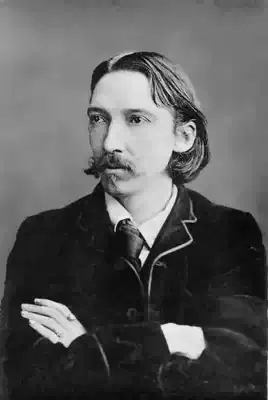
Robert Louis Stevenson
To Any Reader
To Any Reader
As from the house your mother sees
You playing round the garden trees,
So you may see, if you will look
Through the windows of this book,
Another child, far, far away,
And in another garden, play.
But do not think you can at all,
By knocking on the window, call
That child to hear you. He intent
Is all on his play-business bent.
He does not hear; he will not look,
Nor yet be lured out of this book.
For, long ago, the truth to say,
He has grown up and gone away,
And it is but a child of air
That lingers in the garden there.
As from the house your mother sees
You playing round the garden trees,
So you may see, if you will look
Through the windows of this book,
Another child, far, far away,
And in another garden, play.
But do not think you can at all,
By knocking on the window, call
That child to hear you. He intent
Is all on his play-business bent.
He does not hear; he will not look,
Nor yet be lured out of this book.
For, long ago, the truth to say,
He has grown up and gone away,
And it is but a child of air
That lingers in the garden there.
364