

Poems in this theme
Nostalgia
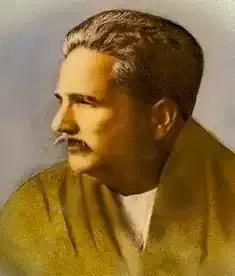
Muhammad Iqbal
The Withered Rose
The Withered Rose
O withered rose! How can I still call you a rose?
How can I call you the longing of nightingale's heart?
Once the zephyr's movement was your rocking cradle
In the garden's expanse joyous rose was your name
The morning breeze acknowledged your benevolence
The garden was like perfumer's tray by your presence
My weeping eye sheds dew on you
My desolate heart is concealed in your sorrow
You are a tiny picture of my destruction
You are the interpretation of my life's dream
Like a flute to my reed-brake I narrate my story
Listen O rose! I complain about separations!
O withered rose! How can I still call you a rose?
How can I call you the longing of nightingale's heart?
Once the zephyr's movement was your rocking cradle
In the garden's expanse joyous rose was your name
The morning breeze acknowledged your benevolence
The garden was like perfumer's tray by your presence
My weeping eye sheds dew on you
My desolate heart is concealed in your sorrow
You are a tiny picture of my destruction
You are the interpretation of my life's dream
Like a flute to my reed-brake I narrate my story
Listen O rose! I complain about separations!
256
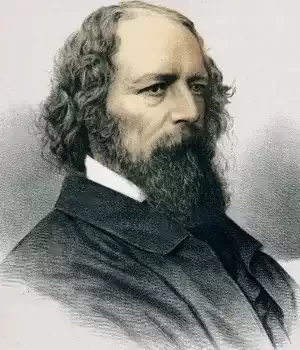
Alfred Lord Tennyson
The Lotos-eaters
The Lotos-eaters
"Courage!" he said, and pointed toward the land,
"This mounting wave will roll us shoreward soon."
In the afternoon they came unto a land
In which it seemed always afternoon.
All round the coast the languid air did swoon,
Breathing like one that hath a weary dream.
Full-faced above the valley stood the moon;
And like a downward smoke, the slender stream
Along the cliff to fall and pause and fall did seem.
A land of streams! some, like a downward smoke,
Slow-dropping veils of thinnest lawn, did go;
And some thro' wavering lights and shadows broke,
Rolling a slumbrous sheet of foam below.
They saw the gleaming river seaward flow
From the inner land: far off, three mountain-tops,
Three silent pinnacles of aged snow,
Stood sunset-flush'd: and, dew'd with showery drops,
Up-clomb the shadowy pine above the woven copse.
The charmed sunset linger'd low adown
In the red West: thro' mountain clefts the dale
Was seen far inland, and the yellow down
Border'd with palm, and many a winding vale
And meadow, set with slender galingale;
A land where all things always seem'd the same!
And round about the keel with faces pale,
Dark faces pale against that rosy flame,
The mild-eyed melancholy Lotos-eaters came.
Branches they bore of that enchanted stem,
Laden with flower and fruit, whereof they gave
To each, but whoso did receive of them,
And taste, to him the gushing of the wave
Far far away did seem to mourn and rave
On alien shores; and if his fellow spake,
His voice was thin, as voices from the grave;
And deep-asleep he seem'd, yet all awake,
And music in his ears his beating heart did make.
They sat them down upon the yellow sand,
Between the sun and moon upon the shore;
And sweet it was to dream of Fatherland,
Of child, and wife, and slave; but evermore
Most weary seem'd the sea, weary the oar,
Weary the wandering fields of barren foam.
Then some one said, "We will return no more";
And all at once they sang, "Our island home
Is far beyond the wave; we will no longer roam."CHORIC SONGI
There is sweet music here that softer falls
Than petals from blown roses on the grass,
Or night-dews on still waters between walls
Of shadowy granite, in a gleaming pass;
Music that gentlier on the spirit lies,
Than tir'd eyelids upon tir'd eyes;
Music that brings sweet sleep down from the blissful skies.
Here are cool mosses deep,
And thro' the moss the ivies creep,
And in the stream the long-leaved flowers weep,
And from the craggy ledge the poppy hangs in sleep."II
Why are we weigh'd upon with heaviness,
And utterly consumed with sharp distress,
While all things else have rest from weariness?
All things have rest: why should we toil alone,
We only toil, who are the first of things,
And make perpetual moan,
Still from one sorrow to another thrown:
Nor ever fold our wings,
And cease from wanderings,
Nor steep our brows in slumber's holy balm;
Nor harken what the inner spirit sings,
"There is no joy but calm!"
Why should we only toil, the roof and crown of things?III
Lo! in the middle of the wood,
The folded leaf is woo'd from out the bud
With winds upon the branch, and there
Grows green and broad, and takes no care,
Sun-steep'd at noon, and in the moon
Nightly dew-fed; and turning yellow
Falls, and floats adown the air.
Lo! sweeten'd with the summer light,
The full-juiced apple, waxing over-mellow,
Drops in a silent autumn night.
All its allotted length of days
The flower ripens in its place,
Ripens and fades, and falls, and hath no toil,
Fast-rooted in the fruitful soil.IV
Hateful is the dark-blue sky,
Vaulted o'er the dark-blue sea.
Death is the end of life; ah, why
Should life all labour be?
Let us alone. Time driveth onward fast,
And in a little while our lips are dumb.
Let us alone. What is it that will last?
All things are taken from us, and become
Portions and parcels of the dreadful past.
Let us alone. What pleasure can we have
To war with evil? Is there any peace
In ever climbing up the climbing wave?
All things have rest, and ripen toward the grave
In silence; ripen, fall and cease:
Give us long rest or death, dark death, or dreamful ease.V
How sweet it were, hearing the downward stream,
With half-shut eyes ever to seem
Falling asleep in a half-dream!
To dream and dream, like yonder amber light,
Which will not leave the myrrh-bush on the height;
To hear each other's whisper'd speech;
Eating the Lotos day by day,
To watch the crisping ripples on the beach,
And tender curving lines of creamy spray;
To lend our hearts and spirits wholly
To the influence of mild-minded melancholy;
To muse and brood and live again in memory,
With those old faces of our infancy
Heap'd over with a mound of grass,
Two handfuls of white dust, shut in an urn of brass!VI
Dear is the memory of our wedded lives,
And dear the last embraces of our wives
And their warm tears: but all hath suffer'd change:
For surely now our household hearths are cold,
Our sons inherit us: our looks are strange:
And we should come like ghosts to trouble joy.
Or else the island princes over-bold
Have eat our substance, and the minstrel sings
Before them of the ten years' war in Troy,
And our great deeds, as half-forgotten things.
Is there confusion in the little isle?
Let what is broken so remain.
The Gods are hard to reconcile:
'Tis hard to settle order once again.
There is confusion worse than death,
Trouble on trouble, pain on pain,
Long labour unto aged breath,
Sore task to hearts worn out by many wars
And eyes grown dim with gazing on the pilot-stars.VII
But, propt on beds of amaranth and moly,
How sweet (while warm airs lull us, blowing lowly)
With half-dropt eyelid still,
Beneath a heaven dark and holy,
To watch the long bright river drawing slowly
His waters from the purple hill-To
hear the dewy echoes calling
From cave to cave thro' the thick-twined vine-To
watch the emerald-colour'd water falling
Thro' many a wov'n acanthus-wreath divine!
Only to hear and see the far-off sparkling brine,
Only to hear were sweet, stretch'd out beneath the pine.VIII
The Lotos blooms below the barren peak:
The Lotos blows by every winding creek:
All day the wind breathes low with mellower tone:
Thro' every hollow cave and alley lone
Round and round the spicy downs the yellow Lotos-dust is blown.
We have had enough of action, and of motion we,
Roll'd to starboard, roll'd to larboard, when the surge was seething free,
Where the wallowing monster spouted his foam-fountains in the sea.
Let us swear an oath, and keep it with an equal mind,
In the hollow Lotos-land to live and lie reclined
On the hills like Gods together, careless of mankind.
For they lie beside their nectar, and the bolts are hurl'd
Far below them in the valleys, and the clouds are lightly curl'd
Round their golden houses, girdled with the gleaming world:
Where they smile in secret, looking over wasted lands,
Blight and famine, plague and earthquake, roaring deeps and fiery sands,
Clanging fights, and flaming towns, and sinking ships, and praying hands.
But they smile, they find a music centred in a doleful song
Steaming up, a lamentation and an ancient tale of wrong,
Like a tale of little meaning tho' the words are strong;
Chanted from an ill-used race of men that cleave the soil,
Sow the seed, and reap the harvest with enduring toil,
Storing yearly little dues of wheat, and wine and oil;
Till they perish and they suffer--some, 'tis whisper'd--down in hell
Suffer endless anguish, others in Elysian valleys dwell,
Resting weary limbs at last on beds of asphodel.
Surely, surely, slumber is more sweet than toil, the shore
Than labour in the deep mid-ocean, wind and wave and oar;
O, rest ye, brother mariners, we will not wander more.Credits and CopyrightTogether
with the editors, the Department ofEnglish (University of Toronto), and the University
of Toronto Press,the following individuals share copyright for the work that wentinto
this edition:Screen Design (Electronic Edition): Sian Meikle (University ofToronto
Library)Scanning: Sharine Leung (Centre for Computing in the Humanities)
"Courage!" he said, and pointed toward the land,
"This mounting wave will roll us shoreward soon."
In the afternoon they came unto a land
In which it seemed always afternoon.
All round the coast the languid air did swoon,
Breathing like one that hath a weary dream.
Full-faced above the valley stood the moon;
And like a downward smoke, the slender stream
Along the cliff to fall and pause and fall did seem.
A land of streams! some, like a downward smoke,
Slow-dropping veils of thinnest lawn, did go;
And some thro' wavering lights and shadows broke,
Rolling a slumbrous sheet of foam below.
They saw the gleaming river seaward flow
From the inner land: far off, three mountain-tops,
Three silent pinnacles of aged snow,
Stood sunset-flush'd: and, dew'd with showery drops,
Up-clomb the shadowy pine above the woven copse.
The charmed sunset linger'd low adown
In the red West: thro' mountain clefts the dale
Was seen far inland, and the yellow down
Border'd with palm, and many a winding vale
And meadow, set with slender galingale;
A land where all things always seem'd the same!
And round about the keel with faces pale,
Dark faces pale against that rosy flame,
The mild-eyed melancholy Lotos-eaters came.
Branches they bore of that enchanted stem,
Laden with flower and fruit, whereof they gave
To each, but whoso did receive of them,
And taste, to him the gushing of the wave
Far far away did seem to mourn and rave
On alien shores; and if his fellow spake,
His voice was thin, as voices from the grave;
And deep-asleep he seem'd, yet all awake,
And music in his ears his beating heart did make.
They sat them down upon the yellow sand,
Between the sun and moon upon the shore;
And sweet it was to dream of Fatherland,
Of child, and wife, and slave; but evermore
Most weary seem'd the sea, weary the oar,
Weary the wandering fields of barren foam.
Then some one said, "We will return no more";
And all at once they sang, "Our island home
Is far beyond the wave; we will no longer roam."CHORIC SONGI
There is sweet music here that softer falls
Than petals from blown roses on the grass,
Or night-dews on still waters between walls
Of shadowy granite, in a gleaming pass;
Music that gentlier on the spirit lies,
Than tir'd eyelids upon tir'd eyes;
Music that brings sweet sleep down from the blissful skies.
Here are cool mosses deep,
And thro' the moss the ivies creep,
And in the stream the long-leaved flowers weep,
And from the craggy ledge the poppy hangs in sleep."II
Why are we weigh'd upon with heaviness,
And utterly consumed with sharp distress,
While all things else have rest from weariness?
All things have rest: why should we toil alone,
We only toil, who are the first of things,
And make perpetual moan,
Still from one sorrow to another thrown:
Nor ever fold our wings,
And cease from wanderings,
Nor steep our brows in slumber's holy balm;
Nor harken what the inner spirit sings,
"There is no joy but calm!"
Why should we only toil, the roof and crown of things?III
Lo! in the middle of the wood,
The folded leaf is woo'd from out the bud
With winds upon the branch, and there
Grows green and broad, and takes no care,
Sun-steep'd at noon, and in the moon
Nightly dew-fed; and turning yellow
Falls, and floats adown the air.
Lo! sweeten'd with the summer light,
The full-juiced apple, waxing over-mellow,
Drops in a silent autumn night.
All its allotted length of days
The flower ripens in its place,
Ripens and fades, and falls, and hath no toil,
Fast-rooted in the fruitful soil.IV
Hateful is the dark-blue sky,
Vaulted o'er the dark-blue sea.
Death is the end of life; ah, why
Should life all labour be?
Let us alone. Time driveth onward fast,
And in a little while our lips are dumb.
Let us alone. What is it that will last?
All things are taken from us, and become
Portions and parcels of the dreadful past.
Let us alone. What pleasure can we have
To war with evil? Is there any peace
In ever climbing up the climbing wave?
All things have rest, and ripen toward the grave
In silence; ripen, fall and cease:
Give us long rest or death, dark death, or dreamful ease.V
How sweet it were, hearing the downward stream,
With half-shut eyes ever to seem
Falling asleep in a half-dream!
To dream and dream, like yonder amber light,
Which will not leave the myrrh-bush on the height;
To hear each other's whisper'd speech;
Eating the Lotos day by day,
To watch the crisping ripples on the beach,
And tender curving lines of creamy spray;
To lend our hearts and spirits wholly
To the influence of mild-minded melancholy;
To muse and brood and live again in memory,
With those old faces of our infancy
Heap'd over with a mound of grass,
Two handfuls of white dust, shut in an urn of brass!VI
Dear is the memory of our wedded lives,
And dear the last embraces of our wives
And their warm tears: but all hath suffer'd change:
For surely now our household hearths are cold,
Our sons inherit us: our looks are strange:
And we should come like ghosts to trouble joy.
Or else the island princes over-bold
Have eat our substance, and the minstrel sings
Before them of the ten years' war in Troy,
And our great deeds, as half-forgotten things.
Is there confusion in the little isle?
Let what is broken so remain.
The Gods are hard to reconcile:
'Tis hard to settle order once again.
There is confusion worse than death,
Trouble on trouble, pain on pain,
Long labour unto aged breath,
Sore task to hearts worn out by many wars
And eyes grown dim with gazing on the pilot-stars.VII
But, propt on beds of amaranth and moly,
How sweet (while warm airs lull us, blowing lowly)
With half-dropt eyelid still,
Beneath a heaven dark and holy,
To watch the long bright river drawing slowly
His waters from the purple hill-To
hear the dewy echoes calling
From cave to cave thro' the thick-twined vine-To
watch the emerald-colour'd water falling
Thro' many a wov'n acanthus-wreath divine!
Only to hear and see the far-off sparkling brine,
Only to hear were sweet, stretch'd out beneath the pine.VIII
The Lotos blooms below the barren peak:
The Lotos blows by every winding creek:
All day the wind breathes low with mellower tone:
Thro' every hollow cave and alley lone
Round and round the spicy downs the yellow Lotos-dust is blown.
We have had enough of action, and of motion we,
Roll'd to starboard, roll'd to larboard, when the surge was seething free,
Where the wallowing monster spouted his foam-fountains in the sea.
Let us swear an oath, and keep it with an equal mind,
In the hollow Lotos-land to live and lie reclined
On the hills like Gods together, careless of mankind.
For they lie beside their nectar, and the bolts are hurl'd
Far below them in the valleys, and the clouds are lightly curl'd
Round their golden houses, girdled with the gleaming world:
Where they smile in secret, looking over wasted lands,
Blight and famine, plague and earthquake, roaring deeps and fiery sands,
Clanging fights, and flaming towns, and sinking ships, and praying hands.
But they smile, they find a music centred in a doleful song
Steaming up, a lamentation and an ancient tale of wrong,
Like a tale of little meaning tho' the words are strong;
Chanted from an ill-used race of men that cleave the soil,
Sow the seed, and reap the harvest with enduring toil,
Storing yearly little dues of wheat, and wine and oil;
Till they perish and they suffer--some, 'tis whisper'd--down in hell
Suffer endless anguish, others in Elysian valleys dwell,
Resting weary limbs at last on beds of asphodel.
Surely, surely, slumber is more sweet than toil, the shore
Than labour in the deep mid-ocean, wind and wave and oar;
O, rest ye, brother mariners, we will not wander more.Credits and CopyrightTogether
with the editors, the Department ofEnglish (University of Toronto), and the University
of Toronto Press,the following individuals share copyright for the work that wentinto
this edition:Screen Design (Electronic Edition): Sian Meikle (University ofToronto
Library)Scanning: Sharine Leung (Centre for Computing in the Humanities)
690
Alfred Lord Tennyson
The Lady of Shalott (1842)
The Lady of Shalott (1842)
PART I
On either side the river lie
Long fields of barley and of rye,
That clothe the wold and meet the sky;
And thro' the field the road runs by
To many-tower'd Camelot;
And up and down the people go,
Gazing where the lilies blow
Round an island there below,
The island of Shalott.
Willows whiten, aspens quiver,
Little breezes dusk and shiver
Thro' the wave that runs for ever
By the island in the river
Flowing down to Camelot.
Four gray walls, and four gray towers,
Overlook a space of flowers,
And the silent isle imbowers
The Lady of Shalott.
By the margin, willow veil'd,
Slide the heavy barges trail'd
By slow horses; and unhail'd
The shallop flitteth silken-sail'd
Skimming down to Camelot:
But who hath seen her wave her hand?
Or at the casement seen her stand?
Or is she known in all the land,
The Lady of Shalott?
Only reapers, reaping early
In among the bearded barley,
Hear a song that echoes cheerly
From the river winding clearly,
Down to tower'd Camelot:
And by the moon the reaper weary,
Piling sheaves in uplands airy,
Listening, whispers " 'Tis the fairy
Lady of Shalott."PART II
There she weaves by night and day
A magic web with colours gay.
She has heard a whisper say,
A curse is on her if she stay
To look down to Camelot.
She knows not what the curse may be,
And so she weaveth steadily,
And little other care hath she,
The Lady of Shalott.
And moving thro' a mirror clear
That hangs before her all the year,
Shadows of the world appear.
There she sees the highway near
Winding down to Camelot:
There the river eddy whirls,
And there the surly village-churls,
And the red cloaks of market girls,
Pass onward from Shalott.
Sometimes a troop of damsels glad,
An abbot on an ambling pad,
Sometimes a curly shepherd-lad,
Or long-hair'd page in crimson clad,
Goes by to tower'd Camelot;
And sometimes thro' the mirror blue
The knights come riding two and two:
She hath no loyal knight and true,
The Lady of Shalott.
But in her web she still delights
To weave the mirror's magic sights,
For often thro' the silent nights
A funeral, with plumes and lights
And music, went to Camelot:
Or when the moon was overhead,
Came two young lovers lately wed:
"I am half sick of shadows," said
The Lady of Shalott.PART III
A bow-shot from her bower-eaves,
He rode between the barley-sheaves,
The sun came dazzling thro' the leaves,
And flamed upon the brazen greaves
Of bold Sir Lancelot.
A red-cross knight for ever kneel'd
To a lady in his shield,
That sparkled on the yellow field,
Beside remote Shalott.
The gemmy bridle glitter'd free,
Like to some branch of stars we see
Hung in the golden Galaxy.
The bridle bells rang merrily
As he rode down to Camelot:
And from his blazon'd baldric slung
A mighty silver bugle hung,
And as he rode his armour rung,
Beside remote Shalott.
All in the blue unclouded weather
Thick-jewell'd shone the saddle-leather,
The helmet and the helmet-feather
Burn'd like one burning flame together,
As he rode down to Camelot.
As often thro' the purple night,
Below the starry clusters bright,
Some bearded meteor, trailing light,
Moves over still Shalott.
His broad clear brow in sunlight glow'd;
On burnish'd hooves his war-horse trode;
From underneath his helmet flow'd
His coal-black curls as on he rode,
As he rode down to Camelot.
From the bank and from the river
He flash'd into the crystal mirror,
"Tirra lirra," by the river
Sang Sir Lancelot.
She left the web, she left the loom,
She made three paces thro' the room,
She saw the water-lily bloom,
She saw the helmet and the plume,
She look'd down to Camelot.
Out flew the web and floated wide;
The mirror crack'd from side to side;
"The curse is come upon me," cried
The Lady of Shalott.PART IV
In the stormy east-wind straining,
The pale yellow woods were waning,
The broad stream in his banks complaining,
Heavily the low sky raining
Over tower'd Camelot;
Down she came and found a boat
Beneath a willow left afloat,
And round about the prow she wrote
The Lady of Shalott.
And down the river's dim expanse
Like some bold seër in a trance,
Seeing all his own mischance-With
a glassy countenance
Did she look to Camelot.
And at the closing of the day
She loosed the chain, and down she lay;
The broad stream bore her far away,
The Lady of Shalott.
Lying, robed in snowy white
That loosely flew to left and right-The
leaves upon her falling light-Thro'
the noises of the night
She floated down to Camelot:
And as the boat-head wound along
The willowy hills and fields among,
They heard her singing her last song,
The Lady of Shalott.
Heard a carol, mournful, holy,
Chanted loudly, chanted lowly,
Till her blood was frozen slowly,
And her eyes were darken'd wholly,
Turn'd to tower'd Camelot.
For ere she reach'd upon the tide
The first house by the water-side,
Singing in her song she died,
The Lady of Shalott.
Under tower and balcony,
By garden-wall and gallery,
A gleaming shape she floated by,
Dead-pale between the houses high,
Silent into Camelot.
Out upon the wharfs they came,
Knight and burgher, lord and dame,
And round the prow they read her name,
The Lady of Shalott.
Who is this? and what is here?
And in the lighted palace near
Died the sound of royal cheer;
And they cross'd themselves for fear,
All the knights at Camelot:
But Lancelot mused a little space;
He said, "She has a lovely face;
God in his mercy lend her grace,
The Lady of Shalott."
PART I
On either side the river lie
Long fields of barley and of rye,
That clothe the wold and meet the sky;
And thro' the field the road runs by
To many-tower'd Camelot;
And up and down the people go,
Gazing where the lilies blow
Round an island there below,
The island of Shalott.
Willows whiten, aspens quiver,
Little breezes dusk and shiver
Thro' the wave that runs for ever
By the island in the river
Flowing down to Camelot.
Four gray walls, and four gray towers,
Overlook a space of flowers,
And the silent isle imbowers
The Lady of Shalott.
By the margin, willow veil'd,
Slide the heavy barges trail'd
By slow horses; and unhail'd
The shallop flitteth silken-sail'd
Skimming down to Camelot:
But who hath seen her wave her hand?
Or at the casement seen her stand?
Or is she known in all the land,
The Lady of Shalott?
Only reapers, reaping early
In among the bearded barley,
Hear a song that echoes cheerly
From the river winding clearly,
Down to tower'd Camelot:
And by the moon the reaper weary,
Piling sheaves in uplands airy,
Listening, whispers " 'Tis the fairy
Lady of Shalott."PART II
There she weaves by night and day
A magic web with colours gay.
She has heard a whisper say,
A curse is on her if she stay
To look down to Camelot.
She knows not what the curse may be,
And so she weaveth steadily,
And little other care hath she,
The Lady of Shalott.
And moving thro' a mirror clear
That hangs before her all the year,
Shadows of the world appear.
There she sees the highway near
Winding down to Camelot:
There the river eddy whirls,
And there the surly village-churls,
And the red cloaks of market girls,
Pass onward from Shalott.
Sometimes a troop of damsels glad,
An abbot on an ambling pad,
Sometimes a curly shepherd-lad,
Or long-hair'd page in crimson clad,
Goes by to tower'd Camelot;
And sometimes thro' the mirror blue
The knights come riding two and two:
She hath no loyal knight and true,
The Lady of Shalott.
But in her web she still delights
To weave the mirror's magic sights,
For often thro' the silent nights
A funeral, with plumes and lights
And music, went to Camelot:
Or when the moon was overhead,
Came two young lovers lately wed:
"I am half sick of shadows," said
The Lady of Shalott.PART III
A bow-shot from her bower-eaves,
He rode between the barley-sheaves,
The sun came dazzling thro' the leaves,
And flamed upon the brazen greaves
Of bold Sir Lancelot.
A red-cross knight for ever kneel'd
To a lady in his shield,
That sparkled on the yellow field,
Beside remote Shalott.
The gemmy bridle glitter'd free,
Like to some branch of stars we see
Hung in the golden Galaxy.
The bridle bells rang merrily
As he rode down to Camelot:
And from his blazon'd baldric slung
A mighty silver bugle hung,
And as he rode his armour rung,
Beside remote Shalott.
All in the blue unclouded weather
Thick-jewell'd shone the saddle-leather,
The helmet and the helmet-feather
Burn'd like one burning flame together,
As he rode down to Camelot.
As often thro' the purple night,
Below the starry clusters bright,
Some bearded meteor, trailing light,
Moves over still Shalott.
His broad clear brow in sunlight glow'd;
On burnish'd hooves his war-horse trode;
From underneath his helmet flow'd
His coal-black curls as on he rode,
As he rode down to Camelot.
From the bank and from the river
He flash'd into the crystal mirror,
"Tirra lirra," by the river
Sang Sir Lancelot.
She left the web, she left the loom,
She made three paces thro' the room,
She saw the water-lily bloom,
She saw the helmet and the plume,
She look'd down to Camelot.
Out flew the web and floated wide;
The mirror crack'd from side to side;
"The curse is come upon me," cried
The Lady of Shalott.PART IV
In the stormy east-wind straining,
The pale yellow woods were waning,
The broad stream in his banks complaining,
Heavily the low sky raining
Over tower'd Camelot;
Down she came and found a boat
Beneath a willow left afloat,
And round about the prow she wrote
The Lady of Shalott.
And down the river's dim expanse
Like some bold seër in a trance,
Seeing all his own mischance-With
a glassy countenance
Did she look to Camelot.
And at the closing of the day
She loosed the chain, and down she lay;
The broad stream bore her far away,
The Lady of Shalott.
Lying, robed in snowy white
That loosely flew to left and right-The
leaves upon her falling light-Thro'
the noises of the night
She floated down to Camelot:
And as the boat-head wound along
The willowy hills and fields among,
They heard her singing her last song,
The Lady of Shalott.
Heard a carol, mournful, holy,
Chanted loudly, chanted lowly,
Till her blood was frozen slowly,
And her eyes were darken'd wholly,
Turn'd to tower'd Camelot.
For ere she reach'd upon the tide
The first house by the water-side,
Singing in her song she died,
The Lady of Shalott.
Under tower and balcony,
By garden-wall and gallery,
A gleaming shape she floated by,
Dead-pale between the houses high,
Silent into Camelot.
Out upon the wharfs they came,
Knight and burgher, lord and dame,
And round the prow they read her name,
The Lady of Shalott.
Who is this? and what is here?
And in the lighted palace near
Died the sound of royal cheer;
And they cross'd themselves for fear,
All the knights at Camelot:
But Lancelot mused a little space;
He said, "She has a lovely face;
God in his mercy lend her grace,
The Lady of Shalott."
817
Alfred Lord Tennyson
The Lady of Shalott
The Lady of Shalott
On either side the river lie
Long fields of barley and of rye,
That clothe the wold and meet the sky;
And through the field the road run by
To many-tower'd Camelot;
And up and down the people go,
Gazing where the lilies blow
Round an island there below,
The island of Shalott.
Willows whiten, aspens quiver,
Little breezes dusk and shiver
Through the wave that runs for ever
By the island in the river
Flowing down to Camelot.
Four grey walls, and four grey towers,
Overlook a space of flowers,
And the silent isle imbowers
The Lady of Shalott.
Only reapers, reaping early,
In among the beared barley
Hear a song that echoes cheerly
From the river winding clearly;
Down to tower'd Camelot;
And by the moon the reaper weary,
Piling sheaves in uplands airy,
Listening, whispers, " 'Tis the fairy
The Lady of Shalott."
There she weaves by night and day
A magic web with colours gay.
She has heard a whisper say,
A curse is on her if she stay
To look down to Camelot.
She knows not what the curse may be,
And so she weaveth steadily,
And little other care heat she,
The Lady of Shalott.
And moving through a mirror clear
That hangs before her all the year,
Shadows of the world appear.
There she sees the highway near
Winding down to Camelot;
And sometimes through the mirror blue
The knights come riding two and two.
She hath no loyal Knight and true,
The Lady of Shalott.
But in her web she still delights
To weave the mirror's magic sights,
For often through the silent nights
A funeral, with plumes and lights
And music, went to Camelot;
Or when the Moon was overhead,
Came two young lovers lately wed.
"I am half sick of shadows," said
The Lady of Shalott.
A bow-shot from her bower-eaves,
He rode between the barley sheaves,
The sun came dazzling thro' the leaves,
And flamed upon the brazen greaves
Of bold Sir Lancelot.
A red-cross knight for ever kneel'd
To a lady in his shield,
That sparkled on the yellow field,
Beside remote Shalott.
His broad clear brow in sunlight glow'd;
On burnish'd hooves his war-horse trode;
From underneath his helmet flow'd
His coal-black curls as on he rode,
As he rode down to Camelot.
From the bank and from the river
He flashed into the crystal mirror,
"Tirra lirra," by the river
Sang Sir Lancelot.
She left the web, she left the loom,
She made three paces through the room,
She saw the helmet and the plume,
She look'd down to Camelot.
Out flew the web and floated wide;
The mirror crack'd from side to side;
"The curse is come upon me," cried
The Lady of Shalott.
In the stormy east-wind straining,
The pale yellow woods were waning,
The broad stream in his banks complaining.
Heavily the low sky raining
Over tower'd Camelot;
Down she came and found a boat
Beneath a willow left afloat,
And around about the prow she wrote
The Lady of Shalott.
And down the river's dim expanse
Like some bold seer in a trance,
Seeing all his own mischance -
With a glassy countenance
Did she look to Camelot.
And at the closing of the day
She loosed the chain, and down she lay;
The broad stream bore her far away,
The Lady of Shalott.
Heard a carol, mournful, holy,
Chanted loudly, chanted lowly,
Till her blood was frozen slowly,
And her eyes were darkened wholly,
Turn'd to tower'd Camelot.
For ere she reach'd upon the tide
The first house by the water-side,
Singing in her song she died,
The Lady of Shalott.
Under tower and balcony,
By garden-wall and gallery,
A gleaming shape she floated by,
Dead-pale between the houses high,
Silent into Camelot.
Out upon the wharfs they came,
Knight and Burgher, Lord and Dame,
And around the prow they read her name,
The Lady of Shalott.
Who is this? And what is here?
And in the lighted palace near
Died the sound of royal cheer;
And they crossed themselves for fear,
All the Knights at Camelot;
But Lancelot mused a little space
He said, "She has a lovely face;
God in his mercy lend her grace,
The Lady of Shalott."
.
On either side the river lie
Long fields of barley and of rye,
That clothe the wold and meet the sky;
And through the field the road run by
To many-tower'd Camelot;
And up and down the people go,
Gazing where the lilies blow
Round an island there below,
The island of Shalott.
Willows whiten, aspens quiver,
Little breezes dusk and shiver
Through the wave that runs for ever
By the island in the river
Flowing down to Camelot.
Four grey walls, and four grey towers,
Overlook a space of flowers,
And the silent isle imbowers
The Lady of Shalott.
Only reapers, reaping early,
In among the beared barley
Hear a song that echoes cheerly
From the river winding clearly;
Down to tower'd Camelot;
And by the moon the reaper weary,
Piling sheaves in uplands airy,
Listening, whispers, " 'Tis the fairy
The Lady of Shalott."
There she weaves by night and day
A magic web with colours gay.
She has heard a whisper say,
A curse is on her if she stay
To look down to Camelot.
She knows not what the curse may be,
And so she weaveth steadily,
And little other care heat she,
The Lady of Shalott.
And moving through a mirror clear
That hangs before her all the year,
Shadows of the world appear.
There she sees the highway near
Winding down to Camelot;
And sometimes through the mirror blue
The knights come riding two and two.
She hath no loyal Knight and true,
The Lady of Shalott.
But in her web she still delights
To weave the mirror's magic sights,
For often through the silent nights
A funeral, with plumes and lights
And music, went to Camelot;
Or when the Moon was overhead,
Came two young lovers lately wed.
"I am half sick of shadows," said
The Lady of Shalott.
A bow-shot from her bower-eaves,
He rode between the barley sheaves,
The sun came dazzling thro' the leaves,
And flamed upon the brazen greaves
Of bold Sir Lancelot.
A red-cross knight for ever kneel'd
To a lady in his shield,
That sparkled on the yellow field,
Beside remote Shalott.
His broad clear brow in sunlight glow'd;
On burnish'd hooves his war-horse trode;
From underneath his helmet flow'd
His coal-black curls as on he rode,
As he rode down to Camelot.
From the bank and from the river
He flashed into the crystal mirror,
"Tirra lirra," by the river
Sang Sir Lancelot.
She left the web, she left the loom,
She made three paces through the room,
She saw the helmet and the plume,
She look'd down to Camelot.
Out flew the web and floated wide;
The mirror crack'd from side to side;
"The curse is come upon me," cried
The Lady of Shalott.
In the stormy east-wind straining,
The pale yellow woods were waning,
The broad stream in his banks complaining.
Heavily the low sky raining
Over tower'd Camelot;
Down she came and found a boat
Beneath a willow left afloat,
And around about the prow she wrote
The Lady of Shalott.
And down the river's dim expanse
Like some bold seer in a trance,
Seeing all his own mischance -
With a glassy countenance
Did she look to Camelot.
And at the closing of the day
She loosed the chain, and down she lay;
The broad stream bore her far away,
The Lady of Shalott.
Heard a carol, mournful, holy,
Chanted loudly, chanted lowly,
Till her blood was frozen slowly,
And her eyes were darkened wholly,
Turn'd to tower'd Camelot.
For ere she reach'd upon the tide
The first house by the water-side,
Singing in her song she died,
The Lady of Shalott.
Under tower and balcony,
By garden-wall and gallery,
A gleaming shape she floated by,
Dead-pale between the houses high,
Silent into Camelot.
Out upon the wharfs they came,
Knight and Burgher, Lord and Dame,
And around the prow they read her name,
The Lady of Shalott.
Who is this? And what is here?
And in the lighted palace near
Died the sound of royal cheer;
And they crossed themselves for fear,
All the Knights at Camelot;
But Lancelot mused a little space
He said, "She has a lovely face;
God in his mercy lend her grace,
The Lady of Shalott."
.
495
Alfred Lord Tennyson
Tears, Idle Tears
Tears, Idle Tears
Tears, idle tears, I know not what they mean,
Tears from the depth of some divine despair
Rise in the heart, and gather to the eyes,
In looking on the happy Autumn-fields,
And thinking of the days that are no more.
Fresh as the first beam glittering on a sail,
That brings our friends up from the underworld,
Sad as the last which reddens over one
That sinks with all we love below the verge;
So sad, so fresh, the days that are no more.
Ah, sad and strange as in dark summer dawns
The earliest pipe of half-awakened birds
To dying ears, when unto dying eyes
The casement slowly grows a glimmering square;
So sad, so strange, the days that are no more.
Dear as remembered kisses after death,
And sweet as those by hopeless fancy feigned
On lips that are for others; deep as love,
Deep as first love, and wild with all regret;
O Death in Life, the days that are no more!
Tears, idle tears, I know not what they mean,
Tears from the depth of some divine despair
Rise in the heart, and gather to the eyes,
In looking on the happy Autumn-fields,
And thinking of the days that are no more.
Fresh as the first beam glittering on a sail,
That brings our friends up from the underworld,
Sad as the last which reddens over one
That sinks with all we love below the verge;
So sad, so fresh, the days that are no more.
Ah, sad and strange as in dark summer dawns
The earliest pipe of half-awakened birds
To dying ears, when unto dying eyes
The casement slowly grows a glimmering square;
So sad, so strange, the days that are no more.
Dear as remembered kisses after death,
And sweet as those by hopeless fancy feigned
On lips that are for others; deep as love,
Deep as first love, and wild with all regret;
O Death in Life, the days that are no more!
805
Alfred Lord Tennyson
Recollections of the Arabian Nights.
Recollections of the Arabian Nights.
When the breeze of a joyful dawn blew free
In the silken sail of infancy,
The tide of time flow'd back with me,
The forward-flowing tide of time;
And many a sheeny summer-morn,
Adown the Tigris I was borne,
By Bagdat's shrines of fretted gold,
High-walled gardens green and old;
True Mussulman was I and sworn,
For it was in the golden prime
Of good Haroun Alraschid.
Anight my shallop, rustling thro'
The low and bloomed foliage, drove
The fragrant, glistening deeps, and clove
The citron-shadows in the blue:
By garden porches on the brim,
The costly doors flung open wide,
Gold glittering thro' lamplight dim,
And broider'd sofas on each side:
In sooth it was a goodly time,
For it was in the golden prime
Of good Haroun Alraschid.
Often, where clear-stemm'd platans guard
The outlet, did I turn away
The boat-head down a broad canal
From the main river sluiced, where all
The sloping of the moon-lit sward
Was damask-work, and deep inlay
Of braided blooms unmown, which crept
Adown to where the water slept.
A goodly place, a goodly time,
For it was in the golden prime
Of good Haroun Alraschid.
A motion from the river won
Ridged the smooth level, bearing on
My shallop thro' the star-strown calm,
Until another night in night
I enter'd, from the clearer light,
Imbower'd vaults of pillar'd palm,
Imprisoning sweets, which, as they clomb
Heavenward, were stay'd beneath the dome
Of hollow boughs.--A goodly time,
For it was in the golden prime
Of good Haroun Alraschid.
Still onward; and the clear canal
Is rounded to as clear a lake.
From the green rivage many a fall
Of diamond rillets musical,
Thro' little crystal arches low
Down from the central fountain's flow
Fall'n silver-chiming, seem'd to shake
The sparkling flints beneath the prow.
A goodly place, a goodly time,
For it was in the golden prime
Of good Haroun Alraschid.
Above thro' many a bowery turn
A walk with vary-colour'd shells
Wander'd engrain'd. On either side
All round about the fragrant marge
From fluted vase, and brazen urn
In order, eastern flowers large,
Some dropping low their crimson bells
Half-closed, and others studded wide
With disks and tiars, fed the time
With odour in the golden prime
Of good Haroun Alraschid.
Far off, and where the lemon-grove
In closest coverture upsprung,
The living airs of middle night
Died round the bulbul as he sung;
Not he: but something which possess'd
The darkness of the world, delight,
Life, anguish, death, immortal love,
Ceasing not, mingled, unrepress'd,
Apart from place, withholding time,
But flattering the golden prime
Of good Haroun Alraschid.
Black the garden-bowers and grots
Slumber'd: the solemn palms were ranged
Above, unwoo'd of summer wind:
A sudden splendour from behind
Flush'd all the leaves with rich gold-green,
And, flowing rapidly between
Their interspaces, counterchanged
The level lake with diamond-plots
Of dark and bright. A lovely time,
For it was in the golden prime
Of good Haroun Alraschid.
Dark-blue the deep sphere overhead,
Distinct with vivid stars inlaid,
Grew darker from that under-flame:
So, leaping lightly from the boat,
With silver anchor left afloat,
In marvel whence that glory came
Upon me, as in sleep I sank
In cool soft turf upon the bank,
Entranced with that place and time,
So worthy of the golden prime
Of good Haroun Alraschid.
Thence thro' the garden I was drawn-A
realm of pleasance, many a mound,
And many a shadow-chequer'd lawn
Full of the city's stilly sound,
And deep myrrh-thickets blowing round
The stately cedar, tamarisks,
Thick rosaries of scented thorn,
Tall orient shrubs, and obelisks
Graven with emblems of the time,
In honour of the golden prime
Of good Haroun Alraschid.
With dazed vision unawares
From the long alley's latticed shade
Emerged, I came upon the great
Pavilion of the Caliphat.
Right to the carven cedarn doors,
Flung inward over spangled floors,
Broad-based flights of marble stairs
Ran up with golden balustrade,
After the fashion of the time,
And humour of the golden prime
Of good Haroun Alraschid.
The fourscore windows all alight
As with the quintessence of flame,
A million tapers flaring bright
From twisted silvers look'd to shame
The hollow-vaulted dark, and stream'd
Upon the mooned domes aloof
In inmost Bagdat, till there seem'd
Hundreds of crescents on the roof
Of night new-risen, that marvellous time,
To celebrate the golden prime
Of good Haroun Alraschid.
Then stole I up, and trancedly
Gazed on the Persian girl alone,
Serene with argent-lidded eyes
Amorous, and lashes like to rays
Of darkness, and a brow of pearl
Tressed with redolent ebony,
In many a dark delicious curl,
Flowing beneath her rose-hued zone;
The sweetest lady of the time,
Well worthy of the golden prime
Of good Haroun Alraschid.
Six columns, three on either side,
Pure silver, underpropt a rich
Throne of the massive ore, from which
Down-droop'd, in many a floating fold,
Engarlanded and diaper'd
With inwrought flowers, a cloth of gold.
Thereon, his deep eye laughter-stirr'd
With merriment of kingly pride,
Sole star of all that place and time,
I saw him--in his golden prime,
THE GOOD HAROUN ALRASCHID!
When the breeze of a joyful dawn blew free
In the silken sail of infancy,
The tide of time flow'd back with me,
The forward-flowing tide of time;
And many a sheeny summer-morn,
Adown the Tigris I was borne,
By Bagdat's shrines of fretted gold,
High-walled gardens green and old;
True Mussulman was I and sworn,
For it was in the golden prime
Of good Haroun Alraschid.
Anight my shallop, rustling thro'
The low and bloomed foliage, drove
The fragrant, glistening deeps, and clove
The citron-shadows in the blue:
By garden porches on the brim,
The costly doors flung open wide,
Gold glittering thro' lamplight dim,
And broider'd sofas on each side:
In sooth it was a goodly time,
For it was in the golden prime
Of good Haroun Alraschid.
Often, where clear-stemm'd platans guard
The outlet, did I turn away
The boat-head down a broad canal
From the main river sluiced, where all
The sloping of the moon-lit sward
Was damask-work, and deep inlay
Of braided blooms unmown, which crept
Adown to where the water slept.
A goodly place, a goodly time,
For it was in the golden prime
Of good Haroun Alraschid.
A motion from the river won
Ridged the smooth level, bearing on
My shallop thro' the star-strown calm,
Until another night in night
I enter'd, from the clearer light,
Imbower'd vaults of pillar'd palm,
Imprisoning sweets, which, as they clomb
Heavenward, were stay'd beneath the dome
Of hollow boughs.--A goodly time,
For it was in the golden prime
Of good Haroun Alraschid.
Still onward; and the clear canal
Is rounded to as clear a lake.
From the green rivage many a fall
Of diamond rillets musical,
Thro' little crystal arches low
Down from the central fountain's flow
Fall'n silver-chiming, seem'd to shake
The sparkling flints beneath the prow.
A goodly place, a goodly time,
For it was in the golden prime
Of good Haroun Alraschid.
Above thro' many a bowery turn
A walk with vary-colour'd shells
Wander'd engrain'd. On either side
All round about the fragrant marge
From fluted vase, and brazen urn
In order, eastern flowers large,
Some dropping low their crimson bells
Half-closed, and others studded wide
With disks and tiars, fed the time
With odour in the golden prime
Of good Haroun Alraschid.
Far off, and where the lemon-grove
In closest coverture upsprung,
The living airs of middle night
Died round the bulbul as he sung;
Not he: but something which possess'd
The darkness of the world, delight,
Life, anguish, death, immortal love,
Ceasing not, mingled, unrepress'd,
Apart from place, withholding time,
But flattering the golden prime
Of good Haroun Alraschid.
Black the garden-bowers and grots
Slumber'd: the solemn palms were ranged
Above, unwoo'd of summer wind:
A sudden splendour from behind
Flush'd all the leaves with rich gold-green,
And, flowing rapidly between
Their interspaces, counterchanged
The level lake with diamond-plots
Of dark and bright. A lovely time,
For it was in the golden prime
Of good Haroun Alraschid.
Dark-blue the deep sphere overhead,
Distinct with vivid stars inlaid,
Grew darker from that under-flame:
So, leaping lightly from the boat,
With silver anchor left afloat,
In marvel whence that glory came
Upon me, as in sleep I sank
In cool soft turf upon the bank,
Entranced with that place and time,
So worthy of the golden prime
Of good Haroun Alraschid.
Thence thro' the garden I was drawn-A
realm of pleasance, many a mound,
And many a shadow-chequer'd lawn
Full of the city's stilly sound,
And deep myrrh-thickets blowing round
The stately cedar, tamarisks,
Thick rosaries of scented thorn,
Tall orient shrubs, and obelisks
Graven with emblems of the time,
In honour of the golden prime
Of good Haroun Alraschid.
With dazed vision unawares
From the long alley's latticed shade
Emerged, I came upon the great
Pavilion of the Caliphat.
Right to the carven cedarn doors,
Flung inward over spangled floors,
Broad-based flights of marble stairs
Ran up with golden balustrade,
After the fashion of the time,
And humour of the golden prime
Of good Haroun Alraschid.
The fourscore windows all alight
As with the quintessence of flame,
A million tapers flaring bright
From twisted silvers look'd to shame
The hollow-vaulted dark, and stream'd
Upon the mooned domes aloof
In inmost Bagdat, till there seem'd
Hundreds of crescents on the roof
Of night new-risen, that marvellous time,
To celebrate the golden prime
Of good Haroun Alraschid.
Then stole I up, and trancedly
Gazed on the Persian girl alone,
Serene with argent-lidded eyes
Amorous, and lashes like to rays
Of darkness, and a brow of pearl
Tressed with redolent ebony,
In many a dark delicious curl,
Flowing beneath her rose-hued zone;
The sweetest lady of the time,
Well worthy of the golden prime
Of good Haroun Alraschid.
Six columns, three on either side,
Pure silver, underpropt a rich
Throne of the massive ore, from which
Down-droop'd, in many a floating fold,
Engarlanded and diaper'd
With inwrought flowers, a cloth of gold.
Thereon, his deep eye laughter-stirr'd
With merriment of kingly pride,
Sole star of all that place and time,
I saw him--in his golden prime,
THE GOOD HAROUN ALRASCHID!
423
Alfred Lord Tennyson
In Memoriam A. H. H.: 105. To-night ungather'd let us leave
In Memoriam A. H. H.: 105. To-night ungather'd let us leave
To-night ungather'd let us leave
This laurel, let this holly stand:
We live within the stranger's land,
And strangely falls our Christmas-eve.
Our father's dust is left alone
And silent under other snows:
There in due time the woodbine blows,
The violet comes, but we are gone.
No more shall wayward grief abuse
The genial hour with mask and mime;
For change of place, like growth of time,
Has broke the bond of dying use.
Let cares that petty shadows cast,
By which our lives are chiefly proved,
A little spare the night I loved,
And hold it solemn to the past.
But let no footstep beat the floor,
Nor bowl of wassail mantle warm;
For who would keep an ancient form
Thro' which the spirit breathes no more?
Be neither song, nor game, nor feast;
Nor harp be touch'd, nor flute be blown;
No dance, no motion, save alone
What lightens in the lucid east
Of rising worlds by yonder wood.
Long sleeps the summer in the seed;
Run out your measured arcs, and lead
The closing cycle rich in good.
To-night ungather'd let us leave
This laurel, let this holly stand:
We live within the stranger's land,
And strangely falls our Christmas-eve.
Our father's dust is left alone
And silent under other snows:
There in due time the woodbine blows,
The violet comes, but we are gone.
No more shall wayward grief abuse
The genial hour with mask and mime;
For change of place, like growth of time,
Has broke the bond of dying use.
Let cares that petty shadows cast,
By which our lives are chiefly proved,
A little spare the night I loved,
And hold it solemn to the past.
But let no footstep beat the floor,
Nor bowl of wassail mantle warm;
For who would keep an ancient form
Thro' which the spirit breathes no more?
Be neither song, nor game, nor feast;
Nor harp be touch'd, nor flute be blown;
No dance, no motion, save alone
What lightens in the lucid east
Of rising worlds by yonder wood.
Long sleeps the summer in the seed;
Run out your measured arcs, and lead
The closing cycle rich in good.
417
Alfred Lord Tennyson
In Memoriam 3: O Sorrow, Cruel Fellowship
In Memoriam 3: O Sorrow, Cruel Fellowship
O Sorrow, cruel fellowship,
O Priestess in the vaults of Death,
O sweet and bitter in a breath,
What whispers from thy lying lip?
"The stars," she whispers, "blindly run;
A web is wov'n across the sky;
From out waste places comes a cry,
And murmurs from the dying sun:
"And all the phantom, Nature, stands--
With all the music in her tone,
A hollow echo of my own,--
A hollow form with empty hands."
And shall I take a thing so blind,
Embrace her as my natural good;
Or crush her, like a vice of blood,
Upon the threshold of the mind?
O Sorrow, cruel fellowship,
O Priestess in the vaults of Death,
O sweet and bitter in a breath,
What whispers from thy lying lip?
"The stars," she whispers, "blindly run;
A web is wov'n across the sky;
From out waste places comes a cry,
And murmurs from the dying sun:
"And all the phantom, Nature, stands--
With all the music in her tone,
A hollow echo of my own,--
A hollow form with empty hands."
And shall I take a thing so blind,
Embrace her as my natural good;
Or crush her, like a vice of blood,
Upon the threshold of the mind?
372
Alfred Lord Tennyson
Claribel
Claribel
Where Claribel low-lieth
The breezes pause and die,
Letting the rose-leaves fall:
But the solemn oak-tree sigheth,
Thick-leaved, ambrosial,
With an ancient melody
Of an inward agony,
Where Claribel low-lieth.
At eve the beetle boometh
Athwart the thicket lone:
At noon the wild bee hummeth
About the moss'd headstone:
At midnight the moon cometh,
And looketh down alone.
Her song the lintwhite swelleth,
The clear-voiced mavis dwelleth,
The callow throstle lispeth,
The slumbrous wave outwelleth,
The babbling runnel crispeth,
The hollow grot replieth
Where Claribel low-lieth.
Where Claribel low-lieth
The breezes pause and die,
Letting the rose-leaves fall:
But the solemn oak-tree sigheth,
Thick-leaved, ambrosial,
With an ancient melody
Of an inward agony,
Where Claribel low-lieth.
At eve the beetle boometh
Athwart the thicket lone:
At noon the wild bee hummeth
About the moss'd headstone:
At midnight the moon cometh,
And looketh down alone.
Her song the lintwhite swelleth,
The clear-voiced mavis dwelleth,
The callow throstle lispeth,
The slumbrous wave outwelleth,
The babbling runnel crispeth,
The hollow grot replieth
Where Claribel low-lieth.
418
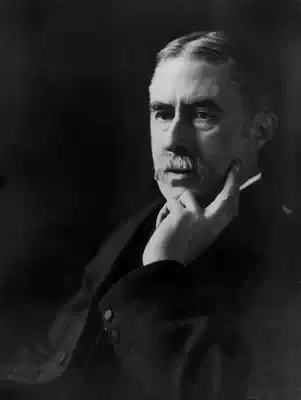
Alfred Edward Housman
White in the Moon the Long Road Lies
White in the Moon the Long Road Lies
White in the moon the long road lies,
The moon stands blank above;
White in the moon the long road lies
That leads me from my love.
Still hangs the hedge without a gust,
Still, still the shadows stay:
My feet upon the moonlit dust
Pursue the ceaseless way.
The world is round, so travellers tell,
And straight though reach the track,
Trudge on, trudge on, 'twill all be well,
The way will guide one back.
But ere the circle homeward hies
Far, far must it remove:
White in the moon the long road lies
That leads me from my love.
White in the moon the long road lies,
The moon stands blank above;
White in the moon the long road lies
That leads me from my love.
Still hangs the hedge without a gust,
Still, still the shadows stay:
My feet upon the moonlit dust
Pursue the ceaseless way.
The world is round, so travellers tell,
And straight though reach the track,
Trudge on, trudge on, 'twill all be well,
The way will guide one back.
But ere the circle homeward hies
Far, far must it remove:
White in the moon the long road lies
That leads me from my love.
453
Alfred Edward Housman
Westward on the High-Hilled Plains
Westward on the High-Hilled Plains
Westward on the high-hilled plains
Where for me the world began,
Still, I think, in newer veins
Frets the changeless blood of man.
Now that other lads than I
Strip to bathe on Severn shore,
They, no help, for all they try,
Tread the mill I trod before.
There, when hueless is the west
And the darkness hushes wide,
Where the lad lies down to rest
Stands the troubled dream beside.
There, on thoughts that once were mine,
Day looks down the eastern steep,
And the youth at morning shine
Makes the vow he will not keep.
Westward on the high-hilled plains
Where for me the world began,
Still, I think, in newer veins
Frets the changeless blood of man.
Now that other lads than I
Strip to bathe on Severn shore,
They, no help, for all they try,
Tread the mill I trod before.
There, when hueless is the west
And the darkness hushes wide,
Where the lad lies down to rest
Stands the troubled dream beside.
There, on thoughts that once were mine,
Day looks down the eastern steep,
And the youth at morning shine
Makes the vow he will not keep.
450
Alfred Edward Housman
Tis Time, I Think, By Wenlock Town
Tis Time, I Think, By Wenlock Town
'Tis time, I think, by Wenlock town
The golden broom should blow;
The hawthorn sprinkled up and down
Should charge the land with snow.
Spring will not wait the loiterer's time
Who keeps so long away;
So others wear the broom and climb
The hedgerows heaped with may.
Oh tarnish late on Wenlock Edge,
Gold that I never see;
Lie long, high snowdrifts in the hedge
That will not shower on me.
'Tis time, I think, by Wenlock town
The golden broom should blow;
The hawthorn sprinkled up and down
Should charge the land with snow.
Spring will not wait the loiterer's time
Who keeps so long away;
So others wear the broom and climb
The hedgerows heaped with may.
Oh tarnish late on Wenlock Edge,
Gold that I never see;
Lie long, high snowdrifts in the hedge
That will not shower on me.
417
Alfred Edward Housman
The Winds Out of the West Land Blow
The Winds Out of the West Land Blow
The winds out of the west land blow,
My friends have breathed them there;
Warm with the blood of lads I know
Comes east the sighing air.
It fanned their temples, filled their lungs,
Scattered their forelocks free;
My friends made words of it with tongues
That talk no more to me.
Their voices, dying as they fly,
Thick on the wind are sown;
The names of men blow soundless by,
My fellows' and my own.
Oh lads, at home I heard you plain,
But here your speech is still,
And down the sighing wind in vain
You hollo from the hill.
The wind and I, we both were there,
But neither long abode;
Now through the friendless world we fare
And sigh upon the road.
The winds out of the west land blow,
My friends have breathed them there;
Warm with the blood of lads I know
Comes east the sighing air.
It fanned their temples, filled their lungs,
Scattered their forelocks free;
My friends made words of it with tongues
That talk no more to me.
Their voices, dying as they fly,
Thick on the wind are sown;
The names of men blow soundless by,
My fellows' and my own.
Oh lads, at home I heard you plain,
But here your speech is still,
And down the sighing wind in vain
You hollo from the hill.
The wind and I, we both were there,
But neither long abode;
Now through the friendless world we fare
And sigh upon the road.
472
Alfred Edward Housman
Tell me not here, it needs not saying
Tell me not here, it needs not saying
Tell me not here, it needs not saying,
What tune the enchantress plays
In aftermaths of soft September
Or under blanching mays,
For she and I were long acquainted
And I knew all her ways.
On russet floors, by waters idle,
The pine lets fall its cone;
The cuckoo shouts all day at nothing
In leafy dells alone;
And traveller’s joy beguiles in autumn
Hearts that have lost their own.
On acres of the seeded grasses
The changing burnish heaves;
Or marshalled under moons of harvest
Stand still all night the sheaves;
Or beeches strip in storms for winter
And stain the wind with leaves.
Posses, as I possessed a season,
The countries I resign,
Where over elmy plains the highway
Would mount the hills and shine,
And full of shade the pillared forest
Would murmur and be mine.
For nature, heartless, witless nature,
Will neither care nor know
What stranger’s feet may find the meadow
And trespass there and go,
Nor ask amid the dews of morning
If they are mine or no.
Tell me not here, it needs not saying,
What tune the enchantress plays
In aftermaths of soft September
Or under blanching mays,
For she and I were long acquainted
And I knew all her ways.
On russet floors, by waters idle,
The pine lets fall its cone;
The cuckoo shouts all day at nothing
In leafy dells alone;
And traveller’s joy beguiles in autumn
Hearts that have lost their own.
On acres of the seeded grasses
The changing burnish heaves;
Or marshalled under moons of harvest
Stand still all night the sheaves;
Or beeches strip in storms for winter
And stain the wind with leaves.
Posses, as I possessed a season,
The countries I resign,
Where over elmy plains the highway
Would mount the hills and shine,
And full of shade the pillared forest
Would murmur and be mine.
For nature, heartless, witless nature,
Will neither care nor know
What stranger’s feet may find the meadow
And trespass there and go,
Nor ask amid the dews of morning
If they are mine or no.
530
Alfred Edward Housman
On the Idle Hill of Summer
On the Idle Hill of Summer
On the idle hill of summer,
Sleepy with the flow of streams,
Far I hear the steady drummer
Drumming like a noise in dreams.
Far and near and low and louder
On the roads of earth go by,
Dear to friends and food for powder,
Soldiers marching, all to die.
East and west on fields forgotten
Bleach the bones of comrades slain,
Lovely lads and dead and rotten;
None that go return again.
Far the calling bugles hollo,
High the screaming fife replies,
Gay the files of scarlet follow:
Woman bore me, I will rise.
On the idle hill of summer,
Sleepy with the flow of streams,
Far I hear the steady drummer
Drumming like a noise in dreams.
Far and near and low and louder
On the roads of earth go by,
Dear to friends and food for powder,
Soldiers marching, all to die.
East and west on fields forgotten
Bleach the bones of comrades slain,
Lovely lads and dead and rotten;
None that go return again.
Far the calling bugles hollo,
High the screaming fife replies,
Gay the files of scarlet follow:
Woman bore me, I will rise.
433
Alfred Edward Housman
Loitering with a Vacant Eye
Loitering with a Vacant Eye
Loitering with a vacant eye
Along the Grecian gallery,
And brooding on my heavy ill,
I met a statue standing still.
Still in marble stone stood he,
And stedfastly he looked at me.
"Well met," I thought the look would say,
"We both were fashioned far away;
We neither knew, when we were young,
These Londoners we live among."
Still he stood and eyed me hard,
An earnest and a grave regard:
"What, lad, drooping with your lot?
I too would be where I am not.
I too survey that endless line
Of men whose thoughts are not as mine.
Years, ere you stood up from rest,
On my neck the collar prest;
Years, when you lay down your ill,
I shall stand and bear it still.
Courage, lad, 'tis not for long:
Stand, quit you like stone, be strong."
So I thought his look would say;
And light on me my trouble lay,
And I stept out in flesh and bone
Manful like the man of stone.
Loitering with a vacant eye
Along the Grecian gallery,
And brooding on my heavy ill,
I met a statue standing still.
Still in marble stone stood he,
And stedfastly he looked at me.
"Well met," I thought the look would say,
"We both were fashioned far away;
We neither knew, when we were young,
These Londoners we live among."
Still he stood and eyed me hard,
An earnest and a grave regard:
"What, lad, drooping with your lot?
I too would be where I am not.
I too survey that endless line
Of men whose thoughts are not as mine.
Years, ere you stood up from rest,
On my neck the collar prest;
Years, when you lay down your ill,
I shall stand and bear it still.
Courage, lad, 'tis not for long:
Stand, quit you like stone, be strong."
So I thought his look would say;
And light on me my trouble lay,
And I stept out in flesh and bone
Manful like the man of stone.
448
Alfred Edward Housman
In Valleys of Springs and Rivers
In Valleys of Springs and Rivers
"Clunton and Clunbury,
Clungunford and Clun,
Are the quietest places
Under the sun."
In valleys of springs and rivers,
By Ony and Teme and Clun,
The country for easy livers,
The quietest under the sun,
We still had sorrows to lighten,
One could not be always glad,
And lads knew trouble at Knighton
When I was a Knighton lad.
By bridges that Thames runs under,
In London, the town built ill,
'Tis sure small matter for wonder
If sorrow is with one still.
And if as a lad grows older
The troubles he bears are more,
He carries his griefs on a shoulder
That handselled them long before.
Where shall one halt to deliver
This luggage I'd lief set down?
Not Thames, not Teme is the river,
Nor London nor Knighton the town:
'Tis a long way further than Knighton,
A quieter place than Clun,
Where doomsday may thunder and lighten
And little 'twill matter to one.
"Clunton and Clunbury,
Clungunford and Clun,
Are the quietest places
Under the sun."
In valleys of springs and rivers,
By Ony and Teme and Clun,
The country for easy livers,
The quietest under the sun,
We still had sorrows to lighten,
One could not be always glad,
And lads knew trouble at Knighton
When I was a Knighton lad.
By bridges that Thames runs under,
In London, the town built ill,
'Tis sure small matter for wonder
If sorrow is with one still.
And if as a lad grows older
The troubles he bears are more,
He carries his griefs on a shoulder
That handselled them long before.
Where shall one halt to deliver
This luggage I'd lief set down?
Not Thames, not Teme is the river,
Nor London nor Knighton the town:
'Tis a long way further than Knighton,
A quieter place than Clun,
Where doomsday may thunder and lighten
And little 'twill matter to one.
548
Alfred Edward Housman
Along The Field as We Came By
Along The Field as We Came By
ALONG the field as we came by
A year ago, my love and I,
The aspen over stile and stone
Was talking to itself alone.
‘Oh who are these that kiss and pass?
A country lover and his lass;
Two lovers looking to be wed;
And time shall put them both to bed,
But she shall lie with earth above,
And he beside another love.’
And sure enough beneath the tree
There walks another love with me,
And overhead the aspen heaves
Its rainy-sounding silver leaves;
And I spell nothing in their stir,
But now perhaps they speak to her,
And plain for her to understand
They talk about a time at hand
When I shall sleep with clover clad,
And she beside another lad.
ALONG the field as we came by
A year ago, my love and I,
The aspen over stile and stone
Was talking to itself alone.
‘Oh who are these that kiss and pass?
A country lover and his lass;
Two lovers looking to be wed;
And time shall put them both to bed,
But she shall lie with earth above,
And he beside another love.’
And sure enough beneath the tree
There walks another love with me,
And overhead the aspen heaves
Its rainy-sounding silver leaves;
And I spell nothing in their stir,
But now perhaps they speak to her,
And plain for her to understand
They talk about a time at hand
When I shall sleep with clover clad,
And she beside another lad.
468
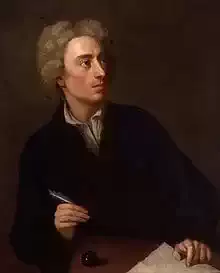
Alexander Pope
On Certain Ladies
On Certain Ladies
When other fair ones to the shades go down,
Still Chloe, Flavin, Delia, stay in town:
Those ghosts of beauty wandering here reside,
And haunt the places where their honour died.
When other fair ones to the shades go down,
Still Chloe, Flavin, Delia, stay in town:
Those ghosts of beauty wandering here reside,
And haunt the places where their honour died.
387
Alexander Pope
Lines Written in Windsor Forest
Lines Written in Windsor Forest
All hail, once pleasing, once inspiring shade!
Scene of my youthful loves and happier hours!
Where the kind Muses met me as I stray'd,
And gently press'd my hand, and said 'Be ours!-
Take all thou e'er shalt have, a constant Muse:
At Court thou may'st be liked, but nothing gain:
Stock thou may'st buy and sell, but always lose,
And love the brightest eyes, but love in vain.'
All hail, once pleasing, once inspiring shade!
Scene of my youthful loves and happier hours!
Where the kind Muses met me as I stray'd,
And gently press'd my hand, and said 'Be ours!-
Take all thou e'er shalt have, a constant Muse:
At Court thou may'st be liked, but nothing gain:
Stock thou may'st buy and sell, but always lose,
And love the brightest eyes, but love in vain.'
347
Previous
Page 23