

Poems in this theme
Nostalgia
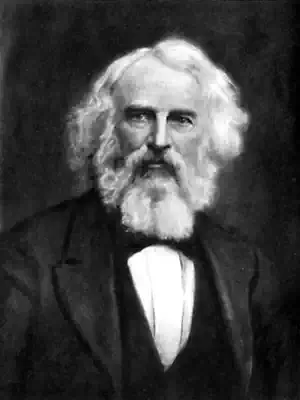
Henry Wadsworth Longfellow
The Golden Mile-Stone. (Birds Of Passage. Flight The First)
The Golden Mile-Stone. (Birds Of Passage. Flight The First)
Leafless are the trees; their purple branches
Spread themselves abroad, like reefs of coral,
Rising silent
In the Red Sea of the winter sunset.
From the hundred chimneys of the village,
Like the Afreet in the Arabian story,
Smoky columns
Tower aloft into the air of amber.
At the window winks the flickering fire-light;
Here and there the lamps of evening glimmer,
Social watch-fires
Answering one another through the darkness.
On the hearth the lighted logs are glowing,
And like Ariel in the cloven pine-tree
For its freedom
Groans and sighs the air imprisoned in them.
By the fireside there are old men seated,
Seeing ruined cities in the ashes,
Asking sadly
Of the Past what it can ne'er restore them.
By the fireside there are youthful dreamers,
Building castles fair, with stately stairways,
Asking blindly
Of the Future what it cannot give them.
By the fireside tragedies are acted
In whose scenes appear two actors only,
Wife and husband,
And above them God the sole spectator.
By the fireside there are peace and comfort,
Wives and children, with fair, thoughtful faces,
Waiting, watching
For a well-known footstep in the passage.
Each man's chimney is his Golden Mile-Stone;
Is the central point, from which he measures
Every distance
Through the gateways of the world around him.
In his farthest wanderings still he sees it;
Hears the talking flame, the answering night-wind,
As he heard them
When he sat with those who were, but are not.
Happy he whom neither wealth nor fashion,
Nor the march of the encroaching city,
Drives an exile
From the hearth of his ancestral homestead.
We may build more splendid habitations,
Fill our rooms with paintings and with sculptures,
But we cannot
Buy with gold the old associations!
Leafless are the trees; their purple branches
Spread themselves abroad, like reefs of coral,
Rising silent
In the Red Sea of the winter sunset.
From the hundred chimneys of the village,
Like the Afreet in the Arabian story,
Smoky columns
Tower aloft into the air of amber.
At the window winks the flickering fire-light;
Here and there the lamps of evening glimmer,
Social watch-fires
Answering one another through the darkness.
On the hearth the lighted logs are glowing,
And like Ariel in the cloven pine-tree
For its freedom
Groans and sighs the air imprisoned in them.
By the fireside there are old men seated,
Seeing ruined cities in the ashes,
Asking sadly
Of the Past what it can ne'er restore them.
By the fireside there are youthful dreamers,
Building castles fair, with stately stairways,
Asking blindly
Of the Future what it cannot give them.
By the fireside tragedies are acted
In whose scenes appear two actors only,
Wife and husband,
And above them God the sole spectator.
By the fireside there are peace and comfort,
Wives and children, with fair, thoughtful faces,
Waiting, watching
For a well-known footstep in the passage.
Each man's chimney is his Golden Mile-Stone;
Is the central point, from which he measures
Every distance
Through the gateways of the world around him.
In his farthest wanderings still he sees it;
Hears the talking flame, the answering night-wind,
As he heard them
When he sat with those who were, but are not.
Happy he whom neither wealth nor fashion,
Nor the march of the encroaching city,
Drives an exile
From the hearth of his ancestral homestead.
We may build more splendid habitations,
Fill our rooms with paintings and with sculptures,
But we cannot
Buy with gold the old associations!
300
Henry Wadsworth Longfellow
Tales Of A Wayside Inn : Part 2. The Student's Second Tale; The Baron of St.
Tales Of A Wayside Inn : Part 2. The Student's Second Tale; The Baron of St.
Castine
Baron Castine of St. Castine
Has left his château in the Pyrenees,
And sailed across the western seas.
When he went away from his fair demesne
The birds were building, the woods were green;
And now the winds of winter blow
Round the turrets of the old château,
The birds are silent and unseen,
The leaves lie dead in the ravine,
And the Pyrenees are white with snow.
His father, lonely, old, and gray,
Sits by the fireside day by day,
Thinking ever one thought of care;
Through the southern windows, narrow and tall,
The sun shines into the ancient hall,
And makes a glory round his hair.
The house-dog, stretched beneath his chair,
Groans in his sleep as if in pain,
Then wakes, and yawns, and sleeps again,
So silent is it everywhere,--
So silent you can hear the mouse
Run and rummage along the beams
Behind the wainscot of the wall;
And the old man rouses from his dreams,
And wanders restless through the house,
As if he heard strange voices call.
His footsteps echo along the floor
Of a distant passage, and pause awhile;
He is standing by an open door
Looking long, with a sad, sweet smile,
Into the room of his absent son.
There is the bed on which he lay,
There are the pictures bright and gay,
Horses and hounds and sun-lit seas;
There are his powder-flask and gun,
And his hunting-knives in shape of a fan;
The chair by the window where he sat,
With the clouded tiger-skin for a mat,
Looking out on the Pyrenees,
Looking out on Mount Marboré
And the Seven Valleys of Lavedan.
Ah me! he turns away and sighs;
There is a mist before his eyes.
At night whatever the weather be,
Wind or rain or starry heaven,
Just as the clock is striking seven,
Those who look from the windows see
The village Curate, with lantern and maid,
Come through the gateway from the park
And cross the courtyard damp and dark,--
A ring of light in a ring of shade.
And now at the old man's side he stands,
His voice is cheery, his heart expands,
He gossips pleasantly, by the blaze
Of the fire of fagots, about old days,
And Cardinal Mazarin and the Fronde,
And the Cardinal's nieces fair and fond,
And what they did, and what they said,
When they heard his Eminence was dead.
And after a pause the old man says,
His mind still coming back again
To the one sad thought that haunts his brain,
'Are there any tidings from over sea?
Ah, why has that wild boy gone from me?'
And the Curate answers, looking down,
Harmless and docile as a lamb,
'Young blood! young blood! It must so be!'
And draws from the pocket of his gown
A handkerchief like an oriflamb,
And wipes his spectacles, and they play
Their little game of lansquenet
In silence for an hour or so,
Till the clock at nine strikes loud and clear
From the village lying asleep below,
And across the courtyard, into the dark
Of the winding pathway in the park,
Curate and lantern disappear,
And darkness reigns in the old château .
The ship has come back from over sea,
She has been signalled from below,
And into the harbor of Bordeaux
She sails with her gallant company.
But among them is nowhere seen
The brave young Baron of St. Castine;
He hath tarried behind, I ween,
In the beautiful land of Acadie!
And the father paces to and fro
Through the chambers of the old château ,
Waiting, waiting to hear the hum
Of wheels on the road that runs below,
Of servants hurrying here and there,
The voice in the courtyard, the step on the stair,
Waiting for some one who doth not come!
But letters there are, which the old man reads
To the Curate, when he comes at night
Word by word, as an acolyte
Repeats his prayers and tells his beads;
Letters full of the rolling sea,
Full of a young man's joy to be
Abroad in the world, alone and free;
Full of adventures and wonderful scenes
Of hunting the deer through forests vast
In the royal grant of Pierre du Gast;
Of nights in the tents of the Tarratines;
Of Madocawando the Indian chief,
And his daughters, glorious as queens,
And beautiful beyond belief;
And so soft the tones of their native tongue,
The words are not spoken, they are sung!
And the Curate listens, and smiling says:
'Ah yes, dear friend! in our young days
We should have liked to hunt the deer
All day amid those forest scenes,
And to sleep in the tents of the Tarratines;
But now it is better sitting here
Within four walls, and without the fear
Of losing our hearts to Indian queens;
For man is fire and woman is tow,
And the Somebody comes and begins to blow.'
Then a gleam of distrust and vague surmise
Shines in the father's gentle eyes,
As fire-light on a window-pane
Glimmers and vanishes again;
But naught he answers; he only sighs,
And for a moment bows his head;
Then, as their custom is, they play
Their little game of lansquenet,
And another day is with the dead.
Another day, and many a day
And many a week and month depart,
When a fatal letter wings its way
Across the sea, like a bird of prey,
And strikes and tears the old man's heart.
Lo! the young Baron of St. Castine,
Swift as the wind is, and as wild,
Has married a dusky Tarratine,
Has married Madocawando's child!
The letter drops from the father's hand;
Though the sinews of his heart are wrung,
He utters no cry, he breathes no prayer,
No malediction falls from his tongue;
But his stately figure, erect and grand,
Bends and sinks like a column of sand
In the whirlwind of his great despair.
Dying, yes, dying! His latest breath
Of parley at the door of death
Is a blessing on his wayward son.
Lower and lower on his breast
Sinks his gray head; he is at rest;
No longer he waits for any one.
For many a year the old château
Lies tenantless and desolate;
Rank grasses in the courtyard grow,
About its gables caws the crow;
Only the porter at the gate
Is left to guard it, and to wait
The coming of the rightful heir;
No other life or sound is there;
No more the Curate comes at night,
No more is seen the unsteady light,
Threading the alleys of the park;
The windows of the hall are dark,
The chambers dreary, cold, and bare!
At length, at last, when the winter is past,
And birds are building, and woods are green,
With flying skirts is the Curate seen
Speeding along the woodland way,
Humming gayly, 'No day is so long
But it comes at last to vesper-song.'
He stops at the porter's lodge to say
That at last the Baron of St. Castine
Is coming home with his Indian queen,
Is coming without a week's delay;
And all the house must be swept and clean,
And all things set in good array!
And the solemn porter shakes his head;
And the answer he makes is: 'Lackaday!
We will see, as the blind man said!'
Alert since first the day began,
The cock upon the village church
Looks northward from his airy perch,
As if beyond the ken of man
To see the ships come sailing on,
And pass the isle of Oléron,
And pass the Tower of Cordouan.
In the church below is cold in clay
The heart that would have leaped for joy?
O tender heart of truth and trust!?
To see the coming of that day;
In the church below the lips are dust;
Dust are the hands, and dust the feet,
That would have been so swift to meet
The coming of that wayward boy.
At night the front of the old château
Is a blaze of light above and below;
There's a sound of wheels and hoofs in the street,
A cracking of whips, and scamper of feet,
Bells are ringing, and horns are blown,
And the Baron hath come again to his own.
The Curate is waiting in the hall,
Most eager and alive of all
To welcome the Baron and Baroness;
But his mind is full of vague distress,
For he hath read in Jesuit books
Of those children of the wilderness,
And now, good, simple man! he looks
To see a painted savage stride
Into the room, with shoulders bare,
And eagle feathers in her hair,
And around her a robe of panther's hide.
Instead, he beholds with secret shame
A form of beauty undefined,
A loveliness with out a name,
Not of degree, but more of kind;
Nor bold nor shy, nor short nor tall,
But a new mingling of them all.
Yes, beautiful beyond belief,
Transfigured and transfused, he sees
The lady of the Pyrenees,
The daughter of the Indian chief.
Beneath the shadow of her hair
The gold-bronze color of the skin
Seems lighted by a fire within,
As when a burst of sunlight shines
Beneath a sombre grove of pines,--
A dusky splendor in the air.
The two small hands, that now are pressed
In his, seem made to be caressed,
They lie so warm and soft and still,
Like birds half hidden in a nest,
Trustful, and innocent of ill.
And ah! he cannot believe his ears
When her melodious voice he hears
Speaking his native Gascon tongue;
The words she utters seem to be
Part of some poem of Goudouli,
They are not spoken, they are sung!
And the Baron smiles, and says, 'You see,
I told you but the simple truth;
Ah, you may trust the eyes of youth!'
Down in the village day by day
The people gossip in their way,
And stared to see the Baroness pass
On Sunday morning to early Mass;
And when she kneeleth down to pray,
They wonder, and whisper together, and say,
'Surely this is no heathen lass!'
And in course of time they learn to bless
The Baron and the Baroness.
And in course of time the Curate learns
A secret so dreadful, that by turns
He is ice and fire, he freezes and burns.
The Baron at confession hath said,
That though this woman be his wife,
He hath wed her as the Indians wed,
He hath bought her for a gun and a knife!
And the Curate replies: 'O profligate,
O Prodigal Son! return once more
To the open arms and the open door
Of the Church, or ever it be too late.
Thank God, thy father did not live
To see what he could not forgive;
On thee, so reckless and perverse,
He left his blessing, not his curse.
But the nearer the dawn the darker the night,
And by going wrong all things come right;
Things have been mended that were worse,
And the worse, the nearer they are to mend.
For the sake of the living and the dead,
Thou shalt be wed as Christians wed,
And all things come to a happy end.'
O sun, that followest the night,
In yon blue sky, serene and pure,
And pourest thine impartial light
Alike on mountain and on moor,
Pause for a moment in thy course,
And bless the bridegroom and the bride!
O Gave, that from thy hidden source
In yon mysterious mountain-side
Pursuest thy wandering way alone,
And leaping down its steps of stone,
Along the meadow-lands demure
Stealest away to the Adour,
Pause for a moment in thy course
To bless the bridegroom and the bride!
The choir is singing the matin song,
The doors of the church are opened wide,
The people crowd, and press, and throng
To see the bridegroom and the bride.
They enter and pass along the nave;
They stand upon the father's grave;
The bells are ringing soft and slow;
The living above and the dead below
Give their blessing on one and twain;
The warm wind blows from the hills of Spain,
The birds are building, the leaves are green,
And Baron Castine of St. Castine
Hath come at last to his own again.
Castine
Baron Castine of St. Castine
Has left his château in the Pyrenees,
And sailed across the western seas.
When he went away from his fair demesne
The birds were building, the woods were green;
And now the winds of winter blow
Round the turrets of the old château,
The birds are silent and unseen,
The leaves lie dead in the ravine,
And the Pyrenees are white with snow.
His father, lonely, old, and gray,
Sits by the fireside day by day,
Thinking ever one thought of care;
Through the southern windows, narrow and tall,
The sun shines into the ancient hall,
And makes a glory round his hair.
The house-dog, stretched beneath his chair,
Groans in his sleep as if in pain,
Then wakes, and yawns, and sleeps again,
So silent is it everywhere,--
So silent you can hear the mouse
Run and rummage along the beams
Behind the wainscot of the wall;
And the old man rouses from his dreams,
And wanders restless through the house,
As if he heard strange voices call.
His footsteps echo along the floor
Of a distant passage, and pause awhile;
He is standing by an open door
Looking long, with a sad, sweet smile,
Into the room of his absent son.
There is the bed on which he lay,
There are the pictures bright and gay,
Horses and hounds and sun-lit seas;
There are his powder-flask and gun,
And his hunting-knives in shape of a fan;
The chair by the window where he sat,
With the clouded tiger-skin for a mat,
Looking out on the Pyrenees,
Looking out on Mount Marboré
And the Seven Valleys of Lavedan.
Ah me! he turns away and sighs;
There is a mist before his eyes.
At night whatever the weather be,
Wind or rain or starry heaven,
Just as the clock is striking seven,
Those who look from the windows see
The village Curate, with lantern and maid,
Come through the gateway from the park
And cross the courtyard damp and dark,--
A ring of light in a ring of shade.
And now at the old man's side he stands,
His voice is cheery, his heart expands,
He gossips pleasantly, by the blaze
Of the fire of fagots, about old days,
And Cardinal Mazarin and the Fronde,
And the Cardinal's nieces fair and fond,
And what they did, and what they said,
When they heard his Eminence was dead.
And after a pause the old man says,
His mind still coming back again
To the one sad thought that haunts his brain,
'Are there any tidings from over sea?
Ah, why has that wild boy gone from me?'
And the Curate answers, looking down,
Harmless and docile as a lamb,
'Young blood! young blood! It must so be!'
And draws from the pocket of his gown
A handkerchief like an oriflamb,
And wipes his spectacles, and they play
Their little game of lansquenet
In silence for an hour or so,
Till the clock at nine strikes loud and clear
From the village lying asleep below,
And across the courtyard, into the dark
Of the winding pathway in the park,
Curate and lantern disappear,
And darkness reigns in the old château .
The ship has come back from over sea,
She has been signalled from below,
And into the harbor of Bordeaux
She sails with her gallant company.
But among them is nowhere seen
The brave young Baron of St. Castine;
He hath tarried behind, I ween,
In the beautiful land of Acadie!
And the father paces to and fro
Through the chambers of the old château ,
Waiting, waiting to hear the hum
Of wheels on the road that runs below,
Of servants hurrying here and there,
The voice in the courtyard, the step on the stair,
Waiting for some one who doth not come!
But letters there are, which the old man reads
To the Curate, when he comes at night
Word by word, as an acolyte
Repeats his prayers and tells his beads;
Letters full of the rolling sea,
Full of a young man's joy to be
Abroad in the world, alone and free;
Full of adventures and wonderful scenes
Of hunting the deer through forests vast
In the royal grant of Pierre du Gast;
Of nights in the tents of the Tarratines;
Of Madocawando the Indian chief,
And his daughters, glorious as queens,
And beautiful beyond belief;
And so soft the tones of their native tongue,
The words are not spoken, they are sung!
And the Curate listens, and smiling says:
'Ah yes, dear friend! in our young days
We should have liked to hunt the deer
All day amid those forest scenes,
And to sleep in the tents of the Tarratines;
But now it is better sitting here
Within four walls, and without the fear
Of losing our hearts to Indian queens;
For man is fire and woman is tow,
And the Somebody comes and begins to blow.'
Then a gleam of distrust and vague surmise
Shines in the father's gentle eyes,
As fire-light on a window-pane
Glimmers and vanishes again;
But naught he answers; he only sighs,
And for a moment bows his head;
Then, as their custom is, they play
Their little game of lansquenet,
And another day is with the dead.
Another day, and many a day
And many a week and month depart,
When a fatal letter wings its way
Across the sea, like a bird of prey,
And strikes and tears the old man's heart.
Lo! the young Baron of St. Castine,
Swift as the wind is, and as wild,
Has married a dusky Tarratine,
Has married Madocawando's child!
The letter drops from the father's hand;
Though the sinews of his heart are wrung,
He utters no cry, he breathes no prayer,
No malediction falls from his tongue;
But his stately figure, erect and grand,
Bends and sinks like a column of sand
In the whirlwind of his great despair.
Dying, yes, dying! His latest breath
Of parley at the door of death
Is a blessing on his wayward son.
Lower and lower on his breast
Sinks his gray head; he is at rest;
No longer he waits for any one.
For many a year the old château
Lies tenantless and desolate;
Rank grasses in the courtyard grow,
About its gables caws the crow;
Only the porter at the gate
Is left to guard it, and to wait
The coming of the rightful heir;
No other life or sound is there;
No more the Curate comes at night,
No more is seen the unsteady light,
Threading the alleys of the park;
The windows of the hall are dark,
The chambers dreary, cold, and bare!
At length, at last, when the winter is past,
And birds are building, and woods are green,
With flying skirts is the Curate seen
Speeding along the woodland way,
Humming gayly, 'No day is so long
But it comes at last to vesper-song.'
He stops at the porter's lodge to say
That at last the Baron of St. Castine
Is coming home with his Indian queen,
Is coming without a week's delay;
And all the house must be swept and clean,
And all things set in good array!
And the solemn porter shakes his head;
And the answer he makes is: 'Lackaday!
We will see, as the blind man said!'
Alert since first the day began,
The cock upon the village church
Looks northward from his airy perch,
As if beyond the ken of man
To see the ships come sailing on,
And pass the isle of Oléron,
And pass the Tower of Cordouan.
In the church below is cold in clay
The heart that would have leaped for joy?
O tender heart of truth and trust!?
To see the coming of that day;
In the church below the lips are dust;
Dust are the hands, and dust the feet,
That would have been so swift to meet
The coming of that wayward boy.
At night the front of the old château
Is a blaze of light above and below;
There's a sound of wheels and hoofs in the street,
A cracking of whips, and scamper of feet,
Bells are ringing, and horns are blown,
And the Baron hath come again to his own.
The Curate is waiting in the hall,
Most eager and alive of all
To welcome the Baron and Baroness;
But his mind is full of vague distress,
For he hath read in Jesuit books
Of those children of the wilderness,
And now, good, simple man! he looks
To see a painted savage stride
Into the room, with shoulders bare,
And eagle feathers in her hair,
And around her a robe of panther's hide.
Instead, he beholds with secret shame
A form of beauty undefined,
A loveliness with out a name,
Not of degree, but more of kind;
Nor bold nor shy, nor short nor tall,
But a new mingling of them all.
Yes, beautiful beyond belief,
Transfigured and transfused, he sees
The lady of the Pyrenees,
The daughter of the Indian chief.
Beneath the shadow of her hair
The gold-bronze color of the skin
Seems lighted by a fire within,
As when a burst of sunlight shines
Beneath a sombre grove of pines,--
A dusky splendor in the air.
The two small hands, that now are pressed
In his, seem made to be caressed,
They lie so warm and soft and still,
Like birds half hidden in a nest,
Trustful, and innocent of ill.
And ah! he cannot believe his ears
When her melodious voice he hears
Speaking his native Gascon tongue;
The words she utters seem to be
Part of some poem of Goudouli,
They are not spoken, they are sung!
And the Baron smiles, and says, 'You see,
I told you but the simple truth;
Ah, you may trust the eyes of youth!'
Down in the village day by day
The people gossip in their way,
And stared to see the Baroness pass
On Sunday morning to early Mass;
And when she kneeleth down to pray,
They wonder, and whisper together, and say,
'Surely this is no heathen lass!'
And in course of time they learn to bless
The Baron and the Baroness.
And in course of time the Curate learns
A secret so dreadful, that by turns
He is ice and fire, he freezes and burns.
The Baron at confession hath said,
That though this woman be his wife,
He hath wed her as the Indians wed,
He hath bought her for a gun and a knife!
And the Curate replies: 'O profligate,
O Prodigal Son! return once more
To the open arms and the open door
Of the Church, or ever it be too late.
Thank God, thy father did not live
To see what he could not forgive;
On thee, so reckless and perverse,
He left his blessing, not his curse.
But the nearer the dawn the darker the night,
And by going wrong all things come right;
Things have been mended that were worse,
And the worse, the nearer they are to mend.
For the sake of the living and the dead,
Thou shalt be wed as Christians wed,
And all things come to a happy end.'
O sun, that followest the night,
In yon blue sky, serene and pure,
And pourest thine impartial light
Alike on mountain and on moor,
Pause for a moment in thy course,
And bless the bridegroom and the bride!
O Gave, that from thy hidden source
In yon mysterious mountain-side
Pursuest thy wandering way alone,
And leaping down its steps of stone,
Along the meadow-lands demure
Stealest away to the Adour,
Pause for a moment in thy course
To bless the bridegroom and the bride!
The choir is singing the matin song,
The doors of the church are opened wide,
The people crowd, and press, and throng
To see the bridegroom and the bride.
They enter and pass along the nave;
They stand upon the father's grave;
The bells are ringing soft and slow;
The living above and the dead below
Give their blessing on one and twain;
The warm wind blows from the hills of Spain,
The birds are building, the leaves are green,
And Baron Castine of St. Castine
Hath come at last to his own again.
351
Henry Wadsworth Longfellow
Tales Of A Wayside Inn : Part 2. Interlude V.
Tales Of A Wayside Inn : Part 2. Interlude V.
Well pleased the audience heard the tale.
The Theologian said: 'Indeed,
To praise you there is little need;
One almost hears the farmers flail
Thresh out your wheat, nor does there fail
A certain freshness, as you said,
And sweetness as of home-made bread.
But not less sweet and not less fresh
Are many legends that I know,
Writ by the monks of long-ago,
Who loved to mortify the flesh,
So that the soul might purer grow,
And rise to a diviner state;
And one of these--perhaps of all
Most beautiful--I now recall,
And with permission will narrate;
Hoping thereby to make amends
For that grim tragedy of mine,
As strong and black as Spanish wine,
I told last night, and wish almost
It had remained untold, my friends;
For Torquemada's awful ghost
Came to me in the dreams I dreamed,
And in the darkness glared and gleamed
Like a great lighthouse on the coast.'
The Student laughing said: 'Far more
Like to some dismal fire of bale
Flaring portentous on a hill;
Or torches lighted on a shore
By wreckers in a midnight gale.
No matter; be it as you will,
Only go forward with your tale.'
Well pleased the audience heard the tale.
The Theologian said: 'Indeed,
To praise you there is little need;
One almost hears the farmers flail
Thresh out your wheat, nor does there fail
A certain freshness, as you said,
And sweetness as of home-made bread.
But not less sweet and not less fresh
Are many legends that I know,
Writ by the monks of long-ago,
Who loved to mortify the flesh,
So that the soul might purer grow,
And rise to a diviner state;
And one of these--perhaps of all
Most beautiful--I now recall,
And with permission will narrate;
Hoping thereby to make amends
For that grim tragedy of mine,
As strong and black as Spanish wine,
I told last night, and wish almost
It had remained untold, my friends;
For Torquemada's awful ghost
Came to me in the dreams I dreamed,
And in the darkness glared and gleamed
Like a great lighthouse on the coast.'
The Student laughing said: 'Far more
Like to some dismal fire of bale
Flaring portentous on a hill;
Or torches lighted on a shore
By wreckers in a midnight gale.
No matter; be it as you will,
Only go forward with your tale.'
269
Henry Wadsworth Longfellow
Tales Of A Wayside Inn : Part 1. Prelude; The Wayside Inn
Tales Of A Wayside Inn : Part 1. Prelude; The Wayside Inn
One Autumn night, in Sudbury town,
Across the meadows bare and brown,
The windows of the wayside inn
Gleamed red with fire-light through the leaves
Of woodbine, hanging from the eaves
Their crimson curtains rent and thin.
As ancient is this hostelry
As any in the land may be,
Built in the old Colonial day,
When men lived in a grander way,
With ampler hospitality;
A kind of old Hobgoblin Hall,
Now somewhat fallen to decay,
With weather-stains upon the wall,
And stairways worn, and crazy doors,
And creaking and uneven floors,
And chimneys huge, and tiled and tall.
A region of repose it seems,
A place of slumber and of dreams,
Remote among the wooded hills!
For there no noisy railway speeds,
Its torch-race scattering smoke and gleeds;
But noon and night, the panting teams
Stop under the great oaks, that throw
Tangles of light and shade below,
On roofs and doors and window-sills.
Across the road the barns display
Their lines of stalls, their mows of hay,
Through the wide doors the breezes blow,
The wattled cocks strut to and fro,
And, half effaced by rain and shine,
The Red Horse prances on the sign.
Round this old-fashioned, quaint abode
Deep silence reigned, save when a gust
Went rushing down the county road,
And skeletons of leaves, and dust,
A moment quickened by its breath,
Shuddered and danced their dance of death,
And through the ancient oaks o'erhead
Mysterious voices moaned and fled.
But from the parlor of the inn
A pleasant murmur smote the ear,
Like water rushing through a weir:
Oft interrupted by the din
Of laughter and of loud applause,
And, in each intervening pause,
The music of a violin.
The fire-light, shedding over all
The splendor of its ruddy glow,
Filled the whole parlor large and low;
It gleamed on wainscot and on wall,
It touched with more than wonted grace
Fair Princess Mary's pictured face;
It bronzed the rafters overhead,
On the old spinet's ivory keys
It played inaudible melodies,
It crowned the sombre clock with flame,
The hands, the hours, the maker's name,
And painted with a livelier red
The Landlord's coat-of-arms again;
And, flashing on the window-pane,
Emblazoned with its light and shade
The jovial rhymes, that still remain,
Writ near a century ago,
By the great Major Molineaux,
Whom Hawthorne has immortal made.
Before the blazing fire of wood
Erect the rapt musician stood;
And ever and anon he bent
His head upon his instrument,
And seemed to listen, till he caught
Confessions of its secret thought,--
The joy, the triumph, the lament,
The exultation and the pain;
Then, by the magic of his art,
He soothed the throbbings of its heart,
And lulled it into peace again.
Around the fireside at their ease
There sat a group of friends, entranced
With the delicious melodies
Who from the far-off noisy town
Had to the wayside inn come down,
To rest beneath its old oak-trees.
The fire-light on their faces glanced,
Their shadows on the wainscot danced,
And, though of different lands and speech,
Each had his tale to tell, and each
Was anxious to be pleased and please.
And while the sweet musician plays,
Let me in outline sketch them all,
Perchance uncouthly as the blaze
With its uncertain touch portrays
Their shadowy semblance on the wall.
But first the Landlord will I trace;
Grave in his aspect and attire;
A man of ancient pedigree,
A Justice of the Peace was he,
Known in all Sudbury as 'The Squire.'
Proud was he of his name and race,
Of old Sir William and Sir Hugh,
And in the parlor, full in view,
His coat-of-arms, well framed and glazed,
Upon the wall in colors blazed;
He beareth gules upon his shield,
A chevron argent in the field,
With three wolf's-heads, and for the crest
A Wyvern part-per-pale addressed
Upon a helmet barred; below
The scroll reads, 'By the name of Howe.'
And over this, no longer bright,
Though glimmering with a latent light,
Was hung the sword his grandsire bore
In the rebellious days of yore,
Down there at Concord in the fight.
A youth was there, of quiet ways,
A Student of old books and days,
To whom all tongues and lands were known,
And yet a lover of his own;
With many a social virtue graced,
And yet a friend of solitude;
A man of such a genial mood
The heart of all things he embraced,
And yet of such fastidious taste,
He never found the best too good.
Books were his passion and delight,
And in his upper room at home
Stood many a rare and sumptuous tome,
In vellum bound, with gold bedight,
Great volumes garmented in white,
Recalling Florence, Pisa, Rome.
He loved the twilight that surrounds
The border-land of old romance;
Where glitter hauberk, helm, and lance,
And banner waves, and trumpet sounds,
And ladies ride with hawk on wrist,
And mighty warriors sweep along,
Magnified by the purple mist,
The dusk of centuries and of song.
The chronicles of Charlemagne,
Of Merlin and the Mort d'Arthure,
Mingled together in his brain
With tales of Flores and Blanchefleur,
Sir Ferumbras, Sir Eglamour,
Sir Launcelot, Sir Morgadour,
Sir Guy, Sir Bevis, Sir Gawain.
A young Sicilian, too, was there;
In sight of Etna born and bred,
Some breath of its volcanic air
Was glowing in his heart and brain,
And, being rebellious to his liege,
After Palermo's fatal siege,
Across the western seas he fled,
In good King Bomba's happy reign.
His face was like a summer night,
All flooded with a dusky light;
His hands were small; his teeth shone white
As sea-shells, when he smiled or spoke;
His sinews supple and strong as oak;
Clean shaven was he as a priest,
Who at the mass on Sunday sings,
Save that upon his upper lip
His beard, a good palm's length least,
Level and pointed at the tip,
Shot sideways, like a swallow's wings.
The poets read he o'er and o'er,
And most of all the Immortal Four
Of Italy; and next to those,
The story-telling bard of prose,
Who wrote the joyous Tuscan tales
Of the Decameron, that make
Fiesole's green hills and vales
Remembered for Boccaccio's sake.
Much too of music was his thought;
The melodies and measures fraught
With sunshine and the open air,
Of vineyards and the singing sea
Of his beloved Sicily;
And much it pleased him to peruse
The songs of the Sicilian muse,--
Bucolic songs by Meli sung
In the familiar peasant tongue,
That made men say, 'Behold! once more
The pitying gods to earth restore
Theocritus of Syracuse!'
A Spanish Jew from Alicant
With aspect grand and grave was there;
Vender of silks and fabrics rare,
And attar of rose from the Levant.
Like an old Patriarch he appeared,
Abraham or Isaac, or at least
Some later Prophet or High-Priest;
With lustrous eyes, and olive skin,
And, wildly tossed from cheeks and chin,
The tumbling cataract of his beard.
His garments breathed a spicy scent
Of cinnamon and sandal blent,
Like the soft aromatic gales
That meet the mariner, who sails
Through the Moluccas, and the seas
That wash the shores of Celebes.
All stories that recorded are
By Pierre Alphonse he knew by heart,
And it was rumored he could say
The Parables of Sandabar,
And all the Fables of Pilpay,
Or if not all, the greater part!
Well versed was he in Hebrew books,
Talmud and Targum, and the lore
Of Kabala; and evermore
There was a mystery in his looks;
His eyes seemed gazing far away,
As if in vision or in trance
He heard the solemn sackbut play,
And saw the Jewish maidens dance.
A Theologian, from the school
Of Cambridge on the Charles, was there;
Skilful alike with tongue and pen,
He preached to all men everywhere
The Gospel of the Golden Rule,
The New Commandment given to men,
Thinking the deed, and not the creed,
Would help us in our utmost need.
With reverent feet the earth he trod,
Nor banished nature from his plan,
But studied still with deep research
To build the Universal Church,
Lofty as in the love of God,
And ample as the wants of man.
A Poet, too, was there, whose verse
Was tender, musical, and terse;
The inspiration, the delight,
The gleam, the glory, the swift flight,
Of thoughts so sudden, that they seem
The revelations of a dream,
All these were his; but with them came
No envy of another's fame;
He did not find his sleep less sweet,
For music in some neighboring street
Nor rustling hear in every breeze
The laurels of Miltiades.
Honor and blessings on his head
While living, good report when dead,
Who, not too eager for renown,
Accepts, but does not clutch, the crown!
Last the Musician, as he stood
Illumined by that fire of wood;
Fair-haired, blue-eyed, his aspect blithe,
His figure tall and straight and lithe,
And every feature of his face
Revealing his Norwegian race;
A radiance, streaming from within,
Around his eyes and forehead beamed,
The Angel with the violin,
Painted by Raphael, he seemed.
He lived in that ideal world
Whose language is not speech, but song;
Around him evermore the throng
Of elves and sprites their dances whirled;
The Strömkarl sang, the cataract hurled
Its headlong waters from the height;
And mingled in the wild delight
The scream of sea-birds in their flight,
The rumor of the forest trees,
The plunge of the implacable seas,
The tumult of the wind at night,
Voices of eld, like trumpets blowing,
Old ballads, and wild melodies
Through mist and darkness pouring forth,
Like Elivagar's river flowing
Out of the glaciers of the North.
The instrument on which he played
Was in Cremona's workshops made,
By a great master of the past,
Ere yet was lost the art divine;
Fashioned of maple and of pine,
That in Tyrolean forests vast
Had rocked and wrestled with the blast;
Exquisite was it in design,
Perfect in each minutest part,
A marvel of the lutist's art;
And in its hollow chamber, thus,
The maker from whose hands it came
Had written his unrivalled name,-'
Antonius Stradivarius.'
And when he played, the atmosphere
Was filled with magic, and the ear
Caught echoes of that Harp of Gold,
Whose music had so weird a sound,
The hunted stag forgot to bound,
The leaping rivulet backward rolled,
The birds came down from bush and tree,
The dead came from beneath the sea,
The maiden to the harper's knee!
The music ceased; the applause was loud,
The pleased musician smiled and bowed;
The wood-fire clapped its hands of flame,
The shadows on the wainscot stirred,
And from the harpsichord there came
A ghostly murmur of acclaim,
A sound like that sent down at night
By birds of passage in their flight,
From the remotest distance heard.
Then silence followed; then began
A clamor for the Landlord's tale,--
The story promised them of old,
They said, but always left untold;
And he, although a bashful man,
And all his courage seemed to fail,
Finding excuse of no avail,
Yielded; and thus the story ran.
One Autumn night, in Sudbury town,
Across the meadows bare and brown,
The windows of the wayside inn
Gleamed red with fire-light through the leaves
Of woodbine, hanging from the eaves
Their crimson curtains rent and thin.
As ancient is this hostelry
As any in the land may be,
Built in the old Colonial day,
When men lived in a grander way,
With ampler hospitality;
A kind of old Hobgoblin Hall,
Now somewhat fallen to decay,
With weather-stains upon the wall,
And stairways worn, and crazy doors,
And creaking and uneven floors,
And chimneys huge, and tiled and tall.
A region of repose it seems,
A place of slumber and of dreams,
Remote among the wooded hills!
For there no noisy railway speeds,
Its torch-race scattering smoke and gleeds;
But noon and night, the panting teams
Stop under the great oaks, that throw
Tangles of light and shade below,
On roofs and doors and window-sills.
Across the road the barns display
Their lines of stalls, their mows of hay,
Through the wide doors the breezes blow,
The wattled cocks strut to and fro,
And, half effaced by rain and shine,
The Red Horse prances on the sign.
Round this old-fashioned, quaint abode
Deep silence reigned, save when a gust
Went rushing down the county road,
And skeletons of leaves, and dust,
A moment quickened by its breath,
Shuddered and danced their dance of death,
And through the ancient oaks o'erhead
Mysterious voices moaned and fled.
But from the parlor of the inn
A pleasant murmur smote the ear,
Like water rushing through a weir:
Oft interrupted by the din
Of laughter and of loud applause,
And, in each intervening pause,
The music of a violin.
The fire-light, shedding over all
The splendor of its ruddy glow,
Filled the whole parlor large and low;
It gleamed on wainscot and on wall,
It touched with more than wonted grace
Fair Princess Mary's pictured face;
It bronzed the rafters overhead,
On the old spinet's ivory keys
It played inaudible melodies,
It crowned the sombre clock with flame,
The hands, the hours, the maker's name,
And painted with a livelier red
The Landlord's coat-of-arms again;
And, flashing on the window-pane,
Emblazoned with its light and shade
The jovial rhymes, that still remain,
Writ near a century ago,
By the great Major Molineaux,
Whom Hawthorne has immortal made.
Before the blazing fire of wood
Erect the rapt musician stood;
And ever and anon he bent
His head upon his instrument,
And seemed to listen, till he caught
Confessions of its secret thought,--
The joy, the triumph, the lament,
The exultation and the pain;
Then, by the magic of his art,
He soothed the throbbings of its heart,
And lulled it into peace again.
Around the fireside at their ease
There sat a group of friends, entranced
With the delicious melodies
Who from the far-off noisy town
Had to the wayside inn come down,
To rest beneath its old oak-trees.
The fire-light on their faces glanced,
Their shadows on the wainscot danced,
And, though of different lands and speech,
Each had his tale to tell, and each
Was anxious to be pleased and please.
And while the sweet musician plays,
Let me in outline sketch them all,
Perchance uncouthly as the blaze
With its uncertain touch portrays
Their shadowy semblance on the wall.
But first the Landlord will I trace;
Grave in his aspect and attire;
A man of ancient pedigree,
A Justice of the Peace was he,
Known in all Sudbury as 'The Squire.'
Proud was he of his name and race,
Of old Sir William and Sir Hugh,
And in the parlor, full in view,
His coat-of-arms, well framed and glazed,
Upon the wall in colors blazed;
He beareth gules upon his shield,
A chevron argent in the field,
With three wolf's-heads, and for the crest
A Wyvern part-per-pale addressed
Upon a helmet barred; below
The scroll reads, 'By the name of Howe.'
And over this, no longer bright,
Though glimmering with a latent light,
Was hung the sword his grandsire bore
In the rebellious days of yore,
Down there at Concord in the fight.
A youth was there, of quiet ways,
A Student of old books and days,
To whom all tongues and lands were known,
And yet a lover of his own;
With many a social virtue graced,
And yet a friend of solitude;
A man of such a genial mood
The heart of all things he embraced,
And yet of such fastidious taste,
He never found the best too good.
Books were his passion and delight,
And in his upper room at home
Stood many a rare and sumptuous tome,
In vellum bound, with gold bedight,
Great volumes garmented in white,
Recalling Florence, Pisa, Rome.
He loved the twilight that surrounds
The border-land of old romance;
Where glitter hauberk, helm, and lance,
And banner waves, and trumpet sounds,
And ladies ride with hawk on wrist,
And mighty warriors sweep along,
Magnified by the purple mist,
The dusk of centuries and of song.
The chronicles of Charlemagne,
Of Merlin and the Mort d'Arthure,
Mingled together in his brain
With tales of Flores and Blanchefleur,
Sir Ferumbras, Sir Eglamour,
Sir Launcelot, Sir Morgadour,
Sir Guy, Sir Bevis, Sir Gawain.
A young Sicilian, too, was there;
In sight of Etna born and bred,
Some breath of its volcanic air
Was glowing in his heart and brain,
And, being rebellious to his liege,
After Palermo's fatal siege,
Across the western seas he fled,
In good King Bomba's happy reign.
His face was like a summer night,
All flooded with a dusky light;
His hands were small; his teeth shone white
As sea-shells, when he smiled or spoke;
His sinews supple and strong as oak;
Clean shaven was he as a priest,
Who at the mass on Sunday sings,
Save that upon his upper lip
His beard, a good palm's length least,
Level and pointed at the tip,
Shot sideways, like a swallow's wings.
The poets read he o'er and o'er,
And most of all the Immortal Four
Of Italy; and next to those,
The story-telling bard of prose,
Who wrote the joyous Tuscan tales
Of the Decameron, that make
Fiesole's green hills and vales
Remembered for Boccaccio's sake.
Much too of music was his thought;
The melodies and measures fraught
With sunshine and the open air,
Of vineyards and the singing sea
Of his beloved Sicily;
And much it pleased him to peruse
The songs of the Sicilian muse,--
Bucolic songs by Meli sung
In the familiar peasant tongue,
That made men say, 'Behold! once more
The pitying gods to earth restore
Theocritus of Syracuse!'
A Spanish Jew from Alicant
With aspect grand and grave was there;
Vender of silks and fabrics rare,
And attar of rose from the Levant.
Like an old Patriarch he appeared,
Abraham or Isaac, or at least
Some later Prophet or High-Priest;
With lustrous eyes, and olive skin,
And, wildly tossed from cheeks and chin,
The tumbling cataract of his beard.
His garments breathed a spicy scent
Of cinnamon and sandal blent,
Like the soft aromatic gales
That meet the mariner, who sails
Through the Moluccas, and the seas
That wash the shores of Celebes.
All stories that recorded are
By Pierre Alphonse he knew by heart,
And it was rumored he could say
The Parables of Sandabar,
And all the Fables of Pilpay,
Or if not all, the greater part!
Well versed was he in Hebrew books,
Talmud and Targum, and the lore
Of Kabala; and evermore
There was a mystery in his looks;
His eyes seemed gazing far away,
As if in vision or in trance
He heard the solemn sackbut play,
And saw the Jewish maidens dance.
A Theologian, from the school
Of Cambridge on the Charles, was there;
Skilful alike with tongue and pen,
He preached to all men everywhere
The Gospel of the Golden Rule,
The New Commandment given to men,
Thinking the deed, and not the creed,
Would help us in our utmost need.
With reverent feet the earth he trod,
Nor banished nature from his plan,
But studied still with deep research
To build the Universal Church,
Lofty as in the love of God,
And ample as the wants of man.
A Poet, too, was there, whose verse
Was tender, musical, and terse;
The inspiration, the delight,
The gleam, the glory, the swift flight,
Of thoughts so sudden, that they seem
The revelations of a dream,
All these were his; but with them came
No envy of another's fame;
He did not find his sleep less sweet,
For music in some neighboring street
Nor rustling hear in every breeze
The laurels of Miltiades.
Honor and blessings on his head
While living, good report when dead,
Who, not too eager for renown,
Accepts, but does not clutch, the crown!
Last the Musician, as he stood
Illumined by that fire of wood;
Fair-haired, blue-eyed, his aspect blithe,
His figure tall and straight and lithe,
And every feature of his face
Revealing his Norwegian race;
A radiance, streaming from within,
Around his eyes and forehead beamed,
The Angel with the violin,
Painted by Raphael, he seemed.
He lived in that ideal world
Whose language is not speech, but song;
Around him evermore the throng
Of elves and sprites their dances whirled;
The Strömkarl sang, the cataract hurled
Its headlong waters from the height;
And mingled in the wild delight
The scream of sea-birds in their flight,
The rumor of the forest trees,
The plunge of the implacable seas,
The tumult of the wind at night,
Voices of eld, like trumpets blowing,
Old ballads, and wild melodies
Through mist and darkness pouring forth,
Like Elivagar's river flowing
Out of the glaciers of the North.
The instrument on which he played
Was in Cremona's workshops made,
By a great master of the past,
Ere yet was lost the art divine;
Fashioned of maple and of pine,
That in Tyrolean forests vast
Had rocked and wrestled with the blast;
Exquisite was it in design,
Perfect in each minutest part,
A marvel of the lutist's art;
And in its hollow chamber, thus,
The maker from whose hands it came
Had written his unrivalled name,-'
Antonius Stradivarius.'
And when he played, the atmosphere
Was filled with magic, and the ear
Caught echoes of that Harp of Gold,
Whose music had so weird a sound,
The hunted stag forgot to bound,
The leaping rivulet backward rolled,
The birds came down from bush and tree,
The dead came from beneath the sea,
The maiden to the harper's knee!
The music ceased; the applause was loud,
The pleased musician smiled and bowed;
The wood-fire clapped its hands of flame,
The shadows on the wainscot stirred,
And from the harpsichord there came
A ghostly murmur of acclaim,
A sound like that sent down at night
By birds of passage in their flight,
From the remotest distance heard.
Then silence followed; then began
A clamor for the Landlord's tale,--
The story promised them of old,
They said, but always left untold;
And he, although a bashful man,
And all his courage seemed to fail,
Finding excuse of no avail,
Yielded; and thus the story ran.
424
Henry Wadsworth Longfellow
Oliver Basselin. (Birds Of Passage. Flight The First)
Oliver Basselin. (Birds Of Passage. Flight The First)
In the Valley of the Vire
Still is seen an ancient mill,
With its gables quaint and queer,
And beneath the window-sill,
On the stone,
These words alone:
'Oliver Basselin lived here.'
Far above it, on the steep,
Ruined stands the old Chateau;
Nothing but the donjon-keep
Left for shelter or for show.
Its vacant eyes
Stare at the skies,
Stare at the valley green and deep.
Once a convent, old and brown,
Looked, but ah! it looks no more,
From the neighboring hillside down
On the rushing and the roar
Of the stream
Whose sunny gleam
Cheers the little Norman town.
In that darksome mill of stone,
To the water's dash and din,
Careless, humble, and unknown,
Sang the poet Basselin
Songs that fill
That ancient mill
With a splendor of its own.
Never feeling of unrest
Broke the pleasant dream he dreamed;
Only made to be his nest,
All the lovely valley seemed;
No desire
Of soaring higher
Stirred or fluttered in his breast.
True, his songs were not divine;
Were not songs of that high art,
Which, as winds do in the pine,
Find an answer in each heart;
But the mirth
Of this green earth
Laughed and revelled in his line.
From the alehouse and the inn,
Opening on the narrow street,
Came the loud, convivial din,
Singing and applause of feet,
The laughing lays
That in those days
Sang the poet Basselin.
In the castle, cased in steel,
Knights, who fought at Agincourt,
Watched and waited, spur on heel;
But the poet sang for sport
Songs that rang
Another clang,
Songs that lowlier hearts could feel.
In the convent, clad in gray,
Sat the monks in lonely cells,
Paced the cloisters, knelt to pray,
And the poet heard their bells;
But his rhymes
Found other chimes,
Nearer to the earth than they.
Gone are all the barons bold,
Gone are all the knights and squires,
Gone the abbot stern and cold,
And the brotherhood of friars;
Not a name
Remains to fame,
From those mouldering days of old!
But the poet's memory here
Of the landscape makes a part;
Like the river, swift and clear,
Flows his song through many a heart;
Haunting still
That ancient mill,
In the Valley of the Vire.
In the Valley of the Vire
Still is seen an ancient mill,
With its gables quaint and queer,
And beneath the window-sill,
On the stone,
These words alone:
'Oliver Basselin lived here.'
Far above it, on the steep,
Ruined stands the old Chateau;
Nothing but the donjon-keep
Left for shelter or for show.
Its vacant eyes
Stare at the skies,
Stare at the valley green and deep.
Once a convent, old and brown,
Looked, but ah! it looks no more,
From the neighboring hillside down
On the rushing and the roar
Of the stream
Whose sunny gleam
Cheers the little Norman town.
In that darksome mill of stone,
To the water's dash and din,
Careless, humble, and unknown,
Sang the poet Basselin
Songs that fill
That ancient mill
With a splendor of its own.
Never feeling of unrest
Broke the pleasant dream he dreamed;
Only made to be his nest,
All the lovely valley seemed;
No desire
Of soaring higher
Stirred or fluttered in his breast.
True, his songs were not divine;
Were not songs of that high art,
Which, as winds do in the pine,
Find an answer in each heart;
But the mirth
Of this green earth
Laughed and revelled in his line.
From the alehouse and the inn,
Opening on the narrow street,
Came the loud, convivial din,
Singing and applause of feet,
The laughing lays
That in those days
Sang the poet Basselin.
In the castle, cased in steel,
Knights, who fought at Agincourt,
Watched and waited, spur on heel;
But the poet sang for sport
Songs that rang
Another clang,
Songs that lowlier hearts could feel.
In the convent, clad in gray,
Sat the monks in lonely cells,
Paced the cloisters, knelt to pray,
And the poet heard their bells;
But his rhymes
Found other chimes,
Nearer to the earth than they.
Gone are all the barons bold,
Gone are all the knights and squires,
Gone the abbot stern and cold,
And the brotherhood of friars;
Not a name
Remains to fame,
From those mouldering days of old!
But the poet's memory here
Of the landscape makes a part;
Like the river, swift and clear,
Flows his song through many a heart;
Haunting still
That ancient mill,
In the Valley of the Vire.
263
Henry Wadsworth Longfellow
My Lost Youth
My Lost Youth
Often I think of the beautiful town
That is seated by the sea;
Often in thought go up and down
The pleasant streets of that dear old town,
And my youth comes back to me.
And a verse of a Lapland song
Is haunting my memory still:
"A boy's will is the wind's will,
And the thoughts of youth are long, long thoughts."
I can see the shadowy lines of its trees,
And catch, in sudden gleams,
The sheen of the far-surrounding seas,
And islands that were the Hesperides
Of all my boyish dreams.
And the burden of that old song,
It murmurs and whispers still:
"A boy's will is the wind's will,
And the thoughts of youth are long, long thoughts."
I remember the black wharves and the ships,
And the sea-tides tossing free;
And Spanish sailors with bearded lips,
And the beauty and mystery of the ships,
And the magic of the sea.
And the voice of that wayward song
Is singing and saying still:
"A boy's will is the wind's will,
And the thoughts of youth are long, long thoughts."
I remember the bulwarks by the shore,
And the fort upon the hill;
The sunrise gun, with its hollow roar,
The drum-beat repeated o'er and o'er,
And the bugle wild and shrill.
And the music of that old song
Throbs in my memory still:
"A boy's will is the wind's will,
And the thoughts of youth are long, long thoughts."
I remember the sea-fight far away,
How it thundered o'er the tide!
And the dead captains, as they lay
In their graves, o'erlooking the tranquil bay
Where they in battle died.
And the sound of that mournful song
Goes through me with a thrill:
"A boy's will is the wind's will,
And the thoughts of youth are long, long thoughts."
I can see the breezy dome of groves,
The shadows of Deering's Woods;
And the friendships old and the early loves
Come back with a Sabbath sound, as of doves
In quiet neighborhoods.
And the verse of that sweet old song,
It flutters and murmurs still:
"A boy's will is the wind's will,
And the thoughts of youth are long, long thoughts."
I remember the gleams and glooms that dart
Across the school-boy's brain;
The song and the silence in the heart,
That in part are prophecies, and in part
Are longings wild and vain.
And the voice of that fitful song
Sings on, and is never still:
"A boy's will is the wind's will,
And the thoughts of youth are long, long thoughts."
There are things of which I may not speak;
There are dreams that cannot die;
There are thoughts that make the strong heart weak,
And bring a pallor into the cheek,
And a mist before the eye.
And the words of that fatal song
Come over me like a chill:
"A boy's will is the wind's will,
And the thoughts of youth are long, long thoughts."
Strange to me now are the forms I meet
When I visit the dear old town;
But the native air is pure and sweet,
And the trees that o'ershadow each well-known street,
As they balance up and down,
Are singing the beautiful song,
Are sighing and whispering still:
"A boy's will is the wind's will,
And the thoughts of youth are long, long thoughts."
And Deering's Woods are fresh and fair,
And with joy that is almost pain
My heart goes back to wander there,
And among the dreams of the days that were,
I find my lost youth again.
And the strange and beautiful song,
The groves are repeating it still:
"A boy's will is the wind's will,
And the thoughts of youth are long, long thoughts."
Often I think of the beautiful town
That is seated by the sea;
Often in thought go up and down
The pleasant streets of that dear old town,
And my youth comes back to me.
And a verse of a Lapland song
Is haunting my memory still:
"A boy's will is the wind's will,
And the thoughts of youth are long, long thoughts."
I can see the shadowy lines of its trees,
And catch, in sudden gleams,
The sheen of the far-surrounding seas,
And islands that were the Hesperides
Of all my boyish dreams.
And the burden of that old song,
It murmurs and whispers still:
"A boy's will is the wind's will,
And the thoughts of youth are long, long thoughts."
I remember the black wharves and the ships,
And the sea-tides tossing free;
And Spanish sailors with bearded lips,
And the beauty and mystery of the ships,
And the magic of the sea.
And the voice of that wayward song
Is singing and saying still:
"A boy's will is the wind's will,
And the thoughts of youth are long, long thoughts."
I remember the bulwarks by the shore,
And the fort upon the hill;
The sunrise gun, with its hollow roar,
The drum-beat repeated o'er and o'er,
And the bugle wild and shrill.
And the music of that old song
Throbs in my memory still:
"A boy's will is the wind's will,
And the thoughts of youth are long, long thoughts."
I remember the sea-fight far away,
How it thundered o'er the tide!
And the dead captains, as they lay
In their graves, o'erlooking the tranquil bay
Where they in battle died.
And the sound of that mournful song
Goes through me with a thrill:
"A boy's will is the wind's will,
And the thoughts of youth are long, long thoughts."
I can see the breezy dome of groves,
The shadows of Deering's Woods;
And the friendships old and the early loves
Come back with a Sabbath sound, as of doves
In quiet neighborhoods.
And the verse of that sweet old song,
It flutters and murmurs still:
"A boy's will is the wind's will,
And the thoughts of youth are long, long thoughts."
I remember the gleams and glooms that dart
Across the school-boy's brain;
The song and the silence in the heart,
That in part are prophecies, and in part
Are longings wild and vain.
And the voice of that fitful song
Sings on, and is never still:
"A boy's will is the wind's will,
And the thoughts of youth are long, long thoughts."
There are things of which I may not speak;
There are dreams that cannot die;
There are thoughts that make the strong heart weak,
And bring a pallor into the cheek,
And a mist before the eye.
And the words of that fatal song
Come over me like a chill:
"A boy's will is the wind's will,
And the thoughts of youth are long, long thoughts."
Strange to me now are the forms I meet
When I visit the dear old town;
But the native air is pure and sweet,
And the trees that o'ershadow each well-known street,
As they balance up and down,
Are singing the beautiful song,
Are sighing and whispering still:
"A boy's will is the wind's will,
And the thoughts of youth are long, long thoughts."
And Deering's Woods are fresh and fair,
And with joy that is almost pain
My heart goes back to wander there,
And among the dreams of the days that were,
I find my lost youth again.
And the strange and beautiful song,
The groves are repeating it still:
"A boy's will is the wind's will,
And the thoughts of youth are long, long thoughts."
329
Henry Wadsworth Longfellow
Italian Scenery
Italian Scenery
Night rests in beauty on Mont Alto.
Beneath its shade the beauteous Arno sleeps
In vallombrosa's bosom, and dark trees
Bend with a calm and quiet shadow down
Upon the beauty of that silent river.
Still in the west a melancholy smile
Mantles the lips of day, and twilight pale
Moves like a spectre in the dusky sky,
While eve's sweet star on the fast-fading year
Smiles calmly. Music steals at intervals
Across the water, with a tremulous swell,
From out the upland dingle of tall firs;
And a faint footfall sounds, where, dim and dark,
Hangs the gray willow from the river's brink,
O'ershadowing its current. Slowly there
The lover's gondola drops down the stream,
Silent, save when its dipping oar is heard,
Or in its eddy sighs the rippling wave.
Mouldering and moss-grown through the lapse of years,
In motionless beauty stands the giant oak;
Whilst those that saw its green and flourishing youth
Are gone and are forgotten. Soft the fount,
Whose secret springs the star-light pale discloses,
Gushes in hollow music; and beyond
The broader river sweeps its silent way,
Mingling a silver current with that sea,
Whose waters have no tides, coming nor going.
On noiseless wing along that fair blue sea
The halcyon flits; and where the wearied storm
Left a loud moaning, all is peace again.
A calm is on the deep. The winds that came
O'er the dark sea-surge with a tremulous breathing,
And mourned on the dark cliff where weeds grew rank,
And to the autumnal death-dirge the deep sea
Heaved its long billows, with a cheerless song
Have passed away to the cold earth again,
Like a wayfaring mourner. Silently
Up from the calm sea's dim and distant verge,
Full and unveiled, the moon's broad disk emerges.
On Tivoli, and where the fairy hues
Of autumn glow upon Abruzzi's woods,
The silver light is spreading. Far above,
Encompassed with their thin, cold atmosphere,
The Apennines uplift their snowy brows,
Glowing with colder beauty, where unheard
The eagle screams in the fathomless, ether,
And stays his wearied wing. Here let us pause.
The spirit of these solitudes -- the soul
That dwells within these steep and difficult places--
Spearks a mysterious language to mine own,
And brings unutterable musings. Earth
Sleeps in the shades of nightfall, and the sea
Spreads like a thin blue haze beneath my feet;
Whilst the gray columns and the mouldering tombs
Of the Imperial City, hidden deep
Beneath the mantle of their shadows, rest.
My spirit looks on earth. A heavnly voice
Comes silently: 'Dreamer, is earth thy dwelling?
Lo! Nursed within that fair and fruitful bosom,
Which has sustained thy being, and within
The colder breast of Ocean, lie the germs
Of thine own dissolution! E'en the air,
That fans the clear blue sky, and gives thee strength,
Up from the sullen lake of mouldering reeds,
And the wide waste of forest, where the osier
Thrives in the damp and motionless atmosphere,
Shall bring the dire and wasting pestilence,
And blight they cheek. Dram thou of higher things:
This world is not thy home!' And yet my eye
Rests upon earth again. How beautiful,
Where wild Velino heaves its sullen aves
Down the high cliff of gray and shapeless granite,
Hung on the curling mist, the moonlight bow
Arches the perilous river! A soft light
Silvers the Albanian mountains, and the haze
That rests upon their summits mellows down
The austerer features of their beauty. Faint
And dim-discovered glow, the Sabine hills;
And, listening to the sea's monotonous shell,
High on the cliffs of Terracina stands
The castle of the royal Goth* in ruins.
But night is in her wane: day's early flush
Glows like a hectic on her fading cheek,
Wasting its beauty. And the opening dawn
With cheerful luster lights the royal city,
Where, with its proud tiara of dark towers,
It sleeps upon its own romantic bay.
Night rests in beauty on Mont Alto.
Beneath its shade the beauteous Arno sleeps
In vallombrosa's bosom, and dark trees
Bend with a calm and quiet shadow down
Upon the beauty of that silent river.
Still in the west a melancholy smile
Mantles the lips of day, and twilight pale
Moves like a spectre in the dusky sky,
While eve's sweet star on the fast-fading year
Smiles calmly. Music steals at intervals
Across the water, with a tremulous swell,
From out the upland dingle of tall firs;
And a faint footfall sounds, where, dim and dark,
Hangs the gray willow from the river's brink,
O'ershadowing its current. Slowly there
The lover's gondola drops down the stream,
Silent, save when its dipping oar is heard,
Or in its eddy sighs the rippling wave.
Mouldering and moss-grown through the lapse of years,
In motionless beauty stands the giant oak;
Whilst those that saw its green and flourishing youth
Are gone and are forgotten. Soft the fount,
Whose secret springs the star-light pale discloses,
Gushes in hollow music; and beyond
The broader river sweeps its silent way,
Mingling a silver current with that sea,
Whose waters have no tides, coming nor going.
On noiseless wing along that fair blue sea
The halcyon flits; and where the wearied storm
Left a loud moaning, all is peace again.
A calm is on the deep. The winds that came
O'er the dark sea-surge with a tremulous breathing,
And mourned on the dark cliff where weeds grew rank,
And to the autumnal death-dirge the deep sea
Heaved its long billows, with a cheerless song
Have passed away to the cold earth again,
Like a wayfaring mourner. Silently
Up from the calm sea's dim and distant verge,
Full and unveiled, the moon's broad disk emerges.
On Tivoli, and where the fairy hues
Of autumn glow upon Abruzzi's woods,
The silver light is spreading. Far above,
Encompassed with their thin, cold atmosphere,
The Apennines uplift their snowy brows,
Glowing with colder beauty, where unheard
The eagle screams in the fathomless, ether,
And stays his wearied wing. Here let us pause.
The spirit of these solitudes -- the soul
That dwells within these steep and difficult places--
Spearks a mysterious language to mine own,
And brings unutterable musings. Earth
Sleeps in the shades of nightfall, and the sea
Spreads like a thin blue haze beneath my feet;
Whilst the gray columns and the mouldering tombs
Of the Imperial City, hidden deep
Beneath the mantle of their shadows, rest.
My spirit looks on earth. A heavnly voice
Comes silently: 'Dreamer, is earth thy dwelling?
Lo! Nursed within that fair and fruitful bosom,
Which has sustained thy being, and within
The colder breast of Ocean, lie the germs
Of thine own dissolution! E'en the air,
That fans the clear blue sky, and gives thee strength,
Up from the sullen lake of mouldering reeds,
And the wide waste of forest, where the osier
Thrives in the damp and motionless atmosphere,
Shall bring the dire and wasting pestilence,
And blight they cheek. Dram thou of higher things:
This world is not thy home!' And yet my eye
Rests upon earth again. How beautiful,
Where wild Velino heaves its sullen aves
Down the high cliff of gray and shapeless granite,
Hung on the curling mist, the moonlight bow
Arches the perilous river! A soft light
Silvers the Albanian mountains, and the haze
That rests upon their summits mellows down
The austerer features of their beauty. Faint
And dim-discovered glow, the Sabine hills;
And, listening to the sea's monotonous shell,
High on the cliffs of Terracina stands
The castle of the royal Goth* in ruins.
But night is in her wane: day's early flush
Glows like a hectic on her fading cheek,
Wasting its beauty. And the opening dawn
With cheerful luster lights the royal city,
Where, with its proud tiara of dark towers,
It sleeps upon its own romantic bay.
348
Henry Wadsworth Longfellow
In The Harbour: Memories
In The Harbour: Memories
Oft I remember those I have known
In other days, to whom my heart was lead
As by a magnet, and who are not dead,
But absent, and their memories overgrown
With other thoughts and troubles of my own,
As graves with grasses are, and at their head
The stone with moss and lichens so o'er spread,
Nothing is legible but the name alone.
And is it so with them? After long years.
Do they remember me in the same way,
And is the memory pleasant as to me?
I fear to ask; yet wherefore are my fears?
Pleasures, like flowers, may wither and decay,
And yet the root perennial may be.
Oft I remember those I have known
In other days, to whom my heart was lead
As by a magnet, and who are not dead,
But absent, and their memories overgrown
With other thoughts and troubles of my own,
As graves with grasses are, and at their head
The stone with moss and lichens so o'er spread,
Nothing is legible but the name alone.
And is it so with them? After long years.
Do they remember me in the same way,
And is the memory pleasant as to me?
I fear to ask; yet wherefore are my fears?
Pleasures, like flowers, may wither and decay,
And yet the root perennial may be.
415
Henry Wadsworth Longfellow
In The Harbour: From The French
In The Harbour: From The French
Will ever the dear days come back again,
Those days of June, when lilacs were in bloom,
And bluebirds sang their sonnets in the gloom
Of leaves that roofed them in from sun or rain?
I know not; but a presence will remain
For ever and for ever in this room,
Formless, diffused in air, like a perfume,--
A phantom of the heart, and not the brain.
Delicious days! when every spoken word
Was like a foot-fall nearer and more near
And a mysterious knocking at the gate
Of the heart's secret places, and we heard
In the sweet tumult of delight and fear
A voice that whispered, 'Open, I cannot wait!'
Will ever the dear days come back again,
Those days of June, when lilacs were in bloom,
And bluebirds sang their sonnets in the gloom
Of leaves that roofed them in from sun or rain?
I know not; but a presence will remain
For ever and for ever in this room,
Formless, diffused in air, like a perfume,--
A phantom of the heart, and not the brain.
Delicious days! when every spoken word
Was like a foot-fall nearer and more near
And a mysterious knocking at the gate
Of the heart's secret places, and we heard
In the sweet tumult of delight and fear
A voice that whispered, 'Open, I cannot wait!'
296
Henry Wadsworth Longfellow
In The Harbour: Autumn Within
In The Harbour: Autumn Within
It is autumn; not without
But within me is the cold.
Youth and spring are all about;
It is I that have grown old.
Birds are darting through the air,
Singing, building without rest;
Life is stirring everywhere,
Save within my lonely breast.
There is silence: the dead leaves
Fall and rustle and are still;
Beats no flail upon the sheaves,
Comes no murmur from the mill.
It is autumn; not without
But within me is the cold.
Youth and spring are all about;
It is I that have grown old.
Birds are darting through the air,
Singing, building without rest;
Life is stirring everywhere,
Save within my lonely breast.
There is silence: the dead leaves
Fall and rustle and are still;
Beats no flail upon the sheaves,
Comes no murmur from the mill.
377
Henry Wadsworth Longfellow
In The Harbour: At La Chaudeau. (From The French Of Charles Coran)
In The Harbour: At La Chaudeau. (From The French Of Charles Coran)
At La Chaudeau,--'tis long since then:
I was young,--my years twice ten;
All things smiled on the happy boy,
Dreams of love and songs of joy,
Azure of heaven and wave below,
At La Chaudeau.
At La Chaudeau I come back old:
My head is gray, my blood is cold;
Seeking along the meadow ooze,
Seeking beside the river Seymouse,
The days of my spring-time of long ago
At La Chaudeau.
At La Chaudeau nor heart nor brain
Ever grows old with grief and pain;
A sweet remembrance keeps off age;
A tender friendship doth still assuage
The burden of sorrow that one may know
At La Chaudeau.
At La Chaudeau, had fate decreed
To limit the wandering life I lead,
Peradventure I still, forsooth,
Should have preserved my fresh green youth,
Under the shadows the hill-tops throw
At La Chaudeau.
At La Chaudeau, live on, my friends,
Happy to be where God intends;
And sometimes, by the evening fire,
Think of him whose sole desire
Is again to sit in the old chateau
At La Chaudeau.
At La Chaudeau,--'tis long since then:
I was young,--my years twice ten;
All things smiled on the happy boy,
Dreams of love and songs of joy,
Azure of heaven and wave below,
At La Chaudeau.
At La Chaudeau I come back old:
My head is gray, my blood is cold;
Seeking along the meadow ooze,
Seeking beside the river Seymouse,
The days of my spring-time of long ago
At La Chaudeau.
At La Chaudeau nor heart nor brain
Ever grows old with grief and pain;
A sweet remembrance keeps off age;
A tender friendship doth still assuage
The burden of sorrow that one may know
At La Chaudeau.
At La Chaudeau, had fate decreed
To limit the wandering life I lead,
Peradventure I still, forsooth,
Should have preserved my fresh green youth,
Under the shadows the hill-tops throw
At La Chaudeau.
At La Chaudeau, live on, my friends,
Happy to be where God intends;
And sometimes, by the evening fire,
Think of him whose sole desire
Is again to sit in the old chateau
At La Chaudeau.
338
Henry Wadsworth Longfellow
Holidays
Holidays
The holiest of all holidays are those
Kept by ourselves in silence and apart;
The secret anniversaries of the heart,
When the full river of feeling overflows;--
The happy days unclouded to their close;
The sudden joys that out of darkness start
As flames from ashes; swift desires that dart
Like swallows singing down each wind that blows!
White as the gleam of a receding sail,
White as a cloud that floats and fades in air,
White as the whitest lily on a stream,
These tender memories are;--a fairy tale
Of some enchanted land we know not where,
But lovely as a landscape in a dream.
The holiest of all holidays are those
Kept by ourselves in silence and apart;
The secret anniversaries of the heart,
When the full river of feeling overflows;--
The happy days unclouded to their close;
The sudden joys that out of darkness start
As flames from ashes; swift desires that dart
Like swallows singing down each wind that blows!
White as the gleam of a receding sail,
White as a cloud that floats and fades in air,
White as the whitest lily on a stream,
These tender memories are;--a fairy tale
Of some enchanted land we know not where,
But lovely as a landscape in a dream.
427
Henry Wadsworth Longfellow
Flower-De-Luce: The Bridge Of Cloud
Flower-De-Luce: The Bridge Of Cloud
Burn, O evening hearth, and waken
Pleasant visions, as of old!
Though the house by winds be shaken,
Safe I keep this room of gold!
Ah, no longer wizard Fancy
Builds her castles in the air,
Luring me by necromancy
Up the never-ending stair!
But, instead, she builds me bridges
Over many a dark ravine,
Where beneath the gusty ridges
Cataracts dash and roar unseen.
And I cross them, little heeding
Blast of wind or torrent's roar,
As I follow the receding
Footsteps that have gone before.
Naught avails the imploring gesture,
Naught avails the cry of pain!
When I touch the flying vesture,
'Tis the gray robe of the rain.
Baffled I return, and, leaning
O'er the parapets of cloud,
Watch the mist that intervening
Wraps the valley in its shroud.
And the sounds of life ascending
Faintly, vaguely, meet the ear,
Murmur of bells and voices blending
With the rush of waters near.
Well I know what there lies hidden,
Every tower and town and farm,
And again the land forbidden
Reassumes its vanished charm.
Well I know the secret places,
And the nests in hedge and tree;
At what doors are friendly faces,
In what hearts are thoughts of me.
Through the mist and darkness sinking,
Blown by wind and beaten by shower,
Down I fling the thought I'm thinking,
Down I toss this Alpine flower.
Burn, O evening hearth, and waken
Pleasant visions, as of old!
Though the house by winds be shaken,
Safe I keep this room of gold!
Ah, no longer wizard Fancy
Builds her castles in the air,
Luring me by necromancy
Up the never-ending stair!
But, instead, she builds me bridges
Over many a dark ravine,
Where beneath the gusty ridges
Cataracts dash and roar unseen.
And I cross them, little heeding
Blast of wind or torrent's roar,
As I follow the receding
Footsteps that have gone before.
Naught avails the imploring gesture,
Naught avails the cry of pain!
When I touch the flying vesture,
'Tis the gray robe of the rain.
Baffled I return, and, leaning
O'er the parapets of cloud,
Watch the mist that intervening
Wraps the valley in its shroud.
And the sounds of life ascending
Faintly, vaguely, meet the ear,
Murmur of bells and voices blending
With the rush of waters near.
Well I know what there lies hidden,
Every tower and town and farm,
And again the land forbidden
Reassumes its vanished charm.
Well I know the secret places,
And the nests in hedge and tree;
At what doors are friendly faces,
In what hearts are thoughts of me.
Through the mist and darkness sinking,
Blown by wind and beaten by shower,
Down I fling the thought I'm thinking,
Down I toss this Alpine flower.
269
Henry Wadsworth Longfellow
Flower-De-Luce: Palingenesis
Flower-De-Luce: Palingenesis
I lay upon the headland-height, and listened
To the incessant sobbing of the sea
In caverns under me,
And watched the waves, that tossed and fled and glistened,
Until the rolling meadows of amethyst
Melted away in mist.
Then suddenly, as one from sleep, I started;
For round about me all the sunny capes
Seemed peopled with the shapes
Of those whom I had known in days departed,
Apparelled in the loveliness which gleams
On faces seen in dreams.
A moment only, and the light and glory
Faded away, and the disconsolate shore
Stood lonely as before;
And the wild-roses of the promontory
Around me shuddered in the wind, and shed
Their petals of pale red.
There was an old belief that in the embers
Of all things their primordial form exists,
And cunning alchemists
Could re-create the rose with all its members
From its own ashes, but without the bloom,
Without the lost perfume.
Ah me! what wonder-working, occult science
Can from the ashes in our hearts once more
The rose of youth restore?
What craft of alchemy can bid defiance
To time and change, and for a single hour
Renew this phantom-flower?
'O, give me back,' I cried, 'the vanished splendors,
The breath of morn, and the exultant strife,
When the swift stream of life
Bounds o'er its rocky channel, and surrenders
The pond, with all its lilies, for the leap
Into the unknown deep!'
And the sea answered, with a lamentation,
Like some old prophet wailing, and it said,
'Alas! thy youth is dead!
It breathes no more, its heart has no pulsation;
In the dark places with the dead of old
It lies forever cold!'
Then said I, 'From its consecrated cerements
I will not drag this sacred dust again,
Only to give me pain;
But, still remembering all the lost endearments,
Go on my way, like one who looks before,
And turns to weep no more.'
Into what land of harvests, what plantations
Bright with autumnal foliage and the glow
Of sunsets burning low;
Beneath what midnight skies, whose constellations
Light up the spacious avenues between
This world and the unseen!
Amid what friendly greetings and caresses,
What households, though not alien, yet not mine,
What bowers of rest divine;
To what temptations in lone wildernesses,
What famine of the heart, what pain and loss,
The bearing of what cross!
I do not know; nor will I vainly question
Those pages of the mystic book which hold
The story still untold,
But without rash conjecture or suggestion
Turn its last leaves in reverence and good heed,
Until 'The End' I read.
I lay upon the headland-height, and listened
To the incessant sobbing of the sea
In caverns under me,
And watched the waves, that tossed and fled and glistened,
Until the rolling meadows of amethyst
Melted away in mist.
Then suddenly, as one from sleep, I started;
For round about me all the sunny capes
Seemed peopled with the shapes
Of those whom I had known in days departed,
Apparelled in the loveliness which gleams
On faces seen in dreams.
A moment only, and the light and glory
Faded away, and the disconsolate shore
Stood lonely as before;
And the wild-roses of the promontory
Around me shuddered in the wind, and shed
Their petals of pale red.
There was an old belief that in the embers
Of all things their primordial form exists,
And cunning alchemists
Could re-create the rose with all its members
From its own ashes, but without the bloom,
Without the lost perfume.
Ah me! what wonder-working, occult science
Can from the ashes in our hearts once more
The rose of youth restore?
What craft of alchemy can bid defiance
To time and change, and for a single hour
Renew this phantom-flower?
'O, give me back,' I cried, 'the vanished splendors,
The breath of morn, and the exultant strife,
When the swift stream of life
Bounds o'er its rocky channel, and surrenders
The pond, with all its lilies, for the leap
Into the unknown deep!'
And the sea answered, with a lamentation,
Like some old prophet wailing, and it said,
'Alas! thy youth is dead!
It breathes no more, its heart has no pulsation;
In the dark places with the dead of old
It lies forever cold!'
Then said I, 'From its consecrated cerements
I will not drag this sacred dust again,
Only to give me pain;
But, still remembering all the lost endearments,
Go on my way, like one who looks before,
And turns to weep no more.'
Into what land of harvests, what plantations
Bright with autumnal foliage and the glow
Of sunsets burning low;
Beneath what midnight skies, whose constellations
Light up the spacious avenues between
This world and the unseen!
Amid what friendly greetings and caresses,
What households, though not alien, yet not mine,
What bowers of rest divine;
To what temptations in lone wildernesses,
What famine of the heart, what pain and loss,
The bearing of what cross!
I do not know; nor will I vainly question
Those pages of the mystic book which hold
The story still untold,
But without rash conjecture or suggestion
Turn its last leaves in reverence and good heed,
Until 'The End' I read.
292
Henry Wadsworth Longfellow
Flower-De-Luce: Hawthorne
Flower-De-Luce: Hawthorne
How beautiful it was, that one bright day
In the long week of rain!
Though all its splendor could not chase away
The omnipresent pain.
The lovely town was white with apple-blooms,
And the great elms o'erhead
Dark shadows wove on their aerial looms
Shot through with golden thread.
Across the meadows, by the gray old manse,
The historic river flowed:
I was as one who wanders in a trance,
Unconscious of his road.
The faces of familiar friends seemed strange;
Their voices I could hear,
And yet the words they uttered seemed to change
Their meaning to my ear.
For the one face I looked for was not there,
The one low voice was mute;
Only an unseen presence filled the air,
And baffled my pursuit.
Now I look back, and meadow, manse, and stream
Dimly my thought defines;
I only see--a dream within a dream--
The hill-top hearsed with pines.
I only hear above his place of rest
Their tender undertone,
The infinite longings of a troubled breast,
The voice so like his own.
There in seclusion and remote from men
The wizard hand lies cold,
Which at its topmost speed let fall the pen,
And left the tale half told.
Ah! who shall lift that wand of magic power,
And the lost clew regain?
The unfinished window in Aladdin's tower
Unfinished must remain!
How beautiful it was, that one bright day
In the long week of rain!
Though all its splendor could not chase away
The omnipresent pain.
The lovely town was white with apple-blooms,
And the great elms o'erhead
Dark shadows wove on their aerial looms
Shot through with golden thread.
Across the meadows, by the gray old manse,
The historic river flowed:
I was as one who wanders in a trance,
Unconscious of his road.
The faces of familiar friends seemed strange;
Their voices I could hear,
And yet the words they uttered seemed to change
Their meaning to my ear.
For the one face I looked for was not there,
The one low voice was mute;
Only an unseen presence filled the air,
And baffled my pursuit.
Now I look back, and meadow, manse, and stream
Dimly my thought defines;
I only see--a dream within a dream--
The hill-top hearsed with pines.
I only hear above his place of rest
Their tender undertone,
The infinite longings of a troubled breast,
The voice so like his own.
There in seclusion and remote from men
The wizard hand lies cold,
Which at its topmost speed let fall the pen,
And left the tale half told.
Ah! who shall lift that wand of magic power,
And the lost clew regain?
The unfinished window in Aladdin's tower
Unfinished must remain!
378
Henry Wadsworth Longfellow
Childhood. (From The Danish)
Childhood. (From The Danish)
There was a time when I was very small,
When my whole frame was but an ell in height;
Sweetly, as I recall it, tears do fall,
And therefore I recall it with delight.
I sported in my tender mother's arms,
And rode a-horseback on best father's knee;
Alike were sorrows, passions and alarms,
And gold, and Greek, and love, unknown to me,
Then seemed to me this world far less in size,
Likewise it seemed to me less wicked far;
Like points in heaven, I saw the stars arise,
And longed for wings that I might catch a star.
I saw the moon behind the island fade,
And thought, 'Oh, were I on that island there,
I could find out of what the moon is made,
Find out how large it is, how round, how fair!'
Wondering, I saw God's sun, through western skies,
Sink in the ocean's golden lap at night,
And yet upon the morrow early rise,
And paint the eastern heaven with crimson light;
And thought of God, the gracious Heavenly Father,
Who made me, and that lovely sun on high,
And all those pearls of heaven thick-strung together,
Dropped, clustering, from his hand o'er all the sky.
With childish reverence, my young lips did say
The prayer my pious mother taught to me:
'O gentle God! oh, let me strive alway
Still to be wise, and good, and follow Thee!'
So prayed I for my father and my mother,
And for my sister, and for all the town;
The king I knew not, and the beggar-brother,
Who, bent with age, went, sighing, up and down.
They perished, the blithe days of boyhood perished,
And all the gladness, all the peace I knew!
Now have I but their memory, fondly cherished;--
God! may I never lose that too!
There was a time when I was very small,
When my whole frame was but an ell in height;
Sweetly, as I recall it, tears do fall,
And therefore I recall it with delight.
I sported in my tender mother's arms,
And rode a-horseback on best father's knee;
Alike were sorrows, passions and alarms,
And gold, and Greek, and love, unknown to me,
Then seemed to me this world far less in size,
Likewise it seemed to me less wicked far;
Like points in heaven, I saw the stars arise,
And longed for wings that I might catch a star.
I saw the moon behind the island fade,
And thought, 'Oh, were I on that island there,
I could find out of what the moon is made,
Find out how large it is, how round, how fair!'
Wondering, I saw God's sun, through western skies,
Sink in the ocean's golden lap at night,
And yet upon the morrow early rise,
And paint the eastern heaven with crimson light;
And thought of God, the gracious Heavenly Father,
Who made me, and that lovely sun on high,
And all those pearls of heaven thick-strung together,
Dropped, clustering, from his hand o'er all the sky.
With childish reverence, my young lips did say
The prayer my pious mother taught to me:
'O gentle God! oh, let me strive alway
Still to be wise, and good, and follow Thee!'
So prayed I for my father and my mother,
And for my sister, and for all the town;
The king I knew not, and the beggar-brother,
Who, bent with age, went, sighing, up and down.
They perished, the blithe days of boyhood perished,
And all the gladness, all the peace I knew!
Now have I but their memory, fondly cherished;--
God! may I never lose that too!
385
Henry Wadsworth Longfellow
Carillon
Carillon
In the ancient town of Bruges,
In the quaint old Flemish city,
As the evening shades descended,
Low and loud and sweetly blended,
Low at times and loud at times,
And changing like a poet's rhymes,
Rang the beautiful wild chimes
From the Belfry in the market
Of the ancient town of Bruges.
Then, with deep sonorous clangor
Calmly answering their sweet anger,
When the wrangling bells had ended,
Slowly struck the clock eleven,
And, from out the silent heaven,
Silence on the town descended.
Silence, silence everywhere,
On the earth and in the air,
Save that footsteps here and there
Of some burgher home returning,
By the street lamps faintly burning,
For a moment woke the echoes
Of the ancient town of Bruges.
But amid my broken slumbers
Still I heard those magic numbers,
As they loud proclaimed the flight
And stolen marches of the night;
Till their chimes in sweet collision
Mingled with each wandering vision,
Mingled with the fortune-telling
Gypsy-bands of dreams and fancies,
Which amid the waste expanses
Of the silent land of trances
Have their solitary dwelling;
All else seemed asleep in Bruges,
In the quaint old Flemish city.
And I thought how like these chimes
Are the poet's airy rhymes,
All his rhymes and roundelays,
His conceits, and songs, and ditties,
From the belfry of his brain,
Scattered downward, though in vain,
On the roofs and stones of cities!
For by night the drowsy ear
Under its curtains cannot hear,
And by day men go their ways,
Hearing the music as they pass,
But deeming it no more, alas!
Than the hollow sound of brass.
Yet perchance a sleepless wight,
Lodging at some humble inn
In the narrow lanes of life,
When the dusk and hush of night
Shut out the incessant din
Of daylight and its toil and strife,
May listen with a calm delight
To the poet's melodies,
Till he hears, or dreams he hears,
Intermingled with the song,
Thoughts that he has cherished long;
Hears amid the chime and singing
The bells of his own village ringing,
And wakes, and finds his slumberous eyes
Wet with most delicious tears.
Thus dreamed I, as by night I lay
In Bruges, at the Fleur-de-Ble,
Listening with a wild delight
To the chimes that, through the night
Bang their changes from the Belfry
Of that quaint old Flemish city.
In the ancient town of Bruges,
In the quaint old Flemish city,
As the evening shades descended,
Low and loud and sweetly blended,
Low at times and loud at times,
And changing like a poet's rhymes,
Rang the beautiful wild chimes
From the Belfry in the market
Of the ancient town of Bruges.
Then, with deep sonorous clangor
Calmly answering their sweet anger,
When the wrangling bells had ended,
Slowly struck the clock eleven,
And, from out the silent heaven,
Silence on the town descended.
Silence, silence everywhere,
On the earth and in the air,
Save that footsteps here and there
Of some burgher home returning,
By the street lamps faintly burning,
For a moment woke the echoes
Of the ancient town of Bruges.
But amid my broken slumbers
Still I heard those magic numbers,
As they loud proclaimed the flight
And stolen marches of the night;
Till their chimes in sweet collision
Mingled with each wandering vision,
Mingled with the fortune-telling
Gypsy-bands of dreams and fancies,
Which amid the waste expanses
Of the silent land of trances
Have their solitary dwelling;
All else seemed asleep in Bruges,
In the quaint old Flemish city.
And I thought how like these chimes
Are the poet's airy rhymes,
All his rhymes and roundelays,
His conceits, and songs, and ditties,
From the belfry of his brain,
Scattered downward, though in vain,
On the roofs and stones of cities!
For by night the drowsy ear
Under its curtains cannot hear,
And by day men go their ways,
Hearing the music as they pass,
But deeming it no more, alas!
Than the hollow sound of brass.
Yet perchance a sleepless wight,
Lodging at some humble inn
In the narrow lanes of life,
When the dusk and hush of night
Shut out the incessant din
Of daylight and its toil and strife,
May listen with a calm delight
To the poet's melodies,
Till he hears, or dreams he hears,
Intermingled with the song,
Thoughts that he has cherished long;
Hears amid the chime and singing
The bells of his own village ringing,
And wakes, and finds his slumberous eyes
Wet with most delicious tears.
Thus dreamed I, as by night I lay
In Bruges, at the Fleur-de-Ble,
Listening with a wild delight
To the chimes that, through the night
Bang their changes from the Belfry
Of that quaint old Flemish city.
322
Henry Wadsworth Longfellow
Birds Of Passage
Birds Of Passage
Black shadows fall
From the lindens tall,
That lift aloft their massive wall
Against the southern sky;
And from the realms
Of the shadowy elms
A tide-like darkness overwhelm
The fields that round us lie.
But the night is fair,
And everywhere
A warm, soft vapor fills the air,
And distant sounds seem near;
And above, in the light
Of the star-lit night,
Swift birds of passage wing their flight
Through the dewy atmosphere.
I hear the beat
Of their pinions fleet,
As from the land of snow and sleet
They seek a southern lea.
I hear the cry
Of their voices high
Falling dreamily through the sky,
But their forms I cannot see.
Oh, say not so!
Those sounds that flow
In murmurs of delight and woe
Come not from wings of birds.
They are the throngs
Of the poet's songs,
Murmurs of pleasures, and pains, and wrongs,
The sound of winged words.
This is the cry
Of souls, that high
On toiling, beating pinions, fly,
Seeking a warmer clime.
From their distant flight
Through realms of light
It falls into our world of night,
With the murmuring sound of rhyme.
Black shadows fall
From the lindens tall,
That lift aloft their massive wall
Against the southern sky;
And from the realms
Of the shadowy elms
A tide-like darkness overwhelm
The fields that round us lie.
But the night is fair,
And everywhere
A warm, soft vapor fills the air,
And distant sounds seem near;
And above, in the light
Of the star-lit night,
Swift birds of passage wing their flight
Through the dewy atmosphere.
I hear the beat
Of their pinions fleet,
As from the land of snow and sleet
They seek a southern lea.
I hear the cry
Of their voices high
Falling dreamily through the sky,
But their forms I cannot see.
Oh, say not so!
Those sounds that flow
In murmurs of delight and woe
Come not from wings of birds.
They are the throngs
Of the poet's songs,
Murmurs of pleasures, and pains, and wrongs,
The sound of winged words.
This is the cry
Of souls, that high
On toiling, beating pinions, fly,
Seeking a warmer clime.
From their distant flight
Through realms of light
It falls into our world of night,
With the murmuring sound of rhyme.
357
Henry Wadsworth Longfellow
Autumnal Nightfall
Autumnal Nightfall
Round Autumn's mouldering urn
Loud mourns the chill and cheerless gale,
When nightfall shades the quiet vale
And stars in beauty burn.
'Tis the year's eventide.
The wind, like one that sighs in pain
O?er joys that ne'er will bloom again
Mourns on the far hillside.
And yet my pensive eye
Rests on the faint blue mountain long;
And for the fairy-land of song,
That lies beyond, I sigh.
The moon unveils her brow;
In the mid-sky her urn glows bright,
And in her sad and mellowing light
The valley sleeps below.
Upon the hazel gray
The lyre of Autumn hangs unstrung
And o?er its tremulous chords are flung
The fringes of decay.
I stand deep musing here,
Beneath the dark and motionless beech,
Whilst wandering winds of nightfall reach
My melancholy ear.
The air breathes chill and free:
A spirit in soft music calls
From Autumn's gray and moss-grown halls,
And round her withered tree.
The hoar and mantled oak,
With moss and twisted ivy brown,
Bends in its lifeless beauty down
Where weeds the fountain choke.
That fountain's hollow voice
Echoes the sound of precious things;
Of early feeling's tuneful springs
Choked with our blighted joys.
Leaves, that the night-wind bears
To earth's cold bosom with a sign,
Are types of our mortality,
And of our fading years.
The tree that shades the plain,
Wasting and hoar as time decays,
Spring shall renew with cheerful days,--
But not my joys again.
Round Autumn's mouldering urn
Loud mourns the chill and cheerless gale,
When nightfall shades the quiet vale
And stars in beauty burn.
'Tis the year's eventide.
The wind, like one that sighs in pain
O?er joys that ne'er will bloom again
Mourns on the far hillside.
And yet my pensive eye
Rests on the faint blue mountain long;
And for the fairy-land of song,
That lies beyond, I sigh.
The moon unveils her brow;
In the mid-sky her urn glows bright,
And in her sad and mellowing light
The valley sleeps below.
Upon the hazel gray
The lyre of Autumn hangs unstrung
And o?er its tremulous chords are flung
The fringes of decay.
I stand deep musing here,
Beneath the dark and motionless beech,
Whilst wandering winds of nightfall reach
My melancholy ear.
The air breathes chill and free:
A spirit in soft music calls
From Autumn's gray and moss-grown halls,
And round her withered tree.
The hoar and mantled oak,
With moss and twisted ivy brown,
Bends in its lifeless beauty down
Where weeds the fountain choke.
That fountain's hollow voice
Echoes the sound of precious things;
Of early feeling's tuneful springs
Choked with our blighted joys.
Leaves, that the night-wind bears
To earth's cold bosom with a sign,
Are types of our mortality,
And of our fading years.
The tree that shades the plain,
Wasting and hoar as time decays,
Spring shall renew with cheerful days,--
But not my joys again.
482
Henry Wadsworth Longfellow
Allah. (From The German Of Mahlmann)
Allah. (From The German Of Mahlmann)
Allah gives light in darkness,
Allah gives rest in pain,
Cheeks that are white with weeping
Allah paints red again.
The flowers and the blossoms wither,
Years vanish with flying fleet;
But my heart will live on forever,
That here in sadness beat.
Gladly to Allah's dwelling
Yonder would I take flight;
There will the darkness vanish,
There will my eyes have sight.
Allah gives light in darkness,
Allah gives rest in pain,
Cheeks that are white with weeping
Allah paints red again.
The flowers and the blossoms wither,
Years vanish with flying fleet;
But my heart will live on forever,
That here in sadness beat.
Gladly to Allah's dwelling
Yonder would I take flight;
There will the darkness vanish,
There will my eyes have sight.
344
Henry Wadsworth Longfellow
A Song Of Savoy
A Song Of Savoy
As the dim twilight shrouds
The mountain's purple crest,
And Summer's white and folded clouds
Are glowing in the west,
Loud shouts come up the rocky dell,
And voices hail the evening-bell.
Faint is the goatherd's song,
And sighing comes the breeze;
The silent river sweeps along
Amid its bending trees -
And the full moon shines faintly there,
And music fills the evening air.
Beneath the waving firs
The tinkling cymbals sound;
And as the wind the foliage stirs,
I see the dancers bound
Where the green branches, arched above,
Bend over this fair scene of love.
And he is there, that sought
My young heart long ago!
But he has left me - though I thought
He ne'er could leave me so.
Ah! lover's vows - how frail are they!
And his - were made but yesterday.
Why comes he not? I call
In tears upon him yet;
'Twere better ne'er to love at all,
Than love, and then forget!
Why comes he not? Alas! I should
Reclaim him still, if weeping could.
But see - he leaves the glade,
And beckons me away:
He comes to seek his mountain maid!
I cannot chide his stay.
Glad sounds along the valley swell,
And voices hail the evening-bell.
As the dim twilight shrouds
The mountain's purple crest,
And Summer's white and folded clouds
Are glowing in the west,
Loud shouts come up the rocky dell,
And voices hail the evening-bell.
Faint is the goatherd's song,
And sighing comes the breeze;
The silent river sweeps along
Amid its bending trees -
And the full moon shines faintly there,
And music fills the evening air.
Beneath the waving firs
The tinkling cymbals sound;
And as the wind the foliage stirs,
I see the dancers bound
Where the green branches, arched above,
Bend over this fair scene of love.
And he is there, that sought
My young heart long ago!
But he has left me - though I thought
He ne'er could leave me so.
Ah! lover's vows - how frail are they!
And his - were made but yesterday.
Why comes he not? I call
In tears upon him yet;
'Twere better ne'er to love at all,
Than love, and then forget!
Why comes he not? Alas! I should
Reclaim him still, if weeping could.
But see - he leaves the glade,
And beckons me away:
He comes to seek his mountain maid!
I cannot chide his stay.
Glad sounds along the valley swell,
And voices hail the evening-bell.
321
Henry Van Dyke
Undine
Undine
'T was far away and long ago,
When I was but a dreaming boy,
This fairy tale of love and woe
Entranced my heart with tearful joy;
And while with white Undine I wept,
Your spirit, -- ah, how strange it seems, --
Was cradled in some star, and slept,
Unconscious of her coming dreams.
'T was far away and long ago,
When I was but a dreaming boy,
This fairy tale of love and woe
Entranced my heart with tearful joy;
And while with white Undine I wept,
Your spirit, -- ah, how strange it seems, --
Was cradled in some star, and slept,
Unconscious of her coming dreams.
334
Henry Van Dyke
The Proud Lady
The Proud Lady
When Stiivoren town was in its prime
And queened the Zuyder Zee,
Its ships went out to every clime
With costly merchantry.
A lady dwelt in that rich town,
The fairest in all the land;
She walked abroad in a velvet gown,
With many rings on her hand.
Her hair was bright as the beaten gold,
Her lips as coral red,
Her roving eyes were blue and bold,
And her heart with pride was fed.
For she was proud of her father's ships,
As she watched them gayly pass;
And pride looked out of her eyes and lips
When she saw herself in the glass.
"Now come," she said to the captains ten,
Who were ready to put to sea,
"Ye are all my men and my father's men,
And what will ye do for me?"
"Go north and south, go east and west,
And get me gifts," she said.
"And he who bringeth me home the best,
With that man will I wed."
So they all fared forth, and sought with care
In many a famous mart,
For satins and silks and jewels rare,
To win that lady's heart.
She looked at them all with never a thought,
And careless put them by;
"I am not fain of the things ye brought,
Enough of these have I."
The last that came was the head of the fleet,
His name was Jan Borel;
He bent his knee at the lady's feet,--
In truth he loved her well.
"I've brought thee home the best i' the world,
A shipful of Danzig corn!"
She stared at him long; her red lips curled,
Her blue eyes filled with scorn.
"Now out on thee, thou feckless kerl,
A loon thou art," she said.
"Am I a starving beggar girl?
Shall I ever lack for bread?"
"Go empty all thy sacks of grain
Into the nearest sea,
And never show thy face again
To make a mock of me."
Then Jan Borel, he hoisted sail,
And out to sea he bore;
He passed the Helder in a gale
And came again no more.
But the grains of corn went drifting down
Like devil-scattered seed,
To sow the harbor of the town
With a wicked growth of weed.
The roots were thick and the silt and sand
Were gathered day by day,
Till not a furlong out from land
A shoal had barred the way.
Then Stavoren town saw evil years,
No ships could out or in,
The boats lay rotting at the piers,
And the mouldy grain in the bin.
The grass-grown streets were all forlorn,
The town in ruin stood,
The lady's velvet gown was torn,
Her rings were sold for food.
Her father had perished long ago,
But the lady held her pride,
She walked with a scornful step and slow,
Till at last in her rags she died.
Yet still on the crumbling piers of the town,
When the midnight moon shines free,
woman walks in a velvet gown
And scatters corn in the sea.
When Stiivoren town was in its prime
And queened the Zuyder Zee,
Its ships went out to every clime
With costly merchantry.
A lady dwelt in that rich town,
The fairest in all the land;
She walked abroad in a velvet gown,
With many rings on her hand.
Her hair was bright as the beaten gold,
Her lips as coral red,
Her roving eyes were blue and bold,
And her heart with pride was fed.
For she was proud of her father's ships,
As she watched them gayly pass;
And pride looked out of her eyes and lips
When she saw herself in the glass.
"Now come," she said to the captains ten,
Who were ready to put to sea,
"Ye are all my men and my father's men,
And what will ye do for me?"
"Go north and south, go east and west,
And get me gifts," she said.
"And he who bringeth me home the best,
With that man will I wed."
So they all fared forth, and sought with care
In many a famous mart,
For satins and silks and jewels rare,
To win that lady's heart.
She looked at them all with never a thought,
And careless put them by;
"I am not fain of the things ye brought,
Enough of these have I."
The last that came was the head of the fleet,
His name was Jan Borel;
He bent his knee at the lady's feet,--
In truth he loved her well.
"I've brought thee home the best i' the world,
A shipful of Danzig corn!"
She stared at him long; her red lips curled,
Her blue eyes filled with scorn.
"Now out on thee, thou feckless kerl,
A loon thou art," she said.
"Am I a starving beggar girl?
Shall I ever lack for bread?"
"Go empty all thy sacks of grain
Into the nearest sea,
And never show thy face again
To make a mock of me."
Then Jan Borel, he hoisted sail,
And out to sea he bore;
He passed the Helder in a gale
And came again no more.
But the grains of corn went drifting down
Like devil-scattered seed,
To sow the harbor of the town
With a wicked growth of weed.
The roots were thick and the silt and sand
Were gathered day by day,
Till not a furlong out from land
A shoal had barred the way.
Then Stavoren town saw evil years,
No ships could out or in,
The boats lay rotting at the piers,
And the mouldy grain in the bin.
The grass-grown streets were all forlorn,
The town in ruin stood,
The lady's velvet gown was torn,
Her rings were sold for food.
Her father had perished long ago,
But the lady held her pride,
She walked with a scornful step and slow,
Till at last in her rags she died.
Yet still on the crumbling piers of the town,
When the midnight moon shines free,
woman walks in a velvet gown
And scatters corn in the sea.
318
Henry Van Dyke
Shelley
Shelley
Knight-errant of the Never-ending Quest,
And Minstrel of the Unfulfilled Desire;
For ever tuning thy frail earthly lyre
To some unearthly music, and possessed
With painful passionate longing to invest
The golden dream of Love's immortal fire
In mortal robes of beautiful attire,
And fold perfection to thy throbbing breast!
What wonder, Shelley, if the restless wave
Should claim thee and the leaping flame consume
Thy drifted form on Viareggio's beach?
Fate to thy body gave a fitting grave,
And bade thy soul ride on with fiery plume,
Thy wild song ring in ocean's yearning speech!
Knight-errant of the Never-ending Quest,
And Minstrel of the Unfulfilled Desire;
For ever tuning thy frail earthly lyre
To some unearthly music, and possessed
With painful passionate longing to invest
The golden dream of Love's immortal fire
In mortal robes of beautiful attire,
And fold perfection to thy throbbing breast!
What wonder, Shelley, if the restless wave
Should claim thee and the leaping flame consume
Thy drifted form on Viareggio's beach?
Fate to thy body gave a fitting grave,
And bade thy soul ride on with fiery plume,
Thy wild song ring in ocean's yearning speech!
226