

Poems in this theme
Nation and Patriotism
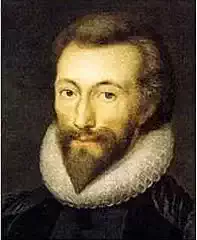
John Donne
Valediction to his Book
Valediction to his Book
I'LL tell thee now (dear love) what thou shalt do
To anger destiny, as she doth us ;
How I shall stay, though she eloign me thus,
And how posterity shall know it too ;
How thine may out-endure
Sibyl's glory, and obscure
Her who from Pindar could allure,
And her, through whose help Lucan is not lame,
And her, whose book (they say) Homer did find, and name.
Study our manuscripts, those myriads
Of letters, which have past 'twixt thee and me ;
Thence write our annals, and in them will be
To all whom love's subliming fire invades,
Rule and example found ;
There the faith of any ground
No schismatic will dare to wound,
That sees, how Love this grace to us affords,
To make, to keep, to use, to be these his records.
This book, as long-lived as the elements,
Or as the world's form, this all-gravèd tome
In cypher writ, or new made idiom ;
We for Love's clergy only are instruments ;
When this book is made thus,
Should again the ravenous
Vandals and Goths invade us,
Learning were safe ; in this our universe,
Schools might learn sciences, spheres music, angels verse.
Here Love's divines—since all divinity
Is love or wonder—may find all they seek,
Whether abstract spiritual love they like,
Their souls exhaled with what they do not see ;
Or, loth so to amuse
Faith's infirmity, they choose
Something which they may see and use ;
For, though mind be the heaven, where love doth sit,
Beauty a convenient type may be to figure it.
Here more than in their books may lawyers find,
Both by what titles mistresses are ours,
And how prerogative these states devours,
Transferr'd from Love himself, to womankind ;
Who, though from heart and eyes,
They exact great subsidies,
Forsake him who on them relies ;
And for the cause, honour, or conscience give ;
Chimeras vain as they or their prerogative.
Here statesmen—or of them, they which can read—
May of their occupation find the grounds ;
Love, and their art, alike it deadly wounds,
If to consider what 'tis, one proceed.
In both they do excel
Who the present govern well,
Whose weakness none doth, or dares tell ;
In this thy book, such will there something see,
As in the Bible some can find out alchemy.
Thus vent thy thoughts ; abroad I'll study thee,
As he removes far off, that great heights takes ;
How great love is, presence best trial makes,
But absence tries how long this love will be ;
To take a latitude
Sun, or stars, are fitliest view'd
At their brightest, but to conclude
Of longitudes, what other way have we,
But to mark when and where the dark eclipses be?
I'LL tell thee now (dear love) what thou shalt do
To anger destiny, as she doth us ;
How I shall stay, though she eloign me thus,
And how posterity shall know it too ;
How thine may out-endure
Sibyl's glory, and obscure
Her who from Pindar could allure,
And her, through whose help Lucan is not lame,
And her, whose book (they say) Homer did find, and name.
Study our manuscripts, those myriads
Of letters, which have past 'twixt thee and me ;
Thence write our annals, and in them will be
To all whom love's subliming fire invades,
Rule and example found ;
There the faith of any ground
No schismatic will dare to wound,
That sees, how Love this grace to us affords,
To make, to keep, to use, to be these his records.
This book, as long-lived as the elements,
Or as the world's form, this all-gravèd tome
In cypher writ, or new made idiom ;
We for Love's clergy only are instruments ;
When this book is made thus,
Should again the ravenous
Vandals and Goths invade us,
Learning were safe ; in this our universe,
Schools might learn sciences, spheres music, angels verse.
Here Love's divines—since all divinity
Is love or wonder—may find all they seek,
Whether abstract spiritual love they like,
Their souls exhaled with what they do not see ;
Or, loth so to amuse
Faith's infirmity, they choose
Something which they may see and use ;
For, though mind be the heaven, where love doth sit,
Beauty a convenient type may be to figure it.
Here more than in their books may lawyers find,
Both by what titles mistresses are ours,
And how prerogative these states devours,
Transferr'd from Love himself, to womankind ;
Who, though from heart and eyes,
They exact great subsidies,
Forsake him who on them relies ;
And for the cause, honour, or conscience give ;
Chimeras vain as they or their prerogative.
Here statesmen—or of them, they which can read—
May of their occupation find the grounds ;
Love, and their art, alike it deadly wounds,
If to consider what 'tis, one proceed.
In both they do excel
Who the present govern well,
Whose weakness none doth, or dares tell ;
In this thy book, such will there something see,
As in the Bible some can find out alchemy.
Thus vent thy thoughts ; abroad I'll study thee,
As he removes far off, that great heights takes ;
How great love is, presence best trial makes,
But absence tries how long this love will be ;
To take a latitude
Sun, or stars, are fitliest view'd
At their brightest, but to conclude
Of longitudes, what other way have we,
But to mark when and where the dark eclipses be?
340
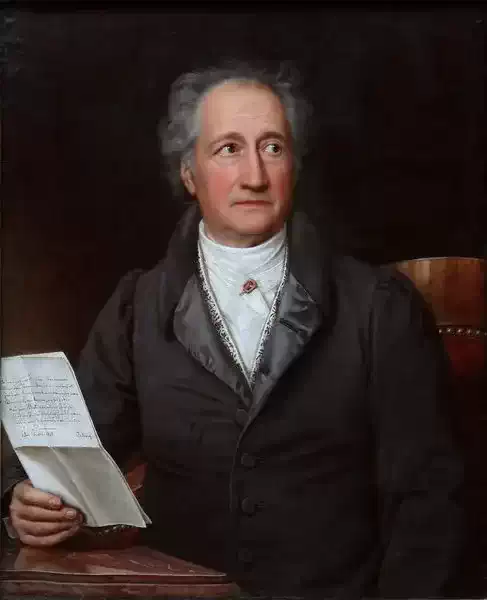
Johann Wolfgang von Goethe
Minstrel's Book - The Four Favours
Minstrel's Book - The Four Favours
THAT Arabs through the realms of space
May wander on, light-hearted,
Great Allah hath, to all their race,
Four favours meet imparted.
The turban first--that ornament
All regal crowns excelling;
A light and ever-shifting tent,
Wherein to make our dwelling;
A sword, which, more than rocks and walls
Doth shield us, brightly glistening;
A song that profits and enthrall,
For which the maids are list'ning!
THAT Arabs through the realms of space
May wander on, light-hearted,
Great Allah hath, to all their race,
Four favours meet imparted.
The turban first--that ornament
All regal crowns excelling;
A light and ever-shifting tent,
Wherein to make our dwelling;
A sword, which, more than rocks and walls
Doth shield us, brightly glistening;
A song that profits and enthrall,
For which the maids are list'ning!
313
Johann Wolfgang von Goethe
Hermann And Dorothea - VI. Klio
Hermann And Dorothea - VI. Klio
THE AGE.
WHEN the pastor ask'd the foreign magistrate questions,
What the people had suffer'd, how long from their homes they had wander'd,
Then the man replied:--'By no means short are our sorrows,
For we have drunk the bitters of many a long year together,
All the more dreadful, because our fairest hopes have been blighted.
Who can deny that his heart beat wildly and high in his bosom
And that with purer pulses his breast more freely was throbbing,
When the newborn sun first rose in the whole of its glory,
When we heard of the right of man, to have all things in common,
Heard of noble Equality, and of inspiriting Freedom!
Each man then hoped to attain new life for himself, and the fetters
Which had encircled many a land appear'd to be broken,
Fetters held by the hands of sloth and selfish indulgence.
Did not all nations turn their gaze, in those days of emotion,
Tow'rds the world's capital, which so many a long year had been so,
And then more than ever deserved a name so distinguish'd?
Were not the men, who first proclaim'd so noble a message,
Names that are worthy to rank with the highest the sun ever shone on,
Did not each give to mankind his courage and genius and language?
'And we also, as neighbours, at first were warmly excited.
Presently after began the war, and the train of arm'd Frenchmen
Nearer approach'd; at first they appear'd to bring with them friendship,
And they brought it in fact; for all their souls were exalted.
And the gay trees of liberty ev'rywhere gladly they planted,
Promising unto each his own, and the government long'd for.
Greatly at this was youth, and greatly old age was delighted,
And the joyous dance began round the newly-raised standards.
In this manner the overpowering Frenchmen soon conquer'd
First the minds of the men, with their fiery lively proceedings,
Then the hearts of the women, with irresistible graces.
Even the strain of the war, with its many demands, seem'd but trifling,
For before our eyes the distance by hope was illumined,
Luring our gaze far ahead into paths now first open'd before us.
'O how joyful the time, when with his bride the glad bridegroom
Whirls in the dance, awaiting the day that will join them for ever
But more glorious far was the time when the Highest of all things
Which man's mind can conceive, close by and attainable seemed.
Then were the tongues of all loosen'd, and words of wisdom and feeling
Not by greybeards alone, but by men and by striplings were utter'd.
'But the heavens soon clouded became. For the sake of the mast'ry
Strove a contemptible crew, unfit to accomplish good actions.
Then they murder'd each other, and took to oppressing their new-found
Neighbours and brothers, and sent on missions whole herds of selfÄseekers
And the superiors took to carousing and robbing by wholesale,
And the inferiors down to the lowest caroused and robb'd also.
Nobody thought of aught else than having enough for tomorrow.
Terrible was the distress, and daily increased the oppression.
None the cry understood, that they of the day were the masters.
Then even temperate minds were attack'd by sorrow and fury;
Each one reflected, and swore to avenge all the injuries suffer'd,
And to atone for the hitter loss of hopes twice defrauded.
Presently Fortune declared herself on the side of the Germans,
And the French were compell'd to retreat by forced marches before them.
Ah! the sad fate of the war we then for the first time experienced.
For the victor is kind and humane, at least he appears so,
And he spares the man he has vanquish'd, as if he his own were,
When he employs him daily, and with his property helps him.
But the fugitive knows no law; he wards off death only,
And both quickly and recklessly all that he meets with, consumes he.
Then his mind becomes heated apace; and soon desperation
Fills his heart, and impels him to all kinds of criminal actions.
Nothing then holds he respected, he steals It. With furious longing
On the woman he rushes; his lust becomes awful to think of.
Death all around him he sees, his last minutes in cruelty spends he,
Wildly exulting in blood, and exulting in howls and in anguish.
'Then in the minds of our men arose a terrible yearning
That which was lost to avenge, and that which remain'd to defend still.
All of them seized upon arms, lured on by the fugitives' hurry,
By their pale faces, and by their shy, uncertain demeanour.
There was heard the sound of alarm-bells unceasingly ringing,
And the approach of danger restrain'd not their violent fury.
Soon into weapons were turn'd the implements peaceful of tillage,
And with dripping blood the scythe and the pitchfork were cover'd.
Every foeman without distinction was ruthlessly slaughter'd,
Fury was ev'rywhere raging, and artful, cowardly weakness.
May I never again see men in such wretched confusion!
Even the raging wild beast is a better object to gaze on.
Ne'er let them speak of freedom, as if themselves they could govern!
All the evil which Law has driven farback in the corner
Seems to escape, as soon as the fetters which bound it are loosen'd.'
'Excellent man,' replied the pastor, with emphasis speaking
'If you're mistaken in man, 'tis not for me to reprove you.
Evil enough have you suffer'd indeed from his cruel proceedings!
Would you but look back, however, on days so laden with sorrow,
You would yourself confess how much that is good you have witness'd,
Much that is excellent, which remains conceald in the bossom
Till by danger 'tis stirr'd, and till necessity makes man
Show himself as an angel, a tutelar God unto others.'
Then with a smile replied the worthy old magistrate, saying
'Your reminder is wise, like that which they give to the suff'rer
Who has had his dwelling burnt down, that under the ruins,
Gold and silver are lying, though melted and cover'd with ashes.
Little, indeed, it may be, and yet that little is precious,
And the poor man digs it up, and rejoices at finding the treasure.
Gladly, therefore, I turn my thoughts to those few worthy actions
Which my memory still is able to dwell on with pleasure.
Yes, I will not deny it, I saw late foemen uniting
So as to save the town from harm; I saw with devotion
Parents, children and friends impossible actions attempting,
Saw how the youth of a sudden became a man, how the greybeard
Once more was young, how the child as a stripling appear'd in a moment.
Aye, and the weaker sex, as people commonly call it,
Show'd itself brave and daring, with presence of mind all-unwonted.
Let me now, in the first place, describe a deed of rare merit
By a high-spirited girl accomplish'd, an excellent maiden,
Who in the great farmhouse remain'd behind with the servants,
When the whole of the men had departed, to fight with the strangers.
Well, there fell on the court a troop of vagabond scoundrels,
Plund'ring and forcing their way inside the rooms of the women.
Soon they cast their eyes on the forms of the grown-up fair maiden
And of the other dear girls, in age little more than mere children.
Hurried away by raging desire, unfeelingly rush'd they
On the trembling band, and on the high-spirited maiden.
But she instantly seized the sword from the side of a ruffian,
Hew'd him down to the ground; at her feet straight fell he, all bleeding,
Then with doughty strokes the maidens she bravely deliver'd.
Wounded four more of the robbers; with life, however, escaped they.
Then she lock'd up the court, and, arm'd still, waited for succour.
When the pastor heard the praise of the maiden thus utter'd
Feelings of hope for his friend forthwith arose in his bosom,
And he prepared to ask what had been the fate of the damsel,
Whether she, in the sorrowful flight, form'd one of the people?
At this moment, however, the druggist nimbly approach'd them,
Pull'd the sleeve of the pastor, and whisper'd to him as follows
'I have at last pick'd out the maiden from many a hundred
By her description! Pray come and judge for yourself with your own eyes;
Bring the magistrate with you, that we may learn the whole story.'
So they turn'd themselves round; but the magistrate found himself summon'd
By his own followers, who had need of his presence and counsel.
But the pastor forthwith the druggist accompanied, till they
Came to a gap in the hedge, when the latter pointed with slyness,
'See you,' exclaim'd he, 'the maiden? The child's clothes she has been changing.
And I recognise well the old calico--also the cushion--
Cover of blue, which Hermann took in the bundle and gave her.
Quickly and well, of a truth, she has used the presents left with her.
These are evident proofs; and all the rest coincide too;
For a bodice red her well-arch'd bosom upraises,
Prettily tied, while black are the stays fitting close around her.
Then the seams of the ruff she has carefully plaited and folded,
Which, with modest grace, her chin so round is encircling;
Free and joyously rises her head, with its elegant oval,
Strongly round bodkins of silver her back-hair is many times twisted.
When she is sitting, we plainly see her noble proportions,
And the blue well-plaited gown which begins from close to her bosom,
And in rich folds descending, her well-turn'd ankles envelops.
'Tis she, beyond all doubt. So come, that we may examine
Whether she be both a good and a frugal and virtuous maiden.'
Then the pastor rejoin'd, the sitting damsel inspecting
'That she enchanted the youth, I confess is no matter of wonder,
For she stands the test of the gaze of a man of experience.
Happy the person to whom Mother Nature the right face has given!
She recommends him at all times, he never appears as a stranger,
Each one gladly approaches, and each one beside him would linger,
If with his face is combined a pleasant and courteous demeanour.
Yes, I assure you the youth has indeed discover'd a maiden
Who the whole of the days of his life will enliven with gladness,
And with her womanly strength assist him at all times and truly.
Thus a perfect body preserves the soul also in pureness,
And a vigorous youth of a happy old age gives assurance.
After reflecting a little, the druggist made answer as follows:-'
Yet appearances oft are deceitful. I trust not the outside.
Often, indeed, have I found the truth of the proverb which tells us
Ere you share a bushel of salt with a new-found acquaintance,
Do not trust him too readily; time will make you more certain
How you and he will get on, and whether your friendship is lasting.
Let us then, in the first place, inquire amongst the good people
Unto whom the maiden is known, who can tell us about her.'
'Well, of a truth I commend your prudence,' the pastor continued
'Not for ourselves are we wooing! To woo for others is serious.'
So they started to meet the worthy magistrate seeing
How in the course of his business he was ascending the main street.
And the wise pastor straightway address'd him with foresight as follows
'We, by-the-bye, have just seen a girl in the neighbouring garden
Under an apple-tree sitting, and clothes for the children preparing,
Made of worn calico, which for the purpose was doubtless presented.
We were pleased by her face; she appears to be one of the right sort.
Tell us, what know you about her? We ask from a laudable motive.'
When the magistrate came to the garden and peep'd in, exclaimed he
'Well do I know her, in truth; for when I told you the story
Of that noble deed which was done by the maiden I spoke of,
How she seized on the sword, and defended herself, and the servants,
She the heroine was! You can see how active her nature.
But she's as good as she's strong; for her aged kinsman she tended
Until the time of his death, for he died overwhelm'd by affliction
At the distress of his town, and the danger his goods were exposed to.
Also with mute resignation she bore the grievous affliction
Of her betroth'd's sad death, a noble young man who, incited
By the first fire of noble thoughts to struggle for freedom,
Went himself to Paris, and soon found a terrible death there.
For, as at home, so there, he fought 'gainst intrigue and oppression.'
Thus the magistrate spoke. The others departed and thanked him,
And the pastor produced a gold piece (the silver his purse held
He some hours before had with genuine kindness expended
When he saw the fugitives passing in sorrowful masses).
And to the magistrate handed it, saying:--' Divide it, I pray you,
'Mongst those who need it the most. May God give it prosperous increase.'
But the man refused to accept it, and said:--'I assure you,
Many a dollar we've saved, and plenty of clothing and such things,
And I trust we may reach our homes before they are finish'd.'
Then continued the pastor, the gold in his hand once more placing
'None should delay to give in days like the present, and no one
Ought to refuse to receive what is offer'd with liberal kindness.
No one can tell how long he will keep what in peace he possesses,
No one, how long he is doom'd in foreign countries to wander,
While he's deprived of the field and the garden by which he is nurtured.'
'Bravo!' added in turn the druggist, with eagerness speaking
'Had I but money to spare in my pocket, you surely should have it,
Silver and gold alike; for your followers certainly need it.
Yet I'll not leave you without a present, if only to show you
My good will, and I hope you will take the will for the action.'
Thus he spoke, and pull'd out by the strings the leather embroider'd
Pouch, in which he was wont his stock of tobacco to carry,
Daintily open'd and shared its contents--some two or three pipes' full.
'Small in truth is the gift,' he added. The magistrate answered:
'Good tobacco is always a welcome present to trav'llers.'
Then the druggist began his canister to praise very highly.
But the pastor drew him away, and the magistrate left them.
'Come, let us hasten!' exclaimed the sensible man, 'for our young friend
Anxiously waits; without further delay let him hear the good tidings.'
So they hasten'd and came, and found that the youngster was leaning
'Gainst his carriage under the lime-trees. The horses were pawing
Wildly the turf; he held them in check and stood there all pensive,
Silently gazing in front, and saw not his friends coming near him,
Till, as they came, they called him and gave him signals of triumph.
Some way off the druggist already began to address him,
But they approach'd the youth still nearer, and then the good pastor
Seized his hand and spoke and took the word from his comrade
'Friend, I wish you joy! Your eye so true and your true heart
Rightly have chosen! May you and the wife of your young days be happy!
She is full worthy of you; so come and turn around the carriage,
That we may reach without delay the end of the village,
So as to woo her, and shortly escort the dear creature home with us.'
But the youth stood still, and without any token of pleasure
Heard the words of the envoy, though sounding consoling and heav'nly,
Deeply sigh'd and said:--'We came full speed in the carriage
And shall probably go back home ashamed and but slowly;
For, since I have been waiting care has fallen upon me,
Doubt and suspicion and all that a heart full of love is exposed to.
Do you suppose we have only to come, for the maiden to follow,
Just because we are rich, and she poor and wandering in exile?
Poverty, when undeserved, itself makes proud. The fair maiden
Seems to be active and frugal; the world she may claim as her portion.
Do you suppose that a woman of such great beauty and manners
Can have grown up without exciting love in man's bosom?
Do you suppose that her heart until now has to love been fast closed?
Do not drive thither in haste, for perchance to our shame and confusion
We shall have slowly to turn towards home the heads of our horses.
Yes, some youth, I fear me, possesses her heart, and already
She has doubtless promised her hand and her solemn troth plighted,
And I shall stand all ashamed before her, When making my offer.'
Then the pastor proceeded to cheer him with words of good comfort,
But his companion broke in, in his usual talkative manner
'As things used to be, this embarrassment would not have happened,
When each matter was brought to a close in an orthodox fashion.
Then for their son themselves the bride the parents selected,
And a friend of the house was secretly call'd in the first place.
He was then quietly sent as a suitor to visit the parents
Of the selected bride; and, dress'd in his gayest apparel,
Went after dinner some Sunday to visit the excellent burgher,
And began by exchanging polite remarks on all subjects,
Cleverly turning and bending the talk in the proper direction.
After long beating about the bush, he flatter'd the daughter,
And spoke well of the man and the house that gave his commission.
Sensible people soon saw his drift, and the sensible envoy
Watch'd how the notion was taken, and then could explain himself farther.
If they declined the proposal, why then the refusal cost nothing,
But if all prosper'd, why then the suitor for ever thereafter
Play'd the first fiddle at every family feast and rejoicing.
For the married couple remember'd the whole of their lifetime
Whose was the skilful hand by which the marriage knot tied was.
All this now is chang'd, and with many an excellent custom
Has gone quite out of fashion. Each person woos for himself now.
Everyone now must bear the weight of a maiden's refusal
On his own shoulders, and stand all ashamed before her, if needs be.'
'Let that be as it may,' then answered the young man who scarcely
Heard what was said, and his mind had made up already in silence
'I will go myself, and out of the mouth of the maiden
Learn my own fate, for towards her I cherish the most trustful feelings
That any man ever cherish'd towards any woman whatever.
That which she says will be good and sensible,--this I am sure of.
If I am never to see her again, I must once more behold her,
And the ingenuous gaze of her black eyes must meet for the last time.
If to my heart I may clasp her never, her bosom and shoulders
I would once more see, which my arm so longs to encircle:
Once more the mouth I would see, from which one kiss and a Yes will
Make me happy for ever, a No for ever undo me.
But now leave me alone! Wait here no longer. Return you
Straight to my father and mother, in order to tell them in person
That their son was right, and that the maiden is worthy.
And so leave me alone! I myself shall return by the footpath
Over the hill by the pear-tree and then descend through the vineyard,
Which is the shortest way back. Oh may I soon with rejoicing
Take the beloved one home! But perchance all alone I must slink back
By that path to our house and tread it no more with a light heart.'
Thus he spoke, and then placed the reins in the hands of the pastor,
Who, in a knowing way both the foaming horses restraining,
Nimbly mounted the carriage, and took the seat of the driver.
But you still delay'd, good cautious neighbour, and spoke thus
Friend, I will gladly entrust to you soul, and spirit, and mind too,
But my body and bones are not preserved in the best way
When the hand of a parson such worldly matters as reins grasps!'
But you smiled in return, you sensible pastor, replying
'Pray jump in, nor fear with both body and spirit to trust me,
For this hand to hold the reins has long been accustom'd,
And these eyes are train'd to turn the corner with prudence.
For we were wont to drive the carriage, when living at Strasburg,
At the time when with the young baron I went there, for daily,
Driven by me, through the echoing gateway thunder'd the carriage
By the dusty roads to distant meadows and lindens,
Through the crowds of the people who spend their lifetime in walking.'
Partially comforted, then his neighbour mounted the carriage,
Sitting like one prepared to make a wise jump, if needs be,
And the stallions, eager to reach their stables, coursed homewards,
While beneath their powerful hoofs the dust rose in thick clouds.
Long there stood the youth, and saw the dust rise before him,
Saw the dust disperse; but still he stood there, unthinking.
THE AGE.
WHEN the pastor ask'd the foreign magistrate questions,
What the people had suffer'd, how long from their homes they had wander'd,
Then the man replied:--'By no means short are our sorrows,
For we have drunk the bitters of many a long year together,
All the more dreadful, because our fairest hopes have been blighted.
Who can deny that his heart beat wildly and high in his bosom
And that with purer pulses his breast more freely was throbbing,
When the newborn sun first rose in the whole of its glory,
When we heard of the right of man, to have all things in common,
Heard of noble Equality, and of inspiriting Freedom!
Each man then hoped to attain new life for himself, and the fetters
Which had encircled many a land appear'd to be broken,
Fetters held by the hands of sloth and selfish indulgence.
Did not all nations turn their gaze, in those days of emotion,
Tow'rds the world's capital, which so many a long year had been so,
And then more than ever deserved a name so distinguish'd?
Were not the men, who first proclaim'd so noble a message,
Names that are worthy to rank with the highest the sun ever shone on,
Did not each give to mankind his courage and genius and language?
'And we also, as neighbours, at first were warmly excited.
Presently after began the war, and the train of arm'd Frenchmen
Nearer approach'd; at first they appear'd to bring with them friendship,
And they brought it in fact; for all their souls were exalted.
And the gay trees of liberty ev'rywhere gladly they planted,
Promising unto each his own, and the government long'd for.
Greatly at this was youth, and greatly old age was delighted,
And the joyous dance began round the newly-raised standards.
In this manner the overpowering Frenchmen soon conquer'd
First the minds of the men, with their fiery lively proceedings,
Then the hearts of the women, with irresistible graces.
Even the strain of the war, with its many demands, seem'd but trifling,
For before our eyes the distance by hope was illumined,
Luring our gaze far ahead into paths now first open'd before us.
'O how joyful the time, when with his bride the glad bridegroom
Whirls in the dance, awaiting the day that will join them for ever
But more glorious far was the time when the Highest of all things
Which man's mind can conceive, close by and attainable seemed.
Then were the tongues of all loosen'd, and words of wisdom and feeling
Not by greybeards alone, but by men and by striplings were utter'd.
'But the heavens soon clouded became. For the sake of the mast'ry
Strove a contemptible crew, unfit to accomplish good actions.
Then they murder'd each other, and took to oppressing their new-found
Neighbours and brothers, and sent on missions whole herds of selfÄseekers
And the superiors took to carousing and robbing by wholesale,
And the inferiors down to the lowest caroused and robb'd also.
Nobody thought of aught else than having enough for tomorrow.
Terrible was the distress, and daily increased the oppression.
None the cry understood, that they of the day were the masters.
Then even temperate minds were attack'd by sorrow and fury;
Each one reflected, and swore to avenge all the injuries suffer'd,
And to atone for the hitter loss of hopes twice defrauded.
Presently Fortune declared herself on the side of the Germans,
And the French were compell'd to retreat by forced marches before them.
Ah! the sad fate of the war we then for the first time experienced.
For the victor is kind and humane, at least he appears so,
And he spares the man he has vanquish'd, as if he his own were,
When he employs him daily, and with his property helps him.
But the fugitive knows no law; he wards off death only,
And both quickly and recklessly all that he meets with, consumes he.
Then his mind becomes heated apace; and soon desperation
Fills his heart, and impels him to all kinds of criminal actions.
Nothing then holds he respected, he steals It. With furious longing
On the woman he rushes; his lust becomes awful to think of.
Death all around him he sees, his last minutes in cruelty spends he,
Wildly exulting in blood, and exulting in howls and in anguish.
'Then in the minds of our men arose a terrible yearning
That which was lost to avenge, and that which remain'd to defend still.
All of them seized upon arms, lured on by the fugitives' hurry,
By their pale faces, and by their shy, uncertain demeanour.
There was heard the sound of alarm-bells unceasingly ringing,
And the approach of danger restrain'd not their violent fury.
Soon into weapons were turn'd the implements peaceful of tillage,
And with dripping blood the scythe and the pitchfork were cover'd.
Every foeman without distinction was ruthlessly slaughter'd,
Fury was ev'rywhere raging, and artful, cowardly weakness.
May I never again see men in such wretched confusion!
Even the raging wild beast is a better object to gaze on.
Ne'er let them speak of freedom, as if themselves they could govern!
All the evil which Law has driven farback in the corner
Seems to escape, as soon as the fetters which bound it are loosen'd.'
'Excellent man,' replied the pastor, with emphasis speaking
'If you're mistaken in man, 'tis not for me to reprove you.
Evil enough have you suffer'd indeed from his cruel proceedings!
Would you but look back, however, on days so laden with sorrow,
You would yourself confess how much that is good you have witness'd,
Much that is excellent, which remains conceald in the bossom
Till by danger 'tis stirr'd, and till necessity makes man
Show himself as an angel, a tutelar God unto others.'
Then with a smile replied the worthy old magistrate, saying
'Your reminder is wise, like that which they give to the suff'rer
Who has had his dwelling burnt down, that under the ruins,
Gold and silver are lying, though melted and cover'd with ashes.
Little, indeed, it may be, and yet that little is precious,
And the poor man digs it up, and rejoices at finding the treasure.
Gladly, therefore, I turn my thoughts to those few worthy actions
Which my memory still is able to dwell on with pleasure.
Yes, I will not deny it, I saw late foemen uniting
So as to save the town from harm; I saw with devotion
Parents, children and friends impossible actions attempting,
Saw how the youth of a sudden became a man, how the greybeard
Once more was young, how the child as a stripling appear'd in a moment.
Aye, and the weaker sex, as people commonly call it,
Show'd itself brave and daring, with presence of mind all-unwonted.
Let me now, in the first place, describe a deed of rare merit
By a high-spirited girl accomplish'd, an excellent maiden,
Who in the great farmhouse remain'd behind with the servants,
When the whole of the men had departed, to fight with the strangers.
Well, there fell on the court a troop of vagabond scoundrels,
Plund'ring and forcing their way inside the rooms of the women.
Soon they cast their eyes on the forms of the grown-up fair maiden
And of the other dear girls, in age little more than mere children.
Hurried away by raging desire, unfeelingly rush'd they
On the trembling band, and on the high-spirited maiden.
But she instantly seized the sword from the side of a ruffian,
Hew'd him down to the ground; at her feet straight fell he, all bleeding,
Then with doughty strokes the maidens she bravely deliver'd.
Wounded four more of the robbers; with life, however, escaped they.
Then she lock'd up the court, and, arm'd still, waited for succour.
When the pastor heard the praise of the maiden thus utter'd
Feelings of hope for his friend forthwith arose in his bosom,
And he prepared to ask what had been the fate of the damsel,
Whether she, in the sorrowful flight, form'd one of the people?
At this moment, however, the druggist nimbly approach'd them,
Pull'd the sleeve of the pastor, and whisper'd to him as follows
'I have at last pick'd out the maiden from many a hundred
By her description! Pray come and judge for yourself with your own eyes;
Bring the magistrate with you, that we may learn the whole story.'
So they turn'd themselves round; but the magistrate found himself summon'd
By his own followers, who had need of his presence and counsel.
But the pastor forthwith the druggist accompanied, till they
Came to a gap in the hedge, when the latter pointed with slyness,
'See you,' exclaim'd he, 'the maiden? The child's clothes she has been changing.
And I recognise well the old calico--also the cushion--
Cover of blue, which Hermann took in the bundle and gave her.
Quickly and well, of a truth, she has used the presents left with her.
These are evident proofs; and all the rest coincide too;
For a bodice red her well-arch'd bosom upraises,
Prettily tied, while black are the stays fitting close around her.
Then the seams of the ruff she has carefully plaited and folded,
Which, with modest grace, her chin so round is encircling;
Free and joyously rises her head, with its elegant oval,
Strongly round bodkins of silver her back-hair is many times twisted.
When she is sitting, we plainly see her noble proportions,
And the blue well-plaited gown which begins from close to her bosom,
And in rich folds descending, her well-turn'd ankles envelops.
'Tis she, beyond all doubt. So come, that we may examine
Whether she be both a good and a frugal and virtuous maiden.'
Then the pastor rejoin'd, the sitting damsel inspecting
'That she enchanted the youth, I confess is no matter of wonder,
For she stands the test of the gaze of a man of experience.
Happy the person to whom Mother Nature the right face has given!
She recommends him at all times, he never appears as a stranger,
Each one gladly approaches, and each one beside him would linger,
If with his face is combined a pleasant and courteous demeanour.
Yes, I assure you the youth has indeed discover'd a maiden
Who the whole of the days of his life will enliven with gladness,
And with her womanly strength assist him at all times and truly.
Thus a perfect body preserves the soul also in pureness,
And a vigorous youth of a happy old age gives assurance.
After reflecting a little, the druggist made answer as follows:-'
Yet appearances oft are deceitful. I trust not the outside.
Often, indeed, have I found the truth of the proverb which tells us
Ere you share a bushel of salt with a new-found acquaintance,
Do not trust him too readily; time will make you more certain
How you and he will get on, and whether your friendship is lasting.
Let us then, in the first place, inquire amongst the good people
Unto whom the maiden is known, who can tell us about her.'
'Well, of a truth I commend your prudence,' the pastor continued
'Not for ourselves are we wooing! To woo for others is serious.'
So they started to meet the worthy magistrate seeing
How in the course of his business he was ascending the main street.
And the wise pastor straightway address'd him with foresight as follows
'We, by-the-bye, have just seen a girl in the neighbouring garden
Under an apple-tree sitting, and clothes for the children preparing,
Made of worn calico, which for the purpose was doubtless presented.
We were pleased by her face; she appears to be one of the right sort.
Tell us, what know you about her? We ask from a laudable motive.'
When the magistrate came to the garden and peep'd in, exclaimed he
'Well do I know her, in truth; for when I told you the story
Of that noble deed which was done by the maiden I spoke of,
How she seized on the sword, and defended herself, and the servants,
She the heroine was! You can see how active her nature.
But she's as good as she's strong; for her aged kinsman she tended
Until the time of his death, for he died overwhelm'd by affliction
At the distress of his town, and the danger his goods were exposed to.
Also with mute resignation she bore the grievous affliction
Of her betroth'd's sad death, a noble young man who, incited
By the first fire of noble thoughts to struggle for freedom,
Went himself to Paris, and soon found a terrible death there.
For, as at home, so there, he fought 'gainst intrigue and oppression.'
Thus the magistrate spoke. The others departed and thanked him,
And the pastor produced a gold piece (the silver his purse held
He some hours before had with genuine kindness expended
When he saw the fugitives passing in sorrowful masses).
And to the magistrate handed it, saying:--' Divide it, I pray you,
'Mongst those who need it the most. May God give it prosperous increase.'
But the man refused to accept it, and said:--'I assure you,
Many a dollar we've saved, and plenty of clothing and such things,
And I trust we may reach our homes before they are finish'd.'
Then continued the pastor, the gold in his hand once more placing
'None should delay to give in days like the present, and no one
Ought to refuse to receive what is offer'd with liberal kindness.
No one can tell how long he will keep what in peace he possesses,
No one, how long he is doom'd in foreign countries to wander,
While he's deprived of the field and the garden by which he is nurtured.'
'Bravo!' added in turn the druggist, with eagerness speaking
'Had I but money to spare in my pocket, you surely should have it,
Silver and gold alike; for your followers certainly need it.
Yet I'll not leave you without a present, if only to show you
My good will, and I hope you will take the will for the action.'
Thus he spoke, and pull'd out by the strings the leather embroider'd
Pouch, in which he was wont his stock of tobacco to carry,
Daintily open'd and shared its contents--some two or three pipes' full.
'Small in truth is the gift,' he added. The magistrate answered:
'Good tobacco is always a welcome present to trav'llers.'
Then the druggist began his canister to praise very highly.
But the pastor drew him away, and the magistrate left them.
'Come, let us hasten!' exclaimed the sensible man, 'for our young friend
Anxiously waits; without further delay let him hear the good tidings.'
So they hasten'd and came, and found that the youngster was leaning
'Gainst his carriage under the lime-trees. The horses were pawing
Wildly the turf; he held them in check and stood there all pensive,
Silently gazing in front, and saw not his friends coming near him,
Till, as they came, they called him and gave him signals of triumph.
Some way off the druggist already began to address him,
But they approach'd the youth still nearer, and then the good pastor
Seized his hand and spoke and took the word from his comrade
'Friend, I wish you joy! Your eye so true and your true heart
Rightly have chosen! May you and the wife of your young days be happy!
She is full worthy of you; so come and turn around the carriage,
That we may reach without delay the end of the village,
So as to woo her, and shortly escort the dear creature home with us.'
But the youth stood still, and without any token of pleasure
Heard the words of the envoy, though sounding consoling and heav'nly,
Deeply sigh'd and said:--'We came full speed in the carriage
And shall probably go back home ashamed and but slowly;
For, since I have been waiting care has fallen upon me,
Doubt and suspicion and all that a heart full of love is exposed to.
Do you suppose we have only to come, for the maiden to follow,
Just because we are rich, and she poor and wandering in exile?
Poverty, when undeserved, itself makes proud. The fair maiden
Seems to be active and frugal; the world she may claim as her portion.
Do you suppose that a woman of such great beauty and manners
Can have grown up without exciting love in man's bosom?
Do you suppose that her heart until now has to love been fast closed?
Do not drive thither in haste, for perchance to our shame and confusion
We shall have slowly to turn towards home the heads of our horses.
Yes, some youth, I fear me, possesses her heart, and already
She has doubtless promised her hand and her solemn troth plighted,
And I shall stand all ashamed before her, When making my offer.'
Then the pastor proceeded to cheer him with words of good comfort,
But his companion broke in, in his usual talkative manner
'As things used to be, this embarrassment would not have happened,
When each matter was brought to a close in an orthodox fashion.
Then for their son themselves the bride the parents selected,
And a friend of the house was secretly call'd in the first place.
He was then quietly sent as a suitor to visit the parents
Of the selected bride; and, dress'd in his gayest apparel,
Went after dinner some Sunday to visit the excellent burgher,
And began by exchanging polite remarks on all subjects,
Cleverly turning and bending the talk in the proper direction.
After long beating about the bush, he flatter'd the daughter,
And spoke well of the man and the house that gave his commission.
Sensible people soon saw his drift, and the sensible envoy
Watch'd how the notion was taken, and then could explain himself farther.
If they declined the proposal, why then the refusal cost nothing,
But if all prosper'd, why then the suitor for ever thereafter
Play'd the first fiddle at every family feast and rejoicing.
For the married couple remember'd the whole of their lifetime
Whose was the skilful hand by which the marriage knot tied was.
All this now is chang'd, and with many an excellent custom
Has gone quite out of fashion. Each person woos for himself now.
Everyone now must bear the weight of a maiden's refusal
On his own shoulders, and stand all ashamed before her, if needs be.'
'Let that be as it may,' then answered the young man who scarcely
Heard what was said, and his mind had made up already in silence
'I will go myself, and out of the mouth of the maiden
Learn my own fate, for towards her I cherish the most trustful feelings
That any man ever cherish'd towards any woman whatever.
That which she says will be good and sensible,--this I am sure of.
If I am never to see her again, I must once more behold her,
And the ingenuous gaze of her black eyes must meet for the last time.
If to my heart I may clasp her never, her bosom and shoulders
I would once more see, which my arm so longs to encircle:
Once more the mouth I would see, from which one kiss and a Yes will
Make me happy for ever, a No for ever undo me.
But now leave me alone! Wait here no longer. Return you
Straight to my father and mother, in order to tell them in person
That their son was right, and that the maiden is worthy.
And so leave me alone! I myself shall return by the footpath
Over the hill by the pear-tree and then descend through the vineyard,
Which is the shortest way back. Oh may I soon with rejoicing
Take the beloved one home! But perchance all alone I must slink back
By that path to our house and tread it no more with a light heart.'
Thus he spoke, and then placed the reins in the hands of the pastor,
Who, in a knowing way both the foaming horses restraining,
Nimbly mounted the carriage, and took the seat of the driver.
But you still delay'd, good cautious neighbour, and spoke thus
Friend, I will gladly entrust to you soul, and spirit, and mind too,
But my body and bones are not preserved in the best way
When the hand of a parson such worldly matters as reins grasps!'
But you smiled in return, you sensible pastor, replying
'Pray jump in, nor fear with both body and spirit to trust me,
For this hand to hold the reins has long been accustom'd,
And these eyes are train'd to turn the corner with prudence.
For we were wont to drive the carriage, when living at Strasburg,
At the time when with the young baron I went there, for daily,
Driven by me, through the echoing gateway thunder'd the carriage
By the dusty roads to distant meadows and lindens,
Through the crowds of the people who spend their lifetime in walking.'
Partially comforted, then his neighbour mounted the carriage,
Sitting like one prepared to make a wise jump, if needs be,
And the stallions, eager to reach their stables, coursed homewards,
While beneath their powerful hoofs the dust rose in thick clouds.
Long there stood the youth, and saw the dust rise before him,
Saw the dust disperse; but still he stood there, unthinking.
340
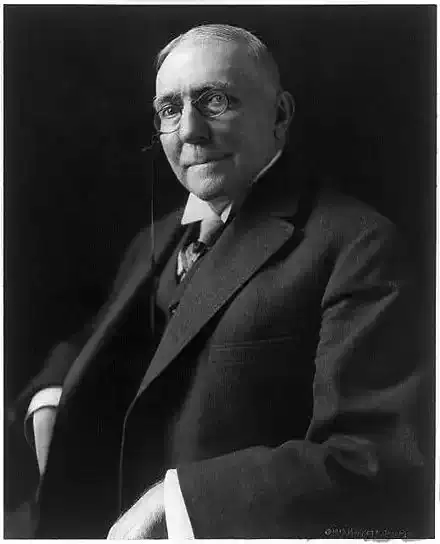
James Whitcomb Riley
The Drum
The Drum
O the drum!
There is some
Intonation in thy grum
Monotony of utterance that strikes the spirit dumb,
As we hear
Through the clear
And unclouded atmosphere,
Thy palpitating syllables roll in upon the car!
There's a part
Of the art
Of thy music-throbbing heart
That thrills a something in us that awakens with a start,
And in rhyme
With the chime
And exactitude of time,
Goes marching on to glory to thy melody sublime.
And the guest
Of the breast
That thy rolling robs of rest
Is a patriotic spirit as a Continental dressed;
And he looms
From the glooms
Of a century of tombs,
And the blood he spilled at Lexington in living beauty blooms.
And his eyes
Wear the guise
Of a purpose pure and wise,
As the love of them is lifted to a something in the skies
That is bright
Red and white,
With a blur of starry light,
As it laughs in silken ripples to the breezes day and night.
There are deep
Hushes creep
O'er the pulses as they leap,
As thy tumult, fainter growing, on the silence falls asleep,
While the prayer
Rising there
Wills the sea and earth and air
As a heritage to Freedom's sons and daughters everywhere.
Then, with sound
As profound
As the thunderings resound,
Come thy wild reverberations in a throe that shakes the ground,
And a cry
Flung on high,
Like the flag it flutters by,
Wings rapturously upward till it nestles in the sky.
O the drum!
There is some
Intonation in thy grum
Monotony of utterance that strikes the spirit dumb,
As we hear
Through the clear
And unclouded atmosphere,
Thy palpitating syllables roll in upon the ear!
O the drum!
There is some
Intonation in thy grum
Monotony of utterance that strikes the spirit dumb,
As we hear
Through the clear
And unclouded atmosphere,
Thy palpitating syllables roll in upon the car!
There's a part
Of the art
Of thy music-throbbing heart
That thrills a something in us that awakens with a start,
And in rhyme
With the chime
And exactitude of time,
Goes marching on to glory to thy melody sublime.
And the guest
Of the breast
That thy rolling robs of rest
Is a patriotic spirit as a Continental dressed;
And he looms
From the glooms
Of a century of tombs,
And the blood he spilled at Lexington in living beauty blooms.
And his eyes
Wear the guise
Of a purpose pure and wise,
As the love of them is lifted to a something in the skies
That is bright
Red and white,
With a blur of starry light,
As it laughs in silken ripples to the breezes day and night.
There are deep
Hushes creep
O'er the pulses as they leap,
As thy tumult, fainter growing, on the silence falls asleep,
While the prayer
Rising there
Wills the sea and earth and air
As a heritage to Freedom's sons and daughters everywhere.
Then, with sound
As profound
As the thunderings resound,
Come thy wild reverberations in a throe that shakes the ground,
And a cry
Flung on high,
Like the flag it flutters by,
Wings rapturously upward till it nestles in the sky.
O the drum!
There is some
Intonation in thy grum
Monotony of utterance that strikes the spirit dumb,
As we hear
Through the clear
And unclouded atmosphere,
Thy palpitating syllables roll in upon the ear!
266

Jack Kerouac
th Chorus Mexico City Blues
th Chorus Mexico City Blues
The great hanging weak teat of India
on the map
The Fingernail of Malaya
The Wall of China
The Korea Ti-Pousse Thumb
The Salamander Japan
the Okinawa Moon Spot
The Pacific
The Back of Hawaiian Mountains
coconuts
Kines, balconies, Ah Tarzan-
And D W Griffith
the great American Director
Strolling down disgruntled
Hollywood Lane
-to toot Nebraska,
Indian Village New York,
Atlantis, Rome,
Peleus and Melisander,
And
swans of Balls
Spots of foam on the ocean
The great hanging weak teat of India
on the map
The Fingernail of Malaya
The Wall of China
The Korea Ti-Pousse Thumb
The Salamander Japan
the Okinawa Moon Spot
The Pacific
The Back of Hawaiian Mountains
coconuts
Kines, balconies, Ah Tarzan-
And D W Griffith
the great American Director
Strolling down disgruntled
Hollywood Lane
-to toot Nebraska,
Indian Village New York,
Atlantis, Rome,
Peleus and Melisander,
And
swans of Balls
Spots of foam on the ocean
205
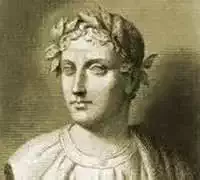
Horácio
BkIV:XIV Drusus and Tiberius
BkIV:XIV Drusus and Tiberius
What care the Citizens and the Senators
shall take in immortalising your virtues,
granting you full honours, Augustus,
with titles and memorial plaques, O,
greatest of princes, wherever the sun shines
over the countries where people can live, you,
whose power in war the Vindelici
free of our Roman laws, till now, have learnt.
For, with your army, brave Drusus, demolished
the Genauni, that implacable race, in more
direct retaliation, the swift
Breuni, and their defences, established
on the formidable Alpine heights: and soon
Tiberius, the elder Nero, entered
that fierce fight, with his favourable
omens, defeating the wild Rhaetians:
it was wonderful to see with what destruction,
in contesting the war, he exhausted those minds
intent on the deaths of our freemen,
as the south wind, almost, when it troubles
the ungovernable waves, while the Pleiades’
constellation pierces the clouds, he was eager
to attack the hostile ranks, and drive
his neighing horse through the midst of their fire.
As, bull-like, the Aufidus rolls on, flowing
by the domains of Apulian Daunus,
when it rages and threatens fearful
destruction to their cultivated fields,
so Tiberius overwhelmed the armoured
ranks of barbarians, his fierce impetus
covering the earth, mowing down front
and rear, and conquering them without loss,
yours the troops, the strategy and the friendly
gods. For on that date when Alexandria
opened all its harbour, and empty
palaces to you, in supplication,
good Fortune, fifteen years later, delivered
a favourable outcome to the campaign,
and awarded fame, and the glory
hoped-for, to your imperial action.
The Spaniards, never conquered before, the Medes,
the Indians, marvel at you, the roving
Scythians, O eager protector
of Italy and Imperial Rome.
The Nile, that conceals its origin, hears you,
the Danube hears, and the swift-flowing Tigris,
the Ocean, filled with monsters, roaring
around the distant island of Britain,
and the regions of Gaul, unafraid of death,
and the stubborn Iberian land, hear you:
Sygambri, delighting in slaughter,
stand, with grounded weapons, worshipping you.
What care the Citizens and the Senators
shall take in immortalising your virtues,
granting you full honours, Augustus,
with titles and memorial plaques, O,
greatest of princes, wherever the sun shines
over the countries where people can live, you,
whose power in war the Vindelici
free of our Roman laws, till now, have learnt.
For, with your army, brave Drusus, demolished
the Genauni, that implacable race, in more
direct retaliation, the swift
Breuni, and their defences, established
on the formidable Alpine heights: and soon
Tiberius, the elder Nero, entered
that fierce fight, with his favourable
omens, defeating the wild Rhaetians:
it was wonderful to see with what destruction,
in contesting the war, he exhausted those minds
intent on the deaths of our freemen,
as the south wind, almost, when it troubles
the ungovernable waves, while the Pleiades’
constellation pierces the clouds, he was eager
to attack the hostile ranks, and drive
his neighing horse through the midst of their fire.
As, bull-like, the Aufidus rolls on, flowing
by the domains of Apulian Daunus,
when it rages and threatens fearful
destruction to their cultivated fields,
so Tiberius overwhelmed the armoured
ranks of barbarians, his fierce impetus
covering the earth, mowing down front
and rear, and conquering them without loss,
yours the troops, the strategy and the friendly
gods. For on that date when Alexandria
opened all its harbour, and empty
palaces to you, in supplication,
good Fortune, fifteen years later, delivered
a favourable outcome to the campaign,
and awarded fame, and the glory
hoped-for, to your imperial action.
The Spaniards, never conquered before, the Medes,
the Indians, marvel at you, the roving
Scythians, O eager protector
of Italy and Imperial Rome.
The Nile, that conceals its origin, hears you,
the Danube hears, and the swift-flowing Tigris,
the Ocean, filled with monsters, roaring
around the distant island of Britain,
and the regions of Gaul, unafraid of death,
and the stubborn Iberian land, hear you:
Sygambri, delighting in slaughter,
stand, with grounded weapons, worshipping you.
228
Horácio
BkIV:V To Augustus
BkIV:V To Augustus
Son of the blessed gods, and greatest defender
of Romulus’ people, you’ve been away too long:
make that swift return you promised, to the sacred
councils of the City Fathers,
Blessed leader, bring light to your country again:
when your face shines on the people, like the shining
springtime, then the day itself is more welcoming,
and the sun beams down more brightly.
As a mother, with vows and omens and prayers,
calls to the son whom a southerly wind’s envious
gales have kept far from his home, for more than a year,
lingering there, beyond the waves
of the Carpathian Sea: she who never turns
her face away from the curving line of the shore:
so, smitten with the deep longing of loyalty,
the country yearns for its Caesar.
Then the ox will wander the pastures in safety,
Ceres, and kindly Increase, will nourish the crops,
our sailors will sail across the waters in peace,
trust will shrink from the mark of shame,
the chaste house will be unstained by debauchery,
law and morality conquer the taint of sin,
mothers win praise for new-born so like their fathers,
and punishment attend on guilt.
Who’ll fear the Parthians, or the cold Scythians,
and who’ll fear the offspring savage Germany breeds,
if Caesar’s unharmed? Who’ll worry about battles
in the wilds of Iberia?
Every man passes the day among his own hills,
as he fastens his vines to the waiting branches:
from there he gladly returns to his wine, calls on
you, as god, at the second course:
He worships you with many a prayer, with wine
poured out, joins your name to those of his household gods,
as the Greeks were accustomed to remembering
Castor and mighty Hercules.
‘O blessed leader, bring Italy endless peace!’
That’s what we say, mouths parched, at the start of the day,
that’s what we say, lips wetted with wine, when the sun
sinks to rest under the Ocean.
Son of the blessed gods, and greatest defender
of Romulus’ people, you’ve been away too long:
make that swift return you promised, to the sacred
councils of the City Fathers,
Blessed leader, bring light to your country again:
when your face shines on the people, like the shining
springtime, then the day itself is more welcoming,
and the sun beams down more brightly.
As a mother, with vows and omens and prayers,
calls to the son whom a southerly wind’s envious
gales have kept far from his home, for more than a year,
lingering there, beyond the waves
of the Carpathian Sea: she who never turns
her face away from the curving line of the shore:
so, smitten with the deep longing of loyalty,
the country yearns for its Caesar.
Then the ox will wander the pastures in safety,
Ceres, and kindly Increase, will nourish the crops,
our sailors will sail across the waters in peace,
trust will shrink from the mark of shame,
the chaste house will be unstained by debauchery,
law and morality conquer the taint of sin,
mothers win praise for new-born so like their fathers,
and punishment attend on guilt.
Who’ll fear the Parthians, or the cold Scythians,
and who’ll fear the offspring savage Germany breeds,
if Caesar’s unharmed? Who’ll worry about battles
in the wilds of Iberia?
Every man passes the day among his own hills,
as he fastens his vines to the waiting branches:
from there he gladly returns to his wine, calls on
you, as god, at the second course:
He worships you with many a prayer, with wine
poured out, joins your name to those of his household gods,
as the Greeks were accustomed to remembering
Castor and mighty Hercules.
‘O blessed leader, bring Italy endless peace!’
That’s what we say, mouths parched, at the start of the day,
that’s what we say, lips wetted with wine, when the sun
sinks to rest under the Ocean.
220
Horácio
BkIV:IV Drusus and the Claudians
BkIV:IV Drusus and the Claudians
Like the winged agent of the bright lightning-bolt,
to whom Jove granted power over wandering
birds, once the divine king had found him
faithful in snatching blond Ganymede:
youth and his native vigour first launching him
fresh to his labours, out from the nest: spring winds,
despite his fears, when the storms were past,
teaching him, then, unaccustomed effort:
now with a fierce, hostile assault sweeping down
on the sheepfold, and love of spoils, and the fight,
hurling him at writhing snakes: or like
a lion-cub newly weaned from rich milk
and its tawny mother, seeing a roe deer
intent on its browsing, that’s fated to die
in his inexperienced jaws, such
was Drusus, as the Vindelici found
waging war beneath the Rhaetian Alps:
(where the custom’s derived from that, as long as
is known, has forced them to arm themselves,
clutch, in their right hands, Amazonian
battle-axes, I’ve not tried to ascertain,
it’s not right to know everything) but those hordes,
triumphant everywhere, for so long,
were conquered by the young man’s strategies:
they came to realise what mind, and character
nurtured, with care, in a fortunate household,
by Augustus’ fatherly feelings
towards his stepsons, the Neros, could do.
By the brave and good, are the brave created:
their sire’s virtues exist in horses and men,
while the ferocious golden eagles
don’t produce shy doves, but education
improves inborn qualities, and its proper
cultivation strengthens the mind: whenever
moral behaviour falls short, its faults
dishonour whatever was good at birth.
The Metaurus river’s a witness, O Rome
to what you owe to the Neros, so too is
defeated Hasdrubal, and that day
as sweet, when the shadows fled Latium,
the first day to smile in its kindly glory,
since dread Hannibal rode through Italy’s
cities, a fire among the pine-trees,
or an East wind on Sicilian seas.
And after that, through favourable efforts,
the Roman youth grew in stature, and the shrines
destroyed by Carthaginians’
impious uproar, had their gods restored.
At last that treacherous Hannibal proclaimed:
‘Of our own will, like deer who become the prey
of ravening wolves, we’re chasing those
whom it’s a triumph to flee and evade.
Their race, still strong despite the burning of Troy,
brought their children, sacred icons, and aged
fathers, tossed about on Tuscan seas,
to the towns of Italy, as some oak,
rich in its dark leaves, high on Mount Algidus,
trimmed back by the double-bladed axe, draws strength
and life, despite loss and destruction,
from the very steel itself. The Hydra,
as its body was lopped, grew no mightier,
in grief at being conquered by Hercules,
nor was any greater monster reared
by Colchis or Echionian Thebes.
Drowned in the deep, it emerges lovelier:
contend, it defeats the freshest opponent,
with great glory, and wages wars
that the housewives will tell of in story.
I’ll send no more proud messages to Carthage:
every hope of mine is ended, and ended
the fortunes of all my family,
since my brother Hasdrubal’s destruction.
There’s nothing that Claudian power can’t achieve,
protected by Jove, protected by the god’s
authority, power for which shrewd minds
clear the way through the harsh dangers of war.’
Like the winged agent of the bright lightning-bolt,
to whom Jove granted power over wandering
birds, once the divine king had found him
faithful in snatching blond Ganymede:
youth and his native vigour first launching him
fresh to his labours, out from the nest: spring winds,
despite his fears, when the storms were past,
teaching him, then, unaccustomed effort:
now with a fierce, hostile assault sweeping down
on the sheepfold, and love of spoils, and the fight,
hurling him at writhing snakes: or like
a lion-cub newly weaned from rich milk
and its tawny mother, seeing a roe deer
intent on its browsing, that’s fated to die
in his inexperienced jaws, such
was Drusus, as the Vindelici found
waging war beneath the Rhaetian Alps:
(where the custom’s derived from that, as long as
is known, has forced them to arm themselves,
clutch, in their right hands, Amazonian
battle-axes, I’ve not tried to ascertain,
it’s not right to know everything) but those hordes,
triumphant everywhere, for so long,
were conquered by the young man’s strategies:
they came to realise what mind, and character
nurtured, with care, in a fortunate household,
by Augustus’ fatherly feelings
towards his stepsons, the Neros, could do.
By the brave and good, are the brave created:
their sire’s virtues exist in horses and men,
while the ferocious golden eagles
don’t produce shy doves, but education
improves inborn qualities, and its proper
cultivation strengthens the mind: whenever
moral behaviour falls short, its faults
dishonour whatever was good at birth.
The Metaurus river’s a witness, O Rome
to what you owe to the Neros, so too is
defeated Hasdrubal, and that day
as sweet, when the shadows fled Latium,
the first day to smile in its kindly glory,
since dread Hannibal rode through Italy’s
cities, a fire among the pine-trees,
or an East wind on Sicilian seas.
And after that, through favourable efforts,
the Roman youth grew in stature, and the shrines
destroyed by Carthaginians’
impious uproar, had their gods restored.
At last that treacherous Hannibal proclaimed:
‘Of our own will, like deer who become the prey
of ravening wolves, we’re chasing those
whom it’s a triumph to flee and evade.
Their race, still strong despite the burning of Troy,
brought their children, sacred icons, and aged
fathers, tossed about on Tuscan seas,
to the towns of Italy, as some oak,
rich in its dark leaves, high on Mount Algidus,
trimmed back by the double-bladed axe, draws strength
and life, despite loss and destruction,
from the very steel itself. The Hydra,
as its body was lopped, grew no mightier,
in grief at being conquered by Hercules,
nor was any greater monster reared
by Colchis or Echionian Thebes.
Drowned in the deep, it emerges lovelier:
contend, it defeats the freshest opponent,
with great glory, and wages wars
that the housewives will tell of in story.
I’ll send no more proud messages to Carthage:
every hope of mine is ended, and ended
the fortunes of all my family,
since my brother Hasdrubal’s destruction.
There’s nothing that Claudian power can’t achieve,
protected by Jove, protected by the god’s
authority, power for which shrewd minds
clear the way through the harsh dangers of war.’
215
Horácio
BkIV:II Augustus’s Return
BkIV:II Augustus’s Return
Iulus, whoever tries to rival Pindar,
flies on waxen wings, with Daedalean art,
and is doomed, like Icarus, to give a name
to glassy waters.
Like a river, rushing down from the mountains,
that the rain has filled above its usual banks,
so Pindar’s deep voice seethes, immeasurably,
and goes on flowing,
Pindar, deserving Apollo’s laurel crown,
whether he coins new phrases in audacious
dithyrambs, and is carried along in verse
that’s free of rules,
or whether he sings gods, and kings, the children
of gods, at whose hands the Centaurs, rightly, died,
and by whom the fearful Chimaera’s fires
were all extinguished,
or speaks of those godlike ones an Elean
palm, for boxing or riding, leads home again,
granting a tribute much more powerful than
a hundred statues,
or weeps for the young man snatched from his tearful
bride, praises his powers, to the stars, his spirit,
his golden virtue, begrudging all of them
to gloomy Orcus.
Son of Antony, a powerful breeze raises
the Dircean swan, whenever it’s carried
to cloudy heights. While I create my verses,
in the manner
of a humble Matinian bee, that goes
gathering pollen from all the pleasant thyme,
and labours among the many groves, on the banks
of flowing Tiber.
You, a poet of much greater power, will sing
Caesar, honoured with well-earned wreaths, as he climbs
the sacred slopes, drawing along in his wake
the savage Germans:
he, whom no greater and no better ruler
has Fate, and the true gods, given to the world,
nor ever will, though the centuries roll back
to that first age of gold.
You’ll sing of those happy days, and the City’s
public games, when our brave Augustus returns,
in answer to our prayers: you’ll sing the Forum
free of all quarrels.
Then, if what I utter’s worth hearing, the best
strains of my voice, thrilled by Caesar’s return,
will rise, and I will sing: ‘O lovely sun, O
worthy to be praised!’
While you lead us along: ‘Hail, God of Triumph!’
not once but many times: ‘Hail, God of Triumph!’
all the city will shout, and offer incense
to the kindly gods.
Ten bulls will acquit you, and as many cows:
me, a tender calf that has left its mother,
one that’s been fattened on wide pastures, one that
can fulfil my vow,
echoing, with its brow, those returning fires
of the crescent moon, at the third night’s rising,
appearing snow-white where it carries a mark,
and the rest tawny.
Iulus, whoever tries to rival Pindar,
flies on waxen wings, with Daedalean art,
and is doomed, like Icarus, to give a name
to glassy waters.
Like a river, rushing down from the mountains,
that the rain has filled above its usual banks,
so Pindar’s deep voice seethes, immeasurably,
and goes on flowing,
Pindar, deserving Apollo’s laurel crown,
whether he coins new phrases in audacious
dithyrambs, and is carried along in verse
that’s free of rules,
or whether he sings gods, and kings, the children
of gods, at whose hands the Centaurs, rightly, died,
and by whom the fearful Chimaera’s fires
were all extinguished,
or speaks of those godlike ones an Elean
palm, for boxing or riding, leads home again,
granting a tribute much more powerful than
a hundred statues,
or weeps for the young man snatched from his tearful
bride, praises his powers, to the stars, his spirit,
his golden virtue, begrudging all of them
to gloomy Orcus.
Son of Antony, a powerful breeze raises
the Dircean swan, whenever it’s carried
to cloudy heights. While I create my verses,
in the manner
of a humble Matinian bee, that goes
gathering pollen from all the pleasant thyme,
and labours among the many groves, on the banks
of flowing Tiber.
You, a poet of much greater power, will sing
Caesar, honoured with well-earned wreaths, as he climbs
the sacred slopes, drawing along in his wake
the savage Germans:
he, whom no greater and no better ruler
has Fate, and the true gods, given to the world,
nor ever will, though the centuries roll back
to that first age of gold.
You’ll sing of those happy days, and the City’s
public games, when our brave Augustus returns,
in answer to our prayers: you’ll sing the Forum
free of all quarrels.
Then, if what I utter’s worth hearing, the best
strains of my voice, thrilled by Caesar’s return,
will rise, and I will sing: ‘O lovely sun, O
worthy to be praised!’
While you lead us along: ‘Hail, God of Triumph!’
not once but many times: ‘Hail, God of Triumph!’
all the city will shout, and offer incense
to the kindly gods.
Ten bulls will acquit you, and as many cows:
me, a tender calf that has left its mother,
one that’s been fattened on wide pastures, one that
can fulfil my vow,
echoing, with its brow, those returning fires
of the crescent moon, at the third night’s rising,
appearing snow-white where it carries a mark,
and the rest tawny.
253
Horácio
BkIII:XIV Augustus Returns
BkIII:XIV Augustus Returns
O citizens, conquering Caesar is home
from the Spanish shores, who, like Hercules, now
was said to be seeking that laurel, that’s bought
at the price of death.
May his wife rejoice in a matchless husband,
having sacrificed to true gods, appear now
with our famous leader’s sister, and, all dressed
in holy ribbons,
the mothers of virgins and youths, now safe and
sound. And you, O you boys and you young girls who
are still without husbands, spare us any of
your ill-omened words
This day will be a true holiday for me,
and banish dark care: I’ll not fear civil war,
nor sudden death by violence, while Caesar has
command of the earth.
Go, now, you boys, seek out perfumes and garlands
and a jar that’s old as the Marsian War,
if any of them have managed to escape
Spartacus’s eyes.
And tell that graceful Neaera to hurry
and fasten all her perfumed hair in a knot:
if her hateful doorkeeper causes
delay, come away.
My greying hair softens a spirit eager
for arguments and passionate fights:
I’d not have endured it in my hot youth, while
Plancus was Consul.
O citizens, conquering Caesar is home
from the Spanish shores, who, like Hercules, now
was said to be seeking that laurel, that’s bought
at the price of death.
May his wife rejoice in a matchless husband,
having sacrificed to true gods, appear now
with our famous leader’s sister, and, all dressed
in holy ribbons,
the mothers of virgins and youths, now safe and
sound. And you, O you boys and you young girls who
are still without husbands, spare us any of
your ill-omened words
This day will be a true holiday for me,
and banish dark care: I’ll not fear civil war,
nor sudden death by violence, while Caesar has
command of the earth.
Go, now, you boys, seek out perfumes and garlands
and a jar that’s old as the Marsian War,
if any of them have managed to escape
Spartacus’s eyes.
And tell that graceful Neaera to hurry
and fasten all her perfumed hair in a knot:
if her hateful doorkeeper causes
delay, come away.
My greying hair softens a spirit eager
for arguments and passionate fights:
I’d not have endured it in my hot youth, while
Plancus was Consul.
251
Horácio
BkIII:V No Surrender
BkIII:V No Surrender
We believe thunderous Jupiter rules the sky:
Augustus is considered a god on earth,
for adding the Britons, and likewise
the weight of the Persians to our empire.
Didn’t Crassus’ soldiers live in vile marriage
with barbarian wives, and (because of our
Senate and its perverse ways!) grow old,
in the service of their hostile fathers.
Marsians, Apulians ruled by a Mede,
forgetting their shields, Roman names, and togas,
and eternal Vesta, though Jove’s shrines
and the city of Rome remained unharmed?
Regulus’s far-seeing mind warned of this,
when he objected to shameful surrender,
and considered from its example
harm would come to the following age,
unless captured men were killed without pity.
‘I’ve seen standards and weapons,’ he said,
‘taken bloodlessly from our soldiers,
hung there in the Carthaginian shrines,
I’ve seen the arms of our freemen twisted
behind their backs, enemy gates wide open,
and the fields that our warfare ravaged
being freely cultivated again.
Do you think that our soldiers ransomed for gold,
will fight more fiercely next time! You’ll add
harm to shame: the wool that’s dyed purple
never regains the colour that vanished,
and true courage, when once departed, never
cares to return to an inferior heart.
When a doe that’s set free, from the thick
hunting nets, turns to fight, then he’ll be brave
who trusts himself to treacherous enemies
and he’ll crush Carthage, in a second battle,
who’s felt the chains on his fettered wrists,
without a struggle, afraid of dying.
He’s one who, not knowing how life should be lived,
confuses war with peace. O, shame! O mighty
Carthage, made mightier now because
of Italy’s disgraceful decadence.’
It’s said he set aside his wife’s chaste kisses,
and his little ones, as of less importance,
and, grimly, he set his manly face
to the soil, until he might be able
to strengthen the Senate’s wavering purpose,
by making of himself an example no
other man had made, and hurrying,
among grieving friends, to noble exile.
Yet he knew what the barbarous torturer
was preparing for him. Still he pushed aside
the kinsmen who were blocking his way,
and the people who delayed his going,
as if, with some case decided, and leaving
all that tedious business of his clients,
he headed for Venafrum’s meadows,
or Lacedaemonian Tarentum.
We believe thunderous Jupiter rules the sky:
Augustus is considered a god on earth,
for adding the Britons, and likewise
the weight of the Persians to our empire.
Didn’t Crassus’ soldiers live in vile marriage
with barbarian wives, and (because of our
Senate and its perverse ways!) grow old,
in the service of their hostile fathers.
Marsians, Apulians ruled by a Mede,
forgetting their shields, Roman names, and togas,
and eternal Vesta, though Jove’s shrines
and the city of Rome remained unharmed?
Regulus’s far-seeing mind warned of this,
when he objected to shameful surrender,
and considered from its example
harm would come to the following age,
unless captured men were killed without pity.
‘I’ve seen standards and weapons,’ he said,
‘taken bloodlessly from our soldiers,
hung there in the Carthaginian shrines,
I’ve seen the arms of our freemen twisted
behind their backs, enemy gates wide open,
and the fields that our warfare ravaged
being freely cultivated again.
Do you think that our soldiers ransomed for gold,
will fight more fiercely next time! You’ll add
harm to shame: the wool that’s dyed purple
never regains the colour that vanished,
and true courage, when once departed, never
cares to return to an inferior heart.
When a doe that’s set free, from the thick
hunting nets, turns to fight, then he’ll be brave
who trusts himself to treacherous enemies
and he’ll crush Carthage, in a second battle,
who’s felt the chains on his fettered wrists,
without a struggle, afraid of dying.
He’s one who, not knowing how life should be lived,
confuses war with peace. O, shame! O mighty
Carthage, made mightier now because
of Italy’s disgraceful decadence.’
It’s said he set aside his wife’s chaste kisses,
and his little ones, as of less importance,
and, grimly, he set his manly face
to the soil, until he might be able
to strengthen the Senate’s wavering purpose,
by making of himself an example no
other man had made, and hurrying,
among grieving friends, to noble exile.
Yet he knew what the barbarous torturer
was preparing for him. Still he pushed aside
the kinsmen who were blocking his way,
and the people who delayed his going,
as if, with some case decided, and leaving
all that tedious business of his clients,
he headed for Venafrum’s meadows,
or Lacedaemonian Tarentum.
295
Horácio
BkI:II To Augustus
BkI:II To Augustus
The Father’s sent enough dread hail
and snow to earth already, striking
sacred hills with fiery hand,
to scare the city,
and scare the people, lest again
we know Pyrrha’s age of pain
when Proteus his sea-herds drove
across high mountains,
and fishes lodged in all the elms,
that used to be the haunt of doves,
and the trembling roe-deer swam
the whelming waters.
We saw the yellow Tiber’s waves
hurled backwards from the Tuscan shore,
toppling Numa’s Regia and
the shrine of Vesta,
far too fierce now, the fond river,
in his revenge of wronged Ilia,
drowning the whole left bank, deep,
without permission.
Our children, fewer for their father’s
vices, will hear metal sharpened
that’s better destined for the Persians,
and of battles too.
Which gods shall the people call on
when the Empire falls in ruins?
With what prayer shall the virgins
tire heedless Vesta?
Whom will Jupiter assign to
expiate our sins? We pray you,
come, cloud veiling your bright shoulders,
far-sighted Apollo:
or laughing Venus Erycina,
if you will, whom Cupid circles,
or you, if you see your children
neglected, Leader,
you sated from the long campaign,
who love the war-shouts and the helmets,
and the Moor’s cruel face among his
blood-stained enemies.
Or you, winged son of kindly Maia,
changing shape on earth to human
form, and ready to be named as
Caesar’s avenger:
Don’t rush back to the sky, stay long
among the people of Quirinus,
no swifter breeze take you away,
unhappy with our
sins: here to delight in triumphs,
in being called our prince and father,
making sure the Medes are punished,
lead us, O Caesar.
The Father’s sent enough dread hail
and snow to earth already, striking
sacred hills with fiery hand,
to scare the city,
and scare the people, lest again
we know Pyrrha’s age of pain
when Proteus his sea-herds drove
across high mountains,
and fishes lodged in all the elms,
that used to be the haunt of doves,
and the trembling roe-deer swam
the whelming waters.
We saw the yellow Tiber’s waves
hurled backwards from the Tuscan shore,
toppling Numa’s Regia and
the shrine of Vesta,
far too fierce now, the fond river,
in his revenge of wronged Ilia,
drowning the whole left bank, deep,
without permission.
Our children, fewer for their father’s
vices, will hear metal sharpened
that’s better destined for the Persians,
and of battles too.
Which gods shall the people call on
when the Empire falls in ruins?
With what prayer shall the virgins
tire heedless Vesta?
Whom will Jupiter assign to
expiate our sins? We pray you,
come, cloud veiling your bright shoulders,
far-sighted Apollo:
or laughing Venus Erycina,
if you will, whom Cupid circles,
or you, if you see your children
neglected, Leader,
you sated from the long campaign,
who love the war-shouts and the helmets,
and the Moor’s cruel face among his
blood-stained enemies.
Or you, winged son of kindly Maia,
changing shape on earth to human
form, and ready to be named as
Caesar’s avenger:
Don’t rush back to the sky, stay long
among the people of Quirinus,
no swifter breeze take you away,
unhappy with our
sins: here to delight in triumphs,
in being called our prince and father,
making sure the Medes are punished,
lead us, O Caesar.
250
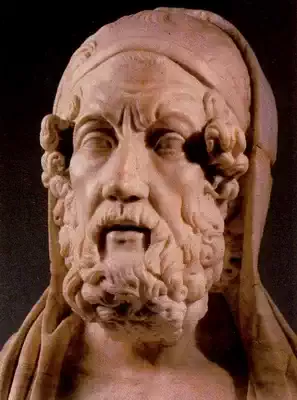
Homero
The Iliad: Book 11
The Iliad: Book 11
And now as Dawn rose from her couch beside Tithonus, harbinger of
light alike to mortals and immortals, Jove sent fierce Discord with
the ensign of war in her hands to the ships of the Achaeans. She
took her stand by the huge black hull of Ulysses' ship which was
middlemost of all, so that her voice might carry farthest on either
side, on the one hand towards the tents of Ajax son of Telamon, and on
the other towards those of Achilles- for these two heroes,
well-assured of their own strength, had valorously drawn up their
ships at the two ends of the line. There she took her stand, and
raised a cry both loud and shrill that filled the Achaeans with
courage, giving them heart to fight resolutely and with all their
might, so that they had rather stay there and do battle than go home
in their ships.
The son of Atreus shouted aloud and bade the Argives gird themselves
for battle while he put on his armour. First he girded his goodly
greaves about his legs, making them fast with ankle clasps of
silver; and about his chest he set the breastplate which Cinyras had
once given him as a guest-gift. It had been noised abroad as far as
Cyprus that the Achaeans were about to sail for Troy, and therefore he
gave it to the king. It had ten courses of dark cyanus, twelve of
gold, and ten of tin. There were serpents of cyanus that reared
themselves up towards the neck, three upon either side, like the
rainbows which the son of Saturn has set in heaven as a sign to mortal
men. About his shoulders he threw his sword, studded with bosses of
gold; and the scabbard was of silver with a chain of gold wherewith to
hang it. He took moreover the richly-dight shield that covered his
body when he was in battle- fair to see, with ten circles of bronze
running all round see, wit it. On the body of the shield there were
twenty bosses of white tin, with another of dark cyanus in the middle:
this last was made to show a Gorgon's head, fierce and grim, with Rout
and Panic on either side. The band for the arm to go through was of
silver, on which there was a writhing snake of cyanus with three heads
that sprang from a single neck, and went in and out among one another.
On his head Agamemnon set a helmet, with a peak before and behind, and
four plumes of horse-hair that nodded menacingly above it; then he
grasped two redoubtable bronze-shod spears, and the gleam of his
armour shot from him as a flame into the firmament, while Juno and
Minerva thundered in honour of the king of rich Mycene.
Every man now left his horses in charge of his charioteer to hold
them in readiness by the trench, while he went into battle on foot
clad in full armour, and a mighty uproar rose on high into the
dawning. The chiefs were armed and at the trench before the horses got
there, but these came up presently. The son of Saturn sent a portent
of evil sound about their host, and the dew fell red with blood, for
he was about to send many a brave man hurrying down to Hades.
The Trojans, on the other side upon the rising slope of the plain,
were gathered round great Hector, noble Polydamas, Aeneas who was
honoured by the Trojans like an immortal, and the three sons of
Antenor, Polybus, Agenor, and young Acamas beauteous as a god.
Hector's round shield showed in the front rank, and as some baneful
star that shines for a moment through a rent in the clouds and is
again hidden beneath them; even so was Hector now seen in the front
ranks and now again in the hindermost, and his bronze armour gleamed
like the lightning of aegis-bearing Jove.
And now as a band of reapers mow swathes of wheat or barley upon a
rich man's land, and the sheaves fall thick before them, even so did
the Trojans and Achaeans fall upon one another; they were in no mood
for yielding but fought like wolves, and neither side got the better
of the other. Discord was glad as she beheld them, for she was the
only god that went among them; the others were not there, but stayed
quietly each in his own home among the dells and valleys of Olympus.
All of them blamed the son of Saturn for wanting to Live victory to
the Trojans, but father Jove heeded them not: he held aloof from
all, and sat apart in his all-glorious majesty, looking down upon
the city of the Trojans, the ships of the Achaeans, the gleam of
bronze, and alike upon the slayers and on the slain.
Now so long as the day waxed and it was still morning, their darts
rained thick on one another and the people perished, but as the hour
drew nigh when a woodman working in some mountain forest will get
his midday meal- for he has felled till his hands are weary; he is
tired out, and must now have food- then the Danaans with a cry that
rang through all their ranks, broke the battalions of the enemy.
Agamemnon led them on, and slew first Bienor, a leader of his
people, and afterwards his comrade and charioteer Oileus, who sprang
from his chariot and was coming full towards him; but Agamemnon struck
him on the forehead with his spear; his bronze visor was of no avail
against the weapon, which pierced both bronze and bone, so that his
brains were battered in and he was killed in full fight.
Agamemnon stripped their shirts from off them and left them with
their breasts all bare to lie where they had fallen. He then went on
to kill Isus and Antiphus two sons of Priam, the one a bastard, the
other born in wedlock; they were in the same chariot- the bastard
driving, while noble Antiphus fought beside him. Achilles had once
taken both of them prisoners in the glades of Ida, and had bound
them with fresh withes as they were shepherding, but he had taken a
ransom for them; now, however, Agamemnon son of Atreus smote Isus in
the chest above the nipple with his spear, while he struck Antiphus
hard by the ear and threw him from his chariot. Forthwith he
stripped their goodly armour from off them and recognized them, for he
had already seen them at ships when Achilles brought them in from Ida.
As a lion fastens on the fawns of a hind and crushes them in his great
jaws, robbing them of their tender life while he on his way back to
his lair- the hind can do nothing for them even though she be close
by, for she is in an agony of fear, and flies through the thick
forest, sweating, and at her utmost speed before the mighty monsterso,
no man of the Trojans could help Isus and Antiphus, for they
were themselves flying panic before the Argives.
Then King Agamemnon took the two sons of Antimachus, Pisander and
brave Hippolochus. It was Antimachus who had been foremost in
preventing Helen's being restored to Menelaus, for he was largely
bribed by Alexandrus; and now Agamemnon took his two sons, both in the
same chariot, trying to bring their horses to a stand- for they had
lost hold of the reins and the horses were mad with fear. The son of
Atreus sprang upon them like a lion, and the pair besought him from
their chariot. "Take us alive," they cried, "son of Atreus, and you
shall receive a great ransom for us. Our father Antimachus has great
store of gold, bronze, and wrought iron, and from this he will satisfy
you with a very large ransom should he hear of our being alive at
the ships of the Achaeans."
With such piteous words and tears did they beseech the king, but
they heard no pitiful answer in return. "If," said Agamemnon, "you are
sons of Antimachus, who once at a council of Trojans proposed that
Menelaus and Ulysses, who had come to you as envoys, should be
killed and not suffered to return, you shall now pay for the foul
iniquity of your father."
As he spoke he felled Pisander from his chariot to the earth,
smiting him on the chest with his spear, so that he lay face uppermost
upon the ground. Hippolochus fled, but him too did Agamemnon smite; he
cut off his hands and his head- which he sent rolling in among the
crowd as though it were a ball. There he let them both lie, and
wherever the ranks were thickest thither he flew, while the other
Achaeans followed. Foot soldiers drove the foot soldiers of the foe in
rout before them, and slew them; horsemen did the like by horsemen,
and the thundering tramp of the horses raised a cloud of dust frim off
the plain. King Agamemnon followed after, ever slaying them and
cheering on the Achaeans. As when some mighty forest is all ablazethe
eddying gusts whirl fire in all directions till the thickets
shrivel and are consumed before the blast of the flame- even so fell
the heads of the flying Trojans before Agamemnon son of Atreus, and
many a noble pair of steeds drew an empty chariot along the highways
of war, for lack of drivers who were lying on the plain, more useful
now to vultures than to their wives.
Jove drew Hector away from the darts and dust, with the carnage
and din of battle; but the son of Atreus sped onwards, calling out
lustily to the Danaans. They flew on by the tomb of old Ilus, son of
Dardanus, in the middle of the plain, and past the place of the wild
fig-tree making always for the city- the son of Atreus still shouting,
and with hands all bedrabbled in gore; but when they had reached the
Scaean gates and the oak tree, there they halted and waited for the
others to come up. Meanwhile the Trojans kept on flying over the
middle of the plain like a herd cows maddened with fright when a
lion has attacked them in the dead of night- he springs on one of
them, seizes her neck in the grip of his strong teeth and then laps up
her blood and gorges himself upon her entrails- even so did King
Agamemnon son of Atreus pursue the foe, ever slaughtering the hindmost
as they fled pell-mell before him. Many a man was flung headlong
from his chariot by the hand of the son of Atreus, for he wielded
his spear with fury.
But when he was just about to reach the high wall and the city,
the father of gods and men came down from heaven and took his seat,
thunderbolt in hand, upon the crest of many-fountained Ida. He then
told Iris of the golden wings to carry a message for him. "Go," said
he, "fleet Iris, and speak thus to Hector-say that so long as he
sees Agamemnon heading his men and making havoc of the Trojan ranks,
he is to keep aloof and bid the others bear the brunt of the battle,
but when Agamemnon is wounded either by spear or arrow, and takes to
his chariot, then will I vouchsafe him strength to slay till he
reach the ships and night falls at the going down of the sun."
Iris hearkened and obeyed. Down she went to strong Ilius from the
crests of Ida, and found Hector son of Priam standing by his chariot
and horses. Then she said, "Hector son of Priam, peer of gods in
counsel, father Jove has sent me to bear you this message- so long
as you see Agamemnon heading his men and making havoc of the Trojan
ranks, you are to keep aloof and bid the others bear the brunt of
the battle, but when Agamemnon is wounded either by spear or arrow,
and takes to his chariot, then will Jove vouchsafe you strength to
slay till you reach the ships, and till night falls at the going
down of the sun."
When she had thus spoken Iris left him, and Hector sprang full armed
from his chariot to the ground, brandishing his spear as he went about
everywhere among the host, cheering his men on to fight, and
stirring the dread strife of battle. The Trojans then wheeled round,
and again met the Achaeans, while the Argives on their part
strengthened their battalions. The battle was now in array and they
stood face to face with one another, Agamemnon ever pressing forward
in his eagerness to be ahead of all others.
Tell me now ye Muses that dwell in the mansions of Olympus, who,
whether of the Trojans or of their allies, was first to face
Agamemnon? It was Iphidamas son of Antenor, a man both brave and of
great stature, who was brought up in fertile Thrace the mother of
sheep. Cisses, his mother's father, brought him up in his own house
when he was a child- Cisses, father to fair Theano. When he reached
manhood, Cisses would have kept him there, and was for giving him
his daughter in marriage, but as soon as he had married he set out
to fight the Achaeans with twelve ships that followed him: these he
had left at Percote and had come on by land to Ilius. He it was that
naw met Agamemnon son of Atreus. When they were close up with one
another, the son of Atreus missed his aim, and Iphidamas hit him on
the girdle below the cuirass and then flung himself upon him, trusting
to his strength of arm; the girdle, however, was not pierced, nor
nearly so, for the point of the spear struck against the silver and
was turned aside as though it had been lead: King Agamemnon caught
it from his hand, and drew it towards him with the fury of a lion;
he then drew his sword, and killed Iphidamas by striking him on the
neck. So there the poor fellow lay, sleeping a sleep as it were of
bronze, killed in the defence of his fellow-citizens, far from his
wedded wife, of whom he had had no joy though he had given much for
her: he had given a hundred-head of cattle down, and had promised
later on to give a thousand sheep and goats mixed, from the
countless flocks of which he was possessed. Agamemnon son of Atreus
then despoiled him, and carried off his armour into the host of the
Achaeans.
When noble Coon, Antenor's eldest son, saw this, sore indeed were
his eyes at the sight of his fallen brother. Unseen by Agamemnon he
got beside him, spear in hand, and wounded him in the middle of his
arm below the elbow, the point of the spear going right through the
arm. Agamemnon was convulsed with pain, but still not even for this
did he leave off struggling and fighting, but grasped his spear that
flew as fleet as the wind, and sprang upon Coon who was trying to drag
off the body of his brother- his father's son- by the foot, and was
crying for help to all the bravest of his comrades; but Agamemnon
struck him with a bronze-shod spear and killed him as he was
dragging the dead body through the press of men under cover of his
shield: he then cut off his head, standing over the body of Iphidamas.
Thus did the sons of Antenor meet their fate at the hands of the son
of Atreus, and go down into the house of Hades.
As long as the blood still welled warm from his wound Agamemnon went
about attacking the ranks of the enemy with spear and sword and with
great handfuls of stone, but when the blood had ceased to flow and the
wound grew dry, the pain became great. As the sharp pangs which the
Eilithuiae, goddesses of childbirth, daughters of Juno and
dispensers of cruel pain, send upon a woman when she is in laboureven
so sharp were the pangs of the son of Atreus. He sprang on to his
chariot, and bade his charioteer drive to the ships, for he was in
great agony. With a loud clear voice he shouted to the Danaans, "My
friends, princes and counsellors of the Argives, defend the ships
yourselves, for Jove has not suffered me to fight the whole day
through against the Trojans."
With this the charioteer turned his horses towards the ships, and
they flew forward nothing loth. Their chests were white with foam
and their bellies with dust, as they drew the wounded king out of
the battle.
When Hector saw Agamemnon quit the field, he shouted to the
Trojans and Lycians saying, "Trojans, Lycians, and Dardanian warriors,
be men, my friends, and acquit yourselves in battle bravely; their
best man has left them, and Jove has vouchsafed me a great triumph;
charge the foe with your chariots that. you may win still greater
glory."
With these words he put heart and soul into them all, and as a
huntsman hounds his dogs on against a lion or wild boar, even so did
Hector, peer of Mars, hound the proud Trojans on against the Achaeans.
Full of hope he plunged in among the foremost, and fell on the fight
like some fierce tempest that swoops down upon the sea, and lashes its
deep blue waters into fury.
What, then is the full tale of those whom Hector son of Priam killed
in the hour of triumph which Jove then vouchsafed him? First Asaeus,
Autonous, and Opites; Dolops son of Clytius, Opheltius and Agelaus;
Aesymnus, Orus and Hipponous steadfast in battle; these chieftains
of the Achaeans did Hector slay, and then he fell upon the rank and
file. As when the west wind hustles the clouds of the white south
and beats them down with the fierceness of its fury- the waves of
the sea roll high, and the spray is flung aloft in the rage of the
wandering wind- even so thick were the heads of them that fell by
the hand of Hector.
All had then been lost and no help for it, and the Achaeans would
have fled pell-mell to their ships, had not Ulysses cried out to
Diomed, "Son of Tydeus, what has happened to us that we thus forget
our prowess? Come, my good fellow, stand by my side and help me, we
shall be shamed for ever if Hector takes the ships."
And Diomed answered, "Come what may, I will stand firm; but we shall
have scant joy of it, for Jove is minded to give victory to the
Trojans rather than to us."
With these words he struck Thymbraeus from his chariot to the
ground, smiting him in the left breast with his spear, while Ulysses
killed Molion who was his squire. These they let lie, now that they
had stopped their fighting; the two heroes then went on playing
havoc with the foe, like two wild boars that turn in fury and rend the
hounds that hunt them. Thus did they turn upon the Trojans and slay
them, and the Achaeans were thankful to have breathing time in their
flight from Hector.
They then took two princes with their chariot, the two sons of
Merops of Percote, who excelled all others in the arts of
divination. He had forbidden his sons to go to the war, but they would
not obey him, for fate lured them to their fall. Diomed son of
Tydeus slew them both and stripped them of their armour, while Ulysses
killed Hippodamus and Hypeirochus.
And now the son of Saturn as he looked down from Ida ordained that
neither side should have the advantage, and they kept on killing one
another. The son of Tydeus speared Agastrophus son of Paeon in the
hip-joint with his spear. His chariot was not at hand for him to fly
with, so blindly confident had he been. His squire was in charge of it
at some distance and he was fighting on foot among the foremost
until he lost his life. Hector soon marked the havoc Diomed and
Ulysses were making, and bore down upon them with a loud cry, followed
by the Trojan ranks; brave Diomed was dismayed when he saw them, and
said to Ulysses who was beside him, "Great Hector is bearing down upon
us and we shall be undone; let us stand firm and wait his onset."
He poised his spear as he spoke and hurled it, nor did he miss his
mark. He had aimed at Hector's head near the top of his helmet, but
bronze was turned by bronze, and Hector was untouched, for the spear
was stayed by the visored helm made with three plates of metal,
which Phoebus Apollo had given him. Hector sprang back with a great
bound under cover of the ranks; he fell on his knees and propped
himself with his brawny hand leaning on the ground, for darkness had
fallen on his eyes. The son of Tydeus having thrown his spear dashed
in among the foremost fighters, to the place where he had seen it
strike the ground; meanwhile Hector recovered himself and springing
back into his chariot mingled with the crowd, by which means he
saved his life. But Diomed made at him with his spear and said,
"Dog, you have again got away though death was close on your heels.
Phoebus Apollo, to whom I ween you pray ere you go into battle, has
again saved you, nevertheless I will meet you and make and end of
you hereafter, if there is any god who will stand by me too and be
my helper. For the present I must pursue those I can lay hands on."
As he spoke he began stripping the spoils from the son of Paeon, but
Alexandrus husband of lovely Helen aimed an arrow at him, leaning
against a pillar of the monument which men had raised to Ilus son of
Dardanus, a ruler in days of old. Diomed had taken the cuirass from
off the breast of Agastrophus, his heavy helmet also, and the shield
from off his shoulders, when Paris drew his bow and let fly an arrow
that sped not from his hand in vain, but pierced the flat of
Diomed's right foot, going right through it and fixing itself in the
ground. Thereon Paris with a hearty laugh sprang forward from his
hiding-place, and taunted him saying, "You are wounded- my arrow has
not been shot in vain; would that it had hit you in the belly and
killed you, for thus the Trojans, who fear you as goats fear a lion,
would have had a truce from evil."
Diomed all undaunted answered, "Archer, you who without your bow are
nothing, slanderer and seducer, if you were to be tried in single
combat fighting in full armour, your bow and your arrows would serve
you in little stead. Vain is your boast in that you have scratched the
sole of my foot. I care no more than if a girl or some silly boy had
hit me. A worthless coward can inflict but a light wound; when I wound
a man though I but graze his skin it is another matter, for my
weapon will lay him low. His wife will tear her cheeks for grief and
his children will be fatherless: there will he rot, reddening the
earth with his blood, and vultures, not women, will gather round him."
Thus he spoke, but Ulysses came up and stood over him. Under this
cover he sat down to draw the arrow from his foot, and sharp was the
pain he suffered as he did so. Then he sprang on to his chariot and
bade the charioteer drive him to the ships, for he was sick at heart.
Ulysses was now alone; not one of the Argives stood by him, for they
were all panic-stricken. "Alas," said he to himself in his dismay,
"what will become of me? It is ill if I turn and fly before these
odds, but it will be worse if I am left alone and taken prisoner,
for the son of Saturn has struck the rest of the Danaans with panic.
But why talk to myself in this way? Well do I know that though cowards
quit the field, a hero, whether he wound or be wounded, must stand
firm and hold his own."
While he was thus in two minds, the ranks of the Trojans advanced
and hemmed him in, and bitterly did they come to me it. As hounds
and lusty youths set upon a wild boar that sallies from his lair
whetting his white tusks- they attack him from every side and can hear
the gnashing of his jaws, but for all his fierceness they still hold
their ground- even so furiously did the Trojans attack Ulysses.
First he sprang spear in hand upon Deiopites and wounded him on the
shoulder with a downward blow; then he killed Thoon and Ennomus. After
these he struck Chersidamas in the loins under his shield as he had
just sprung down from his chariot; so he fell in the dust and clutched
the earth in the hollow of his hand. These he let lie, and went on
to wound Charops son of Hippasus own brother to noble Socus. Socus,
hero that he was, made all speed to help him, and when he was close to
Ulysses he said, "Far-famed Ulysses, insatiable of craft and toil,
this day you shall either boast of having killed both the sons of
Hippasus and stripped them of their armour, or you shall fall before
my spear."
With these words he struck the shield of Ulysses. The spear went
through the shield and passed on through his richly wrought cuirass,
tearing the flesh from his side, but Pallas Minerva did not suffer
it to pierce the entrails of the hero. Ulysses knew that his hour
was not yet come, but he gave ground and said to Socus, "Wretch, you
shall now surely die. You have stayed me from fighting further with
the Trojans, but you shall now fall by my spear, yielding glory to
myself, and your soul to Hades of the noble steeds."
Socus had turned in flight, but as he did so, the spear struck him
in the back midway between the shoulders, and went right through his
chest. He fell heavily to the ground and Ulysses vaunted over him
saying, "O Socus, son of Hippasus tamer of horses, death has been
too quick for you and you have not escaped him: poor wretch, not
even in death shall your father and mother close your eyes, but the
ravening vultures shall enshroud you with the flapping of their dark
wings and devour you. Whereas even though I fall the Achaeans will
give me my due rites of burial."
So saying he drew Socus's heavy spear out of his flesh and from
his shield, and the blood welled forth when the spear was withdrawn so
that he was much dismayed. When the Trojans saw that Ulysses was
bleeding they raised a great shout and came on in a body towards
him; he therefore gave ground, and called his comrades to come and
help him. Thrice did he cry as loudly as man can cry, and thrice did
brave Menelaus hear him; he turned, therefore, to Ajax who was close
beside him and said, "Ajax, noble son of Telamon, captain of your
people, the cry of Ulysses rings in my ears, as though the Trojans had
cut him off and were worsting him while he is single-handed. Let us
make our way through the throng; it will be well that we defend him; I
fear he may come to harm for all his valour if he be left without
support, and the Danaans would miss him sorely."
He led the way and mighty Ajax went with him. The Trojans had
gathered round Ulysses like ravenous mountain jackals round the
carcase of some homed stag that has been hit with an arrow- the stag
has fled at full speed so long as his blood was warm and his
strength has lasted, but when the arrow has overcome him, the savage
jackals devour him in the shady glades of the forest. Then heaven
sends a fierce lion thither, whereon the jackals fly in terror and the
lion robs them of their prey- even so did Trojans many and brave
gather round crafty Ulysses, but the hero stood at bay and kept them
off with his spear. Ajax then came up with his shield before him
like a wall, and stood hard by, whereon the Trojans fled in all
directions. Menelaus took Ulysses by the hand, and led him out of
the press while his squire brought up his chariot, but Ajax rushed
furiously on the Trojans and killed Doryclus, a bastard son of
Priam; then he wounded Pandocus, Lysandrus, Pyrasus, and Pylartes;
as some swollen torrent comes rushing in full flood from the mountains
on to the plain, big with the rain of heaven- many a dry oak and
many a pine does it engulf, and much mud does it bring down and cast
into the sea- even so did brave Ajax chase the foe furiously over
the plain, slaying both men and horses.
Hector did not yet know what Ajax was doing, for he was fighting
on the extreme left of the battle by the banks of the river Scamander,
where the carnage was thickest and the war-cry loudest round Nestor
and brave Idomeneus. Among these Hector was making great slaughter
with his spear and furious driving, and was destroying the ranks
that were opposed to him; still the Achaeans would have given no
ground, had not Alexandrus husband of lovely Helen stayed the
prowess of Machaon shepherd of his people, by wounding him in the
right shoulder with a triple-barbed arrow. The Achaeans were in
great fear that as the fight had turned against them the Trojans might
take him prisoner, and Idomeneus said to Nestor, "Nestor son of
Neleus, honour to the Achaean name, mount your chariot at once; take
Machaon with you and drive your horses to the ships as fast as you
can. A physician is worth more than several other men put together,
for he can cut out arrows and spread healing herbs."
Nestor knight of Gerene did as Idomeneus had counselled; he at
once mounted his chariot, and Machaon son of the famed physician
Aesculapius went with him. He lashed his horses and they flew onward
nothing loth towards the ships, as though of their own free will.
Then Cebriones seeing the Trojans in confusion said to Hector from
his place beside him, "Hector, here are we two fighting on the extreme
wing of the battle, while the other Trojans are in pell-mell rout,
they and their horses. Ajax son of Telamon is driving them before him;
I know him by the breadth of his shield: let us turn our chariot and
horses thither, where horse and foot are fighting most desperately,
and where the cry of battle is loudest."
With this he lashed his goodly steeds, and when they felt the whip
they drew the chariot full speed among the Achaeans and Trojans,
over the bodies and shields of those that had fallen: the axle was
bespattered with blood, and the rail round the car was covered with
splashes both from the horses' hoofs and from the tyres of the wheels.
Hector tore his way through and flung himself into the thick of the
fight, and his presence threw the Danaans into confusion, for his
spear was not long idle; nevertheless though he went among the ranks
with sword and spear, and throwing great stones, he avoided Ajax son
of Telamon, for Jove would have been angry with him if he had fought a
better man than himself.
Then father Jove from his high throne struck fear into the heart
of Ajax, so that he stood there dazed and threw his shield behind himlooking
fearfully at the throng of his foes as though he were some
wild beast, and turning hither and thither but crouching slowly
backwards. As peasants with their hounds chase a lion from their
stockyard, and watch by night to prevent his carrying off the pick
of their herd- he makes his greedy spring, but in vain, for the
darts from many a strong hand fall thick around him, with burning
brands that scare him for all his fury, and when morning comes he
slinks foiled and angry away- even so did Ajax, sorely against his
will, retreat angrily before the Trojans, fearing for the ships of the
Achaeans. Or as some lazy ass that has had many a cudgel broken
about his back, when he into a field begins eating the corn- boys beat
him but he is too many for them, and though they lay about with
their sticks they cannot hurt him; still when he has had his fill they
at last drive him from the field- even so did the Trojans and their
allies pursue great Ajax, ever smiting the middle of his shield with
their darts. Now and again he would turn and show fight, keeping
back the battalions of the Trojans, and then he would again retreat;
but he prevented any of them from making his way to the ships.
Single-handed he stood midway between the Trojans and Achaeans: the
spears that sped from their hands stuck some of them in his mighty
shield, while many, though thirsting for his blood, fell to the ground
ere they could reach him to the wounding of his fair flesh.
Now when Eurypylus the brave son of Euaemon saw that Ajax was
being overpowered by the rain of arrows, he went up to him and
hurled his spear. He struck Apisaon son of Phausius in the liver below
the midriff, and laid him low. Eurypylus sprang upon him, and stripped
the armour from his shoulders; but when Alexandrus saw him, he aimed
an arrow at him which struck him in the right thigh; the arrow
broke, but the point that was left in the wound dragged on the
thigh; he drew back, therefore, under cover of his comrades to save
his life, shouting as he did so to the Danaans, "My friends, princes
and counsellors of the Argives, rally to the defence of Ajax who is
being overpowered, and I doubt whether he will come out of the fight
alive. Hither, then, to the rescue of great Ajax son of Telamon."
Even so did he cry when he was wounded; thereon the others came
near, and gathered round him, holding their shields upwards from their
shoulders so as to give him cover. Ajax then made towards them, and
turned round to stand at bay as soon as he had reached his men.
Thus then did they fight as it were a flaming fire. Meanwhile the
mares of Neleus, all in a lather with sweat, were bearing Nestor out
of the fight, and with him Machaon shepherd of his people. Achilles
saw and took note, for he was standing on the stern of his ship
watching the hard stress and struggle of the fight. He called from the
ship to his comrade Patroclus, who heard him in the tent and came
out looking like Mars himself- here indeed was the beginning of the
ill that presently befell him. "Why," said he, "Achilles do you call
me? what do you what do you want with me?" And Achilles answered,
"Noble son of Menoetius, man after my own heart, I take it that I
shall now have the Achaeans praying at my knees, for they are in great
straits; go, Patroclus, and ask Nestor who is that he is bearing
away wounded from the field; from his back I should say it was Machaon
son of Aesculapius, but I could not see his face for the horses went
by me at full speed."
Patroclus did as his dear comrade had bidden him, and set off
running by the ships and tents of the Achaeans.
When Nestor and Machaon had reached the tents of the son of
Neleus, they dismounted, and an esquire, Eurymedon, took the horses
from the chariot. The pair then stood in the breeze by the seaside
to dry the sweat from their shirts, and when they had so done they
came inside and took their seats. Fair Hecamede, whom Nestor had had
awarded to him from Tenedos when Achilles took it, mixed them a
mess; she was daughter of wise Arsinous, and the Achaeans had given
her to Nestor because he excelled all of them in counsel. First she
set for them a fair and well-made table that had feet of cyanus; on it
there was a vessel of bronze and an onion to give relish to the drink,
with honey and cakes of barley-meal. There was also a cup of rare
workmanship which the old man had brought with him from home,
studded with bosses of gold; it had four handles, on each of which
there were two golden doves feeding, and it had two feet to stand
on. Any one else would hardly have been able to lift it from the table
when it was full, but Nestor could do so quite easily. In this the
woman, as fair as a goddess, mixed them a mess with Pramnian wine; she
grated goat's milk cheese into it with a bronze grater, threw in a
handful of white barley-meal, and having thus prepared the mess she
bade them drink it. When they had done so and had thus quenched
their thirst, they fell talking with one another, and at this moment
Patroclus appeared at the door.
When the old man saw him he sprang from his seat, seized his hand,
led him into the tent, and bade him take his place among them; but
Patroclus stood where he was and said, "Noble sir, I may not stay, you
cannot persuade me to come in; he that sent me is not one to be
trifled with, and he bade me ask who the wounded man was whom you were
bearing away from the field. I can now see for myself that he is
Machaon shepherd of his people. I must go back and tell Achilles. You,
sir, know what a terrible man he is, and how ready to blame even where
no blame should lie."
And Nestor answered, "Why should Achilles care to know how many of
the Achaeans may be wounded? He recks not of the dismay that reigns in
our host; our most valiant chieftains lie disabled, brave Diomed son
of Tydeus is wounded; so are Ulysses and Agamemnon; Eurypylus has been
hit with an arrow in the thigh, and I have just been bringing this man
from the field- he too wounded- with an arrow; nevertheless
Achilles, so valiant though he be, cares not and knows no ruth. Will
he wait till the ships, do what we may, are in a blaze, and we
perish one upon the other? As for me, I have no strength nor stay in
me any longer; would that I Were still young and strong as in the days
when there was a fight between us and the men of Elis about some
cattle-raiding. I then killed Itymoneus the valiant son of Hypeirochus
a dweller in Elis, as I was driving in the spoil; he was hit by a dart
thrown my hand while fighting in the front rank in defence of his
cows, so he fell and the country people around him were in great fear.
We drove off a vast quantity of booty from the plain, fifty herds of
cattle and as many flocks of sheep; fifty droves also of pigs, and
as many wide-spreading flocks of goats. Of horses moreover we seized a
hundred and fifty, all of them mares, and many had foals running
with them. All these did we drive by night to Pylus the city of
Neleus, taking them within the city; and the heart of Neleus was
glad in that I had taken so much, though it was the first time I had
ever been in the field. At daybreak the heralds went round crying that
all in Elis to whom there was a debt owing should come; and the
leading Pylians assembled to divide the spoils. There were many to
whom the Epeans owed chattels, for we men of Pylus were few and had
been oppressed with wrong; in former years Hercules had come, and
had laid his hand heavy upon us, so that all our best men had
perished. Neleus had had twelve sons, but I alone was left; the others
had all been killed. The Epeans presuming upon all this had looked
down upon us and had done us much evil. My father chose a herd of
cattle and a great flock of sheep- three hundred in all- and he took
their shepherds with him, for there was a great debt due to him in
Elis, to wit four horses, winners of prizes. They and their chariots
with them had gone to the games and were to run for a tripod, but King
Augeas took them, and sent back their driver grieving for the loss
of his horses. Neleus was angered by what he had both said and done,
and took great value in return, but he divided the rest, that no man
might have less than his full share.
"Thus did we order all things, and offer sacrifices to the gods
throughout the city; but three days afterwards the Epeans came in a
body, many in number, they and their chariots, in full array, and with
them the two Moliones in their armour, though they were still lads and
unused to fighting. Now there is a certain town, Thryoessa, perched
upon a rock on the river Alpheus, the border city Pylus; this they
would destroy, and pitched their camp about it, but when they had
crossed their whole plain, Minerva darted down by night from Olympus
and bade us set ourselves in array; and she found willing soldiers
in Pylos, for the men meant fighting. Neleus would not let me arm, and
hid my horses, for he said that as yet I could know nothing about war;
nevertheless Minerva so ordered the fight that, all on foot as I
was, I fought among our mounted forces and vied with the foremost of
them. There is a river Minyeius that falls into the sea near Arene,
and there they that were mounted (and I with them) waited till
morning, when the companies of foot soldiers came up with us in force.
Thence in full panoply and equipment we came towards noon to the
sacred waters of the Alpheus, and there we offered victims to almighty
Jove, with a bull to Alpheus, another to Neptune, and a herd-heifer to
Minerva. After this we took supper in our companies, and laid us
down to rest each in his armour by the river.
"The Epeans were beleaguering the city and were determined to take
it, but ere this might be there was a desperate fight in store for
them. When the sun's rays began to fall upon the earth we joined
battle, praying to Jove and to Minerva, and when the fight had
begun, I was the first to kill my man and take his horses- to wit
the warrior Mulius. He was son-in-law to Augeas, having married his
eldest daughter, golden-haired Agamede, who knew the virtues of
every herb which grows upon the face of the earth. I speared him as he
was coming towards me, and when he fell headlong in the dust, I sprang
upon his chariot and took my place in the front ranks. The Epeans fled
in all directions when they saw the captain of their horsemen (the
best man they had) laid low, and I swept down on them like a
whirlwind, taking fifty chariots- and in each of them two men bit
the dust, slain by my spear. I should have even killed the two
Moliones sons of Actor, unless their real father, Neptune lord of
the earthquake, had hidden them in a thick mist and borne them out
of the fight. Thereon Jove vouchsafed the Pylians a great victory, for
we chased them far over the plain, killing the men and bringing in
their armour, till we had brought our horses to Buprasium rich in
wheat and to the Olenian rock, with the hill that is called Alision,
at which point Minerva turned the people back. There I slew the last
man and left him; then the Achaeans drove their horses back from
Buprasium to Pylos and gave thanks to Jove among the gods, and among
mortal men to Nestor.
"Such was I among my peers, as surely as ever was, but Achilles is
for keeping all his valour for himself; bitterly will he rue it
hereafter when the host is being cut to pieces. My good friend, did
not Menoetius charge you thus, on the day when he sent you from Phthia
to Agamemnon? Ulysses and I were in the house, inside, and heard all
that he said to you; for we came to the fair house of Peleus while
beating up recruits throughout all Achaea, and when we got there we
found Menoetius and yourself, and Achilles with you. The old knight
Peleus was in the outer court, roasting the fat thigh-bones of a
heifer to Jove the lord of thunder; and he held a gold chalice in
his hand from which he poured drink-offerings of wine over the burning
sacrifice. You two were busy cutting up the heifer, and at that moment
we stood at the gates, whereon Achilles sprang to his feet, led us
by the hand into the house, placed us at table, and set before us such
hospitable entertainment as guests expect. When we had satisfied
ourselves with meat and drink, I said my say and urged both of you
to join us. You were ready enough to do so, and the two old men
charged you much and straitly. Old Peleus bade his son Achilles
fight ever among the foremost and outvie his peers, while Menoetius
the son of Actor spoke thus to you: 'My son,' said he, 'Achilles is of
nobler birth than you are, but you are older than he, though he is far
the better man of the two. Counsel him wisely, guide him in the
right way, and he will follow you to his own profit.' Thus did your
father charge you, but you have forgotten; nevertheless, even now, say
all this to Achilles if he will listen to you. Who knows but with
heaven's help you may talk him over, for it is good to take a friend's
advice. If, however, he is fearful about some oracle, or if his mother
has told him something from Jove, then let him send you, and let the
rest of the Myrmidons follow with you, if perchance you may bring
light and saving to the Danaans. And let him send you into battle clad
in his own armour, that the Trojans may mistake you for him and
leave off fighting; the sons of the Achaeans may thus have time to get
their breath, for they are hard pressed and there is little
breathing time in battle. You, who are fresh, might easily drive a
tired enemy back to his walls and away from the tents and ships."
With these words he moved the heart of Patroclus, who set off
running by the line of the ships to Achilles, descendant of Aeacus.
When he had got as far as the ships of Ulysses, where was their
place of assembly and court of justice, with their altars dedicated to
the gods, Eurypylus son of Euaemon met him, wounded in the thigh
with an arrow, and limping out of the fight. Sweat rained from his
head and shoulders, and black blood welled from his cruel wound, but
his mind did not wander. The son of Menoetius when he saw him had
compassion upon him and spoke piteously saying, "O unhappy princes and
counsellors of the Danaans, are you then doomed to feed the hounds
of Troy with your fat, far from your friends and your native land?
say, noble Eurypylus, will the Achaeans be able to hold great Hector
in check, or will they fall now before his spear?"
Wounded Eurypylus made answer, "Noble Patroclus, there is no hope
left for the Achaeans but they will perish at their ships. All they
that were princes among us are lying struck down and wounded at the
hands of the Trojans, who are waxing stronger and stronger. But save
me and take me to your ship; cut out the arrow from my thigh; wash the
black blood from off it with warm water, and lay upon it those
gracious herbs which, so they say, have been shown you by Achilles,
who was himself shown them by Chiron, most righteous of all the
centaurs. For of the physicians Podalirius and Machaon, I hear that
the one is lying wounded in his tent and is himself in need of
healing, while the other is fighting the Trojans upon the plain."
"Hero Eurypylus," replied the brave son of Menoetius, "how may these
things be? What can I do? I am on my way to bear a message to noble
Achilles from Nestor of Gerene, bulwark of the Achaeans, but even so I
will not be unmindful your distress."
With this he clasped him round the middle and led him into the tent,
and a servant, when he saw him, spread bullock-skins on the ground for
him to lie on. He laid him at full length and cut out the sharp
arrow from his thigh; he washed the black blood from the wound with
warm water; he then crushed a bitter herb, rubbing it between his
hands, and spread it upon the wound; this was a virtuous herb which
killed all pain; so the wound presently dried and the blood left off
flowing.
Translated by Samuel Butler
And now as Dawn rose from her couch beside Tithonus, harbinger of
light alike to mortals and immortals, Jove sent fierce Discord with
the ensign of war in her hands to the ships of the Achaeans. She
took her stand by the huge black hull of Ulysses' ship which was
middlemost of all, so that her voice might carry farthest on either
side, on the one hand towards the tents of Ajax son of Telamon, and on
the other towards those of Achilles- for these two heroes,
well-assured of their own strength, had valorously drawn up their
ships at the two ends of the line. There she took her stand, and
raised a cry both loud and shrill that filled the Achaeans with
courage, giving them heart to fight resolutely and with all their
might, so that they had rather stay there and do battle than go home
in their ships.
The son of Atreus shouted aloud and bade the Argives gird themselves
for battle while he put on his armour. First he girded his goodly
greaves about his legs, making them fast with ankle clasps of
silver; and about his chest he set the breastplate which Cinyras had
once given him as a guest-gift. It had been noised abroad as far as
Cyprus that the Achaeans were about to sail for Troy, and therefore he
gave it to the king. It had ten courses of dark cyanus, twelve of
gold, and ten of tin. There were serpents of cyanus that reared
themselves up towards the neck, three upon either side, like the
rainbows which the son of Saturn has set in heaven as a sign to mortal
men. About his shoulders he threw his sword, studded with bosses of
gold; and the scabbard was of silver with a chain of gold wherewith to
hang it. He took moreover the richly-dight shield that covered his
body when he was in battle- fair to see, with ten circles of bronze
running all round see, wit it. On the body of the shield there were
twenty bosses of white tin, with another of dark cyanus in the middle:
this last was made to show a Gorgon's head, fierce and grim, with Rout
and Panic on either side. The band for the arm to go through was of
silver, on which there was a writhing snake of cyanus with three heads
that sprang from a single neck, and went in and out among one another.
On his head Agamemnon set a helmet, with a peak before and behind, and
four plumes of horse-hair that nodded menacingly above it; then he
grasped two redoubtable bronze-shod spears, and the gleam of his
armour shot from him as a flame into the firmament, while Juno and
Minerva thundered in honour of the king of rich Mycene.
Every man now left his horses in charge of his charioteer to hold
them in readiness by the trench, while he went into battle on foot
clad in full armour, and a mighty uproar rose on high into the
dawning. The chiefs were armed and at the trench before the horses got
there, but these came up presently. The son of Saturn sent a portent
of evil sound about their host, and the dew fell red with blood, for
he was about to send many a brave man hurrying down to Hades.
The Trojans, on the other side upon the rising slope of the plain,
were gathered round great Hector, noble Polydamas, Aeneas who was
honoured by the Trojans like an immortal, and the three sons of
Antenor, Polybus, Agenor, and young Acamas beauteous as a god.
Hector's round shield showed in the front rank, and as some baneful
star that shines for a moment through a rent in the clouds and is
again hidden beneath them; even so was Hector now seen in the front
ranks and now again in the hindermost, and his bronze armour gleamed
like the lightning of aegis-bearing Jove.
And now as a band of reapers mow swathes of wheat or barley upon a
rich man's land, and the sheaves fall thick before them, even so did
the Trojans and Achaeans fall upon one another; they were in no mood
for yielding but fought like wolves, and neither side got the better
of the other. Discord was glad as she beheld them, for she was the
only god that went among them; the others were not there, but stayed
quietly each in his own home among the dells and valleys of Olympus.
All of them blamed the son of Saturn for wanting to Live victory to
the Trojans, but father Jove heeded them not: he held aloof from
all, and sat apart in his all-glorious majesty, looking down upon
the city of the Trojans, the ships of the Achaeans, the gleam of
bronze, and alike upon the slayers and on the slain.
Now so long as the day waxed and it was still morning, their darts
rained thick on one another and the people perished, but as the hour
drew nigh when a woodman working in some mountain forest will get
his midday meal- for he has felled till his hands are weary; he is
tired out, and must now have food- then the Danaans with a cry that
rang through all their ranks, broke the battalions of the enemy.
Agamemnon led them on, and slew first Bienor, a leader of his
people, and afterwards his comrade and charioteer Oileus, who sprang
from his chariot and was coming full towards him; but Agamemnon struck
him on the forehead with his spear; his bronze visor was of no avail
against the weapon, which pierced both bronze and bone, so that his
brains were battered in and he was killed in full fight.
Agamemnon stripped their shirts from off them and left them with
their breasts all bare to lie where they had fallen. He then went on
to kill Isus and Antiphus two sons of Priam, the one a bastard, the
other born in wedlock; they were in the same chariot- the bastard
driving, while noble Antiphus fought beside him. Achilles had once
taken both of them prisoners in the glades of Ida, and had bound
them with fresh withes as they were shepherding, but he had taken a
ransom for them; now, however, Agamemnon son of Atreus smote Isus in
the chest above the nipple with his spear, while he struck Antiphus
hard by the ear and threw him from his chariot. Forthwith he
stripped their goodly armour from off them and recognized them, for he
had already seen them at ships when Achilles brought them in from Ida.
As a lion fastens on the fawns of a hind and crushes them in his great
jaws, robbing them of their tender life while he on his way back to
his lair- the hind can do nothing for them even though she be close
by, for she is in an agony of fear, and flies through the thick
forest, sweating, and at her utmost speed before the mighty monsterso,
no man of the Trojans could help Isus and Antiphus, for they
were themselves flying panic before the Argives.
Then King Agamemnon took the two sons of Antimachus, Pisander and
brave Hippolochus. It was Antimachus who had been foremost in
preventing Helen's being restored to Menelaus, for he was largely
bribed by Alexandrus; and now Agamemnon took his two sons, both in the
same chariot, trying to bring their horses to a stand- for they had
lost hold of the reins and the horses were mad with fear. The son of
Atreus sprang upon them like a lion, and the pair besought him from
their chariot. "Take us alive," they cried, "son of Atreus, and you
shall receive a great ransom for us. Our father Antimachus has great
store of gold, bronze, and wrought iron, and from this he will satisfy
you with a very large ransom should he hear of our being alive at
the ships of the Achaeans."
With such piteous words and tears did they beseech the king, but
they heard no pitiful answer in return. "If," said Agamemnon, "you are
sons of Antimachus, who once at a council of Trojans proposed that
Menelaus and Ulysses, who had come to you as envoys, should be
killed and not suffered to return, you shall now pay for the foul
iniquity of your father."
As he spoke he felled Pisander from his chariot to the earth,
smiting him on the chest with his spear, so that he lay face uppermost
upon the ground. Hippolochus fled, but him too did Agamemnon smite; he
cut off his hands and his head- which he sent rolling in among the
crowd as though it were a ball. There he let them both lie, and
wherever the ranks were thickest thither he flew, while the other
Achaeans followed. Foot soldiers drove the foot soldiers of the foe in
rout before them, and slew them; horsemen did the like by horsemen,
and the thundering tramp of the horses raised a cloud of dust frim off
the plain. King Agamemnon followed after, ever slaying them and
cheering on the Achaeans. As when some mighty forest is all ablazethe
eddying gusts whirl fire in all directions till the thickets
shrivel and are consumed before the blast of the flame- even so fell
the heads of the flying Trojans before Agamemnon son of Atreus, and
many a noble pair of steeds drew an empty chariot along the highways
of war, for lack of drivers who were lying on the plain, more useful
now to vultures than to their wives.
Jove drew Hector away from the darts and dust, with the carnage
and din of battle; but the son of Atreus sped onwards, calling out
lustily to the Danaans. They flew on by the tomb of old Ilus, son of
Dardanus, in the middle of the plain, and past the place of the wild
fig-tree making always for the city- the son of Atreus still shouting,
and with hands all bedrabbled in gore; but when they had reached the
Scaean gates and the oak tree, there they halted and waited for the
others to come up. Meanwhile the Trojans kept on flying over the
middle of the plain like a herd cows maddened with fright when a
lion has attacked them in the dead of night- he springs on one of
them, seizes her neck in the grip of his strong teeth and then laps up
her blood and gorges himself upon her entrails- even so did King
Agamemnon son of Atreus pursue the foe, ever slaughtering the hindmost
as they fled pell-mell before him. Many a man was flung headlong
from his chariot by the hand of the son of Atreus, for he wielded
his spear with fury.
But when he was just about to reach the high wall and the city,
the father of gods and men came down from heaven and took his seat,
thunderbolt in hand, upon the crest of many-fountained Ida. He then
told Iris of the golden wings to carry a message for him. "Go," said
he, "fleet Iris, and speak thus to Hector-say that so long as he
sees Agamemnon heading his men and making havoc of the Trojan ranks,
he is to keep aloof and bid the others bear the brunt of the battle,
but when Agamemnon is wounded either by spear or arrow, and takes to
his chariot, then will I vouchsafe him strength to slay till he
reach the ships and night falls at the going down of the sun."
Iris hearkened and obeyed. Down she went to strong Ilius from the
crests of Ida, and found Hector son of Priam standing by his chariot
and horses. Then she said, "Hector son of Priam, peer of gods in
counsel, father Jove has sent me to bear you this message- so long
as you see Agamemnon heading his men and making havoc of the Trojan
ranks, you are to keep aloof and bid the others bear the brunt of
the battle, but when Agamemnon is wounded either by spear or arrow,
and takes to his chariot, then will Jove vouchsafe you strength to
slay till you reach the ships, and till night falls at the going
down of the sun."
When she had thus spoken Iris left him, and Hector sprang full armed
from his chariot to the ground, brandishing his spear as he went about
everywhere among the host, cheering his men on to fight, and
stirring the dread strife of battle. The Trojans then wheeled round,
and again met the Achaeans, while the Argives on their part
strengthened their battalions. The battle was now in array and they
stood face to face with one another, Agamemnon ever pressing forward
in his eagerness to be ahead of all others.
Tell me now ye Muses that dwell in the mansions of Olympus, who,
whether of the Trojans or of their allies, was first to face
Agamemnon? It was Iphidamas son of Antenor, a man both brave and of
great stature, who was brought up in fertile Thrace the mother of
sheep. Cisses, his mother's father, brought him up in his own house
when he was a child- Cisses, father to fair Theano. When he reached
manhood, Cisses would have kept him there, and was for giving him
his daughter in marriage, but as soon as he had married he set out
to fight the Achaeans with twelve ships that followed him: these he
had left at Percote and had come on by land to Ilius. He it was that
naw met Agamemnon son of Atreus. When they were close up with one
another, the son of Atreus missed his aim, and Iphidamas hit him on
the girdle below the cuirass and then flung himself upon him, trusting
to his strength of arm; the girdle, however, was not pierced, nor
nearly so, for the point of the spear struck against the silver and
was turned aside as though it had been lead: King Agamemnon caught
it from his hand, and drew it towards him with the fury of a lion;
he then drew his sword, and killed Iphidamas by striking him on the
neck. So there the poor fellow lay, sleeping a sleep as it were of
bronze, killed in the defence of his fellow-citizens, far from his
wedded wife, of whom he had had no joy though he had given much for
her: he had given a hundred-head of cattle down, and had promised
later on to give a thousand sheep and goats mixed, from the
countless flocks of which he was possessed. Agamemnon son of Atreus
then despoiled him, and carried off his armour into the host of the
Achaeans.
When noble Coon, Antenor's eldest son, saw this, sore indeed were
his eyes at the sight of his fallen brother. Unseen by Agamemnon he
got beside him, spear in hand, and wounded him in the middle of his
arm below the elbow, the point of the spear going right through the
arm. Agamemnon was convulsed with pain, but still not even for this
did he leave off struggling and fighting, but grasped his spear that
flew as fleet as the wind, and sprang upon Coon who was trying to drag
off the body of his brother- his father's son- by the foot, and was
crying for help to all the bravest of his comrades; but Agamemnon
struck him with a bronze-shod spear and killed him as he was
dragging the dead body through the press of men under cover of his
shield: he then cut off his head, standing over the body of Iphidamas.
Thus did the sons of Antenor meet their fate at the hands of the son
of Atreus, and go down into the house of Hades.
As long as the blood still welled warm from his wound Agamemnon went
about attacking the ranks of the enemy with spear and sword and with
great handfuls of stone, but when the blood had ceased to flow and the
wound grew dry, the pain became great. As the sharp pangs which the
Eilithuiae, goddesses of childbirth, daughters of Juno and
dispensers of cruel pain, send upon a woman when she is in laboureven
so sharp were the pangs of the son of Atreus. He sprang on to his
chariot, and bade his charioteer drive to the ships, for he was in
great agony. With a loud clear voice he shouted to the Danaans, "My
friends, princes and counsellors of the Argives, defend the ships
yourselves, for Jove has not suffered me to fight the whole day
through against the Trojans."
With this the charioteer turned his horses towards the ships, and
they flew forward nothing loth. Their chests were white with foam
and their bellies with dust, as they drew the wounded king out of
the battle.
When Hector saw Agamemnon quit the field, he shouted to the
Trojans and Lycians saying, "Trojans, Lycians, and Dardanian warriors,
be men, my friends, and acquit yourselves in battle bravely; their
best man has left them, and Jove has vouchsafed me a great triumph;
charge the foe with your chariots that. you may win still greater
glory."
With these words he put heart and soul into them all, and as a
huntsman hounds his dogs on against a lion or wild boar, even so did
Hector, peer of Mars, hound the proud Trojans on against the Achaeans.
Full of hope he plunged in among the foremost, and fell on the fight
like some fierce tempest that swoops down upon the sea, and lashes its
deep blue waters into fury.
What, then is the full tale of those whom Hector son of Priam killed
in the hour of triumph which Jove then vouchsafed him? First Asaeus,
Autonous, and Opites; Dolops son of Clytius, Opheltius and Agelaus;
Aesymnus, Orus and Hipponous steadfast in battle; these chieftains
of the Achaeans did Hector slay, and then he fell upon the rank and
file. As when the west wind hustles the clouds of the white south
and beats them down with the fierceness of its fury- the waves of
the sea roll high, and the spray is flung aloft in the rage of the
wandering wind- even so thick were the heads of them that fell by
the hand of Hector.
All had then been lost and no help for it, and the Achaeans would
have fled pell-mell to their ships, had not Ulysses cried out to
Diomed, "Son of Tydeus, what has happened to us that we thus forget
our prowess? Come, my good fellow, stand by my side and help me, we
shall be shamed for ever if Hector takes the ships."
And Diomed answered, "Come what may, I will stand firm; but we shall
have scant joy of it, for Jove is minded to give victory to the
Trojans rather than to us."
With these words he struck Thymbraeus from his chariot to the
ground, smiting him in the left breast with his spear, while Ulysses
killed Molion who was his squire. These they let lie, now that they
had stopped their fighting; the two heroes then went on playing
havoc with the foe, like two wild boars that turn in fury and rend the
hounds that hunt them. Thus did they turn upon the Trojans and slay
them, and the Achaeans were thankful to have breathing time in their
flight from Hector.
They then took two princes with their chariot, the two sons of
Merops of Percote, who excelled all others in the arts of
divination. He had forbidden his sons to go to the war, but they would
not obey him, for fate lured them to their fall. Diomed son of
Tydeus slew them both and stripped them of their armour, while Ulysses
killed Hippodamus and Hypeirochus.
And now the son of Saturn as he looked down from Ida ordained that
neither side should have the advantage, and they kept on killing one
another. The son of Tydeus speared Agastrophus son of Paeon in the
hip-joint with his spear. His chariot was not at hand for him to fly
with, so blindly confident had he been. His squire was in charge of it
at some distance and he was fighting on foot among the foremost
until he lost his life. Hector soon marked the havoc Diomed and
Ulysses were making, and bore down upon them with a loud cry, followed
by the Trojan ranks; brave Diomed was dismayed when he saw them, and
said to Ulysses who was beside him, "Great Hector is bearing down upon
us and we shall be undone; let us stand firm and wait his onset."
He poised his spear as he spoke and hurled it, nor did he miss his
mark. He had aimed at Hector's head near the top of his helmet, but
bronze was turned by bronze, and Hector was untouched, for the spear
was stayed by the visored helm made with three plates of metal,
which Phoebus Apollo had given him. Hector sprang back with a great
bound under cover of the ranks; he fell on his knees and propped
himself with his brawny hand leaning on the ground, for darkness had
fallen on his eyes. The son of Tydeus having thrown his spear dashed
in among the foremost fighters, to the place where he had seen it
strike the ground; meanwhile Hector recovered himself and springing
back into his chariot mingled with the crowd, by which means he
saved his life. But Diomed made at him with his spear and said,
"Dog, you have again got away though death was close on your heels.
Phoebus Apollo, to whom I ween you pray ere you go into battle, has
again saved you, nevertheless I will meet you and make and end of
you hereafter, if there is any god who will stand by me too and be
my helper. For the present I must pursue those I can lay hands on."
As he spoke he began stripping the spoils from the son of Paeon, but
Alexandrus husband of lovely Helen aimed an arrow at him, leaning
against a pillar of the monument which men had raised to Ilus son of
Dardanus, a ruler in days of old. Diomed had taken the cuirass from
off the breast of Agastrophus, his heavy helmet also, and the shield
from off his shoulders, when Paris drew his bow and let fly an arrow
that sped not from his hand in vain, but pierced the flat of
Diomed's right foot, going right through it and fixing itself in the
ground. Thereon Paris with a hearty laugh sprang forward from his
hiding-place, and taunted him saying, "You are wounded- my arrow has
not been shot in vain; would that it had hit you in the belly and
killed you, for thus the Trojans, who fear you as goats fear a lion,
would have had a truce from evil."
Diomed all undaunted answered, "Archer, you who without your bow are
nothing, slanderer and seducer, if you were to be tried in single
combat fighting in full armour, your bow and your arrows would serve
you in little stead. Vain is your boast in that you have scratched the
sole of my foot. I care no more than if a girl or some silly boy had
hit me. A worthless coward can inflict but a light wound; when I wound
a man though I but graze his skin it is another matter, for my
weapon will lay him low. His wife will tear her cheeks for grief and
his children will be fatherless: there will he rot, reddening the
earth with his blood, and vultures, not women, will gather round him."
Thus he spoke, but Ulysses came up and stood over him. Under this
cover he sat down to draw the arrow from his foot, and sharp was the
pain he suffered as he did so. Then he sprang on to his chariot and
bade the charioteer drive him to the ships, for he was sick at heart.
Ulysses was now alone; not one of the Argives stood by him, for they
were all panic-stricken. "Alas," said he to himself in his dismay,
"what will become of me? It is ill if I turn and fly before these
odds, but it will be worse if I am left alone and taken prisoner,
for the son of Saturn has struck the rest of the Danaans with panic.
But why talk to myself in this way? Well do I know that though cowards
quit the field, a hero, whether he wound or be wounded, must stand
firm and hold his own."
While he was thus in two minds, the ranks of the Trojans advanced
and hemmed him in, and bitterly did they come to me it. As hounds
and lusty youths set upon a wild boar that sallies from his lair
whetting his white tusks- they attack him from every side and can hear
the gnashing of his jaws, but for all his fierceness they still hold
their ground- even so furiously did the Trojans attack Ulysses.
First he sprang spear in hand upon Deiopites and wounded him on the
shoulder with a downward blow; then he killed Thoon and Ennomus. After
these he struck Chersidamas in the loins under his shield as he had
just sprung down from his chariot; so he fell in the dust and clutched
the earth in the hollow of his hand. These he let lie, and went on
to wound Charops son of Hippasus own brother to noble Socus. Socus,
hero that he was, made all speed to help him, and when he was close to
Ulysses he said, "Far-famed Ulysses, insatiable of craft and toil,
this day you shall either boast of having killed both the sons of
Hippasus and stripped them of their armour, or you shall fall before
my spear."
With these words he struck the shield of Ulysses. The spear went
through the shield and passed on through his richly wrought cuirass,
tearing the flesh from his side, but Pallas Minerva did not suffer
it to pierce the entrails of the hero. Ulysses knew that his hour
was not yet come, but he gave ground and said to Socus, "Wretch, you
shall now surely die. You have stayed me from fighting further with
the Trojans, but you shall now fall by my spear, yielding glory to
myself, and your soul to Hades of the noble steeds."
Socus had turned in flight, but as he did so, the spear struck him
in the back midway between the shoulders, and went right through his
chest. He fell heavily to the ground and Ulysses vaunted over him
saying, "O Socus, son of Hippasus tamer of horses, death has been
too quick for you and you have not escaped him: poor wretch, not
even in death shall your father and mother close your eyes, but the
ravening vultures shall enshroud you with the flapping of their dark
wings and devour you. Whereas even though I fall the Achaeans will
give me my due rites of burial."
So saying he drew Socus's heavy spear out of his flesh and from
his shield, and the blood welled forth when the spear was withdrawn so
that he was much dismayed. When the Trojans saw that Ulysses was
bleeding they raised a great shout and came on in a body towards
him; he therefore gave ground, and called his comrades to come and
help him. Thrice did he cry as loudly as man can cry, and thrice did
brave Menelaus hear him; he turned, therefore, to Ajax who was close
beside him and said, "Ajax, noble son of Telamon, captain of your
people, the cry of Ulysses rings in my ears, as though the Trojans had
cut him off and were worsting him while he is single-handed. Let us
make our way through the throng; it will be well that we defend him; I
fear he may come to harm for all his valour if he be left without
support, and the Danaans would miss him sorely."
He led the way and mighty Ajax went with him. The Trojans had
gathered round Ulysses like ravenous mountain jackals round the
carcase of some homed stag that has been hit with an arrow- the stag
has fled at full speed so long as his blood was warm and his
strength has lasted, but when the arrow has overcome him, the savage
jackals devour him in the shady glades of the forest. Then heaven
sends a fierce lion thither, whereon the jackals fly in terror and the
lion robs them of their prey- even so did Trojans many and brave
gather round crafty Ulysses, but the hero stood at bay and kept them
off with his spear. Ajax then came up with his shield before him
like a wall, and stood hard by, whereon the Trojans fled in all
directions. Menelaus took Ulysses by the hand, and led him out of
the press while his squire brought up his chariot, but Ajax rushed
furiously on the Trojans and killed Doryclus, a bastard son of
Priam; then he wounded Pandocus, Lysandrus, Pyrasus, and Pylartes;
as some swollen torrent comes rushing in full flood from the mountains
on to the plain, big with the rain of heaven- many a dry oak and
many a pine does it engulf, and much mud does it bring down and cast
into the sea- even so did brave Ajax chase the foe furiously over
the plain, slaying both men and horses.
Hector did not yet know what Ajax was doing, for he was fighting
on the extreme left of the battle by the banks of the river Scamander,
where the carnage was thickest and the war-cry loudest round Nestor
and brave Idomeneus. Among these Hector was making great slaughter
with his spear and furious driving, and was destroying the ranks
that were opposed to him; still the Achaeans would have given no
ground, had not Alexandrus husband of lovely Helen stayed the
prowess of Machaon shepherd of his people, by wounding him in the
right shoulder with a triple-barbed arrow. The Achaeans were in
great fear that as the fight had turned against them the Trojans might
take him prisoner, and Idomeneus said to Nestor, "Nestor son of
Neleus, honour to the Achaean name, mount your chariot at once; take
Machaon with you and drive your horses to the ships as fast as you
can. A physician is worth more than several other men put together,
for he can cut out arrows and spread healing herbs."
Nestor knight of Gerene did as Idomeneus had counselled; he at
once mounted his chariot, and Machaon son of the famed physician
Aesculapius went with him. He lashed his horses and they flew onward
nothing loth towards the ships, as though of their own free will.
Then Cebriones seeing the Trojans in confusion said to Hector from
his place beside him, "Hector, here are we two fighting on the extreme
wing of the battle, while the other Trojans are in pell-mell rout,
they and their horses. Ajax son of Telamon is driving them before him;
I know him by the breadth of his shield: let us turn our chariot and
horses thither, where horse and foot are fighting most desperately,
and where the cry of battle is loudest."
With this he lashed his goodly steeds, and when they felt the whip
they drew the chariot full speed among the Achaeans and Trojans,
over the bodies and shields of those that had fallen: the axle was
bespattered with blood, and the rail round the car was covered with
splashes both from the horses' hoofs and from the tyres of the wheels.
Hector tore his way through and flung himself into the thick of the
fight, and his presence threw the Danaans into confusion, for his
spear was not long idle; nevertheless though he went among the ranks
with sword and spear, and throwing great stones, he avoided Ajax son
of Telamon, for Jove would have been angry with him if he had fought a
better man than himself.
Then father Jove from his high throne struck fear into the heart
of Ajax, so that he stood there dazed and threw his shield behind himlooking
fearfully at the throng of his foes as though he were some
wild beast, and turning hither and thither but crouching slowly
backwards. As peasants with their hounds chase a lion from their
stockyard, and watch by night to prevent his carrying off the pick
of their herd- he makes his greedy spring, but in vain, for the
darts from many a strong hand fall thick around him, with burning
brands that scare him for all his fury, and when morning comes he
slinks foiled and angry away- even so did Ajax, sorely against his
will, retreat angrily before the Trojans, fearing for the ships of the
Achaeans. Or as some lazy ass that has had many a cudgel broken
about his back, when he into a field begins eating the corn- boys beat
him but he is too many for them, and though they lay about with
their sticks they cannot hurt him; still when he has had his fill they
at last drive him from the field- even so did the Trojans and their
allies pursue great Ajax, ever smiting the middle of his shield with
their darts. Now and again he would turn and show fight, keeping
back the battalions of the Trojans, and then he would again retreat;
but he prevented any of them from making his way to the ships.
Single-handed he stood midway between the Trojans and Achaeans: the
spears that sped from their hands stuck some of them in his mighty
shield, while many, though thirsting for his blood, fell to the ground
ere they could reach him to the wounding of his fair flesh.
Now when Eurypylus the brave son of Euaemon saw that Ajax was
being overpowered by the rain of arrows, he went up to him and
hurled his spear. He struck Apisaon son of Phausius in the liver below
the midriff, and laid him low. Eurypylus sprang upon him, and stripped
the armour from his shoulders; but when Alexandrus saw him, he aimed
an arrow at him which struck him in the right thigh; the arrow
broke, but the point that was left in the wound dragged on the
thigh; he drew back, therefore, under cover of his comrades to save
his life, shouting as he did so to the Danaans, "My friends, princes
and counsellors of the Argives, rally to the defence of Ajax who is
being overpowered, and I doubt whether he will come out of the fight
alive. Hither, then, to the rescue of great Ajax son of Telamon."
Even so did he cry when he was wounded; thereon the others came
near, and gathered round him, holding their shields upwards from their
shoulders so as to give him cover. Ajax then made towards them, and
turned round to stand at bay as soon as he had reached his men.
Thus then did they fight as it were a flaming fire. Meanwhile the
mares of Neleus, all in a lather with sweat, were bearing Nestor out
of the fight, and with him Machaon shepherd of his people. Achilles
saw and took note, for he was standing on the stern of his ship
watching the hard stress and struggle of the fight. He called from the
ship to his comrade Patroclus, who heard him in the tent and came
out looking like Mars himself- here indeed was the beginning of the
ill that presently befell him. "Why," said he, "Achilles do you call
me? what do you what do you want with me?" And Achilles answered,
"Noble son of Menoetius, man after my own heart, I take it that I
shall now have the Achaeans praying at my knees, for they are in great
straits; go, Patroclus, and ask Nestor who is that he is bearing
away wounded from the field; from his back I should say it was Machaon
son of Aesculapius, but I could not see his face for the horses went
by me at full speed."
Patroclus did as his dear comrade had bidden him, and set off
running by the ships and tents of the Achaeans.
When Nestor and Machaon had reached the tents of the son of
Neleus, they dismounted, and an esquire, Eurymedon, took the horses
from the chariot. The pair then stood in the breeze by the seaside
to dry the sweat from their shirts, and when they had so done they
came inside and took their seats. Fair Hecamede, whom Nestor had had
awarded to him from Tenedos when Achilles took it, mixed them a
mess; she was daughter of wise Arsinous, and the Achaeans had given
her to Nestor because he excelled all of them in counsel. First she
set for them a fair and well-made table that had feet of cyanus; on it
there was a vessel of bronze and an onion to give relish to the drink,
with honey and cakes of barley-meal. There was also a cup of rare
workmanship which the old man had brought with him from home,
studded with bosses of gold; it had four handles, on each of which
there were two golden doves feeding, and it had two feet to stand
on. Any one else would hardly have been able to lift it from the table
when it was full, but Nestor could do so quite easily. In this the
woman, as fair as a goddess, mixed them a mess with Pramnian wine; she
grated goat's milk cheese into it with a bronze grater, threw in a
handful of white barley-meal, and having thus prepared the mess she
bade them drink it. When they had done so and had thus quenched
their thirst, they fell talking with one another, and at this moment
Patroclus appeared at the door.
When the old man saw him he sprang from his seat, seized his hand,
led him into the tent, and bade him take his place among them; but
Patroclus stood where he was and said, "Noble sir, I may not stay, you
cannot persuade me to come in; he that sent me is not one to be
trifled with, and he bade me ask who the wounded man was whom you were
bearing away from the field. I can now see for myself that he is
Machaon shepherd of his people. I must go back and tell Achilles. You,
sir, know what a terrible man he is, and how ready to blame even where
no blame should lie."
And Nestor answered, "Why should Achilles care to know how many of
the Achaeans may be wounded? He recks not of the dismay that reigns in
our host; our most valiant chieftains lie disabled, brave Diomed son
of Tydeus is wounded; so are Ulysses and Agamemnon; Eurypylus has been
hit with an arrow in the thigh, and I have just been bringing this man
from the field- he too wounded- with an arrow; nevertheless
Achilles, so valiant though he be, cares not and knows no ruth. Will
he wait till the ships, do what we may, are in a blaze, and we
perish one upon the other? As for me, I have no strength nor stay in
me any longer; would that I Were still young and strong as in the days
when there was a fight between us and the men of Elis about some
cattle-raiding. I then killed Itymoneus the valiant son of Hypeirochus
a dweller in Elis, as I was driving in the spoil; he was hit by a dart
thrown my hand while fighting in the front rank in defence of his
cows, so he fell and the country people around him were in great fear.
We drove off a vast quantity of booty from the plain, fifty herds of
cattle and as many flocks of sheep; fifty droves also of pigs, and
as many wide-spreading flocks of goats. Of horses moreover we seized a
hundred and fifty, all of them mares, and many had foals running
with them. All these did we drive by night to Pylus the city of
Neleus, taking them within the city; and the heart of Neleus was
glad in that I had taken so much, though it was the first time I had
ever been in the field. At daybreak the heralds went round crying that
all in Elis to whom there was a debt owing should come; and the
leading Pylians assembled to divide the spoils. There were many to
whom the Epeans owed chattels, for we men of Pylus were few and had
been oppressed with wrong; in former years Hercules had come, and
had laid his hand heavy upon us, so that all our best men had
perished. Neleus had had twelve sons, but I alone was left; the others
had all been killed. The Epeans presuming upon all this had looked
down upon us and had done us much evil. My father chose a herd of
cattle and a great flock of sheep- three hundred in all- and he took
their shepherds with him, for there was a great debt due to him in
Elis, to wit four horses, winners of prizes. They and their chariots
with them had gone to the games and were to run for a tripod, but King
Augeas took them, and sent back their driver grieving for the loss
of his horses. Neleus was angered by what he had both said and done,
and took great value in return, but he divided the rest, that no man
might have less than his full share.
"Thus did we order all things, and offer sacrifices to the gods
throughout the city; but three days afterwards the Epeans came in a
body, many in number, they and their chariots, in full array, and with
them the two Moliones in their armour, though they were still lads and
unused to fighting. Now there is a certain town, Thryoessa, perched
upon a rock on the river Alpheus, the border city Pylus; this they
would destroy, and pitched their camp about it, but when they had
crossed their whole plain, Minerva darted down by night from Olympus
and bade us set ourselves in array; and she found willing soldiers
in Pylos, for the men meant fighting. Neleus would not let me arm, and
hid my horses, for he said that as yet I could know nothing about war;
nevertheless Minerva so ordered the fight that, all on foot as I
was, I fought among our mounted forces and vied with the foremost of
them. There is a river Minyeius that falls into the sea near Arene,
and there they that were mounted (and I with them) waited till
morning, when the companies of foot soldiers came up with us in force.
Thence in full panoply and equipment we came towards noon to the
sacred waters of the Alpheus, and there we offered victims to almighty
Jove, with a bull to Alpheus, another to Neptune, and a herd-heifer to
Minerva. After this we took supper in our companies, and laid us
down to rest each in his armour by the river.
"The Epeans were beleaguering the city and were determined to take
it, but ere this might be there was a desperate fight in store for
them. When the sun's rays began to fall upon the earth we joined
battle, praying to Jove and to Minerva, and when the fight had
begun, I was the first to kill my man and take his horses- to wit
the warrior Mulius. He was son-in-law to Augeas, having married his
eldest daughter, golden-haired Agamede, who knew the virtues of
every herb which grows upon the face of the earth. I speared him as he
was coming towards me, and when he fell headlong in the dust, I sprang
upon his chariot and took my place in the front ranks. The Epeans fled
in all directions when they saw the captain of their horsemen (the
best man they had) laid low, and I swept down on them like a
whirlwind, taking fifty chariots- and in each of them two men bit
the dust, slain by my spear. I should have even killed the two
Moliones sons of Actor, unless their real father, Neptune lord of
the earthquake, had hidden them in a thick mist and borne them out
of the fight. Thereon Jove vouchsafed the Pylians a great victory, for
we chased them far over the plain, killing the men and bringing in
their armour, till we had brought our horses to Buprasium rich in
wheat and to the Olenian rock, with the hill that is called Alision,
at which point Minerva turned the people back. There I slew the last
man and left him; then the Achaeans drove their horses back from
Buprasium to Pylos and gave thanks to Jove among the gods, and among
mortal men to Nestor.
"Such was I among my peers, as surely as ever was, but Achilles is
for keeping all his valour for himself; bitterly will he rue it
hereafter when the host is being cut to pieces. My good friend, did
not Menoetius charge you thus, on the day when he sent you from Phthia
to Agamemnon? Ulysses and I were in the house, inside, and heard all
that he said to you; for we came to the fair house of Peleus while
beating up recruits throughout all Achaea, and when we got there we
found Menoetius and yourself, and Achilles with you. The old knight
Peleus was in the outer court, roasting the fat thigh-bones of a
heifer to Jove the lord of thunder; and he held a gold chalice in
his hand from which he poured drink-offerings of wine over the burning
sacrifice. You two were busy cutting up the heifer, and at that moment
we stood at the gates, whereon Achilles sprang to his feet, led us
by the hand into the house, placed us at table, and set before us such
hospitable entertainment as guests expect. When we had satisfied
ourselves with meat and drink, I said my say and urged both of you
to join us. You were ready enough to do so, and the two old men
charged you much and straitly. Old Peleus bade his son Achilles
fight ever among the foremost and outvie his peers, while Menoetius
the son of Actor spoke thus to you: 'My son,' said he, 'Achilles is of
nobler birth than you are, but you are older than he, though he is far
the better man of the two. Counsel him wisely, guide him in the
right way, and he will follow you to his own profit.' Thus did your
father charge you, but you have forgotten; nevertheless, even now, say
all this to Achilles if he will listen to you. Who knows but with
heaven's help you may talk him over, for it is good to take a friend's
advice. If, however, he is fearful about some oracle, or if his mother
has told him something from Jove, then let him send you, and let the
rest of the Myrmidons follow with you, if perchance you may bring
light and saving to the Danaans. And let him send you into battle clad
in his own armour, that the Trojans may mistake you for him and
leave off fighting; the sons of the Achaeans may thus have time to get
their breath, for they are hard pressed and there is little
breathing time in battle. You, who are fresh, might easily drive a
tired enemy back to his walls and away from the tents and ships."
With these words he moved the heart of Patroclus, who set off
running by the line of the ships to Achilles, descendant of Aeacus.
When he had got as far as the ships of Ulysses, where was their
place of assembly and court of justice, with their altars dedicated to
the gods, Eurypylus son of Euaemon met him, wounded in the thigh
with an arrow, and limping out of the fight. Sweat rained from his
head and shoulders, and black blood welled from his cruel wound, but
his mind did not wander. The son of Menoetius when he saw him had
compassion upon him and spoke piteously saying, "O unhappy princes and
counsellors of the Danaans, are you then doomed to feed the hounds
of Troy with your fat, far from your friends and your native land?
say, noble Eurypylus, will the Achaeans be able to hold great Hector
in check, or will they fall now before his spear?"
Wounded Eurypylus made answer, "Noble Patroclus, there is no hope
left for the Achaeans but they will perish at their ships. All they
that were princes among us are lying struck down and wounded at the
hands of the Trojans, who are waxing stronger and stronger. But save
me and take me to your ship; cut out the arrow from my thigh; wash the
black blood from off it with warm water, and lay upon it those
gracious herbs which, so they say, have been shown you by Achilles,
who was himself shown them by Chiron, most righteous of all the
centaurs. For of the physicians Podalirius and Machaon, I hear that
the one is lying wounded in his tent and is himself in need of
healing, while the other is fighting the Trojans upon the plain."
"Hero Eurypylus," replied the brave son of Menoetius, "how may these
things be? What can I do? I am on my way to bear a message to noble
Achilles from Nestor of Gerene, bulwark of the Achaeans, but even so I
will not be unmindful your distress."
With this he clasped him round the middle and led him into the tent,
and a servant, when he saw him, spread bullock-skins on the ground for
him to lie on. He laid him at full length and cut out the sharp
arrow from his thigh; he washed the black blood from the wound with
warm water; he then crushed a bitter herb, rubbing it between his
hands, and spread it upon the wound; this was a virtuous herb which
killed all pain; so the wound presently dried and the blood left off
flowing.
Translated by Samuel Butler
153
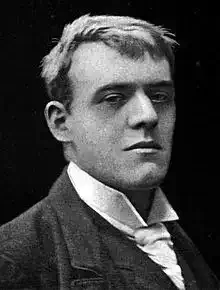
Hilaire Belloc
Ha'nacker Mill
Ha'nacker Mill
Sally is gone that was so kindly,
Sally is gone from Ha'nacker Hill
And the Briar grows ever since then so blindly;
And ever since then the clapper is still...
And the sweeps have fallen from Ha'nacker Mill.
Ha'nacker Hill is in Desolation:
Ruin a-top and a field unploughed.
And Spirits that call on a fallen nation,
Spirits that loved her calling aloud,
Spirits abroad in a windy cloud.
Spirits that call and no one answers -Ha'nacker's
down and England's done.
Wind and Thistle for pipe and dancers,
And never a ploughman under the Sun:
Never a ploughman. Never a one.
Sally is gone that was so kindly,
Sally is gone from Ha'nacker Hill
And the Briar grows ever since then so blindly;
And ever since then the clapper is still...
And the sweeps have fallen from Ha'nacker Mill.
Ha'nacker Hill is in Desolation:
Ruin a-top and a field unploughed.
And Spirits that call on a fallen nation,
Spirits that loved her calling aloud,
Spirits abroad in a windy cloud.
Spirits that call and no one answers -Ha'nacker's
down and England's done.
Wind and Thistle for pipe and dancers,
And never a ploughman under the Sun:
Never a ploughman. Never a one.
358
Hilaire Belloc
[Month of] September
[Month of] September
I, from a window where the Meuse is wide,
Looked eastward out to the September night;
The men that in the hopeless battle died
Rose, and deployed, and stationed for the fight;
A brumal army, vague and ordered large
For mile on mile by some pale general,-
I saw them lean by companies to the charge,
But no man living heard the bugle-call.
And fading still, and pointing to their scars,
They fled in lessening clouds, where gray and high
Dawn lay along the heaven in misty bars;
But watching from that eastern casement, I
Saw the Republic splendid in the sky,
And round her terrible head the morning stars.
I, from a window where the Meuse is wide,
Looked eastward out to the September night;
The men that in the hopeless battle died
Rose, and deployed, and stationed for the fight;
A brumal army, vague and ordered large
For mile on mile by some pale general,-
I saw them lean by companies to the charge,
But no man living heard the bugle-call.
And fading still, and pointing to their scars,
They fled in lessening clouds, where gray and high
Dawn lay along the heaven in misty bars;
But watching from that eastern casement, I
Saw the Republic splendid in the sky,
And round her terrible head the morning stars.
442
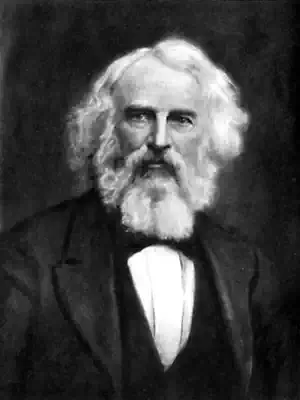
Henry Wadsworth Longfellow
To Italy. (From Filicaja)
To Italy. (From Filicaja)
Italy! Italy! thou who'rt doomed to wear
The fatal gift of beauty and possess
The dower funest of infinite wretchedness
Written upon thy forehead by despair;
Ah! would that thou wert stronger or less fair,
That they might fear thee more or love thee less,
Who in the splendour of thy loveliness
Seem wasting, yet to mortal combat dare!
Then from the Alps I should not see descending
Such torrents of armed men, nor Gallic horde
Drinking the wave of Po, distained with gore,
Nor should I see thee girded with a sword
Not thine, and with the stranger's arm contending,
Victor or vanquished, slave for evermore.
Italy! Italy! thou who'rt doomed to wear
The fatal gift of beauty and possess
The dower funest of infinite wretchedness
Written upon thy forehead by despair;
Ah! would that thou wert stronger or less fair,
That they might fear thee more or love thee less,
Who in the splendour of thy loveliness
Seem wasting, yet to mortal combat dare!
Then from the Alps I should not see descending
Such torrents of armed men, nor Gallic horde
Drinking the wave of Po, distained with gore,
Nor should I see thee girded with a sword
Not thine, and with the stranger's arm contending,
Victor or vanquished, slave for evermore.
296
Henry Wadsworth Longfellow
The Song Of Hiawatha I: The Peace-Pipe
The Song Of Hiawatha I: The Peace-Pipe
On the Mountains of the Prairie,
On the great Red Pipe-stone Quarry,
Gitche Manito, the mighty,
He the Master of Life, descending,
On the red crags of the quarry
Stood erect, and called the nations,
Called the tribes of men together.
From his footprints flowed a river,
Leaped into the light of morning,
O'er the precipice plunging downward
Gleamed like Ishkoodah, the comet.
And the Spirit, stooping earthward,
With his finger on the meadow
Traced a winding pathway for it,
Saying to it, 'Run in this way!'
From the red stone of the quarry
With his hand he broke a fragment,
Moulded it into a pipe-head,
Shaped and fashioned it with figures;
From the margin of the river
Took a long reed for a pipe-stem,
With its dark green leaves upon it;
Filled the pipe with bark of willow,
With the bark of the red willow;
Breathed upon the neighboring forest,
Made its great boughs chafe together,
Till in flame they burst and kindled;
And erect upon the mountains,
Gitche Manito, the mighty,
Smoked the calumet, the Peace-Pipe,
As a signal to the nations.
And the smoke rose slowly, slowly,
Through the tranquil air of morning,
First a single line of darkness,
Then a denser, bluer vapor,
Then a snow-white cloud unfolding,
Like the tree-tops of the forest,
Ever rising, rising, rising,
Till it touched the top of heaven,
Till it broke against the heaven,
And rolled outward all around it.
From the Vale of Tawasentha,
From the Valley of Wyoming,
From the groves of Tuscaloosa,
From the far-off Rocky Mountains,
From the Northern lakes and rivers
All the tribes beheld the signal,
Saw the distant smoke ascending,
The Pukwana of the Peace-Pipe.
And the Prophets of the nations
Said: 'Behold it, the Pukwana!
By the signal of the Peace-Pipe,
Bending like a wand of willow,
Waving like a hand that beckons,
Gitche Manito, the mighty,
Calls the tribes of men together,
Calls the warriors to his council!'
Down the rivers, o'er the prairies,
Came the warriors of the nations,
Came the Delawares and Mohawks,
Came the Choctaws and Camanches,
Came the Shoshonies and Blackfeet,
Came the Pawnees and Omahas,
Came the Mandans and Dacotahs,
Came the Hurons and Ojibways,
All the warriors drawn together
By the signal of the Peace-Pipe,
To the Mountains of the Prairie,
To the great Red Pipe-stone Quarry,
And they stood there on the meadow,
With their weapons and their war-gear,
Painted like the leaves of Autumn,
Painted like the sky of morning,
Wildly glaring at each other;
In their faces stem defiance,
In their hearts the feuds of ages,
The hereditary hatred,
The ancestral thirst of vengeance.
Gitche Manito, the mighty,
The creator of the nations,
Looked upon them with compassion,
With paternal love and pity;
Looked upon their wrath and wrangling
But as quarrels among children,
But as feuds and fights of children!
Over them he stretched his right hand,
To subdue their stubborn natures,
To allay their thirst and fever,
By the shadow of his right hand;
Spake to them with voice majestic
As the sound of far-off waters,
Falling into deep abysses,
Warning, chiding, spake in this wise :
'O my children! my poor children!
Listen to the words of wisdom,
Listen to the words of warning,
From the lips of the Great Spirit,
From the Master of Life, who made you!
'I have given you lands to hunt in,
I have given you streams to fish in,
I have given you bear and bison,
I have given you roe and reindeer,
I have given you brant and beaver,
Filled the marshes full of wild-fowl,
Filled the rivers full of fishes:
Why then are you not contented?
Why then will you hunt each other?
'I am weary of your quarrels,
Weary of your wars and bloodshed,
Weary of your prayers for vengeance,
Of your wranglings and dissensions;
All your strength is in your union,
All your danger is in discord;
Therefore be at peace henceforward,
And as brothers live together.
'I will send a Prophet to you,
A Deliverer of the nations,
Who shall guide you and shall teach you,
Who shall toil and suffer with you.
If you listen to his counsels,
You will multiply and prosper;
If his warnings pass unheeded,
You will fade away and perish!
'Bathe now in the stream before you,
Wash the war-paint from your faces,
Wash the blood-stains from your fingers,
Bury your war-clubs and your weapons,
Break the red stone from this quarry,
Mould and make it into Peace-Pipes,
Take the reeds that grow beside you,
Deck them with your brightest feathers,
Smoke the calumet together,
And as brothers live henceforward!'
Then upon the ground the warriors
Threw their cloaks and shirts of deer-skin,
Threw their weapons and their war-gear,
Leaped into the rushing river,
Washed the war-paint from their faces.
Clear above them flowed the water,
Clear and limpid from the footprints
Of the Master of Life descending;
Dark below them flowed the water,
Soiled and stained with streaks of crimson,
As if blood were mingled with it!
From the river came the warriors,
Clean and washed from all their war-paint;
On the banks their clubs they buried,
Buried all their warlike weapons.
Gitche Manito, the mighty,
The Great Spirit, the creator,
Smiled upon his helpless children!
And in silence all the warriors
Broke the red stone of the quarry,
Smoothed and formed it into Peace-Pipes,
Broke the long reeds by the river,
Decked them with their brightest feathers,
And departed each one homeward,
While the Master of Life, ascending,
Through the opening of cloud-curtains,
Through the doorways of the heaven,
Vanished from before their faces,
In the smoke that rolled around him,
The Pukwana of the Peace-Pipe!
On the Mountains of the Prairie,
On the great Red Pipe-stone Quarry,
Gitche Manito, the mighty,
He the Master of Life, descending,
On the red crags of the quarry
Stood erect, and called the nations,
Called the tribes of men together.
From his footprints flowed a river,
Leaped into the light of morning,
O'er the precipice plunging downward
Gleamed like Ishkoodah, the comet.
And the Spirit, stooping earthward,
With his finger on the meadow
Traced a winding pathway for it,
Saying to it, 'Run in this way!'
From the red stone of the quarry
With his hand he broke a fragment,
Moulded it into a pipe-head,
Shaped and fashioned it with figures;
From the margin of the river
Took a long reed for a pipe-stem,
With its dark green leaves upon it;
Filled the pipe with bark of willow,
With the bark of the red willow;
Breathed upon the neighboring forest,
Made its great boughs chafe together,
Till in flame they burst and kindled;
And erect upon the mountains,
Gitche Manito, the mighty,
Smoked the calumet, the Peace-Pipe,
As a signal to the nations.
And the smoke rose slowly, slowly,
Through the tranquil air of morning,
First a single line of darkness,
Then a denser, bluer vapor,
Then a snow-white cloud unfolding,
Like the tree-tops of the forest,
Ever rising, rising, rising,
Till it touched the top of heaven,
Till it broke against the heaven,
And rolled outward all around it.
From the Vale of Tawasentha,
From the Valley of Wyoming,
From the groves of Tuscaloosa,
From the far-off Rocky Mountains,
From the Northern lakes and rivers
All the tribes beheld the signal,
Saw the distant smoke ascending,
The Pukwana of the Peace-Pipe.
And the Prophets of the nations
Said: 'Behold it, the Pukwana!
By the signal of the Peace-Pipe,
Bending like a wand of willow,
Waving like a hand that beckons,
Gitche Manito, the mighty,
Calls the tribes of men together,
Calls the warriors to his council!'
Down the rivers, o'er the prairies,
Came the warriors of the nations,
Came the Delawares and Mohawks,
Came the Choctaws and Camanches,
Came the Shoshonies and Blackfeet,
Came the Pawnees and Omahas,
Came the Mandans and Dacotahs,
Came the Hurons and Ojibways,
All the warriors drawn together
By the signal of the Peace-Pipe,
To the Mountains of the Prairie,
To the great Red Pipe-stone Quarry,
And they stood there on the meadow,
With their weapons and their war-gear,
Painted like the leaves of Autumn,
Painted like the sky of morning,
Wildly glaring at each other;
In their faces stem defiance,
In their hearts the feuds of ages,
The hereditary hatred,
The ancestral thirst of vengeance.
Gitche Manito, the mighty,
The creator of the nations,
Looked upon them with compassion,
With paternal love and pity;
Looked upon their wrath and wrangling
But as quarrels among children,
But as feuds and fights of children!
Over them he stretched his right hand,
To subdue their stubborn natures,
To allay their thirst and fever,
By the shadow of his right hand;
Spake to them with voice majestic
As the sound of far-off waters,
Falling into deep abysses,
Warning, chiding, spake in this wise :
'O my children! my poor children!
Listen to the words of wisdom,
Listen to the words of warning,
From the lips of the Great Spirit,
From the Master of Life, who made you!
'I have given you lands to hunt in,
I have given you streams to fish in,
I have given you bear and bison,
I have given you roe and reindeer,
I have given you brant and beaver,
Filled the marshes full of wild-fowl,
Filled the rivers full of fishes:
Why then are you not contented?
Why then will you hunt each other?
'I am weary of your quarrels,
Weary of your wars and bloodshed,
Weary of your prayers for vengeance,
Of your wranglings and dissensions;
All your strength is in your union,
All your danger is in discord;
Therefore be at peace henceforward,
And as brothers live together.
'I will send a Prophet to you,
A Deliverer of the nations,
Who shall guide you and shall teach you,
Who shall toil and suffer with you.
If you listen to his counsels,
You will multiply and prosper;
If his warnings pass unheeded,
You will fade away and perish!
'Bathe now in the stream before you,
Wash the war-paint from your faces,
Wash the blood-stains from your fingers,
Bury your war-clubs and your weapons,
Break the red stone from this quarry,
Mould and make it into Peace-Pipes,
Take the reeds that grow beside you,
Deck them with your brightest feathers,
Smoke the calumet together,
And as brothers live henceforward!'
Then upon the ground the warriors
Threw their cloaks and shirts of deer-skin,
Threw their weapons and their war-gear,
Leaped into the rushing river,
Washed the war-paint from their faces.
Clear above them flowed the water,
Clear and limpid from the footprints
Of the Master of Life descending;
Dark below them flowed the water,
Soiled and stained with streaks of crimson,
As if blood were mingled with it!
From the river came the warriors,
Clean and washed from all their war-paint;
On the banks their clubs they buried,
Buried all their warlike weapons.
Gitche Manito, the mighty,
The Great Spirit, the creator,
Smiled upon his helpless children!
And in silence all the warriors
Broke the red stone of the quarry,
Smoothed and formed it into Peace-Pipes,
Broke the long reeds by the river,
Decked them with their brightest feathers,
And departed each one homeward,
While the Master of Life, ascending,
Through the opening of cloud-curtains,
Through the doorways of the heaven,
Vanished from before their faces,
In the smoke that rolled around him,
The Pukwana of the Peace-Pipe!
361
Henry Wadsworth Longfellow
The Cumberland
The Cumberland
At anchor in Hampton Roads we lay,
On board of the Cumberland sloop-of-war;
And at times from the fortress across the bay
The alarum of drums swept past,
Or a bugle blast
From the camp on the shore.
Then far away to the south uprose
A little feather of snow-white smoke,
And we knew that the iron ship of our foes
Was steadily steering its course
To try the force
Of our ribs of oak.
Down upon us heavily runs,
Silent and sullen, the floating fort;
Then comes a puff of smoke from her guns,
And leaps the terrible death,
With fiery breath,
From each open port.
We are not idle, but send her straight
Defiance back in a full broadside!
As hail rebounds from a roof of slate,
Rebounds our heavier hail
From each iron scale
Of the monster's hide.
'Strike your flag!' the rebel cries,
In his arrogant old plantation strain.
'Never!' our gallant Morris replies:
'It is better to sink than to yield!'
And the whole air is pealed
With the cheers of our men.
Then like a kraken huge and black,
She crushed our ribs in her iron grasp!
Down went the Cumberland all awrack,
With a sudden shudder of death,
And the cannon's breath
For her dying gasp.
Next morn, as the sun rose over the bay,
Still floated our flag at the mainmast-head.
Lord, how beautiful was thy day!
Every waft of the air
Was a whisper of prayer,
Or a dirge for the dead.
Ho! brave hearts that went down in the seas!
Ye are at peace in the troubled stream.
Ho! brave land! with hearts like these,
Thy flag, that is rent in twain,
Shall be one again,
And without a seam.
At anchor in Hampton Roads we lay,
On board of the Cumberland sloop-of-war;
And at times from the fortress across the bay
The alarum of drums swept past,
Or a bugle blast
From the camp on the shore.
Then far away to the south uprose
A little feather of snow-white smoke,
And we knew that the iron ship of our foes
Was steadily steering its course
To try the force
Of our ribs of oak.
Down upon us heavily runs,
Silent and sullen, the floating fort;
Then comes a puff of smoke from her guns,
And leaps the terrible death,
With fiery breath,
From each open port.
We are not idle, but send her straight
Defiance back in a full broadside!
As hail rebounds from a roof of slate,
Rebounds our heavier hail
From each iron scale
Of the monster's hide.
'Strike your flag!' the rebel cries,
In his arrogant old plantation strain.
'Never!' our gallant Morris replies:
'It is better to sink than to yield!'
And the whole air is pealed
With the cheers of our men.
Then like a kraken huge and black,
She crushed our ribs in her iron grasp!
Down went the Cumberland all awrack,
With a sudden shudder of death,
And the cannon's breath
For her dying gasp.
Next morn, as the sun rose over the bay,
Still floated our flag at the mainmast-head.
Lord, how beautiful was thy day!
Every waft of the air
Was a whisper of prayer,
Or a dirge for the dead.
Ho! brave hearts that went down in the seas!
Ye are at peace in the troubled stream.
Ho! brave land! with hearts like these,
Thy flag, that is rent in twain,
Shall be one again,
And without a seam.
320
Henry Wadsworth Longfellow
The Challenge of Thor
The Challenge of Thor
I am the God Thor,
I am the War God,
I am the Thunderer!
Here in my Northland,
My fastness and fortress,
Reign I forever!
Here amid icebergs
Rule I the nations;
This is my hammer,
Miölner the mighty;
Giants and sorcerers
Cannot withstand it!
These are the gauntlets
Wherewith I wield it,
And hurl it afar off;
This is my girdle;
Whenever I brace it,
Strength is redoubled!
The light thou beholdest
Stream through the heavens,
In flashes of crimson,
Is but my red beard
Blown by the night-wind,
Affrighting the nations!
Jove is my brother;
Mine eyes are the lightning;
The wheels of my chariot
Roll in the thunder,
The blows of my hammer
Ring in the earthquake!
Force rules the world still,
Has ruled it, shall rule it;
Meekness is weakness,
Strength is triumphant,
Over the whole earth
Still is it Thor's Day!
Thou art a God too,
O Galilean!
And thus singled-handed
Unto the combat,
Gauntlet or Gospel,
Here I defy thee!
I am the God Thor,
I am the War God,
I am the Thunderer!
Here in my Northland,
My fastness and fortress,
Reign I forever!
Here amid icebergs
Rule I the nations;
This is my hammer,
Miölner the mighty;
Giants and sorcerers
Cannot withstand it!
These are the gauntlets
Wherewith I wield it,
And hurl it afar off;
This is my girdle;
Whenever I brace it,
Strength is redoubled!
The light thou beholdest
Stream through the heavens,
In flashes of crimson,
Is but my red beard
Blown by the night-wind,
Affrighting the nations!
Jove is my brother;
Mine eyes are the lightning;
The wheels of my chariot
Roll in the thunder,
The blows of my hammer
Ring in the earthquake!
Force rules the world still,
Has ruled it, shall rule it;
Meekness is weakness,
Strength is triumphant,
Over the whole earth
Still is it Thor's Day!
Thou art a God too,
O Galilean!
And thus singled-handed
Unto the combat,
Gauntlet or Gospel,
Here I defy thee!
381
Henry Wadsworth Longfellow
Paul Revere's Ride (The Landlord's Tale)
Paul Revere's Ride (The Landlord's Tale)
Listen, my children, and you shall hear
Of the midnight ride of Paul Revere,
On the eighteenth of April, in 'Seventy-five;
Hardly a man is now alive
Who remembers that famous day and year.
He said to his friend, "If the British march
By land or sea from the town to-night,
Hang a lantern aloft in the belfry arch
Of the North Church tower as a signal light, --
One, if by land, and two, if by sea;
And I on the opposite shore will be,
Ready to ride and spread the alarm
Through every Middlesex village and farm,
For the country folk to be up and to arm."
Then he said, "Good night!" and with muffled oar
Silently rowed to the Charlestown shore,
Just as the moon rose over the bay,
Where swinging wide at her moorings lay
The somerset, British man-of-war;
A phantom ship, with each mast and spar
Across the moon like a prison bar,
And a huge black hulk, that was magnified
By its own reflection in the tide.
Meanwhile, his friend, through alley and street,
Wanders and watches with eager ears,
Till in the silence around him he hears
The muster of men at the barrack door,
The sound of arms, and the tramp of feet,
And the measured tread of the grenadiers,
Marching down to their boats on the shore.
Then he climbed the tower of the Old North Church
By the wooden stairs, with stealthy tread,
To the belfry-chamber overhead,
And startled the pigeons from their perch
On the sombre rafters, that round him made
Masses and moving shapes of shade, --
By the trembling ladder, steep and tall,
To the highest window in the wall,
Where he paused to listen and look down
A moment on the roofs of the town,
And the moonlight flowing over all.
Beneath, in the churchyard, lay the dead,
In their night-encampment on the hill,
Wrapped in silence so deep and still
That he could hear, like a sentinel's tread,
The watchful night-wind, as it went
Creeping along from tent to tent,
And seeming to whisper, "All is well!"
A moment only he feels the spell
Of the place and the hour, and the secret dread
Of the lonely belfry and the dead;
For suddenly all his thoughts are bent
On a shadowy something far away,
Where the river widens to meet the bay, --
A line of black that bends and floats
On the rising tide, like a bridge of boats.
Meanwhile, impatient to mount and ride,
Booted and spurred, with a heavy stride,
On the opposite shore walked Paul Revere.
Now he patted his horse's side,
Now gazed at the landscape far and near,
Then, impetuous, stamped the earth,
And turned and tightened his saddle-girth;
But mostly he watched with eager search
The belfry-tower of the Old North Church,
As it rose above the graves on the hill,
Lonely and spectral and sombre and still.
And lo! As he looks, on the belfry's height
A glimmer, and then a gleam of light!
He springs to the saddle, the bridle he turns,
But lingers and gazes, till full on his sight
A second lamp in the belfry burns!
A hurry of hoofs in a village street,
A shape in the moonlight, a bulk in the dark,
And beneath, from the pebbles, in passing, a spark
Struck out by a steed flying fearless and fleet:
That was all! And yet, through the gloom and the light,
The fate of a nation was riding that night;
And the spark struck out by that steed, in his flight,
Kindled the land into flame with its heat.
He has left the village and mounted the steep,
And beneath him, tranquil and broad and deep,
Is the Mystic, meeting the ocean tides;
And under the alders, that skirt its edge,
Now soft on the sand, now loud on the ledge,
Is heard the tramp of his steed as he rides.
It was twelve by the village clock
When he crossed the bridge into Medford town.
He heard the crowing of the cock,
And the barking of the farmer's dog,
And felt the damp of the river fog,
That rises after the sun goes down.
It was one by the village clock
When he galloped into Lexington.
He saw the gilded weathercock
Swim in the moonlight as he passed,
And the meeting-house windows, blank and bare,
Gaze at him with a spectral glare,
As if they already stood aghast
At the bloody work they would look upon.
It was two by the village clock
When he came to the bridge in Concord town.
He heard the bleating of the flock,
And the twitter of birds among the trees,
And felt the breath of the morning breeze
Blowing over the meadows brown.
And one was safe and asleep in his bed
Who at the bridge would be first to fall,
Who that day would be lying dead,
Pierced by a British musket-ball.
You know the rest. In the books you have read,
How the British Regulars fired and fled, --
How the farmers gave them ball for ball,
From behind each fence and farm-yard wall,
Chasing the redcoats down the lane,
Then crossing the fields to emerge again
Under the trees at the turn of the road,
And only pausing to fire and load.
So through the night rode Paul Revere;
And so through the night went his cry of alarm
To every Middlesex village and farm, --
A cry of defiance and not of fear,
A voice in the darkness, a knock at the door,
And a word that shall echo forevermore!
For borne on the night-wind of the Past,
Through all our history, to the last,
In the hour of darkness and peril and need,
The people will waken and listen to hear
The hurrying hoof-beats of that steed
And the midnight message of Paul Revere.
Listen, my children, and you shall hear
Of the midnight ride of Paul Revere,
On the eighteenth of April, in 'Seventy-five;
Hardly a man is now alive
Who remembers that famous day and year.
He said to his friend, "If the British march
By land or sea from the town to-night,
Hang a lantern aloft in the belfry arch
Of the North Church tower as a signal light, --
One, if by land, and two, if by sea;
And I on the opposite shore will be,
Ready to ride and spread the alarm
Through every Middlesex village and farm,
For the country folk to be up and to arm."
Then he said, "Good night!" and with muffled oar
Silently rowed to the Charlestown shore,
Just as the moon rose over the bay,
Where swinging wide at her moorings lay
The somerset, British man-of-war;
A phantom ship, with each mast and spar
Across the moon like a prison bar,
And a huge black hulk, that was magnified
By its own reflection in the tide.
Meanwhile, his friend, through alley and street,
Wanders and watches with eager ears,
Till in the silence around him he hears
The muster of men at the barrack door,
The sound of arms, and the tramp of feet,
And the measured tread of the grenadiers,
Marching down to their boats on the shore.
Then he climbed the tower of the Old North Church
By the wooden stairs, with stealthy tread,
To the belfry-chamber overhead,
And startled the pigeons from their perch
On the sombre rafters, that round him made
Masses and moving shapes of shade, --
By the trembling ladder, steep and tall,
To the highest window in the wall,
Where he paused to listen and look down
A moment on the roofs of the town,
And the moonlight flowing over all.
Beneath, in the churchyard, lay the dead,
In their night-encampment on the hill,
Wrapped in silence so deep and still
That he could hear, like a sentinel's tread,
The watchful night-wind, as it went
Creeping along from tent to tent,
And seeming to whisper, "All is well!"
A moment only he feels the spell
Of the place and the hour, and the secret dread
Of the lonely belfry and the dead;
For suddenly all his thoughts are bent
On a shadowy something far away,
Where the river widens to meet the bay, --
A line of black that bends and floats
On the rising tide, like a bridge of boats.
Meanwhile, impatient to mount and ride,
Booted and spurred, with a heavy stride,
On the opposite shore walked Paul Revere.
Now he patted his horse's side,
Now gazed at the landscape far and near,
Then, impetuous, stamped the earth,
And turned and tightened his saddle-girth;
But mostly he watched with eager search
The belfry-tower of the Old North Church,
As it rose above the graves on the hill,
Lonely and spectral and sombre and still.
And lo! As he looks, on the belfry's height
A glimmer, and then a gleam of light!
He springs to the saddle, the bridle he turns,
But lingers and gazes, till full on his sight
A second lamp in the belfry burns!
A hurry of hoofs in a village street,
A shape in the moonlight, a bulk in the dark,
And beneath, from the pebbles, in passing, a spark
Struck out by a steed flying fearless and fleet:
That was all! And yet, through the gloom and the light,
The fate of a nation was riding that night;
And the spark struck out by that steed, in his flight,
Kindled the land into flame with its heat.
He has left the village and mounted the steep,
And beneath him, tranquil and broad and deep,
Is the Mystic, meeting the ocean tides;
And under the alders, that skirt its edge,
Now soft on the sand, now loud on the ledge,
Is heard the tramp of his steed as he rides.
It was twelve by the village clock
When he crossed the bridge into Medford town.
He heard the crowing of the cock,
And the barking of the farmer's dog,
And felt the damp of the river fog,
That rises after the sun goes down.
It was one by the village clock
When he galloped into Lexington.
He saw the gilded weathercock
Swim in the moonlight as he passed,
And the meeting-house windows, blank and bare,
Gaze at him with a spectral glare,
As if they already stood aghast
At the bloody work they would look upon.
It was two by the village clock
When he came to the bridge in Concord town.
He heard the bleating of the flock,
And the twitter of birds among the trees,
And felt the breath of the morning breeze
Blowing over the meadows brown.
And one was safe and asleep in his bed
Who at the bridge would be first to fall,
Who that day would be lying dead,
Pierced by a British musket-ball.
You know the rest. In the books you have read,
How the British Regulars fired and fled, --
How the farmers gave them ball for ball,
From behind each fence and farm-yard wall,
Chasing the redcoats down the lane,
Then crossing the fields to emerge again
Under the trees at the turn of the road,
And only pausing to fire and load.
So through the night rode Paul Revere;
And so through the night went his cry of alarm
To every Middlesex village and farm, --
A cry of defiance and not of fear,
A voice in the darkness, a knock at the door,
And a word that shall echo forevermore!
For borne on the night-wind of the Past,
Through all our history, to the last,
In the hour of darkness and peril and need,
The people will waken and listen to hear
The hurrying hoof-beats of that steed
And the midnight message of Paul Revere.
381
Henry Wadsworth Longfellow
O Ship of State
O Ship of State
Thou, too, sail on, O Ship of State!
Sail on, O Union, strong and great!
Humanity with all its fears,
With all the hopes of future years,
Is hanging breathless on thy fate!
We know what Master laid thy keel,
What Workmen wrought thy ribs of steel,
Who made each mast, and sail, and rope,
What anvils rang, what hammers beat,
In what a forge and what a heat
Were shaped the anchors of thy hope!
Fear not each sudden sound and shock,
'Tis of the wave and not the rock;
'Tis but the flapping of the sail,
And not a rent made by the gale!
In spite of rock and tempest's roar,
In spite of false lights on the shore,
Sail on, nor fear to breast the sea!
Our hearts, our hopes, are all with thee.
Our hearts, our hopes, our prayers, our tears,
Our faith triumphant o'er our fears,
Are all with thee, -are all with thee!
Thou, too, sail on, O Ship of State!
Sail on, O Union, strong and great!
Humanity with all its fears,
With all the hopes of future years,
Is hanging breathless on thy fate!
We know what Master laid thy keel,
What Workmen wrought thy ribs of steel,
Who made each mast, and sail, and rope,
What anvils rang, what hammers beat,
In what a forge and what a heat
Were shaped the anchors of thy hope!
Fear not each sudden sound and shock,
'Tis of the wave and not the rock;
'Tis but the flapping of the sail,
And not a rent made by the gale!
In spite of rock and tempest's roar,
In spite of false lights on the shore,
Sail on, nor fear to breast the sea!
Our hearts, our hopes, are all with thee.
Our hearts, our hopes, our prayers, our tears,
Our faith triumphant o'er our fears,
Are all with thee, -are all with thee!
353
Henry Wadsworth Longfellow
Introduction To The Song Of Hiawatha
Introduction To The Song Of Hiawatha
Should you ask me,
whence these stories?
Whence these legends and traditions,
With the odors of the forest
With the dew and damp of meadows,
With the curling smoke of wigwams,
With the rushing of great rivers,
With their frequent repetitions,
And their wild reverberations
As of thunder in the mountains?
I should answer, I should tell you,
"From the forests and the prairies,
From the great lakes of the Northland,
From the land of the Ojibways,
From the land of the Dacotahs,
From the mountains, moors, and fen-lands
Where the heron, the Shuh-shuh-gah,
Feeds among the reeds and rushes.
I repeat them as I heard them
From the lips of Nawadaha,
The musician, the sweet singer."
Should you ask where Nawadaha
Found these songs so wild and wayward,
Found these legends and traditions,
I should answer, I should tell you,
"In the bird's-nests of the forest,
In the lodges of the beaver,
In the hoofprint of the bison,
In the eyry of the eagle!
"All the wild-fowl sang them to him,
In the moorlands and the fen-lands,
In the melancholy marshes;
Chetowaik, the plover, sang them,
Mahng, the loon, the wild-goose, Wawa,
The blue heron, the Shuh-shuh-gah,
And the grouse, the Mushkodasa!"
If still further you should ask me,
Saying, "Who was Nawadaha?
Tell us of this Nawadaha,"
I should answer your inquiries
Straightway in such words as follow.
"In the vale of Tawasentha,
In the green and silent valley,
By the pleasant water-courses,
Dwelt the singer Nawadaha.
Round about the Indian village
Spread the meadows and the corn-fields,
And beyond them stood the forest,
Stood the groves of singing pine-trees,
Green in Summer, white in Winter,
Ever sighing, ever singing.
"And the pleasant water-courses,
You could trace them through the valley,
By the rushing in the Spring-time,
By the alders in the Summer,
By the white fog in the Autumn,
By the black line in the Winter;
And beside them dwelt the singer,
In the vale of Tawasentha,
In the green and silent valley.
"There he sang of Hiawatha,
Sang the Song of Hiawatha,
Sang his wondrous birth and being,
How he prayed and how be fasted,
How he lived, and toiled, and suffered,
That the tribes of men might prosper,
That he might advance his people!"
Ye who love the haunts of Nature,
Love the sunshine of the meadow,
Love the shadow of the forest,
Love the wind among the branches,
And the rain-shower and the snow-storm,
And the rushing of great rivers
Through their palisades of pine-trees,
And the thunder in the mountains,
Whose innumerable echoes
Flap like eagles in their eyries;-
Listen to these wild traditions,
To this Song of Hiawatha!
Ye who love a nation's legends,
Love the ballads of a people,
That like voices from afar off
Call to us to pause and listen,
Speak in tones so plain and childlike,
Scarcely can the ear distinguish
Whether they are sung or spoken;-
Listen to this Indian Legend,
To this Song of Hiawatha!
Ye whose hearts are fresh and simple,
Who have faith in God and Nature,
Who believe that in all ages
Every human heart is human,
That in even savage bosoms
There are longings, yearnings, strivings
For the good they comprehend not,
That the feeble hands and helpless,
Groping blindly in the darkness,
Touch God's right hand in that darkness
And are lifted up and strengthened;-
Listen to this simple story,
To this Song of Hiawatha!
Ye, who sometimes, in your rambles
Through the green lanes of the country,
Where the tangled barberry-bushes
Hang their tufts of crimson berries
Over stone walls gray with mosses,
Pause by some neglected graveyard,
For a while to muse, and ponder
On a half-effaced inscription,
Written with little skill of song-craft,
Homely phrases, but each letter
Full of hope and yet of heart-break,
Full of all the tender pathos
Of the Here and the Hereafter;
Stay and read this rude inscription,
Read this Song of Hiawatha!
Should you ask me,
whence these stories?
Whence these legends and traditions,
With the odors of the forest
With the dew and damp of meadows,
With the curling smoke of wigwams,
With the rushing of great rivers,
With their frequent repetitions,
And their wild reverberations
As of thunder in the mountains?
I should answer, I should tell you,
"From the forests and the prairies,
From the great lakes of the Northland,
From the land of the Ojibways,
From the land of the Dacotahs,
From the mountains, moors, and fen-lands
Where the heron, the Shuh-shuh-gah,
Feeds among the reeds and rushes.
I repeat them as I heard them
From the lips of Nawadaha,
The musician, the sweet singer."
Should you ask where Nawadaha
Found these songs so wild and wayward,
Found these legends and traditions,
I should answer, I should tell you,
"In the bird's-nests of the forest,
In the lodges of the beaver,
In the hoofprint of the bison,
In the eyry of the eagle!
"All the wild-fowl sang them to him,
In the moorlands and the fen-lands,
In the melancholy marshes;
Chetowaik, the plover, sang them,
Mahng, the loon, the wild-goose, Wawa,
The blue heron, the Shuh-shuh-gah,
And the grouse, the Mushkodasa!"
If still further you should ask me,
Saying, "Who was Nawadaha?
Tell us of this Nawadaha,"
I should answer your inquiries
Straightway in such words as follow.
"In the vale of Tawasentha,
In the green and silent valley,
By the pleasant water-courses,
Dwelt the singer Nawadaha.
Round about the Indian village
Spread the meadows and the corn-fields,
And beyond them stood the forest,
Stood the groves of singing pine-trees,
Green in Summer, white in Winter,
Ever sighing, ever singing.
"And the pleasant water-courses,
You could trace them through the valley,
By the rushing in the Spring-time,
By the alders in the Summer,
By the white fog in the Autumn,
By the black line in the Winter;
And beside them dwelt the singer,
In the vale of Tawasentha,
In the green and silent valley.
"There he sang of Hiawatha,
Sang the Song of Hiawatha,
Sang his wondrous birth and being,
How he prayed and how be fasted,
How he lived, and toiled, and suffered,
That the tribes of men might prosper,
That he might advance his people!"
Ye who love the haunts of Nature,
Love the sunshine of the meadow,
Love the shadow of the forest,
Love the wind among the branches,
And the rain-shower and the snow-storm,
And the rushing of great rivers
Through their palisades of pine-trees,
And the thunder in the mountains,
Whose innumerable echoes
Flap like eagles in their eyries;-
Listen to these wild traditions,
To this Song of Hiawatha!
Ye who love a nation's legends,
Love the ballads of a people,
That like voices from afar off
Call to us to pause and listen,
Speak in tones so plain and childlike,
Scarcely can the ear distinguish
Whether they are sung or spoken;-
Listen to this Indian Legend,
To this Song of Hiawatha!
Ye whose hearts are fresh and simple,
Who have faith in God and Nature,
Who believe that in all ages
Every human heart is human,
That in even savage bosoms
There are longings, yearnings, strivings
For the good they comprehend not,
That the feeble hands and helpless,
Groping blindly in the darkness,
Touch God's right hand in that darkness
And are lifted up and strengthened;-
Listen to this simple story,
To this Song of Hiawatha!
Ye, who sometimes, in your rambles
Through the green lanes of the country,
Where the tangled barberry-bushes
Hang their tufts of crimson berries
Over stone walls gray with mosses,
Pause by some neglected graveyard,
For a while to muse, and ponder
On a half-effaced inscription,
Written with little skill of song-craft,
Homely phrases, but each letter
Full of hope and yet of heart-break,
Full of all the tender pathos
Of the Here and the Hereafter;
Stay and read this rude inscription,
Read this Song of Hiawatha!
428
Henry Van Dyke
Victor Hugo
Victor Hugo
Heart of France for a hundred years,
Passionate, sensitive, proud, and strong,
Quick to throb with her hopes and fears,
Fierce to flame with her sense of wrong!
You, who hailed with a morning song
Dream-light gilding a throne of old:
You, who turned when the dream grew cold,
Singing still, to the light that shone
Pure from Liberty's ancient throne,
Over the human throng!
You, who dared in the dark eclipse,--
When the pygmy heir of a giant name
Dimmed the face of the land with shame,--
Speak the truth with indignant lips,
Call him little whom men called great,
Scoff at him, scorn him, deny him,
Point to the blood on his robe of state,
Fling back his bribes and defy him!
You, who fronted the waves of fate
As you faced the sea from your island home,
Exiled, yet with a soul elate,
Sending songs o'er the rolling foam,
Bidding the heart of man to wait
For the day when all should see
Floods of wrath from the frowning skies
Fall on an Empire founded in lies,
And France again be free!
You, who came in the Terrible Year
Swiftly back to your broken land,
Now to your heart a thousand times more dear,--
Prayed for her, sung to her, fought for her,
Patiently, fervently wrought for her,
Till once again,
After the storm of fear and pain,
High in the heavens the star of France stood clear!
You, who knew that a man must take
Good and ill with a steadfast soul,
Holding fast, while the billows roll
Over his head, to the things that make
Life worth living for great and small,--
Honour and pity and truth,
The heart and the hope of youth,
And the good God over all!
You, to whom work was rest,
Dauntless Toiler of the Sea,
Following ever the joyful quest
Of beauty on the shores of old Romance,
Bard of the poor of France,
And warrior-priest of world-wide charity!
You who loved little children best
Of all the poets that ever sung,
Great heart, golden heart,
Old, and yet ever young,
Minstrel of liberty,
Lover of all free, winged things,
Now at last you are free,--
Your soul has its wings!
Heart of France for a hundred years,
Floating far in the light that never fails you,
Over the turmoil of mortal hopes and fears
Victor, forever victor, the whole world hails you!
Heart of France for a hundred years,
Passionate, sensitive, proud, and strong,
Quick to throb with her hopes and fears,
Fierce to flame with her sense of wrong!
You, who hailed with a morning song
Dream-light gilding a throne of old:
You, who turned when the dream grew cold,
Singing still, to the light that shone
Pure from Liberty's ancient throne,
Over the human throng!
You, who dared in the dark eclipse,--
When the pygmy heir of a giant name
Dimmed the face of the land with shame,--
Speak the truth with indignant lips,
Call him little whom men called great,
Scoff at him, scorn him, deny him,
Point to the blood on his robe of state,
Fling back his bribes and defy him!
You, who fronted the waves of fate
As you faced the sea from your island home,
Exiled, yet with a soul elate,
Sending songs o'er the rolling foam,
Bidding the heart of man to wait
For the day when all should see
Floods of wrath from the frowning skies
Fall on an Empire founded in lies,
And France again be free!
You, who came in the Terrible Year
Swiftly back to your broken land,
Now to your heart a thousand times more dear,--
Prayed for her, sung to her, fought for her,
Patiently, fervently wrought for her,
Till once again,
After the storm of fear and pain,
High in the heavens the star of France stood clear!
You, who knew that a man must take
Good and ill with a steadfast soul,
Holding fast, while the billows roll
Over his head, to the things that make
Life worth living for great and small,--
Honour and pity and truth,
The heart and the hope of youth,
And the good God over all!
You, to whom work was rest,
Dauntless Toiler of the Sea,
Following ever the joyful quest
Of beauty on the shores of old Romance,
Bard of the poor of France,
And warrior-priest of world-wide charity!
You who loved little children best
Of all the poets that ever sung,
Great heart, golden heart,
Old, and yet ever young,
Minstrel of liberty,
Lover of all free, winged things,
Now at last you are free,--
Your soul has its wings!
Heart of France for a hundred years,
Floating far in the light that never fails you,
Over the turmoil of mortal hopes and fears
Victor, forever victor, the whole world hails you!
363
Henry Van Dyke
The Oxford Thrushes
The Oxford Thrushes
FEBRUARY, 1917
I never thought again to hear
The Oxford thrushes singing clear,
Amid the February rain,
Their sweet, indomitable strain.
A wintry vapor lightly spreads
Among the trees, and round the beds
Where daffodil and jonquil sleep,
Only the snowdrop wakes to weep.
It is not springtime yet. Alas,
What dark, tempestuous days must pass,
Till England's trial by battle cease,
And summer comes again with peace.
The lofty halls, the tranquil towers,
Where Learning in untroubled hours
Held her high court, serene in fame,
Are lovely still, yet not the same.
The novices in fluttering gown
No longer fill the ancient town,
But fighting men in khaki drest--
And in the Schools the wounded rest.
Ah, far away, 'neath stranger skies
Full many a son of Oxford lies,
And whispers from his warrior grave,
"I died to keep the faith you gave."
The mother mourns, but does not fail,
Her courage and her love prevail
O'er sorrow, and her spirit hears
The promise of triumphant years.
Then sing, ye thrushes, in the rain
Your sweet indomitable strain.
Ye bring a word from God on high
And voices in our hearts reply.
FEBRUARY, 1917
I never thought again to hear
The Oxford thrushes singing clear,
Amid the February rain,
Their sweet, indomitable strain.
A wintry vapor lightly spreads
Among the trees, and round the beds
Where daffodil and jonquil sleep,
Only the snowdrop wakes to weep.
It is not springtime yet. Alas,
What dark, tempestuous days must pass,
Till England's trial by battle cease,
And summer comes again with peace.
The lofty halls, the tranquil towers,
Where Learning in untroubled hours
Held her high court, serene in fame,
Are lovely still, yet not the same.
The novices in fluttering gown
No longer fill the ancient town,
But fighting men in khaki drest--
And in the Schools the wounded rest.
Ah, far away, 'neath stranger skies
Full many a son of Oxford lies,
And whispers from his warrior grave,
"I died to keep the faith you gave."
The mother mourns, but does not fail,
Her courage and her love prevail
O'er sorrow, and her spirit hears
The promise of triumphant years.
Then sing, ye thrushes, in the rain
Your sweet indomitable strain.
Ye bring a word from God on high
And voices in our hearts reply.
314