

Poems in this theme
Nation and Patriotism

Robert Frost
The Gift Outright
The Gift Outright
The land was ours before we were the land's.
She was our land more than a hundred years
Before we were her people. She was ours
In Massachusetts, in Virginia,
But we were England's, still colonials,
Possessing what we still were unpossessed by,
Possessed by what we now no more possessed.
Something we were withholding made us weak
Until we found out that it was ourselves
We were withholding from our land of living,
And forthwith found salvation in surrender.
Such as we were we gave ourselves outright
(The deed of gift was many deeds of war)
To the land vaguely realizing westward,
But still unstoried, artless, unenhanced,
Such as she was, such as she would become.
The land was ours before we were the land's.
She was our land more than a hundred years
Before we were her people. She was ours
In Massachusetts, in Virginia,
But we were England's, still colonials,
Possessing what we still were unpossessed by,
Possessed by what we now no more possessed.
Something we were withholding made us weak
Until we found out that it was ourselves
We were withholding from our land of living,
And forthwith found salvation in surrender.
Such as we were we gave ourselves outright
(The deed of gift was many deeds of war)
To the land vaguely realizing westward,
But still unstoried, artless, unenhanced,
Such as she was, such as she would become.
572
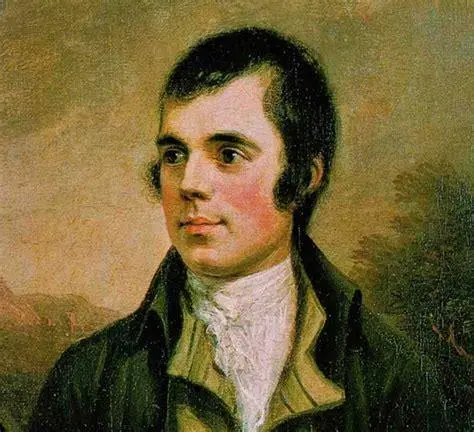
Robert Burns
The Battle Of Sherramuir
The Battle Of Sherramuir
"O cam ye here the fight to shun,
Or herd the sheep wi' me, man?
Or were ye at the Sherra-moor,
Or did the battle see, man?"
"I saw the battle, sair and teugh
And reekin-red ran monie a sheugh;
My heart, for fear, gae sough for sough,
To hear the thuds, and see the cluds
O clans frae woods in tartan duds
Wha glaum'd at icingdoms three, man.
"The red-coat lads wi' black cockauds,
To meet them were na slaw, man;
They rush'd and push'd, and bluid outgush'd,
And monie a bouk did fa', man!
The great Argyle led on his files,
I wat they glanc'd for twenty miles;
They hough'd the clans like nine-pin kyles,
They hack'd and hash'd, while braid-swords clashed,
And thro they dash'd, and hew'd and smash'd,
Till fey men died awa, man.
"But had ye seen the philibegs,
And skyrin tartan trews, man;
When in the teeth they daur'd our Whigs,
And Covenant trueblues, man!
In lines extended lang and large,
When baig'nets o'erpower'd the targe,
And thousands hasten'd to the charge,
Wi' Highland wrath and frac the sheath
Drew blades o' death, till, out o' breath.
They fled like frightened dows, man!"
"O, how Deil, Tam, can that be true?
The chase gaed frae the north, man!
I saw mysel, they did pursue
The horseman back to Forth, man:
And at Dunblane, in my ain sight,
They took the brig wi a' their might
And straught to Stirling wing'd their flight;
But, cursed lot! the gates were shut,
And monie a huntit poor red-coat,
For fear amaist did swarf, man!"
My sister Kate came up the gate
Wi' crowdie unto me, man:
She swoor she saw some rebels run
To Perth and to Dundee, man!
Their left-hand general had nae skill;
The Angus lads had nae good will
That day their neebors' bluid to spill;
For fear, by foes, that they should lose
Their cogs o brose; they scar'd at blows,
And hameward fast did flee, man.
"They've lost some gallant gentlemen,
Amang the Highland clans, man!
I fear my Lord Panmure is slain,
Or in his en'mies' hands, man.
Now wad ye sing this double flight,
Some fell for wrang, and some for right,
But monie bade the world guid-night;
Say, pell and mell, wi' muskets' knell
How Tories feil, and Whigs to Hell
Flew off in frightened bands, man!"
"O cam ye here the fight to shun,
Or herd the sheep wi' me, man?
Or were ye at the Sherra-moor,
Or did the battle see, man?"
"I saw the battle, sair and teugh
And reekin-red ran monie a sheugh;
My heart, for fear, gae sough for sough,
To hear the thuds, and see the cluds
O clans frae woods in tartan duds
Wha glaum'd at icingdoms three, man.
"The red-coat lads wi' black cockauds,
To meet them were na slaw, man;
They rush'd and push'd, and bluid outgush'd,
And monie a bouk did fa', man!
The great Argyle led on his files,
I wat they glanc'd for twenty miles;
They hough'd the clans like nine-pin kyles,
They hack'd and hash'd, while braid-swords clashed,
And thro they dash'd, and hew'd and smash'd,
Till fey men died awa, man.
"But had ye seen the philibegs,
And skyrin tartan trews, man;
When in the teeth they daur'd our Whigs,
And Covenant trueblues, man!
In lines extended lang and large,
When baig'nets o'erpower'd the targe,
And thousands hasten'd to the charge,
Wi' Highland wrath and frac the sheath
Drew blades o' death, till, out o' breath.
They fled like frightened dows, man!"
"O, how Deil, Tam, can that be true?
The chase gaed frae the north, man!
I saw mysel, they did pursue
The horseman back to Forth, man:
And at Dunblane, in my ain sight,
They took the brig wi a' their might
And straught to Stirling wing'd their flight;
But, cursed lot! the gates were shut,
And monie a huntit poor red-coat,
For fear amaist did swarf, man!"
My sister Kate came up the gate
Wi' crowdie unto me, man:
She swoor she saw some rebels run
To Perth and to Dundee, man!
Their left-hand general had nae skill;
The Angus lads had nae good will
That day their neebors' bluid to spill;
For fear, by foes, that they should lose
Their cogs o brose; they scar'd at blows,
And hameward fast did flee, man.
"They've lost some gallant gentlemen,
Amang the Highland clans, man!
I fear my Lord Panmure is slain,
Or in his en'mies' hands, man.
Now wad ye sing this double flight,
Some fell for wrang, and some for right,
But monie bade the world guid-night;
Say, pell and mell, wi' muskets' knell
How Tories feil, and Whigs to Hell
Flew off in frightened bands, man!"
269
Robert Burns
Scots, Wha Hae Wi' Wallace Bled
Scots, Wha Hae Wi' Wallace Bled
Scots, wha hae wi' Wallace bled,
Scots, wham Bruce has aften led,
Welcome to your gory bed,
Or to victory!
Now's the day, and now's the hour;
See the front o' battle lour,
See approach proud Edward's power—
Chains and slavery!
Wha will be a traitor-knave?
Wha can fill a coward's grave?
Wha sae base as be a slave?
Let him turn and flee!
Wha for Scotland's king and law
Freedom's sword will strongly draw,
Freeman stand or freeman fa',
Let him follow me!
By oppression's woes and pains,
By your sons in servile chains,
We will drain our dearest veins,
But they shall be free!
Lay the proud usurpers low!
Tyrants fall in ev'ry foe!
Liberty's in ev'ry blow!
Let us do or die!
Scots, wha hae wi' Wallace bled,
Scots, wham Bruce has aften led,
Welcome to your gory bed,
Or to victory!
Now's the day, and now's the hour;
See the front o' battle lour,
See approach proud Edward's power—
Chains and slavery!
Wha will be a traitor-knave?
Wha can fill a coward's grave?
Wha sae base as be a slave?
Let him turn and flee!
Wha for Scotland's king and law
Freedom's sword will strongly draw,
Freeman stand or freeman fa',
Let him follow me!
By oppression's woes and pains,
By your sons in servile chains,
We will drain our dearest veins,
But they shall be free!
Lay the proud usurpers low!
Tyrants fall in ev'ry foe!
Liberty's in ev'ry blow!
Let us do or die!
230
Robert Burns
Here's A Health To Them That's Awa
Here's A Health To Them That's Awa
Here's a health to them that's awa,
Here's a health to them that's awa
And wha winna wish guid luck to our cause,
May never guid luck be their fa'!
It's guid to be merry and wise,
It's guid to be honest and true,
It's guid to support Caledonia's cause
And bide by the buff and the blue.
Here's a health to them that's awa,
Here's a health to them that's awa!
Here's a health to Charlie, the chief o' the clan,
Altho that his band be sma'!
May Liberty meet wi success,
May Prudence protect her frae evil!
May tyrants and Tyranny tine i' the mist
And wander their way to the Devil!
Here's a health to them that's awa,
Here's a health to them that's awa;
Here's a health to Tammie, the Norlan' laddie,
That lives at the lug o' the Law!
Here's freedom to thern that wad read,
Here's freedom to them that would write!
There's nane ever fear'd that the truth should be heard,
But they whom the truth would indite!
Here's a health to them that's awa,
An here's to them that's awa!
Here's to Maitland and Wycombe! let wha does na like 'em
Be built in a hole in the wa'!
Here's timmer that's red at the heart,
Here's fruit that is sound at the core,
And may he that wad turn the buff and blue coat
Be turn'd to the back o' the door!
Here's a health to them that's awa,
Here's a health to them that's awa,
Here's Chieftain M'Leod, a chieftain worth gowd,
Tho' bred amang mountains o' snaw!
Here's friends on baith sides o' the Firth,
And friends on baith sides o' the Tweed,
And wha wad betray old Albion's right,
May they never eat of her bread!
Here's a health to them that's awa,
Here's a health to them that's awa
And wha winna wish guid luck to our cause,
May never guid luck be their fa'!
It's guid to be merry and wise,
It's guid to be honest and true,
It's guid to support Caledonia's cause
And bide by the buff and the blue.
Here's a health to them that's awa,
Here's a health to them that's awa!
Here's a health to Charlie, the chief o' the clan,
Altho that his band be sma'!
May Liberty meet wi success,
May Prudence protect her frae evil!
May tyrants and Tyranny tine i' the mist
And wander their way to the Devil!
Here's a health to them that's awa,
Here's a health to them that's awa;
Here's a health to Tammie, the Norlan' laddie,
That lives at the lug o' the Law!
Here's freedom to thern that wad read,
Here's freedom to them that would write!
There's nane ever fear'd that the truth should be heard,
But they whom the truth would indite!
Here's a health to them that's awa,
An here's to them that's awa!
Here's to Maitland and Wycombe! let wha does na like 'em
Be built in a hole in the wa'!
Here's timmer that's red at the heart,
Here's fruit that is sound at the core,
And may he that wad turn the buff and blue coat
Be turn'd to the back o' the door!
Here's a health to them that's awa,
Here's a health to them that's awa,
Here's Chieftain M'Leod, a chieftain worth gowd,
Tho' bred amang mountains o' snaw!
Here's friends on baith sides o' the Firth,
And friends on baith sides o' the Tweed,
And wha wad betray old Albion's right,
May they never eat of her bread!
227
Robert Burns
Fareweel To A'Our Scottish Fame
Fareweel To A'Our Scottish Fame
Fareweel to a' our Scottish fame,
Fareweel our ancient glory;
Fareweel ev'n to the Scottish name,
Sae famed in martial story!
Now Sark rins over Solway sands,
And Tweed rins to the ocean,
To mark where England's province stands—
Such a parcel of rogues in a nation!
What force or guile could not subdue
Thro' many warlike ages,
Is wrought now by a coward few,
For hireling traitor's wages.
The English steel we could disdain,
Secure in valour's station;
But English gold has been our bane—
Such a parcel of rogues in a nation!
O, would or I had seen the day
That treason thus could sell us,
My auld grey head had lien in clay
Wi' Bruce and loyal Wallace!
But pith and power, till my last hour,
I'll mak this declaration:
We're bought and sold for English gold—
Such a parcel of rogues in a nation!
Fareweel to a' our Scottish fame,
Fareweel our ancient glory;
Fareweel ev'n to the Scottish name,
Sae famed in martial story!
Now Sark rins over Solway sands,
And Tweed rins to the ocean,
To mark where England's province stands—
Such a parcel of rogues in a nation!
What force or guile could not subdue
Thro' many warlike ages,
Is wrought now by a coward few,
For hireling traitor's wages.
The English steel we could disdain,
Secure in valour's station;
But English gold has been our bane—
Such a parcel of rogues in a nation!
O, would or I had seen the day
That treason thus could sell us,
My auld grey head had lien in clay
Wi' Bruce and loyal Wallace!
But pith and power, till my last hour,
I'll mak this declaration:
We're bought and sold for English gold—
Such a parcel of rogues in a nation!
251
Robert Burns
A Dream
A Dream
Guid-Mornin' to our Majesty!
May Heaven augment your blisses
On ev'ry new birth-day ye see,
A humble poet wishes.
My bardship here, at your Levee
On sic a day as this is,
Is sure an uncouth sight to see,
Amang thae birth-day dresses
Sae fine this day.
I see ye're complimented thrang,
By mony a lord an' lady;
"God save the King" 's a cuckoo sang
That's unco easy said aye:
The poets, too, a venal gang,
Wi' rhymes weel-turn'd an' ready,
Wad gar you trow ye ne'er do wrang,
But aye unerring steady,
On sic a day.
For me! before a monarch's face
Ev'n there I winna flatter;
For neither pension, post, nor place,
Am I your humble debtor:
So, nae reflection on your Grace,
Your Kingship to bespatter;
There's mony waur been o' the race,
And aiblins ane been better
Than you this day.
'Tis very true, my sovereign King,
My skill may weel be doubted;
But facts are chiels that winna ding,
An' downa be disputed:
Your royal nest, beneath your wing,
Is e'en right reft and clouted,
And now the third part o' the string,
An' less, will gang aboot it
Than did ae day.^
Far be't frae me that I aspire
To blame your legislation,
Or say, ye wisdom want, or fire,
To rule this mighty nation:
But faith! I muckle doubt, my sire,
Ye've trusted ministration
To chaps wha in barn or byre
Wad better fill'd their station
Than courts yon day.
And now ye've gien auld Britain peace,
Her broken shins to plaister,
Your sair taxation does her fleece,
Till she has scarce a tester:
For me, thank God, my life's a lease,
Nae bargain wearin' faster,
Or, faith! I fear, that, wi' the geese,
I shortly boost to pasture
I' the craft some day.
I'm no mistrusting Willie Pitt,
When taxes he enlarges,
(An' Will's a true guid fallow's get,
A name not envy spairges),
That he intends to pay your debt,
An' lessen a' your charges;
But, God-sake! let nae saving fit
Abridge your bonie barges
An'boats this day.
Adieu, my Liege; may freedom geck
Beneath your high protection;
An' may ye rax Corruption's neck,
And gie her for dissection!
But since I'm here, I'll no neglect,
In loyal, true affection,
To pay your Queen, wi' due respect,
May fealty an' subjection
This great birth-day.
Hail, Majesty most Excellent!
While nobles strive to please ye,
Will ye accept a compliment,
A simple poet gies ye?
Thae bonie bairntime, Heav'n has lent,
Still higher may they heeze ye
In bliss, till fate some day is sent
For ever to release ye
Frae care that day.
For you, young Potentate o'Wales,
I tell your highness fairly,
Down Pleasure's stream, wi' swelling sails,
I'm tauld ye're driving rarely;
But some day ye may gnaw your nails,
An' curse your folly sairly,
That e'er ye brak Diana's pales,
Or rattl'd dice wi' Charlie
By night or day.
Yet aft a ragged cowt's been known,
To mak a noble aiver;
So, ye may doucely fill the throne,
For a'their clish-ma-claver:
There, him^ at Agincourt wha shone,
Few better were or braver:
And yet, wi' funny, queer Sir John,^
He was an unco shaver
For mony a day.
For you, right rev'rend Osnaburg,
Nane sets the lawn-sleeve sweeter,
Altho' a ribbon at your lug
Wad been a dress completer:
As ye disown yon paughty dog,
That bears the keys of Peter,
Then swith! an' get a wife to hug,
Or trowth, ye'll stain the mitre
Some luckless day!
Young, royal Tarry-breeks, I learn,
Ye've lately come athwart her-
A glorious galley,^ stem and stern,
Weel rigg'd for Venus' barter;
But first hang out, that she'll discern,
Your hymeneal charter;
Then heave aboard your grapple airn,
An' large upon her quarter,
Come full that day.
Ye, lastly, bonie blossoms a',
Ye royal lasses dainty,
Heav'n mak you guid as well as braw,
An' gie you lads a-plenty!
But sneer na British boys awa!
For kings are unco scant aye,
An' German gentles are but sma',
They're better just than want aye
On ony day.
Gad bless you a'! consider now,
Ye're unco muckle dautit;
But ere the course o' life be through,
It may be bitter sautit:
An' I hae seen their coggie fou,
That yet hae tarrow't at it.
But or the day was done, I trow,
The laggen they hae clautit
Fu' clean that day.
Guid-Mornin' to our Majesty!
May Heaven augment your blisses
On ev'ry new birth-day ye see,
A humble poet wishes.
My bardship here, at your Levee
On sic a day as this is,
Is sure an uncouth sight to see,
Amang thae birth-day dresses
Sae fine this day.
I see ye're complimented thrang,
By mony a lord an' lady;
"God save the King" 's a cuckoo sang
That's unco easy said aye:
The poets, too, a venal gang,
Wi' rhymes weel-turn'd an' ready,
Wad gar you trow ye ne'er do wrang,
But aye unerring steady,
On sic a day.
For me! before a monarch's face
Ev'n there I winna flatter;
For neither pension, post, nor place,
Am I your humble debtor:
So, nae reflection on your Grace,
Your Kingship to bespatter;
There's mony waur been o' the race,
And aiblins ane been better
Than you this day.
'Tis very true, my sovereign King,
My skill may weel be doubted;
But facts are chiels that winna ding,
An' downa be disputed:
Your royal nest, beneath your wing,
Is e'en right reft and clouted,
And now the third part o' the string,
An' less, will gang aboot it
Than did ae day.^
Far be't frae me that I aspire
To blame your legislation,
Or say, ye wisdom want, or fire,
To rule this mighty nation:
But faith! I muckle doubt, my sire,
Ye've trusted ministration
To chaps wha in barn or byre
Wad better fill'd their station
Than courts yon day.
And now ye've gien auld Britain peace,
Her broken shins to plaister,
Your sair taxation does her fleece,
Till she has scarce a tester:
For me, thank God, my life's a lease,
Nae bargain wearin' faster,
Or, faith! I fear, that, wi' the geese,
I shortly boost to pasture
I' the craft some day.
I'm no mistrusting Willie Pitt,
When taxes he enlarges,
(An' Will's a true guid fallow's get,
A name not envy spairges),
That he intends to pay your debt,
An' lessen a' your charges;
But, God-sake! let nae saving fit
Abridge your bonie barges
An'boats this day.
Adieu, my Liege; may freedom geck
Beneath your high protection;
An' may ye rax Corruption's neck,
And gie her for dissection!
But since I'm here, I'll no neglect,
In loyal, true affection,
To pay your Queen, wi' due respect,
May fealty an' subjection
This great birth-day.
Hail, Majesty most Excellent!
While nobles strive to please ye,
Will ye accept a compliment,
A simple poet gies ye?
Thae bonie bairntime, Heav'n has lent,
Still higher may they heeze ye
In bliss, till fate some day is sent
For ever to release ye
Frae care that day.
For you, young Potentate o'Wales,
I tell your highness fairly,
Down Pleasure's stream, wi' swelling sails,
I'm tauld ye're driving rarely;
But some day ye may gnaw your nails,
An' curse your folly sairly,
That e'er ye brak Diana's pales,
Or rattl'd dice wi' Charlie
By night or day.
Yet aft a ragged cowt's been known,
To mak a noble aiver;
So, ye may doucely fill the throne,
For a'their clish-ma-claver:
There, him^ at Agincourt wha shone,
Few better were or braver:
And yet, wi' funny, queer Sir John,^
He was an unco shaver
For mony a day.
For you, right rev'rend Osnaburg,
Nane sets the lawn-sleeve sweeter,
Altho' a ribbon at your lug
Wad been a dress completer:
As ye disown yon paughty dog,
That bears the keys of Peter,
Then swith! an' get a wife to hug,
Or trowth, ye'll stain the mitre
Some luckless day!
Young, royal Tarry-breeks, I learn,
Ye've lately come athwart her-
A glorious galley,^ stem and stern,
Weel rigg'd for Venus' barter;
But first hang out, that she'll discern,
Your hymeneal charter;
Then heave aboard your grapple airn,
An' large upon her quarter,
Come full that day.
Ye, lastly, bonie blossoms a',
Ye royal lasses dainty,
Heav'n mak you guid as well as braw,
An' gie you lads a-plenty!
But sneer na British boys awa!
For kings are unco scant aye,
An' German gentles are but sma',
They're better just than want aye
On ony day.
Gad bless you a'! consider now,
Ye're unco muckle dautit;
But ere the course o' life be through,
It may be bitter sautit:
An' I hae seen their coggie fou,
That yet hae tarrow't at it.
But or the day was done, I trow,
The laggen they hae clautit
Fu' clean that day.
308
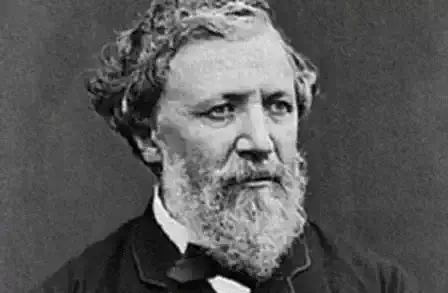
Robert Browning
The Flight Of The Duchess
The Flight Of The Duchess
I.
You're my friend:
I was the man the Duke spoke to;
I helped the Duchess to cast off his yoke, too;
So here's the tale from beginning to end,
My friend!
II.
Ours is a great wild country:
If you climb to our castle's top,
I don't see where your eye can stop;
For when you've passed the cornfield country,
Where vineyards leave off, flocks are packed,
And sheep-range leads to cattle-tract,
And cattle-tract to open-chase,
And open-chase to the very base
Of the mountain where, at a funeral pace,
Round about, solemn and slow,
One by one, row after row,
Up and up the pine-trees go,
So, like black priests up, and so
Down the other side again
To another greater, wilder country,
That's one vast red drear burnt-up plain,
Branched through and through with many a vein
Whence iron's dug, and copper's dealt;
Look right, look left, look straight before,---
Beneath they mine, above they smelt,
Copper-ore and iron-ore,
And forge and furnace mould and melt,
And so on, more and ever more,
Till at the last, for a bounding belt,
Comes the salt sand hoar of the great sea-shore,
---And the whole is our Duke's country.
III.
I was born the day this present Duke was---
(And O, says the song, ere I was old!)
In the castle where the other Duke was---
(When I was happy and young, not old!)
I in the kennel, he in the bower:
We are of like age to an hour.
My father was huntsman in that day;
Who has not heard my father say
That, when a boar was brought to bay,
Three times, four times out of five,
With his huntspear he'd contrive
To get the killing-place transfixed,
And pin him true, both eyes betwixt?
And that's why the old Duke would rather
He lost a salt-pit than my father,
And loved to have him ever in call;
That's why my father stood in the hall
When the old Duke brought his infant out
To show the people, and while they passed
The wondrous bantling round about,
Was first to start at the outside blast
As the Kaiser's courier blew his horn
Just a month after the babe was born.
``And,'' quoth the Kaiser's courier, ``since
``The Duke has got an heir, our Prince
``Needs the Duke's self at his side: ''
The Duke looked down and seemed to wince,
But he thought of wars o'er the world wide,
Castles a-fire, men on their march,
The toppling tower, the crashing arch;
And up he looked, and awhile he eyed
The row of crests and shields and banners
Of all achievements after all manners,
And ``ay,'' said the Duke with a surly pride.
The more was his comfort when he died
At next year's end, in a velvet suit,
With a gilt glove on his hand, his foot
In a silken shoe for a leather boot,
Petticoated like a herald,
In a chamher next to an ante-room,
Where he breathed the breath of page and groom,
What he called stink, and they, perfume:
---They should have set him on red Berold
Mad with pride, like fire to manage!
They should have got his cheek fresh tannage
Such a day as to-day in the merry sunshine!
Had they stuck on his fist a rough-foot merlin!
(Hark, the wind's on the heath at its game!
Oh for a noble falcon-lanner
To flap each broad wing like a banner,
And turn in the wind, and dance like flame!)
Had they broached a white-beer cask from Berlin
---Or if you incline to prescribe mere wine
Put to his lips, when they saw him pine,
A cup of our own Moldavia fine,
Cotnar for instance, green as May sorrel
And ropy with sweet,---we shall not quarrel.
IV.
So, at home, the sick tall yellow Duchess
Was left with the infant in her clutches,
She being the daughter of God knows who:
And now was the time to revisit her tribe.
Abroad and afar they went, the two,
And let our people rail and gibe
At the empty hall and extinguished fire,
As loud as we liked, but ever in vain,
Till after long years we had our desire,
And back came the Duke and his mother again.
V.
And he came back the pertest little ape
That ever affronted human shape;
Full of his travel, struck at himself.
You'd say, he despised our bluff old ways?
---Not he! For in Paris they told the elf
Our rough North land was the Land of Lays,
The one good thing left in evil days;
Since the Mid-Age was the Heroic Time,
And only in wild nooks like ours
Could you taste of it yet as in its prime,
And see true castles, with proper towers,
Young-hearted women, old-minded men,
And manners now as manners were then.
So, all that the old Dukes had been, without knowing it,
This Duke would fain know he was, without being it;
'Twas not for the joy's self, but the joy of his showing it,
Nor for the pride's self, but the pride of our seeing it,
He revived all usages thoroughly worn-out,
The souls of them fumed-forth, the hearts of them torn-out:
And chief in the chase his neck he perilled
On a lathy horse, all legs and length,
With blood for bone, all speed, no strength;
---They should have set him on red Berold
With the red eye slow consuming in fire,
And the thin stiff ear like an abbey-spire!
VI.
Well, such as he was, he must marry, we heard:
And out of a convent, at the word,
Came the lady, in time of spring.
---Oh, old thoughts they cling, they cling!
That day, I know, with a dozen oaths
I clad myself in thick hunting-clothes
Fit for the chase of urochs or buffle
In winter-time when you need to muffle.
But the Duke had a mind we should cut a figure,
And so we saw the lady arrive:
My friend, I have seen a white crane bigger!
She was the smallest lady alive,
Made in a piece of nature's madness,
Too small, almost, for the life and gladness
That over-filled her, as some hive
Out of the bears' reach on the high trees
Is crowded with its safe merry bees:
In truth, she was not hard to please!
Up she looked, down she looked, round at the mead,
Straight at the castle, that's best indeed
To look at from outside the walls:
As for us, styled the ``serfs and thralls,''
She as much thanked me as if she had said it,
(With her eyes, do you understand?)
Because I patted her horse while I led it;
And Max, who rode on her other hand,
Said, no bird flew past but she inquired
What its true name was, nor ever seemed tired---
If that was an eagle she saw hover,
And the green and grey bird on the field was the plover.
When suddenly appeared the Duke:
And as down she sprung, the small foot pointed
On to my hand,---as with a rebuke,
And as if his backbone were not jointed,
The Duke stepped rather aside than forward,
And welcomed her with his grandest smile;
And, mind you, his mother all the while
Chilled in the rear, like a wind to Nor'ward;
And up, like a weary yawn, with its pullies
Went, in a shriek, the rusty portcullis;
And, like a glad sky the north-wind sullies,
The lady's face stopped its play,
As if her first hair had grown grey;
For such things must begin some one day.
VII.
In a day or two she was well again;
As who should say, ``You labour in vain!
``This is all a jest against God, who meant
``I should ever be, as I am, content
`` And glad in his sight; therefore, glad I will be.''
So, smiling as at first went she.
VIII.
She was active, stirring, all fire---
Could not rest, could not tire---
To a stone she might have given life!
(I myself loved once, in my day)
---For a shepherd's, miner's, huntsman's wife,
(I had a wife, I know what I say)
Never in all the world such an one!
And here was plenty to be done,
And she that could do it, great or small,
She was to do nothing at all.
There was already this man in his post,
This in his station, and that in his office,
And the Duke's plan admitted a wife, at most,
To meet his eye, with the other trophies,
Now outside the hall, now in it,
To sit thus, stand thus, see and be seen,
At the proper place in the proper minute,
And die away the life between.
And it was amusing enough, each infraction
Of rule---(but for after-sadness that came)
To hear the consummate self-satisfaction
With which the young Duke and the old dame
Would let her advise, and criticise,
And, being a fool, instruct the wise,
And, child-like, parcel out praise or blame:
They bore it all in complacent guise,
As though an artificer, after contriving
A wheel-work image as if it were living,
Should find with delight it could motion to strike him!
So found the Duke, and his mother like him:
The lady hardly got a rebuff---
That had not been contemptuous enough,
With his cursed smirk, as he nodded applause,
And kept off the old mother-cat's claws.
IX.
So, the little lady grew silent and thin,
Paling and ever paling,
As the way is with a hid chagrin;
And the Duke perceived that she was ailing,
And said in his heart, ``'Tis done to spite me,
``But I shall find in my power to right me!''
Don't swear, friend! The old one, many a year,
Is in hell, and the Duke's self . . . you shall hear.
X.
Well, early in autumn, at first winter-warning,
When the stag had to break with his foot, of a morning,
A drinking-hole out of the fresh tender ice
That covered the pond till the sun, in a trice,
Loosening it, let out a ripple of gold,
And another and another, and faster and faster,
Till, dimpling to blindness, the wide water rolled:
Then it so chanced that the Duke our master
Asked himself what were the pleasures in season,
And found, since the calendar bade him be hearty,
He should do the Middle Age no treason
In resolving on a hunting-party.
Always provided, old books showed the way of it!
What meant old poets by their strictures?
And when old poets had said their say of it,
How taught old painters in their pictures?
We must revert to the proper channels,
Workings in tapestry, paintings on panels,
And gather up woodcraft's authentic traditions:
Here was food for our various ambitions,
As on each case, exactly stated---
To encourage your dog, now, the properest chirrup,
Or best prayer to Saint Hubert on mounting your stirrup---
We of the house hold took thought and debated.
Blessed was he whose back ached with the jerkin
His sire was wont to do forest-work in;
Blesseder he who nobly sunk ``ohs''
And ``ahs'' while he tugged on his grand-sire's trunk-hose;
What signified hats if they had no rims on,
Each slouching before and behind like the scallop,
And able to serve at sea for a shallop,
Loaded with lacquer and looped with crimson?
So that the deer now, to make a short rhyme on't,
What with our Venerers, Prickers and Yerderers,
Might hope for real hunters at length and not murderers,
And oh the Duke's tailor, he had a hot time on't!
XI.
Now you must know that when the first dizziness
Of flap-hats and buff-coats and jack-boots subsided,
The Duke put this question, ``The Duke's part provided,
``Had not the Duchess some share in the business?''
For out of the mouth of two or three witnesses
Did he establish all fit-or-unfitnesses:
And, after much laying of heads together,
Somebody's cap got a notable feather
By the announcement with proper unction
That he had discovered the lady's function;
Since ancient authors gave this tenet,
``When horns wind a mort and the deer is at siege,
``Let the dame of the castle prick forth on her jennet,
``And, with water to wash the hands of her liege
``In a clean ewer with a fair toweling,
`` Let her preside at the disemboweling.''
Now, my friend, if you had so little religion
As to catch a hawk, some falcon-lanner,
And thrust her broad wings like a banner
Into a coop for a vulgar pigeon;
And if day by day and week by week
You cut her claws, and sealed her eyes,
And clipped her wings, and tied her beak,
Would it cause you any great surprise
If, when you decided to give her an airing,
You found she needed a little preparing?
---I say, should you be such a curmudgeon,
If she clung to the perch, as to take it in dudgeon?
Yet when the Duke to his lady signified,
Just a day before, as he judged most dignified,
In what a pleasure she was to participate,---
And, instead of leaping wide in flashes,
Her eyes just lifted their long lashes,
As if pressed by fatigue even he could not dissipate,
And duly acknowledged the Duke's forethought,
But spoke of her health, if her health were worth aught,
Of the weight by day and the watch by night,
And much wrong now that used to be right,
So, thanking him, declined the hunting,---
Was conduct ever more affronting?
With all the ceremony settled---
With the towel ready, and the sewer
Polishing up his oldest ewer,
And the jennet pitched upon, a piebald,
Black-barred, cream-coated and pink eye-balled,---
No wonder if the Duke was nettled
And when she persisted nevertheless,---
Well, I suppose here's the time to confess
That there ran half round our lady's chamber
A balcony none of the hardest to clamber;
And that Jacynth the tire-woman, ready in waiting,
Stayed in call outside, what need of relating?
And since Jacynth was like a June rose, why, a fervent
Adorer of Jacynth of course was your servant;
And if she had the habit to peep through the casement,
How could I keep at any vast distance?
And so, as I say, on the lady's persistence,
The Duke, dumb-stricken with amazement,
Stood for a while in a sultry smother,
And then, with a smile that partook of the awful,
Turned her over to his yellow mother
To learn what was held decorous and lawful;
And the mother smelt blood with a cat-like instinct,
As her cheek quick whitened thro' all its quince-tinct.
Oh, but the lady heard the whole truth at once!
What meant she?--Who was she?---Her duty and station,
The wisdom of age and the folly of youth, at once,
Its decent regard and its fitting relation---
In brief, my friend, set all the devils in hell free
And turn them out to carouse in a belfry
And treat the priests to a fifty-part canon,
And then you may guess how that tongue of hers ran on!
Well, somehow or other it ended at last
And, licking her whiskers, out she passed;
And after her,---making (he hoped) a face
Like Emperor Nero or Sultan Saladin,
Stalked the Duke's self with the austere grace
Of ancient hero or modern paladin,
From door to staircase---oh such a solemn
Unbending of the vertebral column!
XII.
However, at sunrise our company mustered;
And here was the huntsman bidding unkennel,
And there 'neath his bonnet the pricker blustered,
With feather dank as a bough of wet fennel;
For the court-yard walls were filled with fog
You might have cut as an axe chops a log---
Like so much wool for colour and bulkiness;
And out rode the Duke in a perfect sulkiness,
Since, before breakfast, a man feels but queasily,
And a sinking at the lower abdomen
Begins the day with indifferent omen.
And lo, as he looked around uneasily,
The sun ploughed the fog up and drove it asunder
This way and that from the valley under;
And, looking through the court-yard arch,
Down in the valley, what should meet him
But a troop of Gipsies on their march?
No doubt with the annual gifts to greet him.
XIII.
Now, in your land, Gipsies reach you, only
After reaching all lands beside;
North they go, South they go, trooping or lonely,
And still, as they travel far and wide,
Catch they and keep now a trace here, trace there,
That puts you in mind of a place here, a place there.
But with us, I believe they rise out of the ground,
And nowhere else, I take it, are found
With the earth-tint yet so freshly embrowned:
Born, no doubt, like insects which breed on
The very fruit they are meant to feed on.
For the earth---not a use to which they don't turn it,
The ore that grows in the mountain's womb,
Or the sand in the pits like a honeycomb,
They sift and soften it, bake it and burn it---
Whether they weld you, for instance, a snaffle
With side-bars never a brute can baffle;
Or a lock that's a puzzle of wards within wards;
Or, if your colt's fore-foot inclines to curve inwards,
Horseshoes they hammer which turn on a swivel
And won't allow the hoof to shrivel.
Then they cast bells like the shell of the winkle
That keep a stout heart in the ram with their tinkle;
But the sand---they pinch and pound it like otters;
Commend me to Gipsy glass-makers and potters!
Glasses they'll blow you, crystal-clear,
Where just a faint cloud of rose shall appear,
As if in pure water you dropped and let die
A bruised black-blooded mulberry;
And that other sort, their crowning pride,
With long white threads distinct inside,
Like the lake-flower's fibrous roots which dangle
Loose such a length and never tangle,
Where the bold sword-lily cuts the clear waters,
And the cup-lily couches with all the white daughters:
Such are the works they put their hand to,
The uses they turn and twist iron and sand to.
And these made the troop, which our Duke saw sally
Toward his castle from out of the valley,
Men and women, like new-hatched spiders,
Come out with the morning to greet our riders.
And up they wound till they reached the ditch,
Whereat all stopped save one, a witch
That I knew, as she hobbled from the group,
By her gait directly and her stoop,
I, whom Jacynth was used to importune
To let that same witch tell us our fortune.
The oldest Gipsy then above ground;
And, sure as the autumn season came round,
She paid us a visit for profit or pastime,
And every time, as she swore, for the last time.
And presently she was seen to sidle
Up to the Duke till she touched his bridle,
So that the horse of a sudden reared up
As under its nose the old witch peered up
With her worn-out eyes, or rather eye-holes
Of no use now but to gather brine,
And began a kind of level whine
Such as they used to sing to their viols
When their ditties they go grinding
Up and down with nobody minding:
And then, as of old, at the end of the humming
Her usual presents were forthcoming
---A dog-whistle blowing the fiercest of trebles,
(Just a sea-shore stone holding a dozen fine pebbles,)
Or a porcelain mouth-piece to screw on a pipe-end,---
And so she awaited her annual stipend.
But this time, the Duke would scarcely vouchsafe
A word in reply; and in vain she felt
With twitching fingers at her belt
For the purse of sleek pine-martin pelt,
Ready to ptlt what he gave in her pouch safe,---
Till, either to quicken his apprehension,
Or possibly with an after-intention,
She was come, she said, to pay her duty
To the new Duchess, the youthful beauty.
No sooner had she named his lady,
Than a shine lit up the face so shady,
And its smirk returned with a novel meaning---
For it struck him, the babe just wanted weaning;
If one gave her a taste of what life was and sorrow,
She, foolish to-day, would be wiser tomorrow;
And who so fit a teacher of trouble
As this sordid crone bent well-nigh double?
So, glancing at her wolf-skin vesture,
(If such it was, for they grow so hirsute
That their own fleece serves for natural fur-suit)
He was contrasting, 'twas plain from his gesture,
The life of the lady so flower-like and delicate
With the loathsome squalor of this helicat.
I, in brief, was the man the Duke beckoned
From out of the throng, and while I drew near
He told the crone---as I since have reckoned
By the way he bent and spoke into her ear
With circumspection and mystery---
The main of the lady's history,
Her frowardness and ingratitude:
And for all the crone's submissive attitude
I could see round her mouth the loose plaits tightening,
And her brow with assenting intelligence brightening,
As though she engaged with hearty good-will
Whatever he now might enjoin to fulfil,
And promised the lady a thorough frightening.
And so, just giving her a glimpse
Of a purse, with the air of a man who imps
The wing of the hawk that shall fetch the hernshaw,
He bade me take the Gipsy mother
And set her telling some story or other
Of hill or dale, oak-wood or fernshaw,
To wile away a weary hour
For the lady left alone in her bower,
Whose mind and body craved exertion
And yet shrank from all better diversion.
XIV.
Then clapping heel to his horse, the mere curveter,
Out rode the Duke, and after his hollo
Horses and hounds swept, huntsman and servitor,
And back I turned and bade the crone follow.
And what makes me confident what's to be told you
Had all along been of this crone's devising,
Is, that, on looking round sharply, behold you,
There was a novelty quick as surprising:
For first, she had shot up a full head in stature,
And her step kept pace with mine nor faltered,
As if age had foregone its usurpature,
And the ignoble mien was wholly altered,
And the face looked quite of another nature,
And the change reached too, whatever the change meant,
Her shaggy wolf-skin cloak's arrangement:
For where its tatters hung loose like sedges,
Gold coins were glittering on the edges,
Like the band-roll strung with tomans
Which proves the veil a Persian woman's.
And under her brow, like a snail's horns newly
Come out as after the rain he paces,
Two unmistakeable eye-points duly
Live and aware looked out of their places.
So, we went and found Jacynth at the entry
Of the lady's chamber standing sentry;
I told the command and produced my companion,
And Jacynth rejoiced to admit any one,
For since last night, by the same token,
Not a single word had the lady spoken:
They went in both to the presence together,
While I in the balcony watched the weather.
XV.
And now, what took place at the very first of all,
I cannot tell, as I never could learn it:
Jacynth constantly wished a curse to fall
On that little head of hers and burn it
If she knew how she came to drop so soundly
Asleep of a sudden and there continue
The whole time sleeping as profoundly
As one of the boars my father would pin you
'Twixt the eyes where life holds garrison,
---Jacynth forgive me the comparison!
But where I begin asy own narration
Is a little after I took my station
To breathe the fresh air from the balcony,
And, having in those days a falcon eye,
To follow the hunt thro' the open country,
From where the bushes thinlier crested
The hillocks, to a plain where's not one tree.
When, in a moment, my ear was arrested
By---was it singing, or was it saying,
Or a strange musical instrument playing
In the chamber?---and to be certain
I pushed the lattice, pulled the curtain,
And there lay Jacynth asleep,
Yet as if a watch she tried to keep,
In a rosy sleep along the floor
With her head against the door;
While in the midst, on the seat of state,
Was a queen---the Gipsy woman late,
With head and face downbent
On the lady's head and face intent:
For, coiled at her feet like a child at ease,
The lady sat between her knees
And o'er them the lady's clasped hands met,
And on those hands her chin was set,
And her upturned face met the face of the crone
Wherein the eyes had grown and grown
As if she could double and quadruple
At pleasure the play of either pupil
---Very like, by her hands' slow fanning,
As up and down like a gor-crow's flappers
They moved to measure, or bell-clappers.
I said ``Is it blessing, is it banning,
``Do they applaud you or burlesque you---
``Those hands and fingers with no flesh on?''
But, just as I thought to spring in to the rescue,
At once I was stopped by the lady's expression:
For it was life her eyes were drinking
From the crone's wide pair above unwinking,
---Life's pure fire received without shrinking,
Into the heart and breast whose heaving
Told you no single drop they were leaving,
---Life, that filling her, passed redundant
Into her very hair, back swerving
Over each shoulder, loose and abundant,
As her head thrown back showed the white throat curving;
And the very tresses shared in the pleasure,
Moving to the mystic measure,
Bounding as the bosom bounded.
I stopped short, more and more confounded,
As still her cheeks burned and eyes glistened,
As she listened and she listened:
When all at once a hand detained me,
The selfsame contagion gained me,
And I kept time to the wondrous chime,
Making out words and prose and rhyme,
Till it seemed that the music furled
Its wings like a task fulfilled, and dropped
From under the words it first had propped,
And left them midway in the world:
Word took word as hand takes hand,
I could hear at last, and understand,
And when I held the unbroken thread,
The Gipsy said:---
``And so at last we find my tribe.
``And so I set thee in the midst,
``And to one and all of them describe
``What thou saidst and what thou didst,
``Our long and terrible journey through,
``And all thou art ready to say and do
``In the trials that remain:
``I trace them the vein and the other vein
``That meet on thy brow and part again,
``Making our rapid mystic mark;
``And I bid my people prove and probe
``Each eye's profound and glorious globe
``Till they detect the kindred spark
``In those depths so dear and dark,
``Like the spots that snap and burst and flee,
``Circling over the midnight sea.
``And on that round young cheek of thine
``I make them recognize the tinge,
``As when of the costly scarlet wine
``They drip so much as will impinge
``And spread in a thinnest scale afloat
``One thick gold drop from the olive's coat
``Over a silver plate whose sheen
``Still thro' the mixture shall be seen.
``For so I prove thee, to one and all,
``Fit, when my people ope their breast,
``To see the sign, and hear the call,
``And take the vow, and stand the test
``Which adds one more child to the rest---
``When the breast is bare and the arms are wide,
``And the world is left outside.
``For there is probation to decree,
``And many and long must the trials be
``Thou shalt victoriously endure,
``If that brow is true and those eyes are sure;
``Like a jewel-finder's fierce assay
``Of the prize he dug from its mountain-tomb---
``Let once the vindicating ray
``Leap out amid the anxious gloom,
``And steel and fire have done their part
``And the prize falls on its finder's heart;
`'So, trial after trial past,
``Wilt thou fall at the very last
``Breathless, half in trance
``With the thrill of the great deliverance,
``Into our arms for evermore;
``And thou shalt know, those arms once curled
``About thee, what we knew before,
``How love is the only good in the world.
``Henceforth be loved as heart can love,
``Or brain devise, or hand approve!
``Stand up, look below,
``It is our life at thy feet we throw
``To step with into light and joy;
``Not a power of life but we employ
``To satisfy thy nature's want;
``Art thou the tree that props the plant,
``Or the climbing plant that seeks the tree---
``Canst thou help us, must we help thee?
``If any two creatures grew into one,
``They would do more than the world has done.
``Though each apart were never so weak,
``Ye vainly through the world should seek
``For the knowledge and the might
``Which in such union grew their right:
``So, to approach at least that end,
``And blend,---as much as may be, blend
``Thee with us or us with thee,---
``As climbing plant or propping tree,
``Shall some one deck thee, over and down,
``Up and about, with blossoms and leaves?
``Fix his heart's fruit for thy garland crown,
``Cling with his soul as the gourd-vine cleaves,
``Die on thy boughs and disappear
``While not a leaf of thine is sere?
``Or is the other fate in store,
``And art thou fitted to adore,
``To give thy wondrous self away,
``And take a stronger nature's sway?
``I foresee and could foretell
``Thy future portion, sure and well:
``But those passionate eyes speak true, speak true,
``Let them say what thou shalt do!
``Only be sure thy daily life,
``In its peace or in its strife,
``Never shall be unobserved:
``We pursue thy whole career,
``And hope for it, or doubt, or fear,---
``Lo, hast thou kept thy path or swerved,
``We are beside thee in all thy ways,
``With our blame, with our praise,
``Our shame to feel, our pride to show,
``Glad, angry---but indifferent, no!
``Whether it be thy lot to go,
``For the good of us all, where the haters meet
``In the crowded city's horrible street;
``Or thou step alone through the morass
``Where never sound yet was
``Save the dry quick clap of the stork's bill,
``For the air is still, and the water still,
``When the blue breast of the dipping coot
``Dives under, and all is mute.
``So, at the last shall come old age,
``Decrepit as befits that stage;
``How else wouldst thou retire apart
``With the hoarded memories of thy heart,
``And gather all to the very least
``Of the fragments of life's earlier feast,
``Let fall through eagerness to find
``The crowning dainties yet behind?
``Ponder on the entire past
``Laid together thus at last,
``When the twilight helps to fuse
``The first fresh with the faded hues,
``And the outline of the whole,
``As round eve's shades their framework roll,
``Grandly fronts for once thy soul.
``And then as, 'mid the dark, a glean
``Of yet another morning breaks,
``And like the hand which ends a dream,
``Death, with the might of his sunbeam,
``Touches the flesh and the soul awakes,
``Then------''
Ay, then indeed something would happen!
But what? For here her voice changed like a bird's;
There grew more of the music and less of the words;
Had Jacynth only been by me to clap pen
To paper and put you down every syllable
With those clever clerkly fingers,
All I've forgotten as well as what lingers
In this old brain of mine that's but ill able
To give you even this poor version
Of the speech I spoil, as it were, with stammering
---More fault of those who had the hammering
Of prosody into me and syntax,
And did it, not with hobnails but tintacks!
But to return from this excursion,---
Just, do you mark, when the song was sweetest,
The peace most deep and the charm completest,
There came, shall I say, a snap---
And the charm vanished!
And my sense returned, so strangely banished,
And, starting as from a nap,
I knew the crone was bewitching my lady,
With Jacynth asleep; and but one spring made I
Down from the casement, round to the portal,
Another minute and I had entered,---
When the door opened, and more than mortal
Stood, with a face where to my mind centred
All beauties I ever saw or shall see,
The Duchess: I stopped as if struck by palsy.
She was so different, happy and beautiful,
I felt at once that all was best,
And that I had nothing to do, for the rest,
But wait her commands, obey and be dutiful.
Not that, in fact, there was any commanding;
I saw the glory of her eye,
And the brow's height and the breast's expanding,
And I was hers to live or to die.
As for finding what she wanted,
You know God Almighty granted
Such little signs should serve wild creatures
To tell one another all their desires,
So that each knows what his friend requires,
And does its bidding without teachers.
I preceded her; the crone
Followed silent and alone;
I spoke to her, but she merely jabbered
In the old style; both her eyes had slunk
Back to their pits; her stature shrunk;
In short, the soul in its body sunk
Like a blade sent home to its scabbard.
We descended, I preceding;
Crossed the court with nobody heeding,
All the world was at the chase,
The courtyard like a desert-place,
The stable emptied of its small fry;
I saddled myself the very palfrey
I remember patting while it carried her,
The day she arrived and the Duke married her.
And, do you know, though it's easy deceiving
Oneself in such matters, I can't help believing
The lady had not forgotten it either,
And knew the poor devil so much beneath her
Would have been only too glad for her service
To dance on hot ploughshares like a Turk dervise,
But, unable to pay proper duty where owing it,
Was reduced to that pitiful method of showing it:
For though the moment I began setting
His saddle on my own nag of Berold's begetting,
(Not that I meant to be obtrusive)
She stopped me, while his rug was shifting,
By a single rapid finger's lifting,
And, with a gesture kind but conclusive,
And a little shake of the head, refused me,---
I say, although she never used me,
Yet when she was mounted, the Gipsy behind her,
And I ventured to remind her,
I suppose with a voice of less steadiness
Than usual, for my feeling exceeded me,
---Something to the effect that I was in readiness
Whenever God should please she needed me,---
Then, do you know, her face looked down on me
With a look that placed a crown on me,
And she felt in her bosom,---mark, her bosom---
And, as a flower-tree drops its blossom,
Dropped me . . . ah, had it been a purse
Of silver, my friend, or gold that's worse,
Why, you see, as soon as I found myself
So understood,---that a true heart so may gain
Such a reward,---I should have gone home again,
Kissed Jacynth, and soberly drowned myself!
It was a little plait of hair
Such as friends in a convent make
To wear, each for the other's sake,---
This, see, which at my breast I wear,
Ever did (rather to Jacynth's grudgment),
And ever shall, till the Day of Judgment.
And then,---and then,---to cut short,---this is idle,
These are feelings it is not good to foster,---
I pushed the gate wide, she shook the bridle,
And the palfrey bounded,---and so we lost her.
XVI.
When the liquor's out why clink the cannikin?
I did think to describe you the panic in
The redoubtable breast of our master the mannikin,
And what was the pitch of his mother's yellowness,
How she turned as a shark to snap the spare-rib
Clean off, sailors say, from a pearl-diving Carib,
When she heard, what she called the flight of the feloness
---But it seems such child's play,
What they said and did with the lady away!
And to dance on, when we've lost the music,
Always made me---and no doubt makes you---sick.
Nay, to my mind, the world's face looked so stern
As that sweet form disappeared through the postern,
She that kept it in constant good humour,
It ought to have stopped; there seemed nothing to do more.
But the world thought otherwise and went on,
And my head's one that its spite was spent on:
Thirty years are fled since that morning,
And with them all my head's adorning.
Nor did the old Duchess die outright,
As you expect, of suppressed spite,
The natural end of every adder
Not suffered to empty its poison-bladder:
But she and her son agreed, I take it,
That no one should touch on the story to wake it,
For the wound in the Duke's pride rankled fiery,
So, they made no search and small inquiry---
And when fresh Gipsies have paid us a visit, I've
Noticed the couple were never inquisitive,
But told them they're folks the Duke don't want here,
And bade them make haste and cross the frontier.
Brief, the Duchess was gone and the Duke was glad of it,
And the old one was in the young one's stead,
And took, in her place, the household's head,
And a blessed time the household had of it!
And were I not, as a man may say, cautious
How I trench, more than needs, on the nauseous,
I could favour you with sundry touches
Of the paint-smutches with which the Duchess
Heightened the mellowness of her cheek's yellowness
(To get on faster) until at last her
Cheek grew to be one master-plaster
Of mucus and focus from mere use of ceruse:
In short, she grew from scalp to udder
Just the object to make you shudder.
XVII.
You're my friend---
What a thing friendship is, world without end!
How it gives the heart and soul a stir-up
As if somebody broached you a glorious runlet,
And poured out, all lovelily, sparklingly, sunlit,
Our green Moldavia, the streaky syrup,
Cotnar as old as the time of the Druids---
Friendship may match with that monarch of fluids;
Each supples a dry brain, fills you its ins-and-outs,
Gives your life's hour-glass a shake when the thin sand doubts
Whether to run on or stop short, and guarantees
Age is not all made of stark sloth and arrant ease.
I have seen my little lady once more,
Jacynth, the Gipsy, Berold, and the rest of it,
For to me spoke the Duke, as I told you before;
I always wanted to make a clean breast of it:
And now it is made---why, my heart's blood, that went trickle,
Trickle, but anon, in such muddy driblets,
Is pumped up brisk now, through the main ventricle,
And genially floats me about the giblets.
I'll tell you what I intend to do:
I must see this fellow his sad life through---
He is our Duke, after all,
And I, as he says, but a serf and thrall.
My father was born here, and I inherit
His fame, a chain he bound his son with;
Could I pay in a lump I should prefer it,
But there's no mine to blow up and get done with:
So, I must stay till the end of the chapter.
For, as to our middle-age-manners-adapter,
Be it a thing to be glad on or sorry on,
Some day or other, his head in a morion
And breast in a hauberk, his heels he'll kick up,
Slain by an onslaught fierce of hiccup.
And then, when red doth the sword of our Duke rust,
And its leathern sheath lie o'ergrown with a blue crust,
Then I shall scrape together my earnings;
For, you see, in the churchyard Jacynth reposes,
And our children all went the way of the roses:
It's a long lane that knows no turnings.
One needs but little tackle to travel in;
So, just one stout cloak shall I indue:
And for a stall, what beats the javelin
With which his boars my father pinned you?
And then, for a purpose you shall hear presently,
Taking some Cotnar, a tight plump skinful,
I shall go journeying, who but I, pleasantly!
Sorrow is vain and despondency sinful.
What's a man's age? He must hurry more, that's all;
Cram in a day, what his youth took a year to hold.
When we mind labour, then only, we're too old---
What age had Methusalem when he begat Saul?
And at last, as its haven some buffeted ship sees,
(Come all the way from the north-parts with sperm oil)
I hope to get safely out of the turmoil
And arrive one day at the land of the Gipsies,
And find my lady, or hear the last news of her
From some old thief and son of Lucifer,
His forehead chapleted green with wreathy hop,
Sunburned all over like an thiop.
And when my Cotnar begins to operate
And the tongue of the rogue to run at a proper rate,
And our wine-skin, tight once, shows each flaccid dent,
I shall drop in with---as if by accident---
``You never knew, then, how it all ended,
``What fortune good or bad attended
``The little lady your Queen befriended?''
---And when that's told me, what's remaining?
This world's too hard for my explaining.
The same wise judge of matters equine
Who still preferred some slim four-year-old
To the big-boned stock of mighty Berold,
And, fur strong Cotnar, drank French weak wine,
He also umst be such a lady's scorner!
Smooth Jacob still rubs homely Esau:
Now up, now down, the world's one see-saw.
---So, I shall find out some snug corner
Under a hedge, like Orson the wood-knight,
Turn myself round and bid the world good night;
And sleep a sound sleep till the trumpet's blowing
Wakes me (unless priests cheat us laymen)
To a world where will be no furtiner throwing
Pearls befare swine that Can't value them. Amen!
I.
You're my friend:
I was the man the Duke spoke to;
I helped the Duchess to cast off his yoke, too;
So here's the tale from beginning to end,
My friend!
II.
Ours is a great wild country:
If you climb to our castle's top,
I don't see where your eye can stop;
For when you've passed the cornfield country,
Where vineyards leave off, flocks are packed,
And sheep-range leads to cattle-tract,
And cattle-tract to open-chase,
And open-chase to the very base
Of the mountain where, at a funeral pace,
Round about, solemn and slow,
One by one, row after row,
Up and up the pine-trees go,
So, like black priests up, and so
Down the other side again
To another greater, wilder country,
That's one vast red drear burnt-up plain,
Branched through and through with many a vein
Whence iron's dug, and copper's dealt;
Look right, look left, look straight before,---
Beneath they mine, above they smelt,
Copper-ore and iron-ore,
And forge and furnace mould and melt,
And so on, more and ever more,
Till at the last, for a bounding belt,
Comes the salt sand hoar of the great sea-shore,
---And the whole is our Duke's country.
III.
I was born the day this present Duke was---
(And O, says the song, ere I was old!)
In the castle where the other Duke was---
(When I was happy and young, not old!)
I in the kennel, he in the bower:
We are of like age to an hour.
My father was huntsman in that day;
Who has not heard my father say
That, when a boar was brought to bay,
Three times, four times out of five,
With his huntspear he'd contrive
To get the killing-place transfixed,
And pin him true, both eyes betwixt?
And that's why the old Duke would rather
He lost a salt-pit than my father,
And loved to have him ever in call;
That's why my father stood in the hall
When the old Duke brought his infant out
To show the people, and while they passed
The wondrous bantling round about,
Was first to start at the outside blast
As the Kaiser's courier blew his horn
Just a month after the babe was born.
``And,'' quoth the Kaiser's courier, ``since
``The Duke has got an heir, our Prince
``Needs the Duke's self at his side: ''
The Duke looked down and seemed to wince,
But he thought of wars o'er the world wide,
Castles a-fire, men on their march,
The toppling tower, the crashing arch;
And up he looked, and awhile he eyed
The row of crests and shields and banners
Of all achievements after all manners,
And ``ay,'' said the Duke with a surly pride.
The more was his comfort when he died
At next year's end, in a velvet suit,
With a gilt glove on his hand, his foot
In a silken shoe for a leather boot,
Petticoated like a herald,
In a chamher next to an ante-room,
Where he breathed the breath of page and groom,
What he called stink, and they, perfume:
---They should have set him on red Berold
Mad with pride, like fire to manage!
They should have got his cheek fresh tannage
Such a day as to-day in the merry sunshine!
Had they stuck on his fist a rough-foot merlin!
(Hark, the wind's on the heath at its game!
Oh for a noble falcon-lanner
To flap each broad wing like a banner,
And turn in the wind, and dance like flame!)
Had they broached a white-beer cask from Berlin
---Or if you incline to prescribe mere wine
Put to his lips, when they saw him pine,
A cup of our own Moldavia fine,
Cotnar for instance, green as May sorrel
And ropy with sweet,---we shall not quarrel.
IV.
So, at home, the sick tall yellow Duchess
Was left with the infant in her clutches,
She being the daughter of God knows who:
And now was the time to revisit her tribe.
Abroad and afar they went, the two,
And let our people rail and gibe
At the empty hall and extinguished fire,
As loud as we liked, but ever in vain,
Till after long years we had our desire,
And back came the Duke and his mother again.
V.
And he came back the pertest little ape
That ever affronted human shape;
Full of his travel, struck at himself.
You'd say, he despised our bluff old ways?
---Not he! For in Paris they told the elf
Our rough North land was the Land of Lays,
The one good thing left in evil days;
Since the Mid-Age was the Heroic Time,
And only in wild nooks like ours
Could you taste of it yet as in its prime,
And see true castles, with proper towers,
Young-hearted women, old-minded men,
And manners now as manners were then.
So, all that the old Dukes had been, without knowing it,
This Duke would fain know he was, without being it;
'Twas not for the joy's self, but the joy of his showing it,
Nor for the pride's self, but the pride of our seeing it,
He revived all usages thoroughly worn-out,
The souls of them fumed-forth, the hearts of them torn-out:
And chief in the chase his neck he perilled
On a lathy horse, all legs and length,
With blood for bone, all speed, no strength;
---They should have set him on red Berold
With the red eye slow consuming in fire,
And the thin stiff ear like an abbey-spire!
VI.
Well, such as he was, he must marry, we heard:
And out of a convent, at the word,
Came the lady, in time of spring.
---Oh, old thoughts they cling, they cling!
That day, I know, with a dozen oaths
I clad myself in thick hunting-clothes
Fit for the chase of urochs or buffle
In winter-time when you need to muffle.
But the Duke had a mind we should cut a figure,
And so we saw the lady arrive:
My friend, I have seen a white crane bigger!
She was the smallest lady alive,
Made in a piece of nature's madness,
Too small, almost, for the life and gladness
That over-filled her, as some hive
Out of the bears' reach on the high trees
Is crowded with its safe merry bees:
In truth, she was not hard to please!
Up she looked, down she looked, round at the mead,
Straight at the castle, that's best indeed
To look at from outside the walls:
As for us, styled the ``serfs and thralls,''
She as much thanked me as if she had said it,
(With her eyes, do you understand?)
Because I patted her horse while I led it;
And Max, who rode on her other hand,
Said, no bird flew past but she inquired
What its true name was, nor ever seemed tired---
If that was an eagle she saw hover,
And the green and grey bird on the field was the plover.
When suddenly appeared the Duke:
And as down she sprung, the small foot pointed
On to my hand,---as with a rebuke,
And as if his backbone were not jointed,
The Duke stepped rather aside than forward,
And welcomed her with his grandest smile;
And, mind you, his mother all the while
Chilled in the rear, like a wind to Nor'ward;
And up, like a weary yawn, with its pullies
Went, in a shriek, the rusty portcullis;
And, like a glad sky the north-wind sullies,
The lady's face stopped its play,
As if her first hair had grown grey;
For such things must begin some one day.
VII.
In a day or two she was well again;
As who should say, ``You labour in vain!
``This is all a jest against God, who meant
``I should ever be, as I am, content
`` And glad in his sight; therefore, glad I will be.''
So, smiling as at first went she.
VIII.
She was active, stirring, all fire---
Could not rest, could not tire---
To a stone she might have given life!
(I myself loved once, in my day)
---For a shepherd's, miner's, huntsman's wife,
(I had a wife, I know what I say)
Never in all the world such an one!
And here was plenty to be done,
And she that could do it, great or small,
She was to do nothing at all.
There was already this man in his post,
This in his station, and that in his office,
And the Duke's plan admitted a wife, at most,
To meet his eye, with the other trophies,
Now outside the hall, now in it,
To sit thus, stand thus, see and be seen,
At the proper place in the proper minute,
And die away the life between.
And it was amusing enough, each infraction
Of rule---(but for after-sadness that came)
To hear the consummate self-satisfaction
With which the young Duke and the old dame
Would let her advise, and criticise,
And, being a fool, instruct the wise,
And, child-like, parcel out praise or blame:
They bore it all in complacent guise,
As though an artificer, after contriving
A wheel-work image as if it were living,
Should find with delight it could motion to strike him!
So found the Duke, and his mother like him:
The lady hardly got a rebuff---
That had not been contemptuous enough,
With his cursed smirk, as he nodded applause,
And kept off the old mother-cat's claws.
IX.
So, the little lady grew silent and thin,
Paling and ever paling,
As the way is with a hid chagrin;
And the Duke perceived that she was ailing,
And said in his heart, ``'Tis done to spite me,
``But I shall find in my power to right me!''
Don't swear, friend! The old one, many a year,
Is in hell, and the Duke's self . . . you shall hear.
X.
Well, early in autumn, at first winter-warning,
When the stag had to break with his foot, of a morning,
A drinking-hole out of the fresh tender ice
That covered the pond till the sun, in a trice,
Loosening it, let out a ripple of gold,
And another and another, and faster and faster,
Till, dimpling to blindness, the wide water rolled:
Then it so chanced that the Duke our master
Asked himself what were the pleasures in season,
And found, since the calendar bade him be hearty,
He should do the Middle Age no treason
In resolving on a hunting-party.
Always provided, old books showed the way of it!
What meant old poets by their strictures?
And when old poets had said their say of it,
How taught old painters in their pictures?
We must revert to the proper channels,
Workings in tapestry, paintings on panels,
And gather up woodcraft's authentic traditions:
Here was food for our various ambitions,
As on each case, exactly stated---
To encourage your dog, now, the properest chirrup,
Or best prayer to Saint Hubert on mounting your stirrup---
We of the house hold took thought and debated.
Blessed was he whose back ached with the jerkin
His sire was wont to do forest-work in;
Blesseder he who nobly sunk ``ohs''
And ``ahs'' while he tugged on his grand-sire's trunk-hose;
What signified hats if they had no rims on,
Each slouching before and behind like the scallop,
And able to serve at sea for a shallop,
Loaded with lacquer and looped with crimson?
So that the deer now, to make a short rhyme on't,
What with our Venerers, Prickers and Yerderers,
Might hope for real hunters at length and not murderers,
And oh the Duke's tailor, he had a hot time on't!
XI.
Now you must know that when the first dizziness
Of flap-hats and buff-coats and jack-boots subsided,
The Duke put this question, ``The Duke's part provided,
``Had not the Duchess some share in the business?''
For out of the mouth of two or three witnesses
Did he establish all fit-or-unfitnesses:
And, after much laying of heads together,
Somebody's cap got a notable feather
By the announcement with proper unction
That he had discovered the lady's function;
Since ancient authors gave this tenet,
``When horns wind a mort and the deer is at siege,
``Let the dame of the castle prick forth on her jennet,
``And, with water to wash the hands of her liege
``In a clean ewer with a fair toweling,
`` Let her preside at the disemboweling.''
Now, my friend, if you had so little religion
As to catch a hawk, some falcon-lanner,
And thrust her broad wings like a banner
Into a coop for a vulgar pigeon;
And if day by day and week by week
You cut her claws, and sealed her eyes,
And clipped her wings, and tied her beak,
Would it cause you any great surprise
If, when you decided to give her an airing,
You found she needed a little preparing?
---I say, should you be such a curmudgeon,
If she clung to the perch, as to take it in dudgeon?
Yet when the Duke to his lady signified,
Just a day before, as he judged most dignified,
In what a pleasure she was to participate,---
And, instead of leaping wide in flashes,
Her eyes just lifted their long lashes,
As if pressed by fatigue even he could not dissipate,
And duly acknowledged the Duke's forethought,
But spoke of her health, if her health were worth aught,
Of the weight by day and the watch by night,
And much wrong now that used to be right,
So, thanking him, declined the hunting,---
Was conduct ever more affronting?
With all the ceremony settled---
With the towel ready, and the sewer
Polishing up his oldest ewer,
And the jennet pitched upon, a piebald,
Black-barred, cream-coated and pink eye-balled,---
No wonder if the Duke was nettled
And when she persisted nevertheless,---
Well, I suppose here's the time to confess
That there ran half round our lady's chamber
A balcony none of the hardest to clamber;
And that Jacynth the tire-woman, ready in waiting,
Stayed in call outside, what need of relating?
And since Jacynth was like a June rose, why, a fervent
Adorer of Jacynth of course was your servant;
And if she had the habit to peep through the casement,
How could I keep at any vast distance?
And so, as I say, on the lady's persistence,
The Duke, dumb-stricken with amazement,
Stood for a while in a sultry smother,
And then, with a smile that partook of the awful,
Turned her over to his yellow mother
To learn what was held decorous and lawful;
And the mother smelt blood with a cat-like instinct,
As her cheek quick whitened thro' all its quince-tinct.
Oh, but the lady heard the whole truth at once!
What meant she?--Who was she?---Her duty and station,
The wisdom of age and the folly of youth, at once,
Its decent regard and its fitting relation---
In brief, my friend, set all the devils in hell free
And turn them out to carouse in a belfry
And treat the priests to a fifty-part canon,
And then you may guess how that tongue of hers ran on!
Well, somehow or other it ended at last
And, licking her whiskers, out she passed;
And after her,---making (he hoped) a face
Like Emperor Nero or Sultan Saladin,
Stalked the Duke's self with the austere grace
Of ancient hero or modern paladin,
From door to staircase---oh such a solemn
Unbending of the vertebral column!
XII.
However, at sunrise our company mustered;
And here was the huntsman bidding unkennel,
And there 'neath his bonnet the pricker blustered,
With feather dank as a bough of wet fennel;
For the court-yard walls were filled with fog
You might have cut as an axe chops a log---
Like so much wool for colour and bulkiness;
And out rode the Duke in a perfect sulkiness,
Since, before breakfast, a man feels but queasily,
And a sinking at the lower abdomen
Begins the day with indifferent omen.
And lo, as he looked around uneasily,
The sun ploughed the fog up and drove it asunder
This way and that from the valley under;
And, looking through the court-yard arch,
Down in the valley, what should meet him
But a troop of Gipsies on their march?
No doubt with the annual gifts to greet him.
XIII.
Now, in your land, Gipsies reach you, only
After reaching all lands beside;
North they go, South they go, trooping or lonely,
And still, as they travel far and wide,
Catch they and keep now a trace here, trace there,
That puts you in mind of a place here, a place there.
But with us, I believe they rise out of the ground,
And nowhere else, I take it, are found
With the earth-tint yet so freshly embrowned:
Born, no doubt, like insects which breed on
The very fruit they are meant to feed on.
For the earth---not a use to which they don't turn it,
The ore that grows in the mountain's womb,
Or the sand in the pits like a honeycomb,
They sift and soften it, bake it and burn it---
Whether they weld you, for instance, a snaffle
With side-bars never a brute can baffle;
Or a lock that's a puzzle of wards within wards;
Or, if your colt's fore-foot inclines to curve inwards,
Horseshoes they hammer which turn on a swivel
And won't allow the hoof to shrivel.
Then they cast bells like the shell of the winkle
That keep a stout heart in the ram with their tinkle;
But the sand---they pinch and pound it like otters;
Commend me to Gipsy glass-makers and potters!
Glasses they'll blow you, crystal-clear,
Where just a faint cloud of rose shall appear,
As if in pure water you dropped and let die
A bruised black-blooded mulberry;
And that other sort, their crowning pride,
With long white threads distinct inside,
Like the lake-flower's fibrous roots which dangle
Loose such a length and never tangle,
Where the bold sword-lily cuts the clear waters,
And the cup-lily couches with all the white daughters:
Such are the works they put their hand to,
The uses they turn and twist iron and sand to.
And these made the troop, which our Duke saw sally
Toward his castle from out of the valley,
Men and women, like new-hatched spiders,
Come out with the morning to greet our riders.
And up they wound till they reached the ditch,
Whereat all stopped save one, a witch
That I knew, as she hobbled from the group,
By her gait directly and her stoop,
I, whom Jacynth was used to importune
To let that same witch tell us our fortune.
The oldest Gipsy then above ground;
And, sure as the autumn season came round,
She paid us a visit for profit or pastime,
And every time, as she swore, for the last time.
And presently she was seen to sidle
Up to the Duke till she touched his bridle,
So that the horse of a sudden reared up
As under its nose the old witch peered up
With her worn-out eyes, or rather eye-holes
Of no use now but to gather brine,
And began a kind of level whine
Such as they used to sing to their viols
When their ditties they go grinding
Up and down with nobody minding:
And then, as of old, at the end of the humming
Her usual presents were forthcoming
---A dog-whistle blowing the fiercest of trebles,
(Just a sea-shore stone holding a dozen fine pebbles,)
Or a porcelain mouth-piece to screw on a pipe-end,---
And so she awaited her annual stipend.
But this time, the Duke would scarcely vouchsafe
A word in reply; and in vain she felt
With twitching fingers at her belt
For the purse of sleek pine-martin pelt,
Ready to ptlt what he gave in her pouch safe,---
Till, either to quicken his apprehension,
Or possibly with an after-intention,
She was come, she said, to pay her duty
To the new Duchess, the youthful beauty.
No sooner had she named his lady,
Than a shine lit up the face so shady,
And its smirk returned with a novel meaning---
For it struck him, the babe just wanted weaning;
If one gave her a taste of what life was and sorrow,
She, foolish to-day, would be wiser tomorrow;
And who so fit a teacher of trouble
As this sordid crone bent well-nigh double?
So, glancing at her wolf-skin vesture,
(If such it was, for they grow so hirsute
That their own fleece serves for natural fur-suit)
He was contrasting, 'twas plain from his gesture,
The life of the lady so flower-like and delicate
With the loathsome squalor of this helicat.
I, in brief, was the man the Duke beckoned
From out of the throng, and while I drew near
He told the crone---as I since have reckoned
By the way he bent and spoke into her ear
With circumspection and mystery---
The main of the lady's history,
Her frowardness and ingratitude:
And for all the crone's submissive attitude
I could see round her mouth the loose plaits tightening,
And her brow with assenting intelligence brightening,
As though she engaged with hearty good-will
Whatever he now might enjoin to fulfil,
And promised the lady a thorough frightening.
And so, just giving her a glimpse
Of a purse, with the air of a man who imps
The wing of the hawk that shall fetch the hernshaw,
He bade me take the Gipsy mother
And set her telling some story or other
Of hill or dale, oak-wood or fernshaw,
To wile away a weary hour
For the lady left alone in her bower,
Whose mind and body craved exertion
And yet shrank from all better diversion.
XIV.
Then clapping heel to his horse, the mere curveter,
Out rode the Duke, and after his hollo
Horses and hounds swept, huntsman and servitor,
And back I turned and bade the crone follow.
And what makes me confident what's to be told you
Had all along been of this crone's devising,
Is, that, on looking round sharply, behold you,
There was a novelty quick as surprising:
For first, she had shot up a full head in stature,
And her step kept pace with mine nor faltered,
As if age had foregone its usurpature,
And the ignoble mien was wholly altered,
And the face looked quite of another nature,
And the change reached too, whatever the change meant,
Her shaggy wolf-skin cloak's arrangement:
For where its tatters hung loose like sedges,
Gold coins were glittering on the edges,
Like the band-roll strung with tomans
Which proves the veil a Persian woman's.
And under her brow, like a snail's horns newly
Come out as after the rain he paces,
Two unmistakeable eye-points duly
Live and aware looked out of their places.
So, we went and found Jacynth at the entry
Of the lady's chamber standing sentry;
I told the command and produced my companion,
And Jacynth rejoiced to admit any one,
For since last night, by the same token,
Not a single word had the lady spoken:
They went in both to the presence together,
While I in the balcony watched the weather.
XV.
And now, what took place at the very first of all,
I cannot tell, as I never could learn it:
Jacynth constantly wished a curse to fall
On that little head of hers and burn it
If she knew how she came to drop so soundly
Asleep of a sudden and there continue
The whole time sleeping as profoundly
As one of the boars my father would pin you
'Twixt the eyes where life holds garrison,
---Jacynth forgive me the comparison!
But where I begin asy own narration
Is a little after I took my station
To breathe the fresh air from the balcony,
And, having in those days a falcon eye,
To follow the hunt thro' the open country,
From where the bushes thinlier crested
The hillocks, to a plain where's not one tree.
When, in a moment, my ear was arrested
By---was it singing, or was it saying,
Or a strange musical instrument playing
In the chamber?---and to be certain
I pushed the lattice, pulled the curtain,
And there lay Jacynth asleep,
Yet as if a watch she tried to keep,
In a rosy sleep along the floor
With her head against the door;
While in the midst, on the seat of state,
Was a queen---the Gipsy woman late,
With head and face downbent
On the lady's head and face intent:
For, coiled at her feet like a child at ease,
The lady sat between her knees
And o'er them the lady's clasped hands met,
And on those hands her chin was set,
And her upturned face met the face of the crone
Wherein the eyes had grown and grown
As if she could double and quadruple
At pleasure the play of either pupil
---Very like, by her hands' slow fanning,
As up and down like a gor-crow's flappers
They moved to measure, or bell-clappers.
I said ``Is it blessing, is it banning,
``Do they applaud you or burlesque you---
``Those hands and fingers with no flesh on?''
But, just as I thought to spring in to the rescue,
At once I was stopped by the lady's expression:
For it was life her eyes were drinking
From the crone's wide pair above unwinking,
---Life's pure fire received without shrinking,
Into the heart and breast whose heaving
Told you no single drop they were leaving,
---Life, that filling her, passed redundant
Into her very hair, back swerving
Over each shoulder, loose and abundant,
As her head thrown back showed the white throat curving;
And the very tresses shared in the pleasure,
Moving to the mystic measure,
Bounding as the bosom bounded.
I stopped short, more and more confounded,
As still her cheeks burned and eyes glistened,
As she listened and she listened:
When all at once a hand detained me,
The selfsame contagion gained me,
And I kept time to the wondrous chime,
Making out words and prose and rhyme,
Till it seemed that the music furled
Its wings like a task fulfilled, and dropped
From under the words it first had propped,
And left them midway in the world:
Word took word as hand takes hand,
I could hear at last, and understand,
And when I held the unbroken thread,
The Gipsy said:---
``And so at last we find my tribe.
``And so I set thee in the midst,
``And to one and all of them describe
``What thou saidst and what thou didst,
``Our long and terrible journey through,
``And all thou art ready to say and do
``In the trials that remain:
``I trace them the vein and the other vein
``That meet on thy brow and part again,
``Making our rapid mystic mark;
``And I bid my people prove and probe
``Each eye's profound and glorious globe
``Till they detect the kindred spark
``In those depths so dear and dark,
``Like the spots that snap and burst and flee,
``Circling over the midnight sea.
``And on that round young cheek of thine
``I make them recognize the tinge,
``As when of the costly scarlet wine
``They drip so much as will impinge
``And spread in a thinnest scale afloat
``One thick gold drop from the olive's coat
``Over a silver plate whose sheen
``Still thro' the mixture shall be seen.
``For so I prove thee, to one and all,
``Fit, when my people ope their breast,
``To see the sign, and hear the call,
``And take the vow, and stand the test
``Which adds one more child to the rest---
``When the breast is bare and the arms are wide,
``And the world is left outside.
``For there is probation to decree,
``And many and long must the trials be
``Thou shalt victoriously endure,
``If that brow is true and those eyes are sure;
``Like a jewel-finder's fierce assay
``Of the prize he dug from its mountain-tomb---
``Let once the vindicating ray
``Leap out amid the anxious gloom,
``And steel and fire have done their part
``And the prize falls on its finder's heart;
`'So, trial after trial past,
``Wilt thou fall at the very last
``Breathless, half in trance
``With the thrill of the great deliverance,
``Into our arms for evermore;
``And thou shalt know, those arms once curled
``About thee, what we knew before,
``How love is the only good in the world.
``Henceforth be loved as heart can love,
``Or brain devise, or hand approve!
``Stand up, look below,
``It is our life at thy feet we throw
``To step with into light and joy;
``Not a power of life but we employ
``To satisfy thy nature's want;
``Art thou the tree that props the plant,
``Or the climbing plant that seeks the tree---
``Canst thou help us, must we help thee?
``If any two creatures grew into one,
``They would do more than the world has done.
``Though each apart were never so weak,
``Ye vainly through the world should seek
``For the knowledge and the might
``Which in such union grew their right:
``So, to approach at least that end,
``And blend,---as much as may be, blend
``Thee with us or us with thee,---
``As climbing plant or propping tree,
``Shall some one deck thee, over and down,
``Up and about, with blossoms and leaves?
``Fix his heart's fruit for thy garland crown,
``Cling with his soul as the gourd-vine cleaves,
``Die on thy boughs and disappear
``While not a leaf of thine is sere?
``Or is the other fate in store,
``And art thou fitted to adore,
``To give thy wondrous self away,
``And take a stronger nature's sway?
``I foresee and could foretell
``Thy future portion, sure and well:
``But those passionate eyes speak true, speak true,
``Let them say what thou shalt do!
``Only be sure thy daily life,
``In its peace or in its strife,
``Never shall be unobserved:
``We pursue thy whole career,
``And hope for it, or doubt, or fear,---
``Lo, hast thou kept thy path or swerved,
``We are beside thee in all thy ways,
``With our blame, with our praise,
``Our shame to feel, our pride to show,
``Glad, angry---but indifferent, no!
``Whether it be thy lot to go,
``For the good of us all, where the haters meet
``In the crowded city's horrible street;
``Or thou step alone through the morass
``Where never sound yet was
``Save the dry quick clap of the stork's bill,
``For the air is still, and the water still,
``When the blue breast of the dipping coot
``Dives under, and all is mute.
``So, at the last shall come old age,
``Decrepit as befits that stage;
``How else wouldst thou retire apart
``With the hoarded memories of thy heart,
``And gather all to the very least
``Of the fragments of life's earlier feast,
``Let fall through eagerness to find
``The crowning dainties yet behind?
``Ponder on the entire past
``Laid together thus at last,
``When the twilight helps to fuse
``The first fresh with the faded hues,
``And the outline of the whole,
``As round eve's shades their framework roll,
``Grandly fronts for once thy soul.
``And then as, 'mid the dark, a glean
``Of yet another morning breaks,
``And like the hand which ends a dream,
``Death, with the might of his sunbeam,
``Touches the flesh and the soul awakes,
``Then------''
Ay, then indeed something would happen!
But what? For here her voice changed like a bird's;
There grew more of the music and less of the words;
Had Jacynth only been by me to clap pen
To paper and put you down every syllable
With those clever clerkly fingers,
All I've forgotten as well as what lingers
In this old brain of mine that's but ill able
To give you even this poor version
Of the speech I spoil, as it were, with stammering
---More fault of those who had the hammering
Of prosody into me and syntax,
And did it, not with hobnails but tintacks!
But to return from this excursion,---
Just, do you mark, when the song was sweetest,
The peace most deep and the charm completest,
There came, shall I say, a snap---
And the charm vanished!
And my sense returned, so strangely banished,
And, starting as from a nap,
I knew the crone was bewitching my lady,
With Jacynth asleep; and but one spring made I
Down from the casement, round to the portal,
Another minute and I had entered,---
When the door opened, and more than mortal
Stood, with a face where to my mind centred
All beauties I ever saw or shall see,
The Duchess: I stopped as if struck by palsy.
She was so different, happy and beautiful,
I felt at once that all was best,
And that I had nothing to do, for the rest,
But wait her commands, obey and be dutiful.
Not that, in fact, there was any commanding;
I saw the glory of her eye,
And the brow's height and the breast's expanding,
And I was hers to live or to die.
As for finding what she wanted,
You know God Almighty granted
Such little signs should serve wild creatures
To tell one another all their desires,
So that each knows what his friend requires,
And does its bidding without teachers.
I preceded her; the crone
Followed silent and alone;
I spoke to her, but she merely jabbered
In the old style; both her eyes had slunk
Back to their pits; her stature shrunk;
In short, the soul in its body sunk
Like a blade sent home to its scabbard.
We descended, I preceding;
Crossed the court with nobody heeding,
All the world was at the chase,
The courtyard like a desert-place,
The stable emptied of its small fry;
I saddled myself the very palfrey
I remember patting while it carried her,
The day she arrived and the Duke married her.
And, do you know, though it's easy deceiving
Oneself in such matters, I can't help believing
The lady had not forgotten it either,
And knew the poor devil so much beneath her
Would have been only too glad for her service
To dance on hot ploughshares like a Turk dervise,
But, unable to pay proper duty where owing it,
Was reduced to that pitiful method of showing it:
For though the moment I began setting
His saddle on my own nag of Berold's begetting,
(Not that I meant to be obtrusive)
She stopped me, while his rug was shifting,
By a single rapid finger's lifting,
And, with a gesture kind but conclusive,
And a little shake of the head, refused me,---
I say, although she never used me,
Yet when she was mounted, the Gipsy behind her,
And I ventured to remind her,
I suppose with a voice of less steadiness
Than usual, for my feeling exceeded me,
---Something to the effect that I was in readiness
Whenever God should please she needed me,---
Then, do you know, her face looked down on me
With a look that placed a crown on me,
And she felt in her bosom,---mark, her bosom---
And, as a flower-tree drops its blossom,
Dropped me . . . ah, had it been a purse
Of silver, my friend, or gold that's worse,
Why, you see, as soon as I found myself
So understood,---that a true heart so may gain
Such a reward,---I should have gone home again,
Kissed Jacynth, and soberly drowned myself!
It was a little plait of hair
Such as friends in a convent make
To wear, each for the other's sake,---
This, see, which at my breast I wear,
Ever did (rather to Jacynth's grudgment),
And ever shall, till the Day of Judgment.
And then,---and then,---to cut short,---this is idle,
These are feelings it is not good to foster,---
I pushed the gate wide, she shook the bridle,
And the palfrey bounded,---and so we lost her.
XVI.
When the liquor's out why clink the cannikin?
I did think to describe you the panic in
The redoubtable breast of our master the mannikin,
And what was the pitch of his mother's yellowness,
How she turned as a shark to snap the spare-rib
Clean off, sailors say, from a pearl-diving Carib,
When she heard, what she called the flight of the feloness
---But it seems such child's play,
What they said and did with the lady away!
And to dance on, when we've lost the music,
Always made me---and no doubt makes you---sick.
Nay, to my mind, the world's face looked so stern
As that sweet form disappeared through the postern,
She that kept it in constant good humour,
It ought to have stopped; there seemed nothing to do more.
But the world thought otherwise and went on,
And my head's one that its spite was spent on:
Thirty years are fled since that morning,
And with them all my head's adorning.
Nor did the old Duchess die outright,
As you expect, of suppressed spite,
The natural end of every adder
Not suffered to empty its poison-bladder:
But she and her son agreed, I take it,
That no one should touch on the story to wake it,
For the wound in the Duke's pride rankled fiery,
So, they made no search and small inquiry---
And when fresh Gipsies have paid us a visit, I've
Noticed the couple were never inquisitive,
But told them they're folks the Duke don't want here,
And bade them make haste and cross the frontier.
Brief, the Duchess was gone and the Duke was glad of it,
And the old one was in the young one's stead,
And took, in her place, the household's head,
And a blessed time the household had of it!
And were I not, as a man may say, cautious
How I trench, more than needs, on the nauseous,
I could favour you with sundry touches
Of the paint-smutches with which the Duchess
Heightened the mellowness of her cheek's yellowness
(To get on faster) until at last her
Cheek grew to be one master-plaster
Of mucus and focus from mere use of ceruse:
In short, she grew from scalp to udder
Just the object to make you shudder.
XVII.
You're my friend---
What a thing friendship is, world without end!
How it gives the heart and soul a stir-up
As if somebody broached you a glorious runlet,
And poured out, all lovelily, sparklingly, sunlit,
Our green Moldavia, the streaky syrup,
Cotnar as old as the time of the Druids---
Friendship may match with that monarch of fluids;
Each supples a dry brain, fills you its ins-and-outs,
Gives your life's hour-glass a shake when the thin sand doubts
Whether to run on or stop short, and guarantees
Age is not all made of stark sloth and arrant ease.
I have seen my little lady once more,
Jacynth, the Gipsy, Berold, and the rest of it,
For to me spoke the Duke, as I told you before;
I always wanted to make a clean breast of it:
And now it is made---why, my heart's blood, that went trickle,
Trickle, but anon, in such muddy driblets,
Is pumped up brisk now, through the main ventricle,
And genially floats me about the giblets.
I'll tell you what I intend to do:
I must see this fellow his sad life through---
He is our Duke, after all,
And I, as he says, but a serf and thrall.
My father was born here, and I inherit
His fame, a chain he bound his son with;
Could I pay in a lump I should prefer it,
But there's no mine to blow up and get done with:
So, I must stay till the end of the chapter.
For, as to our middle-age-manners-adapter,
Be it a thing to be glad on or sorry on,
Some day or other, his head in a morion
And breast in a hauberk, his heels he'll kick up,
Slain by an onslaught fierce of hiccup.
And then, when red doth the sword of our Duke rust,
And its leathern sheath lie o'ergrown with a blue crust,
Then I shall scrape together my earnings;
For, you see, in the churchyard Jacynth reposes,
And our children all went the way of the roses:
It's a long lane that knows no turnings.
One needs but little tackle to travel in;
So, just one stout cloak shall I indue:
And for a stall, what beats the javelin
With which his boars my father pinned you?
And then, for a purpose you shall hear presently,
Taking some Cotnar, a tight plump skinful,
I shall go journeying, who but I, pleasantly!
Sorrow is vain and despondency sinful.
What's a man's age? He must hurry more, that's all;
Cram in a day, what his youth took a year to hold.
When we mind labour, then only, we're too old---
What age had Methusalem when he begat Saul?
And at last, as its haven some buffeted ship sees,
(Come all the way from the north-parts with sperm oil)
I hope to get safely out of the turmoil
And arrive one day at the land of the Gipsies,
And find my lady, or hear the last news of her
From some old thief and son of Lucifer,
His forehead chapleted green with wreathy hop,
Sunburned all over like an thiop.
And when my Cotnar begins to operate
And the tongue of the rogue to run at a proper rate,
And our wine-skin, tight once, shows each flaccid dent,
I shall drop in with---as if by accident---
``You never knew, then, how it all ended,
``What fortune good or bad attended
``The little lady your Queen befriended?''
---And when that's told me, what's remaining?
This world's too hard for my explaining.
The same wise judge of matters equine
Who still preferred some slim four-year-old
To the big-boned stock of mighty Berold,
And, fur strong Cotnar, drank French weak wine,
He also umst be such a lady's scorner!
Smooth Jacob still rubs homely Esau:
Now up, now down, the world's one see-saw.
---So, I shall find out some snug corner
Under a hedge, like Orson the wood-knight,
Turn myself round and bid the world good night;
And sleep a sound sleep till the trumpet's blowing
Wakes me (unless priests cheat us laymen)
To a world where will be no furtiner throwing
Pearls befare swine that Can't value them. Amen!
408
Robert Browning
Nationality In Drinks
Nationality In Drinks
I.
My heart sank with our Claret-flask,
Just now, beneath the heavy sedges
That serve this Pond's black face for mask
And still at yonder broken edges
O' the hole, where up the bubbles glisten,
After my heart I look and listen.
II.
Our laughing little flask, compelled
Thro' depth to depth more bleak and shady;
As when, both arms beside her held,
Feet straightened out, some gay French lady
Is caught up from life's light and motion,
And dropped into death's silent ocean!
---
Up jumped Tokay on our table,
Like a pygmy castle-warder,
Dwarfish to see, but stout and able,
Arms and accoutrements all in order;
And fierce he looked North, then, wheeling South,
Blew with his bugle a challenge to Drouth,
Cocked his flap-hat with the tosspot-feather,
Twisted his thumb in his red moustache,
Jingled his huge brass spurs together,
Tightened his waist with its Buda sash,
And then, with an impudence nought could abash,
Shrugged his hump-shoulder, to tell the beholder,
For twenty such knaves he should laugh but the bolder:
And so, with his sword-hilt gallantly jutting,
And dexter-hand on his haunch abutting,
Went the little man, Sir Ausbruch, strutting!
---
Here's to Nelson's memory!
'Tis the second time that I, at sea,
Right off Cape Trafalgar here,
Have drunk it deep in British Beer.
Nelson for ever---any time
Am I his to command in prose or rhyme!
Give me of Nelson only a touch,
And I save it, be it little or much:
Here's one our Captain gives, and so
Down at the word, by George, shall it go!
He says that at Greenwich they point the beholder
To Nelson's coat, ``still with tar on the shoulder:
``For he used to lean with one shoulder digging,
``Jigging, as it were, and zig-zag-zigging
``Up against the mizen-rigging!''
I.
My heart sank with our Claret-flask,
Just now, beneath the heavy sedges
That serve this Pond's black face for mask
And still at yonder broken edges
O' the hole, where up the bubbles glisten,
After my heart I look and listen.
II.
Our laughing little flask, compelled
Thro' depth to depth more bleak and shady;
As when, both arms beside her held,
Feet straightened out, some gay French lady
Is caught up from life's light and motion,
And dropped into death's silent ocean!
---
Up jumped Tokay on our table,
Like a pygmy castle-warder,
Dwarfish to see, but stout and able,
Arms and accoutrements all in order;
And fierce he looked North, then, wheeling South,
Blew with his bugle a challenge to Drouth,
Cocked his flap-hat with the tosspot-feather,
Twisted his thumb in his red moustache,
Jingled his huge brass spurs together,
Tightened his waist with its Buda sash,
And then, with an impudence nought could abash,
Shrugged his hump-shoulder, to tell the beholder,
For twenty such knaves he should laugh but the bolder:
And so, with his sword-hilt gallantly jutting,
And dexter-hand on his haunch abutting,
Went the little man, Sir Ausbruch, strutting!
---
Here's to Nelson's memory!
'Tis the second time that I, at sea,
Right off Cape Trafalgar here,
Have drunk it deep in British Beer.
Nelson for ever---any time
Am I his to command in prose or rhyme!
Give me of Nelson only a touch,
And I save it, be it little or much:
Here's one our Captain gives, and so
Down at the word, by George, shall it go!
He says that at Greenwich they point the beholder
To Nelson's coat, ``still with tar on the shoulder:
``For he used to lean with one shoulder digging,
``Jigging, as it were, and zig-zag-zigging
``Up against the mizen-rigging!''
291
Robert Browning
Home-Thoughts, From The Sea
Home-Thoughts, From The Sea
Nobly, nobly Cape Saint Vincent to the North-west died away;
Sunset ran, one glorious blood-red, reeking into Cadiz Bay;
Bluish 'mid the burning water, full in face Trafalgar lay;
In the dimmest North-east distance dawned Gibraltar grand and gray;
``Here and here did England help me: how can I help England?''---say,
Whoso turns as I, this evening, turn to God to praise and pray,
While Jove's planet rises yonder, silent over Africa.
Nobly, nobly Cape Saint Vincent to the North-west died away;
Sunset ran, one glorious blood-red, reeking into Cadiz Bay;
Bluish 'mid the burning water, full in face Trafalgar lay;
In the dimmest North-east distance dawned Gibraltar grand and gray;
``Here and here did England help me: how can I help England?''---say,
Whoso turns as I, this evening, turn to God to praise and pray,
While Jove's planet rises yonder, silent over Africa.
261
Robert Browning
Home Thoughts, from the Sea
Home Thoughts, from the Sea
Nobly, nobly Cape Saint Vincent to the North-west died away;
Sunset ran, one glorious blood-red, reeking into Cadiz Bay;
Bluish 'mid the burning water, full in face Trafalgar lay;
In the dimmest North-east distance dawned Gibraltar grand and grey;
"Here and here did England help me: how can I help England?" -say,
Whoso turns as I, this evening, turn to God to praise and pray,
While Jove's planet rises yonder, silent over Africa.
Nobly, nobly Cape Saint Vincent to the North-west died away;
Sunset ran, one glorious blood-red, reeking into Cadiz Bay;
Bluish 'mid the burning water, full in face Trafalgar lay;
In the dimmest North-east distance dawned Gibraltar grand and grey;
"Here and here did England help me: how can I help England?" -say,
Whoso turns as I, this evening, turn to God to praise and pray,
While Jove's planet rises yonder, silent over Africa.
270
Robert Browning
De Gustibus---
De Gustibus---
I.
Your ghost will walk, you lover of trees,
(If our loves remain)
In an English lane,
By a cornfield-side a-flutter with poppies.
Hark, those two in the hazel coppice---
A boy and a girl, if the good fates please,
Making love, say,---
The happier they!
Draw yourself up from the light of the moon,
And let them pass, as they will too soon,
With the bean-flowers' boon,
And the blackbird's tune,
And May, and June!
II.
What I love best in all the world
Is a castle, precipice-encurled,
In a gash of the wind-grieved Apennine
Or look for me, old fellow of mine,
(If I get my head from out the mouth
O' the grave, and loose my spirit's bands,
And come again to the land of lands)---
In a sea-side house to the farther South,
Where the baked cicala dies of drouth,
And one sharp tree---'tis a cypress---stands,
By the many hundred years red-rusted,
Rough iron-spiked, ripe fruit-o'ercrusted,
My sentinel to guard the sands
To the water's edge. For, what expands
Before the house, but the great opaque
Blue breadth of sea without a break?
While, in the house, for ever crumbles
Some fragment of the frescoed walls,
From blisters where a scorpion sprawls.
A girl bare-footed brings, and tumbles
Down on the pavement, green-flesh melons,
And says there's news to-day---the king
Was shot at, touched in the liver-wing,
Goes with his Bourbon arm in a sling:
---She hopes they have not caught the felons.
Italy, my Italy!
Queen Mary's saying serves for me---
(When fortune's malice
Lost her---Calais)---
Open my heart and you will see
Graved inside of it, ``Italy.''
Such lovers old are I and she:
So it always was, so shall ever be!
I.
Your ghost will walk, you lover of trees,
(If our loves remain)
In an English lane,
By a cornfield-side a-flutter with poppies.
Hark, those two in the hazel coppice---
A boy and a girl, if the good fates please,
Making love, say,---
The happier they!
Draw yourself up from the light of the moon,
And let them pass, as they will too soon,
With the bean-flowers' boon,
And the blackbird's tune,
And May, and June!
II.
What I love best in all the world
Is a castle, precipice-encurled,
In a gash of the wind-grieved Apennine
Or look for me, old fellow of mine,
(If I get my head from out the mouth
O' the grave, and loose my spirit's bands,
And come again to the land of lands)---
In a sea-side house to the farther South,
Where the baked cicala dies of drouth,
And one sharp tree---'tis a cypress---stands,
By the many hundred years red-rusted,
Rough iron-spiked, ripe fruit-o'ercrusted,
My sentinel to guard the sands
To the water's edge. For, what expands
Before the house, but the great opaque
Blue breadth of sea without a break?
While, in the house, for ever crumbles
Some fragment of the frescoed walls,
From blisters where a scorpion sprawls.
A girl bare-footed brings, and tumbles
Down on the pavement, green-flesh melons,
And says there's news to-day---the king
Was shot at, touched in the liver-wing,
Goes with his Bourbon arm in a sling:
---She hopes they have not caught the felons.
Italy, my Italy!
Queen Mary's saying serves for me---
(When fortune's malice
Lost her---Calais)---
Open my heart and you will see
Graved inside of it, ``Italy.''
Such lovers old are I and she:
So it always was, so shall ever be!
329
Robert Browning
Cavalier Tunes: Give a Rouse
Cavalier Tunes: Give a Rouse
King Charles, and who'll do him right now?
King Charles, and who's ripe for fight now?
Give a rouse: here's, in Hell's despite now,
King Charles!
Who gave me the goods that went since?
Who raised me the house that sank once?
Who helped me to gold I spent since?
Who found me in wine you drank once?
(Chorus)
King Charles, and who'll do him right now?
King Charles, and who's ripe for fight now?
Give a rouse: here's, in Hell's despite now,
King Charles!
To whom used my boy George quaff else,
By the old fool's side that begot him?
For whom did he cheer and laugh else,
While Noll's damned troopers shot him?
(Chorus)
King Charles, and who'll do him right now?
King Charles, and who's ripe for fight now?
Give a rouse: here's, in Hell's despite now,
King Charles!
King Charles, and who'll do him right now?
King Charles, and who's ripe for fight now?
Give a rouse: here's, in Hell's despite now,
King Charles!
Who gave me the goods that went since?
Who raised me the house that sank once?
Who helped me to gold I spent since?
Who found me in wine you drank once?
(Chorus)
King Charles, and who'll do him right now?
King Charles, and who's ripe for fight now?
Give a rouse: here's, in Hell's despite now,
King Charles!
To whom used my boy George quaff else,
By the old fool's side that begot him?
For whom did he cheer and laugh else,
While Noll's damned troopers shot him?
(Chorus)
King Charles, and who'll do him right now?
King Charles, and who's ripe for fight now?
Give a rouse: here's, in Hell's despite now,
King Charles!
299
Robert Browning
Cavalier Tunes
Cavalier Tunes
. MARCHING ALONG.
I.
Kentish Sir Byng stood for his King,
Bidding the crop-headed Parliament swing:
And, pressing a troop unable to stoop
And see the rogues flourish and honest folk droop,
Marched them along, fifty-score strong,
Great-hearted gentlemen, singing this song.
II.
God for King Charles! Pym and such carles
To the Devil that prompts 'em their treasonous parles!
Cavaliers, up! Lips from the cup,
Hands from the pasty, nor bite take nor sup
Till you're---
CHORUS.---Marching along, fifty-score strong,
Great-hearted gentlemen, singing this song.
III.
Hampden to hell, and his obsequies' knell
Serve Hazelrig, Fiennes, and young Harry as well!
England, good cheer! Rupert is near!
Kentish and loyalists, keep we not here
CHORUS.---Marching along, fifty-score strong,
Great-hearted gentlemen, singing this song?
IV.
Then, God for King Charles! Pym and his snarls
To the Devil that pricks on such pestilent carles!
Hold by the right, you double your might;
So, onward to Nottingham, fresh for the fight,
CHORUS.---March we along, fifty-score strong,
Great-hearted gentlemen, singing this song!
II. GIVE A ROUSE.
I.
King Charles, and who'll do him right now?
King Charles, and who's ripe for fight now?
Give a rouse: here's, in hell's despite now,
King Charles!
II.
Who gave me the goods that went since?
Who raised me the house that sank once?
Who helped me to gold I spent since?
Who found me in wine you drank once?
CHORUS.---King Charles, and who'll do him right now?
King Charles, and who's ripe for fight now?
Give a rouse: here's, in hell's despite now,
King Charles!
III.
To whom used my boy George quaff else,
By the old fool's side that begot him?
For whom did he cheer and laugh else,
While Noll's damned troopers shot him?
CHORUS.---King Charles, and who'll do him right now?
King Charles, and who's ripe for fight now?
Give a rouse: here's, in hell's despite now,
King Charles!
III. BOOT AND SADDLE.
I.
Boot, saddle, to horse, and away!
Rescue my castle before the hot day
Brightens to blue from its silvery grey,
CHORUS.---Boot, saddle, to horse, and away!
II.
Ride past the suburbs, asleep as you'd say;
Many's the friend there, will listen and pray
``God's luck to gallants that strike up the lay---
CHORUS.---``Boot, saddle, to horse, and away!''
III.
Forty miles off, like a roebuck at bay,
Flouts Castle Brancepeth the Roundheads' array:
Who laughs, ``Good fellows ere this, by my fay,
CHORUS.---``Boot, saddle, to horse, and away!''
IV.
Who? My wife Gertrude; that, honest and gay,
Laughs when you talk of surrendering, ``Nay!
``I've better counsellors; what counsel they?
CHORUS.---``Boot, saddle, to horse, and away!''
. MARCHING ALONG.
I.
Kentish Sir Byng stood for his King,
Bidding the crop-headed Parliament swing:
And, pressing a troop unable to stoop
And see the rogues flourish and honest folk droop,
Marched them along, fifty-score strong,
Great-hearted gentlemen, singing this song.
II.
God for King Charles! Pym and such carles
To the Devil that prompts 'em their treasonous parles!
Cavaliers, up! Lips from the cup,
Hands from the pasty, nor bite take nor sup
Till you're---
CHORUS.---Marching along, fifty-score strong,
Great-hearted gentlemen, singing this song.
III.
Hampden to hell, and his obsequies' knell
Serve Hazelrig, Fiennes, and young Harry as well!
England, good cheer! Rupert is near!
Kentish and loyalists, keep we not here
CHORUS.---Marching along, fifty-score strong,
Great-hearted gentlemen, singing this song?
IV.
Then, God for King Charles! Pym and his snarls
To the Devil that pricks on such pestilent carles!
Hold by the right, you double your might;
So, onward to Nottingham, fresh for the fight,
CHORUS.---March we along, fifty-score strong,
Great-hearted gentlemen, singing this song!
II. GIVE A ROUSE.
I.
King Charles, and who'll do him right now?
King Charles, and who's ripe for fight now?
Give a rouse: here's, in hell's despite now,
King Charles!
II.
Who gave me the goods that went since?
Who raised me the house that sank once?
Who helped me to gold I spent since?
Who found me in wine you drank once?
CHORUS.---King Charles, and who'll do him right now?
King Charles, and who's ripe for fight now?
Give a rouse: here's, in hell's despite now,
King Charles!
III.
To whom used my boy George quaff else,
By the old fool's side that begot him?
For whom did he cheer and laugh else,
While Noll's damned troopers shot him?
CHORUS.---King Charles, and who'll do him right now?
King Charles, and who's ripe for fight now?
Give a rouse: here's, in hell's despite now,
King Charles!
III. BOOT AND SADDLE.
I.
Boot, saddle, to horse, and away!
Rescue my castle before the hot day
Brightens to blue from its silvery grey,
CHORUS.---Boot, saddle, to horse, and away!
II.
Ride past the suburbs, asleep as you'd say;
Many's the friend there, will listen and pray
``God's luck to gallants that strike up the lay---
CHORUS.---``Boot, saddle, to horse, and away!''
III.
Forty miles off, like a roebuck at bay,
Flouts Castle Brancepeth the Roundheads' array:
Who laughs, ``Good fellows ere this, by my fay,
CHORUS.---``Boot, saddle, to horse, and away!''
IV.
Who? My wife Gertrude; that, honest and gay,
Laughs when you talk of surrendering, ``Nay!
``I've better counsellors; what counsel they?
CHORUS.---``Boot, saddle, to horse, and away!''
427
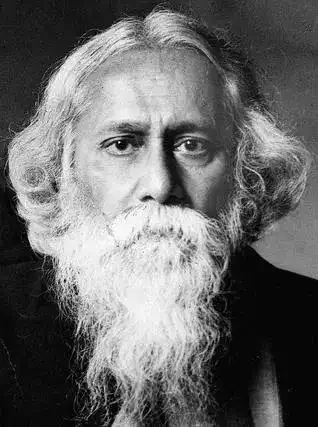
Rabindranath Tagore
Where The Mind Is Without Fear
Where The Mind Is Without Fear
Where the mind is without fear and the head is held high
Where knowledge is free
Where the world has not been broken up into fragments
By narrow domestic walls
Where words come out from the depth of truth
Where tireless striving stretches its arms towards perfection
Where the clear stream of reason has not lost its way
Into the dreary desert sand of dead habit
Where the mind is led forward by thee
Into ever-widening thought and action
Into that heaven of freedom, my Father, let my country awake
Where the mind is without fear and the head is held high
Where knowledge is free
Where the world has not been broken up into fragments
By narrow domestic walls
Where words come out from the depth of truth
Where tireless striving stretches its arms towards perfection
Where the clear stream of reason has not lost its way
Into the dreary desert sand of dead habit
Where the mind is led forward by thee
Into ever-widening thought and action
Into that heaven of freedom, my Father, let my country awake
525
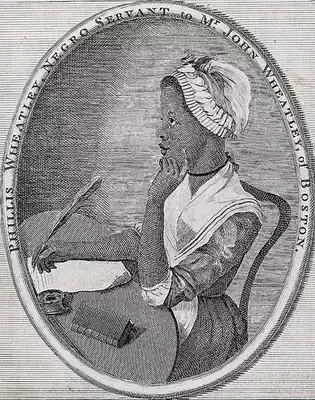
Phillis Wheatley
To the King's Most Excellent Majesty,
To the King's Most Excellent Majesty,
Your subjects hope, dread Sire--
The crown upon your brows may flourish long,
And that your arm may in your God be strong!
O may your sceptre num'rous nations sway,
And all with love and readiness obey!
But how shall we the British king reward!
Rule thou in peace, our father, and our lord!
Midst the remembrance of thy favours past,
The meanest peasants most admire the last
May George, beloved by all the nations round,
Live with heav'ns choicest constant blessings crown'd!
Great God, direct, and guard him from on high,
And from his head let ev'ry evil fly!
And may each clime with equal gladness see
A monarch's smile can set his subjects free!
Your subjects hope, dread Sire--
The crown upon your brows may flourish long,
And that your arm may in your God be strong!
O may your sceptre num'rous nations sway,
And all with love and readiness obey!
But how shall we the British king reward!
Rule thou in peace, our father, and our lord!
Midst the remembrance of thy favours past,
The meanest peasants most admire the last
May George, beloved by all the nations round,
Live with heav'ns choicest constant blessings crown'd!
Great God, direct, and guard him from on high,
And from his head let ev'ry evil fly!
And may each clime with equal gladness see
A monarch's smile can set his subjects free!
203
Phillis Wheatley
To Captain H-----d, of the th Regiment
To Captain H-----d, of the th Regiment
Say, muse divine, can hostile scenes delight
The warrior's bosom in the fields of fight?
Lo! here the christian and the hero join
With mutual grace to form the man divine.
In H-----D see with pleasure and surprise,
Where valour kindles, and where virtue lies:
Go, hero brave, still grace the post of fame,
And add new glories to thine honour'd name,
Still to the field, and still to virtue true:
Britannia glories in no son like you.
Say, muse divine, can hostile scenes delight
The warrior's bosom in the fields of fight?
Lo! here the christian and the hero join
With mutual grace to form the man divine.
In H-----D see with pleasure and surprise,
Where valour kindles, and where virtue lies:
Go, hero brave, still grace the post of fame,
And add new glories to thine honour'd name,
Still to the field, and still to virtue true:
Britannia glories in no son like you.
162
Phillis Wheatley
A Rebus
A Rebus
I.
A bird delicious to the taste,
On which an army once did feast,
Sent by an hand unseen;
A creature of the horned race,
Which Britain's royal standards grace;
A gem of vivid green;
II.
A town of gaiety and sport,
Where beaux and beauteous nymphs resort,
And gallantry doth reign;
A Dardan hero fam'd of old
For youth and beauty, as we're told,
And by a monarch slain;
III.
A peer of popular applause,
Who doth our violated laws,
And grievances proclaim.
Th' initials show a vanquish'd town,
That adds fresh glory and renown
To old Britannia's fame.
I.
A bird delicious to the taste,
On which an army once did feast,
Sent by an hand unseen;
A creature of the horned race,
Which Britain's royal standards grace;
A gem of vivid green;
II.
A town of gaiety and sport,
Where beaux and beauteous nymphs resort,
And gallantry doth reign;
A Dardan hero fam'd of old
For youth and beauty, as we're told,
And by a monarch slain;
III.
A peer of popular applause,
Who doth our violated laws,
And grievances proclaim.
Th' initials show a vanquish'd town,
That adds fresh glory and renown
To old Britannia's fame.
203
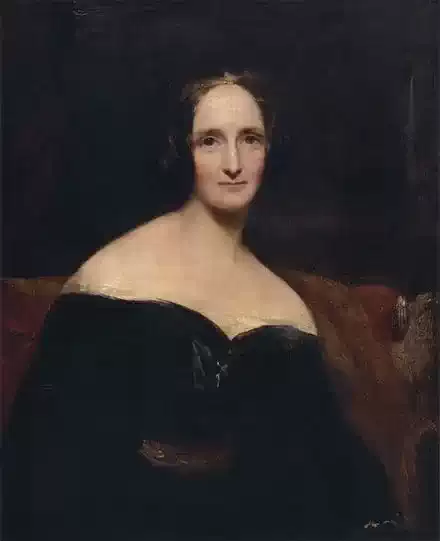
Percy Bysshe Shelley
English In
English In
An old, mad, blind, despised, and dying king,--
Princes, the dregs of their dull race, who
Through public scorn,--mud from a muddy spring,--
Rulers who neither see, nor feel, nor know,
But leech-like to their fainting country cling,
Till they drop, blind in blood, without a blow,--
A people starved and stabbed in the untilled field,--
An army, which liberticide and prey
Makes as a two-edged sword to all who wield,--
Golden and sanguine laws which tempt and slay;
Religion Christless, Godless--a book sealed;
A Senate, Time's worst statute unrepealed,--
Are graves, from which a glorious Phantom may
Burst, to illumine our tempestuous day.
An old, mad, blind, despised, and dying king,--
Princes, the dregs of their dull race, who
Through public scorn,--mud from a muddy spring,--
Rulers who neither see, nor feel, nor know,
But leech-like to their fainting country cling,
Till they drop, blind in blood, without a blow,--
A people starved and stabbed in the untilled field,--
An army, which liberticide and prey
Makes as a two-edged sword to all who wield,--
Golden and sanguine laws which tempt and slay;
Religion Christless, Godless--a book sealed;
A Senate, Time's worst statute unrepealed,--
Are graves, from which a glorious Phantom may
Burst, to illumine our tempestuous day.
482
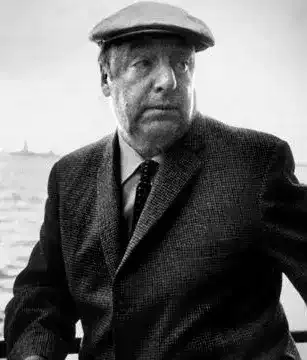
Pablo Neruda
I Explain A Few Things
I Explain A Few Things
You are going to ask: and where are the lilacs?
and the poppy-petalled metaphysics?
and the rain repeatedly spattering
its words and drilling them full
of apertures and birds?
I'll tell you all the news.
I lived in a suburb,
a suburb of Madrid, with bells,
and clocks, and trees.
From there you could look out
over Castille's dry face:
a leather ocean.
My house was called
the house of flowers, because in every cranny
geraniums burst: it was
a good-looking house
with its dogs and children.
Remember, Raul?
Eh, Rafel? Federico, do you remember
from under the ground
my balconies on which
the light of June drowned flowers in your mouth?
Brother, my brother!
Everything
loud with big voices, the salt of merchandises,
pile-ups of palpitating bread,
the stalls of my suburb of Arguelles with its statue
like a drained inkwell in a swirl of hake:
oil flowed into spoons,
a deep baying
of feet and hands swelled in the streets,
metres, litres, the sharp
measure of life,
stacked-up fish,
the texture of roofs with a cold sun in which
the weather vane falters,
the fine, frenzied ivory of potatoes,
wave on wave of tomatoes rolling down the sea.
And one morning all that was burning,
one morning the bonfires
leapt out of the earth
devouring human beings and
from then on fire,
gunpowder from then on,
and from then on blood.
Bandits with planes and Moors,
bandits with finger-rings and duchesses,
bandits with black friars spattering blessings
came through the sky to kill children
and the blood of children ran through the streets
without fuss, like children's blood.
Jackals that the jackals would despise,
stones that the dry thistle would bite on and spit out,
vipers that the vipers would abominate!
Face to face with you I have seen the blood
of Spain tower like a tide
to drown you in one wave
of pride and knives!
Treacherous
generals:
see my dead house,
look at broken Spain :
from every house burning metal flows
instead of flowers,
from every socket of Spain
Spain emerges
and from every dead child a rifle with eyes,
and from every crime bullets are born
which will one day find
the bull's eye of your hearts.
And you'll ask: why doesn't his poetry
speak of dreams and leaves
and the great volcanoes of his native land?
Come and see the blood in the streets.
Come and see
The blood in the streets.
Come and see the blood
In the streets!
You are going to ask: and where are the lilacs?
and the poppy-petalled metaphysics?
and the rain repeatedly spattering
its words and drilling them full
of apertures and birds?
I'll tell you all the news.
I lived in a suburb,
a suburb of Madrid, with bells,
and clocks, and trees.
From there you could look out
over Castille's dry face:
a leather ocean.
My house was called
the house of flowers, because in every cranny
geraniums burst: it was
a good-looking house
with its dogs and children.
Remember, Raul?
Eh, Rafel? Federico, do you remember
from under the ground
my balconies on which
the light of June drowned flowers in your mouth?
Brother, my brother!
Everything
loud with big voices, the salt of merchandises,
pile-ups of palpitating bread,
the stalls of my suburb of Arguelles with its statue
like a drained inkwell in a swirl of hake:
oil flowed into spoons,
a deep baying
of feet and hands swelled in the streets,
metres, litres, the sharp
measure of life,
stacked-up fish,
the texture of roofs with a cold sun in which
the weather vane falters,
the fine, frenzied ivory of potatoes,
wave on wave of tomatoes rolling down the sea.
And one morning all that was burning,
one morning the bonfires
leapt out of the earth
devouring human beings and
from then on fire,
gunpowder from then on,
and from then on blood.
Bandits with planes and Moors,
bandits with finger-rings and duchesses,
bandits with black friars spattering blessings
came through the sky to kill children
and the blood of children ran through the streets
without fuss, like children's blood.
Jackals that the jackals would despise,
stones that the dry thistle would bite on and spit out,
vipers that the vipers would abominate!
Face to face with you I have seen the blood
of Spain tower like a tide
to drown you in one wave
of pride and knives!
Treacherous
generals:
see my dead house,
look at broken Spain :
from every house burning metal flows
instead of flowers,
from every socket of Spain
Spain emerges
and from every dead child a rifle with eyes,
and from every crime bullets are born
which will one day find
the bull's eye of your hearts.
And you'll ask: why doesn't his poetry
speak of dreams and leaves
and the great volcanoes of his native land?
Come and see the blood in the streets.
Come and see
The blood in the streets.
Come and see the blood
In the streets!
739
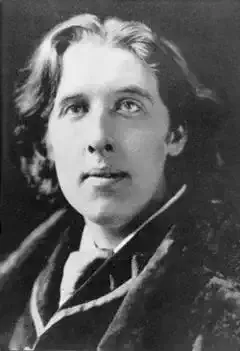
Oscar Wilde
Urbs Sacra Æterna
Urbs Sacra Æterna
ROME! what a scroll of History thine has been
In the first days thy sword republican
Ruled the whole world for many an age's span:
Then of thy peoples thou wert crownèd Queen,
Till in thy streets the bearded Goth was seen;
And now upon thy walls the breezes fan
(Ah, city crowned by God, discrowned by man!)
The hated flag of red and white and green.
When was thy glory! when in search for power
Thine eagles flew to greet the double sun,
And all the nations trembled at thy rod?
Nay, but thy glory tarried for this hour,
When pilgrims kneel before the Holy One,
The prisoned shepherd of the Church of God.
ROME! what a scroll of History thine has been
In the first days thy sword republican
Ruled the whole world for many an age's span:
Then of thy peoples thou wert crownèd Queen,
Till in thy streets the bearded Goth was seen;
And now upon thy walls the breezes fan
(Ah, city crowned by God, discrowned by man!)
The hated flag of red and white and green.
When was thy glory! when in search for power
Thine eagles flew to greet the double sun,
And all the nations trembled at thy rod?
Nay, but thy glory tarried for this hour,
When pilgrims kneel before the Holy One,
The prisoned shepherd of the Church of God.
241
Oscar Wilde
To Milton
To Milton
MILTON! I think thy spirit hath passed away
From these white cliffs, and high-embattled towers;
This gorgeous fiery-coloured world of ours
Seems fallen into ashes dull and grey,
And the age changed unto a mimic play
Wherein we waste our else too-crowded hours:
For all our pomp and pageantry and powers
We are but fit to delve the common clay,
Seeing this little isle on which we stand,
This England, this sea-lion of the sea,
By ignorant demagogues is held in fee,
Who love her not: Dear God! is this the land
Which bare a triple empire in her hand
When Cromwell spake the word Democracy!
MILTON! I think thy spirit hath passed away
From these white cliffs, and high-embattled towers;
This gorgeous fiery-coloured world of ours
Seems fallen into ashes dull and grey,
And the age changed unto a mimic play
Wherein we waste our else too-crowded hours:
For all our pomp and pageantry and powers
We are but fit to delve the common clay,
Seeing this little isle on which we stand,
This England, this sea-lion of the sea,
By ignorant demagogues is held in fee,
Who love her not: Dear God! is this the land
Which bare a triple empire in her hand
When Cromwell spake the word Democracy!
209
Oscar Wilde
Greece
Greece
The sea was sapphire coloured, and the sky
Burned like a heated opal through the air;
We hoisted sail; the wind was blowing fair
For the blue lands that to the eastward lie.
From the steep prow I marked with quickening eye
Zakynthos, every olive grove and creek,
Ithaca's cliff, Lycaon's snowy peak,
And all the flower-strewn hills of Arcady.
The flapping of the sail against the mast,
The ripple of the water on the side,
The ripple of girls' laughter at the stern,
The only sounds: -when 'gan the West to burn,
And a red sun upon the seas to ride,
I stood upon the soil of Greece at last!
The sea was sapphire coloured, and the sky
Burned like a heated opal through the air;
We hoisted sail; the wind was blowing fair
For the blue lands that to the eastward lie.
From the steep prow I marked with quickening eye
Zakynthos, every olive grove and creek,
Ithaca's cliff, Lycaon's snowy peak,
And all the flower-strewn hills of Arcady.
The flapping of the sail against the mast,
The ripple of the water on the side,
The ripple of girls' laughter at the stern,
The only sounds: -when 'gan the West to burn,
And a red sun upon the seas to ride,
I stood upon the soil of Greece at last!
195
Oscar Wilde
Ave Imperatrix
Ave Imperatrix
SET in this stormy Northern sea,
Queen of these restless fields of tide,
England! what shall men say of thee,
Before whose feet the worlds divide?
The earth, a brittle globe of glass,
Lies in the hollow of thy hand,
And through its heart of crystal pass,
Like shadows through a twilight land,
The spears of crimson-suited war,
The long white-crested waves of fight,
And all the deadly fires which are
The torches of the lords of Night.
The yellow leopards, strained and lean,
The treacherous Russian knows so well,
With gaping blackened jaws are seen
Leap through the hail of screaming shell.
The strong sea-lion of England's wars
Hath left his sapphire cave of sea,
To battle with the storm that mars
The star of England's chivalry.
The brazen-throated clarion blows
Across the Pathan's reedy fen,
And the high steeps of Indian snows
Shake to the tread of armèd men.
And many an Afghan chief, who lies
Beneath his cool pomegranate-trees,
Clutches his sword in fierce surmise
When on the mountain-side he sees
The fleet-foot Marri scout, who comes
To tell how he hath heard afar
The measured roll of English drums
Beat at the gates of Kandahar.
For southern wind and east wind meet
Where, girt and crowned by sword and fire,
England with bare and bloody feet
Climbs the steep road of wide empire.
O lonely Himalayan height,
Grey pillar of the Indian sky,
Where saw'st thou last in clanging fight
Our wingèd dogs of Victory?
The almond groves of Samarcand,
Bokhara, where red lilies blow,
And Oxus, by whose yellow sand
The grave white-turbaned merchants go:
And on from thence to Ispahan,
The gilded garden of the sun,
Whence the long dusty caravan
Brings cedar and vermilion;
And that dread city of Cabool
Set at the mountain's scarpèd feet,
Whose marble tanks are ever full
With water for the noonday heat:
Where through the narrow straight Bazaar
A little maid Circassian
Is led, a present from the Czar
Unto some old and bearded khan,--
Here have our wild war-eagles flown,
And flapped wide wings in fiery fight;
But the sad dove, that sits alone
In England--she hath no delight.
In vain the laughing girl will lean
To greet her love with love-lit eyes:
Down in some treacherous black ravine,
Clutching his flag, the dead boy lies.
And many a moon and sun will see
The lingering wistful children wait
To climb upon their father's knee;
And in each house made desolate
Pale women who have lost their lord
Will kiss the relics of the slain--
Some tarnished epaulette--some sword--
Poor toys to soothe such anguished pain.
For not in quiet English fields
Are these, our brothers, lain to rest,
Where we might deck their broken shields
With all the flowers the dead love best.
For some are by the Delhi walls,
And many in the Afghan land,
And many where the Ganges falls
Through seven mouths of shifting sand.
And some in Russian waters lie,
And others in the seas which are
The portals to the East, or by
The wind-swept heights of Trafalgar.
O wandering graves! O restless sleep!
O silence of the sunless day!
O still ravine! O stormy deep!
Give up your prey! Give up your prey!
And thou whose wounds are never healed,
Whose weary race is never won,
O Cromwell's England! must thou yield
For every inch of ground a son?
Go! crown with thorns thy gold-crowned head,
Change thy glad song to song of pain;
Wind and wild wave have got thy dead,
And will not yield them back again.
Wave and wild wind and foreign shore
Possess the flower of English land--
Lips that thy lips shall kiss no more,
Hands that shall never clasp thy hand.
What profit now that we have bound
The whole round world with nets of gold,
If hidden in our heart is found
The care that groweth never old?
What profit that our galleys ride,
Pine-forest-like, on every main?
Ruin and wreck are at our side,
Grim warders of the House of pain.
Where are the brave, the strong, the fleet?
Where is our English chivalry?
Wild grasses are their burial-sheet,
And sobbing waves their threnody.
O loved ones lying far away,
What word of love can dead lips send!
O wasted dust! O senseless clay!
Is this the end! is this the end!
Peace, peace! we wrong the noble dead
To vex their solemn slumber so;
Though childless, and with thorn-crowned head,
Up the steep road must England go,
Yet when this fiery web is spun,
Her watchmen shall descry from far
The young Republic like a sun
Rise from these crimson seas of war.
SET in this stormy Northern sea,
Queen of these restless fields of tide,
England! what shall men say of thee,
Before whose feet the worlds divide?
The earth, a brittle globe of glass,
Lies in the hollow of thy hand,
And through its heart of crystal pass,
Like shadows through a twilight land,
The spears of crimson-suited war,
The long white-crested waves of fight,
And all the deadly fires which are
The torches of the lords of Night.
The yellow leopards, strained and lean,
The treacherous Russian knows so well,
With gaping blackened jaws are seen
Leap through the hail of screaming shell.
The strong sea-lion of England's wars
Hath left his sapphire cave of sea,
To battle with the storm that mars
The star of England's chivalry.
The brazen-throated clarion blows
Across the Pathan's reedy fen,
And the high steeps of Indian snows
Shake to the tread of armèd men.
And many an Afghan chief, who lies
Beneath his cool pomegranate-trees,
Clutches his sword in fierce surmise
When on the mountain-side he sees
The fleet-foot Marri scout, who comes
To tell how he hath heard afar
The measured roll of English drums
Beat at the gates of Kandahar.
For southern wind and east wind meet
Where, girt and crowned by sword and fire,
England with bare and bloody feet
Climbs the steep road of wide empire.
O lonely Himalayan height,
Grey pillar of the Indian sky,
Where saw'st thou last in clanging fight
Our wingèd dogs of Victory?
The almond groves of Samarcand,
Bokhara, where red lilies blow,
And Oxus, by whose yellow sand
The grave white-turbaned merchants go:
And on from thence to Ispahan,
The gilded garden of the sun,
Whence the long dusty caravan
Brings cedar and vermilion;
And that dread city of Cabool
Set at the mountain's scarpèd feet,
Whose marble tanks are ever full
With water for the noonday heat:
Where through the narrow straight Bazaar
A little maid Circassian
Is led, a present from the Czar
Unto some old and bearded khan,--
Here have our wild war-eagles flown,
And flapped wide wings in fiery fight;
But the sad dove, that sits alone
In England--she hath no delight.
In vain the laughing girl will lean
To greet her love with love-lit eyes:
Down in some treacherous black ravine,
Clutching his flag, the dead boy lies.
And many a moon and sun will see
The lingering wistful children wait
To climb upon their father's knee;
And in each house made desolate
Pale women who have lost their lord
Will kiss the relics of the slain--
Some tarnished epaulette--some sword--
Poor toys to soothe such anguished pain.
For not in quiet English fields
Are these, our brothers, lain to rest,
Where we might deck their broken shields
With all the flowers the dead love best.
For some are by the Delhi walls,
And many in the Afghan land,
And many where the Ganges falls
Through seven mouths of shifting sand.
And some in Russian waters lie,
And others in the seas which are
The portals to the East, or by
The wind-swept heights of Trafalgar.
O wandering graves! O restless sleep!
O silence of the sunless day!
O still ravine! O stormy deep!
Give up your prey! Give up your prey!
And thou whose wounds are never healed,
Whose weary race is never won,
O Cromwell's England! must thou yield
For every inch of ground a son?
Go! crown with thorns thy gold-crowned head,
Change thy glad song to song of pain;
Wind and wild wave have got thy dead,
And will not yield them back again.
Wave and wild wind and foreign shore
Possess the flower of English land--
Lips that thy lips shall kiss no more,
Hands that shall never clasp thy hand.
What profit now that we have bound
The whole round world with nets of gold,
If hidden in our heart is found
The care that groweth never old?
What profit that our galleys ride,
Pine-forest-like, on every main?
Ruin and wreck are at our side,
Grim warders of the House of pain.
Where are the brave, the strong, the fleet?
Where is our English chivalry?
Wild grasses are their burial-sheet,
And sobbing waves their threnody.
O loved ones lying far away,
What word of love can dead lips send!
O wasted dust! O senseless clay!
Is this the end! is this the end!
Peace, peace! we wrong the noble dead
To vex their solemn slumber so;
Though childless, and with thorn-crowned head,
Up the steep road must England go,
Yet when this fiery web is spun,
Her watchmen shall descry from far
The young Republic like a sun
Rise from these crimson seas of war.
240
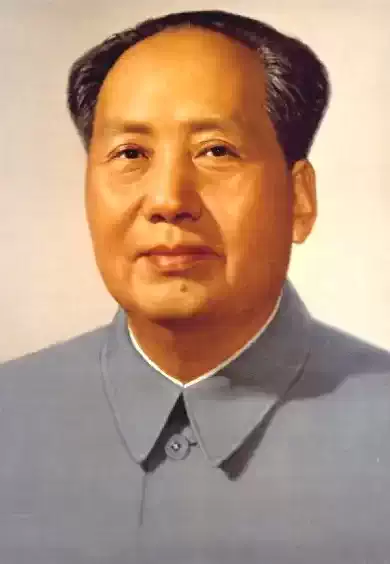
Mao Tsé-Tung
The People's Liberation Army Captures Nanking
The People's Liberation Army Captures Nanking
Over Chungshan swept a storm, headlong,
Our mighty army, a million strong, has crossed the Great River.
The City, a tiger crouching, a dragon curling, outshines its ancient glories;
In heroic triumph heaven and earth have been overturned.
With power and to spare we must pursue the tottering foe
And not ape Hsiang Yu the conqueror seeking idle fame.
Were Nature sentient, she too would pass from youth to age,
But Man's world is mutable, seas become mulberry fields.
Over Chungshan swept a storm, headlong,
Our mighty army, a million strong, has crossed the Great River.
The City, a tiger crouching, a dragon curling, outshines its ancient glories;
In heroic triumph heaven and earth have been overturned.
With power and to spare we must pursue the tottering foe
And not ape Hsiang Yu the conqueror seeking idle fame.
Were Nature sentient, she too would pass from youth to age,
But Man's world is mutable, seas become mulberry fields.
290