

Poems
Nation and Patriotism
Poems in this topic
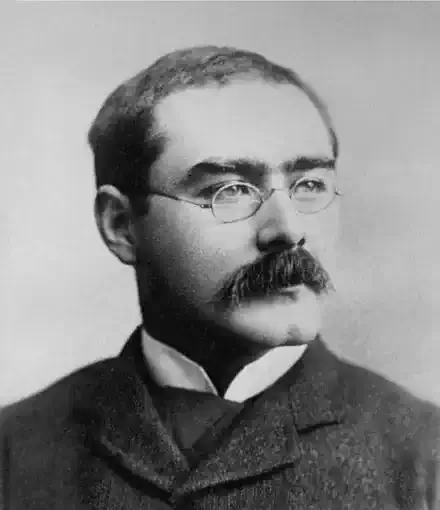
Rudyard Kipling
The Old Issue
The Old Issue
October , -- Outbreak of Boer War
Here is nothing new nor aught unproven," say the Trumpets,
"Many feet have worn it and the road is old indeed.
"It is the King--the King we schooled aforetime! "
(Trumpets in the marshes-in the eyot at Runnymede!)
"Here is neither haste, nor hate, nor anger," peal the Trumpets,
"Pardon for his penitence or pity for his fall.
"It is the King!"--inexorable Trumpets--
(Trumpets round the scaffold af the dawning by Whitehall!)
. . . . . . .
"He hath veiled the Crown And hid the Scepter," warn (he Trum pets,
"He hath changed the fashion of the lies that cloak his will.
"Hard die the Kings--ah hard--dooms hard!" declare the Trumpets,
Trumpets at the gang-plank where the brawling troop-decks fill!
Ancient and Unteachable, abide--abide the Trumpets!
Once again the Trumpets, for the shuddering ground-swell brings
Clamour over ocean of the harsh, pursuing Trumpets--
Trumpets of the Vanguard that have sworn no truce with Kings!
All we have of freedom, all we use or know--
This our fathers bought for us long and long ago.
Ancient Right unnoticed as the breath we draw--
Leave to live by no man's leave, underneath the Law.
Lance and torch and tumult, steel and grey-goose wing
Wrenched it, inch and ell and all, slowly from the king.
Till our fathers 'stablished,, after bloody years,
How our King is one with us, first among his peers.
So they bought us freedom-not at little cost--
Wherefore must we watch the King, lest our gain be lost.
Over all things certain, this is sure indeed,
Suffer not the old King: for we know the breed.
Give no ear to bondsmen bidding us endure.
Whining "He is weak and far"; crying "Time will cure."
(Time himself is witness, till the battle joins,
Deeper strikes the rottenness in the people's loins.)
Give no heed to bondsmen masking war with peace.
Suffer not the old King here or overseas.
They that beg us barter--wait his yielding mood--
Pledge the years we hold in trust-pawn our brother's blood--
Howso' great their clamour, whatsoe'er their claim,
Suffer not the old King under any name!
Here is naught unproven--here is naught to learn.
It is written what shall fall if the King return.
He shall mark our goings, question whence we came,
Set his guards about us, as in Freedom's name.
He shall take a tribute, toll of all our ware;
He shall change our gold for arms--arms we may not bear.
He shall break his Judges if they cross his word;
He shall rule above the Law calling on the Lord.
He shall peep and mutter; and the night shall bring
Watchers 'neath our window, lest we mock the King --
Hate and all division; hosts of hurrying spies;
Money poured in secret, carrion breeding flies.
Strangers of his counsel, hirelings of his pay,
These shall deal our Justice: sell-deny-delay.
We shall drink dishonour, we shall eat abuse
For the Land we look to--for the Tongue we use.
We shall take our station, dirt beneath his feet,
While his hired captains jeer us in the street.
Cruel in the shadow, crafty in the sun,
Far beyond his borders shall his teachings run.
Sloven, sullen, savage, secret, uncontrolled,
Laying on a new land evil of the old--
Long-forgotten bondage, dwarfing heart and brain--
All our fathers died to loose he shall bind again.
Here is nought at venture, random nor untrue
Swings the wheel full-circle, brims the cup anew.
Here is naught unproven, here is nothing hid:
Step for step and word for word--so the old Kings did!
Step by step, and word by word: who is ruled may read.
Suffer not the old Kings: for we know the breed--
All the right they promise--all the wrong they bring.
Stewards of the Judgment, suffer not this King!
October , -- Outbreak of Boer War
Here is nothing new nor aught unproven," say the Trumpets,
"Many feet have worn it and the road is old indeed.
"It is the King--the King we schooled aforetime! "
(Trumpets in the marshes-in the eyot at Runnymede!)
"Here is neither haste, nor hate, nor anger," peal the Trumpets,
"Pardon for his penitence or pity for his fall.
"It is the King!"--inexorable Trumpets--
(Trumpets round the scaffold af the dawning by Whitehall!)
. . . . . . .
"He hath veiled the Crown And hid the Scepter," warn (he Trum pets,
"He hath changed the fashion of the lies that cloak his will.
"Hard die the Kings--ah hard--dooms hard!" declare the Trumpets,
Trumpets at the gang-plank where the brawling troop-decks fill!
Ancient and Unteachable, abide--abide the Trumpets!
Once again the Trumpets, for the shuddering ground-swell brings
Clamour over ocean of the harsh, pursuing Trumpets--
Trumpets of the Vanguard that have sworn no truce with Kings!
All we have of freedom, all we use or know--
This our fathers bought for us long and long ago.
Ancient Right unnoticed as the breath we draw--
Leave to live by no man's leave, underneath the Law.
Lance and torch and tumult, steel and grey-goose wing
Wrenched it, inch and ell and all, slowly from the king.
Till our fathers 'stablished,, after bloody years,
How our King is one with us, first among his peers.
So they bought us freedom-not at little cost--
Wherefore must we watch the King, lest our gain be lost.
Over all things certain, this is sure indeed,
Suffer not the old King: for we know the breed.
Give no ear to bondsmen bidding us endure.
Whining "He is weak and far"; crying "Time will cure."
(Time himself is witness, till the battle joins,
Deeper strikes the rottenness in the people's loins.)
Give no heed to bondsmen masking war with peace.
Suffer not the old King here or overseas.
They that beg us barter--wait his yielding mood--
Pledge the years we hold in trust-pawn our brother's blood--
Howso' great their clamour, whatsoe'er their claim,
Suffer not the old King under any name!
Here is naught unproven--here is naught to learn.
It is written what shall fall if the King return.
He shall mark our goings, question whence we came,
Set his guards about us, as in Freedom's name.
He shall take a tribute, toll of all our ware;
He shall change our gold for arms--arms we may not bear.
He shall break his Judges if they cross his word;
He shall rule above the Law calling on the Lord.
He shall peep and mutter; and the night shall bring
Watchers 'neath our window, lest we mock the King --
Hate and all division; hosts of hurrying spies;
Money poured in secret, carrion breeding flies.
Strangers of his counsel, hirelings of his pay,
These shall deal our Justice: sell-deny-delay.
We shall drink dishonour, we shall eat abuse
For the Land we look to--for the Tongue we use.
We shall take our station, dirt beneath his feet,
While his hired captains jeer us in the street.
Cruel in the shadow, crafty in the sun,
Far beyond his borders shall his teachings run.
Sloven, sullen, savage, secret, uncontrolled,
Laying on a new land evil of the old--
Long-forgotten bondage, dwarfing heart and brain--
All our fathers died to loose he shall bind again.
Here is nought at venture, random nor untrue
Swings the wheel full-circle, brims the cup anew.
Here is naught unproven, here is nothing hid:
Step for step and word for word--so the old Kings did!
Step by step, and word by word: who is ruled may read.
Suffer not the old Kings: for we know the breed--
All the right they promise--all the wrong they bring.
Stewards of the Judgment, suffer not this King!
470
Rudyard Kipling
The Native-Born
The Native-Born
We've drunk to the Queen -- God bless her! --
We've drunk to our mothers' land;
We've drunk to our English brother
(But he does not understand);
We've drunk to the wide creation,
And the Cross swings low for the morn;
Last toast, and of obligation,
A health to the Native-born!
They change their skies above them,
But not their hearts that roam!
We learned from our wistful mothers
To call old England "home";
We read of the English skylark,
Of the spring in the English lanes,
But we screamed with the painted lories
As we rode on the dusty plains!
They passed with their old-world legends --
Their tales of wrong and dearth --
Our fathers held by purchase,
But we by the right of birth;
Our heart's where they rocked our cradle,
Our love where we spent our toil,
And our faith and our hope and our honour
We pledge to our native soil!
I charge you charge your glasses --
I charge you drink with me
To the men of the Four New Nations,
And the Islands of the Sea --
To the last least lump of coral
That none may stand outside,
And our own good pride shall teach us
To praise our comrade's pride!
To the hush of the breathless morning
On the thin, tin, crackling roofs,
To the haze of the burned back-ranges
And the dust of the shoeless hoofs --
To the risk of a death by drowning,
To the risk of a death by drouth --
To the men of a million acres,
To the Sons of the Golden South!
To the Sons of the Golden South (Stand up!),
And the life we live and know,
Let a fellow sing o' the little things he cares about,
If a fellow fights for the little things he cares about
With the weight of a single blow!
To the smoke of a hundred coasters,
To the sheep on a thousand hills,
To the sun that never blisters,
To the rain that never chills --
To the land of the waiting spring-time,
To our five-meal, meat-fed men,
To the tall, deep-bosomed women,
And the children nine and ten!
And the children nine and ten (Stand up!),
And the life we live and know,
Let a fellow sing o' the little things he cares about,
If a fellow fights for the little things he cares about
With the weight of a two-fold blow!
To the far-flung fenceless prairie
Where the quick cloud-shadows trail,
To our neighbour's barn in the offing
And the line of the new-cut rail;
To the plough in her league-long furrow
With the gray Lake gulls behind --
To the weight of a half-year's winter
And the warm wet western wind!
To the home of the floods and thunder,
To her pale dry healing blue --
To the lift of the great Cape combers,
And the smell of the baked Karroo.
To the growl of the sluicing stamp-head --
To the reef and the water-gold,
To the last and the largest Empire,
To the map that is half unrolled!
To our dear dark foster-mothers,
To the heathen songs they sung --
To the heathen speech we babbled
Ere we came to the white man's tongue.
To the cool of our deep verandas --
To the blaze of our jewelled main,
To the night, to the palms in the moonlight,
And the fire-fly in the cane!
To the hearth of our people's people --
To her well-ploughed windy sea,
To the hush of our dread high-altar
Where The Abbey makes us We;
To the grist of the slow-ground ages,
To the gain that is yours and mine --
To the Bank of the Open Credit,
To the Power-house of the Line!
We've drunk to the Queen -- God bless her! --
We've drunk to our mothers' land;
We've drunk to our English brother
(And we hope he'll understand).
We've drunk as much as we're able,
And the Cross swings low for the morn;
Last toast -- and your foot on the table! --
A health to the Native-born!
A health to the Native-born (Stand up!),
We're six white men arow,
All bound to sing o' the little things we care about,
All bound to fight for the little things we care about
With the weight of a six-fold blow!
By the might of our cable-tow (Take hands!),
From the Orkneys to the Horn,
All round the world (and a little loop to pull it by),
All round the world (and a little strap to buckle it),
A health to the Native-born!
We've drunk to the Queen -- God bless her! --
We've drunk to our mothers' land;
We've drunk to our English brother
(But he does not understand);
We've drunk to the wide creation,
And the Cross swings low for the morn;
Last toast, and of obligation,
A health to the Native-born!
They change their skies above them,
But not their hearts that roam!
We learned from our wistful mothers
To call old England "home";
We read of the English skylark,
Of the spring in the English lanes,
But we screamed with the painted lories
As we rode on the dusty plains!
They passed with their old-world legends --
Their tales of wrong and dearth --
Our fathers held by purchase,
But we by the right of birth;
Our heart's where they rocked our cradle,
Our love where we spent our toil,
And our faith and our hope and our honour
We pledge to our native soil!
I charge you charge your glasses --
I charge you drink with me
To the men of the Four New Nations,
And the Islands of the Sea --
To the last least lump of coral
That none may stand outside,
And our own good pride shall teach us
To praise our comrade's pride!
To the hush of the breathless morning
On the thin, tin, crackling roofs,
To the haze of the burned back-ranges
And the dust of the shoeless hoofs --
To the risk of a death by drowning,
To the risk of a death by drouth --
To the men of a million acres,
To the Sons of the Golden South!
To the Sons of the Golden South (Stand up!),
And the life we live and know,
Let a fellow sing o' the little things he cares about,
If a fellow fights for the little things he cares about
With the weight of a single blow!
To the smoke of a hundred coasters,
To the sheep on a thousand hills,
To the sun that never blisters,
To the rain that never chills --
To the land of the waiting spring-time,
To our five-meal, meat-fed men,
To the tall, deep-bosomed women,
And the children nine and ten!
And the children nine and ten (Stand up!),
And the life we live and know,
Let a fellow sing o' the little things he cares about,
If a fellow fights for the little things he cares about
With the weight of a two-fold blow!
To the far-flung fenceless prairie
Where the quick cloud-shadows trail,
To our neighbour's barn in the offing
And the line of the new-cut rail;
To the plough in her league-long furrow
With the gray Lake gulls behind --
To the weight of a half-year's winter
And the warm wet western wind!
To the home of the floods and thunder,
To her pale dry healing blue --
To the lift of the great Cape combers,
And the smell of the baked Karroo.
To the growl of the sluicing stamp-head --
To the reef and the water-gold,
To the last and the largest Empire,
To the map that is half unrolled!
To our dear dark foster-mothers,
To the heathen songs they sung --
To the heathen speech we babbled
Ere we came to the white man's tongue.
To the cool of our deep verandas --
To the blaze of our jewelled main,
To the night, to the palms in the moonlight,
And the fire-fly in the cane!
To the hearth of our people's people --
To her well-ploughed windy sea,
To the hush of our dread high-altar
Where The Abbey makes us We;
To the grist of the slow-ground ages,
To the gain that is yours and mine --
To the Bank of the Open Credit,
To the Power-house of the Line!
We've drunk to the Queen -- God bless her! --
We've drunk to our mothers' land;
We've drunk to our English brother
(And we hope he'll understand).
We've drunk as much as we're able,
And the Cross swings low for the morn;
Last toast -- and your foot on the table! --
A health to the Native-born!
A health to the Native-born (Stand up!),
We're six white men arow,
All bound to sing o' the little things we care about,
All bound to fight for the little things we care about
With the weight of a six-fold blow!
By the might of our cable-tow (Take hands!),
From the Orkneys to the Horn,
All round the world (and a little loop to pull it by),
All round the world (and a little strap to buckle it),
A health to the Native-born!
485
Rudyard Kipling
The Last Shuttee
The Last Shuttee
Not many years ago a King died in one of the Rajpoot States.
His wives, disregarding the orders of the English against Suttee,
would have broken out of the palace had not the gates been barred.
But one of them, disguised as the King's favourite dancing-girl,
passed through the line of guards and reached the pyre. There,
her courage failing, she prayed her cousin, a baron of the court,
to kill her. This he did, not knowing who she was.
Udai Chand lay sick to death
In his hold by Gungra hill.
All night we heard the death-gongs ring
For the soul of the dying Rajpoot King,
All night beat up from the women's wing
A cry that we could not still.
All night the barons came and went,
The lords of the outer guard:
All night the cressets glimmered pale
On Ulwar sabre and Tonk jezail,
Mewar headstall and Marwar mail,
That clinked in the palace yard.
In the Golden room on the palace roof
All night he fought for air:
And there was sobbing behind the screen,
Rustle and whisper of women unseen,
And the hungry eyes of the Boondi Queen
On the death she might not share.
He passed at dawn -- the death-fire leaped
From ridge to river-head,
From the Malwa plains to the Abu scars:
And wail upon wail went up to the stars
Behind the grim zenana-bars,
When they knew that the King was dead.
The dumb priest knelt to tie his mouth
And robe him for the pyre.
The Boondi Queen beneath us cried:
"See, now, that we die as our mothers died
In the bridal-bed by our master's side!
Out, women! -- to the fire!"
We drove the great gates home apace:
White hands were on the sill:
But ere the rush of the unseen feet
Had reached the turn to the open street,
The bars shot down, the guard-drum beat --
We held the dovecot still.
A face looked down in the gathering day,
And laughing spoke from the wall:
"Oh]/e, they mourn here: let me by --
Azizun, the Lucknow nautch-girl, I!
When the house is rotten, the rats must fly,
And I seek another thrall.
"For I ruled the King as ne'er did Queen, --
To-night the Queens rule me!
Guard them safely, but let me go,
Or ever they pay the debt they owe
In scourge and torture!" She leaped below,
And the grim guard watched her flee.
They knew that the King had spent his soul
On a North-bred dancing-girl:
That he prayed to a flat-nosed Lucknow god,
And kissed the ground where her feet had trod,
And doomed to death at her drunken nod,
And swore by her lightest curl.
We bore the King to his fathers' place,
Where the tombs of the Sun-born stand:
Where the gray apes swing, and the peacocks preen
On fretted pillar and jewelled screen,
And the wild boar couch in the house of the Queen
On the drift of the desert sand.
The herald read his titles forth,
We set the logs aglow:
"Friend of the English, free from fear,
Baron of Luni to Jeysulmeer,
Lord of the Desert of Bikaneer,
King of the Jungle, -- go!"
All night the red flame stabbed the sky
With wavering wind-tossed spears:
And out of a shattered temple crept
A woman who veiled her head and wept,
And called on the King -- but the great King slept,
And turned not for her tears.
Small thought had he to mark the strife --
Cold fear with hot desire --
When thrice she leaped from the leaping flame,
And thrice she beat her breast for shame,
And thrice like a wounded dove she came
And moaned about the fire.
One watched, a bow-shot from the blaze,
The silent streets between,
Who had stood by the King in sport and fray,
To blade in ambush or boar at bay,
And he was a baron old and gray,
And kin to the Boondi Queen.
He said: "O shameless, put aside
The veil upon thy brow!
Who held the King and all his land
To the wanton will of a harlot's hand!
Will the white ash rise from the blistered brand?
Stoop down, and call him now!"
Then she: "By the faith of my tarnished soul,
All things I did not well,
I had hoped to clear ere the fire died,
And lay me down by my master's side
To rule in Heaven his only bride,
While the others howl in Hell.
"But I have felt the fire's breath,
And hard it is to die!
Yet if I may pray a Rajpoot lord
To sully the steel of a Thakur's sword
With base-born blood of a trade abhorred," --
And the Thakur answered, "Ay."
He drew and struck: the straight blade drank
The life beneath the breast.
"I had looked for the Queen to face the flame,
But the harlot dies for the Rajpoot dame --
Sister of mine, pass, free from shame,
Pass with thy King to rest!"
The black log crashed above the white:
The little flames and lean,
Red as slaughter and blue as steel,
That whistled and fluttered from head to heel,
Leaped up anew, for they found their meal
On the heart of -- the Boondi Queen!
Not many years ago a King died in one of the Rajpoot States.
His wives, disregarding the orders of the English against Suttee,
would have broken out of the palace had not the gates been barred.
But one of them, disguised as the King's favourite dancing-girl,
passed through the line of guards and reached the pyre. There,
her courage failing, she prayed her cousin, a baron of the court,
to kill her. This he did, not knowing who she was.
Udai Chand lay sick to death
In his hold by Gungra hill.
All night we heard the death-gongs ring
For the soul of the dying Rajpoot King,
All night beat up from the women's wing
A cry that we could not still.
All night the barons came and went,
The lords of the outer guard:
All night the cressets glimmered pale
On Ulwar sabre and Tonk jezail,
Mewar headstall and Marwar mail,
That clinked in the palace yard.
In the Golden room on the palace roof
All night he fought for air:
And there was sobbing behind the screen,
Rustle and whisper of women unseen,
And the hungry eyes of the Boondi Queen
On the death she might not share.
He passed at dawn -- the death-fire leaped
From ridge to river-head,
From the Malwa plains to the Abu scars:
And wail upon wail went up to the stars
Behind the grim zenana-bars,
When they knew that the King was dead.
The dumb priest knelt to tie his mouth
And robe him for the pyre.
The Boondi Queen beneath us cried:
"See, now, that we die as our mothers died
In the bridal-bed by our master's side!
Out, women! -- to the fire!"
We drove the great gates home apace:
White hands were on the sill:
But ere the rush of the unseen feet
Had reached the turn to the open street,
The bars shot down, the guard-drum beat --
We held the dovecot still.
A face looked down in the gathering day,
And laughing spoke from the wall:
"Oh]/e, they mourn here: let me by --
Azizun, the Lucknow nautch-girl, I!
When the house is rotten, the rats must fly,
And I seek another thrall.
"For I ruled the King as ne'er did Queen, --
To-night the Queens rule me!
Guard them safely, but let me go,
Or ever they pay the debt they owe
In scourge and torture!" She leaped below,
And the grim guard watched her flee.
They knew that the King had spent his soul
On a North-bred dancing-girl:
That he prayed to a flat-nosed Lucknow god,
And kissed the ground where her feet had trod,
And doomed to death at her drunken nod,
And swore by her lightest curl.
We bore the King to his fathers' place,
Where the tombs of the Sun-born stand:
Where the gray apes swing, and the peacocks preen
On fretted pillar and jewelled screen,
And the wild boar couch in the house of the Queen
On the drift of the desert sand.
The herald read his titles forth,
We set the logs aglow:
"Friend of the English, free from fear,
Baron of Luni to Jeysulmeer,
Lord of the Desert of Bikaneer,
King of the Jungle, -- go!"
All night the red flame stabbed the sky
With wavering wind-tossed spears:
And out of a shattered temple crept
A woman who veiled her head and wept,
And called on the King -- but the great King slept,
And turned not for her tears.
Small thought had he to mark the strife --
Cold fear with hot desire --
When thrice she leaped from the leaping flame,
And thrice she beat her breast for shame,
And thrice like a wounded dove she came
And moaned about the fire.
One watched, a bow-shot from the blaze,
The silent streets between,
Who had stood by the King in sport and fray,
To blade in ambush or boar at bay,
And he was a baron old and gray,
And kin to the Boondi Queen.
He said: "O shameless, put aside
The veil upon thy brow!
Who held the King and all his land
To the wanton will of a harlot's hand!
Will the white ash rise from the blistered brand?
Stoop down, and call him now!"
Then she: "By the faith of my tarnished soul,
All things I did not well,
I had hoped to clear ere the fire died,
And lay me down by my master's side
To rule in Heaven his only bride,
While the others howl in Hell.
"But I have felt the fire's breath,
And hard it is to die!
Yet if I may pray a Rajpoot lord
To sully the steel of a Thakur's sword
With base-born blood of a trade abhorred," --
And the Thakur answered, "Ay."
He drew and struck: the straight blade drank
The life beneath the breast.
"I had looked for the Queen to face the flame,
But the harlot dies for the Rajpoot dame --
Sister of mine, pass, free from shame,
Pass with thy King to rest!"
The black log crashed above the white:
The little flames and lean,
Red as slaughter and blue as steel,
That whistled and fluttered from head to heel,
Leaped up anew, for they found their meal
On the heart of -- the Boondi Queen!
761
Rudyard Kipling
The Heritage
The Heritage
Our Fathers in a wondrous age,
Ere yet the Earth was small,
Ensured to us a heritage,
And doubted not at all
That we the children of their heart,
Which then did beat so high,
In later rime should play like part
For our posterity.
A thousand years they steadfast built,
To 'vantage us and ours,
The Walls that were a world's despair,
The sea-constraining Towers:
Yet in their midmost pride they knew,
And unto Kings made known,
Not all from these their strength they drew,
Their faith from brass or stone.
Youth's passion, manhood's fierce intent,
With age's judgment wise,
They spent, and counted not they spent,
At daily sacrifice.
Not lambs alone nor purchased doves .
Or tithe of trader's gold--
Their lives most dear, their dearer loves,
They offered up of old.
Refraining e'en from lawful things,
They bowed the neck to bear
The unadorned yoke that brings
Stark toil and sternest care.
Wherefore through them is Freedom sure;
Wherefore through them we stand,
From all but sloth and pride secure,
In a delightsome land.
Then, fretful, murmur not they gave
So great a charge to keep,
Nor dream that awestruck Time shall save
Their labour while we sleep.
Dear-bought and clear, a thousand year,
Our fathers' title runs.
Make we likewise their sacrifice,
Defrauding not our sons.
Our Fathers in a wondrous age,
Ere yet the Earth was small,
Ensured to us a heritage,
And doubted not at all
That we the children of their heart,
Which then did beat so high,
In later rime should play like part
For our posterity.
A thousand years they steadfast built,
To 'vantage us and ours,
The Walls that were a world's despair,
The sea-constraining Towers:
Yet in their midmost pride they knew,
And unto Kings made known,
Not all from these their strength they drew,
Their faith from brass or stone.
Youth's passion, manhood's fierce intent,
With age's judgment wise,
They spent, and counted not they spent,
At daily sacrifice.
Not lambs alone nor purchased doves .
Or tithe of trader's gold--
Their lives most dear, their dearer loves,
They offered up of old.
Refraining e'en from lawful things,
They bowed the neck to bear
The unadorned yoke that brings
Stark toil and sternest care.
Wherefore through them is Freedom sure;
Wherefore through them we stand,
From all but sloth and pride secure,
In a delightsome land.
Then, fretful, murmur not they gave
So great a charge to keep,
Nor dream that awestruck Time shall save
Their labour while we sleep.
Dear-bought and clear, a thousand year,
Our fathers' title runs.
Make we likewise their sacrifice,
Defrauding not our sons.
411
Rudyard Kipling
The Greek National Anthem
The Greek National Anthem
We knew thee of old,
Oh divinely restored,
By the light of thine eyes
And the light of thy Sword.
From the graves of our slain
Shall thy valour prevail
As we greet thee again --
Hail, Liberty! Hail!
Long time didst thou dwell
Mid the peoples that mourn,
Awaiting some voice
That should bid thee return.
Ah, slow broke that day
And no man dared call,
For the shadow of tyranny
Lay over all:
And we saw thee sad-eyed,
The tears on thy cheeks
While thy raiment was dyed
In the blood of the Greeks.
Yet, behold now thy sons
With impetuous breath
Go forth to the fight
Seeking Freedom or Death.
From the graves of our slain
Shall thy valour prevail
As we greet thee again
Hail, Liberty! Hail!
We knew thee of old,
Oh divinely restored,
By the light of thine eyes
And the light of thy Sword.
From the graves of our slain
Shall thy valour prevail
As we greet thee again --
Hail, Liberty! Hail!
Long time didst thou dwell
Mid the peoples that mourn,
Awaiting some voice
That should bid thee return.
Ah, slow broke that day
And no man dared call,
For the shadow of tyranny
Lay over all:
And we saw thee sad-eyed,
The tears on thy cheeks
While thy raiment was dyed
In the blood of the Greeks.
Yet, behold now thy sons
With impetuous breath
Go forth to the fight
Seeking Freedom or Death.
From the graves of our slain
Shall thy valour prevail
As we greet thee again
Hail, Liberty! Hail!
423
Rudyard Kipling
The English Flag
The English Flag
Above the portico a flag-staff, bearing the Union Jack,
remained fluttering in the flames for some time, but ultimately
when it fell the crowds rent the air with shouts,
and seemed to see significance in the incident. -- DAILY PAPERS.
Winds of the World, give answer! They are whimpering to and fro --
And what should they know of England who only England know? --
The poor little street-bred people that vapour and fume and brag,
They are lifting their heads in the stillness to yelp at the English Flag!
Must we borrow a clout from the Boer -- to plaster anew with dirt?
An Irish liar's bandage, or an English coward's shirt?
We may not speak of England; her Flag's to sell or share.
What is the Flag of England? Winds of the World, declare!
The North Wind blew: -- "From Bergen my steel-shod vanguards go;
I chase your lazy whalers home from the Disko floe;
By the great North Lights above me I work the will of God,
And the liner splits on the ice-field or the Dogger fills with cod.
"I barred my gates with iron, I shuttered my doors with flame,
Because to force my ramparts your nutshell navies came;
I took the sun from their presence, I cut them down with my blast,
And they died, but the Flag of England blew free ere the spirit passed.
"The lean white bear hath seen it in the long, long Arctic night,
The musk-ox knows the standard that flouts the Northern Light:
What is the Flag of England? Ye have but my bergs to dare,
Ye have but my drifts to conquer. Go forth, for it is there!"
The South Wind sighed: -- "From the Virgins my mid-sea course was ta'en
Over a thousand islands lost in an idle main,
Where the sea-egg flames on the coral and the long-backed breakers croon
Their endless ocean legends to the lazy, locked lagoon.
"Strayed amid lonely islets, mazed amid outer keys,
I waked the palms to laughter -- I tossed the scud in the breeze --
Never was isle so little, never was sea so lone,
But over the scud and the palm-trees an English flag was flown.
"I have wrenched it free from the halliard to hang for a wisp on the Horn;
I have chased it north to the Lizard -- ribboned and rolled and torn;
I have spread its fold o'er the dying, adrift in a hopeless sea;
I have hurled it swift on the slaver, and seen the slave set free.
"My basking sunfish know it, and wheeling albatross,
Where the lone wave fills with fire beneath the Southern Cross.
What is the Flag of England? Ye have but my reefs to dare,
Ye have but my seas to furrow. Go forth, for it is there!"
The East Wind roared: -- "From the Kuriles, the Bitter Seas, I come,
And me men call the Home-Wind, for I bring the English home.
Look -- look well to your shipping! By the breath of my mad typhoon
I swept your close-packed Praya and beached your best at Kowloon!
"The reeling junks behind me and the racing seas before,
I raped your richest roadstead -- I plundered Singapore!
I set my hand on the Hoogli; as a hooded snake she rose,
And I flung your stoutest steamers to roost with the startled crows.
"Never the lotus closes, never the wild-fowl wake,
But a soul goes out on the East Wind that died for England's sake --
Man or woman or suckling, mother or bride or maid --
Because on the bones of the English the English Flag is stayed.
"The desert-dust hath dimmed it, the flying wild-ass knows,
The scared white leopard winds it across the taintless snows.
What is the Flag of England? Ye have but my sun to dare,
Ye have but my sands to travel. Go forth, for it is there!"
The West Wind called: -- "In squadrons the thoughtless galleons fly
That bear the wheat and cattle lest street-bred people die.
They make my might their porter, they make my house their path,
Till I loose my neck from their rudder and whelm them all in my wrath.
"I draw the gliding fog-bank as a snake is drawn from the hole,
They bellow one to the other, the frighted ship-bells toll,
For day is a drifting terror till I raise the shroud with my breath,
And they see strange bows above them and the two go locked to death.
"But whether in calm or wrack-wreath, whether by dark or day,
I heave them whole to the conger or rip their plates away,
First of the scattered legions, under a shrieking sky,
Dipping between the rollers, the English Flag goes by.
"The dead dumb fog hath wrapped it -- the frozen dews have kissed --
The naked stars have seen it, a fellow-star in the mist.
What is the Flag of England? Ye have but my breath to dare,
Ye have but my waves to conquer. Go forth, for it is there!"
Above the portico a flag-staff, bearing the Union Jack,
remained fluttering in the flames for some time, but ultimately
when it fell the crowds rent the air with shouts,
and seemed to see significance in the incident. -- DAILY PAPERS.
Winds of the World, give answer! They are whimpering to and fro --
And what should they know of England who only England know? --
The poor little street-bred people that vapour and fume and brag,
They are lifting their heads in the stillness to yelp at the English Flag!
Must we borrow a clout from the Boer -- to plaster anew with dirt?
An Irish liar's bandage, or an English coward's shirt?
We may not speak of England; her Flag's to sell or share.
What is the Flag of England? Winds of the World, declare!
The North Wind blew: -- "From Bergen my steel-shod vanguards go;
I chase your lazy whalers home from the Disko floe;
By the great North Lights above me I work the will of God,
And the liner splits on the ice-field or the Dogger fills with cod.
"I barred my gates with iron, I shuttered my doors with flame,
Because to force my ramparts your nutshell navies came;
I took the sun from their presence, I cut them down with my blast,
And they died, but the Flag of England blew free ere the spirit passed.
"The lean white bear hath seen it in the long, long Arctic night,
The musk-ox knows the standard that flouts the Northern Light:
What is the Flag of England? Ye have but my bergs to dare,
Ye have but my drifts to conquer. Go forth, for it is there!"
The South Wind sighed: -- "From the Virgins my mid-sea course was ta'en
Over a thousand islands lost in an idle main,
Where the sea-egg flames on the coral and the long-backed breakers croon
Their endless ocean legends to the lazy, locked lagoon.
"Strayed amid lonely islets, mazed amid outer keys,
I waked the palms to laughter -- I tossed the scud in the breeze --
Never was isle so little, never was sea so lone,
But over the scud and the palm-trees an English flag was flown.
"I have wrenched it free from the halliard to hang for a wisp on the Horn;
I have chased it north to the Lizard -- ribboned and rolled and torn;
I have spread its fold o'er the dying, adrift in a hopeless sea;
I have hurled it swift on the slaver, and seen the slave set free.
"My basking sunfish know it, and wheeling albatross,
Where the lone wave fills with fire beneath the Southern Cross.
What is the Flag of England? Ye have but my reefs to dare,
Ye have but my seas to furrow. Go forth, for it is there!"
The East Wind roared: -- "From the Kuriles, the Bitter Seas, I come,
And me men call the Home-Wind, for I bring the English home.
Look -- look well to your shipping! By the breath of my mad typhoon
I swept your close-packed Praya and beached your best at Kowloon!
"The reeling junks behind me and the racing seas before,
I raped your richest roadstead -- I plundered Singapore!
I set my hand on the Hoogli; as a hooded snake she rose,
And I flung your stoutest steamers to roost with the startled crows.
"Never the lotus closes, never the wild-fowl wake,
But a soul goes out on the East Wind that died for England's sake --
Man or woman or suckling, mother or bride or maid --
Because on the bones of the English the English Flag is stayed.
"The desert-dust hath dimmed it, the flying wild-ass knows,
The scared white leopard winds it across the taintless snows.
What is the Flag of England? Ye have but my sun to dare,
Ye have but my sands to travel. Go forth, for it is there!"
The West Wind called: -- "In squadrons the thoughtless galleons fly
That bear the wheat and cattle lest street-bred people die.
They make my might their porter, they make my house their path,
Till I loose my neck from their rudder and whelm them all in my wrath.
"I draw the gliding fog-bank as a snake is drawn from the hole,
They bellow one to the other, the frighted ship-bells toll,
For day is a drifting terror till I raise the shroud with my breath,
And they see strange bows above them and the two go locked to death.
"But whether in calm or wrack-wreath, whether by dark or day,
I heave them whole to the conger or rip their plates away,
First of the scattered legions, under a shrieking sky,
Dipping between the rollers, the English Flag goes by.
"The dead dumb fog hath wrapped it -- the frozen dews have kissed --
The naked stars have seen it, a fellow-star in the mist.
What is the Flag of England? Ye have but my breath to dare,
Ye have but my waves to conquer. Go forth, for it is there!"
654
Rudyard Kipling
The Dutch in the Medway
The Dutch in the Medway
If wars were won by feasting,
Or victory by song,
Or safety found in sleeping sound,
How England would be strong!
But honour and dominion
Are not maintainéd so,
They're only got by sword and shot,
And this the Dutchmen know!
The moneys that should feed us,
You spend on your delight,
How can you then have sailor-men
To aid you in your fight?
Our fish and cheese are rotten,
Which makes the scurvy grow—
We cannot serve you if we starve,
And this the Dutchmen know!
Our ships in every harbour
Be neither whole nor sound,
And, when we seek to mend a leak,
No oakum can be found,
Or, if it is, the caulkers,
And carpenters also,
For lack of pay have gone away,
And this the Dutchmen know!
Mere powder, guns, and bullets,
We scarce can get at all,
Their price was spent in merriment
And revel at Whitehall,
While we in tattered doublets
From ship to ship must row,
Beseeching friends for odds and ends—
And this the Dutchmen know!
No King will heed our warnings,
No Court will pay our claims—
Our King and Court for their disport
Do sell the very Thames!
For, now De Ruyter's topsails,
Off naked Chatham show,
We dare not meet him with our fleet—
And this the Dutchmen know!
If wars were won by feasting,
Or victory by song,
Or safety found in sleeping sound,
How England would be strong!
But honour and dominion
Are not maintainéd so,
They're only got by sword and shot,
And this the Dutchmen know!
The moneys that should feed us,
You spend on your delight,
How can you then have sailor-men
To aid you in your fight?
Our fish and cheese are rotten,
Which makes the scurvy grow—
We cannot serve you if we starve,
And this the Dutchmen know!
Our ships in every harbour
Be neither whole nor sound,
And, when we seek to mend a leak,
No oakum can be found,
Or, if it is, the caulkers,
And carpenters also,
For lack of pay have gone away,
And this the Dutchmen know!
Mere powder, guns, and bullets,
We scarce can get at all,
Their price was spent in merriment
And revel at Whitehall,
While we in tattered doublets
From ship to ship must row,
Beseeching friends for odds and ends—
And this the Dutchmen know!
No King will heed our warnings,
No Court will pay our claims—
Our King and Court for their disport
Do sell the very Thames!
For, now De Ruyter's topsails,
Off naked Chatham show,
We dare not meet him with our fleet—
And this the Dutchmen know!
467
Rudyard Kipling
The Dead King
The Dead King
EDWARD VII.
Who in the Realm to-day lays down dear life for the sake of a land more dear?
And, unconcerned for his own estate, toils till the last grudged sands have run?
Let him approach. It is proven here
Our King asks nothing of any man more than Our King himself, has done.
For to him above all was Life good, above all he commanded
Her abundance full-handed.
The peculiar treasure of Kings was his for the taking:
All that men come to in dreams he inherited waking: --
His marvel of world-gathered armies -- one heart and all races;
His seas 'neath his keels when his war-castles foamed to their places;
The thundering foreshores that answered his heralded landing;
The huge lighted cities adoring, the assemblies upstanding;
The Councils of Kings called in haste to learn how he was minded --
The kingdoms, the Powers, and the Glories he dealt with unblinded.
To him came all captains of men, all achievers of glory
Hot from the press of their battles they told him their story.
They revealed him their lives in an hour and, saluting departed,
Joyful to labour afresh -- he had made them new-hearted.
And, since he weighed men from his youth, and no lie long deceived him,
He spoke and exacted the truth, and the basest believed him.
And God poured him an exquisite wine, that was daily renewed to him,
In the clear-welling love of his peoples that daily accrued to him.
Honour and service we gave him, rejoicingly fearless;
Faith absolute, trust beyond speech and a friendship as peerless.
And since he was Master and Servant in all that we asked him,
We leaned hard on his wisdom in all things, knowing not how we tasked him.
For on him each new day laid command, every tyrannous hour,
To confront, or confirm, or make smooth some dread issue of power;
To deliver true, judgment aright at the instant, unaided,
In the strict, level, ultimate phrase that allowed or dissuaded;
To foresee, to allay, to avert from us perils unnumbered,
To stand guard on our gates when he guessed that the watchmen had slumbered;
To win time, to turn hate, to woo folly to service and, mightily schooling
His strength to the use of his Nations, to rule as not ruling.
These were the works of our King; Earth's peace was the proof of them.
God gave him great works to fulfil, and to us the behoof of them.
We accepted his toil as our right -- none spared, none excused him.
When he was bowed by his burden his rest was refused him.
We troubled his age with our weakness -- the blacker our shame to us!
Hearing his People had need of him, straightway he came to us.
As he received so he gave -- nothing grudged, naught denying,
Not even the last gasp of his breath when he strove for us, dying.
For our sakes, without question, he put from him all that he cherished.
Simply as any that serve him he served and he perished.
All that Kings covet was his, and he flung it aside for us.
Simply as any that die in his service he died for us!
Who in the Realm to-day has choice of the easy road or the hard to tread?
And, much concerned for his own estate, would sell his soul to remain in the
sun?
Let him depart nor look on Our dead.
Our King asks nothing of any man more than Our King himself has done.
EDWARD VII.
Who in the Realm to-day lays down dear life for the sake of a land more dear?
And, unconcerned for his own estate, toils till the last grudged sands have run?
Let him approach. It is proven here
Our King asks nothing of any man more than Our King himself, has done.
For to him above all was Life good, above all he commanded
Her abundance full-handed.
The peculiar treasure of Kings was his for the taking:
All that men come to in dreams he inherited waking: --
His marvel of world-gathered armies -- one heart and all races;
His seas 'neath his keels when his war-castles foamed to their places;
The thundering foreshores that answered his heralded landing;
The huge lighted cities adoring, the assemblies upstanding;
The Councils of Kings called in haste to learn how he was minded --
The kingdoms, the Powers, and the Glories he dealt with unblinded.
To him came all captains of men, all achievers of glory
Hot from the press of their battles they told him their story.
They revealed him their lives in an hour and, saluting departed,
Joyful to labour afresh -- he had made them new-hearted.
And, since he weighed men from his youth, and no lie long deceived him,
He spoke and exacted the truth, and the basest believed him.
And God poured him an exquisite wine, that was daily renewed to him,
In the clear-welling love of his peoples that daily accrued to him.
Honour and service we gave him, rejoicingly fearless;
Faith absolute, trust beyond speech and a friendship as peerless.
And since he was Master and Servant in all that we asked him,
We leaned hard on his wisdom in all things, knowing not how we tasked him.
For on him each new day laid command, every tyrannous hour,
To confront, or confirm, or make smooth some dread issue of power;
To deliver true, judgment aright at the instant, unaided,
In the strict, level, ultimate phrase that allowed or dissuaded;
To foresee, to allay, to avert from us perils unnumbered,
To stand guard on our gates when he guessed that the watchmen had slumbered;
To win time, to turn hate, to woo folly to service and, mightily schooling
His strength to the use of his Nations, to rule as not ruling.
These were the works of our King; Earth's peace was the proof of them.
God gave him great works to fulfil, and to us the behoof of them.
We accepted his toil as our right -- none spared, none excused him.
When he was bowed by his burden his rest was refused him.
We troubled his age with our weakness -- the blacker our shame to us!
Hearing his People had need of him, straightway he came to us.
As he received so he gave -- nothing grudged, naught denying,
Not even the last gasp of his breath when he strove for us, dying.
For our sakes, without question, he put from him all that he cherished.
Simply as any that serve him he served and he perished.
All that Kings covet was his, and he flung it aside for us.
Simply as any that die in his service he died for us!
Who in the Realm to-day has choice of the easy road or the hard to tread?
And, much concerned for his own estate, would sell his soul to remain in the
sun?
Let him depart nor look on Our dead.
Our King asks nothing of any man more than Our King himself has done.
467
Rudyard Kipling
The Anvil
The Anvil
England's on the anvil--hear the hammers ring--
Clanging from the Severn to the Tyne!
Never was a blacksmith like our Norman King--
England's being hammered, hammered, hammered into line!
England's on the anvil! Heavy are the blows!
(But the work will be a marvel when it's done.)
Little bits of Kingdoms cannot stand against their foes.
England's being hammered hammered, hammered into one!
There shall be one people--it shall serve one Lord--
(Neither Prist nor Baron shall escape!)
It shall have one speech and law, soul and strength and sword.
England's being hammered, hammered, hammered into
shape!
England's on the anvil--hear the hammers ring--
Clanging from the Severn to the Tyne!
Never was a blacksmith like our Norman King--
England's being hammered, hammered, hammered into line!
England's on the anvil! Heavy are the blows!
(But the work will be a marvel when it's done.)
Little bits of Kingdoms cannot stand against their foes.
England's being hammered hammered, hammered into one!
There shall be one people--it shall serve one Lord--
(Neither Prist nor Baron shall escape!)
It shall have one speech and law, soul and strength and sword.
England's being hammered, hammered, hammered into
shape!
523
Rudyard Kipling
The American Rebellion
The American Rebellion
Before
Twas not while England's sword unsheathed
Put half a world to flight,
Nor while their new-built cities breathed
Secure behind her might;
Not while she poured from Pole to Line
Treasure and ships and men--
These worshippers at Freedoms shrine
They did not quit her then!
Not till their toes were driven forth
By England o'er the main--
Not till the Frenchman from the North
Had gone with shattered Spain;
Not till the clean-swept oceans showed
No hostile flag unrolled,
Did they remember that they owed
To Freedom--and were bold!
After
The snow lies thick on Valley Forge,
The ice on the Delaware,
But the poor dead soldiers of King George
They neither know nor care.
Not though the earliest primrose break
On the sunny side of the lane,
And scuffling rookeries awake
Their England' s spring again.
They will not stir when the drifts are gone,
Or the ice melts out of the bay:
And the men that served with Washington
Lie all as still as they.
They will not stir though the mayflower blows
In the moist dark woods of pine,
And every rock-strewn pasture shows
Mullein and columbine.
Each for his land, in a fair fight,
Encountered strove, and died,
And the kindly earth that knows no spite
Covers them side by side.
She is too busy to think of war;
She has all the world to make gay;
And, behold, the yearly flowers are
Where they were in our fathers' day!
Golden-rod by the pasture-wall
When the columbine is dead,
And sumach leaves that turn, in fall,
Bright as the blood they shed.
Before
Twas not while England's sword unsheathed
Put half a world to flight,
Nor while their new-built cities breathed
Secure behind her might;
Not while she poured from Pole to Line
Treasure and ships and men--
These worshippers at Freedoms shrine
They did not quit her then!
Not till their toes were driven forth
By England o'er the main--
Not till the Frenchman from the North
Had gone with shattered Spain;
Not till the clean-swept oceans showed
No hostile flag unrolled,
Did they remember that they owed
To Freedom--and were bold!
After
The snow lies thick on Valley Forge,
The ice on the Delaware,
But the poor dead soldiers of King George
They neither know nor care.
Not though the earliest primrose break
On the sunny side of the lane,
And scuffling rookeries awake
Their England' s spring again.
They will not stir when the drifts are gone,
Or the ice melts out of the bay:
And the men that served with Washington
Lie all as still as they.
They will not stir though the mayflower blows
In the moist dark woods of pine,
And every rock-strewn pasture shows
Mullein and columbine.
Each for his land, in a fair fight,
Encountered strove, and died,
And the kindly earth that knows no spite
Covers them side by side.
She is too busy to think of war;
She has all the world to make gay;
And, behold, the yearly flowers are
Where they were in our fathers' day!
Golden-rod by the pasture-wall
When the columbine is dead,
And sumach leaves that turn, in fall,
Bright as the blood they shed.
474
Rudyard Kipling
Song of the Fifth River
Song of the Fifth River
Where first by Eden Tree
The Four Great Rivers ran,
To each was appointed a Man
Her Prince and Ruler to be.
But after this was ordained
(The ancient legends' tell),
There came dark Israel,
For whom no River remained.
Then He Whom the Rivers obey
Said to him: "Fling on the ground
A handful of yellow clay,
And a Fifth Great River shall run,
Mightier than these Four,
In secret the Earth around;
And Her secret evermore,
Shall be shown to thee and thy Race."
So it was said and done.
And, deep in the veins of Earth,
And, fed by a thousand springs
That comfort the market-place,
Or sap the power of King,
The Fifth Great River had birth,
Even as it was foretold--
The Secret River of Gold!
And Israel laid down
His sceptre and his crown,
To brood on that River bank
Where the waters flashed and sank
And burrowed in earth and fell
And bided a season below,
For reason that none might know,
Save only Israel
He is Lord of the Last--
The Fifth, most wonderful, Flood.
He hears Her thunder past
And Her Song is in his blood.
He can foresay: "She will fall,"
For he knows which fountain dries
Behind which desert-belt
A thousand leagues to the South.
He can foresay: "She will rise."
He knows what far snows melt
Along what mountain-wall
A thousand leagues to the North,
He snuffs the coming drouth
As he snuffs the coming rain,
He knows what each will bring forth,
And turns it to his gain.
A Ruler without a Throne,
A Prince without a Sword,
Israel follows his quest.
In every land a guest,
Of many lands a lord,
In no land King is he.
But the Fifth Great River keeps
The secret of Her deeps
For Israel alone,
As it was ordered to be.
Where first by Eden Tree
The Four Great Rivers ran,
To each was appointed a Man
Her Prince and Ruler to be.
But after this was ordained
(The ancient legends' tell),
There came dark Israel,
For whom no River remained.
Then He Whom the Rivers obey
Said to him: "Fling on the ground
A handful of yellow clay,
And a Fifth Great River shall run,
Mightier than these Four,
In secret the Earth around;
And Her secret evermore,
Shall be shown to thee and thy Race."
So it was said and done.
And, deep in the veins of Earth,
And, fed by a thousand springs
That comfort the market-place,
Or sap the power of King,
The Fifth Great River had birth,
Even as it was foretold--
The Secret River of Gold!
And Israel laid down
His sceptre and his crown,
To brood on that River bank
Where the waters flashed and sank
And burrowed in earth and fell
And bided a season below,
For reason that none might know,
Save only Israel
He is Lord of the Last--
The Fifth, most wonderful, Flood.
He hears Her thunder past
And Her Song is in his blood.
He can foresay: "She will fall,"
For he knows which fountain dries
Behind which desert-belt
A thousand leagues to the South.
He can foresay: "She will rise."
He knows what far snows melt
Along what mountain-wall
A thousand leagues to the North,
He snuffs the coming drouth
As he snuffs the coming rain,
He knows what each will bring forth,
And turns it to his gain.
A Ruler without a Throne,
A Prince without a Sword,
Israel follows his quest.
In every land a guest,
Of many lands a lord,
In no land King is he.
But the Fifth Great River keeps
The secret of Her deeps
For Israel alone,
As it was ordered to be.
546
Rudyard Kipling
Romulus and Remus
Romulus and Remus
Canadian
Oh, little did the Wolf-Child care--
When first he planned his home,
What City should arise and bear
The weight and state of Rome.
A shiftless, westward-wandering tramp,
Checked by the Tiber flood,
He reared a wall around his camp
Of uninspired mud.
But when his brother leaped the Wall
And mocked its height and make,
He guessed the future of it all
And slew him for its sake.
Swift was the blow--swift as the thought
Which showed him in that hour
How unbelief may bring to naught
The early steps of Power.
Foreseeing Time's imperilled hopes
Of Glory, Grace, and Love--
All singers, Caesars, artists, Popes--
Would fail if Remus throve,
He sent his brother to the Gods,
And, when the fit was o'er,
Went on collecting turves and clods
To build the Wall once more!
Canadian
Oh, little did the Wolf-Child care--
When first he planned his home,
What City should arise and bear
The weight and state of Rome.
A shiftless, westward-wandering tramp,
Checked by the Tiber flood,
He reared a wall around his camp
Of uninspired mud.
But when his brother leaped the Wall
And mocked its height and make,
He guessed the future of it all
And slew him for its sake.
Swift was the blow--swift as the thought
Which showed him in that hour
How unbelief may bring to naught
The early steps of Power.
Foreseeing Time's imperilled hopes
Of Glory, Grace, and Love--
All singers, Caesars, artists, Popes--
Would fail if Remus throve,
He sent his brother to the Gods,
And, when the fit was o'er,
Went on collecting turves and clods
To build the Wall once more!
455
Rudyard Kipling
Recessional
Recessional
June ,
God of our fathers, known of old—
Lord of our far-flung battle-line—
Beneath whose awful Hand we hold
Dominion over palm and pine—
Lord God of Hosts, be with us yet,
Lest we forget, lest we forget!
The tumult and the shouting dies—
The captains and the kings depart—
Still stands Thine ancient sacrifice,
An humble and a contrite heart.
Lord God of Hosts, be with us yet,
Lest we forget, lest we forget!
Far-call’d our navies melt away—
On dune and headland sinks the fire—
Lo, all our pomp of yesterday
Is one with Nineveh and Tyre!
Judge of the Nations, spare us yet,
Lest we forget, lest we forget!
If, drunk with sight of power, we loose
Wild tongues that have not Thee in awe—
Such boasting as the Gentiles use
Or lesser breeds without the Law—
Lord God of Hosts, be with us yet,
Lest we forget, lest we forget!
For heathen heart that puts her trust
In reeking tube and iron shard—
All valiant dust that builds on dust,
And guarding calls not Thee to guard—
For frantic boast and foolish word,
Thy Mercy on Thy People, Lord!
June ,
God of our fathers, known of old—
Lord of our far-flung battle-line—
Beneath whose awful Hand we hold
Dominion over palm and pine—
Lord God of Hosts, be with us yet,
Lest we forget, lest we forget!
The tumult and the shouting dies—
The captains and the kings depart—
Still stands Thine ancient sacrifice,
An humble and a contrite heart.
Lord God of Hosts, be with us yet,
Lest we forget, lest we forget!
Far-call’d our navies melt away—
On dune and headland sinks the fire—
Lo, all our pomp of yesterday
Is one with Nineveh and Tyre!
Judge of the Nations, spare us yet,
Lest we forget, lest we forget!
If, drunk with sight of power, we loose
Wild tongues that have not Thee in awe—
Such boasting as the Gentiles use
Or lesser breeds without the Law—
Lord God of Hosts, be with us yet,
Lest we forget, lest we forget!
For heathen heart that puts her trust
In reeking tube and iron shard—
All valiant dust that builds on dust,
And guarding calls not Thee to guard—
For frantic boast and foolish word,
Thy Mercy on Thy People, Lord!
588
Rudyard Kipling
Quiquern
Quiquern
The People of the Eastern Ice, they are melting like the snow--
They beg for coffee and sugar; they go where the white men go.
The People of the Western Ice, they learn to steal and fight;
They sell their furs to the trading-post; they sell their souls to
the white.
The People of the Southern Ice, they trade with the whaler's
crew;
Their women have many ribbons, but their tents are torn and few.
But the People of the Elder Ice, beyond the white man's ken--
Their spears are made of the narwhal-horn, and they are the last
of the Men!
The People of the Eastern Ice, they are melting like the snow--
They beg for coffee and sugar; they go where the white men go.
The People of the Western Ice, they learn to steal and fight;
They sell their furs to the trading-post; they sell their souls to
the white.
The People of the Southern Ice, they trade with the whaler's
crew;
Their women have many ribbons, but their tents are torn and few.
But the People of the Elder Ice, beyond the white man's ken--
Their spears are made of the narwhal-horn, and they are the last
of the Men!
609
Rudyard Kipling
Fuzzy-Wuzzy
Fuzzy-Wuzzy
(Soudan Expeditionary Force)
We've fought with many men acrost the seas,
An' some of 'em was brave an' some was not:
The Paythan an' the Zulu an' Burmese;
But the Fuzzy was the finest o' the lot.
We never got a ha'porth's change of 'im:
'E squatted in the scrub an' 'ocked our 'orses,
'E cut our sentries up at Sua~kim~,
An' 'e played the cat an' banjo with our forces.
So 'ere's ~to~ you, Fuzzy-Wuzzy, at your 'ome in the Soudan;
You're a pore benighted 'eathen but a first-class fightin' man;
We gives you your certificate, an' if you want it signed
We'll come an' 'ave a romp with you whenever you're inclined.
We took our chanst among the Khyber 'ills,
The Boers knocked us silly at a mile,
The Burman give us Irriwaddy chills,
An' a Zulu ~impi~ dished us up in style:
But all we ever got from such as they
Was pop to what the Fuzzy made us swaller;
We 'eld our bloomin' own, the papers say,
But man for man the Fuzzy knocked us 'oller.
Then 'ere's ~to~ you, Fuzzy-Wuzzy, an' the missis and the kid;
Our orders was to break you, an' of course we went an' did.
We sloshed you with Martinis, an' it wasn't 'ardly fair;
But for all the odds agin' you, Fuzzy-Wuz, you broke the square.
'E 'asn't got no papers of 'is own,
'E 'asn't got no medals nor rewards,
So we must certify the skill 'e's shown
In usin' of 'is long two-'anded swords:
When 'e's 'oppin' in an' out among the bush
With 'is coffin-'eaded shield an' shovel-spear,
An 'appy day with Fuzzy on the rush
Will last an 'ealthy Tommy for a year.
So 'ere's ~to~ you, Fuzzy-Wuzzy, an' your friends which are no more,
If we 'adn't lost some messmates we would 'elp you to deplore;
But give an' take's the gospel, an' we'll call the bargain fair,
For if you 'ave lost more than us, you crumpled up the square!
'E rushes at the smoke when we let drive,
An', before we know, 'e's 'ackin' at our 'ead;
'E's all 'ot sand an' ginger when alive,
An' 'e's generally shammin' when 'e's dead.
'E's a daisy, 'e's a ducky, 'e's a lamb!
'E's a injia-rubber idiot on the spree,
'E's the on'y thing that doesn't give a damn
For a Regiment o' British Infantree!
So 'ere's ~to~ you, Fuzzy-Wuzzy, at your 'ome in the Soudan;
You're a pore benighted 'eathen but a first-class fightin' man;
An' 'ere's ~to~ you, Fuzzy-Wuzzy, with your 'ayrick 'ead of 'air --
You big black boundin' beggar -- for you broke a British square!
(Soudan Expeditionary Force)
We've fought with many men acrost the seas,
An' some of 'em was brave an' some was not:
The Paythan an' the Zulu an' Burmese;
But the Fuzzy was the finest o' the lot.
We never got a ha'porth's change of 'im:
'E squatted in the scrub an' 'ocked our 'orses,
'E cut our sentries up at Sua~kim~,
An' 'e played the cat an' banjo with our forces.
So 'ere's ~to~ you, Fuzzy-Wuzzy, at your 'ome in the Soudan;
You're a pore benighted 'eathen but a first-class fightin' man;
We gives you your certificate, an' if you want it signed
We'll come an' 'ave a romp with you whenever you're inclined.
We took our chanst among the Khyber 'ills,
The Boers knocked us silly at a mile,
The Burman give us Irriwaddy chills,
An' a Zulu ~impi~ dished us up in style:
But all we ever got from such as they
Was pop to what the Fuzzy made us swaller;
We 'eld our bloomin' own, the papers say,
But man for man the Fuzzy knocked us 'oller.
Then 'ere's ~to~ you, Fuzzy-Wuzzy, an' the missis and the kid;
Our orders was to break you, an' of course we went an' did.
We sloshed you with Martinis, an' it wasn't 'ardly fair;
But for all the odds agin' you, Fuzzy-Wuz, you broke the square.
'E 'asn't got no papers of 'is own,
'E 'asn't got no medals nor rewards,
So we must certify the skill 'e's shown
In usin' of 'is long two-'anded swords:
When 'e's 'oppin' in an' out among the bush
With 'is coffin-'eaded shield an' shovel-spear,
An 'appy day with Fuzzy on the rush
Will last an 'ealthy Tommy for a year.
So 'ere's ~to~ you, Fuzzy-Wuzzy, an' your friends which are no more,
If we 'adn't lost some messmates we would 'elp you to deplore;
But give an' take's the gospel, an' we'll call the bargain fair,
For if you 'ave lost more than us, you crumpled up the square!
'E rushes at the smoke when we let drive,
An', before we know, 'e's 'ackin' at our 'ead;
'E's all 'ot sand an' ginger when alive,
An' 'e's generally shammin' when 'e's dead.
'E's a daisy, 'e's a ducky, 'e's a lamb!
'E's a injia-rubber idiot on the spree,
'E's the on'y thing that doesn't give a damn
For a Regiment o' British Infantree!
So 'ere's ~to~ you, Fuzzy-Wuzzy, at your 'ome in the Soudan;
You're a pore benighted 'eathen but a first-class fightin' man;
An' 'ere's ~to~ you, Fuzzy-Wuzzy, with your 'ayrick 'ead of 'air --
You big black boundin' beggar -- for you broke a British square!
508
Rudyard Kipling
An American
An American
The American Spirit speaks:
"If the Led Striker call it a strike,
Or the papers call it a war,
They know not much what I am like,
Nor what he is, my Avatar."
Through many roads, by me possessed,
He shambles forth in cosmic guise;
He is the Jester and the Jest,
And he the Text himself applies.
The Celt is in his heart and hand,
The Gaul is in his brain and nerve;
Where, cosmopolitanly planned,
He guards the Redskin's dry reserve.
His easy unswept hearth he lends
From Labrador to Guadeloupe;
Till, elbowed out by sloven friends,
He camps, at sufferance, on the stoop.
Calm-eyed he scoffs at sword and crown,
Or panic-blinded stabs and slays:
Blatant he bids the world bow down,
Or cringing begs a crust of praise;
Or, sombre-drunk, at mine and mart,
He dubs his dreary brethren Kings.
His hands are black with blood -- his heart
Leaps, as a babe's, at little things.
But, through the shift of mood and mood,
Mine ancient humour saves him whole --
The cynic devil in his blood
That bids him mock his hurrying soul;
That bids him flout the Law he makes,
That bids him make the Law he flouts,
Till, dazed by many doubts, he wakes
The drumming guns that -- have no doubts;
That checks him foolish -- hot and fond,
That chuckles through his deepest ire,
That gilds the slough of his despond
But dims the goal of his desire;
Inopportune, shrill-accented,
The acrid Asiatic mirth
That leaves him, careless 'mid his dead,
The scandal of the elder earth.
How shall he clear himself, how reach
Your bar or weighed defence prefer?
A brother hedged with alien speech
And lacking all interpreter.
Which knowledge vexes him a space;
But while Reproof around him rings,
He turns a keen untroubled face
Home, to the instant need of things.
Enslaved, illogical, elate,
He greets th' embarrassed Gods, nor fears
To shake the iron hand of Fate
Or match with Destiny for beers.
Lo, imperturbable he rules,
Unkempt, disreputable, vast --
And, in the teeth of all the schools,
I -- I shall save him at the last!
The American Spirit speaks:
"If the Led Striker call it a strike,
Or the papers call it a war,
They know not much what I am like,
Nor what he is, my Avatar."
Through many roads, by me possessed,
He shambles forth in cosmic guise;
He is the Jester and the Jest,
And he the Text himself applies.
The Celt is in his heart and hand,
The Gaul is in his brain and nerve;
Where, cosmopolitanly planned,
He guards the Redskin's dry reserve.
His easy unswept hearth he lends
From Labrador to Guadeloupe;
Till, elbowed out by sloven friends,
He camps, at sufferance, on the stoop.
Calm-eyed he scoffs at sword and crown,
Or panic-blinded stabs and slays:
Blatant he bids the world bow down,
Or cringing begs a crust of praise;
Or, sombre-drunk, at mine and mart,
He dubs his dreary brethren Kings.
His hands are black with blood -- his heart
Leaps, as a babe's, at little things.
But, through the shift of mood and mood,
Mine ancient humour saves him whole --
The cynic devil in his blood
That bids him mock his hurrying soul;
That bids him flout the Law he makes,
That bids him make the Law he flouts,
Till, dazed by many doubts, he wakes
The drumming guns that -- have no doubts;
That checks him foolish -- hot and fond,
That chuckles through his deepest ire,
That gilds the slough of his despond
But dims the goal of his desire;
Inopportune, shrill-accented,
The acrid Asiatic mirth
That leaves him, careless 'mid his dead,
The scandal of the elder earth.
How shall he clear himself, how reach
Your bar or weighed defence prefer?
A brother hedged with alien speech
And lacking all interpreter.
Which knowledge vexes him a space;
But while Reproof around him rings,
He turns a keen untroubled face
Home, to the instant need of things.
Enslaved, illogical, elate,
He greets th' embarrassed Gods, nor fears
To shake the iron hand of Fate
Or match with Destiny for beers.
Lo, imperturbable he rules,
Unkempt, disreputable, vast --
And, in the teeth of all the schools,
I -- I shall save him at the last!
475
Rudyard Kipling
A Pageant of Elizabeth
A Pageant of Elizabeth
Written for "The Pageant of Parliament,"
Like Princes crowned they bore them--
Like Demi-Gods they wrought,
When the New World lay before them
In headlong fact and thought.
Fate and their foemen proved them
Above all meed of praise,
And Gloriana loved them,
And Shakespeare wrote them plays!
. . . . . . .
Now Valour, Youth, and Life's delight break forth
In flames of wondrous deed, and thought sublime---
Lightly to mould new worlds or lightly loose
Words that shall shake and shape all after-time!
Giants with giants, wits with wits engage,
And England-England-England takes the breath
Of morning, body and soul, till the great Age
Fulfills in one great chord:--Elizabeth!
Written for "The Pageant of Parliament,"
Like Princes crowned they bore them--
Like Demi-Gods they wrought,
When the New World lay before them
In headlong fact and thought.
Fate and their foemen proved them
Above all meed of praise,
And Gloriana loved them,
And Shakespeare wrote them plays!
. . . . . . .
Now Valour, Youth, and Life's delight break forth
In flames of wondrous deed, and thought sublime---
Lightly to mould new worlds or lightly loose
Words that shall shake and shape all after-time!
Giants with giants, wits with wits engage,
And England-England-England takes the breath
Of morning, body and soul, till the great Age
Fulfills in one great chord:--Elizabeth!
501
Rudyard Kipling
Poor Honest Men
"Poor Honest Men"
Your jar of Virginny
Will cost you a guinea,
Which you reckon too much by five shillings or ten;
But light your churchwarden
And judge it according,
When I've told you the troubles of poor honest men.
From the Capes of the Delaware,
As you are well aware,
We sail which tobacco for England-but then,
Our own British cruisers,
They watch us come through, sirs,
And they press half a score of us poor honest men!
Or if by quick sailing
(Thick weather prevailing )
We leave them behind ( as we do now and then)
We are sure of a gun from
Each frigate we run from,
Which is often destruction to poor honest men!
Broadsides the Atlantic
We tumble short-handed,
With shot-holes to plug and new canvas to bend;
And off the Azores,
Dutch, Dons and Monsieurs
Are waiting to terrify poor honest men.
Napoleon's embargo
Is laid on all cargo
Which comfort or aid to King George may intend;
And since roll, twist and leaf,
Of all comforts is chief,
They try for to steal it from poor honest men!
With no heart for fight,
We take refuge in flight,
But fire as we run, our retreat to defend;
Until our stern-chasers
Cut up her fore-braces,
And she flies off the wind from us poor honest men!
'Twix' the Forties and Fifties,
South-eastward the drift is,
And so, when we think we are making Land's End
Alas, it is Ushant
With half the King's Navy
Blockading French ports against poor honest men!
But they may not quit station
(Which is our salvation )
So swiftly we stand to the Nor'ard again;
And finding the tail of
A homeward-bound convoy,
We slip past the Scillies like poor honest men.
'Twix' the Lizard and Dover,
We hand our stuff over,
Though I may not inform how we do it, nor when.
But a light on each quarter,
Low down on the water,
Is well understanded by poor honest men.
Even then we have dangers,
From meddlesome strangers,
Who spy on our business and are not content
To take a smooth answer,
Except with a handspike . . .
And they say they are murdered by poor honest men!
To be drowned or be shot
Is our natural lot,
Why should we, moreover, be hanged in the end---
After all our great pains
For to dangle in chains
As though we were smugglers, not poor honest men?
Your jar of Virginny
Will cost you a guinea,
Which you reckon too much by five shillings or ten;
But light your churchwarden
And judge it according,
When I've told you the troubles of poor honest men.
From the Capes of the Delaware,
As you are well aware,
We sail which tobacco for England-but then,
Our own British cruisers,
They watch us come through, sirs,
And they press half a score of us poor honest men!
Or if by quick sailing
(Thick weather prevailing )
We leave them behind ( as we do now and then)
We are sure of a gun from
Each frigate we run from,
Which is often destruction to poor honest men!
Broadsides the Atlantic
We tumble short-handed,
With shot-holes to plug and new canvas to bend;
And off the Azores,
Dutch, Dons and Monsieurs
Are waiting to terrify poor honest men.
Napoleon's embargo
Is laid on all cargo
Which comfort or aid to King George may intend;
And since roll, twist and leaf,
Of all comforts is chief,
They try for to steal it from poor honest men!
With no heart for fight,
We take refuge in flight,
But fire as we run, our retreat to defend;
Until our stern-chasers
Cut up her fore-braces,
And she flies off the wind from us poor honest men!
'Twix' the Forties and Fifties,
South-eastward the drift is,
And so, when we think we are making Land's End
Alas, it is Ushant
With half the King's Navy
Blockading French ports against poor honest men!
But they may not quit station
(Which is our salvation )
So swiftly we stand to the Nor'ard again;
And finding the tail of
A homeward-bound convoy,
We slip past the Scillies like poor honest men.
'Twix' the Lizard and Dover,
We hand our stuff over,
Though I may not inform how we do it, nor when.
But a light on each quarter,
Low down on the water,
Is well understanded by poor honest men.
Even then we have dangers,
From meddlesome strangers,
Who spy on our business and are not content
To take a smooth answer,
Except with a handspike . . .
And they say they are murdered by poor honest men!
To be drowned or be shot
Is our natural lot,
Why should we, moreover, be hanged in the end---
After all our great pains
For to dangle in chains
As though we were smugglers, not poor honest men?
476

Robert W. Service
The Younger Son
The Younger Son
If you leave the gloom of London and you seek a glowing land,
Where all except the flag is strange and new,
There's a bronzed and stalwart fellow who will grip you by the hand,
And greet you with a welcome warm and true;
For he's your younger brother, the one you sent away
Because there wasn't room for him at home;
And now he's quite contented, and he's glad he didn't stay,
And he's building Britain's greatness o'er the foam.
When the giant herd is moving at the rising of the sun,
And the prairie is lit with rose and gold,
And the camp is all abustle, and the busy day's begun,
He leaps into the saddle sure and bold.
Through the round of heat and hurry, through the racket and the rout,
He rattles at a pace that nothing mars;
And when the night-winds whisper and camp-fires flicker out,
He is sleeping like a child beneath the stars.
When the wattle-blooms are drooping in the sombre she-oak glade,
And the breathless land is lying in a swoon,
He leaves his work a moment, leaning lightly on his spade,
And he hears the bell-bird chime the Austral noon.
The parrakeets are silent in the gum-tree by the creek;
The ferny grove is sunshine-steeped and still;
But the dew will gem the myrtle in the twilight ere he seek
His little lonely cabin on the hill.
Around the purple, vine-clad slope the argent river dreams;
The roses almost hide the house from view;
A snow-peak of the Winterberg in crimson splendor gleams;
The shadow deepens down on the karroo.
He seeks the lily-scented dusk beneath the orange tree;
His pipe in silence glows and fades and glows;
And then two little maids come out and climb upon his knee,
And one is like the lily, one the rose.
He sees his white sheep dapple o'er the green New Zealand plain,
And where Vancouver's shaggy ramparts frown,
When the sunlight threads the pine-gloom he is fighting might and main
To clinch the rivets of an Empire down.
You will find him toiling, toiling, in the south or in the west,
A child of nature, fearless, frank, and free;
And the warmest heart that beats for you is beating in his breast,
And he sends you loyal greeting o'er the sea.
You've a brother in the army, you've another in the Church;
One of you is a diplomatic swell;
You've had the pick of everything and left him in the lurch,
And yet I think he's doing very well.
I'm sure his life is happy, and he doesn't envy yours;
I know he loves the land his pluck has won;
And I fancy in the years unborn, while England's fame endures,
She will come to bless with pride -- The Younger Son.
If you leave the gloom of London and you seek a glowing land,
Where all except the flag is strange and new,
There's a bronzed and stalwart fellow who will grip you by the hand,
And greet you with a welcome warm and true;
For he's your younger brother, the one you sent away
Because there wasn't room for him at home;
And now he's quite contented, and he's glad he didn't stay,
And he's building Britain's greatness o'er the foam.
When the giant herd is moving at the rising of the sun,
And the prairie is lit with rose and gold,
And the camp is all abustle, and the busy day's begun,
He leaps into the saddle sure and bold.
Through the round of heat and hurry, through the racket and the rout,
He rattles at a pace that nothing mars;
And when the night-winds whisper and camp-fires flicker out,
He is sleeping like a child beneath the stars.
When the wattle-blooms are drooping in the sombre she-oak glade,
And the breathless land is lying in a swoon,
He leaves his work a moment, leaning lightly on his spade,
And he hears the bell-bird chime the Austral noon.
The parrakeets are silent in the gum-tree by the creek;
The ferny grove is sunshine-steeped and still;
But the dew will gem the myrtle in the twilight ere he seek
His little lonely cabin on the hill.
Around the purple, vine-clad slope the argent river dreams;
The roses almost hide the house from view;
A snow-peak of the Winterberg in crimson splendor gleams;
The shadow deepens down on the karroo.
He seeks the lily-scented dusk beneath the orange tree;
His pipe in silence glows and fades and glows;
And then two little maids come out and climb upon his knee,
And one is like the lily, one the rose.
He sees his white sheep dapple o'er the green New Zealand plain,
And where Vancouver's shaggy ramparts frown,
When the sunlight threads the pine-gloom he is fighting might and main
To clinch the rivets of an Empire down.
You will find him toiling, toiling, in the south or in the west,
A child of nature, fearless, frank, and free;
And the warmest heart that beats for you is beating in his breast,
And he sends you loyal greeting o'er the sea.
You've a brother in the army, you've another in the Church;
One of you is a diplomatic swell;
You've had the pick of everything and left him in the lurch,
And yet I think he's doing very well.
I'm sure his life is happy, and he doesn't envy yours;
I know he loves the land his pluck has won;
And I fancy in the years unborn, while England's fame endures,
She will come to bless with pride -- The Younger Son.
198
Robert W. Service
The Ballad Of How Macpherson Held The Floor
The Ballad Of How Macpherson Held The Floor
Said President MacConnachie to Treasurer MacCall:
"We ought to have a piper for our next Saint Andrew's Ball.
Yon squakin' saxophone gives me the syncopated gripes.
I'm sick of jazz, I want to hear the skirling of the pipes."
"Alas! it's true," said Tam MacCall. "The young folk of to-day
Are fox-trot mad and dinna ken a reel from Strathspey.
Now, what we want's a kiltie lad, primed up wi' mountain dew,
To strut the floor at supper time, and play a lilt or two.
In all the North there's only one; of him I've heard them speak:
His name is Jock MacPherson, and he lives on Boulder Creek;
An old-time hard-rock miner, and a wild and wastrel loon,
Who spends his nights in glory, playing pibrochs to the moon.
I'll seek him out; beyond a doubt on next Saint Andrew's night
We'll proudly hear the pipes to cheer and charm our appetite.
Oh lads were neat and lassies sweet who graced Saint Andrew's Ball;
But there was none so full of fun as Treasurer MacCall.
And as Maloney's rag-time bank struck up the newest hit,
He smiled a smile behind his hand, and chuckled: "Wait a bit."
And so with many a Celtic snort, with malice in his eye,
He watched the merry crowd cavort, till supper time drew nigh.
Then gleefully he seemed to steal, and sought the Nugget Bar,
Wherein there sat a tartaned chiel, as lonely as a star;
A huge and hairy Highlandman as hearty as a breeze,
A glass of whisky in his hand, his bag-pipes on his knees.
"Drink down your doch and doris, Jock," cried Treasurer MacCall;
"The time is ripe to up and pipe; they wait you in the hall.
Gird up your loins and grit your teeth, and here's a pint of hooch
To mind you of your native heath - jist pit it in your pooch.
Play on and on for all you're worth; you'll shame us if you stop.
Remember you're of Scottish birth - keep piping till you drop.
Aye, though a bunch of Willie boys should bluster and implore,
For the glory of the Highlands, lad, you've got to hold the floor."
The dancers were at supper, and the tables groaned with cheer,
When President MacConnachie exclaimed: "What do I hear?
Methinks it's like a chanter, and its coming from the hall."
"It's Jock MacPherson tuning up," cried Treasurer MacCall.
So up they jumped with shouts of glee, and gaily hurried forth.
Said they: "We never thought to see a piper in the North."
Aye, all the lads and lassies braw went buzzing out like bees,
And Jock MacPherson there they saw, with red and rugged knees.
Full six foot four he strode the floor, a grizzled son of Skye,
With glory in his whiskers and with whisky in his eye.
With skelping stride and Scottish pride he towered above them all:
"And is he no' a bonny sight?" said Treasurer MacCall.
While President MacConnachie was fairly daft with glee,
And there was jubilation in the Scottish Commy-tee.
But the dancers seemed uncertain, and they signified their doubt,
By dashing back to eat as fast as they had darted out.
And someone raised the question 'twixt the coffee and the cakes:
"Does the Piper walk to get away from all the noise he makes?"
Then reinforced with fancy food they slowly trickled forth,
And watching in patronizing mood the Piper of the North.
Proud, proud was Jock MacPherson, as he made his bag-pipes skirl,
And he set his sporran swinging, and he gave his kilts a whirl.
And President MacConnachie was jumping like a flea,
And there was joy and rapture in the Scottish Commy-tee.
"Jist let them have their saxophones wi' constipated squall;
We're having Heaven's music now," said Treasurer MacCall.
But the dancers waxed impatient, and they rather seemed to fret
For Maloney and the jazz of his Hibernian Quartette.
Yet little recked the Piper, as he swung with head on high,
Lamenting with MacCrimmon on the heather hills of Skye.
With Highland passion in his heart he held the centre floor;
Aye, Jock MacPherson played as he had never played before.
Maloney's Irish melodists were sitting in their place,
And as Maloney waited, there was wonder in his face.
'Twas sure the gorgeous music - Golly! wouldn't it be grand
If he could get MacPherson as a member of his band?
But the dancers moped and mumbled, as around the room they sat:
"We paid to dance," they grumbled; "But we cannot dance to that.
Of course we're not denying that it's really splendid stuff;
But it's mighty satisfying - don't you think we've had enough?"
"You've raised a pretty problem," answered Treasurer MacCall;
"For on Saint Andrew's Night, ye ken, the Piper rules the Ball."
Said President MacConnachie: "You've said a solemn thing.
Tradition holds him sacred, and he's got to have his fling.
But soon, no doubt, he'll weary out. Have patience; bide a wee."
"That's right. Respect the Piper," said the Scottish Commy-tee.
And so MacPherson stalked the floor, and fast the moments flew,
Till half an hour went past, as irritation grew and grew.
Then the dancers held a council, and with faces fiercely set,
They hailed Maloney, heading his Hibernian Quartette:
"It's long enough, we've waited. Come on, Mike, play up the Blues."
And Maloney hesitated, but he didn't dare refuse.
So banjo and piano, and guitar and saxophone
Contended with the shrilling of the chanter and the drone;
And the women's ears were muffled, so infernal was the din,
But MacPherson was unruffled, for he knew that he would win.
Then two bright boys jazzed round him, and they sought to play the clown,
But MacPherson jolted sideways, and the Sassenachs went down.
And as if it was a signal, with a wild and angry roar,
The gates of wrath were riven - yet MacPherson held the floor.
Aye, amid the rising tumult, still he strode with head on high,
With ribbands gaily streaming, yet with battle in his eye.
Amid the storm that gathered, still he stalked with Highland pride,
While President and Treasurer sprang bravely to his side.
And with ire and indignation that was glorious to see,
Around him in a body ringed the Scottish Commy-tee.
Their teeth were clenched with fury; their eyes with anger blazed:
"Ye manna touch the Piper," was the slogan that they raised.
Then blows were struck, and men went down; yet 'mid the rising fray
MacPherson towered in triumph -and he never ceased to play.
Alas! his faithful followers were but a gallant few,
And faced defeat, although they fought with all the skill they knew.
For President MacConnachie was seen to slip and fall,
And o'er his prostrate body stumbled Treasurer MacCall.
And as their foes with triumph roared, and leagured them about,
It looked as if their little band would soon be counted out.
For eyes were black and noses red, yet on that field of gore,
As resolute as Highland rock - MacPherson held the floor.
Maloney watched the battle, and his brows were bleakly set,
While with him paused and panted his Hibernian Quartette.
For sure it is an evil spite, and breaking to the heart,
For Irishman to watch a fight and not be taking part.
Then suddenly on high he soared, and tightened up his belt:
"And shall we see them crush," he roared, "a brother and a Celt?
A fellow artiste needs our aid. Come on, boys, take a hand."
Then down into the mêlée dashed Maloney and his band.
Now though it was Saint Andrew's Ball, yet men of every race,
That bow before the Great God Jazz were gathered in that place.
Yea, there were those who grunt: "Ya! Ya!" and those who squeak:
"We! We!"
Likewise Dutch, Dago, Swede and Finn, Polack and Portugee.
Yet like ripe grain before the gale that national hotch-potch
Went down before the fury of the Irish and the Scotch.
Aye, though they closed their gaping ranks and rallied to the fray,
To the Shamrock and the Thistle went the glory of the day.
You should have seen the carnage in the drooling light of dawn,
Yet 'mid the scene of slaughter Jock MacPherson playing on.
Though all lay low about him, yet he held his head on high,
And piped as if he stood upon the caller crags of Skye.
His face was grim as granite, and no favour did he ask,
Though weary were his mighty lungs and empty was his flask.
And when a fallen foe wailed out: "Say! when will you have done?"
MacPherson grinned and answered: "Hoots! She's only ha'f begun."
Aye, though his hands were bloody, and his knees were gay with gore,
A Grampian of Highland pride - MacPherson held the floor.
And still in Yukon valleys where the silent peaks look down,
They tell of how the Piper was invited up to town,
And he went in kilted glory, and he piped before them all,
But wouldn't stop his piping till he busted up the Ball.
Of that Homeric scrap they speak, and how the fight went on,
With sally and with rally till the breaking of the dawn.
And how the Piper towered like a rock amid the fray,
And the battle surged about him, but he never ceased to play.
Aye, by the lonely camp-fires, still they tell the story o'er
How the Sassenach was vanquished and - MacPherson held the floor.
Said President MacConnachie to Treasurer MacCall:
"We ought to have a piper for our next Saint Andrew's Ball.
Yon squakin' saxophone gives me the syncopated gripes.
I'm sick of jazz, I want to hear the skirling of the pipes."
"Alas! it's true," said Tam MacCall. "The young folk of to-day
Are fox-trot mad and dinna ken a reel from Strathspey.
Now, what we want's a kiltie lad, primed up wi' mountain dew,
To strut the floor at supper time, and play a lilt or two.
In all the North there's only one; of him I've heard them speak:
His name is Jock MacPherson, and he lives on Boulder Creek;
An old-time hard-rock miner, and a wild and wastrel loon,
Who spends his nights in glory, playing pibrochs to the moon.
I'll seek him out; beyond a doubt on next Saint Andrew's night
We'll proudly hear the pipes to cheer and charm our appetite.
Oh lads were neat and lassies sweet who graced Saint Andrew's Ball;
But there was none so full of fun as Treasurer MacCall.
And as Maloney's rag-time bank struck up the newest hit,
He smiled a smile behind his hand, and chuckled: "Wait a bit."
And so with many a Celtic snort, with malice in his eye,
He watched the merry crowd cavort, till supper time drew nigh.
Then gleefully he seemed to steal, and sought the Nugget Bar,
Wherein there sat a tartaned chiel, as lonely as a star;
A huge and hairy Highlandman as hearty as a breeze,
A glass of whisky in his hand, his bag-pipes on his knees.
"Drink down your doch and doris, Jock," cried Treasurer MacCall;
"The time is ripe to up and pipe; they wait you in the hall.
Gird up your loins and grit your teeth, and here's a pint of hooch
To mind you of your native heath - jist pit it in your pooch.
Play on and on for all you're worth; you'll shame us if you stop.
Remember you're of Scottish birth - keep piping till you drop.
Aye, though a bunch of Willie boys should bluster and implore,
For the glory of the Highlands, lad, you've got to hold the floor."
The dancers were at supper, and the tables groaned with cheer,
When President MacConnachie exclaimed: "What do I hear?
Methinks it's like a chanter, and its coming from the hall."
"It's Jock MacPherson tuning up," cried Treasurer MacCall.
So up they jumped with shouts of glee, and gaily hurried forth.
Said they: "We never thought to see a piper in the North."
Aye, all the lads and lassies braw went buzzing out like bees,
And Jock MacPherson there they saw, with red and rugged knees.
Full six foot four he strode the floor, a grizzled son of Skye,
With glory in his whiskers and with whisky in his eye.
With skelping stride and Scottish pride he towered above them all:
"And is he no' a bonny sight?" said Treasurer MacCall.
While President MacConnachie was fairly daft with glee,
And there was jubilation in the Scottish Commy-tee.
But the dancers seemed uncertain, and they signified their doubt,
By dashing back to eat as fast as they had darted out.
And someone raised the question 'twixt the coffee and the cakes:
"Does the Piper walk to get away from all the noise he makes?"
Then reinforced with fancy food they slowly trickled forth,
And watching in patronizing mood the Piper of the North.
Proud, proud was Jock MacPherson, as he made his bag-pipes skirl,
And he set his sporran swinging, and he gave his kilts a whirl.
And President MacConnachie was jumping like a flea,
And there was joy and rapture in the Scottish Commy-tee.
"Jist let them have their saxophones wi' constipated squall;
We're having Heaven's music now," said Treasurer MacCall.
But the dancers waxed impatient, and they rather seemed to fret
For Maloney and the jazz of his Hibernian Quartette.
Yet little recked the Piper, as he swung with head on high,
Lamenting with MacCrimmon on the heather hills of Skye.
With Highland passion in his heart he held the centre floor;
Aye, Jock MacPherson played as he had never played before.
Maloney's Irish melodists were sitting in their place,
And as Maloney waited, there was wonder in his face.
'Twas sure the gorgeous music - Golly! wouldn't it be grand
If he could get MacPherson as a member of his band?
But the dancers moped and mumbled, as around the room they sat:
"We paid to dance," they grumbled; "But we cannot dance to that.
Of course we're not denying that it's really splendid stuff;
But it's mighty satisfying - don't you think we've had enough?"
"You've raised a pretty problem," answered Treasurer MacCall;
"For on Saint Andrew's Night, ye ken, the Piper rules the Ball."
Said President MacConnachie: "You've said a solemn thing.
Tradition holds him sacred, and he's got to have his fling.
But soon, no doubt, he'll weary out. Have patience; bide a wee."
"That's right. Respect the Piper," said the Scottish Commy-tee.
And so MacPherson stalked the floor, and fast the moments flew,
Till half an hour went past, as irritation grew and grew.
Then the dancers held a council, and with faces fiercely set,
They hailed Maloney, heading his Hibernian Quartette:
"It's long enough, we've waited. Come on, Mike, play up the Blues."
And Maloney hesitated, but he didn't dare refuse.
So banjo and piano, and guitar and saxophone
Contended with the shrilling of the chanter and the drone;
And the women's ears were muffled, so infernal was the din,
But MacPherson was unruffled, for he knew that he would win.
Then two bright boys jazzed round him, and they sought to play the clown,
But MacPherson jolted sideways, and the Sassenachs went down.
And as if it was a signal, with a wild and angry roar,
The gates of wrath were riven - yet MacPherson held the floor.
Aye, amid the rising tumult, still he strode with head on high,
With ribbands gaily streaming, yet with battle in his eye.
Amid the storm that gathered, still he stalked with Highland pride,
While President and Treasurer sprang bravely to his side.
And with ire and indignation that was glorious to see,
Around him in a body ringed the Scottish Commy-tee.
Their teeth were clenched with fury; their eyes with anger blazed:
"Ye manna touch the Piper," was the slogan that they raised.
Then blows were struck, and men went down; yet 'mid the rising fray
MacPherson towered in triumph -and he never ceased to play.
Alas! his faithful followers were but a gallant few,
And faced defeat, although they fought with all the skill they knew.
For President MacConnachie was seen to slip and fall,
And o'er his prostrate body stumbled Treasurer MacCall.
And as their foes with triumph roared, and leagured them about,
It looked as if their little band would soon be counted out.
For eyes were black and noses red, yet on that field of gore,
As resolute as Highland rock - MacPherson held the floor.
Maloney watched the battle, and his brows were bleakly set,
While with him paused and panted his Hibernian Quartette.
For sure it is an evil spite, and breaking to the heart,
For Irishman to watch a fight and not be taking part.
Then suddenly on high he soared, and tightened up his belt:
"And shall we see them crush," he roared, "a brother and a Celt?
A fellow artiste needs our aid. Come on, boys, take a hand."
Then down into the mêlée dashed Maloney and his band.
Now though it was Saint Andrew's Ball, yet men of every race,
That bow before the Great God Jazz were gathered in that place.
Yea, there were those who grunt: "Ya! Ya!" and those who squeak:
"We! We!"
Likewise Dutch, Dago, Swede and Finn, Polack and Portugee.
Yet like ripe grain before the gale that national hotch-potch
Went down before the fury of the Irish and the Scotch.
Aye, though they closed their gaping ranks and rallied to the fray,
To the Shamrock and the Thistle went the glory of the day.
You should have seen the carnage in the drooling light of dawn,
Yet 'mid the scene of slaughter Jock MacPherson playing on.
Though all lay low about him, yet he held his head on high,
And piped as if he stood upon the caller crags of Skye.
His face was grim as granite, and no favour did he ask,
Though weary were his mighty lungs and empty was his flask.
And when a fallen foe wailed out: "Say! when will you have done?"
MacPherson grinned and answered: "Hoots! She's only ha'f begun."
Aye, though his hands were bloody, and his knees were gay with gore,
A Grampian of Highland pride - MacPherson held the floor.
And still in Yukon valleys where the silent peaks look down,
They tell of how the Piper was invited up to town,
And he went in kilted glory, and he piped before them all,
But wouldn't stop his piping till he busted up the Ball.
Of that Homeric scrap they speak, and how the fight went on,
With sally and with rally till the breaking of the dawn.
And how the Piper towered like a rock amid the fray,
And the battle surged about him, but he never ceased to play.
Aye, by the lonely camp-fires, still they tell the story o'er
How the Sassenach was vanquished and - MacPherson held the floor.
158
Robert W. Service
Raising The Flag
Raising The Flag
Behold! the Spanish flag they're raising
Before the Palace courtyard gate;
To watch its progress bold and blazing
Two hundred patient people wait.
Though bandsmen play the anthem bravely
The silken emblem seems to lag;
Two hundred people watch it gravely -
But only two salute the flag.
Fine-clad and arrogant of manner
The twain are like dark dons of old,
And to that high and haughty banner
Uplifted palms they proudly hold.
The others watch them glumly, grimly;
No sullen proletariat these,
but middle-class, well clad though dimly,
Who seem to live in decent ease.
Then sadly they look at each other,
And sigh ans shrug and turn away.
What is the feeling that they smother?
I wonder, but it's none too gay.
And as with puzzlement I bide me,
Beneath that rich, resplendent rag,
I hear a bitter voice beside me:
"It isn't ours - it's Franco's flag.
"I'm Right: I have no Left obsession.
I hate the Communists like hell,
But after ten years of oppression
I hate our Franco twice as well.
And hush! I keep (do not reprove me)
His portrait in a private place,
And every time my bowels move me
I - spit in El Caudillo's face."
These were the words I heard, I swear,
But when I turned around to stare,
Believe me - there was no one there.
Behold! the Spanish flag they're raising
Before the Palace courtyard gate;
To watch its progress bold and blazing
Two hundred patient people wait.
Though bandsmen play the anthem bravely
The silken emblem seems to lag;
Two hundred people watch it gravely -
But only two salute the flag.
Fine-clad and arrogant of manner
The twain are like dark dons of old,
And to that high and haughty banner
Uplifted palms they proudly hold.
The others watch them glumly, grimly;
No sullen proletariat these,
but middle-class, well clad though dimly,
Who seem to live in decent ease.
Then sadly they look at each other,
And sigh ans shrug and turn away.
What is the feeling that they smother?
I wonder, but it's none too gay.
And as with puzzlement I bide me,
Beneath that rich, resplendent rag,
I hear a bitter voice beside me:
"It isn't ours - it's Franco's flag.
"I'm Right: I have no Left obsession.
I hate the Communists like hell,
But after ten years of oppression
I hate our Franco twice as well.
And hush! I keep (do not reprove me)
His portrait in a private place,
And every time my bowels move me
I - spit in El Caudillo's face."
These were the words I heard, I swear,
But when I turned around to stare,
Believe me - there was no one there.
225
Robert W. Service
Men Of The High North
Men Of The High North
Men of the High North, the wild sky is blazing;
Islands of opal float on silver seas;
Swift splendors kindle, barbaric, amazing;
Pale ports of amber, golden argosies.
Ringed all around us the proud peaks are glowing;
Fierce chiefs in council, their wigwam the sky;
Far, far below us the big Yukon flowing,
Like threaded quicksilver, gleams to the eye.
Men of the High North, you who have known it;
You in whose hearts its splendors have abode;
Can you renounce it, can you disown it?
Can you forget it, its glory and its goad?
Where is the hardship, where is the pain of it?
Lost in the limbo of things you've forgot;
Only remain the guerdon and gain of it;
Zest of the foray, and God, how you fought!
You who have made good, you foreign faring;
You money magic to far lands has whirled;
Can you forget those days of vast daring,
There with your soul on the Top o' the World?
Nights when no peril could keep you awake on
Spruce boughs you spread for your couch in the snow;
Taste all your feasts like the beans and the bacon
Fried at the camp-fire at forty below?
Can you remember your huskies all going,
Barking with joy and their brushes in air;
You in your parka, glad-eyed and glowing,
Monarch, your subjects the wolf and the bear?
Monarch, your kingdom unravisht and gleaming;
Mountains your throne, and a river your car;
Crash of a bull moose to rouse you from dreaming;
Forest your couch, and your candle a star.
You who this faint day the High North is luring
Unto her vastness, taintlessly sweet;
You who are steel-braced, straight-lipped, enduring,
Dreadless in danger and dire in defeat:
Honor the High North ever and ever,
Whether she crown you, or whether she slay;
Suffer her fury, cherish and love her-He
who would rule he must learn to obey.
Men of the High North, fierce mountains love you;
Proud rivers leap when you ride on their breast.
See, the austere sky, pensive above you,
Dons all her jewels to smile on your rest.
Children of Freedom, scornful of frontiers,
We who are weaklings honor your worth.
Lords of the wilderness, Princes of Pioneers,
Let's have a rouse that will ring round the earth.
Men of the High North, the wild sky is blazing;
Islands of opal float on silver seas;
Swift splendors kindle, barbaric, amazing;
Pale ports of amber, golden argosies.
Ringed all around us the proud peaks are glowing;
Fierce chiefs in council, their wigwam the sky;
Far, far below us the big Yukon flowing,
Like threaded quicksilver, gleams to the eye.
Men of the High North, you who have known it;
You in whose hearts its splendors have abode;
Can you renounce it, can you disown it?
Can you forget it, its glory and its goad?
Where is the hardship, where is the pain of it?
Lost in the limbo of things you've forgot;
Only remain the guerdon and gain of it;
Zest of the foray, and God, how you fought!
You who have made good, you foreign faring;
You money magic to far lands has whirled;
Can you forget those days of vast daring,
There with your soul on the Top o' the World?
Nights when no peril could keep you awake on
Spruce boughs you spread for your couch in the snow;
Taste all your feasts like the beans and the bacon
Fried at the camp-fire at forty below?
Can you remember your huskies all going,
Barking with joy and their brushes in air;
You in your parka, glad-eyed and glowing,
Monarch, your subjects the wolf and the bear?
Monarch, your kingdom unravisht and gleaming;
Mountains your throne, and a river your car;
Crash of a bull moose to rouse you from dreaming;
Forest your couch, and your candle a star.
You who this faint day the High North is luring
Unto her vastness, taintlessly sweet;
You who are steel-braced, straight-lipped, enduring,
Dreadless in danger and dire in defeat:
Honor the High North ever and ever,
Whether she crown you, or whether she slay;
Suffer her fury, cherish and love her-He
who would rule he must learn to obey.
Men of the High North, fierce mountains love you;
Proud rivers leap when you ride on their breast.
See, the austere sky, pensive above you,
Dons all her jewels to smile on your rest.
Children of Freedom, scornful of frontiers,
We who are weaklings honor your worth.
Lords of the wilderness, Princes of Pioneers,
Let's have a rouse that will ring round the earth.
208
Robert W. Service
Clancy Of The Mounted Police
Clancy Of The Mounted Police
In the little Crimson Manual it's written plain and clear
That who would wear the scarlet coat shall say good-bye to fear;
Shall be a guardian of the right, a sleuth-hound of the trail--
In the little Crimson Manual there's no such word as "fail"--
Shall follow on though heavens fall, or hell's top-turrets freeze,
Half round the world, if need there be, on bleeding hands and knees.
It's duty, duty, first and last, the Crimson Manual saith;
The Scarlet Rider makes reply: "It's duty--to the death."
And so they sweep the solitudes, free men from all the earth;
And so they sentinel the woods, the wilds that know their worth;
And so they scour the startled plains and mock at hurt and pain,
And read their Crimson Manual, and find their duty plain.
Knights of the lists of unrenown, born of the frontier's need,
Disdainful of the spoken word, exultant in the deed;
Unconscious heroes of the waste, proud players of the game,
Props of the power behind the throne, upholders of the name:
For thus the Great White Chief hath said, "In all my lands be peace",
And to maintain his word he gave his West the Scarlet Police.
Livid-lipped was the valley, still as the grave of God;
Misty shadows of mountain thinned into mists of cloud;
Corpselike and stark was the land, with a quiet that crushed and awed,
And the stars of the weird sub-arctic glimmered over its shroud.
Deep in the trench of the valley two men stationed the Post,
Seymour and Clancy the reckless, fresh from the long patrol;
Seymour, the sergeant, and Clancy--Clancy who made his boast
He could cinch like a bronco the Northland, and cling to the prongs of the Pole.
Two lone men on detachment, standing for law on the trail;
Undismayed in the vastness, wise with the wisdom of old--
Out of the night hailed a half-breed telling a pitiful tale,
"White man starving and crazy on the banks of the Nordenscold."
Up sprang the red-haired Clancy, lean and eager of eye;
Loaded the long toboggan, strapped each dog at its post;
Whirled his lash at the leader; then, with a whoop and a cry,
Into the Great White Silence faded away like a ghost.
The clouds were a misty shadow, the hills were a shadowy mist;
Sunless, voiceless and pulseless, the day was a dream of woe;
Through the ice-rifts the river smoked and bubbled and hissed;
Behind was a trail fresh broken, in front the untrodden snow.
Ahead of the dogs ploughed Clancy, haloed by steaming breath;
Through peril of open water, through ache of insensate cold;
Up rivers wantonly winding in a land affianced to death,
Till he came to a cowering cabin on the banks of the Nordenscold.
Then Clancy loosed his revolver, and he strode through the open door;
And there was the man he sought for, crouching beside the fire;
The hair of his beard was singeing, the frost on his back was hoar,
And ever he crooned and chanted as if he never would tire:-
"I panned and I panned in the shiny sand, and I sniped on the river bar;
But I know, I know, that it's down below that the golden treasures are;
So I'll wait and wait till the floods abate, and I'll sink a shaft once more,
And I'd like to bet that I'll go home yet with a brass band playing before."
He was nigh as thin as a sliver, and he whined like a Moose-hide cur;
So Clancy clothed him and nursed him as a mother nurses a child;
Lifted him on the toboggan, wrapped him in robes of fur,
Then with the dogs sore straining started to face the Wild.
Said the Wild, "I will crush this Clancy, so fearless and insolent;
For him will I loose my fury, and blind and buffet and beat;
Pile up my snows to stay him; then when his strength is spent,
Leap on him from my ambush and crush him under my feet.
"Him will I ring with my silence, compass him with my cold;
Closer and closer clutch him unto mine icy breast;
Buffet him with my blizzards, deep in my snows enfold,
Claiming his life as my tribute, giving my wolves the rest."
Clancy crawled through the vastness; o'er him the hate of the Wild;
Full on his face fell the blizzard; cheering his huskies he ran;
Fighting, fierce-hearted and tireless, snows that drifted and piled,
With ever and ever behind him singing the crazy man.
"Sing hey, sing ho, for the ice and snow,
And a heart that's ever merry;
Let us trim and square with a lover's care
(For why should a man be sorry?)
A grave deep, deep, with the moon a-peep,
A grave in the frozen mould.
Sing hey, sing ho, for the winds that blow,
And a grave deep down in the ice and snow,
A grave in the land of gold."
Day after day of darkness, the whirl of the seething snows;
Day after day of blindness, the swoop of the stinging blast;
On through a blur of fury the swing of staggering blows;
On through a world of turmoil, empty, inane and vast.
Night with its writhing storm-whirl, night despairingly black;
Night with its hours of terror, numb and endlessly long;
Night with its weary waiting, fighting the shadows back,
And ever the crouching madman singing his crazy song.
Cold with its creeping terror, cold with its sudden clinch;
Cold so utter you wonder if 'twill ever again be warm;
Clancy grinned as he shuddered, "Surely it isn't a cinch
Being wet-nurse to a looney in the teeth of an arctic storm.
"The blizzard passed and the dawn broke, knife-edged and crystal clear;
The sky was a blue-domed iceberg, sunshine outlawed away;
Ever by snowslide and ice-rip haunted and hovered the Fear;
Ever the Wild malignant poised and panted to slay.
The lead-dog freezes in harness--cut him out of the team!
The lung of the wheel-dog's bleeding--shoot him and let him lie!
On and on with the others--lash them until they scream!
"Pull for your lives, you devils! On! To halt is to die."
There in the frozen vastness Clancy fought with his foes;
The ache of the stiffened fingers, the cut of the snowshoe thong;
Cheeks black-raw through the hood-flap, eyes that tingled and closed,
And ever to urge and cheer him quavered the madman's song.
Colder it grew and colder, till the last heat left the earth,
And there in the great stark stillness the bale fires glinted and gleamed,
And the Wild all around exulted and shook with a devilish mirth,
And life was far and forgotten, the ghost of a joy once dreamed.
Death! And one who defied it, a man of the Mounted Police;
Fought it there to a standstill long after hope was gone;
Grinned through his bitter anguish, fought without let or cease,
Suffering, straining, striving, stumbling, struggling on.
Till the dogs lay down in their traces, and rose and staggered and fell;
Till the eyes of him dimmed with shadows, and the trail was so hard to see;
Till the Wild howled out triumphant, and the world was a frozen hell-Then
said Constable Clancy: "I guess that it's up to me."
Far down the trail they saw him, and his hands they were blanched like bone;
His face was a blackened horror, from his eyelids the salt rheum ran;
His feet he was lifting strangely, as if they were made of stone,
But safe in his arms and sleeping he carried the crazy man.
So Clancy got into Barracks, and the boys made rather a scene;
And the O. C. called him a hero, and was nice as a man could be;
But Clancy gazed down his trousers at the place where his toes had been,
And then he howled like a husky, and sang in a shaky key:
"When I go back to the old love that's true to the finger-tips,
I'll say: `Here's bushels of gold, love,' and I'll kiss my girl on the lips;
It's yours to have and to hold, love.' It's the proud, proud boy I'll be,
When I go back to the old love that's waited so long for me."
In the little Crimson Manual it's written plain and clear
That who would wear the scarlet coat shall say good-bye to fear;
Shall be a guardian of the right, a sleuth-hound of the trail--
In the little Crimson Manual there's no such word as "fail"--
Shall follow on though heavens fall, or hell's top-turrets freeze,
Half round the world, if need there be, on bleeding hands and knees.
It's duty, duty, first and last, the Crimson Manual saith;
The Scarlet Rider makes reply: "It's duty--to the death."
And so they sweep the solitudes, free men from all the earth;
And so they sentinel the woods, the wilds that know their worth;
And so they scour the startled plains and mock at hurt and pain,
And read their Crimson Manual, and find their duty plain.
Knights of the lists of unrenown, born of the frontier's need,
Disdainful of the spoken word, exultant in the deed;
Unconscious heroes of the waste, proud players of the game,
Props of the power behind the throne, upholders of the name:
For thus the Great White Chief hath said, "In all my lands be peace",
And to maintain his word he gave his West the Scarlet Police.
Livid-lipped was the valley, still as the grave of God;
Misty shadows of mountain thinned into mists of cloud;
Corpselike and stark was the land, with a quiet that crushed and awed,
And the stars of the weird sub-arctic glimmered over its shroud.
Deep in the trench of the valley two men stationed the Post,
Seymour and Clancy the reckless, fresh from the long patrol;
Seymour, the sergeant, and Clancy--Clancy who made his boast
He could cinch like a bronco the Northland, and cling to the prongs of the Pole.
Two lone men on detachment, standing for law on the trail;
Undismayed in the vastness, wise with the wisdom of old--
Out of the night hailed a half-breed telling a pitiful tale,
"White man starving and crazy on the banks of the Nordenscold."
Up sprang the red-haired Clancy, lean and eager of eye;
Loaded the long toboggan, strapped each dog at its post;
Whirled his lash at the leader; then, with a whoop and a cry,
Into the Great White Silence faded away like a ghost.
The clouds were a misty shadow, the hills were a shadowy mist;
Sunless, voiceless and pulseless, the day was a dream of woe;
Through the ice-rifts the river smoked and bubbled and hissed;
Behind was a trail fresh broken, in front the untrodden snow.
Ahead of the dogs ploughed Clancy, haloed by steaming breath;
Through peril of open water, through ache of insensate cold;
Up rivers wantonly winding in a land affianced to death,
Till he came to a cowering cabin on the banks of the Nordenscold.
Then Clancy loosed his revolver, and he strode through the open door;
And there was the man he sought for, crouching beside the fire;
The hair of his beard was singeing, the frost on his back was hoar,
And ever he crooned and chanted as if he never would tire:-
"I panned and I panned in the shiny sand, and I sniped on the river bar;
But I know, I know, that it's down below that the golden treasures are;
So I'll wait and wait till the floods abate, and I'll sink a shaft once more,
And I'd like to bet that I'll go home yet with a brass band playing before."
He was nigh as thin as a sliver, and he whined like a Moose-hide cur;
So Clancy clothed him and nursed him as a mother nurses a child;
Lifted him on the toboggan, wrapped him in robes of fur,
Then with the dogs sore straining started to face the Wild.
Said the Wild, "I will crush this Clancy, so fearless and insolent;
For him will I loose my fury, and blind and buffet and beat;
Pile up my snows to stay him; then when his strength is spent,
Leap on him from my ambush and crush him under my feet.
"Him will I ring with my silence, compass him with my cold;
Closer and closer clutch him unto mine icy breast;
Buffet him with my blizzards, deep in my snows enfold,
Claiming his life as my tribute, giving my wolves the rest."
Clancy crawled through the vastness; o'er him the hate of the Wild;
Full on his face fell the blizzard; cheering his huskies he ran;
Fighting, fierce-hearted and tireless, snows that drifted and piled,
With ever and ever behind him singing the crazy man.
"Sing hey, sing ho, for the ice and snow,
And a heart that's ever merry;
Let us trim and square with a lover's care
(For why should a man be sorry?)
A grave deep, deep, with the moon a-peep,
A grave in the frozen mould.
Sing hey, sing ho, for the winds that blow,
And a grave deep down in the ice and snow,
A grave in the land of gold."
Day after day of darkness, the whirl of the seething snows;
Day after day of blindness, the swoop of the stinging blast;
On through a blur of fury the swing of staggering blows;
On through a world of turmoil, empty, inane and vast.
Night with its writhing storm-whirl, night despairingly black;
Night with its hours of terror, numb and endlessly long;
Night with its weary waiting, fighting the shadows back,
And ever the crouching madman singing his crazy song.
Cold with its creeping terror, cold with its sudden clinch;
Cold so utter you wonder if 'twill ever again be warm;
Clancy grinned as he shuddered, "Surely it isn't a cinch
Being wet-nurse to a looney in the teeth of an arctic storm.
"The blizzard passed and the dawn broke, knife-edged and crystal clear;
The sky was a blue-domed iceberg, sunshine outlawed away;
Ever by snowslide and ice-rip haunted and hovered the Fear;
Ever the Wild malignant poised and panted to slay.
The lead-dog freezes in harness--cut him out of the team!
The lung of the wheel-dog's bleeding--shoot him and let him lie!
On and on with the others--lash them until they scream!
"Pull for your lives, you devils! On! To halt is to die."
There in the frozen vastness Clancy fought with his foes;
The ache of the stiffened fingers, the cut of the snowshoe thong;
Cheeks black-raw through the hood-flap, eyes that tingled and closed,
And ever to urge and cheer him quavered the madman's song.
Colder it grew and colder, till the last heat left the earth,
And there in the great stark stillness the bale fires glinted and gleamed,
And the Wild all around exulted and shook with a devilish mirth,
And life was far and forgotten, the ghost of a joy once dreamed.
Death! And one who defied it, a man of the Mounted Police;
Fought it there to a standstill long after hope was gone;
Grinned through his bitter anguish, fought without let or cease,
Suffering, straining, striving, stumbling, struggling on.
Till the dogs lay down in their traces, and rose and staggered and fell;
Till the eyes of him dimmed with shadows, and the trail was so hard to see;
Till the Wild howled out triumphant, and the world was a frozen hell-Then
said Constable Clancy: "I guess that it's up to me."
Far down the trail they saw him, and his hands they were blanched like bone;
His face was a blackened horror, from his eyelids the salt rheum ran;
His feet he was lifting strangely, as if they were made of stone,
But safe in his arms and sleeping he carried the crazy man.
So Clancy got into Barracks, and the boys made rather a scene;
And the O. C. called him a hero, and was nice as a man could be;
But Clancy gazed down his trousers at the place where his toes had been,
And then he howled like a husky, and sang in a shaky key:
"When I go back to the old love that's true to the finger-tips,
I'll say: `Here's bushels of gold, love,' and I'll kiss my girl on the lips;
It's yours to have and to hold, love.' It's the proud, proud boy I'll be,
When I go back to the old love that's waited so long for me."
212
Robert Louis Stevenson
Strange Are The Ways Of Men
Strange Are The Ways Of Men
STRANGE are the ways of men,
And strange the ways of God!
We tread the mazy paths
That all our fathers trod.
We tread them undismayed,
And undismayed behold
The portents of the sky,
The things that were of old.
The fiery stars pursue
Their course in heav'n on high;
And round the 'leaguered town,
Crest-tossing heroes cry.
Crest-tossing heroes cry;
And martial fifes declare
How small, to mortal minds,
Is merely mortal care.
And to the clang of steel
And cry of piercing flute
Upon the azure peaks
A God shall plant his foot:
A God in arms shall stand,
And seeing wide and far
The green and golden earth,
The killing tide of war,
He, with uplifted arm,
Shall to the skies proclaim
The gleeful fate of man,
The noble road to fame!
STRANGE are the ways of men,
And strange the ways of God!
We tread the mazy paths
That all our fathers trod.
We tread them undismayed,
And undismayed behold
The portents of the sky,
The things that were of old.
The fiery stars pursue
Their course in heav'n on high;
And round the 'leaguered town,
Crest-tossing heroes cry.
Crest-tossing heroes cry;
And martial fifes declare
How small, to mortal minds,
Is merely mortal care.
And to the clang of steel
And cry of piercing flute
Upon the azure peaks
A God shall plant his foot:
A God in arms shall stand,
And seeing wide and far
The green and golden earth,
The killing tide of war,
He, with uplifted arm,
Shall to the skies proclaim
The gleeful fate of man,
The noble road to fame!
305