

Poems
Music
Poems in this topic
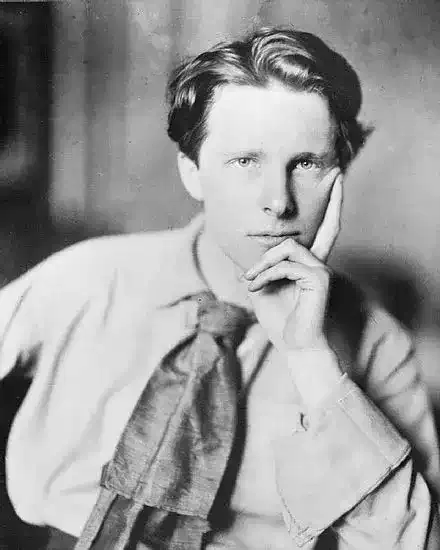
Rupert Brooke
Wagner
Wagner
Creeps in half wanton, half asleep,
One with a fat wide hairless face.
He likes love-music that is cheap;
Likes women in a crowded place;
And wants to hear the noise they're making.
His heavy eyelids droop half-over,
Great pouches swing beneath his eyes.
He listens, thinks himself the lover,
Heaves from his stomach wheezy sighs;
He likes to feel his heart's a-breaking.
The music swells. His gross legs quiver.
His little lips are bright with slime.
The music swells. The women shiver.
And all the while, in perfect time,
His pendulous stomach hangs a-shaking.
Creeps in half wanton, half asleep,
One with a fat wide hairless face.
He likes love-music that is cheap;
Likes women in a crowded place;
And wants to hear the noise they're making.
His heavy eyelids droop half-over,
Great pouches swing beneath his eyes.
He listens, thinks himself the lover,
Heaves from his stomach wheezy sighs;
He likes to feel his heart's a-breaking.
The music swells. His gross legs quiver.
His little lips are bright with slime.
The music swells. The women shiver.
And all the while, in perfect time,
His pendulous stomach hangs a-shaking.
217

Robert W. Service
The Whistle Of Sandy McGraw
The Whistle Of Sandy McGraw
You may talk o' your lutes and your dulcimers fine,
Your harps and your tabors and cymbals and a',
But here in the trenches jist gie me for mine
The wee penny whistle o' Sandy McGraw.
Oh, it's: "Sandy, ma lad, will you lilt us a tune?"
And Sandy is willin' and trillin' like mad;
Sae silvery sweet that we a' throng aroun',
And some o' it's gay, but the maist o' it's sad.
Jist the wee simple airs that sink intae your hert,
And grup ye wi' love and wi' longin' for hame;
And ye glour like an owl till you're feelin' the stert
O' a tear, and you blink wi' a feelin' o' shame.
For his song's o' the heather, and here in the dirt
You listen and dream o' a land that's sae braw,
And he mak's you forget a' the harm and the hurt,
For he pipes like a laverock, does Sandy McGraw.
* * * * *
At Eepers I mind me when rank upon rank
We rose from the trenches and swept like the gale,
Till the rapid-fire guns got us fell on the flank
And the murderin' bullets came swishin' like hail:
Till a' that were left o' us faltered and broke;
Till it seemed for a moment a panicky rout,
When shrill through the fume and the flash and the smoke
The wee valiant voice o' a whistle piped out.
`The Campbells are Comin'': Then into the fray
We bounded wi' bayonets reekin' and raw,
And oh we fair revelled in glory that day,
Jist thanks to the whistle o' Sandy McGraw.
* * * * *
At Loose, it wis after a sconnersome fecht,
On the field o' the slain I wis crawlin' aboot;
And the rockets were burnin' red holes in the nicht;
And the guns they were veciously thunderin' oot;
When sudden I heard a bit sound like a sigh,
And there in a crump-hole a kiltie I saw:
"Whit ails ye, ma lad? Are ye woundit?" says I.
"I've lost ma wee whustle," says Sandy McGraw.
"'Twas oot by yon bing where we pressed the attack,
It drapped frae ma pooch, and between noo and dawn
There isna much time so I'm jist crawlin' back. . . ."
"Ye're daft, man!" I telt him, but Sandy wis gone.
Weel, I waited a wee, then I crawled oot masel,
And the big stuff wis gorin' and roarin' around,
And I seemed tae be under the oxter o' hell,
And Creation wis crackin' tae bits by the sound.
And I says in ma mind: "Gang ye back, ye auld fule!"
When I thrilled tae a note that wis saucy and sma';
And there in a crater, collected and cool,
Wi' his wee penny whistle wis Sandy McGraw.
Ay, there he wis playin' as gleg as could be,
And listenin' hard wis a spectacled Boche;
Then Sandy turned roon' and he noddit tae me,
And he says: "Dinna blab on me, Sergeant McTosh.
The auld chap is deein'. He likes me tae play.
It's makin' him happy. Jist see his een shine!"
And thrillin' and sweet in the hert o' the fray
Wee Sandy wis playin' The Watch on the Rhine.
* * * * *
The last scene o' a' -- 'twas the day that we took
That bit o' black ruin they ca' Labbiesell.
It seemed the hale hillside jist shivered and shook,
And the red skies were roarin' and spewin' oot shell.
And the Sergeants were cursin' tae keep us in hand,
And hard on the leash we were strainin' like dugs,
When upward we shot at the word o' command,
And the bullets were dingin' their songs in oor lugs.
And onward we swept wi' a yell and a cheer,
And a' wis destruction, confusion and din,
And we knew that the trench o' the Boches wis near,
And it seemed jist the safest bit hole tae be in.
So we a' tumbled doon, and the Boches were there,
And they held up their hands, and they yelled: "Kamarad!"
And I merched aff wi' ten, wi' their palms in the air,
And my! I wis prood-like, and my! I wis glad.
And I thocht: if ma lassie could see me jist then. . . .
When sudden I sobered at somethin' I saw,
And I stopped and I stared, and I halted ma men,
For there on a stretcher wis Sandy McGraw.
Weel, he looks in ma face, jist as game as ye please:
"Ye ken hoo I hate tae be workin'," says he;
"But noo I can play in the street for bawbees,
Wi' baith o' ma legs taken aff at the knee."
And though I could see he wis rackit wi' pain,
He reached for his whistle and stertit tae play;
And quaverin' sweet wis the pensive refrain:
The floors o' the forest are a' wede away.
Then sudden he stoppit: "Man, wis it no grand
Hoo we took a' them trenches?" . . . He shakit his heid:
"I'll -- no -- play -- nae -- mair ----" feebly doon frae his hand
Slipped the wee penny whistle and -- Sandy wis deid.
* * * * *
And so you may talk o' your Steinways and Strads,
Your wonderful organs and brasses sae braw;
But oot in the trenches jist gie me, ma lads,
Yon wee penny whistle o' Sandy McGraw.
You may talk o' your lutes and your dulcimers fine,
Your harps and your tabors and cymbals and a',
But here in the trenches jist gie me for mine
The wee penny whistle o' Sandy McGraw.
Oh, it's: "Sandy, ma lad, will you lilt us a tune?"
And Sandy is willin' and trillin' like mad;
Sae silvery sweet that we a' throng aroun',
And some o' it's gay, but the maist o' it's sad.
Jist the wee simple airs that sink intae your hert,
And grup ye wi' love and wi' longin' for hame;
And ye glour like an owl till you're feelin' the stert
O' a tear, and you blink wi' a feelin' o' shame.
For his song's o' the heather, and here in the dirt
You listen and dream o' a land that's sae braw,
And he mak's you forget a' the harm and the hurt,
For he pipes like a laverock, does Sandy McGraw.
* * * * *
At Eepers I mind me when rank upon rank
We rose from the trenches and swept like the gale,
Till the rapid-fire guns got us fell on the flank
And the murderin' bullets came swishin' like hail:
Till a' that were left o' us faltered and broke;
Till it seemed for a moment a panicky rout,
When shrill through the fume and the flash and the smoke
The wee valiant voice o' a whistle piped out.
`The Campbells are Comin'': Then into the fray
We bounded wi' bayonets reekin' and raw,
And oh we fair revelled in glory that day,
Jist thanks to the whistle o' Sandy McGraw.
* * * * *
At Loose, it wis after a sconnersome fecht,
On the field o' the slain I wis crawlin' aboot;
And the rockets were burnin' red holes in the nicht;
And the guns they were veciously thunderin' oot;
When sudden I heard a bit sound like a sigh,
And there in a crump-hole a kiltie I saw:
"Whit ails ye, ma lad? Are ye woundit?" says I.
"I've lost ma wee whustle," says Sandy McGraw.
"'Twas oot by yon bing where we pressed the attack,
It drapped frae ma pooch, and between noo and dawn
There isna much time so I'm jist crawlin' back. . . ."
"Ye're daft, man!" I telt him, but Sandy wis gone.
Weel, I waited a wee, then I crawled oot masel,
And the big stuff wis gorin' and roarin' around,
And I seemed tae be under the oxter o' hell,
And Creation wis crackin' tae bits by the sound.
And I says in ma mind: "Gang ye back, ye auld fule!"
When I thrilled tae a note that wis saucy and sma';
And there in a crater, collected and cool,
Wi' his wee penny whistle wis Sandy McGraw.
Ay, there he wis playin' as gleg as could be,
And listenin' hard wis a spectacled Boche;
Then Sandy turned roon' and he noddit tae me,
And he says: "Dinna blab on me, Sergeant McTosh.
The auld chap is deein'. He likes me tae play.
It's makin' him happy. Jist see his een shine!"
And thrillin' and sweet in the hert o' the fray
Wee Sandy wis playin' The Watch on the Rhine.
* * * * *
The last scene o' a' -- 'twas the day that we took
That bit o' black ruin they ca' Labbiesell.
It seemed the hale hillside jist shivered and shook,
And the red skies were roarin' and spewin' oot shell.
And the Sergeants were cursin' tae keep us in hand,
And hard on the leash we were strainin' like dugs,
When upward we shot at the word o' command,
And the bullets were dingin' their songs in oor lugs.
And onward we swept wi' a yell and a cheer,
And a' wis destruction, confusion and din,
And we knew that the trench o' the Boches wis near,
And it seemed jist the safest bit hole tae be in.
So we a' tumbled doon, and the Boches were there,
And they held up their hands, and they yelled: "Kamarad!"
And I merched aff wi' ten, wi' their palms in the air,
And my! I wis prood-like, and my! I wis glad.
And I thocht: if ma lassie could see me jist then. . . .
When sudden I sobered at somethin' I saw,
And I stopped and I stared, and I halted ma men,
For there on a stretcher wis Sandy McGraw.
Weel, he looks in ma face, jist as game as ye please:
"Ye ken hoo I hate tae be workin'," says he;
"But noo I can play in the street for bawbees,
Wi' baith o' ma legs taken aff at the knee."
And though I could see he wis rackit wi' pain,
He reached for his whistle and stertit tae play;
And quaverin' sweet wis the pensive refrain:
The floors o' the forest are a' wede away.
Then sudden he stoppit: "Man, wis it no grand
Hoo we took a' them trenches?" . . . He shakit his heid:
"I'll -- no -- play -- nae -- mair ----" feebly doon frae his hand
Slipped the wee penny whistle and -- Sandy wis deid.
* * * * *
And so you may talk o' your Steinways and Strads,
Your wonderful organs and brasses sae braw;
But oot in the trenches jist gie me, ma lads,
Yon wee penny whistle o' Sandy McGraw.
202
Robert W. Service
The Ballad Of How Macpherson Held The Floor
The Ballad Of How Macpherson Held The Floor
Said President MacConnachie to Treasurer MacCall:
"We ought to have a piper for our next Saint Andrew's Ball.
Yon squakin' saxophone gives me the syncopated gripes.
I'm sick of jazz, I want to hear the skirling of the pipes."
"Alas! it's true," said Tam MacCall. "The young folk of to-day
Are fox-trot mad and dinna ken a reel from Strathspey.
Now, what we want's a kiltie lad, primed up wi' mountain dew,
To strut the floor at supper time, and play a lilt or two.
In all the North there's only one; of him I've heard them speak:
His name is Jock MacPherson, and he lives on Boulder Creek;
An old-time hard-rock miner, and a wild and wastrel loon,
Who spends his nights in glory, playing pibrochs to the moon.
I'll seek him out; beyond a doubt on next Saint Andrew's night
We'll proudly hear the pipes to cheer and charm our appetite.
Oh lads were neat and lassies sweet who graced Saint Andrew's Ball;
But there was none so full of fun as Treasurer MacCall.
And as Maloney's rag-time bank struck up the newest hit,
He smiled a smile behind his hand, and chuckled: "Wait a bit."
And so with many a Celtic snort, with malice in his eye,
He watched the merry crowd cavort, till supper time drew nigh.
Then gleefully he seemed to steal, and sought the Nugget Bar,
Wherein there sat a tartaned chiel, as lonely as a star;
A huge and hairy Highlandman as hearty as a breeze,
A glass of whisky in his hand, his bag-pipes on his knees.
"Drink down your doch and doris, Jock," cried Treasurer MacCall;
"The time is ripe to up and pipe; they wait you in the hall.
Gird up your loins and grit your teeth, and here's a pint of hooch
To mind you of your native heath - jist pit it in your pooch.
Play on and on for all you're worth; you'll shame us if you stop.
Remember you're of Scottish birth - keep piping till you drop.
Aye, though a bunch of Willie boys should bluster and implore,
For the glory of the Highlands, lad, you've got to hold the floor."
The dancers were at supper, and the tables groaned with cheer,
When President MacConnachie exclaimed: "What do I hear?
Methinks it's like a chanter, and its coming from the hall."
"It's Jock MacPherson tuning up," cried Treasurer MacCall.
So up they jumped with shouts of glee, and gaily hurried forth.
Said they: "We never thought to see a piper in the North."
Aye, all the lads and lassies braw went buzzing out like bees,
And Jock MacPherson there they saw, with red and rugged knees.
Full six foot four he strode the floor, a grizzled son of Skye,
With glory in his whiskers and with whisky in his eye.
With skelping stride and Scottish pride he towered above them all:
"And is he no' a bonny sight?" said Treasurer MacCall.
While President MacConnachie was fairly daft with glee,
And there was jubilation in the Scottish Commy-tee.
But the dancers seemed uncertain, and they signified their doubt,
By dashing back to eat as fast as they had darted out.
And someone raised the question 'twixt the coffee and the cakes:
"Does the Piper walk to get away from all the noise he makes?"
Then reinforced with fancy food they slowly trickled forth,
And watching in patronizing mood the Piper of the North.
Proud, proud was Jock MacPherson, as he made his bag-pipes skirl,
And he set his sporran swinging, and he gave his kilts a whirl.
And President MacConnachie was jumping like a flea,
And there was joy and rapture in the Scottish Commy-tee.
"Jist let them have their saxophones wi' constipated squall;
We're having Heaven's music now," said Treasurer MacCall.
But the dancers waxed impatient, and they rather seemed to fret
For Maloney and the jazz of his Hibernian Quartette.
Yet little recked the Piper, as he swung with head on high,
Lamenting with MacCrimmon on the heather hills of Skye.
With Highland passion in his heart he held the centre floor;
Aye, Jock MacPherson played as he had never played before.
Maloney's Irish melodists were sitting in their place,
And as Maloney waited, there was wonder in his face.
'Twas sure the gorgeous music - Golly! wouldn't it be grand
If he could get MacPherson as a member of his band?
But the dancers moped and mumbled, as around the room they sat:
"We paid to dance," they grumbled; "But we cannot dance to that.
Of course we're not denying that it's really splendid stuff;
But it's mighty satisfying - don't you think we've had enough?"
"You've raised a pretty problem," answered Treasurer MacCall;
"For on Saint Andrew's Night, ye ken, the Piper rules the Ball."
Said President MacConnachie: "You've said a solemn thing.
Tradition holds him sacred, and he's got to have his fling.
But soon, no doubt, he'll weary out. Have patience; bide a wee."
"That's right. Respect the Piper," said the Scottish Commy-tee.
And so MacPherson stalked the floor, and fast the moments flew,
Till half an hour went past, as irritation grew and grew.
Then the dancers held a council, and with faces fiercely set,
They hailed Maloney, heading his Hibernian Quartette:
"It's long enough, we've waited. Come on, Mike, play up the Blues."
And Maloney hesitated, but he didn't dare refuse.
So banjo and piano, and guitar and saxophone
Contended with the shrilling of the chanter and the drone;
And the women's ears were muffled, so infernal was the din,
But MacPherson was unruffled, for he knew that he would win.
Then two bright boys jazzed round him, and they sought to play the clown,
But MacPherson jolted sideways, and the Sassenachs went down.
And as if it was a signal, with a wild and angry roar,
The gates of wrath were riven - yet MacPherson held the floor.
Aye, amid the rising tumult, still he strode with head on high,
With ribbands gaily streaming, yet with battle in his eye.
Amid the storm that gathered, still he stalked with Highland pride,
While President and Treasurer sprang bravely to his side.
And with ire and indignation that was glorious to see,
Around him in a body ringed the Scottish Commy-tee.
Their teeth were clenched with fury; their eyes with anger blazed:
"Ye manna touch the Piper," was the slogan that they raised.
Then blows were struck, and men went down; yet 'mid the rising fray
MacPherson towered in triumph -and he never ceased to play.
Alas! his faithful followers were but a gallant few,
And faced defeat, although they fought with all the skill they knew.
For President MacConnachie was seen to slip and fall,
And o'er his prostrate body stumbled Treasurer MacCall.
And as their foes with triumph roared, and leagured them about,
It looked as if their little band would soon be counted out.
For eyes were black and noses red, yet on that field of gore,
As resolute as Highland rock - MacPherson held the floor.
Maloney watched the battle, and his brows were bleakly set,
While with him paused and panted his Hibernian Quartette.
For sure it is an evil spite, and breaking to the heart,
For Irishman to watch a fight and not be taking part.
Then suddenly on high he soared, and tightened up his belt:
"And shall we see them crush," he roared, "a brother and a Celt?
A fellow artiste needs our aid. Come on, boys, take a hand."
Then down into the mêlée dashed Maloney and his band.
Now though it was Saint Andrew's Ball, yet men of every race,
That bow before the Great God Jazz were gathered in that place.
Yea, there were those who grunt: "Ya! Ya!" and those who squeak:
"We! We!"
Likewise Dutch, Dago, Swede and Finn, Polack and Portugee.
Yet like ripe grain before the gale that national hotch-potch
Went down before the fury of the Irish and the Scotch.
Aye, though they closed their gaping ranks and rallied to the fray,
To the Shamrock and the Thistle went the glory of the day.
You should have seen the carnage in the drooling light of dawn,
Yet 'mid the scene of slaughter Jock MacPherson playing on.
Though all lay low about him, yet he held his head on high,
And piped as if he stood upon the caller crags of Skye.
His face was grim as granite, and no favour did he ask,
Though weary were his mighty lungs and empty was his flask.
And when a fallen foe wailed out: "Say! when will you have done?"
MacPherson grinned and answered: "Hoots! She's only ha'f begun."
Aye, though his hands were bloody, and his knees were gay with gore,
A Grampian of Highland pride - MacPherson held the floor.
And still in Yukon valleys where the silent peaks look down,
They tell of how the Piper was invited up to town,
And he went in kilted glory, and he piped before them all,
But wouldn't stop his piping till he busted up the Ball.
Of that Homeric scrap they speak, and how the fight went on,
With sally and with rally till the breaking of the dawn.
And how the Piper towered like a rock amid the fray,
And the battle surged about him, but he never ceased to play.
Aye, by the lonely camp-fires, still they tell the story o'er
How the Sassenach was vanquished and - MacPherson held the floor.
Said President MacConnachie to Treasurer MacCall:
"We ought to have a piper for our next Saint Andrew's Ball.
Yon squakin' saxophone gives me the syncopated gripes.
I'm sick of jazz, I want to hear the skirling of the pipes."
"Alas! it's true," said Tam MacCall. "The young folk of to-day
Are fox-trot mad and dinna ken a reel from Strathspey.
Now, what we want's a kiltie lad, primed up wi' mountain dew,
To strut the floor at supper time, and play a lilt or two.
In all the North there's only one; of him I've heard them speak:
His name is Jock MacPherson, and he lives on Boulder Creek;
An old-time hard-rock miner, and a wild and wastrel loon,
Who spends his nights in glory, playing pibrochs to the moon.
I'll seek him out; beyond a doubt on next Saint Andrew's night
We'll proudly hear the pipes to cheer and charm our appetite.
Oh lads were neat and lassies sweet who graced Saint Andrew's Ball;
But there was none so full of fun as Treasurer MacCall.
And as Maloney's rag-time bank struck up the newest hit,
He smiled a smile behind his hand, and chuckled: "Wait a bit."
And so with many a Celtic snort, with malice in his eye,
He watched the merry crowd cavort, till supper time drew nigh.
Then gleefully he seemed to steal, and sought the Nugget Bar,
Wherein there sat a tartaned chiel, as lonely as a star;
A huge and hairy Highlandman as hearty as a breeze,
A glass of whisky in his hand, his bag-pipes on his knees.
"Drink down your doch and doris, Jock," cried Treasurer MacCall;
"The time is ripe to up and pipe; they wait you in the hall.
Gird up your loins and grit your teeth, and here's a pint of hooch
To mind you of your native heath - jist pit it in your pooch.
Play on and on for all you're worth; you'll shame us if you stop.
Remember you're of Scottish birth - keep piping till you drop.
Aye, though a bunch of Willie boys should bluster and implore,
For the glory of the Highlands, lad, you've got to hold the floor."
The dancers were at supper, and the tables groaned with cheer,
When President MacConnachie exclaimed: "What do I hear?
Methinks it's like a chanter, and its coming from the hall."
"It's Jock MacPherson tuning up," cried Treasurer MacCall.
So up they jumped with shouts of glee, and gaily hurried forth.
Said they: "We never thought to see a piper in the North."
Aye, all the lads and lassies braw went buzzing out like bees,
And Jock MacPherson there they saw, with red and rugged knees.
Full six foot four he strode the floor, a grizzled son of Skye,
With glory in his whiskers and with whisky in his eye.
With skelping stride and Scottish pride he towered above them all:
"And is he no' a bonny sight?" said Treasurer MacCall.
While President MacConnachie was fairly daft with glee,
And there was jubilation in the Scottish Commy-tee.
But the dancers seemed uncertain, and they signified their doubt,
By dashing back to eat as fast as they had darted out.
And someone raised the question 'twixt the coffee and the cakes:
"Does the Piper walk to get away from all the noise he makes?"
Then reinforced with fancy food they slowly trickled forth,
And watching in patronizing mood the Piper of the North.
Proud, proud was Jock MacPherson, as he made his bag-pipes skirl,
And he set his sporran swinging, and he gave his kilts a whirl.
And President MacConnachie was jumping like a flea,
And there was joy and rapture in the Scottish Commy-tee.
"Jist let them have their saxophones wi' constipated squall;
We're having Heaven's music now," said Treasurer MacCall.
But the dancers waxed impatient, and they rather seemed to fret
For Maloney and the jazz of his Hibernian Quartette.
Yet little recked the Piper, as he swung with head on high,
Lamenting with MacCrimmon on the heather hills of Skye.
With Highland passion in his heart he held the centre floor;
Aye, Jock MacPherson played as he had never played before.
Maloney's Irish melodists were sitting in their place,
And as Maloney waited, there was wonder in his face.
'Twas sure the gorgeous music - Golly! wouldn't it be grand
If he could get MacPherson as a member of his band?
But the dancers moped and mumbled, as around the room they sat:
"We paid to dance," they grumbled; "But we cannot dance to that.
Of course we're not denying that it's really splendid stuff;
But it's mighty satisfying - don't you think we've had enough?"
"You've raised a pretty problem," answered Treasurer MacCall;
"For on Saint Andrew's Night, ye ken, the Piper rules the Ball."
Said President MacConnachie: "You've said a solemn thing.
Tradition holds him sacred, and he's got to have his fling.
But soon, no doubt, he'll weary out. Have patience; bide a wee."
"That's right. Respect the Piper," said the Scottish Commy-tee.
And so MacPherson stalked the floor, and fast the moments flew,
Till half an hour went past, as irritation grew and grew.
Then the dancers held a council, and with faces fiercely set,
They hailed Maloney, heading his Hibernian Quartette:
"It's long enough, we've waited. Come on, Mike, play up the Blues."
And Maloney hesitated, but he didn't dare refuse.
So banjo and piano, and guitar and saxophone
Contended with the shrilling of the chanter and the drone;
And the women's ears were muffled, so infernal was the din,
But MacPherson was unruffled, for he knew that he would win.
Then two bright boys jazzed round him, and they sought to play the clown,
But MacPherson jolted sideways, and the Sassenachs went down.
And as if it was a signal, with a wild and angry roar,
The gates of wrath were riven - yet MacPherson held the floor.
Aye, amid the rising tumult, still he strode with head on high,
With ribbands gaily streaming, yet with battle in his eye.
Amid the storm that gathered, still he stalked with Highland pride,
While President and Treasurer sprang bravely to his side.
And with ire and indignation that was glorious to see,
Around him in a body ringed the Scottish Commy-tee.
Their teeth were clenched with fury; their eyes with anger blazed:
"Ye manna touch the Piper," was the slogan that they raised.
Then blows were struck, and men went down; yet 'mid the rising fray
MacPherson towered in triumph -and he never ceased to play.
Alas! his faithful followers were but a gallant few,
And faced defeat, although they fought with all the skill they knew.
For President MacConnachie was seen to slip and fall,
And o'er his prostrate body stumbled Treasurer MacCall.
And as their foes with triumph roared, and leagured them about,
It looked as if their little band would soon be counted out.
For eyes were black and noses red, yet on that field of gore,
As resolute as Highland rock - MacPherson held the floor.
Maloney watched the battle, and his brows were bleakly set,
While with him paused and panted his Hibernian Quartette.
For sure it is an evil spite, and breaking to the heart,
For Irishman to watch a fight and not be taking part.
Then suddenly on high he soared, and tightened up his belt:
"And shall we see them crush," he roared, "a brother and a Celt?
A fellow artiste needs our aid. Come on, boys, take a hand."
Then down into the mêlée dashed Maloney and his band.
Now though it was Saint Andrew's Ball, yet men of every race,
That bow before the Great God Jazz were gathered in that place.
Yea, there were those who grunt: "Ya! Ya!" and those who squeak:
"We! We!"
Likewise Dutch, Dago, Swede and Finn, Polack and Portugee.
Yet like ripe grain before the gale that national hotch-potch
Went down before the fury of the Irish and the Scotch.
Aye, though they closed their gaping ranks and rallied to the fray,
To the Shamrock and the Thistle went the glory of the day.
You should have seen the carnage in the drooling light of dawn,
Yet 'mid the scene of slaughter Jock MacPherson playing on.
Though all lay low about him, yet he held his head on high,
And piped as if he stood upon the caller crags of Skye.
His face was grim as granite, and no favour did he ask,
Though weary were his mighty lungs and empty was his flask.
And when a fallen foe wailed out: "Say! when will you have done?"
MacPherson grinned and answered: "Hoots! She's only ha'f begun."
Aye, though his hands were bloody, and his knees were gay with gore,
A Grampian of Highland pride - MacPherson held the floor.
And still in Yukon valleys where the silent peaks look down,
They tell of how the Piper was invited up to town,
And he went in kilted glory, and he piped before them all,
But wouldn't stop his piping till he busted up the Ball.
Of that Homeric scrap they speak, and how the fight went on,
With sally and with rally till the breaking of the dawn.
And how the Piper towered like a rock amid the fray,
And the battle surged about him, but he never ceased to play.
Aye, by the lonely camp-fires, still they tell the story o'er
How the Sassenach was vanquished and - MacPherson held the floor.
158
Robert W. Service
No More Music
No More Music
The Porch was blazoned with geranium bloom;
Myrtle and jasmine meadows lit the lea;
With rose and violet the vale's perfume
Languished to where the hyacinthine sea
Dreamed tenderly . . . "And I must go," said he.
He spoke in that dim, ghostly voice of his:
"I was a singer; then the Was . . . and GAS."
(I had to lean to him, no word to miss.)
"We bought this little café nigh to Grasse;
With sun and flowers my last few days will pass.
"And music too. I have my mandolin:
Say! Maybe you can strum on your guitar . . .
Come on - we two will make melodious din,
While Madame sings to us behind the bar:
You'll see how sweet Italian folk-songs are."
So he would play and I would thrum the while;
I used to there every lovely day;
His wife would listen with a sunny smile,
And when I left: "Please come again," she'd say.
"He seems quite sad when you have one away."
Alas! I had to leave without good-bye,
And lived in sooty cities for ayear.
Oh, how my heart ached for that happy sky!
Then, then one day my café I drew near -
God! it was strange how I was gripped with fear.
So still it was; I saw no mandolin,
No gay guitar with ribbons blue and red;
Then all in black, stone-faced the wife came in . . .
I did not ask; I looked, she shook her head:
"La musique est fini," was all she said.
The Porch was blazoned with geranium bloom;
Myrtle and jasmine meadows lit the lea;
With rose and violet the vale's perfume
Languished to where the hyacinthine sea
Dreamed tenderly . . . "And I must go," said he.
He spoke in that dim, ghostly voice of his:
"I was a singer; then the Was . . . and GAS."
(I had to lean to him, no word to miss.)
"We bought this little café nigh to Grasse;
With sun and flowers my last few days will pass.
"And music too. I have my mandolin:
Say! Maybe you can strum on your guitar . . .
Come on - we two will make melodious din,
While Madame sings to us behind the bar:
You'll see how sweet Italian folk-songs are."
So he would play and I would thrum the while;
I used to there every lovely day;
His wife would listen with a sunny smile,
And when I left: "Please come again," she'd say.
"He seems quite sad when you have one away."
Alas! I had to leave without good-bye,
And lived in sooty cities for ayear.
Oh, how my heart ached for that happy sky!
Then, then one day my café I drew near -
God! it was strange how I was gripped with fear.
So still it was; I saw no mandolin,
No gay guitar with ribbons blue and red;
Then all in black, stone-faced the wife came in . . .
I did not ask; I looked, she shook her head:
"La musique est fini," was all she said.
249
Robert W. Service
Music In The Bush
Music In The Bush
O'er the dark pines she sees the silver moon,
And in the west, all tremulous, a star;
And soothing sweet she hears the mellow tune
Of cow-bells jangled in the fields afar.
Quite listless, for her daily stent is done,
She stands, sad exile, at her rose-wreathed door,
And sends her love eternal with the sun
That goes to gild the land she'll see no more.
The grave, gaunt pines imprison her sad gaze,
All still the sky and darkling drearily;
She feels the chilly breath of dear, dead days
Come sifting through the alders eerily.
Oh, how the roses riot in their bloom!
The curtains stir as with an ancient pain;
Her old piano gleams from out the gloom
And waits and waits her tender touch in vain.
But now her hands like moonlight brush the keys
With velvet grace -- melodious delight;
And now a sad refrain from over seas
Goes sobbing on the bosom of the night;
And now she sings. (O! singer in the gloom,
Voicing a sorrow we can ne'er express,
Here in the Farness where we few have room
Unshamed to show our love and tenderness,
Our hearts will echo, till they beat no more,
That song of sadness and of motherland;
And, stretched in deathless love to England's shore,
Some day she'll hearken and she'll understand.)
A prima-donna in the shining past,
But now a mother growing old and gray,
She thinks of how she held a people fast
In thrall, and gleaned the triumphs of a day.
She sees a sea of faces like a dream;
She sees herself a queen of song once more;
She sees lips part in rapture, eyes agleam;
She sings as never once she sang before.
She sings a wild, sweet song that throbs with pain,
The added pain of life that transcends art --
A song of home, a deep, celestial strain,
The glorious swan-song of a dying heart.
A lame tramp comes along the railway track,
A grizzled dog whose day is nearly done;
He passes, pauses, then comes slowly back
And listens there -- an audience of one.
She sings -- her golden voice is passion-fraught,
As when she charmed a thousand eager ears;
He listens trembling, and she knows it not,
And down his hollow cheeks roll bitter tears.
She ceases and is still, as if to pray;
There is no sound, the stars are all alight --
Only a wretch who stumbles on his way,
Only a vagrant sobbing in the night.
O'er the dark pines she sees the silver moon,
And in the west, all tremulous, a star;
And soothing sweet she hears the mellow tune
Of cow-bells jangled in the fields afar.
Quite listless, for her daily stent is done,
She stands, sad exile, at her rose-wreathed door,
And sends her love eternal with the sun
That goes to gild the land she'll see no more.
The grave, gaunt pines imprison her sad gaze,
All still the sky and darkling drearily;
She feels the chilly breath of dear, dead days
Come sifting through the alders eerily.
Oh, how the roses riot in their bloom!
The curtains stir as with an ancient pain;
Her old piano gleams from out the gloom
And waits and waits her tender touch in vain.
But now her hands like moonlight brush the keys
With velvet grace -- melodious delight;
And now a sad refrain from over seas
Goes sobbing on the bosom of the night;
And now she sings. (O! singer in the gloom,
Voicing a sorrow we can ne'er express,
Here in the Farness where we few have room
Unshamed to show our love and tenderness,
Our hearts will echo, till they beat no more,
That song of sadness and of motherland;
And, stretched in deathless love to England's shore,
Some day she'll hearken and she'll understand.)
A prima-donna in the shining past,
But now a mother growing old and gray,
She thinks of how she held a people fast
In thrall, and gleaned the triumphs of a day.
She sees a sea of faces like a dream;
She sees herself a queen of song once more;
She sees lips part in rapture, eyes agleam;
She sings as never once she sang before.
She sings a wild, sweet song that throbs with pain,
The added pain of life that transcends art --
A song of home, a deep, celestial strain,
The glorious swan-song of a dying heart.
A lame tramp comes along the railway track,
A grizzled dog whose day is nearly done;
He passes, pauses, then comes slowly back
And listens there -- an audience of one.
She sings -- her golden voice is passion-fraught,
As when she charmed a thousand eager ears;
He listens trembling, and she knows it not,
And down his hollow cheeks roll bitter tears.
She ceases and is still, as if to pray;
There is no sound, the stars are all alight --
Only a wretch who stumbles on his way,
Only a vagrant sobbing in the night.
241
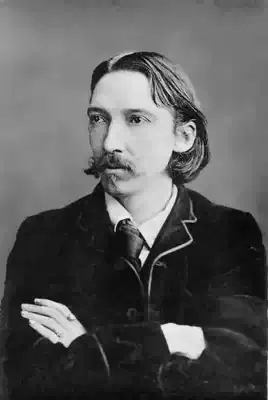
Robert Louis Stevenson
Singing
Singing
Of speckled eggs the birdie sings
And nests among the trees;
The sailor sings of ropes and things
In ships upon the seas.
The children sing in far Japan,
The children sing in Spain;
The organ with the organ man
Is singing in the rain.
Of speckled eggs the birdie sings
And nests among the trees;
The sailor sings of ropes and things
In ships upon the seas.
The children sing in far Japan,
The children sing in Spain;
The organ with the organ man
Is singing in the rain.
334
Robert Louis Stevenson
Music At The Villa Marina
Music At The Villa Marina
FOR some abiding central source of power,
Strong-smitten steady chords, ye seem to flow
And, flowing, carry virtue. Far below,
The vain tumultuous passions of the hour
Fleet fast and disappear; and as the sun
Shines on the wake of tempests, there is cast
O'er all the shattered ruins of my past
A strong contentment as of battles won.
And yet I cry in anguish, as I hear
The long drawn pageant of your passage roll
Magnificently forth into the night.
To yon fair land ye come from, to yon sphere
Of strength and love where now ye shape your flight,
O even wings of music, bear my soul!
Ye have the power, if but ye had the will,
Strong-smitten steady chords in sequence grand,
To bear me forth into that tranquil land
Where good is no more ravelled up with ill;
Where she and I, remote upon some hill
Or by some quiet river's windless strand,
May live, and love, and wander hand in hand,
And follow nature simply, and be still.
From this grim world, where, sadly, prisoned, we
Sit bound with others' heart-strings as with chains,
And, if one moves, all suffer, - to that Goal,
If such a land, if such a sphere, there be,
Thither, from life and all life's joys and pains,
O even wings of music, bear my soul!
FOR some abiding central source of power,
Strong-smitten steady chords, ye seem to flow
And, flowing, carry virtue. Far below,
The vain tumultuous passions of the hour
Fleet fast and disappear; and as the sun
Shines on the wake of tempests, there is cast
O'er all the shattered ruins of my past
A strong contentment as of battles won.
And yet I cry in anguish, as I hear
The long drawn pageant of your passage roll
Magnificently forth into the night.
To yon fair land ye come from, to yon sphere
Of strength and love where now ye shape your flight,
O even wings of music, bear my soul!
Ye have the power, if but ye had the will,
Strong-smitten steady chords in sequence grand,
To bear me forth into that tranquil land
Where good is no more ravelled up with ill;
Where she and I, remote upon some hill
Or by some quiet river's windless strand,
May live, and love, and wander hand in hand,
And follow nature simply, and be still.
From this grim world, where, sadly, prisoned, we
Sit bound with others' heart-strings as with chains,
And, if one moves, all suffer, - to that Goal,
If such a land, if such a sphere, there be,
Thither, from life and all life's joys and pains,
O even wings of music, bear my soul!
342
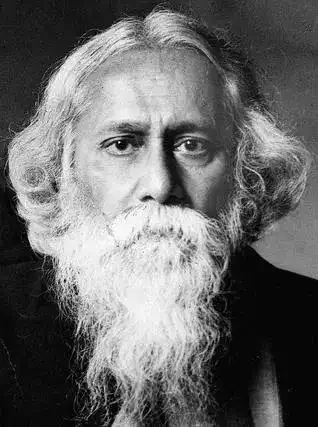
Rabindranath Tagore
Broken Song
Broken Song
Kasinath the new young singer fills the hall with sound:
The seven notes dance in his throat like seven tame birds.
His voice is a sharp sword slicing and thrusting everywhere,
It darts like lightening - no knowing where it will go when.
He sets deadly traps for himself, then cuts them away:
The courtiers listen in amazement, give frequent gasps of praise.
Only the old king Pratap Ray sits like wood, unmoved.
Haraj Lal is the only singer he likes, all others leave him cold.
From childhood he has spent so long listening to him sing -
Rag Kafi during holi, cloud-songs during the rains,
Songs for Durga at dawn in autumn, songs to bid her farewell -
His heart swelled when he heard them and his eyes swam with tears.
And on days when friends gathered and filled the hall
There were cowherds' songs of Krsna, in raags Bhupali and Multan.
So many nights of wedding-festivity have passed in that royal house:
Servants dressed in red, hundreds of lamps alight:
The bridegroom sitting shyly in his finery and jewels,
Young friends teasing him and whispering in his ear:
Before him, singing raag Sahana, sits Baraj Lal.
The king's heart is full of all those days and songs.
When he hears some other singer, he feels no chord inside,
No sudden magical awakening of memories of the past.
When Pratap Ray watches Kasinath he just sees his wagging head:
Tune after tune after tune, bu none with any echo in the heart.
Kasinath asks for a rest and the singing stops for a space.
Pratap Ray smilingly turns his eyes to Baraj Lal.
He puts his mouth to his ear and says, 'Dear ustad,
Give us a song as songs ought to be, this is no song at all.
It's all tricks and games, like a cat hunting a bird.
We used to hear songs in the old days, today they have no idea.'
Old Baraj Lal, white-haired, white turban on his head,
Bows to the assembled courtiers and slowly takes his seat.
He takes the tanpura in his wasted, heavily veined hand
And with lowered head and closed eyes begins raag Yaman-kalyap.
His quavering voice is swallowed by the enormous hall,
Is like a tiny bird in a storm, unable to fly for all it tries.
Pratap Ray, sitting to the left, encourages him again and again:
'Superb, bravo!' he says in his ear, 'sing out loud.'
The courtiers are inattentive, some whisper amongst themselves,
Some of them yawn, some doze, some go off to their rooms;
Some of them call to servants, 'Bring the bookah, bring some pan.'
Some fan themselves furiously and complain of the heat.
They cannot keep still for a minute, they shuffle or walk about -
The hall was quiet before, but every sort of noise has grown.
The old man's singing is swamped, like a frail boat in a typhoon:
Only his shaky fingering of the tanpura shows it is there.
Music that should rise on its own joy from the depths of the heart
Is crushed by heedless clamour, like a fountain under a stone.
The song and Baraj Lal's feelings go separate ways,
But he sings for all he is worth, to keep up the honour of his king.
One of the verses of the song has somehow slipped from his mind.
He quickly goes back, tries to get it right this time.
Again he forgets, it is lost, he shakes his head at the shame;
He starts the song at the beginning - again he has to stop.
His hand trembles doubly as he prays to his teachers name.
His voice quakes with distress, like a lamp guttering in a breeze.
He abandons the words of the song and tries to salvage the tune,
But suddenly his wide-mouthed singing breaks into loud cries.
The intricate melody goes to the winds, the rhythm is swept away -
Tears snap the thread of the song, cascade like pearls.
In shame he rests his head on the old tanpura in his lap -
He has failed to remember a song: he weeps as he did as a child.
With brimming eyes king Pratap Ray tenderly touches his friend:
'Come, let us go from here,' he says with kindness and love.
They leave that festive hall with its hundreds of blinding lights.
The two old friends go outside, holding each other's hands.
Baraj says with hands clasped, 'Master, our days are gone.
New men have come now, new styles and customs in the world.
The court we kept is deserted - only the two of us are left.
Don't ask anyone to listen to me now, I beg you at your feet, my lord.
The singer along does not make a song, there has to be someone who hears:
One man opens his throat to sing, the other sings in his mind.
Only when waves fall on the shore do they make a harmonious sound;
Only when breezes shake the woods do we hear a rustling in the leaves.
Only from a marriage of two forces does music arise in the world.
Where there is no love, where listeners are dumb, there never can be song.'
Kasinath the new young singer fills the hall with sound:
The seven notes dance in his throat like seven tame birds.
His voice is a sharp sword slicing and thrusting everywhere,
It darts like lightening - no knowing where it will go when.
He sets deadly traps for himself, then cuts them away:
The courtiers listen in amazement, give frequent gasps of praise.
Only the old king Pratap Ray sits like wood, unmoved.
Haraj Lal is the only singer he likes, all others leave him cold.
From childhood he has spent so long listening to him sing -
Rag Kafi during holi, cloud-songs during the rains,
Songs for Durga at dawn in autumn, songs to bid her farewell -
His heart swelled when he heard them and his eyes swam with tears.
And on days when friends gathered and filled the hall
There were cowherds' songs of Krsna, in raags Bhupali and Multan.
So many nights of wedding-festivity have passed in that royal house:
Servants dressed in red, hundreds of lamps alight:
The bridegroom sitting shyly in his finery and jewels,
Young friends teasing him and whispering in his ear:
Before him, singing raag Sahana, sits Baraj Lal.
The king's heart is full of all those days and songs.
When he hears some other singer, he feels no chord inside,
No sudden magical awakening of memories of the past.
When Pratap Ray watches Kasinath he just sees his wagging head:
Tune after tune after tune, bu none with any echo in the heart.
Kasinath asks for a rest and the singing stops for a space.
Pratap Ray smilingly turns his eyes to Baraj Lal.
He puts his mouth to his ear and says, 'Dear ustad,
Give us a song as songs ought to be, this is no song at all.
It's all tricks and games, like a cat hunting a bird.
We used to hear songs in the old days, today they have no idea.'
Old Baraj Lal, white-haired, white turban on his head,
Bows to the assembled courtiers and slowly takes his seat.
He takes the tanpura in his wasted, heavily veined hand
And with lowered head and closed eyes begins raag Yaman-kalyap.
His quavering voice is swallowed by the enormous hall,
Is like a tiny bird in a storm, unable to fly for all it tries.
Pratap Ray, sitting to the left, encourages him again and again:
'Superb, bravo!' he says in his ear, 'sing out loud.'
The courtiers are inattentive, some whisper amongst themselves,
Some of them yawn, some doze, some go off to their rooms;
Some of them call to servants, 'Bring the bookah, bring some pan.'
Some fan themselves furiously and complain of the heat.
They cannot keep still for a minute, they shuffle or walk about -
The hall was quiet before, but every sort of noise has grown.
The old man's singing is swamped, like a frail boat in a typhoon:
Only his shaky fingering of the tanpura shows it is there.
Music that should rise on its own joy from the depths of the heart
Is crushed by heedless clamour, like a fountain under a stone.
The song and Baraj Lal's feelings go separate ways,
But he sings for all he is worth, to keep up the honour of his king.
One of the verses of the song has somehow slipped from his mind.
He quickly goes back, tries to get it right this time.
Again he forgets, it is lost, he shakes his head at the shame;
He starts the song at the beginning - again he has to stop.
His hand trembles doubly as he prays to his teachers name.
His voice quakes with distress, like a lamp guttering in a breeze.
He abandons the words of the song and tries to salvage the tune,
But suddenly his wide-mouthed singing breaks into loud cries.
The intricate melody goes to the winds, the rhythm is swept away -
Tears snap the thread of the song, cascade like pearls.
In shame he rests his head on the old tanpura in his lap -
He has failed to remember a song: he weeps as he did as a child.
With brimming eyes king Pratap Ray tenderly touches his friend:
'Come, let us go from here,' he says with kindness and love.
They leave that festive hall with its hundreds of blinding lights.
The two old friends go outside, holding each other's hands.
Baraj says with hands clasped, 'Master, our days are gone.
New men have come now, new styles and customs in the world.
The court we kept is deserted - only the two of us are left.
Don't ask anyone to listen to me now, I beg you at your feet, my lord.
The singer along does not make a song, there has to be someone who hears:
One man opens his throat to sing, the other sings in his mind.
Only when waves fall on the shore do they make a harmonious sound;
Only when breezes shake the woods do we hear a rustling in the leaves.
Only from a marriage of two forces does music arise in the world.
Where there is no love, where listeners are dumb, there never can be song.'
614
Rabindranath Tagore
Brahmā, Vişņu, Śiva
Brahmā, Vişņu, Śiva
I THE DARK
In a worldless timeless lightless great emptiness
Four-faced Brahma broods.
nasad asin, no sad asit tadanim;
nasid raja no vioma paro yat.
kim avarivah? kuha? kasya sarmann?
Ambhah kim asid, gahanam gabhiram?
na mytur asid, amrtam na tarhi.
na ratria ahna asit pratekh.
anid avatam svadhaya tad ekam.
tasmad dhanyan na parah kim canasa.
tama asit tamasa gudham agre;
apraketam salilam sarvam a idam.
tuchyenabhu apihitam yad asit,
tapasas tan mahinajayataikam.
Of a sudden sea of joy surges through his heart –
The ur-god opens his eyes.
Speech from four mouths
Speeds from each quarter.
Through infinite dark,
Through limitless sky,
Like a growing sea-storm,
Like hope never sated,
His Word starts to move.
Stirred by joy his breathing quickens,
His eight eyes quiver with flame.
His fire-matted hair sweeps the horizon,
Bright as a million suns.
From the towering source of the world
In a thousand streams
Cascades the primeval blazing fountain,
Fragmenting silence,
Splitting its stone heart.
kamas tad agre sam avartatadhi
manaso retah prathamam yad asit?
sato bandhum asati nir avindan
hrdi pratisya kavayo manisa
II THE MUSIC
In a universe rampant
With new life exhalant,
With new life exultant,
Vishnu spreads wide
His four-handed blessing.
He raises his conch
And all things quake
At its booming sound.
The frenzy dies down,
The furnace expires,
The planets douse
Their flames with tears,
The world’s Divine Poet
Constructs its history,
From wild cosmic song
Its epic is formed.
Stars in their orbits,
Moon sun and planets –
He binds with his mace
All things to Law,
Imposes the discipline
Of metre and rhyme.
In the Manasa depths
Vishnu watches -
Beauties arise
From the light of lotuses.
Lakshmi strews smiles -
Clouds show a rainbow,
Gardens show flowers.
The roar of Creation
Resolves into music.
Softness hides rigour,
Forms cover power.
tirascino vitato rasmir esam:
adhah svid asid, upari svid asit?
retodha asan, mahimana asan;
svadha avasat, prayatih parastat.
Age after age after age is slave to a mighty rhythm –
At last the world-frame
Tires in its body,
Sleep in its eyes
Slackens its structure,
Diffuses its energy.
From the heart of all matter
Comes the anguished cry –
‘Wake, wake, great Shiva,
Our body grows weary
Of its law-fixed path,
Give us new form.
Sing our destruction,
That we gain new life.’
III THE FIRE
The great god awakes,
His three eyes open,
He surveys all horizons.
He lifts his bow, his fell pinaka,
He pounds the world with his tread.
From first things to last it trembles and shakes
And shudders.
The bonds of nature are ripped.
The sky is rocked by the roar
Of a wave of ecstatic release.
An inferno soars –
The pyre of the universe.
Shattered sun and moon, smashed stars and planets,
Rain down from all angles,
A blackness of all particles
To be swallowed by flame,
Absorbed in an instant.
At the start of Creation
There was a dark without origin,
At the breaking of Creation
There is fire without end
In an all-pervading sky-engulfing sea of burning
Shiva shuts his three eyes.
He begins his great trance.
ko adha veda? Ka iha pravocat,
kuta ajata, kuta iyam visrstih?
arvag deva asya visajanena:
atha ko veda yata ababhuva?
iyam visrstir yata ababhuva;
yadi vasa dadhe yadi van na:
yo asyadhyaksah parame vioman
so anga veda, yadi va na veda.
I THE DARK
In a worldless timeless lightless great emptiness
Four-faced Brahma broods.
nasad asin, no sad asit tadanim;
nasid raja no vioma paro yat.
kim avarivah? kuha? kasya sarmann?
Ambhah kim asid, gahanam gabhiram?
na mytur asid, amrtam na tarhi.
na ratria ahna asit pratekh.
anid avatam svadhaya tad ekam.
tasmad dhanyan na parah kim canasa.
tama asit tamasa gudham agre;
apraketam salilam sarvam a idam.
tuchyenabhu apihitam yad asit,
tapasas tan mahinajayataikam.
Of a sudden sea of joy surges through his heart –
The ur-god opens his eyes.
Speech from four mouths
Speeds from each quarter.
Through infinite dark,
Through limitless sky,
Like a growing sea-storm,
Like hope never sated,
His Word starts to move.
Stirred by joy his breathing quickens,
His eight eyes quiver with flame.
His fire-matted hair sweeps the horizon,
Bright as a million suns.
From the towering source of the world
In a thousand streams
Cascades the primeval blazing fountain,
Fragmenting silence,
Splitting its stone heart.
kamas tad agre sam avartatadhi
manaso retah prathamam yad asit?
sato bandhum asati nir avindan
hrdi pratisya kavayo manisa
II THE MUSIC
In a universe rampant
With new life exhalant,
With new life exultant,
Vishnu spreads wide
His four-handed blessing.
He raises his conch
And all things quake
At its booming sound.
The frenzy dies down,
The furnace expires,
The planets douse
Their flames with tears,
The world’s Divine Poet
Constructs its history,
From wild cosmic song
Its epic is formed.
Stars in their orbits,
Moon sun and planets –
He binds with his mace
All things to Law,
Imposes the discipline
Of metre and rhyme.
In the Manasa depths
Vishnu watches -
Beauties arise
From the light of lotuses.
Lakshmi strews smiles -
Clouds show a rainbow,
Gardens show flowers.
The roar of Creation
Resolves into music.
Softness hides rigour,
Forms cover power.
tirascino vitato rasmir esam:
adhah svid asid, upari svid asit?
retodha asan, mahimana asan;
svadha avasat, prayatih parastat.
Age after age after age is slave to a mighty rhythm –
At last the world-frame
Tires in its body,
Sleep in its eyes
Slackens its structure,
Diffuses its energy.
From the heart of all matter
Comes the anguished cry –
‘Wake, wake, great Shiva,
Our body grows weary
Of its law-fixed path,
Give us new form.
Sing our destruction,
That we gain new life.’
III THE FIRE
The great god awakes,
His three eyes open,
He surveys all horizons.
He lifts his bow, his fell pinaka,
He pounds the world with his tread.
From first things to last it trembles and shakes
And shudders.
The bonds of nature are ripped.
The sky is rocked by the roar
Of a wave of ecstatic release.
An inferno soars –
The pyre of the universe.
Shattered sun and moon, smashed stars and planets,
Rain down from all angles,
A blackness of all particles
To be swallowed by flame,
Absorbed in an instant.
At the start of Creation
There was a dark without origin,
At the breaking of Creation
There is fire without end
In an all-pervading sky-engulfing sea of burning
Shiva shuts his three eyes.
He begins his great trance.
ko adha veda? Ka iha pravocat,
kuta ajata, kuta iyam visrstih?
arvag deva asya visajanena:
atha ko veda yata ababhuva?
iyam visrstir yata ababhuva;
yadi vasa dadhe yadi van na:
yo asyadhyaksah parame vioman
so anga veda, yadi va na veda.
20
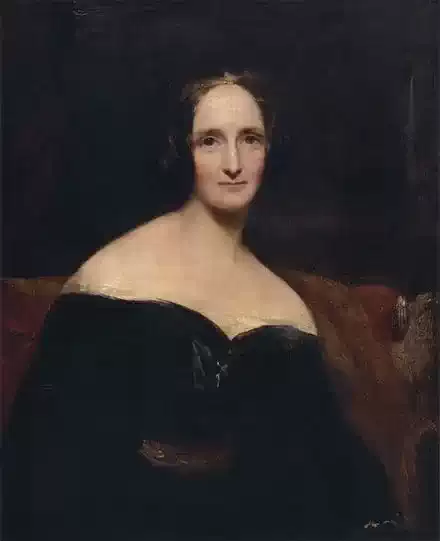
Percy Bysshe Shelley
To Jane
To Jane
The keen stars were twinkling
And the fair moon was rising among them,
Dear Jane:
The guitar was tinkling,
But the notes were not sweet till you sung them
Again.
As the moon's soft splendor
O'er the faint cold starlight of heaven
Is thrown,
So your voice most tender
To the strings without soul had then given
Its own.
The stars will awaken,
Though the moon sleep a full hour later,
Tonight;
No leaf will be shaken
Whilst the dews of your melody scatter
Delight.
Though the sound overpowers,
Sing again, with your dear voice revealing
A tone
Of some world far from ours
Where music and moonlight and feeling
Are one.
The keen stars were twinkling
And the fair moon was rising among them,
Dear Jane:
The guitar was tinkling,
But the notes were not sweet till you sung them
Again.
As the moon's soft splendor
O'er the faint cold starlight of heaven
Is thrown,
So your voice most tender
To the strings without soul had then given
Its own.
The stars will awaken,
Though the moon sleep a full hour later,
Tonight;
No leaf will be shaken
Whilst the dews of your melody scatter
Delight.
Though the sound overpowers,
Sing again, with your dear voice revealing
A tone
Of some world far from ours
Where music and moonlight and feeling
Are one.
483
Langston Hughes
Trumpet Player
Trumpet Player
The Negro
With the trumpet at his lips
Has dark moons of weariness
Beneath his eyes
where the smoldering memory
of slave ships
Blazed to the crack of whips
about thighs
The negro
with the trumpet at his lips
has a head of vibrant hair
tamed down,
patent-leathered now
until it gleams
like jetwere
jet a crown
the music
from the trumpet at his lips
is honey
mixed with liquid fire
the rhythm
from the trumpet at his lips
is ecstasy
distilled from old desire-
Desire
that is longing for the moon
where the moonlight's but a spotlight
in his eyes,
desire
that is longing for the sea
where the sea's a bar-glass
sucker size
The Negro
with the trumpet at his lips
whose jacket
Has a fine one-button roll,
does not know
upon what riff the music slips
It's hypodermic needle
to his soul
but softly
as the tune comes from his throat
trouble
mellows to a golden note
The Negro
With the trumpet at his lips
Has dark moons of weariness
Beneath his eyes
where the smoldering memory
of slave ships
Blazed to the crack of whips
about thighs
The negro
with the trumpet at his lips
has a head of vibrant hair
tamed down,
patent-leathered now
until it gleams
like jetwere
jet a crown
the music
from the trumpet at his lips
is honey
mixed with liquid fire
the rhythm
from the trumpet at his lips
is ecstasy
distilled from old desire-
Desire
that is longing for the moon
where the moonlight's but a spotlight
in his eyes,
desire
that is longing for the sea
where the sea's a bar-glass
sucker size
The Negro
with the trumpet at his lips
whose jacket
Has a fine one-button roll,
does not know
upon what riff the music slips
It's hypodermic needle
to his soul
but softly
as the tune comes from his throat
trouble
mellows to a golden note
414
John Keats
Ode To Apollo
Ode To Apollo
1.
In thy western halls of gold
When thou sittest in thy state,
Bards, that erst sublimely told
Heroic deeds, and sang of fate,
With fervour seize their adamantine lyres,
Whose chords are solid rays, and twinkle radiant fires.
2.
Here Homer with his nervous arms
Strikes the twanging harp of war,
And even the western splendour warms,
While the trumpets sound afar:
But, what creates the most intense surprise,
His soul looks out through renovated eyes.
3.
Then, through thy Temple wide, melodious swells
The sweet majestic tone of Maro's lyre:
The soul delighted on each accent dwells,-Enraptur'd
dwells,--not daring to respire,
The while he tells of grief around a funeral pyre.
4.
'Tis awful silence then again;
Expectant stand the spheres;
Breathless the laurell'd peers,
Nor move, till ends the lofty strain,
Nor move till Milton's tuneful thunders cease,
And leave once more the ravish'd heavens in peace.
5.
Thou biddest Shakespeare wave his hand,
And quickly forward spring
The Passions--a terrific band--
And each vibrates the string
That with its tyrant temper best accords,
While from their Master's lips pour forth the inspiring words.
6.
A silver trumpet Spenser blows,
And, as its martial notes to silence flee,
From a virgin chorus flows
A hymn in praise of spotless Chastity.
'Tis still! Wild warblings from the Aeolian lyre
Enchantment softly breathe, and tremblingly expire.
7.
Next thy Tasso's ardent numbers
Float along the pleased air,
Calling youth from idle slumbers,
Rousing them from Pleasure's lair:-www.
PoemHunter.com - The World's Poetry Archive
Then o'er the strings his fingers gently move,
And melt the soul to pity and to love.
8.
But when Thou joinest with the Nine,
And all the powers of song combine,
We listen here on earth:
Thy dying tones that fill the air,
And charm the ear of evening fair,
From thee, great God of Bards, receive their heavenly birth.
1.
In thy western halls of gold
When thou sittest in thy state,
Bards, that erst sublimely told
Heroic deeds, and sang of fate,
With fervour seize their adamantine lyres,
Whose chords are solid rays, and twinkle radiant fires.
2.
Here Homer with his nervous arms
Strikes the twanging harp of war,
And even the western splendour warms,
While the trumpets sound afar:
But, what creates the most intense surprise,
His soul looks out through renovated eyes.
3.
Then, through thy Temple wide, melodious swells
The sweet majestic tone of Maro's lyre:
The soul delighted on each accent dwells,-Enraptur'd
dwells,--not daring to respire,
The while he tells of grief around a funeral pyre.
4.
'Tis awful silence then again;
Expectant stand the spheres;
Breathless the laurell'd peers,
Nor move, till ends the lofty strain,
Nor move till Milton's tuneful thunders cease,
And leave once more the ravish'd heavens in peace.
5.
Thou biddest Shakespeare wave his hand,
And quickly forward spring
The Passions--a terrific band--
And each vibrates the string
That with its tyrant temper best accords,
While from their Master's lips pour forth the inspiring words.
6.
A silver trumpet Spenser blows,
And, as its martial notes to silence flee,
From a virgin chorus flows
A hymn in praise of spotless Chastity.
'Tis still! Wild warblings from the Aeolian lyre
Enchantment softly breathe, and tremblingly expire.
7.
Next thy Tasso's ardent numbers
Float along the pleased air,
Calling youth from idle slumbers,
Rousing them from Pleasure's lair:-www.
PoemHunter.com - The World's Poetry Archive
Then o'er the strings his fingers gently move,
And melt the soul to pity and to love.
8.
But when Thou joinest with the Nine,
And all the powers of song combine,
We listen here on earth:
Thy dying tones that fill the air,
And charm the ear of evening fair,
From thee, great God of Bards, receive their heavenly birth.
491
John Keats
Hyperion. Book III
Hyperion. Book III
Thus in altemate uproar and sad peace,
Amazed were those Titans utterly.
O leave them, Muse! O leave them to their woes;
For thou art weak to sing such tumults dire:
A solitary sorrow best befits
Thy lips, and antheming a lonely grief.
Leave them, O Muse! for thou anon wilt find
Many a fallen old Divinity
Wandering in vain about bewildered shores.
Meantime touch piously the Delphic harp,
And not a wind of heaven but will breathe
In aid soft warble from the Dorian flute;
For lo! 'tis for the Father of all verse.
Flush everything that hath a vermeil hue,
Let the rose glow intense and warm the air,
And let the clouds of even and of morn
Float in voluptuous fleeces o'er the hills;
Let the red wine within the goblet boil,
Cold as a bubbling well; let faint-lipp'd shells,
On sands, or in great deeps, vermilion turn
Through all their labyrinths; and let the maid
Blush keenly, as with some warm kiss surpris'd.
Chief isle of the embowered Cyclades,
Rejoice, O Delos, with thine olives green,
And poplars, and lawn-shading palms, and beech,
In which the Zephyr breathes the loudest song,
And hazels thick, dark-stemm'd beneath the shade:
Apollo is once more the golden theme!
Where was he, when the Giant of the sun
Stood bright, amid the sorrow of his peers?
Together had he left his mother fair
And his twin-sister sleeping in their bower,
And in the morning twilight wandered forth
Beside the osiers of a rivulet,
Full ankle-deep in lilies of the vale.
The nightingale had ceas'd, and a few stars
Were lingering in the heavens, while the thrush
Began calm-throated. Throughout all the isle
There was no covert, no retired cave,
Unhaunted by the murmurous noise of waves,
Though scarcely heard in many a green recess.
He listen'd, and he wept, and his bright tears
Went trickling down the golden bow he held.
Thus with half-shut suffused eyes he stood,
While from beneath some cumbrous boughs hard by
With solemn step an awful Goddess came,
And there was purport in her looks for him,
Which he with eager guess began to read
Perplex'd, the while melodiously he said:
'How cam'st thou over the unfooted sea?
Or hath that antique mien and robed form
Mov'd in these vales invisible till now?
Sure I have heard those vestments sweeping o'er
The fallen leaves, when I have sat alone
In cool mid-forest. Surely I have traced
The rustle of those ample skirts about
These grassy solitudes, and seen the flowers
Lift up their heads, as still the whisper pass'd.
Goddess! I have beheld those eyes before,
And their eternal calm, and all that face,
Or I have dream'd.'—-'Yes,' said the supreme shape,
'Thou hast dream'd of me; and awaking up
Didst find a lyre all golden by thy side,
Whose strings touch'd by thy fingers, all the vast
Unwearied ear of the whole universe
Listen'd in pain and pleasure at the birth
Of such new tuneful wonder. Is't not strange
That thou shouldst weep, so gifted? Tell me, youth,
What sorrow thou canst feel; for I am sad
When thou dost shed a tear: explain thy griefs
To one who in this lonely isle hath been
The watcher of thy sleep and hours of life,
From the young day when first thy infant hand
Pluck'd witless the weak flowers, till thine arm
Could bend that bow heroic to all times.
Show thy heart's secret to an ancient Power
Who hath forsaken old and sacred thrones
For prophecies of thee, and for the sake
Of loveliness new born.'—-Apollo then,
With sudden scrutiny and gloomless eyes,
Thus answer'd, while his white melodious throat
Throbb'd with the syllables.—-'Mnemosyne!
Thy name is on my tongue, I know not how;
Why should I tell thee what thou so well seest?
Why should I strive to show what from thy lips
Would come no mystery? For me, dark, dark,
And painful vile oblivion seals my eyes:
I strive to search wherefore I am so sad,
Until a melancholy numbs my limbs;
And then upon the grass I sit, and moan,
Like one who once had wings.—-O why should I
Feel curs'd and thwarted, when the liegeless air
Yields to my step aspirant? why should I
Spurn the green turf as hateful to my feet?
Goddess benign, point forth some unknown thing:
Are there not other regions than this isle?
What are the stars? There is the sun, the sun!
And the most patient brilliance of the moon!
And stars by thousands! Point me out the way
To any one particular beauteous star,
And I will flit into it with my lyre,
And make its silvery splendor pant with bliss.
I have heard the cloudy thunder: Where is power?
Whose hand, whose essence, what divinity
Makes this alarum in the elements,
While I here idle listen on the shores
In fearless yet in aching ignorance?
O tell me, lonely Goddess, by thy harp,
That waileth every morn and eventide,
Tell me why thus I rave about these groves!
Mute thou remainest—-Mute! yet I can read
A wondrous lesson in thy silent face:
Knowledge enormous makes a God of me.
Names, deeds, gray legends, dire events, rebellions,
Majesties, sovran voices, agonies,
Creations and destroyings, all at once
Pour into the wide hollows of my brain,
And deify me, as if some blithe wine
Or bright elixir peerless I had drunk,
And so become immortal.'—-Thus the God,
While his enkindled eyes, with level glance
Beneath his white soft temples, steadfast kept
Trembling with light upon Mnemosyne.
Soon wild commotions shook him, and made flush
All the immortal fairness of his limbs;
Most like the struggle at the gate of death;
Or liker still to one who should take leave
Of pale immortal death, and with a pang
As hot as death's is chill, with fierce convulse
Die into life: so young Apollo anguish'd:
His very hair, his golden tresses famed,
Kept undulation round his eager neck.
During the pain Mnemosyne upheld
Her arms as one who prophesied. At length
Apollo shriek'd;—-and lo! from all his limbs
Celestial * * * * * * * * * * * * * * * *
Thus in altemate uproar and sad peace,
Amazed were those Titans utterly.
O leave them, Muse! O leave them to their woes;
For thou art weak to sing such tumults dire:
A solitary sorrow best befits
Thy lips, and antheming a lonely grief.
Leave them, O Muse! for thou anon wilt find
Many a fallen old Divinity
Wandering in vain about bewildered shores.
Meantime touch piously the Delphic harp,
And not a wind of heaven but will breathe
In aid soft warble from the Dorian flute;
For lo! 'tis for the Father of all verse.
Flush everything that hath a vermeil hue,
Let the rose glow intense and warm the air,
And let the clouds of even and of morn
Float in voluptuous fleeces o'er the hills;
Let the red wine within the goblet boil,
Cold as a bubbling well; let faint-lipp'd shells,
On sands, or in great deeps, vermilion turn
Through all their labyrinths; and let the maid
Blush keenly, as with some warm kiss surpris'd.
Chief isle of the embowered Cyclades,
Rejoice, O Delos, with thine olives green,
And poplars, and lawn-shading palms, and beech,
In which the Zephyr breathes the loudest song,
And hazels thick, dark-stemm'd beneath the shade:
Apollo is once more the golden theme!
Where was he, when the Giant of the sun
Stood bright, amid the sorrow of his peers?
Together had he left his mother fair
And his twin-sister sleeping in their bower,
And in the morning twilight wandered forth
Beside the osiers of a rivulet,
Full ankle-deep in lilies of the vale.
The nightingale had ceas'd, and a few stars
Were lingering in the heavens, while the thrush
Began calm-throated. Throughout all the isle
There was no covert, no retired cave,
Unhaunted by the murmurous noise of waves,
Though scarcely heard in many a green recess.
He listen'd, and he wept, and his bright tears
Went trickling down the golden bow he held.
Thus with half-shut suffused eyes he stood,
While from beneath some cumbrous boughs hard by
With solemn step an awful Goddess came,
And there was purport in her looks for him,
Which he with eager guess began to read
Perplex'd, the while melodiously he said:
'How cam'st thou over the unfooted sea?
Or hath that antique mien and robed form
Mov'd in these vales invisible till now?
Sure I have heard those vestments sweeping o'er
The fallen leaves, when I have sat alone
In cool mid-forest. Surely I have traced
The rustle of those ample skirts about
These grassy solitudes, and seen the flowers
Lift up their heads, as still the whisper pass'd.
Goddess! I have beheld those eyes before,
And their eternal calm, and all that face,
Or I have dream'd.'—-'Yes,' said the supreme shape,
'Thou hast dream'd of me; and awaking up
Didst find a lyre all golden by thy side,
Whose strings touch'd by thy fingers, all the vast
Unwearied ear of the whole universe
Listen'd in pain and pleasure at the birth
Of such new tuneful wonder. Is't not strange
That thou shouldst weep, so gifted? Tell me, youth,
What sorrow thou canst feel; for I am sad
When thou dost shed a tear: explain thy griefs
To one who in this lonely isle hath been
The watcher of thy sleep and hours of life,
From the young day when first thy infant hand
Pluck'd witless the weak flowers, till thine arm
Could bend that bow heroic to all times.
Show thy heart's secret to an ancient Power
Who hath forsaken old and sacred thrones
For prophecies of thee, and for the sake
Of loveliness new born.'—-Apollo then,
With sudden scrutiny and gloomless eyes,
Thus answer'd, while his white melodious throat
Throbb'd with the syllables.—-'Mnemosyne!
Thy name is on my tongue, I know not how;
Why should I tell thee what thou so well seest?
Why should I strive to show what from thy lips
Would come no mystery? For me, dark, dark,
And painful vile oblivion seals my eyes:
I strive to search wherefore I am so sad,
Until a melancholy numbs my limbs;
And then upon the grass I sit, and moan,
Like one who once had wings.—-O why should I
Feel curs'd and thwarted, when the liegeless air
Yields to my step aspirant? why should I
Spurn the green turf as hateful to my feet?
Goddess benign, point forth some unknown thing:
Are there not other regions than this isle?
What are the stars? There is the sun, the sun!
And the most patient brilliance of the moon!
And stars by thousands! Point me out the way
To any one particular beauteous star,
And I will flit into it with my lyre,
And make its silvery splendor pant with bliss.
I have heard the cloudy thunder: Where is power?
Whose hand, whose essence, what divinity
Makes this alarum in the elements,
While I here idle listen on the shores
In fearless yet in aching ignorance?
O tell me, lonely Goddess, by thy harp,
That waileth every morn and eventide,
Tell me why thus I rave about these groves!
Mute thou remainest—-Mute! yet I can read
A wondrous lesson in thy silent face:
Knowledge enormous makes a God of me.
Names, deeds, gray legends, dire events, rebellions,
Majesties, sovran voices, agonies,
Creations and destroyings, all at once
Pour into the wide hollows of my brain,
And deify me, as if some blithe wine
Or bright elixir peerless I had drunk,
And so become immortal.'—-Thus the God,
While his enkindled eyes, with level glance
Beneath his white soft temples, steadfast kept
Trembling with light upon Mnemosyne.
Soon wild commotions shook him, and made flush
All the immortal fairness of his limbs;
Most like the struggle at the gate of death;
Or liker still to one who should take leave
Of pale immortal death, and with a pang
As hot as death's is chill, with fierce convulse
Die into life: so young Apollo anguish'd:
His very hair, his golden tresses famed,
Kept undulation round his eager neck.
During the pain Mnemosyne upheld
Her arms as one who prophesied. At length
Apollo shriek'd;—-and lo! from all his limbs
Celestial * * * * * * * * * * * * * * * *
506
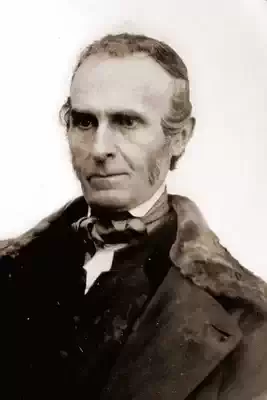
John Greenleaf Whittier
At Port Royal
At Port Royal
The tent-lights glimmer on the land,
The ship-lights on the sea;
The night-wind smooths with drifting sand
Our track on lone Tybee.
At last our grating keels outslide,
Our good boats forward swing;
And while we ride the land-locked tide,
Our negroes row and sing.
For dear the bondman holds his gifts
Of music and of song:
The gold that kindly Nature sifts
Among his sands of wrong;
The power to make his toiling days
And poor home-comforts please;
The quaint relief of mirth that plays
With sorrow's minor keys.
Another glow than sunset's fire
Has filled the West with light,
Where field and garner, barn and byre,
Are blazing through the night.
The land is wild with fear and hate,
The rout runs mad and fast;
From hand to hand, from gate to gate,
The flaming brand is passed.
The lurid glow falls strong across
Dark faces broad with smiles;
Not theirs the terror, hate, and loss
That fire yon blazing piles.
With oar-strokes timing to their song,
They weave in simple lays
The pathos of remembered wrong,
The hope of better days,—
The triumph-note that Miriam sung,
The joy of uncaged birds:
Softening with Afric's mellow tongue
Their broken Saxon words.
The tent-lights glimmer on the land,
The ship-lights on the sea;
The night-wind smooths with drifting sand
Our track on lone Tybee.
At last our grating keels outslide,
Our good boats forward swing;
And while we ride the land-locked tide,
Our negroes row and sing.
For dear the bondman holds his gifts
Of music and of song:
The gold that kindly Nature sifts
Among his sands of wrong;
The power to make his toiling days
And poor home-comforts please;
The quaint relief of mirth that plays
With sorrow's minor keys.
Another glow than sunset's fire
Has filled the West with light,
Where field and garner, barn and byre,
Are blazing through the night.
The land is wild with fear and hate,
The rout runs mad and fast;
From hand to hand, from gate to gate,
The flaming brand is passed.
The lurid glow falls strong across
Dark faces broad with smiles;
Not theirs the terror, hate, and loss
That fire yon blazing piles.
With oar-strokes timing to their song,
They weave in simple lays
The pathos of remembered wrong,
The hope of better days,—
The triumph-note that Miriam sung,
The joy of uncaged birds:
Softening with Afric's mellow tongue
Their broken Saxon words.
210
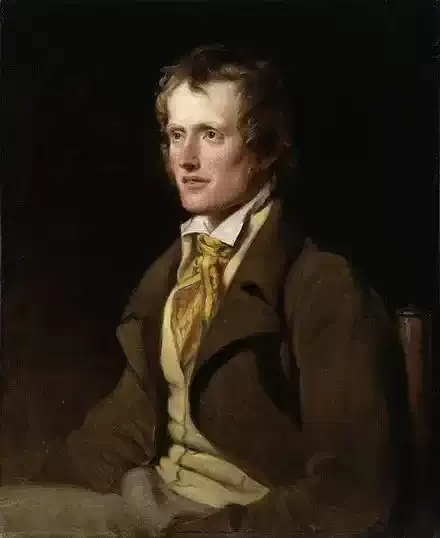
John Clare
Song's Eternity
Song's Eternity
What is song's eternity?
Come and see.
Can it noise and bustle be?
Come and see.
Praises sung or praises said
Can it be?
Wait awhile and these are dead -
Sigh, sigh;
Be they high or lowly bred
They die.
What is song's eternity?
Come and see.
Melodies of earth and sky,
Here they be.
Song once sung to Adam's ears
Can it be?
Ballads of six thousand years
Thrive, thrive;
Songs awaken with the spheres
Alive.
Mighty songs that miss decay,
What are they?
Crowds and cities pass away
Like a day.
Books are out and books are read;
What are they?
Years will lay them with the dead -
Sigh, sigh;
Trifles unto nothing wed,
They die.
Dreamers, mark the honey bee;
Mark the tree
Where the blue cap "tootle tee"
Sings a glee
Sung to Adam and to Eve -
Here they be.
When floods covered every bough,
Noah's ark
Heard that ballad singing now;
Hark, hark,
"Tootle tootle tootle tee" -
Can it be
Pride and fame must shadows be?
Come and see -
Every season owns her own;
Bird and bee
Sing creation's music on;
Nature's glee
Is in every mood and tone
Eternity.
What is song's eternity?
Come and see.
Can it noise and bustle be?
Come and see.
Praises sung or praises said
Can it be?
Wait awhile and these are dead -
Sigh, sigh;
Be they high or lowly bred
They die.
What is song's eternity?
Come and see.
Melodies of earth and sky,
Here they be.
Song once sung to Adam's ears
Can it be?
Ballads of six thousand years
Thrive, thrive;
Songs awaken with the spheres
Alive.
Mighty songs that miss decay,
What are they?
Crowds and cities pass away
Like a day.
Books are out and books are read;
What are they?
Years will lay them with the dead -
Sigh, sigh;
Trifles unto nothing wed,
They die.
Dreamers, mark the honey bee;
Mark the tree
Where the blue cap "tootle tee"
Sings a glee
Sung to Adam and to Eve -
Here they be.
When floods covered every bough,
Noah's ark
Heard that ballad singing now;
Hark, hark,
"Tootle tootle tootle tee" -
Can it be
Pride and fame must shadows be?
Come and see -
Every season owns her own;
Bird and bee
Sing creation's music on;
Nature's glee
Is in every mood and tone
Eternity.
408
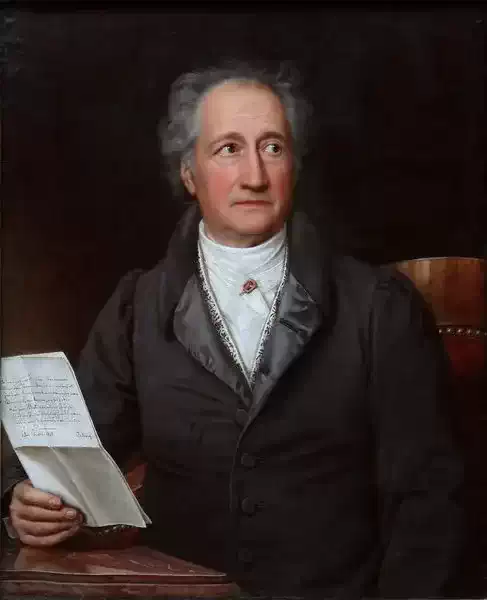
Johann Wolfgang von Goethe
Trilogy Of Passion 03 Atonement
Trilogy Of Passion 03 Atonement
PASSION brings reason--who can pacify
An anguish'd heart whose loss hath been so great?
Where are the hours that fled so swiftly by?
In vain the fairest thou didst gain from fate;
Sad is the soul, confused the enterprise;
The glorious world, how on the sense it dies!
In million tones entwined for evermore,
Music with angel-pinions hovers there,
To pierce man's being to its inmost core,
Eternal beauty has its fruit to bear;
The eye grows moist, in yearnings blest reveres
The godlike worth of music as of tears.
And so the lighten'd heart soon learns to see
That it still lives, and beats, and ought to beat,
Off'ring itself with joy and willingly,
In grateful payment for a gift so sweet.
And then was felt,--oh may it constant prove!--
The twofold bliss of music and of love.
PASSION brings reason--who can pacify
An anguish'd heart whose loss hath been so great?
Where are the hours that fled so swiftly by?
In vain the fairest thou didst gain from fate;
Sad is the soul, confused the enterprise;
The glorious world, how on the sense it dies!
In million tones entwined for evermore,
Music with angel-pinions hovers there,
To pierce man's being to its inmost core,
Eternal beauty has its fruit to bear;
The eye grows moist, in yearnings blest reveres
The godlike worth of music as of tears.
And so the lighten'd heart soon learns to see
That it still lives, and beats, and ought to beat,
Off'ring itself with joy and willingly,
In grateful payment for a gift so sweet.
And then was felt,--oh may it constant prove!--
The twofold bliss of music and of love.
364
Johann Wolfgang von Goethe
Minstrel's Book - The Four Favours
Minstrel's Book - The Four Favours
THAT Arabs through the realms of space
May wander on, light-hearted,
Great Allah hath, to all their race,
Four favours meet imparted.
The turban first--that ornament
All regal crowns excelling;
A light and ever-shifting tent,
Wherein to make our dwelling;
A sword, which, more than rocks and walls
Doth shield us, brightly glistening;
A song that profits and enthrall,
For which the maids are list'ning!
THAT Arabs through the realms of space
May wander on, light-hearted,
Great Allah hath, to all their race,
Four favours meet imparted.
The turban first--that ornament
All regal crowns excelling;
A light and ever-shifting tent,
Wherein to make our dwelling;
A sword, which, more than rocks and walls
Doth shield us, brightly glistening;
A song that profits and enthrall,
For which the maids are list'ning!
313
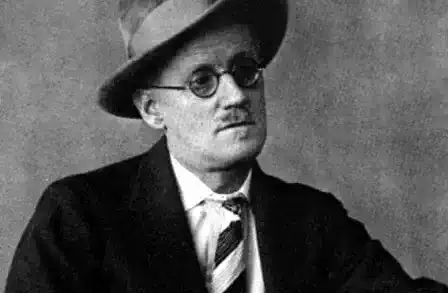
James Joyce
Strings in the Earth and Air
Strings in the Earth and Air
Strings in the earth and air
Make music sweet;
Strings by the river where
The willows meet.
There's music along the river
For Love wanders there,
Pale flowers on his mantle,
Dark leaves on his hair.
All softly playing,
With head to the music bent,
And fingers straying
Upon an instrument.
Strings in the earth and air
Make music sweet;
Strings by the river where
The willows meet.
There's music along the river
For Love wanders there,
Pale flowers on his mantle,
Dark leaves on his hair.
All softly playing,
With head to the music bent,
And fingers straying
Upon an instrument.
216
Horácio
BkII:XII Terentia’s Singing
BkII:XII Terentia’s Singing
You’d not wish the theme of Numantia’s fierce wars
matched to the lyre’s soft tones, nor cruel Hannibal,
nor the Sicilian Sea turned to dark crimson
by the Carthaginians’ blood,
nor the savage Lapiths, and drunken Hylaeus
filled with excess wine, nor Hercules with his hand
taming the sons of earth, at the danger of which
ancient Saturn’s glittering house
was shaken: you’d be better yourself, Maecenas,
at writing prose histories of Caesar’s battles,
and telling us about all those menacing kings,
now led by the neck through the streets.
The Muse wishes me to speak of the sweet singing
of your lady Terentia, and speak of her bright
flashing eyes, and speak of that heart of hers, that is
so faithful in mutual love:
she to whom it’s not unbecoming to adopt
the lead among the dancers, or compete in wit,
or, that holy day that honours Diana, give
her arm in play to shining girls.
Would you exchange now, one hair of Terentia’s
for what rich Achaemenes owned, Mygdonian
wealth of fertile Phrygia, or
the Arabians’ well-stocked homes,
while she bends her neck for those passionate kisses,
or in gentle cruelty refuses to yield them,
more than he who asks likes having them taken: then
at times surprises by taking?
You’d not wish the theme of Numantia’s fierce wars
matched to the lyre’s soft tones, nor cruel Hannibal,
nor the Sicilian Sea turned to dark crimson
by the Carthaginians’ blood,
nor the savage Lapiths, and drunken Hylaeus
filled with excess wine, nor Hercules with his hand
taming the sons of earth, at the danger of which
ancient Saturn’s glittering house
was shaken: you’d be better yourself, Maecenas,
at writing prose histories of Caesar’s battles,
and telling us about all those menacing kings,
now led by the neck through the streets.
The Muse wishes me to speak of the sweet singing
of your lady Terentia, and speak of her bright
flashing eyes, and speak of that heart of hers, that is
so faithful in mutual love:
she to whom it’s not unbecoming to adopt
the lead among the dancers, or compete in wit,
or, that holy day that honours Diana, give
her arm in play to shining girls.
Would you exchange now, one hair of Terentia’s
for what rich Achaemenes owned, Mygdonian
wealth of fertile Phrygia, or
the Arabians’ well-stocked homes,
while she bends her neck for those passionate kisses,
or in gentle cruelty refuses to yield them,
more than he who asks likes having them taken: then
at times surprises by taking?
201
Horácio
BkI:XXXII To the Lyre
BkI:XXXII To the Lyre
I’m called on. O Lyre, if I’ve ever played
idle things with you in the shade, that will live,
for a year or more, come and utter a song
now, of Italy:
you were first tuned by Alcaeus of Lesbos,
a man daring in war, yet still, amongst arms,
or after he’d moored his storm-driven boat
on a watery shore,
he sang of the Muses, Bacchus, and Venus
that boy of hers, Cupid, that hangs around her,
and that beautiful Lycus, with his dark eyes
and lovely dark hair.
O tortoiseshell, Phoebus’s glory, welcome
at the feasts of Jupiter, the almighty,
O sweet comfort and balm of our troubles, heal,
if I call you true!
I’m called on. O Lyre, if I’ve ever played
idle things with you in the shade, that will live,
for a year or more, come and utter a song
now, of Italy:
you were first tuned by Alcaeus of Lesbos,
a man daring in war, yet still, amongst arms,
or after he’d moored his storm-driven boat
on a watery shore,
he sang of the Muses, Bacchus, and Venus
that boy of hers, Cupid, that hangs around her,
and that beautiful Lycus, with his dark eyes
and lovely dark hair.
O tortoiseshell, Phoebus’s glory, welcome
at the feasts of Jupiter, the almighty,
O sweet comfort and balm of our troubles, heal,
if I call you true!
278
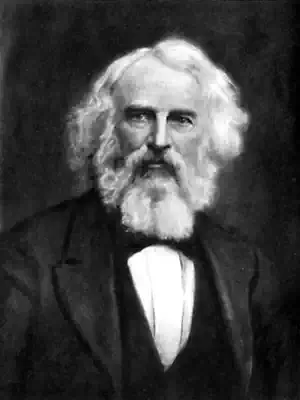
Henry Wadsworth Longfellow
Tales Of A Wayside Inn : Part 2. Interlude III.
Tales Of A Wayside Inn : Part 2. Interlude III.
'What was the end? I am ashamed
Not to remember Reynard's fate;
I have not read the book of late;
Was he not hanged?' the Poet said.
The Student gravely shook his head,
And answered: 'You exaggerate.
There was a tournament proclaimed,
And Reynard fought with Isegrim
The Wolf, and having vanquished him,
Rose to high honor in the State,
And Keeper of the Seals was named!'
At this the gay Sicilian laughed:
'Fight fire with fire, and craft with craft;
Successful cunning seems to be
The moral of your tale,' said he.
'Mine had a better, and the Jew's
Had none at all, that I could see;
His aim was only to amuse.'
Meanwhile from out its ebon case
His violin the Minstrel drew,
And having tuned its strings anew,
Now held it close in his embrace,
And poising in his outstretched hand
The bow, like a magician's wand,
He paused, and said, with beaming face:
'Last night my story was too long;
To-day I give you but a song,
An old tradition of the North;
But first, to put you in the mood,
I will a little while prelude,
And from this instrument draw forth
Something by way of overture.'
He played; at first the tones were pure
And tender as a summer night,
The full moon climbing to her height,
The sob and ripple of the seas,
The flapping of an idle sail;
And then by sudden and sharp degrees
The multiplied, wild harmonies
Freshened and burst into a gale;
A tempest howling through the dark,
A crash as of some shipwrecked bark.
A loud and melancholy wail.
Such was the prelude to the tale
Told by the Minstrel; and at times
He paused amid its varying rhymes,
And at each pause again broke in
The music of his violin,
With tones of sweetness or of fear,
Movements of trouble or of calm,
Creating their own atmosphere;
As sitting in a church we hear
Between the verses of the psalm
The organ playing soft and clear,
Or thundering on the startled ear.
'What was the end? I am ashamed
Not to remember Reynard's fate;
I have not read the book of late;
Was he not hanged?' the Poet said.
The Student gravely shook his head,
And answered: 'You exaggerate.
There was a tournament proclaimed,
And Reynard fought with Isegrim
The Wolf, and having vanquished him,
Rose to high honor in the State,
And Keeper of the Seals was named!'
At this the gay Sicilian laughed:
'Fight fire with fire, and craft with craft;
Successful cunning seems to be
The moral of your tale,' said he.
'Mine had a better, and the Jew's
Had none at all, that I could see;
His aim was only to amuse.'
Meanwhile from out its ebon case
His violin the Minstrel drew,
And having tuned its strings anew,
Now held it close in his embrace,
And poising in his outstretched hand
The bow, like a magician's wand,
He paused, and said, with beaming face:
'Last night my story was too long;
To-day I give you but a song,
An old tradition of the North;
But first, to put you in the mood,
I will a little while prelude,
And from this instrument draw forth
Something by way of overture.'
He played; at first the tones were pure
And tender as a summer night,
The full moon climbing to her height,
The sob and ripple of the seas,
The flapping of an idle sail;
And then by sudden and sharp degrees
The multiplied, wild harmonies
Freshened and burst into a gale;
A tempest howling through the dark,
A crash as of some shipwrecked bark.
A loud and melancholy wail.
Such was the prelude to the tale
Told by the Minstrel; and at times
He paused amid its varying rhymes,
And at each pause again broke in
The music of his violin,
With tones of sweetness or of fear,
Movements of trouble or of calm,
Creating their own atmosphere;
As sitting in a church we hear
Between the verses of the psalm
The organ playing soft and clear,
Or thundering on the startled ear.
326
Henry Wadsworth Longfellow
Tales Of A Wayside Inn : Part 1. Prelude; The Wayside Inn
Tales Of A Wayside Inn : Part 1. Prelude; The Wayside Inn
One Autumn night, in Sudbury town,
Across the meadows bare and brown,
The windows of the wayside inn
Gleamed red with fire-light through the leaves
Of woodbine, hanging from the eaves
Their crimson curtains rent and thin.
As ancient is this hostelry
As any in the land may be,
Built in the old Colonial day,
When men lived in a grander way,
With ampler hospitality;
A kind of old Hobgoblin Hall,
Now somewhat fallen to decay,
With weather-stains upon the wall,
And stairways worn, and crazy doors,
And creaking and uneven floors,
And chimneys huge, and tiled and tall.
A region of repose it seems,
A place of slumber and of dreams,
Remote among the wooded hills!
For there no noisy railway speeds,
Its torch-race scattering smoke and gleeds;
But noon and night, the panting teams
Stop under the great oaks, that throw
Tangles of light and shade below,
On roofs and doors and window-sills.
Across the road the barns display
Their lines of stalls, their mows of hay,
Through the wide doors the breezes blow,
The wattled cocks strut to and fro,
And, half effaced by rain and shine,
The Red Horse prances on the sign.
Round this old-fashioned, quaint abode
Deep silence reigned, save when a gust
Went rushing down the county road,
And skeletons of leaves, and dust,
A moment quickened by its breath,
Shuddered and danced their dance of death,
And through the ancient oaks o'erhead
Mysterious voices moaned and fled.
But from the parlor of the inn
A pleasant murmur smote the ear,
Like water rushing through a weir:
Oft interrupted by the din
Of laughter and of loud applause,
And, in each intervening pause,
The music of a violin.
The fire-light, shedding over all
The splendor of its ruddy glow,
Filled the whole parlor large and low;
It gleamed on wainscot and on wall,
It touched with more than wonted grace
Fair Princess Mary's pictured face;
It bronzed the rafters overhead,
On the old spinet's ivory keys
It played inaudible melodies,
It crowned the sombre clock with flame,
The hands, the hours, the maker's name,
And painted with a livelier red
The Landlord's coat-of-arms again;
And, flashing on the window-pane,
Emblazoned with its light and shade
The jovial rhymes, that still remain,
Writ near a century ago,
By the great Major Molineaux,
Whom Hawthorne has immortal made.
Before the blazing fire of wood
Erect the rapt musician stood;
And ever and anon he bent
His head upon his instrument,
And seemed to listen, till he caught
Confessions of its secret thought,--
The joy, the triumph, the lament,
The exultation and the pain;
Then, by the magic of his art,
He soothed the throbbings of its heart,
And lulled it into peace again.
Around the fireside at their ease
There sat a group of friends, entranced
With the delicious melodies
Who from the far-off noisy town
Had to the wayside inn come down,
To rest beneath its old oak-trees.
The fire-light on their faces glanced,
Their shadows on the wainscot danced,
And, though of different lands and speech,
Each had his tale to tell, and each
Was anxious to be pleased and please.
And while the sweet musician plays,
Let me in outline sketch them all,
Perchance uncouthly as the blaze
With its uncertain touch portrays
Their shadowy semblance on the wall.
But first the Landlord will I trace;
Grave in his aspect and attire;
A man of ancient pedigree,
A Justice of the Peace was he,
Known in all Sudbury as 'The Squire.'
Proud was he of his name and race,
Of old Sir William and Sir Hugh,
And in the parlor, full in view,
His coat-of-arms, well framed and glazed,
Upon the wall in colors blazed;
He beareth gules upon his shield,
A chevron argent in the field,
With three wolf's-heads, and for the crest
A Wyvern part-per-pale addressed
Upon a helmet barred; below
The scroll reads, 'By the name of Howe.'
And over this, no longer bright,
Though glimmering with a latent light,
Was hung the sword his grandsire bore
In the rebellious days of yore,
Down there at Concord in the fight.
A youth was there, of quiet ways,
A Student of old books and days,
To whom all tongues and lands were known,
And yet a lover of his own;
With many a social virtue graced,
And yet a friend of solitude;
A man of such a genial mood
The heart of all things he embraced,
And yet of such fastidious taste,
He never found the best too good.
Books were his passion and delight,
And in his upper room at home
Stood many a rare and sumptuous tome,
In vellum bound, with gold bedight,
Great volumes garmented in white,
Recalling Florence, Pisa, Rome.
He loved the twilight that surrounds
The border-land of old romance;
Where glitter hauberk, helm, and lance,
And banner waves, and trumpet sounds,
And ladies ride with hawk on wrist,
And mighty warriors sweep along,
Magnified by the purple mist,
The dusk of centuries and of song.
The chronicles of Charlemagne,
Of Merlin and the Mort d'Arthure,
Mingled together in his brain
With tales of Flores and Blanchefleur,
Sir Ferumbras, Sir Eglamour,
Sir Launcelot, Sir Morgadour,
Sir Guy, Sir Bevis, Sir Gawain.
A young Sicilian, too, was there;
In sight of Etna born and bred,
Some breath of its volcanic air
Was glowing in his heart and brain,
And, being rebellious to his liege,
After Palermo's fatal siege,
Across the western seas he fled,
In good King Bomba's happy reign.
His face was like a summer night,
All flooded with a dusky light;
His hands were small; his teeth shone white
As sea-shells, when he smiled or spoke;
His sinews supple and strong as oak;
Clean shaven was he as a priest,
Who at the mass on Sunday sings,
Save that upon his upper lip
His beard, a good palm's length least,
Level and pointed at the tip,
Shot sideways, like a swallow's wings.
The poets read he o'er and o'er,
And most of all the Immortal Four
Of Italy; and next to those,
The story-telling bard of prose,
Who wrote the joyous Tuscan tales
Of the Decameron, that make
Fiesole's green hills and vales
Remembered for Boccaccio's sake.
Much too of music was his thought;
The melodies and measures fraught
With sunshine and the open air,
Of vineyards and the singing sea
Of his beloved Sicily;
And much it pleased him to peruse
The songs of the Sicilian muse,--
Bucolic songs by Meli sung
In the familiar peasant tongue,
That made men say, 'Behold! once more
The pitying gods to earth restore
Theocritus of Syracuse!'
A Spanish Jew from Alicant
With aspect grand and grave was there;
Vender of silks and fabrics rare,
And attar of rose from the Levant.
Like an old Patriarch he appeared,
Abraham or Isaac, or at least
Some later Prophet or High-Priest;
With lustrous eyes, and olive skin,
And, wildly tossed from cheeks and chin,
The tumbling cataract of his beard.
His garments breathed a spicy scent
Of cinnamon and sandal blent,
Like the soft aromatic gales
That meet the mariner, who sails
Through the Moluccas, and the seas
That wash the shores of Celebes.
All stories that recorded are
By Pierre Alphonse he knew by heart,
And it was rumored he could say
The Parables of Sandabar,
And all the Fables of Pilpay,
Or if not all, the greater part!
Well versed was he in Hebrew books,
Talmud and Targum, and the lore
Of Kabala; and evermore
There was a mystery in his looks;
His eyes seemed gazing far away,
As if in vision or in trance
He heard the solemn sackbut play,
And saw the Jewish maidens dance.
A Theologian, from the school
Of Cambridge on the Charles, was there;
Skilful alike with tongue and pen,
He preached to all men everywhere
The Gospel of the Golden Rule,
The New Commandment given to men,
Thinking the deed, and not the creed,
Would help us in our utmost need.
With reverent feet the earth he trod,
Nor banished nature from his plan,
But studied still with deep research
To build the Universal Church,
Lofty as in the love of God,
And ample as the wants of man.
A Poet, too, was there, whose verse
Was tender, musical, and terse;
The inspiration, the delight,
The gleam, the glory, the swift flight,
Of thoughts so sudden, that they seem
The revelations of a dream,
All these were his; but with them came
No envy of another's fame;
He did not find his sleep less sweet,
For music in some neighboring street
Nor rustling hear in every breeze
The laurels of Miltiades.
Honor and blessings on his head
While living, good report when dead,
Who, not too eager for renown,
Accepts, but does not clutch, the crown!
Last the Musician, as he stood
Illumined by that fire of wood;
Fair-haired, blue-eyed, his aspect blithe,
His figure tall and straight and lithe,
And every feature of his face
Revealing his Norwegian race;
A radiance, streaming from within,
Around his eyes and forehead beamed,
The Angel with the violin,
Painted by Raphael, he seemed.
He lived in that ideal world
Whose language is not speech, but song;
Around him evermore the throng
Of elves and sprites their dances whirled;
The Strömkarl sang, the cataract hurled
Its headlong waters from the height;
And mingled in the wild delight
The scream of sea-birds in their flight,
The rumor of the forest trees,
The plunge of the implacable seas,
The tumult of the wind at night,
Voices of eld, like trumpets blowing,
Old ballads, and wild melodies
Through mist and darkness pouring forth,
Like Elivagar's river flowing
Out of the glaciers of the North.
The instrument on which he played
Was in Cremona's workshops made,
By a great master of the past,
Ere yet was lost the art divine;
Fashioned of maple and of pine,
That in Tyrolean forests vast
Had rocked and wrestled with the blast;
Exquisite was it in design,
Perfect in each minutest part,
A marvel of the lutist's art;
And in its hollow chamber, thus,
The maker from whose hands it came
Had written his unrivalled name,-'
Antonius Stradivarius.'
And when he played, the atmosphere
Was filled with magic, and the ear
Caught echoes of that Harp of Gold,
Whose music had so weird a sound,
The hunted stag forgot to bound,
The leaping rivulet backward rolled,
The birds came down from bush and tree,
The dead came from beneath the sea,
The maiden to the harper's knee!
The music ceased; the applause was loud,
The pleased musician smiled and bowed;
The wood-fire clapped its hands of flame,
The shadows on the wainscot stirred,
And from the harpsichord there came
A ghostly murmur of acclaim,
A sound like that sent down at night
By birds of passage in their flight,
From the remotest distance heard.
Then silence followed; then began
A clamor for the Landlord's tale,--
The story promised them of old,
They said, but always left untold;
And he, although a bashful man,
And all his courage seemed to fail,
Finding excuse of no avail,
Yielded; and thus the story ran.
One Autumn night, in Sudbury town,
Across the meadows bare and brown,
The windows of the wayside inn
Gleamed red with fire-light through the leaves
Of woodbine, hanging from the eaves
Their crimson curtains rent and thin.
As ancient is this hostelry
As any in the land may be,
Built in the old Colonial day,
When men lived in a grander way,
With ampler hospitality;
A kind of old Hobgoblin Hall,
Now somewhat fallen to decay,
With weather-stains upon the wall,
And stairways worn, and crazy doors,
And creaking and uneven floors,
And chimneys huge, and tiled and tall.
A region of repose it seems,
A place of slumber and of dreams,
Remote among the wooded hills!
For there no noisy railway speeds,
Its torch-race scattering smoke and gleeds;
But noon and night, the panting teams
Stop under the great oaks, that throw
Tangles of light and shade below,
On roofs and doors and window-sills.
Across the road the barns display
Their lines of stalls, their mows of hay,
Through the wide doors the breezes blow,
The wattled cocks strut to and fro,
And, half effaced by rain and shine,
The Red Horse prances on the sign.
Round this old-fashioned, quaint abode
Deep silence reigned, save when a gust
Went rushing down the county road,
And skeletons of leaves, and dust,
A moment quickened by its breath,
Shuddered and danced their dance of death,
And through the ancient oaks o'erhead
Mysterious voices moaned and fled.
But from the parlor of the inn
A pleasant murmur smote the ear,
Like water rushing through a weir:
Oft interrupted by the din
Of laughter and of loud applause,
And, in each intervening pause,
The music of a violin.
The fire-light, shedding over all
The splendor of its ruddy glow,
Filled the whole parlor large and low;
It gleamed on wainscot and on wall,
It touched with more than wonted grace
Fair Princess Mary's pictured face;
It bronzed the rafters overhead,
On the old spinet's ivory keys
It played inaudible melodies,
It crowned the sombre clock with flame,
The hands, the hours, the maker's name,
And painted with a livelier red
The Landlord's coat-of-arms again;
And, flashing on the window-pane,
Emblazoned with its light and shade
The jovial rhymes, that still remain,
Writ near a century ago,
By the great Major Molineaux,
Whom Hawthorne has immortal made.
Before the blazing fire of wood
Erect the rapt musician stood;
And ever and anon he bent
His head upon his instrument,
And seemed to listen, till he caught
Confessions of its secret thought,--
The joy, the triumph, the lament,
The exultation and the pain;
Then, by the magic of his art,
He soothed the throbbings of its heart,
And lulled it into peace again.
Around the fireside at their ease
There sat a group of friends, entranced
With the delicious melodies
Who from the far-off noisy town
Had to the wayside inn come down,
To rest beneath its old oak-trees.
The fire-light on their faces glanced,
Their shadows on the wainscot danced,
And, though of different lands and speech,
Each had his tale to tell, and each
Was anxious to be pleased and please.
And while the sweet musician plays,
Let me in outline sketch them all,
Perchance uncouthly as the blaze
With its uncertain touch portrays
Their shadowy semblance on the wall.
But first the Landlord will I trace;
Grave in his aspect and attire;
A man of ancient pedigree,
A Justice of the Peace was he,
Known in all Sudbury as 'The Squire.'
Proud was he of his name and race,
Of old Sir William and Sir Hugh,
And in the parlor, full in view,
His coat-of-arms, well framed and glazed,
Upon the wall in colors blazed;
He beareth gules upon his shield,
A chevron argent in the field,
With three wolf's-heads, and for the crest
A Wyvern part-per-pale addressed
Upon a helmet barred; below
The scroll reads, 'By the name of Howe.'
And over this, no longer bright,
Though glimmering with a latent light,
Was hung the sword his grandsire bore
In the rebellious days of yore,
Down there at Concord in the fight.
A youth was there, of quiet ways,
A Student of old books and days,
To whom all tongues and lands were known,
And yet a lover of his own;
With many a social virtue graced,
And yet a friend of solitude;
A man of such a genial mood
The heart of all things he embraced,
And yet of such fastidious taste,
He never found the best too good.
Books were his passion and delight,
And in his upper room at home
Stood many a rare and sumptuous tome,
In vellum bound, with gold bedight,
Great volumes garmented in white,
Recalling Florence, Pisa, Rome.
He loved the twilight that surrounds
The border-land of old romance;
Where glitter hauberk, helm, and lance,
And banner waves, and trumpet sounds,
And ladies ride with hawk on wrist,
And mighty warriors sweep along,
Magnified by the purple mist,
The dusk of centuries and of song.
The chronicles of Charlemagne,
Of Merlin and the Mort d'Arthure,
Mingled together in his brain
With tales of Flores and Blanchefleur,
Sir Ferumbras, Sir Eglamour,
Sir Launcelot, Sir Morgadour,
Sir Guy, Sir Bevis, Sir Gawain.
A young Sicilian, too, was there;
In sight of Etna born and bred,
Some breath of its volcanic air
Was glowing in his heart and brain,
And, being rebellious to his liege,
After Palermo's fatal siege,
Across the western seas he fled,
In good King Bomba's happy reign.
His face was like a summer night,
All flooded with a dusky light;
His hands were small; his teeth shone white
As sea-shells, when he smiled or spoke;
His sinews supple and strong as oak;
Clean shaven was he as a priest,
Who at the mass on Sunday sings,
Save that upon his upper lip
His beard, a good palm's length least,
Level and pointed at the tip,
Shot sideways, like a swallow's wings.
The poets read he o'er and o'er,
And most of all the Immortal Four
Of Italy; and next to those,
The story-telling bard of prose,
Who wrote the joyous Tuscan tales
Of the Decameron, that make
Fiesole's green hills and vales
Remembered for Boccaccio's sake.
Much too of music was his thought;
The melodies and measures fraught
With sunshine and the open air,
Of vineyards and the singing sea
Of his beloved Sicily;
And much it pleased him to peruse
The songs of the Sicilian muse,--
Bucolic songs by Meli sung
In the familiar peasant tongue,
That made men say, 'Behold! once more
The pitying gods to earth restore
Theocritus of Syracuse!'
A Spanish Jew from Alicant
With aspect grand and grave was there;
Vender of silks and fabrics rare,
And attar of rose from the Levant.
Like an old Patriarch he appeared,
Abraham or Isaac, or at least
Some later Prophet or High-Priest;
With lustrous eyes, and olive skin,
And, wildly tossed from cheeks and chin,
The tumbling cataract of his beard.
His garments breathed a spicy scent
Of cinnamon and sandal blent,
Like the soft aromatic gales
That meet the mariner, who sails
Through the Moluccas, and the seas
That wash the shores of Celebes.
All stories that recorded are
By Pierre Alphonse he knew by heart,
And it was rumored he could say
The Parables of Sandabar,
And all the Fables of Pilpay,
Or if not all, the greater part!
Well versed was he in Hebrew books,
Talmud and Targum, and the lore
Of Kabala; and evermore
There was a mystery in his looks;
His eyes seemed gazing far away,
As if in vision or in trance
He heard the solemn sackbut play,
And saw the Jewish maidens dance.
A Theologian, from the school
Of Cambridge on the Charles, was there;
Skilful alike with tongue and pen,
He preached to all men everywhere
The Gospel of the Golden Rule,
The New Commandment given to men,
Thinking the deed, and not the creed,
Would help us in our utmost need.
With reverent feet the earth he trod,
Nor banished nature from his plan,
But studied still with deep research
To build the Universal Church,
Lofty as in the love of God,
And ample as the wants of man.
A Poet, too, was there, whose verse
Was tender, musical, and terse;
The inspiration, the delight,
The gleam, the glory, the swift flight,
Of thoughts so sudden, that they seem
The revelations of a dream,
All these were his; but with them came
No envy of another's fame;
He did not find his sleep less sweet,
For music in some neighboring street
Nor rustling hear in every breeze
The laurels of Miltiades.
Honor and blessings on his head
While living, good report when dead,
Who, not too eager for renown,
Accepts, but does not clutch, the crown!
Last the Musician, as he stood
Illumined by that fire of wood;
Fair-haired, blue-eyed, his aspect blithe,
His figure tall and straight and lithe,
And every feature of his face
Revealing his Norwegian race;
A radiance, streaming from within,
Around his eyes and forehead beamed,
The Angel with the violin,
Painted by Raphael, he seemed.
He lived in that ideal world
Whose language is not speech, but song;
Around him evermore the throng
Of elves and sprites their dances whirled;
The Strömkarl sang, the cataract hurled
Its headlong waters from the height;
And mingled in the wild delight
The scream of sea-birds in their flight,
The rumor of the forest trees,
The plunge of the implacable seas,
The tumult of the wind at night,
Voices of eld, like trumpets blowing,
Old ballads, and wild melodies
Through mist and darkness pouring forth,
Like Elivagar's river flowing
Out of the glaciers of the North.
The instrument on which he played
Was in Cremona's workshops made,
By a great master of the past,
Ere yet was lost the art divine;
Fashioned of maple and of pine,
That in Tyrolean forests vast
Had rocked and wrestled with the blast;
Exquisite was it in design,
Perfect in each minutest part,
A marvel of the lutist's art;
And in its hollow chamber, thus,
The maker from whose hands it came
Had written his unrivalled name,-'
Antonius Stradivarius.'
And when he played, the atmosphere
Was filled with magic, and the ear
Caught echoes of that Harp of Gold,
Whose music had so weird a sound,
The hunted stag forgot to bound,
The leaping rivulet backward rolled,
The birds came down from bush and tree,
The dead came from beneath the sea,
The maiden to the harper's knee!
The music ceased; the applause was loud,
The pleased musician smiled and bowed;
The wood-fire clapped its hands of flame,
The shadows on the wainscot stirred,
And from the harpsichord there came
A ghostly murmur of acclaim,
A sound like that sent down at night
By birds of passage in their flight,
From the remotest distance heard.
Then silence followed; then began
A clamor for the Landlord's tale,--
The story promised them of old,
They said, but always left untold;
And he, although a bashful man,
And all his courage seemed to fail,
Finding excuse of no avail,
Yielded; and thus the story ran.
424
Henry Wadsworth Longfellow
Carillon
Carillon
In the ancient town of Bruges,
In the quaint old Flemish city,
As the evening shades descended,
Low and loud and sweetly blended,
Low at times and loud at times,
And changing like a poet's rhymes,
Rang the beautiful wild chimes
From the Belfry in the market
Of the ancient town of Bruges.
Then, with deep sonorous clangor
Calmly answering their sweet anger,
When the wrangling bells had ended,
Slowly struck the clock eleven,
And, from out the silent heaven,
Silence on the town descended.
Silence, silence everywhere,
On the earth and in the air,
Save that footsteps here and there
Of some burgher home returning,
By the street lamps faintly burning,
For a moment woke the echoes
Of the ancient town of Bruges.
But amid my broken slumbers
Still I heard those magic numbers,
As they loud proclaimed the flight
And stolen marches of the night;
Till their chimes in sweet collision
Mingled with each wandering vision,
Mingled with the fortune-telling
Gypsy-bands of dreams and fancies,
Which amid the waste expanses
Of the silent land of trances
Have their solitary dwelling;
All else seemed asleep in Bruges,
In the quaint old Flemish city.
And I thought how like these chimes
Are the poet's airy rhymes,
All his rhymes and roundelays,
His conceits, and songs, and ditties,
From the belfry of his brain,
Scattered downward, though in vain,
On the roofs and stones of cities!
For by night the drowsy ear
Under its curtains cannot hear,
And by day men go their ways,
Hearing the music as they pass,
But deeming it no more, alas!
Than the hollow sound of brass.
Yet perchance a sleepless wight,
Lodging at some humble inn
In the narrow lanes of life,
When the dusk and hush of night
Shut out the incessant din
Of daylight and its toil and strife,
May listen with a calm delight
To the poet's melodies,
Till he hears, or dreams he hears,
Intermingled with the song,
Thoughts that he has cherished long;
Hears amid the chime and singing
The bells of his own village ringing,
And wakes, and finds his slumberous eyes
Wet with most delicious tears.
Thus dreamed I, as by night I lay
In Bruges, at the Fleur-de-Ble,
Listening with a wild delight
To the chimes that, through the night
Bang their changes from the Belfry
Of that quaint old Flemish city.
In the ancient town of Bruges,
In the quaint old Flemish city,
As the evening shades descended,
Low and loud and sweetly blended,
Low at times and loud at times,
And changing like a poet's rhymes,
Rang the beautiful wild chimes
From the Belfry in the market
Of the ancient town of Bruges.
Then, with deep sonorous clangor
Calmly answering their sweet anger,
When the wrangling bells had ended,
Slowly struck the clock eleven,
And, from out the silent heaven,
Silence on the town descended.
Silence, silence everywhere,
On the earth and in the air,
Save that footsteps here and there
Of some burgher home returning,
By the street lamps faintly burning,
For a moment woke the echoes
Of the ancient town of Bruges.
But amid my broken slumbers
Still I heard those magic numbers,
As they loud proclaimed the flight
And stolen marches of the night;
Till their chimes in sweet collision
Mingled with each wandering vision,
Mingled with the fortune-telling
Gypsy-bands of dreams and fancies,
Which amid the waste expanses
Of the silent land of trances
Have their solitary dwelling;
All else seemed asleep in Bruges,
In the quaint old Flemish city.
And I thought how like these chimes
Are the poet's airy rhymes,
All his rhymes and roundelays,
His conceits, and songs, and ditties,
From the belfry of his brain,
Scattered downward, though in vain,
On the roofs and stones of cities!
For by night the drowsy ear
Under its curtains cannot hear,
And by day men go their ways,
Hearing the music as they pass,
But deeming it no more, alas!
Than the hollow sound of brass.
Yet perchance a sleepless wight,
Lodging at some humble inn
In the narrow lanes of life,
When the dusk and hush of night
Shut out the incessant din
Of daylight and its toil and strife,
May listen with a calm delight
To the poet's melodies,
Till he hears, or dreams he hears,
Intermingled with the song,
Thoughts that he has cherished long;
Hears amid the chime and singing
The bells of his own village ringing,
And wakes, and finds his slumberous eyes
Wet with most delicious tears.
Thus dreamed I, as by night I lay
In Bruges, at the Fleur-de-Ble,
Listening with a wild delight
To the chimes that, through the night
Bang their changes from the Belfry
Of that quaint old Flemish city.
322
Henry Van Dyke
Pan Learns Music
Pan Learns Music
Limber-limbed, lazy god, stretched on the rock,
Where is sweet Echo, and where is your flock?
What are you making here? "Listen," said Pan, -"
Out of a river-reed music for man!"
Limber-limbed, lazy god, stretched on the rock,
Where is sweet Echo, and where is your flock?
What are you making here? "Listen," said Pan, -"
Out of a river-reed music for man!"
331