

Poems in this theme
Change and Transformation

Ella Wheeler Wilcox
Certitude
Certitude
There was a time when I was confident
That God's stupendous mystery of birth
Was mine to know. The wonder of it lent
New ecstasy and glory to the earth.
I heard no voice that uttered it aloud,
Nor was it written for me on a scroll;
Yet, if alone or in the common crowd,
I felt myself a consecrated soul.
My child leaped in its dark and silent room
And cried, 'I am,' though all unheard by men.
So leaps my spirit in the body's gloom
And cries, 'I live! I shall be born again.'
Elate with certitude towards death I go,
Nor doubt, nor argue, since I know, I know!
There was a time when I was confident
That God's stupendous mystery of birth
Was mine to know. The wonder of it lent
New ecstasy and glory to the earth.
I heard no voice that uttered it aloud,
Nor was it written for me on a scroll;
Yet, if alone or in the common crowd,
I felt myself a consecrated soul.
My child leaped in its dark and silent room
And cried, 'I am,' though all unheard by men.
So leaps my spirit in the body's gloom
And cries, 'I live! I shall be born again.'
Elate with certitude towards death I go,
Nor doubt, nor argue, since I know, I know!
289
Ella Wheeler Wilcox
After the Engagement
After the Engagement
Well, Mabel, 'tis over and ended---
The ball I wrote was to be;
And oh! it was perfectly splendid---
If you could have been here to see.
I've a thousand things to write you
That I know you are wanting to hear,
And one, that is sure to delight you---
I am wearing Joe's diamond, my dear!
Yes, mamma is quite ecstatic
That I am engaged to Joe;
She thinks I am rather erratic,
And feared that I might say "no."
But, Mabel, I'm twenty-seven
(Though nobody dreams it, dear),
And a fortune like Joe's isn't given
To lay at one's feet each year.
You know my old fancy for Harry---
Or, at least, I am certain you guessed
That it took all my sense not to marry
And go with that fellow out west.
But that was my very first season---
And Harry was poor as could be,
And mamma's good practical reason
Took all the romance out of me.
She whisked me off over the ocean,
And had me presented at court,
And got me all out of the notion
That ranch life out west was my forte.
Of course I have never repented--I'm
not such a goose of a thing;
But after I had consented
To Joe---and he gave me the ring---
I felt such a queer sensation.
I seemed to go into a trance,
Away from the music's pulsation,
Away from the lights and the dance.
And the wind o'er the wild prairie
Seemed blowing strong and free,
And it seemed not Joe, but Harry
Who was standing there close to me.
And the funniest feverish feeling
Went up from my feet to my head,
With little chills after it stealing---
And my hands got as numb as the dead.
A moment, and then it was over:
The diamond blazed up in my eyes,
And I saw in the face of my lover
A questioning, strange surprise.
Maybe 'twas the scent of the flowers,
That heavy with fragrance bloomed near,
But I didn't feel natural for hours;
It was odd now, wasn't it, dear?
Write soon to your fortunate Clara
Who has carried the prize away,
And say you'll come on when I marry;
I think it will happen in May.
Well, Mabel, 'tis over and ended---
The ball I wrote was to be;
And oh! it was perfectly splendid---
If you could have been here to see.
I've a thousand things to write you
That I know you are wanting to hear,
And one, that is sure to delight you---
I am wearing Joe's diamond, my dear!
Yes, mamma is quite ecstatic
That I am engaged to Joe;
She thinks I am rather erratic,
And feared that I might say "no."
But, Mabel, I'm twenty-seven
(Though nobody dreams it, dear),
And a fortune like Joe's isn't given
To lay at one's feet each year.
You know my old fancy for Harry---
Or, at least, I am certain you guessed
That it took all my sense not to marry
And go with that fellow out west.
But that was my very first season---
And Harry was poor as could be,
And mamma's good practical reason
Took all the romance out of me.
She whisked me off over the ocean,
And had me presented at court,
And got me all out of the notion
That ranch life out west was my forte.
Of course I have never repented--I'm
not such a goose of a thing;
But after I had consented
To Joe---and he gave me the ring---
I felt such a queer sensation.
I seemed to go into a trance,
Away from the music's pulsation,
Away from the lights and the dance.
And the wind o'er the wild prairie
Seemed blowing strong and free,
And it seemed not Joe, but Harry
Who was standing there close to me.
And the funniest feverish feeling
Went up from my feet to my head,
With little chills after it stealing---
And my hands got as numb as the dead.
A moment, and then it was over:
The diamond blazed up in my eyes,
And I saw in the face of my lover
A questioning, strange surprise.
Maybe 'twas the scent of the flowers,
That heavy with fragrance bloomed near,
But I didn't feel natural for hours;
It was odd now, wasn't it, dear?
Write soon to your fortunate Clara
Who has carried the prize away,
And say you'll come on when I marry;
I think it will happen in May.
413

Elizabeth Bishop
The Weed
The Weed
I dreamed that dead, and meditating,
I lay upon a grave, or bed,
(at least, some cold and close-built bower).
In the cold heart, its final thought
stood frozen, drawn immense and clear,
stiff and idle as I was there;
and we remained unchanged together
for a year, a minute, an hour.
Suddenly there was a motion,
as startling, there, to every sense
as an explosion. Then it dropped
to insistent, cautious creeping
in the region of the heart,
prodding me from desperate sleep.
I raised my head. A slight young weed
had pushed up through the heart and its
green head was nodding on the breast.
(All this was in the dark.)
It grew an inch like a blade of grass;
next, one leaf shot out of its side
a twisting, waving flag, and then
two leaves moved like a semaphore.
The stem grew thick. The nervous roots
reached to each side; the graceful head
changed its position mysteriously,
since there was neither sun nor moon
to catch its young attention.
The rooted heart began to change
(not beat) and then it split apart
and from it broke a flood of water.
Two rivers glanced off from the sides,
one to the right, one to the left,
two rushing, half-clear streams,
(the ribs made of them two cascades)
which assuredly, smooth as glass,
went off through the fine black grains of earth.
The weed was almost swept away;
it struggled with its leaves,
lifting them fringed with heavy drops.
A few drops fell upon my face
and in my eyes, so I could see
(or, in that black place, thought I saw)
that each drop contained a light,
a small, illuminated scene;
the weed-deflected stream was made
itself of racing images.
(As if a river should carry all
the scenes that it had once reflected
shut in its waters, and not floating
on momentary surfaces.)
The weed stood in the severed heart.
"What are you doing there?" I asked.
It lifted its head all dripping wet
(with my own thoughts?)
and answered then: "I grow," it said,
"but to divide your heart again."
I dreamed that dead, and meditating,
I lay upon a grave, or bed,
(at least, some cold and close-built bower).
In the cold heart, its final thought
stood frozen, drawn immense and clear,
stiff and idle as I was there;
and we remained unchanged together
for a year, a minute, an hour.
Suddenly there was a motion,
as startling, there, to every sense
as an explosion. Then it dropped
to insistent, cautious creeping
in the region of the heart,
prodding me from desperate sleep.
I raised my head. A slight young weed
had pushed up through the heart and its
green head was nodding on the breast.
(All this was in the dark.)
It grew an inch like a blade of grass;
next, one leaf shot out of its side
a twisting, waving flag, and then
two leaves moved like a semaphore.
The stem grew thick. The nervous roots
reached to each side; the graceful head
changed its position mysteriously,
since there was neither sun nor moon
to catch its young attention.
The rooted heart began to change
(not beat) and then it split apart
and from it broke a flood of water.
Two rivers glanced off from the sides,
one to the right, one to the left,
two rushing, half-clear streams,
(the ribs made of them two cascades)
which assuredly, smooth as glass,
went off through the fine black grains of earth.
The weed was almost swept away;
it struggled with its leaves,
lifting them fringed with heavy drops.
A few drops fell upon my face
and in my eyes, so I could see
(or, in that black place, thought I saw)
that each drop contained a light,
a small, illuminated scene;
the weed-deflected stream was made
itself of racing images.
(As if a river should carry all
the scenes that it had once reflected
shut in its waters, and not floating
on momentary surfaces.)
The weed stood in the severed heart.
"What are you doing there?" I asked.
It lifted its head all dripping wet
(with my own thoughts?)
and answered then: "I grow," it said,
"but to divide your heart again."
582
Elizabeth Bishop
Sleeping on the Ceiling
Sleeping on the Ceiling
It is so peaceful on the ceiling!
It is the Place de la Concorde.
The little crystal chandelier
is off, the fountain is in the dark.
Not a soul is in the park.
Below, where the wallpaper is peeling,
the Jardin des Plantes has locked its gates.
Those photographs are animals.
The mighty flowers and foliage rustle;
under the leaves the insects tunnel.
We must go under the wallpaper
to meet the insect-gladiator,
to battle with a net and trident,
and leave the fountain and the square
But oh, that we could sleep up there...
It is so peaceful on the ceiling!
It is the Place de la Concorde.
The little crystal chandelier
is off, the fountain is in the dark.
Not a soul is in the park.
Below, where the wallpaper is peeling,
the Jardin des Plantes has locked its gates.
Those photographs are animals.
The mighty flowers and foliage rustle;
under the leaves the insects tunnel.
We must go under the wallpaper
to meet the insect-gladiator,
to battle with a net and trident,
and leave the fountain and the square
But oh, that we could sleep up there...
489
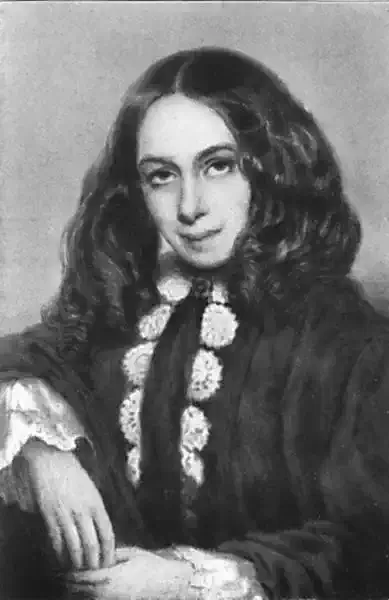
Elizabeth Barrett Browning
Sonnet XLII: My Future
Sonnet XLII: My Future
My future will not copy fair my past -
I wrote that once; and thinking at my side
My ministering life-angel justified
The word by his appealing look upcast
To the white throne of God, I turned at last,
And there, instead, saw thee, not unallied
To angels in thy soul! Then I, long tried
By natural ills, received the comfort fast,
While budding, at thy sight, my pilgrim's staff
Gave out green leaves with morning dews impearled.
I seek no copy now of life's first half:
Leave here the pages with long musing curled,
And write me new my future's epigraph,
New angel mine, unhoped for in the world!
My future will not copy fair my past -
I wrote that once; and thinking at my side
My ministering life-angel justified
The word by his appealing look upcast
To the white throne of God, I turned at last,
And there, instead, saw thee, not unallied
To angels in thy soul! Then I, long tried
By natural ills, received the comfort fast,
While budding, at thy sight, my pilgrim's staff
Gave out green leaves with morning dews impearled.
I seek no copy now of life's first half:
Leave here the pages with long musing curled,
And write me new my future's epigraph,
New angel mine, unhoped for in the world!
363
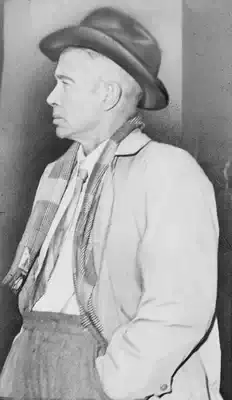
E. E. Cummings
Spring is like a perhaps hand
Spring is like a perhaps hand
Spring is like a perhaps hand
(which comes carefully
out of Nowhere)arranging
a window,into which people look(while
people stare
arranging and changing placing
carefully there a strange
thing and a known thing here)and
changing everything carefully
spring is like a perhaps
Hand in a window
(carefully to
and fro moving New and
Old things,while
people stare carefully
moving a perhaps
fraction of flower here placing
an inch of air there)and
without breaking anything.
Spring is like a perhaps hand
(which comes carefully
out of Nowhere)arranging
a window,into which people look(while
people stare
arranging and changing placing
carefully there a strange
thing and a known thing here)and
changing everything carefully
spring is like a perhaps
Hand in a window
(carefully to
and fro moving New and
Old things,while
people stare carefully
moving a perhaps
fraction of flower here placing
an inch of air there)and
without breaking anything.
630
E. E. Cummings
in time of daffodils(who know
in time of daffodils(who know
in time of daffodils(who know
the goal of living is to grow)
forgetting why,remember how
in time of lilacs who proclaim
the aim of waking is to dream,
remember so(forgetting seem)
in time of roses(who amaze
our now and here with paradise)
forgetting if,remember yes
in time of all sweet things beyond
whatever mind may comprehend,
remember seek(forgetting find)
and in a mystery to be
(when time from time shall set us free)
forgetting me,remember me
in time of daffodils(who know
the goal of living is to grow)
forgetting why,remember how
in time of lilacs who proclaim
the aim of waking is to dream,
remember so(forgetting seem)
in time of roses(who amaze
our now and here with paradise)
forgetting if,remember yes
in time of all sweet things beyond
whatever mind may comprehend,
remember seek(forgetting find)
and in a mystery to be
(when time from time shall set us free)
forgetting me,remember me
448
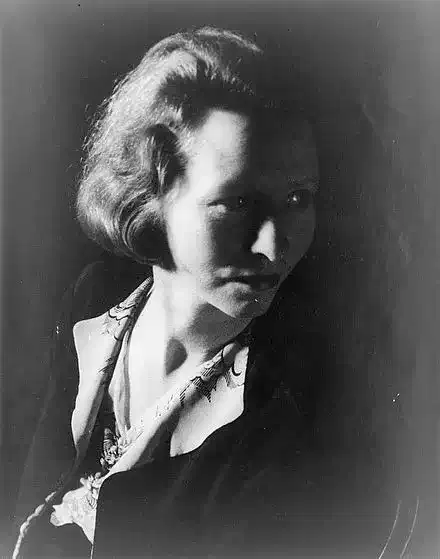
Edna St. Vincent Millay
Wild Swans
Wild Swans
I looked in my heart while the wild swans went over.
And what did I see I had not seen before?
Only a question less or a question more:
Nothing to match the flight of wild birds flying.
Tiresome heart, forever living and dying,
House without air, I leave you and lock your door.
Wild swans, come over the town, come over
The town again, trailing your legs and crying!
I looked in my heart while the wild swans went over.
And what did I see I had not seen before?
Only a question less or a question more:
Nothing to match the flight of wild birds flying.
Tiresome heart, forever living and dying,
House without air, I leave you and lock your door.
Wild swans, come over the town, come over
The town again, trailing your legs and crying!
328
Edna St. Vincent Millay
The Penitent
The Penitent
I had a little Sorrow,
Born of a little Sin,
I found a room all damp with gloom
And shut us all within;
And, "Little Sorrow, weep," said I,
"And, Little Sin, pray God to die,
And I upon the floor will lie
And think how bad I've been!"
Alas for pious planning—
It mattered not a whit!
As far as gloom went in that room,
The lamp might have been lit!
My little Sorrow would not weep,
My little Sin would go to sleep—
To save my soul I could not keep
My graceless mind on it!
So I got up in anger,
And took a book I had,
And put a ribbon on my hair
To please a passing lad,
And, "One thing there's no getting by—
I've been a wicked girl," said I:
"But if I can't be sorry, why,
I might as well be glad!"
I had a little Sorrow,
Born of a little Sin,
I found a room all damp with gloom
And shut us all within;
And, "Little Sorrow, weep," said I,
"And, Little Sin, pray God to die,
And I upon the floor will lie
And think how bad I've been!"
Alas for pious planning—
It mattered not a whit!
As far as gloom went in that room,
The lamp might have been lit!
My little Sorrow would not weep,
My little Sin would go to sleep—
To save my soul I could not keep
My graceless mind on it!
So I got up in anger,
And took a book I had,
And put a ribbon on my hair
To please a passing lad,
And, "One thing there's no getting by—
I've been a wicked girl," said I:
"But if I can't be sorry, why,
I might as well be glad!"
378
Edna St. Vincent Millay
Grown-up
Grown-up
Was it for this I uttered prayers,
And sobbed and cursed and kicked the stairs,
That now, domestic as a plate,
I should retire at half-past eight?
Was it for this I uttered prayers,
And sobbed and cursed and kicked the stairs,
That now, domestic as a plate,
I should retire at half-past eight?
339
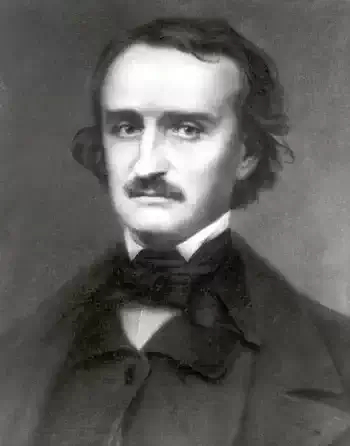
Edgar Allan Poe
The Haunted Palace
The Haunted Palace
In the greenest of our valleys
By good angels tenanted,
Once a fair and stately palaceRadiant
palace- reared its head.
In the monarch Thought's dominionIt
stood there!
Never seraph spread a pinion
Over fabric half so fair!
Banners yellow, glorious, golden,
On its roof did float and flow,
(This- all this- was in the olden
Time long ago,)
And every gentle air that dallied,
In that sweet day,
Along the ramparts plumed and pallid,
A winged odor went away.
Wanderers in that happy valley,
Through two luminous windows, saw
Spirits moving musically,
To a lute's well-tuned law,
Round about a throne where, sitting
(Porphyrogene!)
In state his glory well-befitting,
The ruler of the realm was seen.
And all with pearl and ruby glowing
Was the fair palace door,
Through which came flowing, flowing, flowing,
And sparkling evermore,
A troop of Echoes, whose sweet duty
Was but to sing,
In voices of surpassing beauty,
The wit and wisdom of their king.
But evil things, in robes of sorrow,
Assailed the monarch's high estate.
(Ah, let us mourn!- for never morrow
Shall dawn upon him desolate!)
And round about his home the glory
That blushed and bloomed,
Is but a dim-remembered story
Of the old time entombed.
And travellers, now, within that valley,
Through the red-litten windows see
Vast forms, that move fantastically
To a discordant melody,
While, like a ghastly rapid river,
Through the pale door
A hideous throng rush out forever
And laugh- but smile no more.
-THE END
.
In the greenest of our valleys
By good angels tenanted,
Once a fair and stately palaceRadiant
palace- reared its head.
In the monarch Thought's dominionIt
stood there!
Never seraph spread a pinion
Over fabric half so fair!
Banners yellow, glorious, golden,
On its roof did float and flow,
(This- all this- was in the olden
Time long ago,)
And every gentle air that dallied,
In that sweet day,
Along the ramparts plumed and pallid,
A winged odor went away.
Wanderers in that happy valley,
Through two luminous windows, saw
Spirits moving musically,
To a lute's well-tuned law,
Round about a throne where, sitting
(Porphyrogene!)
In state his glory well-befitting,
The ruler of the realm was seen.
And all with pearl and ruby glowing
Was the fair palace door,
Through which came flowing, flowing, flowing,
And sparkling evermore,
A troop of Echoes, whose sweet duty
Was but to sing,
In voices of surpassing beauty,
The wit and wisdom of their king.
But evil things, in robes of sorrow,
Assailed the monarch's high estate.
(Ah, let us mourn!- for never morrow
Shall dawn upon him desolate!)
And round about his home the glory
That blushed and bloomed,
Is but a dim-remembered story
Of the old time entombed.
And travellers, now, within that valley,
Through the red-litten windows see
Vast forms, that move fantastically
To a discordant melody,
While, like a ghastly rapid river,
Through the pale door
A hideous throng rush out forever
And laugh- but smile no more.
-THE END
.
695

Dylan Thomas
When I Woke
When I Woke
When I woke, the town spoke.
Birds and clocks and cross bells
Dinned aside the coiling crowd,
The reptile profligates in a flame,
Spoilers and pokers of sleep,
The next-door sea dispelled
Frogs and satans and woman-luck,
While a man outside with a billhook,
Up to his head in his blood,
Cutting the morning off,
The warm-veined double of Time
And his scarving beard from a book,
Slashed down the last snake as though
It were a wand or subtle bough,
Its tongue peeled in the wrap of a leaf.
Every morning I make,
God in bed, good and bad,
After a water-face walk,
The death-stagged scatter-breath
Mammoth and sparrowfall
Everybody's earth.
Where birds ride like leaves and boats like ducks
I heard, this morning, waking,
Crossly out of the town noises
A voice in the erected air,
No prophet-progeny of mine,
Cry my sea town was breaking.
No Time, spoke the clocks, no God, rang the bells,
I drew the white sheet over the islands
And the coins on my eyelids sang like shells.
When I woke, the town spoke.
Birds and clocks and cross bells
Dinned aside the coiling crowd,
The reptile profligates in a flame,
Spoilers and pokers of sleep,
The next-door sea dispelled
Frogs and satans and woman-luck,
While a man outside with a billhook,
Up to his head in his blood,
Cutting the morning off,
The warm-veined double of Time
And his scarving beard from a book,
Slashed down the last snake as though
It were a wand or subtle bough,
Its tongue peeled in the wrap of a leaf.
Every morning I make,
God in bed, good and bad,
After a water-face walk,
The death-stagged scatter-breath
Mammoth and sparrowfall
Everybody's earth.
Where birds ride like leaves and boats like ducks
I heard, this morning, waking,
Crossly out of the town noises
A voice in the erected air,
No prophet-progeny of mine,
Cry my sea town was breaking.
No Time, spoke the clocks, no God, rang the bells,
I drew the white sheet over the islands
And the coins on my eyelids sang like shells.
412
Dylan Thomas
The Seed-At-Zero
The Seed-At-Zero
The seed-at-zero shall not storm
That town of ghosts, the trodden womb,
With her rampart to his tapping,
No god-in-hero tumble down
Like a tower on the town
Dumbly and divinely stumbling
Over the manwaging line.
The seed-at-zero shall not storm
That town of ghosts, the manwaged tomb
With her rampart to his tapping,
No god-in-hero tumble down
Like a tower on the town
Dumbly and divinely leaping
Over the warbearing line.
Through the rampart of the sky
Shall the star-flanked seed be riddled,
Manna for the rumbling ground,
Quickening for the riddled sea;
Settled on a virgin stronghold
He shall grapple with the guard
And the keeper of the key.
May a humble village labour
And a continent deny?
A hemisphere may scold him
And a green inch be his bearer;
Let the hero seed find harbour,
Seaports by a drunken shore
Have their thirsty sailors hide him.
May be a humble planet labour
And a continent deny?
A village green may scold him
And a high sphere be his bearer;
Let the hero seed find harbour,
Seaports by a thirsty shore
Have their drunken sailors hide him.
Man-in-seed, in seed-at-zero,
From the foreign fields of space,
Shall not thunder on the town
With a star-flanked garrison,
Nor the cannons of his kingdom
Shall the hero-in-tomorrow
Range on the sky-scraping place.
Man-in-seed, in seed-at-zero,
From the star-flanked fields of space,
Thunders on the foreign town
With a sand-bagged garrison,
Nor the cannons of his kingdom
Shall the hero-in-to-morrow
Range from the grave-groping place.
The seed-at-zero shall not storm
That town of ghosts, the trodden womb,
With her rampart to his tapping,
No god-in-hero tumble down
Like a tower on the town
Dumbly and divinely stumbling
Over the manwaging line.
The seed-at-zero shall not storm
That town of ghosts, the manwaged tomb
With her rampart to his tapping,
No god-in-hero tumble down
Like a tower on the town
Dumbly and divinely leaping
Over the warbearing line.
Through the rampart of the sky
Shall the star-flanked seed be riddled,
Manna for the rumbling ground,
Quickening for the riddled sea;
Settled on a virgin stronghold
He shall grapple with the guard
And the keeper of the key.
May a humble village labour
And a continent deny?
A hemisphere may scold him
And a green inch be his bearer;
Let the hero seed find harbour,
Seaports by a drunken shore
Have their thirsty sailors hide him.
May be a humble planet labour
And a continent deny?
A village green may scold him
And a high sphere be his bearer;
Let the hero seed find harbour,
Seaports by a thirsty shore
Have their drunken sailors hide him.
Man-in-seed, in seed-at-zero,
From the foreign fields of space,
Shall not thunder on the town
With a star-flanked garrison,
Nor the cannons of his kingdom
Shall the hero-in-tomorrow
Range on the sky-scraping place.
Man-in-seed, in seed-at-zero,
From the star-flanked fields of space,
Thunders on the foreign town
With a sand-bagged garrison,
Nor the cannons of his kingdom
Shall the hero-in-to-morrow
Range from the grave-groping place.
230
Dylan Thomas
January 1939
January 1939
Because the pleasure-bird whistles after the hot wires,
Shall the blind horse sing sweeter?
Convenient bird and beast lie lodged to suffer
The supper and knives of a mood.
In the sniffed and poured snow on the tip of the tongue of the year
That clouts the spittle like bubbles with broken rooms,
An enamoured man alone by the twigs of his eyes, two fires,
Camped in the drug-white shower of nerves and food,
Savours the lick of the times through a deadly wood of hair
In a wind that plucked a goose,
Nor ever, as the wild tongue breaks its tombs,
Rounds to look at the red, wagged root.
Because there stands, one story out of the bum city,
That frozen wife whose juices drift like a fixed sea
Secretly in statuary,
Shall I, struck on the hot and rocking street,
Not spin to stare at an old year
Toppling and burning in the muddle of towers and galleries
Like the mauled pictures of boys?
The salt person and blasted place
I furnish with the meat of a fable.
If the dead starve, their stomachs turn to tumble
An upright man in the antipodes
Or spray-based and rock-chested sea:
Over the past table I repeat this present grace.
Because the pleasure-bird whistles after the hot wires,
Shall the blind horse sing sweeter?
Convenient bird and beast lie lodged to suffer
The supper and knives of a mood.
In the sniffed and poured snow on the tip of the tongue of the year
That clouts the spittle like bubbles with broken rooms,
An enamoured man alone by the twigs of his eyes, two fires,
Camped in the drug-white shower of nerves and food,
Savours the lick of the times through a deadly wood of hair
In a wind that plucked a goose,
Nor ever, as the wild tongue breaks its tombs,
Rounds to look at the red, wagged root.
Because there stands, one story out of the bum city,
That frozen wife whose juices drift like a fixed sea
Secretly in statuary,
Shall I, struck on the hot and rocking street,
Not spin to stare at an old year
Toppling and burning in the muddle of towers and galleries
Like the mauled pictures of boys?
The salt person and blasted place
I furnish with the meat of a fable.
If the dead starve, their stomachs turn to tumble
An upright man in the antipodes
Or spray-based and rock-chested sea:
Over the past table I repeat this present grace.
290
Dylan Thomas
I, In My Intricate Image
I, In My Intricate Image
I
I, in my intricate image, stride on two levels,
Forged in man's minerals, the brassy orator
Laying my ghost in metal,
The scales of this twin world tread on the double,
My half ghost in armour hold hard in death's corridor,
To my man-iron sidle.
Beginning with doom in the bulb, the spring unravels,
Bright as her spinning-wheels, the colic season
Worked on a world of petals;
She threads off the sap and needles, blood and bubble
Casts to the pine roots, raising man like a mountain
Out of the naked entrail.
Beginning with doom in the ghost, and the springing marvels,
Image of images, my metal phantom
Forcing forth through the harebell,
My man of leaves and the bronze root, mortal, unmortal,
I, in my fusion of rose and male motion,
Create this twin miracle.
This is the fortune of manhood: the natural peril,
A steeplejack tower, bonerailed and masterless,
No death more natural;
Thus the shadowless man or ox, and the pictured devil,
In seizure of silence commit the dead nuisance.
The natural parallel.
My images stalk the trees and the slant sap's tunnel,
No tread more perilous, the green steps and spire
Mount on man's footfall,
I with the wooden insect in the tree of nettles,
In the glass bed of grapes with snail and flower,
Hearing the weather fall.
Intricate manhood of ending, the invalid rivals,
Voyaging clockwise off the symboled harbour,
Finding the water final,
On the consumptives' terrace taking their two farewells,
Sail on the level, the departing adventure,
To the sea-blown arrival.
II
They climb the country pinnacle,
Twelve winds encounter by the white host at pasture,
Corner the mounted meadows in the hill corral;
They see the squirrel stumble,
The haring snail go giddily round the flower,
A quarrel of weathers and trees in the windy spiral.
As they dive, the dust settles,
The cadaverous gravels, falls thick and steadily,
The highroad of water where the seabear and mackerel
Turn the long sea arterial
Turning a petrol face blind to the enemy
Turning the riderless dead by the channel wall.
(Death instrumental,
Splitting the long eye open, and the spiral turnkey,
Your corkscrew grave centred in navel and nipple,
The neck of the nostril,
Under the mask and the ether, they making bloody
The tray of knives, the antiseptic funeral;
Bring out the black patrol,
Your monstrous officers and the decaying army,
The sexton sentinel, garrisoned under thistles,
A cock-on-a-dunghill
Crowing to Lazarus the morning is vanity,
Dust be your saviour under the conjured soil.)
As they drown, the chime travels,
Sweetly the diver's bell in the steeple of spindrift
Rings out the Dead Sea scale;
And, clapped in water till the triton dangles,
Strung by the flaxen whale-weed, from the hangman's raft,
Hear they the salt glass breakers and the tongues of burial.
(Turn the sea-spindle lateral,
The grooved land rotating, that the stylus of lightning
Dazzle this face of voices on the moon-turned table,
Let the wax disk babble
Shames and the damp dishonours, the relic scraping.
These are your years' recorders. The circular world stands still.)
III
They suffer the undead water where the turtle nibbles,
Come unto sea-stuck towers, at the fibre scaling,
The flight of the carnal skull
And the cell-stepped thimble;
Suffer, my topsy-turvies, that a double angel
Sprout from the stony lockers like a tree on Aran.
Be by your one ghost pierced, his pointed ferrule,
Brass and the bodiless image, on a stick of folly
Star-set at Jacob's angle,
Smoke hill and hophead's valley,
And the five-fathomed Hamlet on his father's coral
Thrusting the tom-thumb vision up the iron mile.
Suffer the slash of vision by the fin-green stubble,
Be by the ships' sea broken at the manstring anchored
The stoved bones' voyage downward
In the shipwreck of muscle;
Give over, lovers, locking, and the seawax struggle,
Love like a mist or fire through the bed of eels.
And in the pincers of the boiling circle,
The sea and instrument, nicked in the locks of time,
My great blood's iron single
In the pouring town,
I, in a wind on fire, from green Adam's cradle,
No man more magical, clawed out the crocodile.
Man was the scales, the death birds on enamel,
Tail, Nile, and snout, a saddler of the rushes,
Time in the hourless houses
Shaking the sea-hatched skull,
And, as for oils and ointments on the flying grail,
All-hollowed man wept for his white apparel.
Man was Cadaver's masker, the harnessing mantle,
Windily master of man was the rotten fathom,
My ghost in his metal neptune
Forged in man's mineral.
This was the god of beginning in the intricate seawhirl,
And my images roared and rose on heaven's hill.
I
I, in my intricate image, stride on two levels,
Forged in man's minerals, the brassy orator
Laying my ghost in metal,
The scales of this twin world tread on the double,
My half ghost in armour hold hard in death's corridor,
To my man-iron sidle.
Beginning with doom in the bulb, the spring unravels,
Bright as her spinning-wheels, the colic season
Worked on a world of petals;
She threads off the sap and needles, blood and bubble
Casts to the pine roots, raising man like a mountain
Out of the naked entrail.
Beginning with doom in the ghost, and the springing marvels,
Image of images, my metal phantom
Forcing forth through the harebell,
My man of leaves and the bronze root, mortal, unmortal,
I, in my fusion of rose and male motion,
Create this twin miracle.
This is the fortune of manhood: the natural peril,
A steeplejack tower, bonerailed and masterless,
No death more natural;
Thus the shadowless man or ox, and the pictured devil,
In seizure of silence commit the dead nuisance.
The natural parallel.
My images stalk the trees and the slant sap's tunnel,
No tread more perilous, the green steps and spire
Mount on man's footfall,
I with the wooden insect in the tree of nettles,
In the glass bed of grapes with snail and flower,
Hearing the weather fall.
Intricate manhood of ending, the invalid rivals,
Voyaging clockwise off the symboled harbour,
Finding the water final,
On the consumptives' terrace taking their two farewells,
Sail on the level, the departing adventure,
To the sea-blown arrival.
II
They climb the country pinnacle,
Twelve winds encounter by the white host at pasture,
Corner the mounted meadows in the hill corral;
They see the squirrel stumble,
The haring snail go giddily round the flower,
A quarrel of weathers and trees in the windy spiral.
As they dive, the dust settles,
The cadaverous gravels, falls thick and steadily,
The highroad of water where the seabear and mackerel
Turn the long sea arterial
Turning a petrol face blind to the enemy
Turning the riderless dead by the channel wall.
(Death instrumental,
Splitting the long eye open, and the spiral turnkey,
Your corkscrew grave centred in navel and nipple,
The neck of the nostril,
Under the mask and the ether, they making bloody
The tray of knives, the antiseptic funeral;
Bring out the black patrol,
Your monstrous officers and the decaying army,
The sexton sentinel, garrisoned under thistles,
A cock-on-a-dunghill
Crowing to Lazarus the morning is vanity,
Dust be your saviour under the conjured soil.)
As they drown, the chime travels,
Sweetly the diver's bell in the steeple of spindrift
Rings out the Dead Sea scale;
And, clapped in water till the triton dangles,
Strung by the flaxen whale-weed, from the hangman's raft,
Hear they the salt glass breakers and the tongues of burial.
(Turn the sea-spindle lateral,
The grooved land rotating, that the stylus of lightning
Dazzle this face of voices on the moon-turned table,
Let the wax disk babble
Shames and the damp dishonours, the relic scraping.
These are your years' recorders. The circular world stands still.)
III
They suffer the undead water where the turtle nibbles,
Come unto sea-stuck towers, at the fibre scaling,
The flight of the carnal skull
And the cell-stepped thimble;
Suffer, my topsy-turvies, that a double angel
Sprout from the stony lockers like a tree on Aran.
Be by your one ghost pierced, his pointed ferrule,
Brass and the bodiless image, on a stick of folly
Star-set at Jacob's angle,
Smoke hill and hophead's valley,
And the five-fathomed Hamlet on his father's coral
Thrusting the tom-thumb vision up the iron mile.
Suffer the slash of vision by the fin-green stubble,
Be by the ships' sea broken at the manstring anchored
The stoved bones' voyage downward
In the shipwreck of muscle;
Give over, lovers, locking, and the seawax struggle,
Love like a mist or fire through the bed of eels.
And in the pincers of the boiling circle,
The sea and instrument, nicked in the locks of time,
My great blood's iron single
In the pouring town,
I, in a wind on fire, from green Adam's cradle,
No man more magical, clawed out the crocodile.
Man was the scales, the death birds on enamel,
Tail, Nile, and snout, a saddler of the rushes,
Time in the hourless houses
Shaking the sea-hatched skull,
And, as for oils and ointments on the flying grail,
All-hollowed man wept for his white apparel.
Man was Cadaver's masker, the harnessing mantle,
Windily master of man was the rotten fathom,
My ghost in his metal neptune
Forged in man's mineral.
This was the god of beginning in the intricate seawhirl,
And my images roared and rose on heaven's hill.
255
Dylan Thomas
How Soon The Servant Sun
How Soon The Servant Sun
How soon the servant sun,
(Sir morrow mark),
Can time unriddle, and the cupboard stone,
(Fog has a bone
He'll trumpet into meat),
Unshelve that all my gristles have a gown
And the naked egg stand straight,
Sir morrow at his sponge,
(The wound records),
The nurse of giants by the cut sea basin,
(Fog by his spring
Soaks up the sewing tides),
Tells you and you, my masters, as his strange
Man morrow blows through food.
All nerves to serve the sun,
The rite of light,
A claw I question from the mouse's bone,
The long-tailed stone
Trap I with coil and sheet,
Let the soil squeal I am the biting man
And the velvet dead inch out.
How soon my level, lord,
(Sir morrow stamps
Two heels of water on the floor of seed),
Shall raise a lamp
Or spirit up a cloud,
Erect a walking centre in the shroud,
Invisible on the stump
A leg as long as trees,
This inward sir,
Mister and master, darkness for his eyes,
The womb-eyed, cries,
And all sweet hell, deaf as an hour's ear,
Blasts back the trumpet voice.
How soon the servant sun,
(Sir morrow mark),
Can time unriddle, and the cupboard stone,
(Fog has a bone
He'll trumpet into meat),
Unshelve that all my gristles have a gown
And the naked egg stand straight,
Sir morrow at his sponge,
(The wound records),
The nurse of giants by the cut sea basin,
(Fog by his spring
Soaks up the sewing tides),
Tells you and you, my masters, as his strange
Man morrow blows through food.
All nerves to serve the sun,
The rite of light,
A claw I question from the mouse's bone,
The long-tailed stone
Trap I with coil and sheet,
Let the soil squeal I am the biting man
And the velvet dead inch out.
How soon my level, lord,
(Sir morrow stamps
Two heels of water on the floor of seed),
Shall raise a lamp
Or spirit up a cloud,
Erect a walking centre in the shroud,
Invisible on the stump
A leg as long as trees,
This inward sir,
Mister and master, darkness for his eyes,
The womb-eyed, cries,
And all sweet hell, deaf as an hour's ear,
Blasts back the trumpet voice.
346
Dylan Thomas
Holy Spring
Holy Spring
O
Out of a bed of love
When that immortal hospital made one more moove to soothe
The curless counted body,
And ruin and his causes
Over the barbed and shooting sea assumed an army
And swept into our wounds and houses,
I climb to greet the war in which I have no heart but only
That one dark I owe my light,
Call for confessor and wiser mirror but there is none
To glow after the god stoning night
And I am struck as lonely as a holy marker by the sun
No
Praise that the spring time is all
Gabriel and radiant shrubbery as the morning grows joyful
Out of the woebegone pyre
And the multitude's sultry tear turns cool on the weeping wall,
My arising prodgidal
Sun the father his quiver full of the infants of pure fire,
But blessed be hail and upheaval
That uncalm still it is sure alone to stand and sing
Alone in the husk of man's home
And the mother and toppling house of the holy spring,
If only for a last time.
O
Out of a bed of love
When that immortal hospital made one more moove to soothe
The curless counted body,
And ruin and his causes
Over the barbed and shooting sea assumed an army
And swept into our wounds and houses,
I climb to greet the war in which I have no heart but only
That one dark I owe my light,
Call for confessor and wiser mirror but there is none
To glow after the god stoning night
And I am struck as lonely as a holy marker by the sun
No
Praise that the spring time is all
Gabriel and radiant shrubbery as the morning grows joyful
Out of the woebegone pyre
And the multitude's sultry tear turns cool on the weeping wall,
My arising prodgidal
Sun the father his quiver full of the infants of pure fire,
But blessed be hail and upheaval
That uncalm still it is sure alone to stand and sing
Alone in the husk of man's home
And the mother and toppling house of the holy spring,
If only for a last time.
337
Dylan Thomas
From Love's First Fever to Her Plague
From Love's First Fever to Her Plague
From love's first fever to her plague, from the soft second
And to the hollow minute of the womb,
From the unfolding to the scissored caul,
The time for breast and the green apron age
When no mouth stirred about the hanging famine,
All world was one, one windy nothing,
My world was christened in a stream of milk.
And earth and sky were as one airy hill.
The sun and mood shed one white light.
From the first print of the unshodden foot, the lifting
Hand, the breaking of the hair,
From the first scent of the heart, the warning ghost,
And to the first dumb wonder at the flesh,
The sun was red, the moon was grey,
The earth and sky were as two mountains meeting.
The body prospered, teeth in the marrowed gums,
The growing bones, the rumour of the manseed
Within the hallowed gland, blood blessed the heart,
And the four winds, that had long blown as one,
Shone in my ears the light of sound,
Called in my eyes the sound of light.
And yellow was the multiplying sand,
Each golden grain spat life into its fellow,
Green was the singing house.
The plum my mother picked matured slowly,
The boy she dropped from darkness at her side
Into the sided lap of light grew strong,
Was muscled, matted, wise to the crying thigh,
And to the voice that, like a voice of hunger,
Itched in the noise of wind and sun.
And from the first declension of the flesh
I learnt man's tongue, to twist the shapes of thoughts
Into the stony idiom of the brain,
To shade and knit anew the patch of words
Left by the dead who, in their moonless acre,
Need no word's warmth.
The root of tongues ends in a spentout cancer,
That but a name, where maggots have their X.
I learnt the verbs of will, and had my secret;
The code of night tapped on my tongue;
What had been one was many sounding minded.
One wound, one mind, spewed out the matter,
One breast gave suck the fever's issue;
From the divorcing sky I learnt the double,
The two-framed globe that spun into a score;
A million minds gave suck to such a bud
As forks my eye;
Youth did condense; the tears of spring
Dissolved in summer and the hundred seasons;
One sun, one manna, warmed and fed.
From love's first fever to her plague, from the soft second
And to the hollow minute of the womb,
From the unfolding to the scissored caul,
The time for breast and the green apron age
When no mouth stirred about the hanging famine,
All world was one, one windy nothing,
My world was christened in a stream of milk.
And earth and sky were as one airy hill.
The sun and mood shed one white light.
From the first print of the unshodden foot, the lifting
Hand, the breaking of the hair,
From the first scent of the heart, the warning ghost,
And to the first dumb wonder at the flesh,
The sun was red, the moon was grey,
The earth and sky were as two mountains meeting.
The body prospered, teeth in the marrowed gums,
The growing bones, the rumour of the manseed
Within the hallowed gland, blood blessed the heart,
And the four winds, that had long blown as one,
Shone in my ears the light of sound,
Called in my eyes the sound of light.
And yellow was the multiplying sand,
Each golden grain spat life into its fellow,
Green was the singing house.
The plum my mother picked matured slowly,
The boy she dropped from darkness at her side
Into the sided lap of light grew strong,
Was muscled, matted, wise to the crying thigh,
And to the voice that, like a voice of hunger,
Itched in the noise of wind and sun.
And from the first declension of the flesh
I learnt man's tongue, to twist the shapes of thoughts
Into the stony idiom of the brain,
To shade and knit anew the patch of words
Left by the dead who, in their moonless acre,
Need no word's warmth.
The root of tongues ends in a spentout cancer,
That but a name, where maggots have their X.
I learnt the verbs of will, and had my secret;
The code of night tapped on my tongue;
What had been one was many sounding minded.
One wound, one mind, spewed out the matter,
One breast gave suck the fever's issue;
From the divorcing sky I learnt the double,
The two-framed globe that spun into a score;
A million minds gave suck to such a bud
As forks my eye;
Youth did condense; the tears of spring
Dissolved in summer and the hundred seasons;
One sun, one manna, warmed and fed.
246
Dylan Thomas
Find Meat On Bones
Find Meat On Bones
'Find meat on bones that soon have none,
And drink in the two milked crags,
The merriest marrow and the dregs
Before the ladies' breasts are hags
And the limbs are torn.
Disturb no winding-sheets, my son,
But when the ladies are cold as stone
Then hang a ram rose over the rags.
'Rebel against the binding moon
And the parliament of sky,
The kingcrafts of the wicked sea,
Autocracy of night and day,
Dictatorship of sun.
Rebel against the flesh and bone,
The word of the blood, the wily skin,
And the maggot no man can slay.'
'The thirst is quenched, the hunger gone,
And my heart is cracked across;
My face is haggard in the glass,
My lips are withered with a kiss,
My breasts are thin.
A merry girl took me for man,
I laid her down and told her sin,
And put beside her a ram rose.
'The maggot that no man can kill
And the man no rope can hang
Rebel against my father's dream
That out of a bower of red swine
Howls the foul fiend to heel.
I cannot murder, like a fool,
Season and sunshine, grace and girl,
Nor can I smother the sweet waking.'
Black night still ministers the moon,
And the sky lays down her laws,
The sea speaks in a kingly voice,
Light and dark are no enemies
But one companion.
'War on the spider and the wren!
War on the destiny of man!
Doom on the sun!'
Before death takes you, O take back this.
'Find meat on bones that soon have none,
And drink in the two milked crags,
The merriest marrow and the dregs
Before the ladies' breasts are hags
And the limbs are torn.
Disturb no winding-sheets, my son,
But when the ladies are cold as stone
Then hang a ram rose over the rags.
'Rebel against the binding moon
And the parliament of sky,
The kingcrafts of the wicked sea,
Autocracy of night and day,
Dictatorship of sun.
Rebel against the flesh and bone,
The word of the blood, the wily skin,
And the maggot no man can slay.'
'The thirst is quenched, the hunger gone,
And my heart is cracked across;
My face is haggard in the glass,
My lips are withered with a kiss,
My breasts are thin.
A merry girl took me for man,
I laid her down and told her sin,
And put beside her a ram rose.
'The maggot that no man can kill
And the man no rope can hang
Rebel against my father's dream
That out of a bower of red swine
Howls the foul fiend to heel.
I cannot murder, like a fool,
Season and sunshine, grace and girl,
Nor can I smother the sweet waking.'
Black night still ministers the moon,
And the sky lays down her laws,
The sea speaks in a kingly voice,
Light and dark are no enemies
But one companion.
'War on the spider and the wren!
War on the destiny of man!
Doom on the sun!'
Before death takes you, O take back this.
341
Dylan Thomas
Because The Pleasure-Bird Whistles
Because The Pleasure-Bird Whistles
Because the pleasure-bird whistles after the hot wires,
Shall the blind horse sing sweeter?
Convenient bird and beast lie lodged to suffer
The supper and knives of a mood.
In the sniffed and poured snow on the tip of the tongue of the year
That clouts the spittle like bubbles with broken rooms,
An enamoured man alone by the twigs of his eyes, two fires,
Camped in the drug-white shower of nerves and food,
Savours the lick of the times through a deadly wood of hair
In a wind that plucked a goose,
Nor ever, as the wild tongue breaks its tombs,
Rounds to look at the red, wagged root.
Because there stands, one story out of the bum city,
That frozen wife whose juices drift like a fixed sea
Secretly in statuary,
Shall I, struck on the hot and rocking street,
Not spin to stare at an old year
Toppling and burning in the muddle of towers and galleries
Like the mauled pictures of boys?
The salt person and blasted place
I furnish with the meat of a fable;
If the dead starve, their stomachs turn to tumble
An upright man in the antipodes
Or spray-based and rock-chested sea:
Over the past table I repeat this present grace.
Because the pleasure-bird whistles after the hot wires,
Shall the blind horse sing sweeter?
Convenient bird and beast lie lodged to suffer
The supper and knives of a mood.
In the sniffed and poured snow on the tip of the tongue of the year
That clouts the spittle like bubbles with broken rooms,
An enamoured man alone by the twigs of his eyes, two fires,
Camped in the drug-white shower of nerves and food,
Savours the lick of the times through a deadly wood of hair
In a wind that plucked a goose,
Nor ever, as the wild tongue breaks its tombs,
Rounds to look at the red, wagged root.
Because there stands, one story out of the bum city,
That frozen wife whose juices drift like a fixed sea
Secretly in statuary,
Shall I, struck on the hot and rocking street,
Not spin to stare at an old year
Toppling and burning in the muddle of towers and galleries
Like the mauled pictures of boys?
The salt person and blasted place
I furnish with the meat of a fable;
If the dead starve, their stomachs turn to tumble
An upright man in the antipodes
Or spray-based and rock-chested sea:
Over the past table I repeat this present grace.
239
Dylan Thomas
A Process in the Weather of the Heart
A Process in the Weather of the Heart
A process in the weather of the heart
Turns damp to dry; the golden shot
Storms in the freezing tomb.
A weather in the quarter of the veins
Turns night to day; blood in their suns
Lights up the living worm.
A process in the eye forwarns
The bones of blindness; and the womb
Drives in a death as life leaks out.
A darkness in the weather of the eye
Is half its light; the fathomed sea
Breaks on unangled land.
The seed that makes a forest of the loin
Forks half its fruit; and half drops down,
Slow in a sleeping wind.
A weather in the flesh and bone
Is damp and dry; the quick and dead
Move like two ghosts before the eye.
A process in the weather of the world
Turns ghost to ghost; each mothered child
Sits in their double shade.
A process blows the moon into the sun,
Pulls down the shabby curtains of the skin;
And the heart gives up its dead.
A process in the weather of the heart
Turns damp to dry; the golden shot
Storms in the freezing tomb.
A weather in the quarter of the veins
Turns night to day; blood in their suns
Lights up the living worm.
A process in the eye forwarns
The bones of blindness; and the womb
Drives in a death as life leaks out.
A darkness in the weather of the eye
Is half its light; the fathomed sea
Breaks on unangled land.
The seed that makes a forest of the loin
Forks half its fruit; and half drops down,
Slow in a sleeping wind.
A weather in the flesh and bone
Is damp and dry; the quick and dead
Move like two ghosts before the eye.
A process in the weather of the world
Turns ghost to ghost; each mothered child
Sits in their double shade.
A process blows the moon into the sun,
Pulls down the shabby curtains of the skin;
And the heart gives up its dead.
220
Dylan Thomas
A Grief Ago
A Grief Ago
A grief ago,
She who was who I hold, the fats and the flower,
Or, water-lammed, from the scythe-sided thorn,
Hell wind and sea,
A stem cementing, wrestled up the tower,
Rose maid and male,
Or, master venus, through the paddler's bowl
Sailed up the sun;
Who is my grief,
A chrysalis unwrinkling on the iron,
Wrenched by my fingerman, the leaden bud
Shot through the leaf,
Was who was folded on the rod the aaron
Road east to plague,
The horn and ball of water on the frog
Housed in the side.
And she who lies,
Like exodus a chapter from the garden,
Brand of the lily's anger on her ring,
Tugged through the days
Her ropes of heritage, the wars of pardon,
On field and sand
The twelve triangles of the cherub wind
Engraving going.
Who then is she,
She holding me? The people's sea drives on her,
Drives out the father from the caesared camp;
The dens of shape
Shape all her whelps with the long voice of water,
That she I have,
The country-handed grave boxed into love,
Rise before dark.
The night is near,
A nitric shape that leaps her, time and acid;
I tell her this: before the suncock cast
Her bone to fire,
Let her inhale her dead, through seed and solid
Draw in their seas,
So cross her hand with their grave gipsy eyes,
And close her fist.
A grief ago,
She who was who I hold, the fats and the flower,
Or, water-lammed, from the scythe-sided thorn,
Hell wind and sea,
A stem cementing, wrestled up the tower,
Rose maid and male,
Or, master venus, through the paddler's bowl
Sailed up the sun;
Who is my grief,
A chrysalis unwrinkling on the iron,
Wrenched by my fingerman, the leaden bud
Shot through the leaf,
Was who was folded on the rod the aaron
Road east to plague,
The horn and ball of water on the frog
Housed in the side.
And she who lies,
Like exodus a chapter from the garden,
Brand of the lily's anger on her ring,
Tugged through the days
Her ropes of heritage, the wars of pardon,
On field and sand
The twelve triangles of the cherub wind
Engraving going.
Who then is she,
She holding me? The people's sea drives on her,
Drives out the father from the caesared camp;
The dens of shape
Shape all her whelps with the long voice of water,
That she I have,
The country-handed grave boxed into love,
Rise before dark.
The night is near,
A nitric shape that leaps her, time and acid;
I tell her this: before the suncock cast
Her bone to fire,
Let her inhale her dead, through seed and solid
Draw in their seas,
So cross her hand with their grave gipsy eyes,
And close her fist.
580
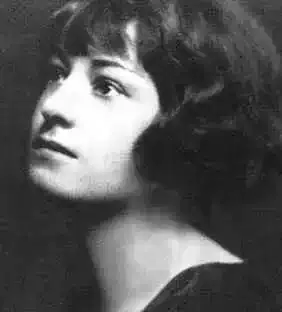
Dorothy Parker
Recurrence
Recurrence
We shall have our little day.
Take my hand and travel still
Round and round the little way,
Up and down the little hill.
It is good to love again;
Scan the renovated skies,
Dip and drive the idling pen,
Sweetly tint the paling lies.
Trace the dripping, pierced heart,
Speak the fair, insistent verse,
Vow to God, and slip apart,
Little better, Little worse.
Would we need not know before
How shall end this prettiness;
One of us must love the more,
One of us shall love the less.
Thus it is, and so it goes;
We shall have our day, my dear.
Where, unwilling, dies the rose
Buds the new, another year.
We shall have our little day.
Take my hand and travel still
Round and round the little way,
Up and down the little hill.
It is good to love again;
Scan the renovated skies,
Dip and drive the idling pen,
Sweetly tint the paling lies.
Trace the dripping, pierced heart,
Speak the fair, insistent verse,
Vow to God, and slip apart,
Little better, Little worse.
Would we need not know before
How shall end this prettiness;
One of us must love the more,
One of us shall love the less.
Thus it is, and so it goes;
We shall have our day, my dear.
Where, unwilling, dies the rose
Buds the new, another year.
407
Dorothy Parker
August
August
When my eyes are weeds,
And my lips are petals, spinning
Down the wind that has beginning
Where the crumpled beeches start
In a fringe of salty reeds;
When my arms are elder-bushes,
And the rangy lilac pushes
Upward, upward through my heart;
Summer, do your worst!
Light your tinsel moon, and call on
Your performing stars to fall on
Headlong through your paper sky;
Nevermore shall I be cursed
By a flushed and amorous slattern,
With her dusty laces' pattern
Trailing, as she straggles by.
When my eyes are weeds,
And my lips are petals, spinning
Down the wind that has beginning
Where the crumpled beeches start
In a fringe of salty reeds;
When my arms are elder-bushes,
And the rangy lilac pushes
Upward, upward through my heart;
Summer, do your worst!
Light your tinsel moon, and call on
Your performing stars to fall on
Headlong through your paper sky;
Nevermore shall I be cursed
By a flushed and amorous slattern,
With her dusty laces' pattern
Trailing, as she straggles by.
379