

Poems in this theme
Change and Transformation

Henry Lawson
The Unknown God
The Unknown God
The President to Kingdoms,
As in the Days of Old;
The King to the Republic,
As it had been foretold.
They could not read the spelling,
They would not hear the call;
They would not brook the telling
Of Writing on the Wall.
I buy my Peace with Slaughter,
With Peace I fashion War;
I drown the land with water,
With land I build the shore.
I walk with Son and Daughter
Where Ocean rolled before.
I build a town where sea was
A tower where tempests roar.
From bays in distant islands,
And rocks in lonely seas,
With unseen Death in silence
I smite mine enemies!
The great Cathedral crashes
Where once a city stood;
I build again on ashes
And breed on clotted blood!
I link the seas together,
And at my sign and will
The train runs on the ocean bed,
The great ship climbs the hill!
For pastime I flood deserts
With water from the rill;
And in my tireless leisure hours
I empty lakes, and fill.
I plumb the seas beneath us
And fathom skies above,
Yet I make Peace for hatred
And I make War for love.
I race beneath the ranges
And sit where Mystery dwells—
Yet mankind sees no changes,
They ask for “miracles!”
I own the world and span its
Lone lands from Pole to Pole;
I live in other planets,
Yet do not know my soul—
The soul that none may fathom,
Whose secrets none may tell,
The soul that none may humble,
The Soul Unconquerable!
I am the God of Ages!
I am the Unknown God!
My life is written pages
Wherever man hath trod.
From bounds of Polar regions,
To where the Desert reigns,
I’ve left my myriad legions
On countless vanished plains.
And I shall reign for ever
On earth while oceans roll,
In shape of man, or woman,
Through my immortal soul;
Yet I can love and suffer,
Be angry, or be mild,
And I can bow me down and weep
Just like a mortal child.
I conquer Death and Living,
And Fiends in shape of men,
For I rejoice in giving
Not to receive again.
For I am Man!—and Mortal!
And Mammon’s Towers must fall,
Though Greed draws all his pencils through
The Writing on the Wall!
The President to Kingdoms,
As in the Days of Old;
The King to the Republic,
As it had been foretold.
They could not read the spelling,
They would not hear the call;
They would not brook the telling
Of Writing on the Wall.
I buy my Peace with Slaughter,
With Peace I fashion War;
I drown the land with water,
With land I build the shore.
I walk with Son and Daughter
Where Ocean rolled before.
I build a town where sea was
A tower where tempests roar.
From bays in distant islands,
And rocks in lonely seas,
With unseen Death in silence
I smite mine enemies!
The great Cathedral crashes
Where once a city stood;
I build again on ashes
And breed on clotted blood!
I link the seas together,
And at my sign and will
The train runs on the ocean bed,
The great ship climbs the hill!
For pastime I flood deserts
With water from the rill;
And in my tireless leisure hours
I empty lakes, and fill.
I plumb the seas beneath us
And fathom skies above,
Yet I make Peace for hatred
And I make War for love.
I race beneath the ranges
And sit where Mystery dwells—
Yet mankind sees no changes,
They ask for “miracles!”
I own the world and span its
Lone lands from Pole to Pole;
I live in other planets,
Yet do not know my soul—
The soul that none may fathom,
Whose secrets none may tell,
The soul that none may humble,
The Soul Unconquerable!
I am the God of Ages!
I am the Unknown God!
My life is written pages
Wherever man hath trod.
From bounds of Polar regions,
To where the Desert reigns,
I’ve left my myriad legions
On countless vanished plains.
And I shall reign for ever
On earth while oceans roll,
In shape of man, or woman,
Through my immortal soul;
Yet I can love and suffer,
Be angry, or be mild,
And I can bow me down and weep
Just like a mortal child.
I conquer Death and Living,
And Fiends in shape of men,
For I rejoice in giving
Not to receive again.
For I am Man!—and Mortal!
And Mammon’s Towers must fall,
Though Greed draws all his pencils through
The Writing on the Wall!
213
Henry Lawson
Old North Sydney
Old North Sydney
They're shifting old North Sydney—
Perhaps ’tis just as well—
They’re carting off the houses
Where the old folks used to dwell.
Where only ghosts inhabit
They lay the old shops low;
But the Spirit of North Sydney,
It vanished long ago.
The Spirit of North Sydney,
The good old time and style,
It camped, maybe, at Crow’s Nest,
But only for a while.
It left about the season,
Or at the time, perhaps,
When old Inspector Cotter
Transferred his jokes and traps.
A brand new crowd is thronging
The brand new streets aglow
Where the Spirit of North Sydney
Would gossip long ago.
They will not know to-morrow—
Tho’ ’twere but yesterday—
Exactly how McMahon’s Point
And its ferry used to lay.
The good old friendly spirit
Its sorrows would unfold,
When householders were neighbours
And shop-keeping was old;
But now we’re busy strangers,
Our feelings we restrain—
The Spirit of North Sydney
Shall never come again!
They're shifting old North Sydney—
Perhaps ’tis just as well—
They’re carting off the houses
Where the old folks used to dwell.
Where only ghosts inhabit
They lay the old shops low;
But the Spirit of North Sydney,
It vanished long ago.
The Spirit of North Sydney,
The good old time and style,
It camped, maybe, at Crow’s Nest,
But only for a while.
It left about the season,
Or at the time, perhaps,
When old Inspector Cotter
Transferred his jokes and traps.
A brand new crowd is thronging
The brand new streets aglow
Where the Spirit of North Sydney
Would gossip long ago.
They will not know to-morrow—
Tho’ ’twere but yesterday—
Exactly how McMahon’s Point
And its ferry used to lay.
The good old friendly spirit
Its sorrows would unfold,
When householders were neighbours
And shop-keeping was old;
But now we’re busy strangers,
Our feelings we restrain—
The Spirit of North Sydney
Shall never come again!
280
Henry Lawson
Middleton's Rouseabout
Middleton's Rouseabout
Tall and freckled and sandy,
Face of a country lout;
This was the picture of Andy,
Middleton's Rouseabout.
Type of a coming nation,
In the land of cattle and sheep,
Worked on Middleton's station,
`Pound a week and his keep.'
On Middleton's wide dominions
Plied the stockwhip and shears;
Hadn't any opinions,
Hadn't any `idears'.
Swiftly the years went over,
Liquor and drought prevailed;
Middleton went as a drover,
After his station had failed.
Type of a careless nation,
Men who are soon played out,
Middleton was: -- and his station
Was bought by the Rouseabout.
Flourishing beard and sandy,
Tall and robust and stout;
This is the picture of Andy,
Middleton's Rouseabout.
Now on his own dominions
Works with his overseers;
Hasn't any opinions,
Hasn't any `idears'.
Tall and freckled and sandy,
Face of a country lout;
This was the picture of Andy,
Middleton's Rouseabout.
Type of a coming nation,
In the land of cattle and sheep,
Worked on Middleton's station,
`Pound a week and his keep.'
On Middleton's wide dominions
Plied the stockwhip and shears;
Hadn't any opinions,
Hadn't any `idears'.
Swiftly the years went over,
Liquor and drought prevailed;
Middleton went as a drover,
After his station had failed.
Type of a careless nation,
Men who are soon played out,
Middleton was: -- and his station
Was bought by the Rouseabout.
Flourishing beard and sandy,
Tall and robust and stout;
This is the picture of Andy,
Middleton's Rouseabout.
Now on his own dominions
Works with his overseers;
Hasn't any opinions,
Hasn't any `idears'.
284
Henry Lawson
Here's Luck
Here's Luck
Old Time is tramping close to-day—you hear his bluchers fall,
A mighty change is on the way, an’ God protect us all;
Some dust’ll fly from beery coats—at least it’s been declared.
I’m glad that wimin has the votes—but just a trifle scared.
I’m just a trifle scared—For why? The wimin mean to rule;
It makes me feel like days gone by when I was caned at school.
The days of men is nearly dead—of double moons and stars—
They’ll soon put out our pipes, ’tis said, an’ close the public bars.
No more we’ll take a glass of ale when pushed with care an’ strife,
An’chuckle home with that old tale we used to tell the wife.
We’ll laugh an’joke an’ sing no more with jolly beery chums,
An’ shout ‘Here’s luck!’ while waitin’ for the luck that never comes.
Did we prohibit swillin’ tea clean out of common-sense
Or legislate on gossipin’ across a backyard fence?
Did we prohibit bustles—or the hoops when they was here?
The wimin never think of this—they want to stop our beer.
The track o’ life is dry enough, an’ crossed with many a rut,
But, oh! we’ll find it long an’ rough when all the pubs is shut,
When all the pubs is shut, an’ gone the doors we used to seek,
An’ we go toilin’, thirstin’ on through Sundays all the week.
For since the days when pubs was ‘inns’—in years gone past’n’ far—
Poor sinful souls have drowned their sins an’ sorrers at the bar;
An’ though at times it led to crimes, an’ debt, and such complaints—
I scarce dare think about the time when all mankind is saints.
’Twould make the bones of Bacchus leap an’ break his coffin lid;
And Burns’s ghost would wail an’ weep as Bobby never did.
But let the preachers preach in style, an’ rave and rant—’n’ buck,
I rather guess they’ll hear awhile the old war-cry: ‘Here’s Luck!’
The world might wobble round the sun, an’ all the banks go bung,
But pipes’ll smoke an’ liquor run while Auld Lang Syne is sung.
While men are driven through the mill, an’ flinty times is struck,
They’ll find a private entrance still! Here’s Luck, old man—Here’s Luck!
Old Time is tramping close to-day—you hear his bluchers fall,
A mighty change is on the way, an’ God protect us all;
Some dust’ll fly from beery coats—at least it’s been declared.
I’m glad that wimin has the votes—but just a trifle scared.
I’m just a trifle scared—For why? The wimin mean to rule;
It makes me feel like days gone by when I was caned at school.
The days of men is nearly dead—of double moons and stars—
They’ll soon put out our pipes, ’tis said, an’ close the public bars.
No more we’ll take a glass of ale when pushed with care an’ strife,
An’chuckle home with that old tale we used to tell the wife.
We’ll laugh an’joke an’ sing no more with jolly beery chums,
An’ shout ‘Here’s luck!’ while waitin’ for the luck that never comes.
Did we prohibit swillin’ tea clean out of common-sense
Or legislate on gossipin’ across a backyard fence?
Did we prohibit bustles—or the hoops when they was here?
The wimin never think of this—they want to stop our beer.
The track o’ life is dry enough, an’ crossed with many a rut,
But, oh! we’ll find it long an’ rough when all the pubs is shut,
When all the pubs is shut, an’ gone the doors we used to seek,
An’ we go toilin’, thirstin’ on through Sundays all the week.
For since the days when pubs was ‘inns’—in years gone past’n’ far—
Poor sinful souls have drowned their sins an’ sorrers at the bar;
An’ though at times it led to crimes, an’ debt, and such complaints—
I scarce dare think about the time when all mankind is saints.
’Twould make the bones of Bacchus leap an’ break his coffin lid;
And Burns’s ghost would wail an’ weep as Bobby never did.
But let the preachers preach in style, an’ rave and rant—’n’ buck,
I rather guess they’ll hear awhile the old war-cry: ‘Here’s Luck!’
The world might wobble round the sun, an’ all the banks go bung,
But pipes’ll smoke an’ liquor run while Auld Lang Syne is sung.
While men are driven through the mill, an’ flinty times is struck,
They’ll find a private entrance still! Here’s Luck, old man—Here’s Luck!
269
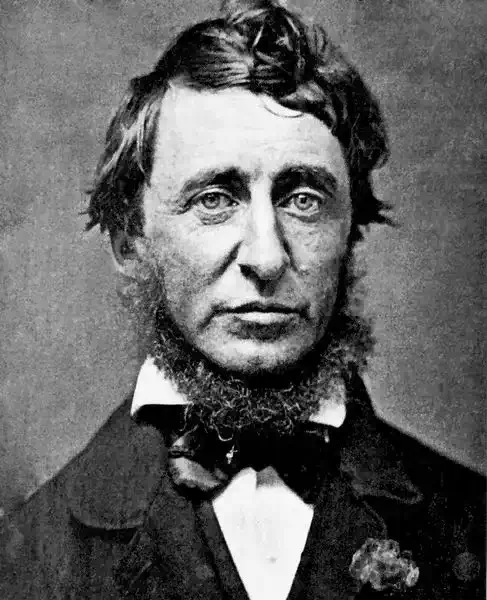
Henry David Thoreau
To a Marsh Hawk in Spring
To a Marsh Hawk in Spring
There is health in thy gray wing,
Health of nature’s furnishing.
Say, thou modern-winged antique,
Was thy mistress ever sick?
In each heaving of thy wing
Thou dost health and leisure bring,
Thou dost waive disease and pain
And resume new life again.
There is health in thy gray wing,
Health of nature’s furnishing.
Say, thou modern-winged antique,
Was thy mistress ever sick?
In each heaving of thy wing
Thou dost health and leisure bring,
Thou dost waive disease and pain
And resume new life again.
243
Henry David Thoreau
Sic Vita
Sic Vita
I am a parcel of vain strivings tied
By a chance bond together,
Dangling this way and that, their links
Were made so loose and wide,
Methinks,
For milder weather.
A bunch of violets without their roots,
And sorrel intermixed,
Encircled by a wisp of straw
Once coiled about their shoots,
The law
By which I'm fixed.
A nosegay which Time clutched from out
Those fair Elysian fields,
With weeds and broken stems, in haste,
Doth make the rabble rout
That waste
The day he yields.
And here I bloom for a short hour unseen,
Drinking my juices up,
With no root in the land
To keep my branches green,
But stand
In a bare cup.
Some tender buds were left upon my stem
In mimicry of life,
But ah! the children will not know,
Till time has withered them,
The woe
With which they're rife.
But now I see I was not plucked for naught,
And after in life's vase
Of glass set while I might survive,
But by a kind hand brought
Alive
To a strange place.
That stock thus thinned will soon redeem its hours,
And by another year,
Such as God knows, with freer air,
More fruits and fairer flowers
Will bear,
While I droop here.
I am a parcel of vain strivings tied
By a chance bond together,
Dangling this way and that, their links
Were made so loose and wide,
Methinks,
For milder weather.
A bunch of violets without their roots,
And sorrel intermixed,
Encircled by a wisp of straw
Once coiled about their shoots,
The law
By which I'm fixed.
A nosegay which Time clutched from out
Those fair Elysian fields,
With weeds and broken stems, in haste,
Doth make the rabble rout
That waste
The day he yields.
And here I bloom for a short hour unseen,
Drinking my juices up,
With no root in the land
To keep my branches green,
But stand
In a bare cup.
Some tender buds were left upon my stem
In mimicry of life,
But ah! the children will not know,
Till time has withered them,
The woe
With which they're rife.
But now I see I was not plucked for naught,
And after in life's vase
Of glass set while I might survive,
But by a kind hand brought
Alive
To a strange place.
That stock thus thinned will soon redeem its hours,
And by another year,
Such as God knows, with freer air,
More fruits and fairer flowers
Will bear,
While I droop here.
228
Henry David Thoreau
I am the Autumnal Sun
I am the Autumnal Sun
Sometimes a mortal feels in himself Nature
-- not his Father but his Mother stirs
within him, and he becomes immortal with her
immortality. From time to time she claims
kindredship with us, and some globule
from her veins steals up into our own.
I am the autumnal sun,
With autumn gales my race is run;
When will the hazel put forth its flowers,
Or the grape ripen under my bowers?
When will the harvest or the hunter's moon
Turn my midnight into mid-noon?
I am all sere and yellow,
And to my core mellow.
The mast is dropping within my woods,
The winter is lurking within my moods,
And the rustling of the withered leaf
Is the constant music of my grief...
Sometimes a mortal feels in himself Nature
-- not his Father but his Mother stirs
within him, and he becomes immortal with her
immortality. From time to time she claims
kindredship with us, and some globule
from her veins steals up into our own.
I am the autumnal sun,
With autumn gales my race is run;
When will the hazel put forth its flowers,
Or the grape ripen under my bowers?
When will the harvest or the hunter's moon
Turn my midnight into mid-noon?
I am all sere and yellow,
And to my core mellow.
The mast is dropping within my woods,
The winter is lurking within my moods,
And the rustling of the withered leaf
Is the constant music of my grief...
224

Gwendolyn Brooks
A Sunset of the City
A Sunset of the City
Already I am no longer looked at with lechery or love.
My daughters and sons have put me away with marbles and dolls,
Are gone from the house.
My husband and lovers are pleasant or somewhat polite
And night is night.
It is a real chill out,
The genuine thing.
I am not deceived, I do not think it is still summer
Because sun stays and birds continue to sing.
It is summer-gone that I see, it is summer-gone.
The sweet flowers indrying and dying down,
The grasses forgetting their blaze and consenting to brown.
It is a real chill out. The fall crisp comes
I am aware there is winter to heed.
There is no warm house
That is fitted with my need.
I am cold in this cold house this house
Whose washed echoes are tremulous down lost halls.
I am a woman, and dusty, standing among new affairs.
I am a woman who hurries through her prayers.
Tin intimations of a quiet core to be my
Desert and my dear relief
Come: there shall be such islanding from grief,
And small communion with the master shore.
Twang they. And I incline this ear to tin,
Consult a dual dilemma. Whether to dry
In humming pallor or to leap and die.
Somebody muffed it?? Somebody wanted to joke.
Already I am no longer looked at with lechery or love.
My daughters and sons have put me away with marbles and dolls,
Are gone from the house.
My husband and lovers are pleasant or somewhat polite
And night is night.
It is a real chill out,
The genuine thing.
I am not deceived, I do not think it is still summer
Because sun stays and birds continue to sing.
It is summer-gone that I see, it is summer-gone.
The sweet flowers indrying and dying down,
The grasses forgetting their blaze and consenting to brown.
It is a real chill out. The fall crisp comes
I am aware there is winter to heed.
There is no warm house
That is fitted with my need.
I am cold in this cold house this house
Whose washed echoes are tremulous down lost halls.
I am a woman, and dusty, standing among new affairs.
I am a woman who hurries through her prayers.
Tin intimations of a quiet core to be my
Desert and my dear relief
Come: there shall be such islanding from grief,
And small communion with the master shore.
Twang they. And I incline this ear to tin,
Consult a dual dilemma. Whether to dry
In humming pallor or to leap and die.
Somebody muffed it?? Somebody wanted to joke.
246
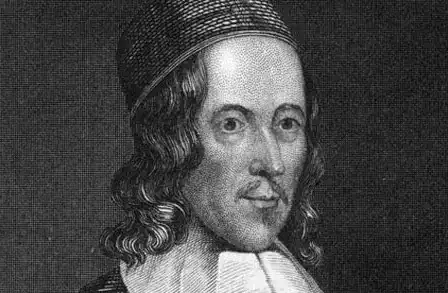
George Herbert
The World
The World
Love built a stately house, where Fortune came,
And spinning fancies, she was heard to say
That her fine cobwebs did support the frame,
Whereas they were supported by the same;
But Wisdom quickly swept them all away.
The Pleasure came, who, liking not the fashion,
Began to make balconies, terraces,
Till she had weakened all by alteration;
But reverend laws, and many a proclomation
Reforméd all at length with menaces.
Then entered Sin, and with that sycamore
Whose leaves first sheltered man from drought and dew,
Working and winding slily evermore,
The inward walls and summers cleft and tore;
But Grace shored these, and cut that as it grew.
Then Sin combined with death in a firm band,
To raze the building to the very floor;
Which they effected,--none could them withstand;
But Love and Grace took Glory by the hand,
And built a braver palace than before.
Love built a stately house, where Fortune came,
And spinning fancies, she was heard to say
That her fine cobwebs did support the frame,
Whereas they were supported by the same;
But Wisdom quickly swept them all away.
The Pleasure came, who, liking not the fashion,
Began to make balconies, terraces,
Till she had weakened all by alteration;
But reverend laws, and many a proclomation
Reforméd all at length with menaces.
Then entered Sin, and with that sycamore
Whose leaves first sheltered man from drought and dew,
Working and winding slily evermore,
The inward walls and summers cleft and tore;
But Grace shored these, and cut that as it grew.
Then Sin combined with death in a firm band,
To raze the building to the very floor;
Which they effected,--none could them withstand;
But Love and Grace took Glory by the hand,
And built a braver palace than before.
354
George Herbert
The Flower
The Flower
How fresh, O Lord, how sweet and clean
Are thy returns! ev'n as the flowers in spring;
To which, besides their own demean,
The late-past frosts tributes of pleasures bring.
Grief melts away
Like snow in May,
As if there were no such cold thing.
Who would have thought my shrivl'd heart
Could have recover'd greenness? It was gone
Quite under ground; as flowers depart
To see their mother-root, when they have blown;
Where they together
All the hard weather
Dead to the world, keep house unknown.
These are thy wonders, Lord of power,
Killing and quickning, bringing down to hell
And up to heaven in an hour;
Making a chiming of a passing-bell.
We say amiss,
This or that is:
Thy word is all, if we could spell.
O that I once past changing were,
Fast in thy Paradise, where no flower can wither!
Many a spring I shoot up fair,
Off'ring at heav'n, growing and groaning thither:
Nor doth my flower
Want a spring-shower,
My sins and I joining together:
But while I grow in a straight line,
Still upwards bent, as if heav'n were mine own,
Thy anger comes, and I decline:
What frost to that? what pole is not the zone,
Where all things burn,
When thou dost turn,
And the least frown of thine is shown?
And now in age I bud again,
After so many deaths I live and write;
I once more smell the dew and rain,
And relish versing: O my only light,
It cannot be
That I am her
On whom thy tempests fell all night.
These are thy wonders, Lord of love,
To make us see we are but flowers that glide:
Which when we once can find and prove,
Thou hast a garden for us, where to bide.
Who would be more,
Swelling through store,
Forfeit their Paradise by their pride.
How fresh, O Lord, how sweet and clean
Are thy returns! ev'n as the flowers in spring;
To which, besides their own demean,
The late-past frosts tributes of pleasures bring.
Grief melts away
Like snow in May,
As if there were no such cold thing.
Who would have thought my shrivl'd heart
Could have recover'd greenness? It was gone
Quite under ground; as flowers depart
To see their mother-root, when they have blown;
Where they together
All the hard weather
Dead to the world, keep house unknown.
These are thy wonders, Lord of power,
Killing and quickning, bringing down to hell
And up to heaven in an hour;
Making a chiming of a passing-bell.
We say amiss,
This or that is:
Thy word is all, if we could spell.
O that I once past changing were,
Fast in thy Paradise, where no flower can wither!
Many a spring I shoot up fair,
Off'ring at heav'n, growing and groaning thither:
Nor doth my flower
Want a spring-shower,
My sins and I joining together:
But while I grow in a straight line,
Still upwards bent, as if heav'n were mine own,
Thy anger comes, and I decline:
What frost to that? what pole is not the zone,
Where all things burn,
When thou dost turn,
And the least frown of thine is shown?
And now in age I bud again,
After so many deaths I live and write;
I once more smell the dew and rain,
And relish versing: O my only light,
It cannot be
That I am her
On whom thy tempests fell all night.
These are thy wonders, Lord of love,
To make us see we are but flowers that glide:
Which when we once can find and prove,
Thou hast a garden for us, where to bide.
Who would be more,
Swelling through store,
Forfeit their Paradise by their pride.
259
George Herbert
The Affliction (I)
The Affliction (I)
When first thou didst entice to thee my heart,
I thought the service brave;
So many joys I writ down for my part,
Besides what I might have
Out of my stock of natural delights,
Augmented with thy gracious benefits.
I looked on thy furniture so fine,
And made it fine to me;
Thy glorious household-stuff did me entwine,
And 'tice me unto thee.
Such stars I counted mine: both heav'n and earth;
Paid me my wages in a world of mirth.
What pleasures could I want, whose King I serv'd,
Where joys my fellows were?
Thus argu'd into hopes, my thoughts reserv'd
No place for grief or fear.
Therefore my sudden soul caught at the place,
And made her youth and fierceness seek thy face.
At first thou gav'st me milk and sweetnesses;
I had my wish and way;
My days were straw'd with flow'rs and happiness;
There was no month but May.
But with my years sorrow did twist and grow,
And made a party unawares for woe.
My flesh began unto my soul in pain,
"Sicknesses cleave my bones;
Consuming agues dwell in ev'ry vein,
And tune my breath to groans."
Sorrow was all my soul; I scarce believ'd,
Till grief did tell me roundly, that I liv'd.
When I got health, thou took'st away my life,
And more, for my friends die;
My mirth and edge was lost, a blunted knife
Was of more use than I.
Thus thin and lean without a fence or friend,
I was blown through with ev'ry storm and wind.
Whereas my birth and spirit rather took
The way that takes the town;
Thou didst betray me to a ling'ring book,
And wrap me in a gown.
I was entangled in the world of strife,
Before I had the power to change my life.
Yet, for I threaten'd oft the siege to raise,
Not simp'ring all mine age,
Thou often didst with academic praise
Melt and dissolve my rage.
I took thy sweet'ned pill, till I came where
I could not go away, nor persevere.
Yet lest perchance I should too happy be
In my unhappiness,
Turning my purge to food, thou throwest me
Into more sicknesses.
Thus doth thy power cross-bias me, not making
Thine own gift good, yet me from my ways taking.
Now I am here, what thou wilt do with me
None of my books will show;
I read, and sigh, and wish I were a tree,
For sure then I should grow
To fruit or shade: at least some bird would trust
Her household to me, and I should be just.
Yet, though thou troublest me, I must be meek;
In weakness must be stout;
Well, I will change the service, and go seek
Some other master out.
Ah my dear God! though I am clean forgot,
Let me not love thee, if I love thee not.
When first thou didst entice to thee my heart,
I thought the service brave;
So many joys I writ down for my part,
Besides what I might have
Out of my stock of natural delights,
Augmented with thy gracious benefits.
I looked on thy furniture so fine,
And made it fine to me;
Thy glorious household-stuff did me entwine,
And 'tice me unto thee.
Such stars I counted mine: both heav'n and earth;
Paid me my wages in a world of mirth.
What pleasures could I want, whose King I serv'd,
Where joys my fellows were?
Thus argu'd into hopes, my thoughts reserv'd
No place for grief or fear.
Therefore my sudden soul caught at the place,
And made her youth and fierceness seek thy face.
At first thou gav'st me milk and sweetnesses;
I had my wish and way;
My days were straw'd with flow'rs and happiness;
There was no month but May.
But with my years sorrow did twist and grow,
And made a party unawares for woe.
My flesh began unto my soul in pain,
"Sicknesses cleave my bones;
Consuming agues dwell in ev'ry vein,
And tune my breath to groans."
Sorrow was all my soul; I scarce believ'd,
Till grief did tell me roundly, that I liv'd.
When I got health, thou took'st away my life,
And more, for my friends die;
My mirth and edge was lost, a blunted knife
Was of more use than I.
Thus thin and lean without a fence or friend,
I was blown through with ev'ry storm and wind.
Whereas my birth and spirit rather took
The way that takes the town;
Thou didst betray me to a ling'ring book,
And wrap me in a gown.
I was entangled in the world of strife,
Before I had the power to change my life.
Yet, for I threaten'd oft the siege to raise,
Not simp'ring all mine age,
Thou often didst with academic praise
Melt and dissolve my rage.
I took thy sweet'ned pill, till I came where
I could not go away, nor persevere.
Yet lest perchance I should too happy be
In my unhappiness,
Turning my purge to food, thou throwest me
Into more sicknesses.
Thus doth thy power cross-bias me, not making
Thine own gift good, yet me from my ways taking.
Now I am here, what thou wilt do with me
None of my books will show;
I read, and sigh, and wish I were a tree,
For sure then I should grow
To fruit or shade: at least some bird would trust
Her household to me, and I should be just.
Yet, though thou troublest me, I must be meek;
In weakness must be stout;
Well, I will change the service, and go seek
Some other master out.
Ah my dear God! though I am clean forgot,
Let me not love thee, if I love thee not.
252
George Herbert
Joseph's Coat
Joseph's Coat
Wounded I sing, tormented I indite,
Thrown down I fall into a bed, and rest:
Sorrow hath chang'd its note: such is his will
Who changeth all things, as him pleaseth best.
For well he knows, if but one grief and smart
Among my many had his full career,
Sure it would carry with it ev'n my heart,
And both would run until they found a bier
To fetch the body; both being due to grief.
But he hath spoil'd the race; and giv'n to anguish
One of Joy's coats, 'ticing it with relief
To linger in me, and together languish.
I live to shew his power, who once did bring
My joys to weep, and now my griefs to sing.
Wounded I sing, tormented I indite,
Thrown down I fall into a bed, and rest:
Sorrow hath chang'd its note: such is his will
Who changeth all things, as him pleaseth best.
For well he knows, if but one grief and smart
Among my many had his full career,
Sure it would carry with it ev'n my heart,
And both would run until they found a bier
To fetch the body; both being due to grief.
But he hath spoil'd the race; and giv'n to anguish
One of Joy's coats, 'ticing it with relief
To linger in me, and together languish.
I live to shew his power, who once did bring
My joys to weep, and now my griefs to sing.
228
George Herbert
Aaron
Aaron
Holiness on the head,
Light and perfection on the breast,
Harmonious bells below, raising the dead
To led them unto life and rest.
Thus are true Aarons dressed.
Profaneness in my head,
Defects and darkness in my breast,
A noise of passions ringing me for dead
Unto a place where is no rest.
Poor priest thus am I dressed.
Only another head
I have, another heart and breast,
another music, making live not dead,
without whom I could have no rest:
In him I am well dressed.
Christ is my only head,
My alone only heart and breast,
My only music, striking me even dead;
That to the old man I may rest,
And be in him new dressed.
So holy in my head,
Perfect and light in my dear breast,
My doctrine tuned by Christ, (who is not dead,
But lives in me while I do rest)
Come people; Aaron's dressed.
Holiness on the head,
Light and perfection on the breast,
Harmonious bells below, raising the dead
To led them unto life and rest.
Thus are true Aarons dressed.
Profaneness in my head,
Defects and darkness in my breast,
A noise of passions ringing me for dead
Unto a place where is no rest.
Poor priest thus am I dressed.
Only another head
I have, another heart and breast,
another music, making live not dead,
without whom I could have no rest:
In him I am well dressed.
Christ is my only head,
My alone only heart and breast,
My only music, striking me even dead;
That to the old man I may rest,
And be in him new dressed.
So holy in my head,
Perfect and light in my dear breast,
My doctrine tuned by Christ, (who is not dead,
But lives in me while I do rest)
Come people; Aaron's dressed.
335
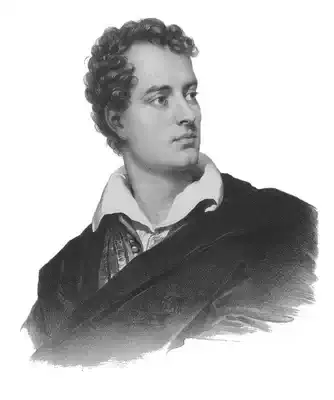
Lord Byron
Lara
Lara
LARA. [1]
CANTO THE FIRST.
I.
The Serfs are glad through Lara's wide domain, [2]
And slavery half forgets her feudal chain;
He, their unhoped, but unforgotten lord —
The long selfexiled
chieftain is restored:
There be bright faces in the busy hall,
Bowls on the board, and banners on the wall;
Far chequering o'er the pictured window, plays
The unwonted fagots' hospitable blaze;
And gay retainers gather round the hearth,
With tongues all loudness, and with eyes all mirth.
II.
The chief of Lara is return'd again:
And why had Lara cross'd the bounding main?
Left by his sire, too young such loss to know,
Lord of himself; — that heritage of woe,
That fearful empire which the human breast
But holds to rob the heart within of rest! —
With none to check, and few to point in time
The thousand paths that slope the way to crime;
Then, when he most required commandment, then
Had Lara's daring boyhood govern'd men.
It skills not, boots not, step by step to trace
His youth through all the mazes of its race;
Short was the course his restlessness had run,
But long enough to leave him half undone.
III.
And Lara left in youth his fatherland;
But from the hour he waved his parting hand
Each trace wax'd fainter of his course, till all
Had nearly ceased his memory to recall.
His sire was dust, his vassals could declare,
'Twas all they knew, that Lara was not there;
Nor sent, nor came he, till conjecture grew
Cold in the many, anxious in the few.
His hall scarce echoes with his wonted name,
His portrait darkens in its fading frame,
Another chief consoled his destined bride,
The young forgot him, and the old had died;
"Yet doth he live!" exclaims the impatient heir,
And sighs for sables which he must not wear.
A hundred scutcheons deck with gloomy grace
The Laras' last and longest dwellingplace;
But one is absent from the mouldering file,
That now were welcome to that Gothic pile.
IV.
He comes at last in sudden loneliness,
And whence they know not, why they need not guess;
They more might marvel, when the greeting's o'er,
Not that he came, but came not long before:
No train is his beyond a single page,
Of foreign aspect, and of tender age.
Years had roll'd on, and fast they speed away
To those that wander as to those that stay;
But lack of tidings from another clime
Had lent a flagging wing to weary Time.
They see, they recognise, yet almost deem
The present dubious, or the past a dream.
He lives, nor yet is past his manhood's prime,
Though sear'd by toil, and something touch'd by time;
His faults, whate'er they were, if scarce forgot,
Might be untaught him by his varied lot;
Nor good nor ill of late were known, his name
Might yet uphold his patrimonial fame.
His soul in youth was haughty, but his sins
No more than pleasure from the stripling wins;
And such, if not yet harden'd in their course,
Might be redeem'd, nor ask a long remorse.
V.
And they indeed were changed — 'tis quickly seen,
Whate'er he be, 'twas not what he had been:
That brow in furrow'd lines had fix'd at last,
And spake of passions, but of passion past;
The pride, but not the fire, of early days,
Coldness of mien, and carelessness of praise;
A high demeanour, and a glance that took
Their thoughts from others by a single look;
And that sarcastic levity of tongue,
The stinging of a heart the world hath stung,
That darts in seeming playfulness around,
And makes those feel that will not own the wound:
All these seem'd his, and something more beneath
Than glance could well reveal, or accent breathe.
Ambition, glory, love, the common aim
That some can conquer, and that all would claim,
Within his breast appear'd no more to strive,
Yet seem'd as lately they had been alive;
And some deep feeling it were vain to trace
At moments lighten'd o'er his livid face.
VI.
Not much he loved long question of the past,
Nor told of wondrous wilds, and deserts vast,
In those far lands where he had wander'd lone,
And — as himself would have it seem — unknown:
Yet these in vain his eye could scarcely scan,
Nor glean experience from his fellowman;
But what he had beheld he shunn'd to show,
As hardly worth a stranger's care to know;
If still more prying such inquiry grew,
His brow fell darker, and his words more few.
VII.
Not unrejoiced to see him once again,
Warm was his welcome to the haunts of men;
Born of high lineage, link'd in high command,
He mingled with the magnates of his land;
Join'd the carousals of the great and gay,
And saw them smile or sigh their hours away;
But still he only saw, and did not share
The common pleasure or the general care;
He did not follow what they all pursued,
With hope still baffled, still to be renew'd;
Nor shadowy honour, nor substantial gain,
Nor beauty's preference, and the rival's pain:
Around him some mysterious circle thrown
Repell'd approach, and showed him still alone;
Upon his eye sate something of reproof,
That kept at least frivolity aloof;
And things more timid that beheld him near,
In silence gazed, or whisper'd mutual fear;
And they the wiser, friendlier few confess'd
They deem'd him better than his air express'd.
VIII.
'Twas strange — in youth all action and all life,
Burning for pleasure, not averse from strife;
Woman — the field — the ocean — all that gave
Promise of gladness, peril of a grave,
In turn he tried — he ransack'd all below,
And found his recompence in joy or woe,
No tame, trite medium; for his feelings sought
In that intenseness an escape from thought:
The tempest of his heart in scorn had gazed
On that the feebler elements hath raised;
The rapture of his heart had look'd on high,
And ask'd if greater dwelt beyond the sky:
Chain'd to excess, the slave of each extreme,
How woke he from the wildness of that dream?
Alas! he told not — but he did awake
To curse the wither'd heart that would not break.
IX.
Books, for his volume heretofore was Man,
With eye more curious he appear'd to scan,
And oft, in sudden mood, for many a day
From all communion he would start away:
And then, his rarely call'd attendants said,
Through night's long hours would sound his hurried tread
O'er the dark gallery, where his fathers frown'd
In rude but antique portraiture around.
They heard, but whisper'd — "that must not be known —
The sound of words less earthly than his own.
Yes, they who chose might smile, but some had seen
They scarce knew what, but more than should have been.
Why gazed he so upon the ghastly head
Which hands profane had gather'd from the dead,
That still beside his open'd volume lay,
As if to startle all save him away?
Why slept he not when others were at rest?
Why heard no music, and received no guest?
All was not well, they deem'd — but where the wrong?
Some knew perchance — but 'twere a tale too long;
And such besides were too discreetly wise,
To more than hint their knowledge in surmise;
But if they would — they could" — around the board,
Thus Lara's vassals prattled of their lord.
X.
It was the night — and Lara's glassy stream
The stars are studding, each with imaged beam:
So calm, the waters scarcely seem to stray,
And yet they glide like happiness away;
Reflecting far and fairylike
from high
The immortal lights that live along the sky:
Its banks are fringed with many a goodly tree,
And flowers the fairest that may feast the bee;
Such in her chaplet infant Dian wove,
And Innocence would offer to her love.
These deck the shore; the waves their channel make
In windings bright and mazy like the snake.
All was so still, so soft in earth and air,
You scarce would start to meet a spirit there;
Secure that nought of evil could delight
To walk in such a scene, on such a night!
It was a moment only for the good:
So Lara deem'd, nor longer there he stood,
But turn'd in silence to his castlegate;
Such scene his soul no more could contemplate.
Such scene reminded him of other days,
Of skies more cloudless, moons of purer blaze,
Of nights more soft and frequent, hearts that now —
No — no — the storm may beat upon his brow,
Unfelt — unsparing — but a night like this,
A night of beauty mock'd such breast as his.
XI.
He turn'd within his solitary hall,
And his high shadow shot along the wall;
There were the painted forms of other times,
'Twas all they left of virtues or of crimes,
Save vague tradition; and the gloomy vaults
That hid their dust, their foibles, and their faults;
And half a column of the pompous page,
That speeds the specious tale from age to age:
When history's pen its praise or blame supplies,
And lies like truth, and still most truly lies.
He wandering mused, and as the moonbeam shone
Through the dim lattice o'er the floor of stone,
And the high fretted roof, and saints, that there
O'er Gothic windows knelt in pictured prayer,
Reflected in fantastic figures grew,
Like life, but not like mortal life, to view;
His bristling locks of sable, brow of gloom,
And the wide waving of his shaken plume,
Glanced like a spectre's attributes, and gave
His aspect all that terror gives the grave.
XII.
'Twas midnight — all was slumber; the lone light
Dimm'd in the lamp, as loth to break the night.
Hark! there be murmurs heard in Lara's hall —
A sound — voice — a shriek — a fearful call!
A long, loud shriek — and silence — did they hear
That frantic echo burst the sleeping ear?
They heard and rose, and tremulously brave
Rush where the sound invoked their aid to save;
They come with halflit
tapers in their hands,
And snatch'd in startled haste unbelted brands.
XIII.
Cold as the marble where his length was laid,
Pale as the beam that o'er his features play'd,
Was Lara stretch'd; his halfdrawn
sabre near,
Dropp'd it should seem in more than nature's fear;
Yet he was firm, or had been firm till now,
And still defiance knit his gather'd brow;
Though mix'd with terror, senseless as he lay,
There lived upon his lip the wish to slay;
Some halfform'd
threat in utterance there had died,
Some imprecation of despairing pride;
His eye was almost seal'd, but not forsook
Even in its trance the gladiator's look,
That oft awake his aspect could disclose,
And now was fix'd in horrible repose.
They raise him — bear him: hush! he breathes, he speaks!
The swarthy blush recolours in his cheeks,
His lip resumes its red, his eye, though dim,
Rolls wide and wild, each slowly quivering limb
Recalls its function, but his words are strung
In terms that seem not of his native tongue;
Distinct but strange, enough they understand
To deem them accents of another land,
And such they were, and meant to meet an ear
That hears him not — alas! that cannot hear!
XIV.
His page approach'd, and he alone appear'd
To know the import of the words they heard;
And by the changes of his cheek and brow
They were not such as Lara should avow,
Nor he interpret, yet with less surprise
Than those around their chieftain's state he eyes,
But Lara's prostrate form he bent beside,
And in that tongue which seem'd his own replied,
And Lara heeds those tones that gently seem
To soothe away the horrors of his dream;
If dream it were, that thus could overthrow
A breast that needed not ideal woe.
XV.
Whate'er his frenzy dream'd or eye beheld,
If yet remember'd ne'er to be reveal'd,
Rests at his heart: the custom'd morning came,
And breathed new vigour in his shaking frame;
And solace sought he none from priest nor leech,
And soon the same in movement and in speech
As heretofore he fill'd the passing hours,
Nor less he smiles, nor more his forehead lours
Than these were wont; and if the coming night
Appear'd less welcome now to Lara's sight,
He to his marvelling vassals shew'd it not,
Whose shuddering proved their fear was less forgot.
In trembling pairs (alone they dared not) crawl
The astonish'd slaves, and shun the fated hall;
The waving banner, and the clapping door;
The rustling tapestry, and the echoing floor;
The long dim shadows of surrounding trees,
The flapping bat, the night song of the breeze;
Aught they behold or hear their thought appals
As evening saddens o'er the dark gray walls.
XVI.
Vain thought! that hour of ne'er unravell'd gloom
Came not again, or Lara could assume
A seeming of forgetfulness that made
His vassals more amazed nor less afraid —
Had memory vanish'd then with sense restored?
Since word, nor look, nor gesture of their lord
Betray'd a feeling that recall'd to these
That fever'd moment of his mind's disease.
Was it a dream? was his the voice that spoke
Those strange wild accents; his the cry that broke
Their slumber? his the oppress'd o'erlabour'd
heart
That ceased to beat, the look that made them start?
Could he who thus had suffer'd, so forget
When such as saw that suffering shudder yet?
Or did that silence prove his memory fix'd
Too deep for words, indelible, unmix'd
In that corroding secresy which gnaws
The heart to shew the effect, but not the cause?
Not so in him; his breast had buried both,
Nor common gazers could discern the growth
Of thoughts that mortal lips must leave half told;
They choke the feeble words that would unfold.
XVII.
In him inexplicably mix'd appear'd
Much to be loved and hated, sought and fear'd;
Opinion varying o'er his hidden lot,
In praise or railing ne'er his name forgot;
His silence form'd a theme for others' prate —
They guess'd — they gazed — they fain would know his fate.
What had he been? what was he, thus unknown,
Who walk'd their world, his lineage only known?
A hater of his kind? yet some would say,
With them he could seem gay amidst the gay;
But own'd that smile, if oft observed and near,
Waned in its mirth and wither'd to a sneer;
That smile might reach his lip, but pass'd not by,
None e'er could trace its laughter to his eye:
Yet there was softness too in his regard,
At times, a heart as not by nature hard,
But once perceived, his spirit seem'd to chide
Such weakness, as unworthy of its pride,
And steel'd itself, as scorning to redeem
One doubt from others' half withheld esteem;
In selfinflicted
penance of a breast
Which tenderness might once have wrung from rest;
In vigilance of grief that would compel
The soul to hate for having loved too well.
XVIII.
There was in him a vital scorn of all:
As if the worst had fall'n which could befall,
He stood a stranger in this breathing world,
An erring spirit from another hurled;
A thing of dark imaginings, that shaped
By choice the perils he by chance escaped;
But 'scaped in vain, for in their memory yet
His mind would half exult and half regret:
With more capacity for love than earth
Bestows on most of mortal mould and birth,
His early dreams of good outstripp'd the truth,
And troubled manhood follow'd baffled youth;
With thought of years in phantom chase misspent,
And wasted powers for better purpose lent;
And fiery passions that had pour'd their wrath
In hurried desolation o'er his path,
And left the better feelings all at strife
In wild reflection o'er his stormy life;
But haughty still, and loth himself to blame,
He call'd on Nature's self to share the shame,
And charged all faults upon the fleshly form
She gave to clog the soul, and feast the worm;
'Till he at last confounded good and ill,
And half mistook for fate the acts of will:
Too high for common selfishness, he could
At times resign his own for others' good,
But not in pity, not because he ought,
But in some strange perversity of thought,
That sway'd him onward with a secret pride
To do what few or none would do beside;
And this same impulse would, in tempting time,
Mislead his spirit equally to crime;
So much he soar'd beyond, or sunk beneath
The men with whom he felt condemn'd to breathe,
And long'd by good or ill to separate
Himself from all who shared his mortal state;
His mind abhorring this had fix'd her throne
Far from the world, in regions of her own;
Thus coldly passing all that pass'd below,
His blood in temperate seeming now would flow:
Ah! happier if it ne'er with guilt had glow'd,
But ever in that icy smoothness flow'd:
'Tis true, with other men their path he walk'd,
And like the rest in seeming did and talk'd,
Nor outraged Reason's rules by flaw nor start,
His madness was not of the head, but heart;
And rarely wander'd in his speech, or drew
His thoughts so forth as to offend the view.
XIX.
With all that chilling mystery of mien,
And seeming gladness to remain unseen,
He had (if 'twere not nature's boon) an art
Of fixing memory on another's heart:
It was not love, perchance — nor hate — nor aught
That words can image to express the thought;
But they who saw him did not see in vain,
And once beheld, would ask of him again:
And those to whom he spake remember'd well,
And on the words, however light, would dwell.
None knew nor how, nor why, but he entwined
Himself perforce around the hearer's mind;
There he was stamp'd, in liking, or in hate,
If greeted once; however brief the date
That friendship, pity, or aversion knew,
Still there within the inmost thought he grew.
You could not penetrate his soul, but found
Despite your wonder, to your own he wound.
His presence haunted still; and from the breast
He forced an allunwilling
interest;
Vain was the struggle in that mental net,
His spirit seem'd to dare you to forget!
XX.
There is a festival, where knights and dames,
And aught that wealth or lofty lineage claims,
Appear — a highborn
and a welcomed guest
To Otho's hall came Lara with the rest.
The long carousal shakes the illumined hall,
Well speeds alike the banquet and the ball;
And the gay dance of bounding Beauty's train
Links grace and harmony in happiest chain:
Blest are the early hearts and gentle hands
That mingle there in well according bands;
It is a sight the careful brow might smooth,
And make Age smile, and dream itself to youth,
And Youth forget such hour was pass'd on earth,
So springs the exulting bosom to that mirth!
XXI.
And Lara gazed on these sedately glad,
His brow belied him if his soul was sad,
And his glance follow'd fast each fluttering fair,
Whose steps of lightness woke no echo there:
He lean'd against the lofty pillar nigh
With folded arms and long attentive eye,
Nor mark'd a glance so sternly fix'd on his,
Ill brook'd high Lara scrutiny like this:
At length he caught it, 'tis a face unknown,
But seems as searching his, and his alone;
Prying and dark, a stranger's by his mien,
Who still till now had gazed on him unseen;
At length encountering meets the mutual gaze
Of keen inquiry, and of mute amaze;
On Lara's glance emotion gathering grew,
As if distrusting that the stranger threw;
Along the stranger's aspect fix'd and stern
Flash'd more than thence the vulgar eye could learn.
XXII.
"'Tis he!" the stranger cried, and those that heard
Reecho'd
fast and far the whisper'd word.
"'Tis he!" — "'Tis who?" they question far and near,
Till louder accents rang on Lara's ear;
So widely spread, few bosoms well could brook
The general marvel, or that single look;
But Lara stirr'd not, changed not, the surprise
That sprung at first to his arrested eyes
Seem'd now subsided, neither sunk nor raised
Glanced his eye round, though still the stranger gazed;
And drawing nigh, exclaim'd, with haughty sneer,
"'Tis he! — how came he thence? — what doth he here?"
XXIII.
It were too much for Lara to pass by
Such question, so repeated fierce and high;
With look collected, but with accent cold,
More mildly firm than petulantly bold,
He turn'd, and met the inquisitorial tone —
"My name is Lara! — when thine own is known,
Doubt not my fitting answer to requite
The unlook'd for courtesy of such a knight.
'Tis Lara! — further wouldst thou mark or ask?
I shun no question, and I wear no mask."
"Thou shunn'st no question! Ponder — is there none
Thy heart must answer, though thine ear would shun?
And deem'st thou me unknown too? Gaze again!
At least thy memory was not given in vain.
Oh! never canst thou cancel half her debt,
Eternity forbids thee to forget."
With slow and searching glance upon his face
Grew Lara's eyes, but nothing there could trace
They knew, or chose to know — with dubious look
He deign'd no answer, but his head he shook,
And half contemptuous turn'd to pass away;
But the stern stranger motion'd him to stay.
"A word! — I charge thee stay, and answer here
To one, who, wert thou noble, were thy peer,
But as thou wast and art — nay, frown not, lord,
If false, 'tis easy to disprove the word —
But as thou wast and art, on thee looks down,
Distrusts thy smiles, but shakes not at thy frown.
Art thou not he? whose deeds — "
"Whate'er I be,
Words wild as these, accusers like to thee,
I list no further; those with whom they weigh
May hear the rest, nor venture to gainsay
The wondrous tale no doubt thy tongue can tell,
Which thus begins courteously and well.
Let Otho cherish here his polish'd guest,
To him my thanks and thoughts shall be express'd."
And here their wondering host hath interposed —
"Whate'er there be between you undisclosed,
This is no time nor fitting place to mar
The mirthful meeting with a wordy war.
If thou, Sir Ezzelin, hast ought to show
Which it befits Count Lara's ear to know,
Tomorrow,
here, or elsewhere, as may best
Beseem your mutual judgment, speak the rest;
I pledge myself for thee, as not unknown,
Though, like Count Lara, now return'd alone
From other lands, almost a stranger grown;
And if from Lara's blood and gentle birth
I augur right of courage and of worth,
He will not that untainted line belie,
Nor aught that knighthood may accord deny."
"Tomorrow
be it," Ezzelin replied,
"And here our several worth and truth be tried:
I gage my life, my falchion to attest
My words, so may I mingle with the blest!"
What answers Lara? to its centre shrunk
His soul, in deep abstraction sudden sunk;
The words of many, and the eyes of all
That there were gather'd, seem'd on him to fall;
But his were silent, his appear'd to stray
In far forgetfulness away — away —
Alas! that heedlessness of all around
Bespoke remembrance only too profound.
XXIV.
"Tomorrow!
— ay, tomorrow!"
— further word
Than those repeated none from Lara heard;
Upon his brow no outward passion spoke,
From his large eye no flashing anger broke;
Yet there was something fix'd in that low tone
Which shew'd resolve, determined, though unknown.
He seized his cloak — his head he slightly bow'd,
And passing Ezzelin he left the crowd;
And as he pass'd him, smiling met the frown
With which that chieftain's brow would bear him down:
It was nor smile of mirth, nor struggling pride
That curbs to scorn the wrath it cannot hide;
But that of one in his own heart secure
Of all that he would do, or could endure.
Could this mean peace? the calmness of the good?
Or guilt grown old in desperate hardihood?
Alas! too like in confidence are each
For man to trust to mortal look or speech;
From deeds, and deeds alone, may he discern
Truths which it wrings the unpractised heart to learn.
XXV.
And Lara call'd his page, and went his way —
Well could that stripling word or sign obey:
His only follower from those climes afar
Where the soul glows beneath a brighter star;
For Lara left the shore from whence he sprung,
In duty patient, and sedate though young;
Silent as him he served, his fate appears
Above his station, and beyond his years.
Though not unknown the tongue of Lara's land,
In such from him he rarely heard command;
But fleet his step, and clear his tones would come,
When Lara's lip breathed forth the words of home:
Those accents, as his native mountains dear,
Awake their absent echoes in his ear,
Friends', kindreds', parents', wonted voice recall,
Now lost, abjured, for one — his friend, his all:
For him earth now disclosed no other guide;
What marvel then he rarely left his side?
XXVI.
Light was his form, and darkly delicate
That brow whereon his native sun had sate,
But had not marr'd, though in his beams he grew,
The cheek where oft the unbidden blush shone through;
Yet not such blush as mounts when health would show
All the heart's hue in that delighted glow;
But 'twas a hectic tint of secret care
That for a burning moment fever'd there;
And the wild sparkle of his eye seem'd caught
From high, and lighten'd with electric thought,
Though its black orb those long low lashes' fringe
Had temper'd with a melancholy tinge;
Yet less of sorrow than of pride was there,
Or, if 'twere grief, a grief that none should share:
And pleased not him the sports that please his age,
The tricks of youth, the frolics of the page;
For hours on Lara he would fix his glance,
As allforgotten
in that watchful trance;
And from his chief withdrawn, he wander'd lone,
Brief were his answers, and his questions none;
His walk the wood, his sport some foreign book;
His restingplace
the bank that curbs the brook;
He seem'd, like him he served, to live apart
From all that lures the eye, and fills the heart;
To know no brotherhood; and take from earth
No gift beyond that bitter boon — our birth.
XXVII.
If aught he loved, 'twas Lara; but was shown
His faith in reverence and in deeds alone;
In mute attention; and his care, which guess'd
Each wish, fulfill'd it ere the tongue express'd.
Still there was haughtiness in all he did,
A spirit deep that brook'd not to be chid;
His zeal, though more than that of servile hands,
In act alone obeys, his air commands;
As if 'twas Lara's less than his desire
That thus he served, but surely not for hire.
Slight were the tasks enjoin'd him by his lord,
To hold the stirrup, or to bear the sword;
To tune his lute, or, if he will'd it more,
On tomes of other times and tongues to pore;
But ne'er to mingle with the menial train,
To whom he shew'd not deference nor disdain,
But that wellworn
reserve which proved he knew
No sympathy with that familiar crew:
His soul, whate'er his station or his stem,
Could bow to Lara, not descend to them.
Of higher birth he seem'd, and better days,
Nor mark of vulgar toil that hand betrays,
So femininely white it might bespeak
Another sex, when match'd with that smooth cheek,
But for his garb, and something in his gaze,
More wild and high than woman's eye betrays;
A latent fierceness that far more became
His fiery climate than his tender frame:
True, in his words it broke not from his breast,
But from his aspect might be more than guess'd.
Kaled his name, though rumour said he bore
Another ere he left his mountain shore;
For sometimes he would hear, however nigh,
That name repeated loud without reply,
As unfamiliar, or, if roused again,
Start to the sound, as but remember'd then;
Unless 'twas Lara's wonted voice that spake,
For then, ear, eyes, and heart would all awake.
XXVIII.
He had look'd down upon the festive hall,
And mark'd that sudden strife so mark'd of all;
And when the crowd around and near him told
Their wonder at the calmness of the bold,
Their marvel how the highborn
Lara bore
Such insult from a stranger, doubly sore,
The colour of young Kaled went and came,
The lip of ashes, and the cheek of flame;
And o'er his brow the dampening heartdrops
threw
The sickening iciness of that cold dew
That rises as the busy bosom sinks
With heavy thoughts from which reflection shrinks.
Yes — there be things which we must dream and dare
And execute ere thought be half aware:
Whate'er might Kaled's be, it was enow
To seal his lip, but agonise his brow.
He gazed on Ezzelin till Lara cast
That sidelong smile upon on the knight he pass'd;
When Kaled saw that smile his visage fell,
As if on something recognised right well;
His memory read in such a meaning more
Than Lara's aspect unto others wore.
Forward he sprung — a moment, both were gone,
And all within that hall seem'd left alone;
Each had so fix'd his eye on Lara's mien,
All had so mix'd their feelings with that scene,
That when his long dark shadow through the porch
No more relieves the glare of yon high torch,
Each pulse beats quicker, and all bosoms seem
To bound as doubting from too black a dream,
Such as we know is false, yet dread in sooth,
Because the worst is ever nearest truth.
And they are gone — but Ezzelin is there,
With thoughtful visage and imperious air;
But long remain'd not; ere an hour expired
He waved his hand to Otho, and retired.
XXIX.
The crowd are gone, the revellers at rest;
The courteous host, and allapproving
guest,
Again to that accustom'd couch must creep
Where joy subsides, and sorrow sighs to sleep,
And man, o'erlabour'd with his being's strife,
Shrinks to that sweet forgetfulness of life:
There lie love's feverish hope. and cunning's guile,
Hate's working brain and lull'd ambition's wile;
O'er each vain eye oblivion's pinions wave,
And quench'd existence crouches in a grave.
What better name may slumber's bed become?
Night's sepulchre, the universal home,
Where weakness, strength, vice, virtue, sunk supine,
Alike in naked helplessness recline;
Glad for awhile to heave unconscious breath,
Yet wake to wrestle with the dread of death,
And shun, though day but dawn on ills increased,
That sleep, the loveliest, since it dreams the least.
______
CANTO THE SECOND.
I.
Night wanes — the vapours round the mountains curl'd,
Melt into morn, and Light awakes the world.
Man has another day to swell the past,
And lead him near to little, but his last;
But mighty Nature bounds as from her birth,
The sun is in the heavens, and life on earth;
Flowers in the valley, splendour in the beam,
Health on the gale, and freshness in the stream.
Immortal man! behold her glories shine,
And cry, exulting inly, "They are thine!"
Gaze on, while yet thy gladden'd eye may see,
A morrow comes when they are not for thee;
And grieve what may above thy senseless bier,
Nor earth nor sky will yield a single tear;
Nor cloud shall gather more, nor leaf shall fall,
Nor gale breathe forth one sigh for thee, for all;
But creeping things shall revel in their spoil,
And fit thy clay to fertilise the soil.
II.
'Tis morn — 'tis noon — assembled in the hall,
The gather'd chieftains come to Otho's call:
'Tis now the promised hour, that must proclaim
The life or death of Lara's future fame;
When Ezzelin his charge may here unfold,
And whatsoe'er the tale, it must be told.
His faith was pledged, and Lara's promise given,
To meet it in the eye of man and Heaven.
Why comes he not? Such truths to be divulged,
Methinks the accuser's rest is long indulged.
III.
The hour is past, and Lara too is there,
With selfconfiding,
coldly patient air;
Why comes not Ezzelin? The hour is past,
And murmurs rise, and Otho's brow's o'ercast,
"I know my friend! his faith I cannot fear,
If yet he be on earth, expect him here;
The roof that held him in the valley stands
Between my own and noble Lara's lands;
My halls from such a guest had honour gain'd,
Nor had Sir Ezzelin his host disdain'd,
But that some previous proof forbade his stay,
And urged him to prepare against today;
The word I pledge for his I pledge again,
Or will myself redeem his knighthood's stain."
He ceased — and Lara answer'd, "I am here
To lend at thy demand a listening ear,
To tales of evil from a stranger's tongue,
Whose words already might my heart have wrung,
But that I deem'd him scarcely less than mad,
Or, at the worst, a foe ignobly bad.
I know him not — but me it seems he knew
In lands where — but I must not trifle too:
Produce this babbler — or redeem the pledge;
Here in thy hold, and with thy falchion's edge."
Proud Otho on the instant, reddening, threw
His glove on earth, and forth his sabre flew.
"The last alternative befits me best,
And thus I answer for mine absent guest."
With cheek unchanging from its sallow gloom,
However near his own or other's tomb;
With hand, whose almost careless coolness spoke
Its grasp wellused
to deal the sabrestroke;
With eye, though calm, determined not to spare,
Did Lara too his willing weapon bare.
In vain the circling chieftains round them closed,
For Otho's frenzy would not be opposed;
And from his lip those words of insult fell —
His sword is good who can maintain them well.
IV.
Short was the conflict; furious, blindly rash,
Vain Otho gave his bosom to the gash:
He bled, and fell; but not with deadly wound,
Stretch'd by a dextrous sleight along the ground.
"Demand thy life!" He answer'd not: and then
From that red floor he ne'er had risen again,
For Lara's brow upon the moment grew
Almost to blackness in its demon hue;
And fiercer shook his angry falchion now
Than when his foe's was levell'd at his brow;
Then all was stern collectedness and art,
Now rose the unleaven'd hatred of his heart;
So little sparing to the foe he fell'd,
That when the approaching crowd his arm withheld
He almost turn'd the thirsty point on those
Who thus for mercy dared to interpose;
But to a moment's thought that purpose bent;
Yet look'd he on him still with eye intent,
As if he loathed the ineffectual strife
That left a foe, howe'er o'erthrown, with life;
As if to search how far the wound he gave
Had sent its victim onward to his grave.
V.
They raised the bleeding Otho, and the Leech
Forbade all present question, sign, and speech;
The others met within a neighbouring hall,
And he, incensed and heedless of them all,
The cause and conqueror in this sudden fray,
In haughty silence slowly strode away;
He back'd his steed, his homeward path he took,
Nor cast on Otho's tower a single look.
VI.
But where was he? that meteor of a night,
Who menaced but to disappear with light.
Where was this Ezzelin? who came and went
To leave no other trace of his intent.
He left the dome of Otho long ere morn,
In darkness, yet so well the path was worn
He could not miss it: near his dwelling lay;
But there he was not, and with coming day
Came fast inquiry, which unfolded nought
Except the absence of the chief it sought.
A chamber tenantless, a steed at rest,
His host alarm'd, his murmuring squires distress'd:
Their search extends along, around the path,
In dread to met the marks of prowlers' wrath:
But none are there, and not a brake hath borne
Nor gout of blood, nor shred of mantle torn;
Nor fall nor struggle hath defaced the grass,
Which still retains a mark where murder was;
Nor dabbling fingers left to tell the tale,
The bitter print of each convulsive nail,
When agonised hands that cease to guard,
Wound in that pang the smoothness of the sward.
Some such had been, if here a life was reft,
But these were not; and doubting hope is left;
And strange suspicion, whispering Lara's name,
Now daily mutters o'er his blacken'd fame;
Then sudden silent when his form appear'd,
Awaits the absence of the thing it fear'd;
Again its wonted wondering to renew,
And dye conjecture with a darker hue.
VII.
Days roll along, and Otho's wounds are heal'd,
But not his pride; and hate no more conceal'd:
He was a man of power, and Lara's foe,
The friend of all who sought to work him woe,
And from his country's justice now demands
Account of Ezzelin at Lara's hands.
Who else than Lara could have cause to fear
His presence? who had made him disappear,
If not the man on whom his menaced charge
Had sate too deeply were he left at large?
The general rumour ignorantly loud,
The mystery dearest to the curious crowd;
The seeming friendlessness of him who strove
To win no confidence, and wake no love;
The sweeping fierceness which his soul betray'd,
The skill with which he wielded his keen blade;
Where had his arm unwarlike caught that art?
Where had that fierceness grown upon his heart?
For it was not the blind capricious rage
A word can kindle and a word assuage;
But the deep working of a soul unmix'd
With aught of pity where its wrath had fix'd;
Such as long power and overgorged success
Concentrates into all that's merciless:
These, link'd with that desire which ever sways
Mankind, the rather to condemn than praise,
'Gainst Lara gathering raised at length a storm,
Such as himself might fear, and foes would form,
And he must answer for the absent head
Of one that haunts him still, alive or dead.
VIII.
Within that land was many a malcontent,
Who cursed the tyranny to which he bent;
That soil full many a wringing despot saw,
Who work'd his wantonness in form of law;
Long war without and frequent broil within
Had made a path for blood and giant sin,
That waited but a signal to begin
New havoc, such as civil discord blends,
Which knows no neuter, owns but foes or friends;
Fix'd in his feudal fortress each was lord,
In word and deed obey'd, in soul abhorr'd.
Thus Lara had inherited his lands,
And with them pining hearts and sluggish hands;
But that long absence from his native clime
Had left him stainless of oppression's crime,
And now, diverted by his milder sway,
All dread by slow degrees had worn away;
The menials felt their usual awe alone,
But more for him than them that fear was grown;
They deem'd him now unhappy, though at first
Their evil judgment augur'd of the worst,
And each long restless night, and silent mood,
Was traced to sickness, fed by solitude:
And though his lonely habits threw of late
Gloom o'er his chamber, cheerful was his gate;
For thence the wretched ne'er unsoothed withdrew,
For them, at least, his soul compassion knew.
Cold to the great, contemptuous to the high,
The humble pass'd not his unheeding eye;
Much he would speak not, but beneath his roof
They found asylum oft, and ne'er reproof.
And they who watch'd might mark that, day by day,
Some new retainers gather'd to his sway;
But most of late, since Ezzelin was lost,
He play'd the courteous lord and bounteous host:
Perchance his strife with Otho made him dread
Some snare prepared for his obnoxious head;
Whate'er his view, his favour more obtains
With these, the people, than his fellow thanes.
If this were policy, so far 'twas sound,
The million judged but of him as they found;
From him by sterner chiefs to exile driven
They but required a shelter, and 'twas given.
By him no peasant mourn'd his rifled cot,
And scarce the serf could murmur o'er his lot;
With him old avarice found its hoard secure,
With him contempt forbore to mock the poor;
Youth present cheer and promised recompense
Detain'd, till all too late to part from thence:
To hate he offer'd, with the coming change,
The deep reversion of delay'd revenge;
To love, long baffled by the unequal match,
The wellwon
charms success was sure to snatch.
All now was ripe, he waits but to proclaim
That slavery nothing which was still a name.
The moment came, the hour when Otho thought
Secure at last the vengeance which he sought
His summons found the destined criminal
Begirt by thousands in his swarming hall,
Fresh from their feudal fetters newly riven,
Defying earth, and confident of heaven.
That morning he had freed the soilbound
slaves
Who dig no land for tyrants but their graves!
Such is their cry — some watchword for the fight
Must vindicate the wrong, and warp the right;
Religion — freedom — vengeance — what you will,
A word's enough to raise mankind to kill;
Some factious phrase by cunning caught and spread,
That guilt may reign, and wolves and worms be fed!
IX.
Throughout that clime the feudal chiefs had gain'd
Such sway, their infant monarch hardly reign'd;
Now was the hour for faction's rebel growth,
The serfs contemn'd the one, and hated both:
They waited but a leader, and they found
One to their cause inseparably bound;
By circumstance compell'd to plunge again,
In selfdefence,
amidst the strife of men.
Cut off by some mysterious fate from those
Whom birth and nature meant not for his foes,
Had Lara from that night, to him accurst,
Prepared to meet, but not alone, the worst:
Some reason urged, whate'er it was, to shun
Inquiry into deeds at distance done;
By mingling with his own the cause of all,
E'en if he fail'd, he still delay'd his fall.
The sullen calm that long his bosom kept,
The storm that once had spent itself and slept,
Roused by events that seem'd foredoom'd to urge
His gloomy fortunes to their utmost verge,
Burst forth, and made him all he once had been,
And is again; he only changed the scene.
Light care had he for life, and less for fame,
But not less fitted for the desperate game:
He deem'd himself mark'd out for others' hate,
And mock'd at ruin, so they shared his fate.
What cared he for the freedom of the crowd?
He raised the humble but to bend the proud.
He had hoped quiet in his sullen lair,
But man and destiny beset him there:
Inured to hunters, he was found at bay;
And they must kill, they cannot snare the prey.
Stern, unambitious, silent he had been
Henceforth a calm spectator of life's scene;
But dragg'd again upon the arena, stood
A leader not unequal to the feud;
In voice — mien — gesture — savage nature spoke,
And from his eye the gladiator broke.
X.
What boots the oftrepeated
tale of strife,
The feast of vultures, and the waste of life?
The varying fortune of each separate field,
The fierce that vanquish, and the faint that yield?
The smoking ruin, and the crumbled wall?
In this the struggle was the same with all;
Save that distemper'd passions lent their force
In bitterness that banish'd all remorse.
None sued, for Mercy know her cry was vain,
The captive died upon the battleslain:
In either cause, one rage alone possess'd
The empire of the alternate victor's breast;
And they that smote for freedom or for sway,
Deem'd few were slain, while more remain'd to slay.
It was too late to check the wasting brand,
And Desolation reap'd the famish'd land;
The torch was lighted, and the flame was spread,
And Carnage smiled upon her daily bread.
XI.
Fresh with the nerve the newborn
impulse strung,
The first success to Lara's numbers clung:
But that vain victory hath ruin'd all;
They form no longer to their leader's call:
In blind confusion on the foe they press,
And think to snatch is to secure success.
The lust of booty, and the thirst of hate,
Lure on the broken brigands to their fate:
In vain he doth whate'er a chief may do,
To check the headlong fury of that crew,
In vain their stubborn ardour he would tame,
The hand that kindles cannot quench the flame.
The wary foe alone hath turn'd their mood,
And shewn their rashness to that erring brood:
The feign'd retreat, the nightly ambuscade,
The daily harass, and the fight delay'd,
The long privation of the hoped supply,
The tentless rest beneath the humid sky,
The stubborn wall that mocks the leaguer's art,
And palls the patience of his baffled heart,
Of these they had not deem'd: the battleday
They could encounter as a veteran may;
But more preferr'd the fury of the strife,
And present death, to hourly suffering life:
And famine wrings, and fever sweeps away
His numbers melting fast from their array;
Intemperate triumph fades to discontent,
And Lara's soul alone seems still unbent:
But few remain to aid his voice and hand,
And thousands dwindled to a scanty band:
Desperate, though few, the last and best remain'd
To mourn the discipline they late disdain'd.
One hope survives, the frontier is not far,
And thence they may escape from native war;
And bear within them to the neighbouring state
An exile's sorrows, or an outlaw's hate:
Hard is the task their fatherland to quit,
But harder still to perish or submit.
XII.
It is resolved — they march — consenting Night
Guides with her star their dim and torchless flight;
Already they perceive its tranquil beam
Sleep on the surface of the barrier stream;
Already they descry — Is yon the bank?
Away! 'tis lined with many a hostile rank.
Return or fly! — What glitters in the rear?
'Tis Otho's banner — the pursuer's spear!
Are those the shepherds' fires upon the height?
Alas! they blaze too widely for the flight:
Cut off from hope, and compass'd in the toil,
Less blood, perchance, hath bought a richer spoil!
XIII.
A moment's pause — 'tis but to breathe their band
Or shall they onward press, or here withstand?
It matters little — if they charge the foes
Who by their borderstream
their march oppose,
Some few, perchance, may break and pass the line,
However link'd to baffle such design.
"The charge be ours! to wait for their assault
Were fate well worthy of a coward's halt."
Forth flies each sabre, rein'd is every steed,
And the next word shall scarce outstrip the deed:
In the next tone of Lara's gathering breath
How many shall but hear the voice of death!
XIV.
His blade is bared — in him there is an air
As deep, but far too tranquil for despair;
A something of indifference more than then
Becomes the bravest, if they feel for men.
He turn'd his eye on Kaled, ever near,
And still too faithful to betray one fear;
Perchance 'twas but the moon's dim twilight threw
Along his aspect an unwonted hue
Of mournful paleness, whose deep tint express'd
The truth, and not the terror of his breast.
This Lara mark'd, and laid his hand on his:
It trembled not in such an hour as this;
His lip was silent, scarcely beat his heart,
His eye alone proclaim'd —
"We will not part!
Thy band may perish, or thy friends may flee,
Farewell to life, but not adieu to thee!"
The word hath pass'd his lips, and onward driven,
Pours the link'd band through ranks asunder riven;
Well has each steed obey'd the armed heel,
And flash the scimitars, and rings the steel;
Outnumber'd, not outbraved, they still oppose
Despair to daring, and a front to foes;
And blood is mingled with the dashing stream,
Which runs all redly till the morning beam.
XV.
Commanding, aiding, animating all,
Where foe appear'd to press, or friend to fall,
Cheers Lara's voice, and waves or strikes his steel,
Inspiring hope himself had ceased to feel.
None fled, for well they knew that flight were vain,
But those that waver turn to smite again,
While yet they find the firmest of the foe
Recoil before their leader's look and blow;
Now girt with numbers, now almost alone,
He foils their ranks, or reunites his own;
Himself he spared not — once they seem'd to fly —
Now was the time, he waved his hand on high,
And shook — Why sudden droops that plumed crest?
The shaft is sped — the arrow's in his breast!
That fatal gesture left the unguarded side,
And Death hath stricken down yon arm of pride.
The word of triumph fainted from his tongue;
That hand, so raised, how droopingly it hung!
But yet the sword instinctively retains,
Though from its fellow shrink the falling reins;
These Kaled snatches: dizzy with the blow,
And senseless bending o'er his saddlebow
Perceives not Lara that his anxious page
Beguiles his charger from the combat's rage:
Meantime his followers charge and charge again;
Too mix'd the slayers now to heed the slain!
XVI.
Day glimmers on the dying and the dead,
The cloven cuirass, and the helmless head;
The warhorse
masterless is on the earth,
And that last gasp hath burst his bloody girth:
And near, yet quivering with what life remain'd,
The heel that urged him, and the hand that rein'd:
And some too near that rolling torrent lie,
Whose waters mock the lip of those that die;
That panting thirst which scorches in the breath
Of those that die the soldier's fiery death,
In vain impels the burning mouth to crave
One drop — the last — to cool it for the grave;
With feeble and convulsive effort swept
Their limbs along the crimson'd turf have crept:
The faint remains of life such struggles waste,
But yet they reach the stream, and bend to taste:
They feel its freshness, and almost partake —
Why pause? — No further thirst have they to slake —
It is unquench'd, and yet they feel it not —
It was an agony — but now forgot!
XVII.
Beneath a lime, remoter from the scene,
Where but for him that strife had never been,
A breathing but devoted warrior lay:
'Twas Lara bleeding fast from life away.
His follower once, and now his only guide,
Kneels Kaled watchful o'er his welling side,
And with his scarf would stanch the tides that rush
With each convulsion in a blacker gush;
And then, as his faint breathing waxes low,
In feebler, not less fatal tricklings flow:
He scarce can speak, but motions him 'tis vain,
And merely adds another throb to pain.
He clasps the hand that pang which would assuage,
And sadly smiles his thanks to that dark page,
Who nothing fears, nor feels, nor heeds, nor sees,
Save that damp brow which rests upon his knees;
Save that pale aspect, where the eye, though dim,
Held all the light that shone on earth for him.
XVIII.
The foe arrives, who long had search'd the field,
Their triumph nought till Lara too should yield;
They would remove him, but they see 'twere vain,
And he regards them with a calm disdain,
That rose to reconcile him with his fate,
And that escape to death from living hate:
And Otho comes, and leaping from his steed,
Looks on the bleeding foe that made him bleed,
And questions of his state; he answers not,
Scarce glances on him as on one forgot,
And turns to Kaled: — each remaining word,
They understood not, if distinctly heard;
His dying tones are in that other tongue,
To which some strange remembrance wildly clung.
They spake of other scenes, but what — is known
To Kaled, whom their meaning reach'd alone;
And he replied, though faintly, to their sound,
While gazed the rest in dumb amazement round:
They seem'd even then — that twain — unto the last
To half forget the present in the past;
To share between themselves some separate fate,
Whose darkness none beside should penetrate.
XIX.
Their words though faint were many — from the tone
Their import those who heard could judge alone;
From this, you might have deem'd young Kaled's death
More near than Lara's by his voice and breath,
So sad, so deep, and hesitating broke
The accents his scarcemoving
pale lips spoke;
But Lara's voice, though low, at first was clear
And calm, till murmuring death gasp'd hoarsely near:
But from his visage little could we guess,
So unrepentant, dark, and passionless,
Save that when struggling nearer to his last,
Upon that page his eye was kindly cast;
And once, as Kaled's answering accents ceased,
Rose Lara's hand, and pointed to the East:
Whether (as then the breaking sun from high
Roll'd back the clouds) the morrow caught his eye,
Or that 'twas chance, or some remember'd scene
That raised his arm to point where such had been,
Scarce Kaled seem'd to know, but turn'd away,
As if his heart abhorr'd that coming day,
And shrunk his glance before that morning light
To look on Lara's brow — where all grew night.
Yet sense seem'd left, though better were its loss;
For when one near display'd the absolving cross,
And proffer'd to his touch the holy bead,
Of which his parting soul might own the need,
He look'd upon it with an eye profane,
And smiled — Heaven pardon! if 'twere with disdain;
And Kaled, though he spoke not, nor withdrew
From Lara's face his fix'd despairing view,
With brow repulsive, and with gesture swift,
Flung back the hand which held the sacred gift,
As if such but disturb'd the expiring man,
Nor seem'd to know his life but then began,
The life immortal infinite, secure,
To all for whom that cross hath made it sure!
XX.
But gasping heaved the breath that Lara drew,
And dull the film along his dim eye grew;
His limbs stretch'd fluttering, and his head droop'd o'er
The weak yet still untiring knee that bore:
He press'd the hand he held upon his heart —
It beats no more, but Kaled will not part
With the cold grasp, but feels, and feels in vain,
For that faint throb which answers not again.
"It beats!" — Away, thou dreamer! he is gone —
It once was Lara which thou look'st upon.
XXI.
He gazed, as if not yet had pass'd away
The haughty spirit of that humble clay;
And those around have roused him from his trance,
But cannot tear from thence his fixed glance;
And when in raising him from where he bore
Within his arms the form that felt no more,
He saw the head his breast would still sustain,
Roll down like earth to earth upon the plain;
He did not dash himself thereby, nor tear
The glossy tendrils of his raven hair,
But strove to stand and gaze, but reel'd and fell,
Scarce breathing more than that he loved so well.
Than that he lov'd! Oh! never yet beneath
The breast of man such trusty love may breathe!
That trying moment hath at once reveal'd
The secret long and yet but half conceal'd;
In baring to revive that lifeless breast,
Its grief seem'd ended, but the sex confess'd;
And life return'd, and Kaled felt no shame —
What now to her was Womanhood or Fame?
XXII.
And Lara sleeps not where his fathers sleep,
But where he died his grave was dug as deep;
Nor is his mortal slumber less profound,
Though priest nor bless'd, nor marble deck'd the mound;
And he was mourn'd by one whose quiet grief,
Less loud, outlasts a people's for their chief.
Vain was all question ask'd her of the past,
And vain e'en menace — silent to the last;
She told nor whence nor why she left behind
Her all for one who seem'd but little kind.
Why did she love him? Curious fool! — be still —
Is human love the growth of human will?
To her he might be gentleness; the stern
Have deeper thoughts than your dull eyes discern,
And when they love, your smilers guess not how
Beats the strong heart, though less the lips avow.
They were not common links that form'd the chain
That bound to Lara Kaled's heart and brain;
But that wild tale she brook'd not to unfold,
And seal'd is now each lip that could have told.
XXIII.
They laid him in the earth, and on his breast,
Besides the wound that sent his soul to rest,
They found the scattered dints of many a scar
Which were not planted there in recent war:
Where'er had pass'd his summer years of life,
It seems they vanish'd in a land of strife;
But all unknown his glory or his guilt,
These only told that somewhere blood was spilt.
And Ezzelin, who might have spoke the past,
Return'd no more — that night appear'd his last.
XXIV.
Upon that night (a peasant's is the tale)
A Serf that cross'd the intervening vale,
When Cynthia's light almost gave way to morn,
And nearly veil'd in mist her waning horn;
A Serf, that rose betimes to thread the wood,
And hew the bough that bought his children's food,
Pass'd by the river that divides the plain
Of Otho's lands and Lara's broad domain:
He heard a tramp — a horse and horseman broke
From out the wood — before him was a cloak
Wrapt round some burthen at his saddlebow,
Bent was his head, and hidden was his brow.
Roused by the sudden sight at such a time,
And some foreboding that it might be crime,
Himself unheeded watch'd the stranger's course,
Who reach'd the river, bounded from his horse,
And lifting thence the burthen which he bore,
Heaved up the bank, and dash'd it from the shore, [3]
Then paused, and look'd, and turn'd, and seem'd to watch,
And still another hurried glance would snatch,
And follow with his step the stream that flow'd,
As if even yet too much its surface show'd:
At once he started, stoop'd, around him strewn
The winter floods had scatter'd heaps of stone;
Of these the heaviest thence he gather'd there,
And slung them with a more than common care.
Meantime the Serf had crept to where unseen
Himself might safely mark what this might mean.
He caught a glimpse, as of a floating breast,
And something glitter'd starlike on the vest,
But ere he well could mark the buoyant trunk,
A massy fragment smote it, and it sunk:
It rose again, but indistinct to view,
And left the waters of a purple hue,
Then deeply disappear'd: the horseman gazed
Till ebb'd the latest eddy it had raised;
Then turning, vaulted on his pawing steed,
And instant spurr'd him into panting speed.
His face was mask'd — the features of the dead,
If dead it were, escaped the observer's dread;
But if in sooth a star its bosom bore,
Such is the badge that knighthood ever wore,
And such 'tis known Sir Ezzelin had worn
Upon the night that led to such a morn.
If thus he perish'd, Heaven receive his soul!
His undiscover'd limbs to ocean roll;
And charity upon the hope would dwell
It was not Lara's hand by which he fell.
XXV.
And Kaled — Lara — Ezzelin, are gone,
Alike without their monumental stone!
The first, all efforts vainly strove to wean
From lingering where her chieftain's blood had been.
Grief had so tamed a spirit once too proud,
Her tears were few, her wailing never loud;
But furious would you tear her from the spot
Where yet she scarce believed that he was not,
Her eye shot forth with all the living fire
That haunts the tigress in her whelpless ire;
But left to waste her weary moments there,
She talk'd all idly unto shapes of air,
Such as the busy brain of Sorrow paints,
And woos to listen to her fond complaints;
And she would sit beneath the very tree,
Where lay his drooping head upon her knee;
And in that posture where she saw him fall,
His words, his looks, his dying grasp recall;
And she had shorn, but saved her raven hair,
And oft would snatch it from her bosom there,
And fold and press it gently to the ground,
As if she stanch'd anew some phantom's wound.
Herself would question, and for him reply;
Then rising, start, and beckon him to fly
From some imagined spectre in pursuit;
Then seat her down upon some linden's root,
And hide her visage with her meagre hand,
Or trace strange characters along the sand. —
This could not last — she lies by him she loved;
Her tale untold — her truth too dearly proved.
Byron's Notes.
1. The reader of "Lara" may probably regard it as a sequel to a poem that recently
appeared: whether the cast of the hero's character, the turn of his adventures, and the
general outline and colouring of the story, may not encourage such a supposition, shall
be left to his determination. [The poem is "The Corsair."]
2. The reader is advised that the name only of Lara being Spanish, and no
circumstance of local or national description fixing the scene or hero of the poem to
any country or age, the word "Serf," which could not be correctly applied to the lower
classes in Spain, who were never vassals of the soil, has nevertheless been employed
to designate the followers of our fictitious chieftain.
3. The event in this section was suggested by the description of the death, or rather
burial, of the Duke of Gandia. The most interesting and particular account of it is given
by Burchard, and is in substance as follows: — "On the eighth day of June, the Cardinal
of Valenza and the Duke of Gandia, sons of the Pope, supped with their mother,
Vanozza, near the church of S. Pietro ad vincula; several other persons being present
at the entertainment. A late hour approaching, and the cardinal having reminded his
brother, that it was time to return to the apostolic palace, they mounted their horses or
mules, with only a few attendants, and proceeded together as far as the palace of
Cardinal Ascanio Sforza, when the duke informed the cardinal that, before he returned
home, he had to pay a visit of pleasure. Dismissing therefore all his attendants,
excepting his staffiero, or footman, and a person in a mask, who had paid him a visit
whilst at supper, and who, during the space of a month, or thereabouts, previous to
this time, had called upon him almost daily at the apostolic palace, he took this person
behind him on his mule, and proceeded to the street of the Jews, where he quitted his
servant, directing him to remain there until a certain hour; when, if he did not return,
he might repair to the palace. The duke then seated the person in the mask behind
him, and rode, I know not whither; but in that night he was assassinated, and thrown
into the river. The servant, after having been dismissed, was also assaulted and
mortally wounded; and although he was attended with great care, yet such was his
situation that he could give no intelligible account of what had befallen his master. In
the morning, the duke not having returned to the palace, his servants began to be
alarmed; and one of them informed the pontiff of the evening excursion of his sons,
and that the duke had not yet made his appearance. This gave the pope no small
anxiety; but he conjectured that the duke had been attracted by some courtesan to
pass the night with her, and, not choosing to quit the house in open day, waited till the
following evening to return home. When, however, the evening arrived, and he found
himself disappointed in his expectations, he became deeply afflicted, and began to
make inquiries from different persons, whom he ordered to attend him for that
purpose. Amongst these was a man named Giorgio Schiavoni, who, having discharged
some timber from a bark in the river, had remained on board the vessel to watch it;
and being interrogated whether he had seen any one thrown into the river on the night
preceding, he replied, that he saw two men on foot, who came down the street, and
looked diligently about, to observe whether any person was passing. That seeing no
one, they returned, and a short time later two others came, and looked around in the
same manner as the former: no person still appearing, they gave a sign to their
companions, when a man came, mounted on a white horse, having behind him a dead
body, the head and arms of which hung on one side, and the feet on the other side of
the horse; the two persons on foot supporting the body to prevent its falling. They thus
proceeded towards that part where the filth of the city is usually discharged into the
river, and turning the horse, with his tail towards the water, the two persons took the
dead body by the arms and feet, and with all their strength flung it into the river. The
person on horseback then asked if they had thrown it in; to which they replied, 'Signor,
si' (Yes, Sir). He then looked towards the river, and seeing a mantle floating in the
stream, he inquired what it was that appeared black, to which they answered, it was a
mantle; and one of them throw stones upon it, in consequence of which it sunk. The
attendants of the pontiff then inquired from Giorgio why he had not revealed this to the
governor of the city; to which he replied, that he had seen in his time a hundred dead
bodies thrown into the river at the same place, without any inquiry being made
respecting them; and that he had not, therefore, considered it as a matter of any
importance. The fishermen and seamen were then collected. and ordered to search the
river, where on the following evening, they found the body of the duke, with his habit
entire, and thirty ducats in his purse. He was pierced with nine wounds, one of which
was in his throat, the others in his hand, body, and limbs. No sooner was the pontiff
informed of the death of his son, and that he had been thrown, like filth, into the river,
than, giving way to his grief, he shut himself up in a chamber, and wept bitterly. The
Cardinal of Segovia, and other attendants on the pope, went to the door, and after
many hours spent in persuasions and exhortations, prevailed upon him to admit them.
From the evening of Wednesday till the following Saturday the pope took no food; nor
did he sleep from Thursday morning till the same hour on the ensuing day. At length,
however, giving way to the entreaties of his attendants, he began to restrain his
sorrow, and to consider the injury which his own health might sustain by the further
indulgence of his grief." — Roscoe's Leo the Tenth, vol. i. p. 265.
LARA. [1]
CANTO THE FIRST.
I.
The Serfs are glad through Lara's wide domain, [2]
And slavery half forgets her feudal chain;
He, their unhoped, but unforgotten lord —
The long selfexiled
chieftain is restored:
There be bright faces in the busy hall,
Bowls on the board, and banners on the wall;
Far chequering o'er the pictured window, plays
The unwonted fagots' hospitable blaze;
And gay retainers gather round the hearth,
With tongues all loudness, and with eyes all mirth.
II.
The chief of Lara is return'd again:
And why had Lara cross'd the bounding main?
Left by his sire, too young such loss to know,
Lord of himself; — that heritage of woe,
That fearful empire which the human breast
But holds to rob the heart within of rest! —
With none to check, and few to point in time
The thousand paths that slope the way to crime;
Then, when he most required commandment, then
Had Lara's daring boyhood govern'd men.
It skills not, boots not, step by step to trace
His youth through all the mazes of its race;
Short was the course his restlessness had run,
But long enough to leave him half undone.
III.
And Lara left in youth his fatherland;
But from the hour he waved his parting hand
Each trace wax'd fainter of his course, till all
Had nearly ceased his memory to recall.
His sire was dust, his vassals could declare,
'Twas all they knew, that Lara was not there;
Nor sent, nor came he, till conjecture grew
Cold in the many, anxious in the few.
His hall scarce echoes with his wonted name,
His portrait darkens in its fading frame,
Another chief consoled his destined bride,
The young forgot him, and the old had died;
"Yet doth he live!" exclaims the impatient heir,
And sighs for sables which he must not wear.
A hundred scutcheons deck with gloomy grace
The Laras' last and longest dwellingplace;
But one is absent from the mouldering file,
That now were welcome to that Gothic pile.
IV.
He comes at last in sudden loneliness,
And whence they know not, why they need not guess;
They more might marvel, when the greeting's o'er,
Not that he came, but came not long before:
No train is his beyond a single page,
Of foreign aspect, and of tender age.
Years had roll'd on, and fast they speed away
To those that wander as to those that stay;
But lack of tidings from another clime
Had lent a flagging wing to weary Time.
They see, they recognise, yet almost deem
The present dubious, or the past a dream.
He lives, nor yet is past his manhood's prime,
Though sear'd by toil, and something touch'd by time;
His faults, whate'er they were, if scarce forgot,
Might be untaught him by his varied lot;
Nor good nor ill of late were known, his name
Might yet uphold his patrimonial fame.
His soul in youth was haughty, but his sins
No more than pleasure from the stripling wins;
And such, if not yet harden'd in their course,
Might be redeem'd, nor ask a long remorse.
V.
And they indeed were changed — 'tis quickly seen,
Whate'er he be, 'twas not what he had been:
That brow in furrow'd lines had fix'd at last,
And spake of passions, but of passion past;
The pride, but not the fire, of early days,
Coldness of mien, and carelessness of praise;
A high demeanour, and a glance that took
Their thoughts from others by a single look;
And that sarcastic levity of tongue,
The stinging of a heart the world hath stung,
That darts in seeming playfulness around,
And makes those feel that will not own the wound:
All these seem'd his, and something more beneath
Than glance could well reveal, or accent breathe.
Ambition, glory, love, the common aim
That some can conquer, and that all would claim,
Within his breast appear'd no more to strive,
Yet seem'd as lately they had been alive;
And some deep feeling it were vain to trace
At moments lighten'd o'er his livid face.
VI.
Not much he loved long question of the past,
Nor told of wondrous wilds, and deserts vast,
In those far lands where he had wander'd lone,
And — as himself would have it seem — unknown:
Yet these in vain his eye could scarcely scan,
Nor glean experience from his fellowman;
But what he had beheld he shunn'd to show,
As hardly worth a stranger's care to know;
If still more prying such inquiry grew,
His brow fell darker, and his words more few.
VII.
Not unrejoiced to see him once again,
Warm was his welcome to the haunts of men;
Born of high lineage, link'd in high command,
He mingled with the magnates of his land;
Join'd the carousals of the great and gay,
And saw them smile or sigh their hours away;
But still he only saw, and did not share
The common pleasure or the general care;
He did not follow what they all pursued,
With hope still baffled, still to be renew'd;
Nor shadowy honour, nor substantial gain,
Nor beauty's preference, and the rival's pain:
Around him some mysterious circle thrown
Repell'd approach, and showed him still alone;
Upon his eye sate something of reproof,
That kept at least frivolity aloof;
And things more timid that beheld him near,
In silence gazed, or whisper'd mutual fear;
And they the wiser, friendlier few confess'd
They deem'd him better than his air express'd.
VIII.
'Twas strange — in youth all action and all life,
Burning for pleasure, not averse from strife;
Woman — the field — the ocean — all that gave
Promise of gladness, peril of a grave,
In turn he tried — he ransack'd all below,
And found his recompence in joy or woe,
No tame, trite medium; for his feelings sought
In that intenseness an escape from thought:
The tempest of his heart in scorn had gazed
On that the feebler elements hath raised;
The rapture of his heart had look'd on high,
And ask'd if greater dwelt beyond the sky:
Chain'd to excess, the slave of each extreme,
How woke he from the wildness of that dream?
Alas! he told not — but he did awake
To curse the wither'd heart that would not break.
IX.
Books, for his volume heretofore was Man,
With eye more curious he appear'd to scan,
And oft, in sudden mood, for many a day
From all communion he would start away:
And then, his rarely call'd attendants said,
Through night's long hours would sound his hurried tread
O'er the dark gallery, where his fathers frown'd
In rude but antique portraiture around.
They heard, but whisper'd — "that must not be known —
The sound of words less earthly than his own.
Yes, they who chose might smile, but some had seen
They scarce knew what, but more than should have been.
Why gazed he so upon the ghastly head
Which hands profane had gather'd from the dead,
That still beside his open'd volume lay,
As if to startle all save him away?
Why slept he not when others were at rest?
Why heard no music, and received no guest?
All was not well, they deem'd — but where the wrong?
Some knew perchance — but 'twere a tale too long;
And such besides were too discreetly wise,
To more than hint their knowledge in surmise;
But if they would — they could" — around the board,
Thus Lara's vassals prattled of their lord.
X.
It was the night — and Lara's glassy stream
The stars are studding, each with imaged beam:
So calm, the waters scarcely seem to stray,
And yet they glide like happiness away;
Reflecting far and fairylike
from high
The immortal lights that live along the sky:
Its banks are fringed with many a goodly tree,
And flowers the fairest that may feast the bee;
Such in her chaplet infant Dian wove,
And Innocence would offer to her love.
These deck the shore; the waves their channel make
In windings bright and mazy like the snake.
All was so still, so soft in earth and air,
You scarce would start to meet a spirit there;
Secure that nought of evil could delight
To walk in such a scene, on such a night!
It was a moment only for the good:
So Lara deem'd, nor longer there he stood,
But turn'd in silence to his castlegate;
Such scene his soul no more could contemplate.
Such scene reminded him of other days,
Of skies more cloudless, moons of purer blaze,
Of nights more soft and frequent, hearts that now —
No — no — the storm may beat upon his brow,
Unfelt — unsparing — but a night like this,
A night of beauty mock'd such breast as his.
XI.
He turn'd within his solitary hall,
And his high shadow shot along the wall;
There were the painted forms of other times,
'Twas all they left of virtues or of crimes,
Save vague tradition; and the gloomy vaults
That hid their dust, their foibles, and their faults;
And half a column of the pompous page,
That speeds the specious tale from age to age:
When history's pen its praise or blame supplies,
And lies like truth, and still most truly lies.
He wandering mused, and as the moonbeam shone
Through the dim lattice o'er the floor of stone,
And the high fretted roof, and saints, that there
O'er Gothic windows knelt in pictured prayer,
Reflected in fantastic figures grew,
Like life, but not like mortal life, to view;
His bristling locks of sable, brow of gloom,
And the wide waving of his shaken plume,
Glanced like a spectre's attributes, and gave
His aspect all that terror gives the grave.
XII.
'Twas midnight — all was slumber; the lone light
Dimm'd in the lamp, as loth to break the night.
Hark! there be murmurs heard in Lara's hall —
A sound — voice — a shriek — a fearful call!
A long, loud shriek — and silence — did they hear
That frantic echo burst the sleeping ear?
They heard and rose, and tremulously brave
Rush where the sound invoked their aid to save;
They come with halflit
tapers in their hands,
And snatch'd in startled haste unbelted brands.
XIII.
Cold as the marble where his length was laid,
Pale as the beam that o'er his features play'd,
Was Lara stretch'd; his halfdrawn
sabre near,
Dropp'd it should seem in more than nature's fear;
Yet he was firm, or had been firm till now,
And still defiance knit his gather'd brow;
Though mix'd with terror, senseless as he lay,
There lived upon his lip the wish to slay;
Some halfform'd
threat in utterance there had died,
Some imprecation of despairing pride;
His eye was almost seal'd, but not forsook
Even in its trance the gladiator's look,
That oft awake his aspect could disclose,
And now was fix'd in horrible repose.
They raise him — bear him: hush! he breathes, he speaks!
The swarthy blush recolours in his cheeks,
His lip resumes its red, his eye, though dim,
Rolls wide and wild, each slowly quivering limb
Recalls its function, but his words are strung
In terms that seem not of his native tongue;
Distinct but strange, enough they understand
To deem them accents of another land,
And such they were, and meant to meet an ear
That hears him not — alas! that cannot hear!
XIV.
His page approach'd, and he alone appear'd
To know the import of the words they heard;
And by the changes of his cheek and brow
They were not such as Lara should avow,
Nor he interpret, yet with less surprise
Than those around their chieftain's state he eyes,
But Lara's prostrate form he bent beside,
And in that tongue which seem'd his own replied,
And Lara heeds those tones that gently seem
To soothe away the horrors of his dream;
If dream it were, that thus could overthrow
A breast that needed not ideal woe.
XV.
Whate'er his frenzy dream'd or eye beheld,
If yet remember'd ne'er to be reveal'd,
Rests at his heart: the custom'd morning came,
And breathed new vigour in his shaking frame;
And solace sought he none from priest nor leech,
And soon the same in movement and in speech
As heretofore he fill'd the passing hours,
Nor less he smiles, nor more his forehead lours
Than these were wont; and if the coming night
Appear'd less welcome now to Lara's sight,
He to his marvelling vassals shew'd it not,
Whose shuddering proved their fear was less forgot.
In trembling pairs (alone they dared not) crawl
The astonish'd slaves, and shun the fated hall;
The waving banner, and the clapping door;
The rustling tapestry, and the echoing floor;
The long dim shadows of surrounding trees,
The flapping bat, the night song of the breeze;
Aught they behold or hear their thought appals
As evening saddens o'er the dark gray walls.
XVI.
Vain thought! that hour of ne'er unravell'd gloom
Came not again, or Lara could assume
A seeming of forgetfulness that made
His vassals more amazed nor less afraid —
Had memory vanish'd then with sense restored?
Since word, nor look, nor gesture of their lord
Betray'd a feeling that recall'd to these
That fever'd moment of his mind's disease.
Was it a dream? was his the voice that spoke
Those strange wild accents; his the cry that broke
Their slumber? his the oppress'd o'erlabour'd
heart
That ceased to beat, the look that made them start?
Could he who thus had suffer'd, so forget
When such as saw that suffering shudder yet?
Or did that silence prove his memory fix'd
Too deep for words, indelible, unmix'd
In that corroding secresy which gnaws
The heart to shew the effect, but not the cause?
Not so in him; his breast had buried both,
Nor common gazers could discern the growth
Of thoughts that mortal lips must leave half told;
They choke the feeble words that would unfold.
XVII.
In him inexplicably mix'd appear'd
Much to be loved and hated, sought and fear'd;
Opinion varying o'er his hidden lot,
In praise or railing ne'er his name forgot;
His silence form'd a theme for others' prate —
They guess'd — they gazed — they fain would know his fate.
What had he been? what was he, thus unknown,
Who walk'd their world, his lineage only known?
A hater of his kind? yet some would say,
With them he could seem gay amidst the gay;
But own'd that smile, if oft observed and near,
Waned in its mirth and wither'd to a sneer;
That smile might reach his lip, but pass'd not by,
None e'er could trace its laughter to his eye:
Yet there was softness too in his regard,
At times, a heart as not by nature hard,
But once perceived, his spirit seem'd to chide
Such weakness, as unworthy of its pride,
And steel'd itself, as scorning to redeem
One doubt from others' half withheld esteem;
In selfinflicted
penance of a breast
Which tenderness might once have wrung from rest;
In vigilance of grief that would compel
The soul to hate for having loved too well.
XVIII.
There was in him a vital scorn of all:
As if the worst had fall'n which could befall,
He stood a stranger in this breathing world,
An erring spirit from another hurled;
A thing of dark imaginings, that shaped
By choice the perils he by chance escaped;
But 'scaped in vain, for in their memory yet
His mind would half exult and half regret:
With more capacity for love than earth
Bestows on most of mortal mould and birth,
His early dreams of good outstripp'd the truth,
And troubled manhood follow'd baffled youth;
With thought of years in phantom chase misspent,
And wasted powers for better purpose lent;
And fiery passions that had pour'd their wrath
In hurried desolation o'er his path,
And left the better feelings all at strife
In wild reflection o'er his stormy life;
But haughty still, and loth himself to blame,
He call'd on Nature's self to share the shame,
And charged all faults upon the fleshly form
She gave to clog the soul, and feast the worm;
'Till he at last confounded good and ill,
And half mistook for fate the acts of will:
Too high for common selfishness, he could
At times resign his own for others' good,
But not in pity, not because he ought,
But in some strange perversity of thought,
That sway'd him onward with a secret pride
To do what few or none would do beside;
And this same impulse would, in tempting time,
Mislead his spirit equally to crime;
So much he soar'd beyond, or sunk beneath
The men with whom he felt condemn'd to breathe,
And long'd by good or ill to separate
Himself from all who shared his mortal state;
His mind abhorring this had fix'd her throne
Far from the world, in regions of her own;
Thus coldly passing all that pass'd below,
His blood in temperate seeming now would flow:
Ah! happier if it ne'er with guilt had glow'd,
But ever in that icy smoothness flow'd:
'Tis true, with other men their path he walk'd,
And like the rest in seeming did and talk'd,
Nor outraged Reason's rules by flaw nor start,
His madness was not of the head, but heart;
And rarely wander'd in his speech, or drew
His thoughts so forth as to offend the view.
XIX.
With all that chilling mystery of mien,
And seeming gladness to remain unseen,
He had (if 'twere not nature's boon) an art
Of fixing memory on another's heart:
It was not love, perchance — nor hate — nor aught
That words can image to express the thought;
But they who saw him did not see in vain,
And once beheld, would ask of him again:
And those to whom he spake remember'd well,
And on the words, however light, would dwell.
None knew nor how, nor why, but he entwined
Himself perforce around the hearer's mind;
There he was stamp'd, in liking, or in hate,
If greeted once; however brief the date
That friendship, pity, or aversion knew,
Still there within the inmost thought he grew.
You could not penetrate his soul, but found
Despite your wonder, to your own he wound.
His presence haunted still; and from the breast
He forced an allunwilling
interest;
Vain was the struggle in that mental net,
His spirit seem'd to dare you to forget!
XX.
There is a festival, where knights and dames,
And aught that wealth or lofty lineage claims,
Appear — a highborn
and a welcomed guest
To Otho's hall came Lara with the rest.
The long carousal shakes the illumined hall,
Well speeds alike the banquet and the ball;
And the gay dance of bounding Beauty's train
Links grace and harmony in happiest chain:
Blest are the early hearts and gentle hands
That mingle there in well according bands;
It is a sight the careful brow might smooth,
And make Age smile, and dream itself to youth,
And Youth forget such hour was pass'd on earth,
So springs the exulting bosom to that mirth!
XXI.
And Lara gazed on these sedately glad,
His brow belied him if his soul was sad,
And his glance follow'd fast each fluttering fair,
Whose steps of lightness woke no echo there:
He lean'd against the lofty pillar nigh
With folded arms and long attentive eye,
Nor mark'd a glance so sternly fix'd on his,
Ill brook'd high Lara scrutiny like this:
At length he caught it, 'tis a face unknown,
But seems as searching his, and his alone;
Prying and dark, a stranger's by his mien,
Who still till now had gazed on him unseen;
At length encountering meets the mutual gaze
Of keen inquiry, and of mute amaze;
On Lara's glance emotion gathering grew,
As if distrusting that the stranger threw;
Along the stranger's aspect fix'd and stern
Flash'd more than thence the vulgar eye could learn.
XXII.
"'Tis he!" the stranger cried, and those that heard
Reecho'd
fast and far the whisper'd word.
"'Tis he!" — "'Tis who?" they question far and near,
Till louder accents rang on Lara's ear;
So widely spread, few bosoms well could brook
The general marvel, or that single look;
But Lara stirr'd not, changed not, the surprise
That sprung at first to his arrested eyes
Seem'd now subsided, neither sunk nor raised
Glanced his eye round, though still the stranger gazed;
And drawing nigh, exclaim'd, with haughty sneer,
"'Tis he! — how came he thence? — what doth he here?"
XXIII.
It were too much for Lara to pass by
Such question, so repeated fierce and high;
With look collected, but with accent cold,
More mildly firm than petulantly bold,
He turn'd, and met the inquisitorial tone —
"My name is Lara! — when thine own is known,
Doubt not my fitting answer to requite
The unlook'd for courtesy of such a knight.
'Tis Lara! — further wouldst thou mark or ask?
I shun no question, and I wear no mask."
"Thou shunn'st no question! Ponder — is there none
Thy heart must answer, though thine ear would shun?
And deem'st thou me unknown too? Gaze again!
At least thy memory was not given in vain.
Oh! never canst thou cancel half her debt,
Eternity forbids thee to forget."
With slow and searching glance upon his face
Grew Lara's eyes, but nothing there could trace
They knew, or chose to know — with dubious look
He deign'd no answer, but his head he shook,
And half contemptuous turn'd to pass away;
But the stern stranger motion'd him to stay.
"A word! — I charge thee stay, and answer here
To one, who, wert thou noble, were thy peer,
But as thou wast and art — nay, frown not, lord,
If false, 'tis easy to disprove the word —
But as thou wast and art, on thee looks down,
Distrusts thy smiles, but shakes not at thy frown.
Art thou not he? whose deeds — "
"Whate'er I be,
Words wild as these, accusers like to thee,
I list no further; those with whom they weigh
May hear the rest, nor venture to gainsay
The wondrous tale no doubt thy tongue can tell,
Which thus begins courteously and well.
Let Otho cherish here his polish'd guest,
To him my thanks and thoughts shall be express'd."
And here their wondering host hath interposed —
"Whate'er there be between you undisclosed,
This is no time nor fitting place to mar
The mirthful meeting with a wordy war.
If thou, Sir Ezzelin, hast ought to show
Which it befits Count Lara's ear to know,
Tomorrow,
here, or elsewhere, as may best
Beseem your mutual judgment, speak the rest;
I pledge myself for thee, as not unknown,
Though, like Count Lara, now return'd alone
From other lands, almost a stranger grown;
And if from Lara's blood and gentle birth
I augur right of courage and of worth,
He will not that untainted line belie,
Nor aught that knighthood may accord deny."
"Tomorrow
be it," Ezzelin replied,
"And here our several worth and truth be tried:
I gage my life, my falchion to attest
My words, so may I mingle with the blest!"
What answers Lara? to its centre shrunk
His soul, in deep abstraction sudden sunk;
The words of many, and the eyes of all
That there were gather'd, seem'd on him to fall;
But his were silent, his appear'd to stray
In far forgetfulness away — away —
Alas! that heedlessness of all around
Bespoke remembrance only too profound.
XXIV.
"Tomorrow!
— ay, tomorrow!"
— further word
Than those repeated none from Lara heard;
Upon his brow no outward passion spoke,
From his large eye no flashing anger broke;
Yet there was something fix'd in that low tone
Which shew'd resolve, determined, though unknown.
He seized his cloak — his head he slightly bow'd,
And passing Ezzelin he left the crowd;
And as he pass'd him, smiling met the frown
With which that chieftain's brow would bear him down:
It was nor smile of mirth, nor struggling pride
That curbs to scorn the wrath it cannot hide;
But that of one in his own heart secure
Of all that he would do, or could endure.
Could this mean peace? the calmness of the good?
Or guilt grown old in desperate hardihood?
Alas! too like in confidence are each
For man to trust to mortal look or speech;
From deeds, and deeds alone, may he discern
Truths which it wrings the unpractised heart to learn.
XXV.
And Lara call'd his page, and went his way —
Well could that stripling word or sign obey:
His only follower from those climes afar
Where the soul glows beneath a brighter star;
For Lara left the shore from whence he sprung,
In duty patient, and sedate though young;
Silent as him he served, his fate appears
Above his station, and beyond his years.
Though not unknown the tongue of Lara's land,
In such from him he rarely heard command;
But fleet his step, and clear his tones would come,
When Lara's lip breathed forth the words of home:
Those accents, as his native mountains dear,
Awake their absent echoes in his ear,
Friends', kindreds', parents', wonted voice recall,
Now lost, abjured, for one — his friend, his all:
For him earth now disclosed no other guide;
What marvel then he rarely left his side?
XXVI.
Light was his form, and darkly delicate
That brow whereon his native sun had sate,
But had not marr'd, though in his beams he grew,
The cheek where oft the unbidden blush shone through;
Yet not such blush as mounts when health would show
All the heart's hue in that delighted glow;
But 'twas a hectic tint of secret care
That for a burning moment fever'd there;
And the wild sparkle of his eye seem'd caught
From high, and lighten'd with electric thought,
Though its black orb those long low lashes' fringe
Had temper'd with a melancholy tinge;
Yet less of sorrow than of pride was there,
Or, if 'twere grief, a grief that none should share:
And pleased not him the sports that please his age,
The tricks of youth, the frolics of the page;
For hours on Lara he would fix his glance,
As allforgotten
in that watchful trance;
And from his chief withdrawn, he wander'd lone,
Brief were his answers, and his questions none;
His walk the wood, his sport some foreign book;
His restingplace
the bank that curbs the brook;
He seem'd, like him he served, to live apart
From all that lures the eye, and fills the heart;
To know no brotherhood; and take from earth
No gift beyond that bitter boon — our birth.
XXVII.
If aught he loved, 'twas Lara; but was shown
His faith in reverence and in deeds alone;
In mute attention; and his care, which guess'd
Each wish, fulfill'd it ere the tongue express'd.
Still there was haughtiness in all he did,
A spirit deep that brook'd not to be chid;
His zeal, though more than that of servile hands,
In act alone obeys, his air commands;
As if 'twas Lara's less than his desire
That thus he served, but surely not for hire.
Slight were the tasks enjoin'd him by his lord,
To hold the stirrup, or to bear the sword;
To tune his lute, or, if he will'd it more,
On tomes of other times and tongues to pore;
But ne'er to mingle with the menial train,
To whom he shew'd not deference nor disdain,
But that wellworn
reserve which proved he knew
No sympathy with that familiar crew:
His soul, whate'er his station or his stem,
Could bow to Lara, not descend to them.
Of higher birth he seem'd, and better days,
Nor mark of vulgar toil that hand betrays,
So femininely white it might bespeak
Another sex, when match'd with that smooth cheek,
But for his garb, and something in his gaze,
More wild and high than woman's eye betrays;
A latent fierceness that far more became
His fiery climate than his tender frame:
True, in his words it broke not from his breast,
But from his aspect might be more than guess'd.
Kaled his name, though rumour said he bore
Another ere he left his mountain shore;
For sometimes he would hear, however nigh,
That name repeated loud without reply,
As unfamiliar, or, if roused again,
Start to the sound, as but remember'd then;
Unless 'twas Lara's wonted voice that spake,
For then, ear, eyes, and heart would all awake.
XXVIII.
He had look'd down upon the festive hall,
And mark'd that sudden strife so mark'd of all;
And when the crowd around and near him told
Their wonder at the calmness of the bold,
Their marvel how the highborn
Lara bore
Such insult from a stranger, doubly sore,
The colour of young Kaled went and came,
The lip of ashes, and the cheek of flame;
And o'er his brow the dampening heartdrops
threw
The sickening iciness of that cold dew
That rises as the busy bosom sinks
With heavy thoughts from which reflection shrinks.
Yes — there be things which we must dream and dare
And execute ere thought be half aware:
Whate'er might Kaled's be, it was enow
To seal his lip, but agonise his brow.
He gazed on Ezzelin till Lara cast
That sidelong smile upon on the knight he pass'd;
When Kaled saw that smile his visage fell,
As if on something recognised right well;
His memory read in such a meaning more
Than Lara's aspect unto others wore.
Forward he sprung — a moment, both were gone,
And all within that hall seem'd left alone;
Each had so fix'd his eye on Lara's mien,
All had so mix'd their feelings with that scene,
That when his long dark shadow through the porch
No more relieves the glare of yon high torch,
Each pulse beats quicker, and all bosoms seem
To bound as doubting from too black a dream,
Such as we know is false, yet dread in sooth,
Because the worst is ever nearest truth.
And they are gone — but Ezzelin is there,
With thoughtful visage and imperious air;
But long remain'd not; ere an hour expired
He waved his hand to Otho, and retired.
XXIX.
The crowd are gone, the revellers at rest;
The courteous host, and allapproving
guest,
Again to that accustom'd couch must creep
Where joy subsides, and sorrow sighs to sleep,
And man, o'erlabour'd with his being's strife,
Shrinks to that sweet forgetfulness of life:
There lie love's feverish hope. and cunning's guile,
Hate's working brain and lull'd ambition's wile;
O'er each vain eye oblivion's pinions wave,
And quench'd existence crouches in a grave.
What better name may slumber's bed become?
Night's sepulchre, the universal home,
Where weakness, strength, vice, virtue, sunk supine,
Alike in naked helplessness recline;
Glad for awhile to heave unconscious breath,
Yet wake to wrestle with the dread of death,
And shun, though day but dawn on ills increased,
That sleep, the loveliest, since it dreams the least.
______
CANTO THE SECOND.
I.
Night wanes — the vapours round the mountains curl'd,
Melt into morn, and Light awakes the world.
Man has another day to swell the past,
And lead him near to little, but his last;
But mighty Nature bounds as from her birth,
The sun is in the heavens, and life on earth;
Flowers in the valley, splendour in the beam,
Health on the gale, and freshness in the stream.
Immortal man! behold her glories shine,
And cry, exulting inly, "They are thine!"
Gaze on, while yet thy gladden'd eye may see,
A morrow comes when they are not for thee;
And grieve what may above thy senseless bier,
Nor earth nor sky will yield a single tear;
Nor cloud shall gather more, nor leaf shall fall,
Nor gale breathe forth one sigh for thee, for all;
But creeping things shall revel in their spoil,
And fit thy clay to fertilise the soil.
II.
'Tis morn — 'tis noon — assembled in the hall,
The gather'd chieftains come to Otho's call:
'Tis now the promised hour, that must proclaim
The life or death of Lara's future fame;
When Ezzelin his charge may here unfold,
And whatsoe'er the tale, it must be told.
His faith was pledged, and Lara's promise given,
To meet it in the eye of man and Heaven.
Why comes he not? Such truths to be divulged,
Methinks the accuser's rest is long indulged.
III.
The hour is past, and Lara too is there,
With selfconfiding,
coldly patient air;
Why comes not Ezzelin? The hour is past,
And murmurs rise, and Otho's brow's o'ercast,
"I know my friend! his faith I cannot fear,
If yet he be on earth, expect him here;
The roof that held him in the valley stands
Between my own and noble Lara's lands;
My halls from such a guest had honour gain'd,
Nor had Sir Ezzelin his host disdain'd,
But that some previous proof forbade his stay,
And urged him to prepare against today;
The word I pledge for his I pledge again,
Or will myself redeem his knighthood's stain."
He ceased — and Lara answer'd, "I am here
To lend at thy demand a listening ear,
To tales of evil from a stranger's tongue,
Whose words already might my heart have wrung,
But that I deem'd him scarcely less than mad,
Or, at the worst, a foe ignobly bad.
I know him not — but me it seems he knew
In lands where — but I must not trifle too:
Produce this babbler — or redeem the pledge;
Here in thy hold, and with thy falchion's edge."
Proud Otho on the instant, reddening, threw
His glove on earth, and forth his sabre flew.
"The last alternative befits me best,
And thus I answer for mine absent guest."
With cheek unchanging from its sallow gloom,
However near his own or other's tomb;
With hand, whose almost careless coolness spoke
Its grasp wellused
to deal the sabrestroke;
With eye, though calm, determined not to spare,
Did Lara too his willing weapon bare.
In vain the circling chieftains round them closed,
For Otho's frenzy would not be opposed;
And from his lip those words of insult fell —
His sword is good who can maintain them well.
IV.
Short was the conflict; furious, blindly rash,
Vain Otho gave his bosom to the gash:
He bled, and fell; but not with deadly wound,
Stretch'd by a dextrous sleight along the ground.
"Demand thy life!" He answer'd not: and then
From that red floor he ne'er had risen again,
For Lara's brow upon the moment grew
Almost to blackness in its demon hue;
And fiercer shook his angry falchion now
Than when his foe's was levell'd at his brow;
Then all was stern collectedness and art,
Now rose the unleaven'd hatred of his heart;
So little sparing to the foe he fell'd,
That when the approaching crowd his arm withheld
He almost turn'd the thirsty point on those
Who thus for mercy dared to interpose;
But to a moment's thought that purpose bent;
Yet look'd he on him still with eye intent,
As if he loathed the ineffectual strife
That left a foe, howe'er o'erthrown, with life;
As if to search how far the wound he gave
Had sent its victim onward to his grave.
V.
They raised the bleeding Otho, and the Leech
Forbade all present question, sign, and speech;
The others met within a neighbouring hall,
And he, incensed and heedless of them all,
The cause and conqueror in this sudden fray,
In haughty silence slowly strode away;
He back'd his steed, his homeward path he took,
Nor cast on Otho's tower a single look.
VI.
But where was he? that meteor of a night,
Who menaced but to disappear with light.
Where was this Ezzelin? who came and went
To leave no other trace of his intent.
He left the dome of Otho long ere morn,
In darkness, yet so well the path was worn
He could not miss it: near his dwelling lay;
But there he was not, and with coming day
Came fast inquiry, which unfolded nought
Except the absence of the chief it sought.
A chamber tenantless, a steed at rest,
His host alarm'd, his murmuring squires distress'd:
Their search extends along, around the path,
In dread to met the marks of prowlers' wrath:
But none are there, and not a brake hath borne
Nor gout of blood, nor shred of mantle torn;
Nor fall nor struggle hath defaced the grass,
Which still retains a mark where murder was;
Nor dabbling fingers left to tell the tale,
The bitter print of each convulsive nail,
When agonised hands that cease to guard,
Wound in that pang the smoothness of the sward.
Some such had been, if here a life was reft,
But these were not; and doubting hope is left;
And strange suspicion, whispering Lara's name,
Now daily mutters o'er his blacken'd fame;
Then sudden silent when his form appear'd,
Awaits the absence of the thing it fear'd;
Again its wonted wondering to renew,
And dye conjecture with a darker hue.
VII.
Days roll along, and Otho's wounds are heal'd,
But not his pride; and hate no more conceal'd:
He was a man of power, and Lara's foe,
The friend of all who sought to work him woe,
And from his country's justice now demands
Account of Ezzelin at Lara's hands.
Who else than Lara could have cause to fear
His presence? who had made him disappear,
If not the man on whom his menaced charge
Had sate too deeply were he left at large?
The general rumour ignorantly loud,
The mystery dearest to the curious crowd;
The seeming friendlessness of him who strove
To win no confidence, and wake no love;
The sweeping fierceness which his soul betray'd,
The skill with which he wielded his keen blade;
Where had his arm unwarlike caught that art?
Where had that fierceness grown upon his heart?
For it was not the blind capricious rage
A word can kindle and a word assuage;
But the deep working of a soul unmix'd
With aught of pity where its wrath had fix'd;
Such as long power and overgorged success
Concentrates into all that's merciless:
These, link'd with that desire which ever sways
Mankind, the rather to condemn than praise,
'Gainst Lara gathering raised at length a storm,
Such as himself might fear, and foes would form,
And he must answer for the absent head
Of one that haunts him still, alive or dead.
VIII.
Within that land was many a malcontent,
Who cursed the tyranny to which he bent;
That soil full many a wringing despot saw,
Who work'd his wantonness in form of law;
Long war without and frequent broil within
Had made a path for blood and giant sin,
That waited but a signal to begin
New havoc, such as civil discord blends,
Which knows no neuter, owns but foes or friends;
Fix'd in his feudal fortress each was lord,
In word and deed obey'd, in soul abhorr'd.
Thus Lara had inherited his lands,
And with them pining hearts and sluggish hands;
But that long absence from his native clime
Had left him stainless of oppression's crime,
And now, diverted by his milder sway,
All dread by slow degrees had worn away;
The menials felt their usual awe alone,
But more for him than them that fear was grown;
They deem'd him now unhappy, though at first
Their evil judgment augur'd of the worst,
And each long restless night, and silent mood,
Was traced to sickness, fed by solitude:
And though his lonely habits threw of late
Gloom o'er his chamber, cheerful was his gate;
For thence the wretched ne'er unsoothed withdrew,
For them, at least, his soul compassion knew.
Cold to the great, contemptuous to the high,
The humble pass'd not his unheeding eye;
Much he would speak not, but beneath his roof
They found asylum oft, and ne'er reproof.
And they who watch'd might mark that, day by day,
Some new retainers gather'd to his sway;
But most of late, since Ezzelin was lost,
He play'd the courteous lord and bounteous host:
Perchance his strife with Otho made him dread
Some snare prepared for his obnoxious head;
Whate'er his view, his favour more obtains
With these, the people, than his fellow thanes.
If this were policy, so far 'twas sound,
The million judged but of him as they found;
From him by sterner chiefs to exile driven
They but required a shelter, and 'twas given.
By him no peasant mourn'd his rifled cot,
And scarce the serf could murmur o'er his lot;
With him old avarice found its hoard secure,
With him contempt forbore to mock the poor;
Youth present cheer and promised recompense
Detain'd, till all too late to part from thence:
To hate he offer'd, with the coming change,
The deep reversion of delay'd revenge;
To love, long baffled by the unequal match,
The wellwon
charms success was sure to snatch.
All now was ripe, he waits but to proclaim
That slavery nothing which was still a name.
The moment came, the hour when Otho thought
Secure at last the vengeance which he sought
His summons found the destined criminal
Begirt by thousands in his swarming hall,
Fresh from their feudal fetters newly riven,
Defying earth, and confident of heaven.
That morning he had freed the soilbound
slaves
Who dig no land for tyrants but their graves!
Such is their cry — some watchword for the fight
Must vindicate the wrong, and warp the right;
Religion — freedom — vengeance — what you will,
A word's enough to raise mankind to kill;
Some factious phrase by cunning caught and spread,
That guilt may reign, and wolves and worms be fed!
IX.
Throughout that clime the feudal chiefs had gain'd
Such sway, their infant monarch hardly reign'd;
Now was the hour for faction's rebel growth,
The serfs contemn'd the one, and hated both:
They waited but a leader, and they found
One to their cause inseparably bound;
By circumstance compell'd to plunge again,
In selfdefence,
amidst the strife of men.
Cut off by some mysterious fate from those
Whom birth and nature meant not for his foes,
Had Lara from that night, to him accurst,
Prepared to meet, but not alone, the worst:
Some reason urged, whate'er it was, to shun
Inquiry into deeds at distance done;
By mingling with his own the cause of all,
E'en if he fail'd, he still delay'd his fall.
The sullen calm that long his bosom kept,
The storm that once had spent itself and slept,
Roused by events that seem'd foredoom'd to urge
His gloomy fortunes to their utmost verge,
Burst forth, and made him all he once had been,
And is again; he only changed the scene.
Light care had he for life, and less for fame,
But not less fitted for the desperate game:
He deem'd himself mark'd out for others' hate,
And mock'd at ruin, so they shared his fate.
What cared he for the freedom of the crowd?
He raised the humble but to bend the proud.
He had hoped quiet in his sullen lair,
But man and destiny beset him there:
Inured to hunters, he was found at bay;
And they must kill, they cannot snare the prey.
Stern, unambitious, silent he had been
Henceforth a calm spectator of life's scene;
But dragg'd again upon the arena, stood
A leader not unequal to the feud;
In voice — mien — gesture — savage nature spoke,
And from his eye the gladiator broke.
X.
What boots the oftrepeated
tale of strife,
The feast of vultures, and the waste of life?
The varying fortune of each separate field,
The fierce that vanquish, and the faint that yield?
The smoking ruin, and the crumbled wall?
In this the struggle was the same with all;
Save that distemper'd passions lent their force
In bitterness that banish'd all remorse.
None sued, for Mercy know her cry was vain,
The captive died upon the battleslain:
In either cause, one rage alone possess'd
The empire of the alternate victor's breast;
And they that smote for freedom or for sway,
Deem'd few were slain, while more remain'd to slay.
It was too late to check the wasting brand,
And Desolation reap'd the famish'd land;
The torch was lighted, and the flame was spread,
And Carnage smiled upon her daily bread.
XI.
Fresh with the nerve the newborn
impulse strung,
The first success to Lara's numbers clung:
But that vain victory hath ruin'd all;
They form no longer to their leader's call:
In blind confusion on the foe they press,
And think to snatch is to secure success.
The lust of booty, and the thirst of hate,
Lure on the broken brigands to their fate:
In vain he doth whate'er a chief may do,
To check the headlong fury of that crew,
In vain their stubborn ardour he would tame,
The hand that kindles cannot quench the flame.
The wary foe alone hath turn'd their mood,
And shewn their rashness to that erring brood:
The feign'd retreat, the nightly ambuscade,
The daily harass, and the fight delay'd,
The long privation of the hoped supply,
The tentless rest beneath the humid sky,
The stubborn wall that mocks the leaguer's art,
And palls the patience of his baffled heart,
Of these they had not deem'd: the battleday
They could encounter as a veteran may;
But more preferr'd the fury of the strife,
And present death, to hourly suffering life:
And famine wrings, and fever sweeps away
His numbers melting fast from their array;
Intemperate triumph fades to discontent,
And Lara's soul alone seems still unbent:
But few remain to aid his voice and hand,
And thousands dwindled to a scanty band:
Desperate, though few, the last and best remain'd
To mourn the discipline they late disdain'd.
One hope survives, the frontier is not far,
And thence they may escape from native war;
And bear within them to the neighbouring state
An exile's sorrows, or an outlaw's hate:
Hard is the task their fatherland to quit,
But harder still to perish or submit.
XII.
It is resolved — they march — consenting Night
Guides with her star their dim and torchless flight;
Already they perceive its tranquil beam
Sleep on the surface of the barrier stream;
Already they descry — Is yon the bank?
Away! 'tis lined with many a hostile rank.
Return or fly! — What glitters in the rear?
'Tis Otho's banner — the pursuer's spear!
Are those the shepherds' fires upon the height?
Alas! they blaze too widely for the flight:
Cut off from hope, and compass'd in the toil,
Less blood, perchance, hath bought a richer spoil!
XIII.
A moment's pause — 'tis but to breathe their band
Or shall they onward press, or here withstand?
It matters little — if they charge the foes
Who by their borderstream
their march oppose,
Some few, perchance, may break and pass the line,
However link'd to baffle such design.
"The charge be ours! to wait for their assault
Were fate well worthy of a coward's halt."
Forth flies each sabre, rein'd is every steed,
And the next word shall scarce outstrip the deed:
In the next tone of Lara's gathering breath
How many shall but hear the voice of death!
XIV.
His blade is bared — in him there is an air
As deep, but far too tranquil for despair;
A something of indifference more than then
Becomes the bravest, if they feel for men.
He turn'd his eye on Kaled, ever near,
And still too faithful to betray one fear;
Perchance 'twas but the moon's dim twilight threw
Along his aspect an unwonted hue
Of mournful paleness, whose deep tint express'd
The truth, and not the terror of his breast.
This Lara mark'd, and laid his hand on his:
It trembled not in such an hour as this;
His lip was silent, scarcely beat his heart,
His eye alone proclaim'd —
"We will not part!
Thy band may perish, or thy friends may flee,
Farewell to life, but not adieu to thee!"
The word hath pass'd his lips, and onward driven,
Pours the link'd band through ranks asunder riven;
Well has each steed obey'd the armed heel,
And flash the scimitars, and rings the steel;
Outnumber'd, not outbraved, they still oppose
Despair to daring, and a front to foes;
And blood is mingled with the dashing stream,
Which runs all redly till the morning beam.
XV.
Commanding, aiding, animating all,
Where foe appear'd to press, or friend to fall,
Cheers Lara's voice, and waves or strikes his steel,
Inspiring hope himself had ceased to feel.
None fled, for well they knew that flight were vain,
But those that waver turn to smite again,
While yet they find the firmest of the foe
Recoil before their leader's look and blow;
Now girt with numbers, now almost alone,
He foils their ranks, or reunites his own;
Himself he spared not — once they seem'd to fly —
Now was the time, he waved his hand on high,
And shook — Why sudden droops that plumed crest?
The shaft is sped — the arrow's in his breast!
That fatal gesture left the unguarded side,
And Death hath stricken down yon arm of pride.
The word of triumph fainted from his tongue;
That hand, so raised, how droopingly it hung!
But yet the sword instinctively retains,
Though from its fellow shrink the falling reins;
These Kaled snatches: dizzy with the blow,
And senseless bending o'er his saddlebow
Perceives not Lara that his anxious page
Beguiles his charger from the combat's rage:
Meantime his followers charge and charge again;
Too mix'd the slayers now to heed the slain!
XVI.
Day glimmers on the dying and the dead,
The cloven cuirass, and the helmless head;
The warhorse
masterless is on the earth,
And that last gasp hath burst his bloody girth:
And near, yet quivering with what life remain'd,
The heel that urged him, and the hand that rein'd:
And some too near that rolling torrent lie,
Whose waters mock the lip of those that die;
That panting thirst which scorches in the breath
Of those that die the soldier's fiery death,
In vain impels the burning mouth to crave
One drop — the last — to cool it for the grave;
With feeble and convulsive effort swept
Their limbs along the crimson'd turf have crept:
The faint remains of life such struggles waste,
But yet they reach the stream, and bend to taste:
They feel its freshness, and almost partake —
Why pause? — No further thirst have they to slake —
It is unquench'd, and yet they feel it not —
It was an agony — but now forgot!
XVII.
Beneath a lime, remoter from the scene,
Where but for him that strife had never been,
A breathing but devoted warrior lay:
'Twas Lara bleeding fast from life away.
His follower once, and now his only guide,
Kneels Kaled watchful o'er his welling side,
And with his scarf would stanch the tides that rush
With each convulsion in a blacker gush;
And then, as his faint breathing waxes low,
In feebler, not less fatal tricklings flow:
He scarce can speak, but motions him 'tis vain,
And merely adds another throb to pain.
He clasps the hand that pang which would assuage,
And sadly smiles his thanks to that dark page,
Who nothing fears, nor feels, nor heeds, nor sees,
Save that damp brow which rests upon his knees;
Save that pale aspect, where the eye, though dim,
Held all the light that shone on earth for him.
XVIII.
The foe arrives, who long had search'd the field,
Their triumph nought till Lara too should yield;
They would remove him, but they see 'twere vain,
And he regards them with a calm disdain,
That rose to reconcile him with his fate,
And that escape to death from living hate:
And Otho comes, and leaping from his steed,
Looks on the bleeding foe that made him bleed,
And questions of his state; he answers not,
Scarce glances on him as on one forgot,
And turns to Kaled: — each remaining word,
They understood not, if distinctly heard;
His dying tones are in that other tongue,
To which some strange remembrance wildly clung.
They spake of other scenes, but what — is known
To Kaled, whom their meaning reach'd alone;
And he replied, though faintly, to their sound,
While gazed the rest in dumb amazement round:
They seem'd even then — that twain — unto the last
To half forget the present in the past;
To share between themselves some separate fate,
Whose darkness none beside should penetrate.
XIX.
Their words though faint were many — from the tone
Their import those who heard could judge alone;
From this, you might have deem'd young Kaled's death
More near than Lara's by his voice and breath,
So sad, so deep, and hesitating broke
The accents his scarcemoving
pale lips spoke;
But Lara's voice, though low, at first was clear
And calm, till murmuring death gasp'd hoarsely near:
But from his visage little could we guess,
So unrepentant, dark, and passionless,
Save that when struggling nearer to his last,
Upon that page his eye was kindly cast;
And once, as Kaled's answering accents ceased,
Rose Lara's hand, and pointed to the East:
Whether (as then the breaking sun from high
Roll'd back the clouds) the morrow caught his eye,
Or that 'twas chance, or some remember'd scene
That raised his arm to point where such had been,
Scarce Kaled seem'd to know, but turn'd away,
As if his heart abhorr'd that coming day,
And shrunk his glance before that morning light
To look on Lara's brow — where all grew night.
Yet sense seem'd left, though better were its loss;
For when one near display'd the absolving cross,
And proffer'd to his touch the holy bead,
Of which his parting soul might own the need,
He look'd upon it with an eye profane,
And smiled — Heaven pardon! if 'twere with disdain;
And Kaled, though he spoke not, nor withdrew
From Lara's face his fix'd despairing view,
With brow repulsive, and with gesture swift,
Flung back the hand which held the sacred gift,
As if such but disturb'd the expiring man,
Nor seem'd to know his life but then began,
The life immortal infinite, secure,
To all for whom that cross hath made it sure!
XX.
But gasping heaved the breath that Lara drew,
And dull the film along his dim eye grew;
His limbs stretch'd fluttering, and his head droop'd o'er
The weak yet still untiring knee that bore:
He press'd the hand he held upon his heart —
It beats no more, but Kaled will not part
With the cold grasp, but feels, and feels in vain,
For that faint throb which answers not again.
"It beats!" — Away, thou dreamer! he is gone —
It once was Lara which thou look'st upon.
XXI.
He gazed, as if not yet had pass'd away
The haughty spirit of that humble clay;
And those around have roused him from his trance,
But cannot tear from thence his fixed glance;
And when in raising him from where he bore
Within his arms the form that felt no more,
He saw the head his breast would still sustain,
Roll down like earth to earth upon the plain;
He did not dash himself thereby, nor tear
The glossy tendrils of his raven hair,
But strove to stand and gaze, but reel'd and fell,
Scarce breathing more than that he loved so well.
Than that he lov'd! Oh! never yet beneath
The breast of man such trusty love may breathe!
That trying moment hath at once reveal'd
The secret long and yet but half conceal'd;
In baring to revive that lifeless breast,
Its grief seem'd ended, but the sex confess'd;
And life return'd, and Kaled felt no shame —
What now to her was Womanhood or Fame?
XXII.
And Lara sleeps not where his fathers sleep,
But where he died his grave was dug as deep;
Nor is his mortal slumber less profound,
Though priest nor bless'd, nor marble deck'd the mound;
And he was mourn'd by one whose quiet grief,
Less loud, outlasts a people's for their chief.
Vain was all question ask'd her of the past,
And vain e'en menace — silent to the last;
She told nor whence nor why she left behind
Her all for one who seem'd but little kind.
Why did she love him? Curious fool! — be still —
Is human love the growth of human will?
To her he might be gentleness; the stern
Have deeper thoughts than your dull eyes discern,
And when they love, your smilers guess not how
Beats the strong heart, though less the lips avow.
They were not common links that form'd the chain
That bound to Lara Kaled's heart and brain;
But that wild tale she brook'd not to unfold,
And seal'd is now each lip that could have told.
XXIII.
They laid him in the earth, and on his breast,
Besides the wound that sent his soul to rest,
They found the scattered dints of many a scar
Which were not planted there in recent war:
Where'er had pass'd his summer years of life,
It seems they vanish'd in a land of strife;
But all unknown his glory or his guilt,
These only told that somewhere blood was spilt.
And Ezzelin, who might have spoke the past,
Return'd no more — that night appear'd his last.
XXIV.
Upon that night (a peasant's is the tale)
A Serf that cross'd the intervening vale,
When Cynthia's light almost gave way to morn,
And nearly veil'd in mist her waning horn;
A Serf, that rose betimes to thread the wood,
And hew the bough that bought his children's food,
Pass'd by the river that divides the plain
Of Otho's lands and Lara's broad domain:
He heard a tramp — a horse and horseman broke
From out the wood — before him was a cloak
Wrapt round some burthen at his saddlebow,
Bent was his head, and hidden was his brow.
Roused by the sudden sight at such a time,
And some foreboding that it might be crime,
Himself unheeded watch'd the stranger's course,
Who reach'd the river, bounded from his horse,
And lifting thence the burthen which he bore,
Heaved up the bank, and dash'd it from the shore, [3]
Then paused, and look'd, and turn'd, and seem'd to watch,
And still another hurried glance would snatch,
And follow with his step the stream that flow'd,
As if even yet too much its surface show'd:
At once he started, stoop'd, around him strewn
The winter floods had scatter'd heaps of stone;
Of these the heaviest thence he gather'd there,
And slung them with a more than common care.
Meantime the Serf had crept to where unseen
Himself might safely mark what this might mean.
He caught a glimpse, as of a floating breast,
And something glitter'd starlike on the vest,
But ere he well could mark the buoyant trunk,
A massy fragment smote it, and it sunk:
It rose again, but indistinct to view,
And left the waters of a purple hue,
Then deeply disappear'd: the horseman gazed
Till ebb'd the latest eddy it had raised;
Then turning, vaulted on his pawing steed,
And instant spurr'd him into panting speed.
His face was mask'd — the features of the dead,
If dead it were, escaped the observer's dread;
But if in sooth a star its bosom bore,
Such is the badge that knighthood ever wore,
And such 'tis known Sir Ezzelin had worn
Upon the night that led to such a morn.
If thus he perish'd, Heaven receive his soul!
His undiscover'd limbs to ocean roll;
And charity upon the hope would dwell
It was not Lara's hand by which he fell.
XXV.
And Kaled — Lara — Ezzelin, are gone,
Alike without their monumental stone!
The first, all efforts vainly strove to wean
From lingering where her chieftain's blood had been.
Grief had so tamed a spirit once too proud,
Her tears were few, her wailing never loud;
But furious would you tear her from the spot
Where yet she scarce believed that he was not,
Her eye shot forth with all the living fire
That haunts the tigress in her whelpless ire;
But left to waste her weary moments there,
She talk'd all idly unto shapes of air,
Such as the busy brain of Sorrow paints,
And woos to listen to her fond complaints;
And she would sit beneath the very tree,
Where lay his drooping head upon her knee;
And in that posture where she saw him fall,
His words, his looks, his dying grasp recall;
And she had shorn, but saved her raven hair,
And oft would snatch it from her bosom there,
And fold and press it gently to the ground,
As if she stanch'd anew some phantom's wound.
Herself would question, and for him reply;
Then rising, start, and beckon him to fly
From some imagined spectre in pursuit;
Then seat her down upon some linden's root,
And hide her visage with her meagre hand,
Or trace strange characters along the sand. —
This could not last — she lies by him she loved;
Her tale untold — her truth too dearly proved.
Byron's Notes.
1. The reader of "Lara" may probably regard it as a sequel to a poem that recently
appeared: whether the cast of the hero's character, the turn of his adventures, and the
general outline and colouring of the story, may not encourage such a supposition, shall
be left to his determination. [The poem is "The Corsair."]
2. The reader is advised that the name only of Lara being Spanish, and no
circumstance of local or national description fixing the scene or hero of the poem to
any country or age, the word "Serf," which could not be correctly applied to the lower
classes in Spain, who were never vassals of the soil, has nevertheless been employed
to designate the followers of our fictitious chieftain.
3. The event in this section was suggested by the description of the death, or rather
burial, of the Duke of Gandia. The most interesting and particular account of it is given
by Burchard, and is in substance as follows: — "On the eighth day of June, the Cardinal
of Valenza and the Duke of Gandia, sons of the Pope, supped with their mother,
Vanozza, near the church of S. Pietro ad vincula; several other persons being present
at the entertainment. A late hour approaching, and the cardinal having reminded his
brother, that it was time to return to the apostolic palace, they mounted their horses or
mules, with only a few attendants, and proceeded together as far as the palace of
Cardinal Ascanio Sforza, when the duke informed the cardinal that, before he returned
home, he had to pay a visit of pleasure. Dismissing therefore all his attendants,
excepting his staffiero, or footman, and a person in a mask, who had paid him a visit
whilst at supper, and who, during the space of a month, or thereabouts, previous to
this time, had called upon him almost daily at the apostolic palace, he took this person
behind him on his mule, and proceeded to the street of the Jews, where he quitted his
servant, directing him to remain there until a certain hour; when, if he did not return,
he might repair to the palace. The duke then seated the person in the mask behind
him, and rode, I know not whither; but in that night he was assassinated, and thrown
into the river. The servant, after having been dismissed, was also assaulted and
mortally wounded; and although he was attended with great care, yet such was his
situation that he could give no intelligible account of what had befallen his master. In
the morning, the duke not having returned to the palace, his servants began to be
alarmed; and one of them informed the pontiff of the evening excursion of his sons,
and that the duke had not yet made his appearance. This gave the pope no small
anxiety; but he conjectured that the duke had been attracted by some courtesan to
pass the night with her, and, not choosing to quit the house in open day, waited till the
following evening to return home. When, however, the evening arrived, and he found
himself disappointed in his expectations, he became deeply afflicted, and began to
make inquiries from different persons, whom he ordered to attend him for that
purpose. Amongst these was a man named Giorgio Schiavoni, who, having discharged
some timber from a bark in the river, had remained on board the vessel to watch it;
and being interrogated whether he had seen any one thrown into the river on the night
preceding, he replied, that he saw two men on foot, who came down the street, and
looked diligently about, to observe whether any person was passing. That seeing no
one, they returned, and a short time later two others came, and looked around in the
same manner as the former: no person still appearing, they gave a sign to their
companions, when a man came, mounted on a white horse, having behind him a dead
body, the head and arms of which hung on one side, and the feet on the other side of
the horse; the two persons on foot supporting the body to prevent its falling. They thus
proceeded towards that part where the filth of the city is usually discharged into the
river, and turning the horse, with his tail towards the water, the two persons took the
dead body by the arms and feet, and with all their strength flung it into the river. The
person on horseback then asked if they had thrown it in; to which they replied, 'Signor,
si' (Yes, Sir). He then looked towards the river, and seeing a mantle floating in the
stream, he inquired what it was that appeared black, to which they answered, it was a
mantle; and one of them throw stones upon it, in consequence of which it sunk. The
attendants of the pontiff then inquired from Giorgio why he had not revealed this to the
governor of the city; to which he replied, that he had seen in his time a hundred dead
bodies thrown into the river at the same place, without any inquiry being made
respecting them; and that he had not, therefore, considered it as a matter of any
importance. The fishermen and seamen were then collected. and ordered to search the
river, where on the following evening, they found the body of the duke, with his habit
entire, and thirty ducats in his purse. He was pierced with nine wounds, one of which
was in his throat, the others in his hand, body, and limbs. No sooner was the pontiff
informed of the death of his son, and that he had been thrown, like filth, into the river,
than, giving way to his grief, he shut himself up in a chamber, and wept bitterly. The
Cardinal of Segovia, and other attendants on the pope, went to the door, and after
many hours spent in persuasions and exhortations, prevailed upon him to admit them.
From the evening of Wednesday till the following Saturday the pope took no food; nor
did he sleep from Thursday morning till the same hour on the ensuing day. At length,
however, giving way to the entreaties of his attendants, he began to restrain his
sorrow, and to consider the injury which his own health might sustain by the further
indulgence of his grief." — Roscoe's Leo the Tenth, vol. i. p. 265.
495
Lord Byron
Elegy On Newstead Abbey
Elegy On Newstead Abbey
'It is the voice of years that are gone!
they roll before me with all their deeds.'~OSSIAN
Newstead! fastfalling,
onceresplendent
dome!
Religion's shrine! repentant HENRY's pride!
Of warriors, monks, and dames the cloister'd tomb,
Whose pensive shades around thy ruins glide,
Hail to thy pile! more honour'd in thy fall
Than modern mansions in their pillar'd state;
Proudly majestic frowns thy vaulted hall,
Scowling defiance on the blasts of fate.
No mailclad
serfs, obedient to their lord,
In grim array the crimson cross demand;
Or gay assemble round the festive board
Their chief's retainers, an immortal band:
Else might inspiting Fancy's magic eye
Retrace their progress through the lapse of time,
Marking each ardent youth, ordaln'd to die,
A votive pilgrim in Judea's clime.
But not from thee, dark pile! departs the chief;
His feudal realm in other regions lay:
In thee the wounded conscience courts relief,
Retiring from the garish blare of day.
Yes! in thy gloomy cells and shades profound
The monk abjured a world he ne'er could view;
Or bloodstain'd
guilt repenting solace found,
Or innocence from stern oppression flew.
A monarch bade thee from that wild arise,
Where Sherwood's outlaws once were wont to prowl;
And Superstition's crimes, of various dyes,
Sought shelter in the priest's protecting cowl.
Where now the grass exhales a murky dew,
The humid pail of lifeextinguish'd
clay,
In sainted fame the sacred fathers grew,
Nor raised their pious voices but to pray.
Where now the bats their wavering wings extend
Soon as the gloaming spreads her waning shade,
The choir did oft their mingling vespers blend,
Or matin orisons to Mary pald.
Years roll on years; to ages, ages yield;
Abbots to abbots, in a line, succeed;
Religion's charter their protecting shield,
Till royal sacrilege their doom decreed,
One holy HENRY rear'd the Gothic walls,
And bade the pious inmates rest in peace
Another HENRY the kind gift recalls,
And bids devotion's hallow'd echos cease.
Vain is each threat or supplicating prayer;
He drives them exiles from their blest abode,
To roam a dreary world in deep despair —
No friend, no home, no refuge, but their God.
Hark how the hall, resounding to the strain
Shakes with the martial music's novel din!
The heralds of a warrior's haughty reign,
High crested banners wave thy wails within.
Of changing sentinels the distant hum,
The mirth of feasts, the clang of burnish'd arms,
The braying trumpet and the hoarser drum,
Unite in concert with increased alarms.
An abbey once, a regal fortress now,
Encircled by insulting rebel powers,
War's dread machines o'erhang thy threat'ning brow,
And dart destruction in sulphureous showers.
Ah vain defence! the hostile traitor's siege,
Though oft repulsed, by guile o'ercomes
the brave;
His thronging foes oppress the faithful liege,
Rebellion's reeking standards o'er him wave.
Not unavenged the raging baron yields;
The blood of traitors smears the purple plain
Unconqu'r'd still, his falchion there he wields,
And days of glory yet for him remain.
Still in that hour the warrior wish'd to strew
Selfgather'd
laurel on a selfsought
grave;
But Charles' protecting genius hither flew,
The monarch's friend, the monarch's hope, to save.
Trembling, she snatch'd him ftom th' unequal strife,
In other fields the torrent to repel;
For nobler combats, here reservedhis life,
To lead the hand where godlike FALKLAND fell
From thee, poor pile! to lawless plunder given,
While dying groans their painful requiem sound,
Far different incense now ascends to heaven,
Such victims wallow on the gory ground.
There many a pale and ruthless robber's corse,
Noisome and ghast, defiles thy sacred sod;
O'er mingling man, and horse commix'd with horse,
Corruption's heap, the savage spoilers trod.
Graves, long with rank and sighing weeds o'erspread,
Ransack'd, resign perforce their mortal mould:
From ruffian fangs escape not e'en the dead,
Raked from repose in search of buried gold.
Hush'd is the harp, unstrung the warlike lyre'
The minstrel's palsied hand reclines in death;
No more he strikes the quivering chords with fire,
Or sings the glories of the martial wreath.
At length the sated murderers, gorged with prey,
Retire: the clamour of the fight is o'er;
Silence again resumes her awful sway,
And sable Horror guards the massy door.
Here Desolation holds her dreary court:
What satellites declare her dismal reign!
Shrieking their dirge, illomen'd
birds resort,
To flit their vigils in the hoary fane.
Soon a new morn's restoring beams dispel
The clouds of anarchy from Britain's skies;
The fierce usurper seeks his native hell,
And Nature triumphs as the tyrant dies.
With storms she welcomes his expiring groans
Whirlwinds, responsive, greet his labouring breath;
Earth shudders as her caves receive his bones,
Loathing the offering of so dark a death.
The legal ruler now resumes the helm,
He guides through gentle seas the prow of state
Hope cheers, with wonted smiles, the peaceful realm,
And heals the bleeding wounds of wearied hate.
The gloomy tenants, Newstead! of thy cells,
Howling, resign their violated nest;
Again the master on his tenure dwells,
Enjoy'd, from absence, with enraptured zest.
Vassals, within thy hospitable pale,
Loudly carousing, bless their lord's return.
Culture again adorns the gladdening vale,
And matrons, once lamenting, cease to mourn.
A thousand songs on tuneful echo float,
Unwonted foliage mantles o'er the trees;
And hark! the horns proclalm a mellow note,
The hunters' cry hangs lengthening on the breeze.
Beneath their coursers' hoofs the valleys shake:
What fears, what anxious hopes attend the chase!
The dying stag seeks refuge in the lake;
Exulting shouts announce the finish'd race.
Ah happy days! too happy to endure!
Such simple sports our plain forefathers knew
No splendid vices glitter'd to allure;
Their joys were many, as their cares were few.
From these descending, sons to sires succeed
Time steals along, and Death uprears the dart;
Another chief impels the foaming steed,
Another crowd pursue the panting hart.
Newstead! what saddening change of scene is thine!
Thy yawning arch betokens slow decay;
The last and youngest of a noble line
Now holds thy mouldering turrets in his sway.
Deserted now, he scans thy gray worn towers;
Thy vaults, where dead of feudal ages sleep;
Thy cloisters, pervious to the wintry showers
These, these he views, and views them but to weep.
Yet are his tears no emblem of regret:
Cherish'd affection only bids them flow.
Pride, hope, and love forbid him to forget
But warm his bosom with irnpassion'd glow.
Yet he prefers thee to the gilded domes
Or gewgaw grottos of the vainly great,
Yet lingers 'mid thy damp and mossy tombs,
Nor breathes a murmur 'gainst the will of fate.
Haply thy sun, emerging, yet may shine,
Thee to irradiate with meridian ray;
Hours splendid as the past may still be thine,
And bless thy future as thy former day.
'It is the voice of years that are gone!
they roll before me with all their deeds.'~OSSIAN
Newstead! fastfalling,
onceresplendent
dome!
Religion's shrine! repentant HENRY's pride!
Of warriors, monks, and dames the cloister'd tomb,
Whose pensive shades around thy ruins glide,
Hail to thy pile! more honour'd in thy fall
Than modern mansions in their pillar'd state;
Proudly majestic frowns thy vaulted hall,
Scowling defiance on the blasts of fate.
No mailclad
serfs, obedient to their lord,
In grim array the crimson cross demand;
Or gay assemble round the festive board
Their chief's retainers, an immortal band:
Else might inspiting Fancy's magic eye
Retrace their progress through the lapse of time,
Marking each ardent youth, ordaln'd to die,
A votive pilgrim in Judea's clime.
But not from thee, dark pile! departs the chief;
His feudal realm in other regions lay:
In thee the wounded conscience courts relief,
Retiring from the garish blare of day.
Yes! in thy gloomy cells and shades profound
The monk abjured a world he ne'er could view;
Or bloodstain'd
guilt repenting solace found,
Or innocence from stern oppression flew.
A monarch bade thee from that wild arise,
Where Sherwood's outlaws once were wont to prowl;
And Superstition's crimes, of various dyes,
Sought shelter in the priest's protecting cowl.
Where now the grass exhales a murky dew,
The humid pail of lifeextinguish'd
clay,
In sainted fame the sacred fathers grew,
Nor raised their pious voices but to pray.
Where now the bats their wavering wings extend
Soon as the gloaming spreads her waning shade,
The choir did oft their mingling vespers blend,
Or matin orisons to Mary pald.
Years roll on years; to ages, ages yield;
Abbots to abbots, in a line, succeed;
Religion's charter their protecting shield,
Till royal sacrilege their doom decreed,
One holy HENRY rear'd the Gothic walls,
And bade the pious inmates rest in peace
Another HENRY the kind gift recalls,
And bids devotion's hallow'd echos cease.
Vain is each threat or supplicating prayer;
He drives them exiles from their blest abode,
To roam a dreary world in deep despair —
No friend, no home, no refuge, but their God.
Hark how the hall, resounding to the strain
Shakes with the martial music's novel din!
The heralds of a warrior's haughty reign,
High crested banners wave thy wails within.
Of changing sentinels the distant hum,
The mirth of feasts, the clang of burnish'd arms,
The braying trumpet and the hoarser drum,
Unite in concert with increased alarms.
An abbey once, a regal fortress now,
Encircled by insulting rebel powers,
War's dread machines o'erhang thy threat'ning brow,
And dart destruction in sulphureous showers.
Ah vain defence! the hostile traitor's siege,
Though oft repulsed, by guile o'ercomes
the brave;
His thronging foes oppress the faithful liege,
Rebellion's reeking standards o'er him wave.
Not unavenged the raging baron yields;
The blood of traitors smears the purple plain
Unconqu'r'd still, his falchion there he wields,
And days of glory yet for him remain.
Still in that hour the warrior wish'd to strew
Selfgather'd
laurel on a selfsought
grave;
But Charles' protecting genius hither flew,
The monarch's friend, the monarch's hope, to save.
Trembling, she snatch'd him ftom th' unequal strife,
In other fields the torrent to repel;
For nobler combats, here reservedhis life,
To lead the hand where godlike FALKLAND fell
From thee, poor pile! to lawless plunder given,
While dying groans their painful requiem sound,
Far different incense now ascends to heaven,
Such victims wallow on the gory ground.
There many a pale and ruthless robber's corse,
Noisome and ghast, defiles thy sacred sod;
O'er mingling man, and horse commix'd with horse,
Corruption's heap, the savage spoilers trod.
Graves, long with rank and sighing weeds o'erspread,
Ransack'd, resign perforce their mortal mould:
From ruffian fangs escape not e'en the dead,
Raked from repose in search of buried gold.
Hush'd is the harp, unstrung the warlike lyre'
The minstrel's palsied hand reclines in death;
No more he strikes the quivering chords with fire,
Or sings the glories of the martial wreath.
At length the sated murderers, gorged with prey,
Retire: the clamour of the fight is o'er;
Silence again resumes her awful sway,
And sable Horror guards the massy door.
Here Desolation holds her dreary court:
What satellites declare her dismal reign!
Shrieking their dirge, illomen'd
birds resort,
To flit their vigils in the hoary fane.
Soon a new morn's restoring beams dispel
The clouds of anarchy from Britain's skies;
The fierce usurper seeks his native hell,
And Nature triumphs as the tyrant dies.
With storms she welcomes his expiring groans
Whirlwinds, responsive, greet his labouring breath;
Earth shudders as her caves receive his bones,
Loathing the offering of so dark a death.
The legal ruler now resumes the helm,
He guides through gentle seas the prow of state
Hope cheers, with wonted smiles, the peaceful realm,
And heals the bleeding wounds of wearied hate.
The gloomy tenants, Newstead! of thy cells,
Howling, resign their violated nest;
Again the master on his tenure dwells,
Enjoy'd, from absence, with enraptured zest.
Vassals, within thy hospitable pale,
Loudly carousing, bless their lord's return.
Culture again adorns the gladdening vale,
And matrons, once lamenting, cease to mourn.
A thousand songs on tuneful echo float,
Unwonted foliage mantles o'er the trees;
And hark! the horns proclalm a mellow note,
The hunters' cry hangs lengthening on the breeze.
Beneath their coursers' hoofs the valleys shake:
What fears, what anxious hopes attend the chase!
The dying stag seeks refuge in the lake;
Exulting shouts announce the finish'd race.
Ah happy days! too happy to endure!
Such simple sports our plain forefathers knew
No splendid vices glitter'd to allure;
Their joys were many, as their cares were few.
From these descending, sons to sires succeed
Time steals along, and Death uprears the dart;
Another chief impels the foaming steed,
Another crowd pursue the panting hart.
Newstead! what saddening change of scene is thine!
Thy yawning arch betokens slow decay;
The last and youngest of a noble line
Now holds thy mouldering turrets in his sway.
Deserted now, he scans thy gray worn towers;
Thy vaults, where dead of feudal ages sleep;
Thy cloisters, pervious to the wintry showers
These, these he views, and views them but to weep.
Yet are his tears no emblem of regret:
Cherish'd affection only bids them flow.
Pride, hope, and love forbid him to forget
But warm his bosom with irnpassion'd glow.
Yet he prefers thee to the gilded domes
Or gewgaw grottos of the vainly great,
Yet lingers 'mid thy damp and mossy tombs,
Nor breathes a murmur 'gainst the will of fate.
Haply thy sun, emerging, yet may shine,
Thee to irradiate with meridian ray;
Hours splendid as the past may still be thine,
And bless thy future as thy former day.
486

Emily Jane Brontë
Loud Without the Wind Was Roaring
Loud Without the Wind Was Roaring
Loud without the wind was roaring
Through th' autumnal sky;
Drenching wet, the cold rain pouring,
Spoke of winter nigh.
All too like that dreary eve,
Did my exiled spirit grieve.
Grieved at first, but grieved not long,
Sweet—how softly sweet!—it came;
Wild words of an ancient song,
Undefined, without a name.
'It was spring, and the skylark was singing';
Those words they awakened a spell;
They unlocked a deep fountain, whose springing,
Nor absence, nor distance can quell.
In the gloom of a cloudy November
They uttered the music of May;
They kindled the perishing ember
Into fervour that could not decay.
Awaken, o'er all my dear moorland,
West-wind, in thy glory and pride!
Oh! call me from valley and lowland,
To walk by the hill-torrent's side!
It is swelled with the first snowy weather;
The rocks they are icy and hoar,
And sullenly waves the long heather,
And the fern leaves are sunny no more.
There are no yellow stars on the mountain
The bluebells have long died away
From the brink of the moss-bedded fountain—
From the side of the wintry brae.
But lovelier than corn-fields all waving
In emerald, and vermeil, and gold,
Are the heights where the north-wind is raving,
And the crags where I wandered of old.
It was morning: the bright sun was beaming;
How sweetly it brought back to me
The time when nor labour nor dreaming
Broke the sleep of the happy and free!
But blithely we rose as the dawn-heaven
Was melting to amber and blue,
And swift were the wings to our feet given,
As we traversed the meadows of dew.
For the moors! For the moors, where the short grass
Like velvet beneath us should lie!
For the moors! For the moors, where each high pass
Rose sunny against the clear sky!
For the moors, where the linnet was trilling
Its song on the old granite stone;
Where the lark, the wild sky-lark, was filling
Every breast with delight like its own!
What language can utter the feeling
Which rose, when in exile afar,
On the brow of a lonely hill kneeling,
I saw the brown heath growing there?
It was scattered and stunted, and told me
That soon even that would be gone:
It whispered, 'The grim walls enfold me,
I have bloomed in my last summer's sun.'
But not the loved music, whose waking
Makes the soul of the Swiss die away,
Has a spell more adored and heartbreaking
Than, for me, in that blighted heath lay.
The spirit which bent 'neath its power,
How it longed—how it burned to be free!
If I could have wept in that hour,
Those tears had been heaven to me.
Well—well; the sad minutes are moving,
Though loaded with trouble and pain;
And some time the loved and the loving
Shall meet on the mountains again!
Loud without the wind was roaring
Through th' autumnal sky;
Drenching wet, the cold rain pouring,
Spoke of winter nigh.
All too like that dreary eve,
Did my exiled spirit grieve.
Grieved at first, but grieved not long,
Sweet—how softly sweet!—it came;
Wild words of an ancient song,
Undefined, without a name.
'It was spring, and the skylark was singing';
Those words they awakened a spell;
They unlocked a deep fountain, whose springing,
Nor absence, nor distance can quell.
In the gloom of a cloudy November
They uttered the music of May;
They kindled the perishing ember
Into fervour that could not decay.
Awaken, o'er all my dear moorland,
West-wind, in thy glory and pride!
Oh! call me from valley and lowland,
To walk by the hill-torrent's side!
It is swelled with the first snowy weather;
The rocks they are icy and hoar,
And sullenly waves the long heather,
And the fern leaves are sunny no more.
There are no yellow stars on the mountain
The bluebells have long died away
From the brink of the moss-bedded fountain—
From the side of the wintry brae.
But lovelier than corn-fields all waving
In emerald, and vermeil, and gold,
Are the heights where the north-wind is raving,
And the crags where I wandered of old.
It was morning: the bright sun was beaming;
How sweetly it brought back to me
The time when nor labour nor dreaming
Broke the sleep of the happy and free!
But blithely we rose as the dawn-heaven
Was melting to amber and blue,
And swift were the wings to our feet given,
As we traversed the meadows of dew.
For the moors! For the moors, where the short grass
Like velvet beneath us should lie!
For the moors! For the moors, where each high pass
Rose sunny against the clear sky!
For the moors, where the linnet was trilling
Its song on the old granite stone;
Where the lark, the wild sky-lark, was filling
Every breast with delight like its own!
What language can utter the feeling
Which rose, when in exile afar,
On the brow of a lonely hill kneeling,
I saw the brown heath growing there?
It was scattered and stunted, and told me
That soon even that would be gone:
It whispered, 'The grim walls enfold me,
I have bloomed in my last summer's sun.'
But not the loved music, whose waking
Makes the soul of the Swiss die away,
Has a spell more adored and heartbreaking
Than, for me, in that blighted heath lay.
The spirit which bent 'neath its power,
How it longed—how it burned to be free!
If I could have wept in that hour,
Those tears had been heaven to me.
Well—well; the sad minutes are moving,
Though loaded with trouble and pain;
And some time the loved and the loving
Shall meet on the mountains again!
390

Emily Dickinson
When Night is almost done
When Night is almost done
347
When Night is almost done-
And Sunrise grows so near
That we can touch the SpacesIt's
time to smooth the Hair-
And get the Dimples ready-
And wonder we could care
For that old-faded Midnight-
That frightened-but an Hour-
347
When Night is almost done-
And Sunrise grows so near
That we can touch the SpacesIt's
time to smooth the Hair-
And get the Dimples ready-
And wonder we could care
For that old-faded Midnight-
That frightened-but an Hour-
285
Emily Dickinson
We play at paste,
We play at paste,
We play at paste,
Till qualified for pearl,
Then drop the paste,
And deem ourself a fool.
The shapes, though, were similar,
And our new hands
Learned gem-tactics
Practising sands.
We play at paste,
Till qualified for pearl,
Then drop the paste,
And deem ourself a fool.
The shapes, though, were similar,
And our new hands
Learned gem-tactics
Practising sands.
300
Emily Dickinson
The Zeroes—taught us—Phosphorous
The Zeroes—taught us—Phosphorous
689
The Zeroes—taught us—Phosphorous—
We learned to like the Fire
By playing Glaciers—when a Boy—
And Tinder—guessed—by power
Of Opposite—to balance Odd—
If White—a Red—must be!
Paralysis—our Primer—dumb—
Unto Vitality!
689
The Zeroes—taught us—Phosphorous—
We learned to like the Fire
By playing Glaciers—when a Boy—
And Tinder—guessed—by power
Of Opposite—to balance Odd—
If White—a Red—must be!
Paralysis—our Primer—dumb—
Unto Vitality!
230
Emily Dickinson
The Sun—just touched the Morning
The Sun—just touched the Morning
232
The Sun—just touched the Morning—
The Morning—Happy thing—
Supposed that He had come to dwell—
And Life would all be Spring!
She felt herself supremer—
A Raised—Ethereal Thing!
Henceforth—for Her—What Holiday!
Meanwhile—Her wheeling King—
Trailed—slow—along the Orchards—
His haughty—spangled Hems—
Leaving a new necessity!
The want of Diadems!
The Morning—fluttered—staggered—
Felt feebly—for Her Crown—
Her unanointed forehead—
Henceforth—Her only One!
232
The Sun—just touched the Morning—
The Morning—Happy thing—
Supposed that He had come to dwell—
And Life would all be Spring!
She felt herself supremer—
A Raised—Ethereal Thing!
Henceforth—for Her—What Holiday!
Meanwhile—Her wheeling King—
Trailed—slow—along the Orchards—
His haughty—spangled Hems—
Leaving a new necessity!
The want of Diadems!
The Morning—fluttered—staggered—
Felt feebly—for Her Crown—
Her unanointed forehead—
Henceforth—Her only One!
239
Emily Dickinson
The Sun kept setting—setting—still
The Sun kept setting—setting—still
692
The Sun kept setting—setting—still
No Hue of Afternoon—
Upon the Village I perceived
From House to House 'twas Noon—
The Dusk kept dropping—dropping—still
No Dew upon the Grass—
But only on my Forehead stopped—
And wandered in my Face—
My Feet kept drowsing—drowsing—still
My fingers were awake—
Yet why so little sound—Myself
Unto my Seeming—make?
How well I knew the Light before—
I could see it now—
'Tis Dying—I am doing—but
I'm not afraid to know—
692
The Sun kept setting—setting—still
No Hue of Afternoon—
Upon the Village I perceived
From House to House 'twas Noon—
The Dusk kept dropping—dropping—still
No Dew upon the Grass—
But only on my Forehead stopped—
And wandered in my Face—
My Feet kept drowsing—drowsing—still
My fingers were awake—
Yet why so little sound—Myself
Unto my Seeming—make?
How well I knew the Light before—
I could see it now—
'Tis Dying—I am doing—but
I'm not afraid to know—
233
Emily Dickinson
The Fingers of the Light
The Fingers of the Light
1000
The Fingers of the Light
Tapped soft upon the Town
With "I am great and cannot wait
So therefore let me in."
"You're soon," the Town replied,
"My Faces are asleep-
But swear, and I will let you by,
You will not wake them up."
The easy Guest complied
But once within the Town
The transport of His Countenance
Awakened Maid and Man
The Neighbor in the Pool
Upon His Hip elate
Made loud obeisance and the Gnat
Held up His Cup for Light.
1000
The Fingers of the Light
Tapped soft upon the Town
With "I am great and cannot wait
So therefore let me in."
"You're soon," the Town replied,
"My Faces are asleep-
But swear, and I will let you by,
You will not wake them up."
The easy Guest complied
But once within the Town
The transport of His Countenance
Awakened Maid and Man
The Neighbor in the Pool
Upon His Hip elate
Made loud obeisance and the Gnat
Held up His Cup for Light.
242
Emily Dickinson
The Day that I was crowned
The Day that I was crowned
356
The Day that I was crowned
Was like the other Days-
Until the Coronation came-
And then-'twas Otherwise-
As Carbon in the Coal
And Carbon in the Gem
Are One-and yet the former
Were dull for Diadem-
I rose, and all was plain-
But when the Day declined
Myself and It, in Majesty
Were equally-adorned-
The Grace that I-was chose-
To Me-surpassed the Crown
That was the Witness for the Grace'
Twas even that 'twas Mine-
356
The Day that I was crowned
Was like the other Days-
Until the Coronation came-
And then-'twas Otherwise-
As Carbon in the Coal
And Carbon in the Gem
Are One-and yet the former
Were dull for Diadem-
I rose, and all was plain-
But when the Day declined
Myself and It, in Majesty
Were equally-adorned-
The Grace that I-was chose-
To Me-surpassed the Crown
That was the Witness for the Grace'
Twas even that 'twas Mine-
260
Emily Dickinson
That is solemn we have ended
That is solemn we have ended
934
That is solemn we have ended
Be it but a Play
Or a Glee among the Garret
Or a Holiday
Or a leaving Home, or later,
Parting with a World
We have understood for better
Still to be explained.
934
That is solemn we have ended
Be it but a Play
Or a Glee among the Garret
Or a Holiday
Or a leaving Home, or later,
Parting with a World
We have understood for better
Still to be explained.
428