

Poems in this theme
Romantic Love
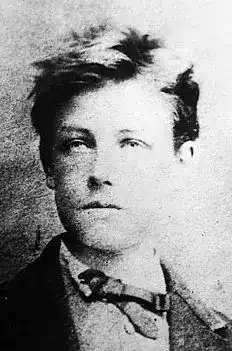
Arthur Rimbaud
A Winter Dream
A Winter Dream
In winter we’ll travel in a little pink carriage
With cushions of blue.
We’ll be fine. A nest of mad kisses waits
In each corner too.
You’ll shut your eyes, not to see, through the glass,
Grimacing shadows of evening,
Those snarling monsters, a crowd going past
Of black wolves and black demons.
Then you’ll feel your cheek tickled quite hard…
A little kiss, like a maddened spider,
Will run over your neck…
And you’ll say: “Catch it!” bowing your head,
– And we’ll take our time finding that creature
– Who travels so far…
In winter we’ll travel in a little pink carriage
With cushions of blue.
We’ll be fine. A nest of mad kisses waits
In each corner too.
You’ll shut your eyes, not to see, through the glass,
Grimacing shadows of evening,
Those snarling monsters, a crowd going past
Of black wolves and black demons.
Then you’ll feel your cheek tickled quite hard…
A little kiss, like a maddened spider,
Will run over your neck…
And you’ll say: “Catch it!” bowing your head,
– And we’ll take our time finding that creature
– Who travels so far…
562

Anonymous
The Wakening, John Attye's First Book of Airs
The Wakening, John Attye's First Book of Airs
ON a time the amorous Silvy
Said to her shepherd, 'Sweet, how do ye?
Kiss me this once and then God be with ye,
My sweetest dear!
Kiss me this once and then God be with ye,
For now the morning draweth near.'
With that, her fairest bosom showing,
Op'ning her lips, rich perfumes blowing,
She said, 'Now kiss me and be going,
My sweetest dear!
Kiss me this once and then be going,
For now the morning draweth near.'
With that the shepherd waked from sleeping,
And spying where the day was peeping,
He said, 'Now take my soul in keeping,
My sweetest dear!
Kiss me and take my soul in keeping,
Since I must go, now day is near.'
ON a time the amorous Silvy
Said to her shepherd, 'Sweet, how do ye?
Kiss me this once and then God be with ye,
My sweetest dear!
Kiss me this once and then God be with ye,
For now the morning draweth near.'
With that, her fairest bosom showing,
Op'ning her lips, rich perfumes blowing,
She said, 'Now kiss me and be going,
My sweetest dear!
Kiss me this once and then be going,
For now the morning draweth near.'
With that the shepherd waked from sleeping,
And spying where the day was peeping,
He said, 'Now take my soul in keeping,
My sweetest dear!
Kiss me and take my soul in keeping,
Since I must go, now day is near.'
169
Anonymous
The Nut-Brown Maid
The Nut-Brown Maid
He. BE it right or wrong, these men among
On women do complain;
Affirming this, how that it is
A labour spent in vain
To love them wele; for never a dele
They love a man again:
For let a man do what he can
Their favour to attain,
Yet if a new to them pursue,
Their first true lover than
Laboureth for naught; for from her thought
He is a banished man.
She. I say not nay, but that all day
It is both written and said
That woman's faith is, as who saith,
All utterly decayd:
But nevertheless, right good witness
In this case might be laid
That they love true and continue:
Record the Nut-brown Maid,
Which, when her love came her to prove,
To her to make his moan,
Would not depart; for in her heart
She loved but him alone.
He. Then between us let us discuss
What was all the manere
Between them two: we will also
Tell all the pain in fere
That she was in. Now I begin,
So that ye me answere:
Wherefore all ye that present be,
I pray you, give an ear.
I am the Knight. I come by night,
As secret as I can,
Saying, Alas! thus standeth the case,
I am a banished man.
She. And I your will for to fulfil
In this will not refuse;
Trusting to show, in wordes few,
That men have an ill use--
To their own shame--women to blame,
And causeless them accuse.
Therefore to you I answer now,
All women to excuse--
Mine own heart dear, with you what cheer?
I pray you, tell anone;
For, in my mind, of all mankind
I love but you alone.
He. It standeth so: a deed is do
Whereof great harm shall grow:
My destiny is for to die
A shameful death, I trow;
Or else to flee. The t' one must be.
None other way I know
But to withdraw as an outlaw,
And take me to my bow.
Wherefore adieu, mine own heart true!
None other rede I can:
For I must to the green-wood go,
Alone, a banished man.
She. O Lord, what is this worldis bliss,
That changeth as the moon!
My summer's day in lusty May
Is darked before the noon.
I hear you say, farewell: Nay, nay,
We depart not so soon.
Why say ye so? whither will ye go?
Alas! what have ye done?
All my welfare to sorrow and care
Should change, if ye were gone:
For, in my mind, of all mankind
I love but you alone.
He. I can believe it shall you grieve,
And somewhat you distrain;
But afterward, your paines hard
Within a day or twain
Shall soon aslake; and ye shall take
Comfort to you again.
Why should ye ought? for, to make thought,
Your labour were in vain.
And thus I do; and pray you to,
As hartely as I can:
For I must to the green-wood go,
Alone, a banished man.
She. Now, sith that ye have showed to me
The secret of your mind,
I shall be plain to you again,
Like as ye shall me find.
Sith it is so that ye will go,
I will not live behind.
Shall never be said the Nut-brown Maid
Was to her love unkind.
Make you ready, for so am I,
Although it were anone:
For, in my mind, of all mankind
I love but you alone.
He. Yet I you rede to take good heed
What men will think and say:
Of young, of old, it shall be told
That ye be gone away
Your wanton will for to fulfil,
In green-wood you to play;
And that ye might for your delight
No longer make delay
Rather than ye should thus for me
Be called an ill woman
Yet would I to the green-wood go,
Alone, a banished man.
She. Though it be sung of old and young
That I should be to blame,
Theirs be the charge that speak so large
In hurting of my name:
For I will prove that faithful love
It is devoid of shame;
In your distress and heaviness
To part with you the same:
And sure all tho that do not so
True lovers are they none:
For in my mind, of all mankind
I love but you alone.
He. I counsel you, Remember how
It is no maiden's law
Nothing to doubt, but to run out
To wood with an outlaw.
For ye must there in your hand bear
A bow ready to draw;
And as a thief thus must you live
Ever in dread and awe;
Whereby to you great harm might grow:
Yet had I liever than
That I had to the green-wood go,
Alone, a banished man.
She. I think not nay but as ye say;
It is no maiden's lore;
But love may make me for your sake,
As I have said before,
To come on foot, to hunt and shoot,
To get us meat and store;
For so that I your company
May have, I ask no more.
From which to part it maketh my heart
As cold as any stone;
For, in my mind, of all mankind
I love but you alone.
He. For an outlaw this is the law,
That men him take and bind:
Without pitie, hanged to be,
And waver with the wind.
If I had need (as God forbede!)
What socours could ye find?
Forsooth I trow, you and your bow
For fear would draw behind.
And no mervail; for little avail
Were in your counsel than:
Wherefore I'll to the green-wood go,
Alone, a banished man.
She. Right well know ye that women be
But feeble for to fight;
No womanhede it is, indeed,
To be bold as a knight:
Yet in such fear if that ye were
With enemies day and night,
I would withstand, with bow in hand,
To grieve them as I might,
And you to save; as women have
From death men many one:
For, in my mind, of all mankind
I love but you alone.
He. Yet take good hede; for ever I drede
That ye could not sustain
The thorny ways, the deep valleys,
The snow, the frost, the rain,
The cold, the heat; for dry or wete,
We must lodge on the plain;
And, us above, no other roof
But a brake bush or twain:
Which soon should grieve you, I believe;
And ye would gladly than
That I had to the green-wood go,
Alone, a banished man.
She. Sith I have here been partynere
With you of joy and bliss,
I must alsò part of your woe
Endure, as reason is:
Yet I am sure of one pleasure,
And shortly it is this--
That where ye be, me seemeth, parde,
I could not fare amiss.
Without more speech I you beseech
That we were shortly gone;
For, in my mind, of all mankind
I love but you alone.
He. If ye go thyder, ye must consider,
When ye have lust to dine,
There shall no meat be for to gete,
Nether bere, ale, ne wine,
Ne shetes clean, to lie between,
Made of thread and twine;
None other house, but leaves and boughs,
To cover your head and mine.
Lo, mine heart sweet, this ill diete
Should make you pale and wan:
Wherefore I'll to the green-wood go,
Alone, a banished man.
She. Among the wild deer such an archere,
As men say that ye be,
Ne may not fail of good vitayle
Where is so great plentè
Shall be full sweet to me;
With which in hele I shall right wele
Endure, as ye shall see;
And, or we go, a bed or two
I can provide anone;
For, in my mind, of all mankind
I love but you alone.
He. Lo yet, before, ye must do more,
If ye will go with me:
As, cut your hair up by your ear,
Your kirtle by the knee;
With bow in hand for to withstand
Your enemies, if need be:
And this same night, before daylight,
To woodward will I flee.
If that ye will all this fulfil,
Do it shortly as ye can:
Else will I to the green-wood go,
Alone, a banished man.
She. I shall as now do more for you
Than 'longeth to womanhede;
To short my hair, a bow to bear,
To shoot in time of need.
O my sweet mother! before all other
For you I have most drede!
But now, adieu! I must ensue
Where fortune doth me lead.
All this make ye: Now let us flee;
The day cometh fast upon:
For, in my mind, of all mankind
I love but you alone.
He. Nay, nay, not so; ye shall not go,
And I shall tell you why--
Your appetite is to be light
Of love, I well espy:
For, right as ye have said to me,
In likewise hardily
Ye would answere whosoever it were,
In way of company:
It is said of old, Soon hot, soon cold;
And so is a woman:
Wherefore I to the wood will go,
Alone, a banished man.
She. If ye take heed, it is no need
Such words to say to me;
For oft ye prayed, and long assayed,
Or I loved you, parde:
And though that I of ancestry
A baron's daughter be,
Yet have you proved how I you loved,
A squire of low degree;
And ever shall, whatso befall
To die therefore anone;
For, in my mind, of all mankind
I love but you alone.
He. A baron's child to be beguiled,
It were a cursed deed!
To be felaw with an outlaw--
Almighty God forbede!
Yet better were the poor squyere
Alone to forest yede
Than ye shall say another day
That by my cursed rede
Ye were betrayed. Wherefore, good maid,
The best rede that I can,
Is, that I to the green-wood go,
Alone, a banished man.
She. Whatever befall, I never shall
Of this thing be upbraid:
But if ye go, and leave me so,
Then have ye me betrayed.
Remember you wele, how that ye dele;
For if ye, as ye said,
Be so unkind to leave behind
Your love, the Nut-brown Maid,
Trust me truly that I shall die
Soon after ye be gone:
For, in my mind, of all mankind
I love but you alone.
He. If that ye went, ye should repent;
For in the forest now
I have purveyed me of a maid
Whom I love more than you:
Another more fair than ever ye were
I dare it well avow;
And of you both each should be wroth
With other, as I trow:
It were mine ease to live in peace;
So will I, if I can:
Wherefore I to the wood will go,
Alone, a banished man.
She. Though in the wood I understood
Ye had a paramour,
All this may nought remove my thought,
But that I will be your':
And she shall find me soft and kind
And courteis every hour;
Glad to fulfil all that she will
Command me, to my power:
For had ye, lo, an hundred mo,
Yet would I be that one:
For, in my mind, of all mankind
I love but you alone.
He. Mine own dear love, I see the prove
That ye be kind and true;
Of maid, of wife, in all my life,
The best that ever I knew.
Be merry and glad; be no more sad;
The case is changed new;
For it were ruth that for your truth
Ye should have cause to rue.
Be not dismayed, whatsoever I said
To you when I began:
I will not to the green-wood go;
I am no banished man.
She. These tidings be more glad to me
Than to be made a queen,
If I were sure they should endure;
But it is often seen
When men will break promise they speak
The wordis on the splene.
Ye shape some wile me to beguile,
And steal from me, I ween:
Then were the case worse than it was,
And I more wo-begone:
For, in my mind, of all mankind
I love but you alone.
He. Ye shall not nede further to drede:
I will not disparage
You (God defend), sith you descend
Of so great a linage.
Now understand: to Westmoreland,
Which is my heritage,
I will you bring; and with a ring,
By way of marriage
I will you take, and lady make,
As shortly as I can:
Thus have you won an Earles son,
And not a banished man.
Here may ye see that women be
In love meek, kind, and stable;
Let never man reprove them than,
Or call them variable;
But rather pray God that we may
To them be comfortable;
Which sometime proveth such as He loveth,
If they be charitable.
For sith men would that women should
Be meek to them each one;
Much more ought they to God obey,
And serve but Him alone.
He. BE it right or wrong, these men among
On women do complain;
Affirming this, how that it is
A labour spent in vain
To love them wele; for never a dele
They love a man again:
For let a man do what he can
Their favour to attain,
Yet if a new to them pursue,
Their first true lover than
Laboureth for naught; for from her thought
He is a banished man.
She. I say not nay, but that all day
It is both written and said
That woman's faith is, as who saith,
All utterly decayd:
But nevertheless, right good witness
In this case might be laid
That they love true and continue:
Record the Nut-brown Maid,
Which, when her love came her to prove,
To her to make his moan,
Would not depart; for in her heart
She loved but him alone.
He. Then between us let us discuss
What was all the manere
Between them two: we will also
Tell all the pain in fere
That she was in. Now I begin,
So that ye me answere:
Wherefore all ye that present be,
I pray you, give an ear.
I am the Knight. I come by night,
As secret as I can,
Saying, Alas! thus standeth the case,
I am a banished man.
She. And I your will for to fulfil
In this will not refuse;
Trusting to show, in wordes few,
That men have an ill use--
To their own shame--women to blame,
And causeless them accuse.
Therefore to you I answer now,
All women to excuse--
Mine own heart dear, with you what cheer?
I pray you, tell anone;
For, in my mind, of all mankind
I love but you alone.
He. It standeth so: a deed is do
Whereof great harm shall grow:
My destiny is for to die
A shameful death, I trow;
Or else to flee. The t' one must be.
None other way I know
But to withdraw as an outlaw,
And take me to my bow.
Wherefore adieu, mine own heart true!
None other rede I can:
For I must to the green-wood go,
Alone, a banished man.
She. O Lord, what is this worldis bliss,
That changeth as the moon!
My summer's day in lusty May
Is darked before the noon.
I hear you say, farewell: Nay, nay,
We depart not so soon.
Why say ye so? whither will ye go?
Alas! what have ye done?
All my welfare to sorrow and care
Should change, if ye were gone:
For, in my mind, of all mankind
I love but you alone.
He. I can believe it shall you grieve,
And somewhat you distrain;
But afterward, your paines hard
Within a day or twain
Shall soon aslake; and ye shall take
Comfort to you again.
Why should ye ought? for, to make thought,
Your labour were in vain.
And thus I do; and pray you to,
As hartely as I can:
For I must to the green-wood go,
Alone, a banished man.
She. Now, sith that ye have showed to me
The secret of your mind,
I shall be plain to you again,
Like as ye shall me find.
Sith it is so that ye will go,
I will not live behind.
Shall never be said the Nut-brown Maid
Was to her love unkind.
Make you ready, for so am I,
Although it were anone:
For, in my mind, of all mankind
I love but you alone.
He. Yet I you rede to take good heed
What men will think and say:
Of young, of old, it shall be told
That ye be gone away
Your wanton will for to fulfil,
In green-wood you to play;
And that ye might for your delight
No longer make delay
Rather than ye should thus for me
Be called an ill woman
Yet would I to the green-wood go,
Alone, a banished man.
She. Though it be sung of old and young
That I should be to blame,
Theirs be the charge that speak so large
In hurting of my name:
For I will prove that faithful love
It is devoid of shame;
In your distress and heaviness
To part with you the same:
And sure all tho that do not so
True lovers are they none:
For in my mind, of all mankind
I love but you alone.
He. I counsel you, Remember how
It is no maiden's law
Nothing to doubt, but to run out
To wood with an outlaw.
For ye must there in your hand bear
A bow ready to draw;
And as a thief thus must you live
Ever in dread and awe;
Whereby to you great harm might grow:
Yet had I liever than
That I had to the green-wood go,
Alone, a banished man.
She. I think not nay but as ye say;
It is no maiden's lore;
But love may make me for your sake,
As I have said before,
To come on foot, to hunt and shoot,
To get us meat and store;
For so that I your company
May have, I ask no more.
From which to part it maketh my heart
As cold as any stone;
For, in my mind, of all mankind
I love but you alone.
He. For an outlaw this is the law,
That men him take and bind:
Without pitie, hanged to be,
And waver with the wind.
If I had need (as God forbede!)
What socours could ye find?
Forsooth I trow, you and your bow
For fear would draw behind.
And no mervail; for little avail
Were in your counsel than:
Wherefore I'll to the green-wood go,
Alone, a banished man.
She. Right well know ye that women be
But feeble for to fight;
No womanhede it is, indeed,
To be bold as a knight:
Yet in such fear if that ye were
With enemies day and night,
I would withstand, with bow in hand,
To grieve them as I might,
And you to save; as women have
From death men many one:
For, in my mind, of all mankind
I love but you alone.
He. Yet take good hede; for ever I drede
That ye could not sustain
The thorny ways, the deep valleys,
The snow, the frost, the rain,
The cold, the heat; for dry or wete,
We must lodge on the plain;
And, us above, no other roof
But a brake bush or twain:
Which soon should grieve you, I believe;
And ye would gladly than
That I had to the green-wood go,
Alone, a banished man.
She. Sith I have here been partynere
With you of joy and bliss,
I must alsò part of your woe
Endure, as reason is:
Yet I am sure of one pleasure,
And shortly it is this--
That where ye be, me seemeth, parde,
I could not fare amiss.
Without more speech I you beseech
That we were shortly gone;
For, in my mind, of all mankind
I love but you alone.
He. If ye go thyder, ye must consider,
When ye have lust to dine,
There shall no meat be for to gete,
Nether bere, ale, ne wine,
Ne shetes clean, to lie between,
Made of thread and twine;
None other house, but leaves and boughs,
To cover your head and mine.
Lo, mine heart sweet, this ill diete
Should make you pale and wan:
Wherefore I'll to the green-wood go,
Alone, a banished man.
She. Among the wild deer such an archere,
As men say that ye be,
Ne may not fail of good vitayle
Where is so great plentè
Shall be full sweet to me;
With which in hele I shall right wele
Endure, as ye shall see;
And, or we go, a bed or two
I can provide anone;
For, in my mind, of all mankind
I love but you alone.
He. Lo yet, before, ye must do more,
If ye will go with me:
As, cut your hair up by your ear,
Your kirtle by the knee;
With bow in hand for to withstand
Your enemies, if need be:
And this same night, before daylight,
To woodward will I flee.
If that ye will all this fulfil,
Do it shortly as ye can:
Else will I to the green-wood go,
Alone, a banished man.
She. I shall as now do more for you
Than 'longeth to womanhede;
To short my hair, a bow to bear,
To shoot in time of need.
O my sweet mother! before all other
For you I have most drede!
But now, adieu! I must ensue
Where fortune doth me lead.
All this make ye: Now let us flee;
The day cometh fast upon:
For, in my mind, of all mankind
I love but you alone.
He. Nay, nay, not so; ye shall not go,
And I shall tell you why--
Your appetite is to be light
Of love, I well espy:
For, right as ye have said to me,
In likewise hardily
Ye would answere whosoever it were,
In way of company:
It is said of old, Soon hot, soon cold;
And so is a woman:
Wherefore I to the wood will go,
Alone, a banished man.
She. If ye take heed, it is no need
Such words to say to me;
For oft ye prayed, and long assayed,
Or I loved you, parde:
And though that I of ancestry
A baron's daughter be,
Yet have you proved how I you loved,
A squire of low degree;
And ever shall, whatso befall
To die therefore anone;
For, in my mind, of all mankind
I love but you alone.
He. A baron's child to be beguiled,
It were a cursed deed!
To be felaw with an outlaw--
Almighty God forbede!
Yet better were the poor squyere
Alone to forest yede
Than ye shall say another day
That by my cursed rede
Ye were betrayed. Wherefore, good maid,
The best rede that I can,
Is, that I to the green-wood go,
Alone, a banished man.
She. Whatever befall, I never shall
Of this thing be upbraid:
But if ye go, and leave me so,
Then have ye me betrayed.
Remember you wele, how that ye dele;
For if ye, as ye said,
Be so unkind to leave behind
Your love, the Nut-brown Maid,
Trust me truly that I shall die
Soon after ye be gone:
For, in my mind, of all mankind
I love but you alone.
He. If that ye went, ye should repent;
For in the forest now
I have purveyed me of a maid
Whom I love more than you:
Another more fair than ever ye were
I dare it well avow;
And of you both each should be wroth
With other, as I trow:
It were mine ease to live in peace;
So will I, if I can:
Wherefore I to the wood will go,
Alone, a banished man.
She. Though in the wood I understood
Ye had a paramour,
All this may nought remove my thought,
But that I will be your':
And she shall find me soft and kind
And courteis every hour;
Glad to fulfil all that she will
Command me, to my power:
For had ye, lo, an hundred mo,
Yet would I be that one:
For, in my mind, of all mankind
I love but you alone.
He. Mine own dear love, I see the prove
That ye be kind and true;
Of maid, of wife, in all my life,
The best that ever I knew.
Be merry and glad; be no more sad;
The case is changed new;
For it were ruth that for your truth
Ye should have cause to rue.
Be not dismayed, whatsoever I said
To you when I began:
I will not to the green-wood go;
I am no banished man.
She. These tidings be more glad to me
Than to be made a queen,
If I were sure they should endure;
But it is often seen
When men will break promise they speak
The wordis on the splene.
Ye shape some wile me to beguile,
And steal from me, I ween:
Then were the case worse than it was,
And I more wo-begone:
For, in my mind, of all mankind
I love but you alone.
He. Ye shall not nede further to drede:
I will not disparage
You (God defend), sith you descend
Of so great a linage.
Now understand: to Westmoreland,
Which is my heritage,
I will you bring; and with a ring,
By way of marriage
I will you take, and lady make,
As shortly as I can:
Thus have you won an Earles son,
And not a banished man.
Here may ye see that women be
In love meek, kind, and stable;
Let never man reprove them than,
Or call them variable;
But rather pray God that we may
To them be comfortable;
Which sometime proveth such as He loveth,
If they be charitable.
For sith men would that women should
Be meek to them each one;
Much more ought they to God obey,
And serve but Him alone.
239
Anonymous
Tam Lin
Tam Lin
O I forbid you, maidens a',
That wear gowd on your hair,
To come or gae by Carterhaugh,
For young Tam Lin is there.
There's nane that gaes by Carterhaugh
But they leave him a wad,
Either their rings, or green mantles,
Or else their maidenhead.
Janet has kilted her green kirtle
A little aboon her knee,
And she has broded her yellow hair
A little aboon her bree,
And she's awa to Carterhaugh
As fast as she can hie.
When she came to carterhaugh
Tam Lin was at the well,
And there she fand his steed standing,
But away was himsel.
She had na pu'd a double rose,
A rose but only twa,
Till upon then started young Tam Lin,
Says, Lady, thou's pu nae mae.
Why pu's thou the rose, Janet,
And why breaks thou the wand?
Or why comes thou to Carterhaugh
Withoutten my command?
"Carterhaugh, it is my own,
My daddy gave it me,
I'll come and gang by Carterhaugh,
And ask nae leave at thee."
Janet has kilted her green kirtle
A little aboon her knee,
And she has broded her yellow hair
A little aboon her bree,
And she is to her father's ha,
As fast as she can hie.
Four and twenty ladies fair
Were playing at the ba,
And out then came the fair Janet,
The flower among them a'.
Four and twenty ladies fair
Were playing at the chess,
And out then came the fair Janet,
As green as onie glass.
Out then spake an auld grey knight,
Lay oer the castle wa,
And says, Alas, fair Janet, for thee,
But we'll be blamed a'.
"Haud your tongue, ye auld fac'd knight,
Some ill death may ye die!
Father my bairn on whom I will,
I'll father none on thee."
Out then spak her father dear,
And he spak meek and mild,
"And ever alas, sweet Janet," he says,
"I think thou gaest wi child."
"If that I gae wi child, father,
Mysel maun bear the blame,
There's neer a laird about your ha,
Shall get the bairn's name.
"If my love were an earthly knight,
As he's an elfin grey,
I wad na gie my ain true-love
For nae lord that ye hae.
"The steed that my true love rides on
Is lighter than the wind,
Wi siller he is shod before,
Wi burning gowd behind."
Janet has kilted her green kirtle
A little aboon her knee,
And she has broded her yellow hair
A little aboon her bree,
And she's awa to Carterhaugh
As fast as she can hie.
When she came to Carterhaugh,
Tam Lin was at the well,
And there she fand his steed standing,
But away was himsel.
She had na pu'd a double rose,
A rose but only twa,
Till up then started young Tam Lin,
Says, Lady, thou pu's nae mae.
"Why pu's thou the rose, Janet,
Amang the groves sae green,
And a' to kill the bonny babe
That we gat us between?"
"O tell me, tell me, Tam Lin," she says,
"For's sake that died on tree,
If eer ye was in holy chapel,
Or christendom did see?"
"Roxbrugh he was my grandfather,
Took me with him to bide
And ance it fell upon a day
That wae did me betide.
"And ance it fell upon a day
A cauld day and a snell,
When we were frae the hunting come,
That frae my horse I fell,
The Queen o' Fairies she caught me,
In yon green hill do dwell.
"And pleasant is the fairy land,
But, an eerie tale to tell,
Ay at the end of seven years,
We pay a tiend to hell,
I am sae fair and fu o flesh,
I'm feard it be mysel.
"But the night is Halloween, lady,
The morn is Hallowday,
Then win me, win me, an ye will,
For weel I wat ye may.
"Just at the mirk and midnight hour
The fairy folk will ride,
And they that wad their true-love win,
At Miles Cross they maun bide."
"But how shall I thee ken, Tam Lin,
Or how my true-love know,
Amang sa mony unco knights,
The like I never saw?"
"O first let pass the black, lady,
And syne let pass the brown,
But quickly run to the milk-white steed,
Pu ye his rider down.
"For I'll ride on the milk-white steed,
And ay nearest the town,
Because I was an earthly knight
They gie me that renown.
"My right hand will be gloved, lady,
My left hand will be bare,
Cockt up shall my bonnet be,
And kaimed down shall my hair,
And thae's the takens I gie thee,
Nae doubt I will be there.
"They'll turn me in your arms, lady,
Into an esk and adder,
But hold me fast, and fear me not,
I am your bairn's father.
"They'll turn me to a bear sae grim,
And then a lion bold,
But hold me fast, and fear me not,
And ye shall love your child.
"Again they'll turn me in your arms
To a red het gand of airn,
But hold me fast, and fear me not,
I'll do you nae harm.
"And last they'll turn me in your arms
Into the burning gleed,
Then throw me into well water,
O throw me in with speed.
"And then I'll be your ain true-love,
I'll turn a naked knight,
Then cover me wi your green mantle,
And hide me out o sight."
Gloomy, gloomy was the night,
And eerie was the way,
As fair Jenny in her green mantle
To Miles Cross she did gae.
At the mirk and midnight hour
She heard the bridles sing,
She was as glad at that
As any earthly thing.
First she let the black pass by,
And syne she let the brown,
But quickly she ran to the milk-white steed,
And pu'd the rider down.
Sae weel she minded what he did say,
And young Tam Lin did win,
Syne covered him wi her green mantle,
As blythe's a bird in spring
Out then spak the Queen o Fairies,
Out of a bush o broom,
"Them that has gotten young Tam Lin
Has gotten a stately-groom."
Out then spak the Queen o Fairies,
And an angry woman was she,
"Shame betide her ill-far'd face,
And an ill death may she die,
For she's taen awa the bonniest knight
In a' my companie.
"But had I kend, Tam Lin," said she,
"What now this night I see,
I wad hae taen out thy twa grey een,
And put in twa een o tree."
O I forbid you, maidens a',
That wear gowd on your hair,
To come or gae by Carterhaugh,
For young Tam Lin is there.
There's nane that gaes by Carterhaugh
But they leave him a wad,
Either their rings, or green mantles,
Or else their maidenhead.
Janet has kilted her green kirtle
A little aboon her knee,
And she has broded her yellow hair
A little aboon her bree,
And she's awa to Carterhaugh
As fast as she can hie.
When she came to carterhaugh
Tam Lin was at the well,
And there she fand his steed standing,
But away was himsel.
She had na pu'd a double rose,
A rose but only twa,
Till upon then started young Tam Lin,
Says, Lady, thou's pu nae mae.
Why pu's thou the rose, Janet,
And why breaks thou the wand?
Or why comes thou to Carterhaugh
Withoutten my command?
"Carterhaugh, it is my own,
My daddy gave it me,
I'll come and gang by Carterhaugh,
And ask nae leave at thee."
Janet has kilted her green kirtle
A little aboon her knee,
And she has broded her yellow hair
A little aboon her bree,
And she is to her father's ha,
As fast as she can hie.
Four and twenty ladies fair
Were playing at the ba,
And out then came the fair Janet,
The flower among them a'.
Four and twenty ladies fair
Were playing at the chess,
And out then came the fair Janet,
As green as onie glass.
Out then spake an auld grey knight,
Lay oer the castle wa,
And says, Alas, fair Janet, for thee,
But we'll be blamed a'.
"Haud your tongue, ye auld fac'd knight,
Some ill death may ye die!
Father my bairn on whom I will,
I'll father none on thee."
Out then spak her father dear,
And he spak meek and mild,
"And ever alas, sweet Janet," he says,
"I think thou gaest wi child."
"If that I gae wi child, father,
Mysel maun bear the blame,
There's neer a laird about your ha,
Shall get the bairn's name.
"If my love were an earthly knight,
As he's an elfin grey,
I wad na gie my ain true-love
For nae lord that ye hae.
"The steed that my true love rides on
Is lighter than the wind,
Wi siller he is shod before,
Wi burning gowd behind."
Janet has kilted her green kirtle
A little aboon her knee,
And she has broded her yellow hair
A little aboon her bree,
And she's awa to Carterhaugh
As fast as she can hie.
When she came to Carterhaugh,
Tam Lin was at the well,
And there she fand his steed standing,
But away was himsel.
She had na pu'd a double rose,
A rose but only twa,
Till up then started young Tam Lin,
Says, Lady, thou pu's nae mae.
"Why pu's thou the rose, Janet,
Amang the groves sae green,
And a' to kill the bonny babe
That we gat us between?"
"O tell me, tell me, Tam Lin," she says,
"For's sake that died on tree,
If eer ye was in holy chapel,
Or christendom did see?"
"Roxbrugh he was my grandfather,
Took me with him to bide
And ance it fell upon a day
That wae did me betide.
"And ance it fell upon a day
A cauld day and a snell,
When we were frae the hunting come,
That frae my horse I fell,
The Queen o' Fairies she caught me,
In yon green hill do dwell.
"And pleasant is the fairy land,
But, an eerie tale to tell,
Ay at the end of seven years,
We pay a tiend to hell,
I am sae fair and fu o flesh,
I'm feard it be mysel.
"But the night is Halloween, lady,
The morn is Hallowday,
Then win me, win me, an ye will,
For weel I wat ye may.
"Just at the mirk and midnight hour
The fairy folk will ride,
And they that wad their true-love win,
At Miles Cross they maun bide."
"But how shall I thee ken, Tam Lin,
Or how my true-love know,
Amang sa mony unco knights,
The like I never saw?"
"O first let pass the black, lady,
And syne let pass the brown,
But quickly run to the milk-white steed,
Pu ye his rider down.
"For I'll ride on the milk-white steed,
And ay nearest the town,
Because I was an earthly knight
They gie me that renown.
"My right hand will be gloved, lady,
My left hand will be bare,
Cockt up shall my bonnet be,
And kaimed down shall my hair,
And thae's the takens I gie thee,
Nae doubt I will be there.
"They'll turn me in your arms, lady,
Into an esk and adder,
But hold me fast, and fear me not,
I am your bairn's father.
"They'll turn me to a bear sae grim,
And then a lion bold,
But hold me fast, and fear me not,
And ye shall love your child.
"Again they'll turn me in your arms
To a red het gand of airn,
But hold me fast, and fear me not,
I'll do you nae harm.
"And last they'll turn me in your arms
Into the burning gleed,
Then throw me into well water,
O throw me in with speed.
"And then I'll be your ain true-love,
I'll turn a naked knight,
Then cover me wi your green mantle,
And hide me out o sight."
Gloomy, gloomy was the night,
And eerie was the way,
As fair Jenny in her green mantle
To Miles Cross she did gae.
At the mirk and midnight hour
She heard the bridles sing,
She was as glad at that
As any earthly thing.
First she let the black pass by,
And syne she let the brown,
But quickly she ran to the milk-white steed,
And pu'd the rider down.
Sae weel she minded what he did say,
And young Tam Lin did win,
Syne covered him wi her green mantle,
As blythe's a bird in spring
Out then spak the Queen o Fairies,
Out of a bush o broom,
"Them that has gotten young Tam Lin
Has gotten a stately-groom."
Out then spak the Queen o Fairies,
And an angry woman was she,
"Shame betide her ill-far'd face,
And an ill death may she die,
For she's taen awa the bonniest knight
In a' my companie.
"But had I kend, Tam Lin," said she,
"What now this night I see,
I wad hae taen out thy twa grey een,
And put in twa een o tree."
457
Anonymous
Since First I saw your Face, Thomas Ford's Music of Sundry Kinds
Since First I saw your Face, Thomas Ford's Music of Sundry Kinds
SINCE first I saw your face I resolved to honour and renown ye;
If now I be disdained I wish my heart had never known ye.
What? I that loved and you that liked, shall we begin to wrangle?
No, no, no, my heart is fast, and cannot disentangle.
If I admire or praise you too much, that fault you may forgive me;
Or if my hands had stray'd but a touch, then justly might you leave
me.
I ask'd you leave, you bade me love; is 't now a time to chide me?
No, no, no, I'll love you still what fortune e'er betide me.
The Sun, whose beams most glorious are, rejecteth no beholder,
And your sweet beauty past compare made my poor eyes the bolder:
Where beauty moves and wit delights and signs of kindness bind me,
There, O there! where'er I go I'll leave my heart behind me!
SINCE first I saw your face I resolved to honour and renown ye;
If now I be disdained I wish my heart had never known ye.
What? I that loved and you that liked, shall we begin to wrangle?
No, no, no, my heart is fast, and cannot disentangle.
If I admire or praise you too much, that fault you may forgive me;
Or if my hands had stray'd but a touch, then justly might you leave
me.
I ask'd you leave, you bade me love; is 't now a time to chide me?
No, no, no, I'll love you still what fortune e'er betide me.
The Sun, whose beams most glorious are, rejecteth no beholder,
And your sweet beauty past compare made my poor eyes the bolder:
Where beauty moves and wit delights and signs of kindness bind me,
There, O there! where'er I go I'll leave my heart behind me!
265
Anonymous
Quia Amore Langueo
Quia Amore Langueo
IN a valley of this restles mind
I sought in mountain and in mead,
Trusting a true love for to find.
Upon an hill then took I heed;
A voice I heard (and near I yede)
In great dolour complaining tho:
See, dear soul, how my sides bleed
Quia amore langueo.
Upon this hill I found a tree,
Under a tree a man sitting;
From head to foot wounded was he;
His hearte blood I saw bleeding:
A seemly man to be a king,
A gracious face to look unto.
I asked why he had paining;
[He said,] Quia amore langueo.
I am true love that false was never;
My sister, man's soul, I loved her thus.
Because we would in no wise dissever
I left my kingdom glorious.
I purveyed her a palace full precious;
She fled, I followed, I loved her so
That I suffered this pain piteous
Quia amore langueo.
My fair love and my spouse bright!
I saved her from beating, and she hath me bet;
I clothed her in grace and heavenly light;
This bloody shirt she hath on me set;
For longing of love yet would I not let;
Sweete strokes are these: lo!
I have loved her ever as I her het
Quia amore langueo.
I crowned her with bliss and she me with thorn;
I led her to chamber and she me to die;
I brought her to worship and she me to scorn;
I did her reverence and she me villany.
To love that loveth is no maistry;
Her hate made never my love her foe:
Ask me then no question why--
Quia amore langueo.
Look unto mine handes, man!
These gloves were given me when I her sought;
They be not white, but red and wan;
Embroidered with blood my spouse them brought.
They will not off; I loose hem nought;
I woo her with hem wherever she go.
These hands for her so friendly fought
Quia amore langueo.
Marvel not, man, though I sit still.
See, love hath shod me wonder strait:
Buckled my feet, as was her will,
With sharpe nails (well thou may'st wait!)
In my love was never desait;
All my membres I have opened her to;
My body I made her herte's bait
Quia amore langueo.
In my side I have made her nest;
Look in, how weet a wound is here!
This is her chamber, here shall she rest,
That she and I may sleep in fere.
Here may she wash, if any filth were;
Here is seat for all her woe;
Come when she will, she shall have cheer
Quia amore langueo.
I will abide till she be ready,
I will her sue if she say nay;
If she be retchless I will be greedy,
If she be dangerous I will her pray;
If she weep, then bide I ne may:
Mine arms ben spread to clip her me to.
Cry once, I come: now, soul, assay
Quia amore langueo.
Fair love, let us go play:
Apples ben ripe in my gardayne.
I shall thee clothe in a new array,
Thy meat shall be milk, honey and wine.
Fair love, let us go dine:
Thy sustenance is in my crippe, lo!
Tarry thou not, my fair spouse mine,
Quia amore langueo.
If thou be foul, I shall thee make clean;
If thou be sick, I shall thee heal;
If thou mourn ought, I shall thee mene;
Why wilt thou not, fair love, with me deal?
Foundest thou ever love so leal?
What wilt thou, soul, that I shall do?
I may not unkindly thee appeal
Quia amore langueo.
What shall I do now with my spouse
But abide her of my gentleness,
Till that she look out of her house
Of fleshly affection? love mine she is;
Her bed is made, her bolster is bliss,
Her chamber is chosen; is there none mo.
Look out on me at the window of kindeness
Quia amore langueo.
My love is in her chamber: hold your peace!
Make ye no noise, but let her sleep.
My babe I would not were in disease,
I may not hear my dear child weep.
With my pap I shall her keep;
Ne marvel ye not though I tend her to:
This wound in my side had ne'er be so deep
But Quia amore langueo.
Long thou for love never so high,
My love is more than thine may be.
Thou weepest, thou gladdest, I sit thee by:
Yet wouldst thou once, love, look unto me!
Should I always feede thee
With children meat? Nay, love, not so!
I will prove thy love with adversite
Quia amore langueo.
Wax not weary, mine own wife!
What mede is aye to live in comfort?
In tribulation I reign more rife
Ofter times than in disport.
In weal and in woe I am aye to support:
Mine own wife, go not me fro!
Thy mede is marked, when thou art mort:
Quia amore langueo.
IN a valley of this restles mind
I sought in mountain and in mead,
Trusting a true love for to find.
Upon an hill then took I heed;
A voice I heard (and near I yede)
In great dolour complaining tho:
See, dear soul, how my sides bleed
Quia amore langueo.
Upon this hill I found a tree,
Under a tree a man sitting;
From head to foot wounded was he;
His hearte blood I saw bleeding:
A seemly man to be a king,
A gracious face to look unto.
I asked why he had paining;
[He said,] Quia amore langueo.
I am true love that false was never;
My sister, man's soul, I loved her thus.
Because we would in no wise dissever
I left my kingdom glorious.
I purveyed her a palace full precious;
She fled, I followed, I loved her so
That I suffered this pain piteous
Quia amore langueo.
My fair love and my spouse bright!
I saved her from beating, and she hath me bet;
I clothed her in grace and heavenly light;
This bloody shirt she hath on me set;
For longing of love yet would I not let;
Sweete strokes are these: lo!
I have loved her ever as I her het
Quia amore langueo.
I crowned her with bliss and she me with thorn;
I led her to chamber and she me to die;
I brought her to worship and she me to scorn;
I did her reverence and she me villany.
To love that loveth is no maistry;
Her hate made never my love her foe:
Ask me then no question why--
Quia amore langueo.
Look unto mine handes, man!
These gloves were given me when I her sought;
They be not white, but red and wan;
Embroidered with blood my spouse them brought.
They will not off; I loose hem nought;
I woo her with hem wherever she go.
These hands for her so friendly fought
Quia amore langueo.
Marvel not, man, though I sit still.
See, love hath shod me wonder strait:
Buckled my feet, as was her will,
With sharpe nails (well thou may'st wait!)
In my love was never desait;
All my membres I have opened her to;
My body I made her herte's bait
Quia amore langueo.
In my side I have made her nest;
Look in, how weet a wound is here!
This is her chamber, here shall she rest,
That she and I may sleep in fere.
Here may she wash, if any filth were;
Here is seat for all her woe;
Come when she will, she shall have cheer
Quia amore langueo.
I will abide till she be ready,
I will her sue if she say nay;
If she be retchless I will be greedy,
If she be dangerous I will her pray;
If she weep, then bide I ne may:
Mine arms ben spread to clip her me to.
Cry once, I come: now, soul, assay
Quia amore langueo.
Fair love, let us go play:
Apples ben ripe in my gardayne.
I shall thee clothe in a new array,
Thy meat shall be milk, honey and wine.
Fair love, let us go dine:
Thy sustenance is in my crippe, lo!
Tarry thou not, my fair spouse mine,
Quia amore langueo.
If thou be foul, I shall thee make clean;
If thou be sick, I shall thee heal;
If thou mourn ought, I shall thee mene;
Why wilt thou not, fair love, with me deal?
Foundest thou ever love so leal?
What wilt thou, soul, that I shall do?
I may not unkindly thee appeal
Quia amore langueo.
What shall I do now with my spouse
But abide her of my gentleness,
Till that she look out of her house
Of fleshly affection? love mine she is;
Her bed is made, her bolster is bliss,
Her chamber is chosen; is there none mo.
Look out on me at the window of kindeness
Quia amore langueo.
My love is in her chamber: hold your peace!
Make ye no noise, but let her sleep.
My babe I would not were in disease,
I may not hear my dear child weep.
With my pap I shall her keep;
Ne marvel ye not though I tend her to:
This wound in my side had ne'er be so deep
But Quia amore langueo.
Long thou for love never so high,
My love is more than thine may be.
Thou weepest, thou gladdest, I sit thee by:
Yet wouldst thou once, love, look unto me!
Should I always feede thee
With children meat? Nay, love, not so!
I will prove thy love with adversite
Quia amore langueo.
Wax not weary, mine own wife!
What mede is aye to live in comfort?
In tribulation I reign more rife
Ofter times than in disport.
In weal and in woe I am aye to support:
Mine own wife, go not me fro!
Thy mede is marked, when thou art mort:
Quia amore langueo.
245
Anonymous
Lusty May
Lusty May
O LUSTY May, with Flora queen!
The balmy dropis from Phoebus sheen
Preluciand beams before the day:
By that Diana growis green
Through gladness of this lusty May.
Then Esperus, that is so bricht,
Til woful hairtis castis his light,
With bankis that bloomis on every brae;
And schouris are shed forth of their sicht
Through gladness of this lusty May.
Birdis on bewis of every birth,
Rejoicing notis makand their mirth
Richt plesantly upon the spray,
With flourishingis o'er field and firth
Through gladness of this lusty May.
All luvaris that are in care
To their ladies they do repair
In fresh morningis before the day,
And are in mirth ay mair and mair
Through gladness of this lusty May.
O LUSTY May, with Flora queen!
The balmy dropis from Phoebus sheen
Preluciand beams before the day:
By that Diana growis green
Through gladness of this lusty May.
Then Esperus, that is so bricht,
Til woful hairtis castis his light,
With bankis that bloomis on every brae;
And schouris are shed forth of their sicht
Through gladness of this lusty May.
Birdis on bewis of every birth,
Rejoicing notis makand their mirth
Richt plesantly upon the spray,
With flourishingis o'er field and firth
Through gladness of this lusty May.
All luvaris that are in care
To their ladies they do repair
In fresh morningis before the day,
And are in mirth ay mair and mair
Through gladness of this lusty May.
254
Anonymous
Helen of Kirconnell
Helen of Kirconnell
I WISH I were where Helen lies,
Night and day on me she cries;
O that I were where Helen lies,
On fair Kirconnell lea!
Curst be the heart that thought the thought,
And curst the hand that fired the shot,
When in my arms burd Helen dropt,
And died to succour me!
O think na ye my heart was sair,
When my Love dropp'd and spak nae mair!
There did she swoon wi' meikle care,
On fair Kirconnell lea.
As I went down the water side,
None but my foe to be my guide,
None but my foe to be my guide,
On fair Kirconnell lea;
I lighted down my sword to draw,
I hacked him in pieces sma',
I hacked him in pieces sma',
For her sake that died for me.
O Helen fair, beyond compare!
I'll mak a garland o' thy hair,
Shall bind my heart for evermair,
Until the day I die!
O that I were where Helen lies!
Night and day on me she cries;
Out of my bed she bids me rise,
Says, 'Haste, and come to me!'
O Helen fair! O Helen chaste!
If I were with thee, I'd be blest,
Where thou lies low and taks thy rest,
On fair Kirconnell lea.
I wish my grave were growing green,
A winding-sheet drawn owre my e'en,
And I in Helen's arms lying,
On fair Kirconnell lea.
I wish I were where Helen lies!
Night and day on me she cries;
And I am weary of the skies,
For her sake that died for me.
I WISH I were where Helen lies,
Night and day on me she cries;
O that I were where Helen lies,
On fair Kirconnell lea!
Curst be the heart that thought the thought,
And curst the hand that fired the shot,
When in my arms burd Helen dropt,
And died to succour me!
O think na ye my heart was sair,
When my Love dropp'd and spak nae mair!
There did she swoon wi' meikle care,
On fair Kirconnell lea.
As I went down the water side,
None but my foe to be my guide,
None but my foe to be my guide,
On fair Kirconnell lea;
I lighted down my sword to draw,
I hacked him in pieces sma',
I hacked him in pieces sma',
For her sake that died for me.
O Helen fair, beyond compare!
I'll mak a garland o' thy hair,
Shall bind my heart for evermair,
Until the day I die!
O that I were where Helen lies!
Night and day on me she cries;
Out of my bed she bids me rise,
Says, 'Haste, and come to me!'
O Helen fair! O Helen chaste!
If I were with thee, I'd be blest,
Where thou lies low and taks thy rest,
On fair Kirconnell lea.
I wish my grave were growing green,
A winding-sheet drawn owre my e'en,
And I in Helen's arms lying,
On fair Kirconnell lea.
I wish I were where Helen lies!
Night and day on me she cries;
And I am weary of the skies,
For her sake that died for me.
217
Anonymous
Devotion, Captain Tobias Hume's The First Part of Airs, &c.
Devotion, Captain Tobias Hume's The First Part of Airs, &c.
FAIN would I change that note
To which fond Love hath charm'd me
Long, long to sing by rote,
Fancying that that harm'd me:
Yet when this thought doth come,
'Love is the perfect sum
Of all delight,'
I have no other choice
Either for pen or voice
To sing or write.
O Love! they wrong thee much
That say thy sweet is bitter,
When thy rich fruit is such
As nothing can be sweeter.
Fair house of joy and bliss,
Where truest pleasure is,
I do adore thee:
I know thee what thou art,
I serve thee with my heart,
And fall before thee.
FAIN would I change that note
To which fond Love hath charm'd me
Long, long to sing by rote,
Fancying that that harm'd me:
Yet when this thought doth come,
'Love is the perfect sum
Of all delight,'
I have no other choice
Either for pen or voice
To sing or write.
O Love! they wrong thee much
That say thy sweet is bitter,
When thy rich fruit is such
As nothing can be sweeter.
Fair house of joy and bliss,
Where truest pleasure is,
I do adore thee:
I know thee what thou art,
I serve thee with my heart,
And fall before thee.
211
Anonymous
Westron Wind, When Wilt Thou Blow?
Westron Wind, When Wilt Thou Blow?
Westron wind, when wilt thou blow
That small rain down can rain?
Christ, that my love were in my arms,
And I in my bed again!
Westron wind, when wilt thou blow
That small rain down can rain?
Christ, that my love were in my arms,
And I in my bed again!
211
Anonymous
Alysoun
Alysoun
An hendy hap ichabbe yhent;
Ichot, from hevene it is me sent;
From alle wymmen mi loue is lent,
And lyght on Alysoun.
Bytuen{.e} Mersh and Averil,
When spray biginneth to spring{.e},
The lutel foul hath hir{.e} wyl
On hyr{.e} lud to syng{.e}.
Ich libbe in love longing{.e}
For semlokest of all{.e} thing{.e}.
He may me bliss{.e} bring{.e};
Icham in hire baundoun.
On heu hire her is fayr ynoh,
Hire brow{.e} broune, hire ey{.e} blak{.e};
With lossum chere he on me loh;
With middel smal, and wel ymak{.e}.
Bote he me woll{.e} to hire tak{.e},
Fort{.e} buen hire owen mak{.e},
Longe to lyven ichulle forsak{.e},
And fey{.e} fallen adoun.
Niht{.e}s when y wende and wak{.e},
Forthi myn wong{.e}s waxeth won;
Levedi, al for thin{.e} sak{.e}
Longinge is ylent me on.
In world nis non so wyter mon,
That al hire bounté tell{.e} con.
Hire swyre is whittore then the swon,
And feyrest may in toune.
Icham for wowyng al forwake,
Wery so water in wor{.e}.
Lest eny rev{.e} me my mak{.e},
Ychabbe y-yern{.e}d yor{.e}.
Betere is tholien whyl{.e} sor{.e}
Then mournen evermor{.e}.
Geynest under gor{.e},
Herkn{.e} to my roun.
An hendy hap ichabbe yhent;
Ichot, from hevene it is me sent;
From alle wymmen mi loue is lent,
And lyght on Alysoun.
Bytuen{.e} Mersh and Averil,
When spray biginneth to spring{.e},
The lutel foul hath hir{.e} wyl
On hyr{.e} lud to syng{.e}.
Ich libbe in love longing{.e}
For semlokest of all{.e} thing{.e}.
He may me bliss{.e} bring{.e};
Icham in hire baundoun.
On heu hire her is fayr ynoh,
Hire brow{.e} broune, hire ey{.e} blak{.e};
With lossum chere he on me loh;
With middel smal, and wel ymak{.e}.
Bote he me woll{.e} to hire tak{.e},
Fort{.e} buen hire owen mak{.e},
Longe to lyven ichulle forsak{.e},
And fey{.e} fallen adoun.
Niht{.e}s when y wende and wak{.e},
Forthi myn wong{.e}s waxeth won;
Levedi, al for thin{.e} sak{.e}
Longinge is ylent me on.
In world nis non so wyter mon,
That al hire bounté tell{.e} con.
Hire swyre is whittore then the swon,
And feyrest may in toune.
Icham for wowyng al forwake,
Wery so water in wor{.e}.
Lest eny rev{.e} me my mak{.e},
Ychabbe y-yern{.e}d yor{.e}.
Betere is tholien whyl{.e} sor{.e}
Then mournen evermor{.e}.
Geynest under gor{.e},
Herkn{.e} to my roun.
267

Anne Brontë
Power of Love
Power of Love
Love, indeed thy strength is mighty
Thus, alone, such strife to bear Three
'gainst one, and never ceasing Death,
and Madness, and Despair!
'Tis not my own strength has saved me;
Health, and hope, and fortitude,
But for love, had long since failed me;
Heart and soul had sunk subdued.
Often, in my wild impatience,
I have lost my trust in Heaven,
And my soul has tossed and struggled,
Like a vessel tempestdriven;
But the voice of my beloved
In my ear has seemed to say '
O, be patient if thou lov'st me!'
And the storm has passed away.
When outworn with weary thinking,
Sight and thought were waxing dim,
And my mind began to wander,
And my brain began to swim,
Then those hands outstretched to save me
Seemed to call me back again Those
dark eyes did so implore me
To resume my reason's reign,
That I could not but remember
How her hopes were fixed on me,
And, with one determined effort,
Rose, and shook my spirit free.
When hope leaves my weary spirit All
the power to hold it gone That
loved voice so loudly prays me,
'For my sake, keep hoping on,'
That, at once my strength renewing,
Though Despair had crushed me down,
I can burst his bonds asunder,
And defy his deadliest frown.
When, from nights of restless tossing,
Days of gloom and pining care,
Pain and weakness, still increasing,
Seem to whisper 'Death is near,'
And I almost bid him welcome,
Knowing he would bring release,
Weary of this restless struggle
Longing to repose in peace,
Then a glance of fond reproval
Bids such selfish longings flee
And a voice of matchless music
Murmurs 'Cherish life for me!'
Roused to newborn strength and courage,
Pain and grief, I cast away,
Health and life, I keenly follow,
Mighty Death is held at bay.
Yes, my love, I will be patient!
Firm and bold my heart shall be:
Fear not though
this life is dreary,
I can bear it well for thee.
Let our foes still rain upon me
Cruel wrongs and taunting scorn;
'Tis for thee their hate pursues me,
And for thee, it shall be borne!
A.E.
Love, indeed thy strength is mighty
Thus, alone, such strife to bear Three
'gainst one, and never ceasing Death,
and Madness, and Despair!
'Tis not my own strength has saved me;
Health, and hope, and fortitude,
But for love, had long since failed me;
Heart and soul had sunk subdued.
Often, in my wild impatience,
I have lost my trust in Heaven,
And my soul has tossed and struggled,
Like a vessel tempestdriven;
But the voice of my beloved
In my ear has seemed to say '
O, be patient if thou lov'st me!'
And the storm has passed away.
When outworn with weary thinking,
Sight and thought were waxing dim,
And my mind began to wander,
And my brain began to swim,
Then those hands outstretched to save me
Seemed to call me back again Those
dark eyes did so implore me
To resume my reason's reign,
That I could not but remember
How her hopes were fixed on me,
And, with one determined effort,
Rose, and shook my spirit free.
When hope leaves my weary spirit All
the power to hold it gone That
loved voice so loudly prays me,
'For my sake, keep hoping on,'
That, at once my strength renewing,
Though Despair had crushed me down,
I can burst his bonds asunder,
And defy his deadliest frown.
When, from nights of restless tossing,
Days of gloom and pining care,
Pain and weakness, still increasing,
Seem to whisper 'Death is near,'
And I almost bid him welcome,
Knowing he would bring release,
Weary of this restless struggle
Longing to repose in peace,
Then a glance of fond reproval
Bids such selfish longings flee
And a voice of matchless music
Murmurs 'Cherish life for me!'
Roused to newborn strength and courage,
Pain and grief, I cast away,
Health and life, I keenly follow,
Mighty Death is held at bay.
Yes, my love, I will be patient!
Firm and bold my heart shall be:
Fear not though
this life is dreary,
I can bear it well for thee.
Let our foes still rain upon me
Cruel wrongs and taunting scorn;
'Tis for thee their hate pursues me,
And for thee, it shall be borne!
A.E.
105
Anne Brontë
Parting Address From Z.Z. To A.E.
Parting Address From Z.Z. To A.E.
O weep not, love! each tear that springs
In those dear eyes of thine,
To me a keener suffering brings
Than if they flowed from mine.
And do not droop! however drear
The fate awaiting thee.
For my sake, combat pain and care,
And cherish life for me!
I do not fear thy love will fail,
Thy faith is true I know;
But O! my love! thy strength is frail
For such a life of woe.
Were't not for this, I well could trace
(Though banished long from thee)
Life's rugged path, and boldly face
The storms that threaten me.
Fear not for me I've
steeled my mind
Sorrow and strife to greet,
Joy with my love I leave behind,
Care with my friends I meet.
A mother's sad reproachful eye,
A father's scowling brow But
he may frown, and she may sigh;
I will not break my vow!
I love my mother, I revere
My sire, but doubt not me.
Believe that Death alone can tear
This faithful heart from thee.
Zerona
O weep not, love! each tear that springs
In those dear eyes of thine,
To me a keener suffering brings
Than if they flowed from mine.
And do not droop! however drear
The fate awaiting thee.
For my sake, combat pain and care,
And cherish life for me!
I do not fear thy love will fail,
Thy faith is true I know;
But O! my love! thy strength is frail
For such a life of woe.
Were't not for this, I well could trace
(Though banished long from thee)
Life's rugged path, and boldly face
The storms that threaten me.
Fear not for me I've
steeled my mind
Sorrow and strife to greet,
Joy with my love I leave behind,
Care with my friends I meet.
A mother's sad reproachful eye,
A father's scowling brow But
he may frown, and she may sigh;
I will not break my vow!
I love my mother, I revere
My sire, but doubt not me.
Believe that Death alone can tear
This faithful heart from thee.
Zerona
71
Anne Brontë
Call Me Away
Call Me Away
Call me away; there's nothing here,
That wins my soul to stay;
Then let me leave this prospect drear,
And hasten far away.
To our beloved land I'll flee,
Our land of thought and soul,
Where I have roved so oft with thee,
Beyond the world's control.
I'll sit and watch those ancient trees,
Those Scotch firs dark and high;
I'll listen to the eerie breeze,
Among their branches sigh.
The glorious moon shines far above;
How soft her radiance falls,
On snowy heights, and rock, and grove;
And yonder palace walls!
Who stands beneath yon fir trees high?
A youth both slight and fair,
Whose bright and restless azure eye
Proclaims him known to care,
Though fair that brow, it is not smooth;
Though small those features, yet in sooth
Stern passion has been there.
Now on the peaceful moon are fixed
Those eyes so glistening bright,
But trembling teardrops hang betwixt,
And dim the blessed light.
Though late the hour, and keen the blast,
That whistles round him now,
Those raven locks are backward cast,
To cool his burning brow.
His hands above his heaving breast
Are clasped in agony '
O Father! Father! let me rest!
And call my soul to thee!
I know 'tis weakness thus to pray;
But all this cankering care This
doubt tormenting night and day
Is more than I can bear!
With none to comfort, none to guide
And none to strengthen me.
Since thou my only friend hast died I've
pined to follow thee!
Since thou hast died! And did he live
What comfort could his counsel give To
one forlorn like me?
Would he my Idol's form adore Her
soul, her glance, her tone?
And say, "Forget for ever more
Her kindred and thine own;
Let dreams of her thy peace destroy,
Leave every other hope and joy
And live for her alone"?'
He starts, he smiles, and dries the tears,
Still glistening on his cheek,
The lady of his soul appears,
And hark! I hear her speak
'Aye, dry thy tears; thou wilt not weep While
I am by thy side Our
foes all day their watch may keep
But cannot thus divide
Such hearts as ours; and we tonight
Together in the clear moon's light
Their malice will deride.
No fear our present bliss shall blast
And sorrow we'll defy.
Do thou forget the dreary past,
The dreadful future I.'
Forget it? Yes, while thou art by
I think of nought but thee,
'Tis only when thou art not nigh
Remembrance tortures me.
But such a lofty soul to find,
And such a heart as thine,
In such a glorious form enshrined
And still to call thee mine Would
be for earth too great a bliss,
Without a taint of woe like this,
Then why should I repine?
Call me away; there's nothing here,
That wins my soul to stay;
Then let me leave this prospect drear,
And hasten far away.
To our beloved land I'll flee,
Our land of thought and soul,
Where I have roved so oft with thee,
Beyond the world's control.
I'll sit and watch those ancient trees,
Those Scotch firs dark and high;
I'll listen to the eerie breeze,
Among their branches sigh.
The glorious moon shines far above;
How soft her radiance falls,
On snowy heights, and rock, and grove;
And yonder palace walls!
Who stands beneath yon fir trees high?
A youth both slight and fair,
Whose bright and restless azure eye
Proclaims him known to care,
Though fair that brow, it is not smooth;
Though small those features, yet in sooth
Stern passion has been there.
Now on the peaceful moon are fixed
Those eyes so glistening bright,
But trembling teardrops hang betwixt,
And dim the blessed light.
Though late the hour, and keen the blast,
That whistles round him now,
Those raven locks are backward cast,
To cool his burning brow.
His hands above his heaving breast
Are clasped in agony '
O Father! Father! let me rest!
And call my soul to thee!
I know 'tis weakness thus to pray;
But all this cankering care This
doubt tormenting night and day
Is more than I can bear!
With none to comfort, none to guide
And none to strengthen me.
Since thou my only friend hast died I've
pined to follow thee!
Since thou hast died! And did he live
What comfort could his counsel give To
one forlorn like me?
Would he my Idol's form adore Her
soul, her glance, her tone?
And say, "Forget for ever more
Her kindred and thine own;
Let dreams of her thy peace destroy,
Leave every other hope and joy
And live for her alone"?'
He starts, he smiles, and dries the tears,
Still glistening on his cheek,
The lady of his soul appears,
And hark! I hear her speak
'Aye, dry thy tears; thou wilt not weep While
I am by thy side Our
foes all day their watch may keep
But cannot thus divide
Such hearts as ours; and we tonight
Together in the clear moon's light
Their malice will deride.
No fear our present bliss shall blast
And sorrow we'll defy.
Do thou forget the dreary past,
The dreadful future I.'
Forget it? Yes, while thou art by
I think of nought but thee,
'Tis only when thou art not nigh
Remembrance tortures me.
But such a lofty soul to find,
And such a heart as thine,
In such a glorious form enshrined
And still to call thee mine Would
be for earth too great a bliss,
Without a taint of woe like this,
Then why should I repine?
113
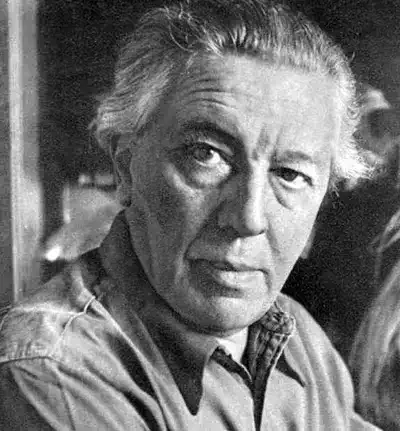
André Breton
Freedom of Love
Freedom of Love
(Translated from the French by Edouard Rodti)
My wife with the hair of a wood fire
With the thoughts of heat lightning
With the waist of an hourglass
With the waist of an otter in the teeth of a tiger
My wife with the lips of a cockade and of a bunch of stars of the last magnitude
With the teeth of tracks of white mice on the white earth
With the tongue of rubbed amber and glass
My wife with the tongue of a stabbed host
With the tongue of a doll that opens and closes its eyes
With the tongue of an unbelievable stone
My wife with the eyelashes of strokes of a child's writing
With brows of the edge of a swallow's nest
My wife with the brow of slates of a hothouse roof
And of steam on the panes
My wife with shoulders of champagne
And of a fountain with dolphin-heads beneath the ice
My wife with wrists of matches
My wife with fingers of luck and ace of hearts
With fingers of mown hay
My wife with armpits of marten and of beechnut
And of Midsummer Night
Of privet and of an angelfish nest
With arms of seafoam and of riverlocks
And of a mingling of the wheat and the mill
My wife with legs of flares
With the movements of clockwork and despair
My wife with calves of eldertree pith
My wife with feet of initials
With feet of rings of keys and Java sparrows drinking
My wife with a neck of unpearled barley
My wife with a throat of the valley of gold
Of a tryst in the very bed of the torrent
With breasts of night
My wife with breasts of a marine molehill
My wife with breasts of the ruby's crucible
With breasts of the rose's spectre beneath the dew
My wife with the belly of an unfolding of the fan of days
With the belly of a gigantic claw
My wife with the back of a bird fleeing vertically
With a back of quicksilver
With a back of light
With a nape of rolled stone and wet chalk
And of the drop of a glass where one has just been drinking
My wife with hips of a skiff
With hips of a chandelier and of arrow-feathers
And of shafts of white peacock plumes
Of an insensible pendulum
My wife with buttocks of sandstone and asbestos
My wife with buttocks of swans' backs
My wife with buttocks of spring
With the sex of an iris
My wife with the sex of a mining-placer and of a platypus
My wife with a sex of seaweed and ancient sweetmeat
My wife with a sex of mirror
My wife with eyes full of tears
With eyes of purple panoply and of a magnetic needle
My wife with savanna eyes
My wife with eyes of water to he drunk in prison
My wife with eyes of wood always under the axe
My wife with eyes of water-level of level of air earth and fire
(Translated from the French by Edouard Rodti)
My wife with the hair of a wood fire
With the thoughts of heat lightning
With the waist of an hourglass
With the waist of an otter in the teeth of a tiger
My wife with the lips of a cockade and of a bunch of stars of the last magnitude
With the teeth of tracks of white mice on the white earth
With the tongue of rubbed amber and glass
My wife with the tongue of a stabbed host
With the tongue of a doll that opens and closes its eyes
With the tongue of an unbelievable stone
My wife with the eyelashes of strokes of a child's writing
With brows of the edge of a swallow's nest
My wife with the brow of slates of a hothouse roof
And of steam on the panes
My wife with shoulders of champagne
And of a fountain with dolphin-heads beneath the ice
My wife with wrists of matches
My wife with fingers of luck and ace of hearts
With fingers of mown hay
My wife with armpits of marten and of beechnut
And of Midsummer Night
Of privet and of an angelfish nest
With arms of seafoam and of riverlocks
And of a mingling of the wheat and the mill
My wife with legs of flares
With the movements of clockwork and despair
My wife with calves of eldertree pith
My wife with feet of initials
With feet of rings of keys and Java sparrows drinking
My wife with a neck of unpearled barley
My wife with a throat of the valley of gold
Of a tryst in the very bed of the torrent
With breasts of night
My wife with breasts of a marine molehill
My wife with breasts of the ruby's crucible
With breasts of the rose's spectre beneath the dew
My wife with the belly of an unfolding of the fan of days
With the belly of a gigantic claw
My wife with the back of a bird fleeing vertically
With a back of quicksilver
With a back of light
With a nape of rolled stone and wet chalk
And of the drop of a glass where one has just been drinking
My wife with hips of a skiff
With hips of a chandelier and of arrow-feathers
And of shafts of white peacock plumes
Of an insensible pendulum
My wife with buttocks of sandstone and asbestos
My wife with buttocks of swans' backs
My wife with buttocks of spring
With the sex of an iris
My wife with the sex of a mining-placer and of a platypus
My wife with a sex of seaweed and ancient sweetmeat
My wife with a sex of mirror
My wife with eyes full of tears
With eyes of purple panoply and of a magnetic needle
My wife with savanna eyes
My wife with eyes of water to he drunk in prison
My wife with eyes of wood always under the axe
My wife with eyes of water-level of level of air earth and fire
874
André Breton
Always for the First Time
Always for the First Time
Always for the first time
Hardly do I know you by sight
You return at some hour of the night to a house at an angle to my window
A wholly imaginary house
It is there that from one second to the next
In the inviolate darkness
I anticipate once more the fascinating rift occurring
The one and only rift
In the facade and in my heart
The closer I come to you
In reality
The more the key sings at the door of the unknown room
Where you appear alone before me
At first you coalesce entirely with the brightness
The elusive angle of a curtain
It's a field of jasmine I gazed upon at dawn on a road in the vicinity of Grasse
With the diagonal slant of its girls picking
Behind them the dark falling wing of the plants stripped bare
Before them a T-square of dazzling light
The curtain invisibly raised
In a frenzy all the flowers swarm back in
It is you at grips with that too long hour never dim enough until sleep
You as though you could be
The same except that I shall perhaps never meet you
You pretend not to know I am watching you
Marvelously I am no longer sure you know
You idleness brings tears to my eyes
A swarm of interpretations surrounds each of your gestures
It's a honeydew hunt
There are rocking chairs on a deck there are branches that may well scratch you in the
forest
There are in a shop window in the rue Notre-Dame-de-Lorette
Two lovely crossed legs caught in long stockings
Flaring out in the center of a great white clover
There is a silken ladder rolled out over the ivy
There is
By my leaning over the precipice
Of your presence and your absence in hopeless fusion
My finding the secret
Of loving you
Always for the first time
Always for the first time
Hardly do I know you by sight
You return at some hour of the night to a house at an angle to my window
A wholly imaginary house
It is there that from one second to the next
In the inviolate darkness
I anticipate once more the fascinating rift occurring
The one and only rift
In the facade and in my heart
The closer I come to you
In reality
The more the key sings at the door of the unknown room
Where you appear alone before me
At first you coalesce entirely with the brightness
The elusive angle of a curtain
It's a field of jasmine I gazed upon at dawn on a road in the vicinity of Grasse
With the diagonal slant of its girls picking
Behind them the dark falling wing of the plants stripped bare
Before them a T-square of dazzling light
The curtain invisibly raised
In a frenzy all the flowers swarm back in
It is you at grips with that too long hour never dim enough until sleep
You as though you could be
The same except that I shall perhaps never meet you
You pretend not to know I am watching you
Marvelously I am no longer sure you know
You idleness brings tears to my eyes
A swarm of interpretations surrounds each of your gestures
It's a honeydew hunt
There are rocking chairs on a deck there are branches that may well scratch you in the
forest
There are in a shop window in the rue Notre-Dame-de-Lorette
Two lovely crossed legs caught in long stockings
Flaring out in the center of a great white clover
There is a silken ladder rolled out over the ivy
There is
By my leaning over the precipice
Of your presence and your absence in hopeless fusion
My finding the secret
Of loving you
Always for the first time
1,043
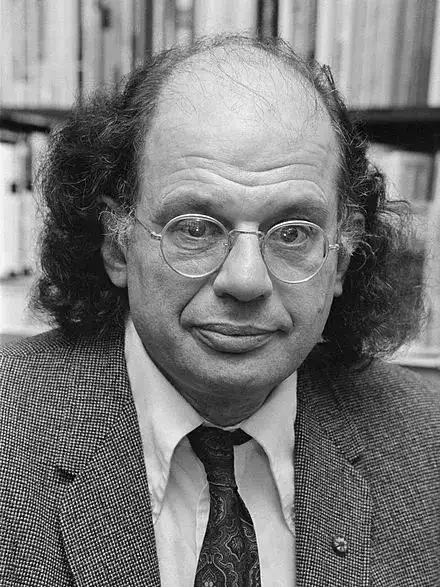
Allen Ginsberg
Song
Song
The weight of the world
is love.
Under the burden
of solitude,
under the burden
of dissatisfaction
the weight,
the weight we carry
is love.
Who can deny?
In dreams
it touches
the body,
in thought
constructs
a miracle,
in imagination
anguishes
till born
in human-looks
out of the heart
burning with purity-for
the burden of life
is love,
but we carry the weight
wearily,
and so must rest
in the arms of love
at last,
must rest in the arms
of love.
No rest
without love,
no sleep
without dreams
of love-be
mad or chill
obsessed with angels
or machines,
the final wish
is love
--cannot be bitter,
cannot deny,
cannot withhold
if denied:
the weight is too heavy
--must give
for no return
as thought
is given
in solitude
in all the excellence
of its excess.
The warm bodies
shine together
in the darkness,
the hand moves
to the center
of the flesh,
the skin trembles
in happiness
and the soul comes
joyful to the eye-
yes, yes,
that's what
I wanted,
I always wanted,
I always wanted,
to return
to the body
where I was born.
The weight of the world
is love.
Under the burden
of solitude,
under the burden
of dissatisfaction
the weight,
the weight we carry
is love.
Who can deny?
In dreams
it touches
the body,
in thought
constructs
a miracle,
in imagination
anguishes
till born
in human-looks
out of the heart
burning with purity-for
the burden of life
is love,
but we carry the weight
wearily,
and so must rest
in the arms of love
at last,
must rest in the arms
of love.
No rest
without love,
no sleep
without dreams
of love-be
mad or chill
obsessed with angels
or machines,
the final wish
is love
--cannot be bitter,
cannot deny,
cannot withhold
if denied:
the weight is too heavy
--must give
for no return
as thought
is given
in solitude
in all the excellence
of its excess.
The warm bodies
shine together
in the darkness,
the hand moves
to the center
of the flesh,
the skin trembles
in happiness
and the soul comes
joyful to the eye-
yes, yes,
that's what
I wanted,
I always wanted,
I always wanted,
to return
to the body
where I was born.
615
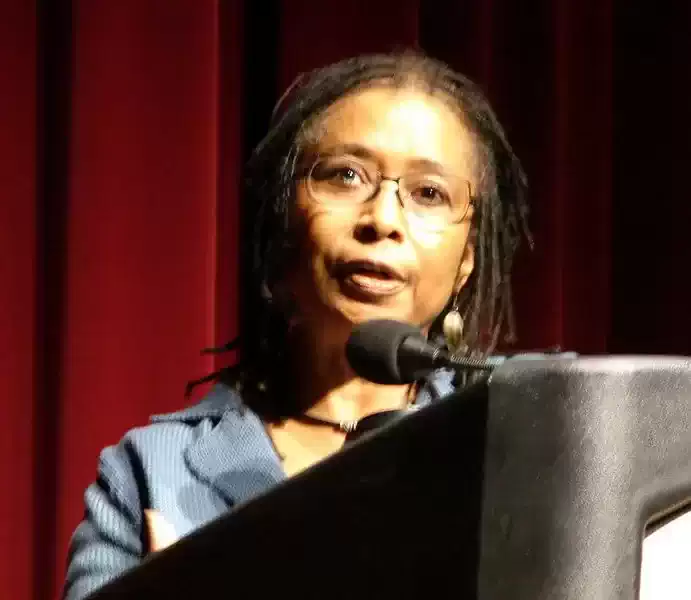
Alice Walker
Knowing you might some day come
Knowing you might some day come
Knowing you might some day come
and how unprepared I’ve always
been
like Mr. Sloppy
in Charles Dickens’
our Mutual Friend
I made a list:
not meat, vegetables, beer and pudding
but number l, warmth.
number 2, warmth.
number 3, warmth.
number 4, a good snuggler.
number 5, someone who sings
while he/she works.
number 6, a dancer.
number 7, someone who grows & is
intrigued by
the mind. And
by the spirit too.
Number 7, someone who is loved
by animals; and loves
them back without
a thought.
number 8, someone who smells
delicious.
number 9, someone whose anger
lasts no longer than mine.
number 10, someone who
stands beside me. behind me. If necessary
in front of me.
number 11, someone who
is a passable cook.
number 12, Someone who laughs
a lot, thinks I have a fine
sense
of humor
& has friends.
number 13, someone who can be
original in dress:
stylish
warlock –In silver, lapis
& black – to my witch.
Knowing you might some day come
and how unprepared I’ve always
been
like Mr. Sloppy
in Charles Dickens’
our Mutual Friend
I made a list:
not meat, vegetables, beer and pudding
but number l, warmth.
number 2, warmth.
number 3, warmth.
number 4, a good snuggler.
number 5, someone who sings
while he/she works.
number 6, a dancer.
number 7, someone who grows & is
intrigued by
the mind. And
by the spirit too.
Number 7, someone who is loved
by animals; and loves
them back without
a thought.
number 8, someone who smells
delicious.
number 9, someone whose anger
lasts no longer than mine.
number 10, someone who
stands beside me. behind me. If necessary
in front of me.
number 11, someone who
is a passable cook.
number 12, Someone who laughs
a lot, thinks I have a fine
sense
of humor
& has friends.
number 13, someone who can be
original in dress:
stylish
warlock –In silver, lapis
& black – to my witch.
256
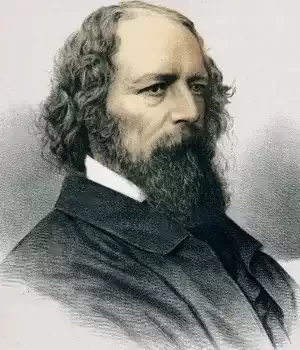
Alfred Lord Tennyson
The Princess: A Medley: Thy Voice is Heard
The Princess: A Medley: Thy Voice is Heard
Thy voice is heard thro' rolling drums,
That beat to battle where he stands;
Thy face across his fancy comes,
And gives the battle to his hands:
A moment, while the trumpets blow,
He sees his brood about thy knee;
The next, like fire he meets the foe,
And strikes him dead for thine and thee.
Thy voice is heard thro' rolling drums,
That beat to battle where he stands;
Thy face across his fancy comes,
And gives the battle to his hands:
A moment, while the trumpets blow,
He sees his brood about thy knee;
The next, like fire he meets the foe,
And strikes him dead for thine and thee.
432
Alfred Lord Tennyson
The Ringlet
The Ringlet
'Your ringlets, your ringlets,
That look so golden-gay,
If you will give me one, but one,
To kiss it night and day,
The never chilling touch of Time
Will turn it silver-gray;
And then shall I know it is all true gold
To flame and sparkle and stream as of old.
Till all the comets in heaven are cold,
And all her stars decay.'
'Then take it, love, and put it by;
This cannot change, nor yet can I.'
'My ringlet, my ringlet,
That art so golden-gay,
Now never chilling touch of Time
Can turn thee silver-gray;
And a lad may wink, and a girl may hint,
And a fool may say his say;
For my doubts and fears were all amiss,
And I swear henceforth by this and this,
That a doubt will only come for a kiss,
And a fear to be kiss'd away.'
'Then kiss it, love, and put it by:
If this can change, why so can I.'
O Ringlet, O Ringlet,
I kiss'd you night and day,
And Ringlet, O Ringlet,
You still are golden-gay,
But Ringlet, O Ringlet,
You should be silver-gray:
For what is this which now I'm told,
I that took you for true gold,
She that gave you 's bought and sold,
Sold, sold.
O Ringlet, O Ringlet,
She blush'd a rosy red,
When Ringlet, O Ringlet
She clipt you from her head,
And Ringlet, O Ringlet,
She gave you me, and said,
'Come, kiss it, love and put it by:
If this can change, why so can I.'
O fie, you golden nothing, fie,
You golden lie.
O Ringlet, O Ringlet,
I count you much to blame,
For Ringlet, O Ringlet,
You put me much to shame,
So Ringlet, O Ringlet,
I doom you to the flame.
For what is this which now I learn,
Has given all my faith a turn?
Burn, you glossy heretic, burn,
Burn, burn.
'Your ringlets, your ringlets,
That look so golden-gay,
If you will give me one, but one,
To kiss it night and day,
The never chilling touch of Time
Will turn it silver-gray;
And then shall I know it is all true gold
To flame and sparkle and stream as of old.
Till all the comets in heaven are cold,
And all her stars decay.'
'Then take it, love, and put it by;
This cannot change, nor yet can I.'
'My ringlet, my ringlet,
That art so golden-gay,
Now never chilling touch of Time
Can turn thee silver-gray;
And a lad may wink, and a girl may hint,
And a fool may say his say;
For my doubts and fears were all amiss,
And I swear henceforth by this and this,
That a doubt will only come for a kiss,
And a fear to be kiss'd away.'
'Then kiss it, love, and put it by:
If this can change, why so can I.'
O Ringlet, O Ringlet,
I kiss'd you night and day,
And Ringlet, O Ringlet,
You still are golden-gay,
But Ringlet, O Ringlet,
You should be silver-gray:
For what is this which now I'm told,
I that took you for true gold,
She that gave you 's bought and sold,
Sold, sold.
O Ringlet, O Ringlet,
She blush'd a rosy red,
When Ringlet, O Ringlet
She clipt you from her head,
And Ringlet, O Ringlet,
She gave you me, and said,
'Come, kiss it, love and put it by:
If this can change, why so can I.'
O fie, you golden nothing, fie,
You golden lie.
O Ringlet, O Ringlet,
I count you much to blame,
For Ringlet, O Ringlet,
You put me much to shame,
So Ringlet, O Ringlet,
I doom you to the flame.
For what is this which now I learn,
Has given all my faith a turn?
Burn, you glossy heretic, burn,
Burn, burn.
483
Alfred Lord Tennyson
The Princess: A Medley: Now Sleeps the Crimson Petal
The Princess: A Medley: Now Sleeps the Crimson Petal
Now sleeps the crimson petal, now the white;
Nor waves the cypress in the palace walk;
Nor winks the gold fin in the porphyry font:
The fire-fly wakens: waken thou with me.
Now droops the milk-white peacock like a ghost,
And like a ghost she glimmers on to me.
Now lies the earth all Danaë to the stars,
And all thy heart lies open unto me.
Now slides the silent meteor on, and leaves
A shining furrow, as thy thoughts in me.
Now folds the lily all her sweetness up,
And slips into the bosom of the lake:
So fold thyself, my dearest, thou, and slip
Into my bosom and be lost in me.
Now sleeps the crimson petal, now the white;
Nor waves the cypress in the palace walk;
Nor winks the gold fin in the porphyry font:
The fire-fly wakens: waken thou with me.
Now droops the milk-white peacock like a ghost,
And like a ghost she glimmers on to me.
Now lies the earth all Danaë to the stars,
And all thy heart lies open unto me.
Now slides the silent meteor on, and leaves
A shining furrow, as thy thoughts in me.
Now folds the lily all her sweetness up,
And slips into the bosom of the lake:
So fold thyself, my dearest, thou, and slip
Into my bosom and be lost in me.
371
Alfred Lord Tennyson
The Princess: A Medley: As thro' the land
The Princess: A Medley: As thro' the land
As thro' the land at eve we went,
And pluck'd the ripen'd ears,
We fell out, my wife and I,
O we fell out I know not why,
And kiss'd again with tears.
And blessings on the falling out
That all the more endears,
When we fall out with those we love
And kiss again with tears!
For when we came where lies the child
We lost in other years,
There above the little grave,
O there above the little grave,
We kiss'd again with tears.
As thro' the land at eve we went,
And pluck'd the ripen'd ears,
We fell out, my wife and I,
O we fell out I know not why,
And kiss'd again with tears.
And blessings on the falling out
That all the more endears,
When we fall out with those we love
And kiss again with tears!
For when we came where lies the child
We lost in other years,
There above the little grave,
O there above the little grave,
We kiss'd again with tears.
388
Alfred Lord Tennyson
The Princess: A Medley: Come down, O Maid
The Princess: A Medley: Come down, O Maid
Come down, O maid, from yonder mountain height:
What pleasure lives in height (the shepherd sang)
In height and cold, the splendour of the hills?
But cease to move so near the Heavens, and cease
To glide a sunbeam by the blasted Pine,
To sit a star upon the sparkling spire;
And come, for Love is of the valley, come,
For Love is of the valley, come thou down
And find him; by the happy threshold, he,
Or hand in hand with Plenty in the maize,
Or red with spirted purple of the vats,
Or foxlike in the vine; nor cares to walk
With Death and Morning on the silver horns,
Nor wilt thou snare him in the white ravine,
Nor find him dropt upon the firths of ice,
That huddling slant in furrow-cloven falls
To roll the torrent out of dusky doors:
But follow; let the torrent dance thee down
To find him in the valley; let the wild
Lean-headed Eagles yelp alone, and leave
The monstrous ledges there to slope, and spill
Their thousand wreaths of dangling water-smoke,
That like a broken purpose waste in air:
So waste not thou; but come; for all the vales
Await thee; azure pillars of the hearth
Arise to thee; the children call, and I
Thy shepherd pipe, and sweet is every sound,
Sweeter thy voice, but every sound is sweet;
Myriads of rivulets hurrying thro' the lawn,
The moan of doves in immemorial elms,
And murmuring of innumerable bees.
Come down, O maid, from yonder mountain height:
What pleasure lives in height (the shepherd sang)
In height and cold, the splendour of the hills?
But cease to move so near the Heavens, and cease
To glide a sunbeam by the blasted Pine,
To sit a star upon the sparkling spire;
And come, for Love is of the valley, come,
For Love is of the valley, come thou down
And find him; by the happy threshold, he,
Or hand in hand with Plenty in the maize,
Or red with spirted purple of the vats,
Or foxlike in the vine; nor cares to walk
With Death and Morning on the silver horns,
Nor wilt thou snare him in the white ravine,
Nor find him dropt upon the firths of ice,
That huddling slant in furrow-cloven falls
To roll the torrent out of dusky doors:
But follow; let the torrent dance thee down
To find him in the valley; let the wild
Lean-headed Eagles yelp alone, and leave
The monstrous ledges there to slope, and spill
Their thousand wreaths of dangling water-smoke,
That like a broken purpose waste in air:
So waste not thou; but come; for all the vales
Await thee; azure pillars of the hearth
Arise to thee; the children call, and I
Thy shepherd pipe, and sweet is every sound,
Sweeter thy voice, but every sound is sweet;
Myriads of rivulets hurrying thro' the lawn,
The moan of doves in immemorial elms,
And murmuring of innumerable bees.
422
Alfred Lord Tennyson
The Princess (part 1)
The Princess (part 1)
A prince I was, blue-eyed, and fair in face,
Of temper amorous, as the first of May,
With lengths of yellow ringlet, like a girl,
For on my cradle shone the Northern star.
There lived an ancient legend in our house.
Some sorcerer, whom a far-off grandsire burnt
Because he cast no shadow, had foretold,
Dying, that none of all our blood should know
The shadow from the substance, and that one
Should come to fight with shadows and to fall.
For so, my mother said, the story ran.
And, truly, waking dreams were, more or less,
An old and strange affection of the house.
Myself too had weird seizures, Heaven knows what:
On a sudden in the midst of men and day,
And while I walked and talked as heretofore,
I seemed to move among a world of ghosts,
And feel myself the shadow of a dream.
Our great court-Galen poised his gilt-head cane,
And pawed his beard, and muttered 'catalepsy'.
My mother pitying made a thousand prayers;
My mother was as mild as any saint,
Half-canonized by all that looked on her,
So gracious was her tact and tenderness:
But my good father thought a king a king;
He cared not for the affection of the house;
He held his sceptre like a pedant's wand
To lash offence, and with long arms and hands
Reached out, and picked offenders from the mass
For judgment.
Now it chanced that I had been,
While life was yet in bud and blade, bethrothed
To one, a neighbouring Princess: she to me
Was proxy-wedded with a bootless calf
At eight years old; and still from time to time
Came murmurs of her beauty from the South,
And of her brethren, youths of puissance;
And still I wore her picture by my heart,
And one dark tress; and all around them both
Sweet thoughts would swarm as bees about their queen.
But when the days drew nigh that I should wed,
My father sent ambassadors with furs
And jewels, gifts, to fetch her: these brought back
A present, a great labour of the loom;
And therewithal an answer vague as wind:
Besides, they saw the king; he took the gifts;
He said there was a compact; that was true:
But then she had a will; was he to blame?
And maiden fancies; loved to live alone
Among her women; certain, would not wed.
That morning in the presence room I stood
With Cyril and with Florian, my two friends:
The first, a gentleman of broken means
(His father's fault) but given to starts and bursts
Of revel; and the last, my other heart,
And almost my half-self, for still we moved
Together, twinned as horse's ear and eye.
Now, while they spake, I saw my father's face
Grow long and troubled like a rising moon,
Inflamed with wrath: he started on his feet,
Tore the king's letter, snowed it down, and rent
The wonder of the loom through warp and woof
From skirt to skirt; and at the last he sware
That he would send a hundred thousand men,
And bring her in a whirlwind: then he chewed
The thrice-turned cud of wrath, and cooked his spleen,
Communing with his captains of the war.
At last I spoke. 'My father, let me go.
It cannot be but some gross error lies
In this report, this answer of a king,
Whom all men rate as kind and hospitable:
Or, maybe, I myself, my bride once seen,
Whate'er my grief to find her less than fame,
May rue the bargain made.' And Florian said:
'I have a sister at the foreign court,
Who moves about the Princess; she, you know,
Who wedded with a nobleman from thence:
He, dying lately, left her, as I hear,
The lady of three castles in that land:
Through her this matter might be sifted clean.'
And Cyril whispered: 'Take me with you too.'
Then laughing 'what, if these weird seizures come
Upon you in those lands, and no one near
To point you out the shadow from the truth!
Take me: I'll serve you better in a strait;
I grate on rusty hinges here:' but 'No!'
Roared the rough king, 'you shall not; we ourself
Will crush her pretty maiden fancies dead
In iron gauntlets: break the council up.'
But when the council broke, I rose and past
Through the wild woods that hung about the town;
Found a still place, and plucked her likeness out;
Laid it on flowers, and watched it lying bathed
In the green gleam of dewy-tasselled trees:
What were those fancies? wherefore break her troth?
Proud looked the lips: but while I meditated
A wind arose and rushed upon the South,
And shook the songs, the whispers, and the shrieks
Of the wild woods together; and a Voice
Went with it, 'Follow, follow, thou shalt win.'
Then, ere the silver sickle of that month
Became her golden shield, I stole from court
With Cyril and with Florian, unperceived,
Cat-footed through the town and half in dread
To hear my father's clamour at our backs
With Ho! from some bay-window shake the night;
But all was quiet: from the bastioned walls
Like threaded spiders, one by one, we dropt,
And flying reached the frontier: then we crost
To a livelier land; and so by tilth and grange,
And vines, and blowing bosks of wilderness,
We gained the mother city thick with towers,
And in the imperial palace found the king.
His name was Gama; cracked and small his voice,
But bland the smile that like a wrinkling wind
On glassy water drove his cheek in lines;
A little dry old man, without a star,
Not like a king: three days he feasted us,
And on the fourth I spake of why we came,
And my bethrothed. 'You do us, Prince,' he said,
Airing a snowy hand and signet gem,
'All honour. We remember love ourselves
In our sweet youth: there did a compact pass
Long summers back, a kind of ceremony--
I think the year in which our olives failed.
I would you had her, Prince, with all my heart,
With my full heart: but there were widows here,
Two widows, Lady Psyche, Lady Blanche;
They fed her theories, in and out of place
Maintaining that with equal husbandry
The woman were an equal to the man.
They harped on this; with this our banquets rang;
Our dances broke and buzzed in knots of talk;
Nothing but this; my very ears were hot
To hear them: knowledge, so my daughter held,
Was all in all: they had but been, she thought,
As children; they must lose the child, assume
The woman: then, Sir, awful odes she wrote,
Too awful, sure, for what they treated of,
But all she is and does is awful; odes
About this losing of the child; and rhymes
And dismal lyrics, prophesying change
Beyond all reason: these the women sang;
And they that know such things--I sought but peace;
No critic I--would call them masterpieces:
They mastered ~me~. At last she begged a boon,
A certain summer-palace which I have
Hard by your father's frontier: I said no,
Yet being an easy man, gave it: and there,
All wild to found an University
For maidens, on the spur she fled; and more
We know not,--only this: they see no men,
Not even her brother Arac, nor the twins
Her brethren, though they love her, look upon her
As on a kind of paragon; and I
(Pardon me saying it) were much loth to breed
Dispute betwixt myself and mine: but since
(And I confess with right) you think me bound
In some sort, I can give you letters to her;
And yet, to speak the truth, I rate your chance
Almost at naked nothing.'
Thus the king;
And I, though nettled that he seemed to slur
With garrulous ease and oily courtesies
Our formal compact, yet, not less (all frets
But chafing me on fire to find my bride)
Went forth again with both my friends. We rode
Many a long league back to the North. At last
From hills, that looked across a land of hope,
We dropt with evening on a rustic town
Set in a gleaming river's crescent-curve,
Close at the boundary of the liberties;
There, entered an old hostel, called mine host
To council, plied him with his richest wines,
And showed the late-writ letters of the king.
He with a long low sibilation, stared
As blank as death in marble; then exclaimed
Averring it was clear against all rules
For any man to go: but as his brain
Began to mellow, 'If the king,' he said,
'Had given us letters, was he bound to speak?
The king would bear him out;' and at the last--
The summer of the vine in all his veins-'
No doubt that we might make it worth his while.
She once had past that way; he heard her speak;
She scared him; life! he never saw the like;
She looked as grand as doomsday and as grave:
And he, he reverenced his liege-lady there;
He always made a point to post with mares;
His daughter and his housemaid were the boys:
The land, he understood, for miles about
Was tilled by women; all the swine were sows,
And all the dogs'-
But while he jested thus,
A thought flashed through me which I clothed in act,
Remembering how we three presented Maid
Or Nymph, or Goddess, at high tide of feast,
In masque or pageant at my father's court.
We sent mine host to purchase female gear;
He brought it, and himself, a sight to shake
The midriff of despair with laughter, holp
To lace us up, till, each, in maiden plumes
We rustled: him we gave a costly bribe
To guerdon silence, mounted our good steeds,
And boldly ventured on the liberties.
We followed up the river as we rode,
And rode till midnight when the college lights
Began to glitter firefly-like in copse
And linden alley: then we past an arch,
Whereon a woman-statue rose with wings
From four winged horses dark against the stars;
And some inscription ran along the front,
But deep in shadow: further on we gained
A little street half garden and half house;
But scarce could hear each other speak for noise
Of clocks and chimes, like silver hammers falling
On silver anvils, and the splash and stir
Of fountains spouted up and showering down
In meshes of the jasmine and the rose:
And all about us pealed the nightingale,
Rapt in her song, and careless of the snare.
There stood a bust of Pallas for a sign,
By two sphere lamps blazoned like Heaven and Earth
With constellation and with continent,
Above an entry: riding in, we called;
A plump-armed Ostleress and a stable wench
Came running at the call, and helped us down.
Then stept a buxom hostess forth, and sailed,
Full-blown, before us into rooms which gave
Upon a pillared porch, the bases lost
In laurel: her we asked of that and this,
And who were tutors. 'Lady Blanche' she said,
'And Lady Psyche.' 'Which was prettiest,
Best-natured?' 'Lady Psyche.' 'Hers are we,'
One voice, we cried; and I sat down and wrote,
In such a hand as when a field of corn
Bows all its ears before the roaring East;
'Three ladies of the Northern empire pray
Your Highness would enroll them with your own,
As Lady Psyche's pupils.'
This I sealed:
The seal was Cupid bent above a scroll,
And o'er his head Uranian Venus hung,
And raised the blinding bandage from his eyes:
I gave the letter to be sent with dawn;
And then to bed, where half in doze I seemed
To float about a glimmering night, and watch
A full sea glazed with muffled moonlight, swell
On some dark shore just seen that it was rich.
As through the land at eve we went,
And plucked the ripened ears,
We fell out, my wife and I,
O we fell out I know not why,
And kissed again with tears.
And blessings on the falling out
That all the more endears,
When we fall out with those we love
And kiss again with tears!
For when we came where lies the child
We lost in other years,
There above the little grave,
O there above the little grave,
We kissed again with tears.
A prince I was, blue-eyed, and fair in face,
Of temper amorous, as the first of May,
With lengths of yellow ringlet, like a girl,
For on my cradle shone the Northern star.
There lived an ancient legend in our house.
Some sorcerer, whom a far-off grandsire burnt
Because he cast no shadow, had foretold,
Dying, that none of all our blood should know
The shadow from the substance, and that one
Should come to fight with shadows and to fall.
For so, my mother said, the story ran.
And, truly, waking dreams were, more or less,
An old and strange affection of the house.
Myself too had weird seizures, Heaven knows what:
On a sudden in the midst of men and day,
And while I walked and talked as heretofore,
I seemed to move among a world of ghosts,
And feel myself the shadow of a dream.
Our great court-Galen poised his gilt-head cane,
And pawed his beard, and muttered 'catalepsy'.
My mother pitying made a thousand prayers;
My mother was as mild as any saint,
Half-canonized by all that looked on her,
So gracious was her tact and tenderness:
But my good father thought a king a king;
He cared not for the affection of the house;
He held his sceptre like a pedant's wand
To lash offence, and with long arms and hands
Reached out, and picked offenders from the mass
For judgment.
Now it chanced that I had been,
While life was yet in bud and blade, bethrothed
To one, a neighbouring Princess: she to me
Was proxy-wedded with a bootless calf
At eight years old; and still from time to time
Came murmurs of her beauty from the South,
And of her brethren, youths of puissance;
And still I wore her picture by my heart,
And one dark tress; and all around them both
Sweet thoughts would swarm as bees about their queen.
But when the days drew nigh that I should wed,
My father sent ambassadors with furs
And jewels, gifts, to fetch her: these brought back
A present, a great labour of the loom;
And therewithal an answer vague as wind:
Besides, they saw the king; he took the gifts;
He said there was a compact; that was true:
But then she had a will; was he to blame?
And maiden fancies; loved to live alone
Among her women; certain, would not wed.
That morning in the presence room I stood
With Cyril and with Florian, my two friends:
The first, a gentleman of broken means
(His father's fault) but given to starts and bursts
Of revel; and the last, my other heart,
And almost my half-self, for still we moved
Together, twinned as horse's ear and eye.
Now, while they spake, I saw my father's face
Grow long and troubled like a rising moon,
Inflamed with wrath: he started on his feet,
Tore the king's letter, snowed it down, and rent
The wonder of the loom through warp and woof
From skirt to skirt; and at the last he sware
That he would send a hundred thousand men,
And bring her in a whirlwind: then he chewed
The thrice-turned cud of wrath, and cooked his spleen,
Communing with his captains of the war.
At last I spoke. 'My father, let me go.
It cannot be but some gross error lies
In this report, this answer of a king,
Whom all men rate as kind and hospitable:
Or, maybe, I myself, my bride once seen,
Whate'er my grief to find her less than fame,
May rue the bargain made.' And Florian said:
'I have a sister at the foreign court,
Who moves about the Princess; she, you know,
Who wedded with a nobleman from thence:
He, dying lately, left her, as I hear,
The lady of three castles in that land:
Through her this matter might be sifted clean.'
And Cyril whispered: 'Take me with you too.'
Then laughing 'what, if these weird seizures come
Upon you in those lands, and no one near
To point you out the shadow from the truth!
Take me: I'll serve you better in a strait;
I grate on rusty hinges here:' but 'No!'
Roared the rough king, 'you shall not; we ourself
Will crush her pretty maiden fancies dead
In iron gauntlets: break the council up.'
But when the council broke, I rose and past
Through the wild woods that hung about the town;
Found a still place, and plucked her likeness out;
Laid it on flowers, and watched it lying bathed
In the green gleam of dewy-tasselled trees:
What were those fancies? wherefore break her troth?
Proud looked the lips: but while I meditated
A wind arose and rushed upon the South,
And shook the songs, the whispers, and the shrieks
Of the wild woods together; and a Voice
Went with it, 'Follow, follow, thou shalt win.'
Then, ere the silver sickle of that month
Became her golden shield, I stole from court
With Cyril and with Florian, unperceived,
Cat-footed through the town and half in dread
To hear my father's clamour at our backs
With Ho! from some bay-window shake the night;
But all was quiet: from the bastioned walls
Like threaded spiders, one by one, we dropt,
And flying reached the frontier: then we crost
To a livelier land; and so by tilth and grange,
And vines, and blowing bosks of wilderness,
We gained the mother city thick with towers,
And in the imperial palace found the king.
His name was Gama; cracked and small his voice,
But bland the smile that like a wrinkling wind
On glassy water drove his cheek in lines;
A little dry old man, without a star,
Not like a king: three days he feasted us,
And on the fourth I spake of why we came,
And my bethrothed. 'You do us, Prince,' he said,
Airing a snowy hand and signet gem,
'All honour. We remember love ourselves
In our sweet youth: there did a compact pass
Long summers back, a kind of ceremony--
I think the year in which our olives failed.
I would you had her, Prince, with all my heart,
With my full heart: but there were widows here,
Two widows, Lady Psyche, Lady Blanche;
They fed her theories, in and out of place
Maintaining that with equal husbandry
The woman were an equal to the man.
They harped on this; with this our banquets rang;
Our dances broke and buzzed in knots of talk;
Nothing but this; my very ears were hot
To hear them: knowledge, so my daughter held,
Was all in all: they had but been, she thought,
As children; they must lose the child, assume
The woman: then, Sir, awful odes she wrote,
Too awful, sure, for what they treated of,
But all she is and does is awful; odes
About this losing of the child; and rhymes
And dismal lyrics, prophesying change
Beyond all reason: these the women sang;
And they that know such things--I sought but peace;
No critic I--would call them masterpieces:
They mastered ~me~. At last she begged a boon,
A certain summer-palace which I have
Hard by your father's frontier: I said no,
Yet being an easy man, gave it: and there,
All wild to found an University
For maidens, on the spur she fled; and more
We know not,--only this: they see no men,
Not even her brother Arac, nor the twins
Her brethren, though they love her, look upon her
As on a kind of paragon; and I
(Pardon me saying it) were much loth to breed
Dispute betwixt myself and mine: but since
(And I confess with right) you think me bound
In some sort, I can give you letters to her;
And yet, to speak the truth, I rate your chance
Almost at naked nothing.'
Thus the king;
And I, though nettled that he seemed to slur
With garrulous ease and oily courtesies
Our formal compact, yet, not less (all frets
But chafing me on fire to find my bride)
Went forth again with both my friends. We rode
Many a long league back to the North. At last
From hills, that looked across a land of hope,
We dropt with evening on a rustic town
Set in a gleaming river's crescent-curve,
Close at the boundary of the liberties;
There, entered an old hostel, called mine host
To council, plied him with his richest wines,
And showed the late-writ letters of the king.
He with a long low sibilation, stared
As blank as death in marble; then exclaimed
Averring it was clear against all rules
For any man to go: but as his brain
Began to mellow, 'If the king,' he said,
'Had given us letters, was he bound to speak?
The king would bear him out;' and at the last--
The summer of the vine in all his veins-'
No doubt that we might make it worth his while.
She once had past that way; he heard her speak;
She scared him; life! he never saw the like;
She looked as grand as doomsday and as grave:
And he, he reverenced his liege-lady there;
He always made a point to post with mares;
His daughter and his housemaid were the boys:
The land, he understood, for miles about
Was tilled by women; all the swine were sows,
And all the dogs'-
But while he jested thus,
A thought flashed through me which I clothed in act,
Remembering how we three presented Maid
Or Nymph, or Goddess, at high tide of feast,
In masque or pageant at my father's court.
We sent mine host to purchase female gear;
He brought it, and himself, a sight to shake
The midriff of despair with laughter, holp
To lace us up, till, each, in maiden plumes
We rustled: him we gave a costly bribe
To guerdon silence, mounted our good steeds,
And boldly ventured on the liberties.
We followed up the river as we rode,
And rode till midnight when the college lights
Began to glitter firefly-like in copse
And linden alley: then we past an arch,
Whereon a woman-statue rose with wings
From four winged horses dark against the stars;
And some inscription ran along the front,
But deep in shadow: further on we gained
A little street half garden and half house;
But scarce could hear each other speak for noise
Of clocks and chimes, like silver hammers falling
On silver anvils, and the splash and stir
Of fountains spouted up and showering down
In meshes of the jasmine and the rose:
And all about us pealed the nightingale,
Rapt in her song, and careless of the snare.
There stood a bust of Pallas for a sign,
By two sphere lamps blazoned like Heaven and Earth
With constellation and with continent,
Above an entry: riding in, we called;
A plump-armed Ostleress and a stable wench
Came running at the call, and helped us down.
Then stept a buxom hostess forth, and sailed,
Full-blown, before us into rooms which gave
Upon a pillared porch, the bases lost
In laurel: her we asked of that and this,
And who were tutors. 'Lady Blanche' she said,
'And Lady Psyche.' 'Which was prettiest,
Best-natured?' 'Lady Psyche.' 'Hers are we,'
One voice, we cried; and I sat down and wrote,
In such a hand as when a field of corn
Bows all its ears before the roaring East;
'Three ladies of the Northern empire pray
Your Highness would enroll them with your own,
As Lady Psyche's pupils.'
This I sealed:
The seal was Cupid bent above a scroll,
And o'er his head Uranian Venus hung,
And raised the blinding bandage from his eyes:
I gave the letter to be sent with dawn;
And then to bed, where half in doze I seemed
To float about a glimmering night, and watch
A full sea glazed with muffled moonlight, swell
On some dark shore just seen that it was rich.
As through the land at eve we went,
And plucked the ripened ears,
We fell out, my wife and I,
O we fell out I know not why,
And kissed again with tears.
And blessings on the falling out
That all the more endears,
When we fall out with those we love
And kiss again with tears!
For when we came where lies the child
We lost in other years,
There above the little grave,
O there above the little grave,
We kissed again with tears.
557