

Poems in this theme
Romantic Love
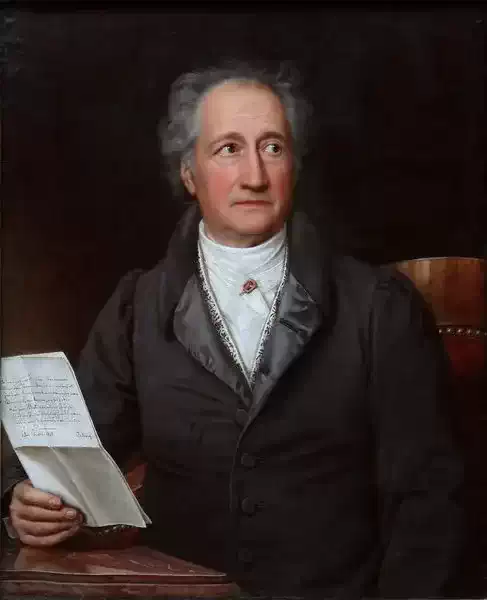
Johann Wolfgang von Goethe
She Cannot End
She Cannot End
WHEN unto thee I sent the page all white,
Instead of first thereon inscribing aught,
The space thou doubtless filledst up in sport.
And sent it me, to make my joy grow bright.
As soon as the blue cover met my sight,
As well becomes a woman, quick as thought
I tore it open, leaving hidden nought,
And read the well-known words of pure delight:
MY ONLY BEING! DEAREST HEART! SWEET CHILD!
How kindly thou my yearning then didst still
With gentle words, enthralling me to thee.
In truth methought I read thy whispers mild
Wherewith thou lovingly my soul didst fill,
E'en to myself for aye ennobling me.
WHEN unto thee I sent the page all white,
Instead of first thereon inscribing aught,
The space thou doubtless filledst up in sport.
And sent it me, to make my joy grow bright.
As soon as the blue cover met my sight,
As well becomes a woman, quick as thought
I tore it open, leaving hidden nought,
And read the well-known words of pure delight:
MY ONLY BEING! DEAREST HEART! SWEET CHILD!
How kindly thou my yearning then didst still
With gentle words, enthralling me to thee.
In truth methought I read thy whispers mild
Wherewith thou lovingly my soul didst fill,
E'en to myself for aye ennobling me.
313
Johann Wolfgang von Goethe
Roman Elegies I
Roman Elegies I
Tell me you stones, O speak, you towering palaces!
Streets, say a word! Spirit of this place, are you dumb?
All things are alive in your sacred walls
eternal Rome, only for me all’s still.
Who will whisper to me, at what window
will I see the sweet thing who will kindle me, and quicken?
Already I guess the ways, walking to her and from her,
ever and always I’ll go, while sweet time slips by.
I’m gazing at church and palace, ruin and column,
like a serious man making sensible use of a journey,
but soon it will happen, and all will be one vast temple,
Love’s temple, receiving its new initiate.
Though you are a whole world, Rome, still, without Love,
the world’s not the world, Rome cannot be Rome.
Tell me you stones, O speak, you towering palaces!
Streets, say a word! Spirit of this place, are you dumb?
All things are alive in your sacred walls
eternal Rome, only for me all’s still.
Who will whisper to me, at what window
will I see the sweet thing who will kindle me, and quicken?
Already I guess the ways, walking to her and from her,
ever and always I’ll go, while sweet time slips by.
I’m gazing at church and palace, ruin and column,
like a serious man making sensible use of a journey,
but soon it will happen, and all will be one vast temple,
Love’s temple, receiving its new initiate.
Though you are a whole world, Rome, still, without Love,
the world’s not the world, Rome cannot be Rome.
411
Johann Wolfgang von Goethe
Reciprocal Invitation To The Dance
Reciprocal Invitation To The Dance
THE INDIFFERENT.
COME to the dance with me, come with me, fair one!
Dances a feast-day like this may well crown.
If thou my sweetheart art not, thou canst be so,
But if thou wilt not, we still will dance on.
Come to the dance with me, come with me, fair one!
Dances a feast-day like this may well crown.
THE TENDER.
Loved one, without thee, what then would all feast be?
Sweet one, without thee, what then were the dance?
If thou my sweetheart wert not, I would dance not.
If thou art still so, all life is one feast.
Loved one, without thee, what then would all feasts be?
Sweet one, without thee, what then were the dance?
THE INDIFFERENT.
Let them but love, then, and leave us the dancing!
Languishing love cannot bear the glad dance.
Let us whirl round in the waltz's gay measure,
And let them steal to the dim-lighted wood.
Let them but love, then, and leave us the dancing!
Languishing love cannot bear the glad dance.
THE TENDER.
Let them whirl round, then, and leave us to wander!
Wand'ring to love is a heavenly dance.
Cupid, the near one, o'erhears their deriding,
Vengeance takes suddenly, vengeance takes soon.
Let them whirl round, then, and leave us to wander!
Wand'ring to love is a heavenly dance.
THE INDIFFERENT.
COME to the dance with me, come with me, fair one!
Dances a feast-day like this may well crown.
If thou my sweetheart art not, thou canst be so,
But if thou wilt not, we still will dance on.
Come to the dance with me, come with me, fair one!
Dances a feast-day like this may well crown.
THE TENDER.
Loved one, without thee, what then would all feast be?
Sweet one, without thee, what then were the dance?
If thou my sweetheart wert not, I would dance not.
If thou art still so, all life is one feast.
Loved one, without thee, what then would all feasts be?
Sweet one, without thee, what then were the dance?
THE INDIFFERENT.
Let them but love, then, and leave us the dancing!
Languishing love cannot bear the glad dance.
Let us whirl round in the waltz's gay measure,
And let them steal to the dim-lighted wood.
Let them but love, then, and leave us the dancing!
Languishing love cannot bear the glad dance.
THE TENDER.
Let them whirl round, then, and leave us to wander!
Wand'ring to love is a heavenly dance.
Cupid, the near one, o'erhears their deriding,
Vengeance takes suddenly, vengeance takes soon.
Let them whirl round, then, and leave us to wander!
Wand'ring to love is a heavenly dance.
307
Johann Wolfgang von Goethe
Night Song
Night Song
WHEN on thy pillow lying,
Half listen, I implore,
And at my lute's soft sighing,
Sleep on! what wouldst thou more?
For at my lute's soft sighing
The stars their blessings pour
On feelings never-dying;
Sleep on! what wouldst thou more?
Those feelings never-dying
My spirit aid to soar
From earthly conflicts trying;
Sleep on! what wouldst thou more?
From earthly conflicts trying
Thou driv'st me to this shore;
Through thee I'm thither flying,--
Sleep on! what wouldst thou more?
Through thee I'm hither flying,
Thou wilt not list before
In slumbers thou art lying:
Sleep on! what wouldst thou more?
WHEN on thy pillow lying,
Half listen, I implore,
And at my lute's soft sighing,
Sleep on! what wouldst thou more?
For at my lute's soft sighing
The stars their blessings pour
On feelings never-dying;
Sleep on! what wouldst thou more?
Those feelings never-dying
My spirit aid to soar
From earthly conflicts trying;
Sleep on! what wouldst thou more?
From earthly conflicts trying
Thou driv'st me to this shore;
Through thee I'm thither flying,--
Sleep on! what wouldst thou more?
Through thee I'm hither flying,
Thou wilt not list before
In slumbers thou art lying:
Sleep on! what wouldst thou more?
462
Johann Wolfgang von Goethe
New Love, New Life
New Love, New Life
HEART! my heart! what means this feeling?
What oppresseth thee so sore?
What strange life is o'er me stealing!
I acknowledge thee no more.
Fled is all that gave thee gladness,
Fled the cause of all thy sadness,
Fled thy peace, thine industry-
Ah, why suffer it to be?
Say, do beauty's graces youthful,
Does this form so fair and bright,
Does this gaze, so kind, so truthful,
Chain thee with unceasing might?
Would I tear me from her boldly,
Courage take, and fly her coldly,
Back to her. I'm forthwith led
By the path I seek to tread.
By a thread I ne'er can sever,
For 'tis 'twined with magic skill,
Doth the cruel maid for ever
Hold me fast against my will.
While those magic chains confine me,
To her will I must resign me.
Ah, the change in truth is great!
Love! kind love! release me straight!
HEART! my heart! what means this feeling?
What oppresseth thee so sore?
What strange life is o'er me stealing!
I acknowledge thee no more.
Fled is all that gave thee gladness,
Fled the cause of all thy sadness,
Fled thy peace, thine industry-
Ah, why suffer it to be?
Say, do beauty's graces youthful,
Does this form so fair and bright,
Does this gaze, so kind, so truthful,
Chain thee with unceasing might?
Would I tear me from her boldly,
Courage take, and fly her coldly,
Back to her. I'm forthwith led
By the path I seek to tread.
By a thread I ne'er can sever,
For 'tis 'twined with magic skill,
Doth the cruel maid for ever
Hold me fast against my will.
While those magic chains confine me,
To her will I must resign me.
Ah, the change in truth is great!
Love! kind love! release me straight!
398
Johann Wolfgang von Goethe
May Song II
May Song II
BETWEEN wheatfield and corn,
Between hedgerow and thorn,
Between pasture and tree,
Where's my sweetheart
Tell it me!
Sweetheart caught I
Not at home;
She's then, thought I.
Gone to roam.
Fair and loving
Blooms sweet May;
Sweetheart's roving,
Free and gay.
By the rock near the wave,
Where her first kiss she gave,
On the greensward, to me,--
Something I see!
Is it she?
BETWEEN wheatfield and corn,
Between hedgerow and thorn,
Between pasture and tree,
Where's my sweetheart
Tell it me!
Sweetheart caught I
Not at home;
She's then, thought I.
Gone to roam.
Fair and loving
Blooms sweet May;
Sweetheart's roving,
Free and gay.
By the rock near the wave,
Where her first kiss she gave,
On the greensward, to me,--
Something I see!
Is it she?
495
Johann Wolfgang von Goethe
Joy And Sorrow
Joy And Sorrow
As a fisher-boy I fared
To the black rock in the sea,
And, while false gifts I prepared.
Listen'd and sang merrily,
Down descended the decoy,
Soon a fish attack'd the bait;
One exultant shout of joy,-
And the fish was captured straight.
Ah! on shore, and to the wood
Past the cliffs, o'er stock and stone,
One foot's traces I pursued,
And the maiden was alone.
Lips were silent, eyes downcast
As a clasp-knife snaps the bait,
With her snare she seized me fast,
And the boy was captured straight.
Heav'n knows who's the happy swain
That she rambles with anew!
I must dare the sea again,
Spite of wind and weather too.
When the great and little fish
Wail and flounder in my net,
Straight returns my eager wish
In her arms to revel yet!
As a fisher-boy I fared
To the black rock in the sea,
And, while false gifts I prepared.
Listen'd and sang merrily,
Down descended the decoy,
Soon a fish attack'd the bait;
One exultant shout of joy,-
And the fish was captured straight.
Ah! on shore, and to the wood
Past the cliffs, o'er stock and stone,
One foot's traces I pursued,
And the maiden was alone.
Lips were silent, eyes downcast
As a clasp-knife snaps the bait,
With her snare she seized me fast,
And the boy was captured straight.
Heav'n knows who's the happy swain
That she rambles with anew!
I must dare the sea again,
Spite of wind and weather too.
When the great and little fish
Wail and flounder in my net,
Straight returns my eager wish
In her arms to revel yet!
415
Johann Wolfgang von Goethe
It Is Good
It Is Good
IN Paradise while moonbeams play'd,
Jehovah found, in slumber deep,
Adam fast sunk; He gently laid
Eve near him,--she, too, fell asleep.
There lay they now, on earth's fair shrine,
God's two most beauteous thoughts divine.--
When this He saw, He cried:--'Tis Good!!!
And scarce could move from where He stood.
No wonder, that our joy's complete
While eye and eye responsive meet,
When this blest thought of rapture moves us--
That we're with Him who truly loves us,
And if He cries:--Good, let it be!
'Tis so for both, it seems to me.
Thou'rt clasp'd within these arms of mine,
Dearest of all God's thoughts divine!
IN Paradise while moonbeams play'd,
Jehovah found, in slumber deep,
Adam fast sunk; He gently laid
Eve near him,--she, too, fell asleep.
There lay they now, on earth's fair shrine,
God's two most beauteous thoughts divine.--
When this He saw, He cried:--'Tis Good!!!
And scarce could move from where He stood.
No wonder, that our joy's complete
While eye and eye responsive meet,
When this blest thought of rapture moves us--
That we're with Him who truly loves us,
And if He cries:--Good, let it be!
'Tis so for both, it seems to me.
Thou'rt clasp'd within these arms of mine,
Dearest of all God's thoughts divine!
351
Johann Wolfgang von Goethe
In A Word
In A Word
THUS to be chain'd for ever, can I bear?
A very torment that, in truth, would be.
This very day my new resolve shall see.-I'll
not go near the lately-worshipp'd Fair.
Yet what excuse, my heart, can I prepare
In such a case, for not consulting thee?
But courage! while our sorrows utter we
In tones where love, grief, gladness have a share.
But see! the minstrel's bidding to obey,
Its melody pours forth the sounding lyre,
Yearning a sacrifice of love to bring.
Scarce wouldst thou think it--ready is the lay;
Well, but what then? Methought in the first fire
We to her presence flew, that lay to sing.
THUS to be chain'd for ever, can I bear?
A very torment that, in truth, would be.
This very day my new resolve shall see.-I'll
not go near the lately-worshipp'd Fair.
Yet what excuse, my heart, can I prepare
In such a case, for not consulting thee?
But courage! while our sorrows utter we
In tones where love, grief, gladness have a share.
But see! the minstrel's bidding to obey,
Its melody pours forth the sounding lyre,
Yearning a sacrifice of love to bring.
Scarce wouldst thou think it--ready is the lay;
Well, but what then? Methought in the first fire
We to her presence flew, that lay to sing.
289
Johann Wolfgang von Goethe
Hermann And Dorothea - IX. Urania
Hermann And Dorothea - IX. Urania
CONCLUSION.
O YE Muses, who gladly favour a love that is heartfelt,
Who on his way the excellent youth have hitherto guided,
Who have press'd the maid to his bosom before their betrothal,
Help still further to perfect the bonds of a couple so loving,
Drive away the clouds which over their happiness hover!
But begin by saying what now in the house has been passing.
For the third time the mother impatiently enter'd the chamber
Where the men were sitting, which she had anxiously quitted,
Speaking of the approaching storm, and the loss of the moon's light,
Then of her son's long absence, and all the perils that night brings.
Strongly she censured their friends for having so soon left the youngster,
For not even addressing the maiden, or seeking to woo her.
'Make not the worst of the mischief,' the father peevishly answer'd;
'For you see we are waiting ourselves, expecting the issue.'
But the neighbour sat still, and calmly address'd them as follows:-'
In uneasy moments like these, I always feel grateful
To my late father, who when I was young all seeds of impatience
In my mind uprooted, and left no fragment remaining,
And I learnt how to wait, as well as the best of the wise men.
'Tell us what legerdemain he employ'd,' the pastor made answer.
'I will gladly inform you, and each one may gain by the lesson,'
Answer'd the neighbour. 'When I was a boy, I was standing one Sunday
In a state of impatience, eagerly waiting the carriage
Which was to carry us out to the fountain under the lime-trees;
But it came not; I ran like a weasel now hither, now thither,
Up and down the stairs, and from the door to the window;
Both my hands were prickling, I scratch'd away at the tables,
Stamping and trotting about, and scarcely refrain'd I from crying.
All this the calm man composedly saw; but finally when I
Carried my folly too far, by the arm he quietly took me,
Led me up to the window, and used this significant language
'See you up yonder the joiner's workshop, now closed for the Sunday?
'Twill be re-open'd to-morrow, and plane and saw will be working.
Thus will the busy hours be pass'd from morning till evening.
But remember this: the rimming will soon be arriving,
When the master, together with all his men, will be busy
In preparing and finishing quickly and deftly your coffin,
And they will carefully bring over here that house made of boards, which
Will at length receive the patient as well as impatient,
And which is destined to carry a roof that's unpleasantly heavy.
All that he mention'd I forthwith saw taking place in my mind's eye,
Saw the boards join'd together, and saw the black cover made ready,
Patiently then I sat, and meekly awaited the carriage.
And I always think of the coffin whenever I see men
Running about in a state of doubtful and wild expectation.'
Smilingly answered the pastor:--'Death's stirring image is neither
Unto the wise a cause of alarm,--or an end to the pious.
Back into life it urges the former, and teaches him action,
And, for the weal of the latter, it strengthens his hope in affliction.
Death is a giver of life unto both. Your father did wrongly
When to the sensitive boy he pointed out death in its own form.
Unto the youth should be shown the worth of a noble and ripen'd
Age, and unto the old man, youth, that both may rejoice in
The eternal circle, and life may in life be made perfect!'
Here the door was open'd. The handsome couple appear'd there,
And the friends were amazed, the loving parents astonish'd
At the form of the bride, the form of the bridegroom resembling.
Yes! the door appear'd too small to admit the tall figures
Which now cross'd the threshold, in company walking together.
To his parents Hermann presented her, hastily saying:-'
Here is a maiden just of the sort you are wishing to have here,
Welcome her kindly, dear father! she fully deserves it, and you too,
Mother dear, ask her questions as to her housekeeping knowledge,
That you may see how well she deserves to form one of our party.'
Then he hastily took on one side the excellent pastor,
Saying:--' Kind sir, I entreat you to help me out of this trouble
Quickly, and loosen the knot, whose unravelling I am so dreading;
For I have not ventured to woo as my bride the fair maiden,
But she believes she's to be a maid in the house, and I fear me
She will in anger depart, as soon as we talk about marriage.
But it must be decided at once! no longer in error
Shall she remain, and I no longer this doubt can put up with.
Hasten and once more exhibit that wisdom we all hold in honour.'
So the pastor forthwith turn'd round to the rest of the party,
But the maiden's soul was, unhappily, troubled already
By the talk of the father, who just had address'd her as follows,
Speaking good humour'dly, and in accents pleasant and lively
'Yes, I'm well satisfied, child! I joyfully see that my son has
Just as good taste as his father, who in his younger days show'd it,
Always leading the fairest one out in the dance, and then lastly
Taking the fairest one home as his wife--'twas your dear little mother!
For by the bride whom a man selects, we may easily gather
What kind of spirit his is, and whether he knows his own value.
But you will surely need but a short time to form your decision,
For I verily think he will find it full easy to follow.'
Hermann but partially heard the words; the whole of his members
Inwardly quivered, and all the circle were suddenly silent.
But the excellent maiden, by words of such irony wounded,
(As she esteem'd them to be) and deeply distress'd in her spirit,
Stood, while a passing flush from her cheeks as far as her neck was
Spreading, but she restrain'd herself, and collected her thoughts soon;
Then to the old man she said, not fully concealing her sorrow
'Truly I was not prepared by your son for such a reception,
When he described his father's nature,--that excellent burgher,
And I know I am standing before you, a person of culture,
Who behaves himself wisely to all, in a suitable manner.
But it would seem that you feel not pity enough for the poor thing
Who has just cross'd your threshold, prepared to enter your service
Else you would not seek to point out, with ridicule bitter,
How far removed my lot from your son's and that of yourself is.
True, with a little bundle, and poor, I have enter'd your dwelling,
Which it is the owner's delight to furnish with all things.
But I know myself well, and feel the whole situation.
Is it generous thus to greet me with language so jeering,
Which was well nigh expelled me the house, when just on the threshold?'
Hermann uneasily moved about, and signed to the pastor
To interpose without delay, and clear up the error.
Quickly the wise man advanced to the spot, and witness'd the maiden's
Silent vexation and tearful eyes and scarce-restrain'd sorrow.
Then his spirit advised him to solve not at once the confusion,
But, on the contrary, prove the excited mind of the maiden.
So, in words framed to try her, the pastor address'd her as follows:-'
Surely, my foreign maiden, you did not fully consider,
When you made up your mind to serve a stranger so quickly,
What it really is to enter the house of a master;
For a shake of the hand decides your fate for a twelvemonth,
And a single word Yes to much endurance will bind you.
But the worst part of the service is not the wearisome habits,
Nor the bitter toil of the work, which seems never-ending;
For the active freeman works hard as well as the servant.
But to suffer the whims of the master, who blames you unjustly,
Or who calls for this and for that, not knowing his own mind,
And the mistress's violence, always so easily kindled,
With the children's rough and supercilious bad manners,--
This is indeed hard to bear, whilst still fulfilling your duties
Promptly and actively, never becoming morose or ill-natured;
Yet for such work you appear little fit, for already the father's
Jokes have offended you deeply; yet nothing more commonly happens
Than to tease a maiden about her liking a youngster.'
Thus he spoke, and the maiden felt the weight of his language,
And no more restrain'd herself; mightily all her emotions
Show'd themselves, her bosom heaved, and a deep sigh escaped her,
And whilst shedding burning tears, she answer'd as follows:-'
Ne'er does the clever man, who seeks to advise us in sorrow,
Think how little his chilling words our hearts can deliver
From the pangs which an unseen destiny fastens upon us.
You are happy and merry. How then should a jest ever wound you?
But the slightest touch gives torture to those who are suff'ring.
Even dissimulation would nothing avail me at present.
Let me at once disclose what later would deepen my sorrow,
And consign me perchance to agony mute and consuming.
Let me depart forthwith! No more in this house dare I linger;
I must hence and away, and look once more for my poor friends
Whom I left in distress, when seeking to better my fortunes.
This is my firm resolve; and now I may properly tell you
That which had else been buried for many a year in my bosom.
Yes, the father's jest has wounded me deeply, I own it,
Not that I'm proud and touchy, as ill becometh a servant,
But because in truth in my heart a feeling has risen
For the youth, who to-day has fill'd the part of my Saviour.
For when first in the road he left me, his image remain'd still
Firmly fix'd in my mind; and I thought of the fortunate maiden
Whom, as his betroth'd one, he cherish'd perchance in his bosom.
And when I found him again at the well, the sight of him charm'd me
Just as if I had-seen an angel descending from heaven.
And I follow'd him willingly, when as a servant he sought me,
But by my heart in truth I was flatter'd (I need must confess it),
As I hitherward came, that I might possibly win him,
If I became in the house an indispensable pillar.
But, alas, I now see the dangers I well nigh fell into,
When I bethought me of living so near a silently-loved one.
Now for the first time I feel how far removed a poor maiden
Is from a richer youth, however clever she may be.
I have told you all this, that you my heart may mistake not,
Which an event that in thought I foreshadow has wounded already.
For I must have expected, my secret wishes concealing,
That, ere much time had elapsed, I should see him bringing his bride home.
And how then could I have endured my hidden affliction!
Happily I am warn'd in time, and out of my bosom
Has my secret escaped, whilst curable still is the evil.
But no more of the subject! I now must tarry no longer
In this house, where I now am standing in pain and confusion,
All my foolish hopes and my feelings freely confessing.
Not the night which, with sinking clouds, is spreading around us,
Not the rolling thunder (I hear it already) shall stop me,
Not the falling rain, which outside is descending in torrents,
Not the blustering storm. All this I had to encounter
In that sorrowful flight, while the enemy follow'd behind Us.
And once more I go on my way, as I long have been wont to,
Seized by the whirlpool of time, and parted from all that I care for.
So farewell! I'll tarry no longer. My fate is accomplish'd!'
Thus she spoke, and towards the door she hastily turn'd her,
Holding under her arm the bundle she brought when arriving.
But the mother seized by both of her arms the fair maiden,
Clasping her round the body, and cried with surprise and amazement
'Say, what signifies this? These fruitless tears, what denote they?
No, I'll not leave you alone! You're surely my dear son's betroth'd one!'
But the father stood still, and show'd a great deal of reluctance,
Stared at the weeping girl, and peevishly spoke then as follows
'This, then, is all the indulgence my friends are willing to give me,
That at the close of the day the most unpleasant thing happens!
For there is nothing I hate so much as the tears of a woman,
And their passionate cries, set up with such heat and excitement,
Which a little plain sense would show to be utterly needless.
Truly, I find the sight of these whimsical doings a nuisance.
Matters must shift for themselves; as for me, I think it is bed-time.'
So he quickly turn'd round, and hasten'd to go to the chamber
Where the marriage-bed stood, in which he slept for the most part.
But his son held him back, and spoke in words of entreaty
'Father, don't go in a hurry, and be not amniote with the maiden!
I alone have to bear the blame of all this confusion,
Which our friend has increased by his unexpected dissembling.
Speak then, honour'd Sir! for to you the affair I confided;
Heap not up pain and annoyance, but rather complete the whole matter;
For I surely in future should not respect you so highly,
If you play practical jokes, instead of displaying true wisdom.'
Thereupon the worthy pastor smilingly answer'd
'What kind of wisdom could have extracted the charming confession
Of this good maiden, and so have reveal'd all her character to us?
Is not your care converted at once to pleasure and rapture?
Speak out, then, for yourself! Why need explanations from others
Hermann then stepped forward, and gently address'd her as follows
'Do not repent of your tears, nor yet of your passing affliction;
For they perfect my happiness; yours too, I fain would consider.
I came not to the fountain, to hire so noble a maiden
As a servant, I came to seek to win you affections.
But, alas! my timid gaze had not strength to discover
Your heart's leanings; it saw in your eye but a friendly expression,
When you greeted it out of the tranquil fountain's bright mirror.
Merely to bring you home, made half of my happiness certain
But you now make it complete! May every blessing be yours, then!'
Then the maiden look'd on the youth with heartfelt emotion,
And avoided not kiss or embrace, the summit of rapture,
When they also are to the loving the long-wish'd-for pledges
Of approaching bliss in a life which now seems to them endless.
Then the pastor told the others the whole of the story;
But the maiden came and gracefully bent o'er the father,
Kissing the while his hand, which he to draw back attempted.
And she said:--' I am sure that you will forgive the surprised one,
First for her tears of sorrow, and then for her tears of true rapture.
O forgive the emotions by which they both have been prompted,
And let me fully enjoy the bliss that has now been vouchsafed me!
Let the first vexation, which my confusion gave rise to,
Also be the last! The loving service which lately
Was by the servant promised, shall now by the daughter be render'd.'
And the father, his tears concealing, straightway embraced her;
Lovingly came the mother in turn, and heartily kiss'd her,
Warmly shaking her hand; and silently wept they together.
Then in a hasty manner, the good and sensible pastor
Seized the hand of the father, his wedding-ring off from his finger
Drawing (not easily though; so plump was the member that held it)
Then he took the mother's ring, and betroth'd the two children,
Saying:--'Once more may it be these golden hoops' destination
Firmly to fasten a bond altogether resembling the old one!
For this youth is deeply imbued with love for the maiden,
And the maiden confesses that she for the youth has a liking.
Therefore, I now betroth you, and wish you all blessings hereafter,
With the parents' consent, and with our friend here as a witness.'
And the neighbour bent forward, and added his own benediction;
But when the clergyman placed the gold ring on the hand of the maiden,
He with astonishment saw the one which already was on it,
And which Hermann before at the fountain had anxiously noticed.
Whereupon he spoke in words at once friendly and jesting
'What! You are twice engaging yourself? I hope that the first one
May not appear at the altar, unkindly forbidding the banns there!'
But she said in reply:--'O let me devote but one moment
To this mournful remembrance! For well did the good youth deserve it,
Who, when departing, presented the ring, but never return'd home.
All was by him foreseen, when freedom's love of a sudden,
And a desire to play his part in the new-found Existence,
Drove him to go to Paris, where prison and death were his portion.
'Farewell,' said he, 'I go; for all things on earth are in motion
At this moment, and all things appear in a state of disunion.
Fundamental laws in the steadiest countries are loosen'd,
And possessions are parted from those who used to possess them,
Friends are parted from friends, and love is parted from love too.
I now leave you here, and whether I ever shall see you
Here again,--who can tell? Perchance these words will our last be.
Man is a stranger here upon earth, the proverb informs us;
Every person has now become more a stranger than ever.
Ours the soil is no longer; our treasures are fast flying from us;
All the sacred old vessels of gold and silver are melted,
All is moving, as though the old-fashion'd world would roll backwards
Into chaos and night, in order anew to be fashion'd.
You of my heart have possession, and if we shall ever here-after
Meet again over the wreck of the world, it will be as new creatures,
All remodell'd and free and independent of fortune;
For what fetters can bind down those who survive such a period!
But if we are destined not to escape from these dangers,
If we are never again to embrace each other with raptures
O then fondly keep in your thoughts my hovering image,
That you may be prepared with like courage for good and ill fortune!
If a new home or a new alliance should chance to allure you,
Then enjoy with thanks whatever your destiny offers,
Purely loving the loving, and grateful to him who thus loves you.
But remember always to tread with a circumspect footstep,
For the fresh pangs of a second loss will behind you be lurking.
Deem each day as sacred; but value not life any higher
Than any other possession, for all possessions are fleeting.'
Thus he spoke; and the noble youth and I parted for ever:
Meanwhile I ev'rything lost, and a thousand times thought of his warning.
Once more I think of his words, now that love is sweetly preparing
Happiness for me anew, and the brightest of hopes is unfolding.
Pardon me, dearest friend, for trembling e'en at the moment
When I am clasping your arm! For thus, on first landing, the sailor
Fancies that even the solid ground is shaking beneath him.'
Thus she spoke, and she placed the rings by the side of each other.
But the bridegroom answer'd, with noble and manly emotion
'All the firmer, amidst the universal disruption,
Be, Dorothea, our union! We'll show ourselves bold and enduring,
Firmly hold our own, and firmly retain our possessions.
For the man who in wav'ring times is inclined to be wav'ring
Only increases the evil, and spreads it wider and wider;
But the man of firm decision the universe fashions.
'Tis not becoming the Germans to further this fearful commotion,
And in addition to waver uncertainly hither and thither.
'This is our own!' we ought to say, and so to maintain it!
For the world will ever applaud those resolute nations
Who for God and the Law, their wives, and parents, and children
Struggle, and fall when contending against the foeman together.
You are mine; and now what is mine, is mine more than ever.
Not with anxiety will I preserve it, or timidly use it,
But with courage and strength. And if the enemy threaten
Now or hereafter, I'll hold myself ready, and reach down my weapons.
If I know that the house and my parents by you are protected,
I shall expose my breast to the enemy, void of all terror;
And if all others thought thus, then might against might should be measured,
And in the early prospect of peace we should all be rejoicing.'
CONCLUSION.
O YE Muses, who gladly favour a love that is heartfelt,
Who on his way the excellent youth have hitherto guided,
Who have press'd the maid to his bosom before their betrothal,
Help still further to perfect the bonds of a couple so loving,
Drive away the clouds which over their happiness hover!
But begin by saying what now in the house has been passing.
For the third time the mother impatiently enter'd the chamber
Where the men were sitting, which she had anxiously quitted,
Speaking of the approaching storm, and the loss of the moon's light,
Then of her son's long absence, and all the perils that night brings.
Strongly she censured their friends for having so soon left the youngster,
For not even addressing the maiden, or seeking to woo her.
'Make not the worst of the mischief,' the father peevishly answer'd;
'For you see we are waiting ourselves, expecting the issue.'
But the neighbour sat still, and calmly address'd them as follows:-'
In uneasy moments like these, I always feel grateful
To my late father, who when I was young all seeds of impatience
In my mind uprooted, and left no fragment remaining,
And I learnt how to wait, as well as the best of the wise men.
'Tell us what legerdemain he employ'd,' the pastor made answer.
'I will gladly inform you, and each one may gain by the lesson,'
Answer'd the neighbour. 'When I was a boy, I was standing one Sunday
In a state of impatience, eagerly waiting the carriage
Which was to carry us out to the fountain under the lime-trees;
But it came not; I ran like a weasel now hither, now thither,
Up and down the stairs, and from the door to the window;
Both my hands were prickling, I scratch'd away at the tables,
Stamping and trotting about, and scarcely refrain'd I from crying.
All this the calm man composedly saw; but finally when I
Carried my folly too far, by the arm he quietly took me,
Led me up to the window, and used this significant language
'See you up yonder the joiner's workshop, now closed for the Sunday?
'Twill be re-open'd to-morrow, and plane and saw will be working.
Thus will the busy hours be pass'd from morning till evening.
But remember this: the rimming will soon be arriving,
When the master, together with all his men, will be busy
In preparing and finishing quickly and deftly your coffin,
And they will carefully bring over here that house made of boards, which
Will at length receive the patient as well as impatient,
And which is destined to carry a roof that's unpleasantly heavy.
All that he mention'd I forthwith saw taking place in my mind's eye,
Saw the boards join'd together, and saw the black cover made ready,
Patiently then I sat, and meekly awaited the carriage.
And I always think of the coffin whenever I see men
Running about in a state of doubtful and wild expectation.'
Smilingly answered the pastor:--'Death's stirring image is neither
Unto the wise a cause of alarm,--or an end to the pious.
Back into life it urges the former, and teaches him action,
And, for the weal of the latter, it strengthens his hope in affliction.
Death is a giver of life unto both. Your father did wrongly
When to the sensitive boy he pointed out death in its own form.
Unto the youth should be shown the worth of a noble and ripen'd
Age, and unto the old man, youth, that both may rejoice in
The eternal circle, and life may in life be made perfect!'
Here the door was open'd. The handsome couple appear'd there,
And the friends were amazed, the loving parents astonish'd
At the form of the bride, the form of the bridegroom resembling.
Yes! the door appear'd too small to admit the tall figures
Which now cross'd the threshold, in company walking together.
To his parents Hermann presented her, hastily saying:-'
Here is a maiden just of the sort you are wishing to have here,
Welcome her kindly, dear father! she fully deserves it, and you too,
Mother dear, ask her questions as to her housekeeping knowledge,
That you may see how well she deserves to form one of our party.'
Then he hastily took on one side the excellent pastor,
Saying:--' Kind sir, I entreat you to help me out of this trouble
Quickly, and loosen the knot, whose unravelling I am so dreading;
For I have not ventured to woo as my bride the fair maiden,
But she believes she's to be a maid in the house, and I fear me
She will in anger depart, as soon as we talk about marriage.
But it must be decided at once! no longer in error
Shall she remain, and I no longer this doubt can put up with.
Hasten and once more exhibit that wisdom we all hold in honour.'
So the pastor forthwith turn'd round to the rest of the party,
But the maiden's soul was, unhappily, troubled already
By the talk of the father, who just had address'd her as follows,
Speaking good humour'dly, and in accents pleasant and lively
'Yes, I'm well satisfied, child! I joyfully see that my son has
Just as good taste as his father, who in his younger days show'd it,
Always leading the fairest one out in the dance, and then lastly
Taking the fairest one home as his wife--'twas your dear little mother!
For by the bride whom a man selects, we may easily gather
What kind of spirit his is, and whether he knows his own value.
But you will surely need but a short time to form your decision,
For I verily think he will find it full easy to follow.'
Hermann but partially heard the words; the whole of his members
Inwardly quivered, and all the circle were suddenly silent.
But the excellent maiden, by words of such irony wounded,
(As she esteem'd them to be) and deeply distress'd in her spirit,
Stood, while a passing flush from her cheeks as far as her neck was
Spreading, but she restrain'd herself, and collected her thoughts soon;
Then to the old man she said, not fully concealing her sorrow
'Truly I was not prepared by your son for such a reception,
When he described his father's nature,--that excellent burgher,
And I know I am standing before you, a person of culture,
Who behaves himself wisely to all, in a suitable manner.
But it would seem that you feel not pity enough for the poor thing
Who has just cross'd your threshold, prepared to enter your service
Else you would not seek to point out, with ridicule bitter,
How far removed my lot from your son's and that of yourself is.
True, with a little bundle, and poor, I have enter'd your dwelling,
Which it is the owner's delight to furnish with all things.
But I know myself well, and feel the whole situation.
Is it generous thus to greet me with language so jeering,
Which was well nigh expelled me the house, when just on the threshold?'
Hermann uneasily moved about, and signed to the pastor
To interpose without delay, and clear up the error.
Quickly the wise man advanced to the spot, and witness'd the maiden's
Silent vexation and tearful eyes and scarce-restrain'd sorrow.
Then his spirit advised him to solve not at once the confusion,
But, on the contrary, prove the excited mind of the maiden.
So, in words framed to try her, the pastor address'd her as follows:-'
Surely, my foreign maiden, you did not fully consider,
When you made up your mind to serve a stranger so quickly,
What it really is to enter the house of a master;
For a shake of the hand decides your fate for a twelvemonth,
And a single word Yes to much endurance will bind you.
But the worst part of the service is not the wearisome habits,
Nor the bitter toil of the work, which seems never-ending;
For the active freeman works hard as well as the servant.
But to suffer the whims of the master, who blames you unjustly,
Or who calls for this and for that, not knowing his own mind,
And the mistress's violence, always so easily kindled,
With the children's rough and supercilious bad manners,--
This is indeed hard to bear, whilst still fulfilling your duties
Promptly and actively, never becoming morose or ill-natured;
Yet for such work you appear little fit, for already the father's
Jokes have offended you deeply; yet nothing more commonly happens
Than to tease a maiden about her liking a youngster.'
Thus he spoke, and the maiden felt the weight of his language,
And no more restrain'd herself; mightily all her emotions
Show'd themselves, her bosom heaved, and a deep sigh escaped her,
And whilst shedding burning tears, she answer'd as follows:-'
Ne'er does the clever man, who seeks to advise us in sorrow,
Think how little his chilling words our hearts can deliver
From the pangs which an unseen destiny fastens upon us.
You are happy and merry. How then should a jest ever wound you?
But the slightest touch gives torture to those who are suff'ring.
Even dissimulation would nothing avail me at present.
Let me at once disclose what later would deepen my sorrow,
And consign me perchance to agony mute and consuming.
Let me depart forthwith! No more in this house dare I linger;
I must hence and away, and look once more for my poor friends
Whom I left in distress, when seeking to better my fortunes.
This is my firm resolve; and now I may properly tell you
That which had else been buried for many a year in my bosom.
Yes, the father's jest has wounded me deeply, I own it,
Not that I'm proud and touchy, as ill becometh a servant,
But because in truth in my heart a feeling has risen
For the youth, who to-day has fill'd the part of my Saviour.
For when first in the road he left me, his image remain'd still
Firmly fix'd in my mind; and I thought of the fortunate maiden
Whom, as his betroth'd one, he cherish'd perchance in his bosom.
And when I found him again at the well, the sight of him charm'd me
Just as if I had-seen an angel descending from heaven.
And I follow'd him willingly, when as a servant he sought me,
But by my heart in truth I was flatter'd (I need must confess it),
As I hitherward came, that I might possibly win him,
If I became in the house an indispensable pillar.
But, alas, I now see the dangers I well nigh fell into,
When I bethought me of living so near a silently-loved one.
Now for the first time I feel how far removed a poor maiden
Is from a richer youth, however clever she may be.
I have told you all this, that you my heart may mistake not,
Which an event that in thought I foreshadow has wounded already.
For I must have expected, my secret wishes concealing,
That, ere much time had elapsed, I should see him bringing his bride home.
And how then could I have endured my hidden affliction!
Happily I am warn'd in time, and out of my bosom
Has my secret escaped, whilst curable still is the evil.
But no more of the subject! I now must tarry no longer
In this house, where I now am standing in pain and confusion,
All my foolish hopes and my feelings freely confessing.
Not the night which, with sinking clouds, is spreading around us,
Not the rolling thunder (I hear it already) shall stop me,
Not the falling rain, which outside is descending in torrents,
Not the blustering storm. All this I had to encounter
In that sorrowful flight, while the enemy follow'd behind Us.
And once more I go on my way, as I long have been wont to,
Seized by the whirlpool of time, and parted from all that I care for.
So farewell! I'll tarry no longer. My fate is accomplish'd!'
Thus she spoke, and towards the door she hastily turn'd her,
Holding under her arm the bundle she brought when arriving.
But the mother seized by both of her arms the fair maiden,
Clasping her round the body, and cried with surprise and amazement
'Say, what signifies this? These fruitless tears, what denote they?
No, I'll not leave you alone! You're surely my dear son's betroth'd one!'
But the father stood still, and show'd a great deal of reluctance,
Stared at the weeping girl, and peevishly spoke then as follows
'This, then, is all the indulgence my friends are willing to give me,
That at the close of the day the most unpleasant thing happens!
For there is nothing I hate so much as the tears of a woman,
And their passionate cries, set up with such heat and excitement,
Which a little plain sense would show to be utterly needless.
Truly, I find the sight of these whimsical doings a nuisance.
Matters must shift for themselves; as for me, I think it is bed-time.'
So he quickly turn'd round, and hasten'd to go to the chamber
Where the marriage-bed stood, in which he slept for the most part.
But his son held him back, and spoke in words of entreaty
'Father, don't go in a hurry, and be not amniote with the maiden!
I alone have to bear the blame of all this confusion,
Which our friend has increased by his unexpected dissembling.
Speak then, honour'd Sir! for to you the affair I confided;
Heap not up pain and annoyance, but rather complete the whole matter;
For I surely in future should not respect you so highly,
If you play practical jokes, instead of displaying true wisdom.'
Thereupon the worthy pastor smilingly answer'd
'What kind of wisdom could have extracted the charming confession
Of this good maiden, and so have reveal'd all her character to us?
Is not your care converted at once to pleasure and rapture?
Speak out, then, for yourself! Why need explanations from others
Hermann then stepped forward, and gently address'd her as follows
'Do not repent of your tears, nor yet of your passing affliction;
For they perfect my happiness; yours too, I fain would consider.
I came not to the fountain, to hire so noble a maiden
As a servant, I came to seek to win you affections.
But, alas! my timid gaze had not strength to discover
Your heart's leanings; it saw in your eye but a friendly expression,
When you greeted it out of the tranquil fountain's bright mirror.
Merely to bring you home, made half of my happiness certain
But you now make it complete! May every blessing be yours, then!'
Then the maiden look'd on the youth with heartfelt emotion,
And avoided not kiss or embrace, the summit of rapture,
When they also are to the loving the long-wish'd-for pledges
Of approaching bliss in a life which now seems to them endless.
Then the pastor told the others the whole of the story;
But the maiden came and gracefully bent o'er the father,
Kissing the while his hand, which he to draw back attempted.
And she said:--' I am sure that you will forgive the surprised one,
First for her tears of sorrow, and then for her tears of true rapture.
O forgive the emotions by which they both have been prompted,
And let me fully enjoy the bliss that has now been vouchsafed me!
Let the first vexation, which my confusion gave rise to,
Also be the last! The loving service which lately
Was by the servant promised, shall now by the daughter be render'd.'
And the father, his tears concealing, straightway embraced her;
Lovingly came the mother in turn, and heartily kiss'd her,
Warmly shaking her hand; and silently wept they together.
Then in a hasty manner, the good and sensible pastor
Seized the hand of the father, his wedding-ring off from his finger
Drawing (not easily though; so plump was the member that held it)
Then he took the mother's ring, and betroth'd the two children,
Saying:--'Once more may it be these golden hoops' destination
Firmly to fasten a bond altogether resembling the old one!
For this youth is deeply imbued with love for the maiden,
And the maiden confesses that she for the youth has a liking.
Therefore, I now betroth you, and wish you all blessings hereafter,
With the parents' consent, and with our friend here as a witness.'
And the neighbour bent forward, and added his own benediction;
But when the clergyman placed the gold ring on the hand of the maiden,
He with astonishment saw the one which already was on it,
And which Hermann before at the fountain had anxiously noticed.
Whereupon he spoke in words at once friendly and jesting
'What! You are twice engaging yourself? I hope that the first one
May not appear at the altar, unkindly forbidding the banns there!'
But she said in reply:--'O let me devote but one moment
To this mournful remembrance! For well did the good youth deserve it,
Who, when departing, presented the ring, but never return'd home.
All was by him foreseen, when freedom's love of a sudden,
And a desire to play his part in the new-found Existence,
Drove him to go to Paris, where prison and death were his portion.
'Farewell,' said he, 'I go; for all things on earth are in motion
At this moment, and all things appear in a state of disunion.
Fundamental laws in the steadiest countries are loosen'd,
And possessions are parted from those who used to possess them,
Friends are parted from friends, and love is parted from love too.
I now leave you here, and whether I ever shall see you
Here again,--who can tell? Perchance these words will our last be.
Man is a stranger here upon earth, the proverb informs us;
Every person has now become more a stranger than ever.
Ours the soil is no longer; our treasures are fast flying from us;
All the sacred old vessels of gold and silver are melted,
All is moving, as though the old-fashion'd world would roll backwards
Into chaos and night, in order anew to be fashion'd.
You of my heart have possession, and if we shall ever here-after
Meet again over the wreck of the world, it will be as new creatures,
All remodell'd and free and independent of fortune;
For what fetters can bind down those who survive such a period!
But if we are destined not to escape from these dangers,
If we are never again to embrace each other with raptures
O then fondly keep in your thoughts my hovering image,
That you may be prepared with like courage for good and ill fortune!
If a new home or a new alliance should chance to allure you,
Then enjoy with thanks whatever your destiny offers,
Purely loving the loving, and grateful to him who thus loves you.
But remember always to tread with a circumspect footstep,
For the fresh pangs of a second loss will behind you be lurking.
Deem each day as sacred; but value not life any higher
Than any other possession, for all possessions are fleeting.'
Thus he spoke; and the noble youth and I parted for ever:
Meanwhile I ev'rything lost, and a thousand times thought of his warning.
Once more I think of his words, now that love is sweetly preparing
Happiness for me anew, and the brightest of hopes is unfolding.
Pardon me, dearest friend, for trembling e'en at the moment
When I am clasping your arm! For thus, on first landing, the sailor
Fancies that even the solid ground is shaking beneath him.'
Thus she spoke, and she placed the rings by the side of each other.
But the bridegroom answer'd, with noble and manly emotion
'All the firmer, amidst the universal disruption,
Be, Dorothea, our union! We'll show ourselves bold and enduring,
Firmly hold our own, and firmly retain our possessions.
For the man who in wav'ring times is inclined to be wav'ring
Only increases the evil, and spreads it wider and wider;
But the man of firm decision the universe fashions.
'Tis not becoming the Germans to further this fearful commotion,
And in addition to waver uncertainly hither and thither.
'This is our own!' we ought to say, and so to maintain it!
For the world will ever applaud those resolute nations
Who for God and the Law, their wives, and parents, and children
Struggle, and fall when contending against the foeman together.
You are mine; and now what is mine, is mine more than ever.
Not with anxiety will I preserve it, or timidly use it,
But with courage and strength. And if the enemy threaten
Now or hereafter, I'll hold myself ready, and reach down my weapons.
If I know that the house and my parents by you are protected,
I shall expose my breast to the enemy, void of all terror;
And if all others thought thus, then might against might should be measured,
And in the early prospect of peace we should all be rejoicing.'
342
Johann Wolfgang von Goethe
From Faust - IV. Chorus Of Spirits
From Faust - IV. Chorus Of Spirits
VANISH, dark clouds on high,
Offspring of night!
Let a more radiant beam
Through the blue ether gleam,
Charming the sight!
Would the dark clouds on high
Melt into air!
Stars glimmer tenderly,
Planets more fair
Shed their soft light.
Spirits of heav'nly birth,
Fairer than sons of earth,
Quivering emotions true
Hover above;
Yearning affections, too,
In their train move.
See how the spirit-band,
By the soft breezes fann'd,
Covers the smiling land,--
Covers the leafy grove,
Where happy lovers rove,
Deep in a dream of love,
True love that never dies!
Bowers on bowers rise,
Soft tendrils twine;
While from the press escapes,
Born of the juicy grapes,
Foaming, the wine;
And as the current flows
O'er the bright stones it goes,--
Leaving the hilly lands
Far, far behind,--
Into a sea expands,
Loving to wind
Round the green mountain's base;
And the glad-winged race,
Rapture sip in,
As they the sunny light,
And the fair islands bright,
Hasten to win,
That on the billows play
With sweet deceptive ray,
Where in glad choral song
Shout the exulting throng;
Where on the verdant plain
Dancers we see,
Spreading themselves amain
Over the lea.
Some boldly climbing are
O'er the steep brake,
Others are floating far
O'er the smooth lake.
All for a purpose move,
All with life teem,
While the sweet stars above
Blissfully gleam.
VANISH, dark clouds on high,
Offspring of night!
Let a more radiant beam
Through the blue ether gleam,
Charming the sight!
Would the dark clouds on high
Melt into air!
Stars glimmer tenderly,
Planets more fair
Shed their soft light.
Spirits of heav'nly birth,
Fairer than sons of earth,
Quivering emotions true
Hover above;
Yearning affections, too,
In their train move.
See how the spirit-band,
By the soft breezes fann'd,
Covers the smiling land,--
Covers the leafy grove,
Where happy lovers rove,
Deep in a dream of love,
True love that never dies!
Bowers on bowers rise,
Soft tendrils twine;
While from the press escapes,
Born of the juicy grapes,
Foaming, the wine;
And as the current flows
O'er the bright stones it goes,--
Leaving the hilly lands
Far, far behind,--
Into a sea expands,
Loving to wind
Round the green mountain's base;
And the glad-winged race,
Rapture sip in,
As they the sunny light,
And the fair islands bright,
Hasten to win,
That on the billows play
With sweet deceptive ray,
Where in glad choral song
Shout the exulting throng;
Where on the verdant plain
Dancers we see,
Spreading themselves amain
Over the lea.
Some boldly climbing are
O'er the steep brake,
Others are floating far
O'er the smooth lake.
All for a purpose move,
All with life teem,
While the sweet stars above
Blissfully gleam.
405
Johann Wolfgang von Goethe
From
From
EV'RY youth for love's sweet portion sighs,
Ev'ry maiden sighs to win man's love;
Why, alas! should bitter pain arise
From the noblest passion that we prove?
Thou, kind soul, bewailest, lov'st him well,
From disgrace his memory's saved by thee;
Lo, his spirit signs from out its cell:
BE A MAN, NOR SEEK TO FOLLOW ME.
EV'RY youth for love's sweet portion sighs,
Ev'ry maiden sighs to win man's love;
Why, alas! should bitter pain arise
From the noblest passion that we prove?
Thou, kind soul, bewailest, lov'st him well,
From disgrace his memory's saved by thee;
Lo, his spirit signs from out its cell:
BE A MAN, NOR SEEK TO FOLLOW ME.
307
Johann Wolfgang von Goethe
From Egmont
From Egmont
ACT I.
CLARA winds a skein, and sings with Brackenburg.
THE drum gives the signal!
Loud rings the shrill fife!
My love leads his troops on
Full arm'd for the strife,
While his hand grasps his lance
As they proudly advance.
My bosom pants wildly!
My blood hotly flows!
Oh had I a doublet,
A helmet, and hose!
Through the gate with bold footstep
I after him hied,--
Each province, each country
Explored by his side.
The coward foe trembled
Then rattled our shot:
What bliss e'er resembled
A soldier's glad lot!
ACT III.
CLARA sings.
Gladness
And sadness
And pensiveness blending
Yearning
And burning
In torment ne'er ending;
Sad unto death,
Proudly soaring above;
Happy alone
Is the soul that doth love!
ACT I.
CLARA winds a skein, and sings with Brackenburg.
THE drum gives the signal!
Loud rings the shrill fife!
My love leads his troops on
Full arm'd for the strife,
While his hand grasps his lance
As they proudly advance.
My bosom pants wildly!
My blood hotly flows!
Oh had I a doublet,
A helmet, and hose!
Through the gate with bold footstep
I after him hied,--
Each province, each country
Explored by his side.
The coward foe trembled
Then rattled our shot:
What bliss e'er resembled
A soldier's glad lot!
ACT III.
CLARA sings.
Gladness
And sadness
And pensiveness blending
Yearning
And burning
In torment ne'er ending;
Sad unto death,
Proudly soaring above;
Happy alone
Is the soul that doth love!
393
Johann Wolfgang von Goethe
Finnish Song
Finnish Song
IF the loved one, the well-known one,
Should return as he departed,
On his lips would ring my kisses,
Though the wolf's blood might have dyed them;
And a hearty grasp I'd give him,
Though his finger-ends were serpents.
Wind! Oh, if thou hadst but reason,
Word for word in turns thou'dst carry,
E'en though some perchance might perish
'Tween two lovers so far distant.
All choice morsels I'd dispense with,
Table-flesh of priests neglect too,
Sooner than renounce my lover,
Whom, in Summer having vanquish'd,
I in Winter tamed still longer.
IF the loved one, the well-known one,
Should return as he departed,
On his lips would ring my kisses,
Though the wolf's blood might have dyed them;
And a hearty grasp I'd give him,
Though his finger-ends were serpents.
Wind! Oh, if thou hadst but reason,
Word for word in turns thou'dst carry,
E'en though some perchance might perish
'Tween two lovers so far distant.
All choice morsels I'd dispense with,
Table-flesh of priests neglect too,
Sooner than renounce my lover,
Whom, in Summer having vanquish'd,
I in Winter tamed still longer.
418
Johann Wolfgang von Goethe
Effects At A Distance
Effects At A Distance
THE queen in the lofty hall takes her place,
The tapers around her are flaming;
She speaks to the page: "With a nimble pace
Go, fetch me my purse for gaming.
'Tis lying, I'll pledge,
On my table's edge."
Each nerve the nimble boy straineth,
And the end of the castle soon gaineth.
The fairest of maidens was sipping sherbet
Beside the queen that minute;
Near her mouth broke the cup,--and she got so wet!
The very devil seem'd in it
What fearful distress
'Tis spoilt, her gay dress.
She hastens, and ev'ry nerve straineth,
And the end of the castle soon gaineth.
The boy was returning, and quickly came,
And met the sorrowing maiden;
None knew of the fact,--and yet with Love's flame,
Those two had their hearts full laden.
And, oh the bliss
Of a moment like this!
Each falls on the breast of the other,
With kisses that well nigh might smother.
They tear themselves asunder at last,
To her chamber she hastens quickly,
To reach the queen the page hies him fast,
Midst the swords and the fans crowded thickly.
The queen spied amain
On his waistcoat a stain;
For nought was inscrutable to her,
Like Sheba's queen--Solomon's wooer.
To her chief attendant she forthwith cried
"We lately together contended,
And thou didst assert, with obstinate pride,
That the spirit through space never wended,-
That traces alone
By the present were shown,--
That afar nought was fashion'd--not even
By the stars that illumine you heaven.
"Now see! while a goblet beside me they drain'd,
They spilt all the drink in the chalice;
And straightway the boy had his waistcoat stain'd
At the furthermost end of the palace.-Let
them newly be clad!
And since I am glad
That it served as a proof so decided,
The cost will by me be provided."
THE queen in the lofty hall takes her place,
The tapers around her are flaming;
She speaks to the page: "With a nimble pace
Go, fetch me my purse for gaming.
'Tis lying, I'll pledge,
On my table's edge."
Each nerve the nimble boy straineth,
And the end of the castle soon gaineth.
The fairest of maidens was sipping sherbet
Beside the queen that minute;
Near her mouth broke the cup,--and she got so wet!
The very devil seem'd in it
What fearful distress
'Tis spoilt, her gay dress.
She hastens, and ev'ry nerve straineth,
And the end of the castle soon gaineth.
The boy was returning, and quickly came,
And met the sorrowing maiden;
None knew of the fact,--and yet with Love's flame,
Those two had their hearts full laden.
And, oh the bliss
Of a moment like this!
Each falls on the breast of the other,
With kisses that well nigh might smother.
They tear themselves asunder at last,
To her chamber she hastens quickly,
To reach the queen the page hies him fast,
Midst the swords and the fans crowded thickly.
The queen spied amain
On his waistcoat a stain;
For nought was inscrutable to her,
Like Sheba's queen--Solomon's wooer.
To her chief attendant she forthwith cried
"We lately together contended,
And thou didst assert, with obstinate pride,
That the spirit through space never wended,-
That traces alone
By the present were shown,--
That afar nought was fashion'd--not even
By the stars that illumine you heaven.
"Now see! while a goblet beside me they drain'd,
They spilt all the drink in the chalice;
And straightway the boy had his waistcoat stain'd
At the furthermost end of the palace.-Let
them newly be clad!
And since I am glad
That it served as a proof so decided,
The cost will by me be provided."
469
Johann Wolfgang von Goethe
Different Emotions On The Same Spot
Different Emotions On The Same Spot
THE MAIDEN.
I'VE seen him before me!
What rapture steals o'er me!
Oh heavenly sight!
He's coming to meet me;
Perplex'd, I retreat me,
With shame take to flight.
My mind seems to wander!
Ye rocks and trees yonder,
Conceal ye my rapture.
Conceal my delight!
THE YOUTH.
'Tis here I must find her,
'Twas here she enshrined her,
Here vanish'd from sight.
She came, as to meet me,
Then fearing to greet me,
With shame took to flight.
Is't hope? Do I wander?
Ye rocks and trees yonder,
Disclose ye the loved one,
Disclose my delight!
THE LANGUISHING.
O'er my sad, fate I sorrow,
To each dewy morrow,
Veil'd here from man's sight
By the many mistaken,
Unknown and forsaken,
Here I wing my flight!
Compassionate spirit!
Let none ever hear it,--
Conceal my affliction,
Conceal thy delight!
THE HUNTER.
To-day I'm rewarded;
Rich booty's afforded
By Fortune so bright.
My servant the pheasants,
And hares fit for presents
Takes homeward at night;
Here see I enraptured
In nets the birds captured!--
Long life to the hunter!
Long live his delight!
THE MAIDEN.
I'VE seen him before me!
What rapture steals o'er me!
Oh heavenly sight!
He's coming to meet me;
Perplex'd, I retreat me,
With shame take to flight.
My mind seems to wander!
Ye rocks and trees yonder,
Conceal ye my rapture.
Conceal my delight!
THE YOUTH.
'Tis here I must find her,
'Twas here she enshrined her,
Here vanish'd from sight.
She came, as to meet me,
Then fearing to greet me,
With shame took to flight.
Is't hope? Do I wander?
Ye rocks and trees yonder,
Disclose ye the loved one,
Disclose my delight!
THE LANGUISHING.
O'er my sad, fate I sorrow,
To each dewy morrow,
Veil'd here from man's sight
By the many mistaken,
Unknown and forsaken,
Here I wing my flight!
Compassionate spirit!
Let none ever hear it,--
Conceal my affliction,
Conceal thy delight!
THE HUNTER.
To-day I'm rewarded;
Rich booty's afforded
By Fortune so bright.
My servant the pheasants,
And hares fit for presents
Takes homeward at night;
Here see I enraptured
In nets the birds captured!--
Long life to the hunter!
Long live his delight!
328
Johann Wolfgang von Goethe
Christel
Christel
My senses ofttimes are oppress'd,
Oft stagnant is my blood;
But when by Christel's sight I'm blest,
I feel my strength renew'd.
I see her here, I see her there,
And really cannot tell
The manner how, the when, the where,
The why I love her well.
If with the merest glance I view
Her black and roguish eyes,
And gaze on her black eyebrows too,
My spirit upward flies.
Has any one a mouth so sweet,
Such love-round cheeks as she?
Ah, when the eye her beauties meet,
It ne'er content can be.
And when in airy German dance
I clasp her form divine,
So quick we whirl, so quick advance,
What rapture then like mine!
And when she's giddy, and feels warm,
I cradle her, poor thing,
Upon my breast, and in mine arm,-I'm
then a very king!
And when she looks with love on me,
Forgetting all but this,
When press'd against my bosom, she
Exchanges kiss for kiss,
All through my marrow runs a thrill,
Runs e'en my foot along!
I feel so well, I feel so ill,
I feel so weak, so strong!
Would that such moments ne'er would end!
The day ne'er long I find;
Could I the night too with her spend,
E'en that I should not mind.
If she were in mine arms but held,
To quench love's thirst I'd try;
And could my torments not be quell'd,
Upon her breast would die.
My senses ofttimes are oppress'd,
Oft stagnant is my blood;
But when by Christel's sight I'm blest,
I feel my strength renew'd.
I see her here, I see her there,
And really cannot tell
The manner how, the when, the where,
The why I love her well.
If with the merest glance I view
Her black and roguish eyes,
And gaze on her black eyebrows too,
My spirit upward flies.
Has any one a mouth so sweet,
Such love-round cheeks as she?
Ah, when the eye her beauties meet,
It ne'er content can be.
And when in airy German dance
I clasp her form divine,
So quick we whirl, so quick advance,
What rapture then like mine!
And when she's giddy, and feels warm,
I cradle her, poor thing,
Upon my breast, and in mine arm,-I'm
then a very king!
And when she looks with love on me,
Forgetting all but this,
When press'd against my bosom, she
Exchanges kiss for kiss,
All through my marrow runs a thrill,
Runs e'en my foot along!
I feel so well, I feel so ill,
I feel so weak, so strong!
Would that such moments ne'er would end!
The day ne'er long I find;
Could I the night too with her spend,
E'en that I should not mind.
If she were in mine arms but held,
To quench love's thirst I'd try;
And could my torments not be quell'd,
Upon her breast would die.
503
Johann Wolfgang von Goethe
Book Of Suleika - These Tufted Branches
Book Of Suleika - These Tufted Branches
THESE tufted branches fair
Observe, my loved one, well!
And see the fruits they bear
In green and prickly shell!
They've hung roll'd up, till now,
Unconsciously and still;
A loosely-waving bough
Doth rock them at its will.
Yet, ripening from within.
The kernel brown swells fast;
It seeks the air to win,
It seeks the sun at last.
With joy it bursts its thrall,
The shell must needs give way.
'Tis thus my numbers fall
Before thy feet, each day.
THESE tufted branches fair
Observe, my loved one, well!
And see the fruits they bear
In green and prickly shell!
They've hung roll'd up, till now,
Unconsciously and still;
A loosely-waving bough
Doth rock them at its will.
Yet, ripening from within.
The kernel brown swells fast;
It seeks the air to win,
It seeks the sun at last.
With joy it bursts its thrall,
The shell must needs give way.
'Tis thus my numbers fall
Before thy feet, each day.
368
Johann Wolfgang von Goethe
Book Of Suleika - The Reunion
Book Of Suleika - The Reunion
CAN it be! of stars the star,
Do I press thee to my heart?
In the night of distance far,
What deep gulf, what bitter smart!
Yes, 'tis thou, indeed, at last,
Of my joys the partner dear!
Mindful, though, of sorrows past,
I the present needs must fear.
When the still-unfashion'd earth
Lay on God's eternal breast,
He ordain'd its hour of birth,
With creative joy possess'd.
Then a heavy sigh arose,
When He spake the sentence:--"Be!"
And the All, with mighty throes,
Burst into reality.
And when thus was born the light,
Darkness near it fear'd to stay,
And the elements with might
Fled on every side away;
Each on some far-distant trace,
Each with visions wild employ,
Numb, in boundless realm of space,
Harmony and feeling-void.
Dumb was all, all still and dead,
For the first time, God alone!
Then He form'd the morning-red,
Which soon made its kindness known:
It unravelled from the waste,
Bright and glowing harmony,
And once more with love was grac'd
What contended formerly.
And with earnest, noble strife,
Each its own Peculiar sought;
Back to full, unbounded life
Sight and feeling soon were brought.
Wherefore, if 'tis done, explore
How? why give the manner, name?
Allah need create no more,
We his world ourselves can frame.
So, with morning pinions bright,
To thy mouth was I impell'd;
Stamped with thousand seals by night,
Star-clear is the bond fast held.
Paragons on earth are we
Both of grief and joy sublime,
And a second sentence:--"Be!"
Parts us not a second time.
CAN it be! of stars the star,
Do I press thee to my heart?
In the night of distance far,
What deep gulf, what bitter smart!
Yes, 'tis thou, indeed, at last,
Of my joys the partner dear!
Mindful, though, of sorrows past,
I the present needs must fear.
When the still-unfashion'd earth
Lay on God's eternal breast,
He ordain'd its hour of birth,
With creative joy possess'd.
Then a heavy sigh arose,
When He spake the sentence:--"Be!"
And the All, with mighty throes,
Burst into reality.
And when thus was born the light,
Darkness near it fear'd to stay,
And the elements with might
Fled on every side away;
Each on some far-distant trace,
Each with visions wild employ,
Numb, in boundless realm of space,
Harmony and feeling-void.
Dumb was all, all still and dead,
For the first time, God alone!
Then He form'd the morning-red,
Which soon made its kindness known:
It unravelled from the waste,
Bright and glowing harmony,
And once more with love was grac'd
What contended formerly.
And with earnest, noble strife,
Each its own Peculiar sought;
Back to full, unbounded life
Sight and feeling soon were brought.
Wherefore, if 'tis done, explore
How? why give the manner, name?
Allah need create no more,
We his world ourselves can frame.
So, with morning pinions bright,
To thy mouth was I impell'd;
Stamped with thousand seals by night,
Star-clear is the bond fast held.
Paragons on earth are we
Both of grief and joy sublime,
And a second sentence:--"Be!"
Parts us not a second time.
488
Johann Wolfgang von Goethe
Book Of Suleika - Suleika 04
Book Of Suleika - Suleika 04
WITH what inward joy, sweet lay,
I thy meaning have descried!
Lovingly thou seem'st to say
That I'm ever by his side;
That he ever thinks of me,
That he to the absent gives
All his love's sweet ecstasy,
While for him alone she lives.
Yes, the mirror which reveals
Thee, my loved one, is my breast;
This the bosom, where thy seals
Endless kisses have impress'd.
Numbers sweet, unsullied truth,
Chain me down in sympathy!
Love's embodied radiant youth,
In the garb of poesy!
WITH what inward joy, sweet lay,
I thy meaning have descried!
Lovingly thou seem'st to say
That I'm ever by his side;
That he ever thinks of me,
That he to the absent gives
All his love's sweet ecstasy,
While for him alone she lives.
Yes, the mirror which reveals
Thee, my loved one, is my breast;
This the bosom, where thy seals
Endless kisses have impress'd.
Numbers sweet, unsullied truth,
Chain me down in sympathy!
Love's embodied radiant youth,
In the garb of poesy!
461
Johann Wolfgang von Goethe
Book Of Suleika - The Loving One Again
Book Of Suleika - The Loving One Again
WRITES he in Neski,
Faithfully speaks he;
Writes he in Tali,
Joy to give, seeks he:
Writes he in either,
Good!--for he loves!
WRITES he in Neski,
Faithfully speaks he;
Writes he in Tali,
Joy to give, seeks he:
Writes he in either,
Good!--for he loves!
295
Johann Wolfgang von Goethe
Book Of Suleika - Suleika 02
Book Of Suleika - Suleika 02
WHAT is by this stir reveal'd?
Doth the East glad tidings bring?
For my heart's deep wounds are heal'd
By his mild and cooling wing.
He the dust with sports doth meet,
And in gentle cloudlets chase;
To the vineleaf's safe retreat
Drives the insects' happy race,
Cools these burning cheeks of mine,
Checks the sun's fierce glow Adam,
Kisses, as he flies, the vine,
Flaunting over hill and plain.
And his whispers soft convey
Thousand greetings from my friend;
Ere these hills own night's dark sway,
Kisses greet me, without end.
Thus canst thou still onward go,
Serving friend and mourner too!
There, where lofty ramparts glow,
Soon the loved one shall I view.
Ah, what makes the heart's truth known,-Love's
sweet breath,--a newborn life,--
Learn I from his mouth alone,
In his breath alone is rife!
WHAT is by this stir reveal'd?
Doth the East glad tidings bring?
For my heart's deep wounds are heal'd
By his mild and cooling wing.
He the dust with sports doth meet,
And in gentle cloudlets chase;
To the vineleaf's safe retreat
Drives the insects' happy race,
Cools these burning cheeks of mine,
Checks the sun's fierce glow Adam,
Kisses, as he flies, the vine,
Flaunting over hill and plain.
And his whispers soft convey
Thousand greetings from my friend;
Ere these hills own night's dark sway,
Kisses greet me, without end.
Thus canst thou still onward go,
Serving friend and mourner too!
There, where lofty ramparts glow,
Soon the loved one shall I view.
Ah, what makes the heart's truth known,-Love's
sweet breath,--a newborn life,--
Learn I from his mouth alone,
In his breath alone is rife!
380
Johann Wolfgang von Goethe
Book Of Suleika - Love For Love
Book Of Suleika - Love For Love
LOVE for love, and moments sweet,
Lips returning kiss for kiss,
Word for word, and eyes that meet;
Breath for breath, and bliss for bliss.
Thus at eve, and thus the morrow!
Yet thou feeblest, at my lay,
Ever some half-hidden sorrow;
Could I Joseph's graces borrow,
All thy beauty I'd repay!
LOVE for love, and moments sweet,
Lips returning kiss for kiss,
Word for word, and eyes that meet;
Breath for breath, and bliss for bliss.
Thus at eve, and thus the morrow!
Yet thou feeblest, at my lay,
Ever some half-hidden sorrow;
Could I Joseph's graces borrow,
All thy beauty I'd repay!
359
Johann Wolfgang von Goethe
Book Of Suleika - Hatem 01
Book Of Suleika - Hatem 01
NOT occasion makes the thief;
She's the greatest of the whole;
For Love's relics, to my grief,
From my aching heart she stole.
She hath given it to thee,--
All the joy my life had known,
So that, in my poverty,
Life I seek from thee alone.
Yet compassion greets me straight
In the lustre of thine eye,
And I bless my newborn fate,
As within thine arms I lie.
NOT occasion makes the thief;
She's the greatest of the whole;
For Love's relics, to my grief,
From my aching heart she stole.
She hath given it to thee,--
All the joy my life had known,
So that, in my poverty,
Life I seek from thee alone.
Yet compassion greets me straight
In the lustre of thine eye,
And I bless my newborn fate,
As within thine arms I lie.
596